Tag Archives: Trees

The concept of “soft fascination”

was I think my favorite takeaway from the tree conference I recently attended, put on by New York ReLeaf. That is the advocacy/education outfit which has a chapter I chair with my friend the DEC forester George Profous. Exposure to nature is not only enjoyable but can also help us improve our focus and ability to concentrate, according to Attention Restoration Theory,  developed in the 1980s by researchers Stephen and Rachel Kaplan. Visit a forest and you will let down your guard and enjoy the soft fascination of everything around you. In other words, as speaker Dr. Donald Rakow said, people need a break.

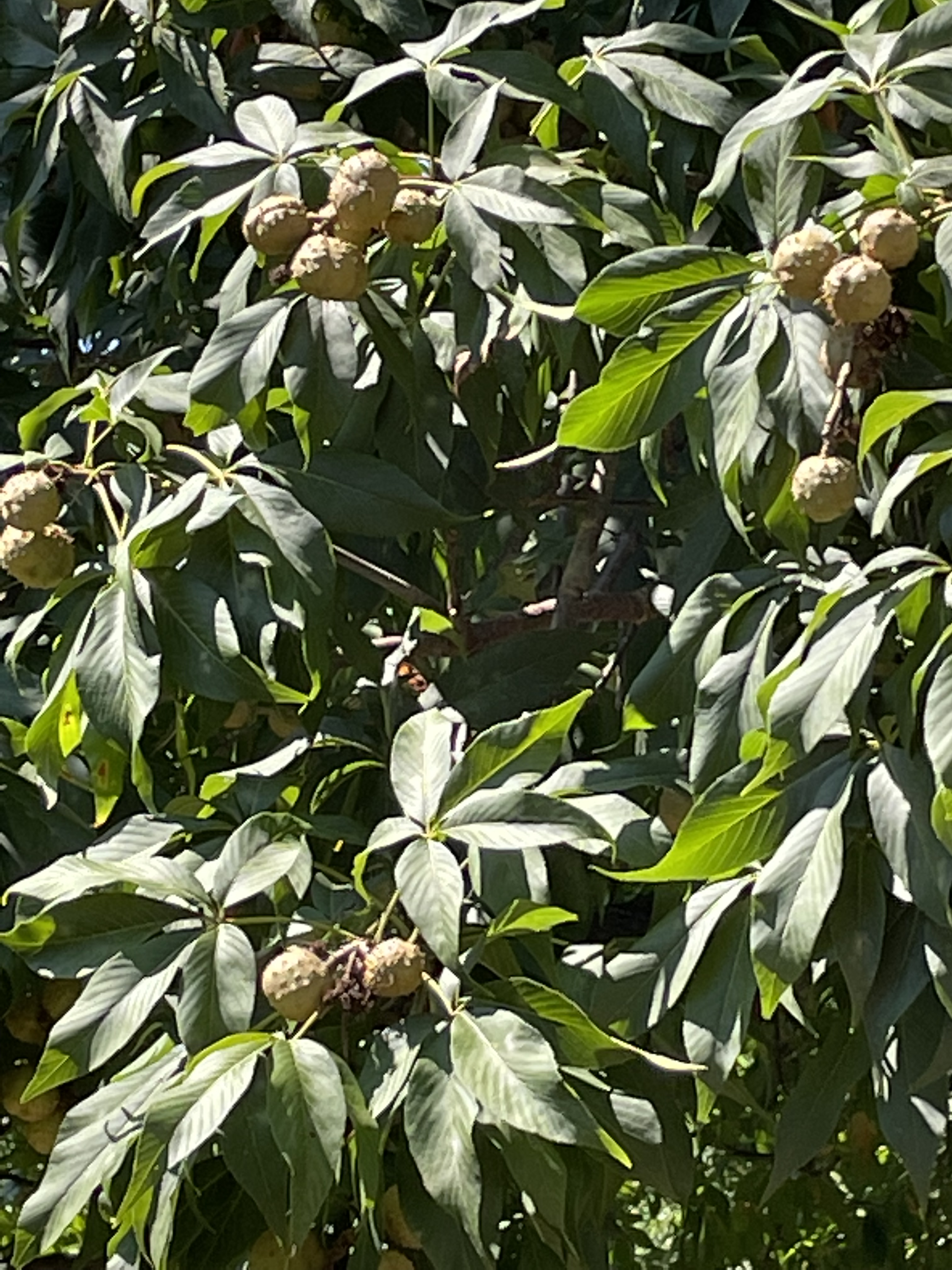
Remember Leadbelly? Famous lyrics of his tout soft fascination in a different way: Relax your mind, relax your mind/ It’ll make you live a great long time/Sometimes you’ve got to relax your mind. Perhaps this Ohio buckeye will give you a start.
Rakow spoke of kids who spend time in the woods growing up, of how they score higher on cognitive tests and have a lower risk of bad behavior in adolescence. About ecological grief (or eco-grief), nomenclature which describes the sense of loss that arises from learning about environmental destruction. Also nature deficit disorder, not currently recognized in the DSM but coined by scientist Richard Louv in his groundbreaking 2005 Last Child in the Woods. There is nothing really new under the sun; back in the 1890s, children participated in a radical Nature Study Unit at Cornell, which took as its motto “Study nature, not books.”
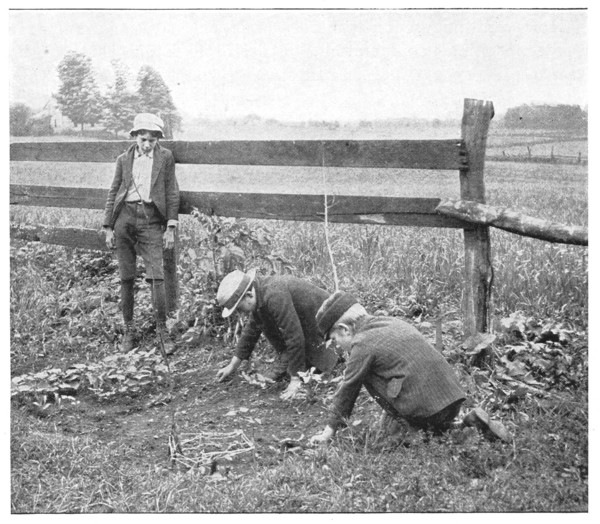
I remember when I had a big vegetable garden amply fertilized by aged chicken manure — my own favored exhortation to lazy weekend guests was “Weed, not read.”

Like any industry, the tree business has its own favored locutions, and over the several days of the meeting you could hear percolating up out of the general conversation terms that might be inscrutable to the general public. Phrases like beech disease …  air spadetree diapermulch volcano … and so on…

Why are trees good? Yes, they are majestic. Yes, they breathe out oxygen so we can live. But, in addition, phytoncides produced in the forest are volatile chemicals taken in through the nasal passages which actually increase our natural killer cells and have  an antiviral effect: phytoncides in, illness out. Related, there is a kind of microbiota that is common in soils; it stimulates increased levels of serotonin. Why just getting your hands dirty makes you feel good. I adored Marjorie Winslow’s Mud Pies and Other Recipes, growing up, even when I had officially put away my childish things.

Does what we do matter? asked Ian Leahy, a big wumpalump at American Forests, the premier tree organization in the country. He gave a plenary address that was informative, philosophical and even spiritual at moments. It’s an existential time, he said. He quoted poet Mary Oliver, talking about this one wild and precious life, and transcendentalist Thoreau, with the question of how do humans and nature combine? Leahy talked about the 12,000 heat-related deaths in America currently, projected to be 100,000 by the end of the century – many of which could be avoided with increased canopy cover. Tree equity is the concept popularized in 2018 by American Forests (and a program now overseen by Leahy), meaning that a map of trees in a given community is too often a map of income and raceThis is our moment, he said, this is our calling, but we can’t just throw trees in the ground. Knowing your city’s tree equity score – go to the Vibrant Cities Lab web site for guidance on how to do that – can help citizens tell the story of why trees are so urgently needed.

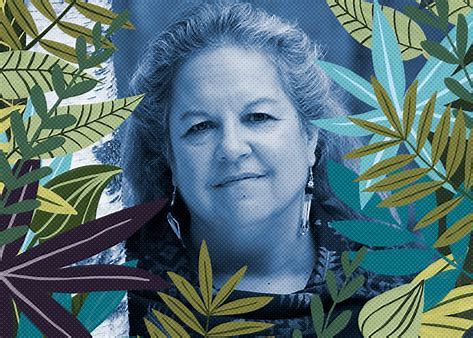
Cool corridors in Phoenix allow kids to walk to school without sweating their brains out. A recycled urban wood project in Baltimore excites the musical instrument community as the ash trees the industry has always utilized disappear. Leahy finished with an inspirational quote from environmental rock star Robin Wall Kimmerer, author of the inspired book Braiding Sweetgrass, decorated professor, and enrolled member of the Citizen Potawatomi Nation: The land knows you, even when you are lost.
This is an urgent time for forestry and urban forestry, as more people seem to grok how trees relate to the larger issue of climate change and mourn the terrible fires in our western big-tree forests. Between downing vats of coffee and oceans of beer, arborists spoke of things that matter.

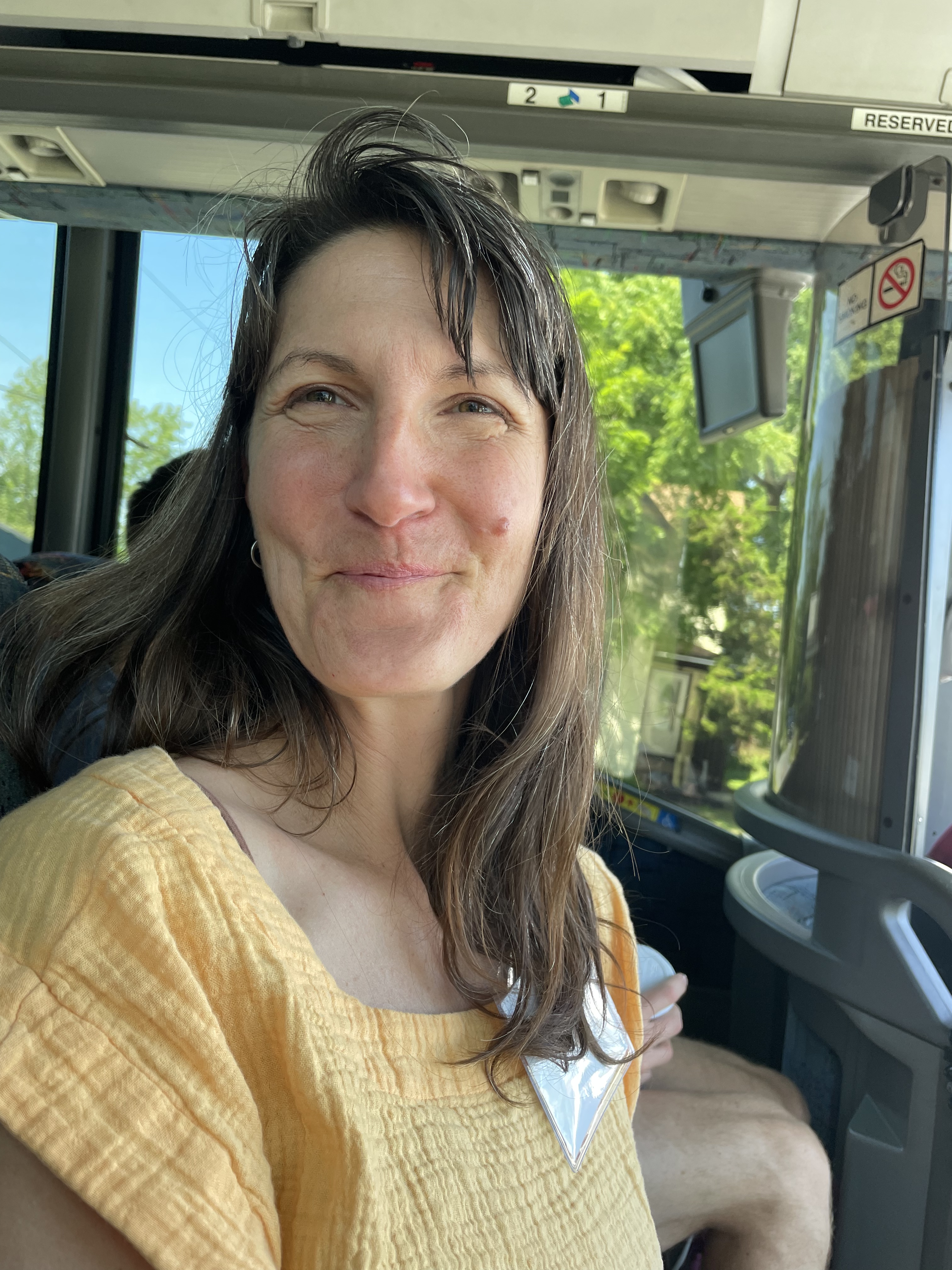
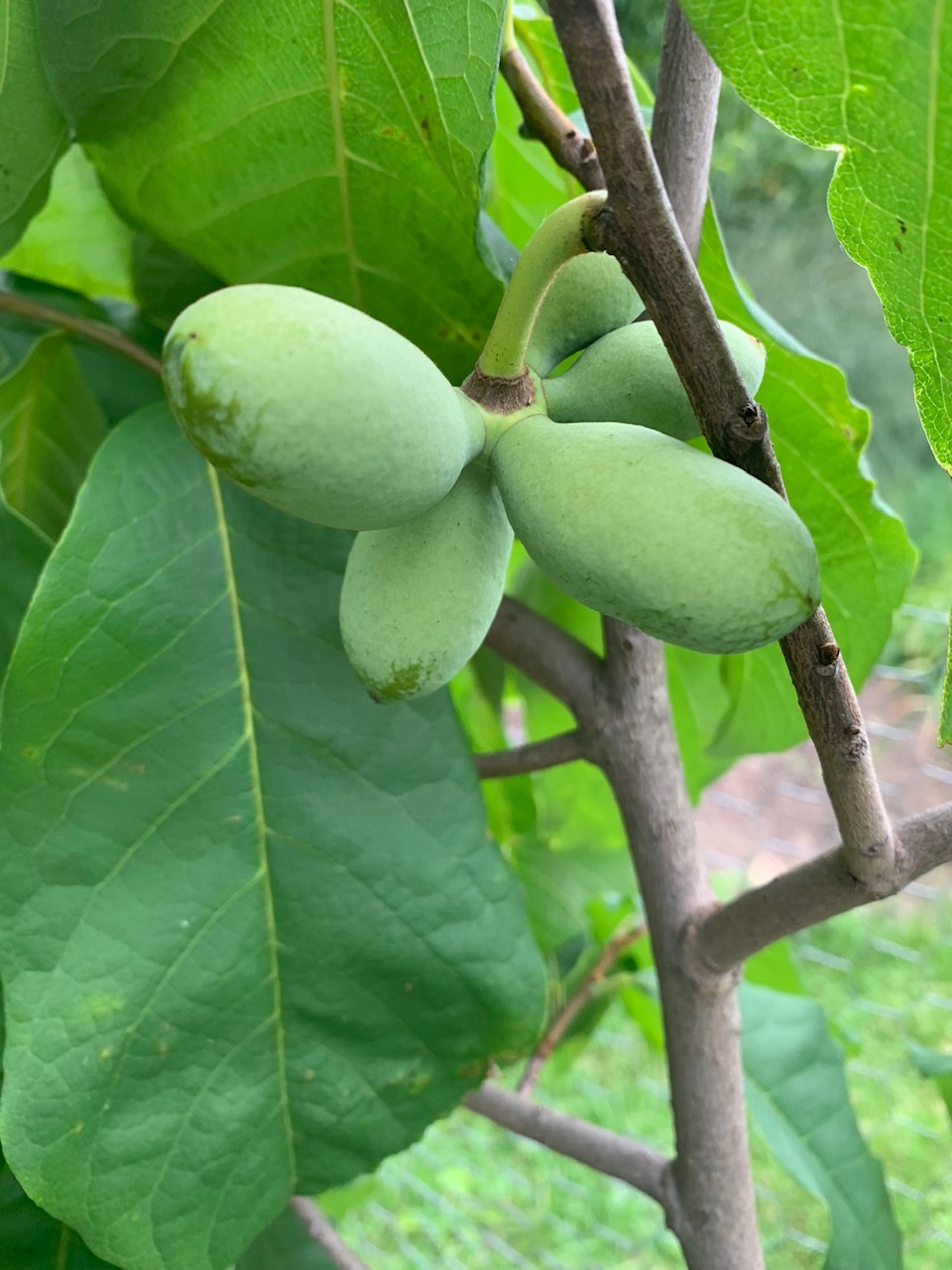
Some of it wasn’t so serious. My companion on a bus headed to a walking tour of Watertown, New York, told me of her love for the pawpaw tree. You may think of Asimina trilobal as inhabiting southern climes, but because she is a fan Kat Korba has coaxed it into producing for the edible ecology corridor she is helping to create in Syracuse.
It is wonderful, she waxed, kind of like a cross between a mango, a banana and an avocado. You eat it with a spoon. The pawpaw is the largest edible fruit indigenous to the United States.
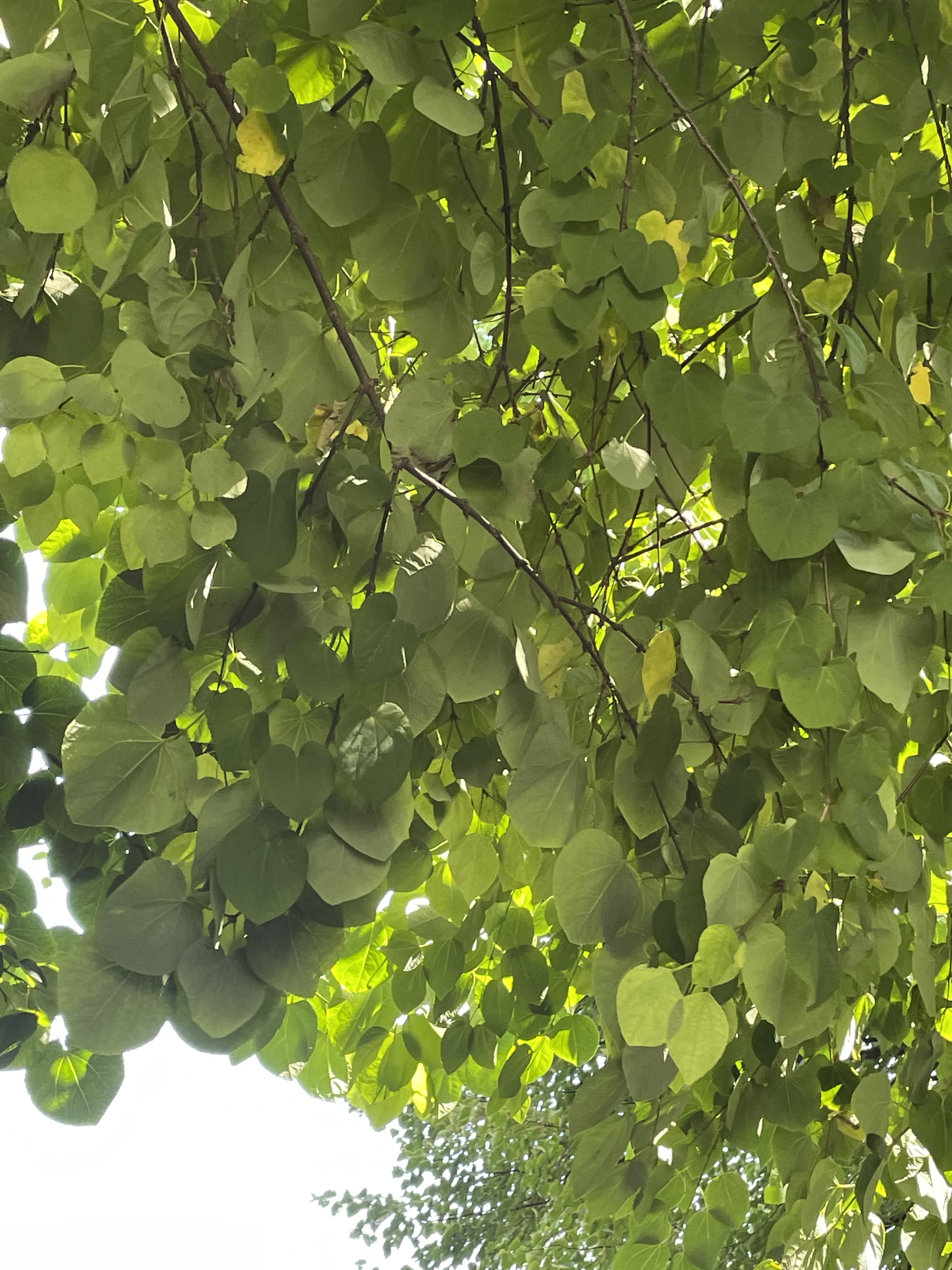
Watertown, according to the arborist and historian who tag-teamed our tour, has many distinctions. After a series of ice storms and microbursts in the 1990s, the city embarked on a crusade to replace lost old trees with new healthy ones in a downtown arboretum. We talked under the shade of beautiful old lindens and katsura trees.
And saw a library built during the gilded age by a wealthy resident as a tribute to her father, with the largest rotunda north of the thruway

Bet you didn’t know that the paper clip was invented in Watertown, as were Little Trees, the car deodorizers, the 1952 brainstorm of Julius Sämann, a German-Jewish chemist and businessman who had fled the Nazis. Another famous product of the city is Viggo Mortensen, whose homecomings are assiduously tracked. The Black River flows through and powered Watertown’s original prosperity, during a time when mansions like the one housing the historical society currently were replacing the early settlers’ log cabins.
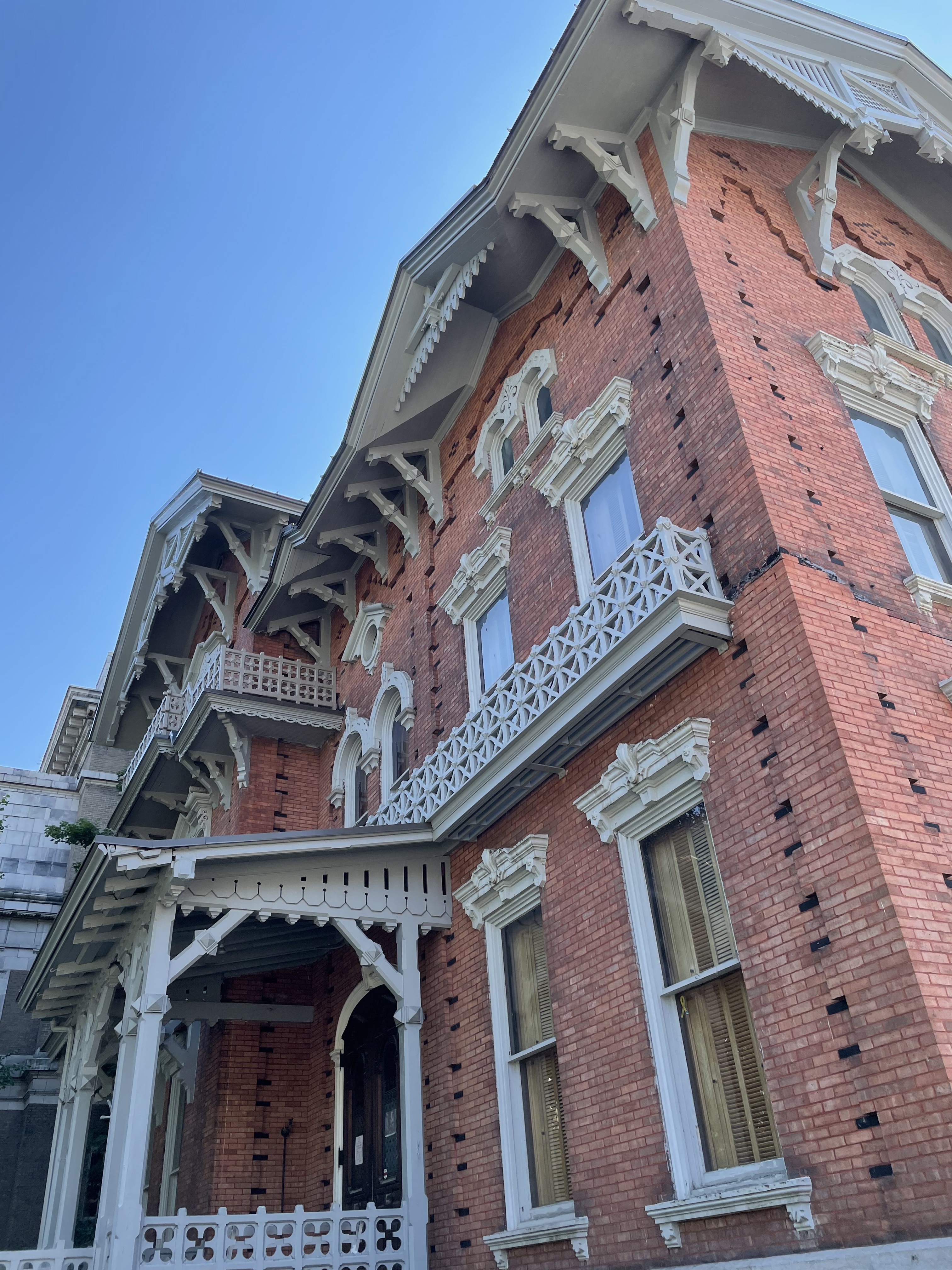
I love it when civic-minded people tow old structures to one property so you can see all the stages of development at once. Sure enough, here beside the grand historical society stood the wizened log cabin, among the black locusts and catalpas and the weeping beech. Oh yes, Sinatra had an album called Watertown.

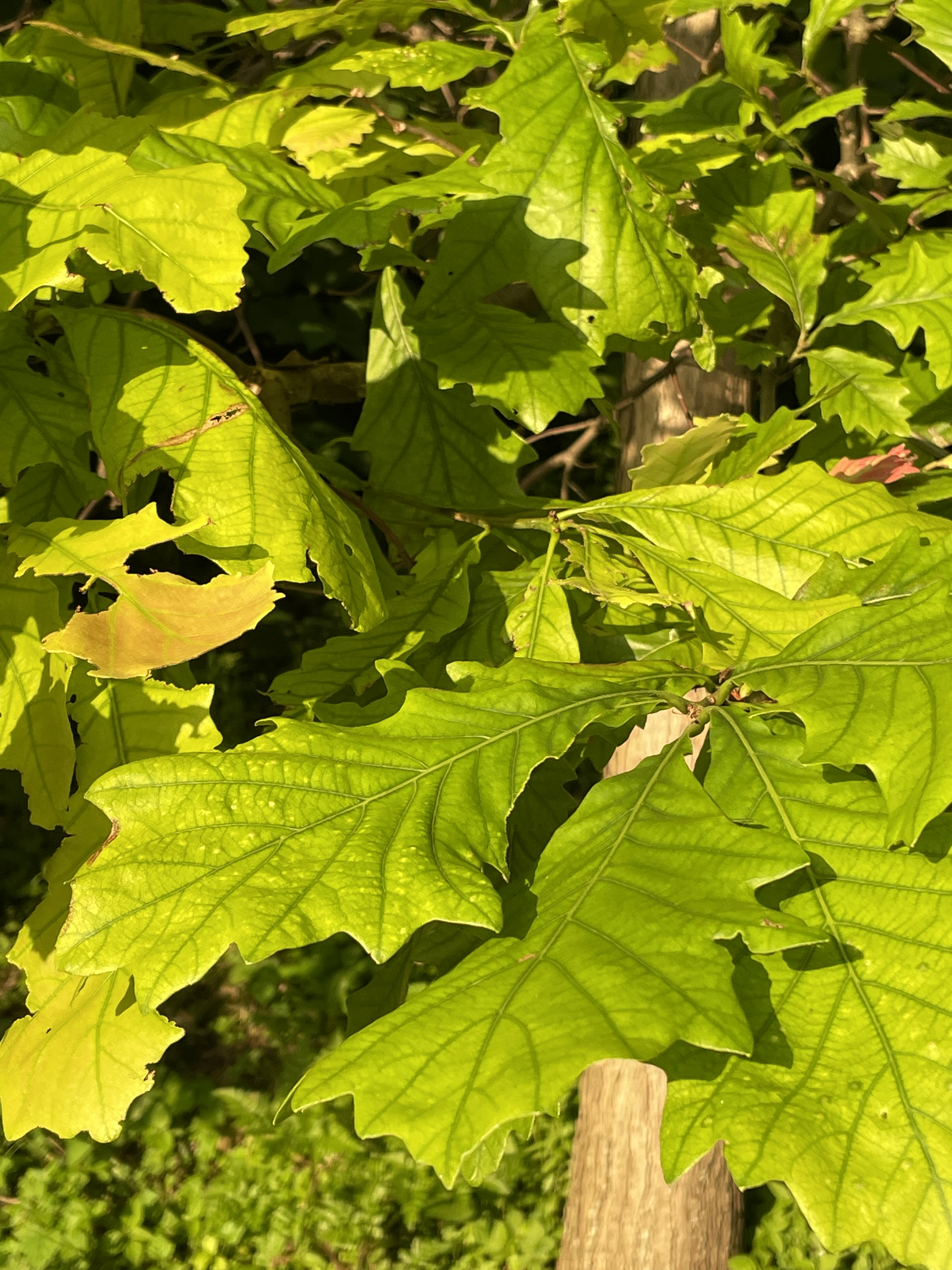
History, trees. Everything great. We were introduced to a recently planted hybrid oak from Cornell, Quercus bicolor x vaseyana, in plain English a swamp white oak crossed with a sandpaper oak. Nearby, showing off its fringes, a juvenile dawn redwood.

And so on. A wonderful effort, Watertown’s urban forest, presided over by sensitive and smart city arborist Mike DeMarco, who likes the shade of a big old tree as much as the next guy.
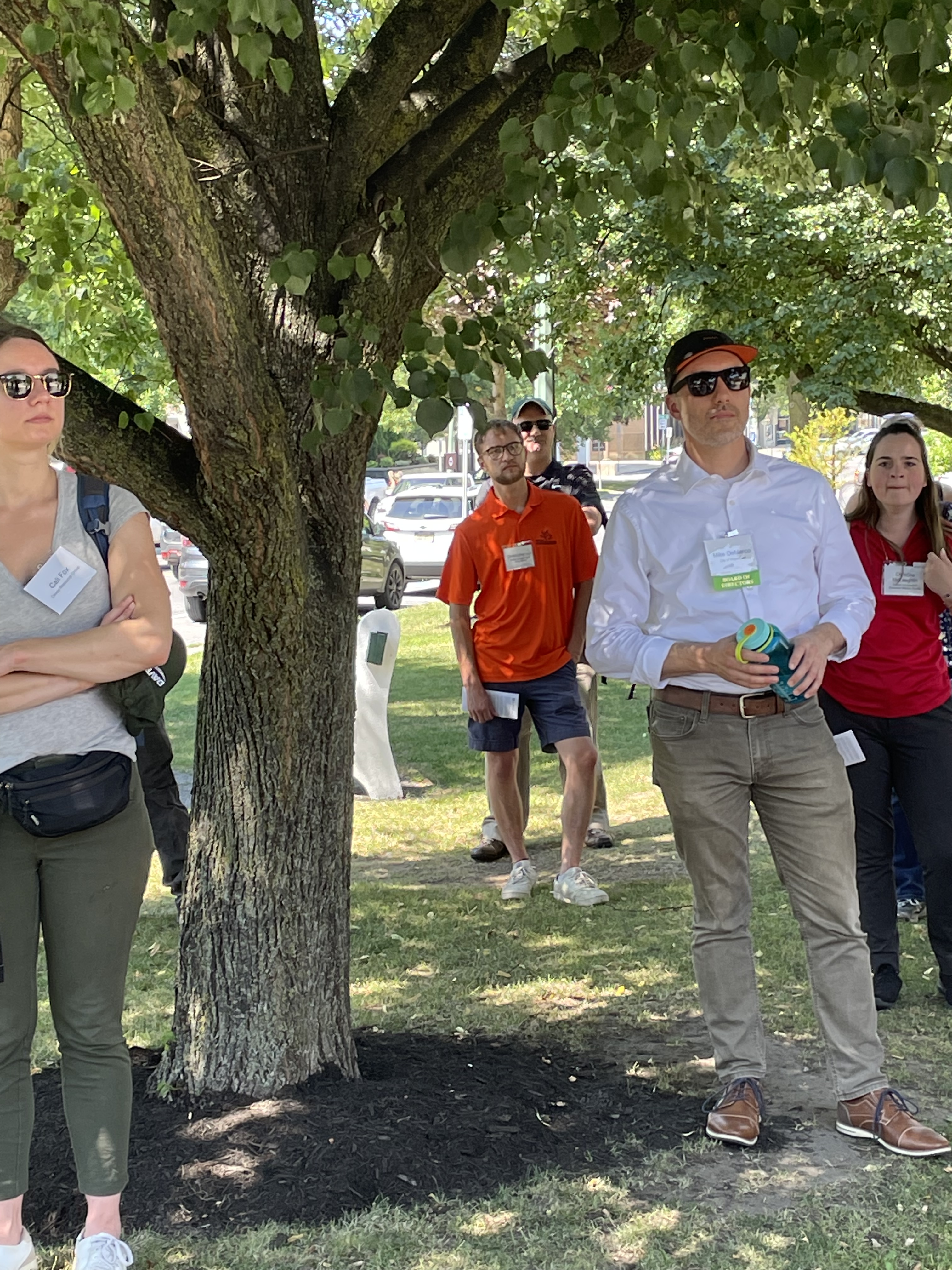
Over 45 species can be found downtown, from redbud to red oak to red jade crabapple. As far as I know, no pawpaw. Yet. Just a suggestion, Tree Watertown.
1 Comment

Filed under Jean Zimmerman

Are some trees bad?

Well. Depends who you ask.

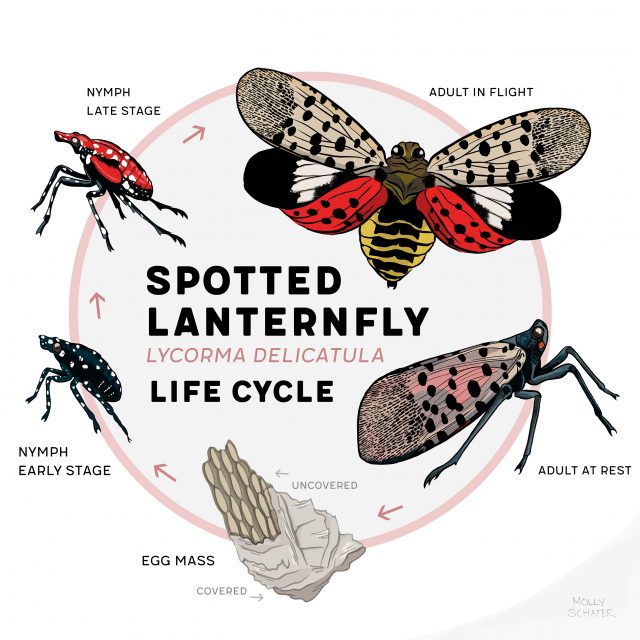
Norway maples, callery pear, ailanthus, ash. Spotted lanternfly adores laying its disgusting eggs on the bark of the ailanthus, commonly known as the tree of heaven.

So ailanthus deserves to get whacked. But what about grape vines? Apple trees? These host the same invasive insect.

As for the callery pear, you might have some gracing your downtown sidewalks or your apartment complex. Offering bright white blooms for a week or two in early spring. Arborists’ assessmen: Pyrus calleryana is a nightmare. Why? Inquiring minds (mine) have investigated. These trees, originally from China, were widely introduced by landscapers in the 1960s, and displace native trees and plants. Also, they don’t smell sweet, as you would expect them too. Communities around the U.S. can’t cut them down fast enough – some are even offering rewards to those who destroy them.

Ash trees play host to another noxious bug, also imported from Asia, known as the emerald ash borer. Cities are eliminating dead trees by the thousands as well as infected ones as a kind of stay of execution. Last year I accompanied a crew in Queens that was feeding axed ashes into the chipper.
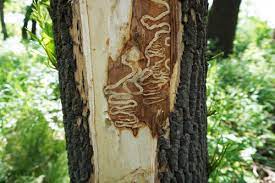
Whole blocks were decimated, and once-graceful allees of mature trees vanished, much to locals’ shock and confusion. Everywhere these strange diagrams exposed by peeling bark, the sure sign of disease.

Where is the tree I grew up with, whose branches swayed outside my window my whole life? No more birdhouses.

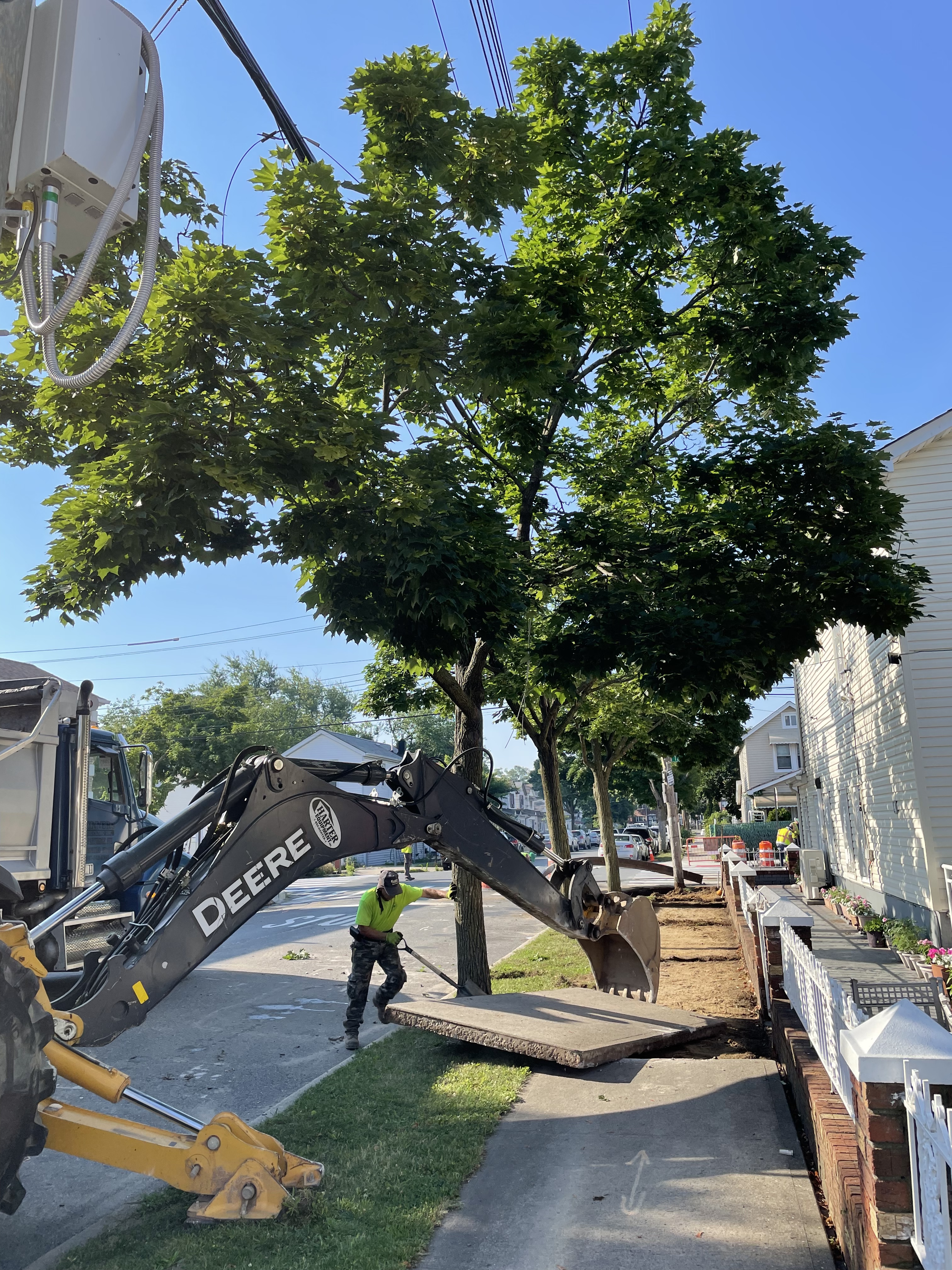
Thinking about the nature of bad and good trees as I stand in the grueling heat of an early Queens morning. The parade of Norway maples along 145 Street in Flushing provides the only shade separating residents from an New York-style Hades.

People tend toward puzzlement when the sidewalk crew comes along. Are they taking down our trees?

Don’t get me wrong. Sunshine is good! If you asked medical pioneer Florence Nightingale, she would have touted its healing properties. In the nineteenth century, she espoused the wondrous effects of sun and fresh air in the absence of cures we take for granted, antibiotics and penicillin and the like. One approach in the 1930s was to suspend a babe in need of fresh air out a tenement window!

But today, what we now call the heat island effect afflicts neighborhoods like this one in Flushing disproportionately. They need all the cooling they can get. Even the shade of the “invasive” Norway maple plays a part.

Researchers have noted that individuals with mental health issues (e.g depression, for example) are more at risk when faced with high temperatures and “need to take extra care” as cognitive performance has been shown to be differentially affected by heat. People with diabetes, are overweight, have sleep deprivation, or have cardiovascular/cerebrovascular conditions should also avoid too much heat exposure.

Residents need shade. These trees, in the words of an arborist friend, are working hard. And they’re not getting paid, either!

What’s the use of being house proud, like so many Queens-ites, if you haven’t any trees?

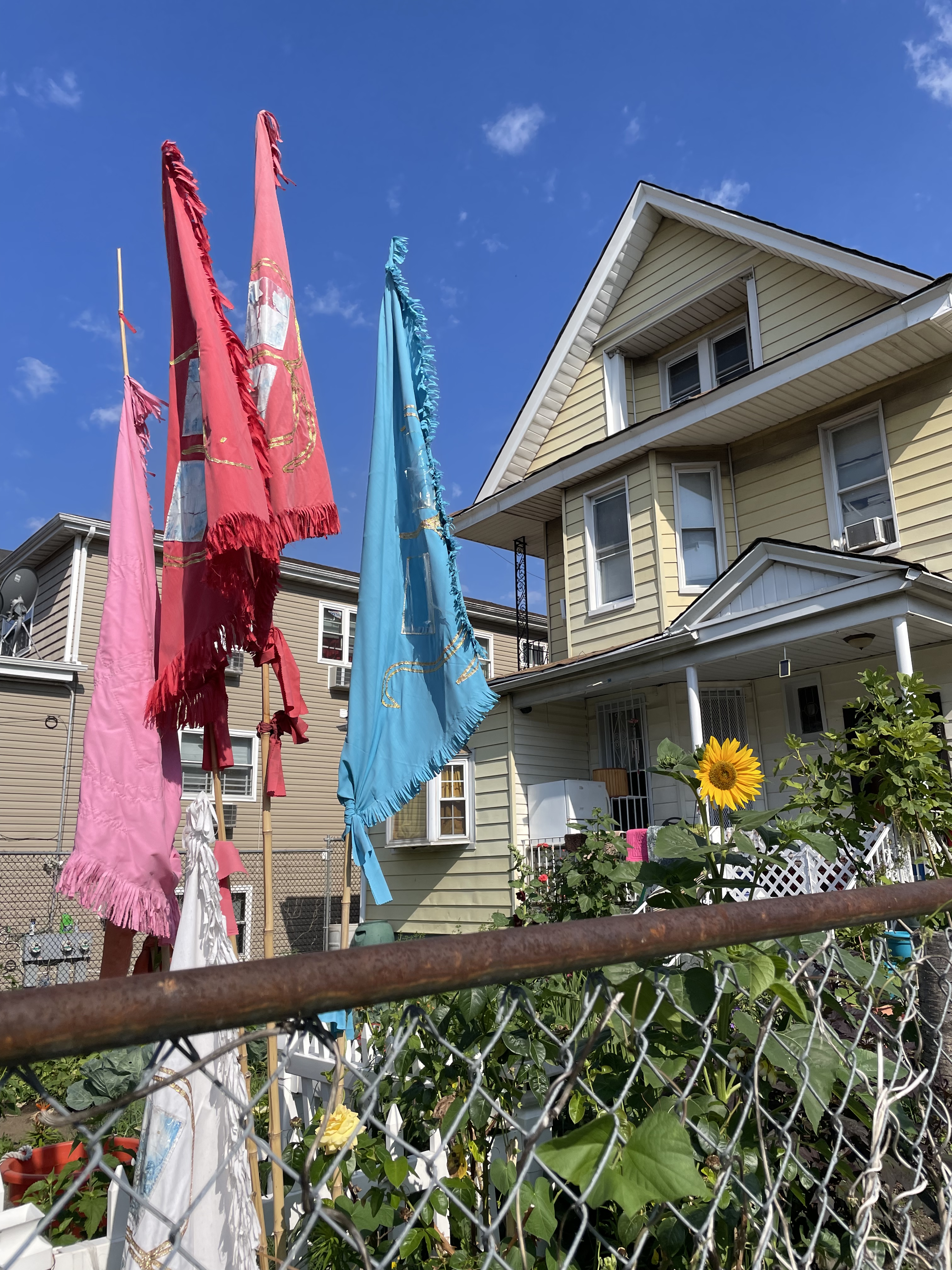
Residents love their flowers.

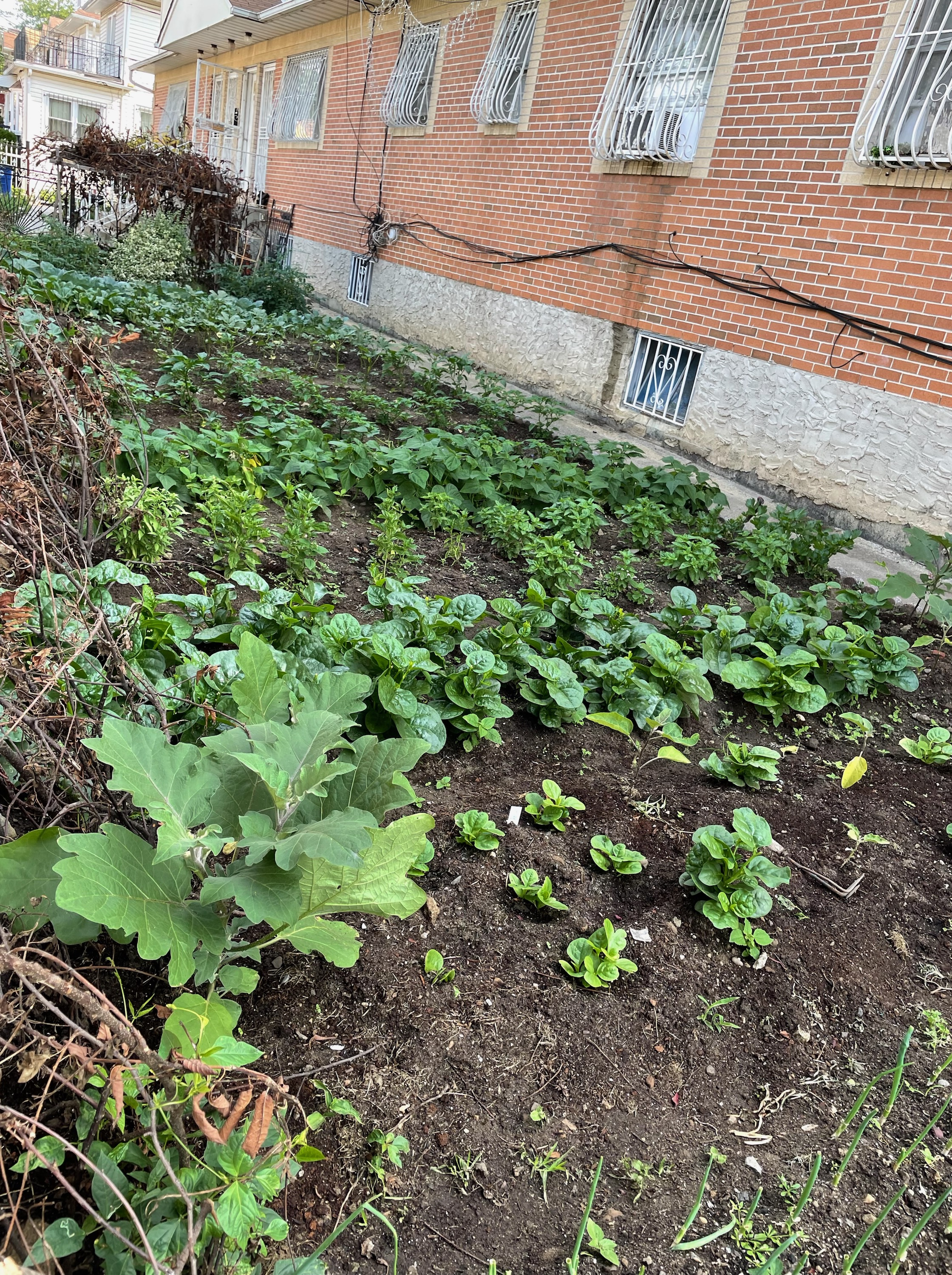
Some even plant small-scale farms – more ambitious than my raised tomato beds.

But others bake. The heat island effect means that people are cooked, literally, in their homes and neighborhoods. Fried like so many sidewalk eggs. Within the United States alone, an average of 1,000 people die each year due to extreme heat.

Mainly poor people. Those without recourse to decent air conditioning, swimming pools – and trees. Trees are a necessary feature in combating most of the urban heat island effect because they reduce air temperatures by 10 °F and surface temperatures by up to 20–45 °F.

Buildings, roads, and other infrastructure absorb and re-emit the sun’s heat more than natural landscapes such as forests and water bodies. The process of taking up water through its roots, up through the leaves and out again as vapor into the air, called transpiration, is something all trees excel at. It’s nature’s air conditioning. Canopy cover is always important, but nowhere more than in the places where it can’t be taken for granted.

In the suburbs we have grand old tall cedars.

In urban areas, not so much.

Nothing makes up for the simple, absolute value of coolness in hot weather.

Some surprising trees make it to a good old age on these mean streets. A Siberian elm somehow thrives in a 4×4 inch tree pit.

I stand outside a nondescript bungalow on 107 Avenue.

There is a robust swamp white oak. How nice.

These are some of the exotics you might stumble across in the boroughs of New York. Older specimens have obviously offered shade to strollers for quite some time. London planes thrive in the most destitute circumstances, and we are all the better off for it.

When you hear about property owners razing “good trees” to build additions or housing projects or basketball courts, it’s common sense to mourn their loss. Mature oaks, sweetgum, lindens don’t just spring up overnight and surely don’t deserve to be disappeared. We know we need them, though some knuckleheads will always come along to say they don’t matter and remove them.

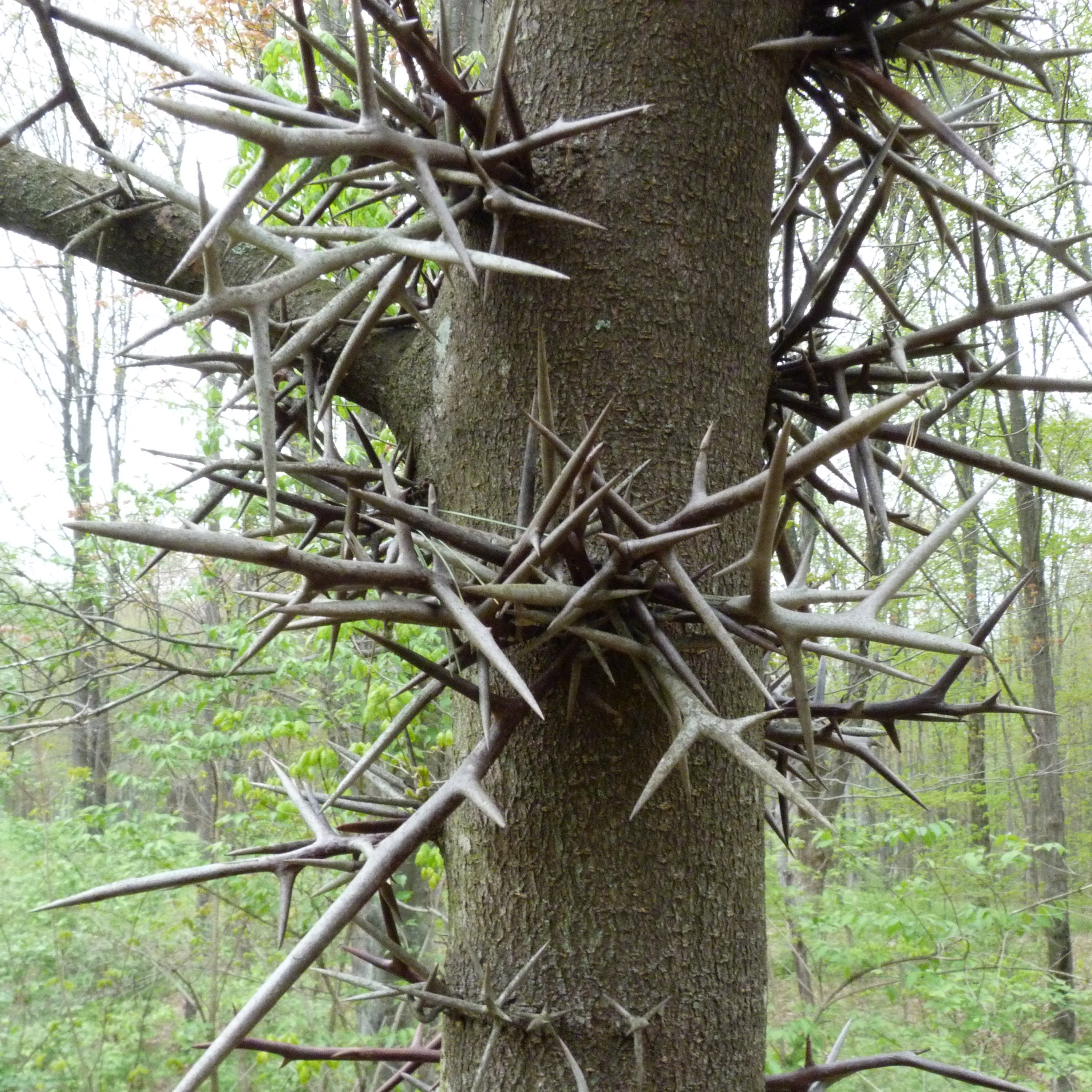
But what about the specimens sometimes dismissed as trash trees? Are honey locusts expendable simply because they are so common in this city?

I think that logic is mistaken. Honey locust has its own sharp-shouldered beauty.

Even the city version without the spikes can make itself welcome as a shade tree where we need shade.

Trees can’t help the species that spawned them, or the whims of the city planners who once planted these sometimes struggling urban forests. A Norway maple has gotta right to live too! And we deserve their shade. All of us.

1 Comment

Filed under Jean Zimmerman

I do like pin oaks

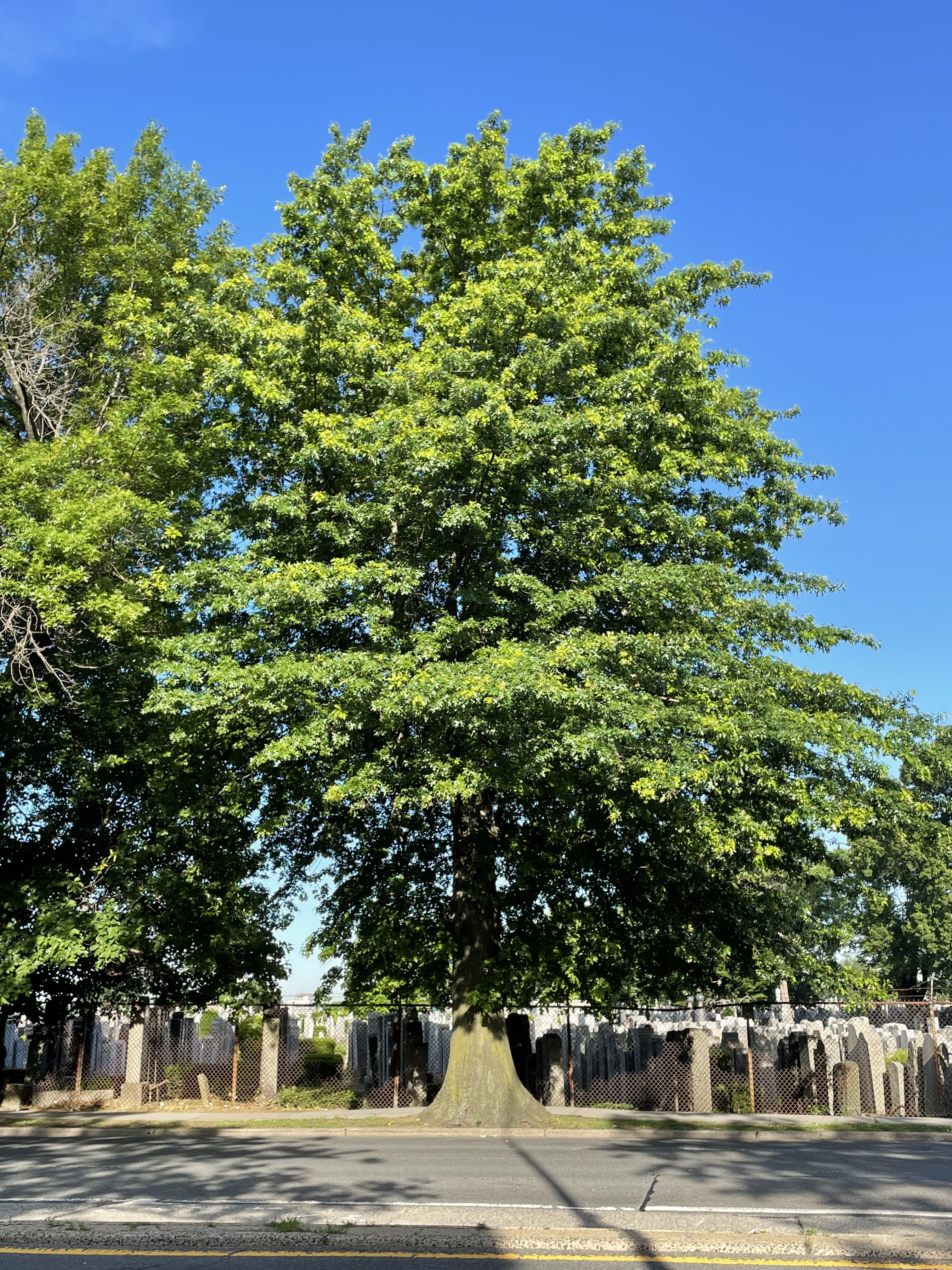
and especially those in groves, urban oases, such as in Flushing, the massive ones ringing Mount Hebron Cemetery.

Whoever laid the concrete sidewalks here most recently politely made room for the spreading roots of venerable Quercus palustris.

Excuse me, said the tree, we were here first. And the City complied, which is more than happens in other municipalities. New York’s rigor regarding tree protection is legendary.

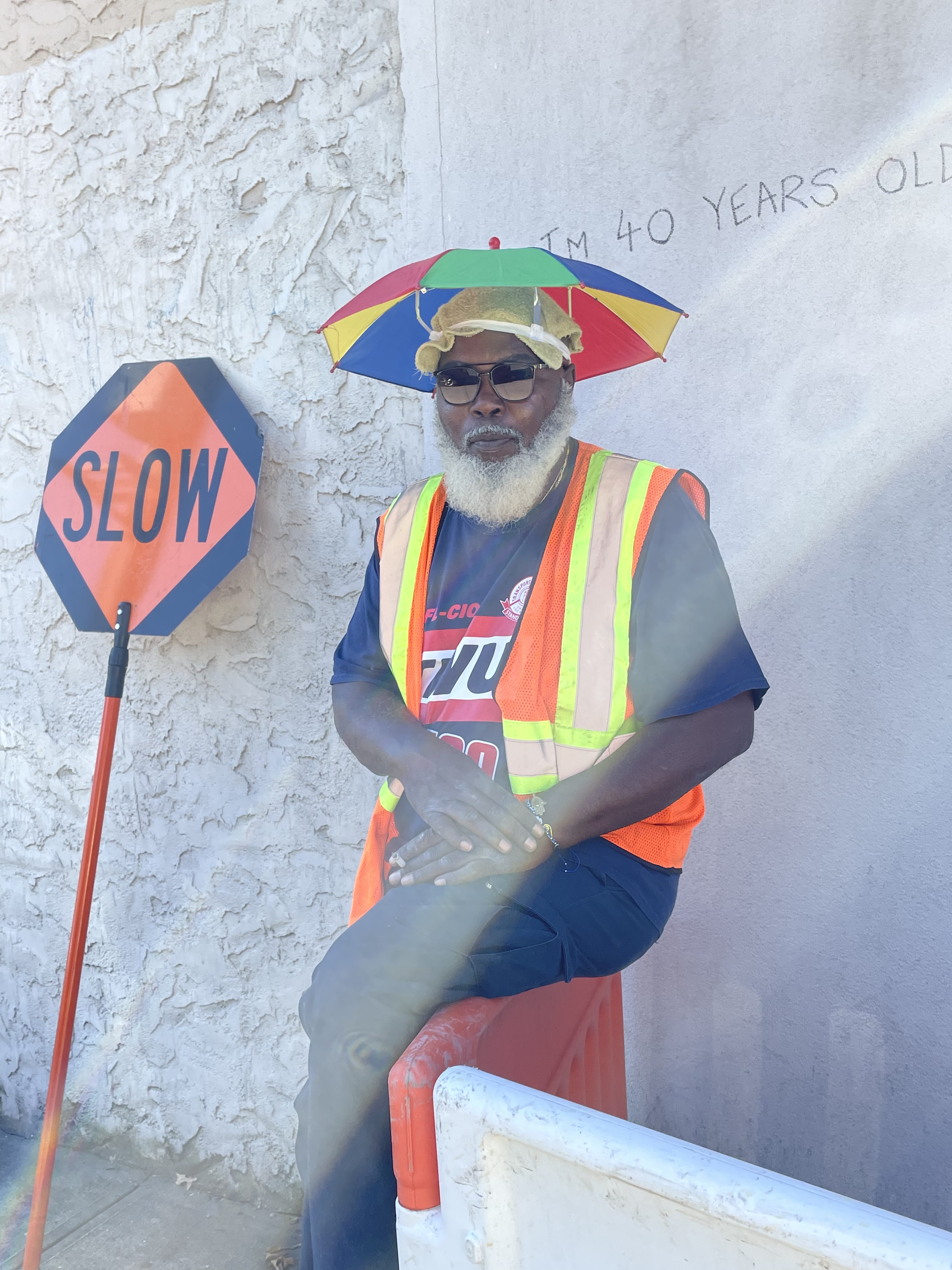
A breezy day in Queens. Anthony the flagger on a well-deserved break: It ain’t a hard hat, but it keeps off the sun. Not a day over 40, indeed. 

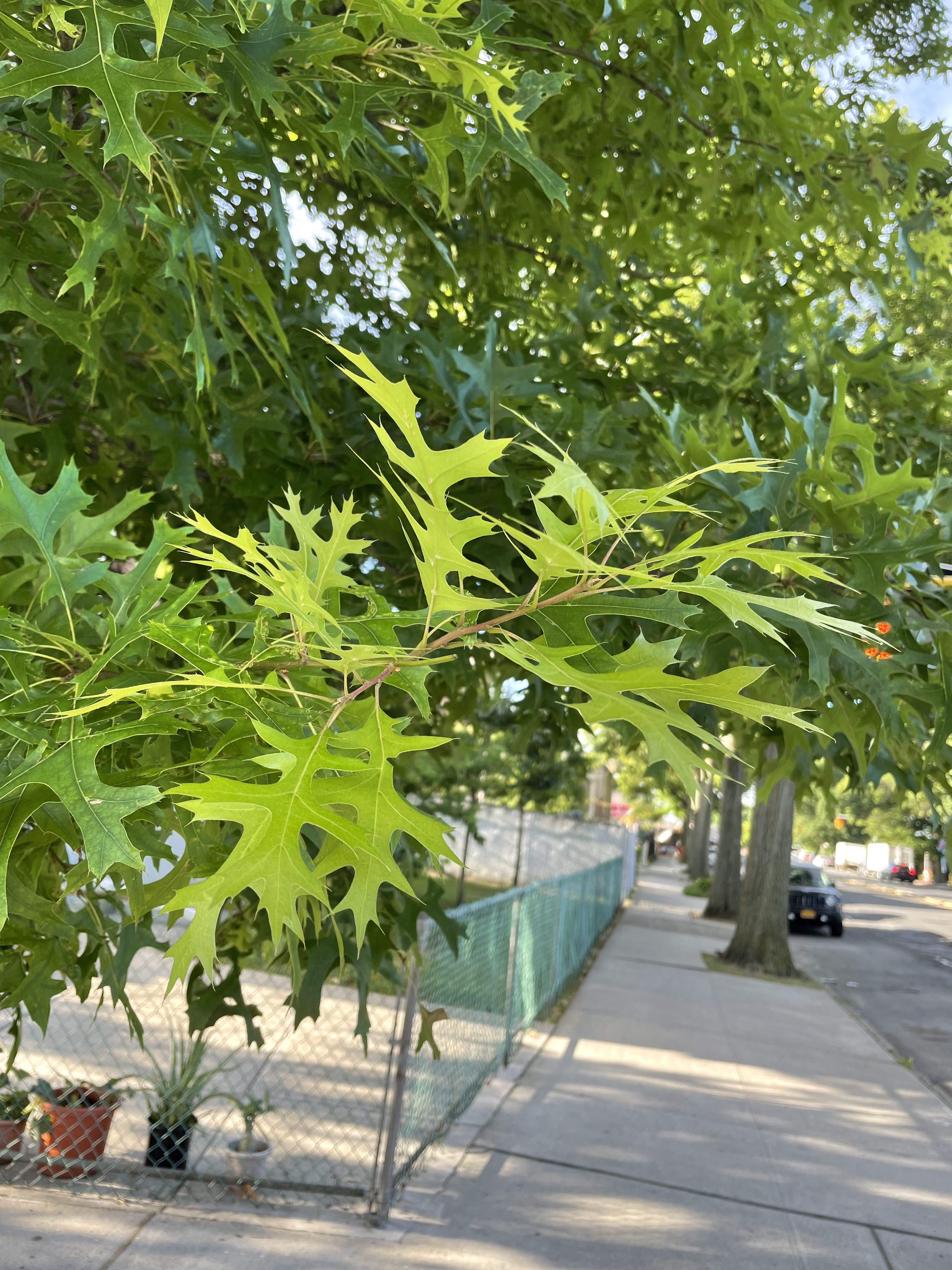
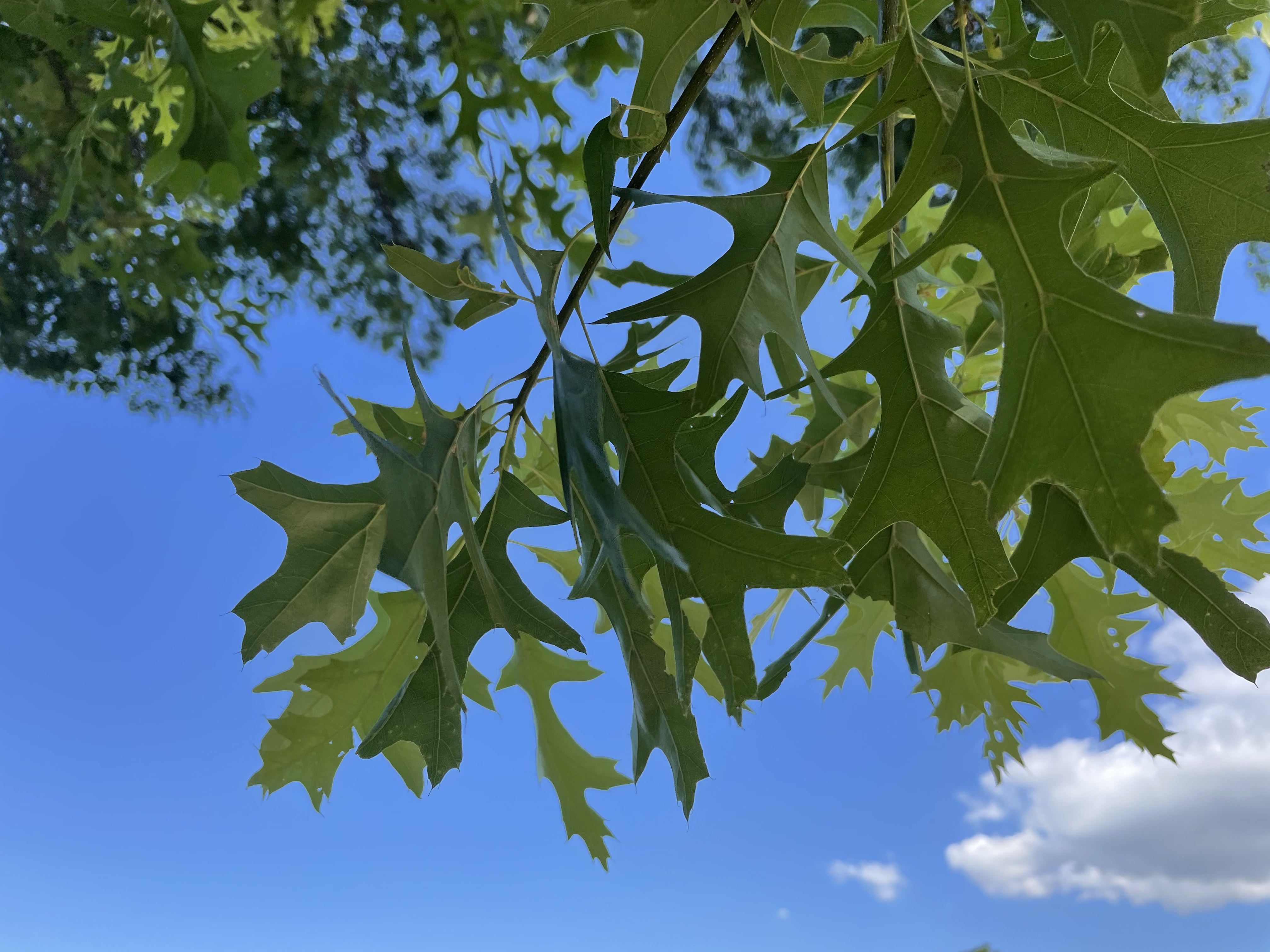
Deeply carved sinuses, the scallops that distinguish the pin oak leaf.

The tree has a unique habit – its branches hold up the sky at the top, stick out straight as a t square in the middle and droop a bit at the bottom of its shape. There is a monster of a pin oak square in the middle of this sprawling burial ground.

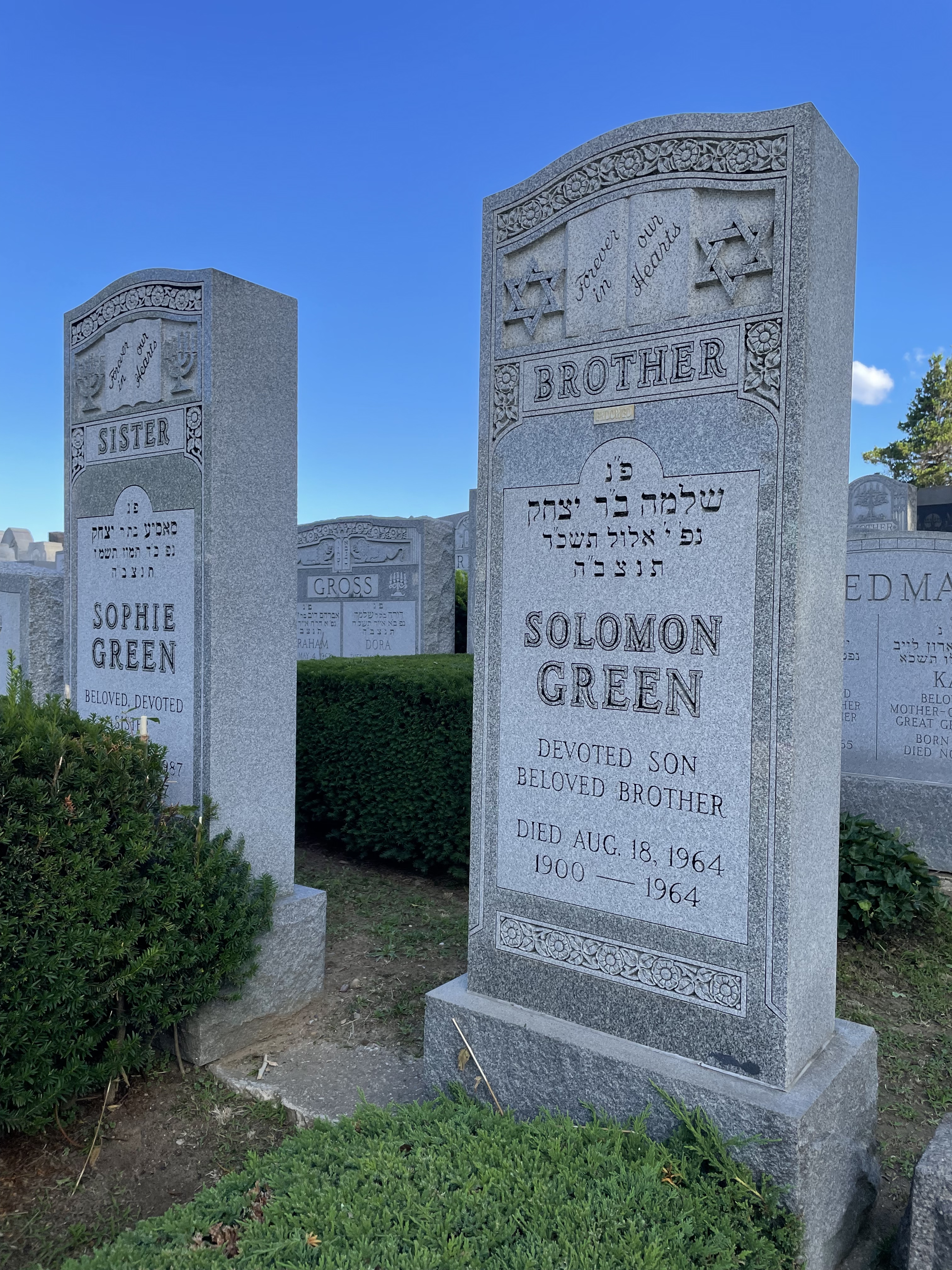
Mount Hebron opened its gates in 1909, and its permanent residents include Holocaust survivors and people who lived through the pogroms leading up to World War II. For example, a monument to the immigrants and immigrants’ descendants from the city of Grodno in today’s Belarus is dedicated to those who were “brutally persecuted and slain by the Nazis.” A stroll reveals many people in their mid-30’s and 40’s who died in the 1930s. Beyond tragic.

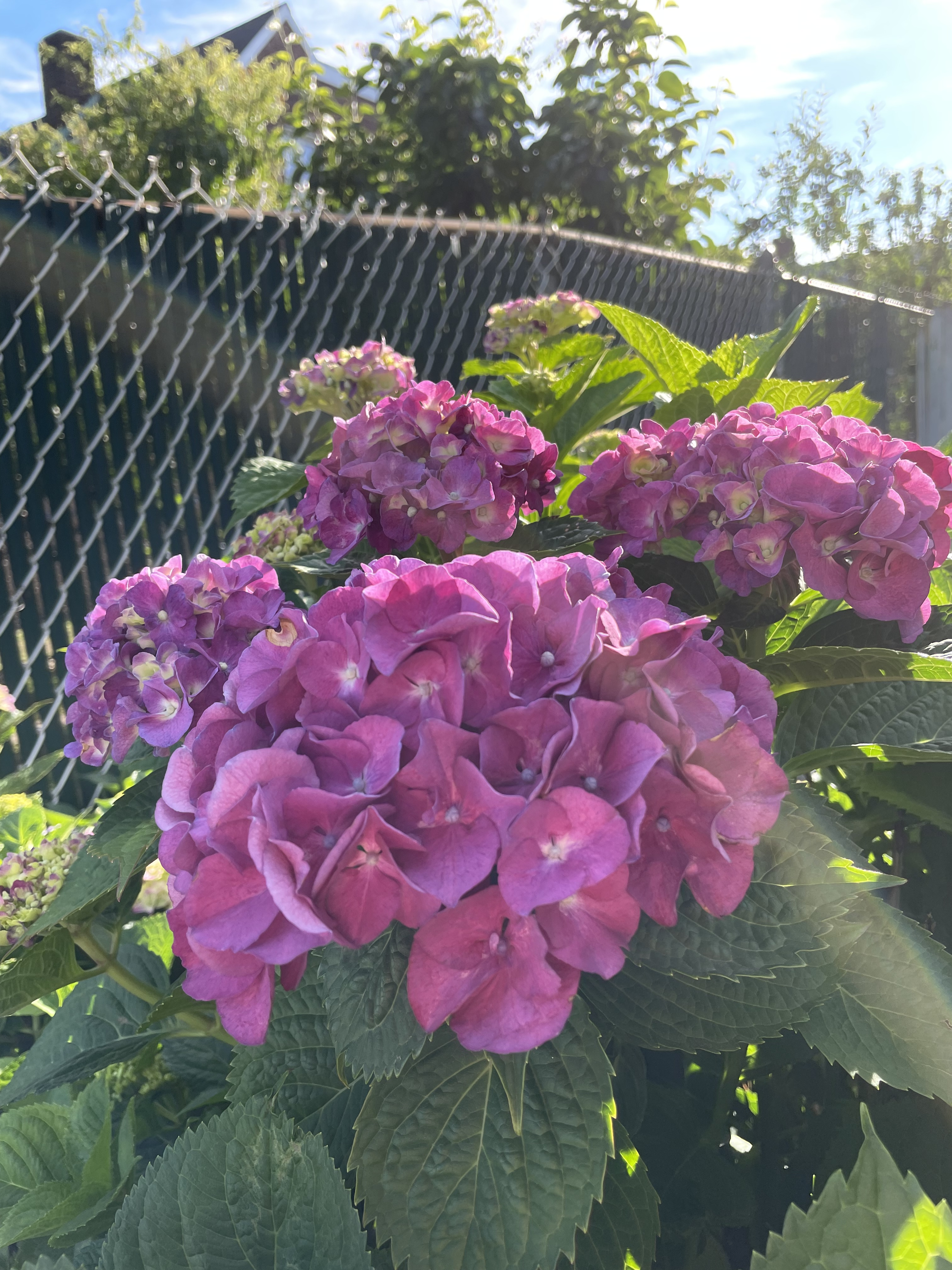
I couldn’t find acorn litter today. Someone here stays on top of autumnal sweeping. The nut would poison us but make a fit snack for a squirrel. Critters are more present that most people think here in the greater metropolitan area. I watched a woodchuck dive under a scrim of shrubbery recently in Liberty State Park. I’ve seen raccoons in a Flushing alleyway. This morning at six a.m. as I drove onto the Parkway, headed to the work site, an eight-point white-tail stared and stood stock still at the edge of the woods. Haven’t seen deer in New York City proper but surely it’s a matter of time. Do they like hydrangeas? Then they might like Flushing.

The chain link surrounding Mount Hebron had been conveniently pulled aside as an unofficial entrance for me to slip inside. No one I approached in the neighborhood seemed to know the name of the 250-acre burial ground in their midst, not the Mobil station attendants on the next block (5.59/gallon, with the cleanest restroom in Queens), not even the grave digger, who rose above the dirt he was shoveling to Google the query on his phone. The Yiddish theater industry produced  quite a few of the souls buried at Mount Hebron. 

The lady with the daisies hadn’t a clue as to where they might be.

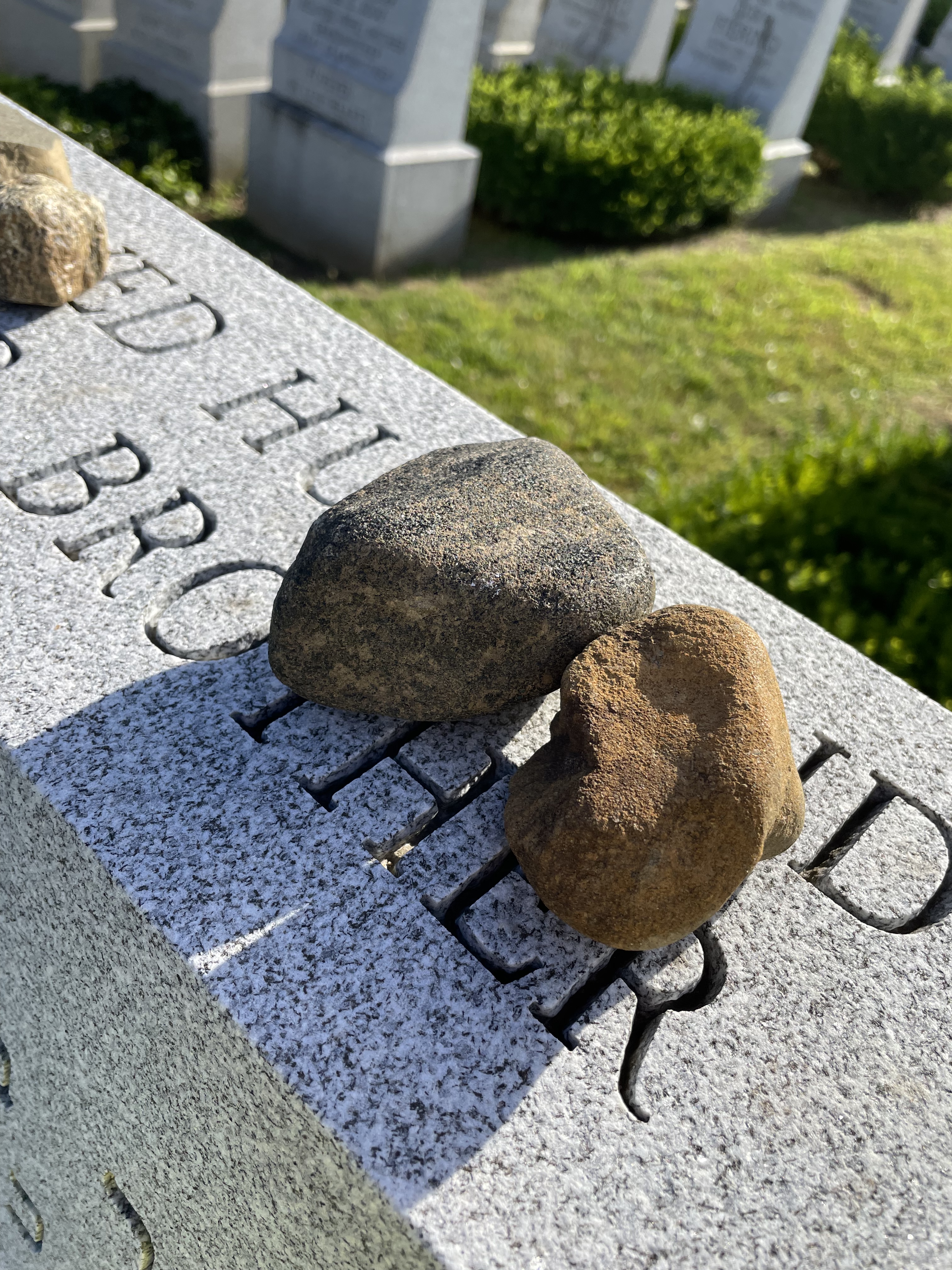
Plenty of observant Jews have payed tribute to the dead here, leaving stones atop the graves.

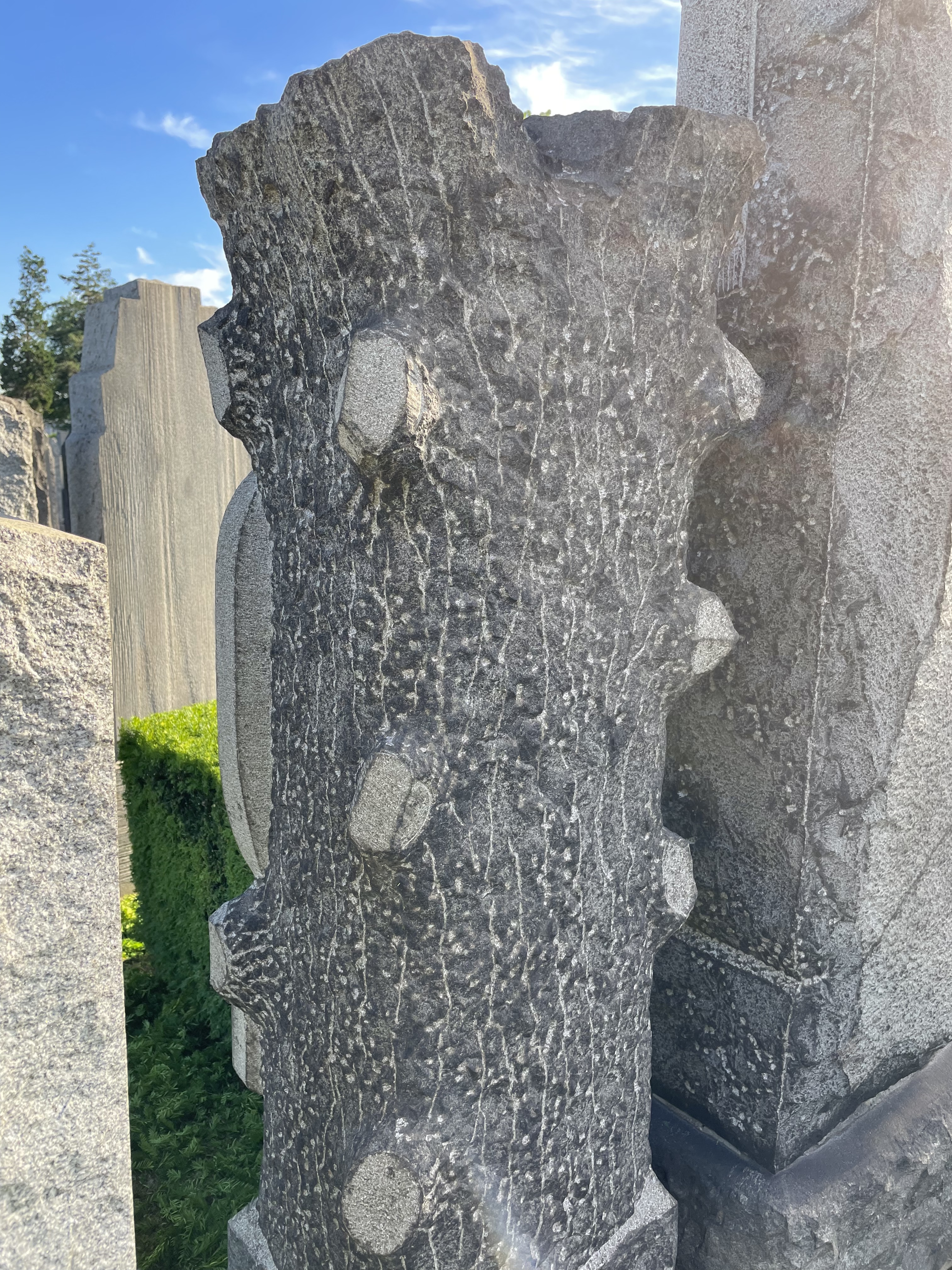
Also abundant, the gnarly limestone faux tree trunks known as treestones. As a sculpted quote from the Biblical tree of life, they represent both eternity and humanity.

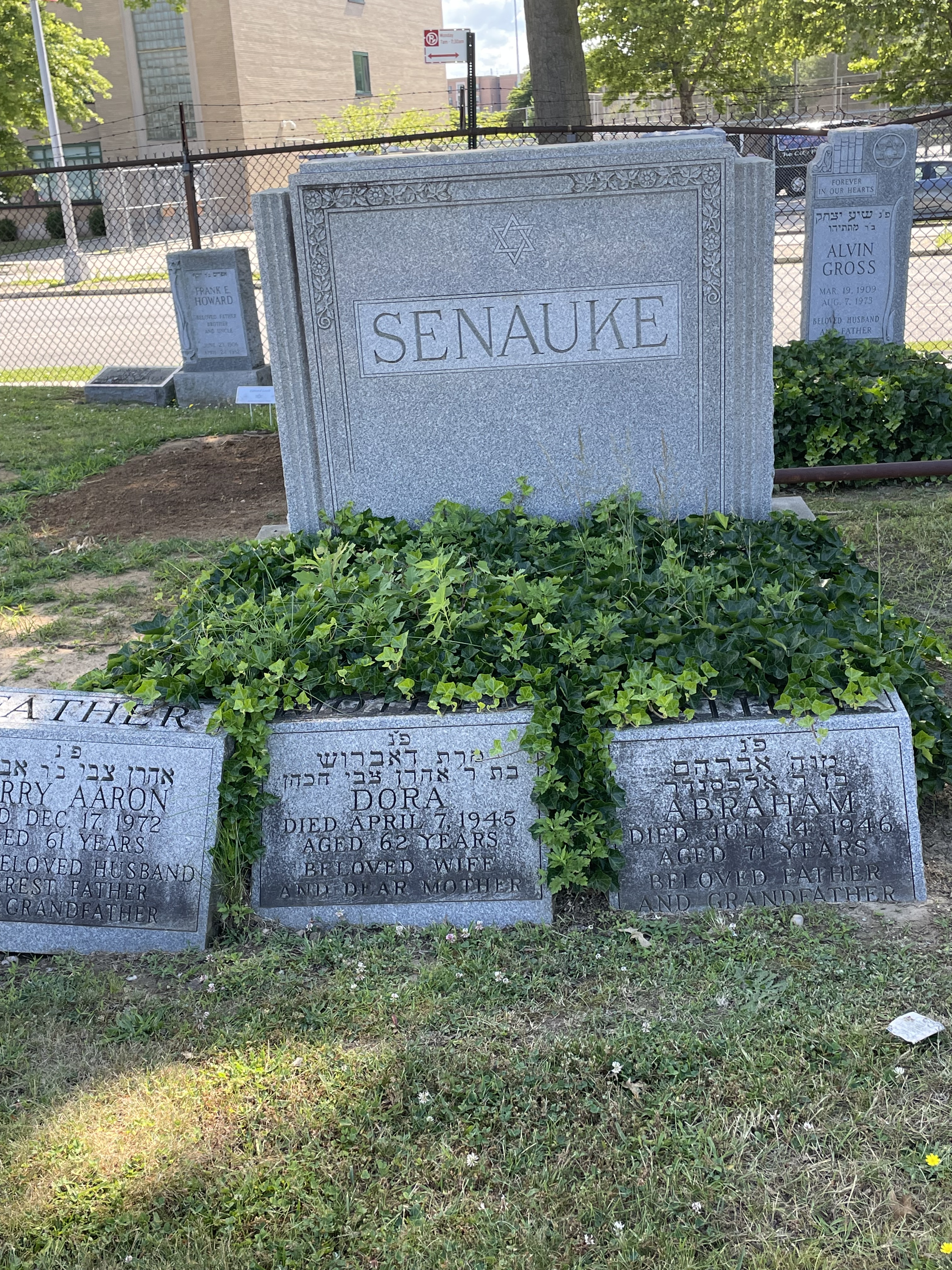
By serendipity, I came across a friend’s great grandparents’ plot – they fled Kyev when the pogroms came through and wound up in the Bronx, where Abraham was an expert jeweler and watchmaker.

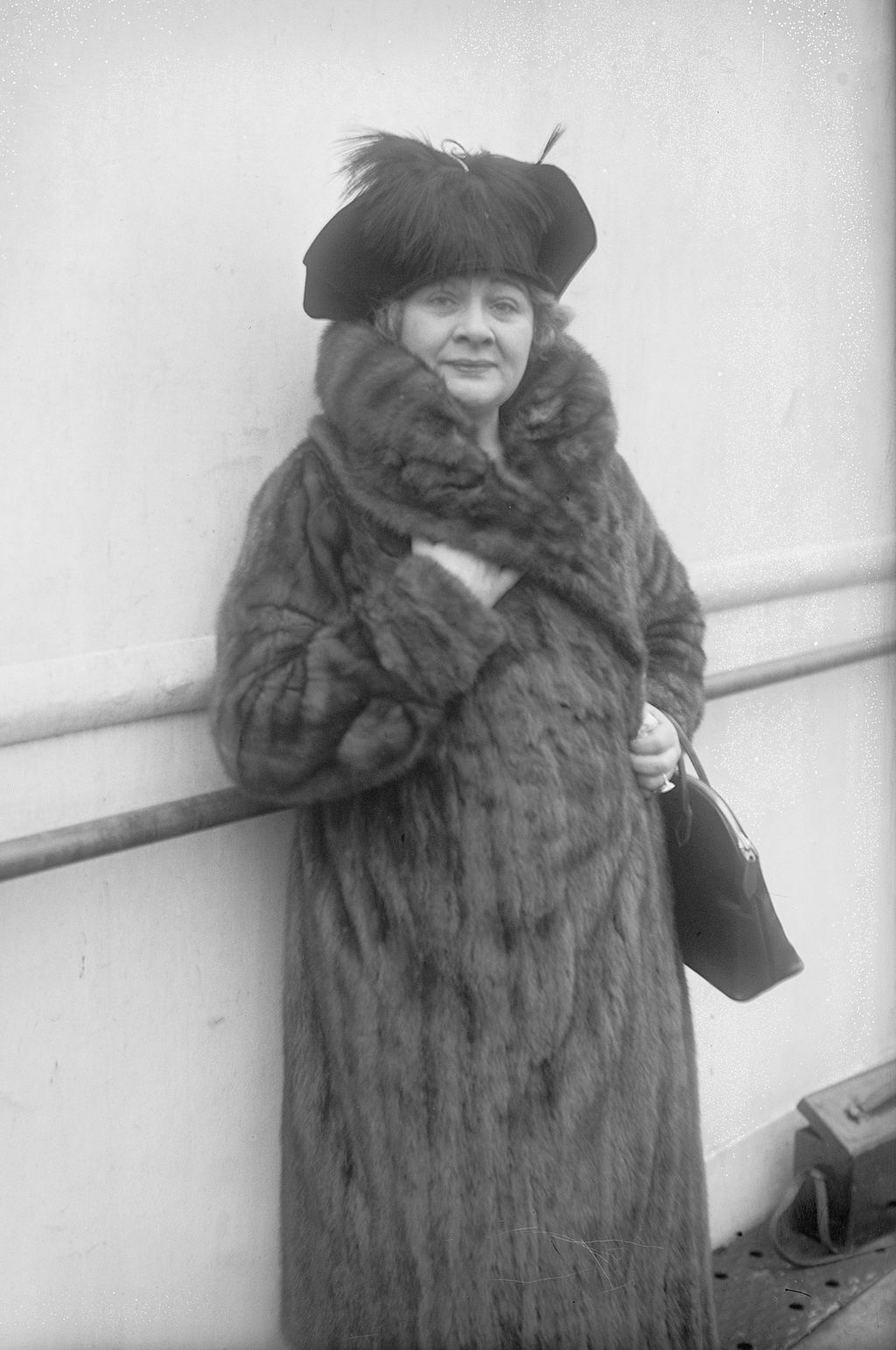
But I knew the Yiddish actors were someplace – though my favorite, the ever entertaining one-time vaudevillian Sophie Tucker, “the last of the red-hot mamas” – had been buried elsewhere.

As a child, Tucker regaled diners in her parents’ restaurant between waitressing duties. She recalled later that she would stand up in the narrow space by the door and sing with all the drama I could put into it. At the end of the last chorus, between me and the onions, there wasn’t a dry eye in the place. The chanteuse’s hit Some of These Days made her super famous, kind of like the Taylor Swift of her day, if Taylor Swift were a middle-aged red hot mama and had a ribald sense of humor. Tucker’s version of The Lady Is a Tramp is the best out there. Banned in Nazi Germany: My Yiddishe Momme.

Plenty of mobsters here. Perhaps the most famous was Louis (Lepke) Buchalter, electrocuted in 1944 for the 1936 murder of Brooklyn shopkeeper Joseph Rosen after six judicial reprieves. Mayor Fiorello LaGuardia commented after the funeral, Well, they certainly tried everything. Pressed as to whether there would be another Lepke in New York, he was certain: Yes, there will, if we turn government over to the politicians. Take the rackets, the slot machines, gambling – that’s where the Lepkes find their pickings and their perquisites. LaGuardia put himself through law school at night by translating for immigrants at Ellis Island during the daytime. During his tenure as mayor he outlawed organ grinders with their capuchin monkeys, eliminating a source of much color on the streets and a certain career for many first-generation Italians.

LaGuardia believed that organ grinders perpetuated a stereotype of his countrymen. He spoke half a dozen languages: Italian, Croatian, Yiddish, German, French and Hungarian.

Mount Hebron sits on the former 2,000-acre Spring Hill estate of Colonial governor Cadwallader Colden, who died in 1776, four days after the British claimed New York. Colden acted as the first colonial representative to the Iroquois Confederacy and wrote the first history of the Five Nations. A doctor and botanist, the polymath was a patrician pioneer of public health, an expert on the subject of yellow fever. Looked okay in his crimson regalia.

Colden was reportedly not a nice guy. A slaveowner, he reputedly sold one female member of his chattel, a “good House Negro,” for a cargo of “white muscovado” sugar. He got a lot of flak from American patriots, who to protest the Stamp Act of 1765 burned him in effigy along with his coach after smashing it to smithereens in a celebratory bonfire on Manhattan’s Bowling Green (note: then a small green park where you could still go to bowl).

Cadwallader Colden had a number of distinguished children, but the standout was his daughter Jane, who followed in her father’s Linnaeus-inspired footsteps and became the first botanist of her sex in America. Most famous for her untitled manuscript describing the flora of the Hudson Valley that featured her own ink drawings – she was the first scientist to describe the gardenia! – Jane died  tragically from complications of childbirth in 1766, at the age of 41.

A visitor to her home noted that she actually made “the best cheese I ever ate in America,” a skill she detailed in her Memorandum of Cheese in 1756.

Cadwallader is buried here somewhere, in present-day Queens, in a plot on his old property, where he now rubs shoulders with mobsters, Yiddish stage stars and survivors of evil. Jane lies interred at the family’s upstate estate near her beloved flowers. I think she might have liked the pin oaks that line Main Street as much as I do.

Leave a comment

Filed under Jean Zimmerman

A nice trail at a nice time

if you happen to be a dog. Not.

Or the owner of a dog. Nope.

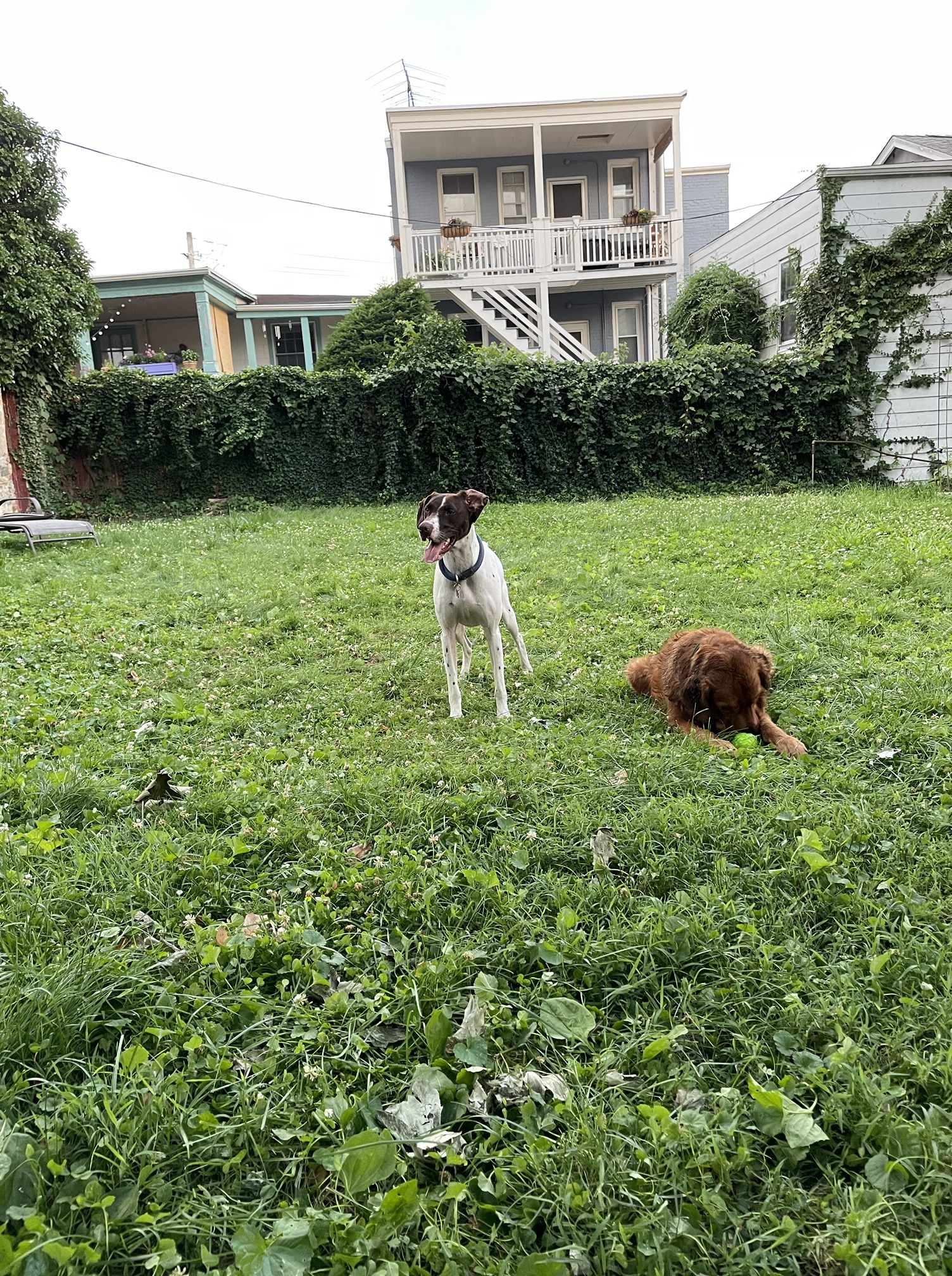
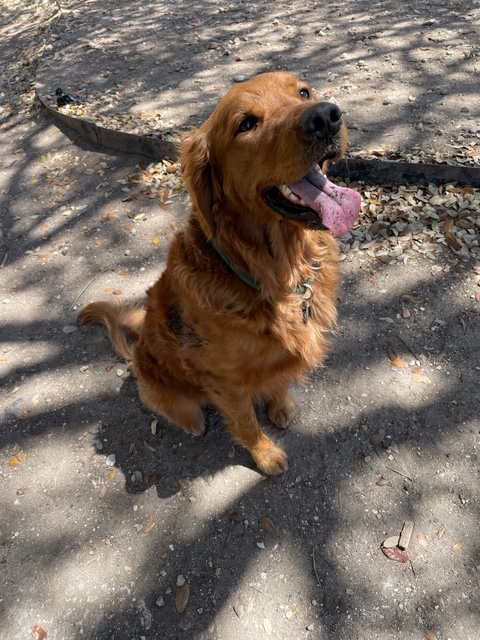
Or people temporarily in possession of granddogs. Yes. Their actual, official humans are in Italy for the week, so Gus and Ottie are making do with us.

Magic hour. Rowley’s Bridge.

Nice trail if you happen to like white mulberries.

Swamp white oaks.

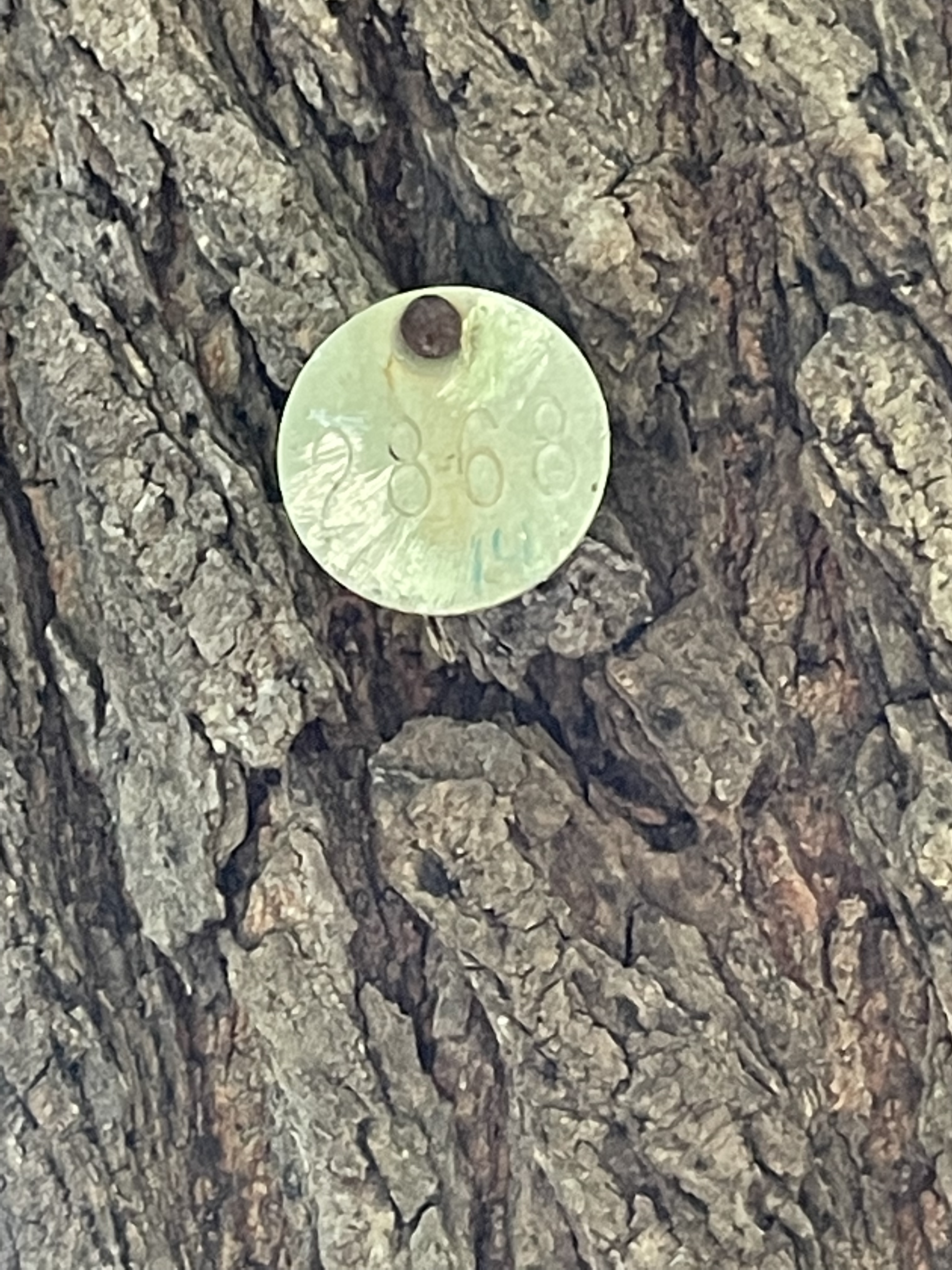
A sugar maple mysteriously tagged long ago.

We buried a dog here once. Grave undisturbed, good to see.

A stand of mature osage orange trees, probably celebrating their millionth birthday. No production yet this year, of course.

Maclura pomifera is not actually an orange at all, though its oversize pimply fruits do resemble citrus. It is linked more closely to the mulberry. Native Americans preferred its wood for war clubs and bows, so much so that they would travel many miles to harvest the trees.

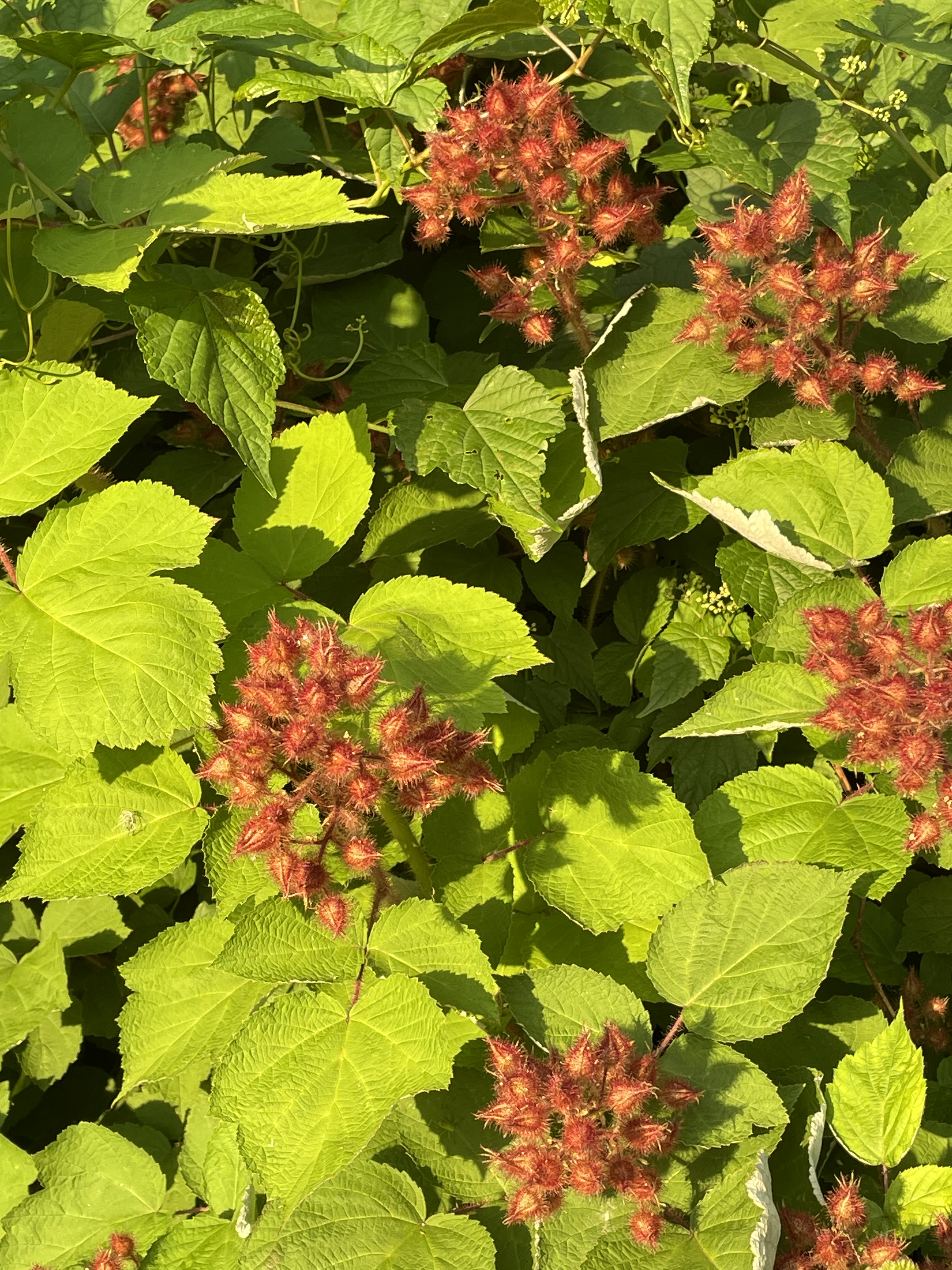
A nice place to pick raspberries, now still holding tightly to their promise.

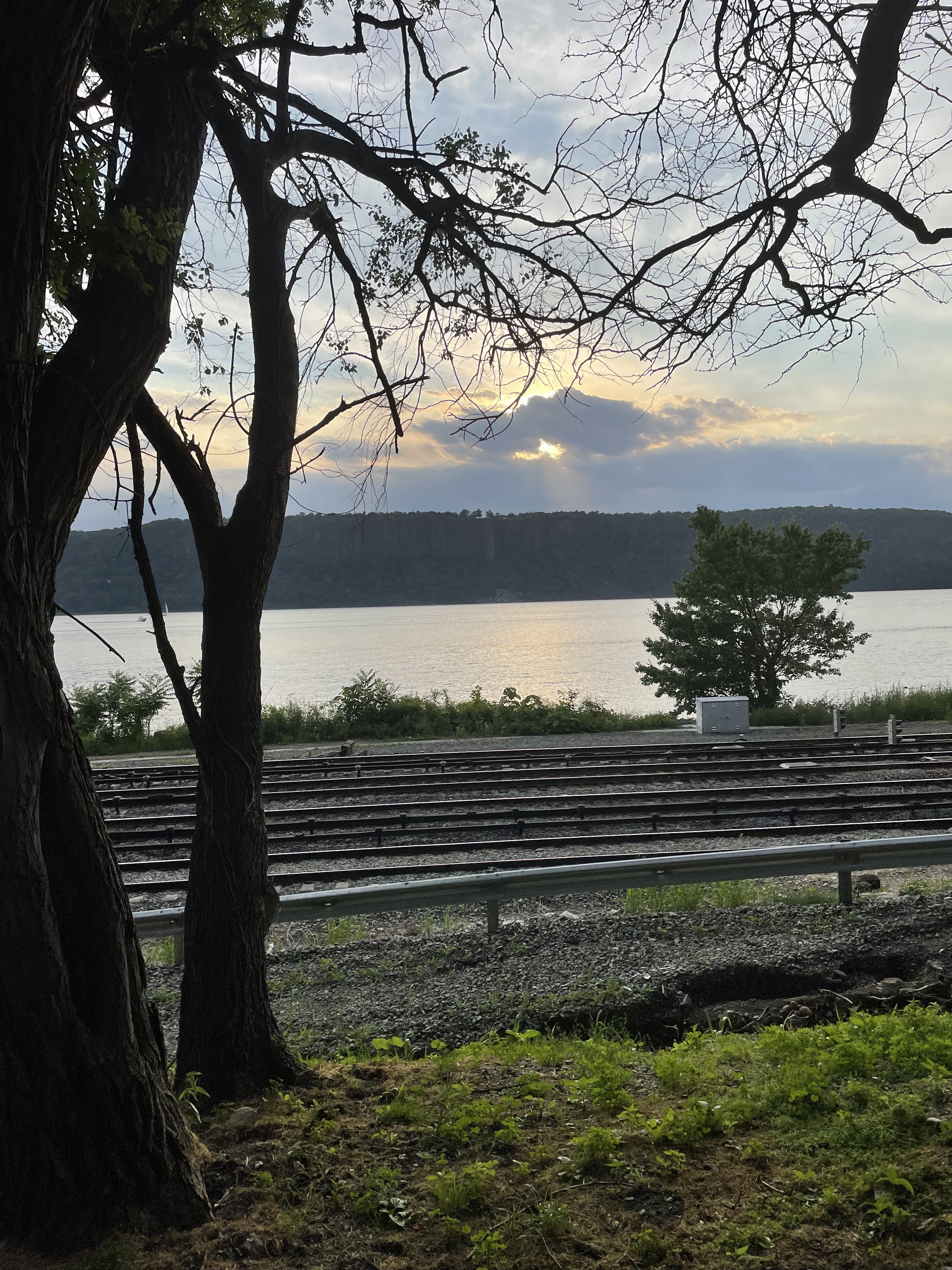
The Hudson, majestic. A word coined specifically to describe the Hudson.

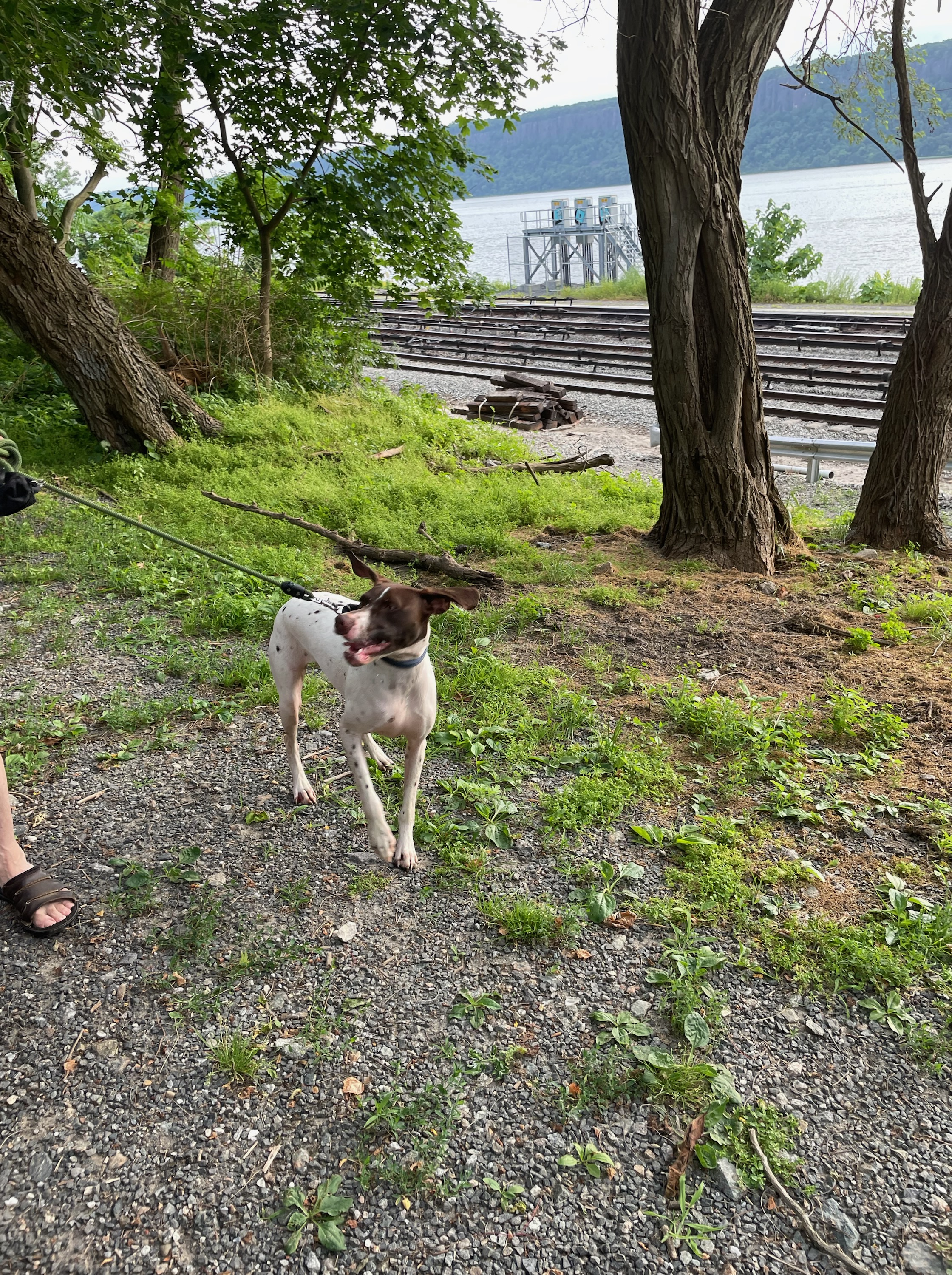
Tracks looking very Stand By Me.

I’m pretty sure we once parked here to speak of things that matter.

A nice place for a Golden mud bath in a filthy stream.

Just a start if you are a German short hair. Luck is what happens when preparation meets opportunity, according to  Seneca. Apt words for dog ball chasing.

Back at home for more wind sprints under the sycamore maple. Optimism is a perfectly legitimate response to failure. Another quote applicable to ball chasing from another sage, Mr. Stephen King.

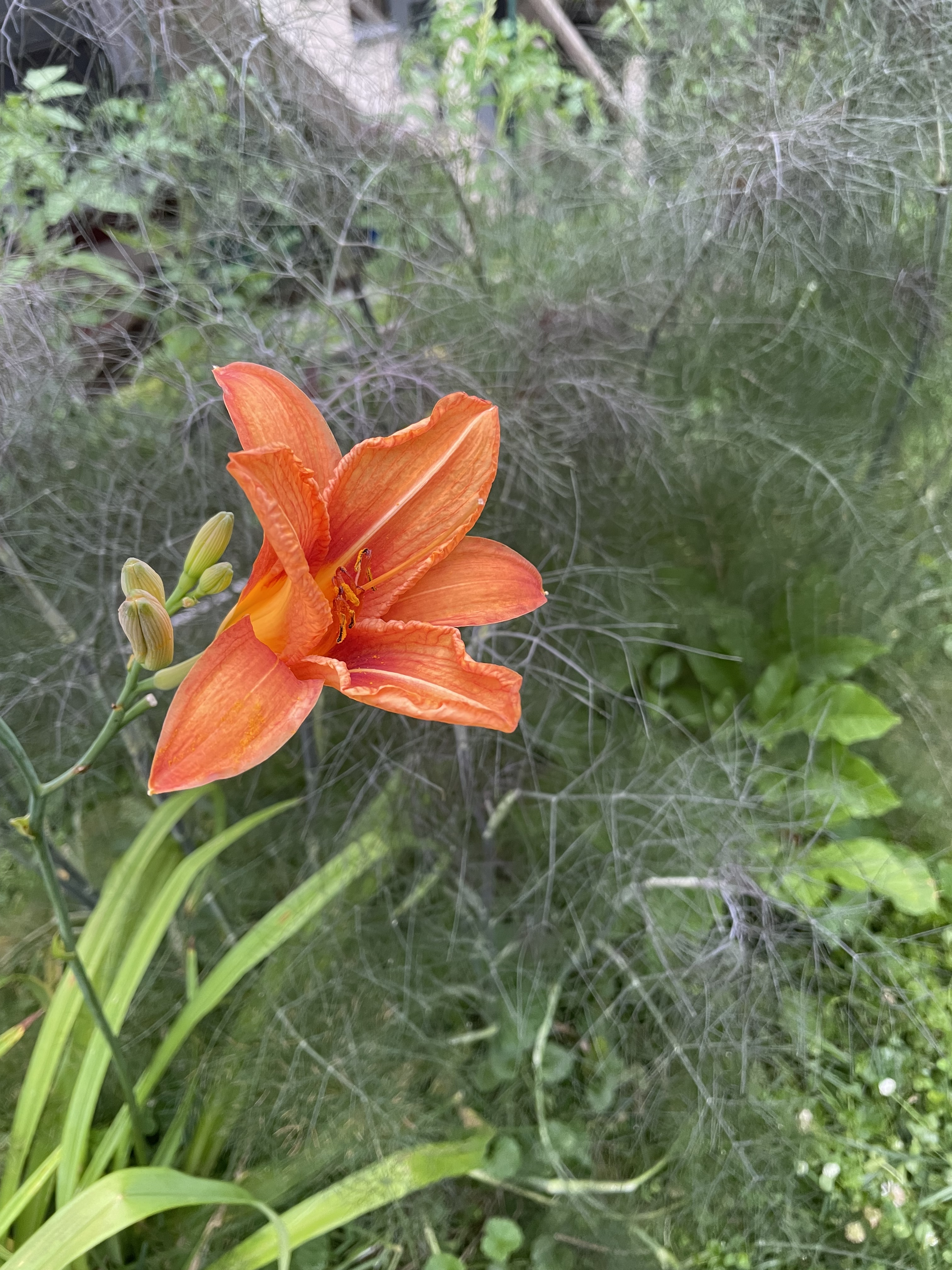
Why not stop and smell the tiger lily blooming out of a patch of fennel?

It’s a granddog’s life. Food, water, a ball chase at magic hour. Soak up all the mud while you can.

2 Comments

Filed under Jean Zimmerman

Can a flower speak to you?

I think it’s possible.

Standing in Floral Park, Queens, under the canopy of Lady Linden, I’m distracted by the  perfume in the air.

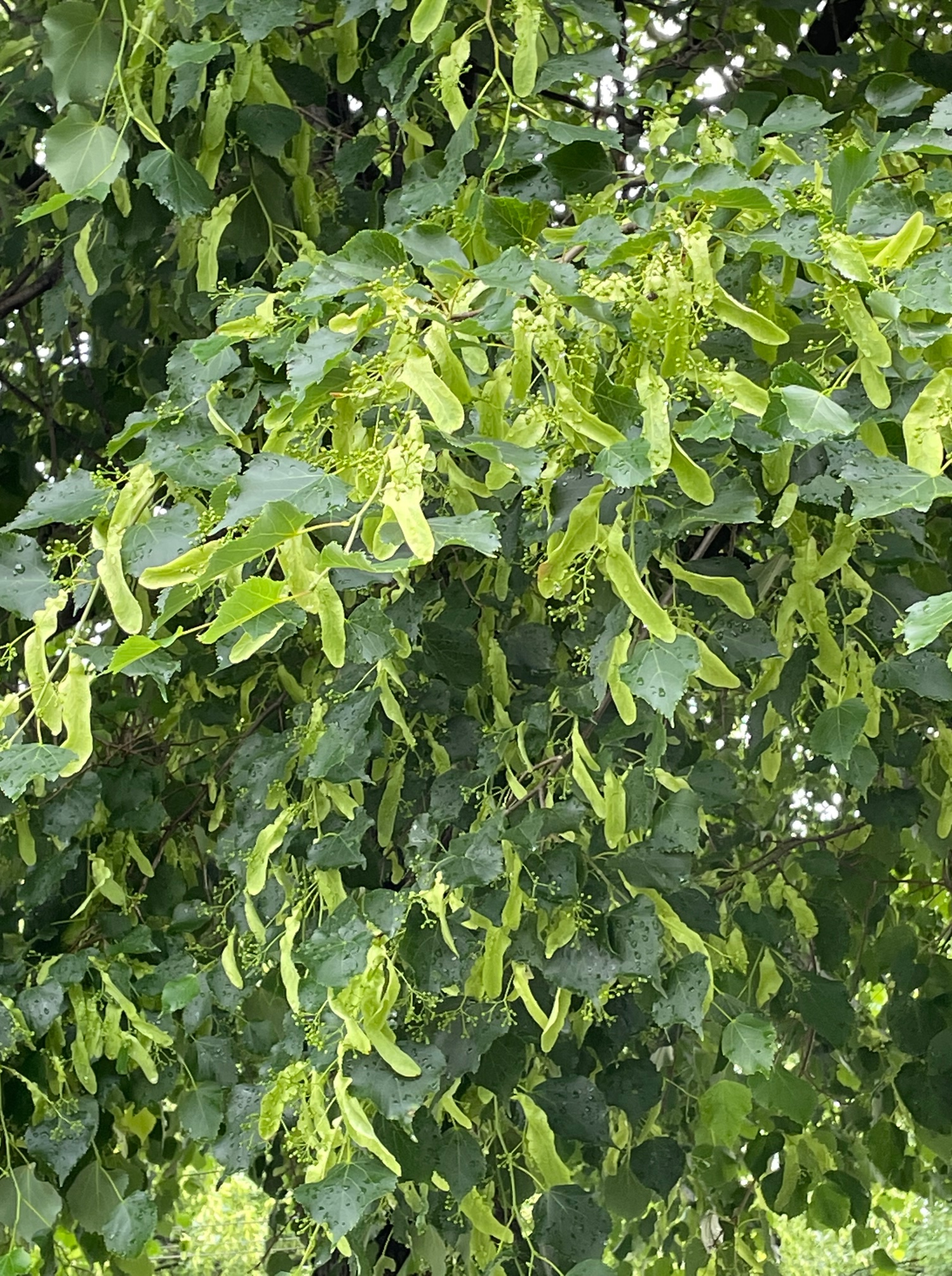
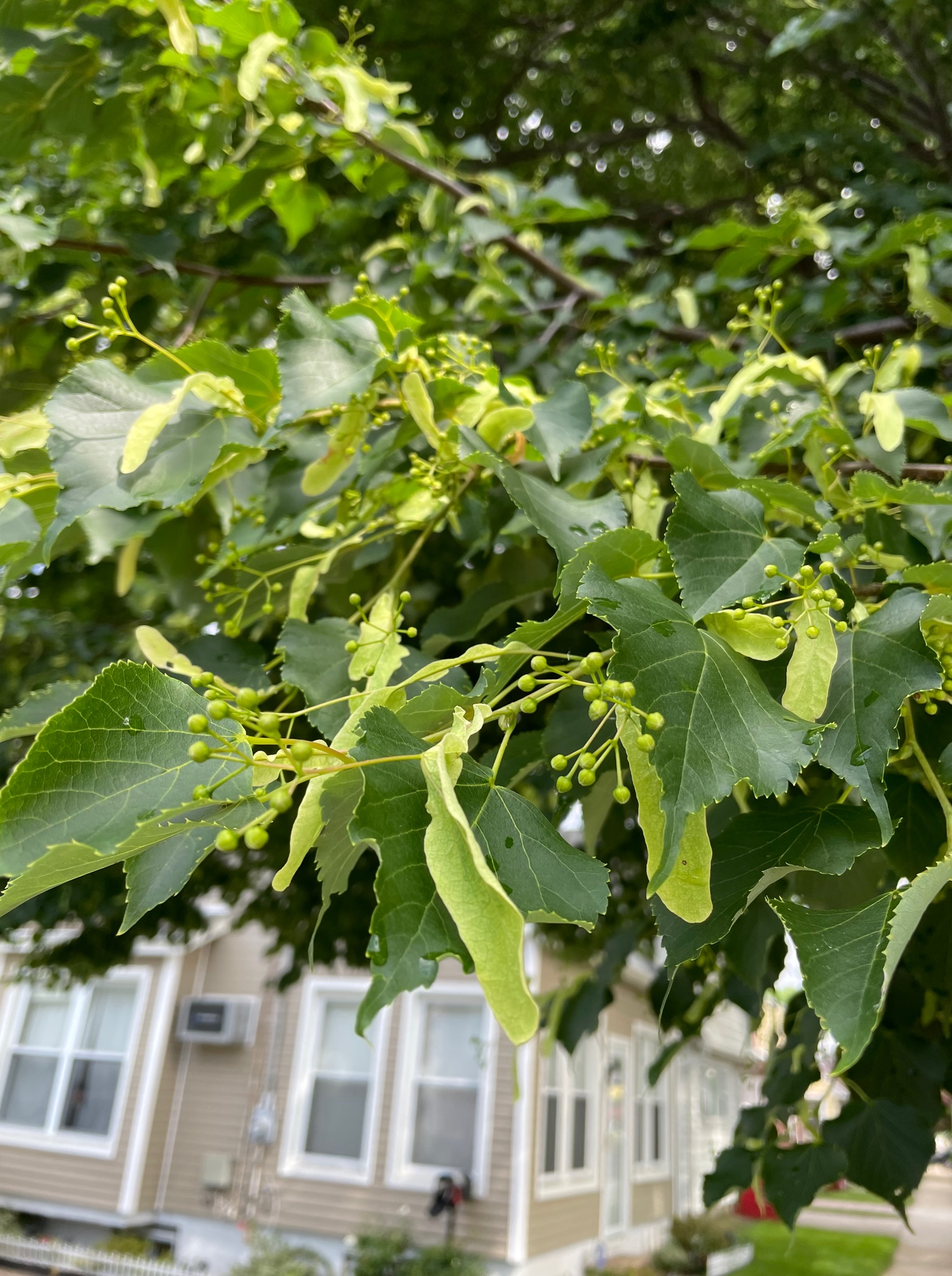
It takes something to be distracted in the shade of a linden, especially at this time of year, when the heart-shaped leaves (cordate, if you want the technical term) have materialized and you can see the lighter colored bracts hanging all over the trees like golden tickets out of Willie Wonka. Few seem to agree about the purpose of the mysterious linden bracts, which are actually a kind of specialized leaf. Do they exist to channel rainwater away from delicate buds and flowers, do they attract bees, are they some kind of wing to carry seeds away?

Lindens are magical — in ancient mythology, tilia symbolizes faithful love, and is more currently believed to neutralize negative energy. The edible flower is a sedative. Its fragrance is also seductive, but flowers here haven’t yet bloomed… so what smells so good on the streets of Queens? It could be the curry cooking in someone’s house, as I watch the Sikhs go about their business.

Yes, here there are plenty of Norway maples and honey locusts—weed trees — and pin oaks (no tree looks lovelier silhouetted against the sky).

Even some Japanese pagoda trees in these cramped New York City tree pits. Take that, Bronx Botanical Garden! Where we’re working I see a baggy, saggy old London plane, sheltering a seedling in its crook.

You might think it has seen better days, but I would assert this actually is this tree’s better day, perhaps its best, the distinguished old grandmawmaw, queen of the Queens block where Whitney Avenue meets Bryant Avenue, no doubt rooted here long before the tickytacky abodes sprung up in the neighborhood.

But what is so sweet about the air today? I looked around and then I crowdsourced some Petal Pushers I know to find out the ways in which flowers have spoken to them.

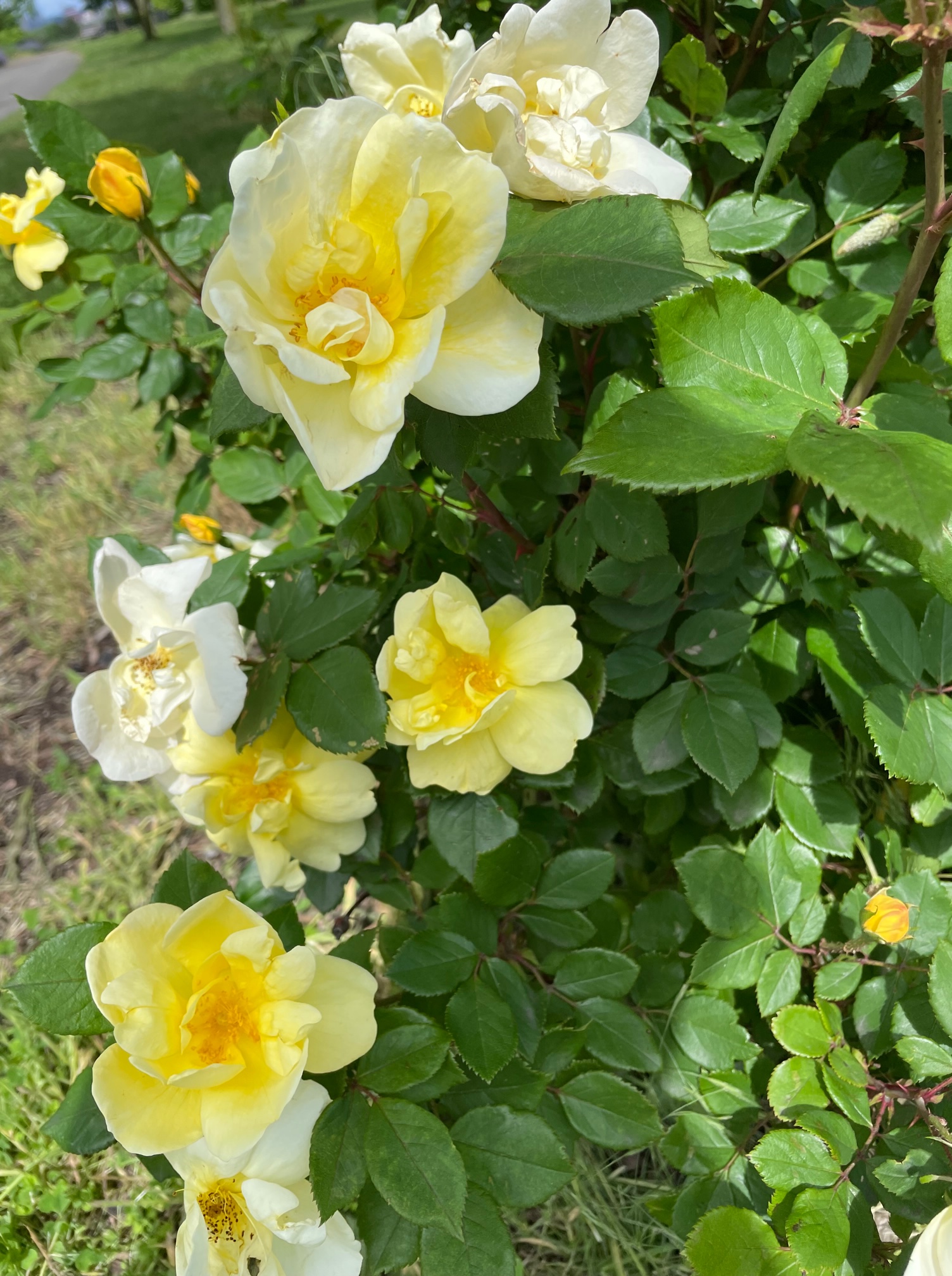
A lot of our passions seem to come down to bouquets. The yellow sweetheart roses in my wedding bouquet, a memory that blooms every time I see a yellow rosebush.

Lily of the valley, noted by one Petal Pusher as the bouquet she loved passionately but was denied when she got married because the flowers were “too fragile,” though she knew her mother had held them as a bride. Another Petal Pusher told me she was obsessed with the lilies of the valley in her yard when she was growing up, remembering leaning over them to inhale.

The lilacs by the railroad tracks one Petal Pusher used to gather for his mother: nobody cared how many I picked, he says.

I remember as a teen being so captivated by the scent of honeysuckle that I searched out the essence of honeysuckle perfume and dabbed it on, drowning pleasantly in its fragrance.

I always wanted to grow allium, the giant onion, but never have. Once upon a time, when we lived in a farmhouse in an upstate apple orchard, I used to patronize the garden of one Mrs. Yurg — she sold rose plants and day lilies, and visiting her you’d wind up chatting over a bucket of day lily plants swimming in a cold bath.

Some Petal Pushers cherish flowers that they associate with a loved one no longer with us. Trilium, for example, was the favorite of one Petal Pusher’s mother, whose passion for the wildflower was something the family would gently tease her about. White orchid, says another Petal Pusher, recalling the one that stood as a sentinel overseeing her husband’s hospital room at the end.

Flowers can speak of another time, a simpler time. Or perhaps they give a more complicated past some simplicity. The garish spectacle of tulips in a Dutch field, in the recall of someone who saw them on a teen tour of Europe. We passed fields and fields in every color of the rainbow. I swooned!

The iris farm across the street from where one Petal Pusher lived in college, into which he slipped on hands and knees so no one would see me to gather floral displays for dinner parties.Swanky!

The lotus blossom, which signifies resilience, on account of the troubled adolescents this Petal Pusher works with.

Childhood memories. Someone fancied Rose of Sharon: We would wait until a bee went deep into the flower then close it up.

Still another Petal Pusher reminisced about the wild purple lupines that grew at the edge of her grandparents’ land, and how she used to pretend I was either a Pilgrim or a Witch, and the lupines were my food or magic elixir.

I recently paid a visit to a border of peonies I walked by every June on my way to high school. Peonies, I have often thought, are the perfect flower. The ones I remembered had vanished, and I guess the new residents preferred the tired old standby, arbor vitae. Undeterred, I called upon a church where I knew they’d be on display, and I wasn’t disappointed. There they were, nodding after the rain.

And only one pink specimen in bloom, a promise of what’s to come.

Complete with a moment of inspiration.

In Queens, under the tilia, it is the rose that permeates the air, framed as it is by the chain link.

A rose is a rose is a rose – something of a misquote, in fact, from Gertrude Stein’s 1913 poem Sacred Emily.

She really said, Rose is a rose is a rose is a rose, somewhat less intelligibly, referring to a person named Rose, but more the way Stein rocks it. Later, as the quote became known, she commented: Now listen! I’m no fool. I know that in daily life we don’t go around saying ‘is a … is a … is a …’ Yes, I’m no fool; but I think that in that line the rose is red for the first time in English poetry for a hundred years.

The point about roses is it doesn’t matter the location, they’re always superb. Yes, as I said, yellow sweetheart roses. But even the delicate pink but somewhat frowzy ones shine against the vinyl siding in Floral Park.

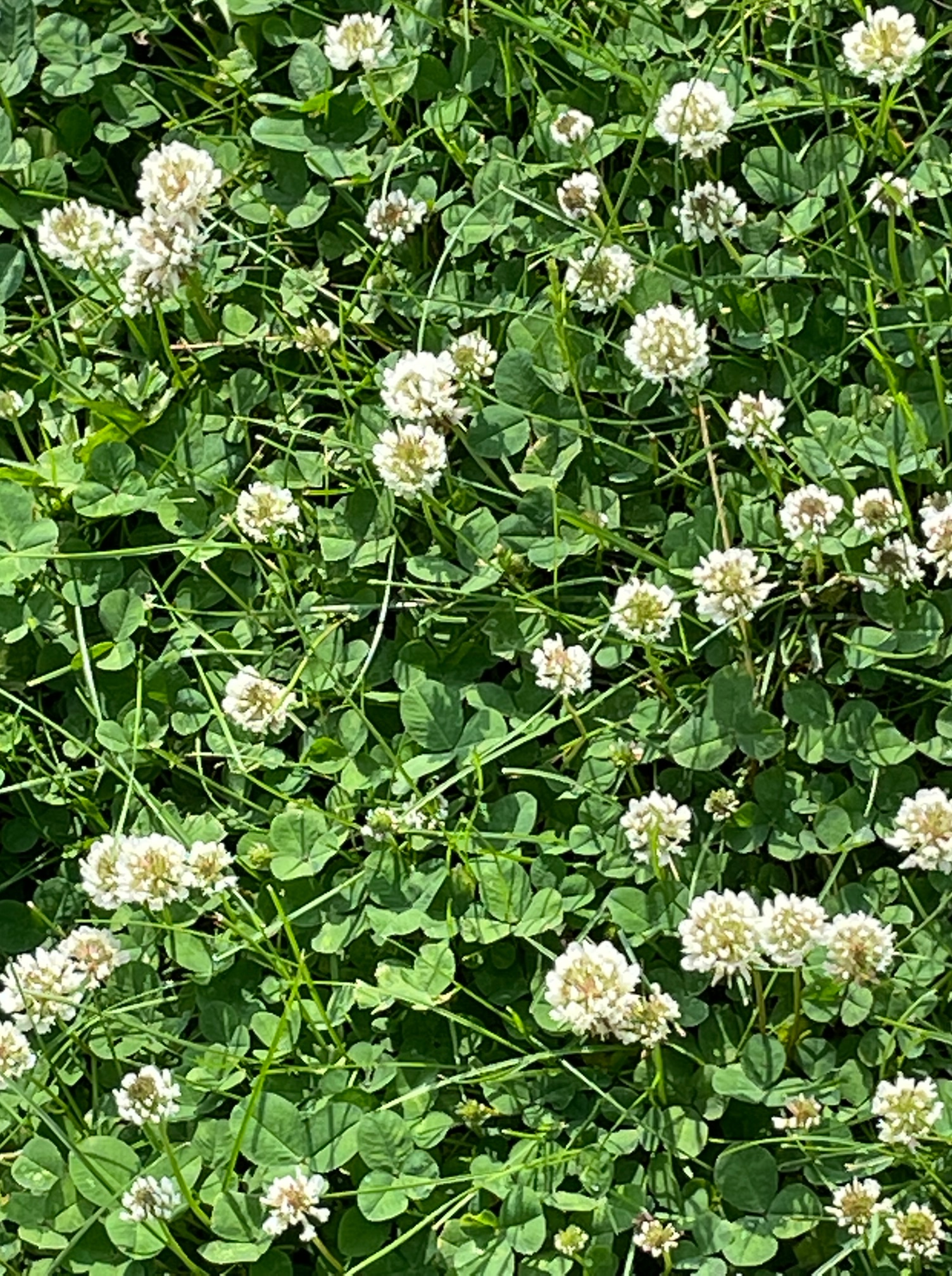
It can’t only be the roses. Is it the clover? Crush one between your fingers and it releases the scent of honey.  A whole yard of clover – why does anyone plant turfgrass?

They are truly bellyflowers, the term another Petal Pusher shared that is used by wildflower fanciers to denote blossoms you have to get down low to see, preferably with a jeweler’s loupe. Don’t possess a loupe? No time like the present.

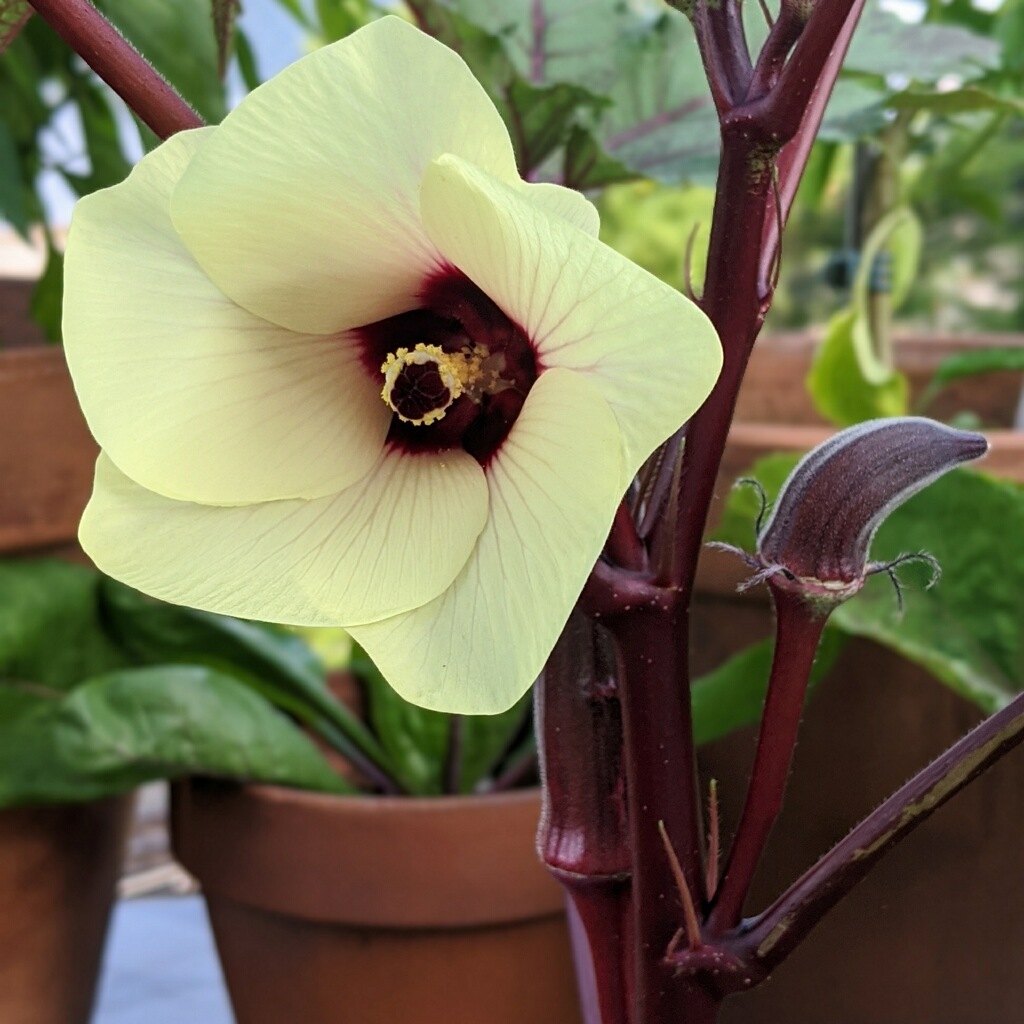
Another flower lover prefers the gigantic fleshy flowers, like the okra blossom she grows on her deck.

Remember flower power? Such a cool expression. Coined in 1965 by American poetry icon Allen Ginsburg and inspiring countless daisy head garlands, not to mention the practice of inserting daisies into the snouts of National Guardsmen’s weapons.

Generations later, powerful flowers survive in Queens, between the curry and the bracts.

They do speak to those who listen.

Leave a comment

Filed under Jean Zimmerman

Today is the finest day of the season

and possibly of the year, and maybe in the history of the world, and I am going for a walk with my friend Barbara, an author, the type of person who can use the word lyrical in a sentence and get away with it.

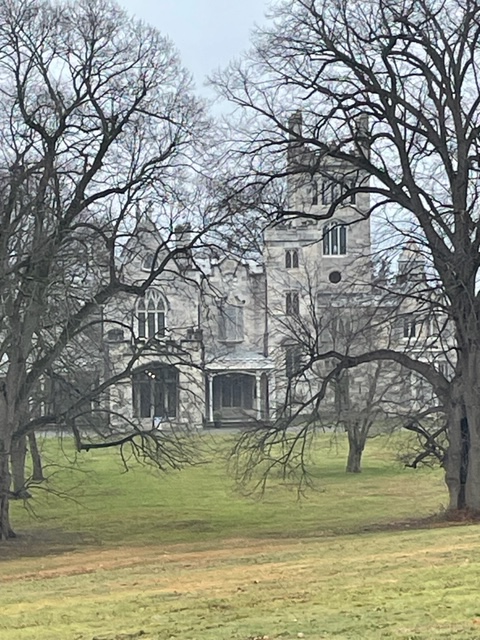
I always like the Lyndhurst estate, acres of lawn and statuesque trees surrounding a faux castle once belonging to robber baron Jay Gould.

The dogwoods dazzle. Some people find the pink ones too garish.

 I would agree that the white blossoms appear more classic.

Note: dogwood flowers are really not flowers at all, but bracts, a kind of leaf. When the cherries and apples and redbuds have faded and the dogwoods step up, I am glad to have the last pink trees of the season.

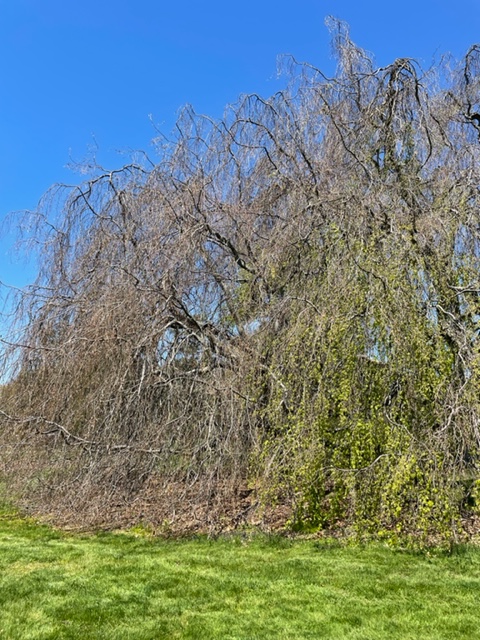
The weeping copper beech has not yet leafed out. It shows its bones,  a ruddy red.

In her intricate book about the beech, Casting Deep Shade, C.D. Wright tells us that the druids grew wise eating their nuts. And that in dreams, the tree signifies both wisdom and death.

I love the inscribed bark of the trunk, the place of bold identity statements and love proclamations.

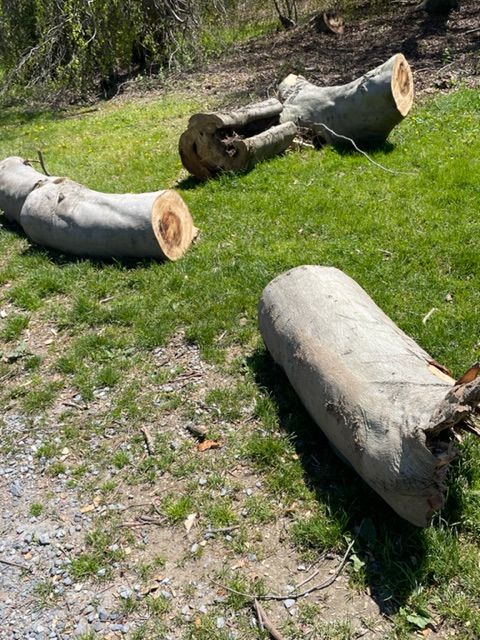
Another senescent one on the estate  had to go, and its fulsome branches lay tumbled in the sparkling sunlight.

Magnolia shows no sign of blossoms to come, now all waxy leaves.

We enter the private drawing room of a gargantuan old linden.

Its heart shaped leaves so delicate against the sturdy old branches.

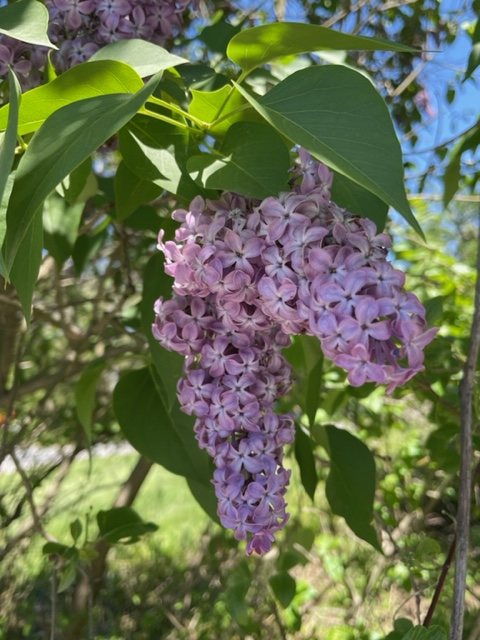
Everything smells incredible. The lilacs. Lilac wafts on air beautifully, though its syrupy scent is somehow a bit chemical. I remember a bank of lilacs that towered over  a lawn near a cabin we lived in when we first were married, taking it for granted, believing that around every corner would stand a bank of lilacs.

We inhale the fresh cut grass. That classic smell, which seems like simplicity itself, is actually an airborne mix of carbon-based compounds called green leaf volatiles, or GLVs. Plants often release these molecules when bruised by insects, infections or mechanical forces — like a lawn mower. GLVs are small enough to take to the air and float into our nostrils, and sometimes they can be detected more than a mile from the place where they originated.

I’m not big on lawns, but experts estimate that there are something like 40 million acres manicured grass across the United States, and mowing becomes our best chance to encounter that incredible smell. According to scientists, people who live near tea plantations in China might get the same feeling from the scent of the tea harvest.

The only aroma to rival that of cut grass is petrichor, the cool word for the way the earth smells after it rains.

The term was coined in 1964 by two Australian scientists studying the smells of wet weather, and it also has a scientific basis, derived as it is from when chemicals produced by soil-dwelling bacteria known as actinomycetes are released. These aromatic compounds combine to create the pleasant petrichor scent when rain hits the ground. Related, at least in terms of glossing some of the finer points of rain, the Japanese have a word, potsupotsu, that describes the sporadic raindrops that you see (or feel) when it is just about to start raining.

Now that’s lyrical.

Leave a comment

Filed under Jean Zimmerman

The thing about Arbor Day

is that while for most folks it’s about planting a few symbolic trees, its reach is immense.

I attended a celebratory event in White Plains on April 29, at Highlands Middle School, produced by the White Plains Beautification Foundation, a group that believes “the beautification of our City lifts the spirits of all who live here, work here, or who are just passing through.” What grinch could argue with that?

Babies bounced.

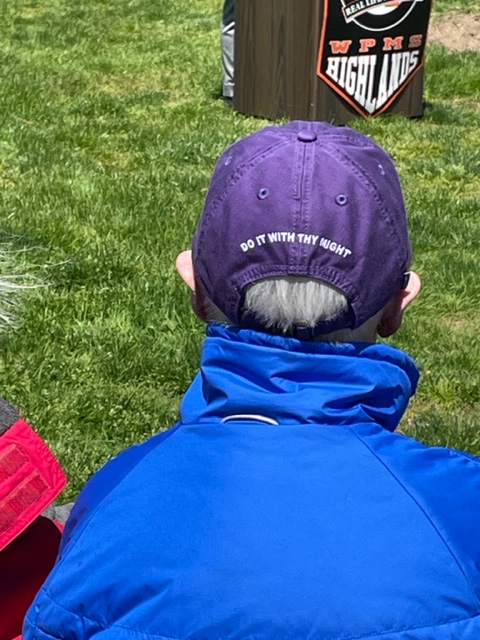
Gentlemen gave the proceedings their undivided attention.

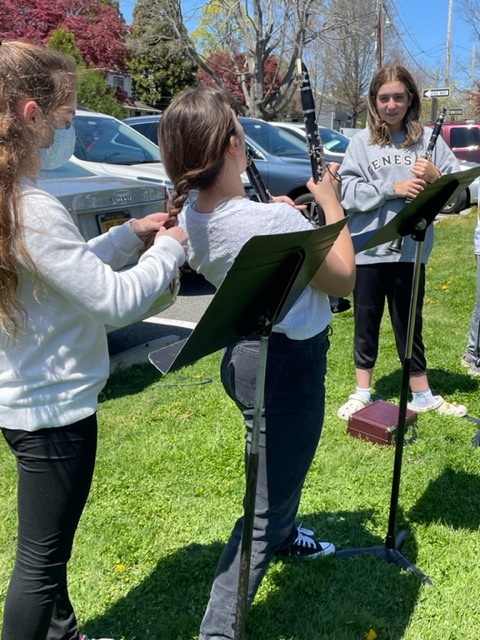
The ceremony included remarks by White Plains’ mayor and the commissioner of public works, and also a speaker subbing for the school’s principal in his absence (he had something more pressing to do?). The jazz band stepped up, after the requisite teenage hair styling.

Everyone in a fine mood on this chilly April afternoon. Even the stalwart edifice of the school building received its share of compliments from the podium.

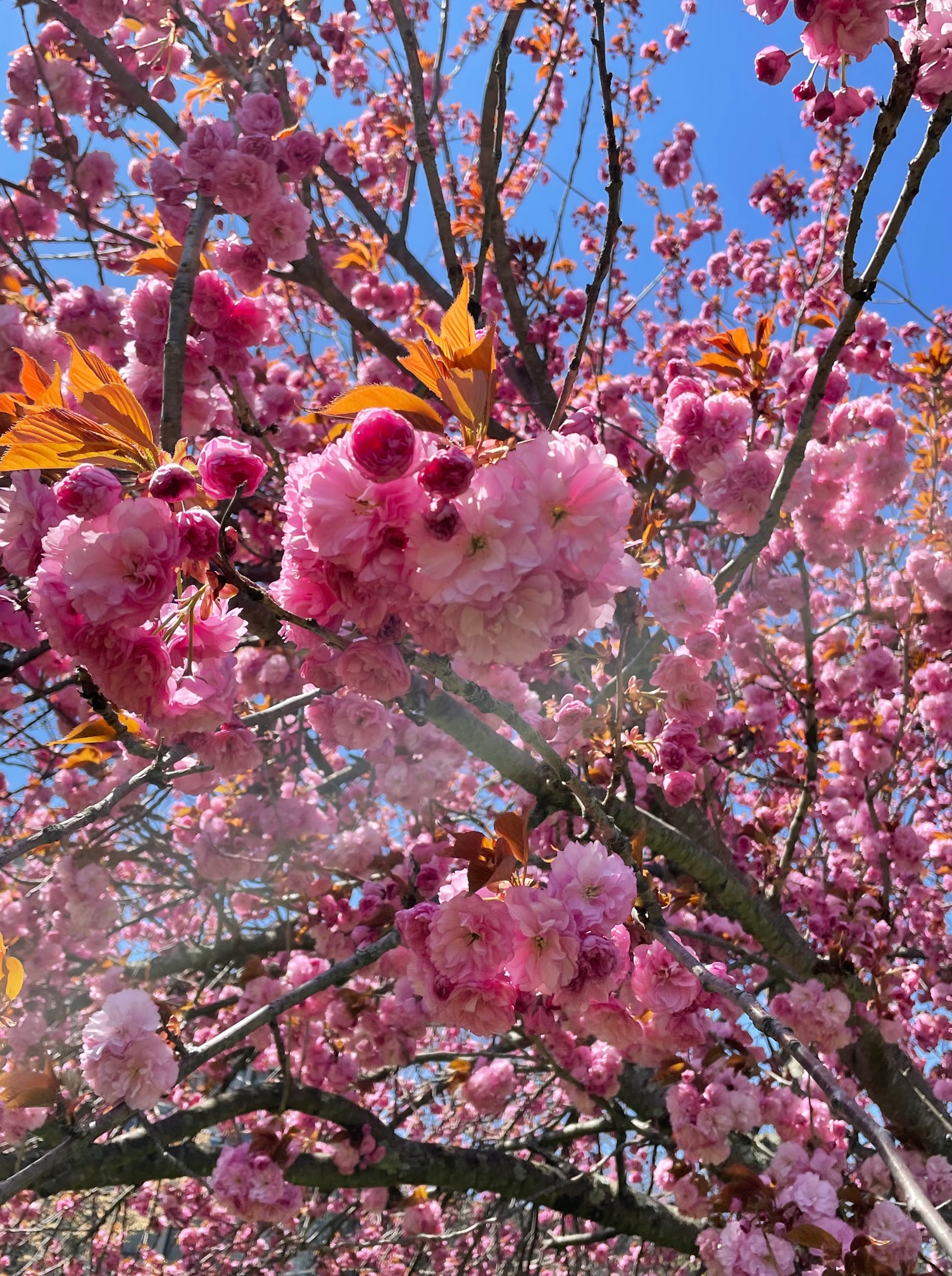
The grounds seemed to have been prepped for the occasion, with bright and shining pink-blooming trees all around. Is it my imagination, or is this the finest spring on record for springtime tree flash?

Two trees were already in the ground, so no one had to get their shoes muddy: an eastern red cedar and a black gum, one dedicated to a beloved teacher nicknamed Mr. Bill and the other to a generous-minded graduate of the school district who owns a successful auto body shop in the city.

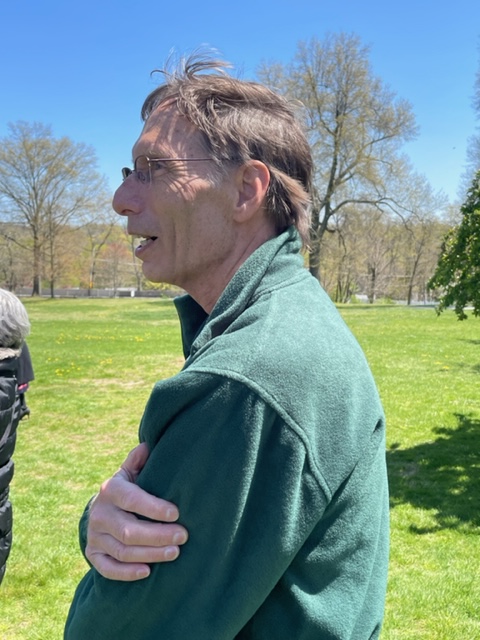
My colleague George Profous, a genius forester with the New York State Department of Conservation, attended. We cochair a committee for a group called ReLeaf, whose purpose is to educate and advocate for trees.

There are too many Arbor Day functions around the lower Hudson Valley for George to visit all of those whose municipalities he has assisted, but his presence here was gratefully acknowledged.

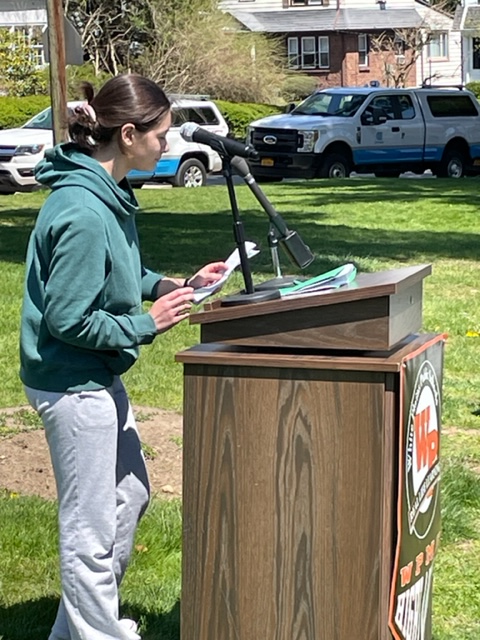
Finally, a literary contribution, from student and no-doubt future Certified Arborist Olivia Tuzel.

She had clearly put a lot of time and thought into the subject.

Trees, what more could they be?

Oxygen providers, contributors to cozy fires

And perhaps nothing more than suppliers

Within the grained surface, lies more than what we see

But our greed envelops our cravings, blinding us from an everlasting fee…

And so on, for six meaningful stanzas.

I liked the last one.

All we need is devotion and effort to bring change

Along with a little bit of hope

So that future generations can tell their children,

“No need to fret, that part of our past lies only as an educational anecdote.”

In 1882, the first American Forestry Congress convened in Cincinnati’s Eden Park, in conjunction with the first National Arbor Day tree planting, attended by 25,000 people. Saplings named for prior U.S. presidents got planted, their roots moistened by children wielding watering cans.

“The best time to plant a tree was 20 years ago,” runs the Chinese proverb. “The second best time is now.” 

How else to address the macro issue of climate change? Start on a micro scale. Plant a tree. Even a tiny seedling contributes to reforestation. It seems every organization is putting a million, a billion, a trillion trees in the ground, an impulse that serves as a poetic if not totally logical reaction to the recession of actual forest lands. I know New York is beefing up its already ambitious arboricultural effort. The ever-worthy Arbor Day Foundation has fostered the planting of nearly 500 million trees in more than 50 countries around the world.

Even the Girl Scouts (or of course the Girl Scouts?) have climbed on the bandwagon, pledging that they will plant five million trees in five years. Middle-schoolers track the trees they plant on line to earn a Girl Scout Tree Promise patch.

Arbor Day can be every day – at least in the cool weather of spring or fall. So go ahead, get your shoes muddy.

Leave a comment

Filed under Jean Zimmerman

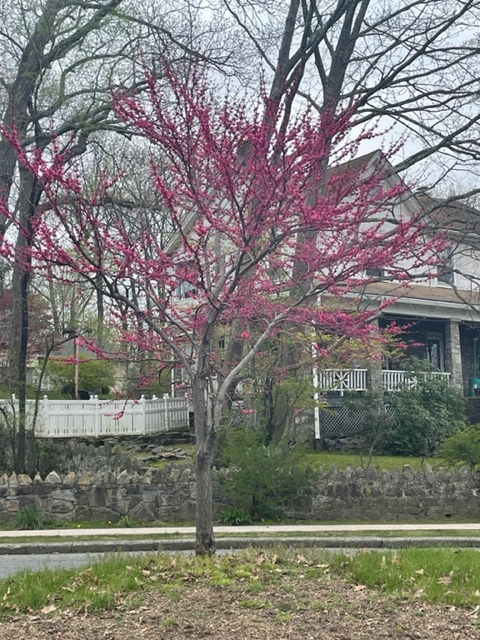
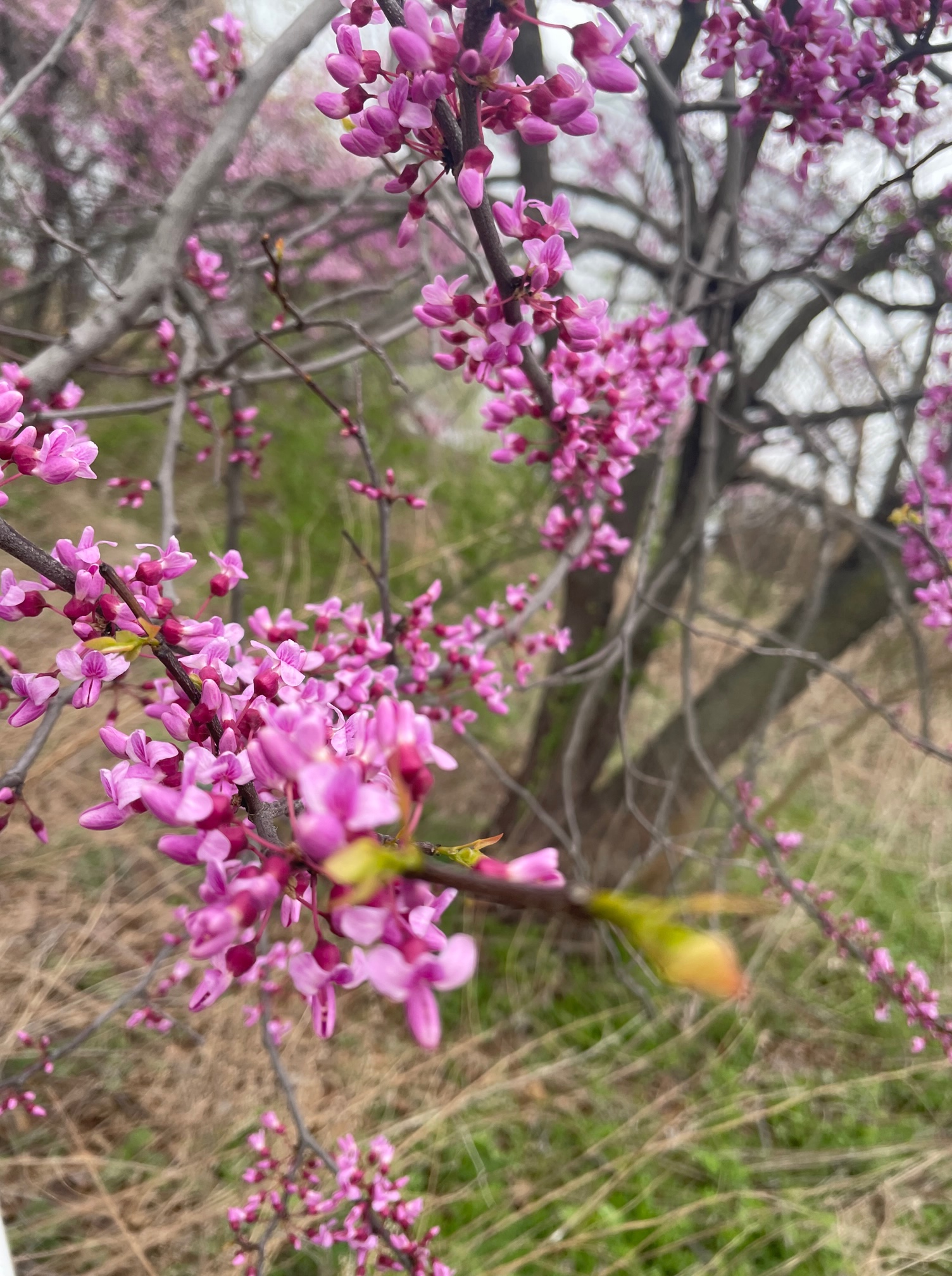
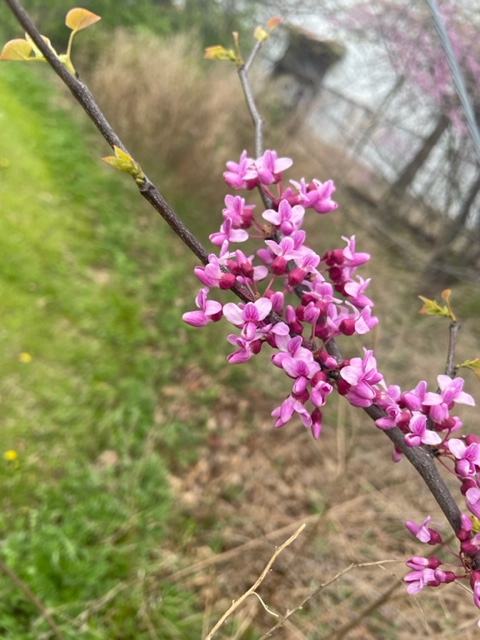
Weedy but wonderful redbud

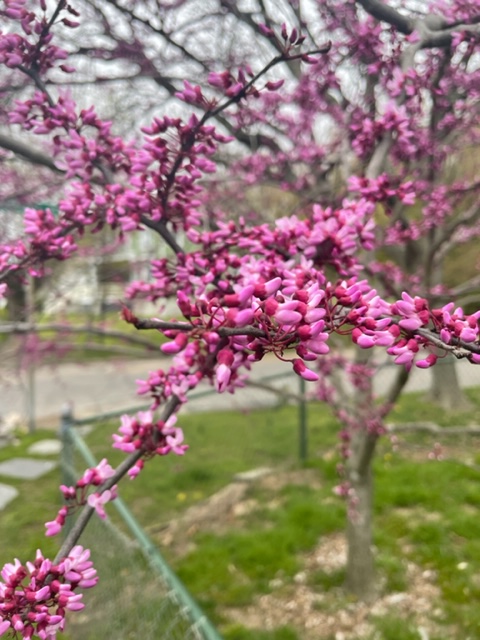
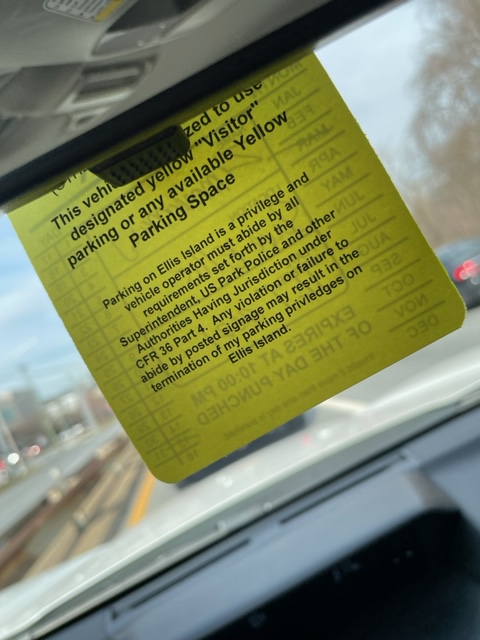
buds out at the end of April-early May, strutting its stuff alongside highways and abandoned roads. Then it explodes into bloom. There are a few I pass going to and from Ellis Island, in Liberty State Park.

No one pays them any mind.

But the tree also plays well with others, at home in a civilized suburban yard, behind a chainlink fence.

I love this specimen because of the magical way its blossoms stray from the expected place, bursting forth straight out of the bark on its branches and trunk, like the one I caught alongside a busy street in Austin. The botanical term for this habit is “cauliflory,” and I think I like it because it is just so preposterous.

Redbud’s fuchsia is a color unparalleled in nature. Soon it will have heart-shaped leaves.

Ezra Pound wrote of “petals on a wet dark bough.”

That’s redbud, ravishing and ephemeral. Just like spring.

1 Comment

Filed under Jean Zimmerman

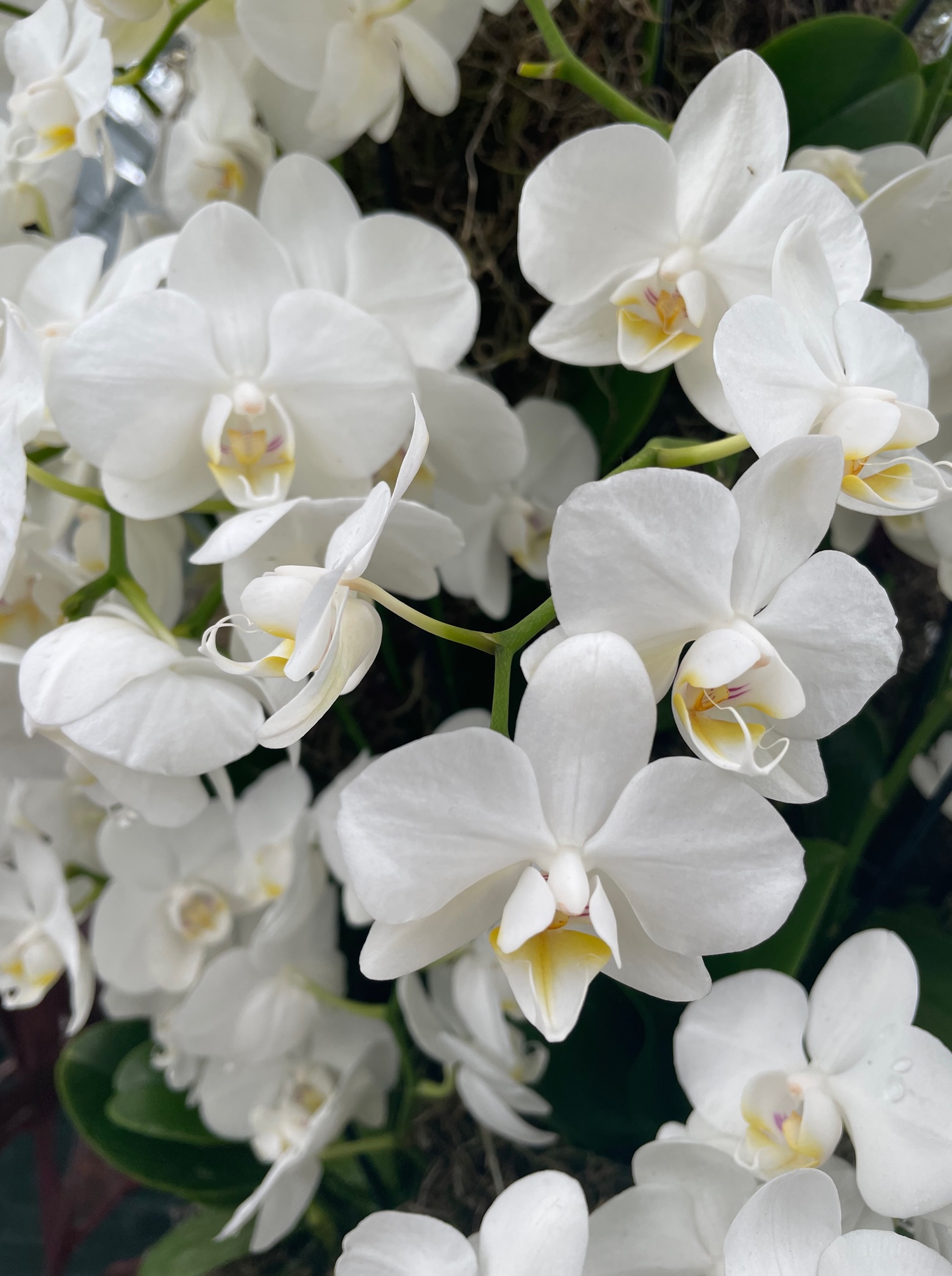
My father fell for an orchid

late in life. It was a simple series of white flowers on a stem, nothing fancy, yet he insisted that it accompany him from the hospital to his room in the Care Center. A friend had brought it as a gift, and it somehow spoke to him, he who had never had a thought for plants earlier in his life. Orchids can be magical.

The ones at the New York Botanical Garden’s annual orchid show practically knocked me to the ground.

I was lulled by the piped-in yoga-class soundtrack. Then reawakened again and again by the five greenhouses’ worth of tropical specimens.

How can something be unique yet generic, astoundingly beautiful yet ho-hum, run of the mill? That was my honest assessment of the oxymoronic goods on hand.

The orchids went on and on.

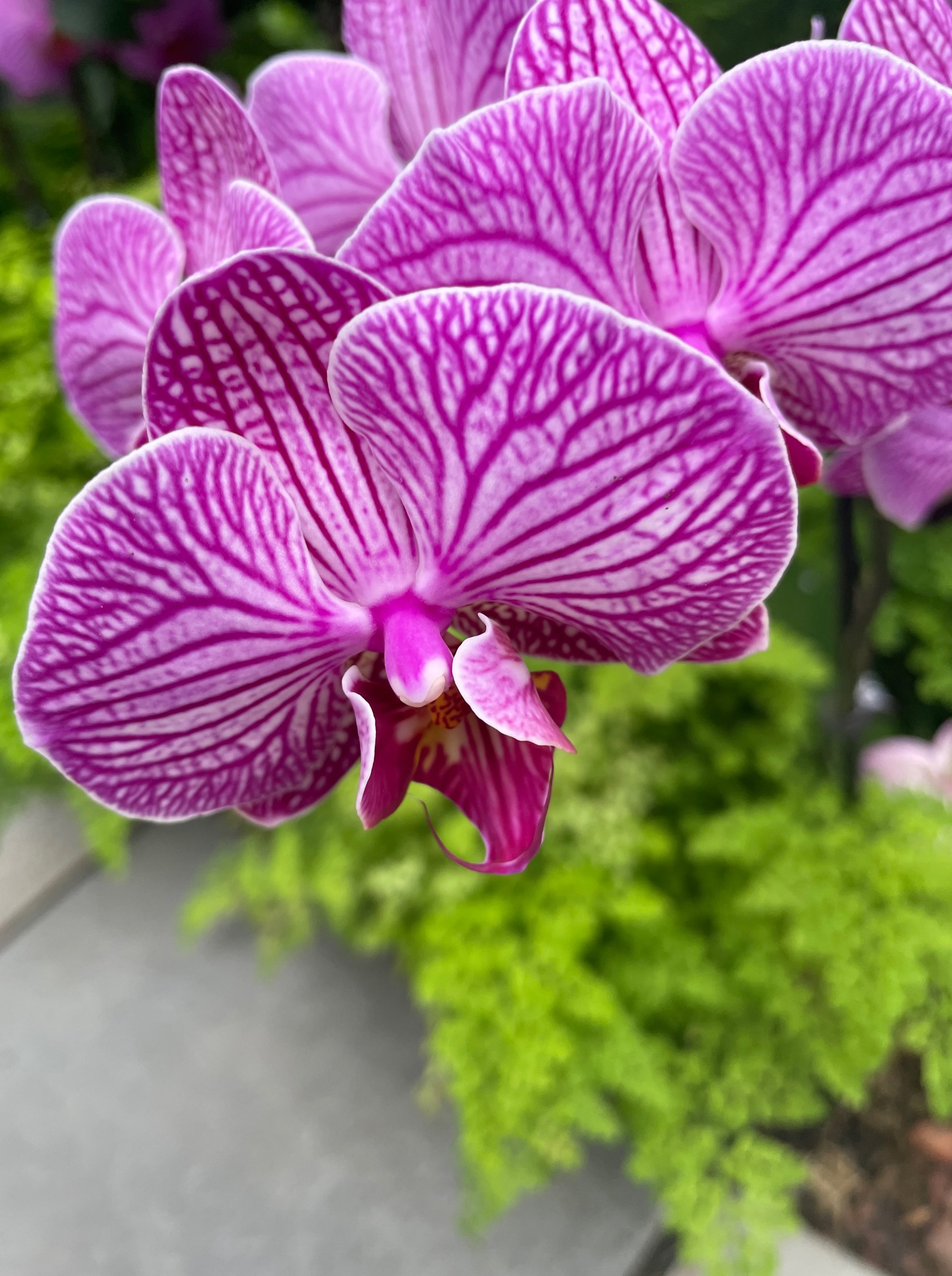
Moth orchids, ghost orchids, slipper orchids, rainbow orchids. Moonlit orchids, which attract nocturnal pollinators, and are also especially fragrant by the light of the moon.

Sugary.

Clownish.

Ever so slightly obscene.

A bit of TMI, thank you very much.

Easy on the signage, New York Botanical Garden horticulturalists! Sometimes I prefer my facts optional, at least when viewing the natural world.

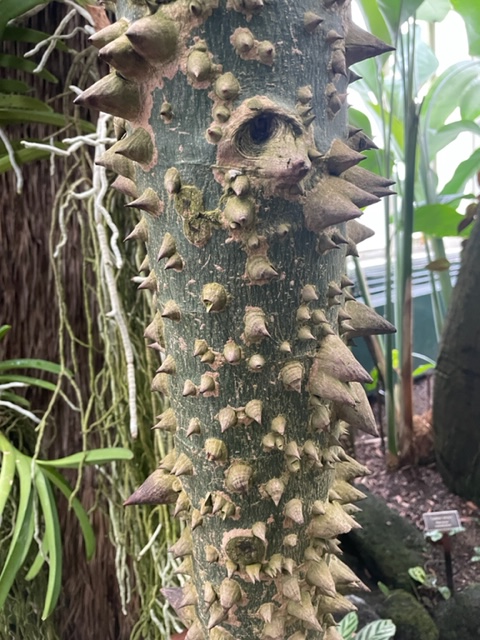
I found myself admiring other living beings in the vicinity, anything not obviously pretty, the ones with thorns, like the South American floss-silk tree.

Or the non-orchid plant that that presented itself in an extraordinary, almost indescribable shade of green – a jade vine, it grows only in the Philippines.

I was drawn to the womb of a tunnel that connected parts of the exhibit.

And my fellow visitors clicking, clicking, clicking, intent on capturing the essence of a particular flower. Human beings, cameras, nature, always fascinating. Note: it is impossible to take a bad picture of an orchid.

Outside, the catkins dangled from the April birch.

A prickly sweetgum seedpod lay nestled in the grass beneath its parent, a sweetgum tree not yet leafed out.

And the equally prickly human being waiting on our bench for the next tram.

The orchids are always going to be splendiferous, whether they come from the supermarket or the Enid Haupt Conservatory show. The ones I saw today made me realize how exquisite everything else is, too.

2 Comments

Filed under Jean Zimmerman

Life being somewhat complicated and challenging

at times, it is awfully good to focus on the basics: coffee, tacos, and dogs. Fortunately there is an abundance of all three in Austin, Texas, where I happen to be sojourning for several days. I knew good things were in store when I spotted the taco food truck actually inside the airport terminal. It was 11pm and the place was hopping. The millennials seemed all to be heading back from Las Vegas.

Nothing too weird yet, but I feel something could be about to spring up.

Until then, got a jump on the caffeine thing with a cosmic coffee, a spring specialty at Maud’s favorite joint that pairs cold brew with Mexican vanilla, orange honey and oat milk. Pretty decent. Next time might go for the root beer latte.

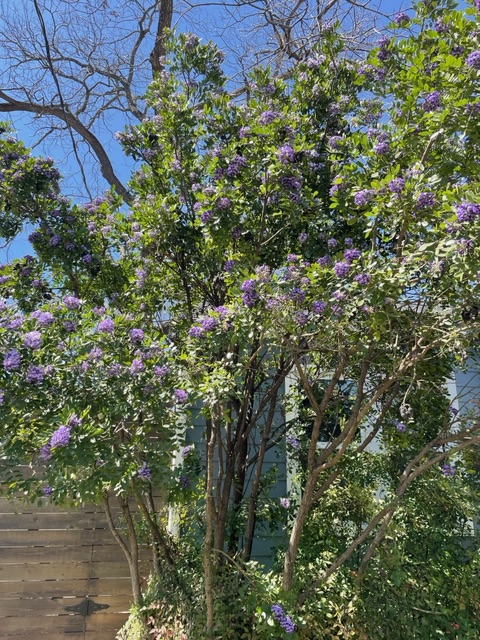
Texas mountain laurels have just come into bloom and it seems every little old fashioned bungalow has one out front.

The western redbuds are popping too.

2177

Now a latte and a stop at the Korean nail salon. The man getting a gel manicure next to me wants it to be known that he is getting a special design on each of his pinkies: a peace sign rendered in yellow and blue.

Not quite a Rothko, but very much in keeping with the spirit of the times.

Canines run free in the dog park except when they pause awaiting the flight of a ragged tennis ball.

I wish our lives had the simplicity of Fetch under the live oaks. Everyone here wears flip flops, so I got a pair. Ahhh, instantaneous simplicity.

Are you hungry yet? You’re in luck.

Criispy pork belly tacos with fried parsley and mandarin orange pico.

Extra fat included at no charge. Fingers are for licking.

Two of my favorites come intermixed in a dirty horchata–horchata and coffee, silly. You knew that.

Home again, home again. Baths and naps all around. The simple life.

No freak show.

Perhaps that will come later. It is Austin, after all. I feel we’re just gearing up.

1 Comment

Filed under Jean Zimmerman

The ghosts of immigrants past

congregate volubly at Ellis Island for those who would pay attention.

Some fortunate people enter through a back door bridge from Liberty State Park in New Jersey rather than the tried and true ferry.

If you insist on visiting the Statue of Liberty, fine. I’ve seen her enough and I’ll probably never scale the heights to the torch, even if it reopens. At Ellis Island there’s a nifty view of the Lady of the Harbor’s back.

But there’s a lot I find more thrilling. It’s good to stoke up with a humous and kale sandwich in a café thronged with high school students. Check out the ho-hum view out an ordinary window. Just the Freedom Tower, up close and personal.

But nothing at Ellis Island is ho-hum for long. The high-ceilinged, well-refurbished, shiny Great Hall offers a view of how some of our ancestors arrived in America. One in four of us, in fact, have some tie to an immigrant who arrived here on Ellis.

If you take the Hard Hat Tour on the unrestored south side of the island, be prepared for a different view.

And this is why I love it. You can feel the presence of the past. The walls breathe magic.

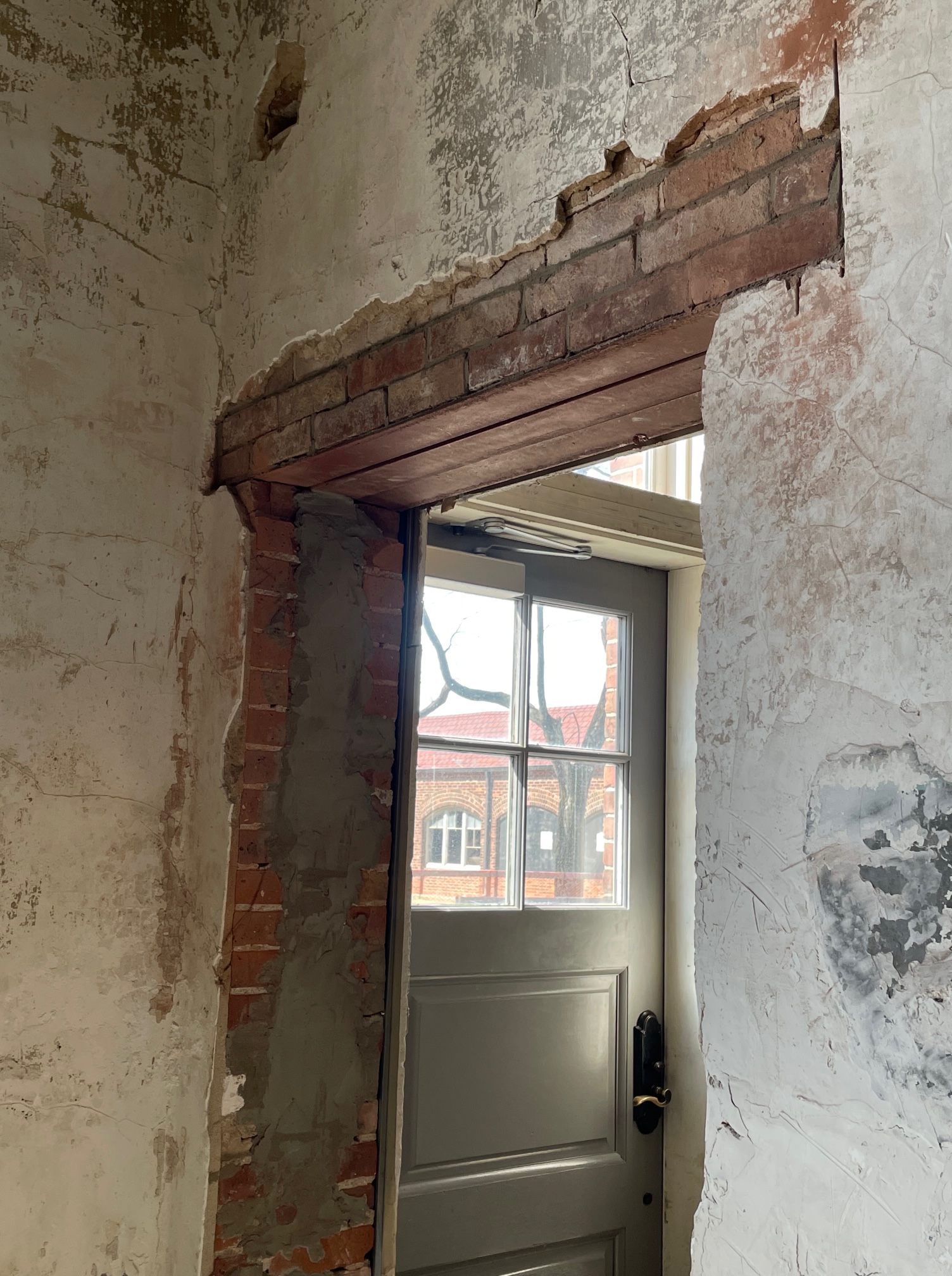
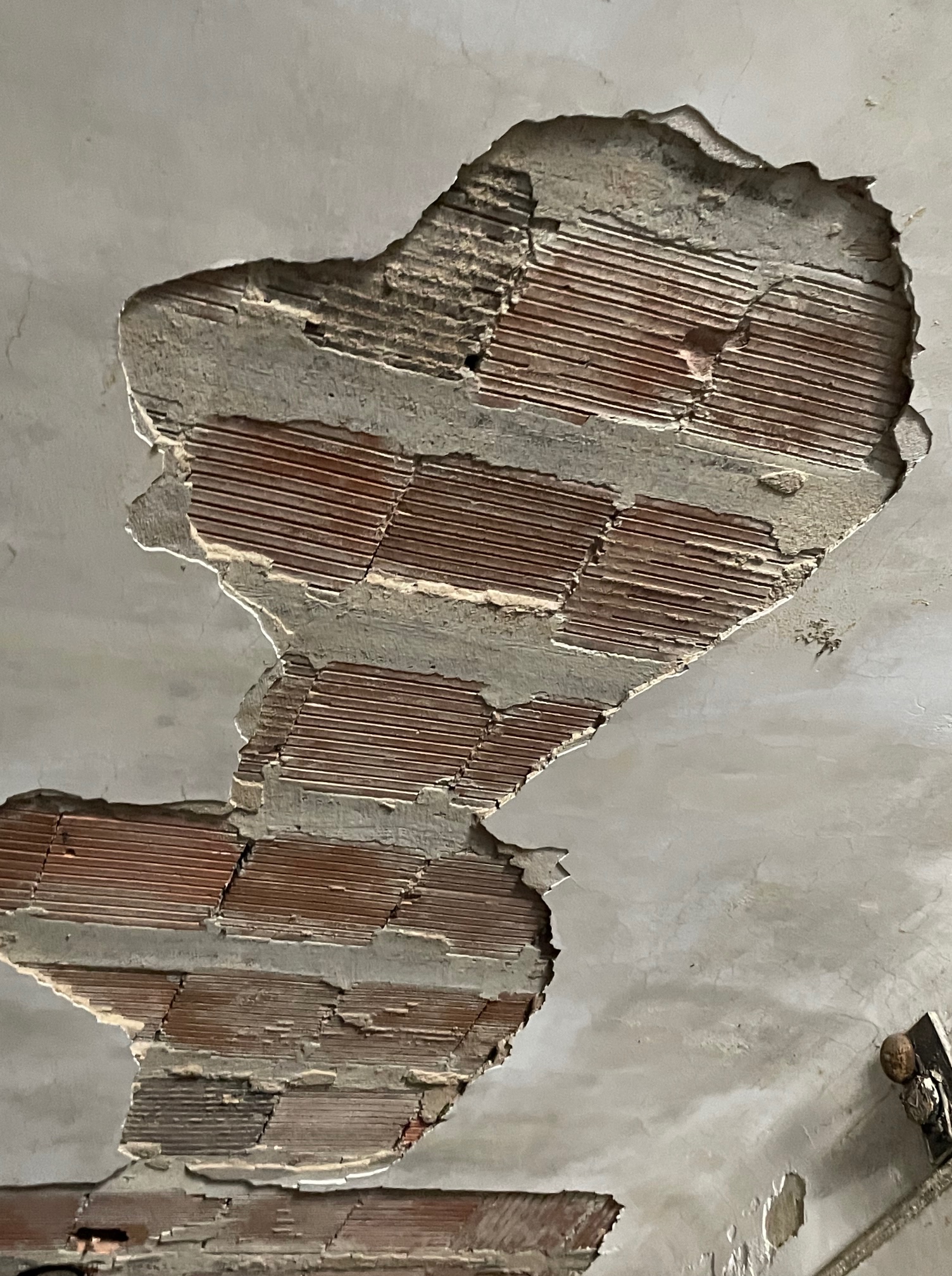
There are 29 structures on the south side that have long since fallen into ruin, and lucky visitors get to go behind the scenes and see it all. The fantastic organization Save Ellis Island raises funds to restore the complex, and there is a long way to go. In the meantime, being there means immersion in a fever dream.

These were all hospital buildings, constructed in the most up-to-date manner, with proper ventilation.

Our guide points overhead to where the nurses lodged, in a bunk room we are not now permitted to enter because of its fragile state.

It was a mandate that all nurses be single. There were four female doctors on the premises as well. But the story becomes largely about nurses and the children they cared for, in addition to the treatment of contagious and infectious diseases, the problems that detained so many immigrants here until they could be released into the general population.

We are introduced to a nurses’s station, long disappeared.

Then and now. A sick ward—can you imagine it?

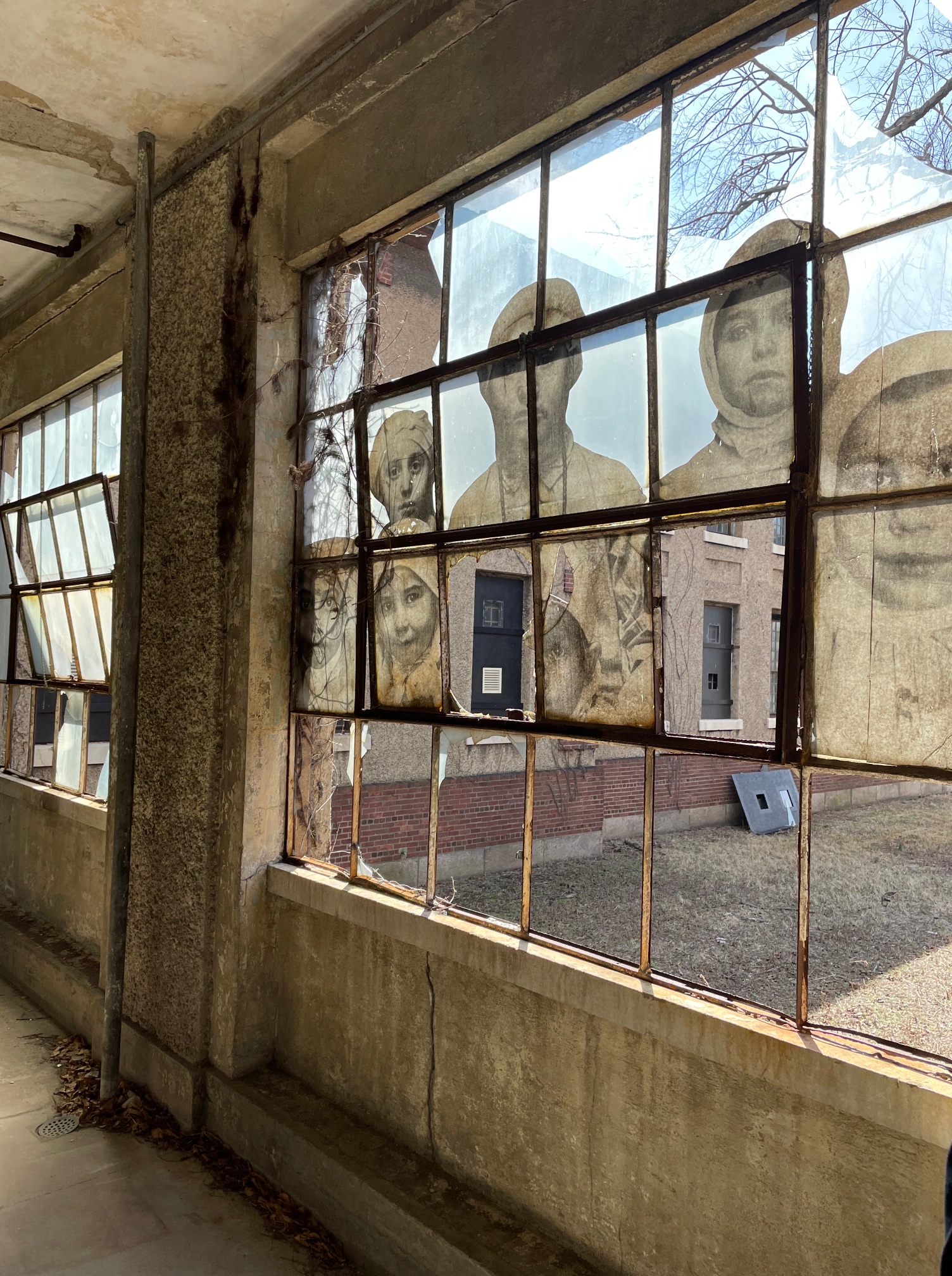
Here is a visual aid.

A French artist named JR created blown-up images from photos taken at Ellis in its heyday, then wheat-pasted installations throughout.

This was the era’s version of a psych ward. Spooky.

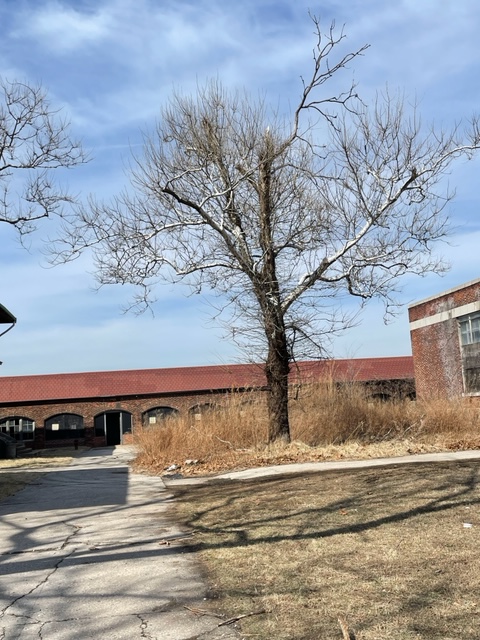
American sycamores across the site received the designation “Ellis Island Sycamores” in 1987 to honor the Bicentennial of the U.S. constitution, and their seeds are now being propagated. It’s said some of these trees get to be 500 years old. The name is derived from the Greek sukomoros, a type of fig native to the Mediterranean. The leaves of the sycamore resemble fig leaves.

Here on the south side of the island, the practices of arboriculture need a bit of attention. Pruning shears, anyone?

I would like to offer my attention. And in fact I plan to spend much more time among the ghosts of Ellis Island as an Educator, leading these Hard Hat Tours. I can’t wait.

4 Comments

Filed under Jean Zimmerman

Fans of mighty trees

were happy when Susan Orlean’s recent New Yorker article focused on a sylvan topic — The Tallest Known Tree in New York Falls in the Forest. Yet it rose some hackles in arborist circles as well.

Yes, the January 2022 article actually singled out a white pine in that dated all the way back to 1675: good. Trees do not usually receive such focused treatment in The New Yorker (perhaps because there are so few forested areas in the City? But check out John McPhee’s wondrous Pine Barrens coverage, culminating in a classic 1968 book.)

The profiled pine grew to 160 feet tall, and fell only when a neighboring tree crashed down upon it. Again, good coverage of a tree story, and stuff happens, as is said.

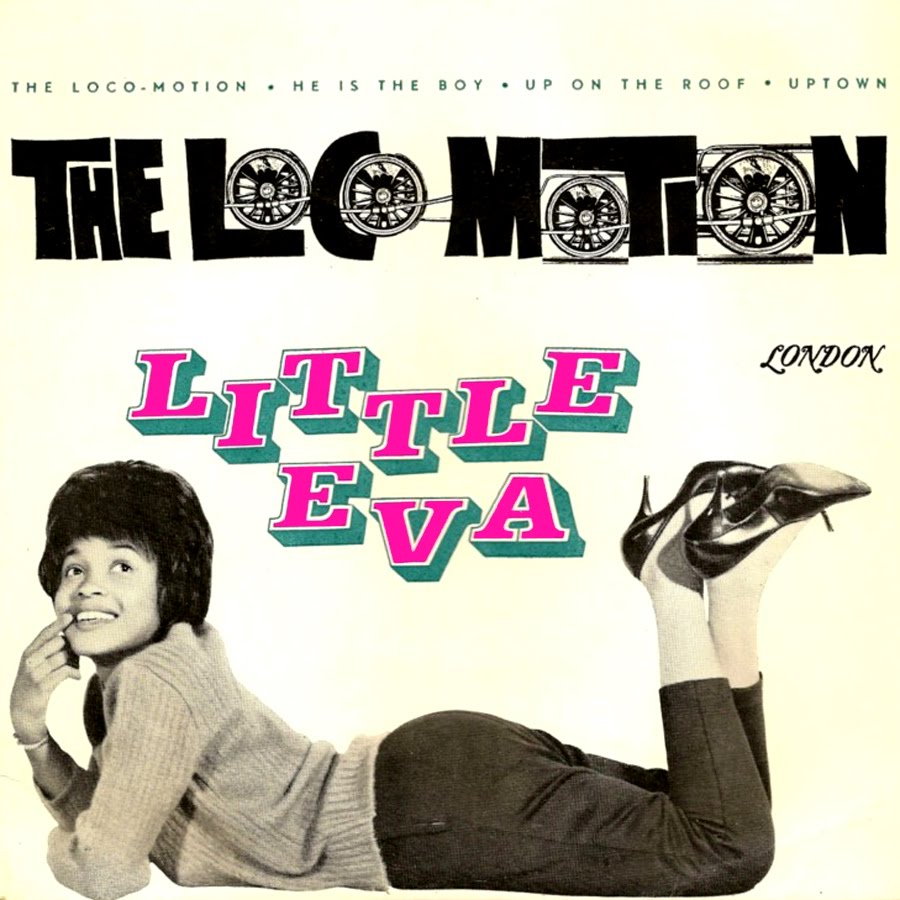
But, said my dendrological friends, the article was so silly! It concerned itself with the invention of Mr. Potato Head and the Carole King/Gerry Goffin’s classic The LocoMotion to somehow chart human progress as the tree stretched up and out in its Adirondack environs. And it seemed to make fun of the practice of measuring champion trees, and even the biggest specimens themselves, jibing the living circumstances of some as cushy – “most live pampered lives, getting fat in the luxury of a suburban lawn or a wide-open pasture.”

I somehow don’t think our friends at the Official Registry of Champion Trees would agree that being a champion tree in any place, at any time, was an easy existence. Still, Orlean managed a popular tone that differs refreshingly from some of the tomes released by the environmentalists. But being a champion tree is no laughing matter.

The Official Registry of Champion Trees comes out every year, compiled by the venerable outfit American Forests. It features the very biggest of each tree’s species, as reported to the organization in the most current year. In 2021, 561 trees held the title, but that figure doesn’t quite reflect the ardor of nor miles trekked by citizens vying to get their tree on the list. American Forests has worked for over 140 years to protect and preserve forests. Over 900 Champion Trees have been found and measured to date by tree lovers from all backgrounds: backpackers, arborists, school classes and land owners. American Forests supples documentation of these majestic giants on its website should the public wish to check them out. 

The enterprise was first launched to engage the public in forestry activities. National Champion Trees can be discovered in rural and urban landscapes, scattered throughout forests and fields, along roadways and (yes, Ms. Orlean) in suburban backyards. Discover, measure and nominate the largest trees you can find. The public is welcomed to measure a contendor and compare it to the current National Champion. It’s a point system with no cheating.

Here is the  formula:

x = Tree Trunk Circumference (Inches)
y = Tree Height (Feet)
z = Tree’s Average Crown Spread (Feet)
x + y + (z/4) = Total Points

Think your nominee can match the dimensions of the soaring Cupressus nootkatensis, in Washington State, with a trunk circumference of 454 inches, a height of 124 feet, and a crown spread of fully 28 feet?

How about the Arizona Alder in New Mexico? Its trunk circumference is 199 inches and its height is 128 feet, while its crown spread is 58 feet. The Pumpkin Ash, in Missouri, offers a trunk circumference of 196 inches, a height of 104.5 feet, and a crown spread of  78 feet.

Remember, this isn’t a beauty contest. Measurable size rules in the Champion world. Still, six photographs of each tree are required for for a nomination to be considered fully eligible. You’ve got to think physical beauty would matter to some extent in the judging, even the gnarled and rough-skinned beauty of the elderly.

The National Register of Champion Trees works with state-level Champion Tree Programs and volunteers from the National Cadre of Tree Measuring Experts to confirm the validity of nominations and the credible.

But here’s the thing. If you might be thinking of a road trip to visit these beautiful monsters – I know I was – American Forests remains closemouthed about the location of any tree either nominated or listed, in an effort “to protect the health and wellbeing of large trees.” And that is that. “Written and verbal inquiries requesting the location information of National Champion Trees will be declined.” There is to be no cloning, no seed propagation, and neither age nor historical value matter. Just size. Get the stats in before your favorite blows over in a stiff wind.

Leave a comment

Filed under Jean Zimmerman

I’m not much for views.

I’d rather look up to the peaks than down to the valleys. So I’m fortunate that any number of stupendous trails wind around the base of the mountains at Brown’s Ranch in Phoenix.

Desert vistas abound at this former cattle ranch, which dates back to 1917.

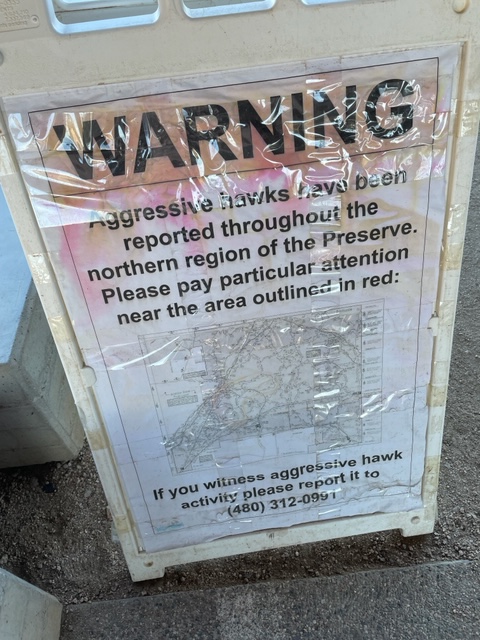
But first you must pay attention. A warning.

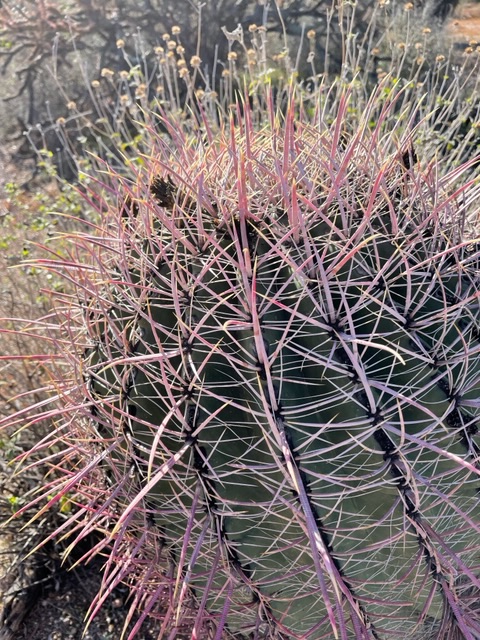
I find I like the living desert, with features like this fishhook cactus.

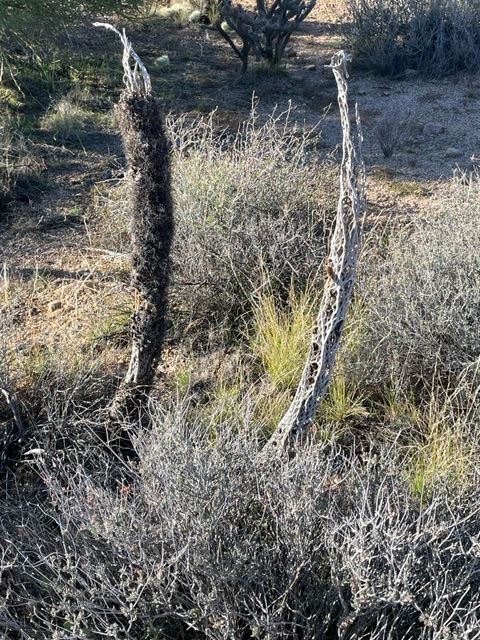
But I equally like everything that is dead or dying.

It’s like the memento mori of the Renaissance, artwork that has ancient roots. Latin for “remember that you will have to die.” Or as I would put it, embrace death and you will live. In some accounts of ye olde Rome, a companion or public slave would stand behind some triumphant general during a procession to remind him from time to time of his own mortality or prompt him to “look behind”.

Especially meaningful to me as I watch my father wend his way toward the end. And I would like to see a death-whisperer behind some of our more insensitive politicians today.

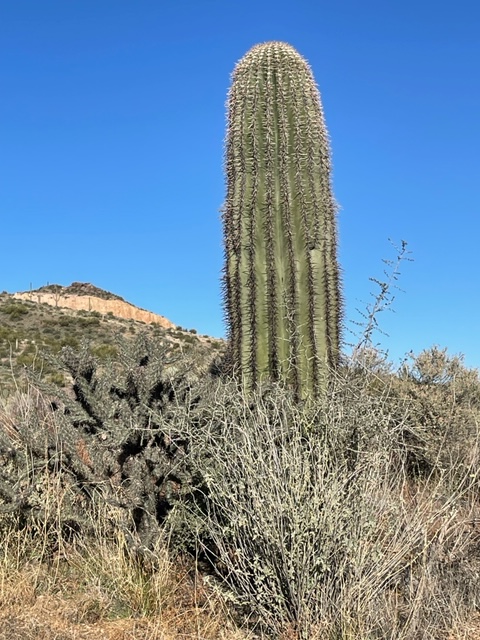
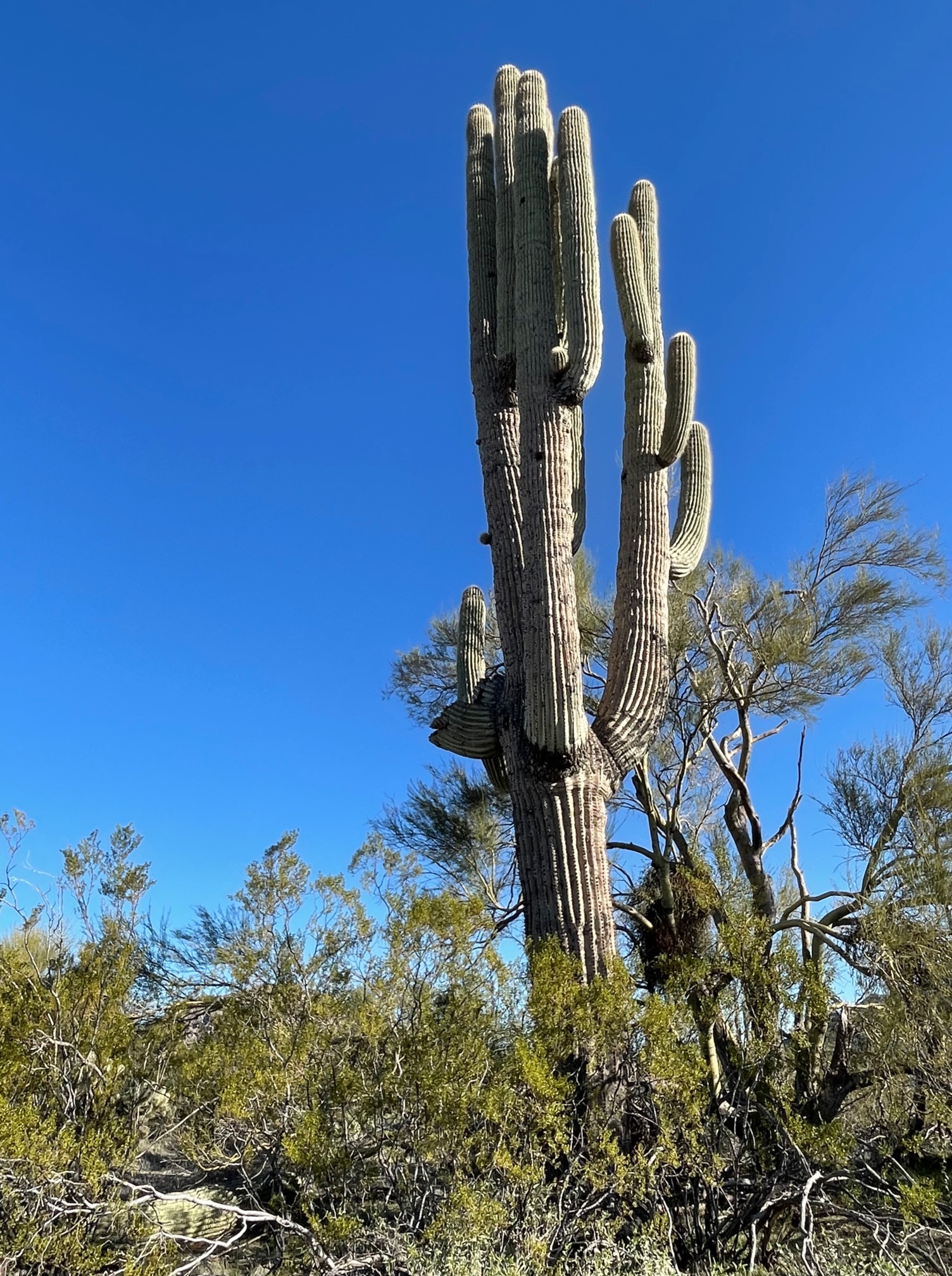
The saguaros here are ginormous, as they say. I think the largest ones I’ve ever seen, and I’ve seen a lot.

Carnegiea gigantean counts itself a member of the cactus family, not a tree (but you knew that) and takes up to 75 years to develop a side arm. It only grows about one inch per year. This one’s a small fry.

The arms are grown to increase the plant’s reproductive capacity, bearing more flowers and fruit.

Near Scottsdale, one known as the Grand One is 46 feet tall, measured by a representative of the National Register of Big Trees in 2005 (though, note, not a tree!), burned in the Cave Creek Complex fire and might not have  survived if not for treatment of bacterial infections and the creation of waddles, small structures made of straw that help channel streams of water towards the thirsty saguaro. I think some of the specimens I’ve seen today could reach grand status one day.

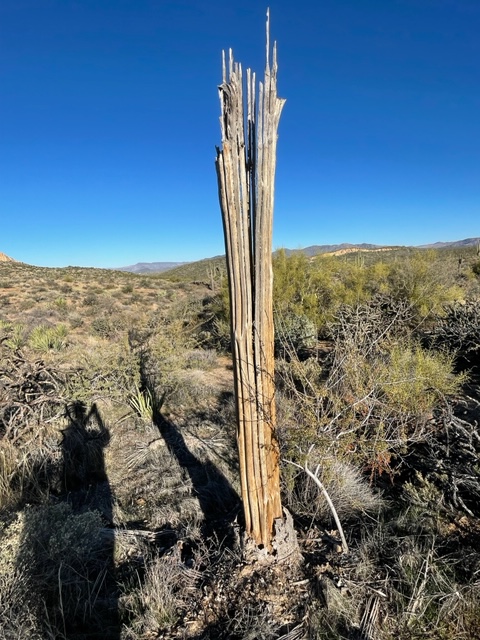
Their skeletons are amazing.

We were standing underneath a palo verde, a tree whose name translates to “green stick”, remarking upon its stature and probable age, when we heard bird noises and looked up to see a pair of Harris’s hawks tearing apart a mouse. They noticed us and fled the nest, of course, and we saw the unmistakable white color at the base of their tails.

Harris’s hawks are only one of two hawk species that hunt in pairs, like wolves. I was glad not to be descended upon!

A morning in the desert is like any morning in the desert and no other morning, all at once. It’ll weary your legs as it restores your spirit, hawks or no hawks. But they were pretty superb.

3 Comments

Filed under Jean Zimmerman

The most famous tree guy

that no one now has ever heard of is William Bartram. Maybe you are the exception.

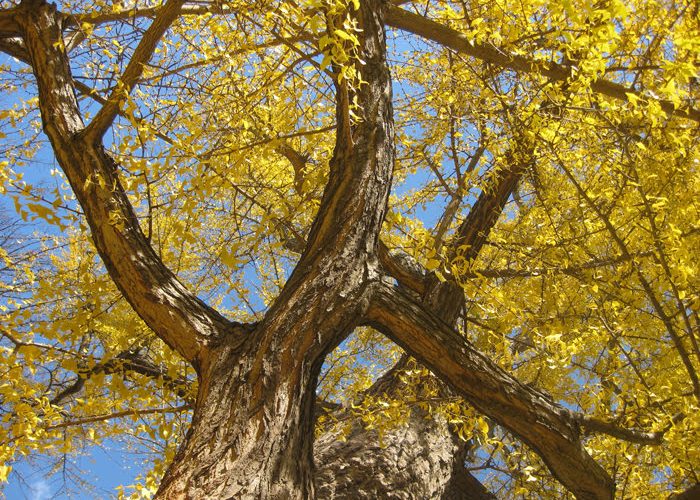
If you visit Bartram’s Garden outside Philadelphia you will find the oldest ginkgo tree in North America, grown from a seedling that was imported to Bartram in 1785  as a gift from noted plant collector William Hamilton of The Woodlands, in England. The Garden is now a 50-acre botanical garden on the banks of the Schuykill River, but it was once the home of naturalist and wilderness champion William Bartram.

Bartram lived out his years in the house where he was born, built by his father John and added onto over the years. John before him was a well-known botanist, in 1765 designated the “Royal Botanist” by King George III, which meant that he shipped exotic native American  seeds and plant samples across the Atlantic to not only his majesty but grateful wealthy gentlemen for their estates.

William Bartram wasn’t always a success. Though his artistic skills impressed people at an early age, he first embarked on a career as a merchant in Philadelphia and a rice farmer in the Carolinas before his father welcomed him into his botanist world in his mid-30s. He is most famous for a four- (or five-? apparently his counting skills were uneven when he was out in the woods) year stint in the unsettled wilderness of the southern United States, beginning in 1753, which he wrote about in the illustrated Travels in 1791.

Bartram waxed rhapsodic about wilderness. The key descriptor of the time was “sublime,” as in  “the sublime wilderness,” just as Thoreau would in the next century. Thoreau, a true kindred spirit, would write a friend, “I grow savager and savager every day, as if it fed on raw meat, and my tameness is only the repose of untamableness.” Not sure I totally get that grammar, but it sounds much like something William Bartram would have felt in spades out in  forest. The two of them could have gone camping together.

For Bartram, many places he goes are sublime. Camping next to Florida’s Lake George, he talks about being “seduced by these sublime enchanting scenes of primitive nature.” I love the story about his specimen collection in Georgia. He climbed far up a range “from which I enjoyed a view inexpressibly magnificent and comprehensive…. of the mountain wilderness through which I had lately traversed.” Then he adds, “my imagination thus wholly engaged in the contemplation of this magnificent landscape… I was almost insensible… of…a new species of Rhododendron.” He was a wonderful artist.

Both William and John Bartram thought snakes were great and only killed them on the trail. when absolutely necessary, even rattlers. Black snakes they judged harmless enough to keep around the house as mice hunters. (We had families of black snakes at the Cabin and I never cared for them much.) Bartram drew many gorgeous if dangerous snakes. You may still find some if you hike Bartram Trail, which follows his approximate route through the states of North and South Carolina, Georgia, Florida, Alabama, Mississippi, Louisiana and Tennessee. I’d like to try at least a part of it, though admittedly I’d rather drive down to Philadelphia and walk the more civilized pathways of the gardens where he spent so much time—the site is open 365 days a year, dawn through dusk.

He was also a champion of the afternoon nap, best performed in the shade of a favorite tree in his yard. Let’s hope that when George Washington visited the homestead he didn’t have to shake Bartram awake.

Which would you  rather do, hike Bartram Trail or visit Bartram’s Garden?

3 Comments

Filed under Jean Zimmerman

Trees are winter poems

and, like written poetry, sometimes you must talk yourself into reading them. Lyndhurst, the estate near where I live, makes it easier, because its 67 park-like acres offer an arboricultural bounty. Forget the house –a gothic revival castle designed in 1838 by Alexander Jackson Davis, when romanticism reigned. (Where was Frank Lloyd Wright when we needed him?)

The place is known best as the familial headquarters of rapacious banker Jay Gould in the Gilded Age, and his daughter Helen added a bowling alley and immense greenhouse, the skeleton of which remains. Carriage roads with precisely wrought stone gutters.

The Old Croton Aqueduct cuts across the landscape, which might have been somewhat annoying to the residents of the mansion in the nineteenth century. But it was progress, and the pre-Gould-era occupants were civic minded. New York City must have pure water!

You can still follow the trail’s path up a rise.

In fact, that’s the only place you’re supposed to go off season, for some reason.

I have other plans. I have resolved to break more rules in 2020 and I think I won’t wait to set my intent.

Andrew Wyeth has an oft-quoted line: “I prefer winter and fall, when you can feel the bone structure in the landscape—the loneliness of it—the dead feeling of winter. Something waits beneath it—the whole story doesn’t show.”

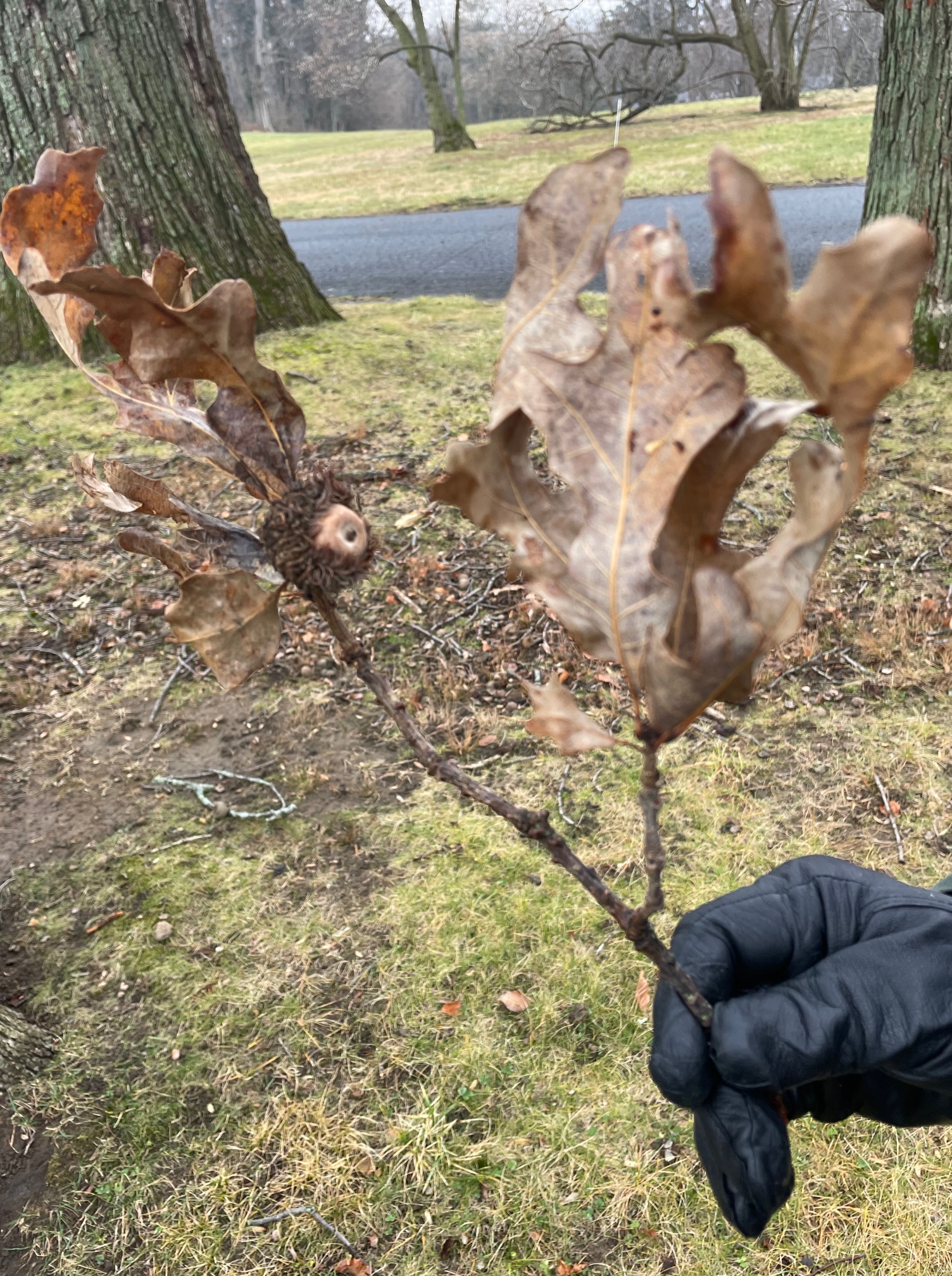
Lyndhurst in winter is all bones. A stand of oak on closer inspection reveals itself to include a burr oak (you can call it a bur oak if you want to be ridiculous.) They have the mossiest, shaggiest caps of all acorns, a look that surely serves some dendrological purpose, like keeping from being eaten.

Look closely and see that there has been some living creature here.

I know an arborist who likes these oaks for “the deep lobes and lustrous green of the leaves.” Only visible in the imagination now, of course. “The very large acorns can be the size of golf balls, which gives this oak its Latin name…  Quercus macrocarpa is a slow grower that can become quite large in maturity. Better suited for parks than street trees due to its size and the size of the acorns.“ Exactly! Here at Lyndhurst it can really spread out.

Wyeth also said: “I search for the realness, the real feeling of a subject, all the texture around it… I always want to see the third dimension of something… I want to come alive with the object.”

Live bones. A slightly scary concept but one that I like. The magnolia looks like it’s already ready for a warmer season.

Wait a bit. Enjoy your dormancy. You can explode later.

An arboretum in all but name, Lyndhurst has a number of mammoth beech trees that is so large as to be almost unfair to the rest of the world’s estates. I know that Newport has its share also. The Preservation Society of Newport County has even established a beech tree nursery “to ensure the future of the iconic landscapes of the Newport Mansions.”

Magnificent is a word undeniably coined to describe European beeches.

Weeping bones. Easier for any arborist to ID some specimens after leaf-out than now, but a beech can’t fool you.

Strong emotion on display with statuary scattered about the grounds, which I suspect no one but myself has examined closely for some time.

Some of these carvings gave off a strong whiff of an earlier era, when sexuality had to be expressed clandestinely. It was only proper to reveal oneself in all Nature’s glory if you were a nymph of some kind.

We’re still squeamish about some things even going on 2020, like depicting the litter of scat all around the Lyndhurst estate – deer, of course, and goose, and – this. First to identify it (dog, bear?) gets a mention in these pages.

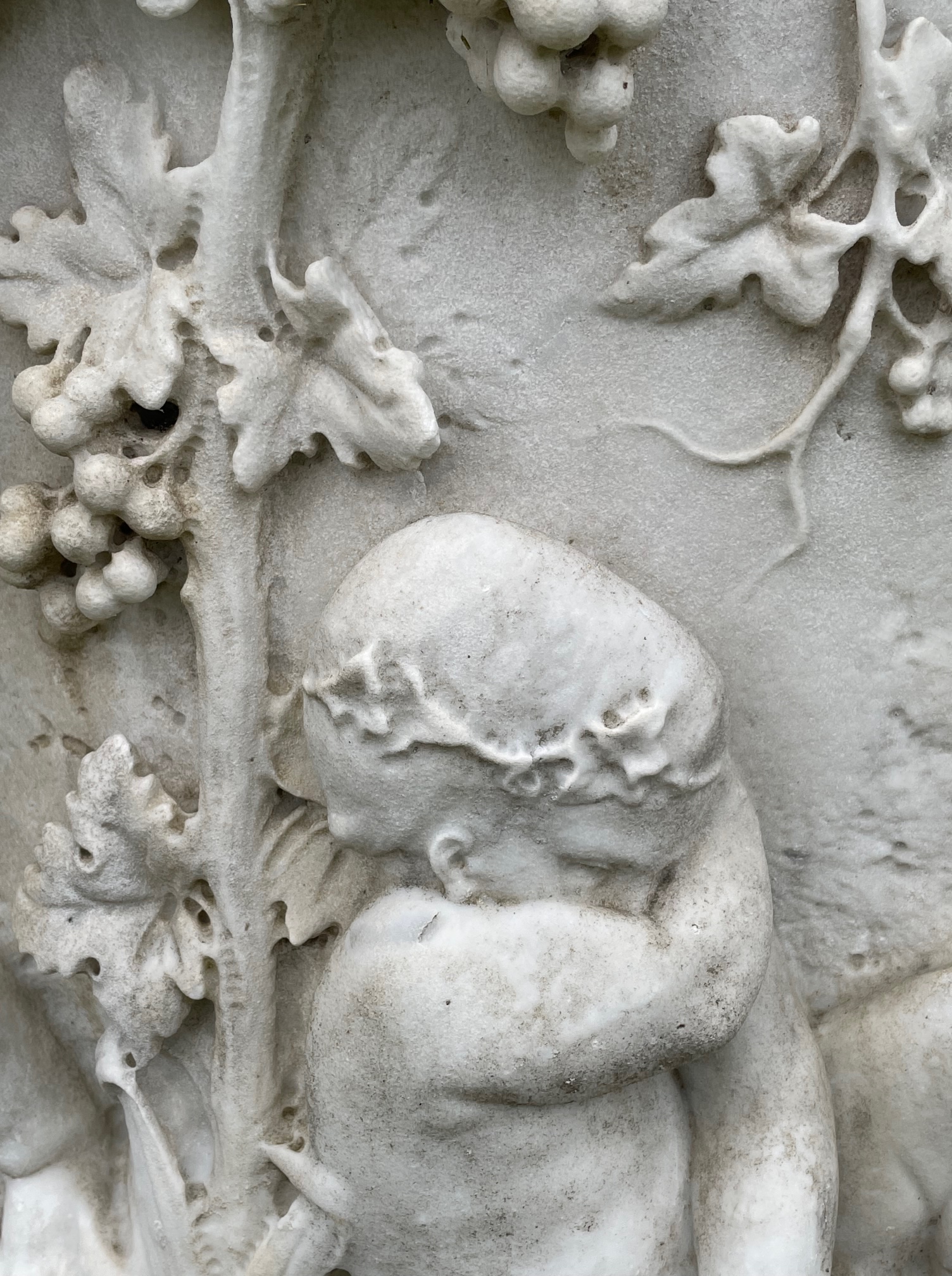
I don’t know the intended meaning of this image. I’m sure it had one when carved. Bacchus wiping the wine from his face?

But it reminds me of one of my very favorite poems, written by William Butler Yeats in 1892 (the Gould epoch at Lyndhurst, though it’s hard to believe he ever read it). This poem is a douzaine, meaning a 12-liner, and in it Yeats wears his heart on his sleeve for wild woman – Irish republican revolutionary and suffragist –Maud Gonne. She knew how to break rules and she knew how to break hearts. One good way is to find a poet to make you immortal. Wish I knew her.

When you are old and grey and full of sleep,

And nodding by the fire, take down this book,

And slowly read, and dream of the soft look

Your eyes had once, and of their shadows deep;

How many loved your moments of glad grace,

And loved your beauty with love false or true,

But one man loved the pilgrim soul in you,

And loved the sorrows of your changing face;

And bending down beside the glowing bars,

Murmur, a little sadly, how Love fled

And paced upon the mountains overhead

And hid his face amid a crowd of stars.

That’s what that little guy hiding his face in the statuary says to me, out in the beautiful dormant cold.

I took a burr acorn cap with me when I left. To quote Jay Gould: “Whatever is not nailed down is mine. What I can pry loose is not nailed down.”

Leave a comment

Filed under Jean Zimmerman