Tag Archives: roses

Late season.

Been thinking about the concept recently while visiting some haunts both local and distant. Not ruins exactly. Let’s say slightly faded in the most perfect way.
Like the nearby genteel rose garden at the Lyndhurst.
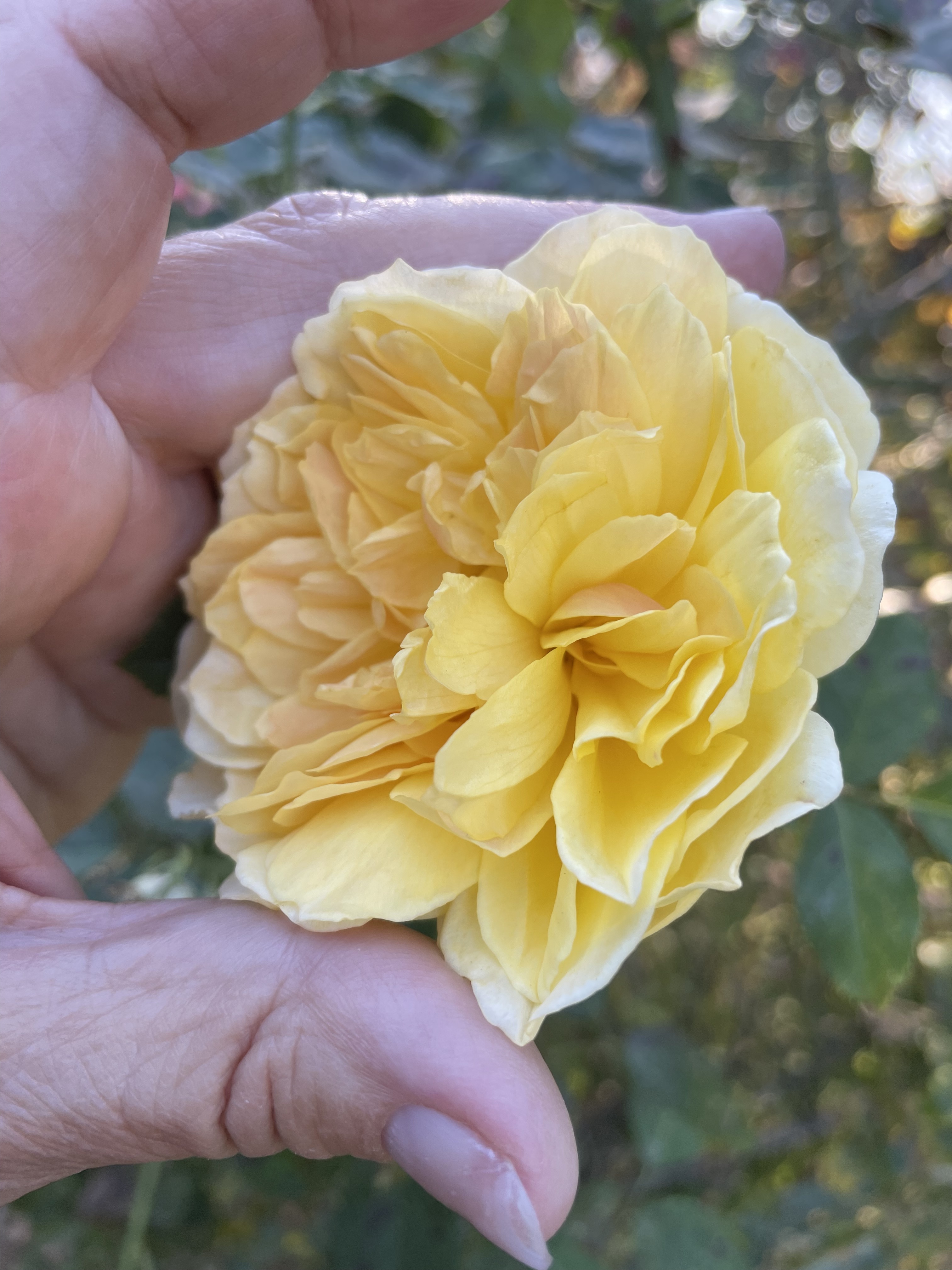
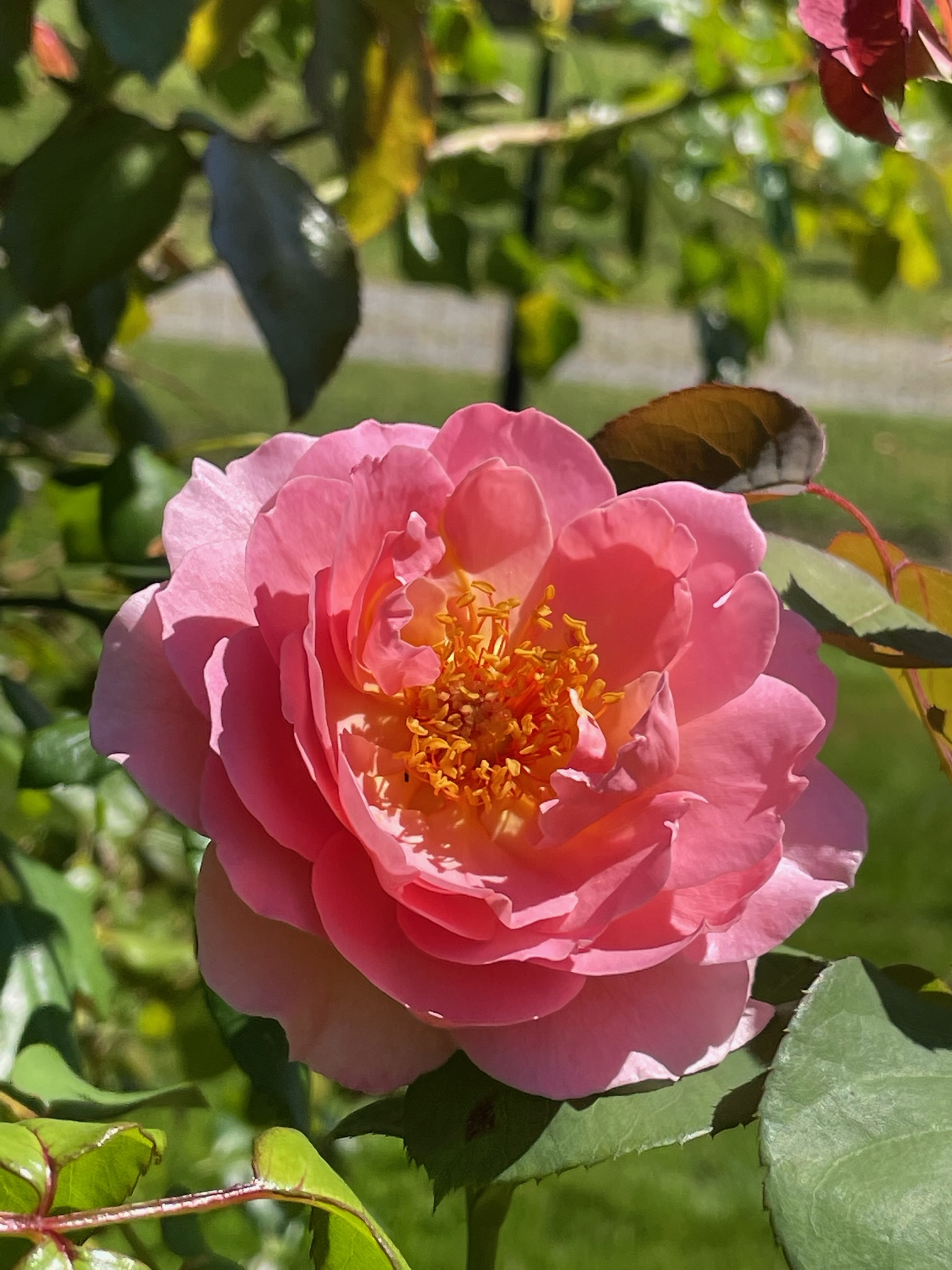
Its blooms in November just as exquisite as the ones in June.
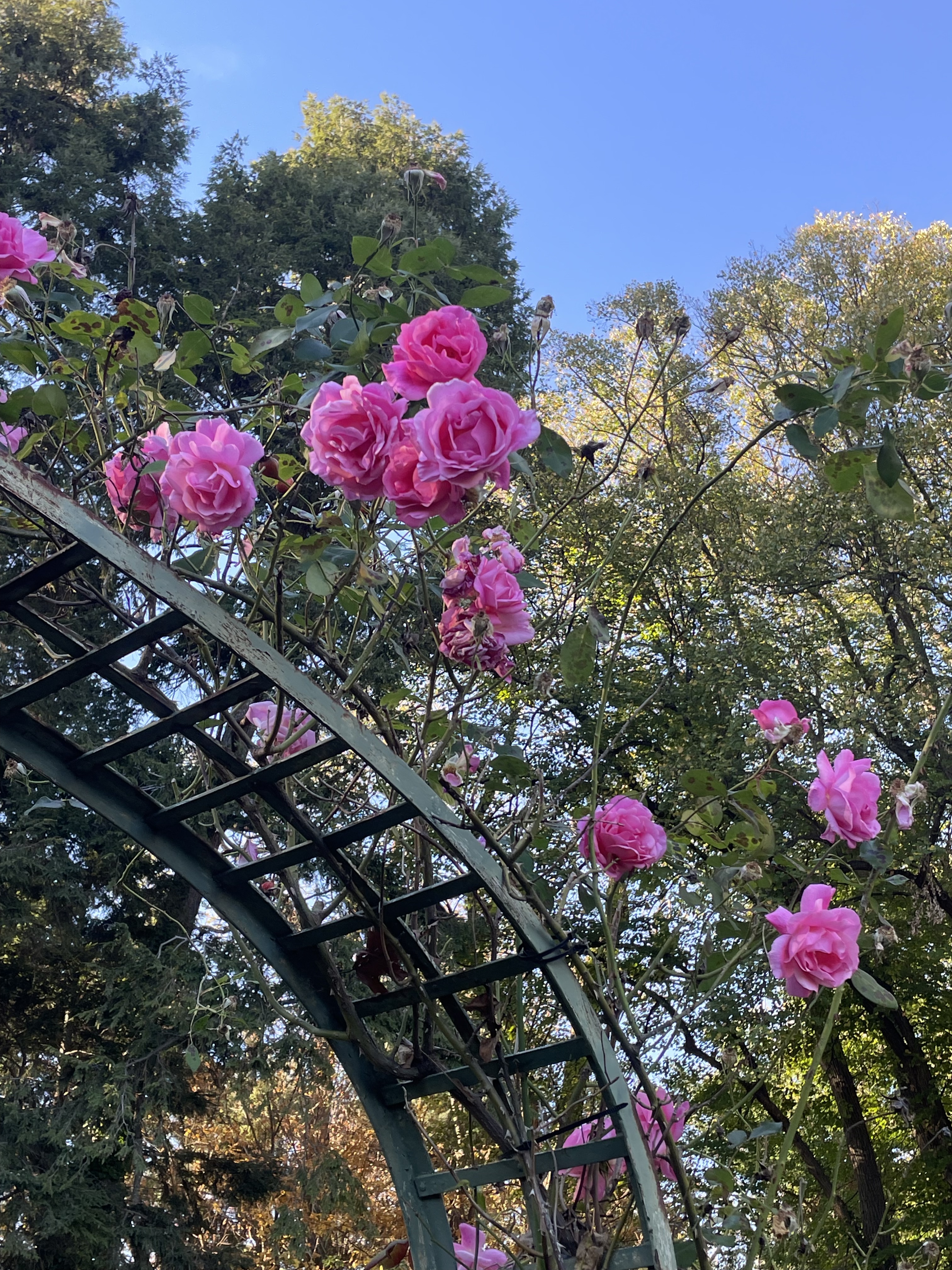
Possibly even more ravishing. Is it my imagination, or when you stick your nose in are they actually more fragrant as well?

Who’s to say that a rose hip is any less beautiful than the rose that preceded it?
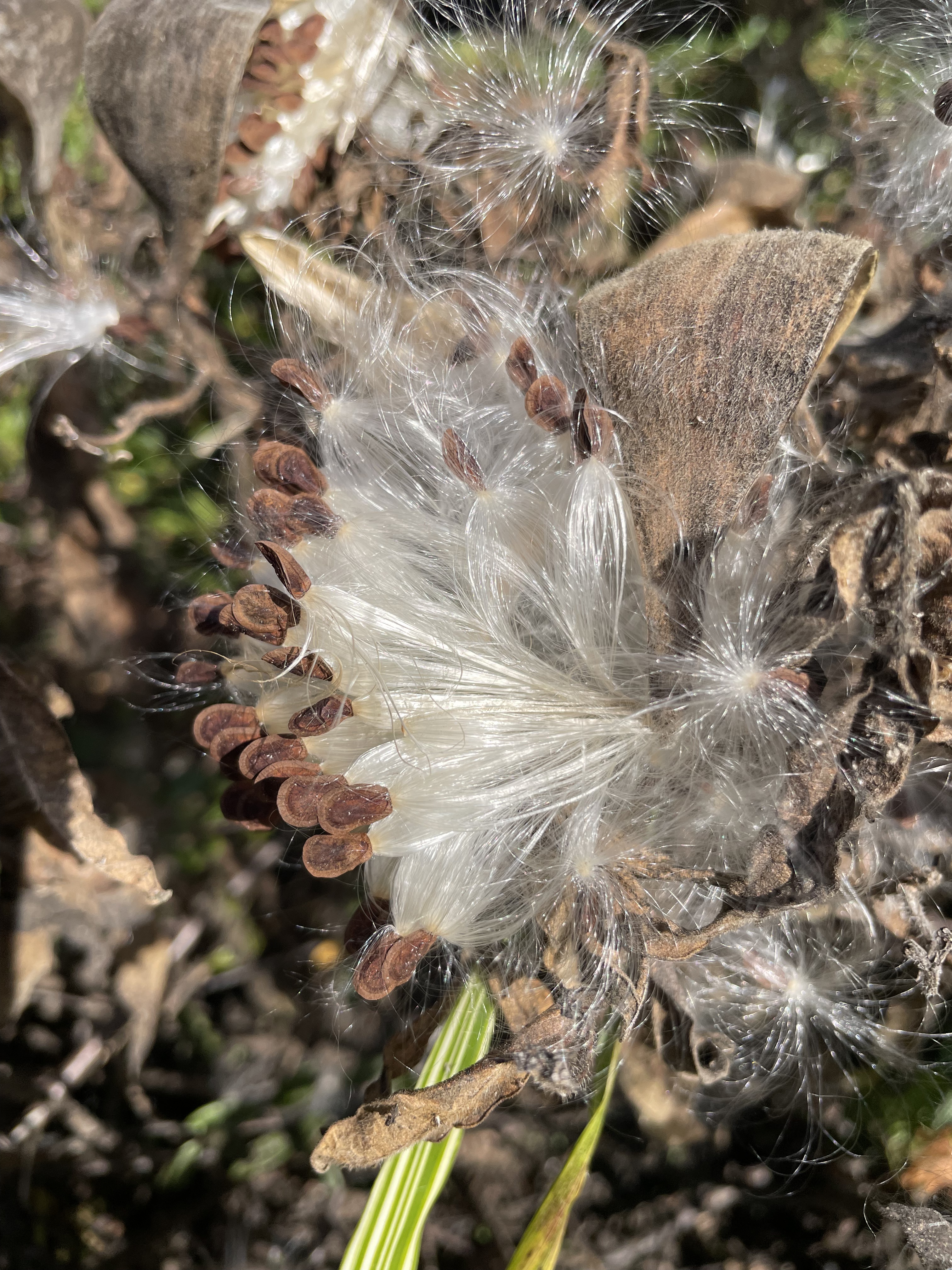
Late season magic. Milkweed.
An old-old graveyard that by all rights ought to have been long plowed under, like the cemetery we stumbled upon behind chain link in the heart of bustling Flushing, Queens. Someone in the Episcopal church next door kindly opened the gate so we could mosey around.

In the midst of faded headstones, some of them dating back to the early 1800s, an epic mulberry thrives.

The tree might have been planted when the graveyard was new.

I like a circa-1700’s fanlight door at Philipse Manor Hall in Yonkers, similarly a survivor.

Between fall and snowfall. I didn’t come up with that one, but it’s a pretty good description of most all the things I like best.

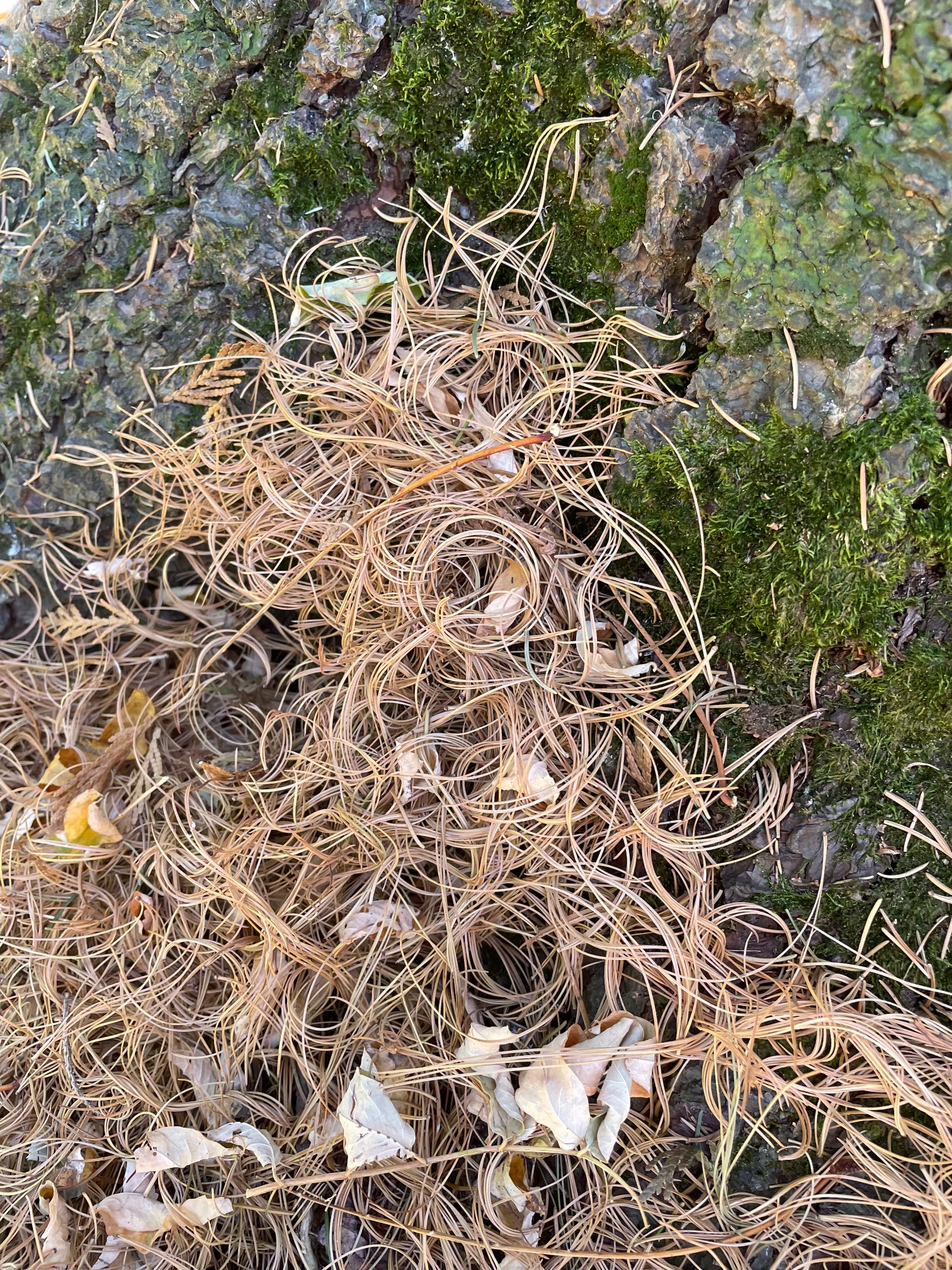
Why do I gravitate to the tousle of brown juniper needles so much more than the vibrant green ones still holding on?
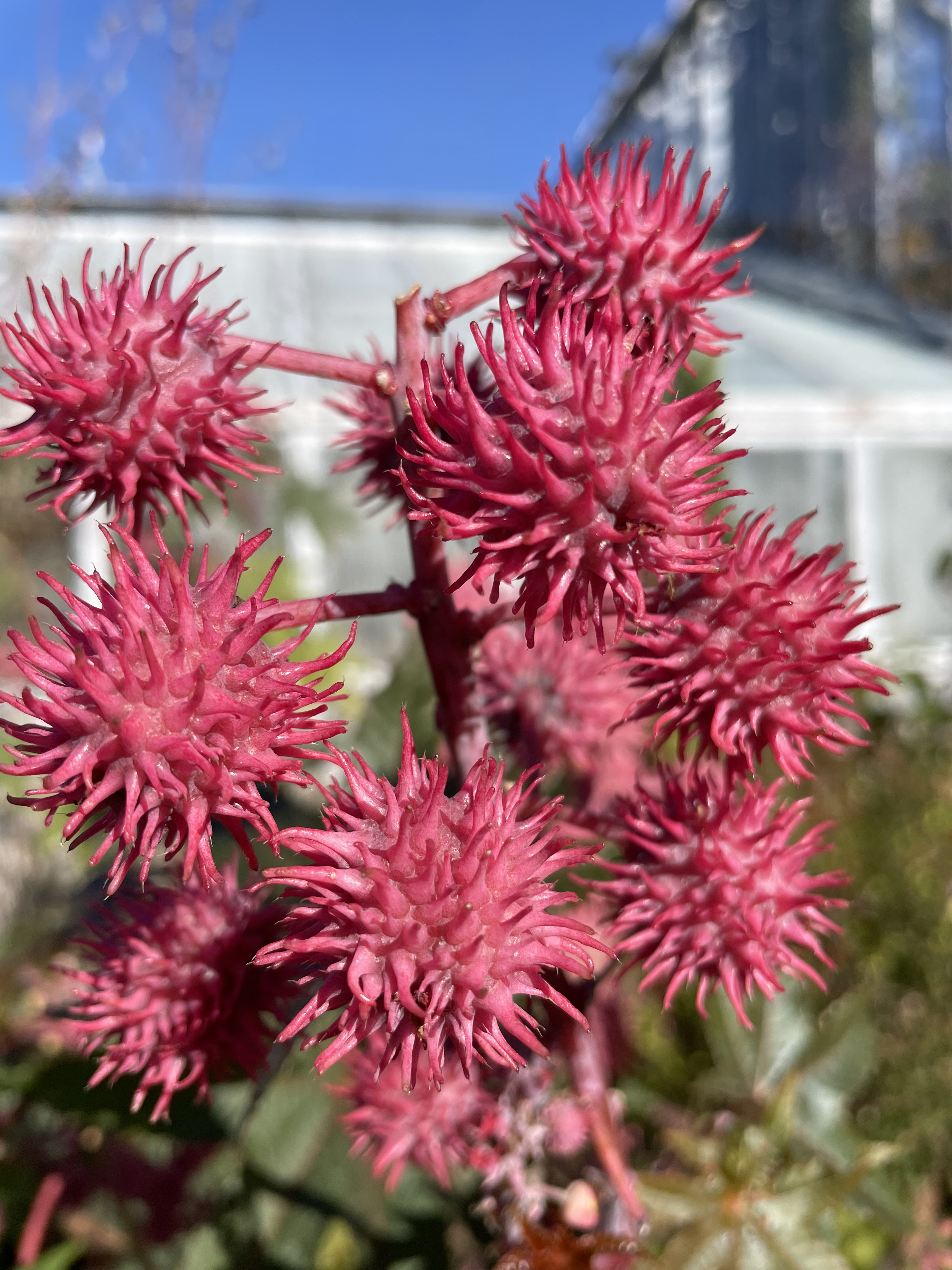
I guess everyone loves the changing hues of autumn. Who would’t care for unexpected fuchsia?
White oak leaves always get me, brown fallen ones perhaps more so, and brown fallen ones with green grass shoots still around them probably most of all.

Classic apples. At a local cider place you can bite into a russet people favored back in the 1600’s.

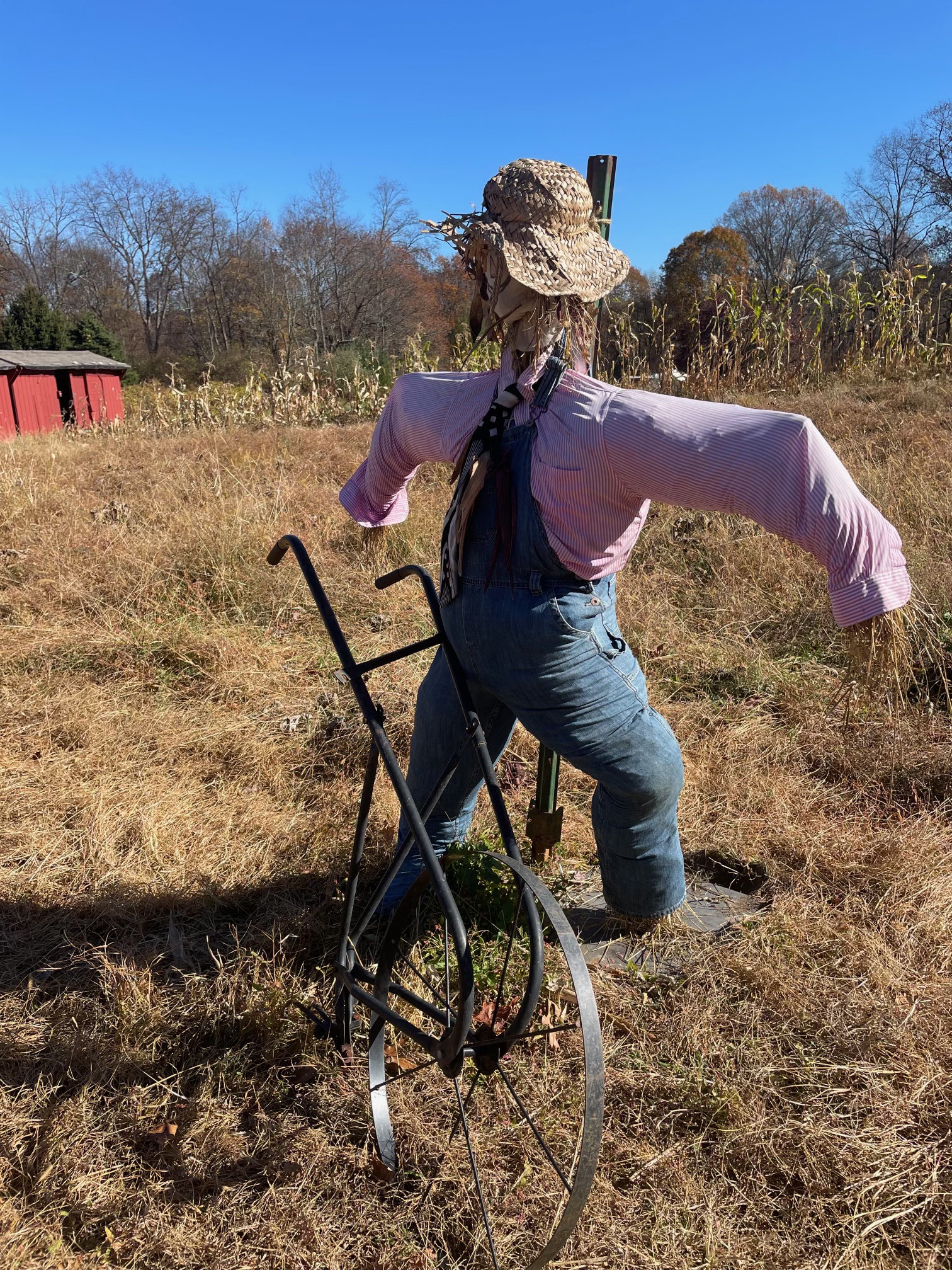
Nearby, a weathered scarecrow holds court over a late-season field.
Everything old is new again. Somebody or other said that. Could have been the early 1700’s author Jonathan Swift, or Mark Twain, or Churchill or even Stephen King. No one seems to know.

But most things that are old and creaky seem fresher to me than what is new. Perhaps because I feel between fall and snowfall myself?

I gravitate to things that are timeworn and true. Silent movies.

The late-season cattail by a pond.

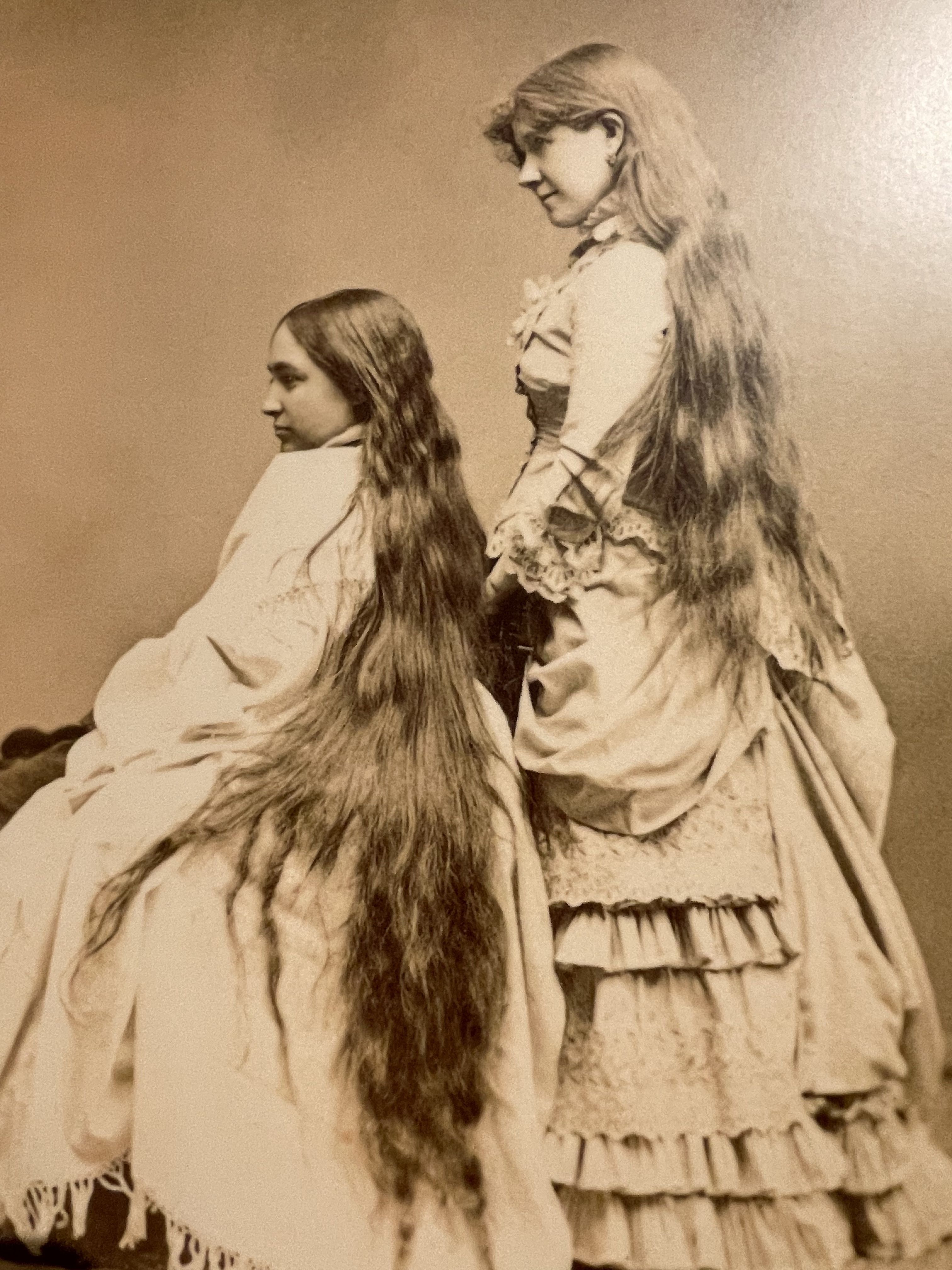
A portrait of two sisters that suggests a mystical earlier appreciation of hair.
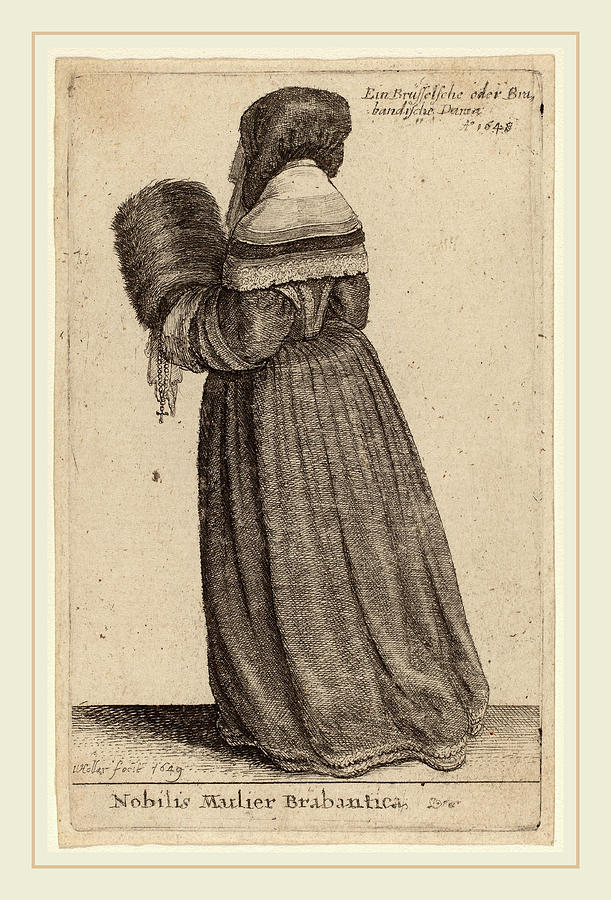
Or the Wenceslas Hollar engraving bespeaking the crucial importance of a fur muff.
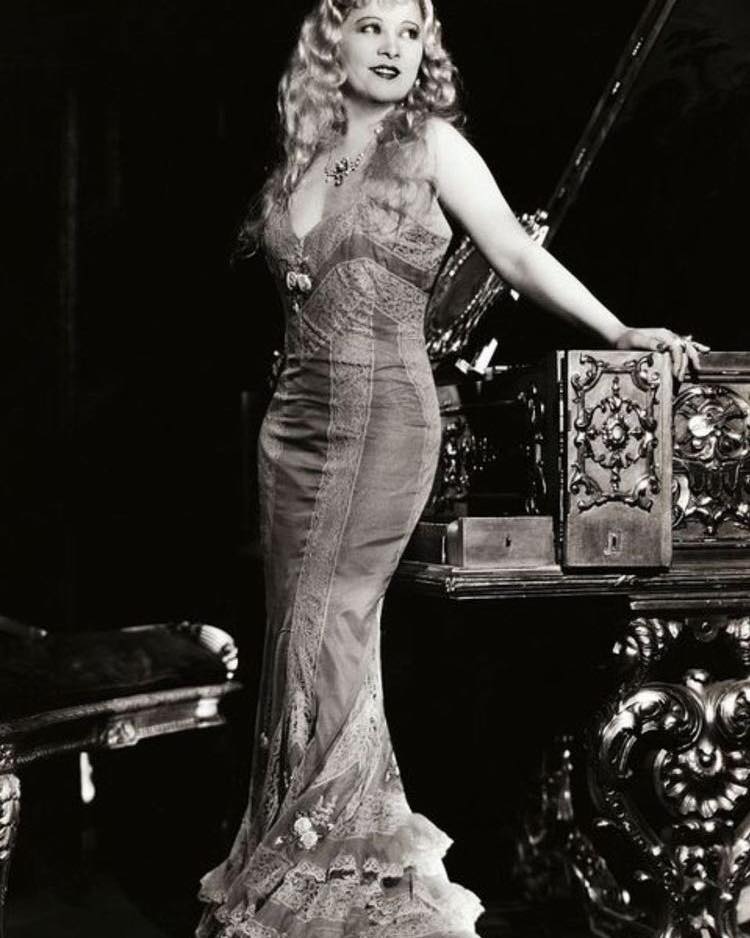
A vintage postcard that reminds us we might not have come as far as we think we have.

Wise women from a different era.
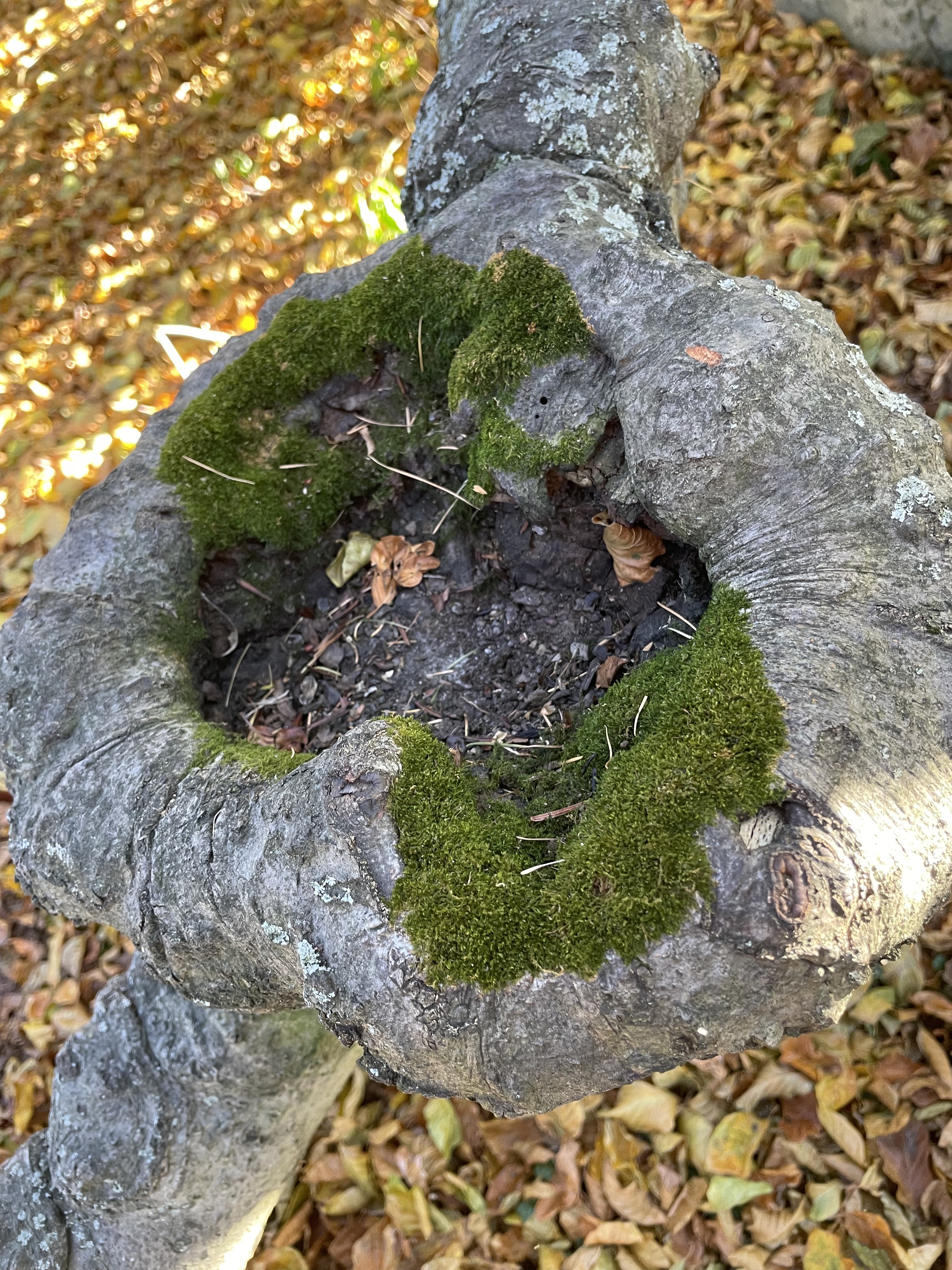
Under the canopy of an ancient European beech, a bark bowl that holds mossy dreams.
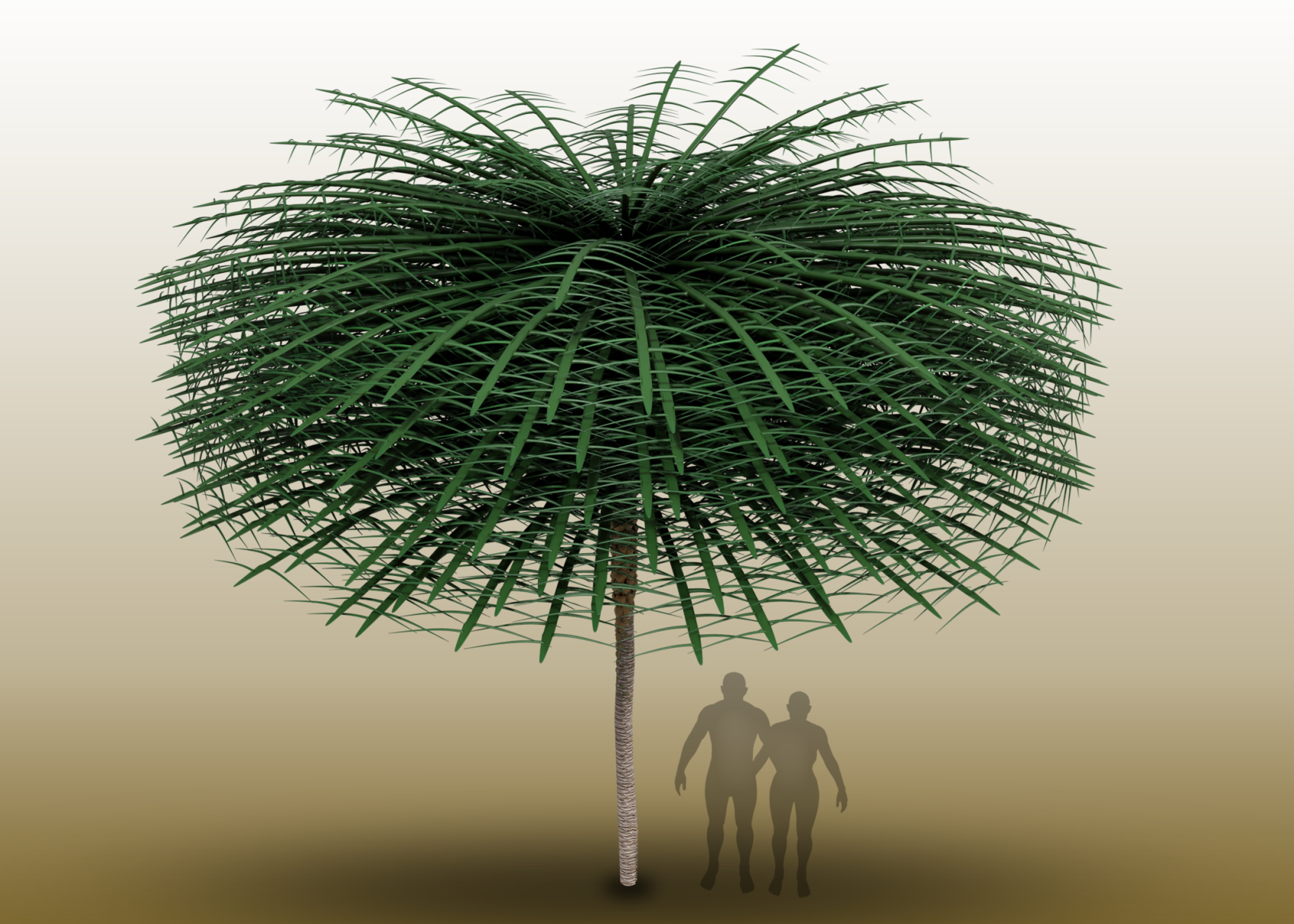
A 350-million-year-old tree, the most ancient species we know.
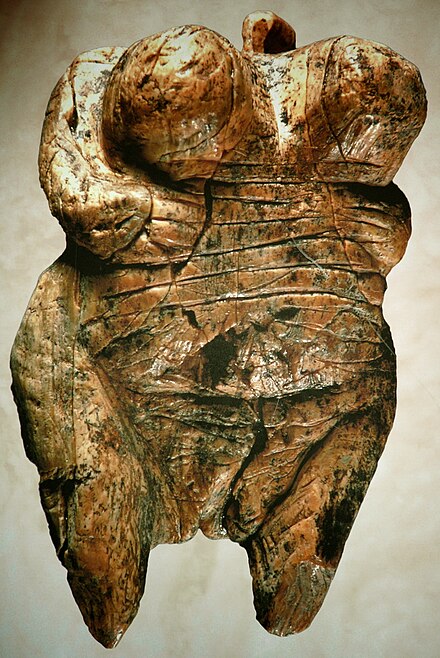
The earlier depiction of a human being — really! — the Venus of Hohle Fels, carved 35,000 years ago of mammoth tusk and unearthed in 2008 in a German cave.
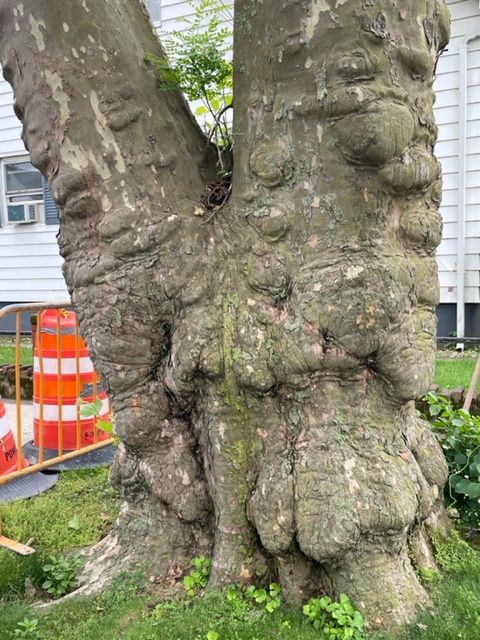
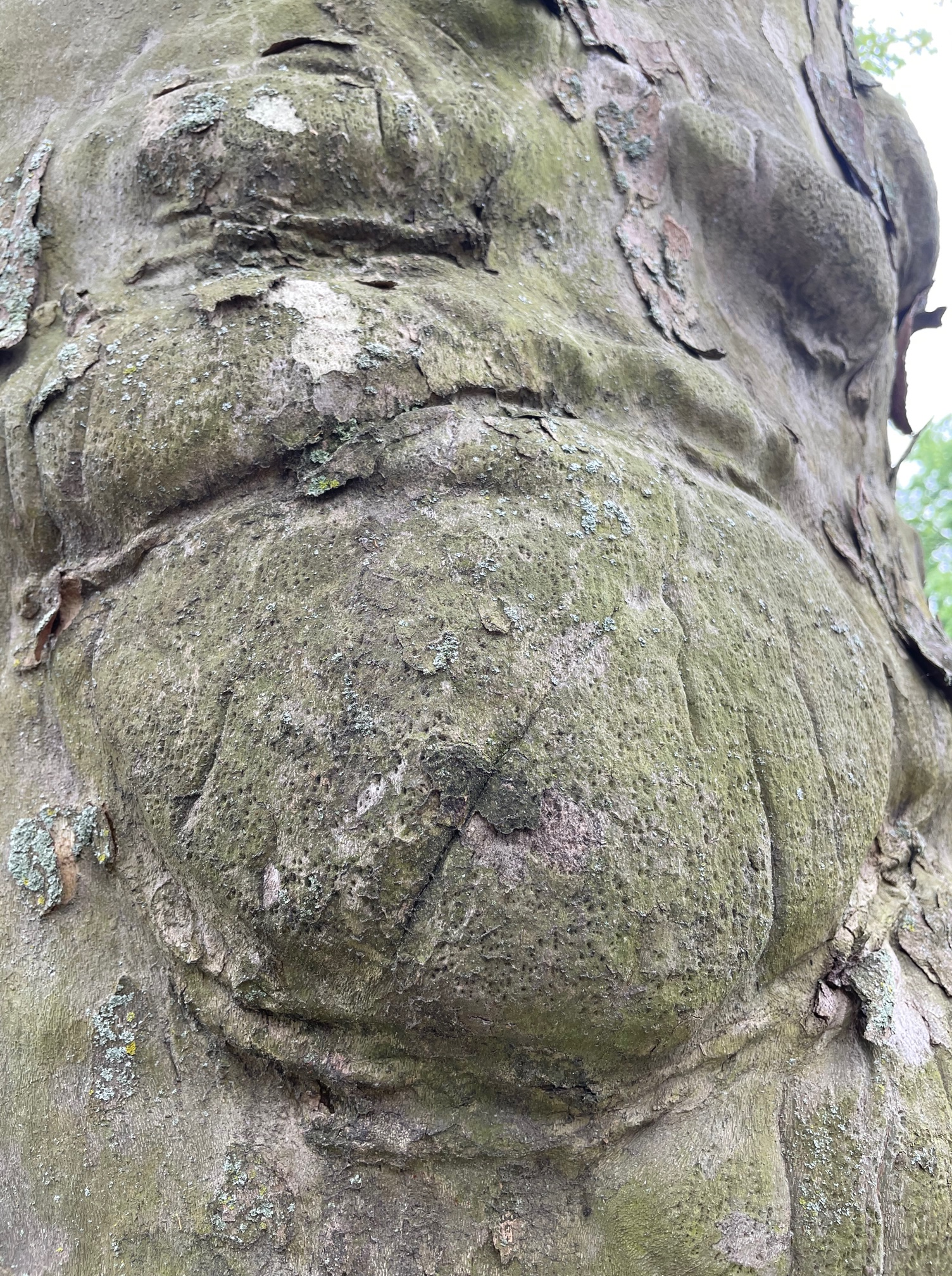
A Queens London plane from our time seemingly modeled on her form.

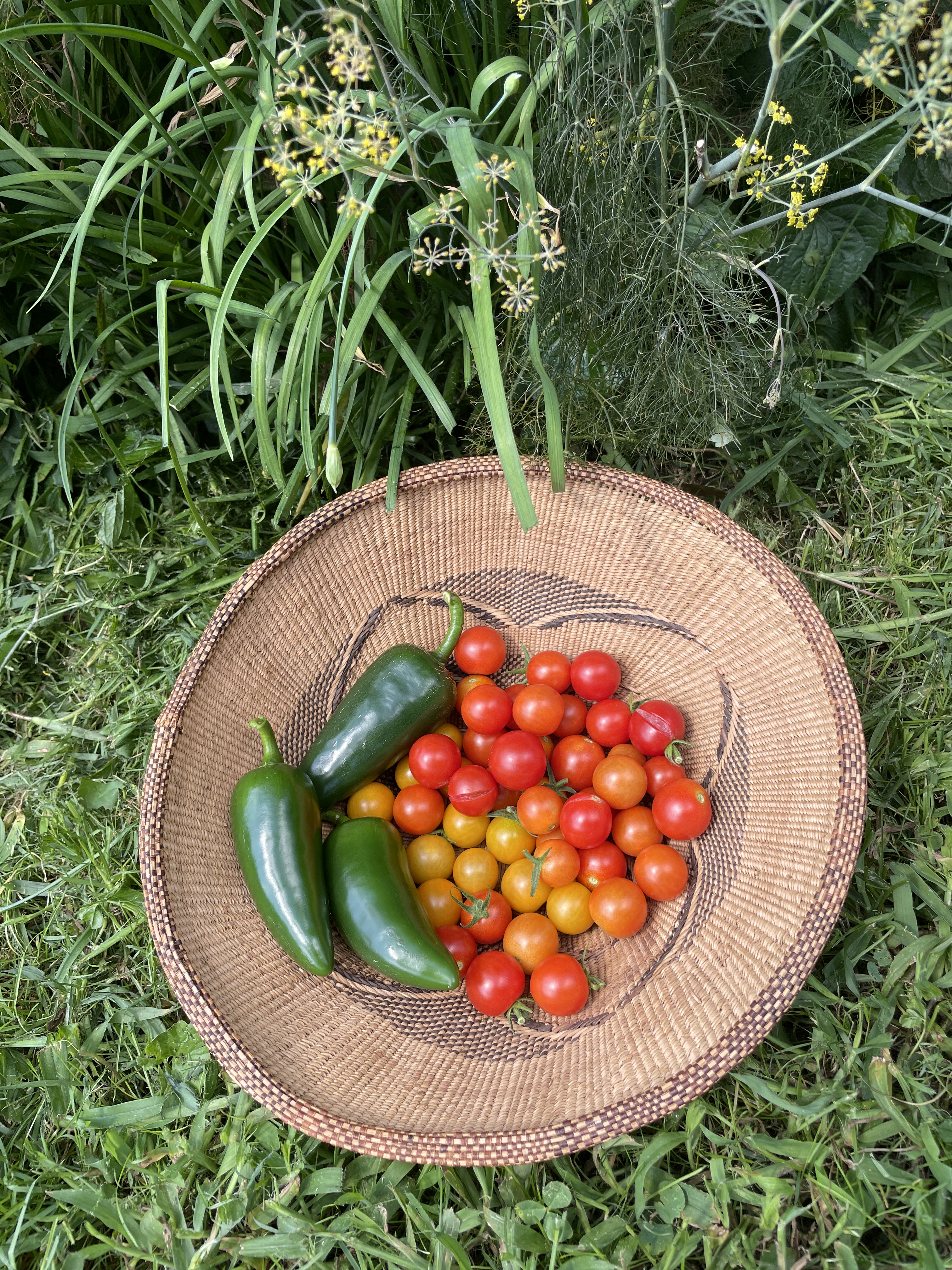
Late-season garden tomatoes and jalapenos possibly more delicious as the summer winds down.
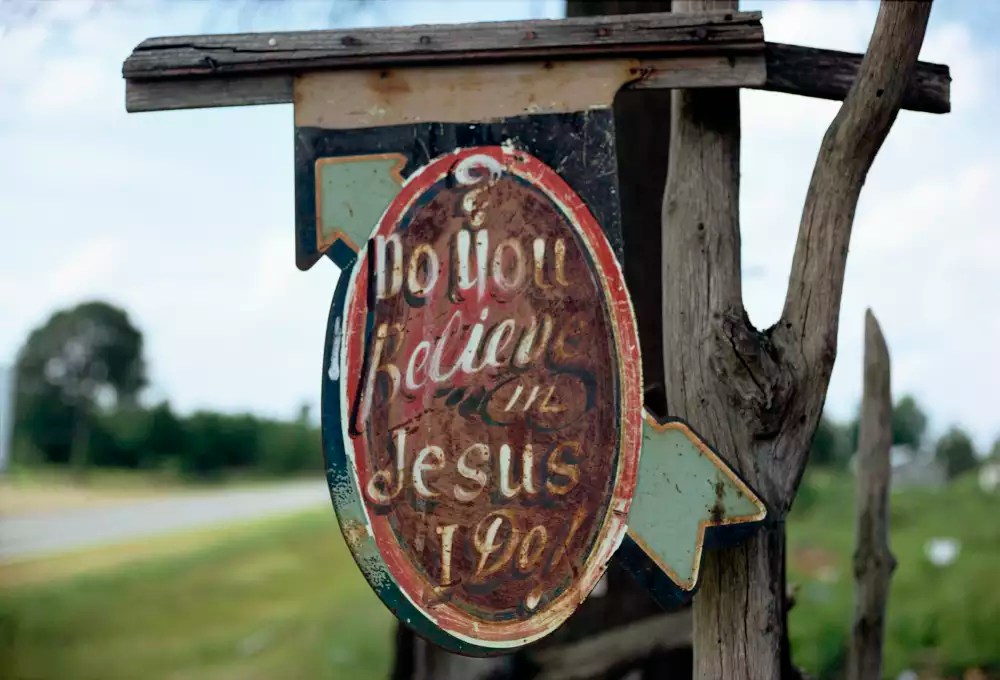
Battered roadside signs.
A statuesque ladytree elm surviving indomitably alongside Central Park.

Every stately specimen I see.
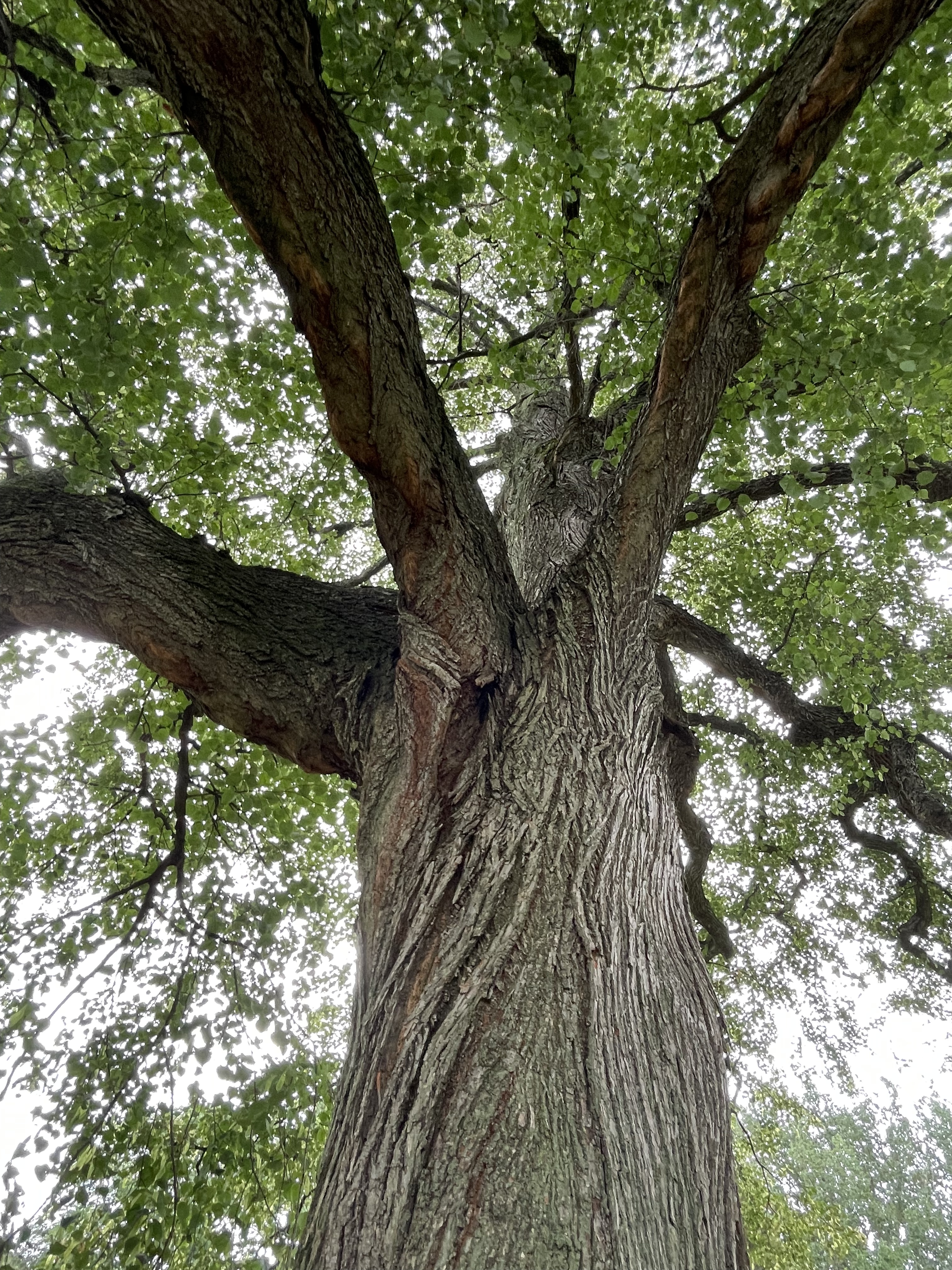
But especially the shagbark hickory.

A historic bur oak with its distinctive shaggy acorn.

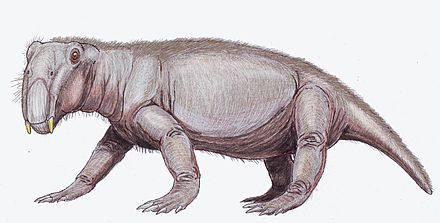
Also critters. The homely early herbivore called a lystrosaurus that lived 250 million years ago and survived the Permian extinction event to dominate the early Triassic.
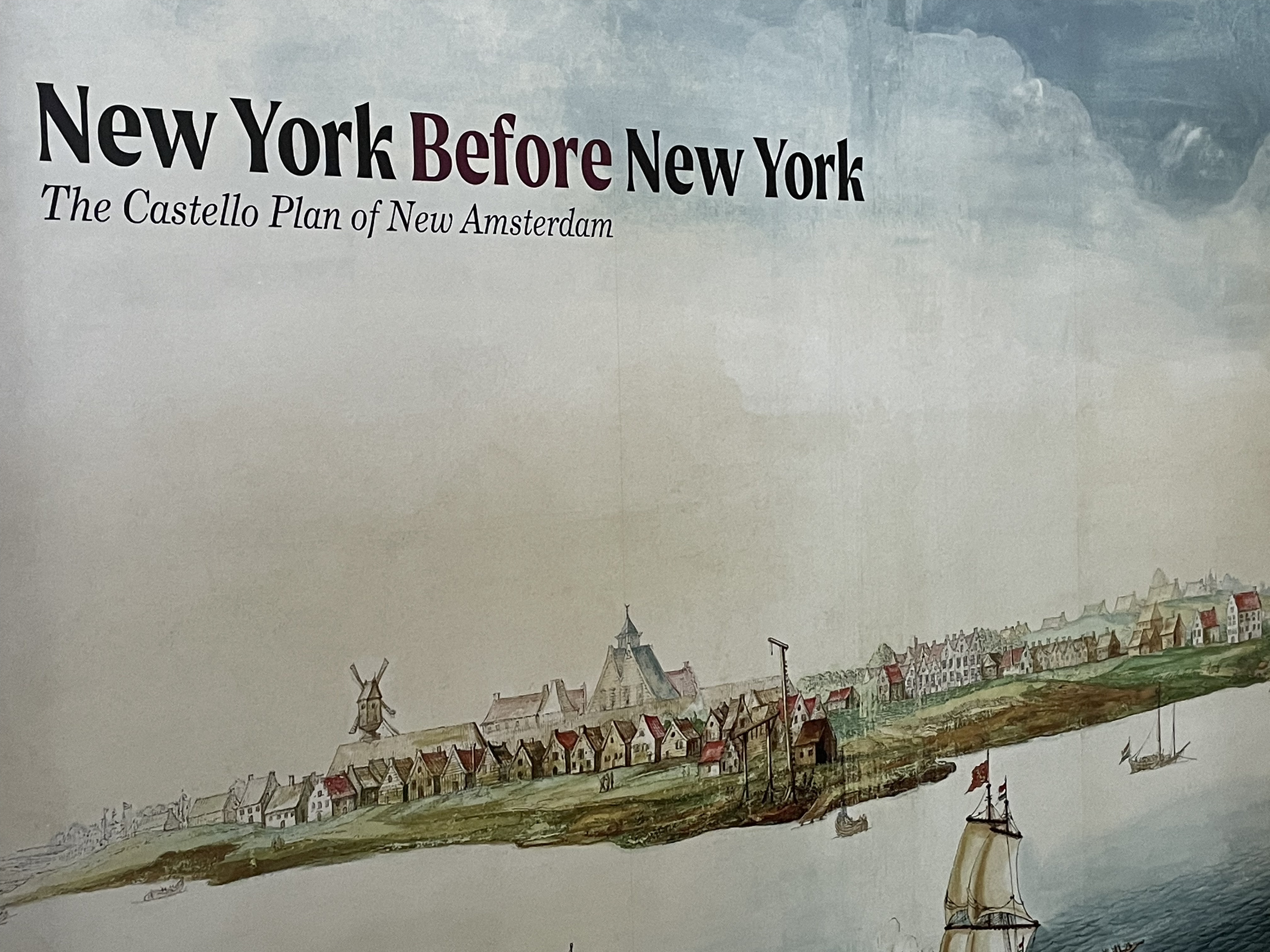
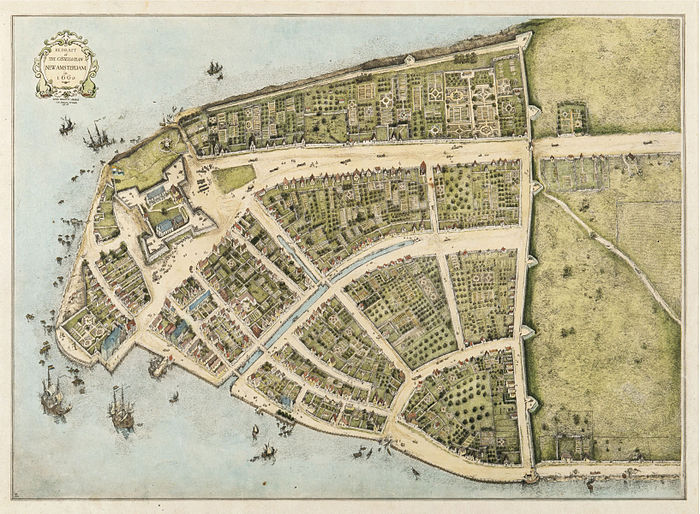
The crystal-clear first Manhattan street map from 1660, called the Castello Plan.
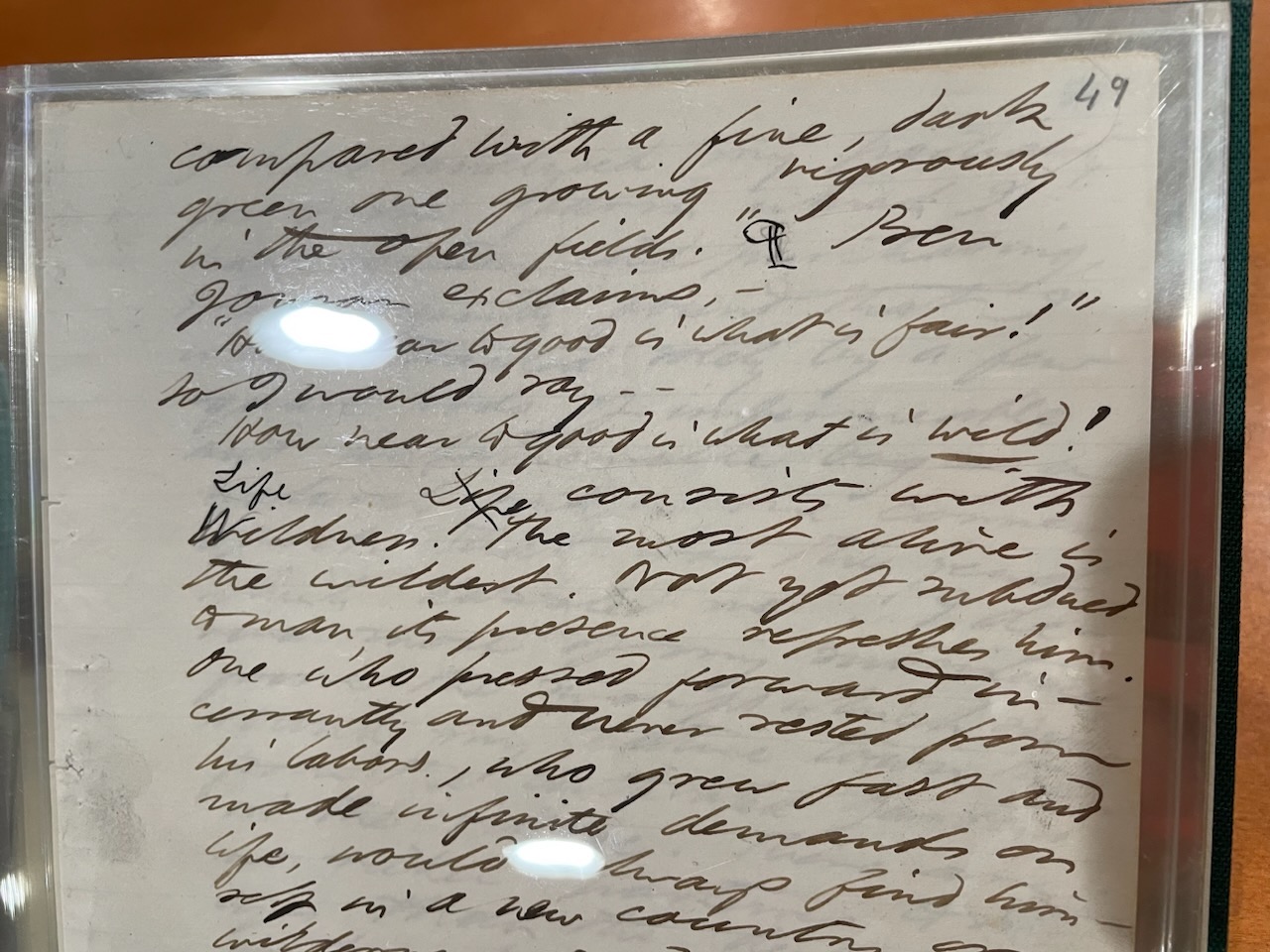
The perfect antique manuscripts I found in the basement of the Concord Public Library, the handwritten copy of Thoreau’s 1851 Walking with its timeless exhortation, How near to good is what is wild!
Dusty, venerable things. Like the perfect cabin we inhabited for a decade.

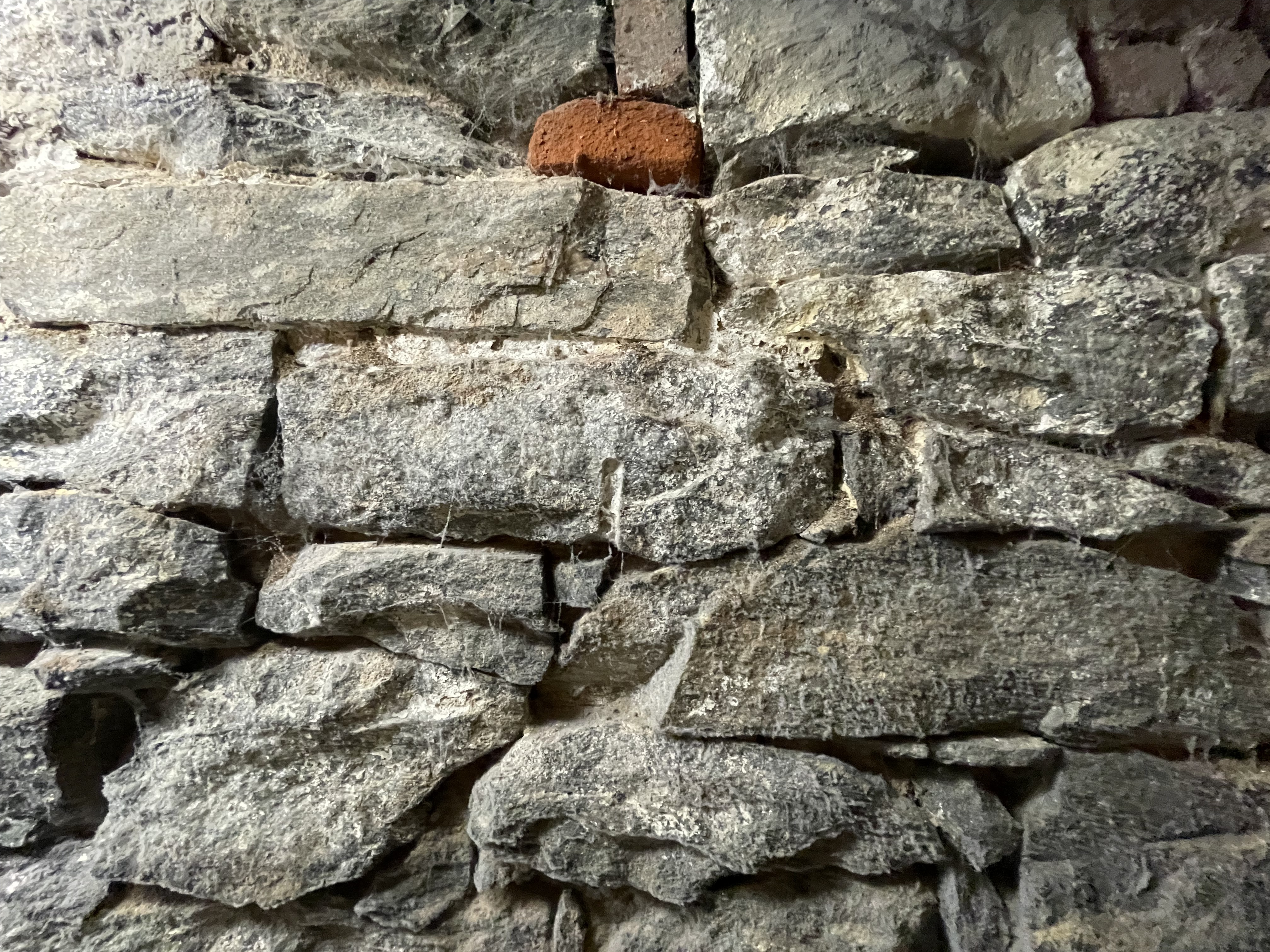
Or the rough stone wall of our current apartment building. Don’t think anyone has noticed it in a century or so.
Speaking of stone, an expertly carved medieval lion at the Cloisters in New York City.

Not necessarily grubby or dirty, though truth be told I often like those qualities as well.

We recently visited Cortlandt Alley in NYC, dating back centuries.

Now the site of a funny tiny art exhibition space called Mmuseum. Which shares the alley with some vintage window shutters.

Along with awesome contemporary street art.

Of course I value vintage family stuff, like anyone else. Family photos of loved ones.

Or heirlooms like my great aunt’s tatting.

Or the gold cameo ring belonging to my grandfather, bearing the tiger’s eye image of two warriors — one male, one female. A popular ornament in the 1930’s, the ring was said to bring the wearer courage and luck.

I treasure my Ginny dolls from when I was a kid.

There’s also the mysterious Japanese doll already antique when my mother brought back from Japan years ago.

My mother herself gets wiser and zestier with each birthday. At ninety-two-years young, she can identify the musicians who created Layla when song comes on the shuffle.

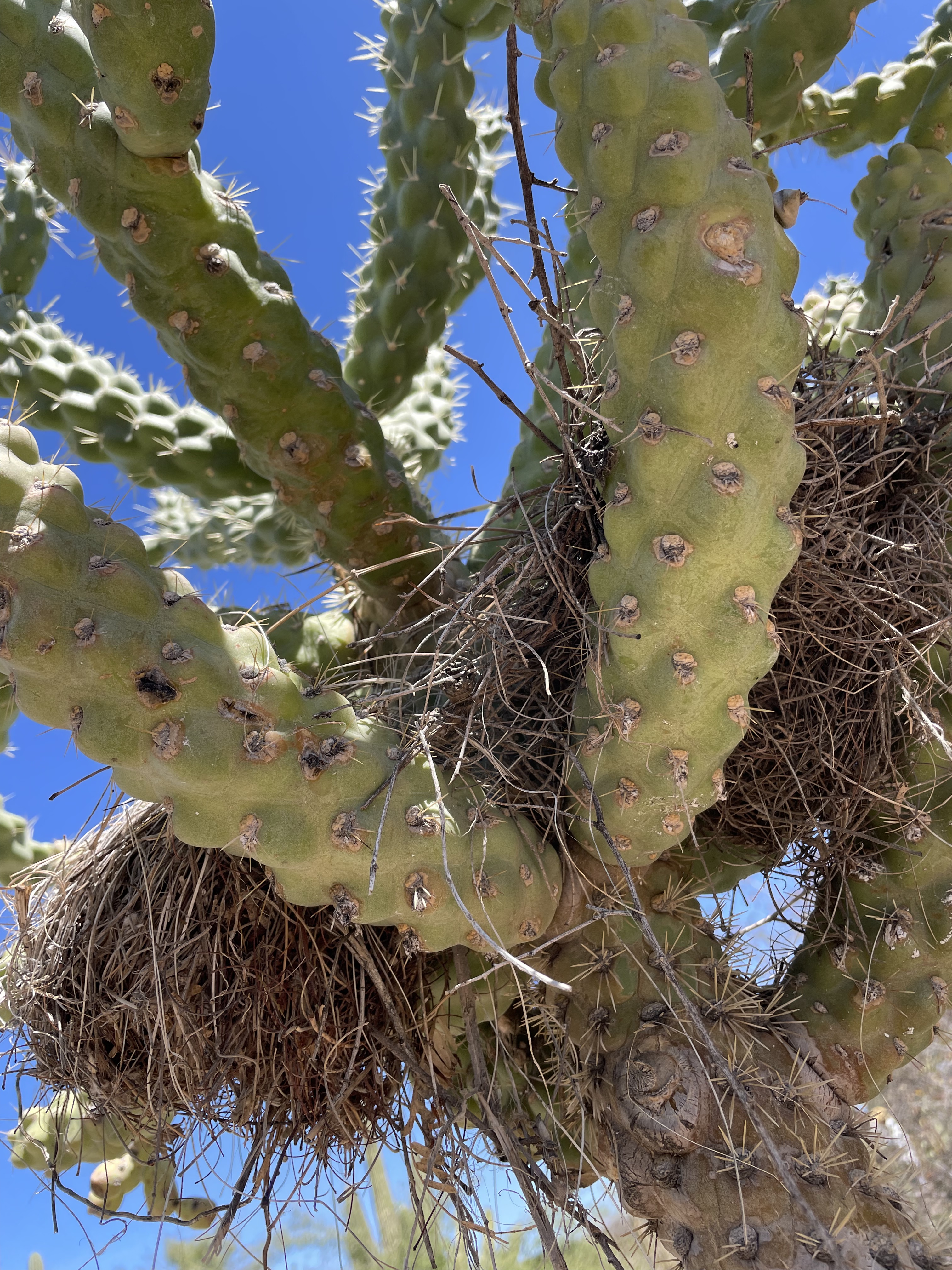
Old cactus, new nest.
The best.
6 Comments

Filed under Jean Zimmerman

Forests and New York City

is not a pairing that would make sense to some people outside the Metropolitan Area (we always say that, as though there is no other metropolitan area in the world). But majestic trees do exist among the concrete canyons of NY.

I’ve been fortunate to come up close to some of them.

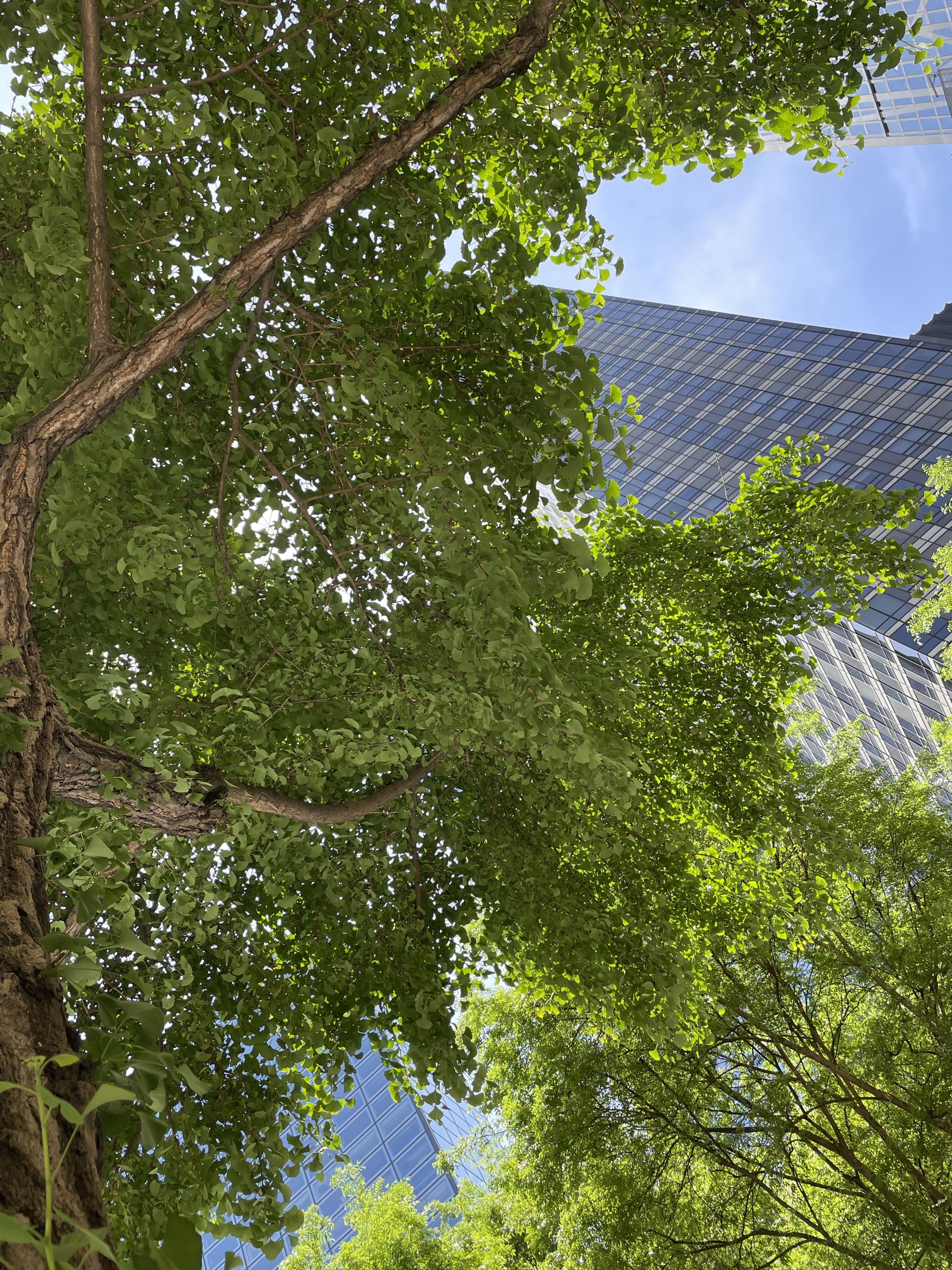
Walt Whitman: Why are there trees I never walk under but large and melodious thoughts descend upon me? In New York, there are plenty of inspiring ginkgo biloba‘s.

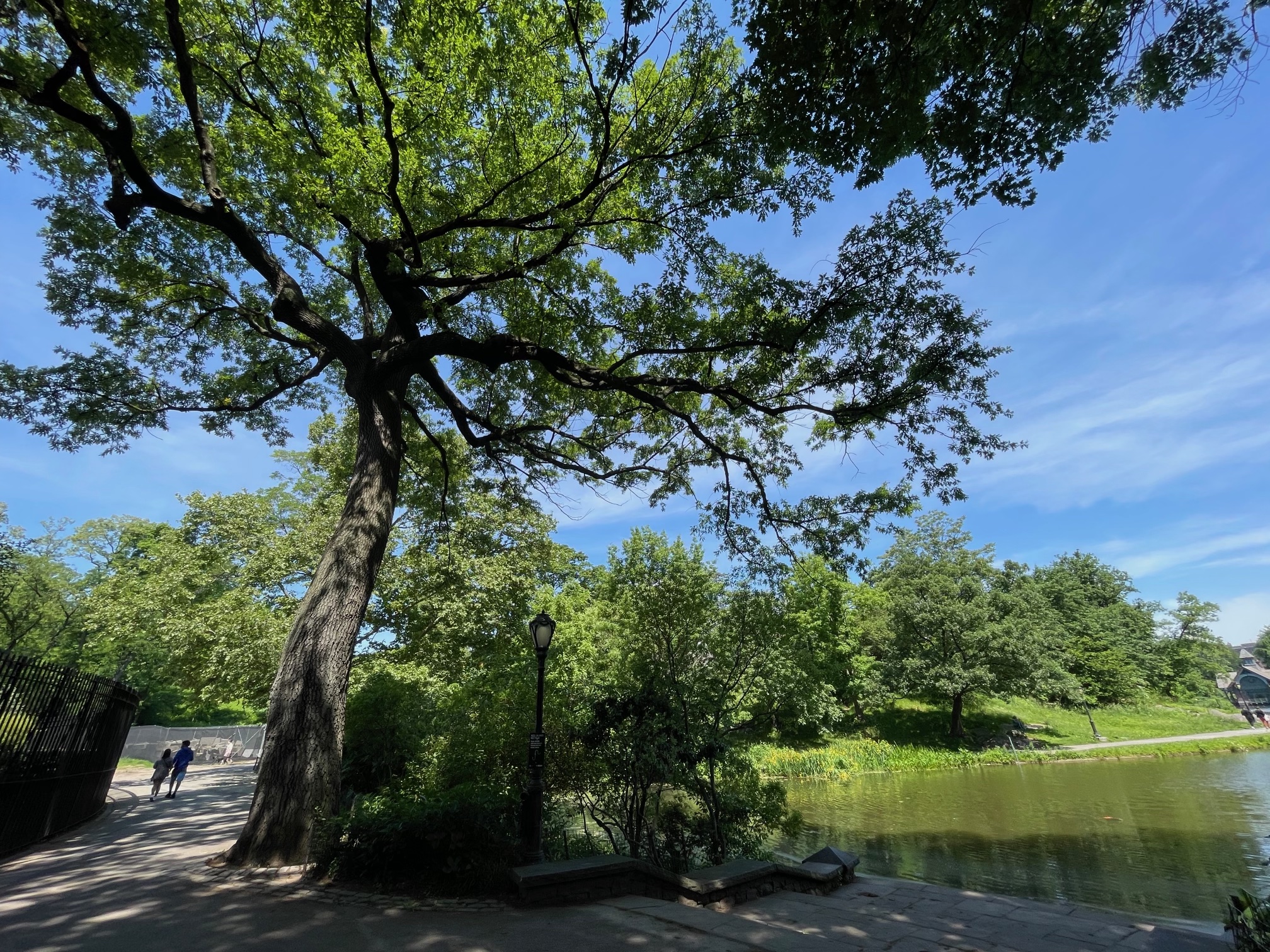
But also majestic oaks. I visited a grove in Central Park.

Not just any oaks. These were uncommon oaks. There were mature Northern red oaks.

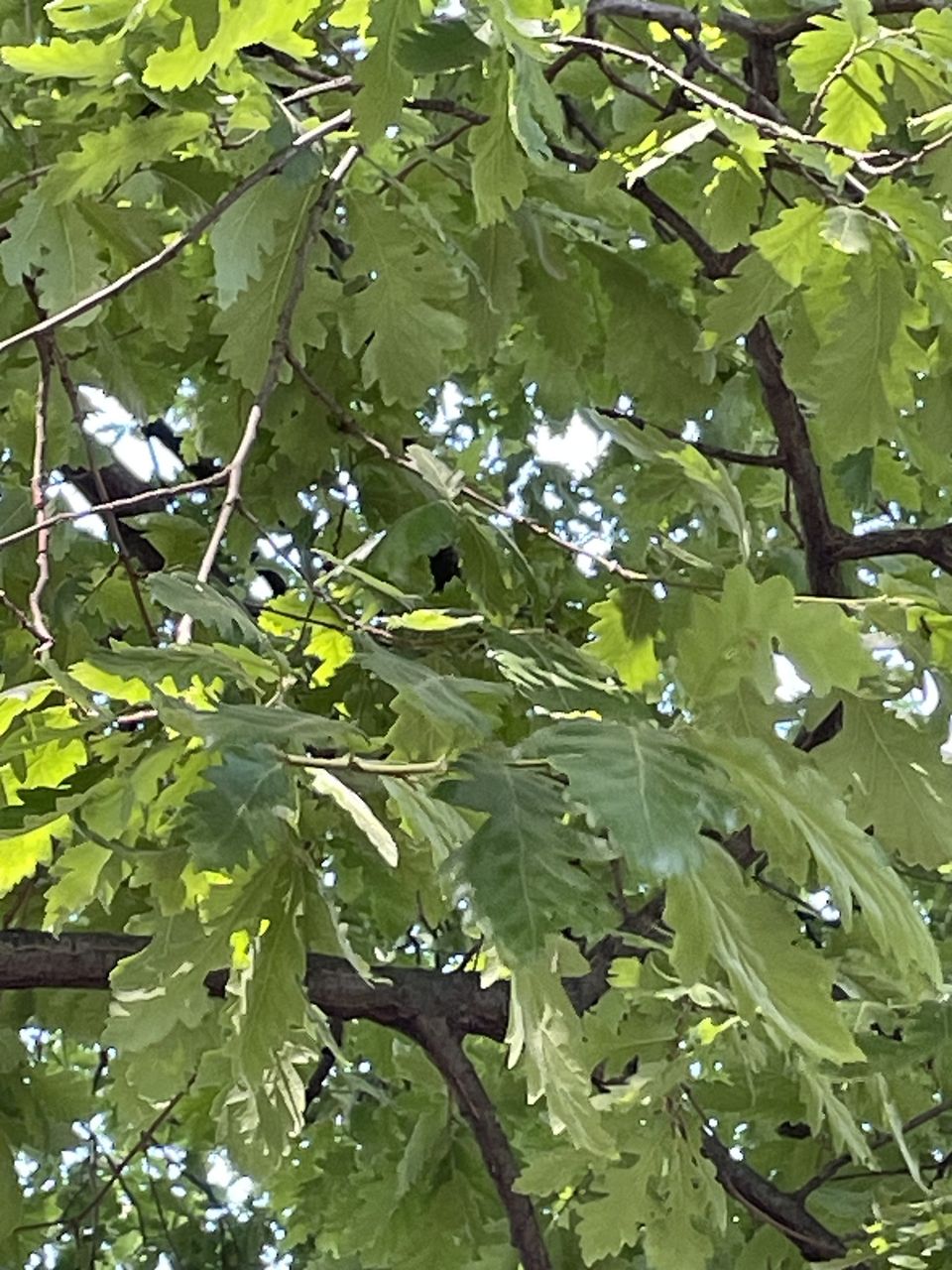
I also saw swamp white oaks and sawtooth oaks.

While you’ll find both as street trees in New York, here they were massive, ancient, awe inspiring.

And so I go to the woods. As I go in under the trees, dependably, almost at once, and by nothing I do, things fall into place. I enter an order that does not exist outside, in the human spaces….I am less important than I thought. I rejoice in that. So said Wendell Berry.

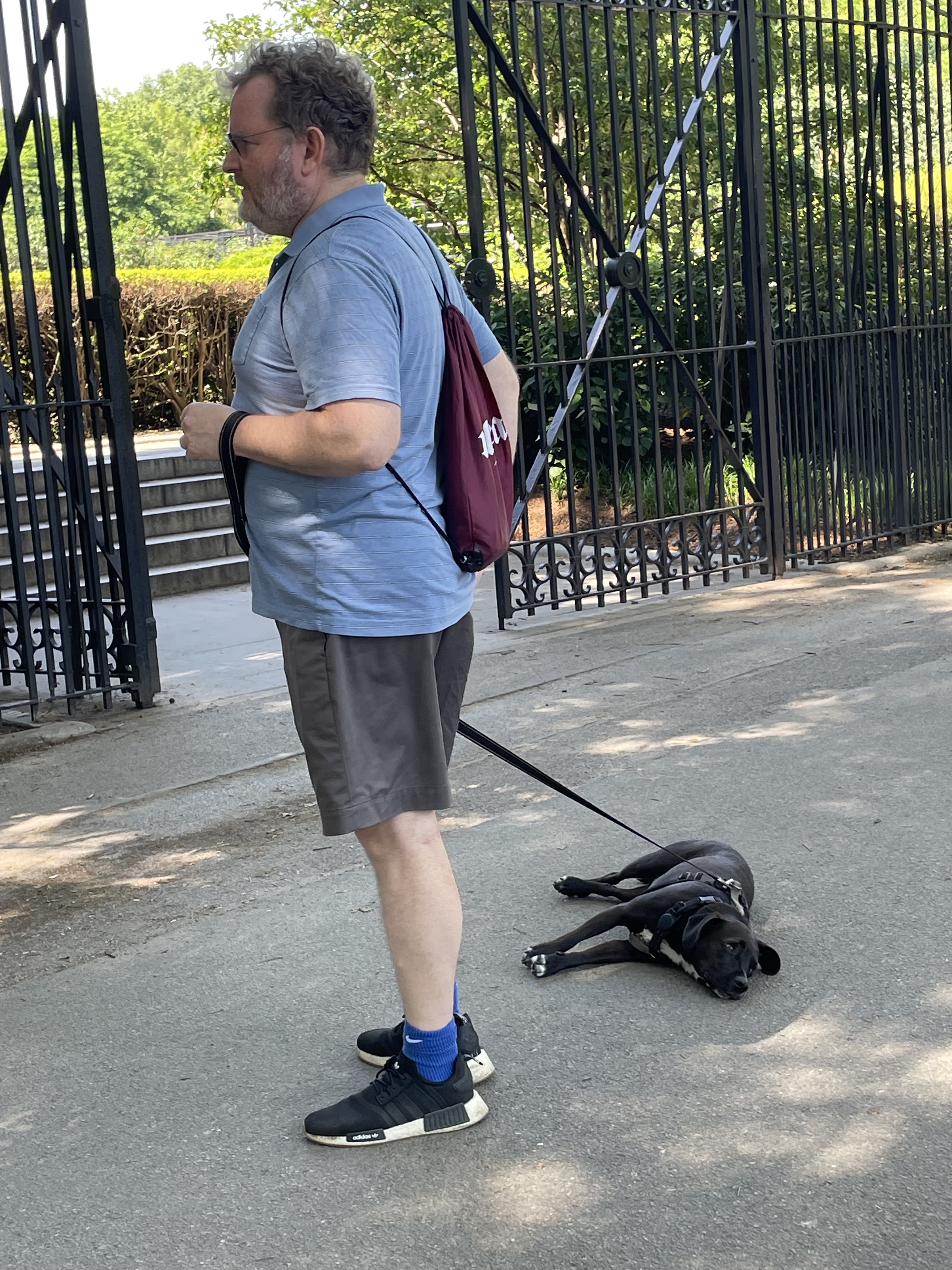
Some folks on hand didn’t seem much impressed, preferring a nap to gazing upward in rapture.

But I was definitely taking notice.

Especially having recently visited the New-York Historical Society for an exhibit about early New York.

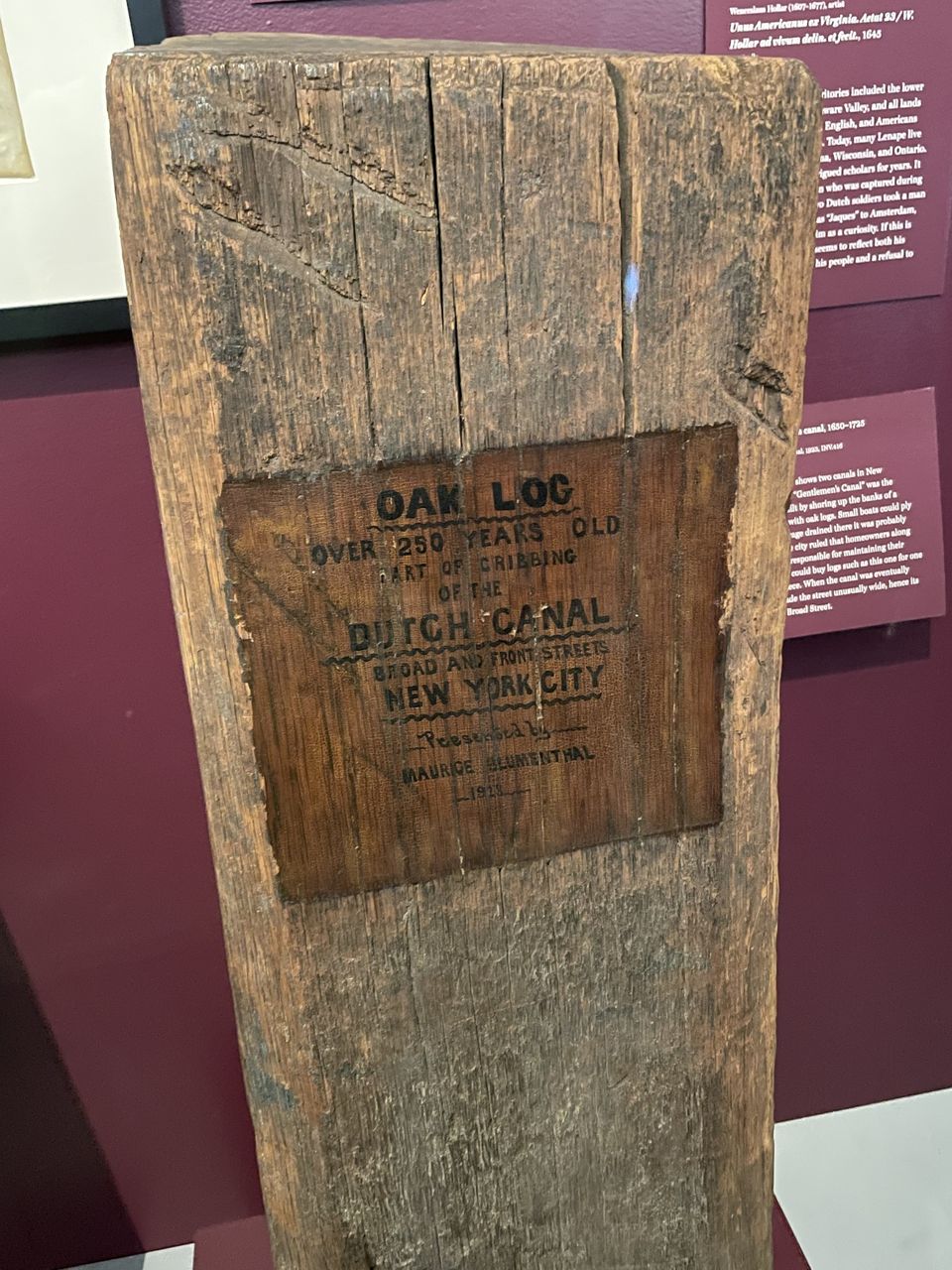
Of course there were many great artifacts, but a special treat was a fragment of oak log from an early Manhattan canal hundreds of years back. That’s how sturdy and strong and lasting oak is.

Just outside Central Park, a line of gargantuan elms strides down Fifth Avenue.

When the infamous elm blight decimated the canopies of so many urban areas’ Ulmus americana back in the early twentieth century, these elder stateswomen clearly did not take the hint. What doesn’t kill me makes me stronger — so said Nietzsche, correct for once.

I recently attended a tree climbing workshop in North Carolina with my daughter Maud.

The old-old trees we climbed were extraordinary. White oaks all around.

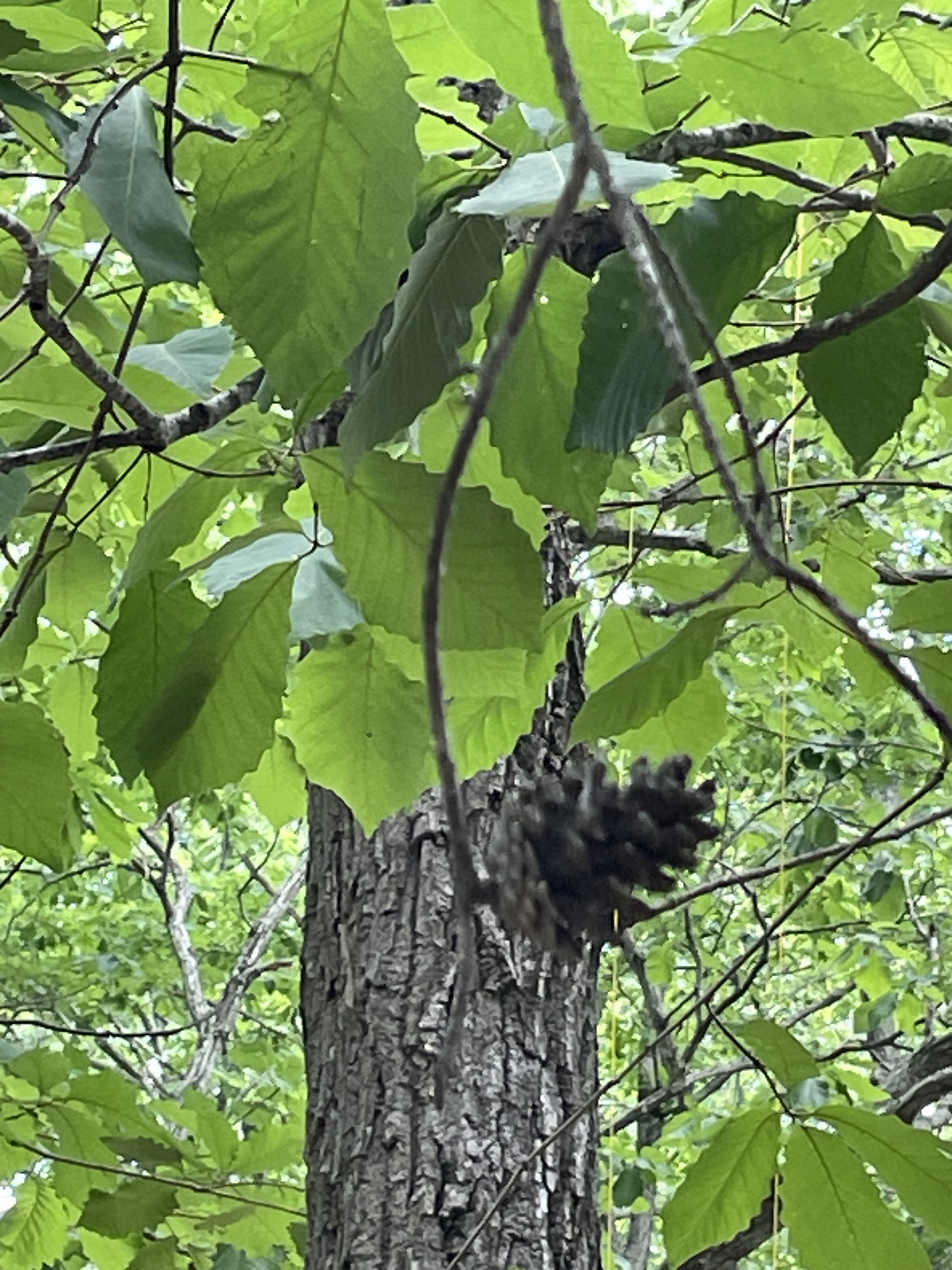
And chestnut oaks. Luminous.

Back in New York, I rediscovered the fantastic trees all around. Still some cherries.

Some of the most fantastic specimens thrived far from the posh environs in and around Central Park. It’s linden season, when their magical bracts appear.

I came across a red oak in Queens when I was on a tree preservation job.

Nature thrives in Queens, it’s not just trees. I saw some peppy petunias.

Delicate bleeding hearts worthy of any country estate.

Perfect peonies, their fragrance really indescribable. Just try. Yes, in Queens.

On frenetic 20th Avenue in Whitestone, right down the block from the bioswales trench I was inspecting and just around the corner from some sad, spent ash trees, I came across the ubiquitous Dr. Seuss specimens that are ubiquitous on Queens streets.

But then, this mammoth Northern red oak! Hard to do justice to this ladytree’s girth in a photo. Suffice it to say I could wrap my arms around her a couple of times.

She was kind enough to drop leaf bouquets on the sidewalk and host a clutch of hostas in her lap.

While some stern stone eagles oversaw the scene.

Inspired by a wetter and warmer May courtesy of climate change, I knew I’d find nature thriving at the New York Botanical Garden, a Bronx oasis thronged by both native New Yorkers and tourists on this Memorial Day weekend.

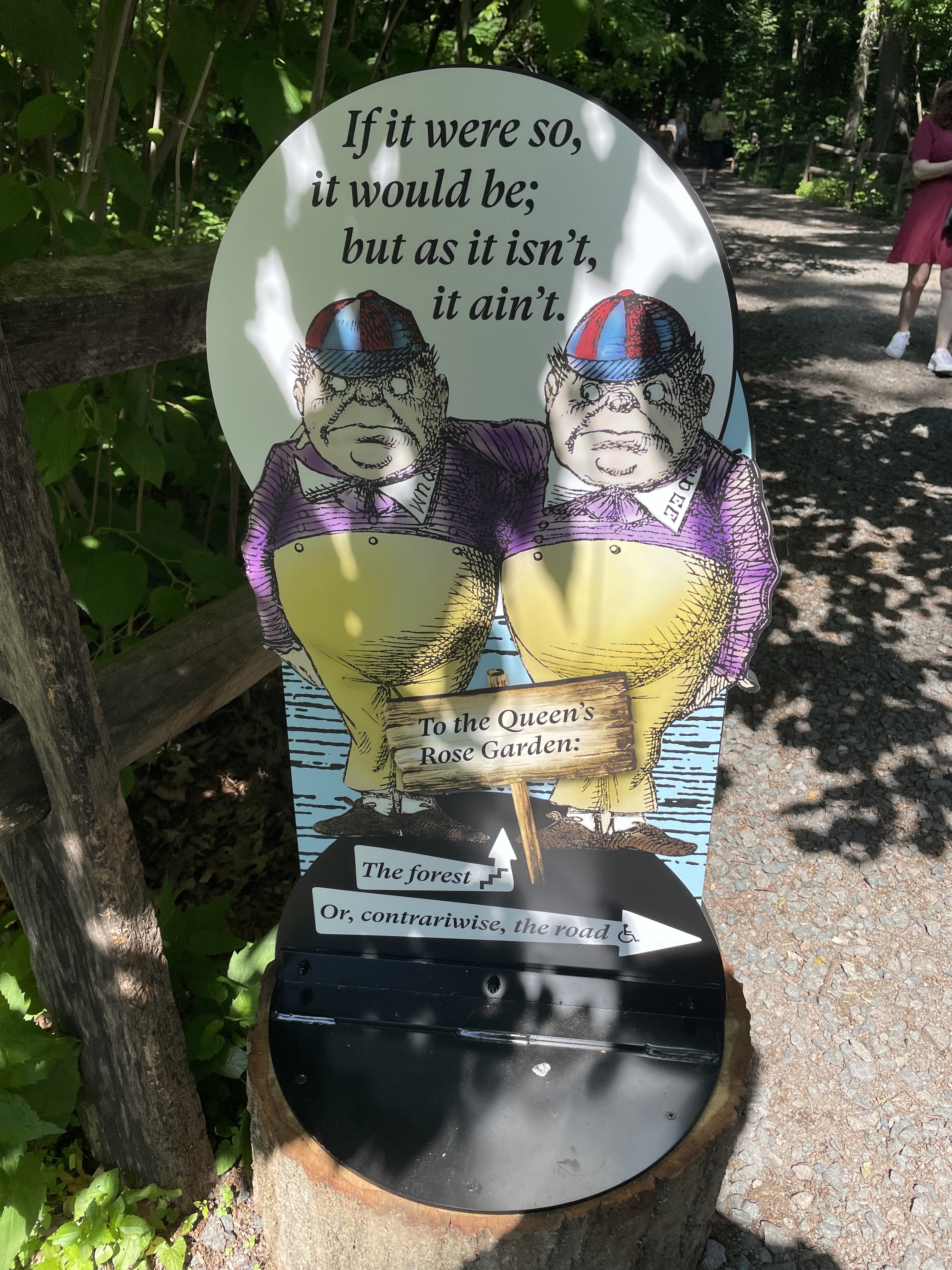
The tone was set by a topiary White Rabbit, complete with pocket watch, part of a Garden-wide Alice in Wonderland display.

All around were clever signs. I overheard a woman say, “The Caterpillar always creeped me out.”

I wouldn’t say that about anything in Alice! What I was thinking about at NYBG was how great it would be to drink a magic potion and crawl into one of the abundant flowers in the ravishing Rose Garden.

Sometimes I’ve believed as many as six impossible things before breakfast, said the Queen. Hear, hear.

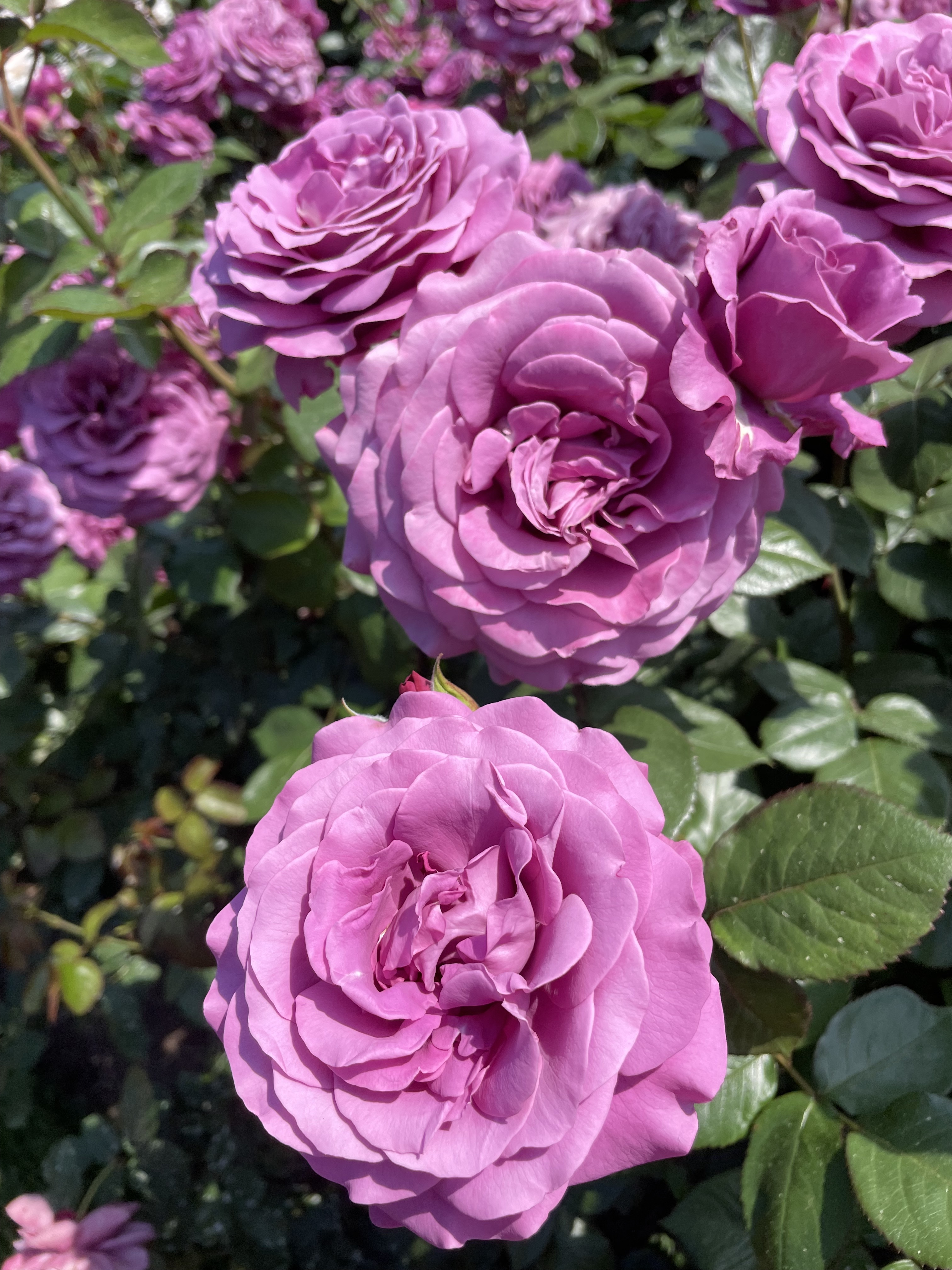
Hard to do justice to the array of blooms there.

They dazzled as roses always do.

Funny, though, whether white or yellow, pink, red or purple, stick your nose in and they all smell the same. Phenomenal, but the same. Flowers, I ask, must you be so boring?

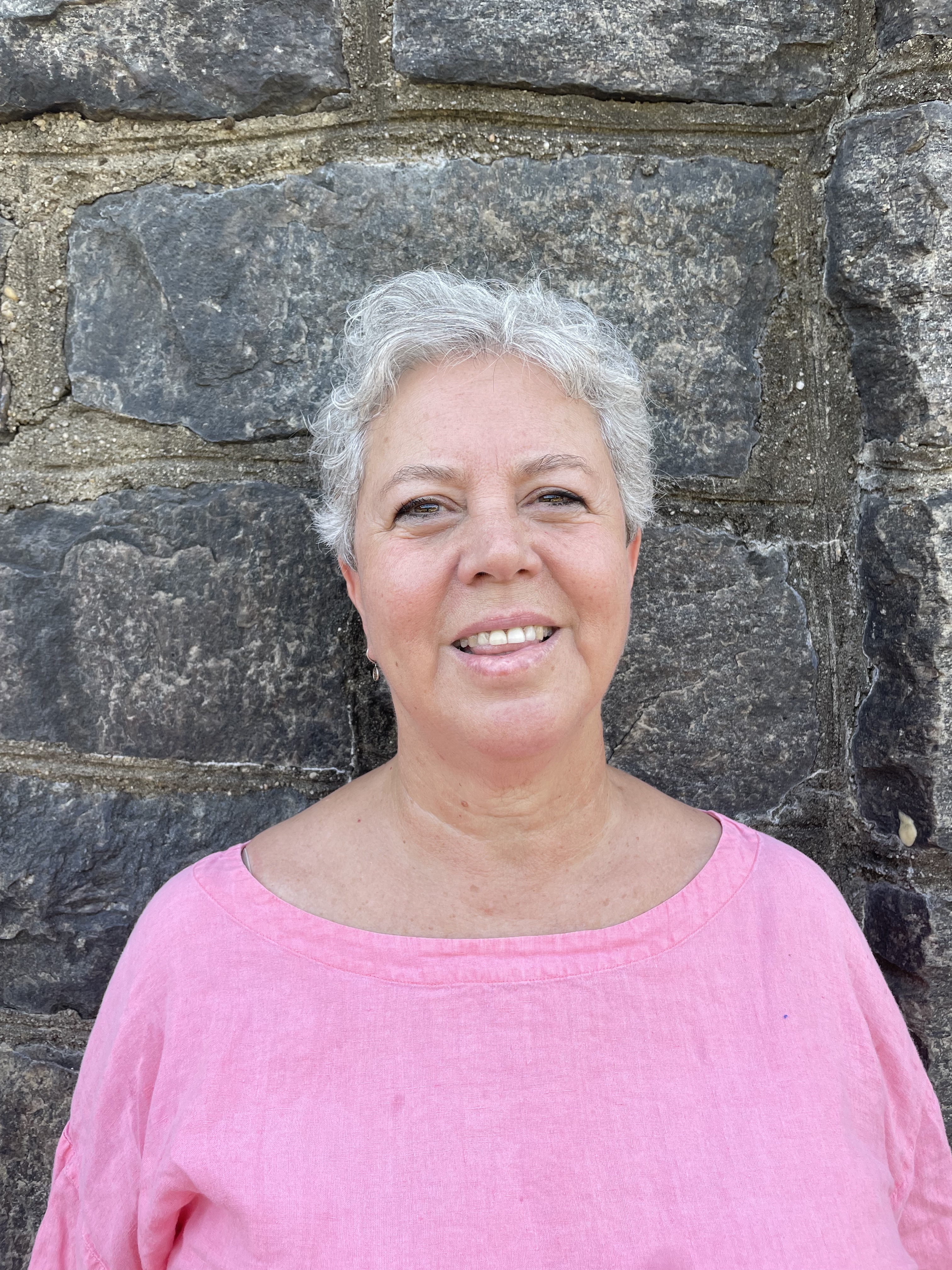
All around, people were posing as if they were themselves flowers, so I did too.

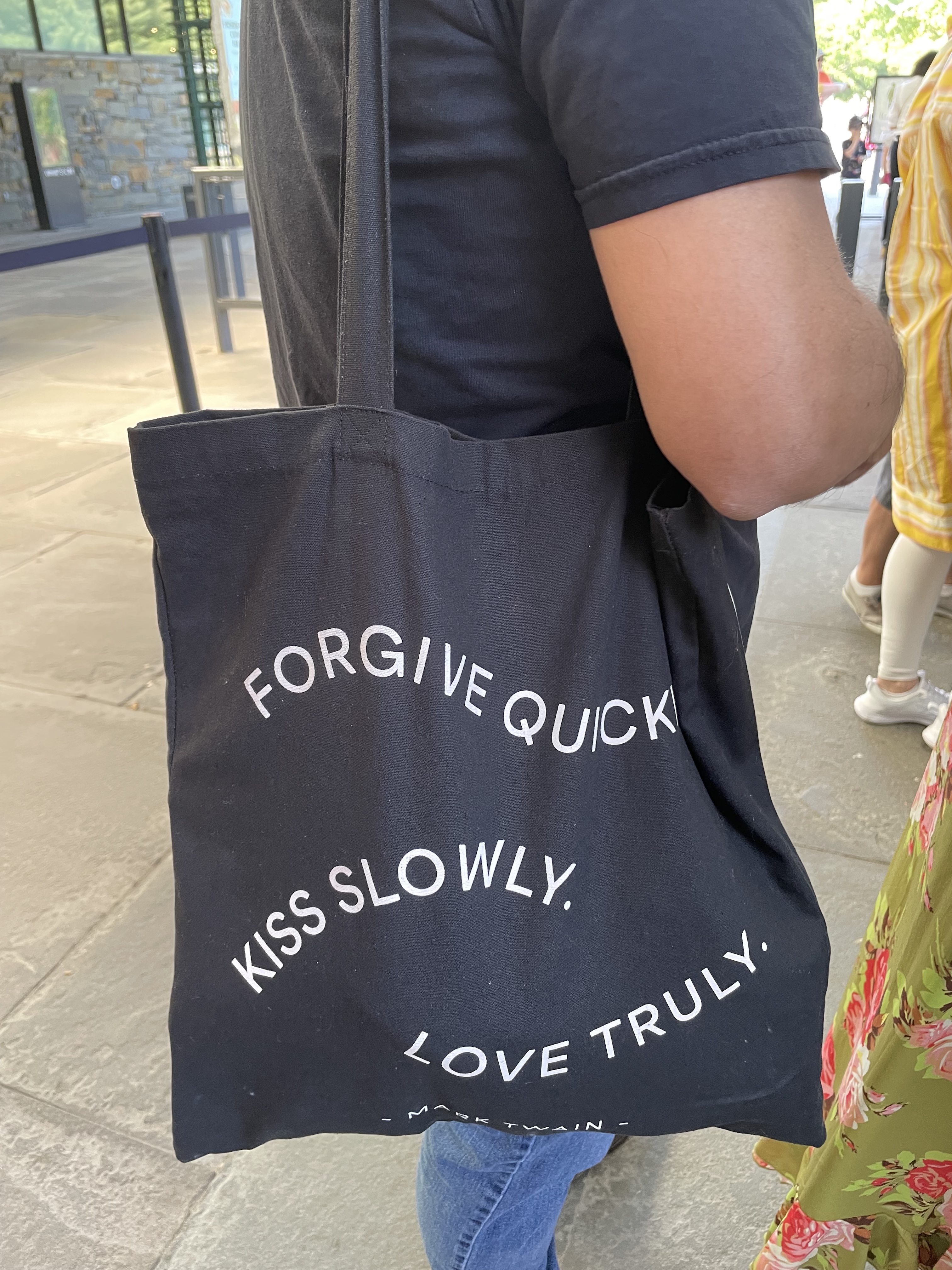
And a guy got into the springtime spirit with his slogan tote bag. Think I might get this on a tee shirt to join my newest wardrobe favorite: UNDERESTIMATE ME: That’ll be fun.

Just up from the Rose Garden, kids played with another Alice-themed attraction, a monochrome chessboard created by Yoko Ono that suggests the essential futility of war. We’re all on the same side, after all. Gil tried to set the game up properly, when he wasn’t inciting Memorial Day riots with his George Orwell tee shirt.

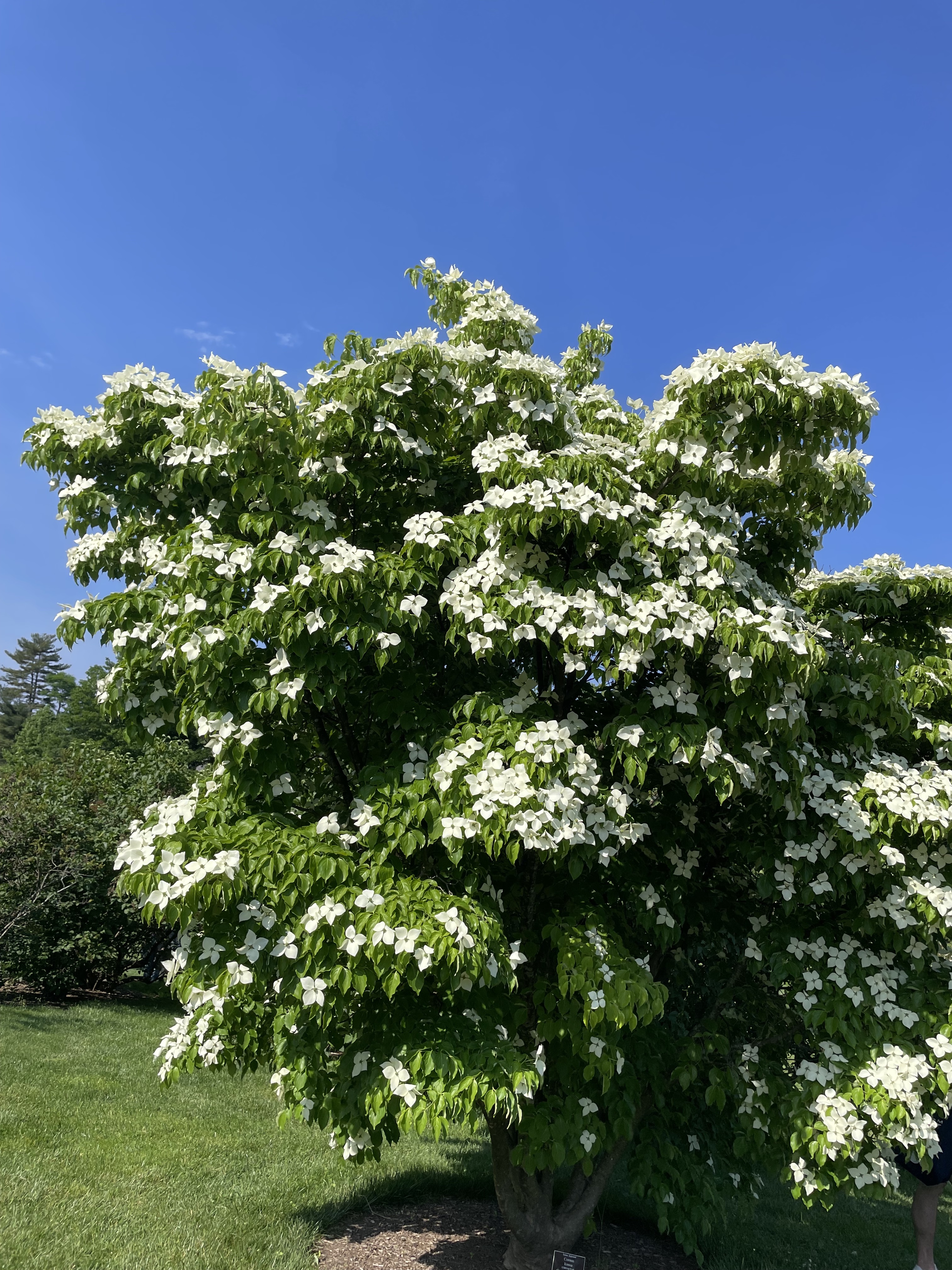
We saw other seasonal stand-out specimens of the urban forest. A Kousa dogwood having its moment.

Some carved beeches I’d probably passed a million times before but never noticed.

There’s always something new to notice when you pay attention. Mary Oliver wrote:

Instructions for living a life:

Pay attention.

Be astonished.

Tell about it.

We walked through the Thain Forest, a certifiable old-growth tract thick with sweetgums that gave me a few souvenirs to bring home (remember, though, take nothing but pictures!).
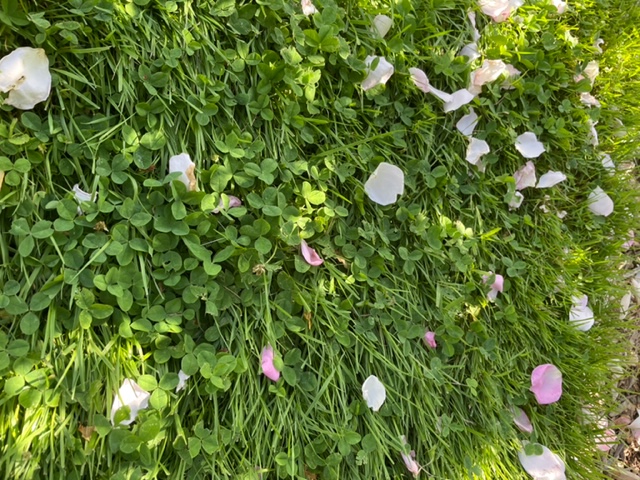
A critter hole made me again want to shrink like Alice. Anyone home? Mind if I come in?

The trees of the city, the flowers of the city form a promise, an opportunity for optimism and hope in these sometimes dark, difficult times. If they can grow and thrive, if they survive, perhaps we can too. I dwell in possibility wrote Emily Dickinson, she who thought a good deal about nature.

You can’t take a whole forest home with you.

But when you pay attention, the vision of those trees and flowers might linger with you in your workaday life and help you remember your place in the natural world, and also bring some joy.

Even if you take nothing but pictures.

That’s my promise.

3 Comments

Filed under Jean Zimmerman

Late summer privacy.

I see no one on my walk to Lyndhurst, not a soul. My only company, late-season thistles along the path.

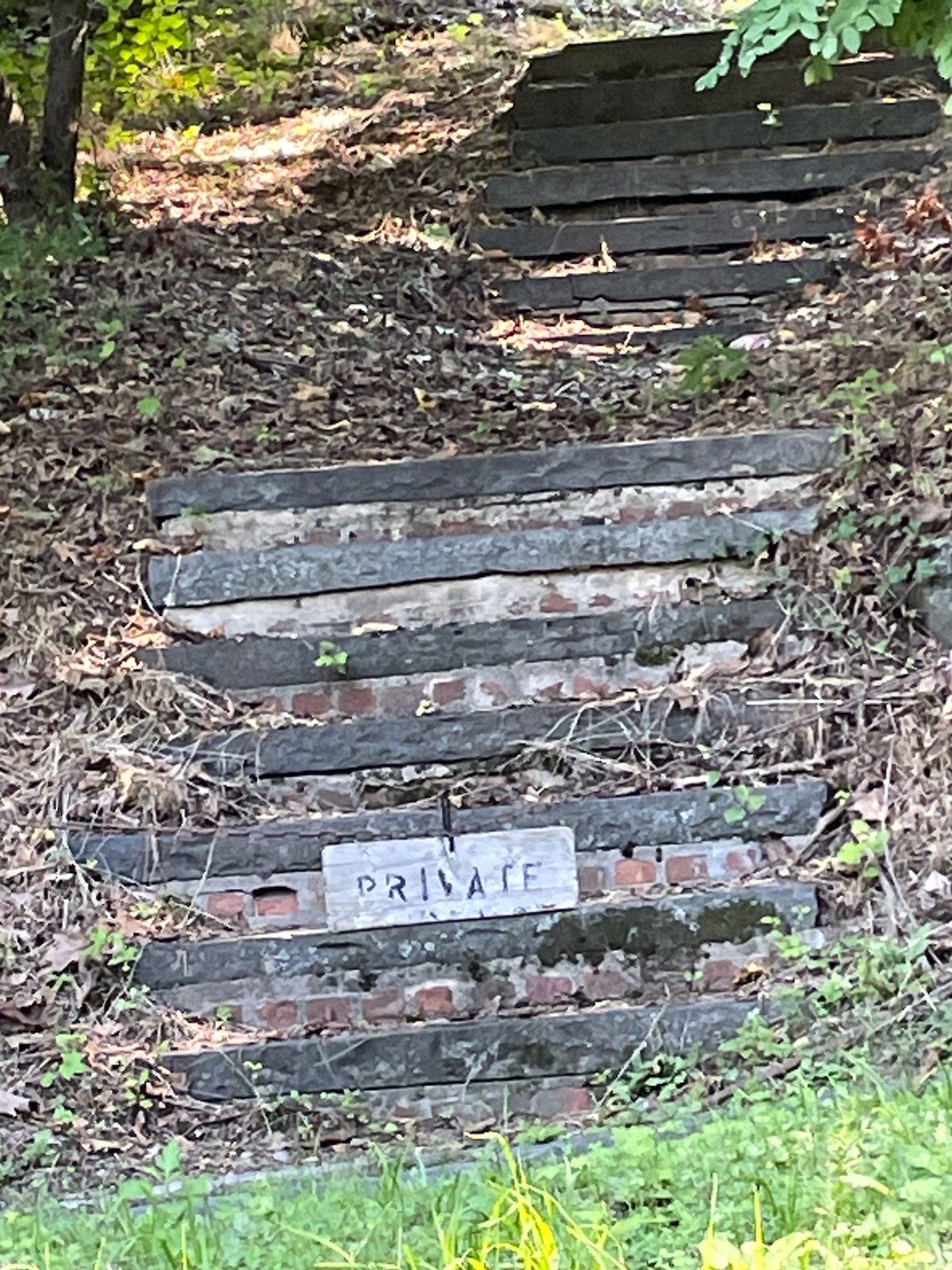
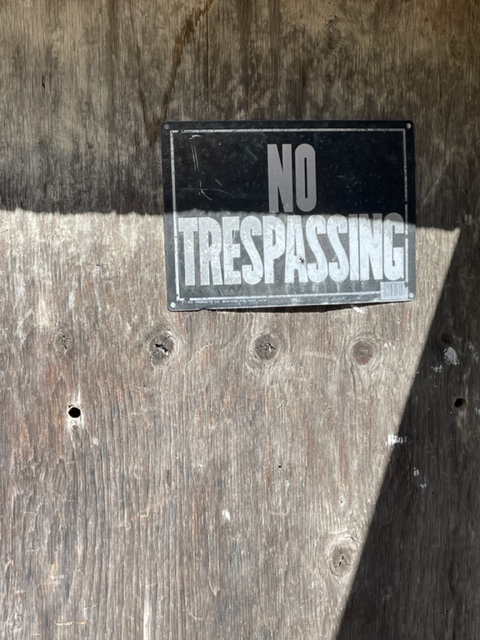
A weathered sign by the open-air entrance to the old estate tells the story of my day in a word. Private.

The Old Croton Aqueduct trail runs right through the grounds. Apparently the first owner of the property was proud, ecstatic to have the water run underground here when the water pipe was first installed, carrying water miraculously down from upstate to New York City.

You can stay on the trail. Or follow mysterious mysterious arrows. I choose not to follow.

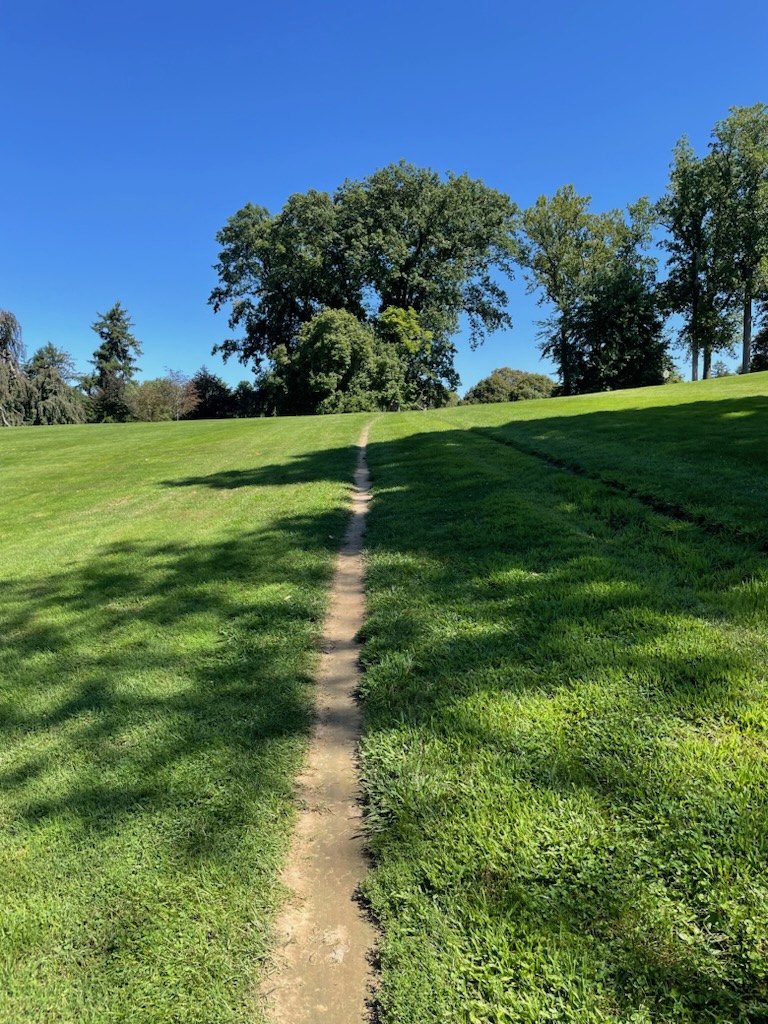
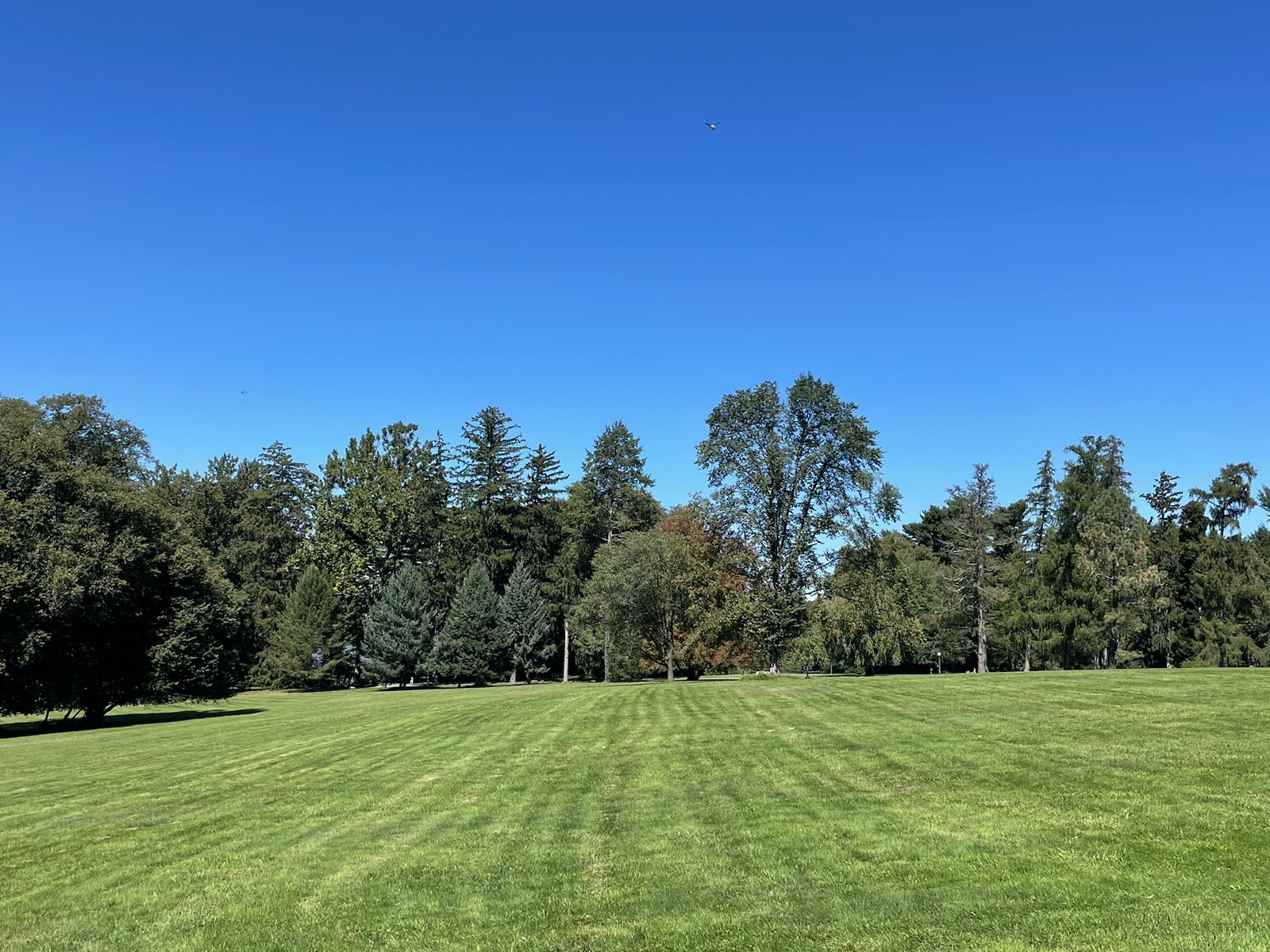
The lawns and old, old trees beckon. Robert Graves wrote, Tranquility is of no poetic use. I beg to disagree. This morning is sheer poetry. The calming late-summer scents of grass and trees, the hum of insects, the perfect glaze of sky.

I have wondered recently, Why is the sky blue? Such a silly question. The science has long been in. But still – blue? Perfect azure? Really? Could the universe really be this kind? I visit a grove of tulip trees.

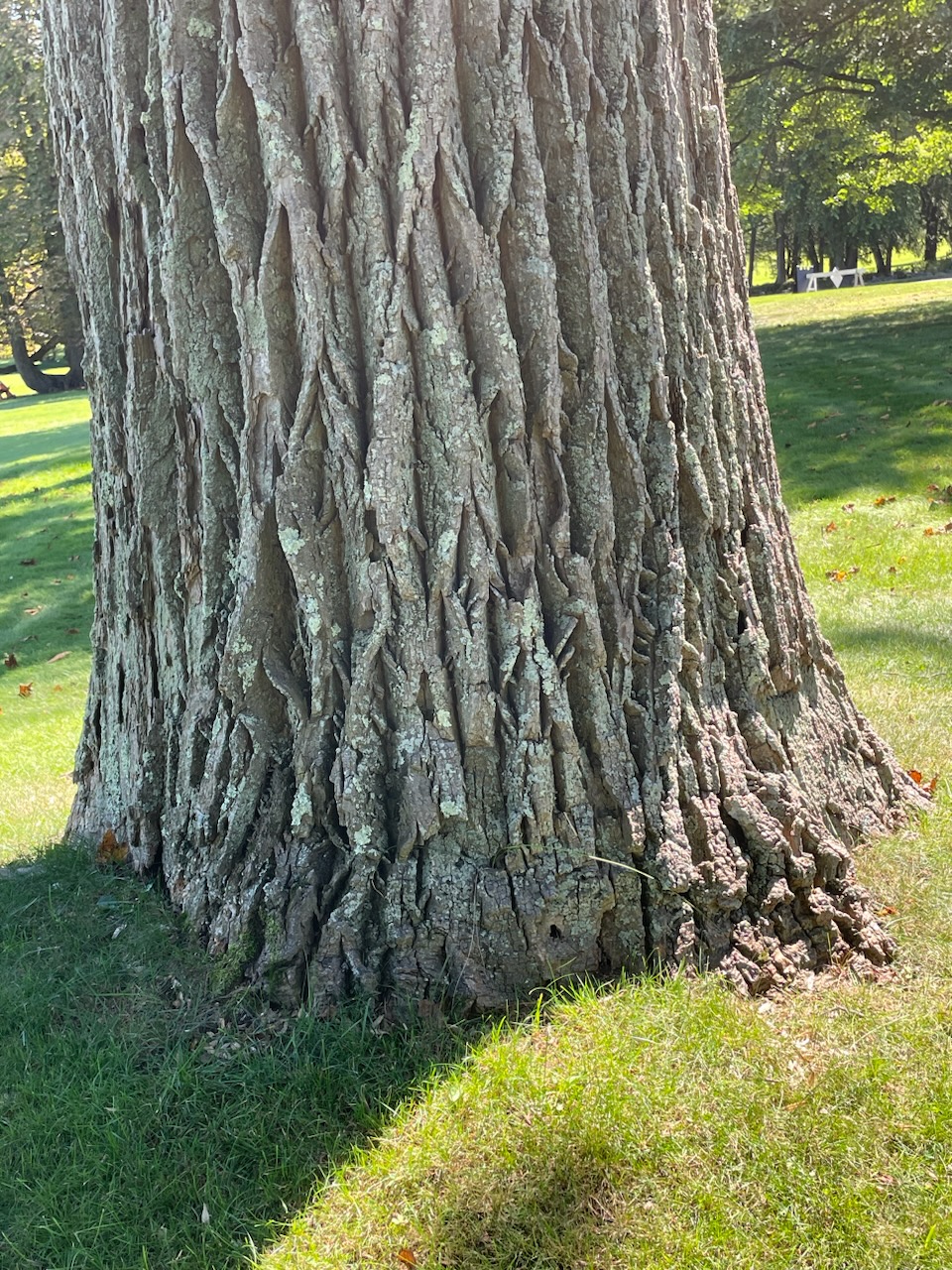
They stand poker-straight and are probably two hundred years old. Come close and touch the grooves.

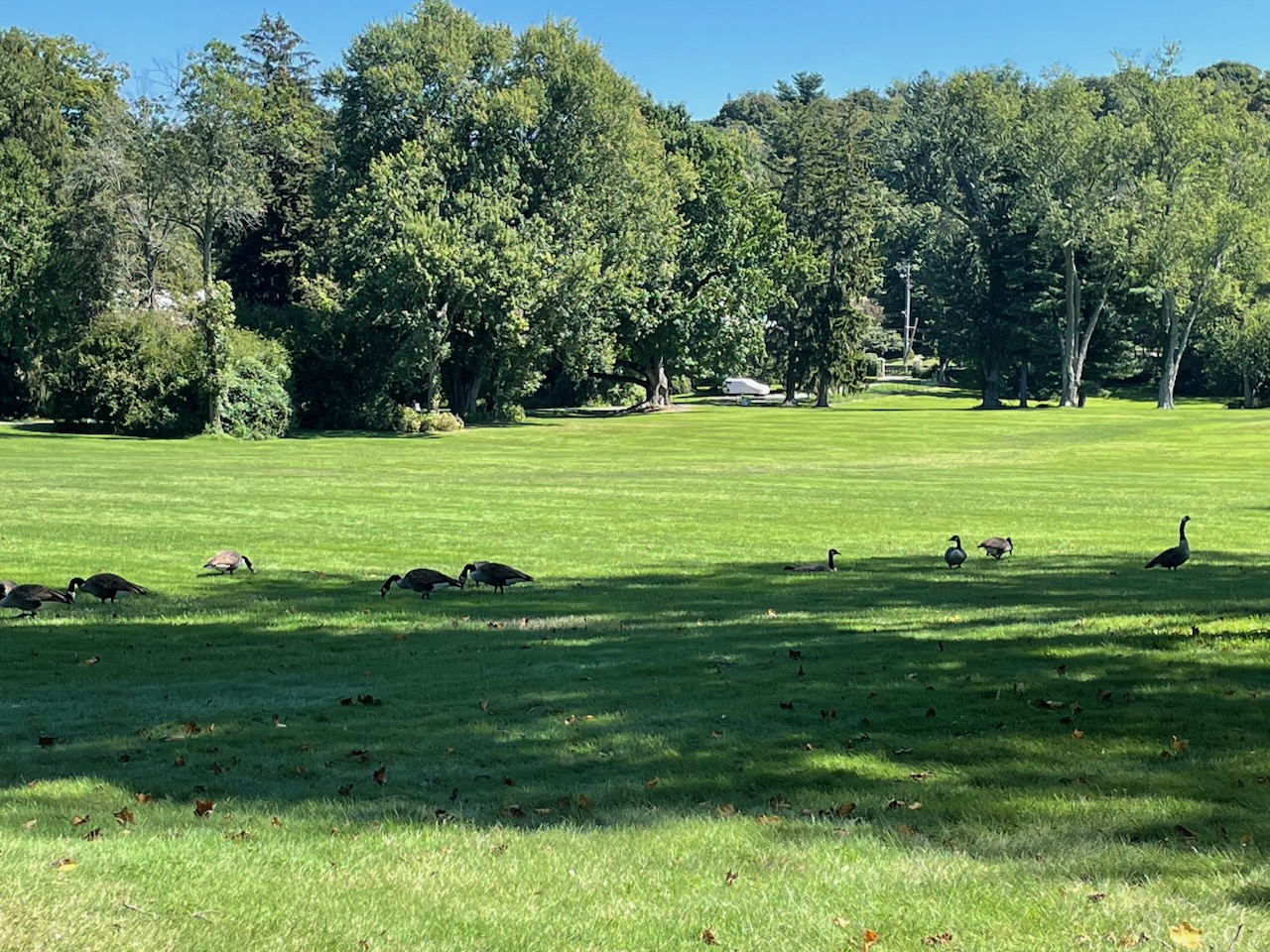
Geese feed themselves on grass. Quietly, unhurried, unworried.

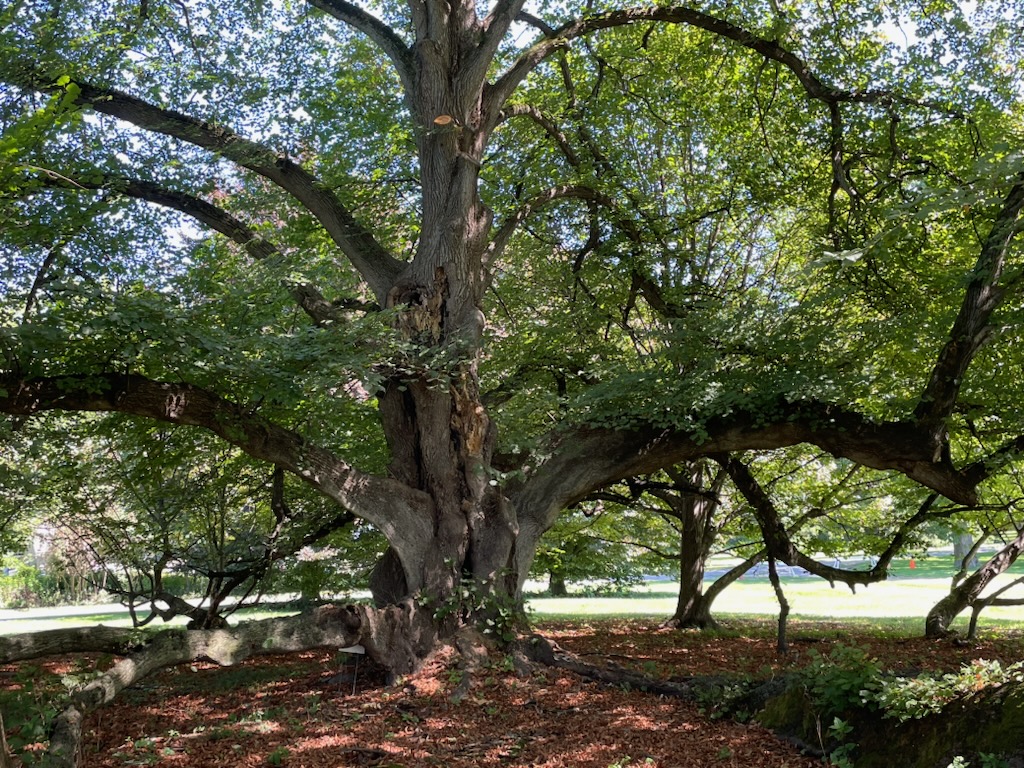
I feed myself too. I am hungry, having not eaten yet today. Now I feed my soul. I go to my favorite linden, the huge specimen with multiple stems and an enclosed space like a private drawing room.

There are many lindens here, some still holding onto their magical lemony bracts.

Octavio Paz wrote:

Perhaps to love is to learn

to walk through this world.

To learn to be silent

like the oak and the linden of the fable.

To learn to see.

Your glance scattered seeds.

It planted a tree.

   I talk

because you shake its leaves.

Seeking even greater privacy, greater tranquility, I visit one of the gargantuan, ancient weeping beeches on the grounds,

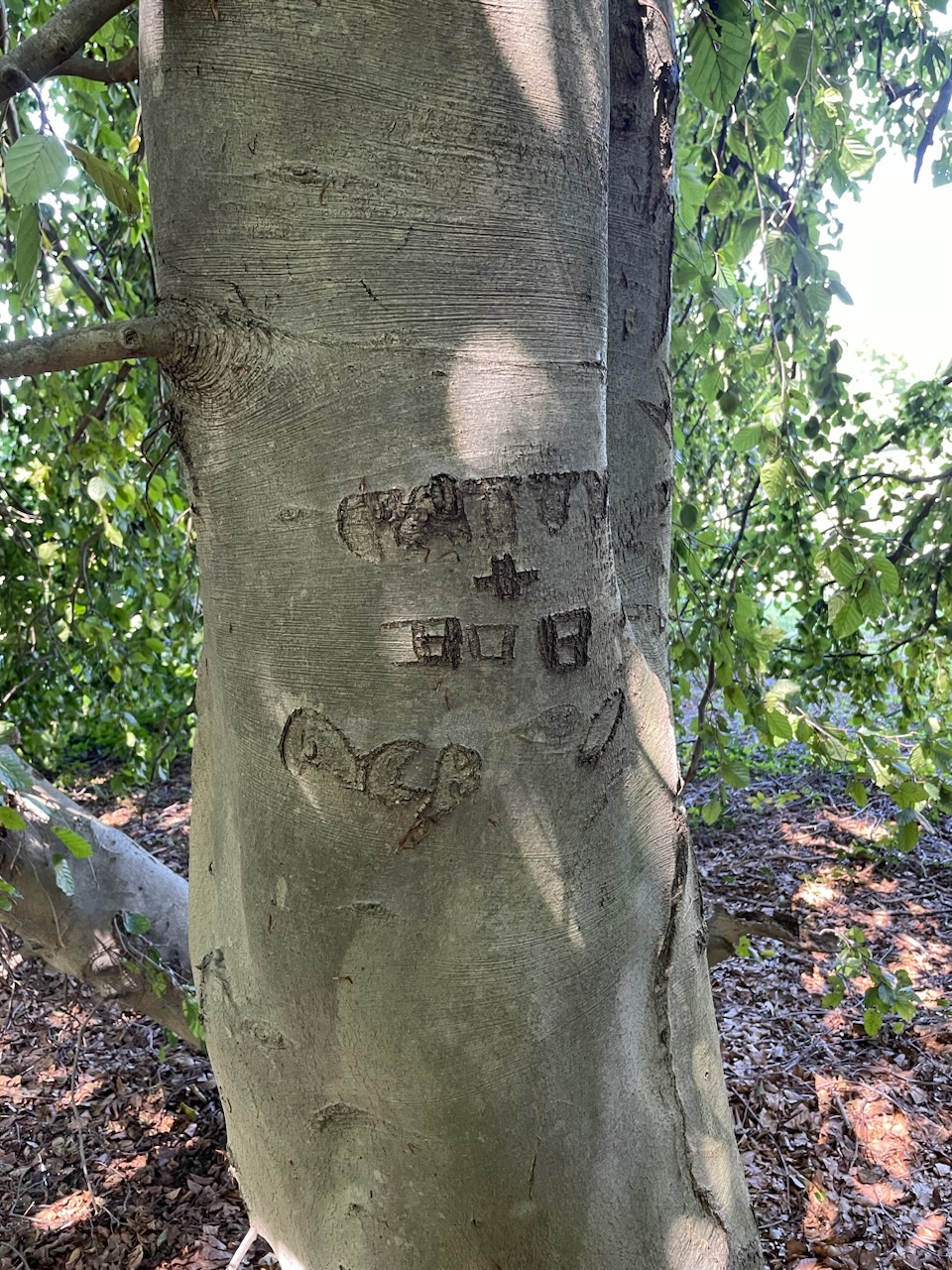
I push aside the branches and enter, finding myself inside a place so silvery dark and still and mysterious that no photo can really do it justice.

Others have been here before. Hello Bob, who did you love?

The branches twist together, sinuous. So quiet, yet so alive.

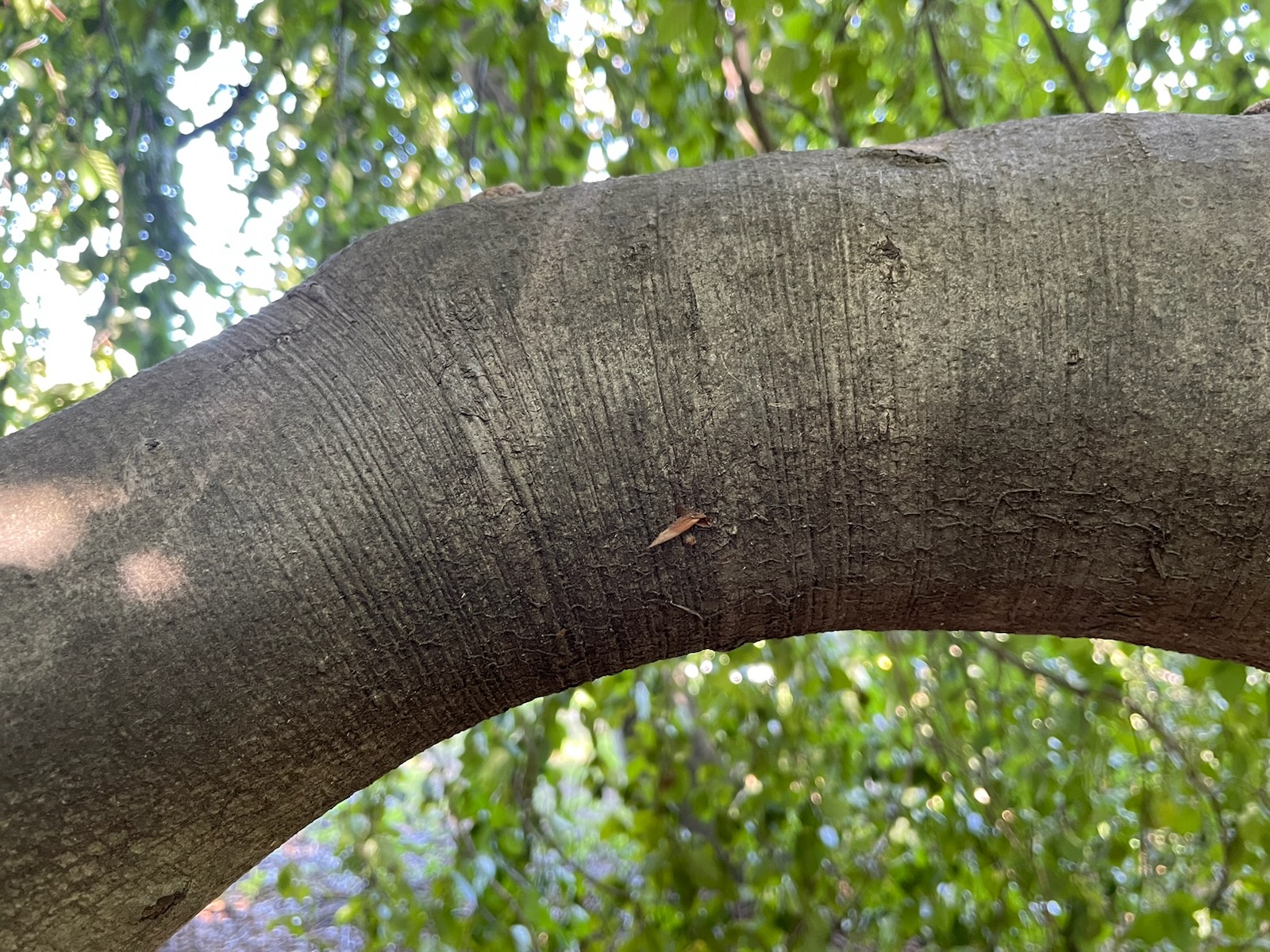
I run my hand along a smooth, muscular bough.

I stand there. I do nothing. It takes a lot of time to be a genius, wrote Gertrude Stein. You have to sit around so much, doing nothing, really doing nothing. I’m no genius, but I know that doing nothing can be an art as great as any other.

The rose garden at Lyndhurst is also antique, designed  by ladies a hundred years ago in concentric circles. Just outside its perimeter, late-season sage.

Hydrangea and its perfect clusters. I clearly need to find another word for perfect.

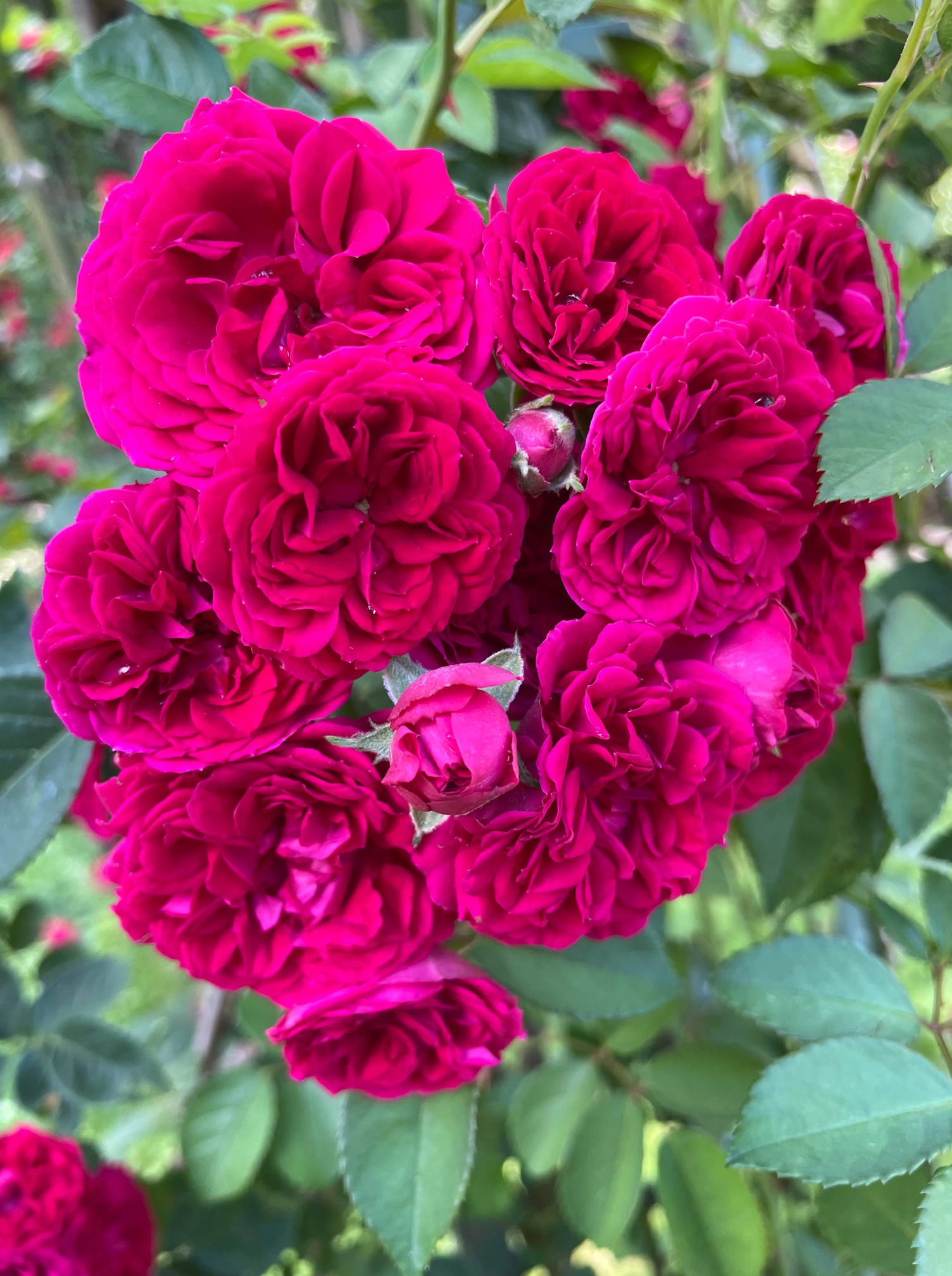
Only me here and the bees and the butterflies. No other human soul. I brush the sage with my hand and the scent wafts up. Here are September roses, flowers like no other.

Everything is perfectly still, lush, quiet. Perfectly private.

Spent rosebushes climbing a trellis have a beauty almost as exquisite as the blooms all around.

Rose hips hide themselves among the greenery.

Bees prowl the blossoms.

Hide inside, sip nectar.

Catbirds come calling. Lovely fragrances lift themselves, waft under my nose.

I wipe sweat from my brow and smell the sage I touched before. Lock the gate and leave. Just outside, some ancient spruces, one with the conjoined stems I love.

Cones litter the ground, brown on brown.

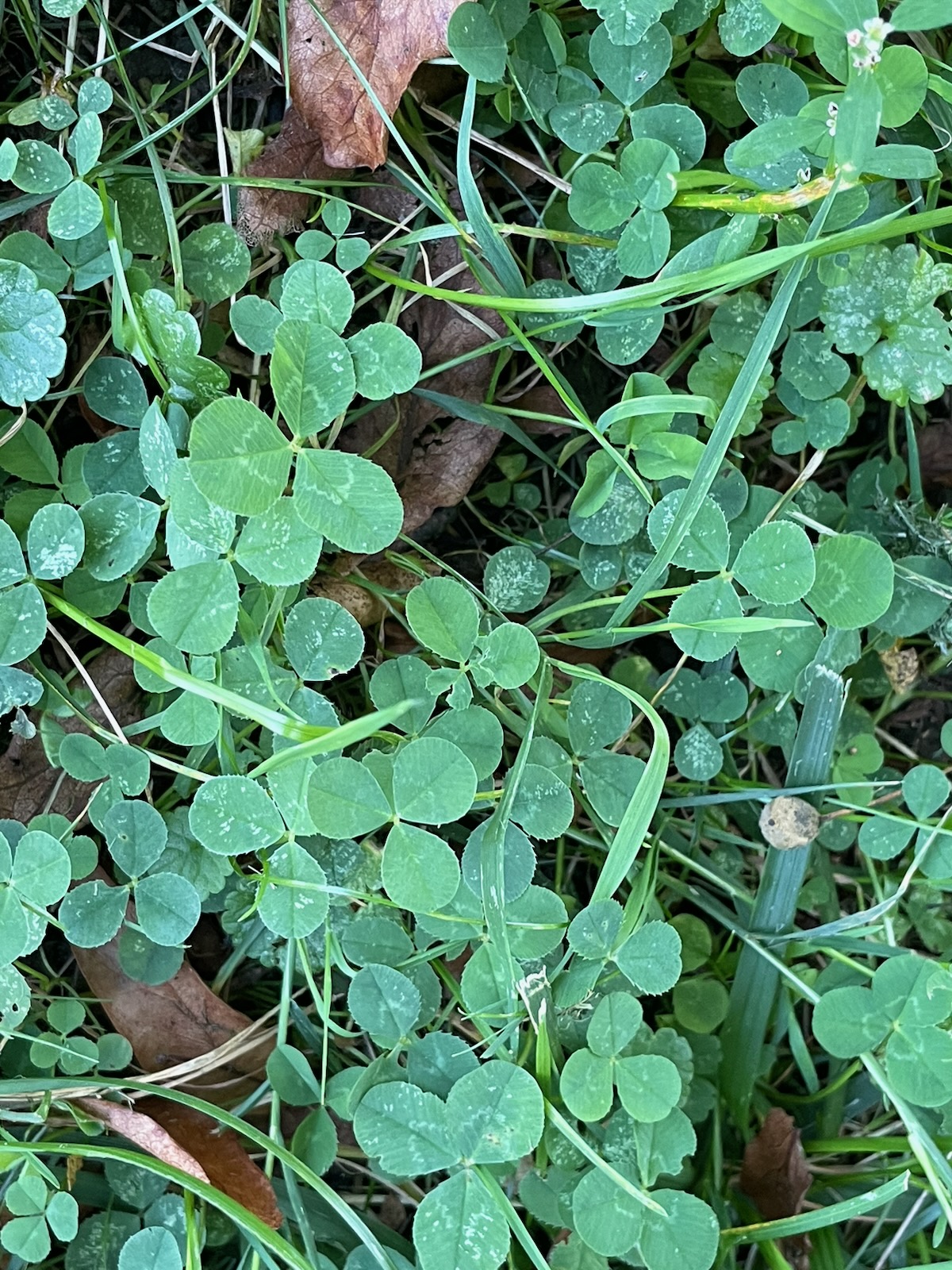
Wander, wander some more. Mary Wollstonecraft Shelley told us, The beginning is always today. Under my feet, clover. I know that if I were to hunt hard enough, go down on my knees for long enough, I’d find one with four leaves. I feel that fortunate.

Then a lucky mushroom, the only one, a lucky one.

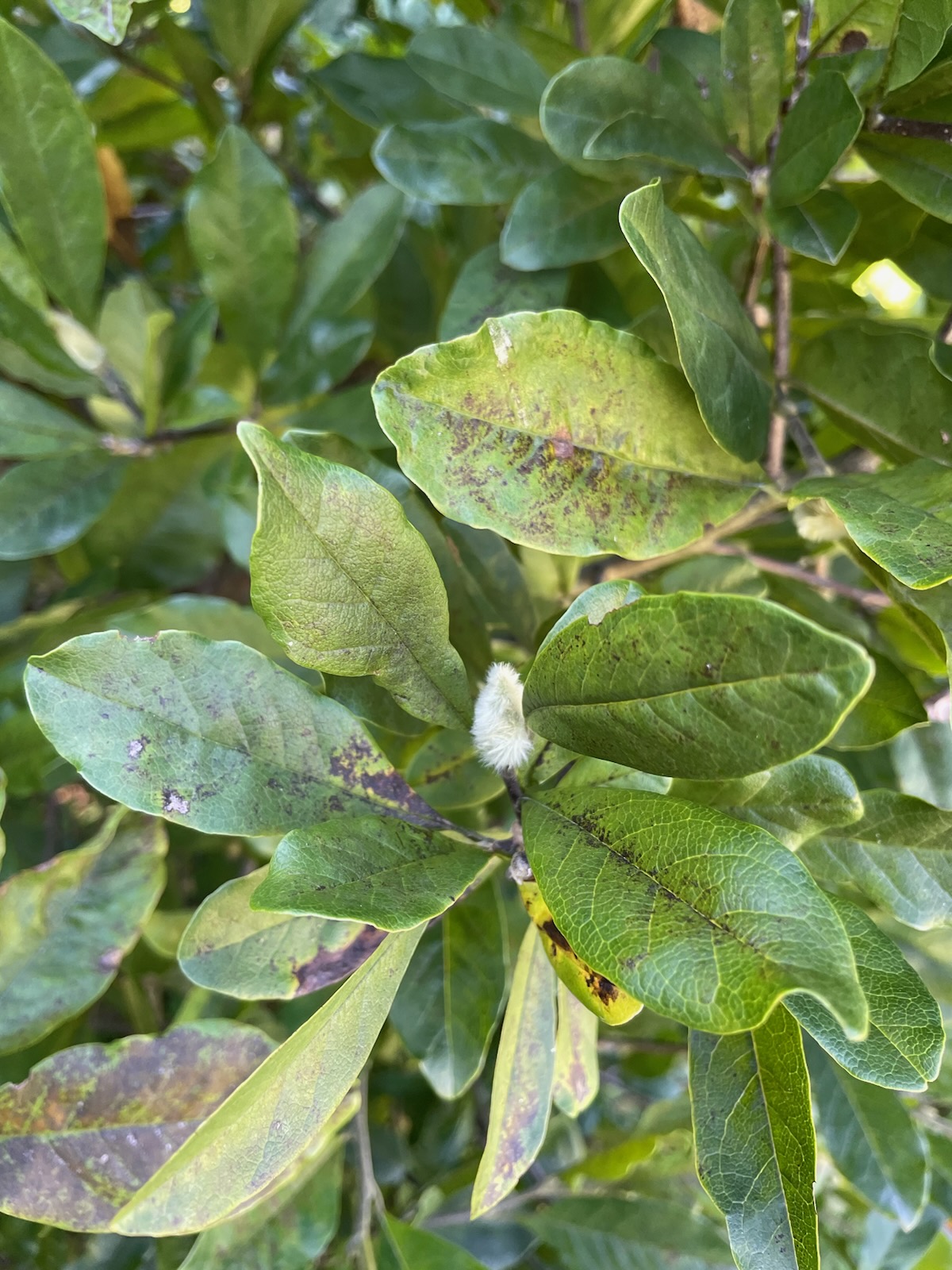
The tiny fuzz of a magnolia after it has had its spectacular blooms. A secret you need to really look to see.

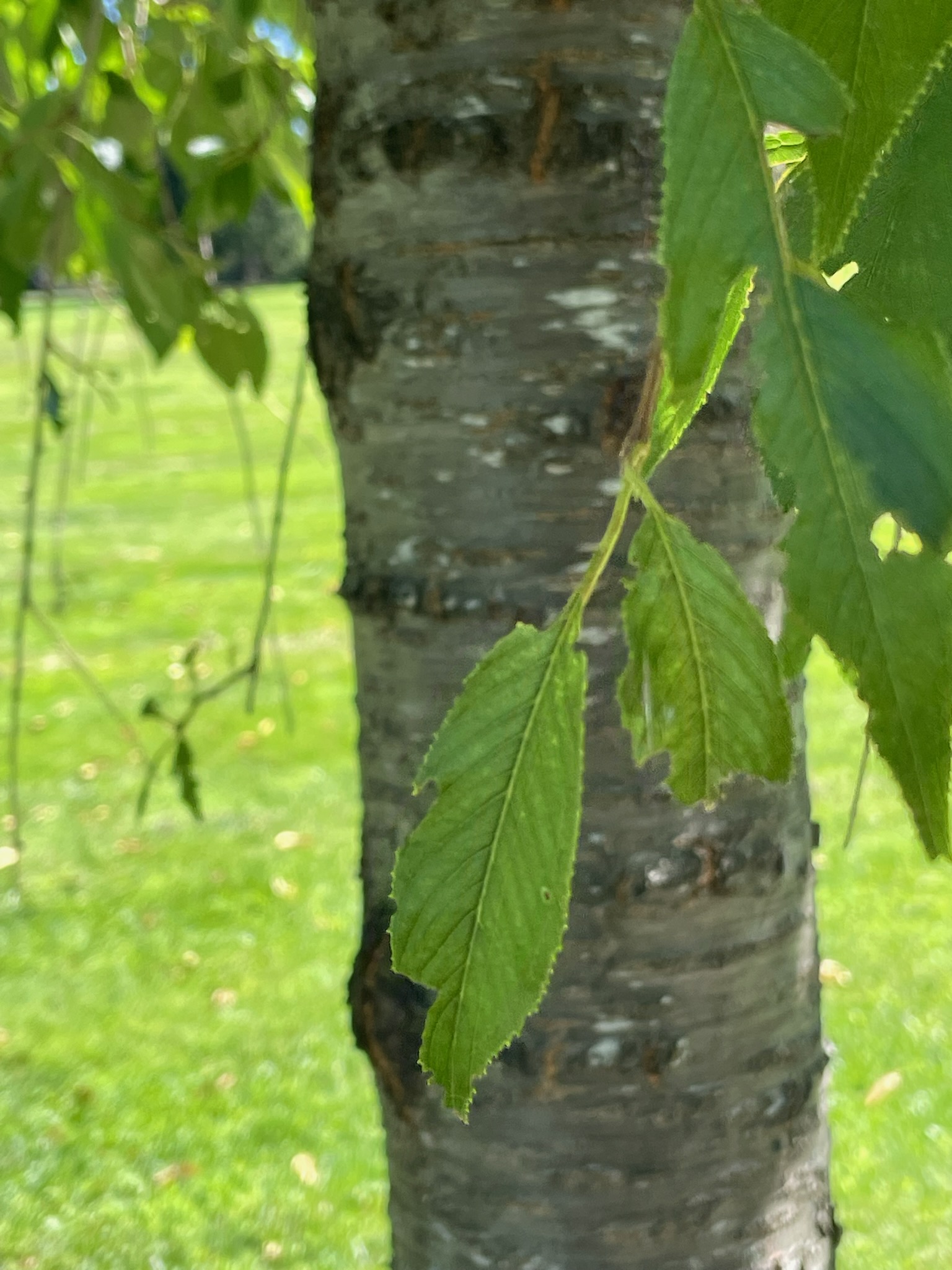
A weeping cherry.

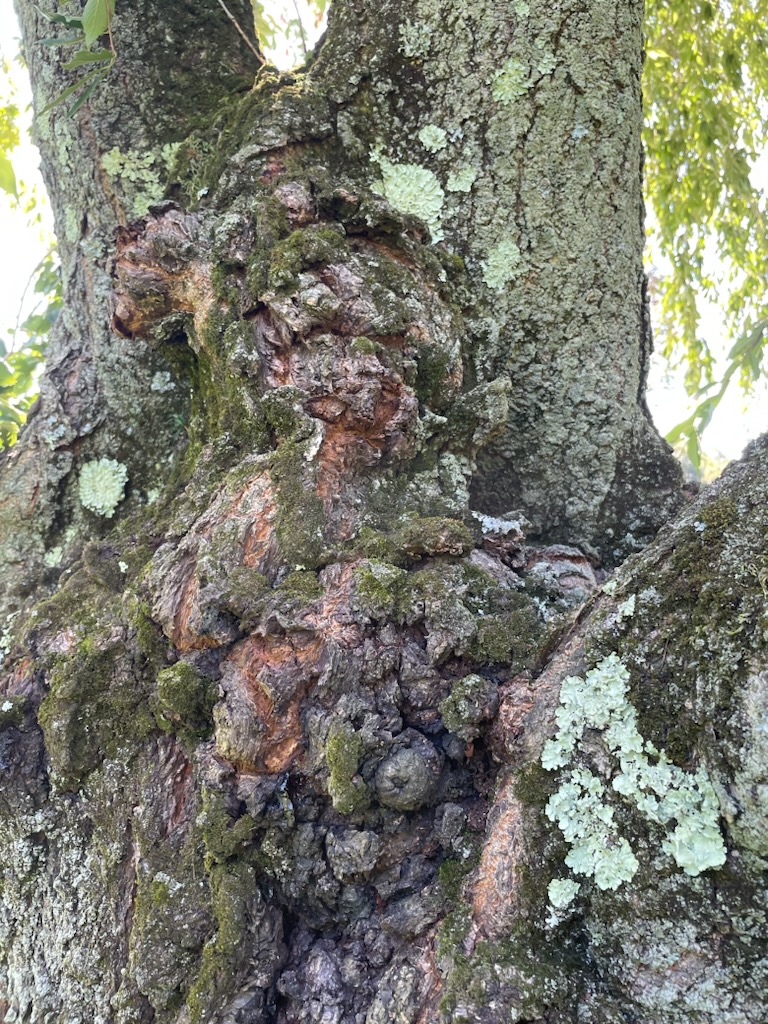
So mature its trunk is gnarled and crusty.

Near it a young’un with clearly demarcated lenticels, the stitch-like pores that form a cherry’s instantly recognizable embroidery.

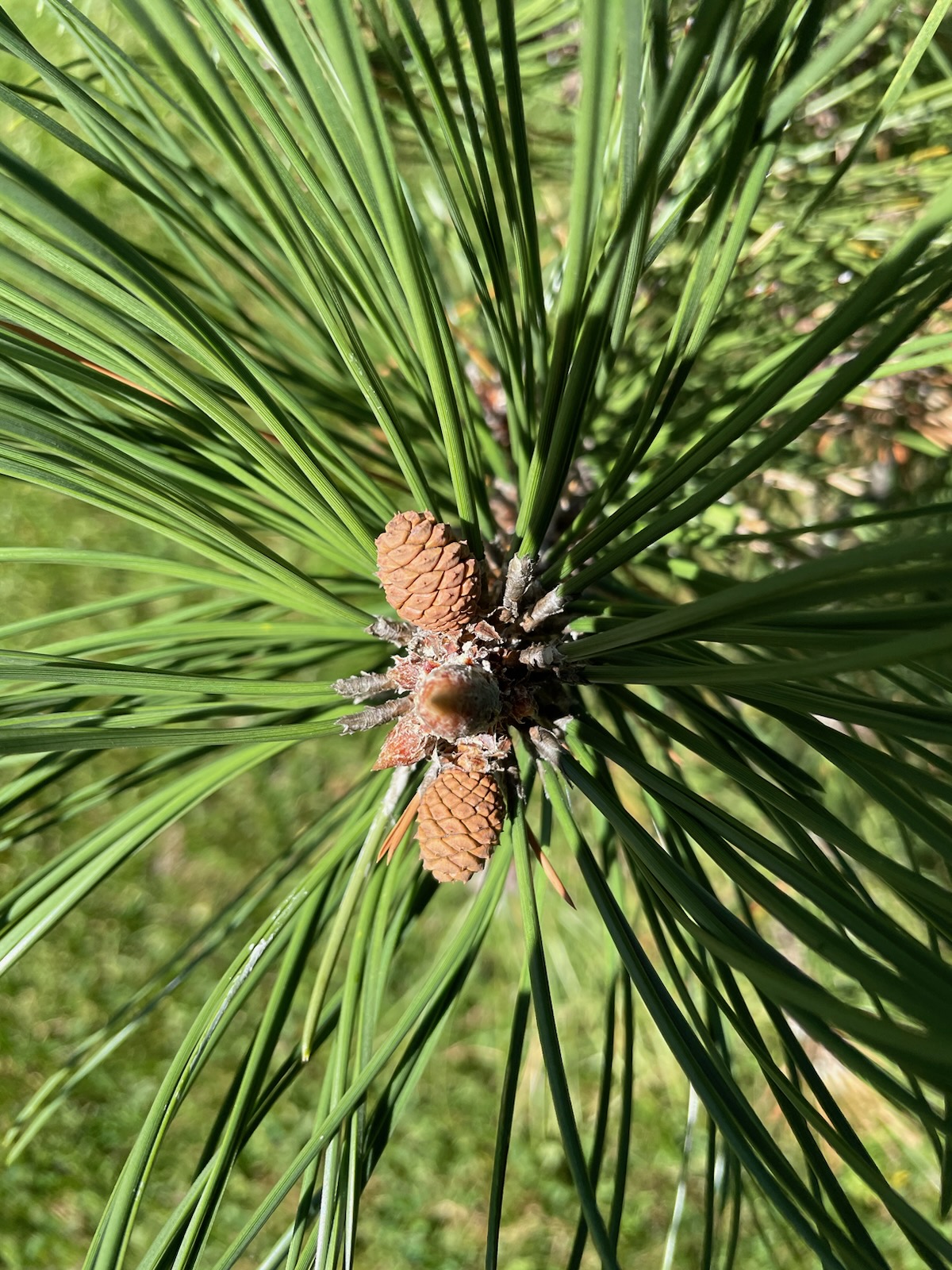
And another ancient specimen, a red pine, all burls and character.

But still offering its miniature baby seedcases.

A horse chestnut with a gaping critter hole at its base. Anybody home?

Childhood memories of collecting chestnuts on my way to school.

The Lyndhurst faux castle looms ahead.

More compelling, the little children’s elf cottage nearby.

I check the door, locked. Peer into a window.

It’s as if the room is holding its breath, waiting for a child to come in and love it.

Outside, the emerald glow of a red maple canopy.

More lindens. A hush of lindens. All my life, my heart has yearned for a thing I cannot name. So said Andre Breton. He had my number, that’s for sure.

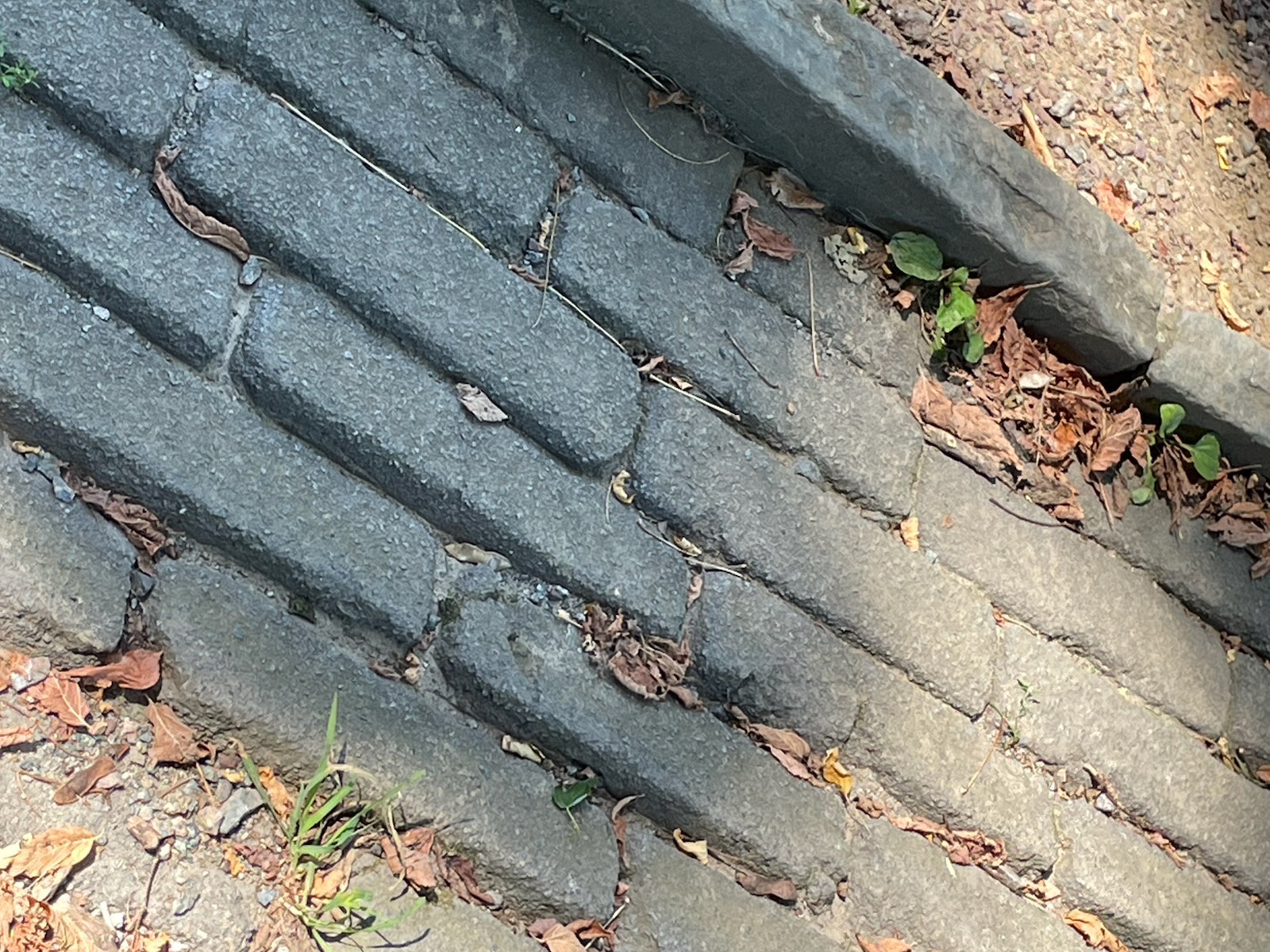
Departing, I step across the old cobble gutter from one hundred years ago, when the estate was new. I’m sure that at its beginning the place was marvelous.

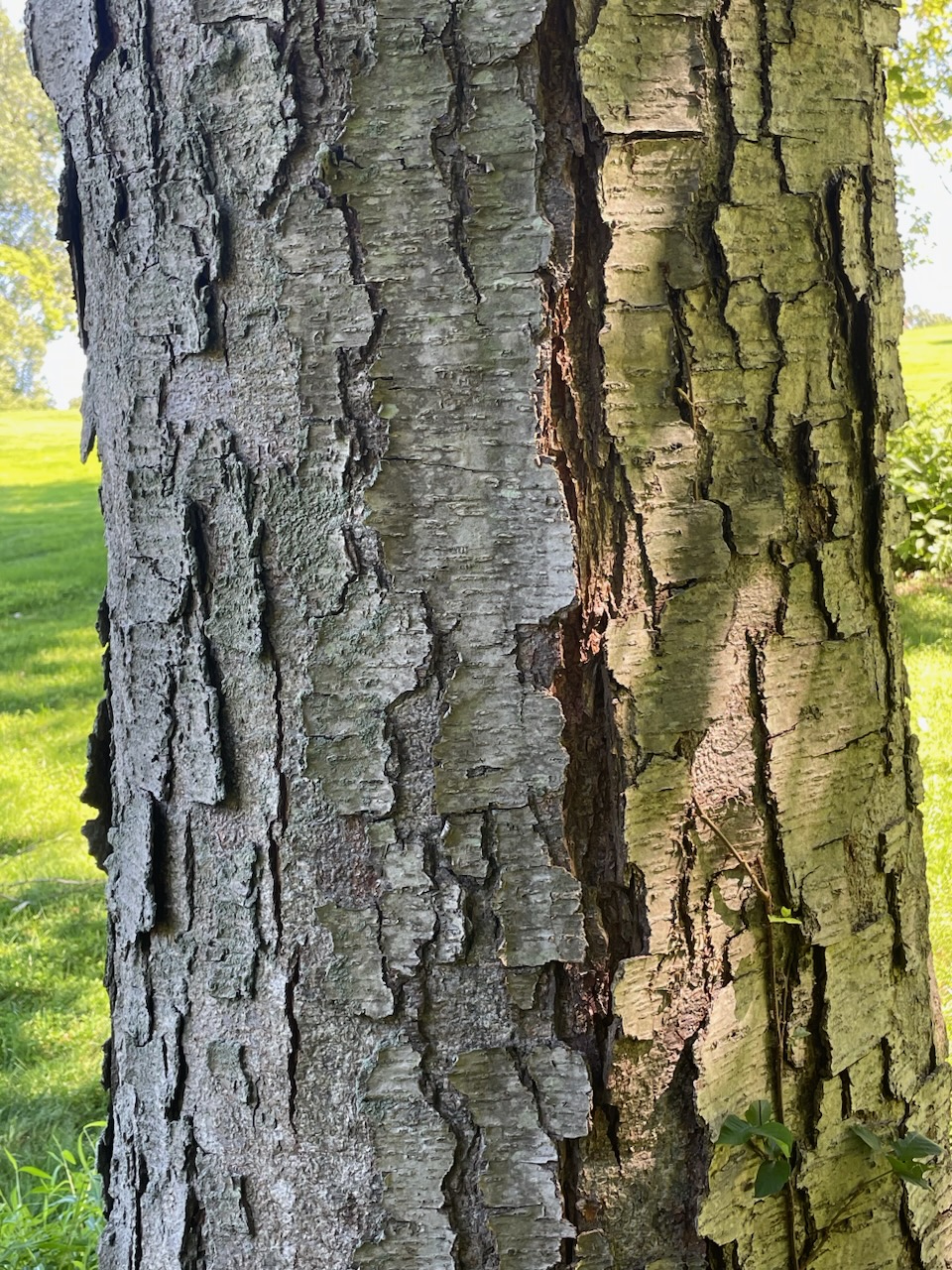
Now, in its dotage, all its trees mature, rough, tried by time and weather. A sweet birch with time-scaled bark.

Today, personal, completely private. Old, yet new.

All the more precious.

Leave a comment

Filed under Jean Zimmerman

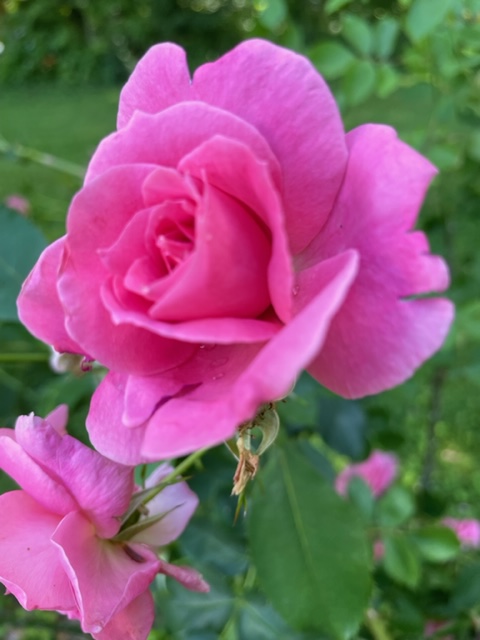
Fragrant, spicy, lemony, lush and voluptuous

are some of the inadequate terms we use to describe roses, but equivalent to the terms oenophiles employ for the equally ineffable flavors of wine. Oaky, fruity, tannic, et cetera.

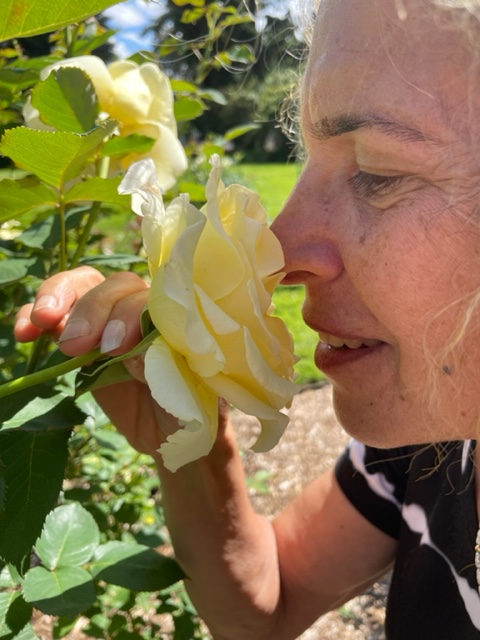
Really, no word can describe the experience of sticking your nose in a bloom and inhaling. My friend needs little encouragement to dive in. Swoon.

The thing to do if it is available to you (as they say in yoga class, referring to your ability to hold a pose) is to simply wander about a rose garden like the one at the Lyndhurst Estate and, yes, stop and smell the roses. We are so fortunate to have this magical place within walking distance.

What I love is that delving into botanical literature you find that roses have stories, roses are stories. The Lyndhurst rose garden was first planted in 1914 as the project of Helen Gould, the eldest daughter of robber baron Jay Gould, who bought  the estate in the 1880s. Over time and with successive owners who weren’t quite as enthused about the project it almost died out, to be revived by the Garden Club of Irvington-on-Hudson starting in 1968. Now 500 plants in five concentric rings thrive at the garden’s peak each June, and the lot is owned by the National Trust for Historic Preservation.

Each ring features different kinds: the outer ring has been planted with shrub and old garden roses, the middle hybrid teas and grandiflora, and the inner with polyanthas and floribundas. The ones I like best have labels, barely legible old keys to each one’s provenance.

Pink Knockout, for example, is a bubblegum-pink sport – meaning, basically, offspring– of Double Knock Out. Kind of like race horses.

Another, Soaring to Glory, developed as recently as 2018, is a sun lover that is especially resistant to disease. Something to like in a rose.

One of the arches bears a mysterious old plaque, Zepherine Drouhin.

It’s a special flower, dating back to 1868, described in the rose literature as a vigorous climbing Bourbon rose with masses of highly fragrant, semi-double, carmine flowers, 3 in. across (8 cm), counting up to 30 petals. Born on thornless, purplish stems.

The world might be complicated, tedious, awful. The only complexity of rosa is how many petals each one has, what shape its whorl, how the heck you describe its scent to differentiate it from all the other spectacular specimens. There is no bad rose.

One reminds me of a wild rose we once found in a neighboring meadow. Why it strayed from a domestic border I don’t know. That flower had no name that I ever knew; it was anonymous yet ravishing. I dug up part of it when we sold the house and replanted it when we moved to suburbia, careful to leave some of the roots so the plant would bloom for the new occupants.

Some efforts fail, as in life outside the rose garden. Some deaths remain in the borders as if to remind us that existence is in fact fleeting. Such as Summer Surprise, surprisingly a nonstarter.

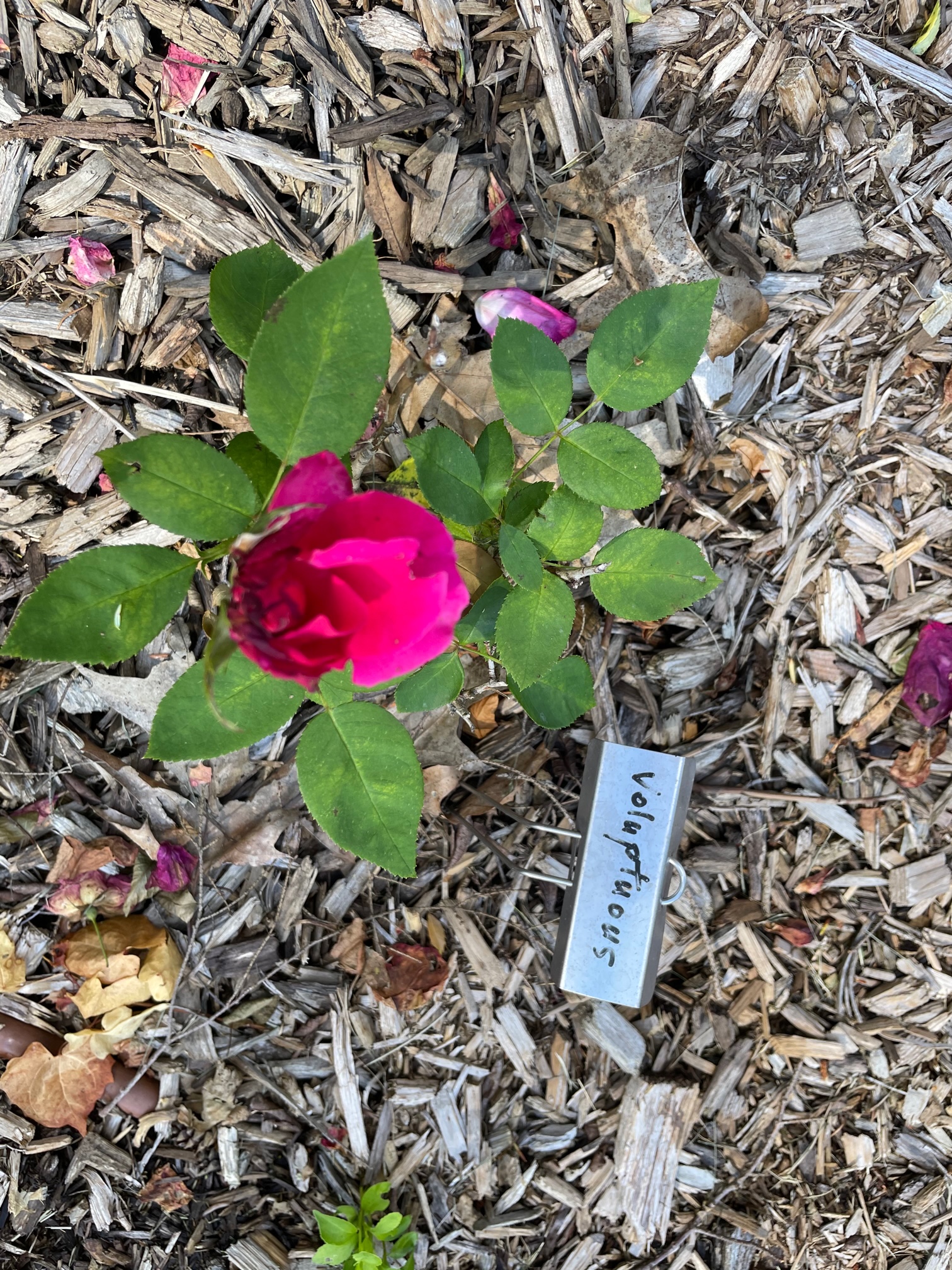
Or Voluptuous, which doesn’t quite live up to its hype.

You must time your visit to the 67-acre Lyndhurst properly. We have been overeager and jumped the gun with a visit when the season has barely started, only to find tight buds, not yet coaxed into blooming by sun and rain.

On the other hand, if you go too late in June, much of the fragile prettiness has shattered. Already, today, petals litter the lawn.

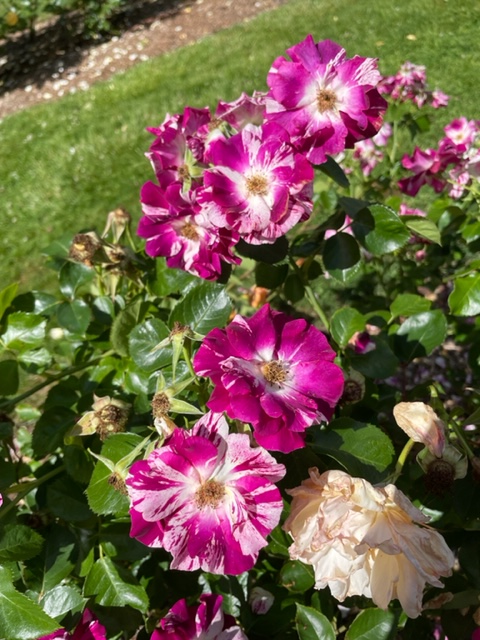
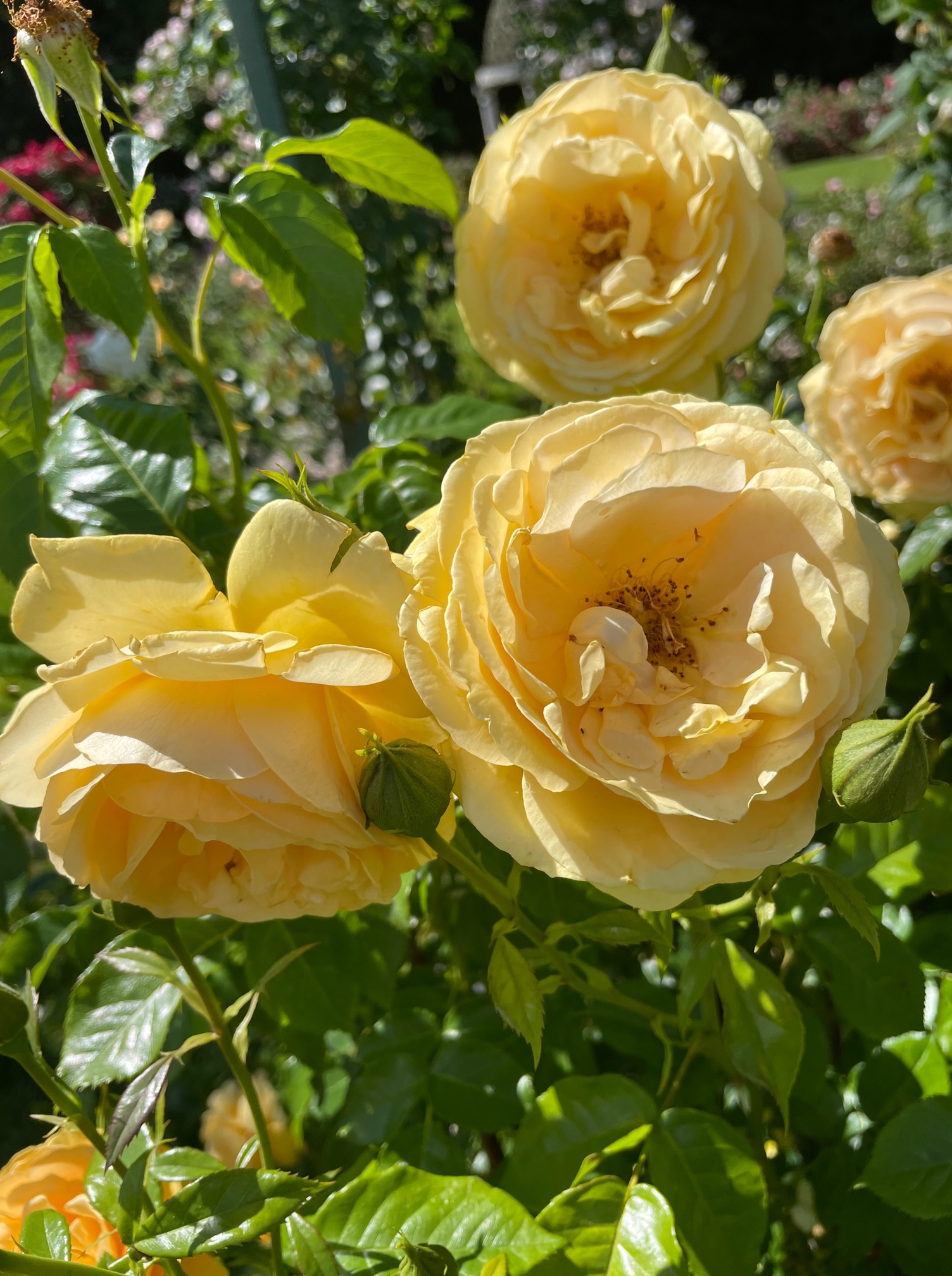
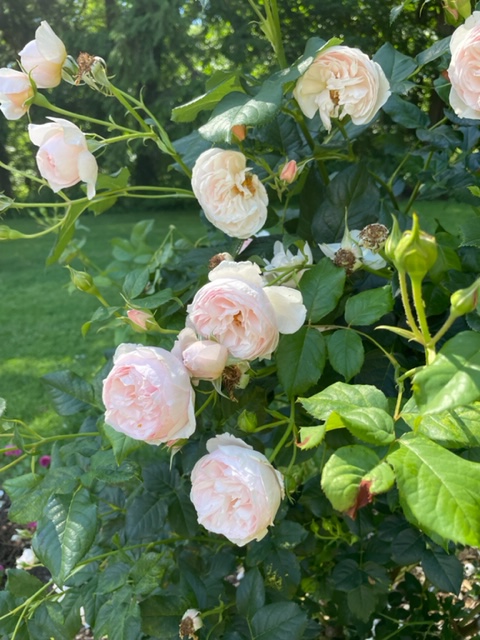
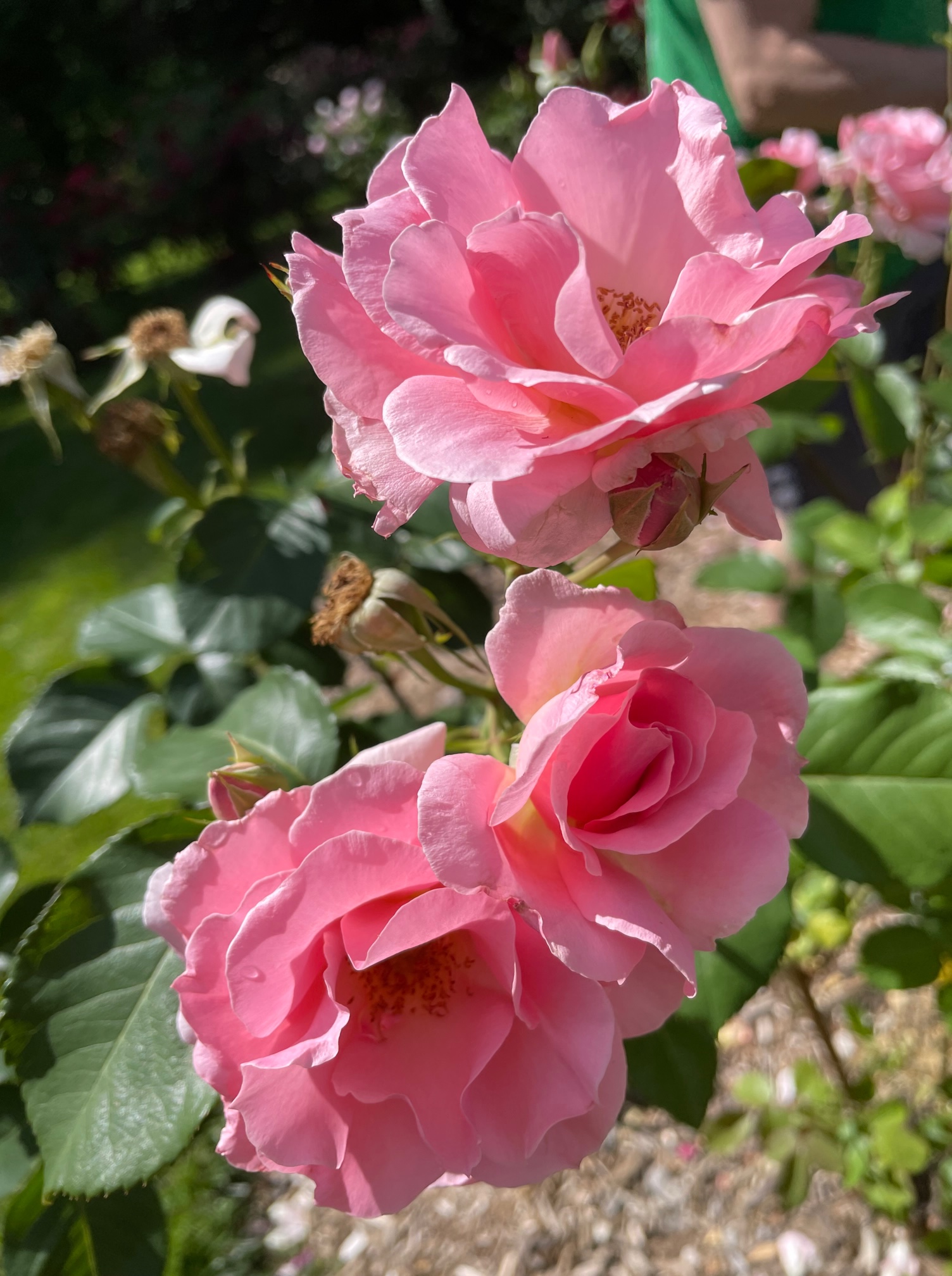
But still we find swaths of buxom beauties.

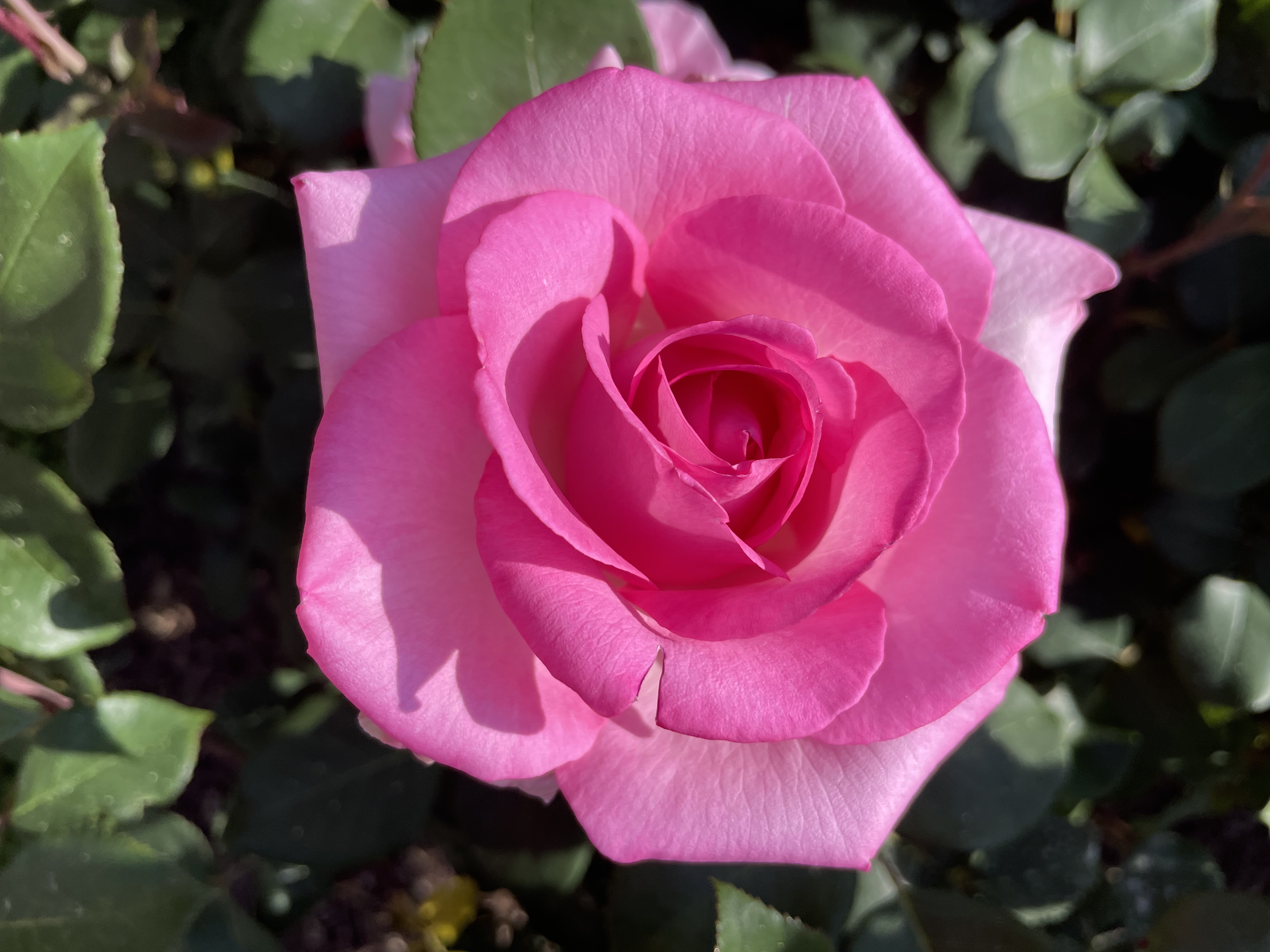
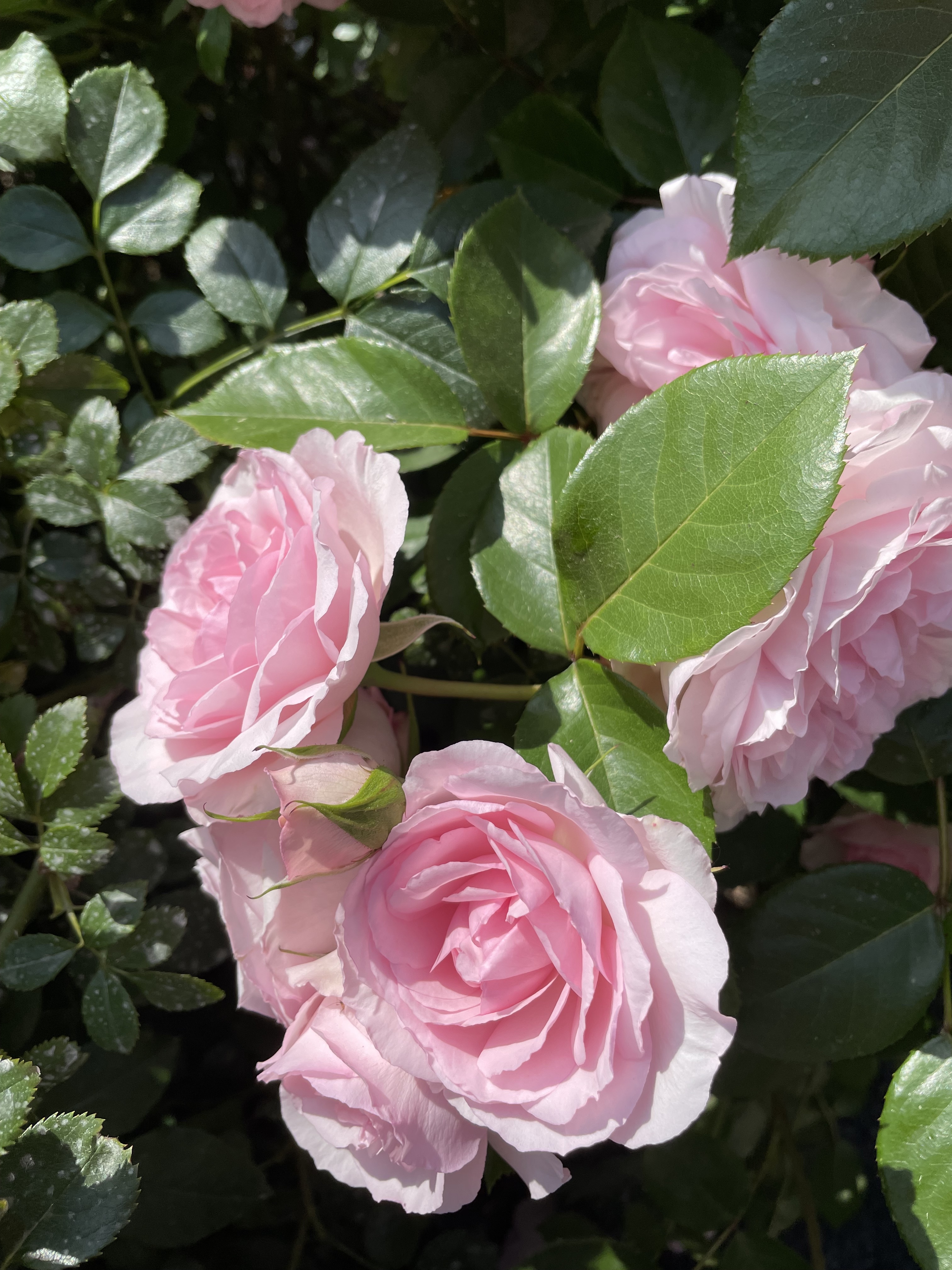
It’s difficult to take a bad photo of a rose, try as you might.

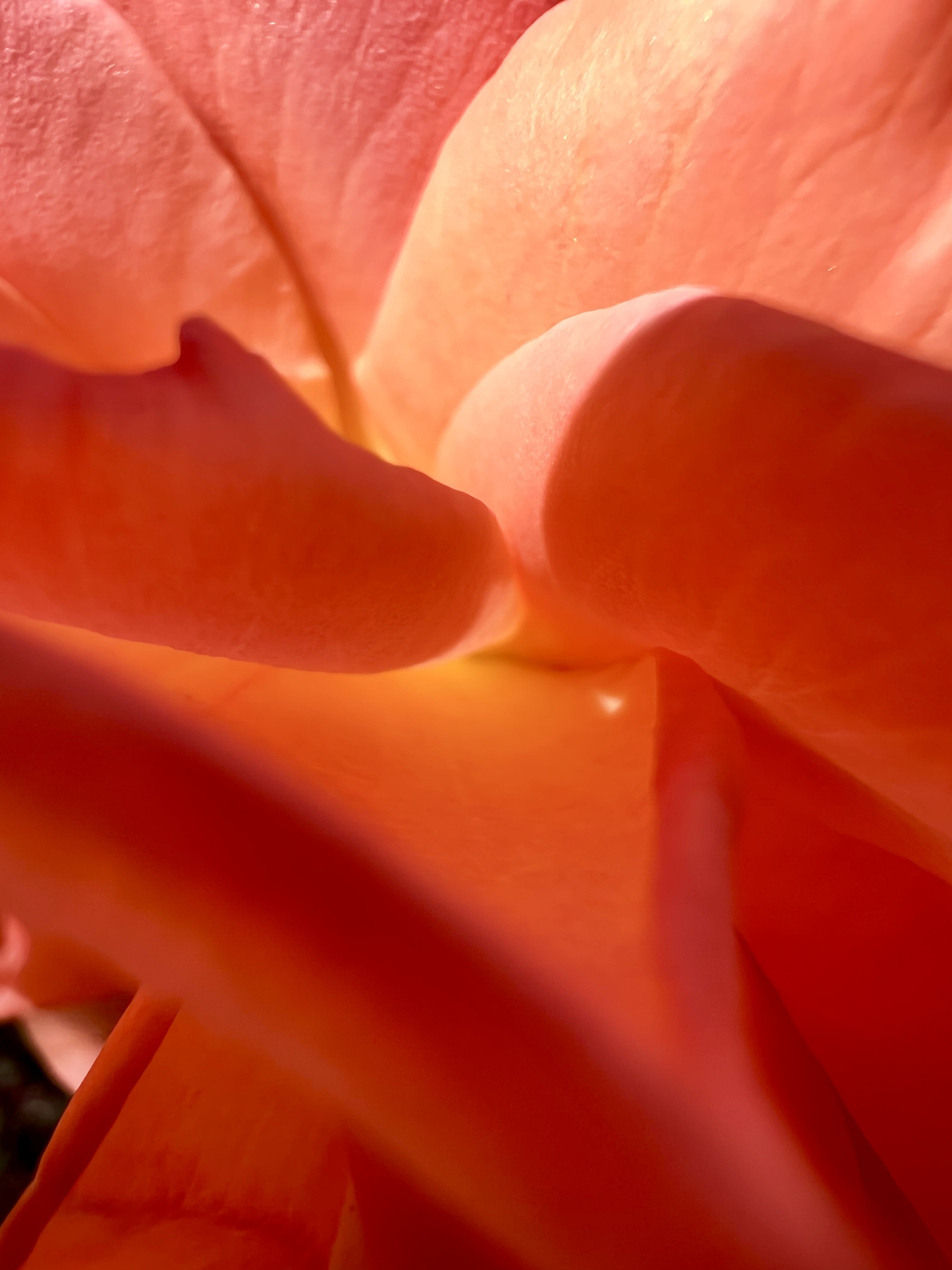
This is what one looks like close up.

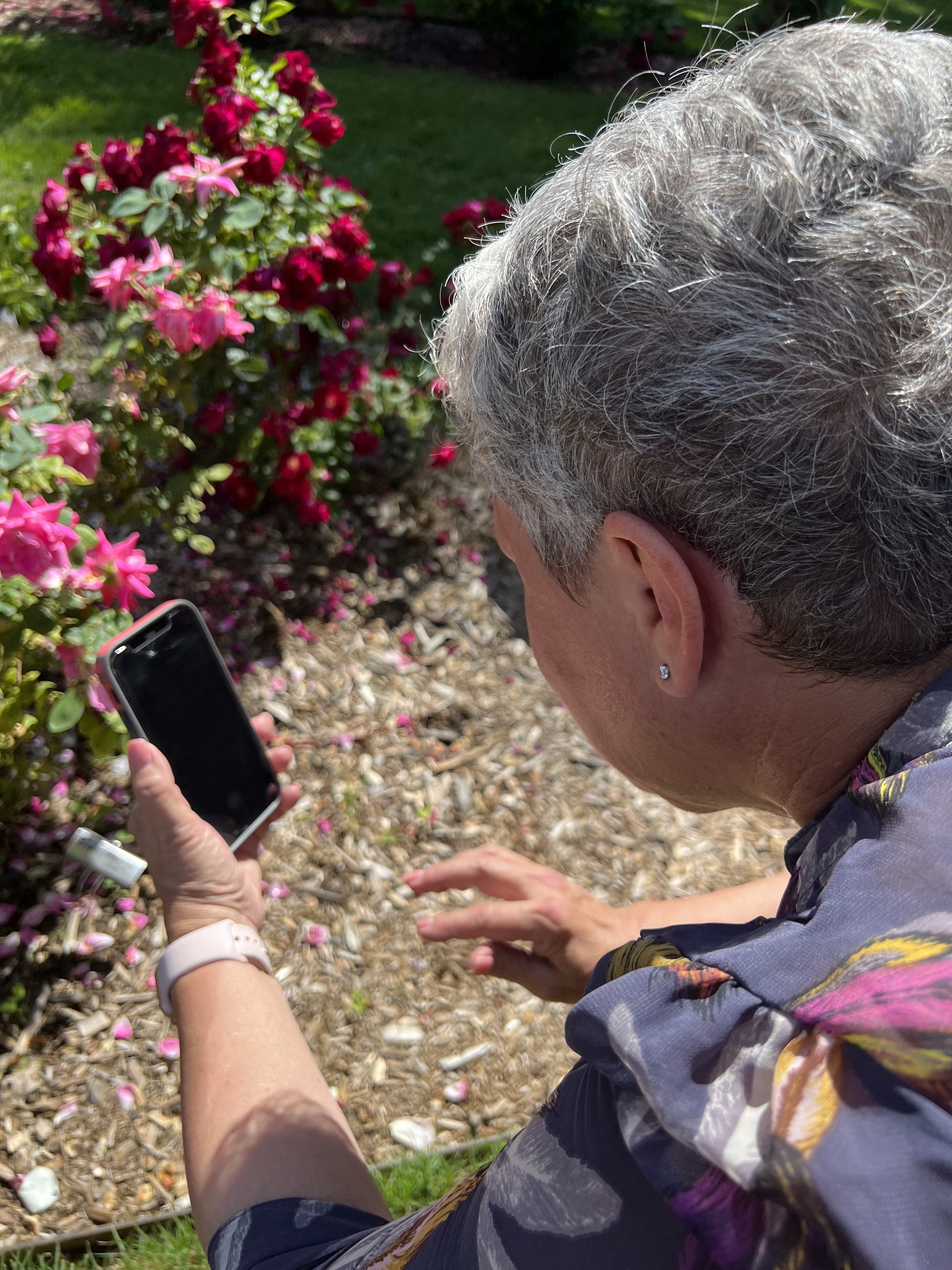
Though it’s tempting to click, best to pocket your phone and simply drift from bed to bed, under the perfect sky, in a state of rose-addled bliss.

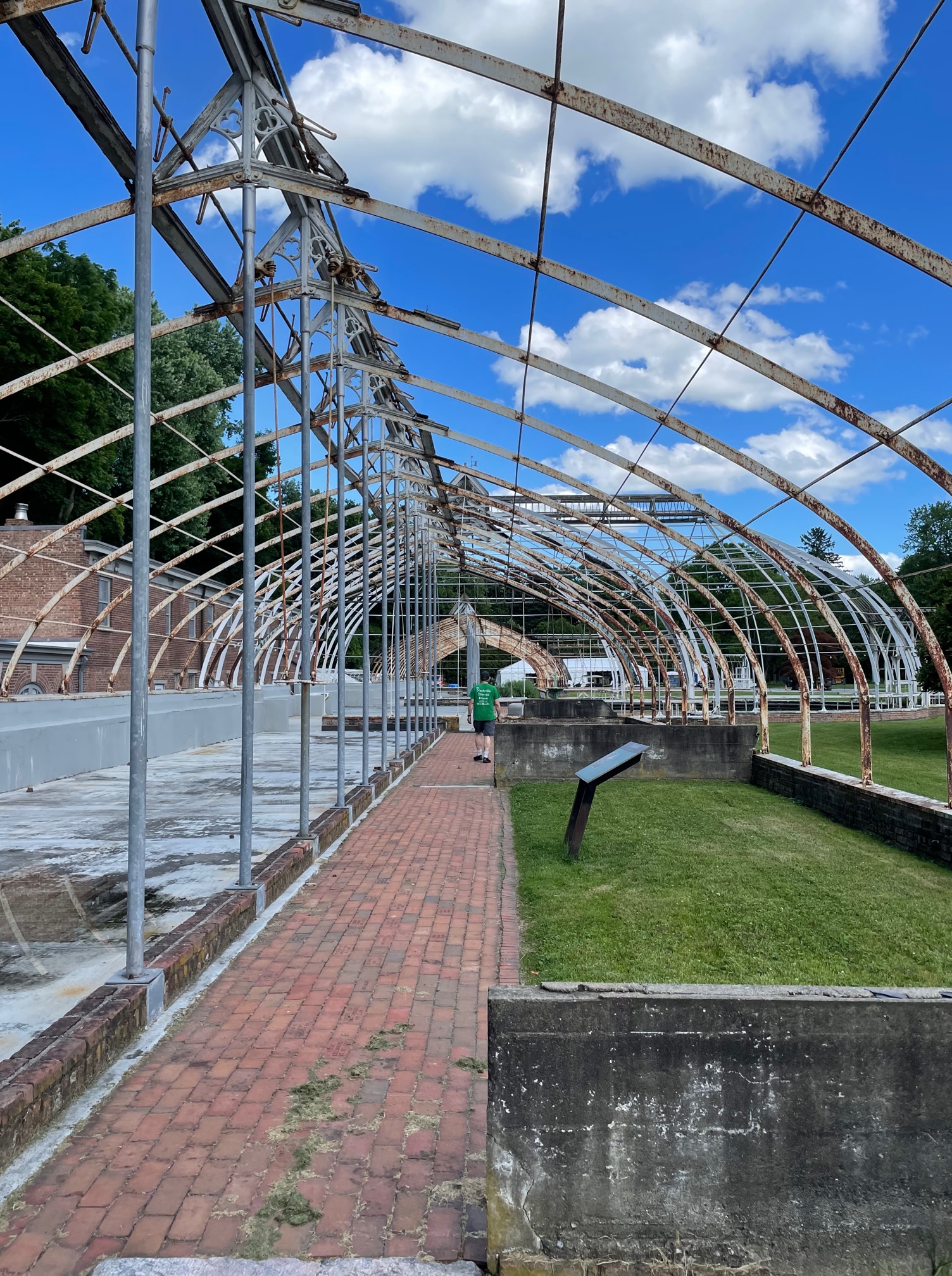
The frame of a greenhouse designed in 1881 by Lord & Burnham, when it was built the largest in the country, rises beyond a hillock. Once the foremost metal-framed conservatory in the country, now a ruin. You know I love ruins.

When Jay Gould had it built, he was inordinately proud of the orchids that were raised here – with a full-time staff of 16 gardeners, what could go wrong? – and used to run the plants down to gift to grateful New York City residents, with a steam heater to keep the flowers warm. Now there are just three gardeners to run the whole estate, and the greenhouse is nominally off limits.

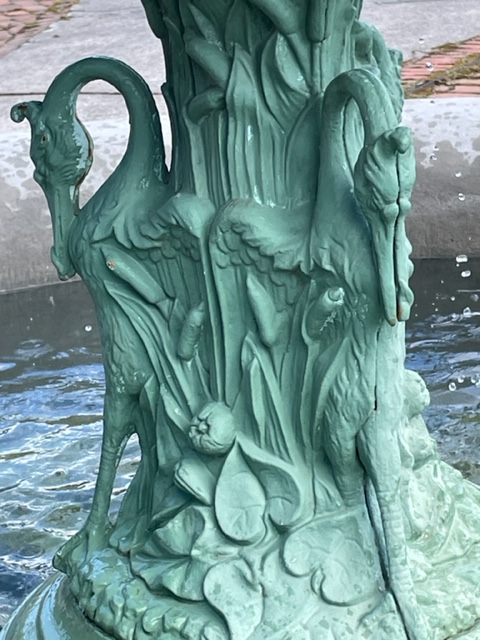
Okay. But an original fountain in the center bubbles, its bowl upheld by… pelicans perhaps? Or some mythological creature with bird feet?

When Helen Gould first dreamed up the rose garden, she planned for the folly to have only pink climbing roses. After her death, the estate passed to her younger sister Anna, the Dutchess of Talleyrand-Perigord, who had gained a divorce from her new husband’s cousin Boni, the Count of Castellane, he who had bilked her of $10 million of her inheritance. The heiress had two children in this second marriage, Howard de Talleyrand-Périgord, Duc de Sagan (1909-1929), who died of a self-inflicted gun wound when his parents refused him permission to marry until he was 21, and Helene Violette de Talleyrand-Périgord,  who married Comte James Robert de Pourtalès, divorced him, then married Gaston Palewski, former Minister of Scientific Research, Atomic Energy and Space Questions. Lives perfumed with the best of the best, aside from that unfortunate suicide. By the time Anna went to the rose garden in the sky in 1961, few of the shrubs were left.

Jay Gould enriched the lives of his swanky city pals with orchids. Perhaps he might have sent roses.

Leave a comment

Filed under Jean Zimmerman

Can a flower speak to you?

I think it’s possible.

Standing in Floral Park, Queens, under the canopy of Lady Linden, I’m distracted by the  perfume in the air.

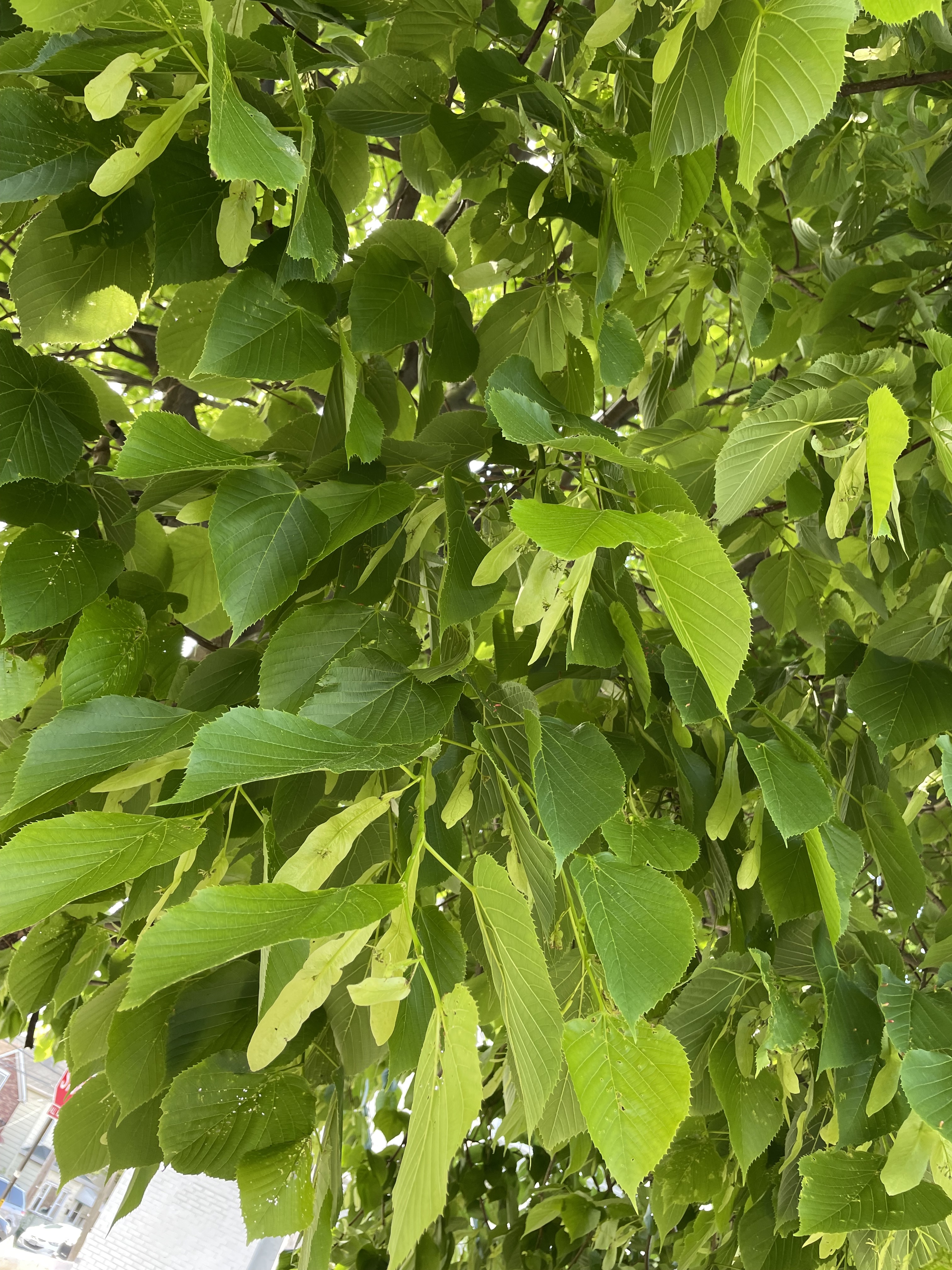
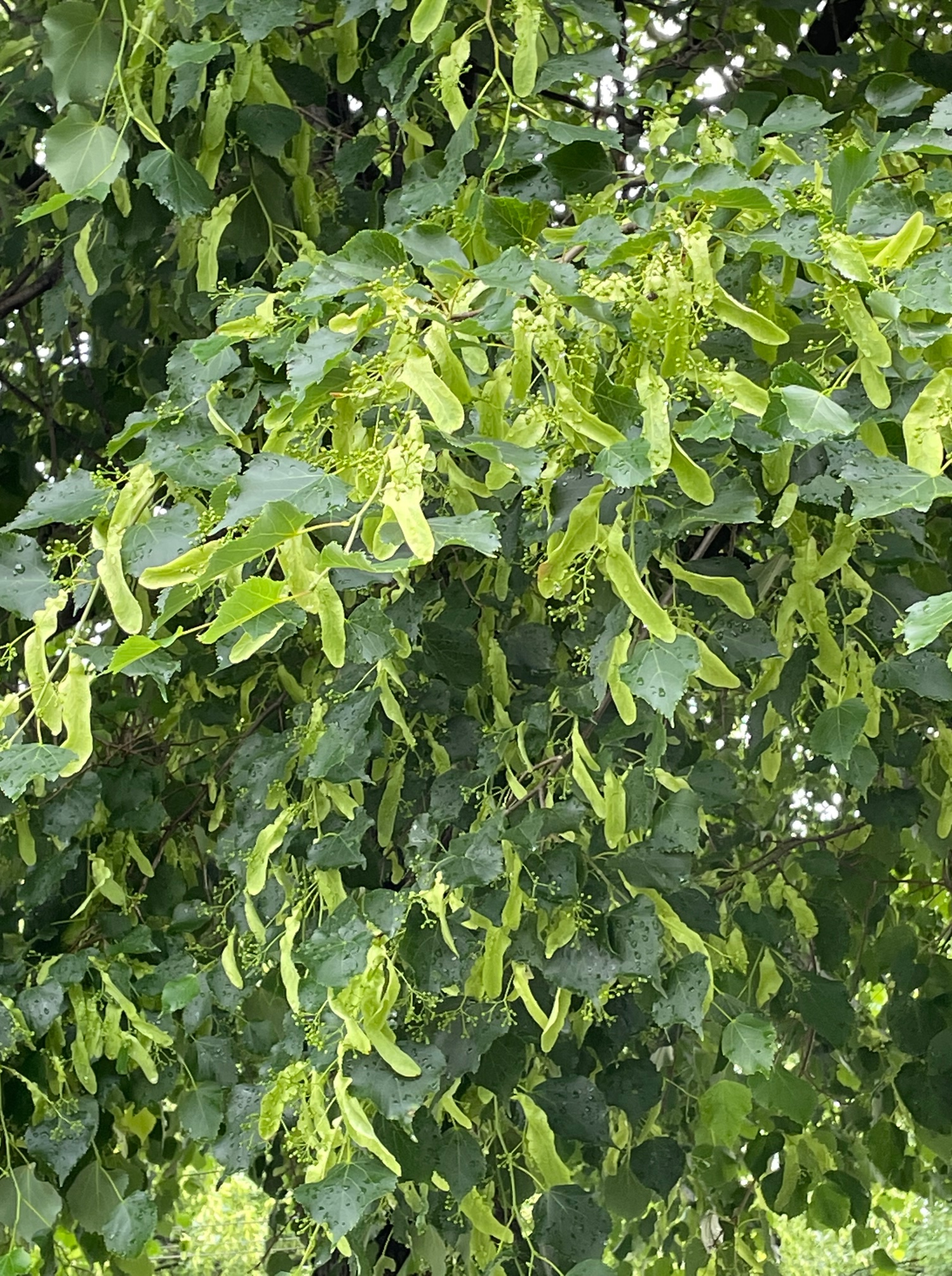
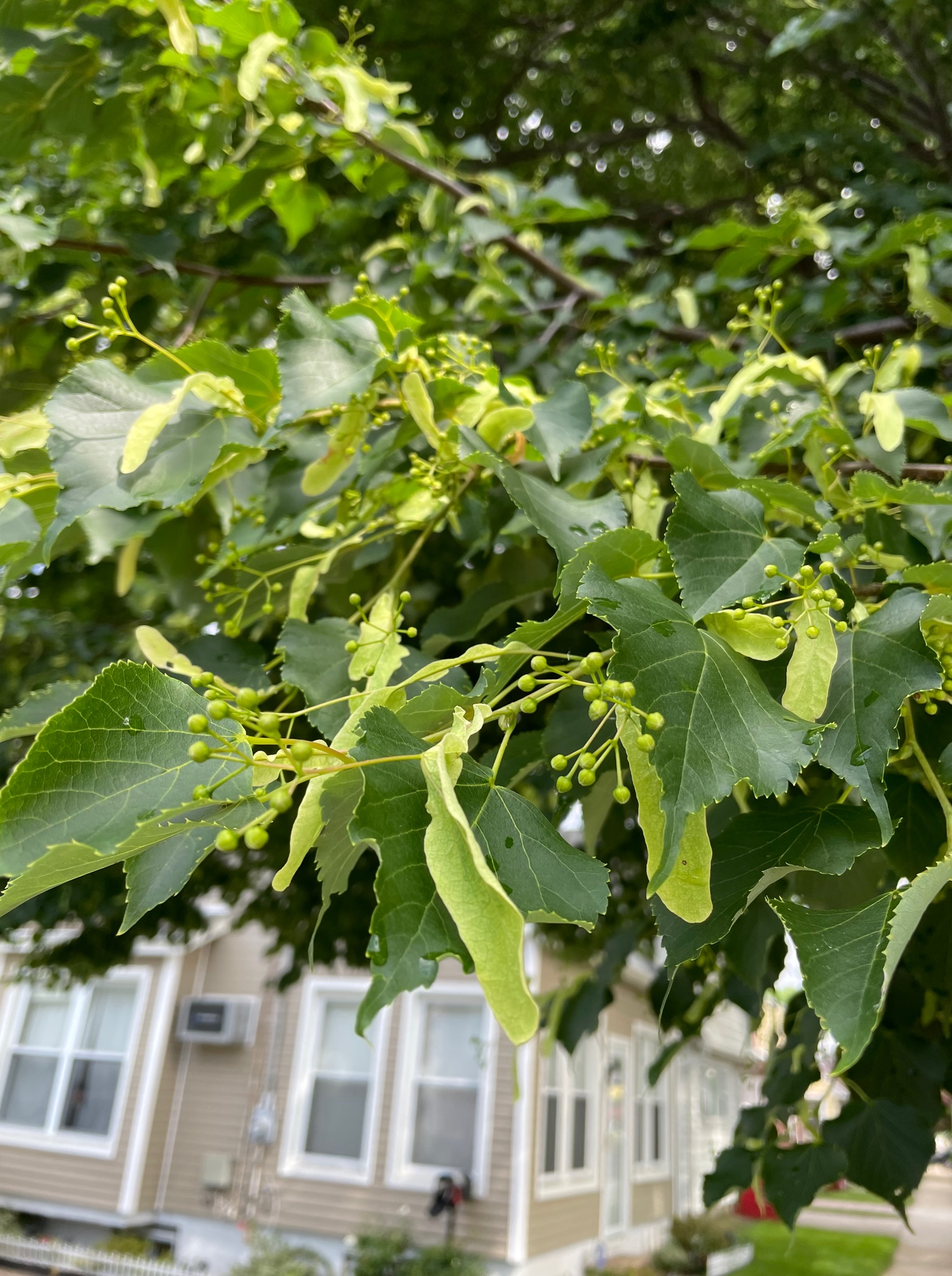
It takes something to be distracted in the shade of a linden, especially at this time of year, when the heart-shaped leaves (cordate, if you want the technical term) have materialized and you can see the lighter colored bracts hanging all over the trees like golden tickets out of Willie Wonka. Few seem to agree about the purpose of the mysterious linden bracts, which are actually a kind of specialized leaf. Do they exist to channel rainwater away from delicate buds and flowers, do they attract bees, are they some kind of wing to carry seeds away?

Lindens are magical — in ancient mythology, tilia symbolizes faithful love, and is more currently believed to neutralize negative energy. The edible flower is a sedative. Its fragrance is also seductive, but flowers here haven’t yet bloomed… so what smells so good on the streets of Queens? It could be the curry cooking in someone’s house, as I watch the Sikhs go about their business.

Yes, here there are plenty of Norway maples and honey locusts—weed trees — and pin oaks (no tree looks lovelier silhouetted against the sky).

Even some Japanese pagoda trees in these cramped New York City tree pits. Take that, Bronx Botanical Garden! Where we’re working I see a baggy, saggy old London plane, sheltering a seedling in its crook.

You might think it has seen better days, but I would assert this actually is this tree’s better day, perhaps its best, the distinguished old grandmawmaw, queen of the Queens block where Whitney Avenue meets Bryant Avenue, no doubt rooted here long before the tickytacky abodes sprung up in the neighborhood.

But what is so sweet about the air today? I looked around and then I crowdsourced some Petal Pushers I know to find out the ways in which flowers have spoken to them.

A lot of our passions seem to come down to bouquets. The yellow sweetheart roses in my wedding bouquet, a memory that blooms every time I see a yellow rosebush.

Lily of the valley, noted by one Petal Pusher as the bouquet she loved passionately but was denied when she got married because the flowers were “too fragile,” though she knew her mother had held them as a bride. Another Petal Pusher told me she was obsessed with the lilies of the valley in her yard when she was growing up, remembering leaning over them to inhale.

The lilacs by the railroad tracks one Petal Pusher used to gather for his mother: nobody cared how many I picked, he says.

I remember as a teen being so captivated by the scent of honeysuckle that I searched out the essence of honeysuckle perfume and dabbed it on, drowning pleasantly in its fragrance.

I always wanted to grow allium, the giant onion, but never have. Once upon a time, when we lived in a farmhouse in an upstate apple orchard, I used to patronize the garden of one Mrs. Yurg — she sold rose plants and day lilies, and visiting her you’d wind up chatting over a bucket of day lily plants swimming in a cold bath.

Some Petal Pushers cherish flowers that they associate with a loved one no longer with us. Trilium, for example, was the favorite of one Petal Pusher’s mother, whose passion for the wildflower was something the family would gently tease her about. White orchid, says another Petal Pusher, recalling the one that stood as a sentinel overseeing her husband’s hospital room at the end.

Flowers can speak of another time, a simpler time. Or perhaps they give a more complicated past some simplicity. The garish spectacle of tulips in a Dutch field, in the recall of someone who saw them on a teen tour of Europe. We passed fields and fields in every color of the rainbow. I swooned!

The iris farm across the street from where one Petal Pusher lived in college, into which he slipped on hands and knees so no one would see me to gather floral displays for dinner parties.Swanky!

The lotus blossom, which signifies resilience, on account of the troubled adolescents this Petal Pusher works with.

Childhood memories. Someone fancied Rose of Sharon: We would wait until a bee went deep into the flower then close it up.

Still another Petal Pusher reminisced about the wild purple lupines that grew at the edge of her grandparents’ land, and how she used to pretend I was either a Pilgrim or a Witch, and the lupines were my food or magic elixir.

I recently paid a visit to a border of peonies I walked by every June on my way to high school. Peonies, I have often thought, are the perfect flower. The ones I remembered had vanished, and I guess the new residents preferred the tired old standby, arbor vitae. Undeterred, I called upon a church where I knew they’d be on display, and I wasn’t disappointed. There they were, nodding after the rain.

And only one pink specimen in bloom, a promise of what’s to come.

Complete with a moment of inspiration.

In Queens, under the tilia, it is the rose that permeates the air, framed as it is by the chain link.

A rose is a rose is a rose – something of a misquote, in fact, from Gertrude Stein’s 1913 poem Sacred Emily.

She really said, Rose is a rose is a rose is a rose, somewhat less intelligibly, referring to a person named Rose, but more the way Stein rocks it. Later, as the quote became known, she commented: Now listen! I’m no fool. I know that in daily life we don’t go around saying ‘is a … is a … is a …’ Yes, I’m no fool; but I think that in that line the rose is red for the first time in English poetry for a hundred years.

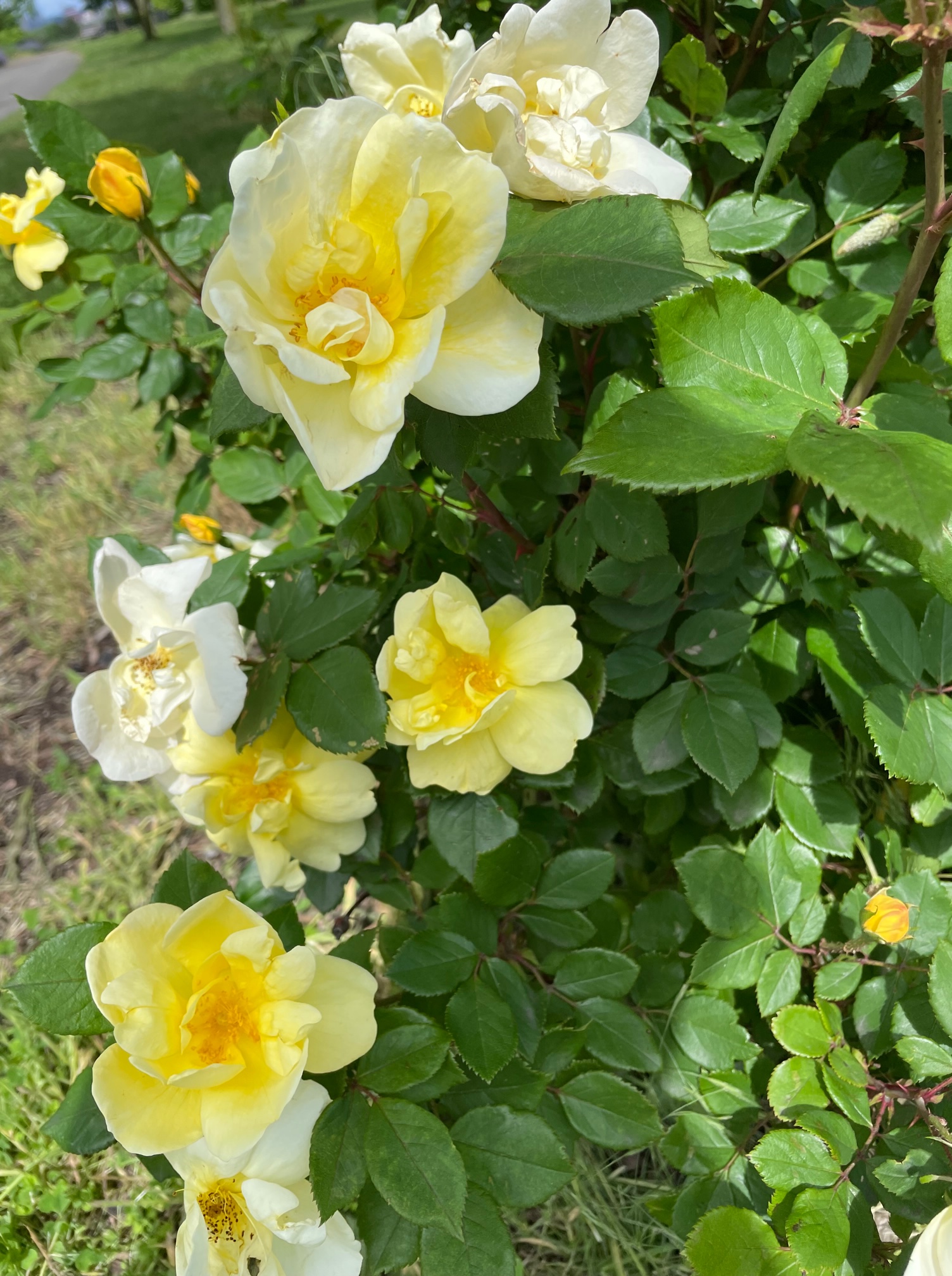
The point about roses is it doesn’t matter the location, they’re always superb. Yes, as I said, yellow sweetheart roses. But even the delicate pink but somewhat frowzy ones shine against the vinyl siding in Floral Park.

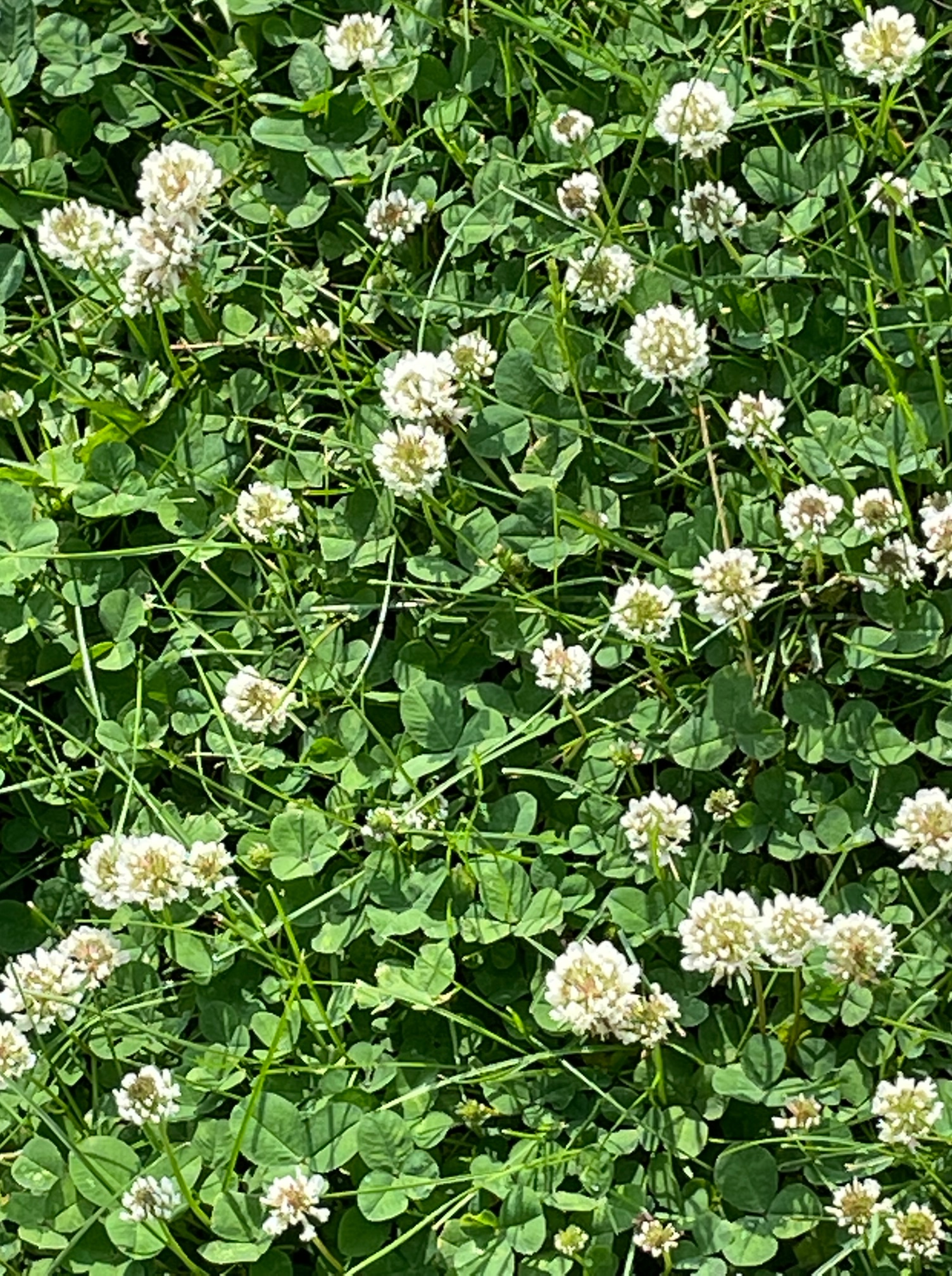
It can’t only be the roses. Is it the clover? Crush one between your fingers and it releases the scent of honey.  A whole yard of clover – why does anyone plant turfgrass?

They are truly bellyflowers, the term another Petal Pusher shared that is used by wildflower fanciers to denote blossoms you have to get down low to see, preferably with a jeweler’s loupe. Don’t possess a loupe? No time like the present.

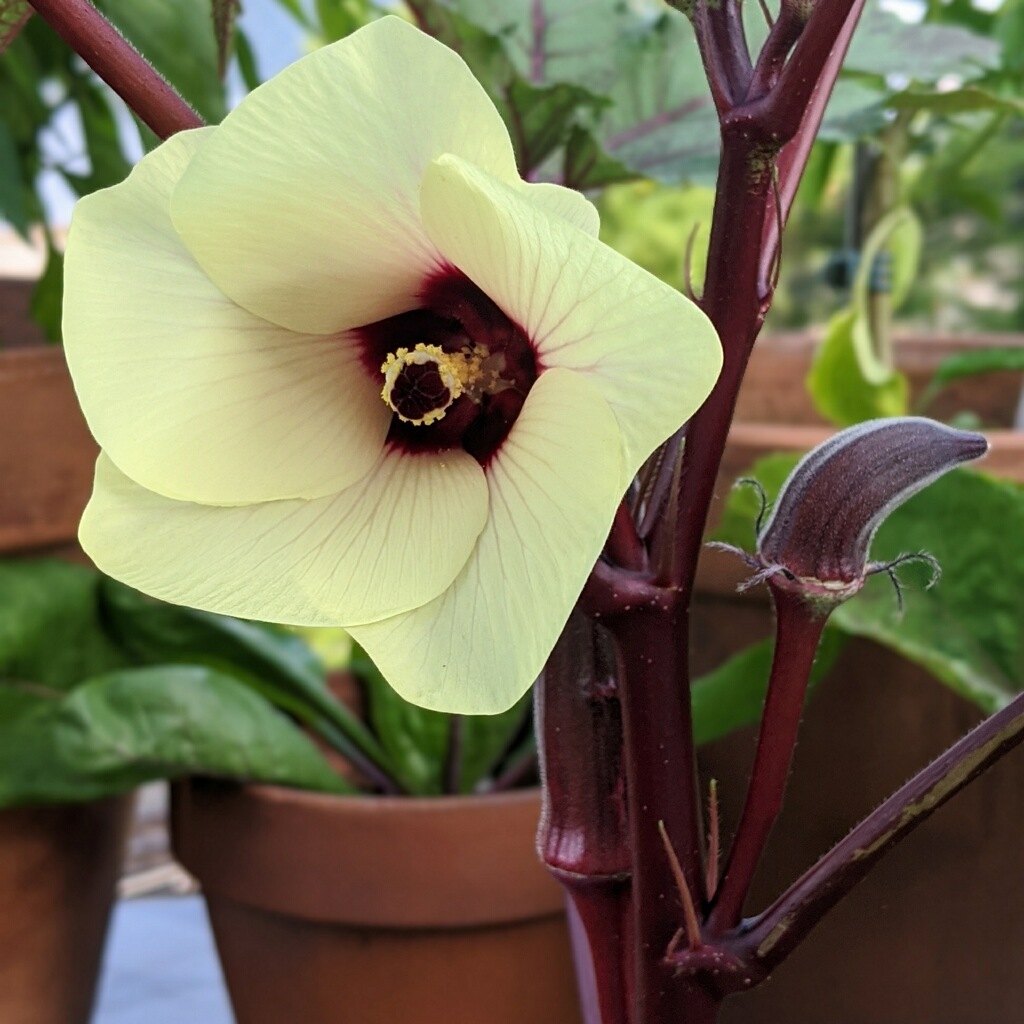
Another flower lover prefers the gigantic fleshy flowers, like the okra blossom she grows on her deck.

Remember flower power? Such a cool expression. Coined in 1965 by American poetry icon Allen Ginsburg and inspiring countless daisy head garlands, not to mention the practice of inserting daisies into the snouts of National Guardsmen’s weapons.

Generations later, powerful flowers survive in Queens, between the curry and the bracts.

They do speak to those who listen.

Leave a comment

Filed under Jean Zimmerman