Tag Archives: New York City

Forests and New York City

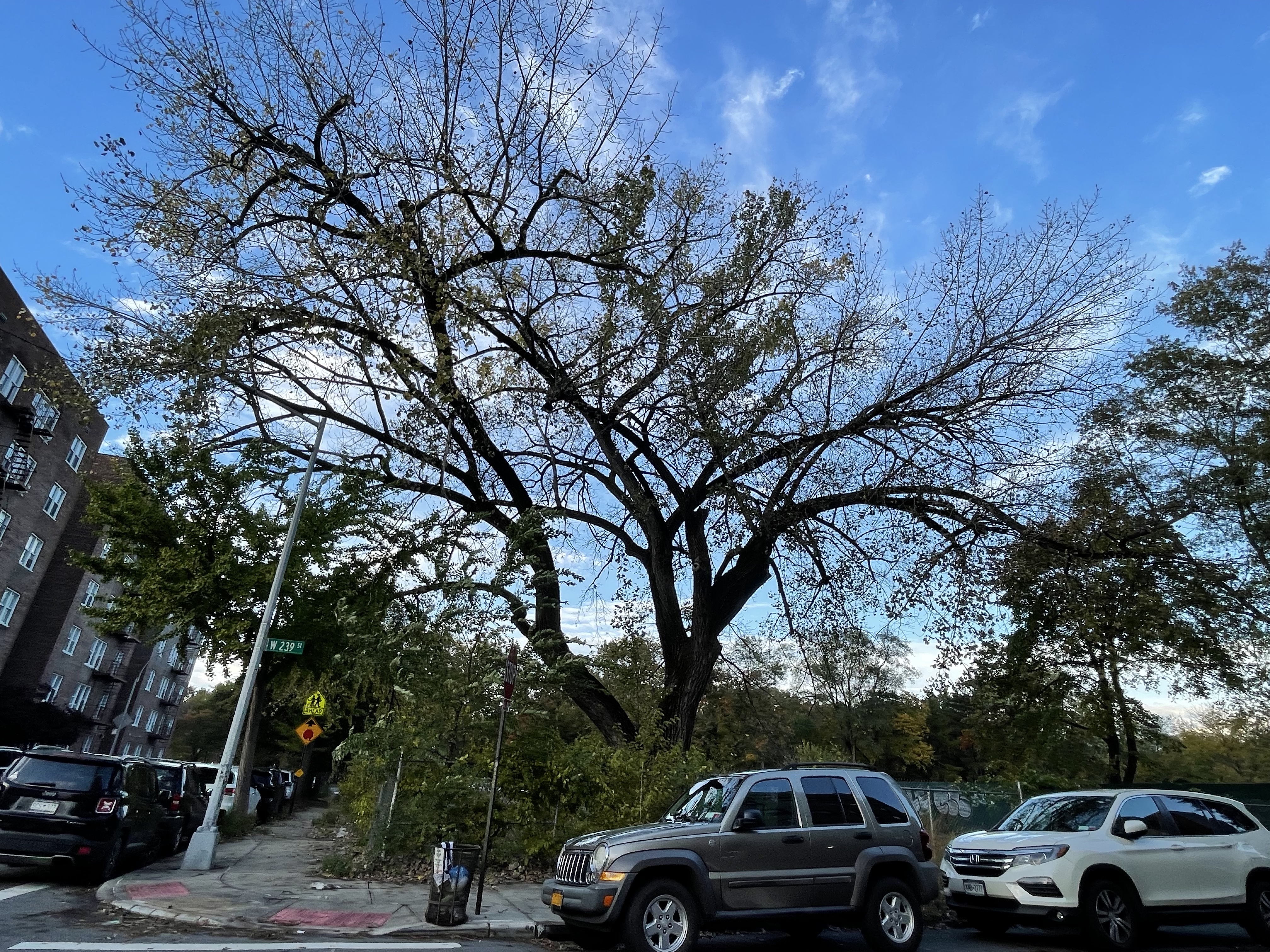
is not a pairing that would make sense to some people outside the Metropolitan Area (we always say that, as though there is no other metropolitan area in the world). But majestic trees do exist among the concrete canyons of NY.
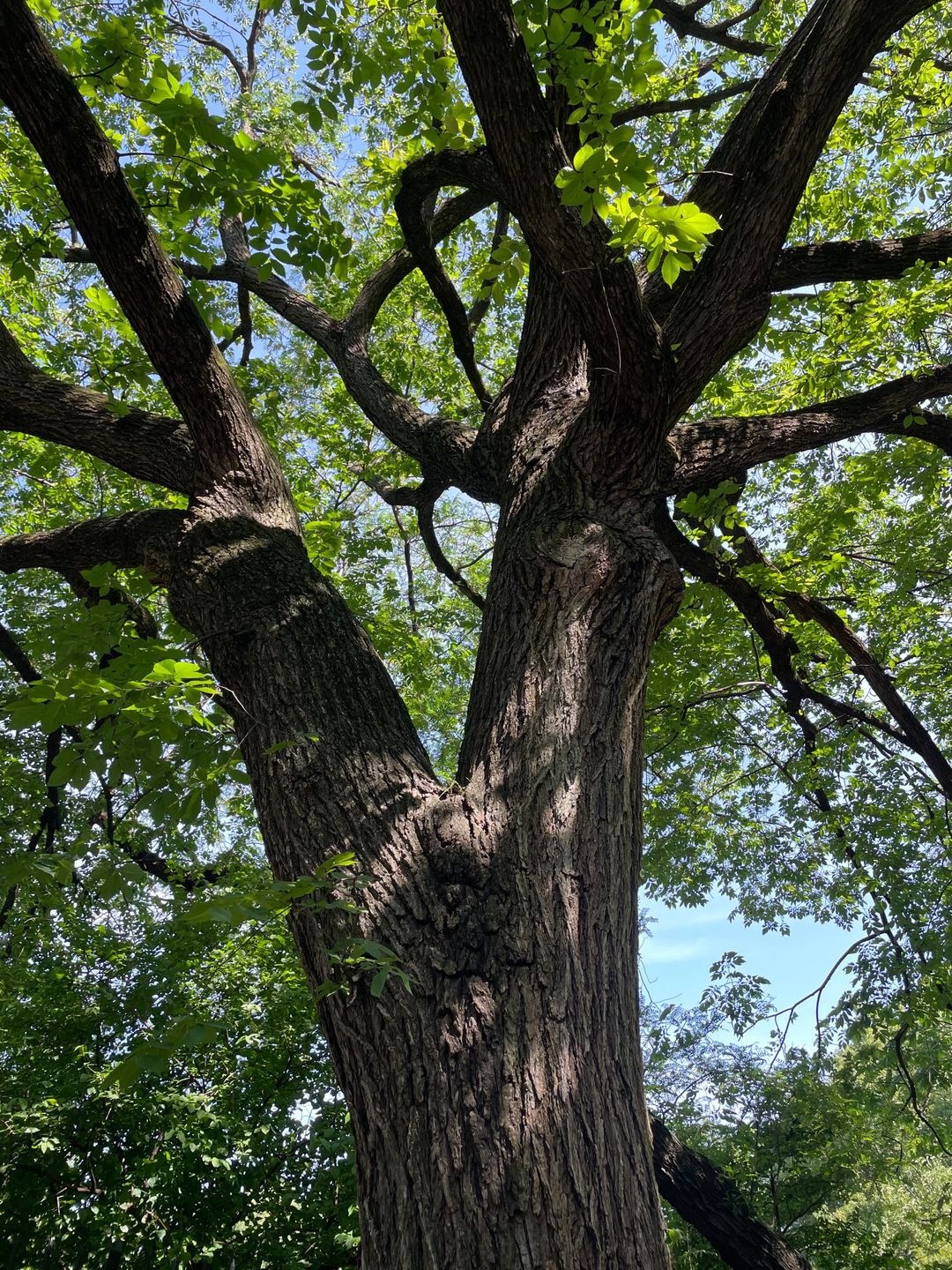
I’ve been fortunate to come up close to some of them.

Walt Whitman: Why are there trees I never walk under but large and melodious thoughts descend upon me? In New York, there are plenty of inspiring ginkgo biloba‘s.
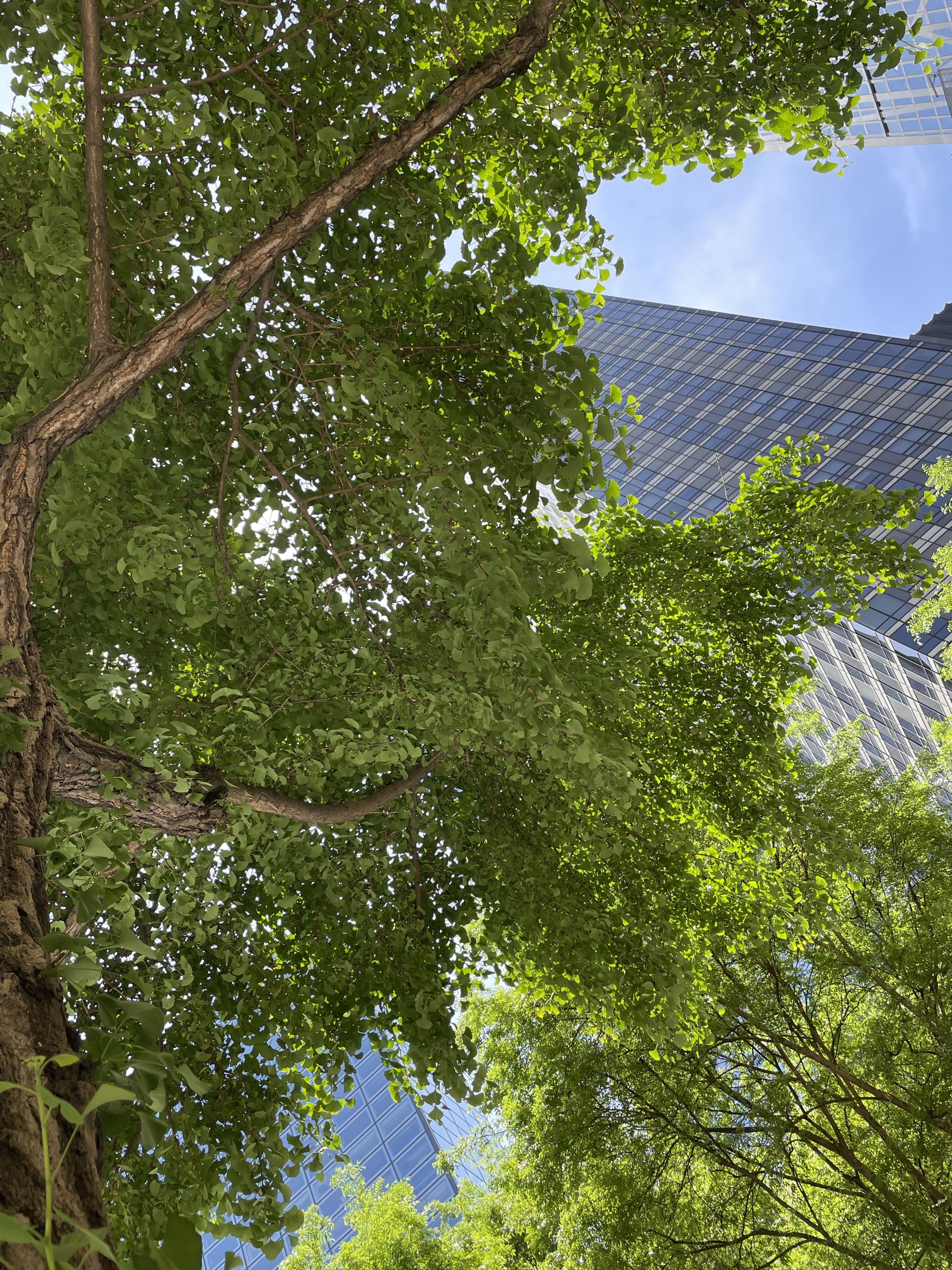
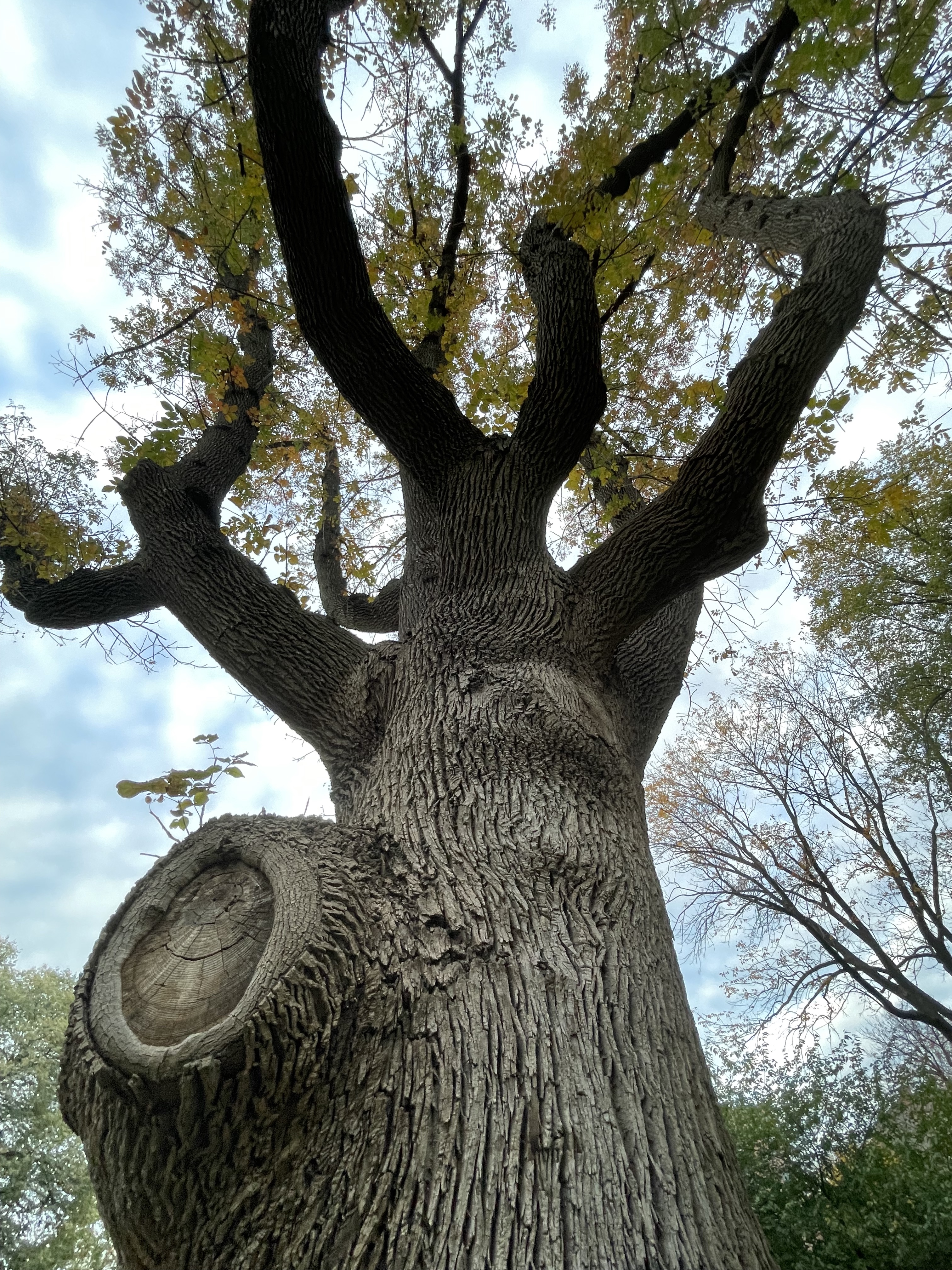
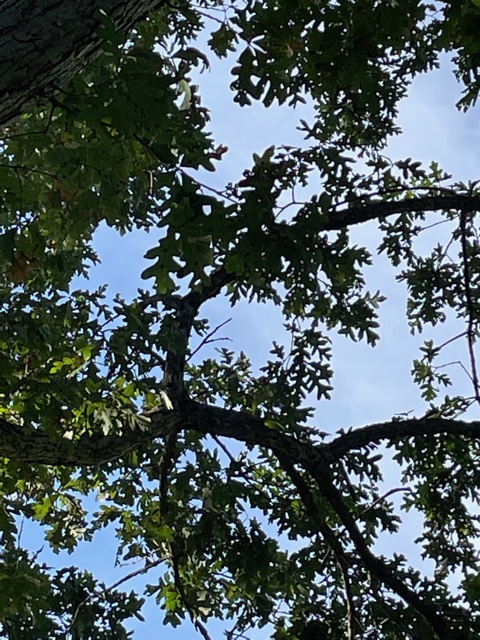
But also majestic oaks. I visited a grove in Central Park.
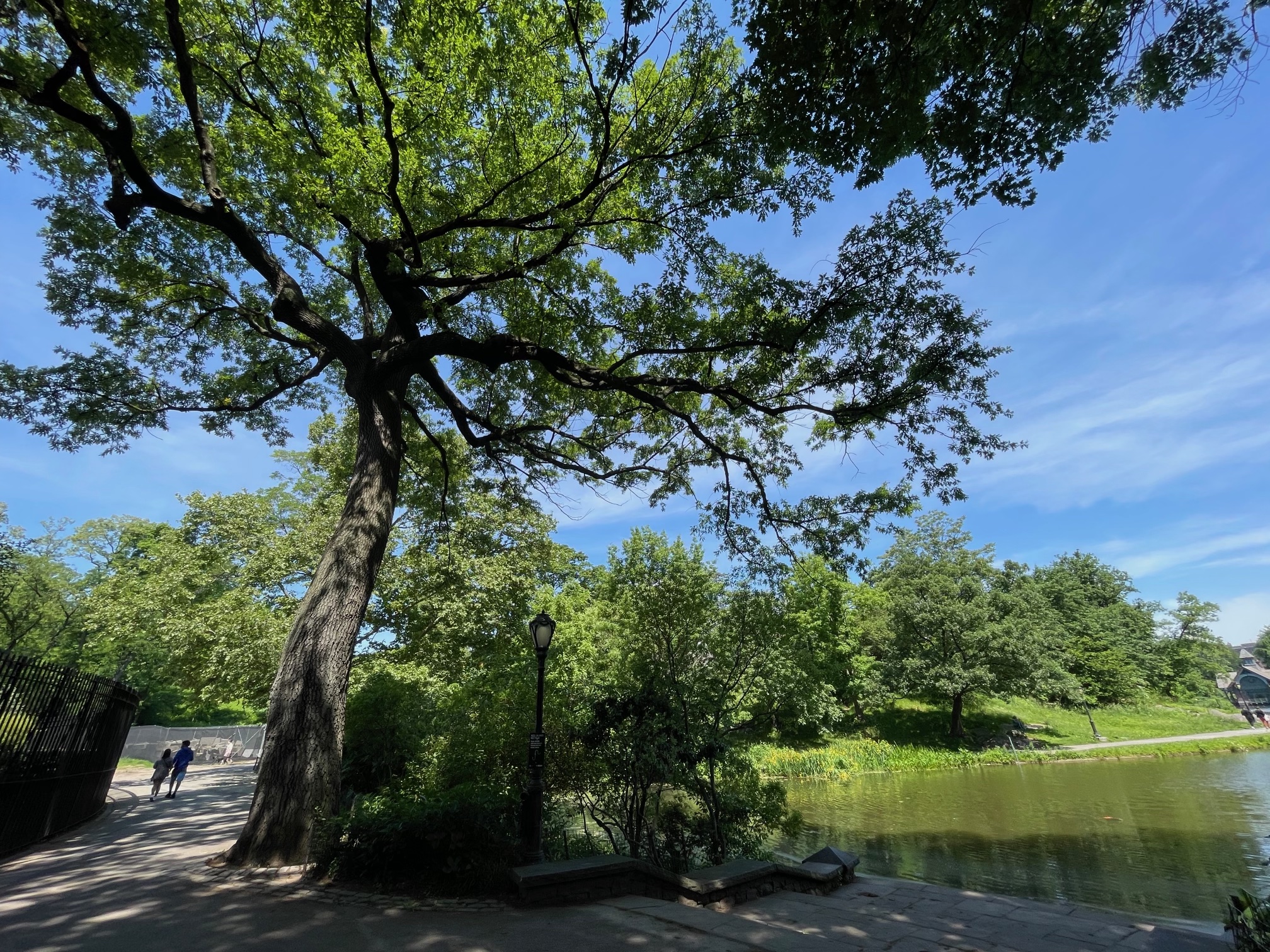
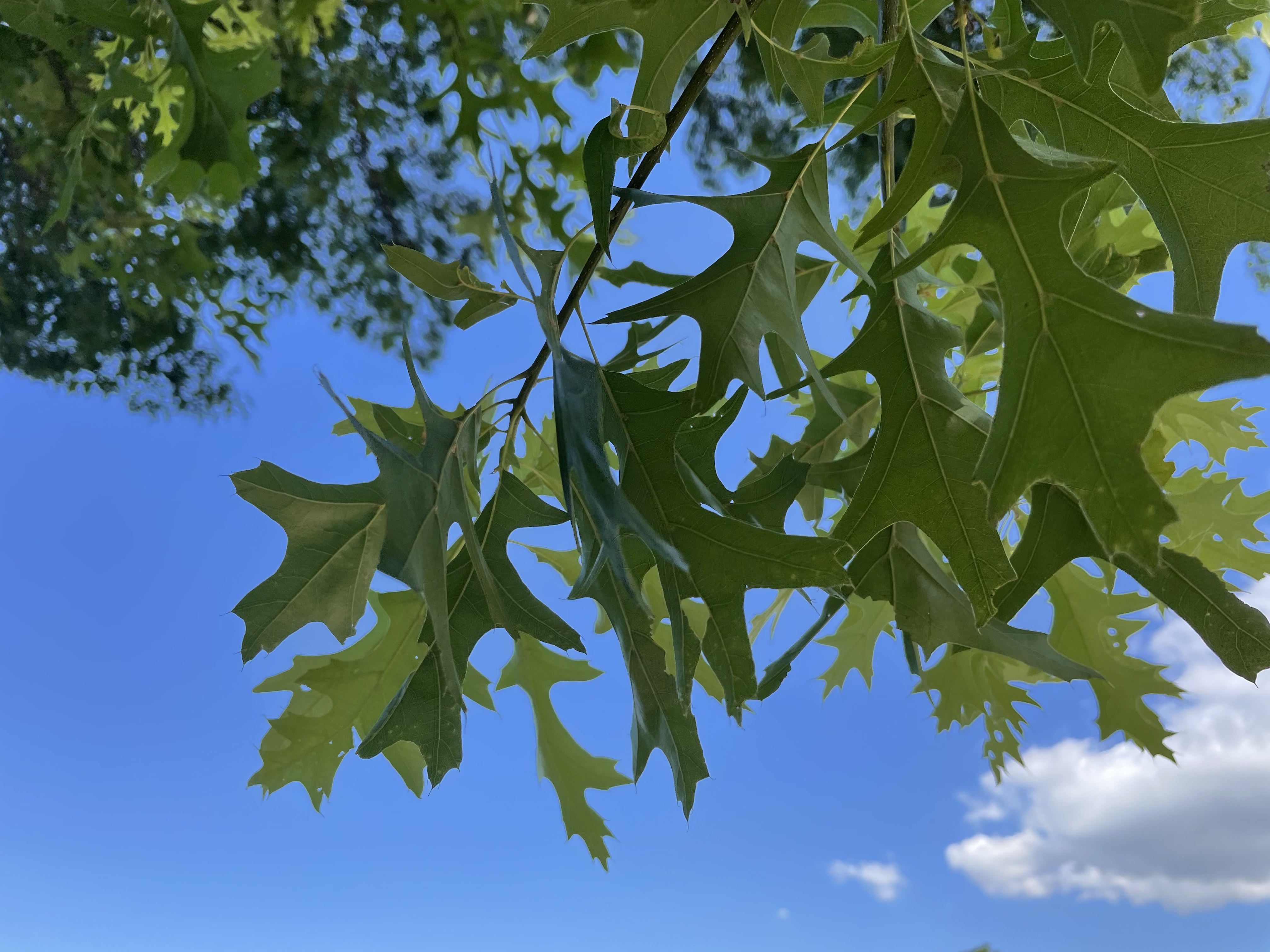
Not just any oaks. These were uncommon oaks. There were mature Northern red oaks.

I also saw swamp white oaks and sawtooth oaks.
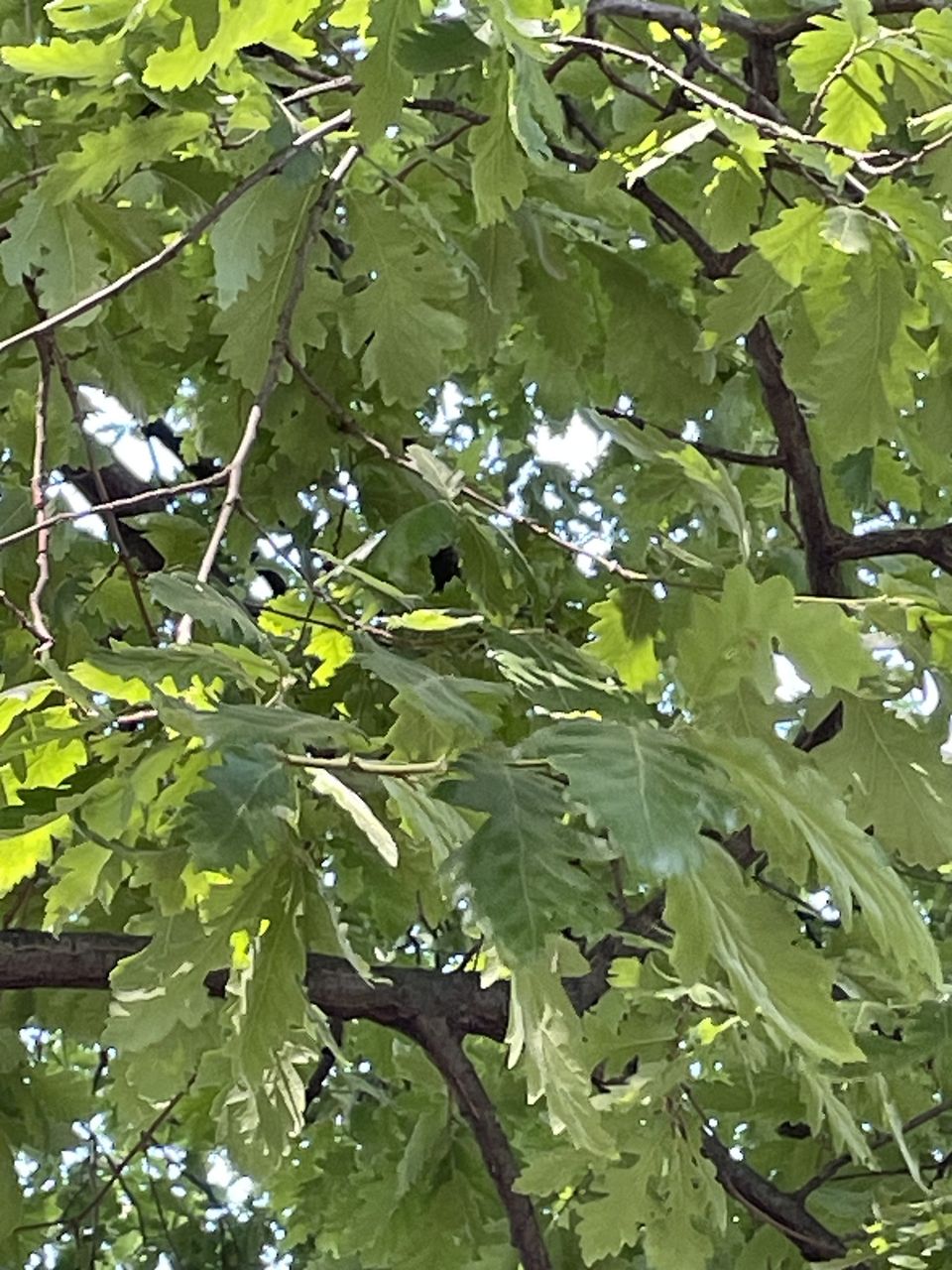
While you’ll find both as street trees in New York, here they were massive, ancient, awe inspiring.

And so I go to the woods. As I go in under the trees, dependably, almost at once, and by nothing I do, things fall into place. I enter an order that does not exist outside, in the human spaces….I am less important than I thought. I rejoice in that. So said Wendell Berry.

Some folks on hand didn’t seem much impressed, preferring a nap to gazing upward in rapture.
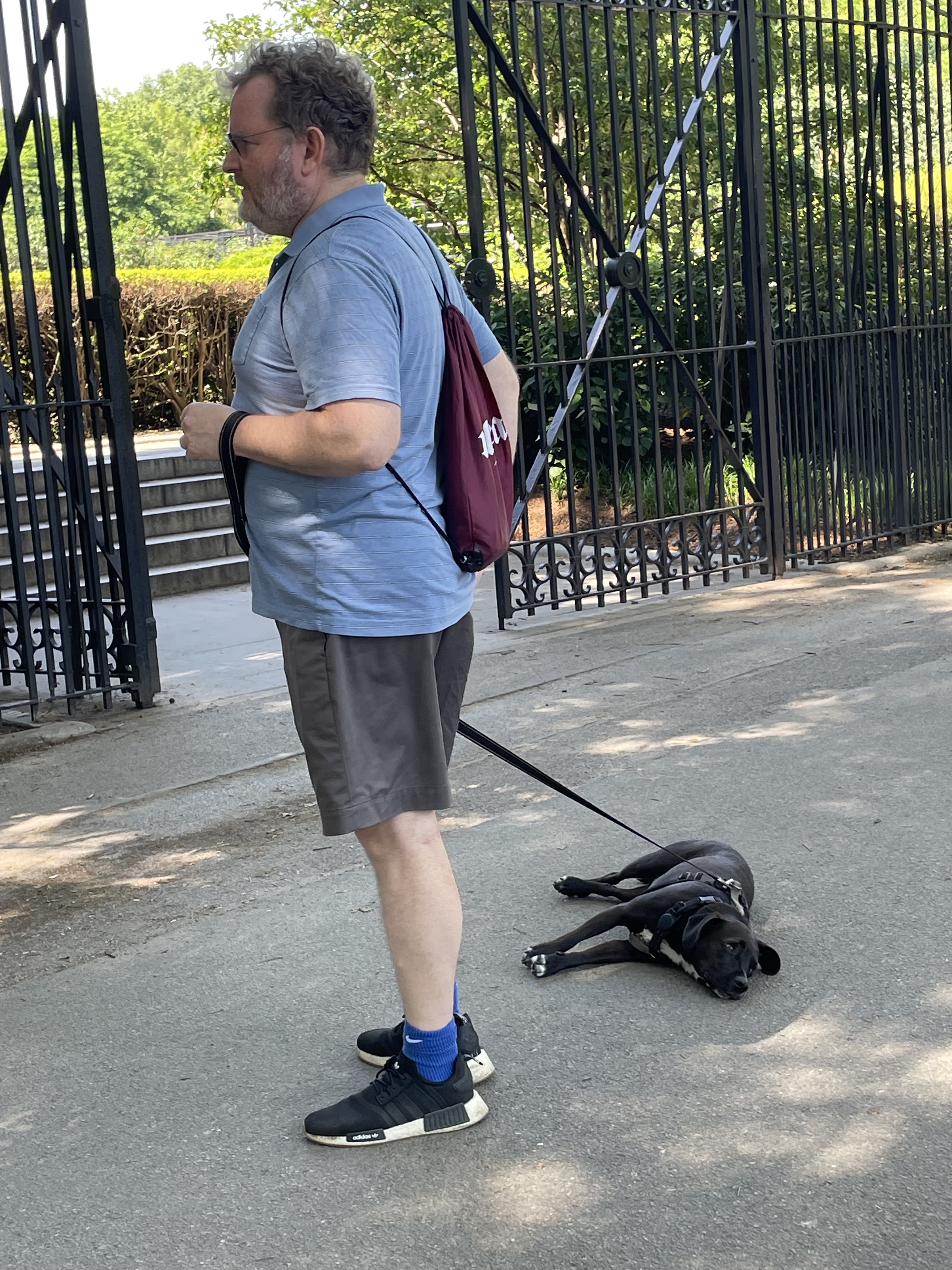
But I was definitely taking notice.

Especially having recently visited the New-York Historical Society for an exhibit about early New York.
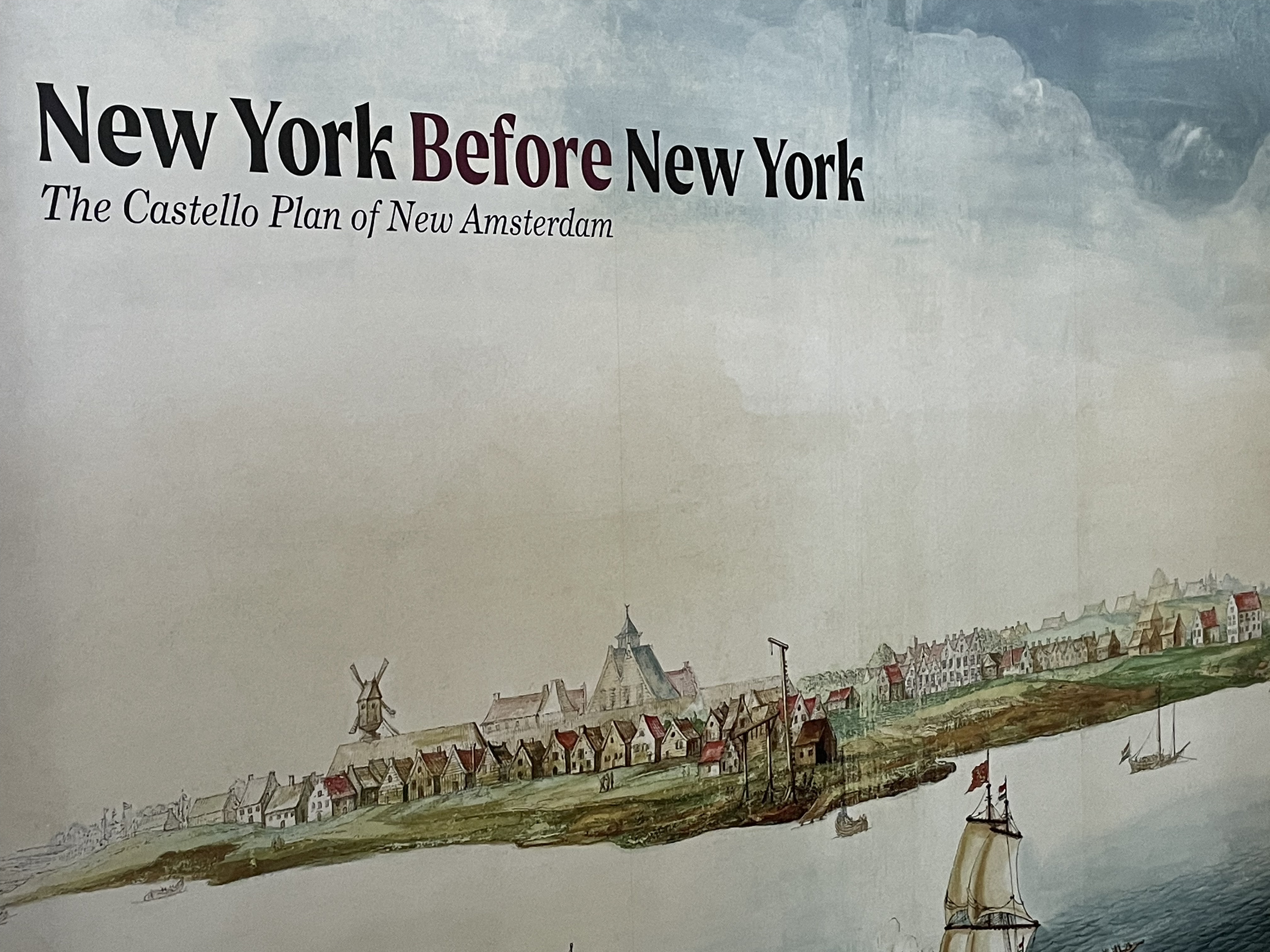
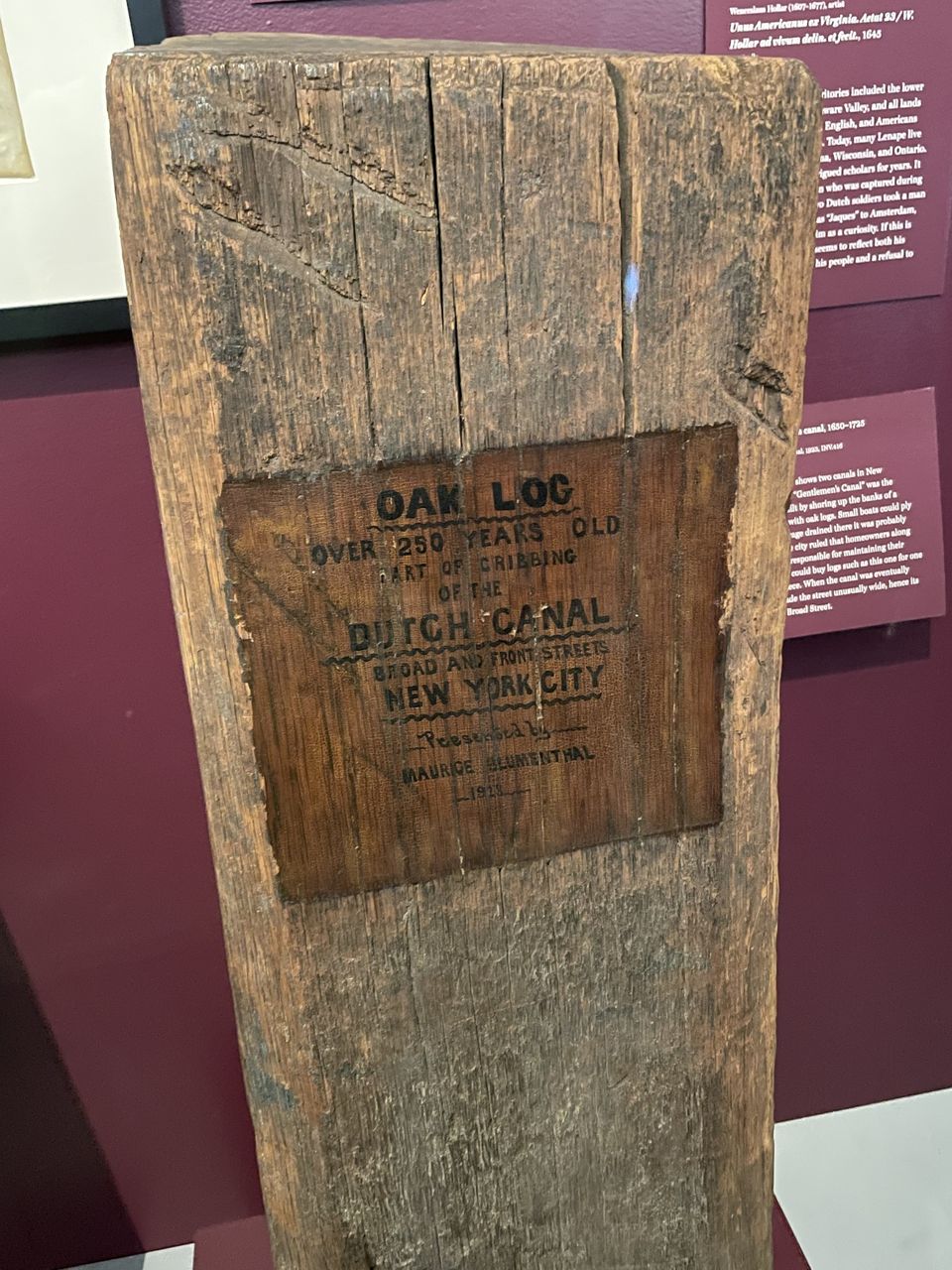
Of course there were many great artifacts, but a special treat was a fragment of oak log from an early Manhattan canal hundreds of years back. That’s how sturdy and strong and lasting oak is.
Just outside Central Park, a line of gargantuan elms strides down Fifth Avenue.

When the infamous elm blight decimated the canopies of so many urban areas’ Ulmus americana back in the early twentieth century, these elder stateswomen clearly did not take the hint. What doesn’t kill me makes me stronger — so said Nietzsche, correct for once.

I recently attended a tree climbing workshop in North Carolina with my daughter Maud.

The old-old trees we climbed were extraordinary. White oaks all around.

And chestnut oaks. Luminous.
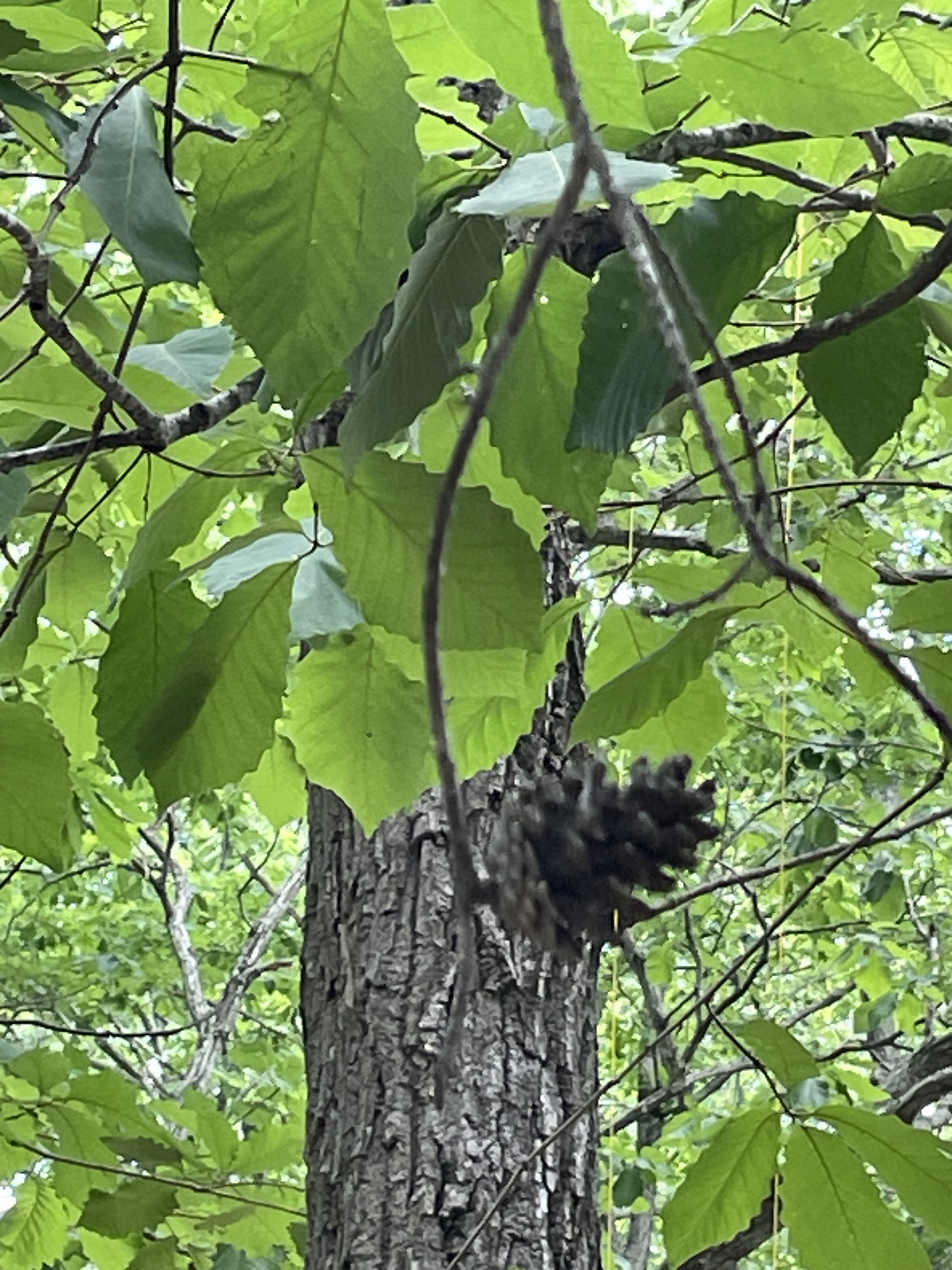
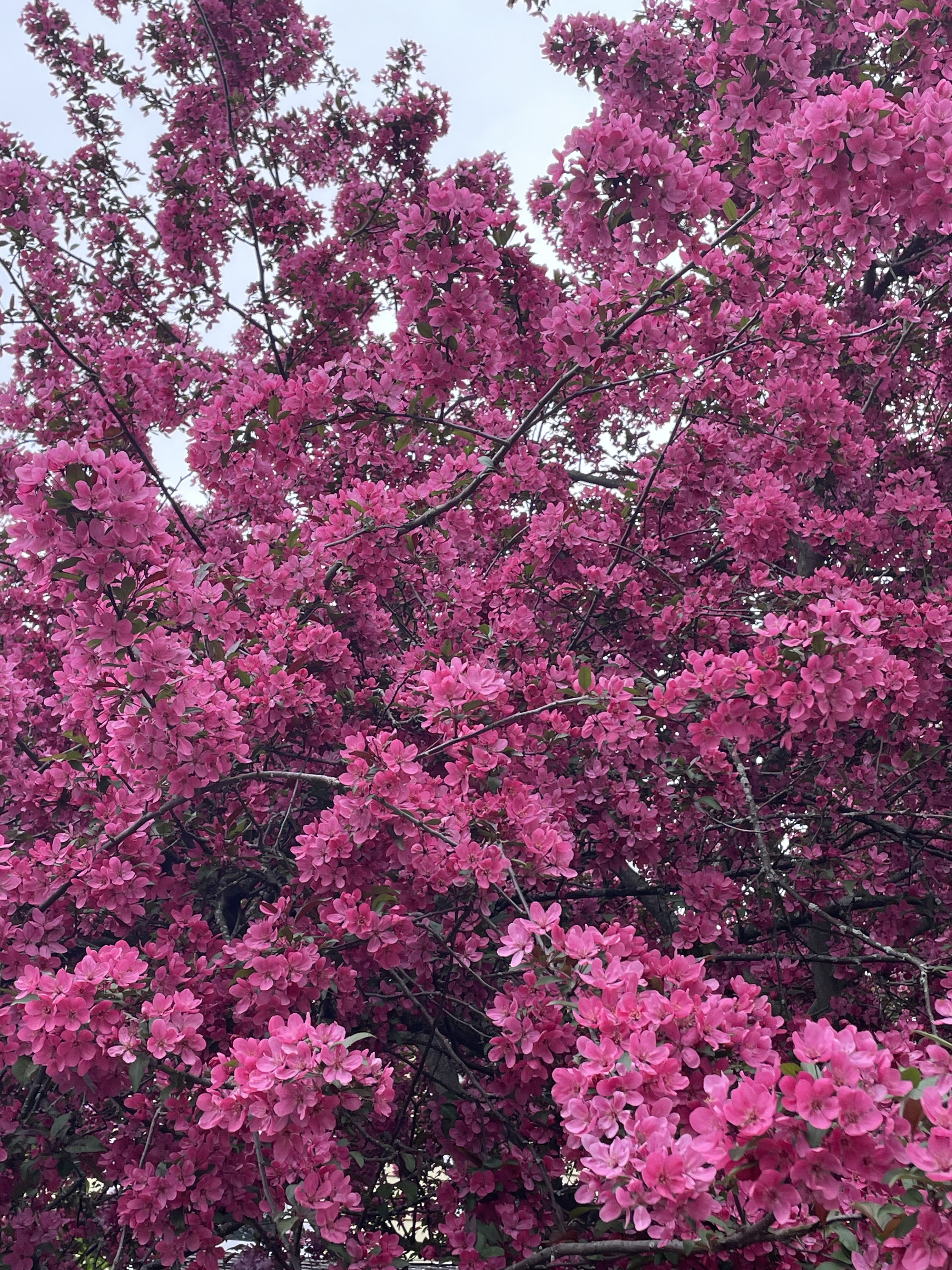
Back in New York, I rediscovered the fantastic trees all around. Still some cherries.
Some of the most fantastic specimens thrived far from the posh environs in and around Central Park. It’s linden season, when their magical bracts appear.
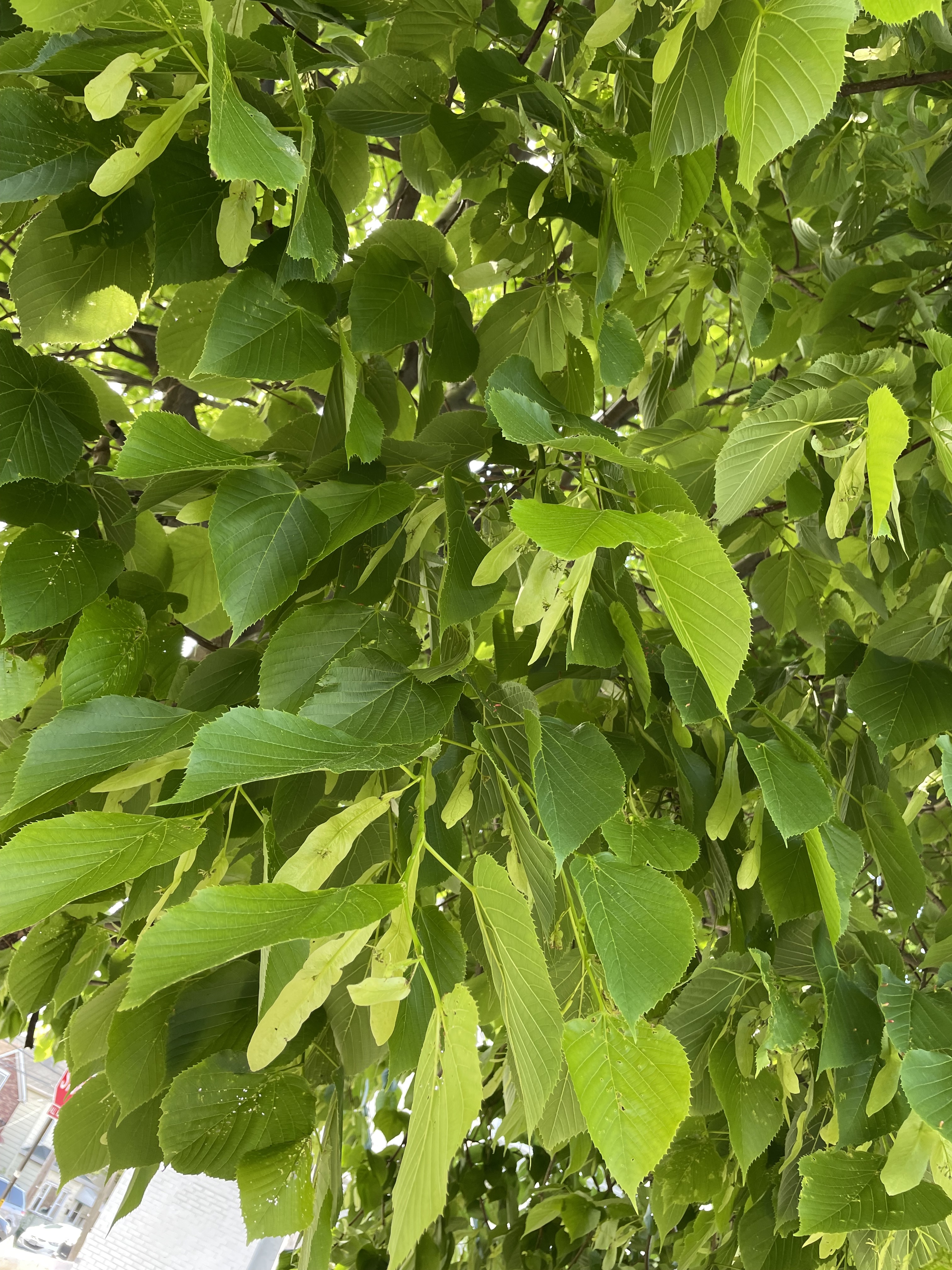
I came across a red oak in Queens when I was on a tree preservation job.

Nature thrives in Queens, it’s not just trees. I saw some peppy petunias.

Delicate bleeding hearts worthy of any country estate.

Perfect peonies, their fragrance really indescribable. Just try. Yes, in Queens.

On frenetic 20th Avenue in Whitestone, right down the block from the bioswales trench I was inspecting and just around the corner from some sad, spent ash trees, I came across the ubiquitous Dr. Seuss specimens that are ubiquitous on Queens streets.

But then, this mammoth Northern red oak! Hard to do justice to this ladytree’s girth in a photo. Suffice it to say I could wrap my arms around her a couple of times.

She was kind enough to drop leaf bouquets on the sidewalk and host a clutch of hostas in her lap.

While some stern stone eagles oversaw the scene.

Inspired by a wetter and warmer May courtesy of climate change, I knew I’d find nature thriving at the New York Botanical Garden, a Bronx oasis thronged by both native New Yorkers and tourists on this Memorial Day weekend.

The tone was set by a topiary White Rabbit, complete with pocket watch, part of a Garden-wide Alice in Wonderland display.

All around were clever signs. I overheard a woman say, “The Caterpillar always creeped me out.”
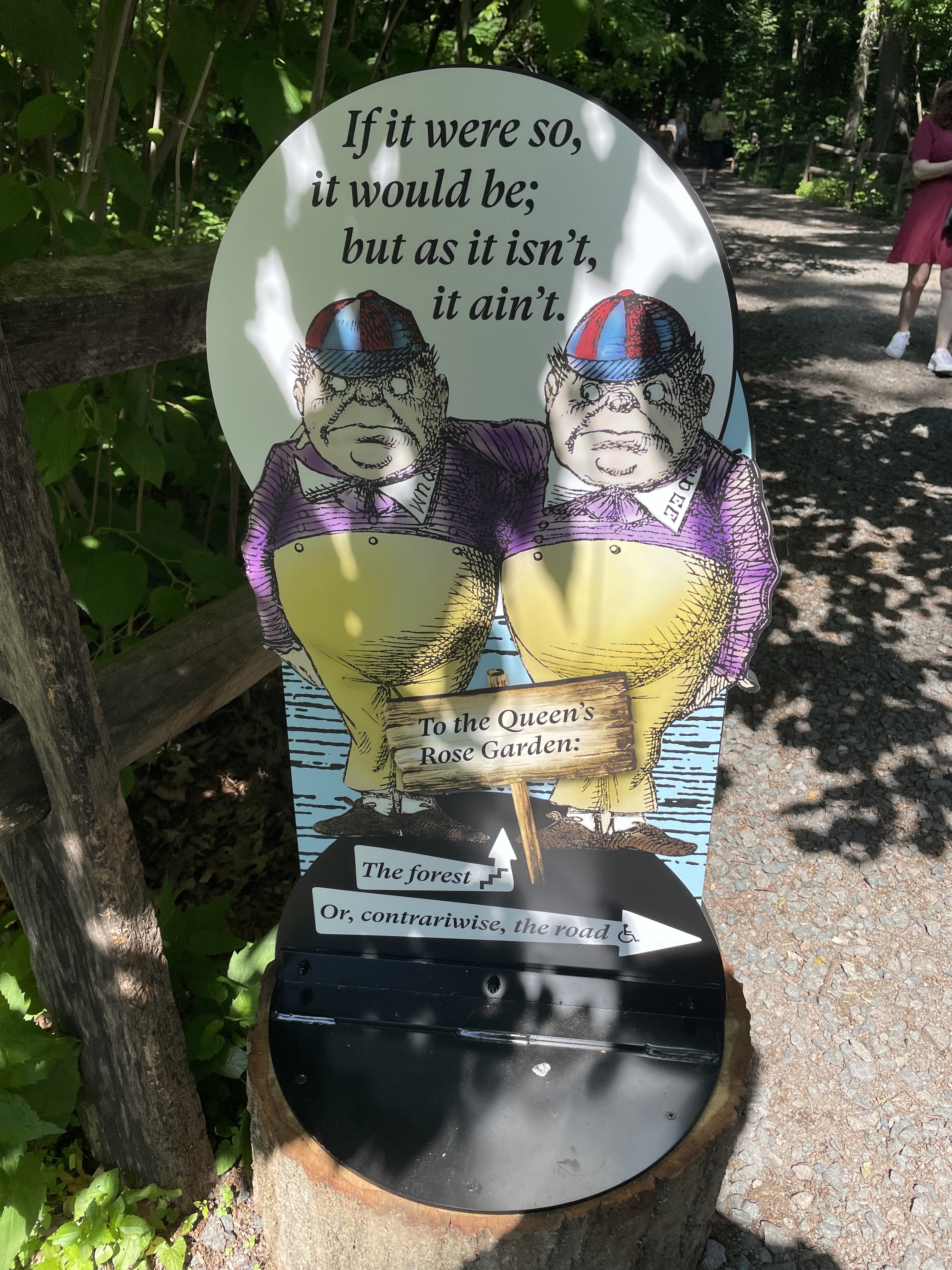
I wouldn’t say that about anything in Alice! What I was thinking about at NYBG was how great it would be to drink a magic potion and crawl into one of the abundant flowers in the ravishing Rose Garden.
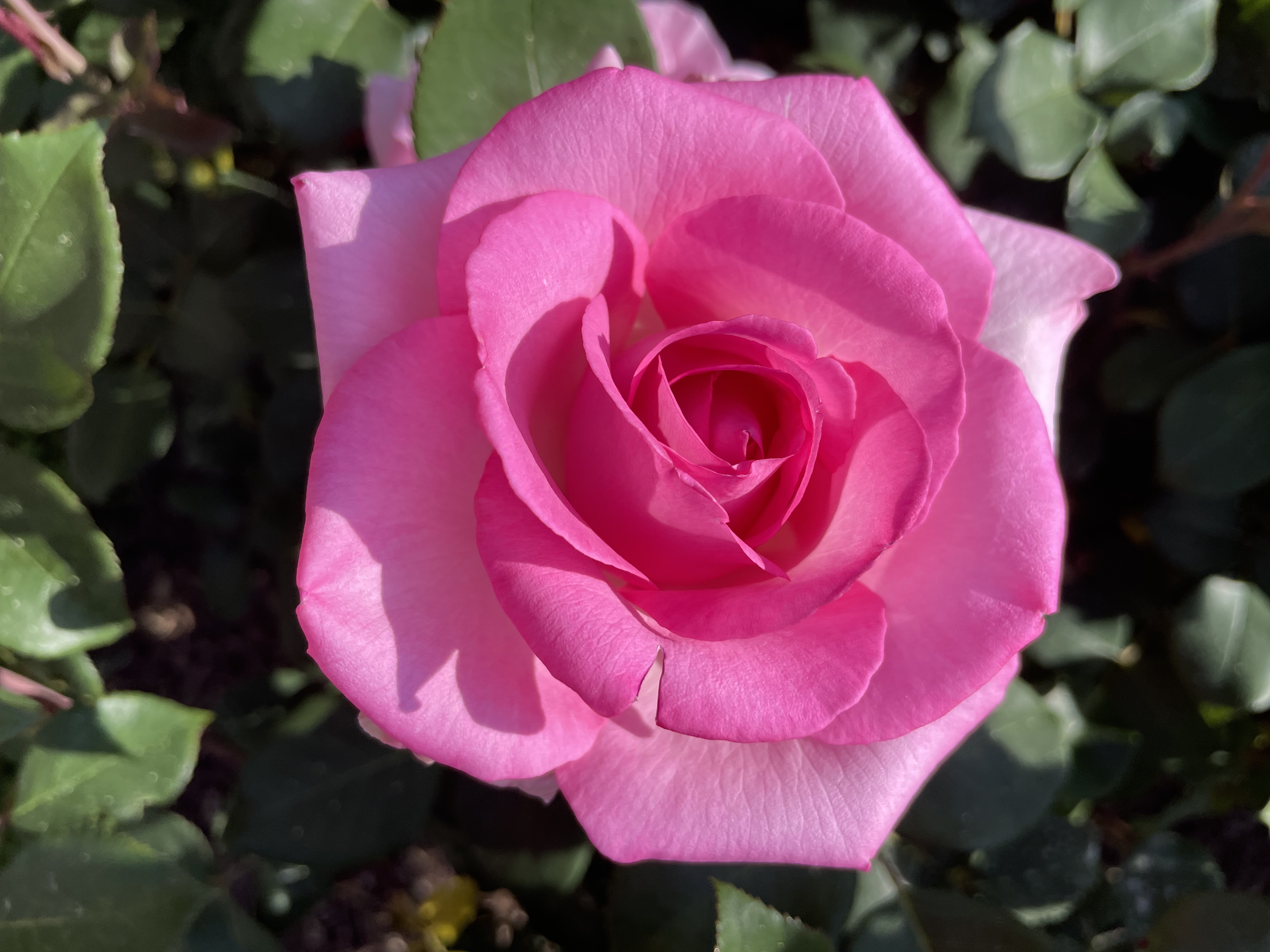
Sometimes I’ve believed as many as six impossible things before breakfast, said the Queen. Hear, hear.
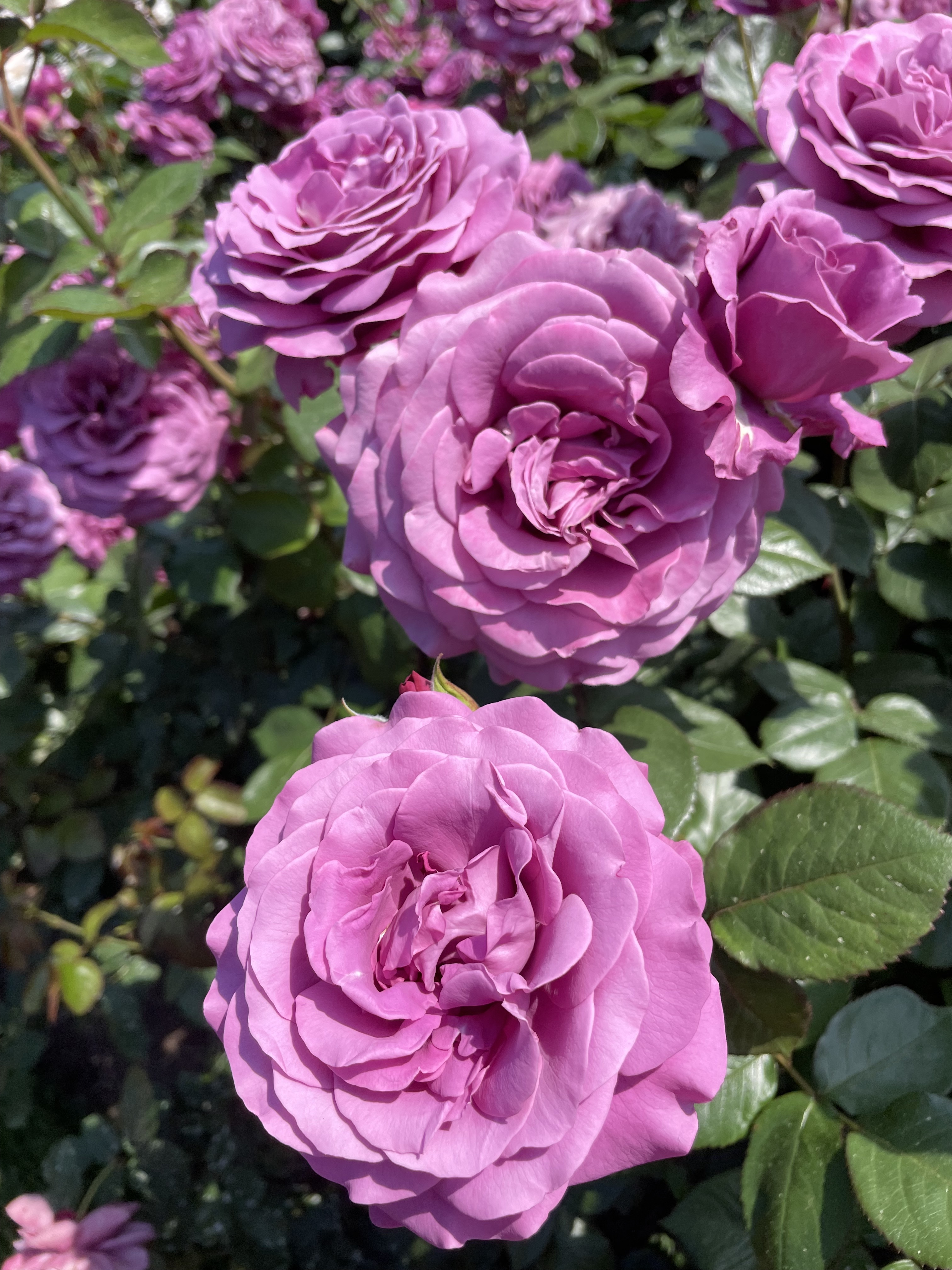
Hard to do justice to the array of blooms there.

They dazzled as roses always do.
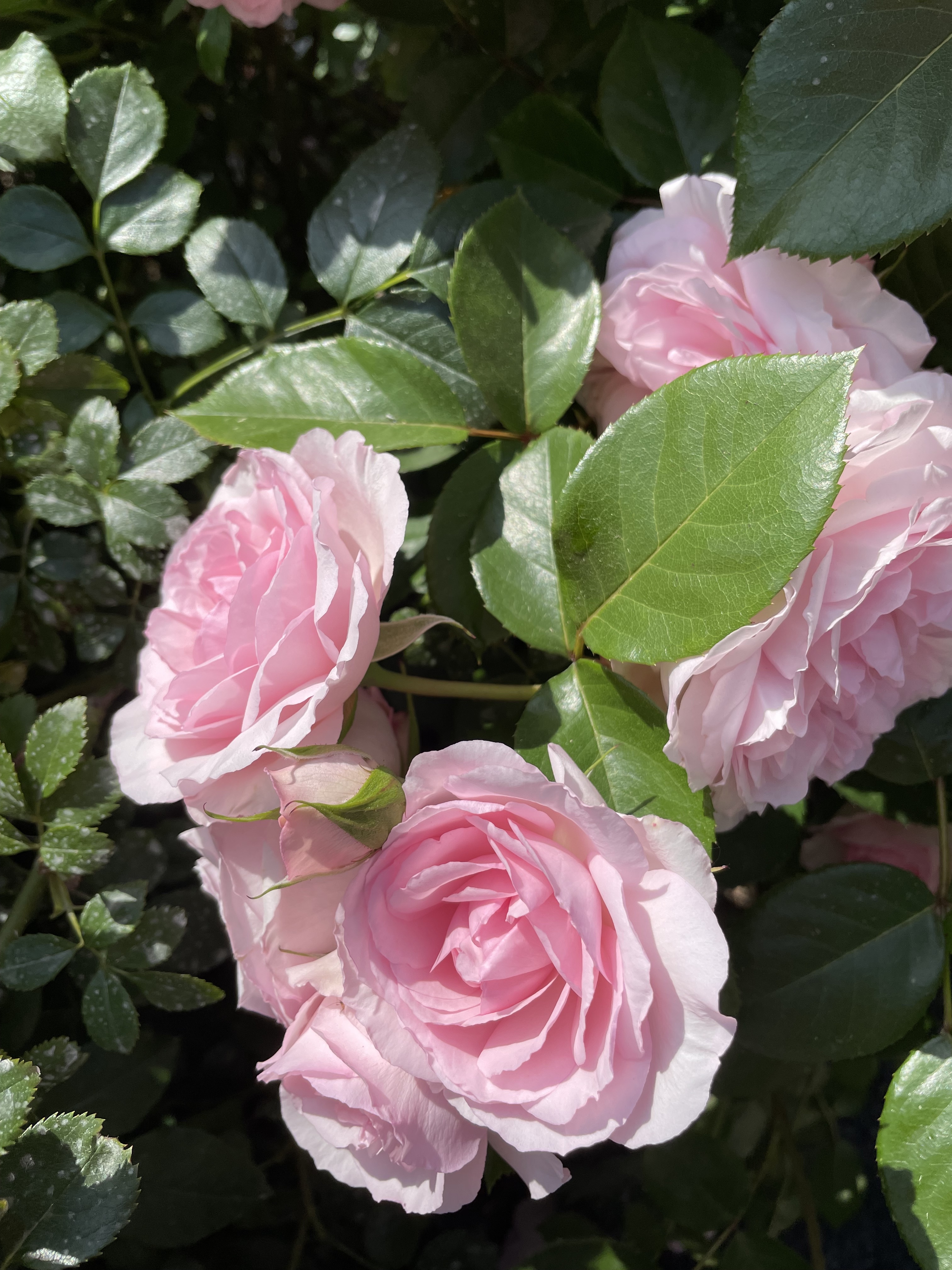
Funny, though, whether white or yellow, pink, red or purple, stick your nose in and they all smell the same. Phenomenal, but the same. Flowers, I ask, must you be so boring?

All around, people were posing as if they were themselves flowers, so I did too.

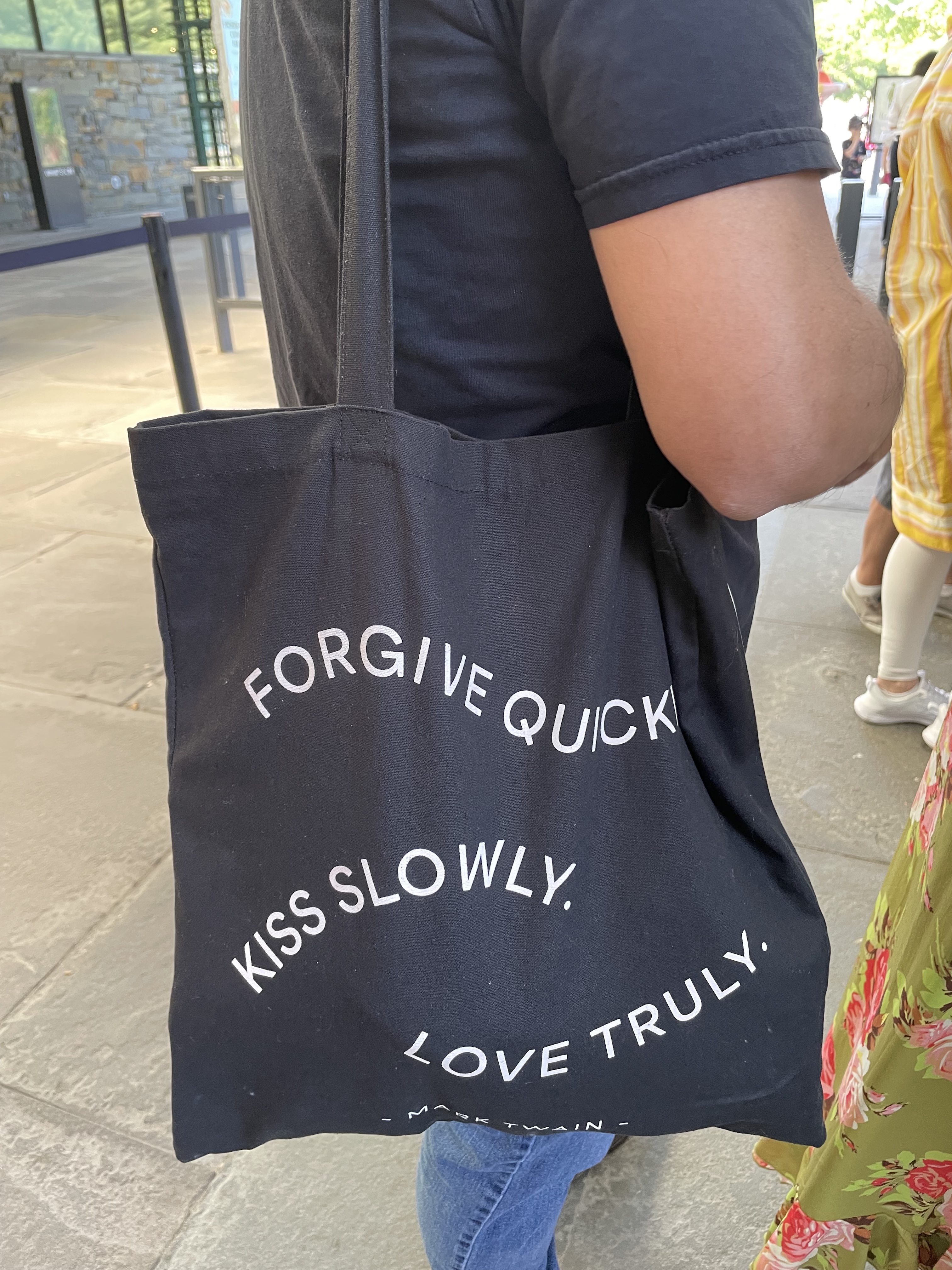
And a guy got into the springtime spirit with his slogan tote bag. Think I might get this on a tee shirt to join my newest wardrobe favorite: UNDERESTIMATE ME: That’ll be fun.
Just up from the Rose Garden, kids played with another Alice-themed attraction, a monochrome chessboard created by Yoko Ono that suggests the essential futility of war. We’re all on the same side, after all. Gil tried to set the game up properly, when he wasn’t inciting Memorial Day riots with his George Orwell tee shirt.

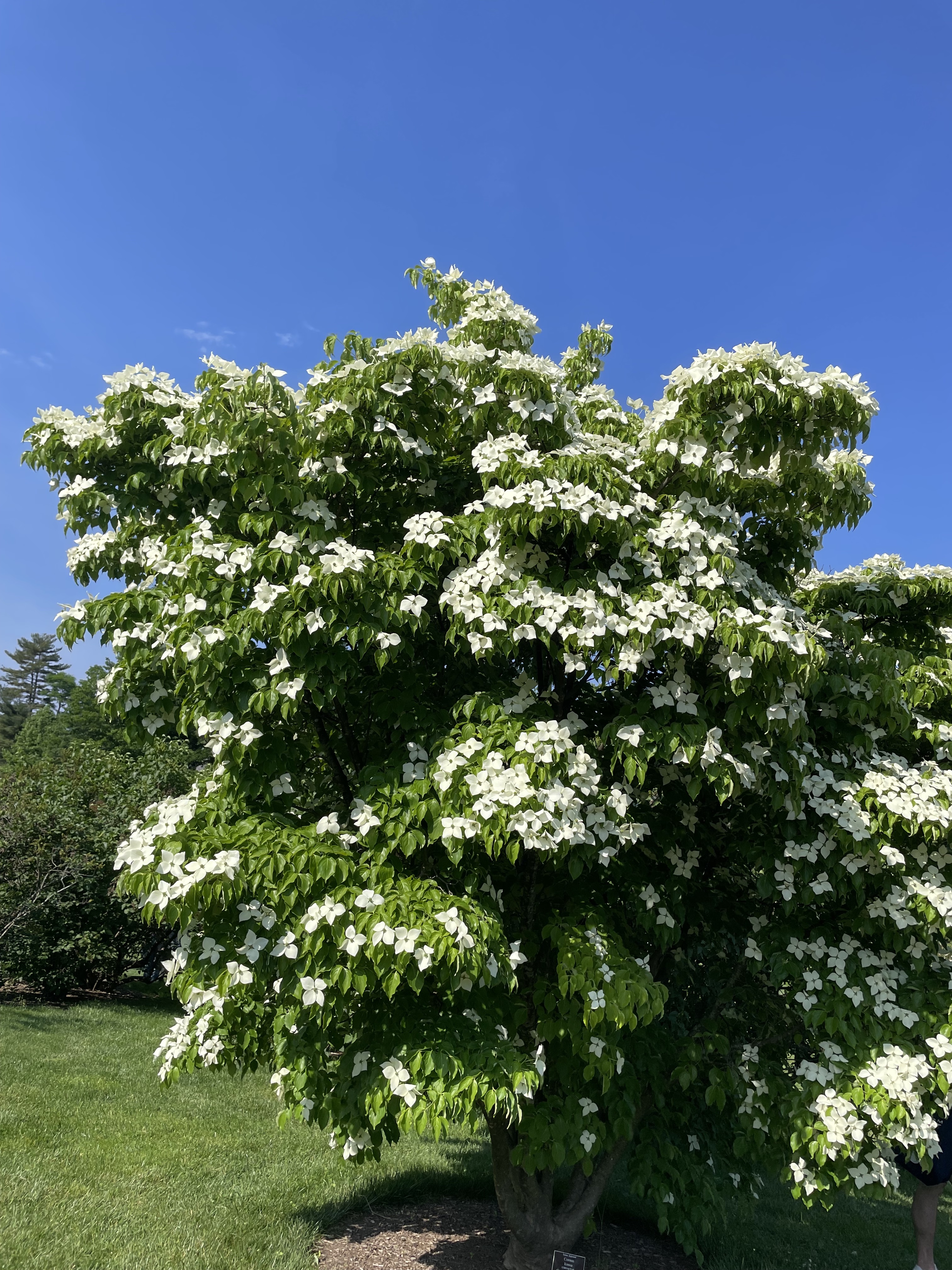
We saw other seasonal stand-out specimens of the urban forest. A Kousa dogwood having its moment.
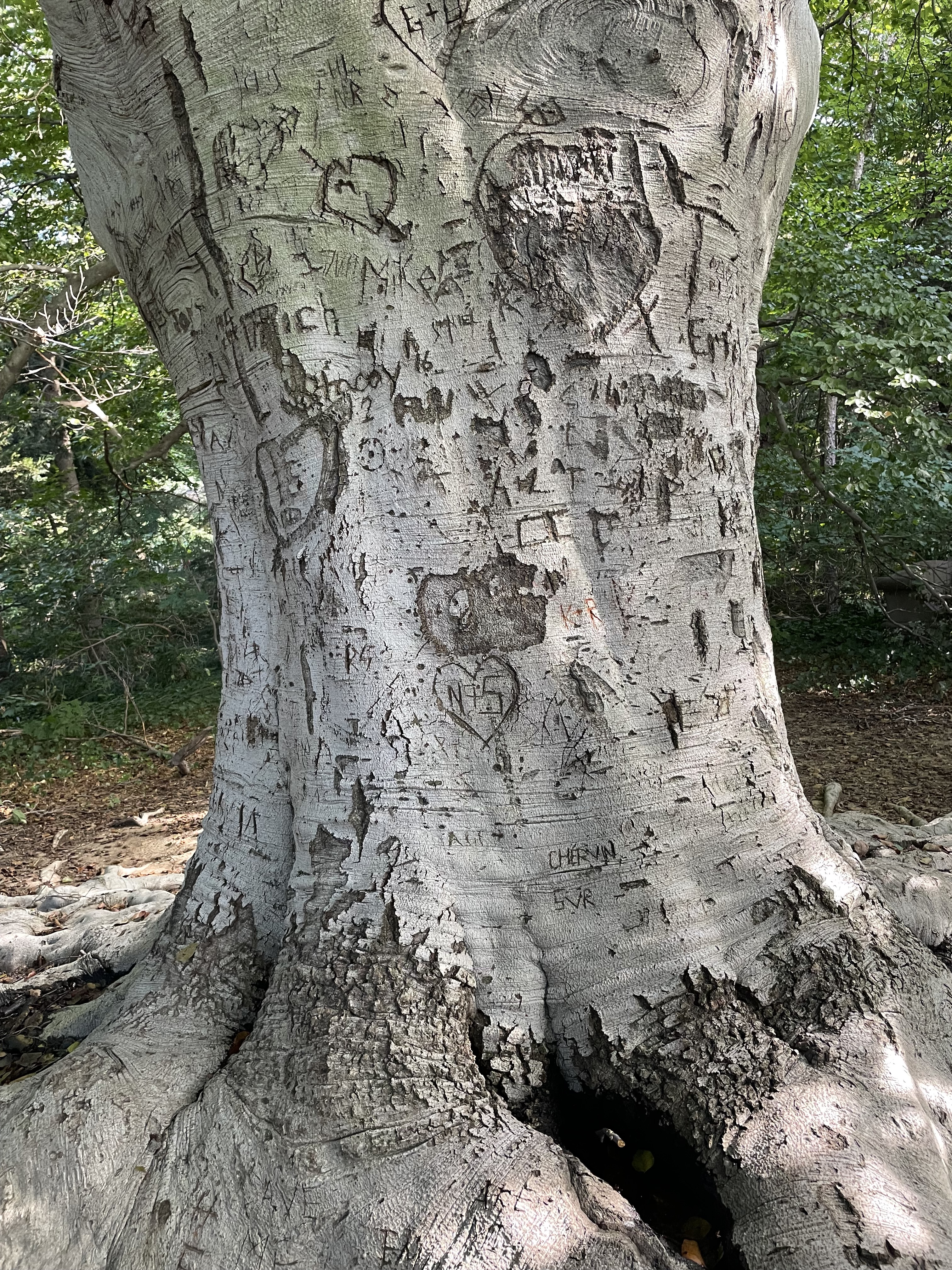
Some carved beeches I’d probably passed a million times before but never noticed.

There’s always something new to notice when you pay attention. Mary Oliver wrote:

Instructions for living a life:

Pay attention.

Be astonished.

Tell about it.

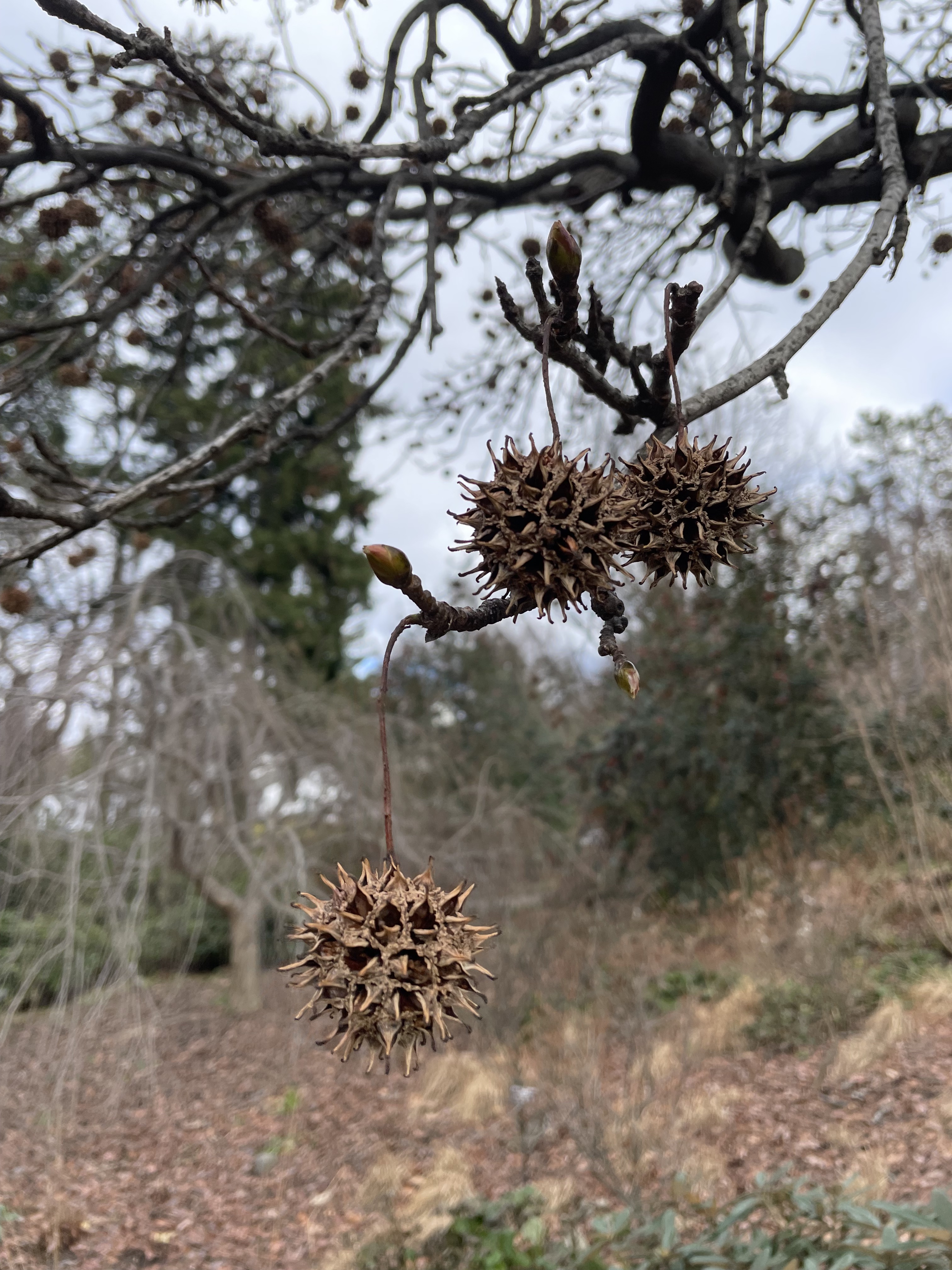
We walked through the Thain Forest, a certifiable old-growth tract thick with sweetgums that gave me a few souvenirs to bring home (remember, though, take nothing but pictures!).

A critter hole made me again want to shrink like Alice. Anyone home? Mind if I come in?

The trees of the city, the flowers of the city form a promise, an opportunity for optimism and hope in these sometimes dark, difficult times. If they can grow and thrive, if they survive, perhaps we can too. I dwell in possibility wrote Emily Dickinson, she who thought a good deal about nature.

You can’t take a whole forest home with you.

But when you pay attention, the vision of those trees and flowers might linger with you in your workaday life and help you remember your place in the natural world, and also bring some joy.

Even if you take nothing but pictures.

That’s my promise.
3 Comments

Filed under Jean Zimmerman

Winter color so vivid all around

at Wave Hill, the historic estate in Riverdale, the Bronx. Always a magnificent public-access arboretum, but perhaps especially beautiful on this brisk early afternoon in mid-December.

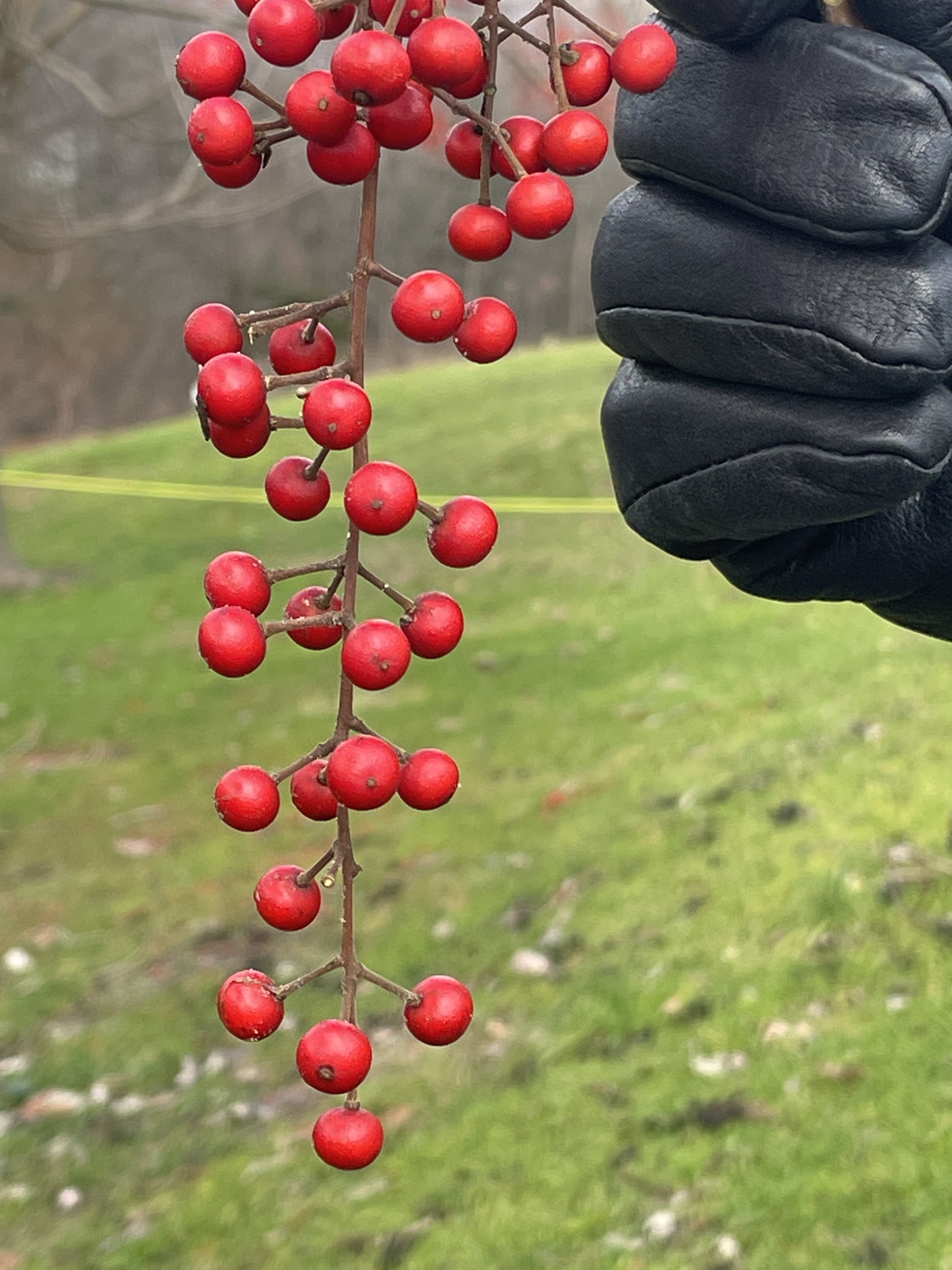
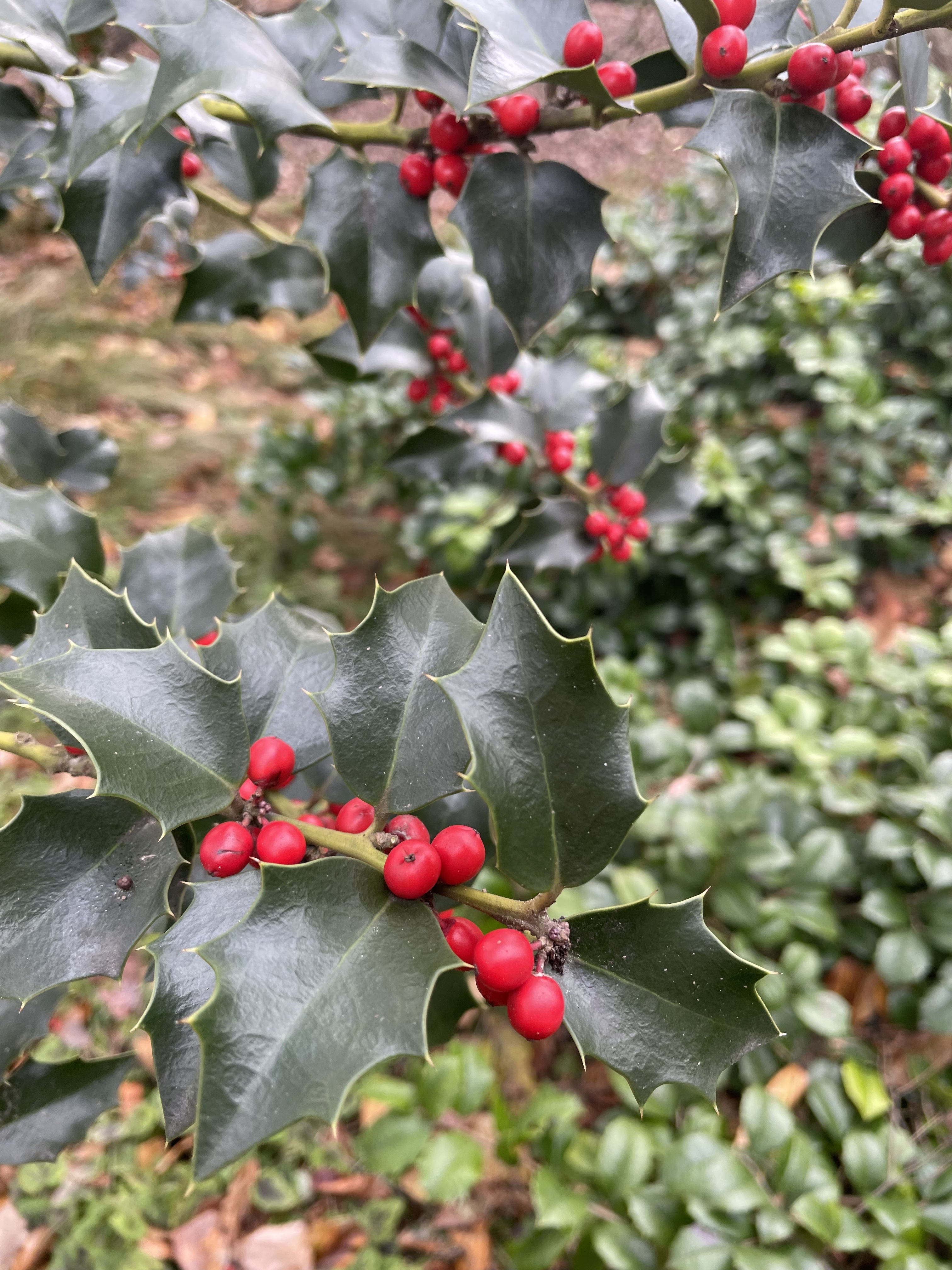
Berries all around. Not only crimson holly, perfect for the season.

But purple. The aptly named beautyberry.

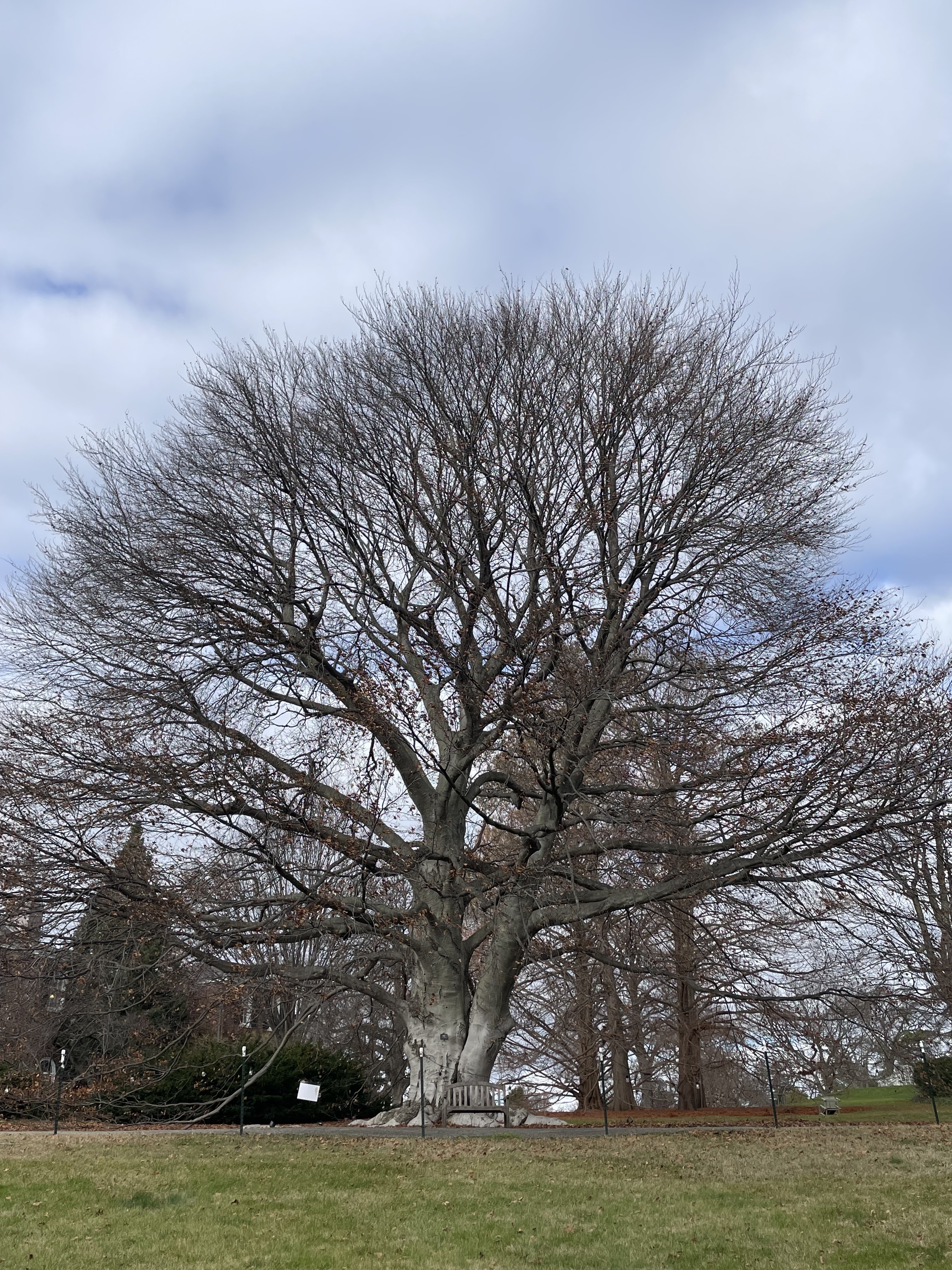
Shakespeare wrote about boughs which shake against the cold,/Bare ruin’d choirs, where late the sweet birds sang. He might have been describing one of the most majestic trees here, a weeping beech.

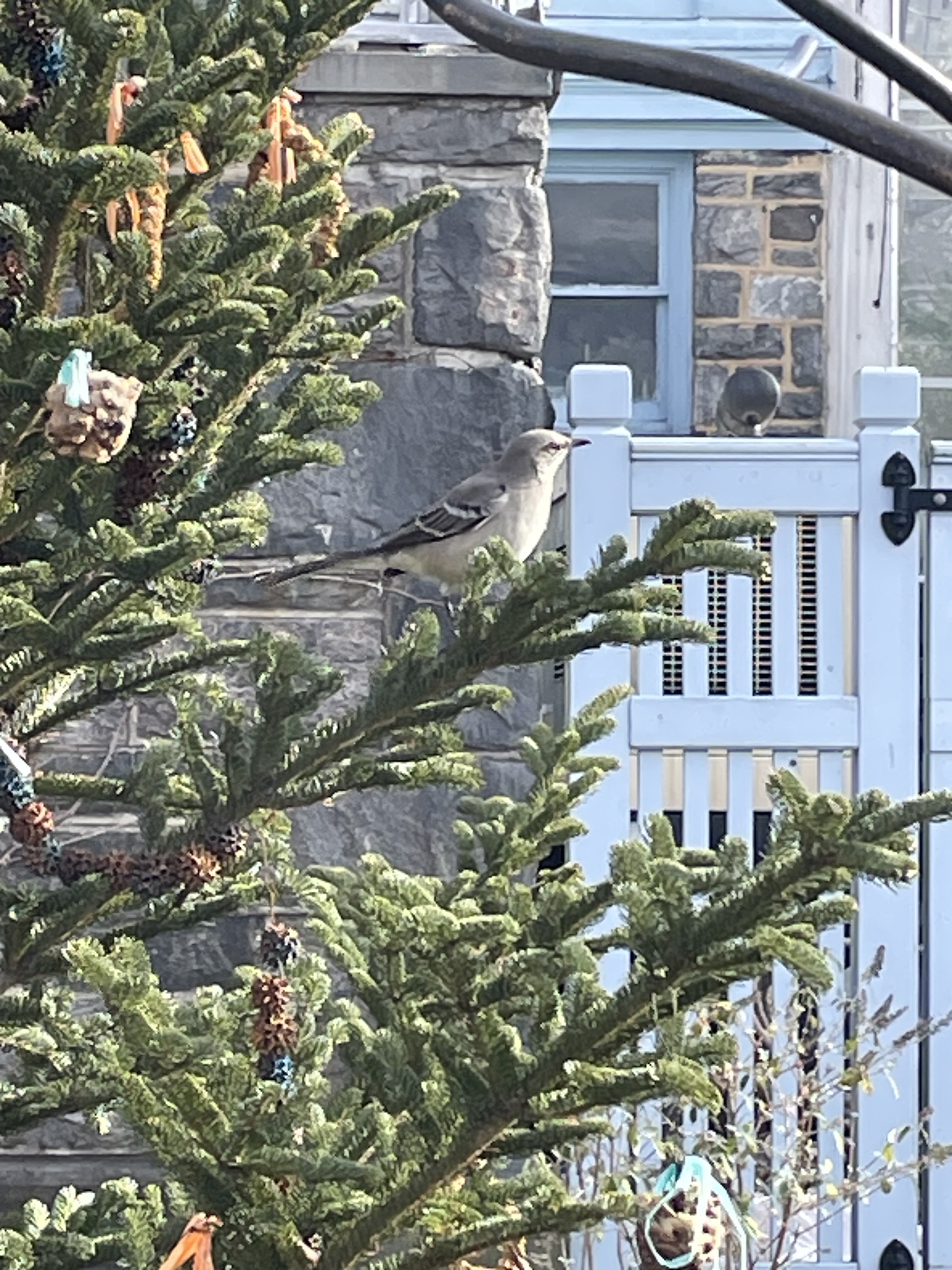
The birds, though, are still at Wave Hill in full force.

Making a mad racket and perching on branches specially decorated for them.

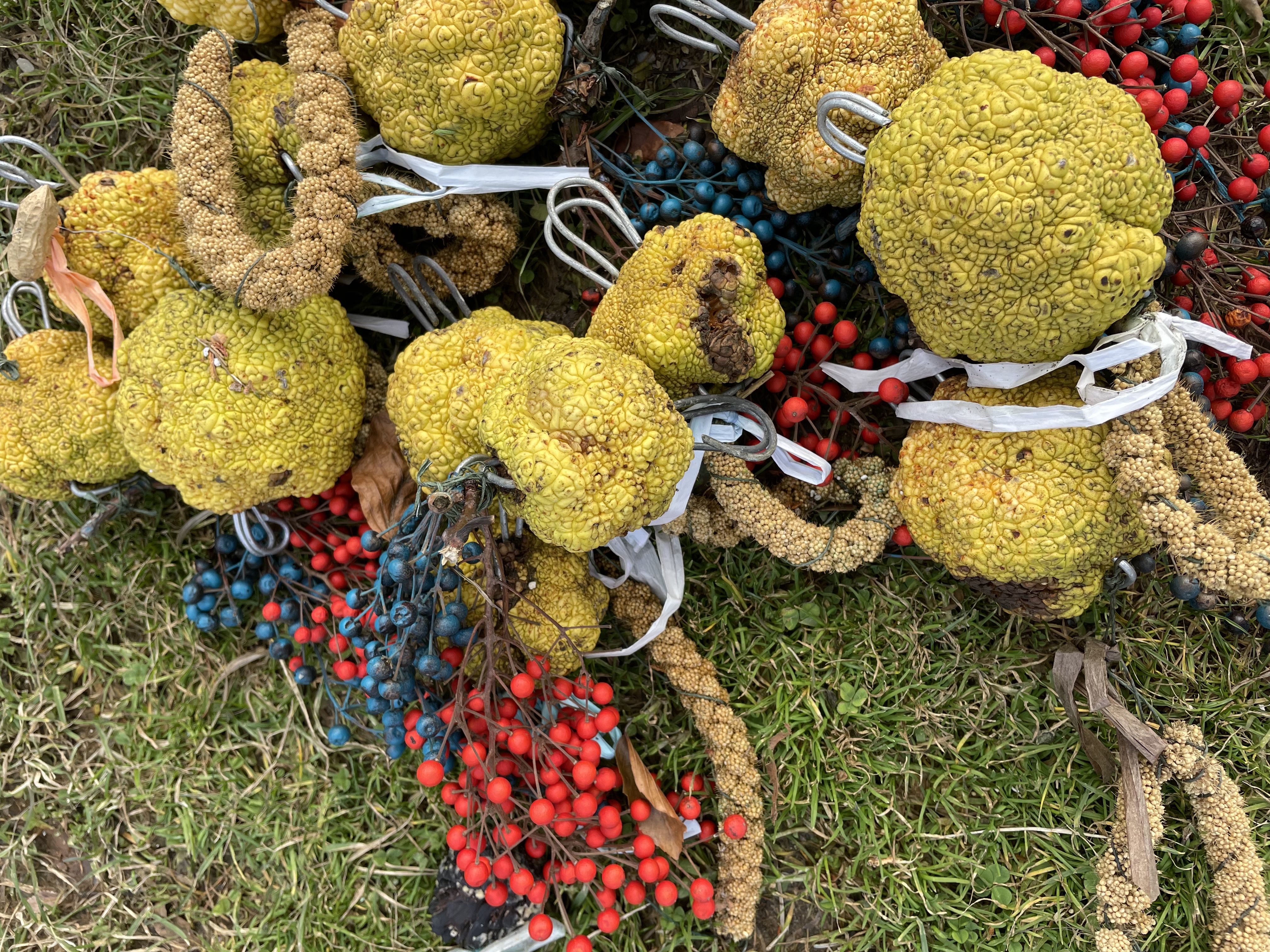
Garlands of things they love to eat. Berries, yes. Also, even more delectable for them, the fruits of the Osage orange. An ancient species that dates back to at least the last ice age, when seeds were most likely spread by mastodons, sloths and other creatures that consumed them.

Squirrels like the seedballs too, hence the one we find partially devoured along our way.

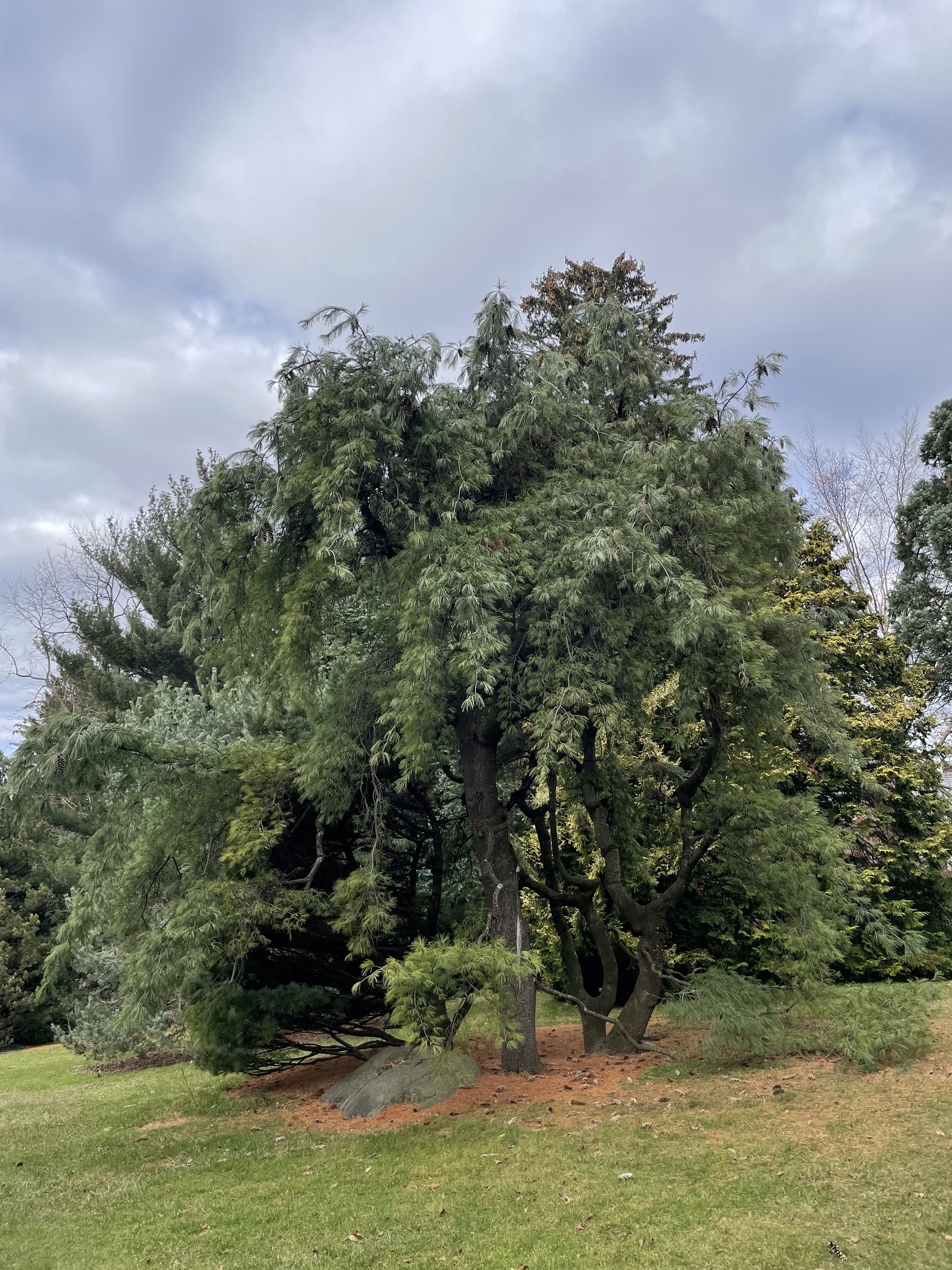
To celebrate the fir tree season, we pay a visit to the conifer grove.

Gorgeous specimens all around.

So many different species.

Each beautiful in its own way

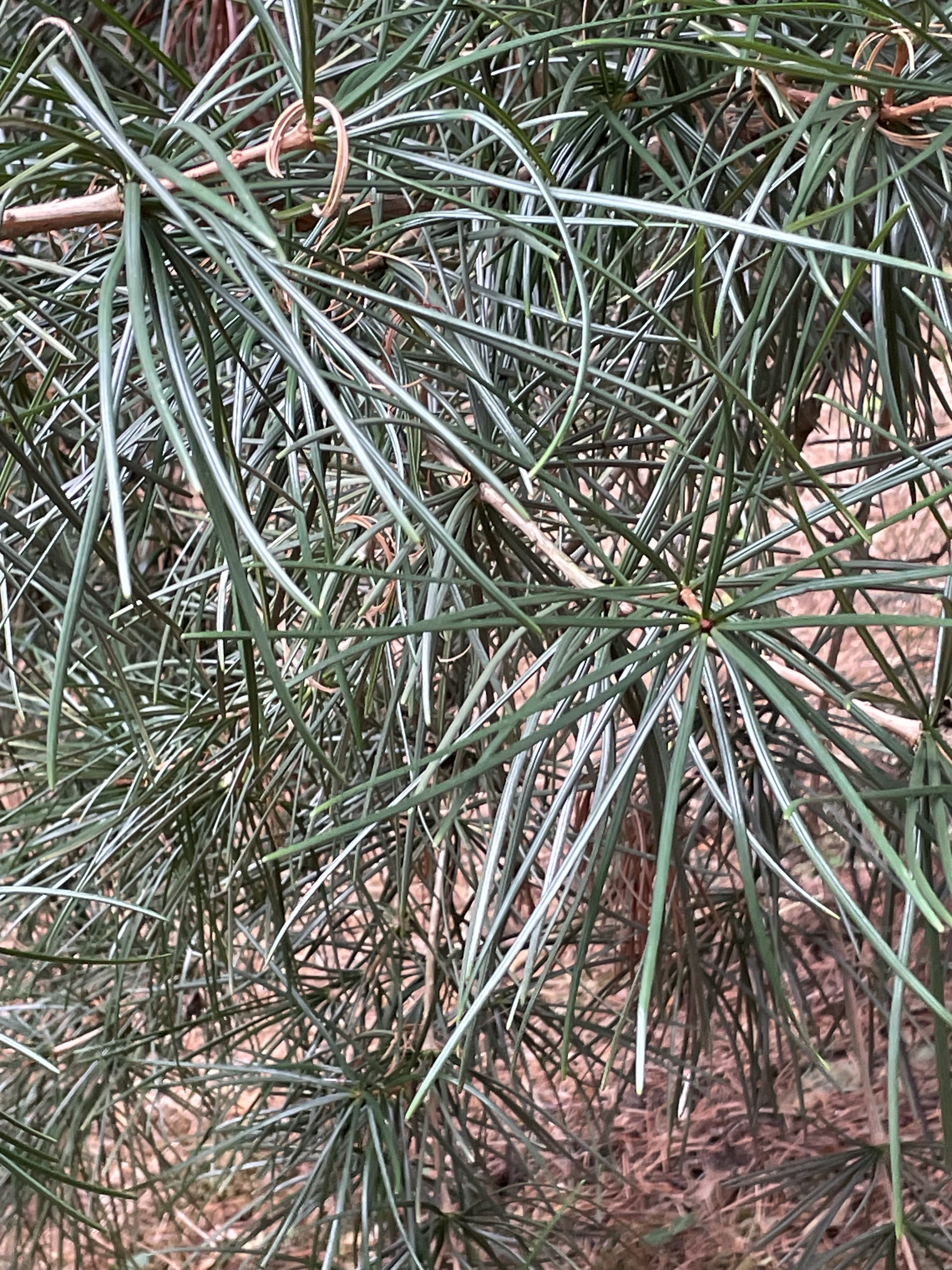
Some exotic, like a China fir.

There is even a giant redwood cultivar. A real redwood, like they have on the West Coast.

Is it possible to overuse the descriptor beautiful? On this day, no. Everything is beautiful.

We take the Woodland Trail, which winds along the edge of the property. We see evidence of the human hand tucked into the corners. This isn’t an old-growth forest, after all!

A private school adjoins the property. We hear children shrieking on a playground as we go, having fun at recess. Find a gazebo — nice place to sit and reflect, if that’s your thing. Ours is more along the lines of walking to stay warm on this cold early afternoon.

Someone was here before and loved someone.

A hand-hewn belvedere. Think about the people employed here to build it long ago, probably old-world stonemasons who gifted our country with their expertise.

So much texture in these woods.

Hackberry.

Black cherry.

Sweet birch.

Lichen.

The intricate embroidery of oak leaves underfoot.

Something odd, a measuring tape around a trunk.

Wonder if someone trying to get a DBH left this tool by mistake. This is an arboretum, after all. Or are they trying to girdle the tree so that it will fall over time? Nah, who would do that to a fine old Northern red oak?

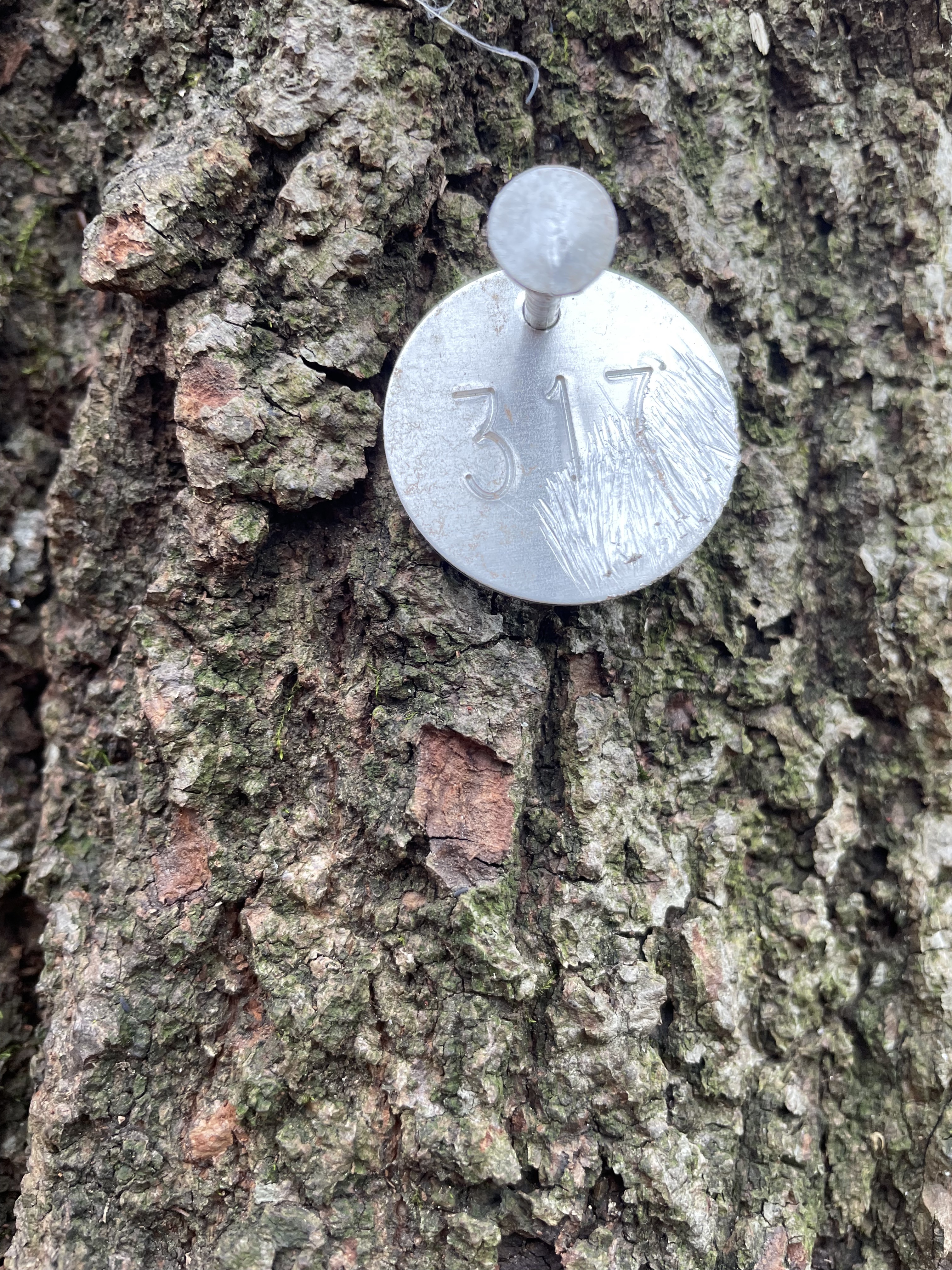
Mysteries. Who tagged this tree and for what inventory?

How could any tree be as beautiful as this one with braided twin trunks? Tell me if you find one.

Wave Hill isn’t only about trees and plants. There’s history here too. Illustrious visitors spent time on the estate, with an overnight guest list including Thomas Huxley and Charles Darwin. A teenage Teddy Roosevelt summered here. Later, as governor of the state, he became very active in preserving the view across the river.

Did Roosevelt’s  Wave Hill summers have anything to do with his adult efforts to create the National Parks system? Inquiring minds want to know.

Arturo Toscanini also put in some time here. He’d play concerts on the lawn. His guests included Queen Elizabeth II and John Foster Dulles. Mark Twain stayed at Wave Hill between 1901 and 1903.

There are numerous historic buildings, and I’ve often wondered where specifically Twain resided. We know that he set up a writing retreat in the branches of a chestnut tree.

In her memoir, his daughter Clara quoted Twain as saying: I believe we have the noblest roaring blasts here I have ever known on land; they sing their hoarse song through the big tree-tops with a splendid energy that thrills me and stirs me and uplifts me and makes me want to live always.

We go in to get warm in one of the buildings, the one with a ballroom and a great old fireplace decorated for the holidays.

Twain also wrote, This dining-room is a paradise, with the flooding sunshine, the fire of big logs.

I greet old friends at Wave Hill, great trees I’ve visited time and time again over the years. The grand littleleaf linden.

A particular sweetgum.

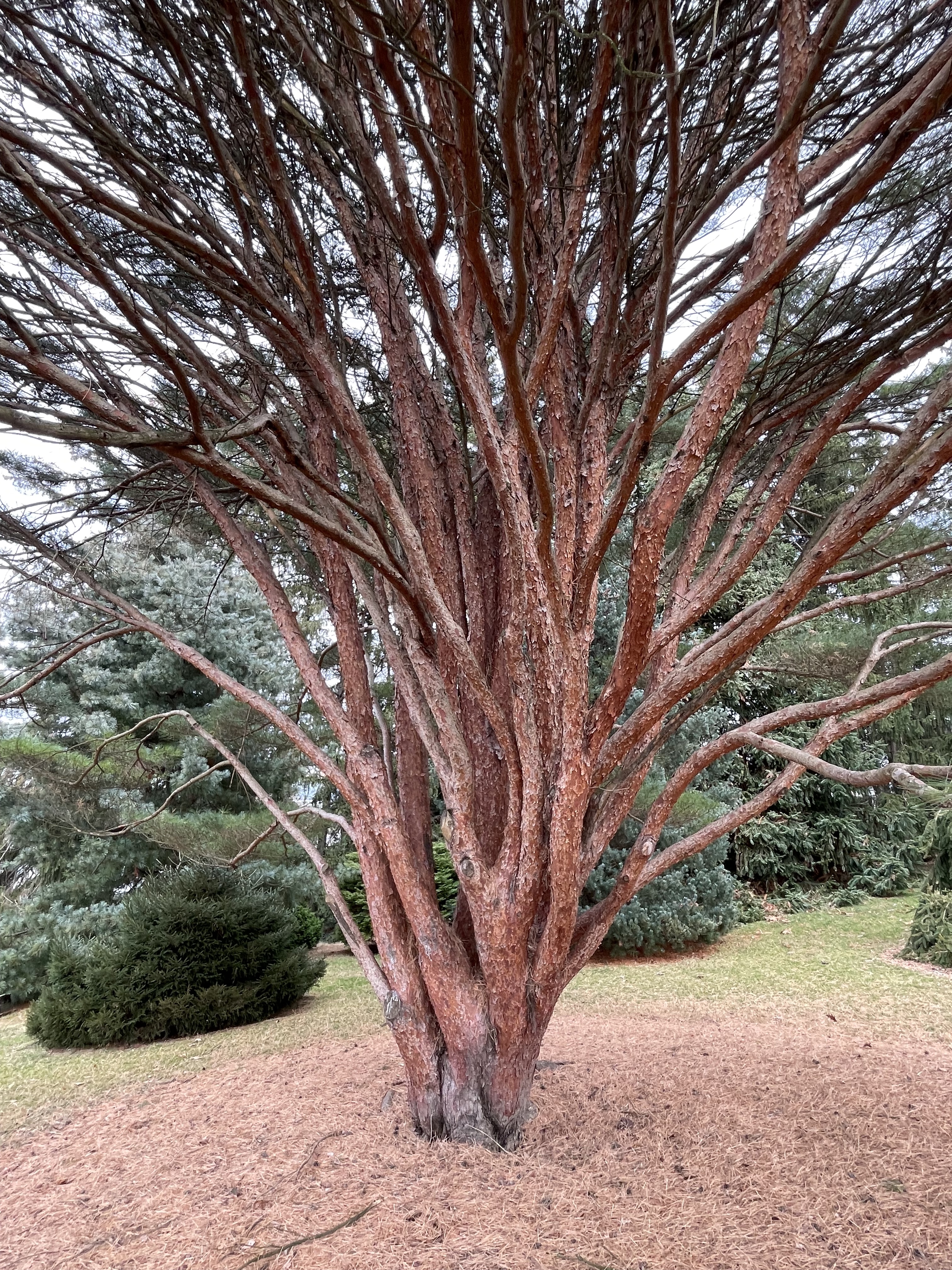
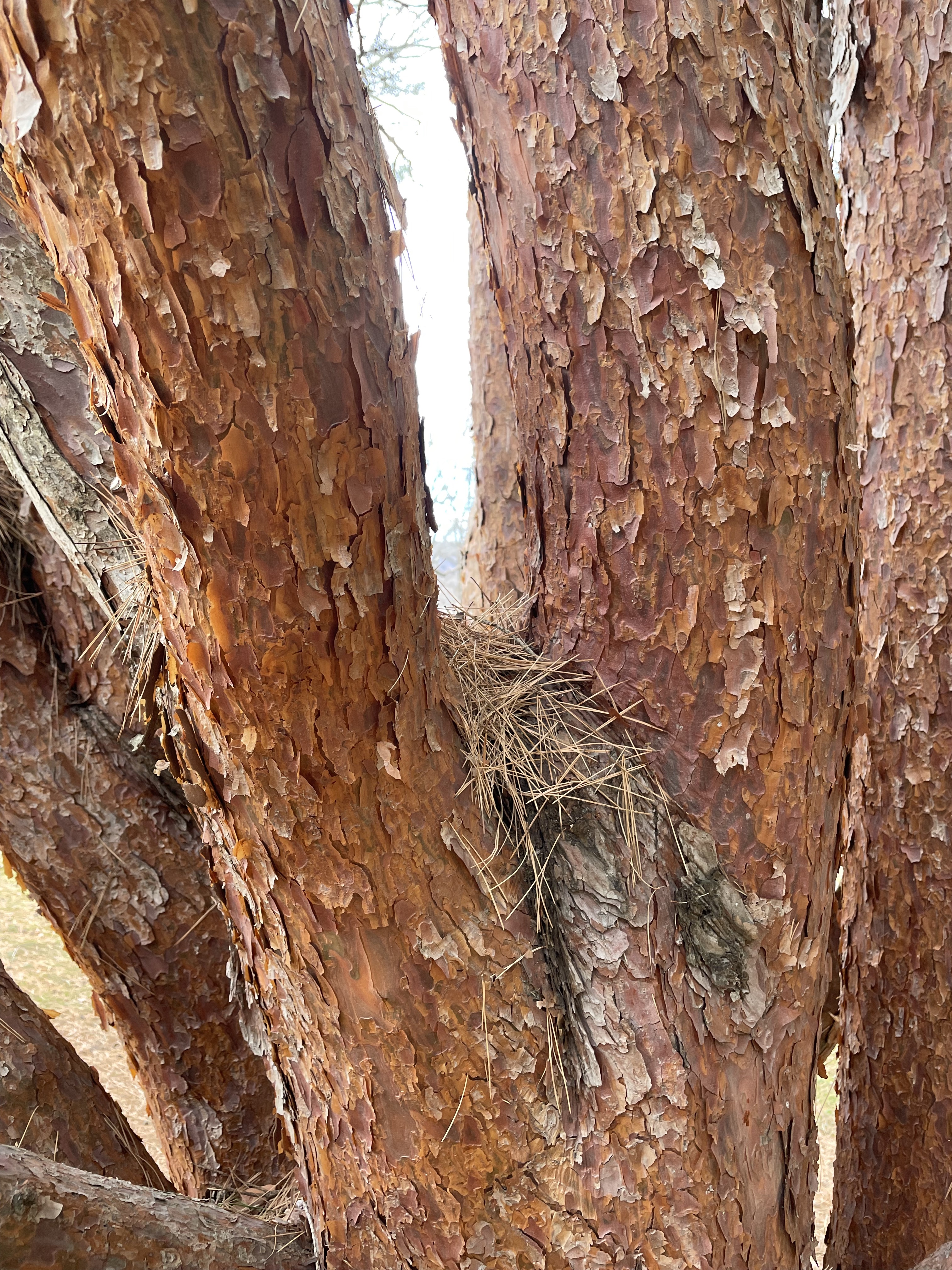
The crazy looking red of the Japanese red pine .

Go up close and see the delicately beautiful thatch of needles in its crook.

We pass a quiet place where spring bulbs slumber. I’ve seen this careful sign before.

Then, at the end of our walk, the copper beech. There are two here, actually. One is perfectly balanced, untouched by time.

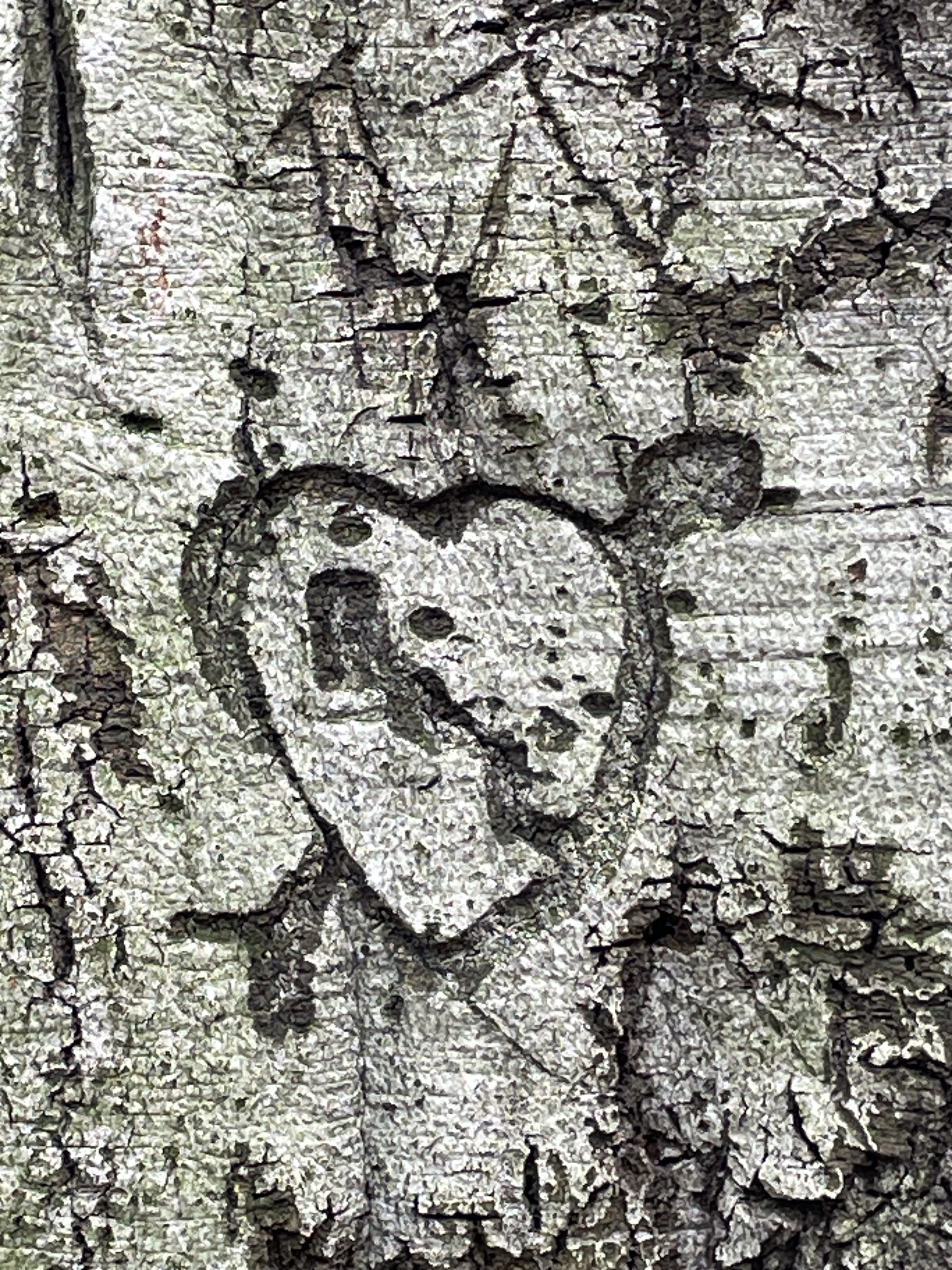
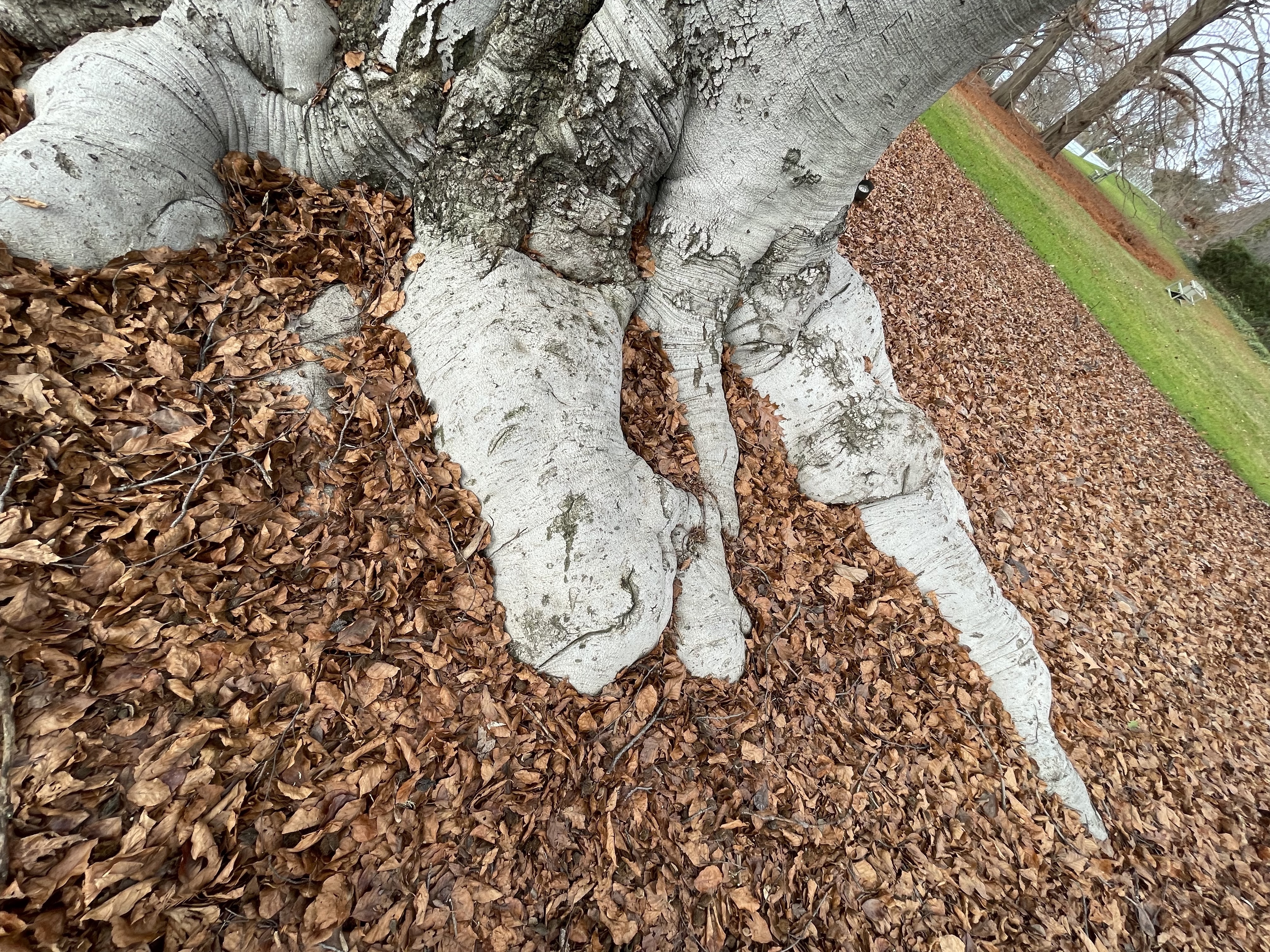
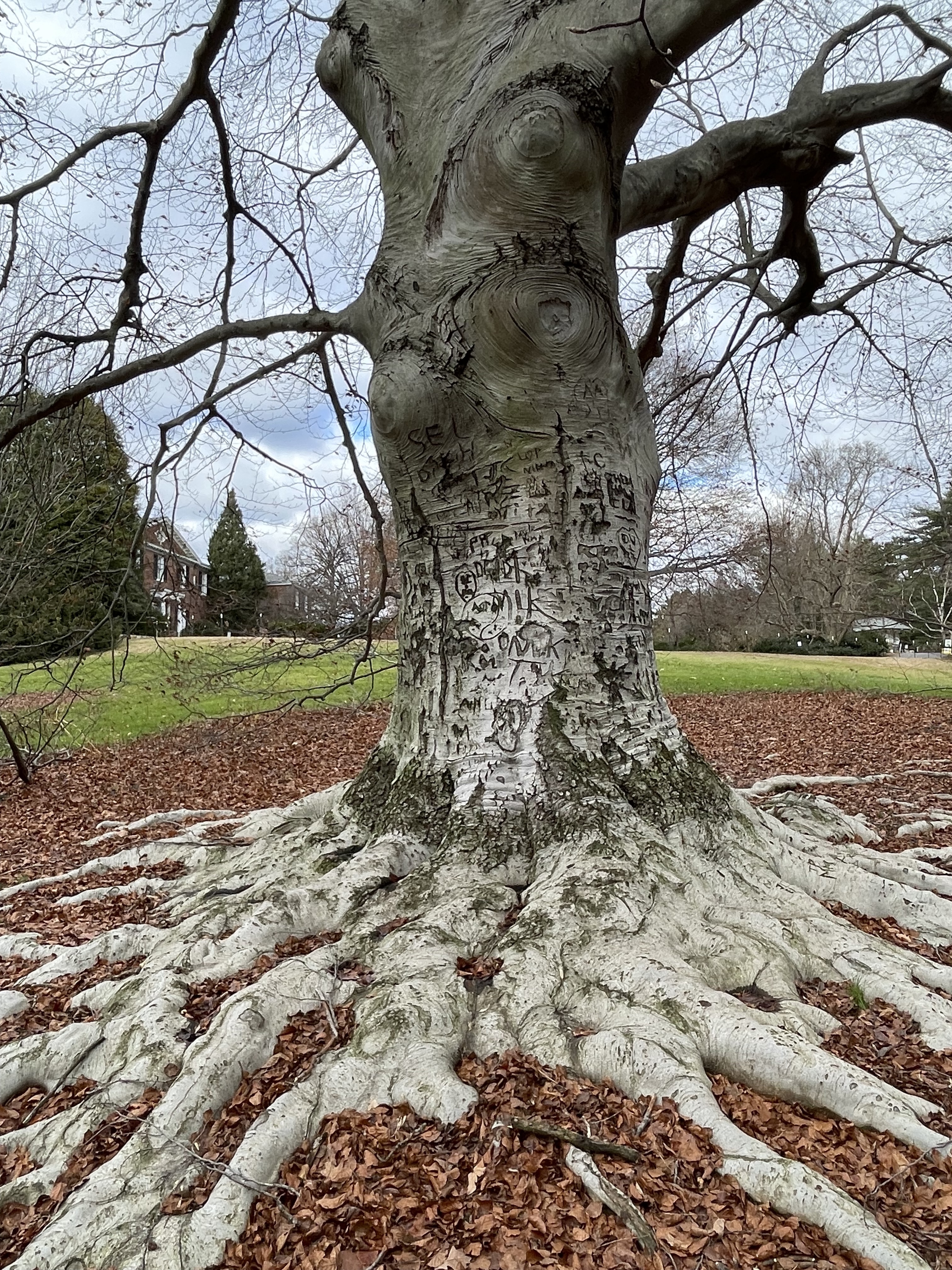
The other, though, down a slope, I like just as much. She has bark that has been scarified over the years by people engraving their initials and hearts.

In her book about the beech, Casting Deep Shade, poet C.D. Wright tells us that the druids grew wise eating the nuts of the species. This being a mast year, I find tons of beechnuts underfoot at Wave Hill.

Some tree folks don’t like these autobiographical messages on beech bark, opining that the practice of carving disrupts the tree’s vascular system. But look at the health of this tree, probably two hundred years old. I like the engraved graffiti, because to me it proves people’s strong, abiding connection with trees.

It seemed a mere toss-up whether she said, “I love you,” or whether she said, “I love the beech-trees,” or only “I love—I love,” wrote Virginia Woolf in Night and Day

Thoreau wrote, I frequently tramped eight or ten miles through the deepest snow to keep an appointment with a beech-tree, or a yellow birch, or an old acquaintance among the pines.

Love is like a tree, wrote Victor Hugo. It grows of its own accord, it puts down deep roots into our whole being. I like to think of some lost soul tramping miles through a forest, too shy to unburden himself to the person he cares for, and surreptitiously taking switchblade out of pocket to pronounce, indelibly, the sentiment I love—I love.

Herman Hesse wrote, When we have learned how to listen to trees, then the brevity and the quickness and the childlike hastiness of our thoughts achieve an incomparable joy.

We leave the estate.

Passing by more beauty as we go.

Wind up at a favorite deli only a few blocks away for some sustenance after our poetic excursion —somewhat less poetically, with one of the best sandwiches in New York City. This pastrami might be historic. Even beautiful, if you consider its taste in your mouth.

Almost historic, almost as beautiful as the landscapes of Wave Hill.

2 Comments

Filed under Jean Zimmerman

There are many great trees in New York City.

Yes, true. But what about the Great Trees of New York City? This is the brainchild of New York City Parks, which is reviving a project that was last completed in the 1985 with the goal of identifying the most iconic trees in all the five boroughs. Ordinary citizens nominate exceptional trees, as many as they want, as defined by their historic, botanical and cultural significance.

Having been fortunate enough to be appointed a judge for 2023’s Great Tree Search, I am excited to start off on some new adventures. My assigned beat is the Bronx, a great place whose eclectic neighborhoods stretch all the way from the swellegant precincts of Riverdale to the famously underserved South Bronx. It’s also a place I’ve spent considerable time as a consultant on tree preservation for NYC.

This time I go some places I’ve never been before, and discover a fantastic meshing of arboriculture and history. I enlist Gil as a driver, because it’s hard to drive in New York City traffic and spot trees at the same time, even gigantic trees. We have a spreadsheet to guide us that cites peoples’ nominations as well as some of their comments about why a particular specimen is worthy of the distinction.

The first entry on our list is quite civilized. A ginkgo on a small street abutting Webster Avenue.

Ginkgo biloba dates back 270 million years, and was thought to be extinct until it was rediscovered by a German scientist in late 1600s Japan. A group of Chinese Buddhist monks made it their mission to save and cultivate the species.

It is one of the few trees useful for food foraging in this urban jungle. Yes, the fruits are slimy, smelly. But each one holds a nut at its core (actually a seed) that is sold in Korea, Japan and China as a “silver apricot nut.” They are usually roasted prior to eating and used in desserts, soups and with meat. Each fall you’ll see many people in the City gathering this ample harvest. 

Will I really have to choose among these trees? I’m already asking myself – and I’ve only seen one so far! But let’s continue.

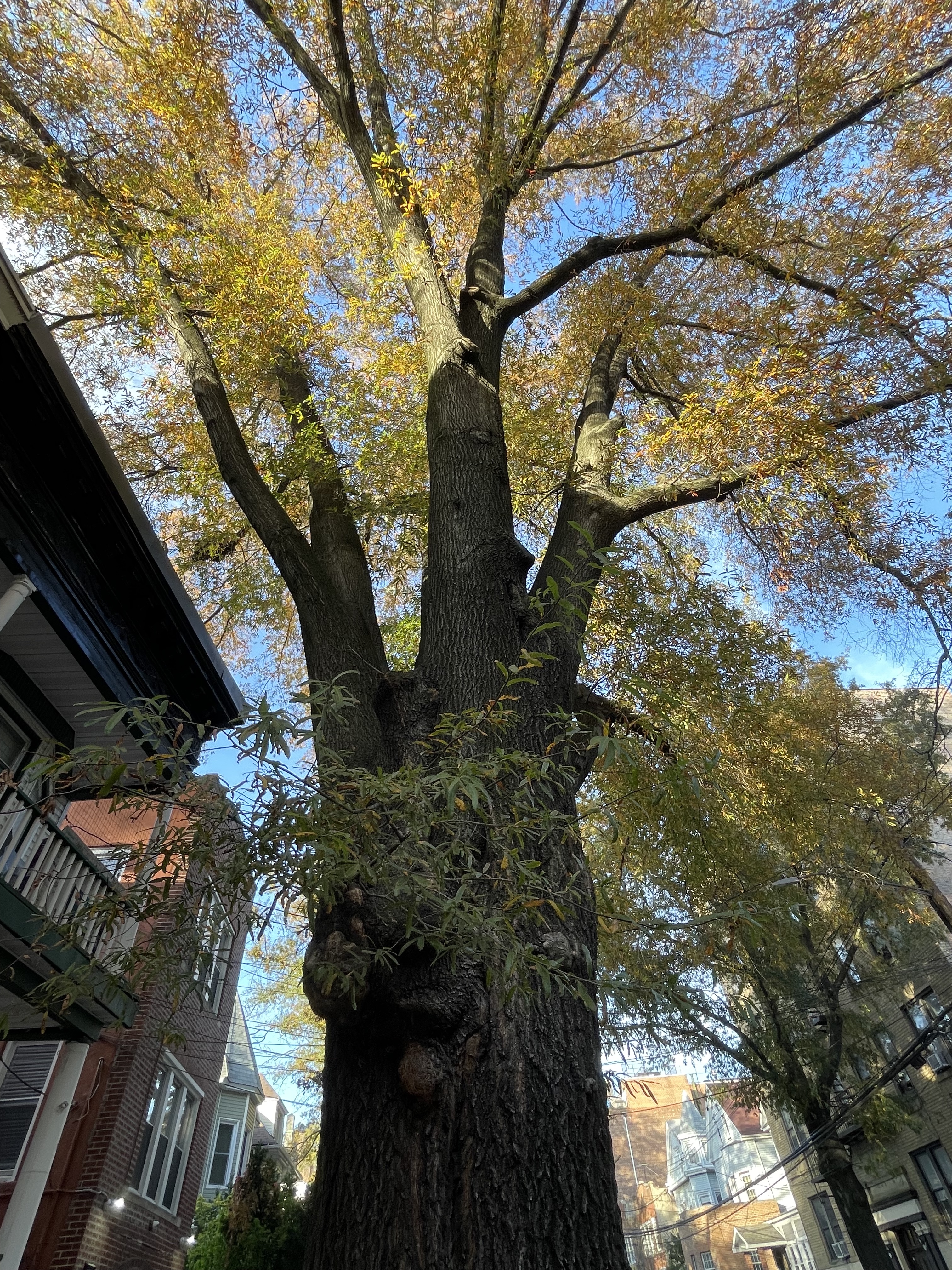
We prowl along to little Perry Avenue in the Bronx and discover a gargantuan willow oak.

What on earth is it doing in this quiet backwater?

Among other things, towering over the houses with health-giving shade, creating a beautiful fall carpet of leaves, and offering shelter for squirrels with a major nest. Oh yes, and uncomplainingly eating carbon and pouring out oxygen for us slackers to breathe.

We find another nominee on a peaceful little street, Thierot Avenue.

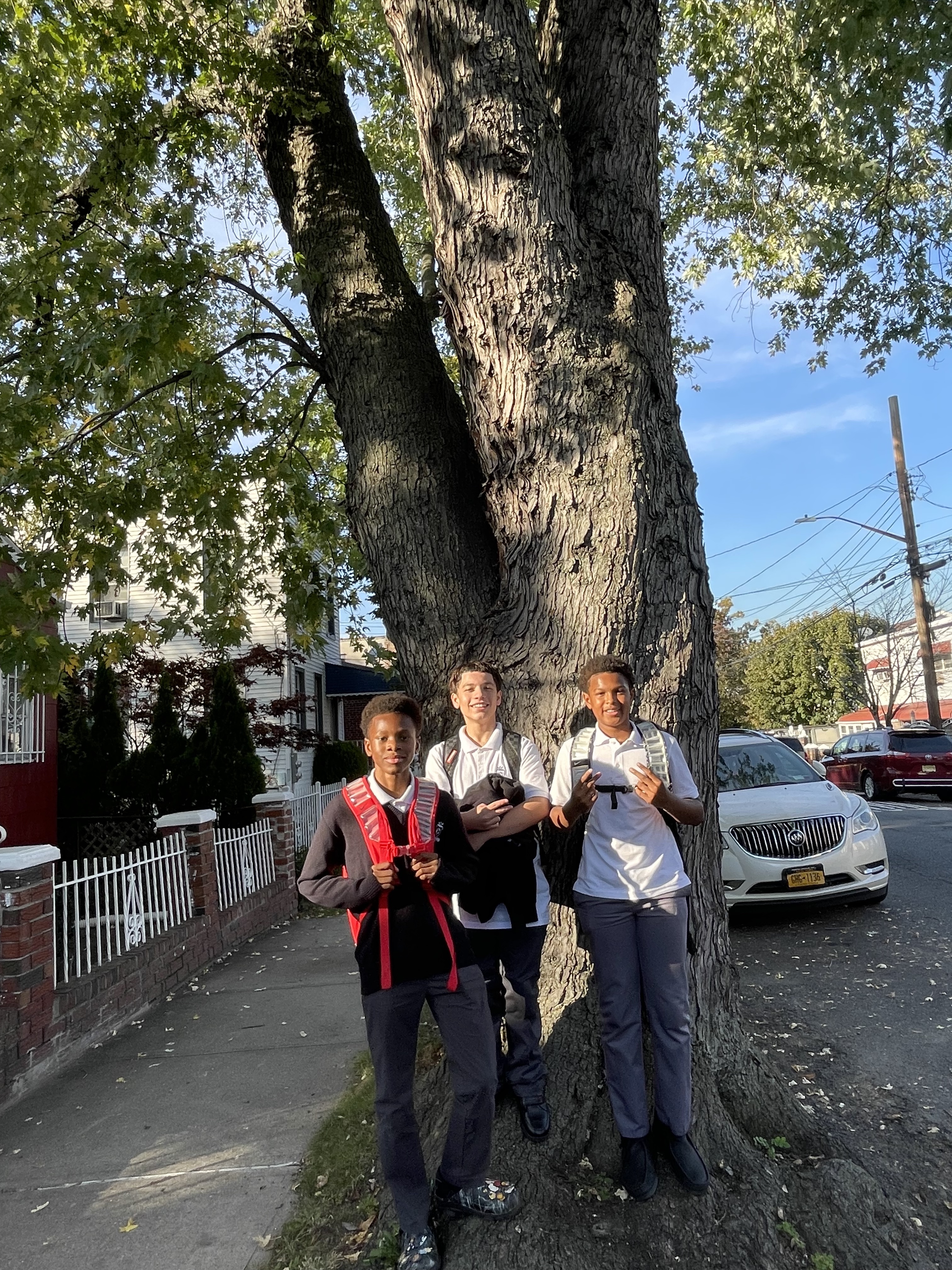
A silver maple. Now, these trees get a bad rap among urban foresters. They’re brittle, they rain down branches, yada yada. But look at this beauty. “It is the LARGEST TREE in the community,” reads the comment on the spreadsheet. “Could be a hundred years old.”

Huge (of course), three stems, fantastic shaggy bark, spreading her roots all over the place as is her right. And a perfect place for posing schoolkids. Who shout “Save the Trees!” over their shoulders as they scamper away.

We venture to Corona Park, home to several potential Great Trees, all of them amazing. First, a majestic American elm at the corner entrance.

A photo really cannot do her justice. You have to mosey underneath those sprawling branches, touch the bark. Gaze overhead at the sky through her crown.

Perhaps the most beautiful tree I’ve ever seen. (And I’ve seen a few, so maybe just the most beautiful of the day. So far.) Then, we go elsewhere in the same park in quest of two hefty ashes that grow across a path from each other, seemingly competing for the Venus of New York prize. One is a marvel, yes. “This majestic Green Ash with a trunk size of 54″ is a gem and sits in the center of the pathway along passive lawn areas and rolling hills.”

To locate the tree I ask some folks hanging out with their kids in the nearby playground. They do not speak English, so their seven year old translates as they gesture down the way: “Big tree down there, take a turn to the right and you can’t miss it!” An understatement.

Even more impressive, the ash nearby. “Thickest tree in the Bronx, probably NYC too.”

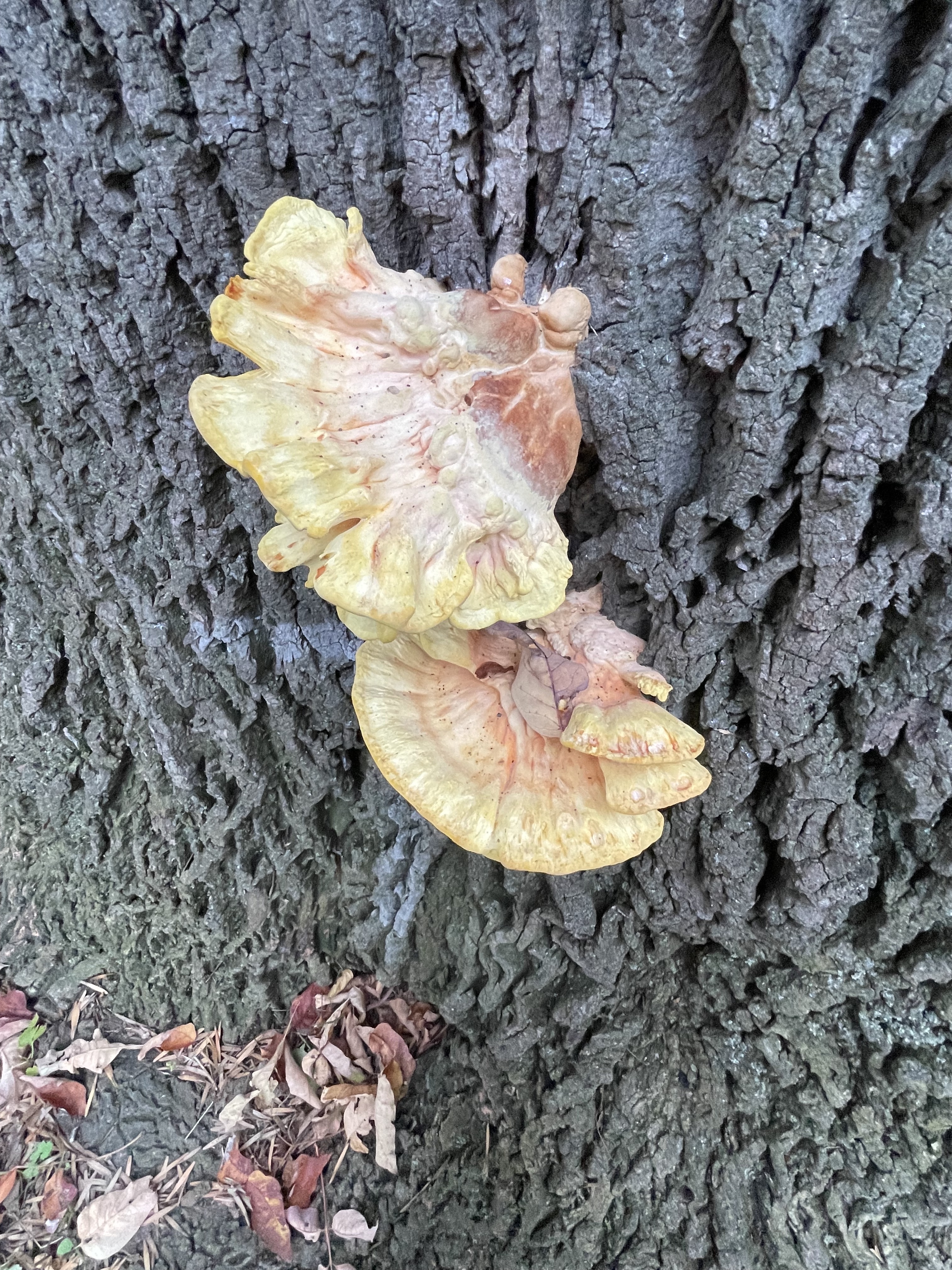
Don’t you mind the fruiting bodies at the base, this one is clearly a survivor.

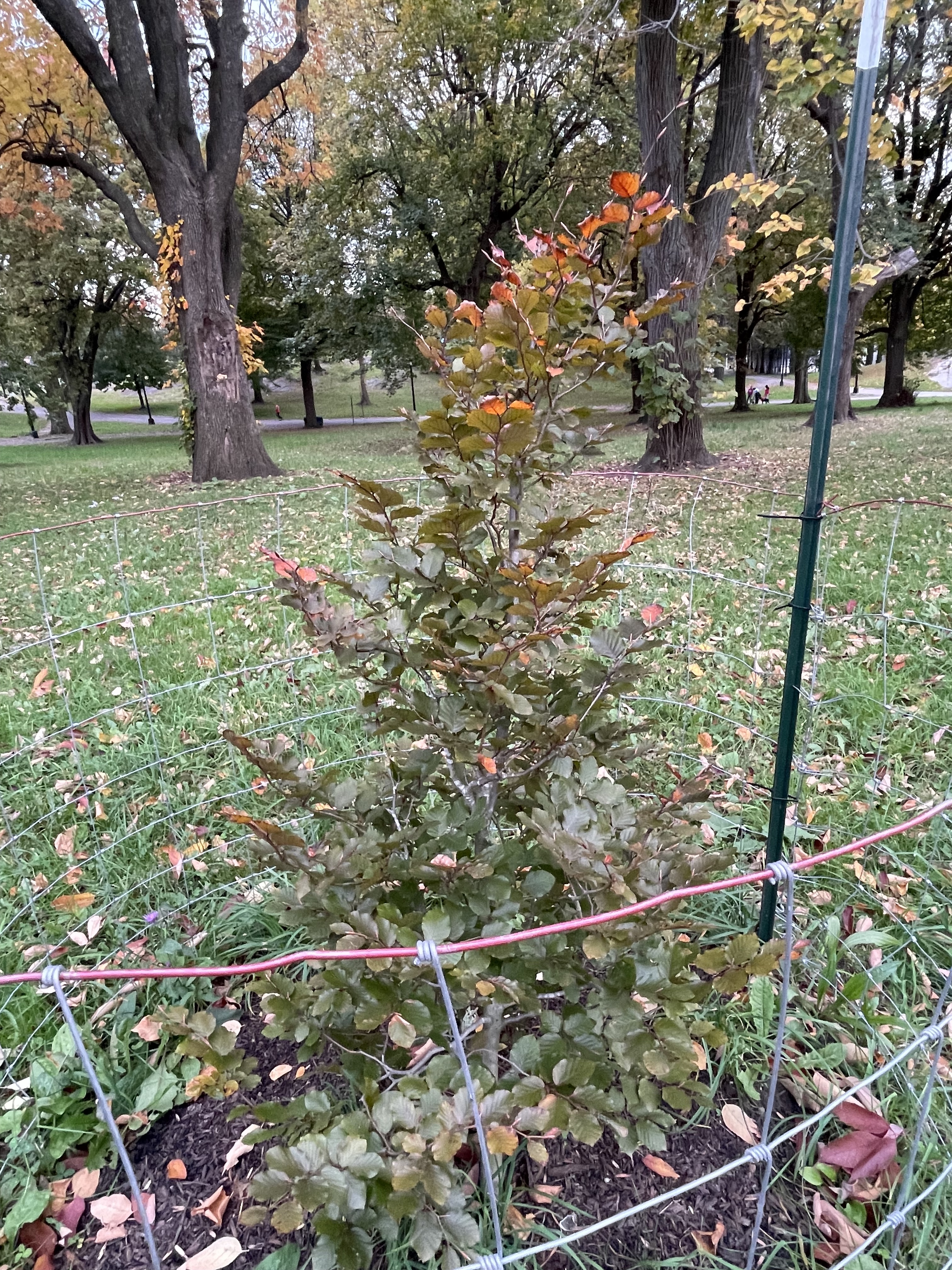
Wandering out of the park at as the dusk grows all around us I notice a planting that will ensure the health of this urban forest for the future, a baby beech.

Since we’re making these adventures at the end of the workday, we’re lucky enough to visit all these sites at the magic hour, just as the sun is getting ready to set. So we arrive at a spot we’ve heard about but never spent a lot of time, Pelham Bay Park.

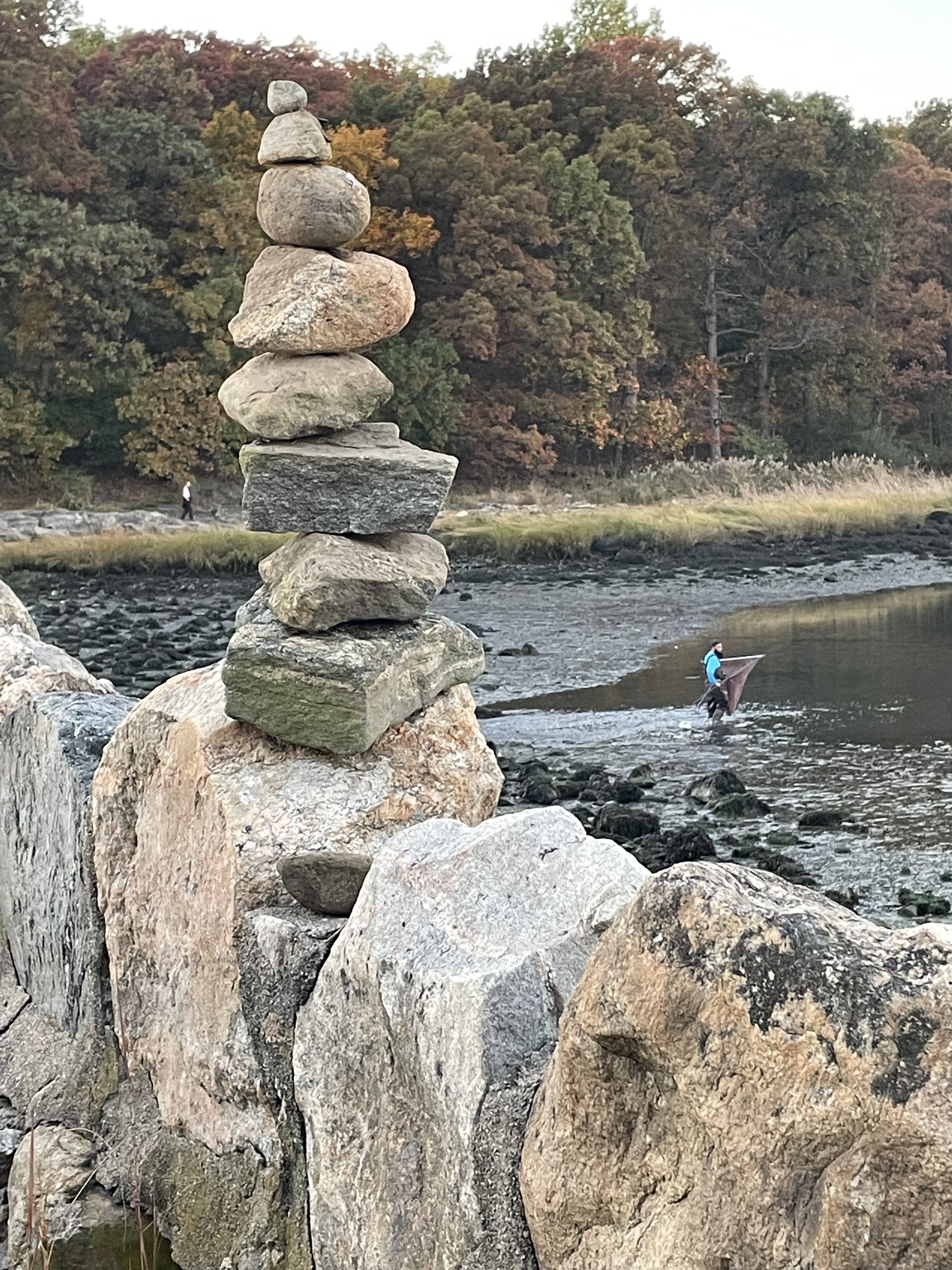
We take our nightfall hike on a trail around Hunter Island, 166 acres of wilderness in the heart of the Bronx, right on the Long Island Sound. The person who nominated a post oak here wrote a lengthy treatise on the specimen’s history, saying, in part: “This grove of post oaks dates back to the 1760s. Post Oak is native but rare in NYC. This beautiful specimen is growing right out of bedrock that includes gneiss with stunning seams of quartz, and is right on the Sound. This tree projects the grit and resilience for which the city is renowned.”

Of course, that more than whets my appetite to find this spectacular tree. But it’s not easy. Entering the park, we find massive white oaks and scarlet oaks. This is a mast year, and all around the ground is carpeted with acorns that crunch underfoot.

A trail takes us through groves of sweet birch.

We see almost no one.

I wade ankle deep across a mossy inlet, into the darkening woods under a rising full moon.

It gets dimmer, dimmer.

Wither the post oak? It’s a member of the white oak family, and all the trees in these woods have interbred for so long that I think any of them could be the oak in question. Though I cannot find the exact leaf, with its lobes that remind some of a Maltese cross, there are plenty of similar leaves.

We’ll have to come back again, perhaps by the light of day.

On another afternoon, back in the city proper, we locate a venerable black tupelo.

“At the edge of the forested land on Mosholu Parkway North, facing the apartment buildings.” Sounds mysterious, and I’m afraid we will not find it, especially as the gloaming comes onWe cadge a parking space and I walk directly to the tree as by a homing device.

I think of a couple of lines by poet Jane Hirshfield: “I would like not minding, whatever travels my heart. To follow it all the way into leaf-form, bark-furl, root-touch, and then keep walking, unimaginably further.”

We discover a cottonwood just off Van Cortland Park South in an old schoolyard. It towers over the neighborhood. Once, apparently, during the Revolutionary War, this tree was used for hanging traitors.”

I check the spreadsheet. “Cottonwood trees typically grow in riparian areas, which at first seems odd, given its current location, but makes sense once you realize that the Tibbets Brook runs underneath.” I’ve heard that Tibbetts Brook is soon to be daylighted, and I wonder what will happen to the cottonwood when that happens. Will they retain it and will it continue to provide shade and beauty of local residents?

Moshulu Parkway and Gun Hill Road are sites for some other old-old trees that also date back to the Revolution. We visit “the oldest sassafras tree in the Bronx, an amazing holdover from when the land was converted from farm to parkland.”

It is said to be larger than the state champion in Green-Wood Cemetery. And that’s saying something. “However, its true age will never be known because it is mostly hollow.”

No matter, it is magnificent. Nearby, a white oak stands tall above a wall on Gun Hill Road.

Beneath the tree’s enormous canopy runs the Old Aqueduct Trail, another landmark, an engineering marvel from from the time when clean water was piped in from the Croton Reservoir in northern Westchester County. “Assuming was planted along Gun Hill as historical marker.” Makes total sense.
All Gil can say for hours afterward is: That white oak. That white oak was amazing. The wonders of this city’s urban forest are manifold. I’m starting to dream about Bronx trees. We’ve been going out to find them every day.

Now we venture to Ewen Park. I’ve never heard of the place, but I know there is a nominated cherry tree here “south of the dog run.” Tramping all over and unable to find it, we see some of the substantial rock formations that never got blasted away when much of New York City was originally leveled for development.

We ask a dog walker to direct us.

Poseidon, a proud Cane Corso, would not be caught dead in a dog run. But Poseidon’s helpful person directs us down the hill and up the “unmarked trail” to the spot. She has me at “unmarked trail,” my favorite kind of path. We locate the huge old cherry.

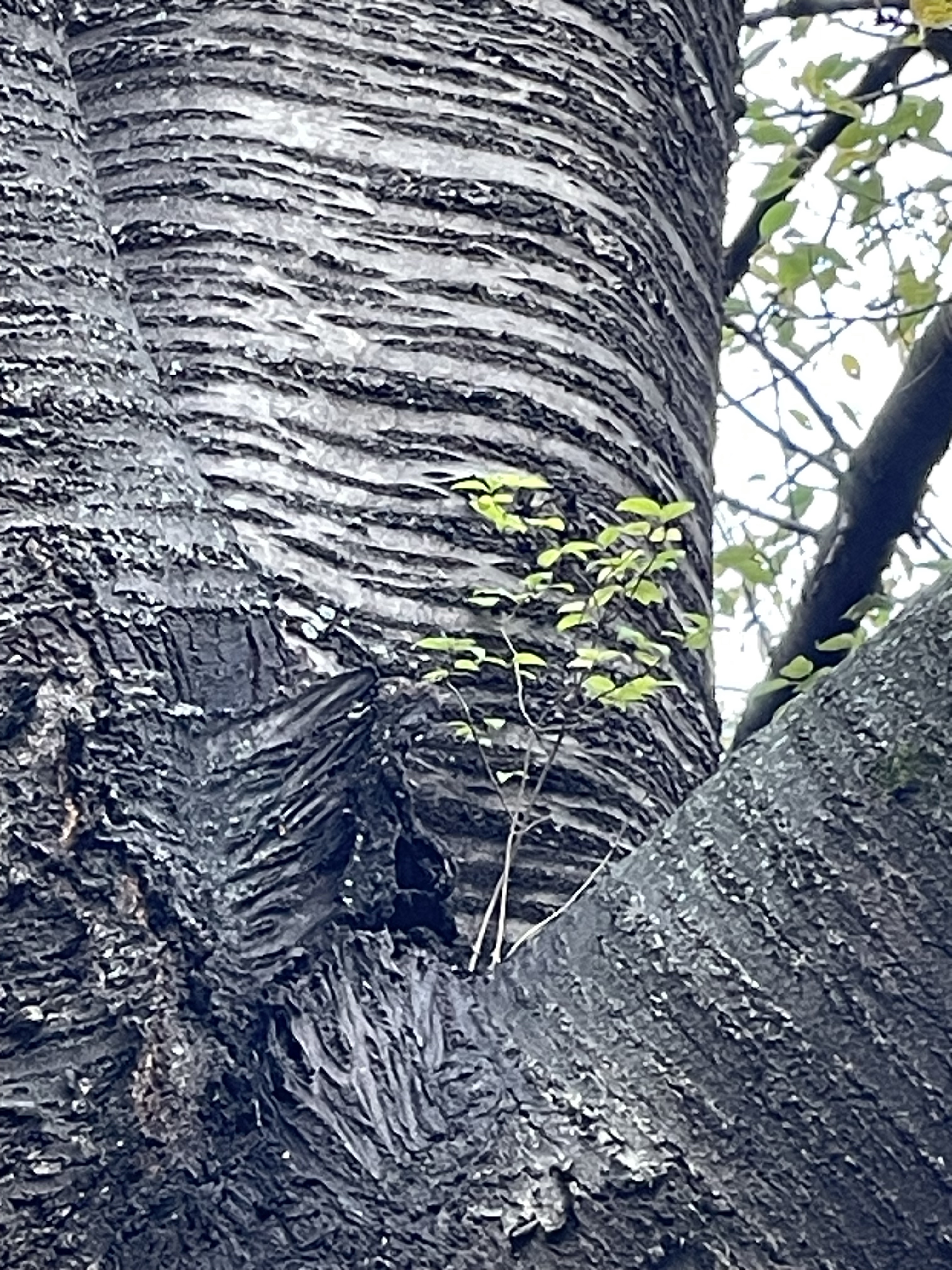
“This is one of the biggest, oldest trees in the park,” reads the nomination. “It provides habitat and food for our migratory and resident birds.” Its once-delicate lenticels have gone crusty with age.
It nestles a young’un in its crook.

On the way out of the park, I find a microforest of sweetgums. What’s not to love about a sweetgum? 

Their prickly seedballs are a marvel of the season.

Two conjoined trunks seemed to be pouring their hearts out.

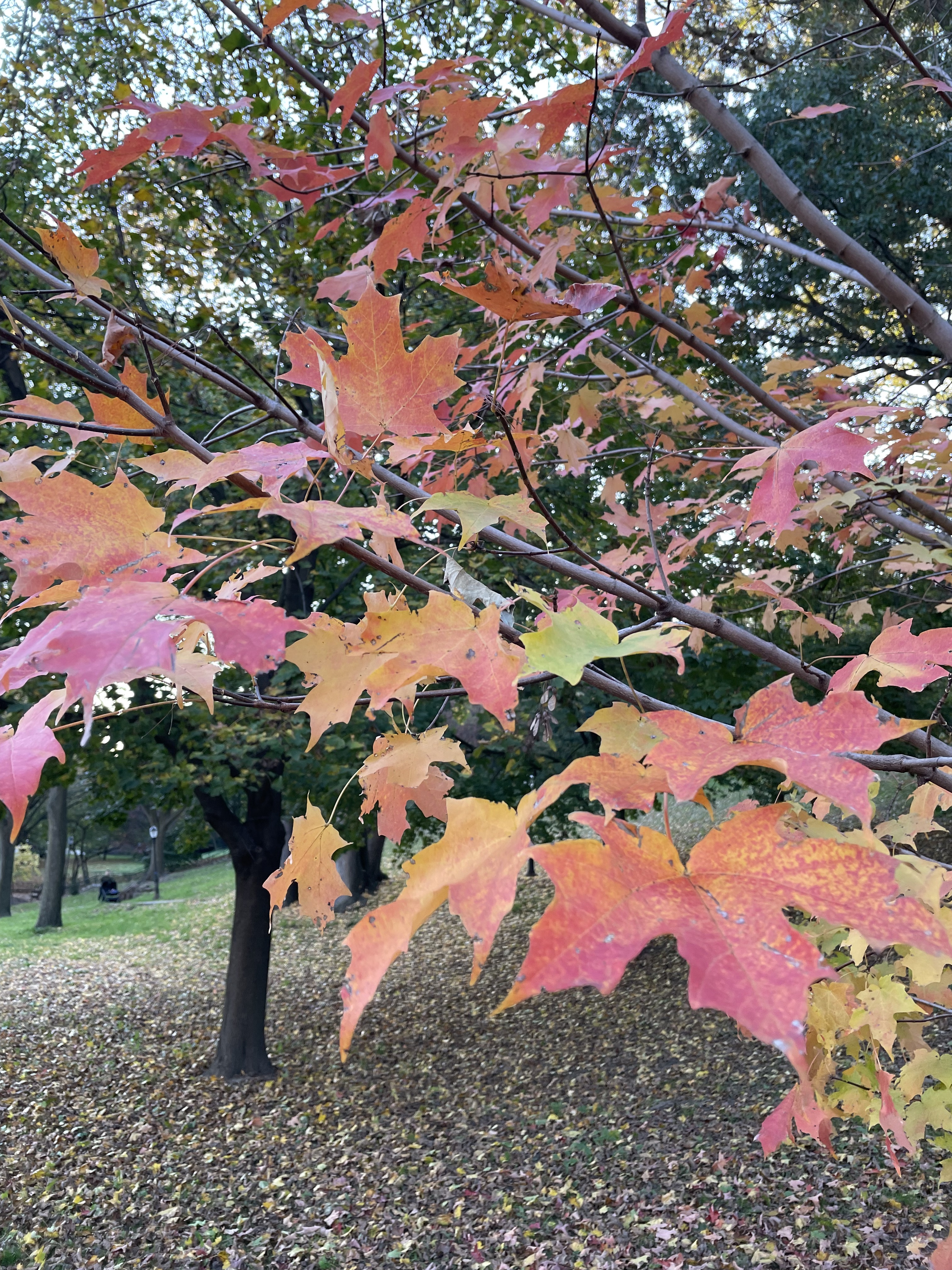
I admire a small maple, sporting the usual colorful frou frou of the season. Watch me turn colors! I’m a maple! Sure, m’am, but you clearly haven’t met the other contenders, the sassafras or the black tupelo.

Everywhere I go I stumble upon fantastic trees that were not nominated as Great Trees. Yes, the pin oak in Crotona is spectacular. The zelkovas on Webster, definitely worth noting officially. But what about this particular sweetgum?

Ewen Park, which I’d never before heard of, dates back to when Frederick Van Cortland owned the land. It has a long stone staircase that serves as a conduit between the neighborhoods of Kingsbridge and Riverdale. At the base of the steps I find a marker that establishes the place’s bona fides. It states the number of stairs. In Latin.

History is everywhere. You can read the past  in the trunks and branches, leaves and fruits of the trees in the Bronx. Some of them Great Trees. But also, trees that might not necessarily be identified as such. Not necessarily winners, but trees that are nonetheless special.

And that is pretty great.

3 Comments

Filed under Jean Zimmerman

Why fry by the ocean when you can scorch on the NYC sidewalks?

I hadn’t been to Manhattan in quite some time. Returning, I see all its contrasts as poetry.

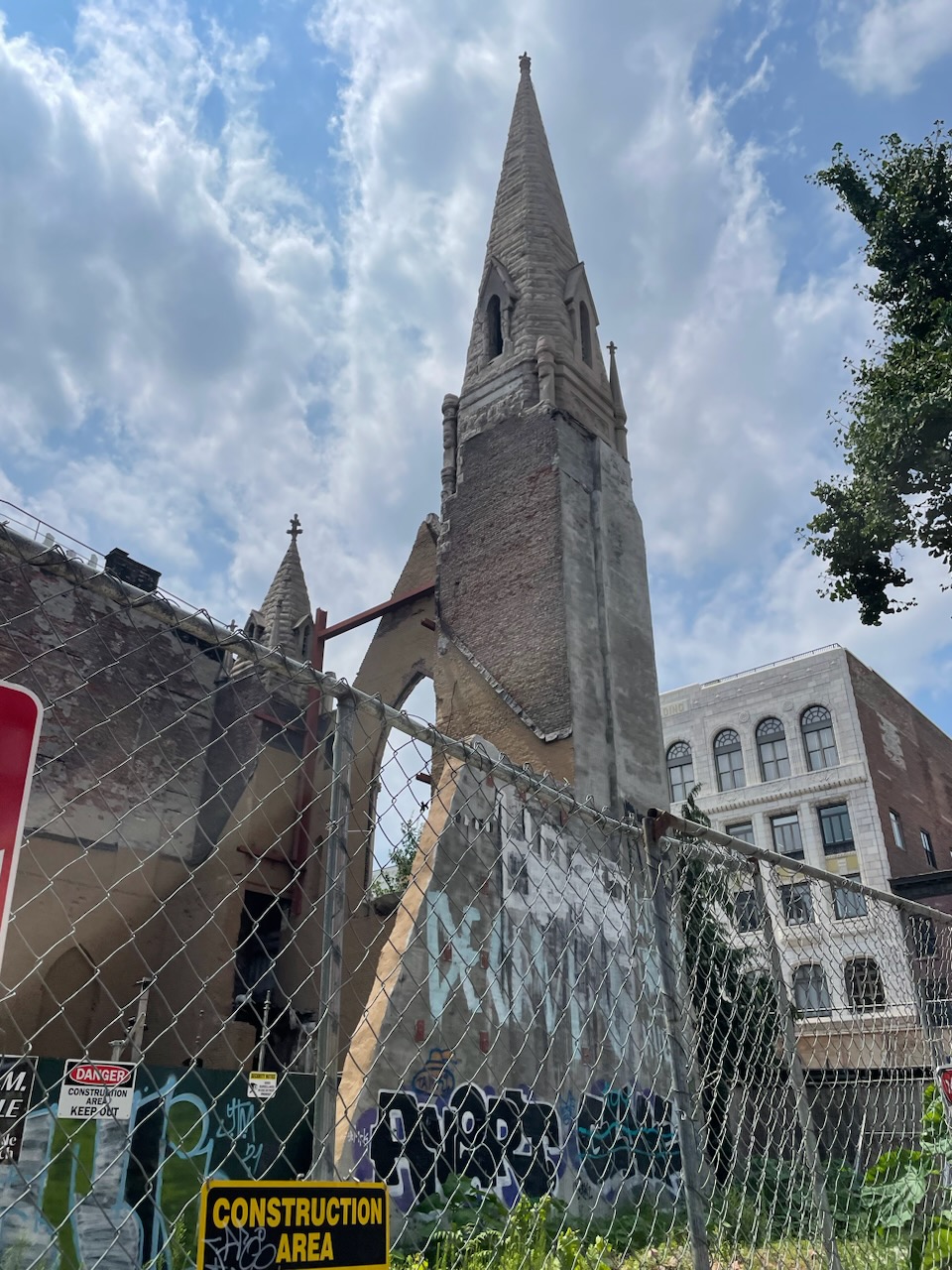
The old side by side with the new. Burned out church, new construction.

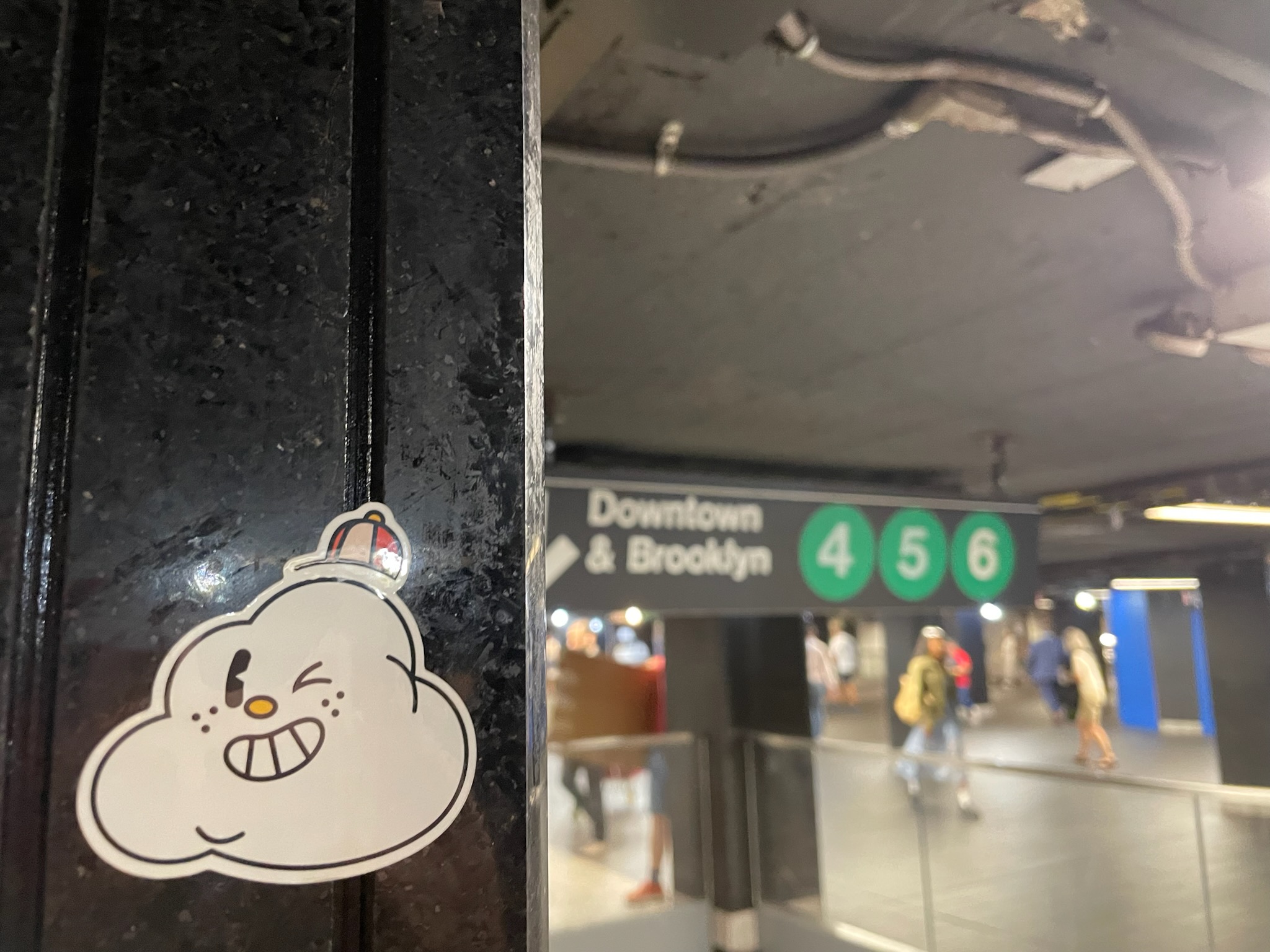
Antiquated evidence of New York’s beaver-rich past in the Astor Place subway stop.

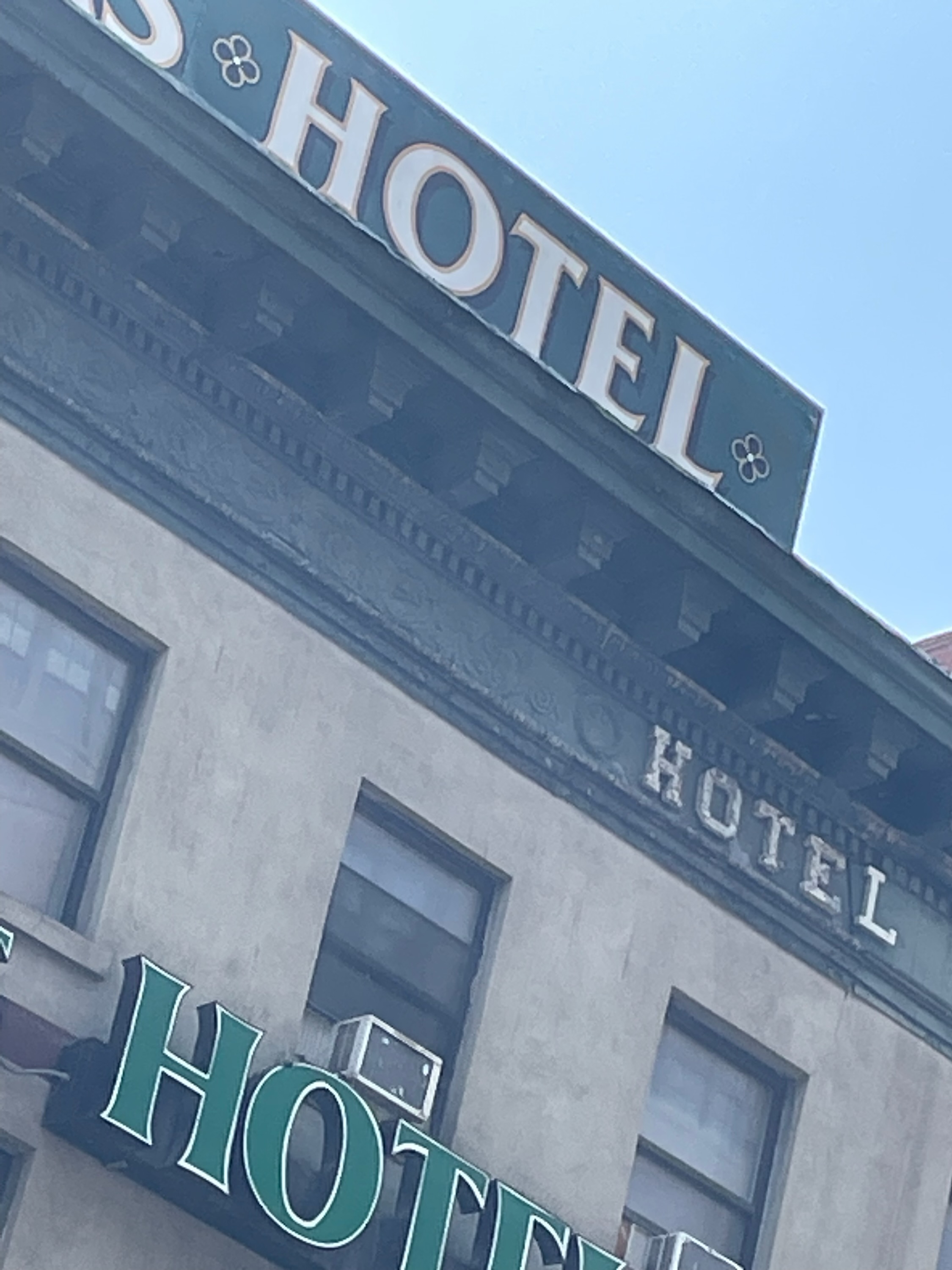
A million year old hotel, updated several times.

The struggles of nature.

Pity the poor oak that hits its head against the shed scaffolding for years.

Or the struggling ginkgo.

Still, its rugged New York bark survives, as tough as any New Yorker.

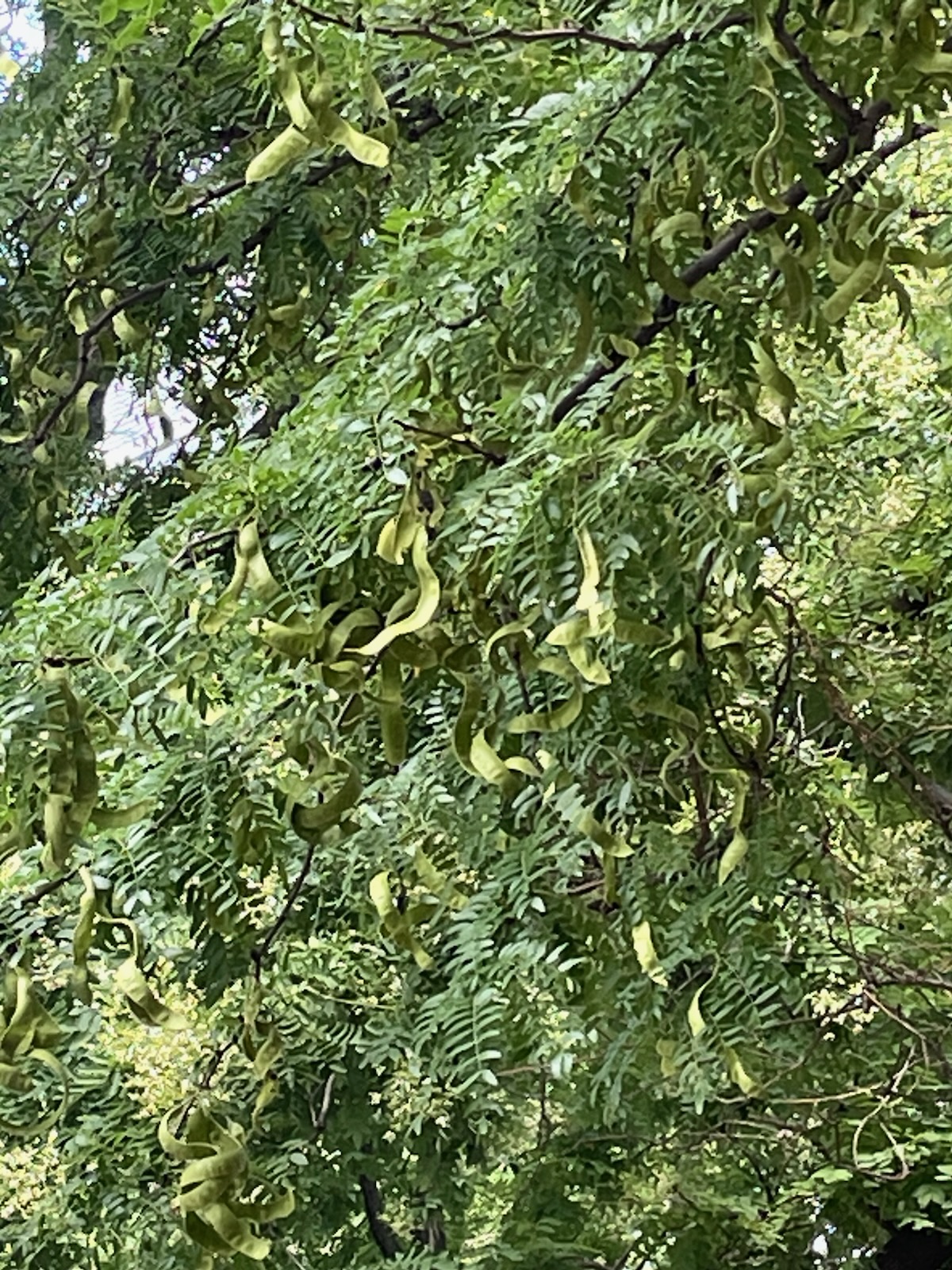
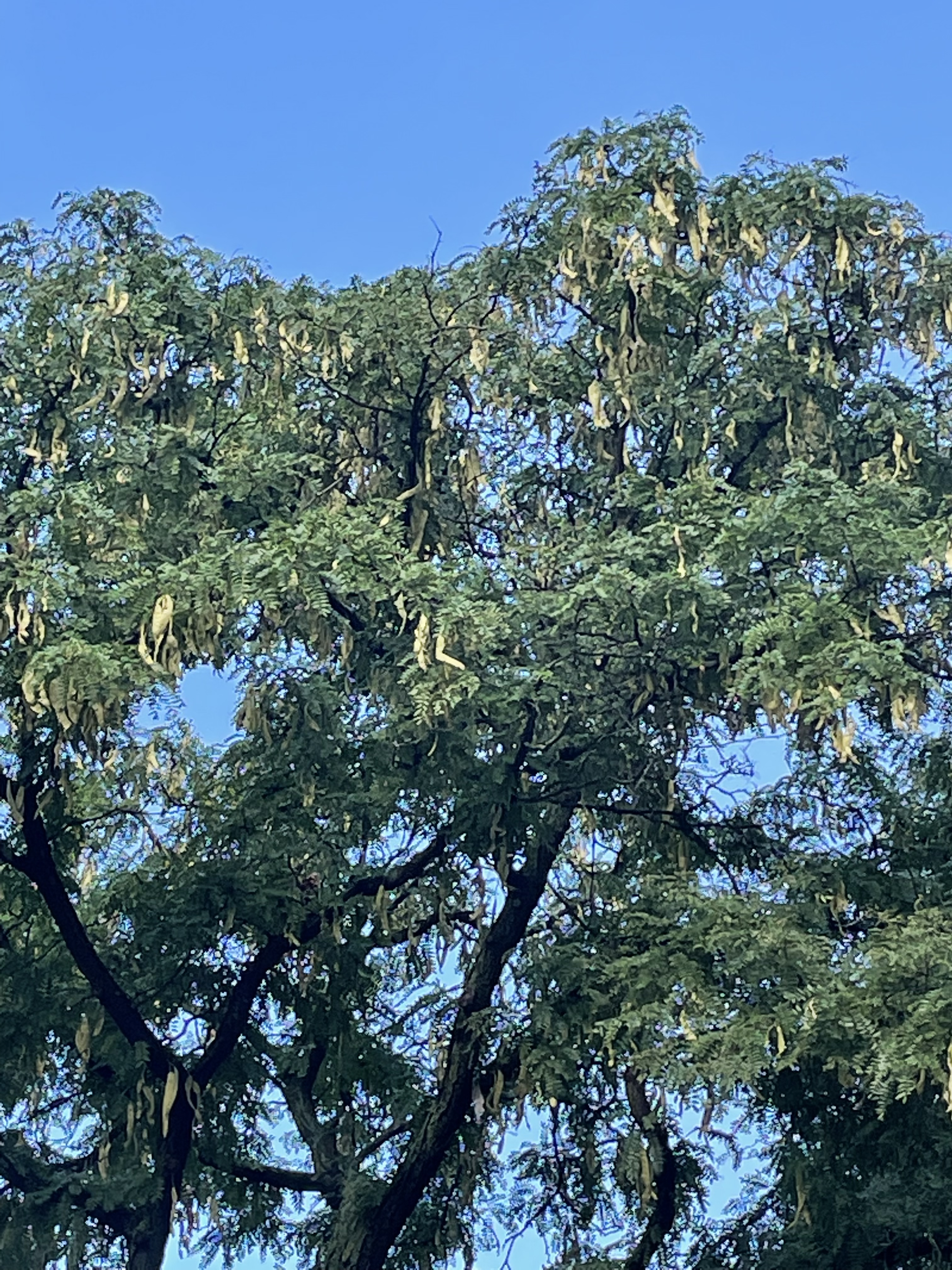
You wouldn’t think it, but in addition to the dead and the wrecked and the unpruned, some trees flourish. As we walk, we look up to see the honey locust offering up its elegant chartreuse pods right on schedule.

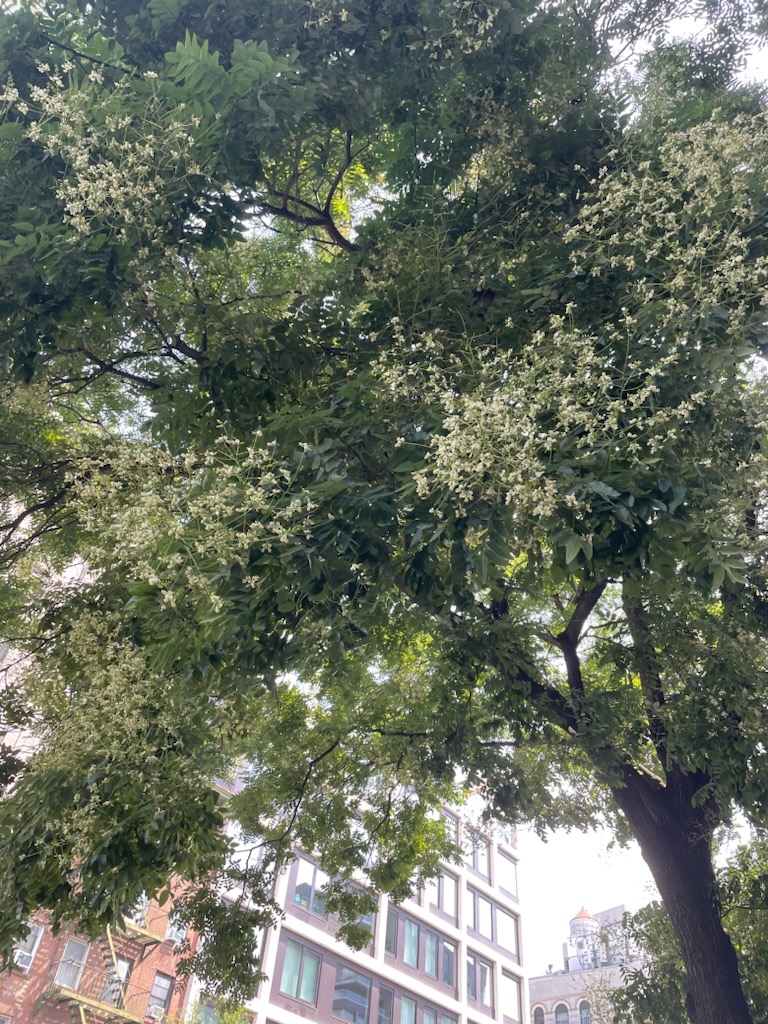
Pagoda tree lets down its perfect profuse blossoms.

A Chinese elm appears to be strutting its stuff with that glorious bark.

Yes, we know you’re beautiful.

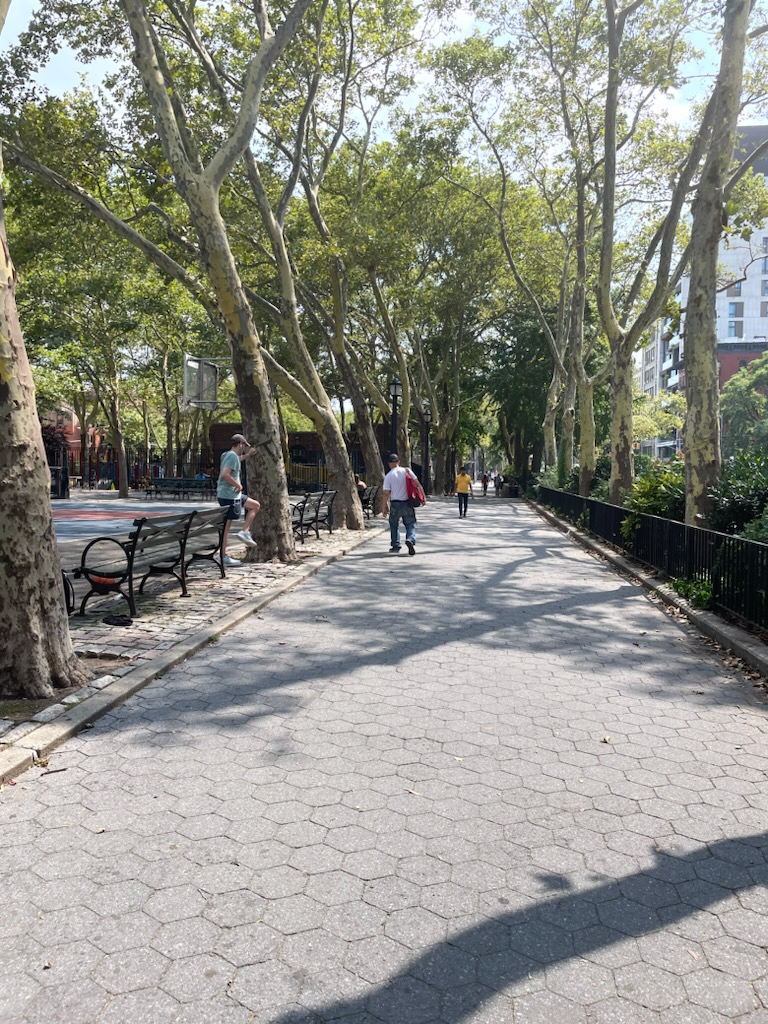
There’s even an allee of London planes by a Christie Street playground. Take that, Central Park!

Don’t say that New Yorkers aren’t fond of nature. If it’s possible to buy it, they like it.

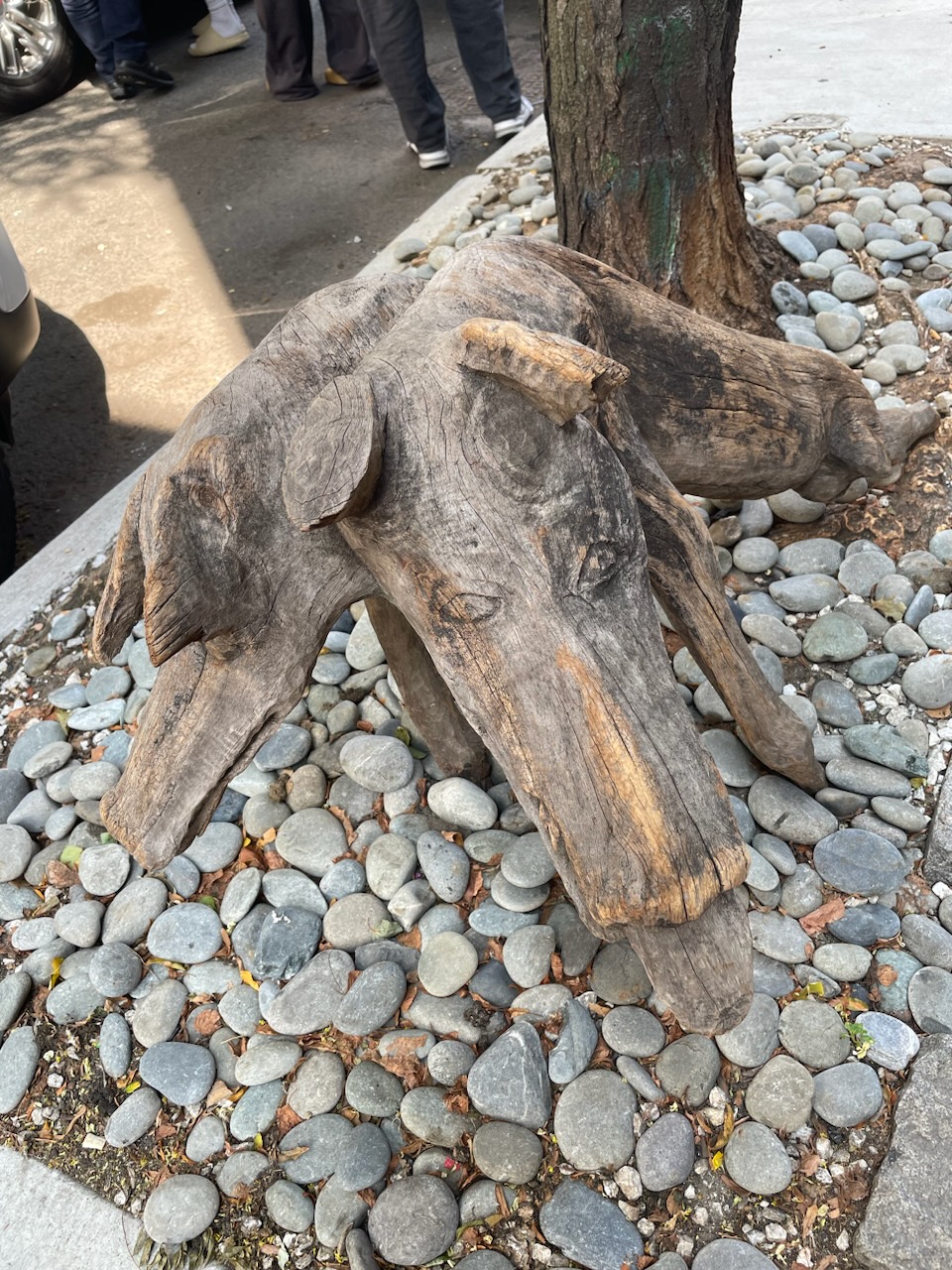
Nature is everywhere in Manhattan if you’re looking for it. Never know when you might trip over a critter of carved driftwood.

Or an ancient stone lion guarding a tenement stoop.

The East Village does change, but somehow remains as gritty and vibrant as ever. An old signpost at Astor Place.

Highlighting old haunts: Remember that crazy place CBGB? Most in the East Village do.

St. Marks Place is a good location to get fitted out with a new wig, as it always has been.

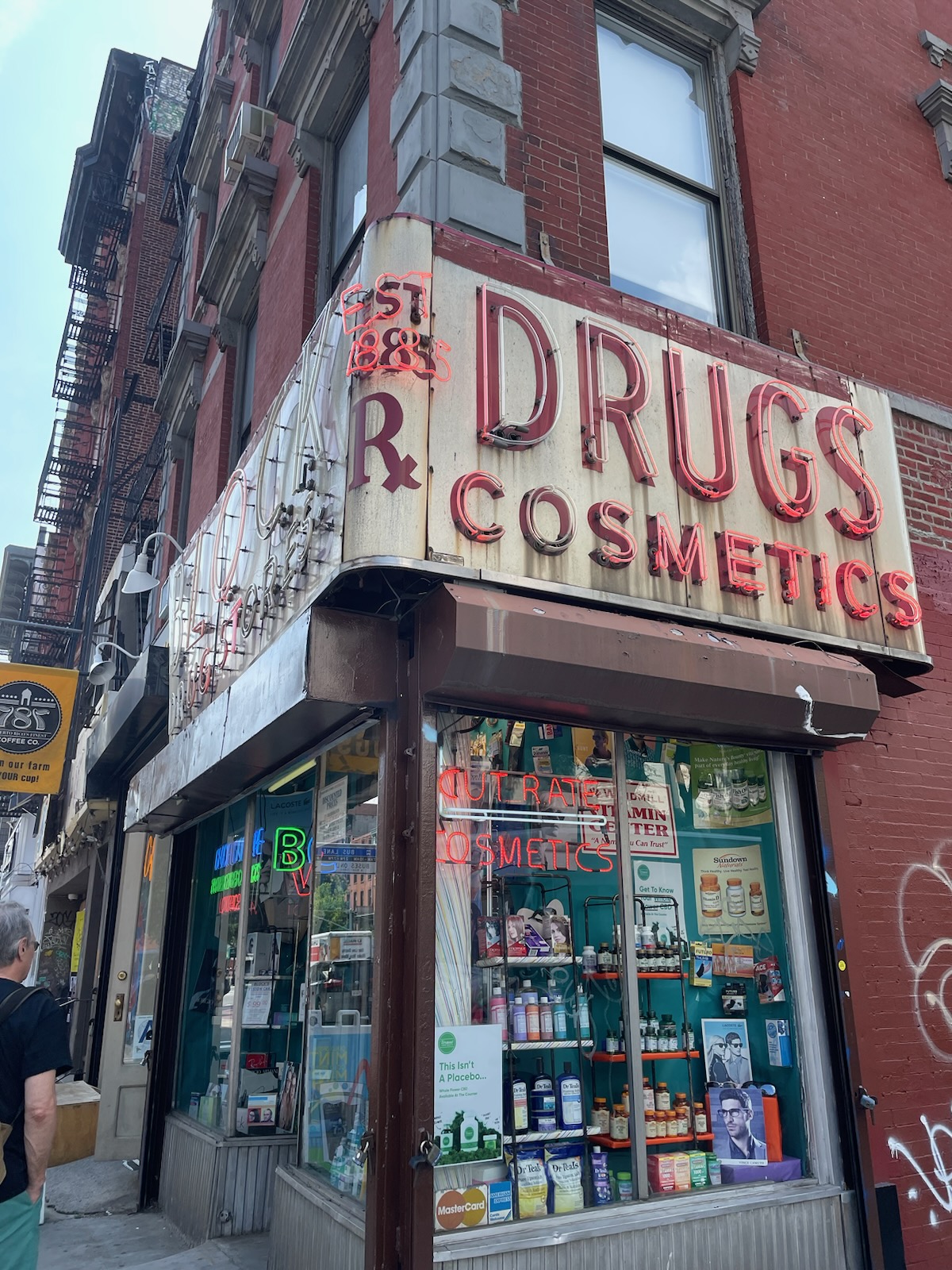
Art thrives alongside commerce. Historic drug store.

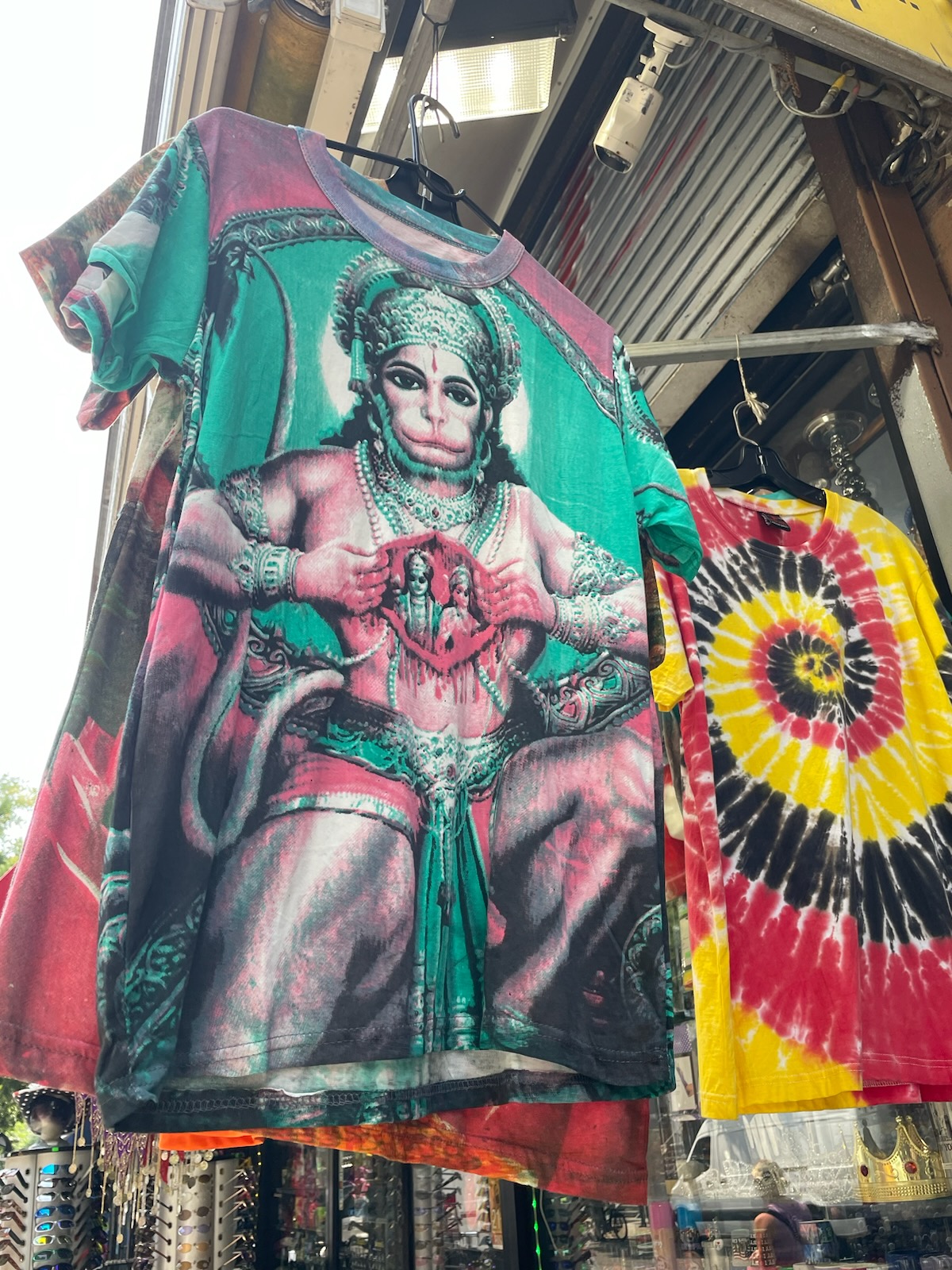
Magic garb.

Throwback clothing.

We don’t go in though the window display beckons.

Signage, in New York ever brilliant. Jerk, stewed, vegan. Something for everyone.

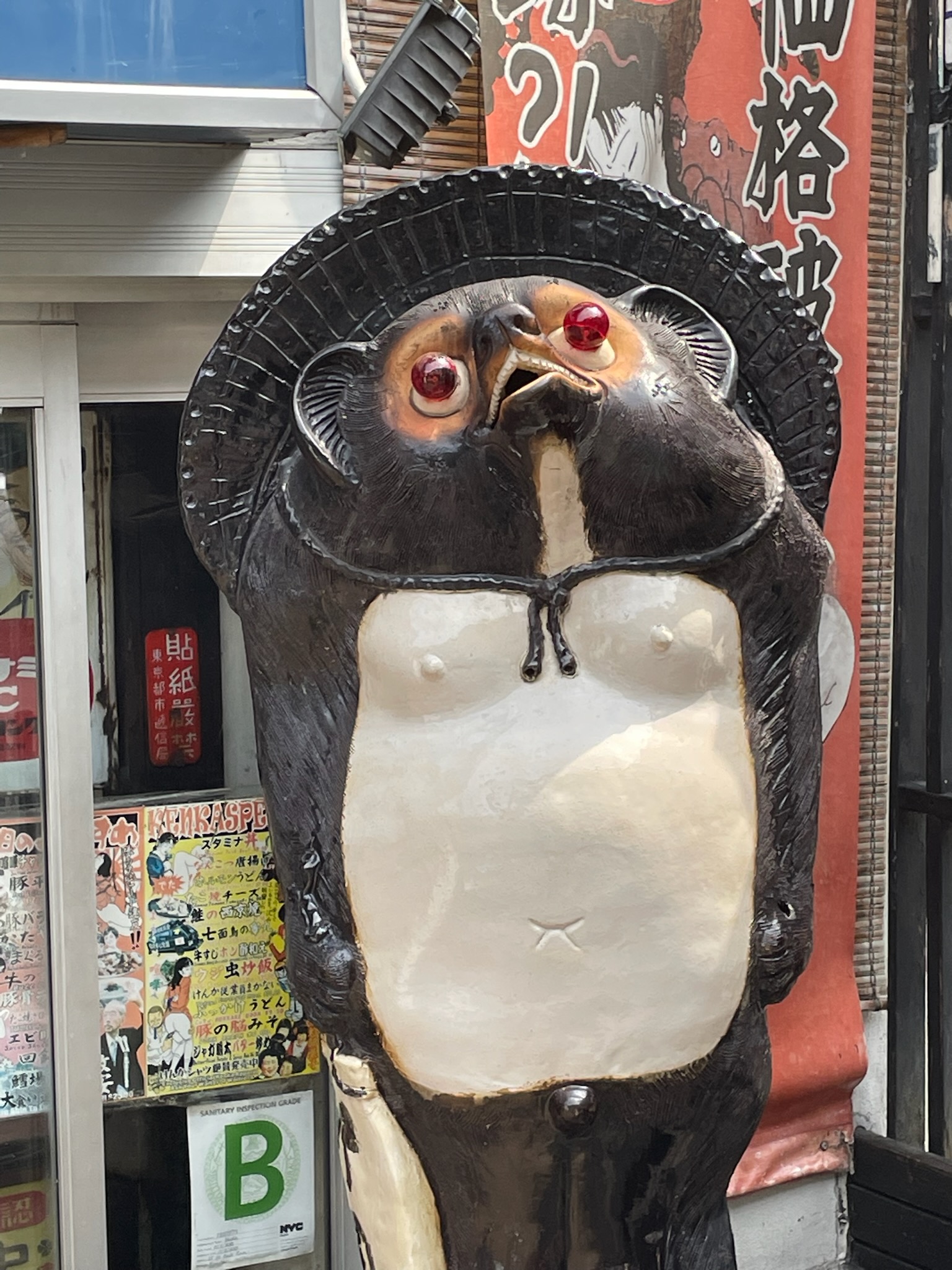
A sign for something or other.

Or something else.
A place to go rogue. Aren’t you glad there is one? People move here from their tiny towns to be just that.

Butter above.

Encouragement below.

Further encouragement.

Also admonitions.

And observations.

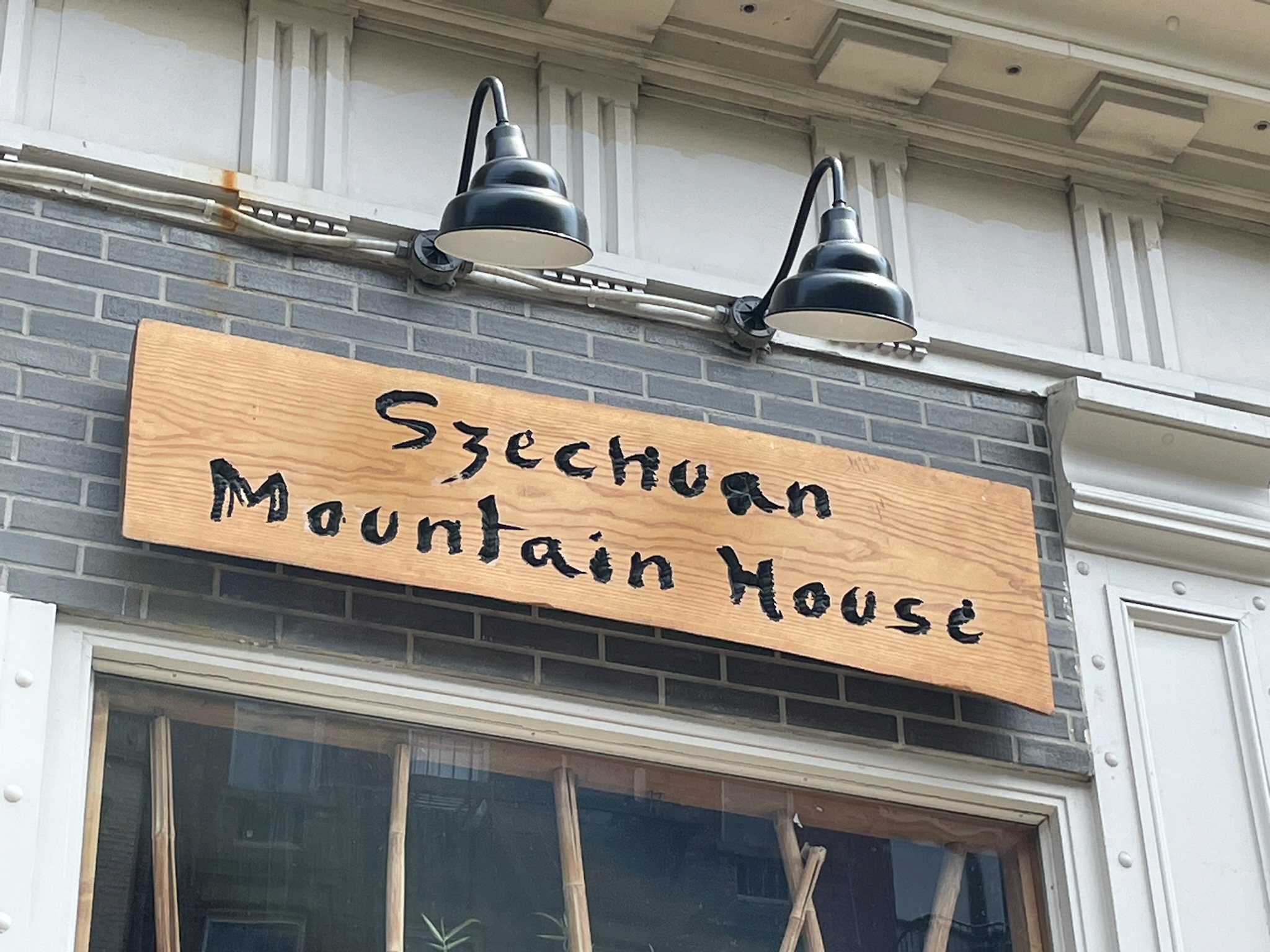
Does this restaurant entice you?

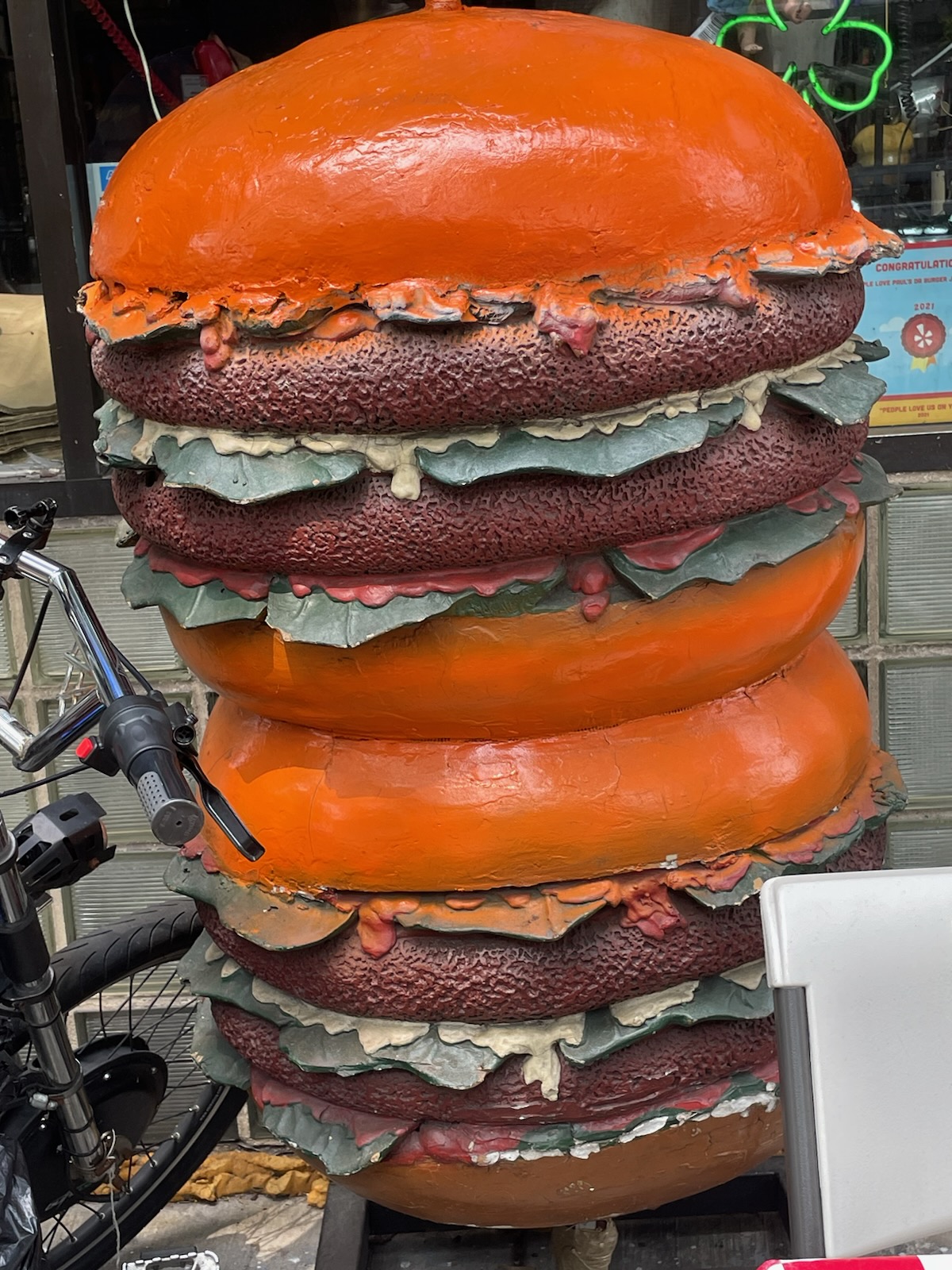
How about a choice hamburger?

There is a new place I’ve been to that specializes in stewed frog and baked cow lung.

Is it just me or is absolutely every surface in the East Village tagged now?

Need wheels? Got ’em.

Some things never seem to change. Need sustenance?

You can still go to B and H Dairy and sit at the counter and delight in cold borscht. No cell phones allowed, however. What a relief.

In this case followed by the best chocolate milkshake I ever have drunk and a conversation with a witty and wise waitress.

Weed is old. New York’s storefronts have been selling the stuff for ages. Now that it’s legal, some of the cooler mom-and-pops are going under.

While others have been elevated to posh pot palaces. To which would you rather bring your business?

The Lower East Side still has a great bong selection for those who need one.

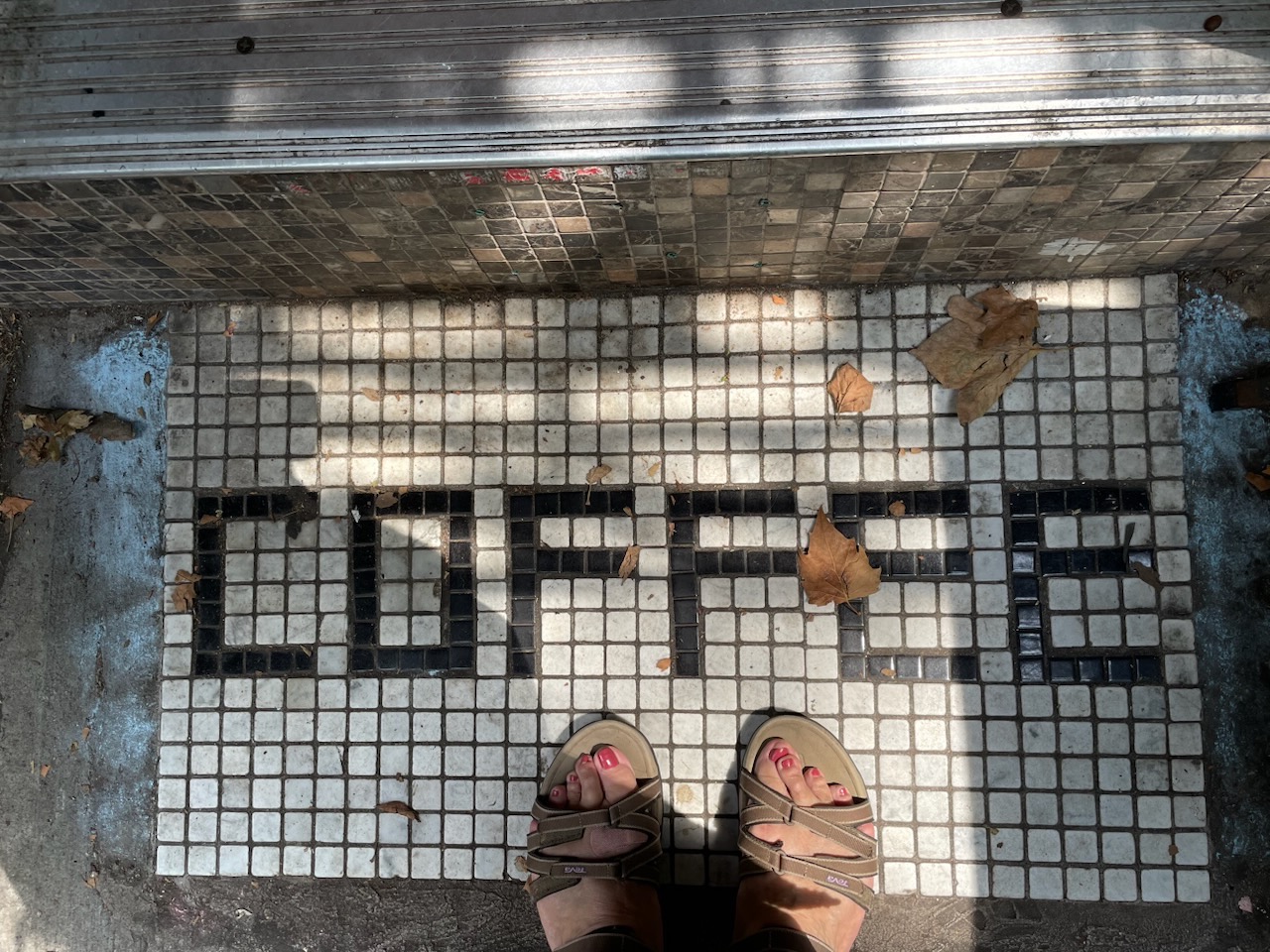
Coffee, coffee, coffee. Please!

After straggling in to an East Village café it seems there is something new to do with iced coffee. Serve it in a bag, as they do at 787 Coffee on East 7th near A.

The counter guy Diego seems surprised and bemused that we are surprised and bemused by this technological innovation.

The store opens up its wonders as we began to sweat slightly less.

Again, we are flummoxed with the heat. But it seems the store is owned by a branding genius.

Good place if you’d like an orgasm ball cap.

Or to sip your java on a swing in front of the plate glass. If you are a creative, that is.

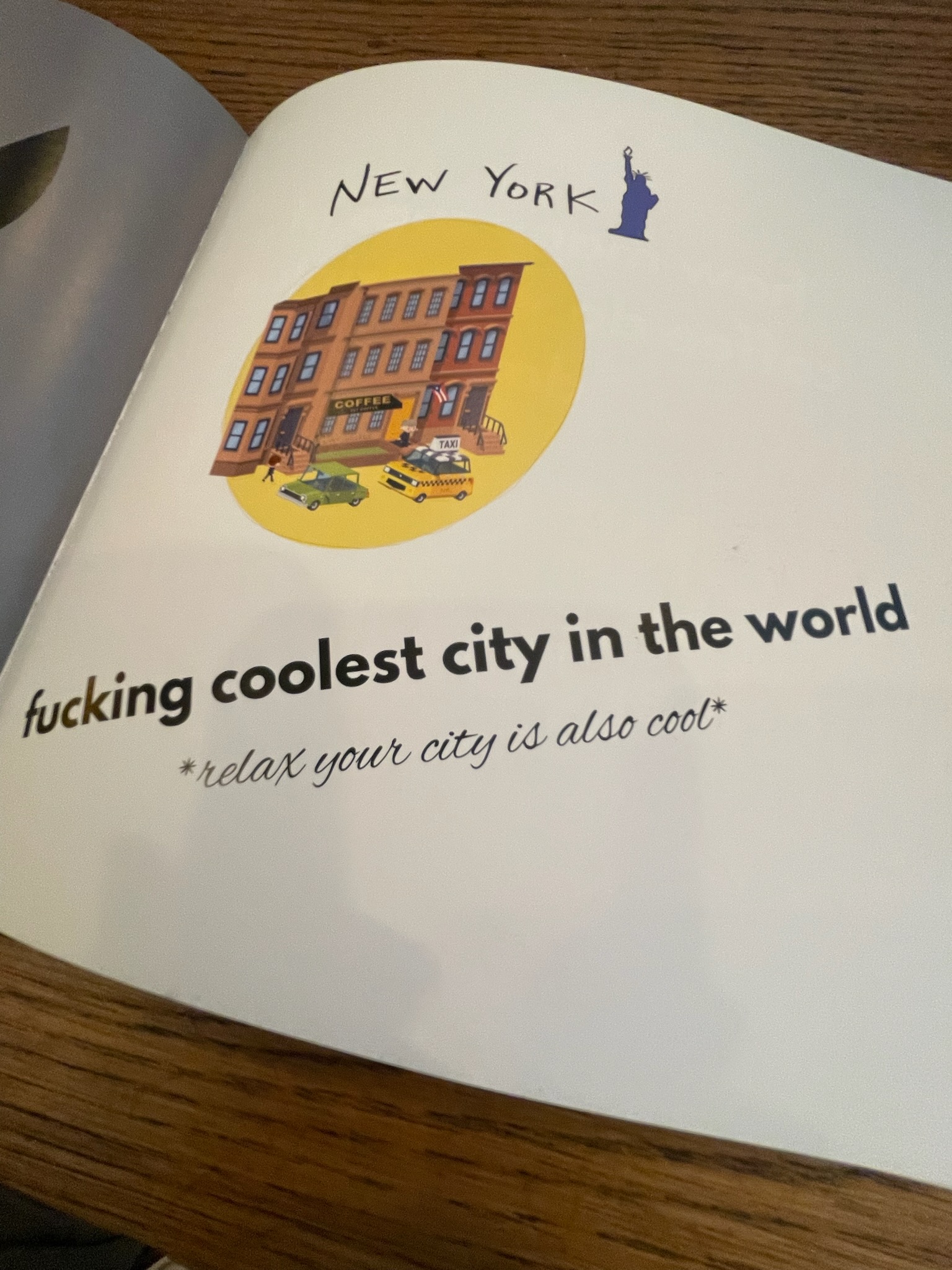
I might be one. Not sure. Too hot to decide. We thumb through the owner’s book of aphorisms and while later they will seem a bit corny, at the time they are brilliant.

Wit and wisdom.

Reassurance.

Even the bathroom elevates the mood.

Since when did NYC get so nice? Actually it’s always been nice. In its own crochety way. We New Yorkers know that.

Diego comes over with welcome H2O.

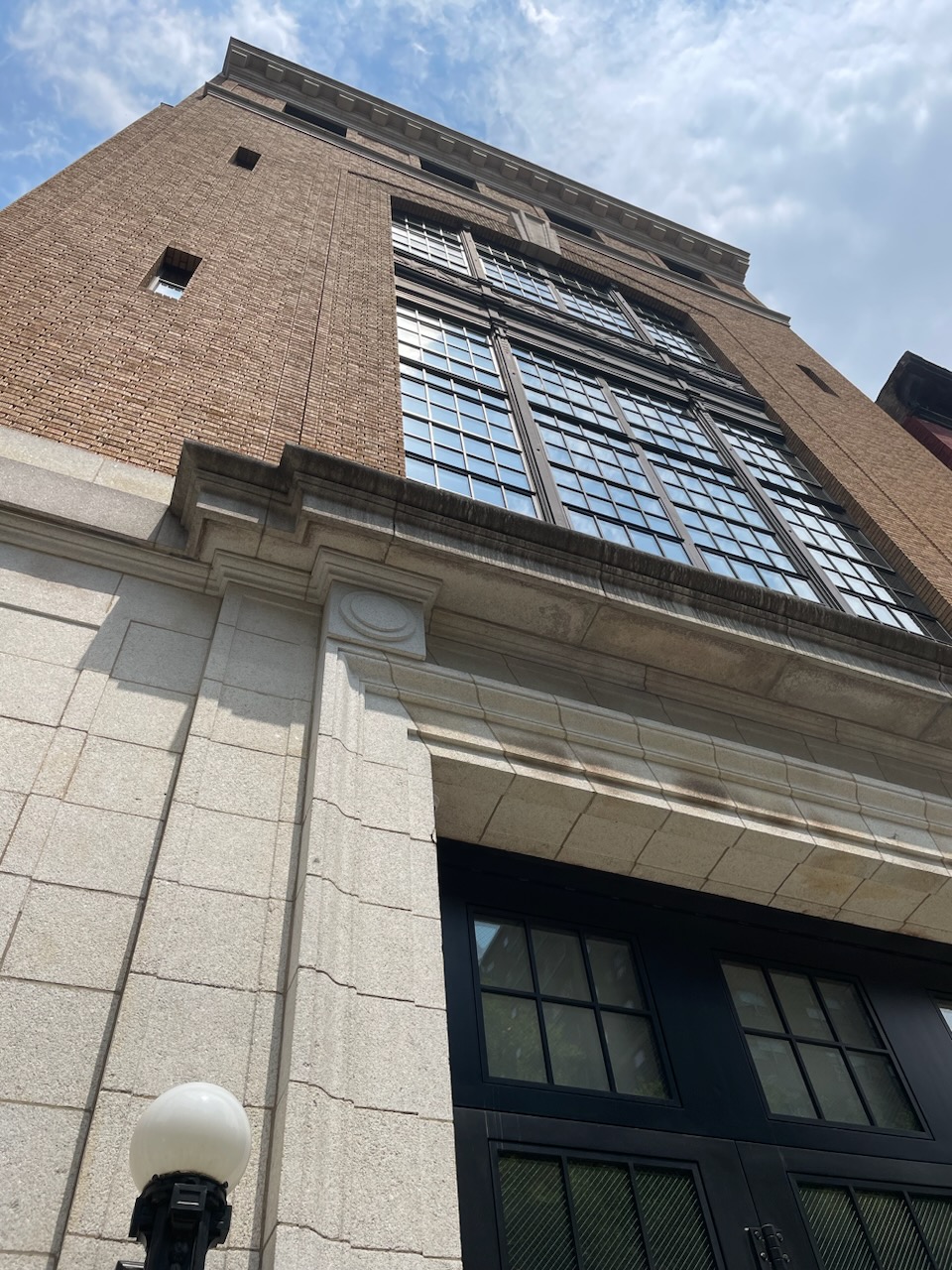
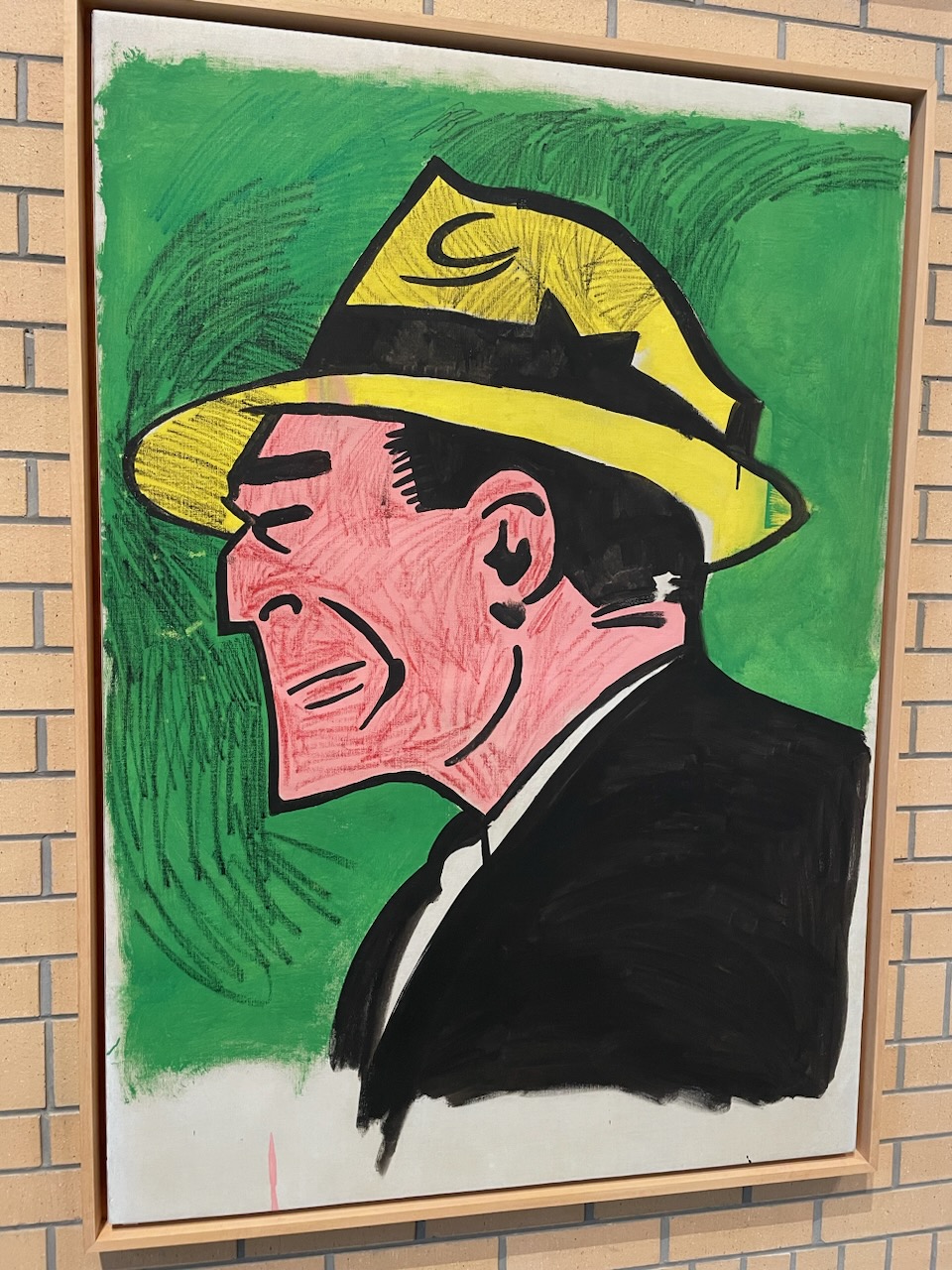
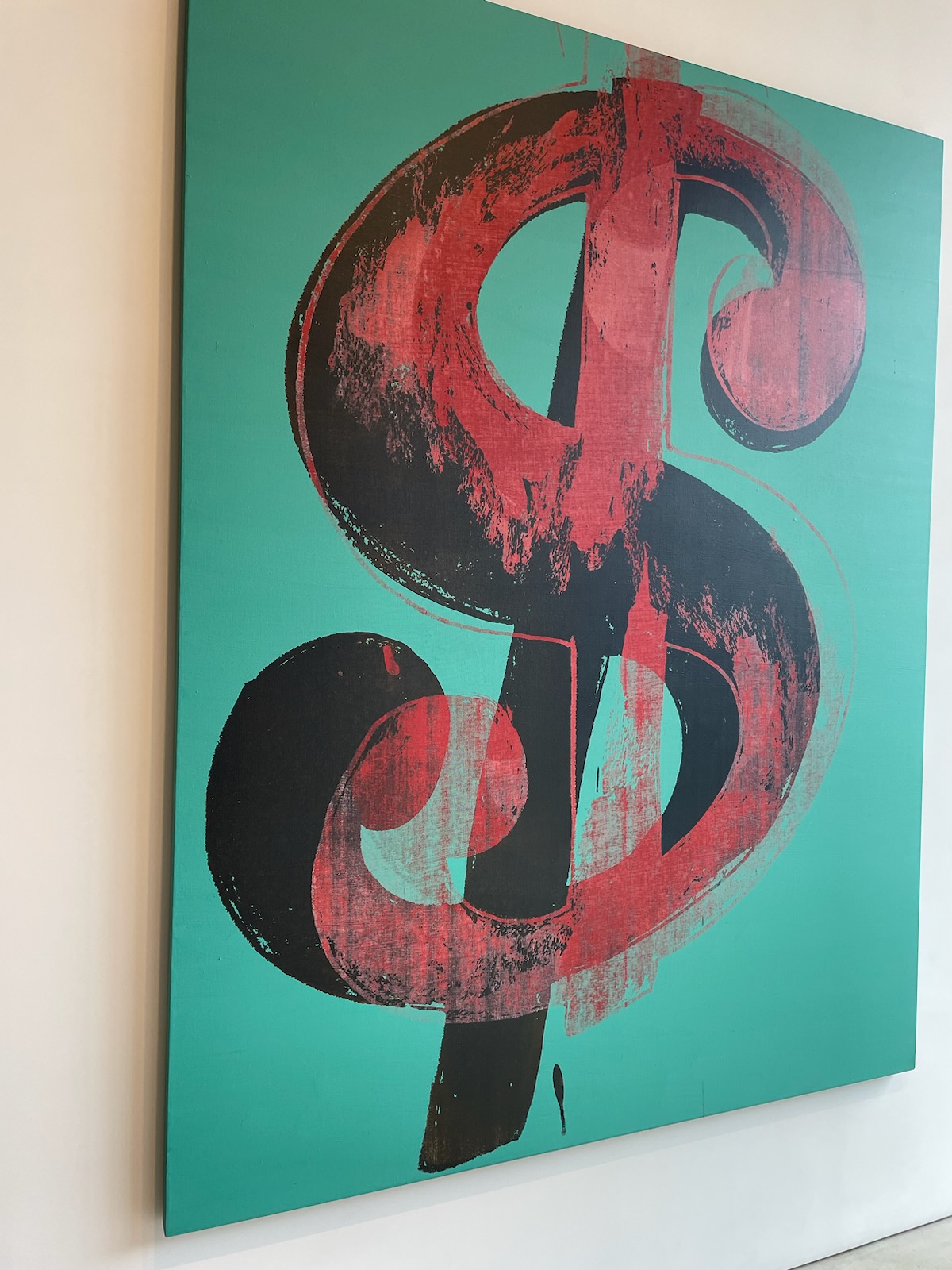
Andy Warhol is both old and new at Brant Museum on 7th Street, housed in a vintage Con Edison substation.

Warhol’s work ever fresh.

Yes. I’m with you, perspicacious Andy.

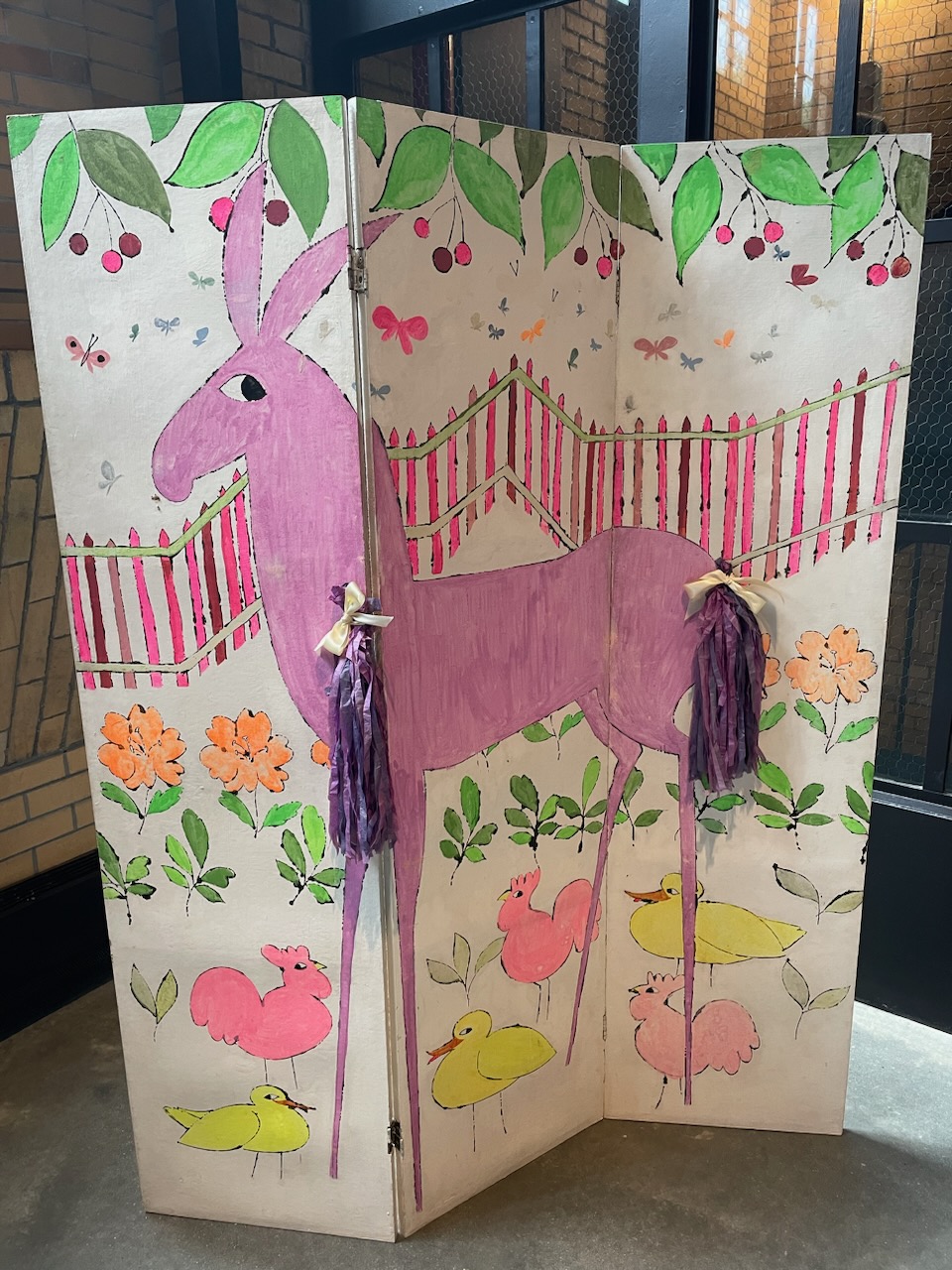
Who knew that as a young artist he produced a pin the tail on the donkey set up?

I think he’d like the fact that his self portrait graces a 65-dollar tote bag in the gift shop..

Jeff Koons wannabe balloon piggy banks are not produced by Jeff Koons, the salesperson corrects me rather haughtily, but by an independent manufacturer. Yes, visitors do have questions. Okay Miss Lonely but you’re gonna have to get used to it, as Dylan wrote in his most famous song, you know the one.

Still, you can get yourself a Keith Haring votive for those special moments. I hope it’s scented.

Meet up with my friend Nora, herself an artist.

She’s in the middle of finishing a drawing to hang in a show inspired by New York’s venerable community gardens.

The subway hosts some lovely youngsters with their lovely comfort pooch.

And a lovely poem.

We take the train north to home along the Hudson through sheets of cooling rain.

Already nostalgic for the cafe earlier.

One thing’s for sure, New York will always be there for you.

And me. Hot. And cool.

Leave a comment

Filed under Jean Zimmerman

A tree inspector has only to drop in briefly for this takeaway:

Brooklyn’s Prospect Park neighborhood surely has some impressive trees. I stand awed in the shade of a gigantic weeping willow in a tiny neighborhood enclave.

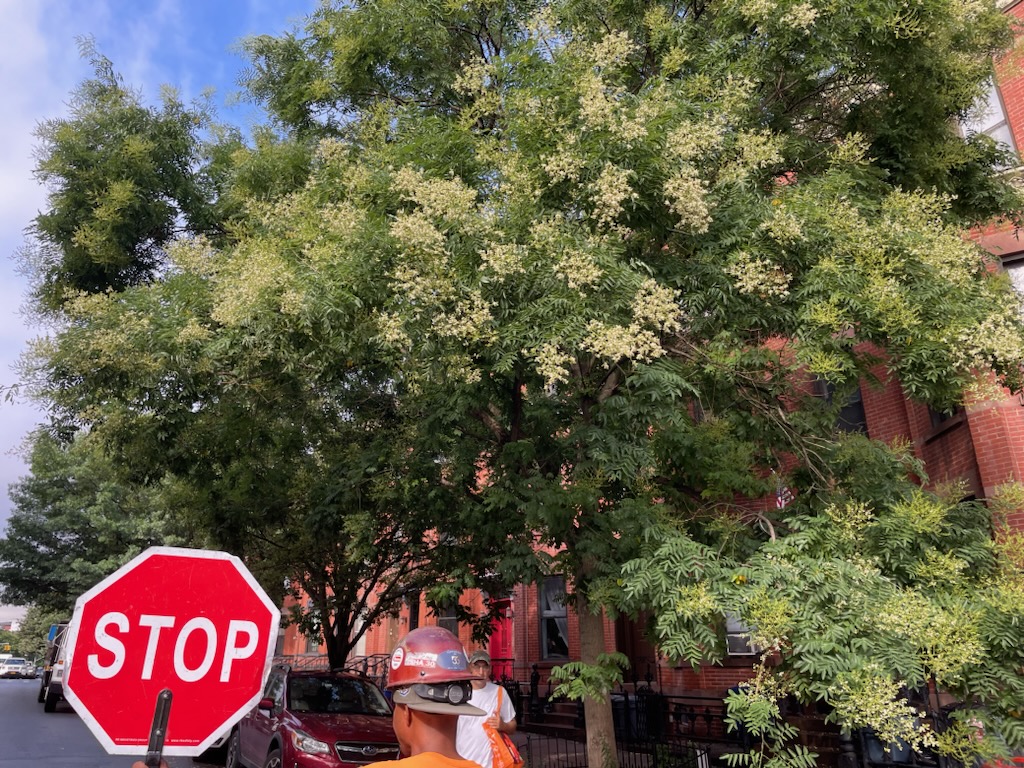
And some interesting characters, at least on my job site, one of five during a day dedicated to corners. That is, replacing the old sidewalks at intersections with colored pedestrian ramps to make them passable for the mobility-challenged. Ped ramps need to be installed in a lot of places, as can be imagined, and this is a multi-year project. A tree inspector comes on board whenever trees appear within fifty feet of the corner, making sure the excavation does not harm the tree roots in question and writing up a report to that effect for New York City. Classic urban tree preservation.

Worth getting up with the dawn to highway it down to Brooklyn to save trees.

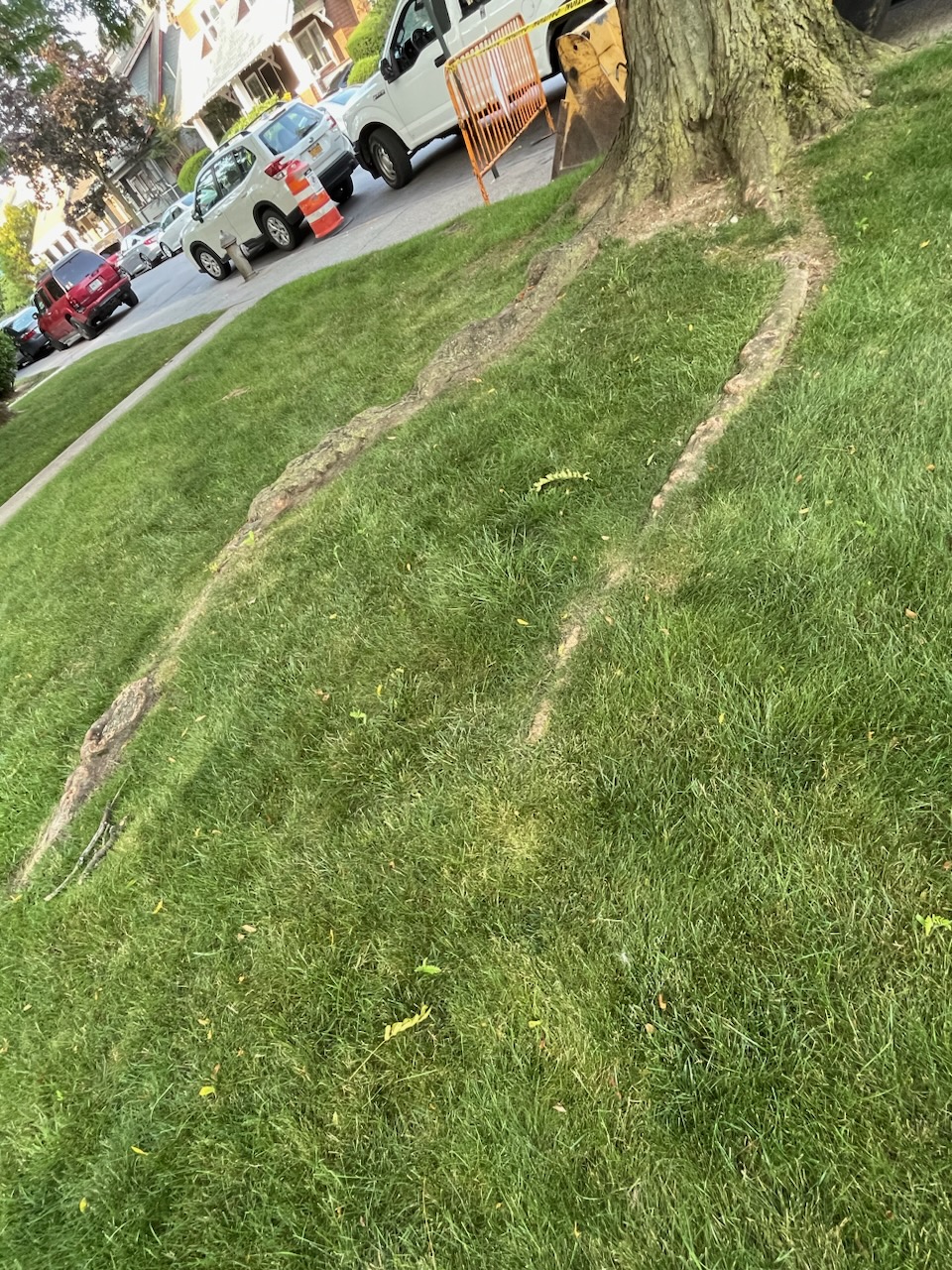
The painter Jean-Baptiste Camille Corot wrote to the painter Camille Pissarro, Go to the country—The muse is in the woods. But you don’t have to be in the forest to find your muse, sometimes the urban forest can offer its own inspiration. On the first corner of the day I spy these mystical roots running snake-like through the grass of a lawn.

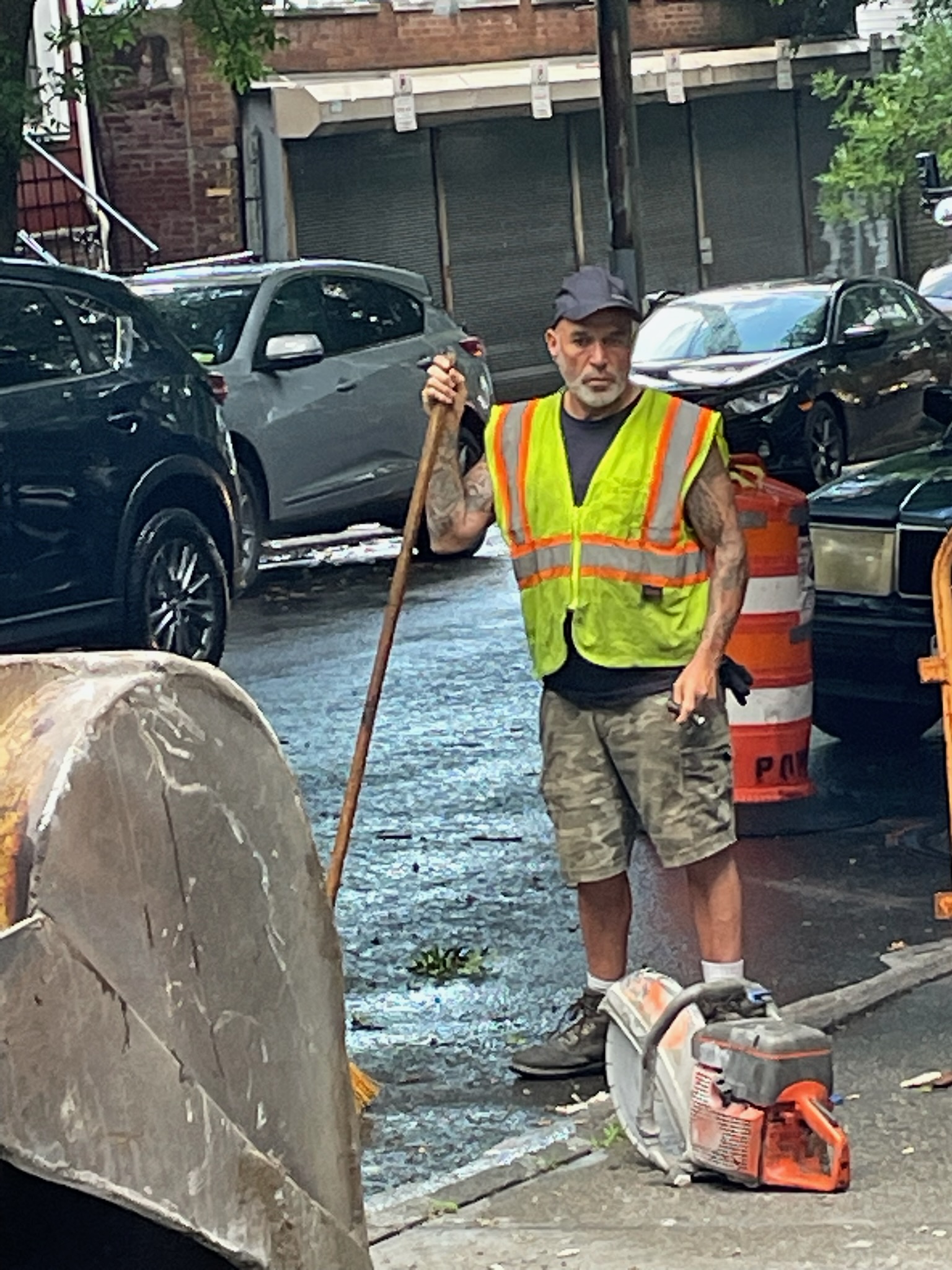
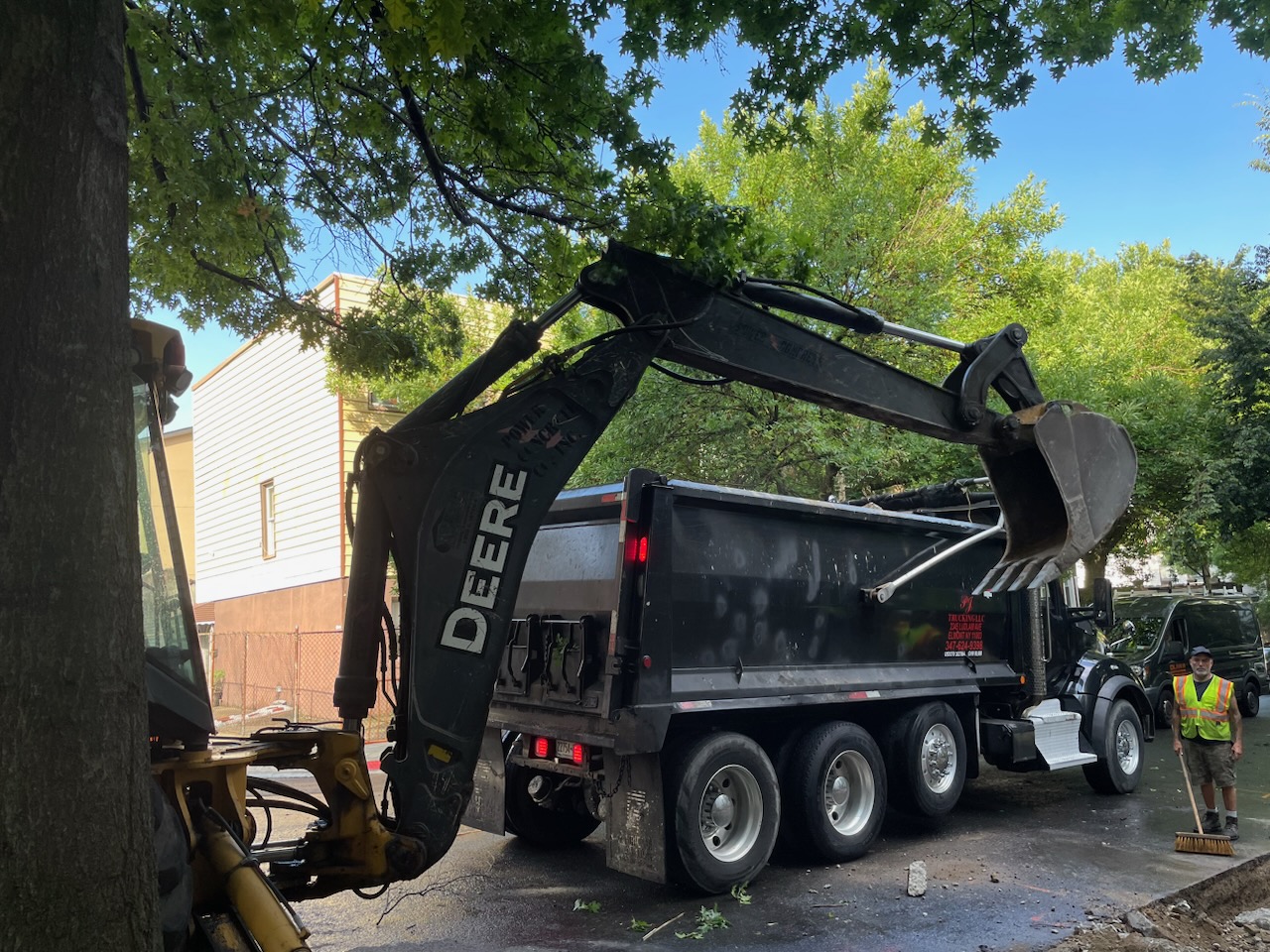
The guy who drives the backhoe on this job – make that machine, the term backhoe is never employed when you work in this metropolis – the guy who drives the machine has language as colorful as his resplendent tattoos.

 I notice the tee shirt of one of the crew before we start work at 7am. This is the man who typically keeps a cigar on hand or between his lips, even as he deploys his shovel.

Freedom Isn’t Free reads the slogan on his tee. I ask the two what that means. America’s not free anymore, asserts the machine driver. It’s worse than Russia.

He tells me he plans to run over anyone who gets in the way of his digger.

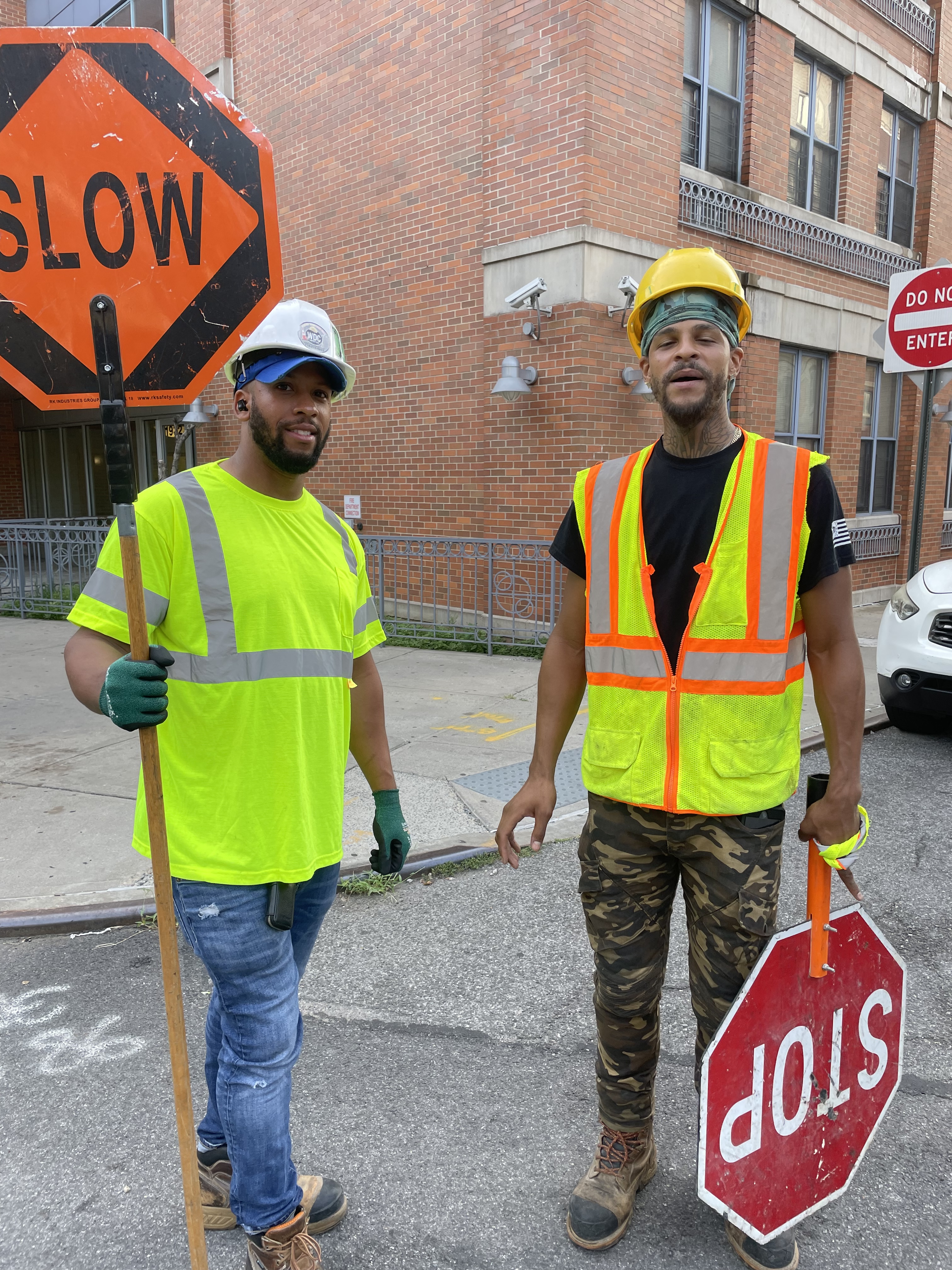
Most of the people on the job make it a point to respect me and my professional wishes. If I ask someone to remove equipment — say 2 by 4’s, or a shovel — lying on top a tree pit, they do so immediately. (True, I’ve heard one burly flagger mutter “bee-atch” under his breath as I pass, but I like to see that as a compliment. Sometime I might have to clobber him though.)

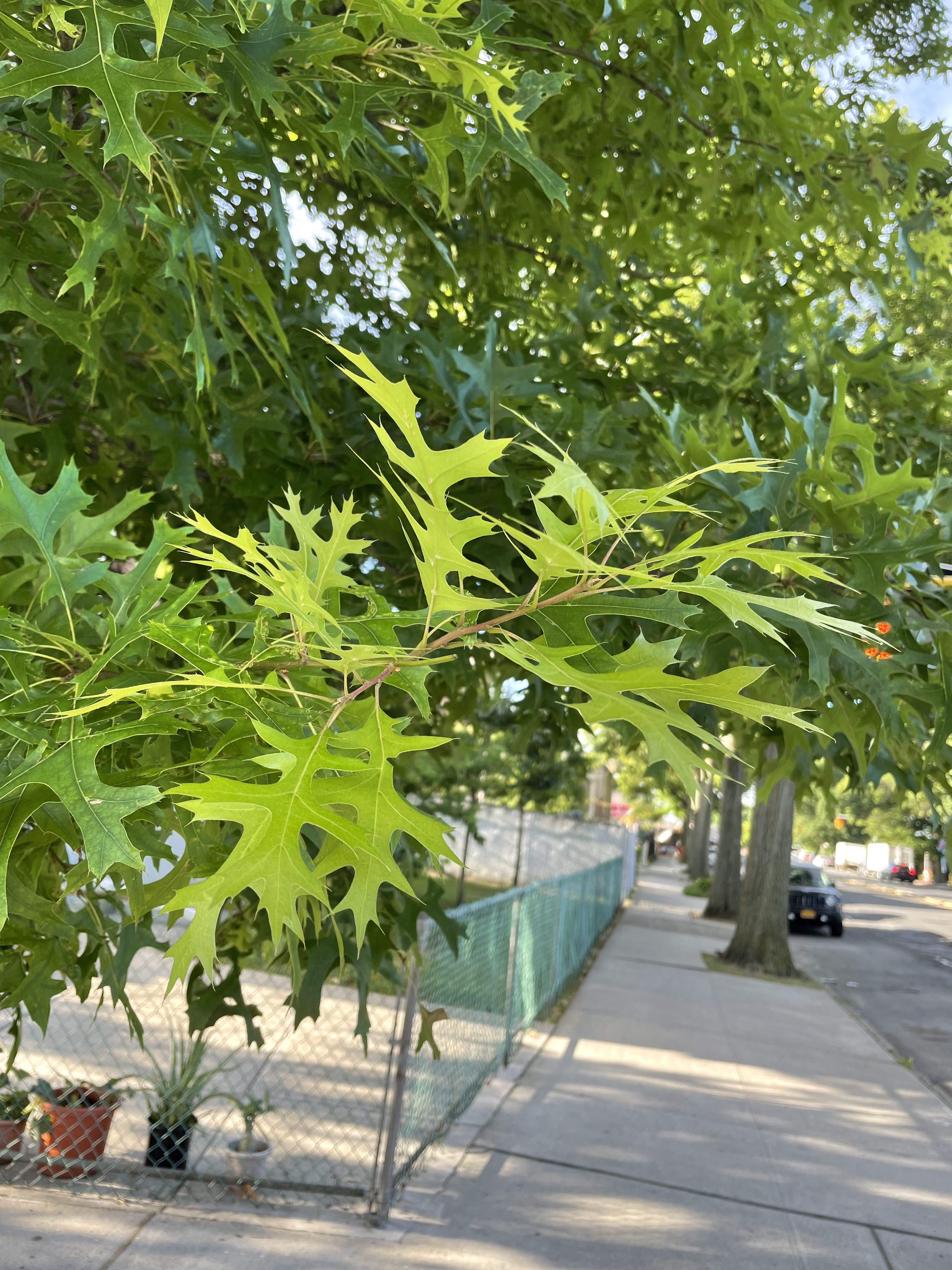
Today I spend some minutes under a mature Northern red oak, probably forty feet in height.

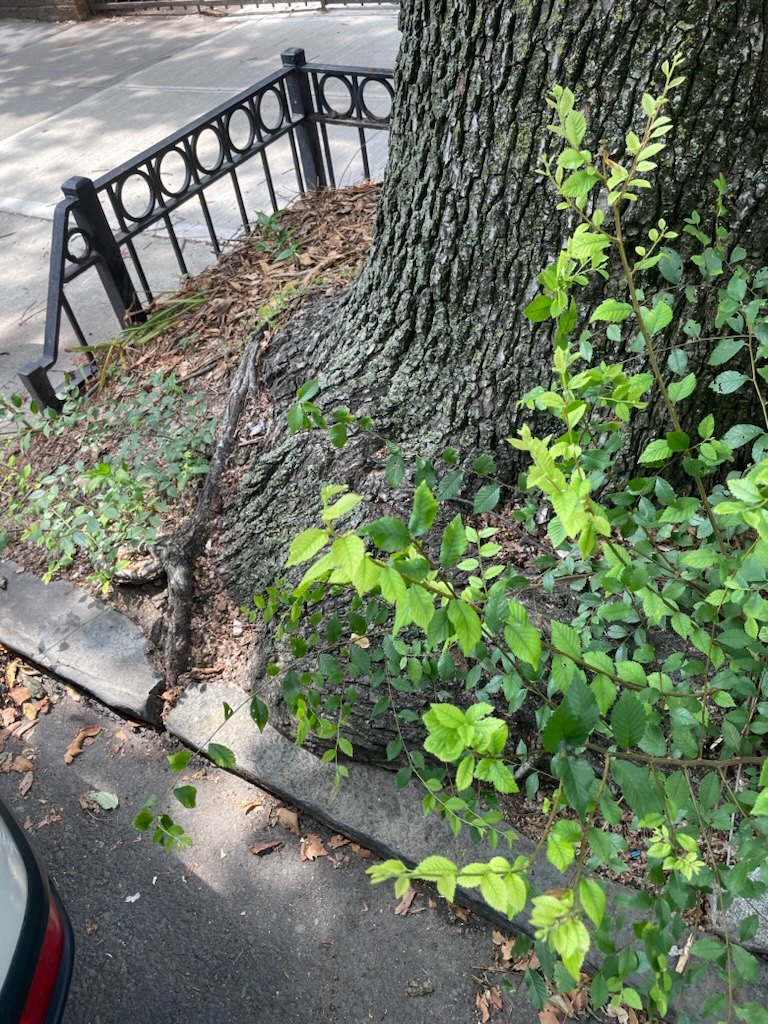
It occupies a tiny tree pit, 5×5, the base of its trunk flowing out to the edge of the pit, which was once carefully laid with Belgian blocks.

Edwina, let’s call this lovely specimen — gender fluid. Shading purple window-box flowers that glow beneath its canopy.

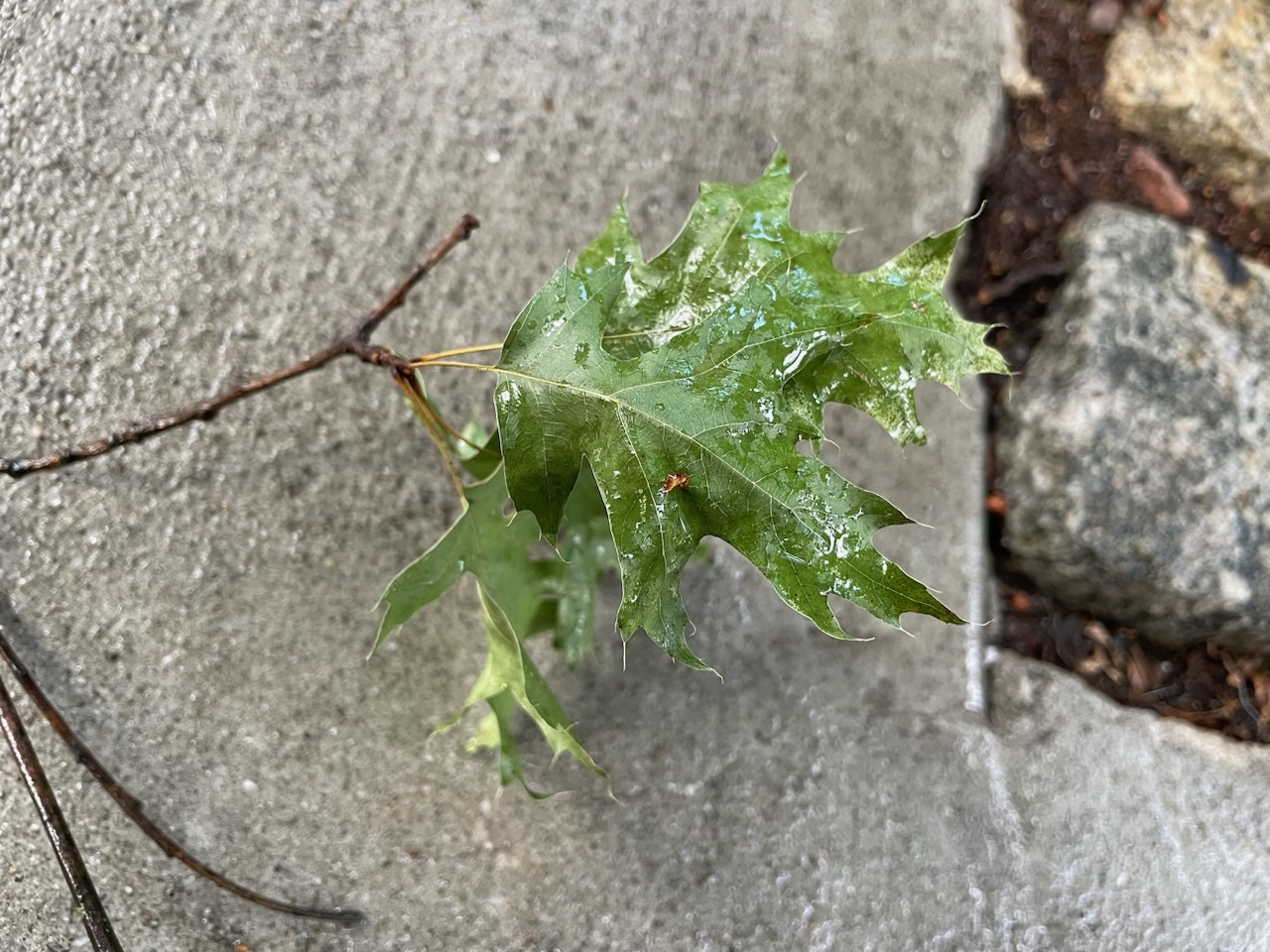
Don’t usually see a red oak on these not-so-mean streets and this one is exceptional, its pointy leaves wet after a brief and sudden thunderburst.

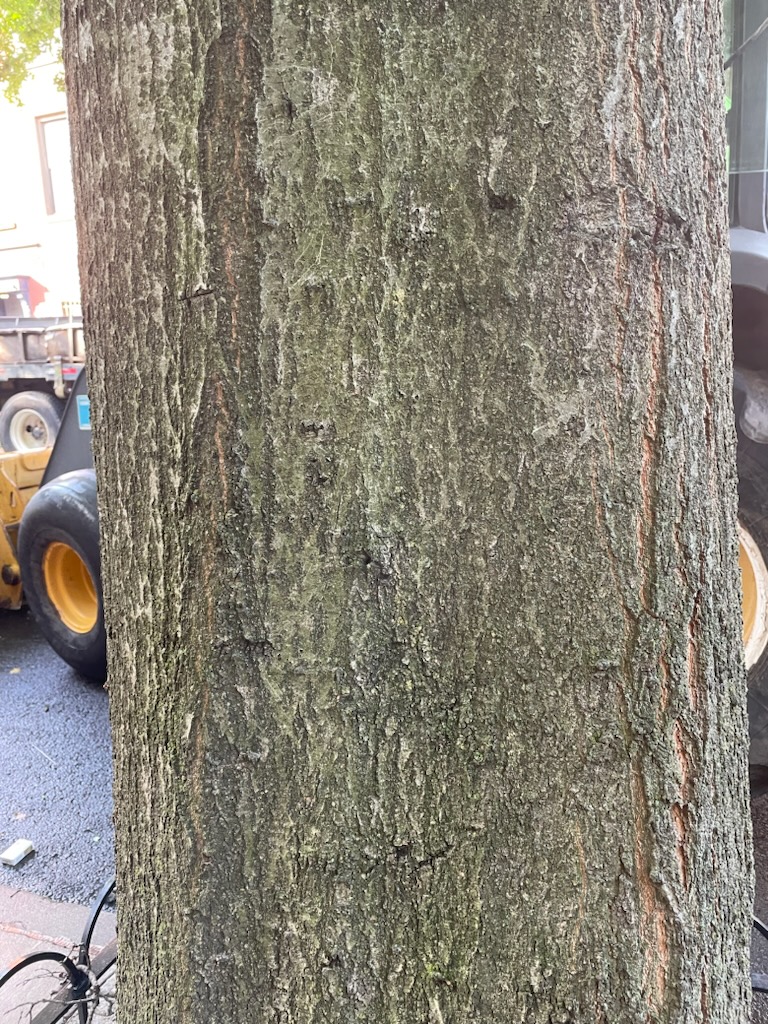
You can see the red fissures in the trunk, one distinction of red oaks.

The machine driver removes some of the sidewalk, then lands his bucket with a thump on the fill, banging the ground close to Mike, the person in charge of saw-cutting concrete before excavation begins.

Day not off to a great start when he’s in a bad mood, says Mike. 

Me: I thought he was always in a bad mood.

Yeah. Smile, rueful.

A pause while the machine operator drags his bucket again to within a few feet of where Mike stands, scraping up dirt, rocks, old concrete debris.

Pretty dangerous, says Mike. Smiling. 

Me. Does he think it’s funny?

Yeah. Still smiling. 

I once did see the machine driver in a jolly mood on another site – he popped wheelies in his machine in a busy intersection with the intention of amusing, terrifying all around. Or maybe he intended to terrify.

Excavation goes all the way up to the pit.

Smart Edwina has few visible roots in the fill to speak of that might be in danger of getting scraped up, all under a quarter inch, small enough for a tree inspector not to worry much. I make a note on my report. Smart Edwina, canny enough to focus energies in a taproot. But the gracious hanging lowest branches do brush the arm of the backhoe, so bad on them.

We move on to the next corner. A benefit of wearing a reflective vest and work boots: you can walk across the site unimpeded.

Good if you’re hustling out with a full bladder in quest of local facilities. You don’t expect me to go against a hydrant, do you?

Especially one of New York City’s beautiful vintage hydrants. (Could probably be harvested and re-sold in a fancy Prospect Park home goods store.)

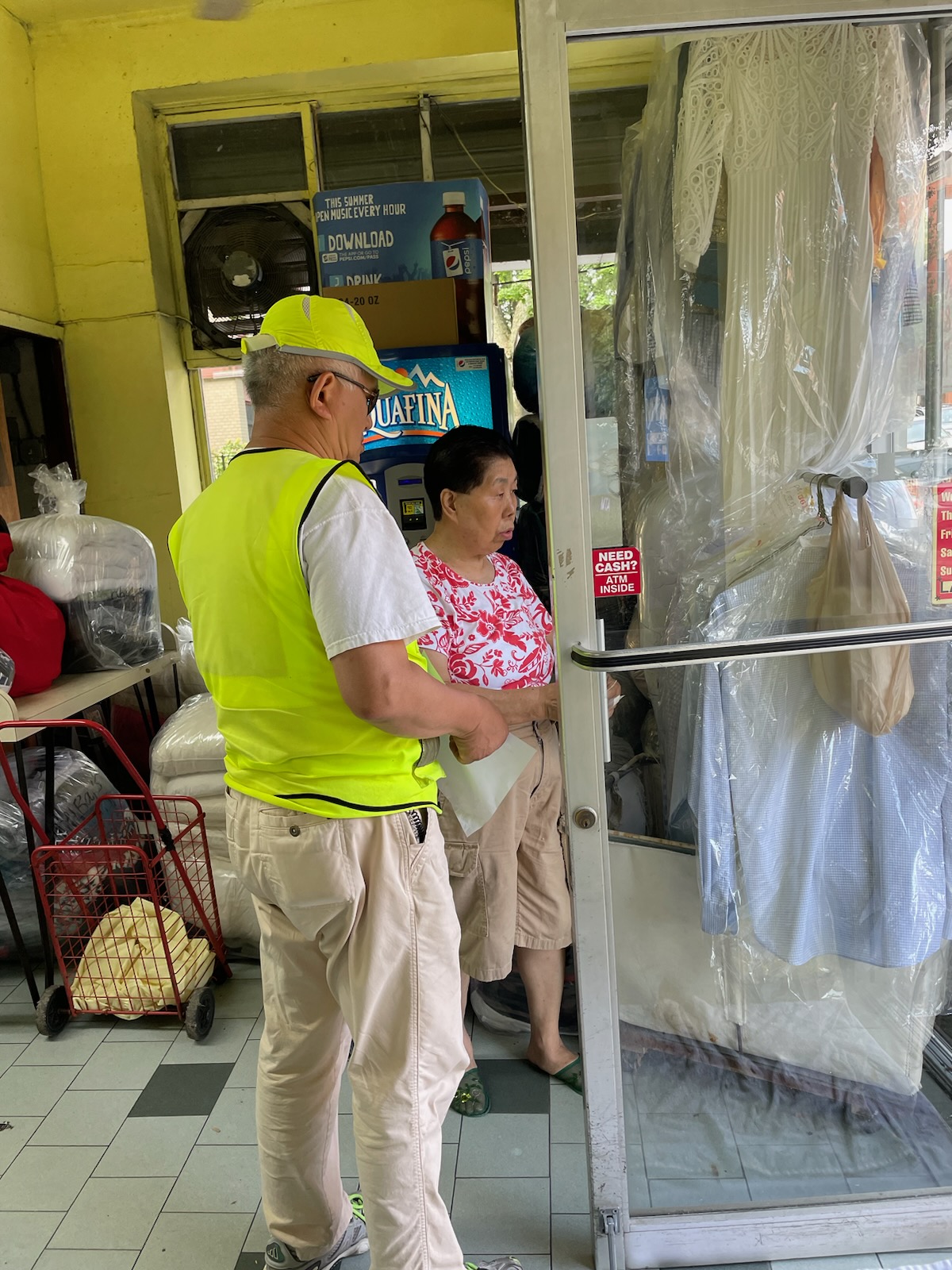
Immediately I spot something nice: Suds on Eighth Avenue. A laundromat!

Can I use the bathroom? I plead politely.

Only peepee though! The busy, preoccupied proprietor.

Yes, I say reassuringly.

Go ahead.

Vibrant NYC yellow-cab mural as I go back out the door to the work site.

So many of these older trees tend to overflow their tree pits. A natural byproduct of their age.

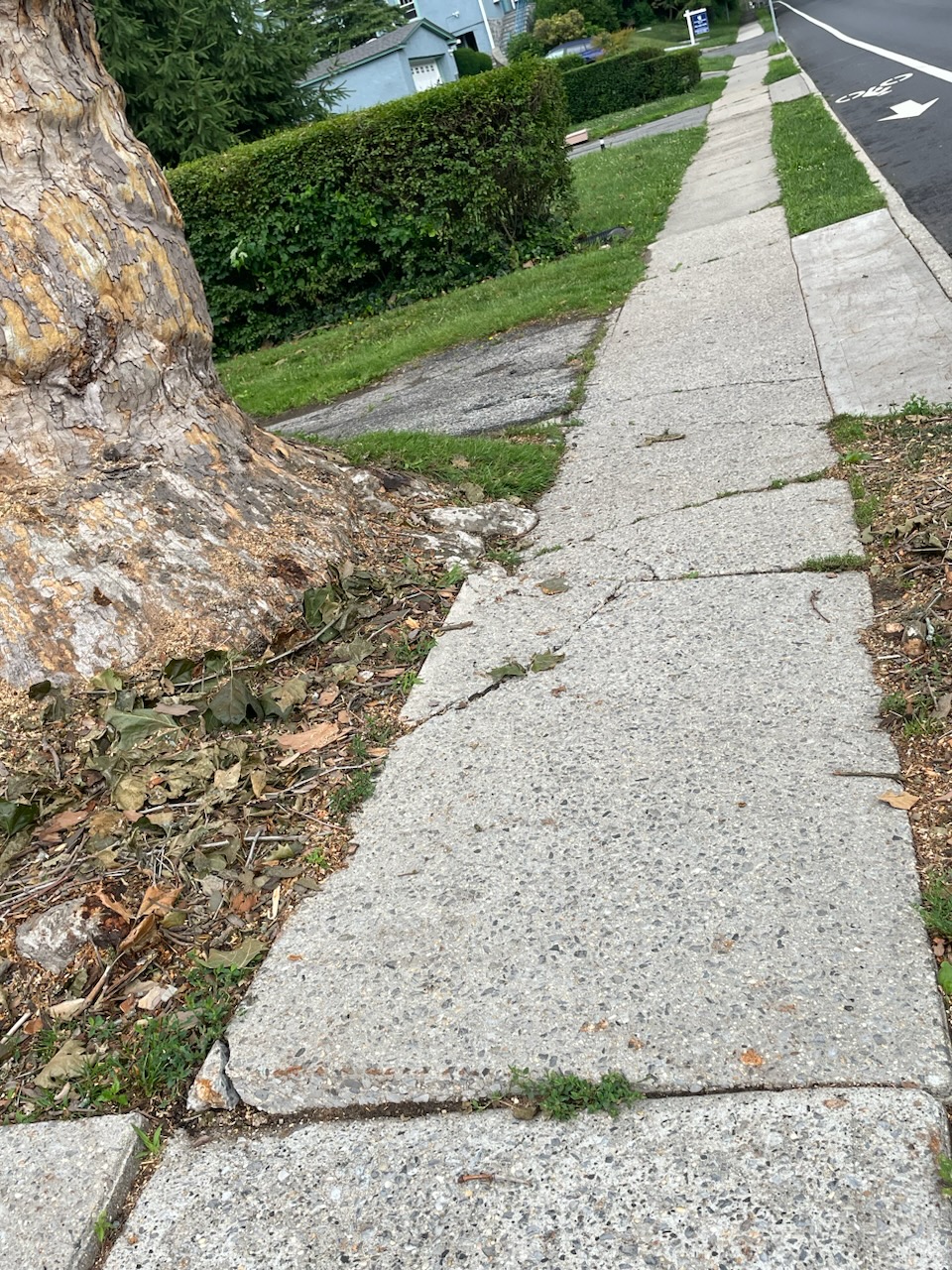
Some mess with the sidewalks surrounding them.

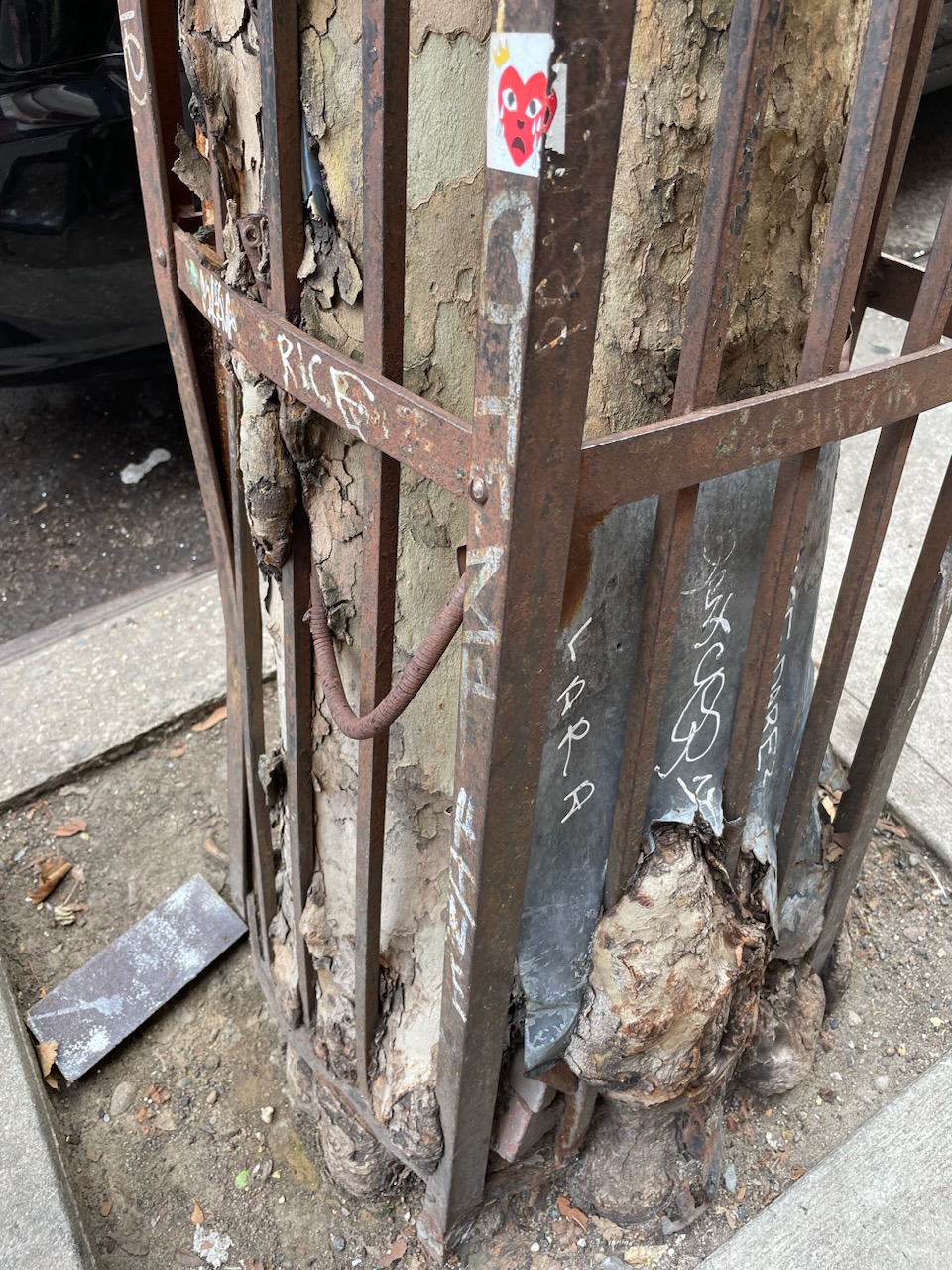
New York City is not perfect regarding trees. What municipality is? But for the most part it recognizes these wise old specimens for what they are — important! — and fixes the sidewalks rather than removing the tree.

Note the curve in the concrete flag. That’s deliberate. Contractors are required to build the sidewalk around that wise old trunk.

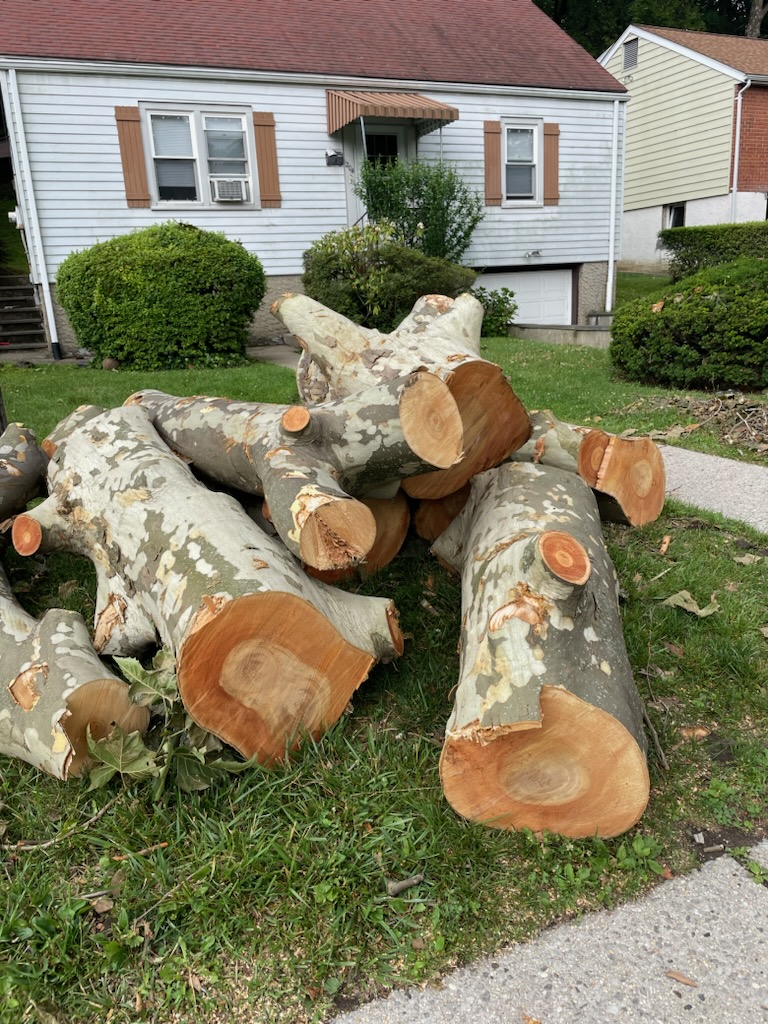
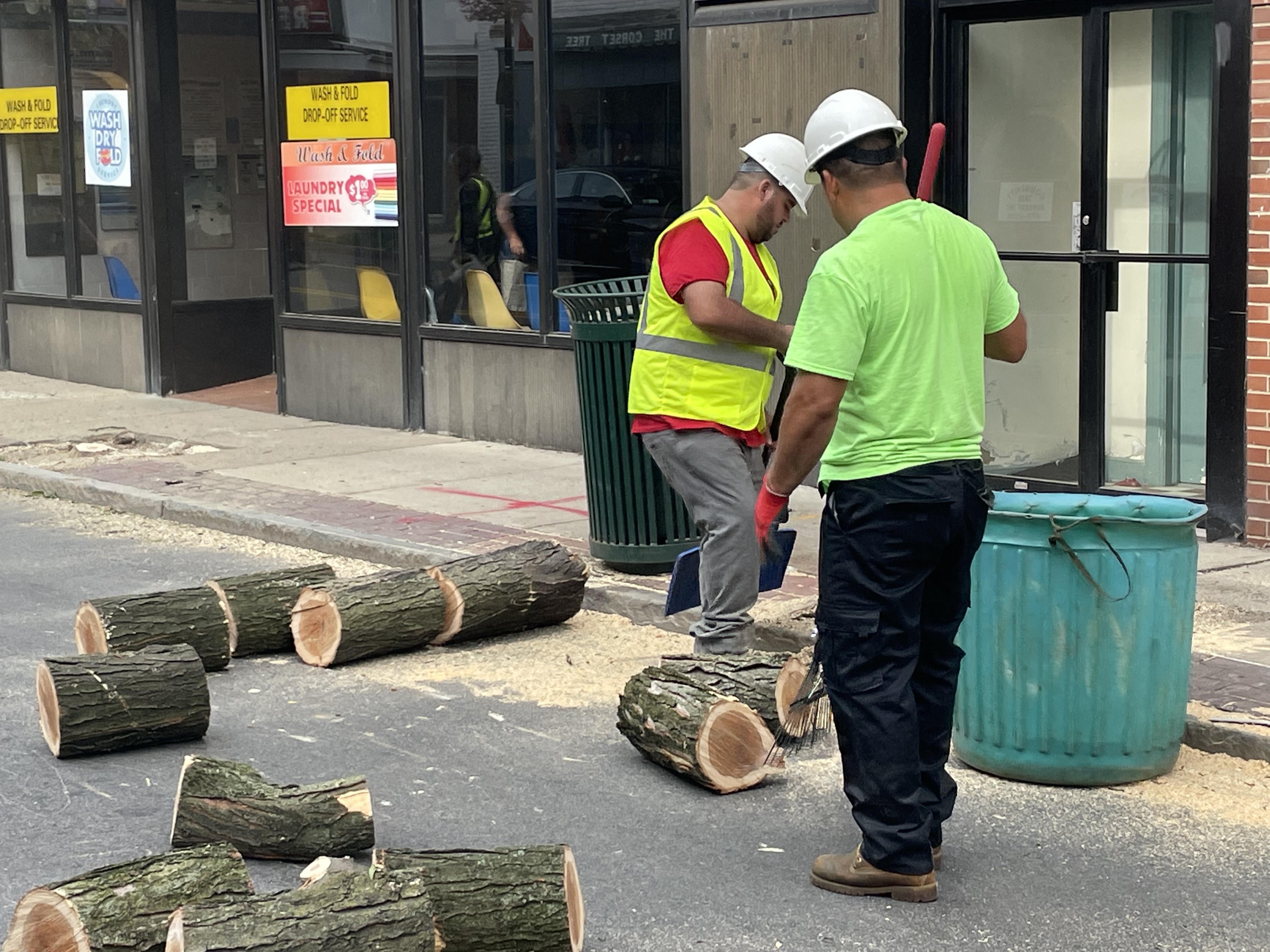
Quite different then my “green” little hometown, where I was appalled recently to see the powers that be remove a two-hundred-year-old street tree, a sycamore. Why? The resident whose property abutted the sidewalk complained. Someone, she said, had threatened a lawsuit after tripping in front of her house. The solution? Not to make the necessary sidewalk repairs but instead to take down the tree.

Yes, it was a giant. I broke into tears when I drove along the main drag and saw it, silly as that may sound. This tree provided the only canopy along this stretch of road.

The only saving grace as I see it rather snarkily is that the homeowner’s energy bills will no doubt go up because they have no boughs to shade their roof. Karma being a bee-atch.

Back to the more generous, quite deliberately engineered canopy of New York City, though. A few blocks away from the majestic willow, a perfect Kentucky coffeetree.

Its bark some of the coolest in the tree kingdom.

Character also abounds in the man-made neighborhood attributes when I peel my eyes away from the trees to take a walk down the block.

New York humor.

Privileged Prospect Park children and their beleaguered nannies. (Note candy. It’s nine o’clock in the morning.)

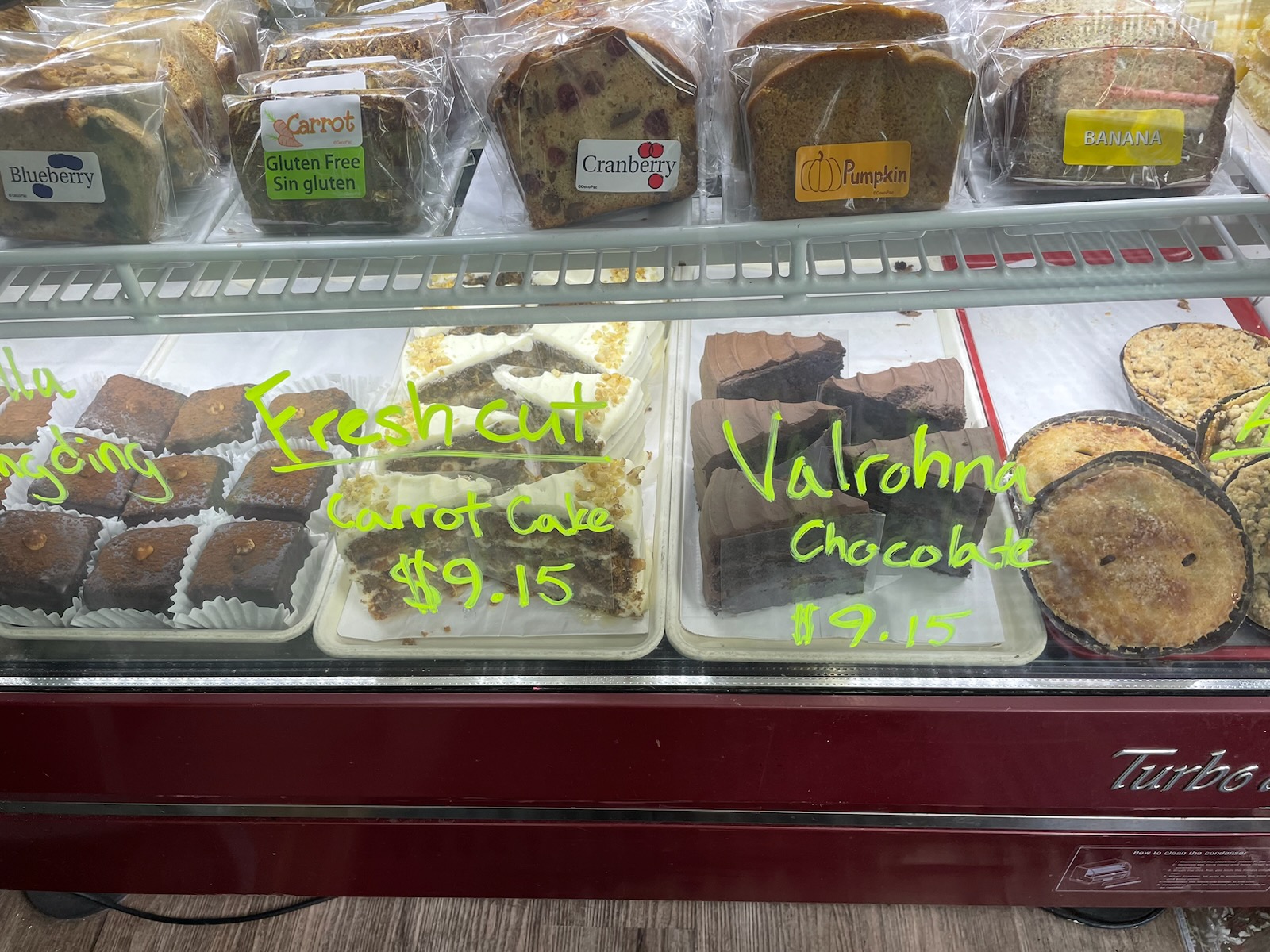
Fabulous offerings at a run of the mill, neighborhood “pie and cake shop.” Prospect Park prices. I get coffee and make myself wait. On the other hand, carpe diem – when we leave this location I might never be back. We’re driving all over Brooklyn for this job’s locations.

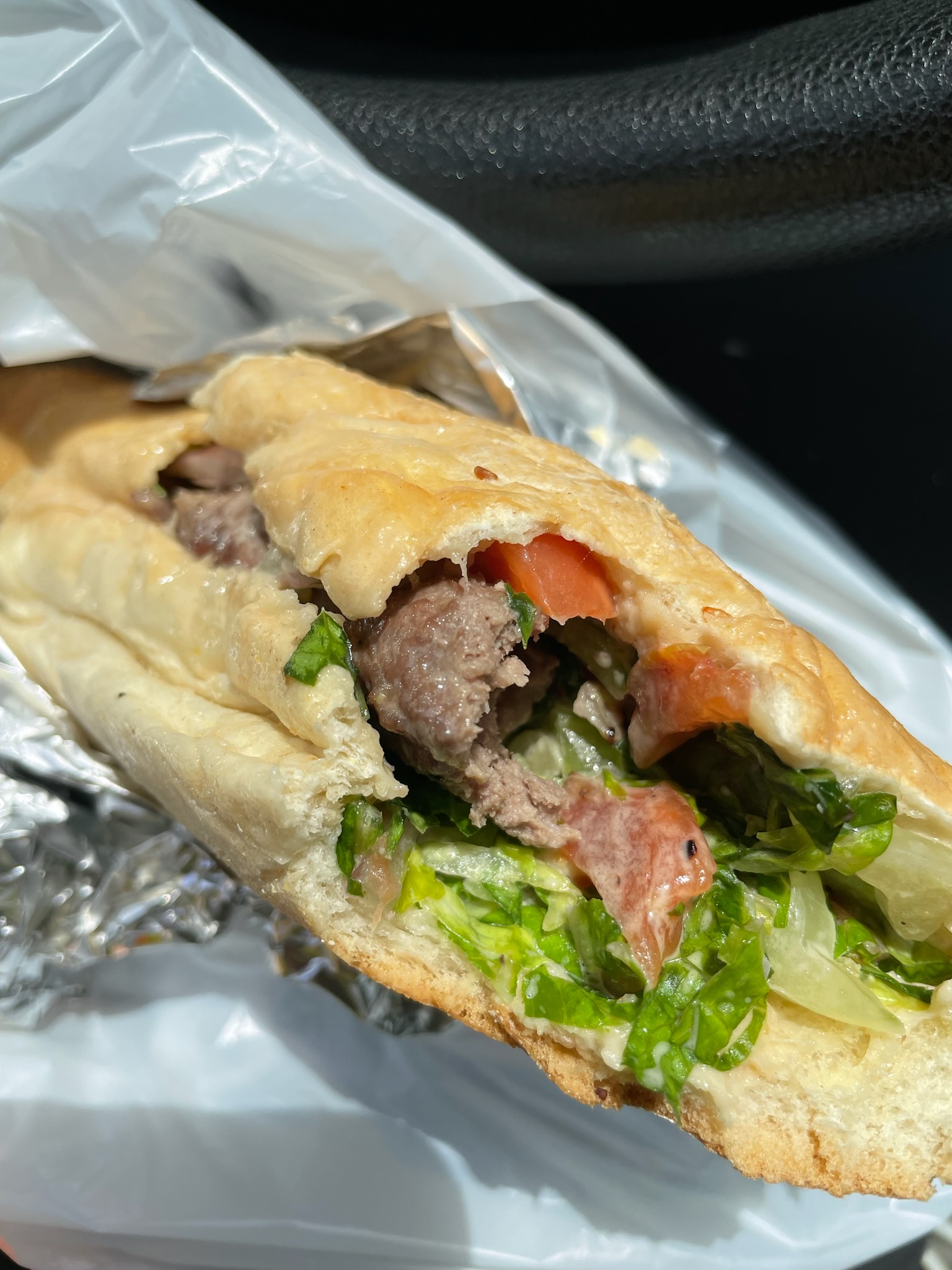
Later I treat myself to the most delicious lamb kofte kebab sandwich I have ever consumed.

Dog walkers. Interesting tee shirt: Don’t Be a Follower. Make Your Own Trax!

I once compiled an inventory of tee slogans I saw doing tree inspections on similar sidewalk locations in the Bronx.

Good Mood.

I’m Not Sorry.

Today Is Cancelled.

Respect My Authority.

My First Year Being Rich.

I Am the Reason Mama Needs Medicine.

Huge.

Fear Is an Illusion.

I Would Give Up Shopping But I’m Not a Quitter.

Big or Small, Let’s Save Them All.

It Wasn’t Me.

I Rule the Streets.

Marvel.

These are only a drop in the bucket, believe me. Feel free to appropriate.

I can relate to some of them. I Rule the Streets. Marvel.

Baby prickly fruits of sweetgum, as sweet in Prospect Park as anyplace else in the world.

Near the corner, an effulgent Japanese pagoda. Condition: excellent, I write in my report.

Always amazing to see pure summertime blossoms against the grit, the brick and the concrete — the urban forest that is New York City.

Marvel. I Own the Streets. Is this the best job in America? Perhaps. At least today.

Leave a comment

Filed under Jean Zimmerman

Magical miniatures everywhere you turn

at New York Botanical Garden’s annual Holiday Train Show.

A smart novelist named Christopher Moore said, Children see magic because they look for it. Yes, especially on Christmas Eve. Today. If you want to conjure up A Visit From Saint Nicholas, by another writer named Moore, Clement Clark Moore, go to the New-York Historical Society (so genuine a place they kept the hyphen). They have both his desk and the original manuscript.

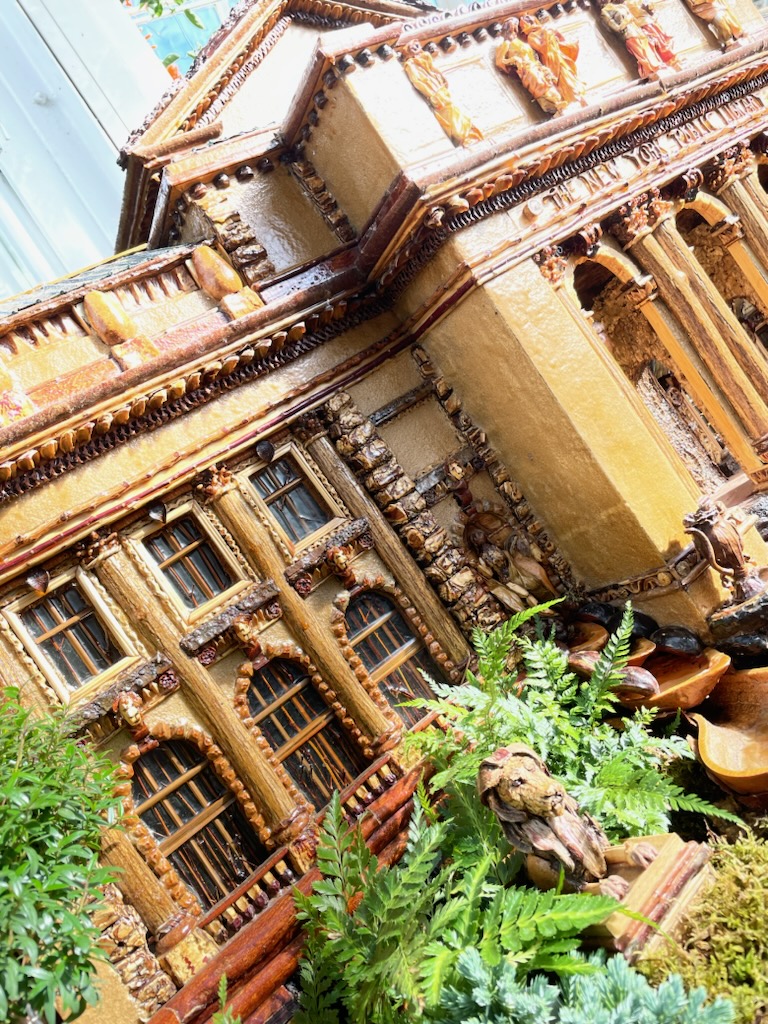
Here at NYBG you’ll have to make do with a perfect replica. All the New York icons are here. A Macy’s behemoth.

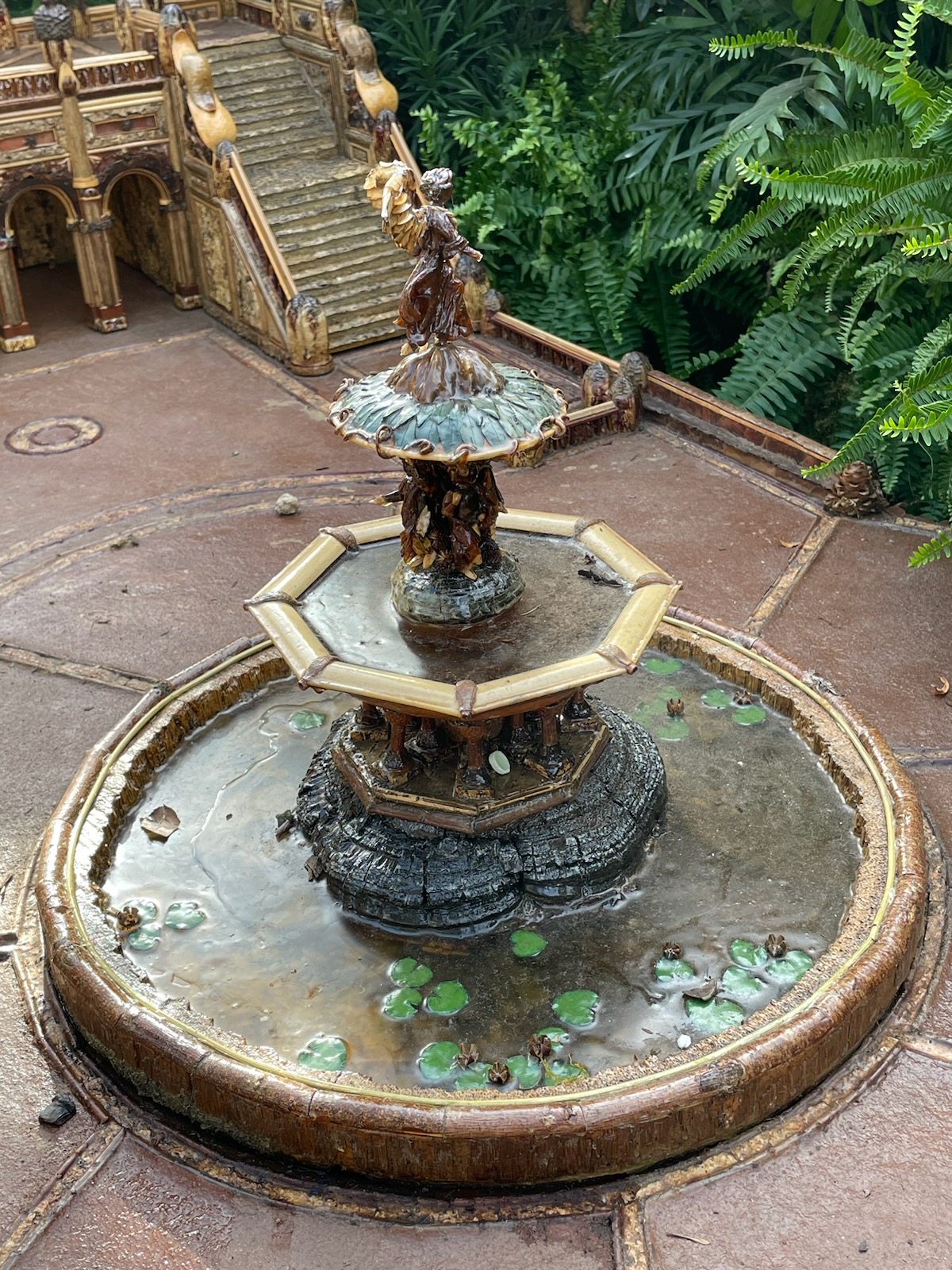
A diminutive Bethesda Fountain, the original installed in 1873, presented here in a small jewel of a Central Park.

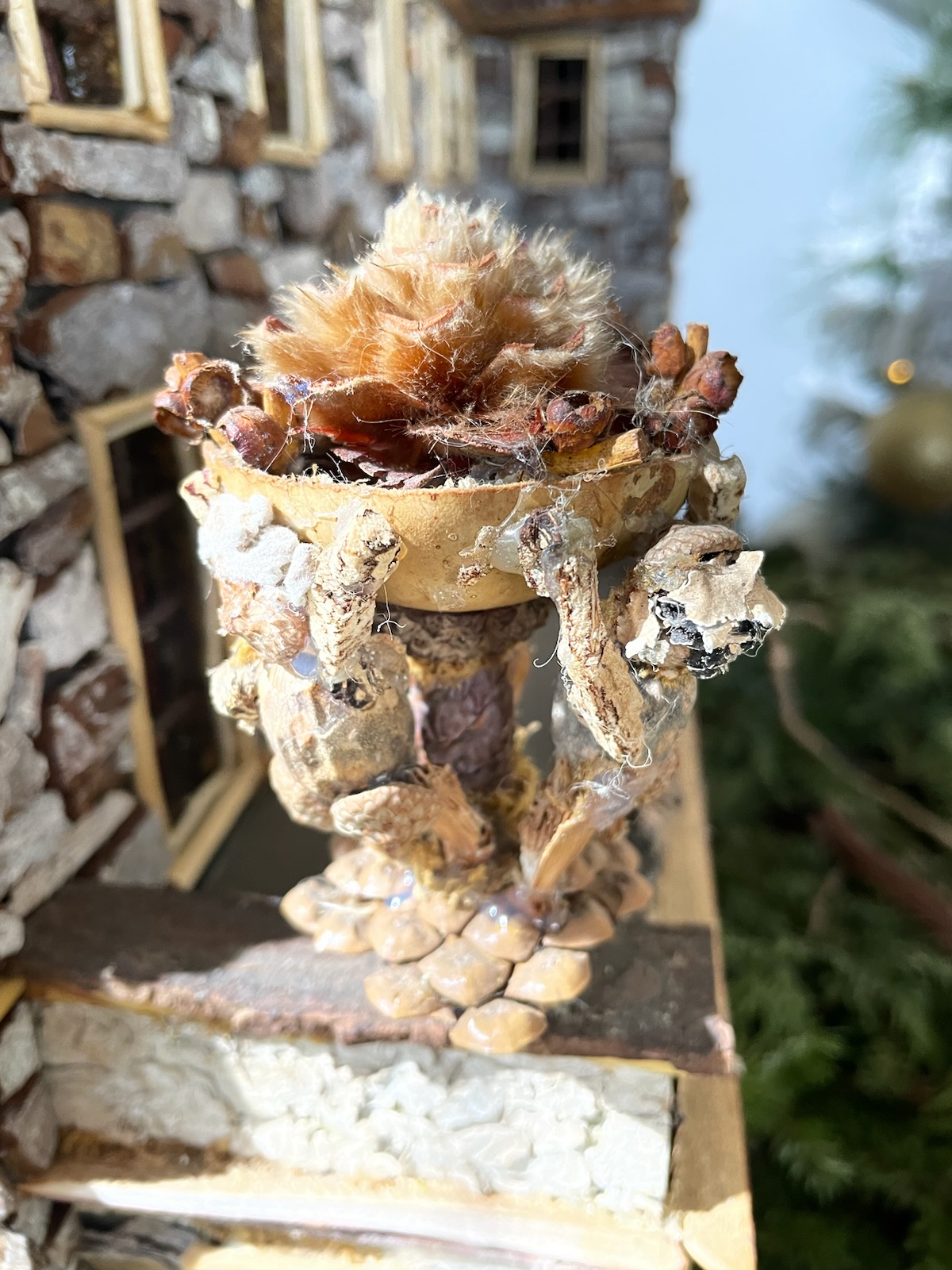
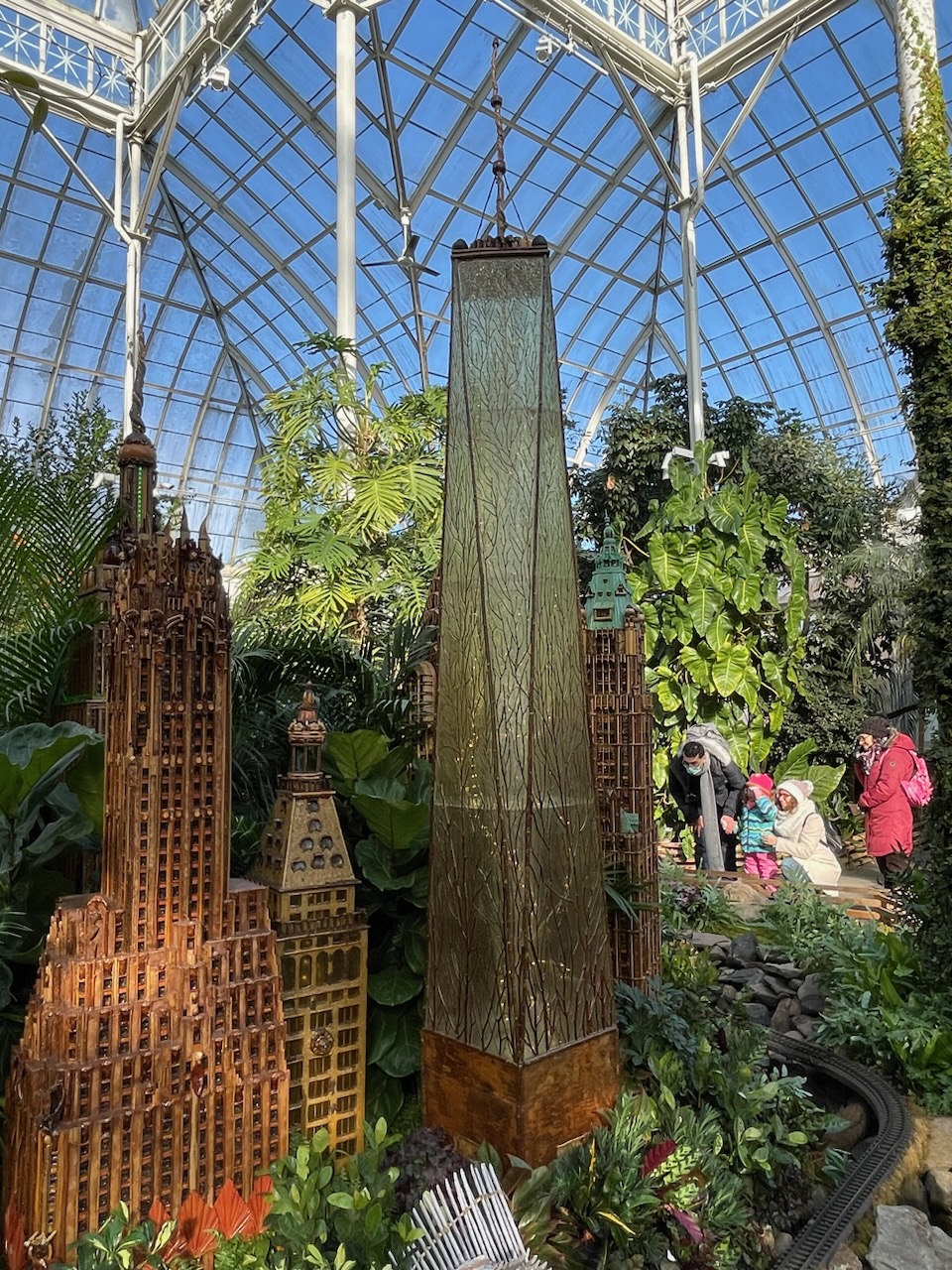
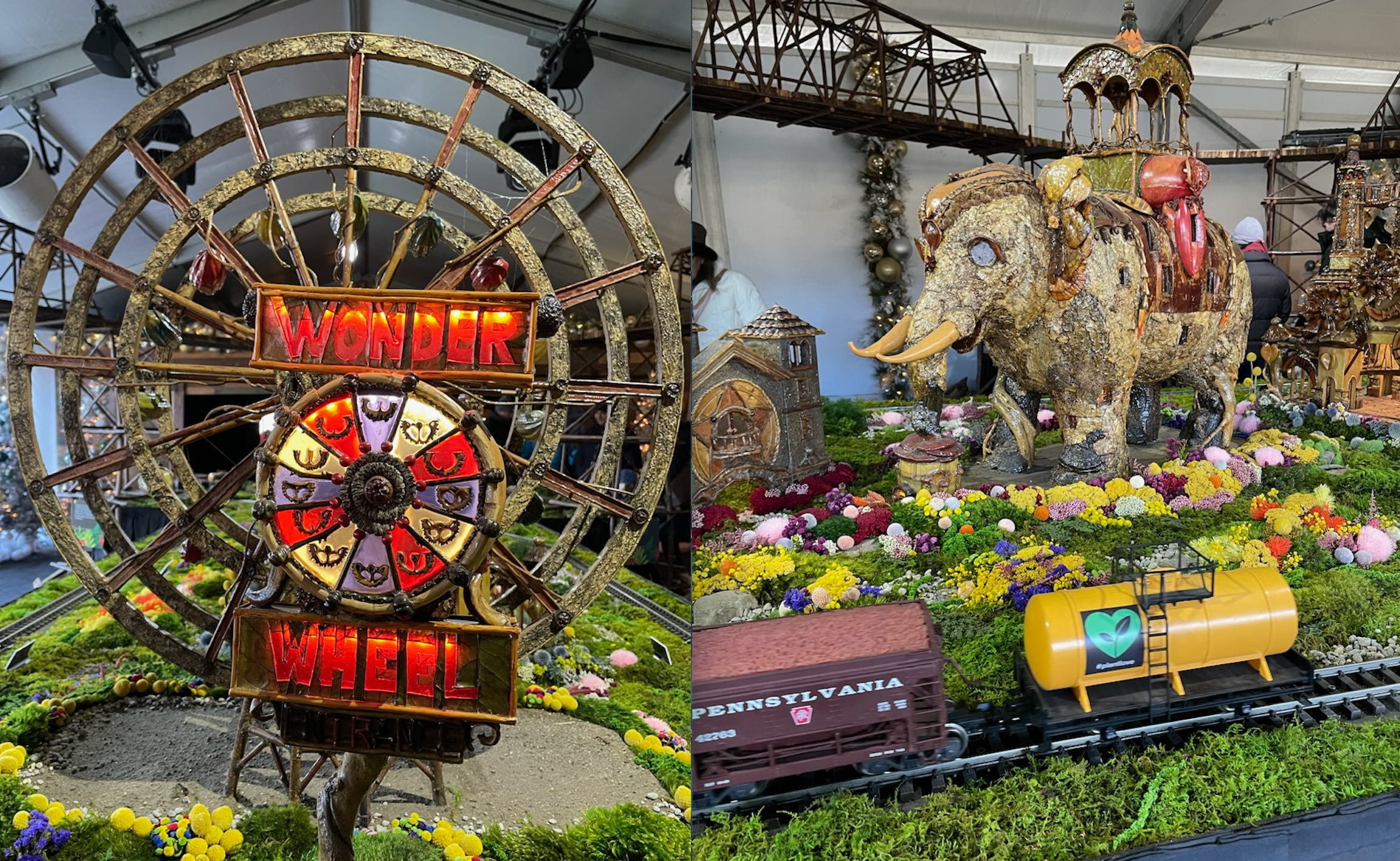
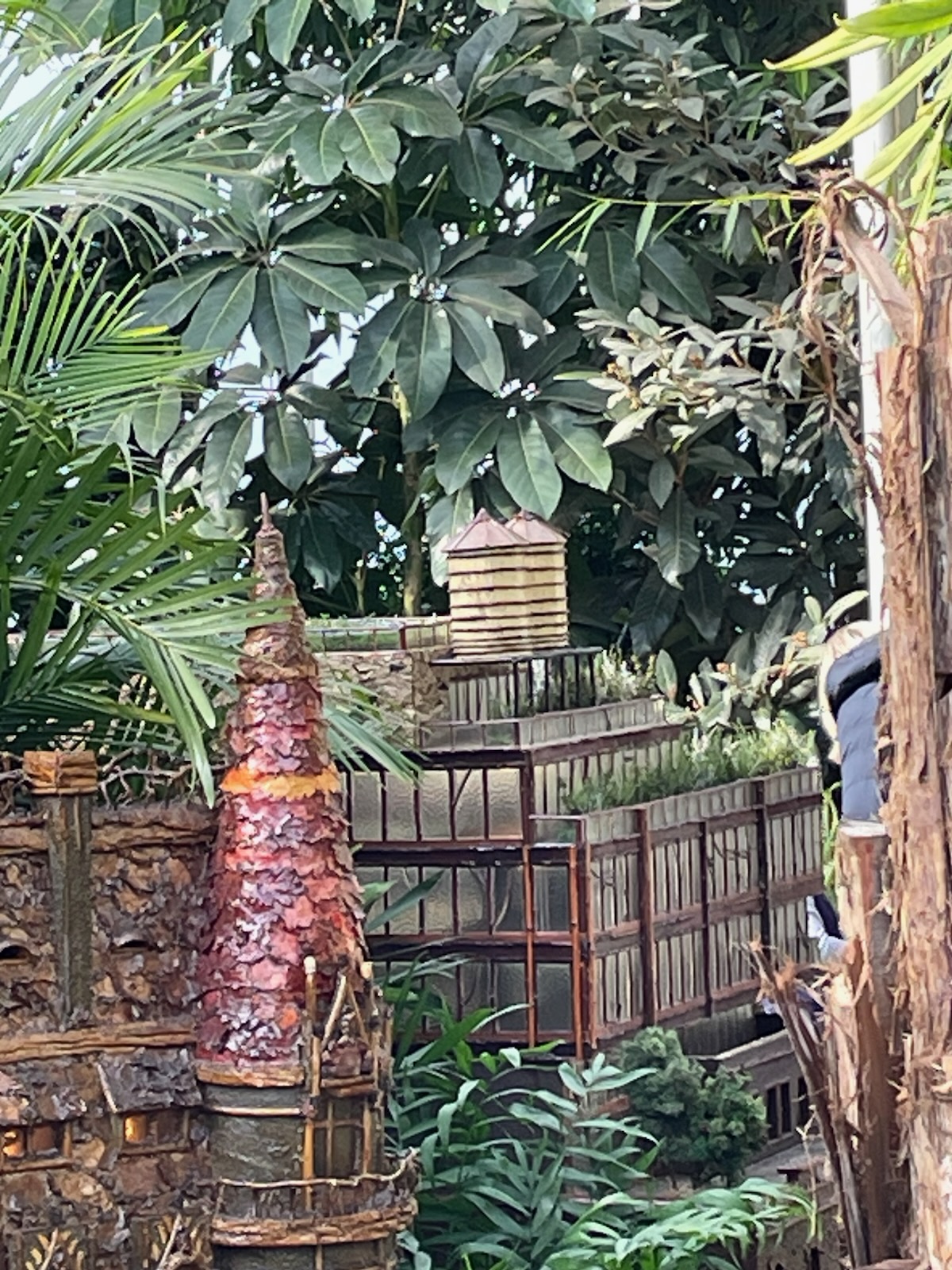
Everything is hand crafted of natural materials: pine bark, black cherry, eucalyptus stems, grapevine, acorn caps, magnolia leaves and many more.

The trains range from the traditional locomotive to the cutesy ladybug.

Childish wonder prevails. Most people are rapt.

Some not so much.

I hear a father counseling a bored pre-teen daughter: Just take it in. Another grinch opines in a loud whisper: Is there an adults-only time slot? True, there are many puffy coats jostling up against each other in front of the more popular displays, and lots of fidgety kiddos. But most visitors are delighted to be out of the deep freeze and crowded in to the steamy Enid A. Haupt Observatory, marveling and posing.

I think I love the most the way some structures glow from within.

And of course finding my old favorites here. The New York Public Library, complete with its lions, Patience and Fortitude.

Because it is New York, where we tend to color outside the lines, locations outside the city limits can also be found here at the train show. Like Sunnyside, Washington Irving’s snuggery in Tarrytown, complete with a perfect little wisteria vine.

The George Washington Bridge, of course, but also, nestled beneath it, the Little Red Lighthouse.

Always something new. I notice a rendition of the Freedom Tower, as if the Freedom Tower was constructed of glass. What natural material was used to create this effect? Dragonfly spittle?

If you can drag your eyes away from the trains you’ll find some equally amazing plant life. Goeppertia insignis hails from Brazil. Ripe green smell of the rain forest.

A wonderful program started in 1992 in New York City. Called Poetry in Motion, it features brief poems by famous and not-so-famous writers posted in metropolitan subway cars. Poet Billy Collins, the former U.S. Poet Laureate whose work manages to straddle both critical acclaim and popular appeal, has said, I’m a great believer in poetry out of the classroom, in public places, on subways, trains, on cocktail napkins. I’d rather have my poems on the subway than around the seminar table at an MFA program. One of his poems, Grand Central, features a building here miniaturized.

The city orbits around eight million
centers of the universe

and turns around the golden clock
at the still point of this place.

Lift up your eyes from the moving hive
and you will see time circling

under a vault of stars and know
just when and where you are.

At the train show, Grand Central is a standout. I kinda wish there was a tree stump large as this one framing the real magilla. That would be cool.

There are no subway cars here. I ask a Botanical Garden staffer to explain. The “MTA cars wouldn’t have the proper gauge to fit on the tracks,” he articulates before wishing me a Merry Christmas.

I don’t know why, if in this universe they can perfectly capture a vanished Coney Island, it’s not possible to produce a subway car with poetry in it.

Charles Simic also has contributed to Poetry in Motion.

Every morning I forget how it is.
I watch the smoke mount
In great strides above the city.
I belong to no one.

Then I remember my shoes,
How I have to put them on,
How bending over to tie them up
I will look into the earth.

The art of the train show manages to be both mundane and sublime. Zora Neale Hurston wrote, Love makes your soul crawl out from its hiding place. So do these small, intricate, perfect displays. What would New York be without its water towers? Look closely, they are here throughout.

By the way, if the holiday season finds you in need of poetic sustenance, you can make a toll-free call courtesy of the Poetry Society of America and hear the work of Pablo Neruda read aloud by Billy Collins. The number is (212) 202-5606. You can do it while standing in the cold at the New York Botanical Garden or in the steamy enclave where the Garden has perfectly reproduced itself.

Or just gaze in backlit windows of these sublimely silent tableaux.

You might relate to the following, The Moment, by Marie Howe, also from a subway car posting:

Oh, the coming-out-of-nowhere moment
when,     nothing
happens 
no what-have-I-to-do-today-list

maybe    half a moment
the rush of traffic stops. 
The whir of I should be, I should be, I should be
slows to silence,
the white cotton curtains hanging still.

Bye the bye, my New Year’s resolution for this as every year is to eliminate the word should from my vocabulary. Life becomes more magical. It’s tough to do, but I think worthwhile. You should do it too.

3 Comments

Filed under Jean Zimmerman

Let’s go to NYC!

Let’s go! seems to be my pet phrase of the moment. I must use it a dozen times during every tour at Ellis Island. So when friends said they had had the archetypal NYC day recently, visiting the New York Public Library on Fifth Avenue at 42nd Street followed by the famed Oyster Bar at Grand Central Terminal, I had just one thought.

Let’s go.

Crispy, crumbly elephant ears on the train to Grand Central are a must. And the view along the Hudson. Even after the millionth time. John Cheever said, Better views than the Mediteranean about the Hudson Valley.

Manhattan in December features the usual fashionista tourists, and also the always welcome juxtaposition of hats for sale and tall buildings to gawk at. The lions that greet you at the front of the Library, Patience and Fortitude, have received their holiday adornment.

The exhibit currently on view at the Library, Treasures, features an assortment of the most extraordinary things from the 56 million the institution is lucky enough to own. For example, the custom-made dress shoes of Arthur Toscanini, the dramatic conductor whose shenanigans while performing resulted in many broken batons and chronic pain in his right shoulder and arm.

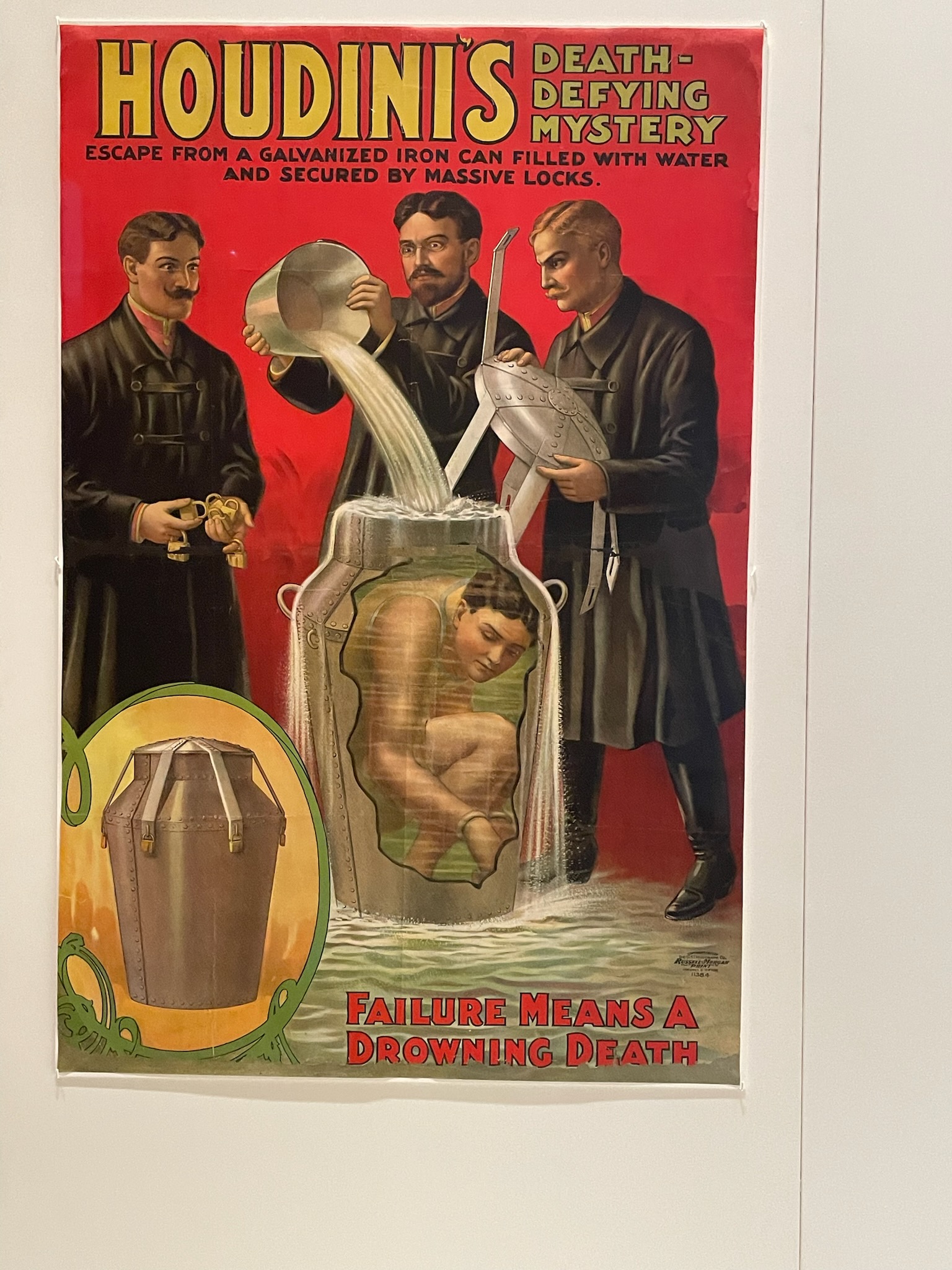
A 1908 poster advertising one of Houdini’s most death-defying feats.

A powerful 1971 sculpture by American feminist Elizabeth Catlett called “Political Prisoner.” Maybe Houdini could offer some get-out-of-shackles pointers.

Just down the way, the original Winnie the Pooh, given to the real Christopher Robin Milne on his first birthday, and, even more interesting because I had never glimpsed it before, the original Tigger. And because I always really liked Tigger the best.

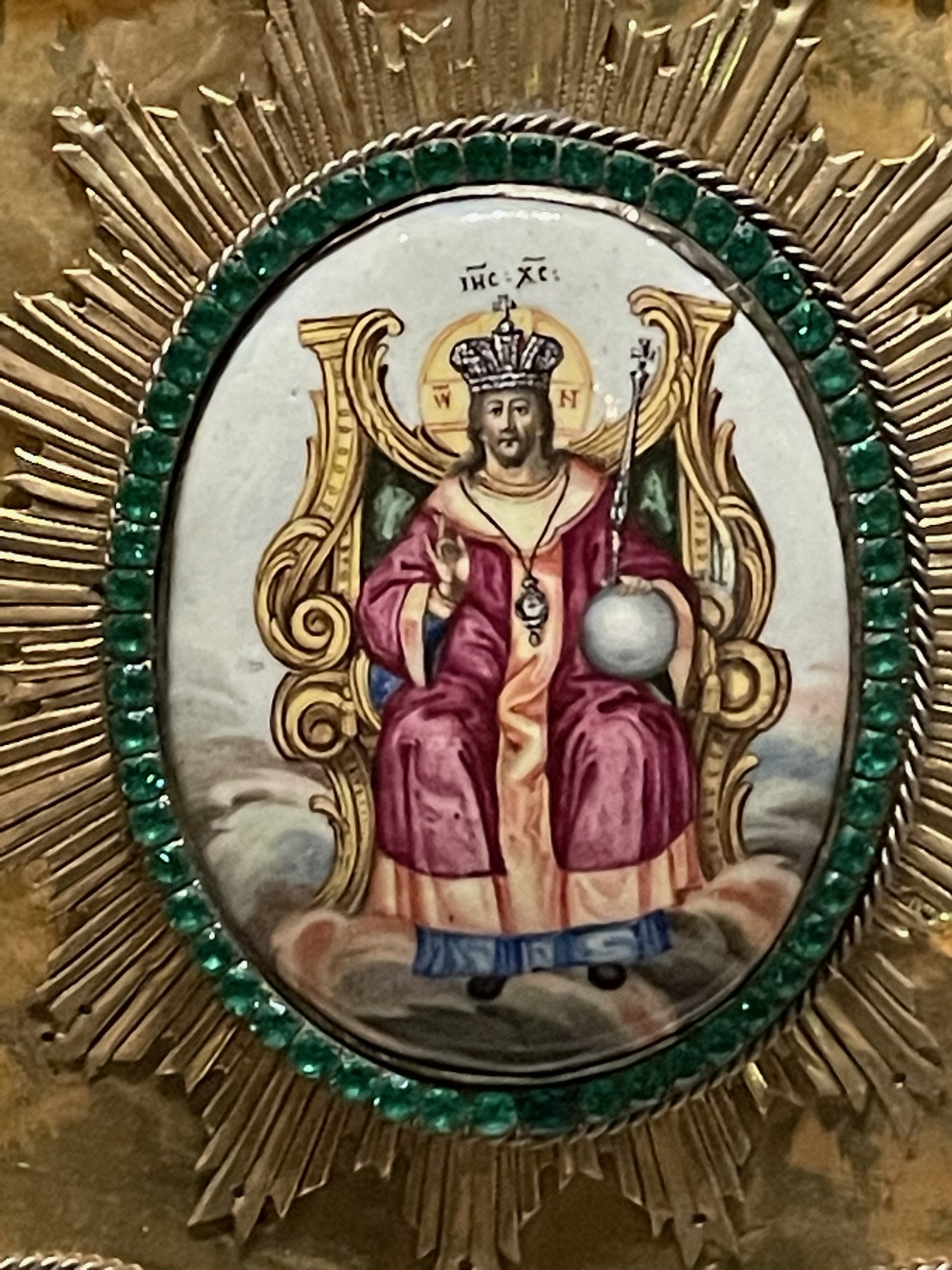
A sumptuous altar gospel from 1791. Silver and enamel. Nothing else in the world compares. Sort of like you or me.

A comic book about Harriet Tubman. What?

From the sublime to the ridiculous and back to the sublime, with a picture of three greats, Sarah Vaughan, Pearl Bailey and Ella Fitzgerald, captured by jazz bassist Milt Hinton, who also happened to be a great photographer.

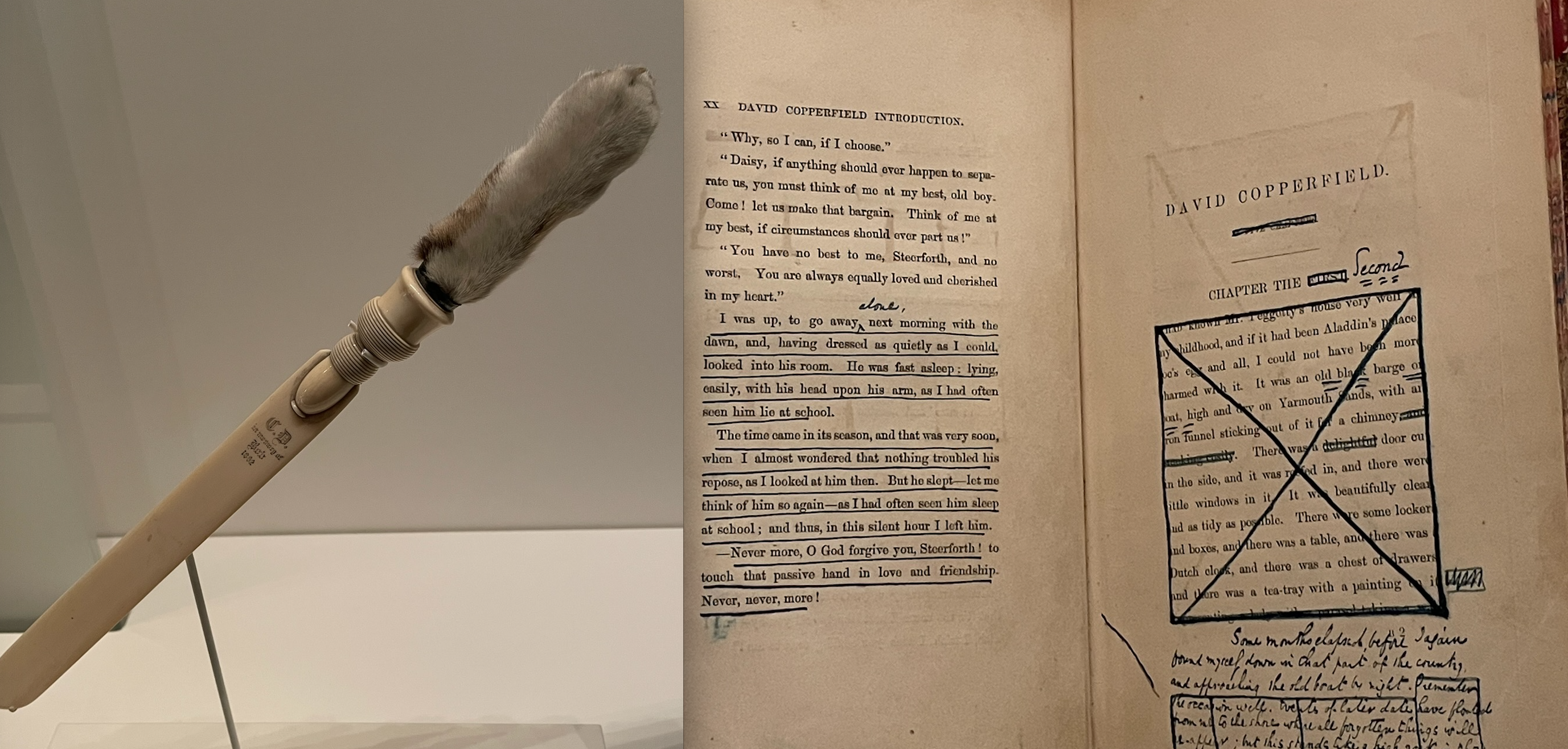
Of course it makes sense that the most important library in the world (to me) would have some amazing literary artifacts. Some I’d seen at an earlier exhibit but never tire of include Dickens’ lecture copy of David Copperfield from 1861. The writer loved giving over-the-top performances of passages from the book, and wrote to a friend, I read “Copperfield” and positively enthralled the people. It was a most overpowering effect, and poor Andrew [a lieutenant in the Royal Navy] came behind the screen, after the storm, and cried in the best and manliest manner. Also on display, Dickens’ paper knife, embellished with the mummified paw of his beloved cat Bob.

And the desk chair where the great man plopped his bottom down to produce his amazing work.

Also a favorite, the walking stick Virginia Woolf took on her final walk in 1941 to her drowning death in the River Ouse. They recovered the cane later.

At this point it would do well to note that some of the most impressive things at the Library are not in the exhibit proper but the exhibit’s surroundings. Look up at the intricately carved ceiling.

Or down at the floor, at the buffed brass electrical plate. Another gem, and it didn’t cost them anything.

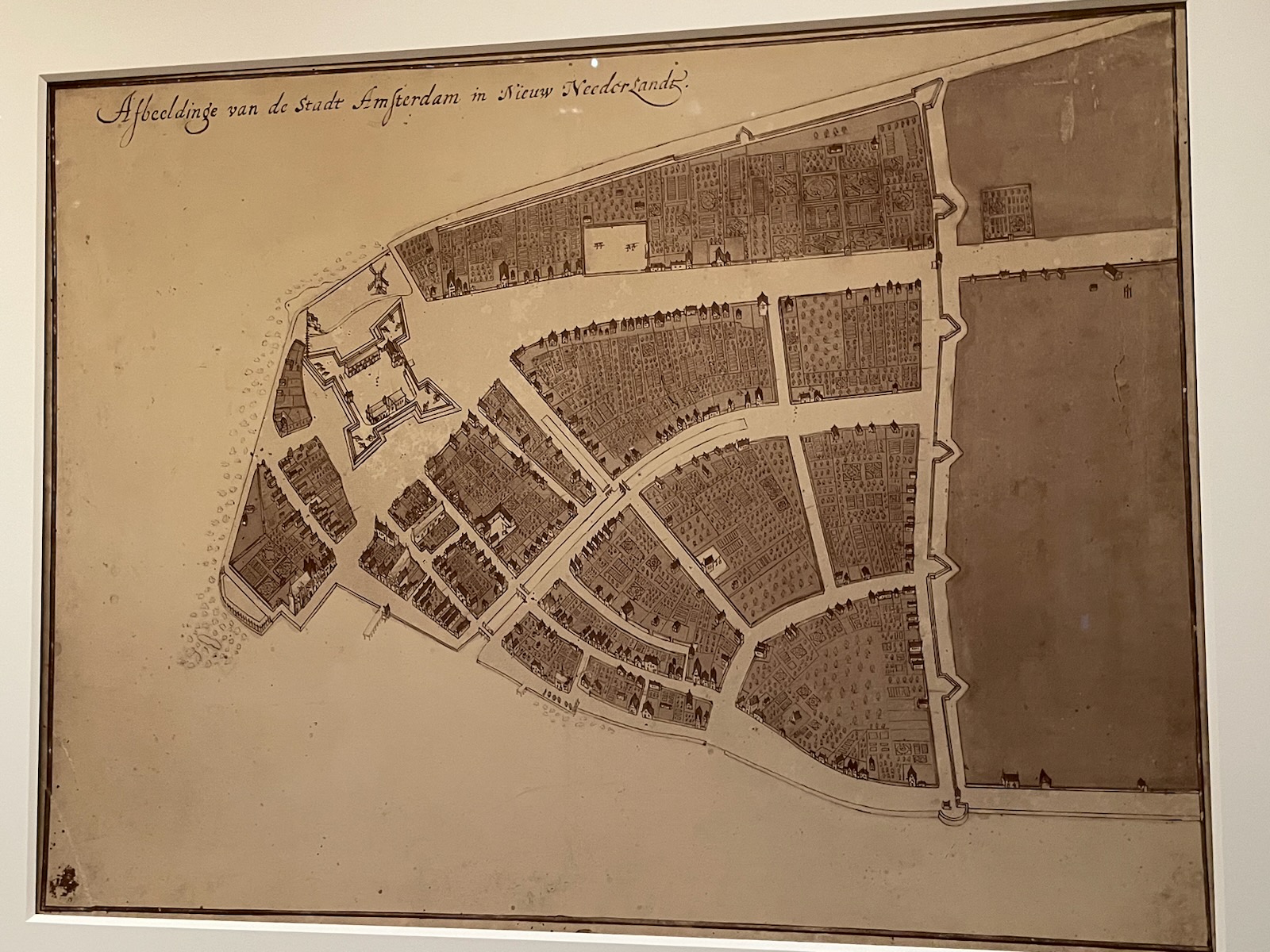
A couple of other favorites. The Castello Plan, the first street map of New York City, dating to 1660.

And the Greensward Plan, the original map of Central Park.

I happen to know because I wrote a book about a man named I.N. Phelps Stokes that he was responsible  for salvaging both of these precious items from obscurity — the Central Park map mouldering in the City Arsenal basement, the Castello Plan disintegrating on the wall of a remote Italian palazzo. But I see no mention of Stokes in the extensive write-ups of these treasures.

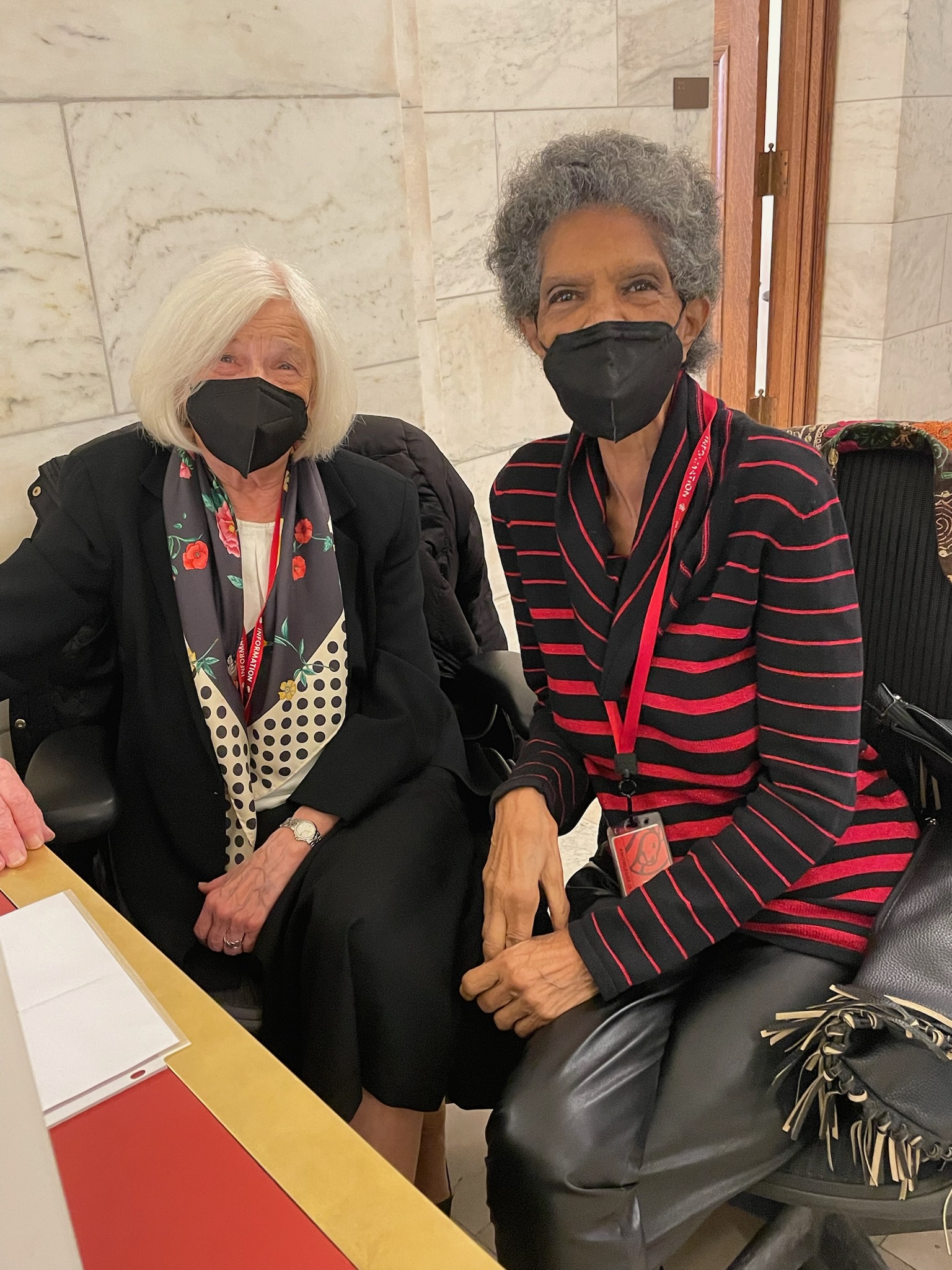
So let’s go elsewhere in the Library for more Stokesiana. I spent much time here when I was researching the mighty collector of New York history – he was one of the founders of the library back in the day and had an office here on the second floor. In these uncertain times, security is tight all around the place. I couldn’t wander back to see his old office as once was possible. Two stern volunteers prohibited my passage before posing for the camera. “Do you have a gun?” asked one, smiling politely.

One flight up, more rules. It is no longer possible to simply walk into the Rose Reading Room, or along the echoing marble corridors, which have new barricades and guards all around. A nice person named Sam who was there in some official capacity escorted me around to see the changes the digital age has wrought – you no longer submit card catalog requests via a pneumatic tube, for example, one of the wonders of doing research here in the past. To return the favor, I introduced him to the wonderful bit in the lower right hand corner of one of Edward Laning’s monumental murals, dedicated to Stokes, who had them installed here in 1940. Except for his unfailing helpfulness and encouragement these paintings would not have been. Indeed.

Enough with the nostalgia and out through the new, expanded gift shop. A chachka in every pot.

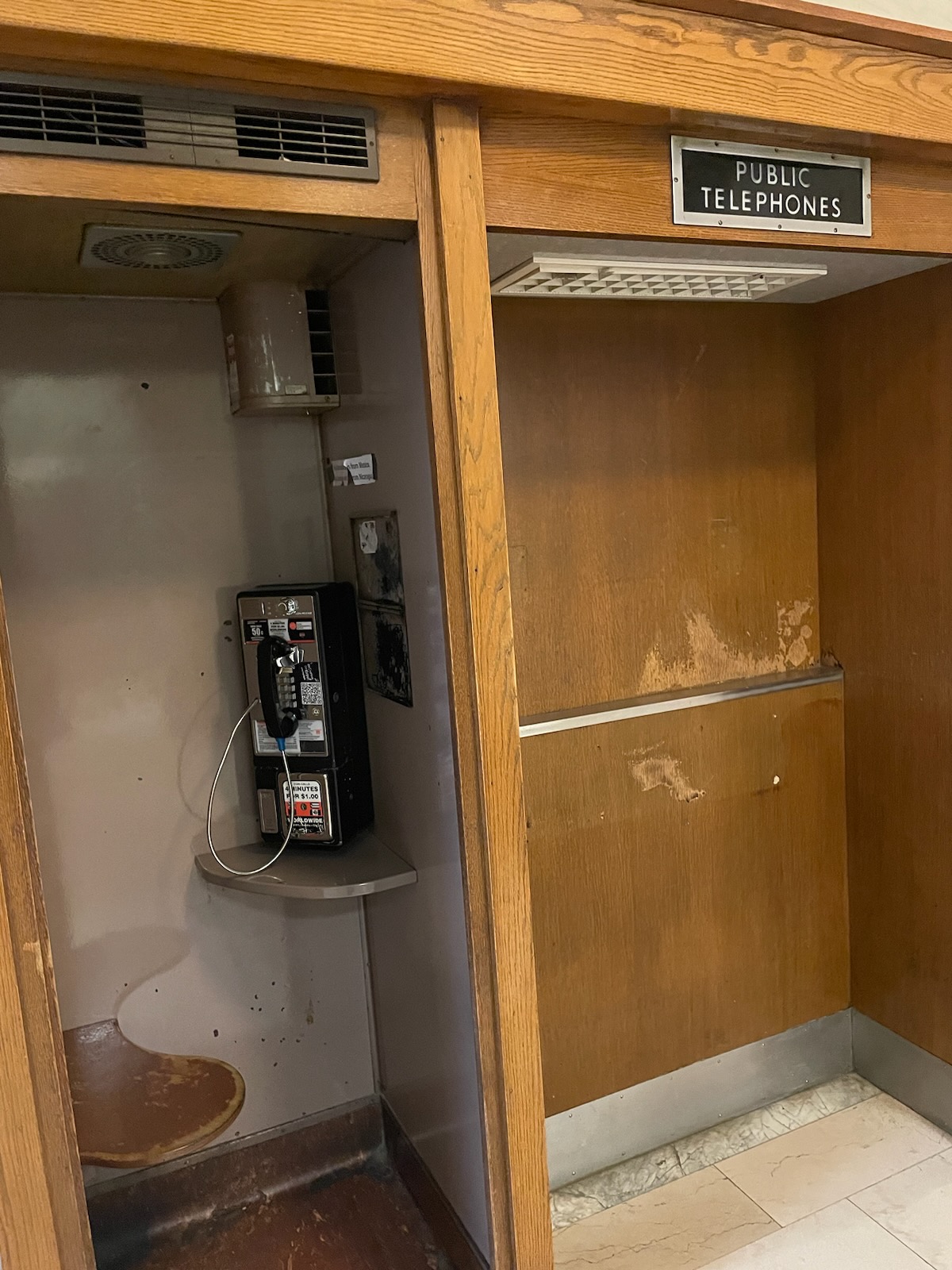
We pass one more nostalgic favorite on our way, surely the last remaining phone booth in New York City, where I dropped many a quarter back in the day.

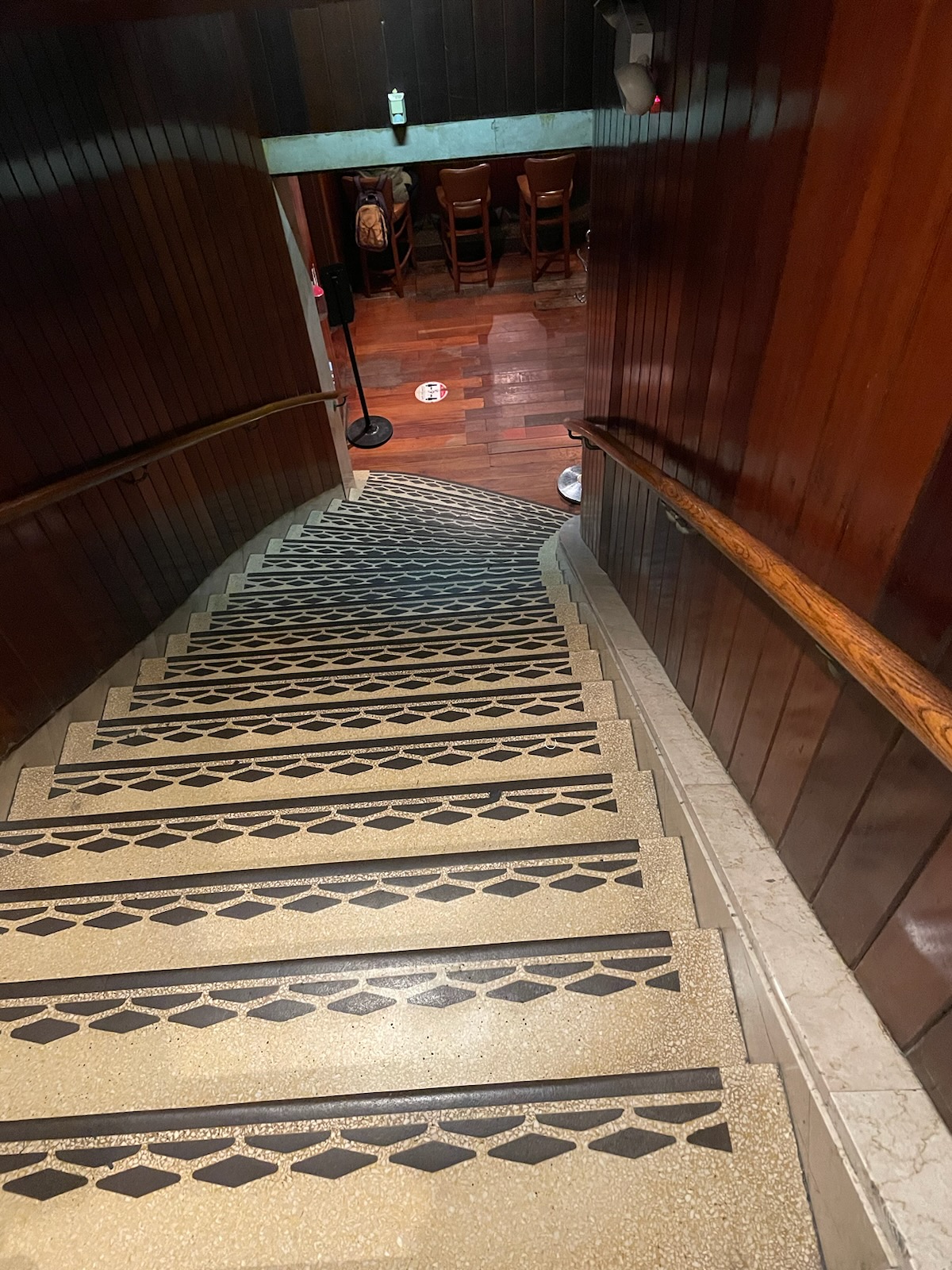
Hungry? Let’s go. It’s time for the Oyster Bar, founded in 1913 at the behest of Cornelius Vanderbilt himself and pretty much exactly the same now. A good way to enter is the back-door staircase to the Saloon, strictly for cognoscenti.

The cognoscenti also sit at the counter and know to ask for the oyster stew, made to order. You can get a lot of other fancy stuff at the Oyster Bar, but why would you? Carlos has been at the restaurant 31 years.

He filled me in on some closely held Oyster Bar secrets. Have you ever noticed that people will tell you secrets, if you only ask?

There are six oysters in each plate of stew, he confided – more if the chef decides he likes you. The oysters in the stew are all bluepoints, because that particular variety is neither too salty nor too sweet. Customers also order bluepoints on the half shell – sometimes two, three, four dozen at a pop. Yum. The place shut down for 18 months during the Pandemic. What did you do during your time off, go fishing? I asked. No! he said. Porno and pot.

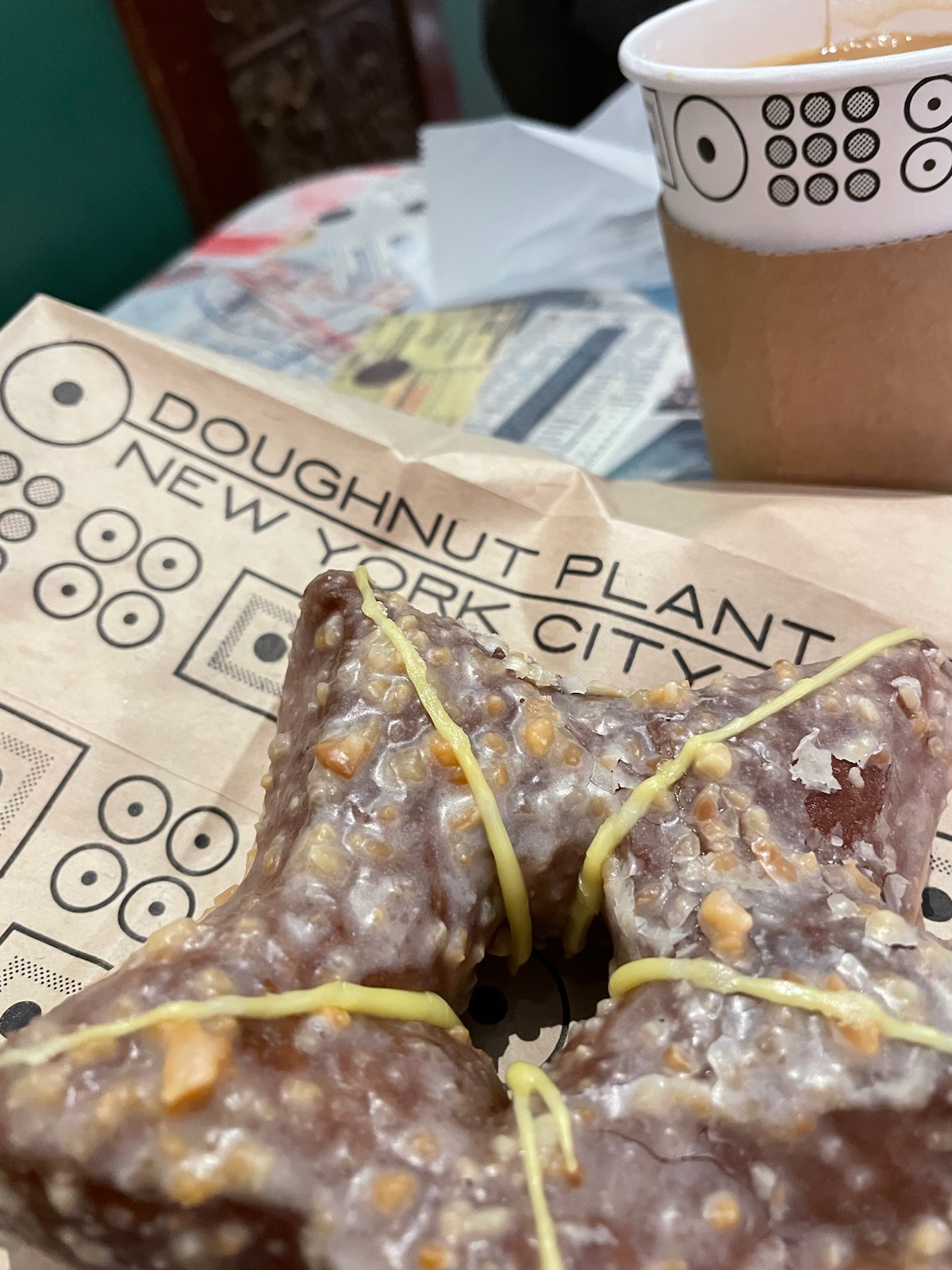
At Doughnut Plant, the Marzipan Star special “just dropped yesterday,” the haughty counterperson told me. Worth every calorie.

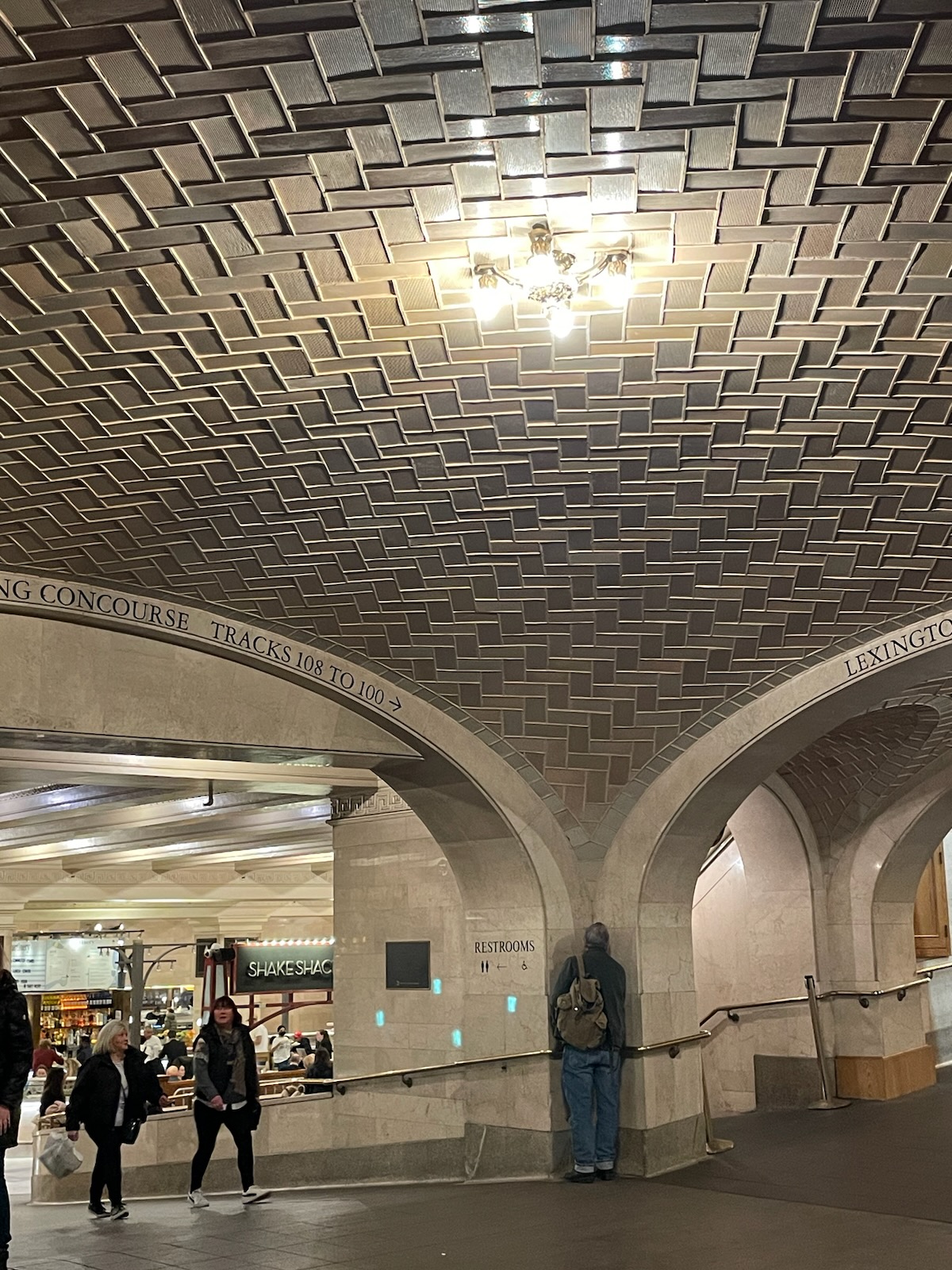
Just outside the Oyster Bar is the famous whispering gallery, low ceramic arches designed famously by Guastavino. If you stand in one corner and speak in a low tone, through acoustical wizardry your buddy standing all the way across the hall at the other side of the arch can hear you perfectly. Everybody standing around like in Blair Witch.

Am I hearing I love you or Let’s go! Does it matter?

6 Comments

Filed under Jean Zimmerman

If you are a perpetual learner

(I am) this is the job for you.

Haitian Inspector’s name is Jean, too. Jean-Robert, he tells me. Explains that where he comes from, the Catholic church would put the name Jean first in front of all the boys’ names because men should be in front of women. Doesn’t happen these days, he says. Phew, good to hear. Jean-Robert is one of the careful New Yorkers who still wears his mask shield religiously.

Start location today, corner of Orloff Avenue and Cannon Place in the Bronx. Little crinkum-crankum streets in this neighborhood that someone outside New York would probably not expect. Two juvenile Eastern redbuds flank the entrance to Van Cortlandt Library. One might stand in the way of a pedestrian ramp to be constructed here. Hence the presence of a tree consultant.

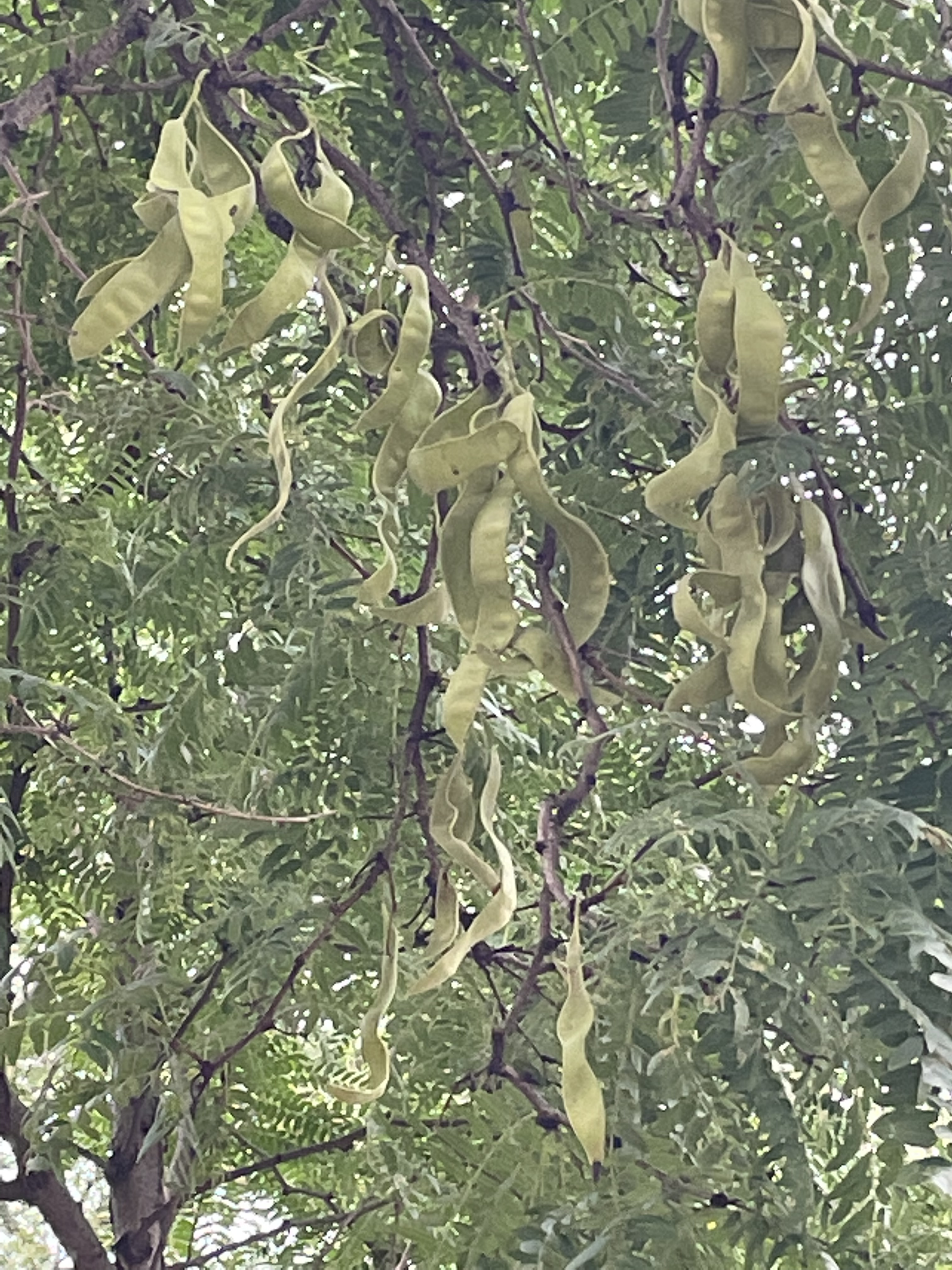
Nearby, honey locust dangles its acid-green seed pods. One worker on a previous site was intent upon the question of whether these seed pods are edible. He brought one home to investigate. People are curious, no matter how jaded we might think everyone is.

In fact, when the legume of Gleditsia triacanthos ripens, its gooey green contents may be devoured by cattle. Digesting the pulp, cows and horses then part with the hard, tannin-rich seeds contained within the pod, and so junior honey locusts are born. Not, of course, in the Bronx. Native Americans had a use for the pod–they had a use for everything, of course– it was utilized for food and medicine and also for tea. Europeans had the bright idea of using the tree’s thorns as treenails for shipbuilding.

Success always demands a greater effort. Thus spake Winston Churchill, a man whose greater effort customarily required great quantities of alcohol. We have a doctor’s note to be used on the statesman’s trip to the U.S. during Prohibition.

In a letter to his wife, Churchill mentions drinking “champagne at all meals & buckets of claret & soda in between.” There was also the beverage his children called a “Papa Cocktail”: a tipple of Johnnie Walker Red to cover the bottom of a glass, to be filled with water and sipped throughout the day. However, as is well known, the man loved champagne the best. And Cuban cigars. Perhaps he would like this shirt on display in a Bronx shop window.

Thinking recently about when I first transitioned into the field of arboriculture and had a lot of learning to do, a major effort. In the tree industry as in other fields you need a credential to define you, and so I devoted many late nights to preparing for my certification exam, offered by the International Society of Arboriculture. I remember that I couldn’t quite believe I was studying for a multiple-choice test, at my stage in life—and that the material was so grueling. The memorization is challenging, even for people who have had years in the field. There were late nights spent at my desk studying diagrams of xylem and phloem, fortified by repeat listenings of a pop song by the band TV on the Radio that had as its chorus Everything’s gonna be okay! Everything’s gonna be okay!

That wee bit of hypomania I had been diagnosed with decades before now worked its charms. My love of language trailed me into the profession like the long shadow of a tall old pin oak, Quercus palustris. Would I really have to learn Latin? AP English had been more my speed back in the day. When I was growing up, what I knew of trees confined itself to the apple tree I climbed as a child and the oak tree by the driveway in whose crevice I created domestic worlds out of acorn caps and twigs. I was to find later on, teaching writing to arborists, that many had a Malus in their childhood which was their formative experience with dendrology, that the wizened backyard apple they encountered as an adult was their madeleine.

Now, even if I had wanted to I could not shake my obsession with the names of the exotica I was learning, terms like lion tailing, thimble, water sprouts, whoopie sling, gymnosperm, cow hitch, come-along grip, antigibberellins.  Yes, Winston, greater effort.

I newly fathomed the phrase, “You must go on. I can’t go on. I’ll go on.” (Mr. Samuel Beckett, of course.)

Clevis, inflorescence, bucking!

By day I mused over the petiole, the slender stalk that connects a leaf with its stem; my night dreams overflowed with phosphorus, oxygen, h2o. I filled my Five Star composition notebook (once the incubator for my book ideas) with the qualities of biotic diseases such as fire blight, nematode, black vine weevil, frass borer and  adelgids, leafhoppers. I still wasn’t sure if I’d be able to identify gummosis in the field, but now I knew at least that it was the exudation of sap or gum from a wound or other opening in the bark. Asterisk! Important! Field-grown no longer brought to mind farm-fresh green beans or juicy tomatoes but ball-and-burlap saplings that would survive transplant shock, no fertilization necessary. And of course, to the repeated rock-and-roll exhortation Everything’s gonna be okay!, the vital necessity of organic mulch. Yikes! How would I remember it all? Later I was to learn that even the most grizzled arborists customarily looked up the more arcane facts, there was no shame in it.

I recall sitting in front of a computer terminal at a bland Manhattan testing site near Grand Central Terminal and sweating over the questions, not sure I could make the grade. All around me people were proving their worth as correctional officers and real estate brokers, probably going on to great things, not grubbing in the arboricultural dirt (yes, tree people do call it that, not the more p.c. soil.) Yet I was excited. This project of mine was blowing up – it was heady, it was real. And, somehow, I passed.

On to the Bronx, years later, where ginkgo leaves flutter.

As do the latest fashions.

Haven’t had to use a cow hitch yet.

Leave a comment

Filed under Jean Zimmerman

The most pathetic park in the Bronx

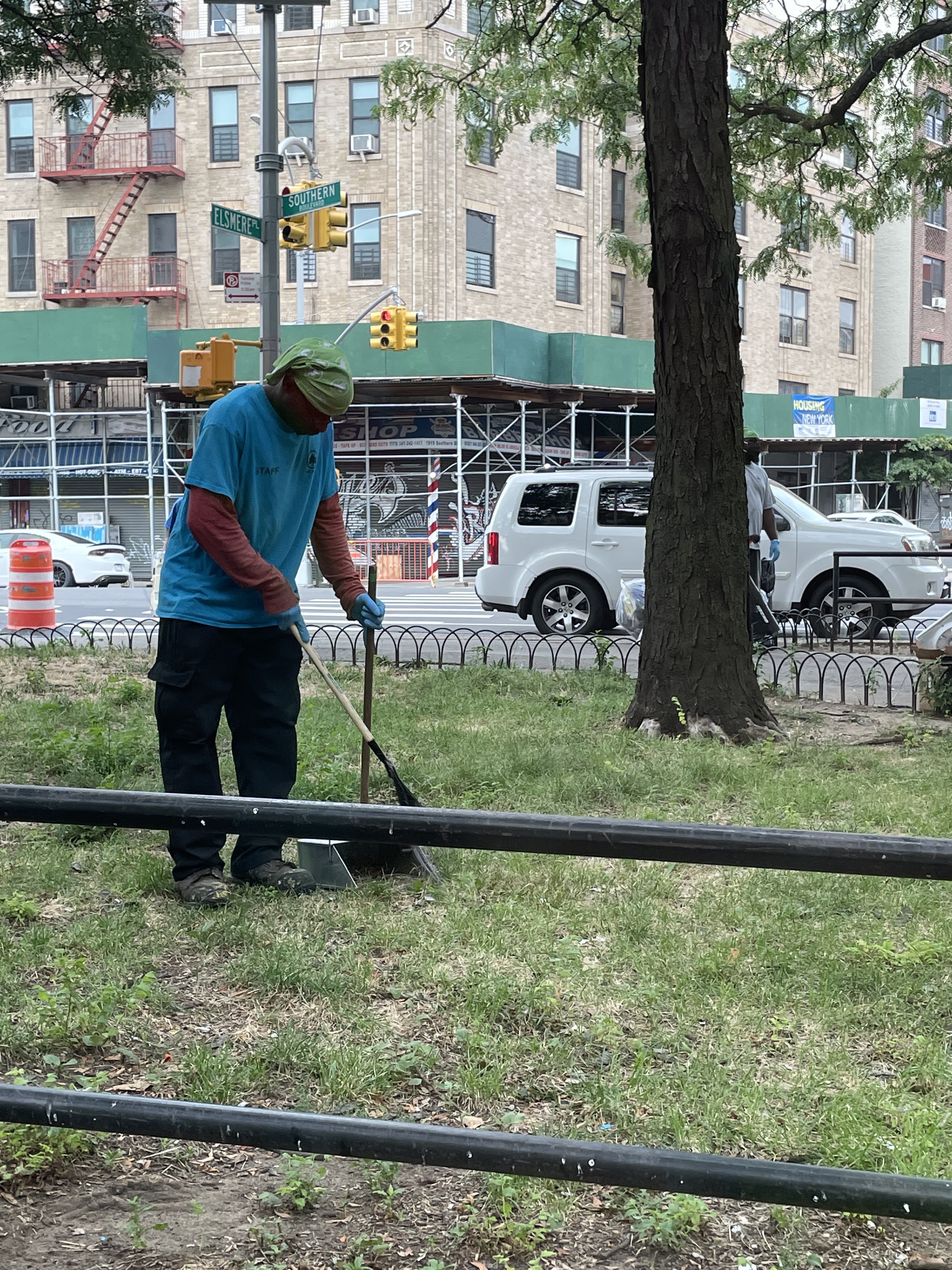
might be Corona Parkway Malls, at Southern Boulevard and Elsmere Place. Pathetic as in pathos, evoking pity or sadness.

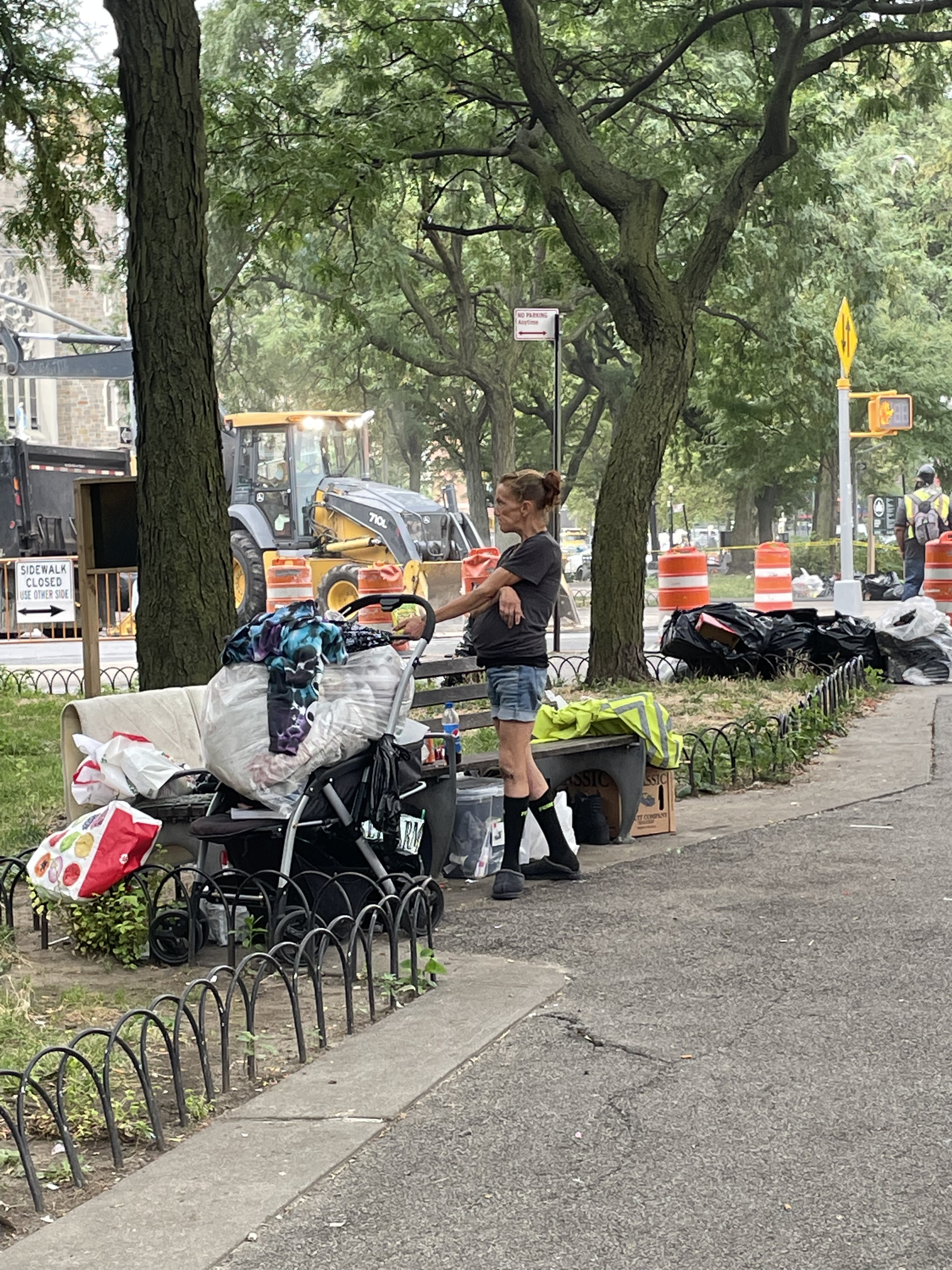
Never visited? Trash is everywhere.

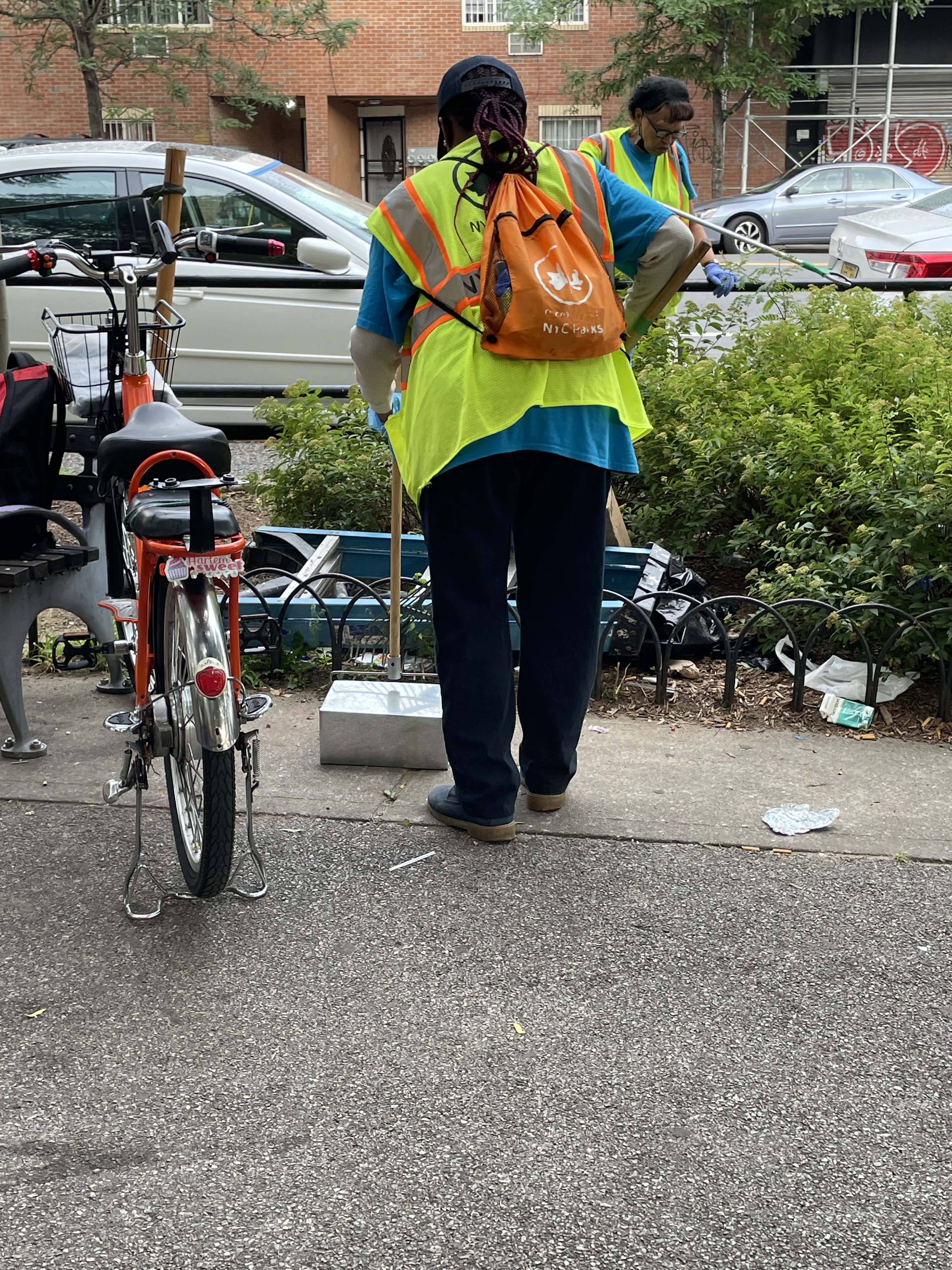
Despite avid, well-peopled efforts by the Parks Department to keep it clean.

I snapped her photo right before she told me No photos allowed. Really?

Lots of people make this park their home. People that don’t have a roof over their heads are up early, combing their hair, performing ablutions. Washing up at a fire hydrant. Fresh NYC water, among the best in the country (ranked 13th if you must know). Delivered from pristine reservoirs in the Catskills, and furthermore treated with fluoride, chlorine and ultraviolet light so it’s safe to drink.

Nodding out, first fix of the day. Good morning. On to another New York City day collecting bottles. This is what they refer to as an underserved community. Underserved? An understatement, that.

There might be a better city in which to be homeless. But how would you get there? Without anything in your wallet?

One person smoking, scowling, scratching, weeping, dancing by her bench in the style of Indian mudra, delineating shapes in the air with her hands and fingers. Wasted. Grime-tan. I watch her for a while, can’t help myself. She takes her time opening a sleeve of crackers, then polishes them off. Hard to know where crackers go in that skinny little body.

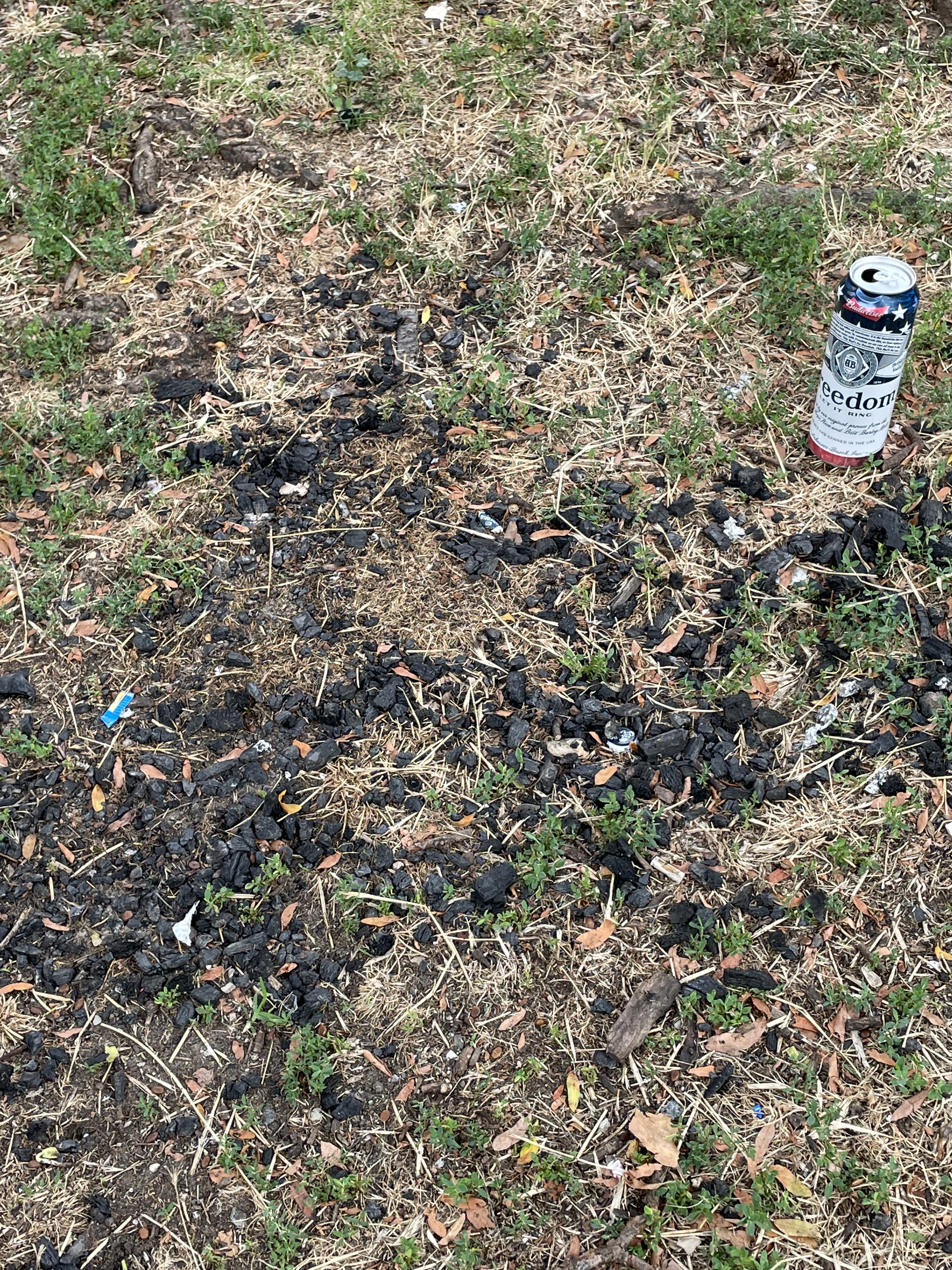
Waiting for my man. (Lou Reed, of course.) This Man comes through in a spiffy pork pie hat and anime tee shirt, collecting fistfuls of cash and deposit ing product in palms. Someone had an open fire one recent night. At 7am, only cinders remain. And a half-full beverage

Amid the wreckage, beauty. Life. Even nature. Red in tooth and claw. (Tennyson.) Pigeons walking the tightrope of a branch. A young London plane.

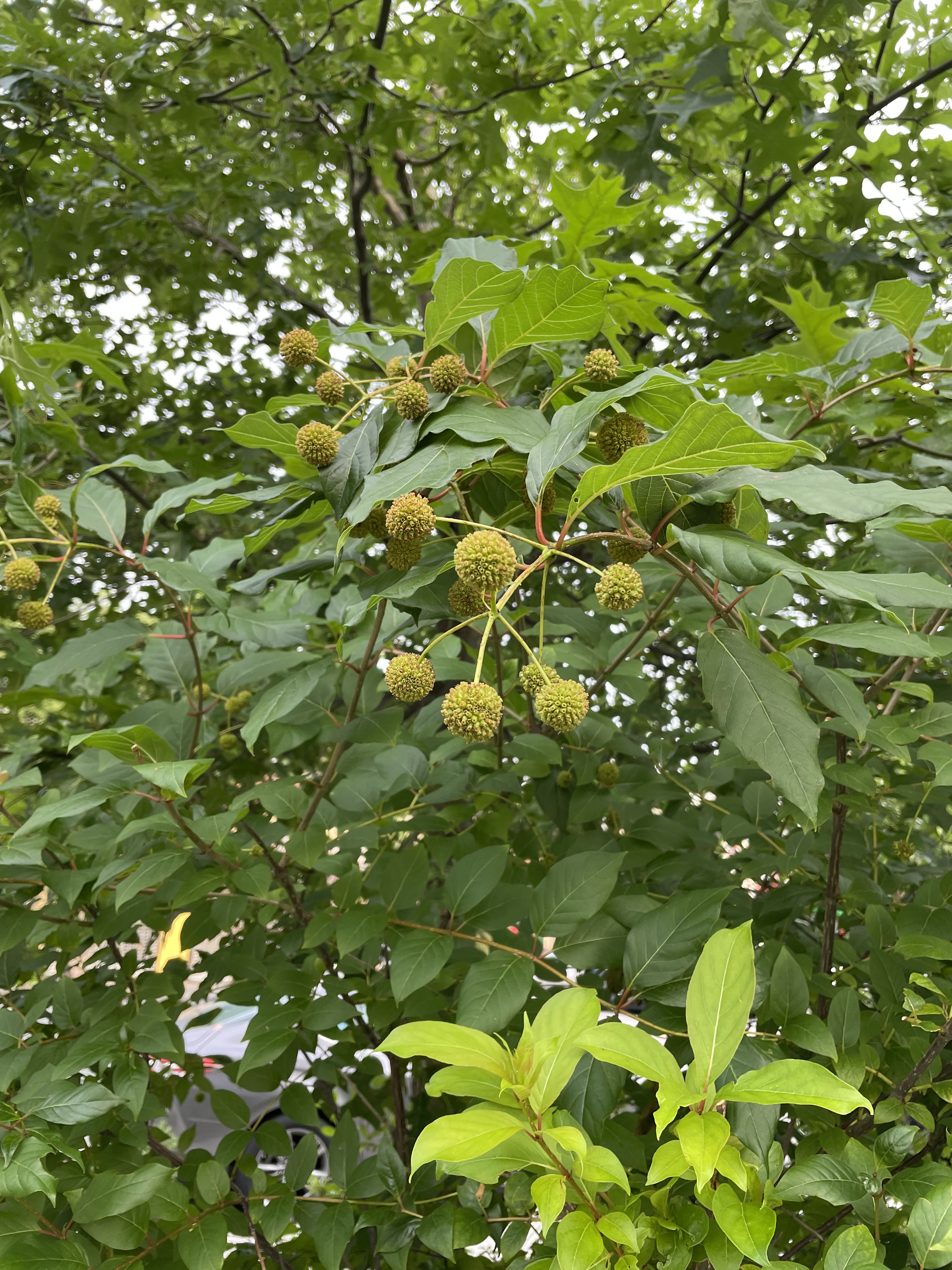
Common buttonbush – Cephalanthus occidentalis.

Buttonbush in the wild can attract more than two dozen species of bird, including kingbirds, towhees and hummingbirds.

Everlasting roses.

This is Jade. She sticks close, doesn’t need a leash. Nuff said.

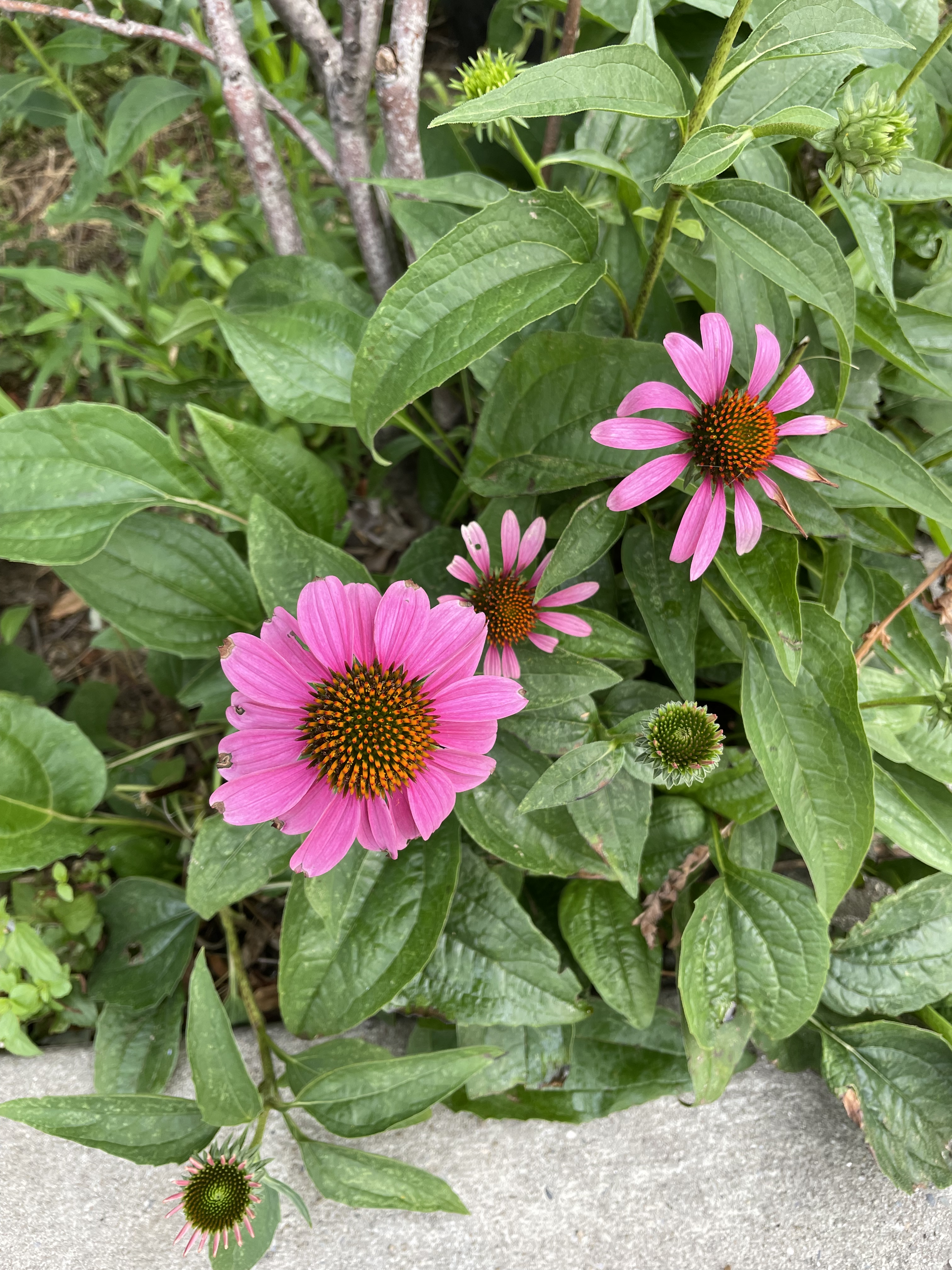
Coneflowers that would present the same glowing amethyst countenance in a luckier person’s country garden.

A well-endowed shrine on the site of a historical obelisk.

Memorializing two loved ones short-term visitors to the neighborhood will never know.

Lest you wonder what I’m doing here, I have a job — inspecting the site of a working sidewalk construction crew to make sure no trees in their path some to harm.

So far, no harm, no foul. I’m watching over a 90″ American elm, doing my best to shield it from the ravages.

What is compassion? Is a trait we reserve for humans (sometimes!) or does it extend to trees? Trees care for us, of course – they cannot help it, it’s the way they roll.

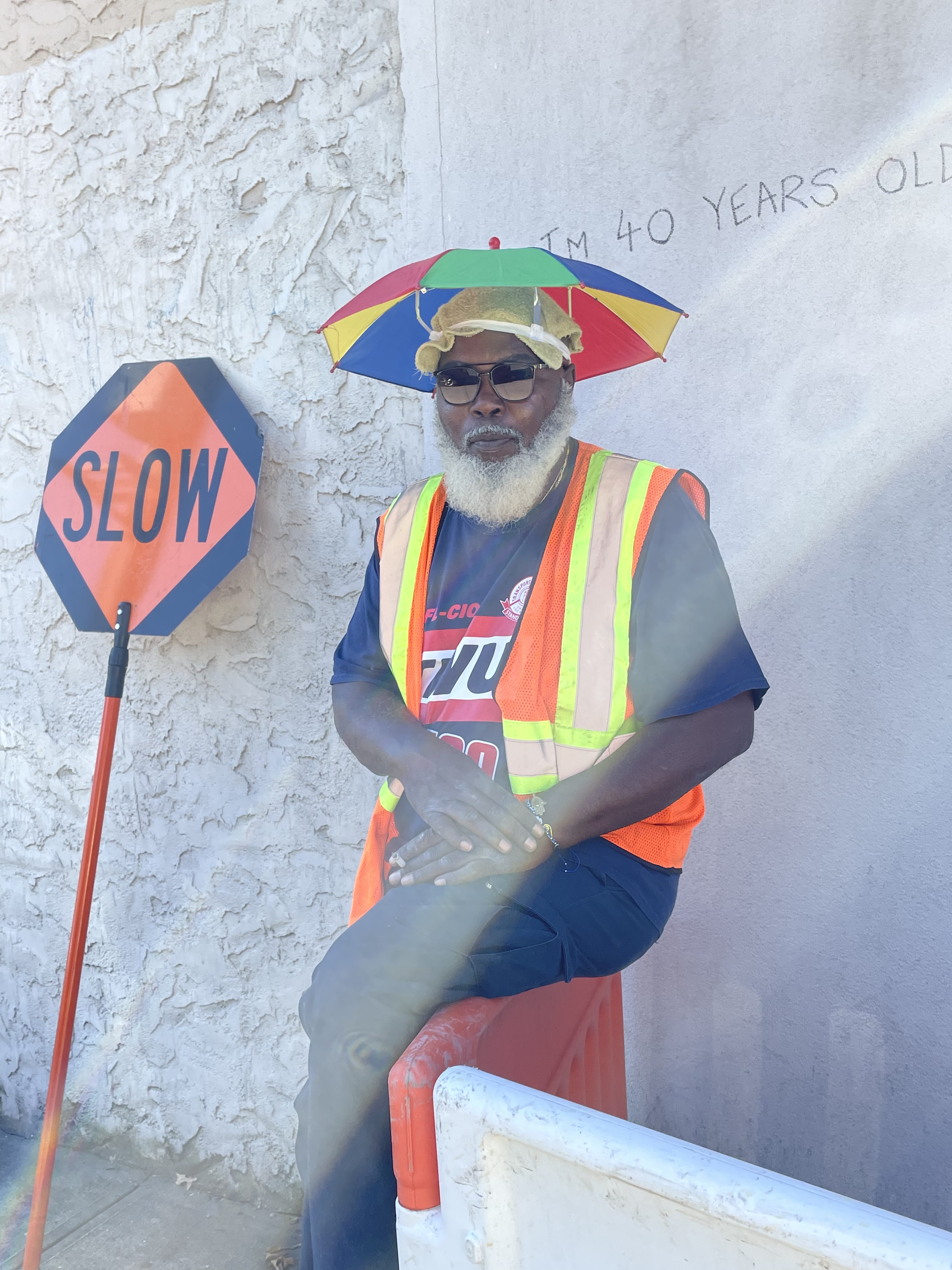
Flaggers, lifeblood of the construction industry. Keeping us all safe. Thank you, men. (These flaggers happen to be male, but the women flaggers I’ve met are some of the most fierce mama bears in existence.)

You’d have to work pretty hard and pretty carelessly to break a honey locust. Here they are bringing forth their young seed pods. Cattle in another place like to feed on the green goo that grows inside once they ripen and fall.

Great as these trees might be for urban areas, the powers that be where I live have seen fit to demolish mature honey locust trees in our downtown in order to install new sidewalks. Including half a dozen mature, shade-throwing specimens.

Here in Corona, honey locusts thrive. To the credit of a powerful Parks Department, we do not damage trees in New York City, let alone cut them down.

The shade they cast has been proven crucial to keeping people alive in the sizzling temperatures we have had recently, as the earth fries.

We all need canopy. It’s not an extra, an add-on. It is a life preserver.

Bystanders like to check out what’s going on. Take the morning air, catching what faint breeze there is.

A lucky tree – hurting, perhaps, damaged, yet soldiering on. As if the tree pit wasn’t small enough already, you can see three types of unwanted material dumped at its base. Yet it grows.

Is there still a chance to do better by these folks who call Corona Parkway Malls home? Tree canopy is a start. That goes for everyone, not just the most obviously broken. Which is why it’s a privilege to do a little something to protect this tiny piece of the land, this patch of urban forest, even if only to ensure the backhoe keeps away from the roots.

Leave a comment

Filed under Jean Zimmerman

I do like pin oaks

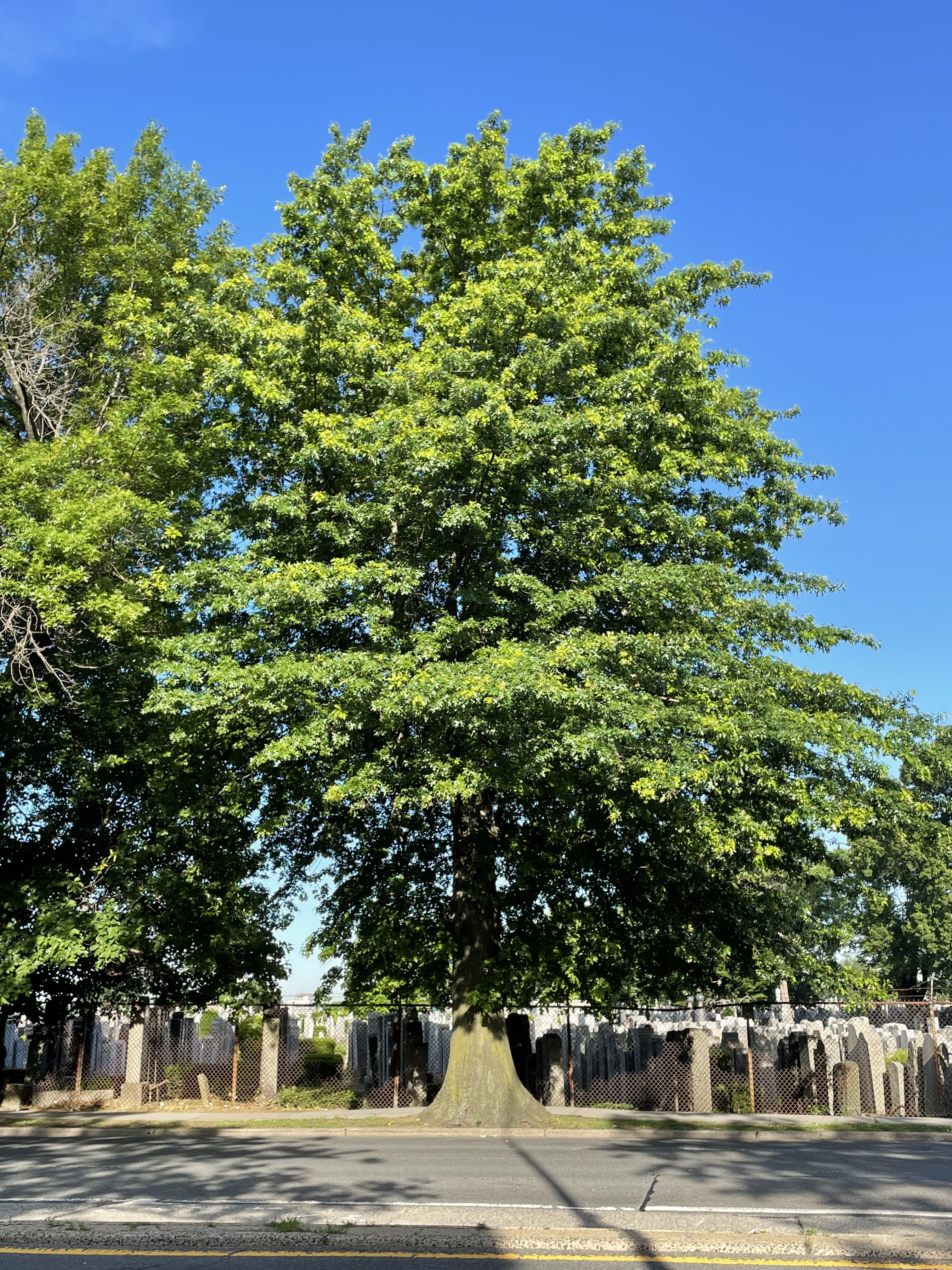
and especially those in groves, urban oases, such as in Flushing, the massive ones ringing Mount Hebron Cemetery.

Whoever laid the concrete sidewalks here most recently politely made room for the spreading roots of venerable Quercus palustris.

Excuse me, said the tree, we were here first. And the City complied, which is more than happens in other municipalities. New York’s rigor regarding tree protection is legendary.

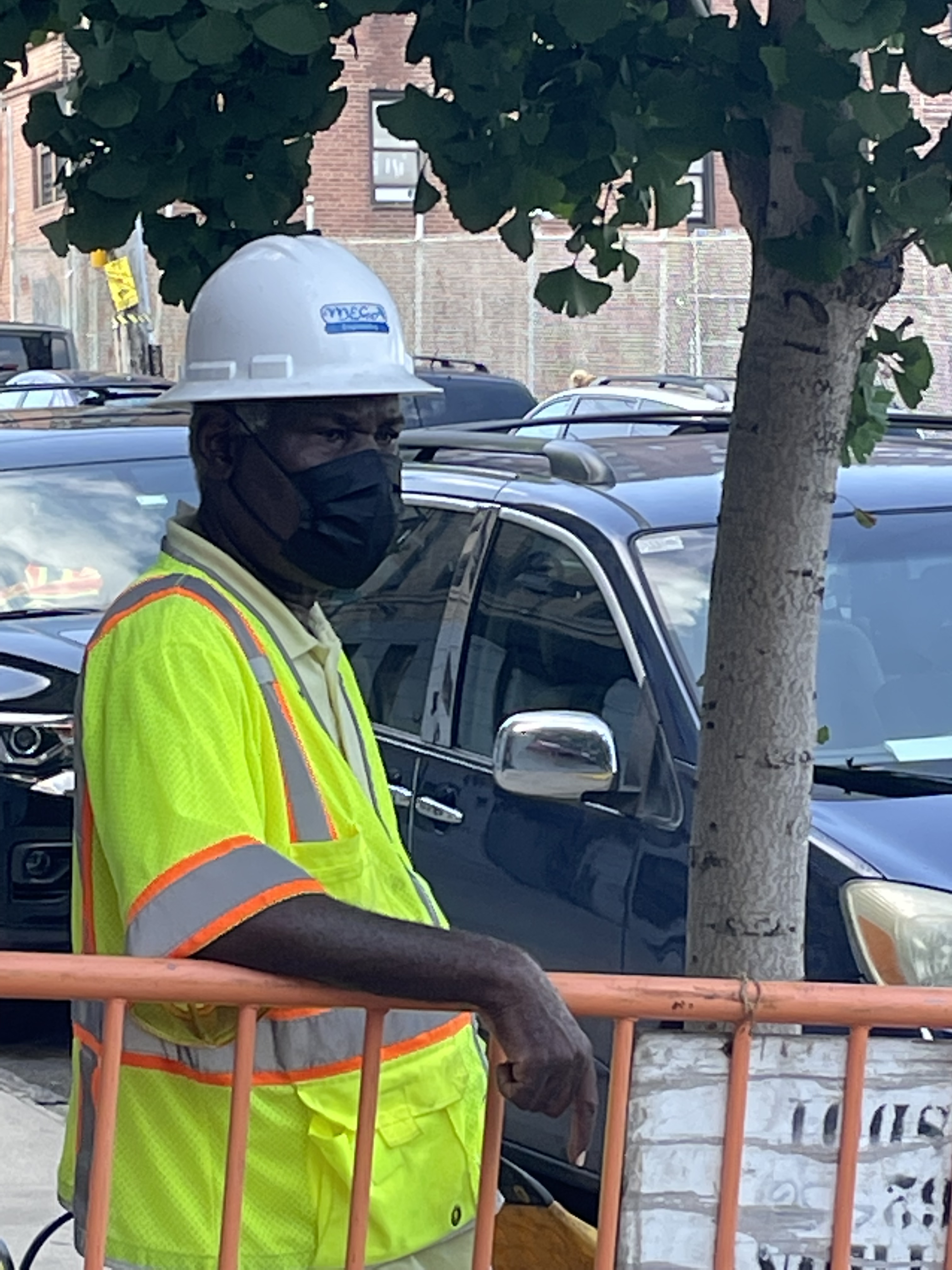
A breezy day in Queens. Anthony the flagger on a well-deserved break: It ain’t a hard hat, but it keeps off the sun. Not a day over 40, indeed. 

Deeply carved sinuses, the scallops that distinguish the pin oak leaf.

The tree has a unique habit – its branches hold up the sky at the top, stick out straight as a t square in the middle and droop a bit at the bottom of its shape. There is a monster of a pin oak square in the middle of this sprawling burial ground.

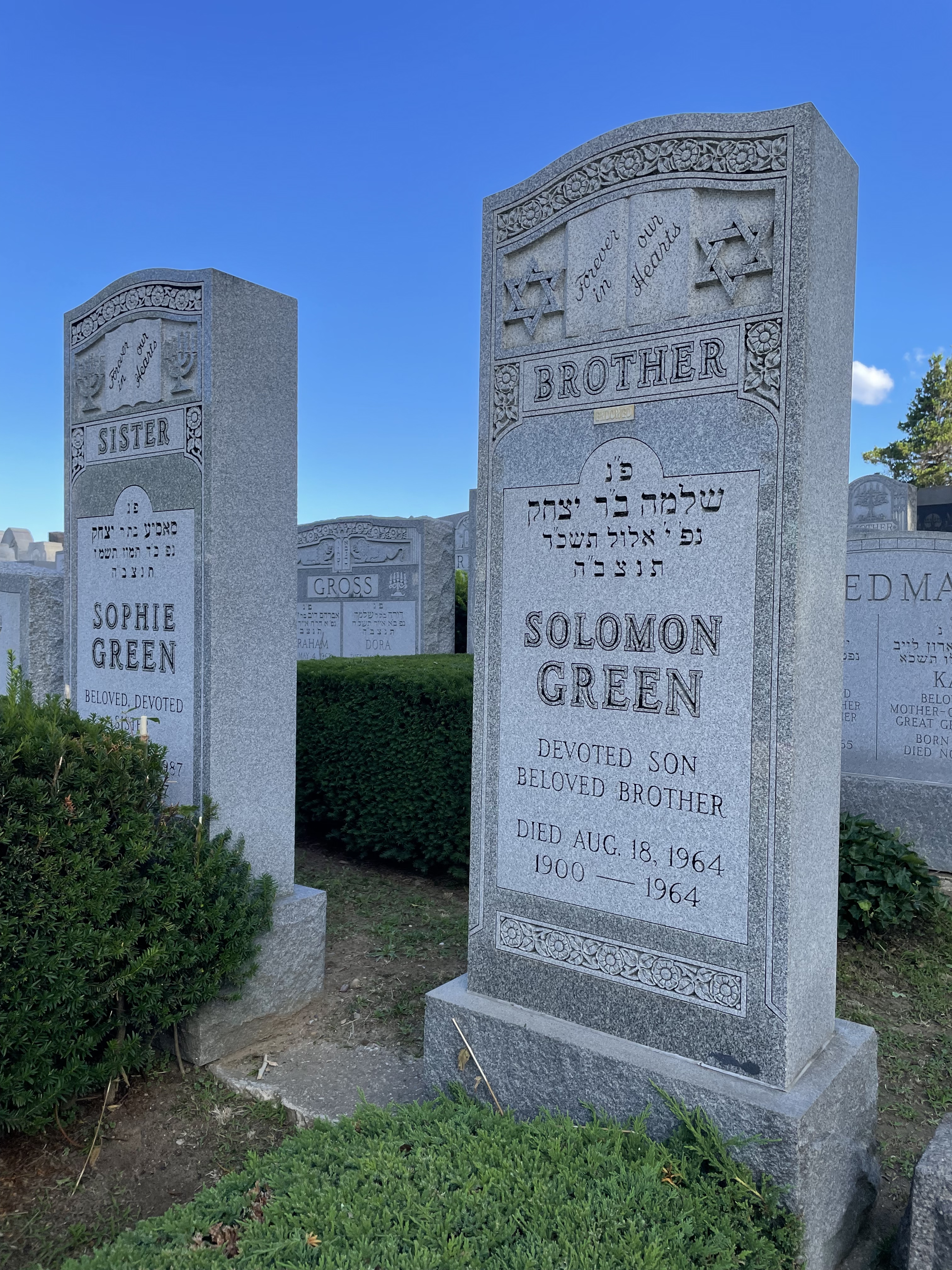
Mount Hebron opened its gates in 1909, and its permanent residents include Holocaust survivors and people who lived through the pogroms leading up to World War II. For example, a monument to the immigrants and immigrants’ descendants from the city of Grodno in today’s Belarus is dedicated to those who were “brutally persecuted and slain by the Nazis.” A stroll reveals many people in their mid-30’s and 40’s who died in the 1930s. Beyond tragic.

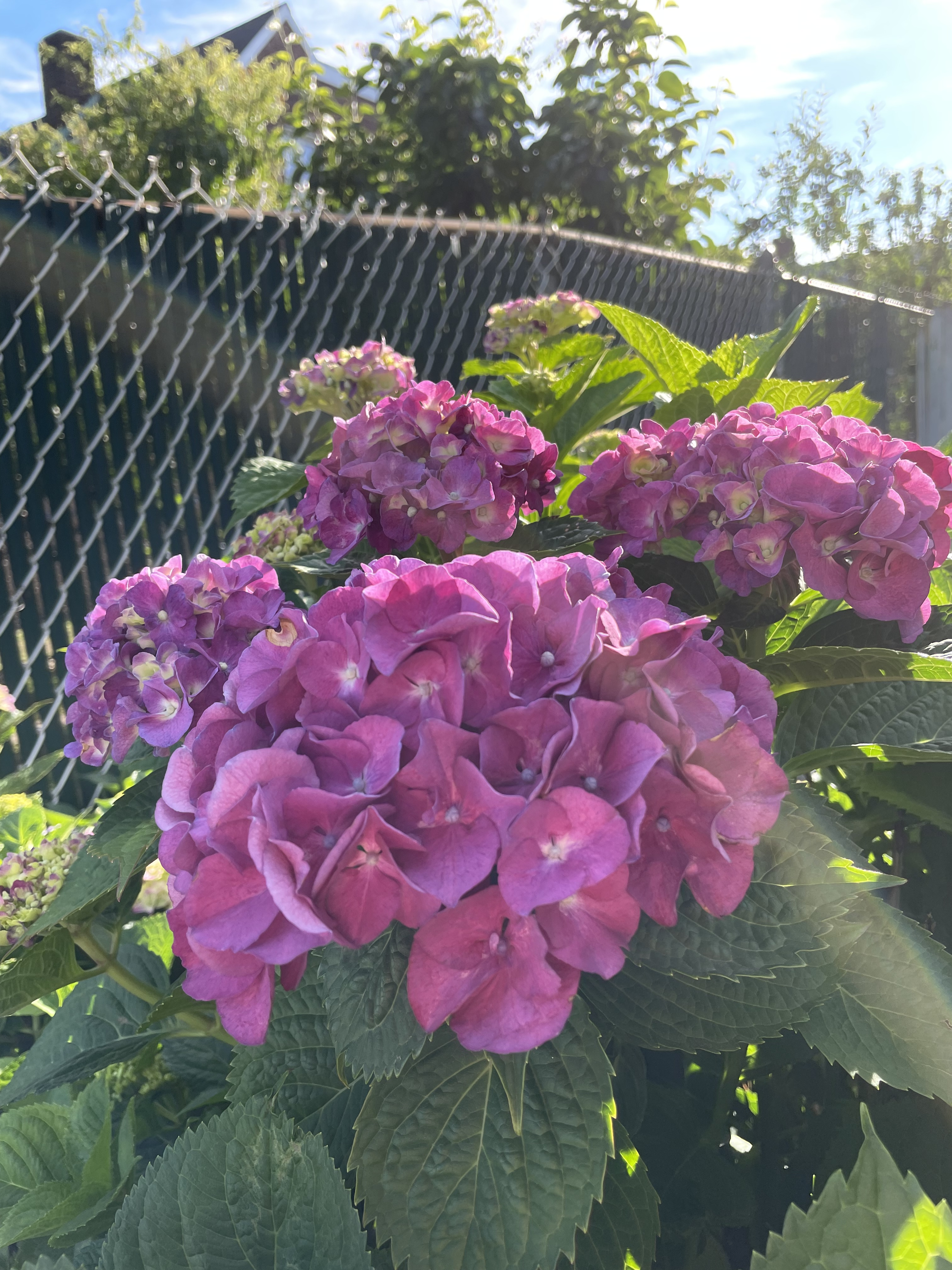
I couldn’t find acorn litter today. Someone here stays on top of autumnal sweeping. The nut would poison us but make a fit snack for a squirrel. Critters are more present that most people think here in the greater metropolitan area. I watched a woodchuck dive under a scrim of shrubbery recently in Liberty State Park. I’ve seen raccoons in a Flushing alleyway. This morning at six a.m. as I drove onto the Parkway, headed to the work site, an eight-point white-tail stared and stood stock still at the edge of the woods. Haven’t seen deer in New York City proper but surely it’s a matter of time. Do they like hydrangeas? Then they might like Flushing.

The chain link surrounding Mount Hebron had been conveniently pulled aside as an unofficial entrance for me to slip inside. No one I approached in the neighborhood seemed to know the name of the 250-acre burial ground in their midst, not the Mobil station attendants on the next block (5.59/gallon, with the cleanest restroom in Queens), not even the grave digger, who rose above the dirt he was shoveling to Google the query on his phone. The Yiddish theater industry produced  quite a few of the souls buried at Mount Hebron. 

The lady with the daisies hadn’t a clue as to where they might be.

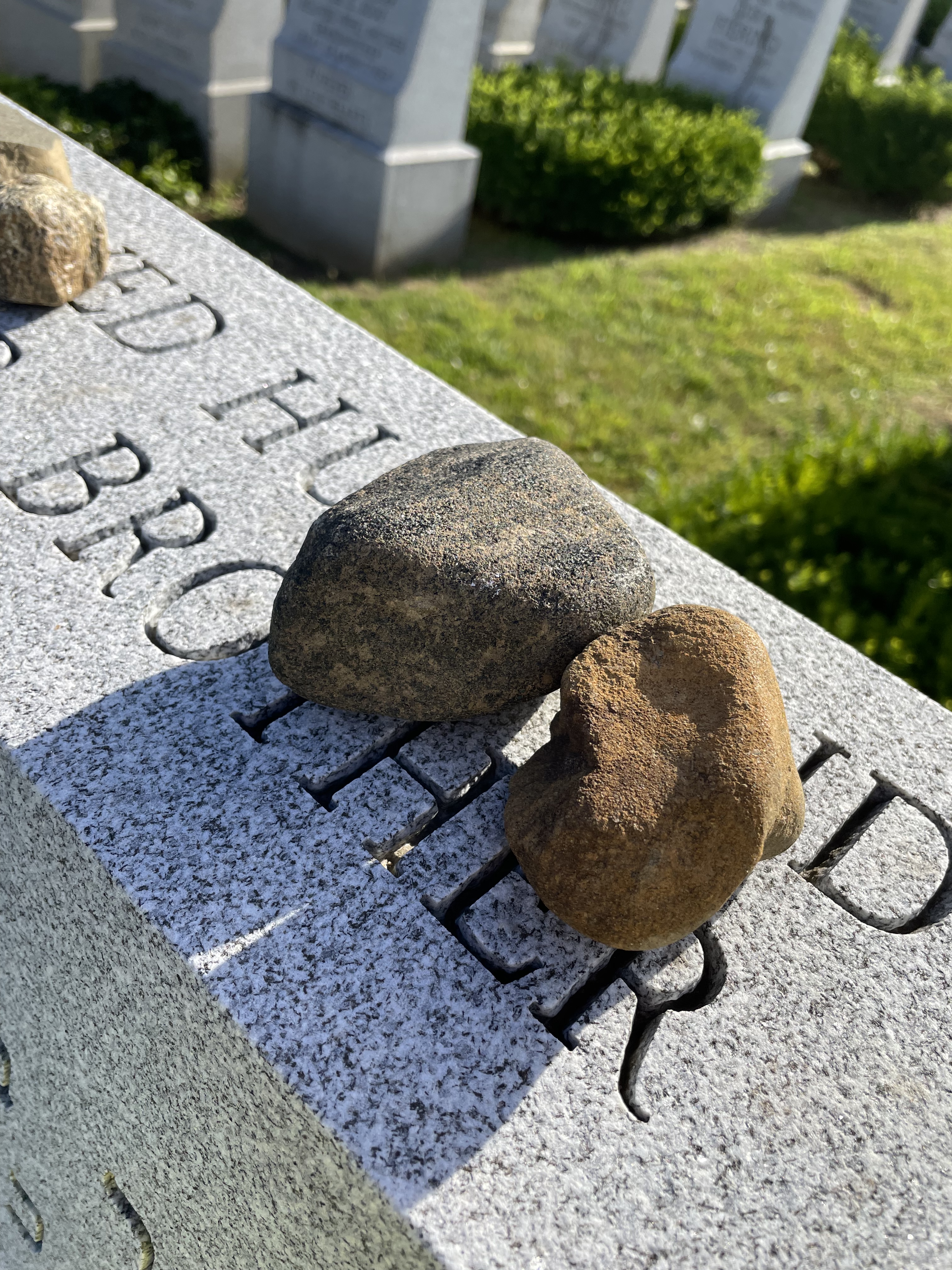
Plenty of observant Jews have payed tribute to the dead here, leaving stones atop the graves.

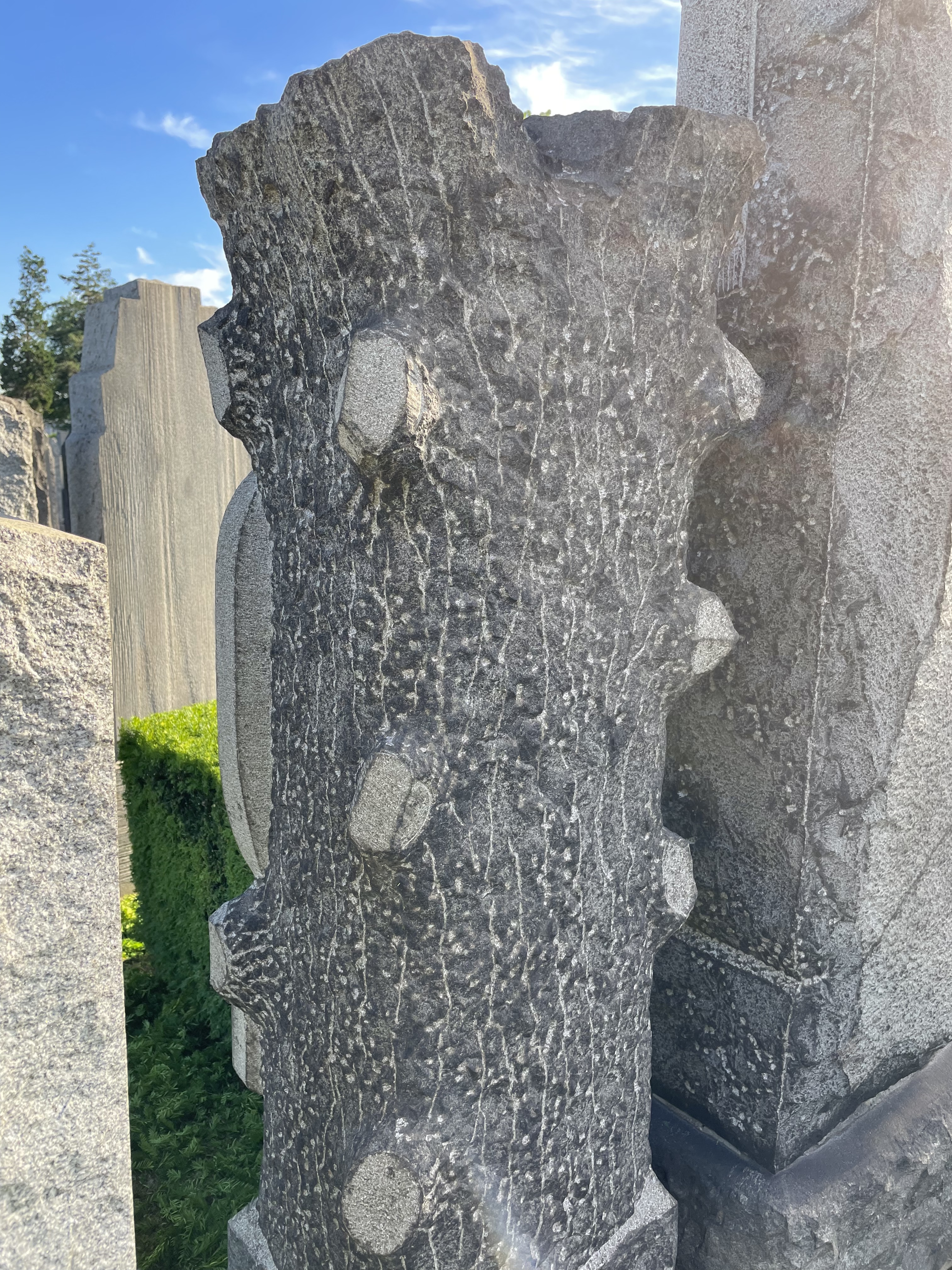
Also abundant, the gnarly limestone faux tree trunks known as treestones. As a sculpted quote from the Biblical tree of life, they represent both eternity and humanity.

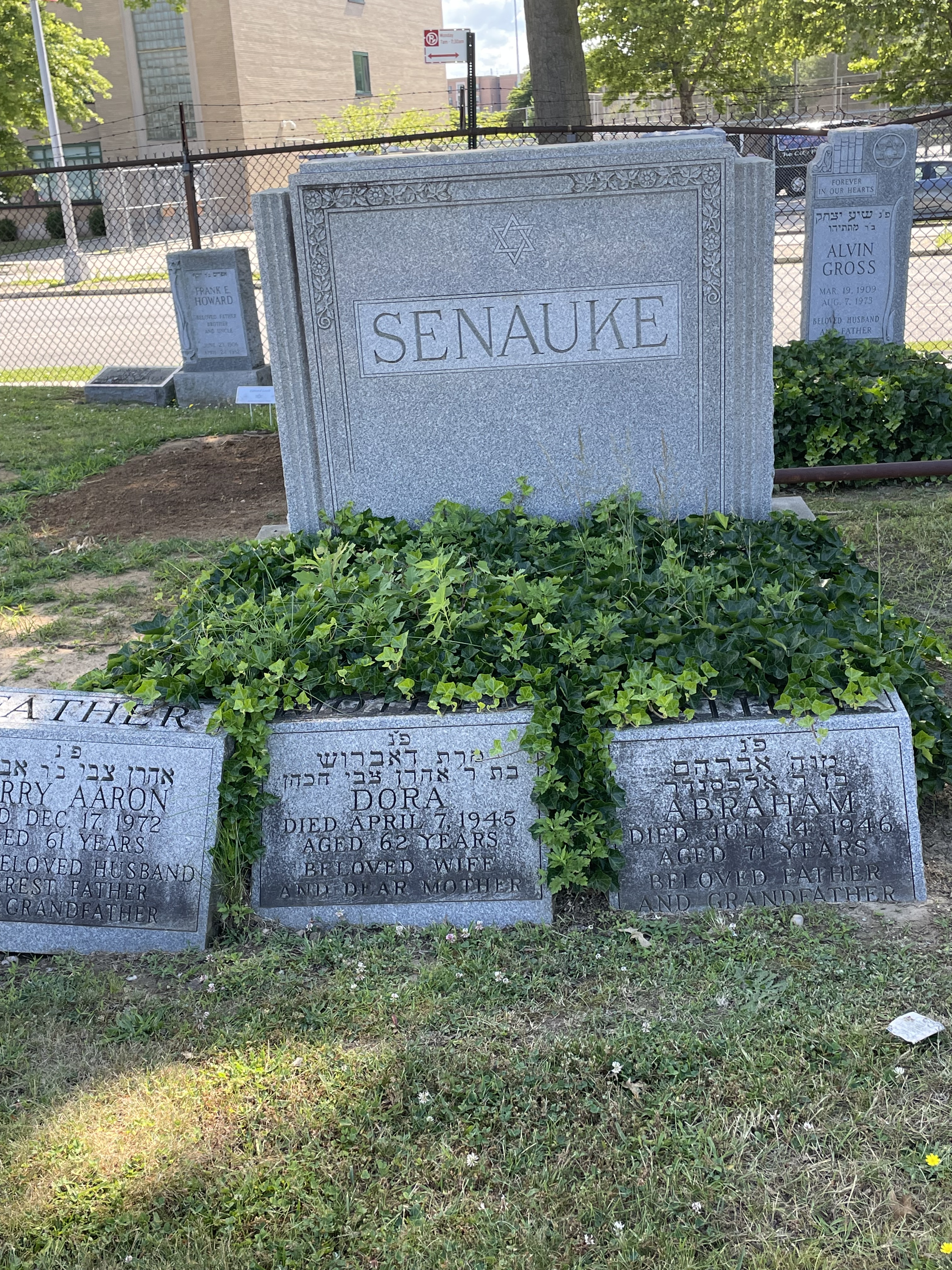
By serendipity, I came across a friend’s great grandparents’ plot – they fled Kyev when the pogroms came through and wound up in the Bronx, where Abraham was an expert jeweler and watchmaker.

But I knew the Yiddish actors were someplace – though my favorite, the ever entertaining one-time vaudevillian Sophie Tucker, “the last of the red-hot mamas” – had been buried elsewhere.

As a child, Tucker regaled diners in her parents’ restaurant between waitressing duties. She recalled later that she would stand up in the narrow space by the door and sing with all the drama I could put into it. At the end of the last chorus, between me and the onions, there wasn’t a dry eye in the place. The chanteuse’s hit Some of These Days made her super famous, kind of like the Taylor Swift of her day, if Taylor Swift were a middle-aged red hot mama and had a ribald sense of humor. Tucker’s version of The Lady Is a Tramp is the best out there. Banned in Nazi Germany: My Yiddishe Momme.

Plenty of mobsters here. Perhaps the most famous was Louis (Lepke) Buchalter, electrocuted in 1944 for the 1936 murder of Brooklyn shopkeeper Joseph Rosen after six judicial reprieves. Mayor Fiorello LaGuardia commented after the funeral, Well, they certainly tried everything. Pressed as to whether there would be another Lepke in New York, he was certain: Yes, there will, if we turn government over to the politicians. Take the rackets, the slot machines, gambling – that’s where the Lepkes find their pickings and their perquisites. LaGuardia put himself through law school at night by translating for immigrants at Ellis Island during the daytime. During his tenure as mayor he outlawed organ grinders with their capuchin monkeys, eliminating a source of much color on the streets and a certain career for many first-generation Italians.

LaGuardia believed that organ grinders perpetuated a stereotype of his countrymen. He spoke half a dozen languages: Italian, Croatian, Yiddish, German, French and Hungarian.

Mount Hebron sits on the former 2,000-acre Spring Hill estate of Colonial governor Cadwallader Colden, who died in 1776, four days after the British claimed New York. Colden acted as the first colonial representative to the Iroquois Confederacy and wrote the first history of the Five Nations. A doctor and botanist, the polymath was a patrician pioneer of public health, an expert on the subject of yellow fever. Looked okay in his crimson regalia.

Colden was reportedly not a nice guy. A slaveowner, he reputedly sold one female member of his chattel, a “good House Negro,” for a cargo of “white muscovado” sugar. He got a lot of flak from American patriots, who to protest the Stamp Act of 1765 burned him in effigy along with his coach after smashing it to smithereens in a celebratory bonfire on Manhattan’s Bowling Green (note: then a small green park where you could still go to bowl).

Cadwallader Colden had a number of distinguished children, but the standout was his daughter Jane, who followed in her father’s Linnaeus-inspired footsteps and became the first botanist of her sex in America. Most famous for her untitled manuscript describing the flora of the Hudson Valley that featured her own ink drawings – she was the first scientist to describe the gardenia! – Jane died  tragically from complications of childbirth in 1766, at the age of 41.

A visitor to her home noted that she actually made “the best cheese I ever ate in America,” a skill she detailed in her Memorandum of Cheese in 1756.

Cadwallader is buried here somewhere, in present-day Queens, in a plot on his old property, where he now rubs shoulders with mobsters, Yiddish stage stars and survivors of evil. Jane lies interred at the family’s upstate estate near her beloved flowers. I think she might have liked the pin oaks that line Main Street as much as I do.

Leave a comment

Filed under Jean Zimmerman

Perfectly performed

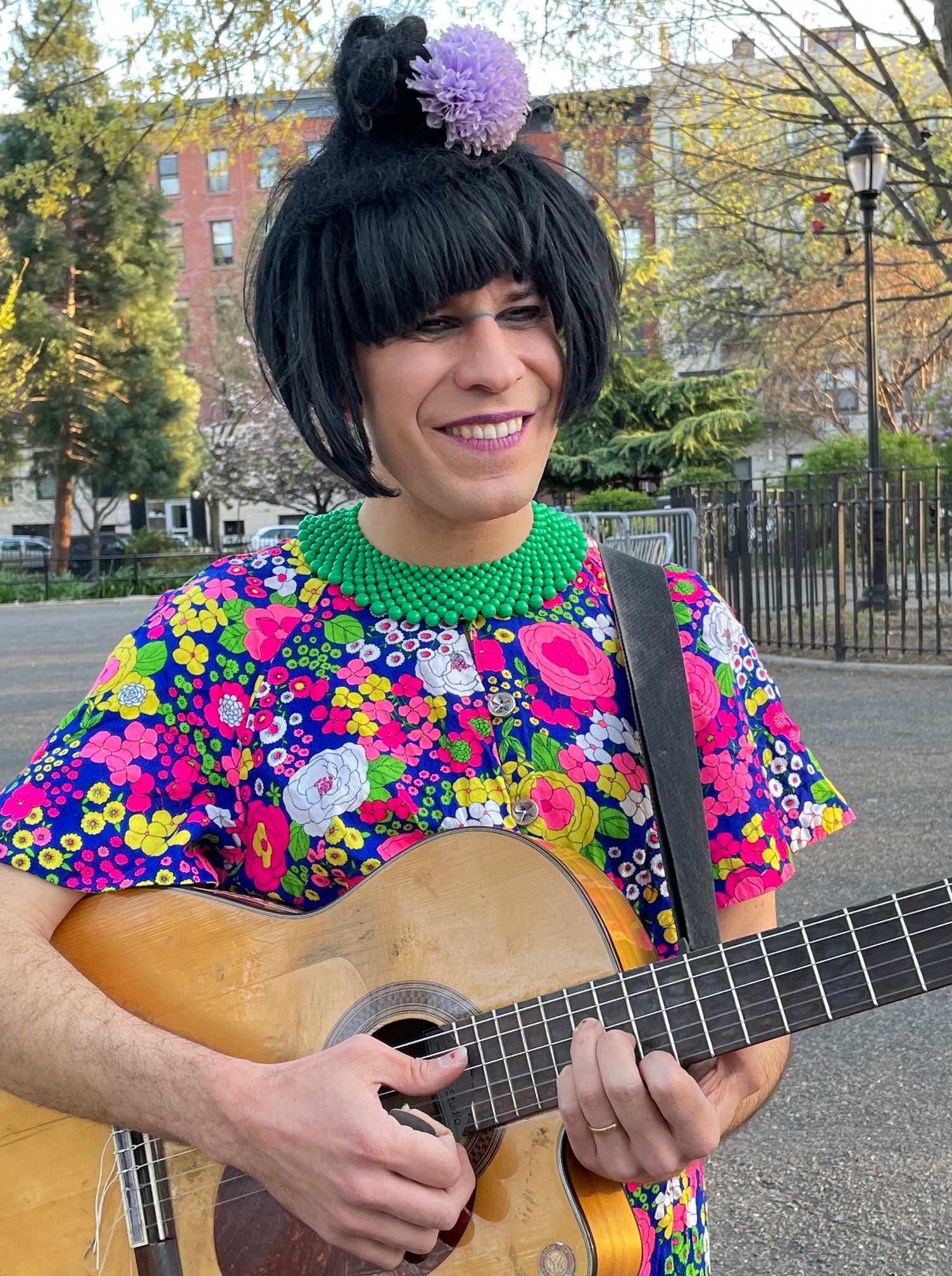
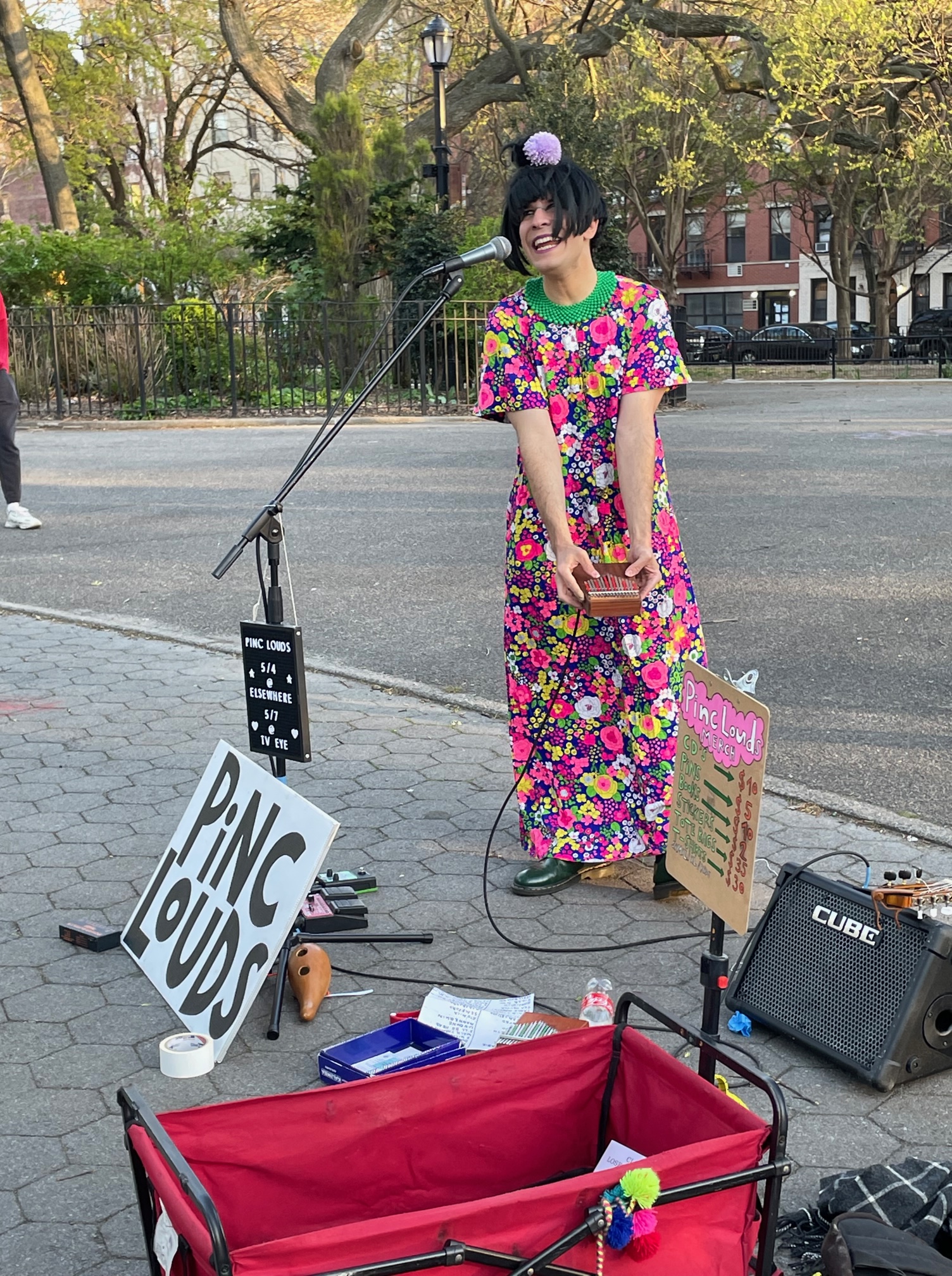
on a perfect early spring evening in Tompkins Square Park, the music of a person (pronouns fluid, if you are up to date) who calls his band Pinc Louds. He began in 2015 playing in the New York City subways for spare change, and now he goes all over the world, but also does his thing in New York at places like Joe’s Pub and Lincoln Center and Poisson Rouge. Still plays gigs for free in the Park though, as a fixture of the East Village.

He’s from Puerto Rico, and in his few hours not occupied with music he’s known as Claudi. 

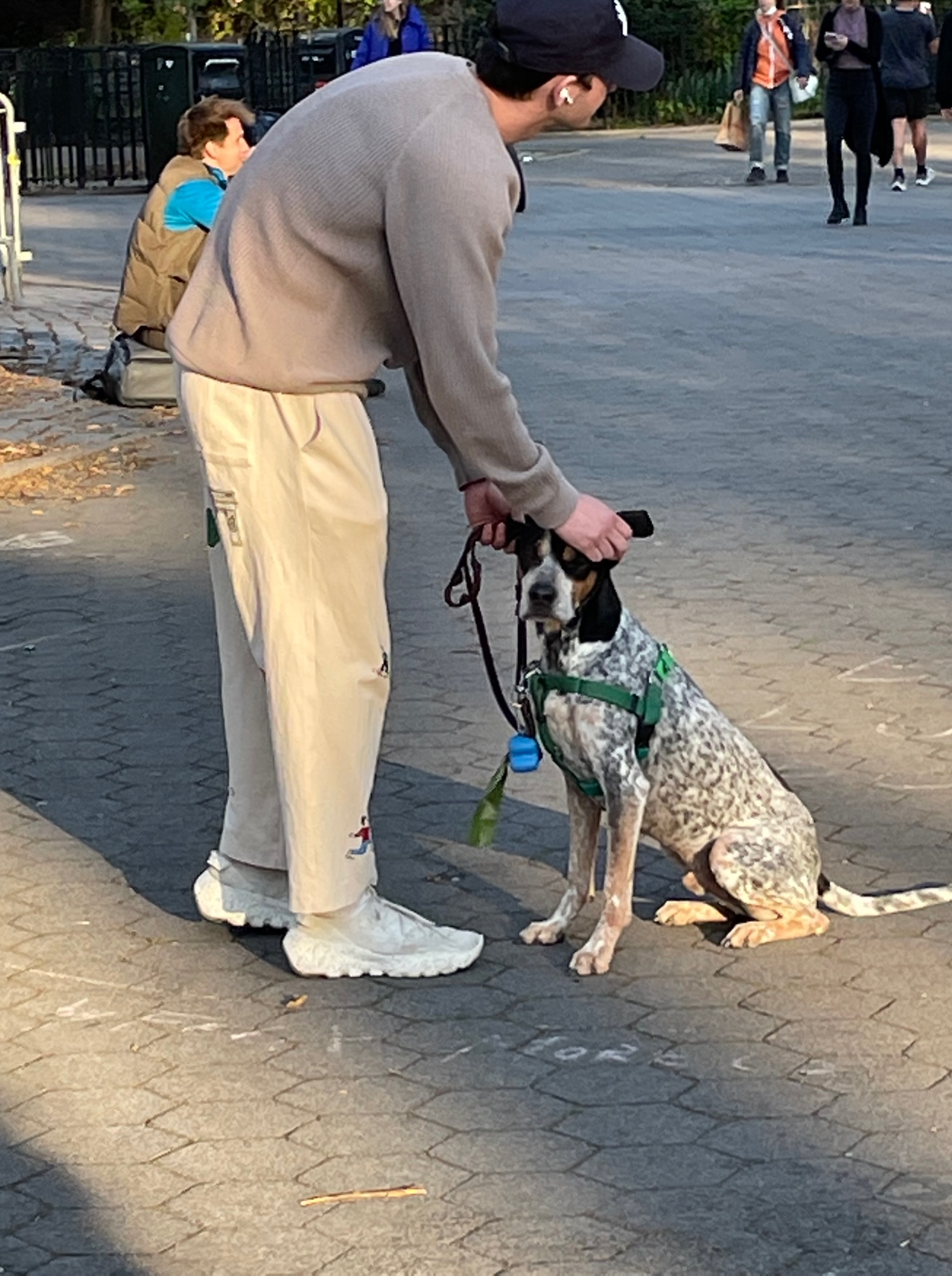
Dogs walked their people all over the place.

Pinc Louds worked out on his guitar, though sometimes he prefers electrified mbira.

The friend I strolled with has played with him before – she’s a fantastic mbira player too. She describes his voice as Billie Holiday in Puerto Rico. Sometimes he has giant puppets with him.  Wish I’d seen that.

I especially liked the lyrics of one of his songs:

A little girl she tells me I got soul

She sees it when I sing

Yes, a little girl she tells me I got soul

She sees it when I sing

I tell a girl your eyes are getting old

You couldn’t tell a mountain from a hole

‘cause I can’t feel a thing

No, I can’t feel a thing

No, not even when I sing

[Chorus]

I’ve got no soul in my body

I’ve just got soul in my brain

I’ve got no soul in my body

I’ve just got soul in my brain

Cause there’s no soul in our bodies

Just soul in our brains

[Verse 1]

Ooh, Singin’

My heart ain’t singin’

And still

You’re wishin’ on it like you’re wishin’ on a wishing well

The drops sink to the murky depths of hell

I saw you once and you

Your little stars were true

Please take me up with you

[Verse 2]

So press me to your dress

And press me to your thighs

And press me to your chest

Caress me ‘til I’m blessed into the tide

Rushing to your blushing blood inside

And though the die is cast

And I am sinking fast

I feel alive at last

[Chorus]

I’ve got no soul in my body

I’ve just got soul in my brain

I’ve got no soul in my body

I’ve just got soul in my brain

Cause there’s no soul in our bodies

Just soul in our brains

Under the shade of a big old tree in the park, just leafing out, dusk fell. Yes, Virginia, there are big old trees on the Lower East Side of New York City.

Critics have deemed Pinc Louds “the band that saved summer” because it appeared in the park during the pandemic and lifted everybody’s spirits. People of all ages danced and went wild, with socially distanced mosh pits.

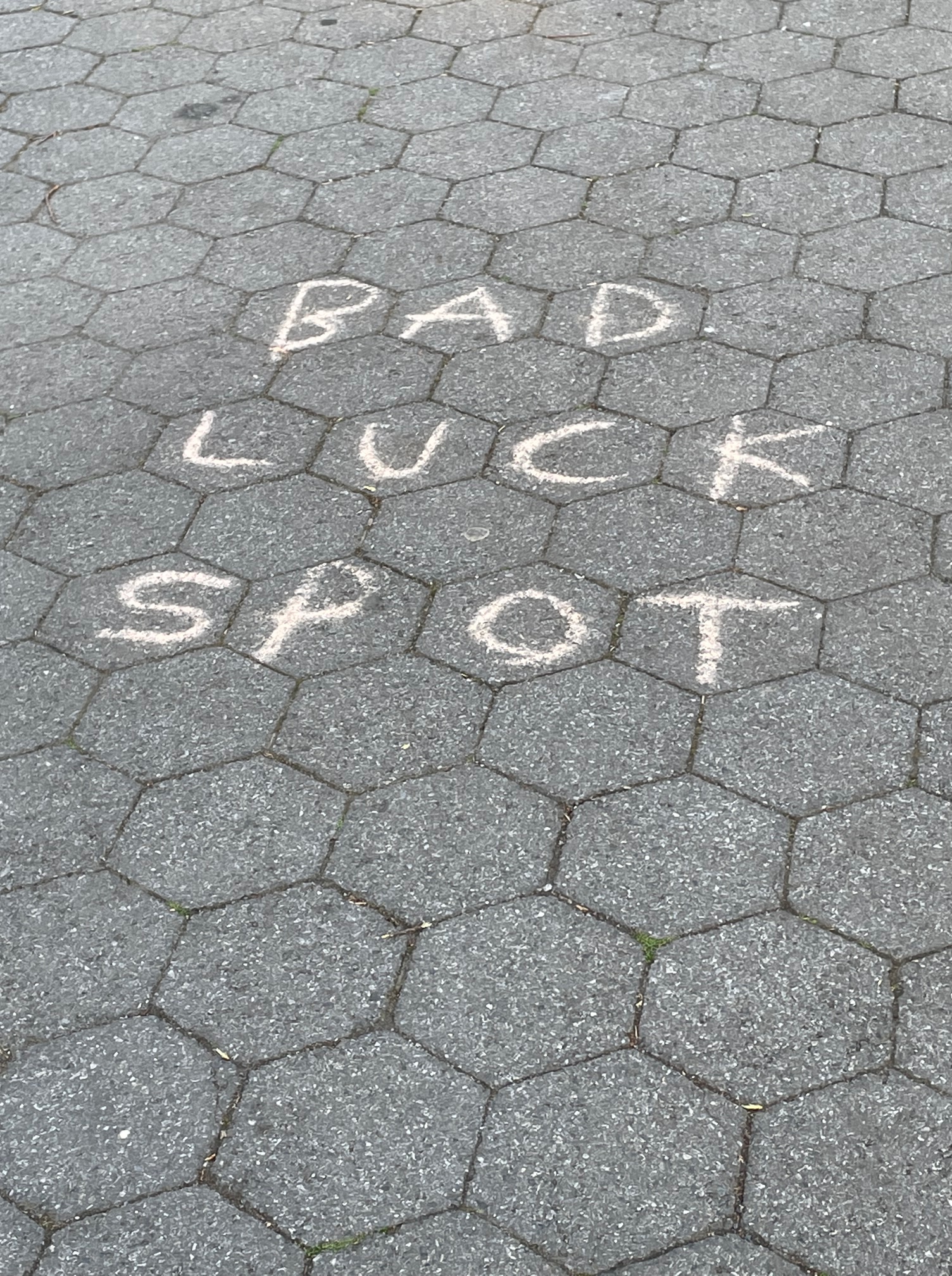
Someone’s observation underfoot. Not necessarily true, at least on this good-luck night.

Claudi and his wife have a baby at home. He told me that the child has watched him “transition” into his performance getup, but hasn’t yet had any kind of reaction. You can check out Pinc Louds on YouTube.

Pinc Louds, you can wear whatever you want, whatever look you want to rock. Just keep singing.

Your music is splendid.

Leave a comment

Filed under Jean Zimmerman

Perfection old and new

is what you get when you combine a funkily sublime old vaudeville theater and a performance by a Japanese avant-garde jazz pianist and composer at the height of her career.

Sony Hall had opened in Times Square in 1938 as the Diamond Horseshoe, and became one of the iconic venues of the vaudeville circuit. Later it hosted a long-running avant-garde show called Queen of the Night. When Sony acquired it, the theater had somehow retained its original furnishings, like the decorative disk that graces the ceiling over the audience, and the buyers were smart enough to retain the fixtures, and décor and the painting.

The food was good; the potatoes purple.

By the time Hiromi came on stage, the audience was primed. Japanese families filled the front rows.

The rest were serious fans already, including our neighbor Andrew, a Polish IT guy who it seems follows her from show to show. She inspires super-fandom.

Hiromi appeared.

She gracefully introduced the quartet accompanying her. They were “new,” she said, and from all over.

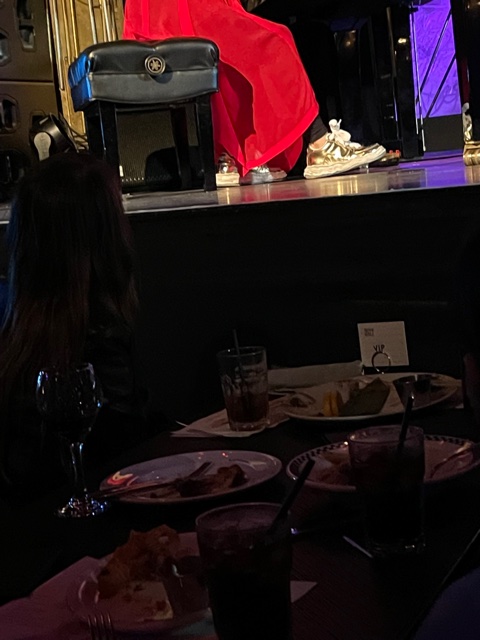
How would you describe Hiromi’s composing, and her playing? A tickle and a romp, with stride jazz flourishes and soulful  trills reminiscent of the old country. She stamped her gold sneakers, stood up, sat down, grimaced and grinned at the audience as though we were all in on her marvelous joke. She was funny. She had fun! She was explosive, with her lightning fast fingers.

Hiromi has said, “I don’t want to put a name on my music. Other people can put a name on what I do. It’s just the union of what I’ve been listening to and what I’ve been learning. It was some elements of classical music, it has some rock, it has some jazz, but I don’t need to give it a name.” Born in Japan ini 1979, she started lessons at six, and her teacher had her use color to develop her chops, saying Play red if it was something passionate or Play blue if it should be a mellow sound. She is well known for the album she recorded with Chick Corea, whom she met when she was seventeen.

The accompanists were tight, totally matched to her at times wild and galloping melodies. The Live-Shrieber-resembling first violinist should probably have his own show, he was that good.

The piece she performed, titled Silver Lining Suite, told a personal story of the pandemic in musical harmonies. There will be a lot of compositions on this theme, in all the arts, I am sure. But her interpretation was spectacular. She brought the past and present together with soul and charm.

Leave a comment

Filed under Jean Zimmerman

It was a fine day to go out on the water.

Fortunately, a tugboat made itself available for landlubber sightseeing.

We would view New York Harbor as we had never viewed it before. And believe me, we had viewed it before plenty of times. Once, even, on a tugboat, in fog so dense you could have been sailing in any harbor.

Walking to the South Street Seaport, along Peck Slip, you could almost inhale the atmosphere of past days when the first ferry in the city opened and you had to pay three wampum beads to get on. You got the attention of the ferryman by blowing a shell horn. The cobblestones may not be the originals, but they’re close to it. People steal them so the powers that be are always having to replace them.

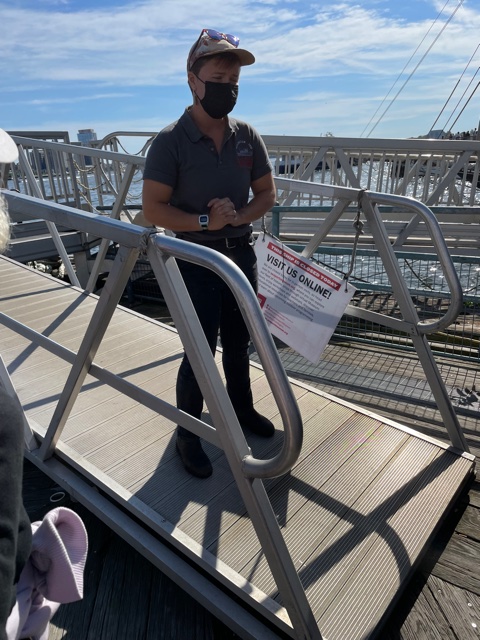
The last surviving New York-built wooden tugboat, W. O. Decker, may have charm and historic panache, but something it lacks is an array of handholds to grip when you hit the swells. Before we climbed aboard, we got a briefing from Fern Hoffman, the captain. She got her accreditation from the Coast Guard, which she told me is like the DMV for sailing.

The Deckers have a long history of tugboat building. The W.O. Decker was built in 1930 in Queens. Apparently the family is still in the business. The tug was built for shifting barges and for local towing.

Things got tricky almost immediately. You had to descend a gangway to one ship, then cross one ship’s deck, climb a step and clamber down into the tug. You could see the harbor water down between the two vessels. It would be a good way to crush a leg or two. I balked, but the deckhands gave me a boost and we were good to go.

One of the deckhands, noting that I was a bit rocky, advised that it would be good to stay at the bow of the ship, so as not to feel the waves with as much violence. You can sit on the “bits,” I think she said, pointing to some metal knobs jutting up from the deck.

Yes, but. I would prefer not to, in the words of Bartleby. I’d rather stay glued to the bulkhead.

The Statue obliged as we cruised by. White sails, a tall ship, dozens of jet skis driven by the clinically insane.

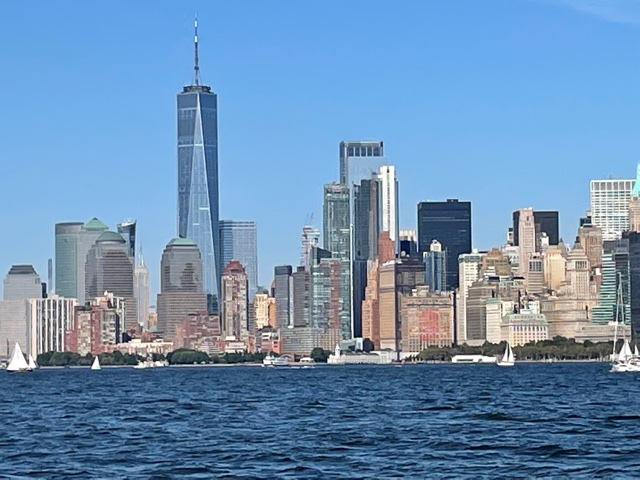
So did Lower Manhattan.

This view pretty much defines chockablock.

It was good to take a breather in the saloon, and I wanted to abscond with one of the cups hanging from a beam but refrained.

The innards.

I would have liked to unroll the nautical charts stashed in the bridge.

A woman at the wheel.

She really pulled that thing, backing into the harbor as we got home.

Nicely done, said Gil.

There’s still time to mess up, she said with a grin.

I knew what she was talking about. But I needn’t have worried. My egress from the boat was 100 times more graceful than the onboard had been. Back on Peck Slip, I ruminated on a lesson I’d learned somewhere along the way: Walking on cobblestones improves your balance.

1 Comment

Filed under Jean Zimmerman

We fly

like eagles, like vampires, like velociraptors.

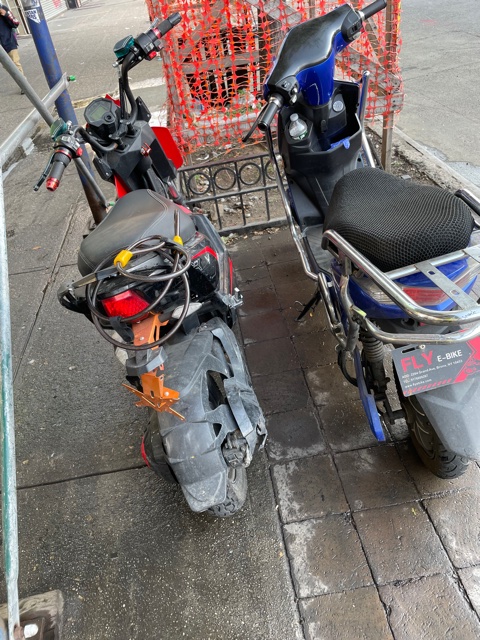
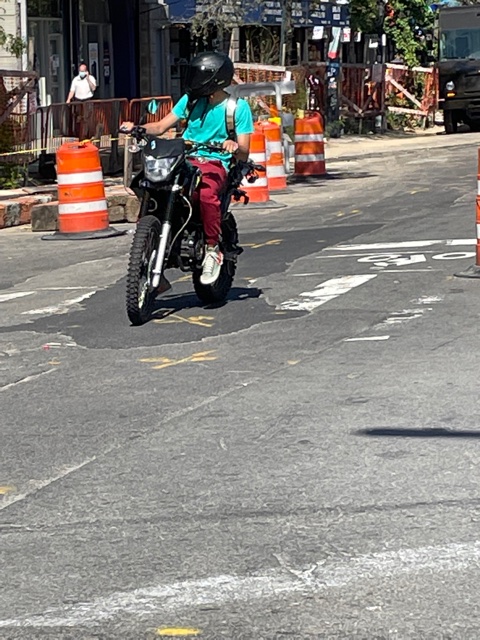
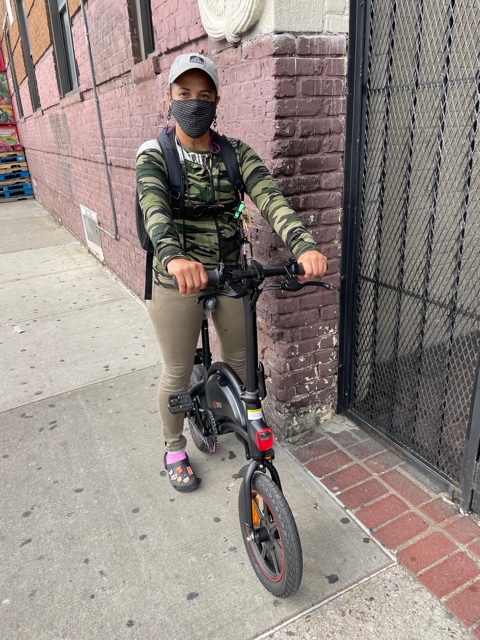
Motorized scooters and e-bikes have taken over the streets here, as well as plain old scooters, the type on which you stand to move forward. Good balance required  for that. And of course the old-fashioned kind of bicycle.

Scooters tear up the Grand Concourse, on the service roads, but most especially on the sidewalks, swerving around pedestrians, going every which way.

Bike lanes? Nah. They’re for squares.

Storefronts are clogged with locked bikes (with serious chains) awaiting their owners to emerge.

The bike-less nod, zoned out on who knows what.

Scooters course around them.

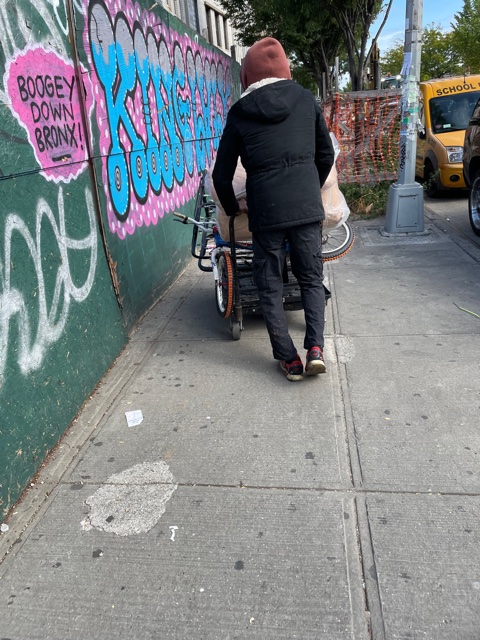
Junk collectors collect bike wheels.

It’s absolutely bonkers.

Pretty soon it will be like Bangkok around here.

The fabulous Leon Bridges came out with his song Motorbike this year:

On the back of my motorbike? Switch lanes twenty-nine, ooh
It’s whatever you like, ooh
On the back of my motorbike, write your name in the sky, ooh
It’s whatever you like, we can ride, ride, ride

Romantic song and video that makes a person crave riding behind her beau in the open country. That “29” baffles me; his age maybe.

Not only boys take the reins.

I saw a mom on a scooter, one small child in front of her and two behind, holding on tight as she aced the curve from the side street to the avenue.

Motorbikes cost a lot less than a car. $1,000, $2000 bucks. E-Bikes go for around $5000. They’re hot. You can get a food delivery job riding one.

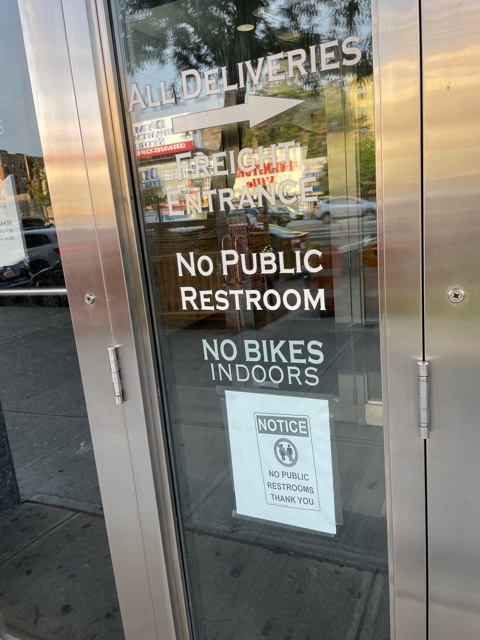
Don’t you dare bring your bike inside!

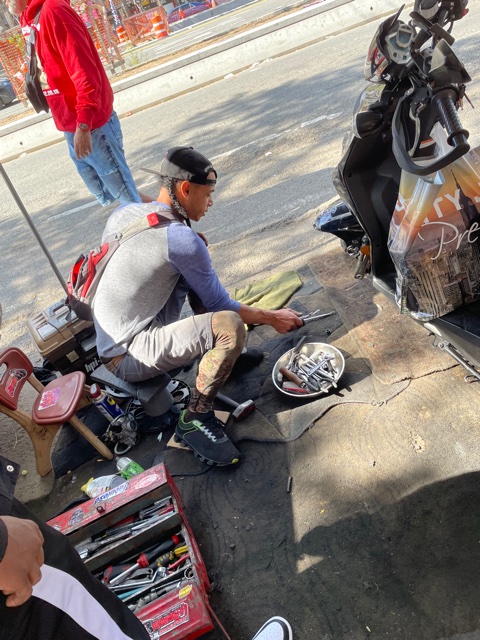
There is a cool pop-up bike repair place in the street next to a produce vendor. It’s private, mainly hidden by a tarp like a canopy, and a bunch of gear heads huddle there every afternoon, their tools all over the pavement, fixing scooters. When I stopped there to investigate I was not especially welcome because a. I don’t speak Spanish, b. I am an alien in a hard hat and c. I possess a vagina. No pictures, I was told firmly. In my experience, when someone declines having their photo taken they are hiding something.

But… but… let’s not talk about the buts, shall we? No, let’s. I pitched off an e-bike this summer and was lucky to come away tumbled like a rock in a rock polisher, with a temporary concussion. So I am somewhat biased as to the dangers of these machines. Especially in New York City! Which is filled with white ghost bikes memorializing cyclists’ deaths.

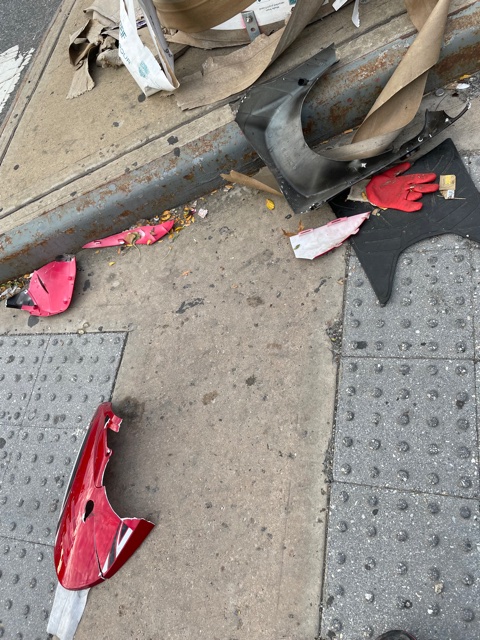
Also, I came across the detritus of a wrecked bike under the light pole it had smashed into. Shards of plastic and metal everywhere. And a very unnerving single glove.

That’s not flying. It is possibly dying.

Leave a comment

Filed under Jean Zimmerman

Are butterflies intelligent?

Yes. If intelligence is the ability to seek out nectar and pollinate flowers, yes. In terms of long-term travel to their southern climes and back, Monarchs in particular never cease to amaze.

But are they dependable? In terms of showing up when they’re expected, to bask in humans’ adoration? Not so much. 

The events of the day at Wave Hill, the century and a half old estate that is now an arboretum and horticultural center, were supposed to highlight butterflies. There was a “Nature Walk: Butterflies in the Garden” and special arts and crafts activities for families. The last expedition had just gone out when we arrived mid-afternoon, so we thought we’d go it alone.

We saw brilliant flowers.

Of all colors.

Shapes. Sizes.

Surely some that would appeal to a butterfly.

Look, there’s a monarch! said Gil. But it had vanished.

I see a little white one, said Josefa. A cabbage moth, corrected Gil.

There were some bees of different types. Where there were bees wouldn’t you expect butterflies?

We learned that Louis Bauer, the horticultural director at Wave Hill, was going to be honored at a party in a couple of days. I met Louis when I sold him a tree inventory for Wave Hill a few years ago. I remember asking him how he kept everything so beautiful in the greenhouses there. I go in three or four times a day and stick my finger in the soil to see if they have enough water, he said. Simple genius.

The greenhouses, of course, had no butterflies, but some prehistoric looking desert plants.

And a buxom cactus.

More flowers. Nothing fluttered by.

Quiet trails.

Vistas in every direction. Some of them private.

The most fabulous view out over the Hudson was getting ready for its closeup with white wedding party chairs.

We just about gave up. Not only did we not see butterflies, we didn’t see anybody looking for butterflies. Was this some colossal joke?

A sculpture on the lawn made use of succulents, moss, and a tire fetched out of the Bronx River.

Wave Hill has a pair of copper beeches to die for. One of the elephantine pair has pristine bark that you just want to go up to and pet. The other’s branches drape down to the ground and hide a trunk covered with a venerable array of  carvings. I have always liked beech bark carvings. It makes for a good place to meet a friend for a private assignation. I feel like I’ve done that sometime, in another life.

We stretched out in the adirondack chairs that make Wave Hill an even more perfect place. In the mellow shade of a white oak. The burnished glaze of fall made us collapse with thirst.

So the winged creatures missed the cameras and the oohs and ahhs. They took the nectar and ran. They had better places to hang out. They’re that smart.

Leave a comment

Filed under Jean Zimmerman