Tag Archives: lindens

Late summer privacy.

I see no one on my walk to Lyndhurst, not a soul. My only company, late-season thistles along the path.

A weathered sign by the open-air entrance to the old estate tells the story of my day in a word. Private.
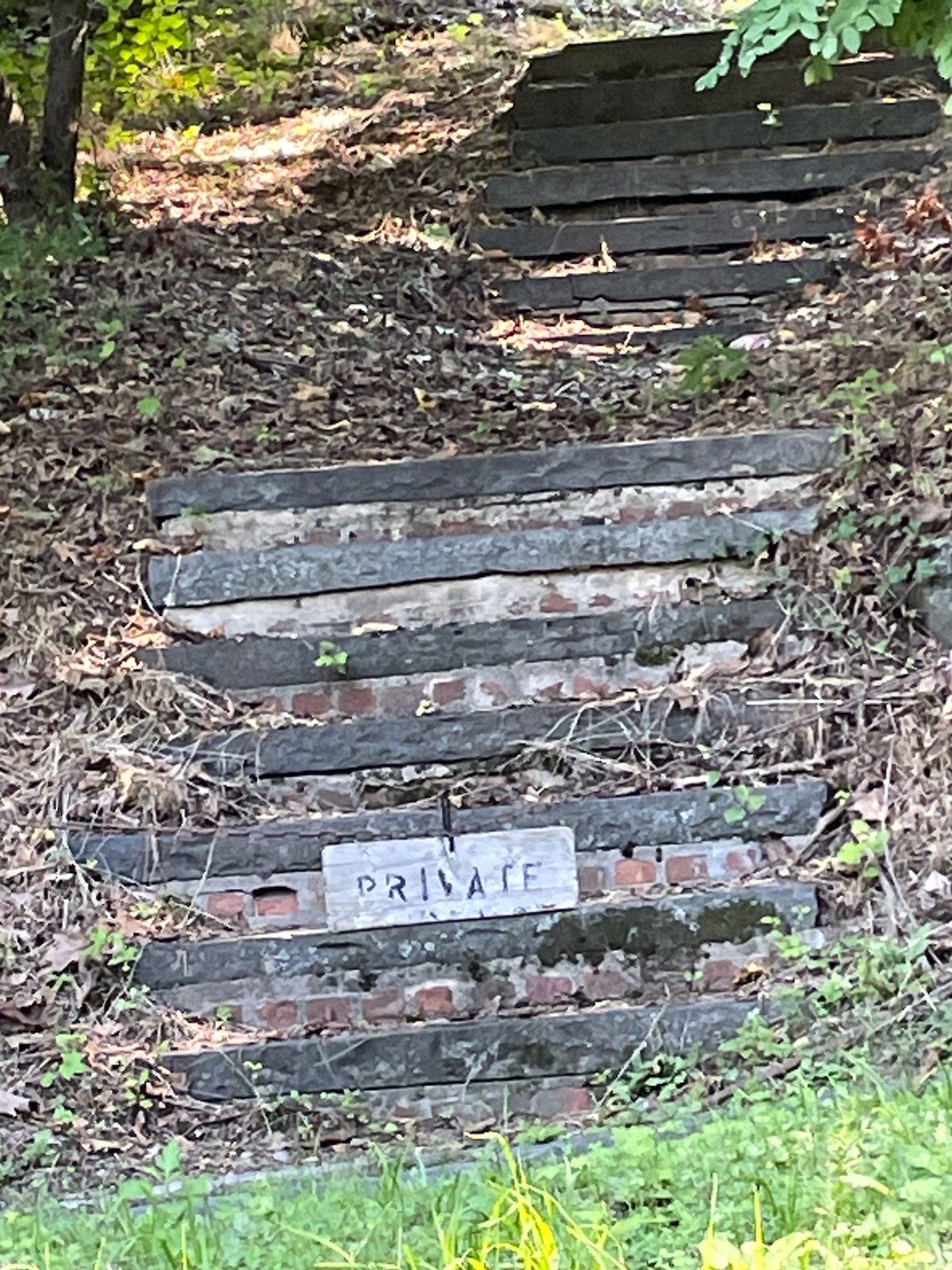
The Old Croton Aqueduct trail runs right through the grounds. Apparently the first owner of the property was proud, ecstatic to have the water run underground here when the water pipe was first installed, carrying water miraculously down from upstate to New York City.
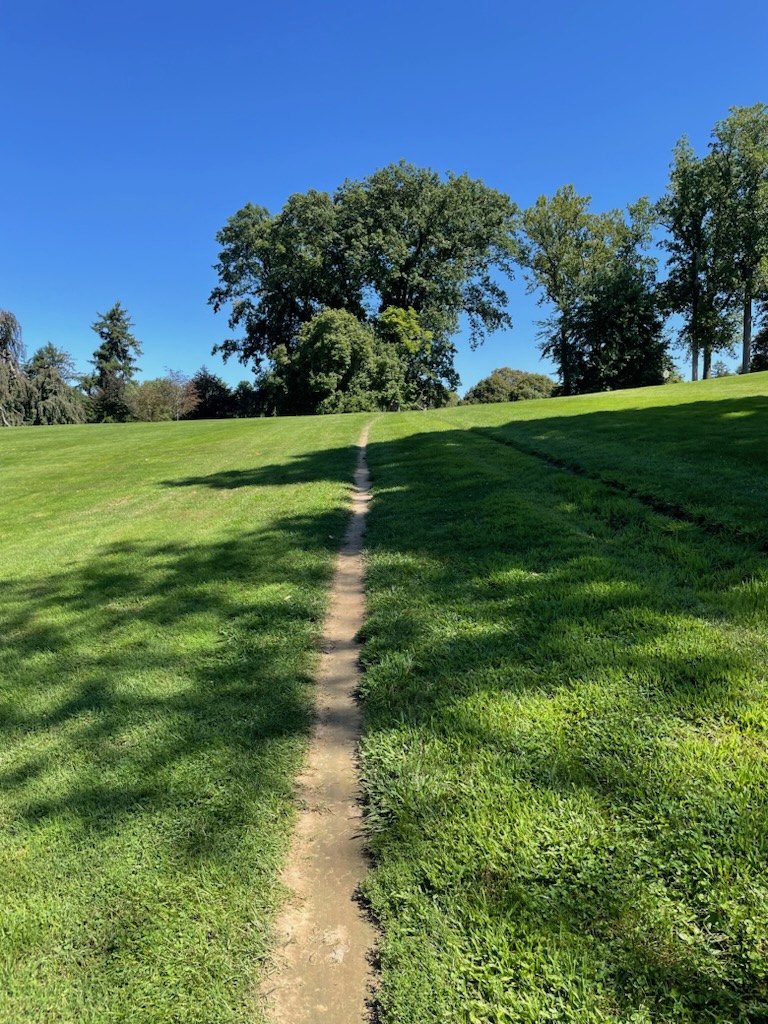
You can stay on the trail. Or follow mysterious mysterious arrows. I choose not to follow.

The lawns and old, old trees beckon. Robert Graves wrote, Tranquility is of no poetic use. I beg to disagree. This morning is sheer poetry. The calming late-summer scents of grass and trees, the hum of insects, the perfect glaze of sky.
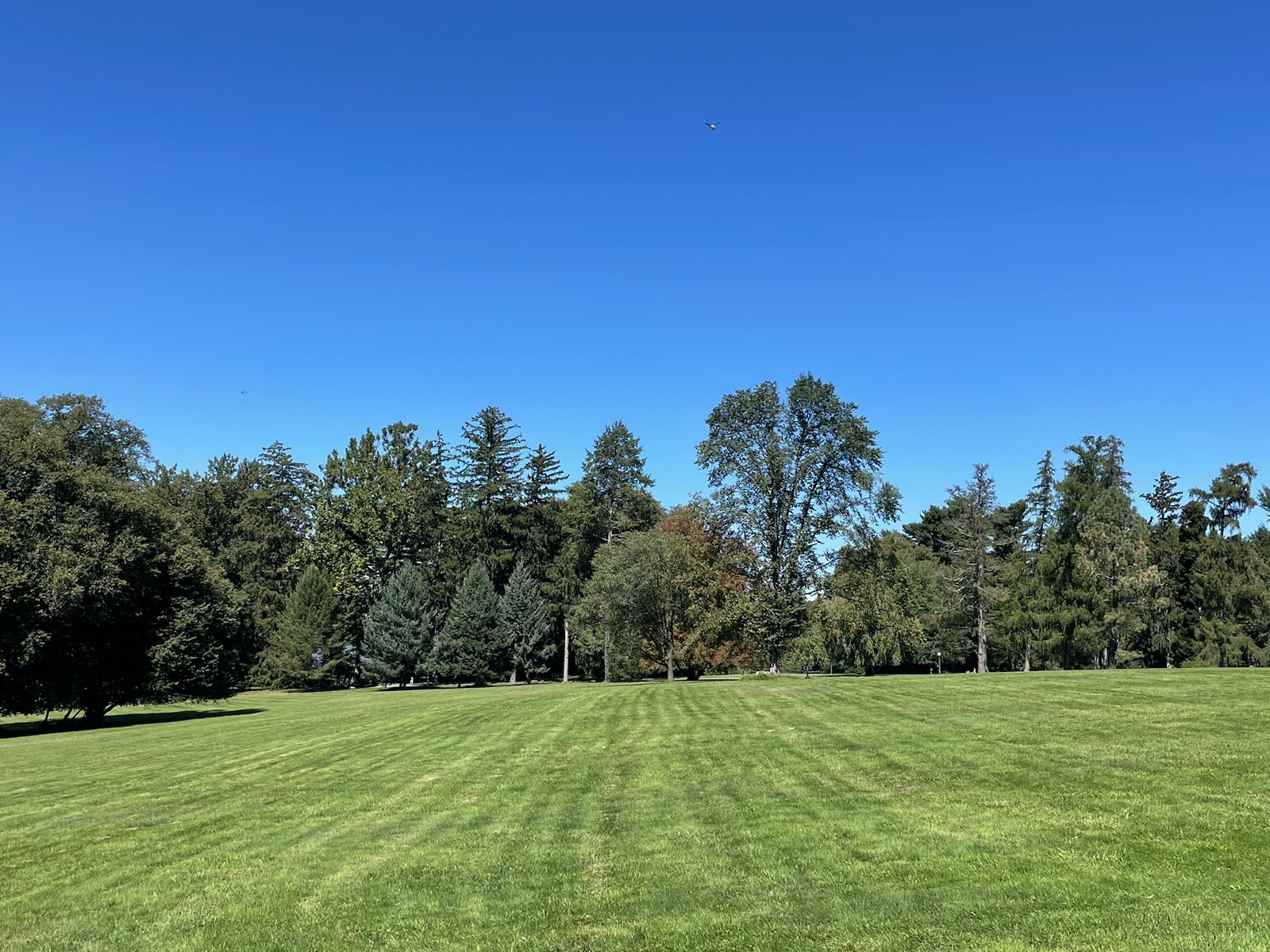
I have wondered recently, Why is the sky blue? Such a silly question. The science has long been in. But still – blue? Perfect azure? Really? Could the universe really be this kind? I visit a grove of tulip trees.
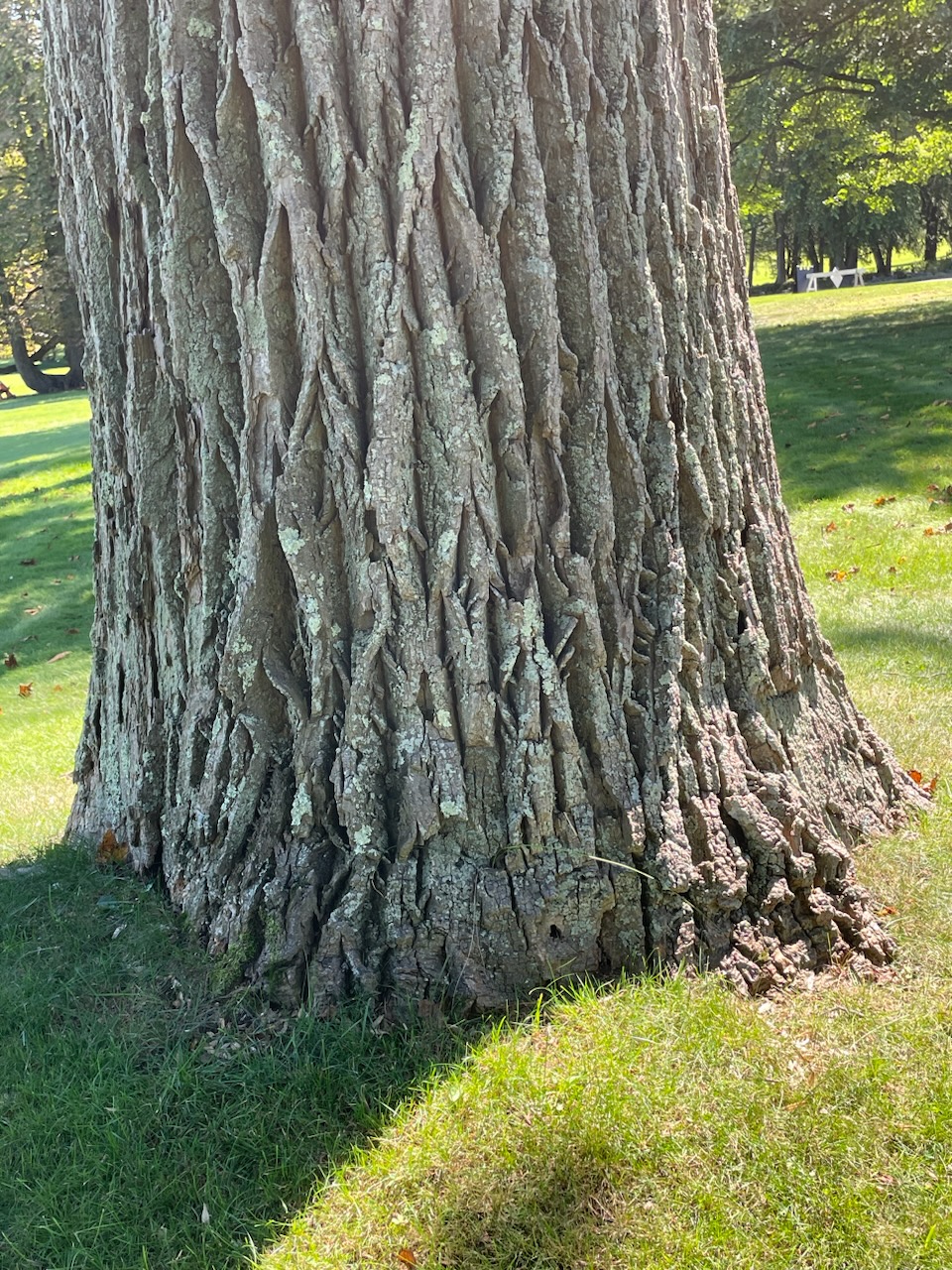
They stand poker-straight and are probably two hundred years old. Come close and touch the grooves.

Geese feed themselves on grass. Quietly, unhurried, unworried.
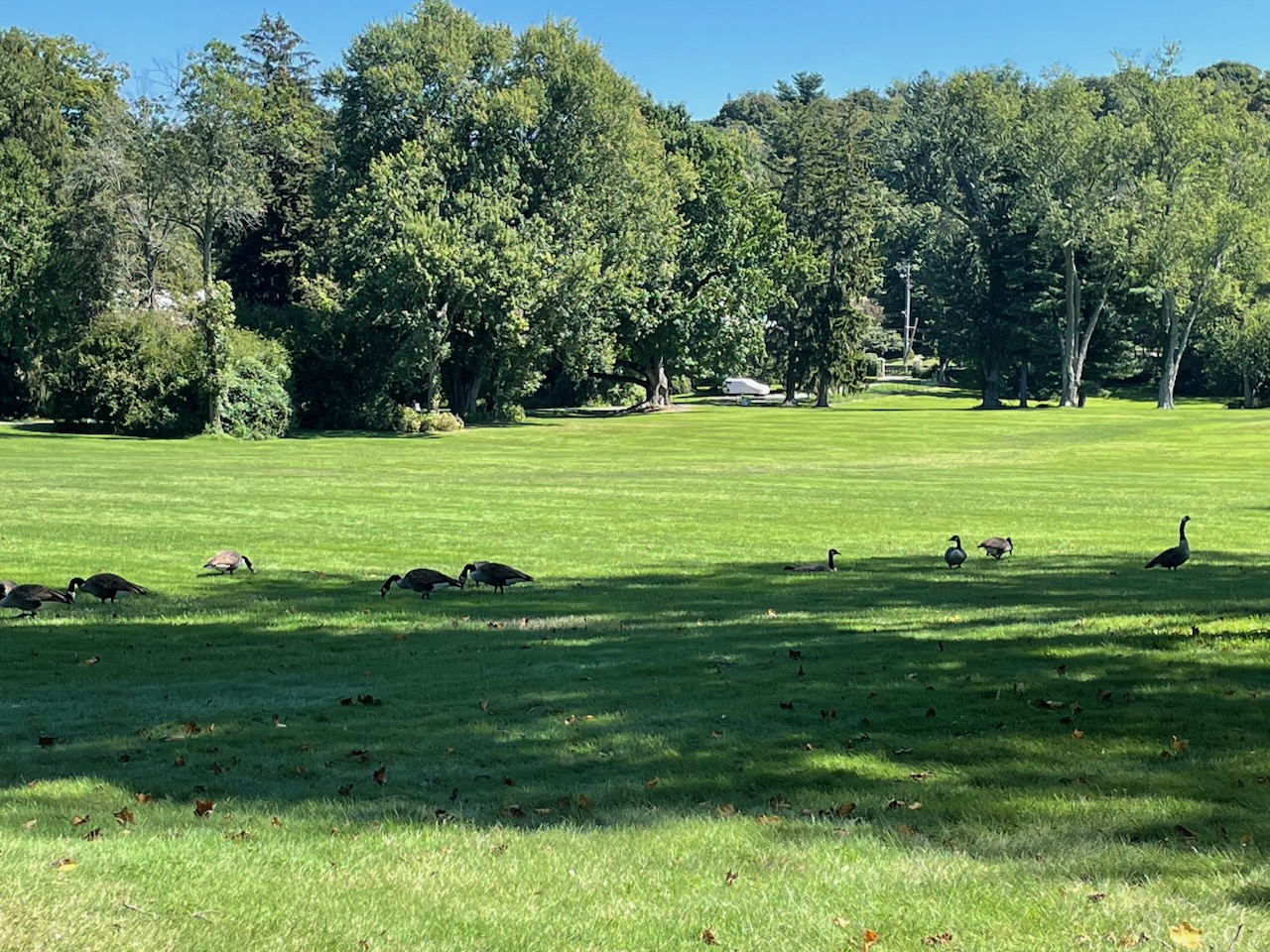
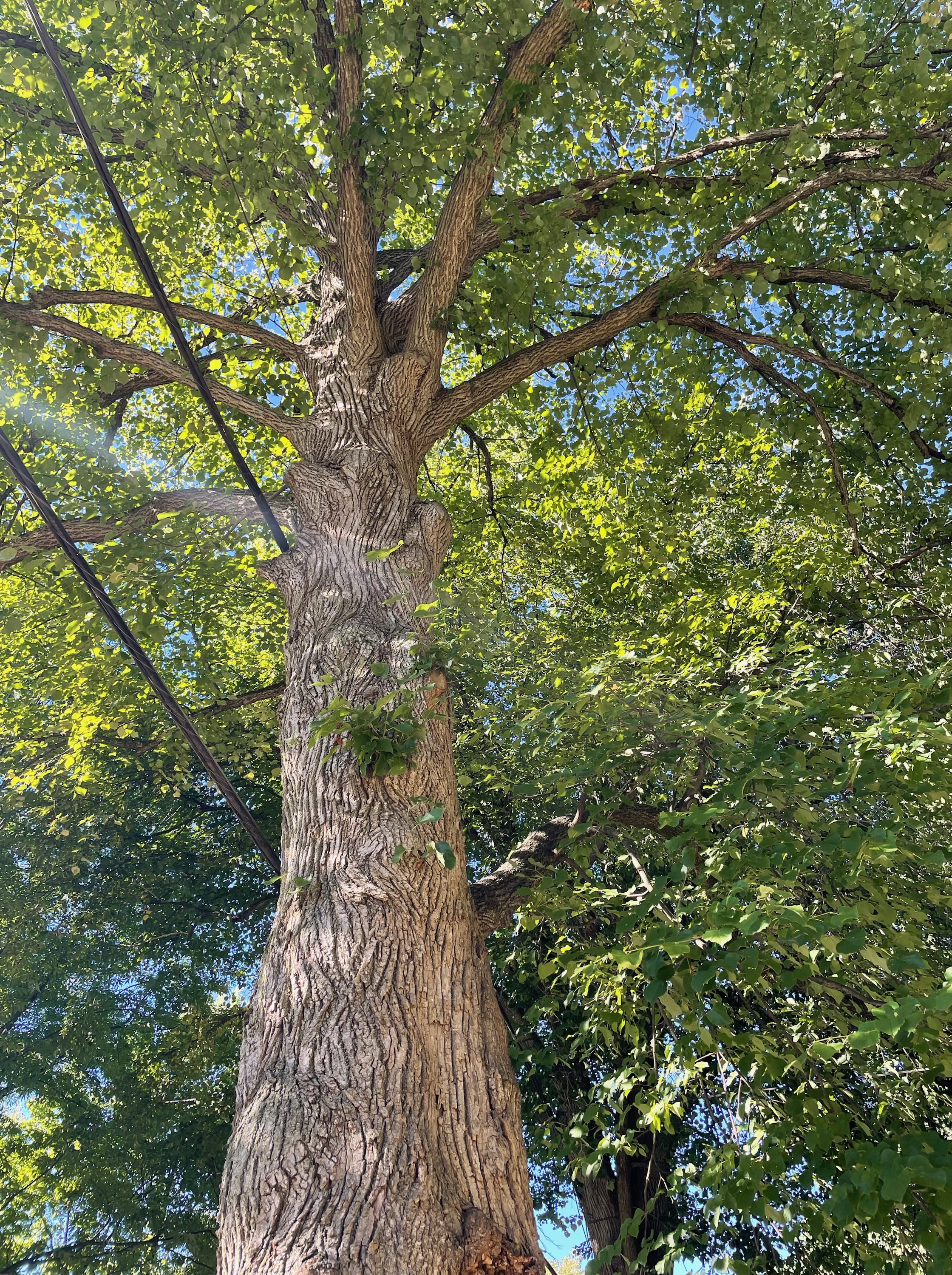
I feed myself too. I am hungry, having not eaten yet today. Now I feed my soul. I go to my favorite linden, the huge specimen with multiple stems and an enclosed space like a private drawing room.
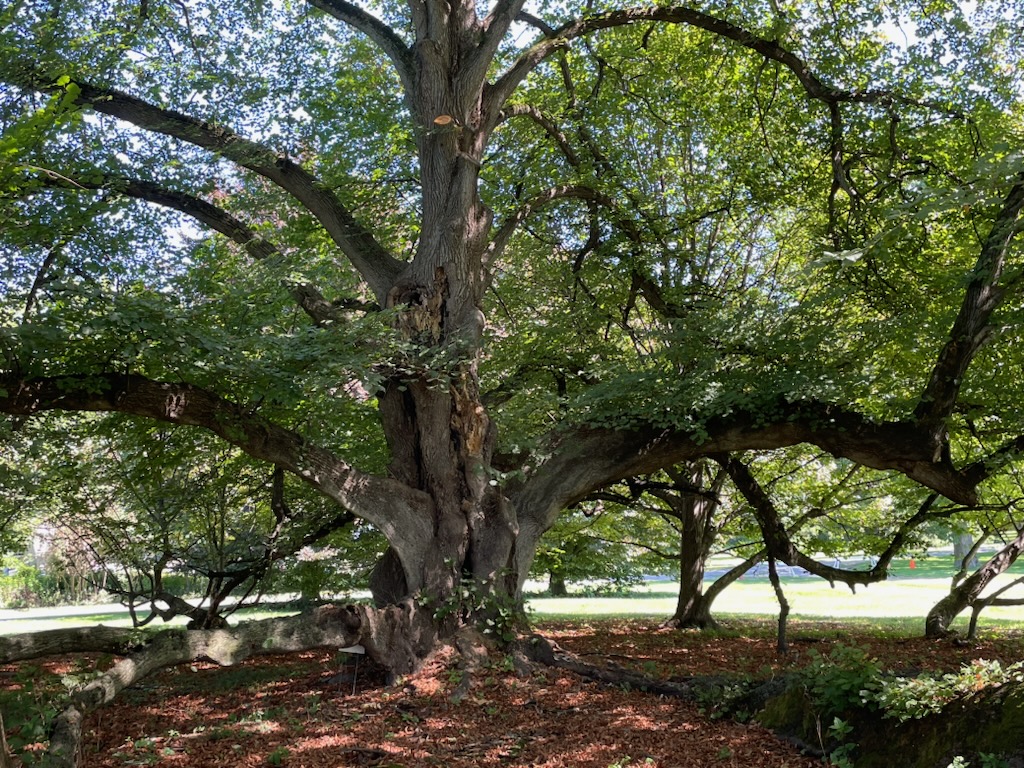
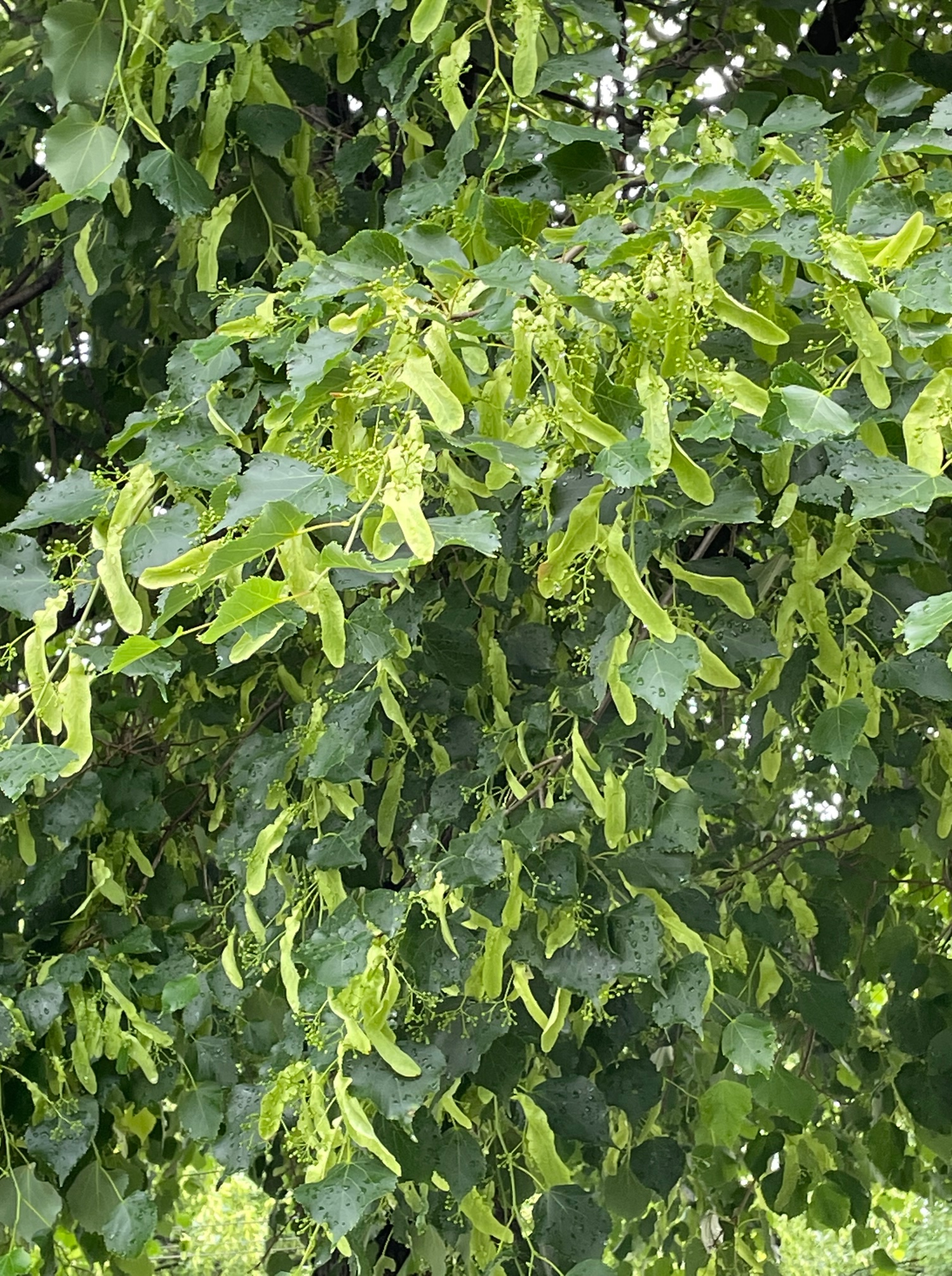
There are many lindens here, some still holding onto their magical lemony bracts.

Octavio Paz wrote:

Perhaps to love is to learn

to walk through this world.

To learn to be silent

like the oak and the linden of the fable.

To learn to see.

Your glance scattered seeds.

It planted a tree.

   I talk

because you shake its leaves.

Seeking even greater privacy, greater tranquility, I visit one of the gargantuan, ancient weeping beeches on the grounds,

I push aside the branches and enter, finding myself inside a place so silvery dark and still and mysterious that no photo can really do it justice.

Others have been here before. Hello Bob, who did you love?
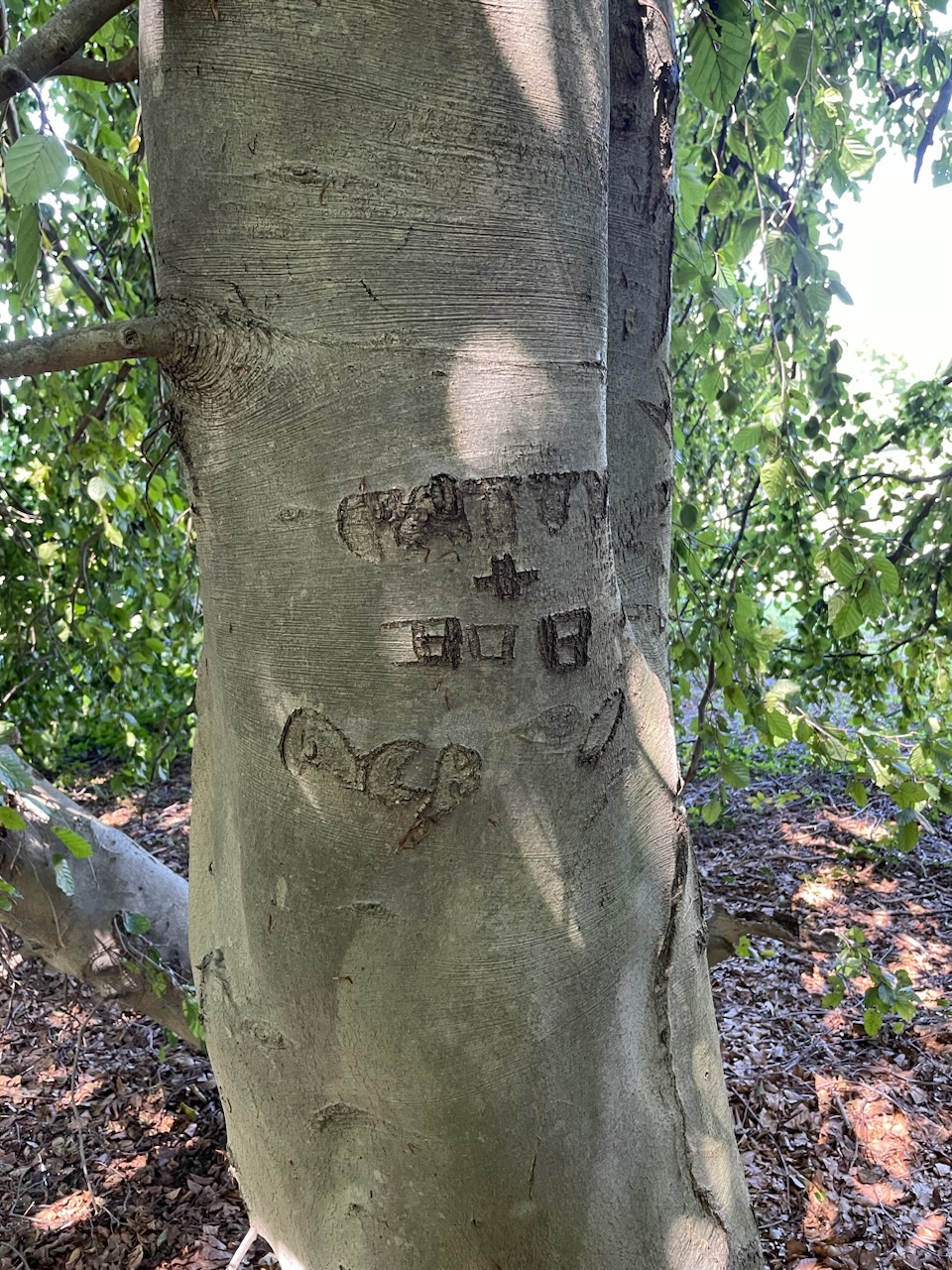
The branches twist together, sinuous. So quiet, yet so alive.

I run my hand along a smooth, muscular bough.
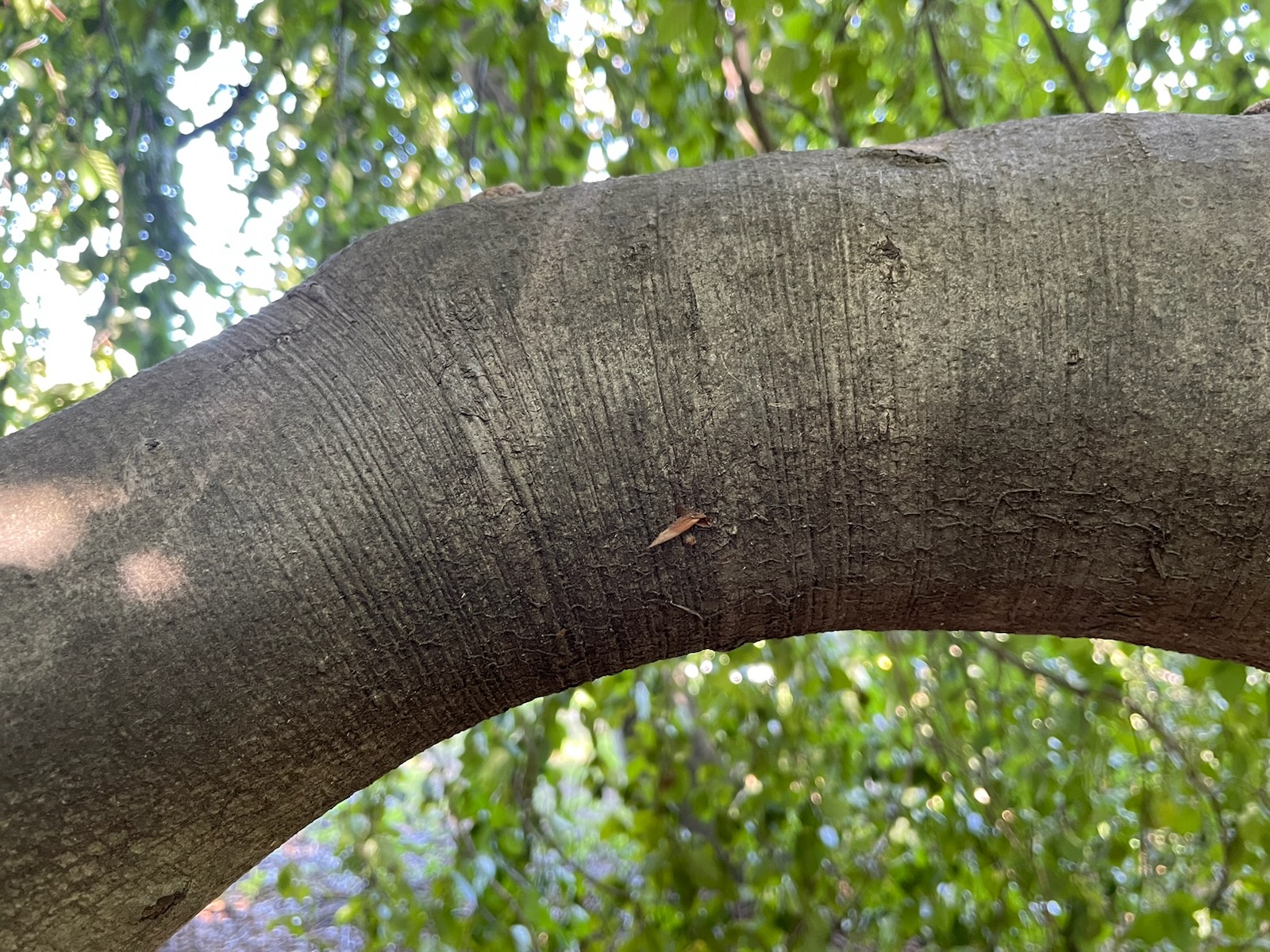
I stand there. I do nothing. It takes a lot of time to be a genius, wrote Gertrude Stein. You have to sit around so much, doing nothing, really doing nothing. I’m no genius, but I know that doing nothing can be an art as great as any other.

The rose garden at Lyndhurst is also antique, designed  by ladies a hundred years ago in concentric circles. Just outside its perimeter, late-season sage.

Hydrangea and its perfect clusters. I clearly need to find another word for perfect.

Only me here and the bees and the butterflies. No other human soul. I brush the sage with my hand and the scent wafts up. Here are September roses, flowers like no other.

Everything is perfectly still, lush, quiet. Perfectly private.

Spent rosebushes climbing a trellis have a beauty almost as exquisite as the blooms all around.

Rose hips hide themselves among the greenery.

Bees prowl the blossoms.

Hide inside, sip nectar.

Catbirds come calling. Lovely fragrances lift themselves, waft under my nose.
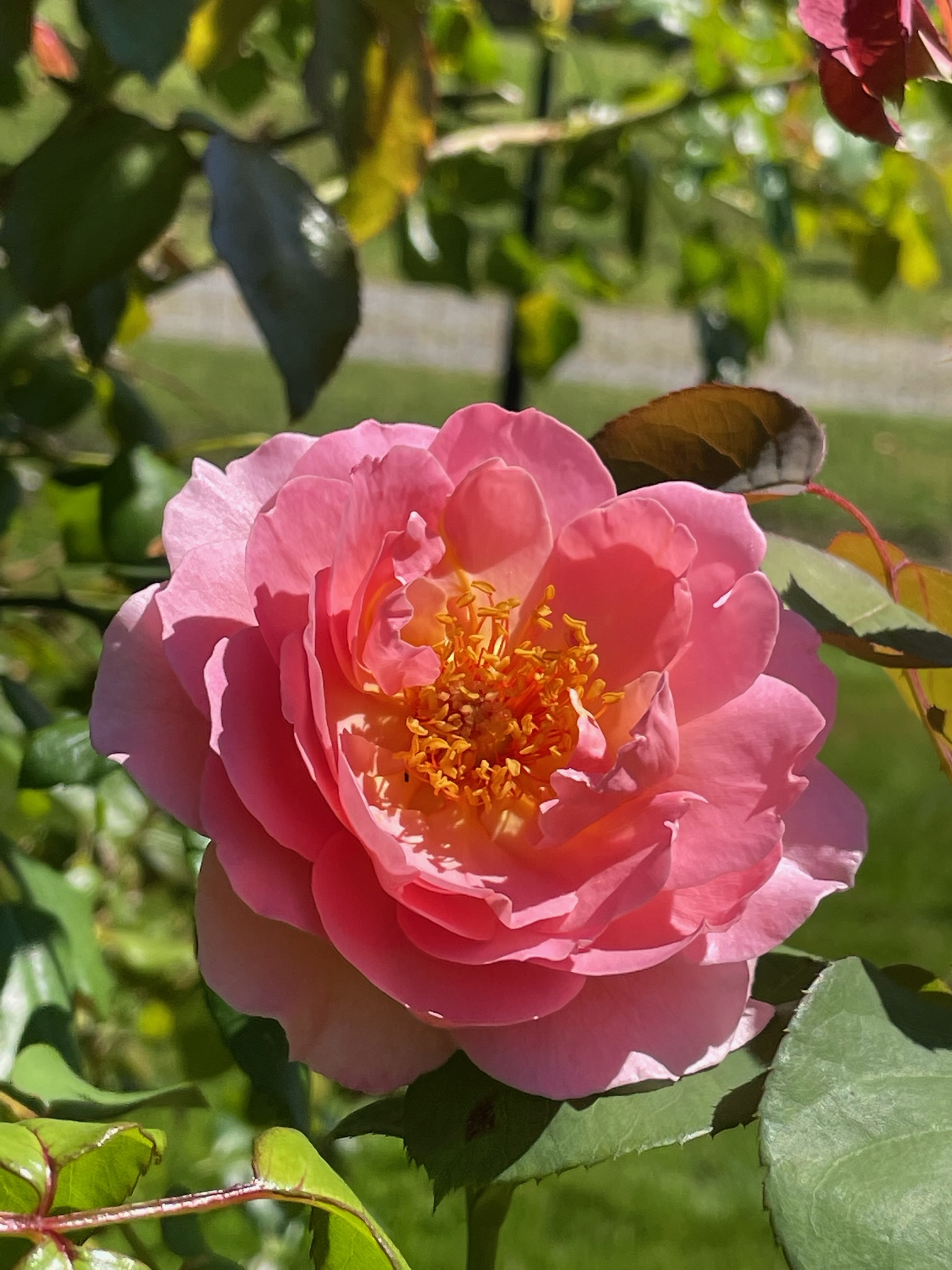
I wipe sweat from my brow and smell the sage I touched before. Lock the gate and leave. Just outside, some ancient spruces, one with the conjoined stems I love.

Cones litter the ground, brown on brown.

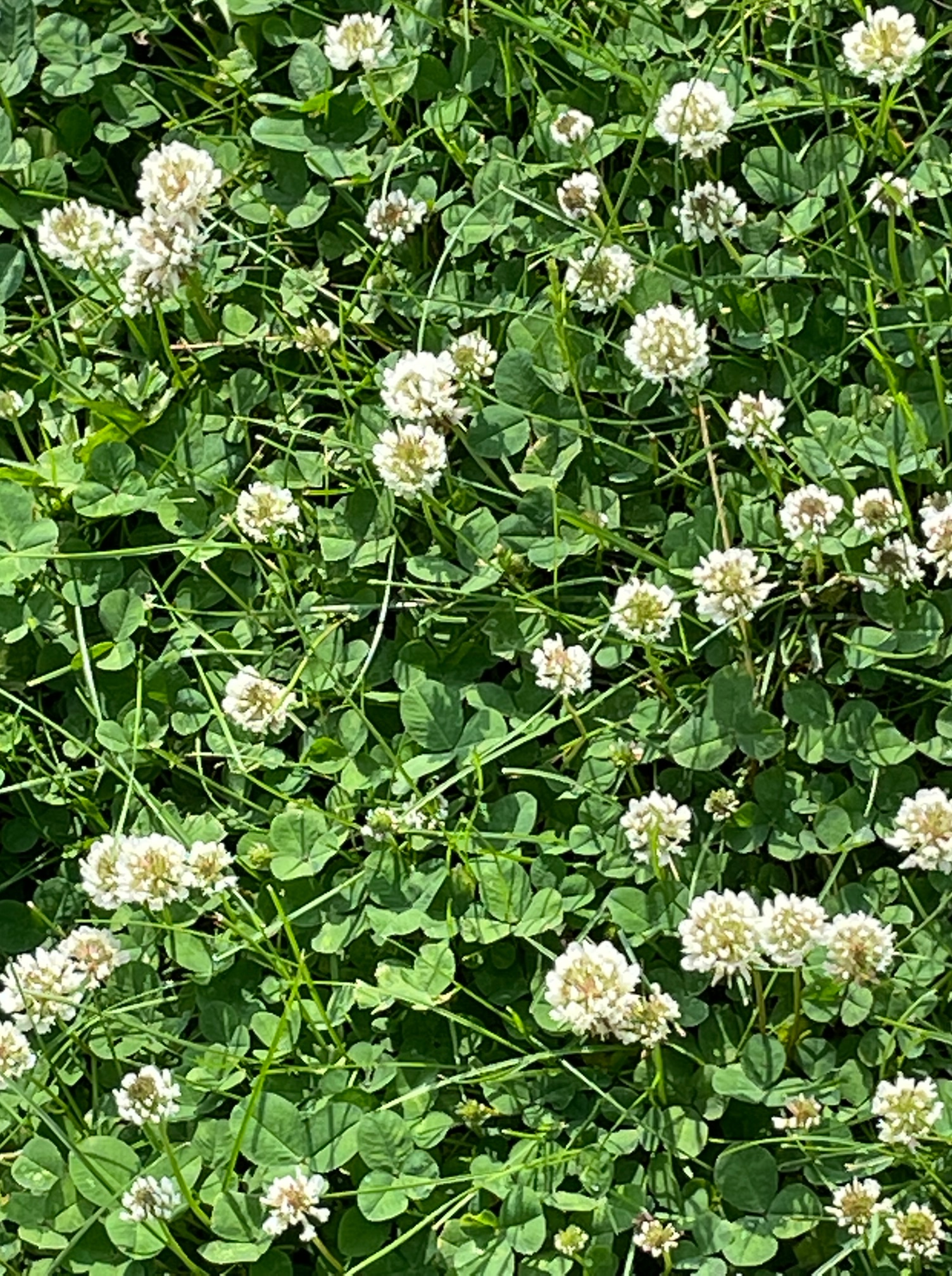
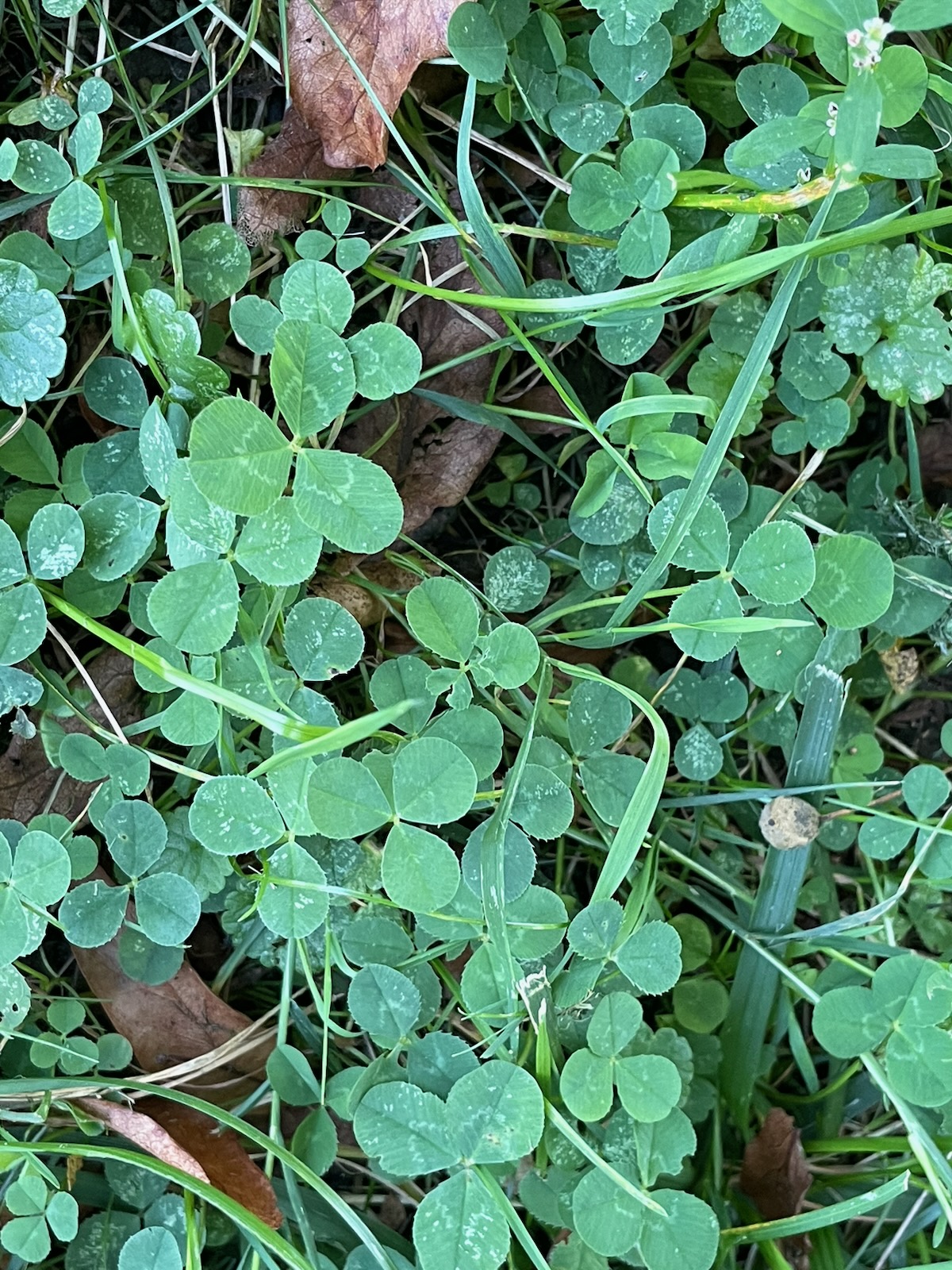
Wander, wander some more. Mary Wollstonecraft Shelley told us, The beginning is always today. Under my feet, clover. I know that if I were to hunt hard enough, go down on my knees for long enough, I’d find one with four leaves. I feel that fortunate.
Then a lucky mushroom, the only one, a lucky one.

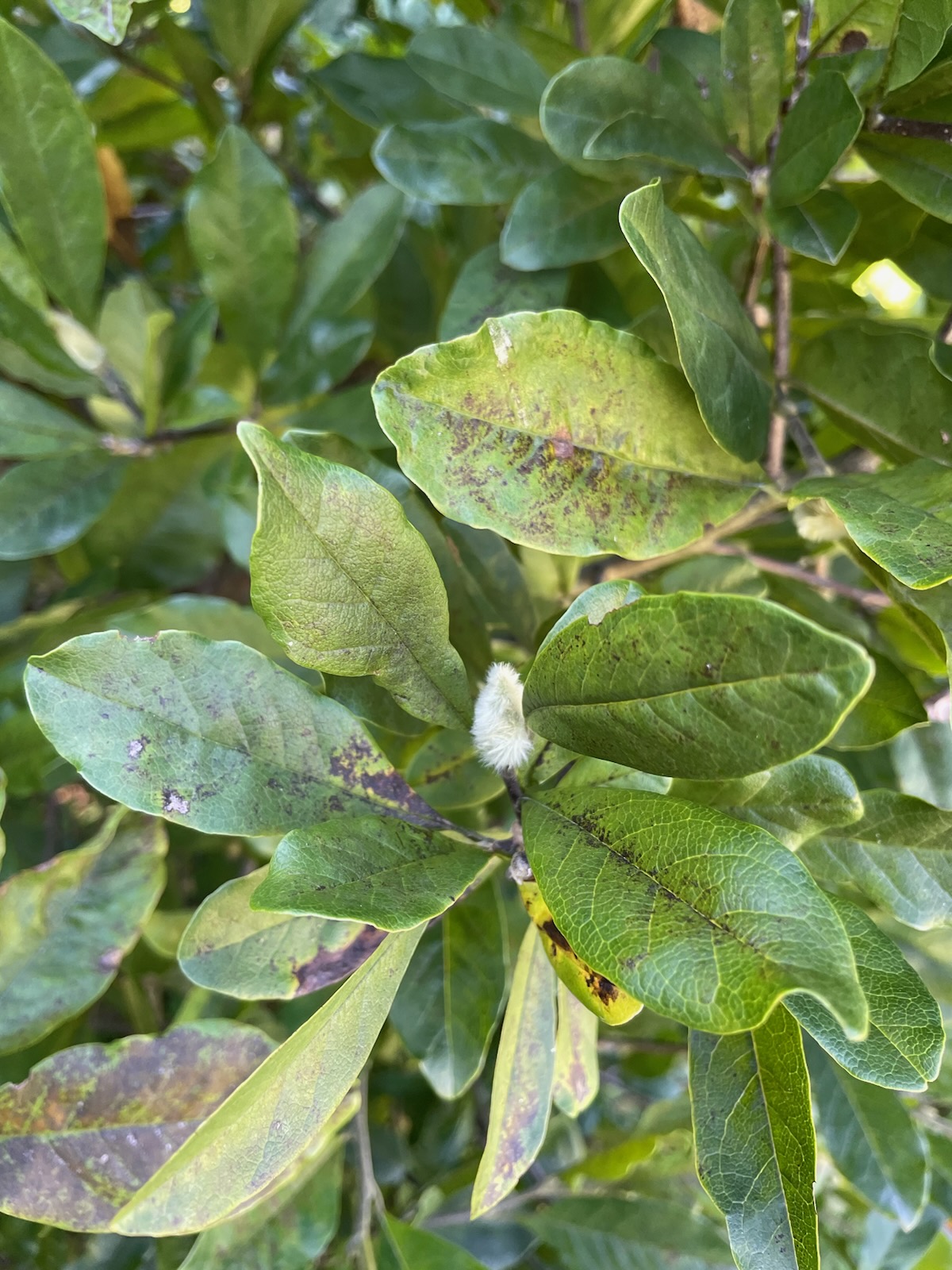
The tiny fuzz of a magnolia after it has had its spectacular blooms. A secret you need to really look to see.
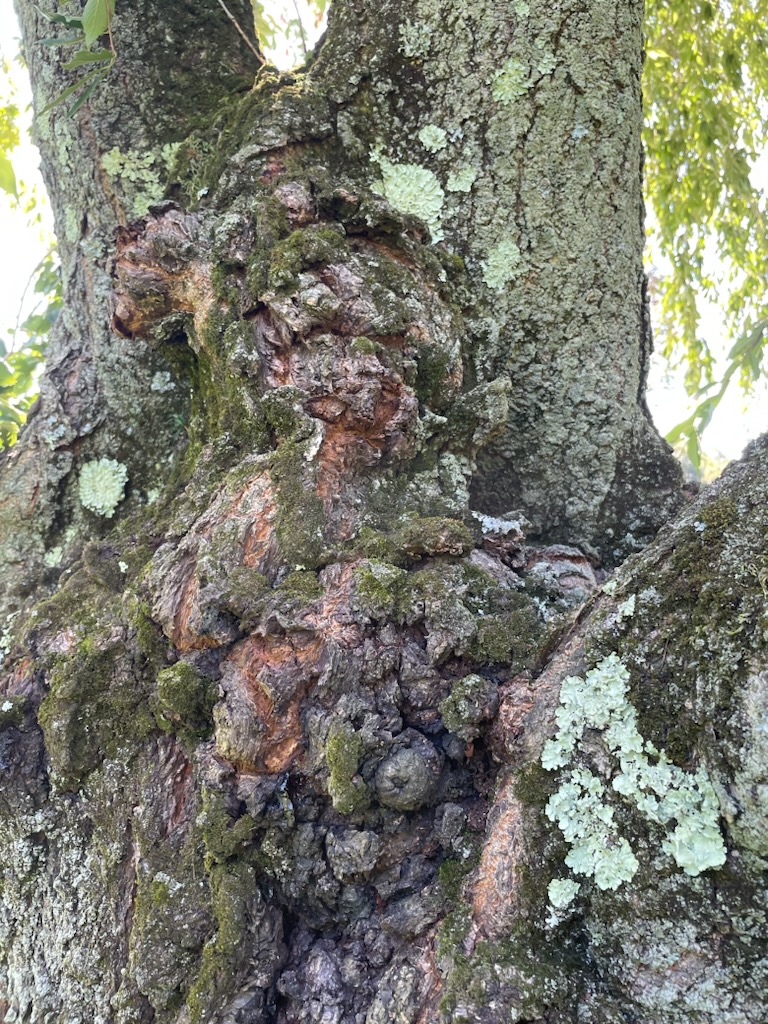
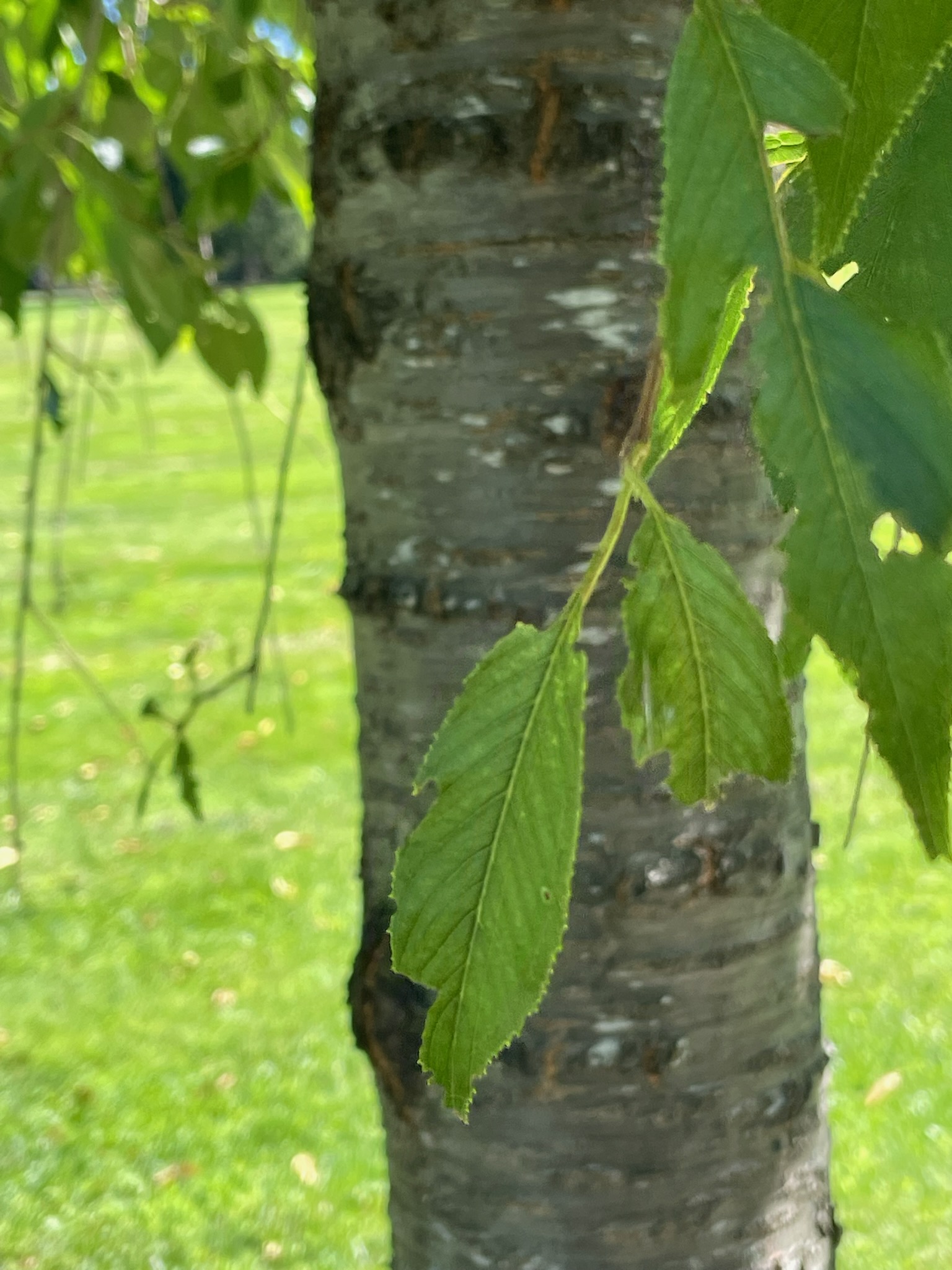
A weeping cherry.

So mature its trunk is gnarled and crusty.
Near it a young’un with clearly demarcated lenticels, the stitch-like pores that form a cherry’s instantly recognizable embroidery.
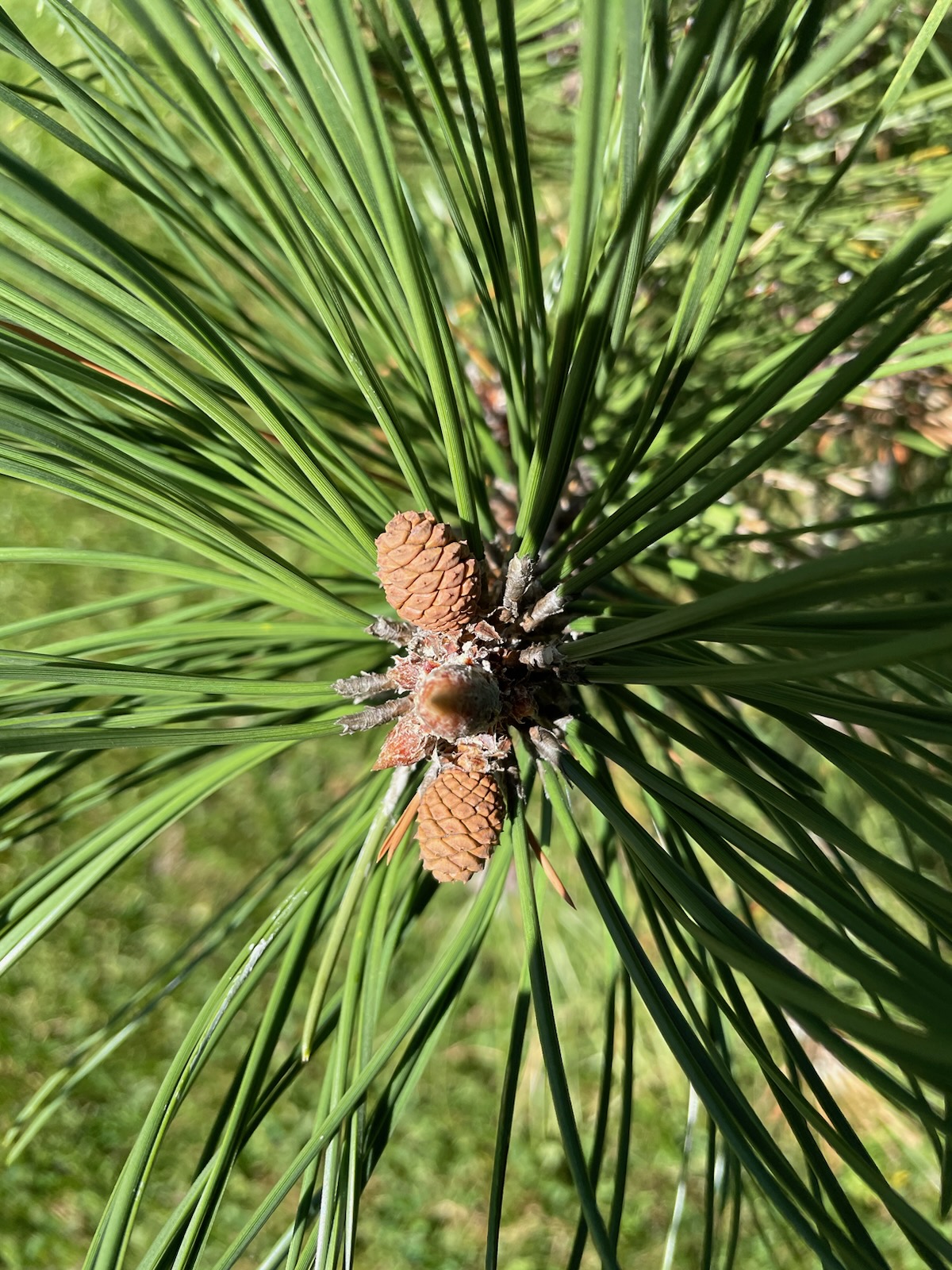
And another ancient specimen, a red pine, all burls and character.

But still offering its miniature baby seedcases.
A horse chestnut with a gaping critter hole at its base. Anybody home?

Childhood memories of collecting chestnuts on my way to school.

The Lyndhurst faux castle looms ahead.

More compelling, the little children’s elf cottage nearby.

I check the door, locked. Peer into a window.
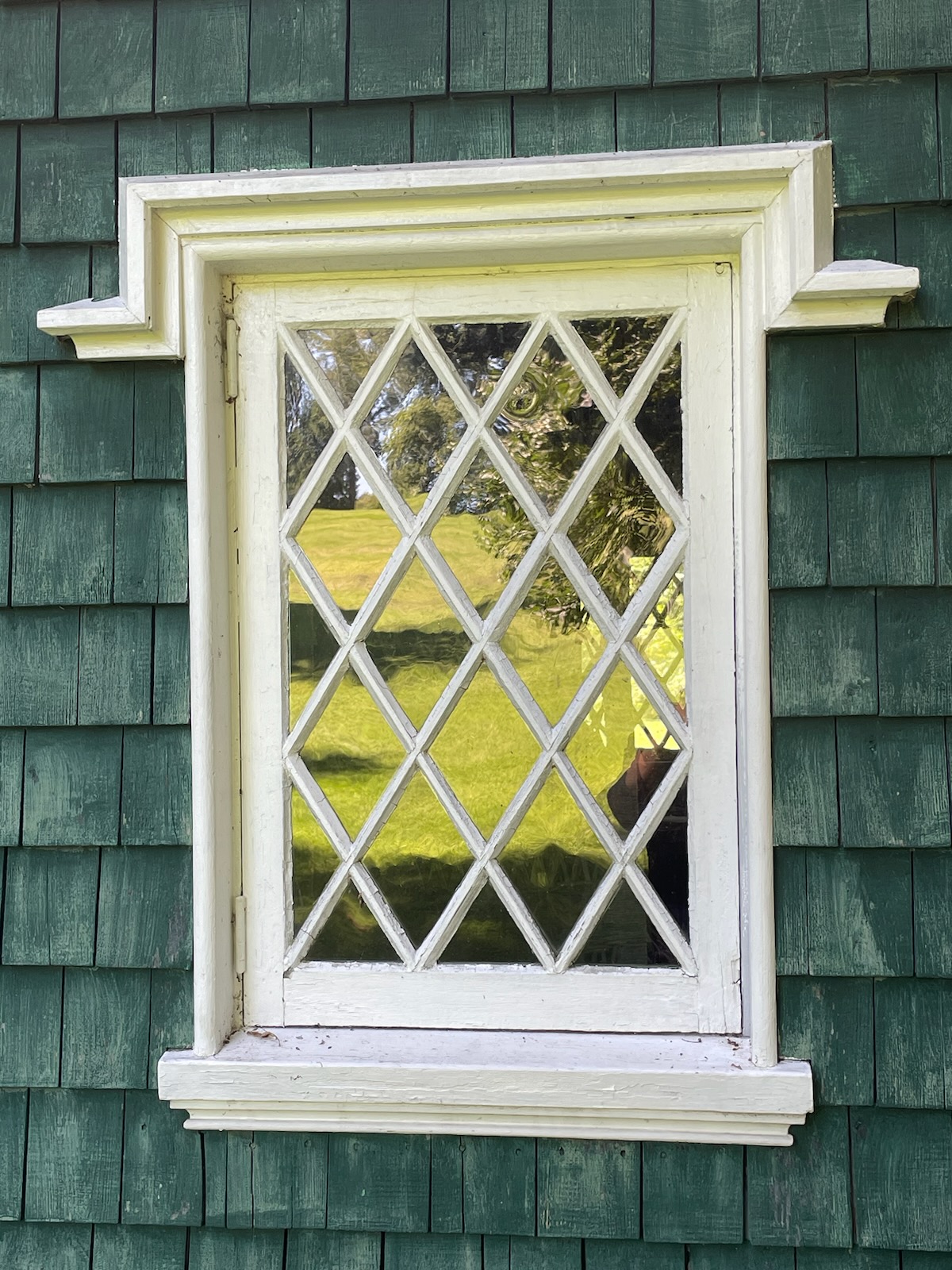
It’s as if the room is holding its breath, waiting for a child to come in and love it.

Outside, the emerald glow of a red maple canopy.
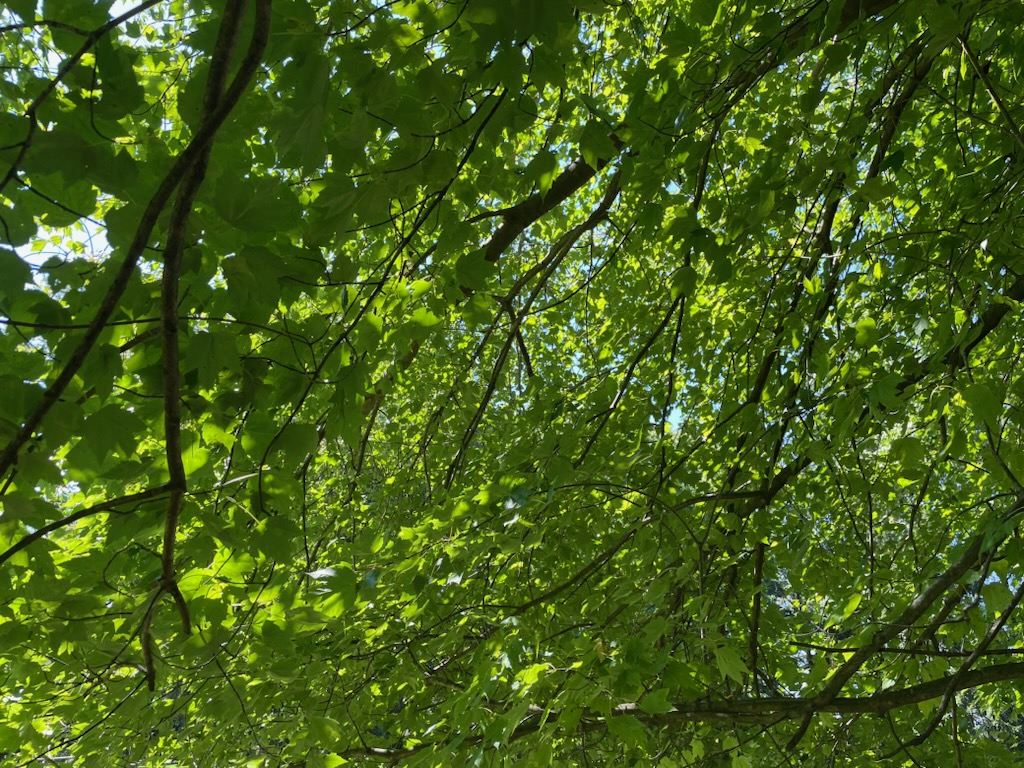
More lindens. A hush of lindens. All my life, my heart has yearned for a thing I cannot name. So said Andre Breton. He had my number, that’s for sure.

Departing, I step across the old cobble gutter from one hundred years ago, when the estate was new. I’m sure that at its beginning the place was marvelous.
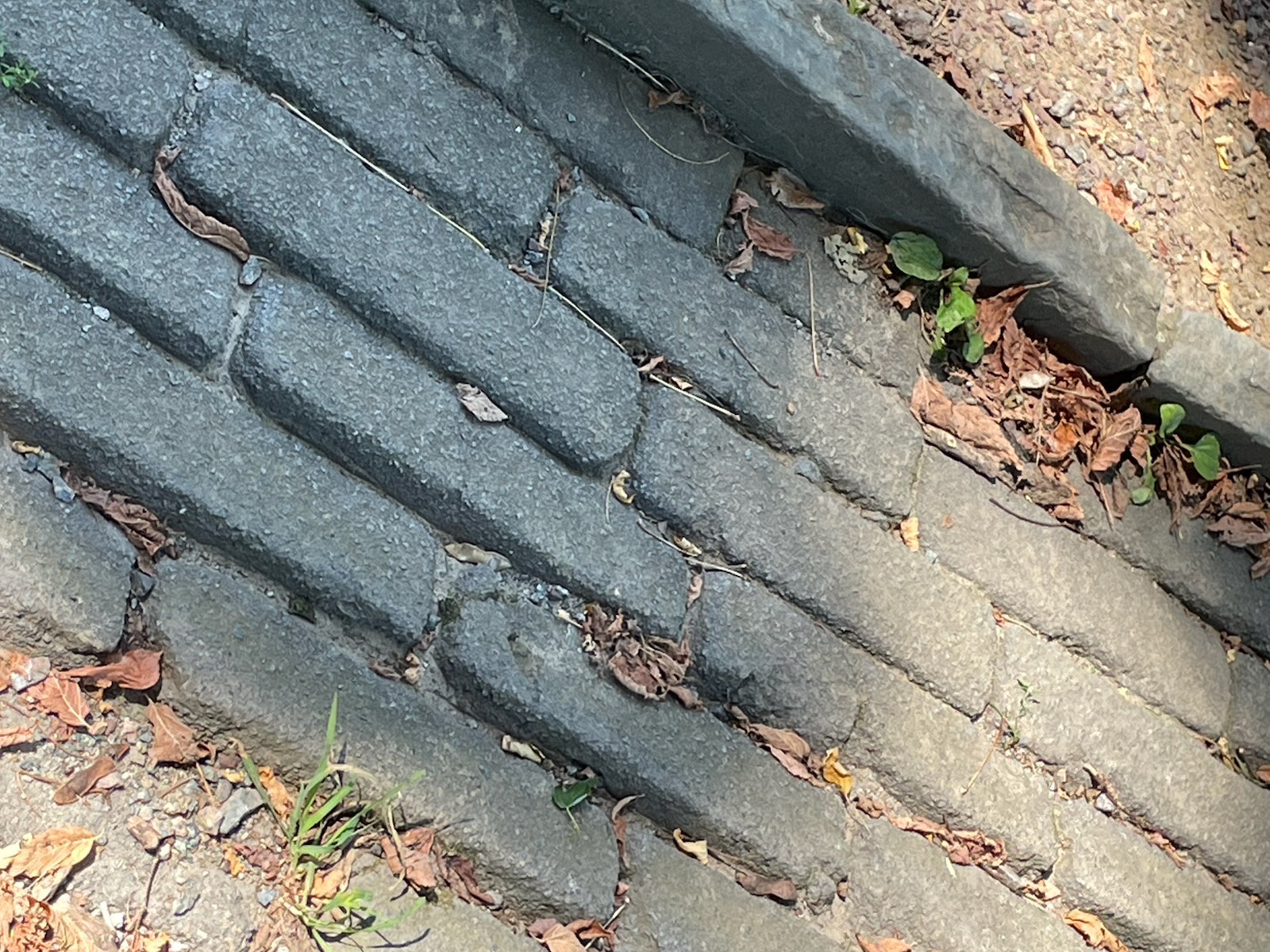
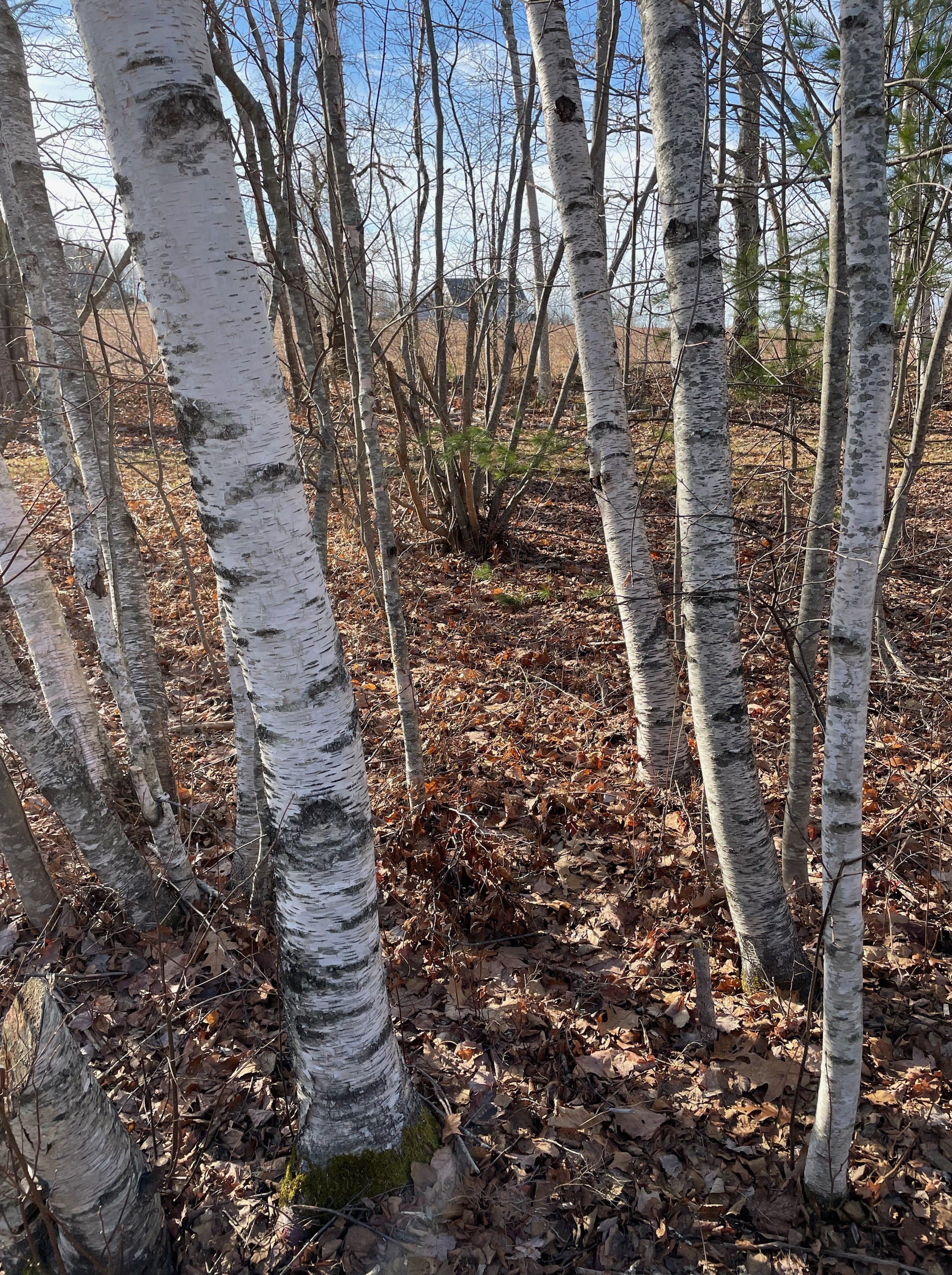
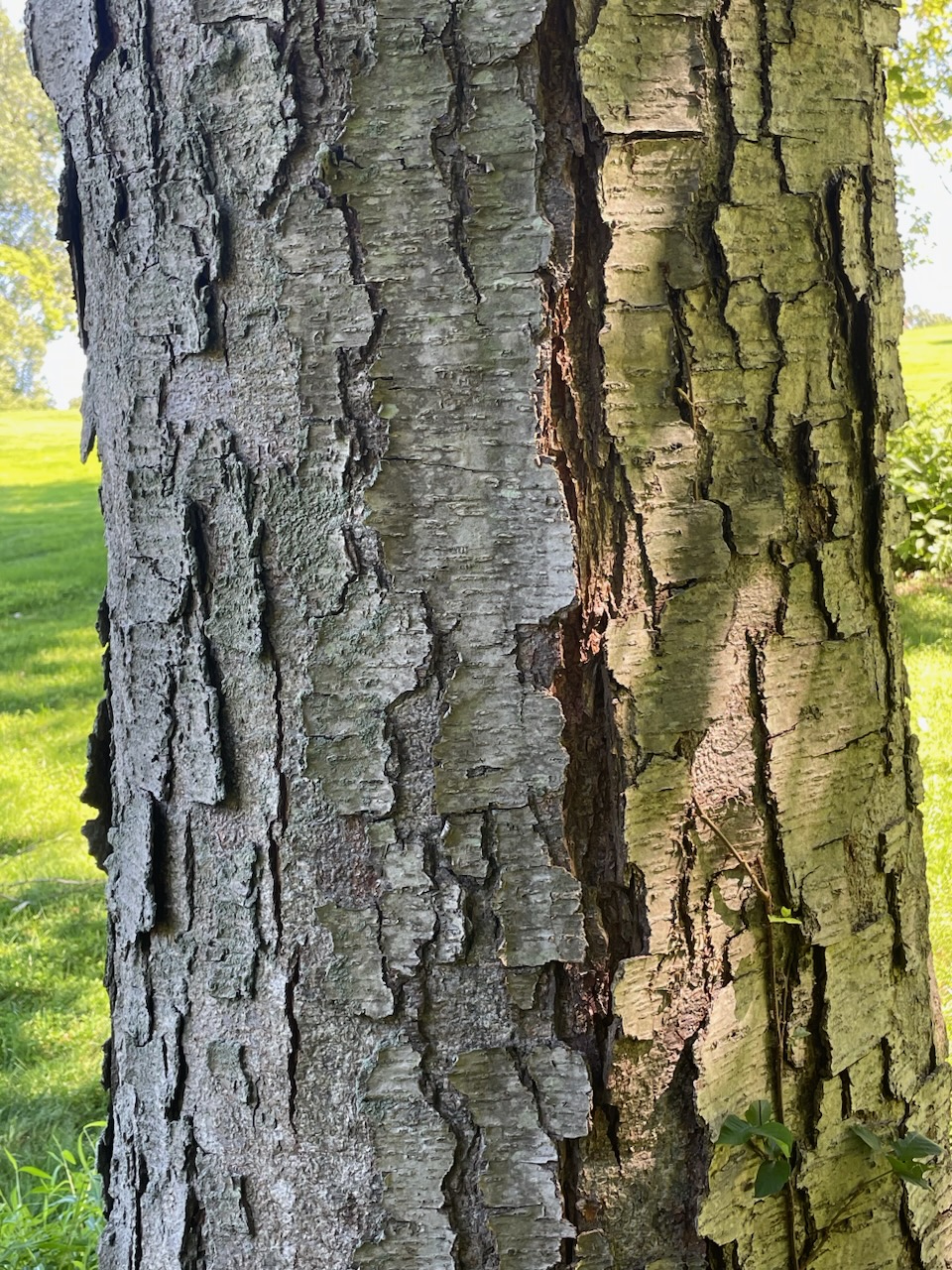
Now, in its dotage, all its trees mature, rough, tried by time and weather. A sweet birch with time-scaled bark.
Today, personal, completely private. Old, yet new.

All the more precious.
Leave a comment

Filed under Jean Zimmerman

Boat rockers unite!

I have been going around with a smile on my face all day. Why? Because today I saved a tree. A big, beautiful linden in my home town. Yes, utility wires thread through its branches, but it has so far avoided becoming entangled.

It stands lined up with two other mature lindens on the tree lawn in front of a house on Euclid Avenue, the nicer part of town. Its diameter is large enough that I am far from being able to touch my fingers together when I wrap my arms around it.

It could be that I care about this tree in part for sentimental reasons. Growing up, I had a friend who lived in the house, and there were parties… well, suffice it to say the lindens stood there back then, though they were of course a bit less impressive.

A new homeowner contacted the Village to say he was worried about the tree. A landscaping company examined it and – surprise, surprise – said it was a hazard and had to be removed. Tree companies, counterintuitively, always seem eager to cut down trees, especially when they can convince some responsible but naïve resident who worries that a big old tree might crash onto his house in the dead of night. Tree removal is tree companies’ bread and butter.

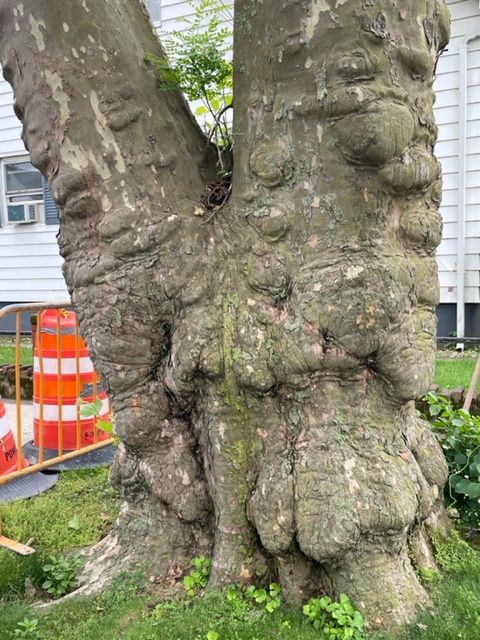
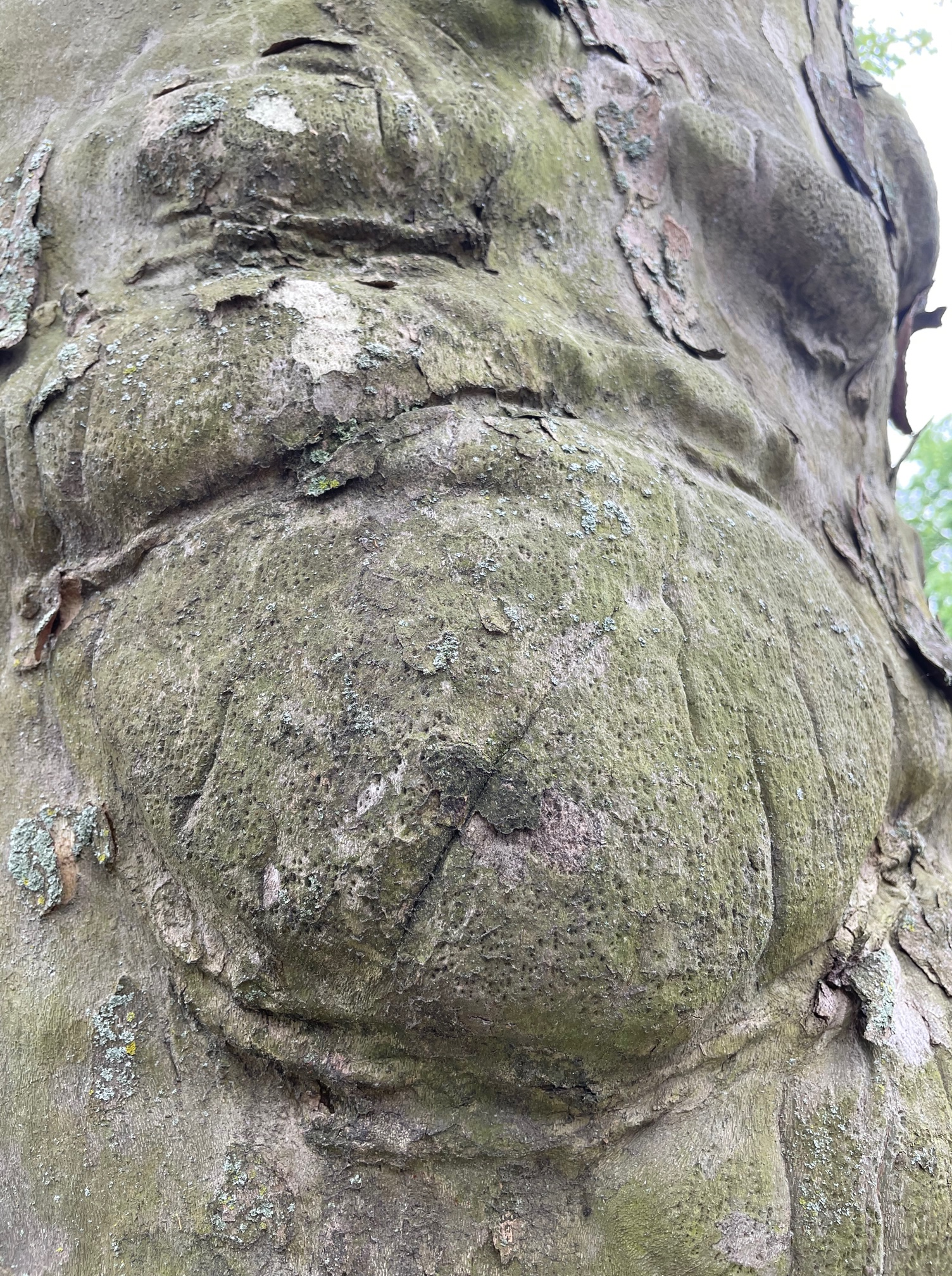
My town has a lot of people who like trees. It’s a long-time Tree City USA, with  a conservation-minded municipal government and many citizens who are dyed-in-the-wool green. We have an active Tree Preservation Board (at the moment I chair it). All of it couldn’t necessarily equate to keeping this particular tree alive. It turns out the other Tree Board members also thought that perhaps this tree was on its way out. It featured a burl and a cavity. Why rock the boat?

While birds and other critters love cavities in trunks, humans can be very afraid of a hole in a tree. People, compartmentalization is a thing, okay? According to what tree people call CODIT (compartmentalization of decay in trees, of course), when a tree is wounded it begins to protect itself by slowing or preventing the spread of disease and decay by forming “walls” around the wounded area. Suffice it to say that the walls run in every direction, ingeniously. So a tree can live and prosper with a hole, even a big hole, in its gut.

I called up my friend, a brainy DEC forester, who told me that while the state is not permitted to conduct such evaluations, he would take a look. There was indeed some decay, he observed, describing the linden as a “high-value” tree. Get a licensed consultant to do a level 3 Tree Risk Assessment, he said. I appealed (nice word for my continued agitation) to the Village. Finally, finally, they brought in their favored professional arborist, an impartial expert who put a stop to all the funny stuff and said the tree must stay.

Hurray!

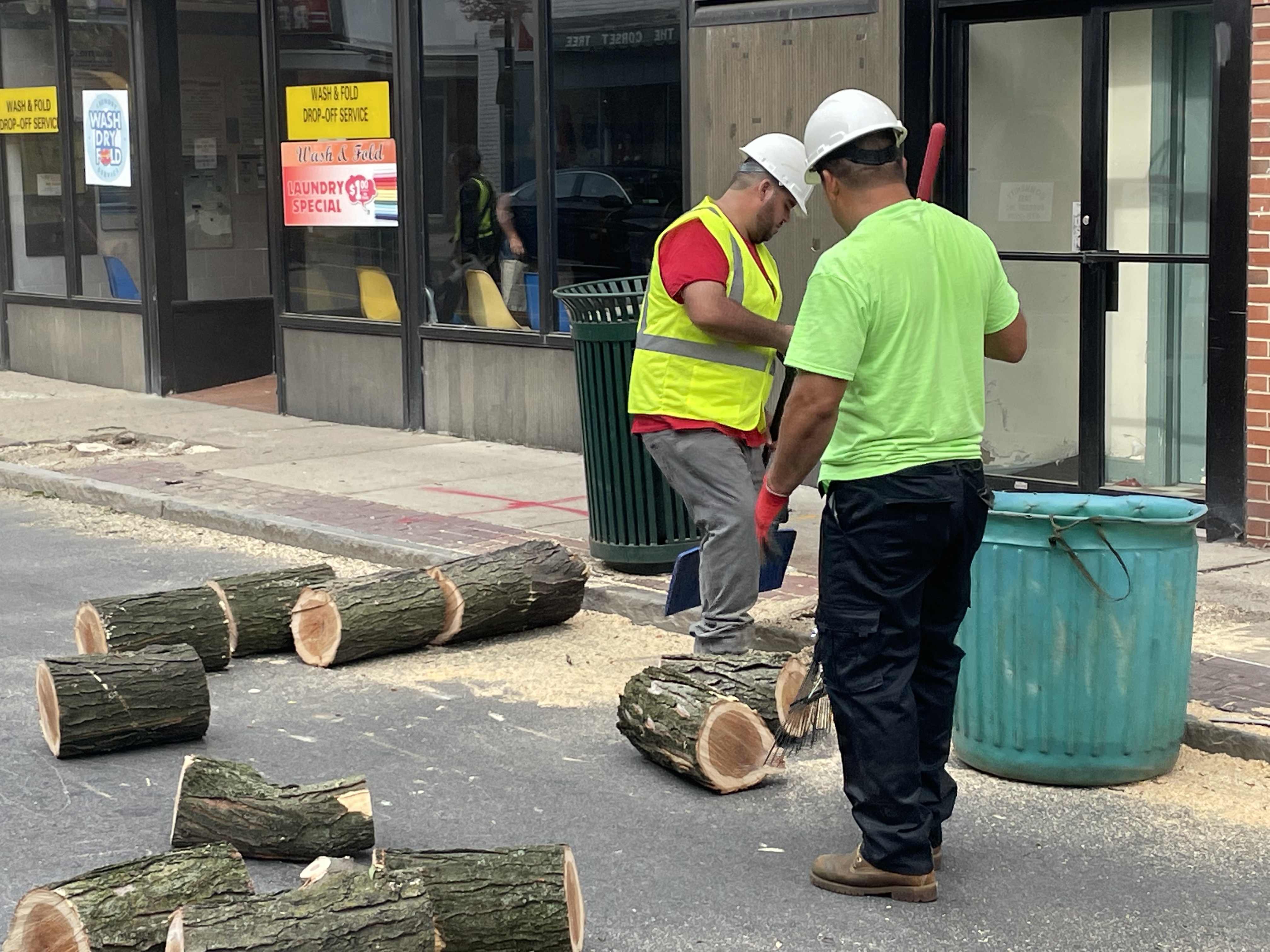
Boat rocking doesn’t always work. I recently lost a battle to save trees that were being removed from our leafy downtown streets in order to lay new sidewalks. That was unfortunate, and I grieved. 

Now, lindens are beautiful trees. Not the most beautiful, to me – beeches are. “It seemed a mere toss-up whether she said, ‘I love you,’ or whether she said, ‘I love the beech-trees,’ or only ‘I love—I love.’” That’s Virginia Woolf, one of my favorite writers, from Night and Day. We know that people since time immemorial have fallen for beech trees, their smooth grey bark, eminently useful for leaving your mark. 

Thoreau said, ”I frequently tramped eight or ten miles through the deepest snow to keep an appointment with a beech-tree, or a yellow birch, or an old acquaintance among the pines.” I like to think of some lost soul tramping miles through a mysterious, tangled forest, too shy to unburden himself to the person he cares for, and surreptitiously taking switchblade out of pocket to pronounce, on bark, indelibly, the sentiment I love-I love.

So beeches are great. But lindens come pretty close, with their heart-shaped leaves, their dangling bracts, their grey-grooved bark.

Everyone deserves to have a favorite tree the way everyone deserves to have a favorite birthday cake.

Yours might be a yellow sponge cake, mine might be a fudge tunnel cake. Or a strawberry cake–the best kind, made Southern-style with white cake mix, jello and oleomargarine. Or even a gourmet hazelnut torte. It’s up to you.

You might be a birch person.

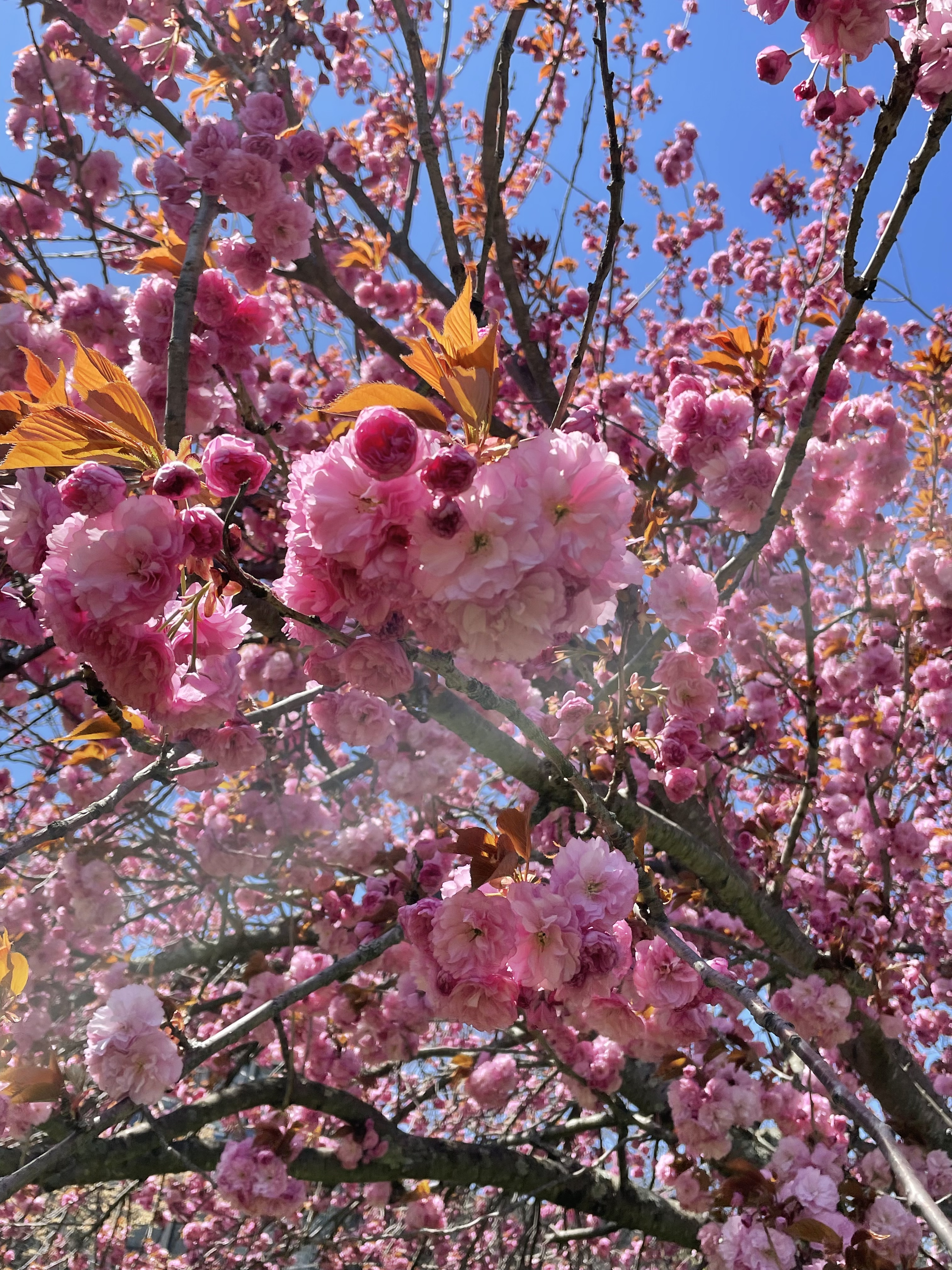
Perhaps flouncy cherries do it for you. They can be pretty irresistible at their peak.

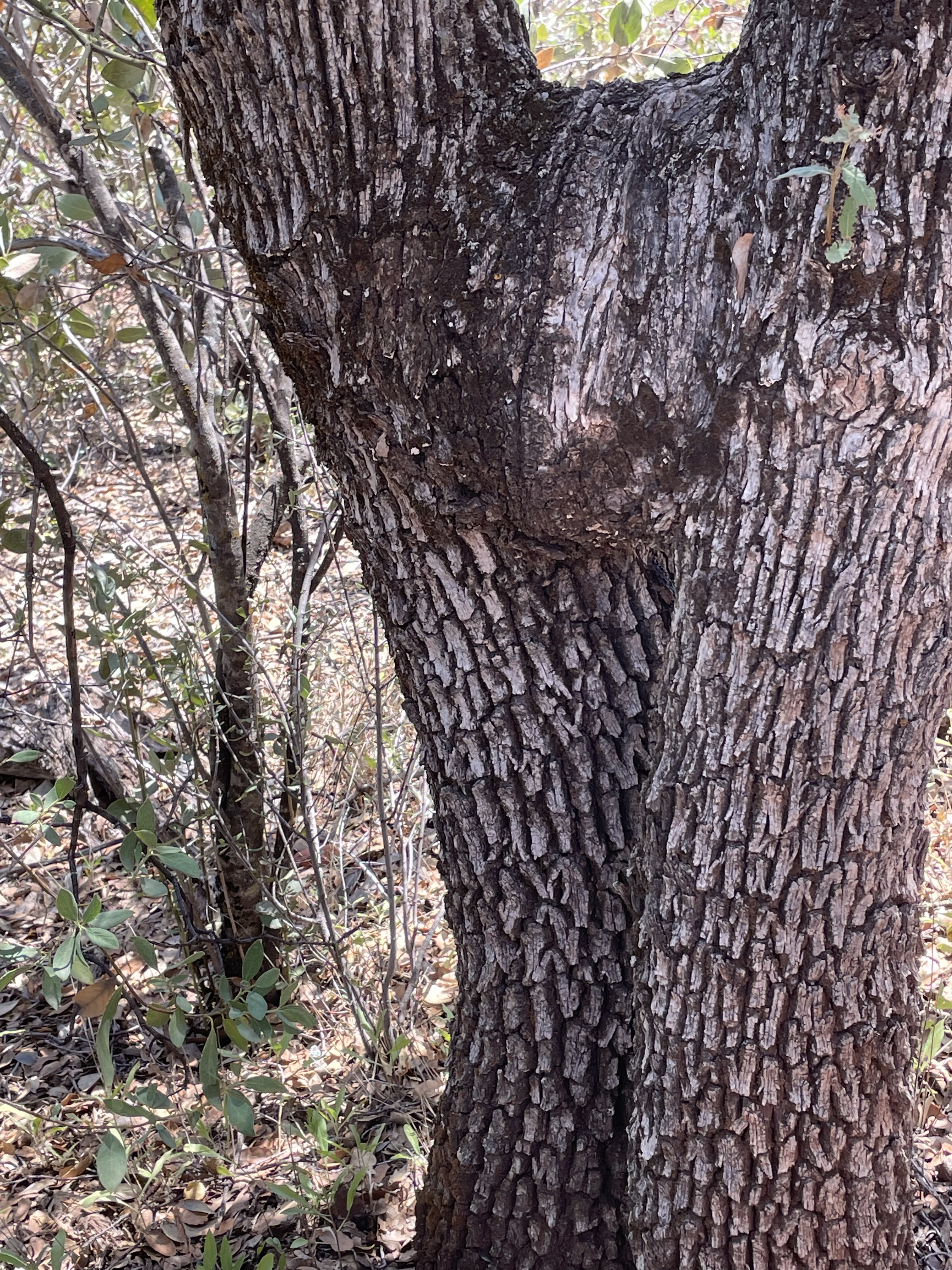
Or you might have a thing for the alligator juniper, the species that favors coming together with other alligator junipers for a little pleaching party.

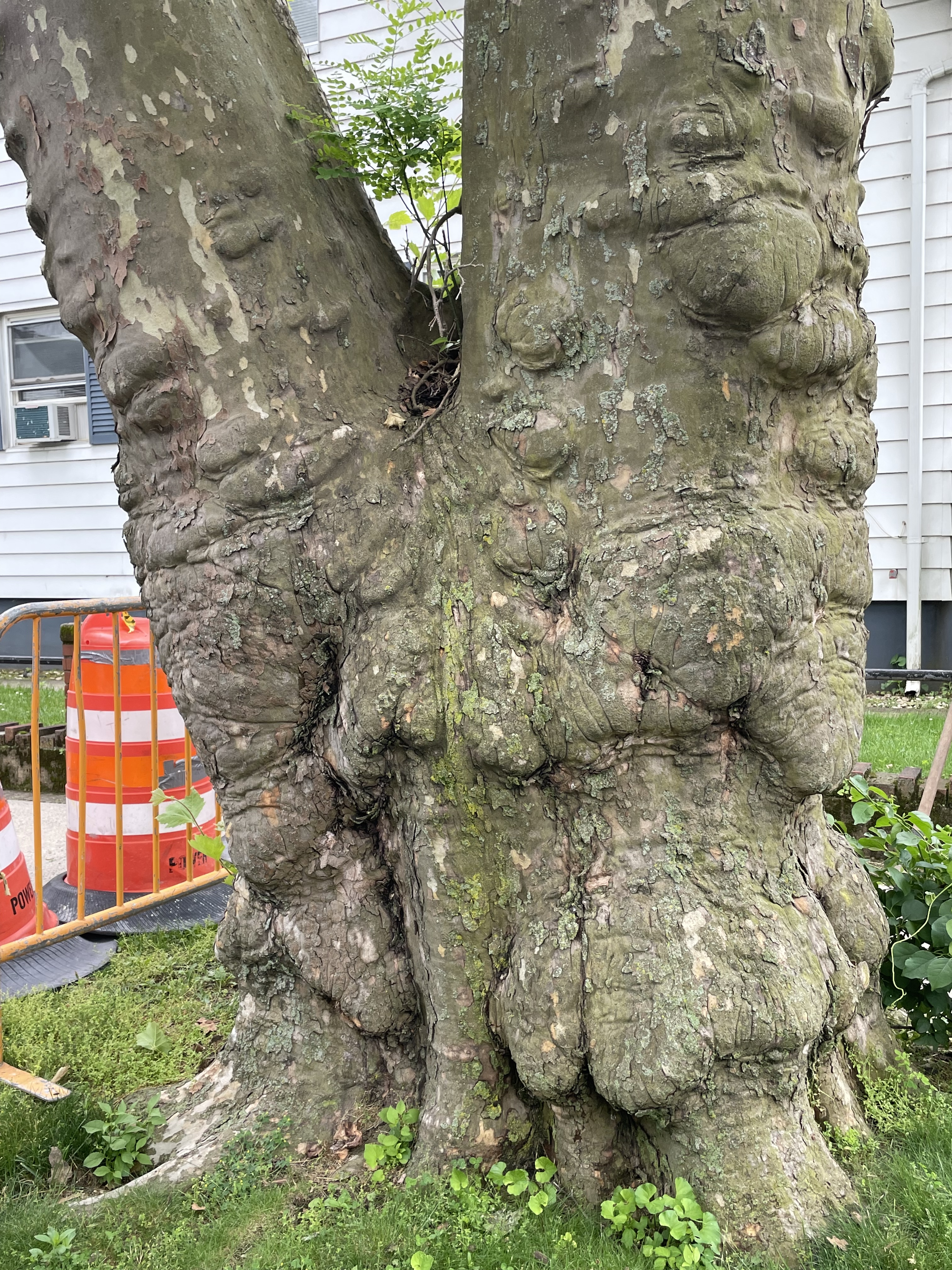
You might even favor the saggy, baggy London plane, a sentinel of our city streets. 

If you live in the southwest, you might eschew real trees altogether in favor of the imposter saguaro, which also stands sentinel, though in deserts. That’s your right.

In any case, you need to protect what you love. Probably for a lot of people reading Richard Powers’ Pulitzer-winning novel The Overstory, the term tree hugger might resonate. What about the original tree huggers? In 1730, 294 men and 69 women belonging to the Bishnoi branch of Hinduism took it upon themselves to shield the trees in their Indian village from being mowed down for a palace, and were massacred by foresters. They literally clung to the trees, and died for their bravery. Happy ending, the government decreed there would be no tree cutting in any Bishnoi village, and now the place is a green oasis amid an otherwise barren landscape.

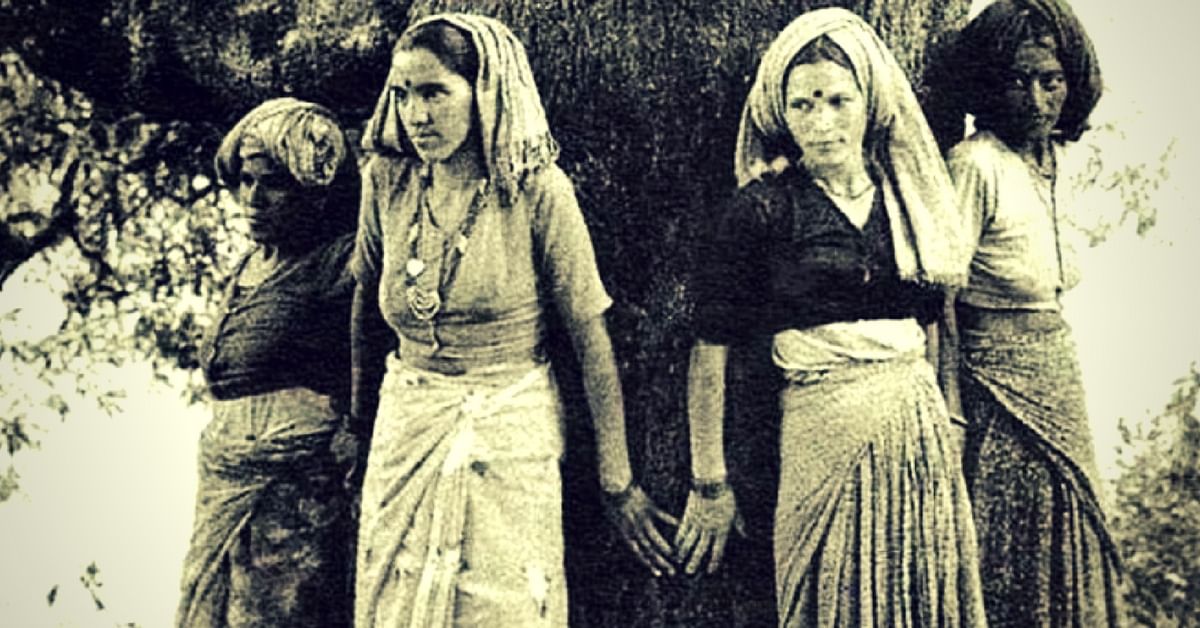
That story sounds like it might be a little burnished by time. But the next chapter of tree huggerism is indisputable. A group of peasant women in the 1970s in the Himalayan hills of northern India took inspiration from those earlier folks when they fought to have the trees in the vicinity preserved, throwing their arms around the trunks to do so. This was the Chipko movement. “Chipko” means “to cling” in Hindi.

They had success; before long there was a tree-felling moratorium in Himalaya. The tactic, called tree satyagraha, had spread across India and forced reforms. 

Satyagraha! The original boat rockers.

The future is vast, and we don’t know what awaits us. But one thing is for sure. It feels good to save a tree, a large old linden that wasn’t doing anybody any harm. It was just being beautiful. And will go on being beautiful. If I have anything to say about it.

4 Comments

Filed under Jean Zimmerman

Can a flower speak to you?

I think it’s possible.

Standing in Floral Park, Queens, under the canopy of Lady Linden, I’m distracted by the  perfume in the air.

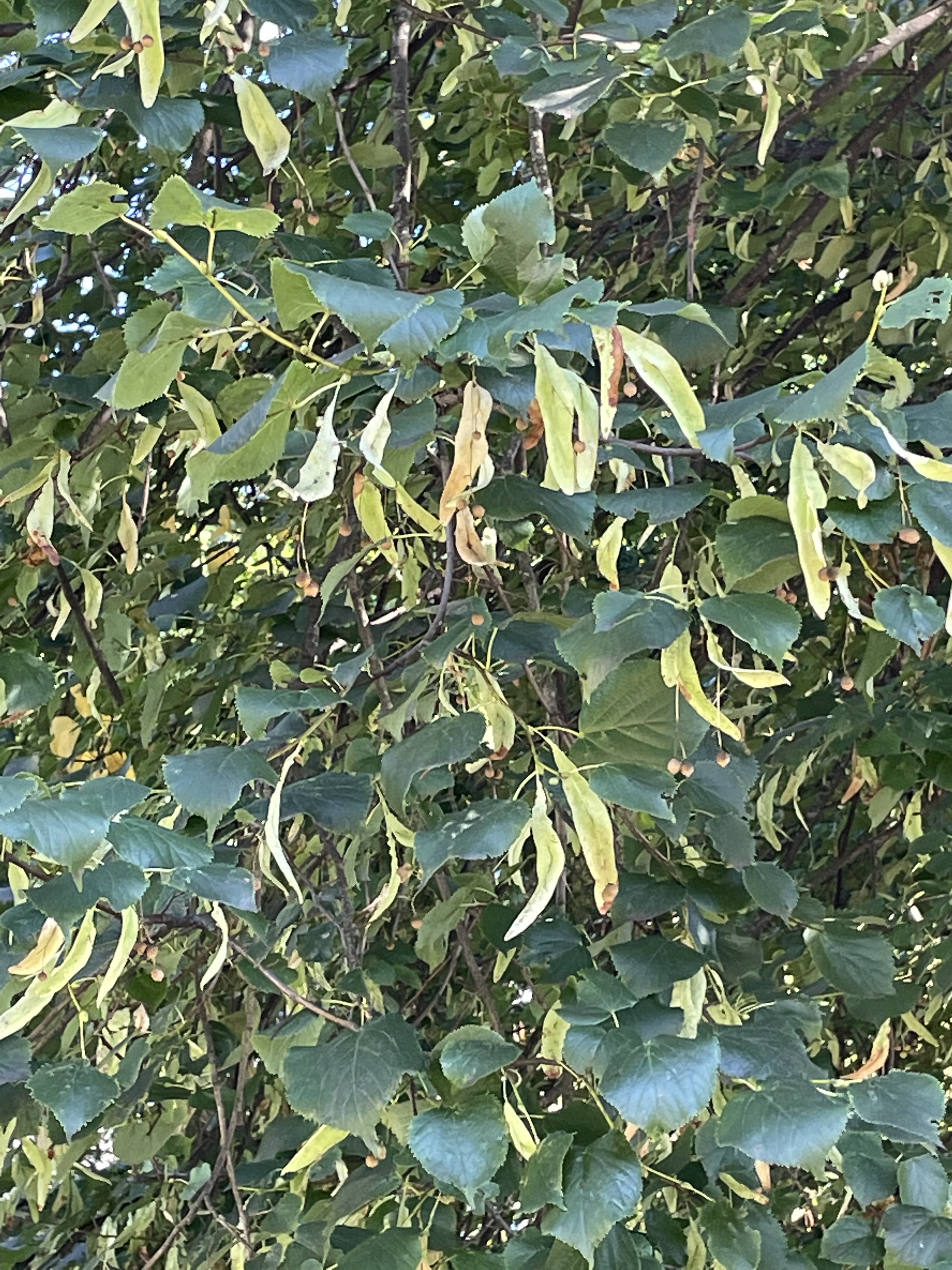
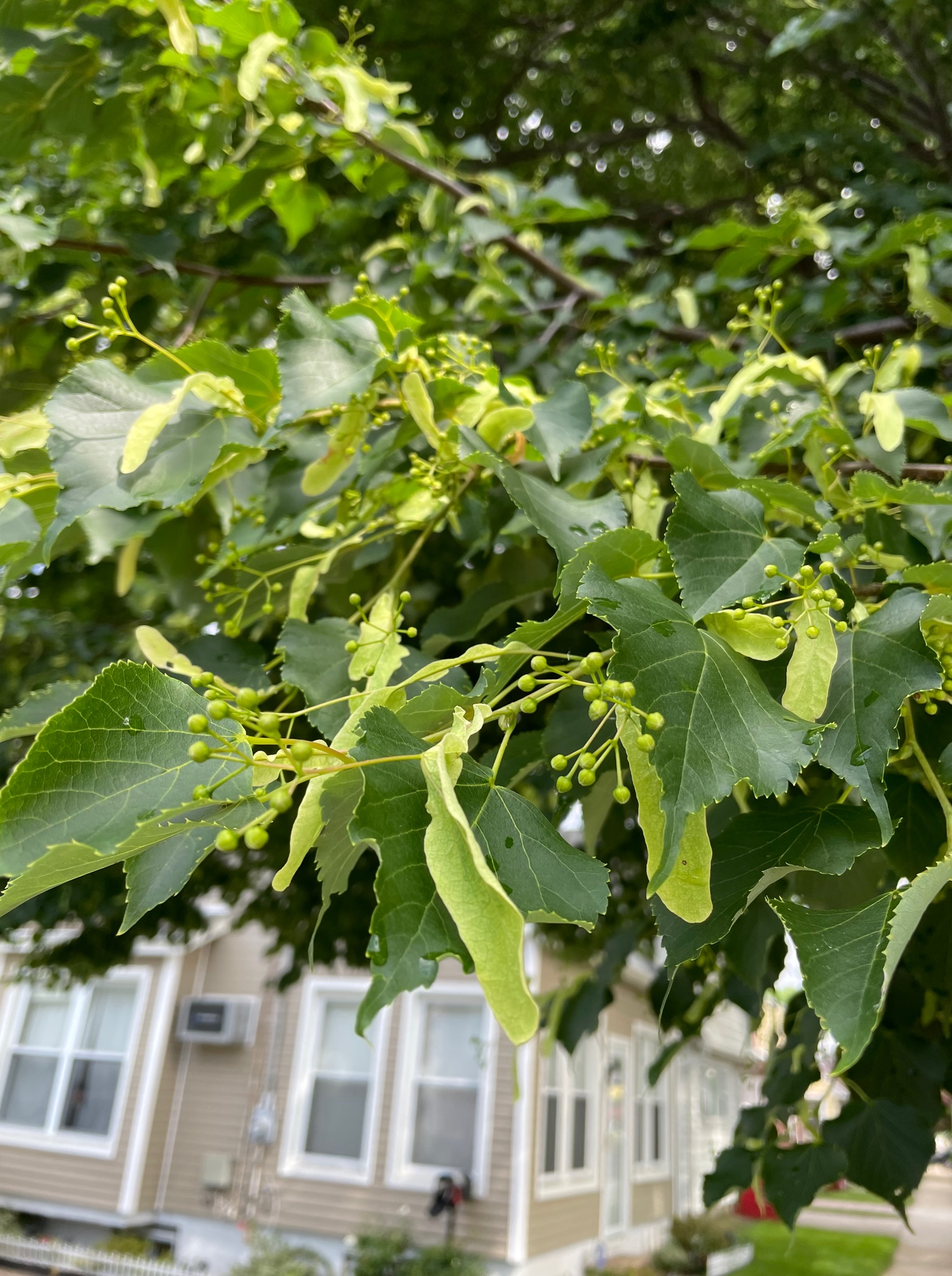
It takes something to be distracted in the shade of a linden, especially at this time of year, when the heart-shaped leaves (cordate, if you want the technical term) have materialized and you can see the lighter colored bracts hanging all over the trees like golden tickets out of Willie Wonka. Few seem to agree about the purpose of the mysterious linden bracts, which are actually a kind of specialized leaf. Do they exist to channel rainwater away from delicate buds and flowers, do they attract bees, are they some kind of wing to carry seeds away?

Lindens are magical — in ancient mythology, tilia symbolizes faithful love, and is more currently believed to neutralize negative energy. The edible flower is a sedative. Its fragrance is also seductive, but flowers here haven’t yet bloomed… so what smells so good on the streets of Queens? It could be the curry cooking in someone’s house, as I watch the Sikhs go about their business.

Yes, here there are plenty of Norway maples and honey locusts—weed trees — and pin oaks (no tree looks lovelier silhouetted against the sky).

Even some Japanese pagoda trees in these cramped New York City tree pits. Take that, Bronx Botanical Garden! Where we’re working I see a baggy, saggy old London plane, sheltering a seedling in its crook.

You might think it has seen better days, but I would assert this actually is this tree’s better day, perhaps its best, the distinguished old grandmawmaw, queen of the Queens block where Whitney Avenue meets Bryant Avenue, no doubt rooted here long before the tickytacky abodes sprung up in the neighborhood.

But what is so sweet about the air today? I looked around and then I crowdsourced some Petal Pushers I know to find out the ways in which flowers have spoken to them.

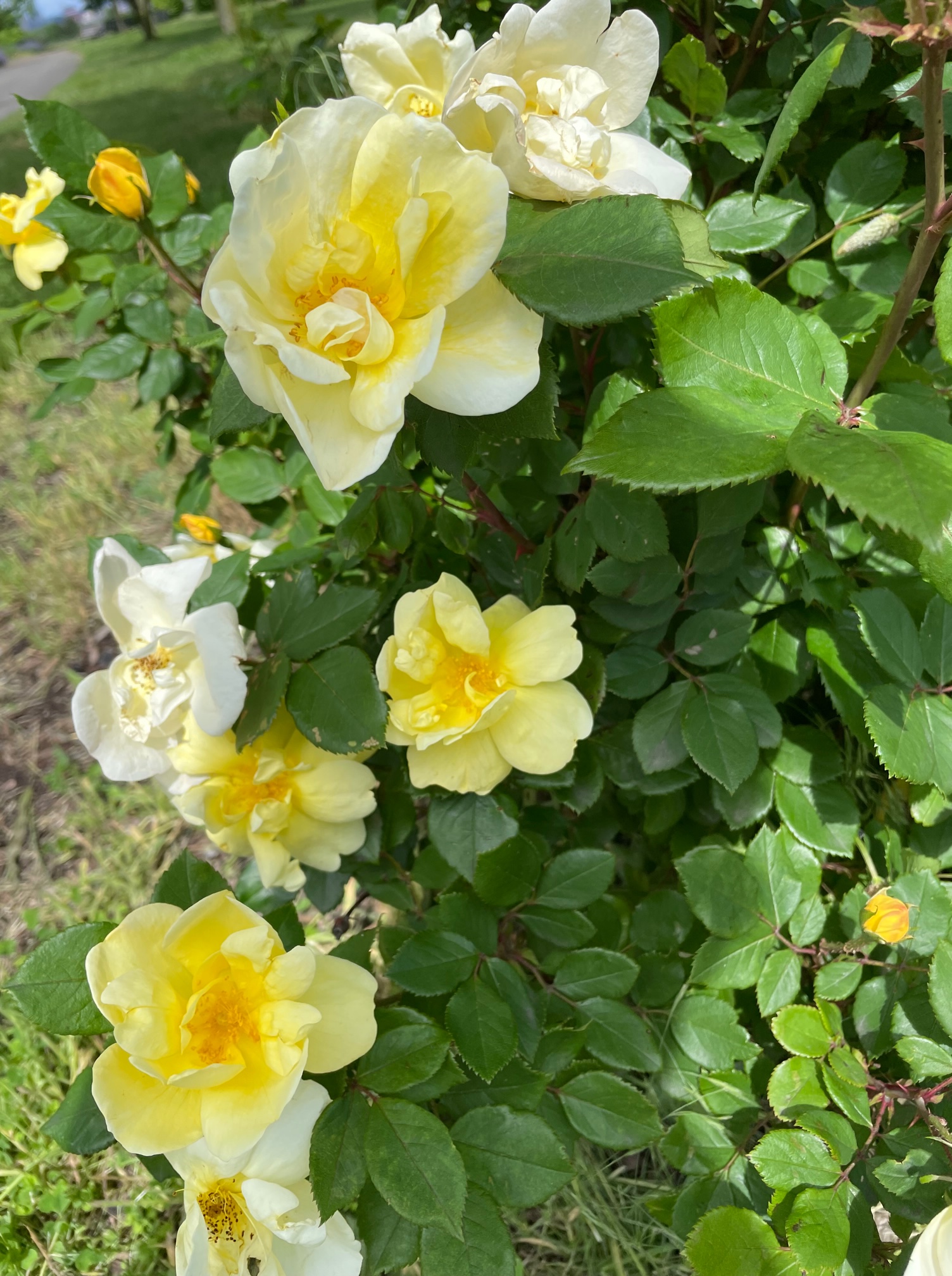
A lot of our passions seem to come down to bouquets. The yellow sweetheart roses in my wedding bouquet, a memory that blooms every time I see a yellow rosebush.

Lily of the valley, noted by one Petal Pusher as the bouquet she loved passionately but was denied when she got married because the flowers were “too fragile,” though she knew her mother had held them as a bride. Another Petal Pusher told me she was obsessed with the lilies of the valley in her yard when she was growing up, remembering leaning over them to inhale.

The lilacs by the railroad tracks one Petal Pusher used to gather for his mother: nobody cared how many I picked, he says.

I remember as a teen being so captivated by the scent of honeysuckle that I searched out the essence of honeysuckle perfume and dabbed it on, drowning pleasantly in its fragrance.

I always wanted to grow allium, the giant onion, but never have. Once upon a time, when we lived in a farmhouse in an upstate apple orchard, I used to patronize the garden of one Mrs. Yurg — she sold rose plants and day lilies, and visiting her you’d wind up chatting over a bucket of day lily plants swimming in a cold bath.

Some Petal Pushers cherish flowers that they associate with a loved one no longer with us. Trilium, for example, was the favorite of one Petal Pusher’s mother, whose passion for the wildflower was something the family would gently tease her about. White orchid, says another Petal Pusher, recalling the one that stood as a sentinel overseeing her husband’s hospital room at the end.

Flowers can speak of another time, a simpler time. Or perhaps they give a more complicated past some simplicity. The garish spectacle of tulips in a Dutch field, in the recall of someone who saw them on a teen tour of Europe. We passed fields and fields in every color of the rainbow. I swooned!

The iris farm across the street from where one Petal Pusher lived in college, into which he slipped on hands and knees so no one would see me to gather floral displays for dinner parties.Swanky!

The lotus blossom, which signifies resilience, on account of the troubled adolescents this Petal Pusher works with.

Childhood memories. Someone fancied Rose of Sharon: We would wait until a bee went deep into the flower then close it up.

Still another Petal Pusher reminisced about the wild purple lupines that grew at the edge of her grandparents’ land, and how she used to pretend I was either a Pilgrim or a Witch, and the lupines were my food or magic elixir.

I recently paid a visit to a border of peonies I walked by every June on my way to high school. Peonies, I have often thought, are the perfect flower. The ones I remembered had vanished, and I guess the new residents preferred the tired old standby, arbor vitae. Undeterred, I called upon a church where I knew they’d be on display, and I wasn’t disappointed. There they were, nodding after the rain.

And only one pink specimen in bloom, a promise of what’s to come.

Complete with a moment of inspiration.

In Queens, under the tilia, it is the rose that permeates the air, framed as it is by the chain link.

A rose is a rose is a rose – something of a misquote, in fact, from Gertrude Stein’s 1913 poem Sacred Emily.

She really said, Rose is a rose is a rose is a rose, somewhat less intelligibly, referring to a person named Rose, but more the way Stein rocks it. Later, as the quote became known, she commented: Now listen! I’m no fool. I know that in daily life we don’t go around saying ‘is a … is a … is a …’ Yes, I’m no fool; but I think that in that line the rose is red for the first time in English poetry for a hundred years.

The point about roses is it doesn’t matter the location, they’re always superb. Yes, as I said, yellow sweetheart roses. But even the delicate pink but somewhat frowzy ones shine against the vinyl siding in Floral Park.

It can’t only be the roses. Is it the clover? Crush one between your fingers and it releases the scent of honey.  A whole yard of clover – why does anyone plant turfgrass?

They are truly bellyflowers, the term another Petal Pusher shared that is used by wildflower fanciers to denote blossoms you have to get down low to see, preferably with a jeweler’s loupe. Don’t possess a loupe? No time like the present.

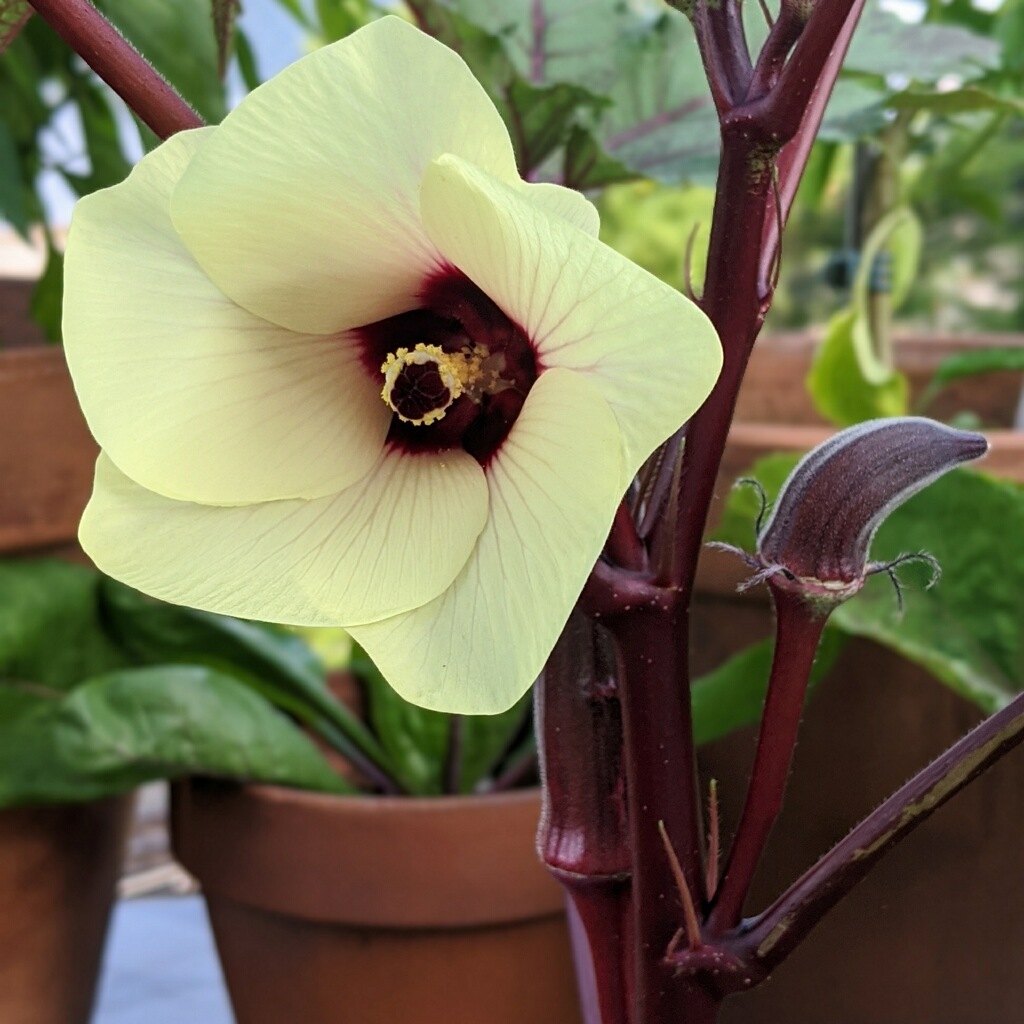
Another flower lover prefers the gigantic fleshy flowers, like the okra blossom she grows on her deck.

Remember flower power? Such a cool expression. Coined in 1965 by American poetry icon Allen Ginsburg and inspiring countless daisy head garlands, not to mention the practice of inserting daisies into the snouts of National Guardsmen’s weapons.

Generations later, powerful flowers survive in Queens, between the curry and the bracts.

They do speak to those who listen.

Leave a comment

Filed under Jean Zimmerman