Tag Archives: flowers

What is common?

It’s in the eye of the beholder, isn’t it?

I took a walk on the Old Croton Aqueduct trail as spring just came up, and it got me to thinking.

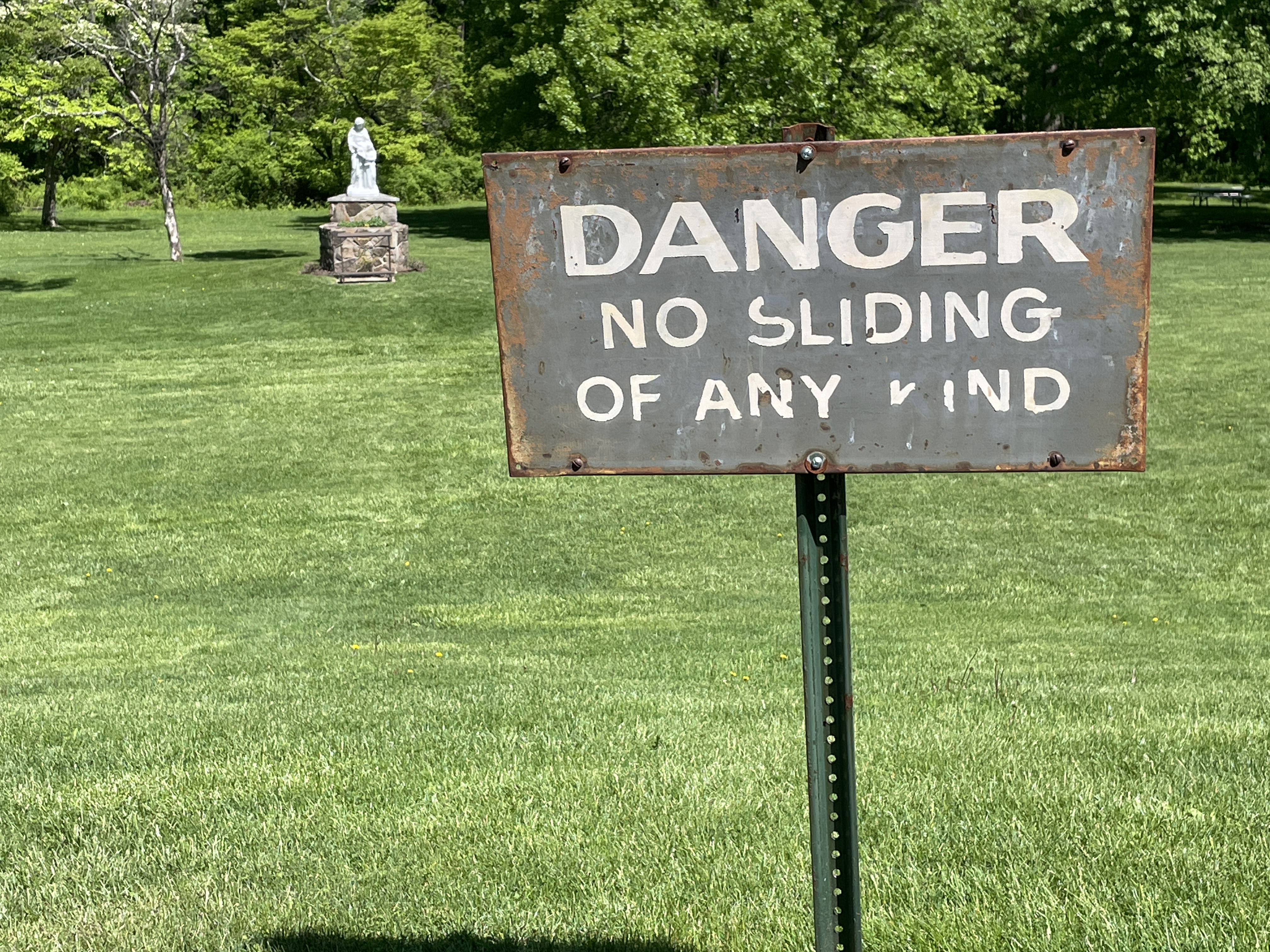
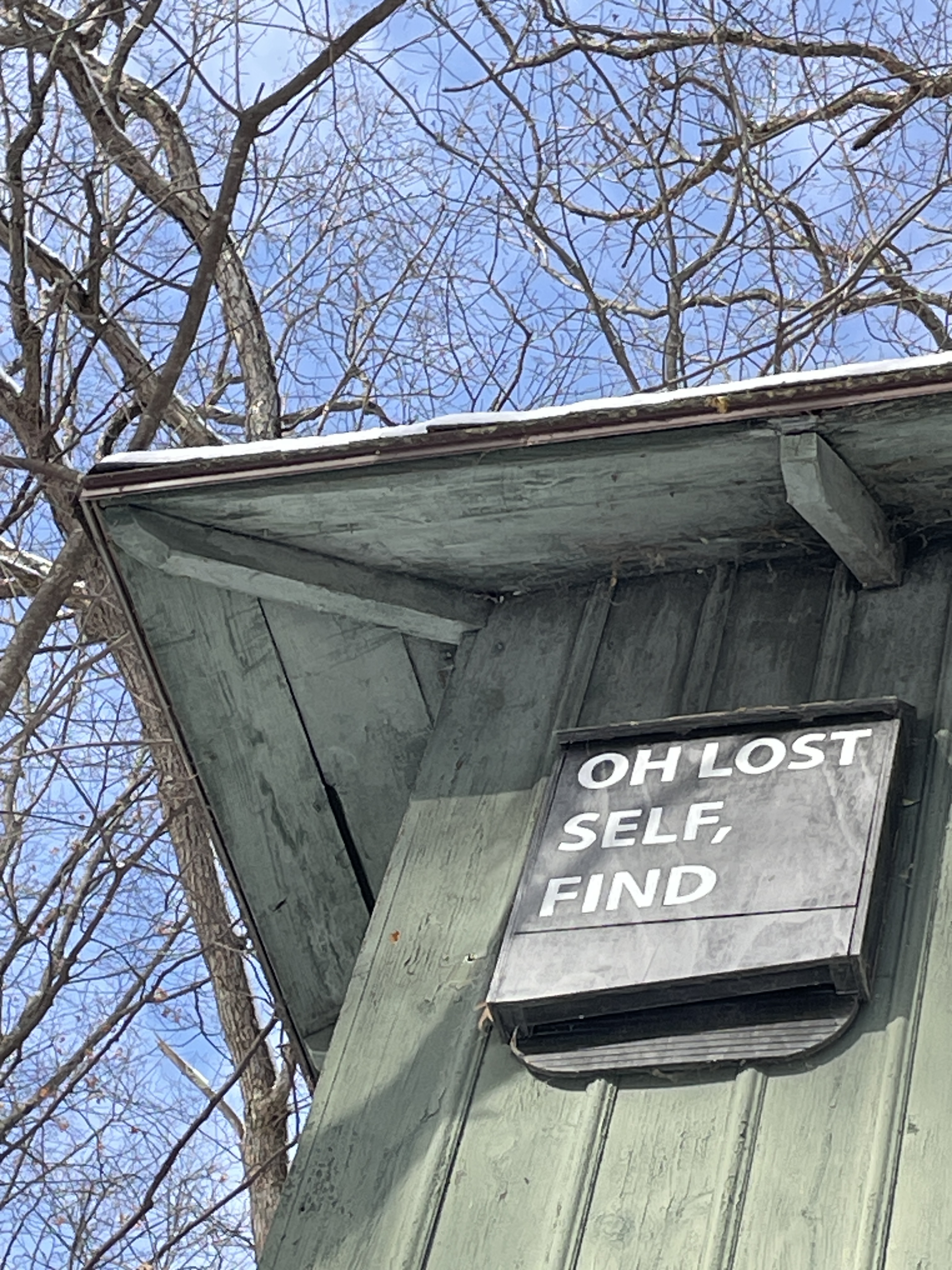
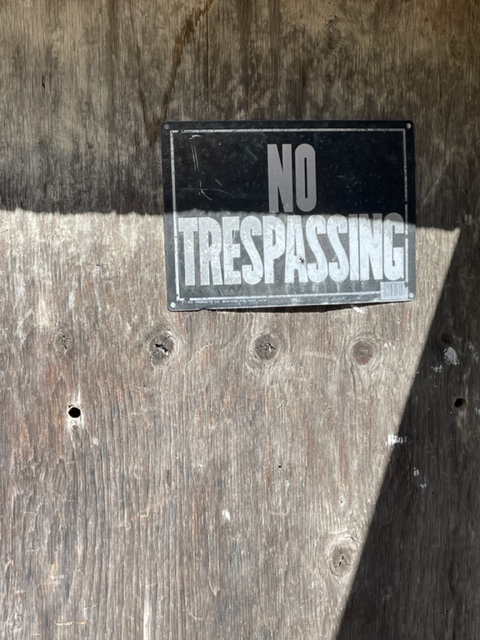
So many beautiful things. So many of them so ordinary. First, a sign warning me off. My favorite kind of sign, so commonplace.

I see them everyplace, I guess because I like them so much. And I like going past them so much.

I spotted another one recently too. Almost as nice.

I find I like almost any free advice.

Mainly so I can ignore it.

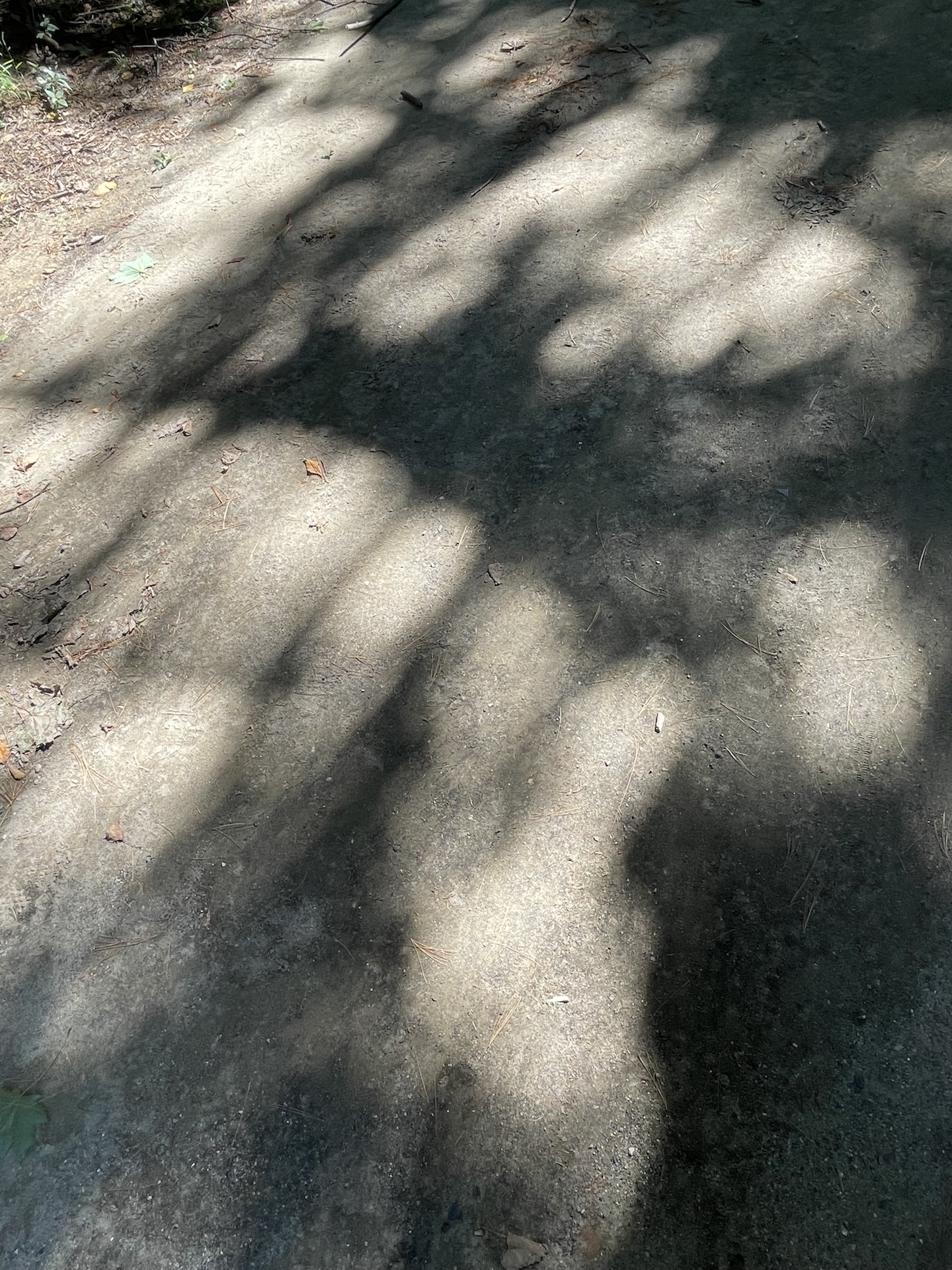
Back to the trail. Tree shadows. Common.

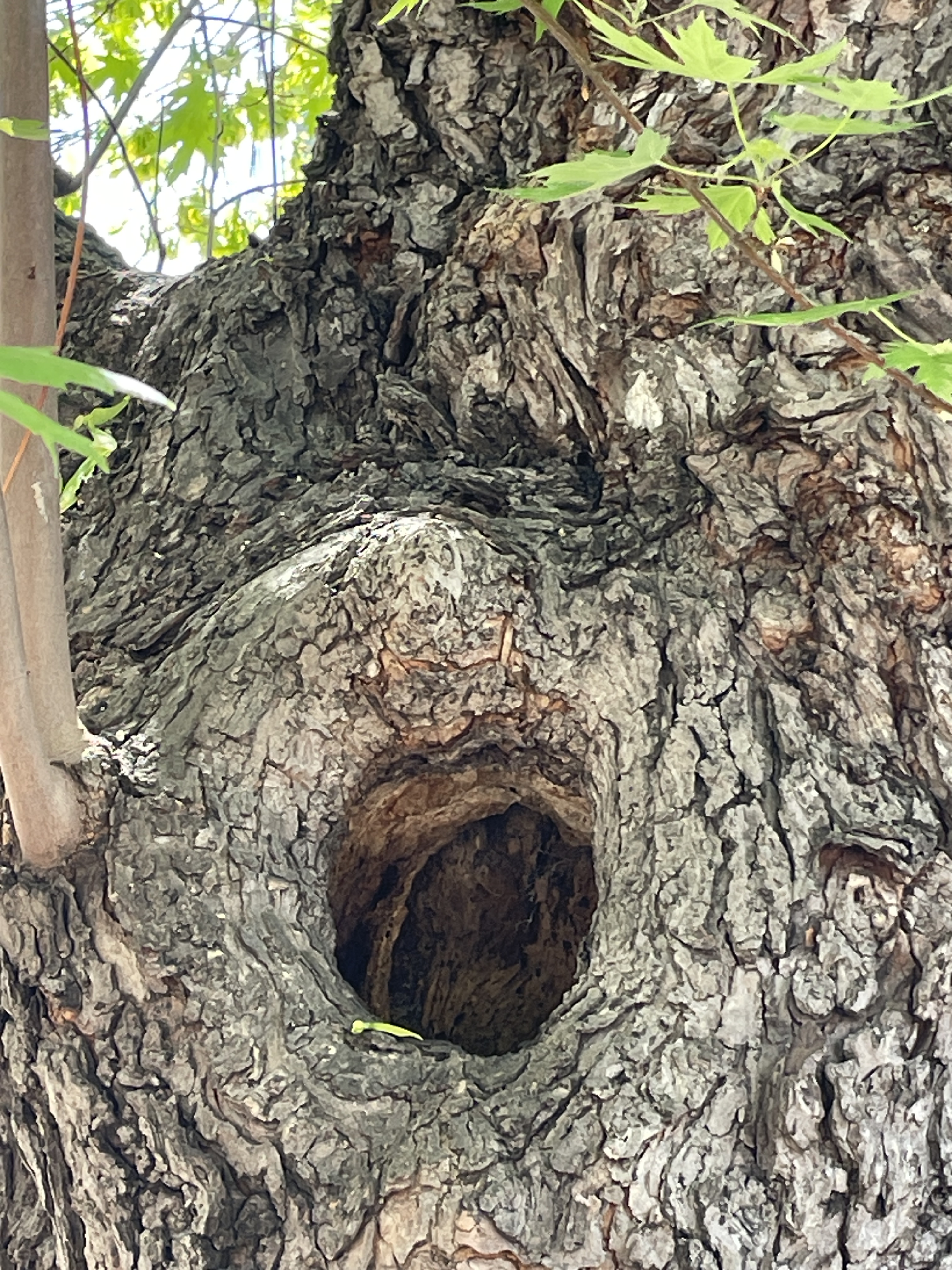
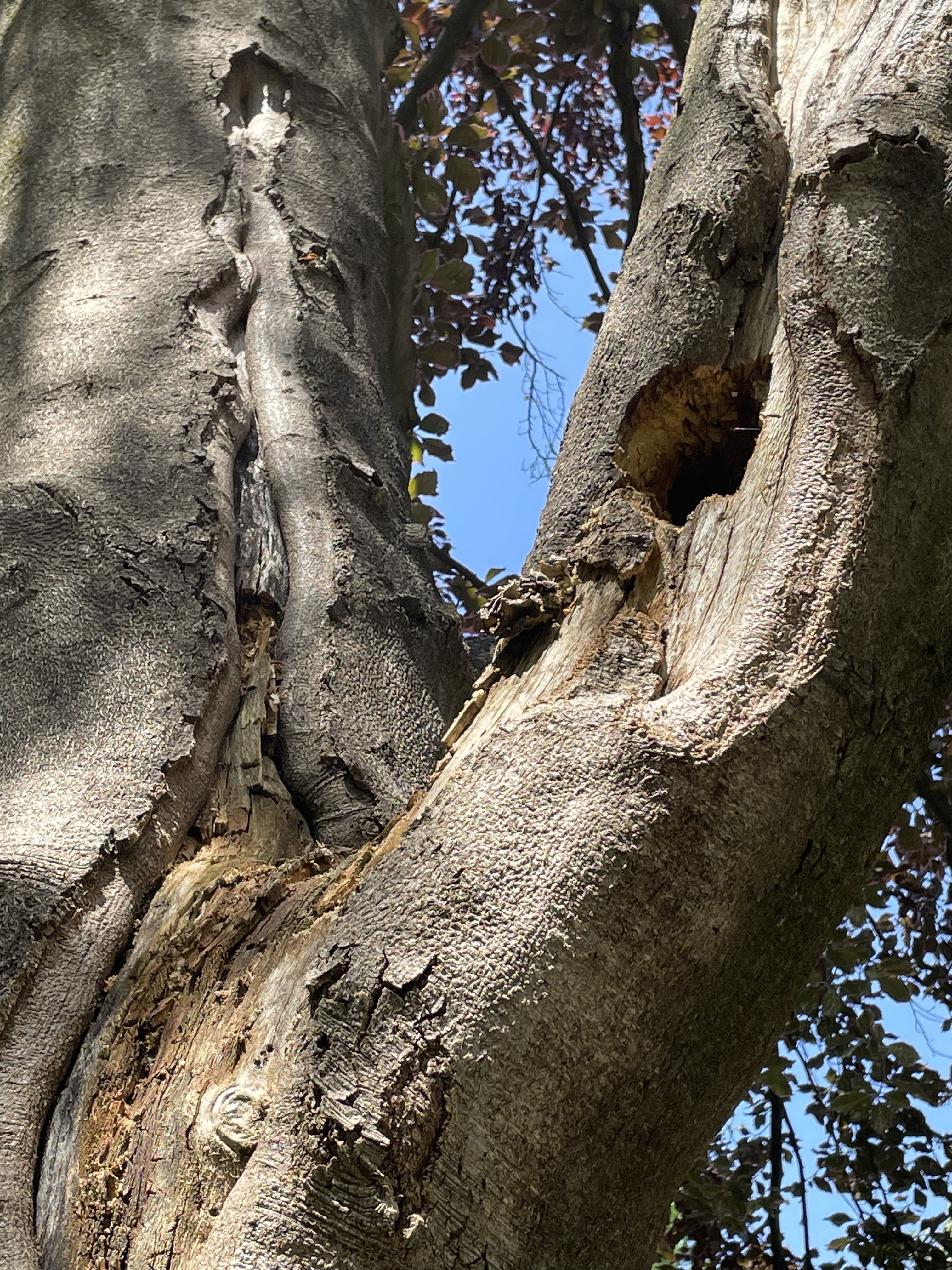
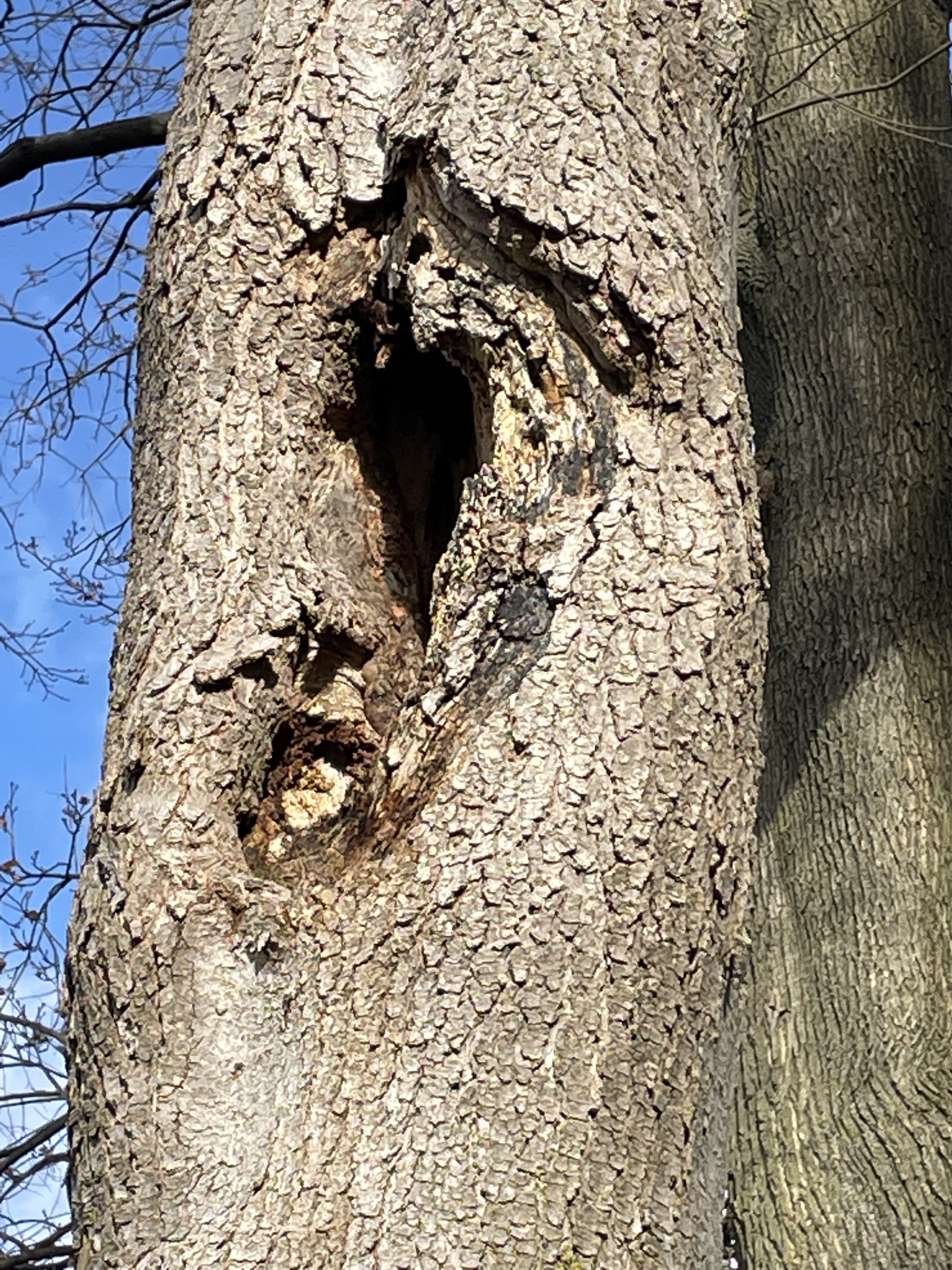
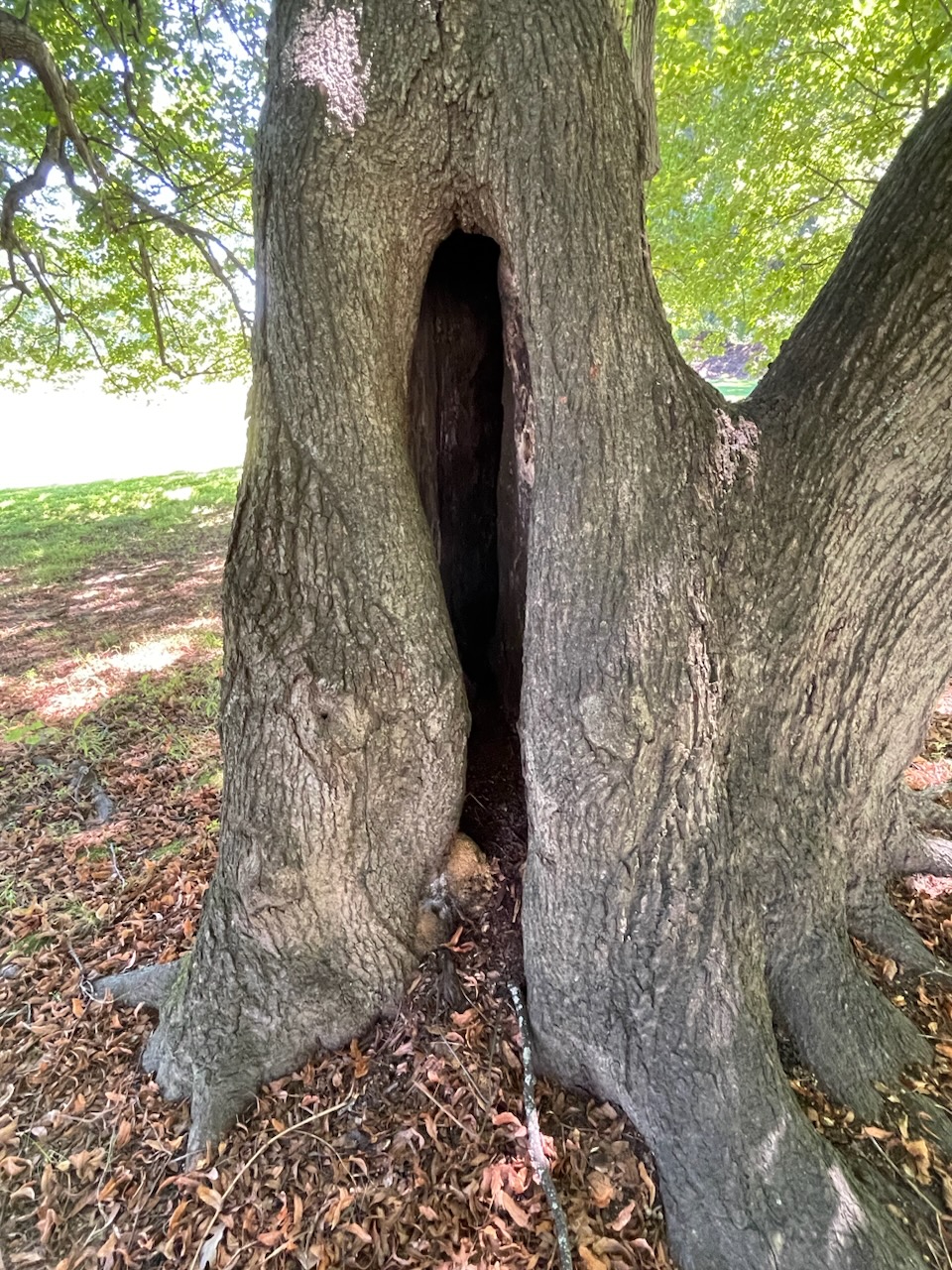
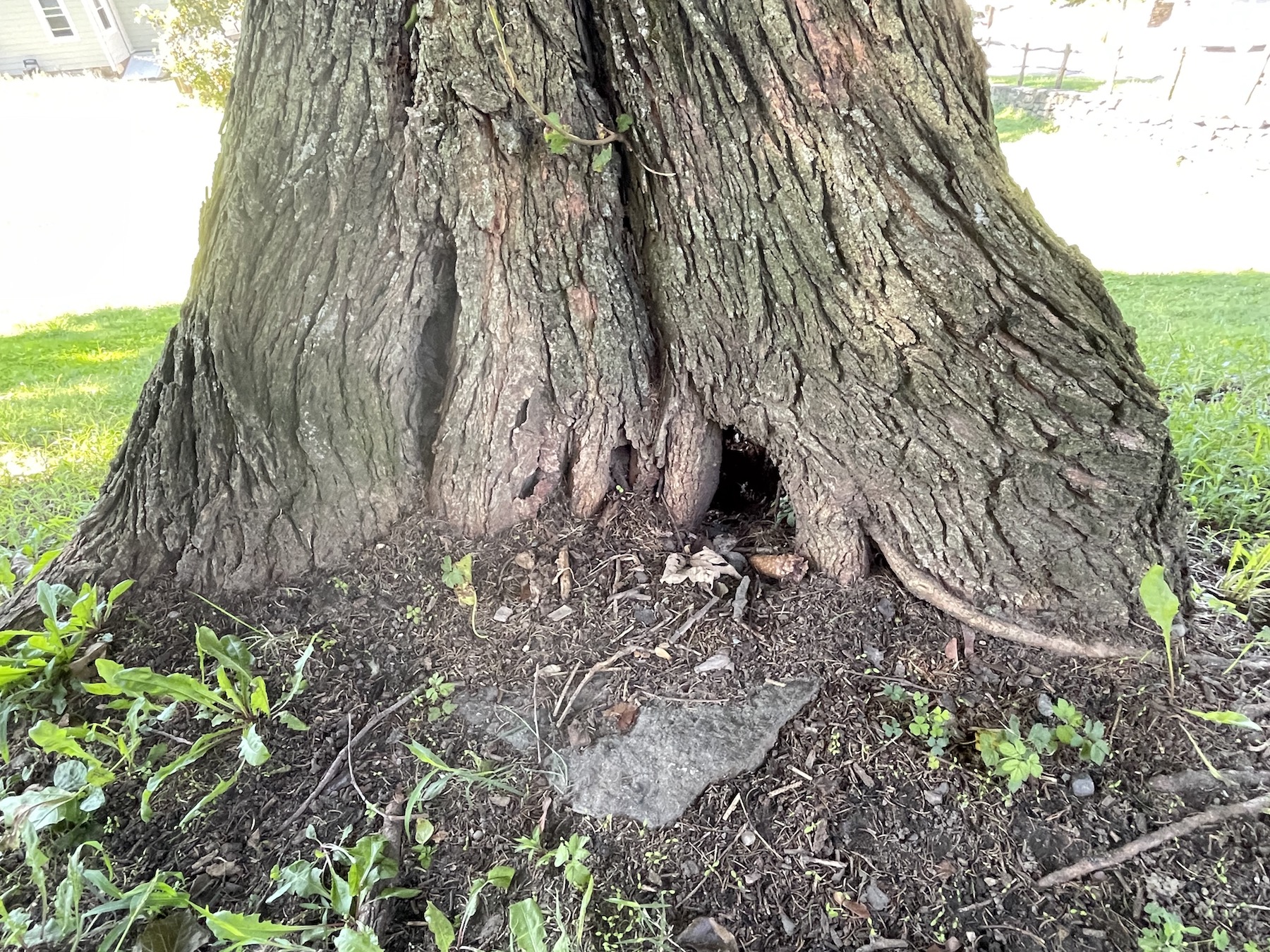
A hollow. I think we make a mistake in distinguishing between death and life. Death shelters life.

Another hollow, this one in an old-old silver maple on a Bronx street.

Okay, anyone would call this tree extraordinary.

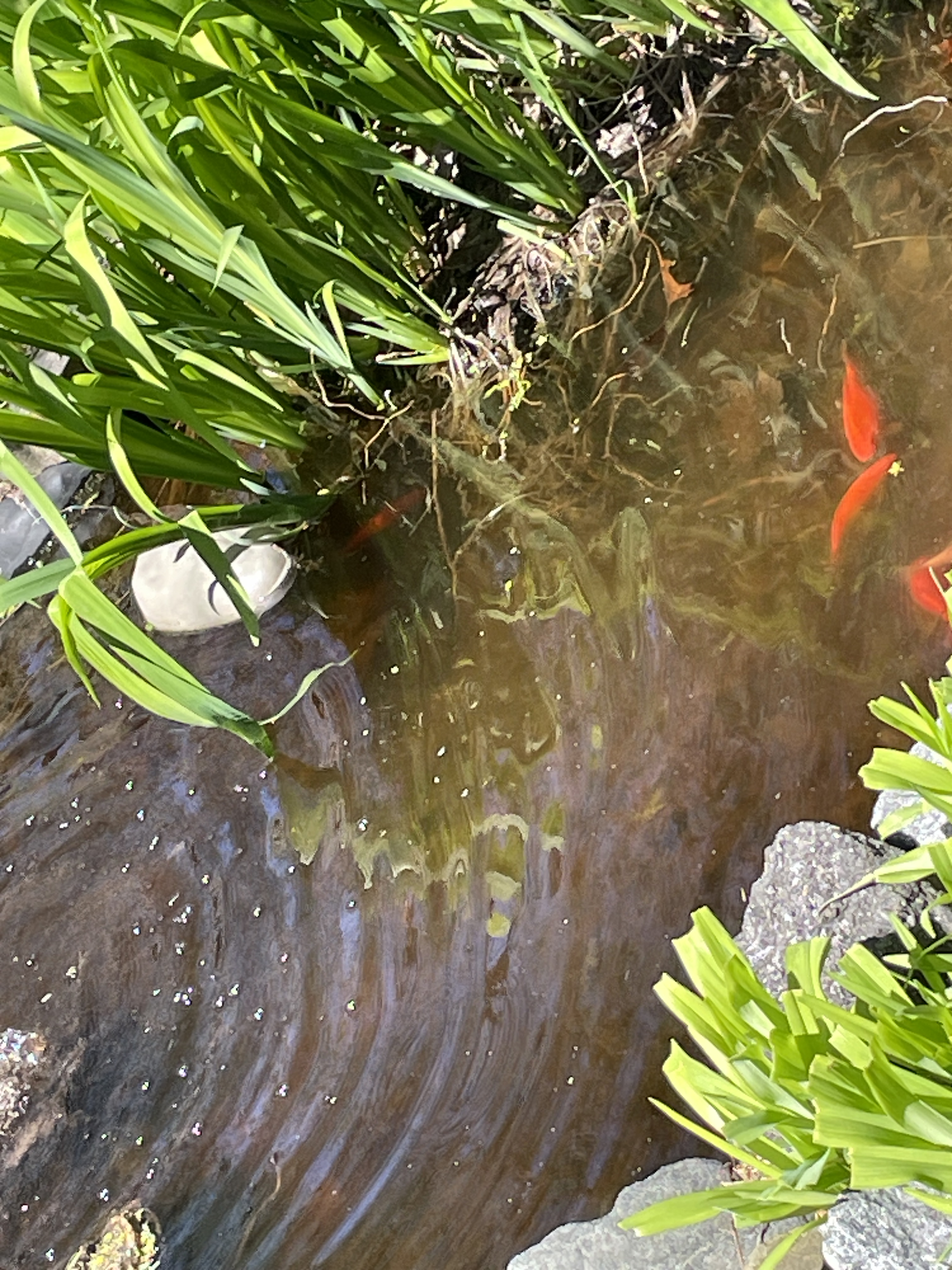
On the trail there’s a backyard koi pond I’ve passed a thousand times. Sort of common.

A sycamore, not yet leafed out.

You could just walk by and not notice. Nothing remarkable. Back yard steps, leading…where?

Look down. A pine cone. Brown. Ho-hum.

Gertrude Stein said, It takes a lot of time to be a genius, you have to sit around so much doing nothing, really doing nothing. Looking at not much of anything helps too. Noticing nothing much.

More trail shadows.

Twisted bark. Common.

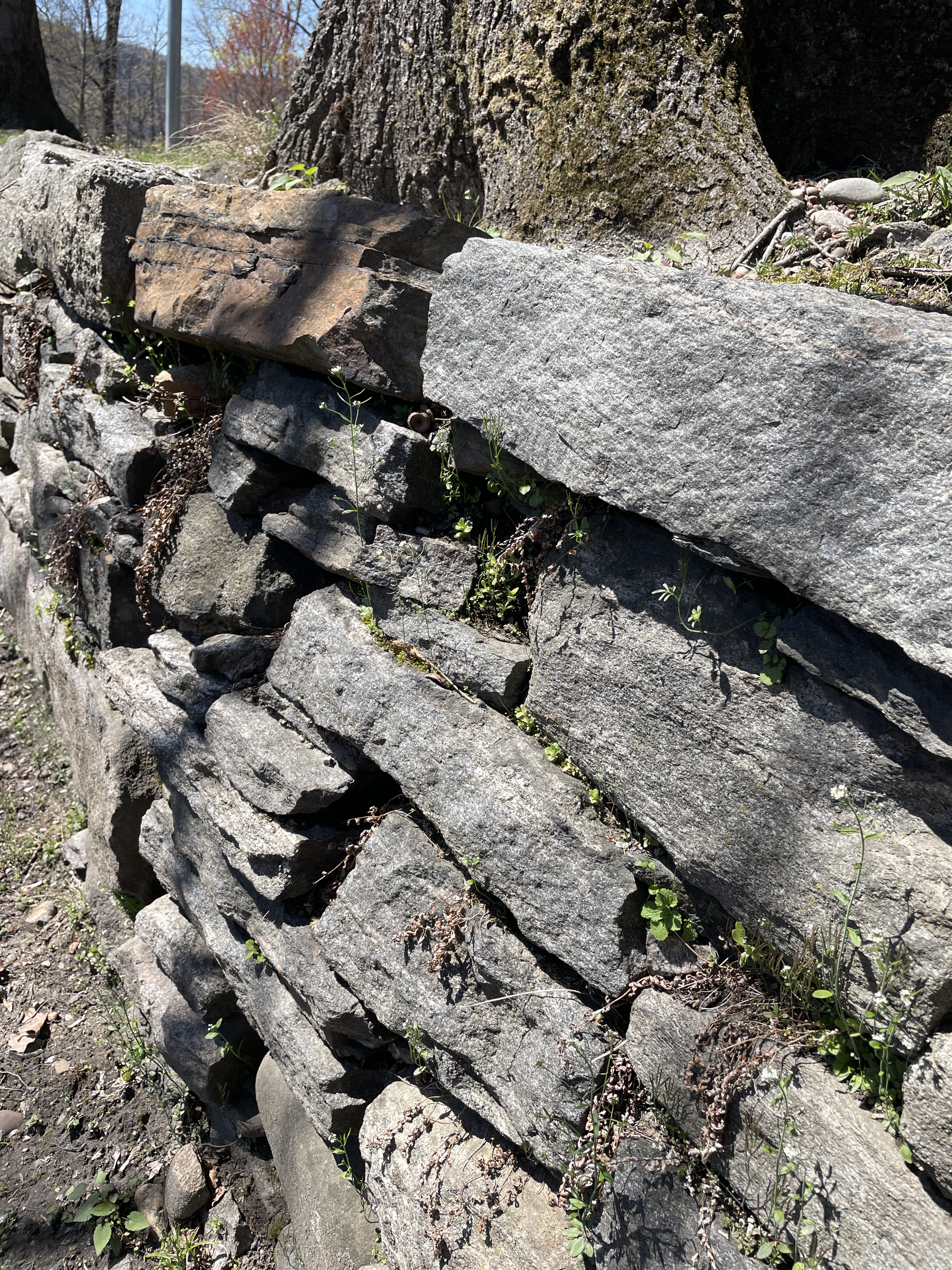
Ye olde stone wall.

Sprouts. 

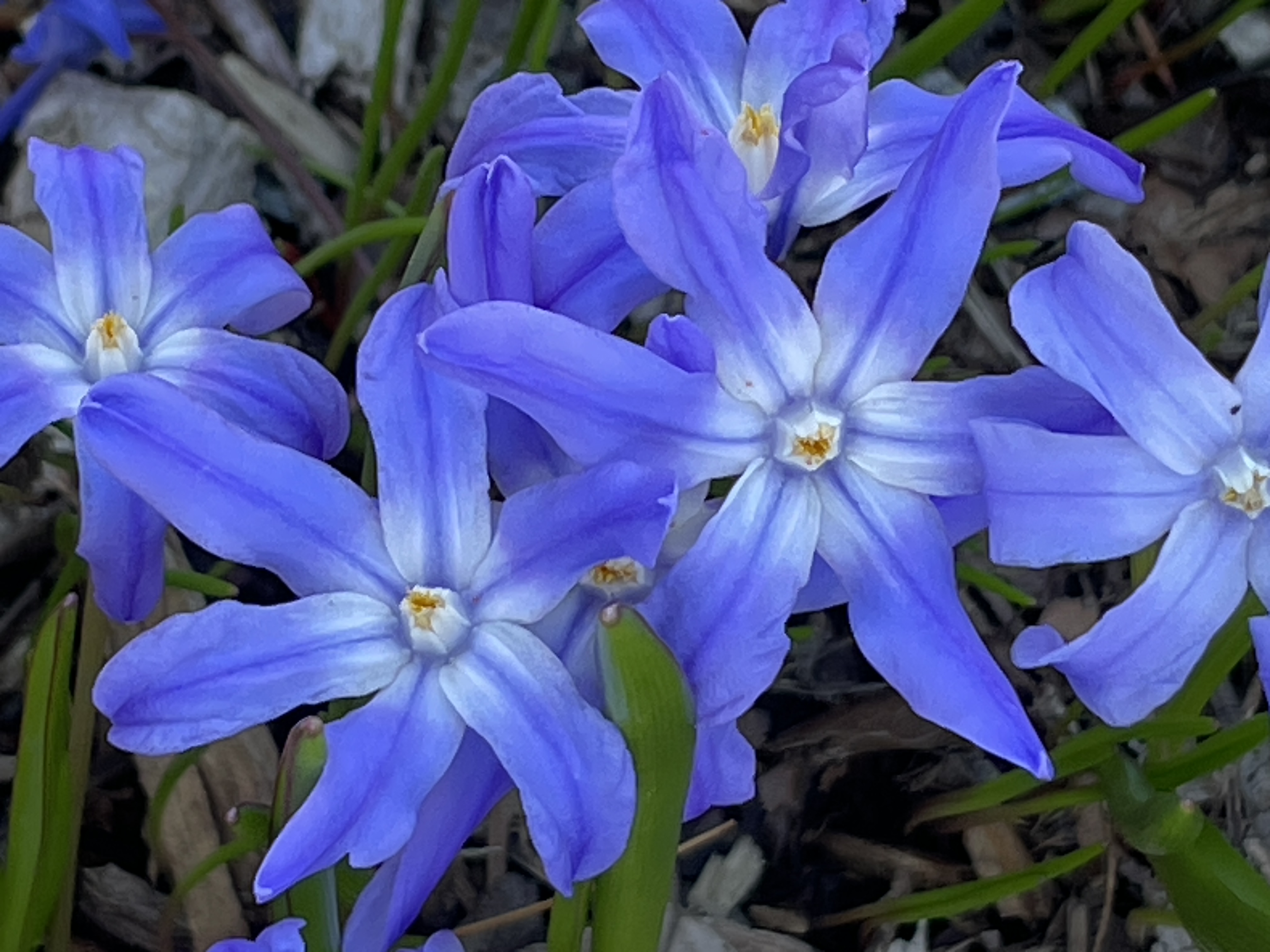
Rudimentary flowers. If they have a name, I can’t remember it at the moment.

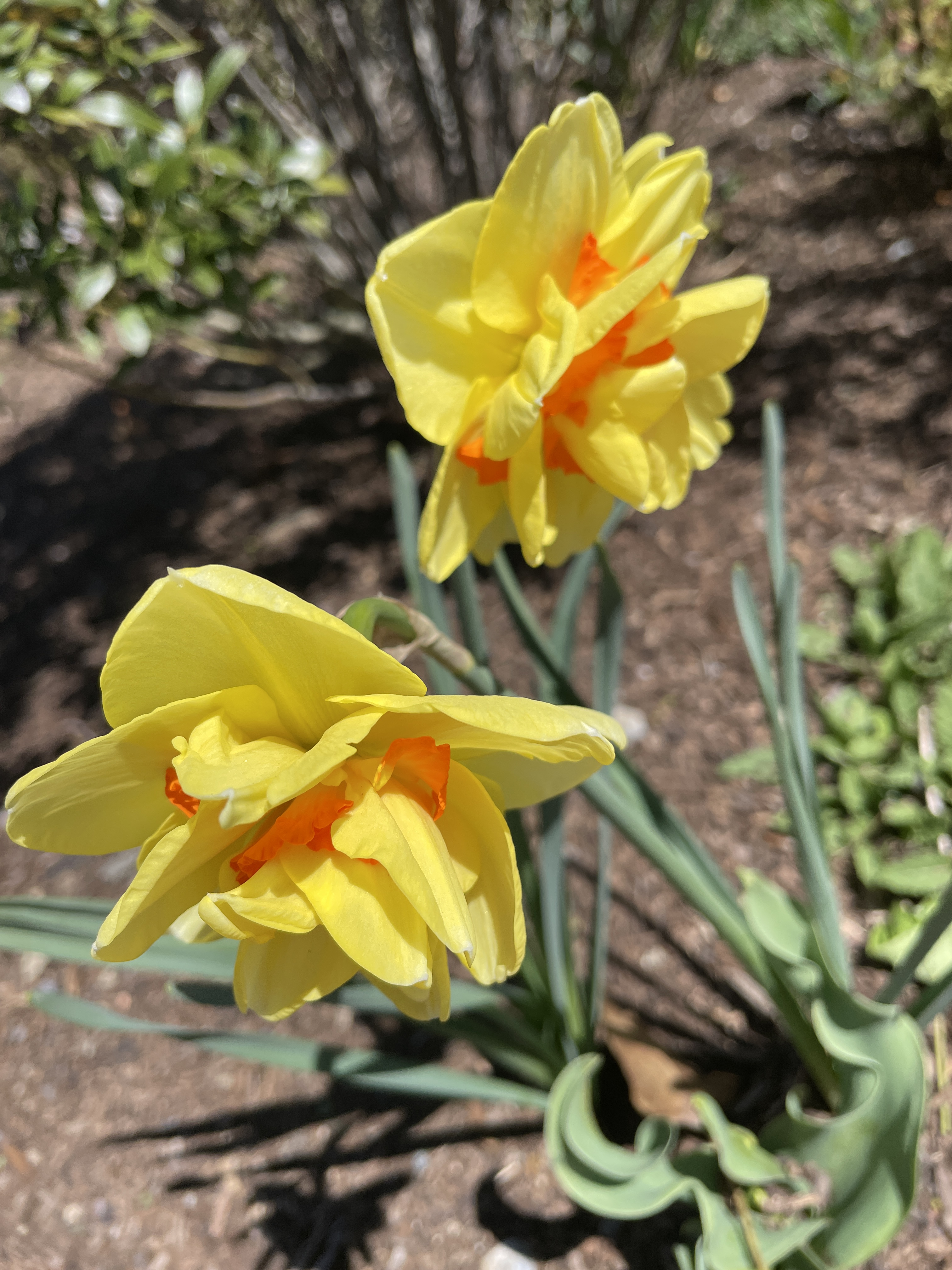
Daffs.

The most basic flowers. To again quote Gertrude Stein, a writer who knew something about the commonplace, Rose is a rose is a rose is a rose. Or daff is a daff is a daff.

Still, I’m glad I brought my hankie, since the most commonplace flowers make me tear up these days. As ordinary as they are, who knows how many seasons we’ll see them for?

This happens to be an everyday handkerchief inherited from my grandmother. Commonplace! That walk got me thinking. How many of the common things are my favorite things? A homemade hot fudge sundae.

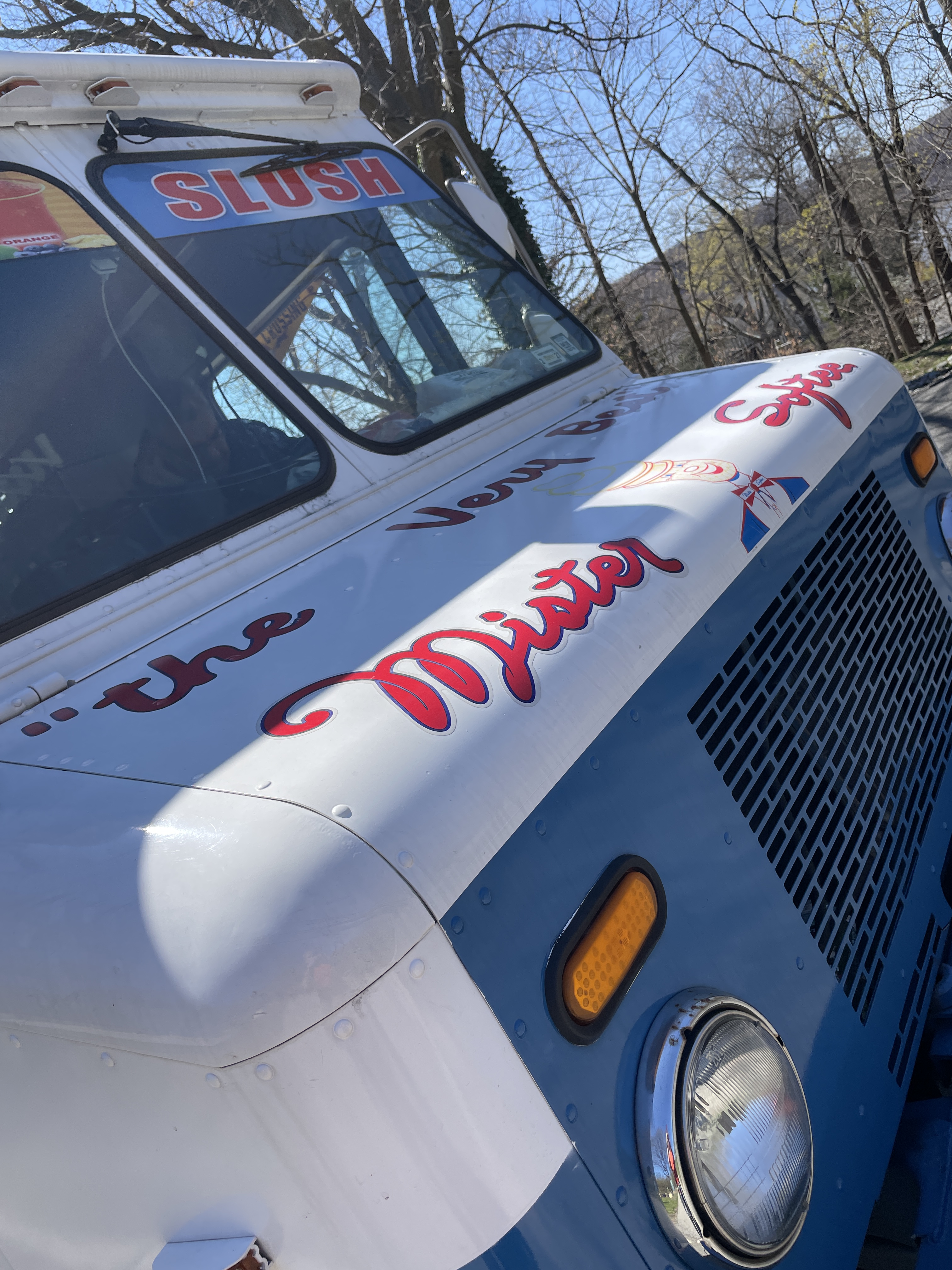
Mister Softee though. Pretty much average. Pretty remarkable for kids though.

A polite dog.

A dog hug.

Any hug, really. Holding hands will do in a pinch.

Pansies. Can you get any more banal?

An afternoon suburban street.

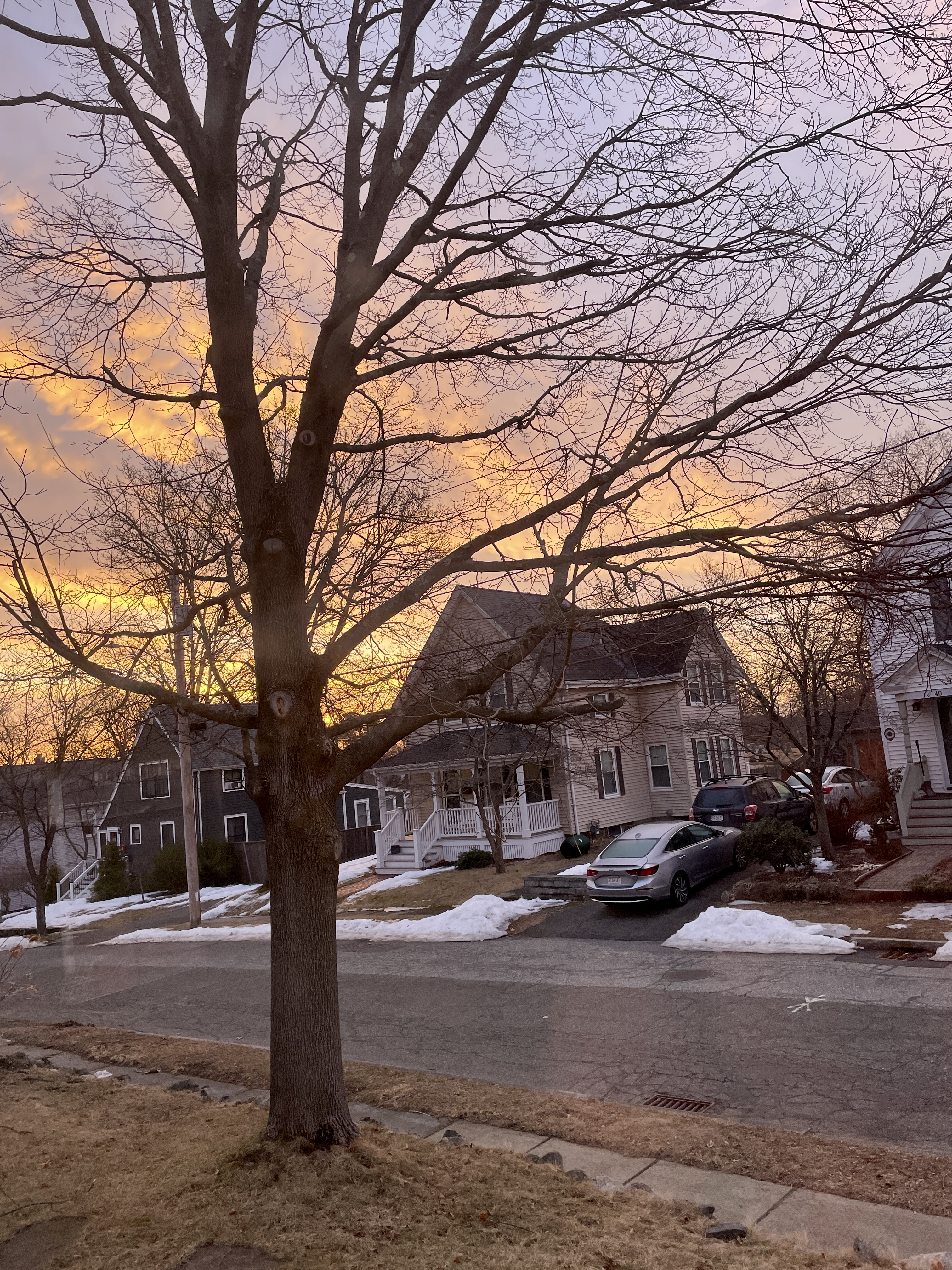
So common. Note the towering beech though. How about a suburban dawn?

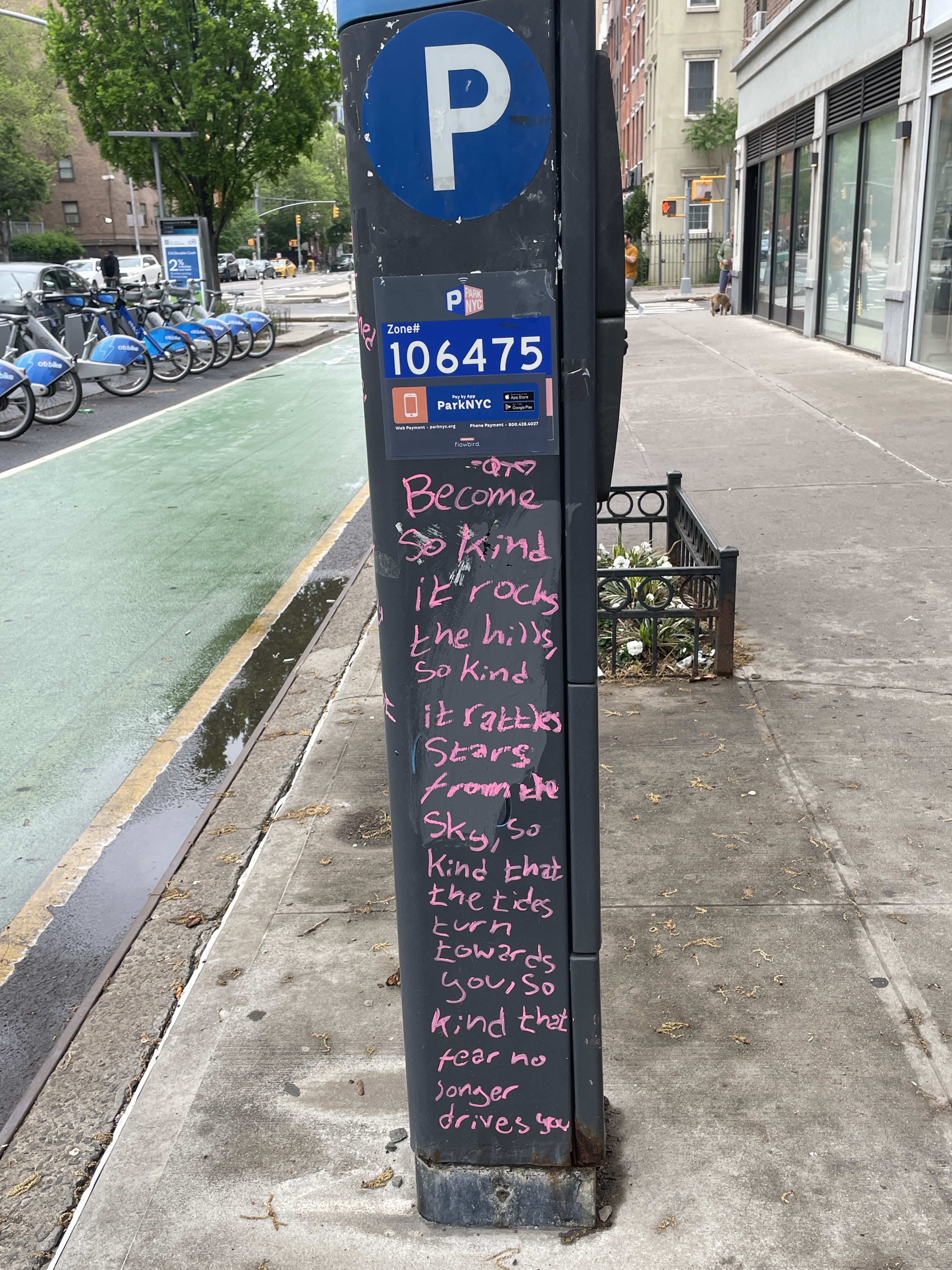
Sorta makes you think, to quote Gertude again, There ain’t no answer. There ain’t gonna be any answer. There never has been an answer. That’s the answer. Got that? Street poetry.

Just walk on by. So ordinary.

Banal.

Anyone could see the poetry here. Of course.

Petals. Okay, they happen to be cherry petals.

And everyone knows cherries to be extraordinary.

Look up, though. At the sky. Totally ordinary blue. Once more, Gertrude: I like a view but I like to sit with my back turned to it.

Go ahead, Gertrude. Just try.

10 Comments

Filed under Jean Zimmerman

Stumperies and critter holes and other mysteries

await at Untermeyer Gardens in Yonkers, New York.

Yes, the famous property — designed in 1916 to be “the finest garden in the world” — now features a Stumpery. The park once boasted sixty greenhouses. It’s still pretty nice.

Just what is a Stumpery? You would be well within your rights to ask the question, since not that many people in the U.S. are familiar with the concept.

The Stumpery is a fad in the U.K., especially among the pinkie-lifting crowd. You’ll find them in gardens at fancy estates, like Biddulph Grange Garden in Staffordshire.

Not so much here.

Perhaps that will change if enough green and other people get behind the idea.

We stroll down along the woodland trail to the Untermeyer Stumpery (say that ten times fast) on a recent fall day. We doddle along talking about lung issues, back issues, heart issues, arthritis, the usual. Nothing works for any of us the way it once did. Life’s not fair! On the other hand, these problems are doled out generally to people with the combination of grit and determination and sometimes wisdom to make the best of a not-so-good thing.

Which brings me to the Stumpery.

But first, the Garden’s other, more conventional features.

Untermeyer is a good place to go in October if you like grand old-old European beeches, so awesome.

Busy bees on ravishing dahlias.

End-of-the-season plants, all as beautiful as anything at peak season.

Newly restored tilework in the reflecting pools, gorgeous.

Rumi-native quotes surrounding it. Mind-blowing mystics.

Photo ops all around.

The usual ho-hum Hudson view.

And the peerless sky above.

But what most amazes us of all the amazing sights, the Stumpery.

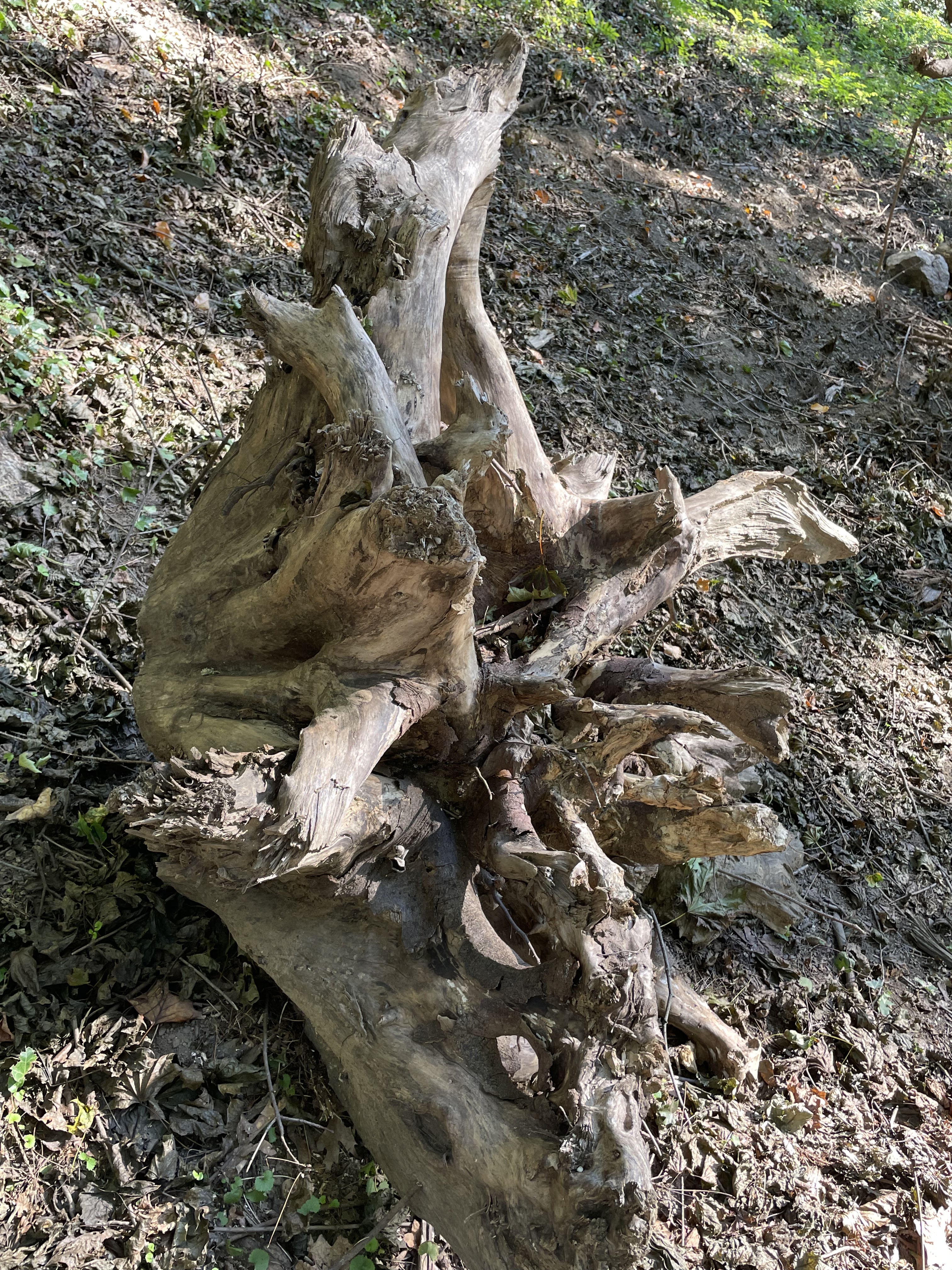
Big, gnarly specimens have been hauled to this wooded location and set up all around. Not just one. Dozens.  It’s like a fairy tale has been enacted in this forest.

One of us had been to see a stumpery in England and felt impelled to visit this one.

Will these guys eventually be planted with decorative greenery as is done in England? A mystery.

Who cares, actually? The stumps are perfect as they are now.

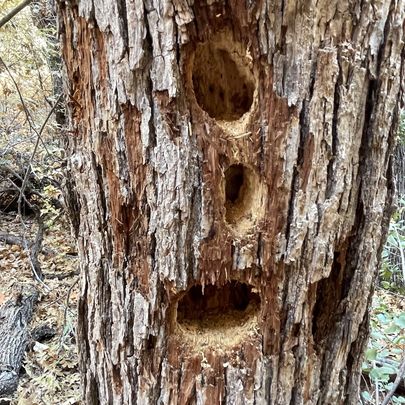
Which brings me to critter holes, another natural phenomenon sometimes taken for granted.

We notice more than one along the way.

Might I say a word on their behalf? I’ve often admired them, not only at Untermeyer but in so many other locales as well.

From upstate New York.

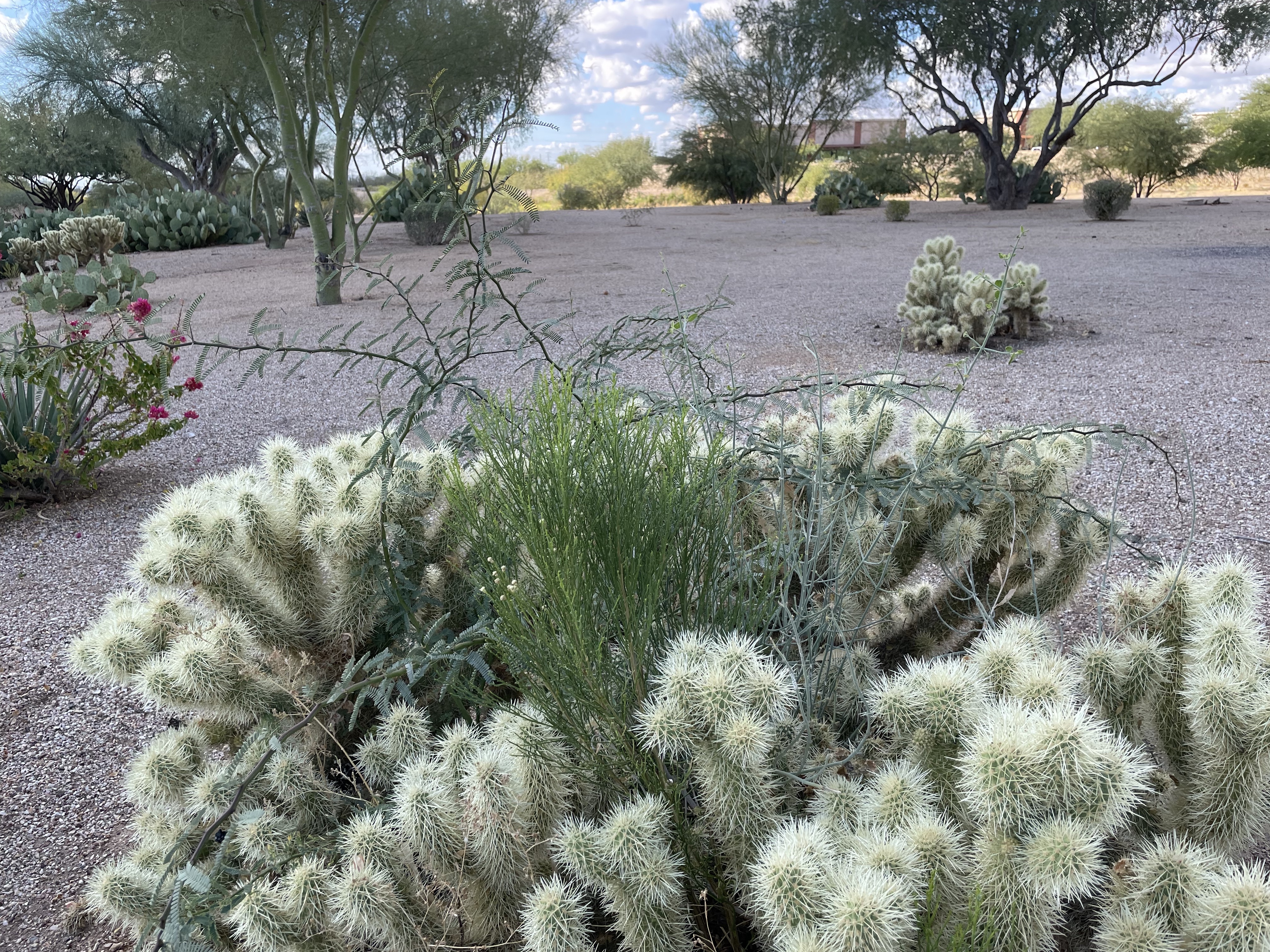
To Arizona.

And all in between.

Holes in trees are okay, by the way. 

They do not mean the tree is going to fall over on a passerby.

Actually, according to experts I know, it’s the tree that appears perfectly healthy that might prove the riskiest in a storm.

When a tree is injured — say it gets hit by lightning or scraped by a truck or develops a cavity for almost any reason —  it does something ingenious, protecting itself by slowing the spread of disease and decay, actually forming “walls” around the injured area.

The walls run in every direction and help the tree survive. The process actually makes the tree stronger.

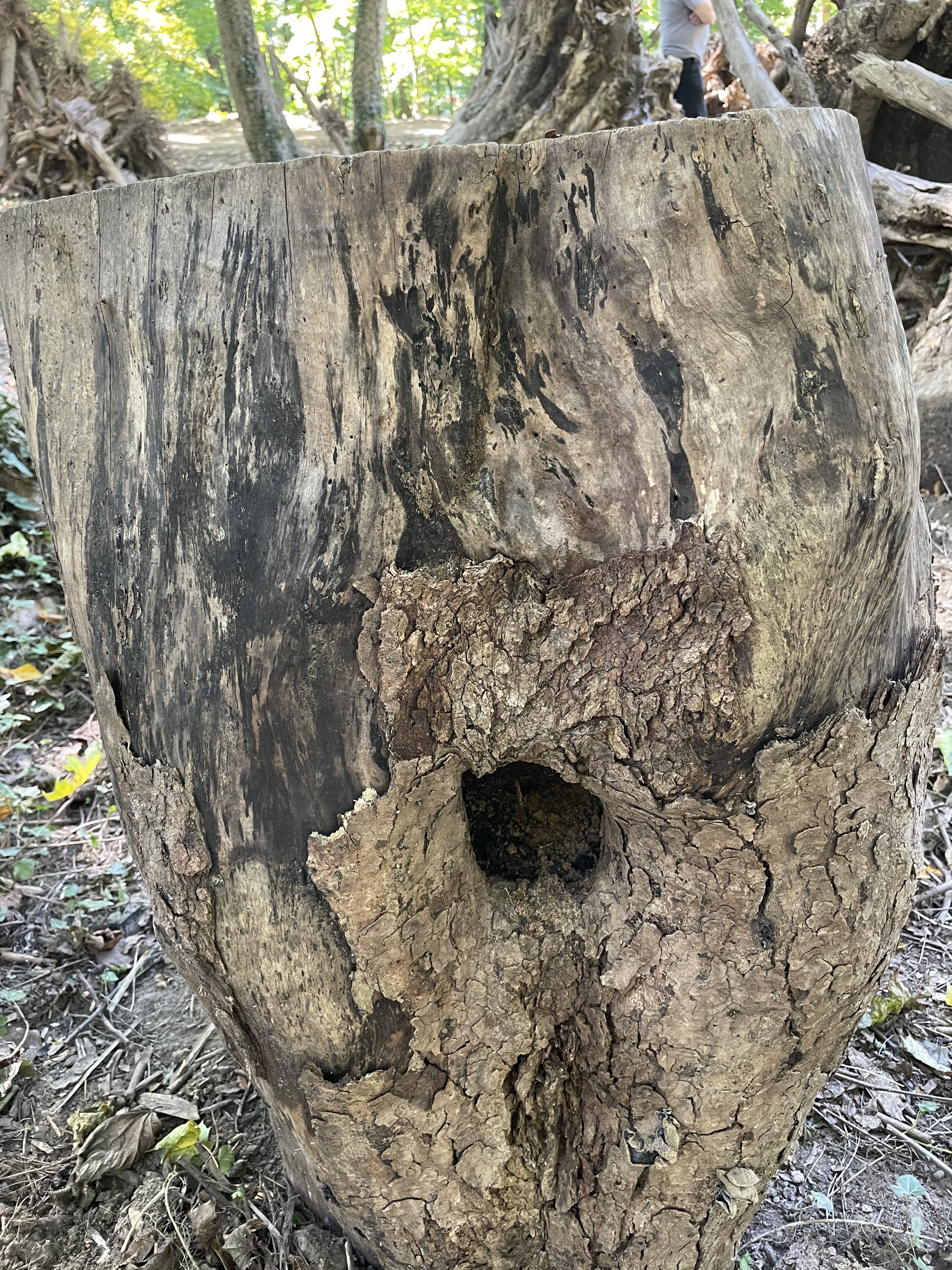
Then the cavity affords a home for an animal, or animals. So critter holes are actually more than just okay.

I’ve often thought my fondest wish — well, one of them, I have so many — would be to crawl into a critter hole. Anybody home?

Hiking up from the stumpery with my friends, we pass a newly restored wall that people have decorated with good-luck cairns.

Somehow I think all those magnificent stumps and critter holes are tokens of good luck as well.

As beautiful as any ho-hum pool blossom.

3 Comments

Filed under Jean Zimmerman

Forests and New York City

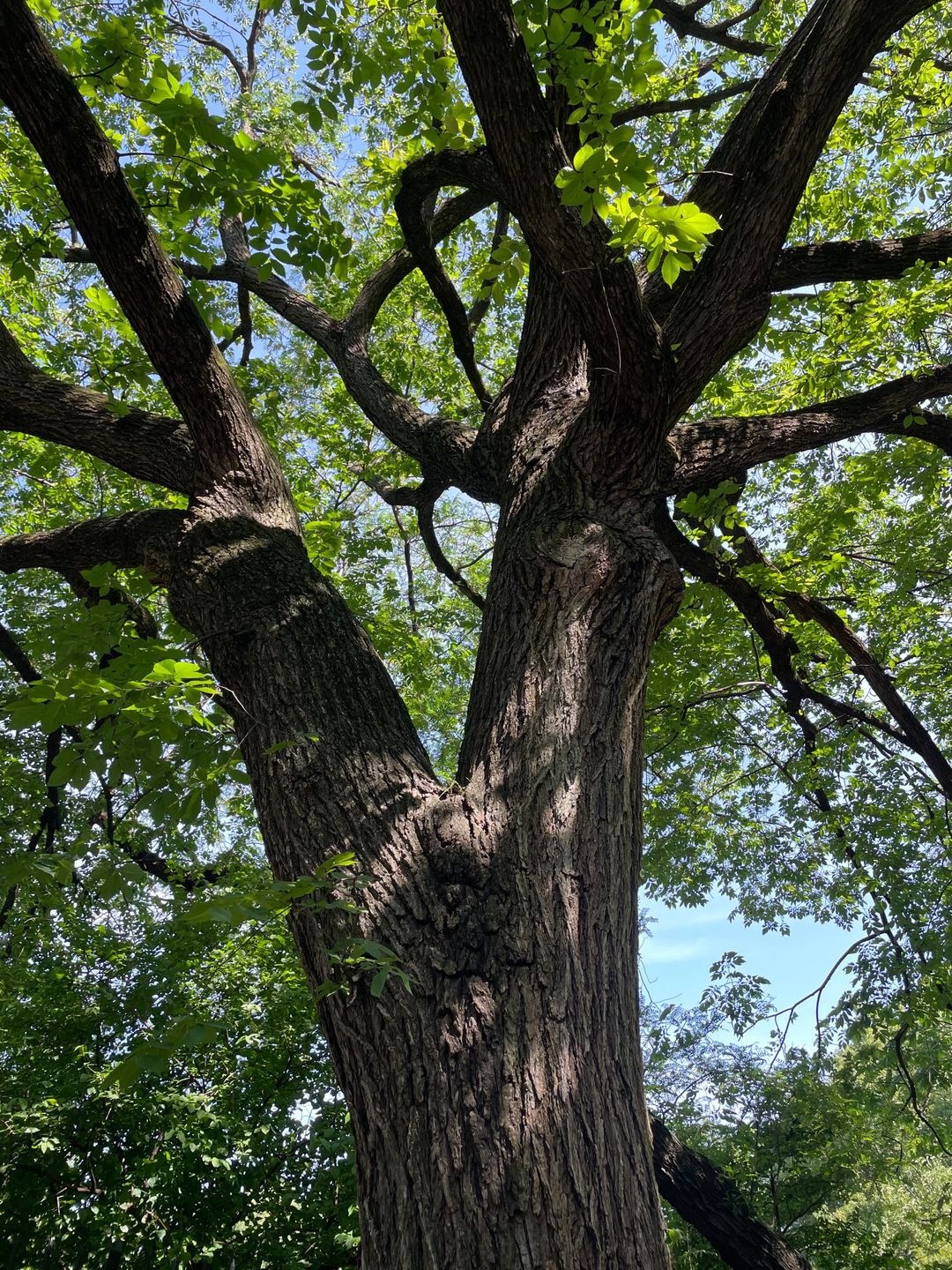
is not a pairing that would make sense to some people outside the Metropolitan Area (we always say that, as though there is no other metropolitan area in the world). But majestic trees do exist among the concrete canyons of NY.

I’ve been fortunate to come up close to some of them.

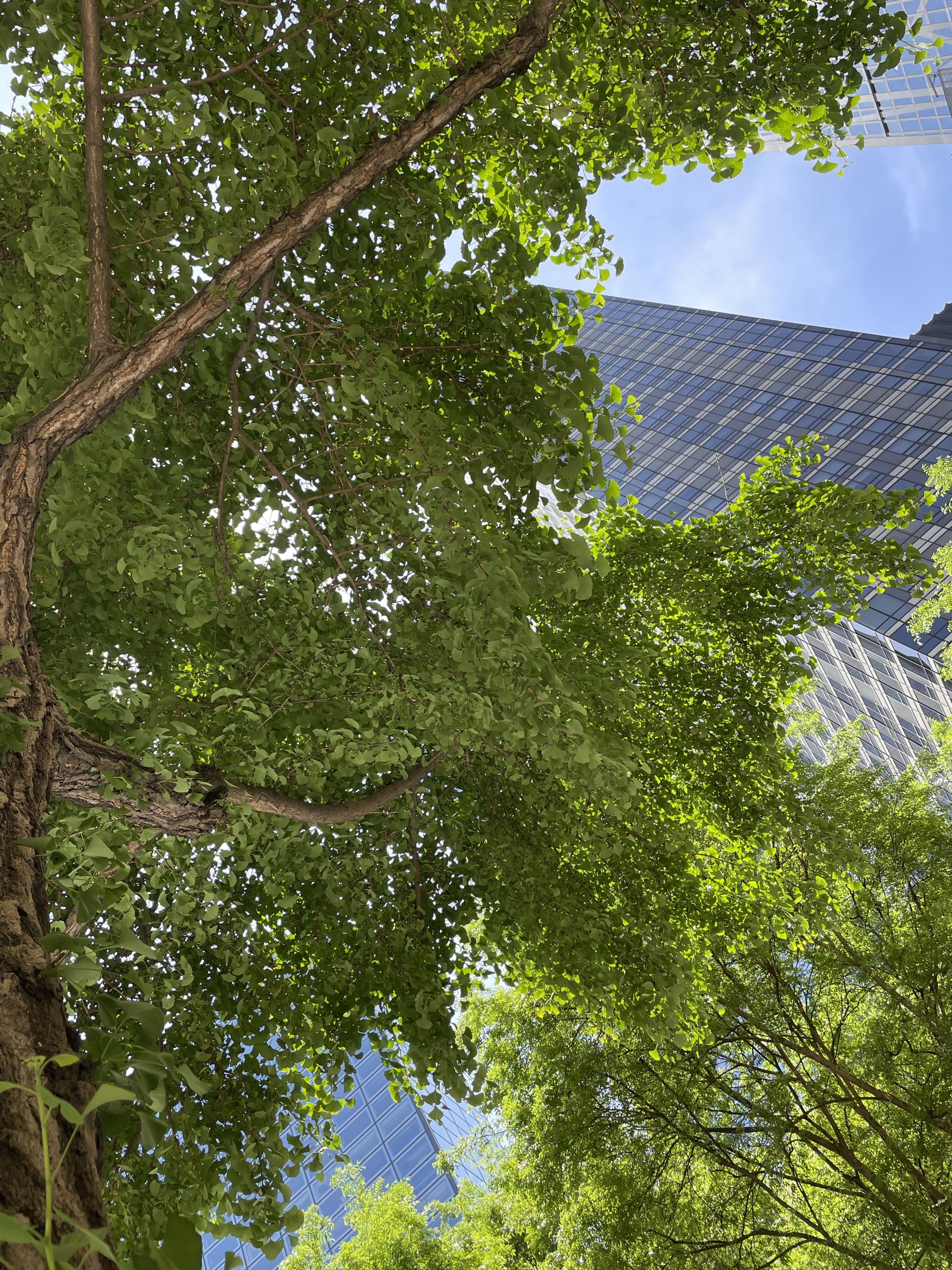
Walt Whitman: Why are there trees I never walk under but large and melodious thoughts descend upon me? In New York, there are plenty of inspiring ginkgo biloba‘s.

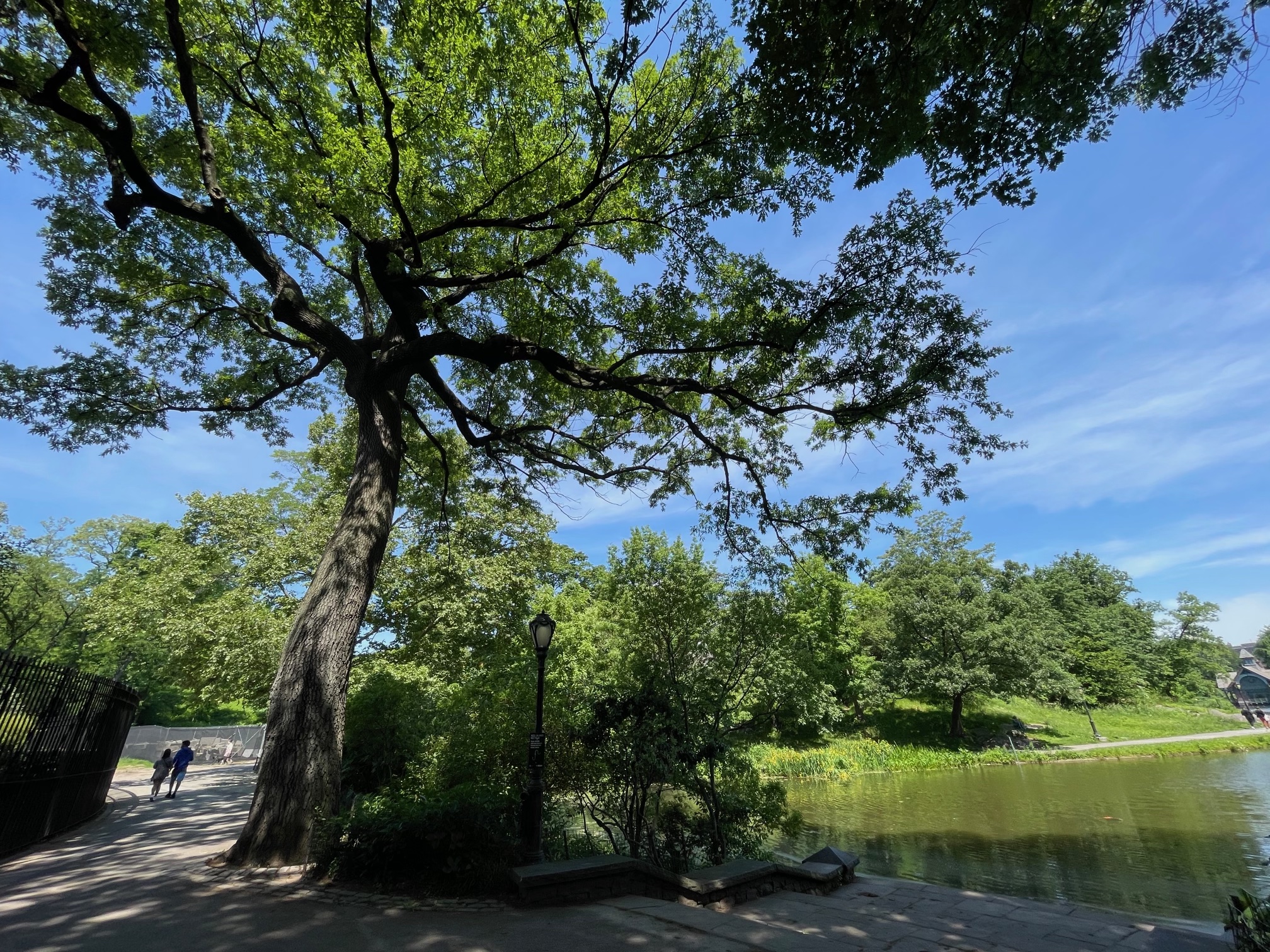
But also majestic oaks. I visited a grove in Central Park.

Not just any oaks. These were uncommon oaks. There were mature Northern red oaks.

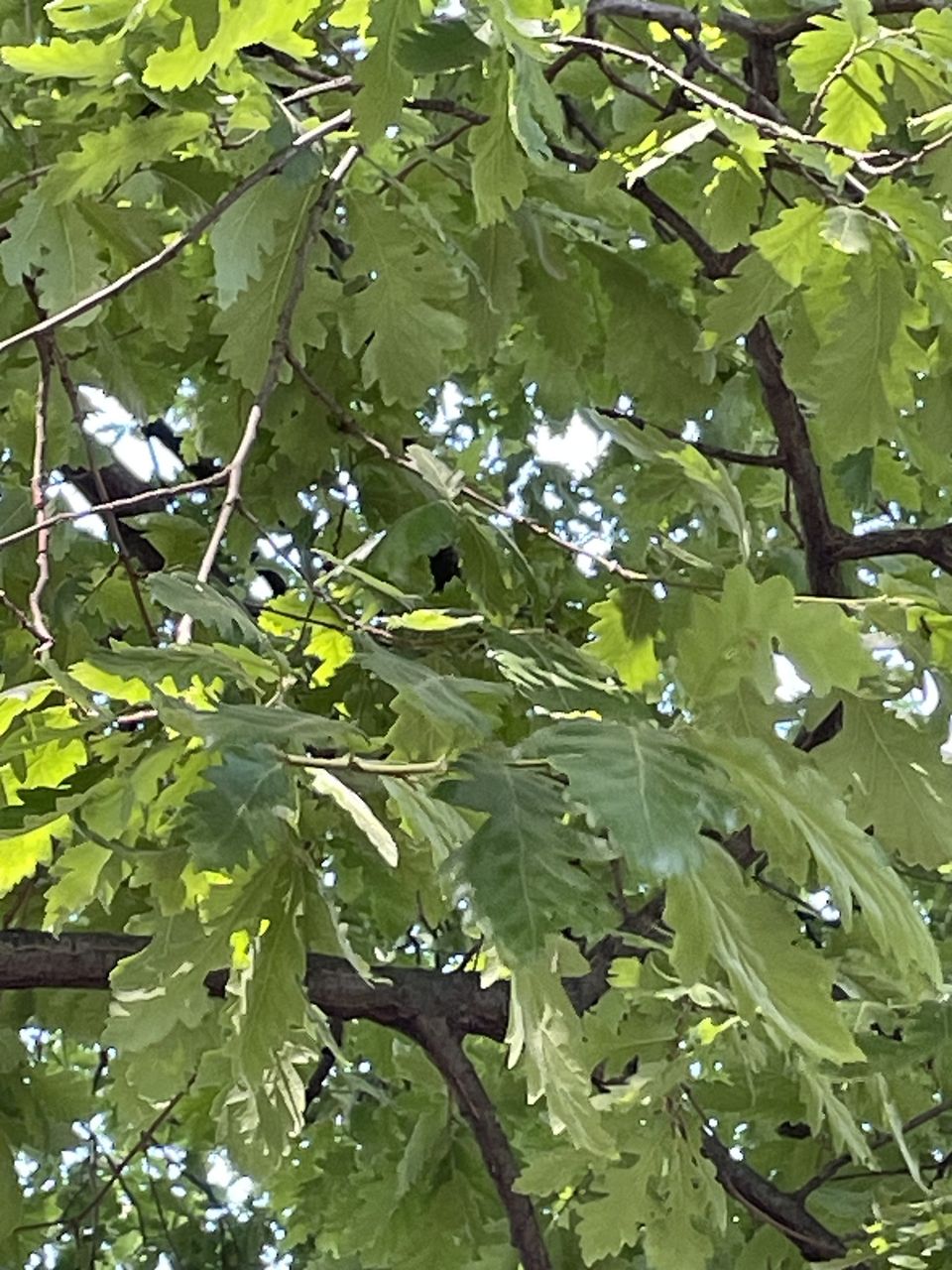
I also saw swamp white oaks and sawtooth oaks.

While you’ll find both as street trees in New York, here they were massive, ancient, awe inspiring.

And so I go to the woods. As I go in under the trees, dependably, almost at once, and by nothing I do, things fall into place. I enter an order that does not exist outside, in the human spaces….I am less important than I thought. I rejoice in that. So said Wendell Berry.

Some folks on hand didn’t seem much impressed, preferring a nap to gazing upward in rapture.

But I was definitely taking notice.

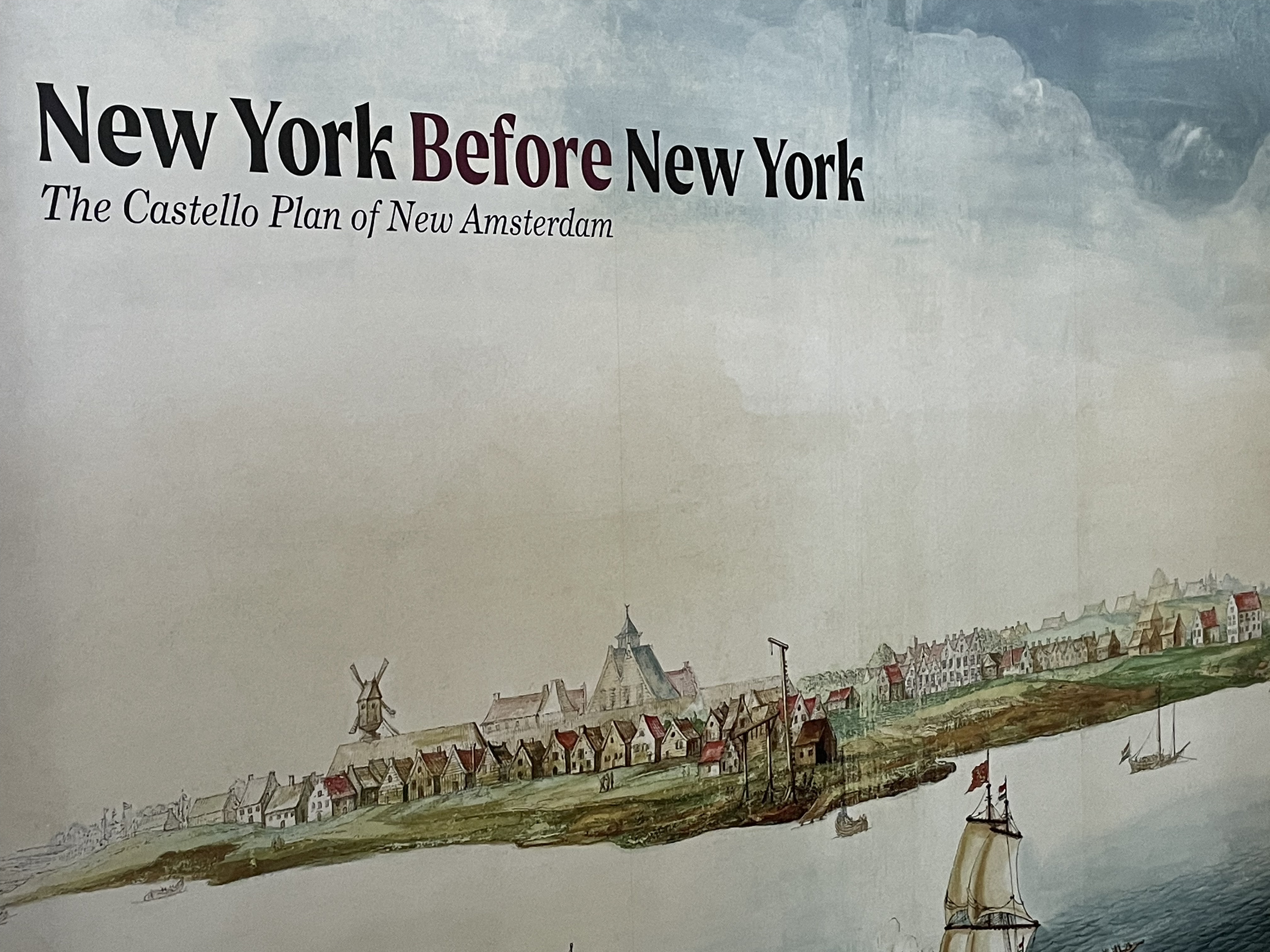
Especially having recently visited the New-York Historical Society for an exhibit about early New York.

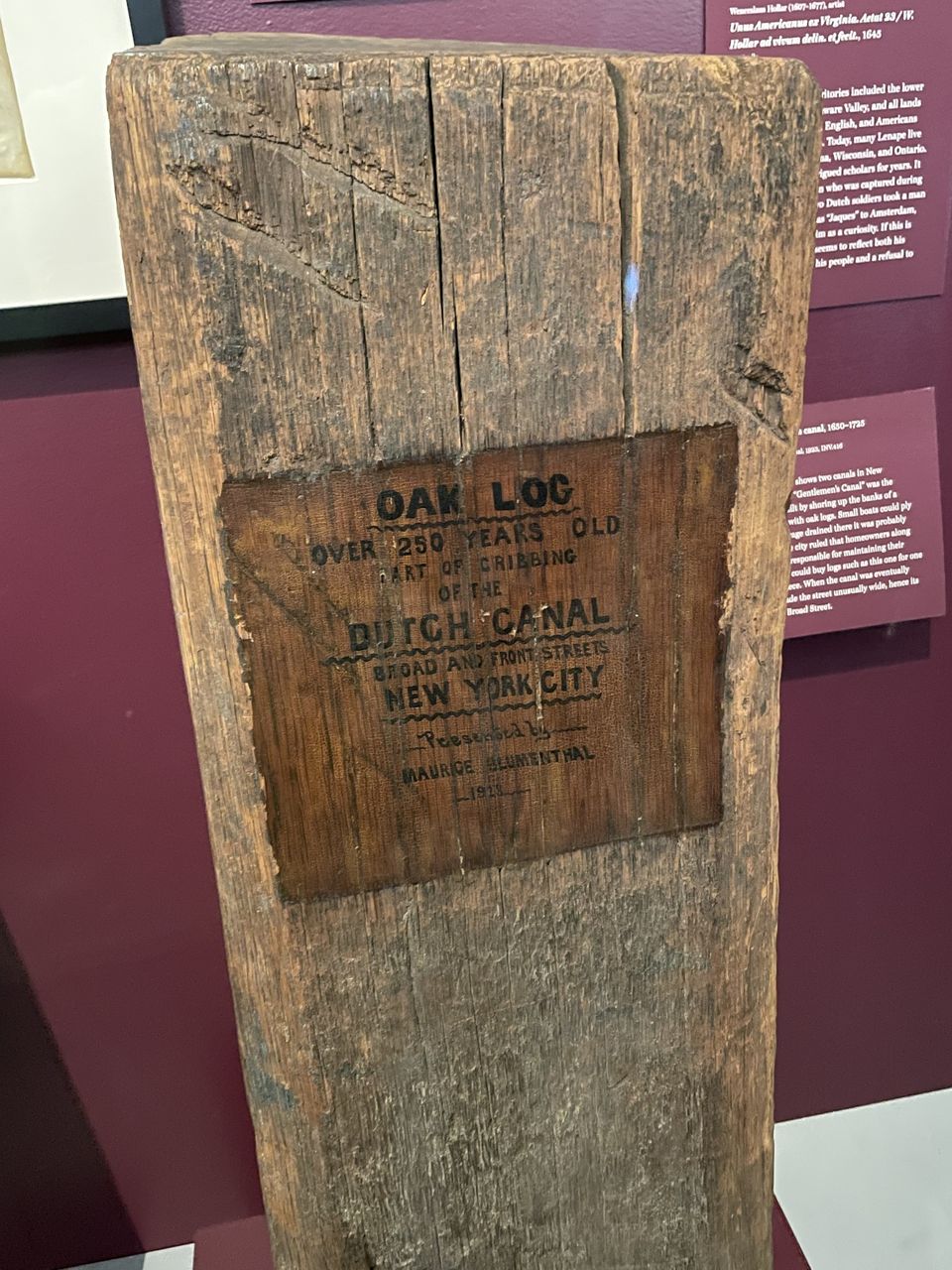
Of course there were many great artifacts, but a special treat was a fragment of oak log from an early Manhattan canal hundreds of years back. That’s how sturdy and strong and lasting oak is.

Just outside Central Park, a line of gargantuan elms strides down Fifth Avenue.

When the infamous elm blight decimated the canopies of so many urban areas’ Ulmus americana back in the early twentieth century, these elder stateswomen clearly did not take the hint. What doesn’t kill me makes me stronger — so said Nietzsche, correct for once.

I recently attended a tree climbing workshop in North Carolina with my daughter Maud.

The old-old trees we climbed were extraordinary. White oaks all around.

And chestnut oaks. Luminous.

Back in New York, I rediscovered the fantastic trees all around. Still some cherries.

Some of the most fantastic specimens thrived far from the posh environs in and around Central Park. It’s linden season, when their magical bracts appear.

I came across a red oak in Queens when I was on a tree preservation job.

Nature thrives in Queens, it’s not just trees. I saw some peppy petunias.

Delicate bleeding hearts worthy of any country estate.

Perfect peonies, their fragrance really indescribable. Just try. Yes, in Queens.

On frenetic 20th Avenue in Whitestone, right down the block from the bioswales trench I was inspecting and just around the corner from some sad, spent ash trees, I came across the ubiquitous Dr. Seuss specimens that are ubiquitous on Queens streets.

But then, this mammoth Northern red oak! Hard to do justice to this ladytree’s girth in a photo. Suffice it to say I could wrap my arms around her a couple of times.

She was kind enough to drop leaf bouquets on the sidewalk and host a clutch of hostas in her lap.

While some stern stone eagles oversaw the scene.

Inspired by a wetter and warmer May courtesy of climate change, I knew I’d find nature thriving at the New York Botanical Garden, a Bronx oasis thronged by both native New Yorkers and tourists on this Memorial Day weekend.

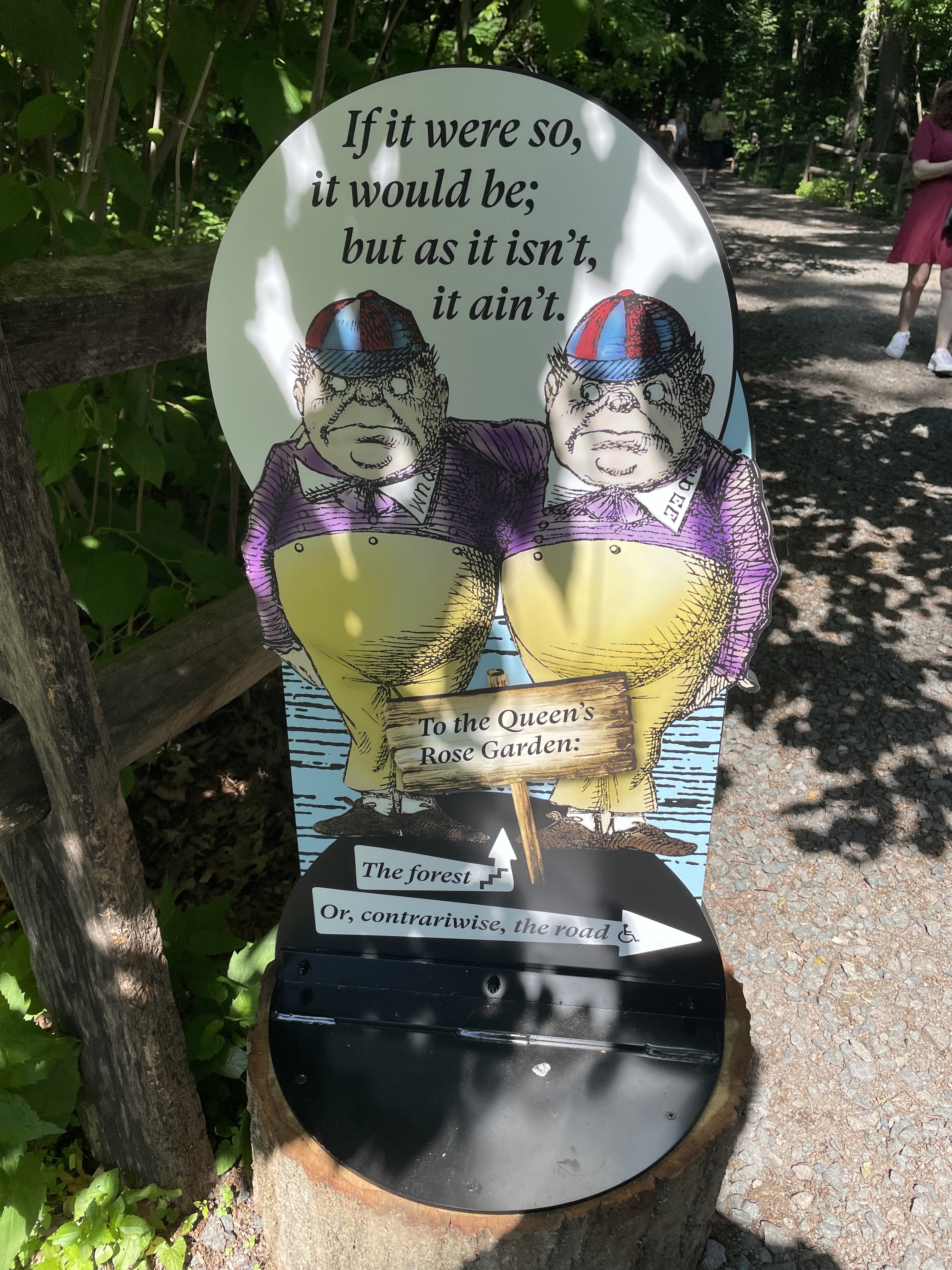
The tone was set by a topiary White Rabbit, complete with pocket watch, part of a Garden-wide Alice in Wonderland display.

All around were clever signs. I overheard a woman say, “The Caterpillar always creeped me out.”

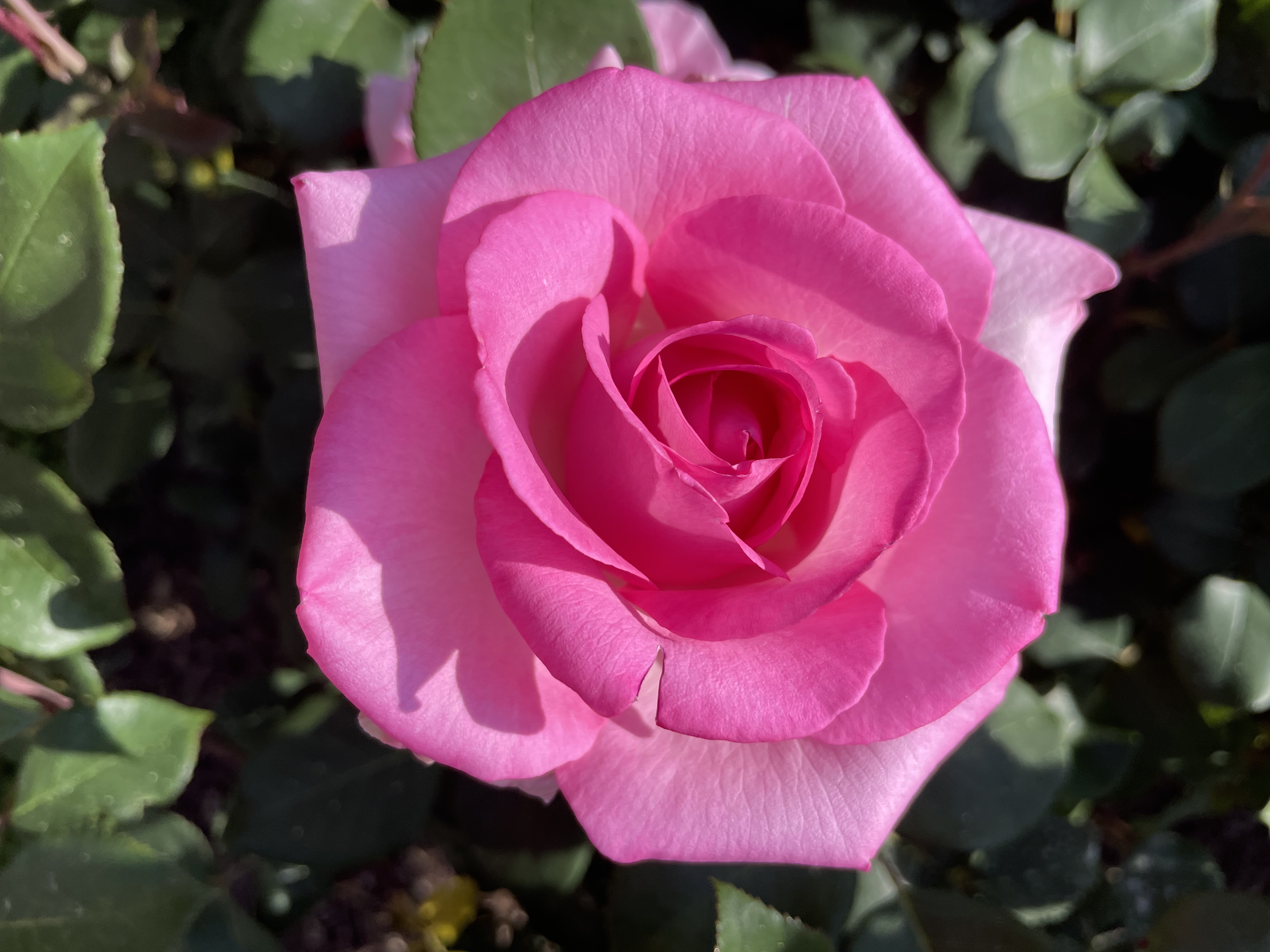
I wouldn’t say that about anything in Alice! What I was thinking about at NYBG was how great it would be to drink a magic potion and crawl into one of the abundant flowers in the ravishing Rose Garden.

Sometimes I’ve believed as many as six impossible things before breakfast, said the Queen. Hear, hear.

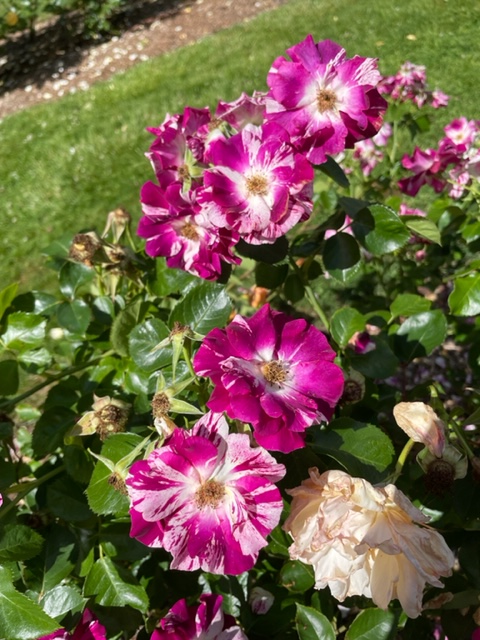
Hard to do justice to the array of blooms there.

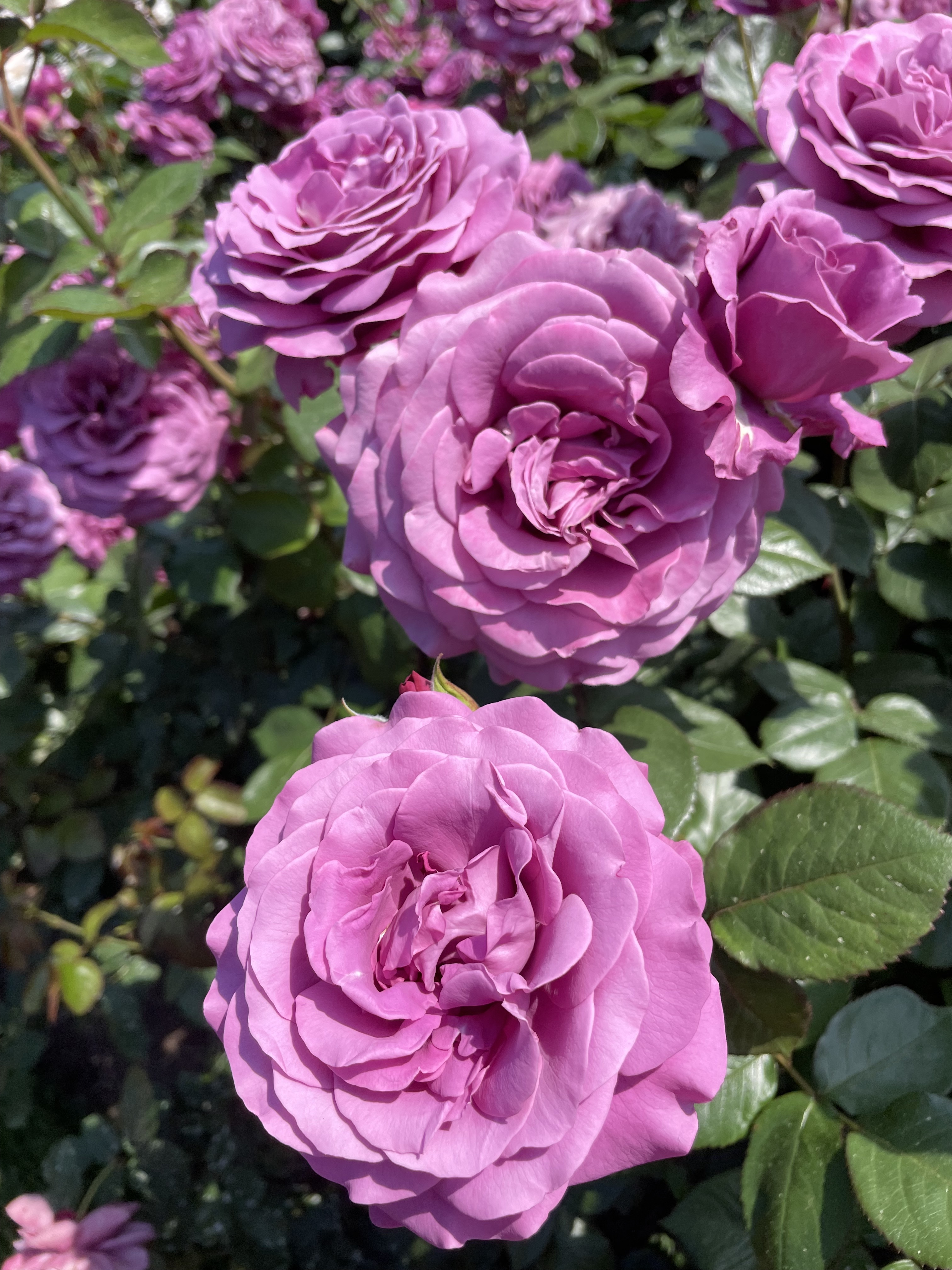
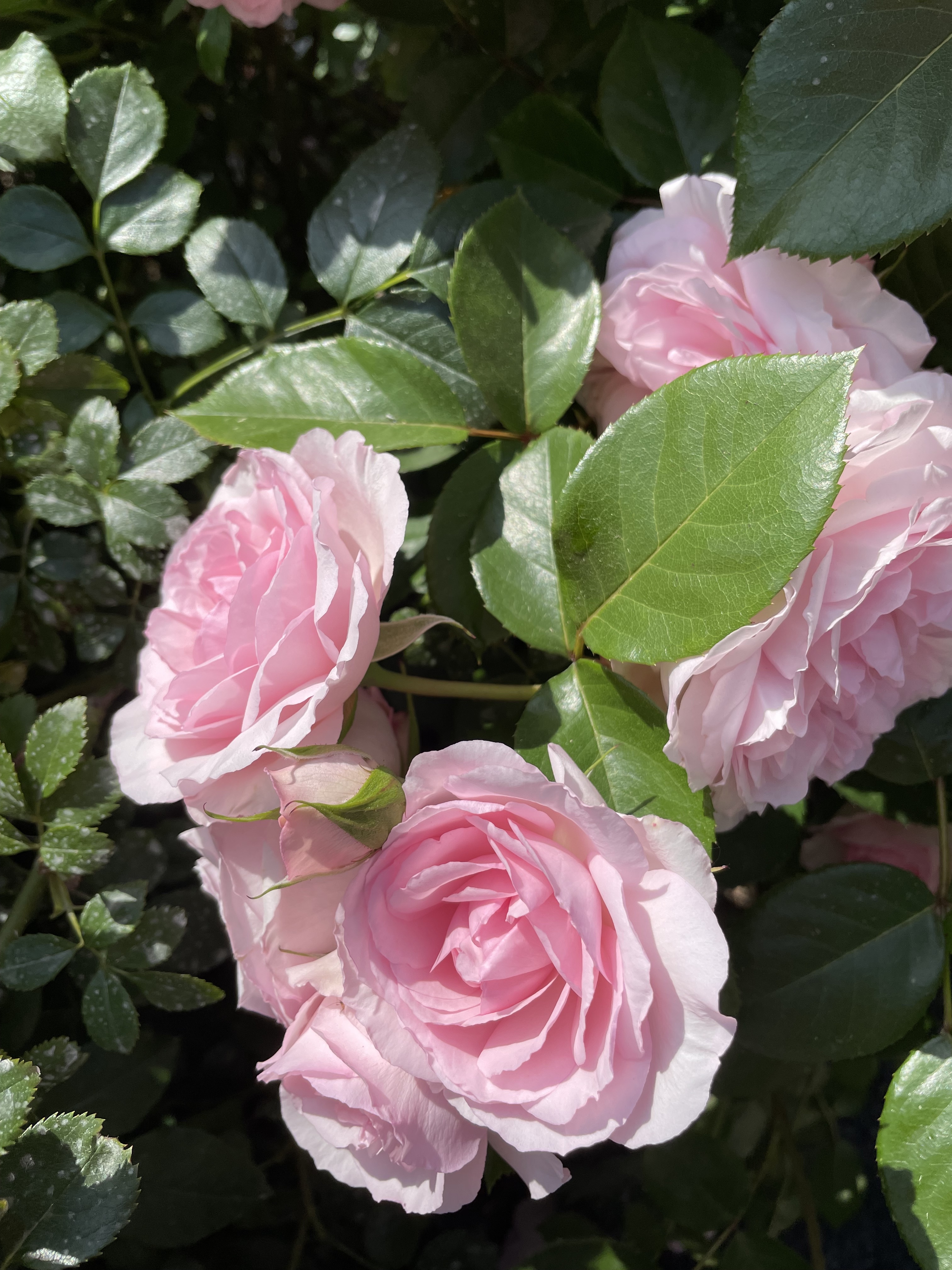
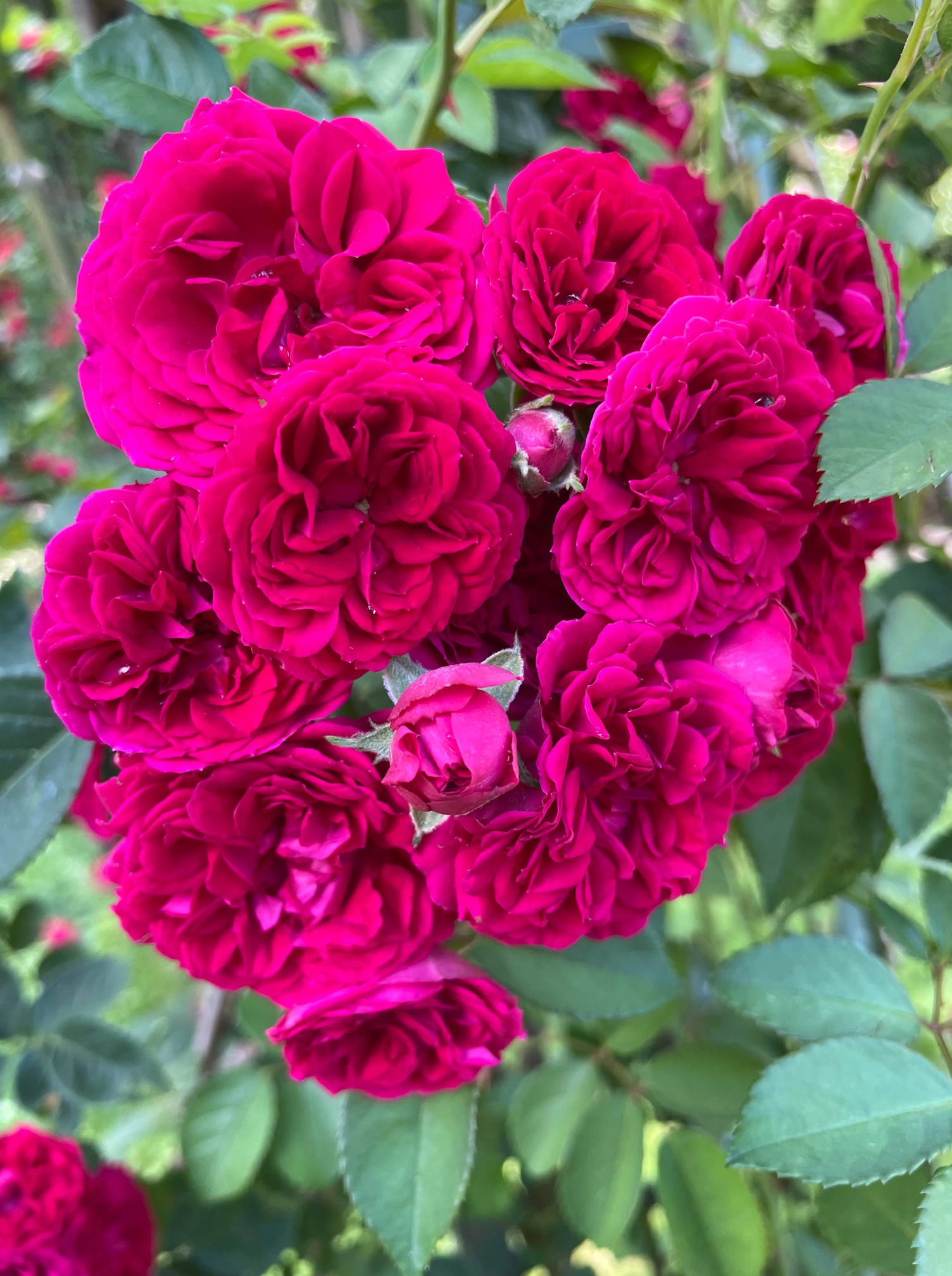
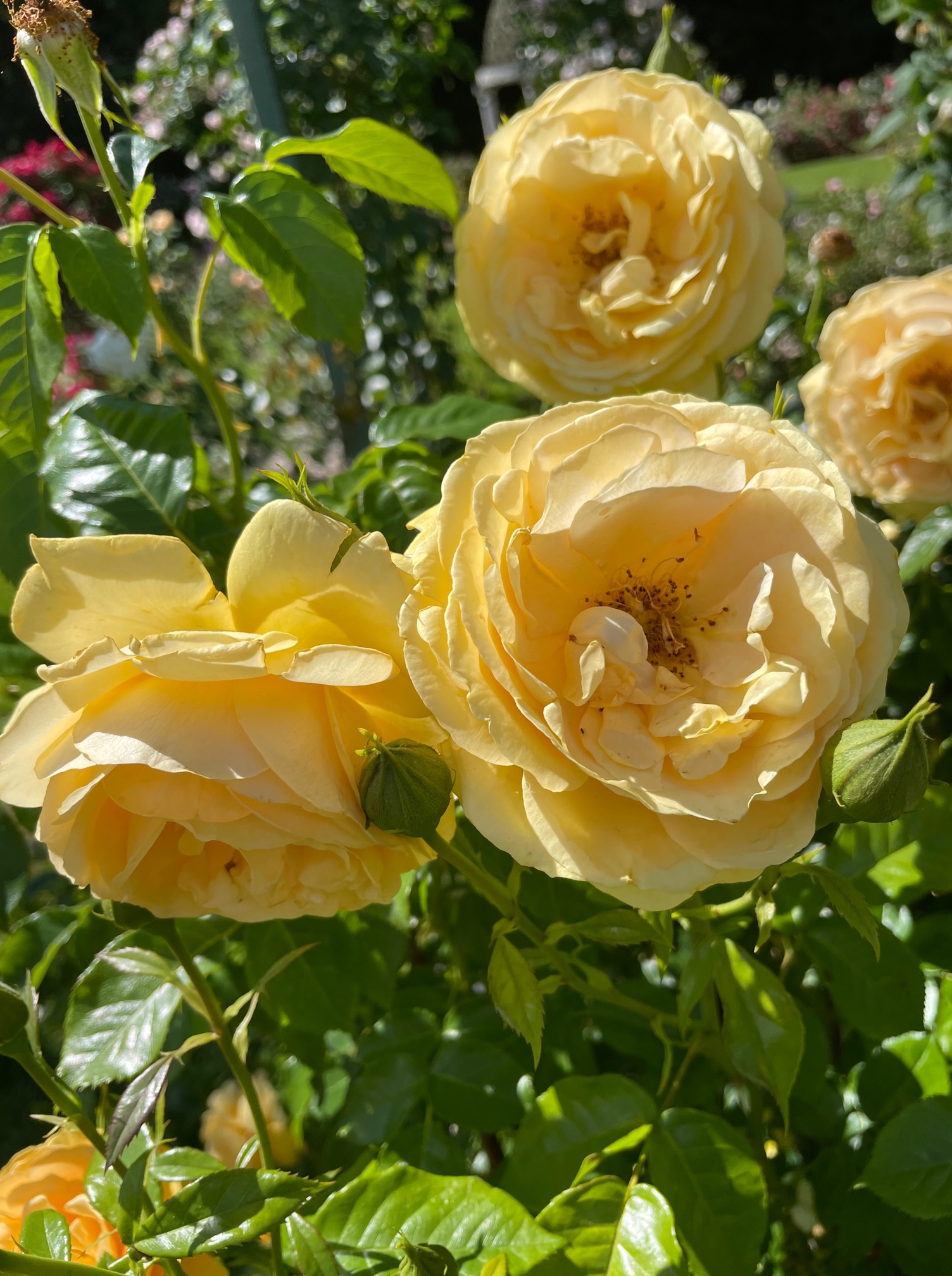
They dazzled as roses always do.

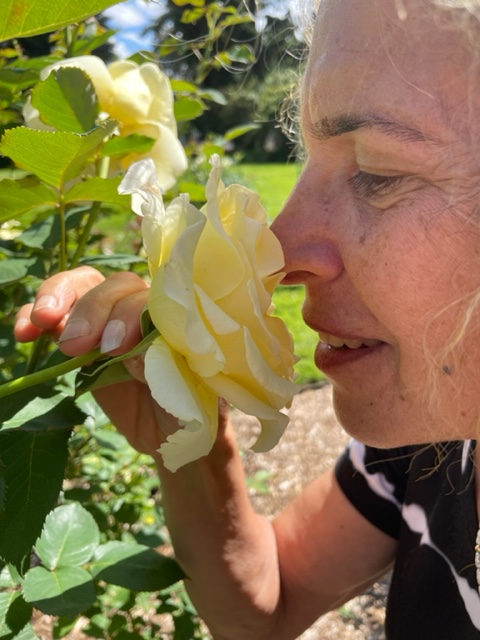
Funny, though, whether white or yellow, pink, red or purple, stick your nose in and they all smell the same. Phenomenal, but the same. Flowers, I ask, must you be so boring?

All around, people were posing as if they were themselves flowers, so I did too.

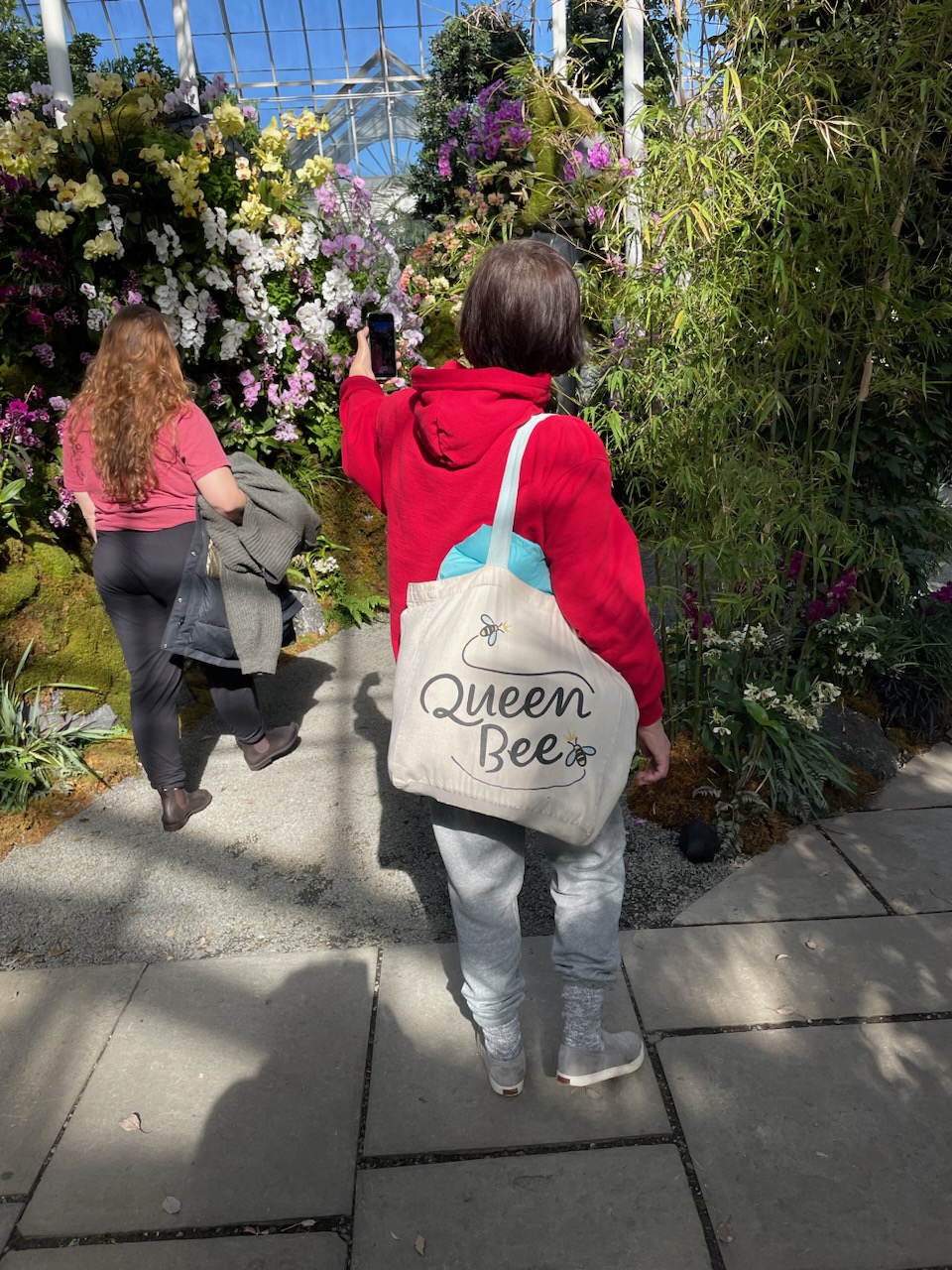
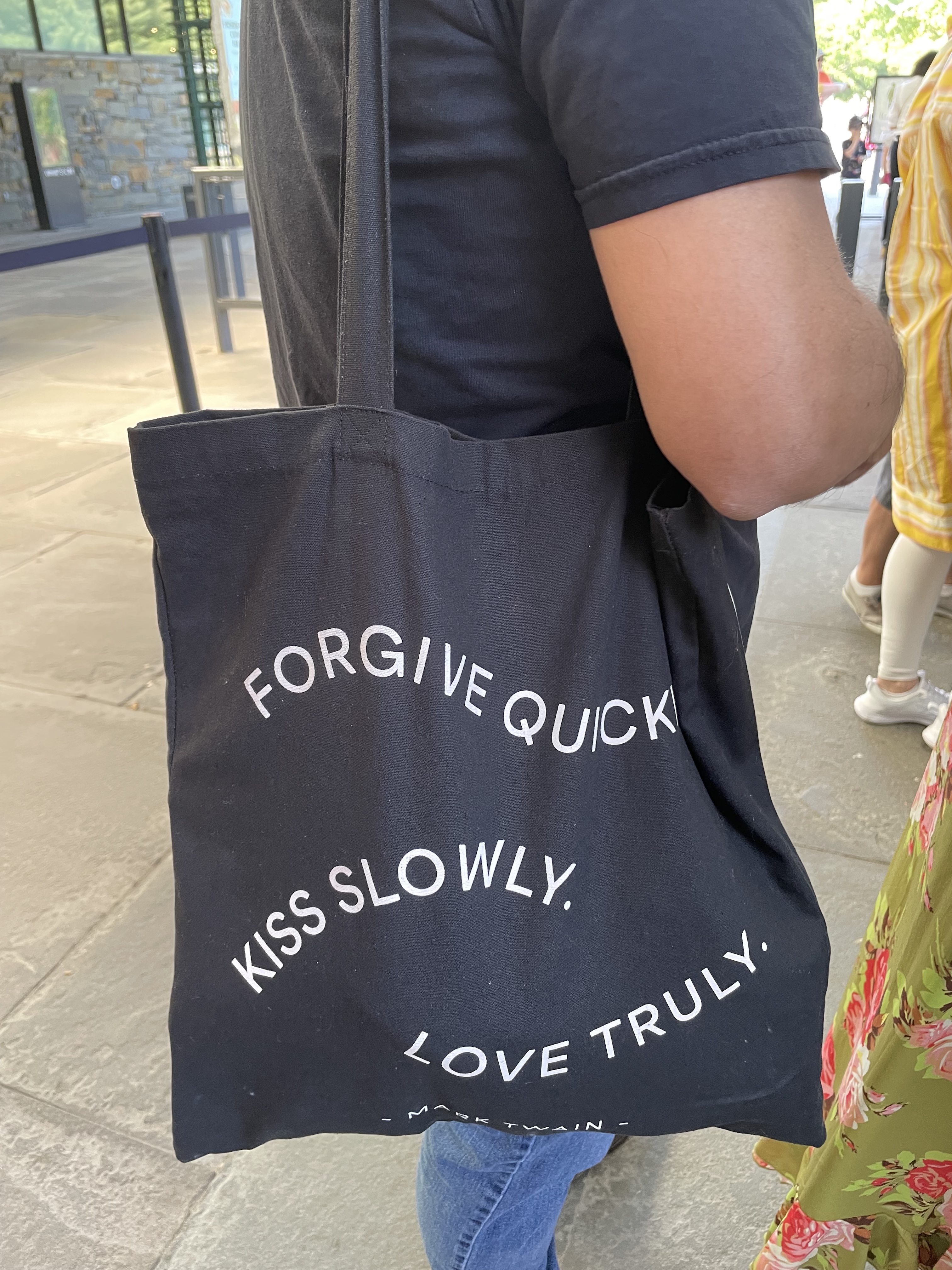
And a guy got into the springtime spirit with his slogan tote bag. Think I might get this on a tee shirt to join my newest wardrobe favorite: UNDERESTIMATE ME: That’ll be fun.

Just up from the Rose Garden, kids played with another Alice-themed attraction, a monochrome chessboard created by Yoko Ono that suggests the essential futility of war. We’re all on the same side, after all. Gil tried to set the game up properly, when he wasn’t inciting Memorial Day riots with his George Orwell tee shirt.

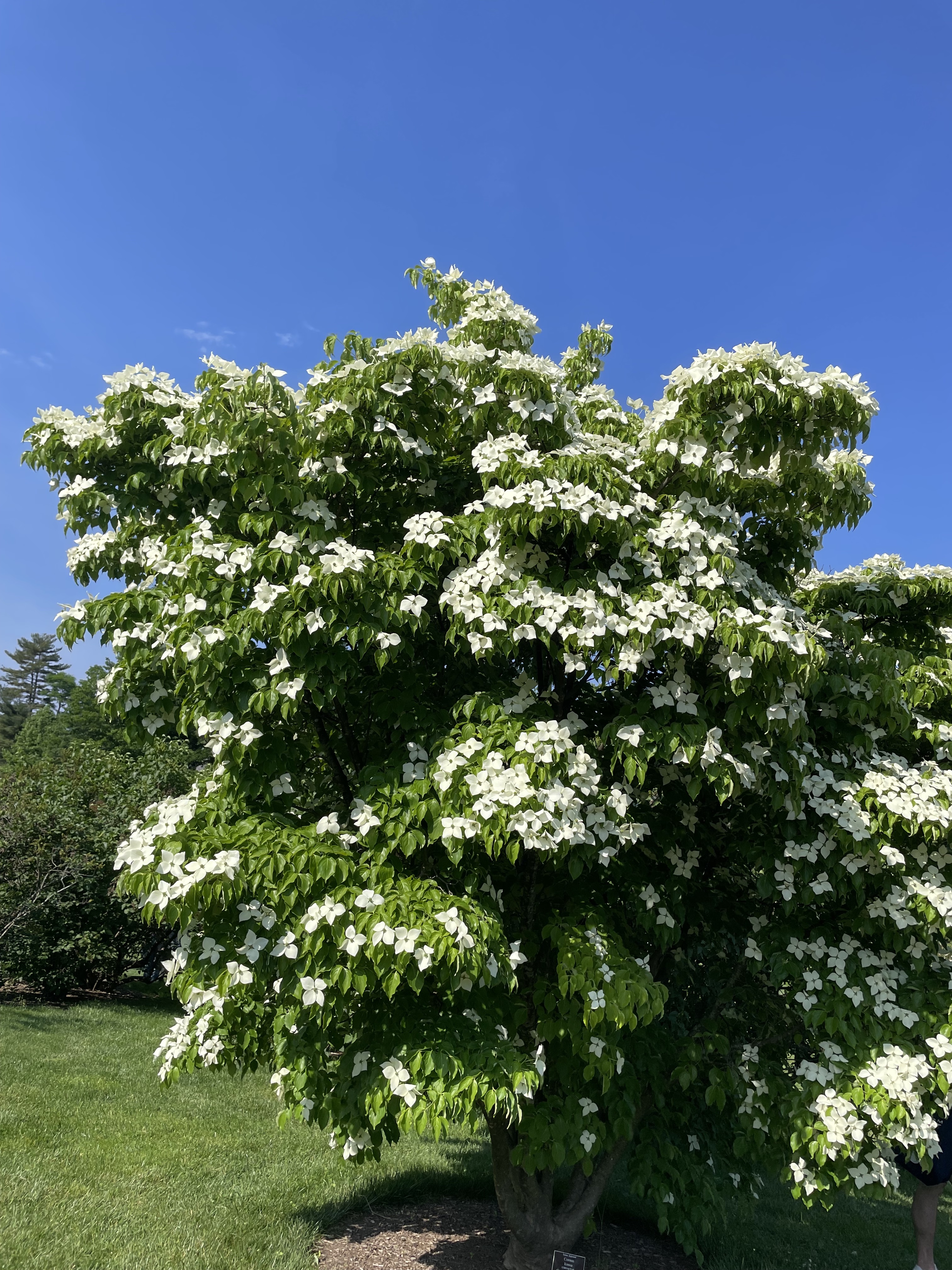
We saw other seasonal stand-out specimens of the urban forest. A Kousa dogwood having its moment.

Some carved beeches I’d probably passed a million times before but never noticed.

There’s always something new to notice when you pay attention. Mary Oliver wrote:

Instructions for living a life:

Pay attention.

Be astonished.

Tell about it.

We walked through the Thain Forest, a certifiable old-growth tract thick with sweetgums that gave me a few souvenirs to bring home (remember, though, take nothing but pictures!).

A critter hole made me again want to shrink like Alice. Anyone home? Mind if I come in?

The trees of the city, the flowers of the city form a promise, an opportunity for optimism and hope in these sometimes dark, difficult times. If they can grow and thrive, if they survive, perhaps we can too. I dwell in possibility wrote Emily Dickinson, she who thought a good deal about nature.

You can’t take a whole forest home with you.

But when you pay attention, the vision of those trees and flowers might linger with you in your workaday life and help you remember your place in the natural world, and also bring some joy.

Even if you take nothing but pictures.

That’s my promise.

3 Comments

Filed under Jean Zimmerman

Had a little rain last night.

Really? You don’t say.

We’re used to the regular deluge back east, especially lately. But here in the southwest, of course, raindrops are so rare as to be remarkable.

There hasn’t been any rain in Phoenix in months. And even when drops do fall, as they did for a bit yesterday, much of it is what’s called virga, precipitation that evaporates before reaching the ground. Today, even dry things glisten.

I walk among the rain-refreshed plantings in the desert garden.

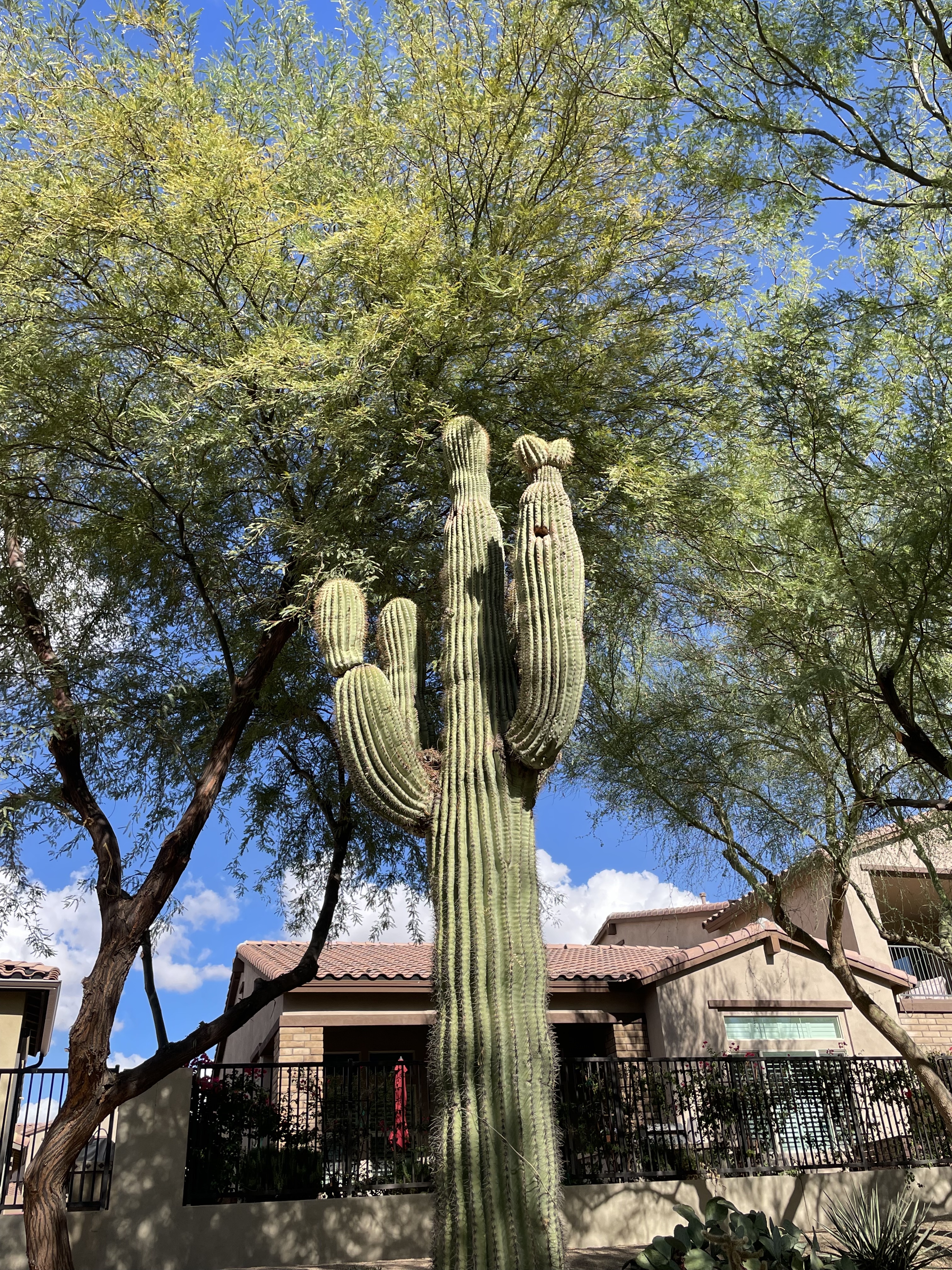
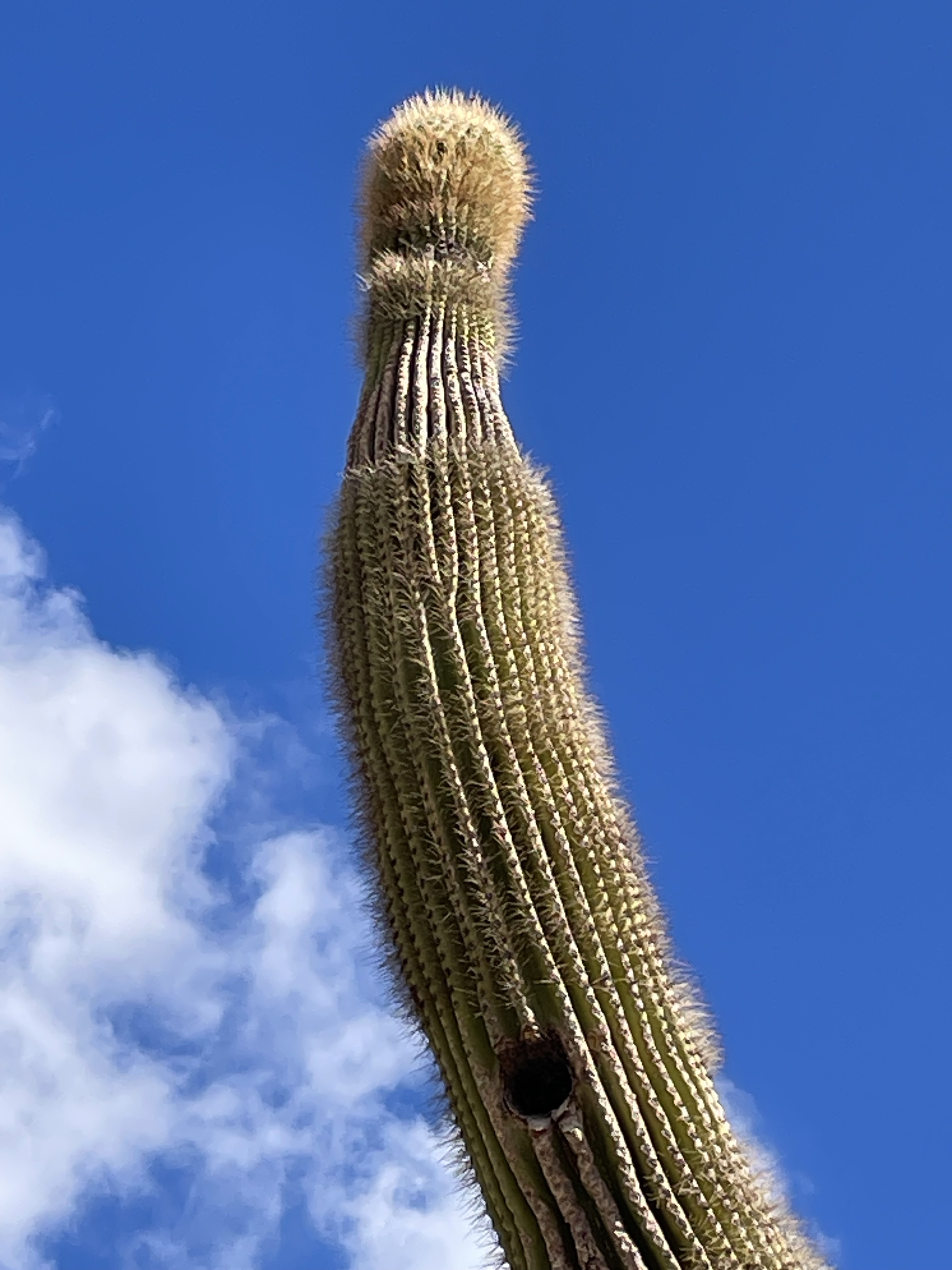
Something we take for granted in the northeast: rain. Something they take for granted in the southwest: having a big honker of a saguaro right outside your back door.

The birds seem happy.

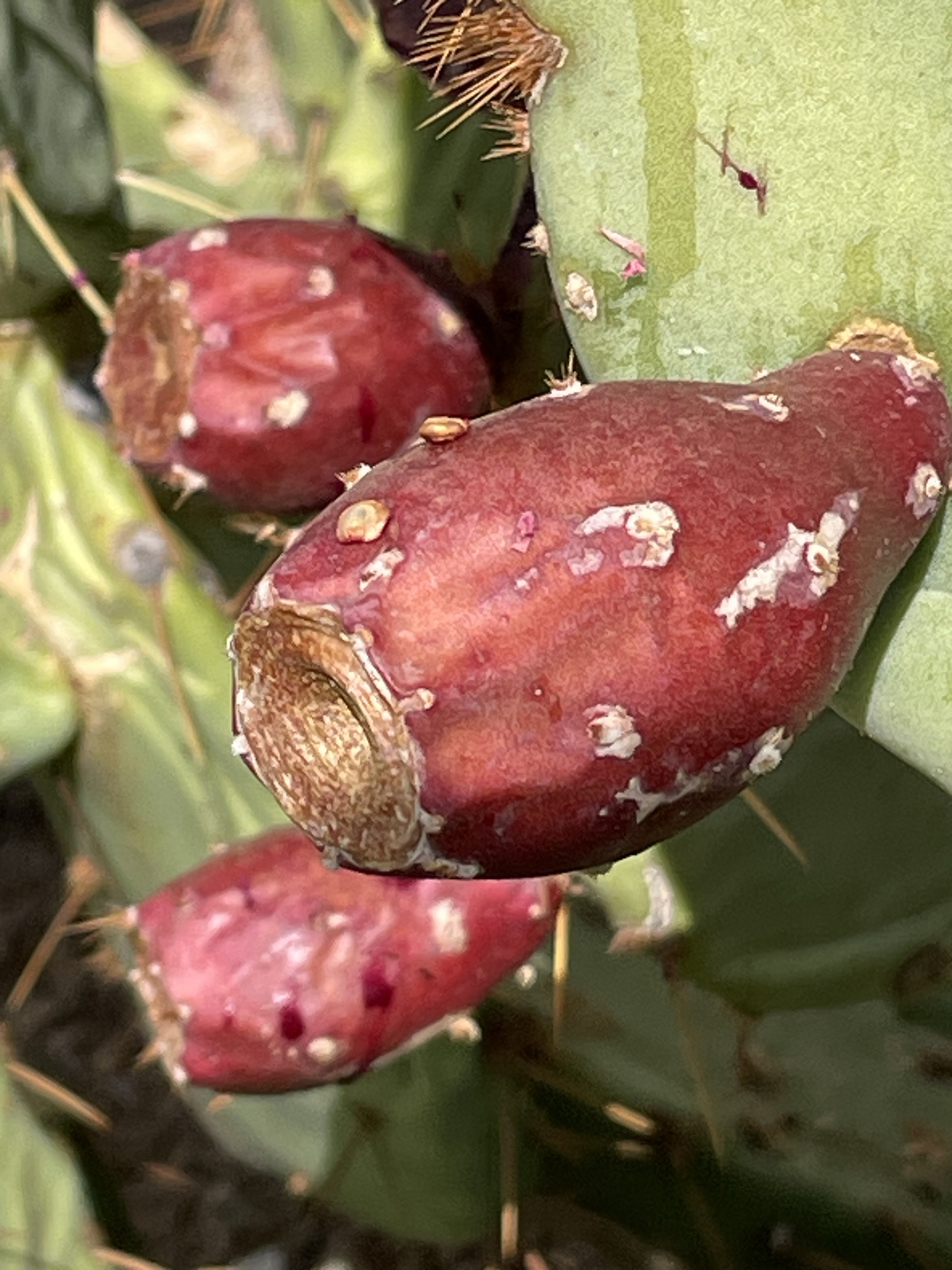
Munching prickly pear fruits.

I feel happy. Unwinding, unspooling, recharging my batteries.

I like to say I’ve been working so hard. But really, working? Does that make sense when you enjoy all the things you do? Maybe enjoying is better. I’ve been enjoying so hard.

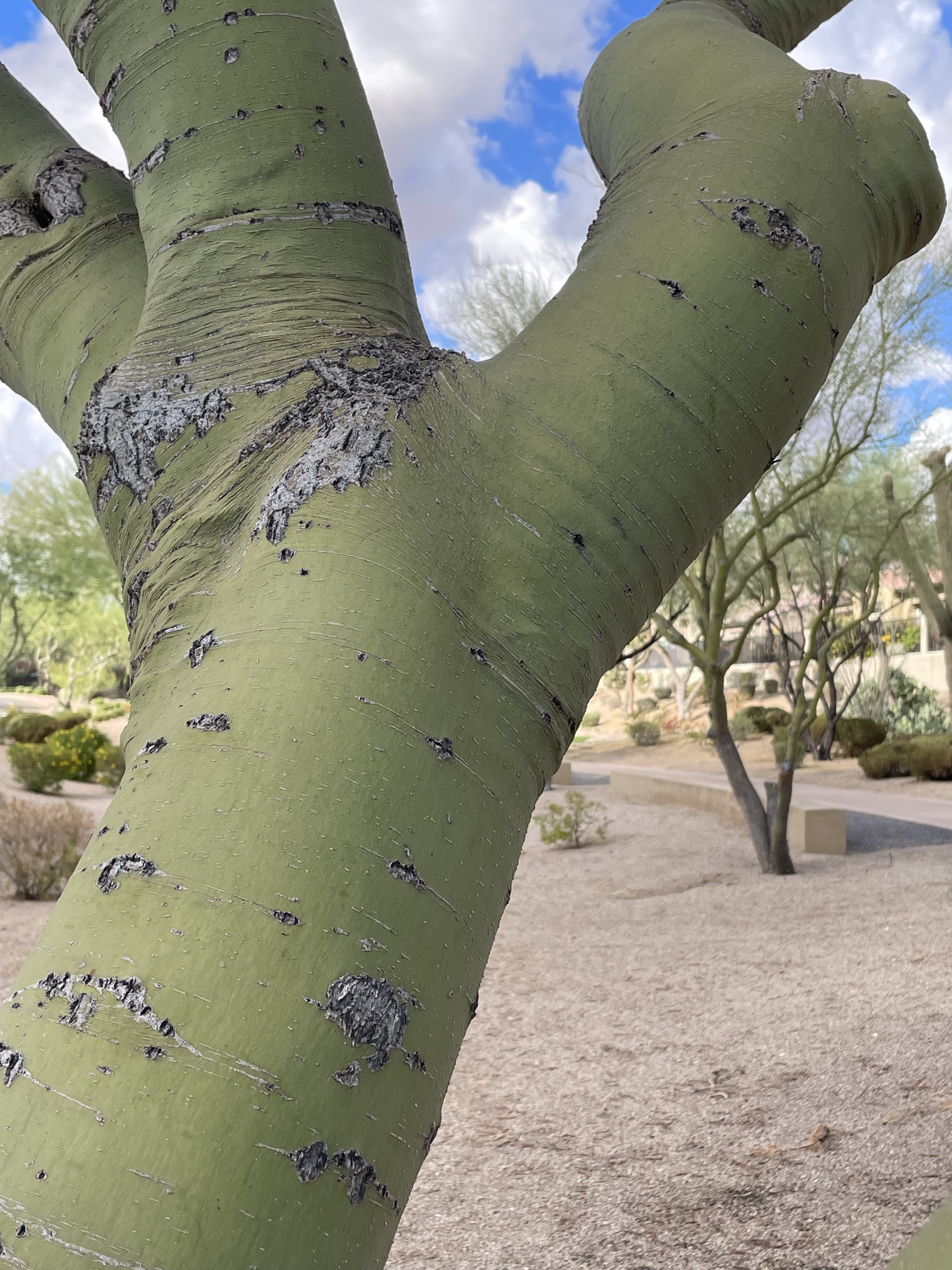
Palo verde. How chartreuse can a plant be?

Everything is magnified here under the puffer clouds.

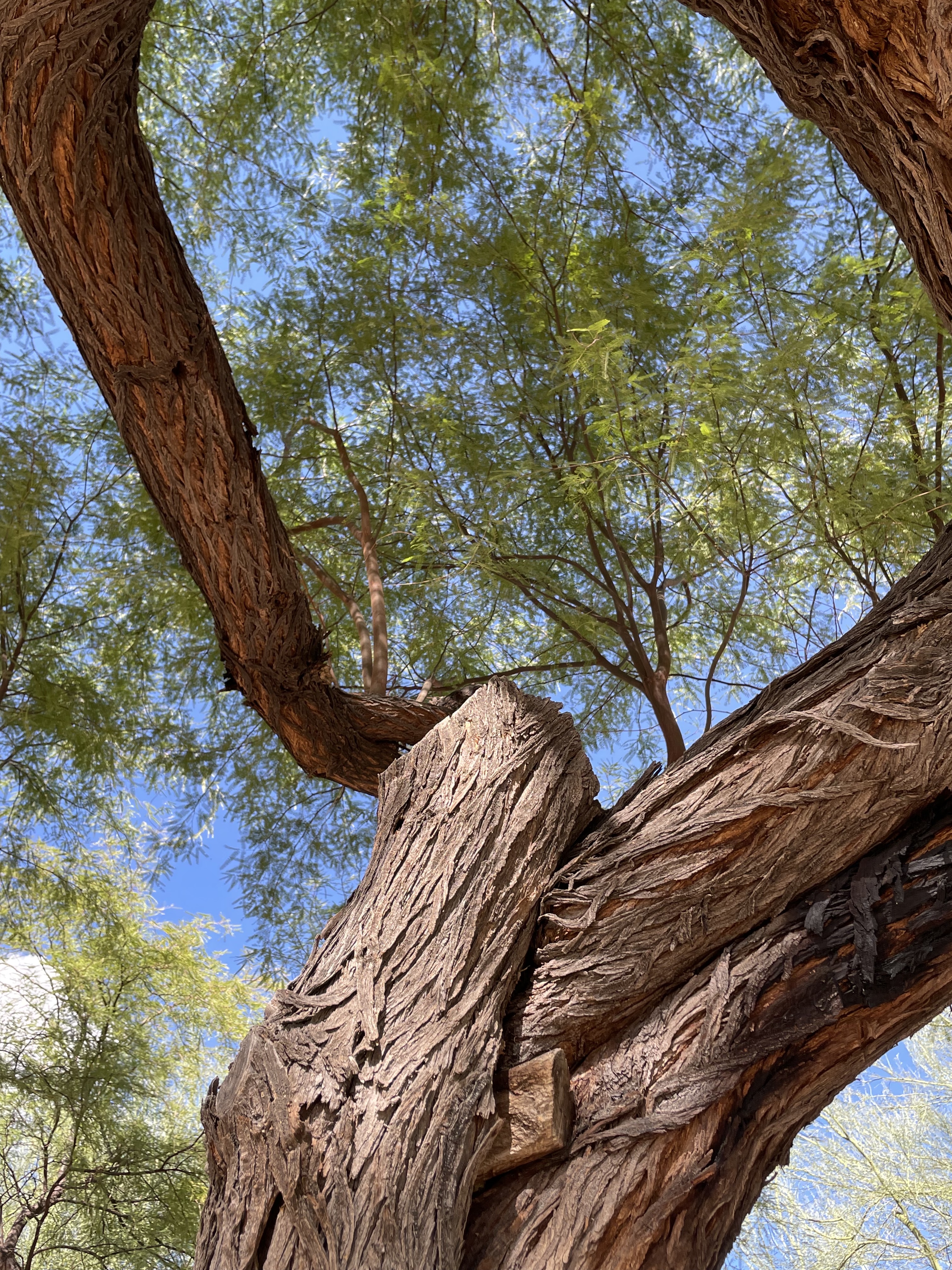
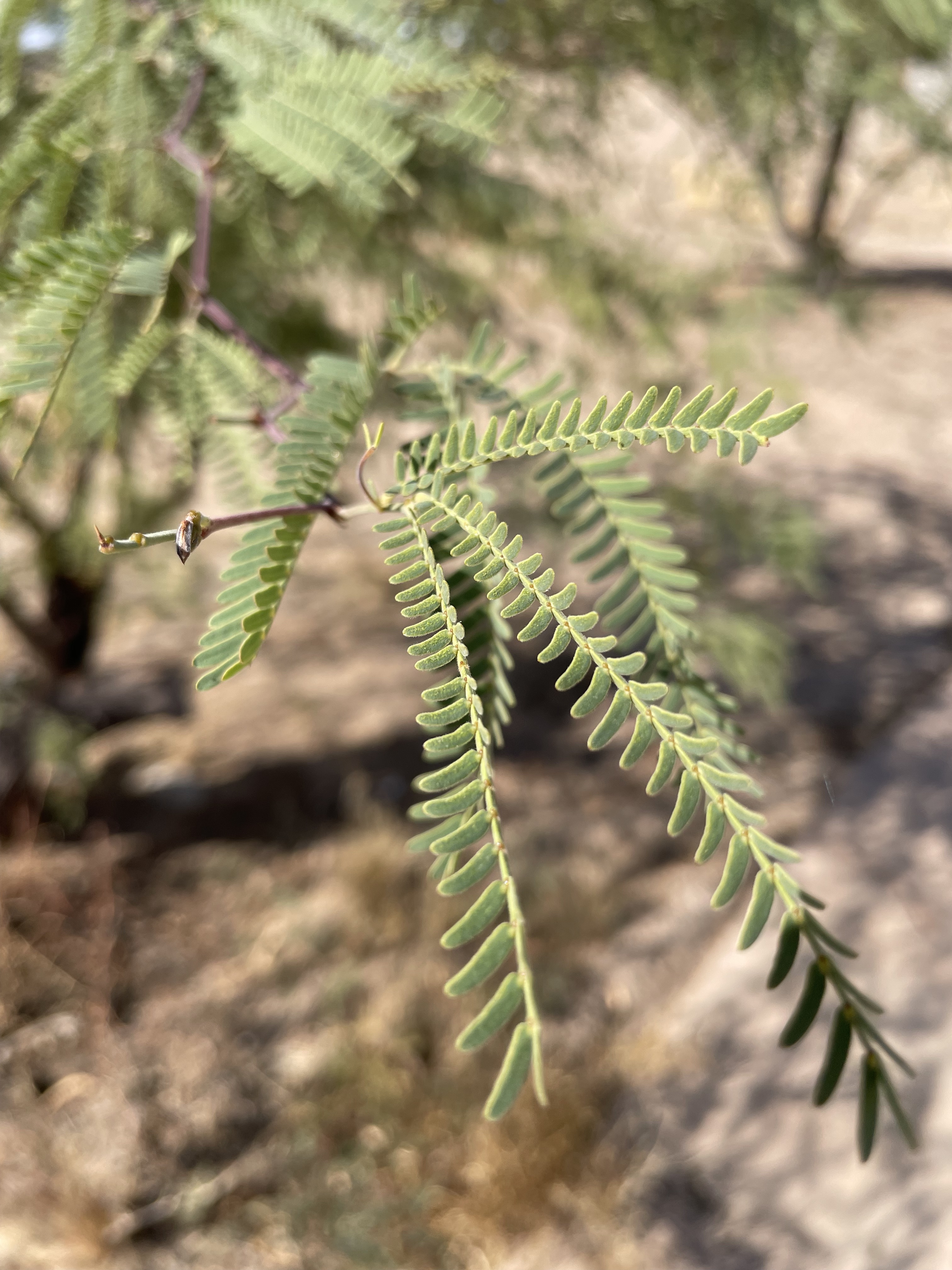
The fringe of mesquite.

So infinitely delicate.

A scatter of pods.

Does the saguaro know how ridiculous it looks sometimes?

Bougainvillea speaks to me.

Don’t work so hard. Don’t enjoy so hard. Fall into the petals of a flower. Nourish yourself. Here on the path, I’m all by myself. I live in that solitude which is painful in youth, but delicious in the years of maturity. So said Albert Einstein.

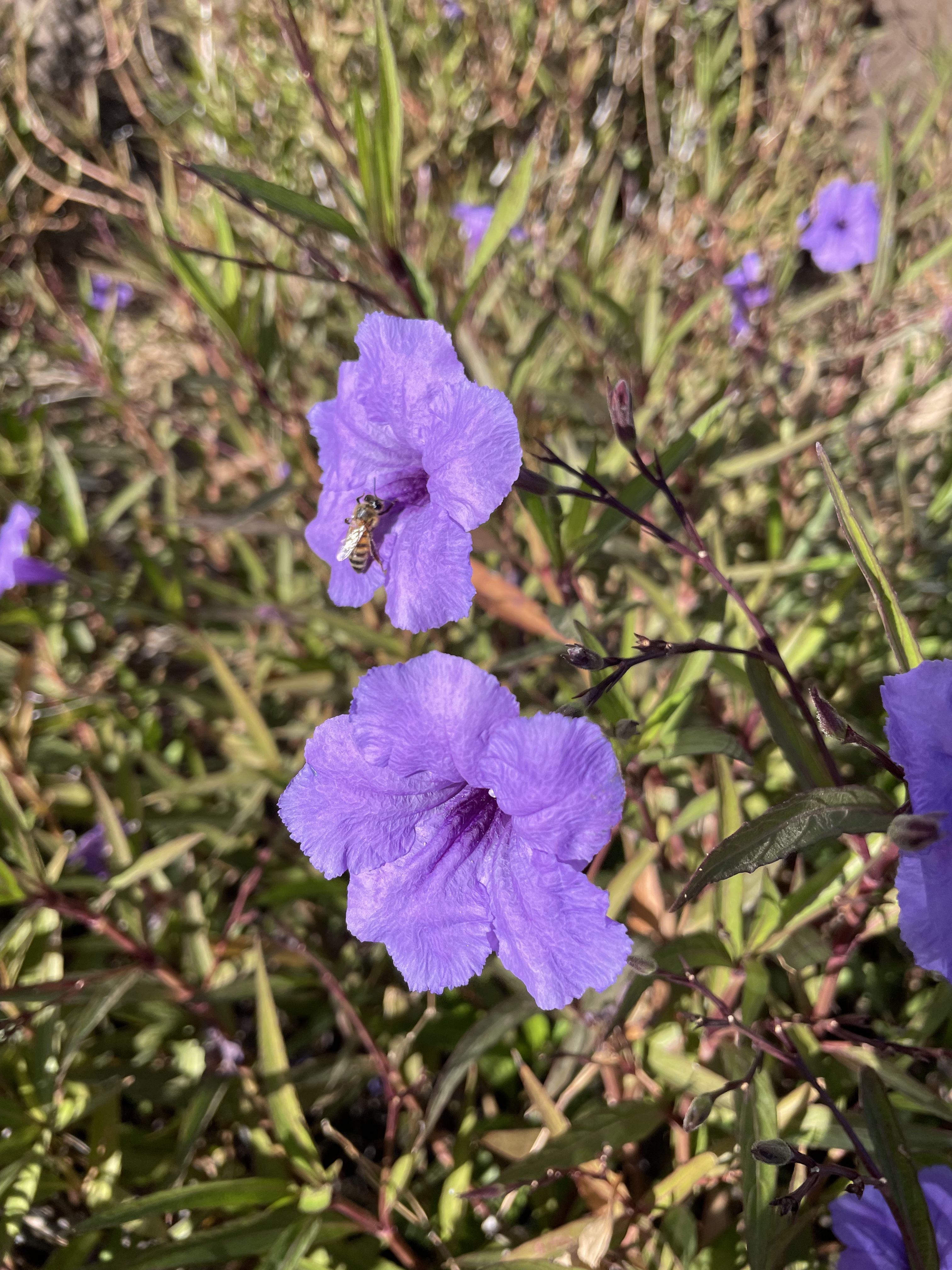
Not totally alone. Communing with a bee on the Mexican petunia. Mexican petunia? Invasive! Who cares? Not me, at the moment.

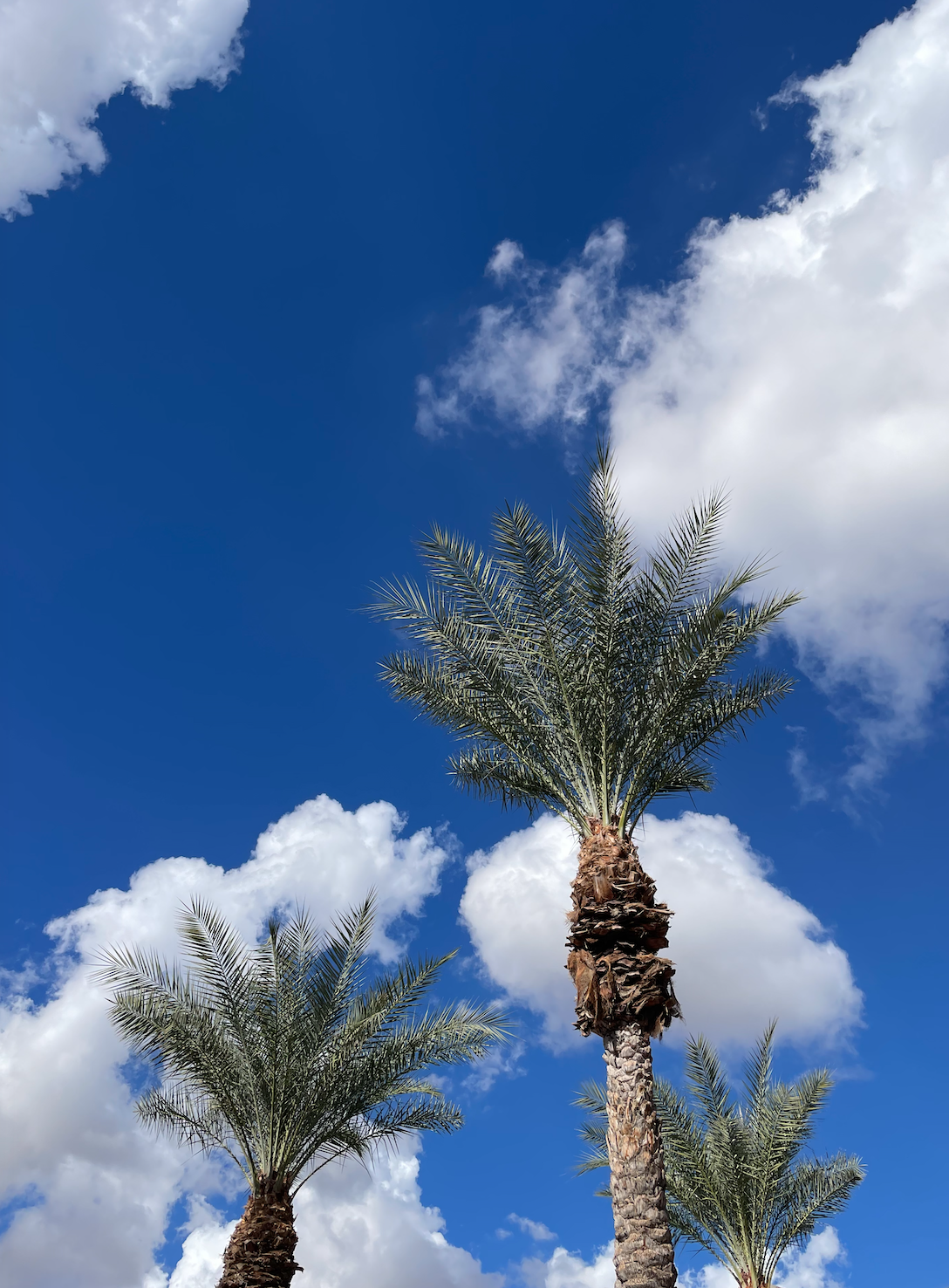
Speaking of invasive, palms.

They stretch themselves upwards. If it rains, it rains. If it doesn’t, they’re still there, holding the sky aloft.

3 Comments

Filed under Jean Zimmerman

“Purple and gold season”

is how Cornell Botanic Gardens’s docent Dana describes the end of summer and the first days of fall.

She professes herself to find it a bit boring. I look out the window when we’re driving in the car and that’s all I see, purple and gold, purple and gold.

Dana shows us the native aster blooming in a border of the Cultivated Plant Collection. The goldenrod.

Her exuberant, erudite and irreverent approach to the botanical world and her enthusiasm in sharing it with people are all on display first day of autumn in the Finger Lakes.

A Buddhist might call it the Eternal Now — this burnished morning, already warm yet crisscrossed with cool breezes. We walk together through the specialty gardens, the perennial beds, the tropical plants and grasses and herbs. These flowers, these trees are all that exist.

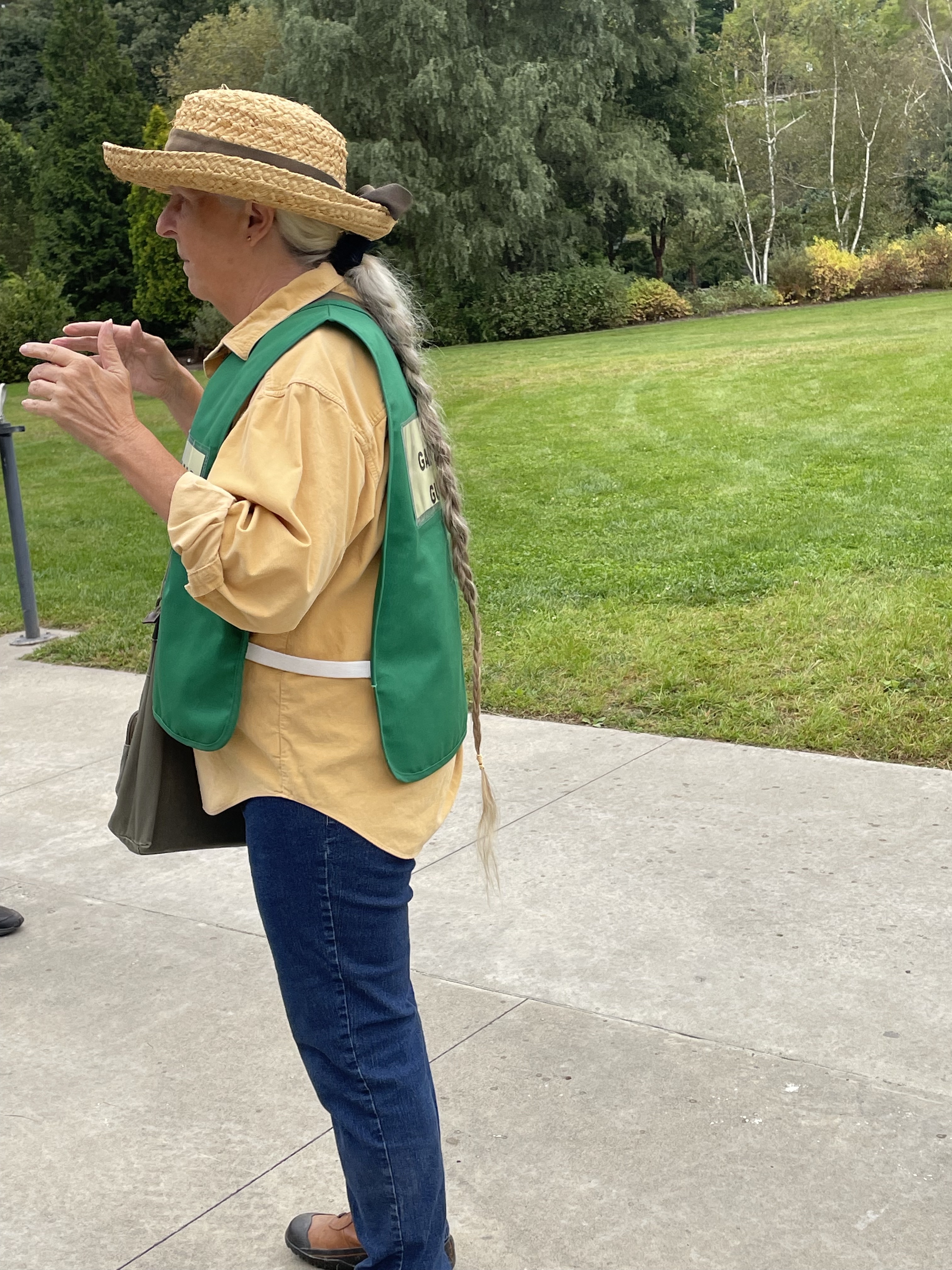
Dana raises horses, has about the longest braid I’ve ever seen down her back, and is one of the most quick-witted garden guides I’ve ever come across.

She shares some wisdom on making a mistake: You never say you’re wrong. Just, “actually”… to which a gentleman in the crowd adds enthusiastically, Truth challenged!

Now that we’ve got that straightened out.

We see a display of gourds, part of the Garden’s Seeds of Survival and Celebration installation. She explains their significance, You know that thing in the celestial heavens that we call the Big Dipper? In North Africa it’s called the Drinking Gourd. So the message to enslaved people in America was, “follow the drinking gourd.

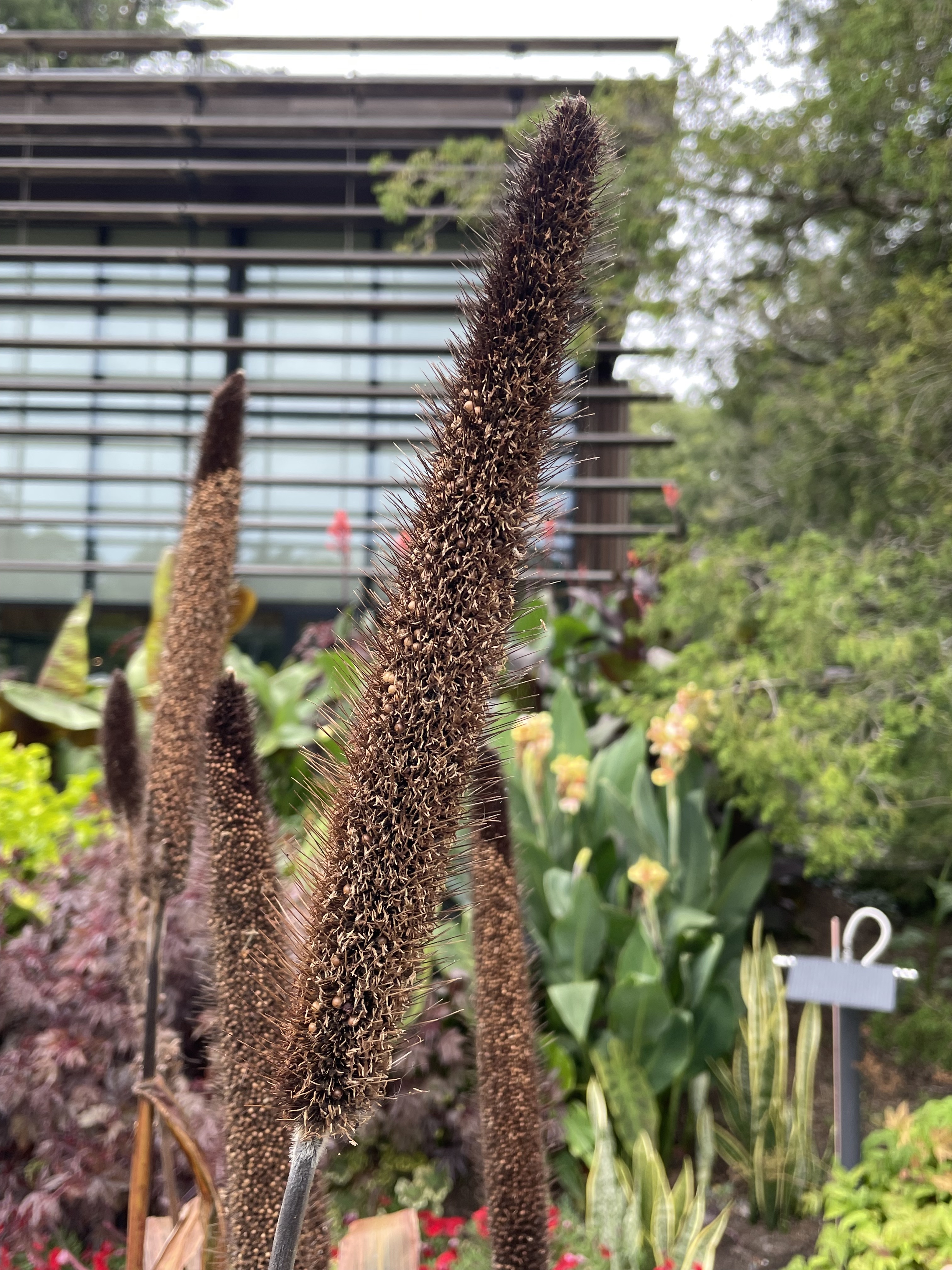
She shows us millet.

On a pathway she shows us pots that were originally planted out for the opening of the Nevin Welcome Center in 2010 and now need to be moved inside every cold season and outdoors again in the spring. Be careful what you do because if you do it exceptionally well they’re going to ask you to do it over and over.

The tropical Princess flower, she tells us, is her favorite. She’s very soft, and has silver glitter on the leaves and flower.

Then, a relative of the tomato.

But it’s seriously saying, Don’t bite me. No grazing, please. Also, It has a fruit that can be brewed into a very potent alcohol.

Dana does a special symbiosis tour once a month in which she talks about the relationship between plants. She calls it secrets of the garden.

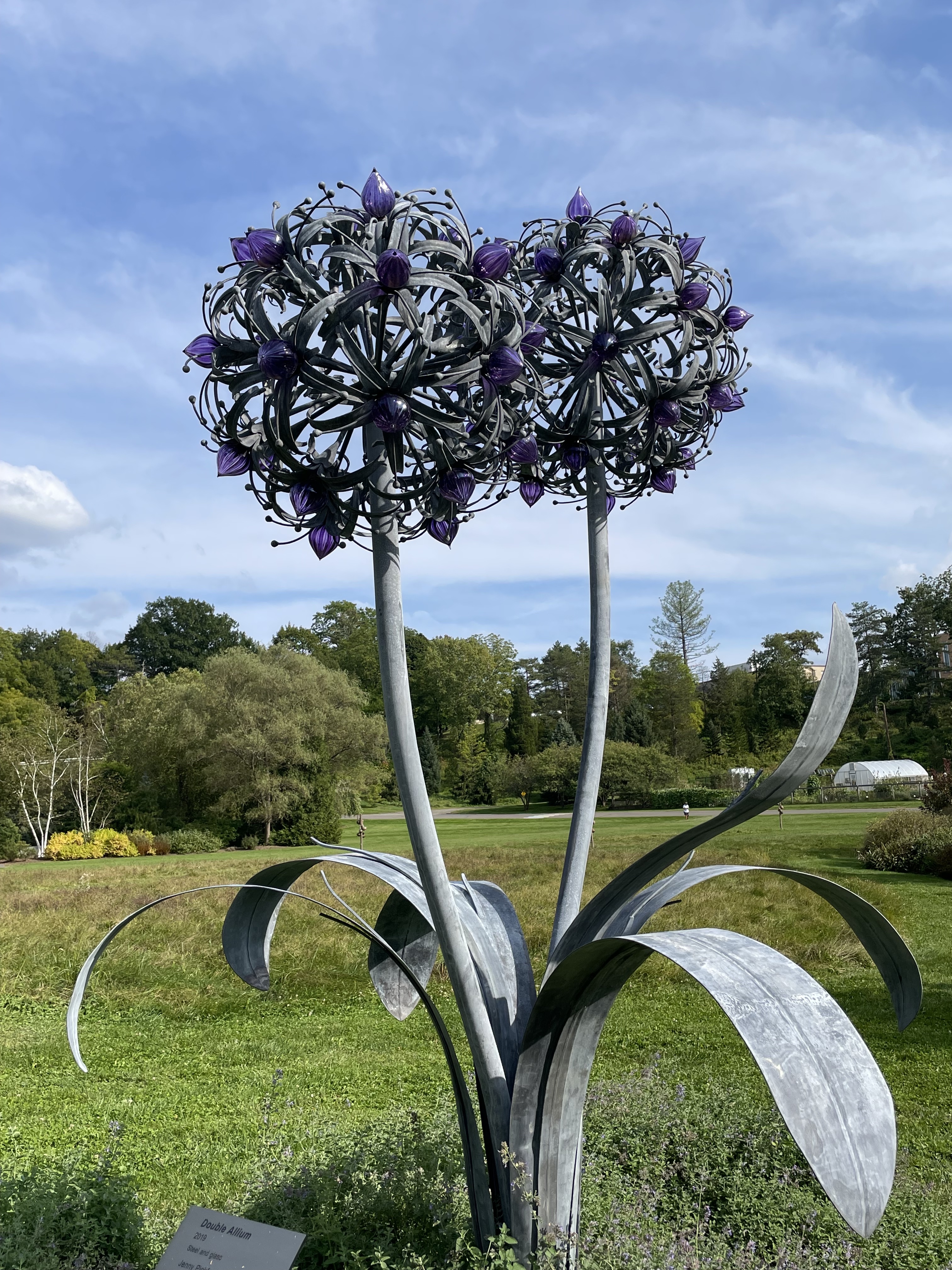
Lest you think this tour is all about flowers and fruits, it is not. There is art.

And plenty of trees. She shows us the tulip poplar.

It is neither tulip nor poplar. But it is the tallest tree native to this region. Liriodendron tulipifera, she tells us, has musical instrument-shaped leaves and tulip-shaped flowers. This particular specimen is equipped with lightning rods that don’t happen to be attached to its ground rod.

It’s probably eighty to one hundred years old.

Dana explains the difference between and annual and a perennial plant. It’s pretty basic, she says. She explains the meaning of the word cultivar.

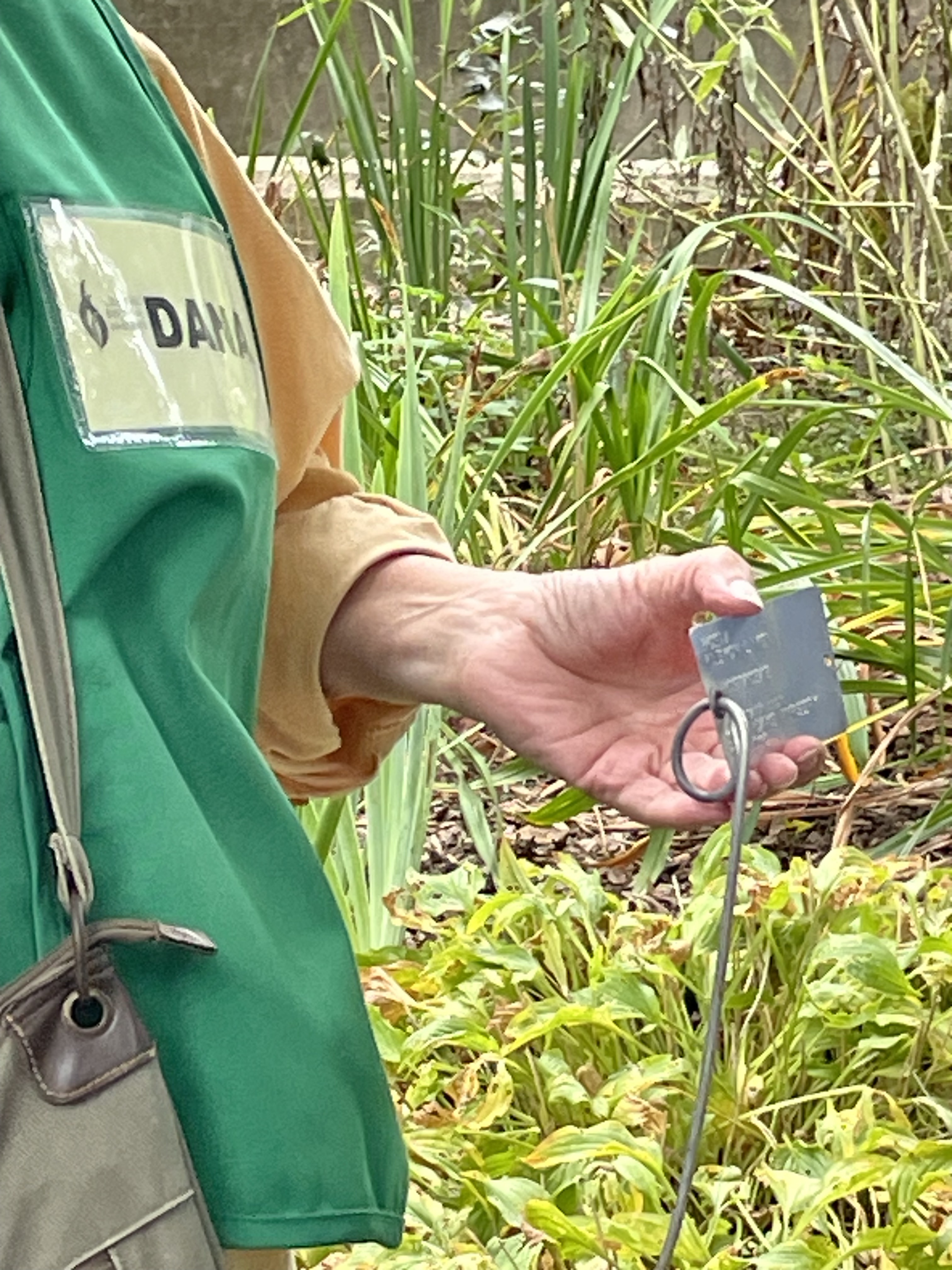
She shows us an aluminum tag.

Students come In and randomize these tags. It’s not funny!

These just keep spreading.

I’m touching everything. I can’t help it. I want to learn about everything here. I’m reminded of the lines from Walt Whitman’s Leaves of Grass:

The atmosphere is not a perfume, it has no taste of the distillation, it is odorless,

It is for my mouth forever, I am in love with it,

I will go to the bank by the wood and become undisguised and naked,

I am mad for it to be in contact with me.

We see a mammoth zelkova.

Dana shows us an Eastern white pine.

It’s the tallest conifer native to this region, she tells the group. It was tremendously important to the Indigenous people here. The Five Tribes were warring, and they met beneath a white pine. And a leader said they’d be more successful if they worked together than if they fought. That was Hiawatha. We lifted their agreement for our constitution. We stole it. The Five Nations came together as the Haudenosaunee. Their symbol shows a white pine with all the weapons buried at the base and at the top an eagle overseeing the whole thing.

She shows us the needles that grow in fascicles.

There are five needles in each fascicle of an Eastern white pine. That’s how you can always identify the species.

Also, Dana says, you can brew the needles to make a tea that has more vitamin C than a lemon by squishing them and boiling them. It’s pale gold and slightly sweet, a treat you can make for your friends.

We stop by a Cornelian cherry dogwood.

Cornus mas, she says, giving us the scientific name. Mas means male in Greek. The Greeks used the wood to build their weapons of war. Since it was the wood used to make the boy stuff it was termed mas – male.

This tree probably predated the adjoining building. Oh, just a boring begonia.

Dana brings us to the herb garden. An herb simply means the plant’s not woody, she explains. In the herb garden you’ll find things that are significant to humanity that are not food-based. She tells us that in the garden we’ll find a bed of herbs related to literature: You can find rue, shake its little hand.

We enter. Bruise a few leaves, inhale the scent of sage.

She says, I want you to scratch and sniff. First, touch this plant.

Then, run fast over to this other flower and inhale.

Peppermint patty! And she is absolutely correct, as always. The first plant is mint, the second has the distinctive aroma of chocolate.

She relates the origin of the term nosegay. I didn’t know I’d ever wondered about that, but now I find myself getting curiouser and curiouser, as Lewis Carroll’s Alice would have it.

A nosegay was a bunch of herbs you’d carry against the stench of the world back in the Victorian era, it turns out. And you’d need a tussie mussie to hold it. Horse-drawn carriages actually have mounts to put these tussie mussies in.

Conveniently, Dana has a tussie mussie on hand to show us.

I peel off from the group, meet an energetic hound named Texie who seems to be inordinately stimulated by the herb garden’s scents.

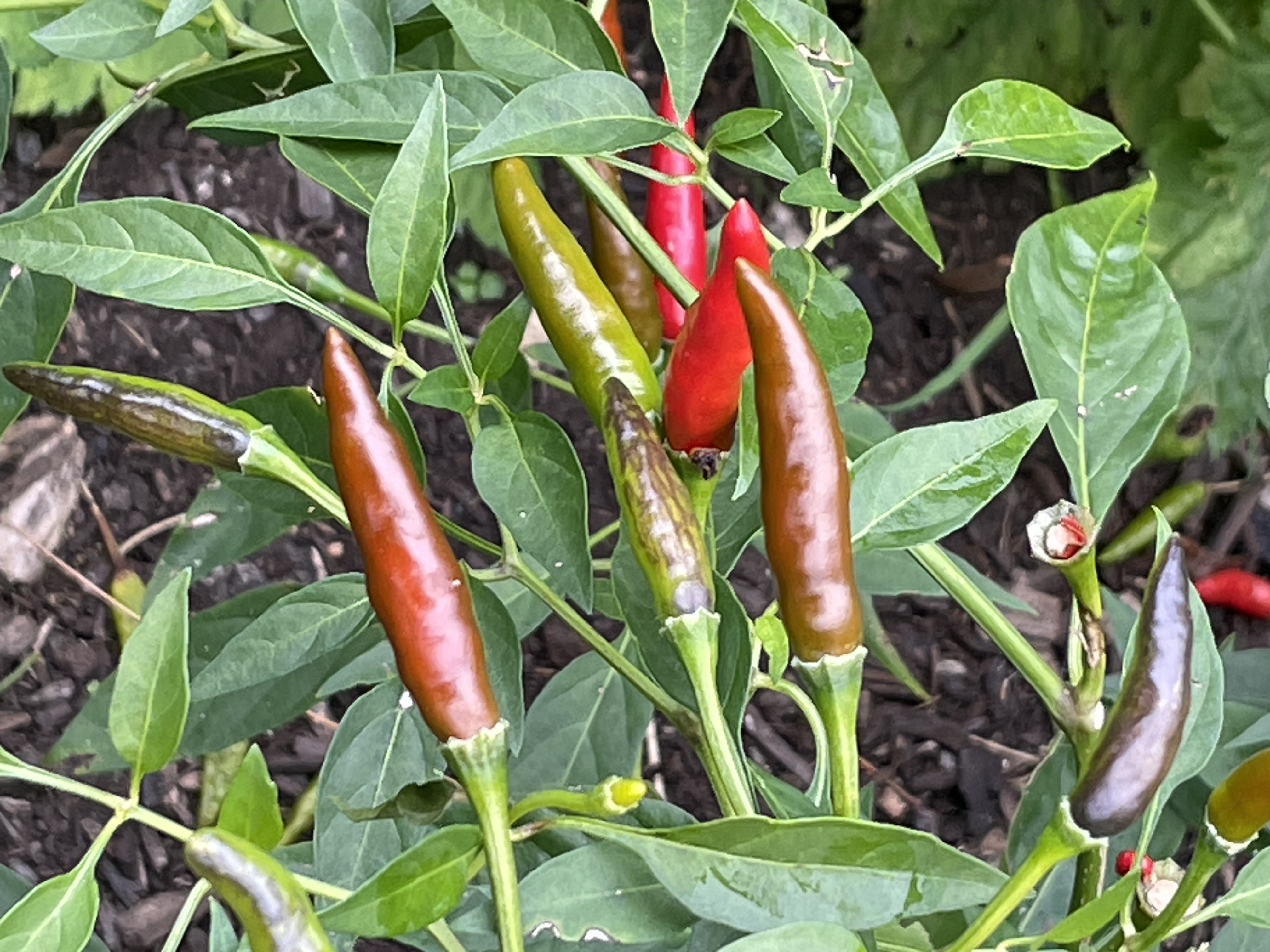
I spy a Thai super-hot pepper.

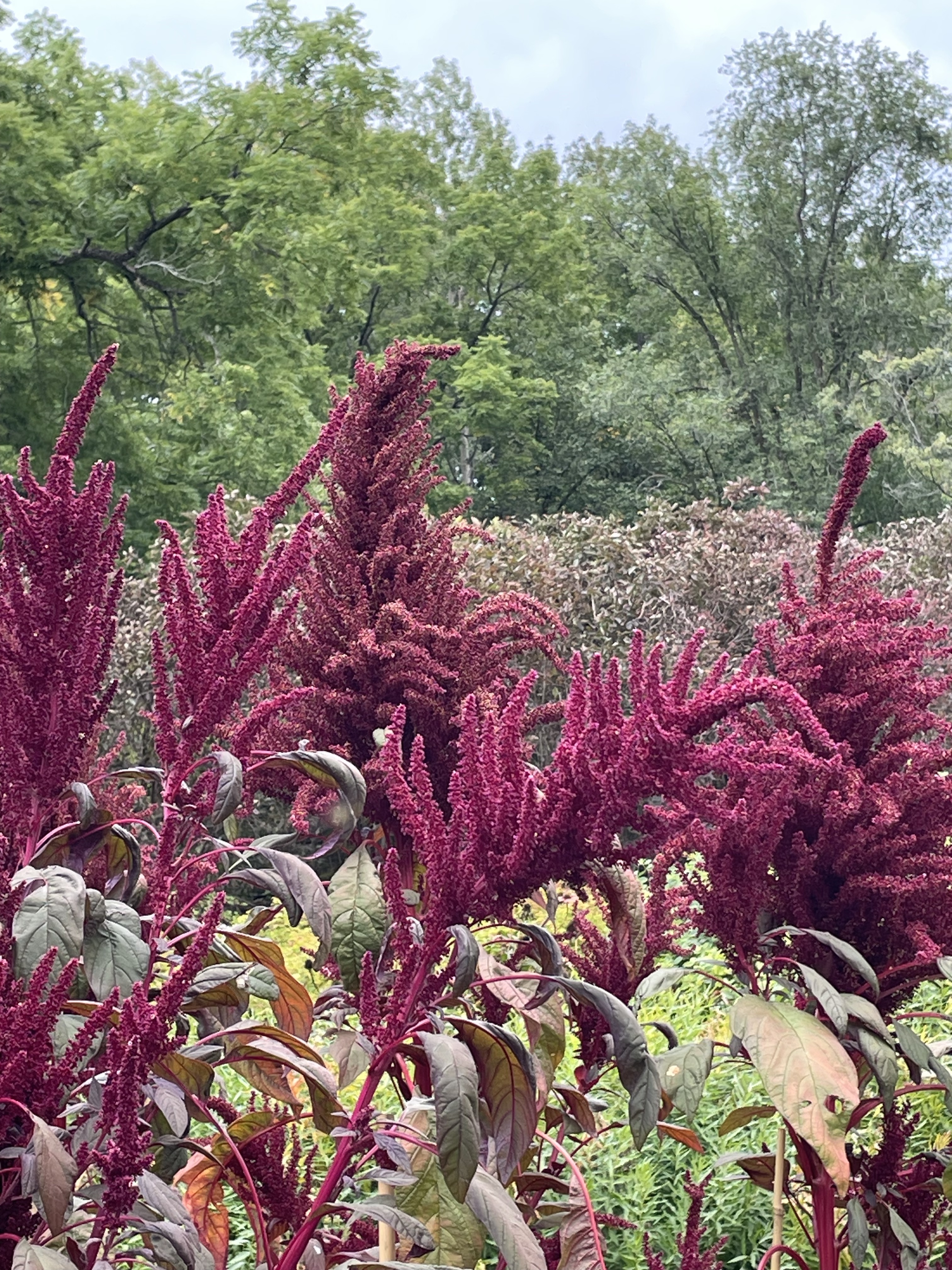
Grain amaranth.

Cockscomb.

Lean in. Perfection in pink. I feel hypnotized by its fuschia.

I see the rue, shake its little hand.

Little purple flower. So boring!

Just when I think life could not get any better, I come to a tree.

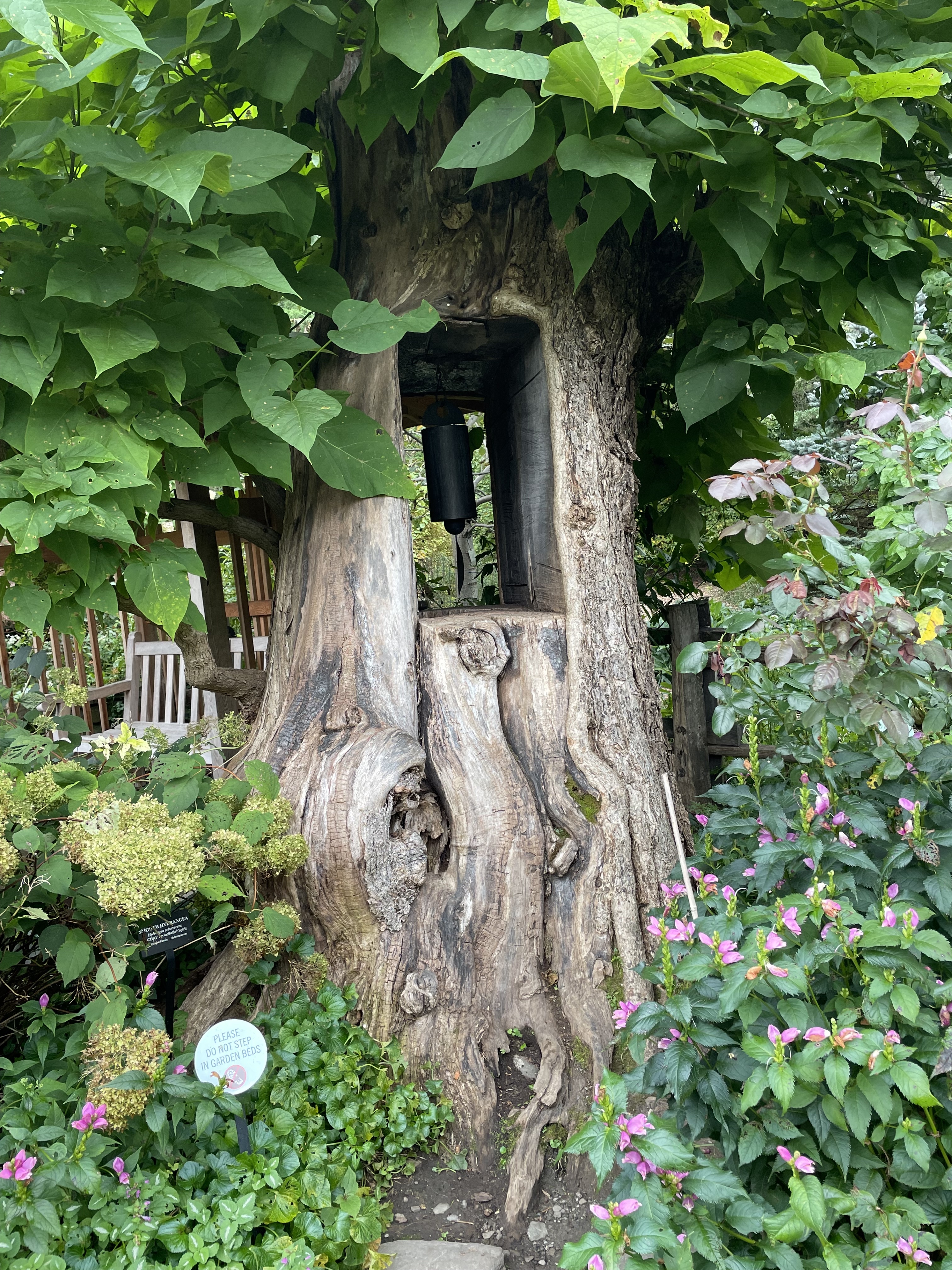
I hear a kid say, It’s still living and they cut right through it! Within its massive trunk hangs a gong. The kid says to his mother, brother and grandmother, Let me show you the best thing!

We all observe the fish he points to in a small nearby pool.

They look happy there, says grandma. The kid’s brother rings the gong. Now we can have a mindful moment, says the kid. Such a super sound! says the mom.

I offer to take their picture. They offer to take mine, and I pose looking even more supercilious than usual, and quite a bit content.

I tear myself away from the happy family to see the Bird’s Eye Pepper, which has grown in Africa for centuries. One last picture before my phone runs out of juice!

No, one more! Hibiscus.

Inside the Welcome Center, I inspect a display of tree rings. Even my toe is lucky.

A lucky day all around. Fortune smiles on those of us who happen to be on Dana’s tour of Cornell Gardens this perfect first day of Fall.

Leave a comment

Filed under Jean Zimmerman

I get to the farm early.

Natch. I get everywhere early. In this case to a field trip for a conference I’m attending in the Finger Lakes region of New York. It’s to learn all about plants and trees and sustainability – you know, eco-concerns.

Yet for me it feels like so much more than the science. So many things I see and smell and feel are delicious.

And this visit reminds me of all the things I like about life. Well not all, of course, that would entail an encyclopedia. But some.

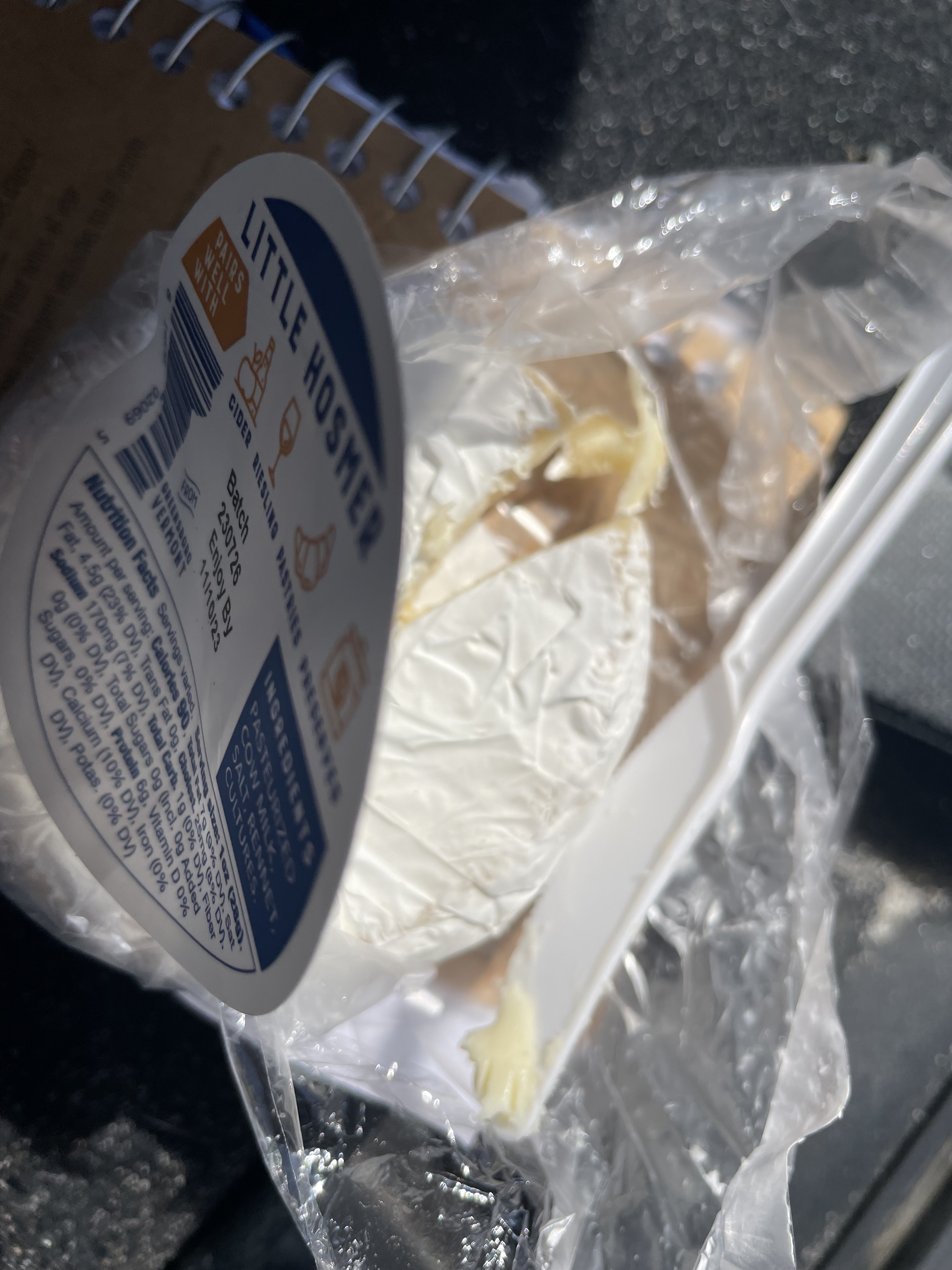
First, I have a private tailgate picnic in the parking lot with my favorite organic cheese (of course), crackers and a plastic knife. Wait for my fellow visitors to arrive.

Listen to the wind rustling the leaves.

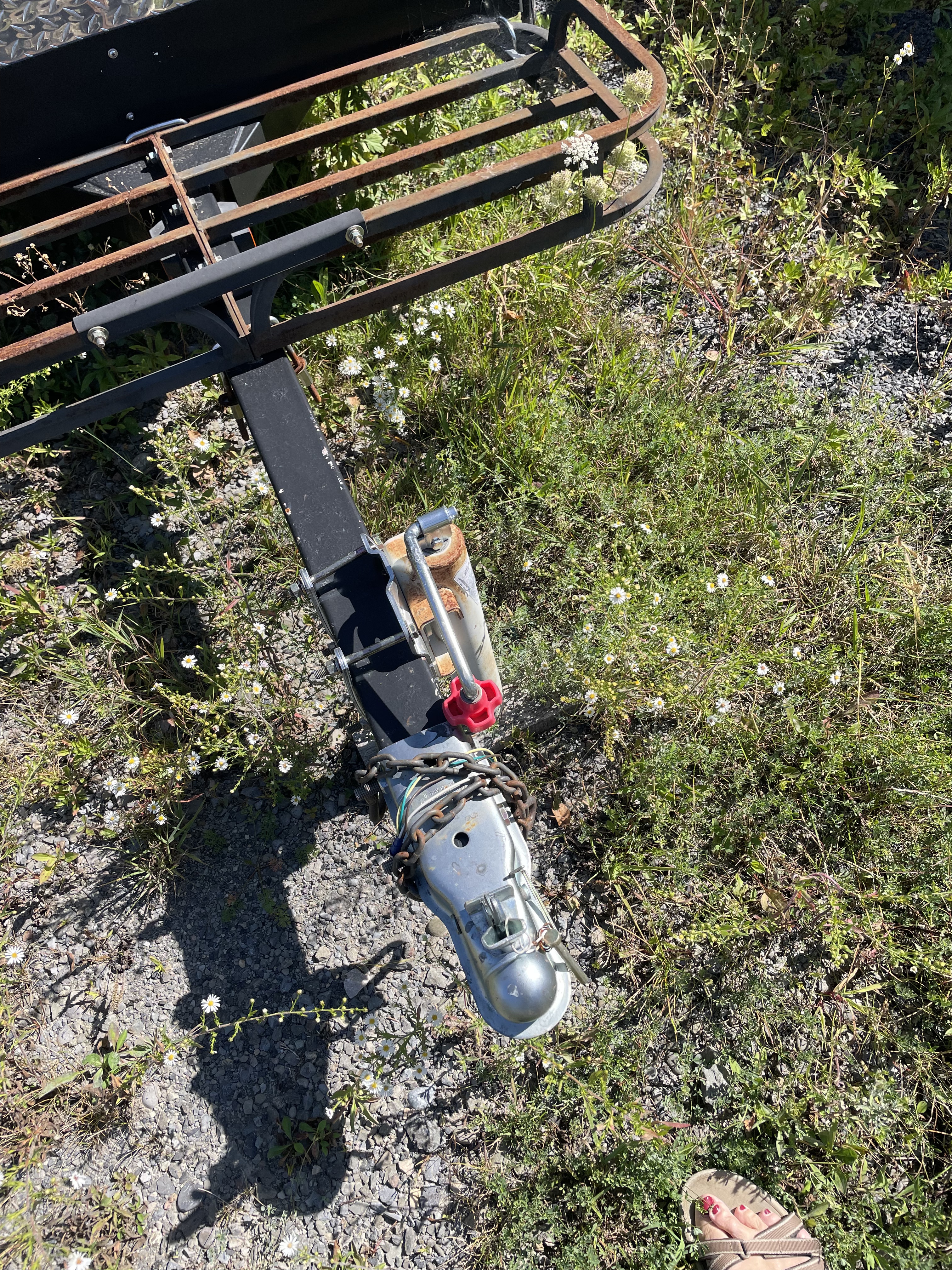
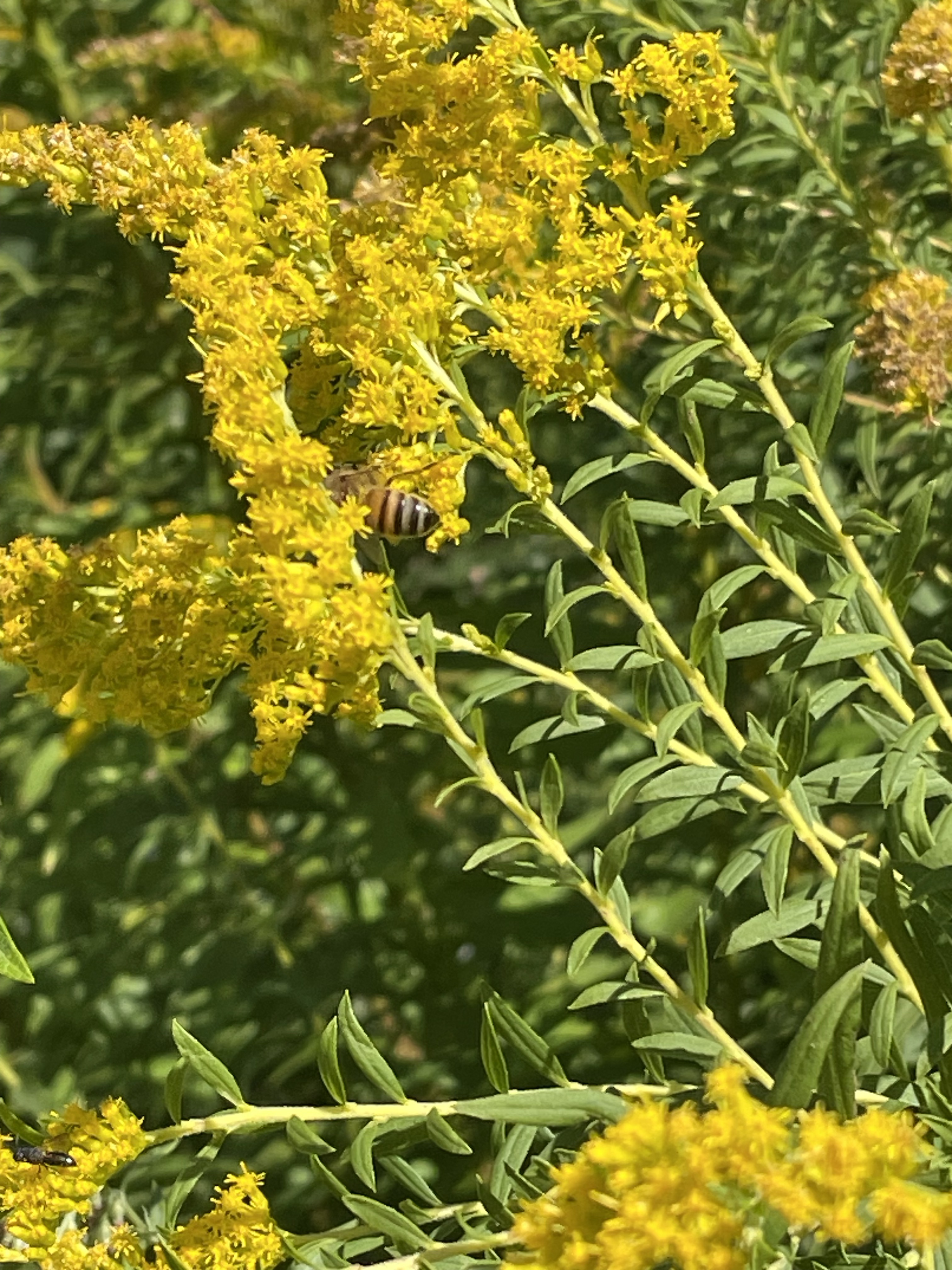
Sit me down on a rusted old trailer hitch. Commune with bees in the goldenrod.

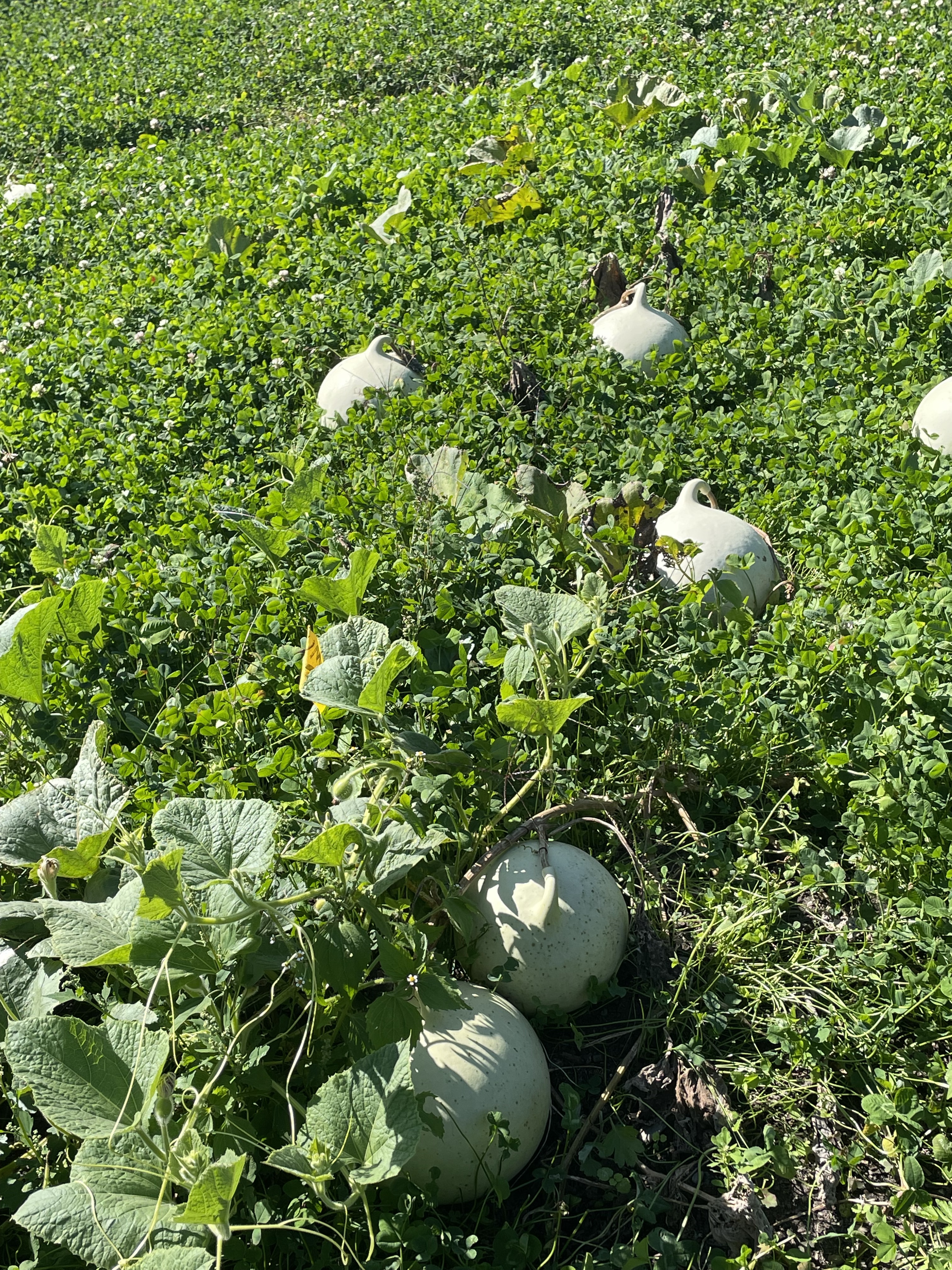
Admire the gourds ripening in a small field nearby.

They’re here for a practical reason, as source material for artists at Gourdlandia. At least to the extent of which art is practical.

I think about gourds. They have magical significance – in Africa the celestial phenomenon we know as the Big Dipper is called the Drinking Gourd, and escaped enslaved people in America were advised to follow the drinking Gourd to their freedom.

Still waiting, munching crackers, mentally ticking off the things I like.

I like taking notes on my phone. 

Taking phone pics of things I like.

Small things. A multitude of small delights constitute happiness. Baudelaire said that.

Quotes. I like them, too.

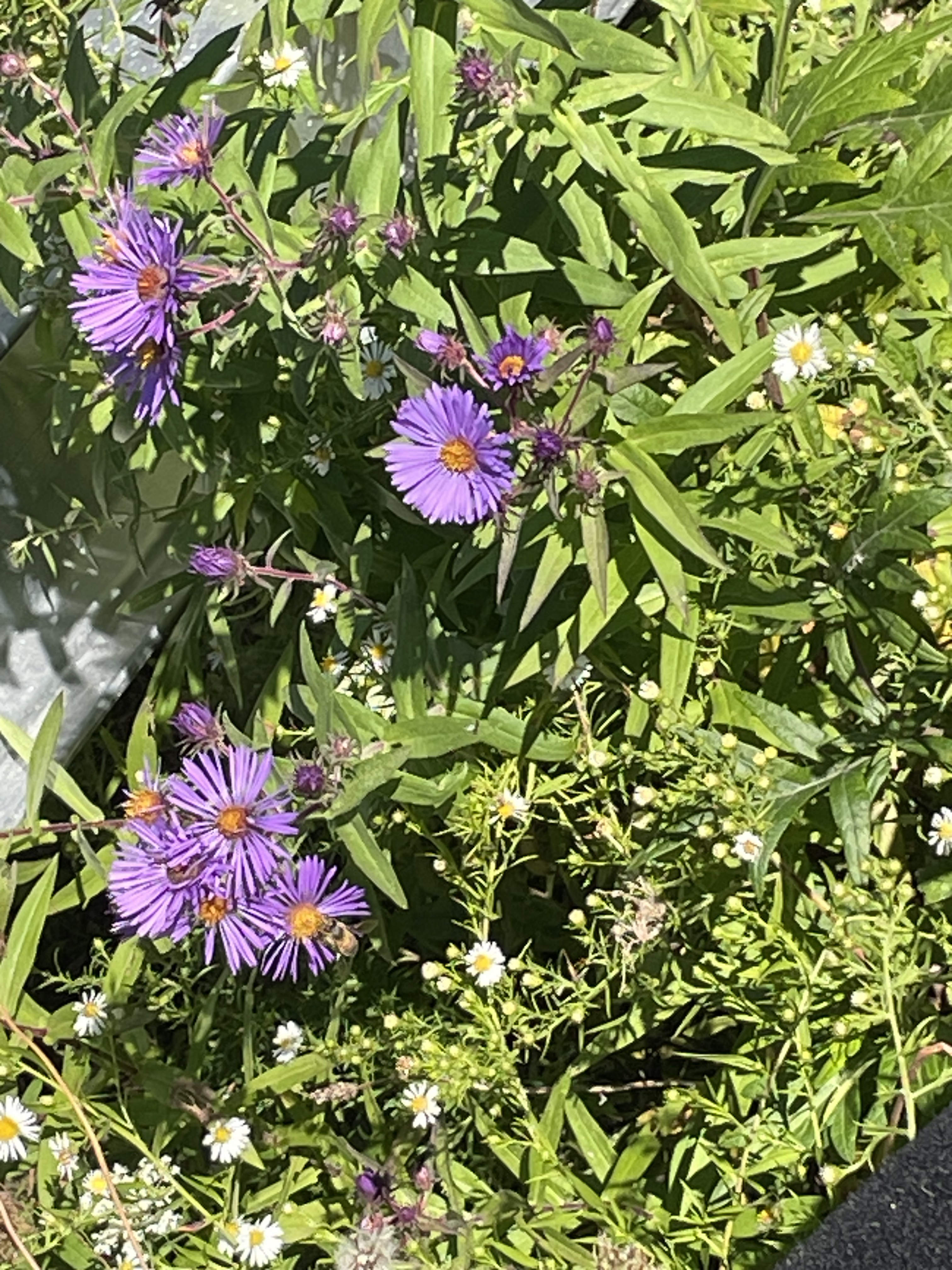
Asters.

Crickets buzzing all around in latest summer. 

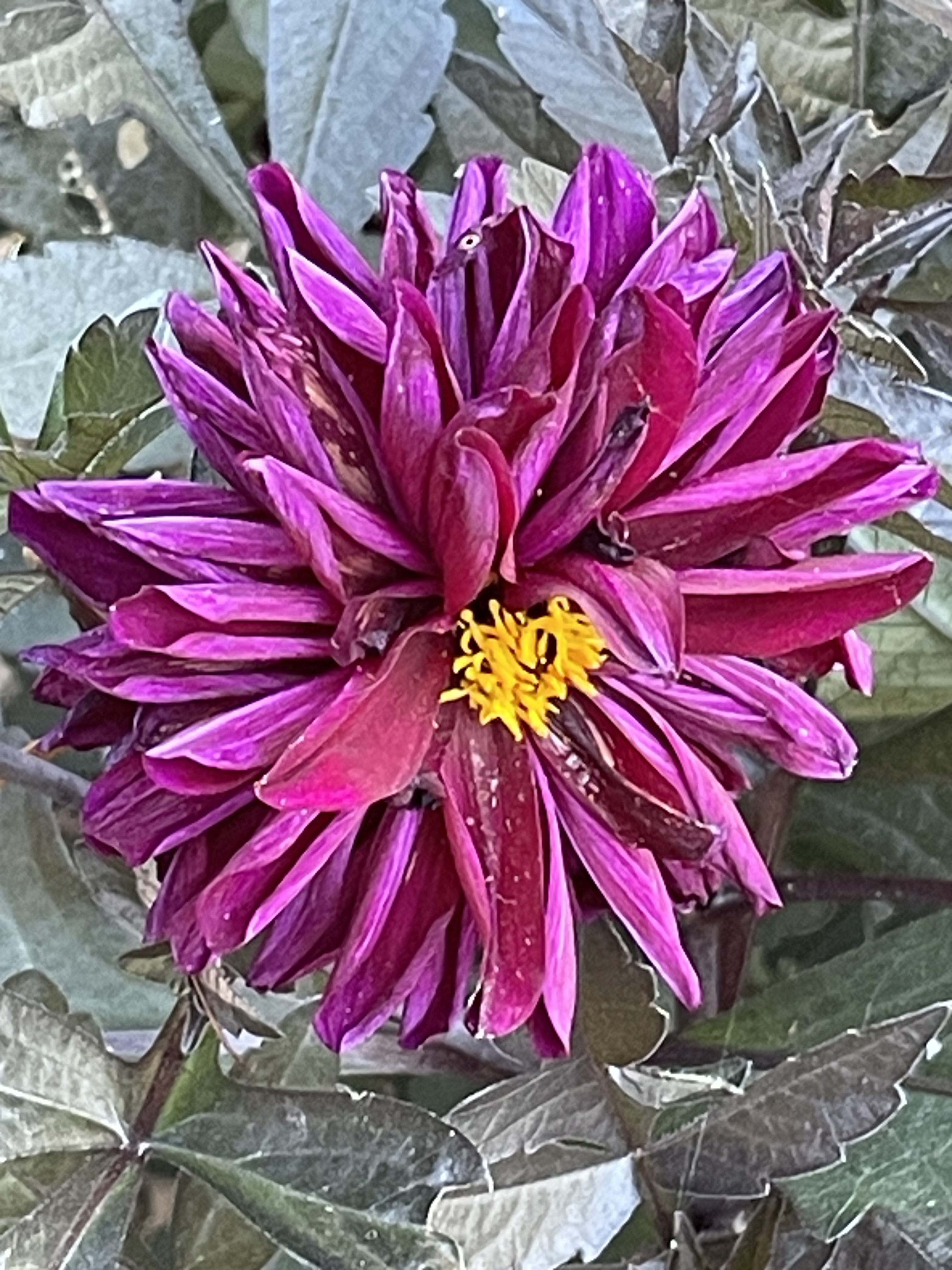
I see flowers everywhere on this trip. A dahlia with personality to spare.

Hallucinatory in its vibrant beauty. Thoreau wrote, Live in each season as it passes; breathe the air. Drink the drink. Taste the fruit. And resign yourself to the influence of the earth.

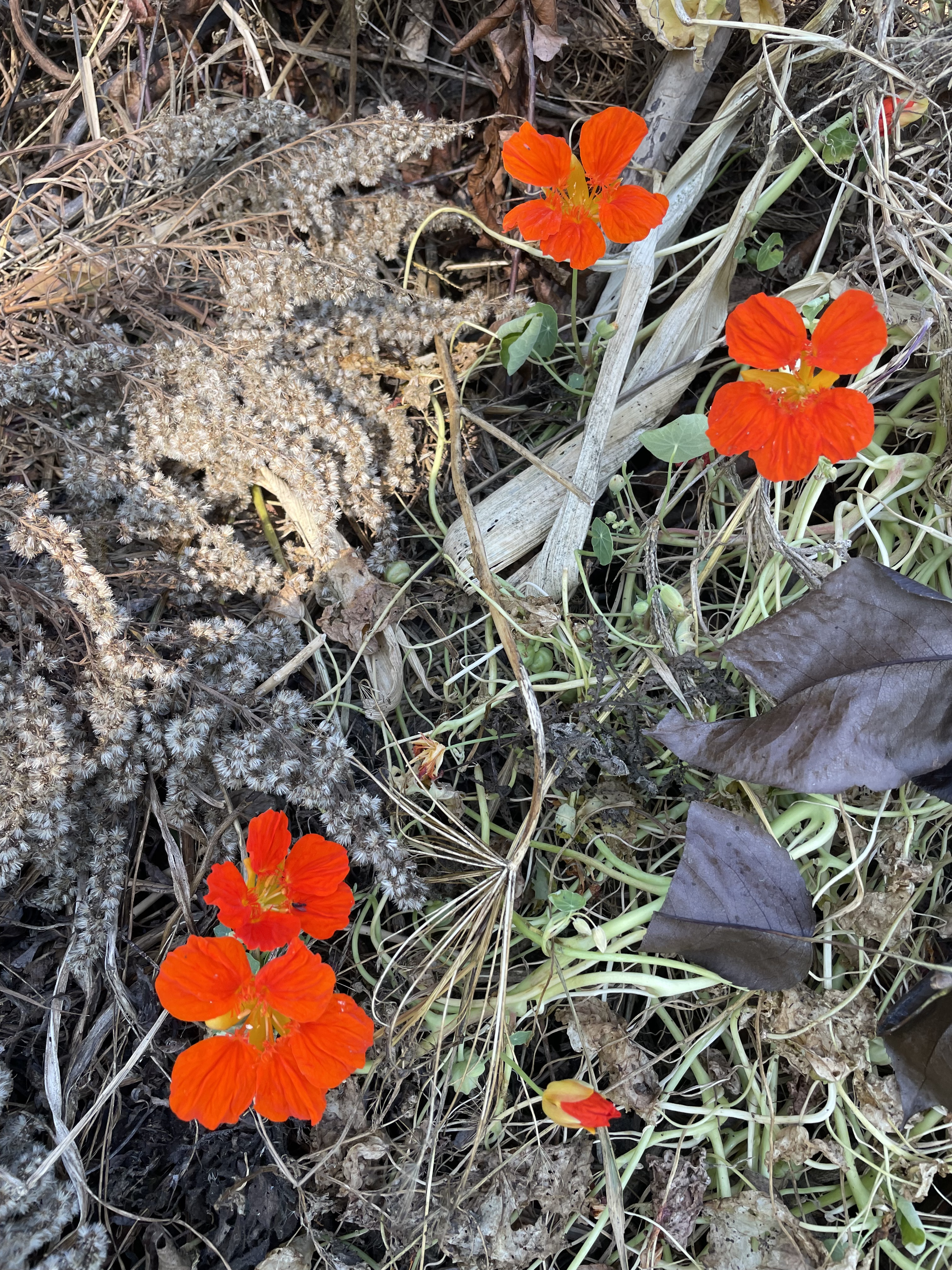
I visit a sustainable farm. Nasturtiums sprout in the compost.

There are cattails.

Mysterious plant markers.

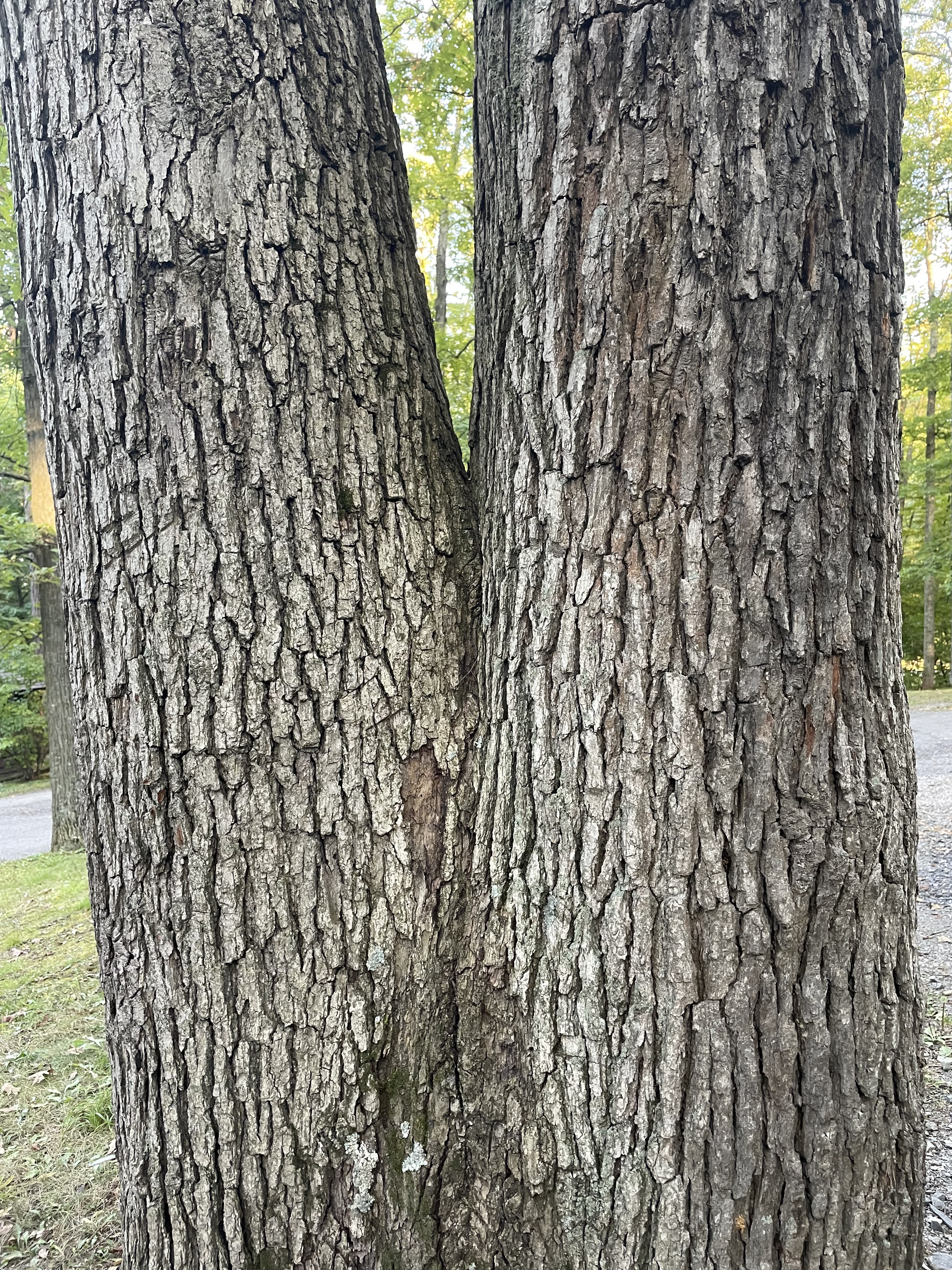
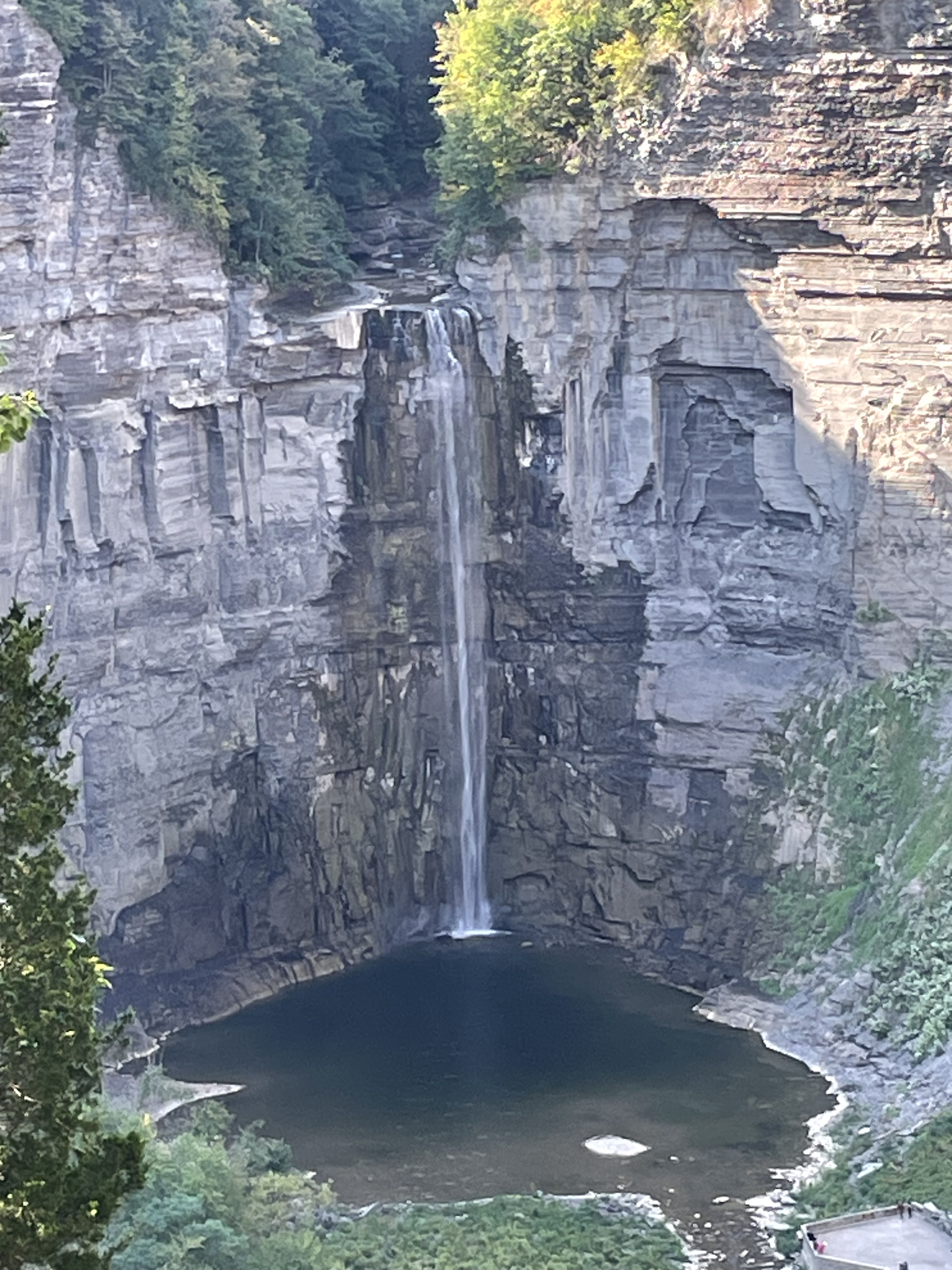
I stay in a cabin near a waterfall, overlooking Cayuga Lake. Just outside my door, soaring conjoined white oaks, planted there a hundred years ago. How did they know I was coming?

The waterfall, a local friend reminds me, is just water running over a rock, but still fabulous. After all, Taughannock is the highest waterfall east of the Rockies.

All around, a grove of shagbark hickory, which I’ve always loved because the name so exactly captures the way it looks.

The view of water through the trees.

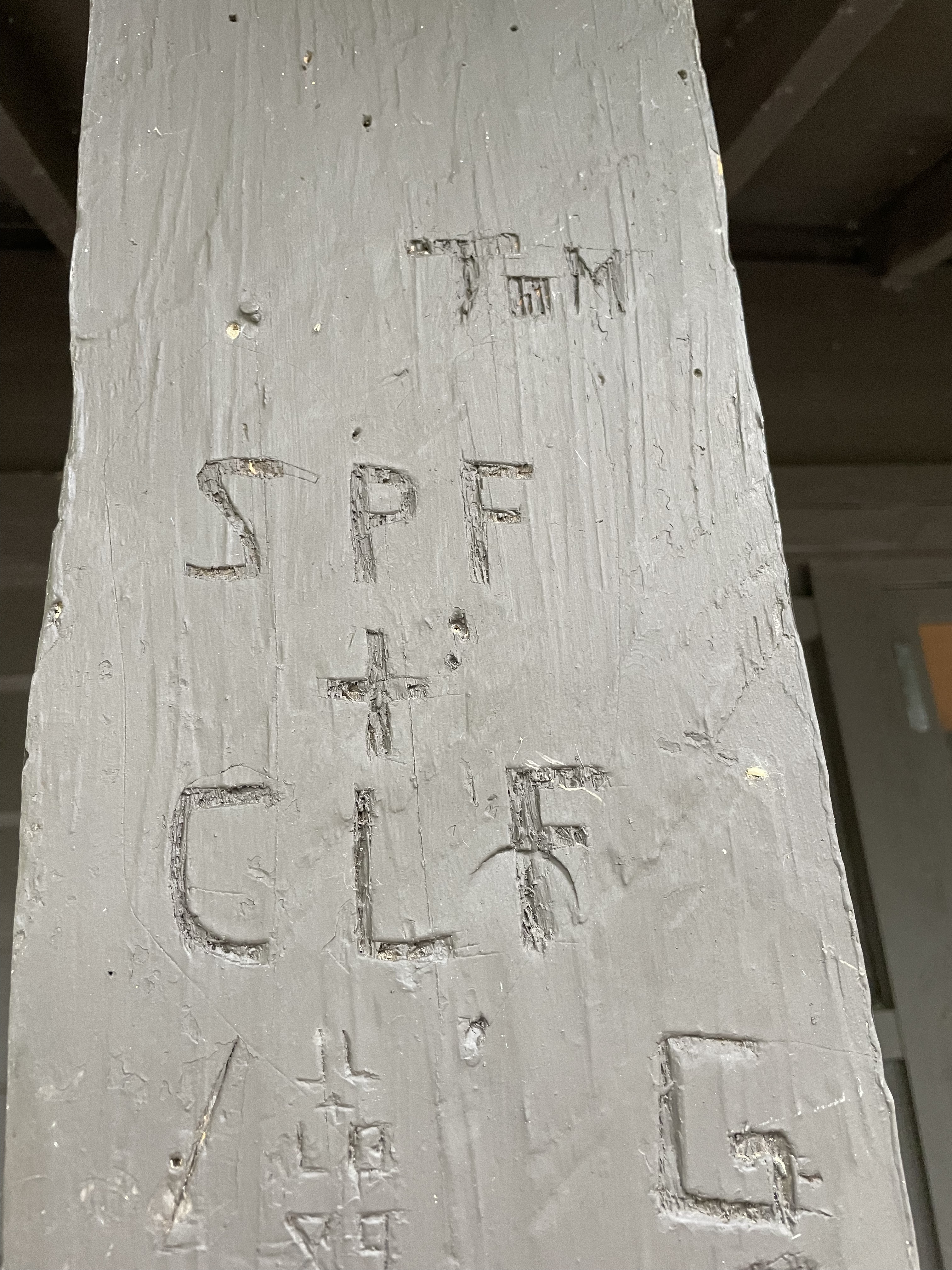
I like initials carved anyplace, like the ones that have been sternly painted over on the front pillars of my cabin. I like the idea of people wanting to leave their mark, plant their flag.

If you do that at this state campground you’ll be fined five hundred dollars.

Something else I like, being warm in a sleeping bag when the air is cold. I think this must be the thing most universally loved.

And the dreams you have before you fall asleep at night. 

Wearing my father’s thick flannel shirt.

Textures. The crunchy cotton of an old quilt newly thrown across my bed for the change in season.

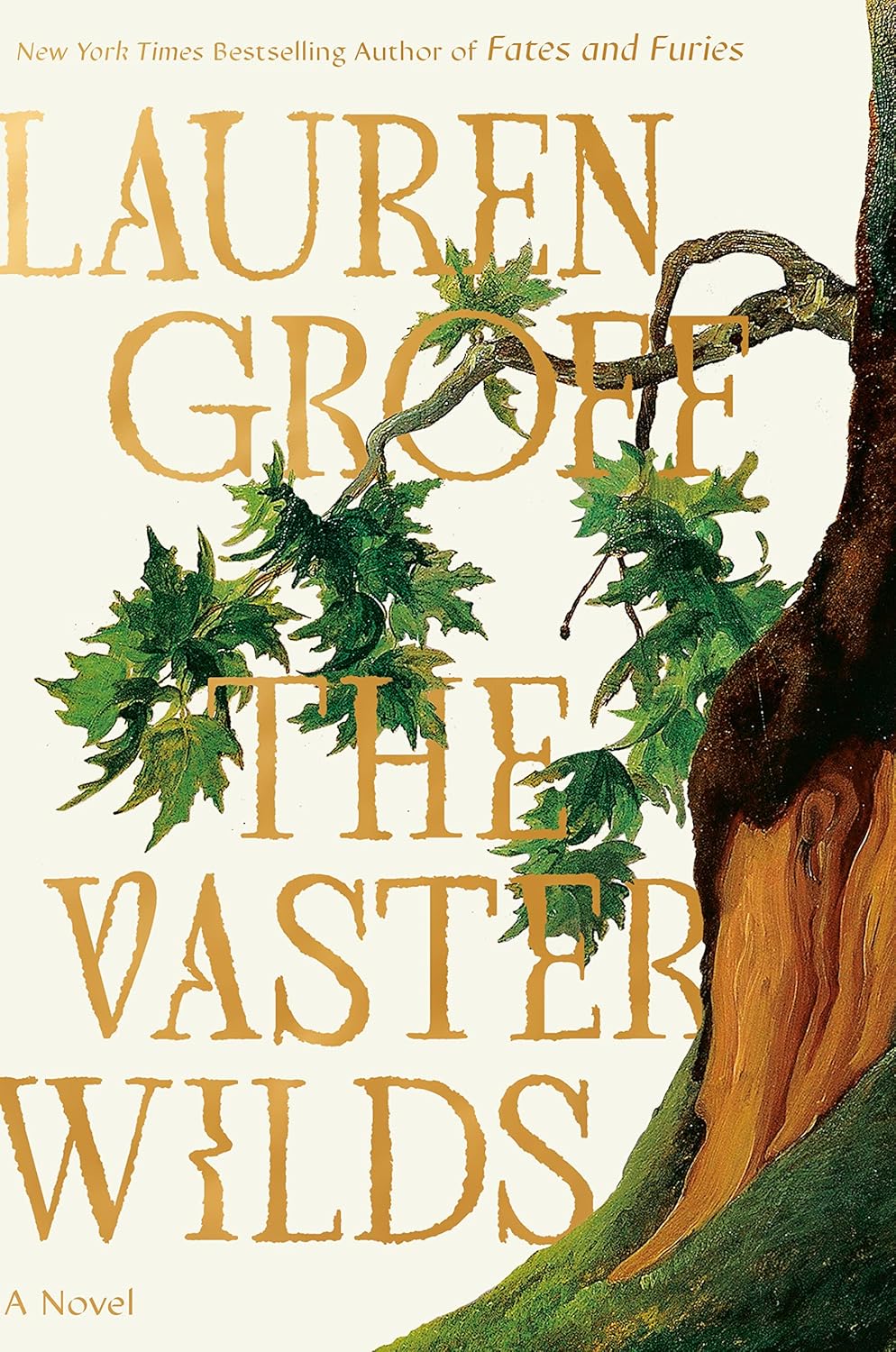
Also, reading late into the night. Especially reading something so good you wish you wrote it. As with my current obsession, a novel called The Vaster Wilds, by Lauren Groff, about a girl brave enough to escape 1600s Jamestown, who runs off through the scary forests of the time.

Hurkle-durkling – lounging in bed when you’ve got stuff you really should be doing – though that happens rarely in my life. I’m usually up and at ‘em. I get a chance to hurkle-durkle in my cabin.

The first gulp of coffee in the morning. Especially camping.

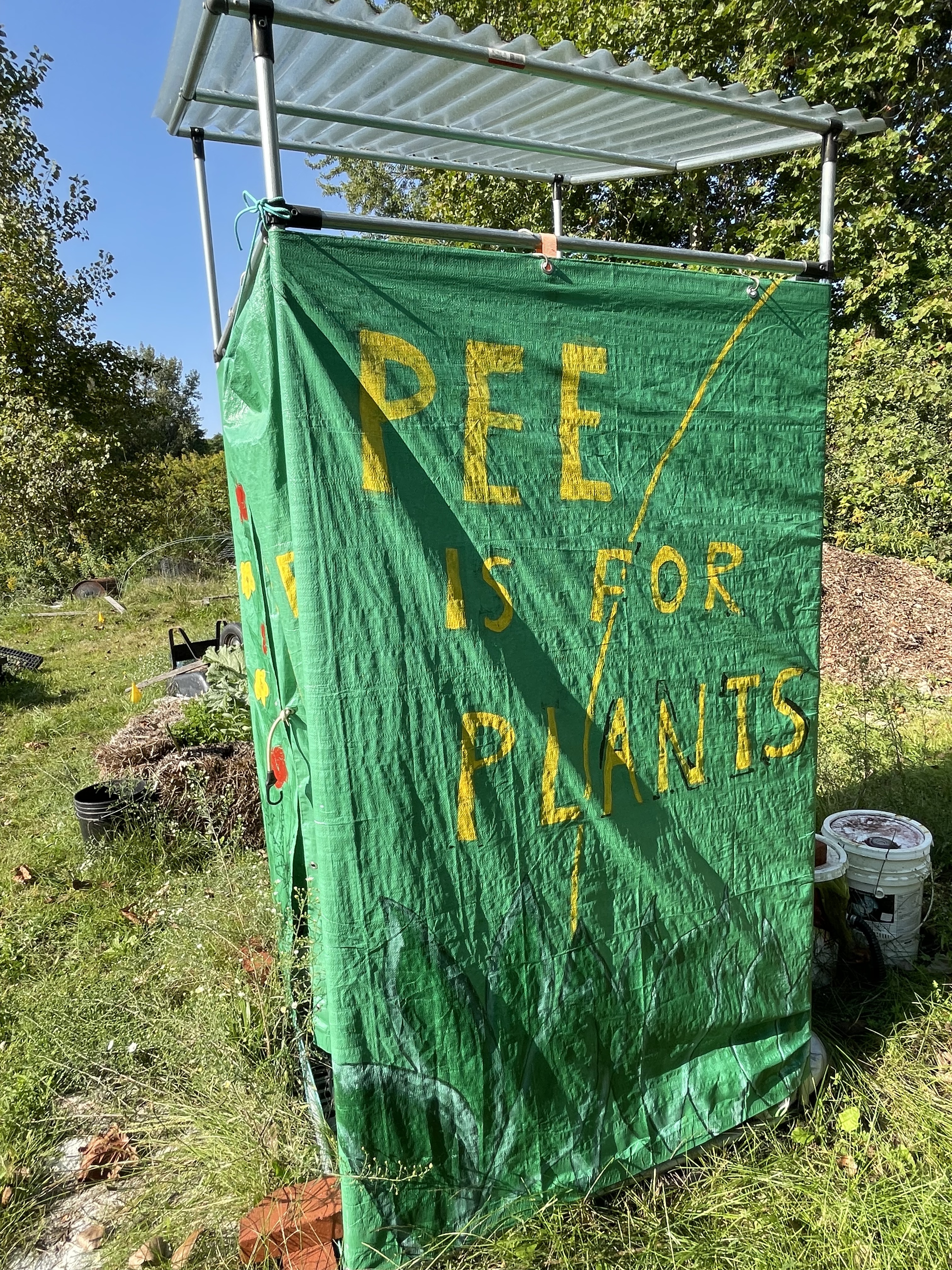
Peeing outside. It’s a must when you’re camping. But I like to do it whenever possible just to prove that though I’m female it’s nothing to go en plein air.

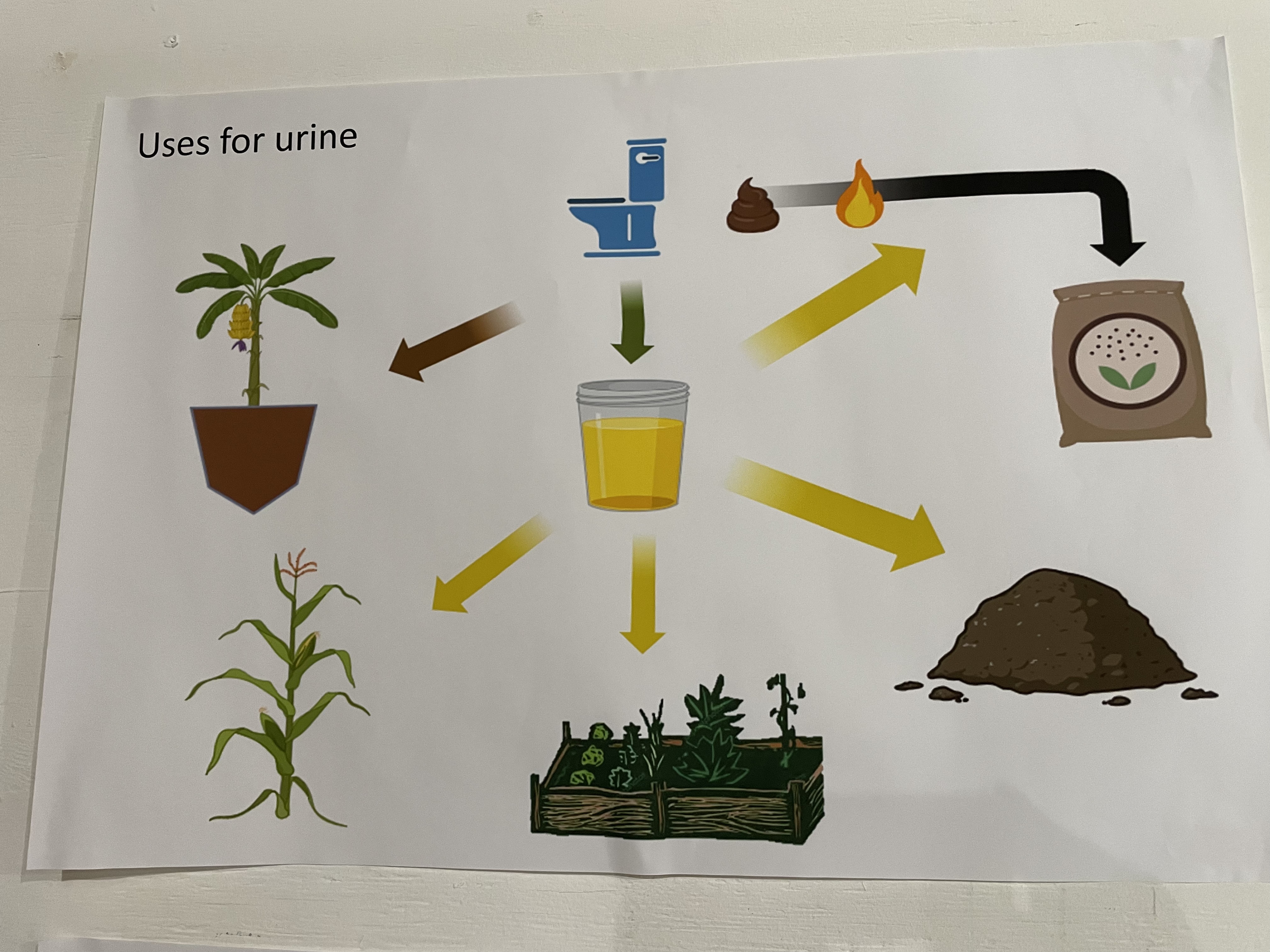
I visit a site that’s all about combining art and science, called Marshy Gardens. They have a urination station outside.

And a diagram in an art space delineating the pertinent science.

I’ve always resonated to the lyrics of the great Lucinda Williams in her song Sweet Old World, written for a friend who ended his own life, citing those experiences a person misses if they leave us too soon. Among them, the breath from your own lips/the touch of fingertips and the pounding of your heart’s drum/together with another one. Simple things, but oh so important.

Some inspiration tacked on the wall.

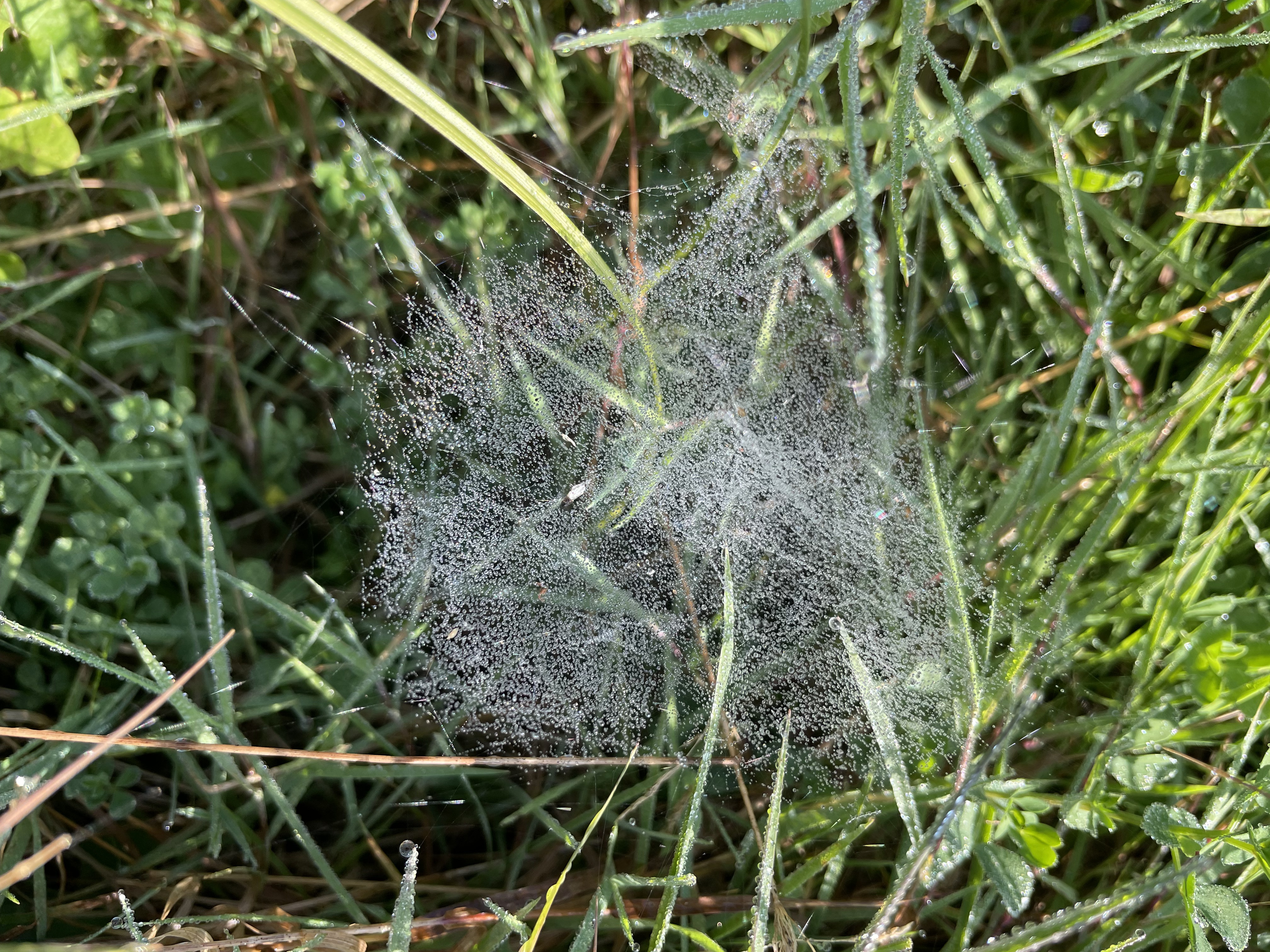
In the native wildflower beds, a suspended spider web.

I like everything about spiders. These particular intricate efforts, I learn, are created either by the black-tailed red sheetweaver or the bowl and doily spider. Of course.

All that I hope to say in books, all that I ever hope to say, is that I love the world. So said E. B. White, author of Charlotte’s Web, the book that probably taught me most of what I know about life.

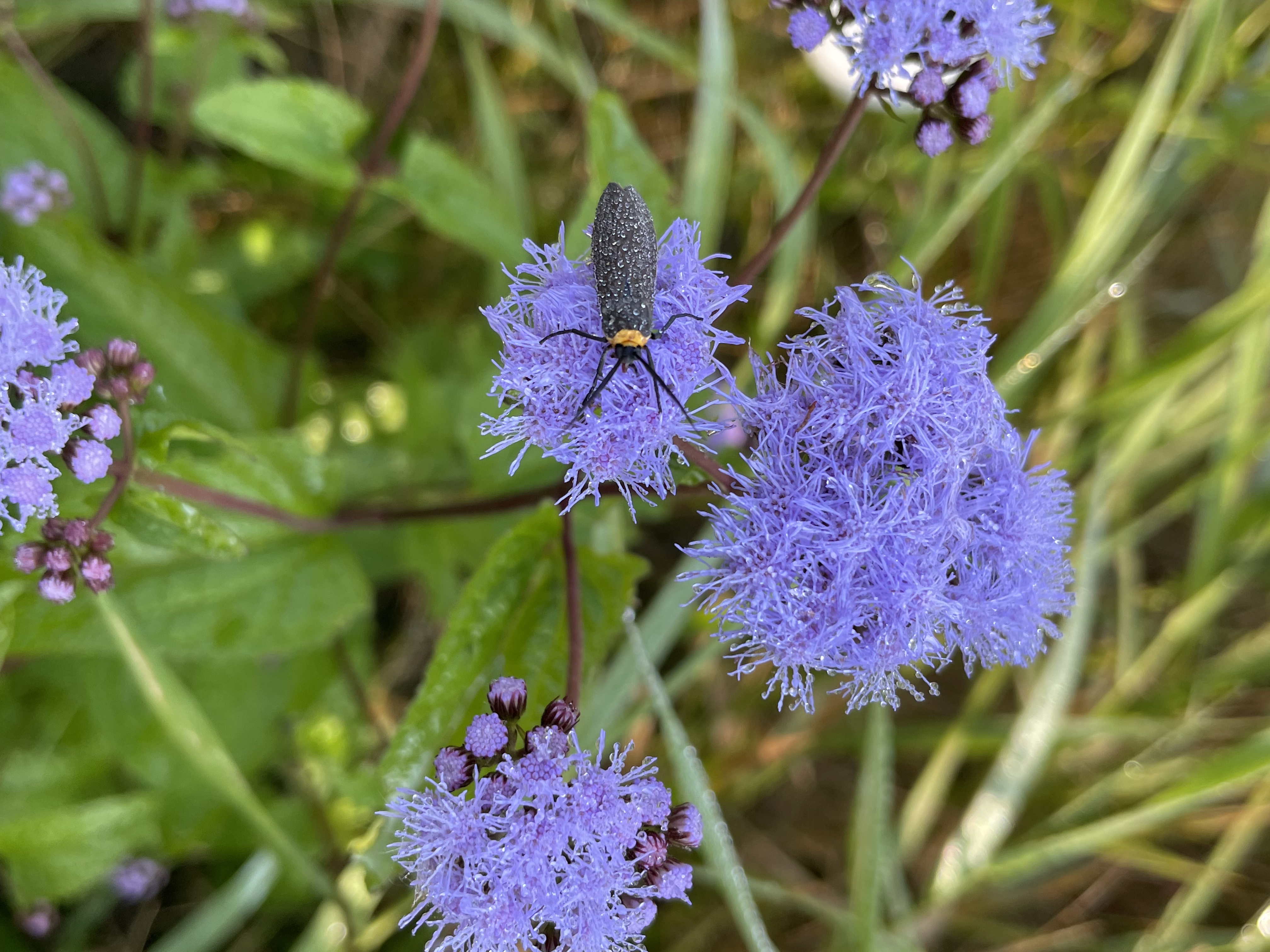
More flowers. This one with a yellow-collared scape mothy perched on top. Perhaps it is sleeping. wonder what it’s dreaming of?

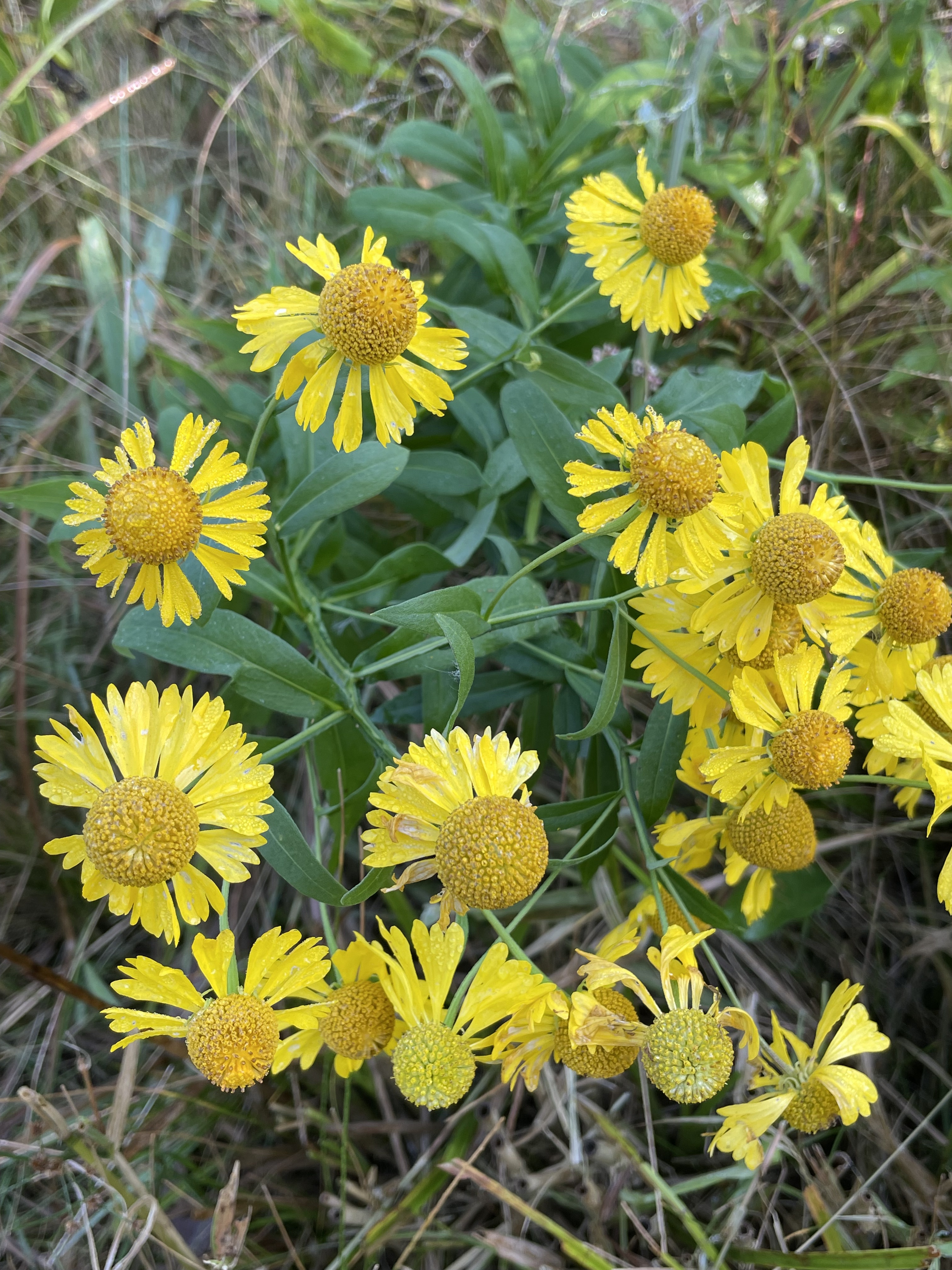
I really like flowers.

I know, so does everyone. It’s the easiest ask in the world: Will you please love flowers? Will you please love milkweed?

Joy Harjo writes:

Remember the plants, trees, animal life all have their 

tribes, their families, their histories, too. Talk to them, 

listen to them. They are alive poems.

At Marshy Gardens, an area of test plots. I swipe a cherry tomato, pop it in my mouth.

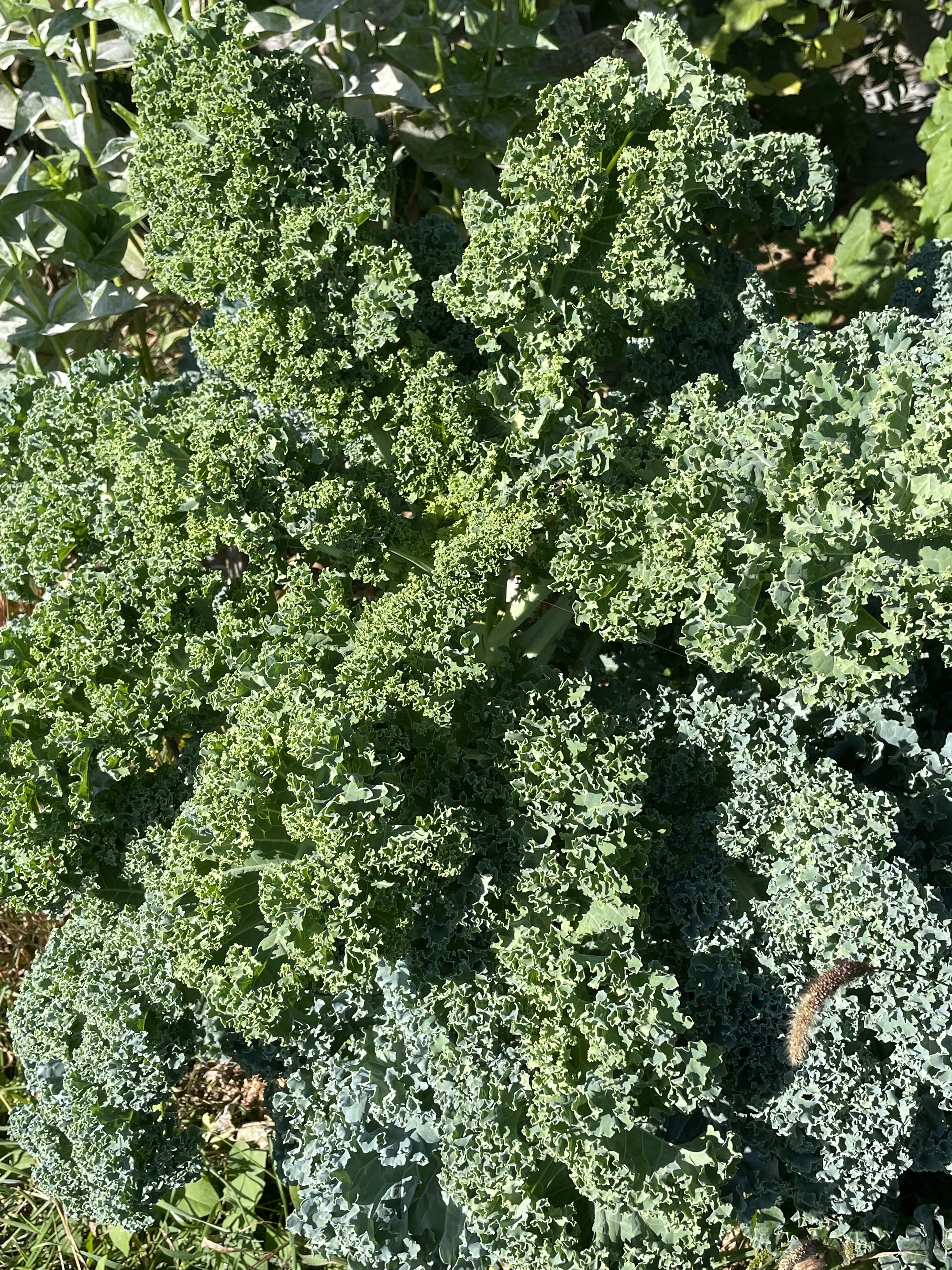
Perhaps the best cherry tomato I’ve ever had, and I have harvested tons of them at home this summer.. Kale prospers in a border, and I like kale. I know, everybody likes kale.

I’ve never been so hungry. The BLT I gobble down from a locally sourced co-op is the finest BLT I’ve ever had.

I visit a place called an eco-village, and among the other interesting sights find a bench kindly placed in an unexpected location, another of my favorite things.

There is a boat trip on the lake, pretty science-y. This is about as in depth as I go with the biology of this lake, though I’m sure it’s fascinating.

I’m more into dozing in the afternoon sun, daydreaming and idly observing the passing scenery.

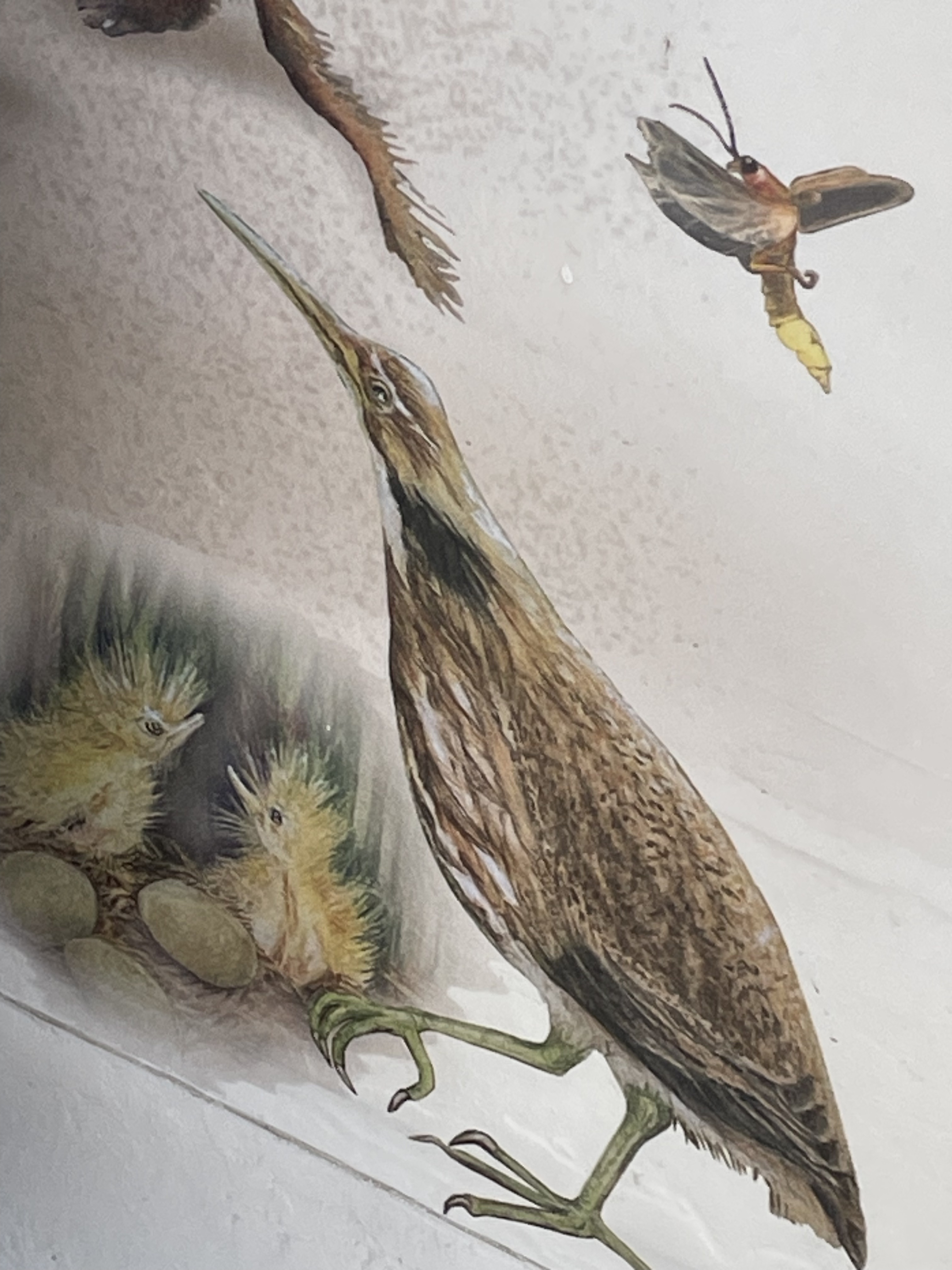
Four bald eagles fly overhead, three juvenile, all massive. The energetic educator who loans me her binoculars reminds me that they fly flat as a board, unlike the teeter tottering of turkey vultures. Reminds me of my current favorite bird, the shy blue heron I’m trying to befriend at Ellis Island.

In synchronicity, I find his depiction in a garden here today. 

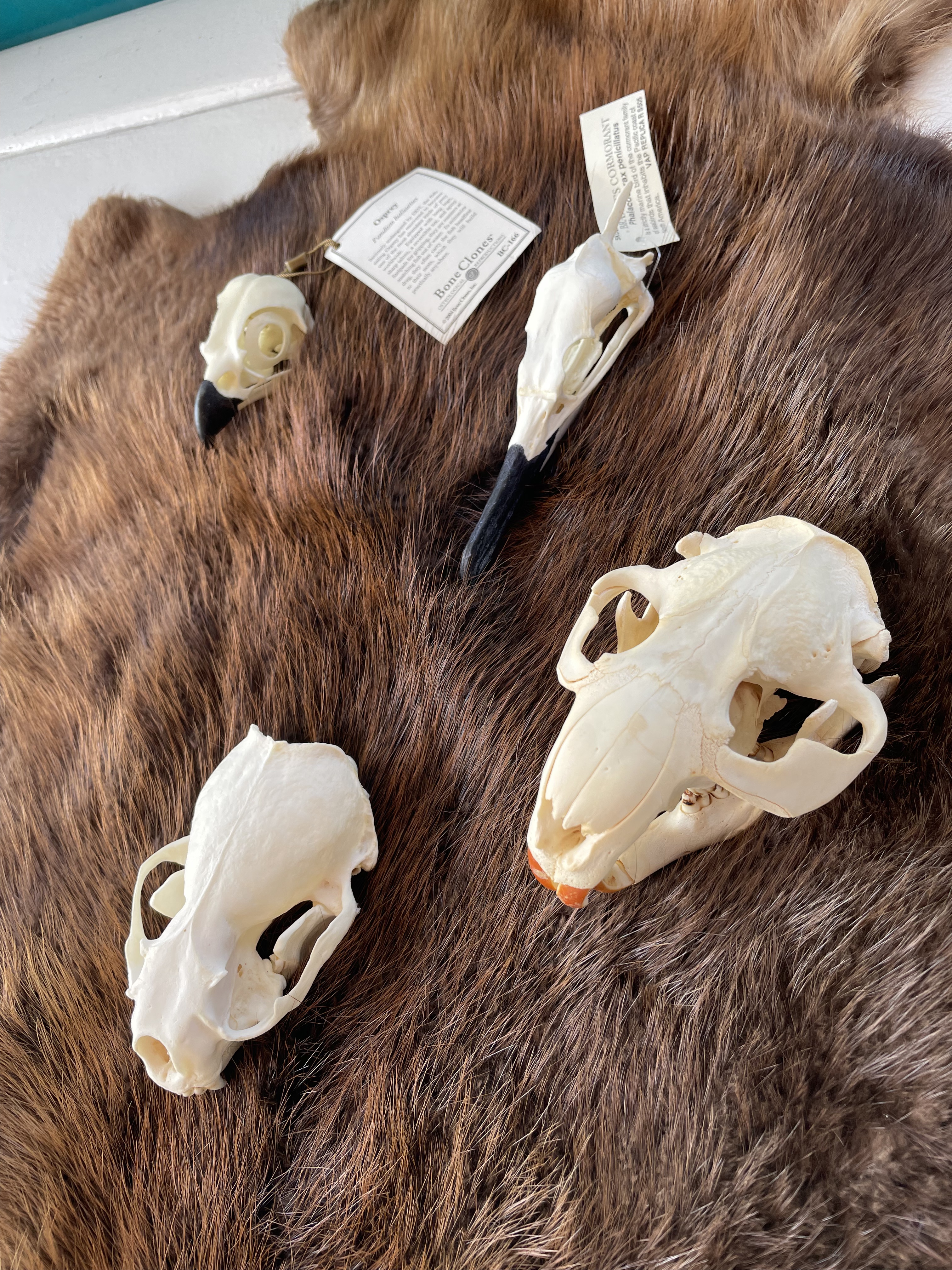
Also on the boat, a perfect exhibit of skulls on fur, which I am liking to think is beaver.

Something else I like is making mistakes, because that’s how I learn. A docent at Cornell Botanic Garden says, You never need say you’re wrong, just “actually.” To which a smart aleck adds, Truth challenged.

We pass cormorants as we go.

They seem beautiful and exotic to me, even though I learn that their excrement is damaging the trees they roost on. Useful knowledge. The inside of the boat’s hull has been painted.

Exquisitely.

Also exquisite, the aluminum can held by a new friend, an environmental geek like everyone here.

It’s just carbonated water, but everything about this person is somewhat dazzling, down to his toes.

Disembarking, I spot a mammoth Eastern cottonwood.

Have I mentioned that there are flowers?

And that I think flowers are okay? 

Well then. Take it from me. Freshly blooming, or spent.

They are.
1 Comment

Filed under Jean Zimmerman

If you go to NYBG in late summer prepare to get happy.

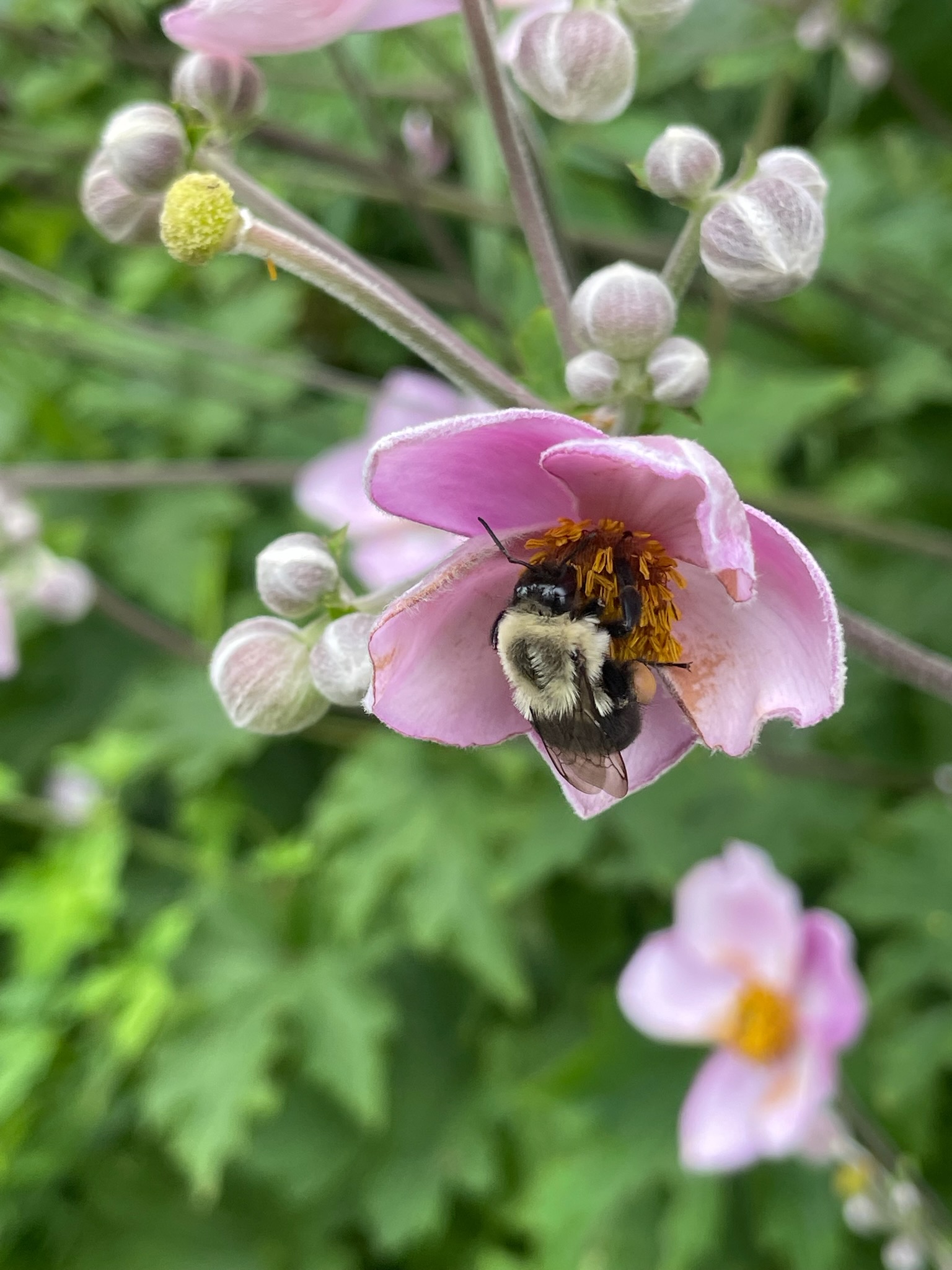
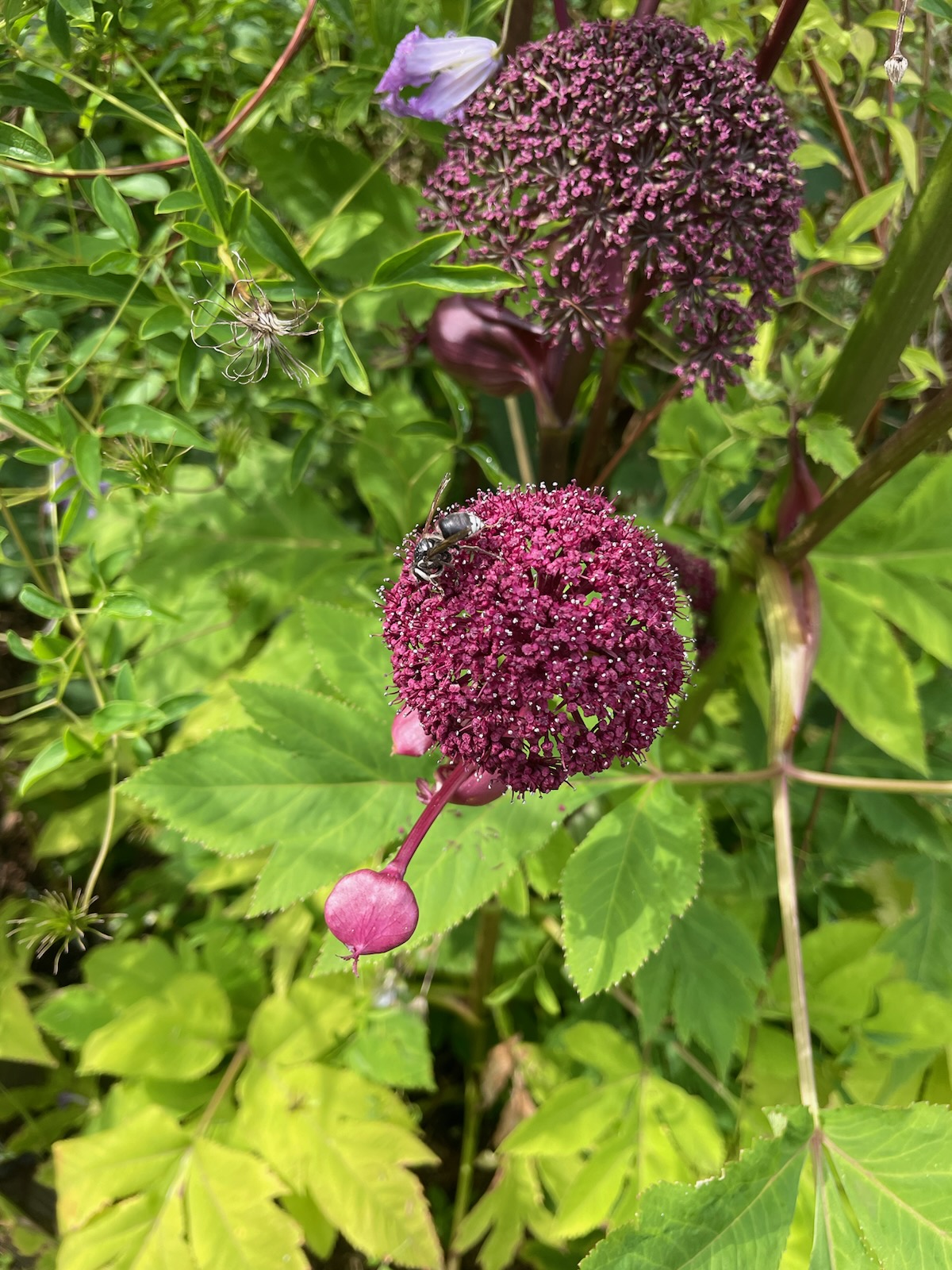
It is almost impossible to feel down when you visit. The New York Botanical Garden always has something new to see. Or something not new but ever-fresh. A bee on a blossom.

Yes, the flowers are flowering. The dahlias.

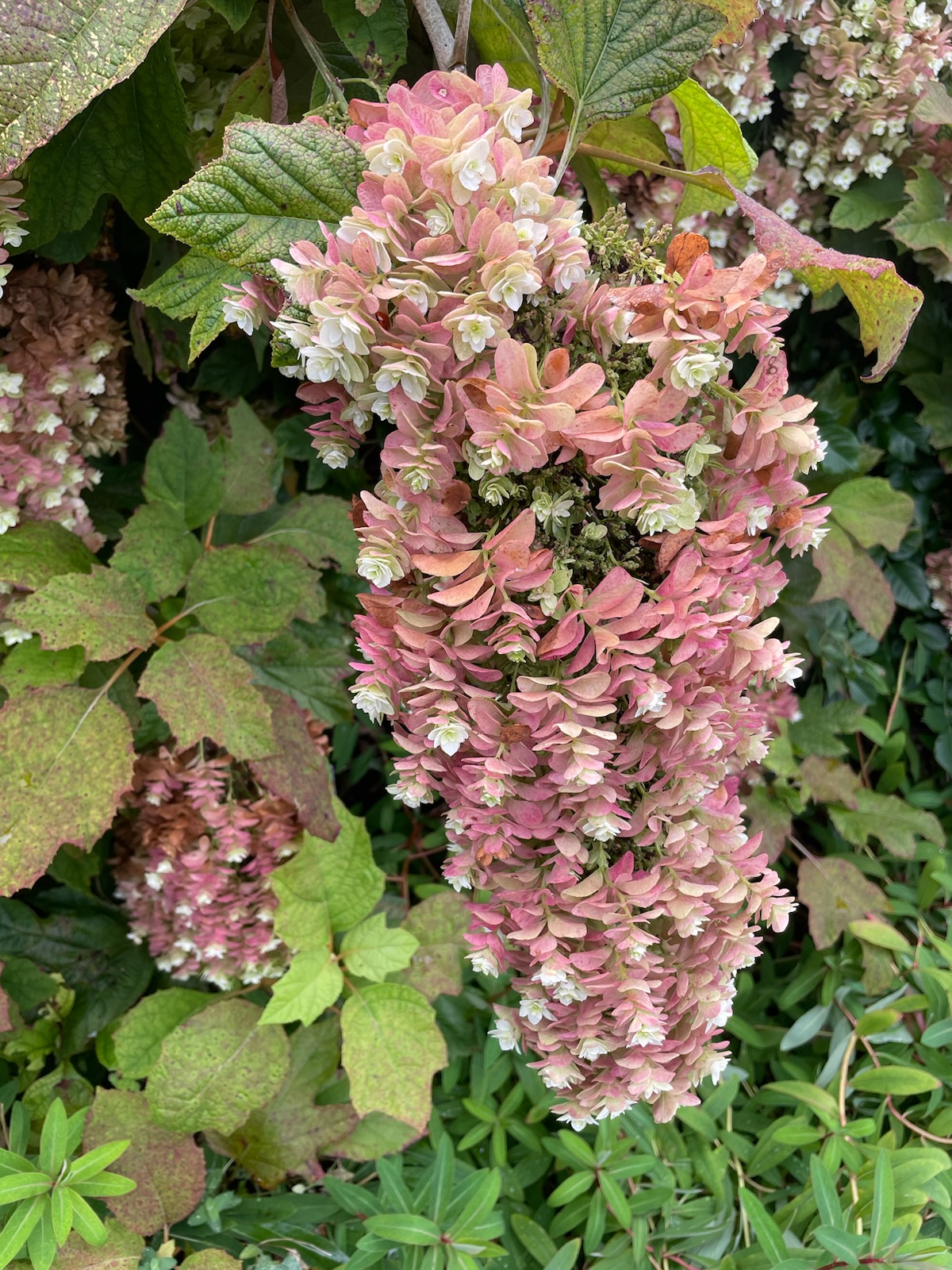
The hydrangeas, some more exotic than others.

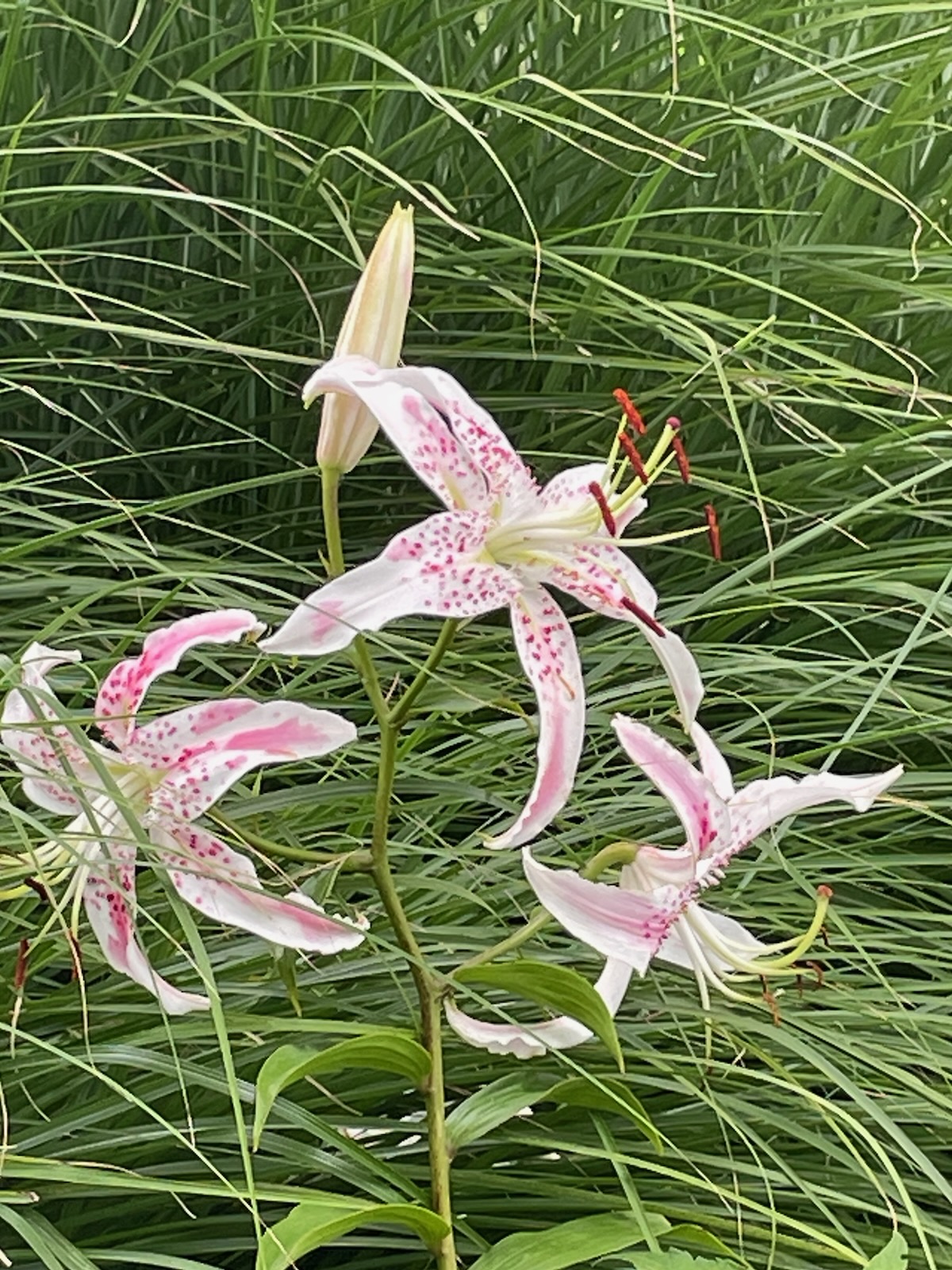
The lilies.

Especially nice when you bring someone who loves plants.

She likes the trees, some of which remind her of when she once lived in Japan.

They are incredible.

From a distance, or close up.

Some she had not met before, like the dawn redwood.

The recorded spiel on the tram tells us that it is ancient, was forgotten then rediscovered, magically.

Or swamp white oak.

Anyone would marvel at some of the behemoths here.

Yes, we go on the tram. I like to do so every time I’m at NYBG, even though I’ve heard the same NYBG lore many times before. I want to crystallize it all in my memory, to mentally map which garden is the dwarf conifer, which the azalea, which the “old growth” forest.

I always like to see the people employed to work in the garden as we trundle by.

And the people working there for fun, as at the Edible Academy.

It’s almost as much a pleasure to see the people on the tram as it is to gaze out on the manicured landscape.

This time, a special treat. The African American Garden: The Caribbean Experience, where diverse and delicious foods get their due.

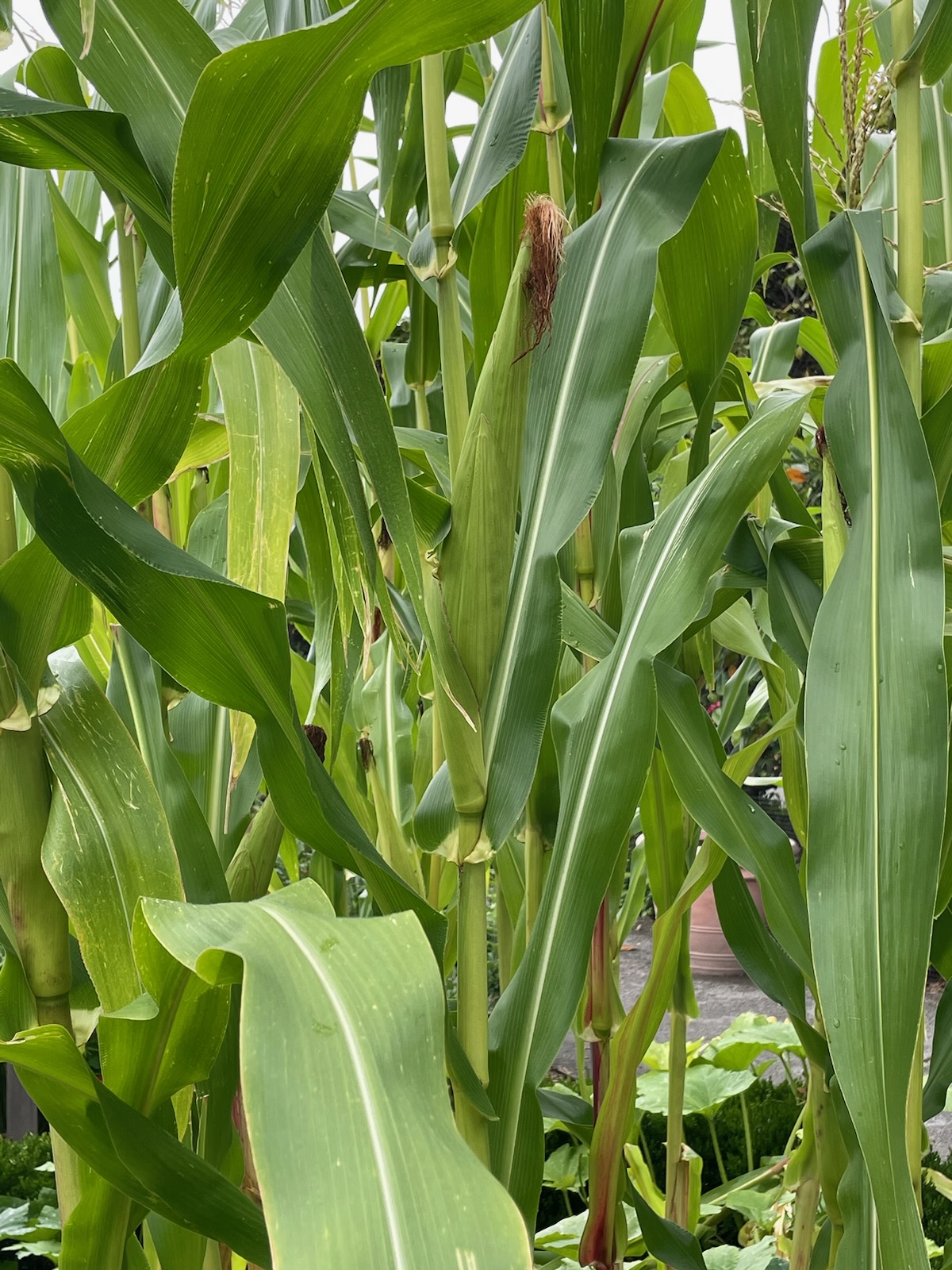
Corn.

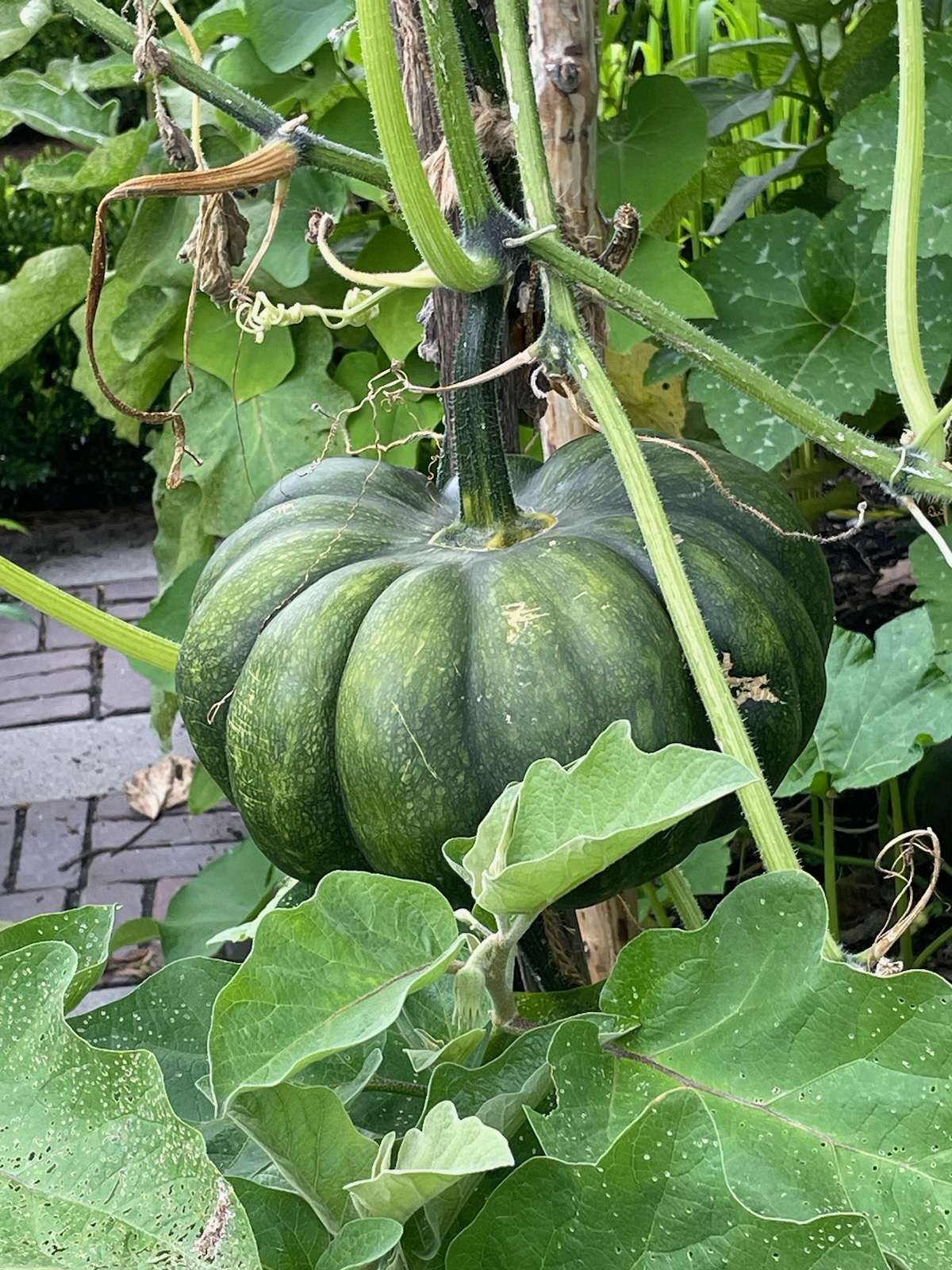
Squash.

Pumpkin.

Exotic okra.

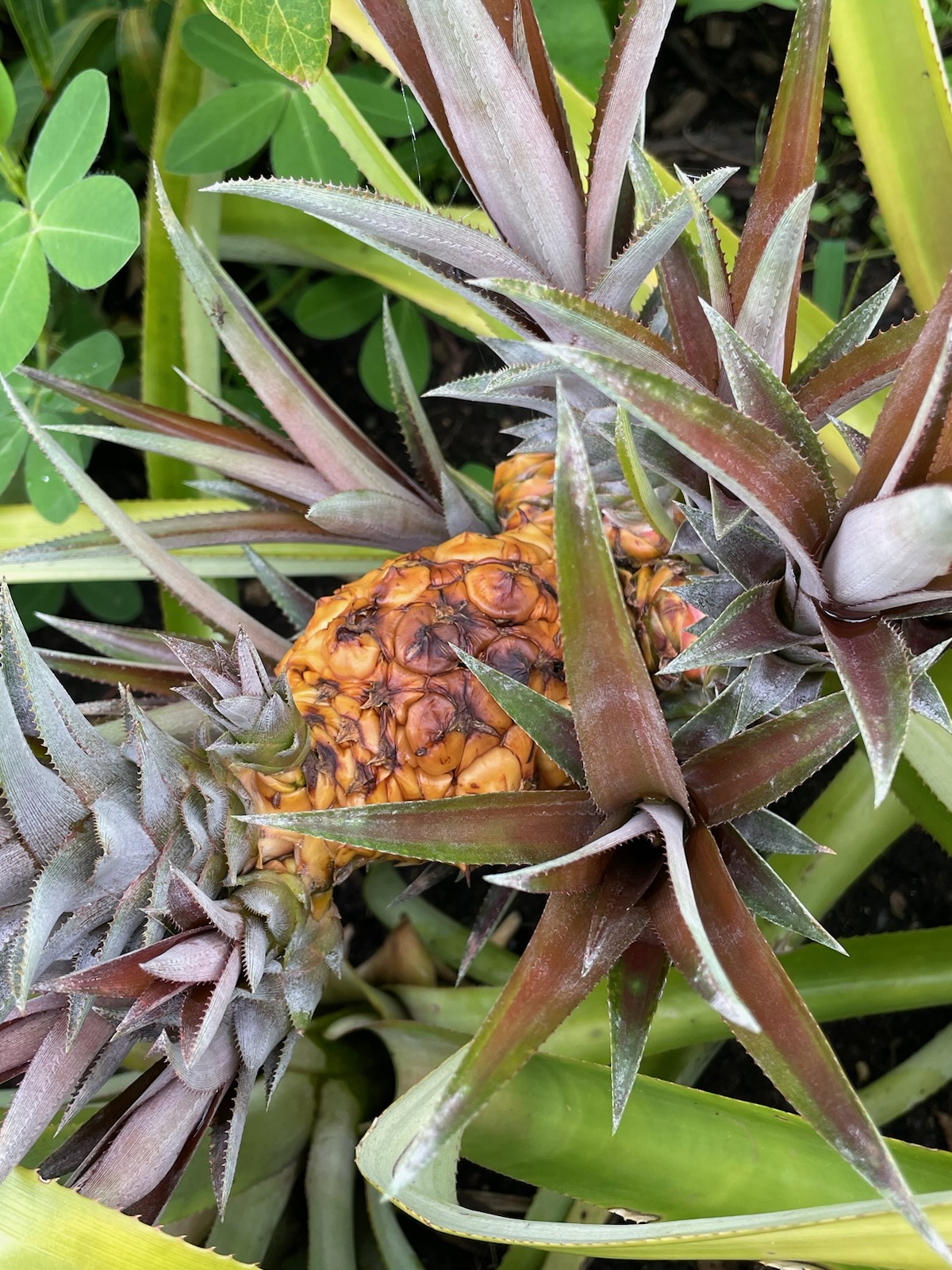
Pineapple.

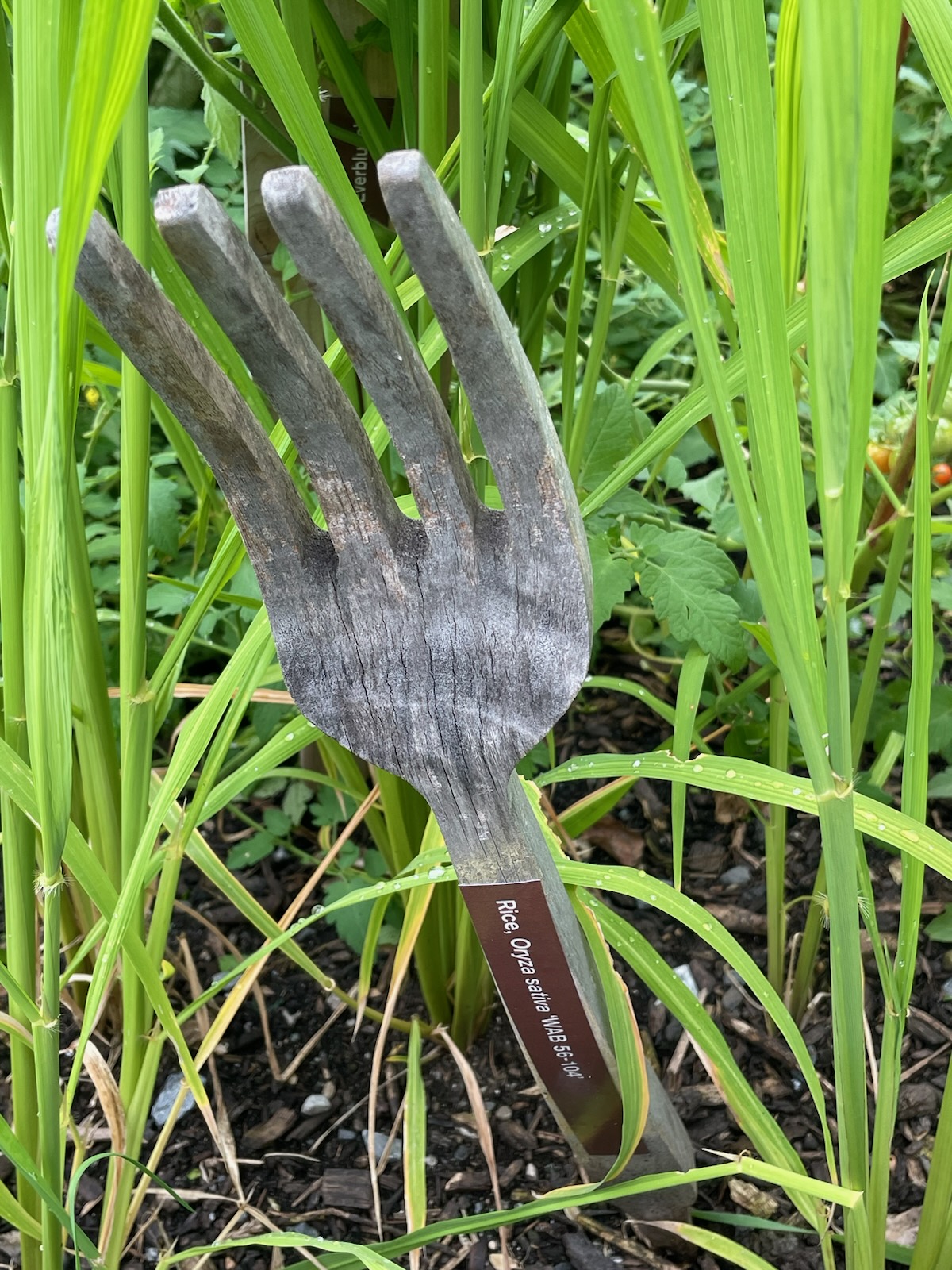
Rice.

Beans.

Flowering currant.

All so wonderfully labelled with kitchen utensils.

I’m not quite sure about some plants here but I know I’d like to investigate further.

Along the paths, posted poetry. Haitian poet Marie-Ovide Dorcely:

I go, just hands, beyond the just, and climb,

clamber, through begonia, a blue husk,

impatiens, a dolly for leaves,

I breathe for the hush of happiness.

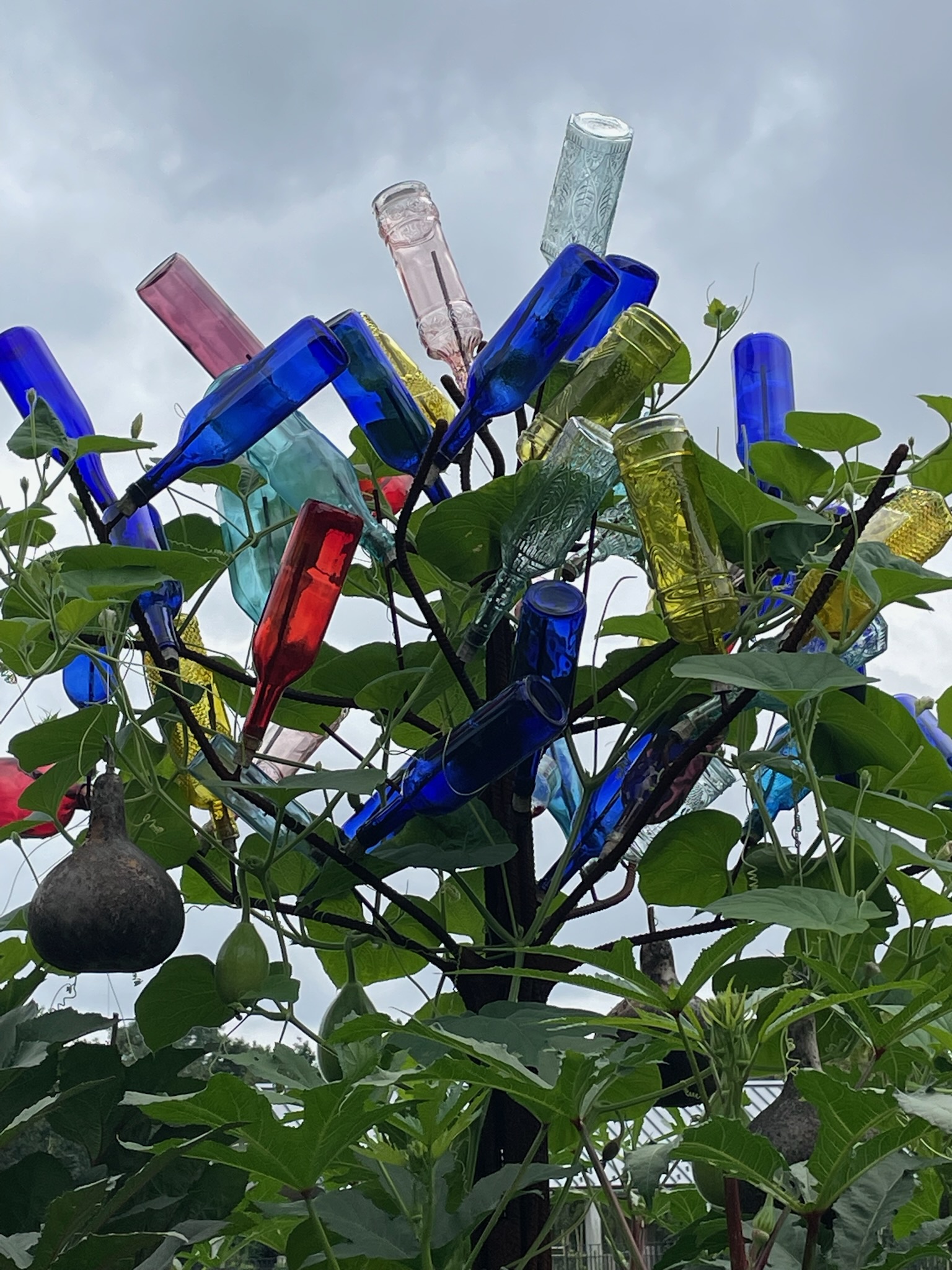
There is even a magical bottle tree created by high school students.


Some mysteries here. Food for thought. Cardoon.

It’s hard to tear yourself away from this lyrical food garden. But there are more flowers to see.

And greenery.

And more greenery.

And even more greenery.

Today I like the vivid green as much as the pulpy red. Crimson clover. (Over and over.)

And the pods.

Nature offers such marvels, if you’re just present for them. Allow me to introduce you to stonecrop.

Artichoke thistle.

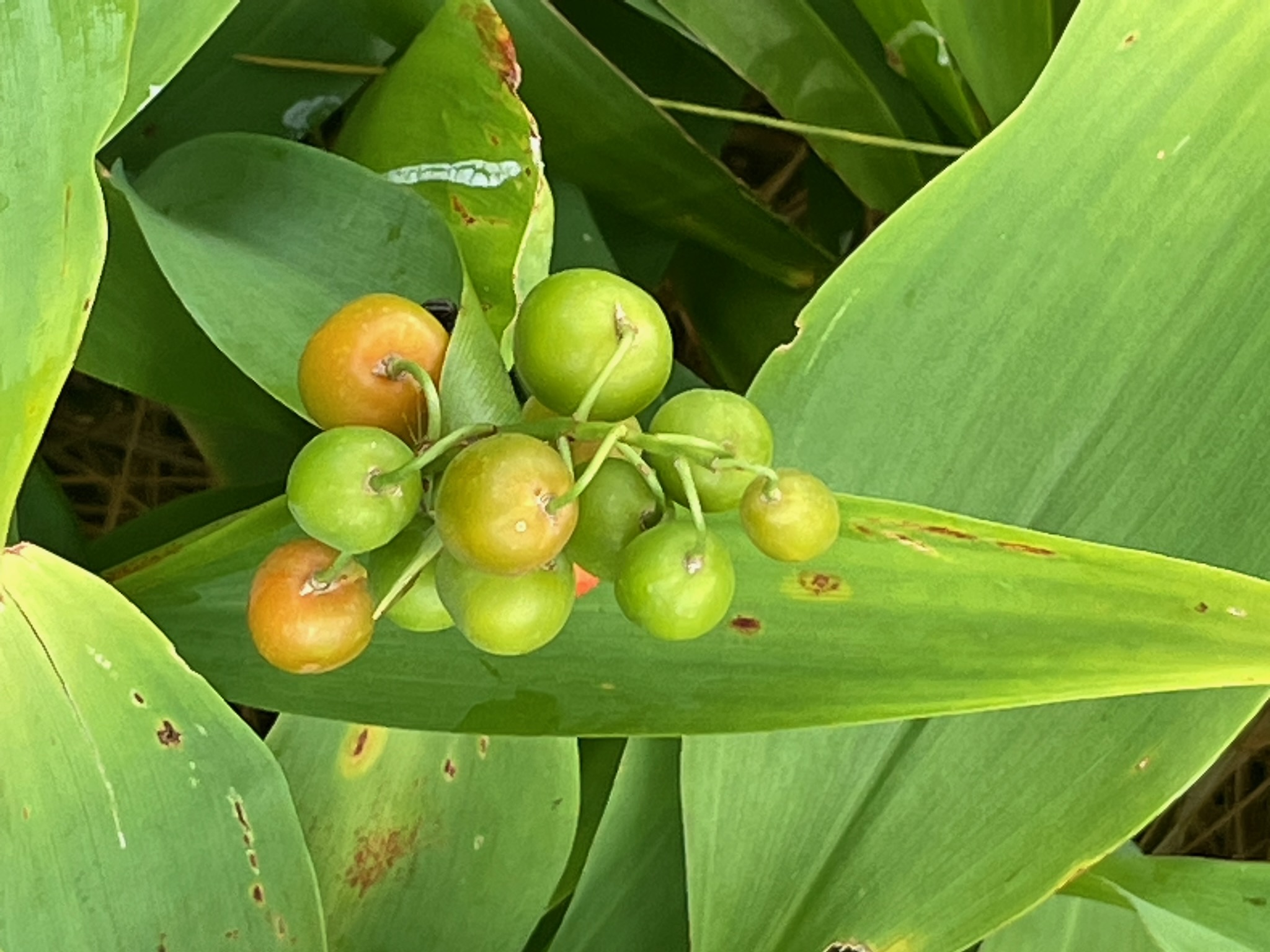
Always something to learn, like what lily of the valley looks like after it’s bloomed.

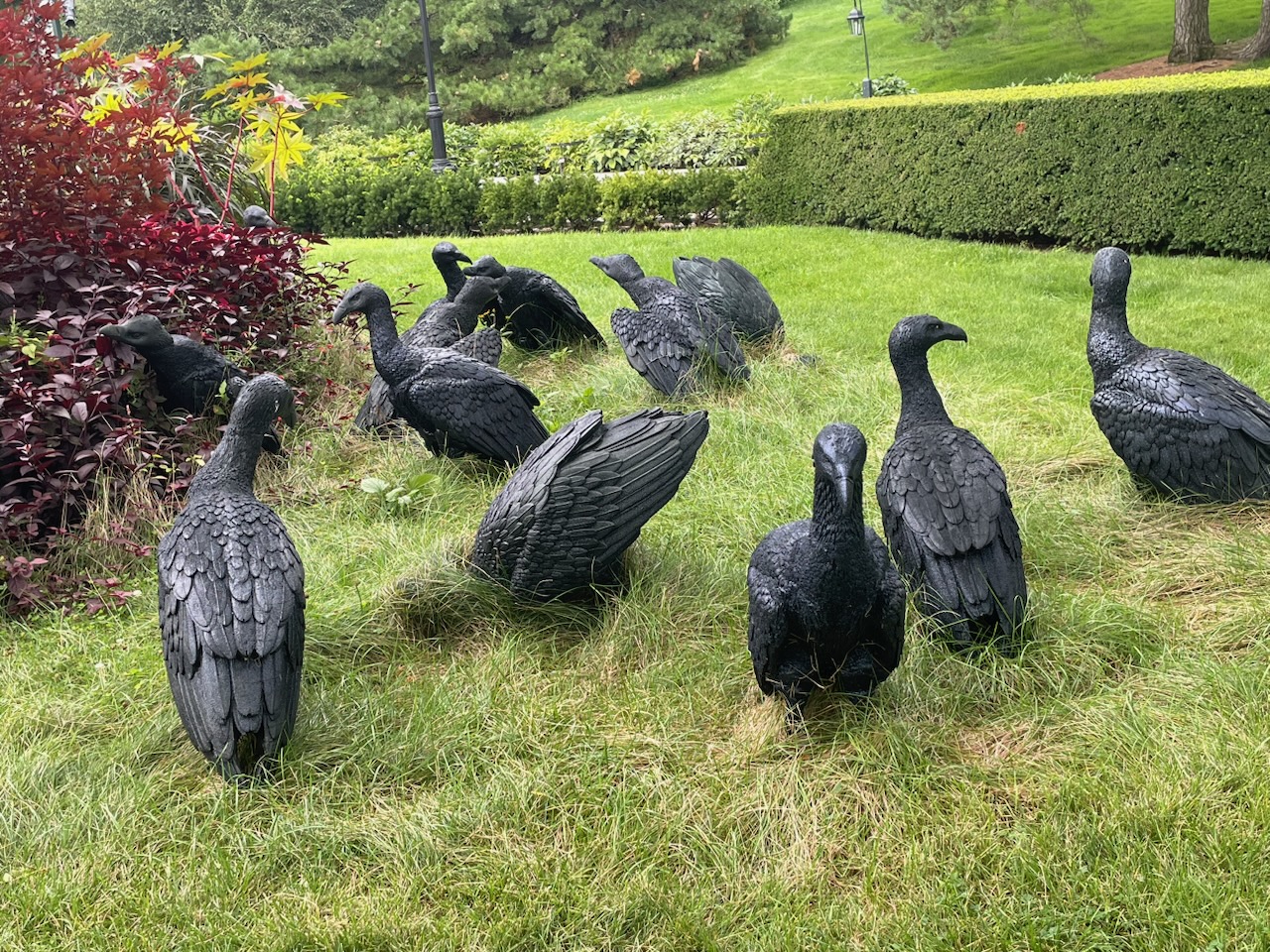
And some woman-made marvels, such as the flocks of scary-beautiful vultures installed among the borders by genius artist Ebony G. Patterson.

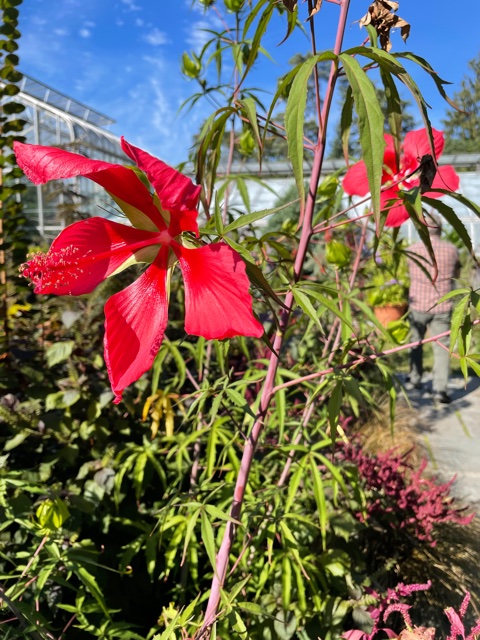
Who doesn’t love hibiscus?

Or caladium?

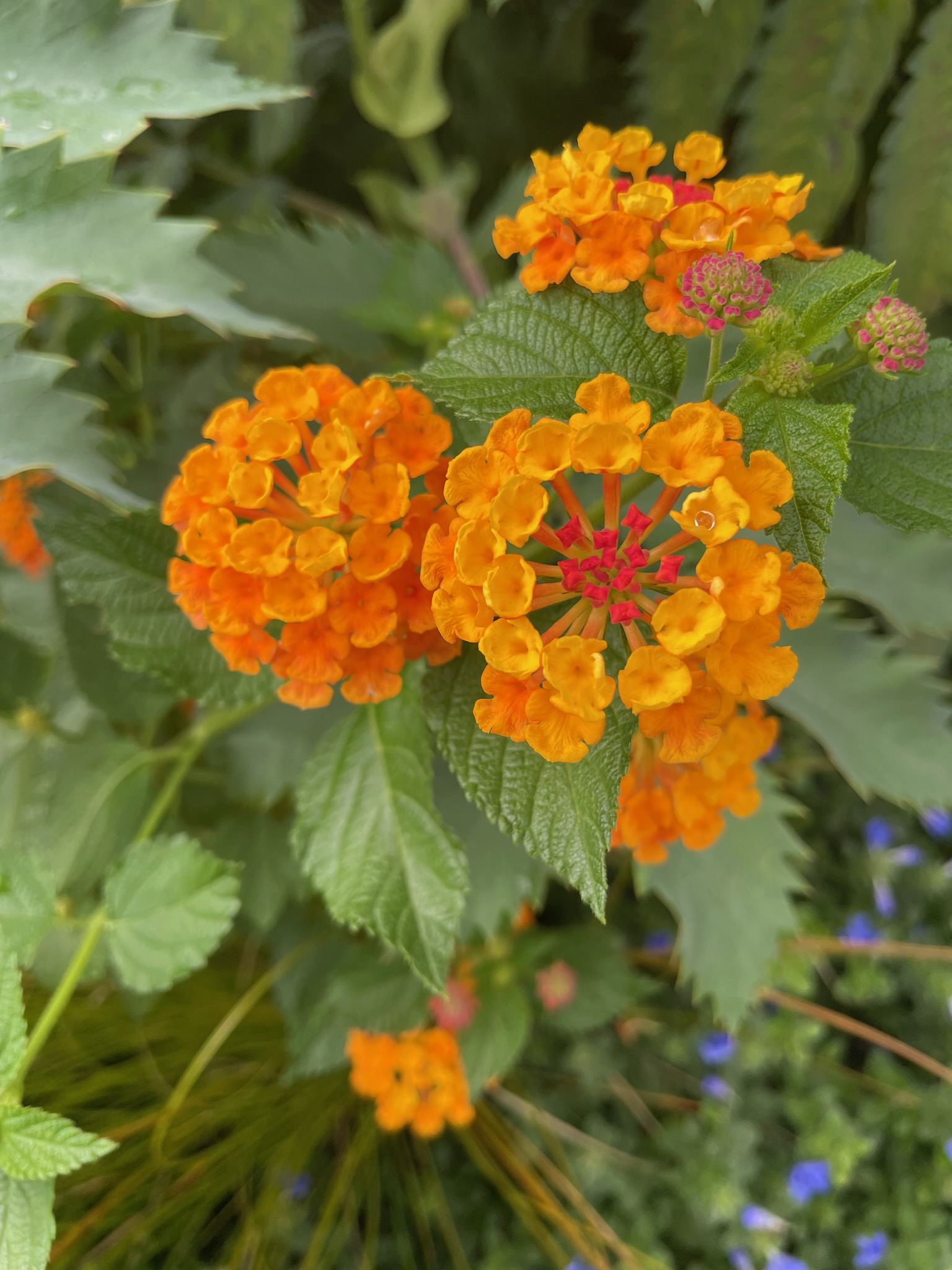
Especially the caladium. Or the glowing lantana.

It’s all there for us.

All of us.

Even if you’re one who likes to take the tram.

2 Comments

Filed under Jean Zimmerman

Trouble, trouble, trouble. Trouble.

Really?

How can you complain when you find yourself in the most beautiful place on earth? Can there really be trouble in paradise?

It’s like this.

I got some feedback on a just-drafted chapter from someone I trust. He said what I wrote was not perfect. It’s hard to write about nature when you’re in the presence of natural perfection. And manmade perfection, in the form of a perfectly built old stone wall. Can I produce anything that good, that lasts that long? Probably not.

I take my seat in my writing garden shed.

Inspire myself with some of the flowers that grow just outside.

Say a few words to my shed-mate Giselle.

Woe is me. Write a while. Dreck. Go outside.

Admire a few simple flowers.

Visit with some trees. The shagbark hickory. Its new leaves are the most incredible shade of green.

Look up at the black cherry. How tall is that thing anyway?

Marvel at a tangled fall of shattered silver maple against a bewildered black gum. Human-produced sculpture doesn’t get that good.

Something amazing. A seemingly robust old white oak.

Around the back, it’s clearly had a lot of problems, but fixed itself. The way trees do.

Down the path, the crazed contours of bark, this one a white ash.

Everyone has problems. Knee problems. Heart problems. Cash flow problems. I can put a check in all those boxes at least some of the time. There aren’t too many people to tell my troubles to.

But how can I complain, really?

Trying to learn from the persevering robin who hops by over and over again outside my writing garden shed and is rewarded with money-green inchworms. I mean, over and over again. All day.

Then I go, rock myself in the hammock.

Within a few paces of the just-blooming lilac.

Olfactory bliss.

So really, can I complain?

I can complain. Watch me.

I sweat my way down to the river. Think. Pick up a few what I seem to remember are water chestnuts. They might not be. They might be magic.

Think some more. All of this thinking is making my head hurt. So I stop thinking.

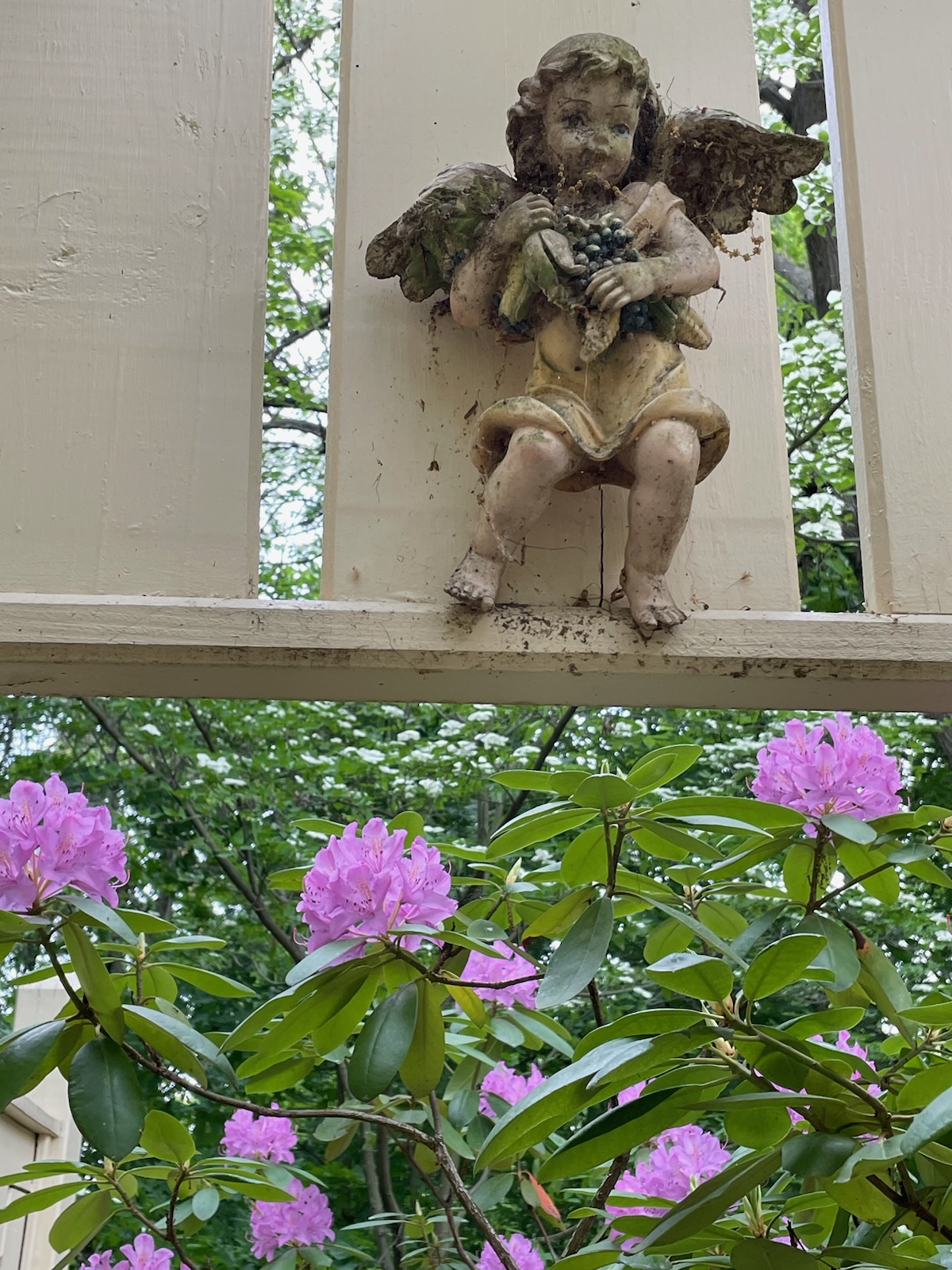
Pass by the cherub floating above some ripening rhododendron at the wooden loveseat.

Sometimes a thing is almost more beautiful before it’s blossomed.

When I get back to the caretaker’s cottage I find a bright green inchworm crawling on my leg. I set it outside, gently. I don’t need it.

The lawn is filled with dandelion wishes for the taking.

What the heck.

I’ll get a bigger bouquet.

2 Comments

Filed under Jean Zimmerman

A warm and moist hush prevails

in the exhibition area of the New York Botanical Garden’s Annual Orchid Show.

And is there any better kind of hush? Especially on a cold and blustery late winter day in the Bronx.

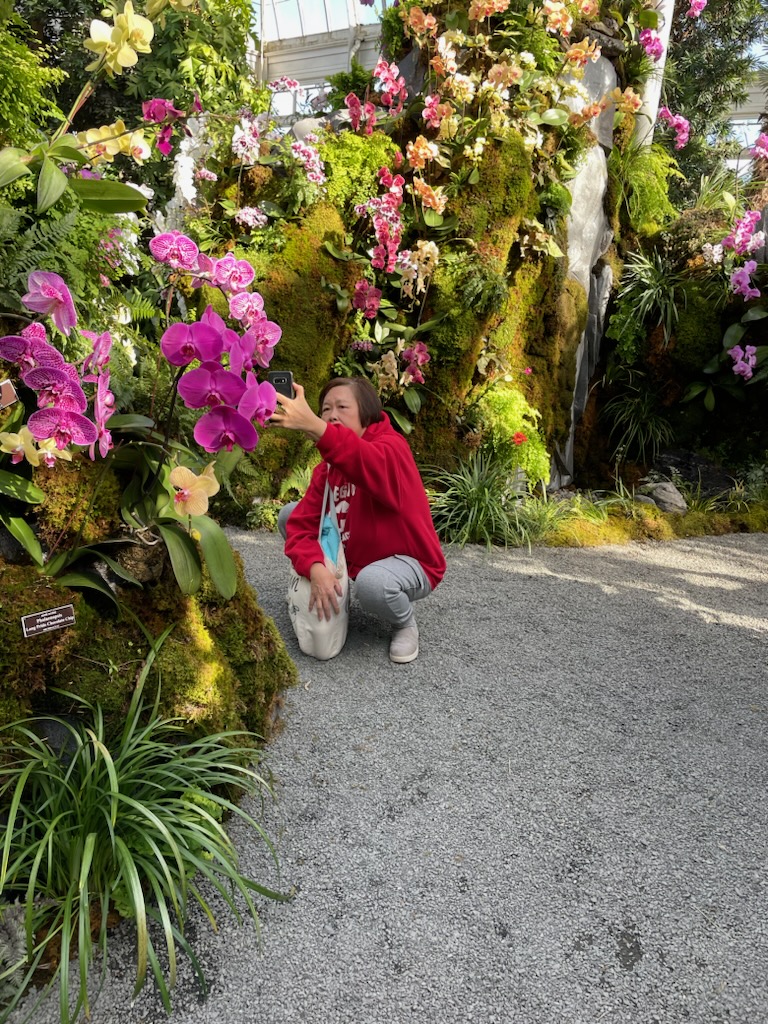
Orchid lovers endure heart palpitations all around. At least those not too consumed with taking pictures.

Photographers are legion here. So many photo opps, so little time.

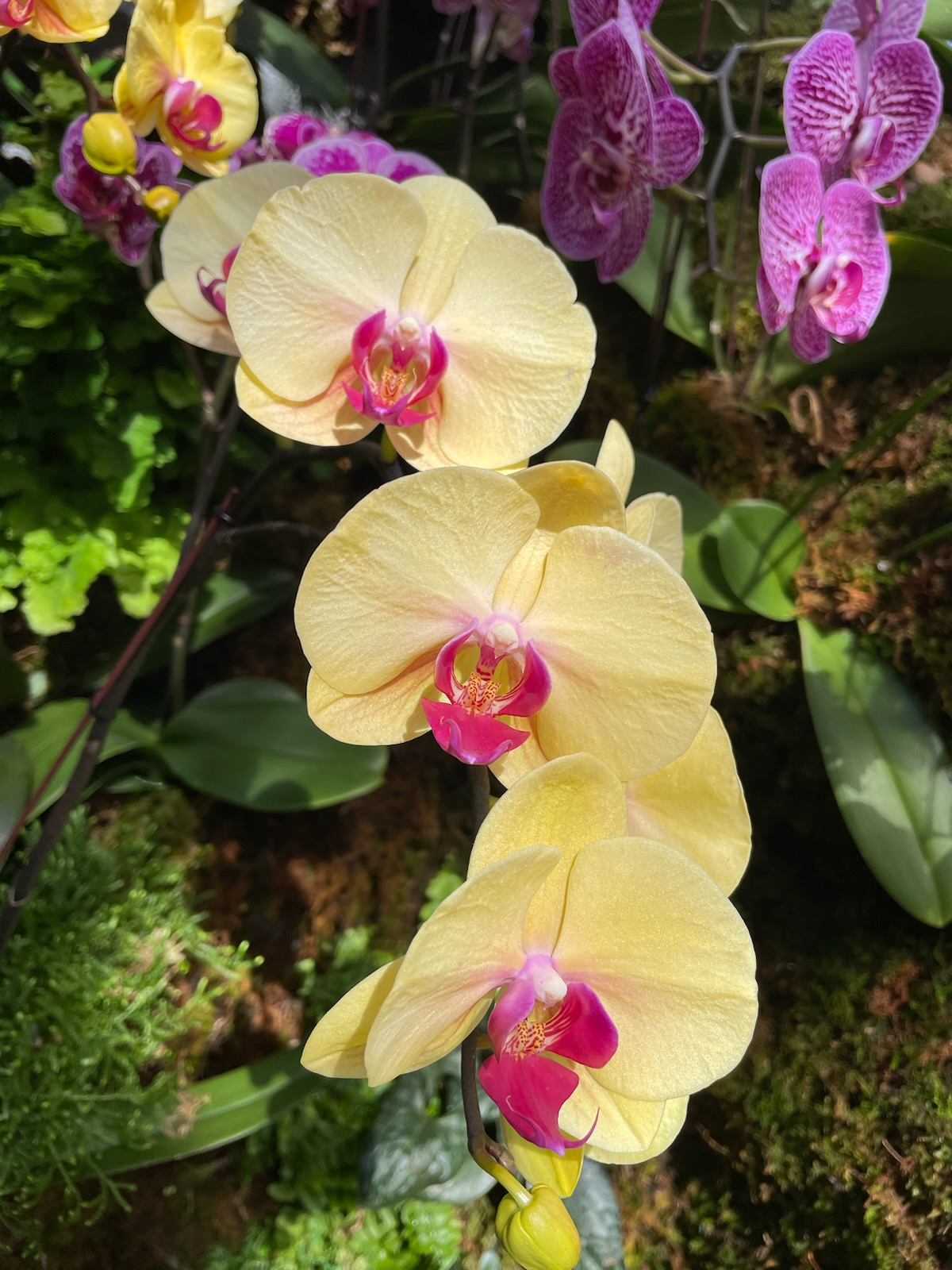
Orchids posing throughout the place. You’d think they know they’re beautiful.

Who cares if they are vain? They deserve the attention.

Some amazing specimens here. The cane orchid.

So rare and yet so common.

As Chet Baker has it most cornily in My Funny Valentine:

You make me smile with my heart
Your looks are laughable
Unphotographable
Yet you’re my favorite work of art

I can name them if pressed. Not if the flowers are pressed, I mean if it is desired that I know their names. There is the slipper orchid.

The ghost orchid.

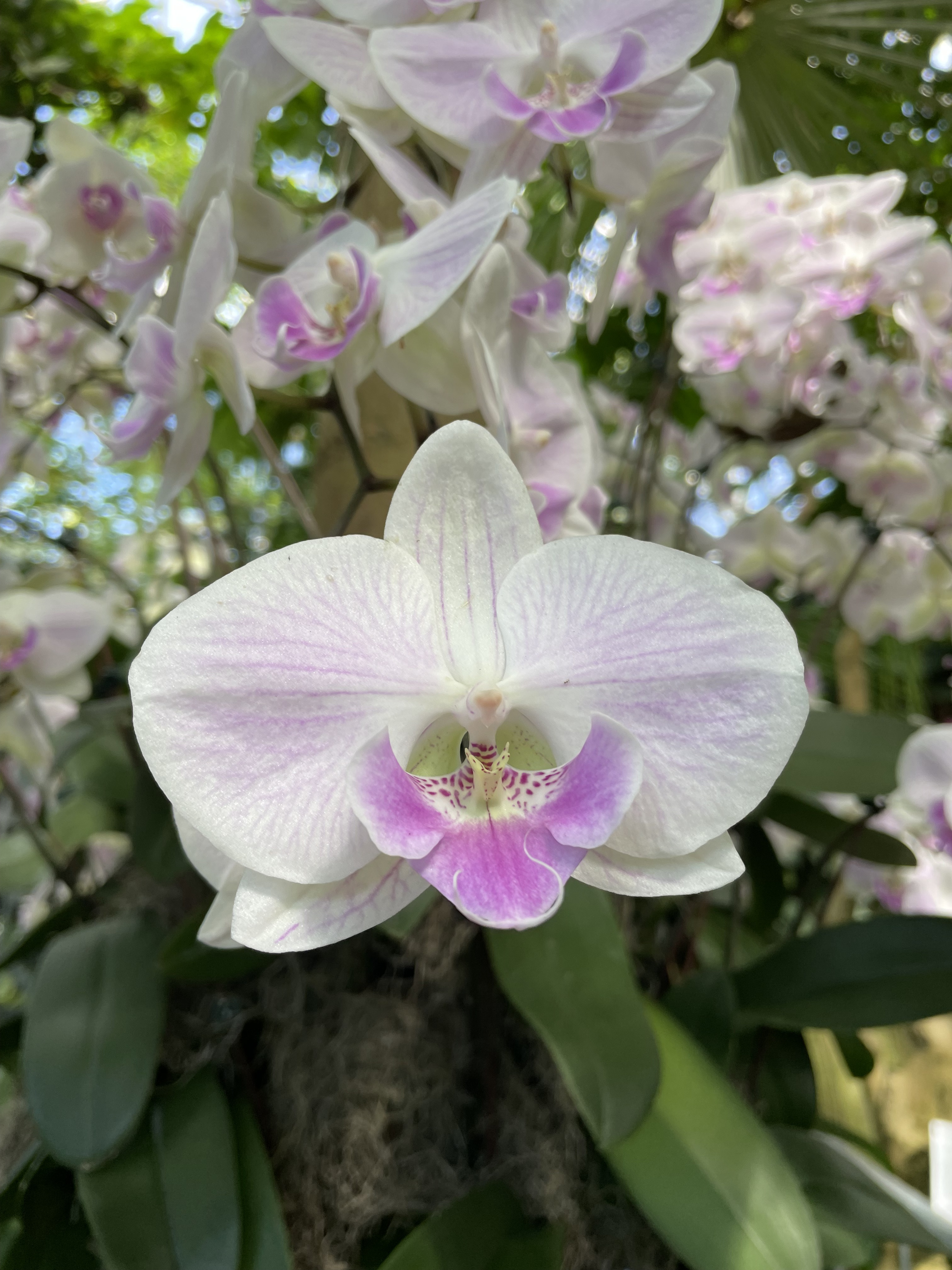
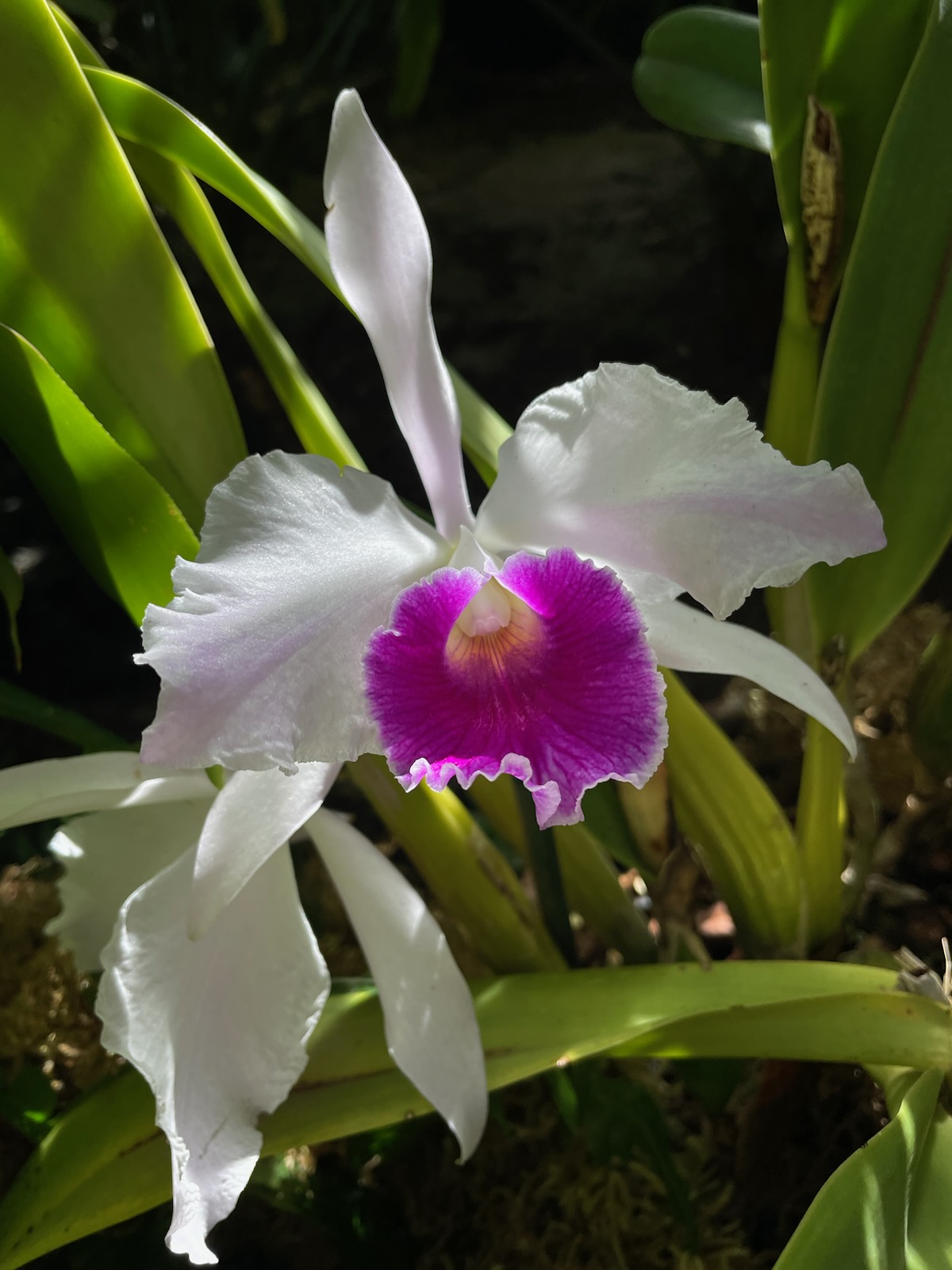
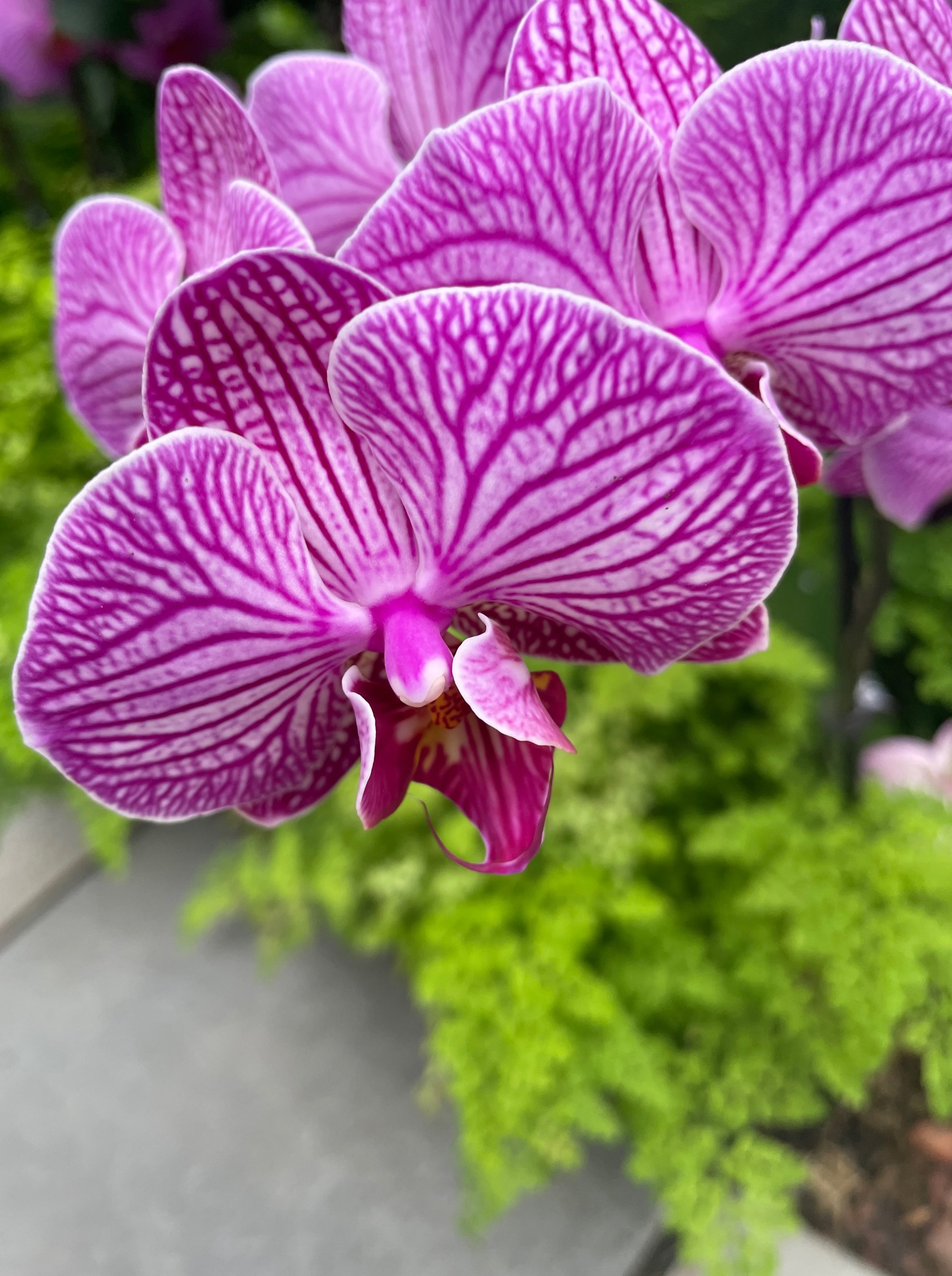
The moth orchid.

Most familiar is the corsage orchid, the one you’ll find at every prom.

But the anonymous ones, or the ones in front of which I am muscled aside by fellow Iphone snappers, are really just as fine.

I can also tell you the orchid’s biological features: the fused male and female parts in one structure, called the column; the solid, sticky masses of pollen, called pollinia; a modified petal called a labellum, which insects use as a landing platform. The lip might be small or large, ridged, ruffled, or pouch-shaped. Somehow it all sounds too sexy. Let’s have some innocent flowers, shall we?

After a turn or two down the humid pathways, Gil asks, “Have we been this way before?”

Who knows? In a haze of orchid splendor, before and after fade. It is total tropical immersion. My head spins. My mind fills with fantasies, dreams, nightmares, poetry. Didn’t a monster grab me last night in my sleep?

There is actually poetry conveniently installed here by the powers that be, verse by Wang Huizhi:

I release my feelings among these hills and streams;

Carefree and detached, I forget all constraints…

If you can tear your eyes away from the petals, NYBG has other treasures. Look up.

Or look down.

A king anthurium hailing from Colombia.

A floss-silk tree, from Peru.

As a break from the sometimes-a-tad-too-sweet orchids, I also like to observe what goes on behind the scenes. The vegetation trash in a bin.

Staff gardeners comparing notes.

All around above our heads there is a sound… kind of like birdsong. Are there birds in here? asks a woman, focusing her camera above at the staghorn fern.

Also, what is that thing? I tell her there is a label, it’s a staghorn fern. Oh, she says, I think it’s the sound of the wind.

Go through the flame-draped tunnel…

And you will find… more orchids.

I like my cigar but I take it out of my mouth once in a while, says Gil, quoting Groucho Marx.

Yes, there are a lot of orchids here.

Strangely, it turns out we know the young lady who “designed” the show.

She is the daughter of an old friend, and I happen to know that her big brother is named Huckleberry. She did a great job here.

Along the way it is possible to learn that the most rare color for orchids is blue. But I see no blue orchid among the thousands here. I ask a security guard, Have you seen a blue orchid here?

No, he says helpfully. But I think there’s one at the library. In a pot. Nice idea, but then we’d have to take ourselves out of the fragrant sauna into the cold gale outside. We’ll stick to the fleshy white ones here.

Eventually it is necessary to exit. You like orchids?… Nasty things. Their flesh is too much like the flesh of men, their perfume has the rotten sweetness of corruption. That’s from the noir classic The Big Sleep.

The gift shop offers johnny jump ups, a welcome respite from the orchidium.

And… more orchids, of the 24-dollar variety.

Let’s pretend orchids are really as special as they seem to think they are.
They deserve the glory.

At least once a year.

Leave a comment

Filed under Jean Zimmerman

When I said my favorite color was brown

one time, everybody laughed.

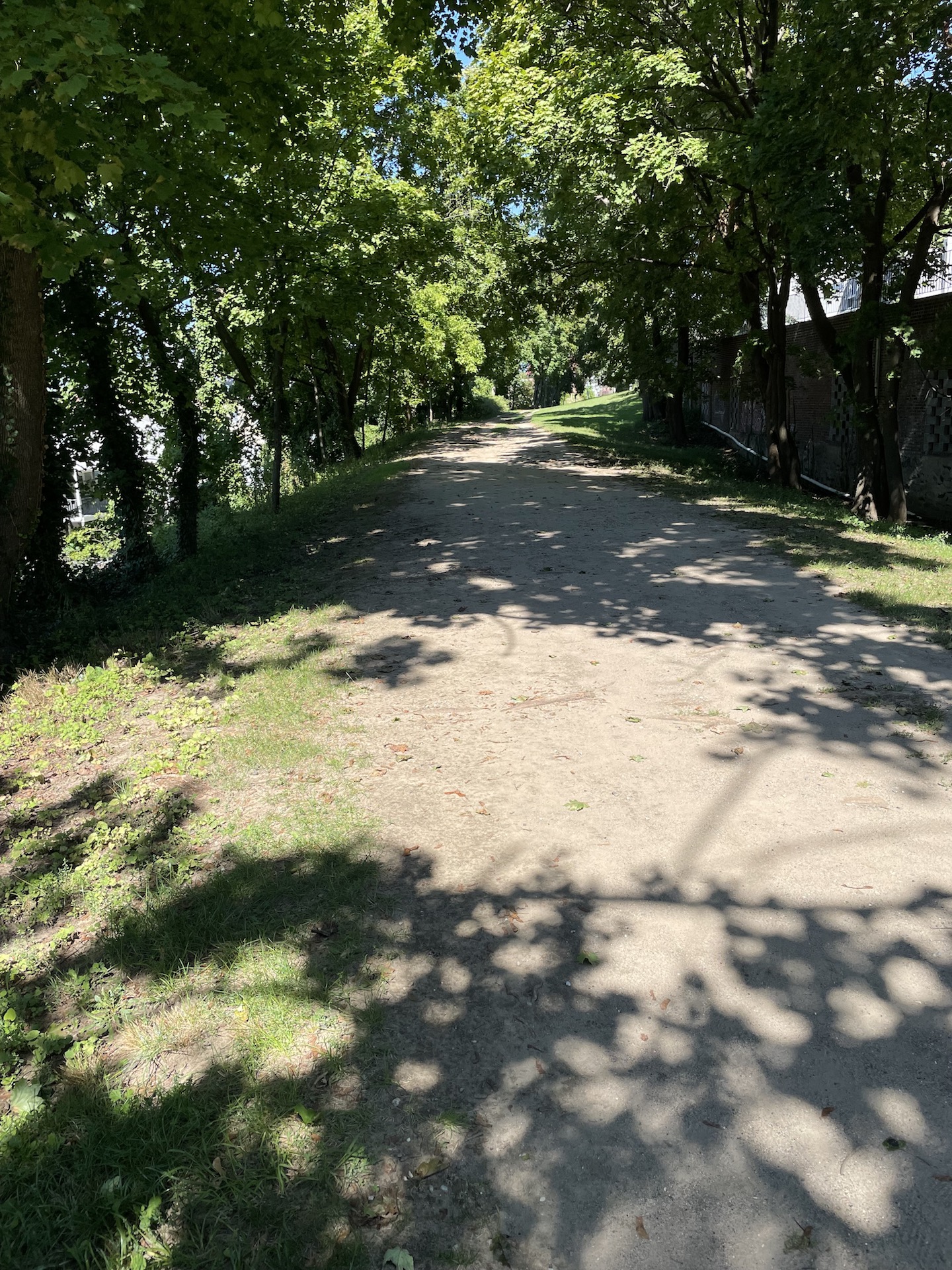
In writing class, teachers use a prompt to get everybody’s creative juices flowing. I hiked the Old Croton Aqueduct trail today, using brown as a prompt.

The familiar sandy light brown soil. Hadn’t been here for a while. The sound of the mid-afternoon breeze rustling the leaves, late summer insects’ buzz. Black cherry trunks snake up, brown.

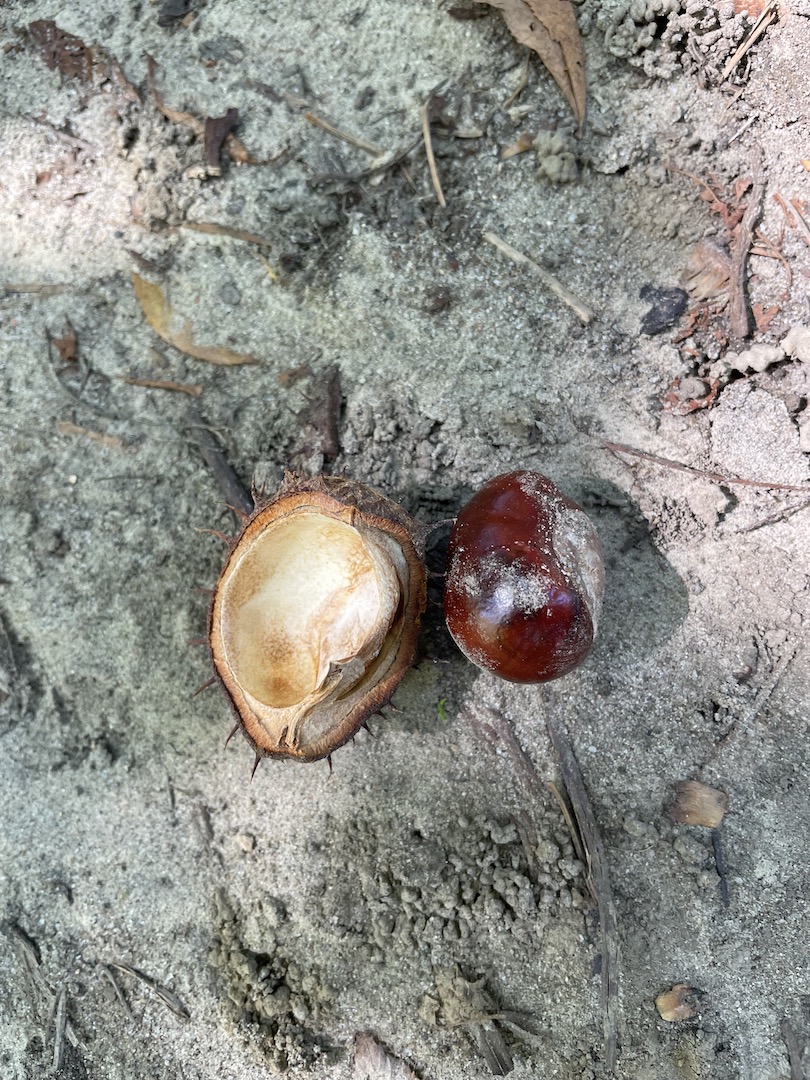
Underfoot, my own personal school-days madeleine, a horse chestnut, glossy brown in its miracle of a small spiky package. 

Sun-browned old brick from one of the brickyards along the Hudson, a booming business back in the day.

Across the river, the light brown strip of the Piermont marshes, ancient, brackish, mysterious in a canoe.

Thinking about dog-nose brown.

Iced-coffee brown. Always great, but especially when consumed recently at MoMa before paying homage to Matisse’s magnificent canvas The Red Studio.

I’m not saying how much coffee I drink, only that if it keeps me up, the more interesting thoughts I get to have. Recently stumped by midnight riddle: what would happen if you combined orange soda with grape soda? The answer? Plenty of sugar buzz. But also the color brown, carbonated.

Thinking about young-hair brown.

On the trail, wizened mulberry trunk brown. Where I live, somebody petitioned the Village wanting to remove an elderly specimen from their property, saying the fallen berries were “messy.” Really? Messy is good, it’s what makes us alive.

I love mulberry trees with their misshapen mitten leaves.

Brown shadows. In the immortal lyrics of John Prine, Shadows. Shadows!

Fungi brown.

Fruiting bodies, if you want to sound like a supercool arborist.

Thinking of cattail brown.

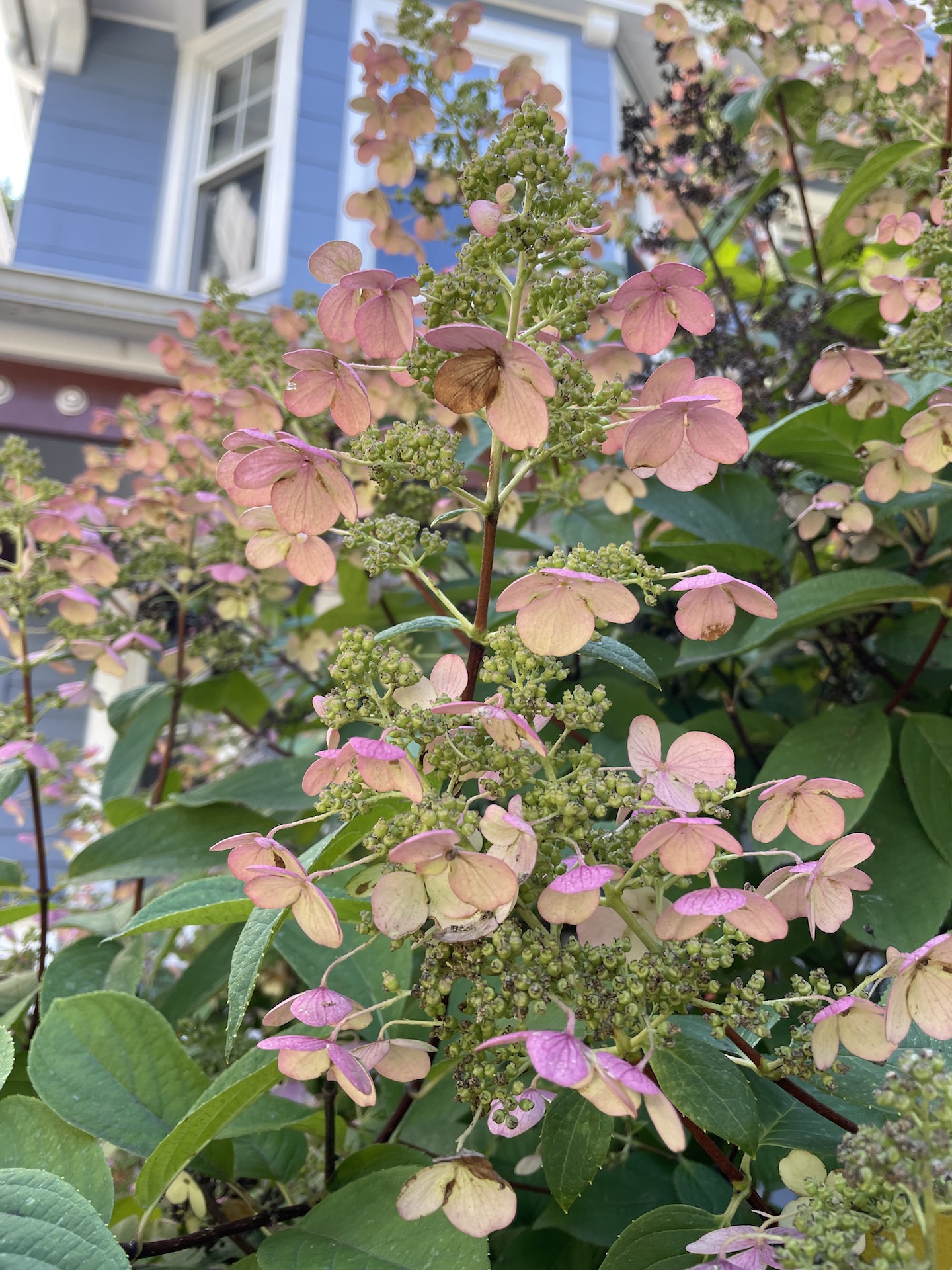
Peegee hydrangeas’ pink tinged ever so slightly brown.

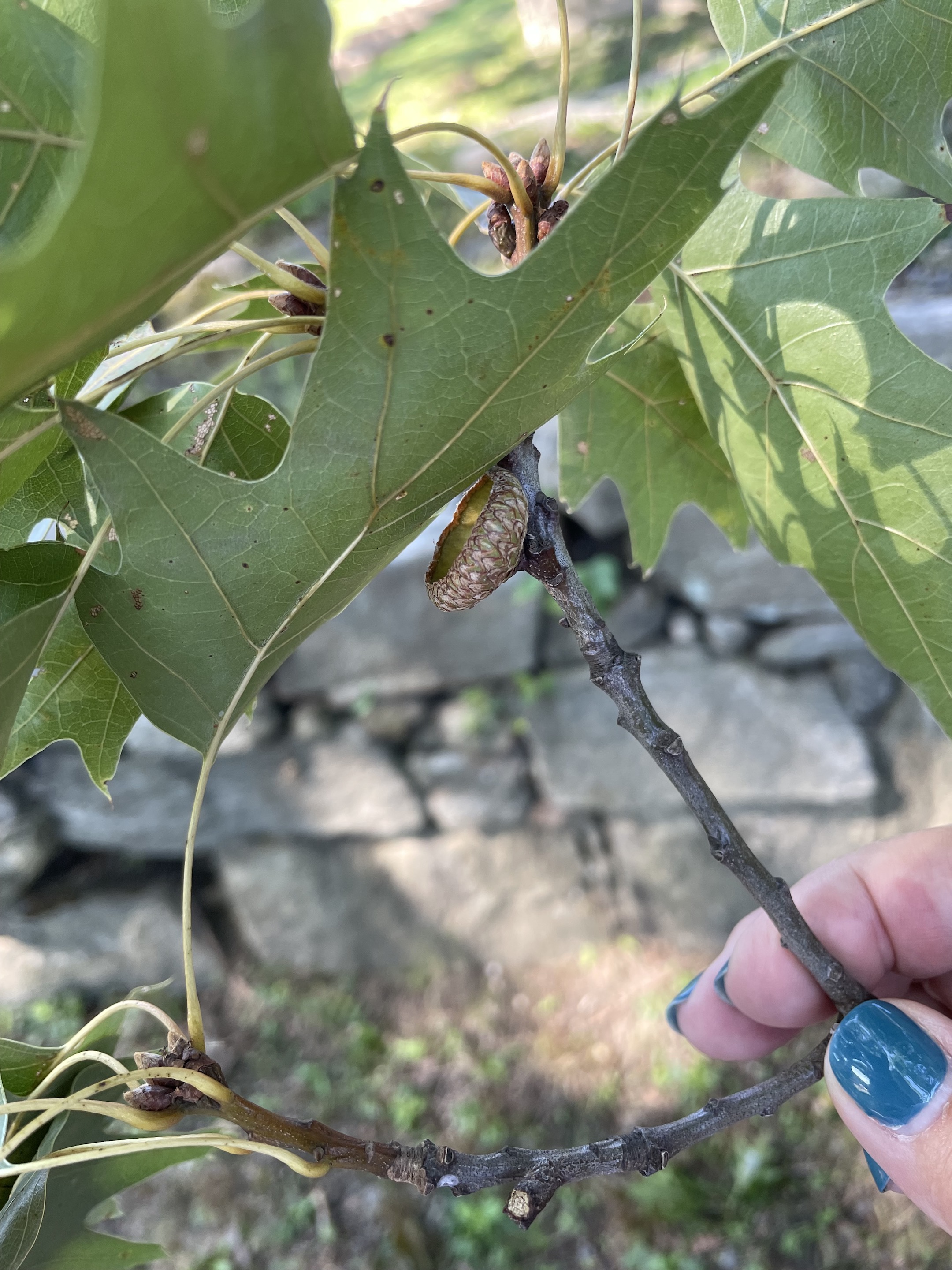
Oak leaves verdant, still, yet stems and acorn cap brown.

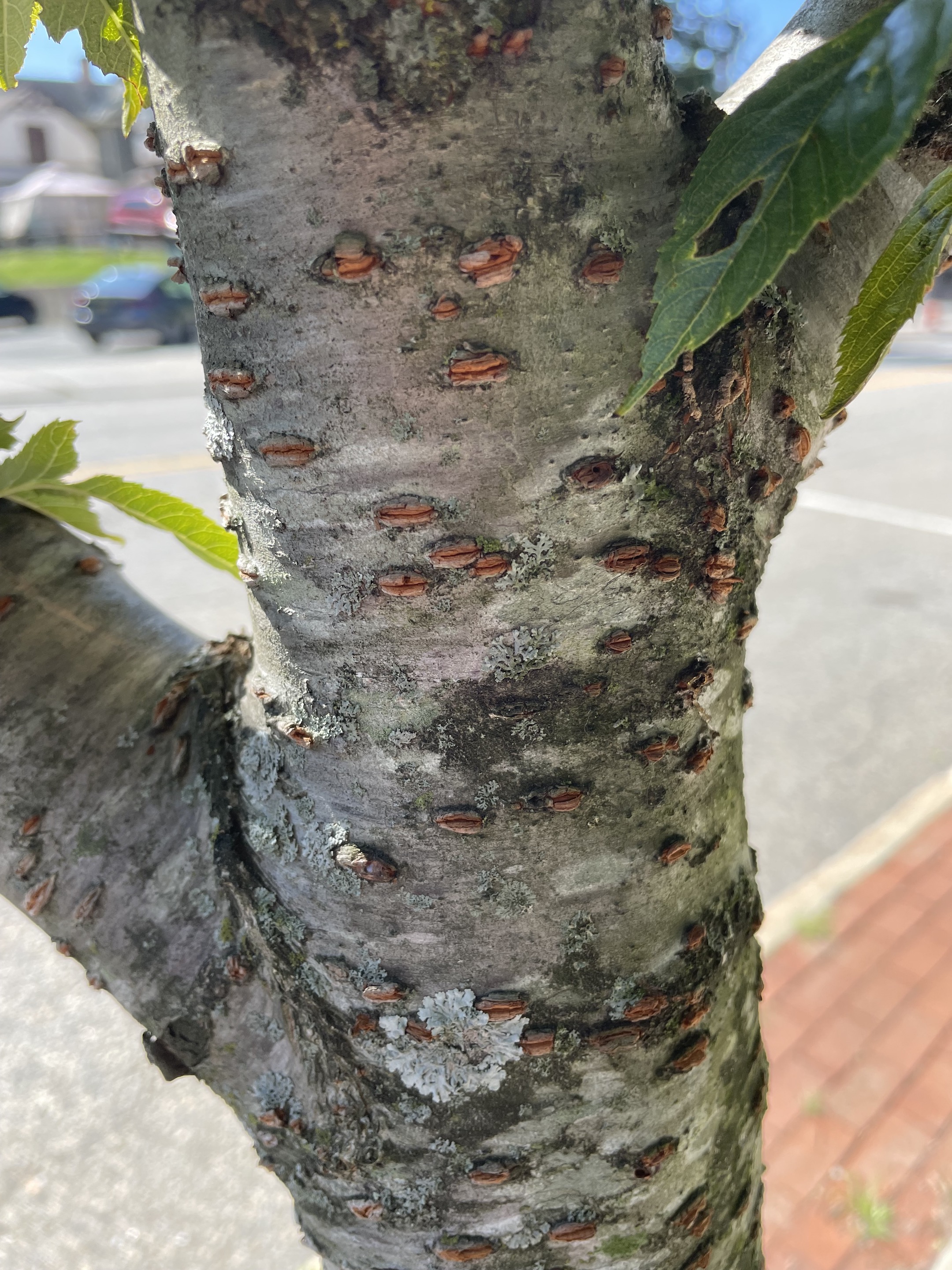
Grey cherry trunk with its delicate brown lenticels, my favorite feature, the stitch-like pores that allow oxygen in and carbon dioxide out.

Finally, coming home, the brown face of a late-summer sunflower.

You may have your run-of-the-mill rainbows. I will take my beautiful brown all around.

2 Comments

Filed under Jean Zimmerman

Arlow Burdette Stout

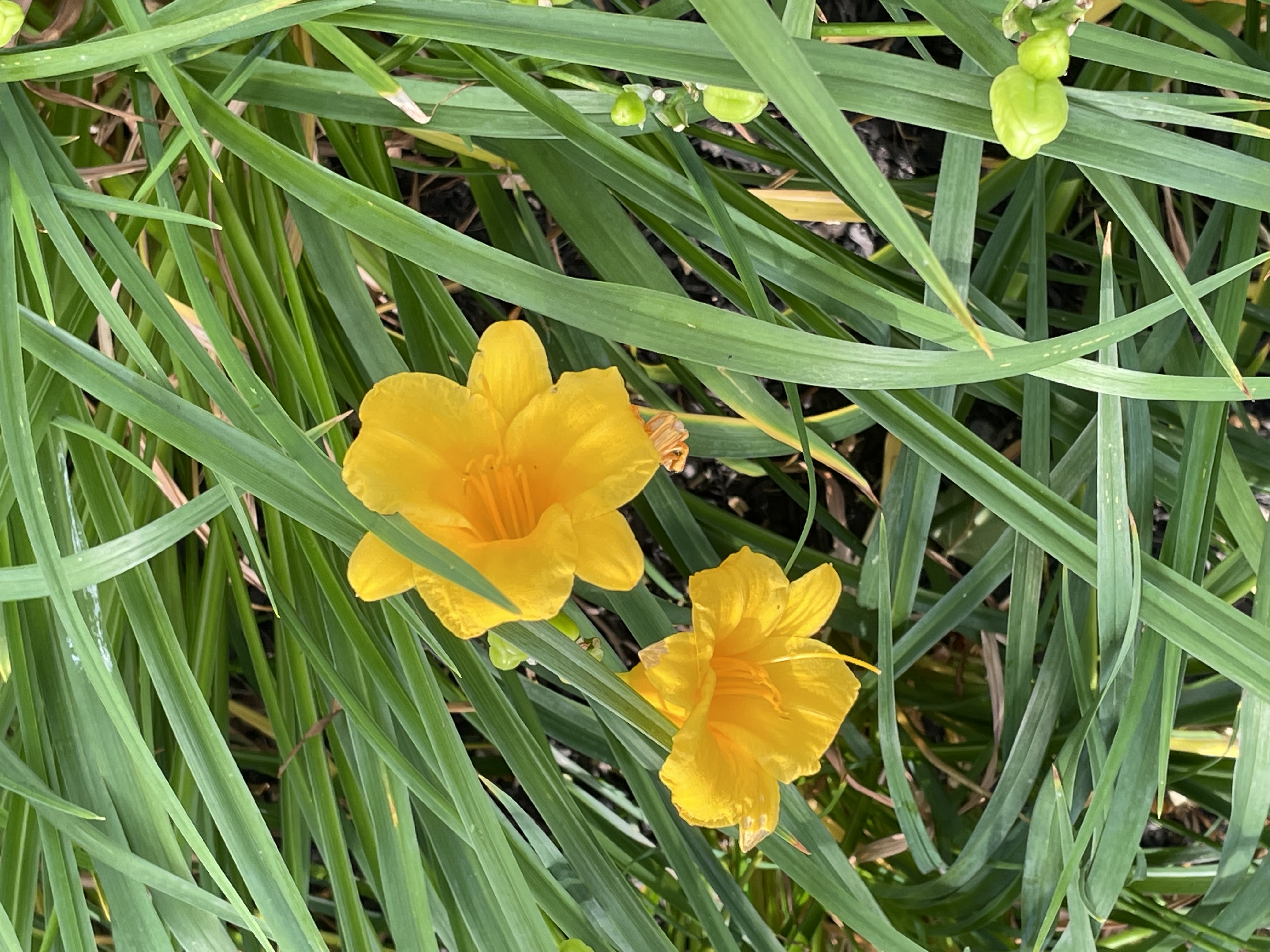
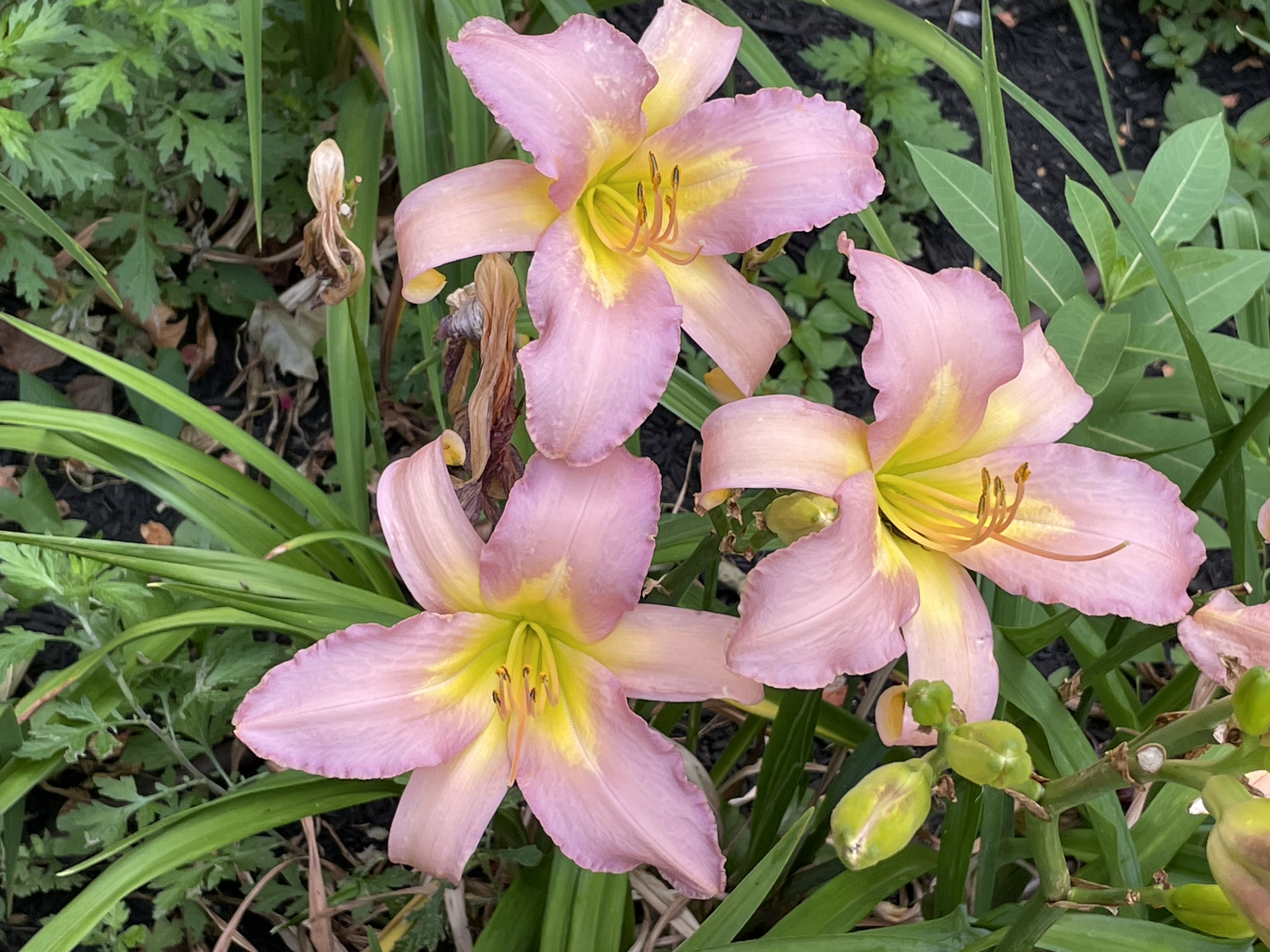
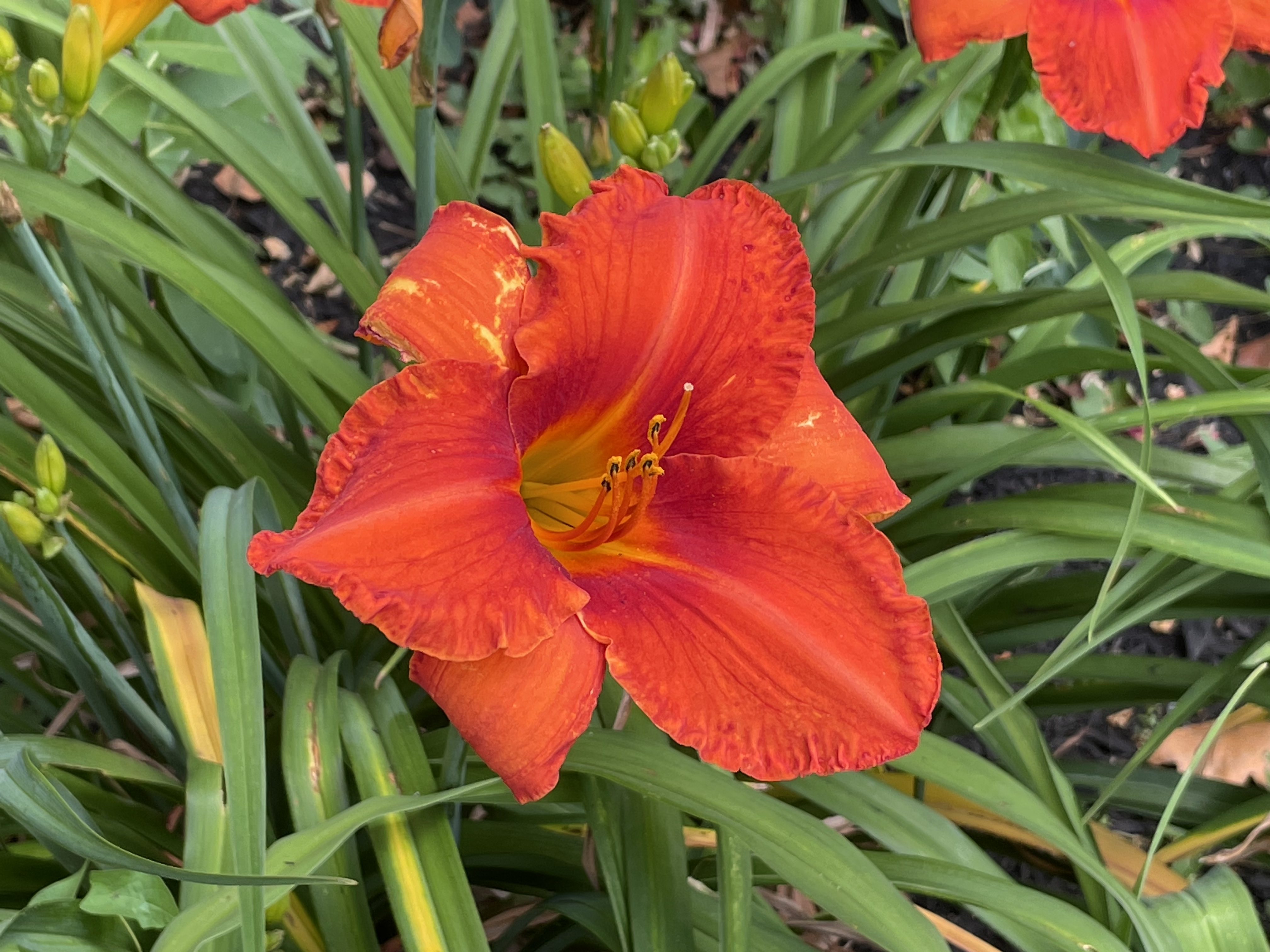
had a great name, and also revolutionized our thinking about day lilies. Never thought much about Hemerocallis? The name Hemerocallis comes from the Greek words for “day” and “beautiful”.

Remember that the most beautiful things in the world are the most useless; peacocks and lilies for instance. John Ruskin wrote that. I don’t believe that peacocks are useless however; nor are day lilies. I have been walking past a beautifully planted border of day lilies for the past month at Ellis Island, where the flowers are as diverse as the multitudes of immigrants that passed through over the years 1892 through 1954, when the facility closed. I get the feeling that many visitors just hustle past them every day in a rush to find their ancestors on the Wall of Honor, or to get a quick sandwich in the café before jumping on a ferry to Liberty Island. Everyone is in such a hurry, even on vacation.

Tens of thousands of cultivars exist. Arlow Stout alone produced over one hundred Hemerocallis hybrids, reawakening popular interest in the flower, which was introduced to America by European settlers—probably brought from Asia along the silk roads. By the 1800s they were naturalized in the U.S., and still what is called the “tawny” variety can be found springing up by the roadsides all over the country. Ancient Chinese paintings depict glowing orange day lilies.

It’s not actually a lily.

In the department of Harumphh: in 2009, under the APG III system, day lilies were removed from the family Liliaceae and assigned to the family Xanthorrhoeaceae, subfamily HemerocallidoideaeXanthorrhoeaceae was renamed in 2016 to Asphodelaceae in the APG IV system. Will someone wake me up when this is all sorted out?

Growing on long stems called scapes, flowers bloom for one day each. You can gather them, eat them, press them, present them to people you love. Hybridizers like our friend Stout like to fool around with properties like height or scent, ruffled edges, putting contrasting “eyes” in the center of a bloom, or creating an illusion of glitter called “diamond dust.”

Sylvia Plath also wrote about them, in a poem from 1962 called “Crossing the Water.” Stars open among the lilies./Are you not blinded by such expressionless sirens?/This is the silence of astounded souls.

But we don’t need such a hard sell. Their season is almost over. Go out and be agog over one, before their beauty sleep ’til next year.

Leave a comment

Filed under Jean Zimmerman

Are some trees bad?

Well. Depends who you ask.

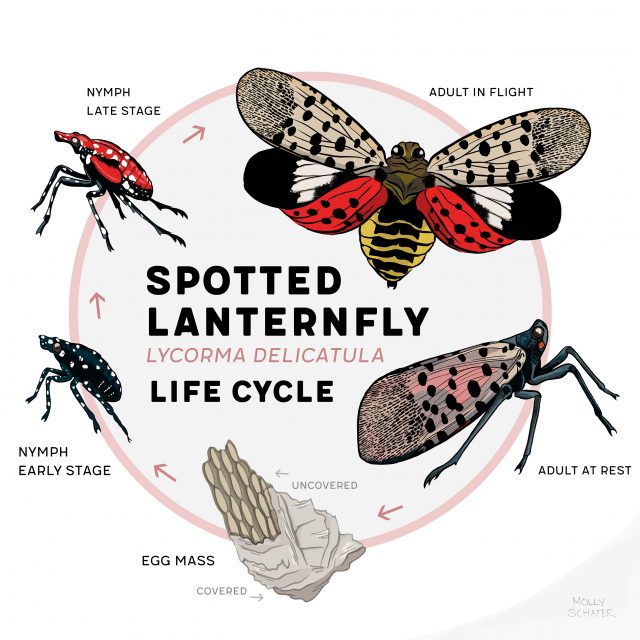
Norway maples, callery pear, ailanthus, ash. Spotted lanternfly adores laying its disgusting eggs on the bark of the ailanthus, commonly known as the tree of heaven.

So ailanthus deserves to get whacked. But what about grape vines? Apple trees? These host the same invasive insect.

As for the callery pear, you might have some gracing your downtown sidewalks or your apartment complex. Offering bright white blooms for a week or two in early spring. Arborists’ assessmen: Pyrus calleryana is a nightmare. Why? Inquiring minds (mine) have investigated. These trees, originally from China, were widely introduced by landscapers in the 1960s, and displace native trees and plants. Also, they don’t smell sweet, as you would expect them too. Communities around the U.S. can’t cut them down fast enough – some are even offering rewards to those who destroy them.

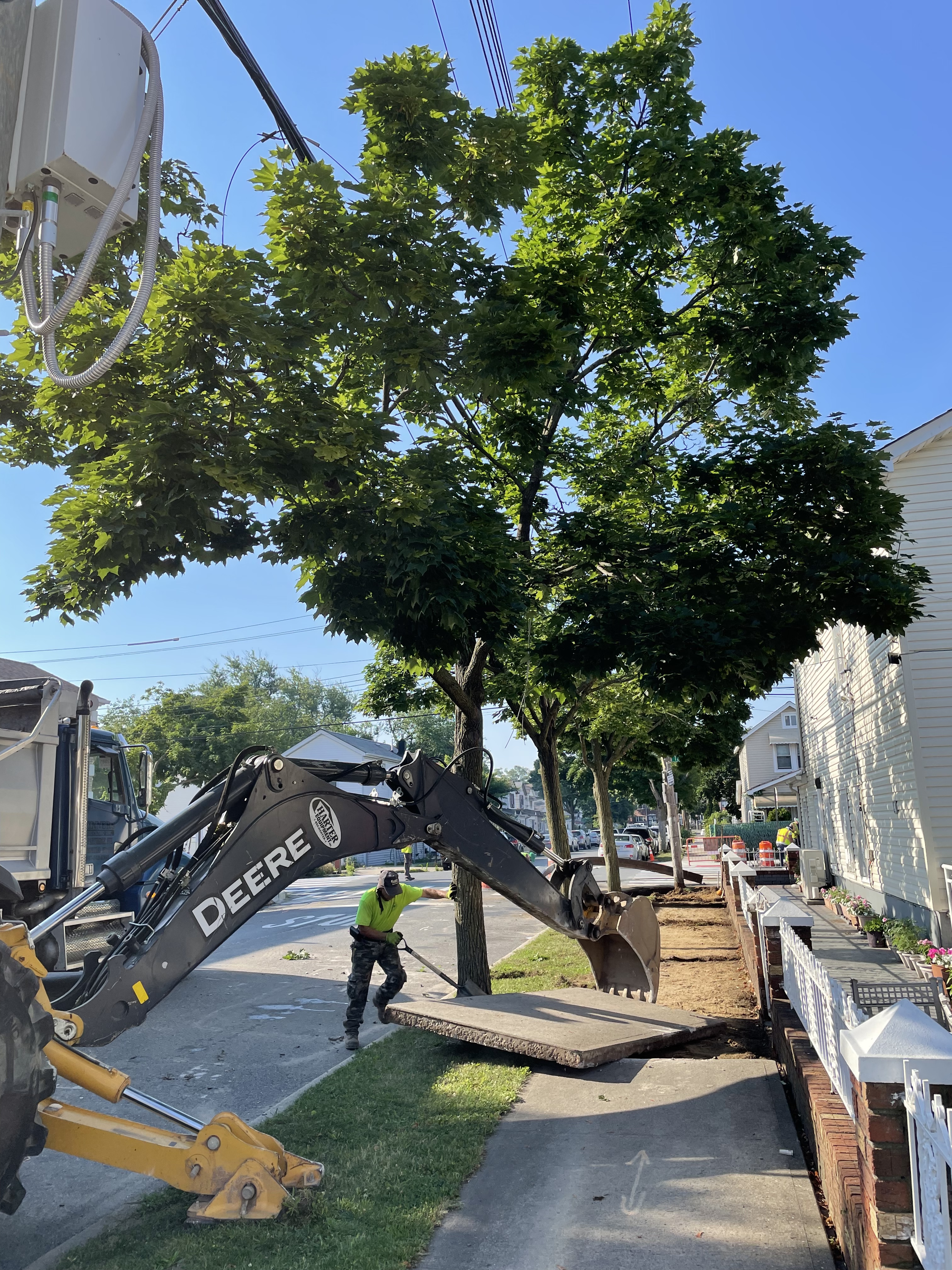
Ash trees play host to another noxious bug, also imported from Asia, known as the emerald ash borer. Cities are eliminating dead trees by the thousands as well as infected ones as a kind of stay of execution. Last year I accompanied a crew in Queens that was feeding axed ashes into the chipper.

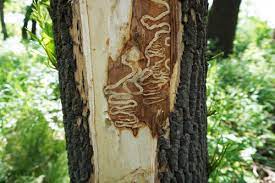
Whole blocks were decimated, and once-graceful allees of mature trees vanished, much to locals’ shock and confusion. Everywhere these strange diagrams exposed by peeling bark, the sure sign of disease.

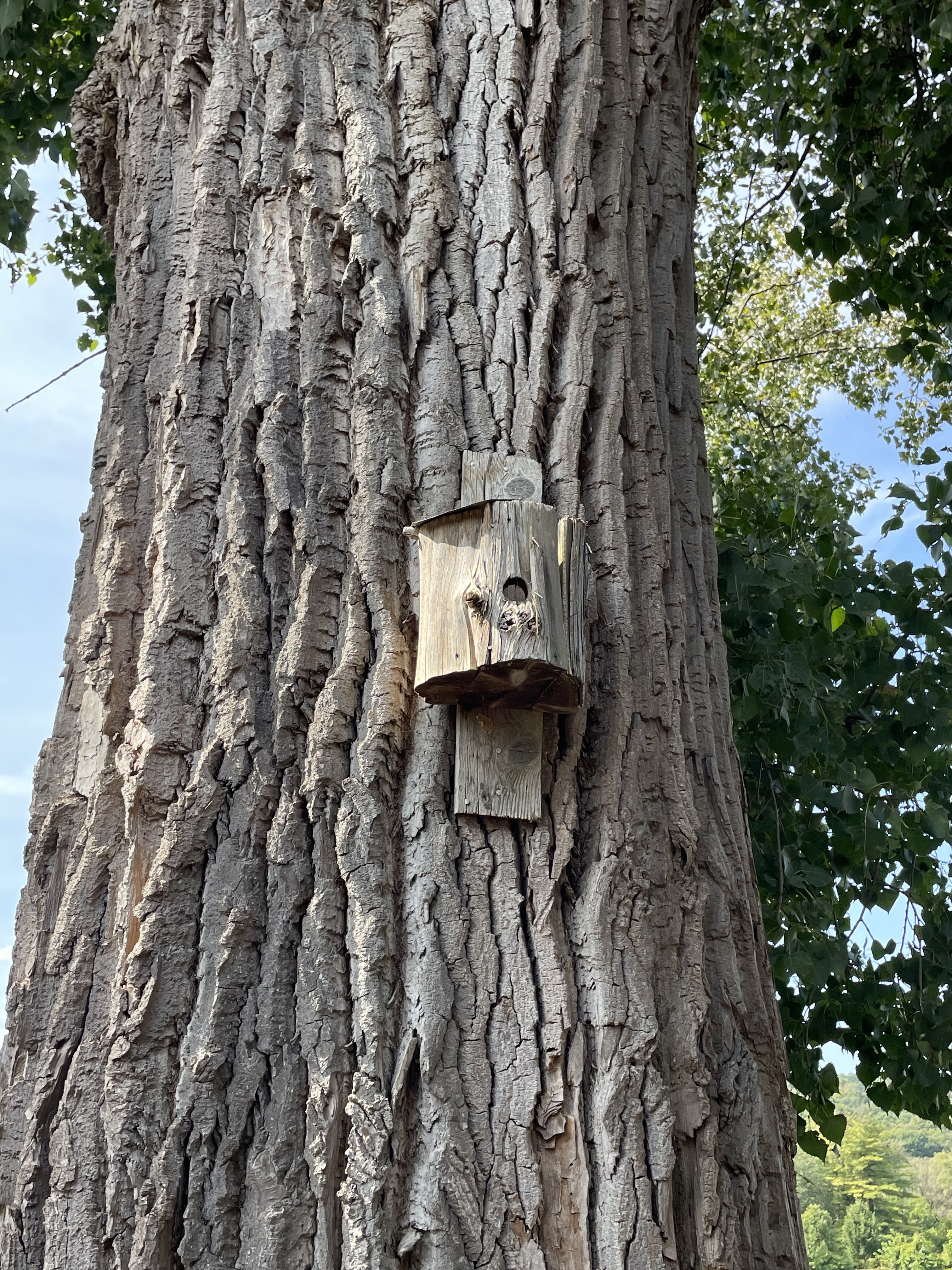
Where is the tree I grew up with, whose branches swayed outside my window my whole life? No more birdhouses.

Thinking about the nature of bad and good trees as I stand in the grueling heat of an early Queens morning. The parade of Norway maples along 145 Street in Flushing provides the only shade separating residents from an New York-style Hades.

People tend toward puzzlement when the sidewalk crew comes along. Are they taking down our trees?

Don’t get me wrong. Sunshine is good! If you asked medical pioneer Florence Nightingale, she would have touted its healing properties. In the nineteenth century, she espoused the wondrous effects of sun and fresh air in the absence of cures we take for granted, antibiotics and penicillin and the like. One approach in the 1930s was to suspend a babe in need of fresh air out a tenement window!

But today, what we now call the heat island effect afflicts neighborhoods like this one in Flushing disproportionately. They need all the cooling they can get. Even the shade of the “invasive” Norway maple plays a part.

Researchers have noted that individuals with mental health issues (e.g depression, for example) are more at risk when faced with high temperatures and “need to take extra care” as cognitive performance has been shown to be differentially affected by heat. People with diabetes, are overweight, have sleep deprivation, or have cardiovascular/cerebrovascular conditions should also avoid too much heat exposure.

Residents need shade. These trees, in the words of an arborist friend, are working hard. And they’re not getting paid, either!

What’s the use of being house proud, like so many Queens-ites, if you haven’t any trees?

Residents love their flowers.

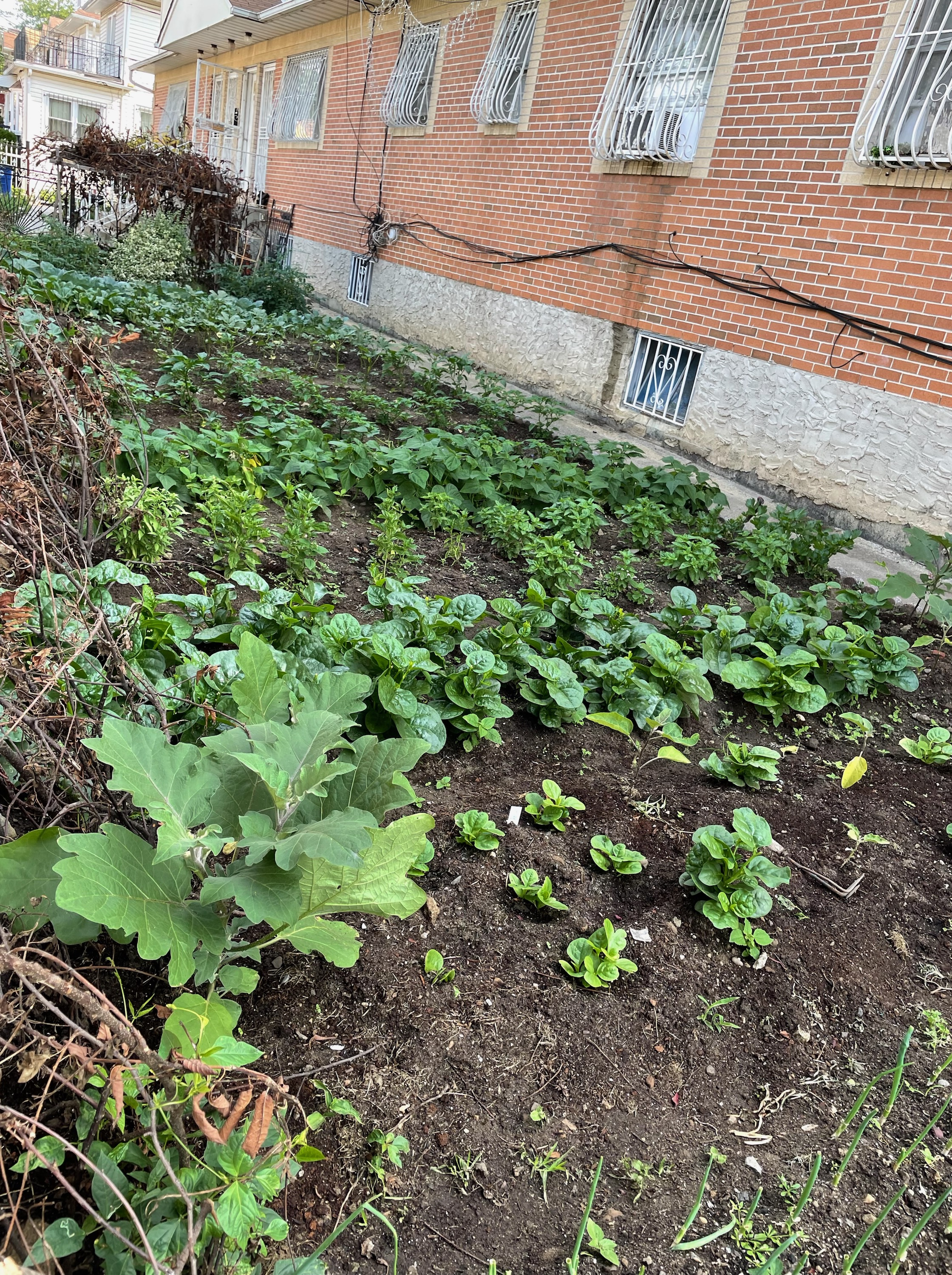
Some even plant small-scale farms – more ambitious than my raised tomato beds.

But others bake. The heat island effect means that people are cooked, literally, in their homes and neighborhoods. Fried like so many sidewalk eggs. Within the United States alone, an average of 1,000 people die each year due to extreme heat.

Mainly poor people. Those without recourse to decent air conditioning, swimming pools – and trees. Trees are a necessary feature in combating most of the urban heat island effect because they reduce air temperatures by 10 °F and surface temperatures by up to 20–45 °F.

Buildings, roads, and other infrastructure absorb and re-emit the sun’s heat more than natural landscapes such as forests and water bodies. The process of taking up water through its roots, up through the leaves and out again as vapor into the air, called transpiration, is something all trees excel at. It’s nature’s air conditioning. Canopy cover is always important, but nowhere more than in the places where it can’t be taken for granted.

In the suburbs we have grand old tall cedars.

In urban areas, not so much.

Nothing makes up for the simple, absolute value of coolness in hot weather.

Some surprising trees make it to a good old age on these mean streets. A Siberian elm somehow thrives in a 4×4 inch tree pit.

I stand outside a nondescript bungalow on 107 Avenue.

There is a robust swamp white oak. How nice.

These are some of the exotics you might stumble across in the boroughs of New York. Older specimens have obviously offered shade to strollers for quite some time. London planes thrive in the most destitute circumstances, and we are all the better off for it.

When you hear about property owners razing “good trees” to build additions or housing projects or basketball courts, it’s common sense to mourn their loss. Mature oaks, sweetgum, lindens don’t just spring up overnight and surely don’t deserve to be disappeared. We know we need them, though some knuckleheads will always come along to say they don’t matter and remove them.

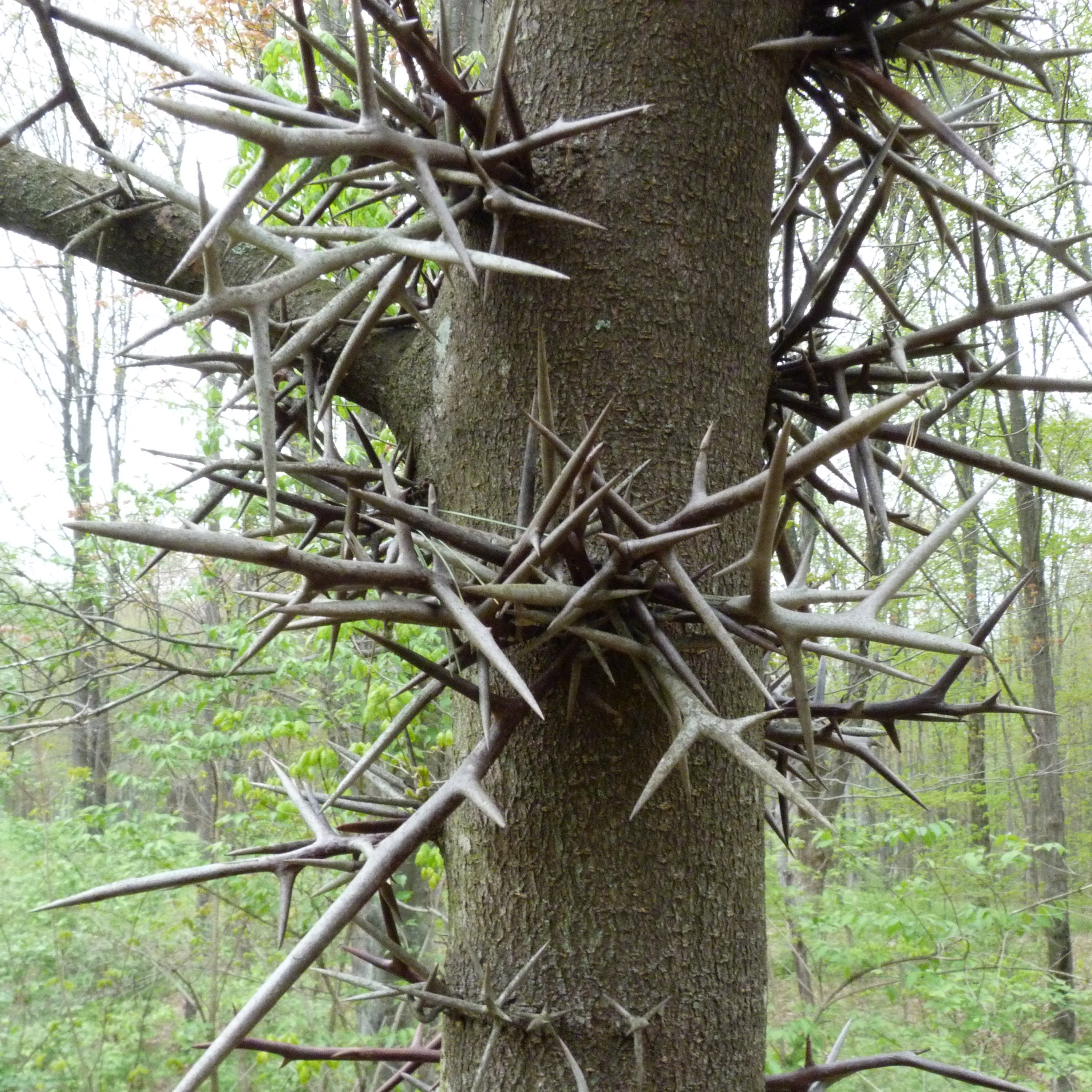
But what about the specimens sometimes dismissed as trash trees? Are honey locusts expendable simply because they are so common in this city?

I think that logic is mistaken. Honey locust has its own sharp-shouldered beauty.

Even the city version without the spikes can make itself welcome as a shade tree where we need shade.

Trees can’t help the species that spawned them, or the whims of the city planners who once planted these sometimes struggling urban forests. A Norway maple has gotta right to live too! And we deserve their shade. All of us.

1 Comment

Filed under Jean Zimmerman

Fragrant, spicy, lemony, lush and voluptuous

are some of the inadequate terms we use to describe roses, but equivalent to the terms oenophiles employ for the equally ineffable flavors of wine. Oaky, fruity, tannic, et cetera.

Really, no word can describe the experience of sticking your nose in a bloom and inhaling. My friend needs little encouragement to dive in. Swoon.

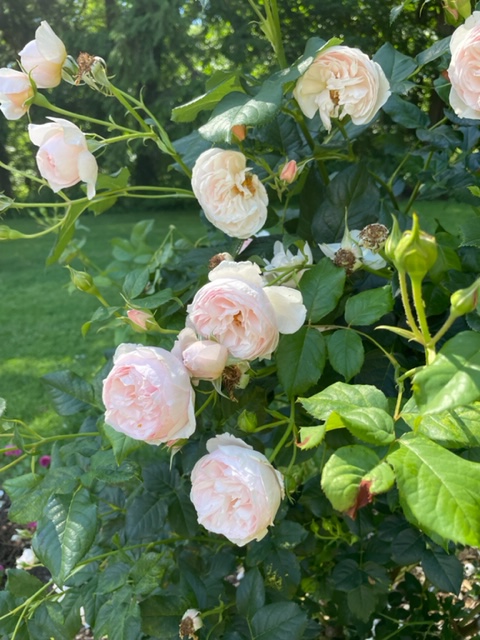
The thing to do if it is available to you (as they say in yoga class, referring to your ability to hold a pose) is to simply wander about a rose garden like the one at the Lyndhurst Estate and, yes, stop and smell the roses. We are so fortunate to have this magical place within walking distance.

What I love is that delving into botanical literature you find that roses have stories, roses are stories. The Lyndhurst rose garden was first planted in 1914 as the project of Helen Gould, the eldest daughter of robber baron Jay Gould, who bought  the estate in the 1880s. Over time and with successive owners who weren’t quite as enthused about the project it almost died out, to be revived by the Garden Club of Irvington-on-Hudson starting in 1968. Now 500 plants in five concentric rings thrive at the garden’s peak each June, and the lot is owned by the National Trust for Historic Preservation.

Each ring features different kinds: the outer ring has been planted with shrub and old garden roses, the middle hybrid teas and grandiflora, and the inner with polyanthas and floribundas. The ones I like best have labels, barely legible old keys to each one’s provenance.

Pink Knockout, for example, is a bubblegum-pink sport – meaning, basically, offspring– of Double Knock Out. Kind of like race horses.

Another, Soaring to Glory, developed as recently as 2018, is a sun lover that is especially resistant to disease. Something to like in a rose.

One of the arches bears a mysterious old plaque, Zepherine Drouhin.

It’s a special flower, dating back to 1868, described in the rose literature as a vigorous climbing Bourbon rose with masses of highly fragrant, semi-double, carmine flowers, 3 in. across (8 cm), counting up to 30 petals. Born on thornless, purplish stems.

The world might be complicated, tedious, awful. The only complexity of rosa is how many petals each one has, what shape its whorl, how the heck you describe its scent to differentiate it from all the other spectacular specimens. There is no bad rose.

One reminds me of a wild rose we once found in a neighboring meadow. Why it strayed from a domestic border I don’t know. That flower had no name that I ever knew; it was anonymous yet ravishing. I dug up part of it when we sold the house and replanted it when we moved to suburbia, careful to leave some of the roots so the plant would bloom for the new occupants.

Some efforts fail, as in life outside the rose garden. Some deaths remain in the borders as if to remind us that existence is in fact fleeting. Such as Summer Surprise, surprisingly a nonstarter.

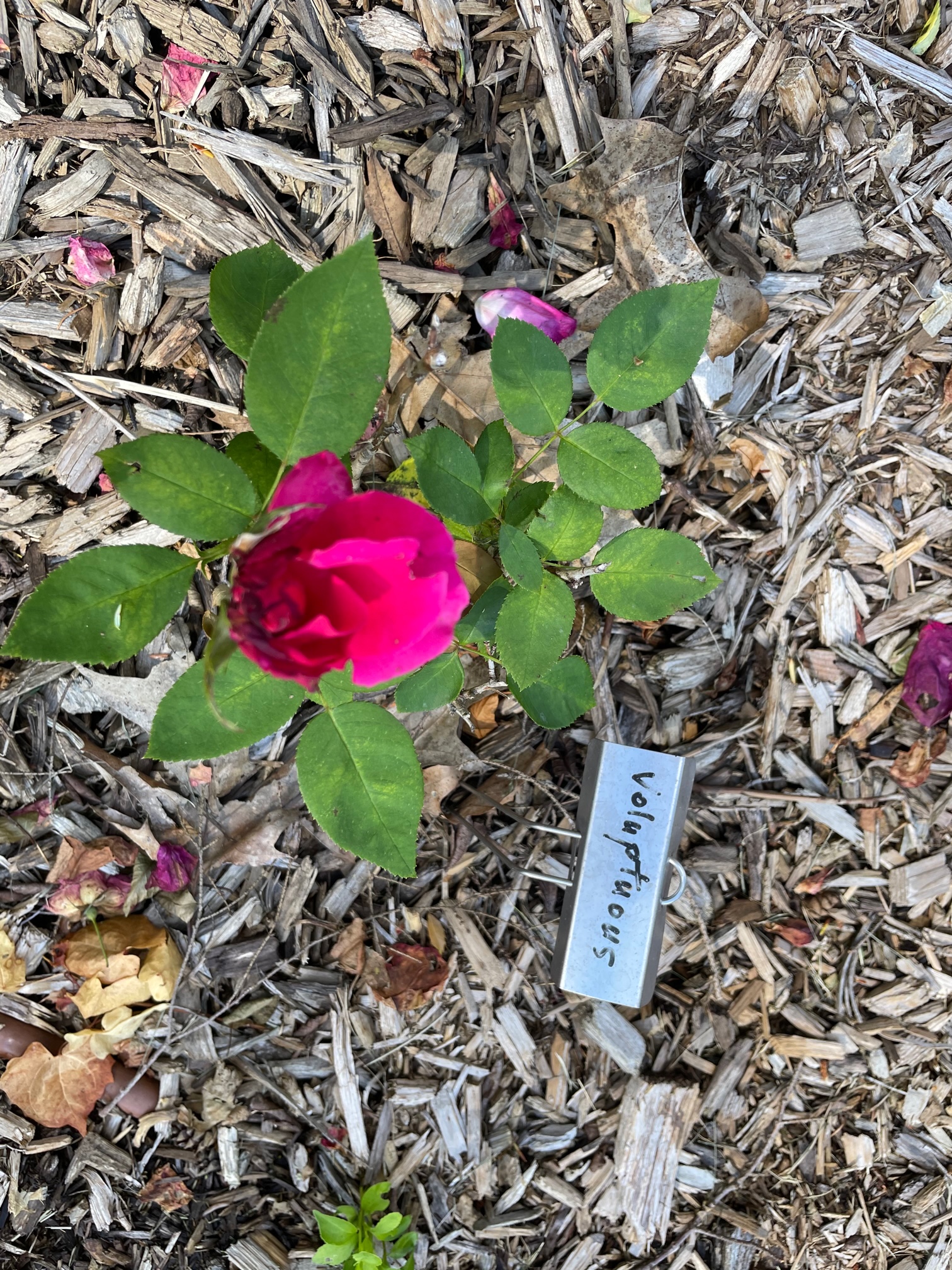
Or Voluptuous, which doesn’t quite live up to its hype.

You must time your visit to the 67-acre Lyndhurst properly. We have been overeager and jumped the gun with a visit when the season has barely started, only to find tight buds, not yet coaxed into blooming by sun and rain.

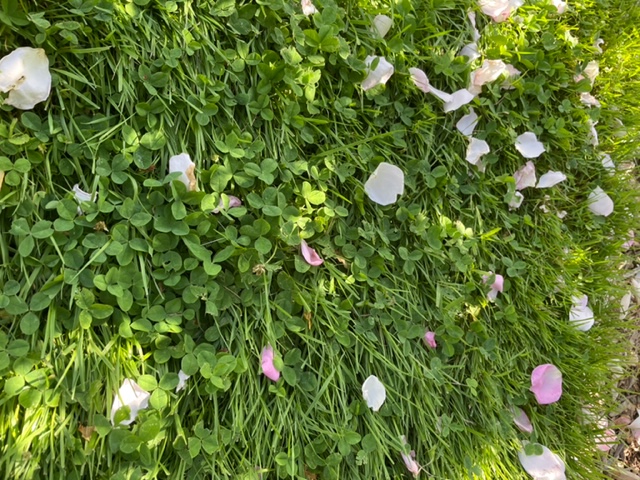
On the other hand, if you go too late in June, much of the fragile prettiness has shattered. Already, today, petals litter the lawn.

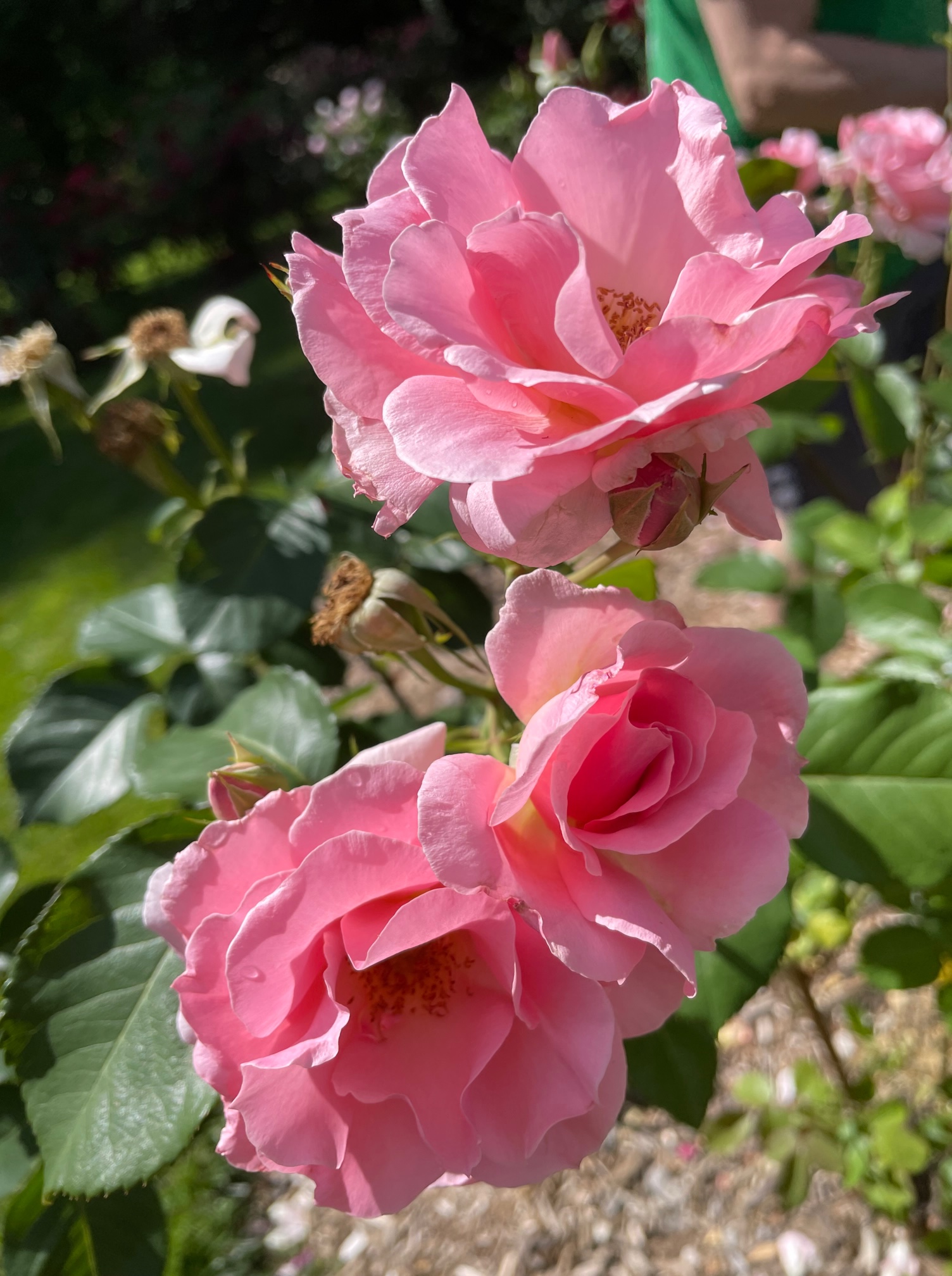
But still we find swaths of buxom beauties.

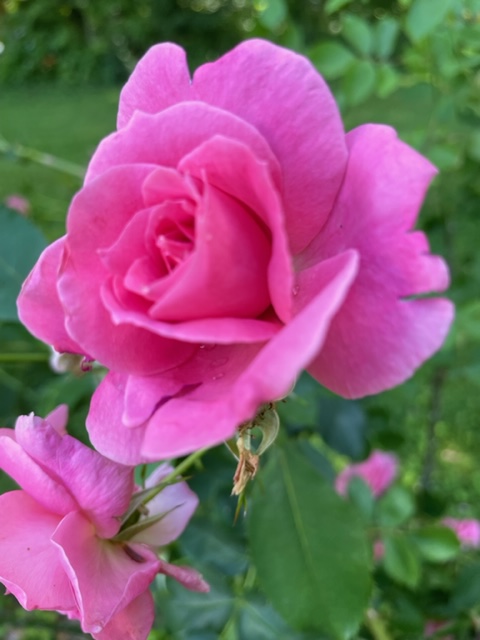
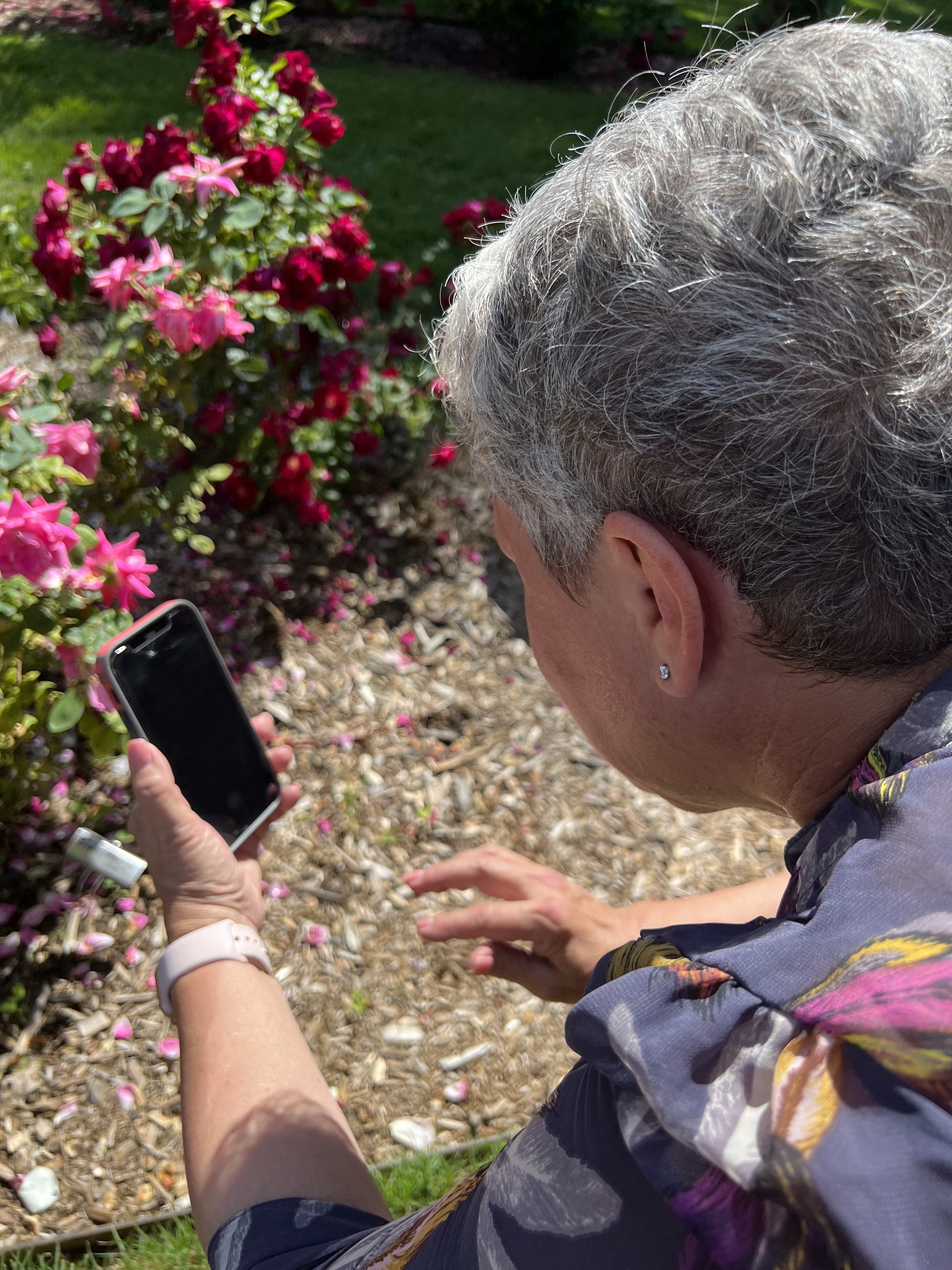
It’s difficult to take a bad photo of a rose, try as you might.

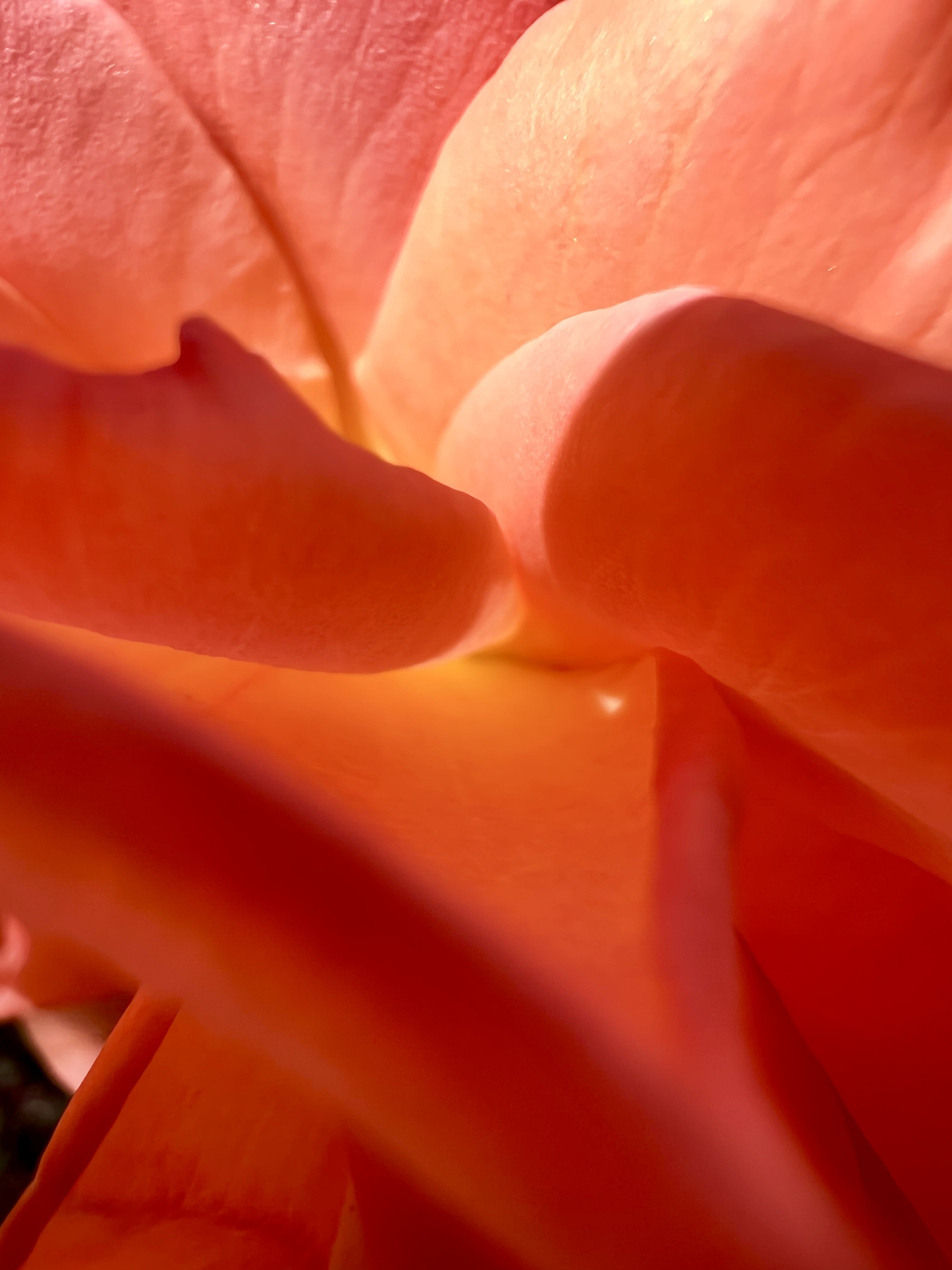
This is what one looks like close up.

Though it’s tempting to click, best to pocket your phone and simply drift from bed to bed, under the perfect sky, in a state of rose-addled bliss.

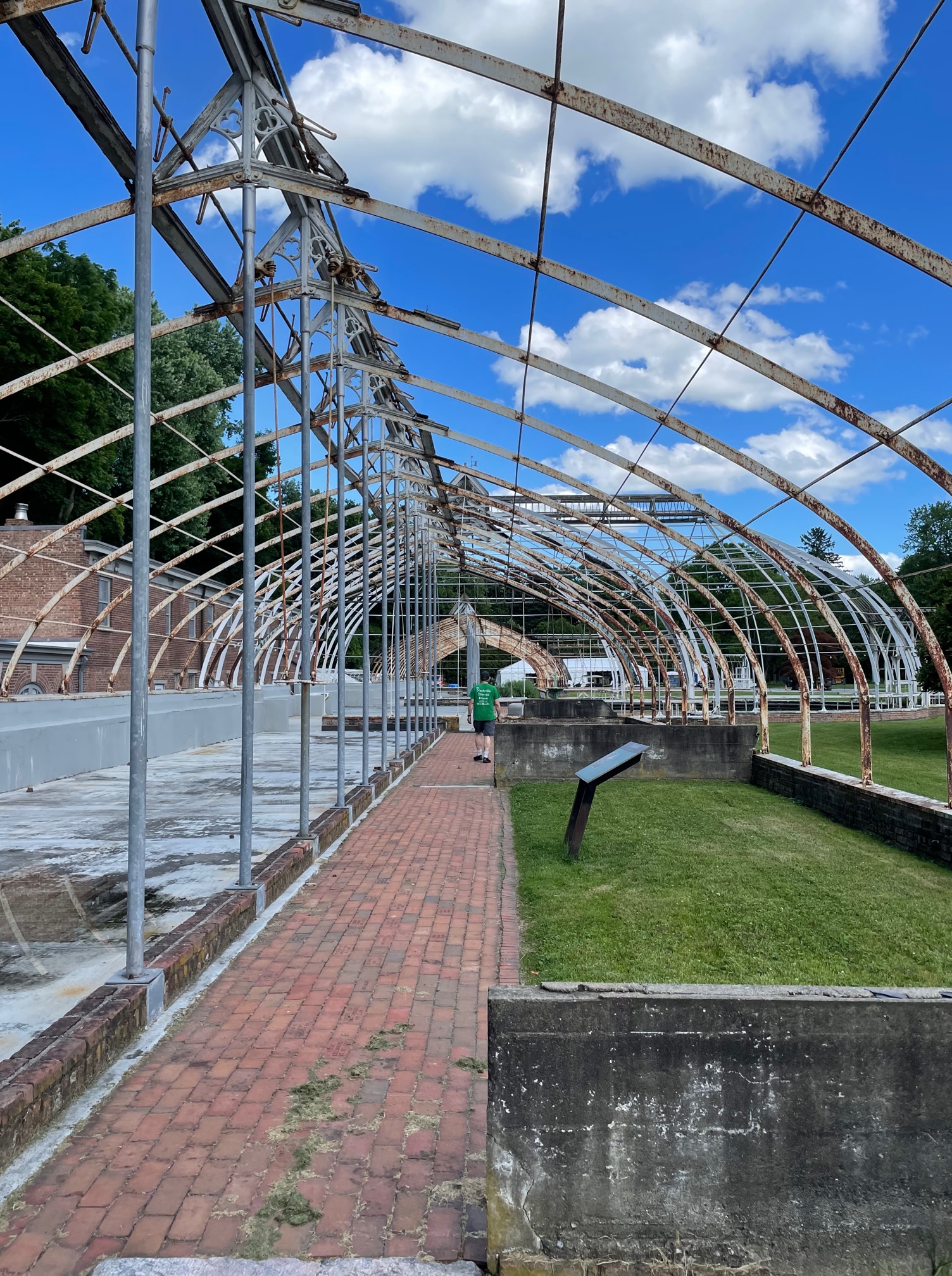
The frame of a greenhouse designed in 1881 by Lord & Burnham, when it was built the largest in the country, rises beyond a hillock. Once the foremost metal-framed conservatory in the country, now a ruin. You know I love ruins.

When Jay Gould had it built, he was inordinately proud of the orchids that were raised here – with a full-time staff of 16 gardeners, what could go wrong? – and used to run the plants down to gift to grateful New York City residents, with a steam heater to keep the flowers warm. Now there are just three gardeners to run the whole estate, and the greenhouse is nominally off limits.

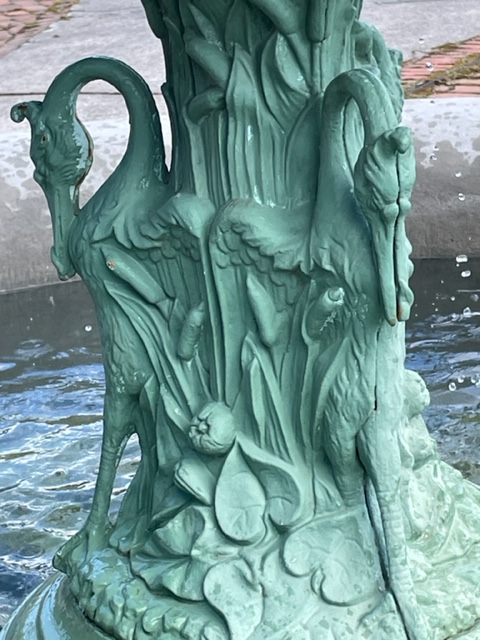
Okay. But an original fountain in the center bubbles, its bowl upheld by… pelicans perhaps? Or some mythological creature with bird feet?

When Helen Gould first dreamed up the rose garden, she planned for the folly to have only pink climbing roses. After her death, the estate passed to her younger sister Anna, the Dutchess of Talleyrand-Perigord, who had gained a divorce from her new husband’s cousin Boni, the Count of Castellane, he who had bilked her of $10 million of her inheritance. The heiress had two children in this second marriage, Howard de Talleyrand-Périgord, Duc de Sagan (1909-1929), who died of a self-inflicted gun wound when his parents refused him permission to marry until he was 21, and Helene Violette de Talleyrand-Périgord,  who married Comte James Robert de Pourtalès, divorced him, then married Gaston Palewski, former Minister of Scientific Research, Atomic Energy and Space Questions. Lives perfumed with the best of the best, aside from that unfortunate suicide. By the time Anna went to the rose garden in the sky in 1961, few of the shrubs were left.

Jay Gould enriched the lives of his swanky city pals with orchids. Perhaps he might have sent roses.

Leave a comment

Filed under Jean Zimmerman

My father fell for an orchid

late in life. It was a simple series of white flowers on a stem, nothing fancy, yet he insisted that it accompany him from the hospital to his room in the Care Center. A friend had brought it as a gift, and it somehow spoke to him, he who had never had a thought for plants earlier in his life. Orchids can be magical.

The ones at the New York Botanical Garden’s annual orchid show practically knocked me to the ground.

I was lulled by the piped-in yoga-class soundtrack. Then reawakened again and again by the five greenhouses’ worth of tropical specimens.

How can something be unique yet generic, astoundingly beautiful yet ho-hum, run of the mill? That was my honest assessment of the oxymoronic goods on hand.

The orchids went on and on.

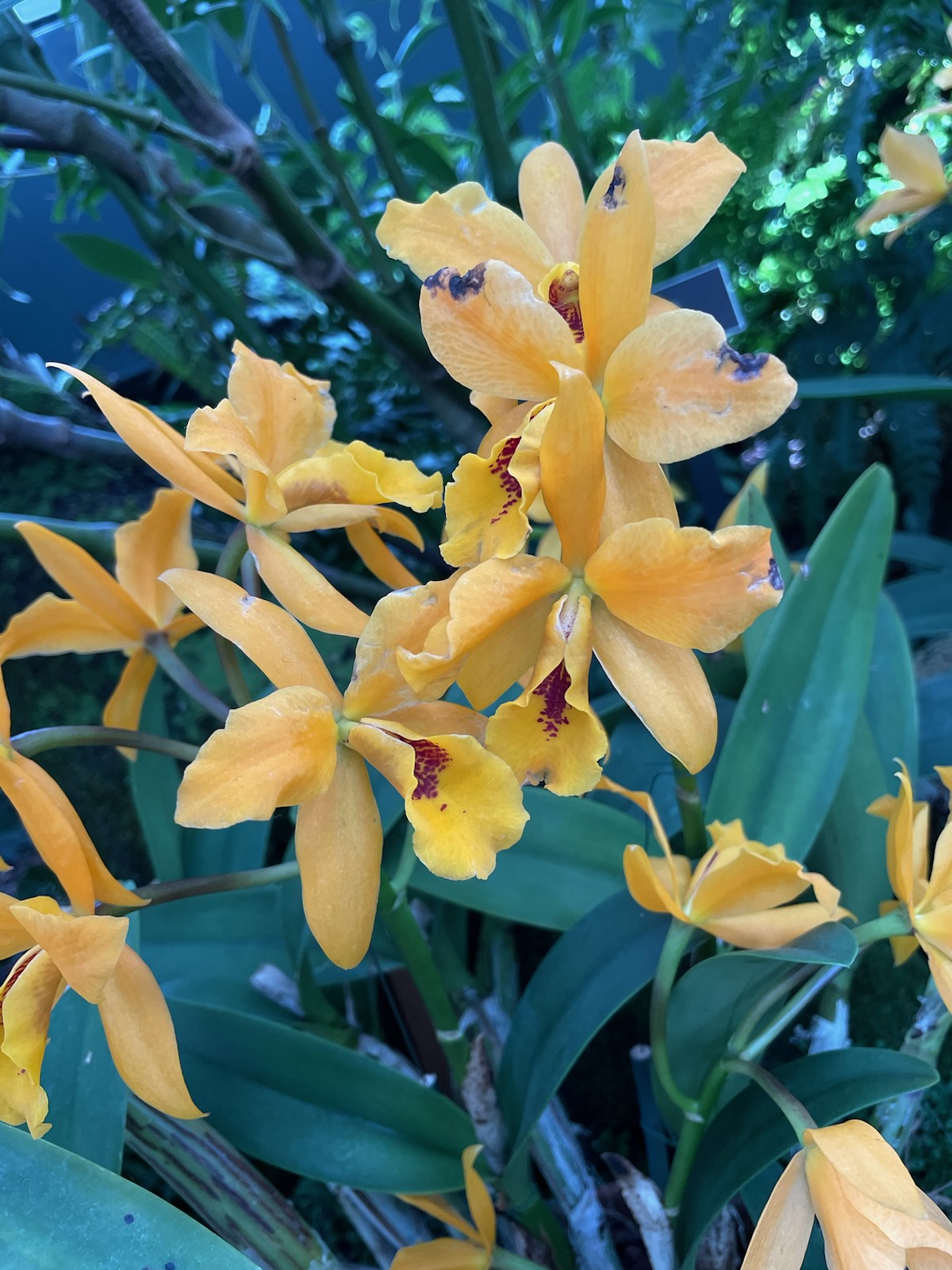
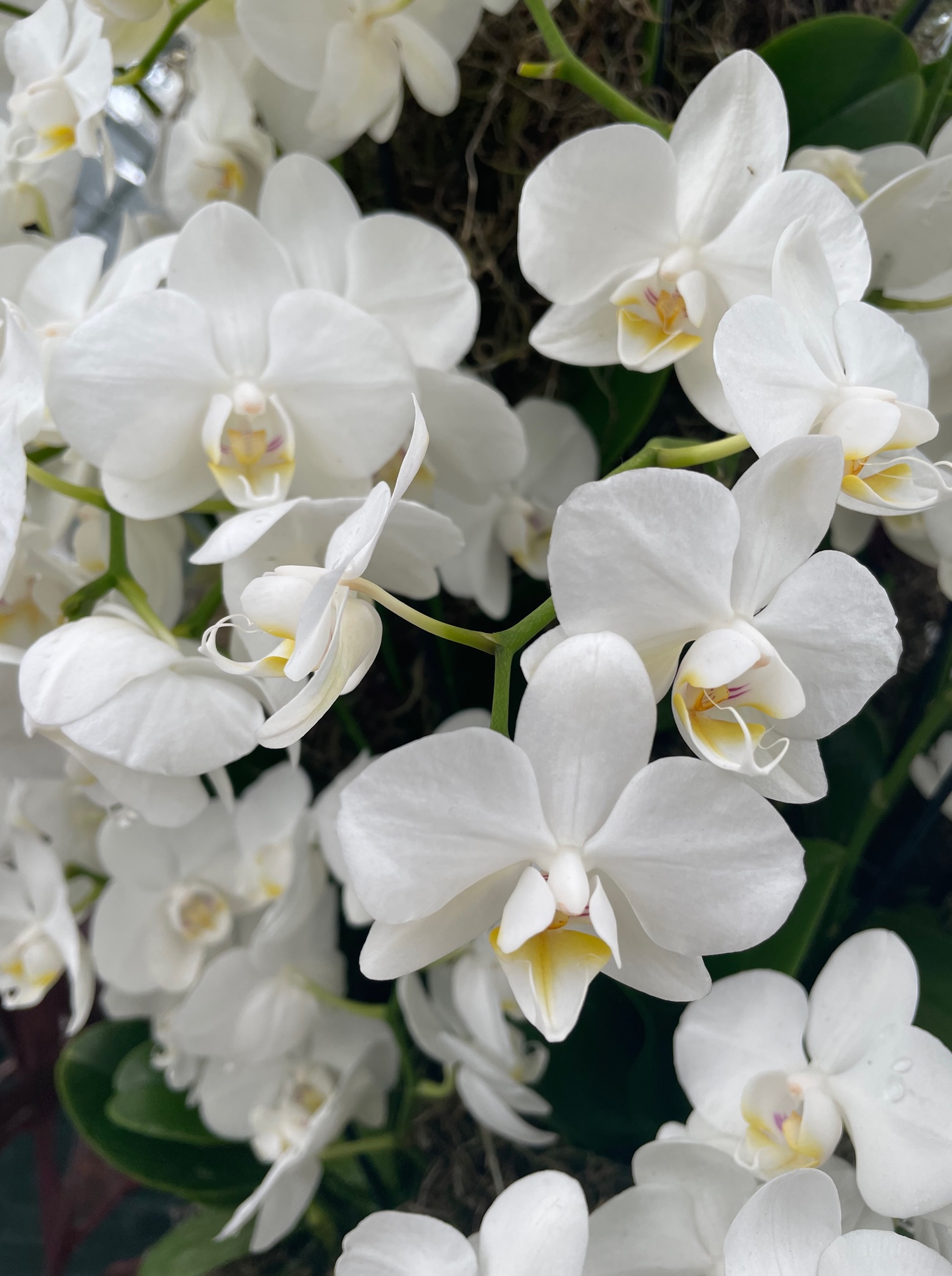
Moth orchids, ghost orchids, slipper orchids, rainbow orchids. Moonlit orchids, which attract nocturnal pollinators, and are also especially fragrant by the light of the moon.

Sugary.

Clownish.

Ever so slightly obscene.

A bit of TMI, thank you very much.

Easy on the signage, New York Botanical Garden horticulturalists! Sometimes I prefer my facts optional, at least when viewing the natural world.

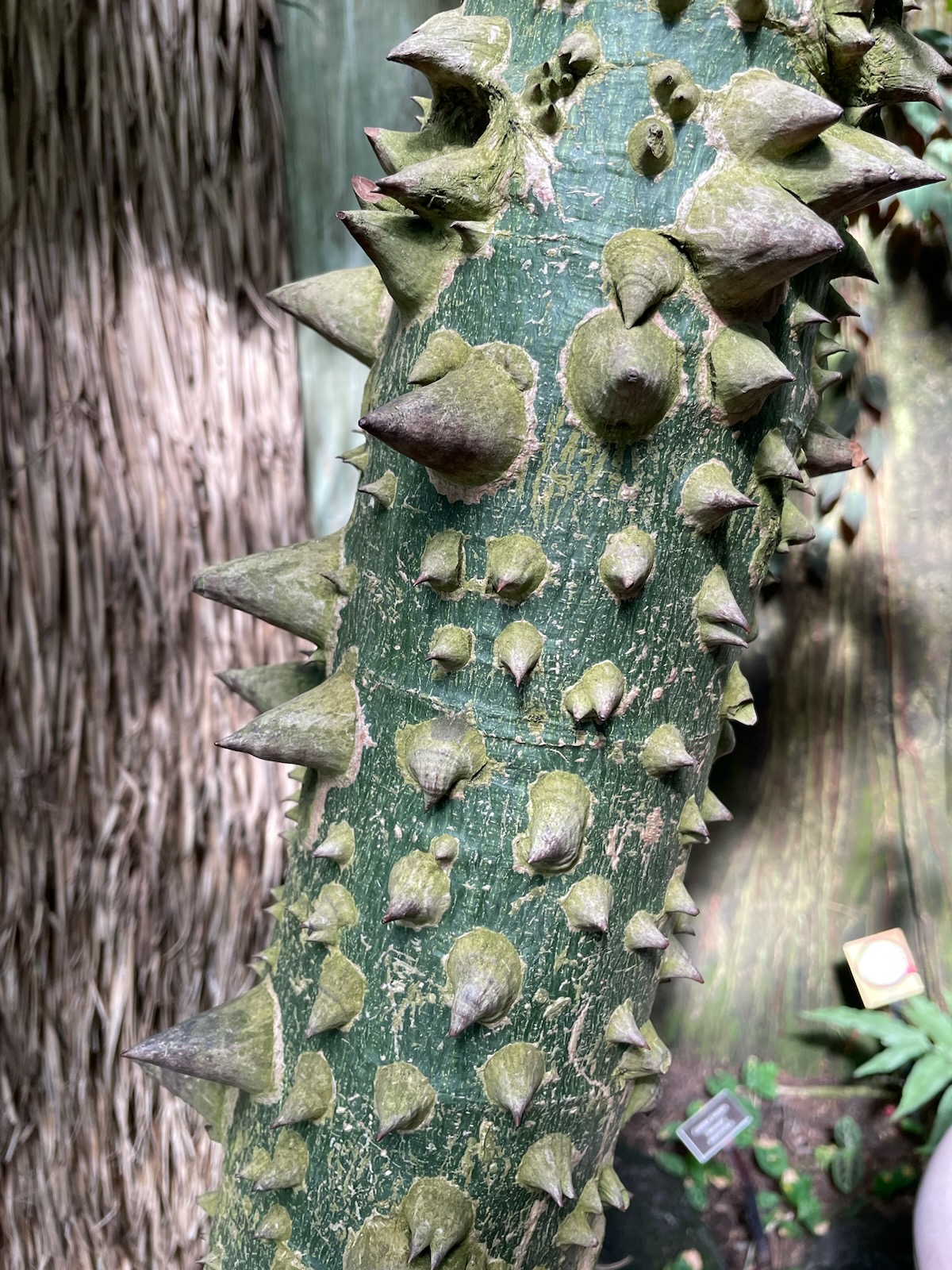
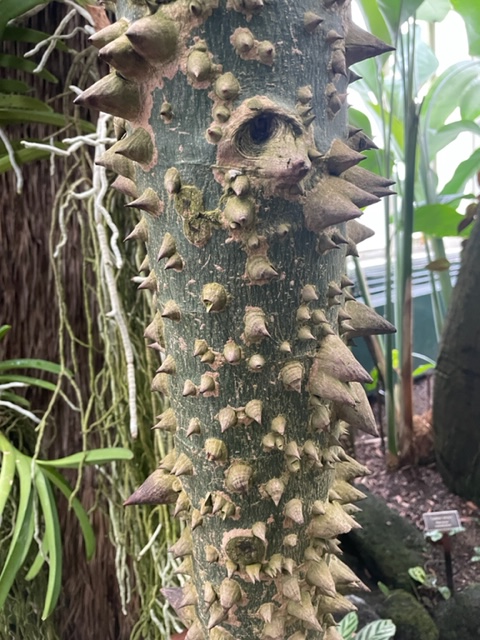
I found myself admiring other living beings in the vicinity, anything not obviously pretty, the ones with thorns, like the South American floss-silk tree.

Or the non-orchid plant that that presented itself in an extraordinary, almost indescribable shade of green – a jade vine, it grows only in the Philippines.

I was drawn to the womb of a tunnel that connected parts of the exhibit.

And my fellow visitors clicking, clicking, clicking, intent on capturing the essence of a particular flower. Human beings, cameras, nature, always fascinating. Note: it is impossible to take a bad picture of an orchid.

Outside, the catkins dangled from the April birch.

A prickly sweetgum seedpod lay nestled in the grass beneath its parent, a sweetgum tree not yet leafed out.

And the equally prickly human being waiting on our bench for the next tram.

The orchids are always going to be splendiferous, whether they come from the supermarket or the Enid Haupt Conservatory show. The ones I saw today made me realize how exquisite everything else is, too.

2 Comments

Filed under Jean Zimmerman

Are butterflies intelligent?

Yes. If intelligence is the ability to seek out nectar and pollinate flowers, yes. In terms of long-term travel to their southern climes and back, Monarchs in particular never cease to amaze.

But are they dependable? In terms of showing up when they’re expected, to bask in humans’ adoration? Not so much. 

The events of the day at Wave Hill, the century and a half old estate that is now an arboretum and horticultural center, were supposed to highlight butterflies. There was a “Nature Walk: Butterflies in the Garden” and special arts and crafts activities for families. The last expedition had just gone out when we arrived mid-afternoon, so we thought we’d go it alone.

We saw brilliant flowers.

Of all colors.

Shapes. Sizes.

Surely some that would appeal to a butterfly.

Look, there’s a monarch! said Gil. But it had vanished.

I see a little white one, said Josefa. A cabbage moth, corrected Gil.

There were some bees of different types. Where there were bees wouldn’t you expect butterflies?

We learned that Louis Bauer, the horticultural director at Wave Hill, was going to be honored at a party in a couple of days. I met Louis when I sold him a tree inventory for Wave Hill a few years ago. I remember asking him how he kept everything so beautiful in the greenhouses there. I go in three or four times a day and stick my finger in the soil to see if they have enough water, he said. Simple genius.
The greenhouses, of course, had no butterflies, but some prehistoric looking desert plants.

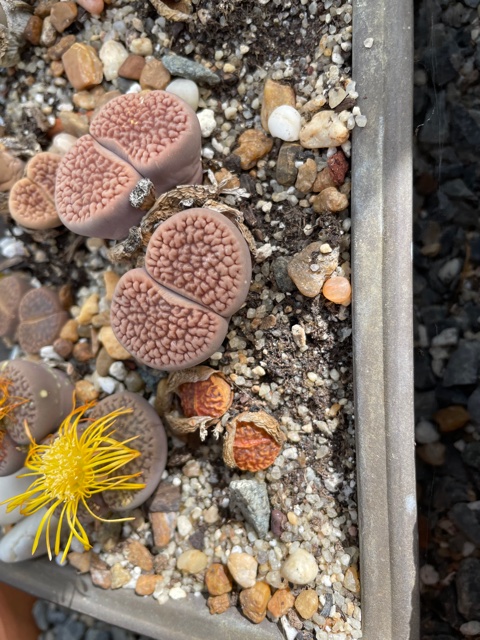
And a buxom cactus.

More flowers. Nothing fluttered by.

Quiet trails.

Vistas in every direction. Some of them private.
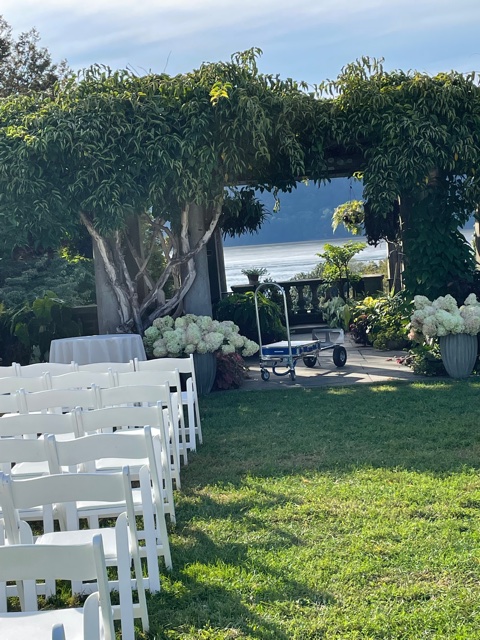
The most fabulous view out over the Hudson was getting ready for its closeup with white wedding party chairs.

We just about gave up. Not only did we not see butterflies, we didn’t see anybody looking for butterflies. Was this some colossal joke?

A sculpture on the lawn made use of succulents, moss, and a tire fetched out of the Bronx River.

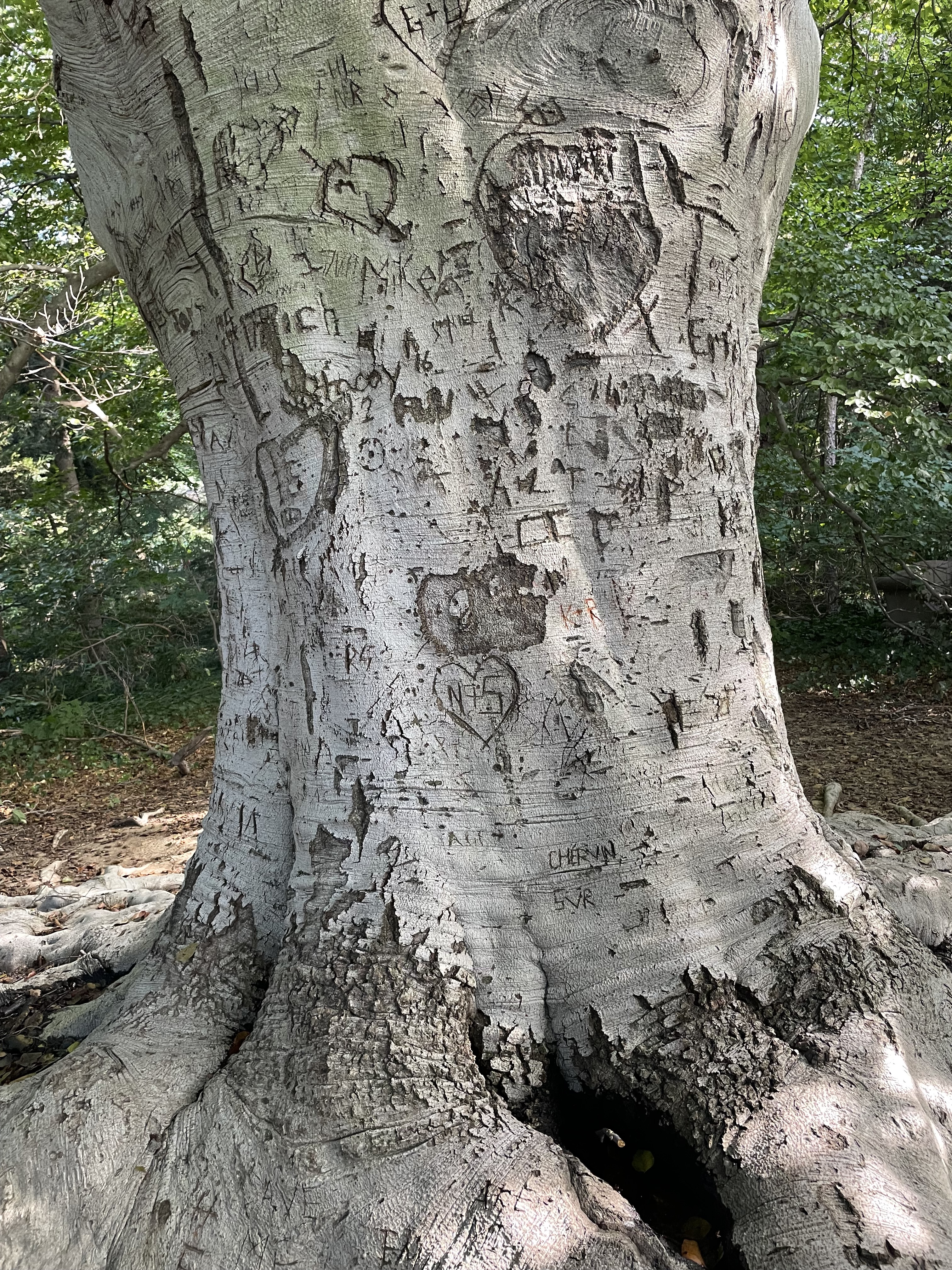
Wave Hill has a pair of copper beeches to die for. One of the elephantine pair has pristine bark that you just want to go up to and pet. The other’s branches drape down to the ground and hide a trunk covered with a venerable array of  carvings. I have always liked beech bark carvings. It makes for a good place to meet a friend for a private assignation. I feel like I’ve done that sometime, in another life.

We stretched out in the adirondack chairs that make Wave Hill an even more perfect place. In the mellow shade of a white oak. The burnished glaze of fall made us collapse with thirst.

So the winged creatures missed the cameras and the oohs and ahhs. They took the nectar and ran. They had better places to hang out. They’re that smart.

Leave a comment

Filed under Jean Zimmerman