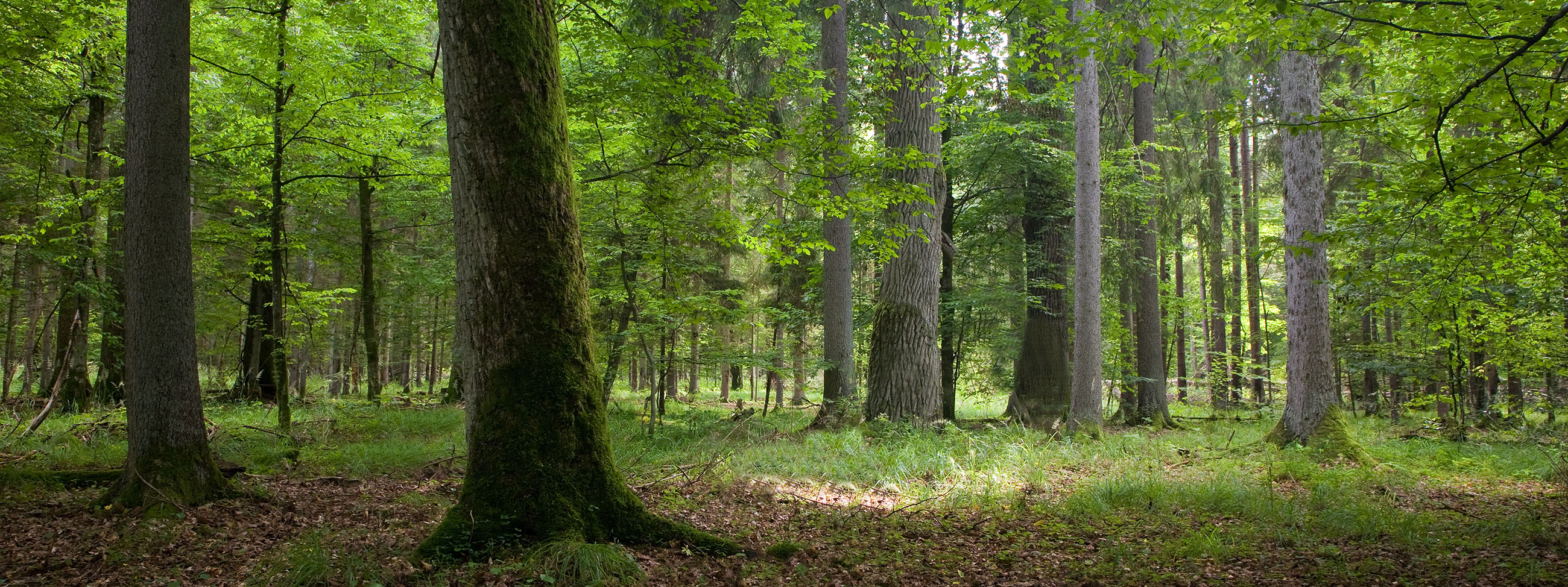
forest bathing, or shinrin roku, was officially invented by the Japanese in the 1980s to help people dealing with burnout in the big city. Doctors still prescribe it. I don’t think it involves lying prone as in a bathtub though I suppose it could.
Trees release antibacterial and antifungal phytoncides into the air, possibly boosting the immune system.
I also am not aware of whether it is necessary to do your forest bathing in an old growth forest, say Washington’s Hoh Rainforest in Olympic National Park, or Rockport, with its hundred year old trees, or Alaska’s Tongass, the largest national forest in the U.S., impressive as they are, or whether spending some time in Hillside Woods in my hometown would do the trick. I think the latter.
Old growth was newly coined by ecologists in the 1970s, and it meant woodlands that had been undisturbed for more than a century. Around where I live, on the East Coast, we don’t have many of those, though the NYBG boasts about its teeny patch of virgin land, Thain Forest, at 50 acres. They say beaver live there. In the Bronx. Here, forests have been cut down to one percent of their original volume since European colonization.
It’s a far cry from Poland and Belarus’s 548 square mile Bialowieza where the world’s largest population of European bison lives.
I would much rather be bathing in one of these forests right now rather than writing this post, so I think I will climb into the bathtub and dream of lofty ancient trees hung with moss.
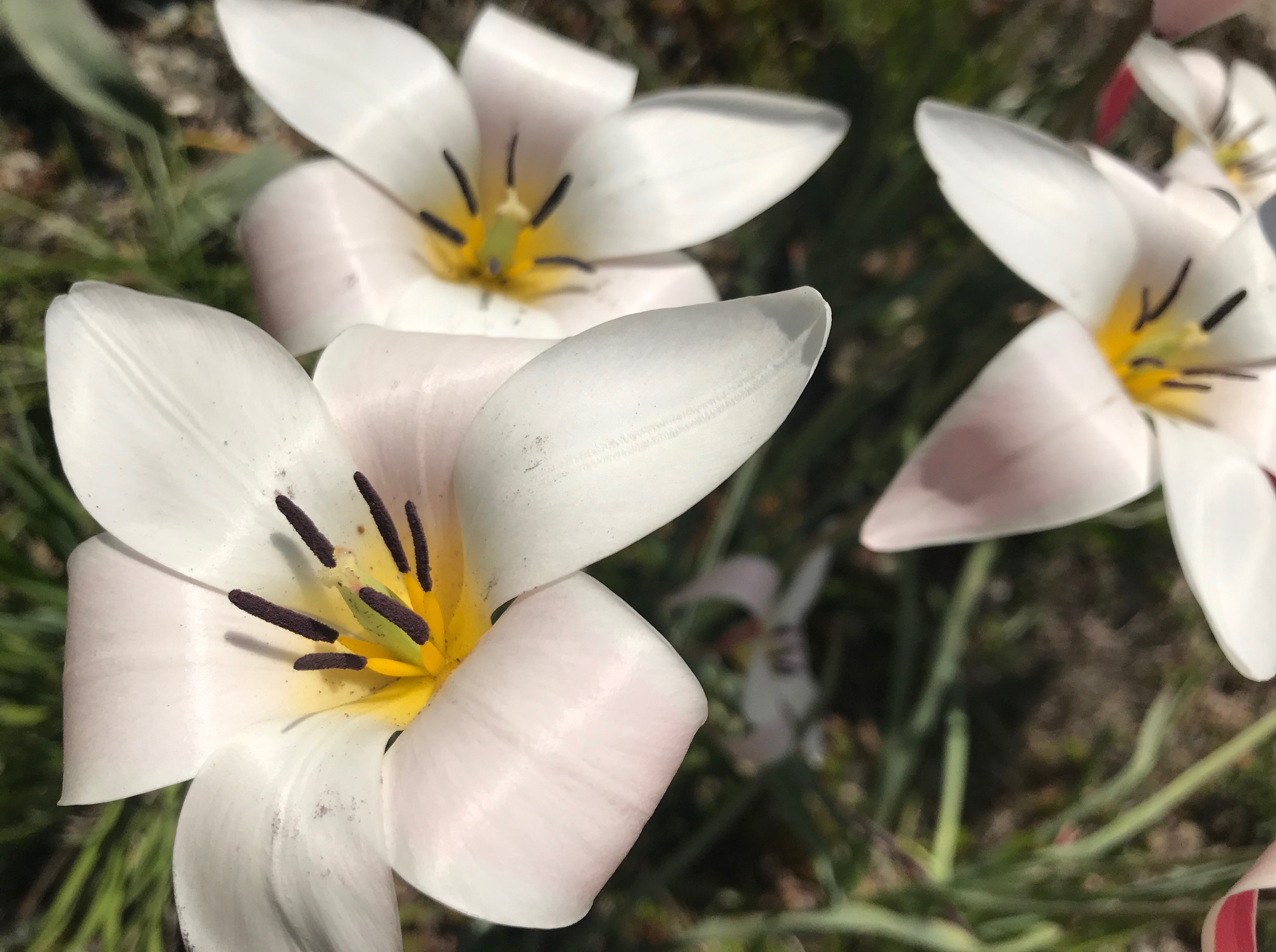
Today, some fat red tulips dipped under their own weight.
Hard to believe that in the early 17th century tulips were more valuable than any other item in Dutch trade. The introduction of the tulip to Europe is often attributed to Ogier de Busbeco, the ambassador to the Sultan of Turkey, who sent the first tulip bulbs and seeds to Vienna in 1554 from the Ottoman Empire. Monet painted Dutch fields a bit later.
Growers strove to create striations on the petals and fluttery edges that investors went crazy over.
They had names like Admiral and Viceroy (below). The most intense trading was done with bulbs, so you would never even know until the growing season what your flower would look like.
At the peak of tulip mania, in February 1637, some single tulip bulbs sold for more than 10 times the annual income of a skilled artisan. The Intricate stripes we see were caused by a tulip-specific mosaic virus, which could “break” petal color into two or more. Speculators entered the market. The Viceroy was sold for two lasts of wheat, four lasts of rye, four fat oxen, eight fat swine, twelve fat sheep, two hogsheads of wine, four tuns of beer, four tuns of butter, 1,000 pounds of cheese, a complete bed, a suit of clothes and a silver drinking cup.
When I was a kid I used to delight in creating new varieties of tulips by taking the pollen from the stamen of one and rubbing it on the pistil of another, then waiting a year to see what happened.
There are still breeders of tulips out there trying to capture the gardener’s imagination, if not their gold, as with the now-commercially-available Black Parrot Tulip.
In the 1600s, the bubble didn’t last. The heated trading sessions in the taverns, called “colleges,” died out. Some said it was the bubonic plague that doomed Tulip Mania. Or maybe one day everyone woke up and said, Aren’t we being silly? Let’s go back to making cheese, thousands of pounds of it, something more appropriate for trade. Or go to sea and fight some wars. How about bitcoin? We don’t need tulips for that, do we?
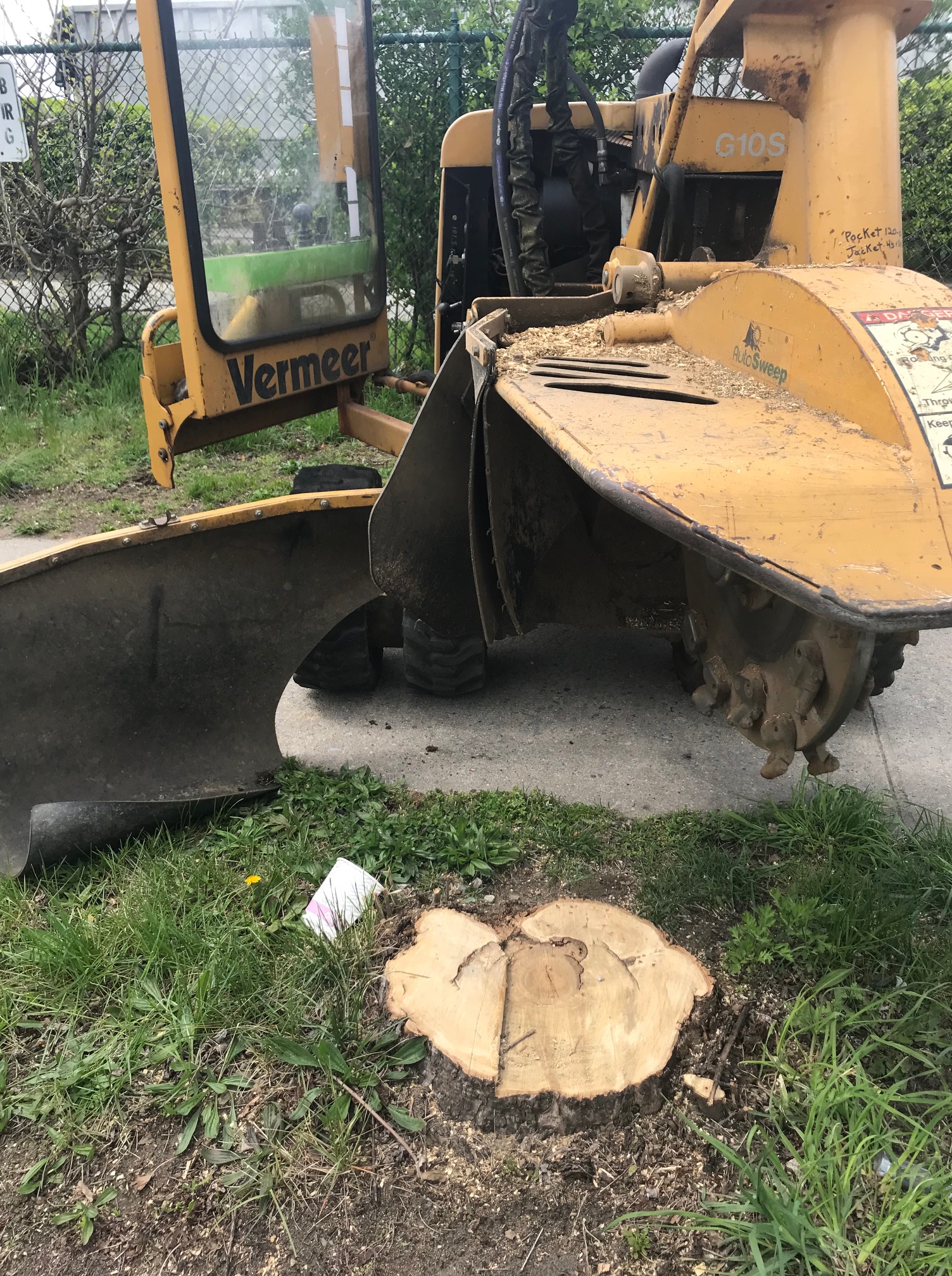
or goddesses, in my opinion, and I am neither, so what am I doing flagging? Any port in the storm, I guess, and we were a worker short today on 114th Street in Queens, where the job was grinding stumps of the ash trees that we had removed last week. I am usually the arborist supervising the job, and my flag was rather pathetic.
I used to know a flagger on another job. Her name was Pauline but for some reason the crew insisted on calling her Paulina. She was Jamaican, and when she spoke to someone from her homeland I found her patois impossible to understand, though of course she spoke perfect English. She managed the eight lanes of traffic at 167th and Webster Avenue in the Bronx like she was coaxing a gaggle of hornet-tempered ballerinas into performing a beautiful SwanLake, making sure each vehicle knew its proper place and nobody died.
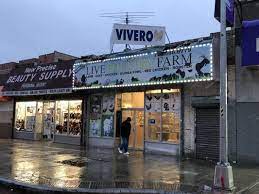
When the traffic fumes choked me, I took refuge in the live poultry place, a misnomer because it also had rabbits, chickens and goats for sale, and, during Eid, fine young cows.
I socialized especially with the goats, and made plans to adopt one and give it to one of those farms that takes in orphaned creatures, until I called around and found that no one would take an animal from a live market on the theory that it would only encourage the practice.
In Queens, they use a Vermeer to grind the stumps.
When I first saw a Vermeer on a job, a bigger one, I thought it was so odd to name machinery after a fantastic Dutch painter.
But each has its own beauty, I guess. The stump grinder performs its function beautifully.
Standing on the sidewalk with my flag, I see that Queens is not without flamboyant flowering fruit trees.
A couple who had bought their home 50 years ago, they said, lamented the destruction of the ash trees across the street. They were sick, I tell them, they were dying. And I thought to myself, Look up and savor the gigantic Ginkgobilobas with their tiny emerging fan leaves that grow on your side of the street.
Ancient Ginkgo trees aren’t getting sick anytime soon.
I know. I already saw more cherry trees in bloom this year than anyone would probably want to see.
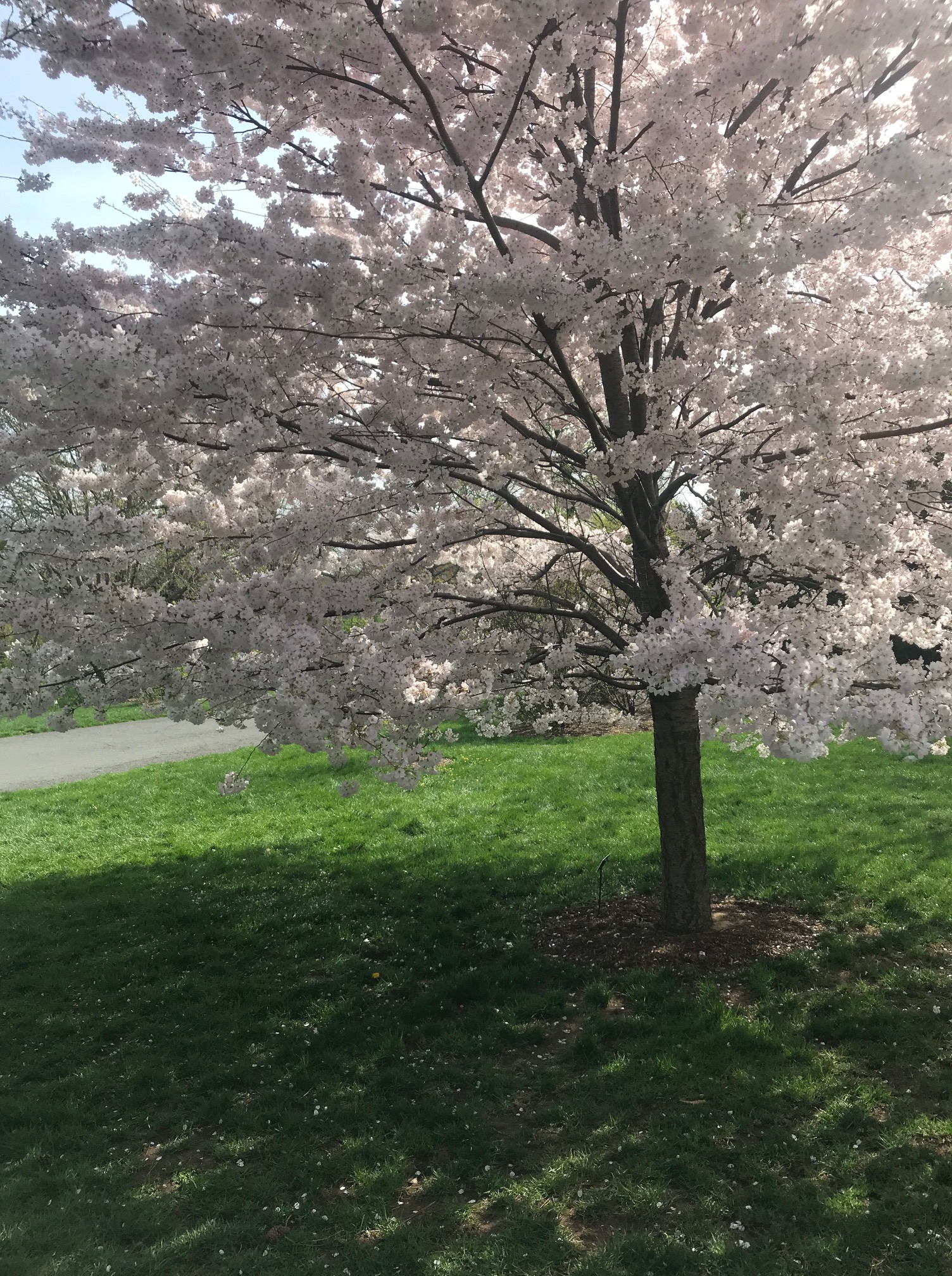
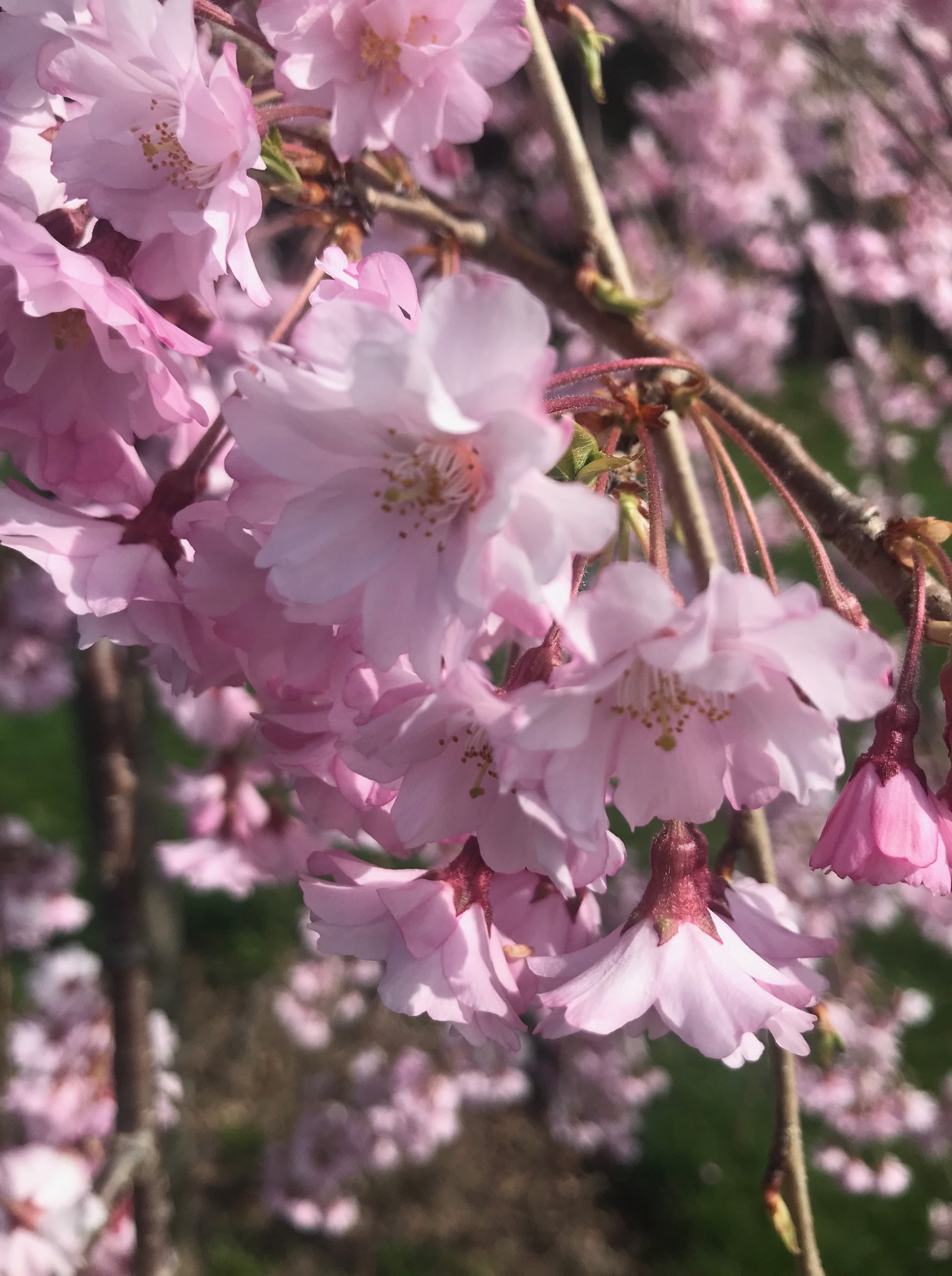
But here I was, going back to the New York Botanical Garden in quest of the Higan cherry, which has stupendous flowers not only in spring, but reflowers in fall. What magic. Prunus subhirtella, apparently a wild cherry from Japan, was introduced in this country around 1862, and the weeping version, pendular, is especially popular.
We heard that we would find one in the rock garden, and followed some paths to find it. Saw the less genteel back side, literally, of NYBG when we took a picture of a gardener hard at work. He shouted at us to stay on the path.
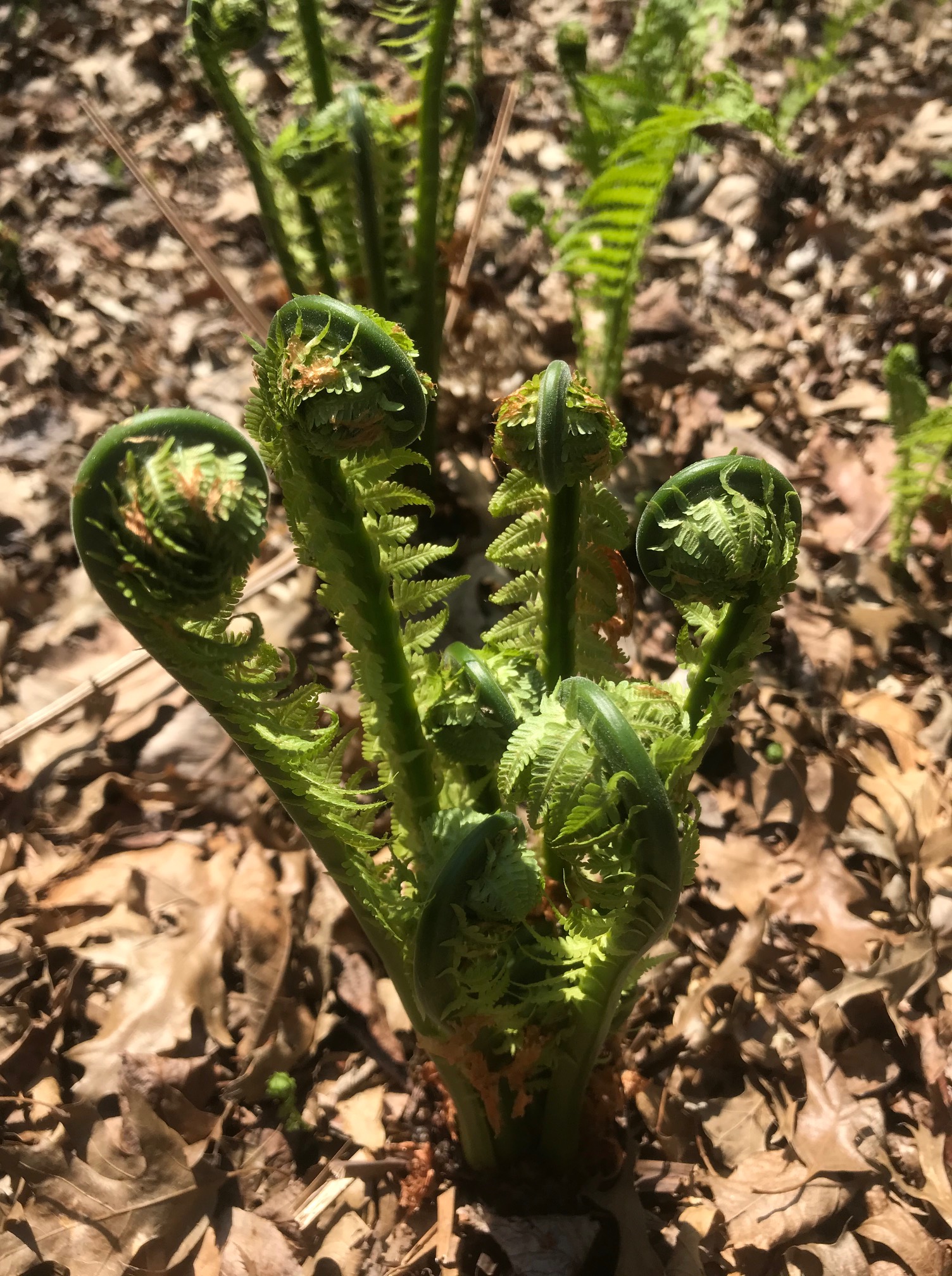
Admired some fiddlehead ferns, as the straw-bonneted garden docent leading a tour kvetched about the excessive foraging that has made this delicacy hard to find..
The rock garden was profusely in bloom.
We passed a huge, bulbous tree as we entered. But no cherry. We asked another straw bonnet if she knew where it was. Ask him, he’s the boss, she said.
I can look up any plant in the garden with this, he said, balancing his tablet. A tech head with dirty hands.
Well, it looks like you’re a couple of weeks late for the Higan cherry to bloom, he said. But as soon as you exit the rock garden you’ll see it.
We’d already seen it! But I had never seen a cherry like it. When I think of cherries, I think of lenticels, which allow a gas exchange between the atmosphere and the tree’s internal tissues. I just think they look cool.
They help the tree breathe.
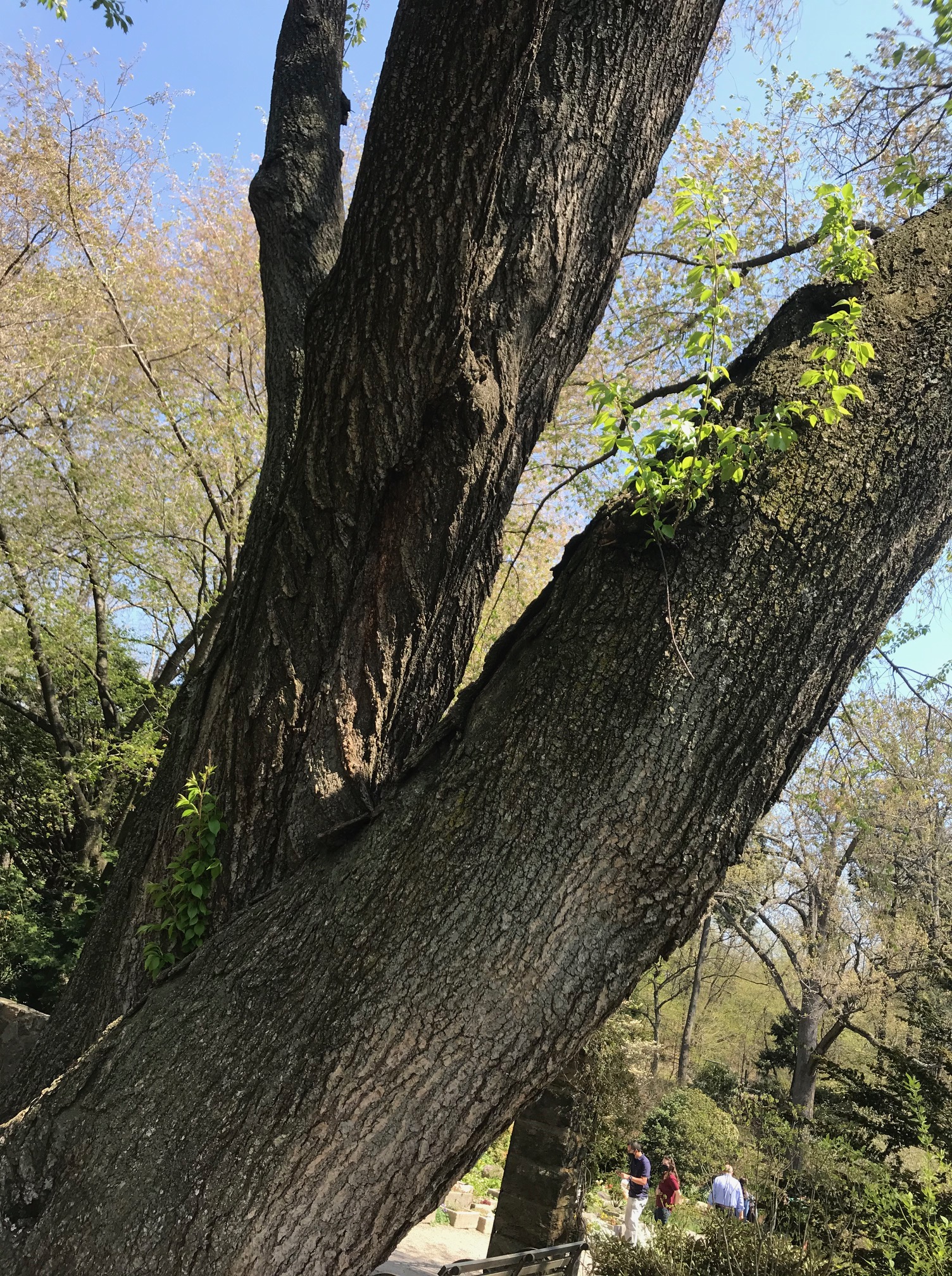
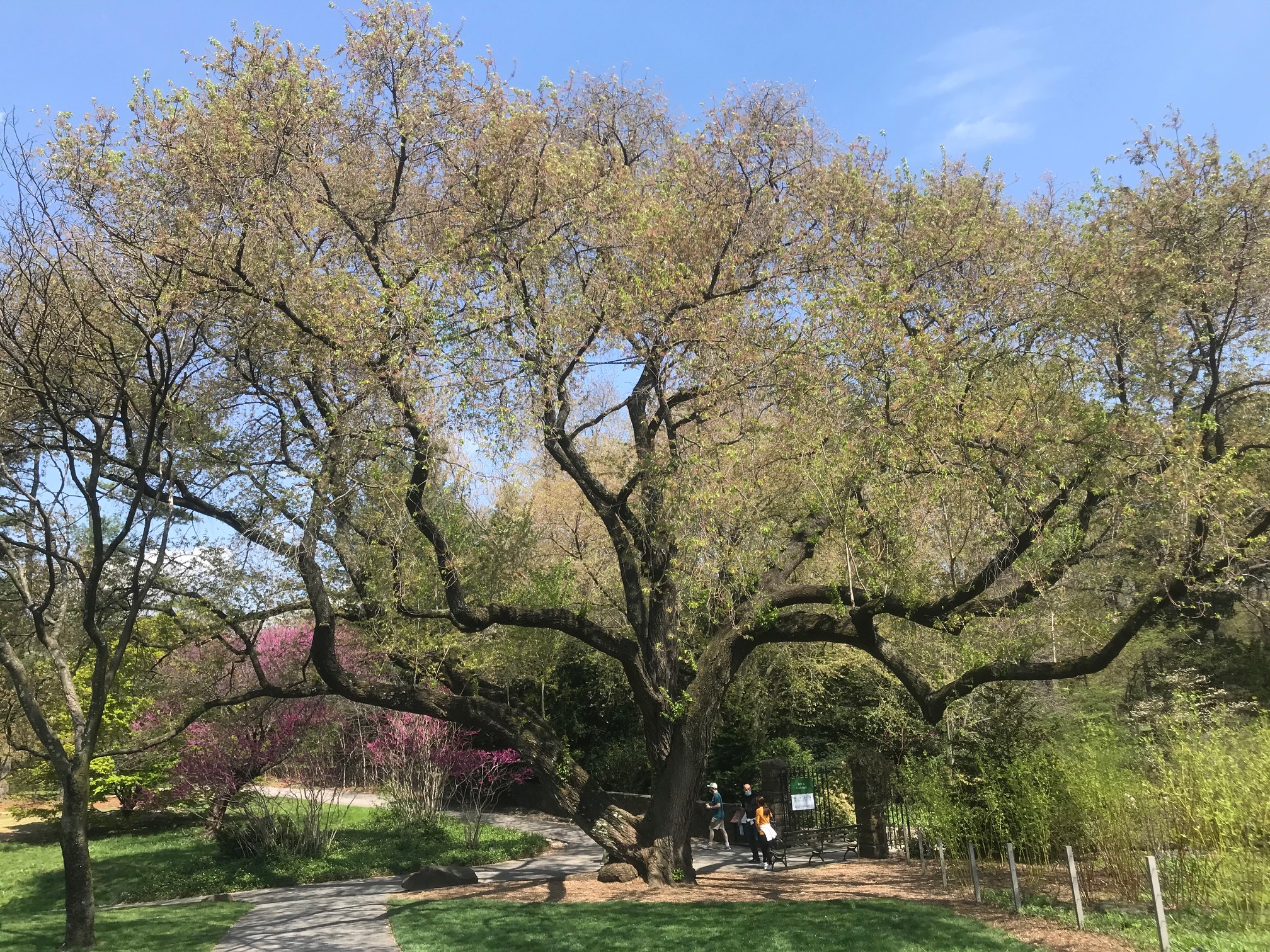
The NYBG’s Higan cherry had nary a lenticel. It had grown past the need for lenticels, it would seem. It was an elephant among cherries, a behemoth. A cherry tree in the same sense that King Kong was an ape.
When you stood away a ways it took up the sky. The boss had said to look for the white petals scattered beneath the tree. Even a straw bonnet would be hard pressed to find one.
You don’t have to consult a tablet to know they’ll be back in fall.
When I was a teenage seamstress I loved plain, unwashed muslin, so light and cool. Loved it so much I sewed a blouse out of it.
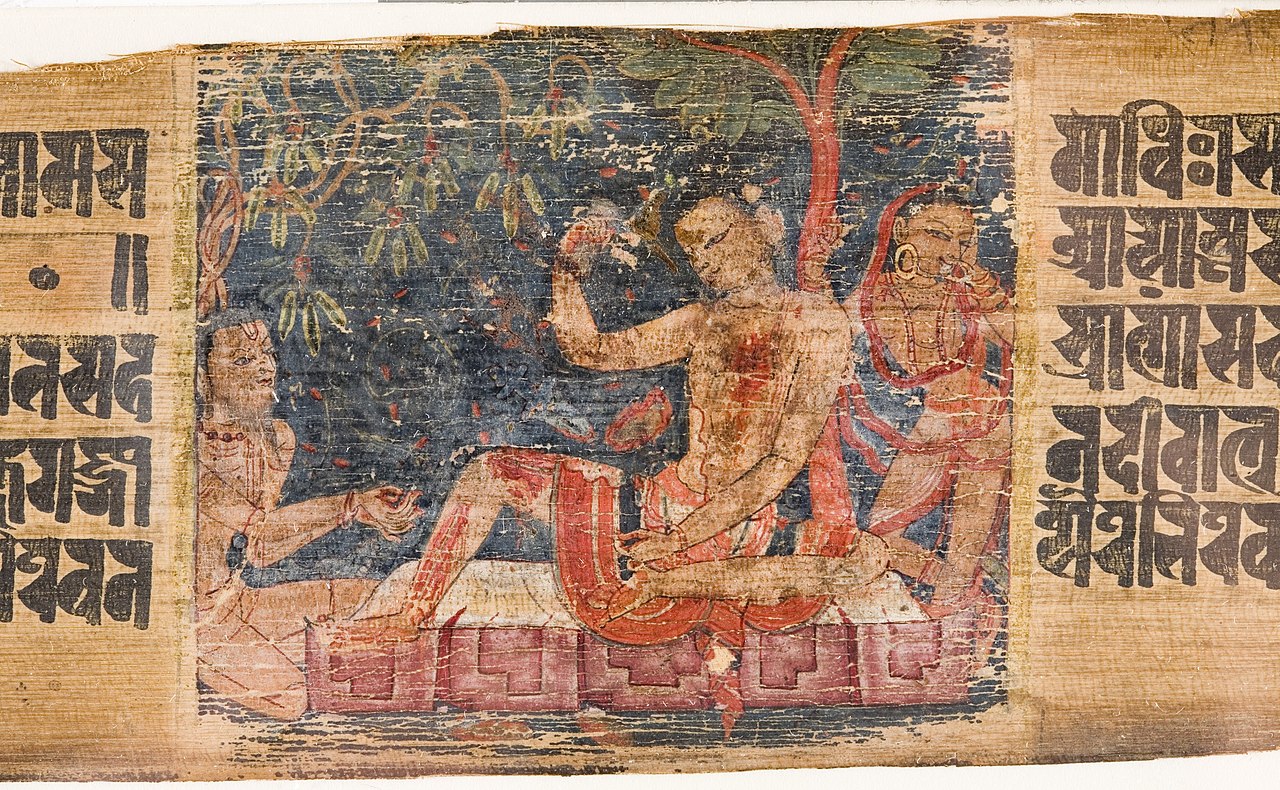
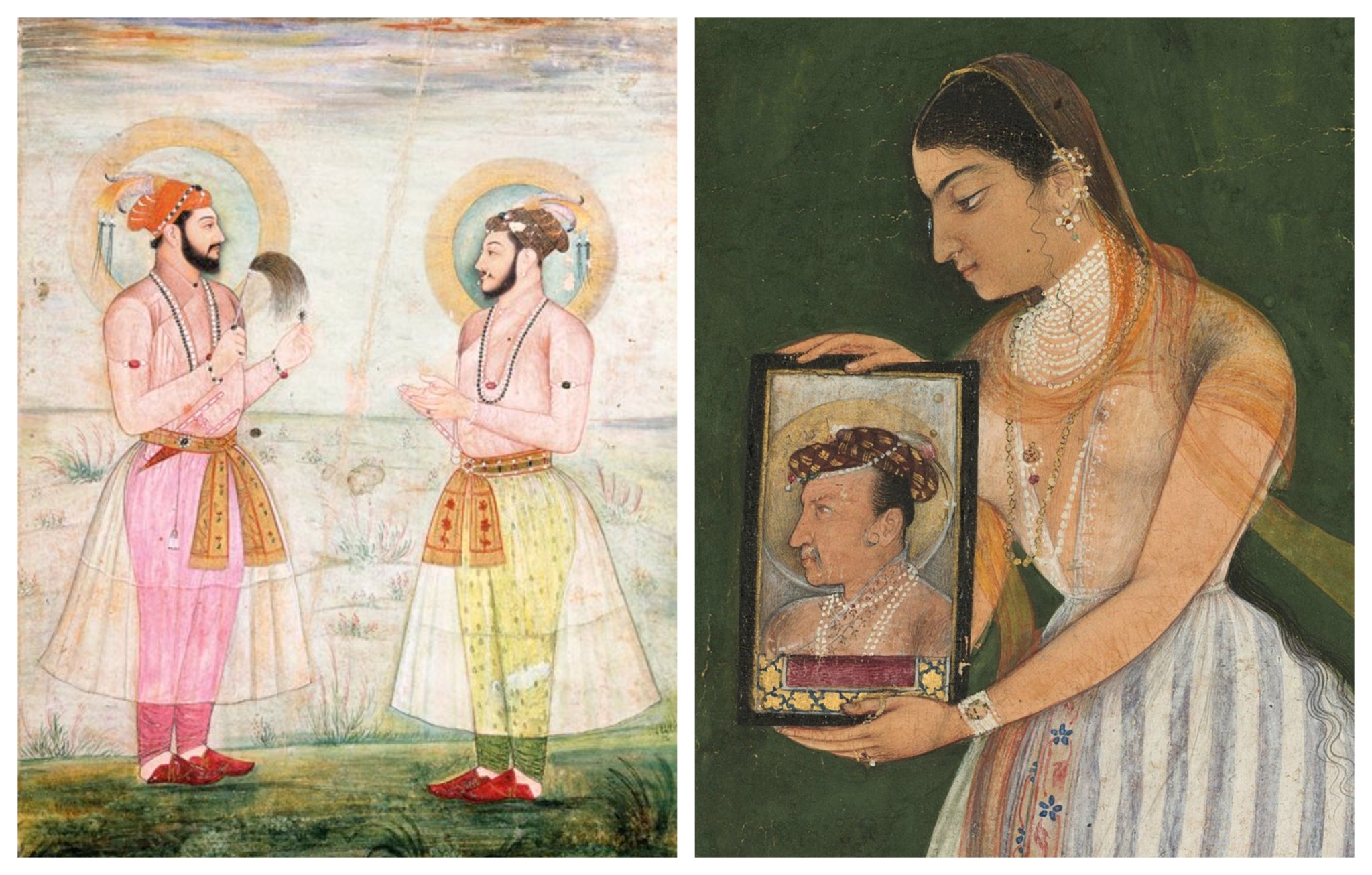
What I did not realize until now was the complicated past of muslin, recounted by BBC, especially Dhaka muslin, as the most expensive fabric in the world two centuries ago, before losing all its value. It took sixteen steps to manufacture it with a type of cotton that grew only along the banks of a river in holy Mehgna in Bengal. Garments of this fabric stretched back to antiquity – it was thought that gods and goddesses wore Dhaka muslin.
Something I have always loved are the names of different fabrics. In the 18th century New York you could buy lutestring(fine silk), armozine (strong corded silk), baize (coarse wool), cypress ( cobweb-thin silk for mourning clothes), erminetta, ferrandine, gingerline, hum-hum, a kind of calico named “harlequin moth”. Colors had colorful names: yes there were pink and cinnamon, but can you summon up “flystale” or “mousecolored.”
Dhaka muslin had its own lore. It was said that it was so light and thin, you could keep a 60 foot piece in a snuffbox, or thread a sari through a wedding ring.
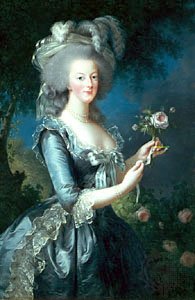
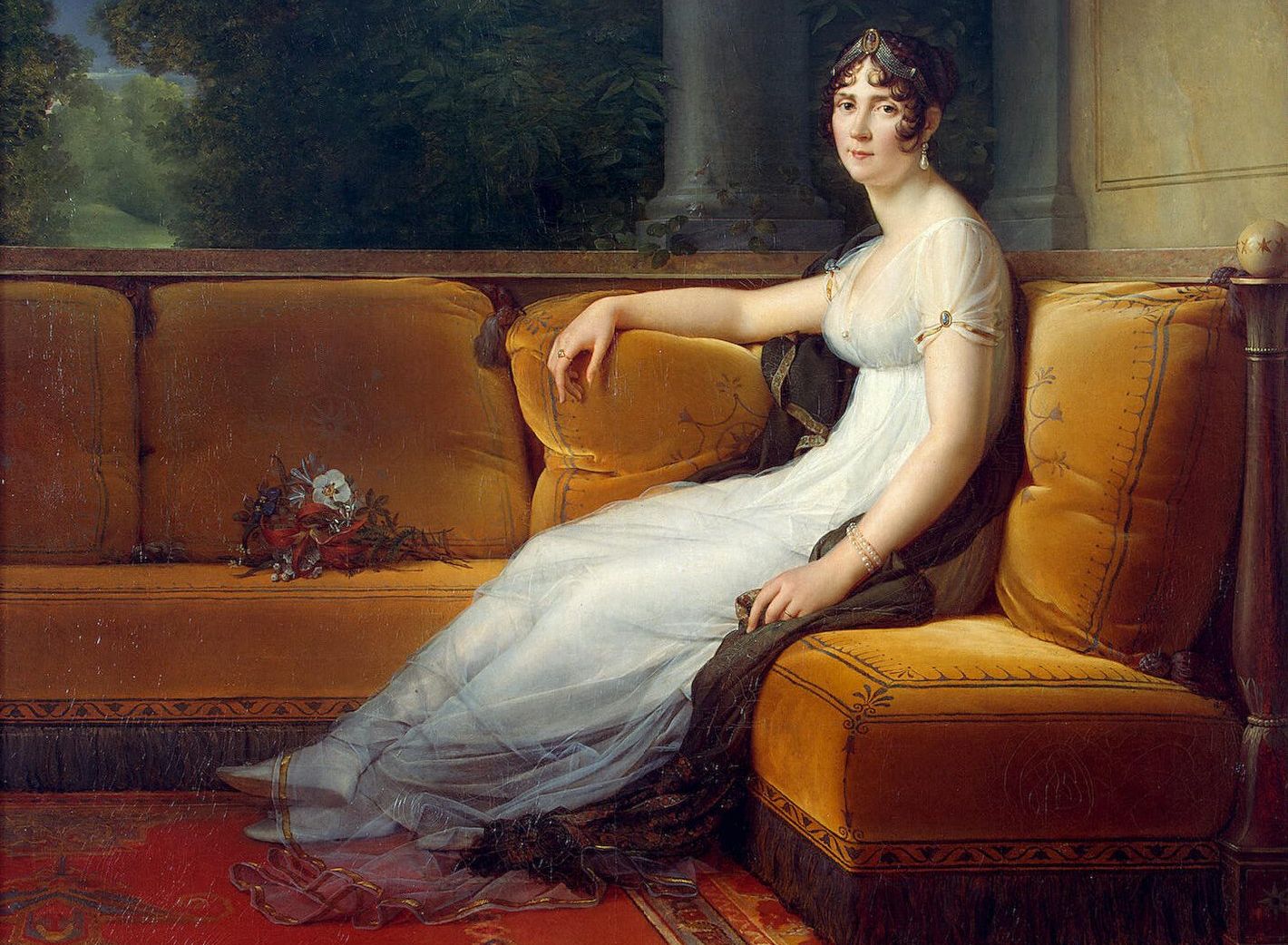
At some point Dhaka muslin began being sewn into saris for Indian women, and then the fashion jumped the ocean to become very risqué gowns for ladies. Marie Antoinette and Empress Josephine were fans. But weirdly, Dhaka muslin had disappeared by the early 20th century. Somehow, the cotton used to make it died out, along with the techniques for weaving it.
It’s easy to see why. This is from the BBC article that taught me everything I know about Dahka muslin: “ First, the balls of cotton were cleaned with the tiny, spine-like teeth on the jawbone of the boal catfish, a cannibalistic native of lakes and rivers in the region. Next came the spinning. The short cotton fibres required high levels of humidity to stretch them, so this stage was performed on boats, by skilled groups of young women in the early morning and late afternoon – the most humid times of day. Older people generally couldn’t spin the yarn, because they simply couldn’t see the threads.”
As for weavers, they were treated as geniuses. The miraculous stuff came in thread counts of 1,200. Then the British tried to horn in on the trade, and their muslin just didn’t rank. On to America, and cotton!
Thus said my parents when asked why they decided to live in Hastings-in-Hudson rather than other villages in Westchester. It was more diverse, they explained. In those days they meant that Irish people and Italians lived here.
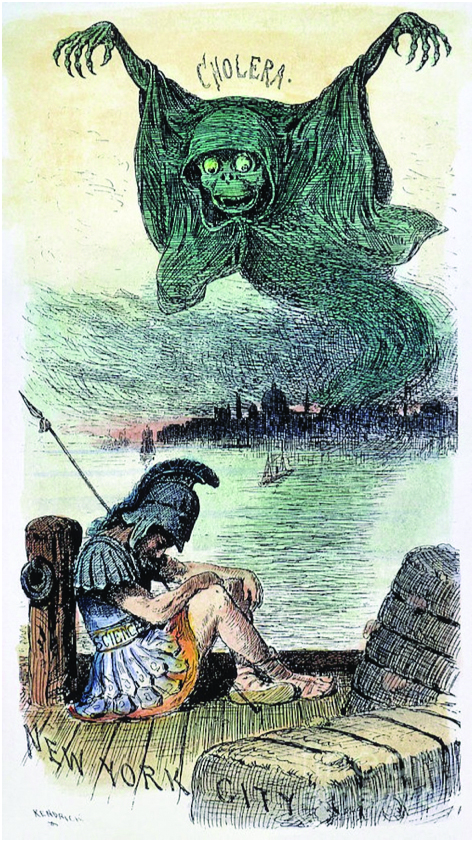
There was a reason for that. Laborers from those countries had come over long ago, in the nineteenth century, to break their backs building the Old Croton Aqueduct, which brought gallon upon gallon of potable water to a New York City plagued by dysentery and prone to conflagrations like the ones that repeatedly destroyed blocks of the town.
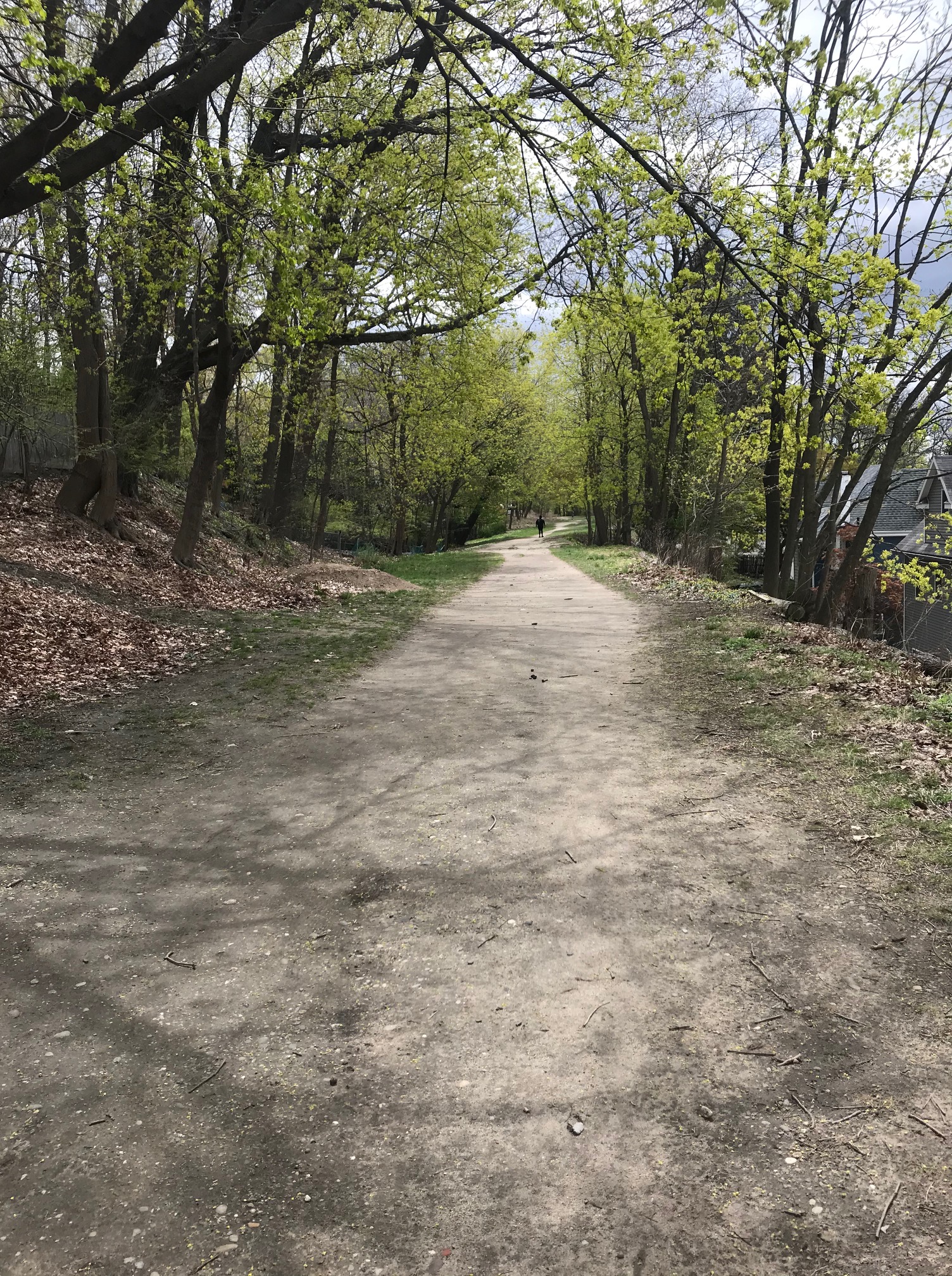
Today, we stroll on a spring day along the path that follows the early trail.
It’s a short walk from Hastings to Dobbs Ferry, and spring shows mainly in these little flowers, sometimes called fig buttercup, or fig-root buttercup, or figwort, or pilewort. What they have to do with figs or piles I do not know.
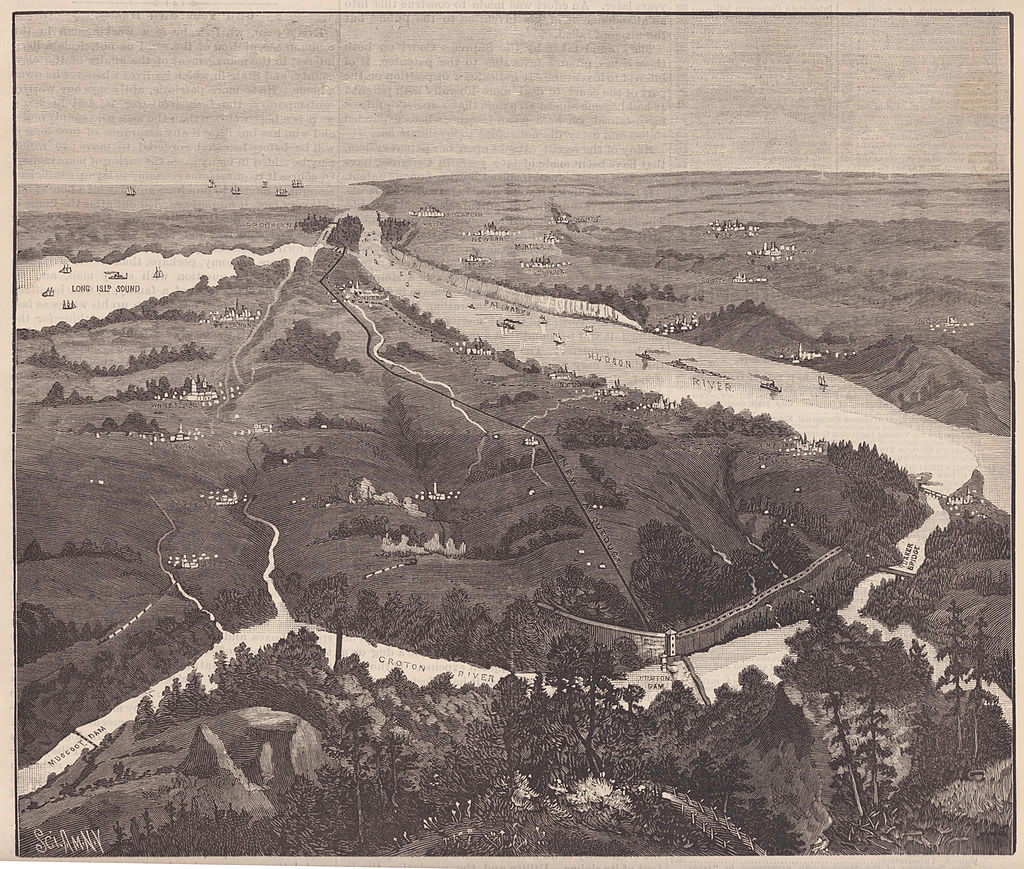
Back in the 1840s, when the tunnel was built to carry water from the pure Croton River down to the City, it was designed as a horseshoe-shaped brick tunnel 8.5 feet high by 7.5 feet wide, set on a stone foundation and protected with an earthen cover and stone facing at embankment walls. Designed on principles dating from Roman times, the gravity-fed tube, dropping gently 13 inches per mile, challenged its builders to maintain this steady gradient through a varied terrain. A large stock of workers from Ireland and Italy had come to America to do this work.
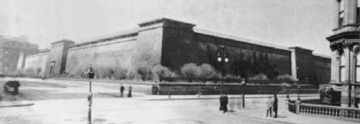
The water passed through a receiving tank, the Croton Reservoir, completed in 1842. Along the reservoir’s stately, Egyptian-style parapets, the fashionables of the day liked to promenade. An ice cream stand across the street quenched the appetites that came with such exertions. Next to the Reservoir stood the Crystal Palace, hailed by Walt Whitman as “Earth’s modern wonder.” It showcased such revolutionary marvels as Singer’s Sewing Machine. Soon it would burn to the ground.
When the much-anticipated water finally came through and bubbled out of a fountain in downtown New York, it was cause for a full-out celebration.
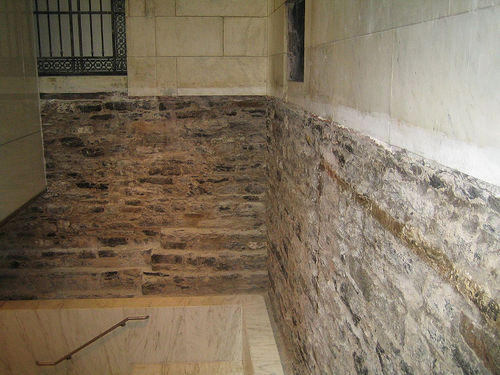
It’s can be hard to imagine this hoopla over the water we take for granted today, but if you are in New York you can see remnants of the old Reservoir walls, under the New York Public Library, which stands where it was torn down. Go down to the lower level of the South Court and there it is. Mull over it a while. Some smart person knew that we needed to retain this secret history.
In Dobbs Ferry you come across something rather incredible: An overseer’s house, the only one of these houses that survives in its original location. Classic, brick Italianate-designed yet humble, it stands guard at Walnut Street, having survived since 1857, when it hosted James Bremner, the principal superintendent of the Aqueduct, north of New York City. It’s called the Keeper’s House.
We may not have the parapets but we take our own refreshment, at Basilio’s, when we jump off the trail in Dobbs. Basilion doles out dry wit with a fine cup of cappuccino.
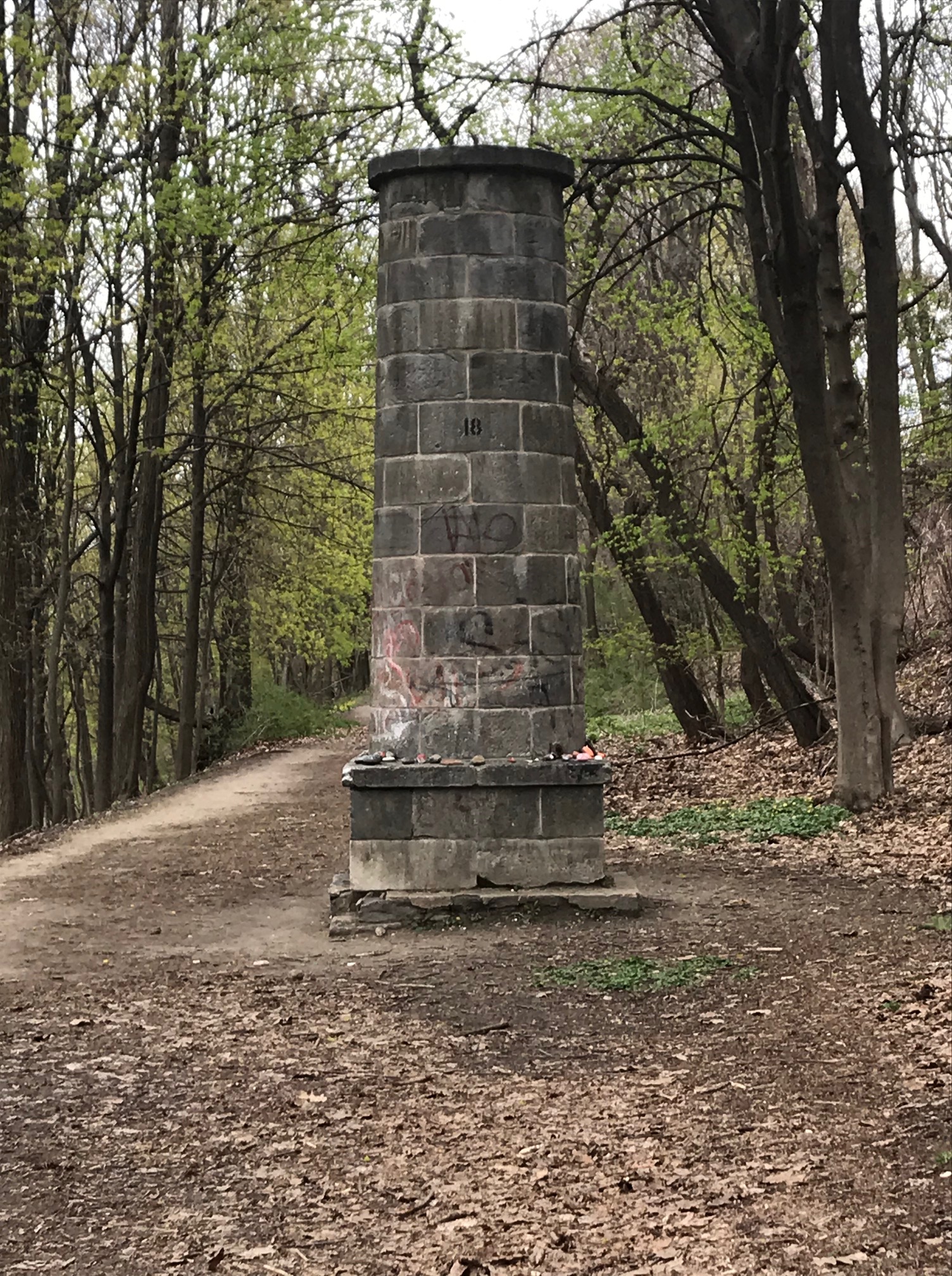
On the return, a stop specifically to see one of these towers that poke up from the Aqueduct trail occasionally. Their purpose was technical and I am too lazy to look up and see what it was.
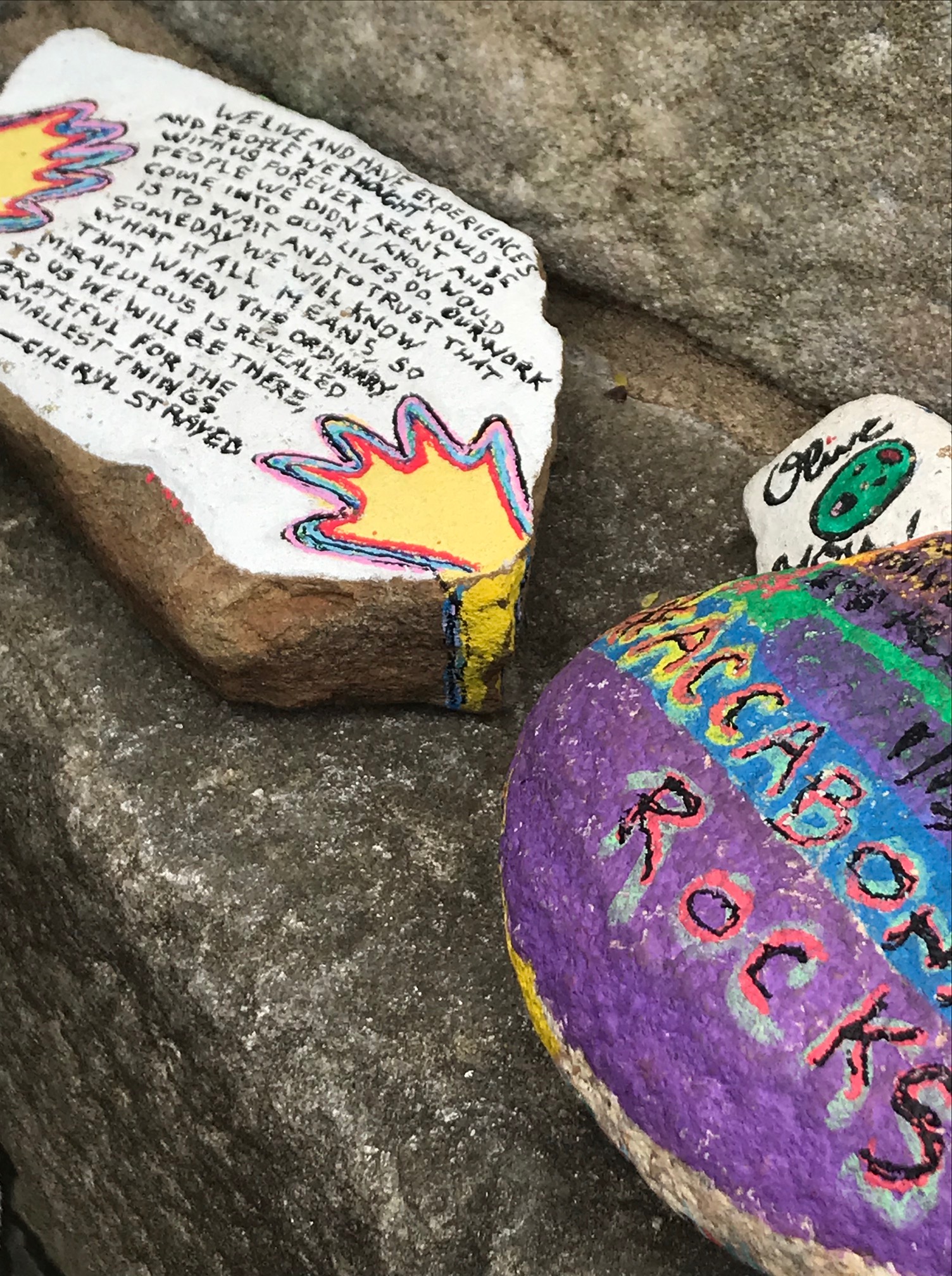
If anyone would like to write me with an explanation, please do. In the meantime teenagers have left handprinted stones along its ledge. If you can explain those, please do as well.
There is something about its very uniformity that makes the Aqueduct so mesmerizing, so appealing. You walk for miles and don’t know quite where you are. One thing that is always next to you, the mighty Hudson running parallel to the trail, down the hill.
It was here over a century ago when those laborers made it possible for clean water to get to New York City. Heroes.
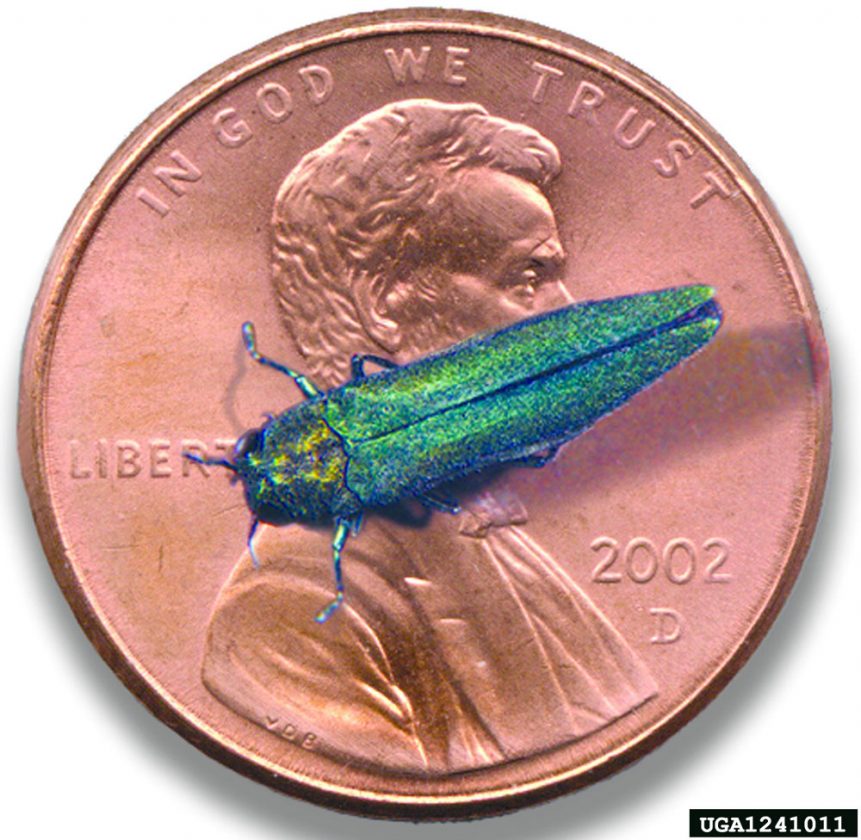
It was the first day of my company’s contract with the New York City Parks Department to remove all the borough’s “EAB host” ash trees. Arthritic, messy, rough scaled, the trees on the streets of Queens had suffered the depredations of the Emerald Ash Borer and barely survived.
These insects enter a tree and do their damage from the top down. Eggs laid on the tree hatch, enter the bark and feed on the phloem and cambium, interfering with the tree’s ability to transport nutrients and water, overwintering in the outer sapwood or outer bark.
They make these crazy chutes and ladders as they make their way inside the tree, which you can see if you pull away the trunk.
The fear of the City was that a bruising storm might cause the trees to shatter, bringing down heavy limbs on the nearest baby carriage going by. Weakened, rotten at the core, they might fall over on you or me.
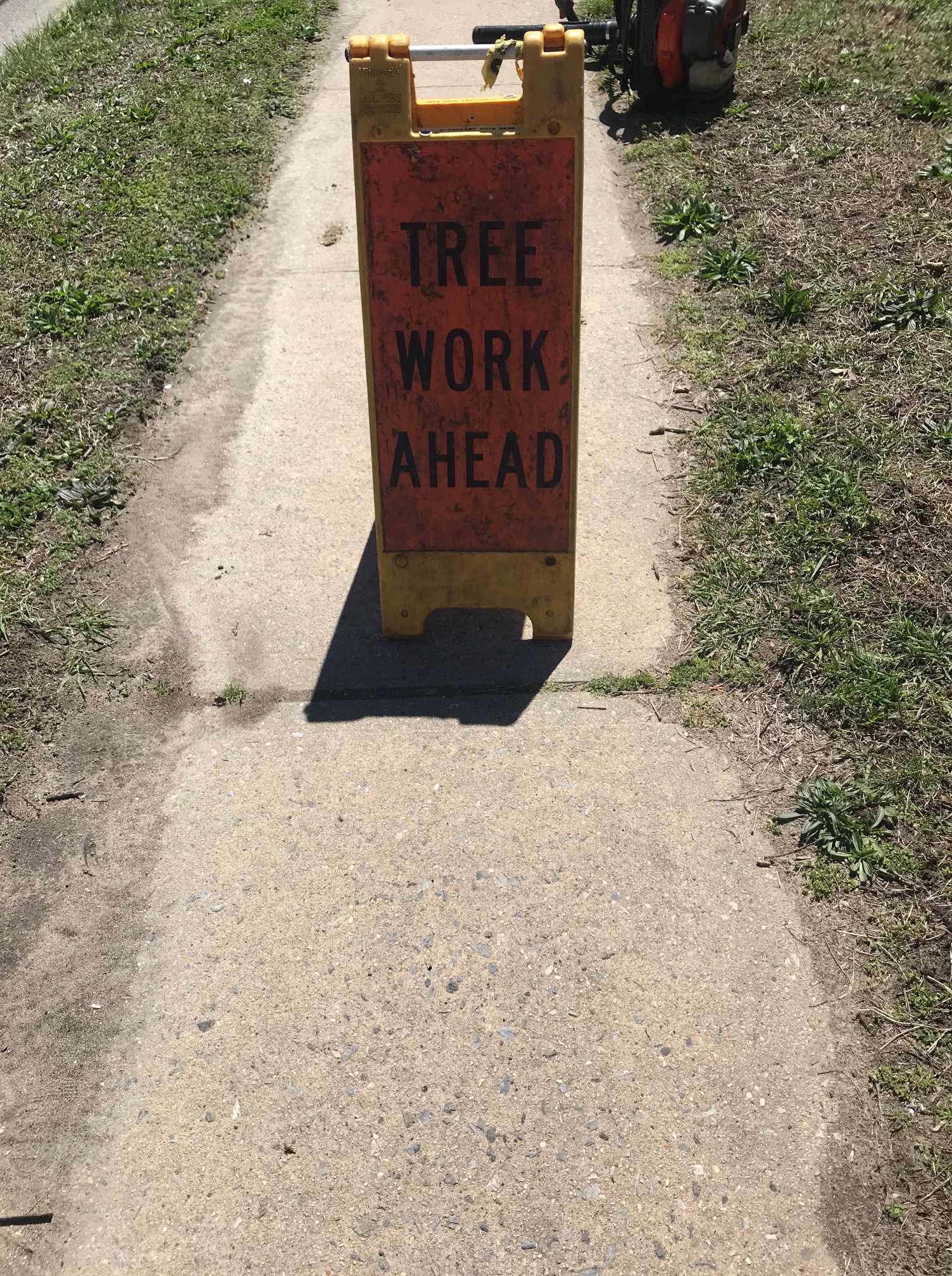
We will cut down over a thousand. This is a big deal project, over two years. My job on the site as a certified arborist is only to keep an eye and make sure things go right, although the crew is so great they don’t need any watching over.
There are other observers too, among them the R.E., Sam, from Arcadis, who spends his working hours inspecting planting and other sites city wide. He had some experience previously with ash as lumber, at a company in western New York that harvests trees 30-40 inches in diameter.
There are still ash trees unaffected by the EAB, outside of NYC, but the number is dwindling, and baseball players can no longer count on a pale, long-grained, nearly shatterproof bat.
Adam, my colleague, and I marked the trees slated for removal with red paint.
When the branches and trunks were being fed into the chipper, I took a walk down the block and saw a few of the things that make Queens so delightful.
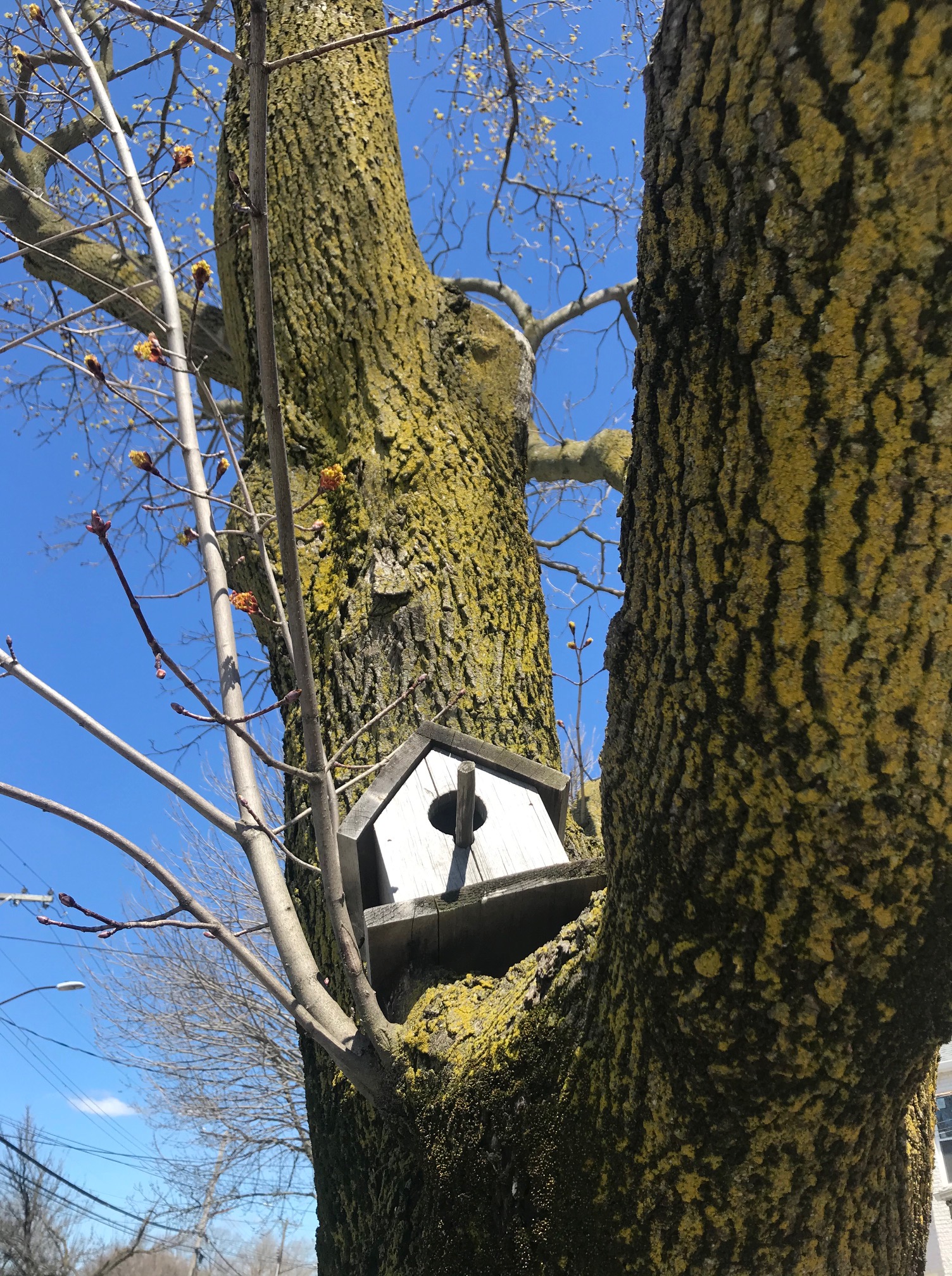
A bird house.
A ghost bike, put there as a memorial for a cyclist who was killed on the spot. This is a very small bike. I hope the rider was not that small.
The back side of Aqueduct Race Track.
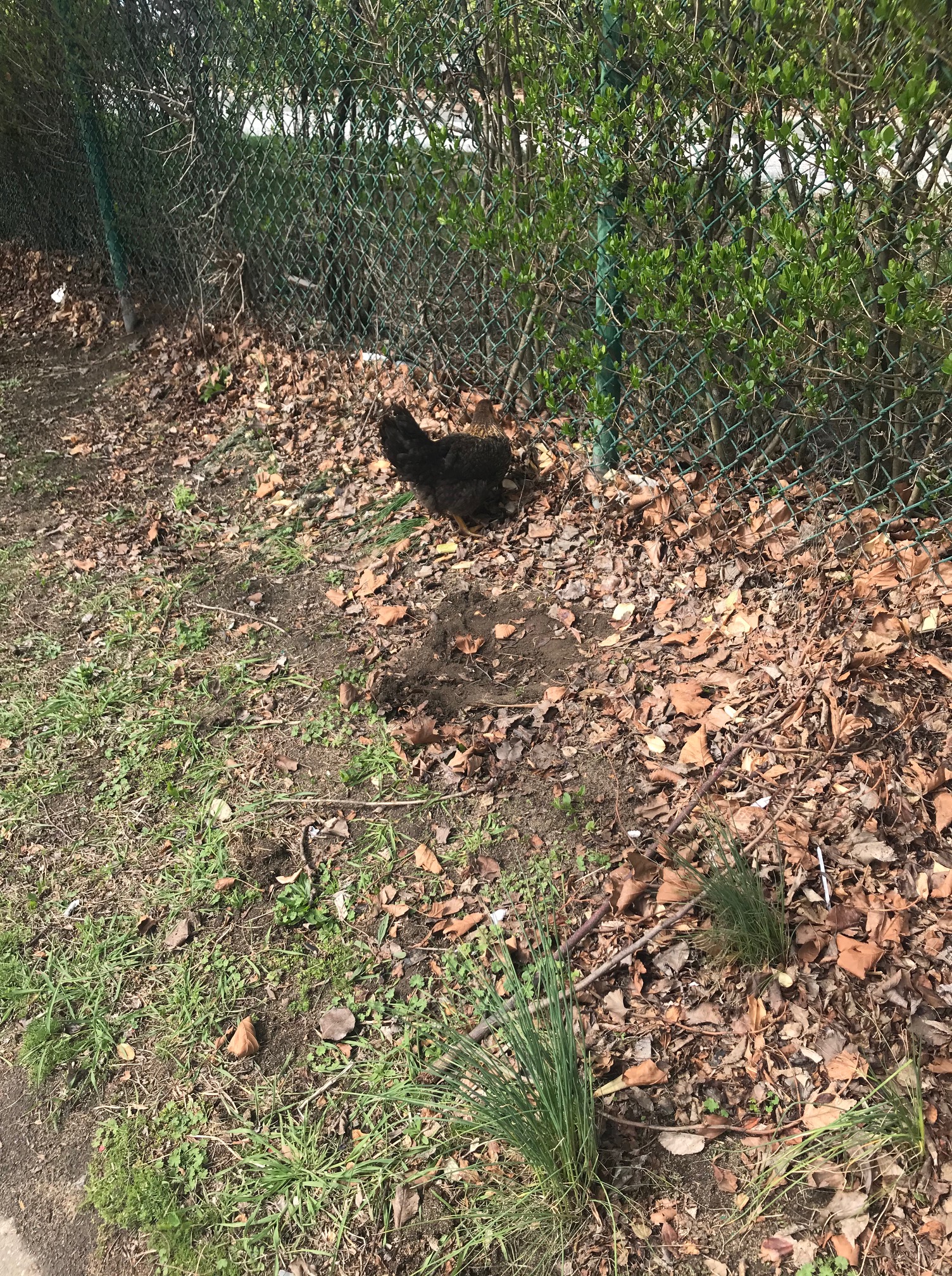
A live chicken, at first blending in with the leaves but with all her bustling about, trying for some reason to get through a chain link fence. Chicks inside?
I checked back later, thinking I should have lofted the hen over to where she wanted to go, and she had vanished. Such are the mysteries of Queens.
Will there be new trees planted to replace the ones removed? People always want to know. Perhaps a pretty, manageable cherry tree. We always have to tell people, That is for the City to decide. We are just doing This.
When I was around eight years old I knew I was going to be a writer. I knew it because I filled composition notebooks with my signature, over and over. My author’s autograph. I seem to remember my parents being unhappy with the wasted paper. But the whole thing is probably a fantasy, a writerly-coming of age fable.
Four thousand years ago, students in Middle Kingdom Egypt had their own composition notebooks made of papyrus.
It would be whitewashed with gesso and reused over and over again. Found in the Metropolitan Museum, this practice hieroglyph shows birds, eyes, feathers, goblets – or is that my imagination? What do you read in this writing? What story does this schoolchild tell?
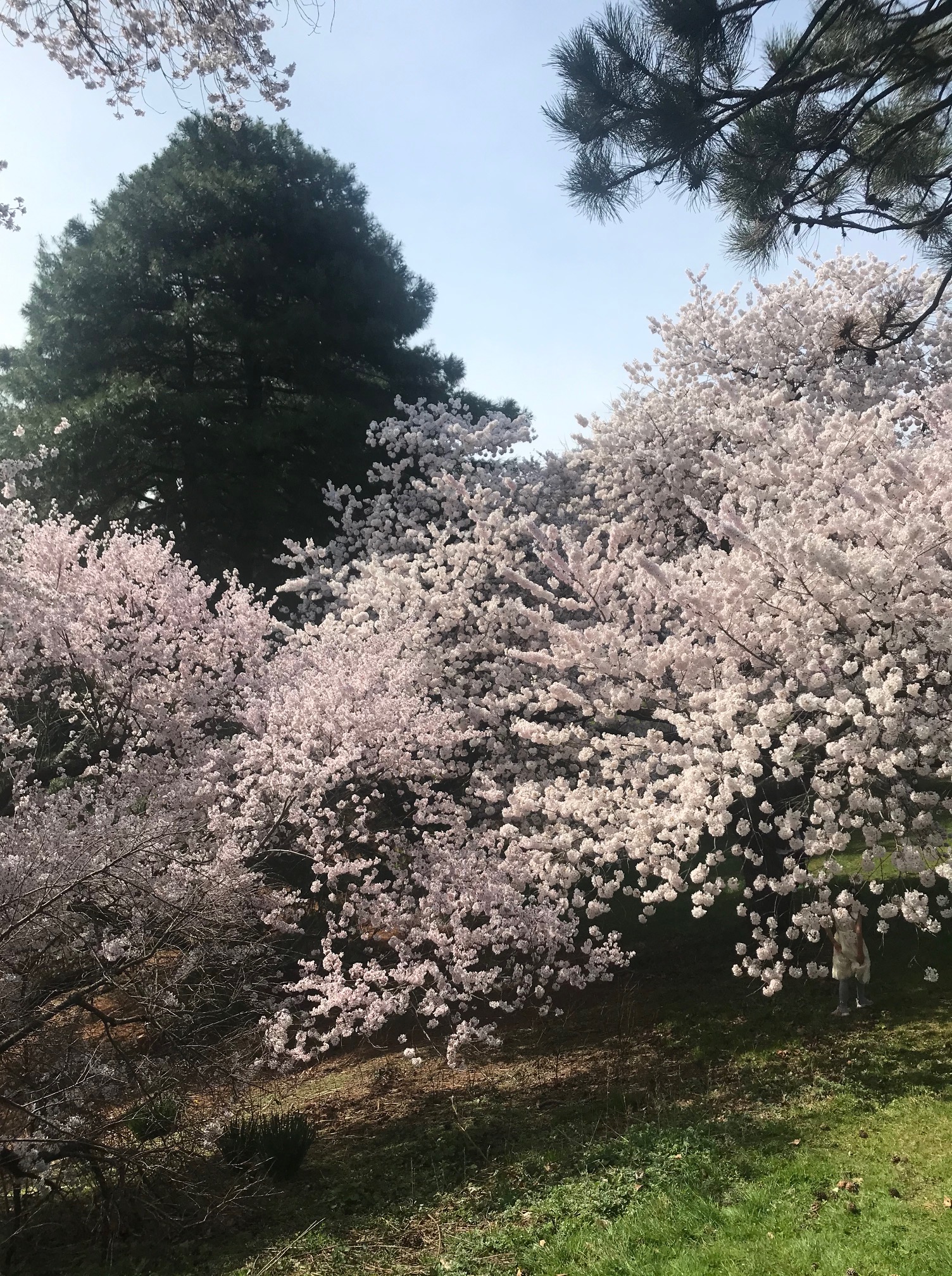
Usually you could have both, because the mozzarella store, Joe’s, in Arthur Avenue, is in so close proximity to the New York Botanical Garden, where the cherry trees are currently in bloom. The Sakura festival is upon us.
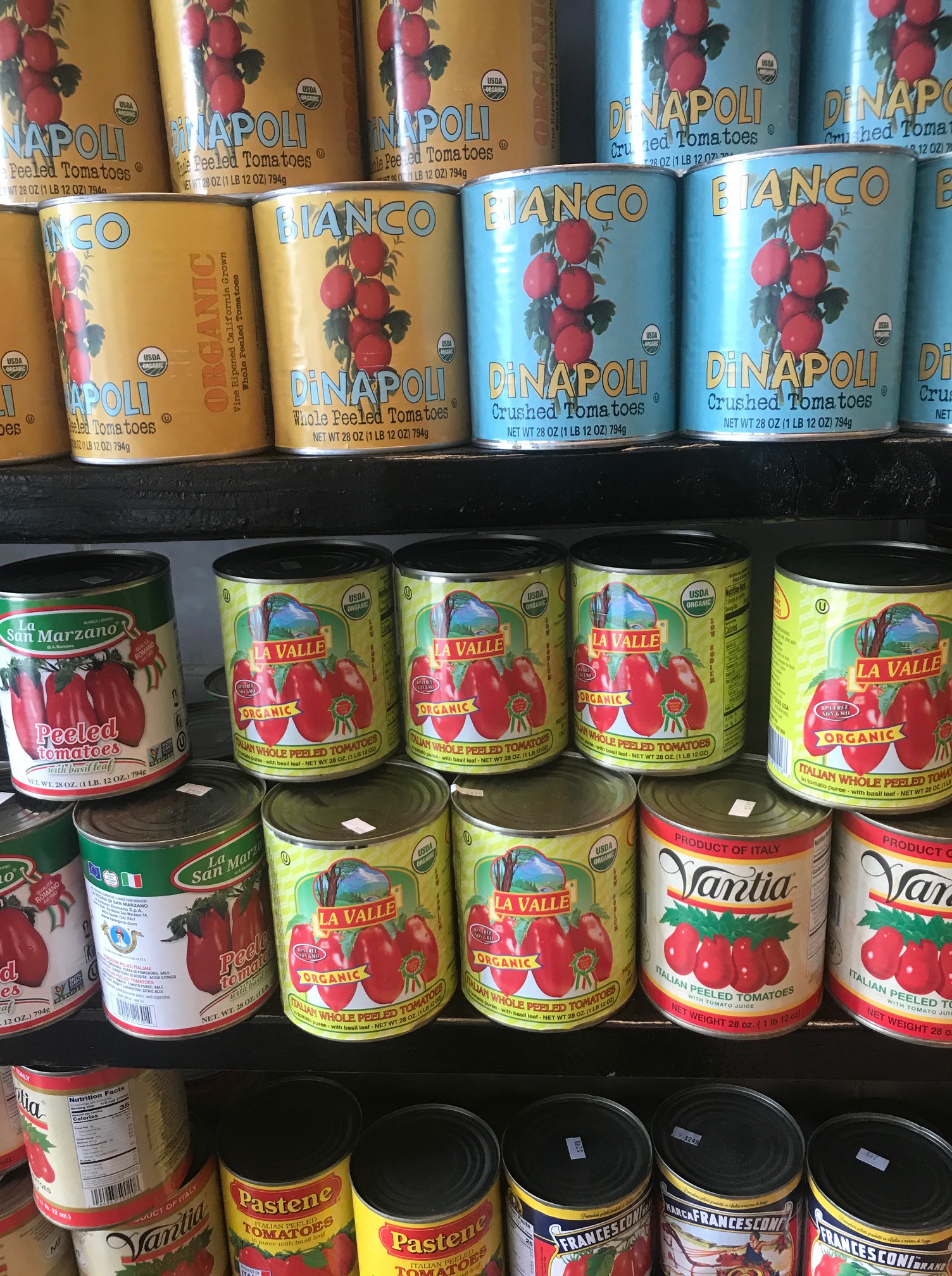
However, it’s 2:00, and “we sell out of the burrata early” says the counter man, not surprising when you consider how creamy, gooey, mild and scrumptious is burrata. Joe’s has a wall of imported tomatoes.
Hoary cheeses hang above.
A picnic sandwich will have to suffice, al fresco.
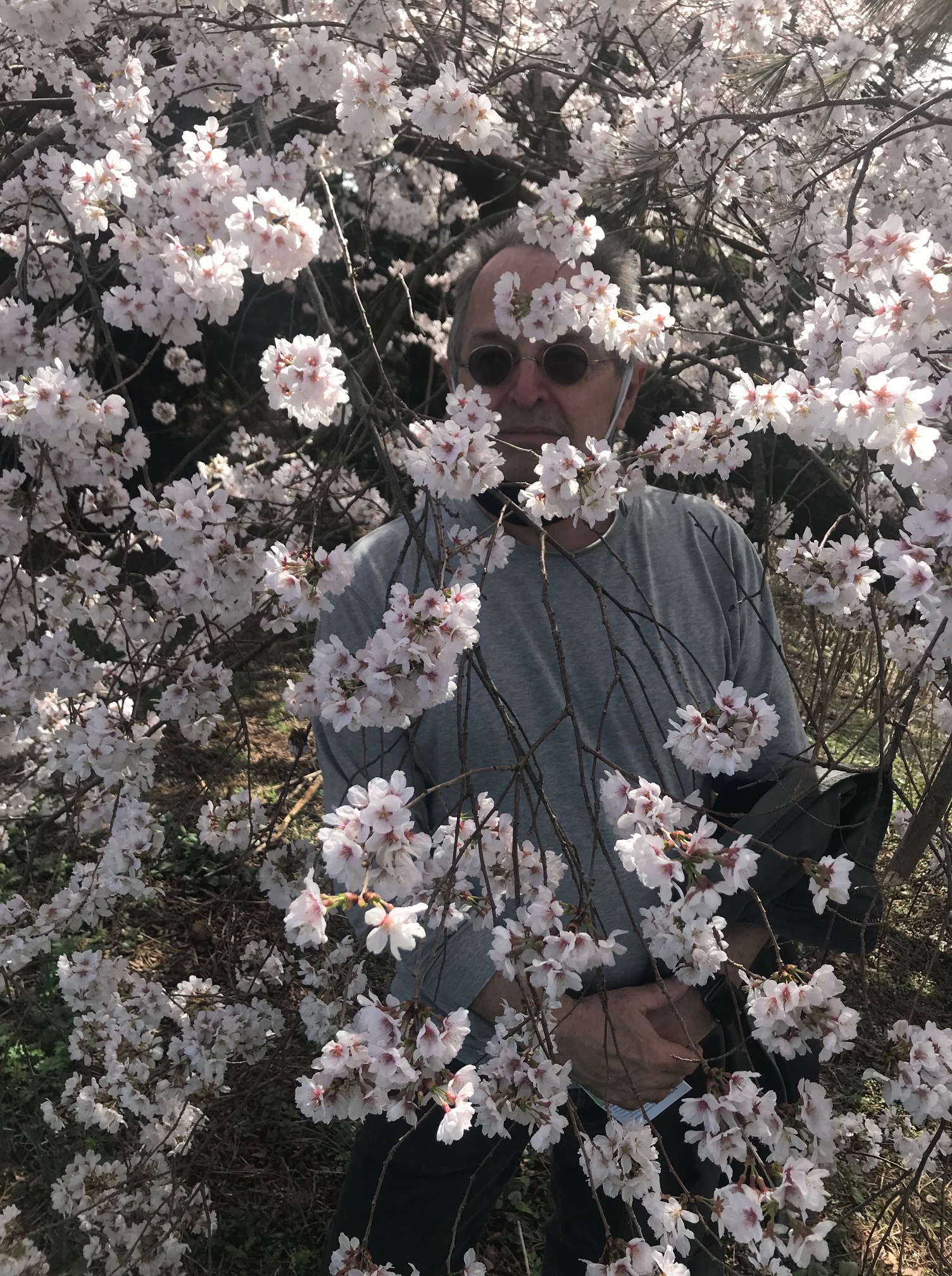
It’s a good place to take pictures of people taking pictures. Everyone is doing it.
To hide behind the mysterious Prunus pendula.
We see a man juggling oranges as he walks along. And a mother with feet all dressed up for spring.
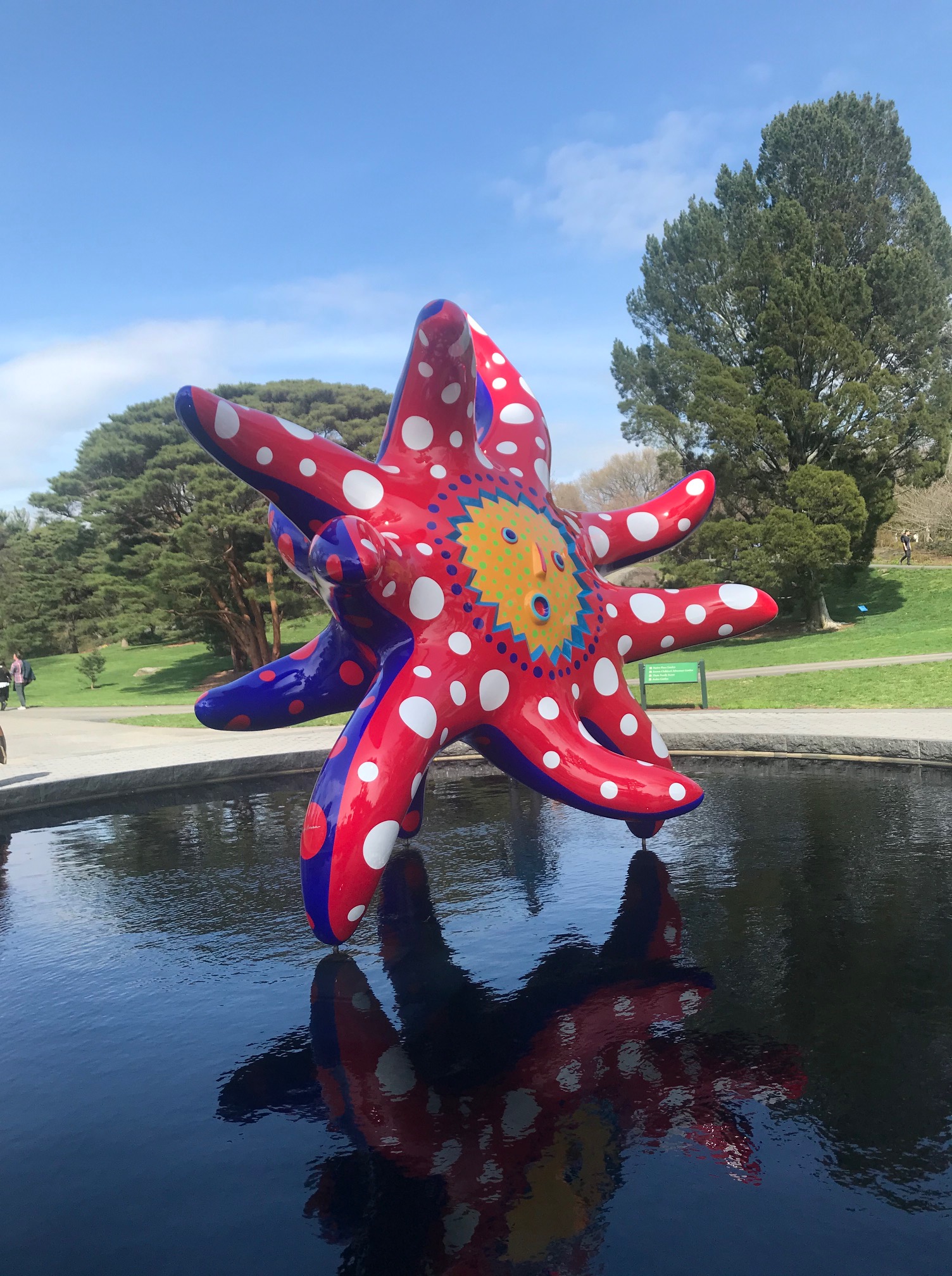
An artist named Yayoi Kusama had polka dotted the grounds. “Forget yourself and become one with nature!” says this mad person. “Obliterate yourself with polka dots!” Fabric stretches around the soaring red oaks. Patrons buy polka dot ponchos in the gift shop.
A funny combination. Blossoms.
And dots.
“Do these polka dots make my trunk look fat?” said the tree, smirking.
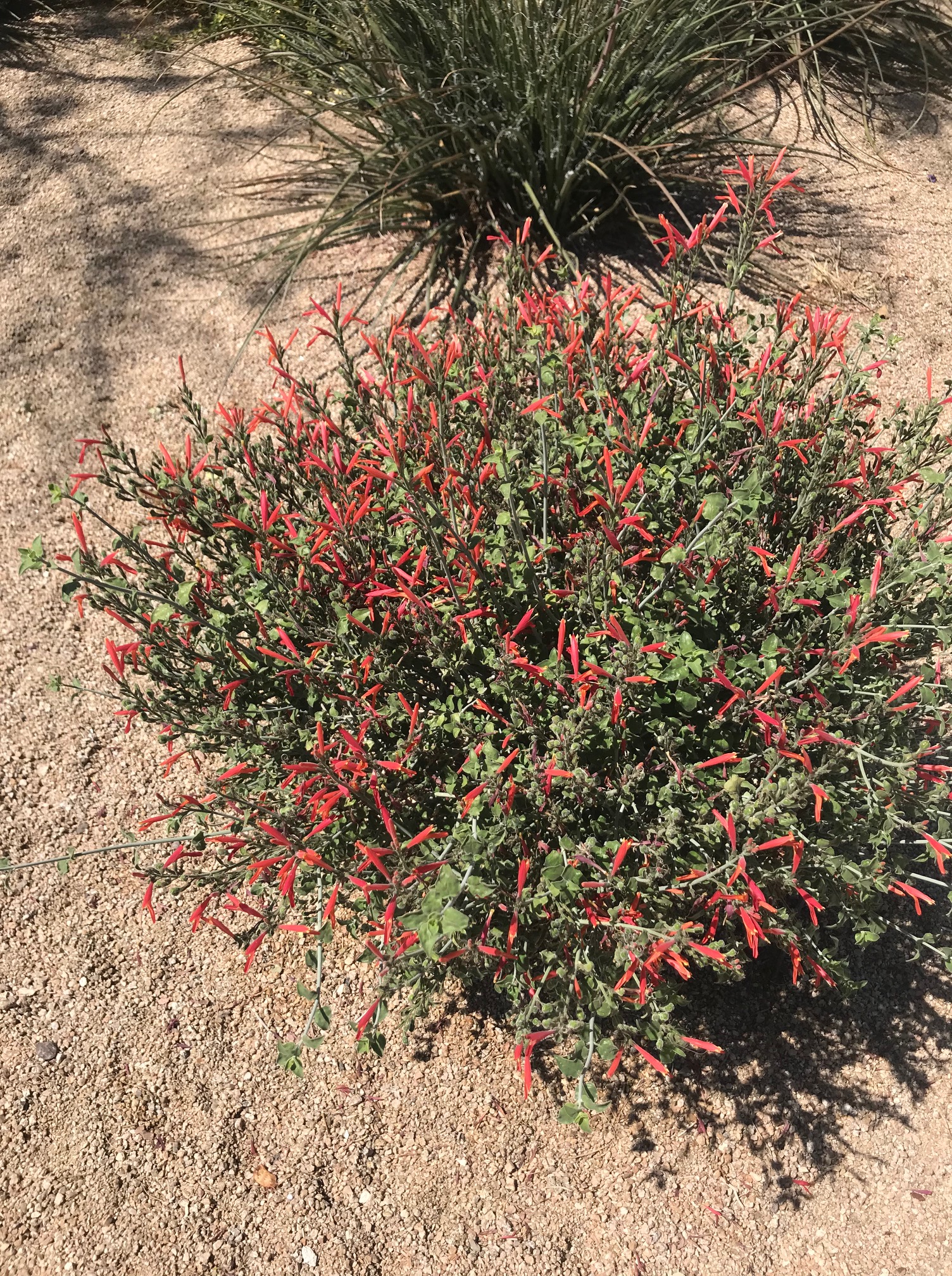
in the desert and you see something astounding. I am parched. I crave liquid, anything, water, iced coffee, beer. Desert plants thrive in the heat of the sun. Without water, they ooze color. Yellow desert marigold, a member of the aster family.
The flame of indian paintbrush.
Or these more delicate desert mallow.
Textures seem improbable, like the flirty catkins of the mesquite.
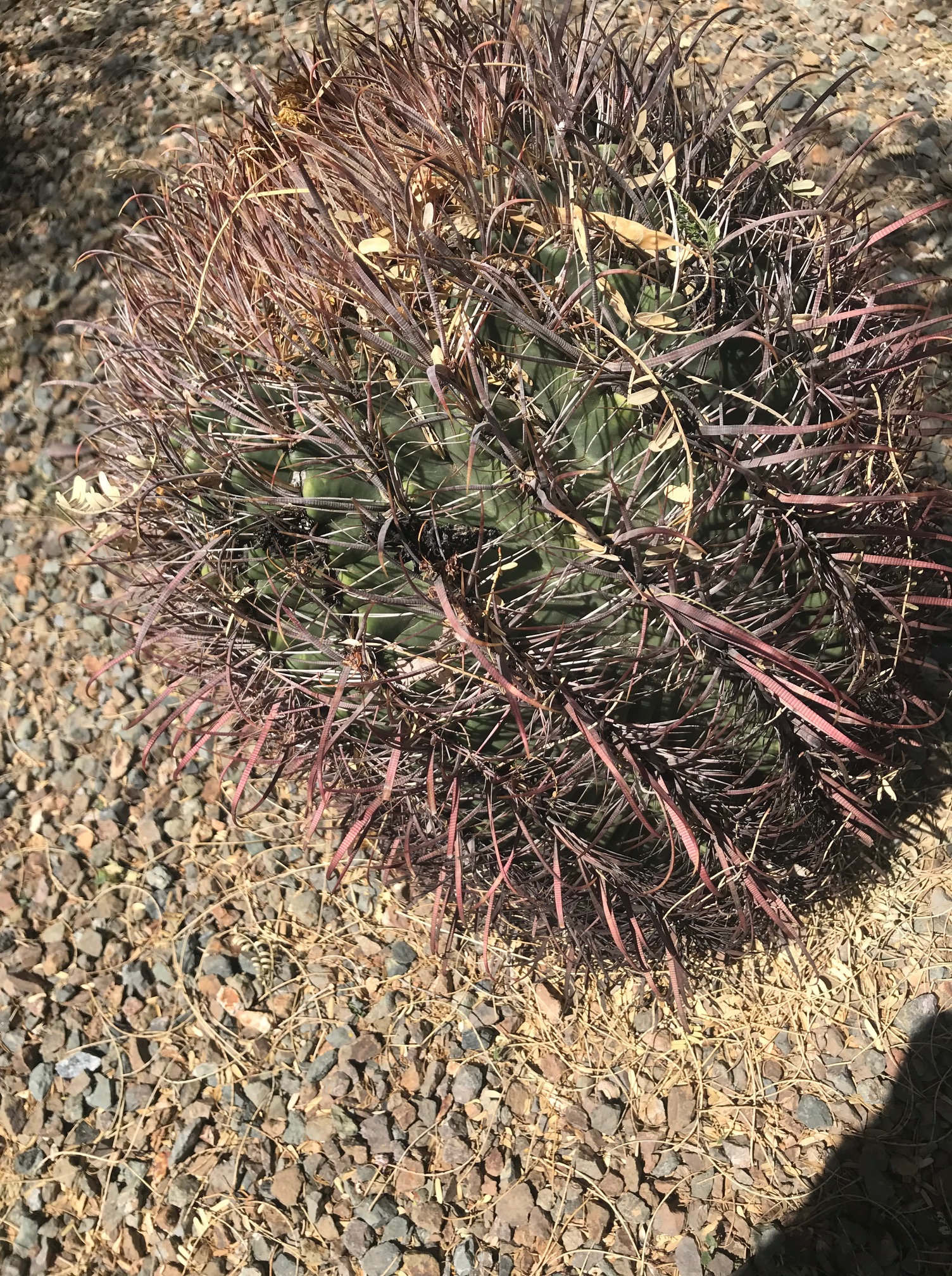
Or the haunted-house barbs of the fishhook cactus.
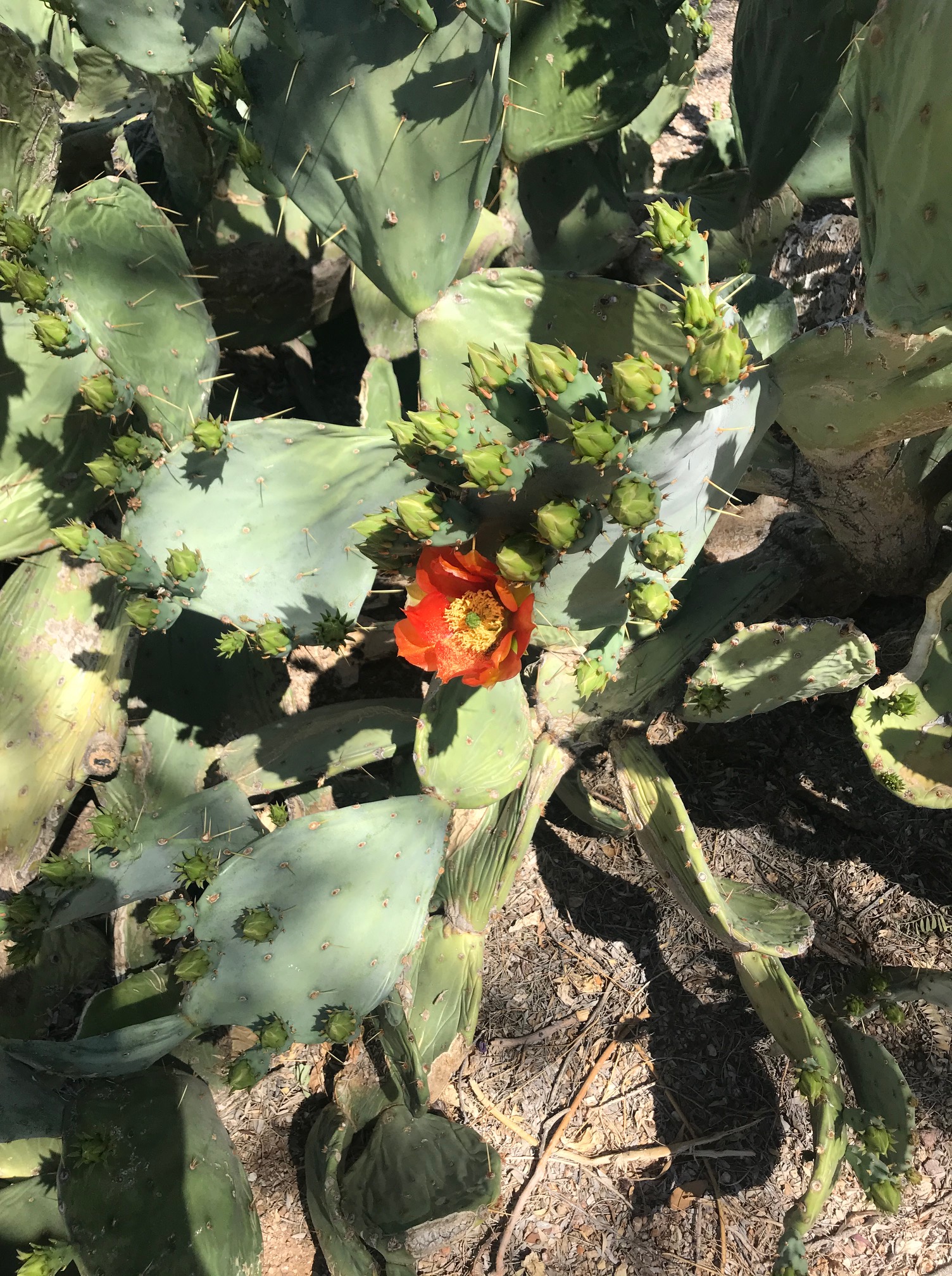
The prickly pear, just on the verge of busting out.
Back home on the east coast, so far away, the pretty cherries are in bloom. Daffodils mildly wave their snouts. Forsythia, rich but somehow insipid, you can find it at the edge of all the roads.
Here there is drama.
The blue bell jar of sky covers everything. Magnifies it all. Holds you as if you are pinned, gape-mouthed, in thirst and in awe.
If you travel to Phoenix, go to the Musical Instrument Museum. You can drink an iced coffee before you go, you’ll need the energy. But then go right away.
Among the thousands of objects on display, one special exhibit currently devotes itself to Congolese masks and music and I promise it will blow your mind even if you’ve never had an interest in African rhythms or dance. It turns out these are less often face masks than they are full bodysuits and the person who wears one summons magic, especially for initiations of boys into adulthood.
Wherever I go, I like to see women represented; in movies, in music, and dance. That doesn’t always happen. So while I was disappointed that only men take part in the ritual dances of this part of the world, I noted that they sort of make up for it with their cross dressing costumes to represent the strength of the female gender.
Note the breasts. And I could not help but think that the Congolese women probably play a rather large role in crafting these costumes. The sleeves and torso are woven somehow with a jute-like material; sometimes dyed and fastened with cowrie shells. How did these women make these garments? I wondered. I wanted to see the patterns, the looms. Or was the fiber somehow knitted? The otherwise elaborate placards did not say. I am always interested in how something is made as much as the finished product.
Which is why when I went back in the museum to the American instruments I was fascinated by the wood instruments, all of them made by hand. There are thousands of string and wood designs throughout MIM. Some are put together with animal skins, like this harp-lute from Guinea.
Some are large, like this guitarrom from Southern Honduras.
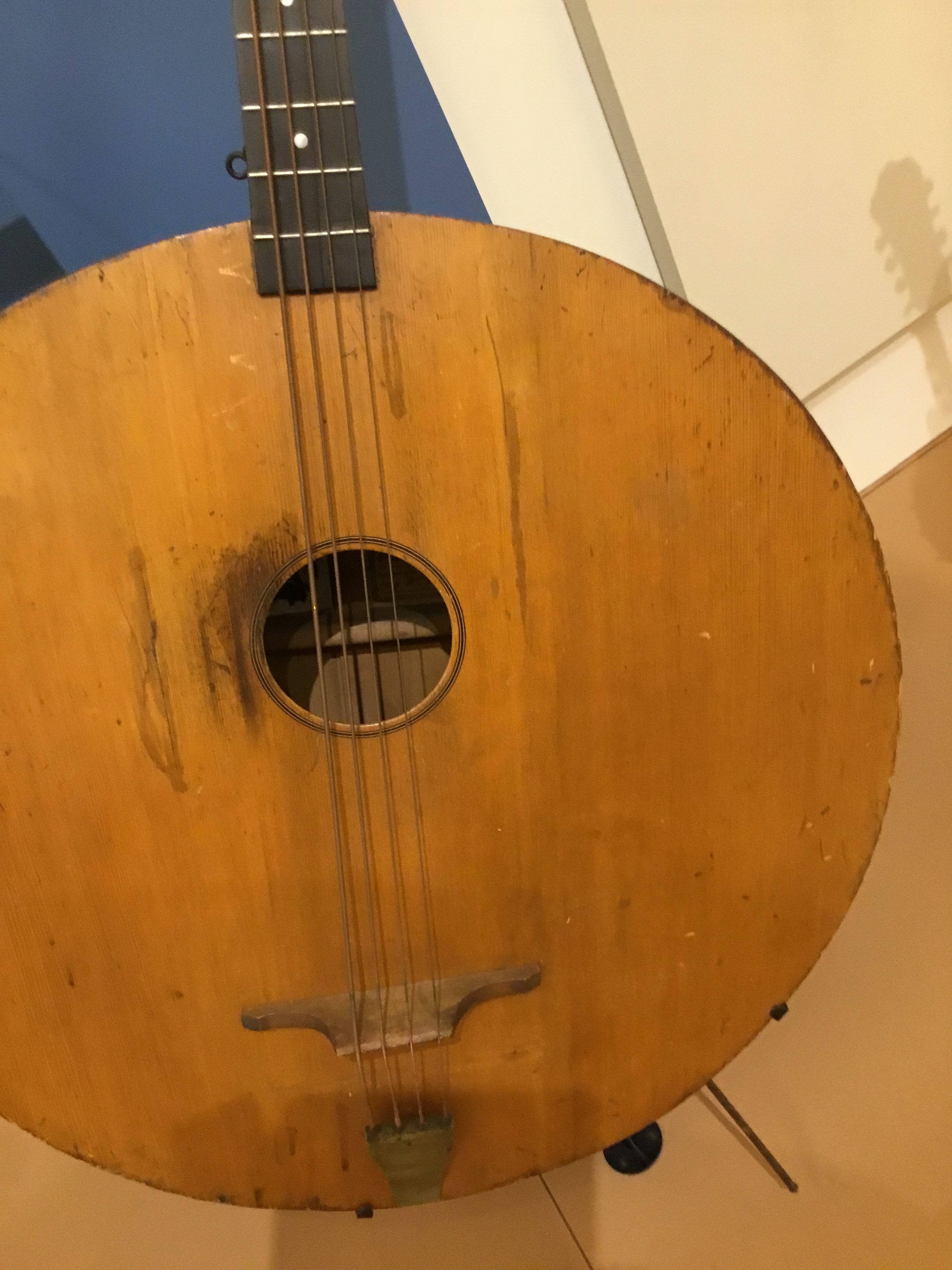
Or this gigantic Mando-bass made in Chicago in 1913, with an interior label that boasts it has “the greatest power of tone the world has ever heard.”
But I digress.
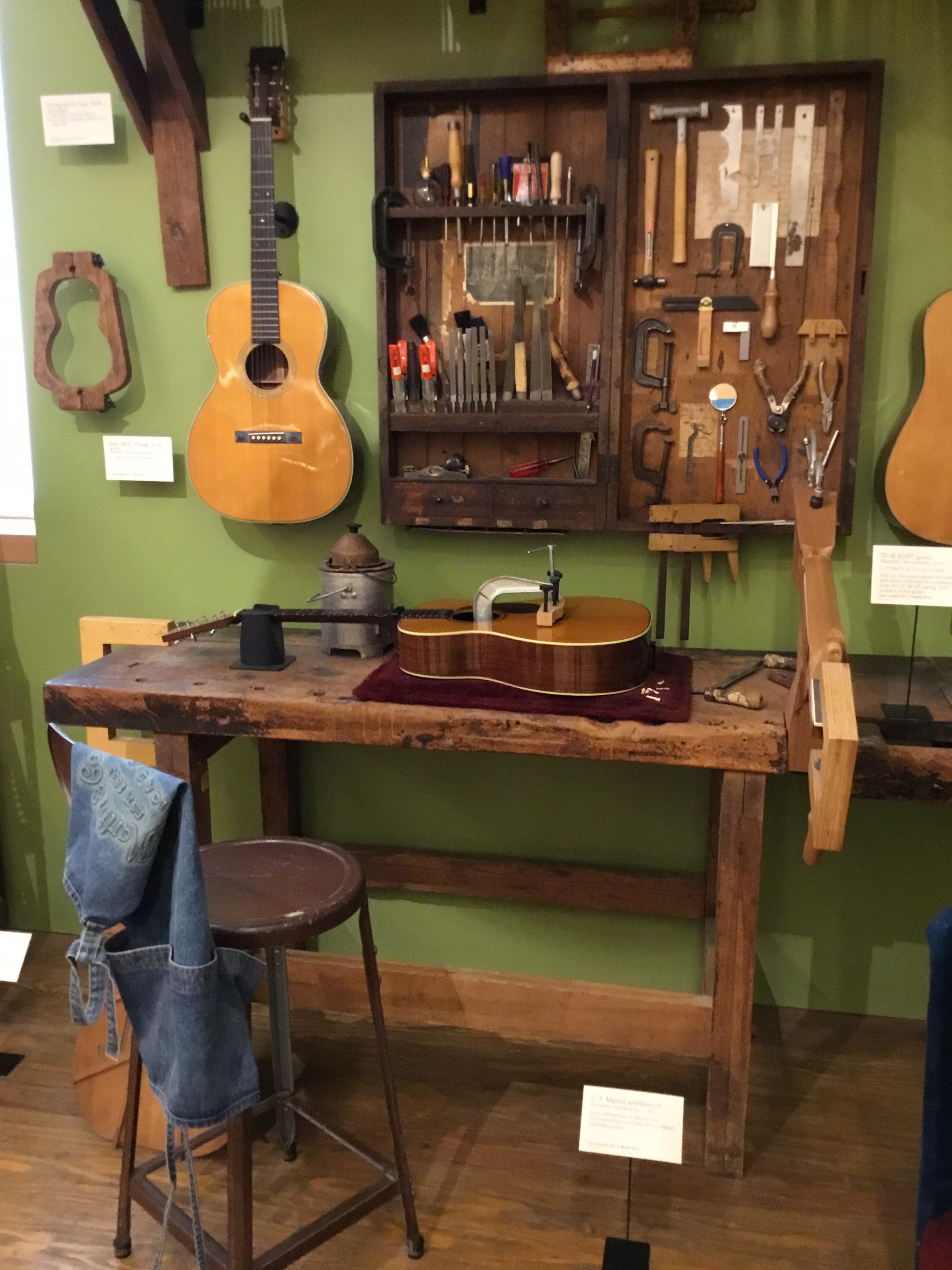
The exhibit I thought really excelled showed a Martin workshop complete with all the tools of the trade. The museum info talked about the development of the Dreadnought guitar, its larger body, wider waist and tapered shoulders, the difference of its frets, how it became the premier guitar in America (Martin helped fund the exhibit.)
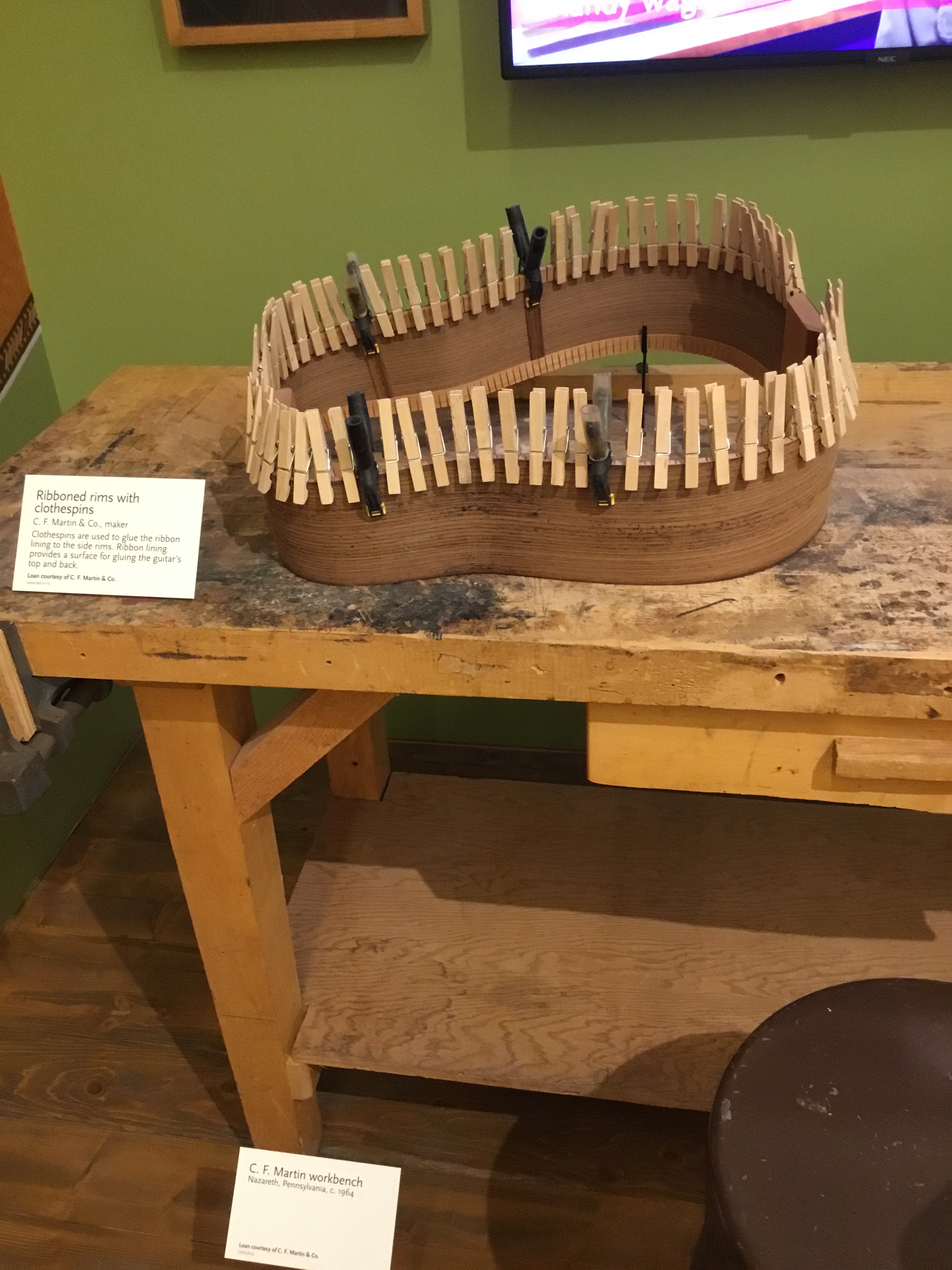
But what did I like the most? The fact that clothespins are used in the modeling of the musical form.
I’ve been visiting since my parents retired here when I was in my 20s. The scent of the air, its dryness, the heat, all were so different than cold grey New York. In Manhattan, we took cabs. In Arizona, we took hot air balloons. The flora asserted their exotica. Right down the street from my parents, at McCormick Ranch, was a real ranch with horses friendly enough to come over to the fence and be fed carrots.
When Gil and I got married, our best man, a photographer, brought us out into the desert for official posed pictures. We went to an empty lot downtown.
There was nothing but sand and tumbleweed for miles, and saguaros that towered over our heads. Carnegiea gigantea. Easterners, we learned that the single columns were the babies among them, and the more arms that poked out of that central stem, the more ancient they were. There were a lot of vintage saguaros out there.
Years went by. We spent our Arizona time with my parents in Sedona, not Scottsdale. When they returned, we returned, to find that you can in fact pave paradise – though a cliché, it’s no exaggeration. Almost all the desert had been developed. Towering corporate buildings, shopping mall after shopping mall. No horses munching behind a fence, they were long gone, whether to pasture or the glue factory, nobody knew. Development had disappeared them.
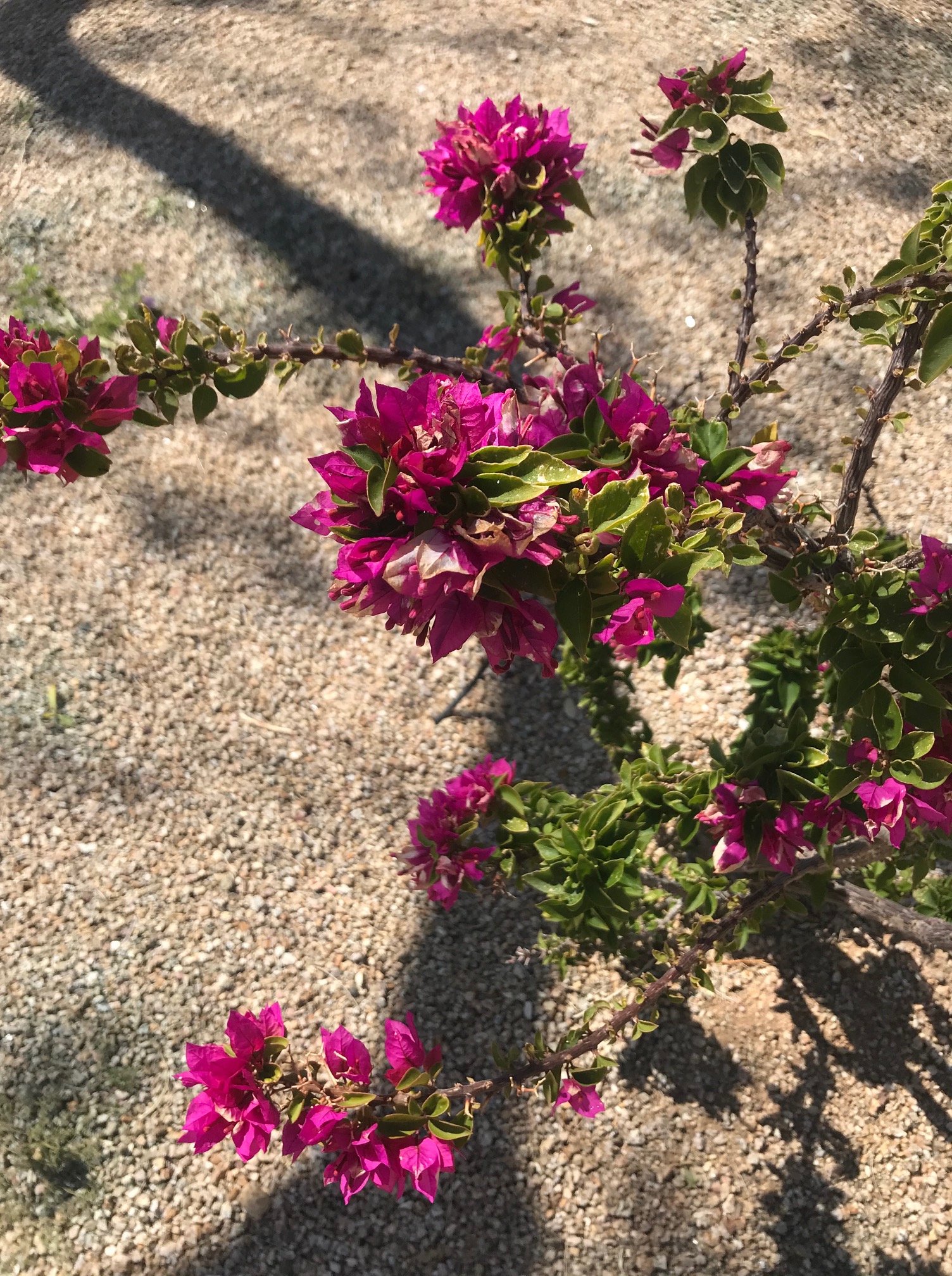
But still. The air and the heat feel the same. There are fuschia flowers.
Odd saguaro shapes, as high as ever above your head.
All of these plants are squeezed along the turf alleys amid winding sidewalks, not “out in the desert” but the embodiment of desert nonetheless. The hot rodders own the 101, transplanted Californians have taken over the parking lots at Whole Foods, gated complexes proliferate.
There is no empty lot where we took our wedding shots. But you can’t kill the desert. It blooms again every spring.
…or if you do, make sure you don’t write it in pencil. A small chunk of diaries my grandmother penned arrived for my perusal when I had some time on my hands to page through them. The script in pencil has faded, often illegibly, though the spirit of the writer comes through.
My grandmother was a remarkable person, strong and opinionated, not one to suffer fools gladly. She traveled the world round with my grandfather taking a gleeful interest in all they experienced. In Russia in 1953 they visited Tolstoy’s house, and she noted the minutiae of everything preserved there. In Tokyo, where they visited my parents, it was the faces of the little girls. In Paris, the pace at which the Frenchwomen walked.
So much of what she saw is lost to us now because it was private, in those little cursive-filled volumes, in a box, on a shelf, obscure even to me, a writer, who loved the writer of them.
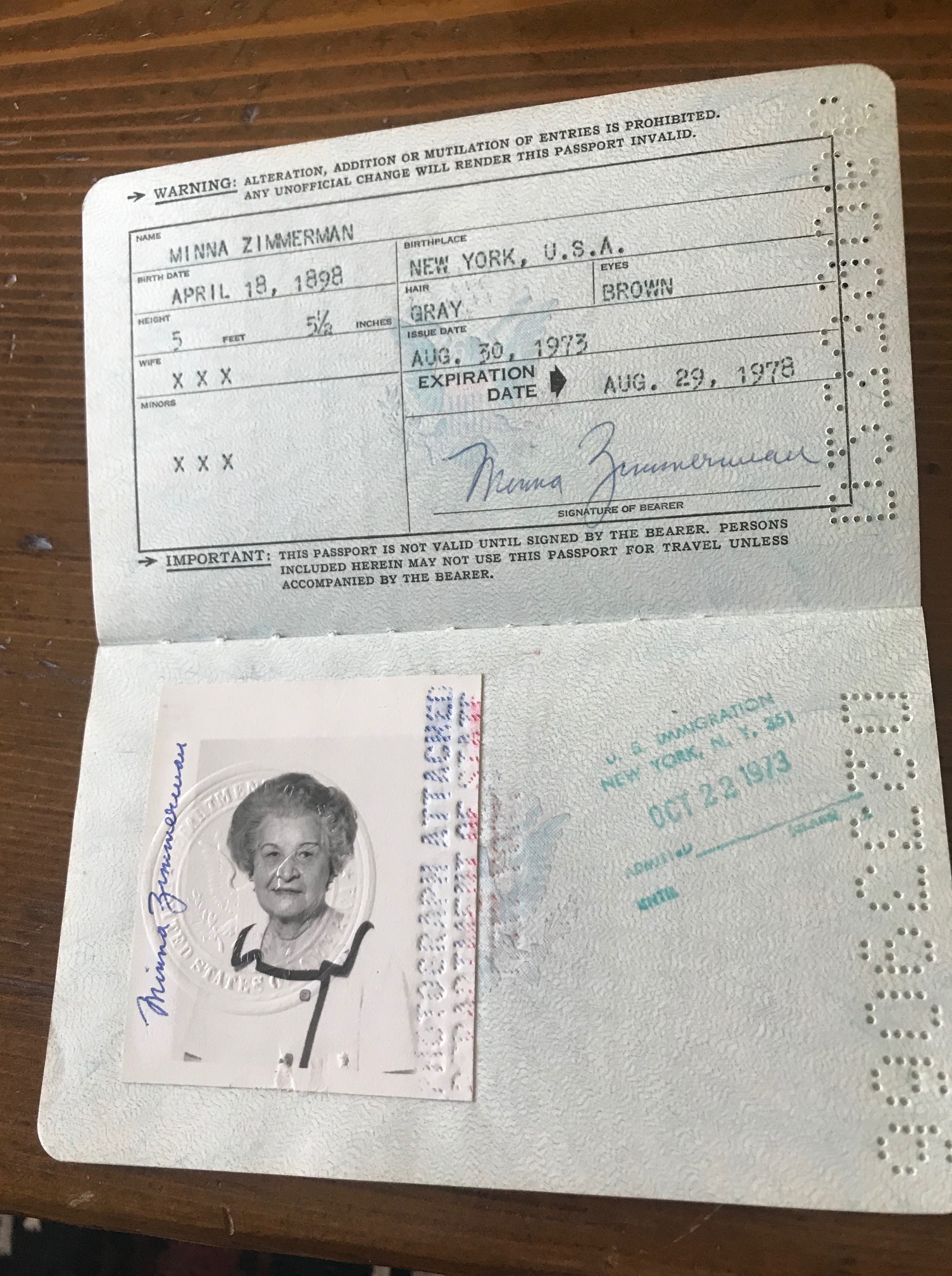
Minna was born in the United States in 1898 but her family had emigrated from Lodz, in Poland, 60 miles southwest of Warsaw – where my grandfather Jack’s family also came from. A self-described flapper, she would have naturally gravitated to the luxurious furs my grandfather’s company manufactured. They moved to Long Island, to a gracious home, then back to Manhattan, on Central Park West, with a window overlooking the mammoth grey rocks I liked to climb as a child. It was in this period, when I was small and she was mature, that she and Jack took the world by storm, going to France, Japan, India, Russia, Cuba and many more.
The last I remember of her traveling was something that did not have to do with her actual travels, something imaginary. When she was in her eighties, ailing with a heart condition, she told me nonsensically that she went out flying during the night. The wanderings of a person at the end of her life. Soon after her death, her notebooks were put away, for future generations more accustomed to keeping a blog than keeping a diary. Is posting on line any more profound than taking a pen – or even a pencil – to paper? I think not. It’s just something that we do, Minna and I, honing our personal observations for no reason other than because we can.
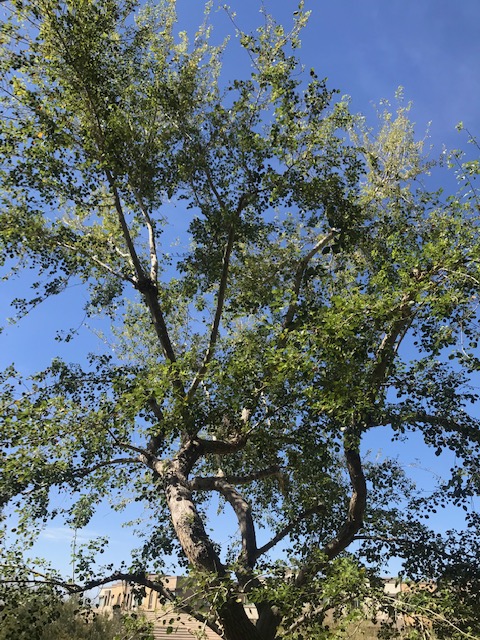
Sitting out on the balcony on a cool (80 degree) day in late March, my mother showed me a tree she called “the Sysyphus tree.” Rough bark, winding branches, small leaves aflutter. It has to be pruned twice a year so the sunlight will be allowed to poke through.
Rabbits run around the lawn below, which is a good thing for the owls that roost in the tree. My mother calls to them, and they call back, when they are not being sullen.
My mother (her pic) has gotten to know the owls quite well. They disappeared when my father went into the hospital four weeks ago, and didn’t return until today, when I arrived. Sysyphus was condemned to rolling a boulder up a mountain. Late life illness is a burden everyone should be spared.
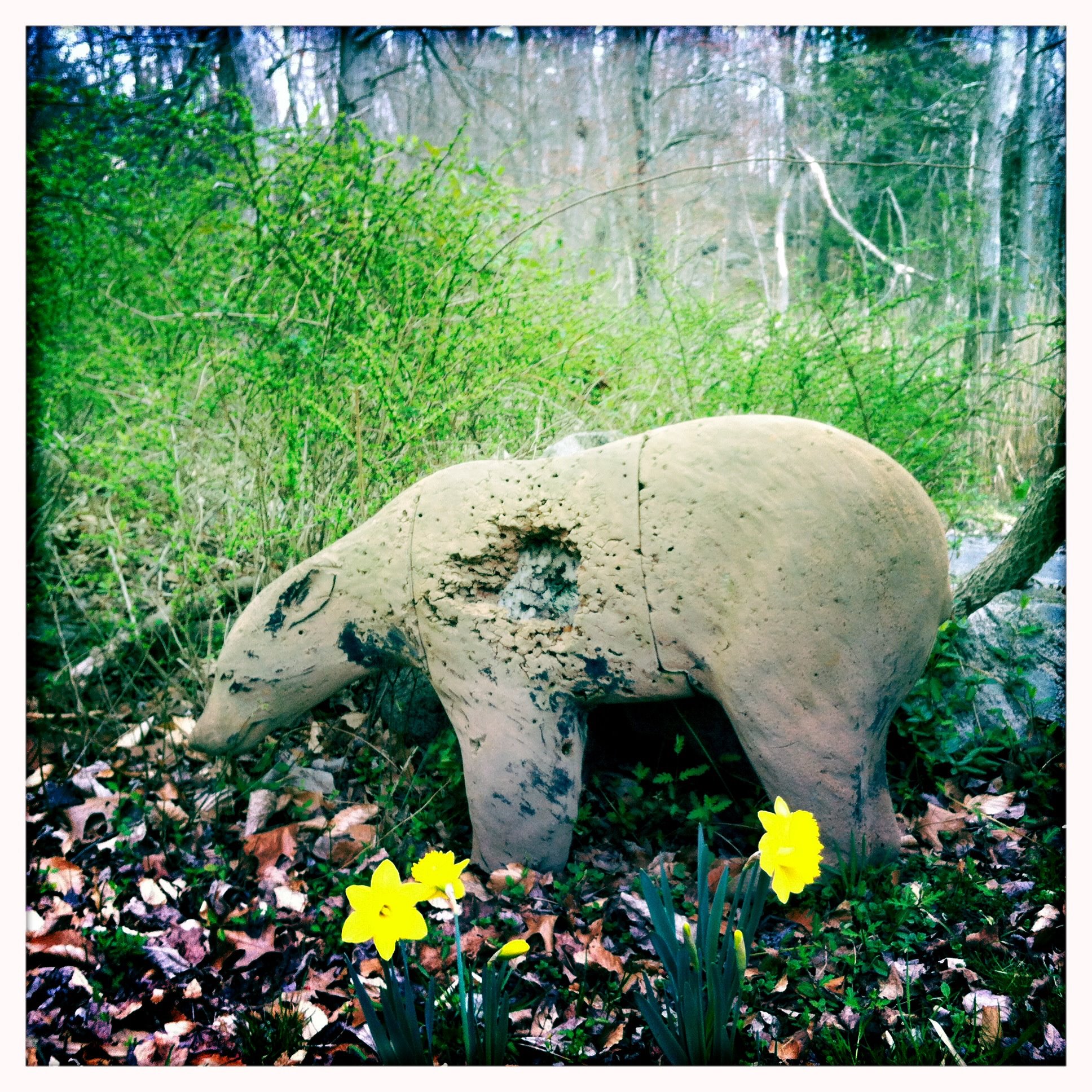
One of my favorite images of spring is this target-practice bear we rescued from the dump, standing shyly behind just-bloomed daffs.
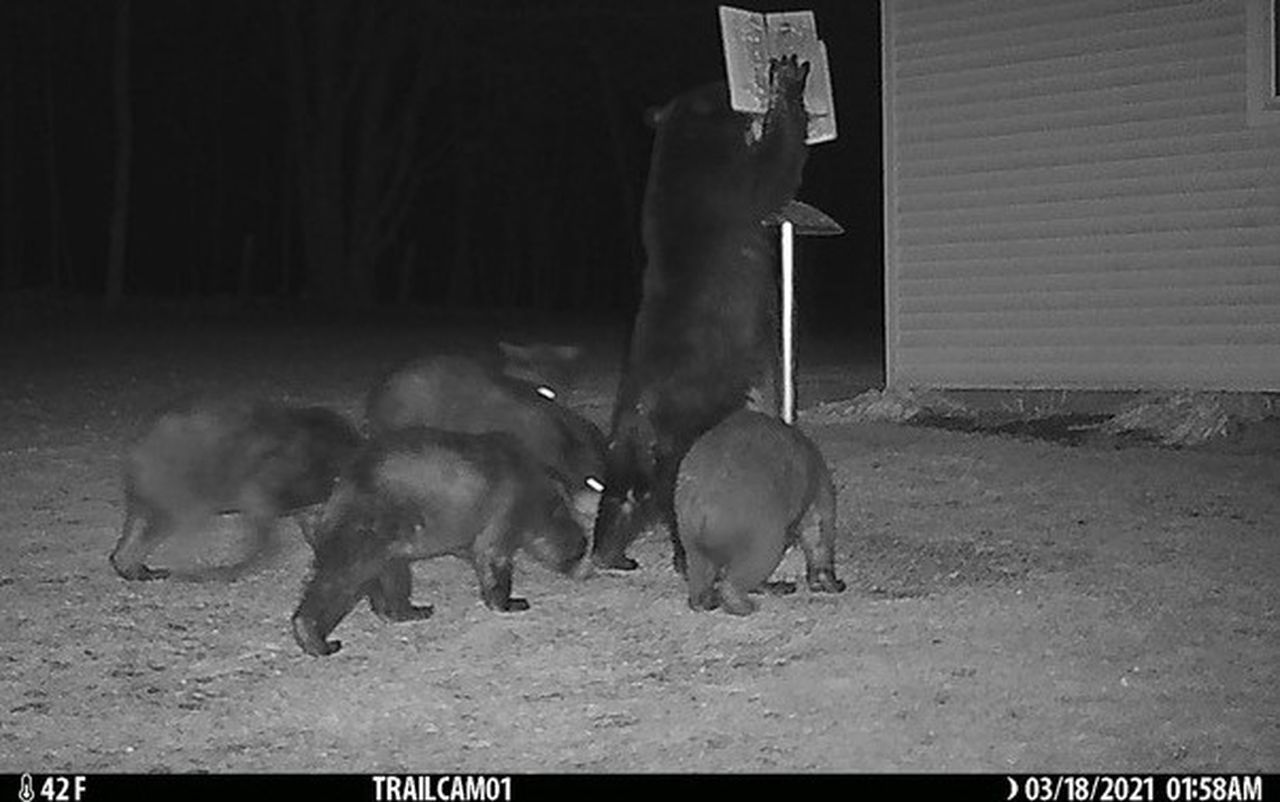
Of course bears are not known for being shy. A family of six, including the mother (called a “sow”) and her yearlings, recently made a play for a bird feeder in the Town of Goshen. It was the middle of the night.They made a racket and then lolled around for a while, presumably digesting.
Black bears are on the rise in our area, and the New York Department of Environmental Conservation warns that you should keep birdseed, pet food and garbage put away. The saying goes, “A fed bear is a dead bear,” because once a bear gets the taste of human food it will keep on returning and will eventually have to be put down. Tranquilizing and relocating them doesn’t work, as they have been known to go 300 miles to return to their familiar habitat — your bird feeder. And campers beware — keep all your food and cooking items in your car. If you camp without a car, I guess you don’t eat! These are beautiful animals and deserve the best we can give them. Which is not giving them anything. Bears can make it on their own, without humans.




































 Jean Zimmerman