Happy birthday Marilyn,

who joined the one-name wonders with an undeniably cultural legacy. If you don’t like her, you just don’t understand.

Gil, who is working on a television project about MM, has things to say about her.

He comments, “Marilyn, we hardly knew ye. You were smarter, cooler, funnier and deeper than anyone. Forgive us, we knew not what we did.”

Leave a comment

Filed under Jean Zimmerman

Discovery of something

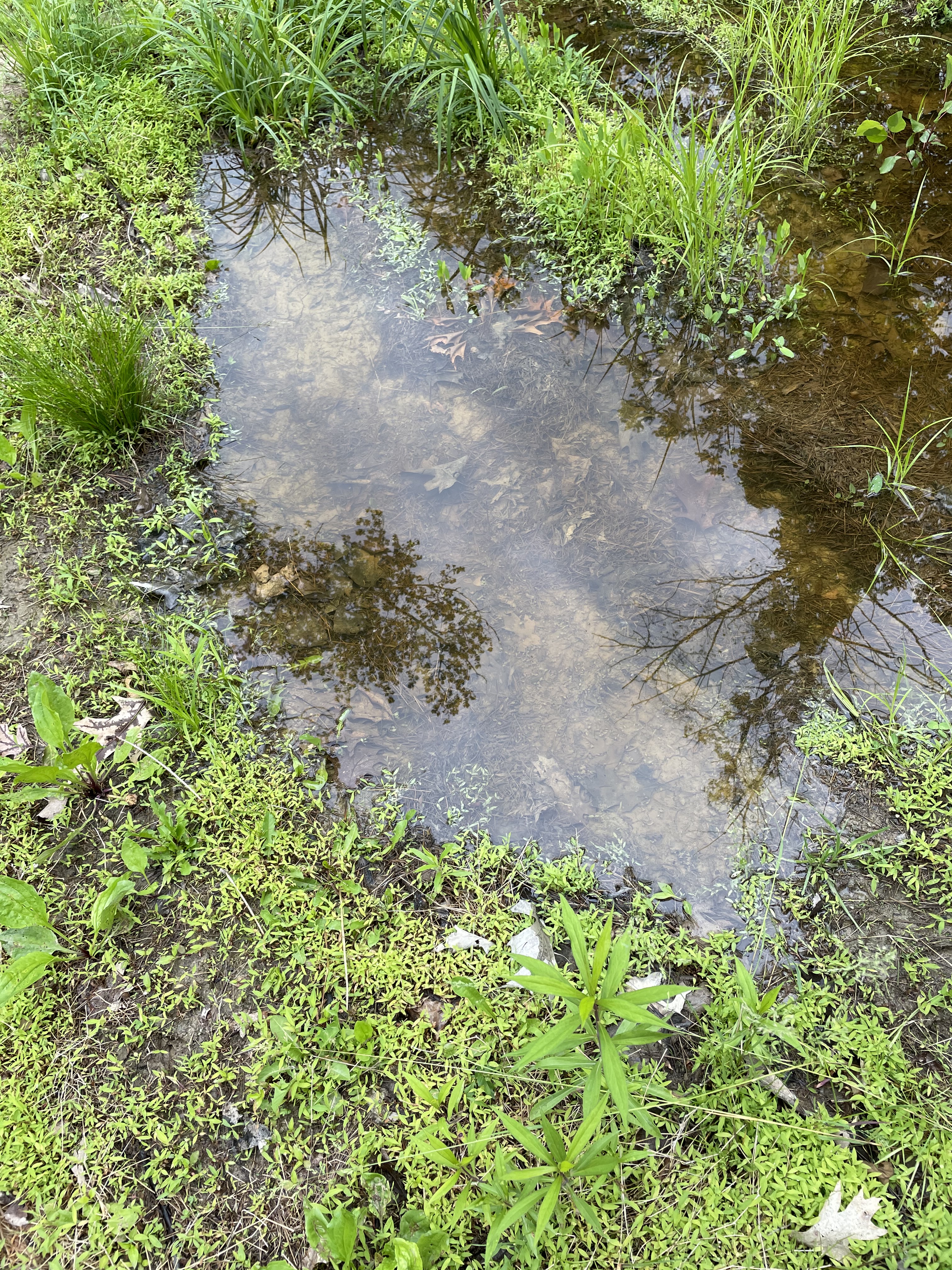
where it looks like there is nothing is always a pleasure. It’s especially delightful, at least for me, when the pot of gold at the end of the rainbow is hallowed,  precious and aged. Taking the trail through the sudden spring puddles in Tivoli, New York, I didn’t know what we would find.

Fleabane (a Shakespearean sounding daisy, though it’s native to North America) bloomed. Sore throat, fever and swelling are some of the folk remedies it offers.

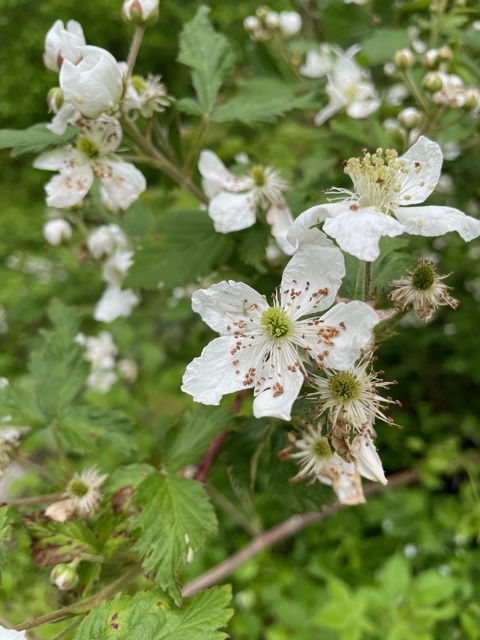
All around were the wild flowers I’ve known all my life, multiflora roses that bloom a week or  two in May, then offer nothing but thorns the rest of the year. An Asian plant, it was transported to America as a rootstock in the late 19thcentury for grafted rose cultivars, then used as natural fencing for cattle. Ouch!

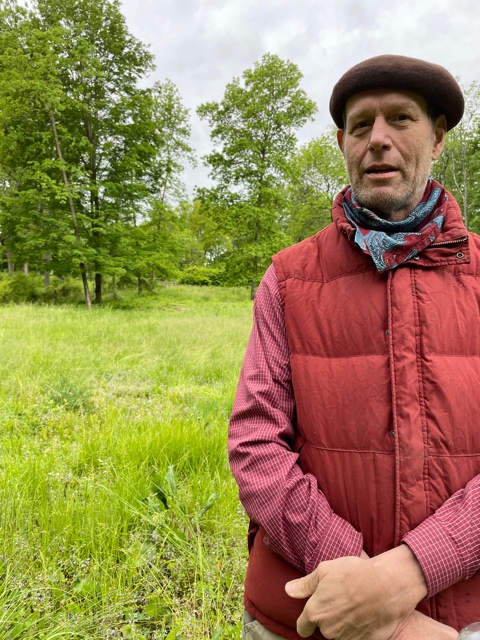
Our guide: my brother Peter, who had tried three times to find this place, working off of near illegible old news clippings. He is nothing if not dogged.

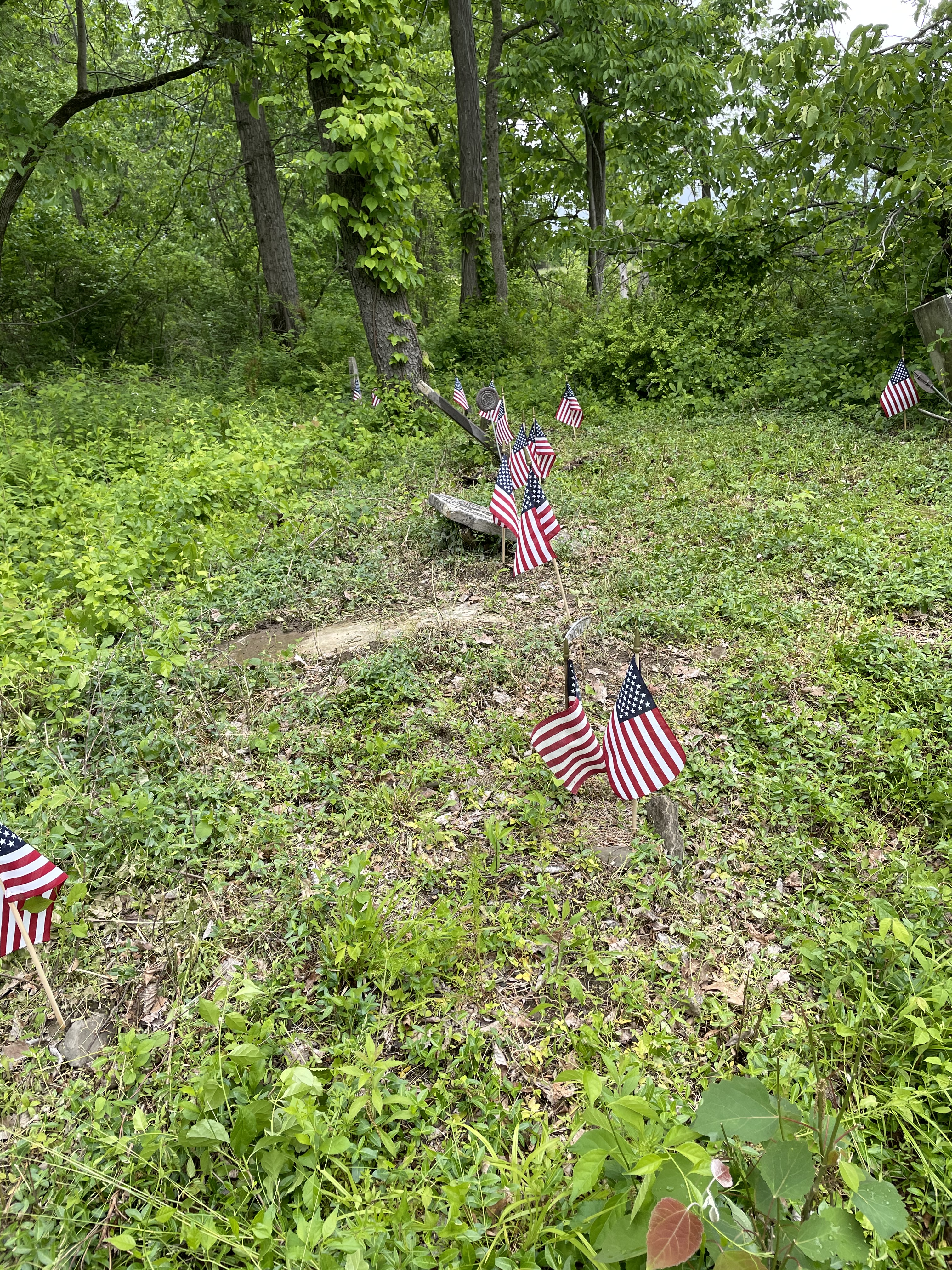
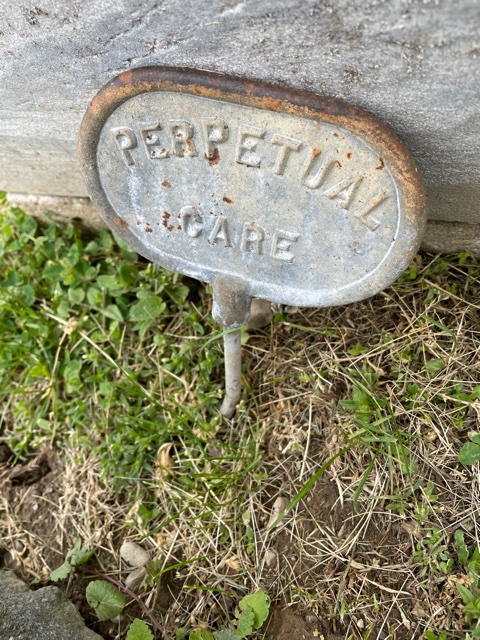
Appearing out of nowhere like a woodland mirage was the cemetery. The local American Legion stalwarts found their way through the muck this Memorial Day to plant flags on the graves. To bushwack for a mile and find in the wilderness this startling scrap of history was a marvel.

This was known as the “smallpox” or “colored” graveyard, all of them deceased veterans. The stones date back to 1812, and even the most dedicated gravestone rubber would have a hard time making out some of the letters.

According to the confusing article we had, and examining the stones, there was someone named David Wool and someone else named Wool – perhaps they were father and son? Under our feet, a black Tivoli resident named Lewis Henry  who had been honorably discharged in 1865 died in the Tivoli Hotel. “He had been suffering for a long time from various diseases and this winter slept in an old boat at the dock until his last few days.” We also saw simple, rough blocks of stone, embedded in grass also studded with flags. Somebody knew somebody who knew somebody who knew somebody who was buried here once.

Long ago, victims of the pox and black soldiers were not dignified with a burial in the mainstream church cemetery and they wound up here. Some accounts have it that those with smallpox were sent down here to be tended until they died by black veterans in a “frame house”. It was a short trip from that frame house to the graveyard. Now we are honoring these dead in this very small corner of the world, even if we had to muddy their shoes to get there.

Leaving, we walked through the better tended cemetery a good mile away. A lucky bluebird dipped in front of our windshield. May everyone have someone to tend what Walt Whitman called “the beautiful uncut hair of graves.”

2 Comments

Filed under Jean Zimmerman

“I was already dozing

off in the shade, dreaming that the rustling trees were my many selves explaining themselves all at the same time so that I could not make out a single word. My life was a beautiful mystery on the verge of understanding, always on the verge!”

Charles Simic

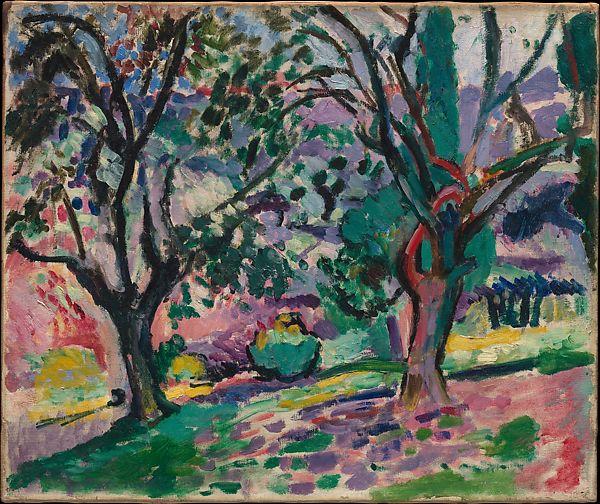
Henri Matisse (French, Le Cateau-Cambrésis 1869–1954 Nice) Olive Trees at Collioure, summer 1905, The Metropolitan Museum of Art, New York

1 Comment

Filed under Jean Zimmerman

The birds and the bees

and other fortunate critters now live off the incredible array of foodstuffs that still survive in what are called “forest gardens.” A delightful oxymoron, the wild forest and the cultivated garden. These deliberately created orchards and plantings existed for thousands of years, tended by indigenous peoples in northwestern British Columbia, before the European incursion in the late 18th century. It was then that, “Disease turned whole societies to ash,” in the memorable phrasing of Charles C. Mann, in his absolutely essential examination of the New World, 1491. The way of agriculture that had sustained them for thousands of years perished as smallpox and influenza took over.

But the forest gardens’ remains remain. Ts’msyen and Coast Salish peoples once planted and cared for plots of native fruit and nut trees, shrubs, and medicinal plants and roots along the north and south Pacific coast, write the authors of a university study. The way they planted is not uncommon elsewhere in the world, especially in the tropics. But this is the first time these orchard-like land parcels have been studied in North America.

Here is what they grew: crabapple, hazelnut, wild cherry and plum trees. These formed a canopy over a lower planting of elderberry, hawthorne, cranberry, wild ginger and wild rice root. The forest gardens might be surrounded by conifer forests.

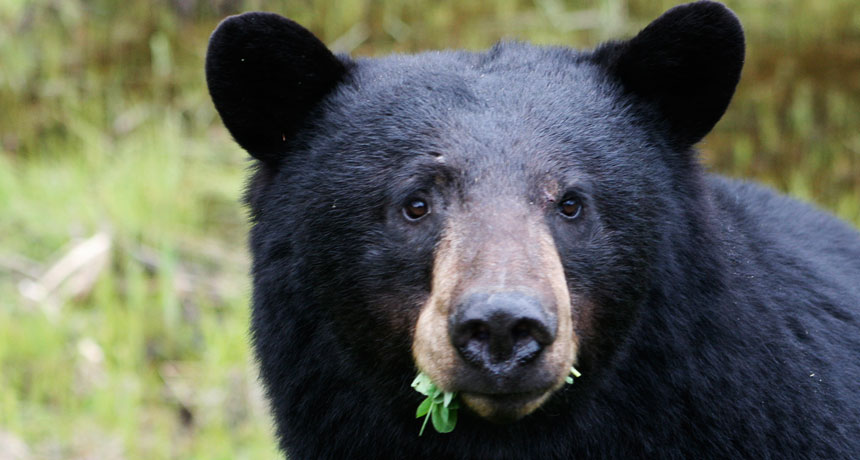
Though no longer serving their purpose of feeding humans, the forest gardens still attract wildlife, from birds to bears to pollinators.

Meantime, in the east, home to the Haudenosaunee (known by some as the Iroquois Nation), men and women transformed forests into orchards for fruit and mast. Chestnut was especially popular, and hickory. The observant naturalist William Bartram traveled among the Creek in the 1770s. 

Of hickory nuts, he wrote, “They pound them to pieces, and then cast them into boiling water, which, after passing through fine strainers, preserves the most oily part of the liquid” to make a milk “as sweet and thick as fresh cream.” Like a splash of hickory milk in your Starbucks?

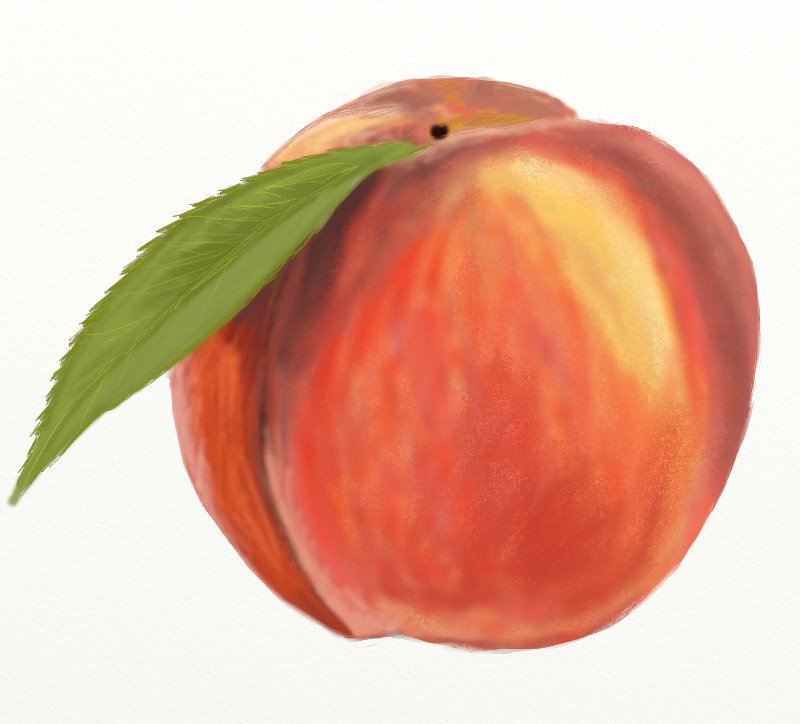
European travelers were astounded to see peach trees in the woods, a vestige of plunderer Hernando de Soto’s 16th-century importation of hogs and peach trees. The wild-running hogs ate, did what came naturally, then the Indians discovered the sweet fruit and planted the trees where it suited them.

The lead author of the study of the Ts’msyen and Coast Salish peoples, Chelsey Geralda Armstrong, says of the cultivated woodland plots, “These plants never grow together in the wild. It seemed obvious that people put them there to grow all in one spot – like a garden.”

But what were the tricks of the trade? How did they achieve botanical /edible perfection? Controlled burning, fertilizing, transplanting from other places, pruning and weeding. Early farmers also engaged in something called coppicing, which means cutting back trees or shrubs to ground level to encourage growth.

Of course, these agricultural efforts worked best on a small scale – and that’s the best scale there is.

Leave a comment

Filed under Jean Zimmerman

I’d like to take a hot bath

And wash away the summer-camp cheer I’ve been immersed in over the last few days. I put on my shiny salesman shoes and visited more than a dozen camps nearby to see if they needed tree work before the season started. What magnificent places! Ballfields and climbing walls, zip lines and a pool and little bungalows where kids go to rest.

I did not see any children, of course, they show up at the end of June.

But I could imagine them having the time of their lives. These pics are from various websites.

I went to sleepaway camp myself, at a YMCA joint in the Berkshires. We also swam, and ate s’mores. We lived in canvas tents that I loved – I thought it was so magical to roll up the sides and let the breeze flow through. Eight to a tent. I was 10 or 11.

Something was eating at my mind as I drove from camp to camp and thought about the privileged kids that went to them. There was always something underneath the surface. I remembered that one girl was African American. She tried to befriend the other girls but had little luck. She was sort of heavy and when she made her way down the trail to the washhouse before curfew, some campers snickered behind her back that she used a whole bar of soap every time she showered.

Racist prigs –at this wholesome, family-style summer camp, where everyone was friends with everyone else, belting out the camp anthem and all that. I look back now and see it as so sad. Now attitudes have changed, supposedly, and intolerance is out of style. But I’d like to know what goes on behind the climbing wall at some of the camps I saw today.

Leave a comment

Filed under Jean Zimmerman

No humans, no dogs, one swan

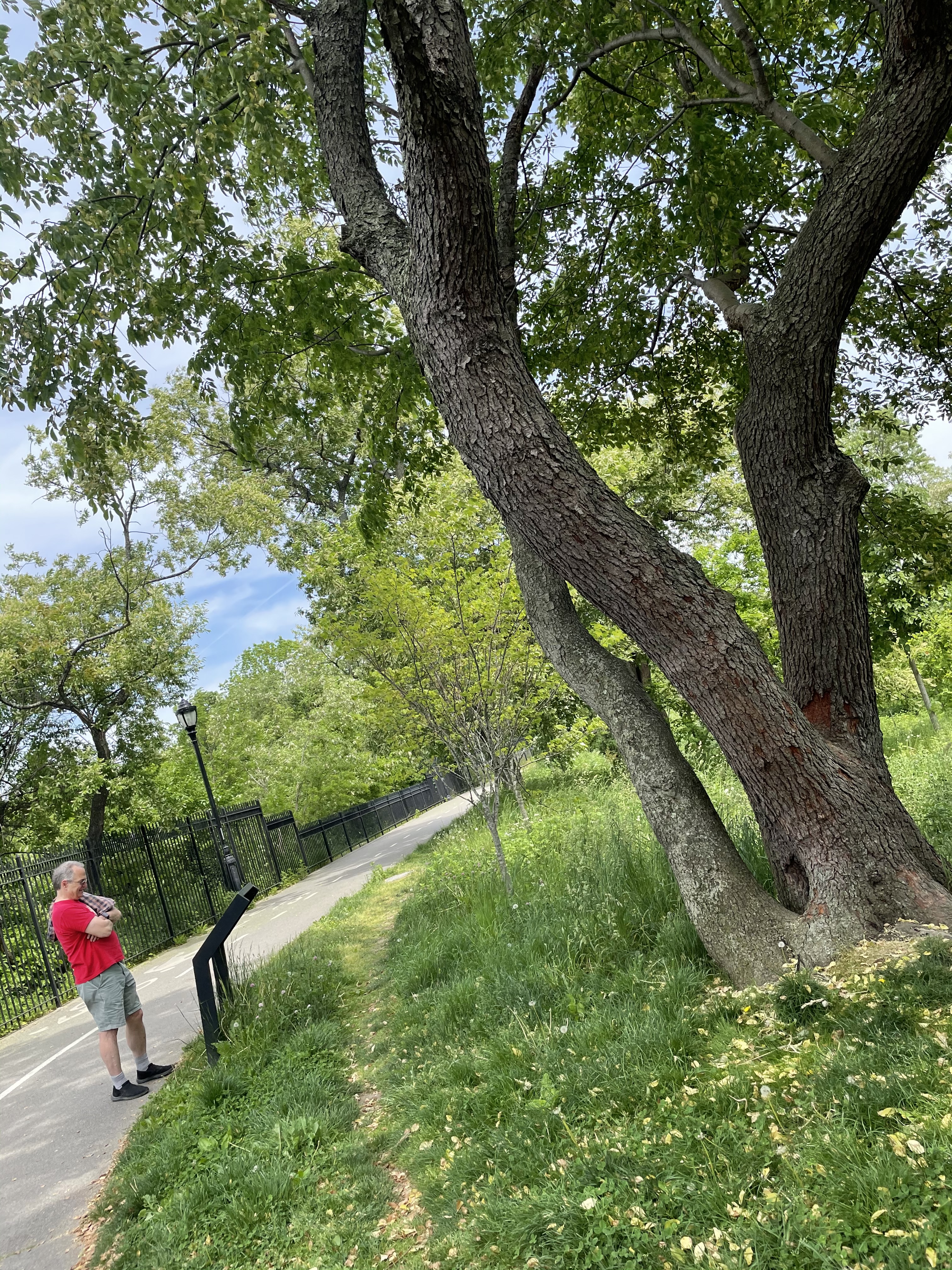
populated the Ridgewood Reservoir when we saw it.  Ridgewood sits in the middle of Highland Park in Brooklyn, bordering Queens, and it is the closest thing to wilderness you will find in all of New York City. Those haunting pictures of life coming back to Chernobyl when it was absolutely impossible for life to come back – Ridgewood is like that, minus the nuclear blast.

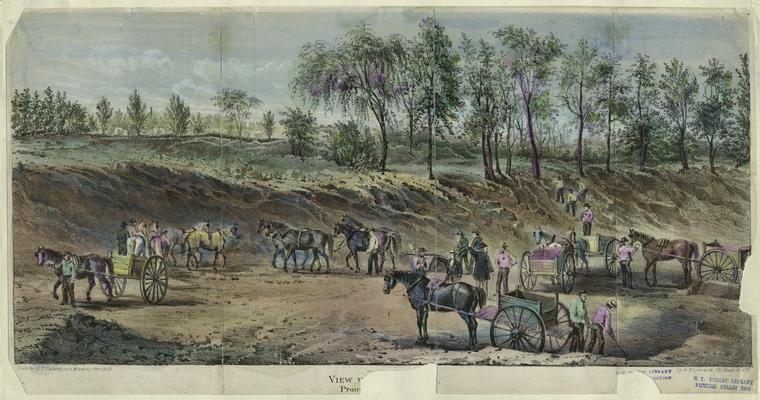
In 1858, the city fathers (note: no mothers among them) realized that clean water was a vital necessity, and they bought Snedicker’s corn farm to become the reservoir.

Over the years the borough’s thirst only intensified and The People in Charge bought acres and acres around the original site to use as a buffer against “pollutants generated by cemeteries and garbage plants.” The boroughs of New York were still independent cities until 1898. By bringing water to Brooklyn, the reservoir allowed Brooklyn to become America’s third-largest city, as well as the country’s largest beer producer. (That honor now belongs either to Chicago or to Portland, OR.)

The reservoir was decommissioned and drained by 1990, and the land basically left to its own devices. 

During our visit we made our way all along the perimeter (1.18 miles) and met no one but a lone birder, who told us the bird song quieted at the hotter hours of the day. (I knew that.) I wanted to go because I heard there was a birch forest growing in Brooklyn, but in fact I saw nary a birch. Black locust, yes, very fragrant.

And lots of black cherry.

Sassafras. Imagine fifty-plus acres of sassafras. There’s also red maple and sweet gum. There are thick carpets of moss and the bogs we couldn’t get at.

I wonder what old Frederick Olmsted, master landscaper who designed Central Park, would have thought of the pristine pool becoming a jungle.

Highland Park sits atop  a ridge formed by the Wisconsin ice sheet’s terminal moraine. Olmstead loved blasting the hell out of ancient boulders to make Central Park.

In 1894, Brooklyn hired Olmsted’s firm to design the main drive and concourse for the reservoir’s southern portion, lined still today with towering, bulbous London plane trees.

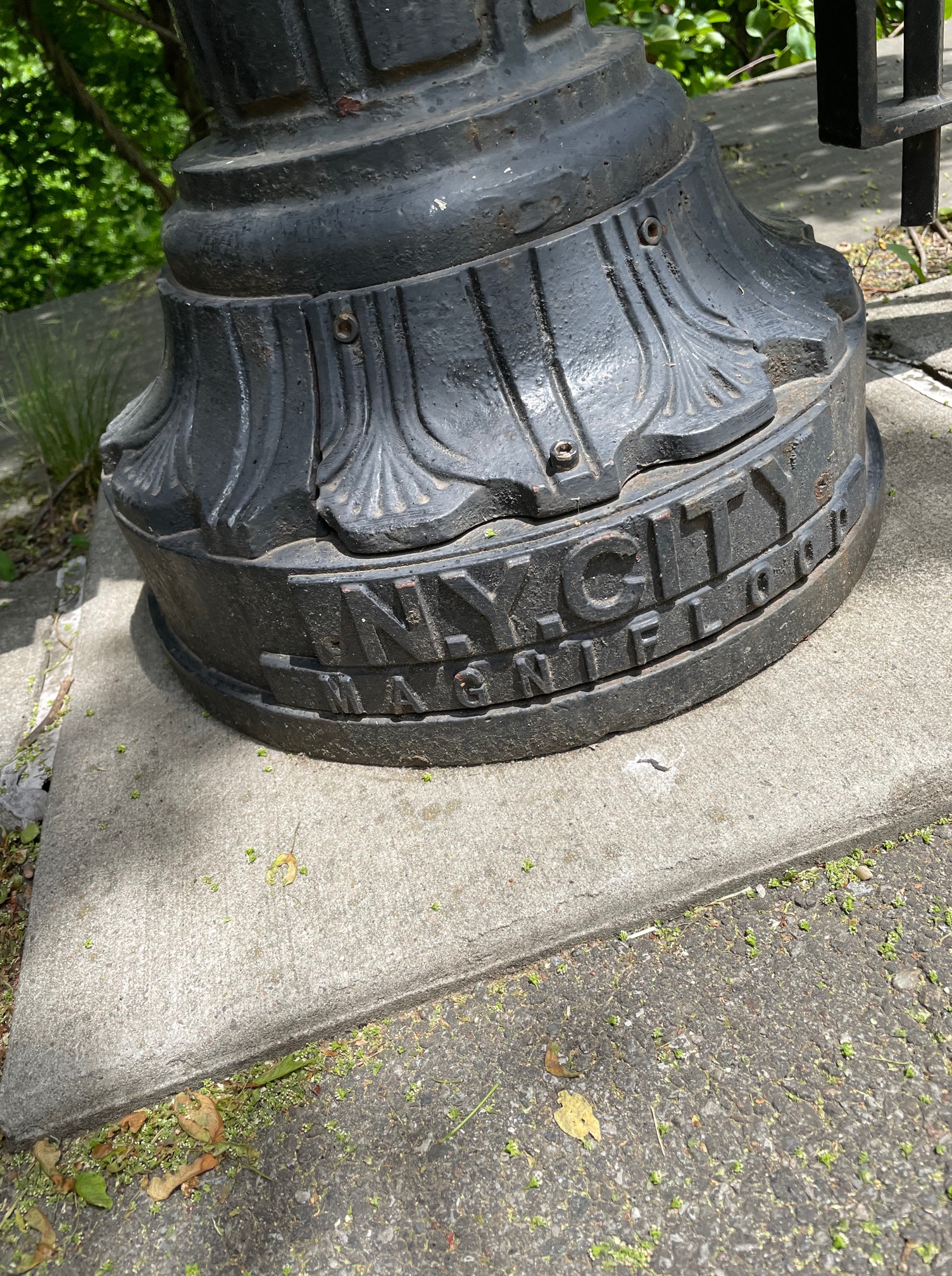
The Olmsted company erected an iron fence and electric lights, which were barely heard of in those days. The fence went up because of repeated drownings, suicidal and otherwise.

You can still read on the base of each light fixture: MAGNIFLOOD.

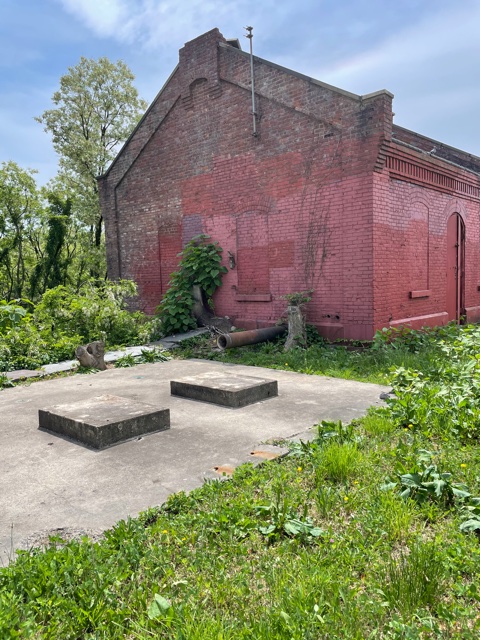
Old pumphouses still stand.

Nine cemeteries ring the park, including this one, the B’nal Jeshaurm and Shearith Isreal cemetery. There is one just for nuns, too, and one for the World War I dead. I think I have family in one of them.

Actually, the original tract featured three reservoirs, and two were drained in the 1980s while water remained in one. That body is now ringed by phragmites, which is the insidious non-cattail taking over deteriorated landscapes everywhere. At the Cabin we had a swamp filled with phragmites; a botanist friend visited and told me, “Oh, those are an invasive species.” Which I felt kind of insulted by at the time, but she was correct.

The swan on the beach is cleaning itself. The person who uses the flat-bottomed boat is used by ecologists, and maybe Huckleberry Finn.

Ridgewood is now a wildlife refuge, with forests, fields and wetlands.  Preservationists have rallied against any threat to its development. We tried to imagine the wildlife that would get over the fences, down the steep slopes and survive there: possum, raccoon, squirrels, voles, snapping turtles (the New York State reptile), garter snakes and frogs. And probably coyotes. In the heart of Brooklyn! We saw only a red winged blackbird but could hear birdsong. A total of 127 bird species have been counted there.

“It’s like a postage-stamp size id in the middle of the raging ego of New York City,” says Gil.

I just say it’s a cool place.
2 Comments

Filed under Jean Zimmerman

Bringing a forest to NYC

can be a lot of work, even for Maya Lin. Yes, that Maya Lin, the one who designed the Vietnam Memorial in Washington, DC (opened in 1982, when Lin was 23), winning a lot of criticism at first and then nothing but accolades.

The same Maya Lin designed a factory in Yonkers, the city next to where I Iive, that makes scrumptious brownies, which find their way into Ben and Jerry’s chocolate fudge brownie ice cream. The factory employs people who might otherwise be unemployable with open hiring policies—not requiring resumes, for example. It’s called the Greyston Bakery, and its motto is: “We don’t hire people to make brownies, we make brownies in order to hire people.” 
Every once in a while Greyston makes its brownies available to the public, and they are irresistible (coming from someone who makes a mean brownie herself).

Lin applied her touch to other Yonkers venues, including a shuttered city jail and an environmental installation at the Hudson River Museum. And she created wonderful waves of landscape art at upstate New York’s Storm King sculpture park. Worth a viisit if you are in the area.

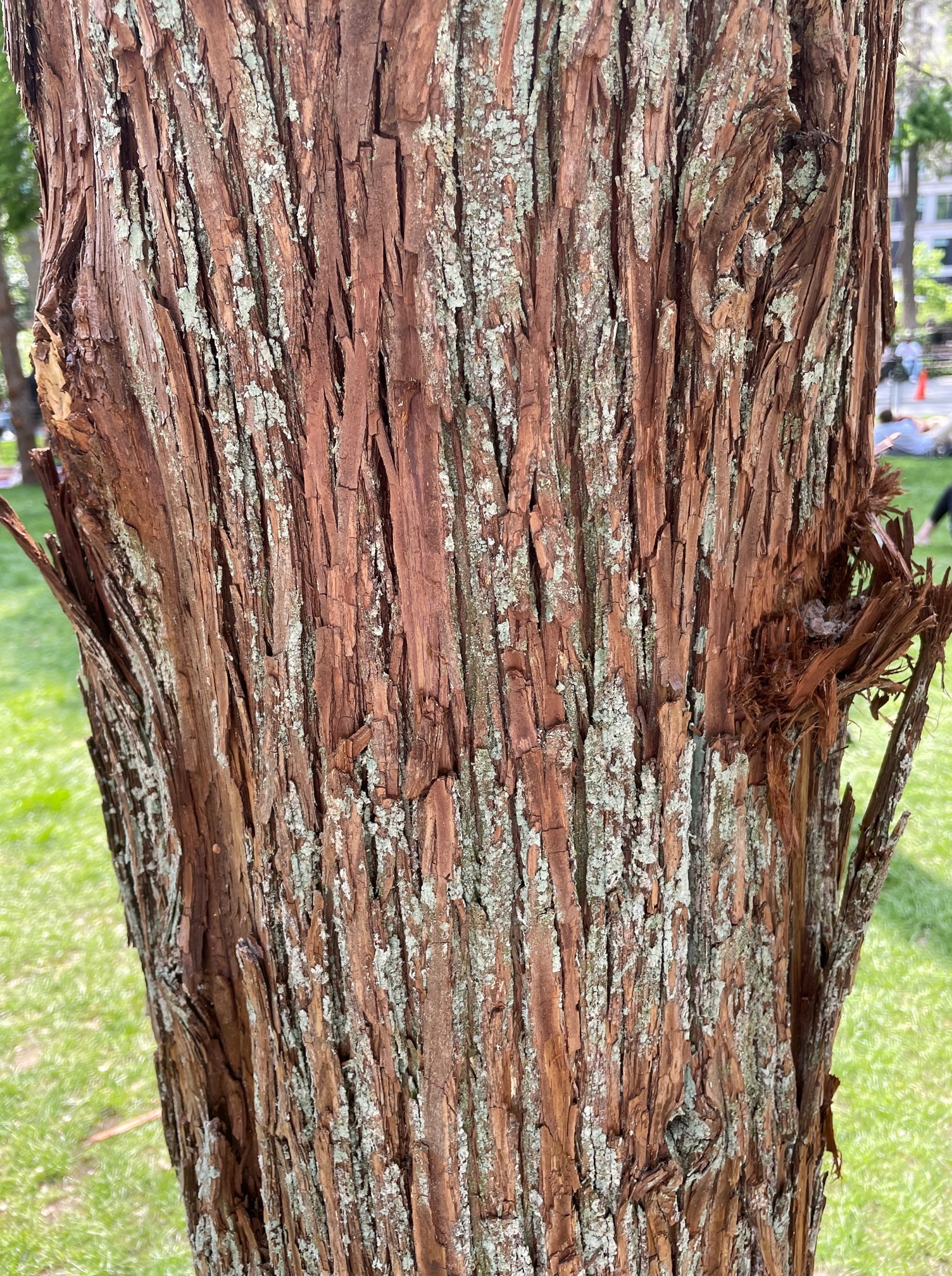
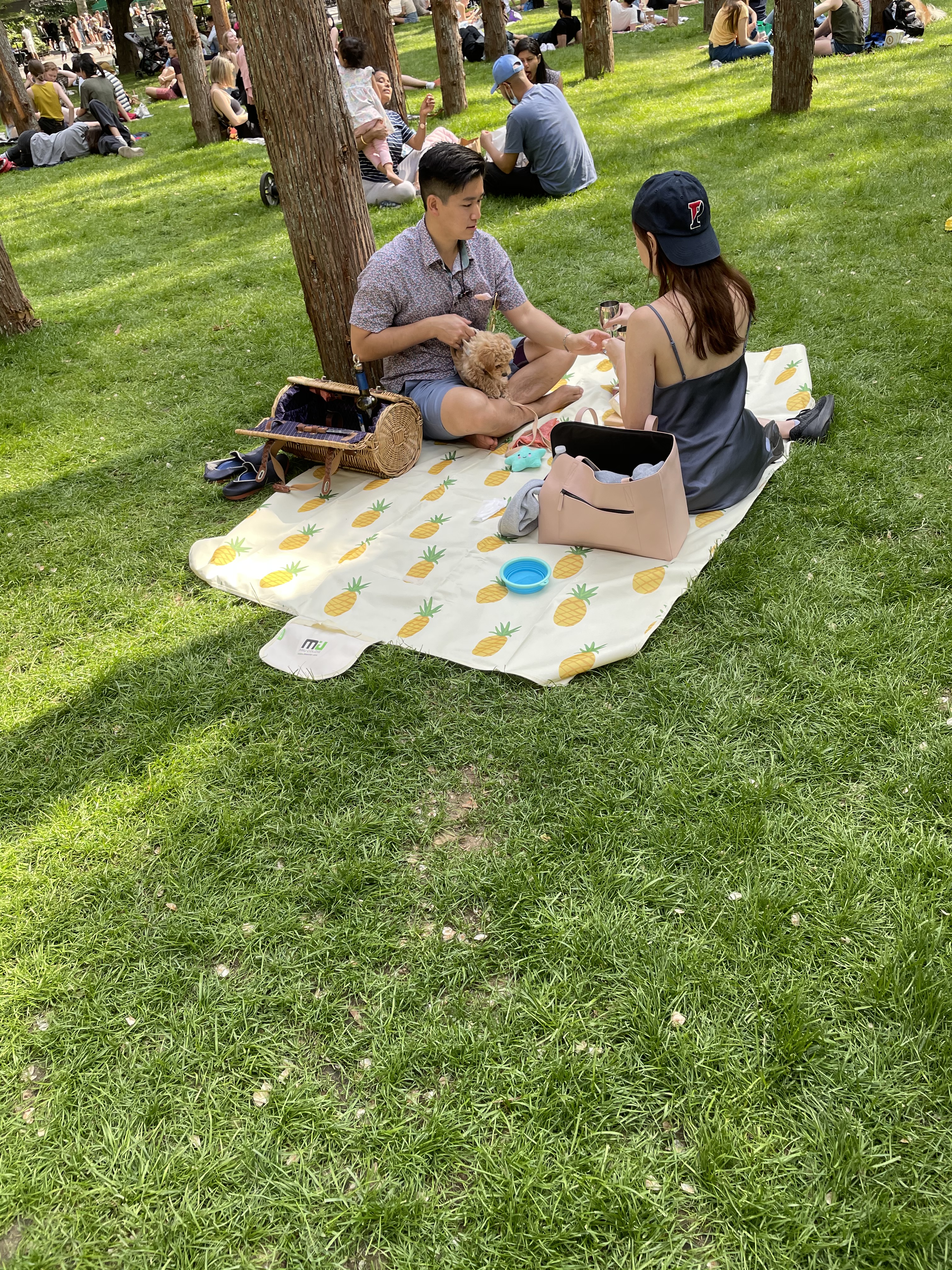
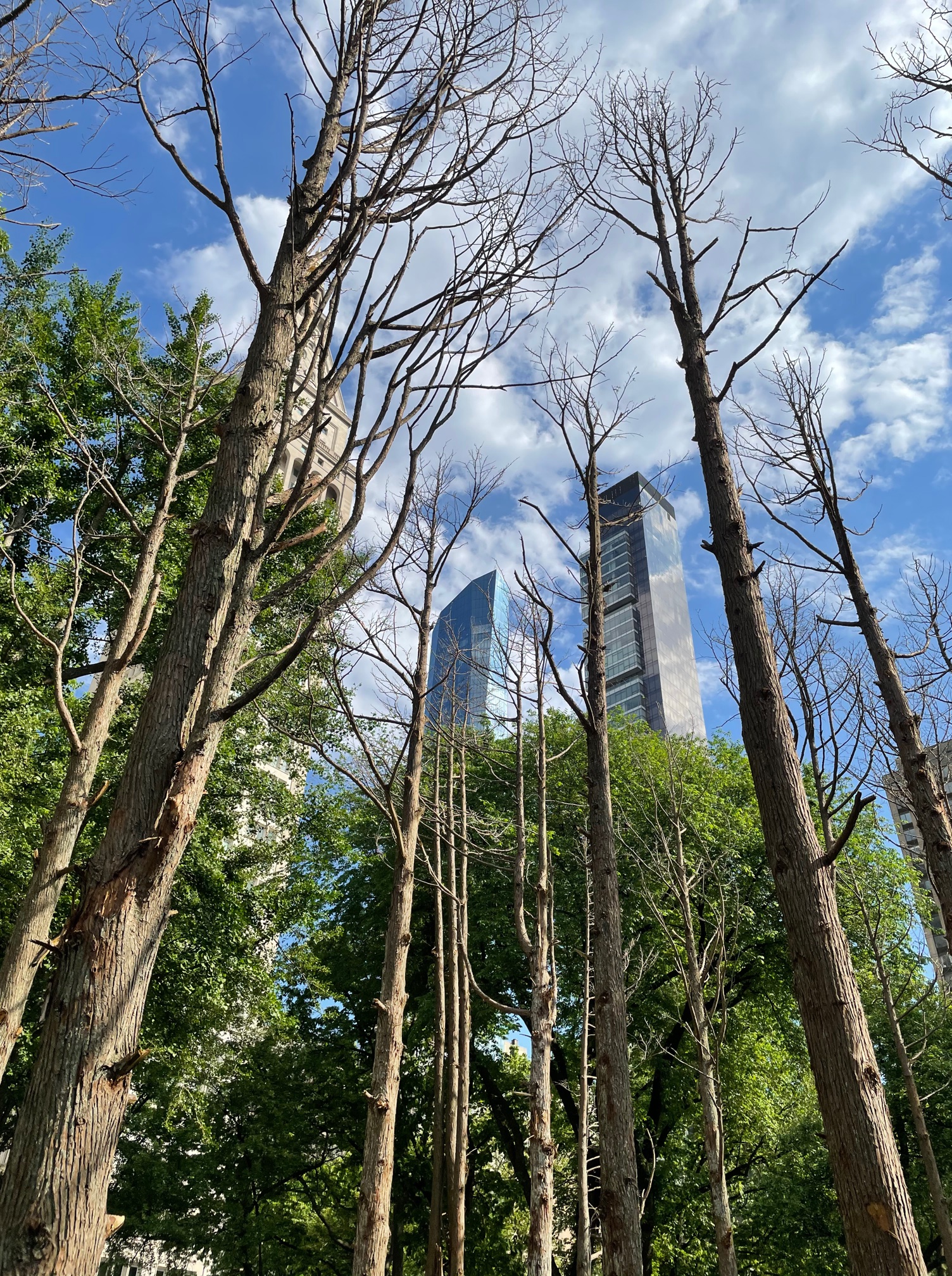
Now, in a Manhattan park, she has planted a grove of forty-nine Atlantic white cedars, with the odd factor that the trees were dead before she harvested them  from the New Jersey pine barrens.

The piece is called Ghost Forest. It’s a harsh comment on climate change. Before the 1700s, Atlantic white cedars provided at least 500,000 acres of habitat for unique plants and animals. Today there are just 50,000 acres of the species. Ghost forests are a widespread phenomenon in coastal areas, a matter of concern among ecologists.

In fact, believe it or not “ghost tree farts” are a recognized by-product of such tracts. Standing dead trees, also called snags, have been killed by saltwater. They no longer have a leaf canopy to photosynthesize and consume carbon dioxide. So they can potentially increase the ecosystem’s carbon dioxide emissions by up to 25 percent.

Snags don’t move water and nutrients around for growth. The gases they emit probably come from decaying wood or emissions oozing up from the soil. Scientists are alarmed by the world-wide profusion of dead forests, as the ocean rises and saltwater intrudes on heretofore healthy wetlands. Some ecologists have made it a focal point of their study, such as Emily Ury, here measuring soil salinity.

The trees Lin brought to New York came from  a stand that had been infiltrated by salt water and were being cleared as part of a regeneration effort. When I think of the pine barrens it brings a spooky scene to mind: we canoed down a river in November and as night came on passed close enough to a dead deer lying underneath the water to prod it with a paddle. A perfect crescent slice had been taken out of its flank, cattle mutilation style.

The deterioration of our forests unlikely to be an issue on the mind of any of the hundreds of picnickers among the Ghost Forest installation. It’s the most beautiful spring day of all time, at the final gasp of a horrific pandemic, after all. The last thing anyone wants to think about is the end of a livable earth as we know it.

But some visitors may tune in to another element of the installation, a soundscape accessible via smart phone, that renders what you might have heard at what is now 26th Street and Broadway five hundred years ago. The audio track has English names, Latin names and linguistic translations from the Lenape Center in New York City. How cool is that? Madison Square Park sits on the traditional homeland of the Lenape-Delaware people. Using West Virginia species that are living today, the acoustic exhibit takes you into the forest: grey fox howling, cougar meowing, American black bear vocalizing with a sort of urgent whine, a beaver splashing its tail in water. 

To me, the haunting “sounds of the silenced” was worth the price of admission.

Leave a comment

Filed under Jean Zimmerman

With hope and the best of intentions

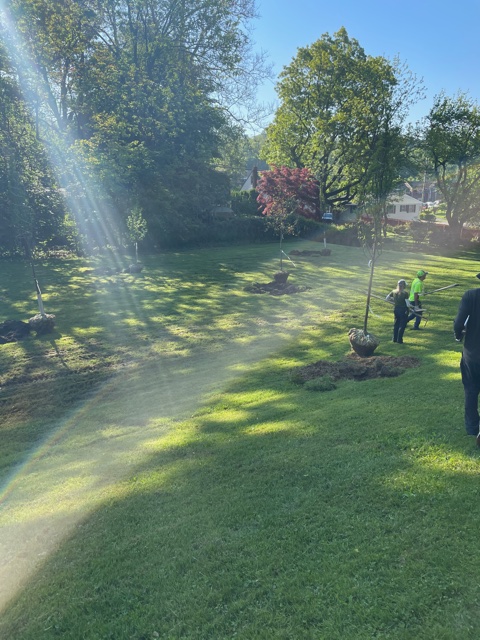
the Village of Ossining is throwing itself a tree-planting party. The new forest of 80 – yes, 80 – native specimens will be the gift that keeps on giving, especially to those members of the community who live in apartments and for whom the parks with the new trees will create a beautiful back yard. New York City’s Central Park was designed by the landscape authority Frederick Olmsted in the nineteenth century to be “the lungs of the city.” That is no less true today in the little Village of Ossining. Trees breathe and help us breathe. It’s especially important for folks who don’t necessarily have those lush, lavish estates that are fairly common in Westchester.

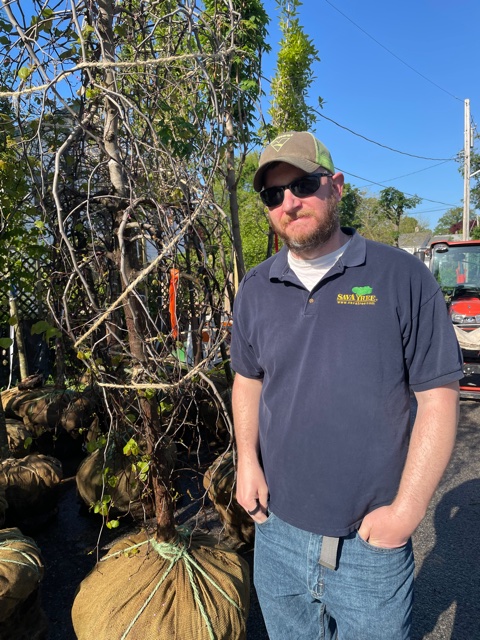
At SavATree, we helped them get the trees into the ground. Matt, the arborist ninja, is capable of walking many miles a day to conduct a tree inventory, taking note of the attributes of every tree along the way, from its DBH (diameter at breast height) to the condition of its crown.

Clients couldn’t be happier; he’s the best. For this project he took three adjoining parks and designed a forest to fit them.

He did this at the behest of Maddi, the Assistant Village Manager of Ossining, ever beaming and optimistic. She organized the effort with some help, both monetary and advisory, from the New York State Department of Conservation.

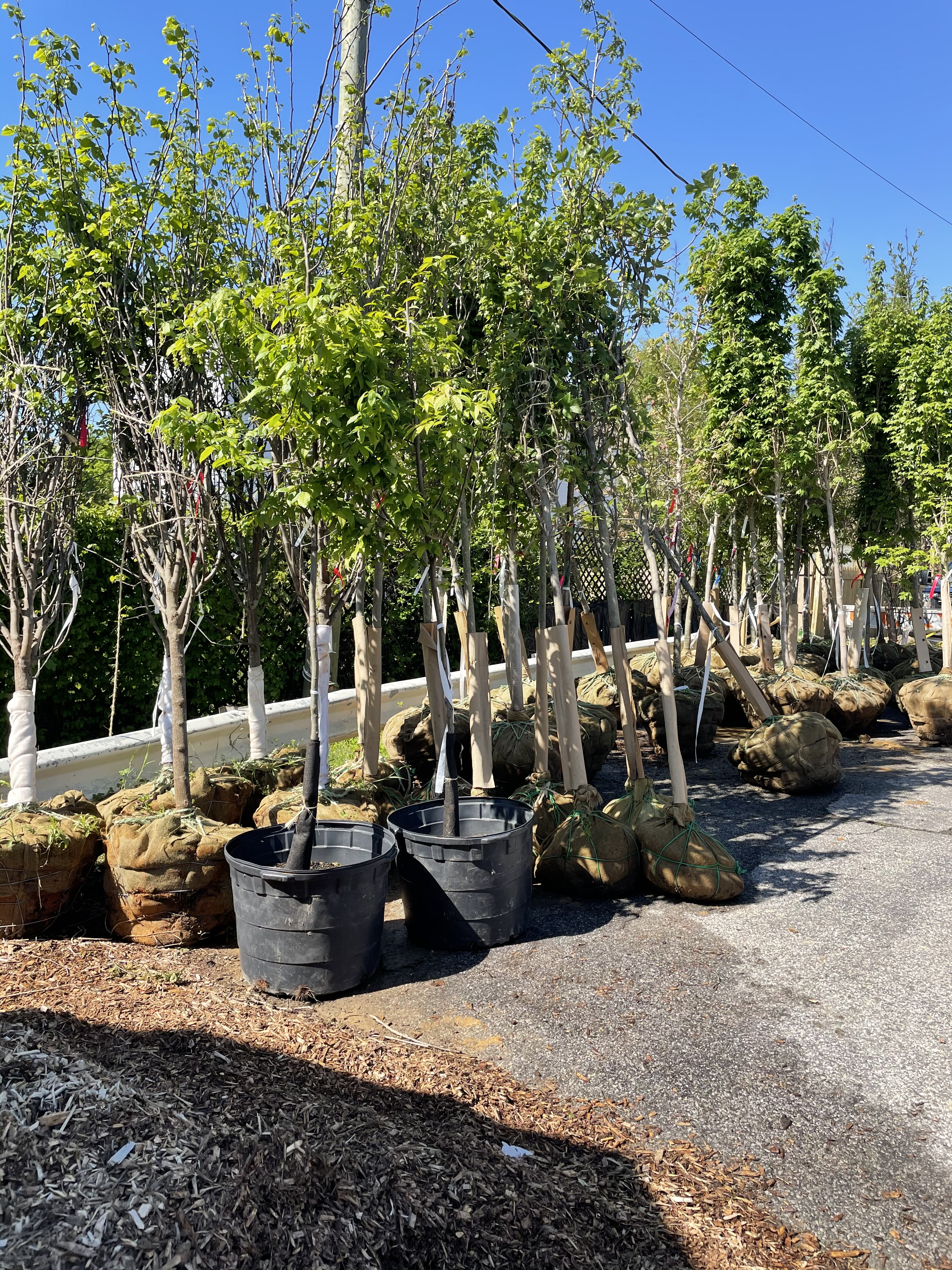
Did you notice I said 80 trees? Yes, that is ambitious. Matt ventured to Roth Nursery in Armonk to select each one individually (in one trip , of course).

At the start of planting day, there is by necessity some education given about planting ball-and-burlap stock. My colleague George, a forester from DEC, steps up to explain the proper depth of the hole, how high in it the base of the trunk should rest, and the nightmare of girdling roots. We must attack the wires that bind the burlap, he counsels, snipping them apart so the roots will be able to flourish.

George also walks a lot, counseling towns and villages about how to better manage their urban forests. He is able to convince municipal planners who never gave leaves and branches a second thought that a row of strong, healthy trees is exactly what the populace needs.

People show up, including the Village Manager and this woman, who knew an awful lot about how things grow.

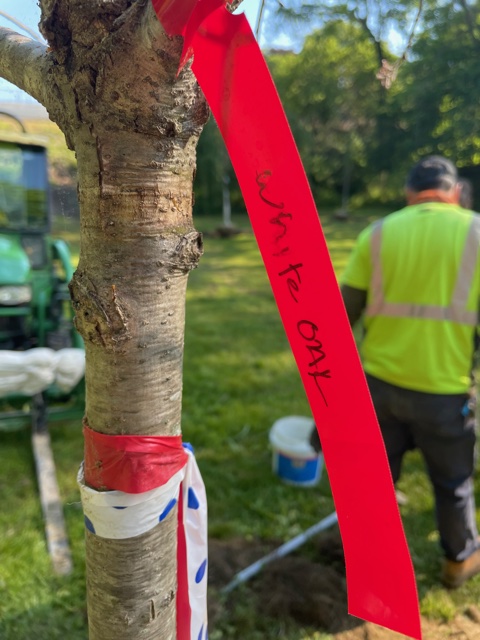
The first tree in the ground is a white oak.Then a swamp white oak. Then a honey locust.

Only 77 left to go. The sky gleams blue and at 9am it is a perfect 60 degrees and nothing else matters as we create our own rays of sunshine.

Leave a comment

Filed under Jean Zimmerman

Truly a trib

Trib, aka tributary.

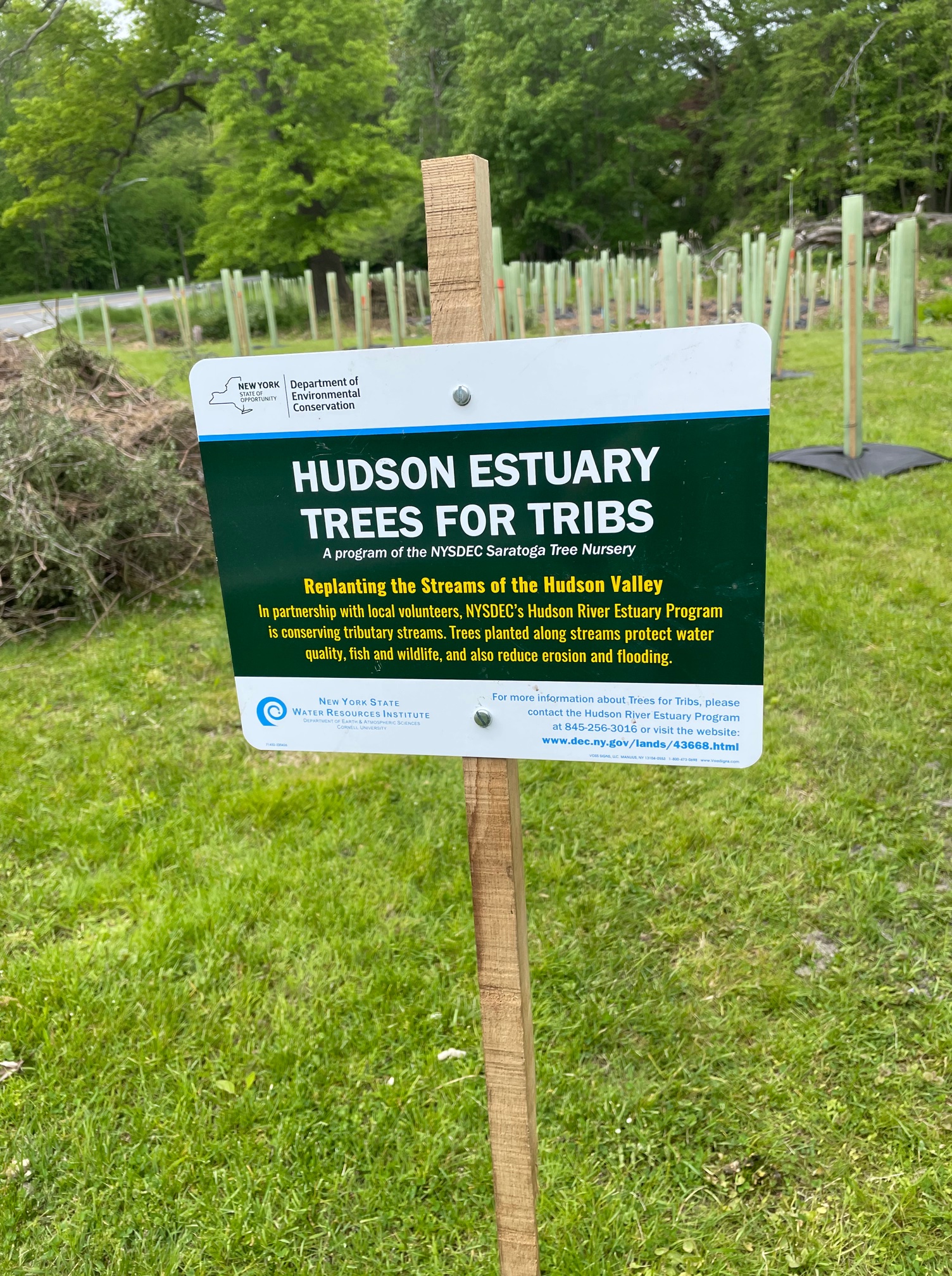
It was a sunny Saturday, and we were taking Farragut Parkway out of Hastings to the Saw Mill River Parkway, eventually cruising down to Queens, where I had to mark some diseased ash trees that would necessarily be taken down. A surprise came, to the north, just before the Parkway, with dozens of people hauling around sticks and plastic, on the edge of a muddy little stream I had never fully explored.

Were these people planting trees? If so, they were assembling a veritable forest.

Came back today to get a closer look.

The Conservation Commission in Hastings-on-Hudson won a grant from the New York State DEC, through its Trees for Tribs program, to pay for 350 trees and shrubs to plant along Bouttilier’s Brook, which flows into the Saw Mill River at the Farragut Parkway exit.

Trees for Tribs protects and restores streamside buffers, reducing erosion, water pollution and creating a better habitat for fish and other wildlife, like the goslings you just now see toddling along the streamside behind their mothers. Just this spring Trees for Tribs sponsored at least half a dozen such projects.

Our Conservation Commission is truly amazing. They martialed dozens of volunteers to put their shoulders to the wheel of conservation, to clear or cut invasive plants out of the site, and then return a week later to plant the whips.

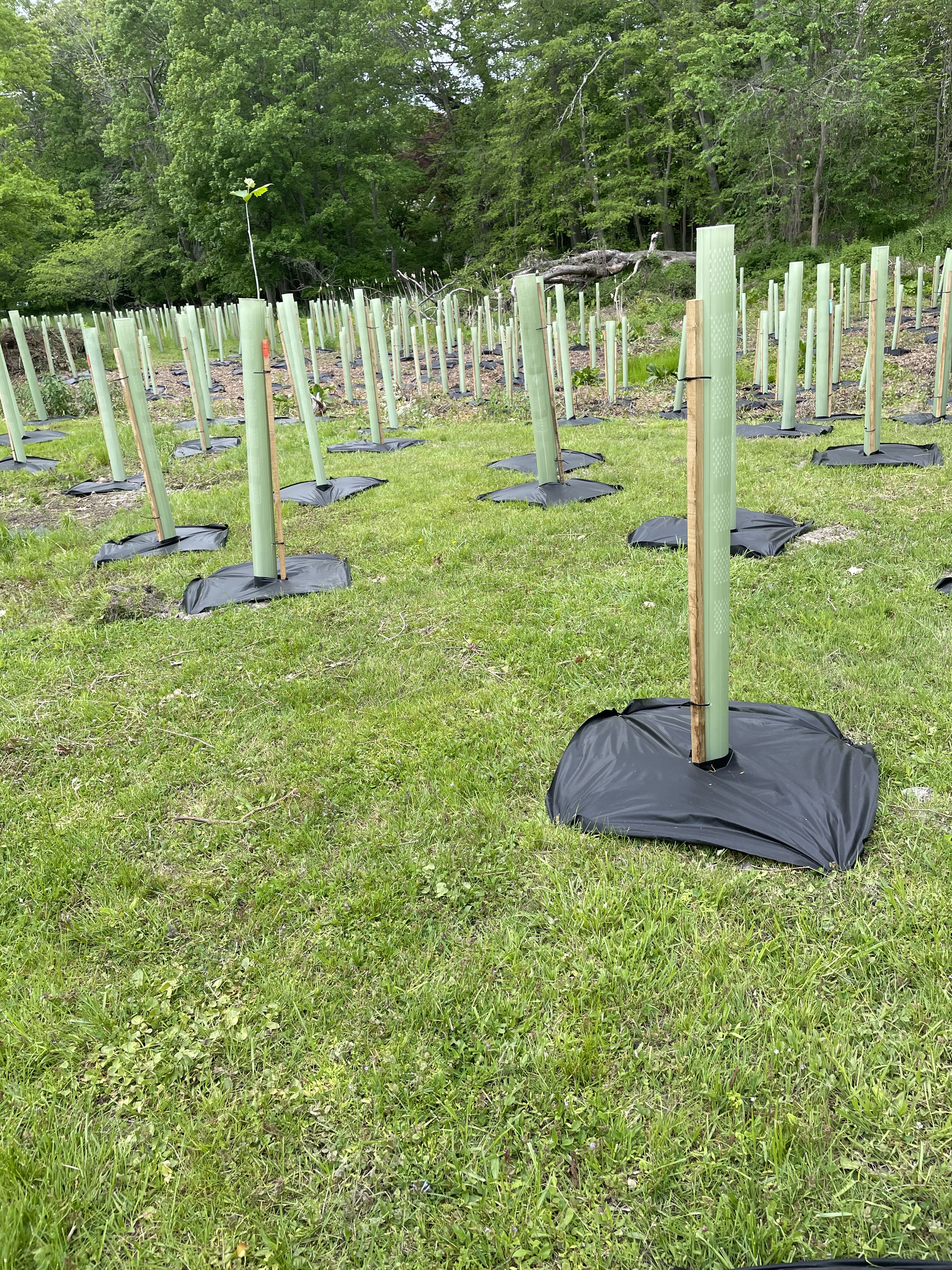
There were 65 juvenile trees, and 285 shrubs planted along the 160 ft section of the stream.

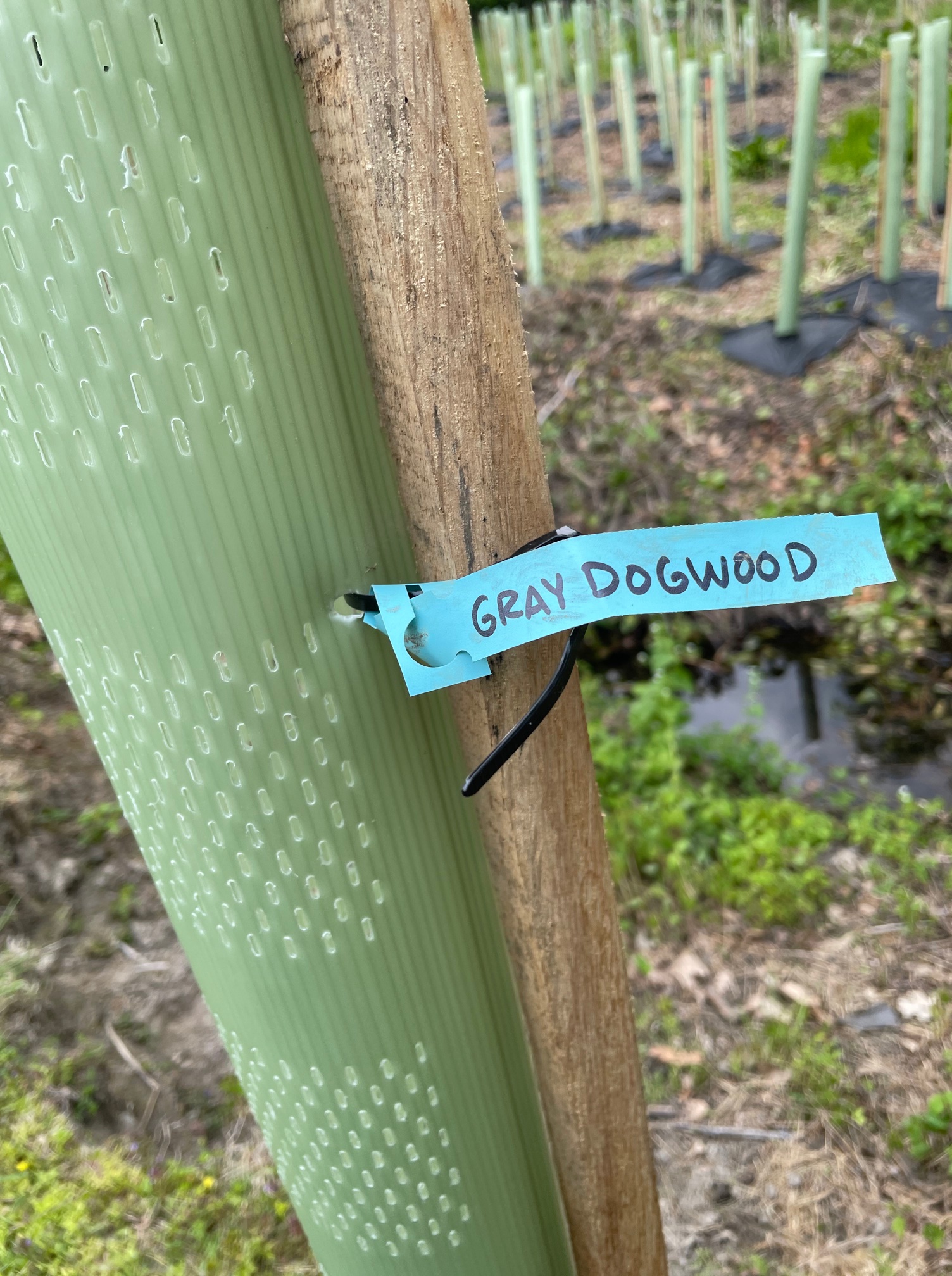
You wouldn’t know it to see the plastic tubes protecting them now, but the trees included beauties such as silver maple, river birch, black walnut, swamp white oak and others – all native species.

And the shrubs were equally diverse. It will be interesting to see what happens when these tiny creatures begin to spread their wings and fly.

2 Comments

Filed under Jean Zimmerman

Bluebells/bluebonnets

It was the end of a long, warm, in-love-with-NYC spring day, but the New York Botanical Garden’s website promised carpets of bluebells, and so we went.

Question to the ticket taker: Do you know anything about where the bluebells might be? Ticket taker, sullenly, no (it was the end of a long day, after all). Question to guy wearing NYBG ball cap: Do you have any idea where the bluebells are? Answer: Another person just asked me that, but she was talking about the bluebells at the Brooklyn Botanical Garden, not this one. Question to NYBG employee number 3: Any idea where the bluebells are? His edifying answer: Oh, they pop up once in a while, but the Garden doesn’t do anything to cultivate them.

Oh. Gil said, Let’s go to the Ladies’ Border, see what they’ve got.

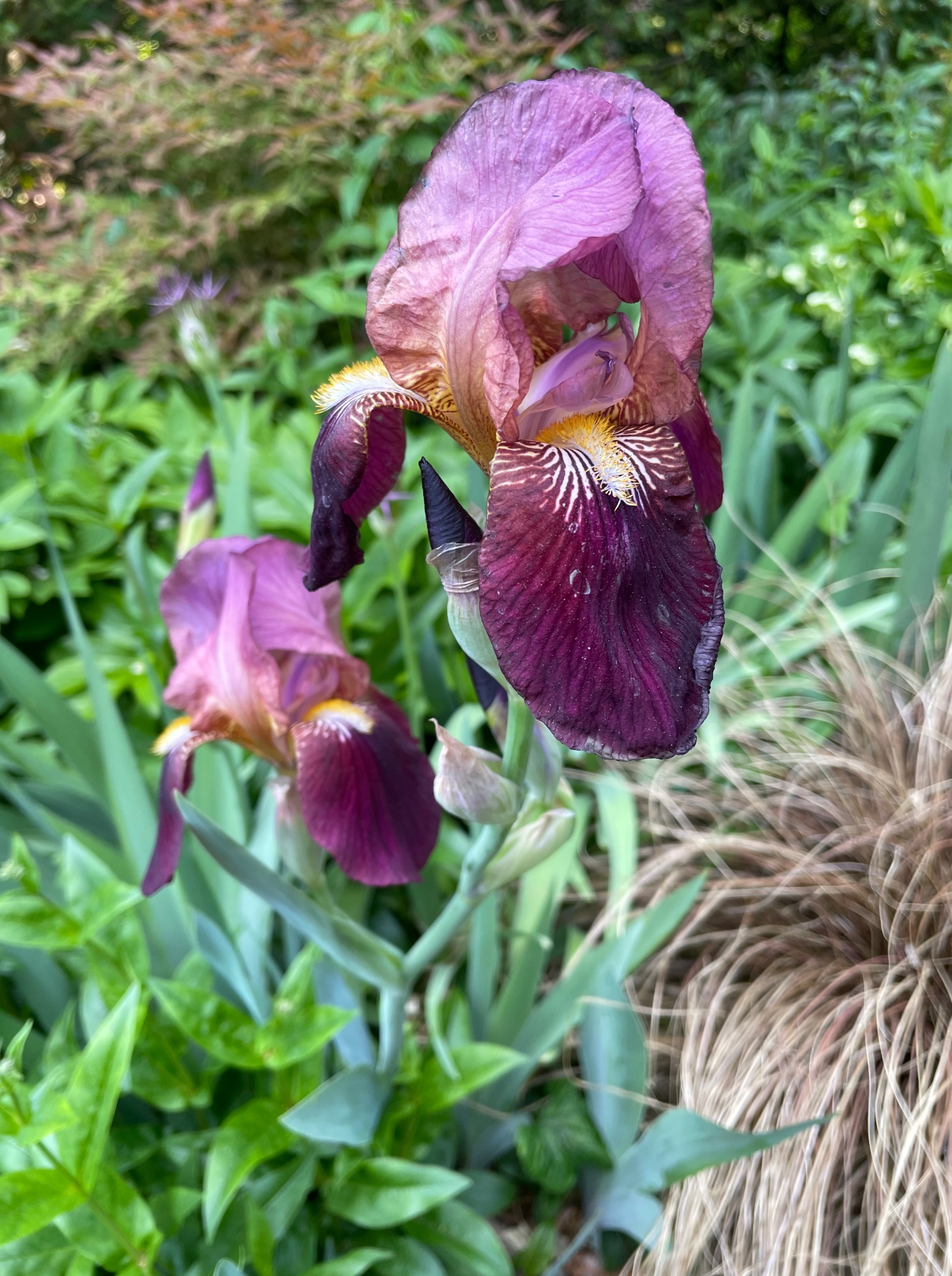
The Ladies’ Border is remotely located at the northeastern side of the Conservatory and we were the only ones there. It  had just about everything except bluebells. Different varieties of iris, eye-popping and more demure.

An exotic plant called a leatherleaf mahonia.

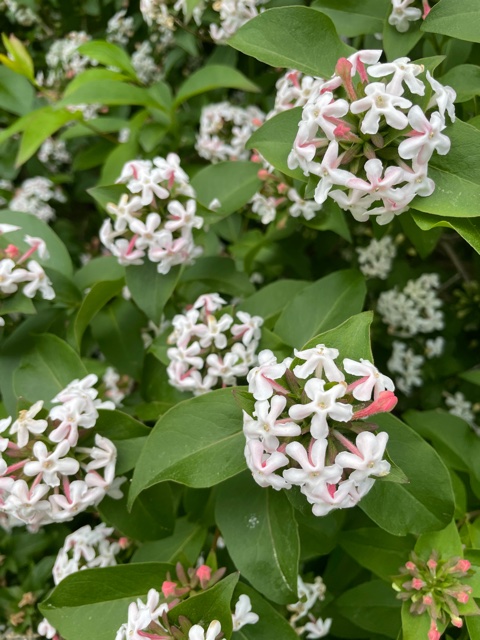
Something white and fragrant.

I am not sure what distinguished this as the Ladies’ Border. Yes, the vegetation was as lush, aromatic, exotic and fascinating as most of the ladies I know. I could see a few of us strolling along the border with parasols, spreading evil rumors about some of the men we know.  I’ve been reading Anthony Trollope, and the Ladies’ Garden could have jumped out of some of the great satirist’s pages. Actually, it was designed and created by landscape architect Ellen Biddle Shipman in 1920.

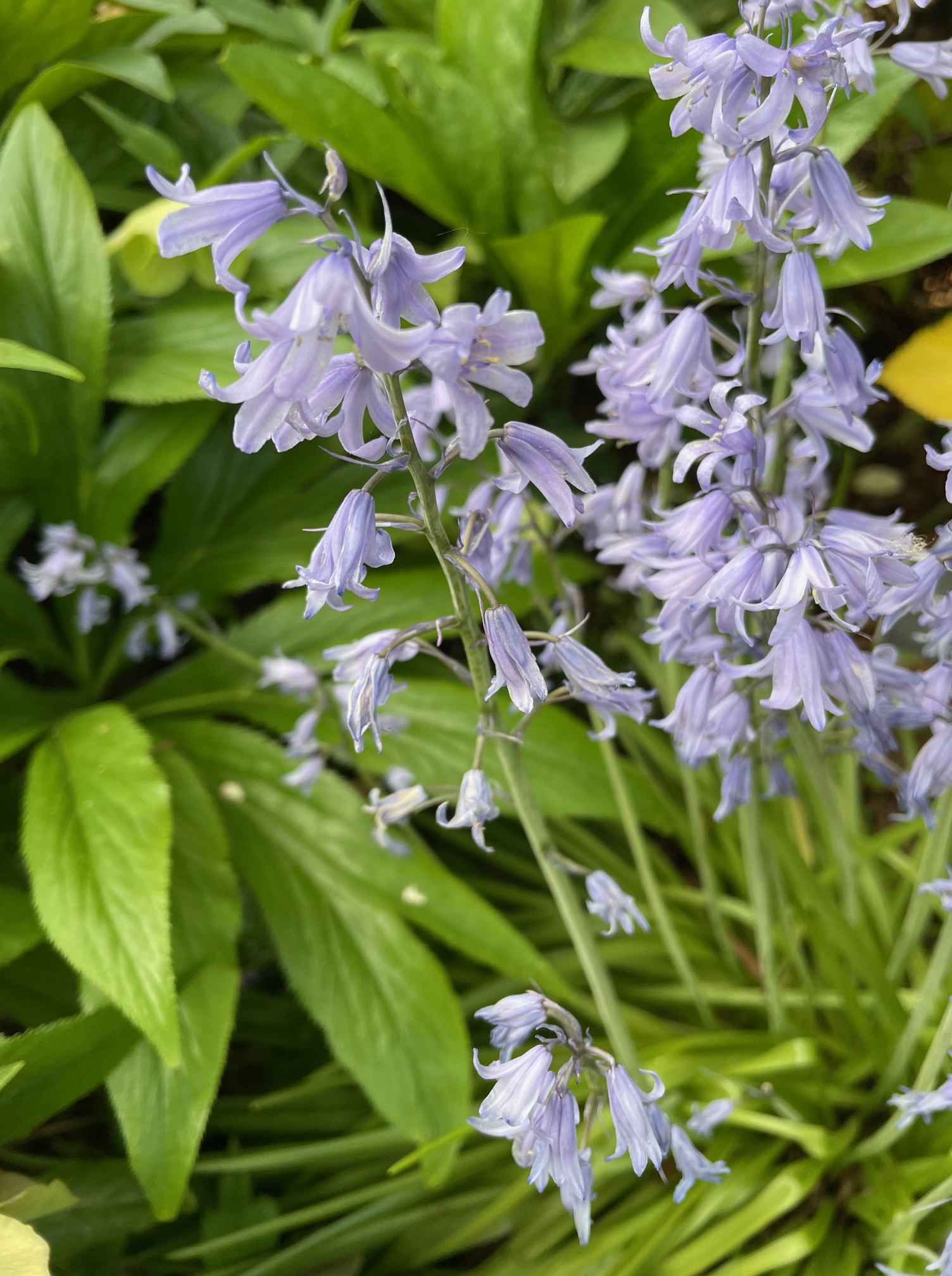
It was getting late. We headed for the exit. And there they  were, suddenly, with no helpful identifying placard: the carpet of bluebells, vivid beneath a massive old hackberry tree. They had “popped up” by the parking lot, and nobody but us was paying them any mind. They were a surprise, like all precious things.

I wanted to hear Emmy Lou Harris and Willie Nelson sing so plaintively on Gulf Coast Highway, a song that references another blue flower, the bluebonnet of Texas. I think I thought that’s what I was going to see at NYBG. The duet tells the story of “this old house here by the road” and the couple that spend their life there, and the chorus repeats:

And when we die

We say we’ll catch some blackbird’s wing

We will fly away to heaven

Come some sweet blue bonnet spring

So sad, so beautiful. The Texas blue bonnet was named for its shape, which resembled the bonnets worn by hardworking pioneer women to shield their faces from the sun. How would they have liked the Ladies’ Border or the bluebells we finally found?

1 Comment

Filed under Jean Zimmerman

Are trees human?

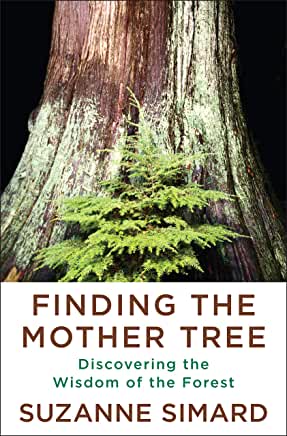
Department of anthropomorphizing trees: The latest to make trees more human is Suzanne Simard, professor of forest ecology at the University of British Columbia. People have known about the beneficial fungi called mycorrhiza for a long time, but she upped the ante when she identified something called a “mother tree,” one of the largest trees in the forest, that acts as a central hub for the vast networkof mycorrhizae that grow beneath and around her roots.

Simard attests that these mother trees take care of the baby trees around them, even making room for them to grow among their roots. Douglas firs are her favored subject, but she also found that the firs trade sugars with the paper birches nearby, loaning a cup of sugar, as it were, to one in need. Her new Finding the Mother Tree: Discovering the Wisdom of the Forest is a best seller, and hopefully will make more people fall in love with nature.  It’s a good Mother’s Day present, in any case, although planting a tree in your mother’s yard might be a better one.

A small, polite quibble — the world is interconnected in so many real and magical ways.

Why do we have to create a “wood wide web” and give trees human qualities? To me, that diminishes the holiness of the enterprise.

Leave a comment

Filed under Jean Zimmerman

I’m tired of flowers

They’re too pretty. They distract you from all the miseries around you, inside you. They are beautiful effortlessly, which puts everybody to shame.

One of my favorite poems, Walking Around by Pablo Neruda, opens with these lines:

It so happens I am sick of being a man.

And it happens that I walk into tailorshops and movie houses

dried up, waterproof, like a swan made of felt

steering my way in a water of wombs and ashes.

He goes on in that vein for a while.  Then comes the line I’m thinking of, thinking of flowers:

Still it would be marvelous

to terrify a law clerk with a cut lily

So fresh flowers can be pretty outrageous, pretty powerful.

Sometimes I prefer the two dimensional.

That is still-life painter Eliot Hodgkin’s “May.” 

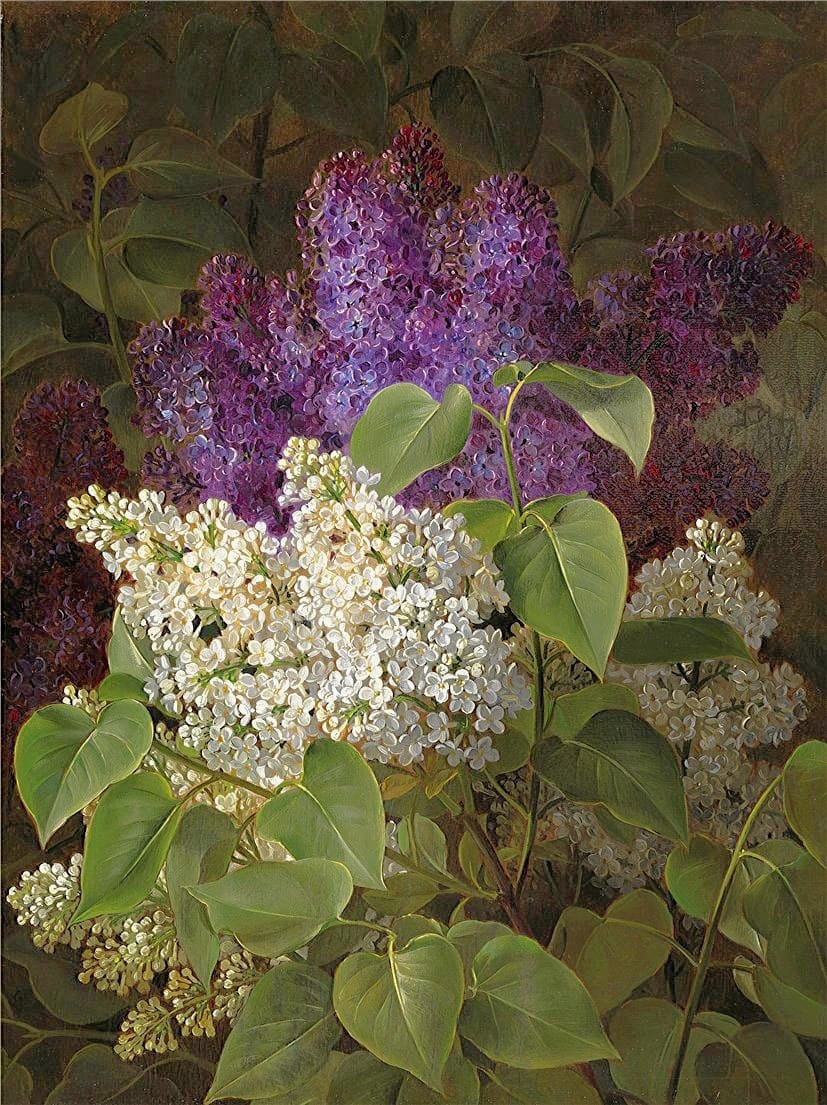
The scent almost wafts off of the nineteenth century Johan Laurentz Jensen’s clutch of lilacs.

It’s a relief sometimes to have flowers that stay safely on canvas.

5 Comments

Filed under Jean Zimmerman

They can afford to buy the wood

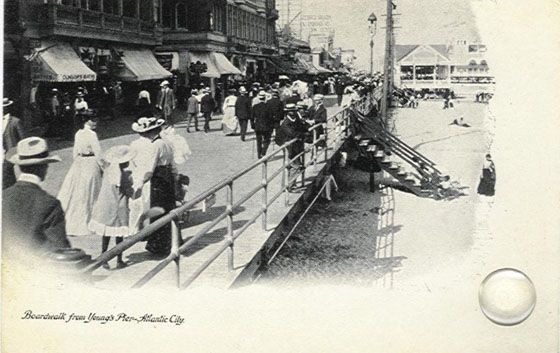
but the problem is getting ahold of the lumber. There just isn’t enough to go around in these Covid times, what with home improvement projects, the need to provide enough rooms for adults and kids stuck at home, etc. So it seemed the Atlantic City boardwalk would have to wait some more for its much needed regular makeover. Each year thirty million people flock to the 4.2 mile deck, for amusement parks, wicker chair rides, casinos, confections and ritzy hotels.

When it first opened in 1870, the boardwalk was constructed of old-growth pine, and it was actually taken up in the winter so as to preserve it for future years. What a project!

Now fir is out of the question, because the lumber that comes down from Canada has been attacked in a one-two punch – by barkeating beetles and epic wildfires. Many lumber companies simply shut down. The price of wood skyrocketed as it grew scarcer. The wood for an average American house now costs 24,000 than it did before. The preferred “species” of wood for building, called Canadian spruce-pine-fir lumber–the name for conifers grown north of the border–is now recognized as the precious resource it always was.

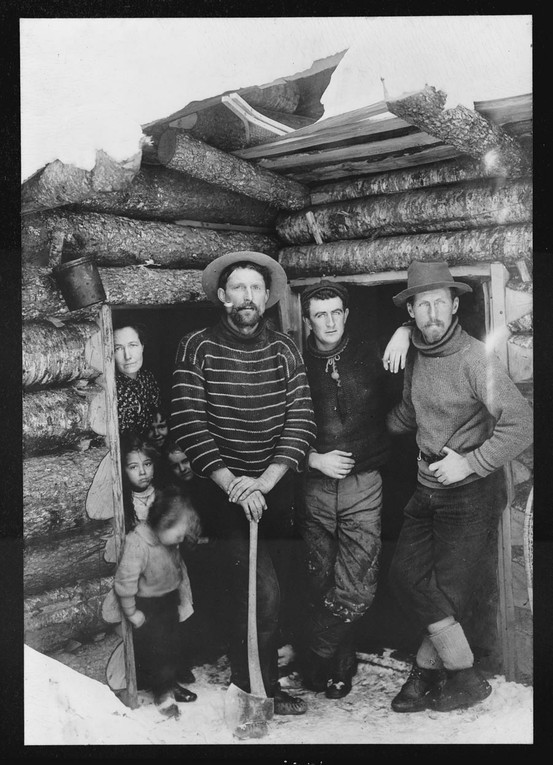
Why is all that lumber coming from Canada, anyway? Let us think back to earlier times, when the boardwalk was first built, of pine. Lumberjacks, also called shanty boys, woodsmen, pinery workers, were a brawling, crapulous, foul-smelling, obstinate bunch, pursuing one of the most dangerous and arduous professions on earth.

In 1880, the development of the two-man cross-cut saw, with alternate raker teeth to remove sawdust quickly, hurried the white pine apocalypse far from New Jersey, in the great midwest. Before that, the big trees were felled by ax.

Because the massive, eighteen-ton white pines had to be transported by waterway through the roadless American wilderness, the relentless harvest proceeded across the country river by river, watershed by watershed, from the Saginaw to the Wisconsin to the Chippewa and the St. Croix.

In the spring, the elite of the lumber world, the best men of every crew, guided the huge log rafts downriver to mills. They called themselves “river pigs,” and they engaged in what might have been the most lethal commercial occupation in American history.

Balancing on rolling logs in freezing, spring-swollen waters, breaking up snags and jams with sharpened canthooks called peaveys, the river pig was part acrobat, part wrestler, part matador. Every season, along with the logs, the corpses of drowned or crushed river pigs would float into the booms where the mills collected their raw timber. But the danger only increased the prestige of the profession.

New Yorker

Then it was over. In less than two hundred years, the logging companies and timber barons clear-cut huge swathes of the American landscape, Maine to Minnesota, before decamping to the do the same to South and the Northwest. It was not until 1979 that the last timber river run in North America occurred, on the Salmon in Maine, but that was a throwback, and the frenzy had ended long before.

Atlantic City has found a solution to the shortage of conifer timber. A few years back it went over to untreated exotics, such as cumaru, a rich and naturally durable Brazilian wood, which is unlikely to burn and also, happily for barefoot boardwalk trippers, unlikely to splinter. Some specimens are 1,200 years old, and they have a fruit, called a tonka bean, whose use rather than cutting down the trees themselves could make the growth of the cumaru tree sustainable.

Would you rather have an intact boardwalk or an intact rainforest?

Leave a comment

Filed under Jean Zimmerman

How old were you

when you first noticed flowering trees? Think about it.

I had an apple tree in my back yard when I was a kid and I sure never noticed its blossoms. Later, living in my 20s on Manhattan’s upper west side, where the medians were a jungle of pear trees, I remember having the certain knowledge that all the blooms popped open the same night. It was a romantic view and I was a romantic.

Much later, when we lived in the Cabin, we had a magnolia that survived a late winter storm, but one hefty branch fell off, into the marsh below.

It was early spring, the tree was still in bud, and as the weather warmed up, the fallen branch blossomed as generously as the tree itself. It was another kind of romance, the romance of a miracle.

What flowering tree did you see first?

1 Comment

Filed under Jean Zimmerman

Venus in Ash

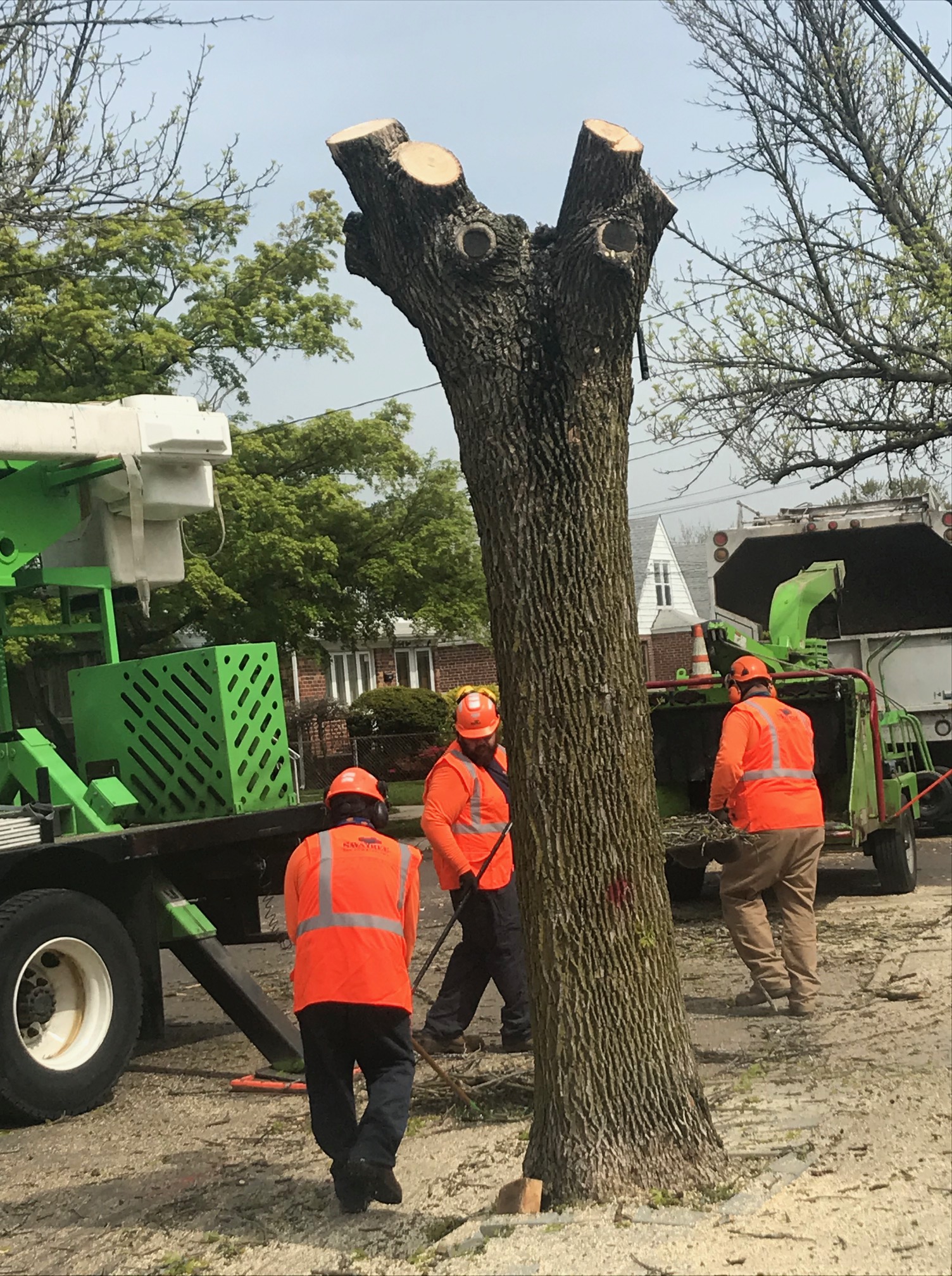
When the crew cuts down a tree, they lop off the upper branches first. The pruner in the bucket lowers the limbs carefully to the ground where, shaggy and brittle, they are fed into the monster of a chipper. Then the pruner glides through the air as the bucket returns to the truck.

What has captured my imagination watching tree after tree fall is what’s left standing, a chain-saw sculpted Venus to Milo. The Roman goddess of beauty, desire and ferility all covered in bark.

The Venus de Milo is widely agreed to be the work of Alexandros of Antioch. The statue is believed to depict Aphrodite, the Greek goddess of love and beauty, and it bears the name of Venus the Roman counterpart of Aphrodite. By the time it got to the Louvre it had been reassembled but the arms were never found.

The beautifully smooth Cycladic figurines, which are fairly numerous, came from Greece around the middle of the third millennium Bc. How often do you hold your arms crossed every day? Something so small generates so much power.

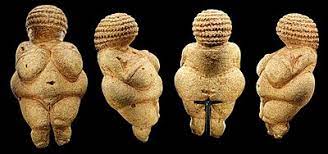
I love the even earlier Venus figures, one of which is the Venus of Willendorf.

She emerged from with all her limestone bumps and curves, evidence, say the archaeologists, of early female deity worship, dating to between 33,000 and 20,000 years ago. Austrian. Some knowledgeable people think they were self portraits. As ample as they are, they are missing one feature: feet.

They are imperfect Venuses. Aren’t we all?

1 Comment

Filed under Jean Zimmerman