Category Archives: Poetry

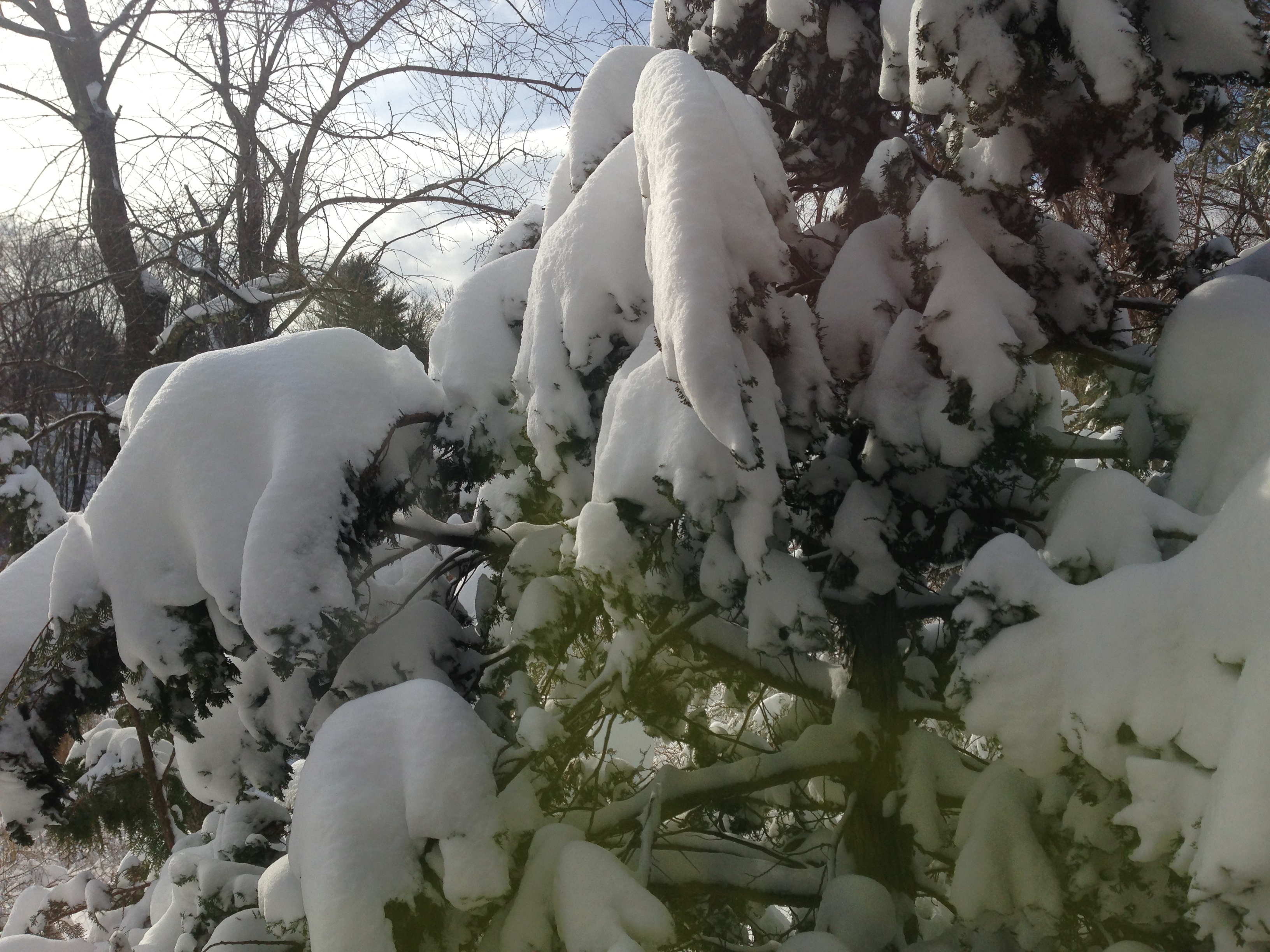
A Basho Snow

Come, let’s go

snow-viewing

till we’re buried.

–Basho

How do you make snow sing? The great haiku artist Basho knew how to wring meaning out of the simplest natural detail.

blizzard morning

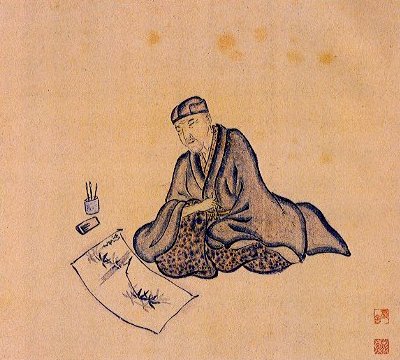
Born Matsuo Kinsaku in 1644, the Japanese poet later known simply as Basho established himself in his lifetime as the foremost Japanese writer of a collaborative style of verse called haikkai no renga, but he would forever be known as the genius of haiku. (Which was essentially the first three lines of a haikkai.) His followers built him a series of rustic huts to live in, but he couldn’t stay put, he went on one after another long rambles through the Japanese countryside at a time when travel was neither safe nor easy – getting killed by bandits was a real possibility. He wrote as he went, poetic travelogues about what he was experiencing, treating the delicate convergence between external observation and sensitive introversion.

Basho_by_Basho_by_Sugiyama_Sanpû_1647-1732

Basho’s final book, The Narrow Road to the Interior, depicted in prose and verse a 150-day hike he took to the Northern Provinces and along the coastline of the island, about 1,500 miles. It is considered his most brilliant achievement. I like this article by writer Howard Norman, who followed in Basho’s path on that journey, accompanied by beautiful pictures by Michael Yamashita, a photographer Gil and I worked with on the guidebook Manhattan (Compass American) many years ago.

This is one of Basho’s huts, on Camellia Hill.

Basho's hut on Camellia Hill

One of the finest of Basho’s haikus:

Even  in Kyoto—

hearing the cuckoo’s cry—

I long for Kyoto.

3 Comments

Filed under Jean Zimmerman, Nature, Poetry

Liberty Cracks

The greatest Leonard Cohen lines:

“Ring the bells that still can ring
Forget your perfect offering
There is a crack, a crack in everything
That’s how the light gets in.”

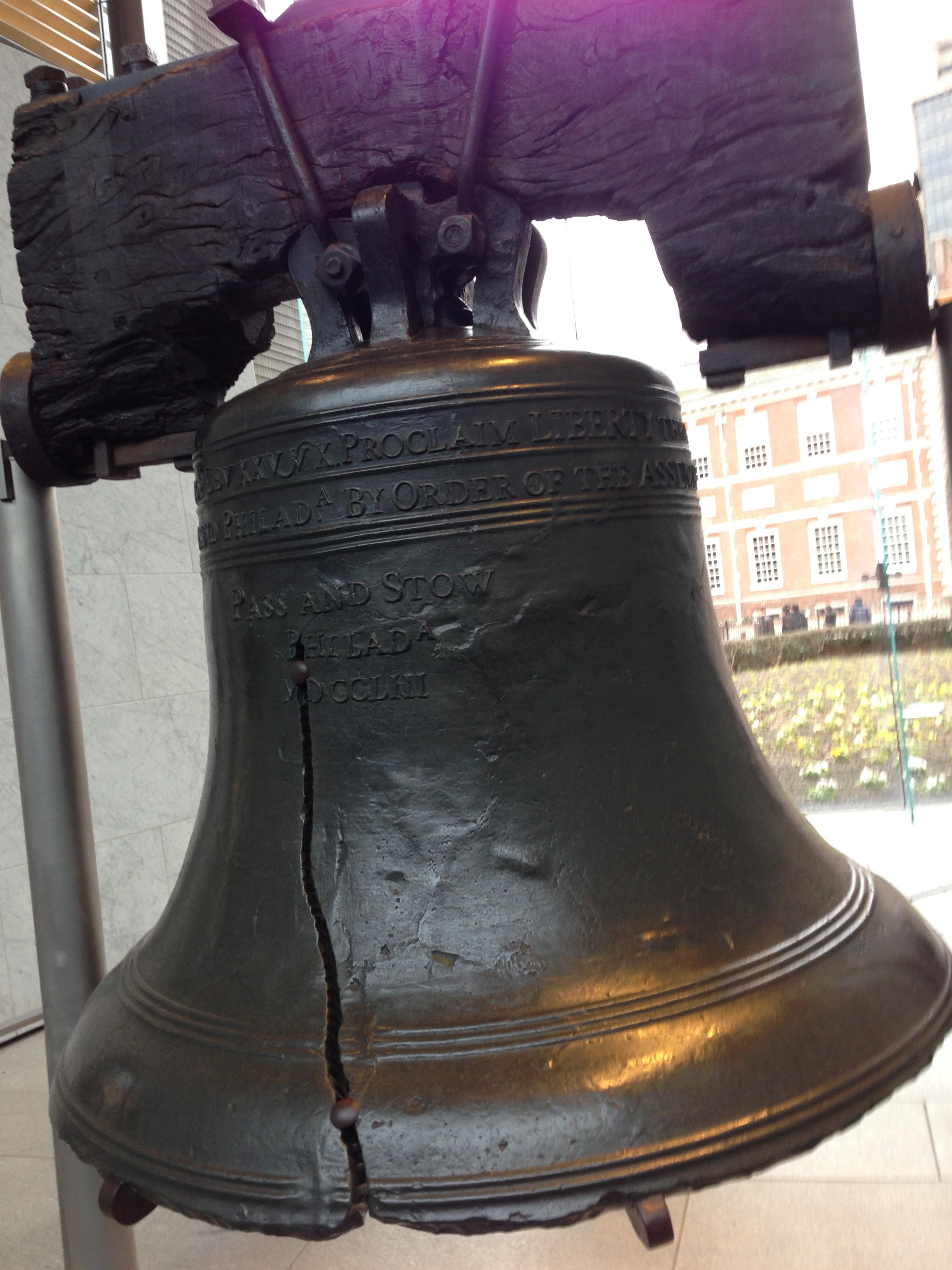
Saw the actual, original, iconic cracked bell in Philadelphia today. The Liberty Bell. “Proclaim Liberty throughout all the land unto all the inhabitants thereof.”

lib bell

Funny thing about it. The bell got little hairline cracks in it since its creation in  1751. Just small seams, which were “bored out” and superficially repaired. But the repairs themselves damaged the metal so that when they attempted to ring it in 1846 for George Washington’s birthday it went totally silent, absolutely broken and never to be fixed again. According to the Philadelphia Public Ledger, “It gave out clear notes and loud, and appeared to be in excellent condition until noon, when it received a sort of compound fracture in a zig-zag direction through one of its sides which put it completely out of tune and left it a mere wreck of what it was.”

Isn’t all liberty personal, first and foremost? Across the street from the Liberty Bell we saw a raised planter with a private shrine that had been maintained for years, as fastidiously as its more famous iconic neighbor. Someone was free to mourn, free to celebrate this Woody as they chose.

Woody

Personal liberty. After Gil gave his book interview at the local NPR station, we took the turnpike north. We listened to our new poet laureate, Richard Blanco, read from his lofty yet intimate inaugural poem, “One Today.” I’m excited that I heard Blanco read from his work only a few months ago at the Miami Book Fair, where he sat in a small room on a panel with some other terrific poets. He was unassuming and personable. He delivered a wonderful poem about what it was like to grow up gay in a Latin household under the eagle eye of his grandmother. I can’t get a link to those lines at the moment, but here is another poem he read that day, “The Gulf Motel,” a beautiful paean to a place he spent time at with his family. For the president to select a young man (only 44) who is openly gay and who delves into his rich ethnic background for his work — this is liberating for us all.

Philadelphia was quiet and cold. All of its energy seemed to be sucked away to Washington, D.C. But there were still philly cheesesteaks at jam-packed Reading Terminal Market — I wolfed mine down so fast I didn’t have time to take a picture. There was time to buy ox-tails, smoked pork backs and blood-red chicken meat for dogs, something I had a hankering to do since admiring Oliver’s likeness in stone on the way to the Market.

oliver in stone

Oliver represents perfect liberty, the freedom to eat bloody chicken, roll on his back in the icy snow, chew things up, growl, yelp, yap at will. Don’t fence him in.

Blanco:

“…Hear: the doors we open
for each other all day, saying: hello, shalom,
buon giorno, howdy, namaste, or buenos días
in the language my mother taught me—in every language
spoken into one wind carrying our lives
without prejudice, as these words break from my lips.”

I guess I could wish for a little more dog in that sentiment. Otherwise it’s just about perfect.
1 Comment

Filed under History, Jean Zimmerman, Music, Poetry, Publishing

So Unconscious Desire

Poets on walls. So nice to have them come out of the pages and present themselves as larger than life. Even as graffiti.

Neruda. “It  happens that I am tired of being a man.” The first line of “Walking Around,” one of my favorite poems. “Just the same it would be delicious/to scare a notary with a cut lily/or knock a nun stone dead with one blow of an ear./It would be beautiful/to go through the streets with a green knife/shouting until I died of cold.” Here Pablo sports a flower at his ear.

neruda

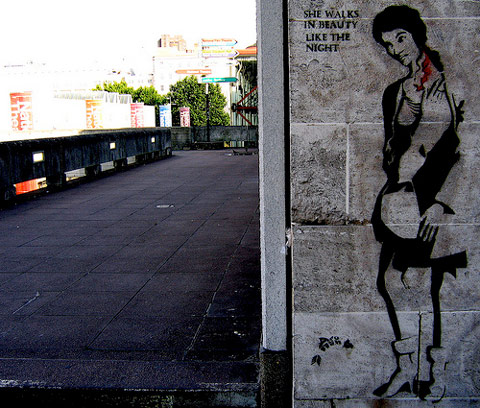
Byron.

byron

“She walks in beauty, like the night /Of cloudless climes and starry skies; 
/And all that’s best of dark and bright 
/Meet in her aspect and her eyes…” Byron wrote these lines in 1814, stunned by the sight of his ravishing cousin, the Lady Wilmot Horton, at a party in mourning dress.

And Maya Angelou.

angelou

Life doesn’t frighten me at all.

Not at all.

Not at all.

And I would like to add my humble contribution. Back in 1985 when I got my MFA at Columbia, the poetry collection I wrote as a thesis had the title “So Unconscious Desire.” Inspired by a perfect graffito that I saw sprayed in orange and green on a boarded up storefront on 19th Street between 2nd and 3rd, long erased except in my mind’s eye. I think I’d like to go paint that again on a rock somewhere.

6 Comments

Filed under Jean Zimmerman, Poetry, Writers

Frank O’Hara’s Today

I’ve been thinking a lot about the great New York poet Frank O’Hara – he strolled the Manhattan streets in the 1950s and ’60s writing brilliant, hilarious autobiographical poems about everyday life, kind of like the first blogger.

FRANK

I cannot find any of my O’Hara volumes at the moment, but here at least is a wonderful poem that is available among others on line.

Today

Oh! kangaroos, sequins, chocolate sodas!

You really are beautiful! Pearls,

harmonicas, jujubes, aspirins! all

the stuff they’ve always talked about

still makes a poem a surprise!

These things are with us every day

even on beachheads and biers. They

do have meaning. They’re strong as rocks.

Leave a comment

Filed under Jean Zimmerman, Poetry, Writers

Glistening Fur

The last post of the year… and I am so thankful to everyone who has followed me here and allowed me to share my thoughts and doings. May we all have health and calm in 2013.

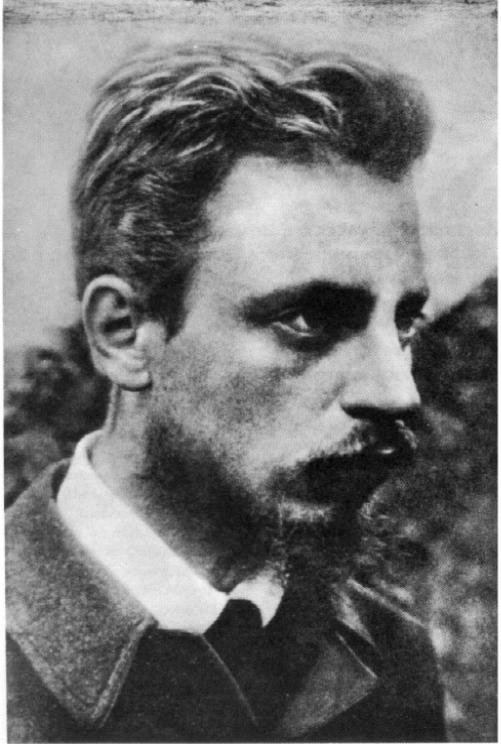
Here is wisdom on the new year, from Rilke:

“Be patient toward all that is unsolved in your heart and try to love the questions themselves like locked rooms or books that are written in a foreign tongue. The point is to live everything. Live the questions now. Perhaps you will then gradually, without noticing it, live your way some distant day into the answers.”
rilkepic
While we’re with Rilke, here is one of the world’s best poems. His.
Archaic Torso of Apollo

We cannot know his legendary head
with eyes like ripening fruit. And yet his torso
is still suffused with brilliance from inside,
like a lamp, in which his gaze, now turned to low,

gleams in all its power. Otherwise
the curved breast could not dazzle you so, nor could
a smile run through the placid hips and thighs
to that dark center where procreation flared.

Otherwise this stone would seem defaced
beneath the translucent cascade of the shoulders
and would not glisten like a wild beast’s fur:

would not, from all the borders of itself,
burst like a star: for here there is no place
that does not see you. You must change your life.


Leave a comment

Filed under Jean Zimmerman, Poetry

Raindrops and Book Groups in Miami

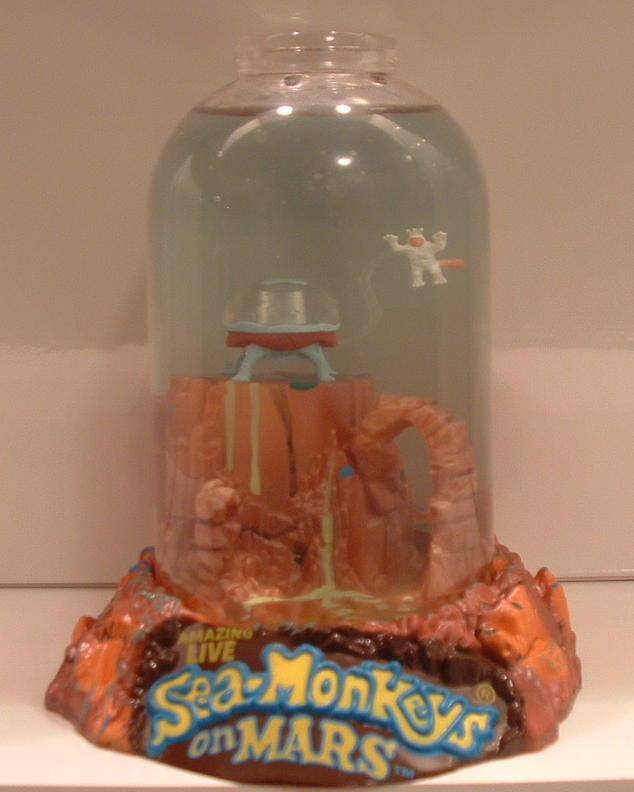
At a pre-Book Fair backyard party under the Miami palms and a light drizzle of rain, I talked to writers. One had published a novel about the last week of Marilyn Monroe’s life. One was working on a history of Los Angeles and water. One, a MacArthur-winning poet, had written about sea monkeys. One had just brought out a book about the Wall Street implosion.

I spoke with an archivist who lives here in Miami. She knew all the head librarians at the great Manhattan collections — the New-York Historical Society, the Manuscripts room at NYPL, the Morgan, all of them.

I know your book! she told me. My book group just read it this past month! They’ll all be there Sunday for your panel.

Very, very nice, under a palm tree, under a light sprinkling of rain, in Miami.

2 Comments

Filed under Jean Zimmerman, Poetry, Publishing, The Orphanmaster, Writers, Writing

Bottled Up

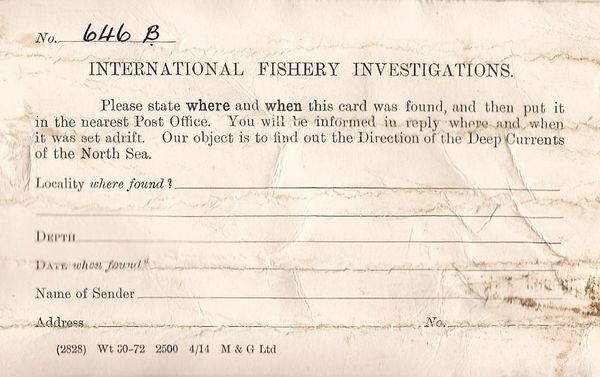
It has come to my attention that there are myriad bottles afloat out on the ocean, more than I ever imagined. The messages contained within may sometimes be sentimental, but they might also constitute scientific inquiry. In fact, the oldest found message in a bottle, dating back 98 years, was part of an oceanographic study to find out the “Direction of the Deep Currents of the North Sea”.

A Scottish skipper found it near the Shetland Islands this year, just nine miles from where it had been dropped by the Glasgow School of Navigation in 1914.

Messages in bottles go back to Greek times, and have always captured the imagination — so much so that Queen Elizabeth I had to squelch the romantic impulse to read what was inside by appointing an Uncorker of Ocean Bottles who would prevent amateurs from doing that job. She was afraid of information being relayed across the seas by spies.

A passenger on the doomed Lusitania in 1915 set this message adrift: “Still on deck with a few people. The last boats have left. We are sinking fast. Some men near me are praying with a priest. The end is near. Maybe this note will—”

A scientific project in Canada today has sent out 6400 bottles, hoping to get back information on currents. They’ve gone all over the place. One circled Antarctica one and a half times before landing at Tasmania.

It seems science has come to dominate the message bottle gig. Next time I’m at the shore I’m going to jumpstart the poetry-in-a-bottle movement, inserting lines by Wallace Stevens and W.H. Auden into wine bottles and sealing them firmly with sealing wax and cork before casting them out on the tides. You never think they’ll come back, isn’t that what’s kind of great about it?

Leave a comment

Filed under History, Jean Zimmerman, Poetry

The Land Where the Bong-Tree Grows

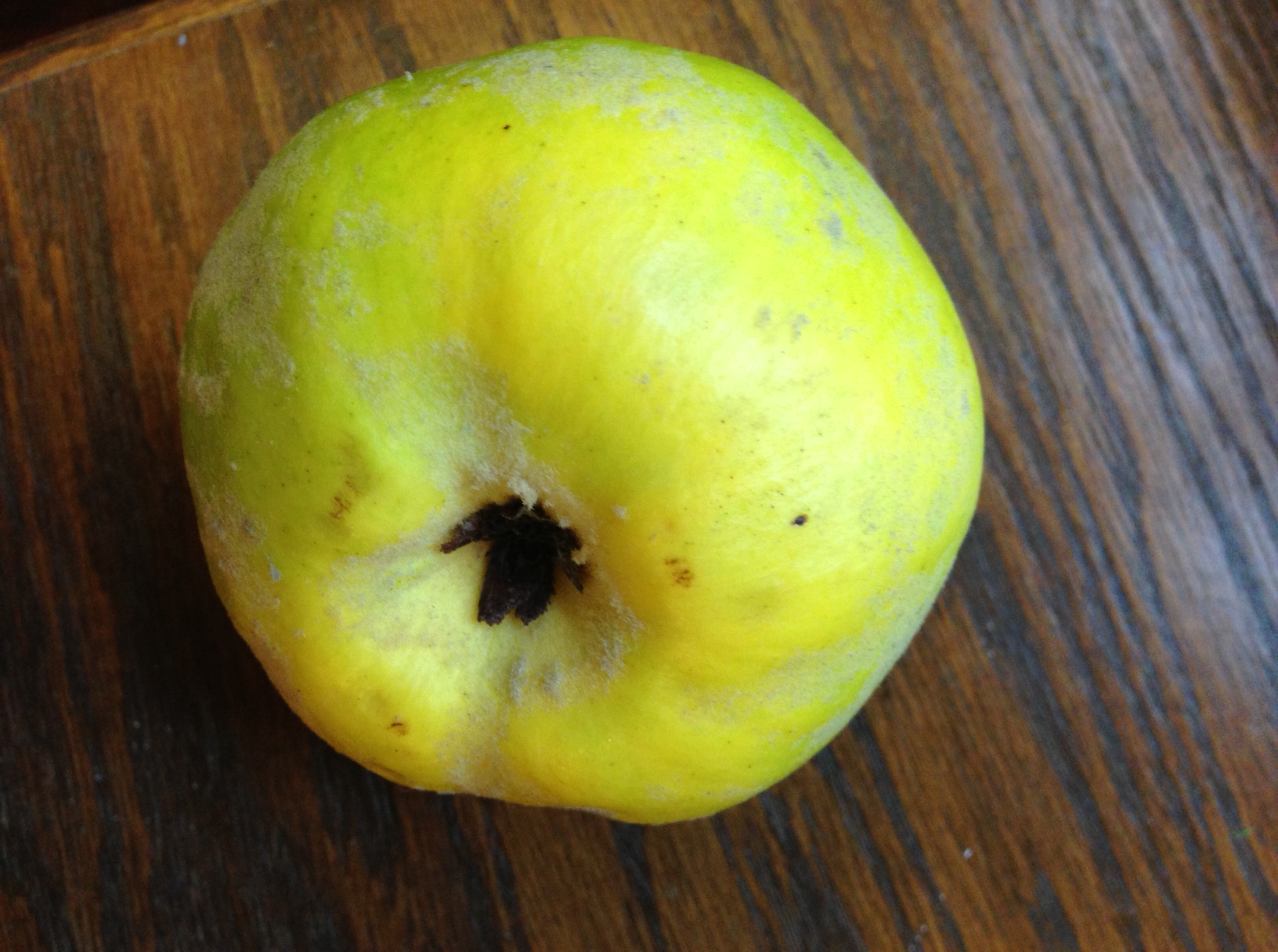
What do you do with a quince? Or a bushel of them. I have a quantity on hand courtesy of my brother.

The romantic mythology surrounding quinces is marvelous. In ancient Greece, well wishers tossed fresh quinces into the wedding chariot of the bride and groom. It’s believed by scholars that the apple in the Garden of Eden was actually a quince. And Lear had his honeymooning Owl and Pussycat nibbling on slices of quince “which they ate with a runcible spoon.”

And hand in hand, on the edge of the sand.


They danced by the light of the moon, the moon, the moon,


They danced by the light of the moon.

Lacking a runcible spoon, I’m going to have to come up with some concoction to employ my mythical quinces. Any suggestions?

2 Comments

Filed under Cooking, Jean Zimmerman, Poetry

Fire Starter

The winter firewood came today, three face cords worth, and stacking it had its usual perspiratory pleasure.

What it made me think of was The Odyssey (we’ve been listening to Ian McKellen’s superb rendition) and that incredible moment when Telemachus and Odysseus  recognize each other in the hut of Eumaeus the swineherd. I see their amazed reunion as taking place beside a blazing fire in the center of the shelter, an open hearth, and just imagining the scales falling from the eyes of son and father makes me shiver. Fires have been witness to the most sublime moments of history, and the worst.

“Chop your wood,” said Thoreau in Walden, “and it will warm you twice.” Or thrice, with the memory of the fire afterward, or four times, with the heating pad on your back. Bring on winter. Our bear of a fireplace is ready.

Leave a comment

Filed under Home, Jean Zimmerman, Poetry

Word Game

A fill in the blanks poetry writing game: the “adjectiveconcrete noun-of-abstract noun.” Gil suggests the “fat phonograph of lust.”

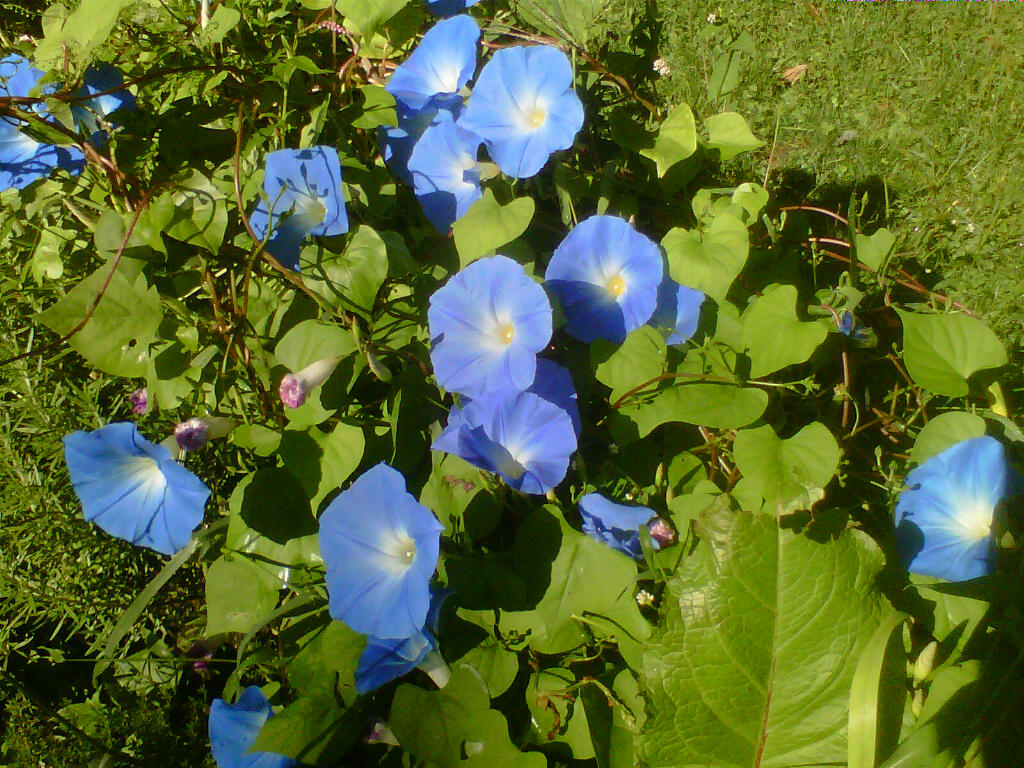
I suggest the “twinkling morning glories of bliss.” What can you come up with?

The Garden Today

Leave a comment

Filed under Jean Zimmerman, Nature, Poetry, Writing

King Lear

Happy 200th birthday, Edward Lear!

When I was growing up, one of my great favorites was his epic “The Pobble Who Has No Toes.”

It begins:

“The Pobble who has no toes
Had once as many as we;
When they said, ‘Some day you may lose them all;’–
He replied, — ‘Fish fiddle de-dee!’
And his Aunt Jobiska made him drink,
Lavender water tinged with pink,
For she said, ‘The World in general knows
There’s nothing so good for a Pobble’s toes!'”

Lear’s Book of Nonsense, featuring limericks and illustrations, is genius. No one is too old for Lear.

Leave a comment

Filed under Jean Zimmerman, Poetry

Spring


The Winter being over,
In order comes the Spring,
Which doth green herbs discover,
And cause the birds to sing.
The night also expired,
Then comes the morning bright,
Which is so much desired,
By all that love the light.
This may learn
Them that mourn,
To put their grief to flight:
The Spring succeedeth Winter,
And day must follow night.
 
(An Collins, 1640s – 1650s)

Leave a comment

Filed under Jean Zimmerman, Nature, Poetry

Poetry Makes Nothing Happen

“Life is just one ecstasy after another.” Margaret Anderson

Oliver the pit-beagle found a dead, stiff, contorted snake on the ground as we made our way around the “walk” for the first time this season and raised it gleefully in his jaws until Gil took it and tossed it in the slough.

That’s the second snake we found, the first one, larger, embedded like a fossil in the grit of the little road leading to the cabin.

I returned from Boston to find the magnolia blossoms resurrected and all the grass greened up.

Having left behind bookishness for a bit, with bookseller dinners and conferences behind me and a draft of Savage Girl put to bed, I’m ready to… read! But what to read? My Alice B. Toklas, awaiting me. Perhaps some more Stein. Also poetry. Gerald Stern? Frank O’Hara?

I need recommendations.

2 Comments

Filed under Jean Zimmerman, Nature, Poetry