Category Archives: History

Bottled Up

It has come to my attention that there are myriad bottles afloat out on the ocean, more than I ever imagined. The messages contained within may sometimes be sentimental, but they might also constitute scientific inquiry. In fact, the oldest found message in a bottle, dating back 98 years, was part of an oceanographic study to find out the “Direction of the Deep Currents of the North Sea”.
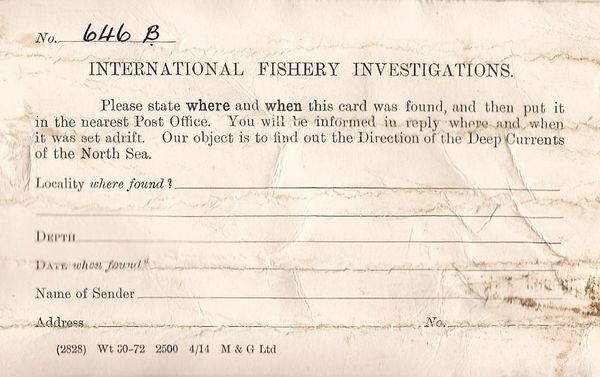
A Scottish skipper found it near the Shetland Islands this year, just nine miles from where it had been dropped by the Glasgow School of Navigation in 1914.

Messages in bottles go back to Greek times, and have always captured the imagination — so much so that Queen Elizabeth I had to squelch the romantic impulse to read what was inside by appointing an Uncorker of Ocean Bottles who would prevent amateurs from doing that job. She was afraid of information being relayed across the seas by spies.

A passenger on the doomed Lusitania in 1915 set this message adrift: “Still on deck with a few people. The last boats have left. We are sinking fast. Some men near me are praying with a priest. The end is near. Maybe this note will—”

A scientific project in Canada today has sent out 6400 bottles, hoping to get back information on currents. They’ve gone all over the place. One circled Antarctica one and a half times before landing at Tasmania.

It seems science has come to dominate the message bottle gig. Next time I’m at the shore I’m going to jumpstart the poetry-in-a-bottle movement, inserting lines by Wallace Stevens and W.H. Auden into wine bottles and sealing them firmly with sealing wax and cork before casting them out on the tides. You never think they’ll come back, isn’t that what’s kind of great about it?
Leave a comment

Filed under History, Jean Zimmerman, Poetry

A Discovery

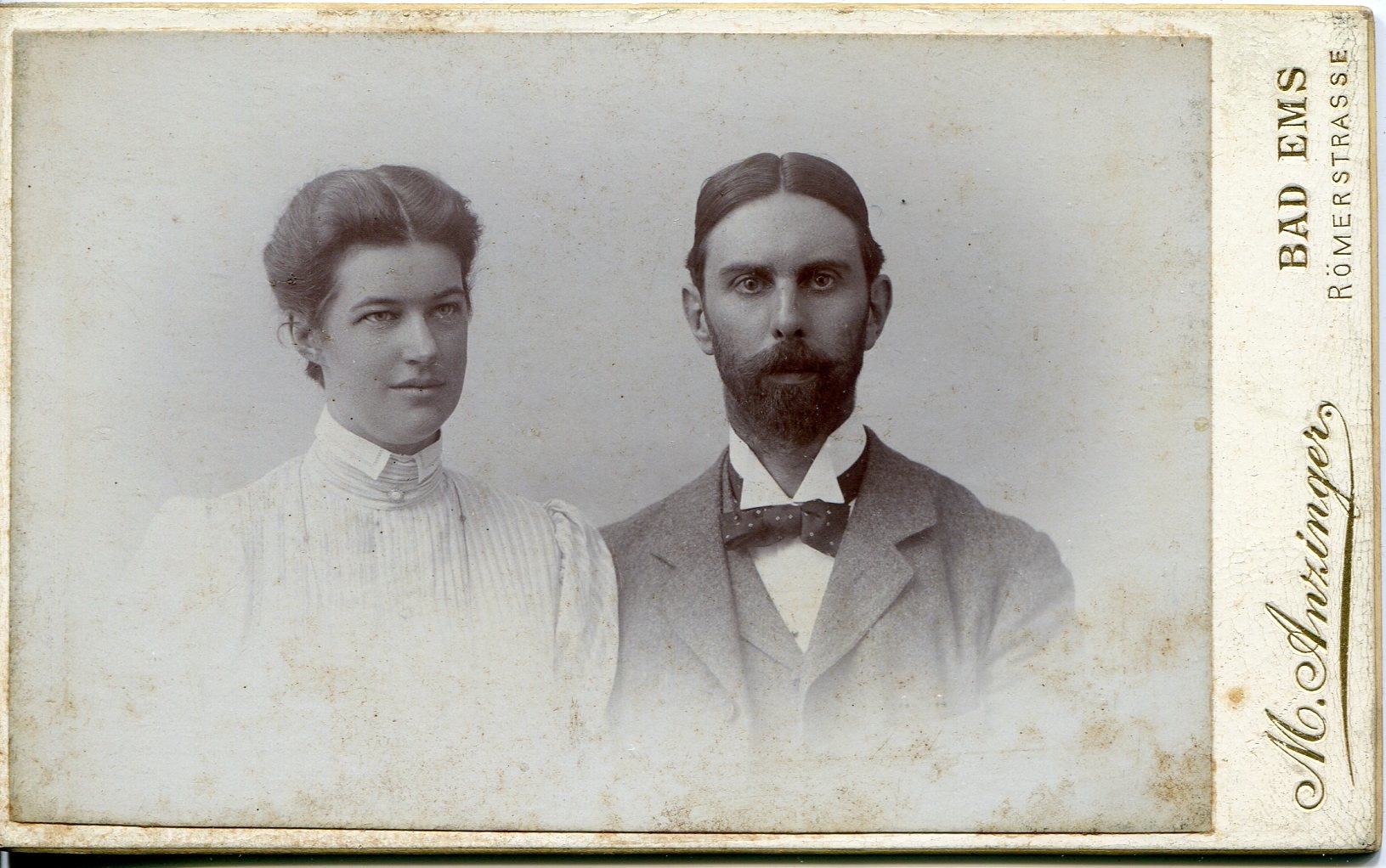
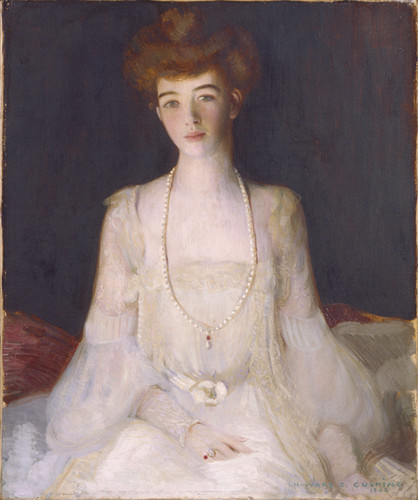
A person contacted me, curious to see whether I had come across anything about her grandfather in my research on I.N. Phelps Stokes. Said they were friends, that she had pictures of them together at a Paris fancy-dress ball in the 1890s. Fancy dress equalled cross dressing in the terminology of the time; the two men were got up as Greek peasant women — wish I had a copy of that one. Who was your grandfather, I asked. Howard Cushing. I couldn’t recall any specific reference, though the name sounded familiar. Was he a banker, I said. Errr, no, she said. He was an artist.

Afterwards I did a little digging and found the man’s diaphanous work, which hangs among other places at the Met and the Whitney. There would have been more had he lived longer, but he died suddenly at 47. These two canvases depict his wife, Ethel Cochrane, whom he is said to have sketched or painted over fifty times.

Quite beautiful. I would have liked to see his rendering of Edith Minturn.

Leave a comment

Filed under Art, History, Jean Zimmerman

A Window Into a New Life

The event last night at University Settlement was just fabulous… a nice big screen to show my pictures of Newton and Edith and their world, a big crowd, lots of attentive faces. They even got my jokes.

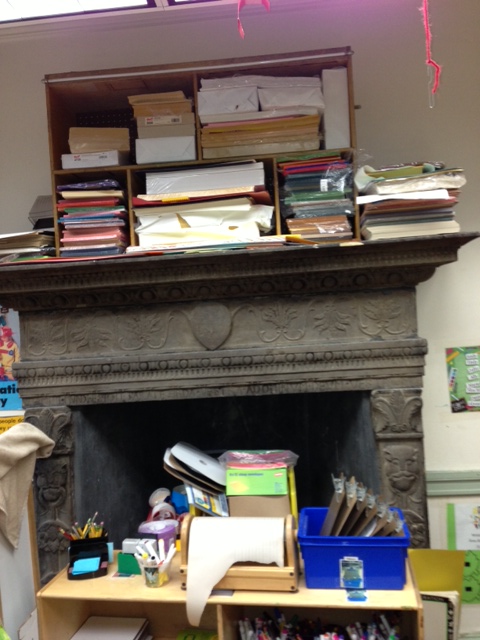
Before my talk I got a tour of the premises, including the original 1898 boardroom upstairs, a space now given over to preschoolers, where the grand old mantelpiece imported from Europe still stands, buried in the necessary detritus of the classroom. Wonder what old Stokes would make of it. I bet he’d be pleased to see that the building he put so much heart and love into (it was his first commission as an architect) has found continued life serving the underprivileged of New York City.

Something about the light of the building strikes me as particularly wonderful. Stokes obviously knew what a commodity ample natural light was for people of the slums, like those Jacob Riis portrayed in dank, dark tenements. To come to the University Settlement with its soaring windows must have been a correlative for the worlds opening up to immigrants there.

Leave a comment

Filed under History, Jean Zimmerman, Love, Fiercely

A Baaaaad Day

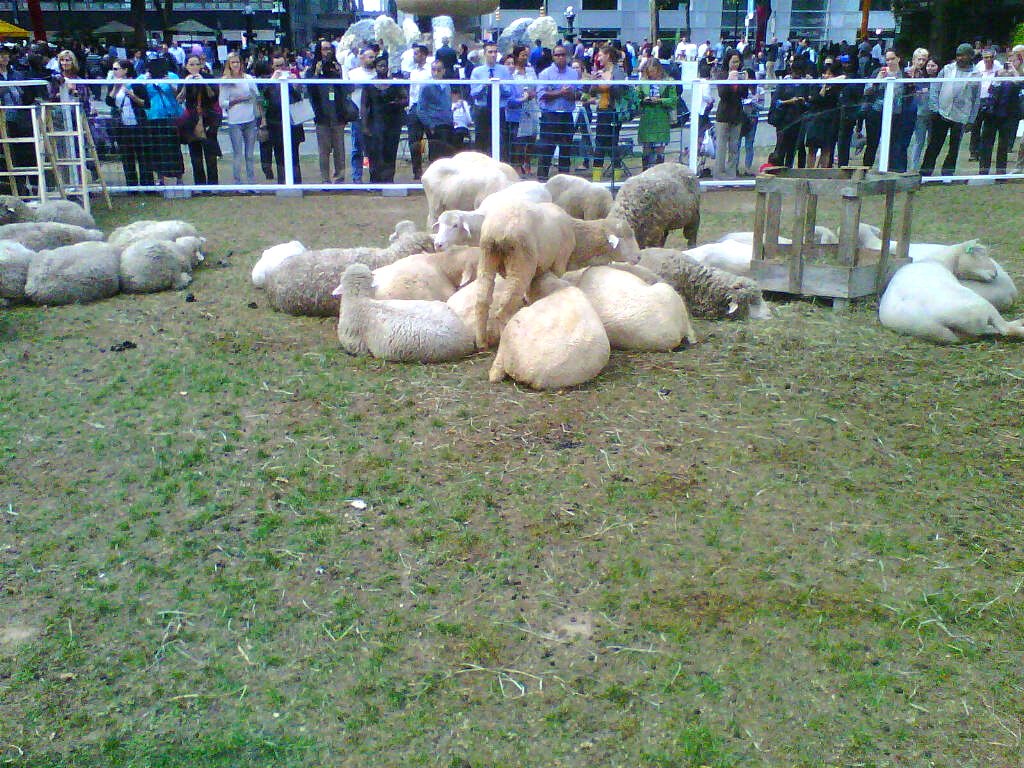
Before we left for Italy we swung through Manhattan to see something surprising: a flock of sheep grazing within a fence in Bryant Park, on Avenue of the Americas behind the New York Public Library. It was an art installation of sorts, sponsored by British royalty, which also included a wool-wrapped marble fountain and tea-cozyish squares enveloping the back of the rickety park chairs. New Yorkers, not dumbstruck by any phenomenon, shook their heads and went back to their bag lunches. I was happy to see sheep in midtown, leaning against each other and walking aimlessly around, as they would have 300 or so years ago.

It also reminded me of the time I was researching the colonial at the Historic Hudson Valley library in Sleepy Hollow, New York, which happened to abut the restored Philipse house/farm complex. Emerging from the dusty archives on an early spring day I would look out the kitchen window and see the new lambs kicking up their heels, bleating, their still-long tails dangling. It was another conjoining of books and sheep (like the sheep out back of the NYPL) – perhaps a pairing preordained somehow by nature?

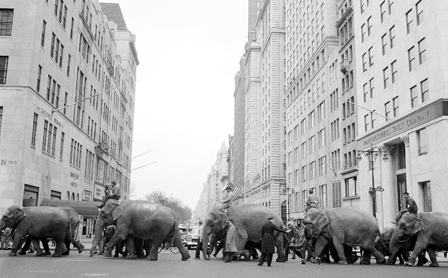
The question naturally arises of how the flock got to midtown. Were they English sheep? Had they crossed the Atlantic? Or had they made their way in to Manhattan by way of the Midtown Tunnel like the circus animals traditionally do on their way to Madison Square Garden?

The question we had looking at the scene in Bryant Park was, who were the real sheep on the scene?

Leave a comment

Filed under History, Jean Zimmerman, Photography

The Harvest

Back to the States, to a head cold, to the chill of fall.

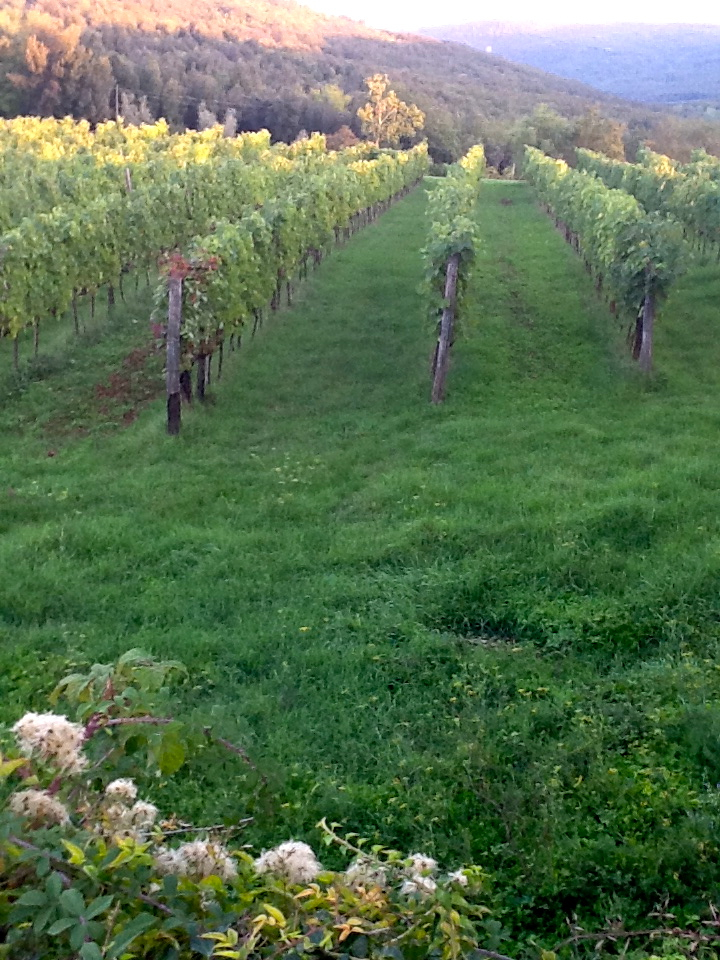
Tuscany beautiful in a rough-hewn, ancient, wine-ripe sort of way. We had a silver full moon for three nights casting a piercing light over the grape vines below our farmhouse. Cows lowed in the distance. Mornings, the grass between the lines of bulging purple grapes was wet.

Harvest Time in Tuscany

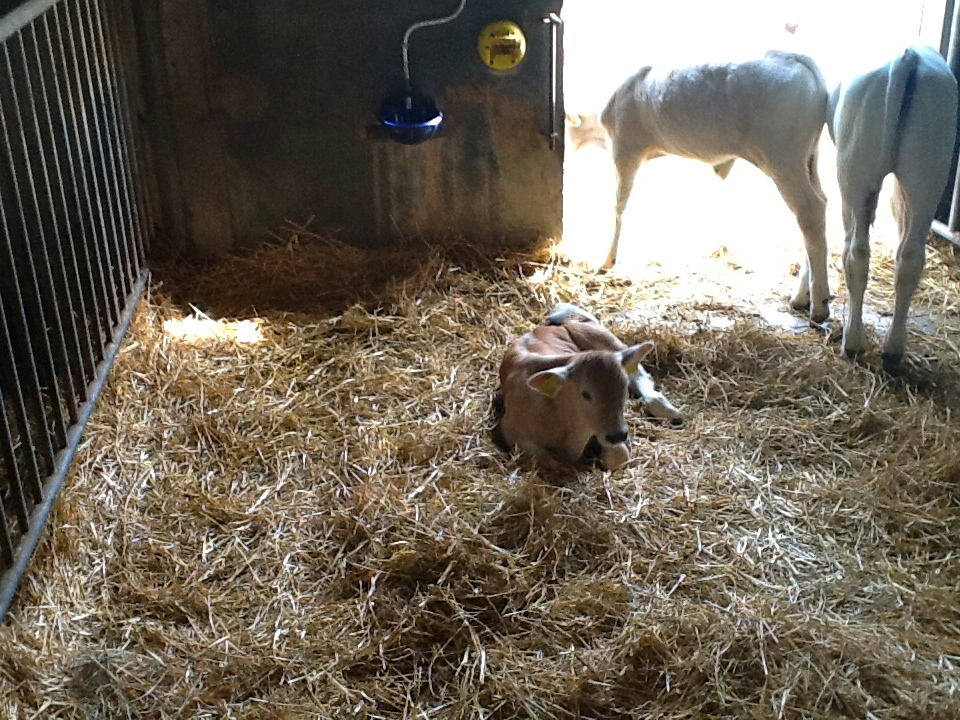
At a winery that hosted us for lunch we gazed across at the lofty skyline of San Gimignano and visited with a two-week-old calf from ancient, white-coated, thick-horned forbears.

Etruscan Calf

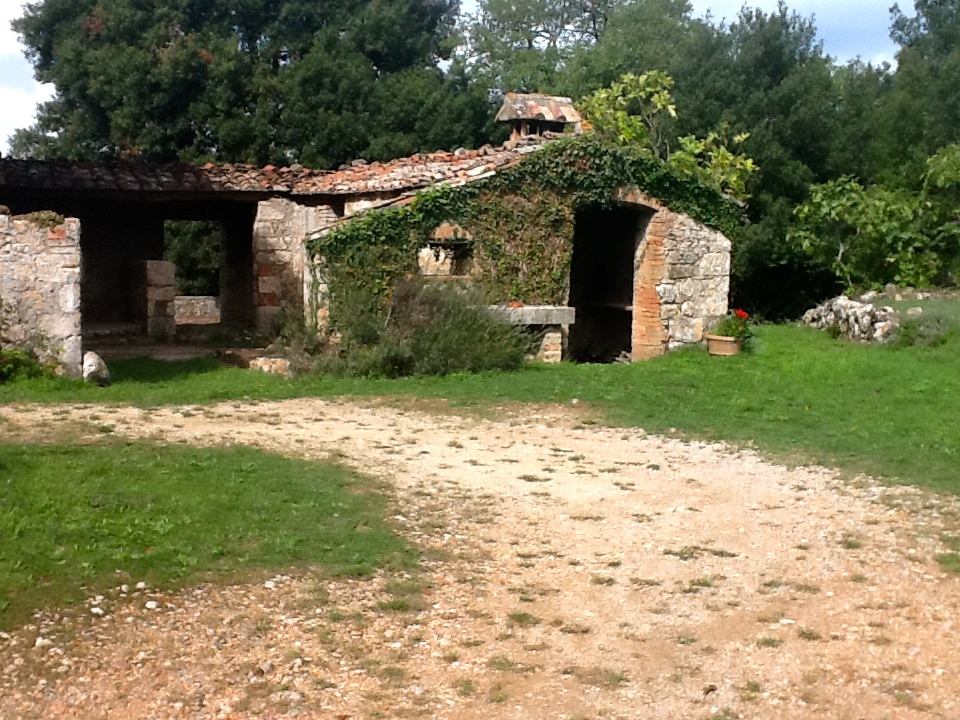
We ate wild boar sausage, red and raw-tasting. Made pizza in an old wood-burning oven outside that had seen lots of dough in its day.

Oven Shelter

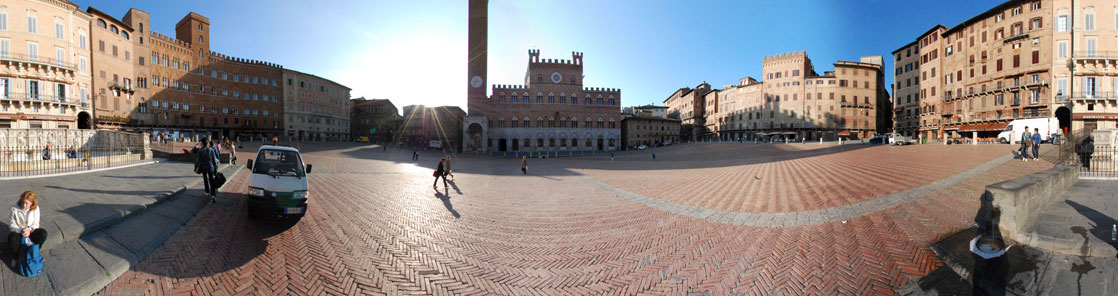
Traipsed through an abandoned castle in the woods. Drank cappuccinos at the edge of Siena’s red slanted Campo, its central square.

Il Campo, Siena

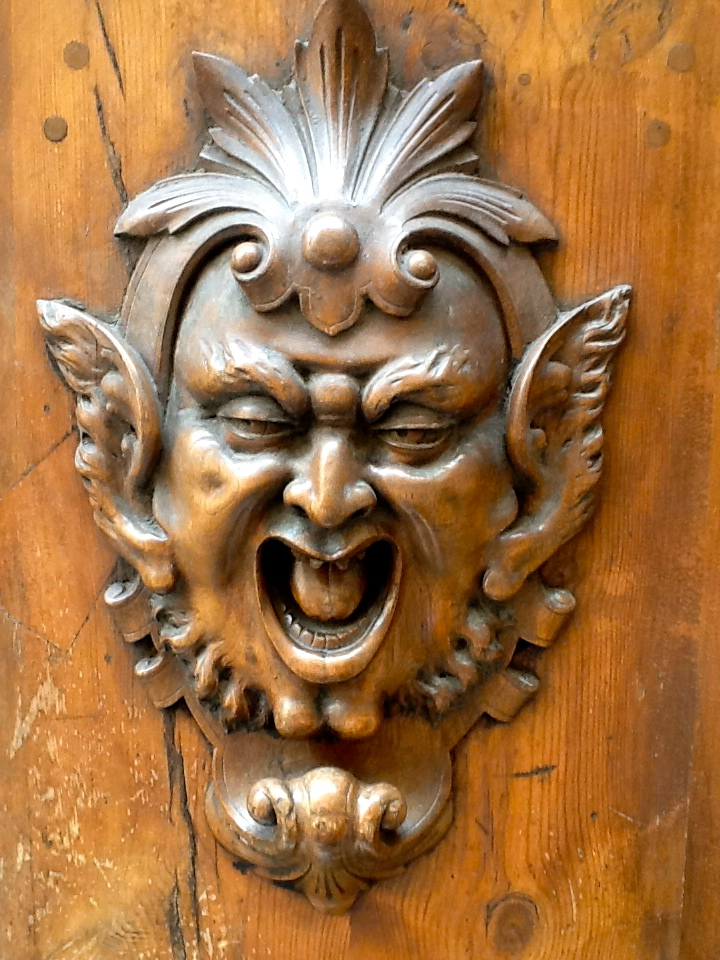
Also caught this guy on a wall in Siena:

Siena Head Banger

Etruscan ruins nestled in the southern walled hill towns, and we climbed ramparts manned by soldiers 800 years ago, the scent of wine and mint and rosemary in the air…

In Florence, a fearful message from a medieval past.

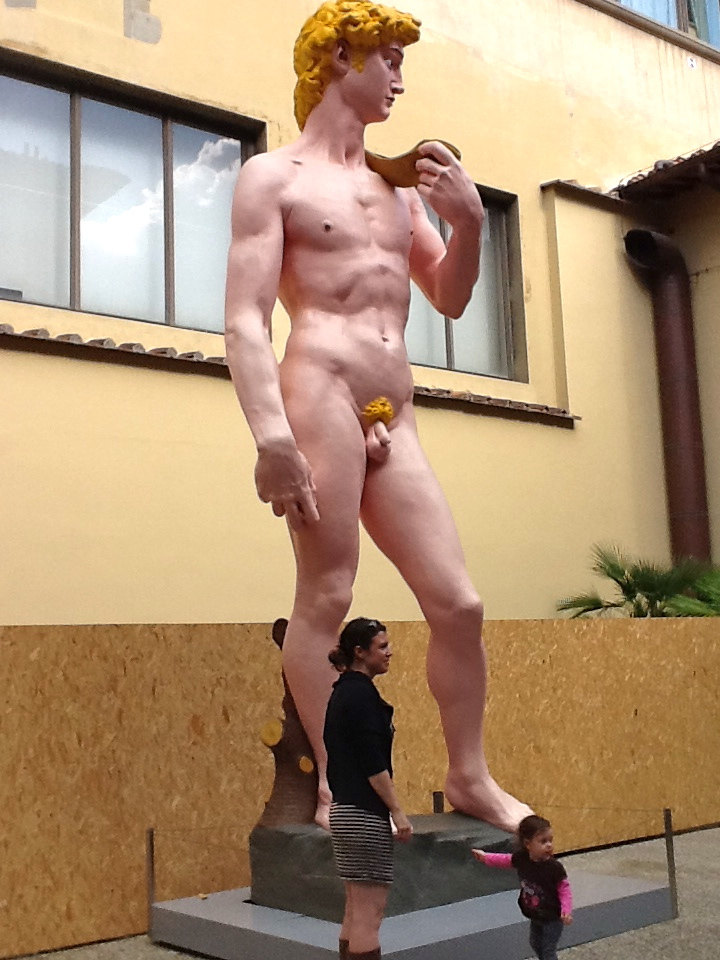
While a modern David stood tall and unperturbable in the Accademia.

David

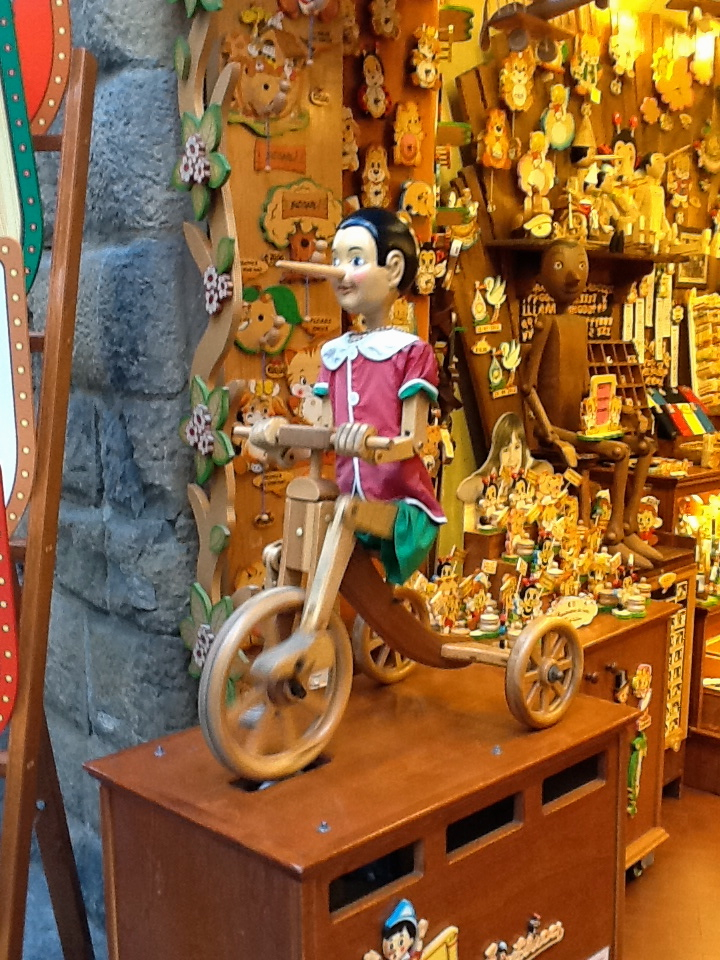
 As Pinocchio, the patron saint of these parts, pedaled on his way.

Toy Story

But Florence had a piquant salutation for us as soon as we crossed the Arno, in a delicate bit of graffiti.

1 Comment

Filed under Art, History, Jean Zimmerman

University Settlement Celebrates

On October 11th I’ll take part in an interesting event, at the University Settlement in Manhattan. This is the organization’s 125th birthday; it has worked for over a century to help integrate and educate immigrants on New York’s Lower East Side. My involvement? I.N. Phelps Stokes designed the brick-and-limestone University Settlement building at 184 Eldridge Street. It was his first architectural commission, when he returned to the States with Edith Minturn after their extended honeymoon in Paris.

Newton and Edith

A clean and classical creation, still extant, the building at 184 Eldridge rose grandly, and improbably, above the swirl of street life below. On the Lower East Side at the time, Russian and Polish pedestrians jostled speakers of Italian and Yiddish; narrow, cobbled streets teemed with horse-drawn wagons, electric cars and horse cars; and pushcarts hawked everything from tomatoes to tin cups.

In this dingy neighborhood, among jumbled, decrepit tenements, there now stood a fresh, elegant new structure, Newton’s debut architectural contribution. What made it even more amazing than its appearance, though, was its function. It had been commissioned by people who intended to improve, if not revolutionize, the conditions all around it. —Love, Fiercely, p. 165

It was a different era. While local denizens streamed into the building to use the baths or take English lessons, well-heeled volunteers resided in elegant top-floor digs — it was a badge of honor among certain young aristocratic idealists to put in time at University Settlement.

University Settlement Building

To celebrate the birthday, the group is getting together descendants of the original donors to the cause, with names like Rockefeller, Warburg and Huntington, for a portrait and champagne. Here is the original document listing names and amounts.

University Settlement Building Donors 1899

If you want to know more about the event, go to the New York Social Diary for September 26 and scroll down. If you are a descendant or know one, let me know and I’ll pass the name along!

For a review of Love, Fiercely, in which I describe the story of building the Settlement House, click on the Social Diary for Monday, September 24 and scroll down.

Rich philanthropists putting their hearts into fixing the slums. Now there’s an idea.

Leave a comment

Filed under History, Jean Zimmerman, Love, Fiercely, Publishing, Writers, Writing

A River Flows Through It

Philipse Manor Hall still sits on its bluff in the city of Yonkers, where it was constructed in 1682 by Margaret Hardenbroeck and her husband Frederick Philipse, at the junction of the Hudson River and a rushing stream local Indians called the Nepperhan. The couple was already extraordinarily wealthy from trading furs, and would eventually own 57,000 acres of land stretching from Spuyten Duyvil up to the Croton River. Successive generations of Philipses lived in the house, enlarged it, decorated it, planted rose gardens outside its front door and tended a deer park out back. When the American Revolution concluded, the family’s members, staunch Loyalists all, were “attaindered for treason,” booted out of the new country in 1783 with little more than the clothes on their backs. Most fled to England, leaving Philipse Manor Hall to the state of New York, which cleaved the huge property into 287 parcels and sold them to the tenant farmers who had always worked the land.

The Manor Hall and its environs looked almost paradisiacal then, with the Nepperhan River rushing down to the Hudson.

Philipse Manor Hall, 1784

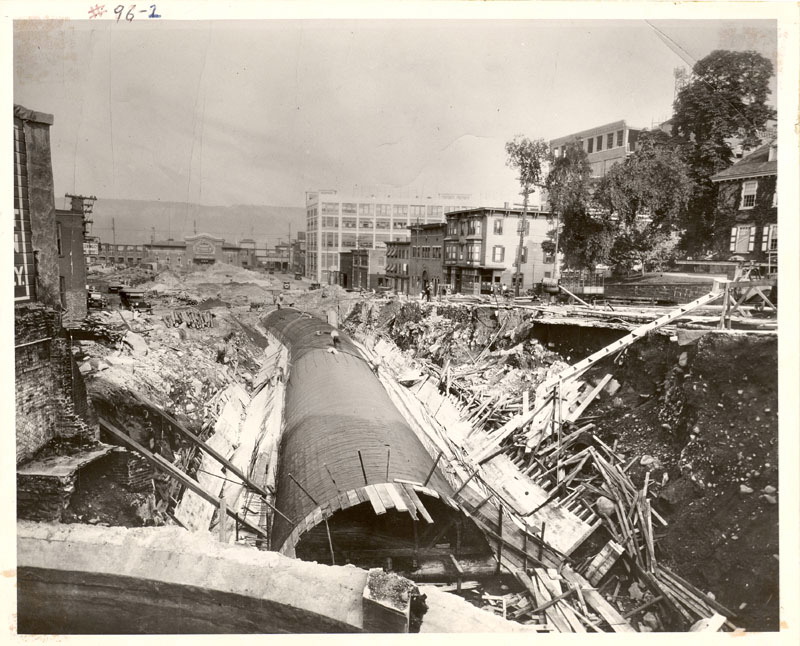
Flash forward one hundred years. The handsome house still stands, but Yonkers has been bit by the bug of industry, in a big way. Everything from pencils to hats to elevators are making residents rich, with factories that employ the Nepperhan’s surging water power. The river grows polluted by factory waste. People who live and work on its banks get sick. The city fathers won’t have it. By 1868, Philipse Manor Hall has been transferred from private hands and is now Village Hall. What shall we do about the river?

The Nepperhan, 1920s

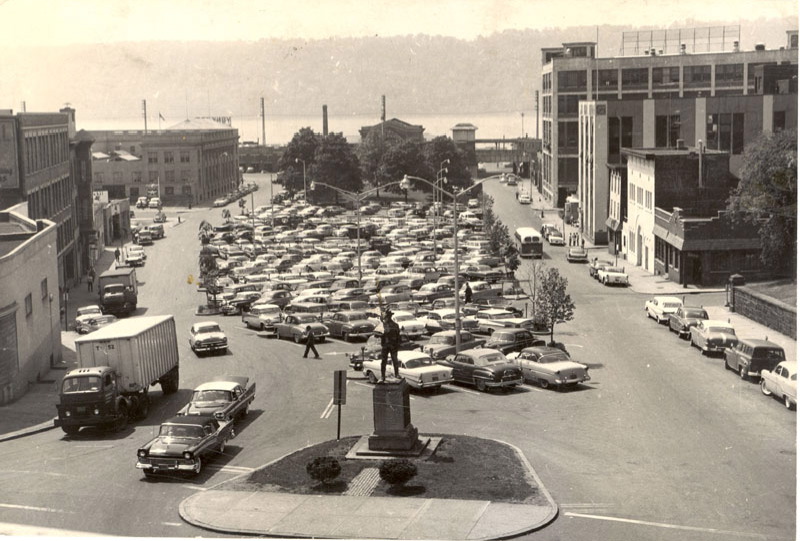
Bury it. That solves two problems at once, giving us an hygienic environment and more parking.

Yonkers Downtown Parking with Hudson View

From the 1920s until today, the Nepperhan ran under the city of Yonkers in its flume, secret and silent, largely forgotten.

But something remarkable happened. People decided they wanted the river back. The Nepperhan has been “daylighted,” the term that means opening up the long-disappeared river to run aboveground once more, a feat of mental magic and engineering acumen.

Philipse Manor Hall, 2012

Many people made it happen, including Groundwork Hudson Valley. The plants along the river’s banks are still immature. And this new incarnation lacks the strenuous rapids and waterfalls of the old river. But the Nepperhan has reclaimed its place in front of Philipse Manor Hall, a reunion to warm the hearts of anyone who has a sense of historical justice.

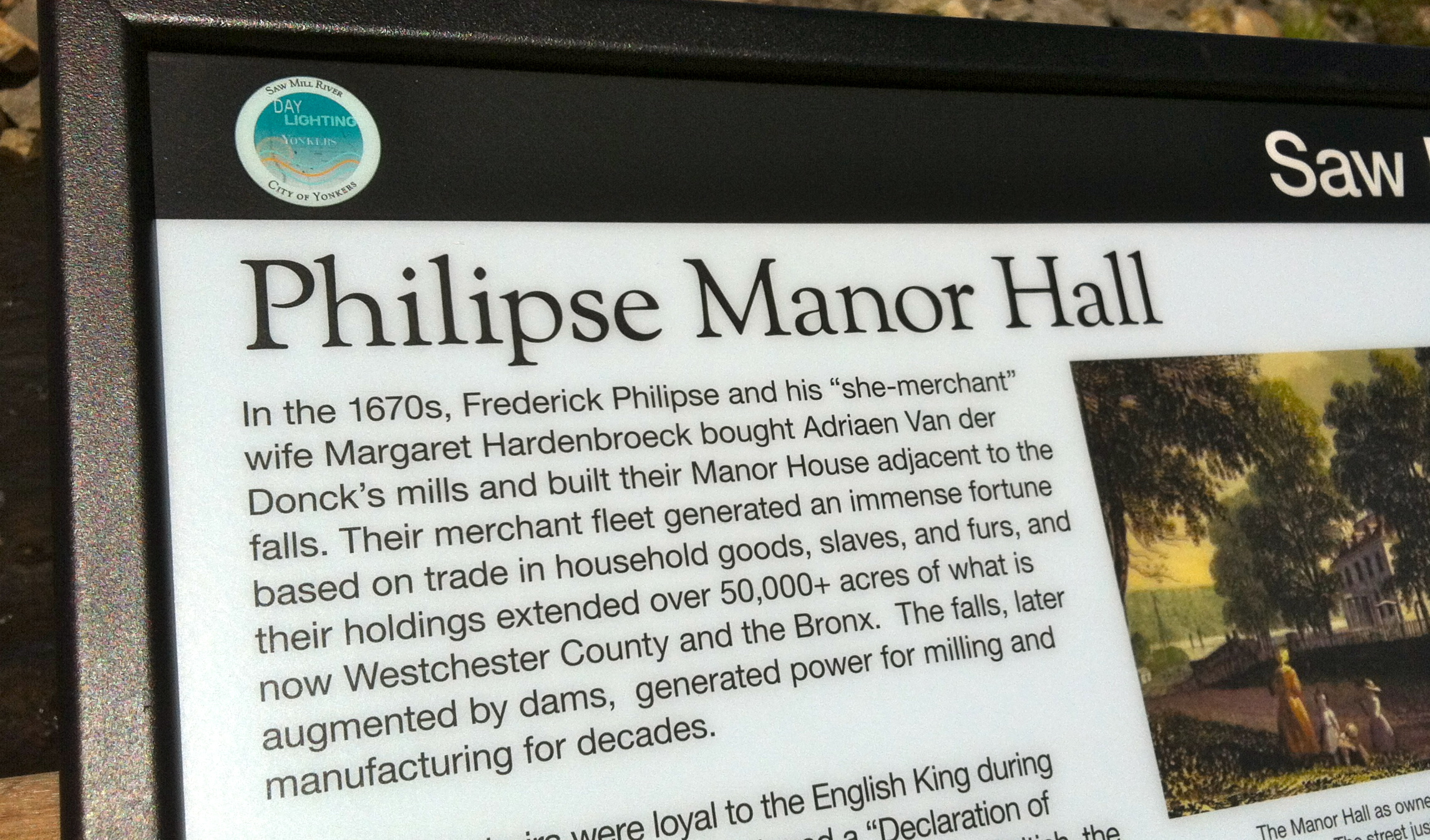
And something to warm my heart in particular: an explanatory sign that cites Margaret Hardenbroeck as a she-merchant. I like to think that I had some small hand in bringing Hardenbroeck out of obscurity with my book The Women of the House.

1 Comment

Filed under History, Jean Zimmerman, Photography

At Sea

Some interesting things at the South Street Seaport Museum today in an exhibit they have going with the Folk Art Museum. Including a history of the Titanic sinking written out entirely on patched together paper napkins. And plenty of scrimshaw, my favorite. A room is also devoted to an exhibit based on the book Mannahatta and showing New York as it would have looked in 1609, in gigantic, beautiful green “photos.” What I liked best though was the part of the museum that preserved the timbers of the old nineteenth century rooming house that used to be housed there, so you could imagine the cramped existence of the seagoing men. Three patterns of tattered wallpaper fell off the plaster walls in strips. There were drunken ghosts there, I swear it.

Leave a comment

Filed under Art, History, Jean Zimmerman

New Amsterdam in 3D

Check this out. The New Amsterdam History Project has a 3D rendering of Stone Street during the time of the Dutch settlement. You get a vivid feeling of how low the rooflines were, how close the settlement was to the sea. Interesting to insert your imagining of  The Orphanmaster into this setting.

Leave a comment

Filed under History, Jean Zimmerman, The Orphanmaster

Wilde Child

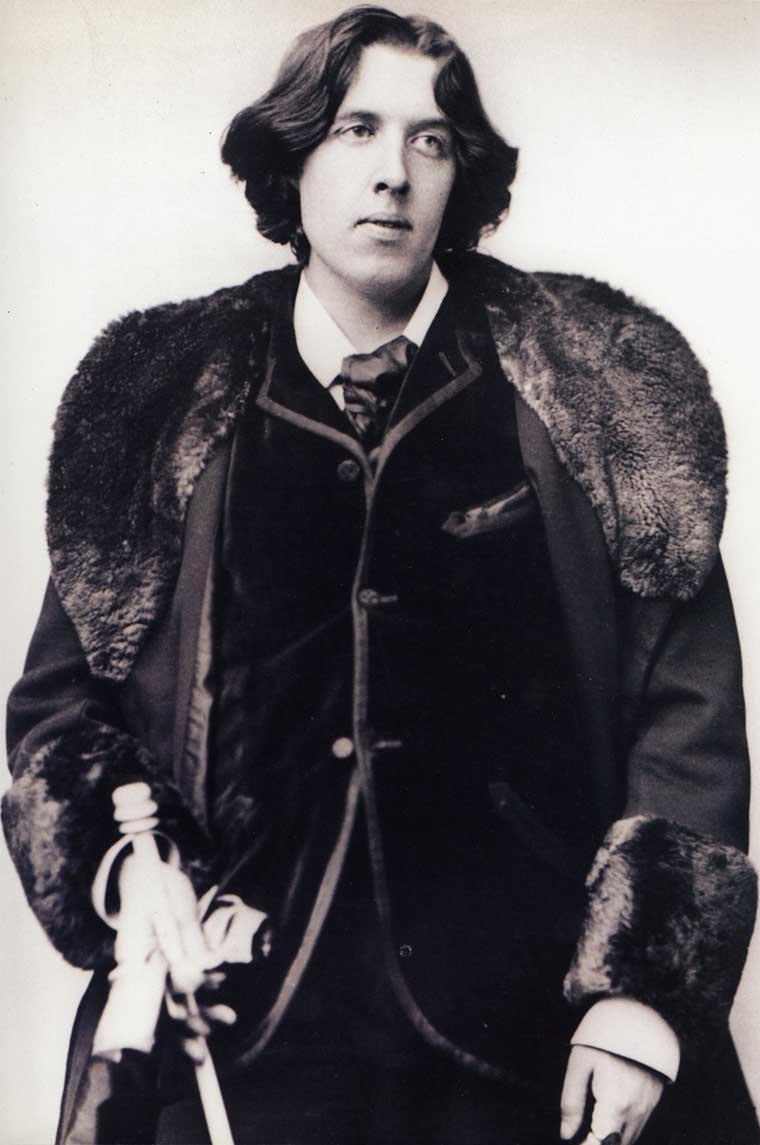
Late summer: sunflowers hanging their tiger cub heads, cicadas in full throat, ripe tomatoes slumping to the ground. And I just finished the article I’ve been working on for the Times, so I’m happy. It’s about a brownstone on the upper east side whose owners worked for seven years to restore it to its high Aesthetic era appearance — that’s the 1880s to those of you who are not Oscar Wilde devotees. Wilde himself toured the U.S. in 1882 promoting the Aesthetic Movement and shocked people with his sunflower-boutonniere. The interior of the house I wrote about is actually pretty shocking as well, so stuffed with an elegant chaos of wallpapers and gothic furniture, portieres and floor urns that it is hard for the eye to even take in. I’ve never seen a house like it. But wonderful in its own way. I’ll give a link when the article runs.

“We are all in the gutter, but some of us are looking at the stars.”  Wilde

Oscar Wilde

Leave a comment

Filed under Art, Fashion, History, Home, Jean Zimmerman, Photography, Writing

Eating Weeds

‘We ate weeds,” said a writer who had lived through the Great Depression.

That statement has always impressed me. Are they actually digestible? How would you cook them — steamed like artichokes, boiled for hours like collards, sauteed with a little butter like spinach. No butter during the Depression, maybe margarine instead.

But today I am wondering just what weeds they were — I know people who relish purslane, but the redwood-height plants that shouldn’t be in my garden aren’t purslane. We went in and pulled out a wheelbarrow full today, after putting the state of the garden out of mind for the last month or so.

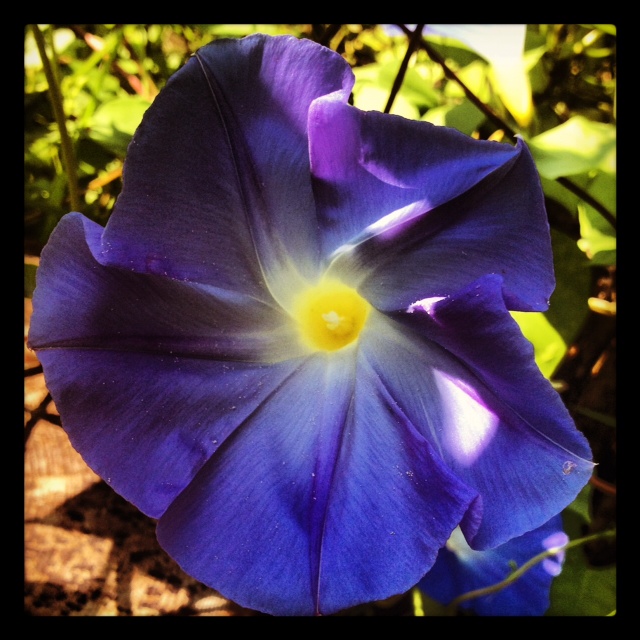
Two things prosper there. Sunflowers, and eggplant. The sunflowers are mammoth and hang their heads like old fashioned shower heads. They all face out of the garden, toward the swamp, so we see their backs exclusively. Purple and white, the eggplant grow heavy, their skins shining in the sun. Actually there’s a third, the morning glory vine, producing dozens of cerulean blossoms every day. This is the first time in my life I’ve successfully grown morning glories.

But the weeds are still the main crop.

Leave a comment

Filed under Cooking, History, Home, Jean Zimmerman

House of Mirth

Spicy chocolate ice cream wasn’t my only reward for visiting with the folks at Ventfort Hall in Lenox, Massachusetts (50 people attended, and they seemed enthusiastic about my picture-talk on Love, Fiercely: A Gilded Age Romance).

Today I visited The Mount, Edith Wharton’s gem of a home nearby. I’ve been there before but it has been seriously spruced up in the meantime and most of her library has been reclaimed at auction (at grave financial risk to the organization that owned the house, but it all turned out okay), so the experience wowed me all the more. Gil and Maud fell under the place’s spell as well.  The house is all clean lines and airiness and balance, designed by Wharton in conjunction with two different architects, and there is nary a Victorian wallpaper in the joint. It is as if all that 19th century fustiness simply blew away when the dial hit 1900 (The Mount went up in 1902).

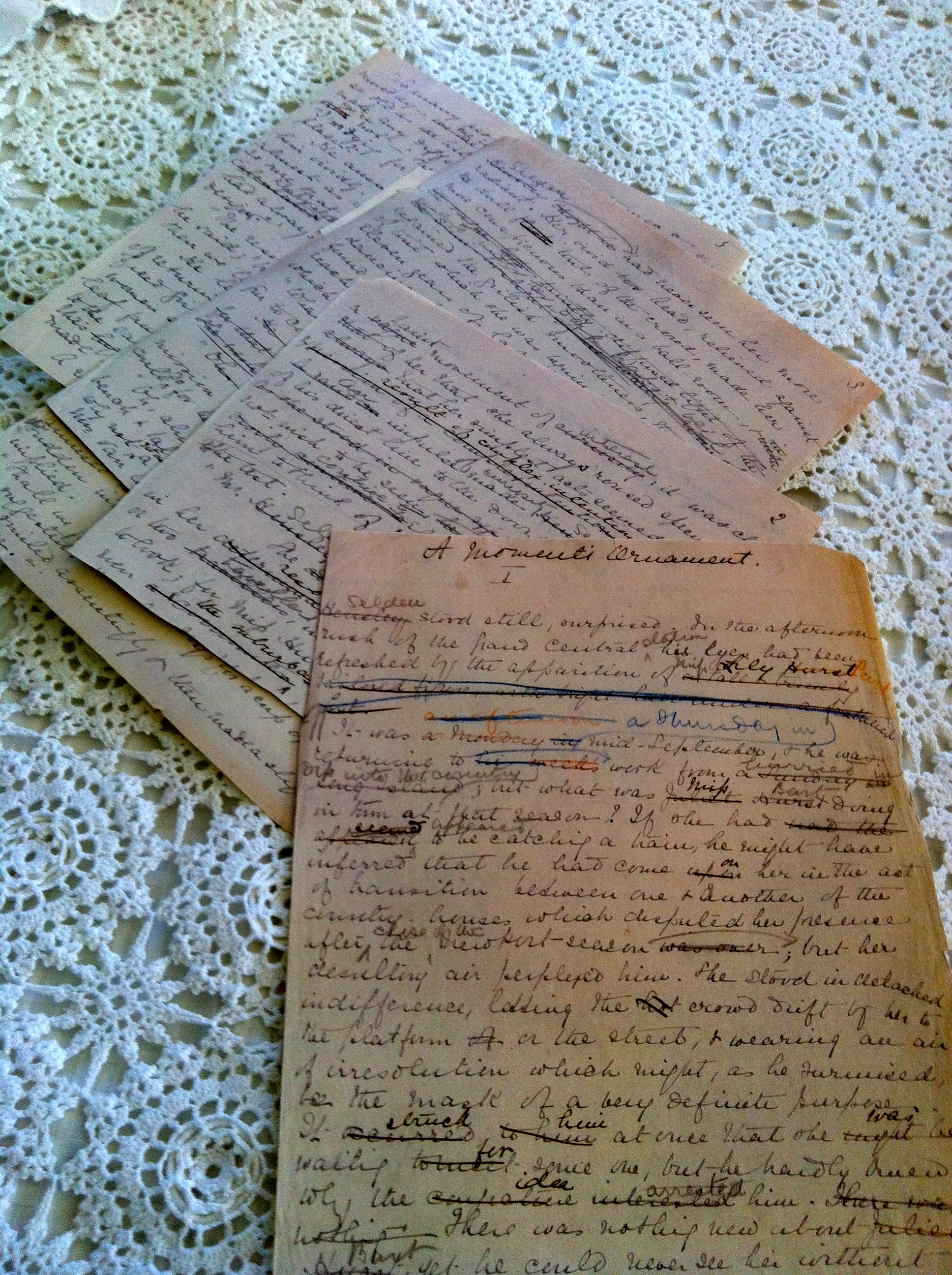
Fans of  The House of Mirth (like me) will foam at the mouth when they see the early pages of the novel spread out over the bed in Wharton’s sunlit bedroom.

House of Mirth Draft

Yes, Wharton wrote propped up in bed every morning, casually casting aside her finished pages as she went. She actually had photos posed with her sitting at a desk with inkwell and paper, thinking it more dignified, but the truth is she stayed prone, warmed by the little dogs she loved.

The Wharton Dogs

To enter her room and be able to get that close to genius! People were looking so I couldn’t lie down on the bed.

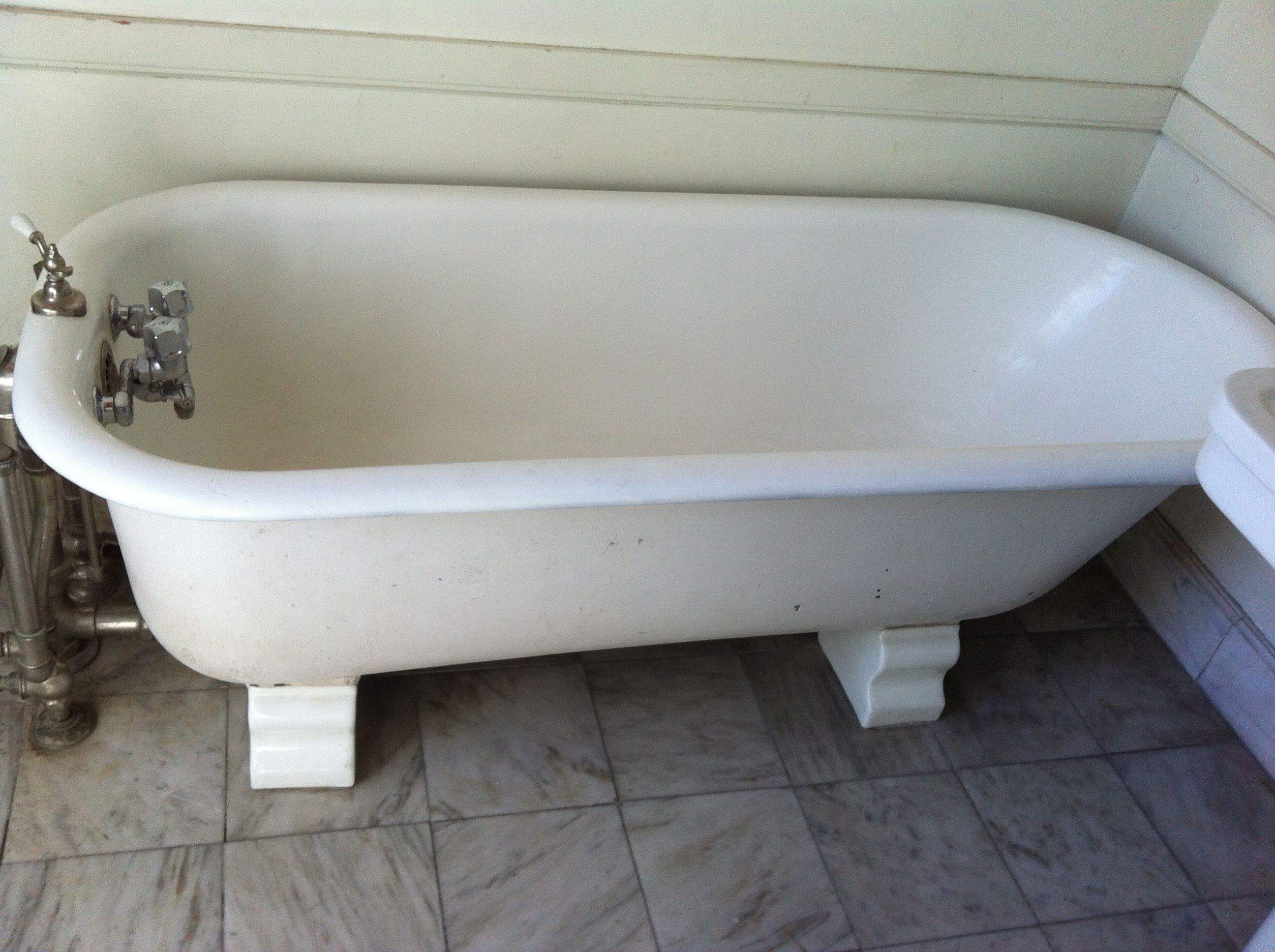
Ghosts have been glimpsed in the house. The only sign I saw of one was in the bathroom adjoining the bedroom where Wharton’s single houseguests found accommodation. Henry James, who occupies the apex of literary achievement, for me, visited frequently when he came over from Europe. Here is the bathtub into which the Master would have lowered his robust, aristocratic frame. I think I saw a wisp of something ghostly, but maybe it was some stray moisture from the faucet…

The Henry James Honorary Bathtub

The veranda offers an exquisite view of the grounds (as well as iced tea and salad), and might well have been the location for James’ comment as remembered by Wharton: “Summer afternoon — summer afternoon; to me those have always been the two most beautiful words in the English language.”

And while that is one of the most beautiful statements ever made, James was so full of wordly wisdom I might as well offer another:

“We work in the dark — we do what we can — we give what we have. Our doubt is our passion and our passion is our task. The rest is the madness of art.”


Leave a comment

Filed under History, Jean Zimmerman, Love, Fiercely, Writers, Writing

Love, Fiercely Chocolate

Lake Mahkeenac, aka Stockbridge Bowl, lies down a long slope of woods from the Kripalu Institute, aka the site of the fabled Shadowbrook, the 100 room Stokes mansion completed here in Lenox in 1893. On the Lake, the Mahkeenac Boat Club is basically unchanged since that earlier era and reached only via a discreet driveway and a walk through pine-fragranced woods. The little sailboats have names like Moth, Hermes and Sprite.

Another relic of the Gilded Age offered me a podium and a slide projector this afternoon for what they call a talk and tea. Ventfort Hall, ever more shored up and scrubbed, held a crowd with a very serious interest in the Stokes clan and whatever local associations with the Minturn family could be dug up. There were even some Stokes descendants who could proudly say Well, when great grandfather built that house…

There were cucumber sandwiches out on the sweeping veranda. I was glad we had decided not to invite Oliver on this jaunt. He detests cucumber.

I ended the evening at the ice cream parlor with an experience that would have caused the Victorians to keel over. Chocolate ice cream with a kick of cayenne, causing my tongue to melt just a bit as I gobbled it down. Hot and icy, sweet and savory at once, that’s a prescription for poetry.

Tomorrow, toes in the Stockbridge Bowl– then another bowl of some surprising ice cream. Lavendar and honey? Parfumiers would approve.

Leave a comment

Filed under Fiction, History, Jean Zimmerman, Love, Fiercely, Publishing, Writing

Strontium Plums and Beryllium Bears

The morning glories were raging as I, Gil, Maud and Oliver pulled away from Cabin World to start on our road trip to the midwest., leaving the hovel-in-the-marsh in the capable care of our friend Javert.

We crossed Pennsylvania to find a farm stand with a prematurely aged man making change out of a prematurely aged leather wallet. The plums he sold were the most delicious I’ve ever eaten.

Gil has his own take on the region we’ve hit, staying at a biker bar/motel so remote that a denizen of the bar exclaimed, “I’ve never seen anybody stay at the motel!” So here are his ruminations:

Researching a writing project, we’re embarking on a vacation tour of Fifties nuclear sites, the first one being the Quehanna Wild Area in west central Pennsylvania. As part of Eisenhower’s “Atoms for Peace” program, the Curtis-Martin aeronautics company tore a huge swath out of the wilderness and installed a reactor as part of an experimental nuclear-powered jet engine development. But in 1960 the U.S. Air Force crapped out of the whole Jetson-style concept altogether, Curtis-Martin pulled out, burying some of its waste underground, after which area black bears and other animals rummaged through the stuff. Beryllium dust anyone? How about some strontium-90? ARCO inherited the hot cell in the woods. One of its subsidiaries had the brilliant idea of irradiating plastic-infused hardwoods to create a sort of super-flooring product, which Permagrain, Inc. installed in basketball courts and gymnasiums around the country  (shades of flubber!). Several Quehanna clean-up efforts tried and failed to remediate the site, the robots were sent in, and the whole mess was eventually buried out of sight and out of mind. Even today, though, there’s a hexagonal “restricted area” on the maps. Another local attraction is a coed boot camp correctional facility for wayward youths, just up the road from where we’re staying. Escaped juvies wander into nuclear twilight zone? Sounds like a killer horror flick. The Forest Has Eyes…

Leave a comment

Filed under History, Jean Zimmerman, The Orphanmaster

Hot Sage

So I took a break. I’ve been blasted by the 105-degree Arizona heat (go out quick, feel the fire, duck back in), and have enjoyed the delicious sage aroma in the air and the sight of baby jackrabbits drinking moisture from the putting green turf. I’ve found that sushi tastes great in the middle of the desert. Oh, and I’ve enjoyed talking about The Orphanmaster with 75 gracious seniors at a place called Silverstone, in Scottsdale, home to mom and dad.

It’s always interesting to share pictures related to 1660s Manhattan when you are in 2012 and across the country from Manhattan. You can show the intricate, drawn-to-scale street plan of New Amsterdam dating from 1660, and it looks not so much like historic fact as it does magic, a fantasy of a place invented, a tale out of a story book, not possibly real. And yet it all was. The sights and sounds of that Manhattan could be experienced as vividly as the hot gale off the desert here today, or the sumptuous sage, or the nibbling bunnies on their sea of acid green.

In 1660s Manhattan, sea lions sunned themselves on rocks in the surf at the base of the island, where Battery Park is today.  You could look up in the sky at noon and witness pigeons wheeling in clouds so dense they blotted out the sun. Ox carts clogged Broadway. Bears climbed in the orchard trees. Noise. Scent. Knockaround drunks. Dazzling meadows of wildflowers.

What I wouldn’t give to set foot there, step into that 1660 map for just a split second.

Leave a comment

Filed under Fiction, History, Jean Zimmerman, Publishing, The Orphanmaster, Writing