Category Archives: Cooking

Getting a Head of Myself

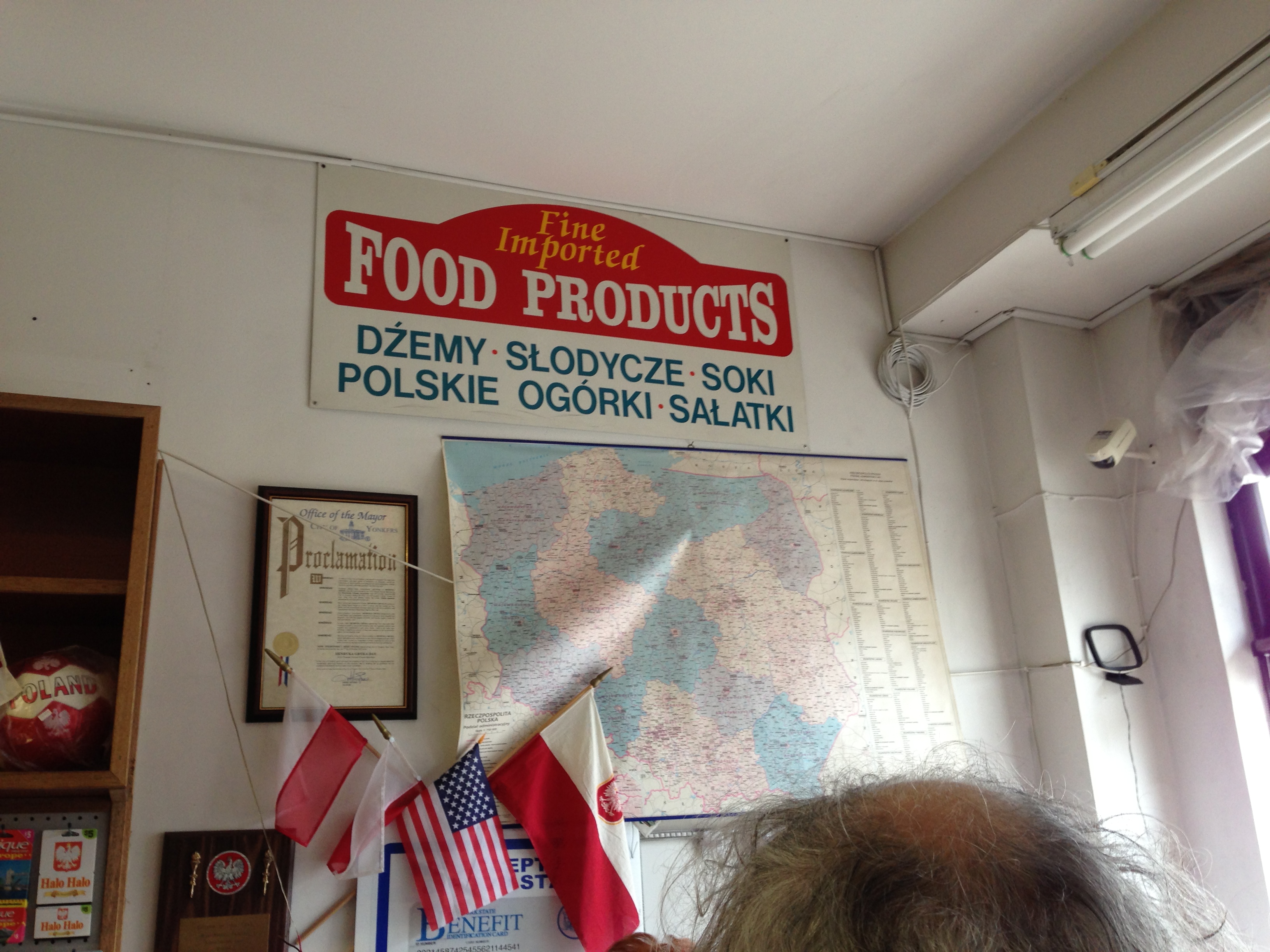
I really wanted the headcheese. Or headcheeses. There were quite a few at the Polish food shop.

food products

But we ended up with kielbasa, which hung high above the many other types of wursts on display.

wursts

I am the only one in my household that will deign to consume a pressed, jellied concoction of bits of pig’s head, heart and other rather downscale meats.

I wondered how the dish came about its name, since it has no cheese in it.

The chef Brad Farmerie gives this derivation: “The word fromage comes from the Latin word forma, which translates as a basket or wooden box in which compressed curds were molded to make cheese. Forma, and then fromage, became the word for cheese, but also remained synonymous with the concept of molding and pressing no matter what was being formed. Thus, the forming of a pig’s head using a mold is called fromage de tête and translates more to “pressed head” than anything to do with cheese, but we English speakers ignore a few of these minor details and use the direct translation to come up with the delightfully unusual ‘headcheese’.” Farmerie has a recipe on his site, along with  a vivid photograph of pig snouts rising up out of a steaming pot that I can’t bear to include here.

It’s a little hard to enjoy pork, I find, when you knew the pig. This summer we laughed at the hijinks of the piglets my nephew was raising in Wisconsin. They rooted where they shouldn’t and skipped about and were delightful pests if not pets. Not so many months later, we were the recipients of a tasty haunch – Gil cured and smoked it and we’re still eating the ham. But its savor, as fine as it is, can’t be separated from the memory of those young, peppy swine. In my mind, at least.

pig

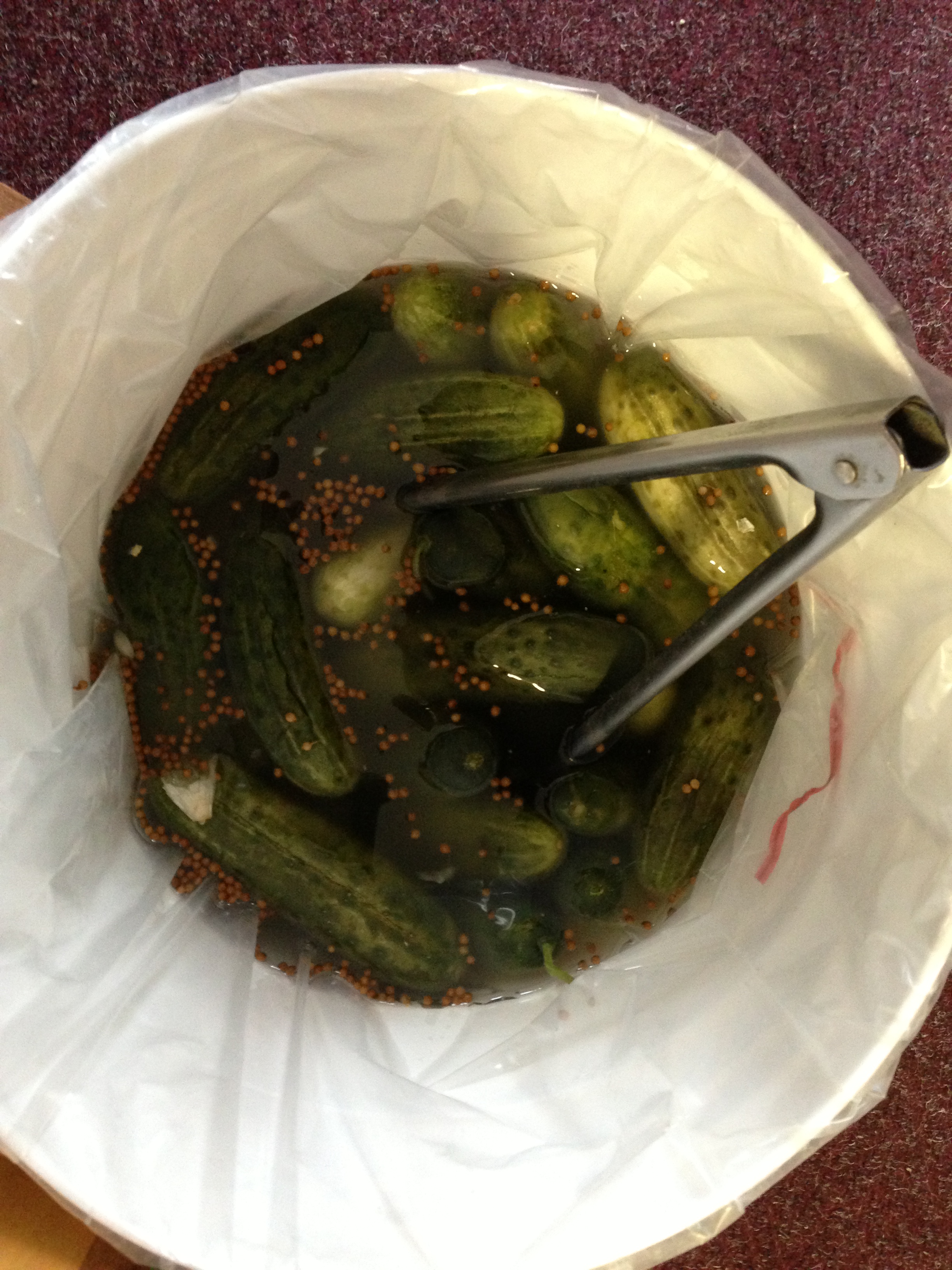
Pickles are a good, pork-free food.

pickles

Mushrooms, too. Especially Milky Cap mushrooms, whatever they may be.

mushrooms

Today we stocked up on pierogi, saurkraut, and other fixings for a Polish feast. The Pole in me – my paternal grandparents’ line, who lived around Lodz – salivated, even though as Jews I don’t think my progenitors would have stepped in a store whose main product was pork.

There are a few things I don’t eat, but I am proud to say I create my own dietary restrictions, which I am free to break at will. Serve me an oyster today and I may decline, but next week I’ll scarf it down. Especially if it’s in the oyster stew from the Oyster Bar at Grand Central. I’m girding up to try escargots again, too, as long as they’re swimming in garlic butter.

It’s all good, as long as I have my slimming coffee to round out the meal.

slimming coffee

1 Comment

Filed under Cooking, History, Jean Zimmerman

On the Wing

Our neighbors came to lunch with their personable, twin four-year-old misters – to dine on a melange of kale, sweet potato, cous cous and shitake mushrooms – no, the tots didn’t eat that, of course, though they managed a bite of grilled cheese.

Creatures great and small. Small, the twin boys. Smaller still, the neighbors’ two-week-old chicks, fur balls, feathers just beginning to sprout.

Whitlinger's chick

A half dozen all told, they represent a handful of varieties, all adorable and all soon enough to be productive egg layers.

On the way up the hill to see the baby birds, looking up into the brimming sky, just by the shy, shallow daytime moon, a creature  stretched its wings, bright white head to bright white tailfeathers. A bald eagle, performing swoop de doo’s with its dun-colored mate. Crisscrossing the air, coming together, falling apart, coming together again in a sequence of performance moves you’d have to be a raptor in love to understand.

Yes, spring is coming, I swear it.

6 Comments

Filed under Cooking, Jean Zimmerman, Nature

I Heart Hearts

A Swedish massage by a masseuse with head-to-toe tattoos. A restaurant in a castle, a 1905 grey gneiss mansion, the first home in Vermont wired for electricity. A gas-jet fire in the hearth. Rare lambchops. Chocolate mousse. Cherry hearts.

candy hearts

A hammy piano player in the dining room. Romance, ro-schmaltz, circa 2013, with my husband, who made the day a surprise. It was the bomb.

2 Comments

Filed under Cooking, History, Jean Zimmerman

Awaiting Snow and Book

Firewood, check. Water, check. Milk, check. Generator, check. Gas in car, gas for generator. Candles. Chicken for pot pie.

The storm advances, and all that’s left to do is put out a pot to catch snow for snow cream (snow plus sugar plus milk plus vanilla; stir).

Small flakes fall, but the big snow isn’t supposed to strike until tonight.

Waiting. Hunkered in a cozy house with a pile of books (The Snowman by Jo Nesbo on the top of the pile, The Unexpected Houseplant, the next one down.)

Plenty of books, and one of my own on its way this spring. The Orphanmaster comes out in softcover on April 30th.

Orphanmaster Paper Official Cover

What a cover. It sets even me atremble.

4 Comments

Filed under Cooking, Jean Zimmerman, Nature, The Orphanmaster, Writers

The Chicken and the Whale

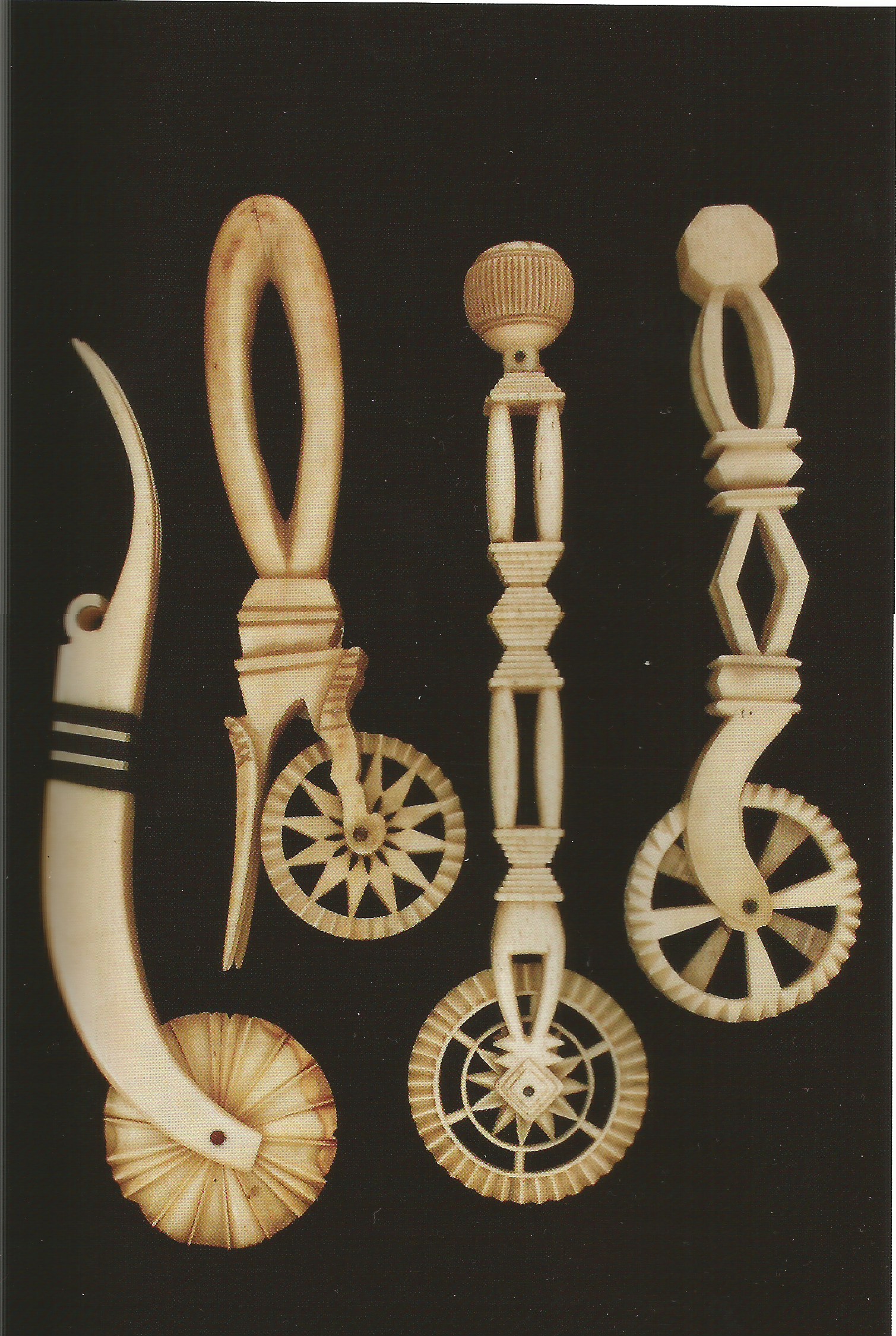
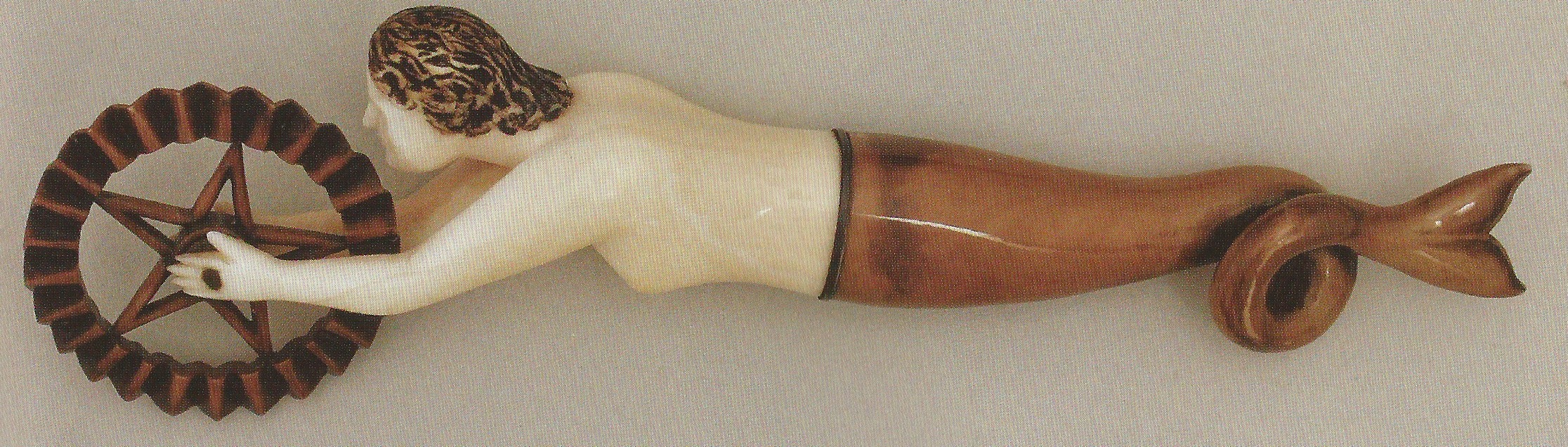
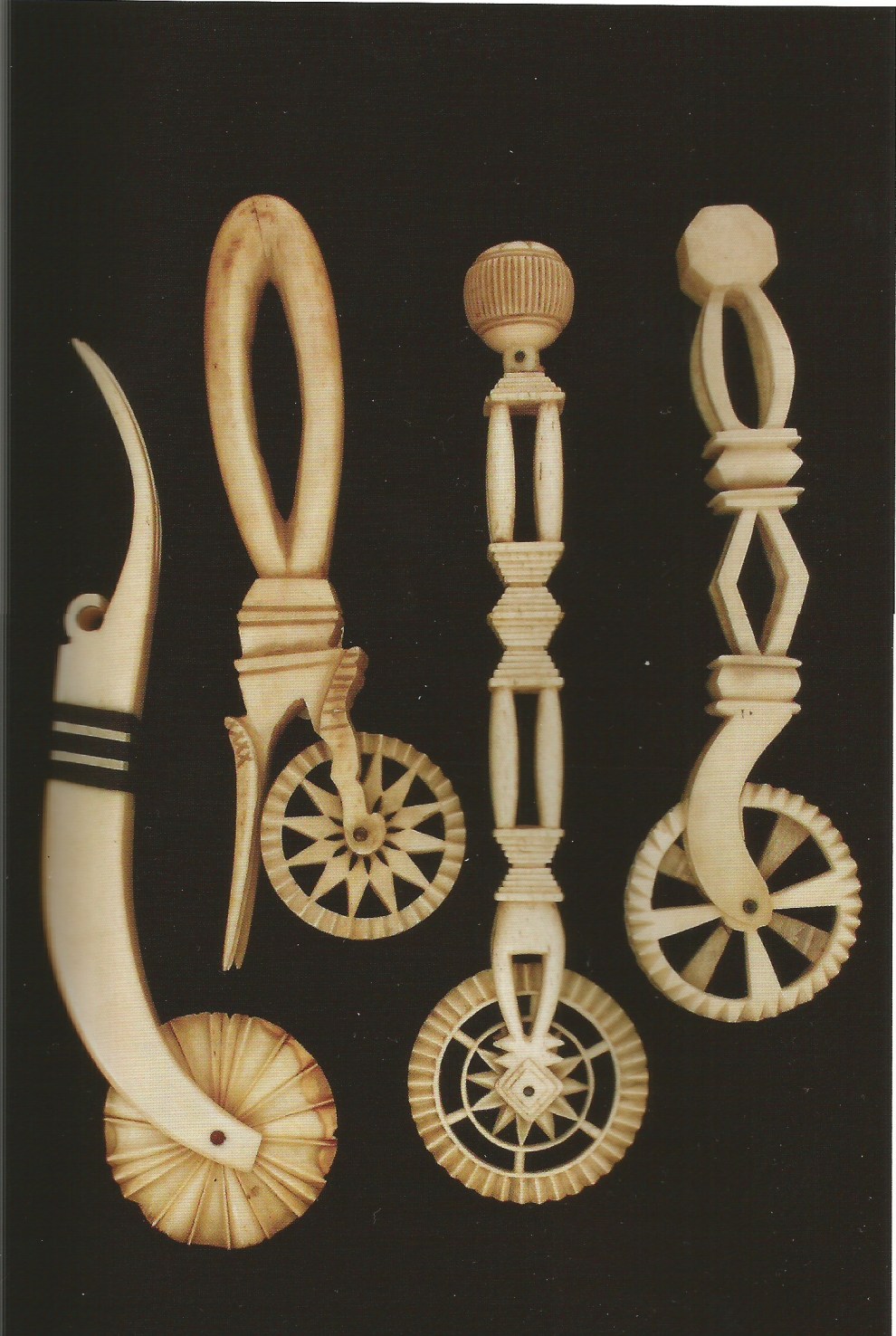
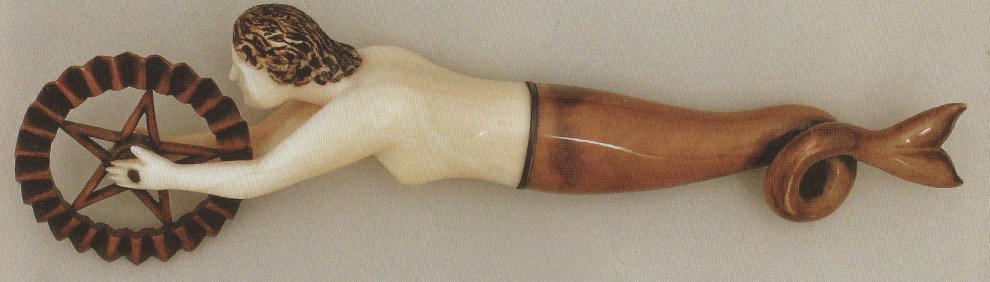
If I had the wherewithal to collect anything seriously, it would be scrimshaw. Not just any scrimshaw, but scrimshaw pie crimpers.
scrim 1

Sailors on whaling ships in the 19th century crafted crimpers by the thousand as presents for the wives, mothers, aunts, sisters-in-law they missed while at sea. Museum conservators who inherit these artifacts report flour residue clinging to the delicate yet utilitarian objects, evidence that they made a most practical kind of souvenir.

My favorite presents are they kind you wind up using every day. Humble beauty is the finest.
scrim 1 1

Crimpers could be made from whale teeth, walrus ivory, whalebone or wood. We don’t know who fabricated most of the ones that have been salvaged and catalogued, but we can imagine the artists liked their pie. If you go to Ingenious Contrivances, Curiously Carved:  Scrimshaw in the New Bedford Whaling Museum, a book recently out that inspires with its photographs of beautiful, one-of-a-kind artifacts, you will find a startling number of these mellowed-by-time curiosities.

Pie. Inspired by pie. These guys, out at sea for weeks or months at a time, eating insect-drilled hardtack, were driven by visions of the pie at home to make their superlative crimpers. Pie can do that to people.

flaky pie crust

Any ingredient can be folded into a savory pie– steak or lobster, kidneys, parsnip and oysters. Whatever good stuff you have on hand. The Williamsburg Art of Cookery, or Accomplish’d Gentlewoman’s Companion was first printed in the year 1742. The author, William Parks, gives us a squab or robin pie, advocating braising the birds first, putting in the cavity of each a hard-boiled egg (chopped in the case of the tiny robin) adding butter, cream and bread crumbs and covering with a “rich Crust” before baking.

People of the Middle Ages loved their poultry pie, then called a coffin, and sometimes actually filled with the 4 and 20 birds of nursery rhyme fame. You’d bake the pie first, insert the birds, cut open the top in company and let them fly out to everyone’s awe. But so you wouldn’t be “altogether mocked,” according to a cookbook of the time, you’d best quick get out and serve an actual pie as well.

songofsixpenc

That pies in America were long stored in chests called “safes” attests to their near-mystical importance to our cuisine. As the country grew, a slice nearly always made itself available for a quick snack, eaten just as avidly for breakfast as dessert and often consumed at every meal.

But baking a pie intimidates home cooks today, hence the tasteless premade shells in supermarket dairy cases. “Be Swift and Deft” in handling pie dough, advised The American Woman’s Cookbook of 1945, and slash your top crust well. These are skills many of us lack, despite all the baking competitions on TV.

digestible pie crust

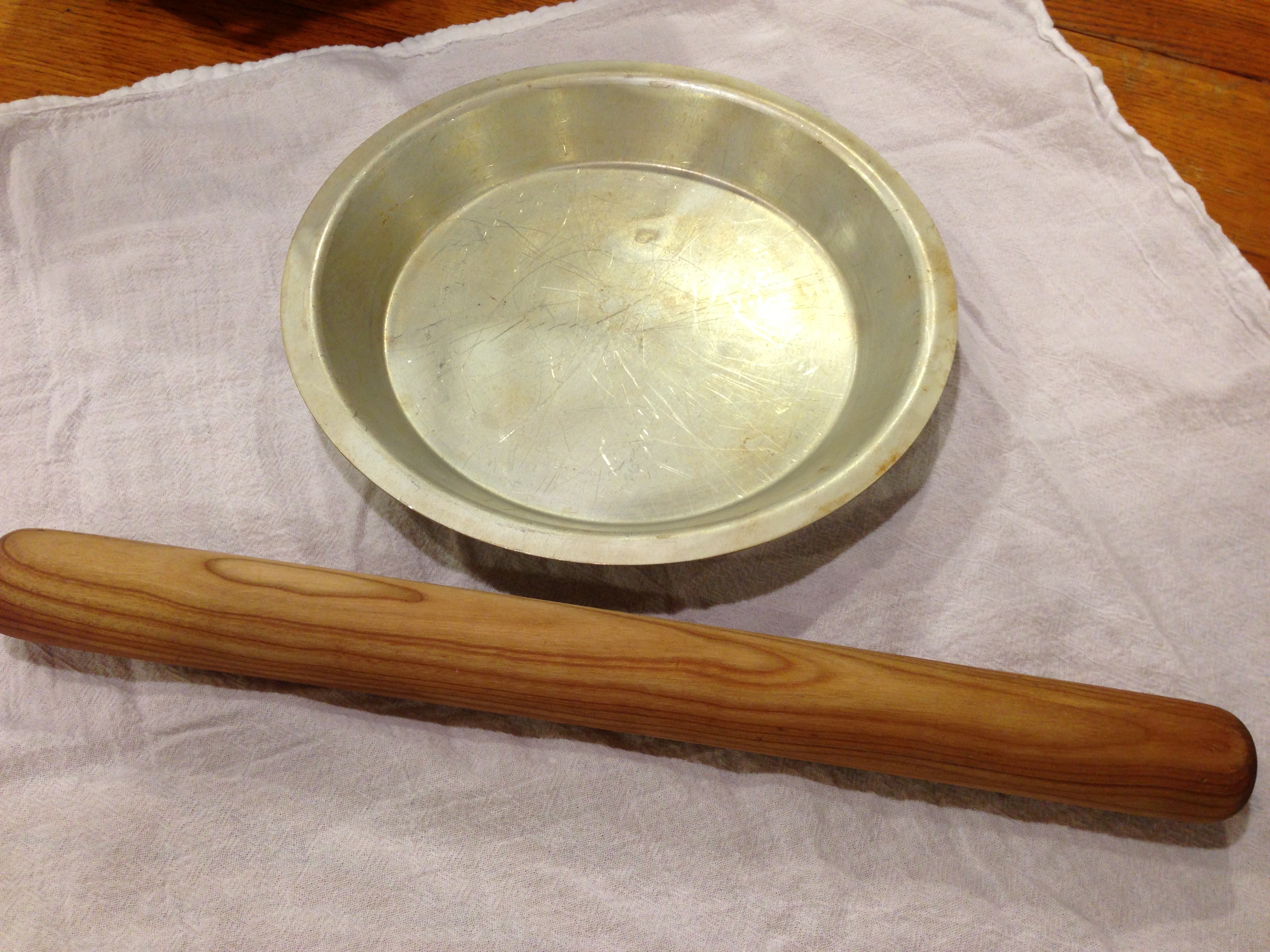
For those new to this blog, it’s unlikely you‘ll find me writing about climbing Kilimanjaro here; I don’t have the equipment or expertise. I can, however, scale a pie, in the privacy of my kitchen. Or your kitchen, for that matter, but I’d like to bring my hand-turned rolling pin with me, the finest in the land. (Also this basic aluminum pan, courtesy of Norske Nook in Osseo, Wisconsin, where they offer two dozen pies daily to stay or to go.)
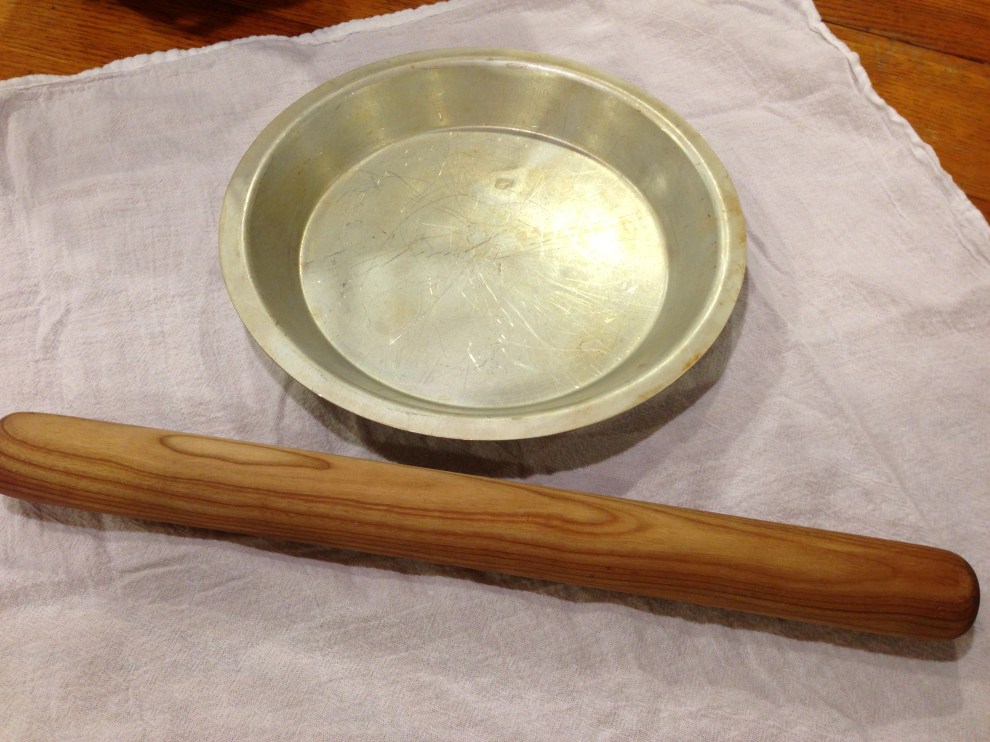
pie pan

A hint: leaf lard is the name for the fat taken from around the pigs kidneys and while it’s not a necessary ingredient in pie crust, using a bit gives the finished pastry a succulent snap. You won’t find leaf lard in the local Stop and Shop, only on the web or, if you’re as lucky as me, a local farmer’s market. Otherwise Crisco will have to do.

Simple Chicken Pot Pie

My family is pretty happy when this aroma wafts through the house.

For the crust, cut one stick sweet butter and a third cup leaf lard or shortening into three cups King Arthur flour and a couple pinches salt with a pastry cutter until it has the texture of coarse cornmeal. Add one cup (more or less) cold water (you can cool it with an ice cube) mixing with a fork until it the dough comes together. Form a ball and chill while you make the filling.

In a big skillet, saute two medium onions, chopped coarsely, in 2 T butter and 2 T oil. When the onions are lightly brown stir in a scant handful flour. Gradually add 3 to 4 cups broth (homemade if you have it, Swanson’s if not). Cook down until creamy. Season with generous salt and pepper.

Chop a couple of carrots and a couple of sticks of celery to taste, and about two cups of potatoes. Blanch them til barely tender, just a few minutes, in salted water. Drain.

Cut up about three cups of cooked chicken. You can now combine chicken and vegetables in the gravy. Throw in some frozen peas to taste.

Roll out the dough for the bottom crust and, picking it up on the edge of your rolling pin, fit it in the pie pan. Lay in the filling. Top it off with the second crust. Crimp the edges and poke some decorative holes in the top so the steam can escape.

Bake at 375 for an hour or until brown.

Tuck into a slice heartily, as if you’re a Nantucket sailor who just earned his sweetheart’s love with a whale tooth pie crimping wheel.
10 Comments

Filed under Art, Cooking, History, Jean Zimmerman

Tight Ends and Dips

Seriously, why don’t I make spinach-artichoke dip every day?

dip

A good pinch of cayenne sticks it. Is there a law that you make something so good only for consuming during games?

I’m going to play my own game while everyone watches theirs. I’m planning to knit. A piece the color of wet cement. P2tog, leave stitches on left needle, bring yarn to back of work and k2tog through the same stitches from left needle.

cement

Of course I’ll check out the action every so often, at the grave risk of dropping a stitch. Got to see what those tight ends are up to. Keep an eye on that spinach dip, too. Go Ravens!

4 Comments

Filed under Cooking, Jean Zimmerman, Knitting

An Egg Is an Egg Is an Egg

Maybe it is because I just dined in a Manhattan restaurant in a historic building with a soaring ceiling and fresh yellow and white décor. It reminded me of a famous Parisian eating place, the Angelina Tearoom on the Rue de Rivoli, that is of a different vintage but also boasts a high ceiling, yellow and white décor and kitchy chandeliers – as well as the best hot chocolate in the world and its famous Mont Blanc pastry, made with cords of chestnut cream. Or maybe it’s because on Sunday we sat in the kitchen and ate perfect soft boiled eggs in egg cups with buttered toast. In any case, I’ve been reading Alice B. Toklas’ Aromas and Flavors of Past and Present, and her recipes, especially those for eggs, speak to me.

I like Aromas and Flavors, published in 1958, as much as The Alice B. Toklas Cookbook (1954), which was her culinary triumph as well as a memoir of her life with Stein and Picasso and Matisse and all the others at the Rue de Fleurus in the first third of the Twentieth Century. The Alice B. Toklas Cookbook has the seminal sociological goods, but Aromas simply and directly delivers the recipes. It cuts to the chase, an exquisite approach to cuisine that seems awfully foreign today.

“I refuse to believe that trading recipes is silly,” wrote Barbara Grizzuti Harriso. “Tunafish casserole is at least as real as corporate stock.”

Not that she, whose culinary prowess sustained Gertrude Stein’s mind and girth, would ever make tuna casserole. But what Toklas left us is certainly real.

On to eggs. Perhaps because she lived through food shortages during both wars, the simplest preparations predominate, and servings are diminutive. Toklas’ editor, Poppy Cannon, marginally comments that Alice would serve the following dish, “Eggs Prepared in the Creuse,” “as a first course, in which case only 1 eggg is allowed for each person.”

Eggs/Salt/Pepper/Cream/Swiss Cheese

Beat the whites of 8 eggs until very stiff, seasoning them with ½ tsp salt and ¼ tsp pepper. Place them in the bottom of a well-buttered fireproof dish, flattening the surface with a moist spatula. Make 8 hollows in which you place the yolks of the eggs. Cover each yolk with 1 tablespoon cream. Sprinkle the whites of the eggs with ¾ cup of grated Swiss cheese. Place in 450 degree oven for 8 minutes and serve piping hot.

Of course Alice didn’t only prepare eggs. In The Alice B. Toklas Cookbook she writes about the proper way to kill pigeons for cooking. After the First World War, she says, the concierge at Rue de Fleurus brought her a gift sent by a friend in the country: “Six white pigeons to be smothered, to be plucked, to be cleaned and all this to be accomplished before Gertrude Stein returned for she didn’t like to see work being done. If only I had the courage the two hours before her return would easily suffice. A large cup of strong black coffee would help.”

alicebstein-1

She continues, “It was a most unpleasant experience, though as I laid out one by one the sweet young corpses there was no denying one could become accustomed to murdering.” The result, her recipe for Braised Pigeons on Croutons, follows, consisting of stewing morsels of the poultry with salt pork and mushrooms in butter and Madeira.

I imagine it satisfied Gertrude, who was known for not being able to boil an egg.

The marijuana brownies Toklas became famous for were actually from the recipe provided by a friend, Brion Gysin. Toklas writes, “anyone could whip up [Haschich Fudge] on a rainy day,” and continues

“This is the food of paradise – of Baudelaire’s Artificial Paradises: it might provide an entertaining refreshment for a Ladies’ Bridge Club or a chapter meeting of the DAR. In Morocco it is thought to be good for warding off the common cold in damp winter weather and is, indeed, more effective if taken with large quantities of hot mint tea. Euphoria and brilliant storms of laughter; ecstatic reveries and extensions of one’s personality on several simultaneous planes are to be complacently expected. Almost anything Saint Theresa did, you can do better if you can bear to the ravished by “un évanouissement reveillé”.

“Take 1 teaspoon black peppercorns
1 whole nutmeg
4 average sticks of cinnamon
1 teaspoon coriander
These should all be pulverized in a mortar.

“About a handful each of stoned dates, dried figs, shelled almonds and peanuts: chop these and mix them together.

“A bunch of Cannabis sativa can be pulverized. This along with the spices should be dusted over the mixed fruit and nuts, kneaded together.

“About a cup of sugar dissolved in a big pat of butter. Rolled into a cake and cut into pieces or made into balls about the size of a walnut, it should be eaten with care. Two pieces are quite sufficient.

“Obtaining the Cannabis may present certain difficulties, but the variety known as Cannabis sativa grows as a common weed, often unrecognized, everywhere in Europe, Asia and part of Africa; besides being cultivated as a crop for the manufacture of rope.

“In the Americas, while often discouraged, its cousin, called Cannabis indica, has been observed even in city window boxes. It should be picked and dried as soon as it has gone to seed and while the plant is still green.”

1 Comment

Filed under Cooking, History, Jean Zimmerman, Writing

Knit, Eat, Publish

Feeling pleasantly festive,

1911 celebration

not in 1911 but 2013, we made our way to Tarrytown around noontime. First, an errand.

At the yarn shop, I attempted to yank out a hank of ribbon yarn from a bulging cubby of gorgeous candy-colored floss.

“Don’t worry… pull!,” said the proprietor. “The worst that can happen is a yarnalanche.”

ribbon yarn

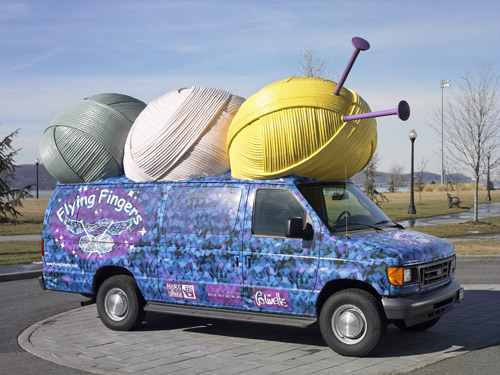
Elise Goldschlag, the owner of Flying Fingers, is joined in the enterprise by her genius knitter son Dillon. They’re known for their Yarn Bus, which according to Goldschlag “has now logged 100,000 yards of yarn.” The store serves Westchester but also brings customers from stops across Manhattan– Bloomingdale’s, Chelsea, Penn Station, the Upper West Side – delivering them to Tarrytown (killer lattes right next door) for a few hours of chat and shop, then back home again.

yarnbuspark_500x375

Elise can knit anything, even a slipcover. Dillon’s getting close. He graduated from the Rhode Island School of Design before giving up the starving artist thing to work with his mother. Men were actually the first to knit for an occupation, and it’s still not uncommon the world over. To wit, these young men plying their needles in a Chinese dorm.

men dorm knitting

Clutching a new pair of size 13 sticks, I accompanied my husband to a new restaurant down the street. Did they know that Gil had just received his first copy of Mafia Summit: J. Edgar Hoover, the Kennedy Brothers, and the Meeting That Unmasked the Mob (Thomas Dunne Books/St. Martins Press)?

eyes on glass

The waiters kept arriving at the table unsummoned, bringing little complimentary plates of odd but tasty cheeses, cured meats, and a salad of wild rice and cranberries seasoned perfectly with sesame oil. We read the newspapers. Everything was easy.

There are few days that compare in the life of a book author with getting that first copy in the mail. You worked so hard on the earliest draft, sweated over revisions, slaved to get photos for the picture insert, and now the day is here and all of that is far in the rear view. It’s almost as if the book were produced by someone else – someone smarter than you! And yet it has your name on it (in large type, hopefully).

Gil’s book is terrific.

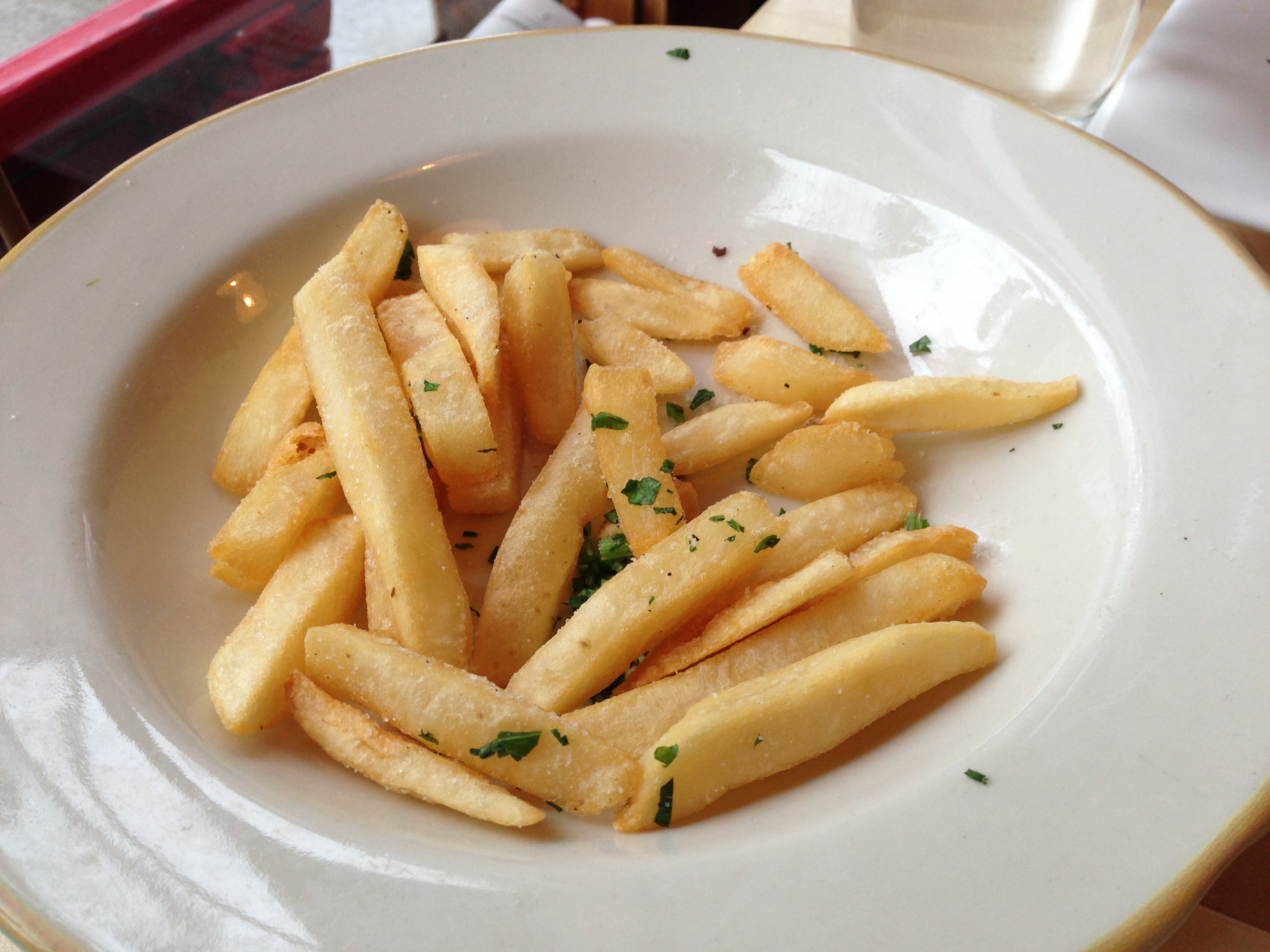
After we scarfed down as much of our paninis as we could manage, a different waiter appeared at our table to set forth a plate of french fries, gratis. “These have truffle salt,” he said before skipping away.

french fries

The most scrumptious french fries ever. Congratulations, Gil, the book is great.

1 Comment

Filed under Cooking, Jean Zimmerman, Knitting, Writers

Strawberry Cake

Maud made cupcakes this afternoon. They were delicious. Full of butter and sugar and even chocolate chips.

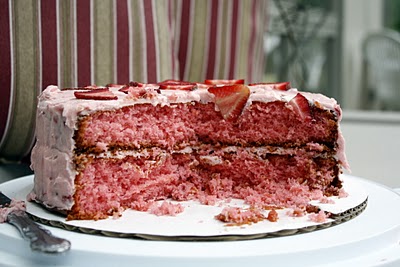
For those times when you want a cake that’ s a little less natural, one filled with artificial cake mix and jello and vegetable oil, this here’s your bet. The recipe came to me via my Tennessee grandmother, and we’ve been making it for birthdays ever since we had a toddler in the house. The layers come out a beautiful synthetic pink, and your teeth hurt after taking a bite. It’s that good.

strawberry cake

Strawberry Cake

One package white cake mix

One tablespoon flour

One package strawberry Jell-O

Three-fourths cup vegetable oil

One half cup water

One half cup frozen strawberries, thawed to mushy stage and mashed

Four eggs

Combine cake mix, flour and Jell-O in mixing bowl; blend well, then add oil, water, strawberries. Then add one egg at a time, beating well after each addition.

Divide batter into two nine-inch pans, well greased and floured. Bake at 350 for 25-30 minutes.

For a nice-looking tall cake, double the recipe and make four nine-inch layers.

For cupcakes, fill papers (try to find big ones, not the skimpy kids’ kind) nearly to the top. Bake the same amount of time to start, then check for doneness with a toothpick.

Strawberry Icing

One stick butter, softened

One box sifted confectioner’s sugar

One half cup thawed mashed frozen strawberries

Cream ingredients.

Leave a comment

Filed under Cooking, Jean Zimmerman

The Yule

NYC packed itself with hobbits the day before Christmas, most of them assembling beneath the 80-foot Norway Spruce at Rockefeller Center, a specimen which came from Sandy-damaged New Jersey. We took a breather outside the crowd, admiring the interaction of fairytale wildlife with Manhattan.

reindeer nyc

We got snug in a cafe called the Blue Bottle deep within the complex’s core.

cafe signage

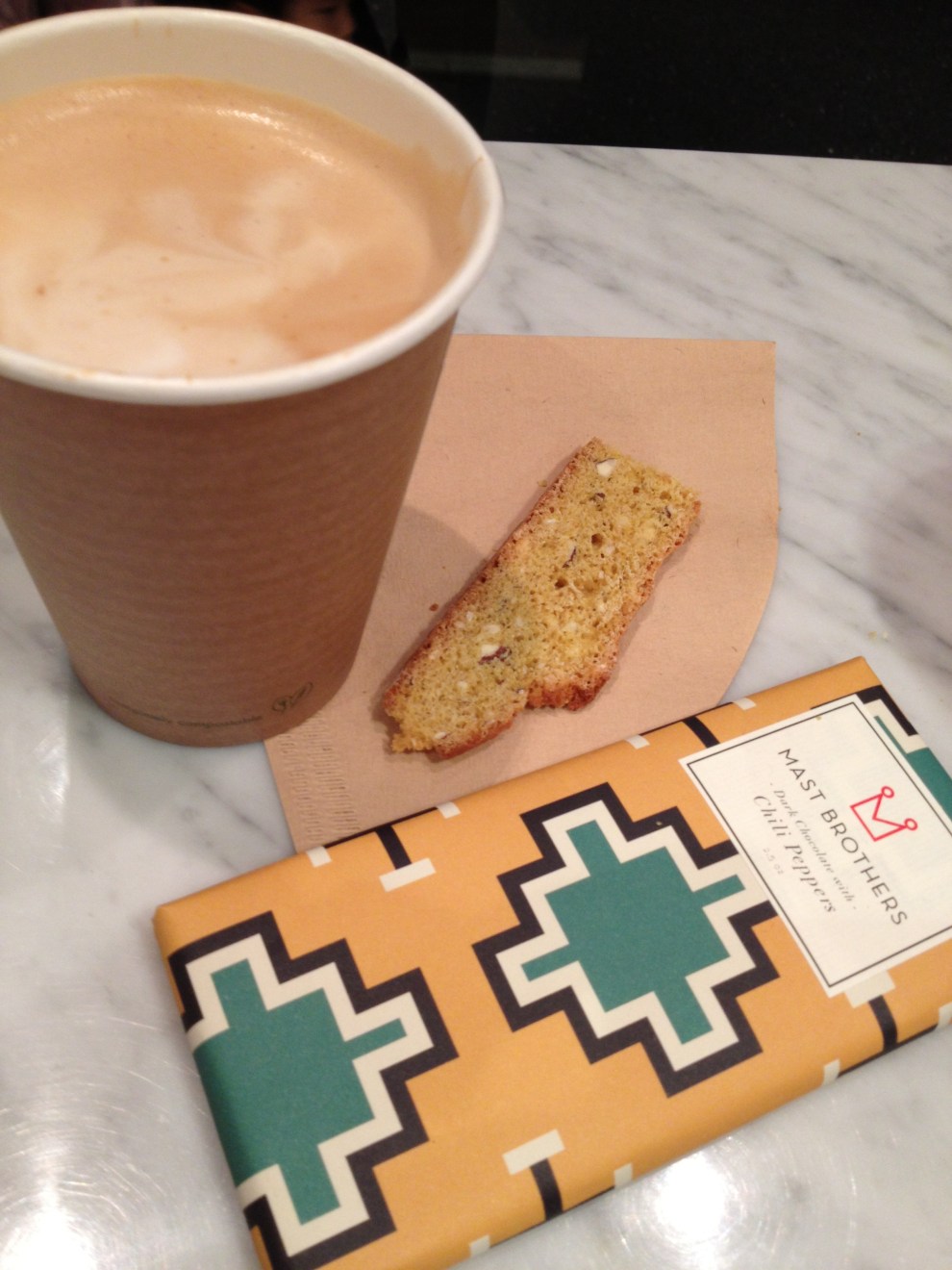
The place was not getting enough patronage, if you ask me, for a store that specializes in Yirgachette, and encased its scrumptious rosemary-flecked shortbread in biodegradable coffee filters.

latte

Throughout about a three-hour period we consumed soup and pastrami, salad and coffee, shortbread and biscotti and chestnuts. And we wound up at the New York Public Library, especially majestic at Christmastime. Inside, an exhibit called Lunch Hour NYC, which taught us all about oyster pushcarts, Kerouac’s favorite diner Hector’s, the history of bagels, how food cost pennies way back when, and displayed an actual bank of automat slots. We took home a recipe from Horn & Hardart (actually dog-eared, in other words slightly gnawed upon by Oliver).

photo

A very merry Christmas, from our howl to yours.

1 Comment

Filed under Cooking, Jean Zimmerman, Photography

Glistening Citrus

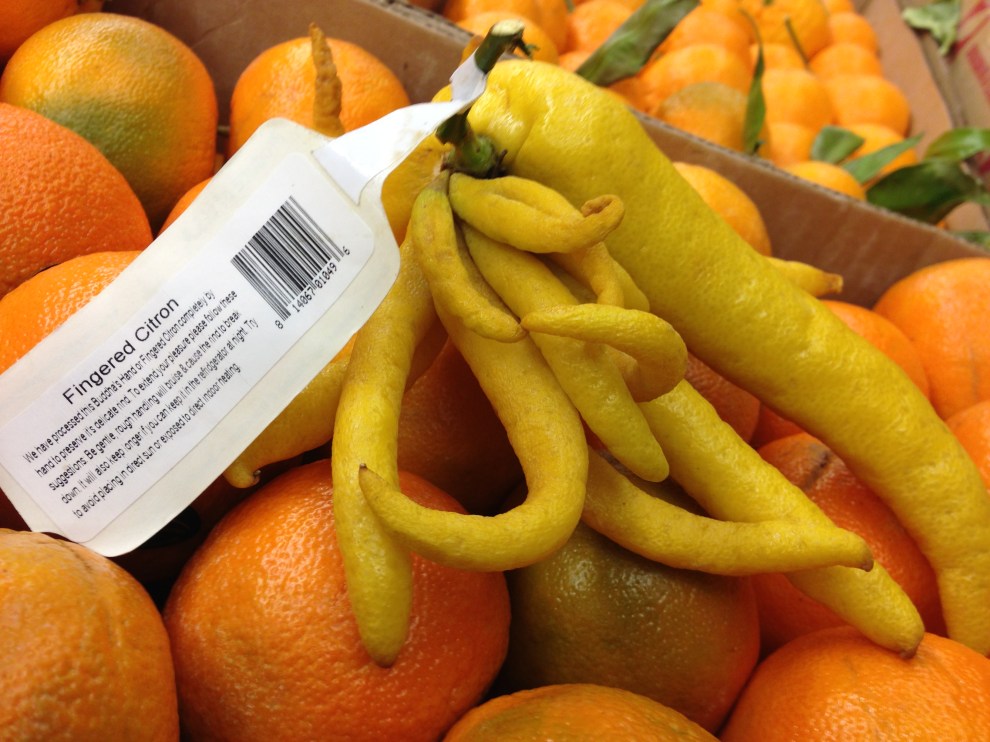
There is something new in the world.

fingered citron

Or at least new to me. I guess fingered citron, or Buddha’s Hand fruit, goes back a million years in Asia, where it’s used to perfume houses (it has next to no juice, but plenty of pith). The fruit is also made an offering in Buddhist temples, where the “fingers” of the fruit are placed so that they resemble a closed rather than open hand — thus symbolizing to Buddha the act of prayer.

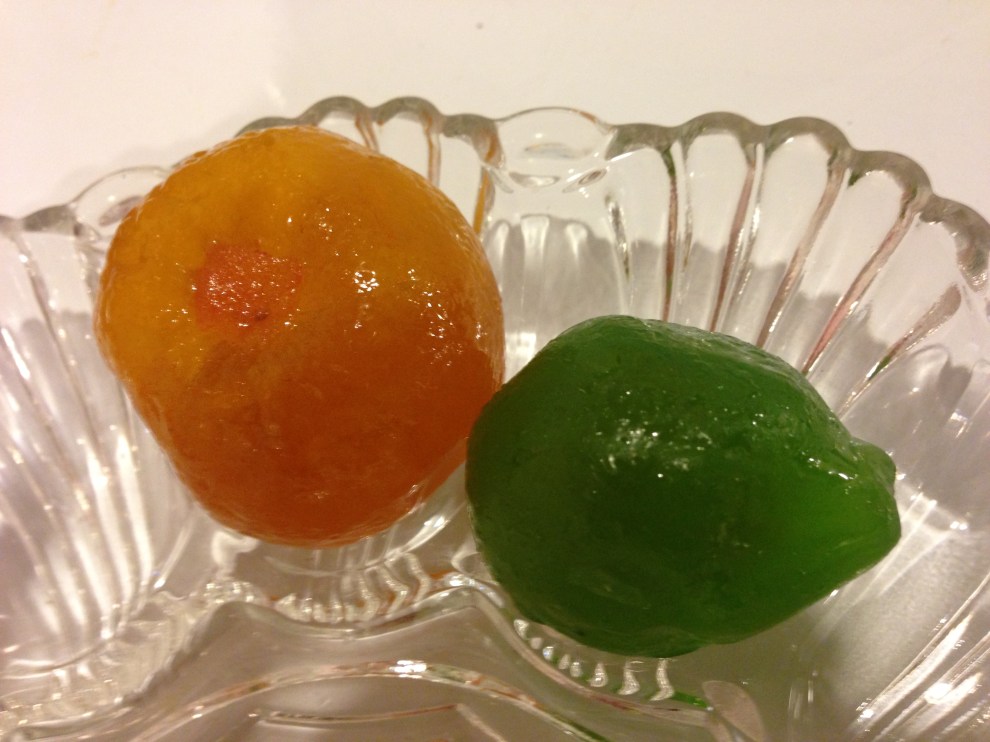
Or if you are a Westerner, you can candy the fingers into succade. Limes and tangerines are equally glistening and scrumptious. I’m going to eat mine with Italian black pepper cheese.

candied fruit

Leave a comment

Filed under Cooking, Jean Zimmerman

Apple Bombs

I made these Apple Bombs — buttery pastry-wrapped whole apples, like individual apple pies — when friends came over, but you don’t have to wait for that. A brilliant cook friend gave me the recipe. They are the perfect holiday something. Trust me. Serve with vanilla ice cream.

BOMBS

Apple Bombs

6 apples

2 1/2 c flour

pinch salt

2 sticks cold butter

cold water as needed.

1/2 cup brown sugar

1/2 tsp cinnamon (or more)

1 teas. grated lemon zest

slightly beaten egg white

sugar for sprinkling

Peel and core apples, leaving a bit of the stem end in tact.

Process 1 1/2 sticks butter, flour and salt, sprinkle water to form dough.  Wrap in plastic and set in fridge 1/2 hr.

Meanwhile, cream together rest of butter,  sugar, cinnamon and zest.  Spoon into apple cavities.

Set oven to 375 degrees.  Roll out dough into 12 x 18 rectangle.  Place apples on top of rectangle, cut side up  and equidistant from each other.  Cut dough into six squares.  Wet edges of each square with a little cold water, then pull each corner on top of the apple, enclosing apple. I like to shape the dough into little peaks.

Brush pastry with slightly beaten egg white and sprinkle with sugar.  Bake until pastry brown and apples soft, about 30 min.  Let rest 15 min.

A tip:  Helps to let the dough warm a bit so you can stretch it over apples; try to cover apples with dough so that sugar mixture is held in; go heavy on the egg white and sugar – since the dough is not particularly sweet, the sugar on top is good.

Leave a comment

Filed under Cooking, Home, Jean Zimmerman

Grandly Whispering

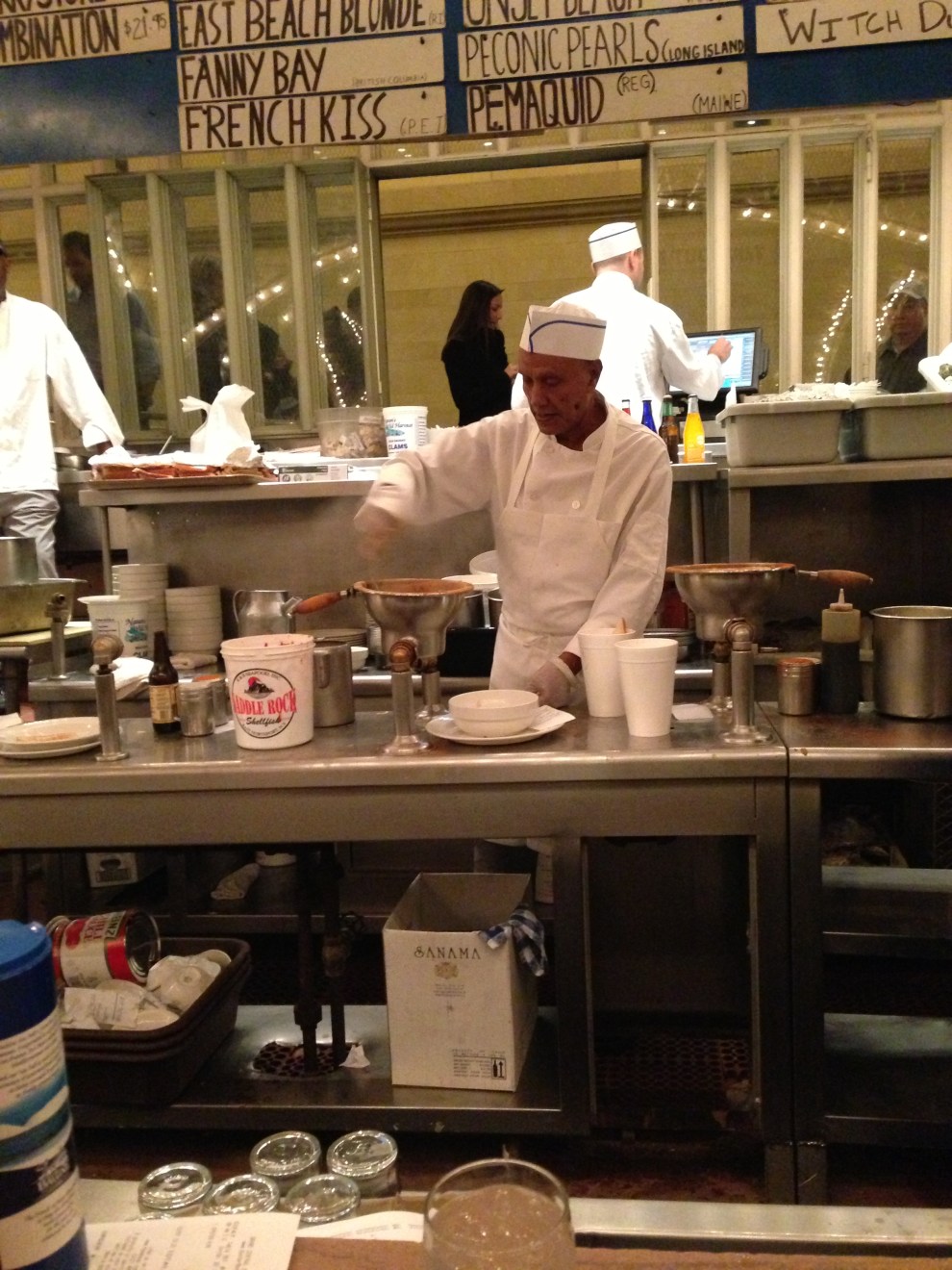
A wash of holiday feeling has come over Grand Central Station and over me as well. After a meeting for business (the business of possibly writing a new book) I went home via the train station, stopping en route at I think my favorite place in all of New York, the Oyster Bar, where the same chef has been working his station at the counter for as many years as I’ve been coming.

Oyster Bar

I did not slurp down the Fanny Bay or French Kiss shellfish or the Peconic Pearls, but I did have the oyster pan roast, a slight digression from my usual oyster stew and deliciously tomatoey.

Oyster Pan Roast

Even the dregs are delicious.

The other night at the Union League I met one of the authors of a current book about the restoration of Grand Central and the architect in charge of that effort, Grand Central: Gateway to a Million Lives. During the holiday season the place is at its most bustling, with suburbanites coming in to see The Tree — the ones in my car yesterday stoking themselves with booze on ice before strolling Fifth Avenue, and everyone very cheery about it — and Vanderbilt Hall given over to an overpriced bazaar of gift items.

Tucked in a corner by Track 42, an element of the station overlooked by all the tourists: a vintage board detailing the comings and goings of trains, in a giant vitrine high on the wall. My picture doesn’t due it justice, with its gold paint and dusty old chalk.

old grand central board

That’s one vision of Grand Central. Another is on display in the Ticketed Passenger Waiting Room.

all natural grand central

This is the all-natural Grand Central Station, made exclusively with organic materials, bark, twigs, stems, fruits, seeds, and other fibers, on loan from the New York Botanical Garden in the Bronx, which does a Holiday Train Show every year featuring iconic New York landmarks, such as the original Penn Station, Radio City Music Hall, St. Patrick’s Cathedral, The New York Public Library on 42nd Street, and the Brooklyn Bridge. If you go there you can find out how artists manage to make magnolia leaf roof shingles. This appeals to that part of me that was obsessed with the children’s book The Borrowers. I spent hours crafting furniture out of acorns and pebbles to stash Hobbit-like between the roots of trees. I love the grand houses I have been writing about but the small, slight, mysteriously miniscule appeals to me just as much.

Grand Central is, of course, grand in every way, but retains pockets of intimacy, like the 2,000-square-foot whispering gallery just outside the Oyster Bar, where I saw passersby keenly huddling to hear each other speak from one arch end to another under Guastavino’s ingeniously constructed tile vaulting. A whisper is a powerful thing on a merry afternoon in old Grand Central.

Leave a comment

Filed under Cooking, History, Jean Zimmerman, Writers, Writing

Canned Goods

Everyone is gathering, gathering, and so are the foods we eat when we gather — the brined white turkey, yes, but also the potatoes, the spinach, the gravy fixings, and most iconically, the canned pumpkin, better than fresh to make pies, everyone always says. This is the best song I’ve heard about canning fruits and vegetables — in fact, the only song I’ve heard about canning, by Gregg Brown.

1 Comment

Filed under Cooking, Home, Jean Zimmerman

Stately, Plump

We went to the farm to pick up the bird.

Hemlock Hill Farm lies in Cortlandt Manor, New York —  it sells organic meat and poultry all year long. Also, a compost/manure mix that I plan to get for my garden this spring. Chicken manure being the piece de resistance for garden fertilizer. When I had a house in an apple orchard upstate there was a chicken farm down the road and we’d get sackfuls of the stuff. Zucchinis are always big but the ones I grew then had the proportions of missiles, and my tomatoes  were like cantaloupes.

Hemlock Hill was a real working farm, not inordinately picturesque, though there was this one misty hillside…

The shop was earthy too. People lined up a dozen deep to pick up their turkeys, which were bloodier in their plastic bags than any poultry I’d ever seen in a supermarket. I looked through a swinging metal door to a back room behind the cash register. Framed in window glass, men gutting birds on stainless steel tables, thumping them all around. The room was cold, and steam lifted off the white skins. When was ours butchered?, I asked the woman who rang us up. Ohhh, she checked the tag. Last night. They did a lot of ’em last night.

The bird itself is delightfully plump. Stately, plump Buck Mulligan. Almost as perfectly plump as this sight next to the Department of Motor Vehicles, where I stopped on the way to Hemlock Hill.

2 Comments

Filed under Cooking, Jean Zimmerman