Our two downed cedars, lying side by side with their feet propped up.
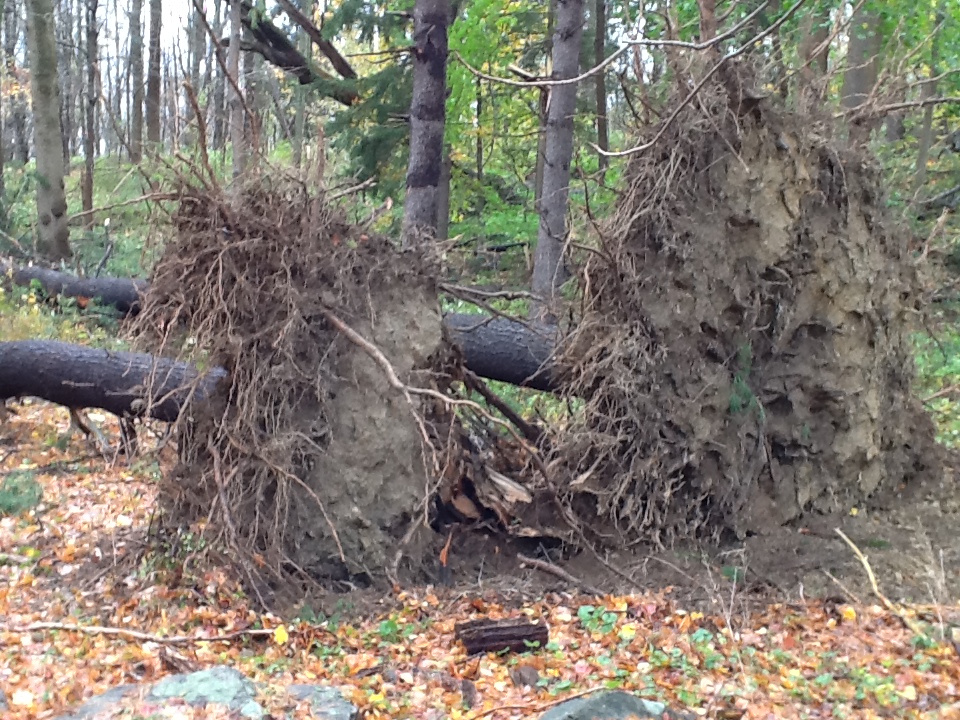
You can’t see the length of the trunks but they are easily sixty feet tall. We are so lucky they didn’t fall the other direction, toward the cabin.
If we get these guys removed, they’ll be chopped up for firewood. In another age they would be a true windfall. When Europeans first came to America they combed the forests for mast wood — exactly like these straight, hard trunks. All the tallest trees had been all used up in England, and they needed masts for the King’s Navy. A solid mast was essential in the Age of Sail; without whole trees, smaller ones would have to be cobbled together with a weaker result. A fir mast like the one that didn’t crush the cabin would have helped float a ship of 500 tons.
But a strong mast didn’t make a foolproof ship. They went down in droves, their men perishing. A reminder of this reality is the sinking of the 180-foot, three-masted ship HMS Bounty during Sandy, off the coast of Cape Hatteras in North Carolina. The Bounty was built in Nova Scotia for the 1962 film Mutiny on the Bounty, and has since been used in the Pirates of the Caribbean films. The captain is still missing.