Tag Archives: Writing

What is common?

It’s in the eye of the beholder, isn’t it?
I took a walk on the Old Croton Aqueduct trail as spring just came up, and it got me to thinking.

So many beautiful things. So many of them so ordinary. First, a sign warning me off. My favorite kind of sign, so commonplace.

I see them everyplace, I guess because I like them so much. And I like going past them so much.

I spotted another one recently too. Almost as nice.
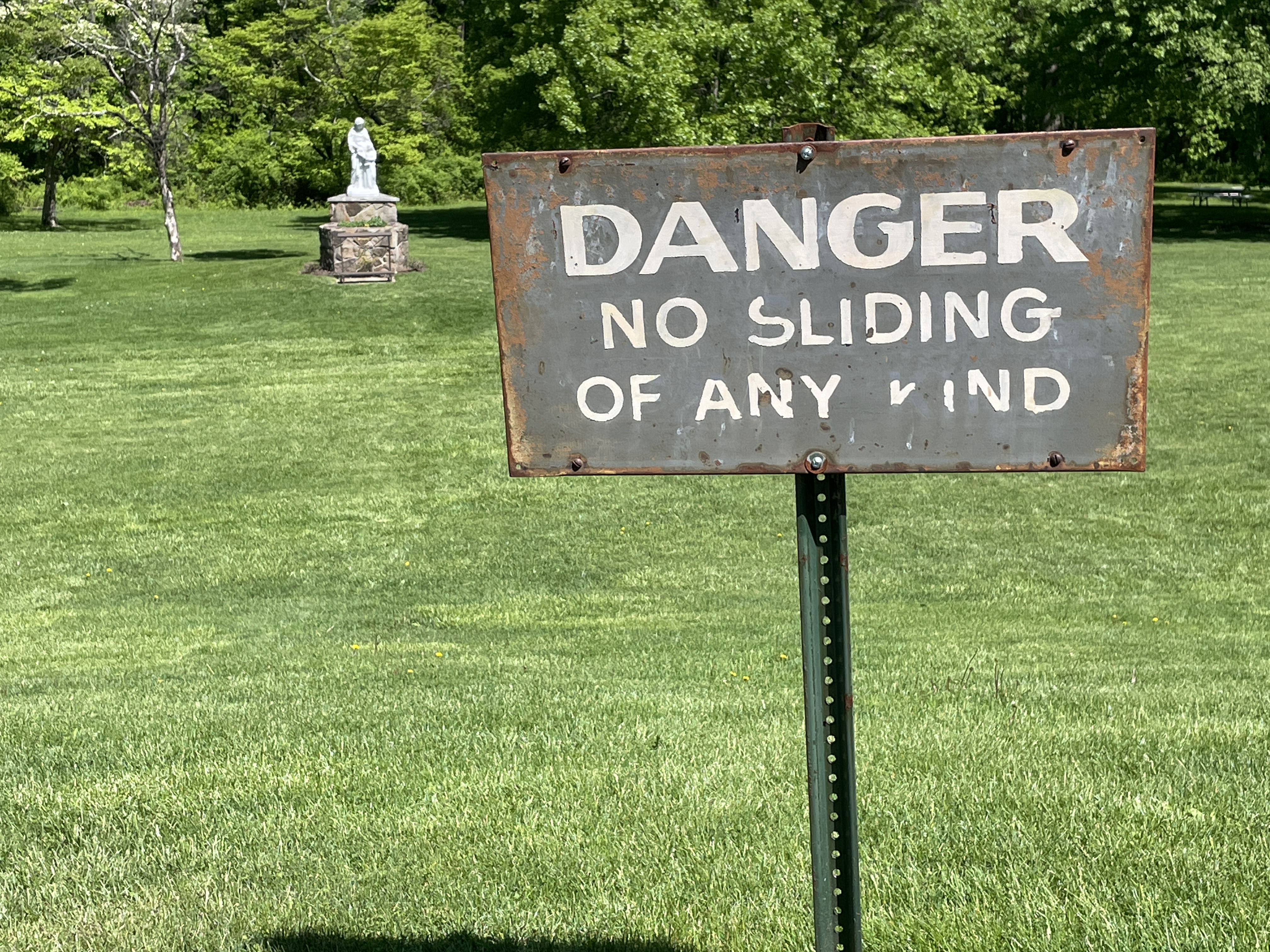
I find I like almost any free advice.

Mainly so I can ignore it.

Back to the trail. Tree shadows. Common.

A hollow. I think we make a mistake in distinguishing between death and life. Death shelters life.

Another hollow, this one in an old-old silver maple on a Bronx street.
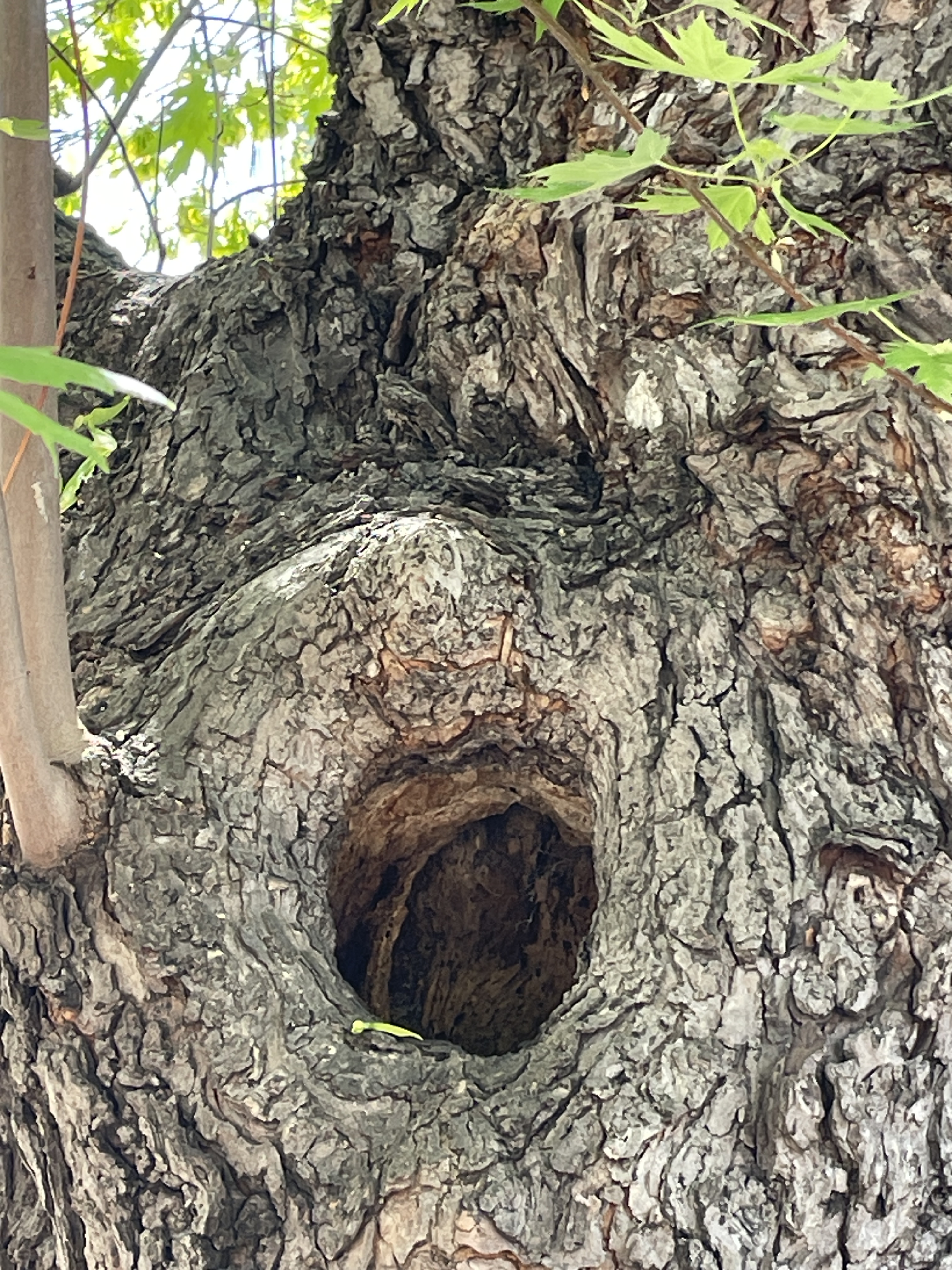
Okay, anyone would call this tree extraordinary.

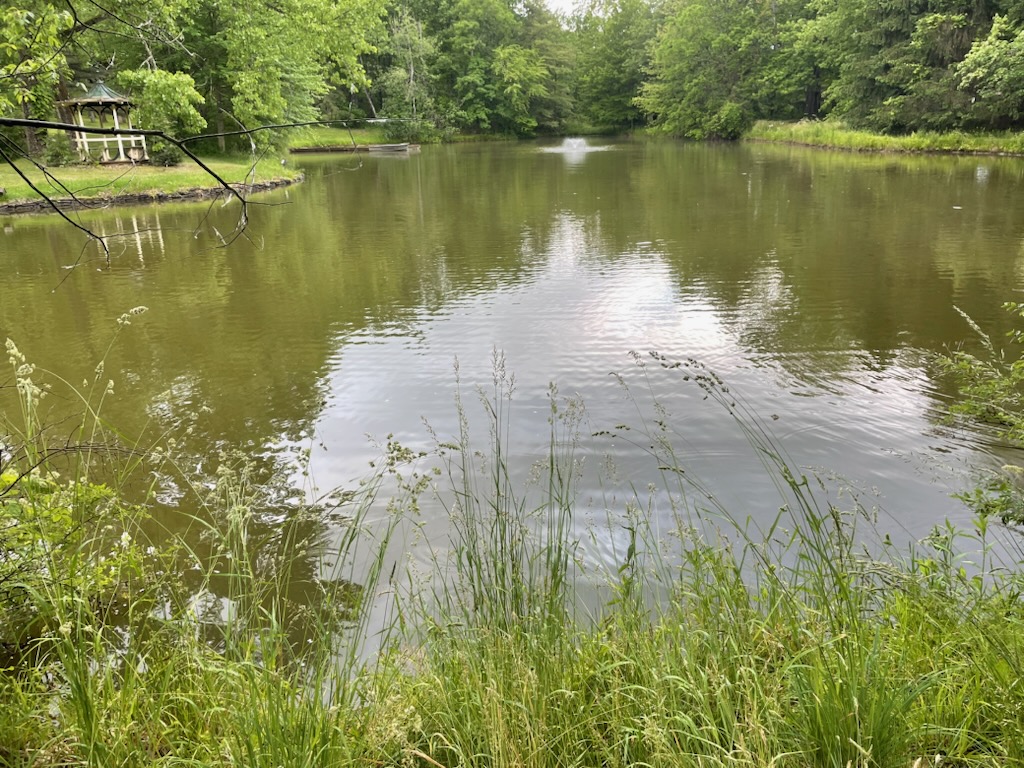
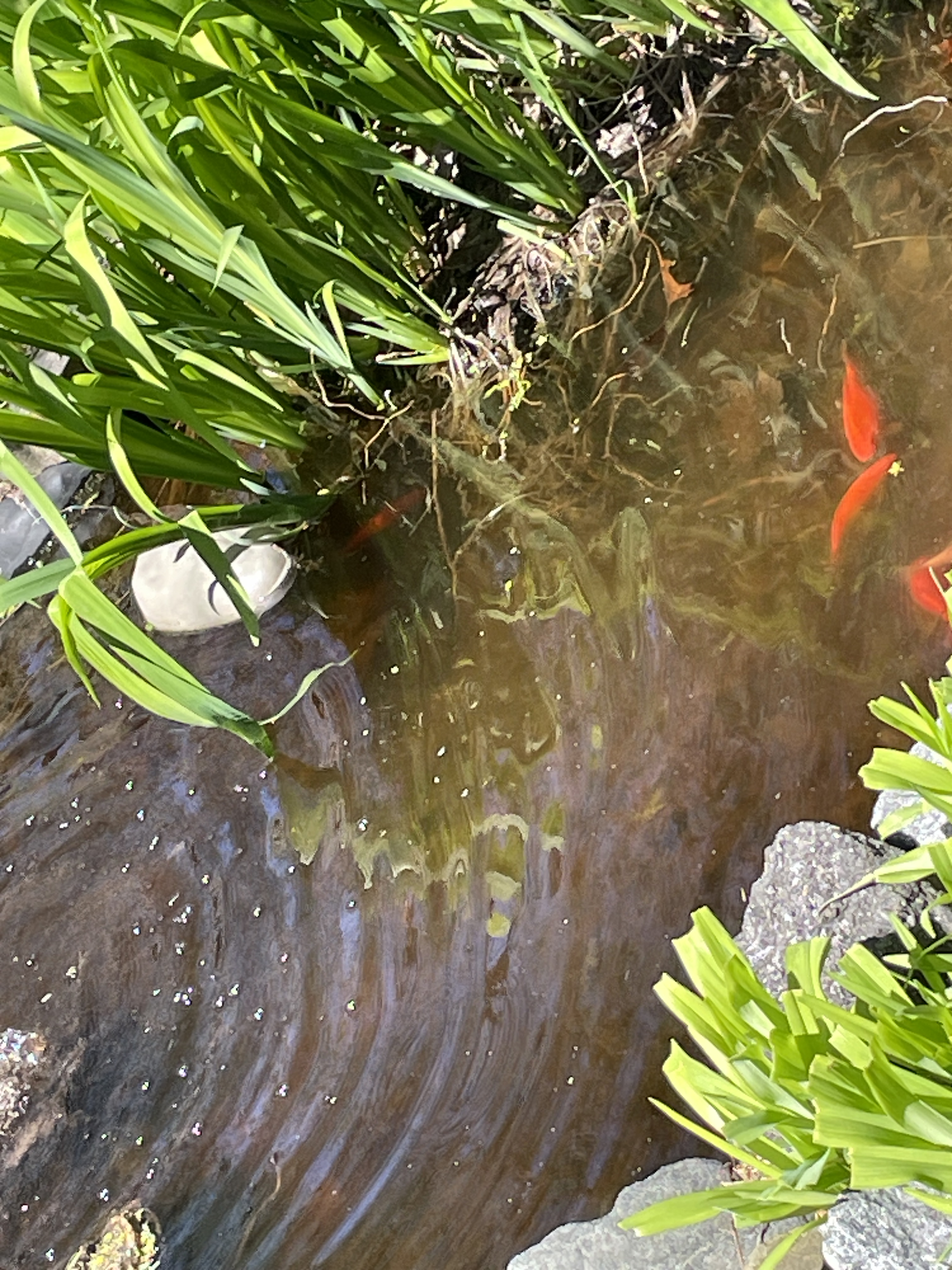
On the trail there’s a backyard koi pond I’ve passed a thousand times. Sort of common.
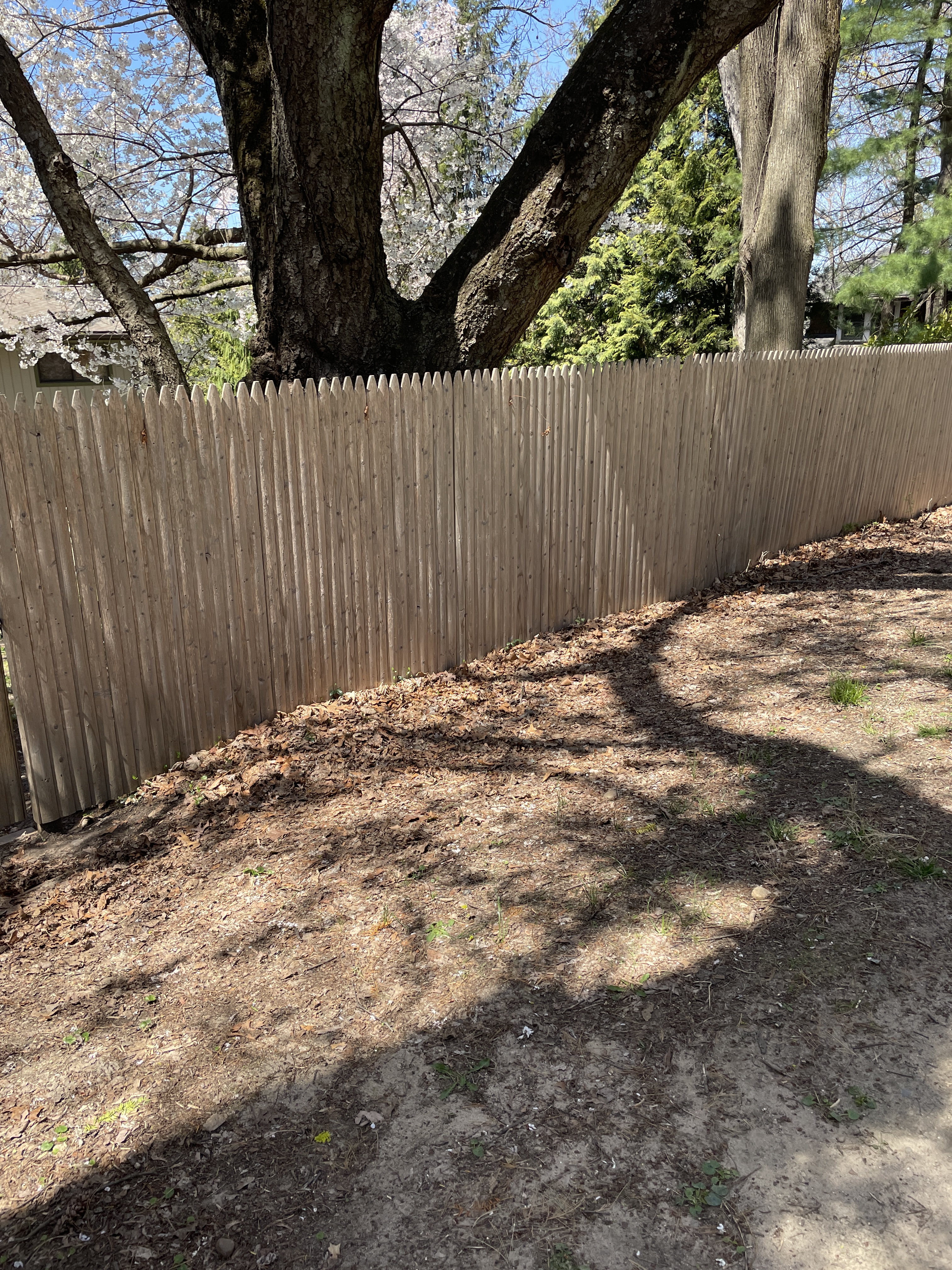
A sycamore, not yet leafed out.

You could just walk by and not notice. Nothing remarkable. Back yard steps, leading…where?

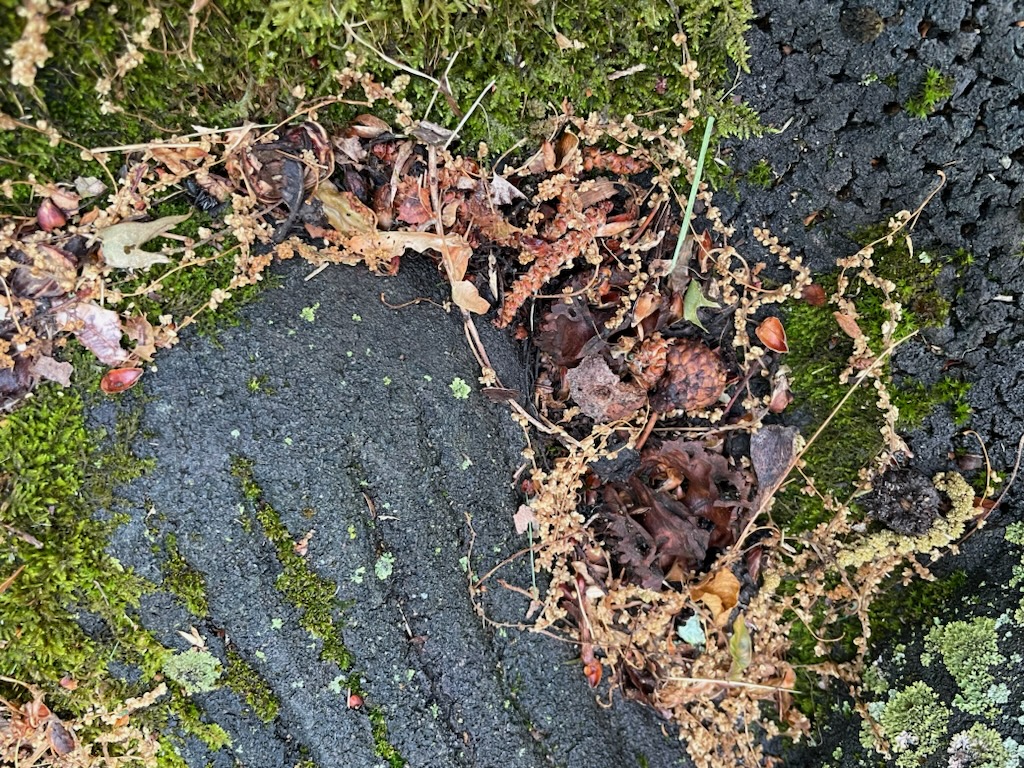
Look down. A pine cone. Brown. Ho-hum.

Gertrude Stein said, It takes a lot of time to be a genius, you have to sit around so much doing nothing, really doing nothing. Looking at not much of anything helps too. Noticing nothing much.

More trail shadows.
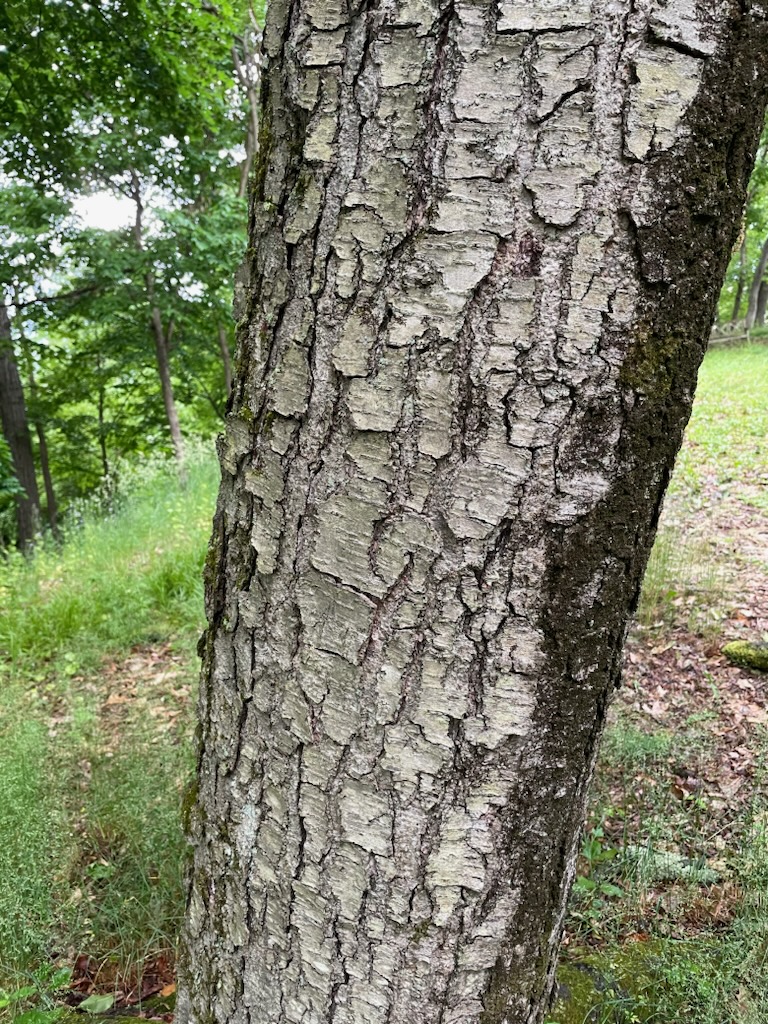
Twisted bark. Common.

Ye olde stone wall.
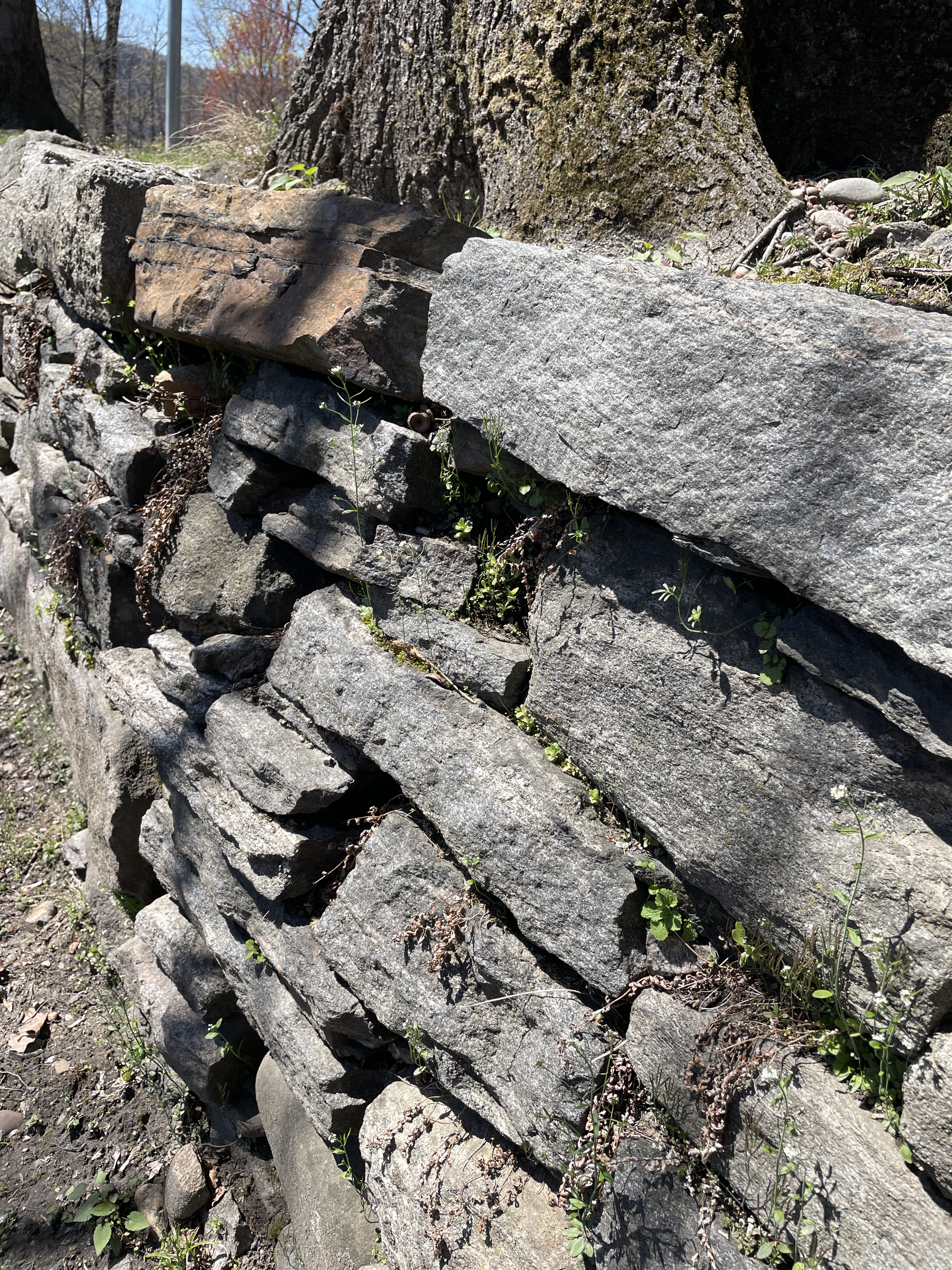
Sprouts. 

Rudimentary flowers. If they have a name, I can’t remember it at the moment.

Daffs.
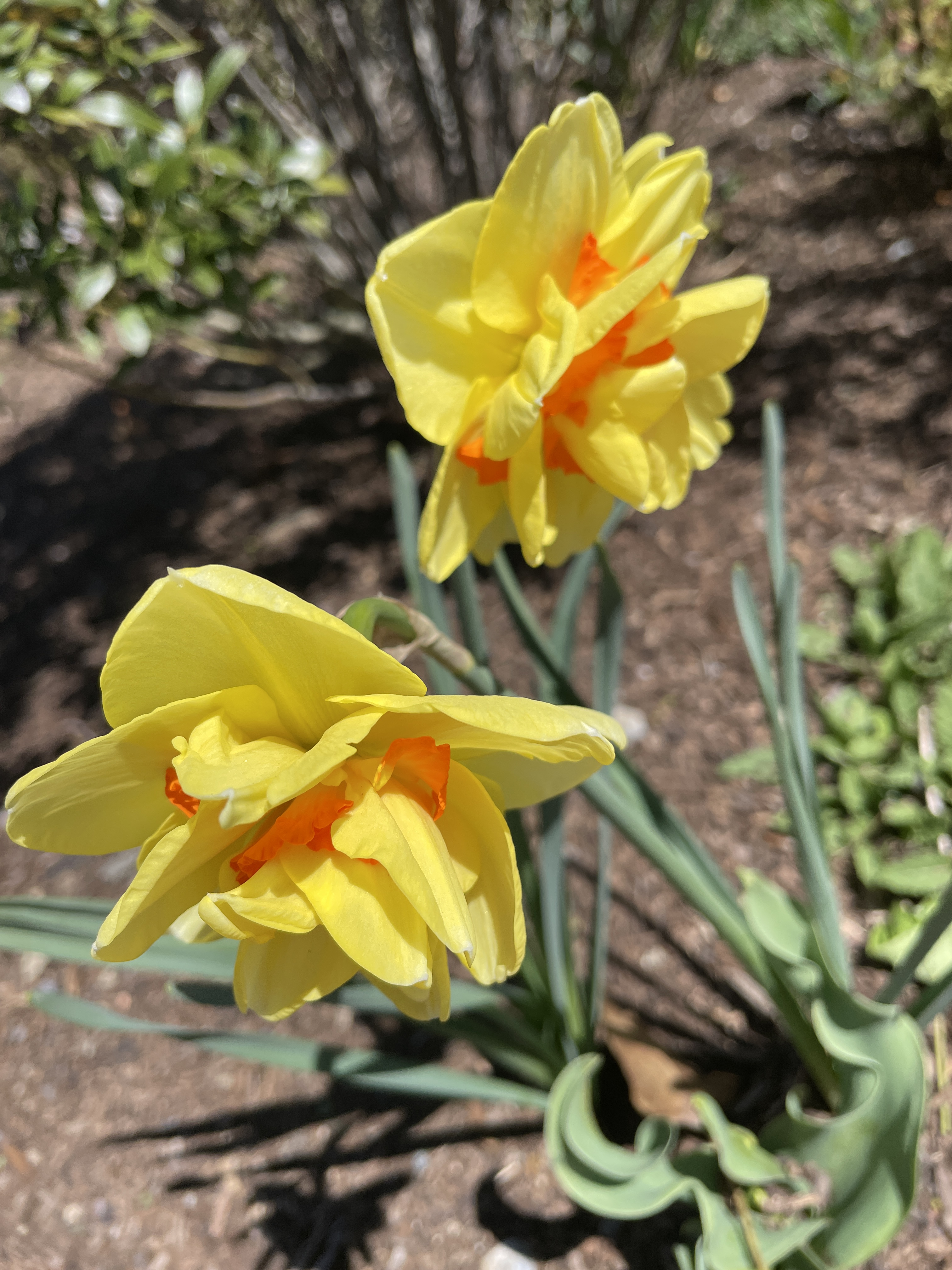
The most basic flowers. To again quote Gertrude Stein, a writer who knew something about the commonplace, Rose is a rose is a rose is a rose. Or daff is a daff is a daff.

Still, I’m glad I brought my hankie, since the most commonplace flowers make me tear up these days. As ordinary as they are, who knows how many seasons we’ll see them for?
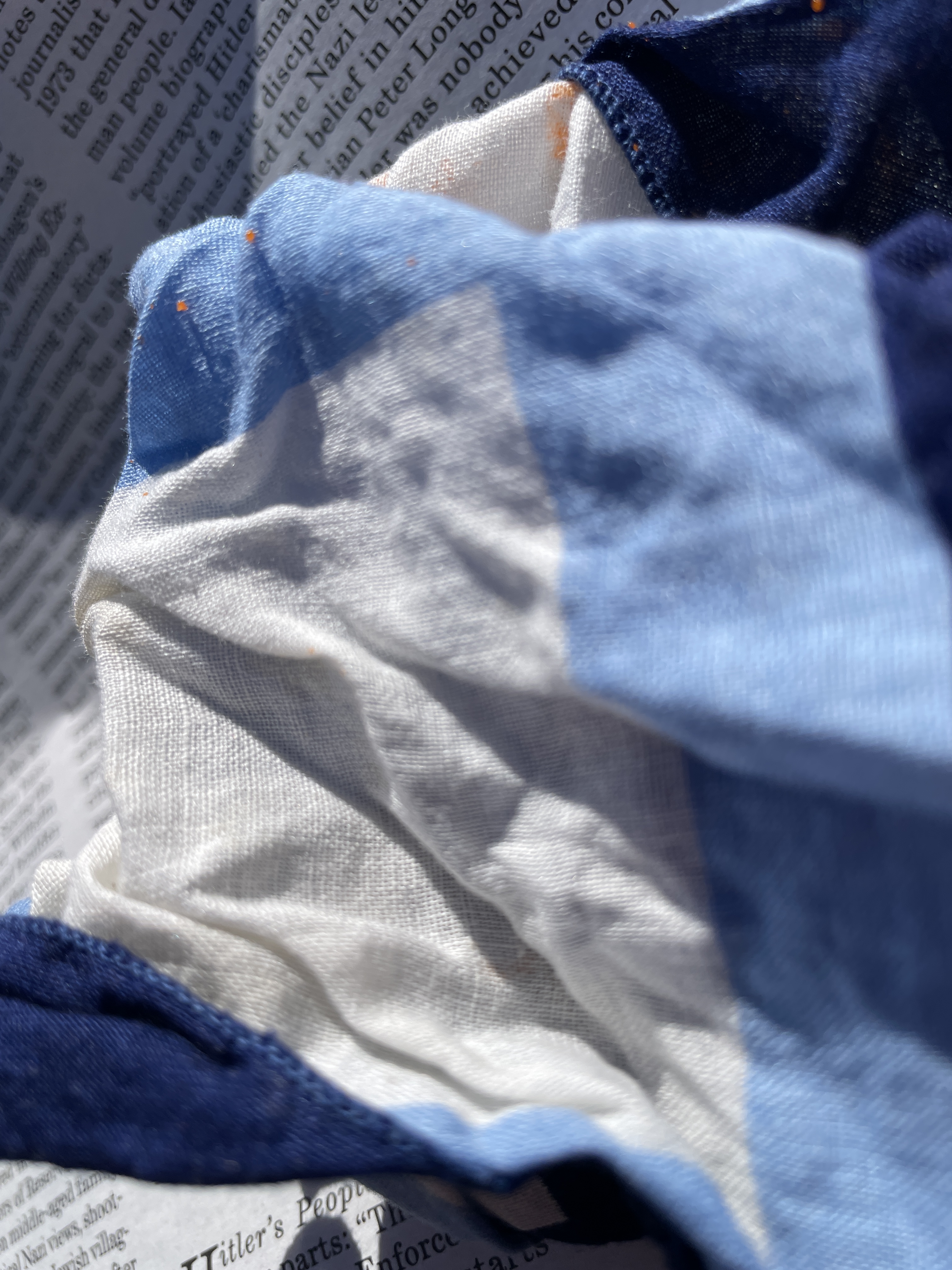
This happens to be an everyday handkerchief inherited from my grandmother. Commonplace! That walk got me thinking. How many of the common things are my favorite things? A homemade hot fudge sundae.

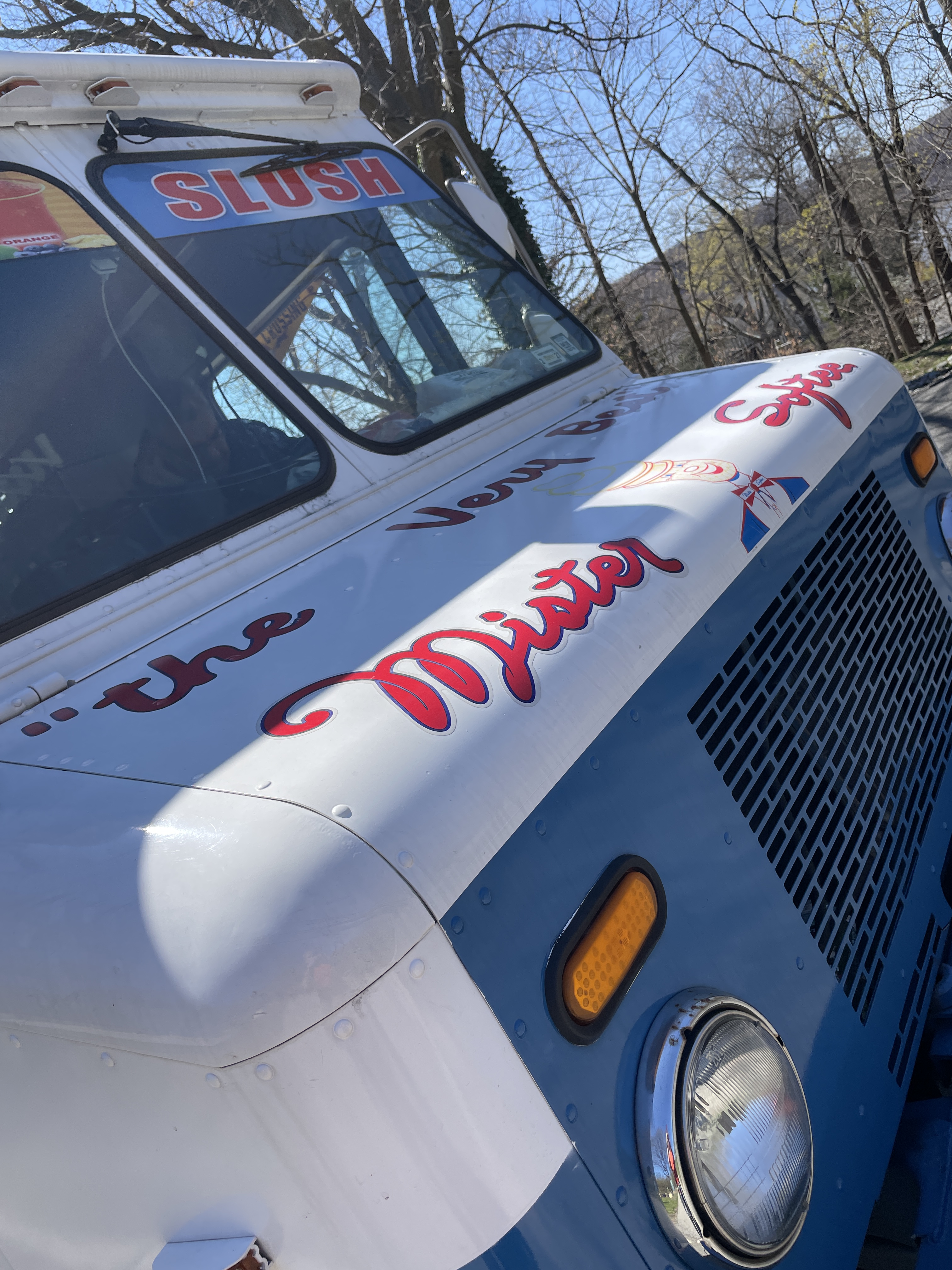
Mister Softee though. Pretty much average. Pretty remarkable for kids though.
A polite dog.
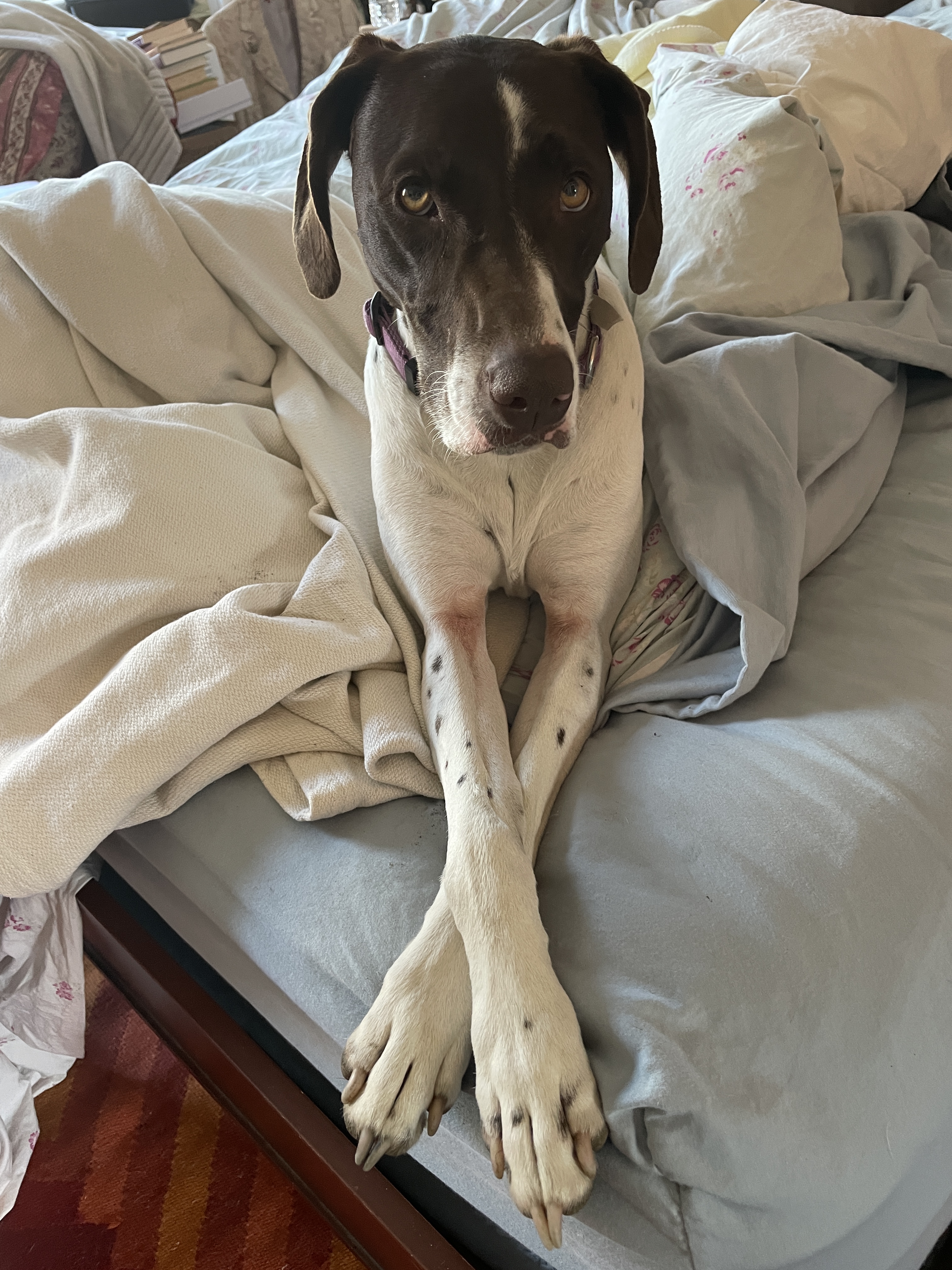
A dog hug.

Any hug, really. Holding hands will do in a pinch.

Pansies. Can you get any more banal?

An afternoon suburban street.

So common. Note the towering beech though. How about a suburban dawn?
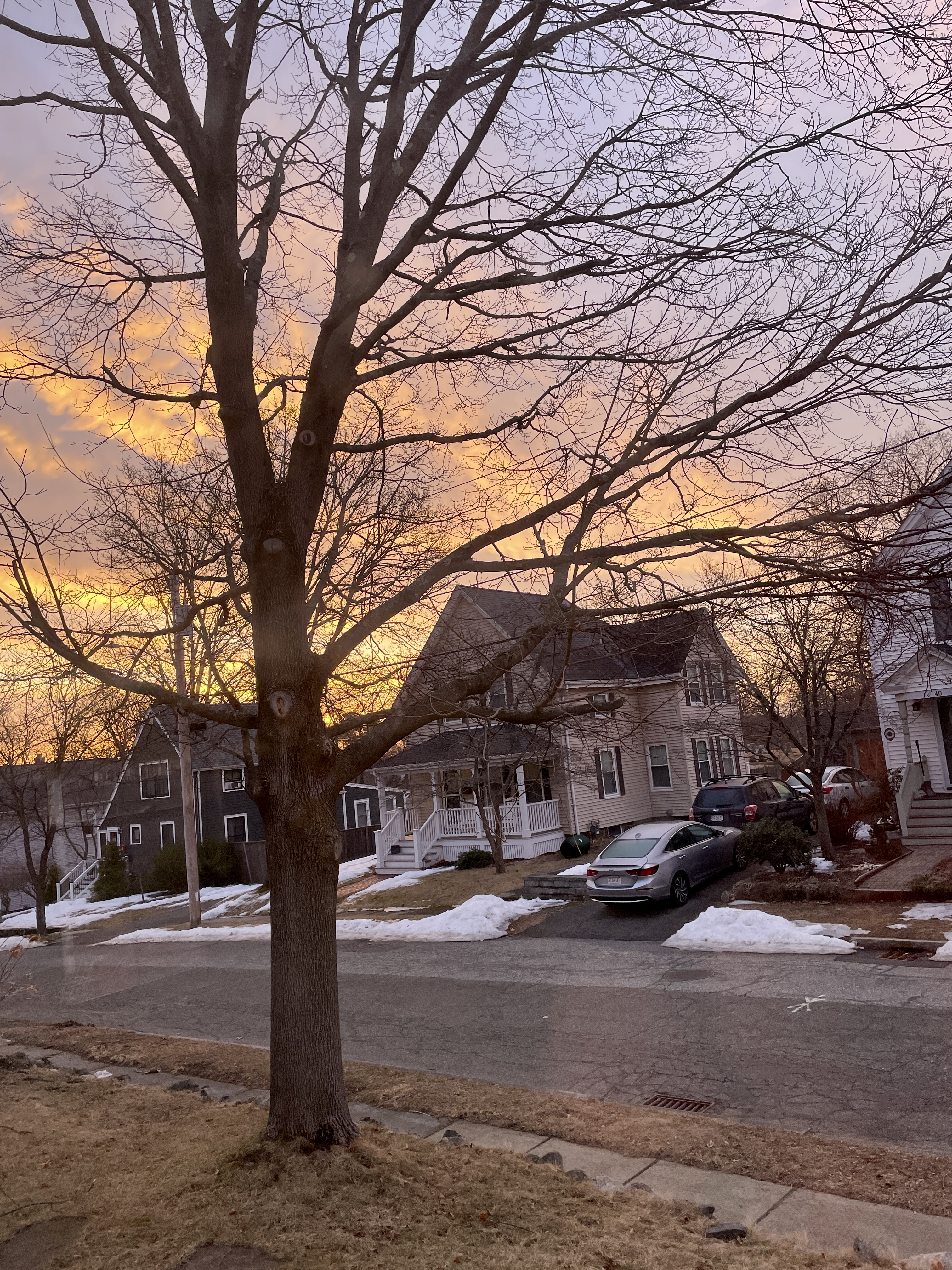
Sorta makes you think, to quote Gertude again, There ain’t no answer. There ain’t gonna be any answer. There never has been an answer. That’s the answer. Got that? Street poetry.
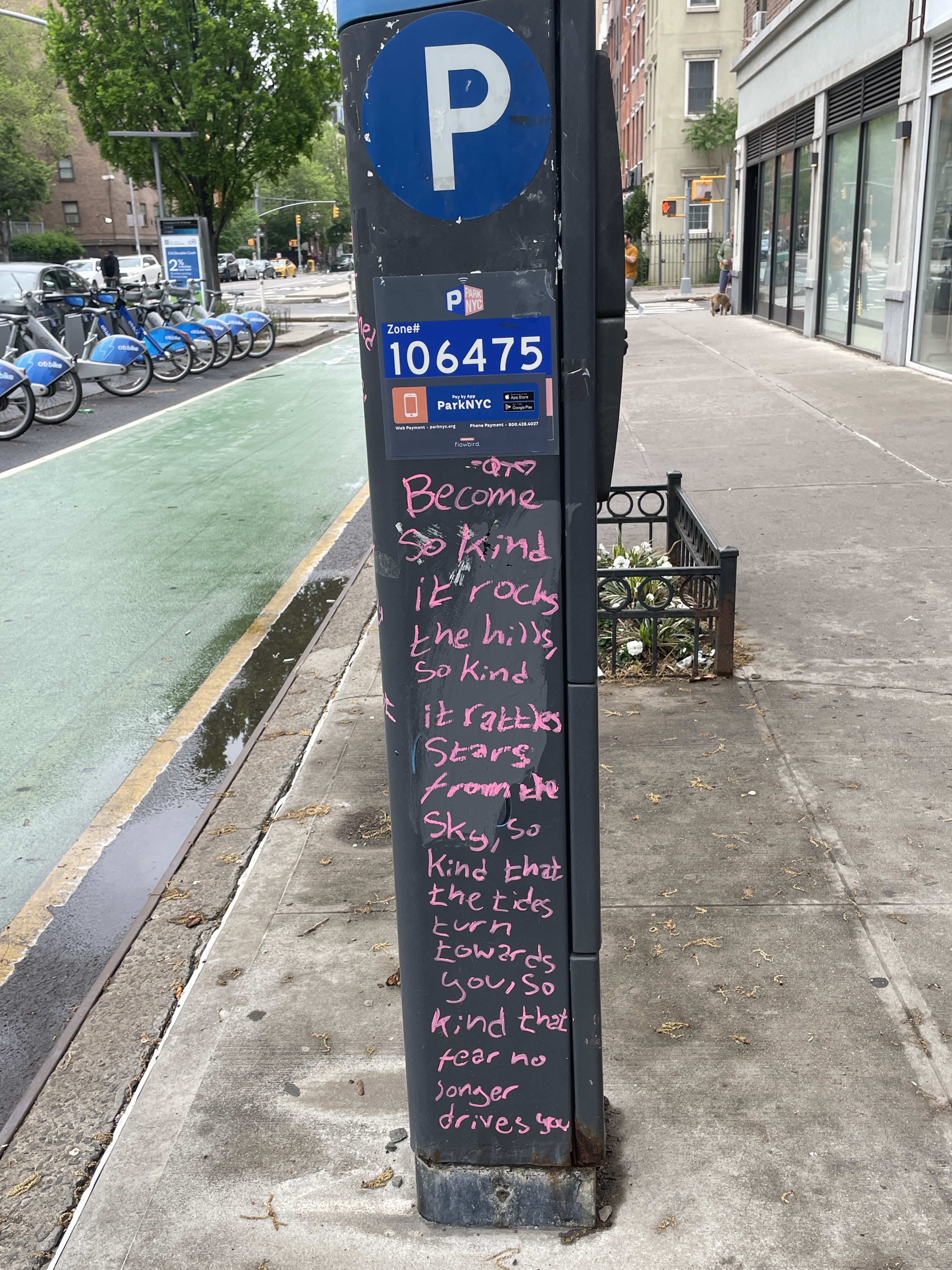
Just walk on by. So ordinary.

Banal.

Anyone could see the poetry here. Of course.
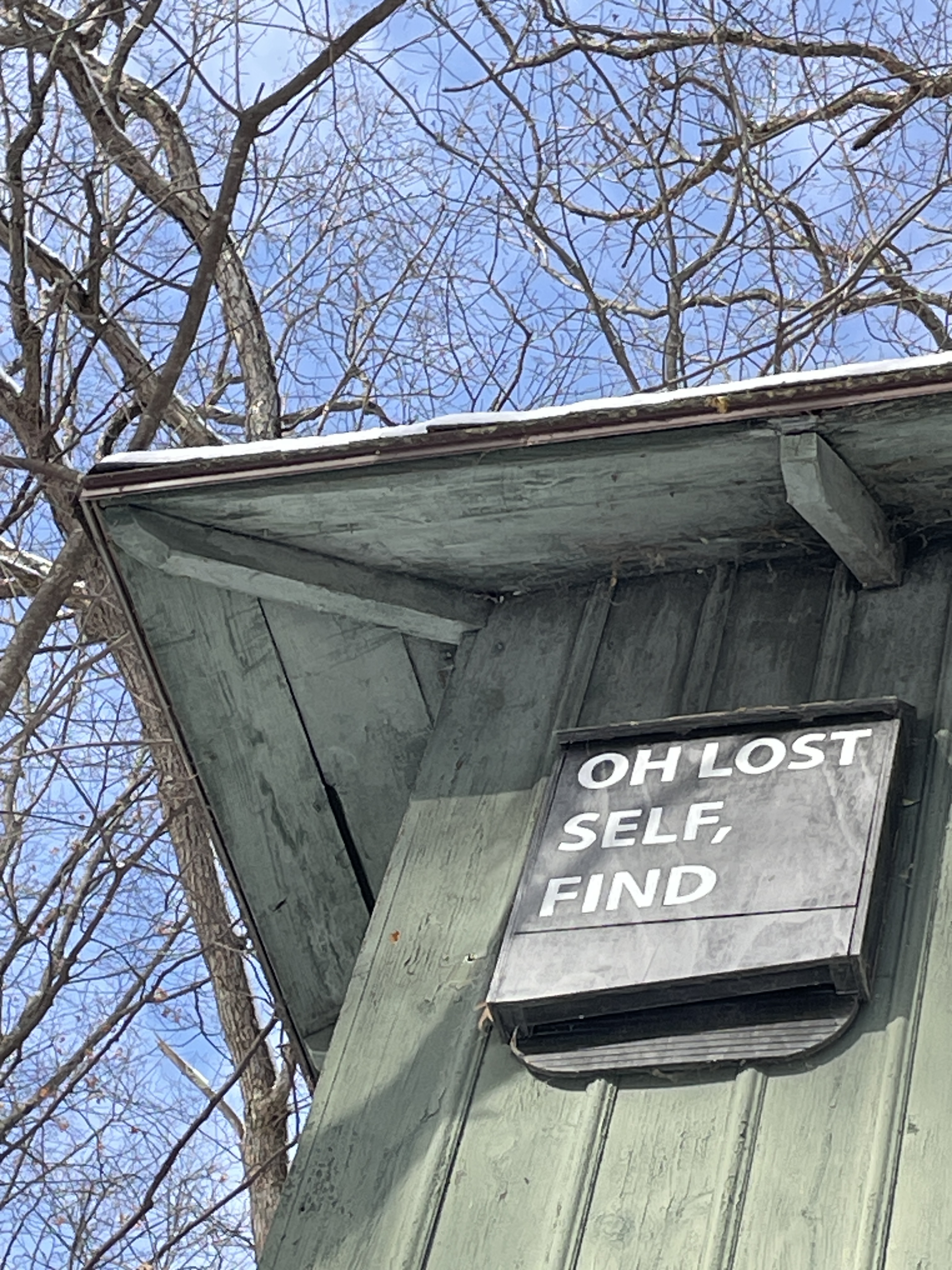
Petals. Okay, they happen to be cherry petals.
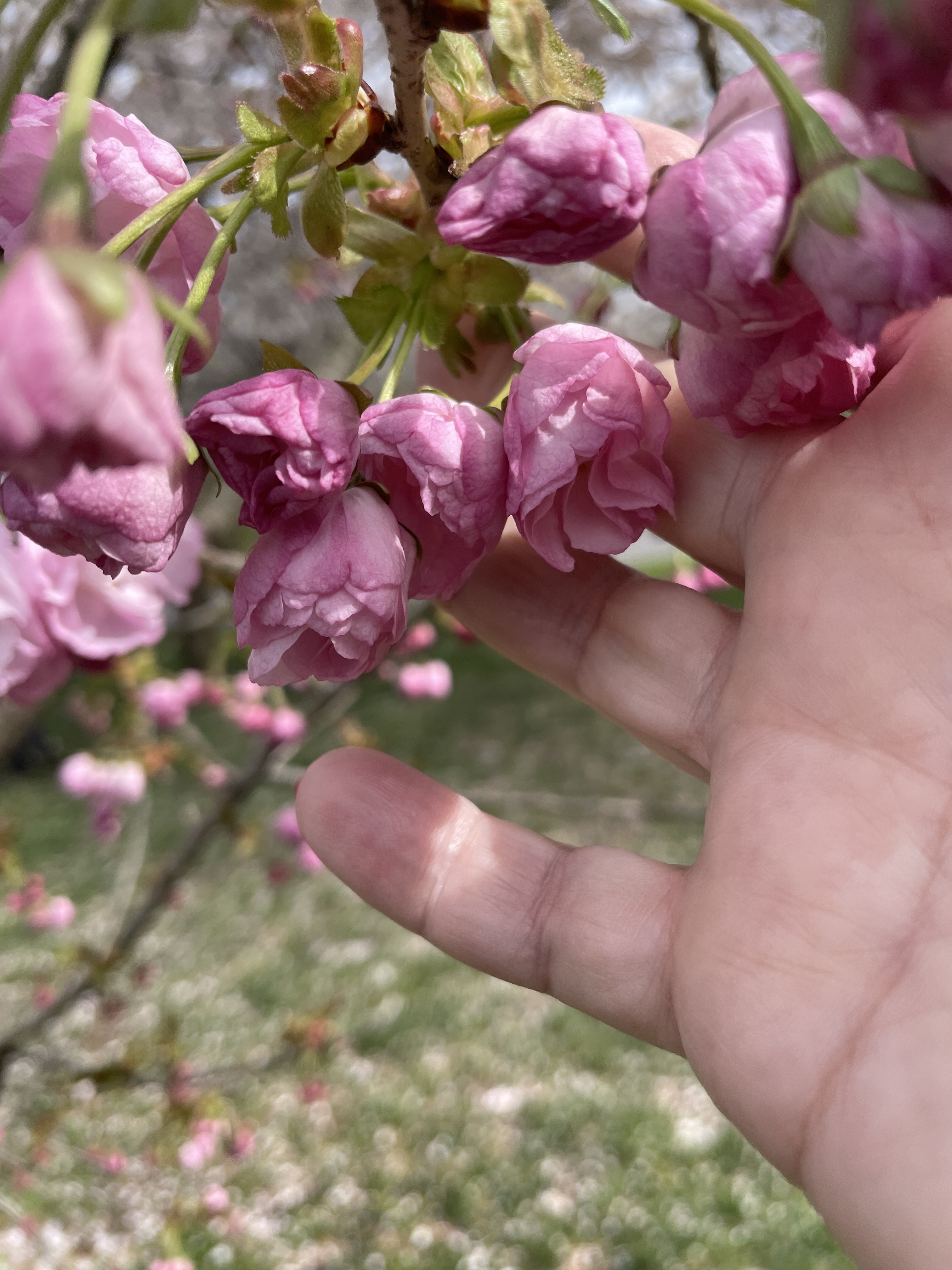
And everyone knows cherries to be extraordinary.

Look up, though. At the sky. Totally ordinary blue. Once more, Gertrude: I like a view but I like to sit with my back turned to it.

Go ahead, Gertrude. Just try.
10 Comments

Filed under Jean Zimmerman

Late season.

Been thinking about the concept recently while visiting some haunts both local and distant. Not ruins exactly. Let’s say slightly faded in the most perfect way.

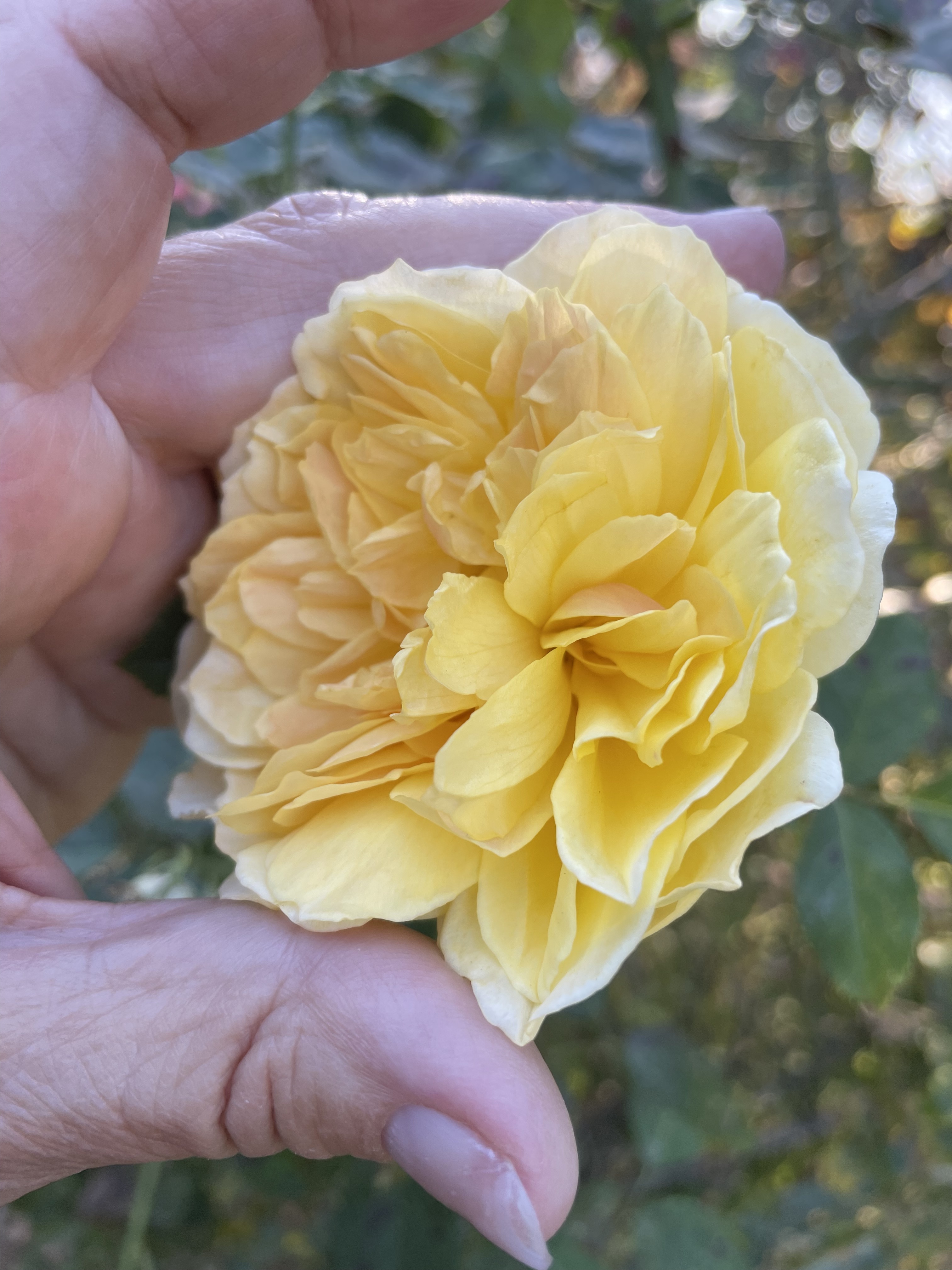
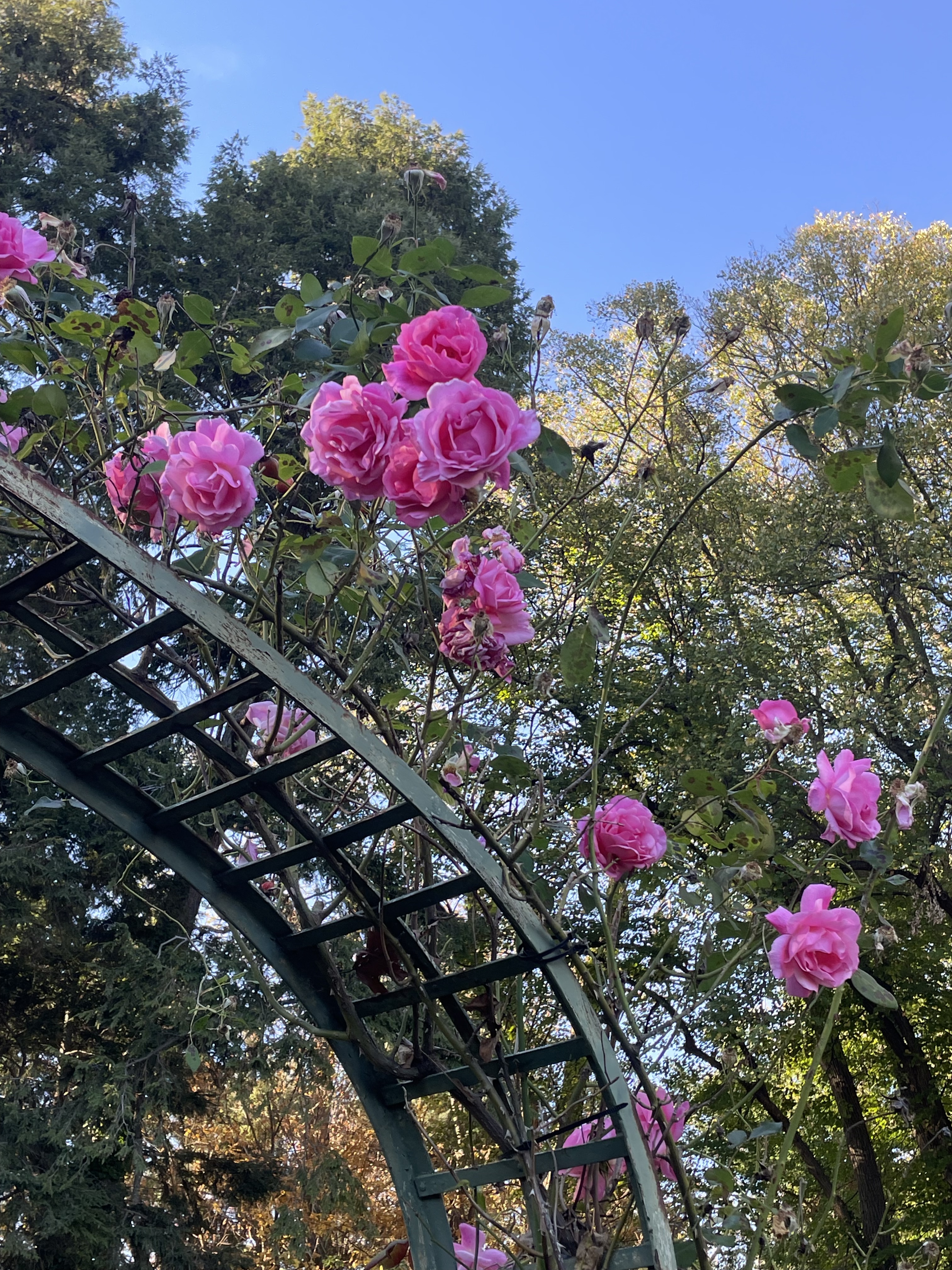
Like the nearby genteel rose garden at the Lyndhurst.

Its blooms in November just as exquisite as the ones in June.

Possibly even more ravishing. Is it my imagination, or when you stick your nose in are they actually more fragrant as well?

Who’s to say that a rose hip is any less beautiful than the rose that preceded it?

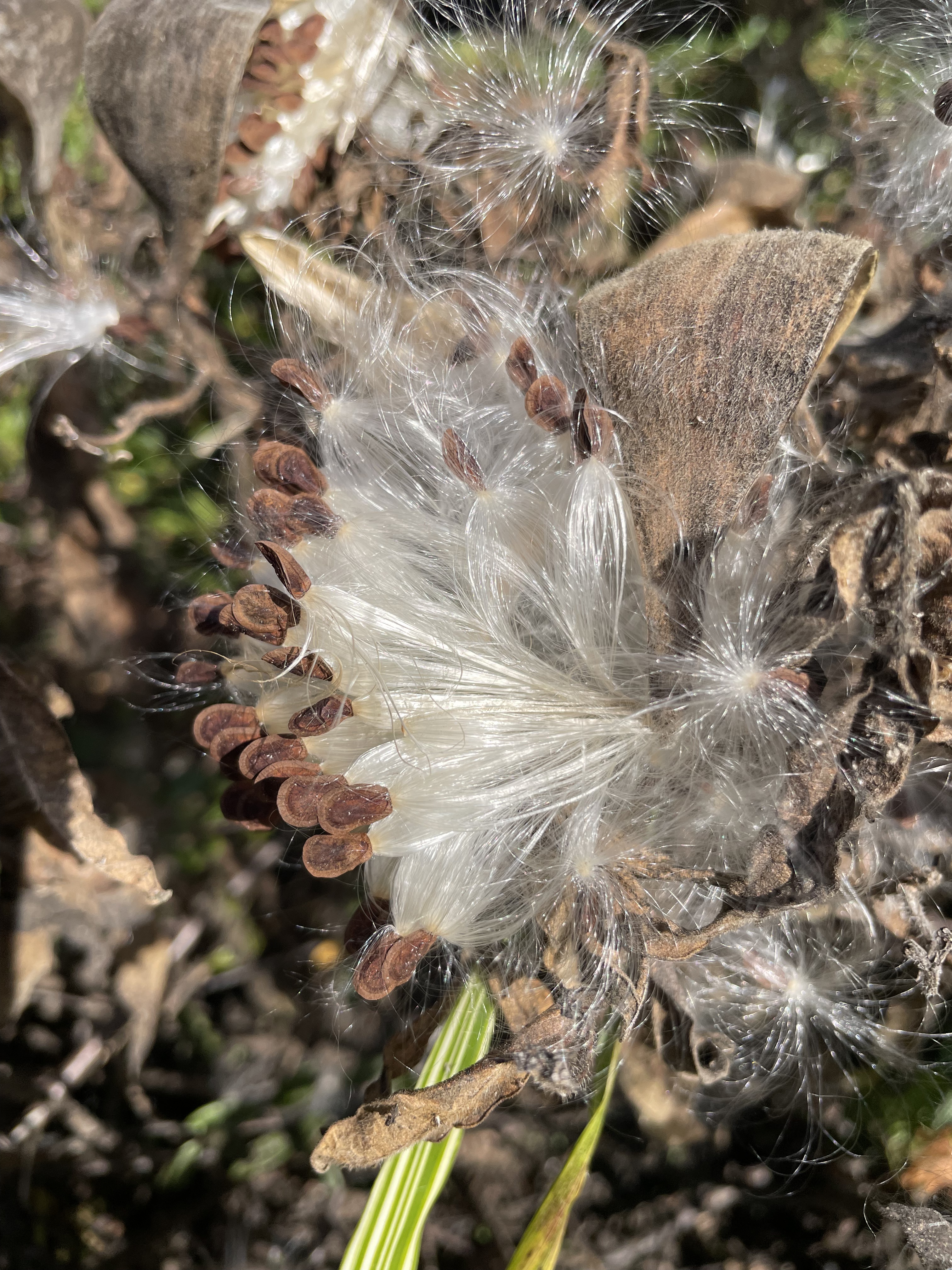
Late season magic. Milkweed.

An old-old graveyard that by all rights ought to have been long plowed under, like the cemetery we stumbled upon behind chain link in the heart of bustling Flushing, Queens. Someone in the Episcopal church next door kindly opened the gate so we could mosey around.

In the midst of faded headstones, some of them dating back to the early 1800s, an epic mulberry thrives.

The tree might have been planted when the graveyard was new.

I like a circa-1700’s fanlight door at Philipse Manor Hall in Yonkers, similarly a survivor.

Between fall and snowfall. I didn’t come up with that one, but it’s a pretty good description of most all the things I like best.

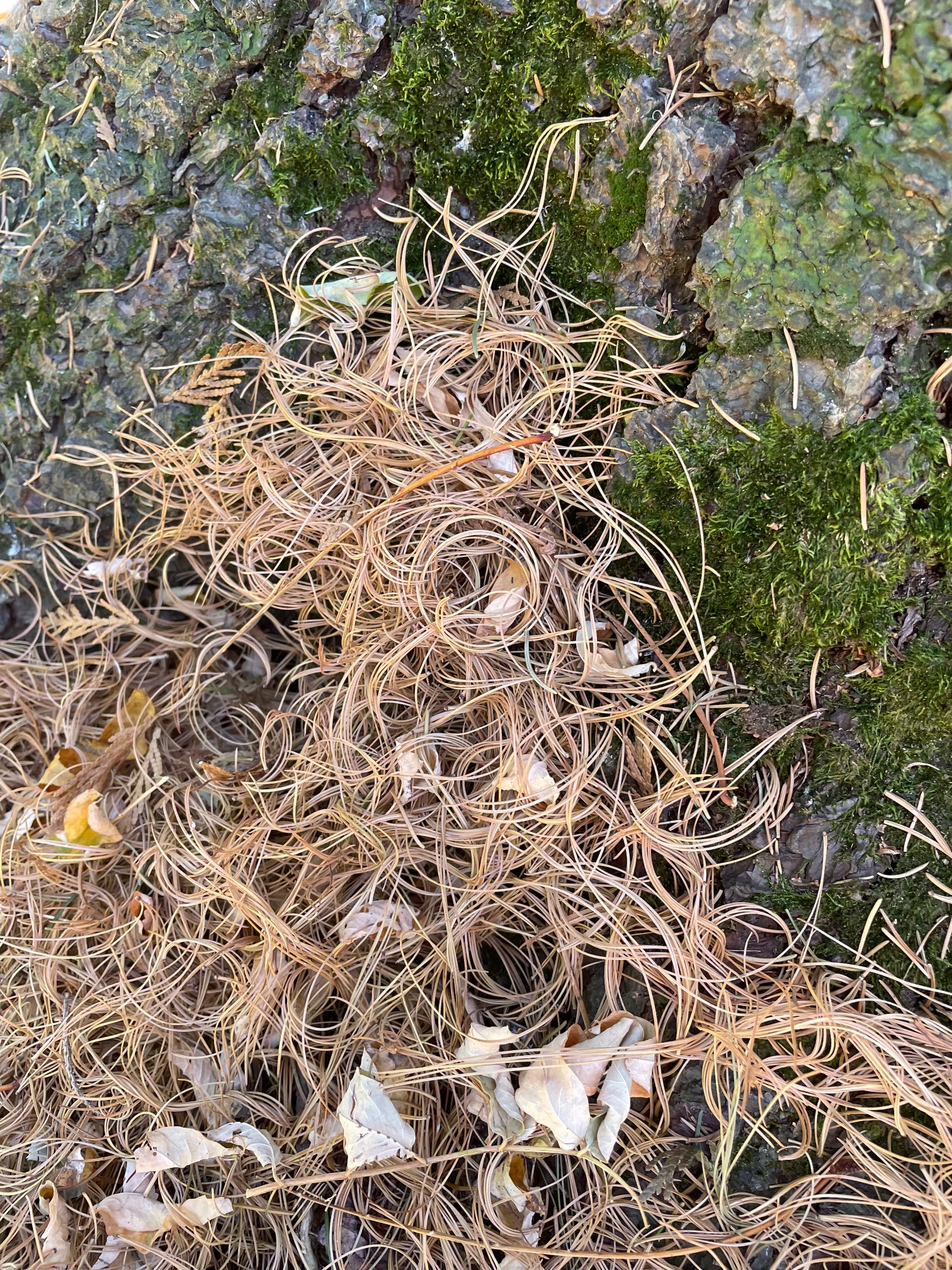
Why do I gravitate to the tousle of brown juniper needles so much more than the vibrant green ones still holding on?

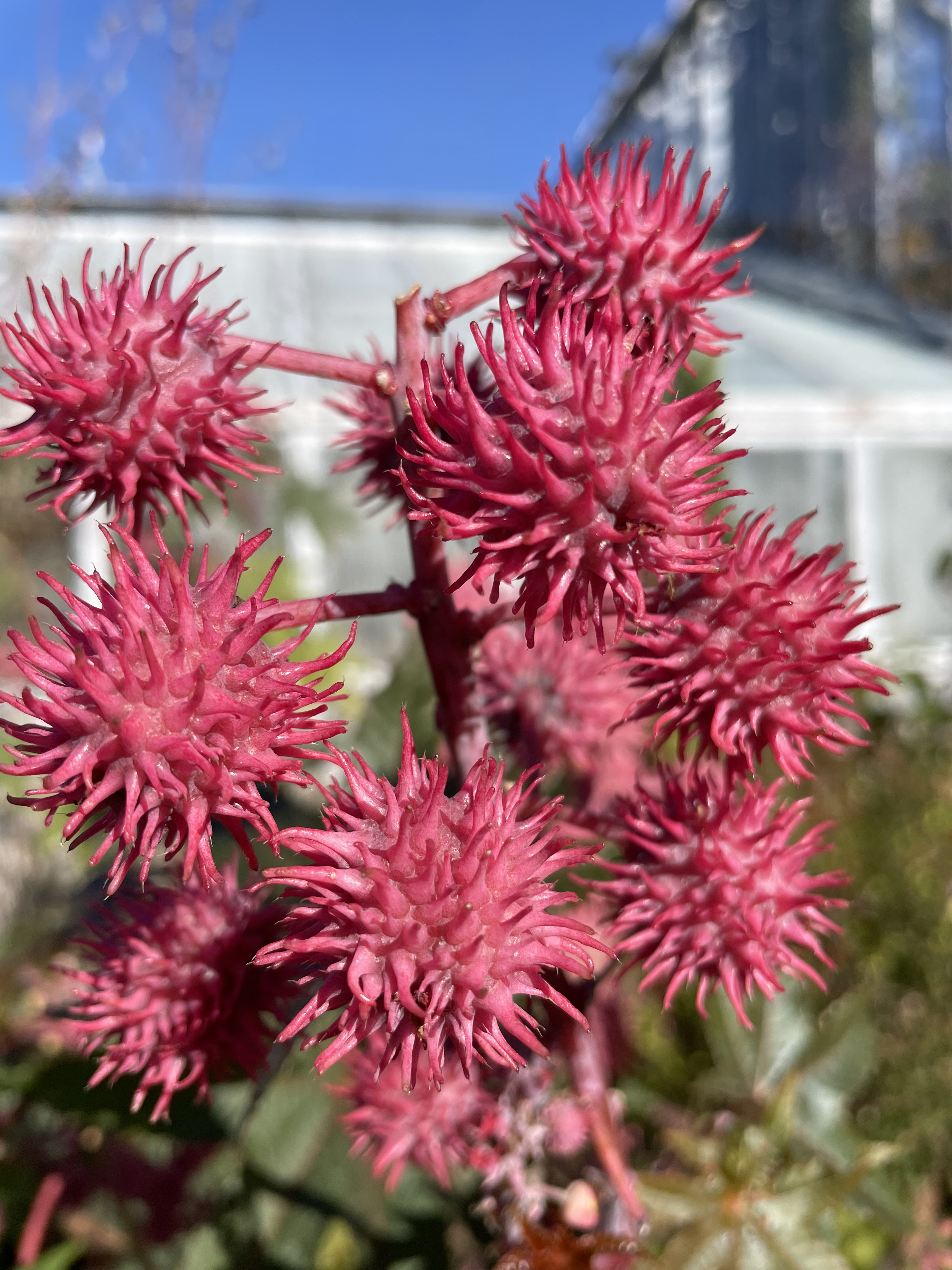
I guess everyone loves the changing hues of autumn. Who would’t care for unexpected fuchsia?

White oak leaves always get me, brown fallen ones perhaps more so, and brown fallen ones with green grass shoots still around them probably most of all.

Classic apples. At a local cider place you can bite into a russet people favored back in the 1600’s.

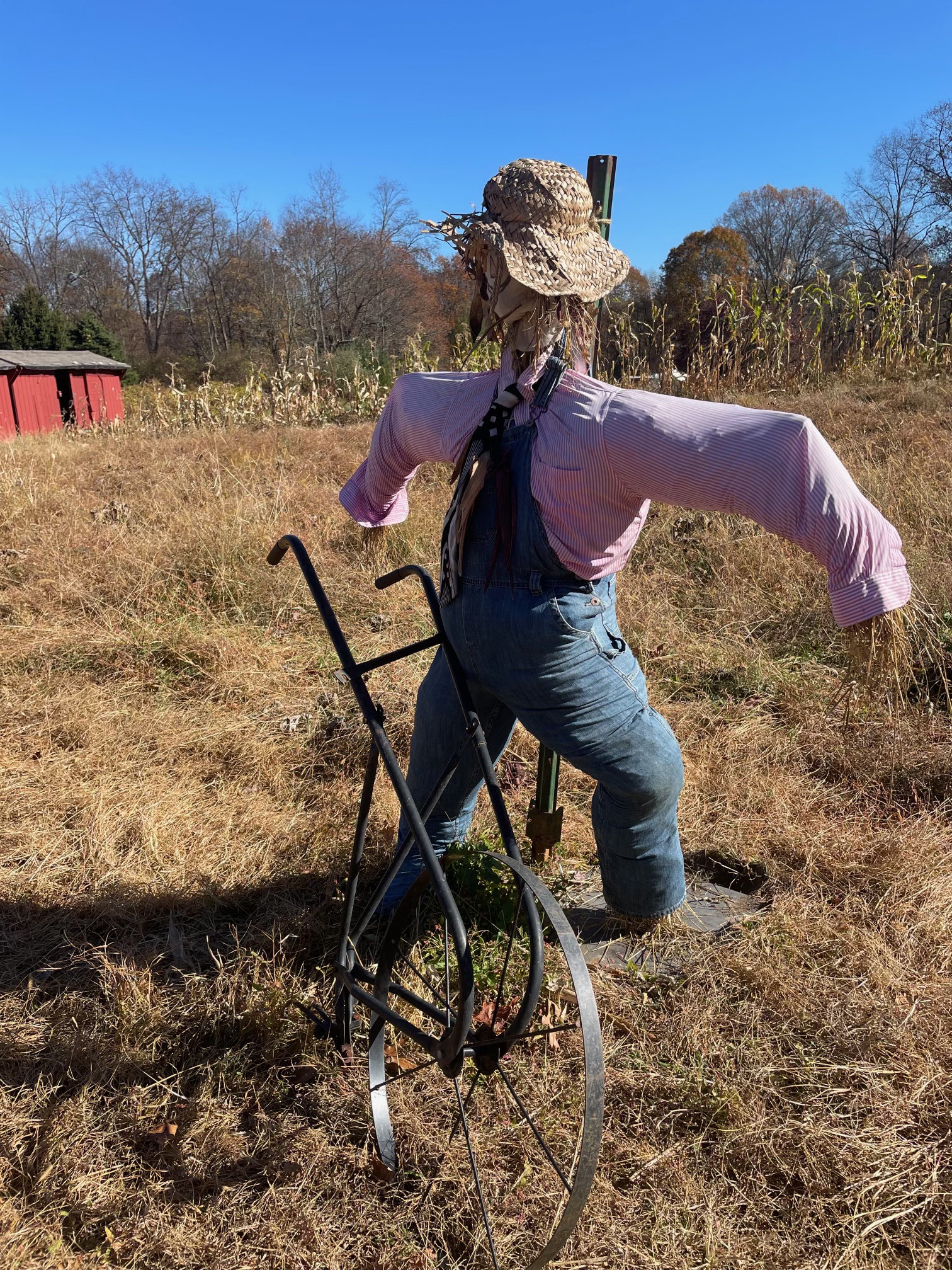
Nearby, a weathered scarecrow holds court over a late-season field.

Everything old is new again. Somebody or other said that. Could have been the early 1700’s author Jonathan Swift, or Mark Twain, or Churchill or even Stephen King. No one seems to know.

But most things that are old and creaky seem fresher to me than what is new. Perhaps because I feel between fall and snowfall myself?

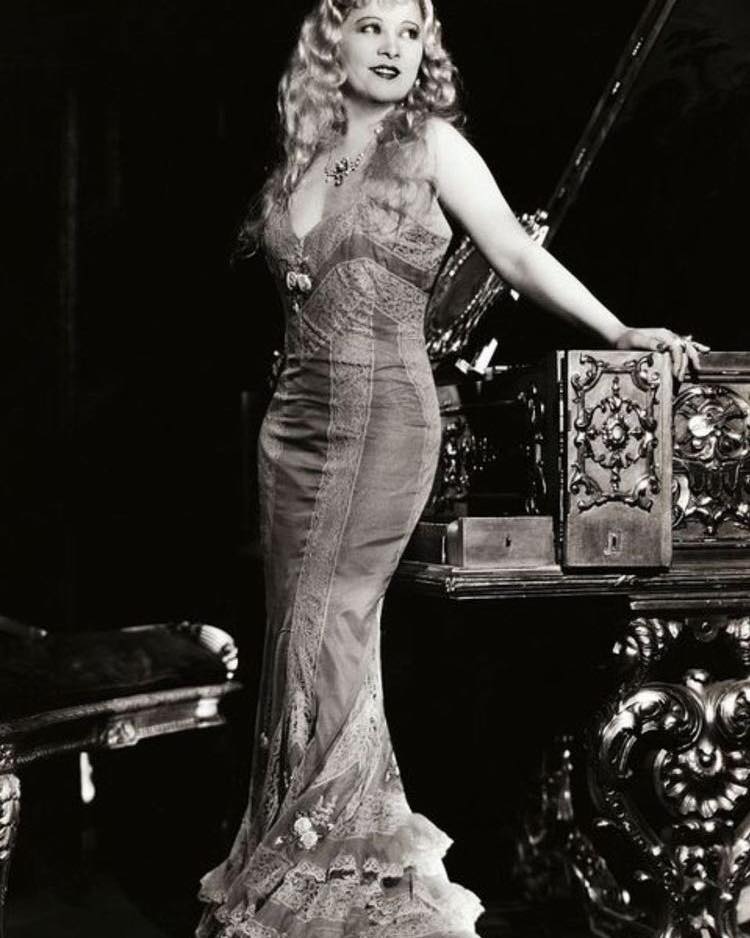
I gravitate to things that are timeworn and true. Silent movies.

The late-season cattail by a pond.

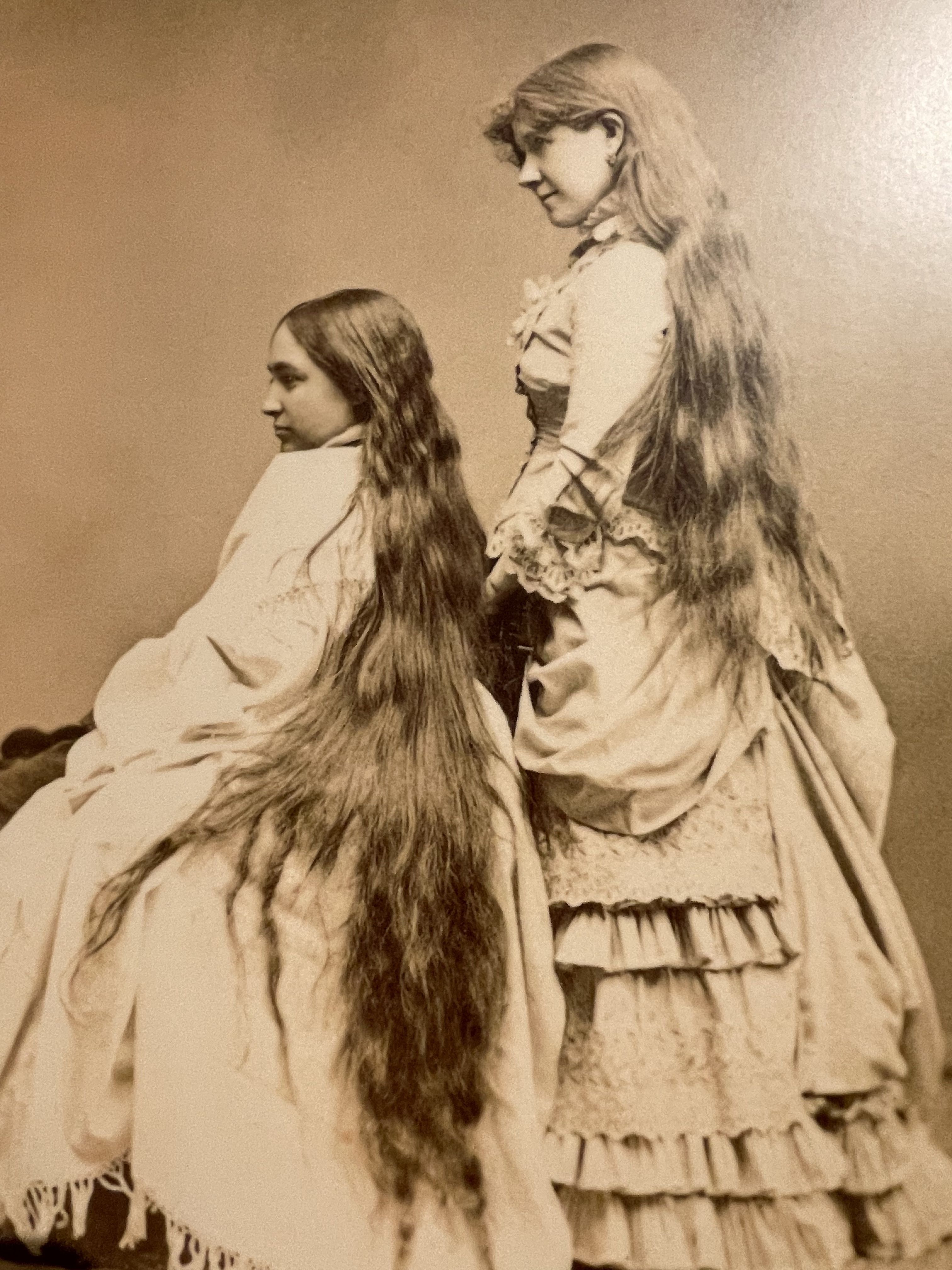
A portrait of two sisters that suggests a mystical earlier appreciation of hair.

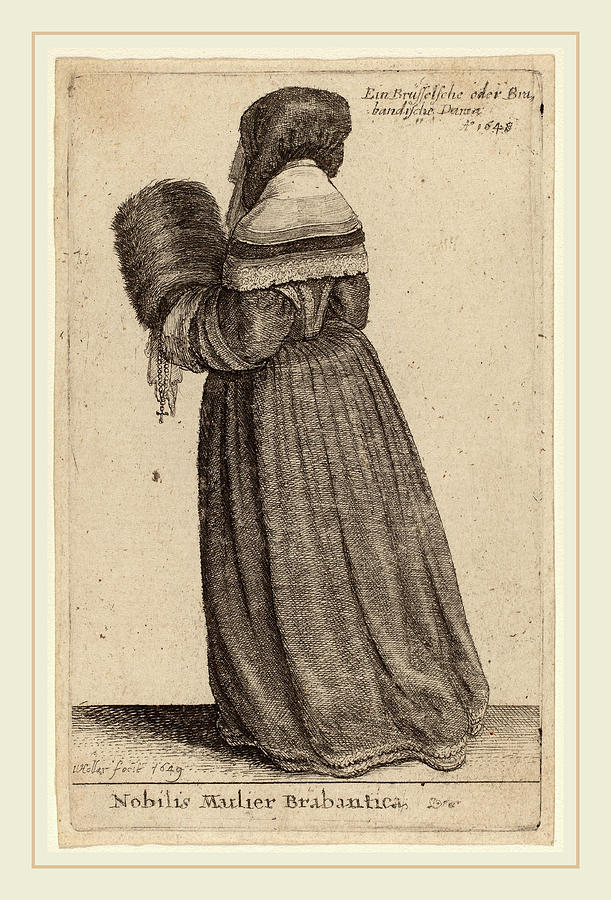
Or the Wenceslas Hollar engraving bespeaking the crucial importance of a fur muff.

A vintage postcard that reminds us we might not have come as far as we think we have.

Wise women from a different era.

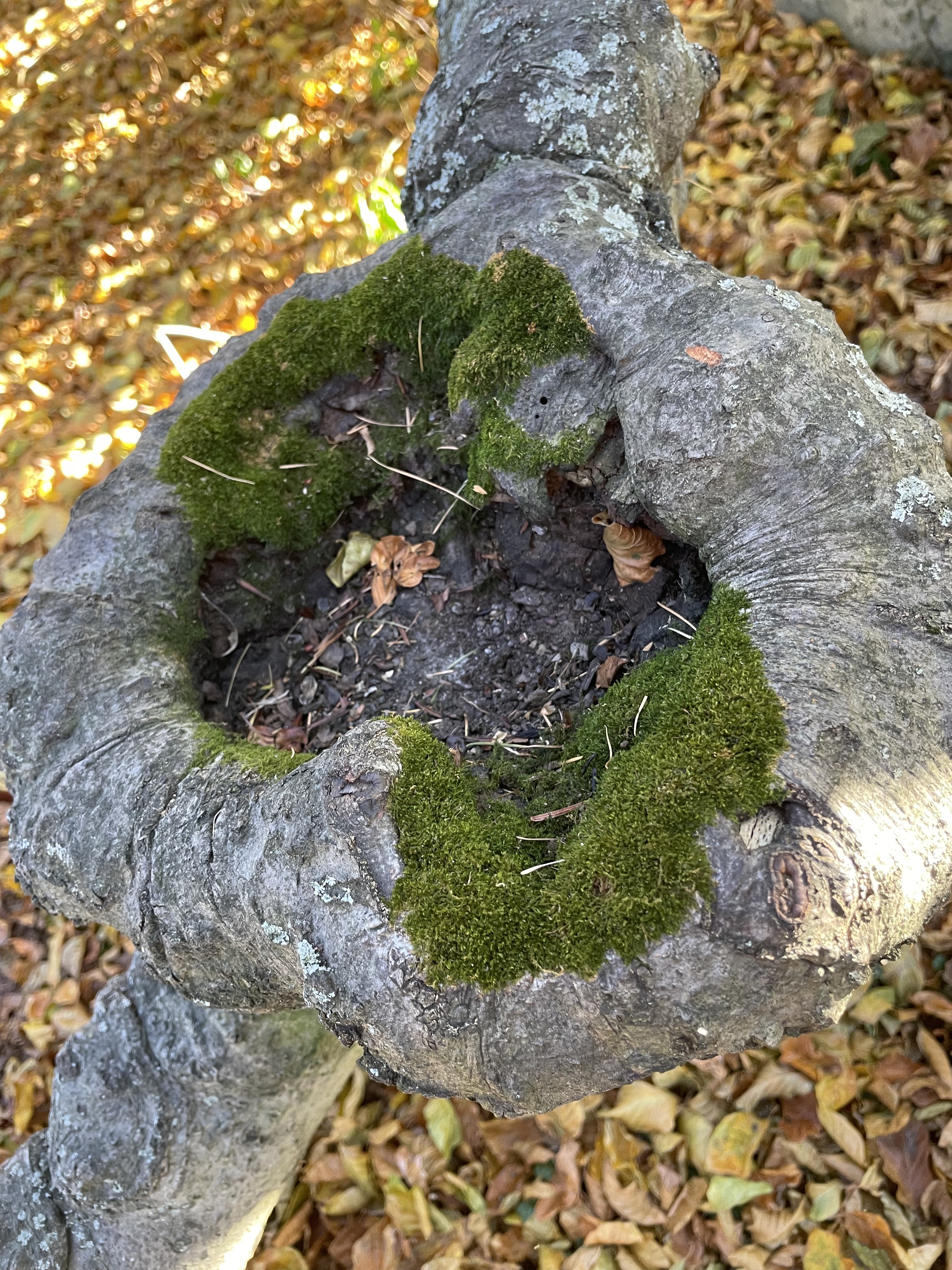
Under the canopy of an ancient European beech, a bark bowl that holds mossy dreams.

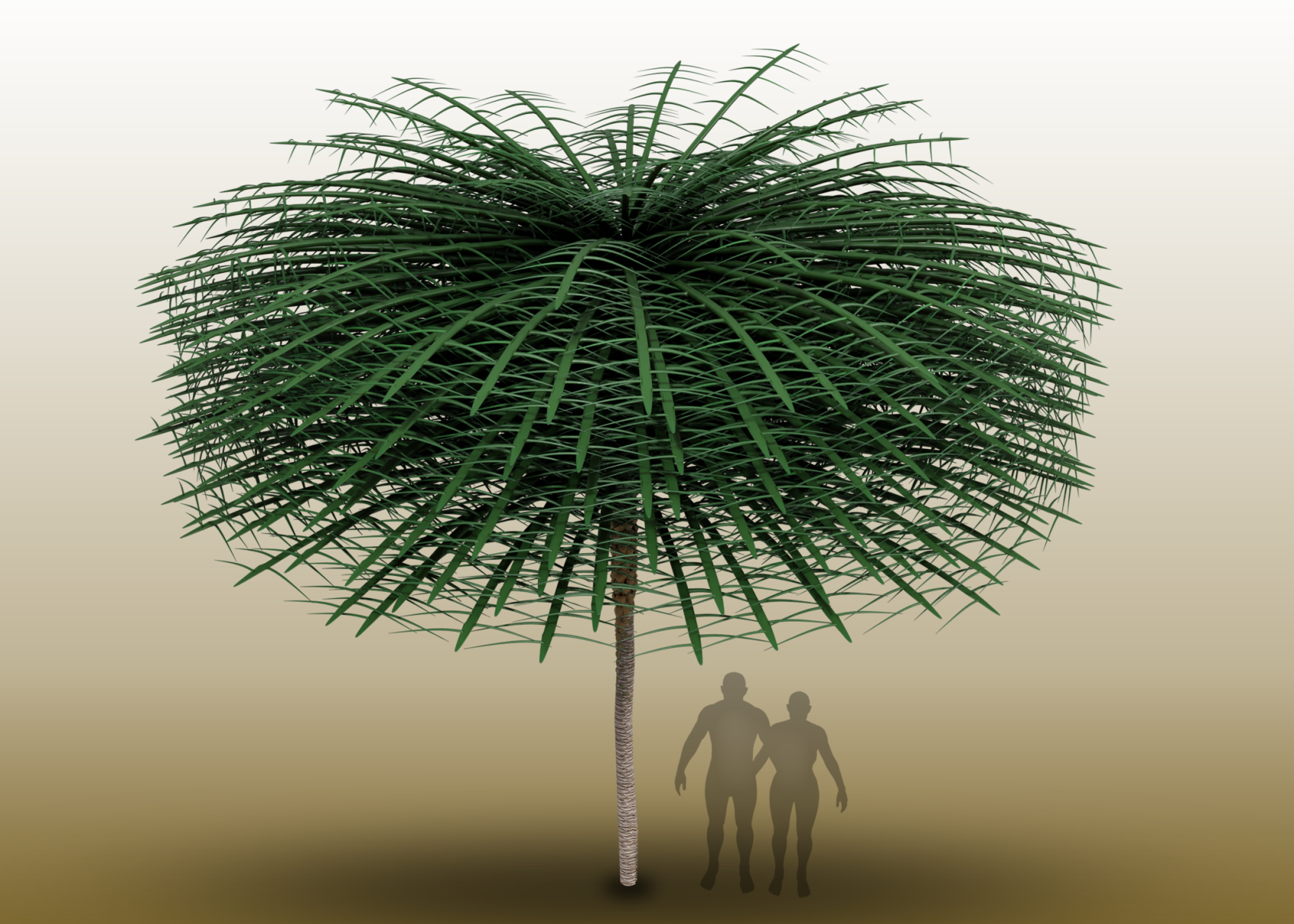
A 350-million-year-old tree, the most ancient species we know.

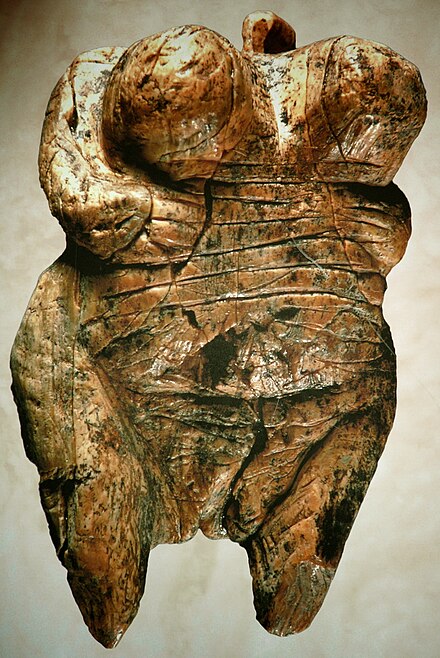
The earlier depiction of a human being — really! — the Venus of Hohle Fels, carved 35,000 years ago of mammoth tusk and unearthed in 2008 in a German cave.

A Queens London plane from our time seemingly modeled on her form.

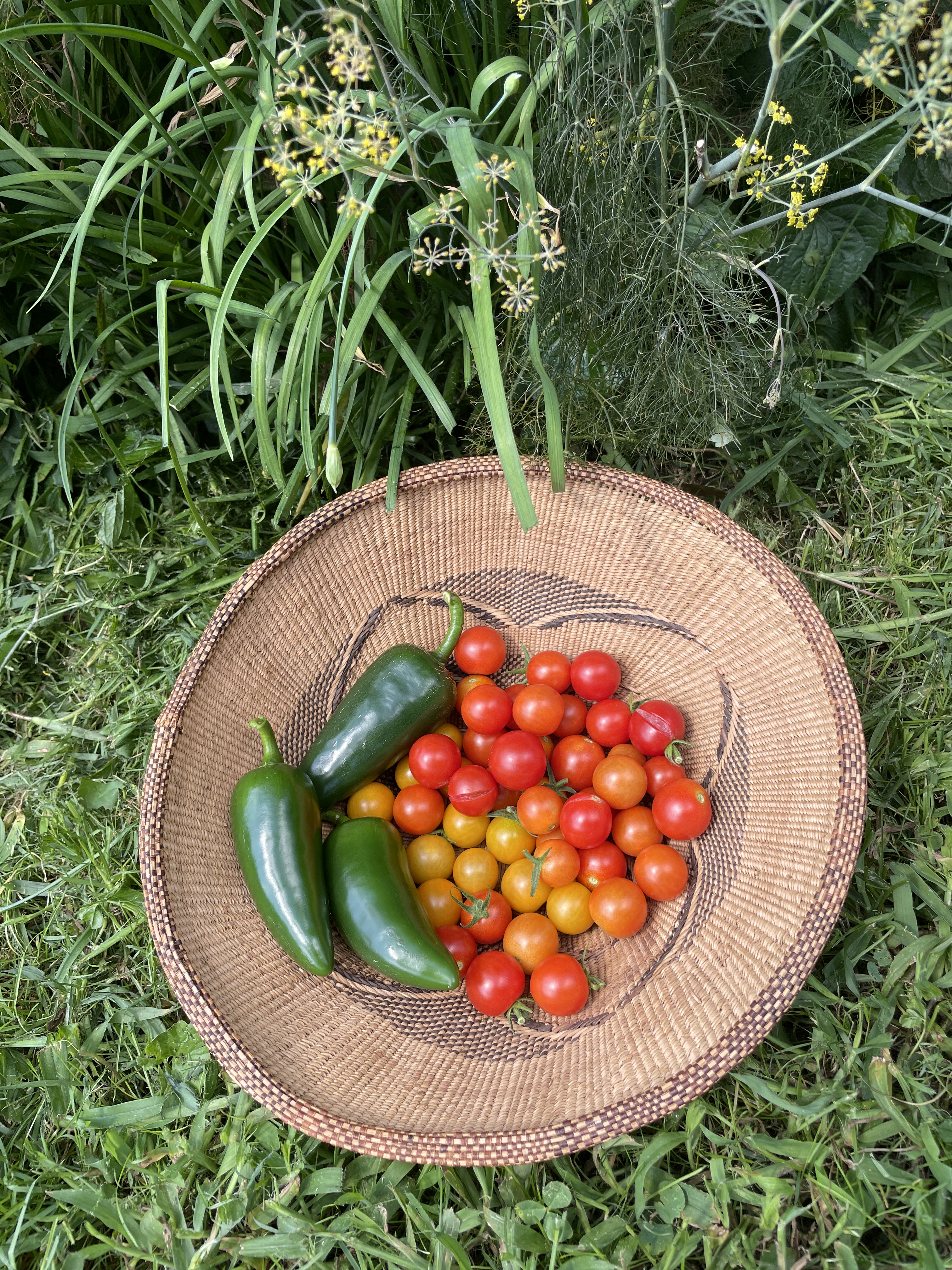
Late-season garden tomatoes and jalapenos possibly more delicious as the summer winds down.

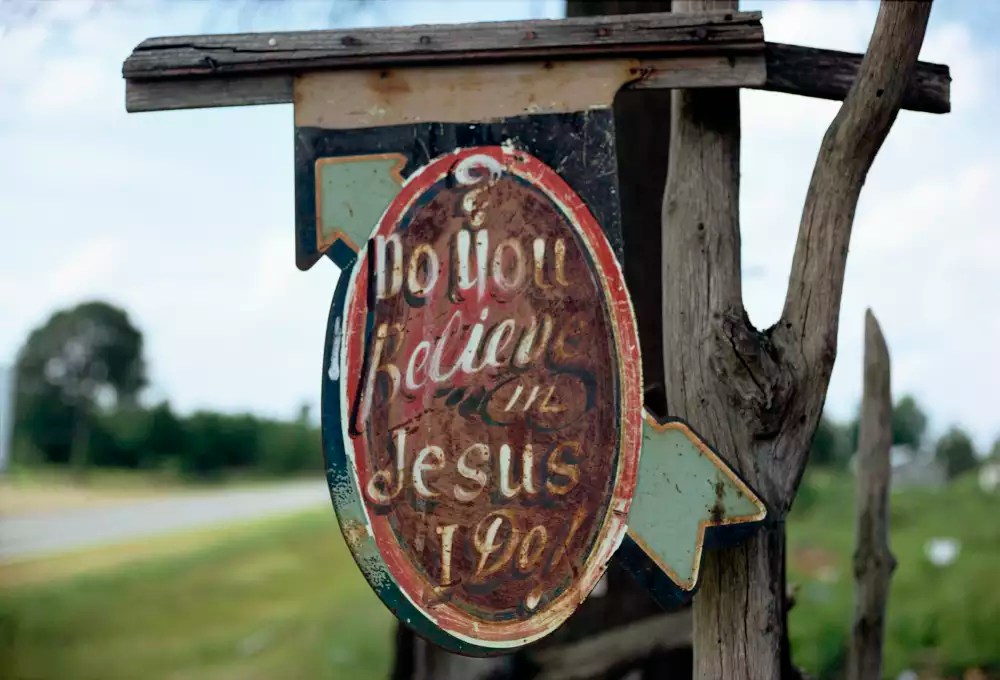
Battered roadside signs.

A statuesque ladytree elm surviving indomitably alongside Central Park.

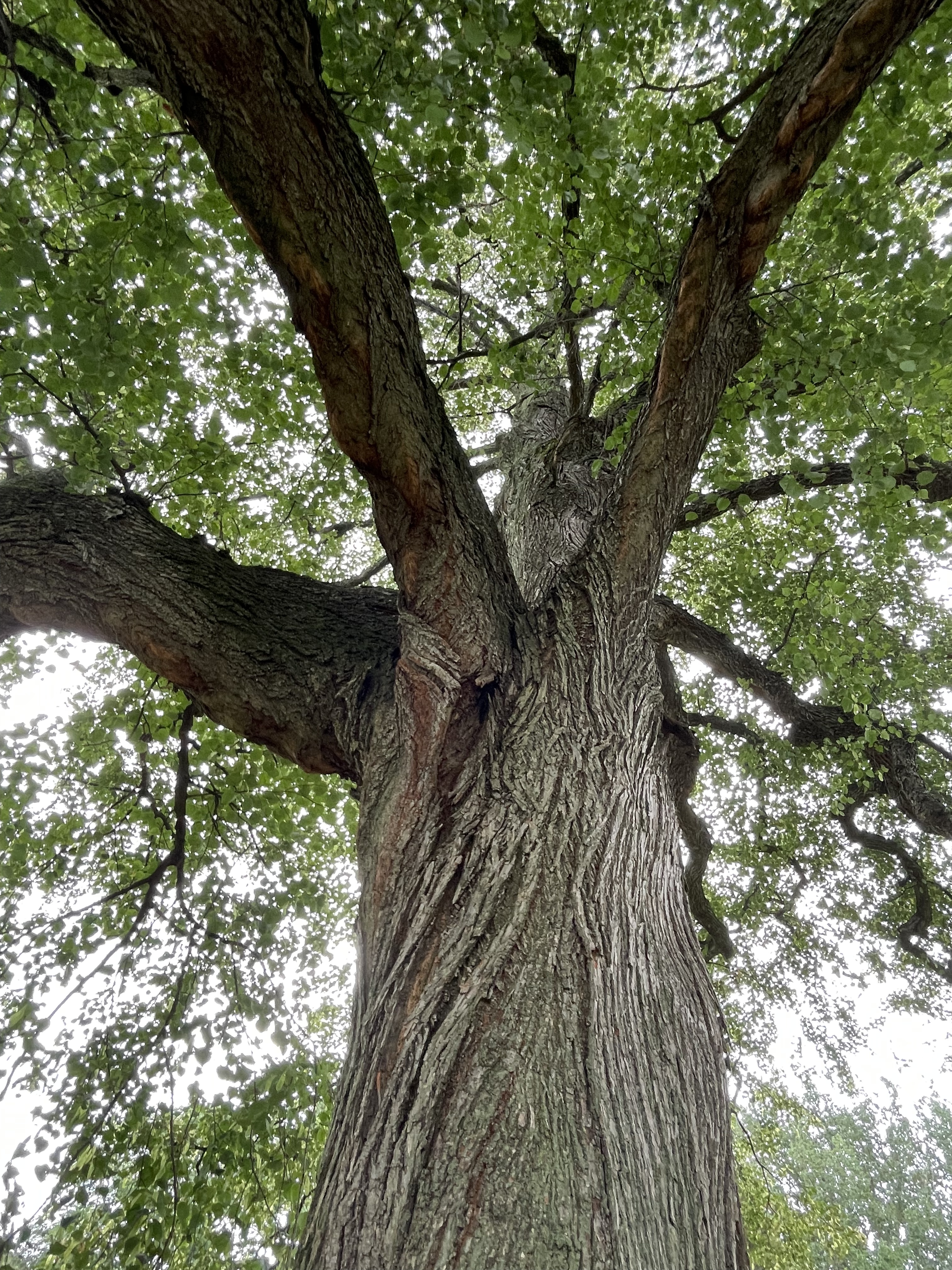
Every stately specimen I see.

But especially the shagbark hickory.

A historic bur oak with its distinctive shaggy acorn.

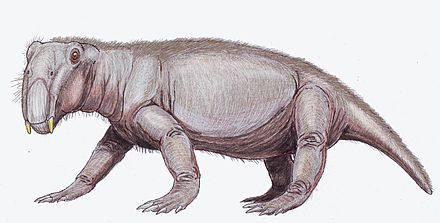
Also critters. The homely early herbivore called a lystrosaurus that lived 250 million years ago and survived the Permian extinction event to dominate the early Triassic.

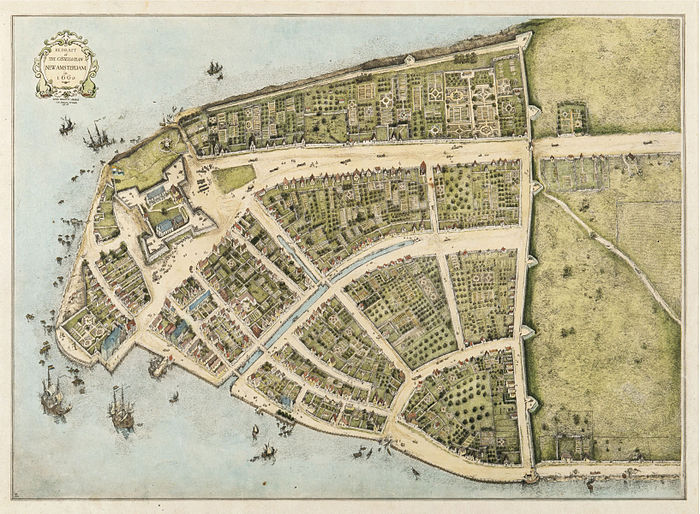
The crystal-clear first Manhattan street map from 1660, called the Castello Plan.

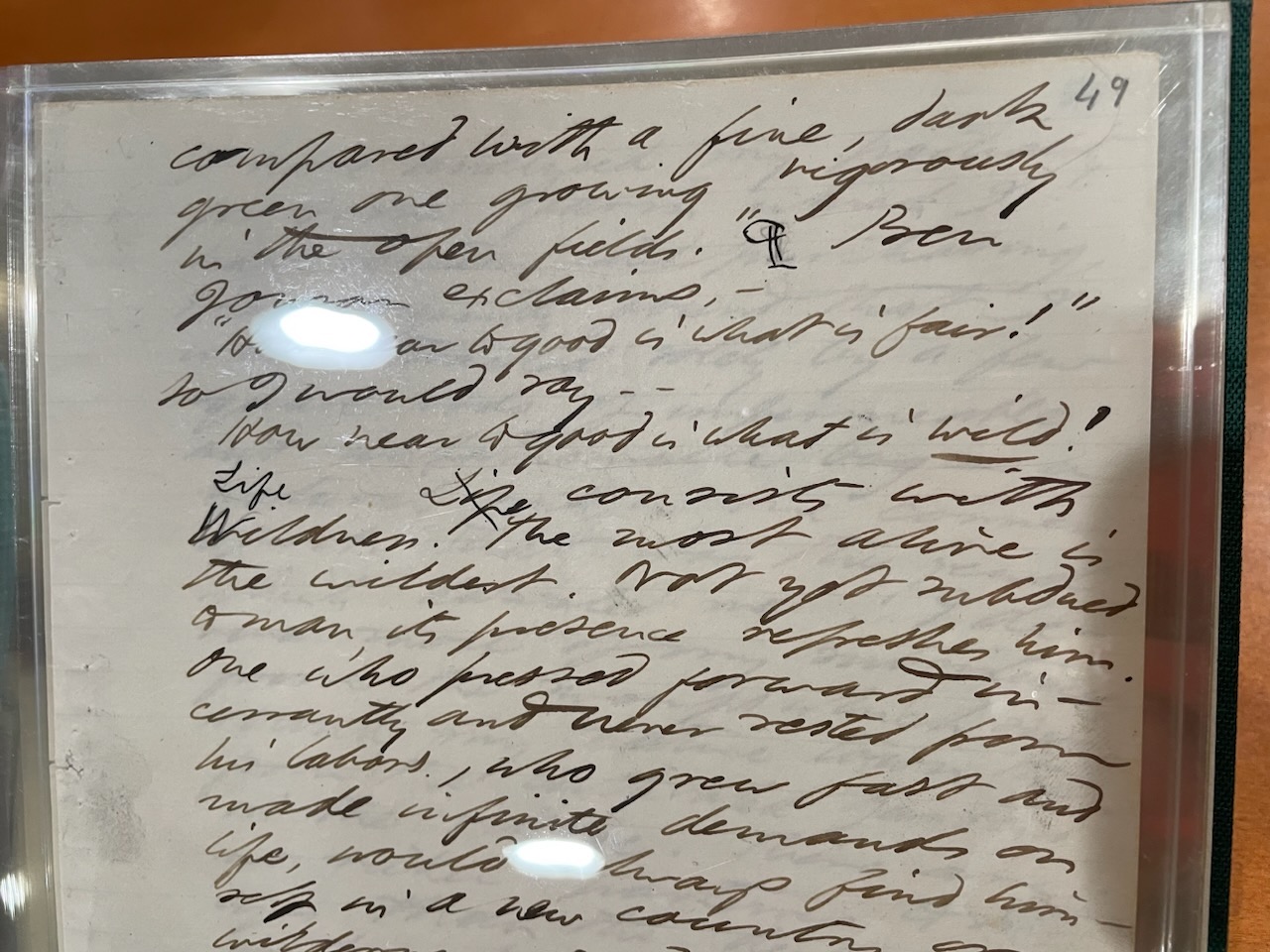
The perfect antique manuscripts I found in the basement of the Concord Public Library, the handwritten copy of Thoreau’s 1851 Walking with its timeless exhortation, How near to good is what is wild!

Dusty, venerable things. Like the perfect cabin we inhabited for a decade.

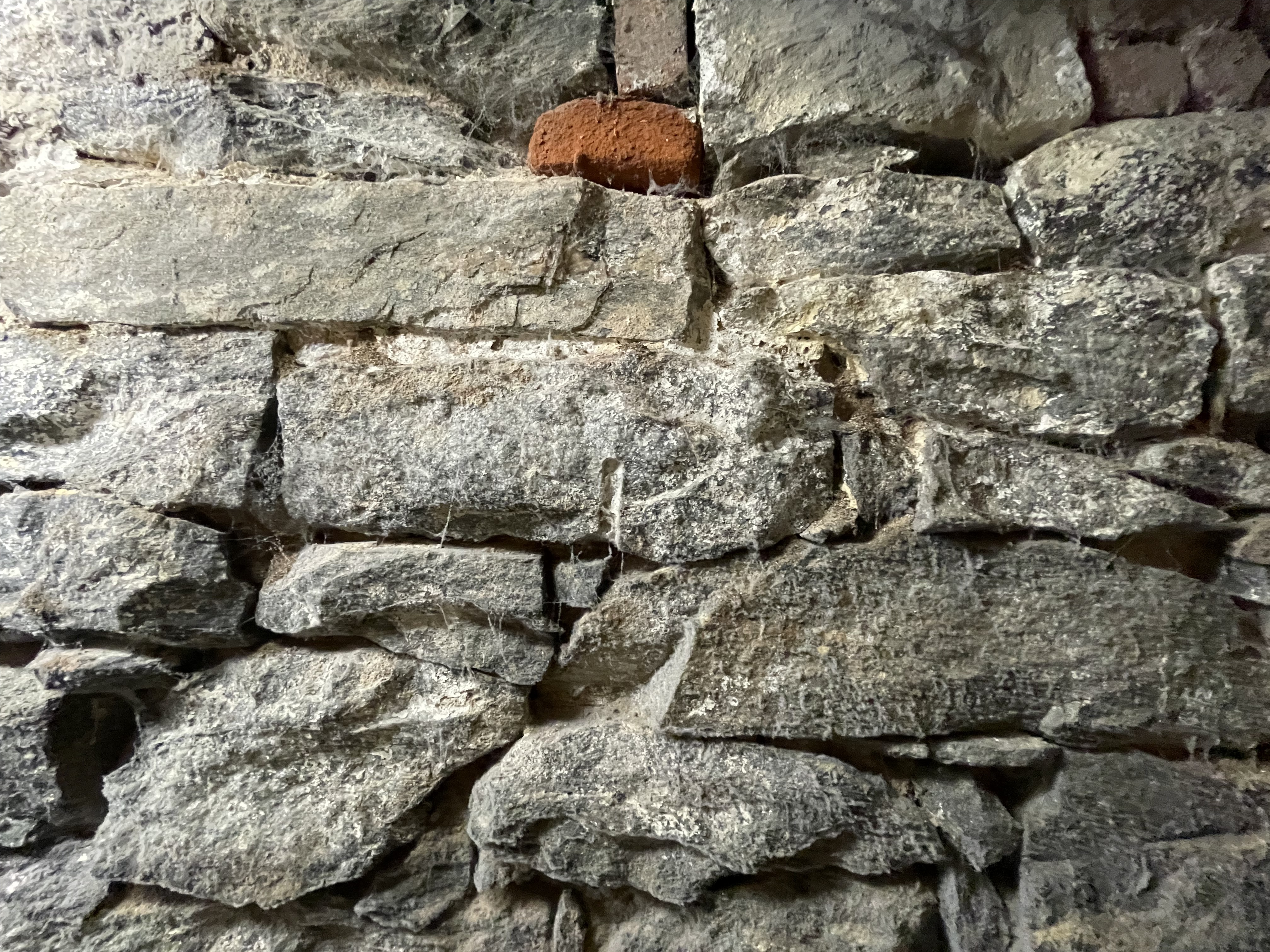
Or the rough stone wall of our current apartment building. Don’t think anyone has noticed it in a century or so.

Speaking of stone, an expertly carved medieval lion at the Cloisters in New York City.

Not necessarily grubby or dirty, though truth be told I often like those qualities as well.

We recently visited Cortlandt Alley in NYC, dating back centuries.

Now the site of a funny tiny art exhibition space called Mmuseum. Which shares the alley with some vintage window shutters.

Along with awesome contemporary street art.

Of course I value vintage family stuff, like anyone else. Family photos of loved ones.

Or heirlooms like my great aunt’s tatting.

Or the gold cameo ring belonging to my grandfather, bearing the tiger’s eye image of two warriors — one male, one female. A popular ornament in the 1930’s, the ring was said to bring the wearer courage and luck.

I treasure my Ginny dolls from when I was a kid.

There’s also the mysterious Japanese doll already antique when my mother brought back from Japan years ago.

My mother herself gets wiser and zestier with each birthday. At ninety-two-years young, she can identify the musicians who created Layla when song comes on the shuffle.

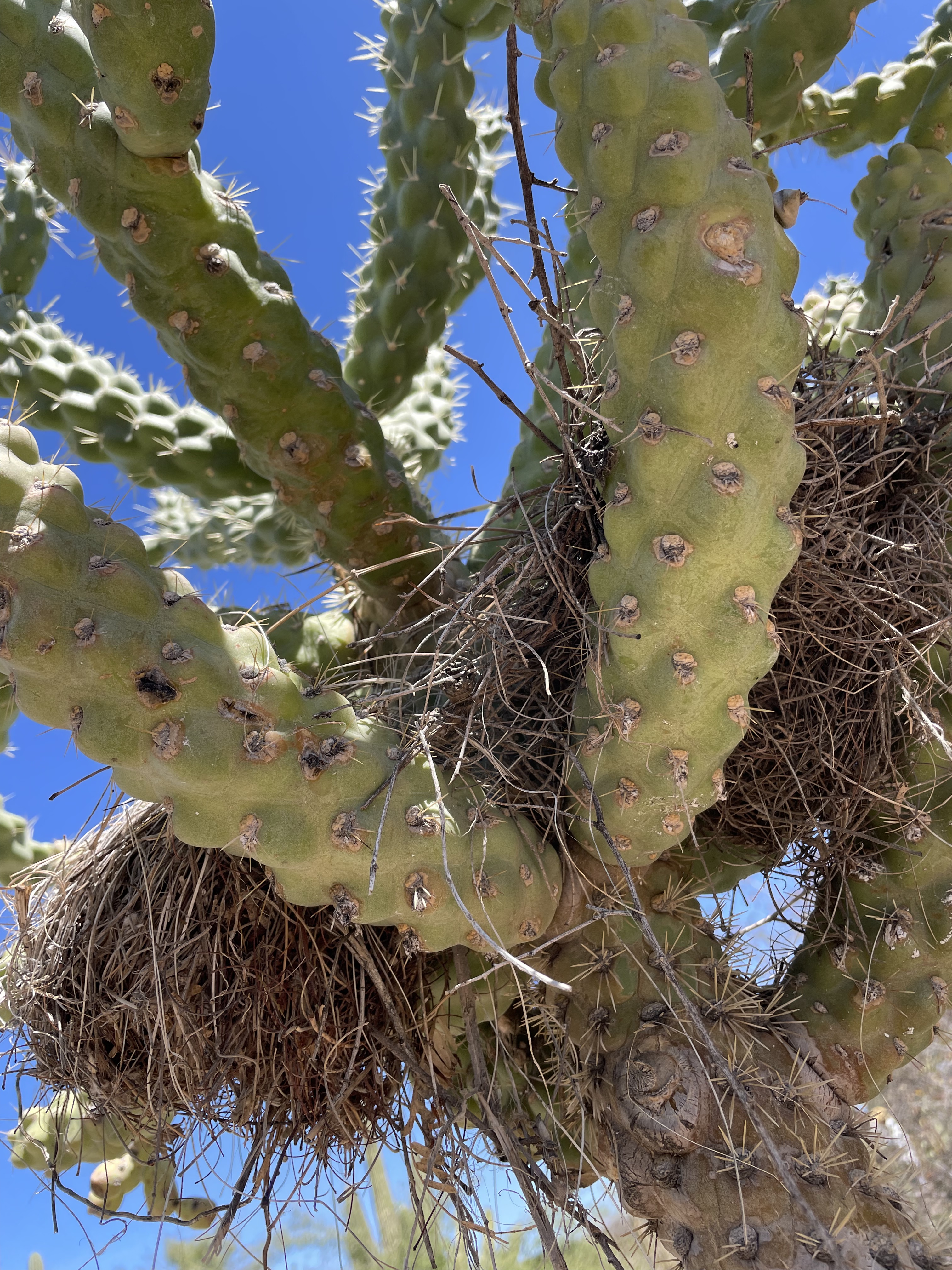
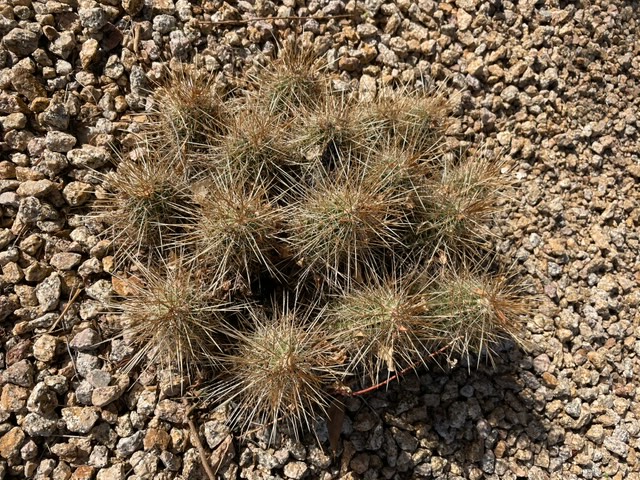
Old cactus, new nest.

The best.

6 Comments

Filed under Jean Zimmerman

Poking around where I am not supposed to be

is a favorite pastime of mine.

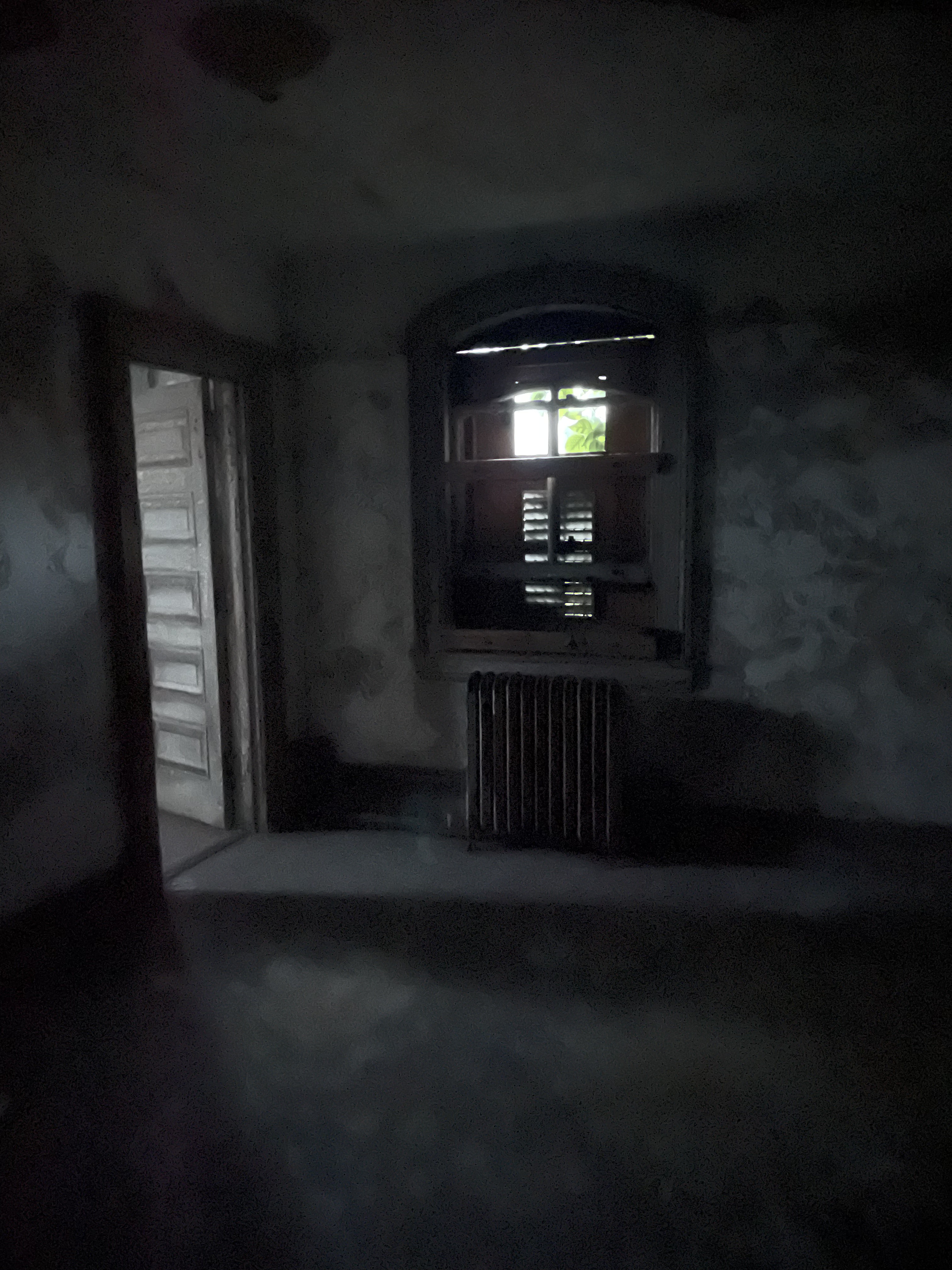
All that we see or seem is but a dream within a dream, said Edgar Allan Poe. Thinking about some writers who have opined on the dark side of life as I spend some time in in a dream within a dream –  the abandoned Contagious Disease Hospital at Ellis, taking around a group of photographers for a day of shooting poetic spaces.

On this stormy morning in the tristate, almost everything is so beautifully dark.

Those who dream by day are cognizant of many things which escape those who dream only by night, wrote Poe. We visit hushed stairwells.

The simplest things have a surprising potency.

Heat.

Even a doorknob seems to have a story to tell.

Textures are always amazing here at the Hospital.

But today especially, in low light, they seem to whisper. Loudly.

A view.

I see some of the things I’ve seen many times before, old favorites. Simple things.

The bird’s nest in a light fixture.

A legend.

Always loved how that sentiment might apply to everyday emotional challenges.

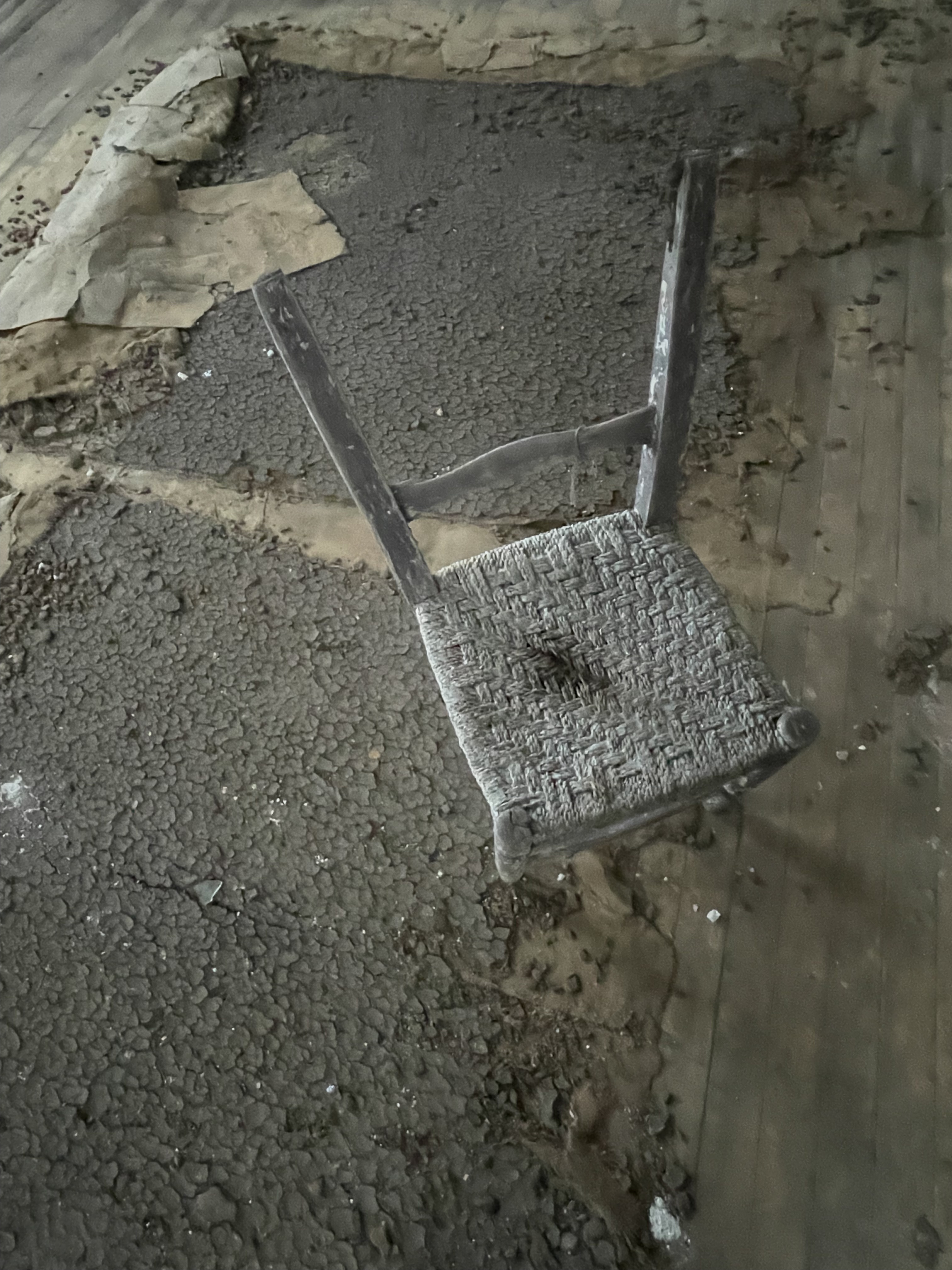
This unlikely chair.

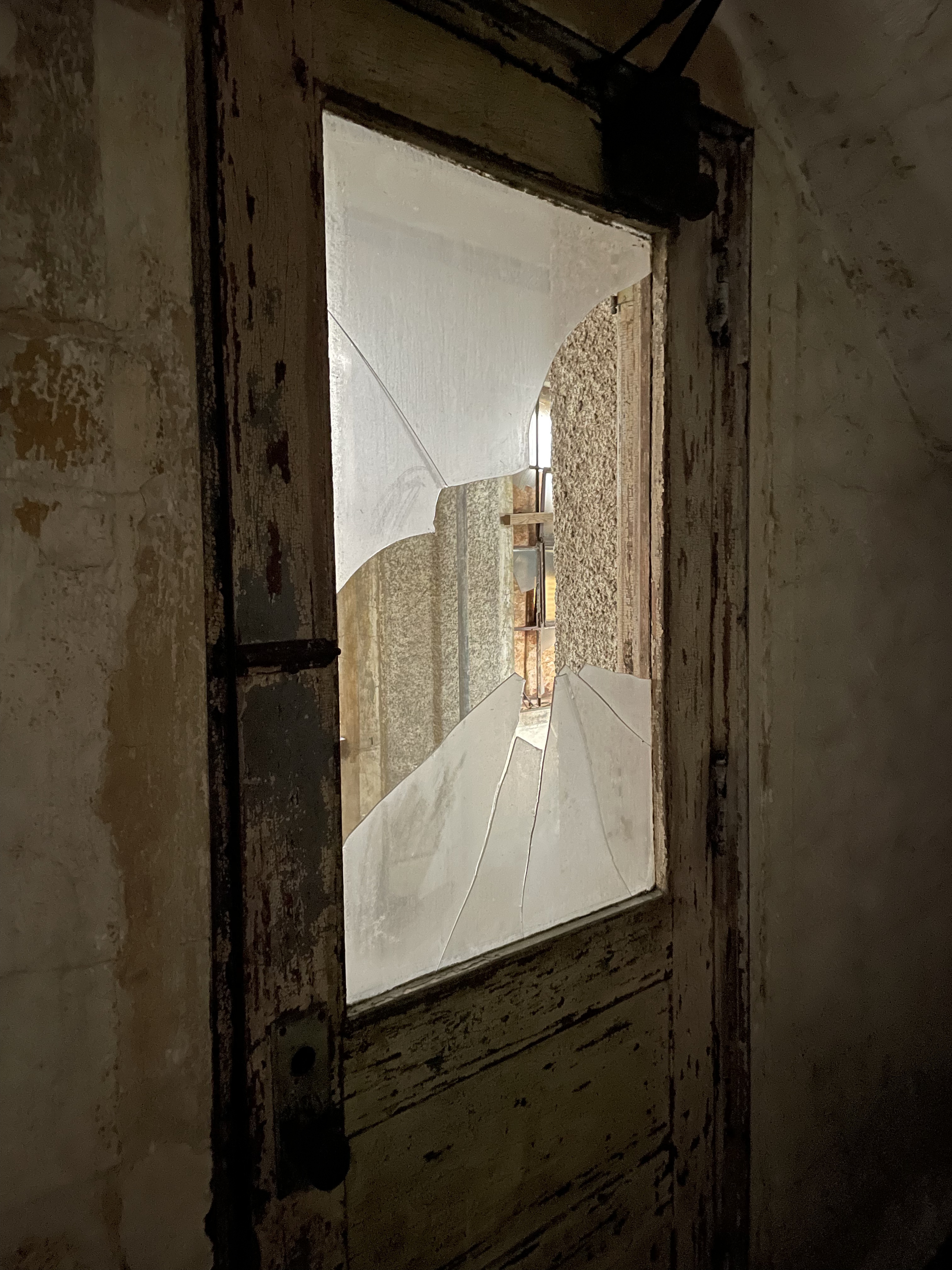
Cracked windows open to wild courtyards. I knew nothing but shadows and I thought them to be real, wrote Oscar Wilde in Dorian Gray.

The trees are both hideous and beautiful.

Mary Shelley wrote in FrankensteinThe world was to me a secret which I desired to devine.

There is golden light.

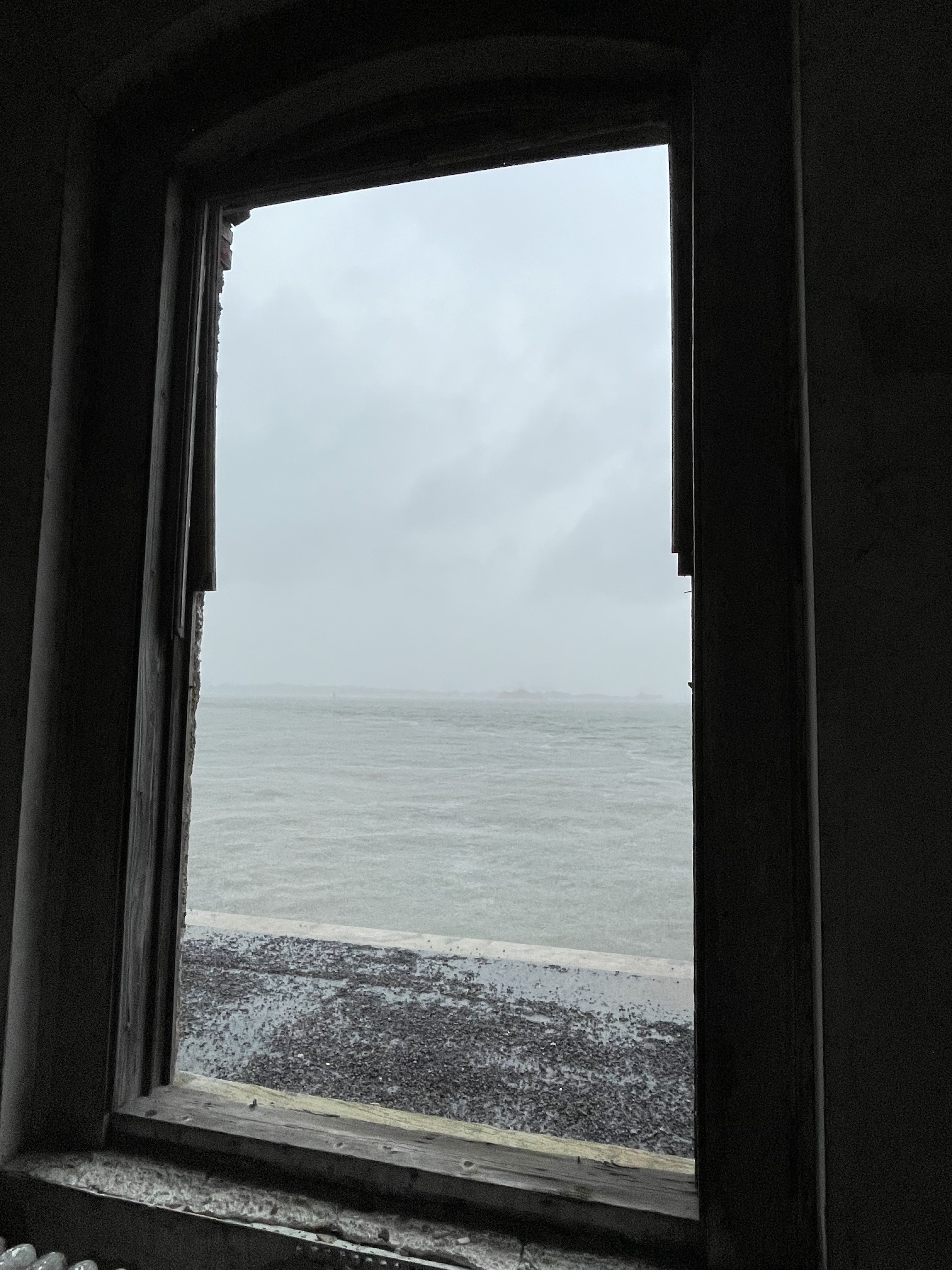
We’re open to the cold, storm-tossed waters of the Bay.

Everything more beautiful in the wet.

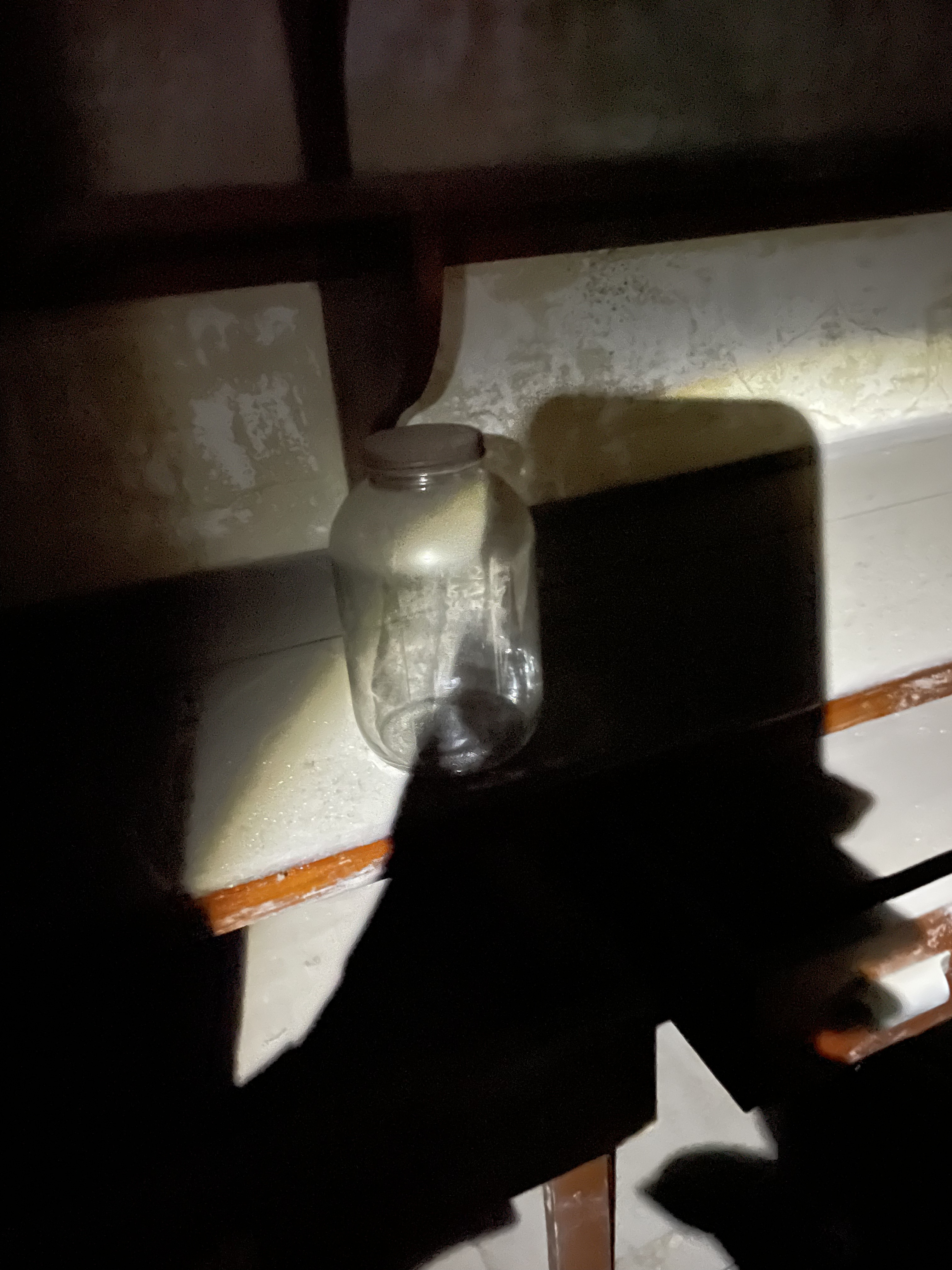
And I make some new discoveries. A bottle, miraculously untouched after a century.

Glass littering a floor

I feel both a little frightened and exhilarated. Beware; for I am fearless, and therefore powerful. Again, ShelleyShe should know; she had the courage to write a novel that would revolutionize literature when she was just nineteen years old. (Her mother was famous women’s rights advocate Mary Wollstonecraft.) 

So fortunate to be able to spend time in this iconic, moody place.

I see mysteries.

A ladder to nowhere.

More mysteries.

Some were healed here. Blue paint was thought to be calming, hence its use in the open bay psychiatric wards.

Things were clean, sanitary back in the day.

Some suffered. We know that people heaved themselves out the windows on the upper floors, hence the heavy-duty metal grates. Life, although it may only be an accumulation of anguish, is dear to me, and I will defend it. Shelley.

Nurses bunked near the psych wards. Each of their dorm rooms has a screen door against the mosquitos that would have been hell in pre-air-conditioning, pre-Deet New York Harbor.

I was never really insane except upon occasions when my heart was touched,  wrote Edgar Allan Poe.

There is a lot to touch your heart here.

If you only let it in.

3 Comments

Filed under Jean Zimmerman

I greet the trees

on my regular saunter around the Catwalk estate.

John Muir preferred the word saunter to hike.

Guess what? Have you ever had a wonderful dream, then woken up, then fallen back asleep and had the same wonderful dream continue?

That’s what I feel like. Catwalk called and said someone had canceled for the next session. Would I come back?

What do you think I said? I’m back in paradise for another two weeks.

I must have done something good at some point to deserve being in the presence of this fresh young white oak.

So I amble around, revisit my favorite sights.

The monster red oak poses for me.

The trees always look the same, I can rely upon them. Yet somehow different. Even the grass here pops, holding its cup of dew.

The beech’s silvery trunk more elegant each time.

Chipmunks scurry. Hummingbirds – too fast for a picture! The meadow. The air smells like cinnamon.

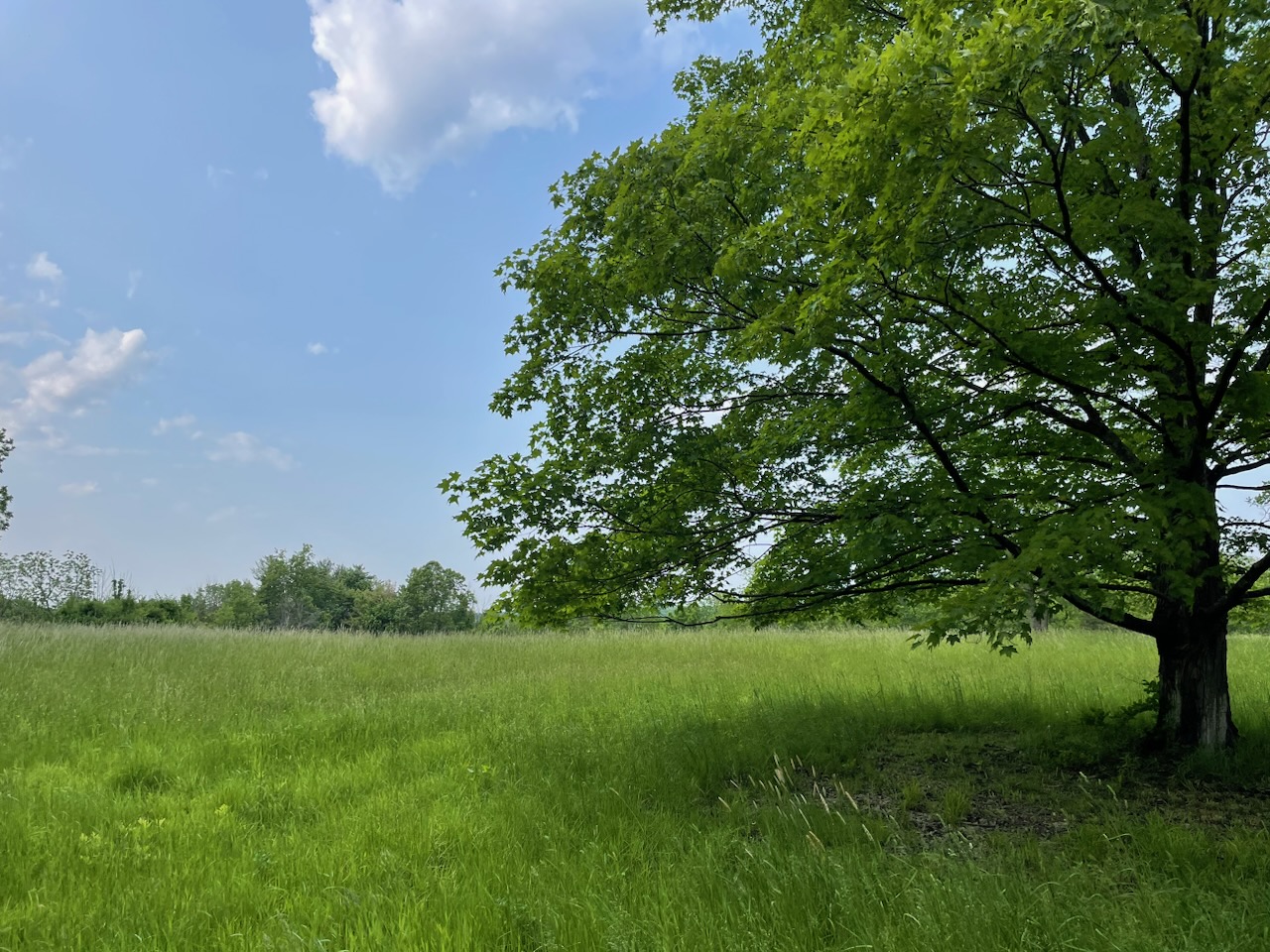
The meadow grasses.

Ever lush.

Each flower has a name.

Must I know them all?

I identify them.

Then forget the name.

Does it matter? Everyone knows a daisy, if they know anything at all.

Perfect wet rolls off the leaves. They don’t know how beautiful they are.

The ponds. First the catfish pond.

Then the frog pond.

A cattail, ready for her close-up.

A redwing blackbird calls. I meet up with a painted lady after she dug a hole for her eggs but before she laid them.

I tiptoe away so as not to disturb her further.

I see x’s and o’s. The x’s roots on the ground.

The o’s happy critter habitats all around.

Lichen on trunks.

Mossy, venerable stone walls, built at two hundred years ago to last.

More trees, characters like this leaning sweet birch, I have to stop for it each time I pass.

Mysterious sculpture made by someone I don’t know, sometime in the past.

Statuary. This strange creature.

Look a little closer.

Closer still.

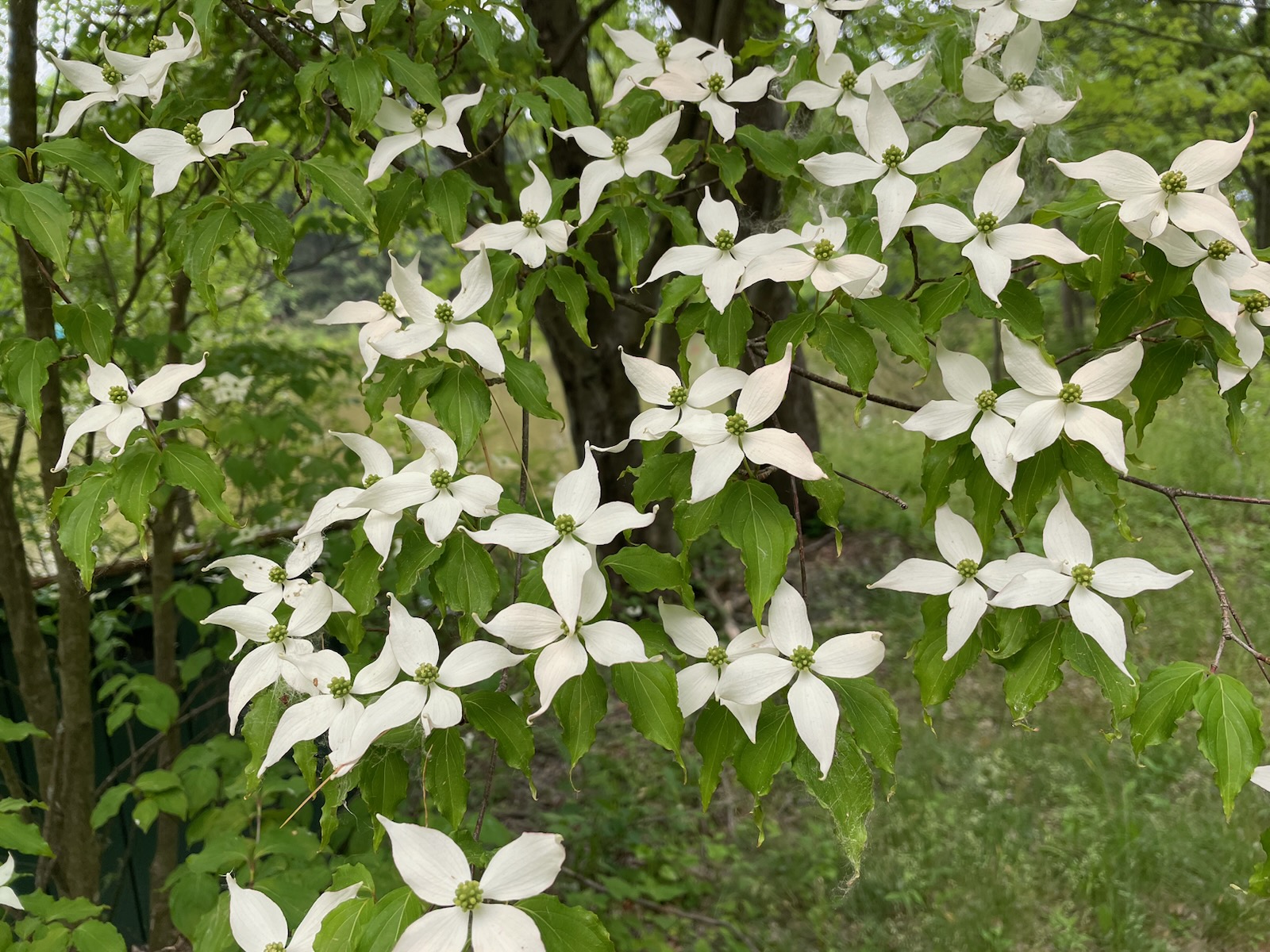
Dogwood, its new bract spangles.

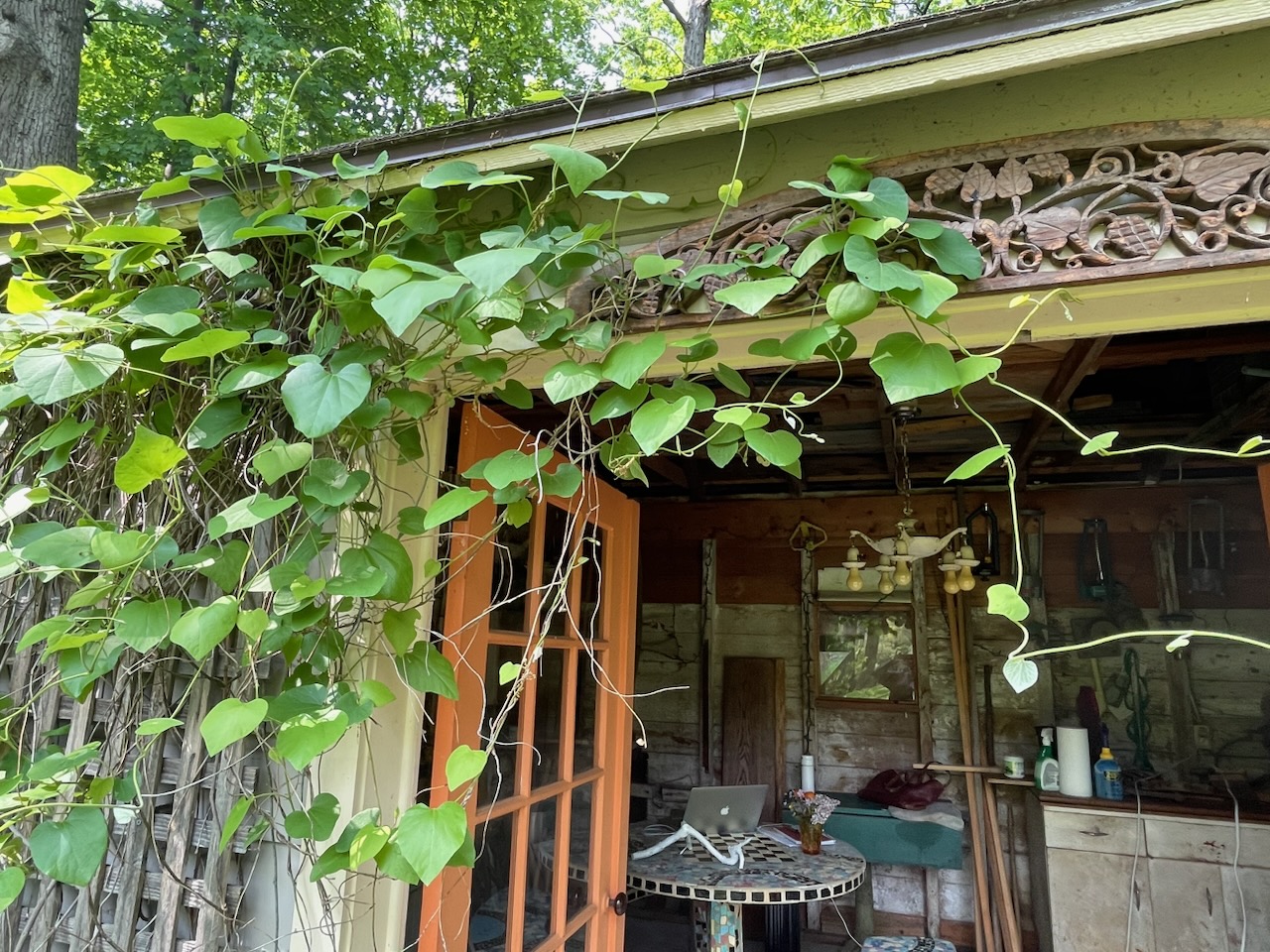
I wind up at my garden shed, my sanctuary. Filled with dusty, magical old objects, perfect light.

And the lawn outside with its gracious trees and a spooky circle of chairs.

The spider web, still here.

Recently I had some guests over for sugar cookies and oak leaf favors, good for book marks.

Introduced them around to some of the trees. Bur oak, I think? Or shagbark hickory? This is a good place because it reminds me I don’t know everything. I want to lose my arrogance.

The heavy hanging catkins of a black walnut. That I know.

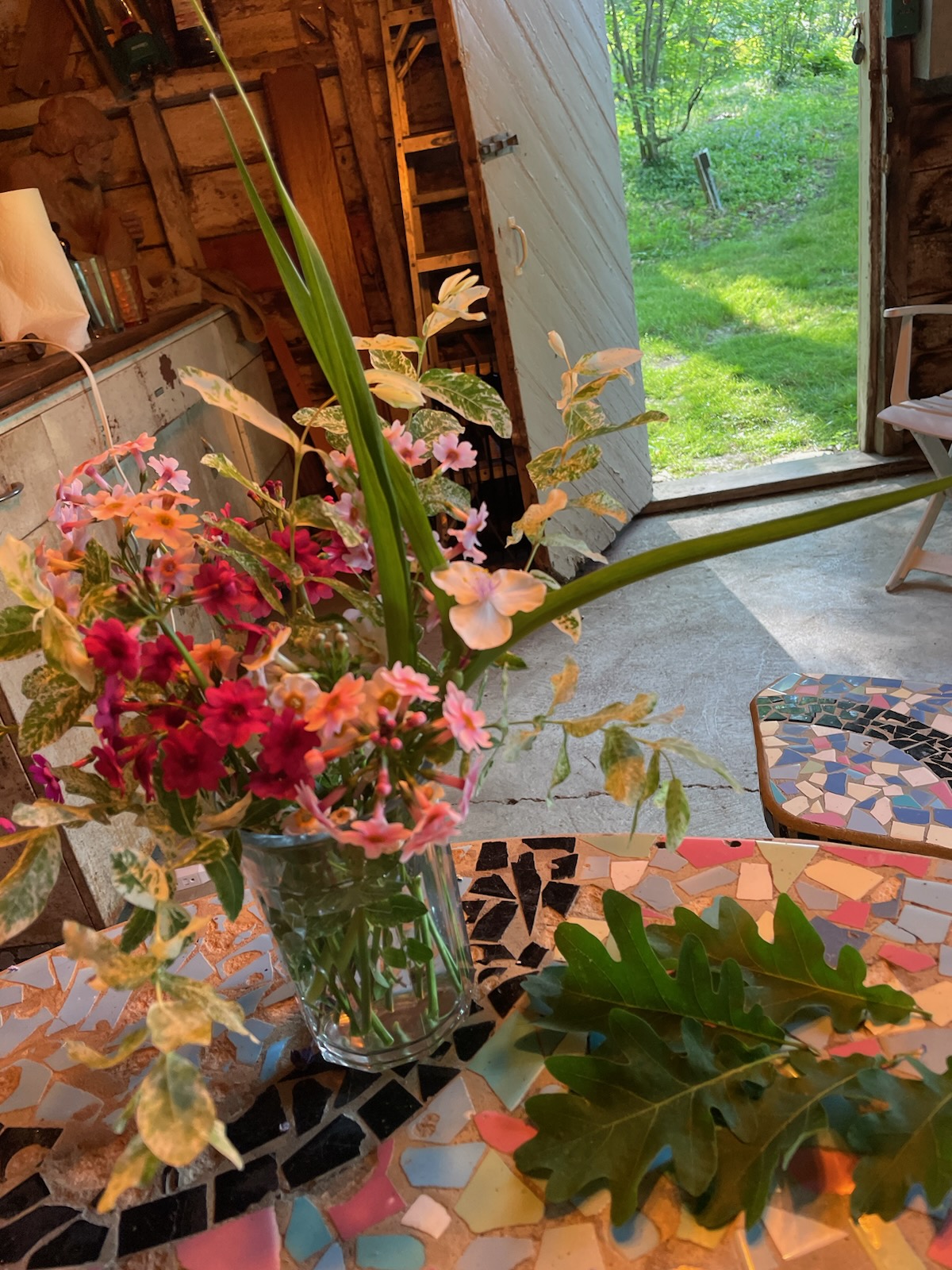
Come back to my living quarters, stick some peonies in a glass. Glad to be back.

Time to write.

2 Comments

Filed under Jean Zimmerman

Trouble, trouble, trouble. Trouble.

Really?

How can you complain when you find yourself in the most beautiful place on earth? Can there really be trouble in paradise?

It’s like this.

I got some feedback on a just-drafted chapter from someone I trust. He said what I wrote was not perfect. It’s hard to write about nature when you’re in the presence of natural perfection. And manmade perfection, in the form of a perfectly built old stone wall. Can I produce anything that good, that lasts that long? Probably not.

I take my seat in my writing garden shed.

Inspire myself with some of the flowers that grow just outside.

Say a few words to my shed-mate Giselle.

Woe is me. Write a while. Dreck. Go outside.

Admire a few simple flowers.

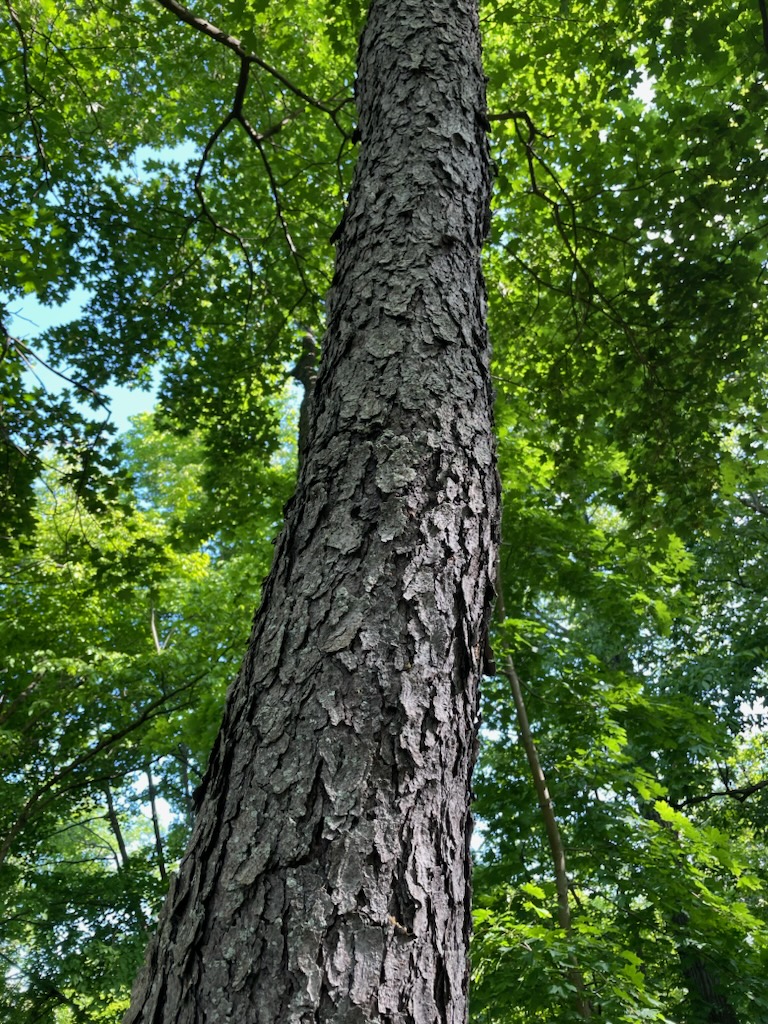
Visit with some trees. The shagbark hickory. Its new leaves are the most incredible shade of green.

Look up at the black cherry. How tall is that thing anyway?

Marvel at a tangled fall of shattered silver maple against a bewildered black gum. Human-produced sculpture doesn’t get that good.

Something amazing. A seemingly robust old white oak.

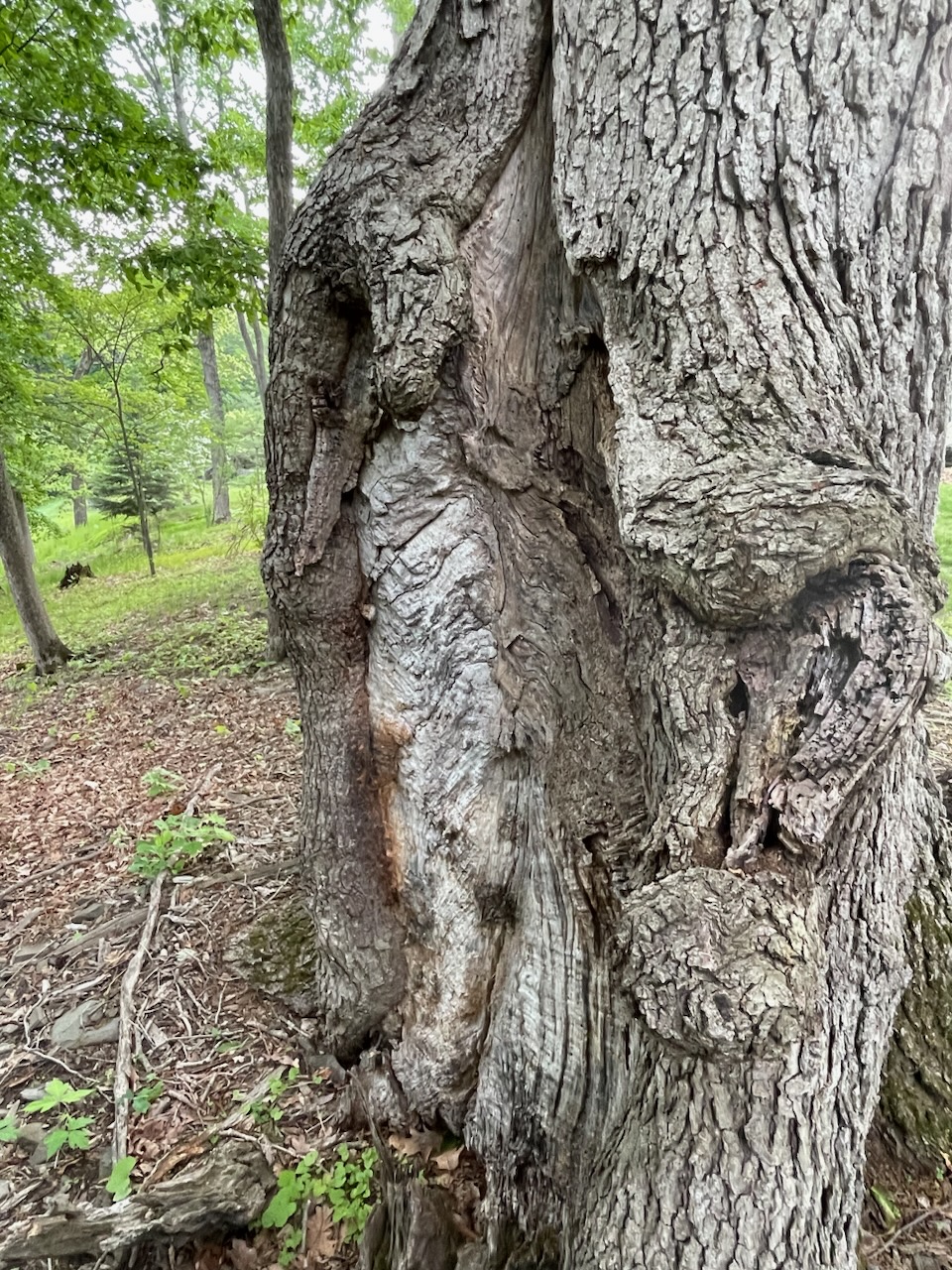
Around the back, it’s clearly had a lot of problems, but fixed itself. The way trees do.

Down the path, the crazed contours of bark, this one a white ash.

Everyone has problems. Knee problems. Heart problems. Cash flow problems. I can put a check in all those boxes at least some of the time. There aren’t too many people to tell my troubles to.

But how can I complain, really?

Trying to learn from the persevering robin who hops by over and over again outside my writing garden shed and is rewarded with money-green inchworms. I mean, over and over again. All day.

Then I go, rock myself in the hammock.

Within a few paces of the just-blooming lilac.

Olfactory bliss.

So really, can I complain?

I can complain. Watch me.

I sweat my way down to the river. Think. Pick up a few what I seem to remember are water chestnuts. They might not be. They might be magic.

Think some more. All of this thinking is making my head hurt. So I stop thinking.

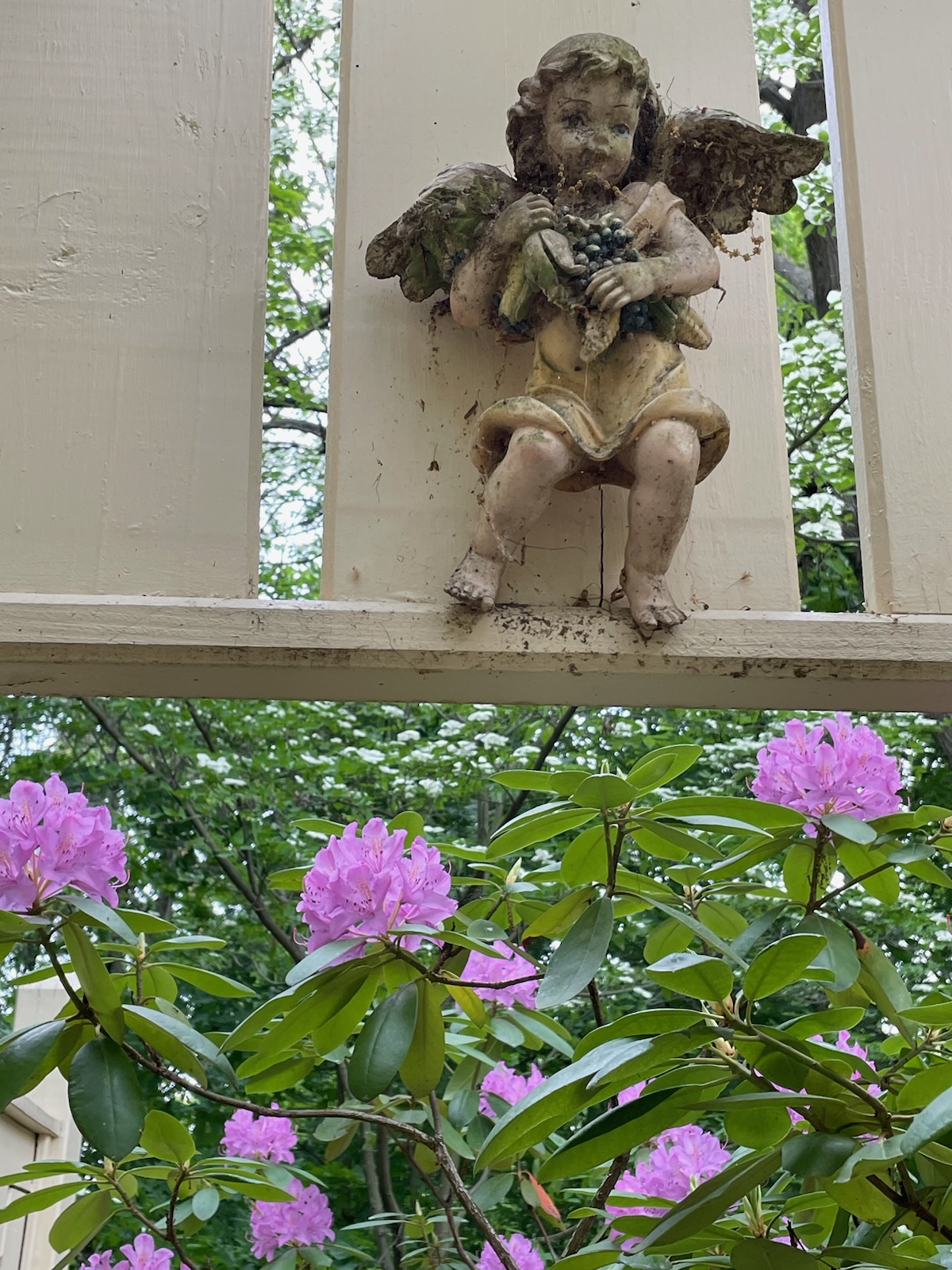
Pass by the cherub floating above some ripening rhododendron at the wooden loveseat.

Sometimes a thing is almost more beautiful before it’s blossomed.

When I get back to the caretaker’s cottage I find a bright green inchworm crawling on my leg. I set it outside, gently. I don’t need it.

The lawn is filled with dandelion wishes for the taking.

What the heck.

I’ll get a bigger bouquet.

2 Comments

Filed under Jean Zimmerman

If you’re champing at the bit to see the cherries

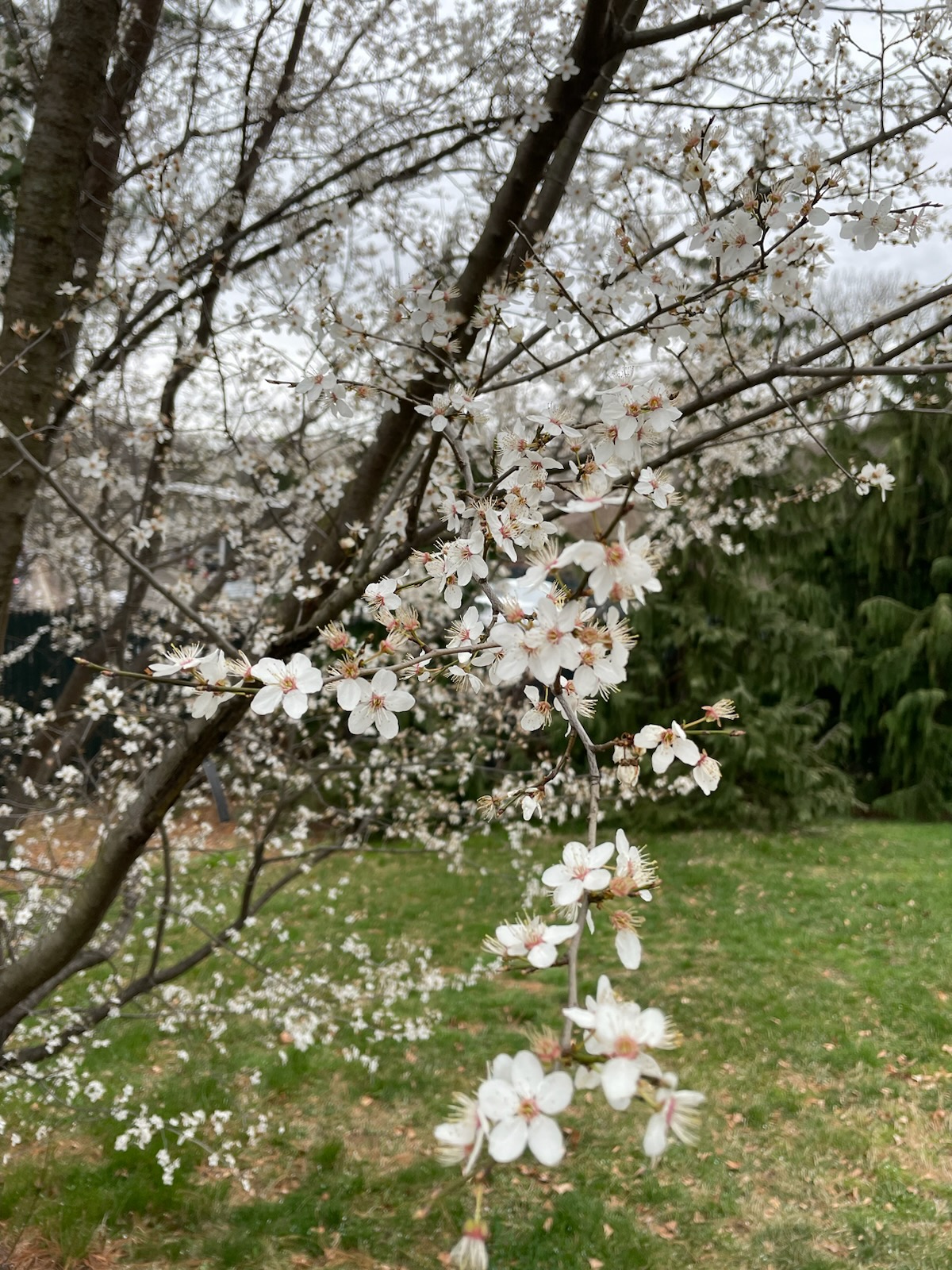
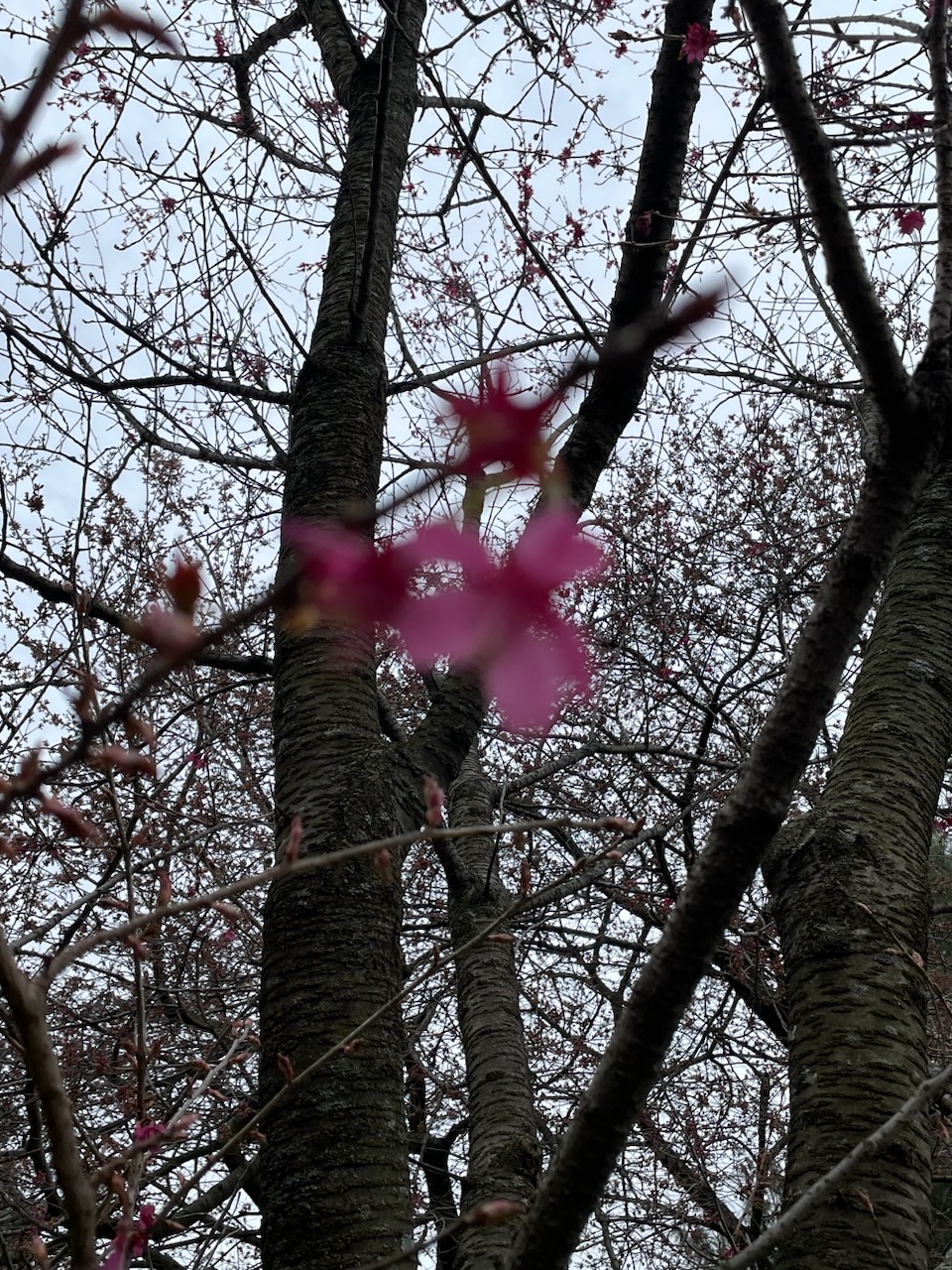
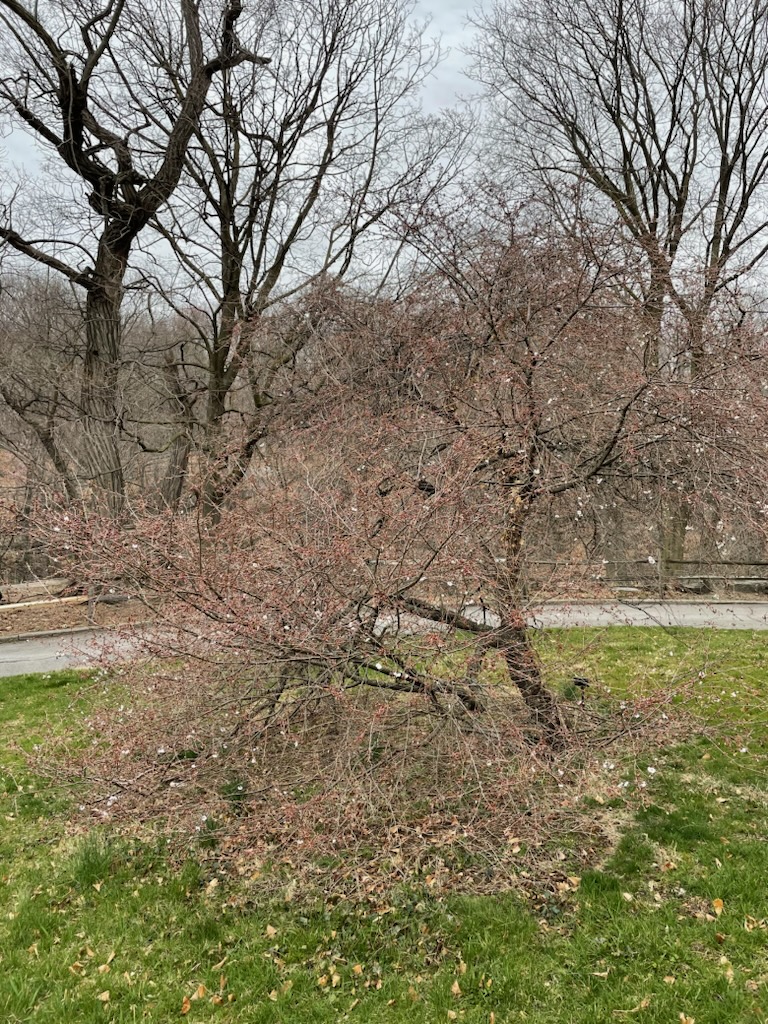
(I know I was) it’s easy enough to take yourself down the Mosholu Parkway to the New York Botanical Garden in the Bronx. However, the place’s Cherry Collection –sounds like a high-end clothing line – might not be in full bloom yet. That’s okay. Cherry trees are spectacular even if they are just barely flowering. Like Prunus cerasifera var. divaricata.

Why did George Washington chop down a cherry tree? Unsure, and it might be a myth, but that could be another strike against him along with the facts that he sic’d his Revolutionary soldiers on the Indigenous peoples of the Northeast, also that he blew off spunky and beautiful Mary Philipse, and also that he had severely scarred skin from the smallpox he contracted as a youngster. That last was not his fault, so we’ll forgive him. And he does score a few points for freeing the 124 enslaved people that were his “property,”  albeit after his death.

But I digress. My friend Barbara and I were kvelling somewhat yesterday over the first few blossoms at the NYBG on an early spring day as crisp as a Granny Smith apple. Well, I was kvelling, but Barbara was shivering.

Even on a cold afternoon with a milky sky like yesterday’s they were lovely. Or perhaps especially on a day with clouds! The blossoms show up better. On a blue-sky day everything cherry-related almost overwhelms with sugary sumptuousness.

We saw just a whisper of blossom, a smudge of pink…

Trees on the verge, holding on to their promise, most of them barely in bud. The sense of expectation was palpable.

In a week or two this cherry orchard will be mobbed. Yesterday, there was no one around. Silent, and under the cottony clouds all the more mysterious.

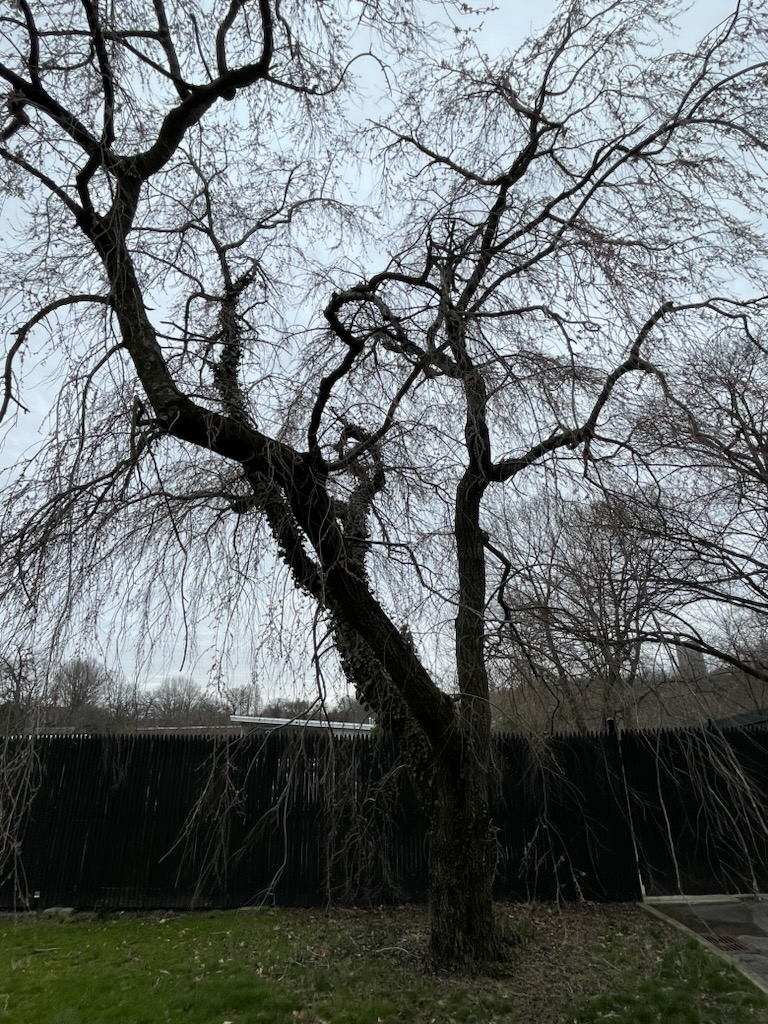
Without all the frou frou of flowers, you become aware of the skeletons of the statuesque mature ones. The weepers. Their bone structure.

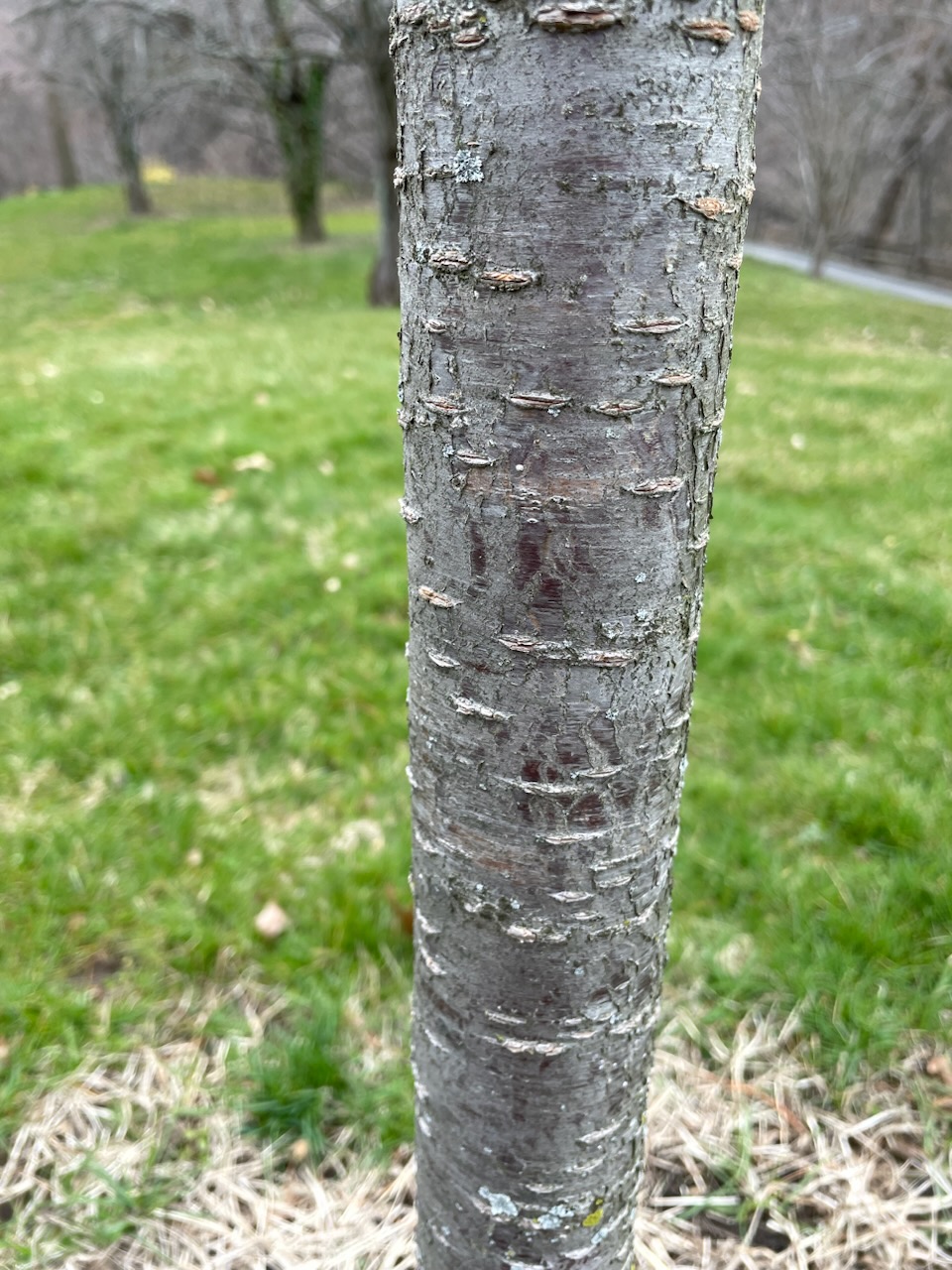
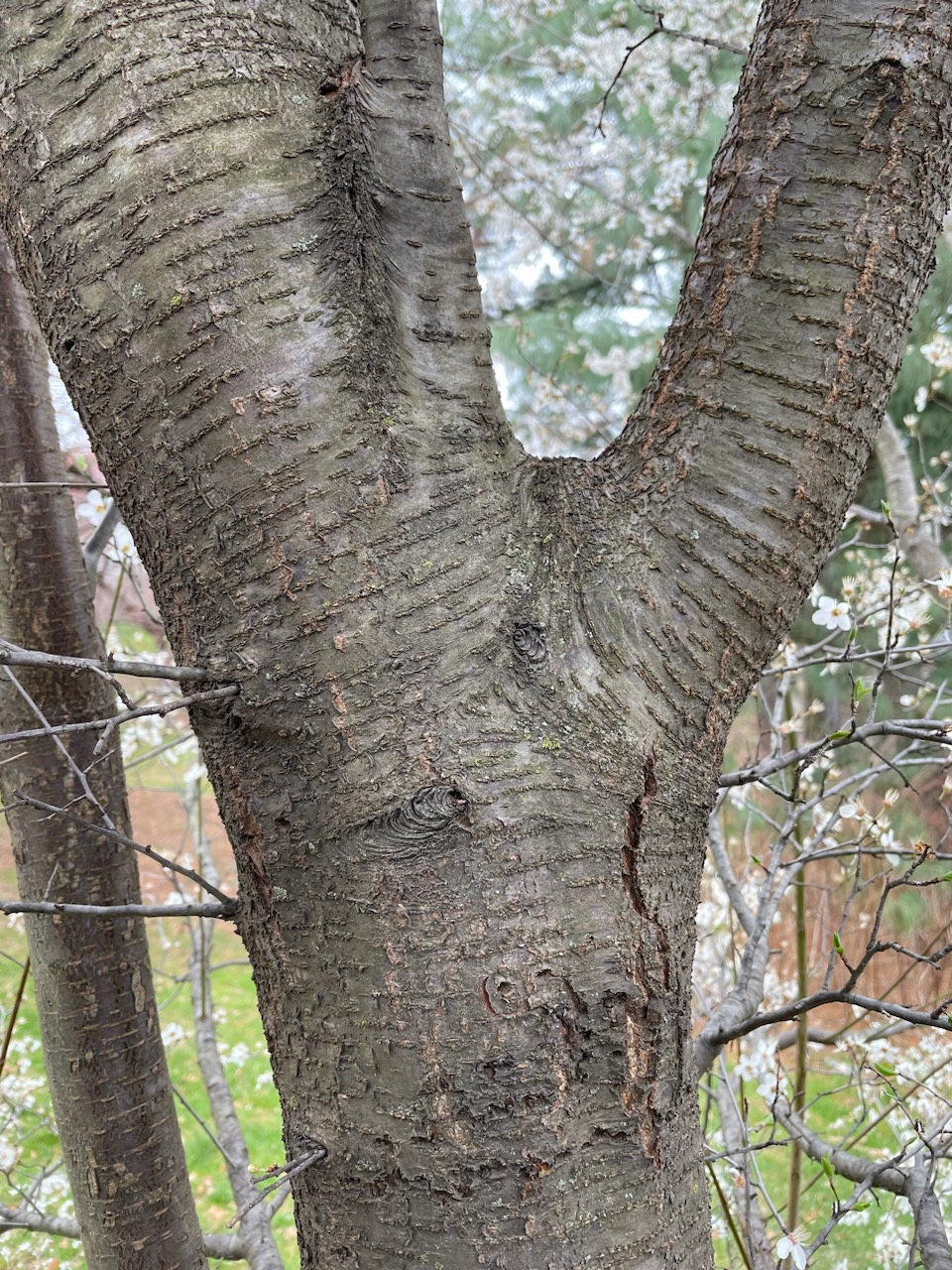
You could really notice the lenticels on the bark, the raised pores — the elegant horizontal stitchery that helps the tree breathe. Among the older, wizened specimens we saw a young one, no longer a sapling but more a teenager in cherry years.

Barbara and I ventured from our usual haunts along the Hudson River just for these trees. They’re about the only things that could pull a sane person away from our habitual perambulation, the River is so beauteous, so perfect.

In Japan during sakura season over 1,000 locations around the country showcase cherry blossoms and millions of people take themselves out into groves to worship the  trees and ponder the ephemeral nature of being. American arborists like to make a joke: How many trees does a regular person think there are? Christmas trees, and everything else. But there is one notable addition. Almost everyone knows these pink-white clouds of blooms every March and April along the eastern seaboard. They are just about the only trees people actually make pilgrimages to see. Even people who are not tree people become converts.

Barbara’s not only my walking buddy but my writing friend. Between our effusions over these flowers we talked of words and our experiences putting them on paper. The rare triumph when you succeed. The disappointment when you fail. The need to get what you care about out there to readers. We don’t have to explain why we need to, it’s so integral to each of us.

We stood at the edge of cherry blossom way. When did you know you wanted to be a writer? I asked. Barbara’s father before her wrote novels. He had a bestseller, after which the family moved into a nicer house. When she was little, Barbara said, she had wanted to be a painter. Her father presented her with a gift when she was 10 years old. “I’m going to give you the best present you’re ever going to get,” he said. She opened it and found a blank book, pages empty for her to write her own words.

When I was in elementary school I filled blank notebooks with my childish loopy signature scrawled over and over because that’s what I believed writers did. I seem to recall my parents feeling I was wasting paper. Only much, much later would I come to know how rare the honor is for a writer—actually signing your name in a published book for some reader who thinks your work is valuable.

Sometimes people came to their life’s work early. I’ve been reading a biography of the ornithologist John James Audubon in which he recounts one of the curious things which perhaps did lead me in after times to love birds, and to finally study them with pleasure infinite. A nanny kept several parrots and a monkey as pets, and when the biggest parrot demanded its breakfast one morning – Milk and bread for the parrot Migonne! — the monkey up and murdered it. The sensations of my infant heart at this cruel sight were agony to me…

Barbara’s knee sometimes hurts her. My foot aches. We are neither of us young. On the outside. Inside we are sixteen, or twenty one. The authentic age, the age when words flow one to the next uninhibited, unencumbered by physical defects. The life of the mind, of the senses. You could be in a wheelchair and kvell over cherry blossoms. In actuality writing and kvelling are synonyms. Ways of encountering the world. Appreciating your environment. Taking its measure.

With cherry blossoms we celebrate not only the perfect flowers on the branch but the petals as they fall and drift off in the breeze. As they perish. No tragedy, just the way it is. Life and death, the whole kaboodle in a brief breathtaking moment.

So Barbara and I talked about writing. We always talk about writing. It’s what we do. Yes, we talk about health, husbands, idle gossip about people we know. But it always comes back to the experience of stringing words together and then, secondarily, the sometimes frustrating, sometimes exhilarating effort to get those words out into the world.

Barbara runs a program called Story Shop, a creative arts workshop that’s all about the intersection of art and writing, in which she encourages kids to create original stories but not necessarily on paper – the narrative can be assembled out of found objects, drawn, mapped, acted, sung. A key piece these days, she said, is building miniature worlds.

She explained  that the kids she knows in middle school tell her that today, teachers say that when you write you must only do so  from your direct personal experience – not employing the voice of another gender, race, even an animal. One student told her that she was dissuaded from making up a story about aliens because she’d never been to outer space.

So you couldn’t write a story from the perspective of a cherry blossom, I suppose, like this Prunus ‘Hally Jolivette.’

That, my friends, is tragic.

Leave a comment

Filed under Jean Zimmerman

Someone we need to remember

this Memorial Day: Kara Hultgreen F-14 pilot in the U.S. Navy, who perished in a tragic accident in 1994. I got to know Hultgreen lo so many years ago while researching Tailspin: Women at War in the Wake of Tailhook. I wrote the book at a tipping point – in 1992, the Navy changed its outdated policies on recruitment, retention, training and selection of occupational fields to be “gender neutral to the maximum extent possible.” Women could now serve in all combat positions except SEAL commando units and submarines, and the top brass was putting them on aircraft carriers methodically, albeit slowly. Of course, women had long served honorably, and they had earned this expanded role.

Just as the book was going to press, Hultgreen died.

When she trained as an F-14 Tomcat pilot alongside men when she didn’t know if she would ever get to serve as anything other than as an instructor. Now that the Navy had changed its rules for women, she would get the chance to go out on real missions. Hultgreen was rangy and brash and smart, like so many of her male counterparts in Navy flying. I had spent hours with her, much because so many people I had interviewed said, Kara, she’s the one you should talk to. She’s the real thingA real Top Gun. Her handle was The Hulk. Now she had carrier qualified (brought her F-14 to land on the deck of the carrier with its tailhook catching the wire stretched across the deck) and she’d joined the Black Lions of VF-213, who were getting ready to deploy to the Persian Gulf. Her squadron’s aircraft carrier was the USS Abraham Lincoln, or, as Hultgreen enjoyed calling it, the Babe-raham Lincoln – the Babe.

I was writing the last few pages of Tailspin, writing about Kara and the future of naval aviation’s women, when I opened the Times on October 26, 1994 to see her picture. During a practice run over the Pacific, as Hultgreen was readying her plane to land, the aircraft suddenly lost altitude and crashed into the ocean. She wasn’t able to eject in time to survive the accident.

Women in today’s military know the chances they are taking.  That old chestnut, She died doing what she loved, is one I have always found a bit dubious, yet in this case it was so true. As you enjoy the blockbuster Top GunMaverick, remember Kara as a true maverick and leader in naval aviation.

2 Comments

Filed under Jean Zimmerman

The zig zag trail leads…where?

First you have to see it. Can you see it?

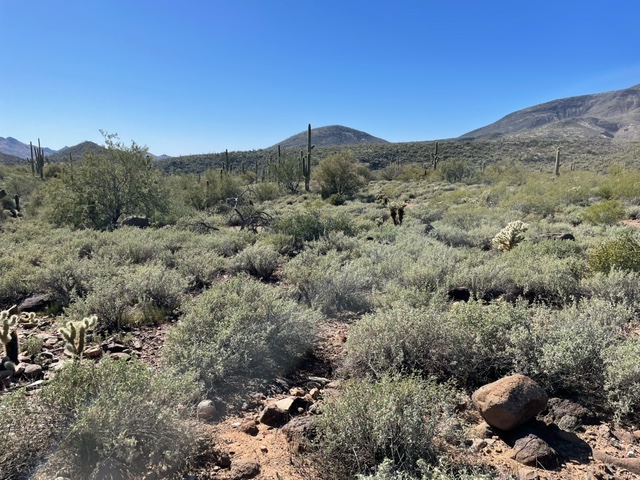
Maybe you can’t go all the way. Maybe the rocks underfoot prove too much for you, even if the saguaro forest at Spur Cross Ranch tempts you.

Beefy, odd, some more masculine than others.

A well placed bench welcomes us. Behind is a mature mesquite, shaggy and fissured.

A plaque on the back of the seat has a few words from

Walking in Beauty, the closing prayer from the Navajo Way blessing ceremony:
In beauty I walk
With beauty before me I walk
With beauty behind me I walk
With beauty above me I walk
With beauty around me I walk
It has become beauty again

The lines are supposed to bring peace and calm, and I’m beginning to feel iit, surrounded by an intense aroma that floats on the hot air, herbal and intoxicating, combined with the smell of horse. So many ride these Cave Creek trails.

My father would always find a bench. I don’t like to walk, he always said. I never understood. You’d find him seated, whether on the side of a trail, say, or on a bench at one end of a museum exhibit even when the greatest Jackson Pollack canvas in the world could be found at the other end. He wouldn’t move.

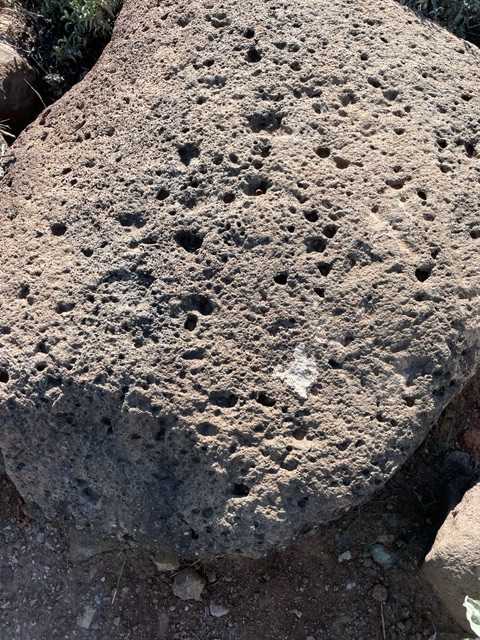
This trail has ancient rocks that have never moved, hot to the touch.

My mother says it’s strange because when my father hit the tennis court he was a demon, with a killer serve.

I think now he was just at home in his skin. He didn’t need art, or a view from a hiking trail.

Sometimes you find a tableau in the desert. Frozen, totally stationary, looking as if were posed by a mighty hand. My mother found one today.

Sometimes you see a saguaro that took protection as it grew under a larger plant, one quite different from itself.

My father never blinked when I said I wanted to go to grad school for an MFA in poetry. What a useless endeavor! He bankrolled the whole thing, and launched me as a writer.

Am I growing up yet? Like the saguaro, I’m taking a long time to be in my skin. I’m trying to be patient. “Patience is also a form of action,” said Auguste Rodin.

There might be birds here, sometime, if you wait patiently.

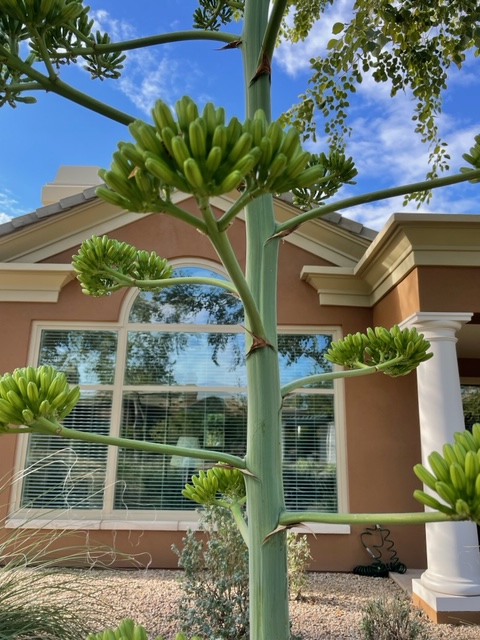
Two century plants side by side, one quite dead, one obviously alive.

Sometimes the llve and the dead grasses grow together.

In one of his most acute descriptions, Walt Whitman praised “the beautiful uncut hair of graves.”

Today, down a hill, Cave Creek.

Little more than a trickle now. In another season the rains will come and the creek will rise.

All we can do is observe and be patient.

Wendell Berry writes:

It may be that when we no longer know what to do 
we have come our real work, 

and that when we no longer know which way to go 
we have come to our real journey. 

The mind that is not baffled is not employed. 
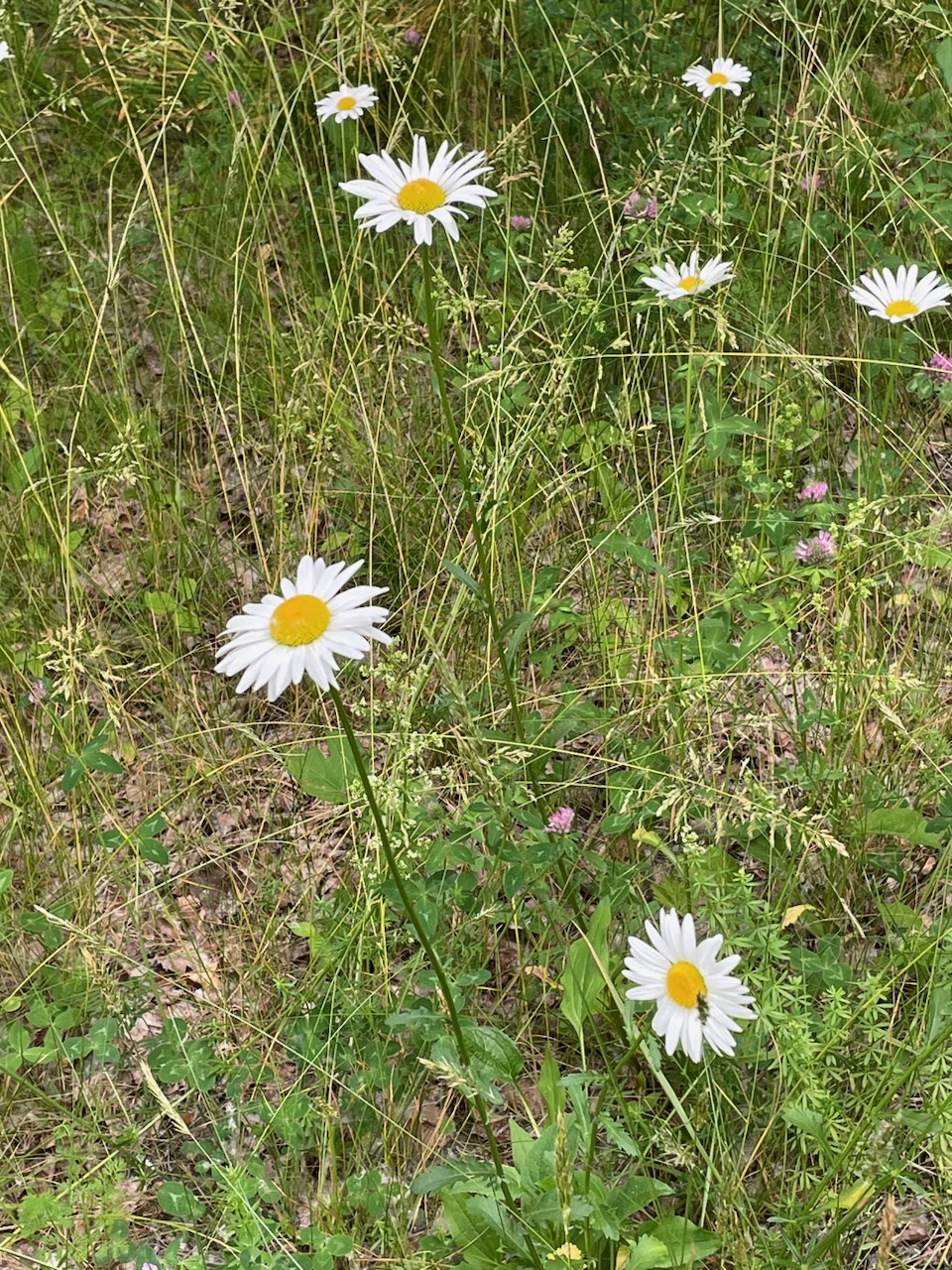
The impeded stream is the one that sings.

Not a long trail today, but one just the right length.

1 Comment

Filed under Jean Zimmerman

A few corny sentiments

are in order when you’re sprung from your Covid cell, told you’ve tested negative and are free to storm the world again.

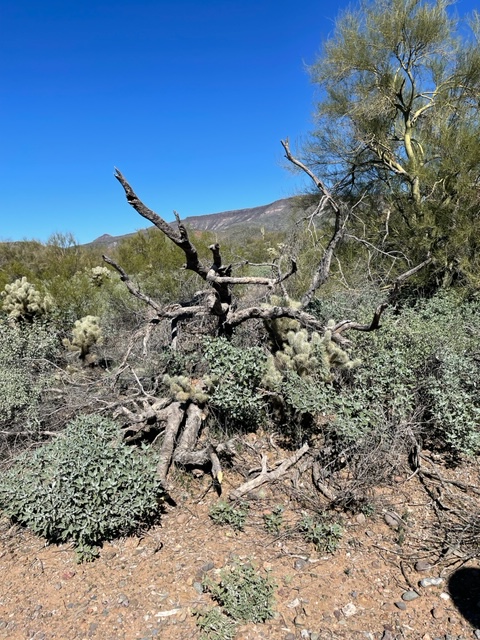
I walked in the miraculous Arizona desert landscape, among plants that are ancient yet fresh, survivors on only a few drops of rainfall a year.

The oft-quoted lines from a Mary Oliver poem seemed relevant, as sentimental as they sometimes seem: “what is it you plan to do/With your one wild and precious life?” Well, I thought about it as I walked.

What in fact do I want to do?

Pacing the perimeter of my parents’ development, I thought I might want to take some inspiration.

To kiss and to hug. That’s something that you think of first when you’ve been told not to come up close to anybody, even wearing a mask.

To hydrate.

The city of  Scottsdale actually goes out and dribbles water on individual plants. That’s responsible.

Allow my book to germinate.

Toughen my hide.

Bloom.

Stretch out.

Plant.

Pay attention to what’s above.

Be thornier.

Burst forth.

If I can do any of these things with a microcosmic bit of the spirit of the sage inhabitants of the desert, it will be awesome.

3 Comments

Filed under Jean Zimmerman

Not MY Stokes,

I thought when I saw the 1905 statue that stands square in the middle of Ocean Grove, New Jersey.

My Stokes, of course, is I.N. Phelps Stokes, the white-shoe iconographer and Manhattan-phile I wrote about in Love, Fiercely: A Gilded Age Romance. This was a different branch of the Stokes clan and a man famous for a completely different kind of endeavor: saving souls.

Ellwood Stokes founded Ocean Grove in the mid-nineteenth century and it rapidly became a Methodist camp  meeting community with regular revivals at over which he presided. Pastors still come to the place to share their wisdom, although the subject matter differs a bit. When we leaned into the godly precincts there was an avid audience of worshippers laughing as the minister described his wife’s morning sickness and linked it to Godliness.

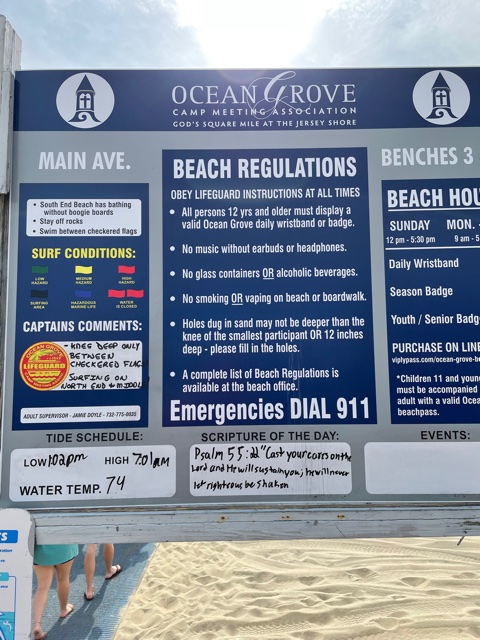
If you want to find out the conditions for swimming at the delightful beach you get a biblical proverb too, something to ponder as you tan. Bruce Springsteen grew up right down the way, but I have a feeling he did not come here for spiritual inspiration.

Ocean Grove is one of the most picturesque towns I’ve been to. Totally dry, too.

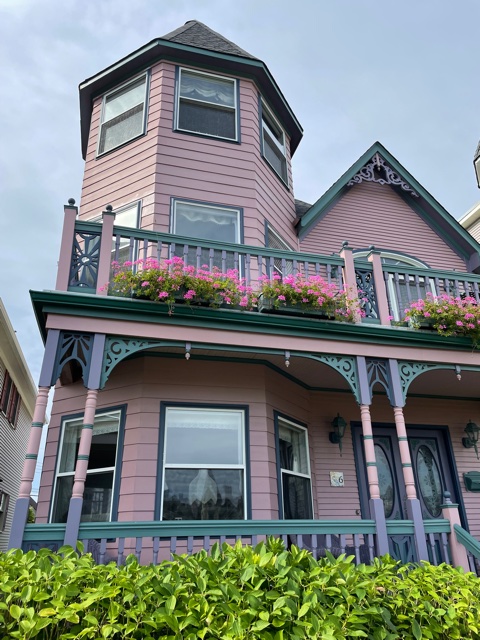
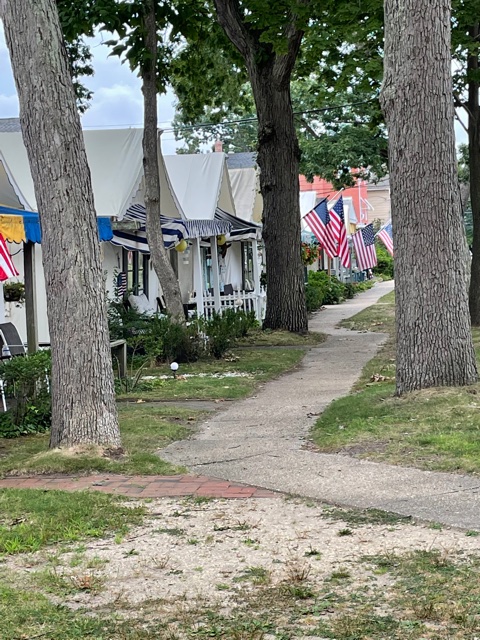
Houses are almost impossibly charming. It seemed people were sleeping in the Saturday we visited, it was so quiet.

Gingerbread to die for.

Flaming crape myrtle in almost every yard.

When Stokes founded the place those houses would not have existed.

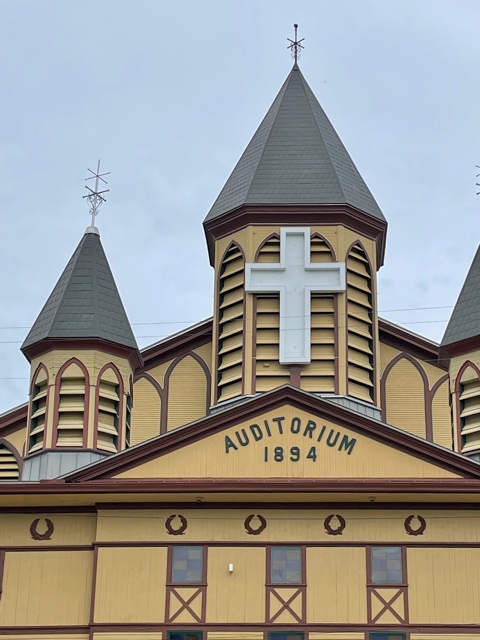
He was so proud when the 9,000 seat Great Auditorium went up.

Parishioners set up modest platform tents to be nearer to the action.

They still stand, and are a hot commodity.

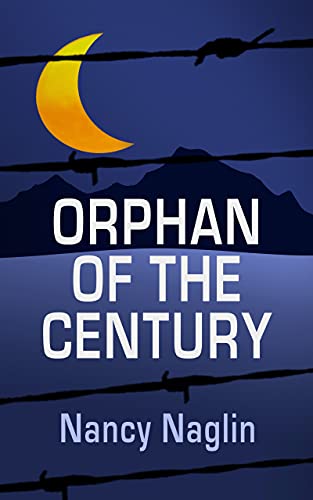
The real estate in Ocean Grove is competitive, but writer-types still manage to sneak in. Introducing Nancy Naglin, who with her husband J.J. Kane first summered here and then wound up as a permanent resident.

Nancy wrote an incredible book called Orphan of the Century, a wild ride that depicts a boy born in 1923 as he roams the underworlds of Poland, China and other countries as a crack pool player – an epic story of gambling, survival, sexual identity and the dignity of the human heart.

Orphan of the Century may be purchased at Amazon and will make a fine gift for anyone who likes adventure and fun in a summer read as well as the occasional racy tweak. To quote the back, which is sometimes a good idea, the novel “is an epic story of gambling, survival, sexual identity and the dignity of the human heart.” It’s on my bedside table now. I think Ellwood Stokes would have read it in secret for some private titillation.

Come to Ocean Grove and spend an afternoon under the town’s lovely park of white pines. Nancy will sign a copy for you.

2 Comments

Filed under Jean Zimmerman