to talk about a 2024 resolution to be less annoying, less grandiose, less showoffy, less of a know it all, and to do it in a blog that showcases me, me, me.
I know. It is true.
And yet, hiking the Fay Canyon trail this morning I can’t help but ponder my resolve, how I might achieve it, and how I might write about it here. And illustrate with my own photos, of course. I might not even have used those words, counterintuitive and disingenuous, incorrectly. But see how I full steam ahead as though I did?
Bear with me.
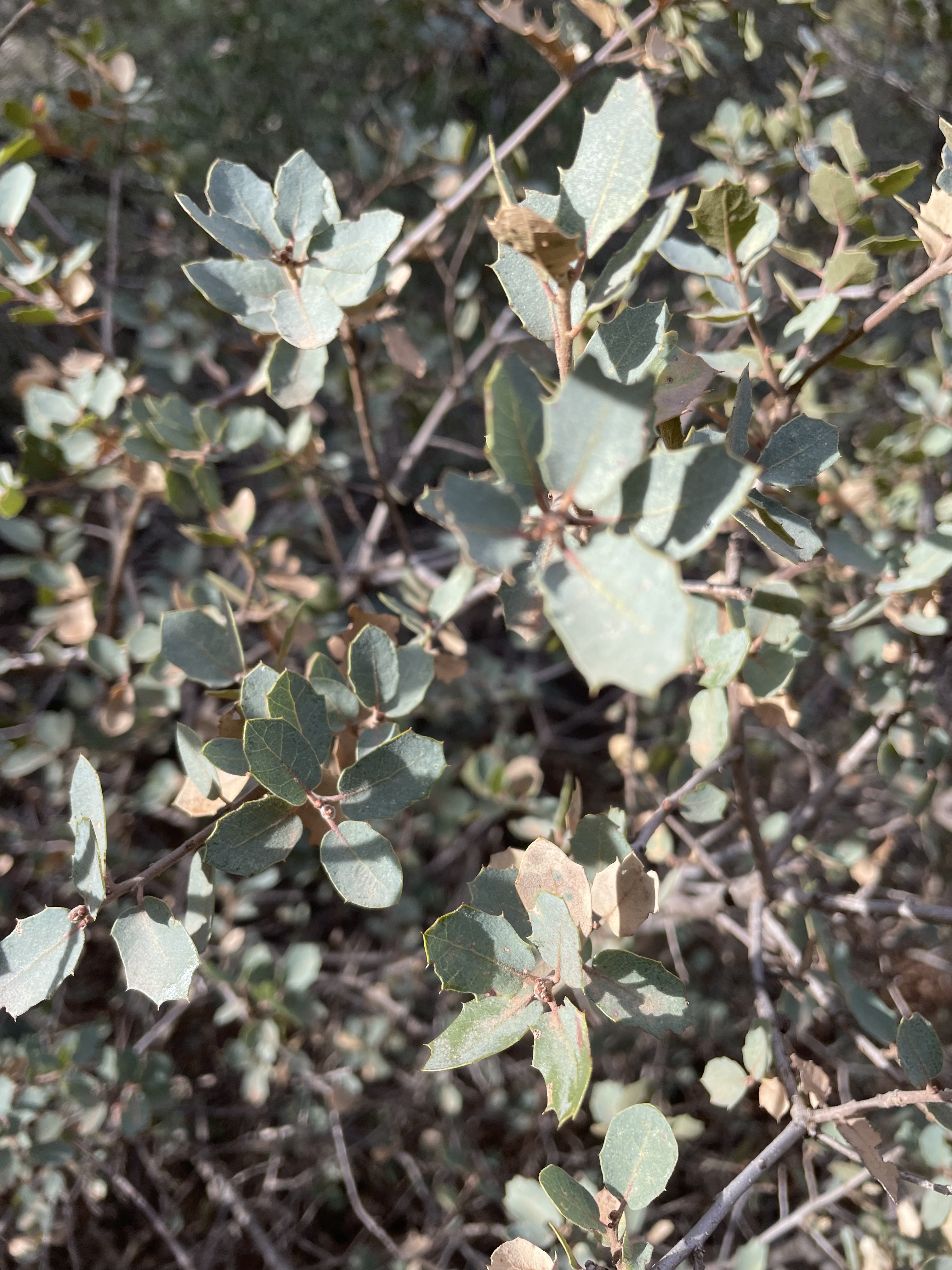
Juniper, oak and manzanita dominate this forest landscape.
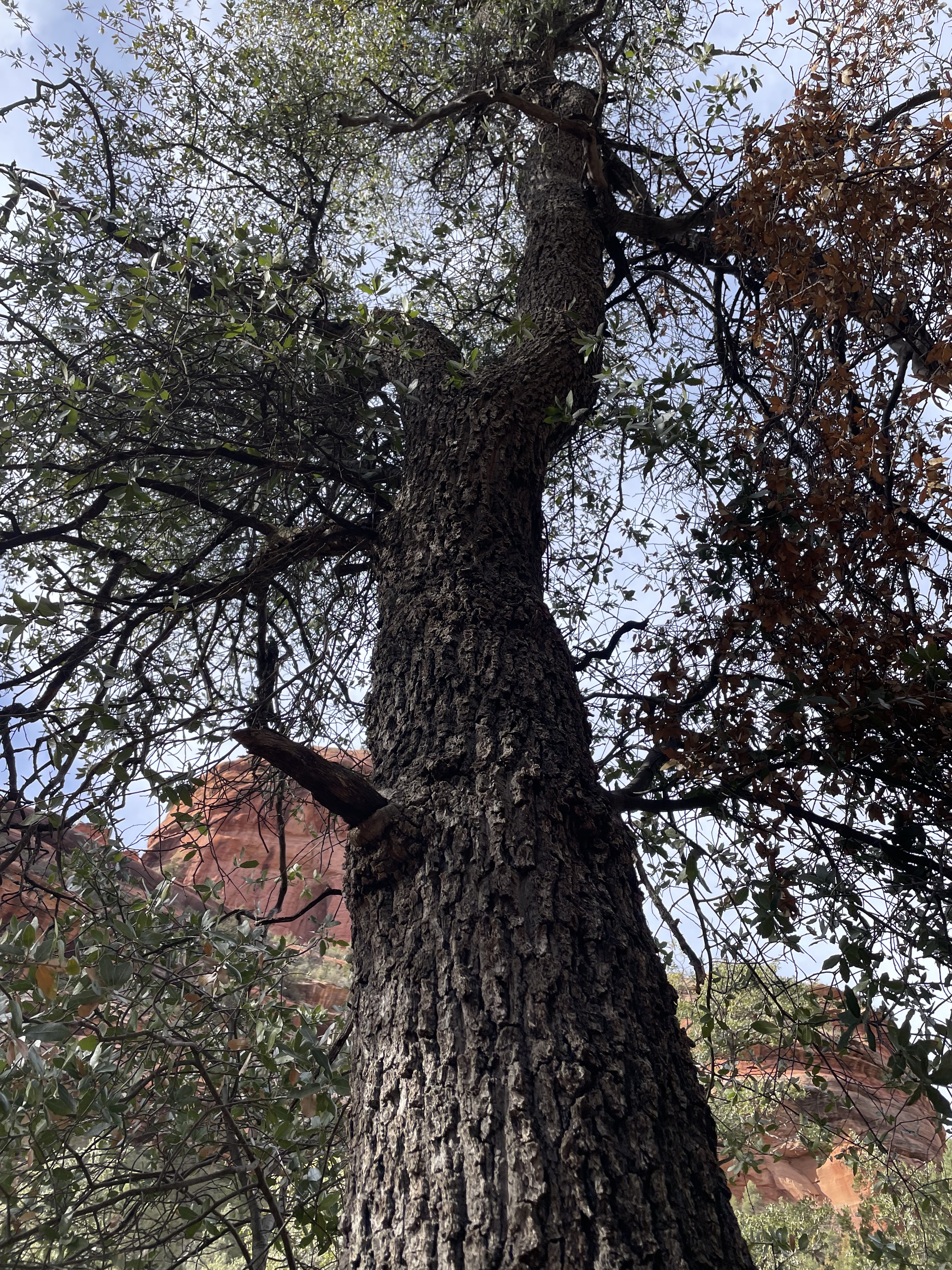
The oaks are different than we have back east. Gambel oaks, Emory oaks. Interesting growth habit, unusual leaves.

Plenty of beauty all around.

I’ve always loved manzanita for its dead and live parts intertwined.

A little way in I come upon my first alligator of the day.

The alligator juniper, magnificent, and even a conjoined specimen, my favorite.
Me, me, me. My favorite, which I’m telling you about here. They’re so hardy, their roots can grow into rock.

Which one is your favorite, though? Slightly less arrogance, slightly more consideration for other people.
Conjoined junipers abound. Husband-and-wife trees, not rare here in Sedona. I’m taking lots of photos.

Hikers pass me on the trail. I overhear snippets of conversation about trees, technology, how many eggs are left in someone’s refrigerator. Should we go out and buy more? says the first. Her companion: Probably not necessary.
The ground underneath the juniper’s branches swims with berries, their blue coated with a fine white powder.

Tell-tale sign of some animal.

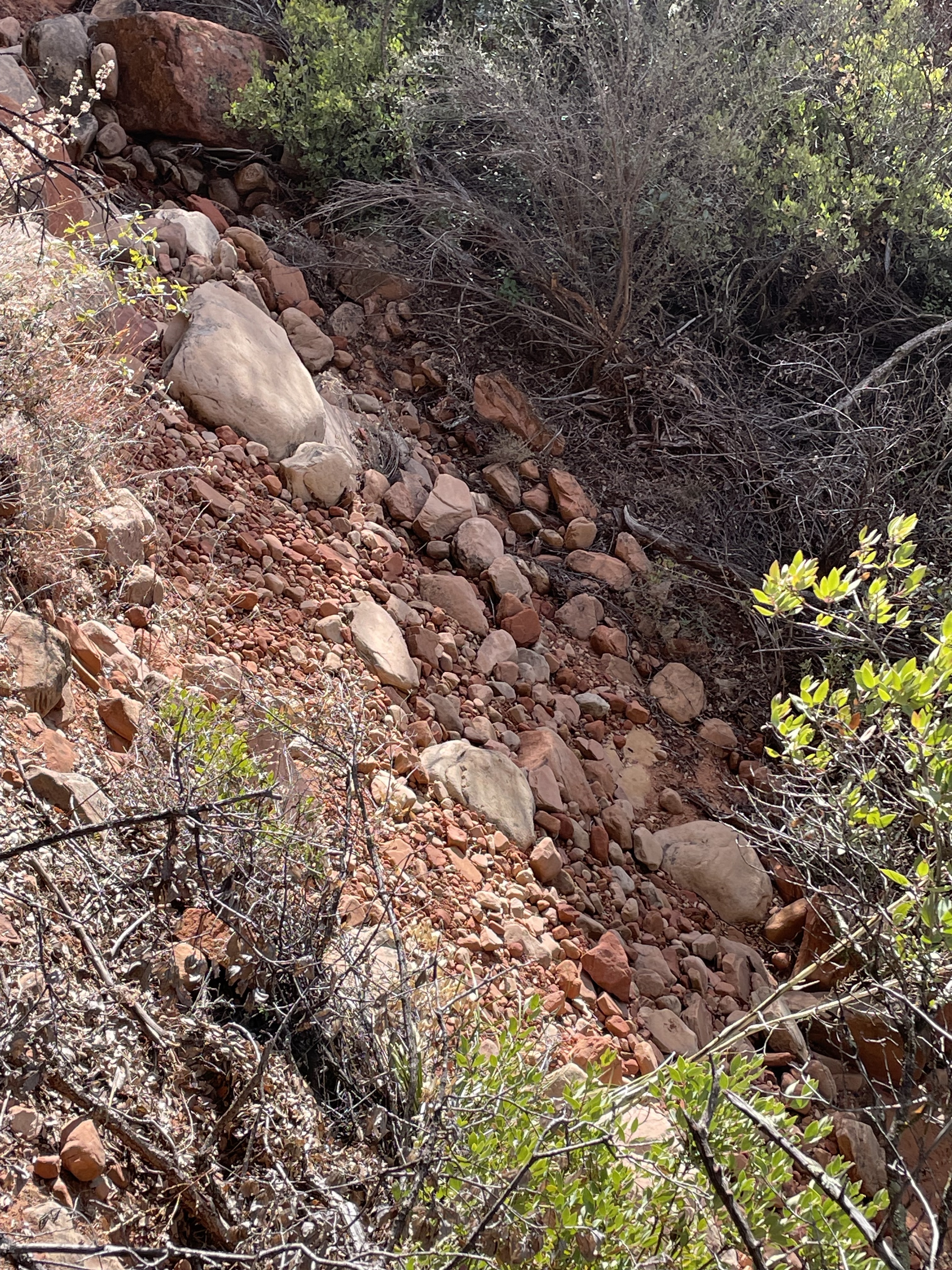
Coyote? Fox? Javelina? A person scolded me once for offering a photo of scat in this blog. I love its mystery, though, the story it tells of other creatures in these woods when our human backs are turned. I follow the stream bed, hiking the dry wash.
I reach the end of the trail, the end of the box canyon.

I see a jumble of boulders adorned by the backpack of a human lucky enough to find themselves amid this place’s grandeur.
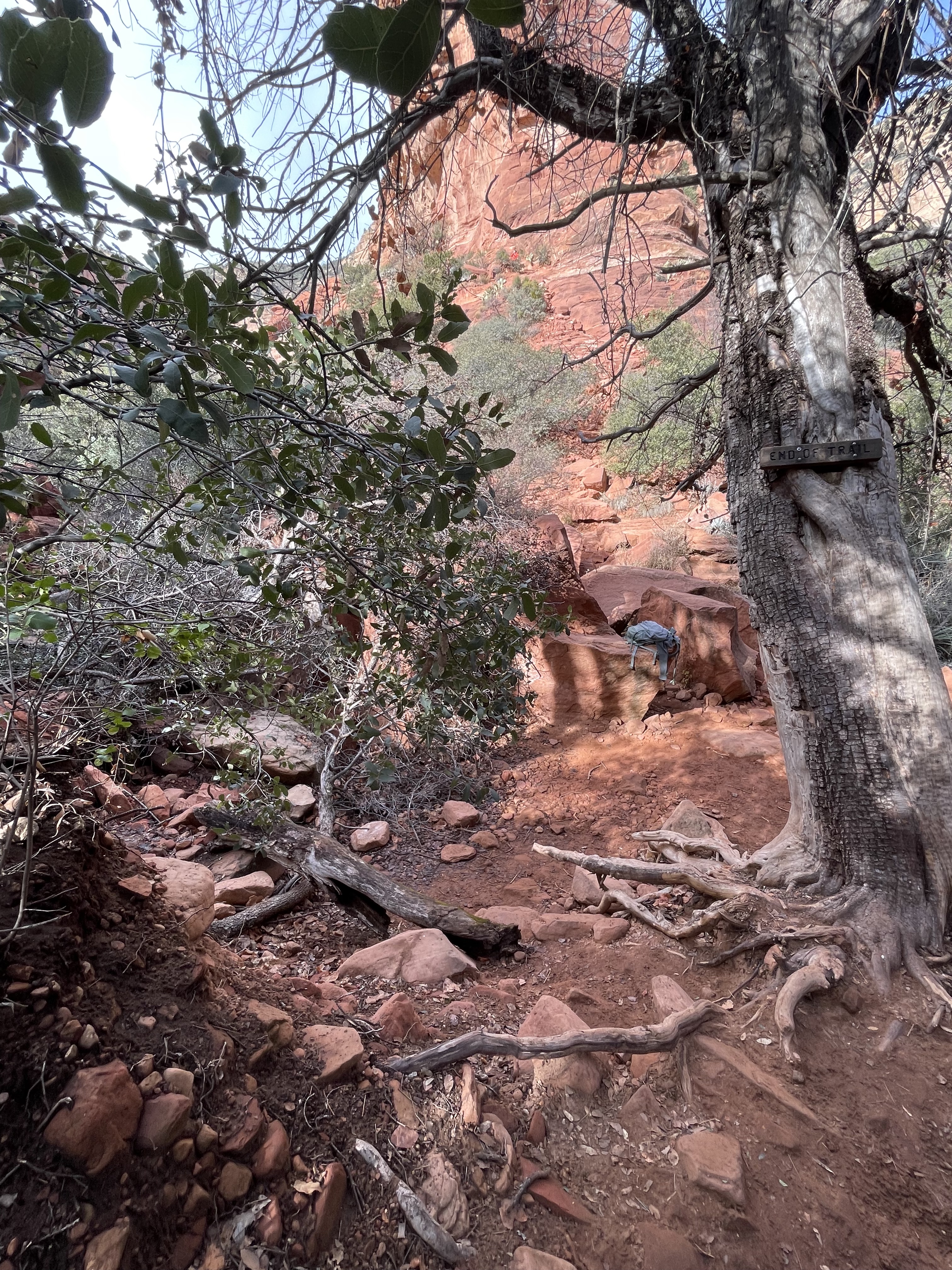
Another sign of humans, a marker that seems kind of corny and almost quaint in our digital age.

Time to turn around, head back to the parking lot, out of this fantastic realm.

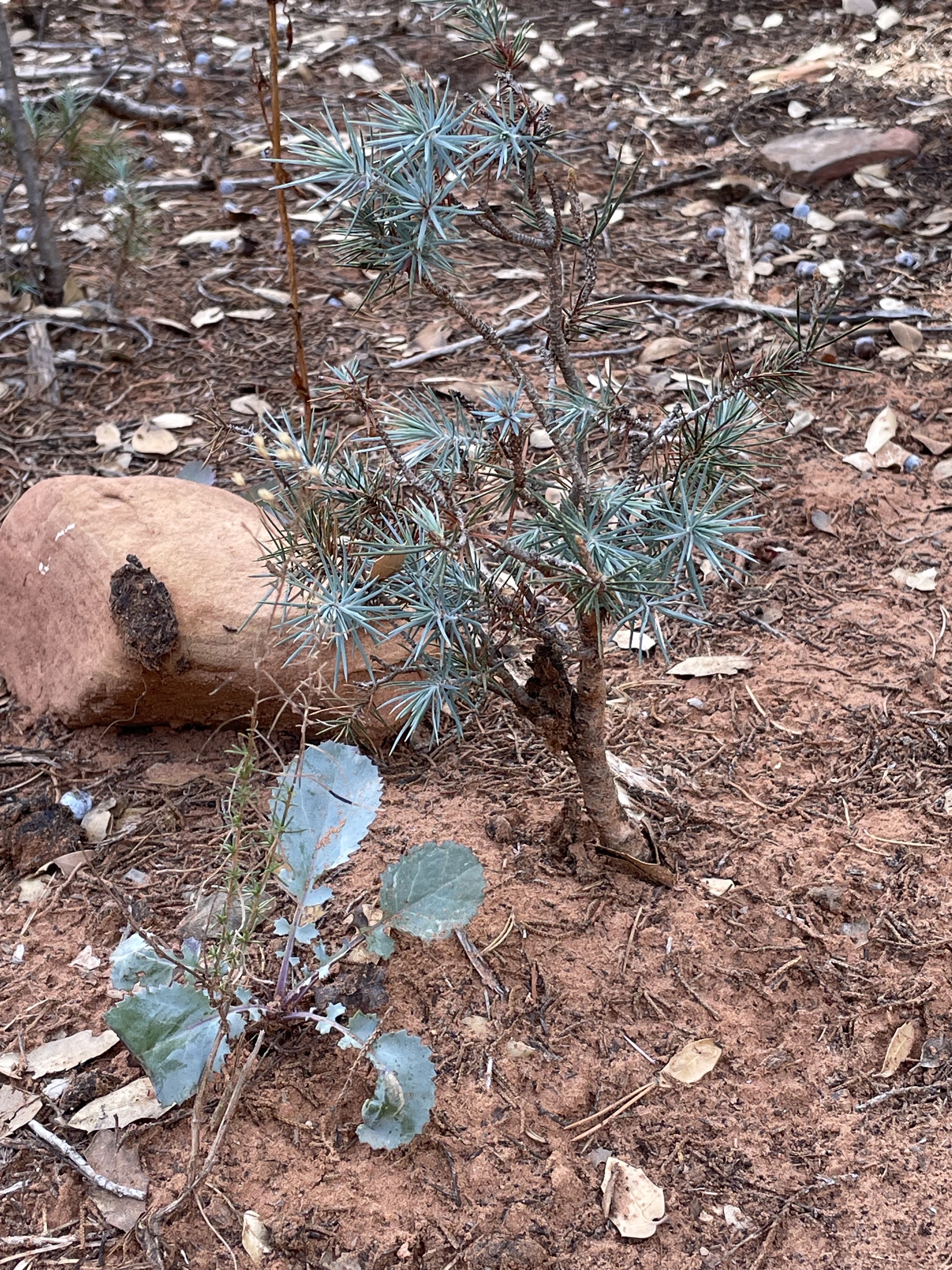
I pass some novel sights along the way.

Hello! I love you. Won’t you tell me your name?
More gorgeous lichen.

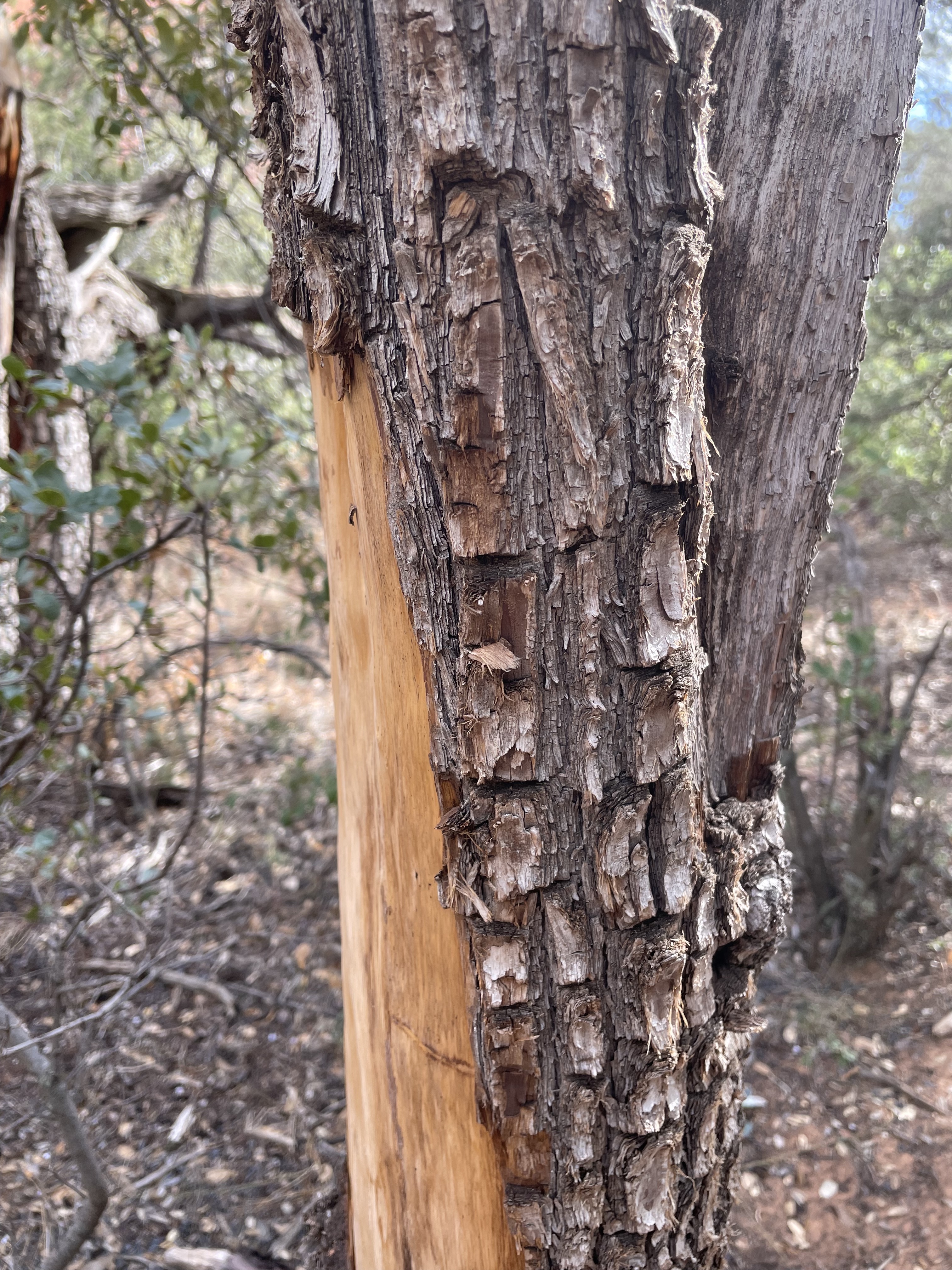
Time-roughened bark.

A juvenile specimen.
More old and new, combined in the bark of numerous grizzled junipers.
Oddly, then, my impulse to pursue my goal of less ego, more modesty, becomes replaced as I walk the path along the wash.
I remember another resolution I’ve made, equally powerful: to try to live in the Now.
I reach a little clearing and find myself standing still. Suddenly there are no humans within hearing distance. The only acoustics: birds twittering in the undergrowth and above. I look up.

I scan down the trail, where I’m headed.

I turn my focus back to where I’ve come from.

All around me is such intense beauty.

And I have an epiphany. This, actually, is the Now. This is the only moment.

My feet are suddenly rooted to the sandy ground.
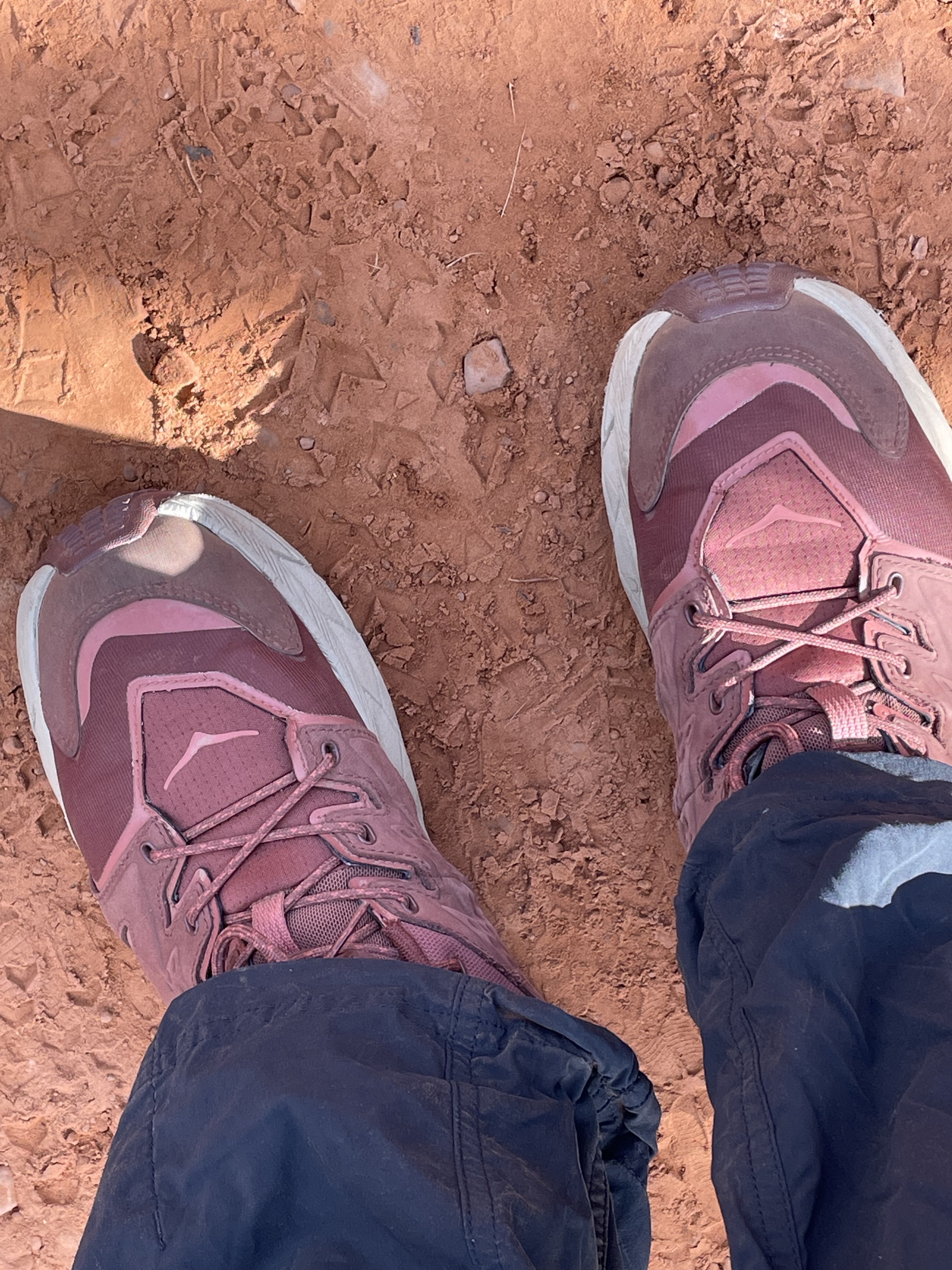
I can’t move. I look around some more.

I start to weep. Look up again, helpless. The morning sky smiles down, my only friend.

Gaze around me.
Everything so quiet, so still, so perfect. Peaceful. Luminous. It’s a kind of active contentment I can’t recall feeling before. My worries about the past and future recede. I know those concerns exist, but they’ve faded to the edges, temporarily invisible.

Can every moment resonate like this one? Can I live in the Now, if not always, then more often? I’m not sure.
I never want to leave this place, this moment.
After standing there stock still for a while, I remember I said I’d return by a certain time. I move off my sandy perch and head back down the trail. I see some unfamiliar things as I go.

Some details I missed on the way into the canyon.

Pass a few folks laughing, tromping down the trail, having their normal conversations.

I’m back to normal too, but with a powerful feeling I know I’ll carry with me into the Now of 2024.

Should we buy eggs today? Probably not necessary.
What we have to put in our mouths at this moment will do just fine.


 Jean Zimmerman