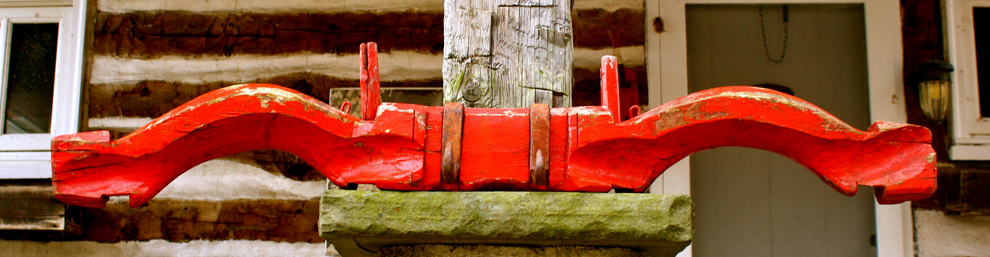
figured prominently in my hike along the northern section of the Old Croton Aqueduct on a day so early in spring that only a few plants were peeping up green.
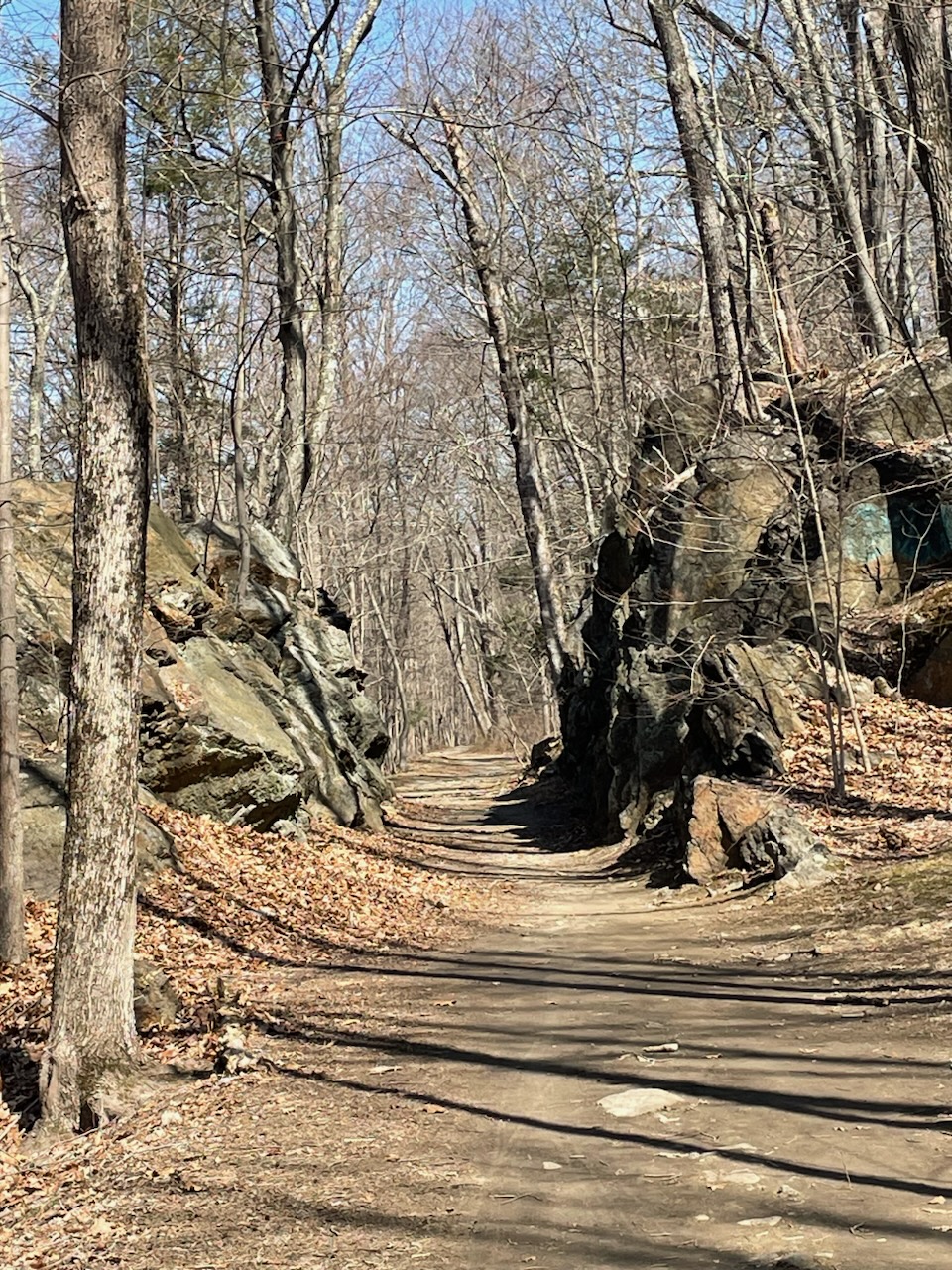
Also peeping up reddish-brown with yellow streaks, in the case of skunk cabbage.

One of my favorite plants, the skunk cabbage enjoys an interesting chemistry which allows it to create its own heat, often melting the snow around itself as it first sprouts, and always comes dressed in some of my favorite colors. It could be an official Pantone Color of the Year. (The Pantone Color Institute Program, begun in 1999, previously has included such boring hues as Classic Blue and Tangerine Tango.) Once popularized thus, you could buy a ball gown or paint your walls with it. Actually, the Pantone Color of the Year has already been chosen for 2023, and it is Viva Magenta, which is not that far off.

So then, the Color of the Year for 2024! Skunk Cabbage. It may be poisonous for us, but pollinators find it delicious.
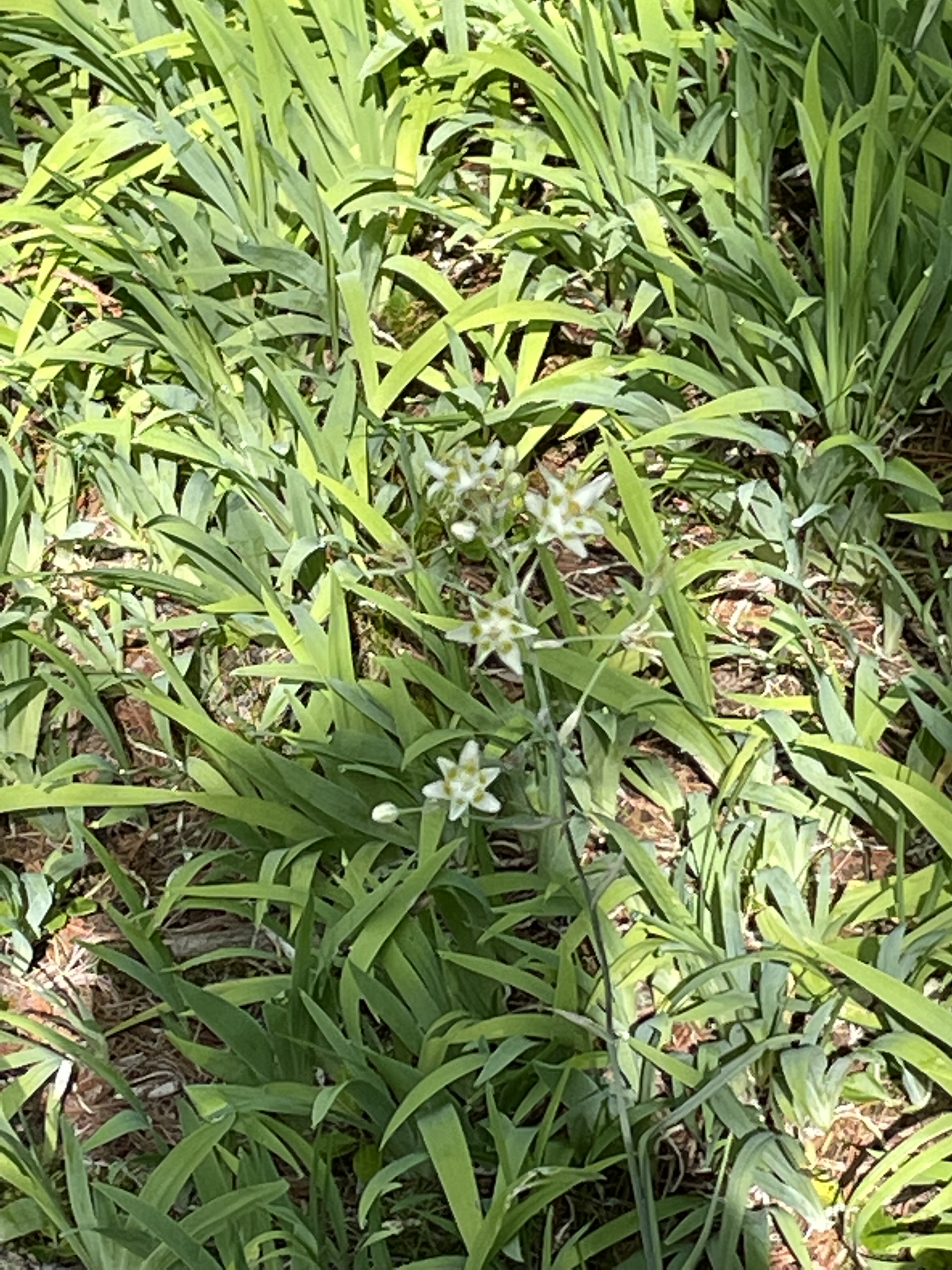
I was fortunate on the OCA trail to have naturalist Diane Alden as my guide. Some years ago, Diane showed me around Wildflower Island at Teatown, a gorgeous place that you can’t visit unless you tour it privately, they are so dedicated to not mashing down the precious horticulture. Here we saw a white wood aster just poking out.
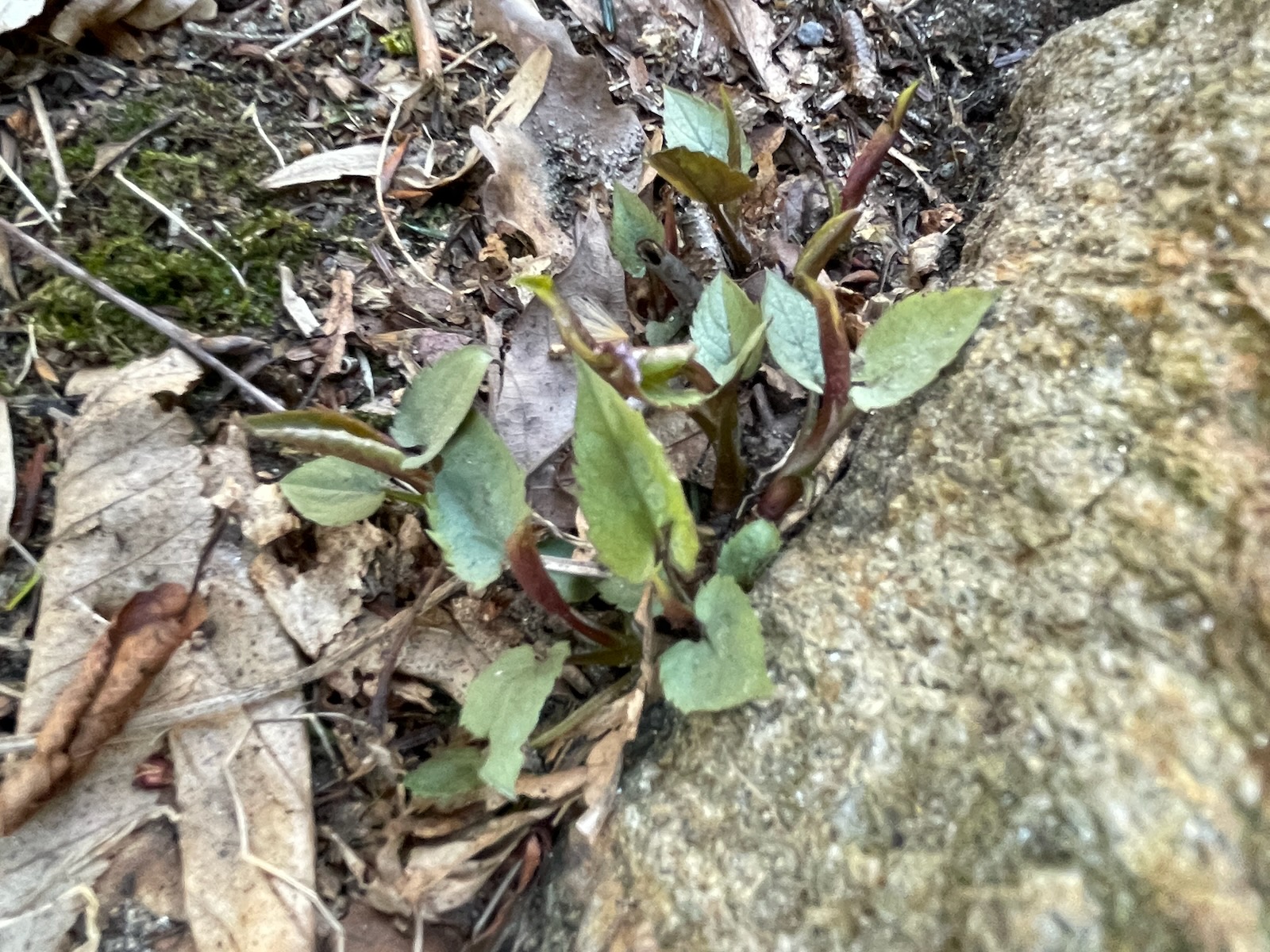
Wild plants are Diane’s passion, and she has devoted herself to rooting out invasives on the OCA trail so that native flora can flourish. I don’t believe I had ever set foot on this northern portion, which soars above the Croton River Gorge.
Since 2014, Diane’s initiative with Friends of the Old Croton Aqueduct (she’s a board member) she has had a great deal of success, pulling in tons of volunteers of all ages, especially on I Love My Parks Day every spring.

On our promenade, I saw some familiar things I knew the names of, as well as those I’ve seen a million times but couldn’t name, and those I’d never even noticed. It was that kind of a walk, when all your synapses are wide open and you want to commit every observation to memory.
Diane pointed out Christmas ferns, which it turns out have the remarkable ability to self mulch.
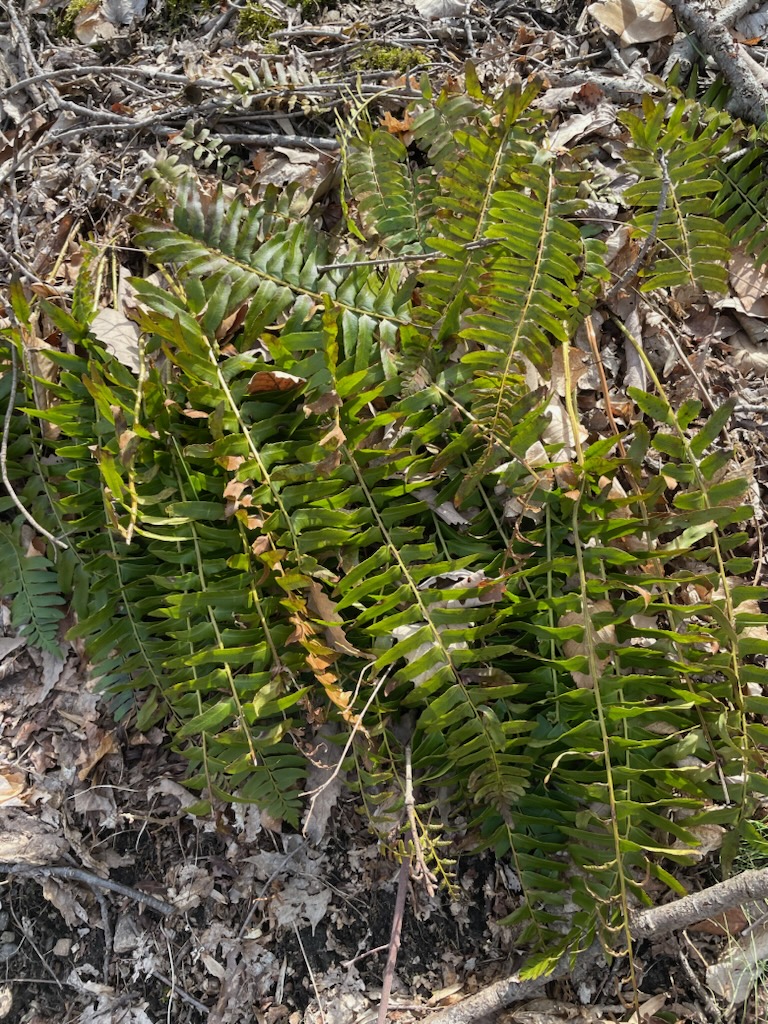
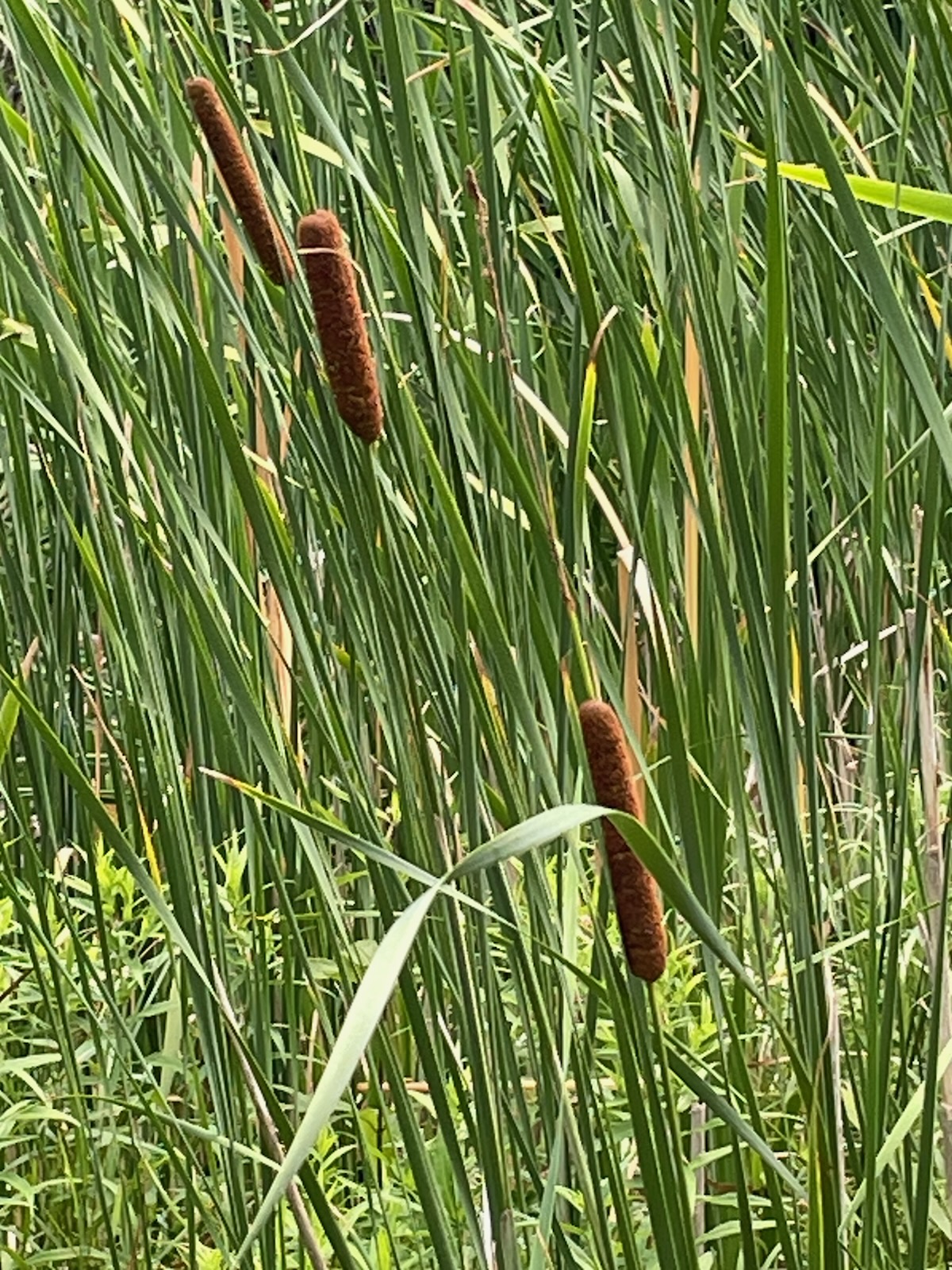
Lift off the new growth to find the old fronds mouldering underneath, ingeniously protecting the roots. Diane pointed out some rushes, and reminded me of the lyric that helps naturalists differentiate grass-like specimens in lieu of an ID book: Sedges have edges, Rushes are round, Grasses have nodes all the way to the ground. We talked about lichen.
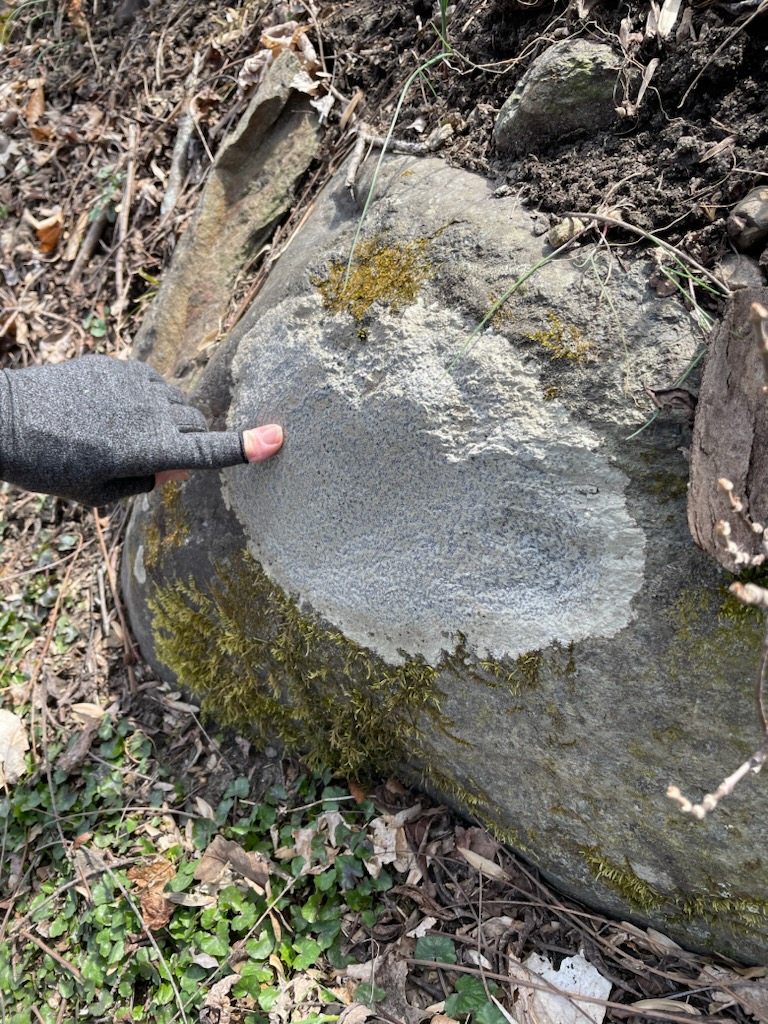
This one is crustose, one of three major kinds. There are also the foliose and the fructicose. Lichens are a type of symbiotic organism made up of a plantlike partner and a fungus. Known colloquially as smokey-eye boulder lichen, the one we saw featured an exquisite tapestry of tiny dots if you bothered to take a close up view.
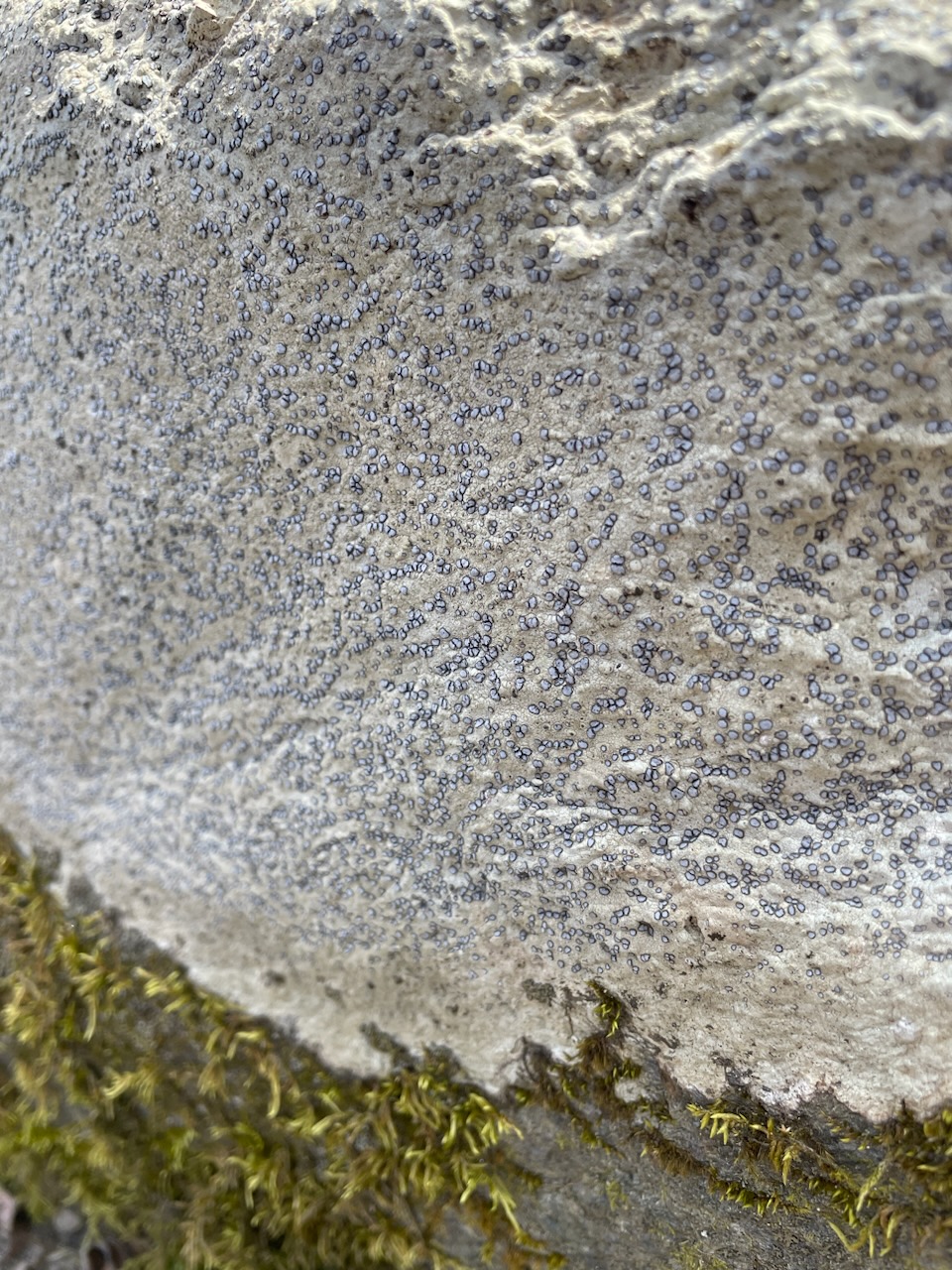
Crustose, Diane said, “can’t peel off.” Guess that’s a handy survival tactic.
Just then a mourning cloak butterfly appeared. “That’s the first I’ve seen this year!” said Diane. I could not capture it with my camera, it swooped and flitted so fast, but I did Google the species later.

Nymphalis antiopa, native to both Eurasia and North America. has a name which came over with Scandinavian or German rather than British settlers. There is a cool historical nugget concerning the species. British lepidopterist L. Hugh Newman ran a butterfly farm in Kent that supplied the creatures for Sir Winston Churchill’s enjoyment and also wrote many popular books in the 1940s and 50s (Butterfly Haunts, Butterfly Farmer, Butterflies of the Fields and Lanes, Hills and Heathlands… and so on). He likened the wing’s pattern to a girl who disliked having to dress in drab mourning clothes and defiantly let a few inches of bright hem show below her black dress. I like just about all defiance, so I love this butterfly.
We walked by the bane of the invasive-eradicator’s existence, multiflora rose bushes, just now beginning to leaf out.

Native to Asia, the multiflora rose first came to the U.S. in the 1860s, when it was employed by a well-meaning but somewhat naïve horticultural industry as an ornamental garden plant. Fast forward to the 1930s, when the USDA Soil Conservation Service thought it would provide a nice natural barrier to roaming farm animals (a “living fence”). Well, the bush skedaddled out of any confines that ever held it back, and has since been classified as a noxious weed in many states. Scores of volunteers have pricked their fingers pulling out the shrub along this trail.
Diane described garlic mustard, which “exudes a fungicide so we are eager to eradicate it to preserve our valuable mushrooms that are so important to the health of the forest.” Also, those “pretty little yellow flowers all along the edges of the trail” are lesser celandine, and they crowd out the much more beautiful wild violet.
Invasive plants have no natural enemies. Even the deer eschew them. Diane pointed out a stalk of the particularly evil wild raspberry, whose sumptuous fruits I have sampled many times but which wreak havoc with birds’ digestive systems, “kind of like junk food.” It’s nearly as bad as porcelain berry, and that’s saying something. I wondered if well-meaning invasive whackers ever yank up anything good by mistake. Diane told me that once a fellow who had not been adequately trained proudly displayed a plant he had ripped out by the roots, believing it to be porcelain berry. Sad ending, it was actually a rare doll’s eyes plant.
We want the birds to eat good foods and prosper! As if on cue, a lovely little nest appeared.

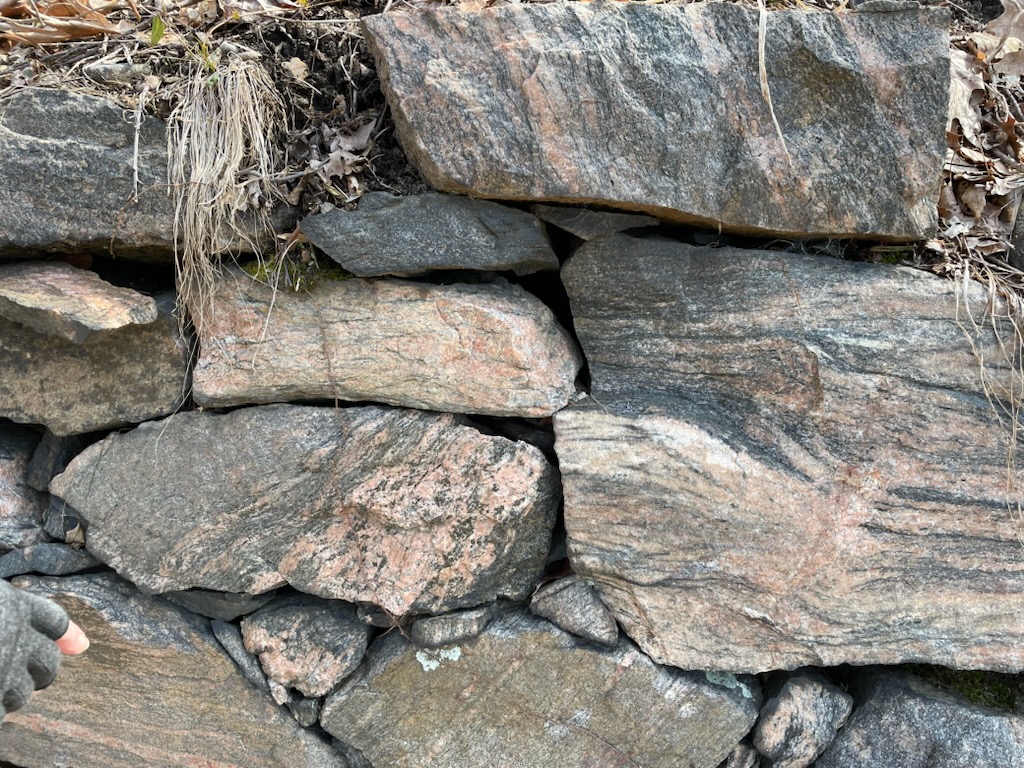
Something that survives when Diane’s volunteers succeed are intricate stone walls dating back to the mid-1800s. These have the most beautifully pink-streaked quartz.
Robert Frost is famous for these lines:
Something there is that doesn’t love a wall,
That sends the frozen-ground-swell under it,
And spills the upper boulders in the sun;
And makes gaps even two can pass abreast.
Recognizing that historic walls are vulnerable, the Friends commandeered stone mason George Cabrera to shore them up. I had to confess to Diane that I love old, tumbling-down structures better than any tidied-up restoration. But the farmers who originally assembled these stones – probably employing the same stonemasons who built the underground Aqueduct itself – would have repaired them so that they would last forever. So it only makes sense to honor their efforts by doing so now.
Speaking of stone, we passed through rock that was split apart by gunpowder at the time the Aqueduct was installed, between 1837 and 1842. Yes, gunpowder.
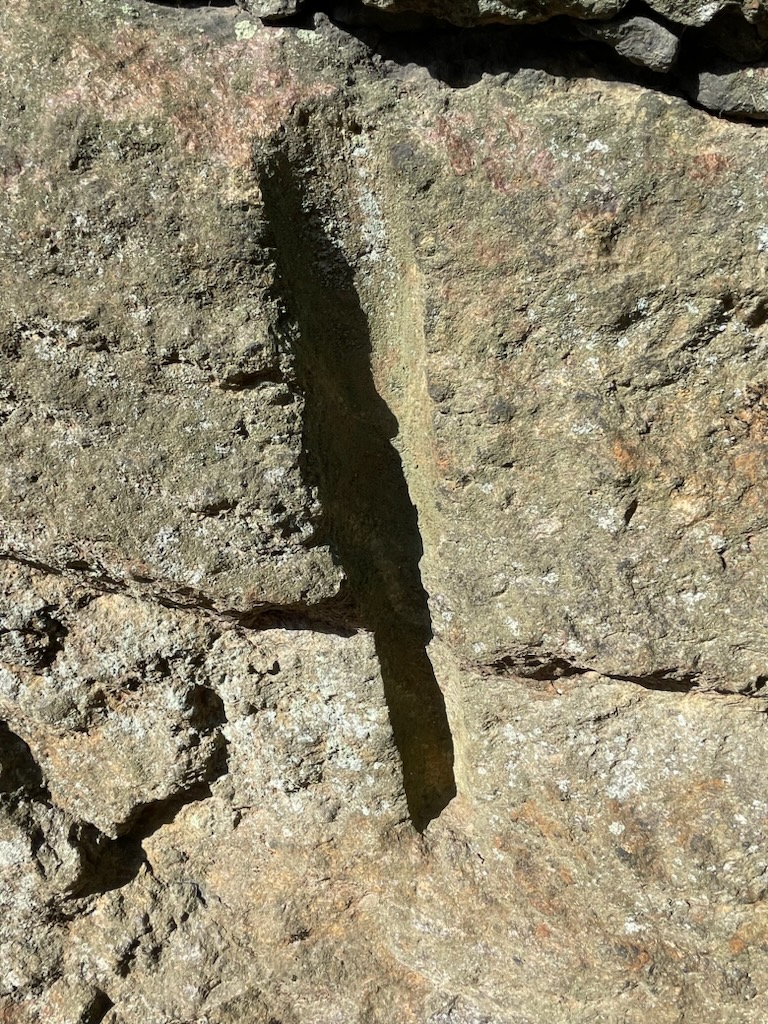
Diane pointed to chutes cored out from above where the powder would be dropped down and ignited. Boom! Impressive technology predating dynamite’s invention by Alfred Nobel in 1867.
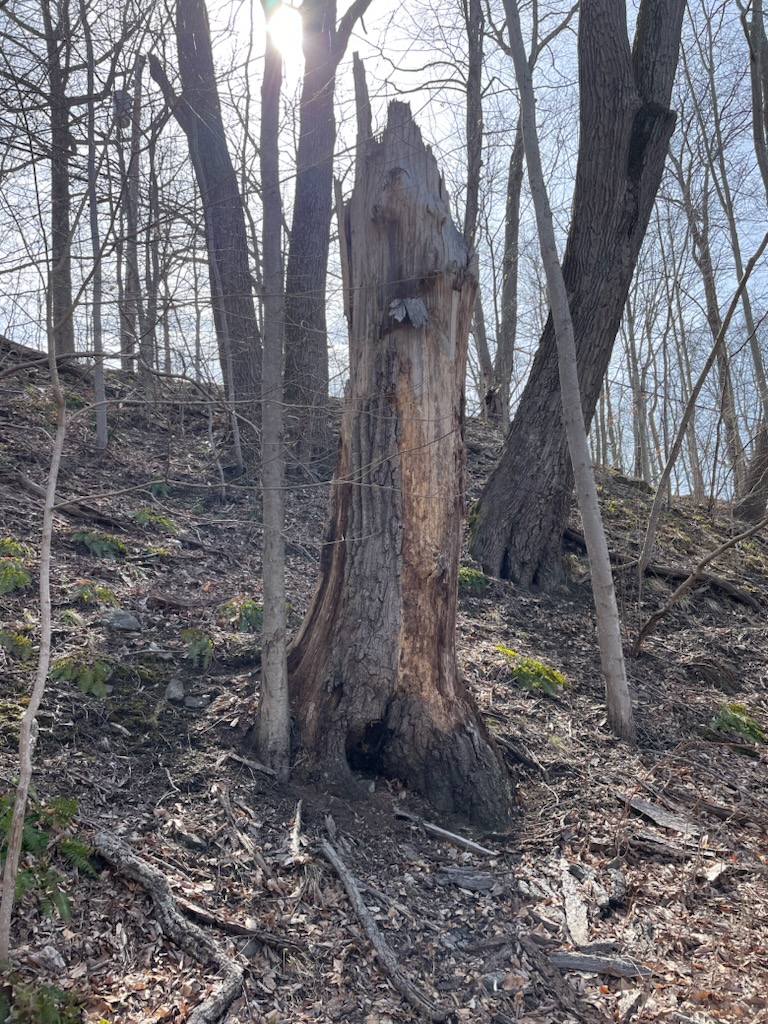
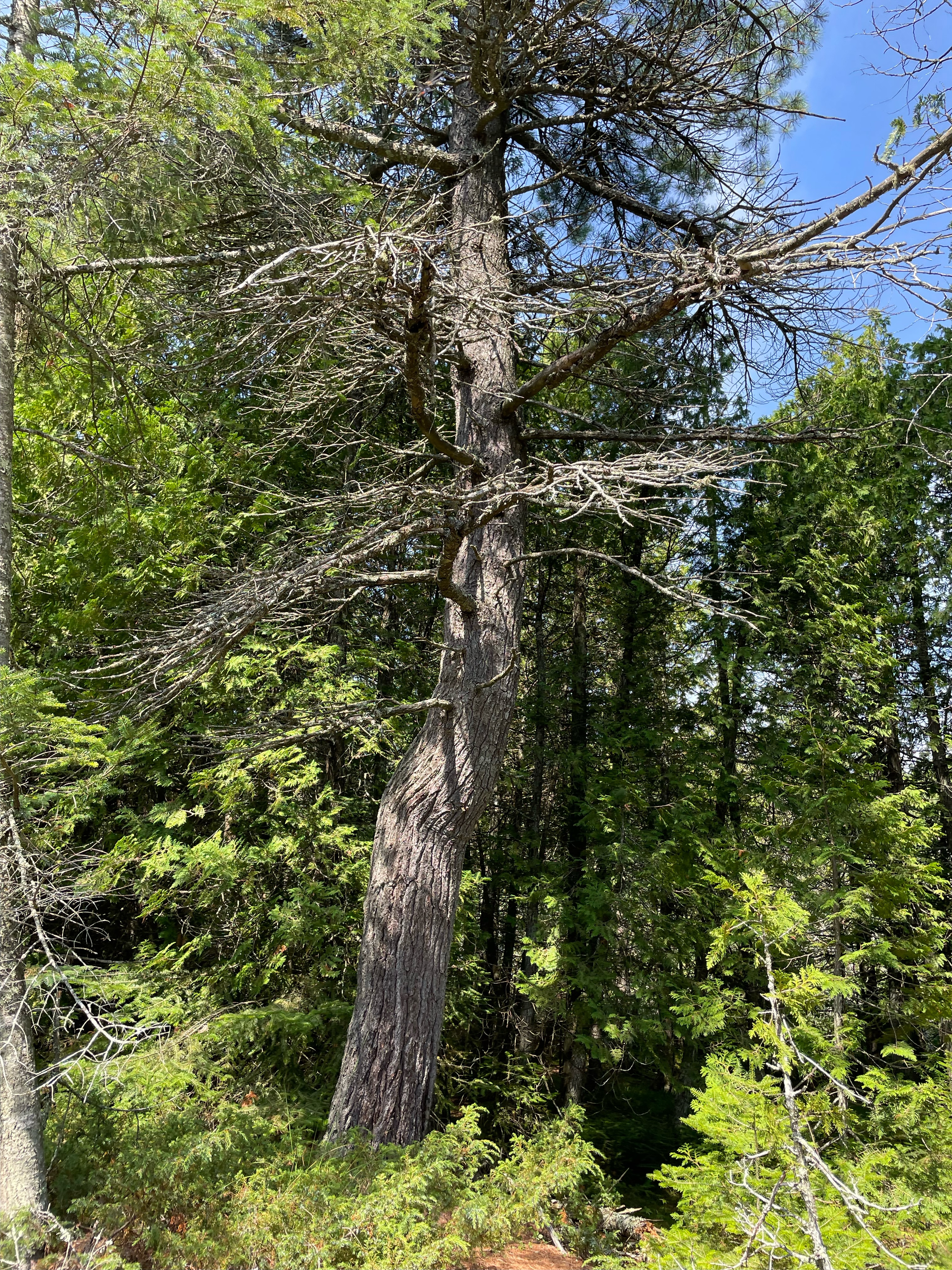
We passed some incredible trees. A broken off trunk with loads of character and a nice hidey hole at its base. Dead trees often go underappreciated for their important role as habitat.
A soaring hemlock. Hello up there!

I remember asking a more seasoned arborist if losing all those lower branches meant the tree was dying. The answer: No, the tree just wants to conserve its energy in order to keep growing. And, as Diane pointed out, to reach for the sunlight. Trees, as usual, are smart.
Some impressive roots here too.

And a sight that struck me as almost too amazing. A branch bent up at a right angle. Was this just an unusual growth habit? Sometimes trees do grow in ways that might be construed as strange – say, conjoined trees, my favorite. This might be different, though.

Could it possibly be what is called a Trail or Marker Tree, or more technically a Culturally Modified Tree? These specimens, which curve and grow sideways at such an impossible angle, often turned sharply up toward the sky, are historical curiosities found all around the country, whether out in the woods or in city parks or front yards.

Experts say that CMT’s once helped the Native Americans who trained their growth find safe paths through rough forests and locate river crossings or natural springs, shelter or encampments Tom Belt of the Cherokee Nation of Oklahoma explained their purpose: “The bending of trees was essentially part of a great highway system that allowed people from many tribes to interact with each other, and there was an inordinate amount of trade going on.”
I don’t know if the one on the trail today was a Marker Tree, but I want to believe.
We racewalked back, late to meet a friend for lunch. Diane’s house has a rapturous view of the Hudson, dozens of birds attendant at the bird feeder – she tracks their comings and goings daily – and one hundred or so thriving houseplants. She offered to gift me with one. Would I prefer a walking iris or a jade plant? Decisions, decisions. Once, long ago, I kept a jade plant that I sadly, shall we say, undernurtured. I figured I’d make atonement for that fiasco this time around.

The jade plant has taken up residence on my office window sill. If you peer out the window into the distance, the ridge you see is the top of the Palisades. Not a Hudson River view, but close enough on this day of small but impressive sights in early spring.













 Jean Zimmerman