Tag Archives: Trees

What is common?

It’s in the eye of the beholder, isn’t it?

I took a walk on the Old Croton Aqueduct trail as spring just came up, and it got me to thinking.

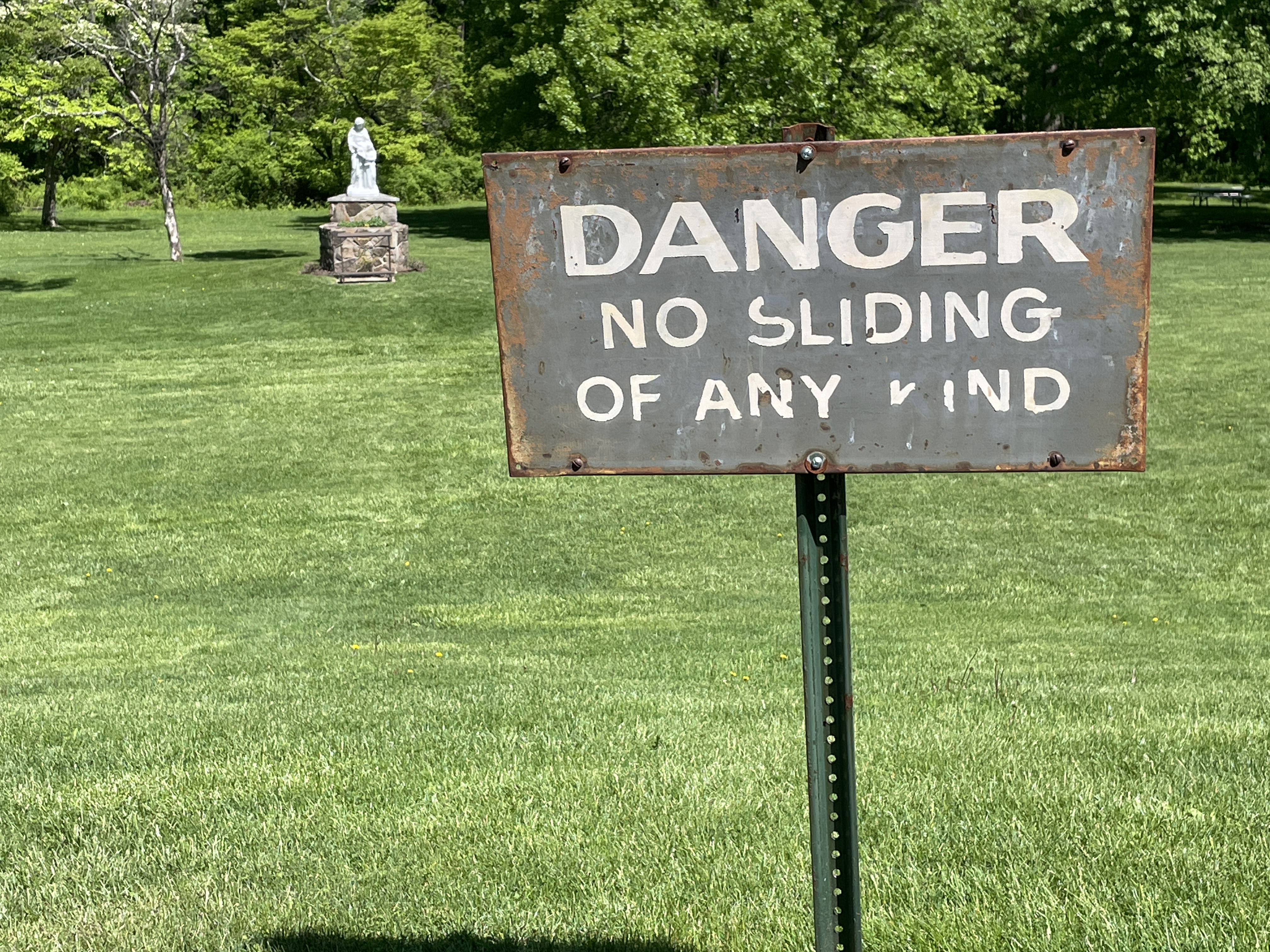
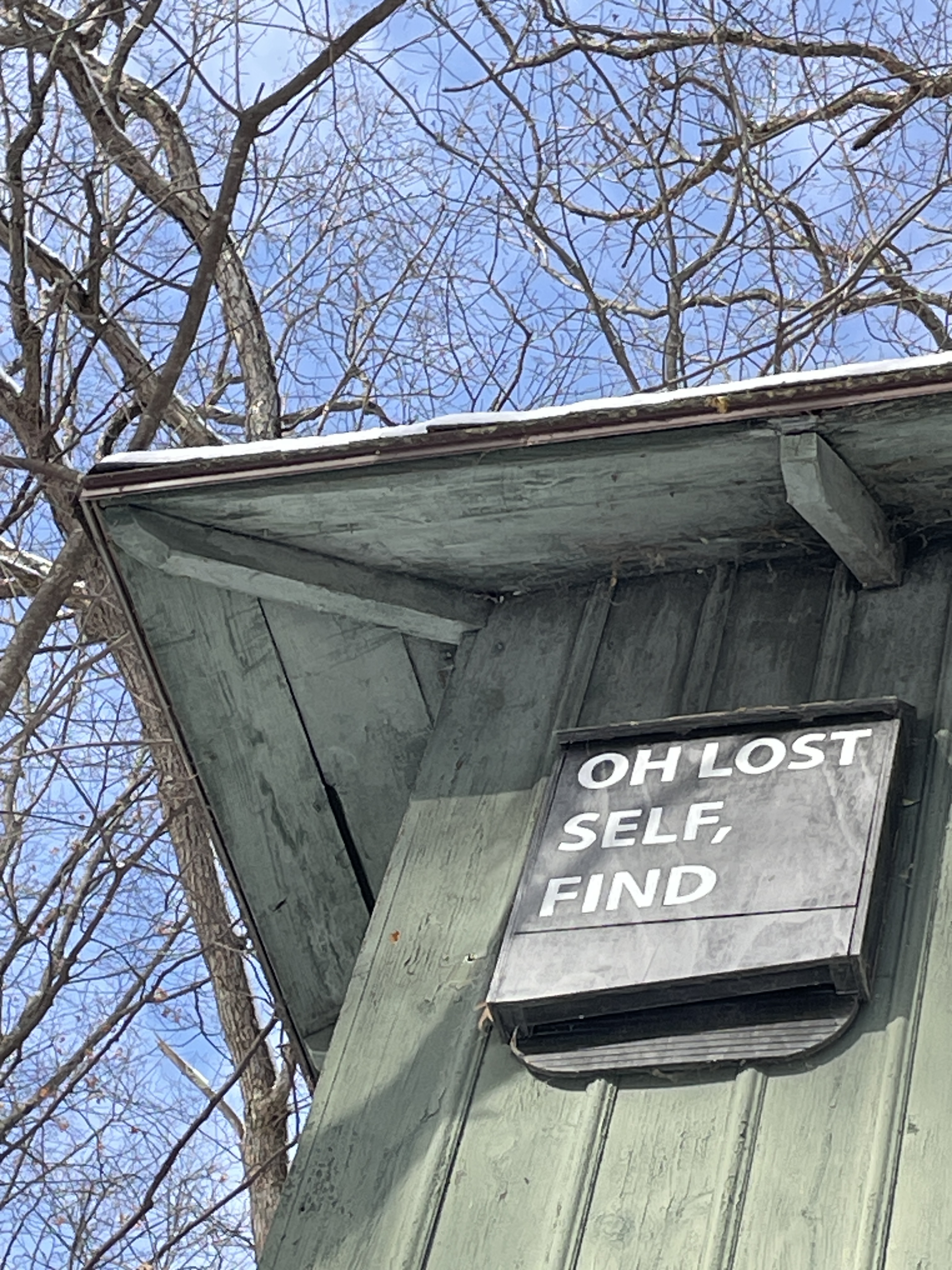
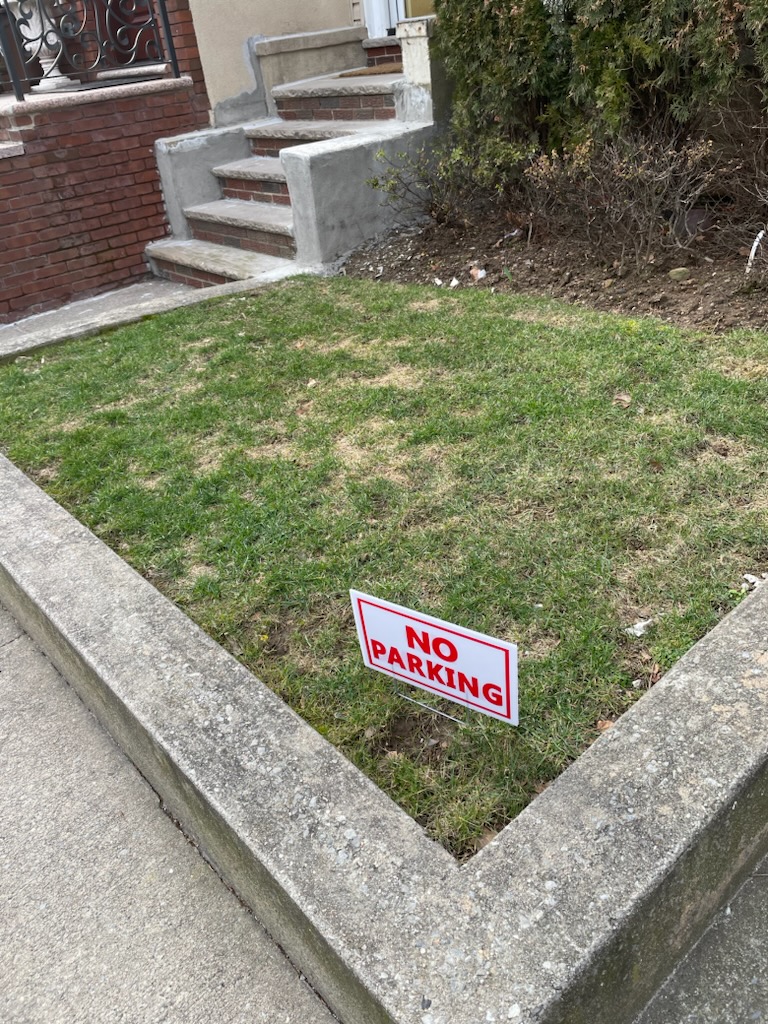
So many beautiful things. So many of them so ordinary. First, a sign warning me off. My favorite kind of sign, so commonplace.

I see them everyplace, I guess because I like them so much. And I like going past them so much.

I spotted another one recently too. Almost as nice.

I find I like almost any free advice.

Mainly so I can ignore it.

Back to the trail. Tree shadows. Common.

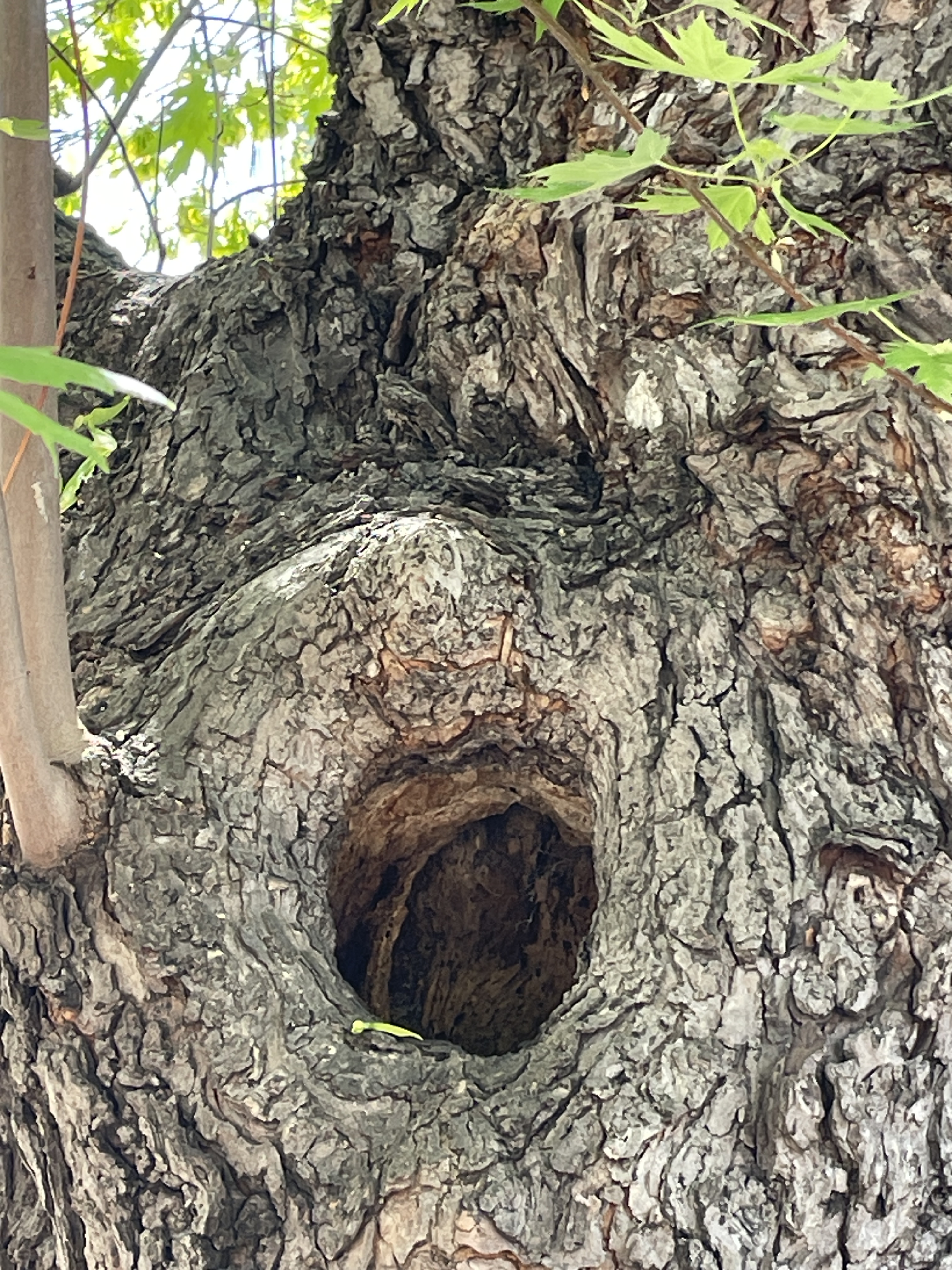
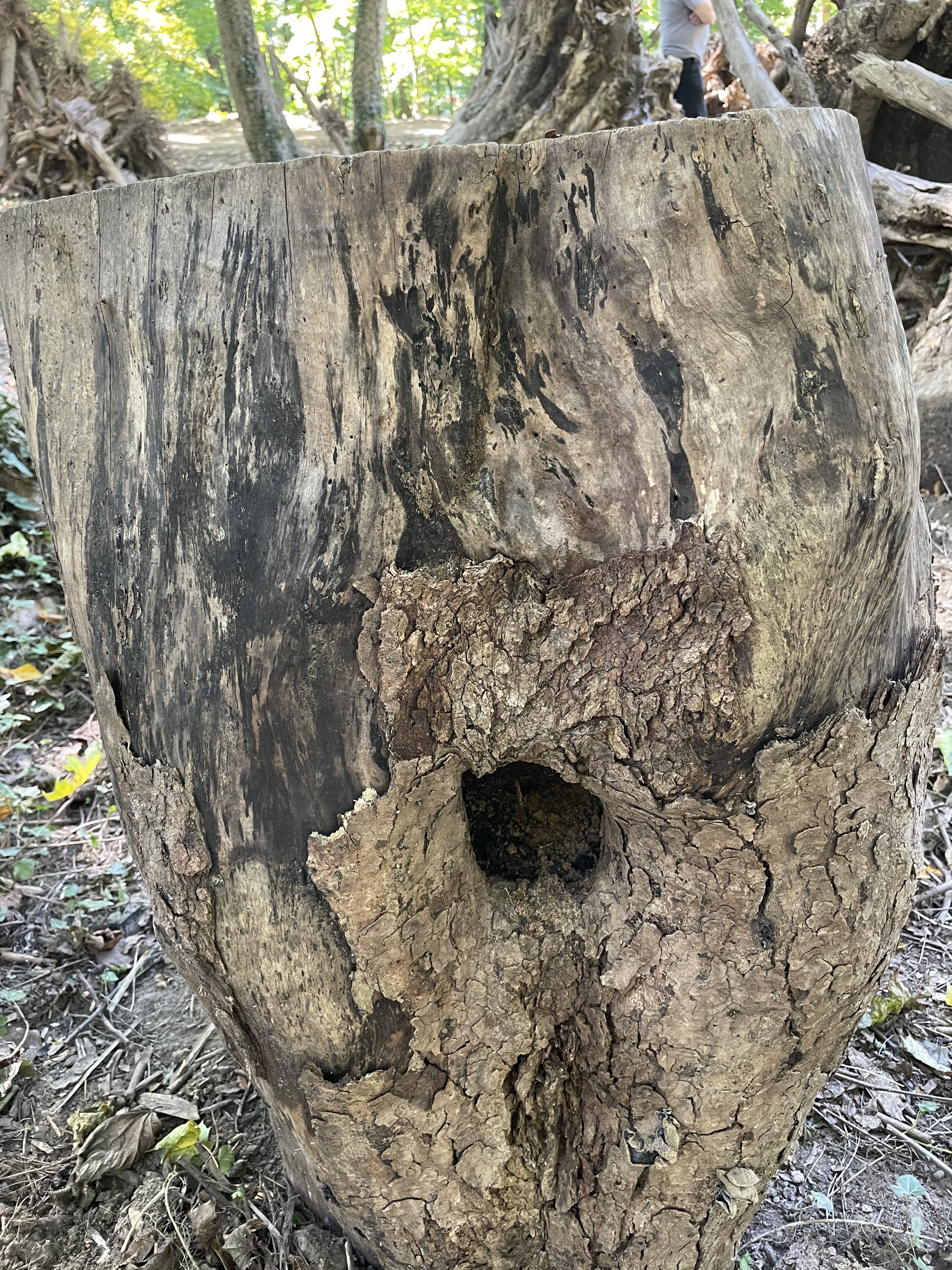
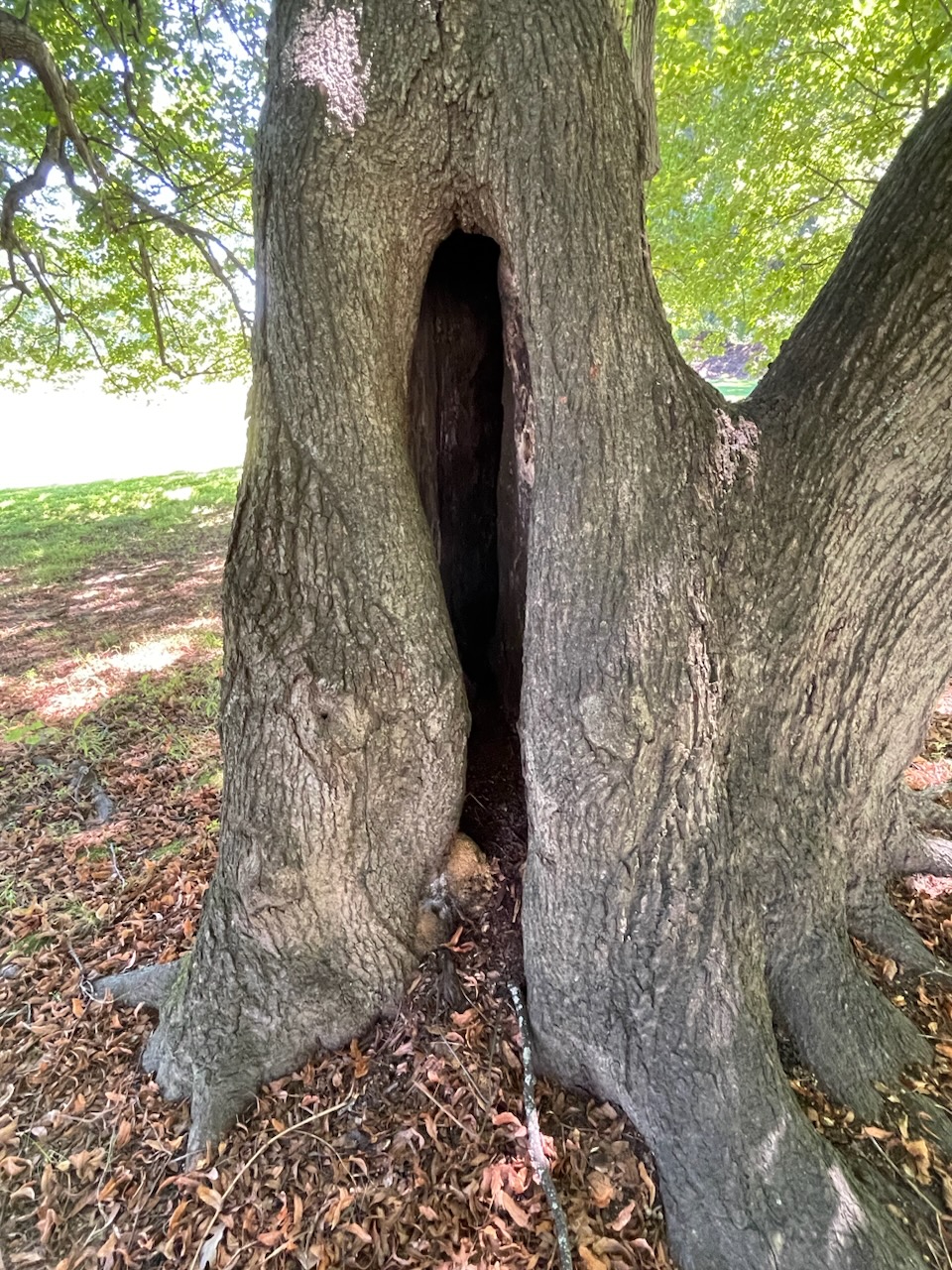
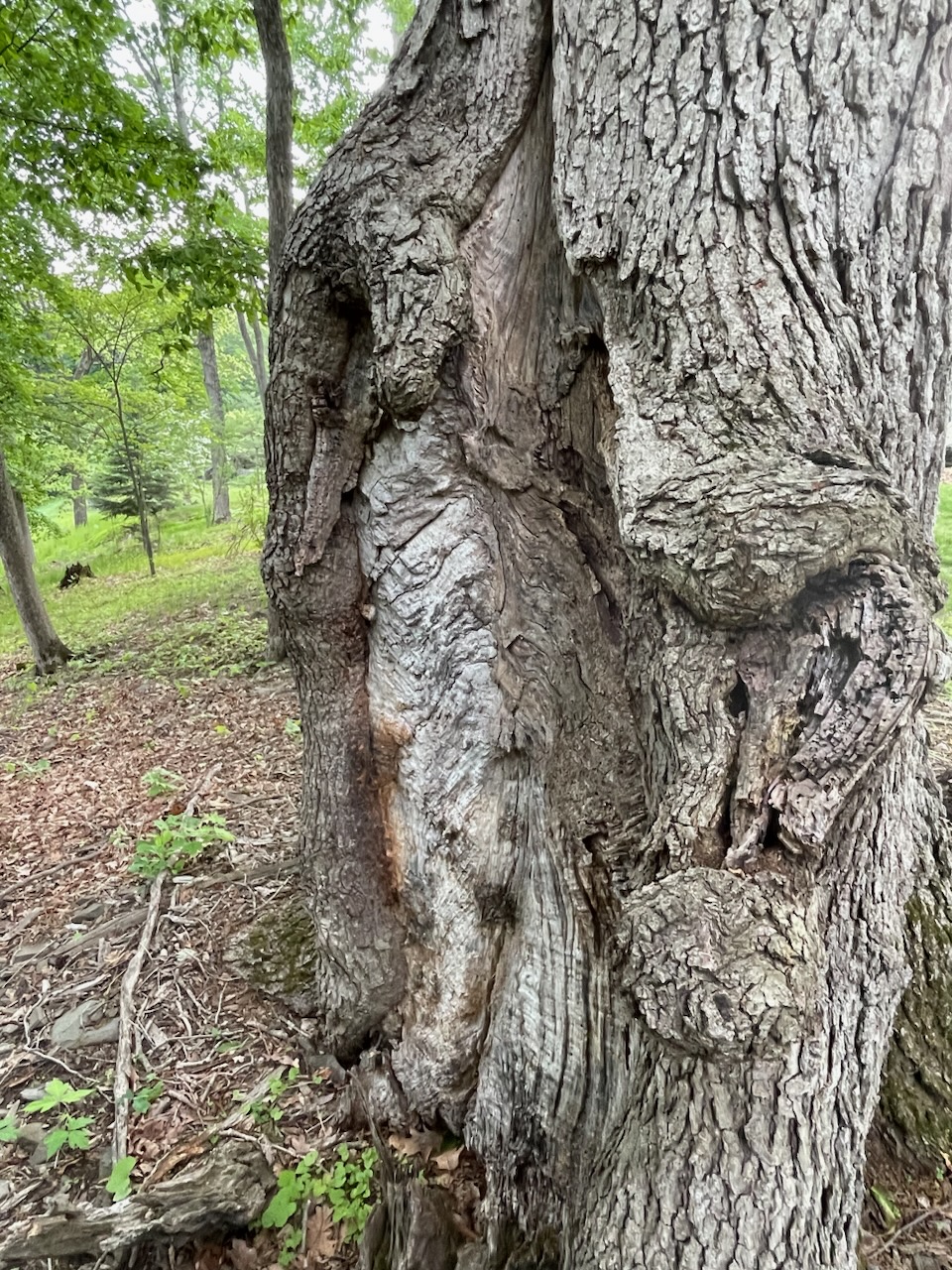
A hollow. I think we make a mistake in distinguishing between death and life. Death shelters life.

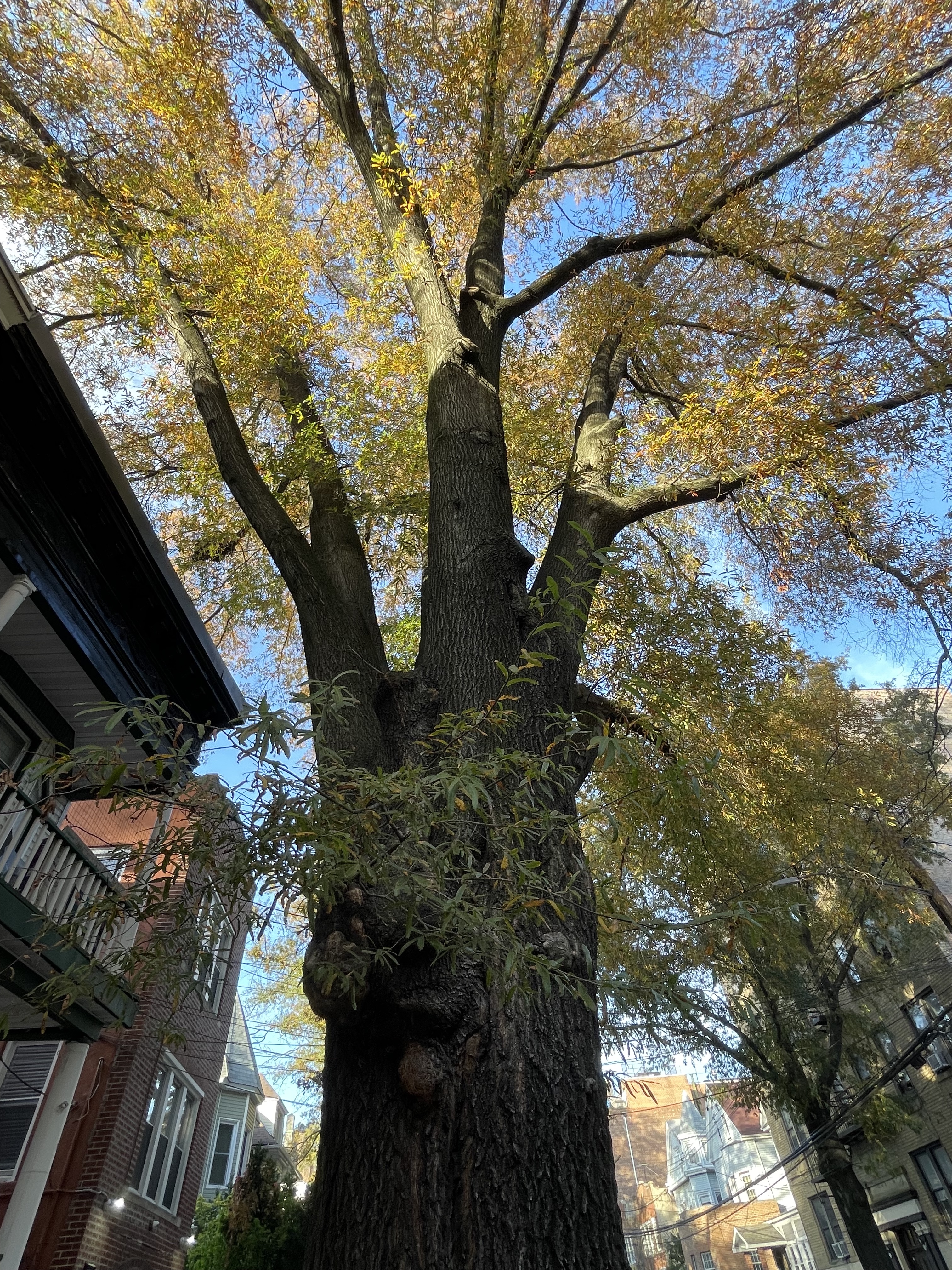
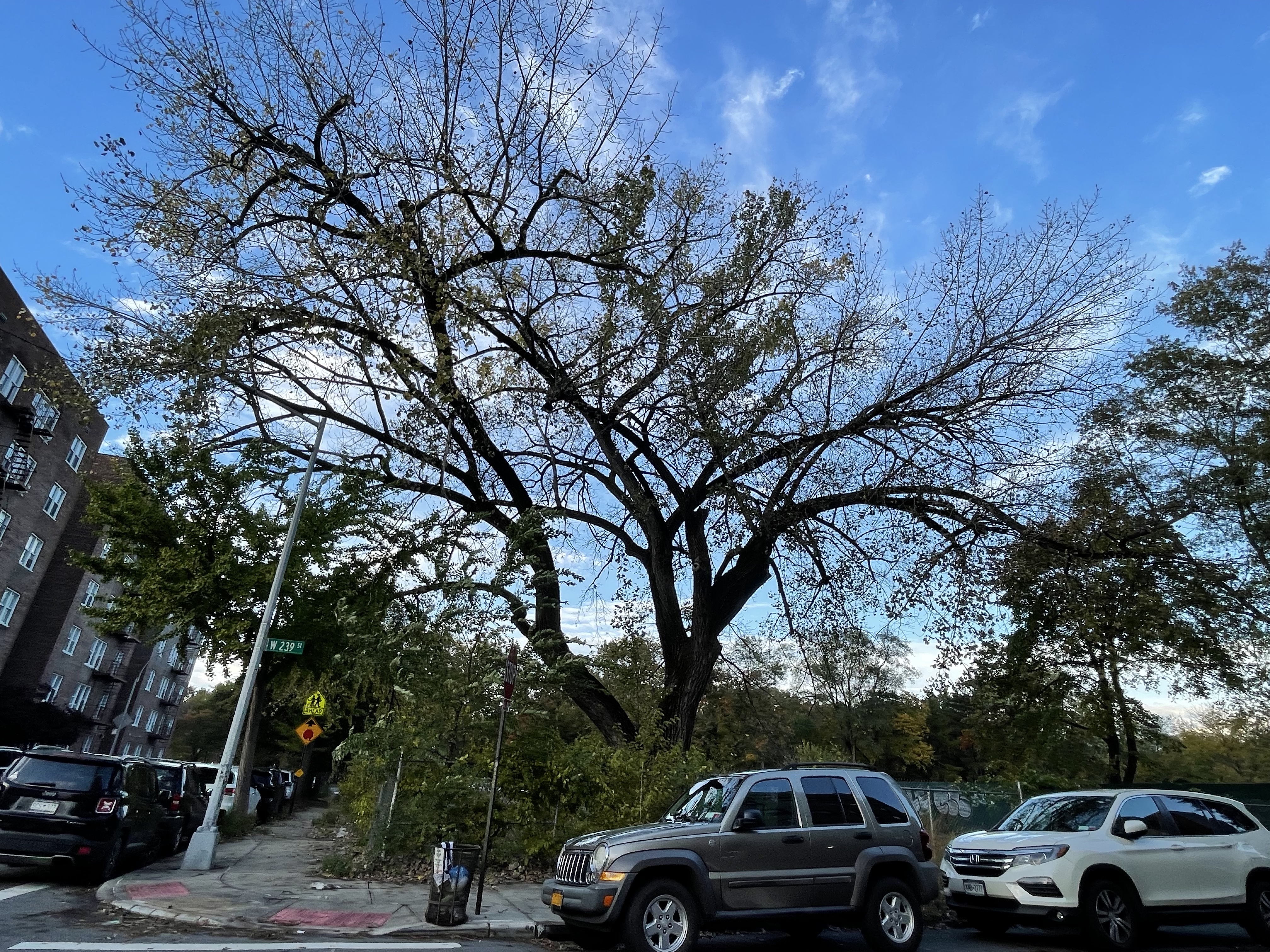
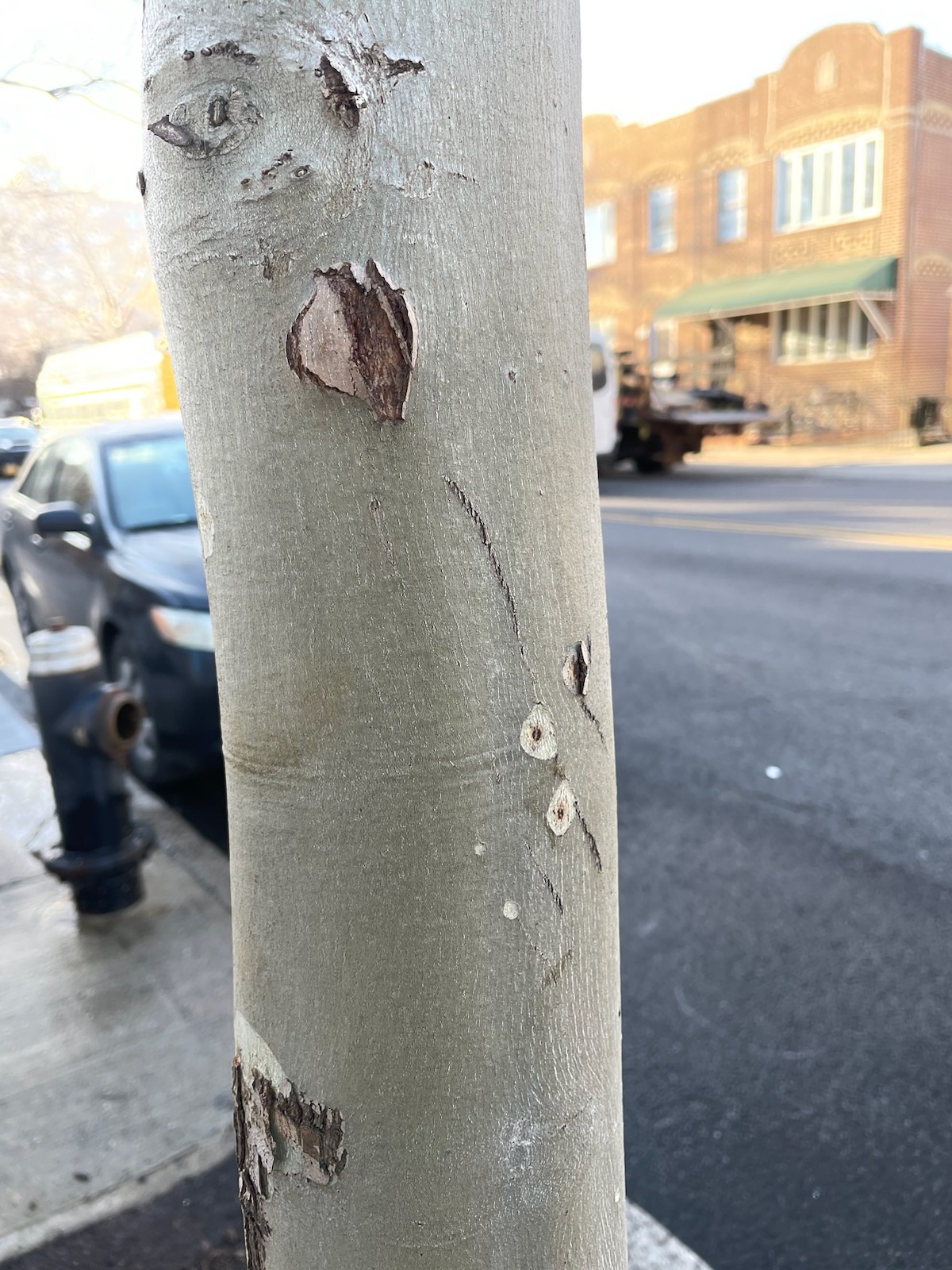
Another hollow, this one in an old-old silver maple on a Bronx street.

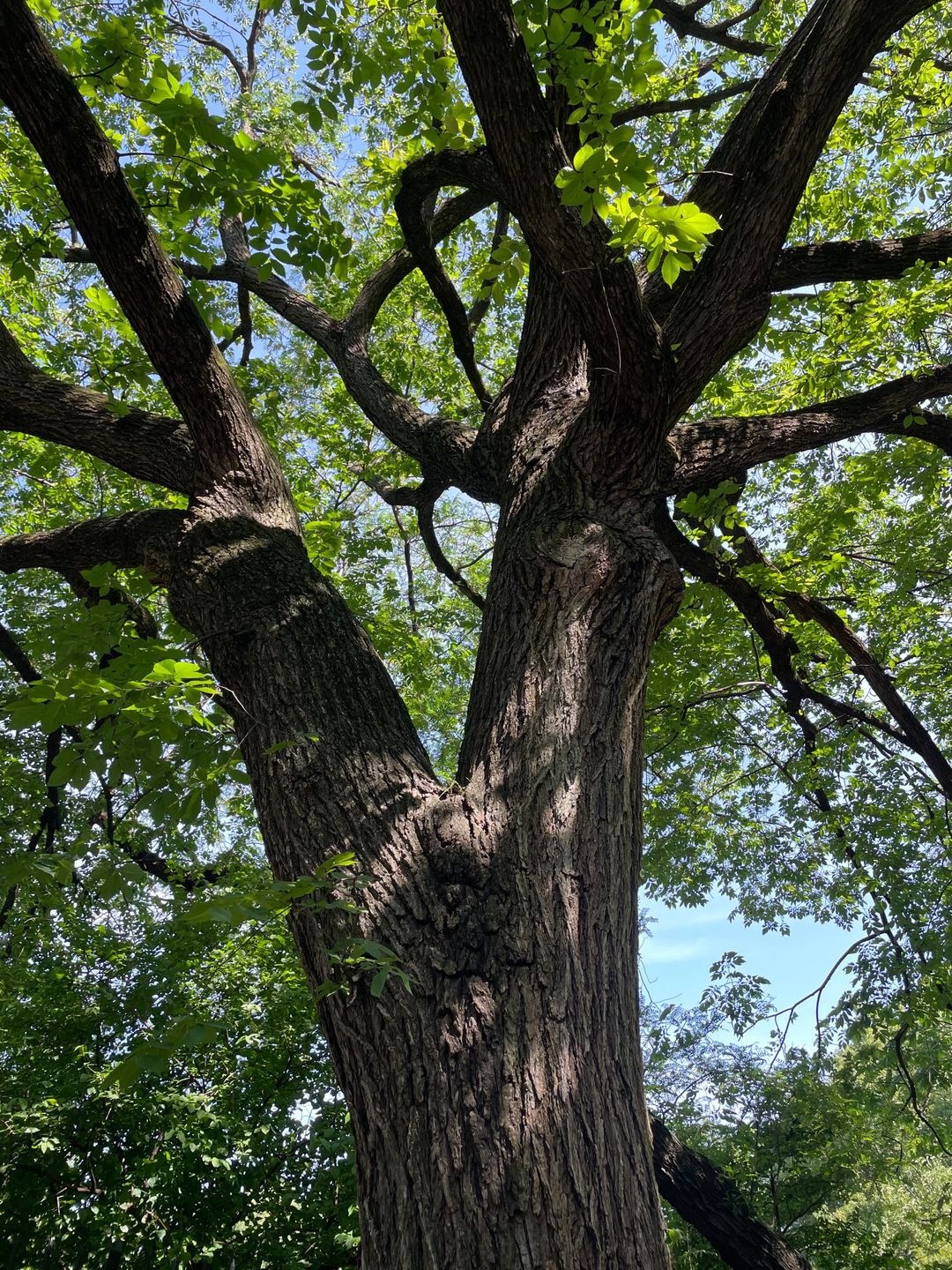
Okay, anyone would call this tree extraordinary.

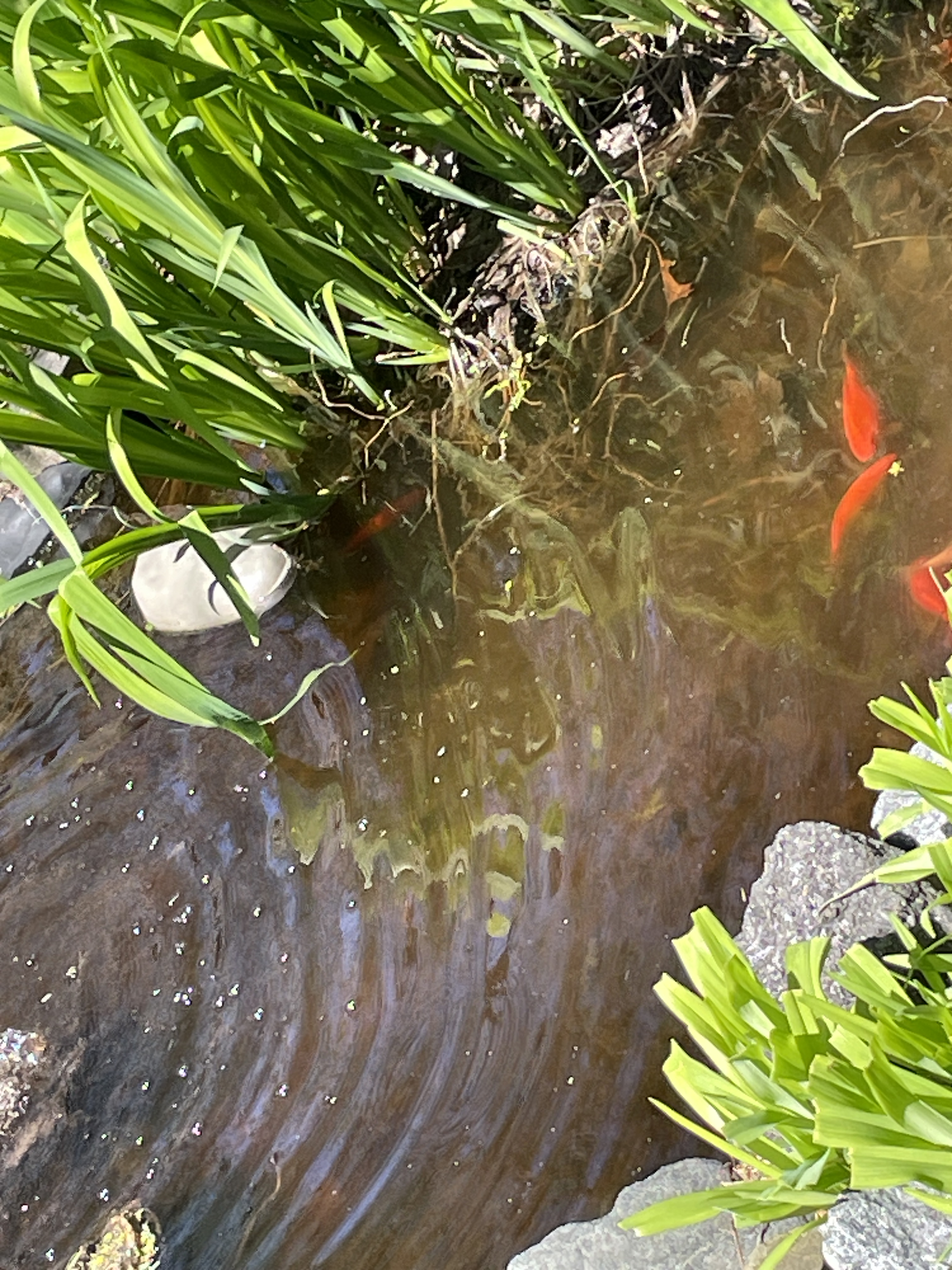
On the trail there’s a backyard koi pond I’ve passed a thousand times. Sort of common.

A sycamore, not yet leafed out.

You could just walk by and not notice. Nothing remarkable. Back yard steps, leading…where?

Look down. A pine cone. Brown. Ho-hum.

Gertrude Stein said, It takes a lot of time to be a genius, you have to sit around so much doing nothing, really doing nothing. Looking at not much of anything helps too. Noticing nothing much.

More trail shadows.

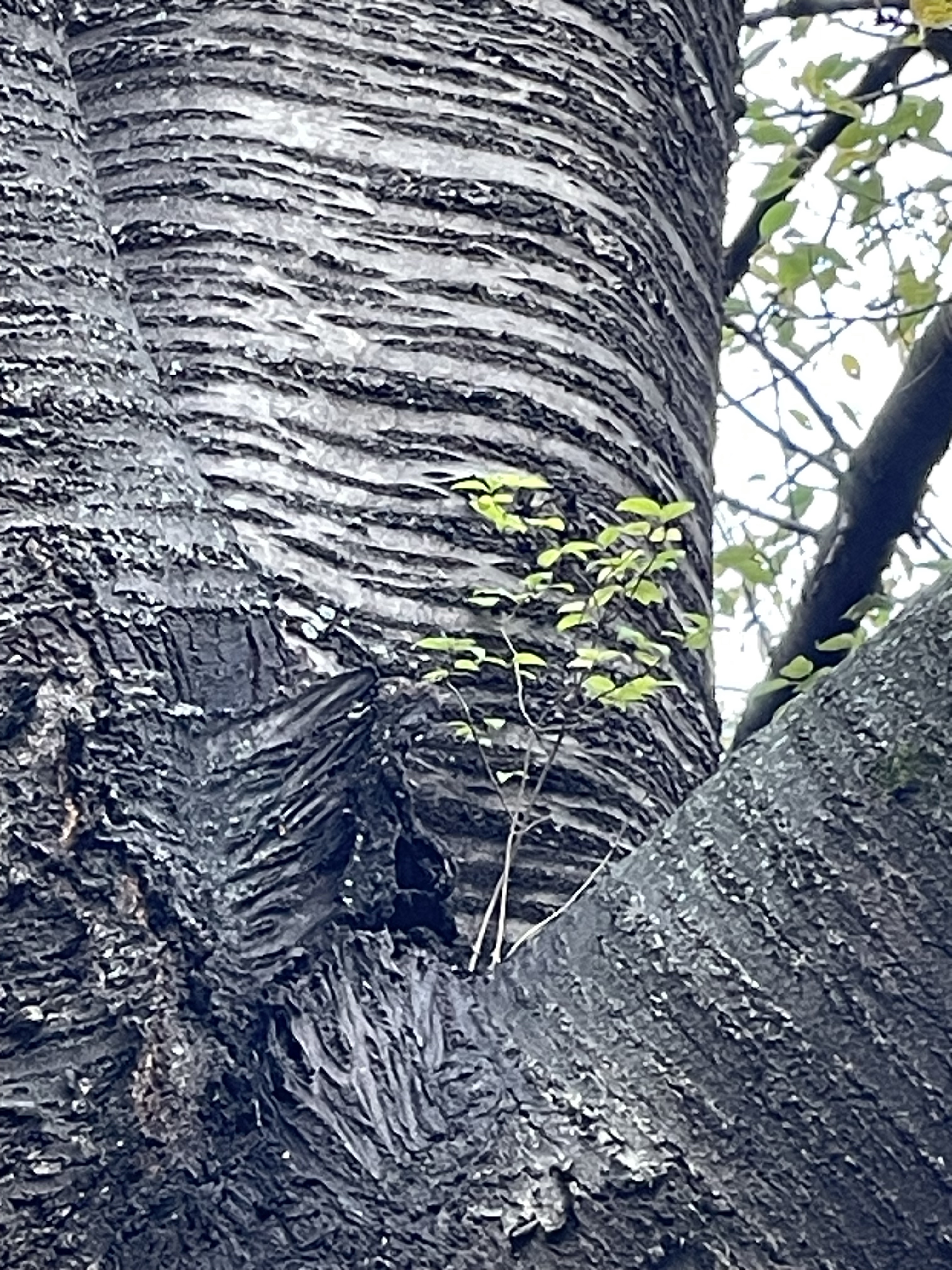
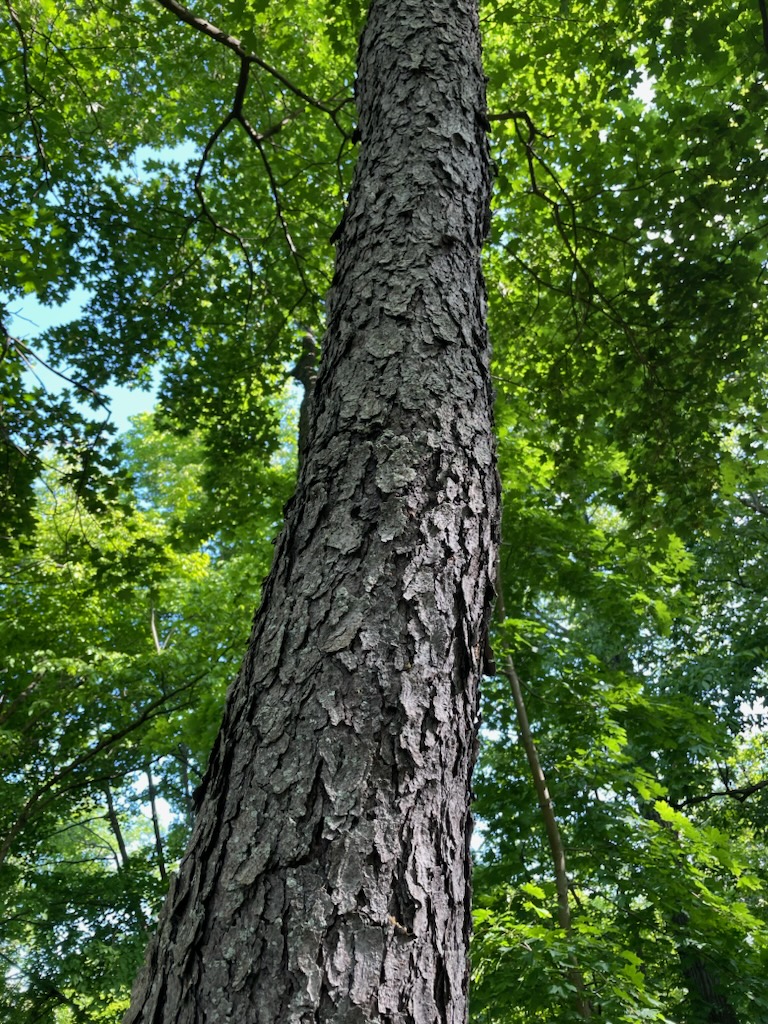
Twisted bark. Common.

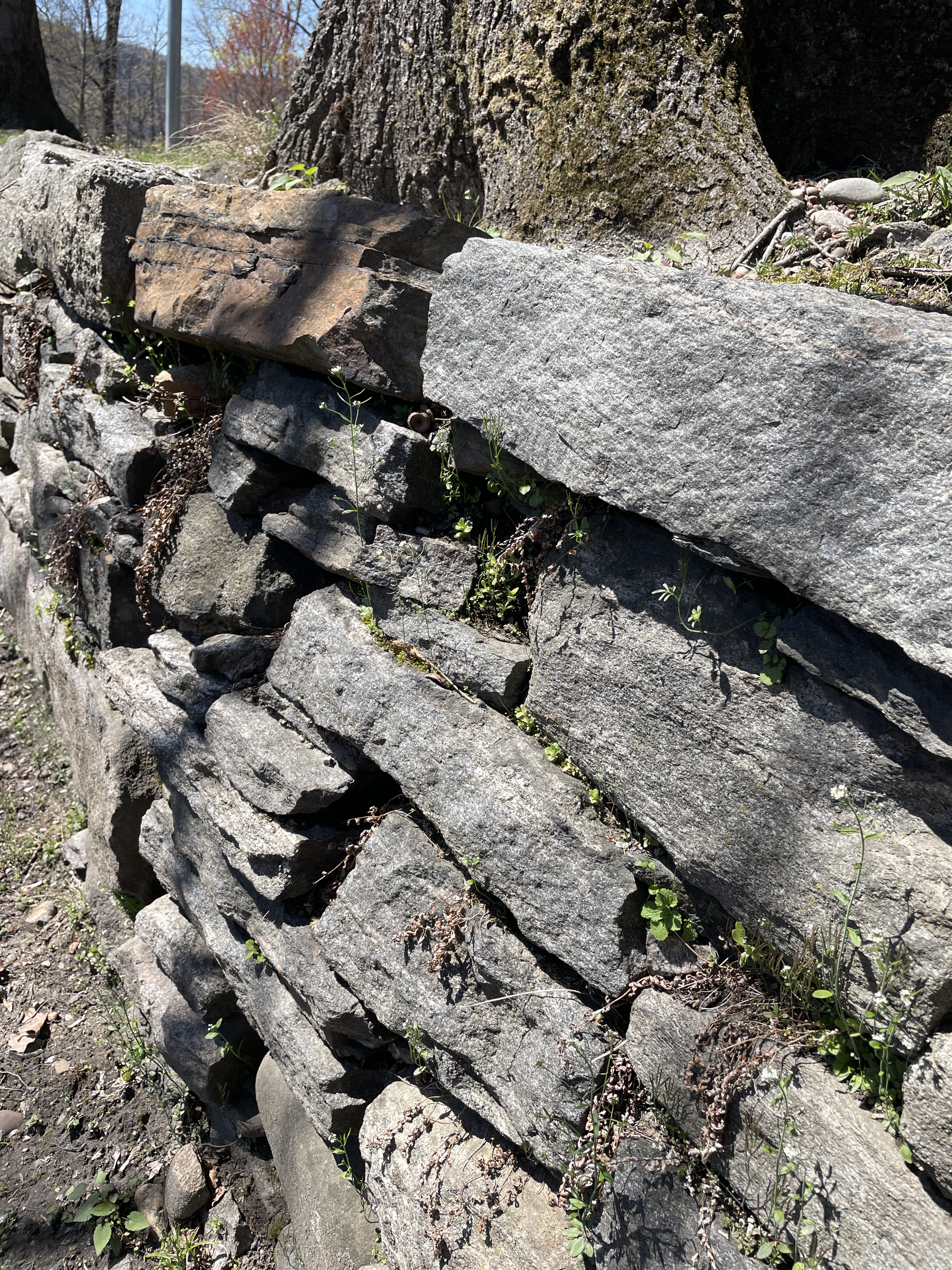
Ye olde stone wall.

Sprouts. 

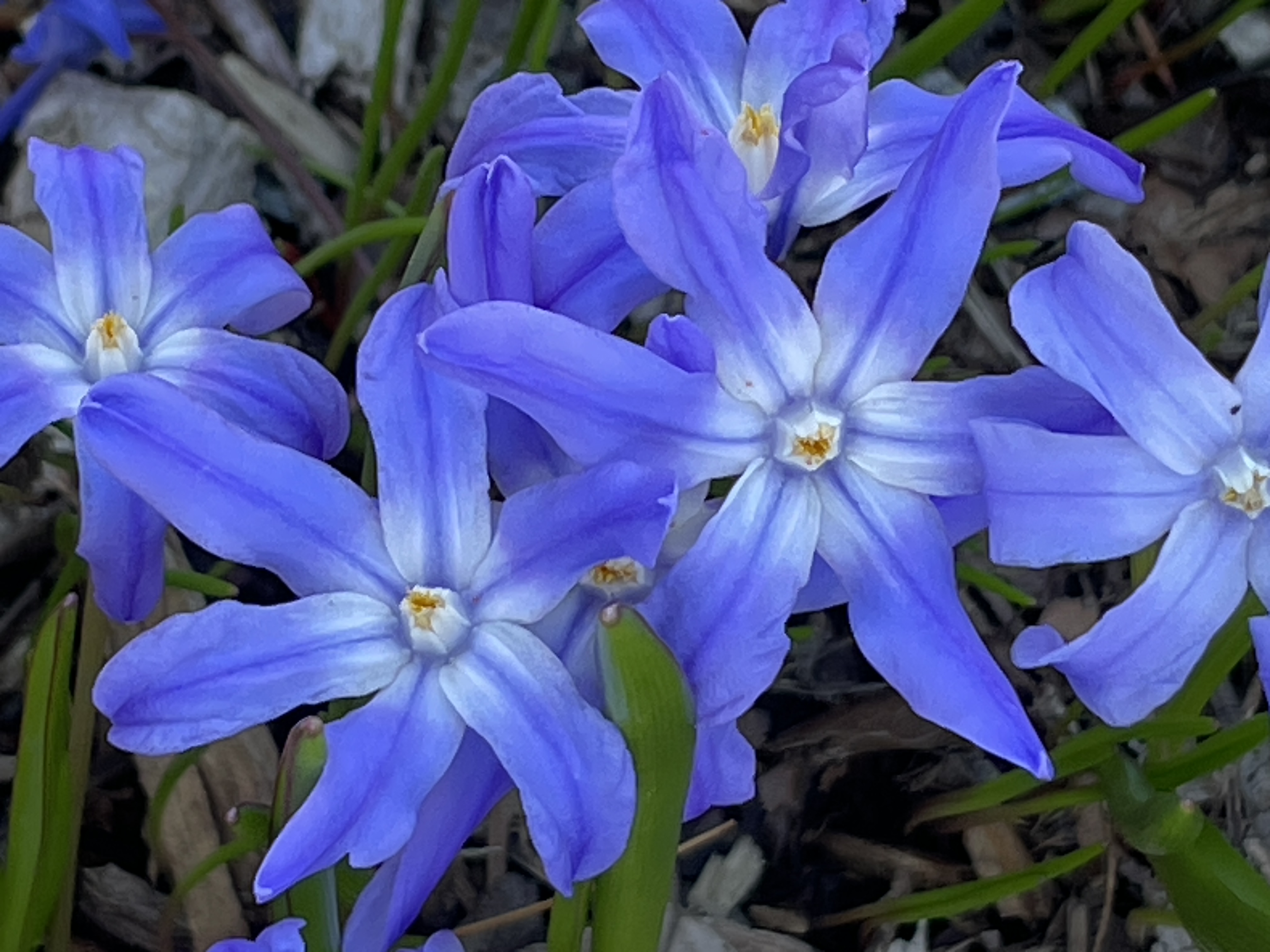
Rudimentary flowers. If they have a name, I can’t remember it at the moment.

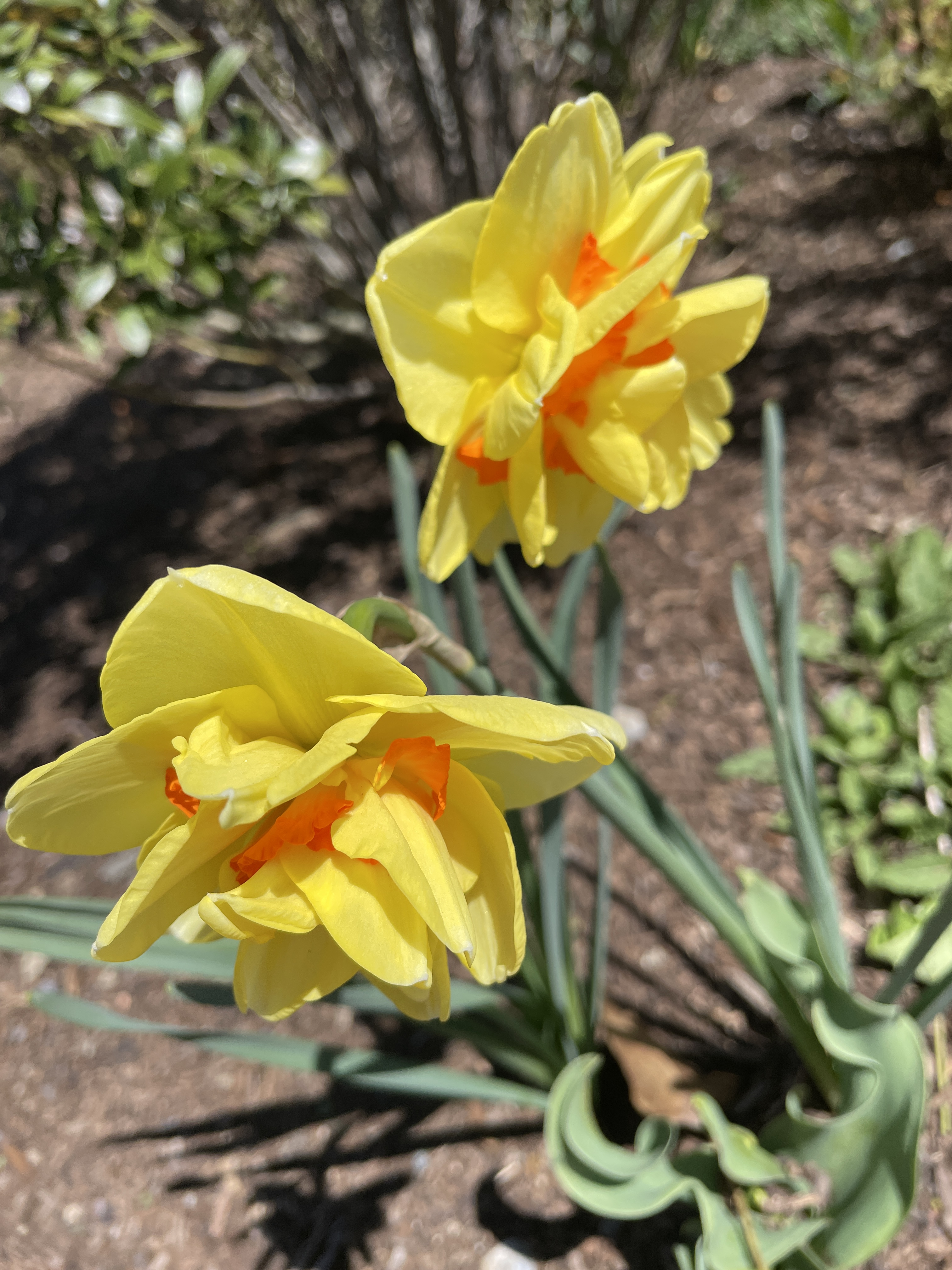
Daffs.

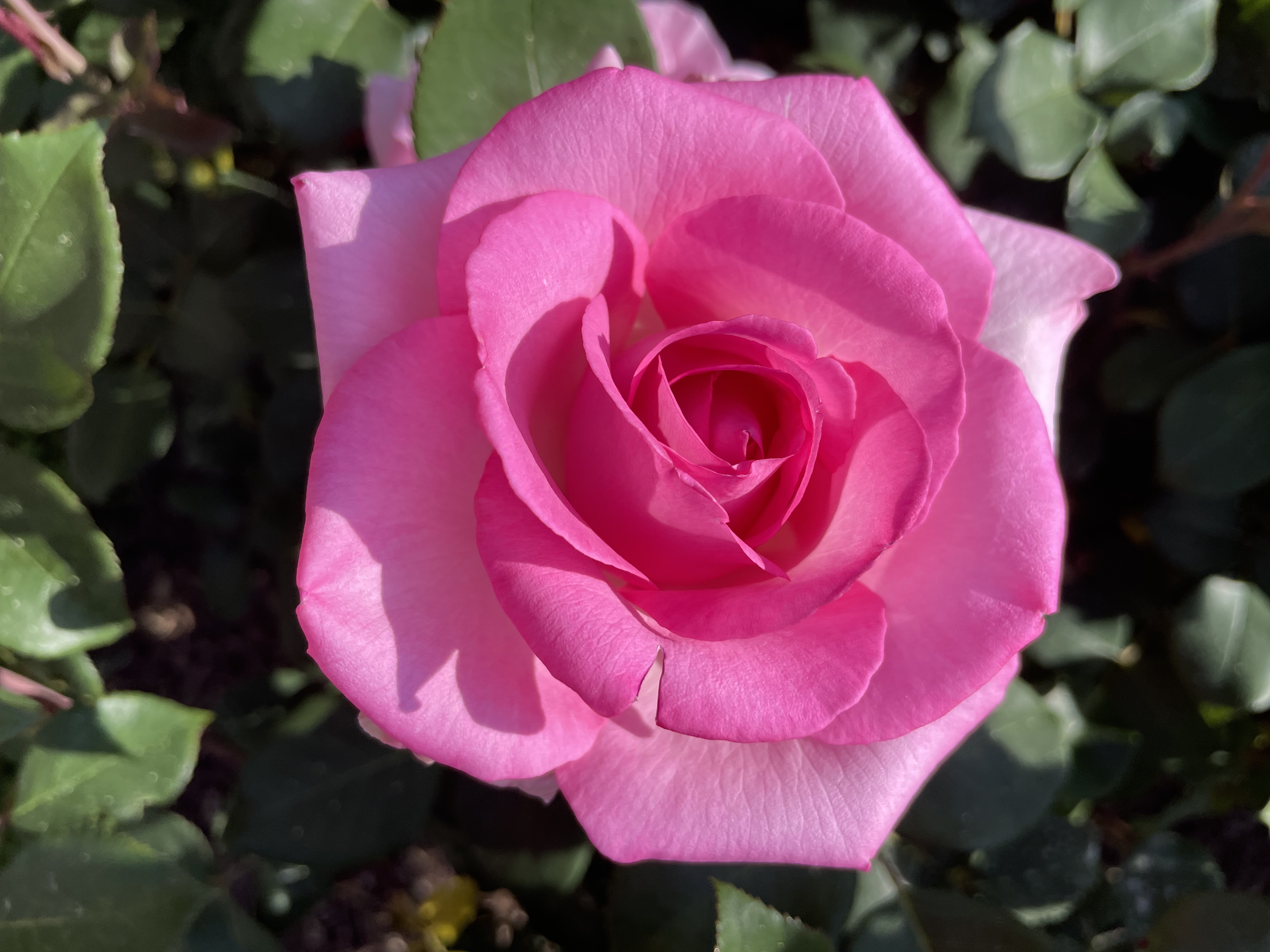
The most basic flowers. To again quote Gertrude Stein, a writer who knew something about the commonplace, Rose is a rose is a rose is a rose. Or daff is a daff is a daff.

Still, I’m glad I brought my hankie, since the most commonplace flowers make me tear up these days. As ordinary as they are, who knows how many seasons we’ll see them for?

This happens to be an everyday handkerchief inherited from my grandmother. Commonplace! That walk got me thinking. How many of the common things are my favorite things? A homemade hot fudge sundae.

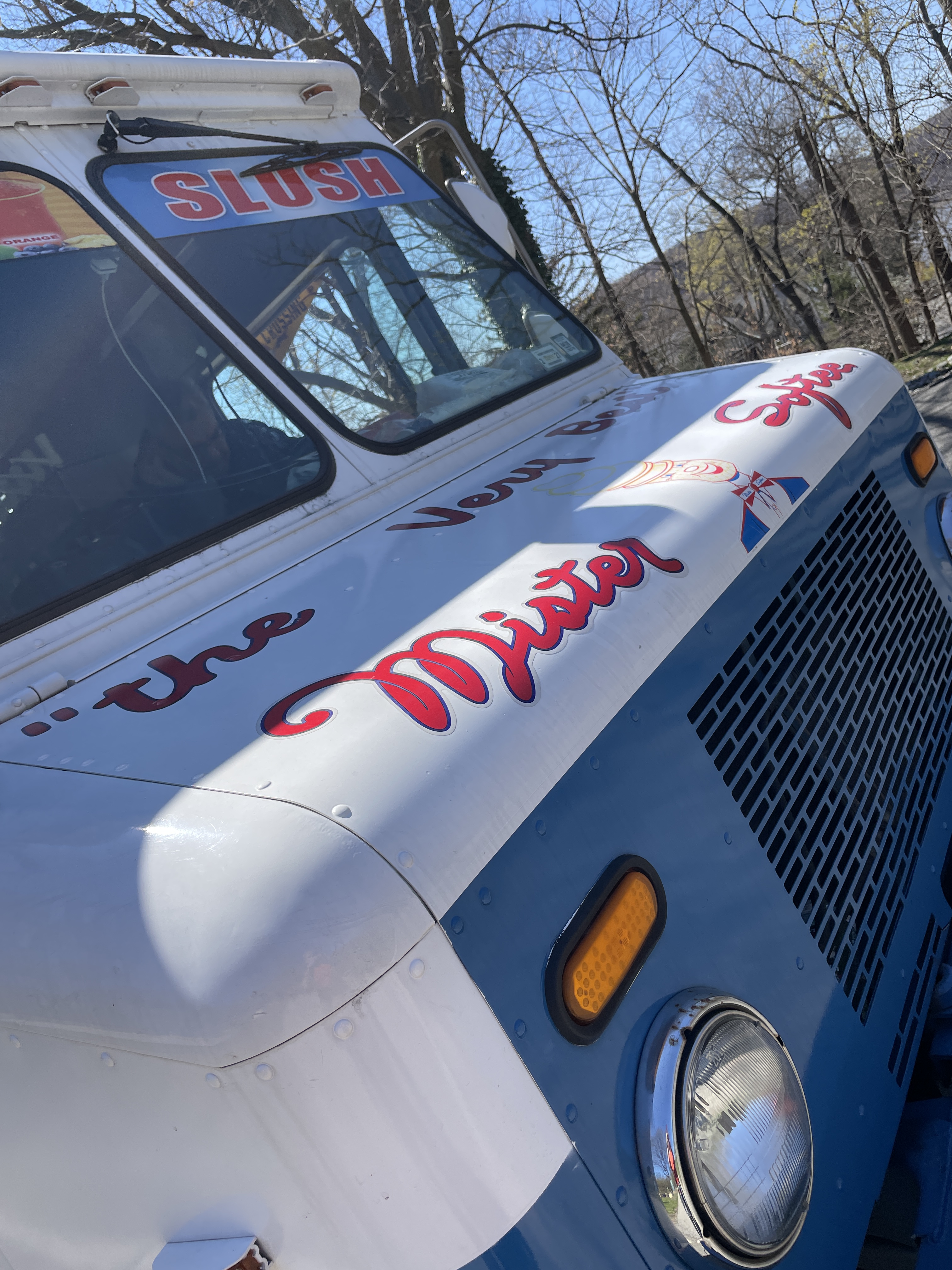
Mister Softee though. Pretty much average. Pretty remarkable for kids though.

A polite dog.

A dog hug.

Any hug, really. Holding hands will do in a pinch.

Pansies. Can you get any more banal?

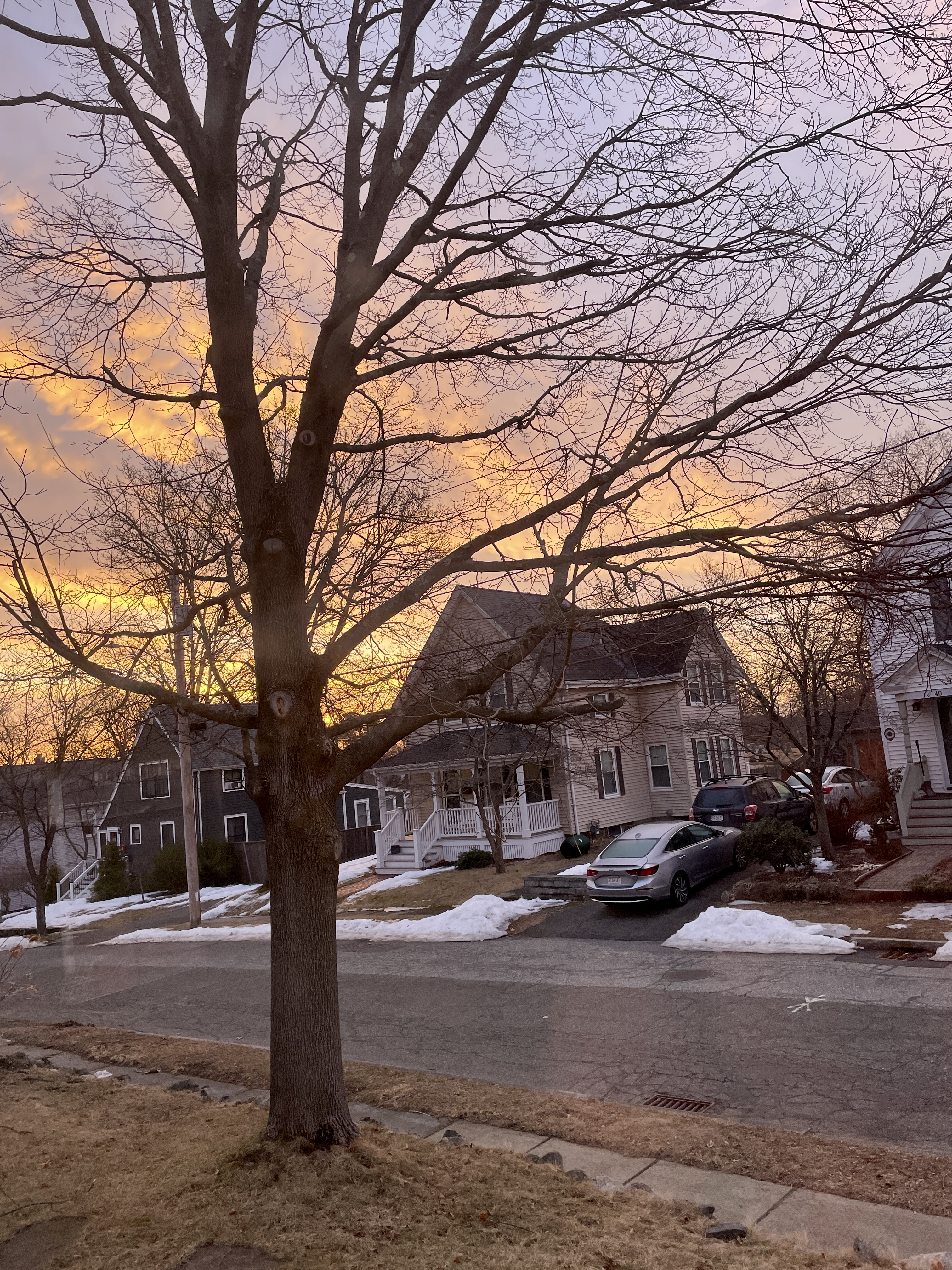
An afternoon suburban street.

So common. Note the towering beech though. How about a suburban dawn?

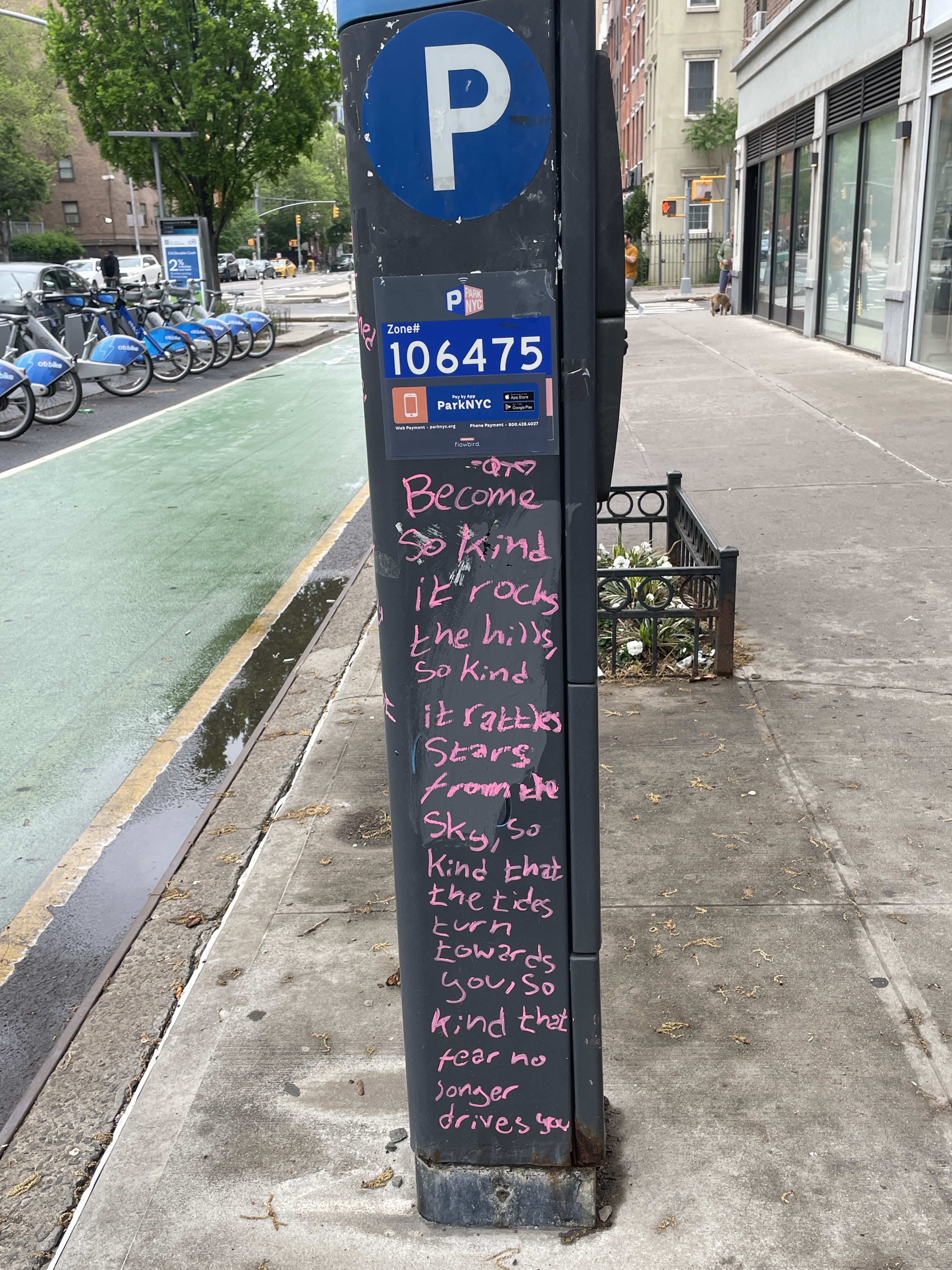
Sorta makes you think, to quote Gertude again, There ain’t no answer. There ain’t gonna be any answer. There never has been an answer. That’s the answer. Got that? Street poetry.

Just walk on by. So ordinary.

Banal.

Anyone could see the poetry here. Of course.

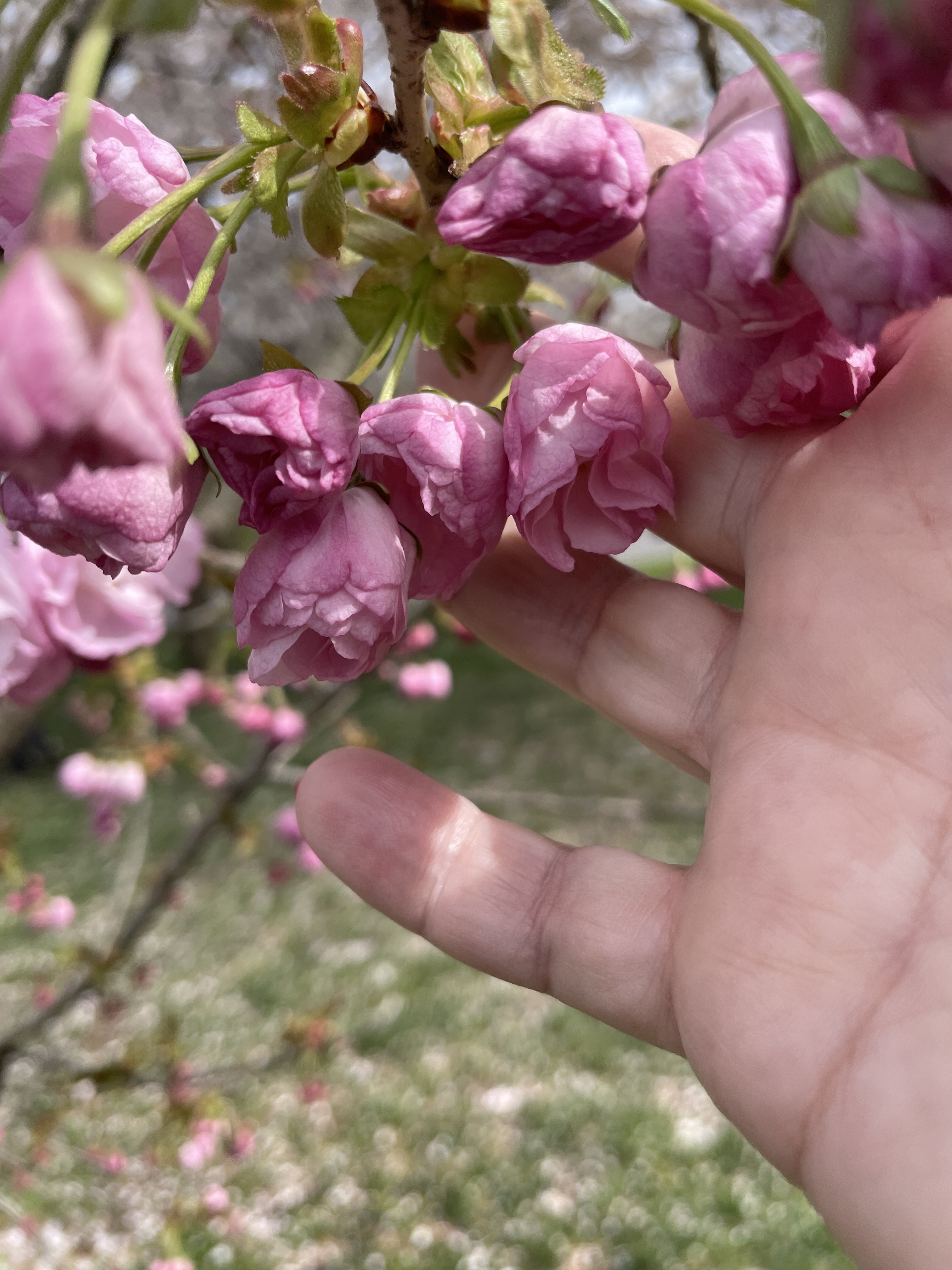
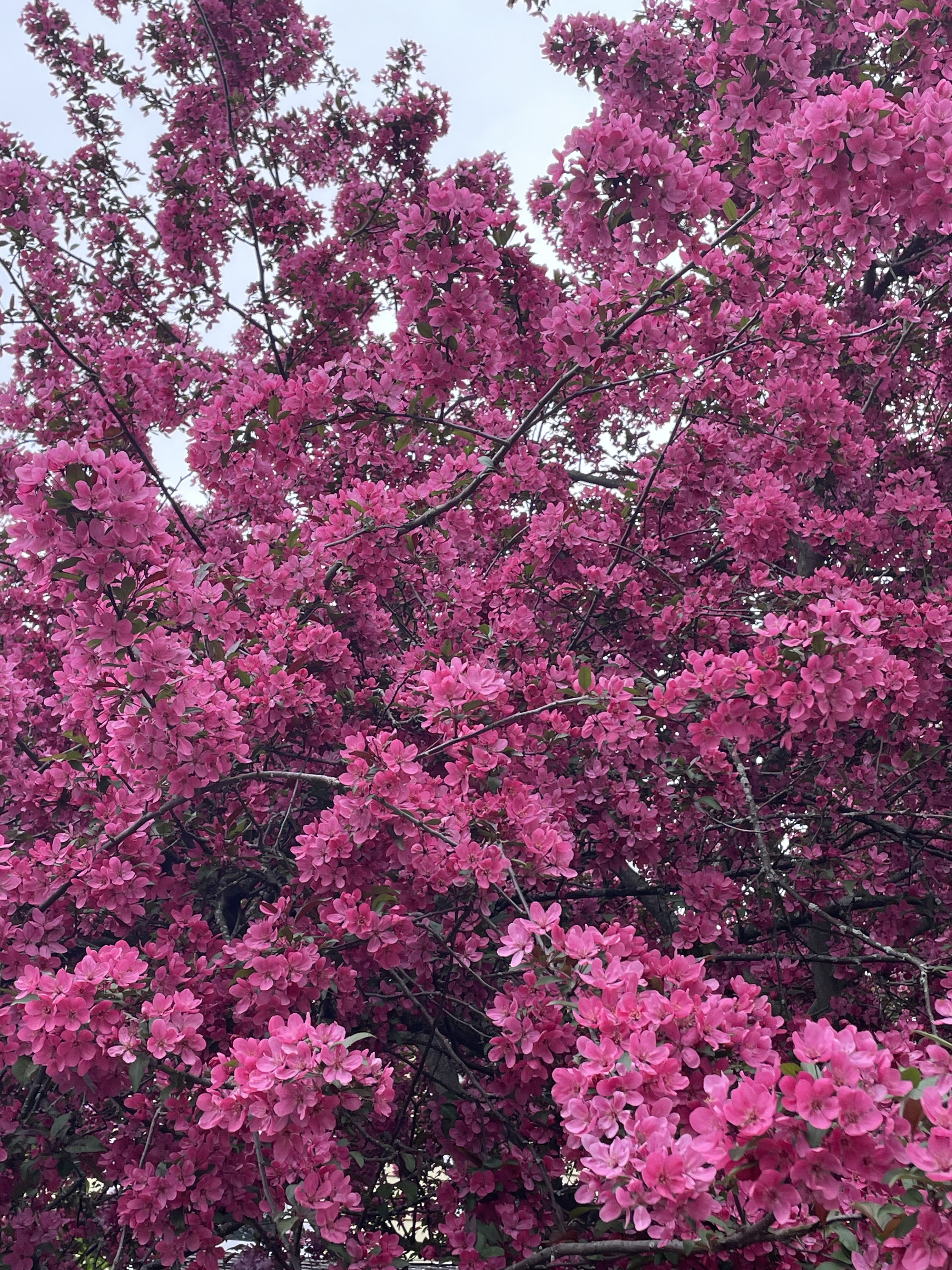
Petals. Okay, they happen to be cherry petals.

And everyone knows cherries to be extraordinary.

Look up, though. At the sky. Totally ordinary blue. Once more, Gertrude: I like a view but I like to sit with my back turned to it.

Go ahead, Gertrude. Just try.

10 Comments

Filed under Jean Zimmerman

Late season.

Been thinking about the concept recently while visiting some haunts both local and distant. Not ruins exactly. Let’s say slightly faded in the most perfect way.

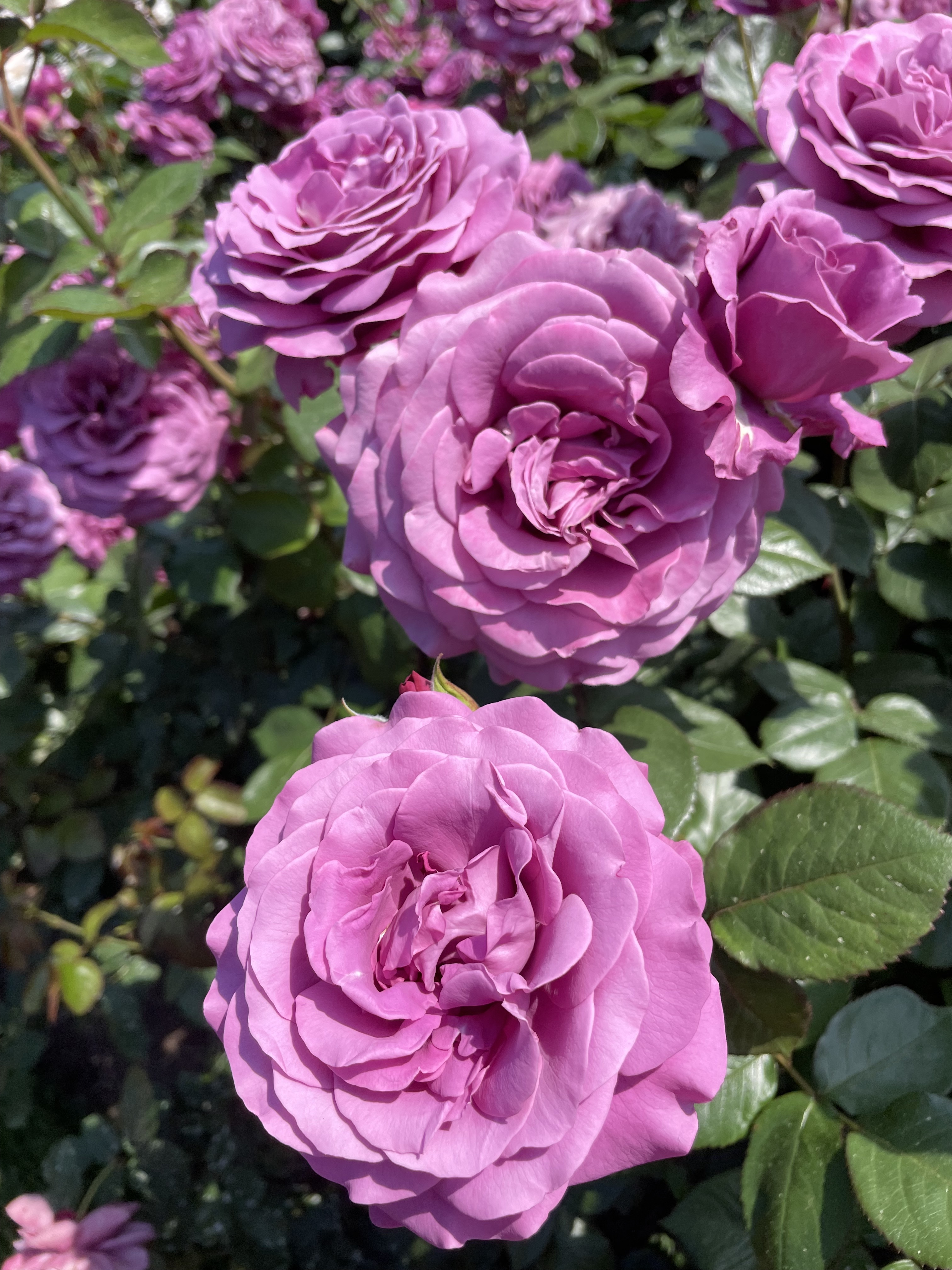
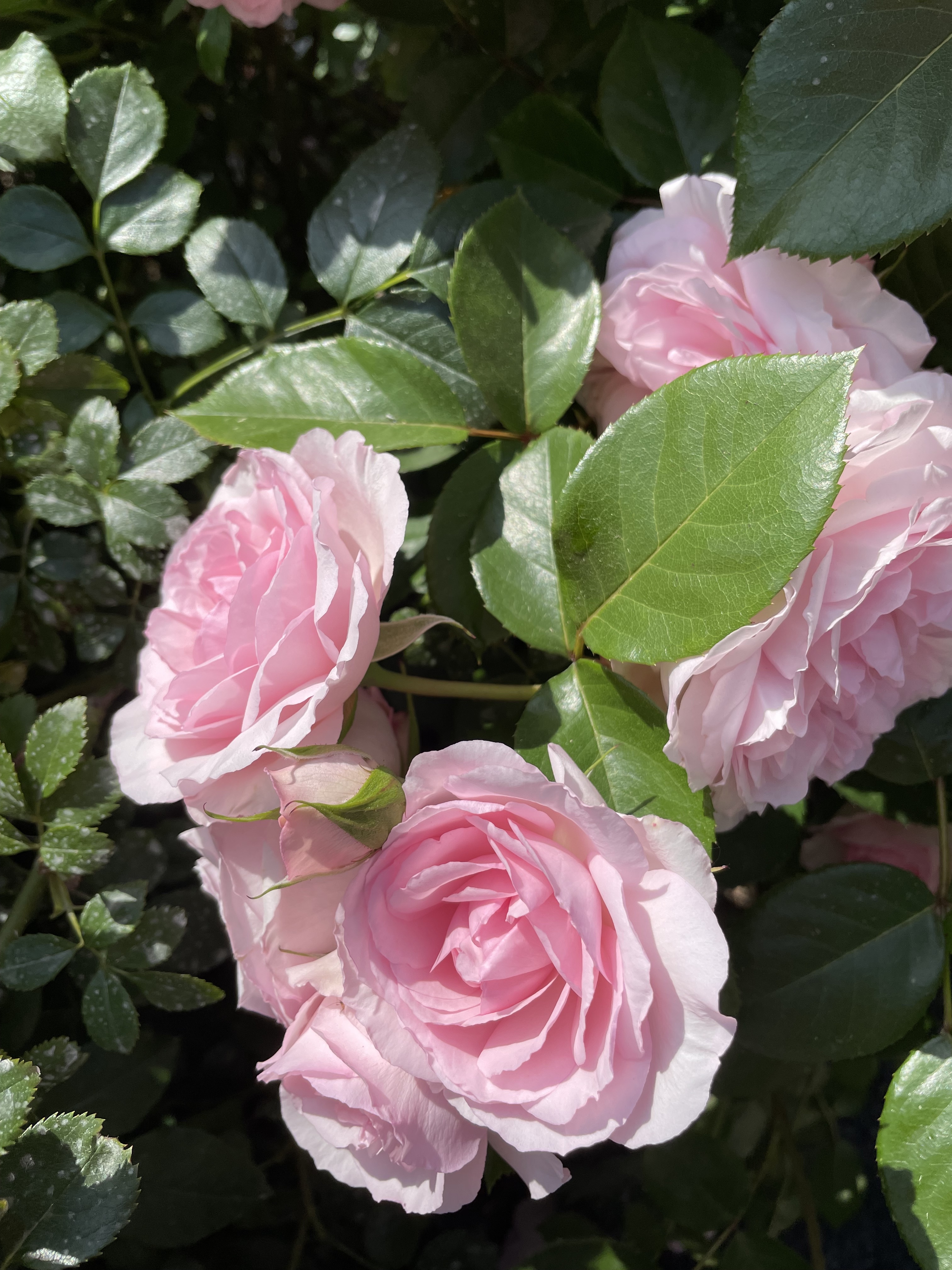
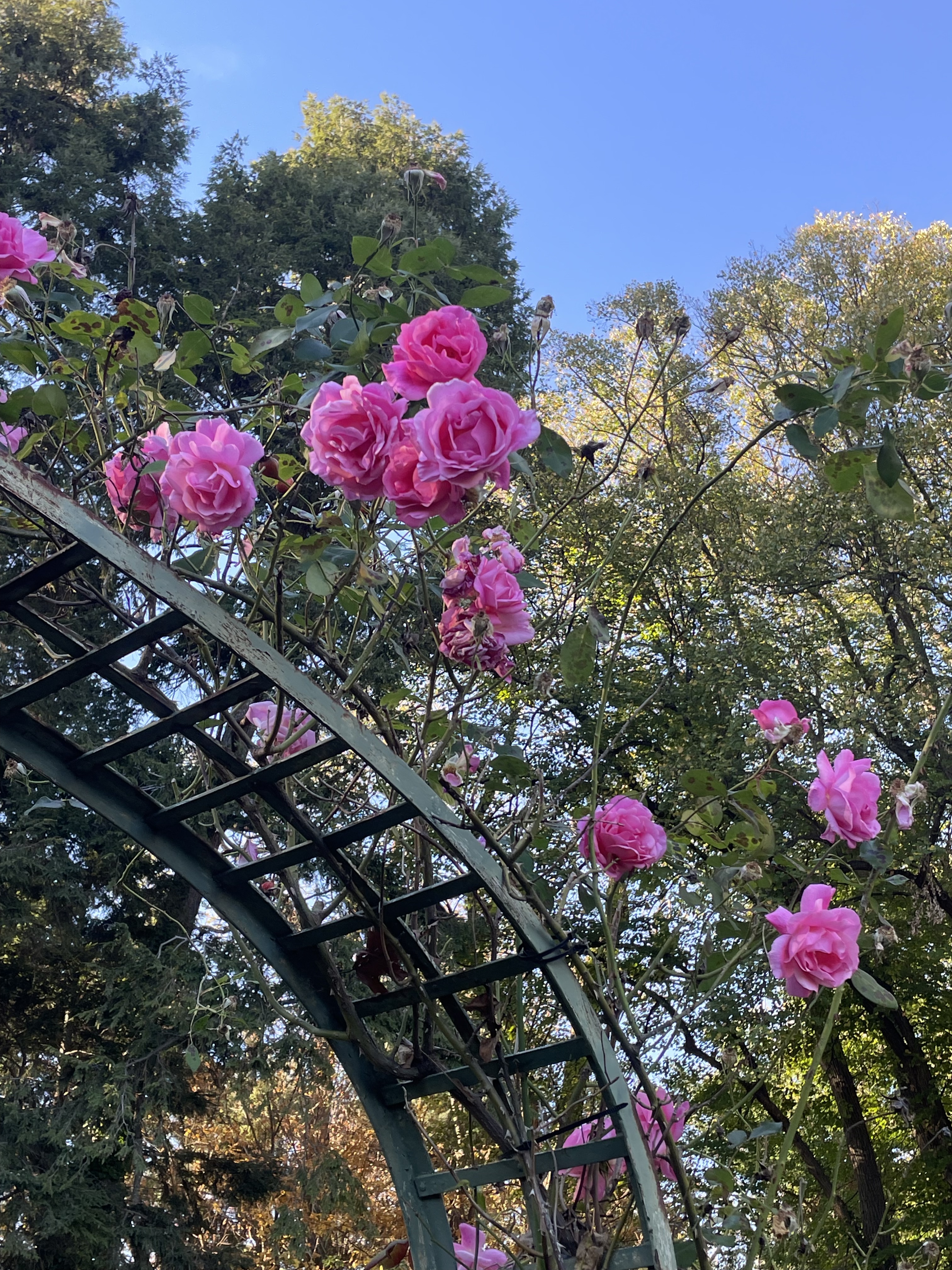
Like the nearby genteel rose garden at the Lyndhurst.

Its blooms in November just as exquisite as the ones in June.

Possibly even more ravishing. Is it my imagination, or when you stick your nose in are they actually more fragrant as well?

Who’s to say that a rose hip is any less beautiful than the rose that preceded it?

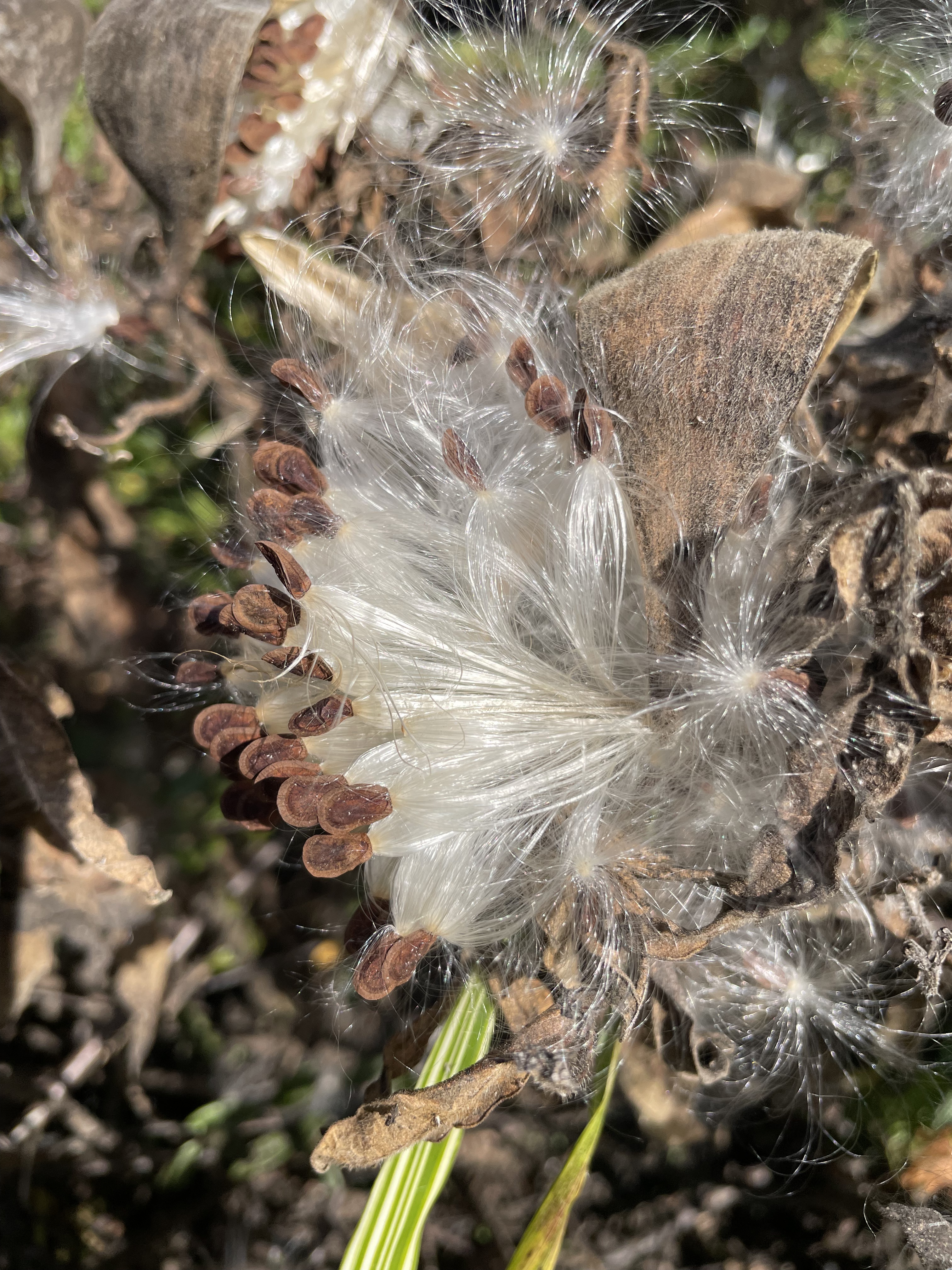
Late season magic. Milkweed.

An old-old graveyard that by all rights ought to have been long plowed under, like the cemetery we stumbled upon behind chain link in the heart of bustling Flushing, Queens. Someone in the Episcopal church next door kindly opened the gate so we could mosey around.

In the midst of faded headstones, some of them dating back to the early 1800s, an epic mulberry thrives.

The tree might have been planted when the graveyard was new.

I like a circa-1700’s fanlight door at Philipse Manor Hall in Yonkers, similarly a survivor.

Between fall and snowfall. I didn’t come up with that one, but it’s a pretty good description of most all the things I like best.

Why do I gravitate to the tousle of brown juniper needles so much more than the vibrant green ones still holding on?

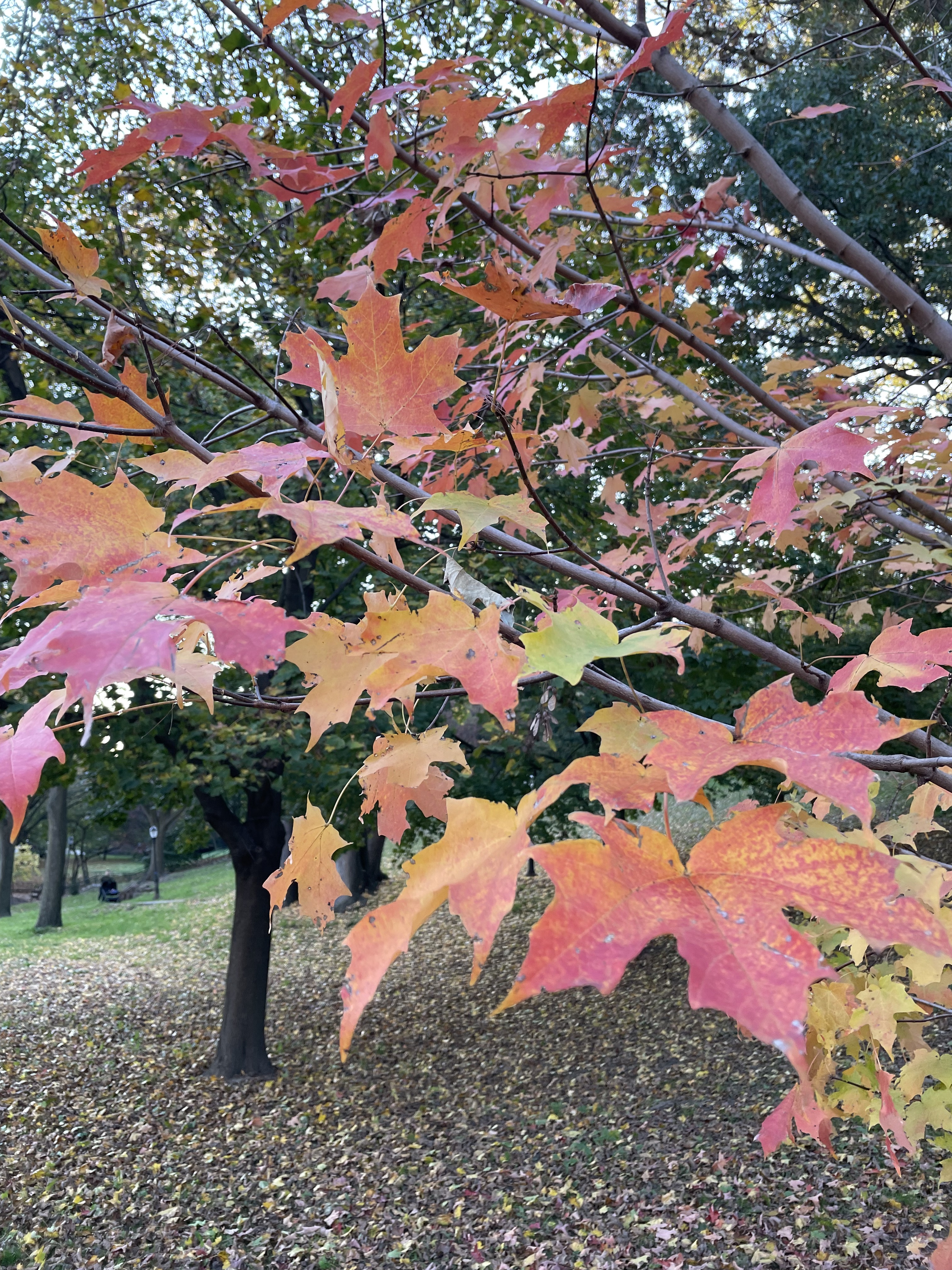
I guess everyone loves the changing hues of autumn. Who would’t care for unexpected fuchsia?

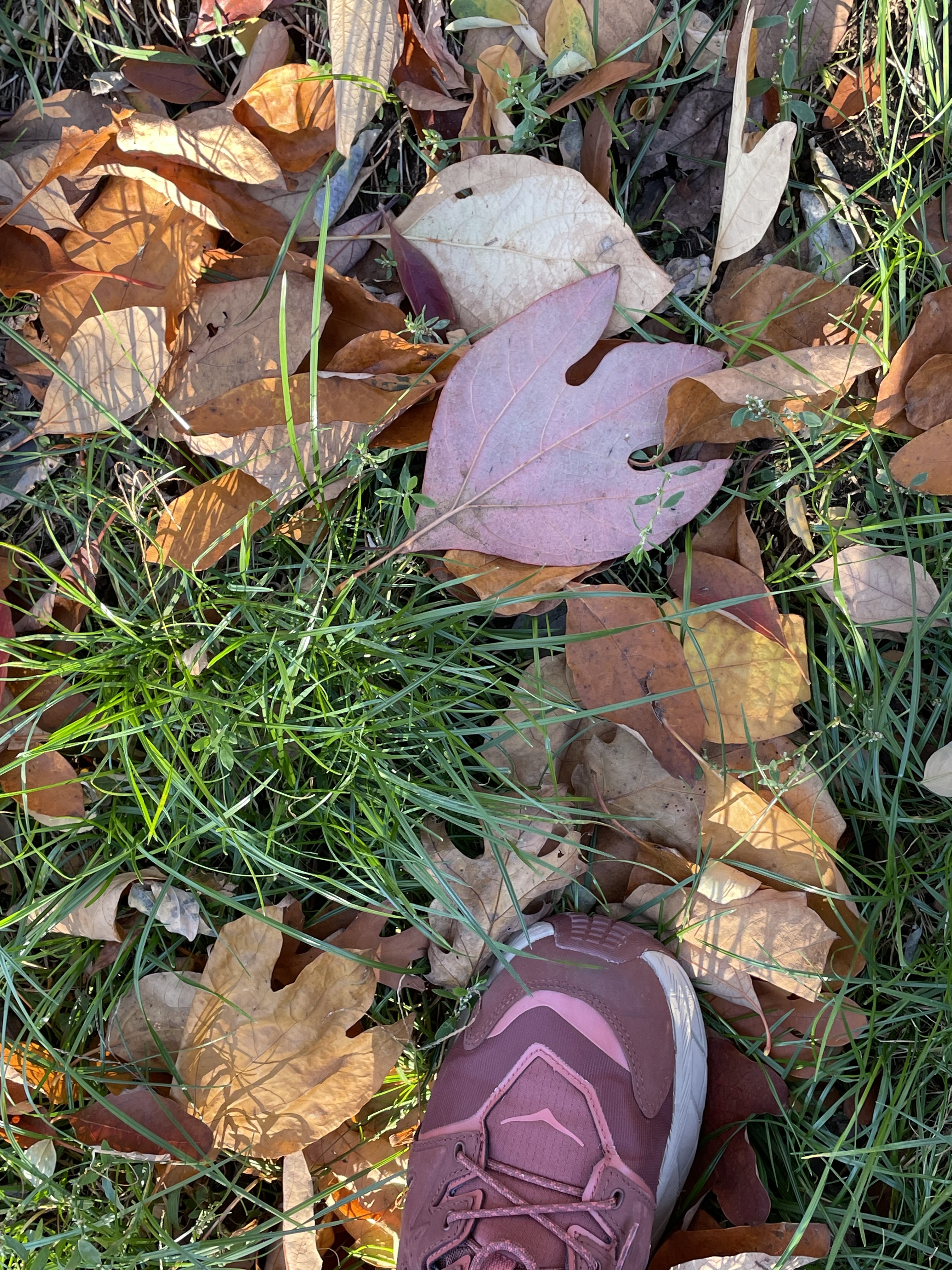
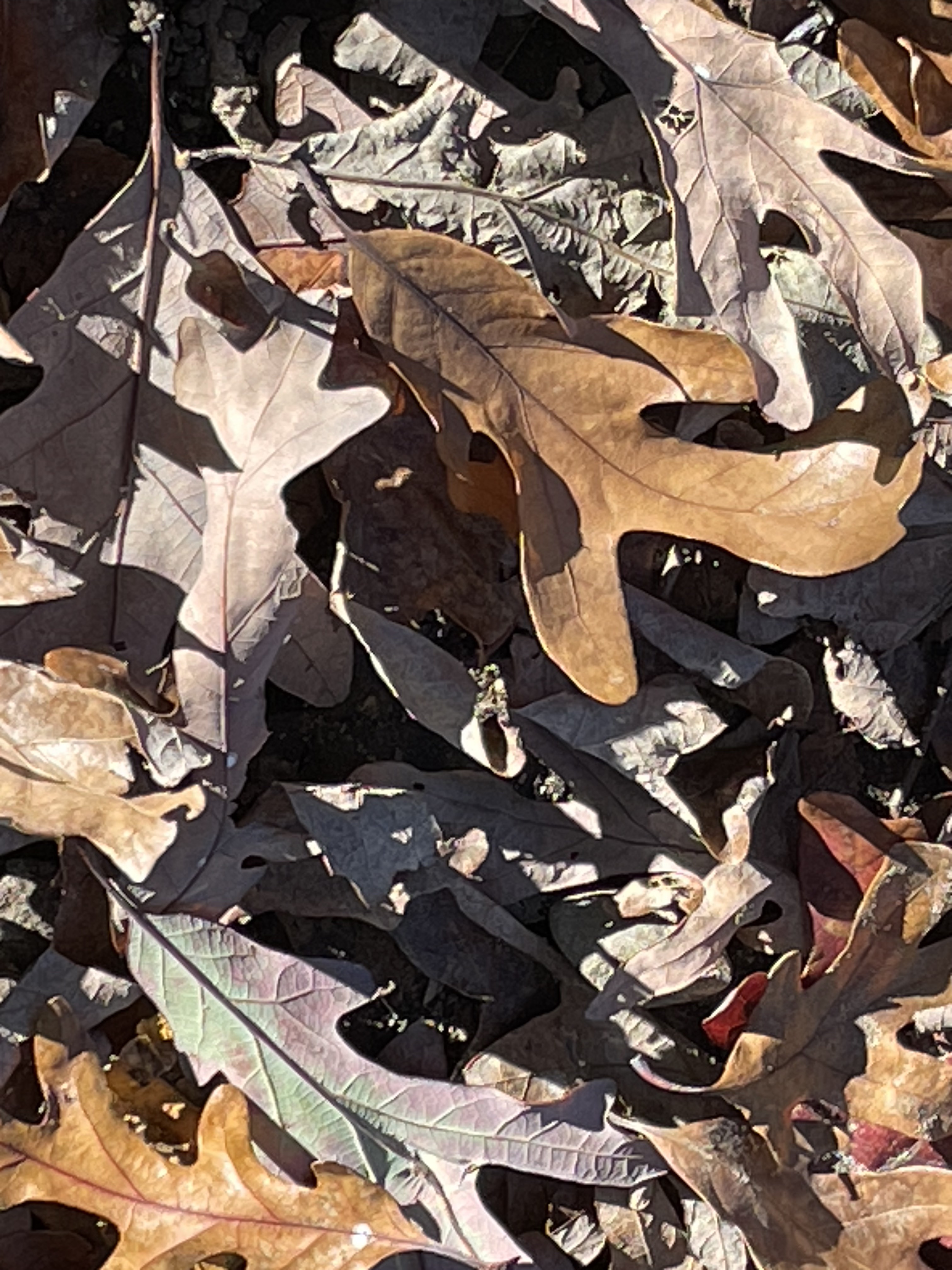
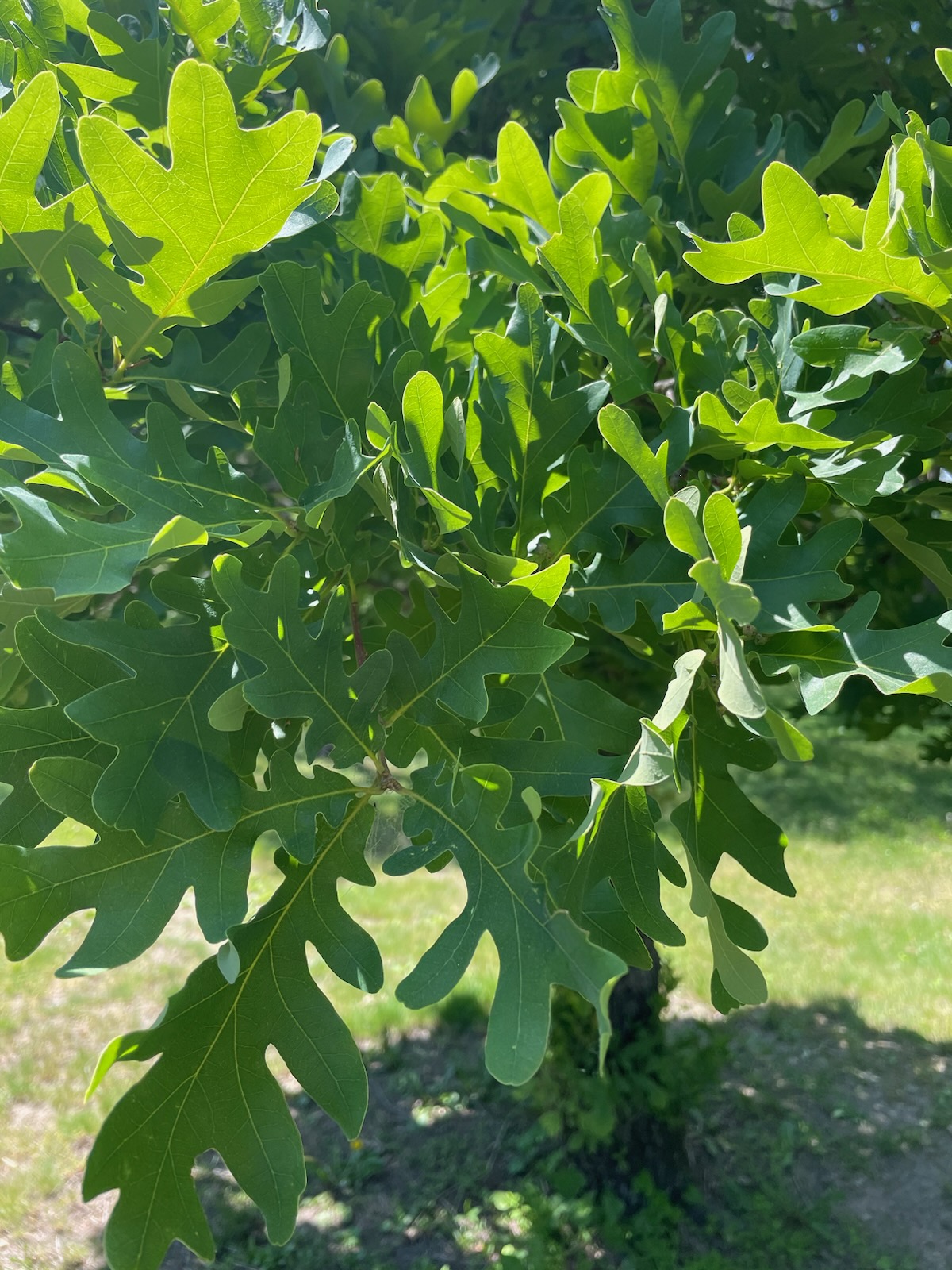
White oak leaves always get me, brown fallen ones perhaps more so, and brown fallen ones with green grass shoots still around them probably most of all.

Classic apples. At a local cider place you can bite into a russet people favored back in the 1600’s.

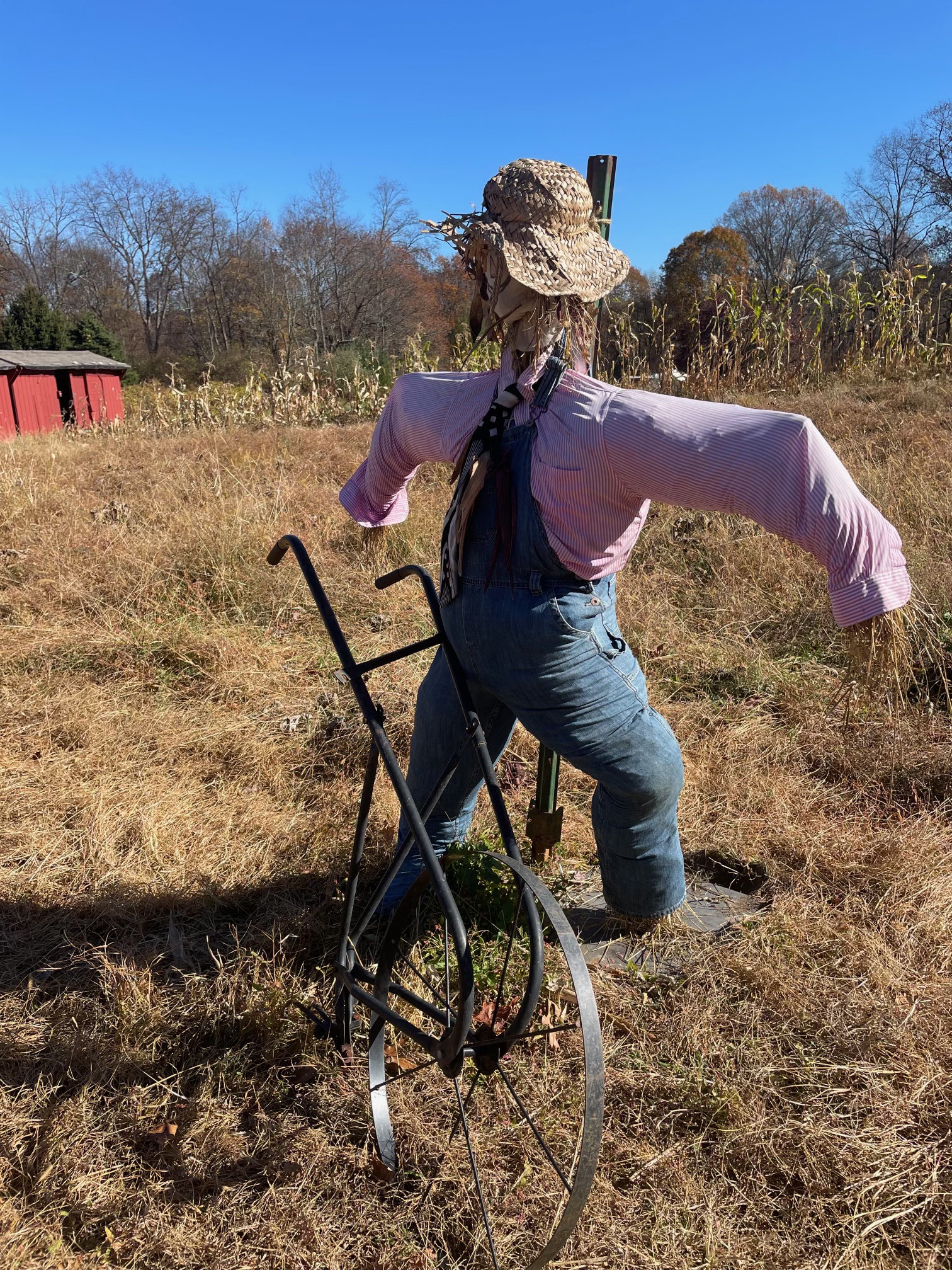
Nearby, a weathered scarecrow holds court over a late-season field.

Everything old is new again. Somebody or other said that. Could have been the early 1700’s author Jonathan Swift, or Mark Twain, or Churchill or even Stephen King. No one seems to know.

But most things that are old and creaky seem fresher to me than what is new. Perhaps because I feel between fall and snowfall myself?

I gravitate to things that are timeworn and true. Silent movies.

The late-season cattail by a pond.

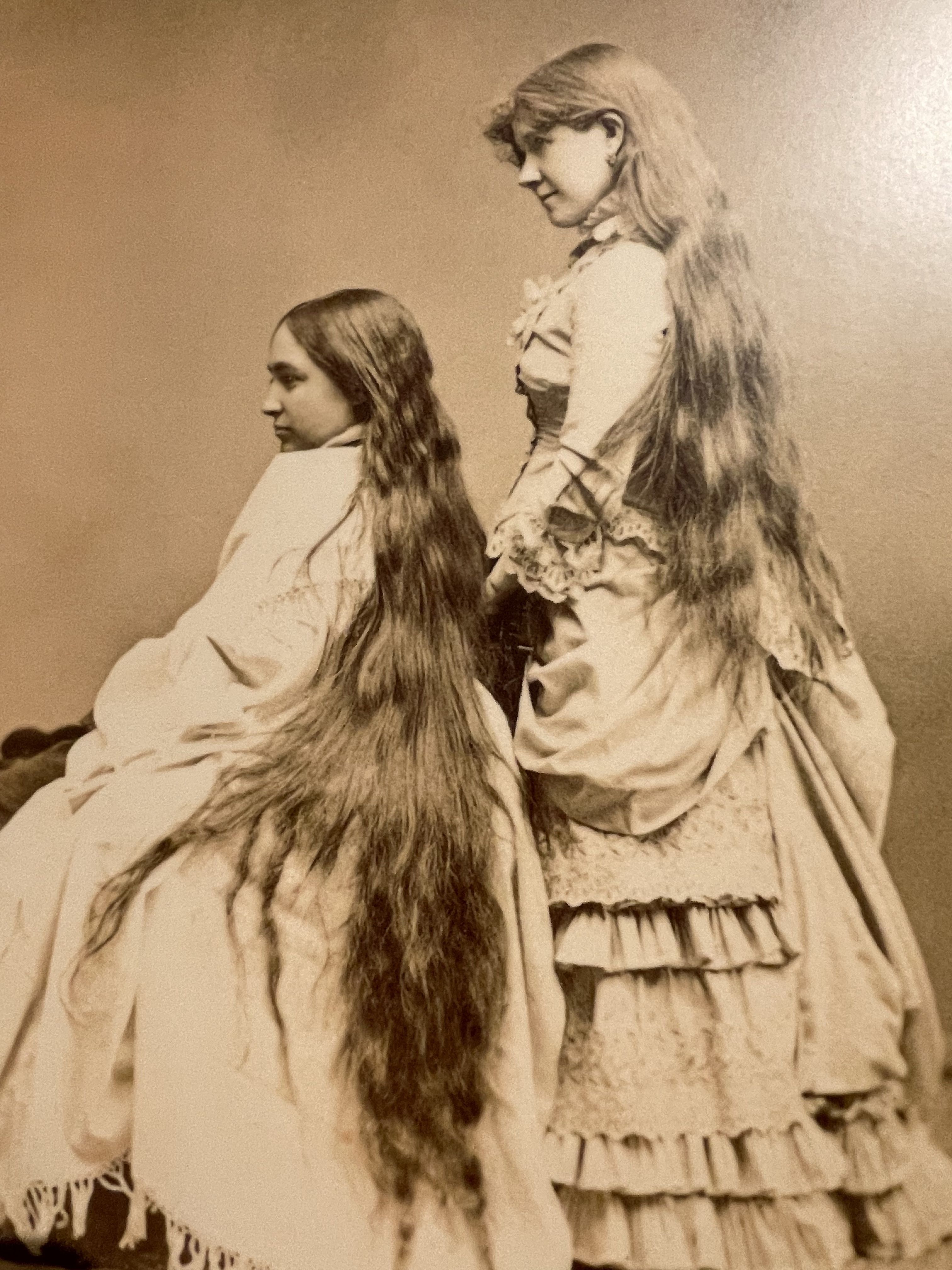
A portrait of two sisters that suggests a mystical earlier appreciation of hair.

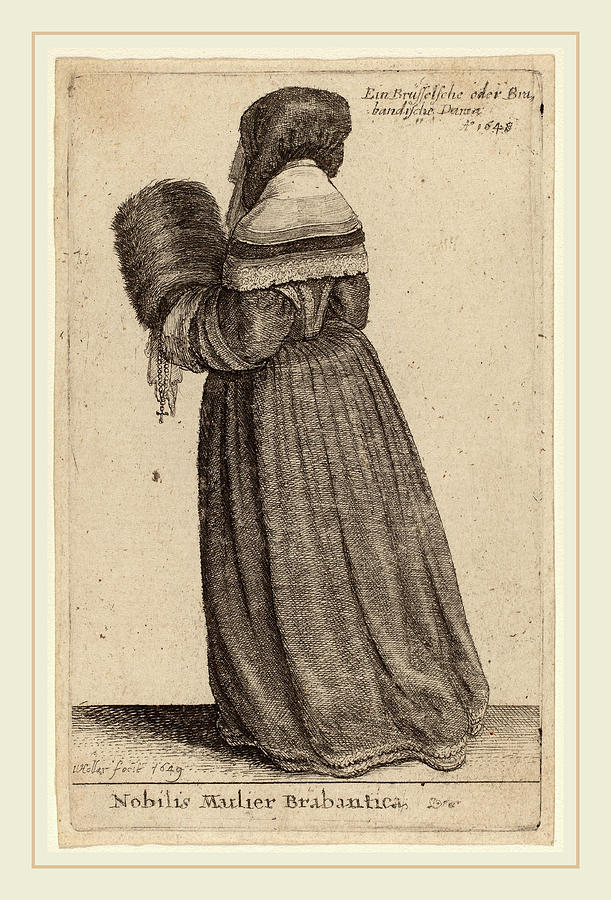
Or the Wenceslas Hollar engraving bespeaking the crucial importance of a fur muff.

A vintage postcard that reminds us we might not have come as far as we think we have.

Wise women from a different era.

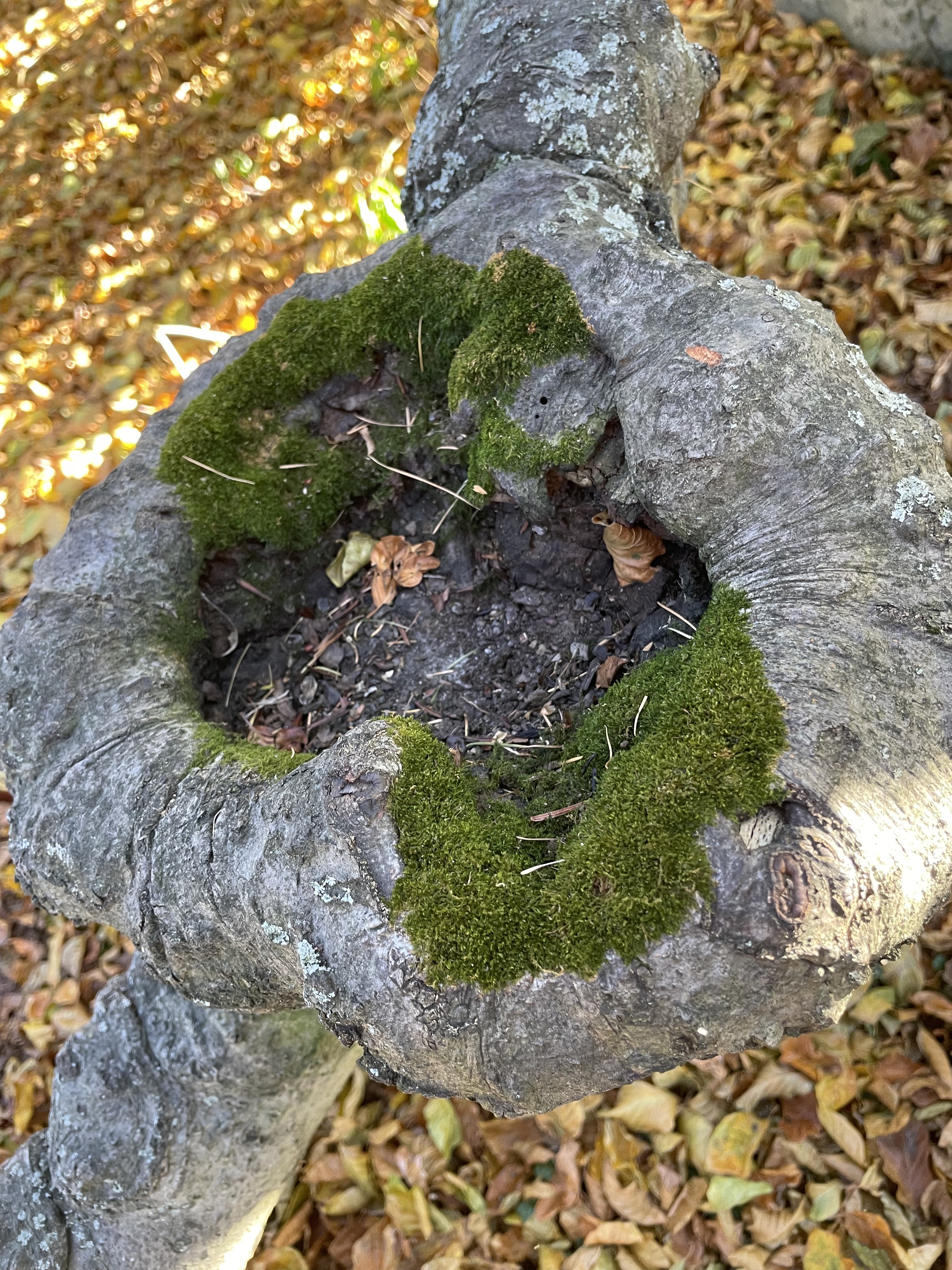
Under the canopy of an ancient European beech, a bark bowl that holds mossy dreams.

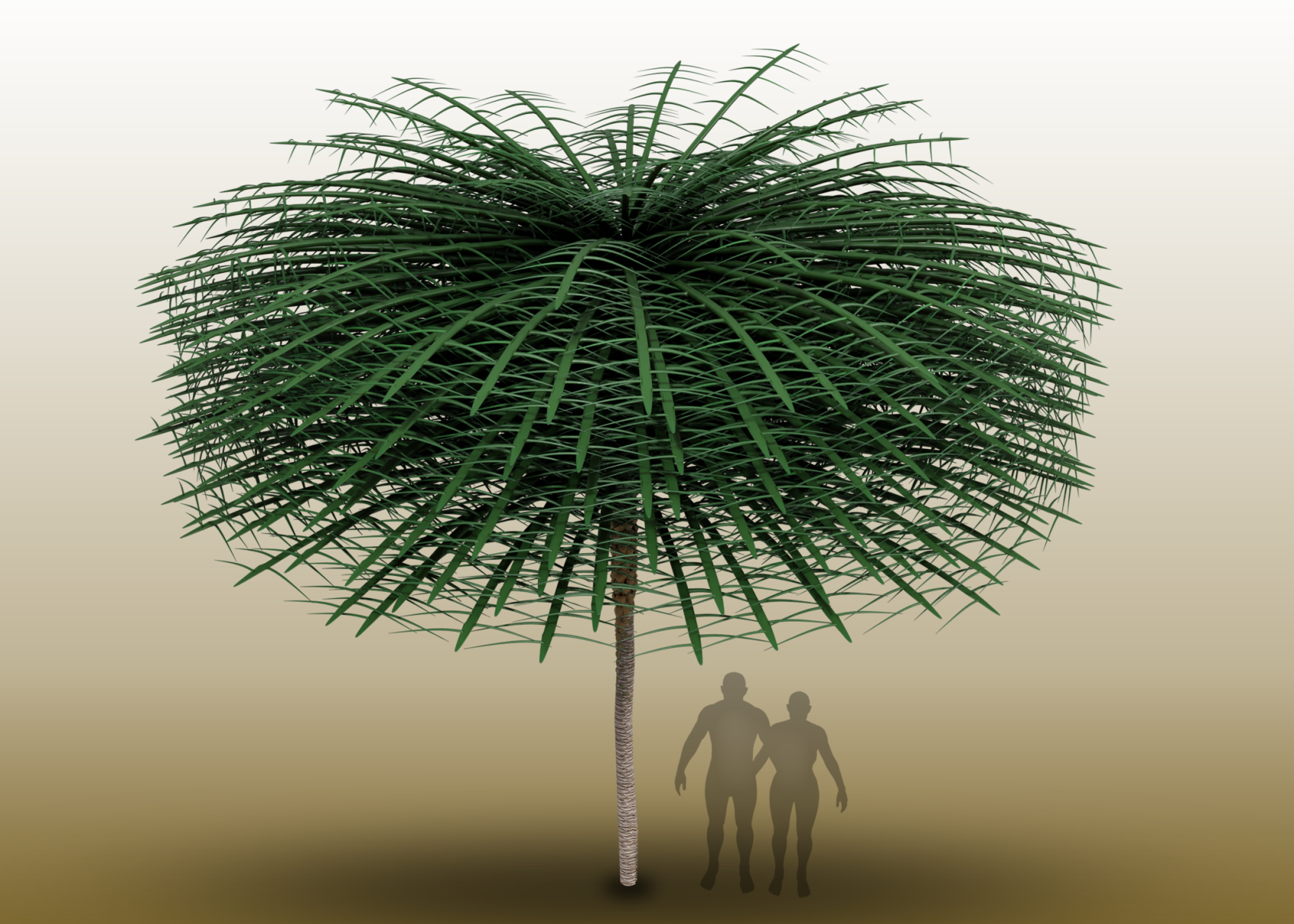
A 350-million-year-old tree, the most ancient species we know.

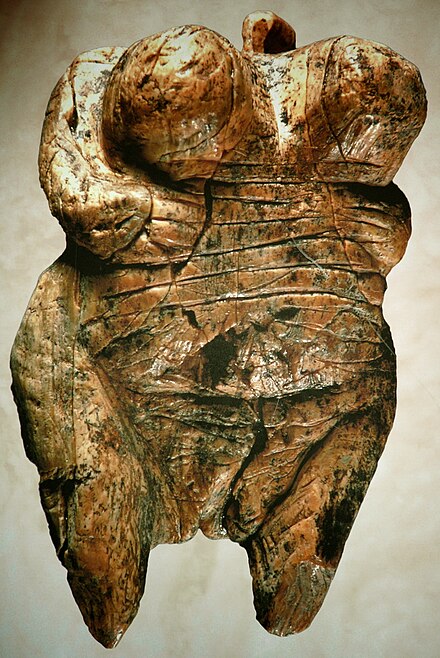
The earlier depiction of a human being — really! — the Venus of Hohle Fels, carved 35,000 years ago of mammoth tusk and unearthed in 2008 in a German cave.

A Queens London plane from our time seemingly modeled on her form.

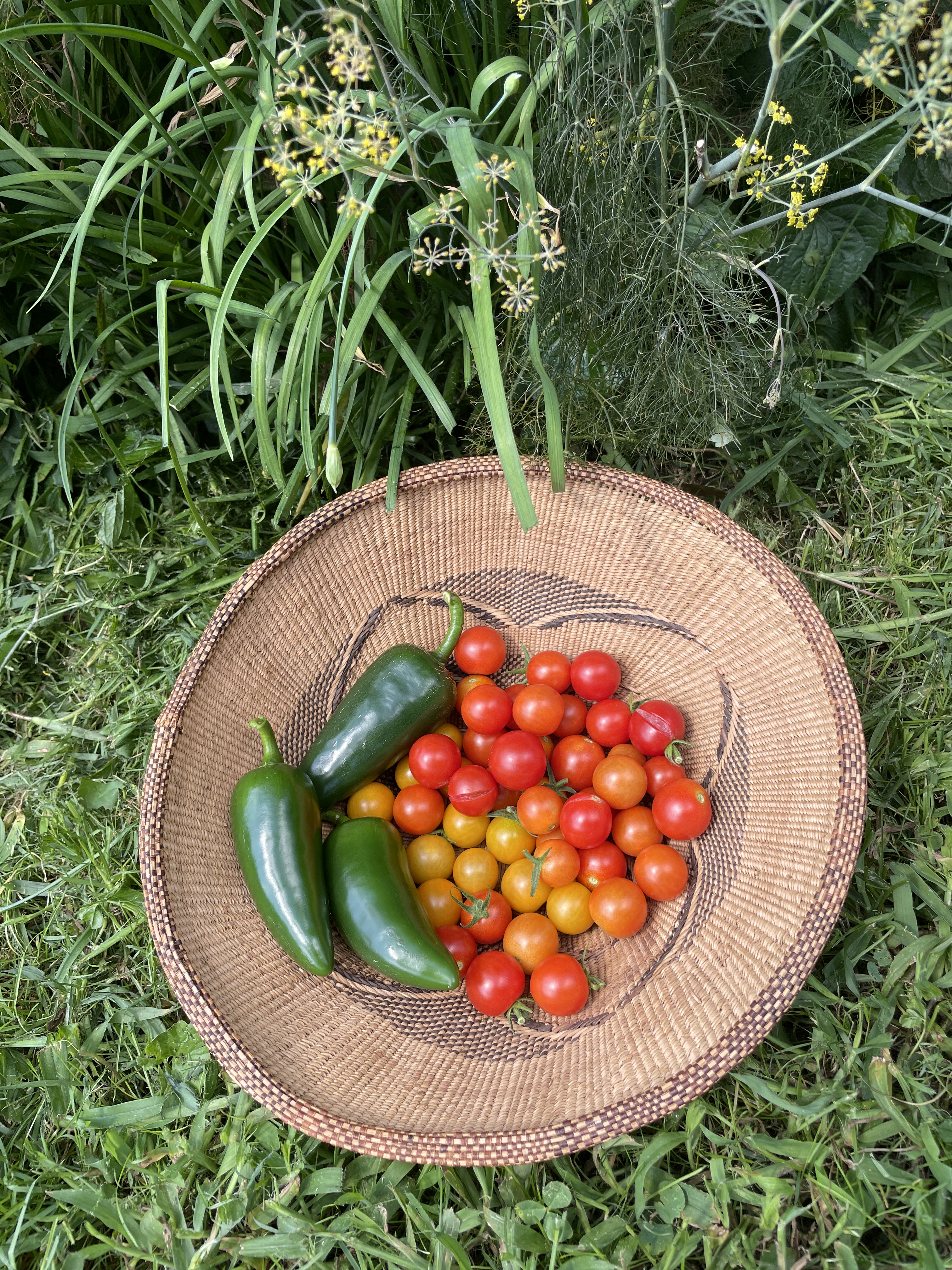
Late-season garden tomatoes and jalapenos possibly more delicious as the summer winds down.

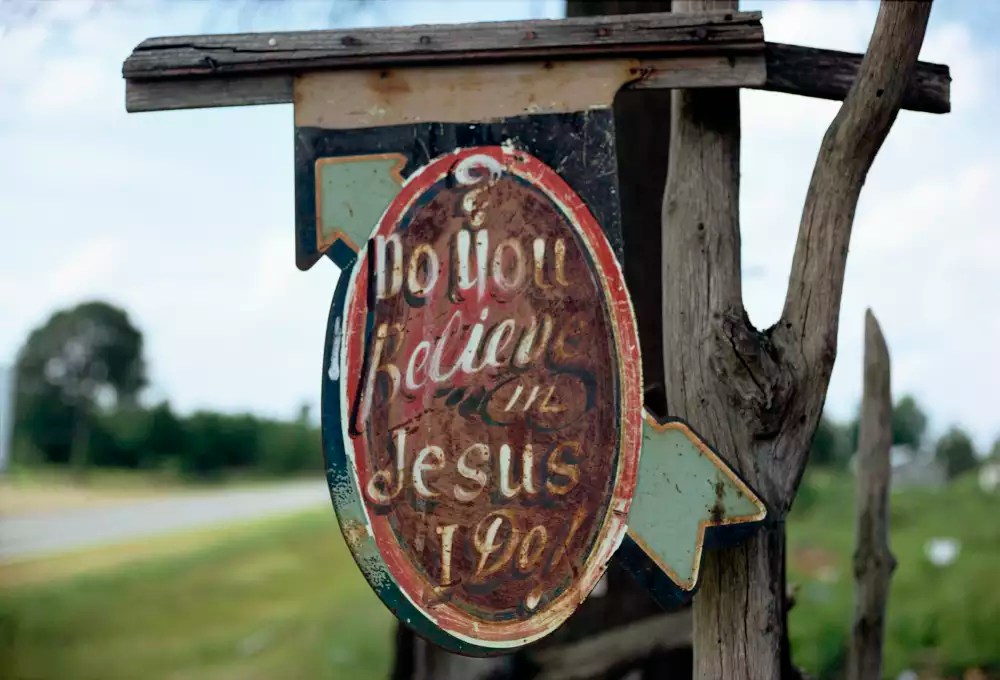
Battered roadside signs.

A statuesque ladytree elm surviving indomitably alongside Central Park.

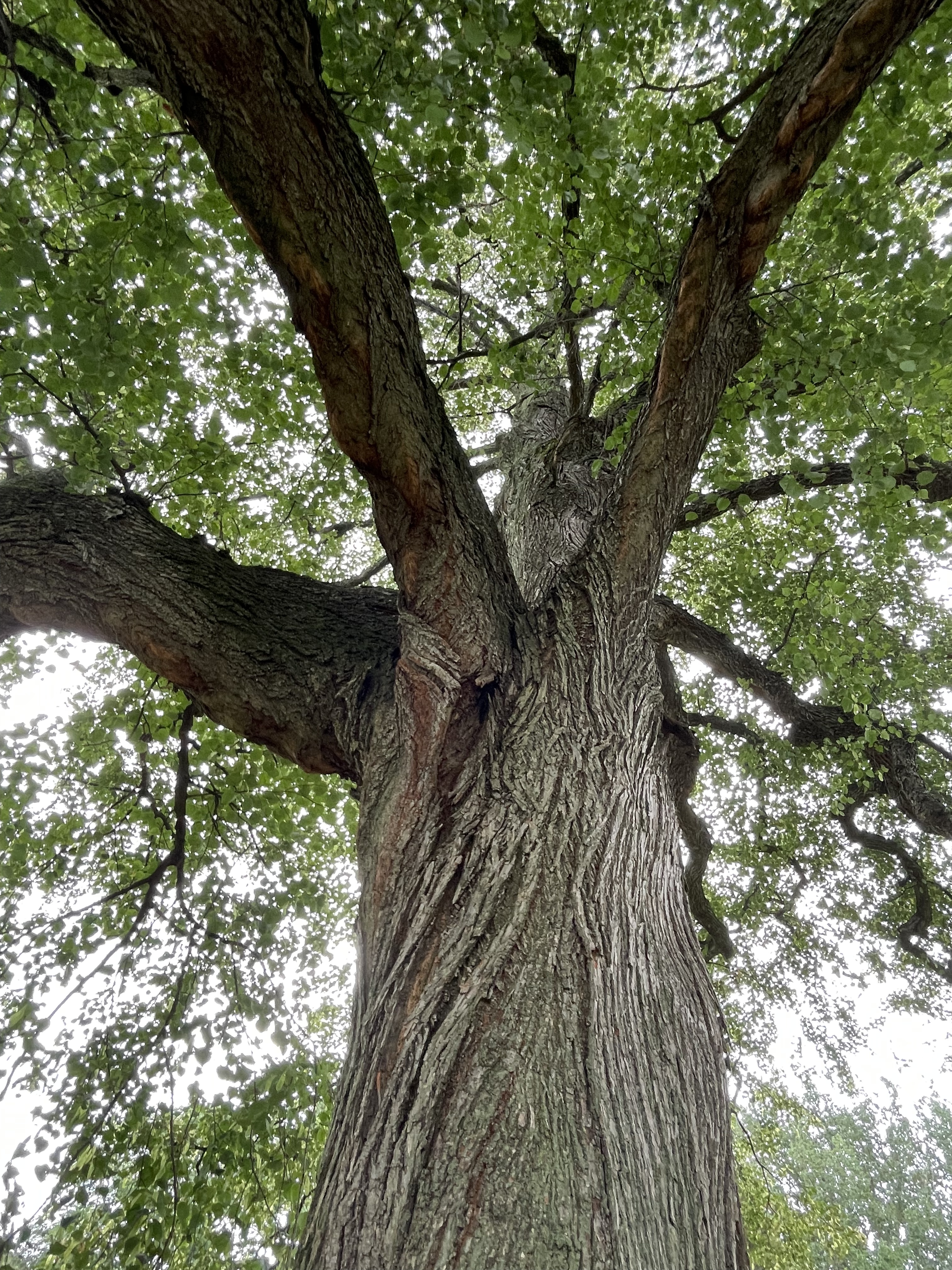
Every stately specimen I see.

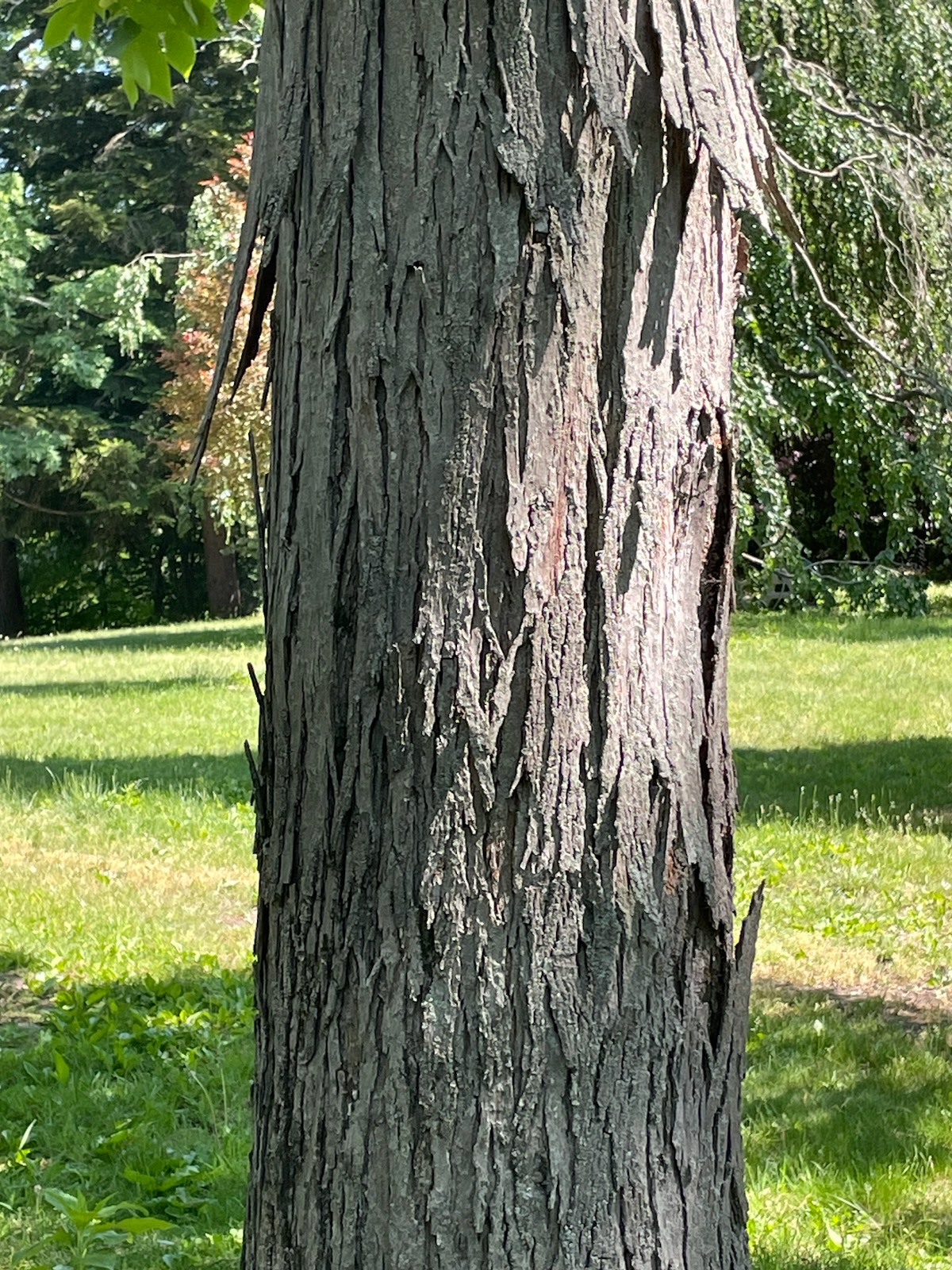
But especially the shagbark hickory.

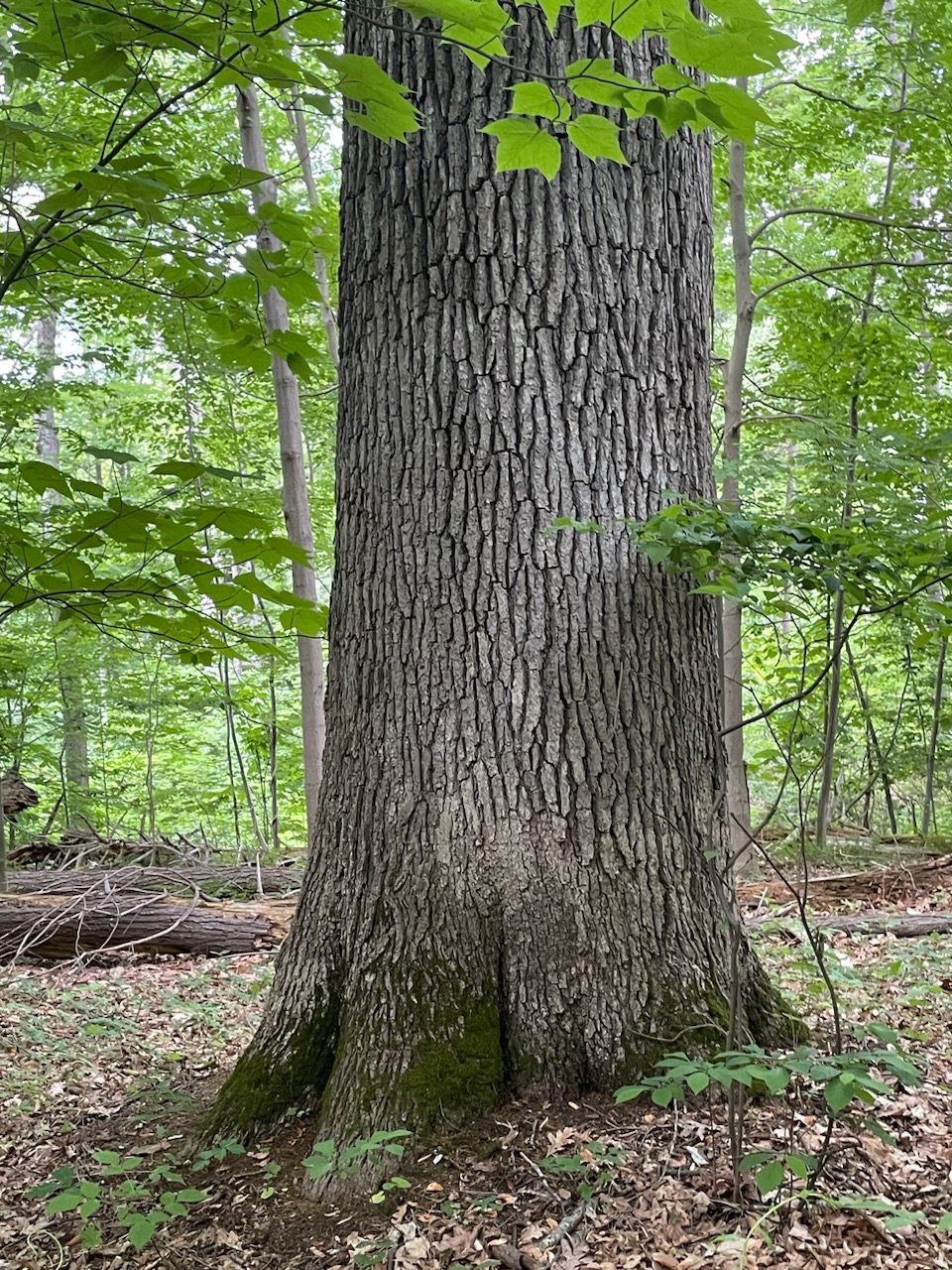
A historic bur oak with its distinctive shaggy acorn.

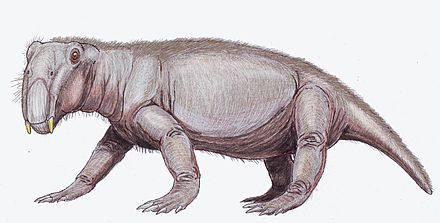
Also critters. The homely early herbivore called a lystrosaurus that lived 250 million years ago and survived the Permian extinction event to dominate the early Triassic.

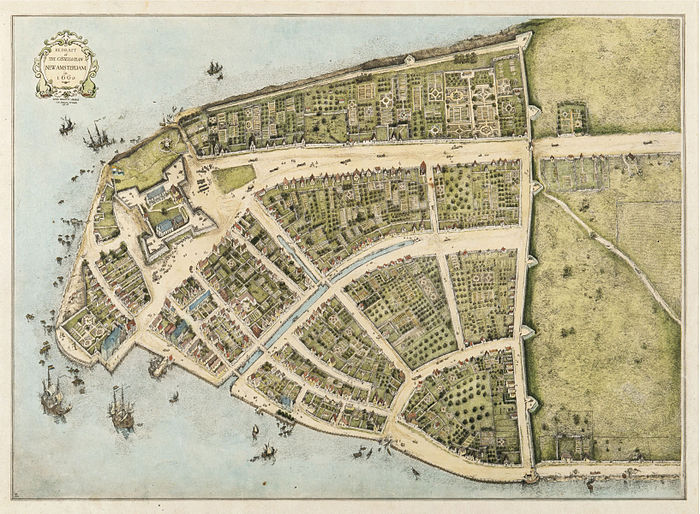
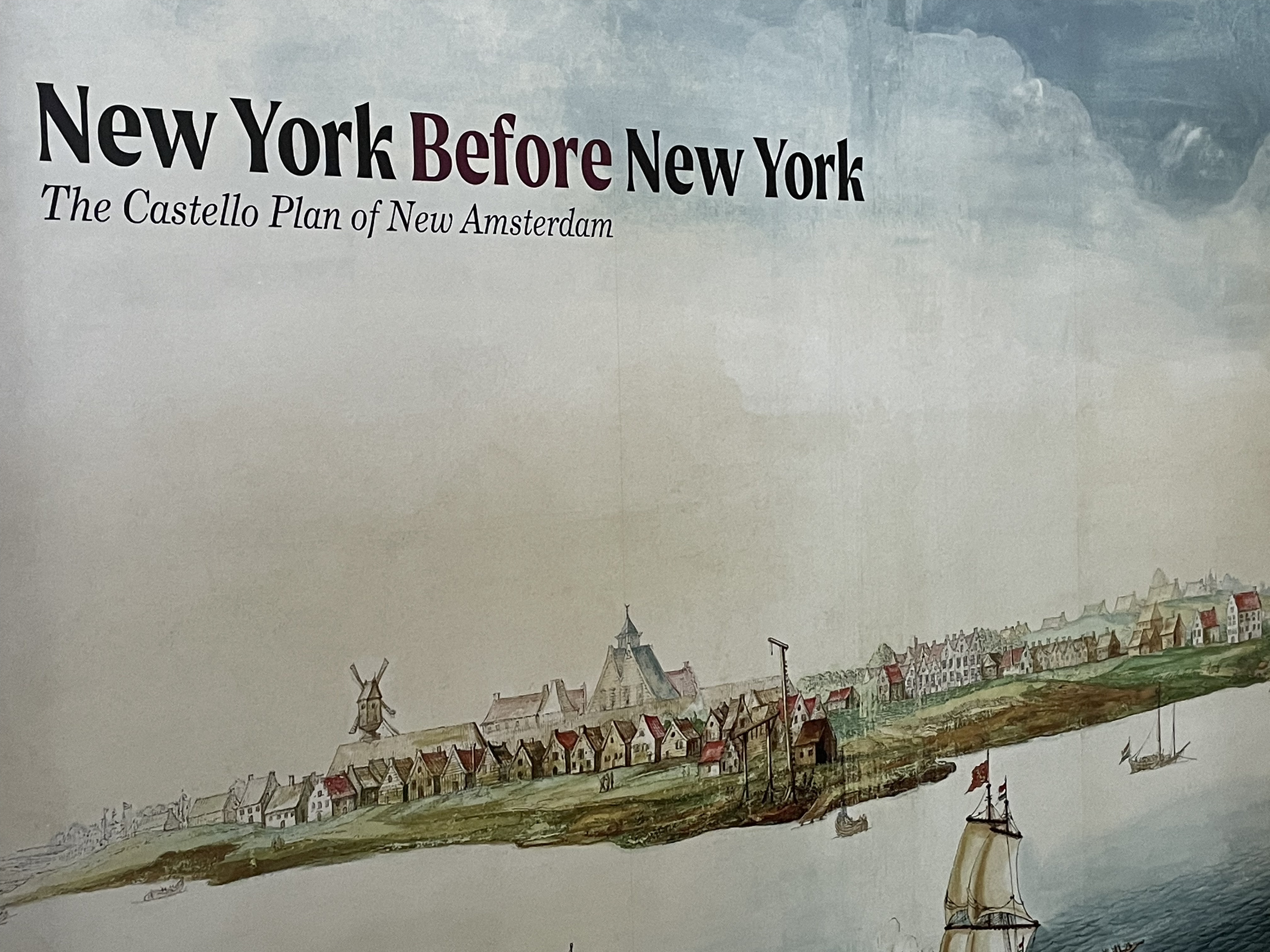
The crystal-clear first Manhattan street map from 1660, called the Castello Plan.

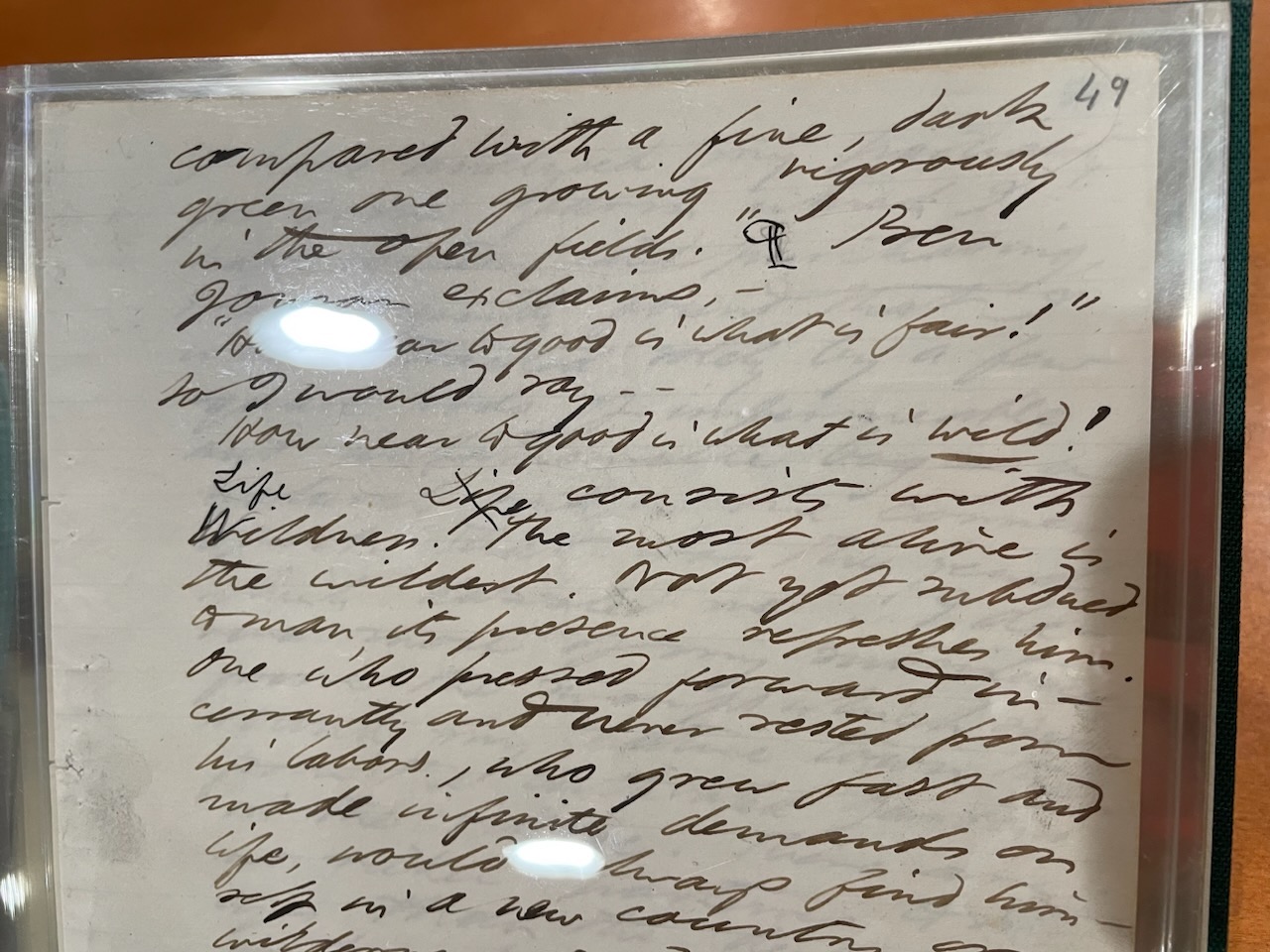
The perfect antique manuscripts I found in the basement of the Concord Public Library, the handwritten copy of Thoreau’s 1851 Walking with its timeless exhortation, How near to good is what is wild!

Dusty, venerable things. Like the perfect cabin we inhabited for a decade.

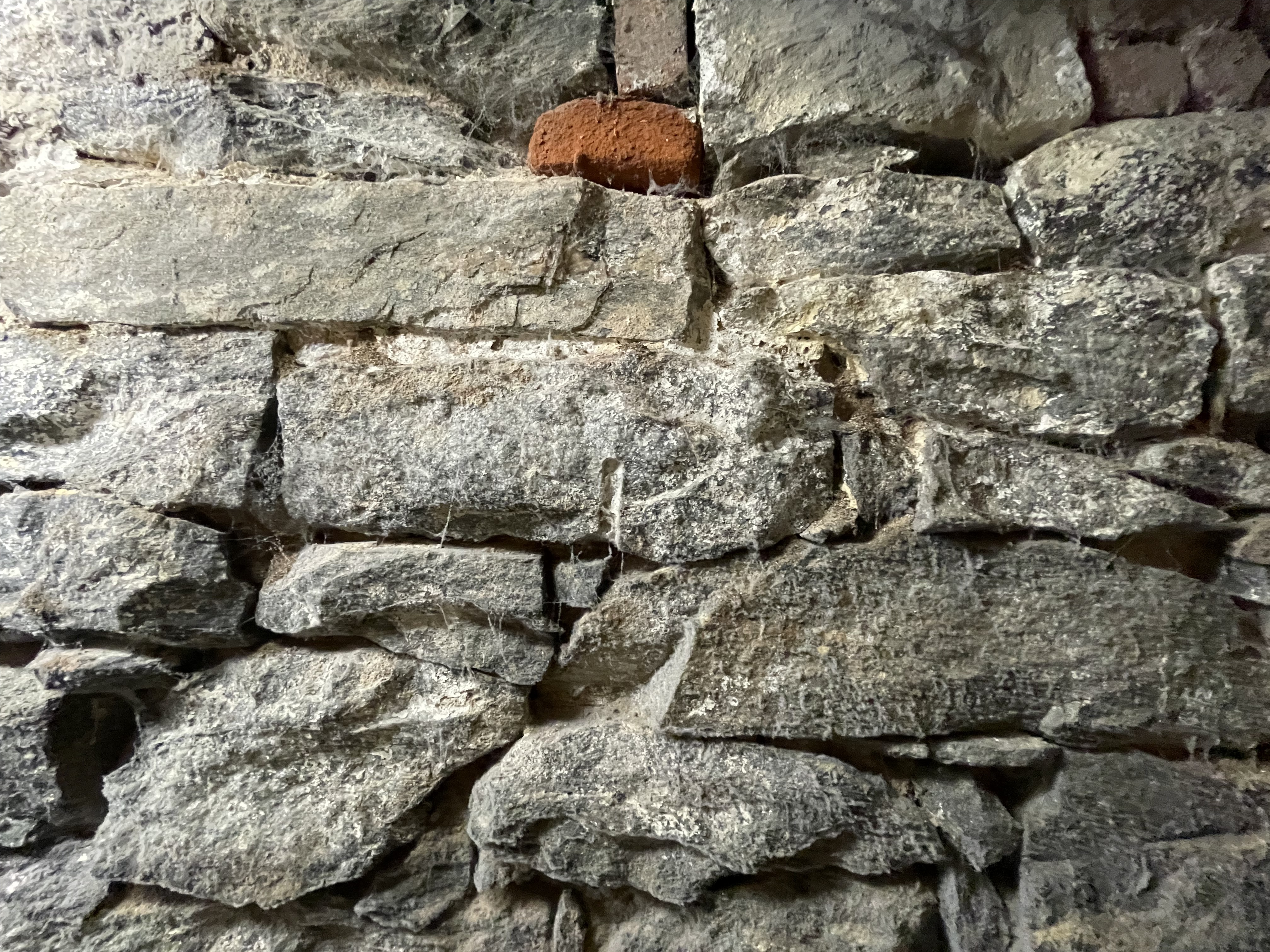
Or the rough stone wall of our current apartment building. Don’t think anyone has noticed it in a century or so.

Speaking of stone, an expertly carved medieval lion at the Cloisters in New York City.

Not necessarily grubby or dirty, though truth be told I often like those qualities as well.

We recently visited Cortlandt Alley in NYC, dating back centuries.

Now the site of a funny tiny art exhibition space called Mmuseum. Which shares the alley with some vintage window shutters.

Along with awesome contemporary street art.

Of course I value vintage family stuff, like anyone else. Family photos of loved ones.

Or heirlooms like my great aunt’s tatting.

Or the gold cameo ring belonging to my grandfather, bearing the tiger’s eye image of two warriors — one male, one female. A popular ornament in the 1930’s, the ring was said to bring the wearer courage and luck.

I treasure my Ginny dolls from when I was a kid.

There’s also the mysterious Japanese doll already antique when my mother brought back from Japan years ago.

My mother herself gets wiser and zestier with each birthday. At ninety-two-years young, she can identify the musicians who created Layla when song comes on the shuffle.

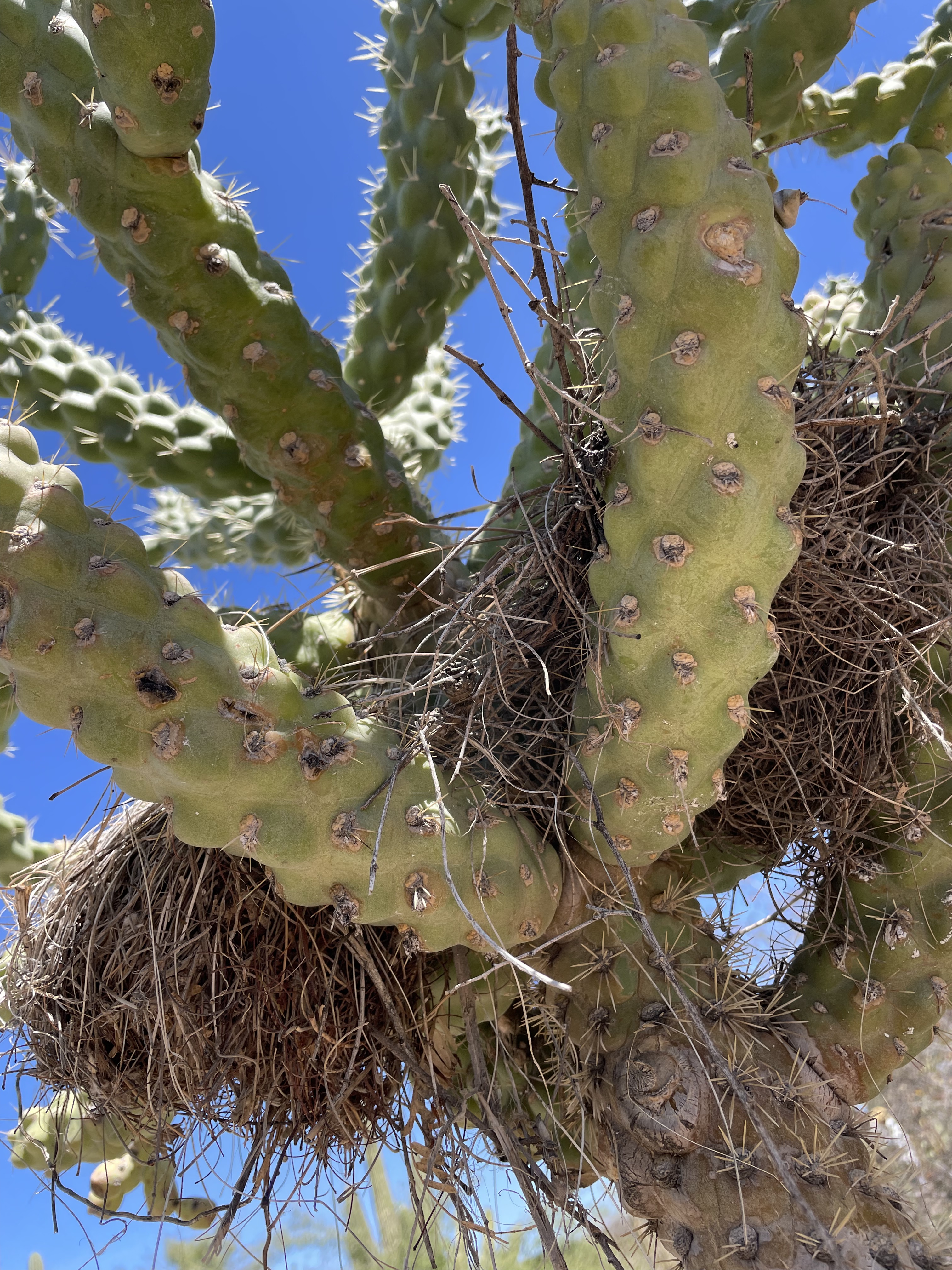
Old cactus, new nest.

The best.

6 Comments

Filed under Jean Zimmerman

Stumperies and critter holes and other mysteries

await at Untermeyer Gardens in Yonkers, New York.

Yes, the famous property — designed in 1916 to be “the finest garden in the world” — now features a Stumpery. The park once boasted sixty greenhouses. It’s still pretty nice.

Just what is a Stumpery? You would be well within your rights to ask the question, since not that many people in the U.S. are familiar with the concept.

The Stumpery is a fad in the U.K., especially among the pinkie-lifting crowd. You’ll find them in gardens at fancy estates, like Biddulph Grange Garden in Staffordshire.

Not so much here.

Perhaps that will change if enough green and other people get behind the idea.

We stroll down along the woodland trail to the Untermeyer Stumpery (say that ten times fast) on a recent fall day. We doddle along talking about lung issues, back issues, heart issues, arthritis, the usual. Nothing works for any of us the way it once did. Life’s not fair! On the other hand, these problems are doled out generally to people with the combination of grit and determination and sometimes wisdom to make the best of a not-so-good thing.

Which brings me to the Stumpery.

But first, the Garden’s other, more conventional features.

Untermeyer is a good place to go in October if you like grand old-old European beeches, so awesome.

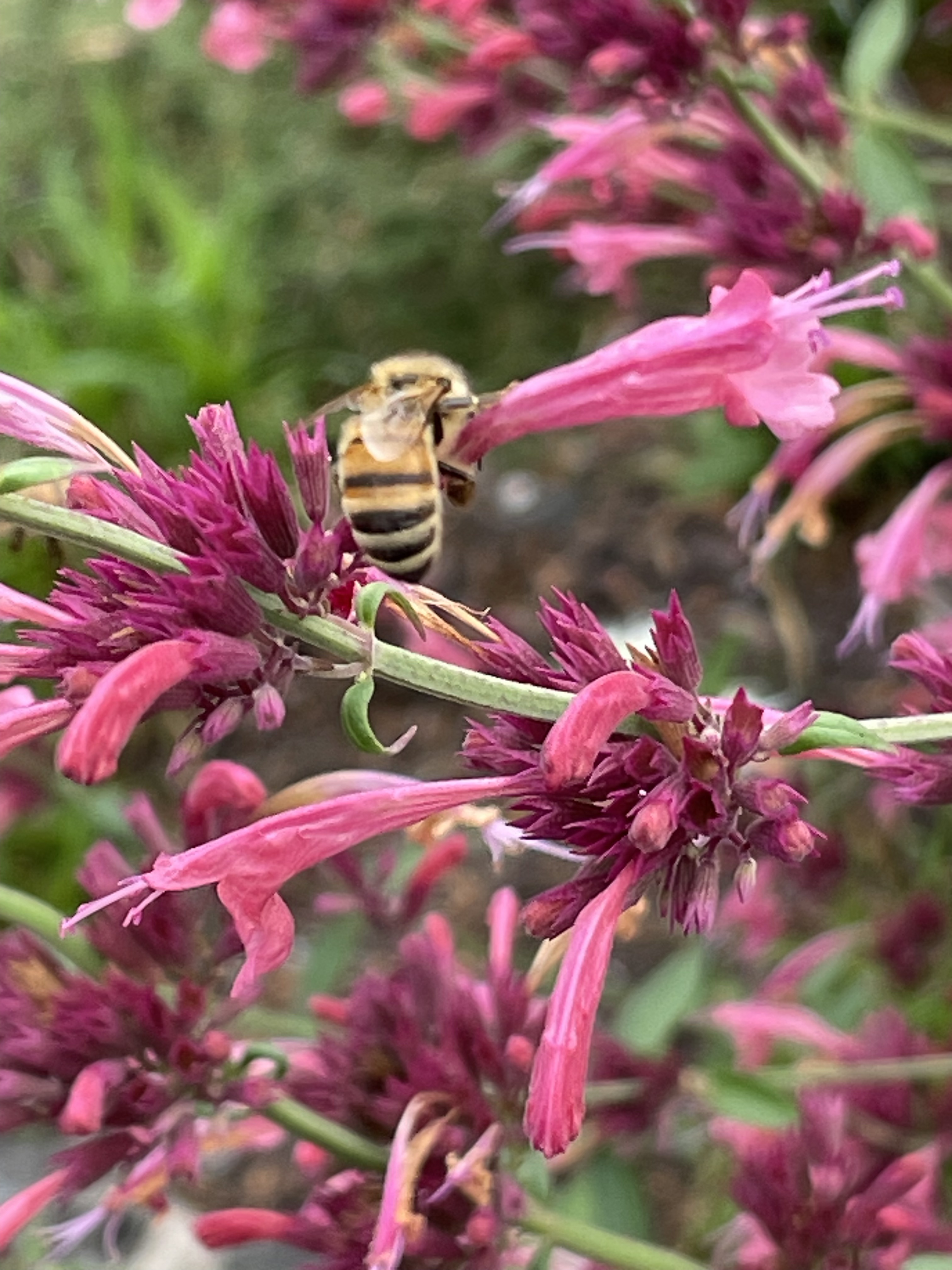
Busy bees on ravishing dahlias.

End-of-the-season plants, all as beautiful as anything at peak season.

Newly restored tilework in the reflecting pools, gorgeous.

Rumi-native quotes surrounding it. Mind-blowing mystics.

Photo ops all around.

The usual ho-hum Hudson view.

And the peerless sky above.

But what most amazes us of all the amazing sights, the Stumpery.

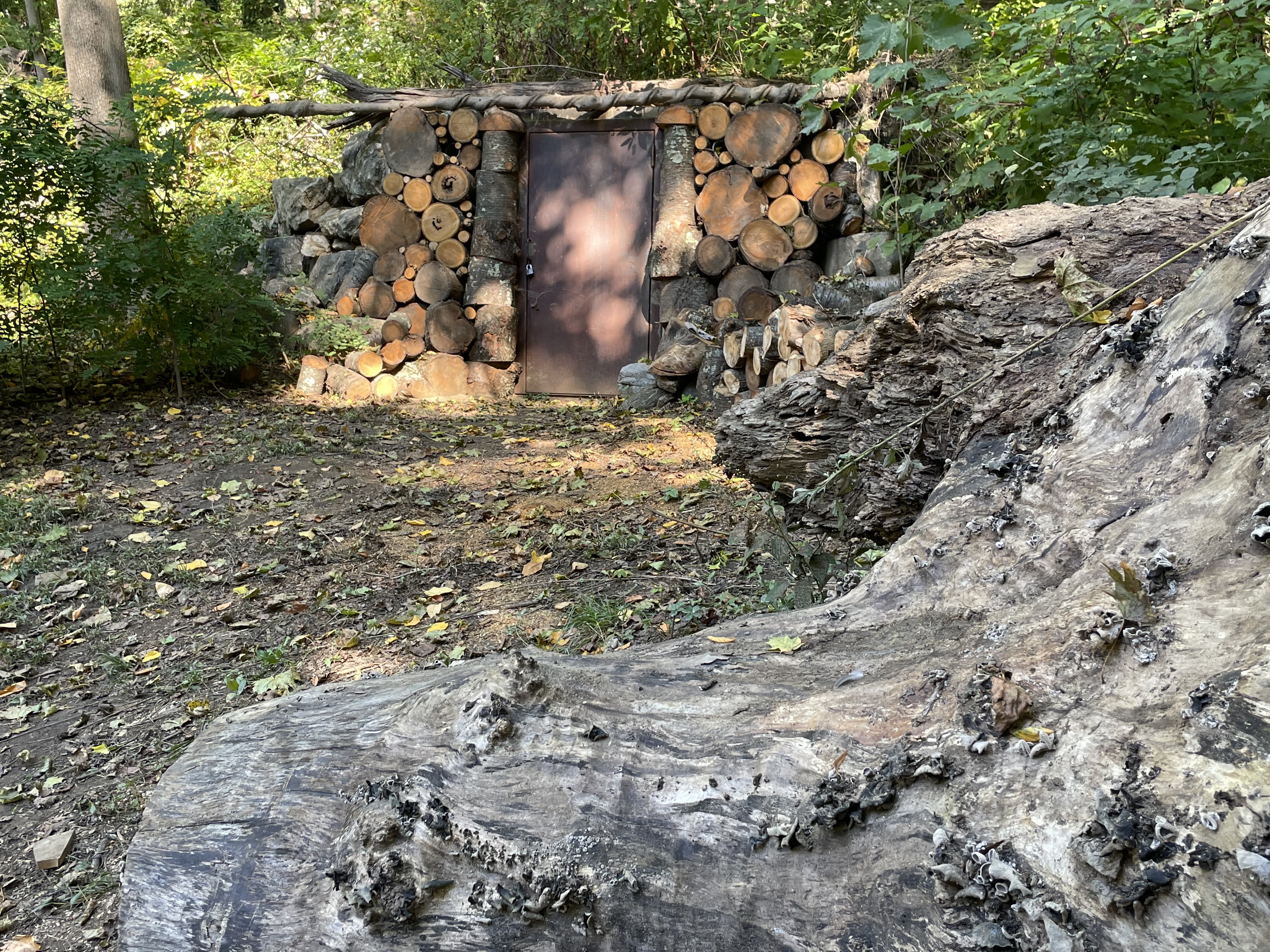
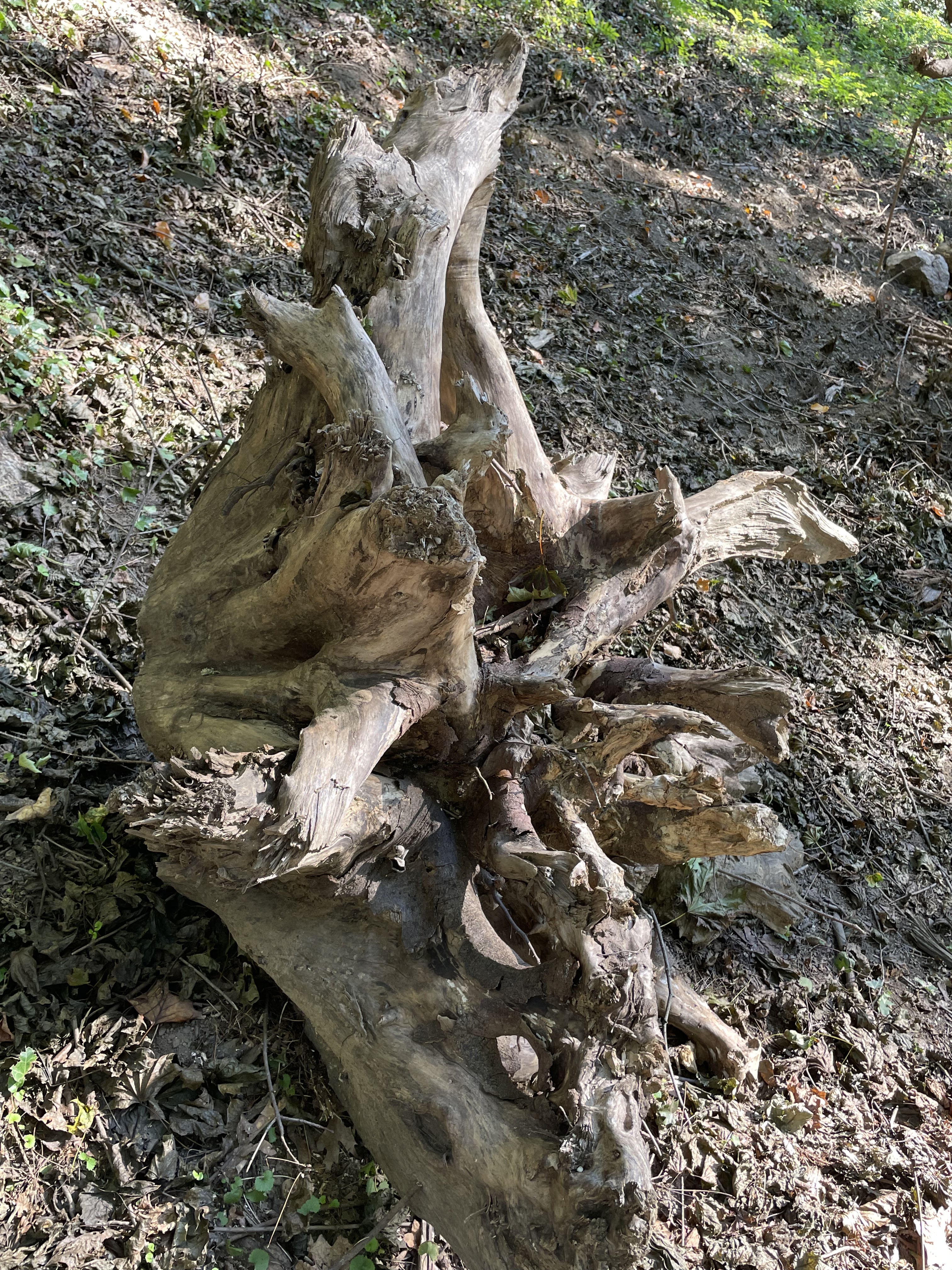
Big, gnarly specimens have been hauled to this wooded location and set up all around. Not just one. Dozens.  It’s like a fairy tale has been enacted in this forest.

One of us had been to see a stumpery in England and felt impelled to visit this one.

Will these guys eventually be planted with decorative greenery as is done in England? A mystery.

Who cares, actually? The stumps are perfect as they are now.

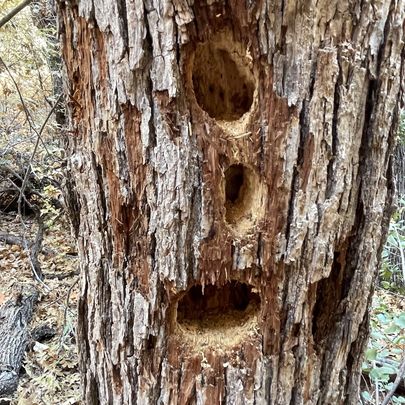
Which brings me to critter holes, another natural phenomenon sometimes taken for granted.

We notice more than one along the way.

Might I say a word on their behalf? I’ve often admired them, not only at Untermeyer but in so many other locales as well.

From upstate New York.

To Arizona.

And all in between.

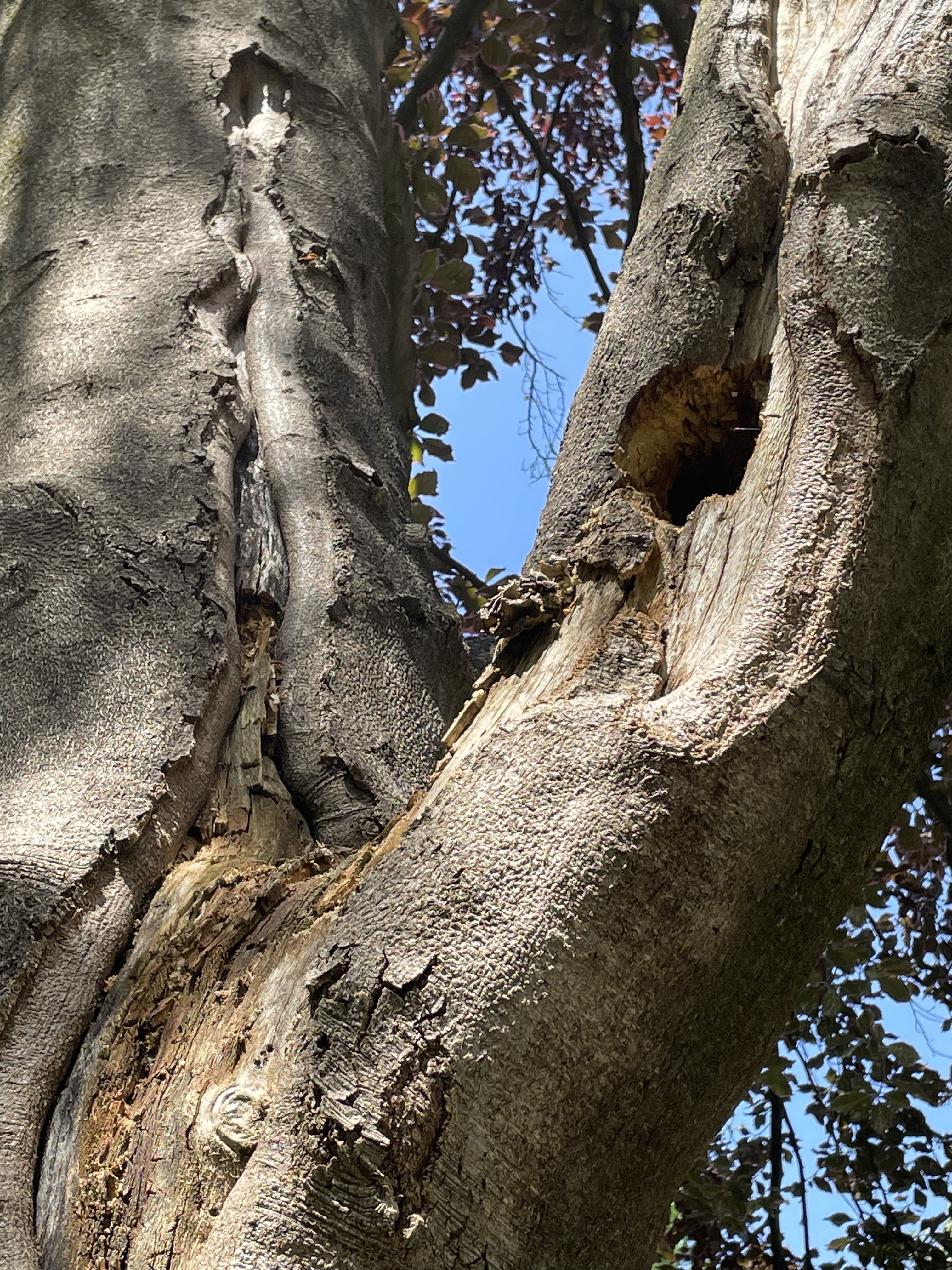
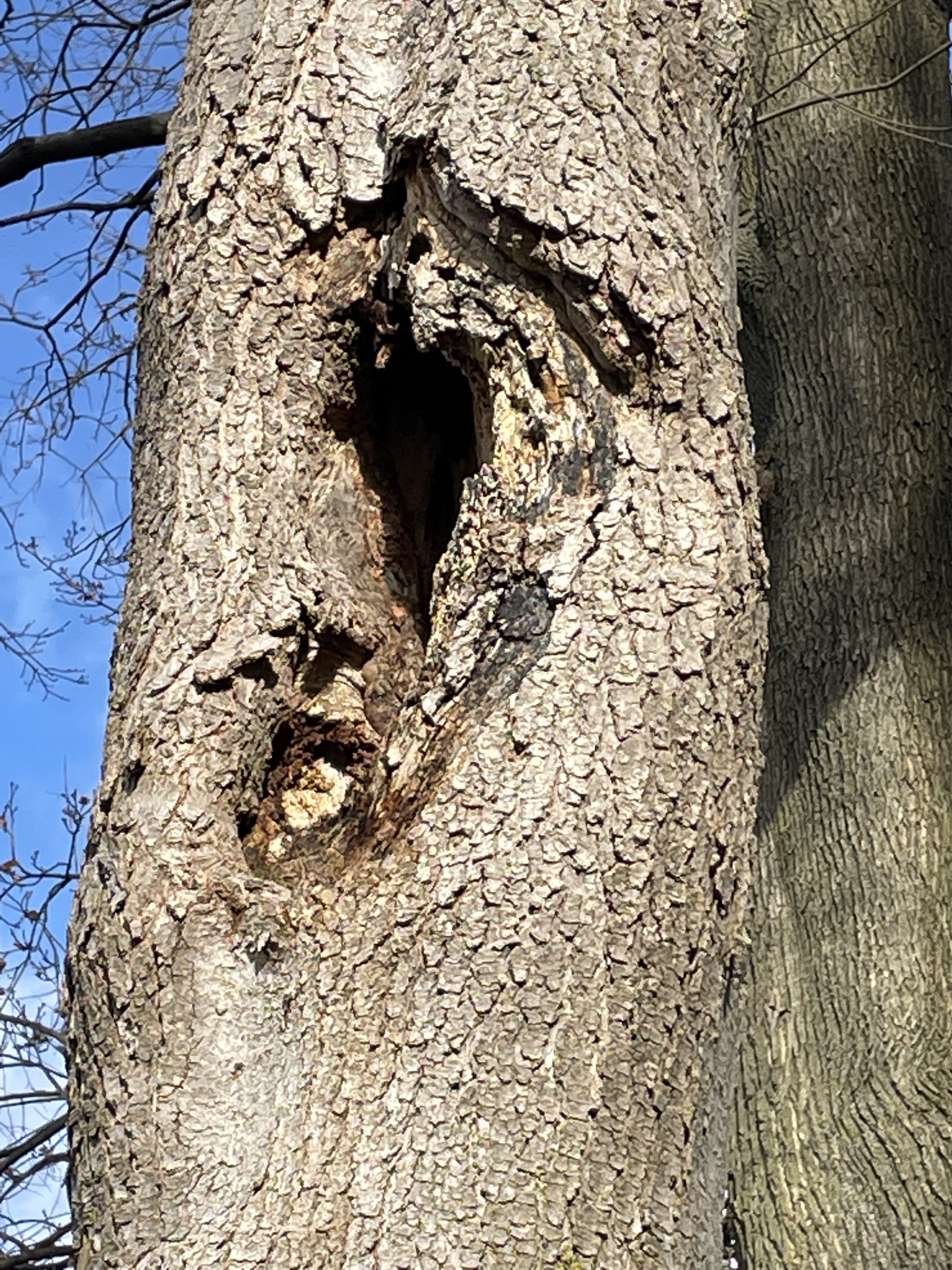
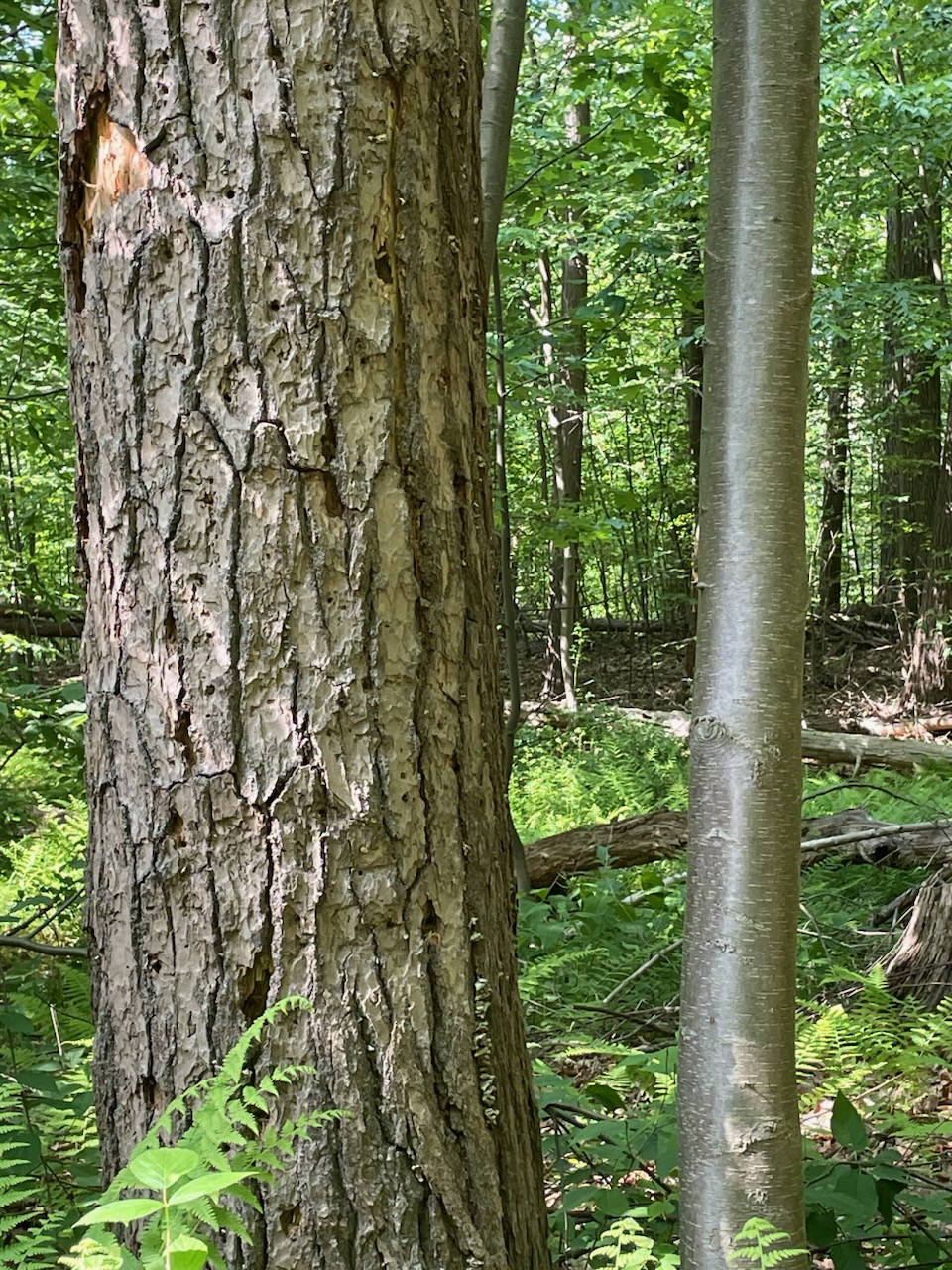
Holes in trees are okay, by the way. 

They do not mean the tree is going to fall over on a passerby.

Actually, according to experts I know, it’s the tree that appears perfectly healthy that might prove the riskiest in a storm.

When a tree is injured — say it gets hit by lightning or scraped by a truck or develops a cavity for almost any reason —  it does something ingenious, protecting itself by slowing the spread of disease and decay, actually forming “walls” around the injured area.

The walls run in every direction and help the tree survive. The process actually makes the tree stronger.

Then the cavity affords a home for an animal, or animals. So critter holes are actually more than just okay.

I’ve often thought my fondest wish — well, one of them, I have so many — would be to crawl into a critter hole. Anybody home?

Hiking up from the stumpery with my friends, we pass a newly restored wall that people have decorated with good-luck cairns.

Somehow I think all those magnificent stumps and critter holes are tokens of good luck as well.

As beautiful as any ho-hum pool blossom.

3 Comments

Filed under Jean Zimmerman

Forests and New York City

is not a pairing that would make sense to some people outside the Metropolitan Area (we always say that, as though there is no other metropolitan area in the world). But majestic trees do exist among the concrete canyons of NY.

I’ve been fortunate to come up close to some of them.

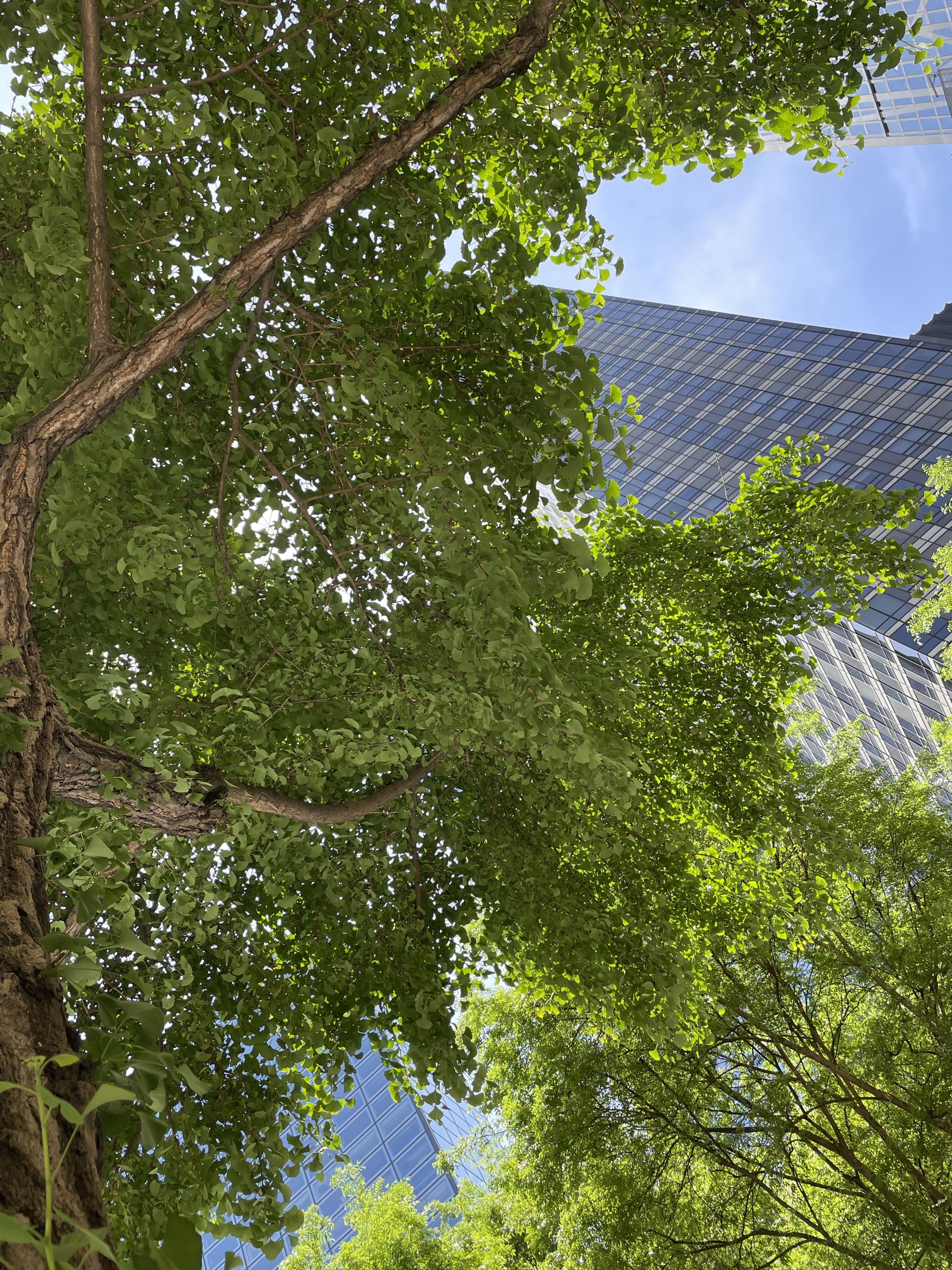
Walt Whitman: Why are there trees I never walk under but large and melodious thoughts descend upon me? In New York, there are plenty of inspiring ginkgo biloba‘s.

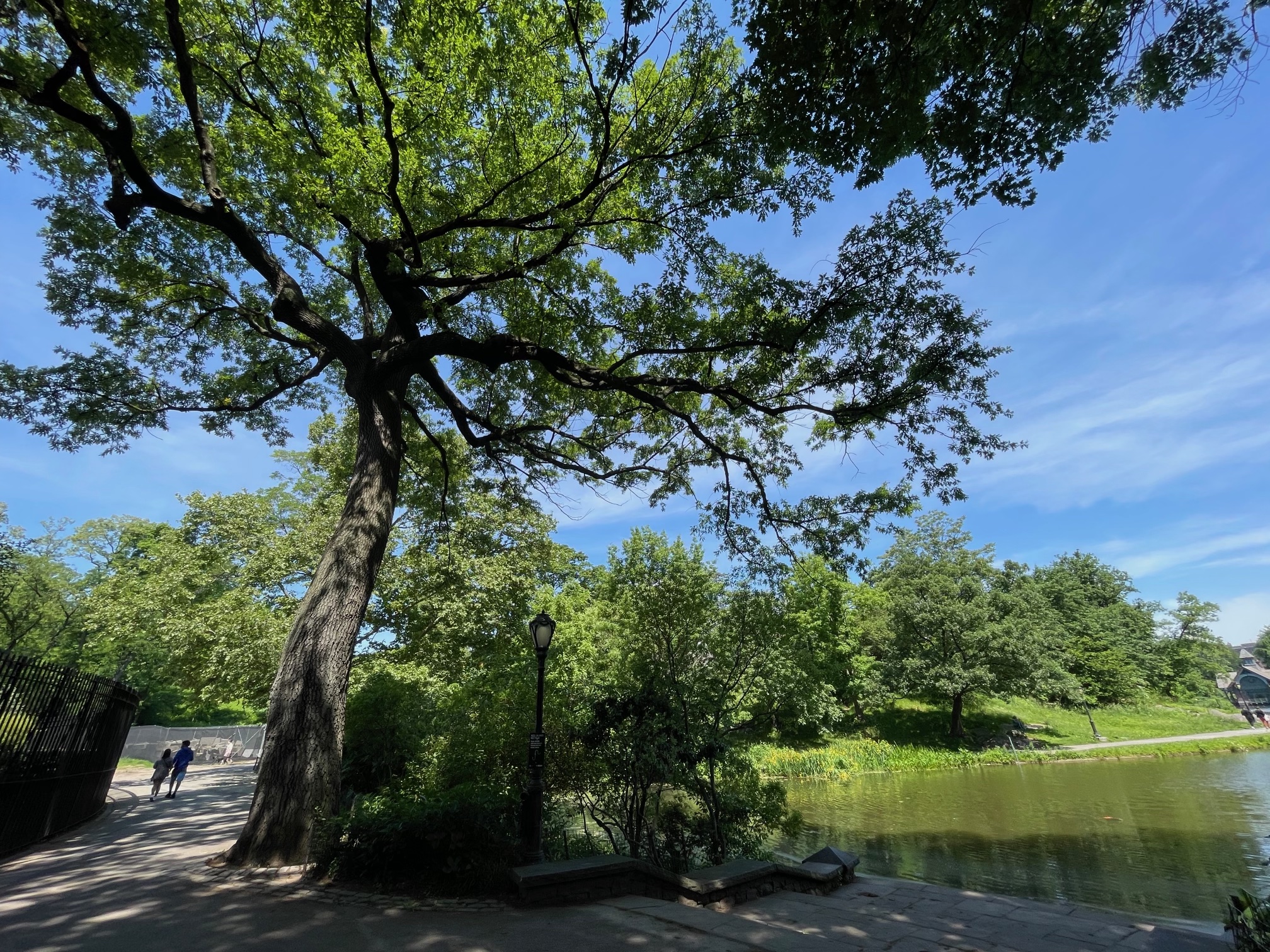
But also majestic oaks. I visited a grove in Central Park.

Not just any oaks. These were uncommon oaks. There were mature Northern red oaks.

I also saw swamp white oaks and sawtooth oaks.

While you’ll find both as street trees in New York, here they were massive, ancient, awe inspiring.

And so I go to the woods. As I go in under the trees, dependably, almost at once, and by nothing I do, things fall into place. I enter an order that does not exist outside, in the human spaces….I am less important than I thought. I rejoice in that. So said Wendell Berry.

Some folks on hand didn’t seem much impressed, preferring a nap to gazing upward in rapture.

But I was definitely taking notice.

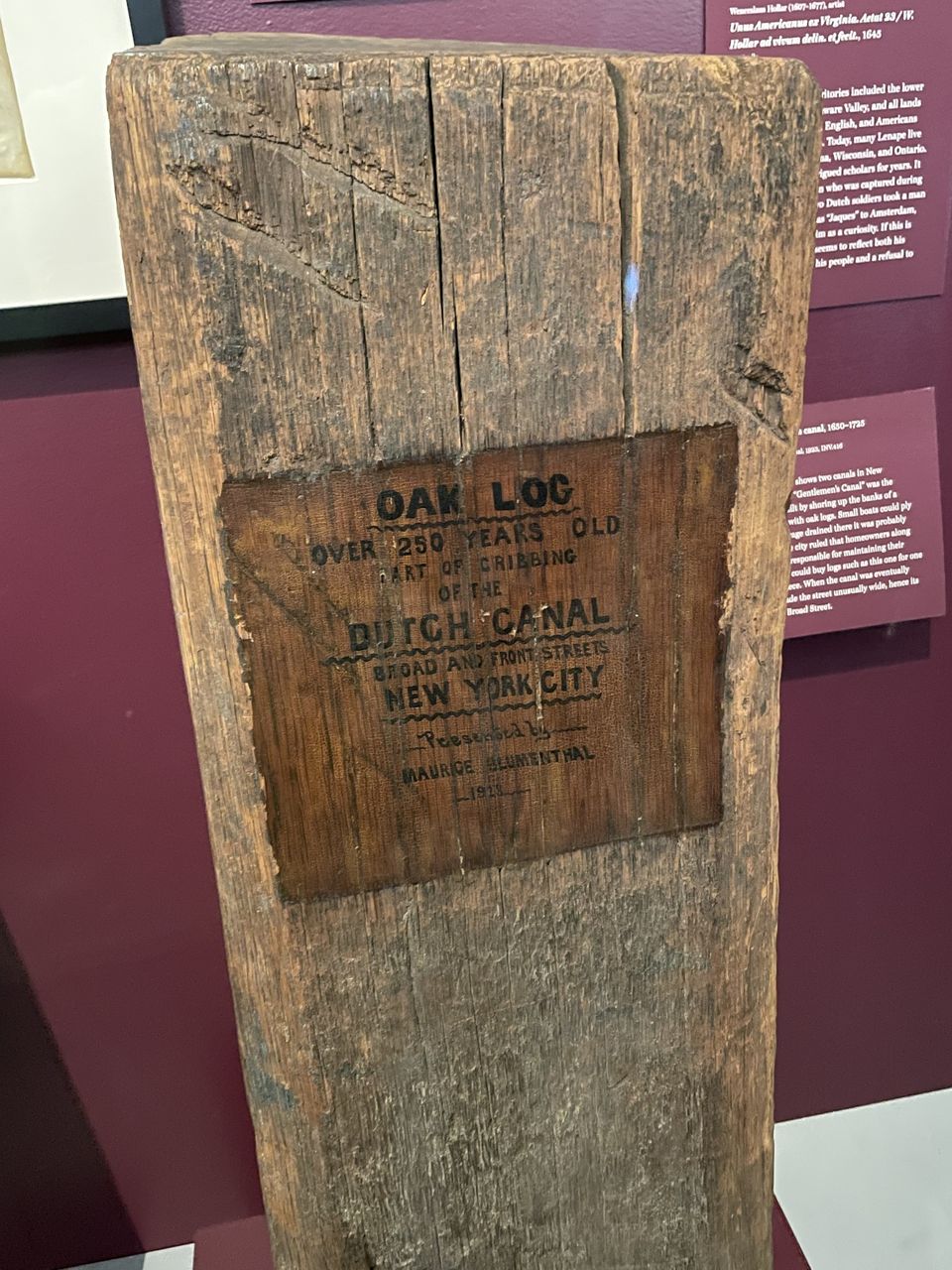
Especially having recently visited the New-York Historical Society for an exhibit about early New York.

Of course there were many great artifacts, but a special treat was a fragment of oak log from an early Manhattan canal hundreds of years back. That’s how sturdy and strong and lasting oak is.

Just outside Central Park, a line of gargantuan elms strides down Fifth Avenue.

When the infamous elm blight decimated the canopies of so many urban areas’ Ulmus americana back in the early twentieth century, these elder stateswomen clearly did not take the hint. What doesn’t kill me makes me stronger — so said Nietzsche, correct for once.

I recently attended a tree climbing workshop in North Carolina with my daughter Maud.

The old-old trees we climbed were extraordinary. White oaks all around.

And chestnut oaks. Luminous.

Back in New York, I rediscovered the fantastic trees all around. Still some cherries.

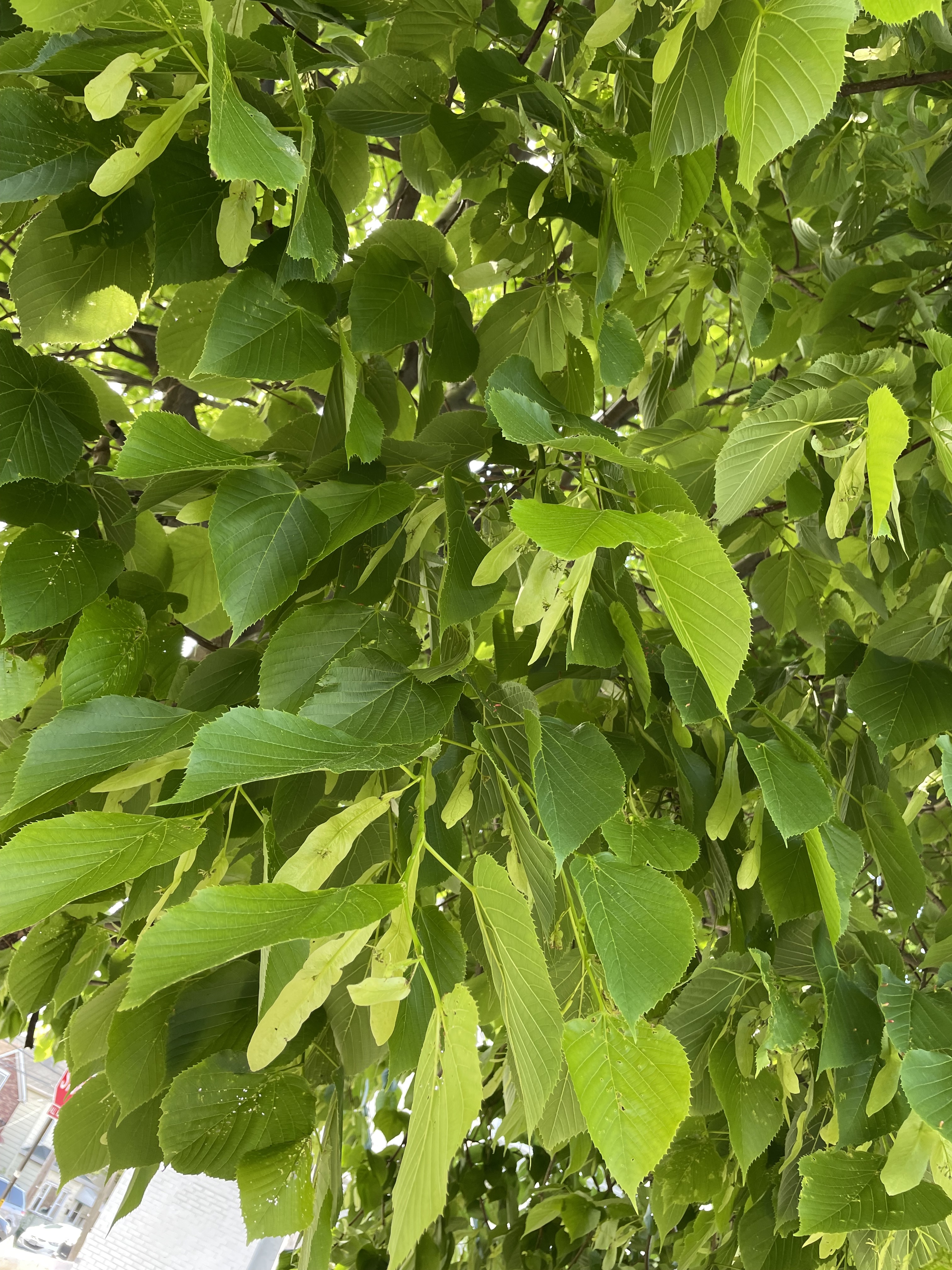
Some of the most fantastic specimens thrived far from the posh environs in and around Central Park. It’s linden season, when their magical bracts appear.

I came across a red oak in Queens when I was on a tree preservation job.

Nature thrives in Queens, it’s not just trees. I saw some peppy petunias.

Delicate bleeding hearts worthy of any country estate.

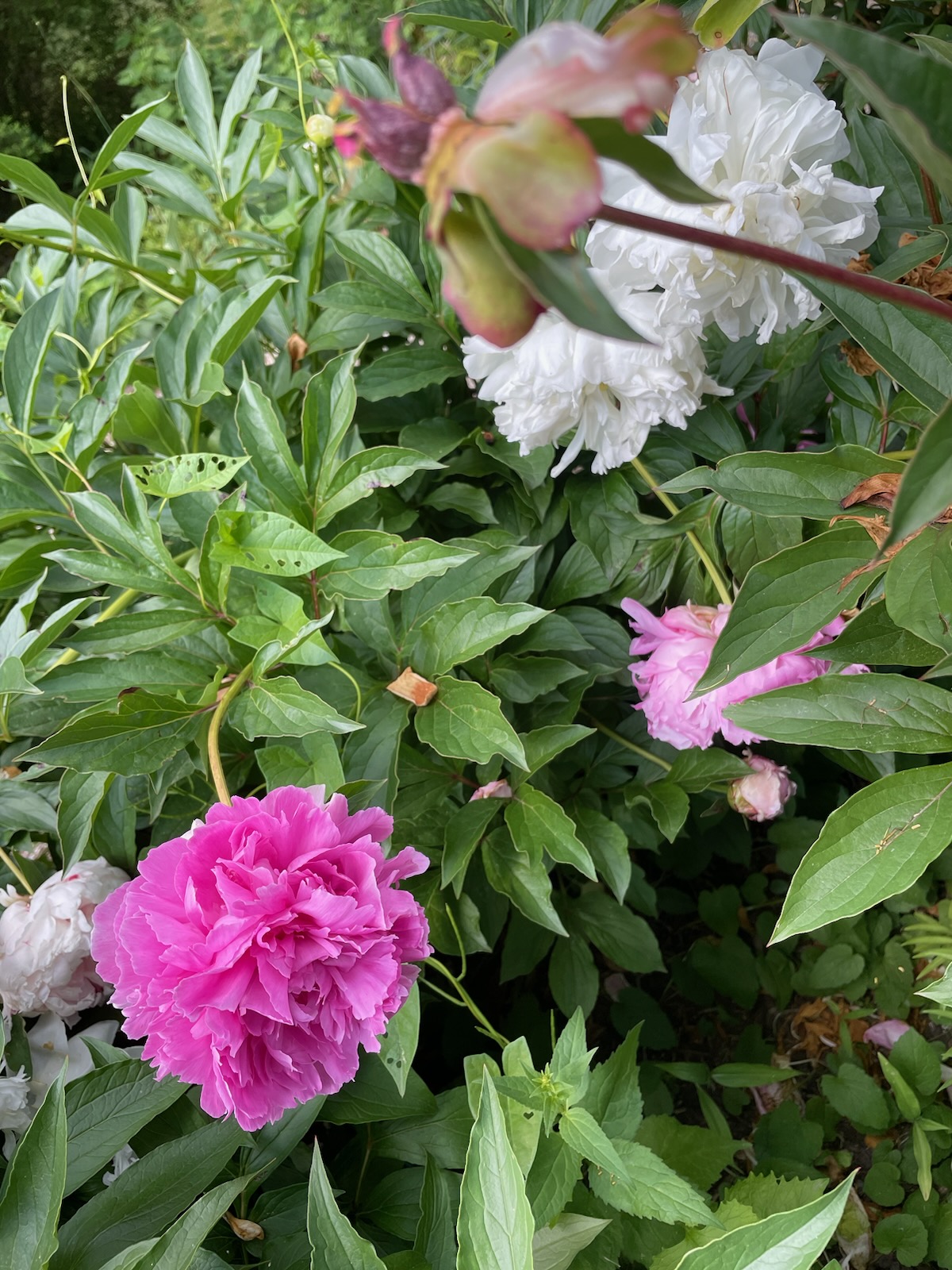
Perfect peonies, their fragrance really indescribable. Just try. Yes, in Queens.

On frenetic 20th Avenue in Whitestone, right down the block from the bioswales trench I was inspecting and just around the corner from some sad, spent ash trees, I came across the ubiquitous Dr. Seuss specimens that are ubiquitous on Queens streets.

But then, this mammoth Northern red oak! Hard to do justice to this ladytree’s girth in a photo. Suffice it to say I could wrap my arms around her a couple of times.

She was kind enough to drop leaf bouquets on the sidewalk and host a clutch of hostas in her lap.

While some stern stone eagles oversaw the scene.

Inspired by a wetter and warmer May courtesy of climate change, I knew I’d find nature thriving at the New York Botanical Garden, a Bronx oasis thronged by both native New Yorkers and tourists on this Memorial Day weekend.

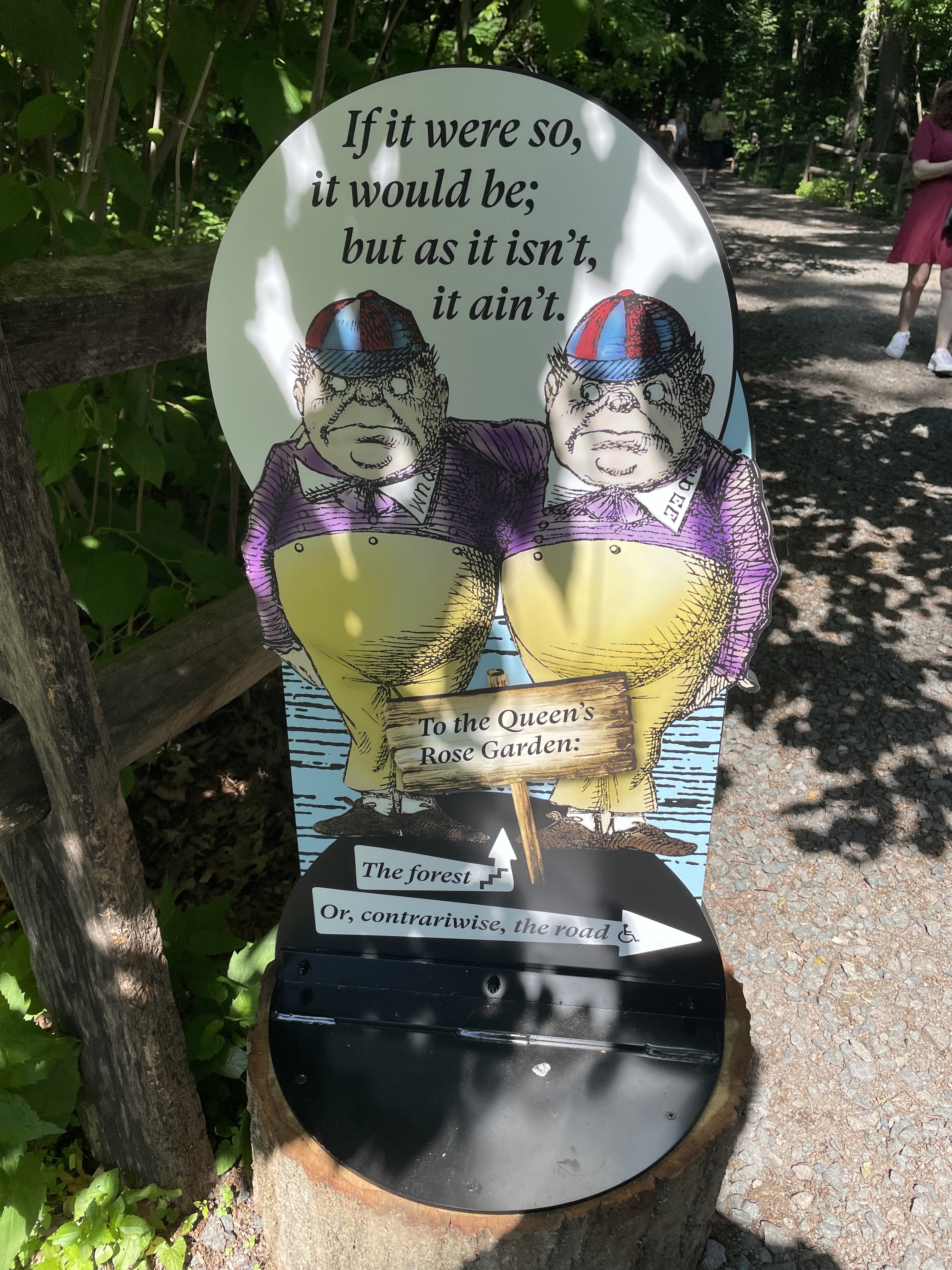
The tone was set by a topiary White Rabbit, complete with pocket watch, part of a Garden-wide Alice in Wonderland display.

All around were clever signs. I overheard a woman say, “The Caterpillar always creeped me out.”

I wouldn’t say that about anything in Alice! What I was thinking about at NYBG was how great it would be to drink a magic potion and crawl into one of the abundant flowers in the ravishing Rose Garden.

Sometimes I’ve believed as many as six impossible things before breakfast, said the Queen. Hear, hear.

Hard to do justice to the array of blooms there.

They dazzled as roses always do.

Funny, though, whether white or yellow, pink, red or purple, stick your nose in and they all smell the same. Phenomenal, but the same. Flowers, I ask, must you be so boring?

All around, people were posing as if they were themselves flowers, so I did too.

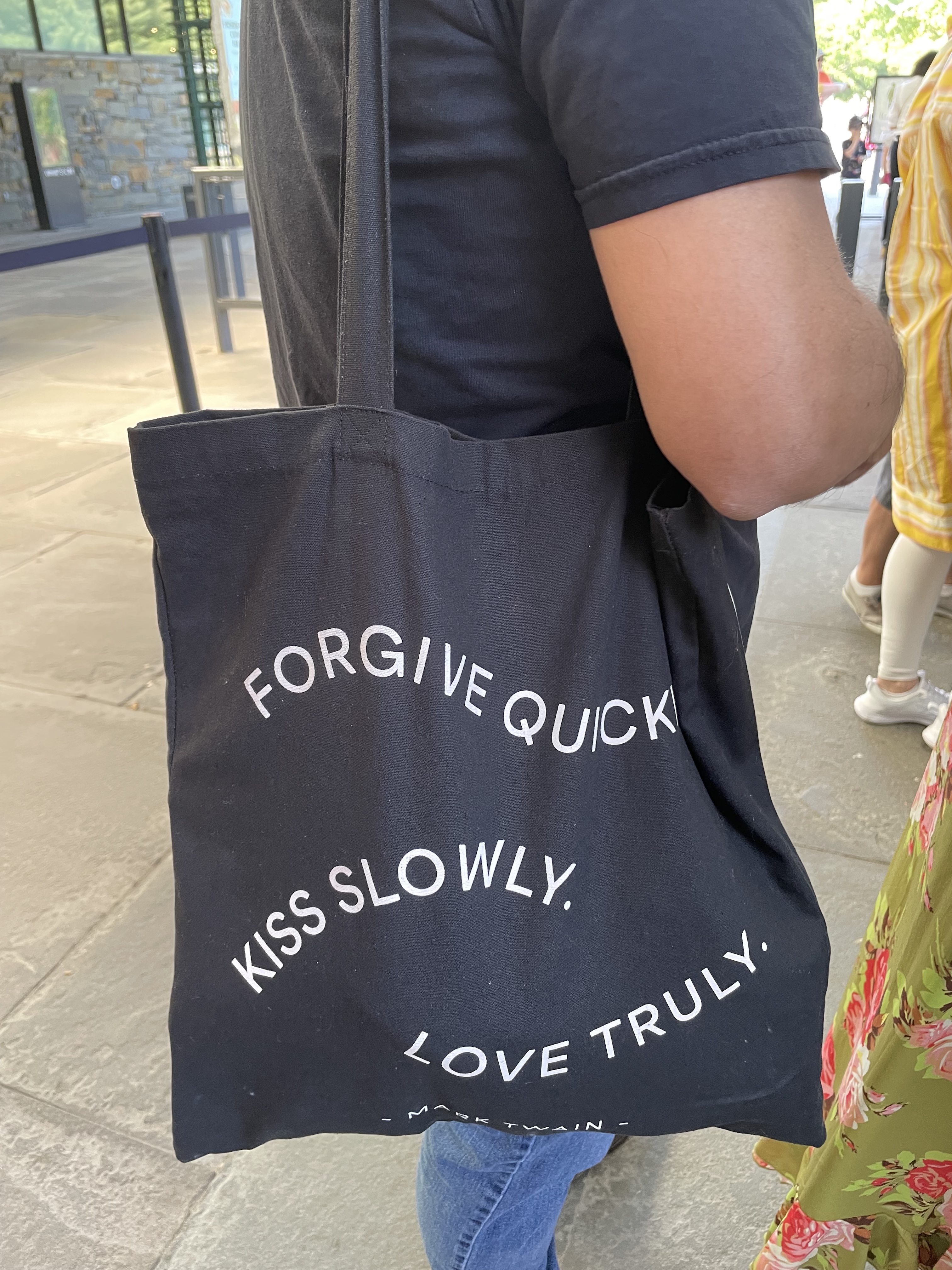
And a guy got into the springtime spirit with his slogan tote bag. Think I might get this on a tee shirt to join my newest wardrobe favorite: UNDERESTIMATE ME: That’ll be fun.

Just up from the Rose Garden, kids played with another Alice-themed attraction, a monochrome chessboard created by Yoko Ono that suggests the essential futility of war. We’re all on the same side, after all. Gil tried to set the game up properly, when he wasn’t inciting Memorial Day riots with his George Orwell tee shirt.

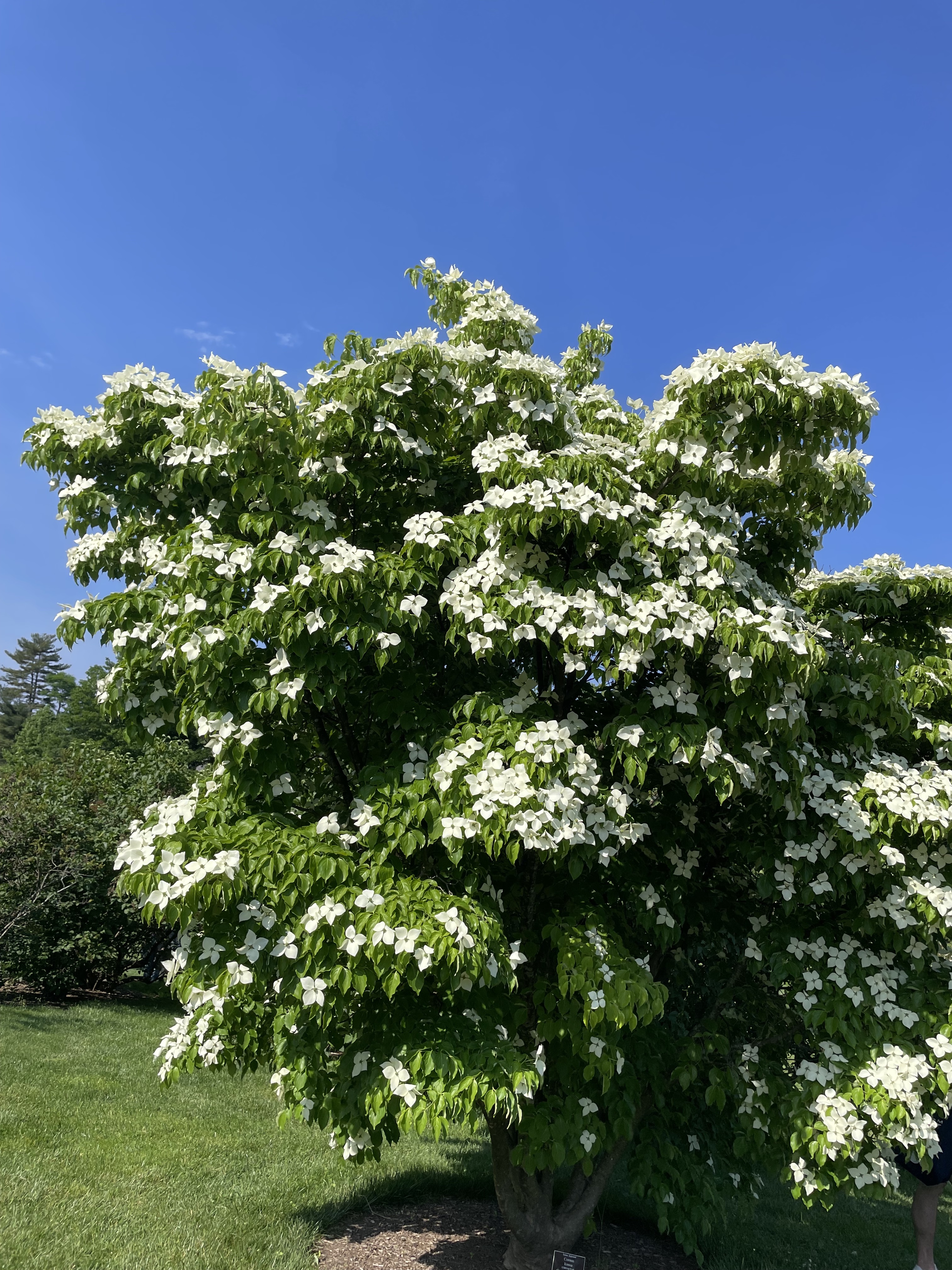
We saw other seasonal stand-out specimens of the urban forest. A Kousa dogwood having its moment.

Some carved beeches I’d probably passed a million times before but never noticed.

There’s always something new to notice when you pay attention. Mary Oliver wrote:

Instructions for living a life:

Pay attention.

Be astonished.

Tell about it.

We walked through the Thain Forest, a certifiable old-growth tract thick with sweetgums that gave me a few souvenirs to bring home (remember, though, take nothing but pictures!).

A critter hole made me again want to shrink like Alice. Anyone home? Mind if I come in?

The trees of the city, the flowers of the city form a promise, an opportunity for optimism and hope in these sometimes dark, difficult times. If they can grow and thrive, if they survive, perhaps we can too. I dwell in possibility wrote Emily Dickinson, she who thought a good deal about nature.

You can’t take a whole forest home with you.

But when you pay attention, the vision of those trees and flowers might linger with you in your workaday life and help you remember your place in the natural world, and also bring some joy.

Even if you take nothing but pictures.

That’s my promise.

3 Comments

Filed under Jean Zimmerman

There are many great trees in New York City.

Yes, true. But what about the Great Trees of New York City? This is the brainchild of New York City Parks, which is reviving a project that was last completed in the 1985 with the goal of identifying the most iconic trees in all the five boroughs. Ordinary citizens nominate exceptional trees, as many as they want, as defined by their historic, botanical and cultural significance.

Having been fortunate enough to be appointed a judge for 2023’s Great Tree Search, I am excited to start off on some new adventures. My assigned beat is the Bronx, a great place whose eclectic neighborhoods stretch all the way from the swellegant precincts of Riverdale to the famously underserved South Bronx. It’s also a place I’ve spent considerable time as a consultant on tree preservation for NYC.

This time I go some places I’ve never been before, and discover a fantastic meshing of arboriculture and history. I enlist Gil as a driver, because it’s hard to drive in New York City traffic and spot trees at the same time, even gigantic trees. We have a spreadsheet to guide us that cites peoples’ nominations as well as some of their comments about why a particular specimen is worthy of the distinction.

The first entry on our list is quite civilized. A ginkgo on a small street abutting Webster Avenue.

Ginkgo biloba dates back 270 million years, and was thought to be extinct until it was rediscovered by a German scientist in late 1600s Japan. A group of Chinese Buddhist monks made it their mission to save and cultivate the species.

It is one of the few trees useful for food foraging in this urban jungle. Yes, the fruits are slimy, smelly. But each one holds a nut at its core (actually a seed) that is sold in Korea, Japan and China as a “silver apricot nut.” They are usually roasted prior to eating and used in desserts, soups and with meat. Each fall you’ll see many people in the City gathering this ample harvest. 

Will I really have to choose among these trees? I’m already asking myself – and I’ve only seen one so far! But let’s continue.

We prowl along to little Perry Avenue in the Bronx and discover a gargantuan willow oak.

What on earth is it doing in this quiet backwater?

Among other things, towering over the houses with health-giving shade, creating a beautiful fall carpet of leaves, and offering shelter for squirrels with a major nest. Oh yes, and uncomplainingly eating carbon and pouring out oxygen for us slackers to breathe.

We find another nominee on a peaceful little street, Thierot Avenue.

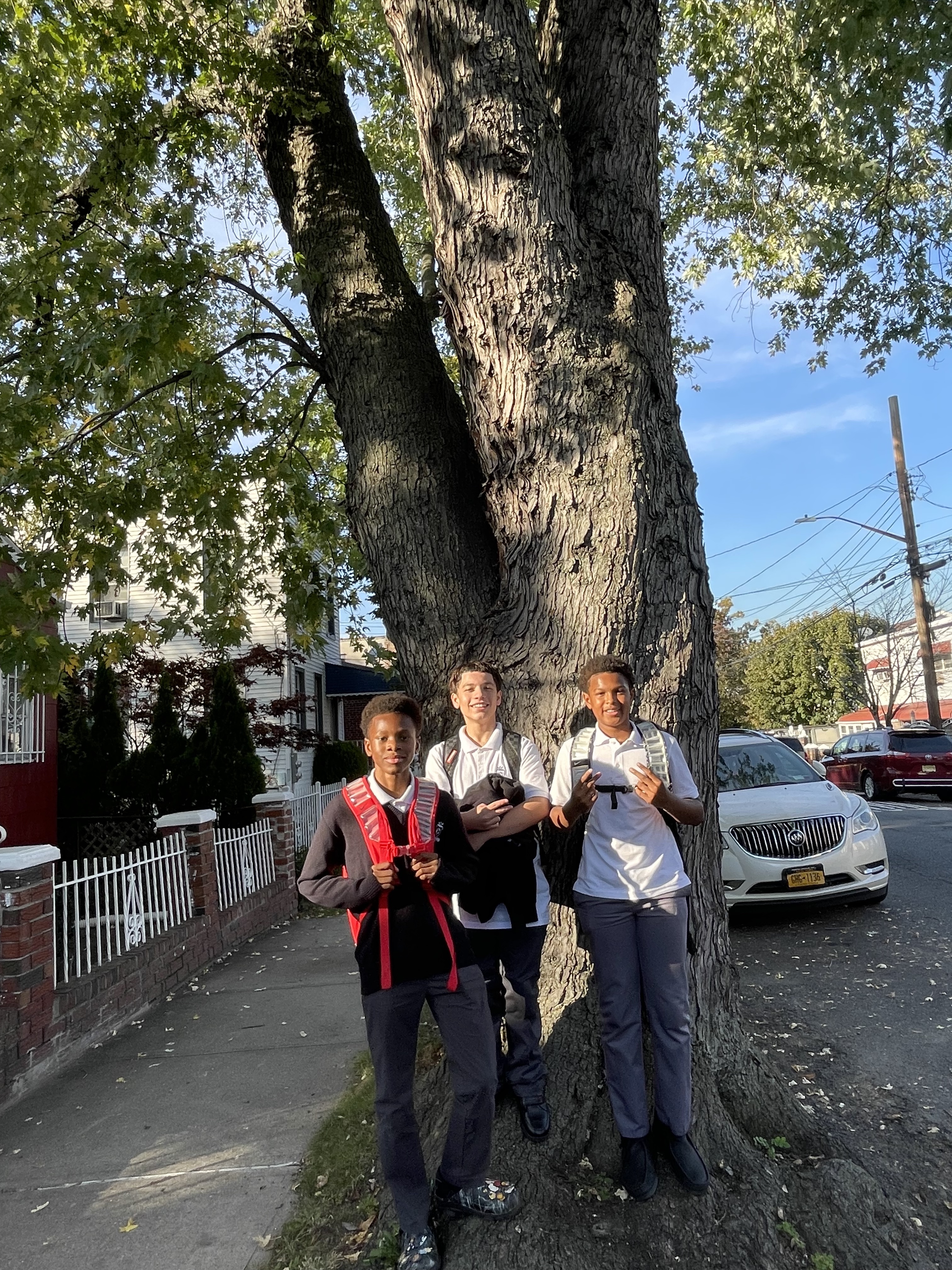
A silver maple. Now, these trees get a bad rap among urban foresters. They’re brittle, they rain down branches, yada yada. But look at this beauty. “It is the LARGEST TREE in the community,” reads the comment on the spreadsheet. “Could be a hundred years old.”

Huge (of course), three stems, fantastic shaggy bark, spreading her roots all over the place as is her right. And a perfect place for posing schoolkids. Who shout “Save the Trees!” over their shoulders as they scamper away.

We venture to Corona Park, home to several potential Great Trees, all of them amazing. First, a majestic American elm at the corner entrance.

A photo really cannot do her justice. You have to mosey underneath those sprawling branches, touch the bark. Gaze overhead at the sky through her crown.

Perhaps the most beautiful tree I’ve ever seen. (And I’ve seen a few, so maybe just the most beautiful of the day. So far.) Then, we go elsewhere in the same park in quest of two hefty ashes that grow across a path from each other, seemingly competing for the Venus of New York prize. One is a marvel, yes. “This majestic Green Ash with a trunk size of 54″ is a gem and sits in the center of the pathway along passive lawn areas and rolling hills.”

To locate the tree I ask some folks hanging out with their kids in the nearby playground. They do not speak English, so their seven year old translates as they gesture down the way: “Big tree down there, take a turn to the right and you can’t miss it!” An understatement.

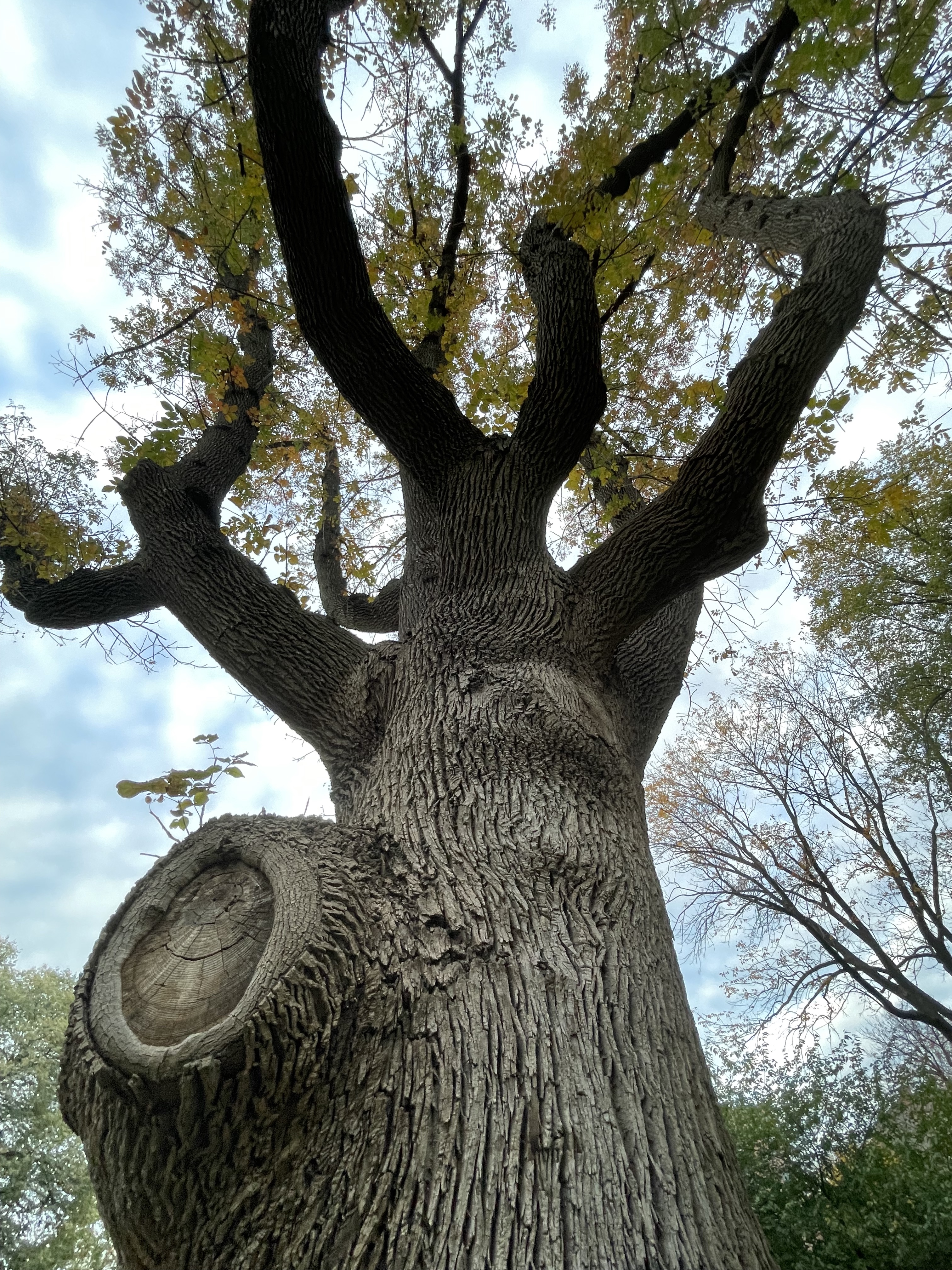
Even more impressive, the ash nearby. “Thickest tree in the Bronx, probably NYC too.”

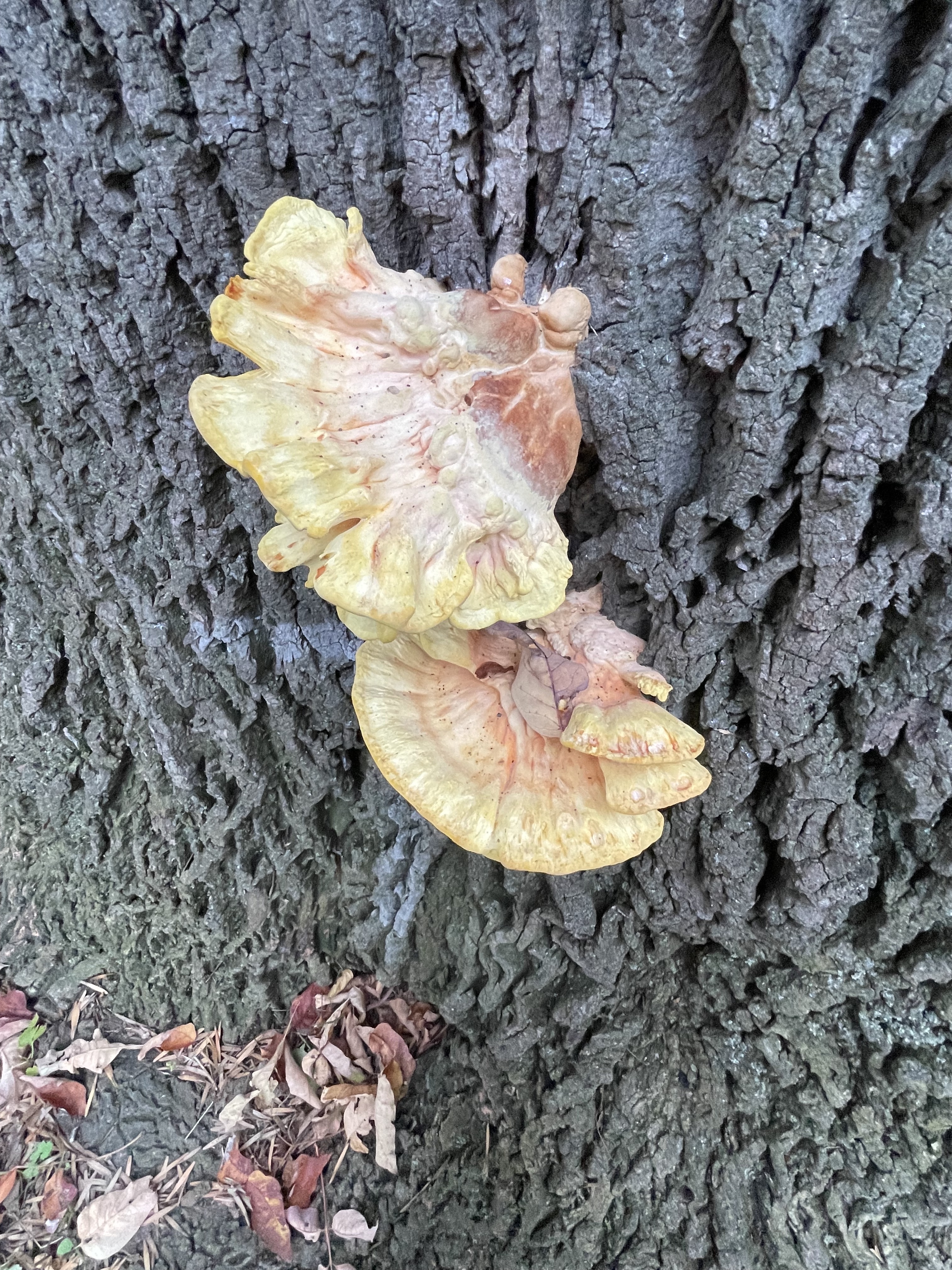
Don’t you mind the fruiting bodies at the base, this one is clearly a survivor.

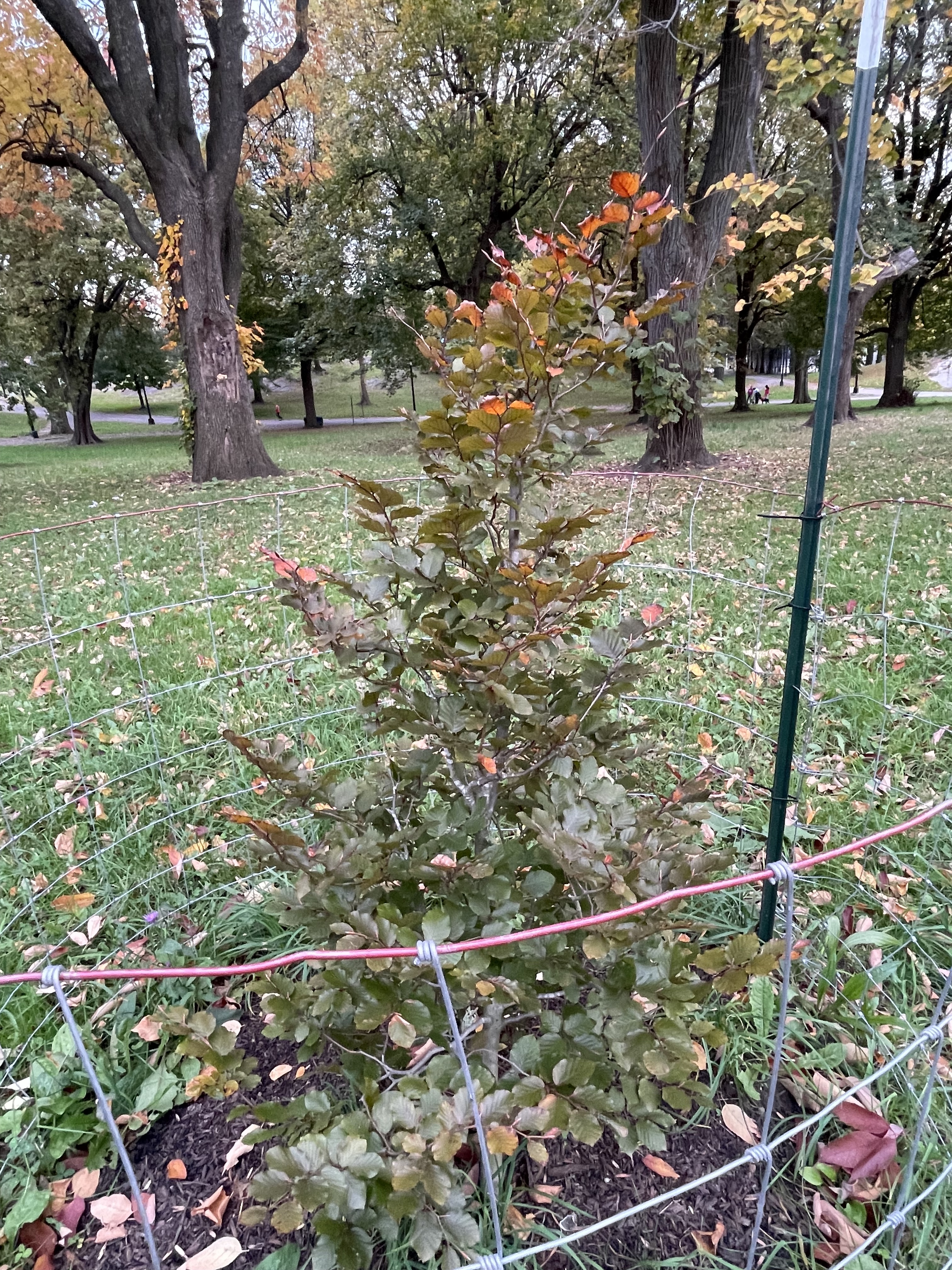
Wandering out of the park at as the dusk grows all around us I notice a planting that will ensure the health of this urban forest for the future, a baby beech.

Since we’re making these adventures at the end of the workday, we’re lucky enough to visit all these sites at the magic hour, just as the sun is getting ready to set. So we arrive at a spot we’ve heard about but never spent a lot of time, Pelham Bay Park.

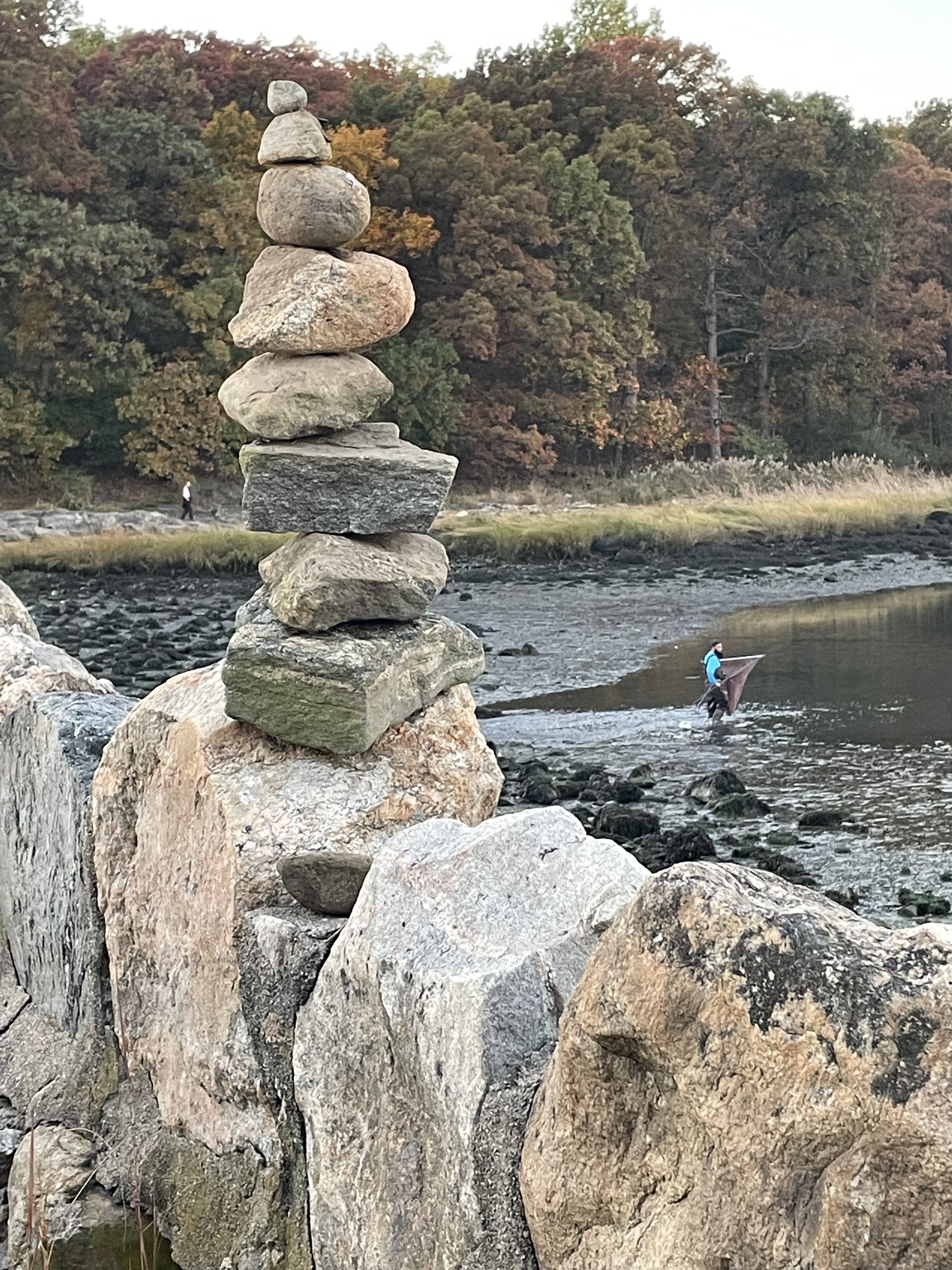
We take our nightfall hike on a trail around Hunter Island, 166 acres of wilderness in the heart of the Bronx, right on the Long Island Sound. The person who nominated a post oak here wrote a lengthy treatise on the specimen’s history, saying, in part: “This grove of post oaks dates back to the 1760s. Post Oak is native but rare in NYC. This beautiful specimen is growing right out of bedrock that includes gneiss with stunning seams of quartz, and is right on the Sound. This tree projects the grit and resilience for which the city is renowned.”

Of course, that more than whets my appetite to find this spectacular tree. But it’s not easy. Entering the park, we find massive white oaks and scarlet oaks. This is a mast year, and all around the ground is carpeted with acorns that crunch underfoot.

A trail takes us through groves of sweet birch.

We see almost no one.

I wade ankle deep across a mossy inlet, into the darkening woods under a rising full moon.

It gets dimmer, dimmer.

Wither the post oak? It’s a member of the white oak family, and all the trees in these woods have interbred for so long that I think any of them could be the oak in question. Though I cannot find the exact leaf, with its lobes that remind some of a Maltese cross, there are plenty of similar leaves.

We’ll have to come back again, perhaps by the light of day.

On another afternoon, back in the city proper, we locate a venerable black tupelo.

“At the edge of the forested land on Mosholu Parkway North, facing the apartment buildings.” Sounds mysterious, and I’m afraid we will not find it, especially as the gloaming comes onWe cadge a parking space and I walk directly to the tree as by a homing device.

I think of a couple of lines by poet Jane Hirshfield: “I would like not minding, whatever travels my heart. To follow it all the way into leaf-form, bark-furl, root-touch, and then keep walking, unimaginably further.”

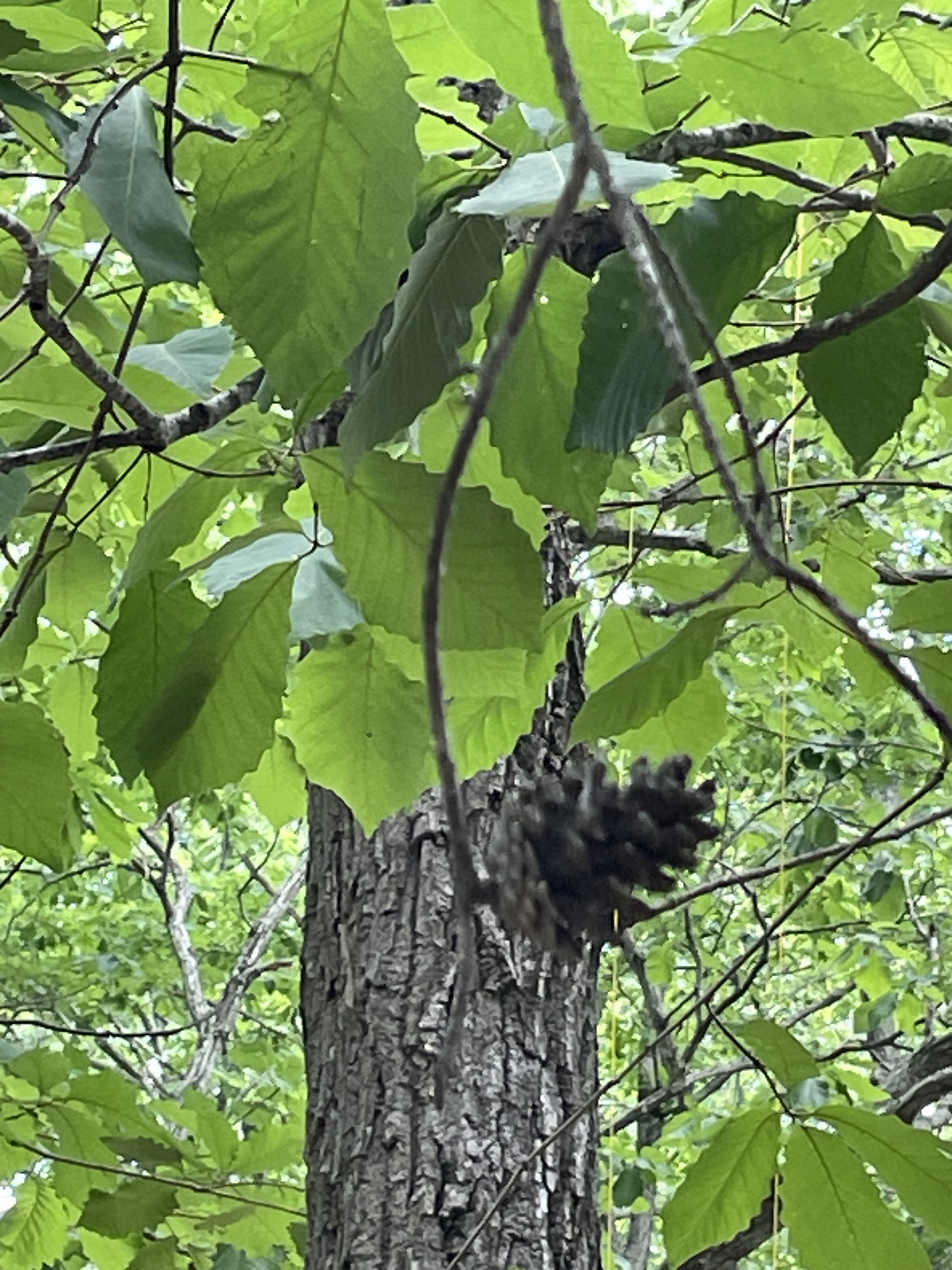
We discover a cottonwood just off Van Cortland Park South in an old schoolyard. It towers over the neighborhood. Once, apparently, during the Revolutionary War, this tree was used for hanging traitors.”

I check the spreadsheet. “Cottonwood trees typically grow in riparian areas, which at first seems odd, given its current location, but makes sense once you realize that the Tibbets Brook runs underneath.” I’ve heard that Tibbetts Brook is soon to be daylighted, and I wonder what will happen to the cottonwood when that happens. Will they retain it and will it continue to provide shade and beauty of local residents?

Moshulu Parkway and Gun Hill Road are sites for some other old-old trees that also date back to the Revolution. We visit “the oldest sassafras tree in the Bronx, an amazing holdover from when the land was converted from farm to parkland.”

It is said to be larger than the state champion in Green-Wood Cemetery. And that’s saying something. “However, its true age will never be known because it is mostly hollow.”

No matter, it is magnificent. Nearby, a white oak stands tall above a wall on Gun Hill Road.

Beneath the tree’s enormous canopy runs the Old Aqueduct Trail, another landmark, an engineering marvel from from the time when clean water was piped in from the Croton Reservoir in northern Westchester County. “Assuming was planted along Gun Hill as historical marker.” Makes total sense.

All Gil can say for hours afterward is: That white oak. That white oak was amazing. The wonders of this city’s urban forest are manifold. I’m starting to dream about Bronx trees. We’ve been going out to find them every day.

Now we venture to Ewen Park. I’ve never heard of the place, but I know there is a nominated cherry tree here “south of the dog run.” Tramping all over and unable to find it, we see some of the substantial rock formations that never got blasted away when much of New York City was originally leveled for development.

We ask a dog walker to direct us.

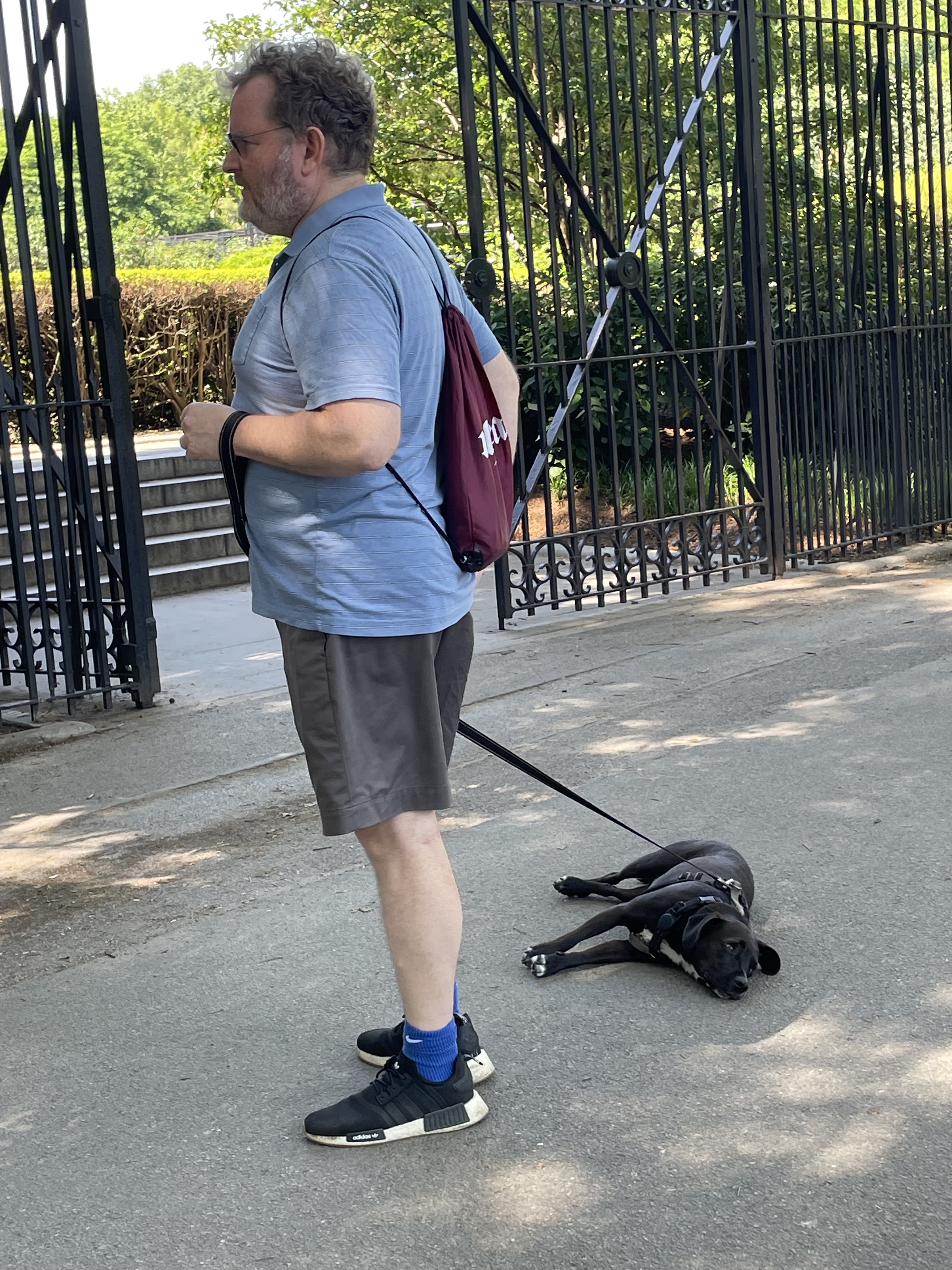
Poseidon, a proud Cane Corso, would not be caught dead in a dog run. But Poseidon’s helpful person directs us down the hill and up the “unmarked trail” to the spot. She has me at “unmarked trail,” my favorite kind of path. We locate the huge old cherry.

“This is one of the biggest, oldest trees in the park,” reads the nomination. “It provides habitat and food for our migratory and resident birds.” Its once-delicate lenticels have gone crusty with age.

It nestles a young’un in its crook.

On the way out of the park, I find a microforest of sweetgums. What’s not to love about a sweetgum? 

Their prickly seedballs are a marvel of the season.

Two conjoined trunks seemed to be pouring their hearts out.

I admire a small maple, sporting the usual colorful frou frou of the season. Watch me turn colors! I’m a maple! Sure, m’am, but you clearly haven’t met the other contenders, the sassafras or the black tupelo.

Everywhere I go I stumble upon fantastic trees that were not nominated as Great Trees. Yes, the pin oak in Crotona is spectacular. The zelkovas on Webster, definitely worth noting officially. But what about this particular sweetgum?

Ewen Park, which I’d never before heard of, dates back to when Frederick Van Cortland owned the land. It has a long stone staircase that serves as a conduit between the neighborhoods of Kingsbridge and Riverdale. At the base of the steps I find a marker that establishes the place’s bona fides. It states the number of stairs. In Latin.

History is everywhere. You can read the past  in the trunks and branches, leaves and fruits of the trees in the Bronx. Some of them Great Trees. But also, trees that might not necessarily be identified as such. Not necessarily winners, but trees that are nonetheless special.

And that is pretty great.
3 Comments

Filed under Jean Zimmerman

“Purple and gold season”

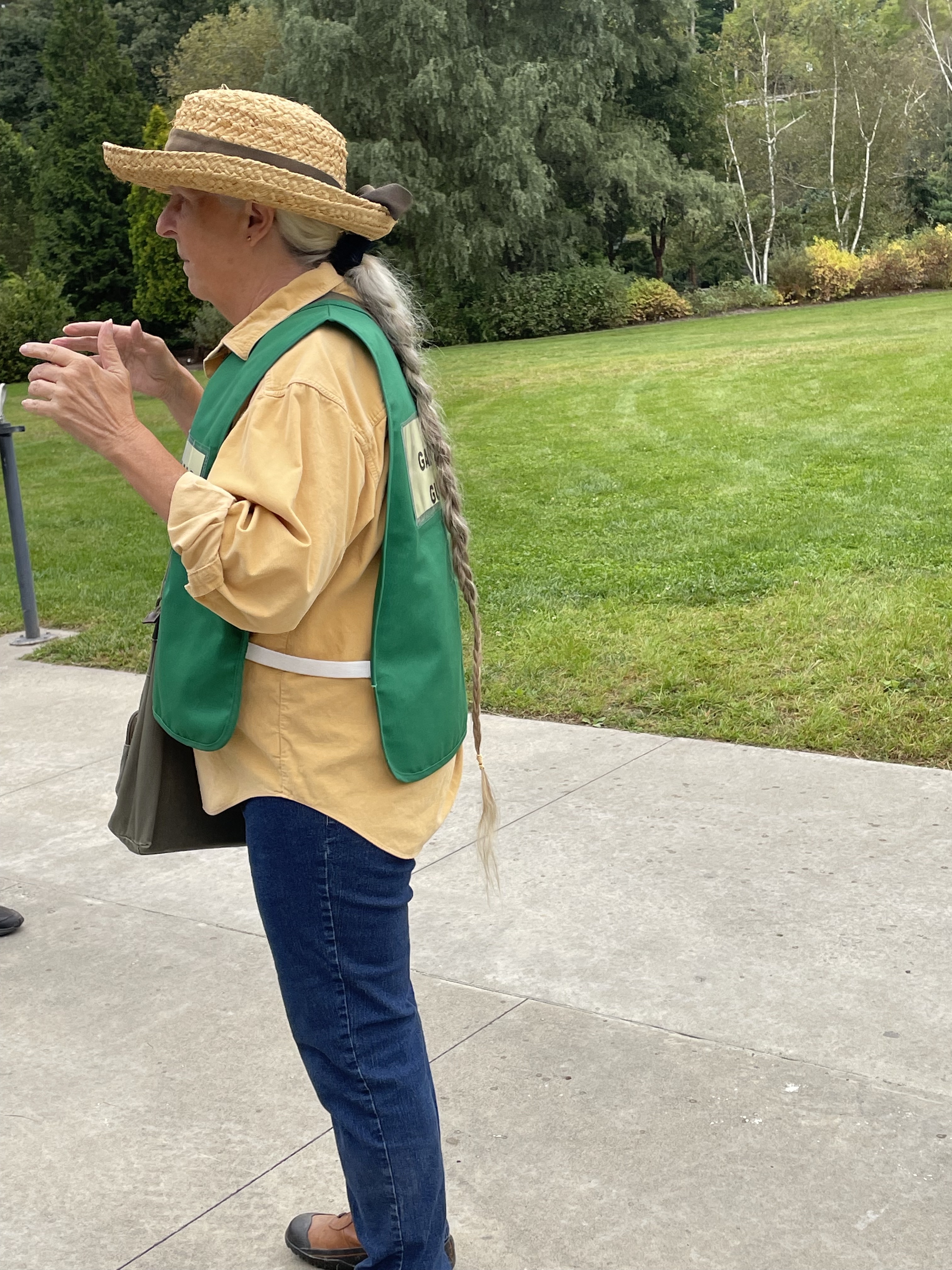
is how Cornell Botanic Gardens’s docent Dana describes the end of summer and the first days of fall.

She professes herself to find it a bit boring. I look out the window when we’re driving in the car and that’s all I see, purple and gold, purple and gold.

Dana shows us the native aster blooming in a border of the Cultivated Plant Collection. The goldenrod.

Her exuberant, erudite and irreverent approach to the botanical world and her enthusiasm in sharing it with people are all on display first day of autumn in the Finger Lakes.

A Buddhist might call it the Eternal Now — this burnished morning, already warm yet crisscrossed with cool breezes. We walk together through the specialty gardens, the perennial beds, the tropical plants and grasses and herbs. These flowers, these trees are all that exist.

Dana raises horses, has about the longest braid I’ve ever seen down her back, and is one of the most quick-witted garden guides I’ve ever come across.

She shares some wisdom on making a mistake: You never say you’re wrong. Just, “actually”… to which a gentleman in the crowd adds enthusiastically, Truth challenged!

Now that we’ve got that straightened out.

We see a display of gourds, part of the Garden’s Seeds of Survival and Celebration installation. She explains their significance, You know that thing in the celestial heavens that we call the Big Dipper? In North Africa it’s called the Drinking Gourd. So the message to enslaved people in America was, “follow the drinking gourd.

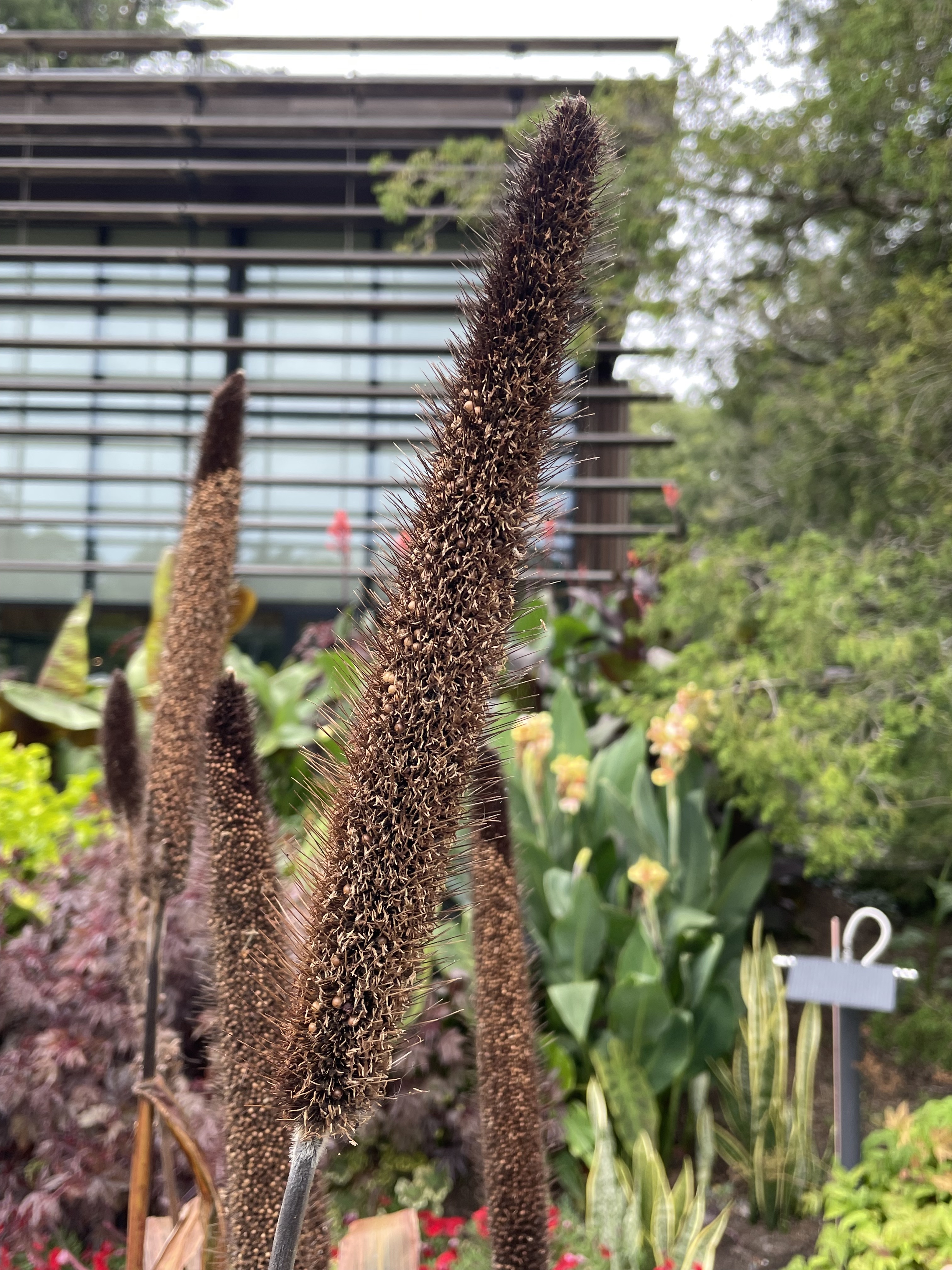
She shows us millet.

On a pathway she shows us pots that were originally planted out for the opening of the Nevin Welcome Center in 2010 and now need to be moved inside every cold season and outdoors again in the spring. Be careful what you do because if you do it exceptionally well they’re going to ask you to do it over and over.

The tropical Princess flower, she tells us, is her favorite. She’s very soft, and has silver glitter on the leaves and flower.

Then, a relative of the tomato.

But it’s seriously saying, Don’t bite me. No grazing, please. Also, It has a fruit that can be brewed into a very potent alcohol.

Dana does a special symbiosis tour once a month in which she talks about the relationship between plants. She calls it secrets of the garden.

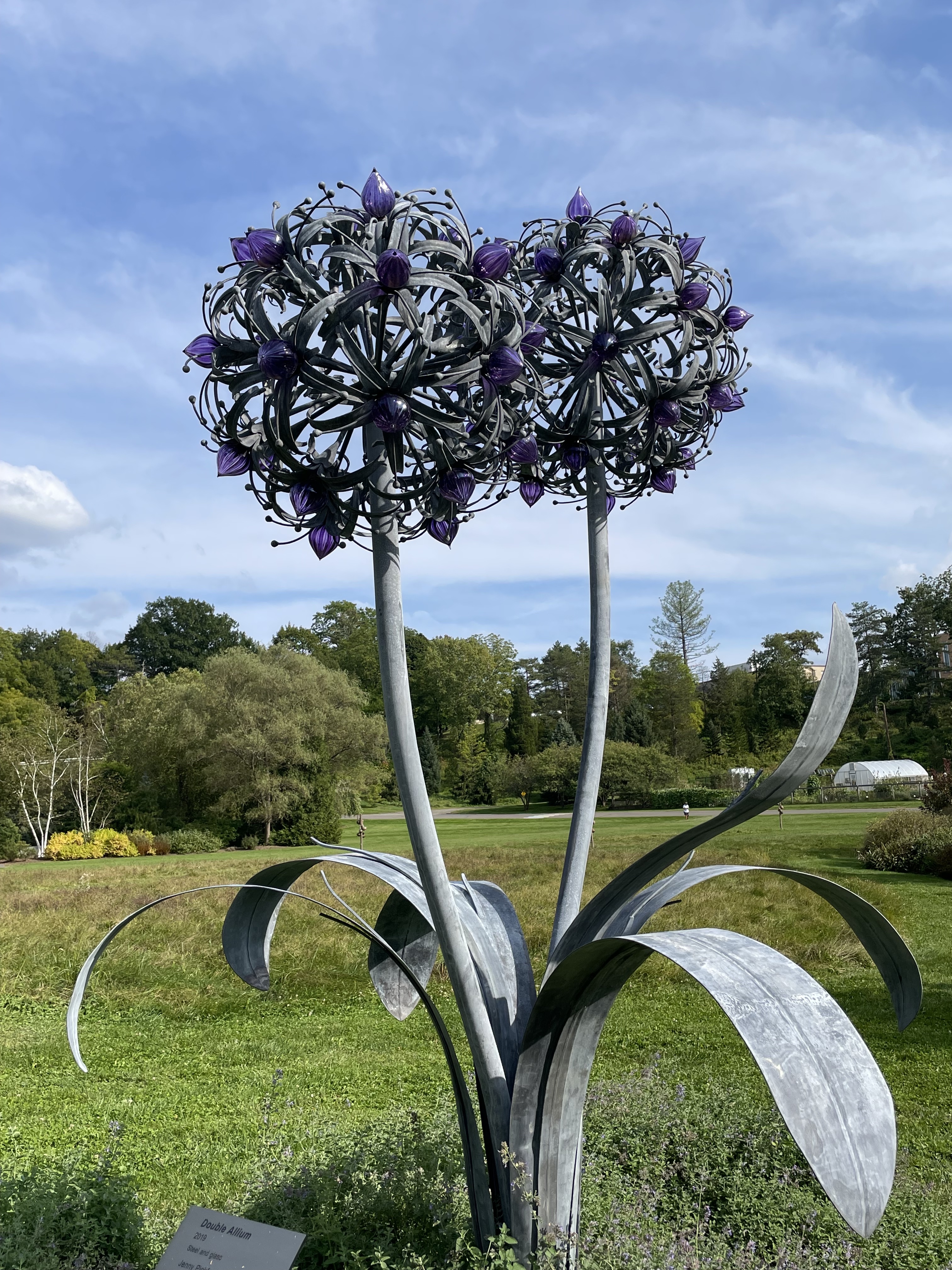
Lest you think this tour is all about flowers and fruits, it is not. There is art.

And plenty of trees. She shows us the tulip poplar.

It is neither tulip nor poplar. But it is the tallest tree native to this region. Liriodendron tulipifera, she tells us, has musical instrument-shaped leaves and tulip-shaped flowers. This particular specimen is equipped with lightning rods that don’t happen to be attached to its ground rod.

It’s probably eighty to one hundred years old.

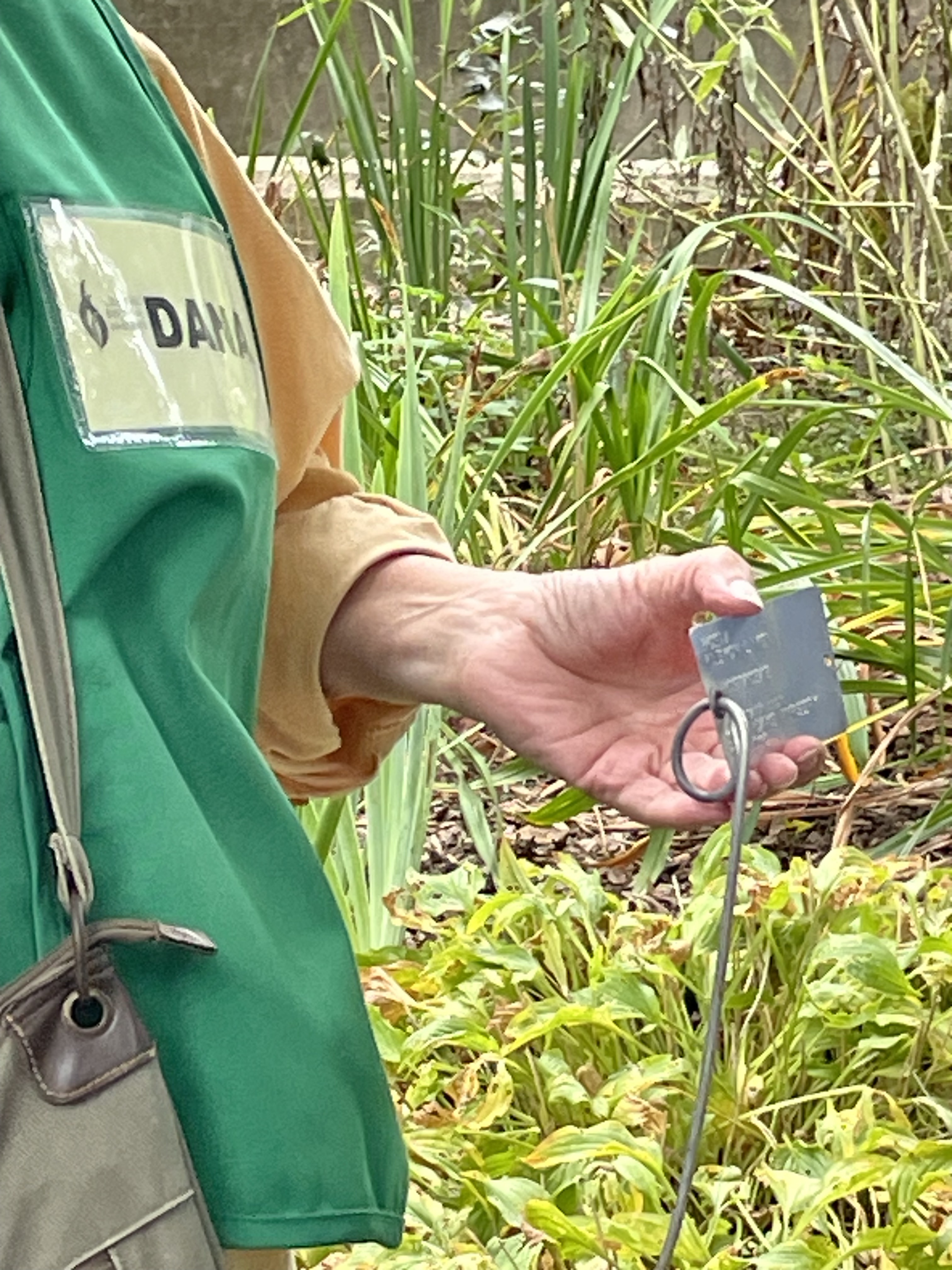
Dana explains the difference between and annual and a perennial plant. It’s pretty basic, she says. She explains the meaning of the word cultivar.

She shows us an aluminum tag.

Students come In and randomize these tags. It’s not funny!

These just keep spreading.

I’m touching everything. I can’t help it. I want to learn about everything here. I’m reminded of the lines from Walt Whitman’s Leaves of Grass:

The atmosphere is not a perfume, it has no taste of the distillation, it is odorless,

It is for my mouth forever, I am in love with it,

I will go to the bank by the wood and become undisguised and naked,

I am mad for it to be in contact with me.

We see a mammoth zelkova.

Dana shows us an Eastern white pine.

It’s the tallest conifer native to this region, she tells the group. It was tremendously important to the Indigenous people here. The Five Tribes were warring, and they met beneath a white pine. And a leader said they’d be more successful if they worked together than if they fought. That was Hiawatha. We lifted their agreement for our constitution. We stole it. The Five Nations came together as the Haudenosaunee. Their symbol shows a white pine with all the weapons buried at the base and at the top an eagle overseeing the whole thing.

She shows us the needles that grow in fascicles.

There are five needles in each fascicle of an Eastern white pine. That’s how you can always identify the species.

Also, Dana says, you can brew the needles to make a tea that has more vitamin C than a lemon by squishing them and boiling them. It’s pale gold and slightly sweet, a treat you can make for your friends.

We stop by a Cornelian cherry dogwood.

Cornus mas, she says, giving us the scientific name. Mas means male in Greek. The Greeks used the wood to build their weapons of war. Since it was the wood used to make the boy stuff it was termed mas – male.

This tree probably predated the adjoining building. Oh, just a boring begonia.

Dana brings us to the herb garden. An herb simply means the plant’s not woody, she explains. In the herb garden you’ll find things that are significant to humanity that are not food-based. She tells us that in the garden we’ll find a bed of herbs related to literature: You can find rue, shake its little hand.

We enter. Bruise a few leaves, inhale the scent of sage.

She says, I want you to scratch and sniff. First, touch this plant.

Then, run fast over to this other flower and inhale.

Peppermint patty! And she is absolutely correct, as always. The first plant is mint, the second has the distinctive aroma of chocolate.

She relates the origin of the term nosegay. I didn’t know I’d ever wondered about that, but now I find myself getting curiouser and curiouser, as Lewis Carroll’s Alice would have it.

A nosegay was a bunch of herbs you’d carry against the stench of the world back in the Victorian era, it turns out. And you’d need a tussie mussie to hold it. Horse-drawn carriages actually have mounts to put these tussie mussies in.

Conveniently, Dana has a tussie mussie on hand to show us.

I peel off from the group, meet an energetic hound named Texie who seems to be inordinately stimulated by the herb garden’s scents.

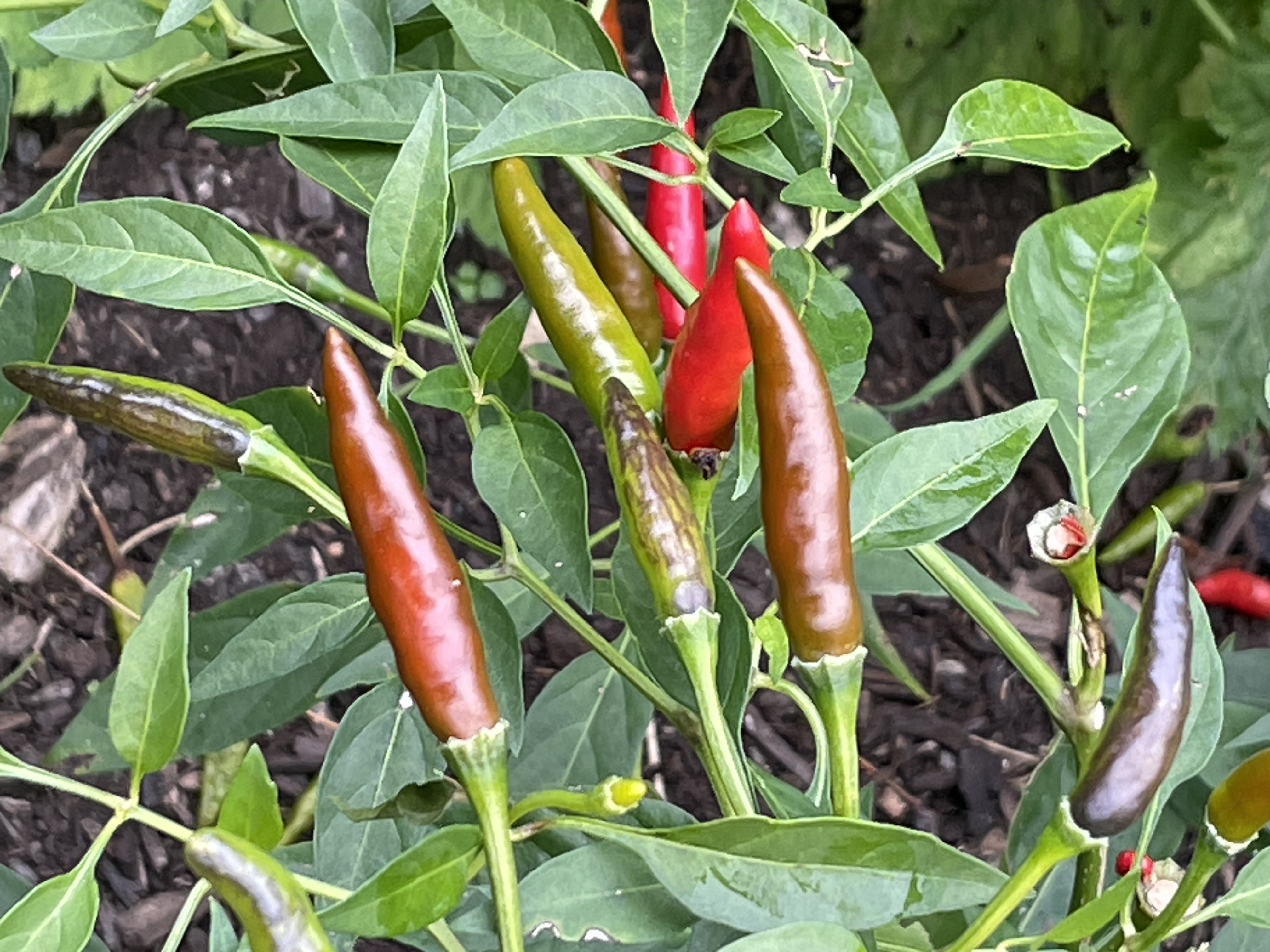
I spy a Thai super-hot pepper.

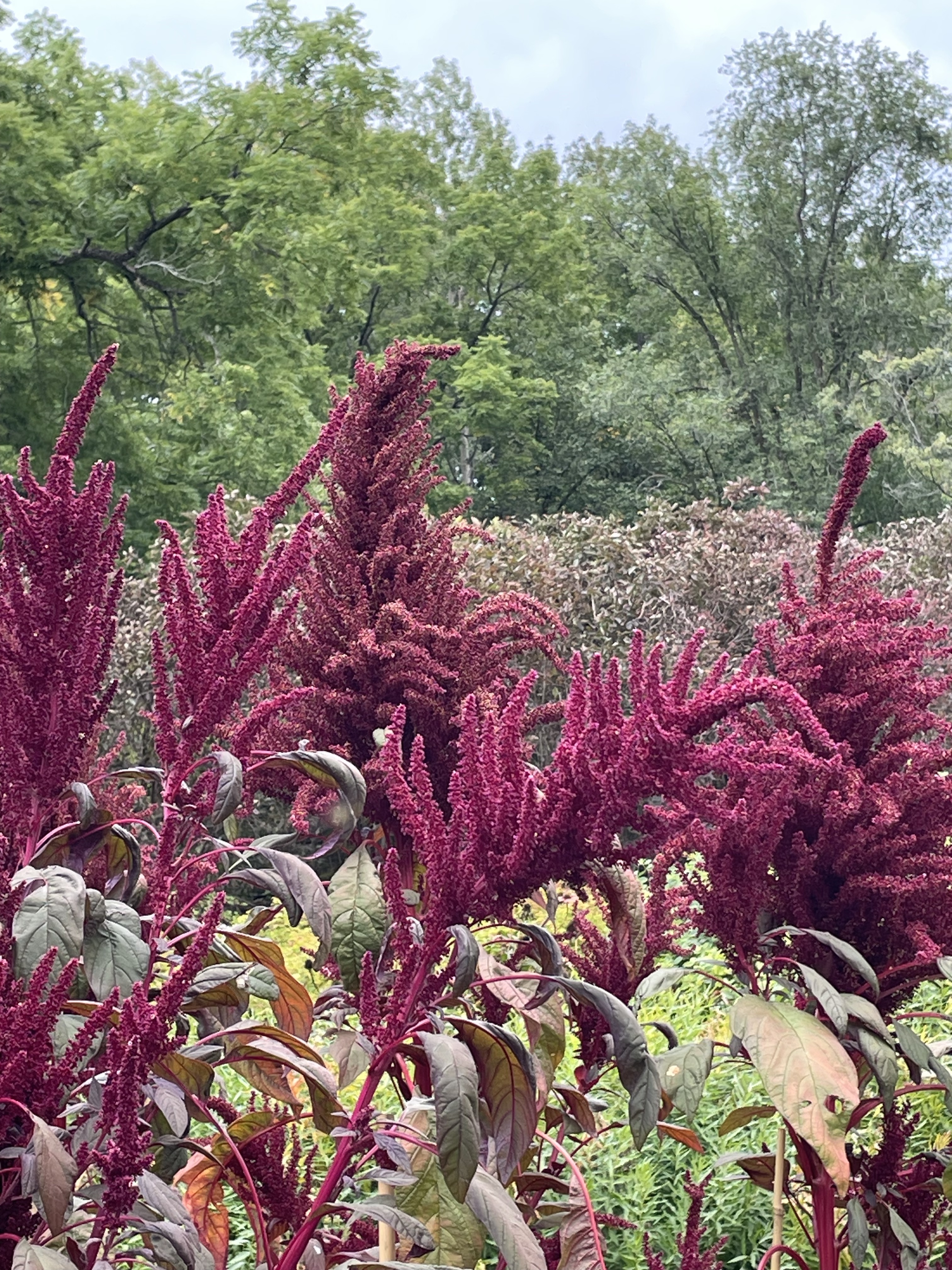
Grain amaranth.

Cockscomb.

Lean in. Perfection in pink. I feel hypnotized by its fuschia.

I see the rue, shake its little hand.

Little purple flower. So boring!

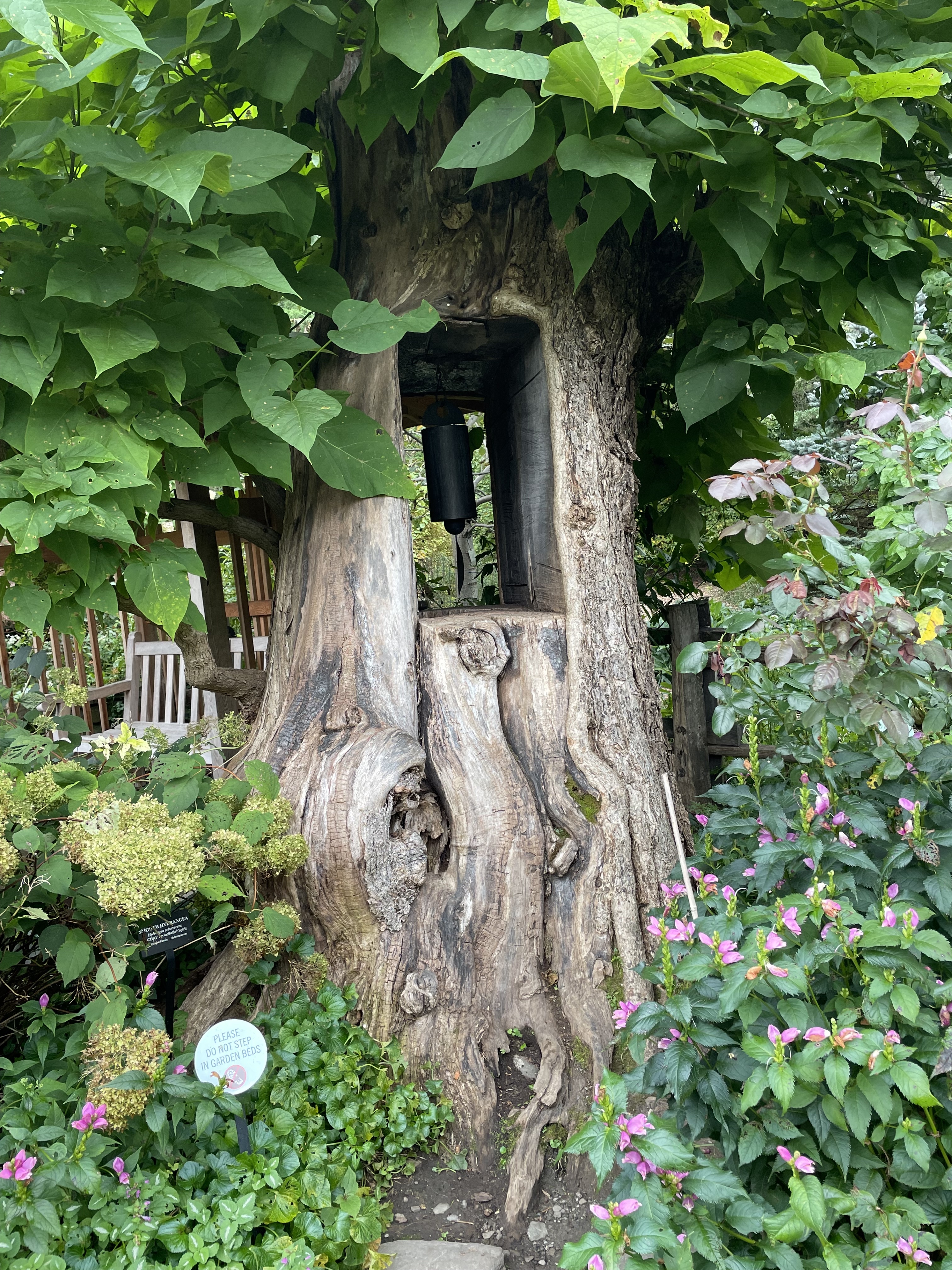
Just when I think life could not get any better, I come to a tree.

I hear a kid say, It’s still living and they cut right through it! Within its massive trunk hangs a gong. The kid says to his mother, brother and grandmother, Let me show you the best thing!

We all observe the fish he points to in a small nearby pool.

They look happy there, says grandma. The kid’s brother rings the gong. Now we can have a mindful moment, says the kid. Such a super sound! says the mom.

I offer to take their picture. They offer to take mine, and I pose looking even more supercilious than usual, and quite a bit content.

I tear myself away from the happy family to see the Bird’s Eye Pepper, which has grown in Africa for centuries. One last picture before my phone runs out of juice!

No, one more! Hibiscus.

Inside the Welcome Center, I inspect a display of tree rings. Even my toe is lucky.

A lucky day all around. Fortune smiles on those of us who happen to be on Dana’s tour of Cornell Gardens this perfect first day of Fall.

Leave a comment

Filed under Jean Zimmerman

Poking around where I am not supposed to be

is a favorite pastime of mine.

All that we see or seem is but a dream within a dream, said Edgar Allan Poe. Thinking about some writers who have opined on the dark side of life as I spend some time in in a dream within a dream –  the abandoned Contagious Disease Hospital at Ellis, taking around a group of photographers for a day of shooting poetic spaces.

On this stormy morning in the tristate, almost everything is so beautifully dark.

Those who dream by day are cognizant of many things which escape those who dream only by night, wrote Poe. We visit hushed stairwells.

The simplest things have a surprising potency.

Heat.

Even a doorknob seems to have a story to tell.

Textures are always amazing here at the Hospital.

But today especially, in low light, they seem to whisper. Loudly.

A view.

I see some of the things I’ve seen many times before, old favorites. Simple things.

The bird’s nest in a light fixture.

A legend.

Always loved how that sentiment might apply to everyday emotional challenges.

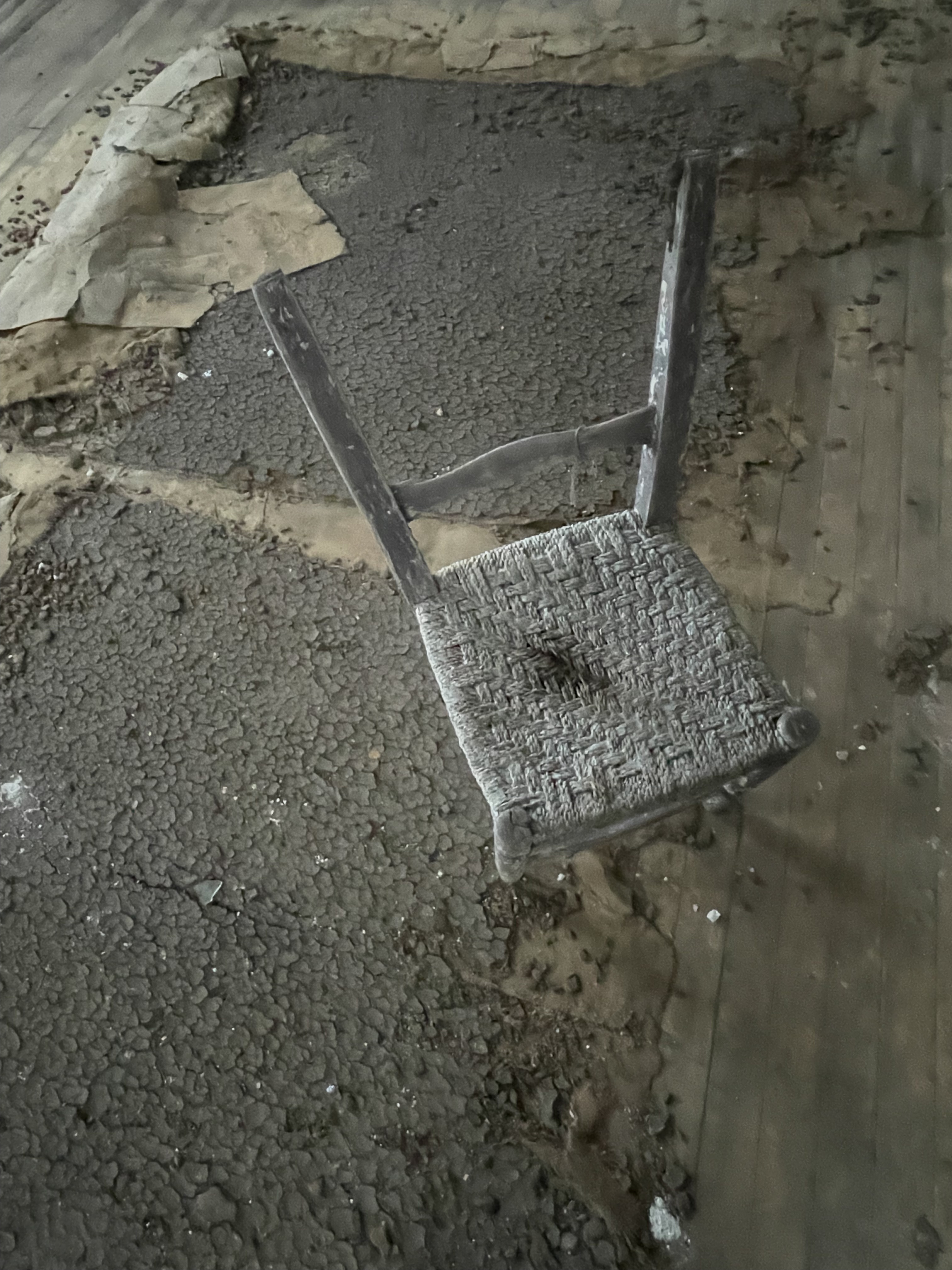
This unlikely chair.

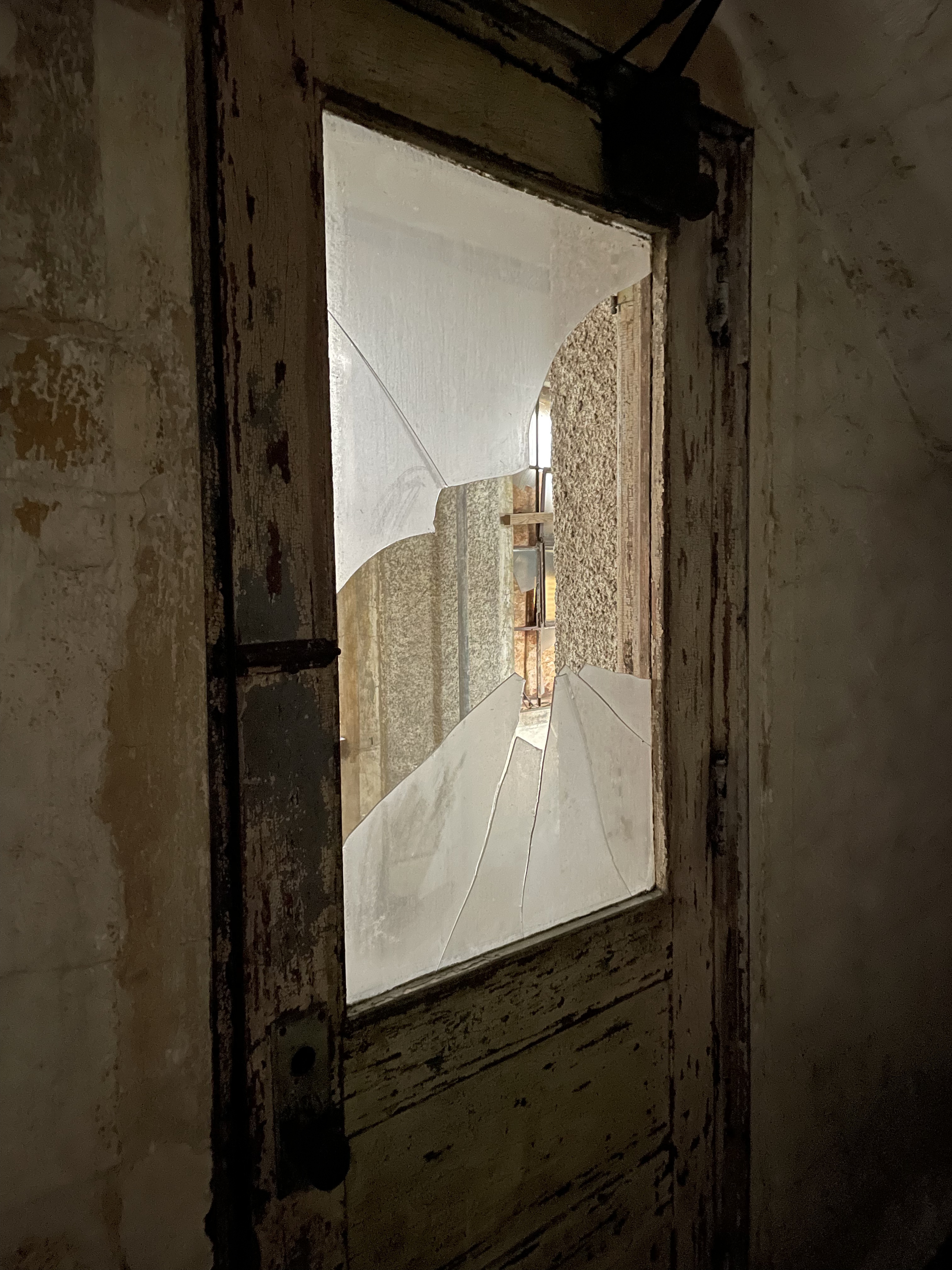
Cracked windows open to wild courtyards. I knew nothing but shadows and I thought them to be real, wrote Oscar Wilde in Dorian Gray.

The trees are both hideous and beautiful.

Mary Shelley wrote in FrankensteinThe world was to me a secret which I desired to devine.

There is golden light.

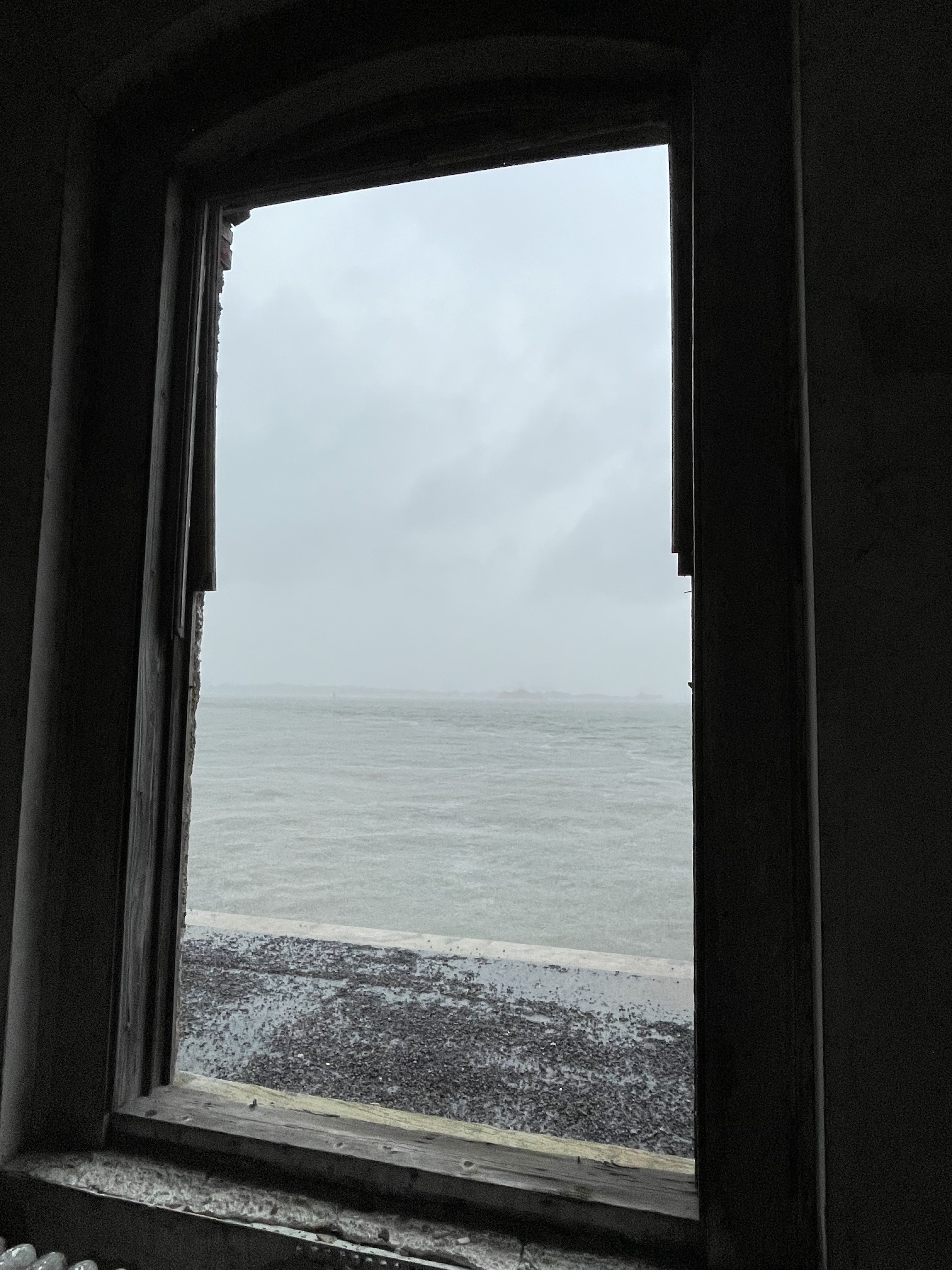
We’re open to the cold, storm-tossed waters of the Bay.

Everything more beautiful in the wet.

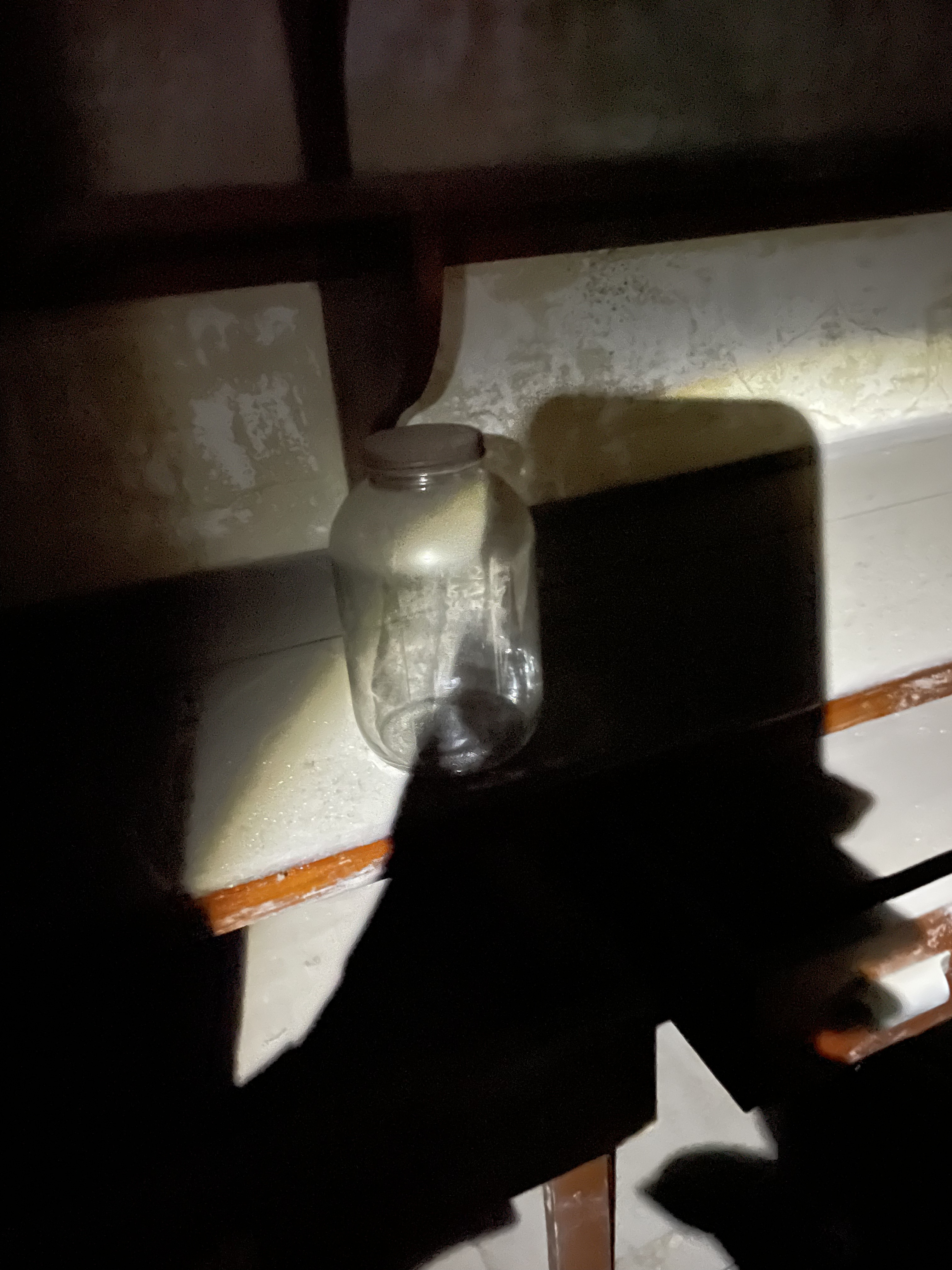
And I make some new discoveries. A bottle, miraculously untouched after a century.

Glass littering a floor

I feel both a little frightened and exhilarated. Beware; for I am fearless, and therefore powerful. Again, ShelleyShe should know; she had the courage to write a novel that would revolutionize literature when she was just nineteen years old. (Her mother was famous women’s rights advocate Mary Wollstonecraft.) 

So fortunate to be able to spend time in this iconic, moody place.

I see mysteries.

A ladder to nowhere.

More mysteries.

Some were healed here. Blue paint was thought to be calming, hence its use in the open bay psychiatric wards.

Things were clean, sanitary back in the day.

Some suffered. We know that people heaved themselves out the windows on the upper floors, hence the heavy-duty metal grates. Life, although it may only be an accumulation of anguish, is dear to me, and I will defend it. Shelley.

Nurses bunked near the psych wards. Each of their dorm rooms has a screen door against the mosquitos that would have been hell in pre-air-conditioning, pre-Deet New York Harbor.

I was never really insane except upon occasions when my heart was touched,  wrote Edgar Allan Poe.

There is a lot to touch your heart here.

If you only let it in.

3 Comments

Filed under Jean Zimmerman

Late summer privacy.

I see no one on my walk to Lyndhurst, not a soul. My only company, late-season thistles along the path.

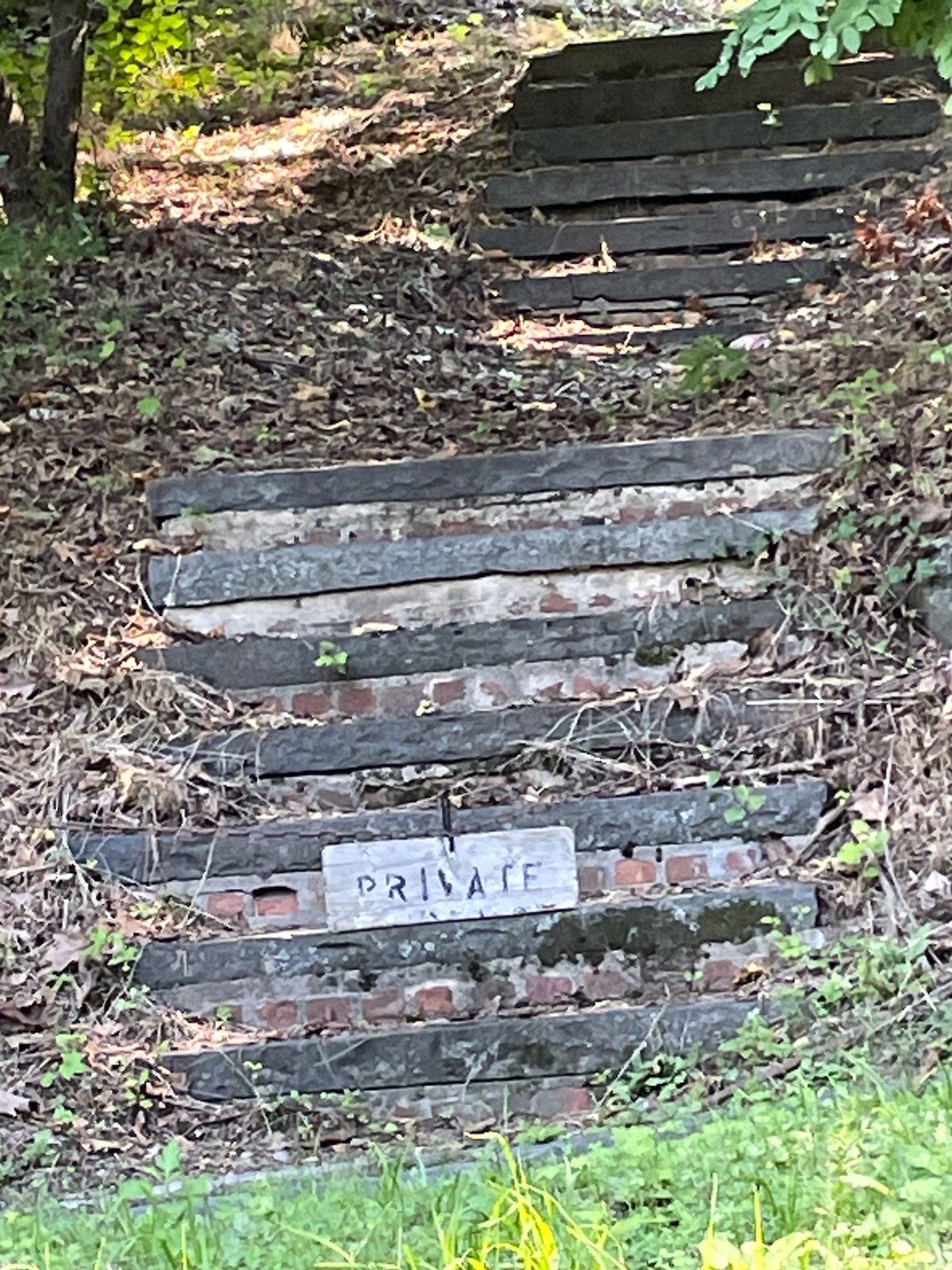
A weathered sign by the open-air entrance to the old estate tells the story of my day in a word. Private.

The Old Croton Aqueduct trail runs right through the grounds. Apparently the first owner of the property was proud, ecstatic to have the water run underground here when the water pipe was first installed, carrying water miraculously down from upstate to New York City.

You can stay on the trail. Or follow mysterious mysterious arrows. I choose not to follow.

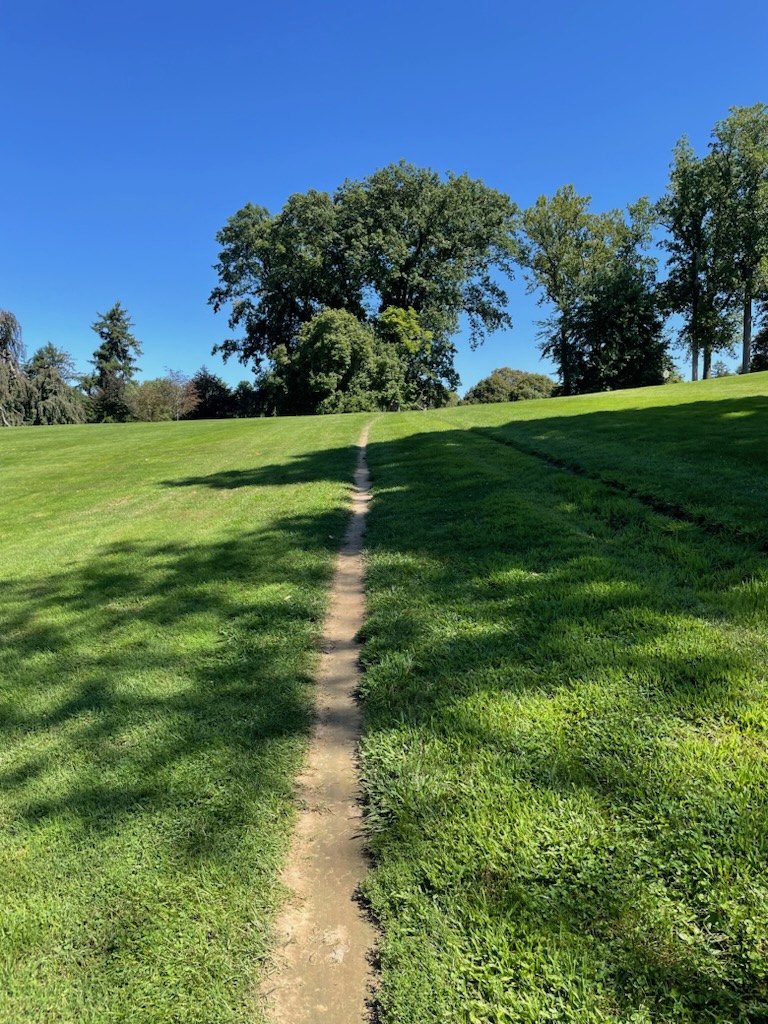
The lawns and old, old trees beckon. Robert Graves wrote, Tranquility is of no poetic use. I beg to disagree. This morning is sheer poetry. The calming late-summer scents of grass and trees, the hum of insects, the perfect glaze of sky.

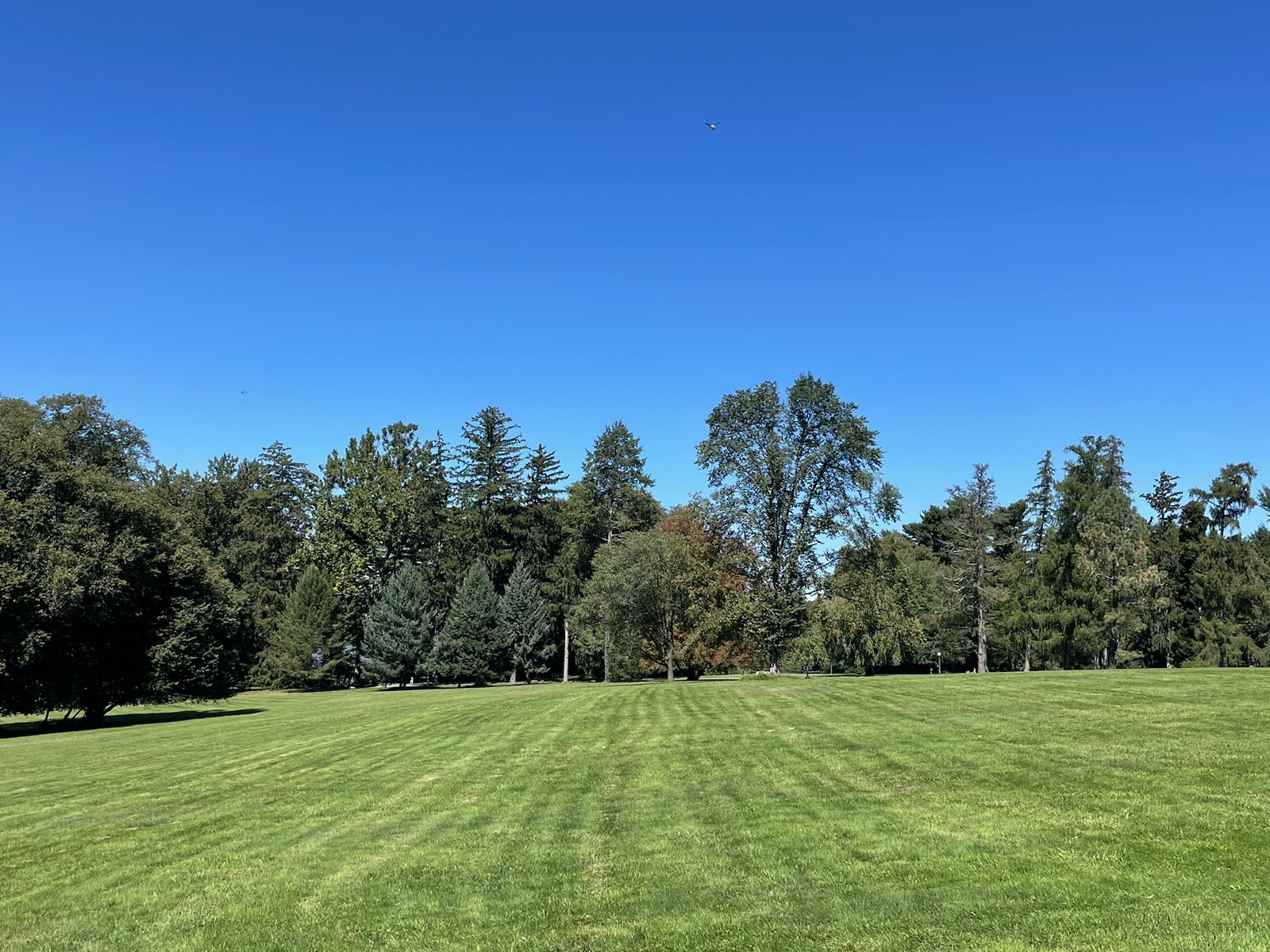
I have wondered recently, Why is the sky blue? Such a silly question. The science has long been in. But still – blue? Perfect azure? Really? Could the universe really be this kind? I visit a grove of tulip trees.

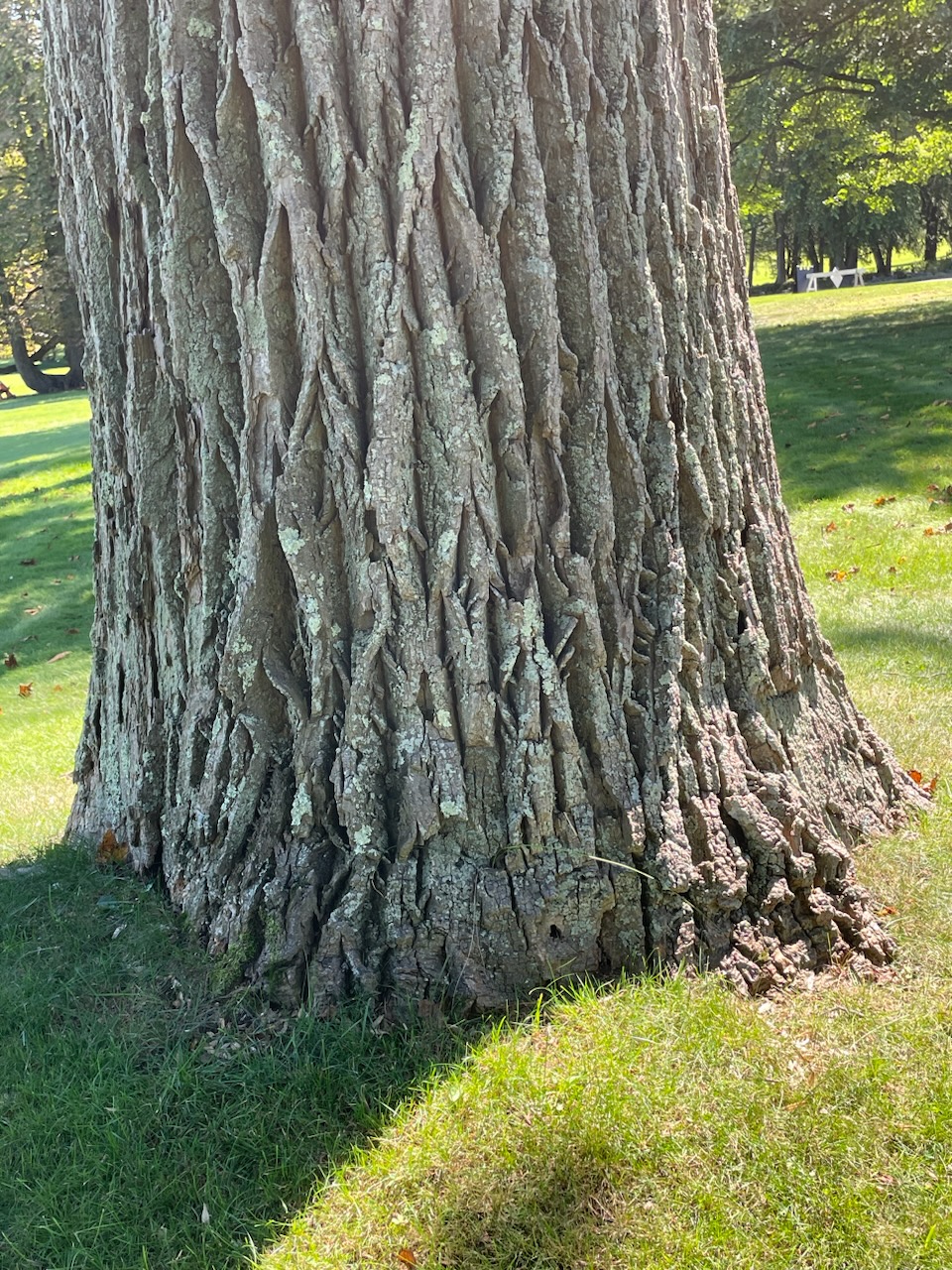
They stand poker-straight and are probably two hundred years old. Come close and touch the grooves.

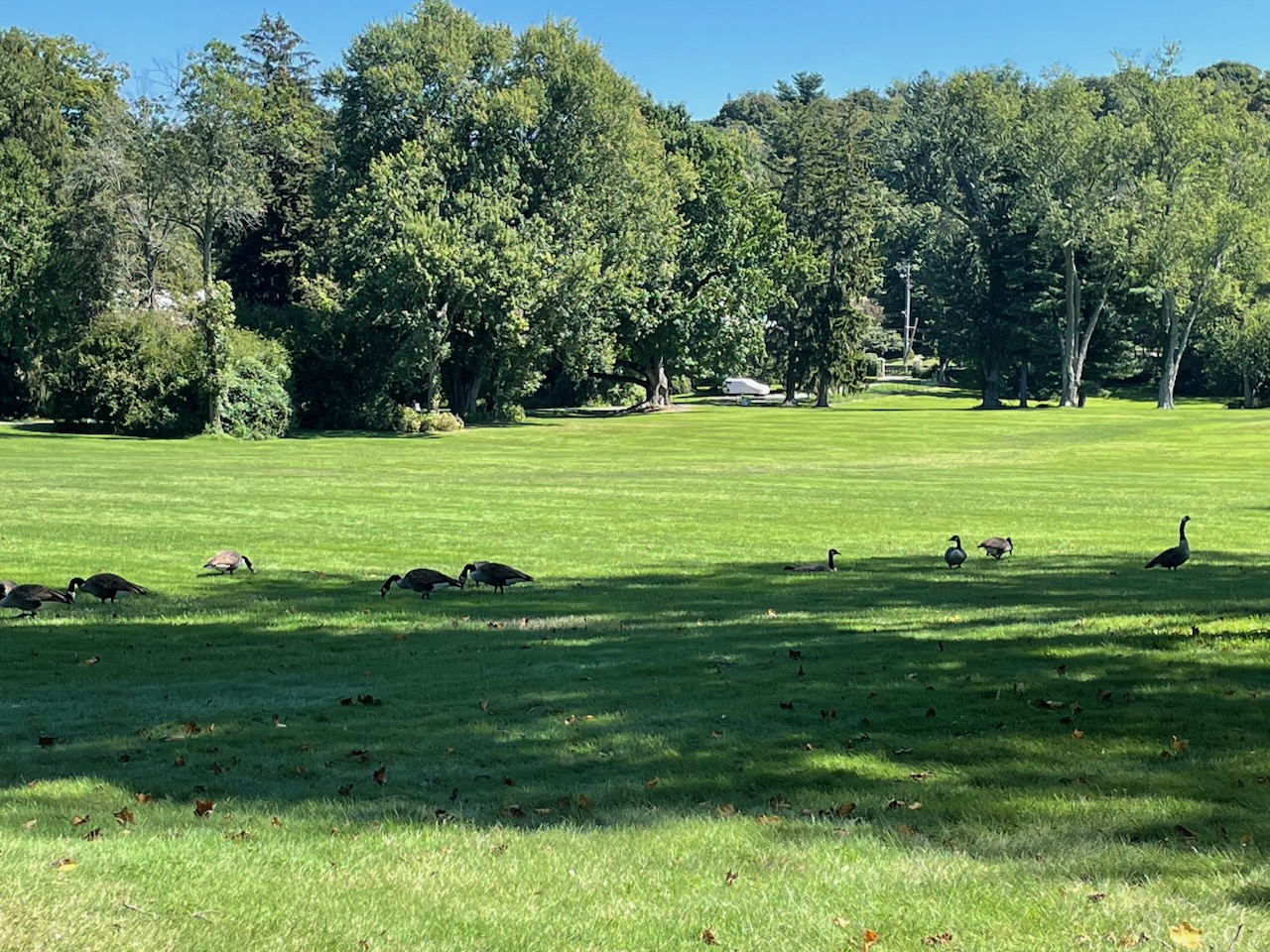
Geese feed themselves on grass. Quietly, unhurried, unworried.

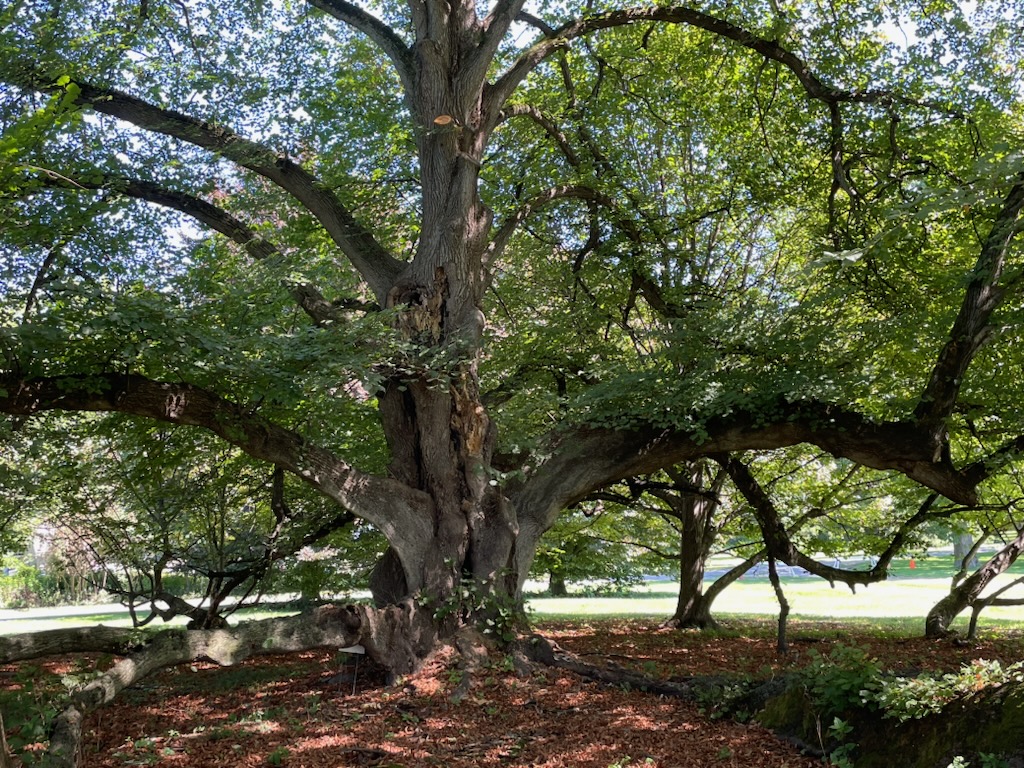
I feed myself too. I am hungry, having not eaten yet today. Now I feed my soul. I go to my favorite linden, the huge specimen with multiple stems and an enclosed space like a private drawing room.

There are many lindens here, some still holding onto their magical lemony bracts.

Octavio Paz wrote:

Perhaps to love is to learn

to walk through this world.

To learn to be silent

like the oak and the linden of the fable.

To learn to see.

Your glance scattered seeds.

It planted a tree.

   I talk

because you shake its leaves.

Seeking even greater privacy, greater tranquility, I visit one of the gargantuan, ancient weeping beeches on the grounds,

I push aside the branches and enter, finding myself inside a place so silvery dark and still and mysterious that no photo can really do it justice.

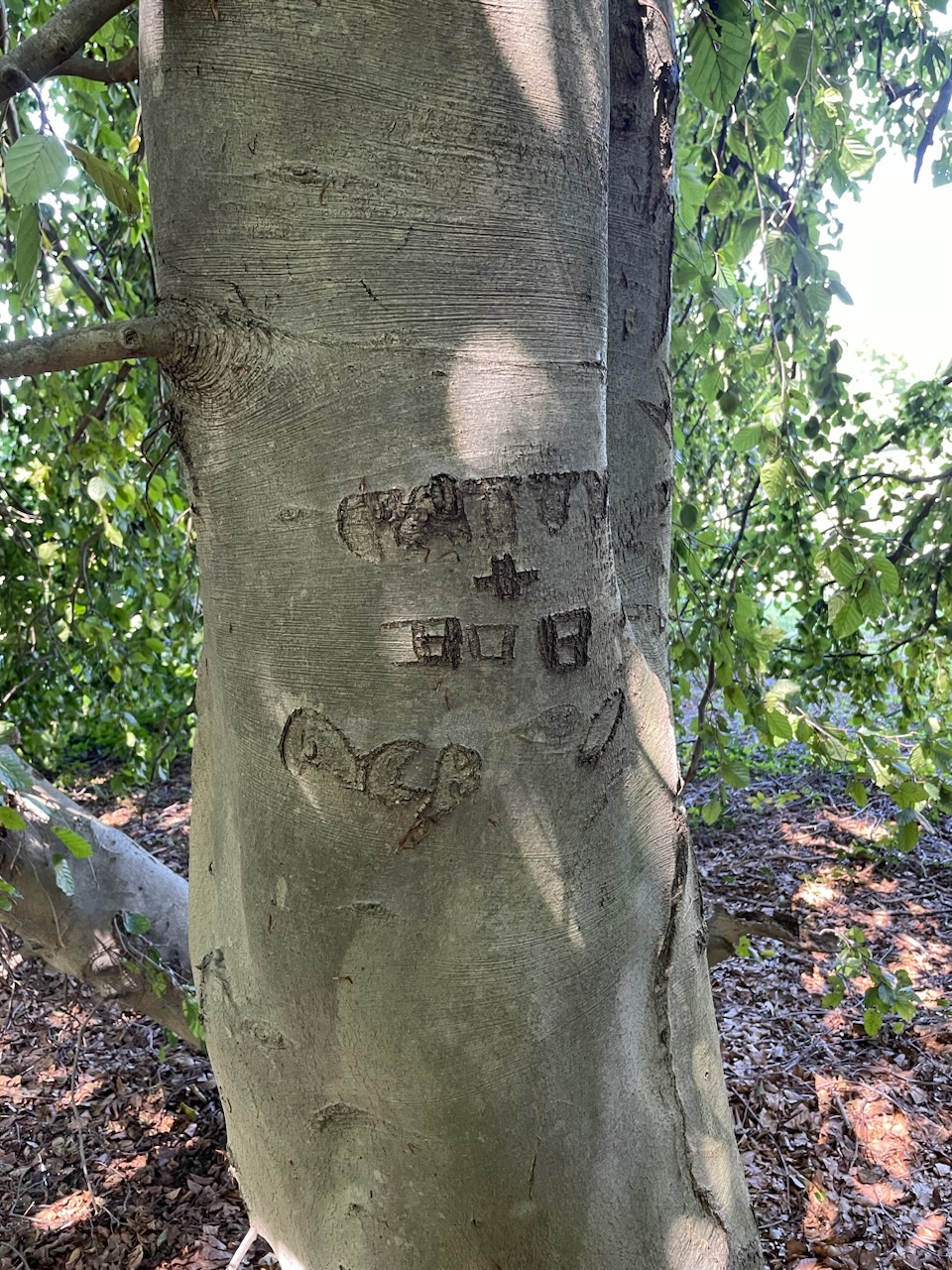
Others have been here before. Hello Bob, who did you love?

The branches twist together, sinuous. So quiet, yet so alive.

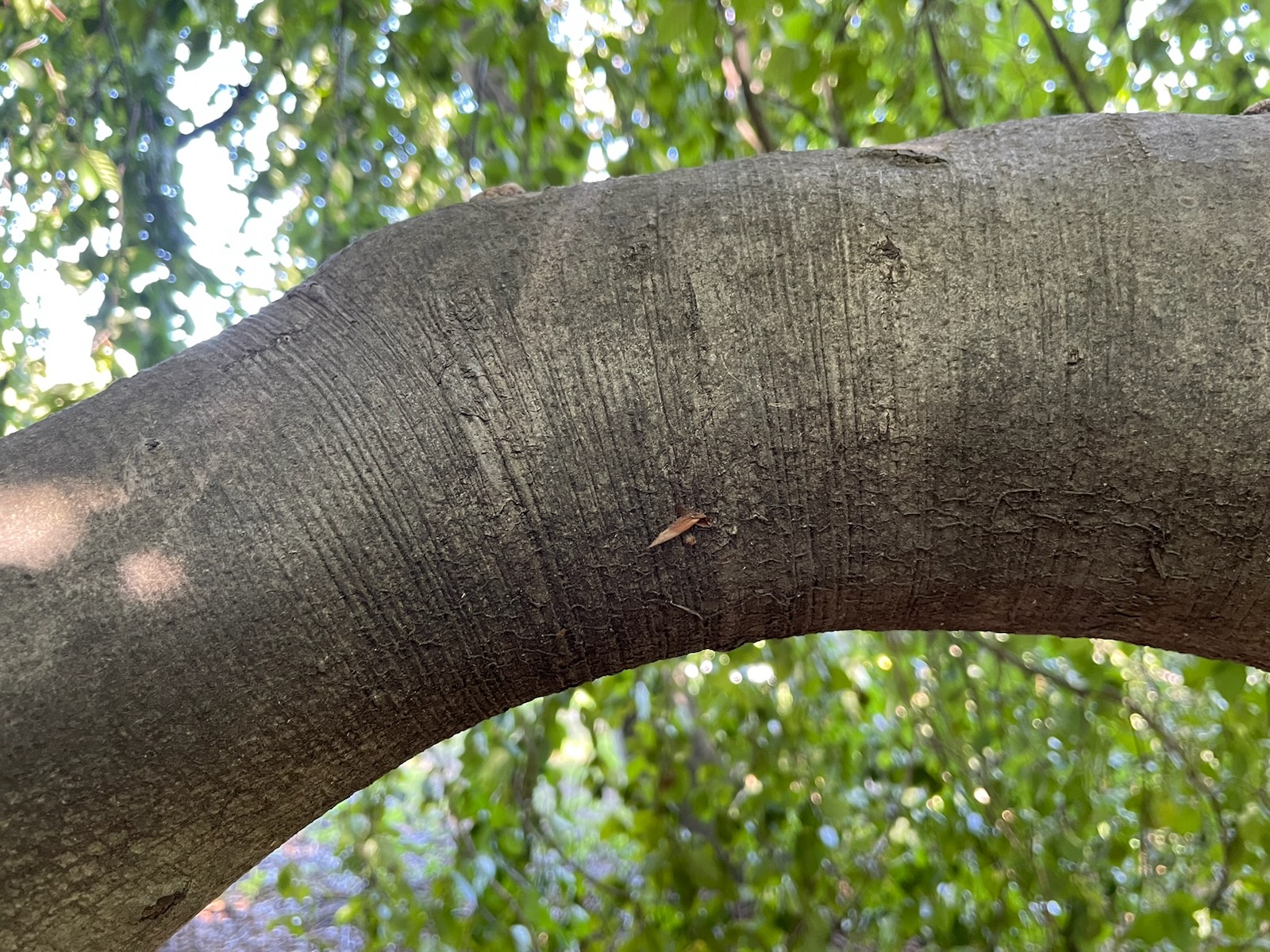
I run my hand along a smooth, muscular bough.

I stand there. I do nothing. It takes a lot of time to be a genius, wrote Gertrude Stein. You have to sit around so much, doing nothing, really doing nothing. I’m no genius, but I know that doing nothing can be an art as great as any other.

The rose garden at Lyndhurst is also antique, designed  by ladies a hundred years ago in concentric circles. Just outside its perimeter, late-season sage.

Hydrangea and its perfect clusters. I clearly need to find another word for perfect.

Only me here and the bees and the butterflies. No other human soul. I brush the sage with my hand and the scent wafts up. Here are September roses, flowers like no other.

Everything is perfectly still, lush, quiet. Perfectly private.

Spent rosebushes climbing a trellis have a beauty almost as exquisite as the blooms all around.

Rose hips hide themselves among the greenery.

Bees prowl the blossoms.

Hide inside, sip nectar.

Catbirds come calling. Lovely fragrances lift themselves, waft under my nose.

I wipe sweat from my brow and smell the sage I touched before. Lock the gate and leave. Just outside, some ancient spruces, one with the conjoined stems I love.

Cones litter the ground, brown on brown.

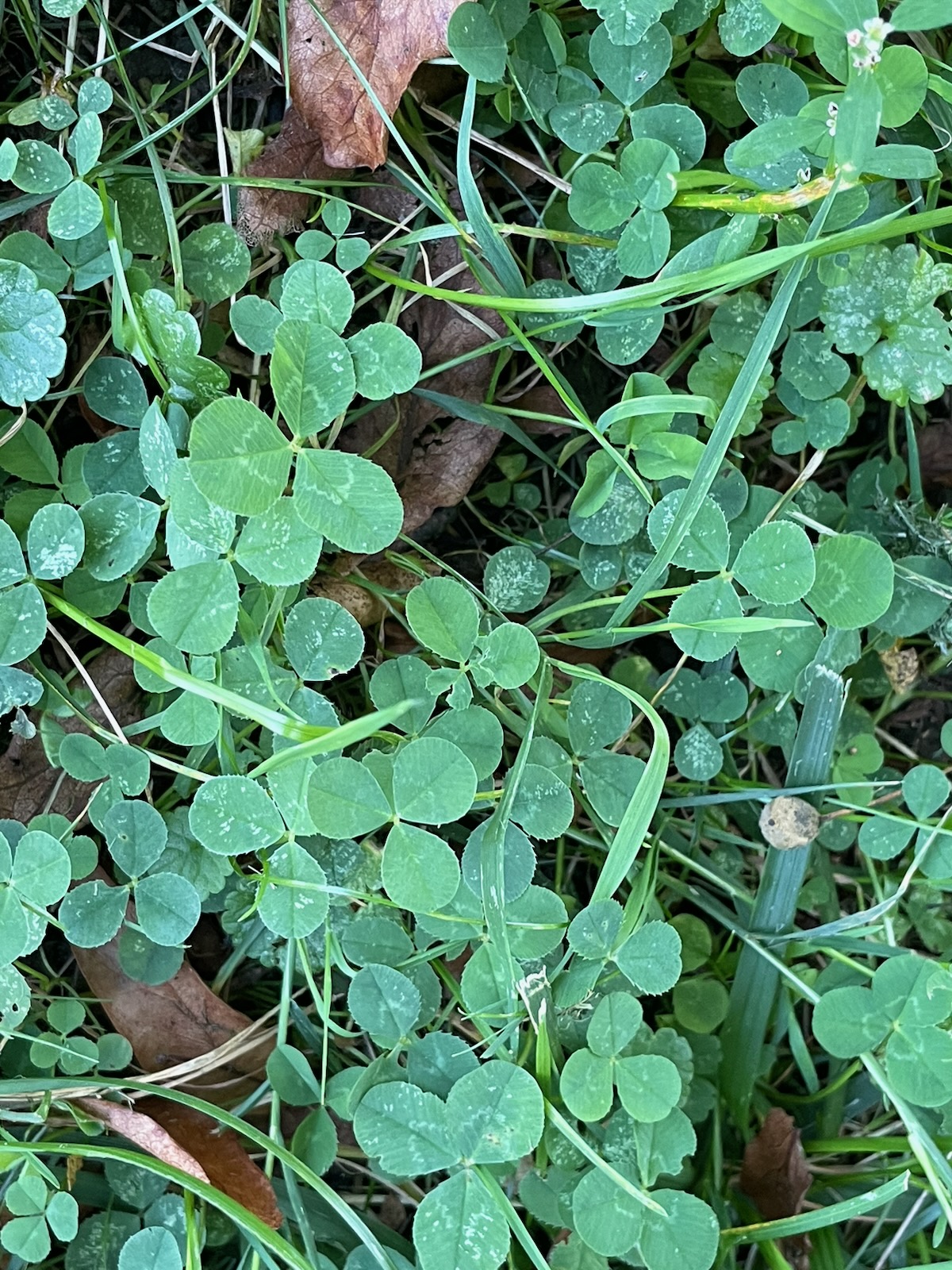
Wander, wander some more. Mary Wollstonecraft Shelley told us, The beginning is always today. Under my feet, clover. I know that if I were to hunt hard enough, go down on my knees for long enough, I’d find one with four leaves. I feel that fortunate.

Then a lucky mushroom, the only one, a lucky one.

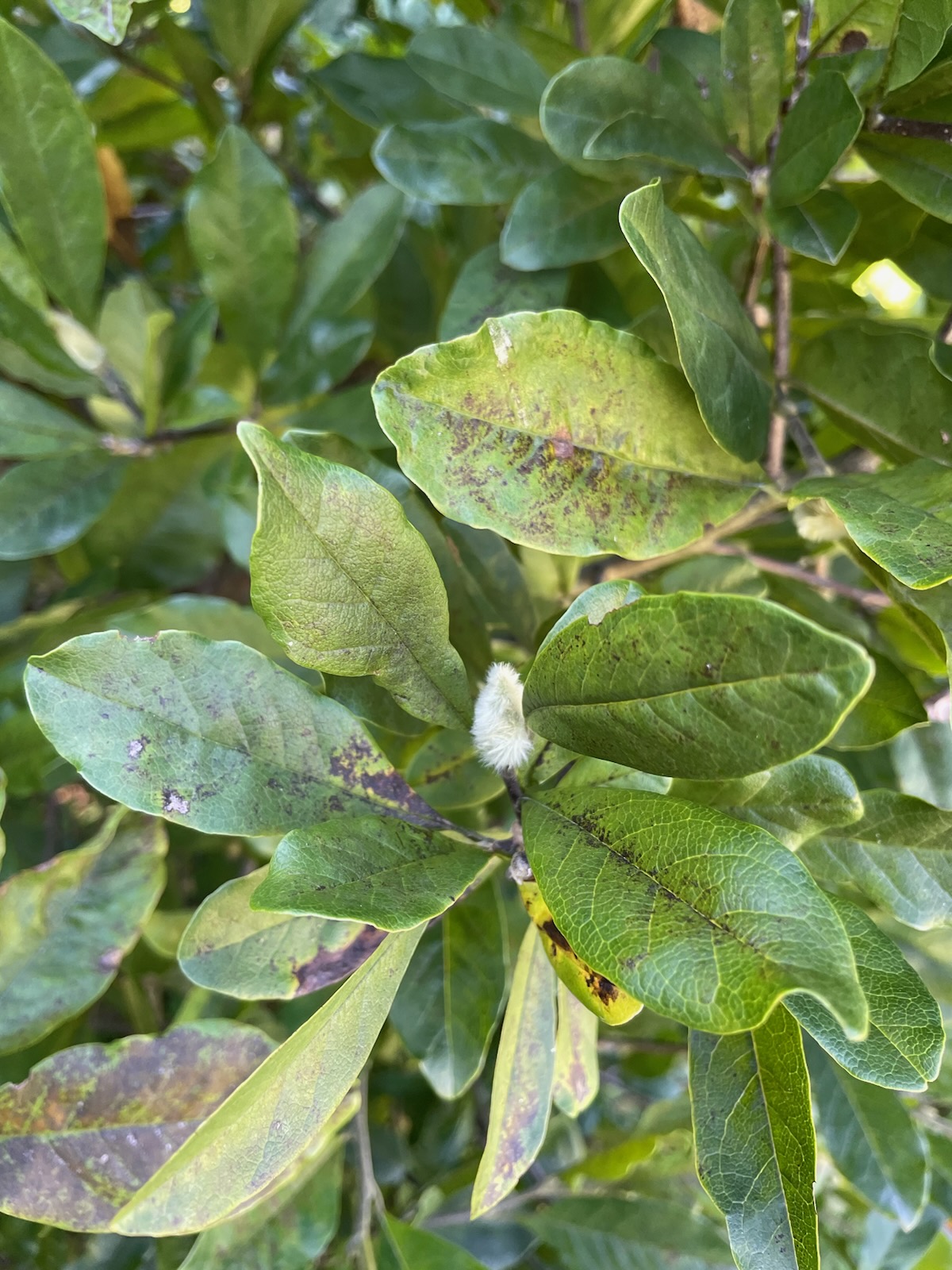
The tiny fuzz of a magnolia after it has had its spectacular blooms. A secret you need to really look to see.

A weeping cherry.

So mature its trunk is gnarled and crusty.

Near it a young’un with clearly demarcated lenticels, the stitch-like pores that form a cherry’s instantly recognizable embroidery.

And another ancient specimen, a red pine, all burls and character.

But still offering its miniature baby seedcases.

A horse chestnut with a gaping critter hole at its base. Anybody home?

Childhood memories of collecting chestnuts on my way to school.

The Lyndhurst faux castle looms ahead.

More compelling, the little children’s elf cottage nearby.

I check the door, locked. Peer into a window.

It’s as if the room is holding its breath, waiting for a child to come in and love it.

Outside, the emerald glow of a red maple canopy.

More lindens. A hush of lindens. All my life, my heart has yearned for a thing I cannot name. So said Andre Breton. He had my number, that’s for sure.

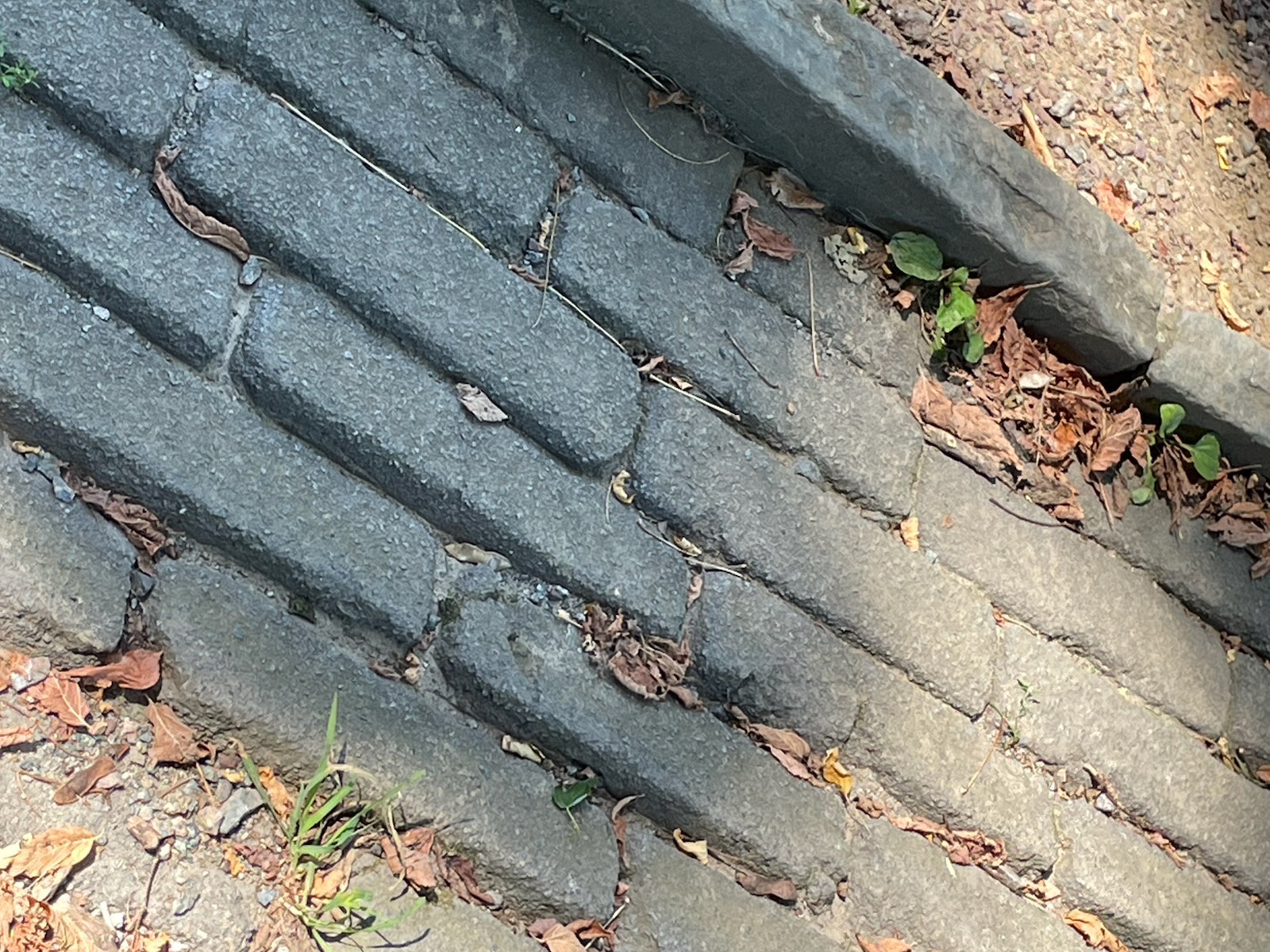
Departing, I step across the old cobble gutter from one hundred years ago, when the estate was new. I’m sure that at its beginning the place was marvelous.

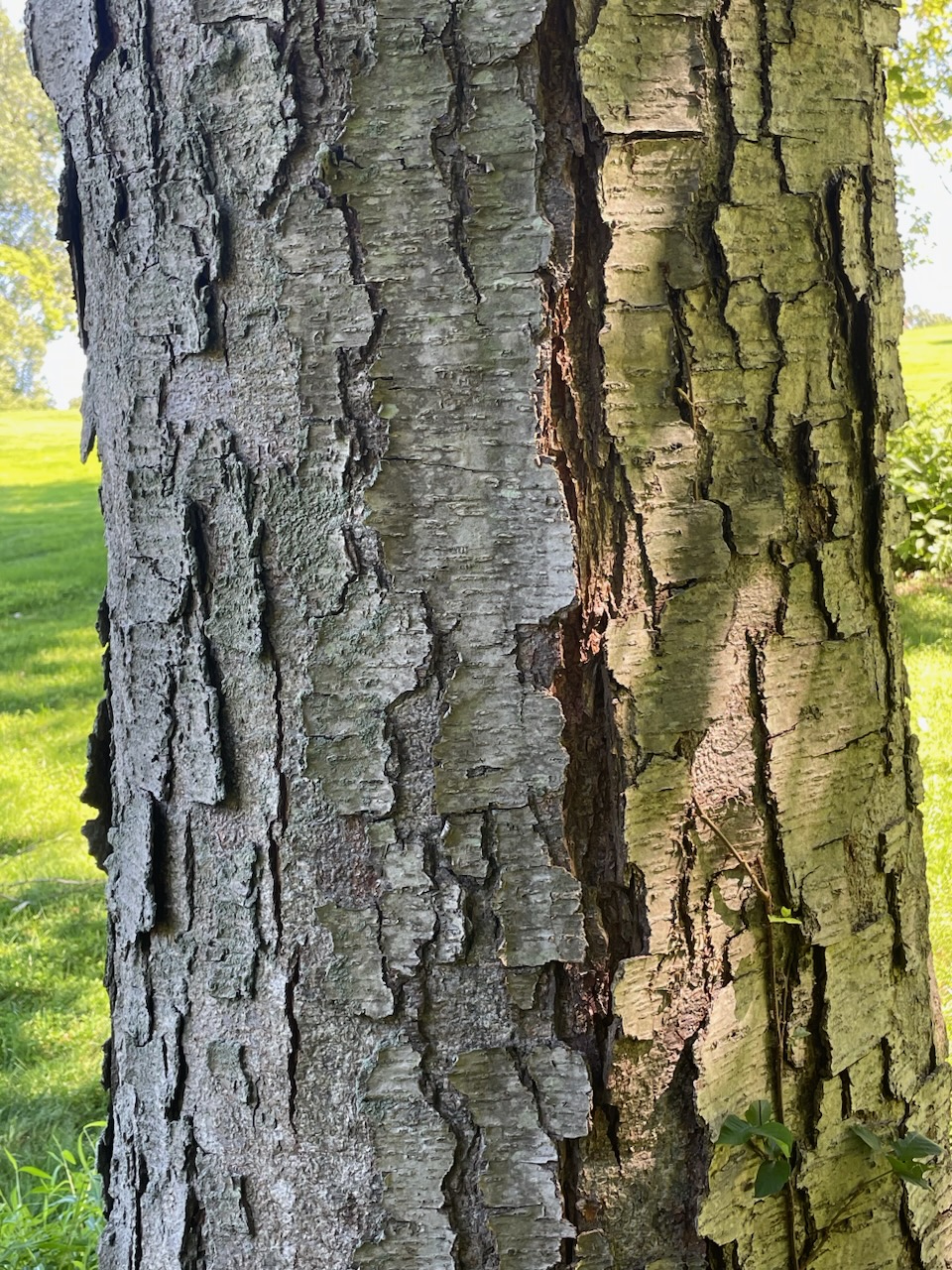
Now, in its dotage, all its trees mature, rough, tried by time and weather. A sweet birch with time-scaled bark.

Today, personal, completely private. Old, yet new.

All the more precious.

Leave a comment

Filed under Jean Zimmerman

Why fry by the ocean when you can scorch on the NYC sidewalks?

I hadn’t been to Manhattan in quite some time. Returning, I see all its contrasts as poetry.

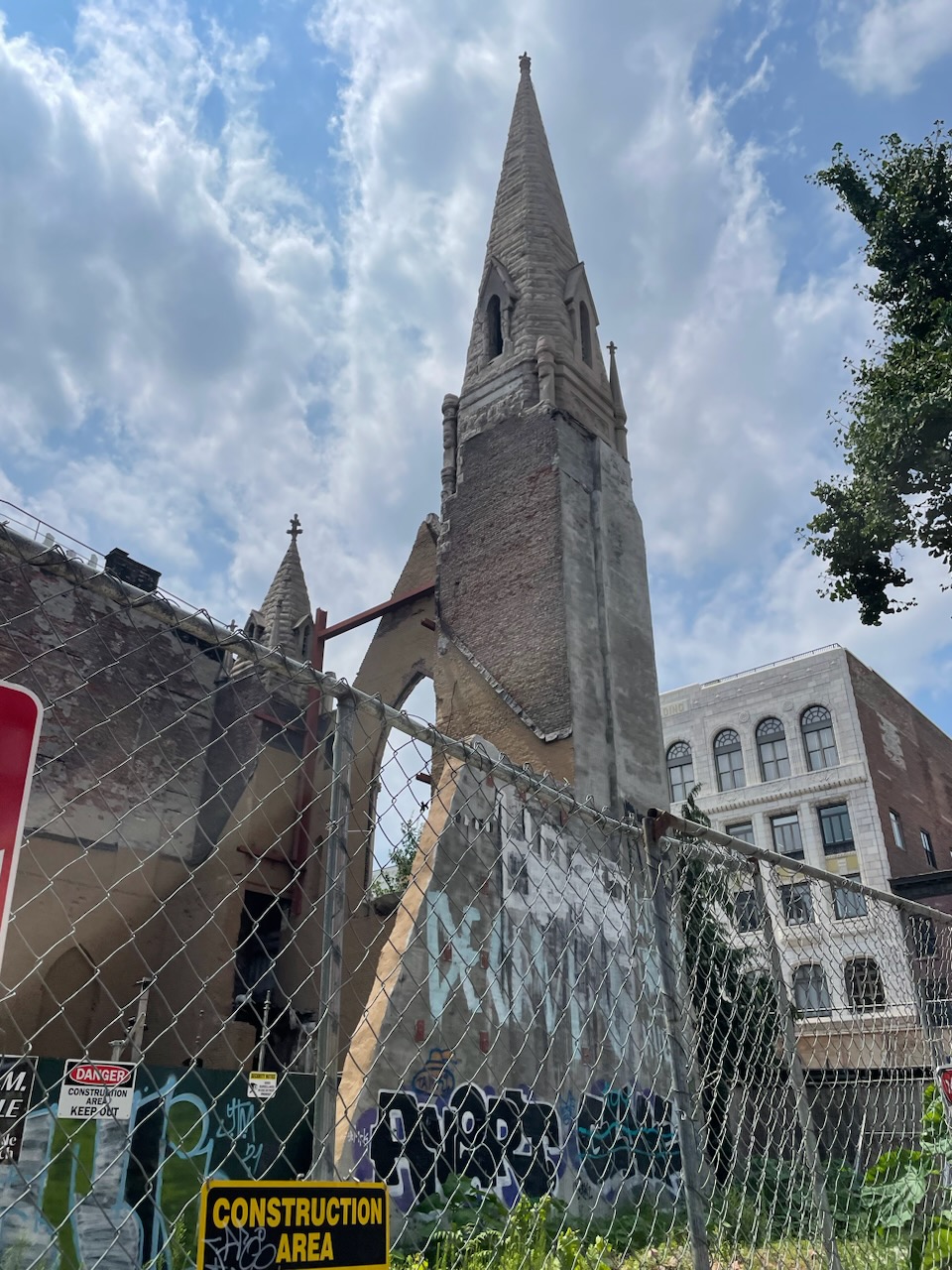
The old side by side with the new. Burned out church, new construction.

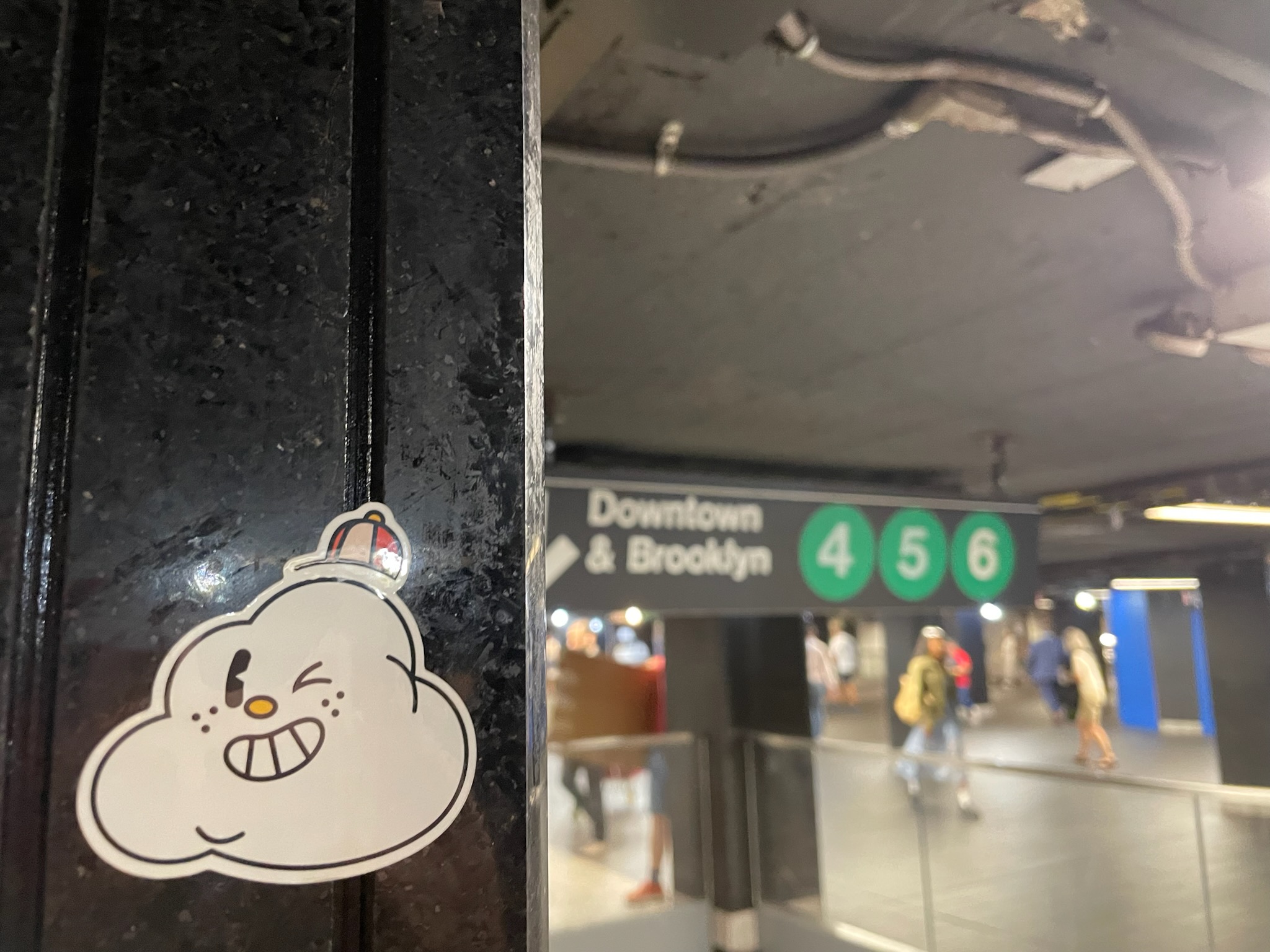
Antiquated evidence of New York’s beaver-rich past in the Astor Place subway stop.

A million year old hotel, updated several times.

The struggles of nature.

Pity the poor oak that hits its head against the shed scaffolding for years.

Or the struggling ginkgo.

Still, its rugged New York bark survives, as tough as any New Yorker.

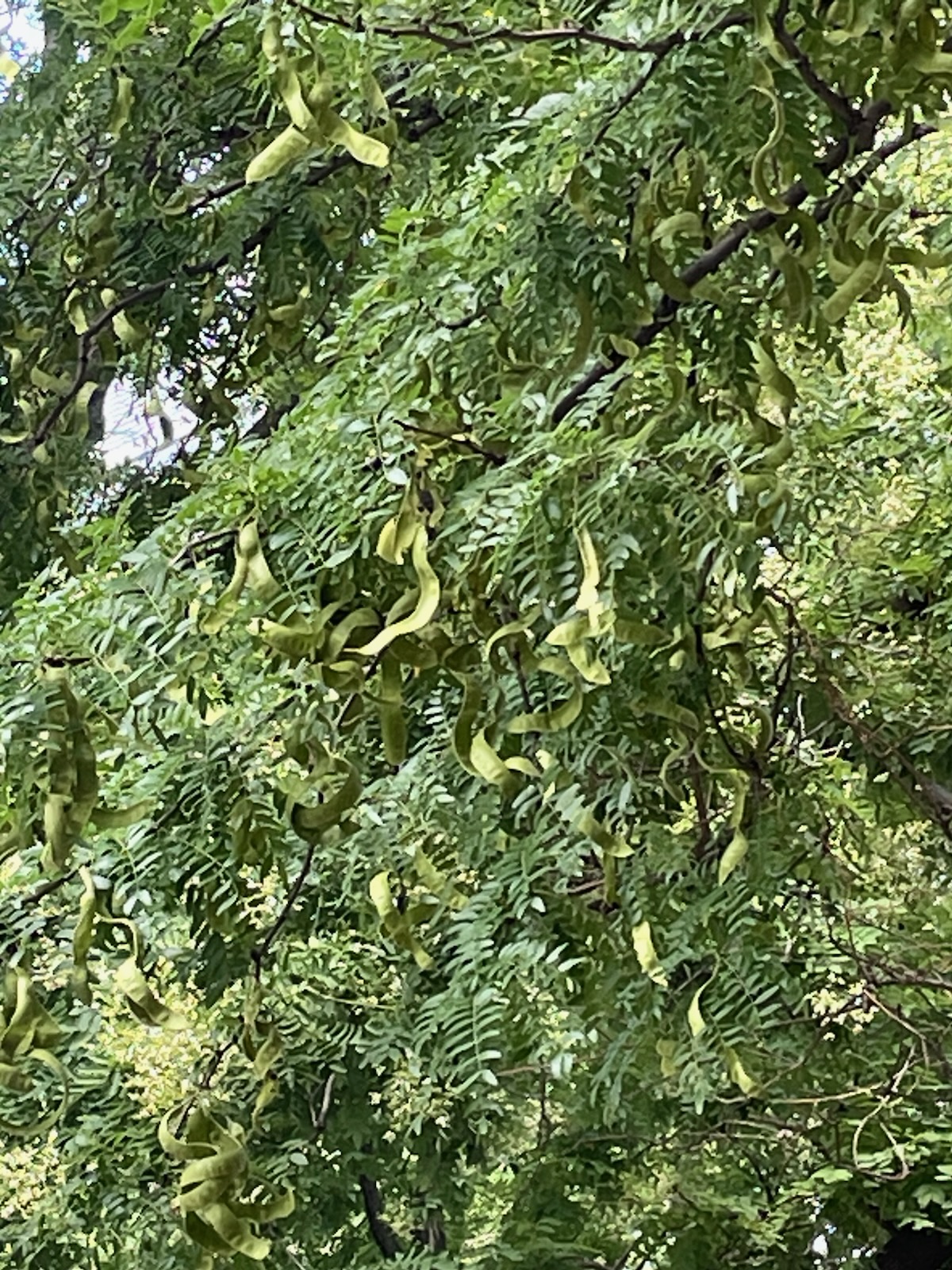
You wouldn’t think it, but in addition to the dead and the wrecked and the unpruned, some trees flourish. As we walk, we look up to see the honey locust offering up its elegant chartreuse pods right on schedule.

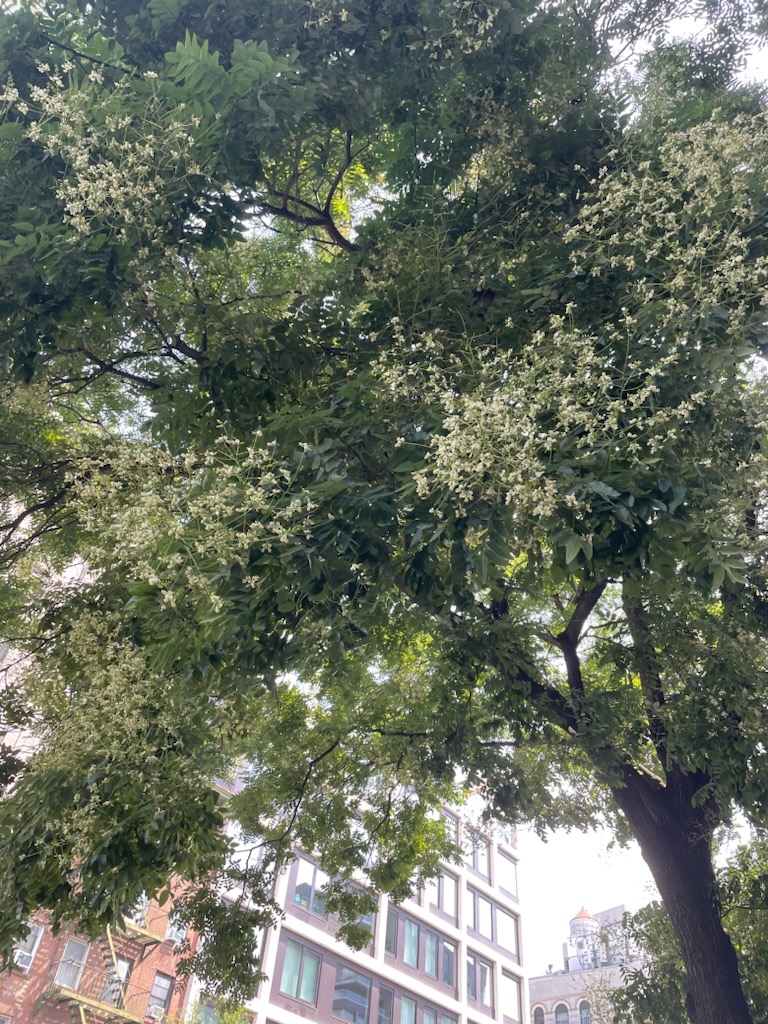
Pagoda tree lets down its perfect profuse blossoms.

A Chinese elm appears to be strutting its stuff with that glorious bark.

Yes, we know you’re beautiful.

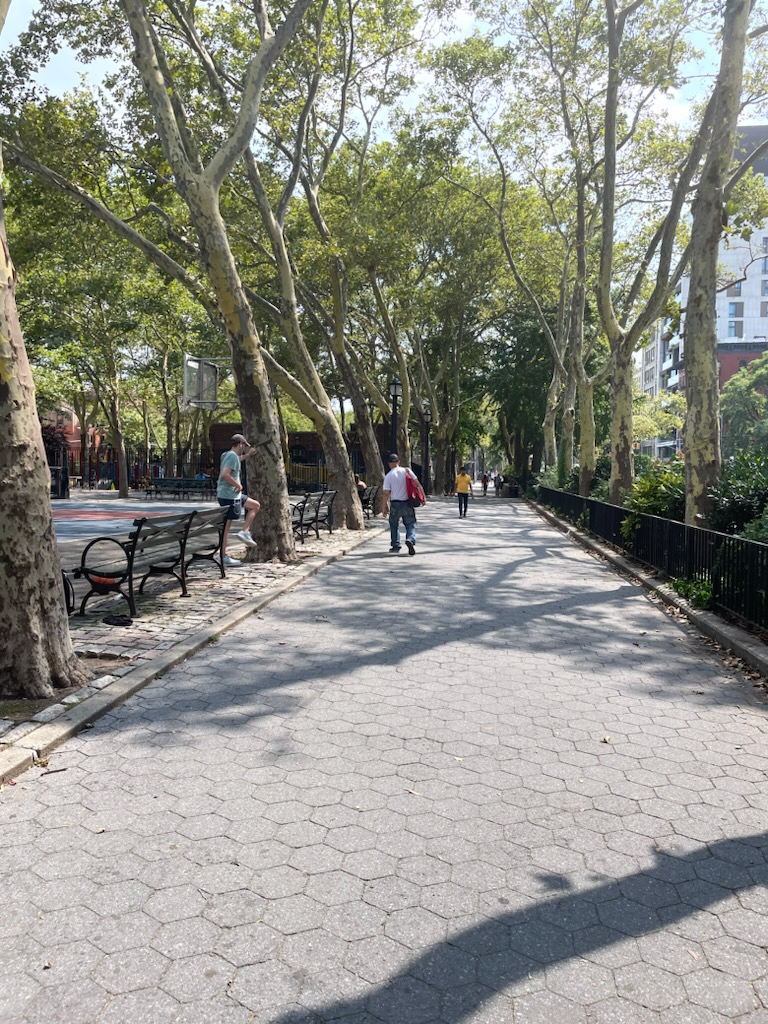
There’s even an allee of London planes by a Christie Street playground. Take that, Central Park!

Don’t say that New Yorkers aren’t fond of nature. If it’s possible to buy it, they like it.

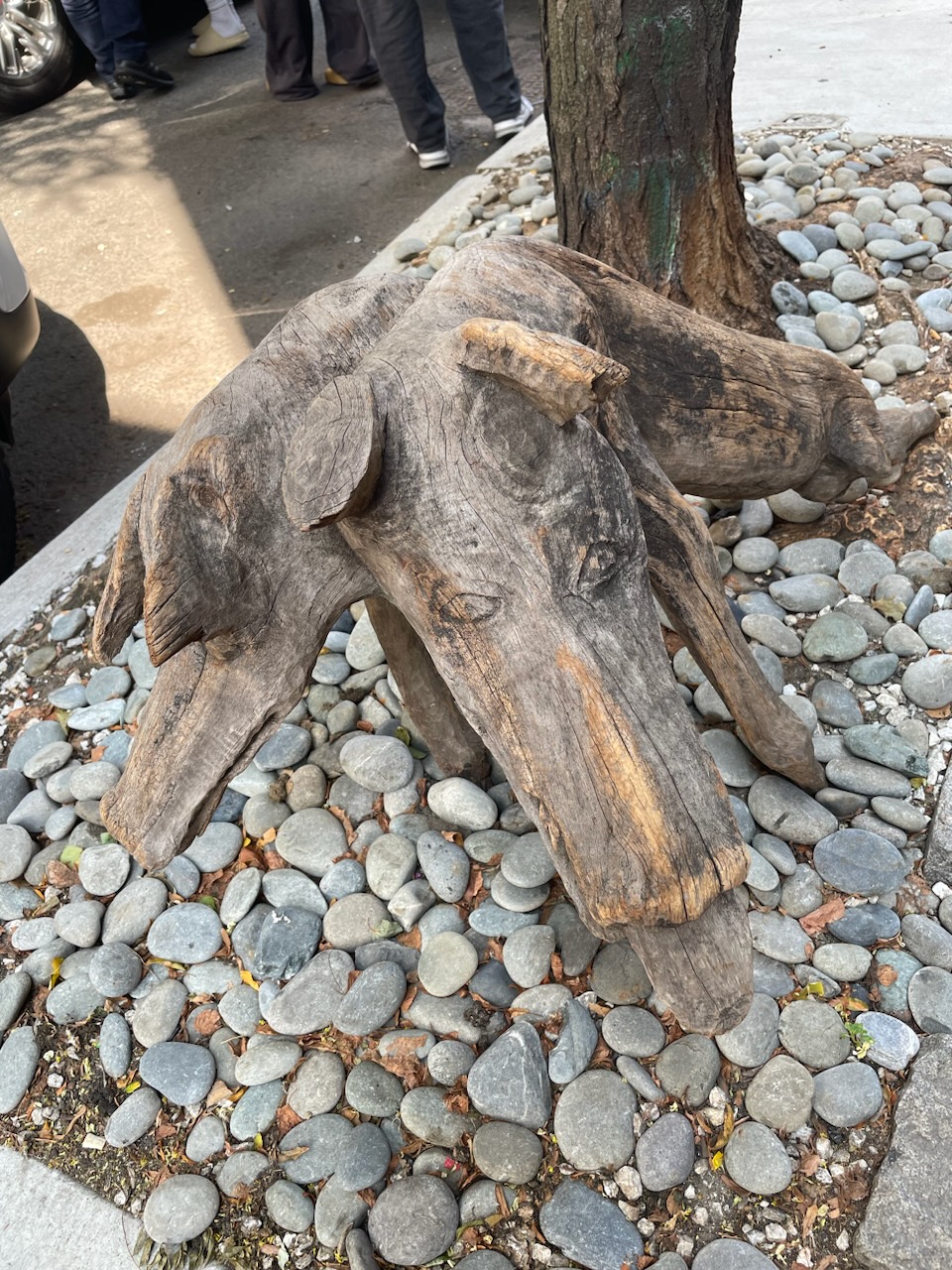
Nature is everywhere in Manhattan if you’re looking for it. Never know when you might trip over a critter of carved driftwood.

Or an ancient stone lion guarding a tenement stoop.

The East Village does change, but somehow remains as gritty and vibrant as ever. An old signpost at Astor Place.

Highlighting old haunts: Remember that crazy place CBGB? Most in the East Village do.

St. Marks Place is a good location to get fitted out with a new wig, as it always has been.

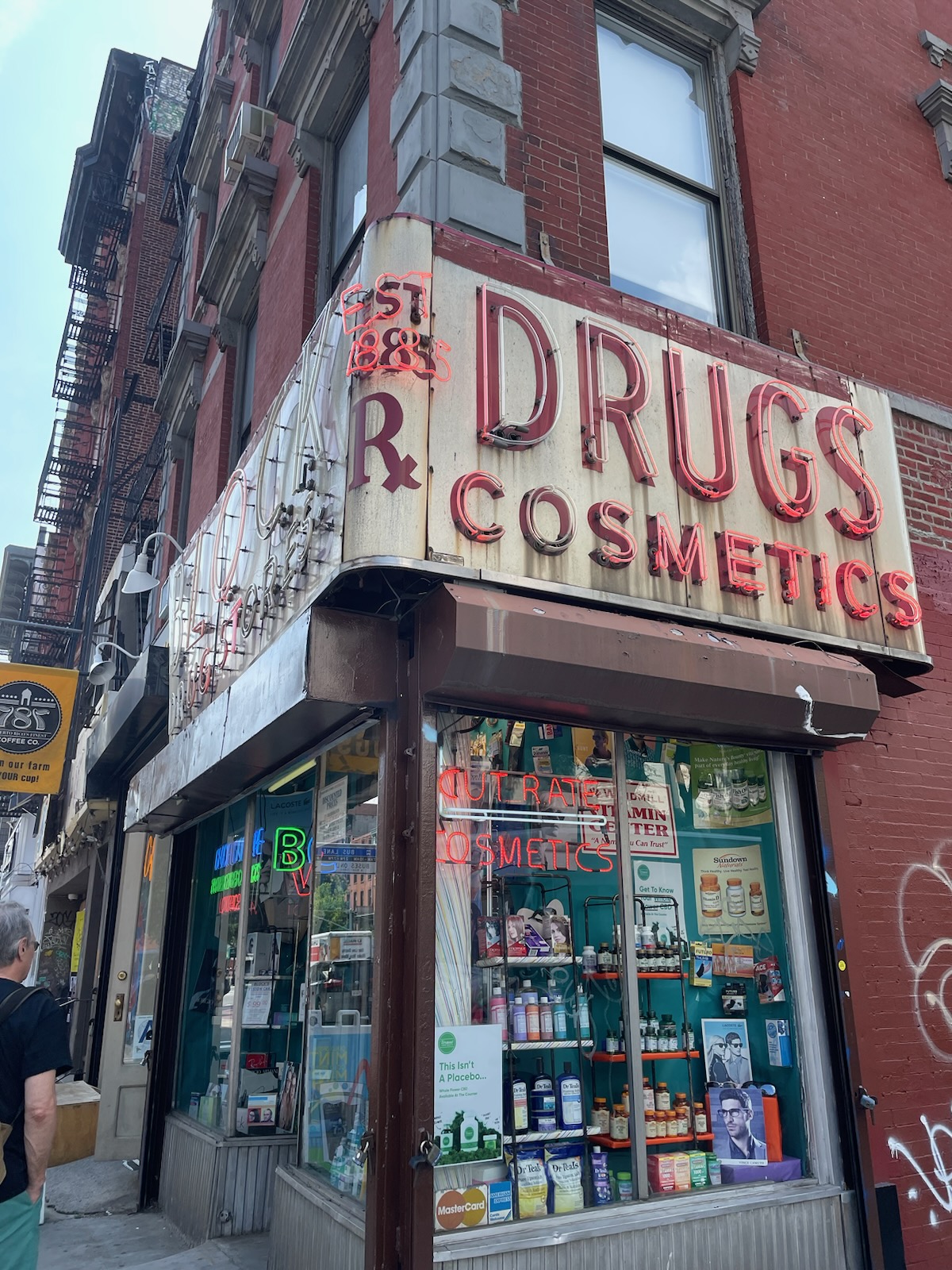
Art thrives alongside commerce. Historic drug store.

Magic garb.

Throwback clothing.

We don’t go in though the window display beckons.

Signage, in New York ever brilliant. Jerk, stewed, vegan. Something for everyone.

A sign for something or other.

Or something else.

A place to go rogue. Aren’t you glad there is one? People move here from their tiny towns to be just that.
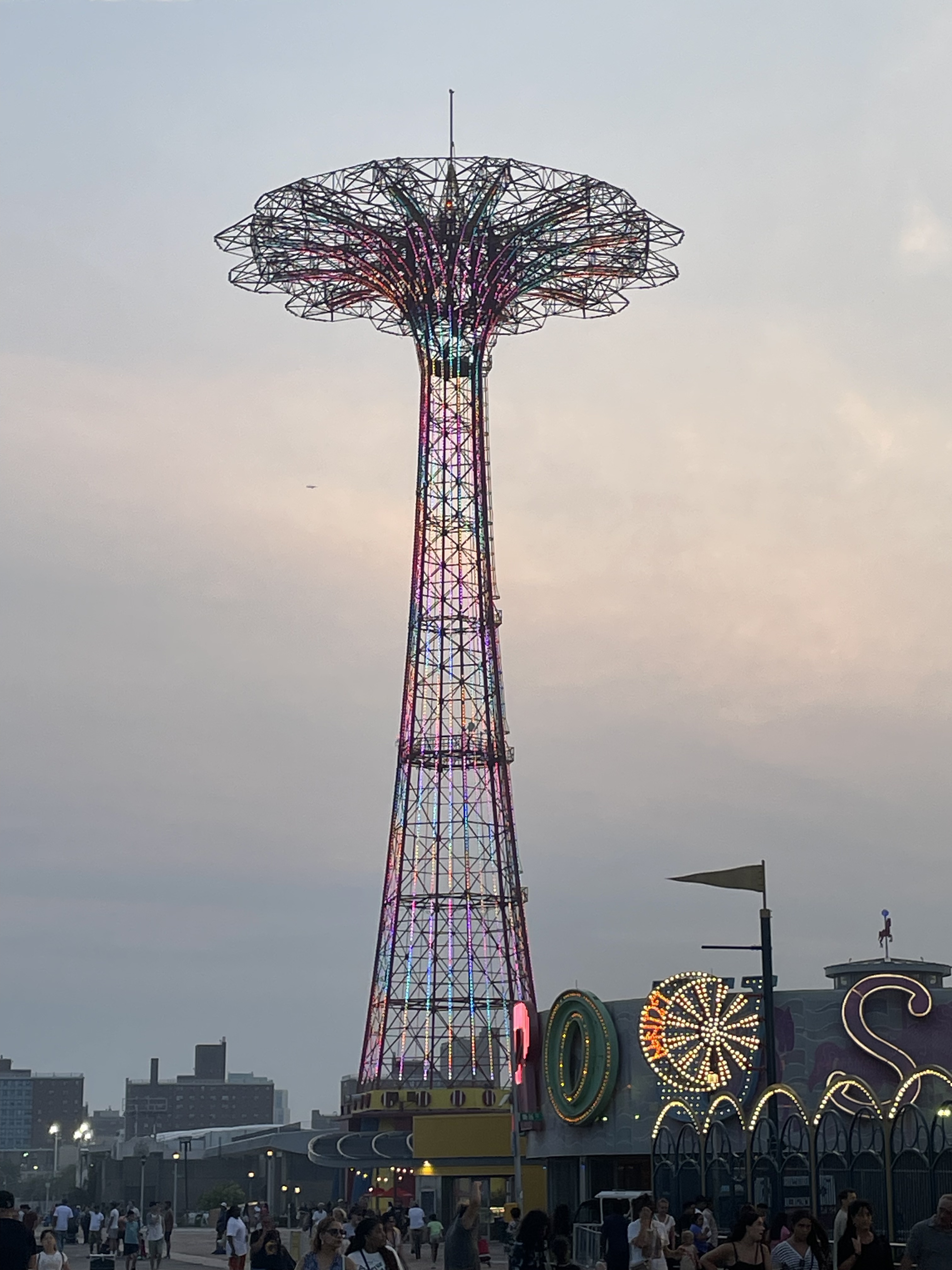
Butter above.

Encouragement below.

Further encouragement.
Also admonitions.
And observations.

Does this restaurant entice you?

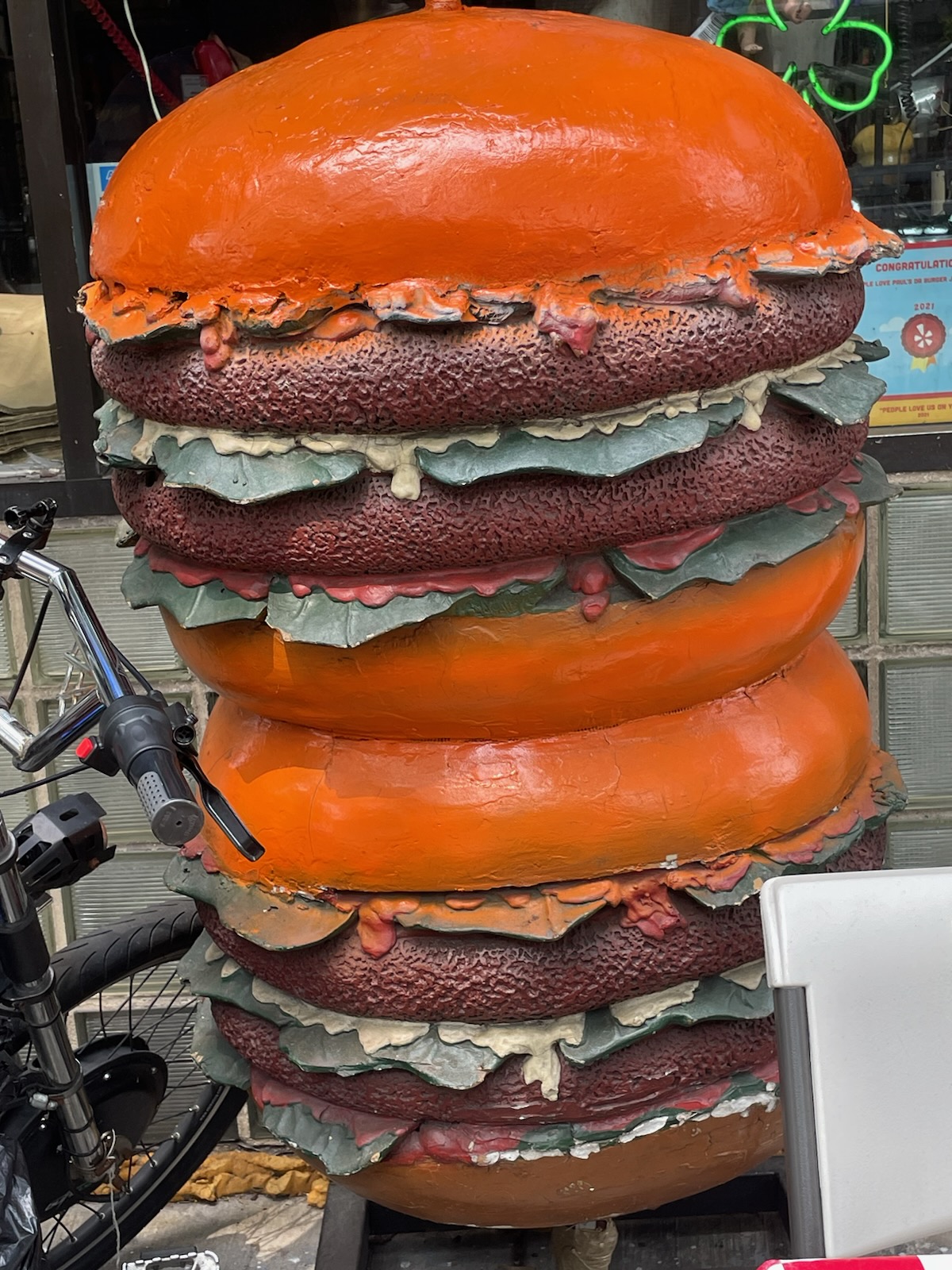
How about a choice hamburger?

There is a new place I’ve been to that specializes in stewed frog and baked cow lung.

Is it just me or is absolutely every surface in the East Village tagged now?

Need wheels? Got ’em.

Some things never seem to change. Need sustenance?

You can still go to B and H Dairy and sit at the counter and delight in cold borscht. No cell phones allowed, however. What a relief.

In this case followed by the best chocolate milkshake I ever have drunk and a conversation with a witty and wise waitress.

Weed is old. New York’s storefronts have been selling the stuff for ages. Now that it’s legal, some of the cooler mom-and-pops are going under.

While others have been elevated to posh pot palaces. To which would you rather bring your business?

The Lower East Side still has a great bong selection for those who need one.

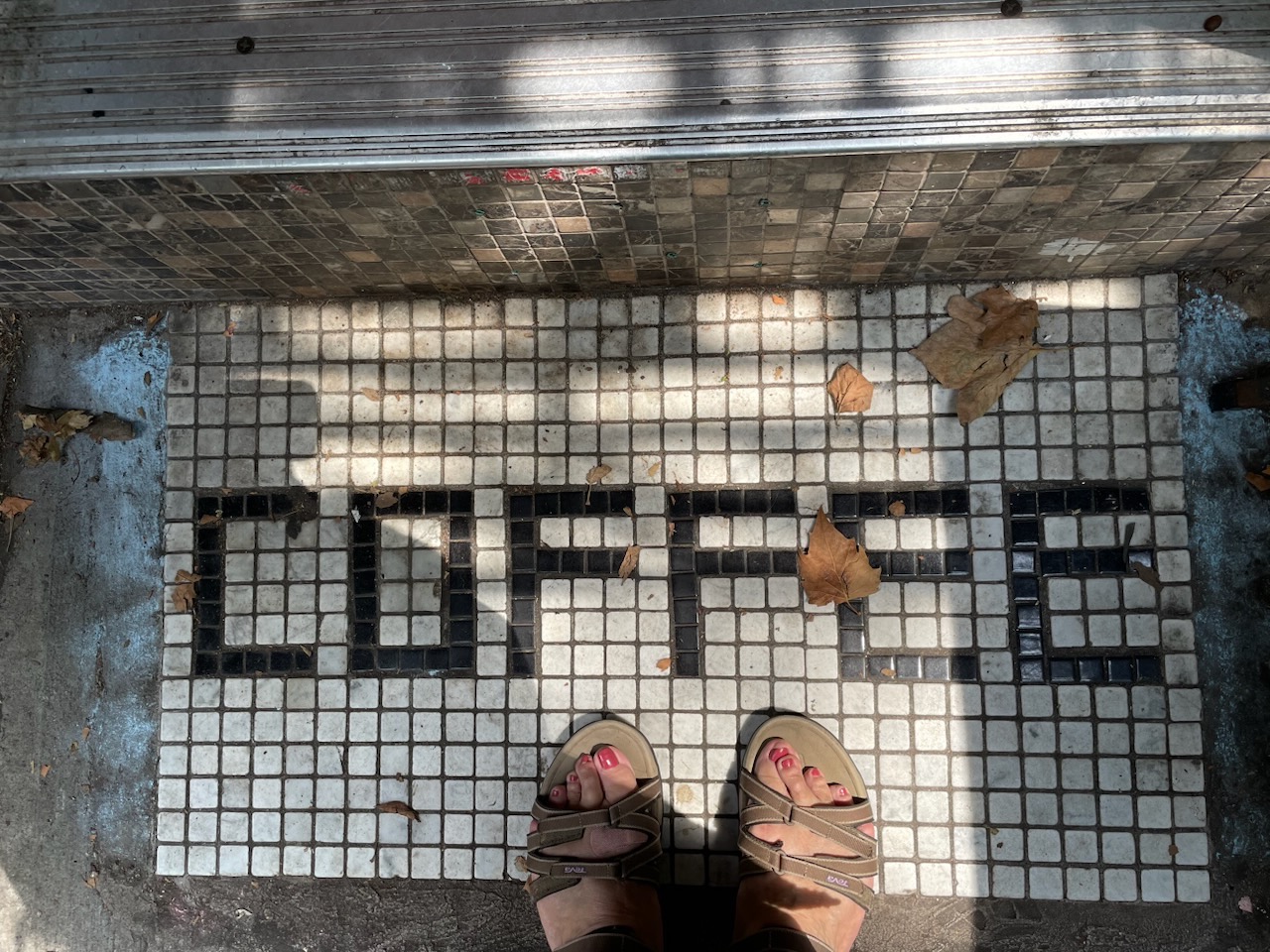
Coffee, coffee, coffee. Please!

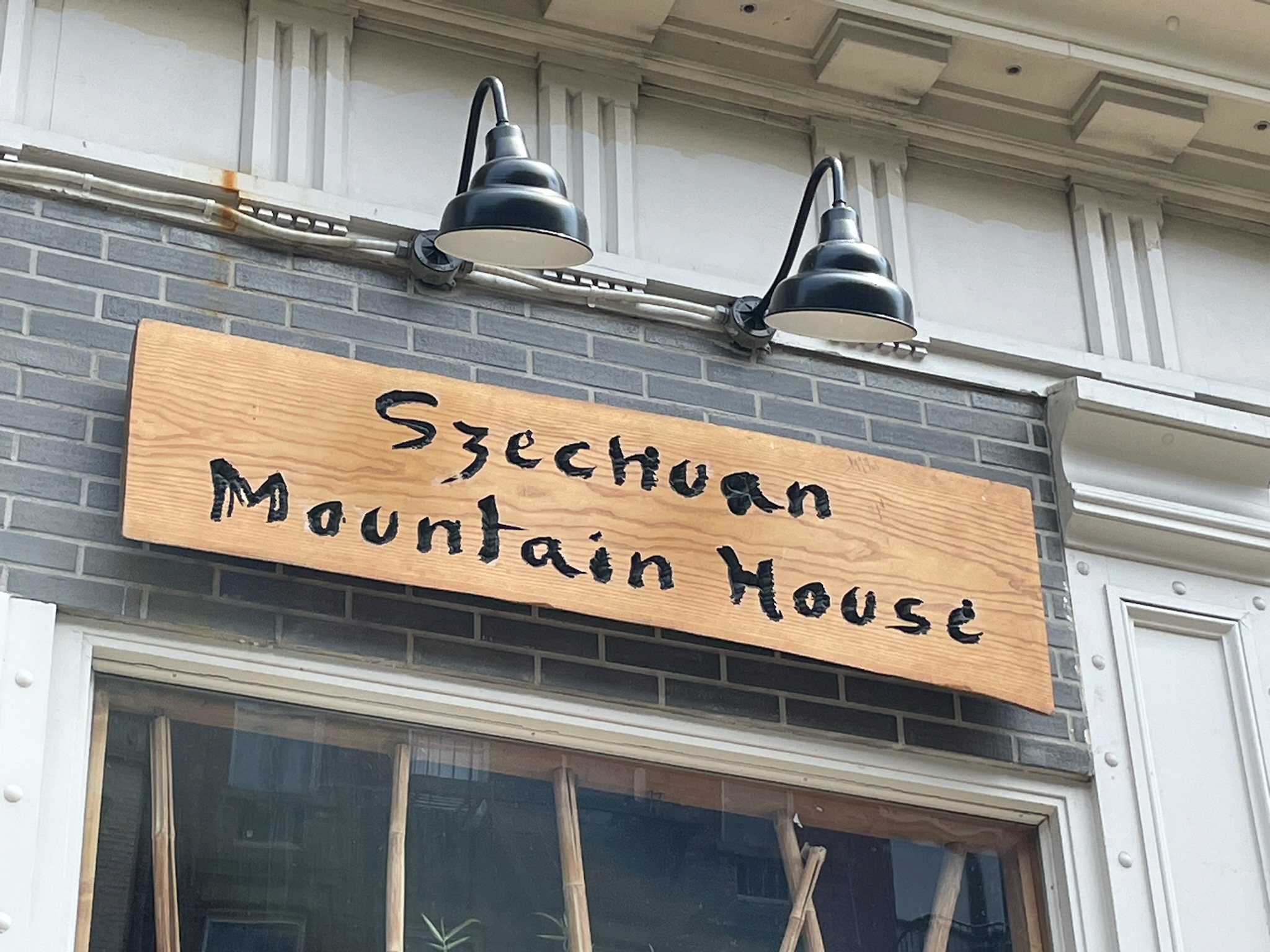
After straggling in to an East Village café it seems there is something new to do with iced coffee. Serve it in a bag, as they do at 787 Coffee on East 7th near A.

The counter guy Diego seems surprised and bemused that we are surprised and bemused by this technological innovation.

The store opens up its wonders as we began to sweat slightly less.

Again, we are flummoxed with the heat. But it seems the store is owned by a branding genius.

Good place if you’d like an orgasm ball cap.

Or to sip your java on a swing in front of the plate glass. If you are a creative, that is.

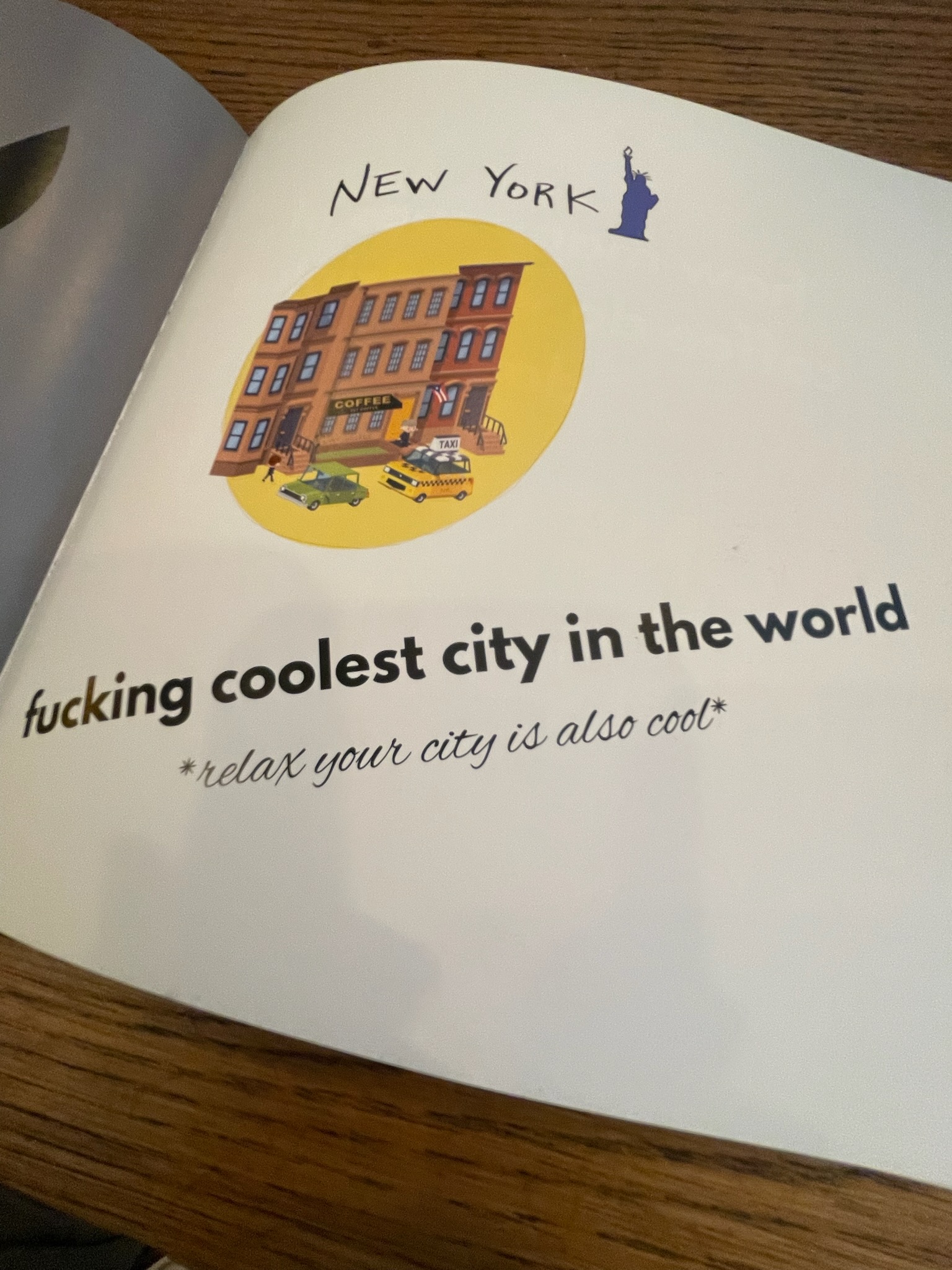
I might be one. Not sure. Too hot to decide. We thumb through the owner’s book of aphorisms and while later they will seem a bit corny, at the time they are brilliant.

Wit and wisdom.

Reassurance.

Even the bathroom elevates the mood.

Since when did NYC get so nice? Actually it’s always been nice. In its own crochety way. We New Yorkers know that.

Diego comes over with welcome H2O.

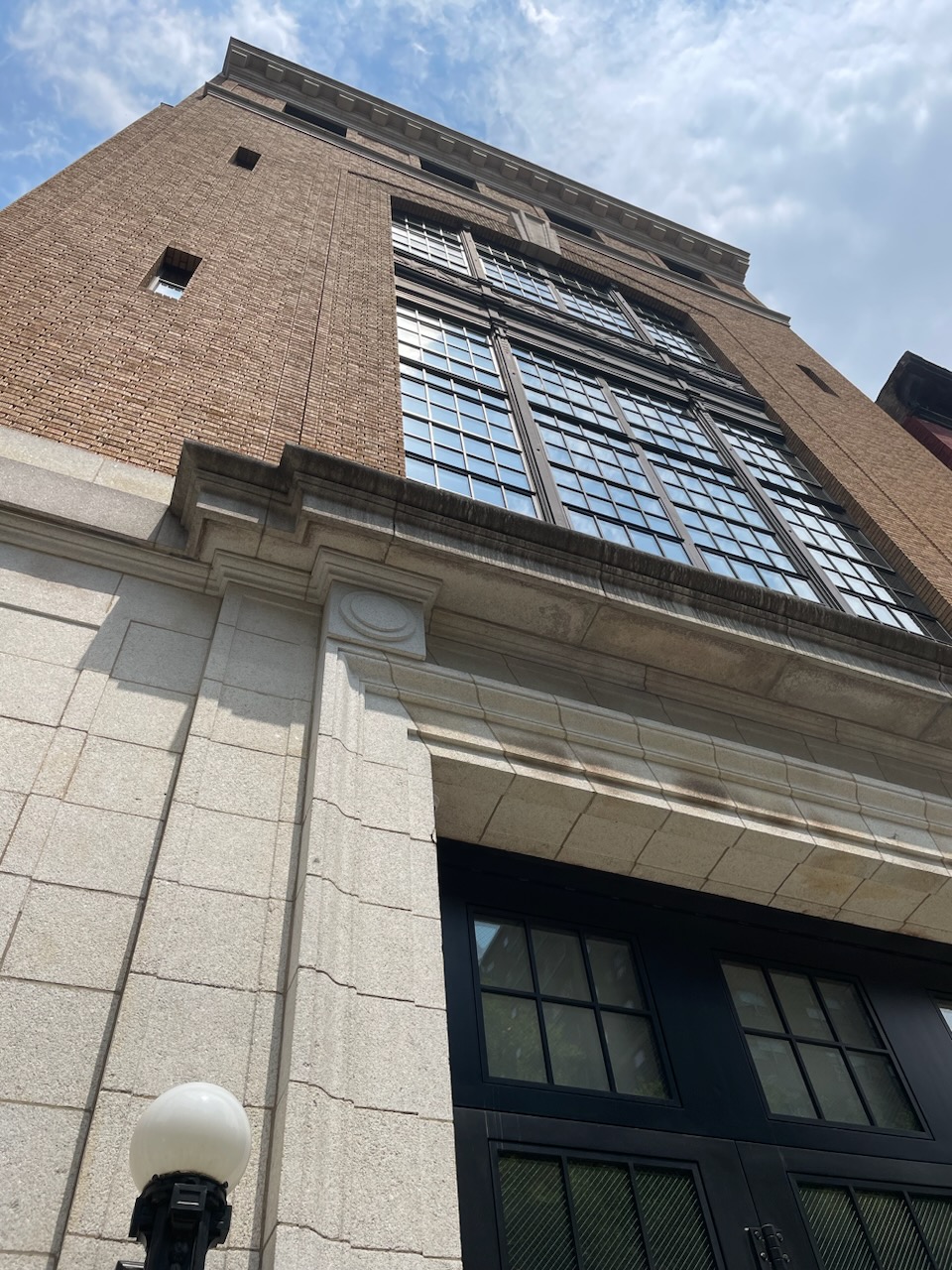
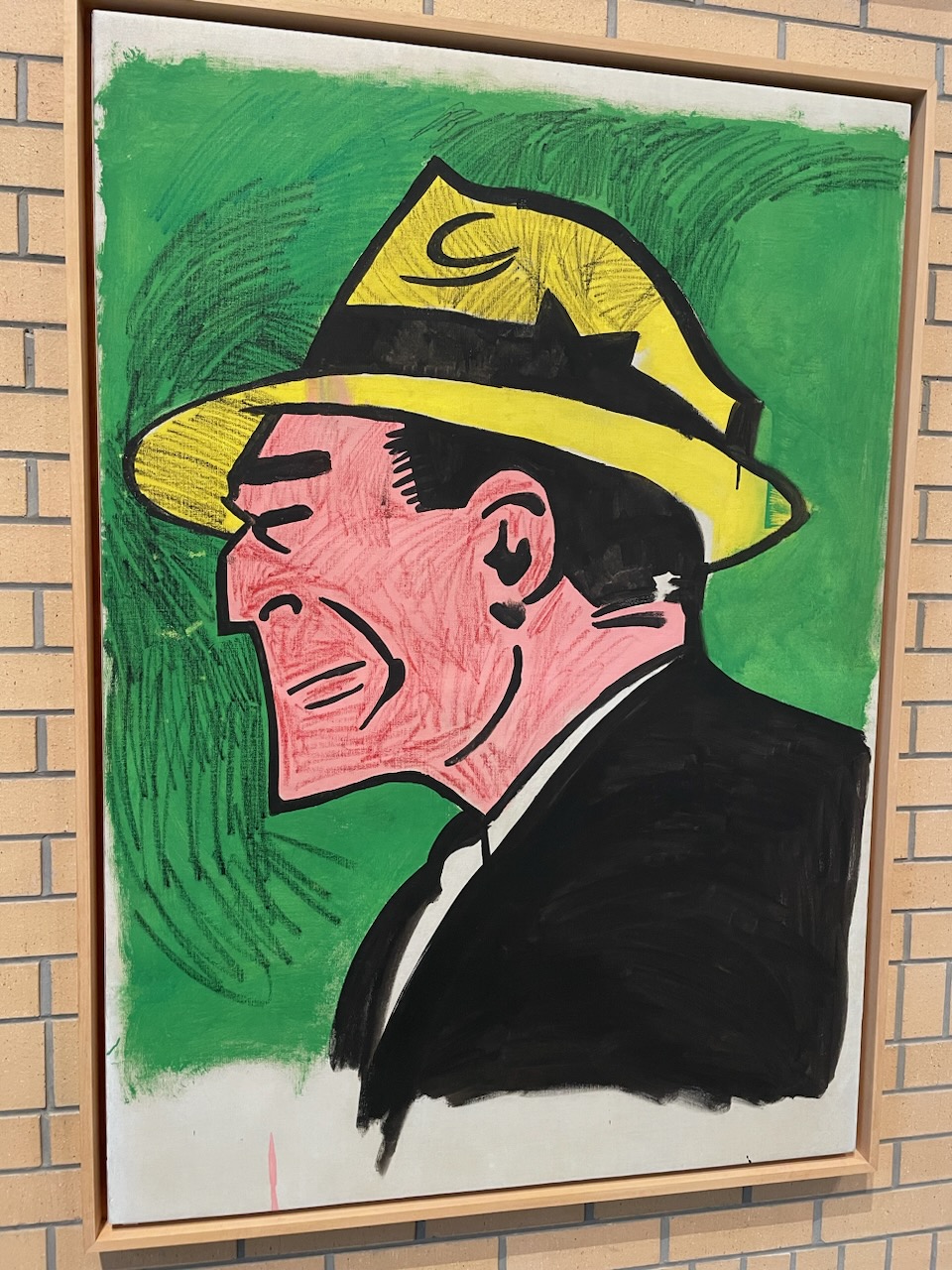
Andy Warhol is both old and new at Brant Museum on 7th Street, housed in a vintage Con Edison substation.

Warhol’s work ever fresh.

Yes. I’m with you, perspicacious Andy.

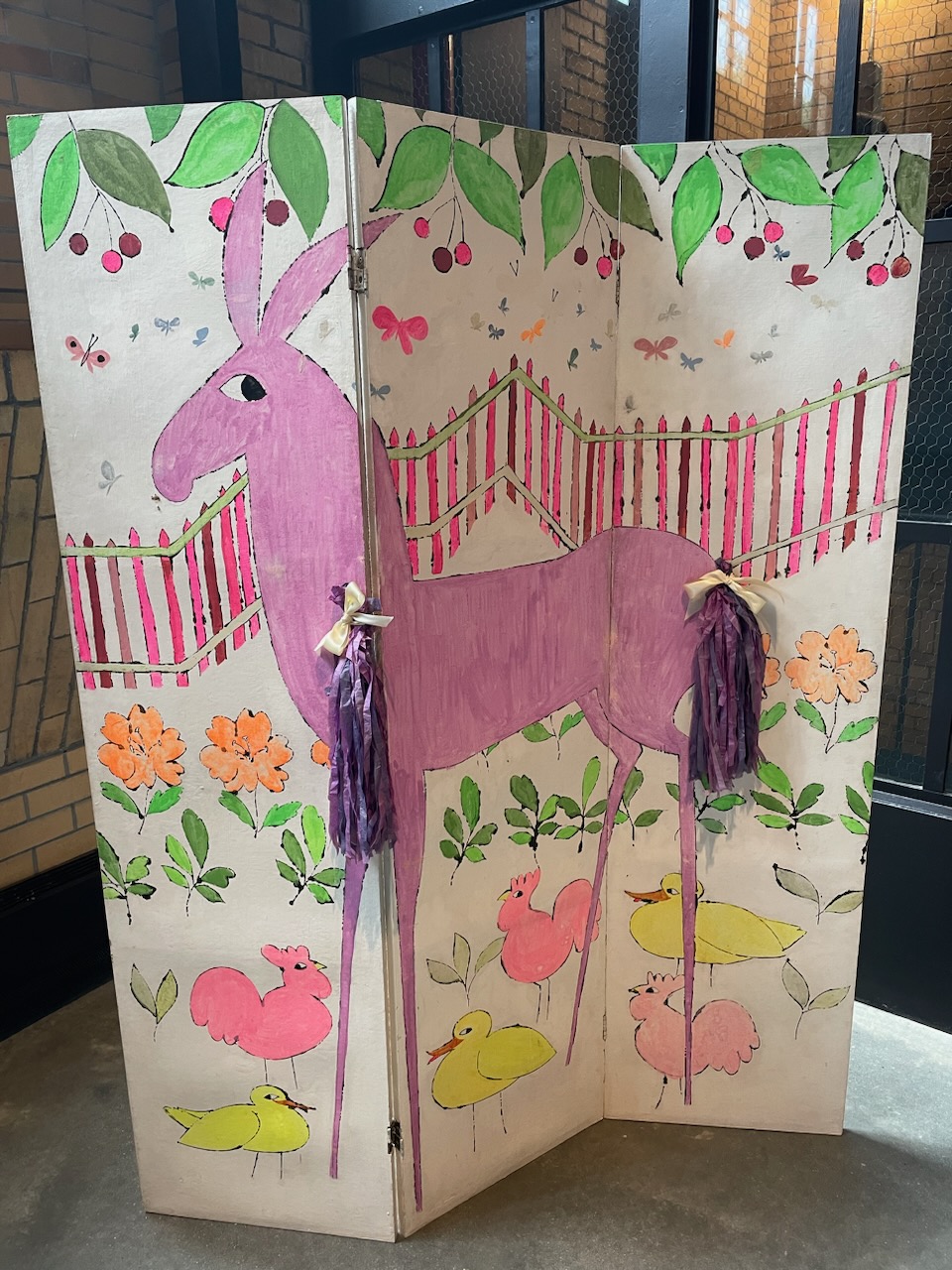
Who knew that as a young artist he produced a pin the tail on the donkey set up?

I think he’d like the fact that his self portrait graces a 65-dollar tote bag in the gift shop..

Jeff Koons wannabe balloon piggy banks are not produced by Jeff Koons, the salesperson corrects me rather haughtily, but by an independent manufacturer. Yes, visitors do have questions. Okay Miss Lonely but you’re gonna have to get used to it, as Dylan wrote in his most famous song, you know the one.

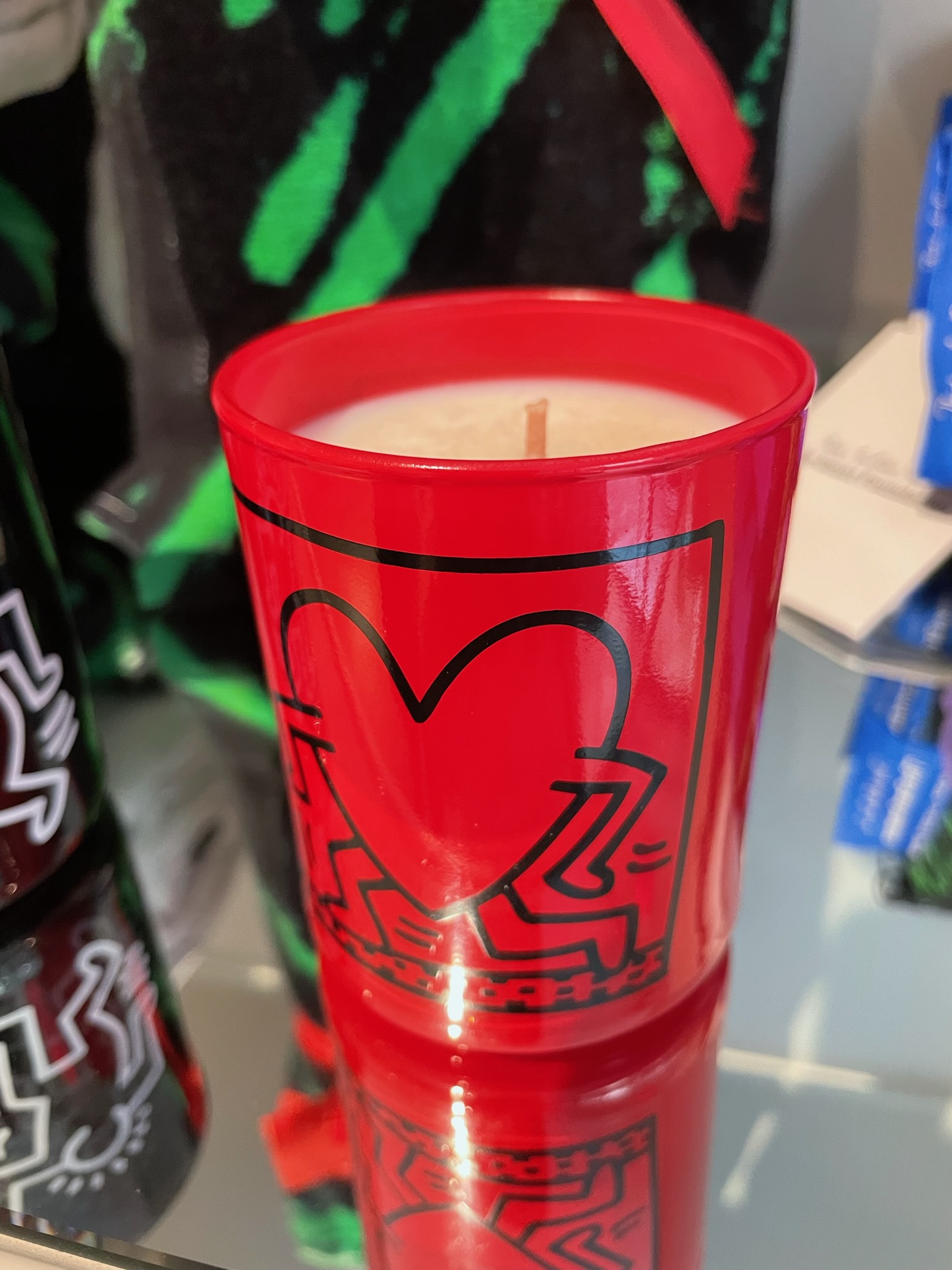
Still, you can get yourself a Keith Haring votive for those special moments. I hope it’s scented.

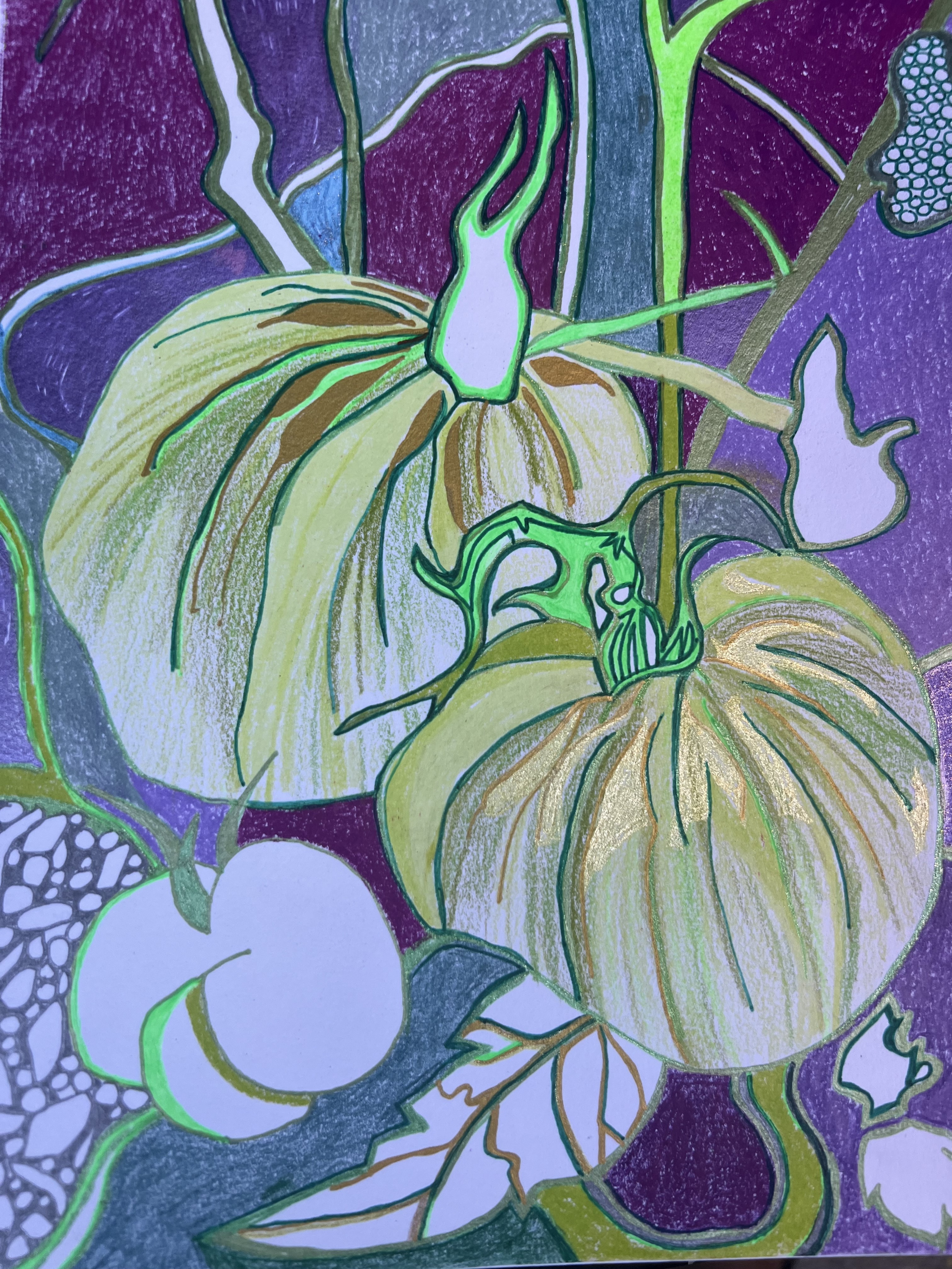
Meet up with my friend Nora, herself an artist.
She’s in the middle of finishing a drawing to hang in a show inspired by New York’s venerable community gardens.

The subway hosts some lovely youngsters with their lovely comfort pooch.

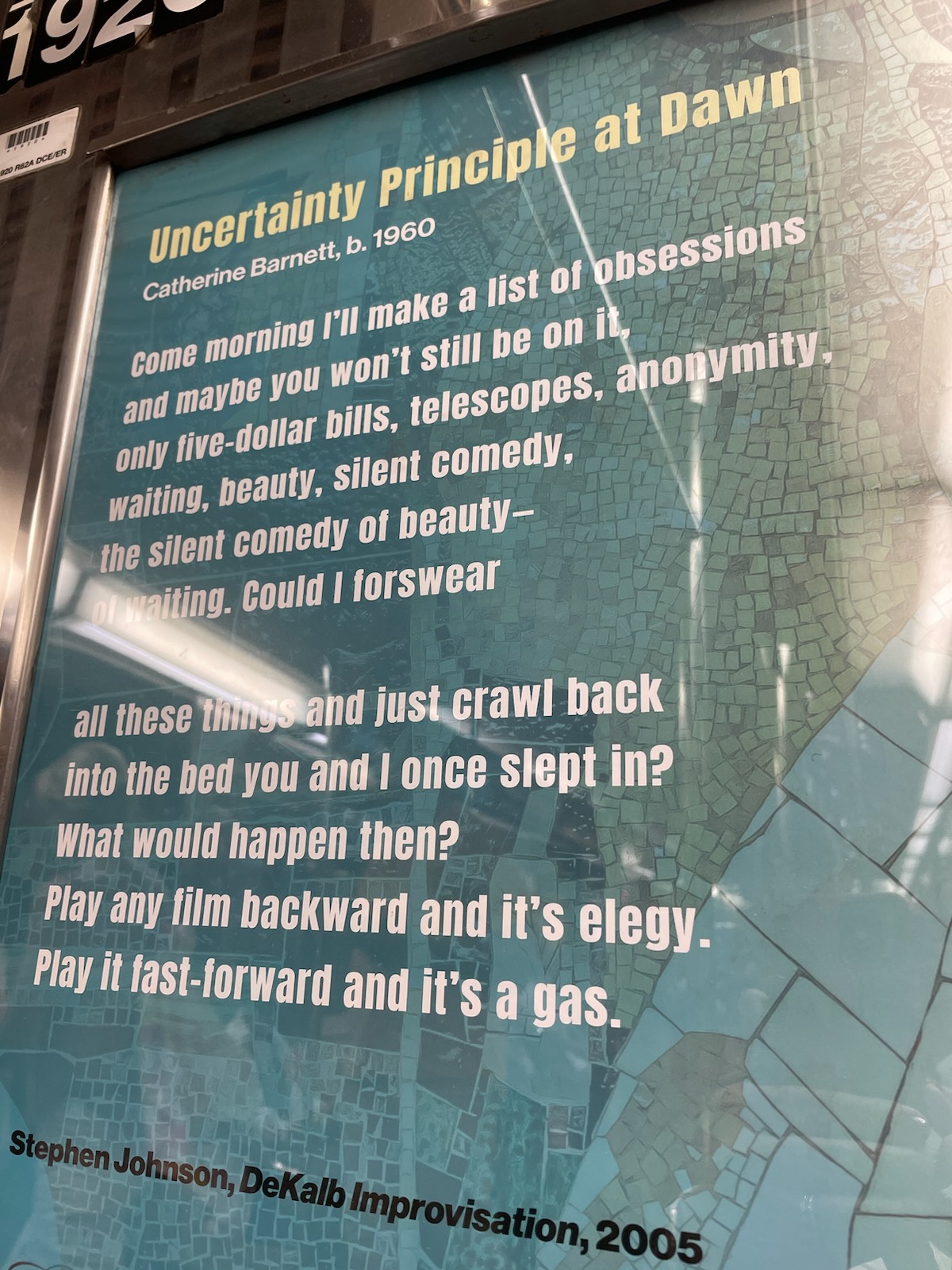
And a lovely poem.

We take the train north to home along the Hudson through sheets of cooling rain.

Already nostalgic for the cafe earlier.

One thing’s for sure, New York will always be there for you.

And me. Hot. And cool.

Leave a comment

Filed under Jean Zimmerman

I recently went for a saunter

(taking a cue from John Muir, who preferred the word saunter to hike) in the largest old-growth tract in Dutchess County New York, the South Woods at Montgomery place in Annandale.

It was called the Spirit Wood by the Indigenous people who occupied the land before the Livingston family bought it in 1802, with its never being touched a stipulation of the sale.

Montgomery Place is famous for the locust trees which grace its arboretum grounds, massive, hundreds of years old.

They are stalwart, magnificent. The gardens could almost knock a person over with their fragrance.

But I found myself more knocked out by the South Woods trail. All around me I saw waves of emerald fern.

 Moosewood.

Sweet birch.

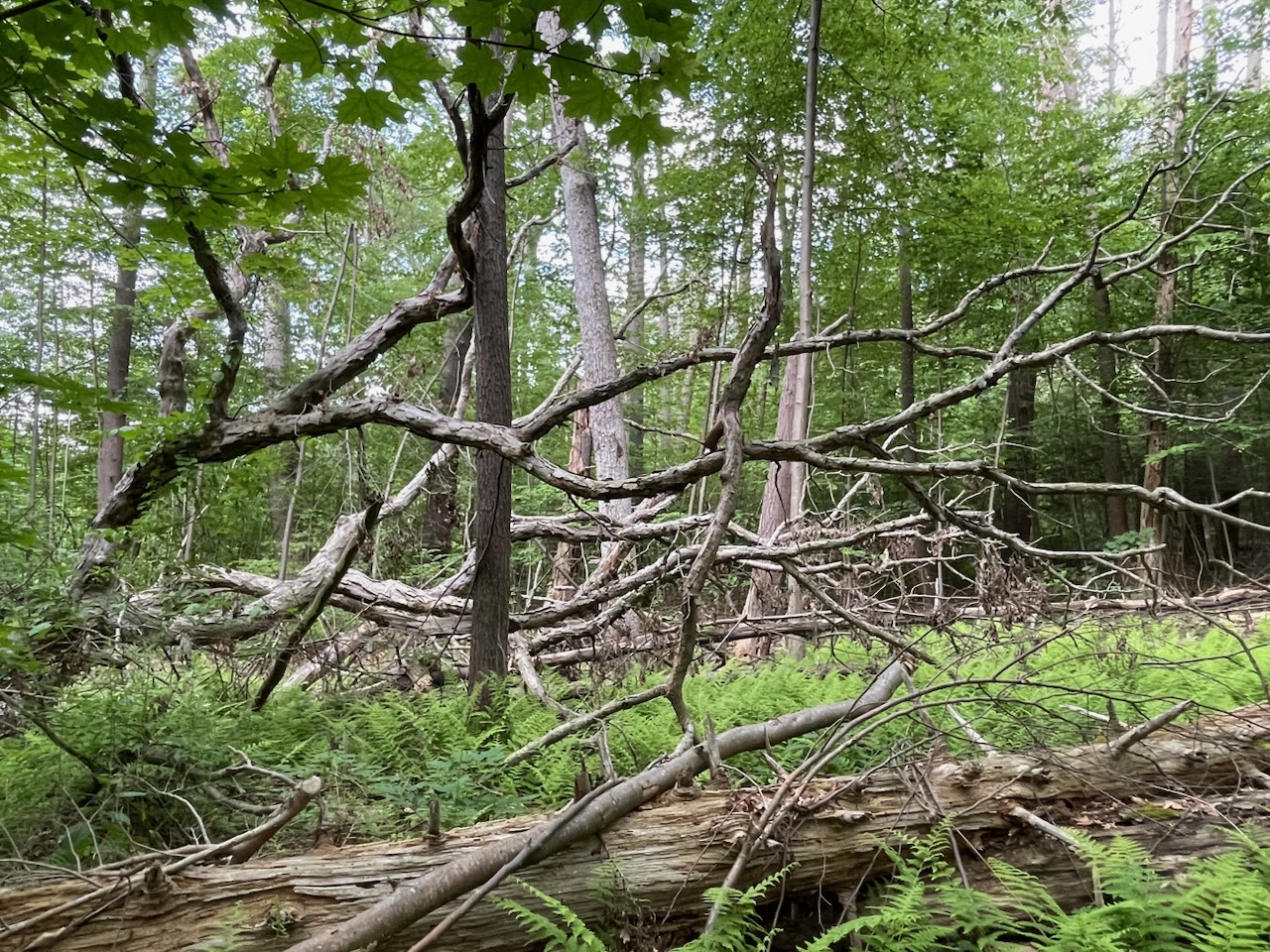
And the tangled lace of dead tree blowdowns.

The air smelled like cinnamon. I heard nothing at all but mad birdsong in the branches seventy-five and one hundred feet overhead. There were baby oak groves.

I saw plenty of critter lairs.

A wise old locust stood by the path.

The experience further fueled my excitement in writing about American woodlands.

Researching my book, spending time with arborists and learning as I go, I have asked myself: Why does it matter if a person can identify a tree by name? Does that knowledge make the tree any more beautiful? The South Woods could amaze anyone who follows the trail down to the Hudson.

Steps still exist from when the Livingston family built them. I imagined Janet Livingston lifting the hem of her long skirts to dip her privileged toes in the cold river water.

When you hear bird song you need have no compunction to determine whether the call is that of a blue jay or a redwing. As Shakespeare has Juliet say, “What’s in a name? That which we call a rose by any other name would smell as sweet” That is true. He was, after all, Shakespeare.

But still, I think it matters a great deal. I recently walked with a couple of urban foresters, Aaron and Russell, in the thick woods of New York City’s Van Cortlandt Park. The Park contains a surprisingly dense 800-acre patch of mature forest that has been deemed “forever wild” and which lies untouched at the very northern tip of the Bronx. Yes, this is New York City.

We were nearby as part of a tree symposium in neighboring Yonkers. We snuck off through a chain link fence that bordered the park during one break in the proceedings to saunter along a shady trail.

Russell said, “Fantastic pignut hickories here!”

I was jealous of his knowledge. And elated when I came to know Carya glabra’s smooth, compound leaves, its tapering trunk, its narrow crown, even more so when I learned some context. The tree’s savory fruits are irresistible to squirrels, who share these urban woodlands with owls and woodchucks, snakes and coyotes and opossums. Also that the tough yet flexible wood made it invaluable to early American settlers who used it for wagon wheels and sulkies. Pignut hickory is stronger, it turns out, than steel.

Sound nerdy? Heard. Perhaps a shade of what in my writerly household we call “rapture of the deep.” Literally, the phrase refers to the effects of inert gas narcosis, when scuba divers breathing compressed air exhibit symptoms of intoxication. Such euphoria compromises the ability to think straight.

I want my book to offer readers a personal, primal, history-nuanced connection to trees and, in a larger sense, to forests. Let’s develop a new, intimate, vital relationship with the specimens that we see all around us every day and yet that we sometimes take for granted.

These days, spending time writing at the artists’ retreat in the Hudson Valley called Catwalk, it has struck me as simple: People might not be getting all they need to understand, all they’d love to know about our woodlands.

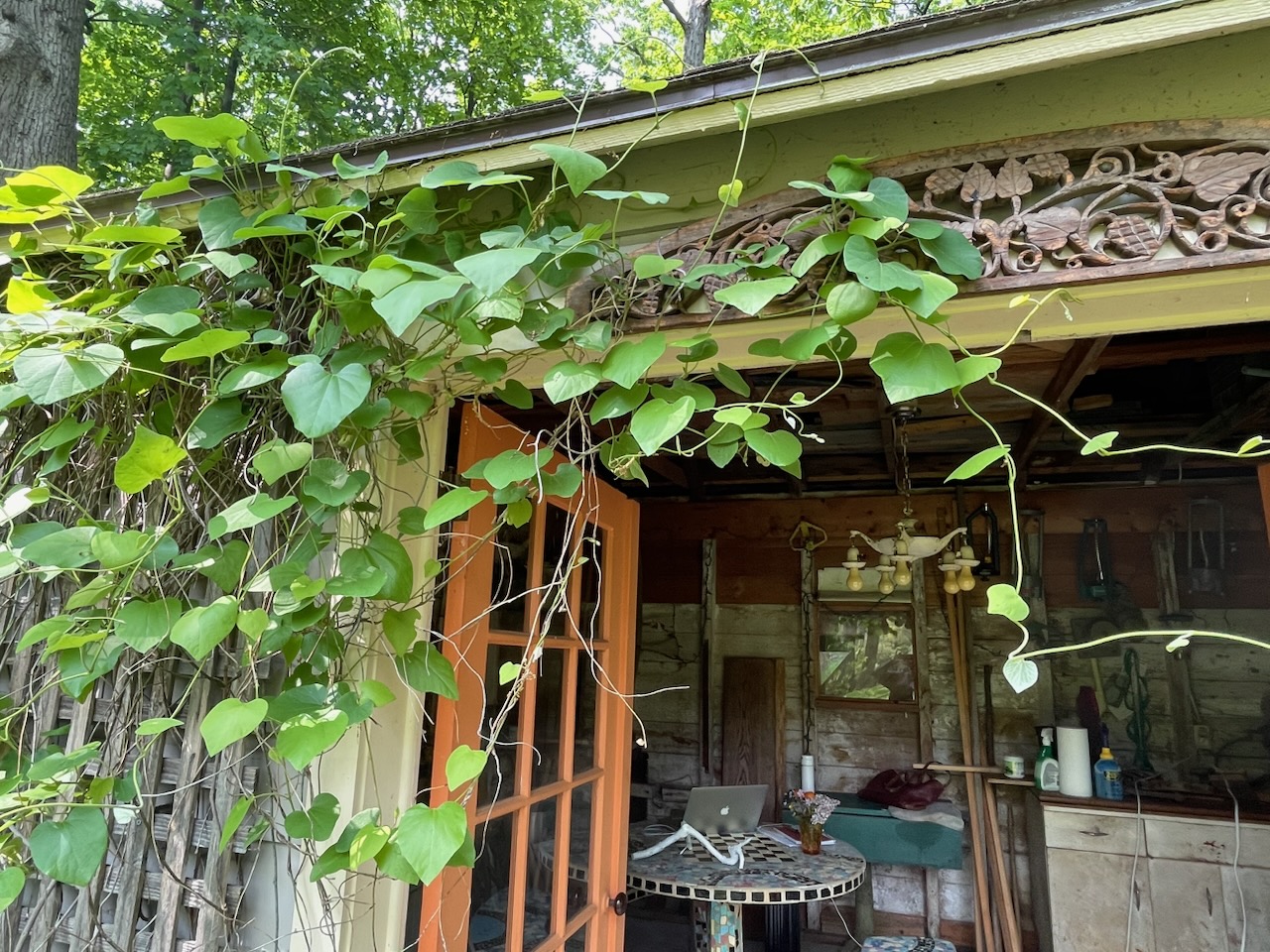
I work in a garden shed, a little spot filled with dusty, magical old objects.

Farm implements from when this estate had a different life.

There is perfect light here.

And a lawn outside planted with gracious trees. Other Fellows have dropped in to visit. I toured filmmaker Charlotte around the property that is visible to all every day but has secrets as yet unplumbed.

We talked as we walked. Charlotte observed details. The shaggy bark of the shagbark hickory, a perfect example of iconicity.

New leaves of a white oak, each fresher than the next.

The heavy hanging catkins of a black walnut – did you know that its roots produce a chemical which caused the failure of that ruined old vegetable whose remains you see here?

The so delicate flower of the Chinese fringe tree.

A weeping beech, its silvery bark glowing under a fall of branches.

Charlotte said, The branches of the trees look like an old man’s limbs.

We saw the elegant stitches on a cherry’s trunk called lenticels; no other tree has them. We examined the stone wall that borders it all.

They remain intact from the nineteenth century, when farmers cleared the trees and removed the rocks from fields and pastures, and expert masons assembled them without mortar.

Being here I have been inspired by commonplace things: chipmunks that scurry into a hidden corner of the shed to store nuts, a robin that hunts for inchworms just outside, the hummingbird hovering over the salvia, dipping its beak quickly but with religious fervor.

Down the way in the catfish pond, a school of whiskered fry bent on survival spook when I come close, and dive down into the drink below the dock.

The head of a cattail… there are, I believe as I write this, no words to describe it.

A mama turtle diligently digs out a hole using her tough hind legs. Later she’ll drop in the white jelly bean eggs.

The spider’s intricate web fascinates me.

She enlarges and repairs its concentric circles every day. In the afternoon I see the tiny gnats she’s trapped, and in the morning they’re gone – she’s consumed them all.

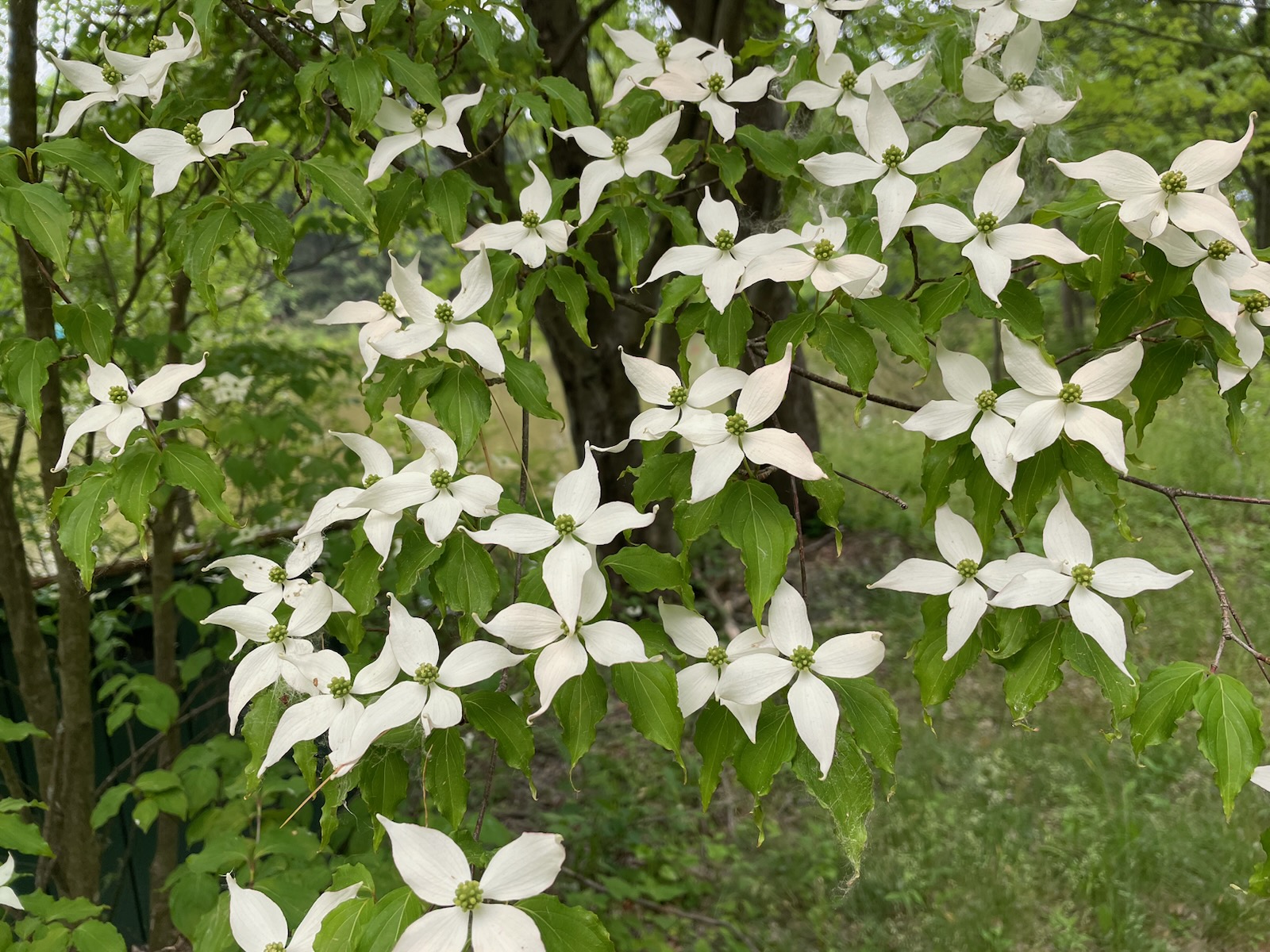
Is there anything more pristine than bracts of dogwood? Perhaps I do have rapture of the deep. But it is rapture nonetheless.

And that’s always a good thing, it seems to me.

Leave a comment

Filed under Jean Zimmerman

I greet the trees

on my regular saunter around the Catwalk estate.

John Muir preferred the word saunter to hike.

Guess what? Have you ever had a wonderful dream, then woken up, then fallen back asleep and had the same wonderful dream continue?

That’s what I feel like. Catwalk called and said someone had canceled for the next session. Would I come back?

What do you think I said? I’m back in paradise for another two weeks.

I must have done something good at some point to deserve being in the presence of this fresh young white oak.

So I amble around, revisit my favorite sights.

The monster red oak poses for me.

The trees always look the same, I can rely upon them. Yet somehow different. Even the grass here pops, holding its cup of dew.

The beech’s silvery trunk more elegant each time.

Chipmunks scurry. Hummingbirds – too fast for a picture! The meadow. The air smells like cinnamon.

The meadow grasses.

Ever lush.

Each flower has a name.

Must I know them all?

I identify them.

Then forget the name.

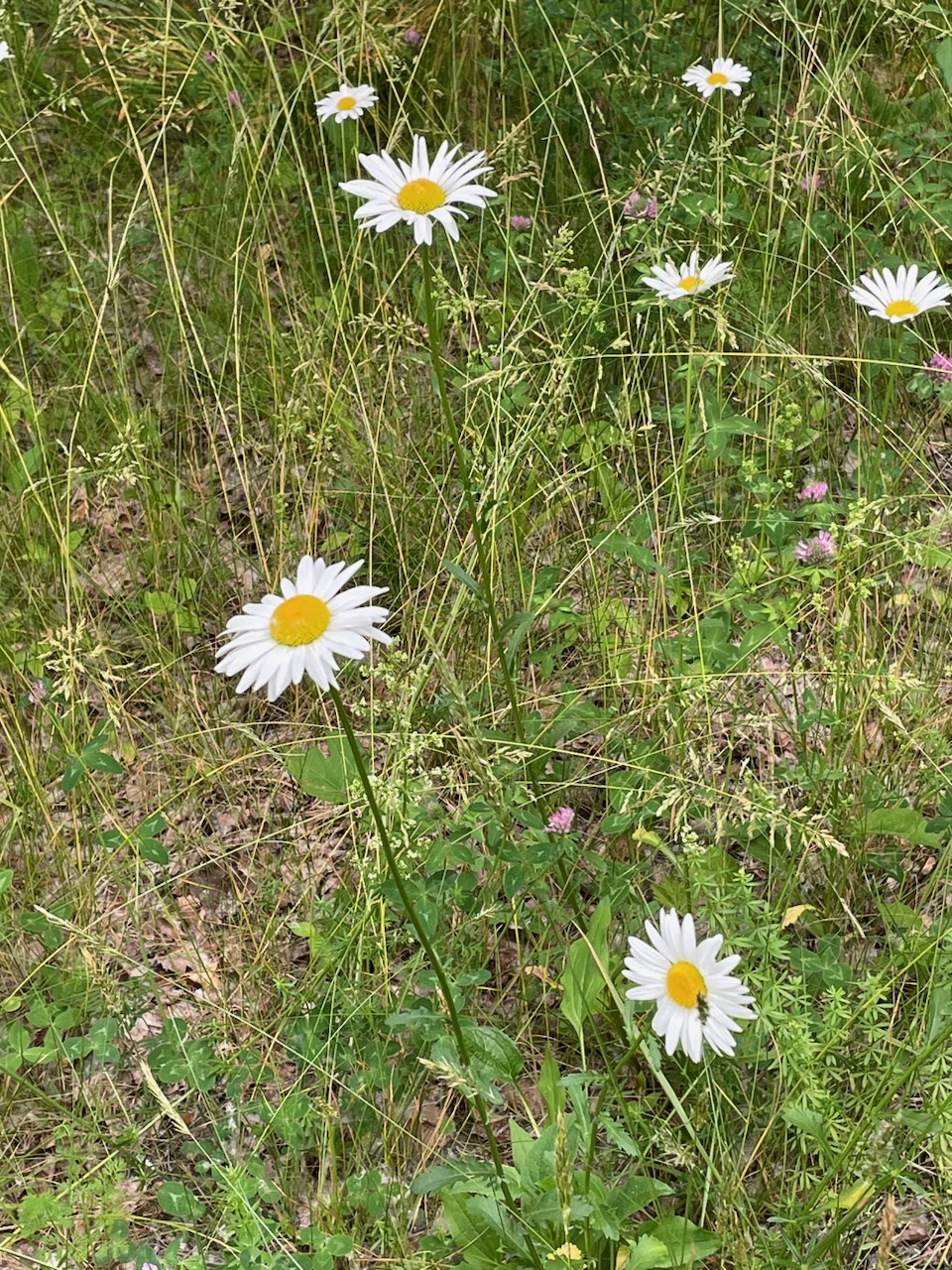
Does it matter? Everyone knows a daisy, if they know anything at all.

Perfect wet rolls off the leaves. They don’t know how beautiful they are.

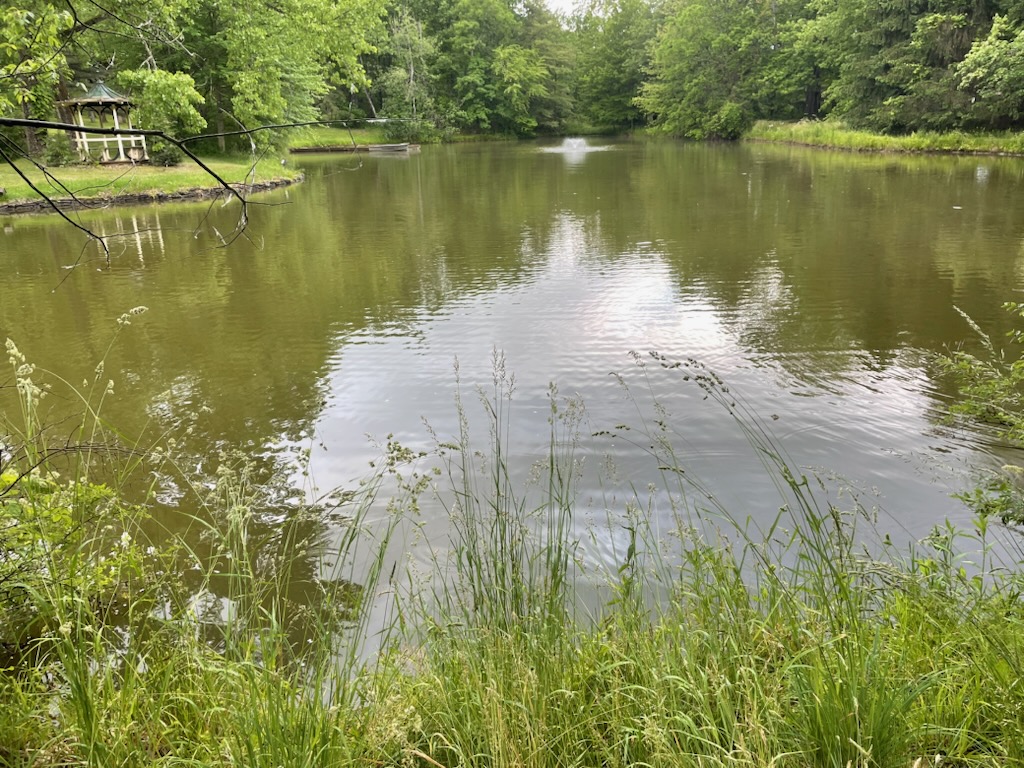
The ponds. First the catfish pond.

Then the frog pond.

A cattail, ready for her close-up.

A redwing blackbird calls. I meet up with a painted lady after she dug a hole for her eggs but before she laid them.

I tiptoe away so as not to disturb her further.

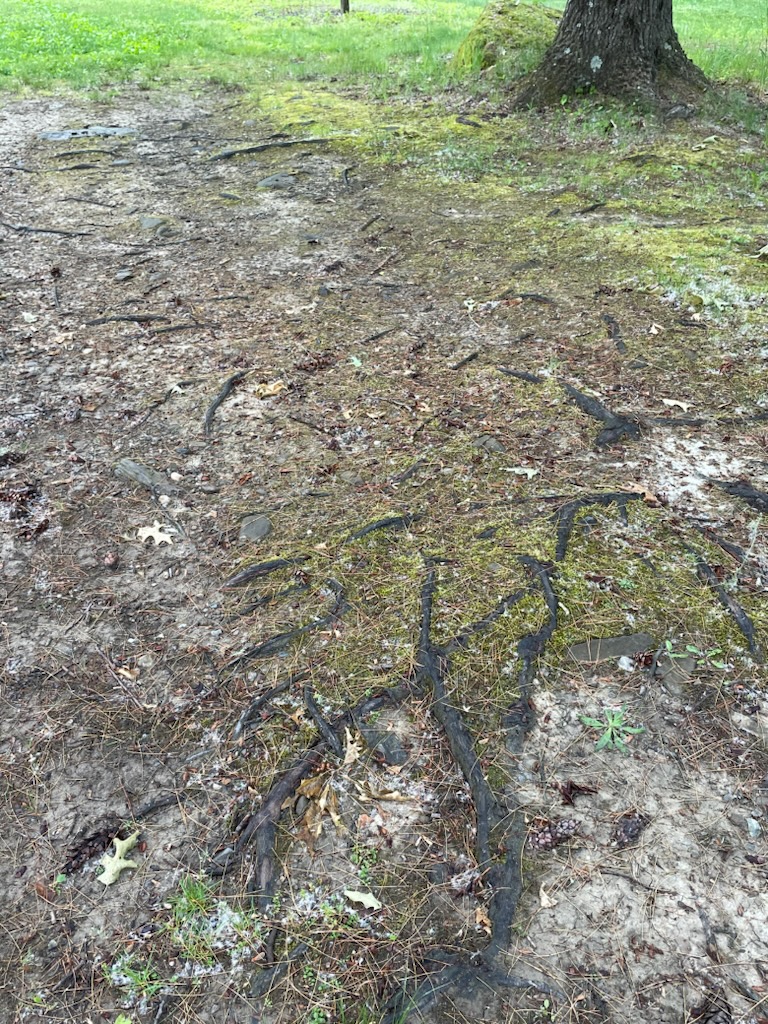
I see x’s and o’s. The x’s roots on the ground.

The o’s happy critter habitats all around.

Lichen on trunks.

Mossy, venerable stone walls, built at two hundred years ago to last.

More trees, characters like this leaning sweet birch, I have to stop for it each time I pass.

Mysterious sculpture made by someone I don’t know, sometime in the past.

Statuary. This strange creature.

Look a little closer.

Closer still.

Dogwood, its new bract spangles.

I wind up at my garden shed, my sanctuary. Filled with dusty, magical old objects, perfect light.

And the lawn outside with its gracious trees and a spooky circle of chairs.

The spider web, still here.

Recently I had some guests over for sugar cookies and oak leaf favors, good for book marks.

Introduced them around to some of the trees. Bur oak, I think? Or shagbark hickory? This is a good place because it reminds me I don’t know everything. I want to lose my arrogance.

The heavy hanging catkins of a black walnut. That I know.

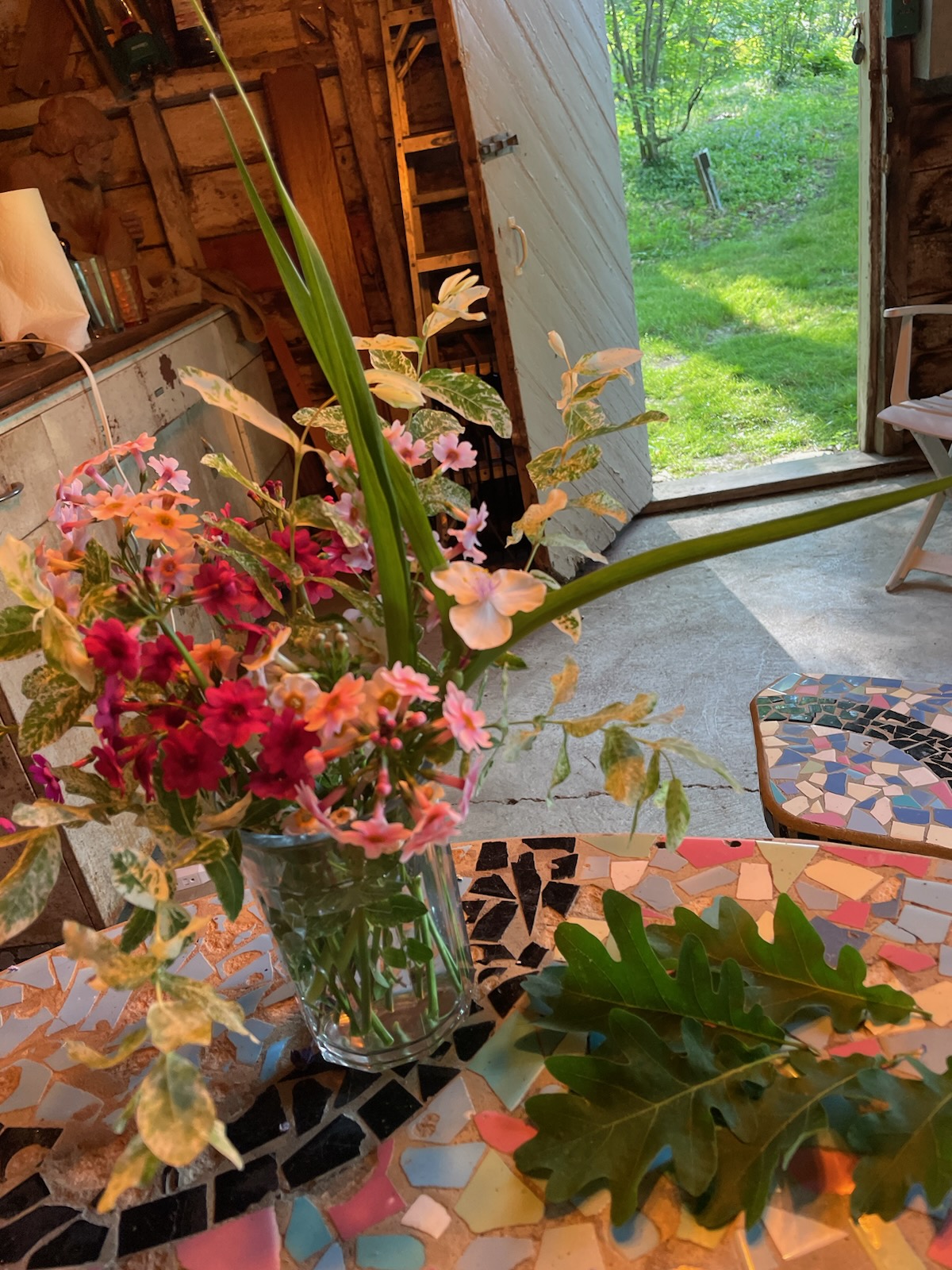
Come back to my living quarters, stick some peonies in a glass. Glad to be back.

Time to write.

2 Comments

Filed under Jean Zimmerman

Trouble, trouble, trouble. Trouble.

Really?

How can you complain when you find yourself in the most beautiful place on earth? Can there really be trouble in paradise?

It’s like this.

I got some feedback on a just-drafted chapter from someone I trust. He said what I wrote was not perfect. It’s hard to write about nature when you’re in the presence of natural perfection. And manmade perfection, in the form of a perfectly built old stone wall. Can I produce anything that good, that lasts that long? Probably not.

I take my seat in my writing garden shed.

Inspire myself with some of the flowers that grow just outside.

Say a few words to my shed-mate Giselle.

Woe is me. Write a while. Dreck. Go outside.

Admire a few simple flowers.

Visit with some trees. The shagbark hickory. Its new leaves are the most incredible shade of green.

Look up at the black cherry. How tall is that thing anyway?

Marvel at a tangled fall of shattered silver maple against a bewildered black gum. Human-produced sculpture doesn’t get that good.

Something amazing. A seemingly robust old white oak.

Around the back, it’s clearly had a lot of problems, but fixed itself. The way trees do.

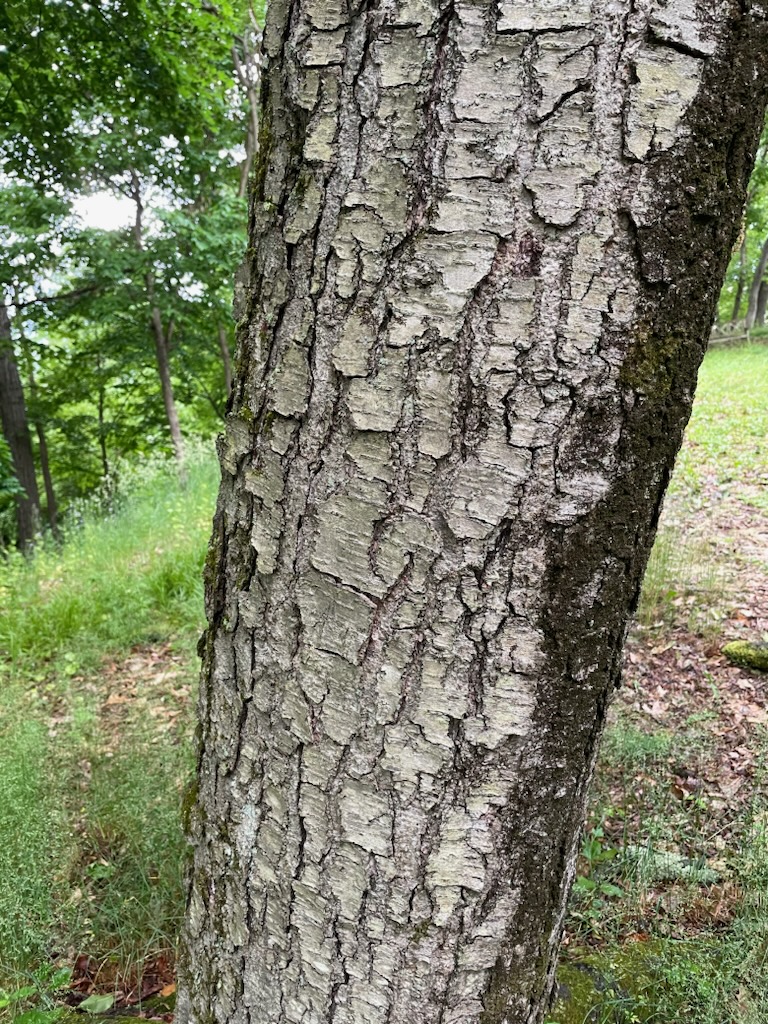
Down the path, the crazed contours of bark, this one a white ash.

Everyone has problems. Knee problems. Heart problems. Cash flow problems. I can put a check in all those boxes at least some of the time. There aren’t too many people to tell my troubles to.

But how can I complain, really?

Trying to learn from the persevering robin who hops by over and over again outside my writing garden shed and is rewarded with money-green inchworms. I mean, over and over again. All day.

Then I go, rock myself in the hammock.

Within a few paces of the just-blooming lilac.

Olfactory bliss.

So really, can I complain?

I can complain. Watch me.

I sweat my way down to the river. Think. Pick up a few what I seem to remember are water chestnuts. They might not be. They might be magic.

Think some more. All of this thinking is making my head hurt. So I stop thinking.

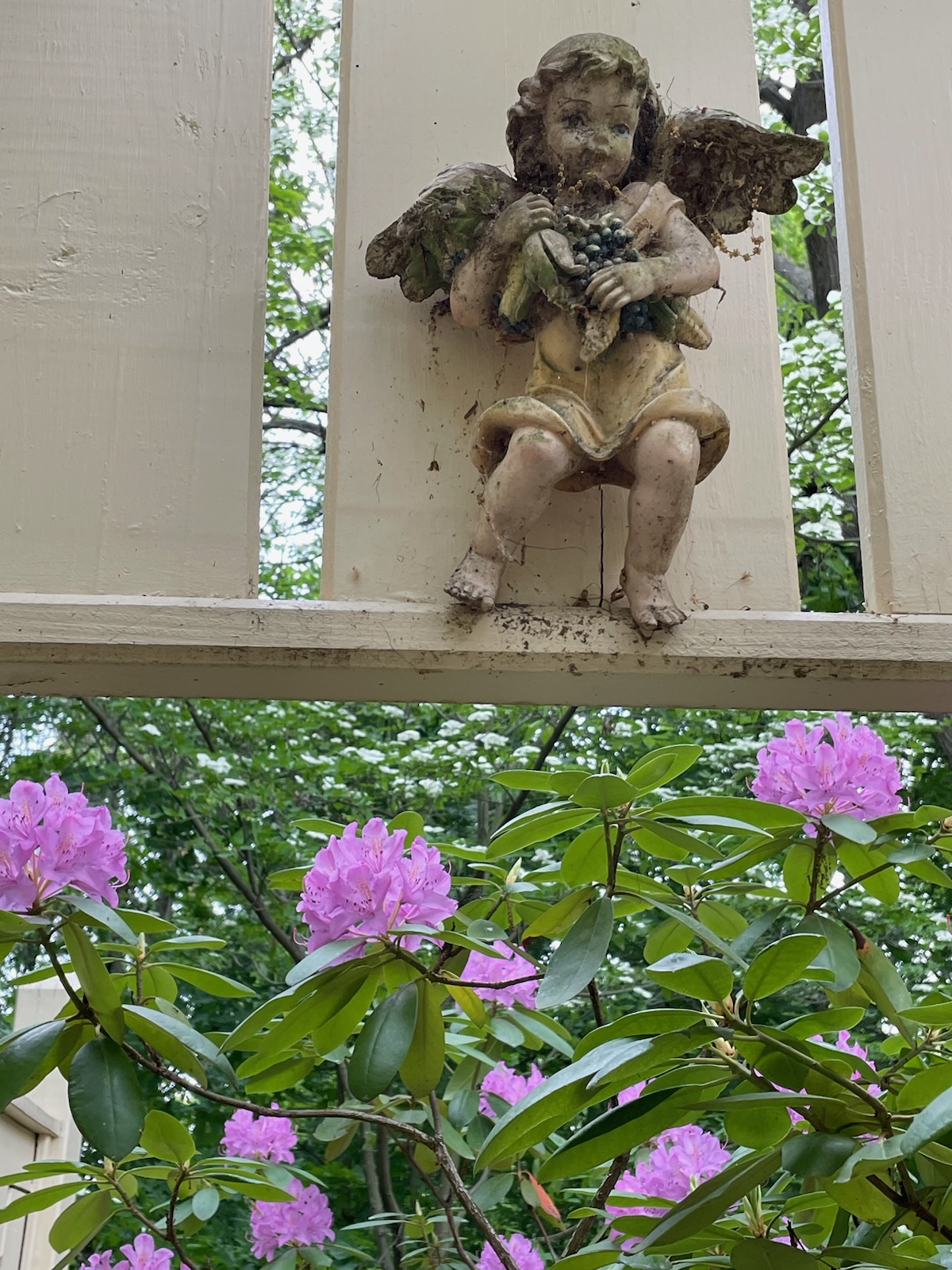
Pass by the cherub floating above some ripening rhododendron at the wooden loveseat.

Sometimes a thing is almost more beautiful before it’s blossomed.

When I get back to the caretaker’s cottage I find a bright green inchworm crawling on my leg. I set it outside, gently. I don’t need it.

The lawn is filled with dandelion wishes for the taking.

What the heck.

I’ll get a bigger bouquet.

2 Comments

Filed under Jean Zimmerman

There is really no such thing as nondescript

in any borough of New York City.

Here I am in an ordinary neighborhood of Brooklyn, rather humdrum, really, inspecting and preserving trees, and so many things have a hint of the marvelous.

The human impulse toward landscape adornment reigns supreme.

People here love their cherries.

Doctor Seuss ornamentals.

Their pipsqueak lawns.

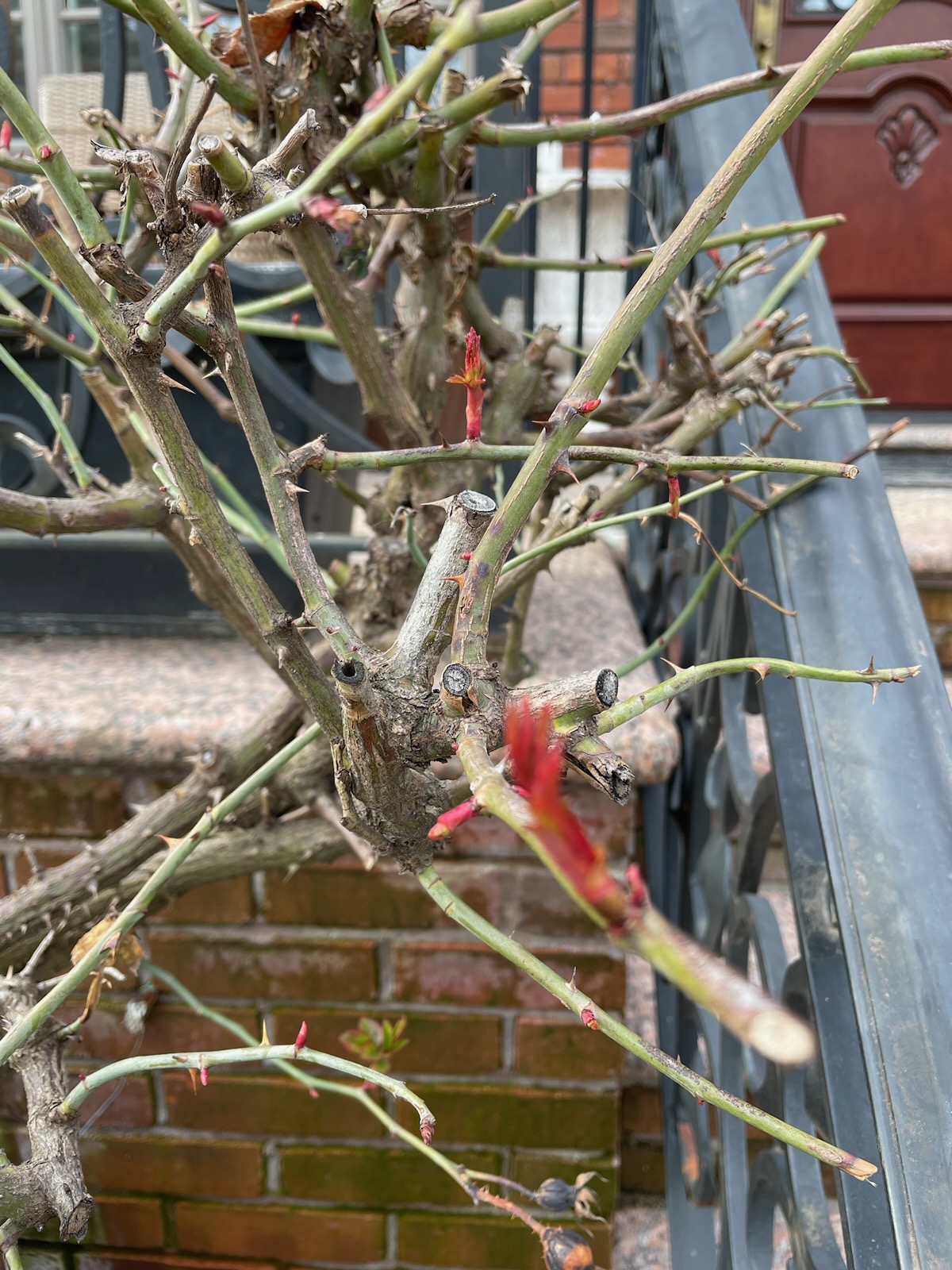
Their rose bushes, now hesitantly broaching the subject of spring.

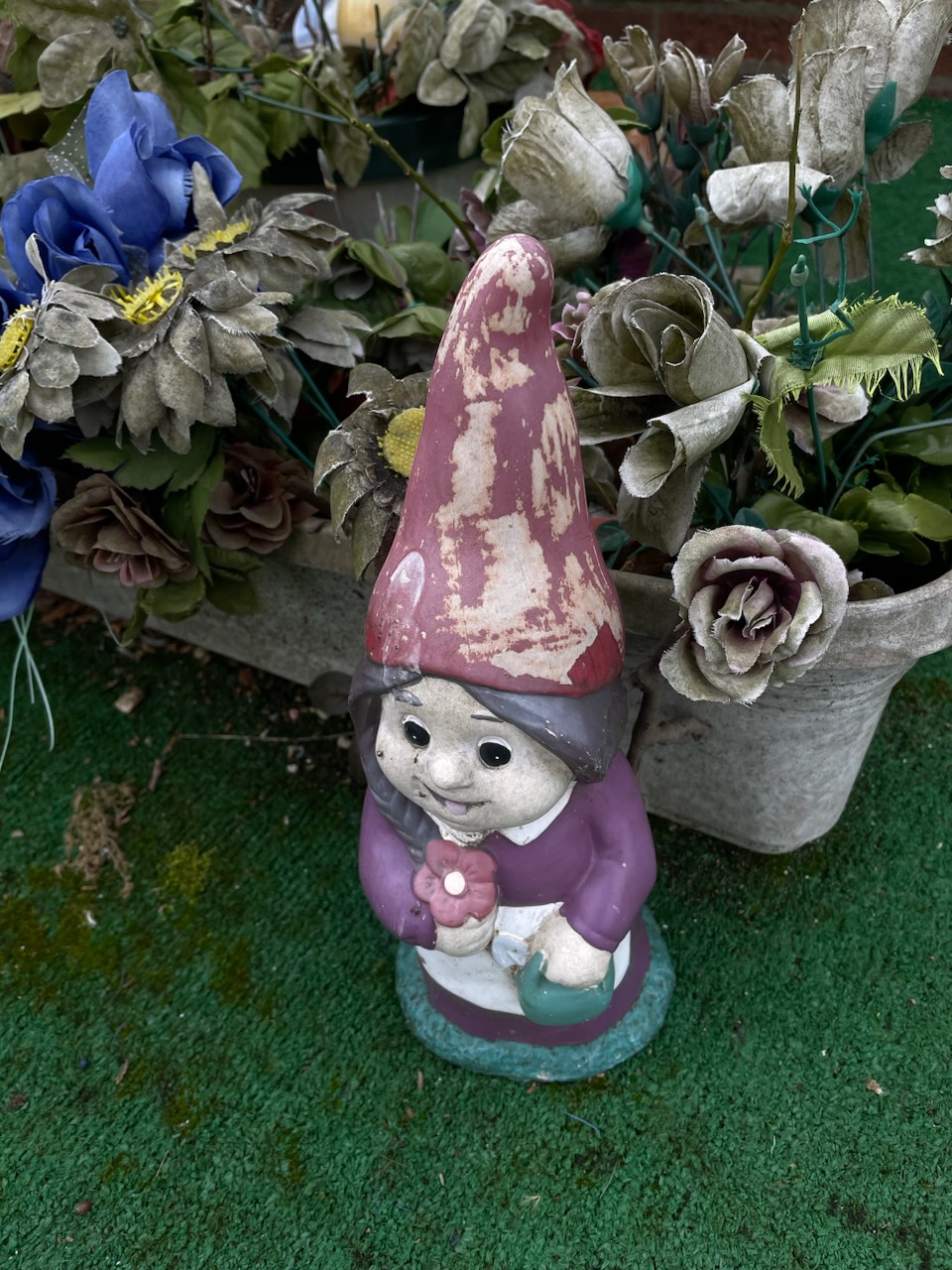
But why wait if an artificial bloom looks just about as lovely on a late winter day?

Their Himalayan cedars, for goodness sake! Who woulda thunk it, on Brooklyn’s 58th Street? Yes, I know, a tree grows in Brooklyn.

I ponder the idea a friend shared today that there may be more trees on Earth than there are stars in the Milky Way. Not all that many trees here, but the ones that do exist are clearly treasured. I’m looking after some young London plane trees today. Someone has to protect them, and at this moment that someone happens to be me. A privilege. Thank you.

Barbara Kingsolver once said something cool. She talked about how important it is “to look hard, for a long time, at a single glorious thing: a flame of red geranium outside my bedroom window. And then another: my daughter in a yellow dress. And then another: the perfect outline of a full, dark sphere behind the crescent moon. Until I learn to be in love with my life again.” Yes.

Brooklynites love their orthodoxies.

Of all kinds.

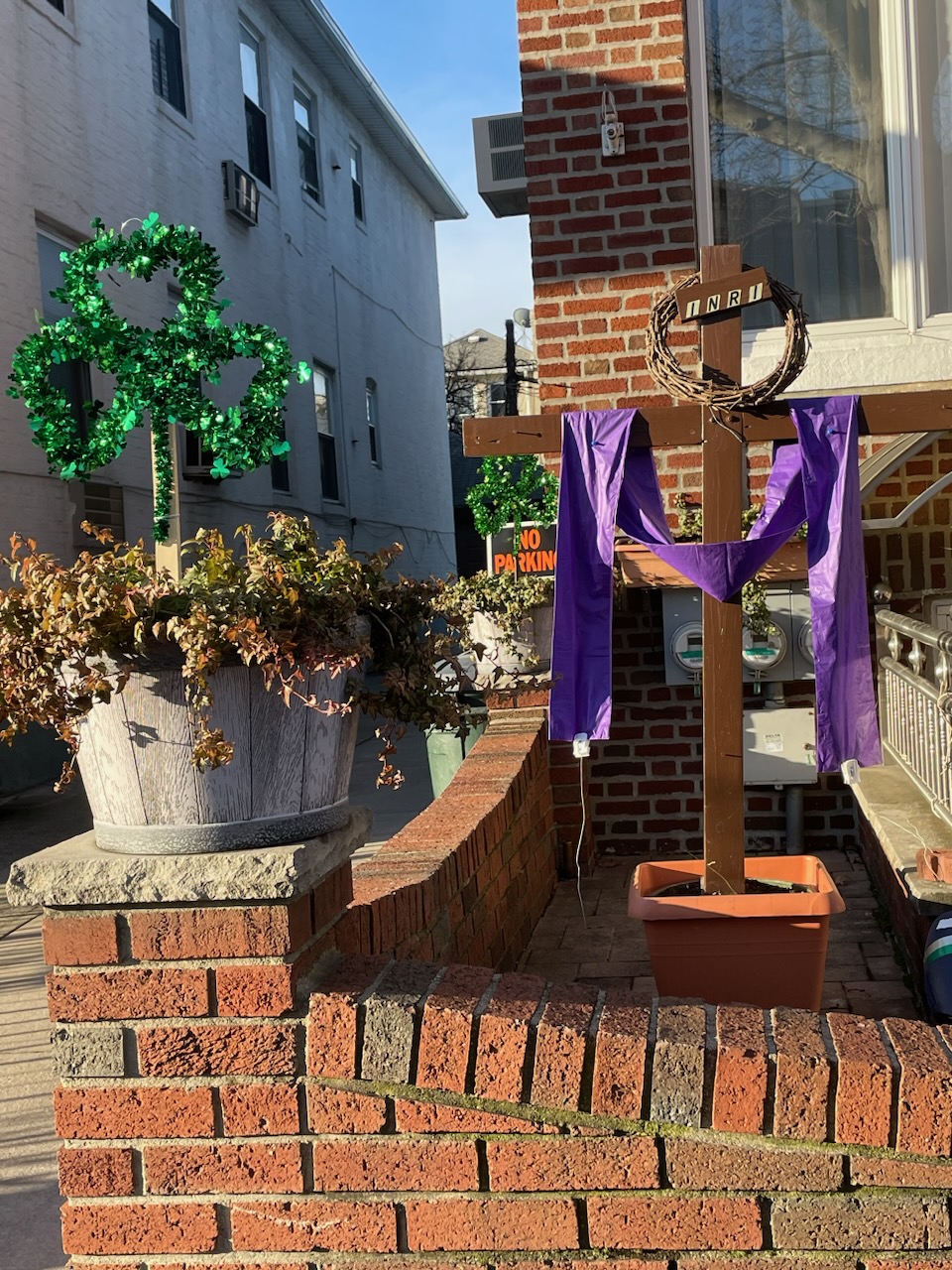
The abbreviation INRI stands for Iesus Nazarenus Rex Iudaeorum, which translates to Jesus of Nazareth the King of the Jews. The reason for this, if you want the abridged version, is because the first complete combined bible was translated by St. Jerome into Vulgate Latin. People became used to the Latin and continued to use INRI. Such an ancient concept in our awfully contemporary age.

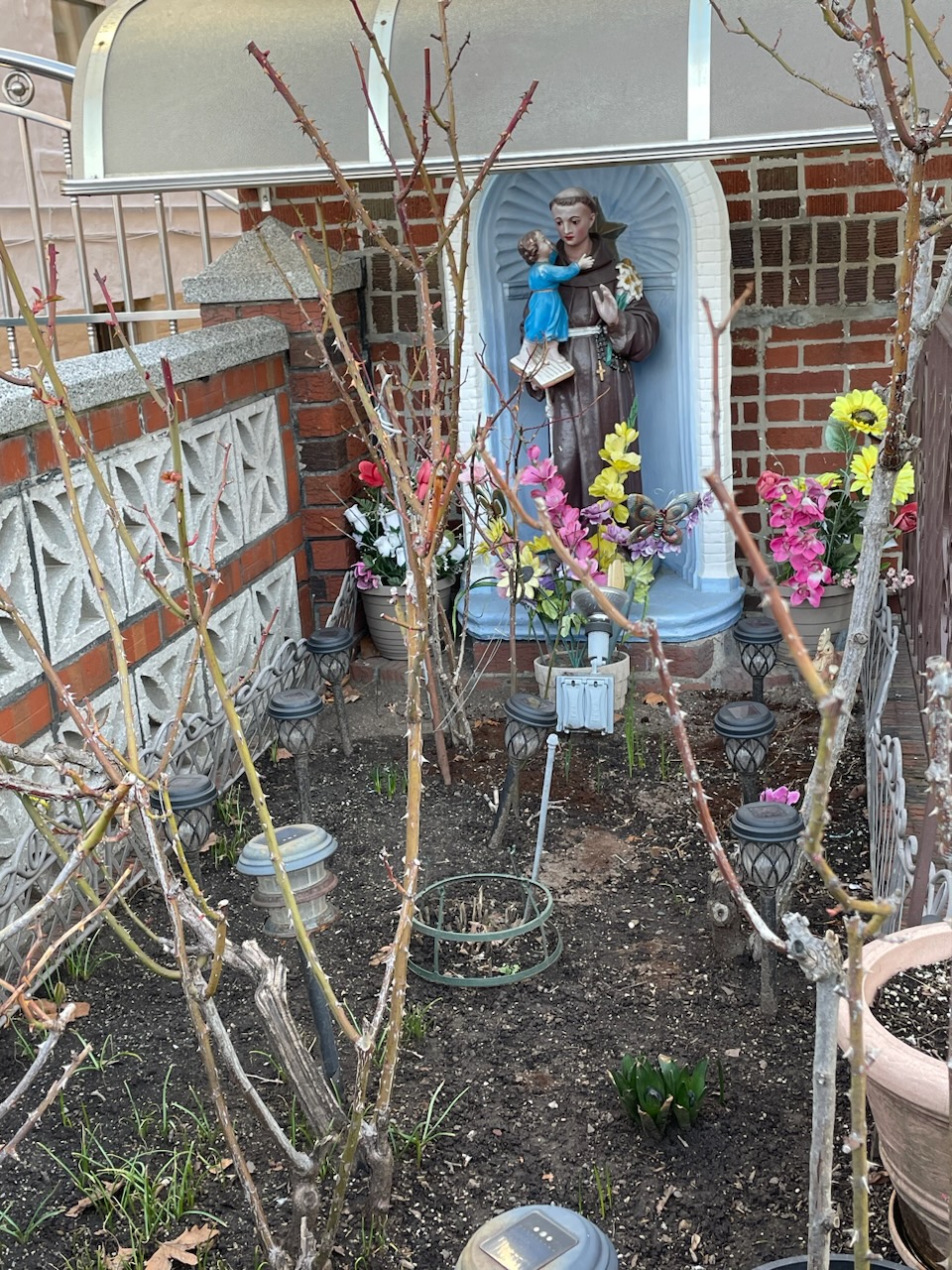
I’ve always found the mysticism of the boroughs fascinating. The abundance of shrines.

Might this placid gentleman be some saint or other? I’ve never been good at keeping them straight. They’re all important, though.

The people I meet have a kindliness that I think might surprise folks elsewhere in the country. The foreman at the gigantic construction project down the street pointed me in the direction of the Mobil station down the road where “they have gas! Restrooms! Food! Everything!” And the Rite-Aid clerk proved equally hospitable, glancing once at my reflective vest and waving me on to the employee bathroom.

The belief systems here are deeply ingrained.

Driving down to the Mobil station along Bay Parkway takes you right through the middle of Washington Cemetery. As if on cue, Lucinda Williams comes on the radio: You’ve got to get right with God.

Gigantic, and plunked down right in the middle of this residential neighborhood, the cemetery was founded in Kings County in 1850, outside the independent city of Brooklyn, and from the first served primarily German Jewish immigrants. I feel like I might stumble upon some long-lost relative here.

 You can wend your way through the grave plots on paths called Rose, Hyacinth, Jasmine, Aster, Lotus, Evergreen, Cedar, Maple, Cypress, Orange, Sycamore, Spruce, Aspen, Balsam, Oak, Magnolia, Arcadia and Birch. The burial ground has its share of both Yiddish theater stars and gangsters.

Never pass up an opportunity to walk through a cool cemetery. Especially when there are tombstones with photographs, the latest style in death, which has always got something new going on.

And handsome stone lions.

And what must be lambs.

Some of the deceased seem not to have been caught on an especially great day.

But as is often the case in graveyards you can find greenery captured in stone.

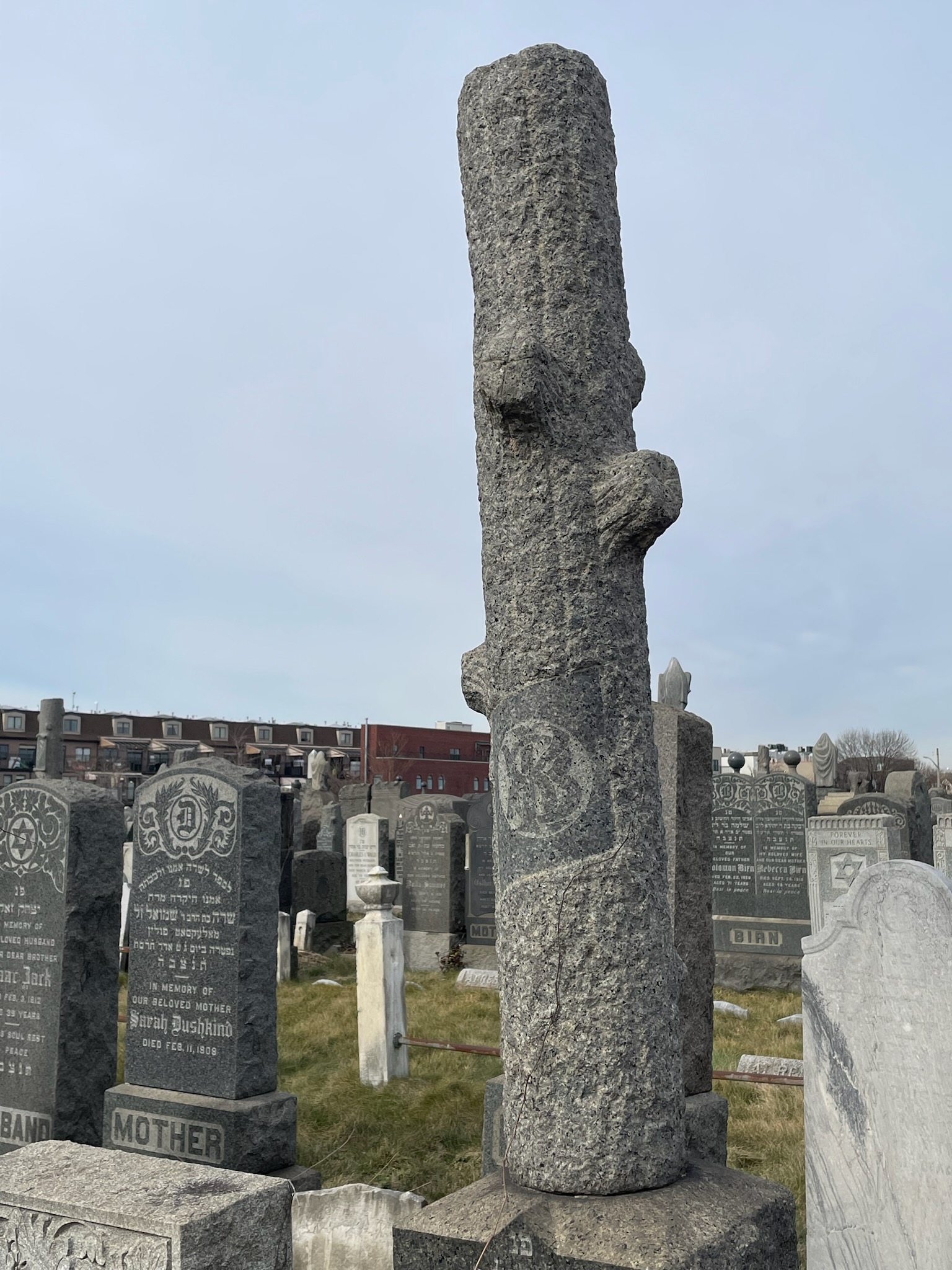
And extremely symbolic severed trees.

You know me, I prefer the old-old. The namelessly poetic.

Everything pukka on this ho-hum late winter day.

Learning about stuff.

Anticipating spring.

Leave a comment

Filed under Jean Zimmerman

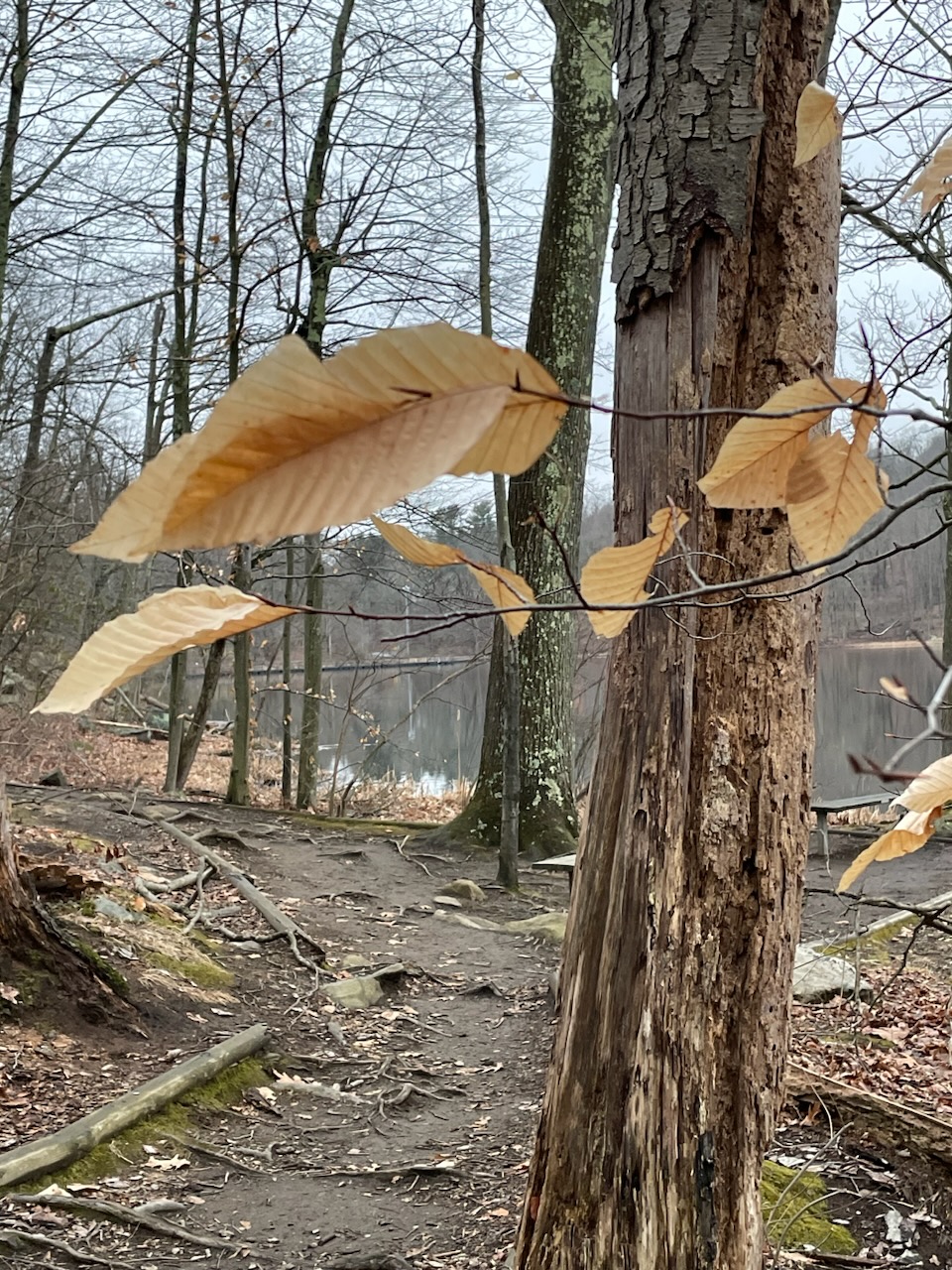
Drifting along the trail around Teatown Lake at dusk

can be wondrous. A silent dream.

A wolf could probably take this one-and-a half-mile trail in around ten minutes, loping the loop.

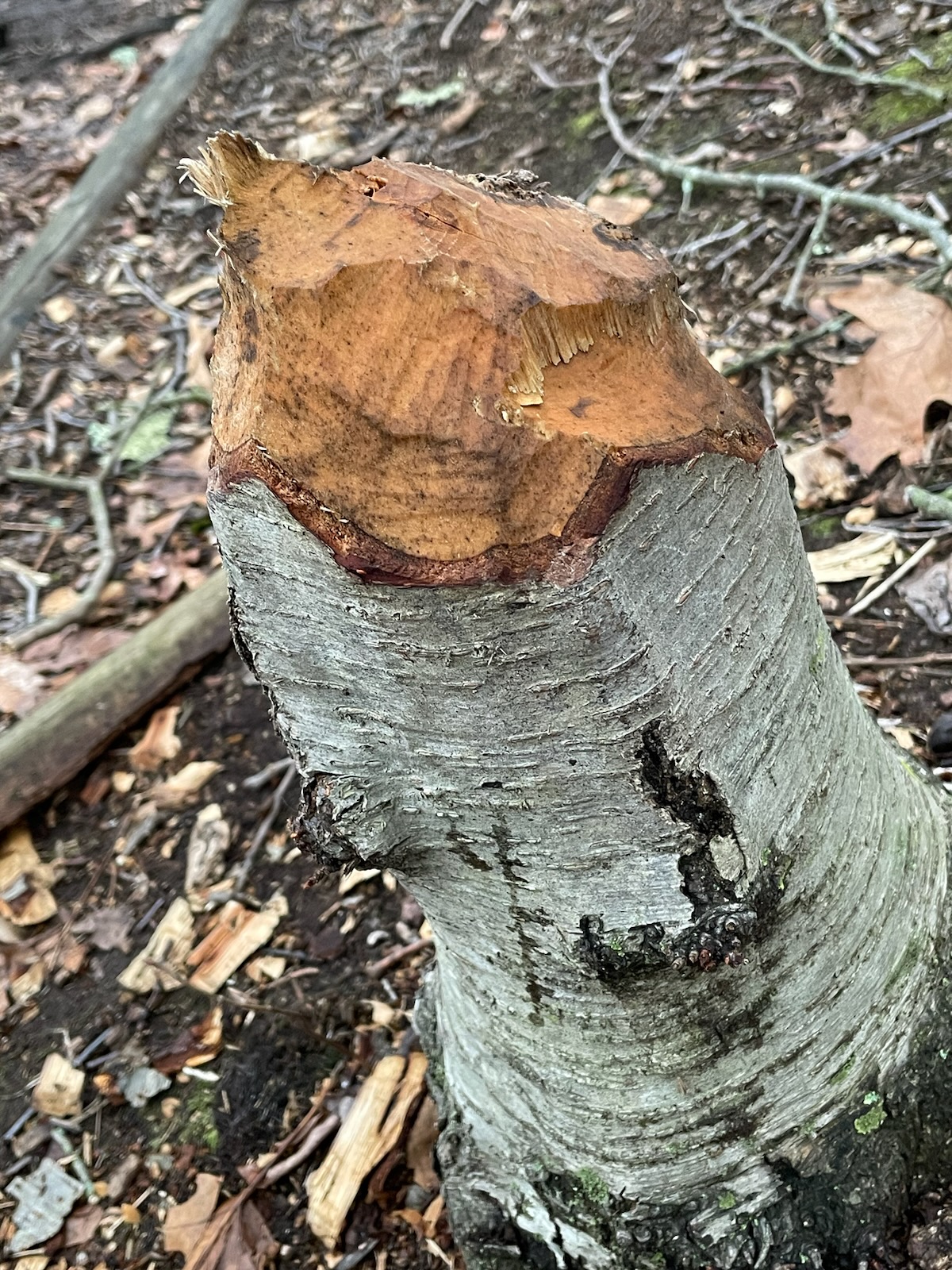
If a wolf inhabited these woods. Which is improbable. Bears, though, might. And beavers, definitely. Evidence of their newly gnawed work abounds.

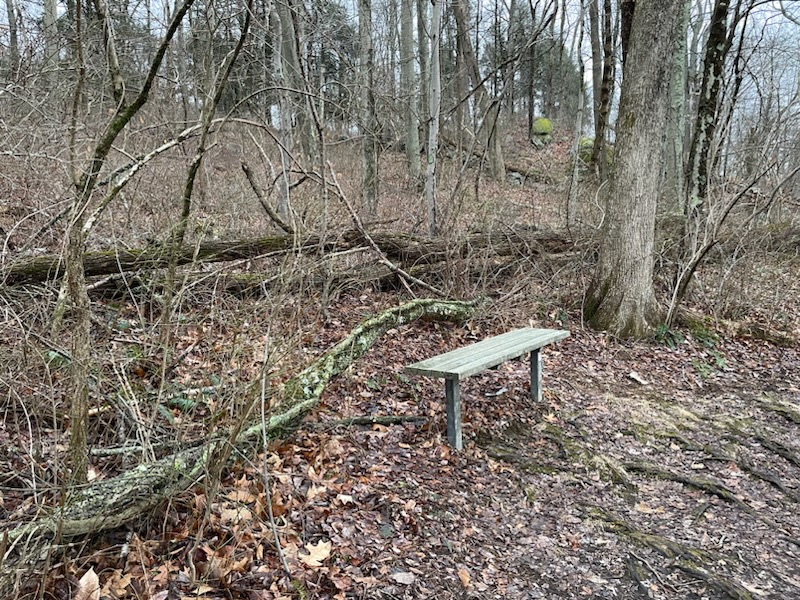
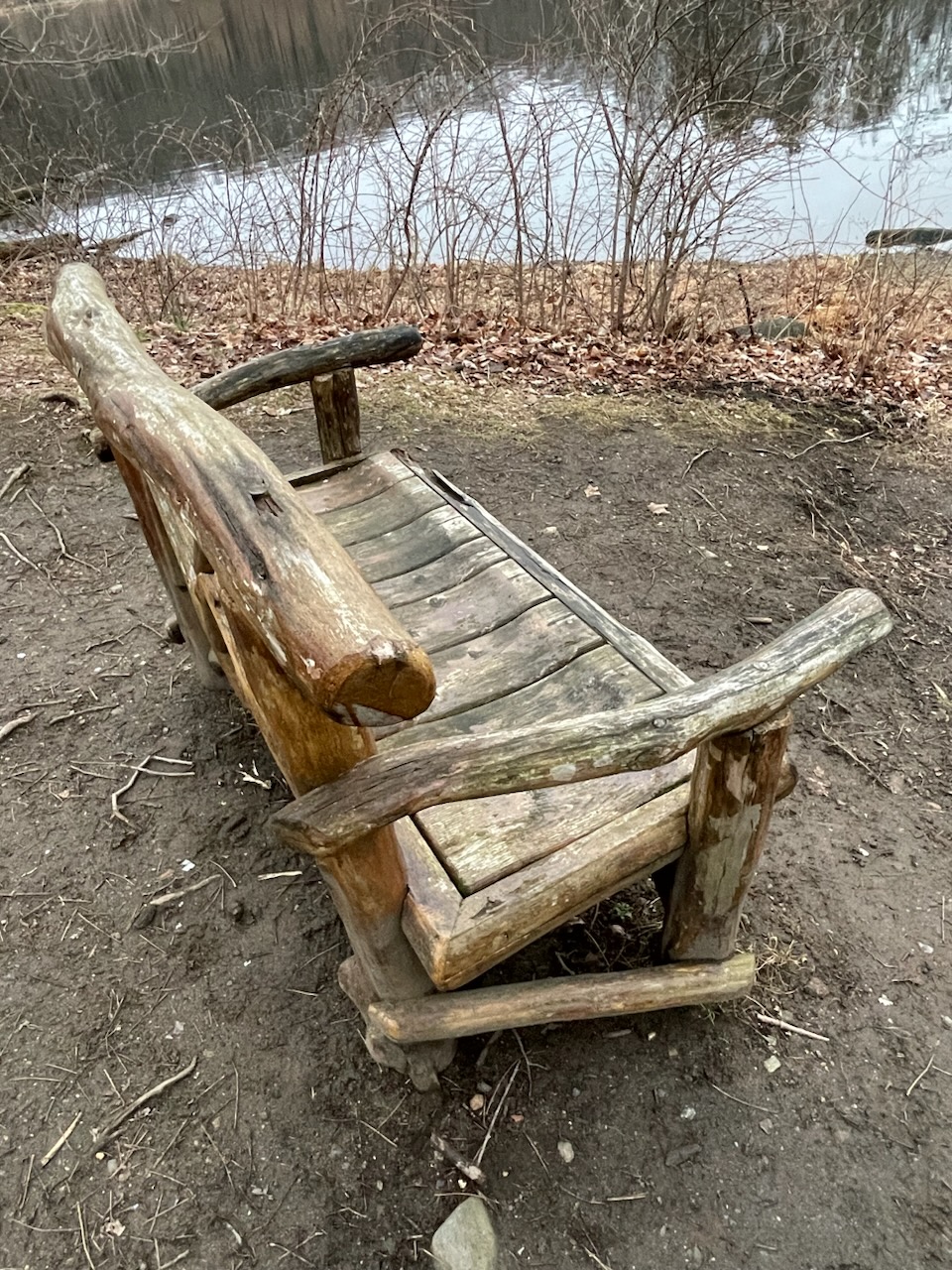
It’s gloriously somber and moody today, but could be restful if you took advantage of the benches carefully placed along the way.

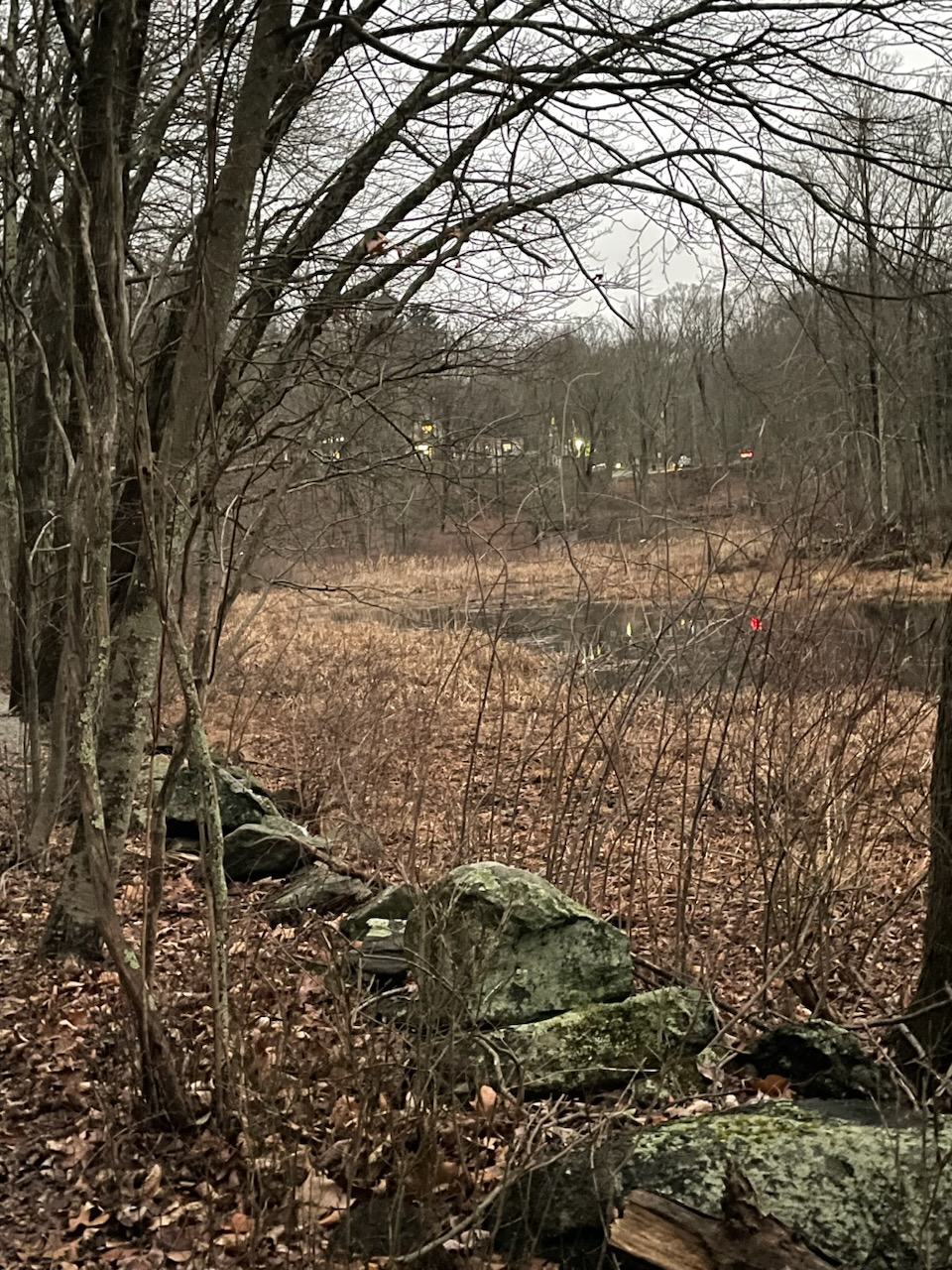
I’m hiking the opposite direction of the way I usually go. Clockwise, starting in the wildflower tract, now of course devoid of flowers in winter. The lake itself at the 1,000-acre Teatown Lake Reservation was created in 1924 when Bailey’s Brook was dammed.

Yes, I would like to climb you. Thank you for the invitation.

I’ve heard exactly one sound in the thirty minutes I’ve walked: a lone dog barking in the distance. And now the geese, skidding to a landing on the surface of the lake. They sound as if they’re yelping as they go.

I know from speaking with a knowledgeable person on the Goose Patrol at Ellis Island that the ones passing through on their migration are about to start mating, hatching goslings. I can’t wait. I also find I cannot wait to go around the next turn here and see what awaits me.

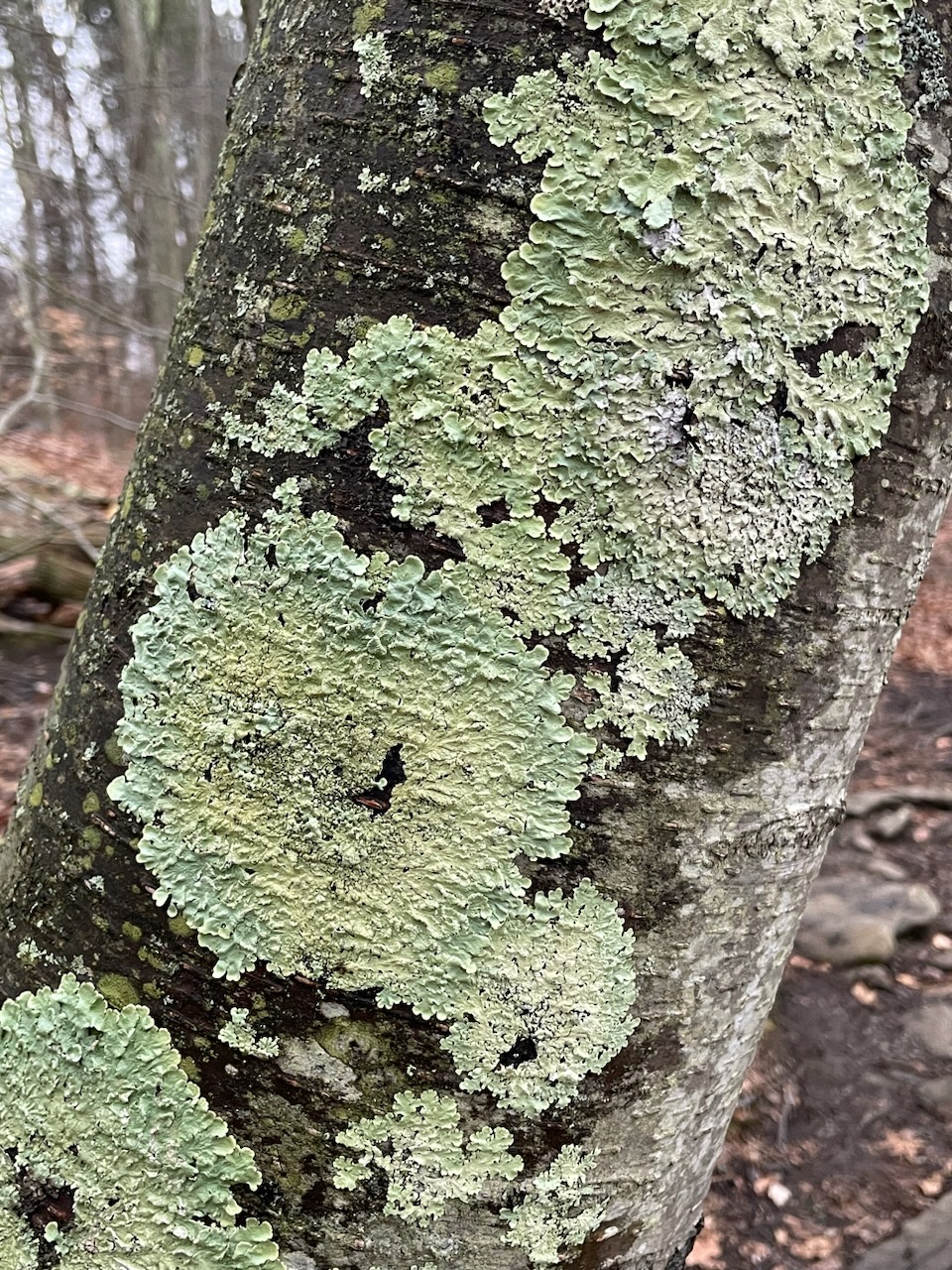
It begins to seem silly, the baggage I carried in. Worries over money, love, work. They have no place here among the fallen brown leaves and the lichen.

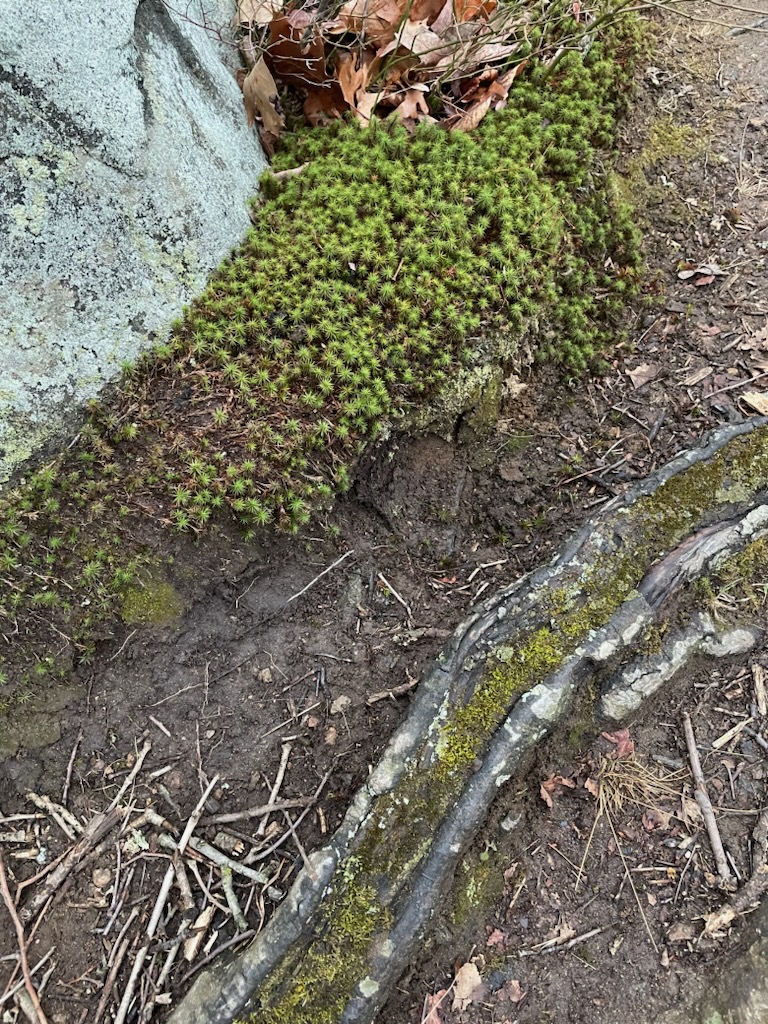
The emerald moss.

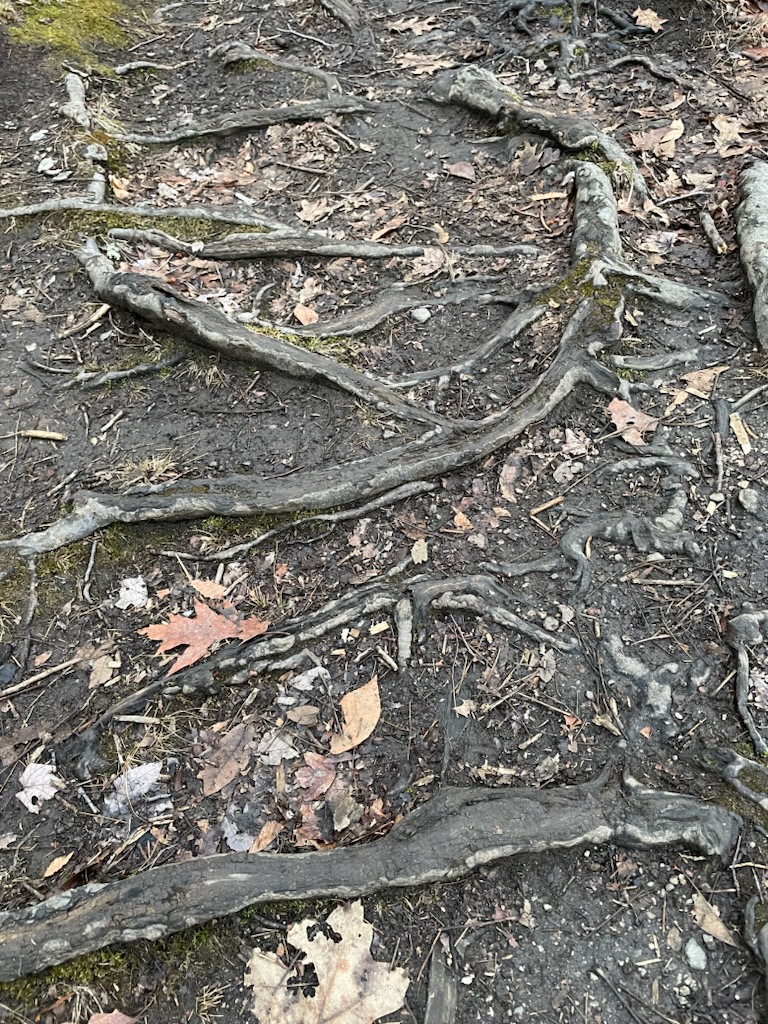
The roots that sprawl over the path. My only worry here is that I might trip and break an ankle, so I take it slow.

I recently heard the buzzphrase slow travel, which means immersion in a place, being present in the moment rather than whisking yourself along a route to see more, more, more. This is a slow hike.

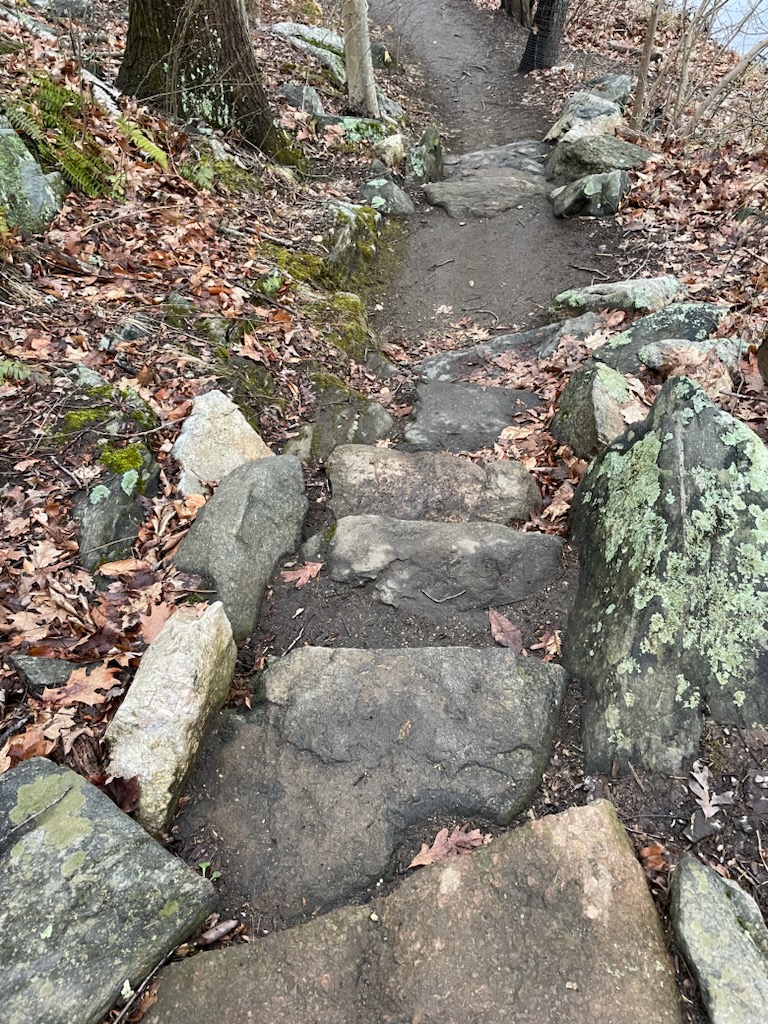
Yes, if you go up, then you must go down. Hikers always say the downhill is harder. I don’t know. Today I don’t care.

Clearly there is no fishing allowed here on the lake.

They mean it when they say so. Another bench, a graceful one.

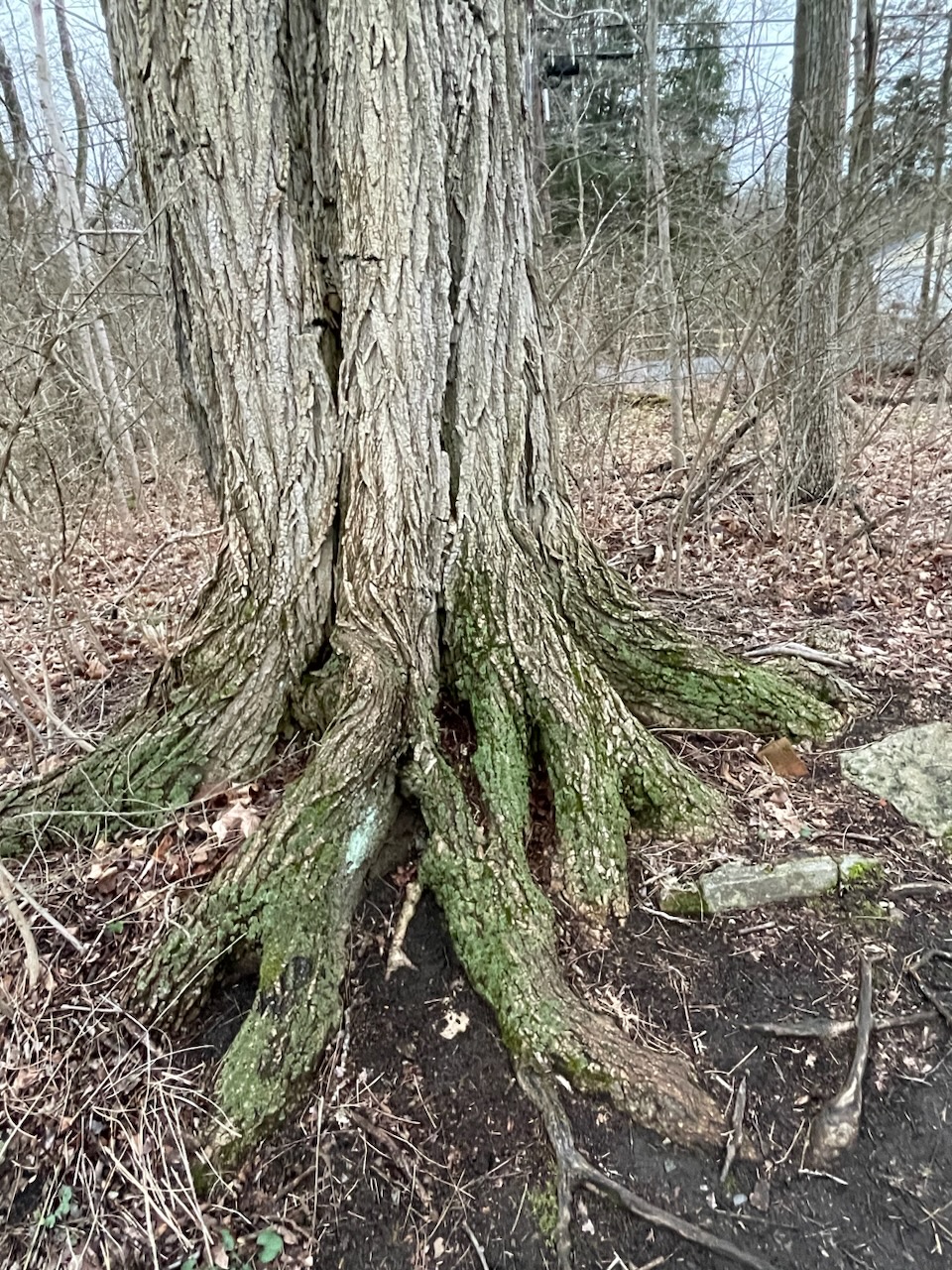
But I’m not stopping. Some trees are funny. You have to ask yourself sometimes, What do they think they’re doing? There is surely a reason for it all.

The ancient locust trees here nearly overwhelm with their personality.

I think I’ll walk as far as I can. I’m never going home.

The surface of the water is so placid. I watch the ducks dunk for their supper. It’s so easy for them. Or at least it looks easy. Maybe it’s not! Maybe every day is a challenge, even for ducks.

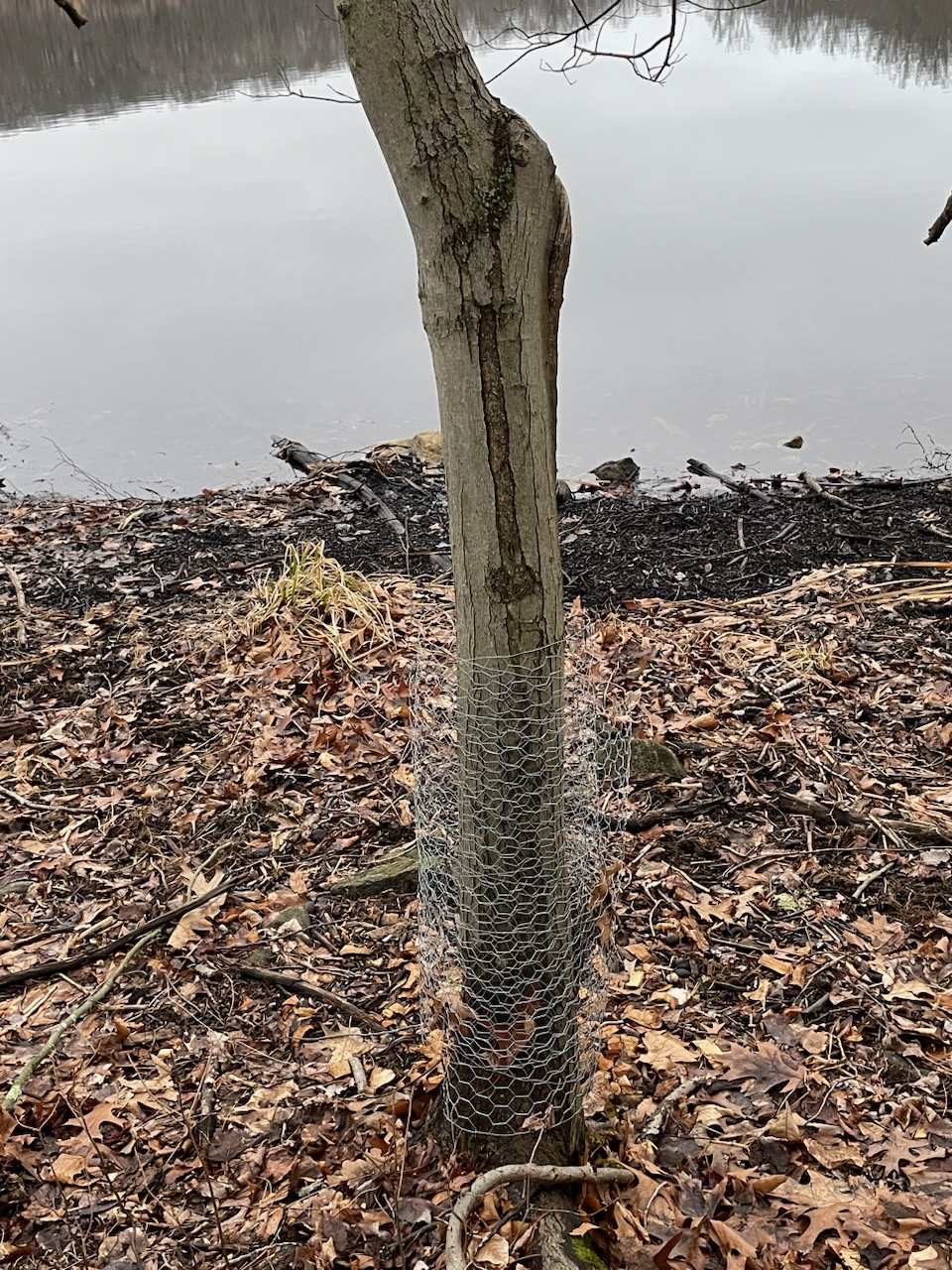
Scouting for beaver dens. Where are they? I see protection against them all over the shoreline.

I scare up a pair of mallards, male and female. I’m sorry! Pardon me, but do you mate for life?

I start to cross the bridge. Sometimes don’t you feel so alone? At those moments it feels good to be actually alone, physically alone.

Then a couple of humans approach out of nowhere, male and female, all in black. They seem to be racewalking toward me. Really? There’s so much to take your time for here.

Teatown does a nice job maintaining this place. Someone recently repaired the bridge walk using great care.

It’s cultivated woods here, not forest. The fifteen miles of trails have been well tagged, in every color of the rainbow, practically.

Overhead, in the distance, undeniable evidence of humans.

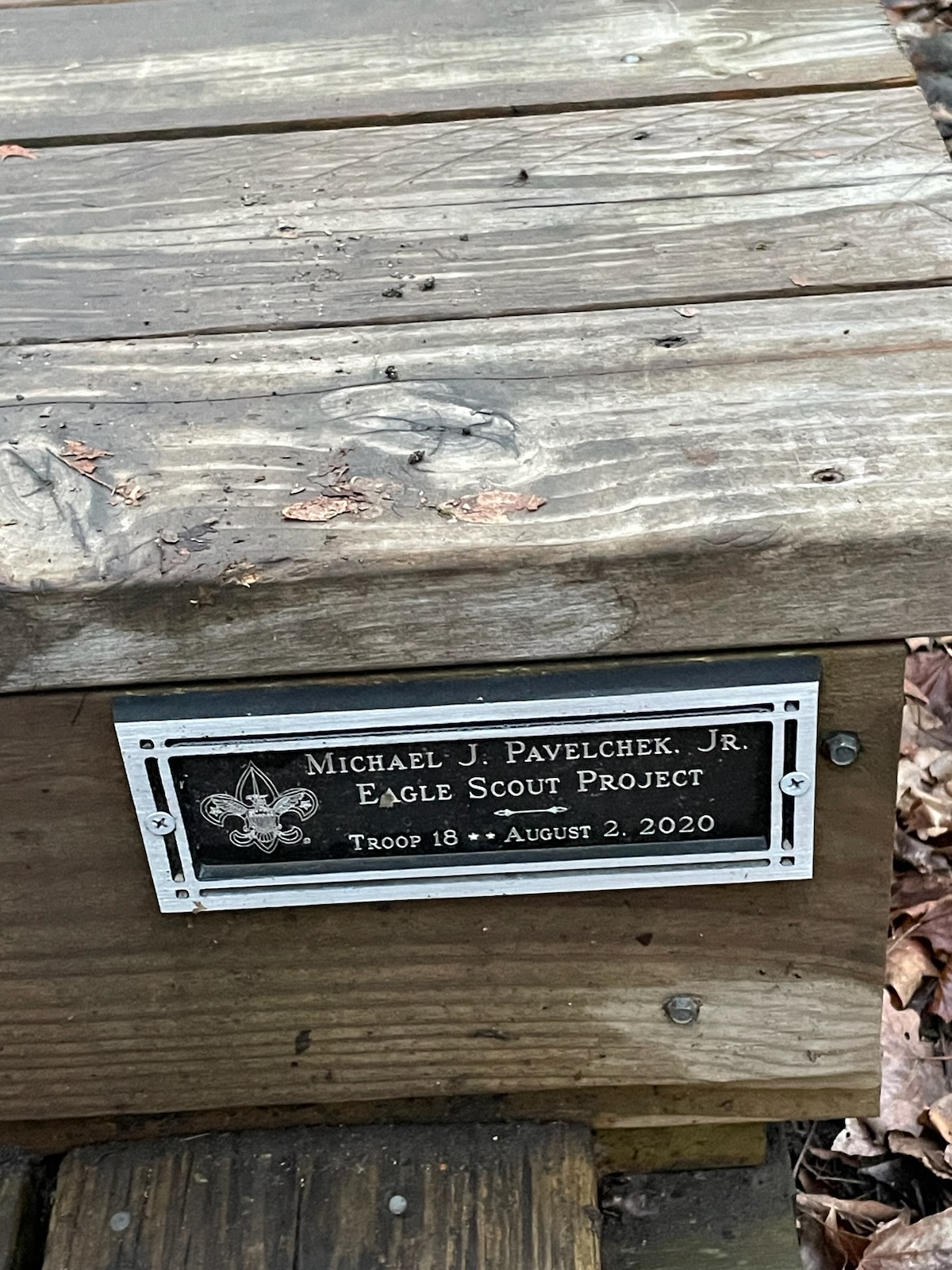
It seems every bench and small bridge is named for someone special.

Might not mind that so much if I knew the people. I like things that are nameless, though. Anonymous stone walls mark a different era.

I used to live near here, in Ossining, just down the road. In an old, old log cabin. Seems like such a long time ago. I don’t want to go back there. But I still love these woods.

Ever have this feeling that you might get lost, even though you know you can’t possibly get lost? I know that if I hug the shore of this lake and keep going, I will return to where I started. Still. I don’t quite remember being here before, in this exact spot. The dangers of life are infinite, and among them is safety. Goethe said that.                                                    

 The dog barks again. It’s not as if I’m out in the wild.

But it is so deserted here, so devoid of immediate human presence that I feel I can void my bladder trailside. Pee like nobody’s watching! to paraphrase about a million folks.

Thank you kindly, Mr. Root, said the fallen branch, for offering me a place to rest myself.

Some things just look staged, even here. There’s red oak with a humorous burl.

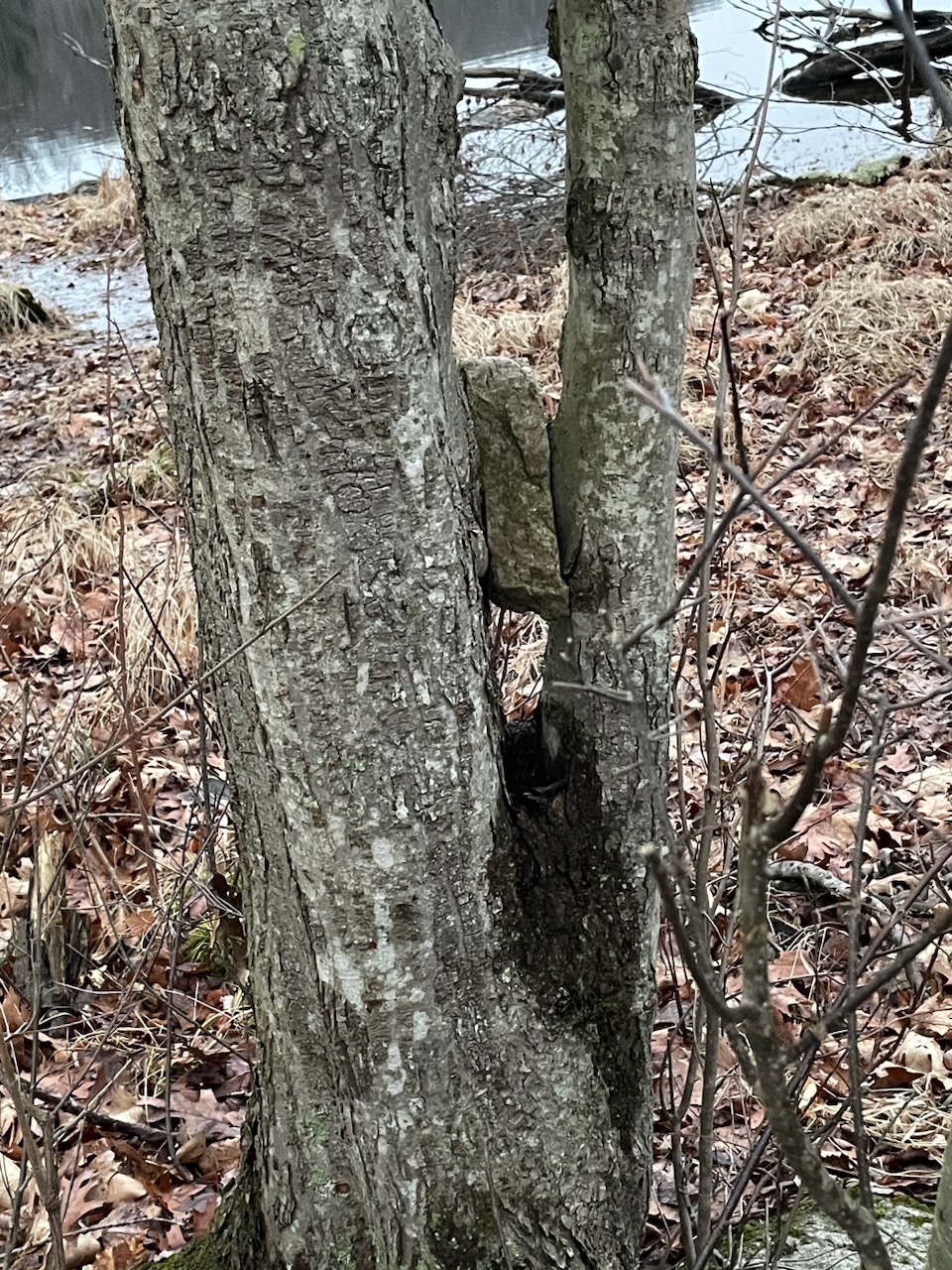
Probably more comical if you’re a tree person. Will someone please explain what happened here, that a stone wound up grasped between twin trunks?

What is the biology?

The beech leaves hold on through the winter. Beech leaf disease is having a moment. I don’t care to think about it today.

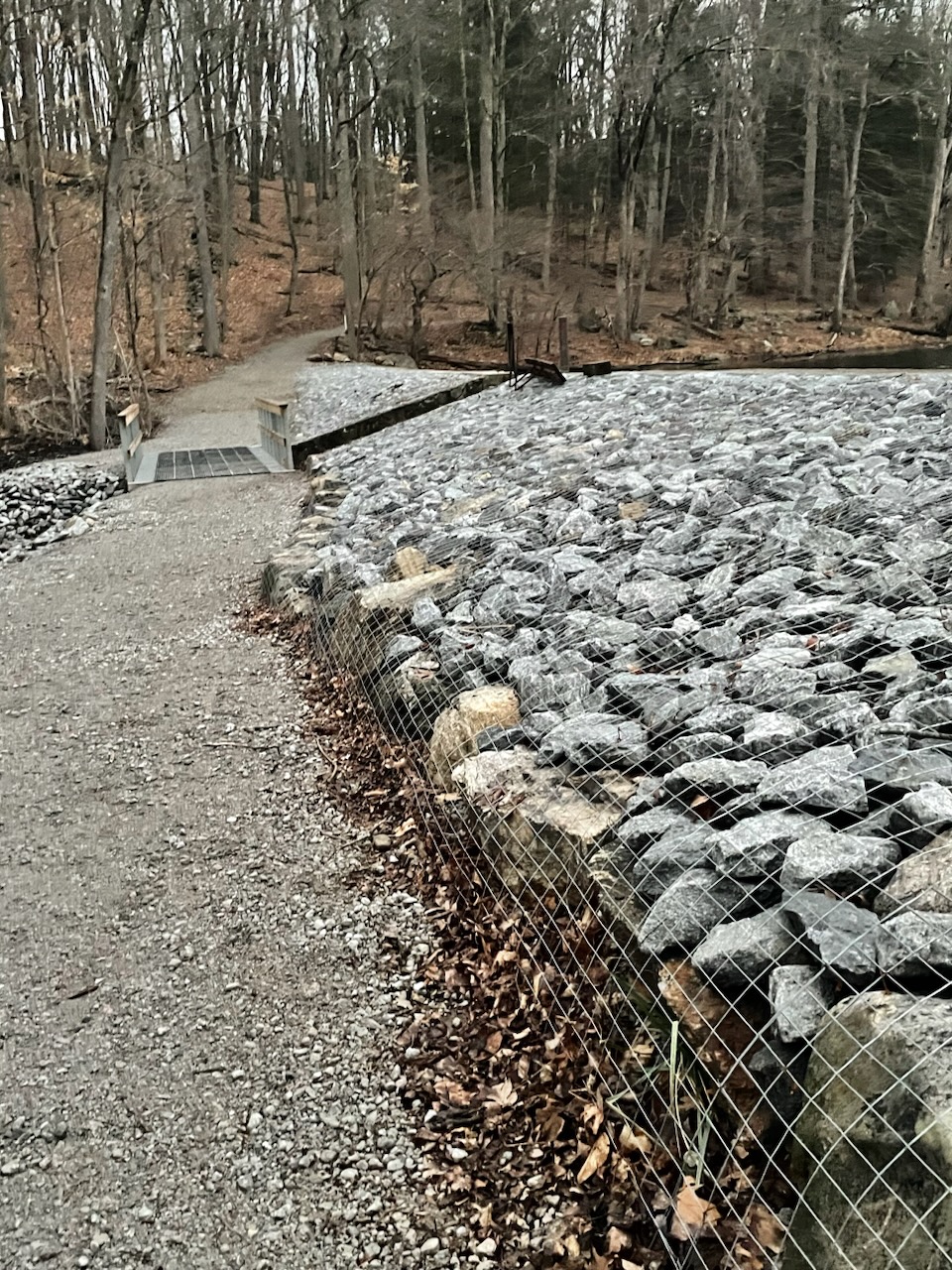
I have hit the dam, so I know where I am, though they’ve “improved” this area so much with riprap I barely recognize it.

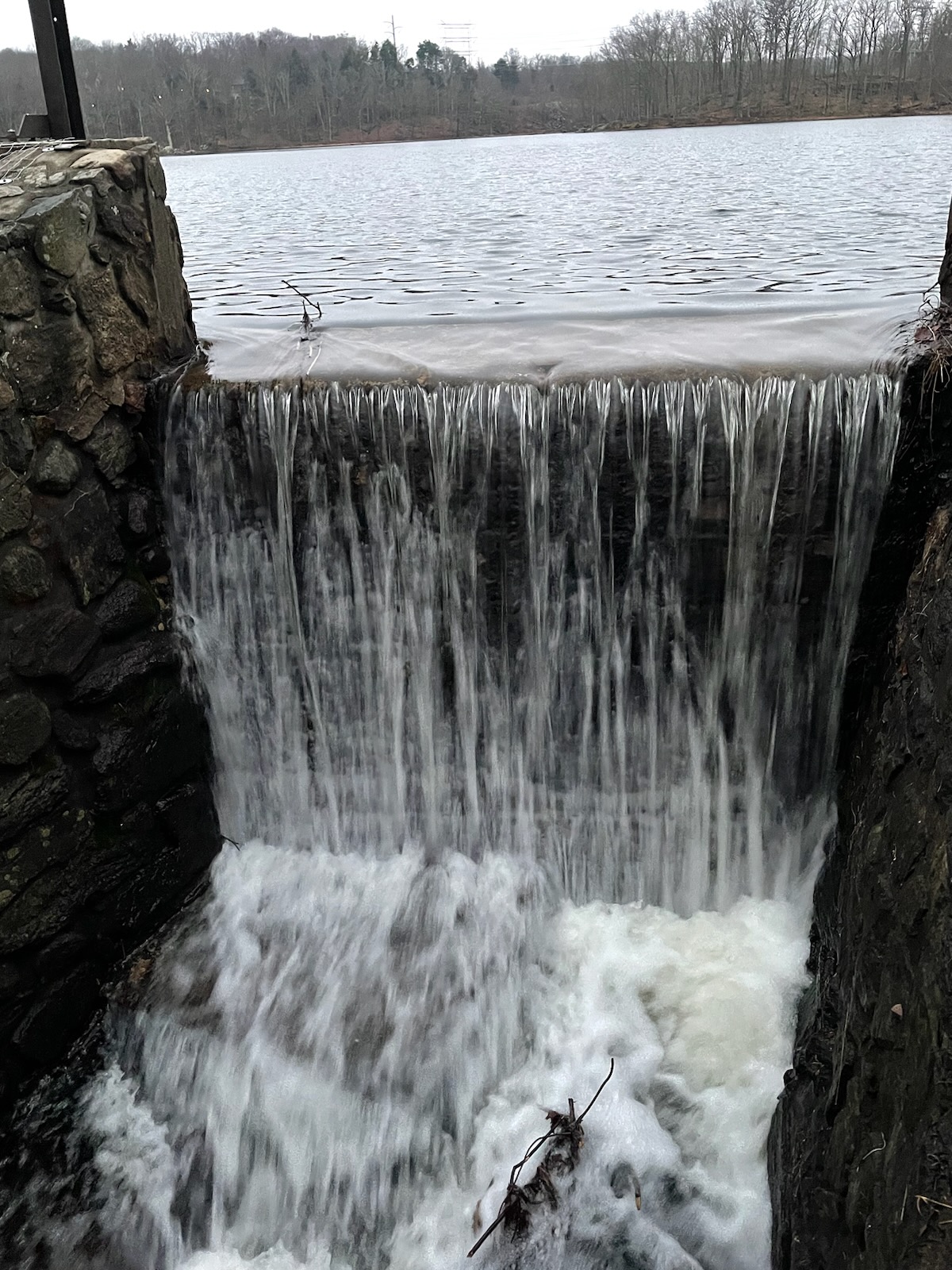
Still the water fluices down, unstoppable.

When will I get back? Dark is falling. Still, no one is expecting me. I could fall asleep out here for long time, years even, and nobody would miss me. Perhaps in this old rustic shelter.

I see lights in the near distance. As night descends, things just get more and more beautiful.

I’ll be back just in time for what really got me here – a panel discussion at Teatown about trees, and how great they are. All about ecosystems, carbon sequestration, thermoregulation.

Somehow I think I’ve already done the math.

On the other hand, there might be cookies there. Or at least granola bars. I better show up.

3 Comments

Filed under Jean Zimmerman

Same old same old

wonders close to home.

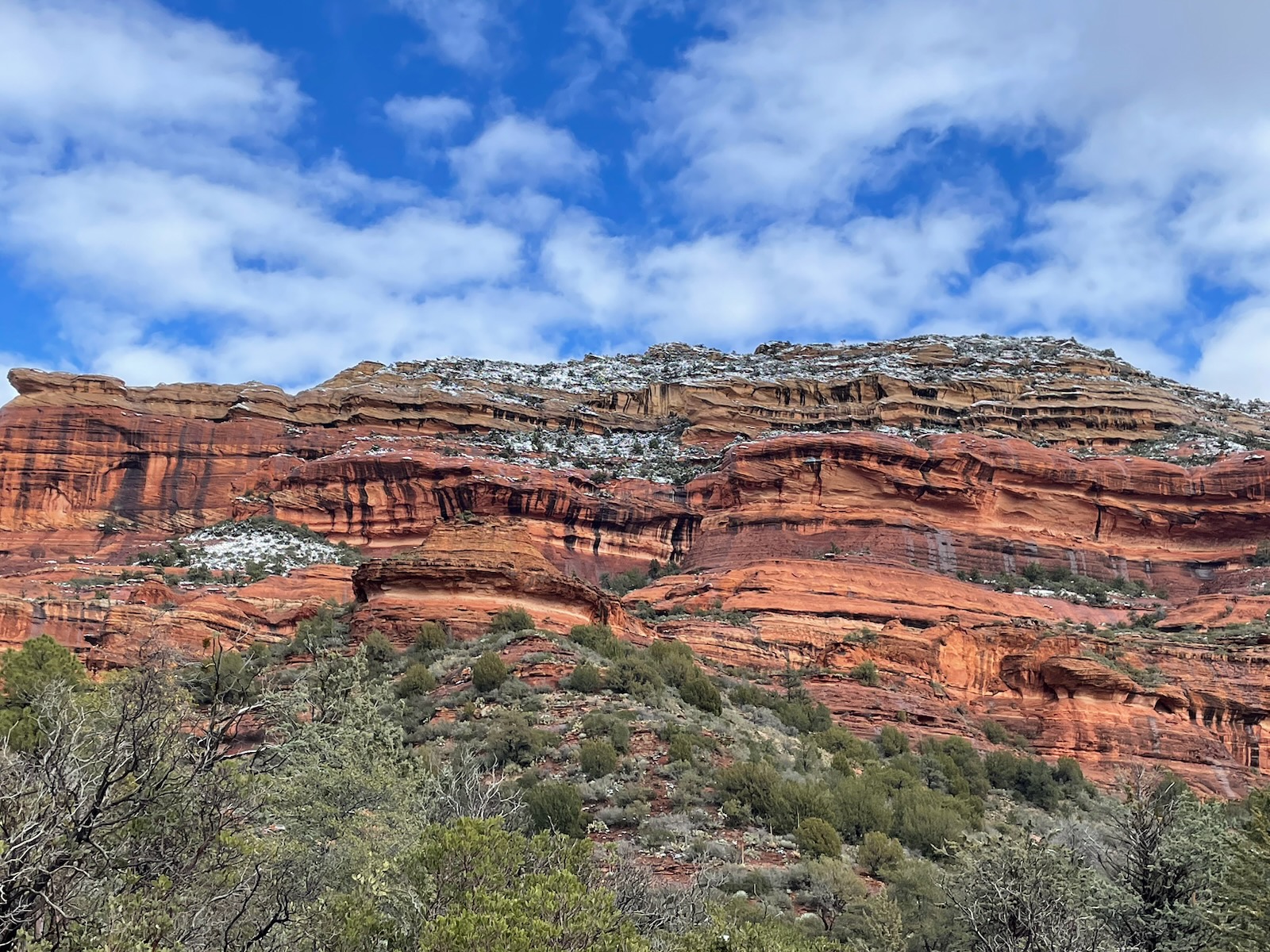
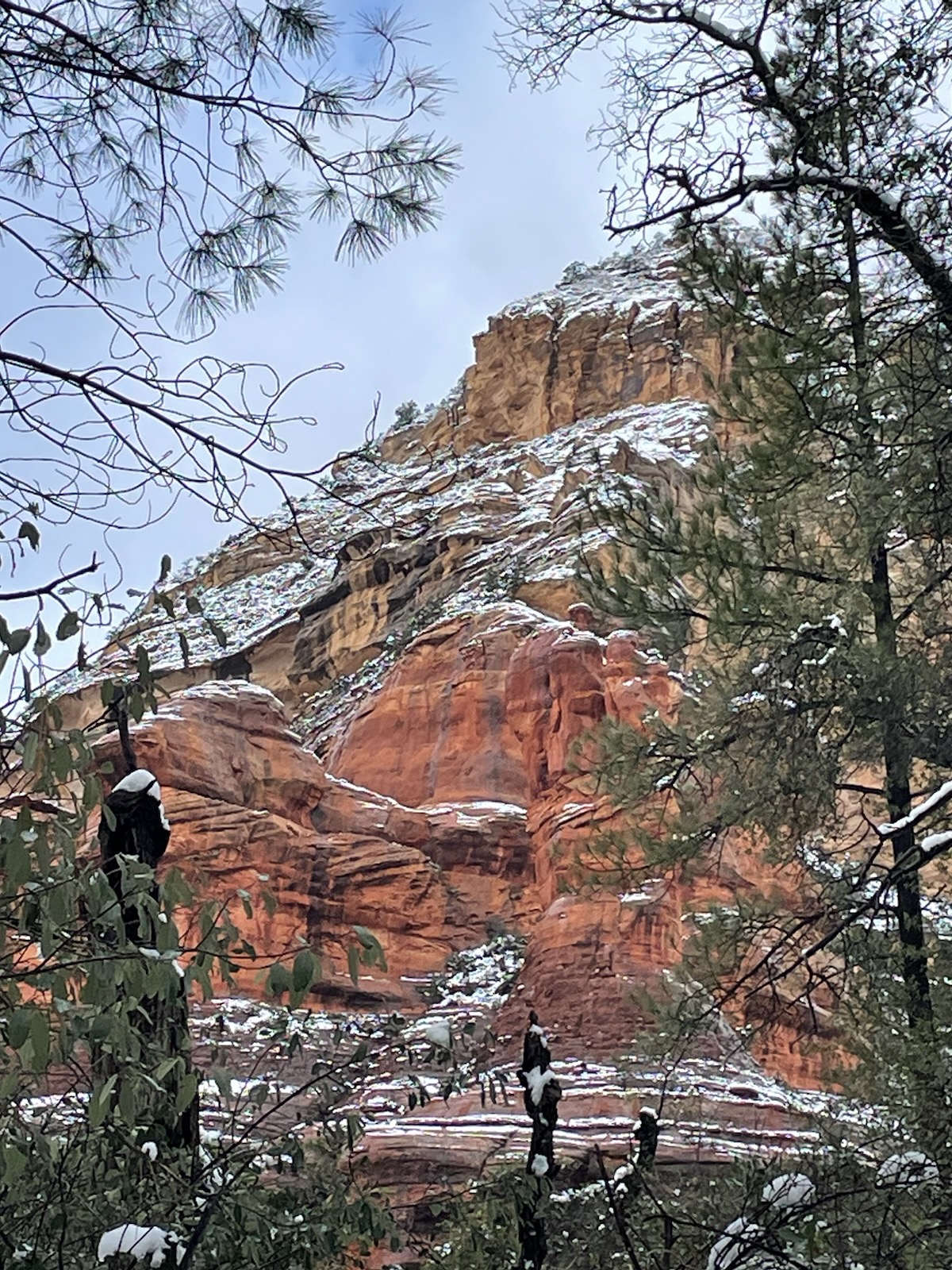
Yes, when your sometime home lies at the mouth of Boynton Canyon in Sedona, and snow dusts the ancient red rocks, of course everything is wondrous. But when I worked at the Grand Concourse in the Bronx last year, I thought is was pretty marvelous, too.

Look, see, absorb.

Yes, the sky is white. Yes, it’s cold out. Are you dressed warmly enough? says my mother. Yes. I happen to be hotblooded. Like the lizard we found on the kitchen curtain this morning is coldblooded, and not doing much of anything, just existing.

If anything, the manzanita in the pygmy forest looks even more perfect with a dollop of snow.

I’ve always loved how the old and the new intertwine.

I’ve gone to the end of this trail once, but I’ve started at the beginning so, so many times.

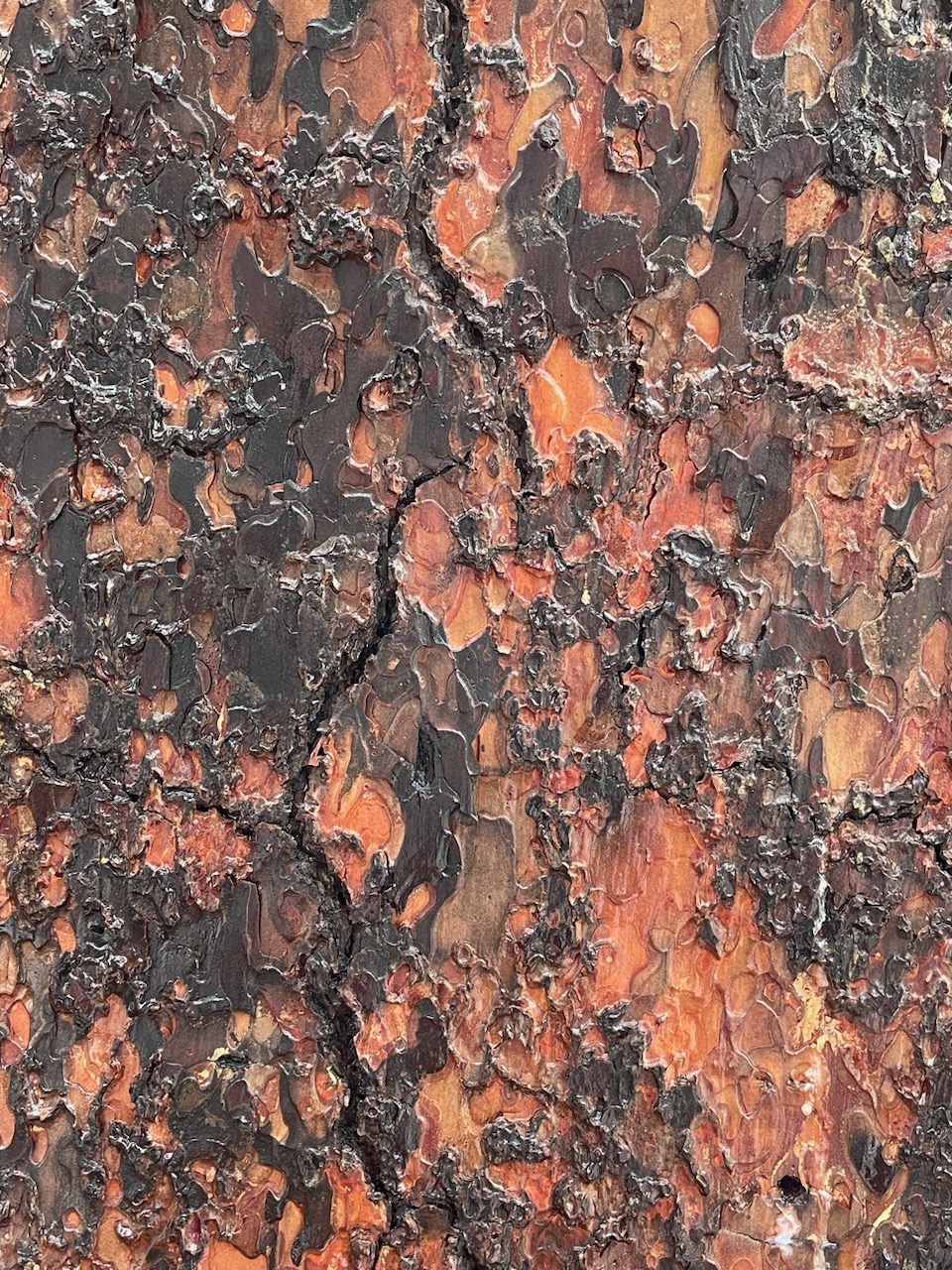
The trail flaky orange like peanut butter.

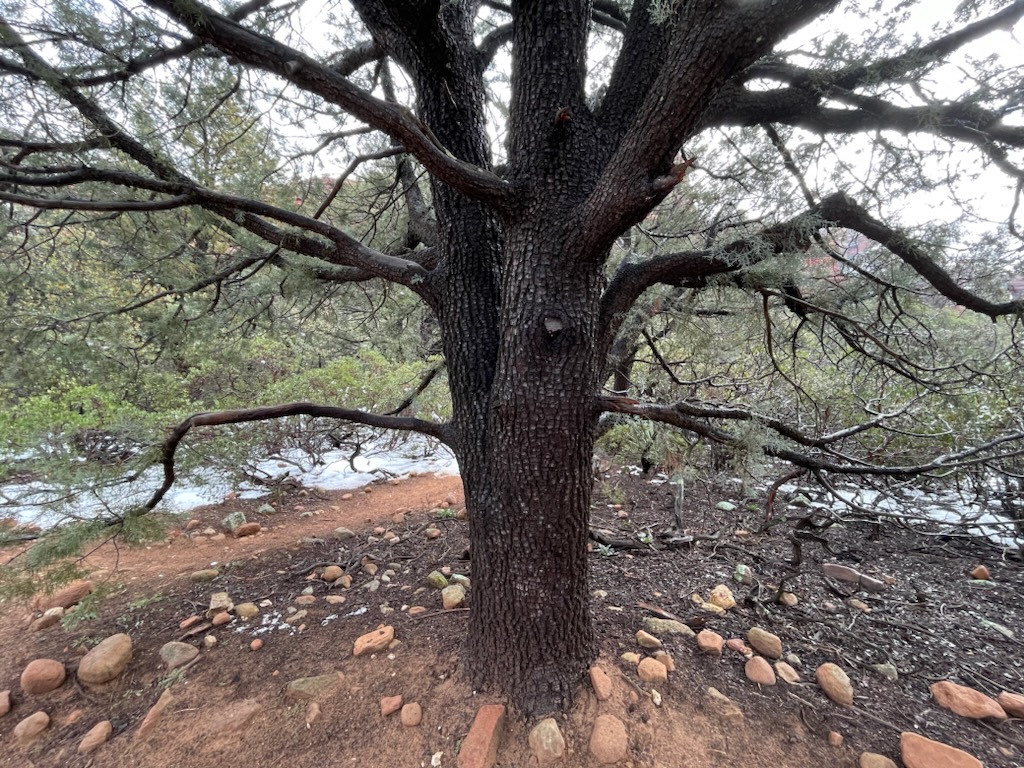
People whiz by. What’s the rush? I visit old favorites. The twin-stemmed alligator juniper.

How important is it to conquer the trail, conquer the world? Is there something I need to be doing? I am unencumbered by a book contract (for now) with not a penny in my pocket to weigh me down. I think that might be alright, at least for today.

I’d like to branch out like an old tree. Reevaluate. Reassess. Probably won’t come to a conclusion any time soon. That’s okay.

Why do I do this thing, writing? Does it matter at all? Is it ego? More like id! No man but a blockhead ever wrote except for money, said the sage Samuel Johnson. Someone recently suggested that I put way too much time into this blog. Why would you do that? I felt stung, a bit. Well, it is true that as W. H. Auden famously, said, poetry makes nothing happen. (His words actually come from a great poem, in which he honors fellow poet W. B. Yeats. Auden goes on to say of poetry: it survives, / A way of happening, a mouth.) A blog post is that idea of nothing happening squared. I am aware of that.

Well. Why then? Because I get a chance to write about white skies and white snow. Snow glow. The old twisted with the new. My doubts. My quest, such as it is, on any given day. Solipsistic? Caught. Some other people like it too. I know that, and I appreciate it. Close, closer, closest.

Someone I know with a long, storied career in trees told me he’s just begun singing at cabaret open mics. None but a blockhead ever sang but for money, certainly. He’d never done it before, and occasionally bombs. All things new and grand and unexpected.

I am searching for inosculated trees. Kissing trees. I’ve found them before and written about them before, but not yet today. Same old same old.

But what is your blog about? demanded the pleasant stranger. Well, I do things, and then I write about them. That’s it. Isn’t there a limit to the amount of Jean-juice anyone can digest? That’s why we have Alka Seltzer.

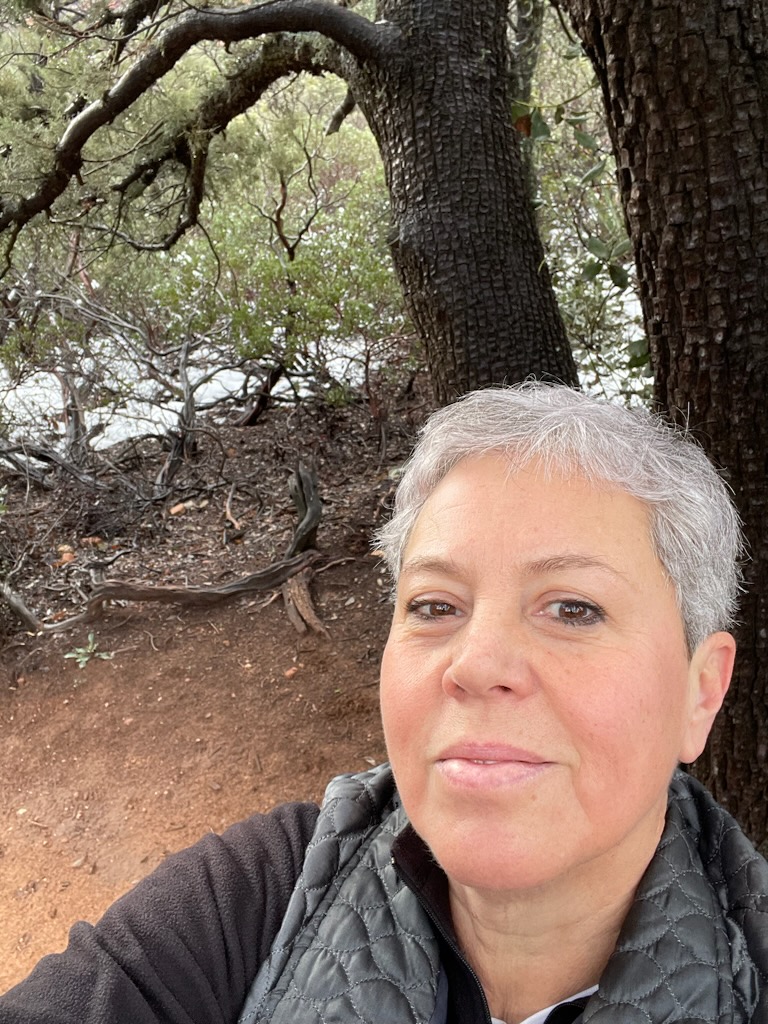
On the trail I pass a juniper that’s old and fat. (Like me. No complaints. I had granola this morning. That’s more than some of our friends on the southern border.) Something I never noticed before, it has a scroll of hieroglyphics hidden beneath the bark. The magic of beetles.

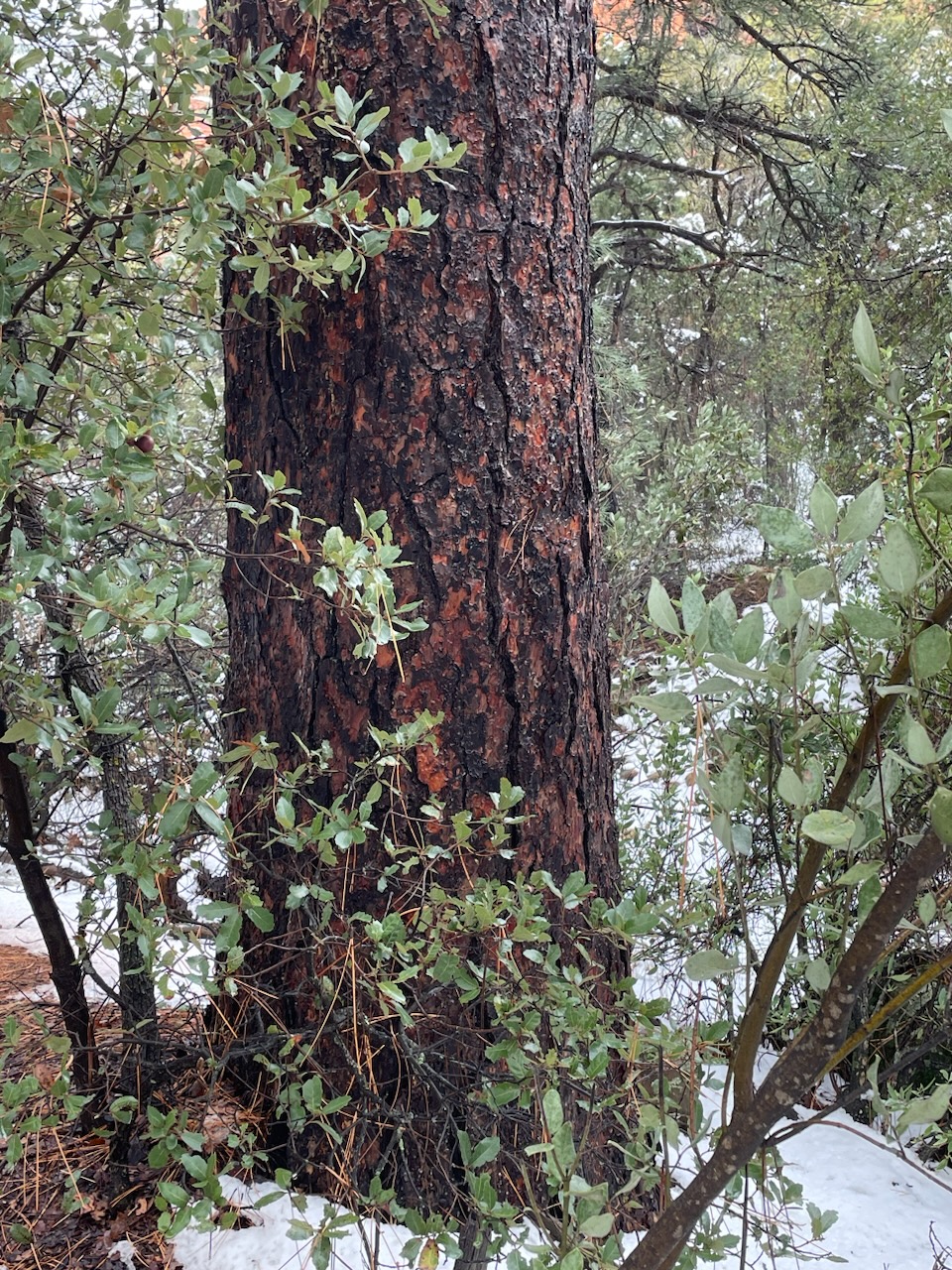
So many trees here fat and sassy, with intricately detailed and colorized skins.

Maybe it’s my way of escaping reality. I set my intention to find inosculated trees. Haven’t seen one example yet this morning, though I know I have on this trail before. That’s why we do it again and again.

A mess of needles.

I work things out in my mind as I go and as I write. Consider it a character flaw.

Beautiful and common shadbush.

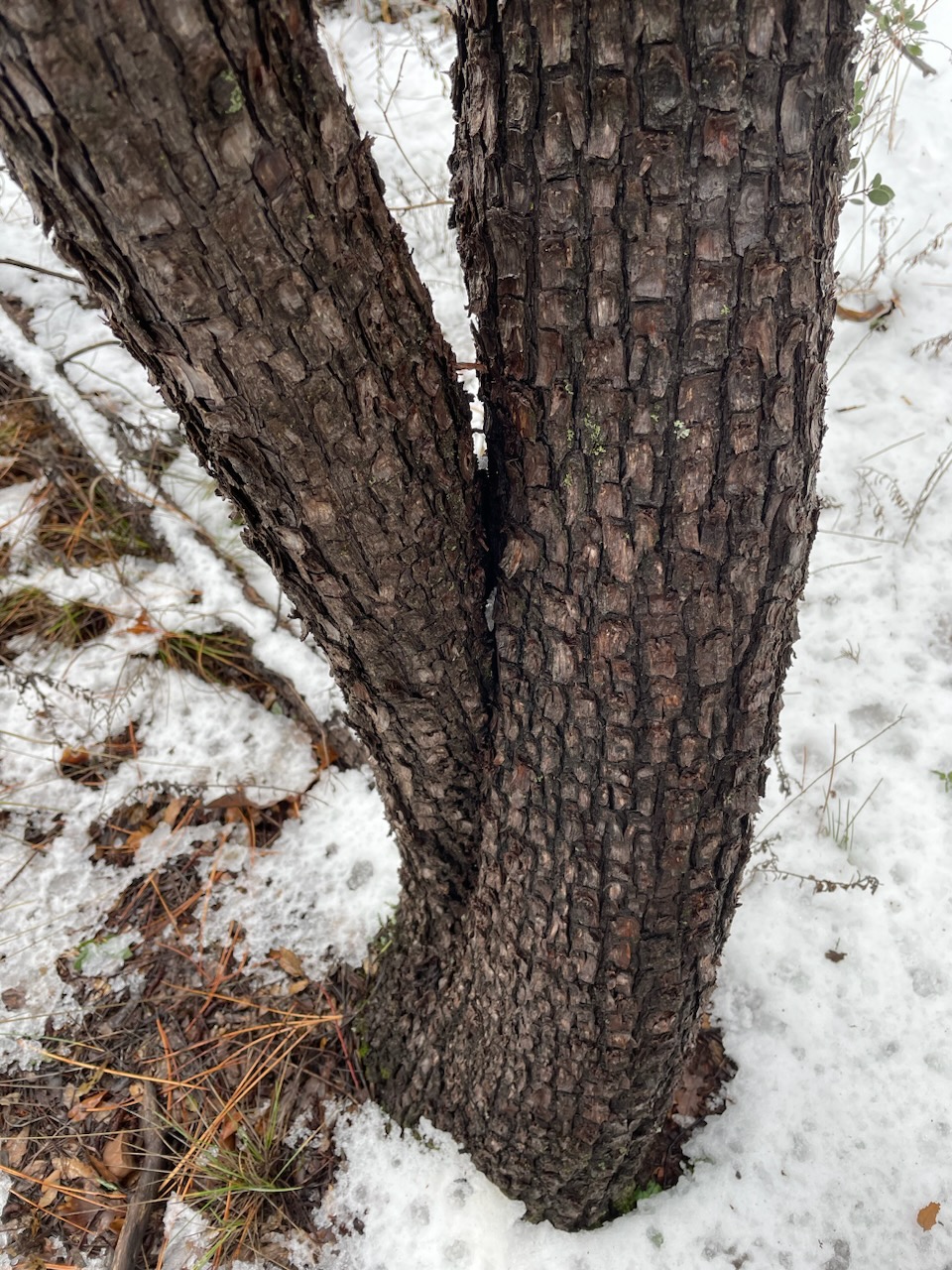
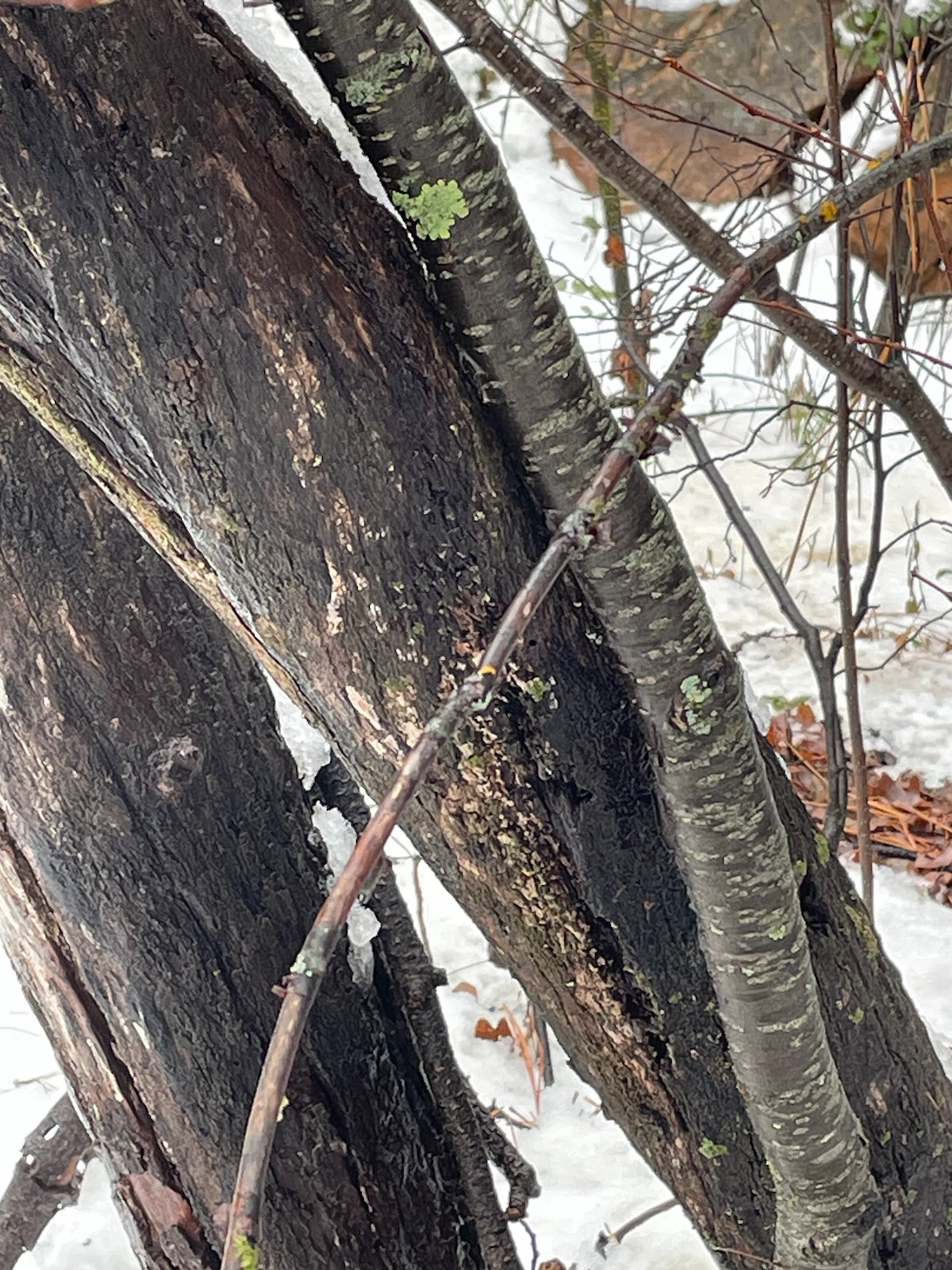
Stalking the forest, seeking conjoined trees. They didn’t know what they were doing, and through a trick of the wind they grew closer and closer and decided to join forces.  I like the junipers with twinned trunks because they confound dendrologists who would love to count their rings to determine their age. They are ageless. It’s so brilliantly confusing.

But I love the inosculated ones because they’re more rare. Spotting them is hard, sometimes, they’re a secret hiding in plain sight. You sort of have to catch them in the act. Someone I know used to say all the time, We are so lucky. Perhaps. But of course you have to make your own luck, yada yada. And how do you do that? Sometimes by retracing your steps over and over and over again. I’ll feel lucky if I can find a conjoined tree. I know there’s one here someplace.

Finally I find a pair.

My work here is done.

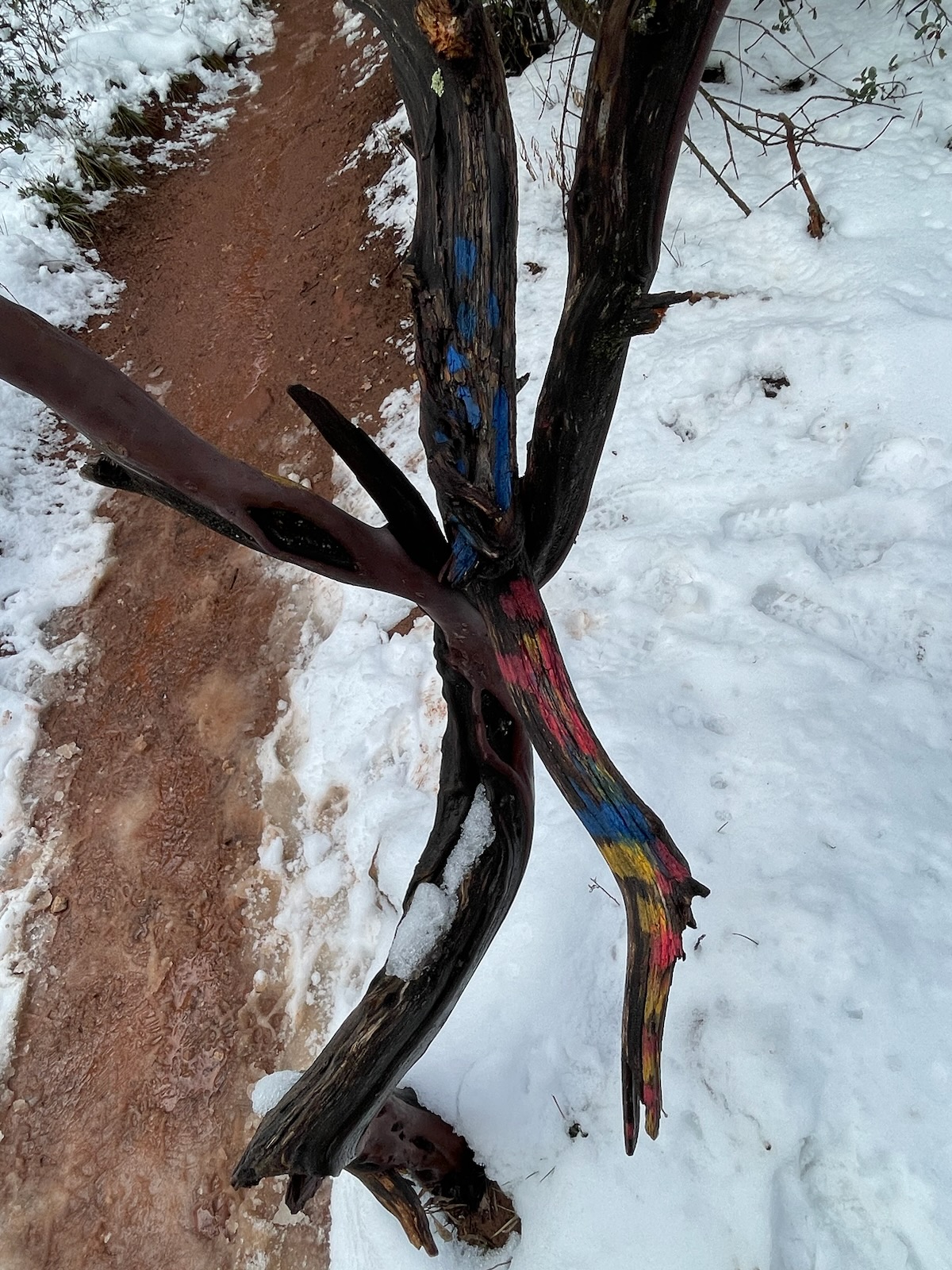
Someone stops me on the trail: Do you know the way to the subway? Is she making some kind of hiker’s joke? No, I say, but if you continue on you’ll find the Indian cave. What do you mean, subway? Turns out it’s some kind of tunnel formation. Other hikers mention it too, everyone looking for the subway in Sedona. It’s supposedly a turn off the main trail by a red and green tree. Red and green tree? Interesting concept, said the supercilious arborist. Then I met up with this hand-painted trail marker, went in and looked around and didn’t find the subway, but maybe next time.

There are surprising numbers of hikers here today. Questers all.

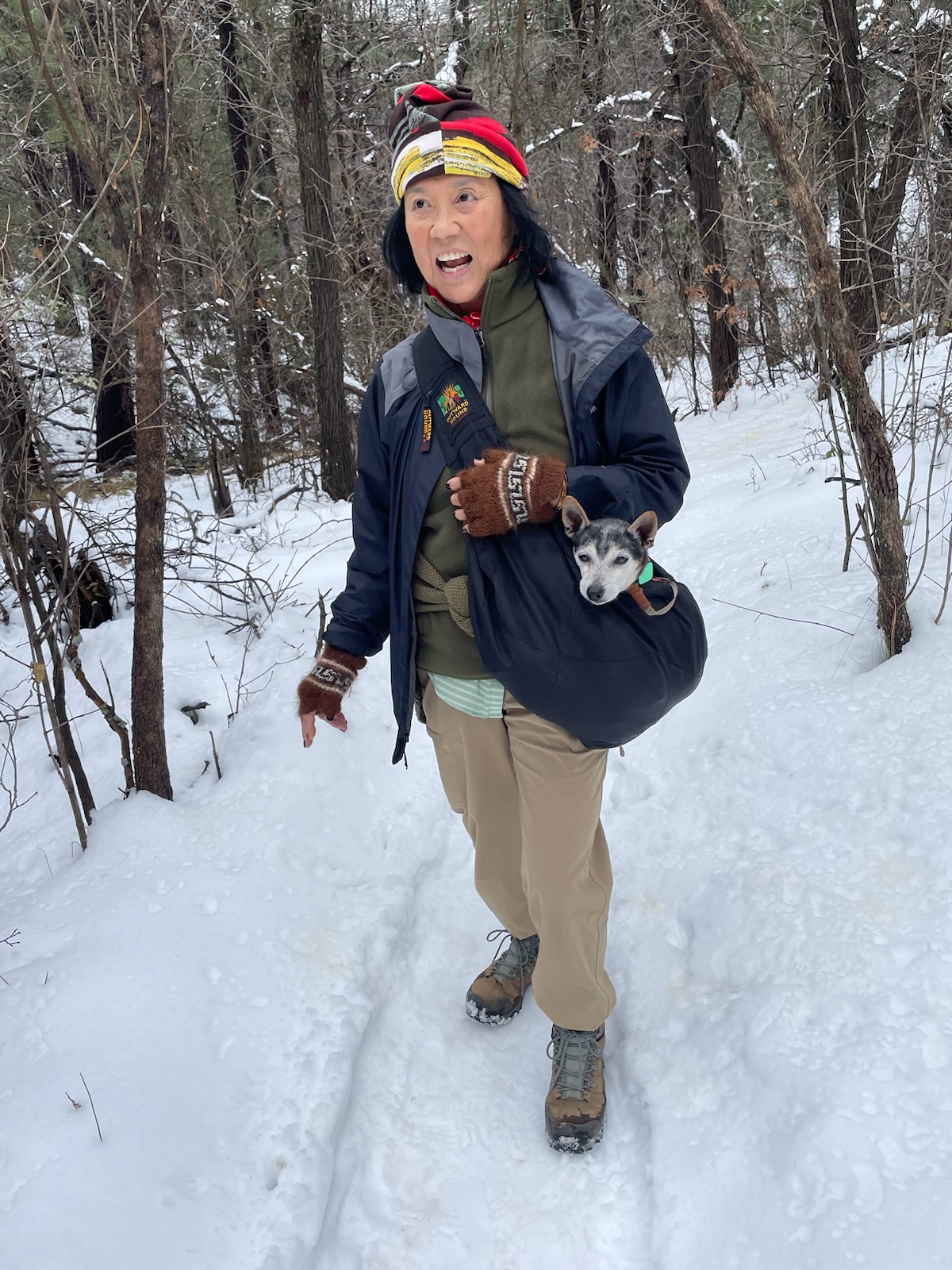
Abel is 15 years old and hiked most of the trail before getting pooched. Others are taking pictures of the same sights I’m showing here.

Overheard on the trail: Do you ever feel like you’re waiting for the other shoe to drop? Absolutely.

An old soldier. I’m impressed.

Sometimes you’re just hanging on for dear life.

There is an oak being beautiful around here, though I don’t see it at present.

I’m a trunk, you’re a stone. Would it be okay if we cohabit this place?

Pretty sure I’ve met up with this old geezer rock before.

Animal pee. Yes, we live here too. A hawk overhead, scree. The sound of snow plopping all around as the morning warms. Am I going to see something amazing now?

Place one foot in front of the other.

There’s so much to see.

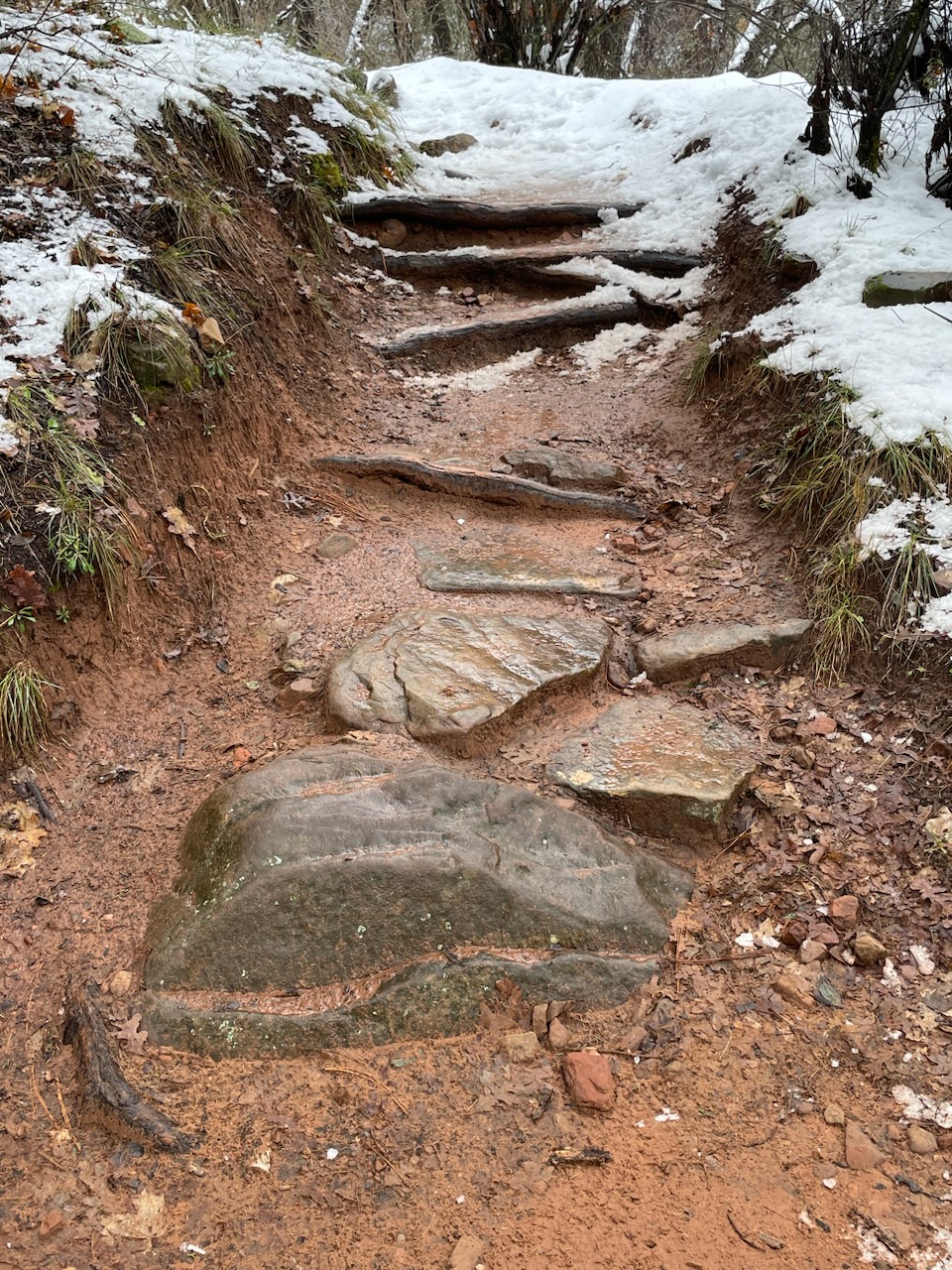
Just don’t slip on the ice.

3 Comments

Filed under Jean Zimmerman