Tag Archives: Poetry

What is common?

It’s in the eye of the beholder, isn’t it?

I took a walk on the Old Croton Aqueduct trail as spring just came up, and it got me to thinking.

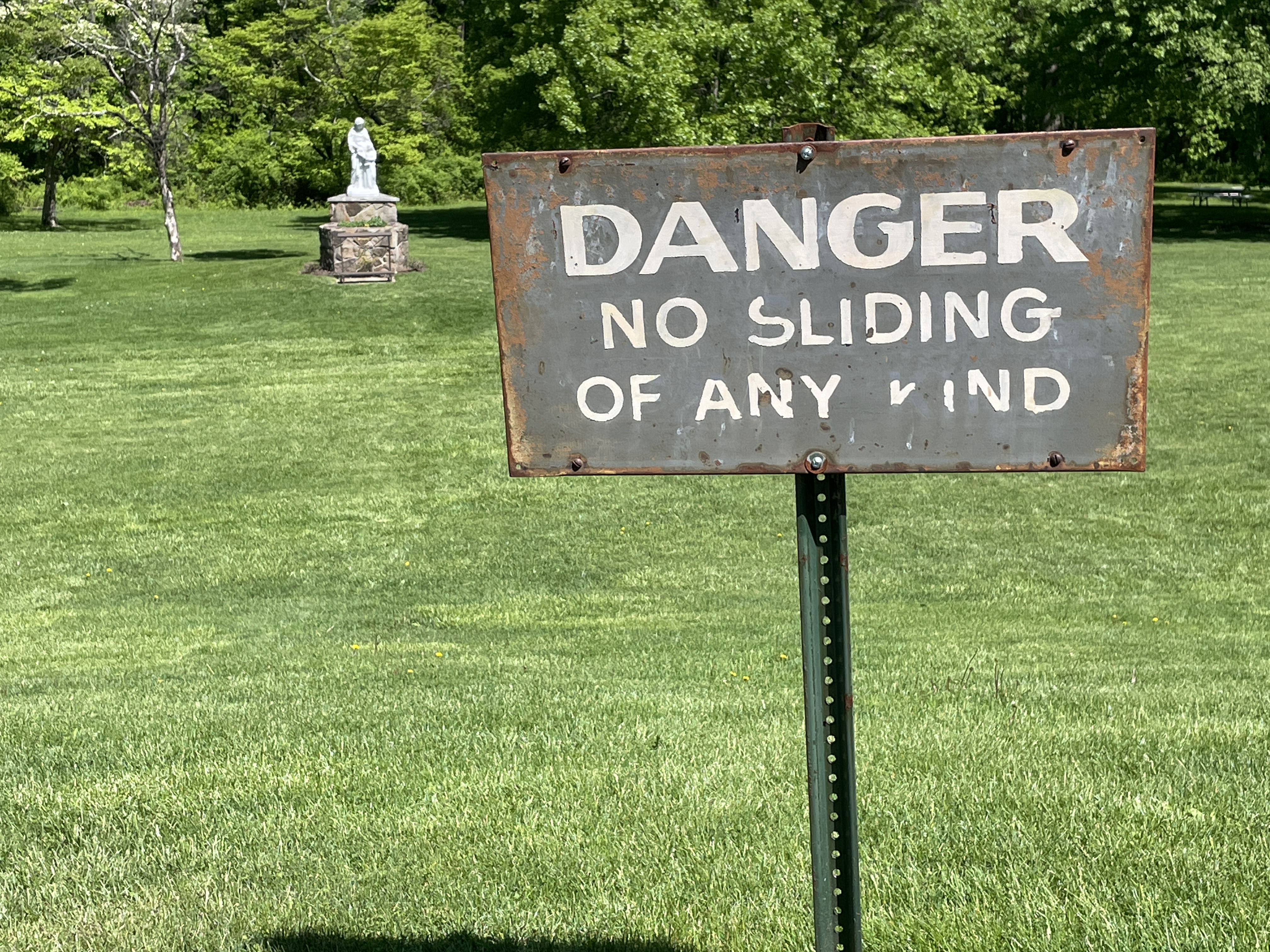
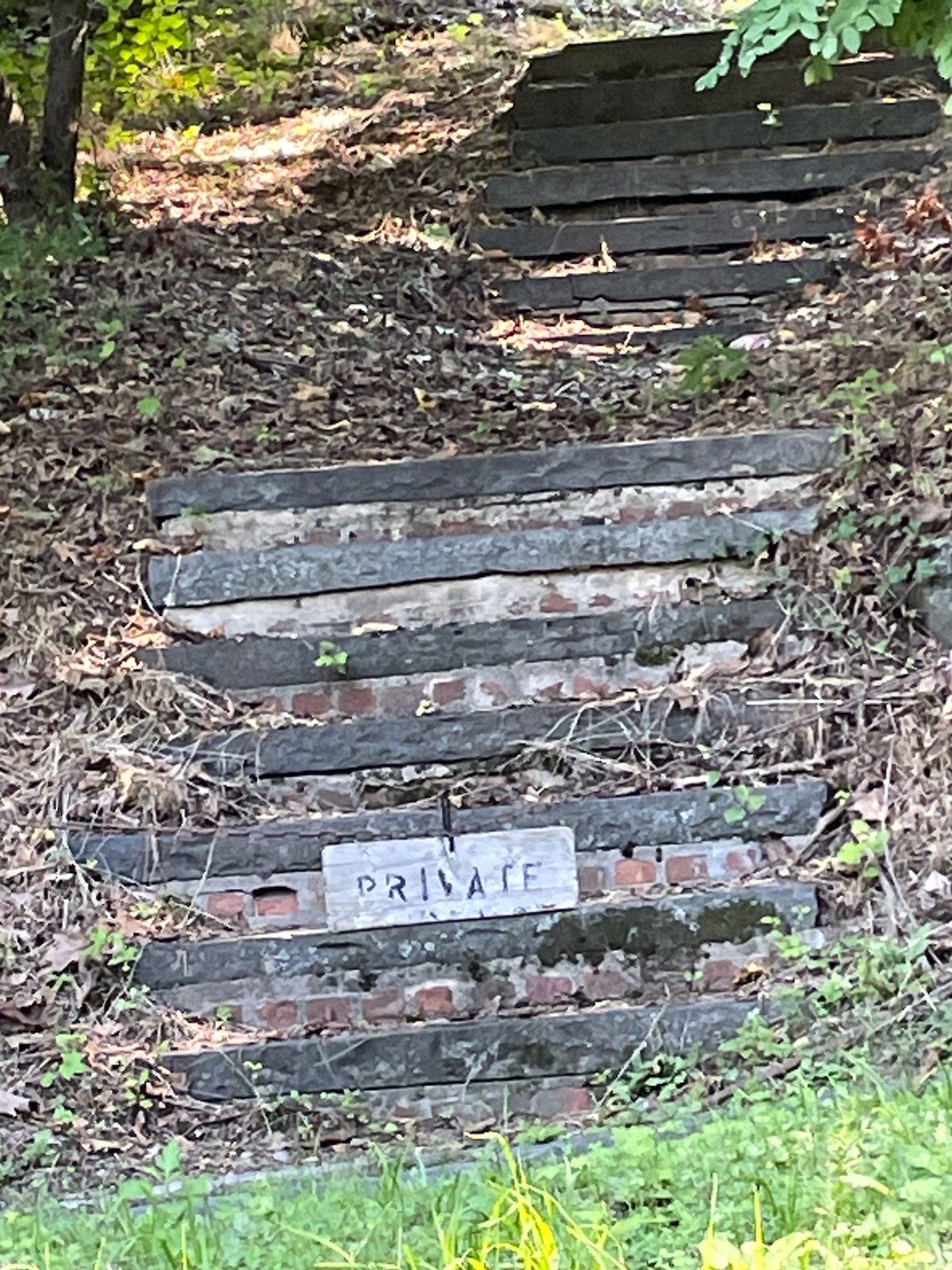
So many beautiful things. So many of them so ordinary. First, a sign warning me off. My favorite kind of sign, so commonplace.

I see them everyplace, I guess because I like them so much. And I like going past them so much.

I spotted another one recently too. Almost as nice.

I find I like almost any free advice.

Mainly so I can ignore it.

Back to the trail. Tree shadows. Common.

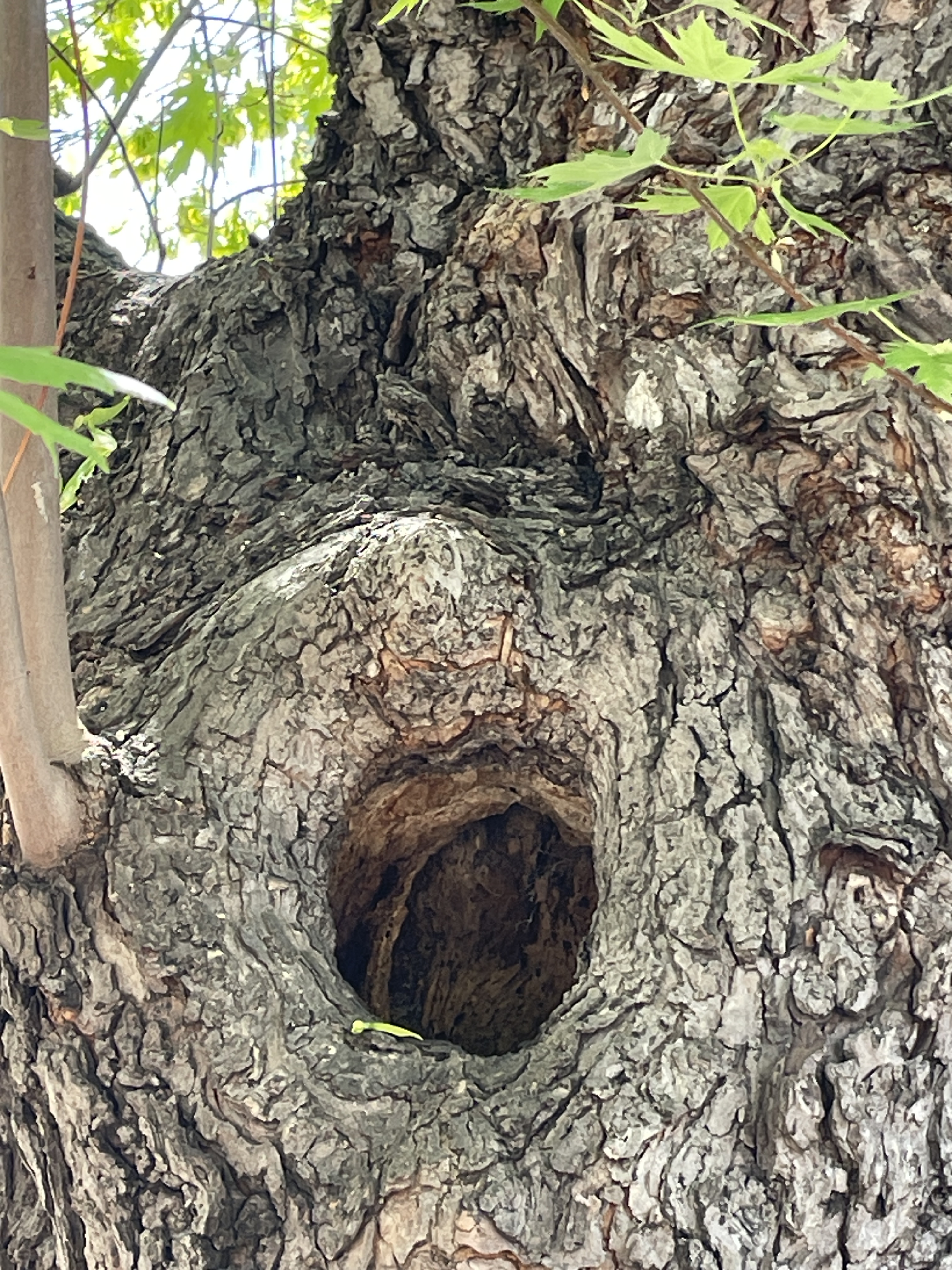
A hollow. I think we make a mistake in distinguishing between death and life. Death shelters life.

Another hollow, this one in an old-old silver maple on a Bronx street.

Okay, anyone would call this tree extraordinary.

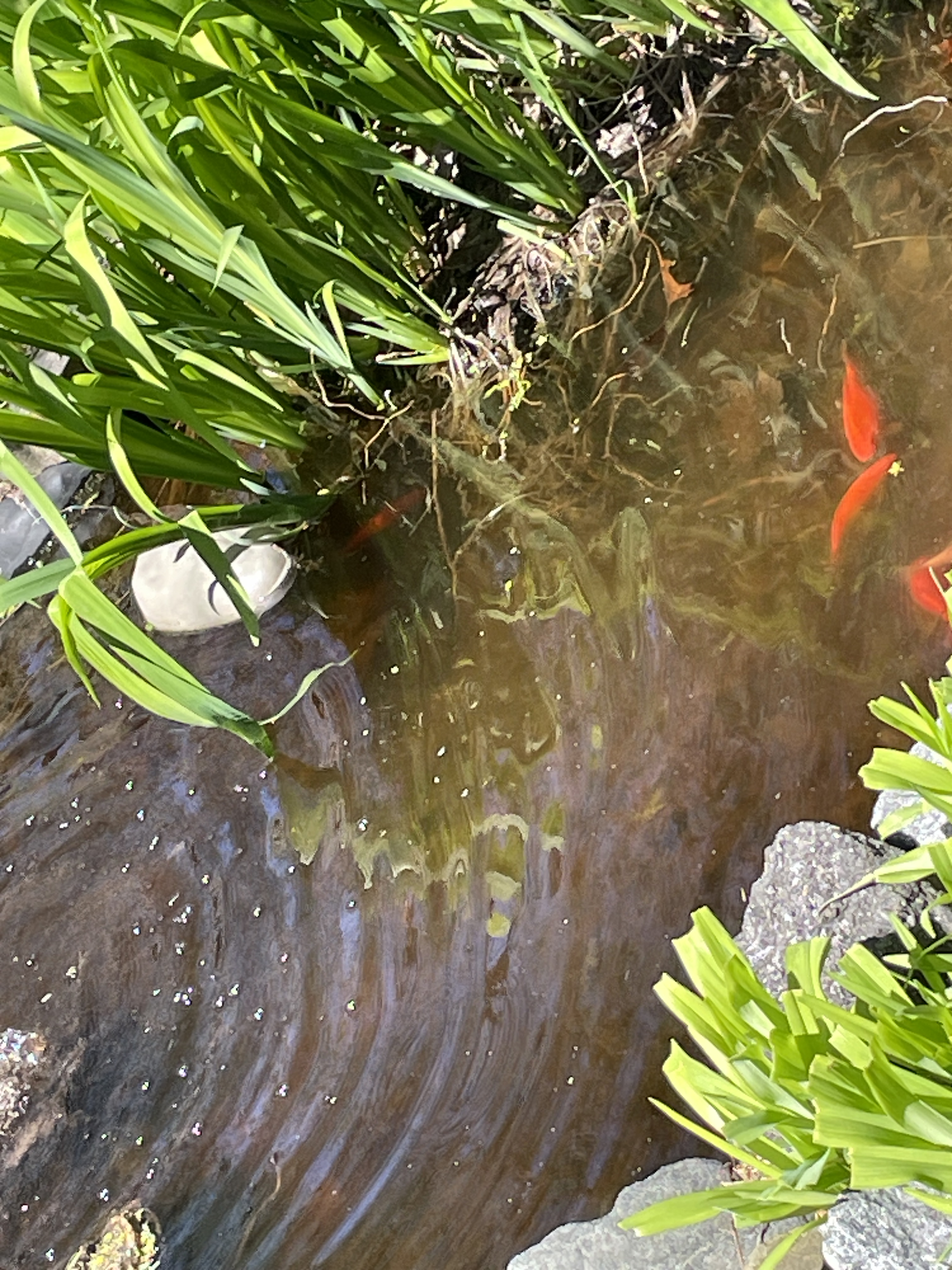
On the trail there’s a backyard koi pond I’ve passed a thousand times. Sort of common.

A sycamore, not yet leafed out.

You could just walk by and not notice. Nothing remarkable. Back yard steps, leading…where?

Look down. A pine cone. Brown. Ho-hum.

Gertrude Stein said, It takes a lot of time to be a genius, you have to sit around so much doing nothing, really doing nothing. Looking at not much of anything helps too. Noticing nothing much.

More trail shadows.

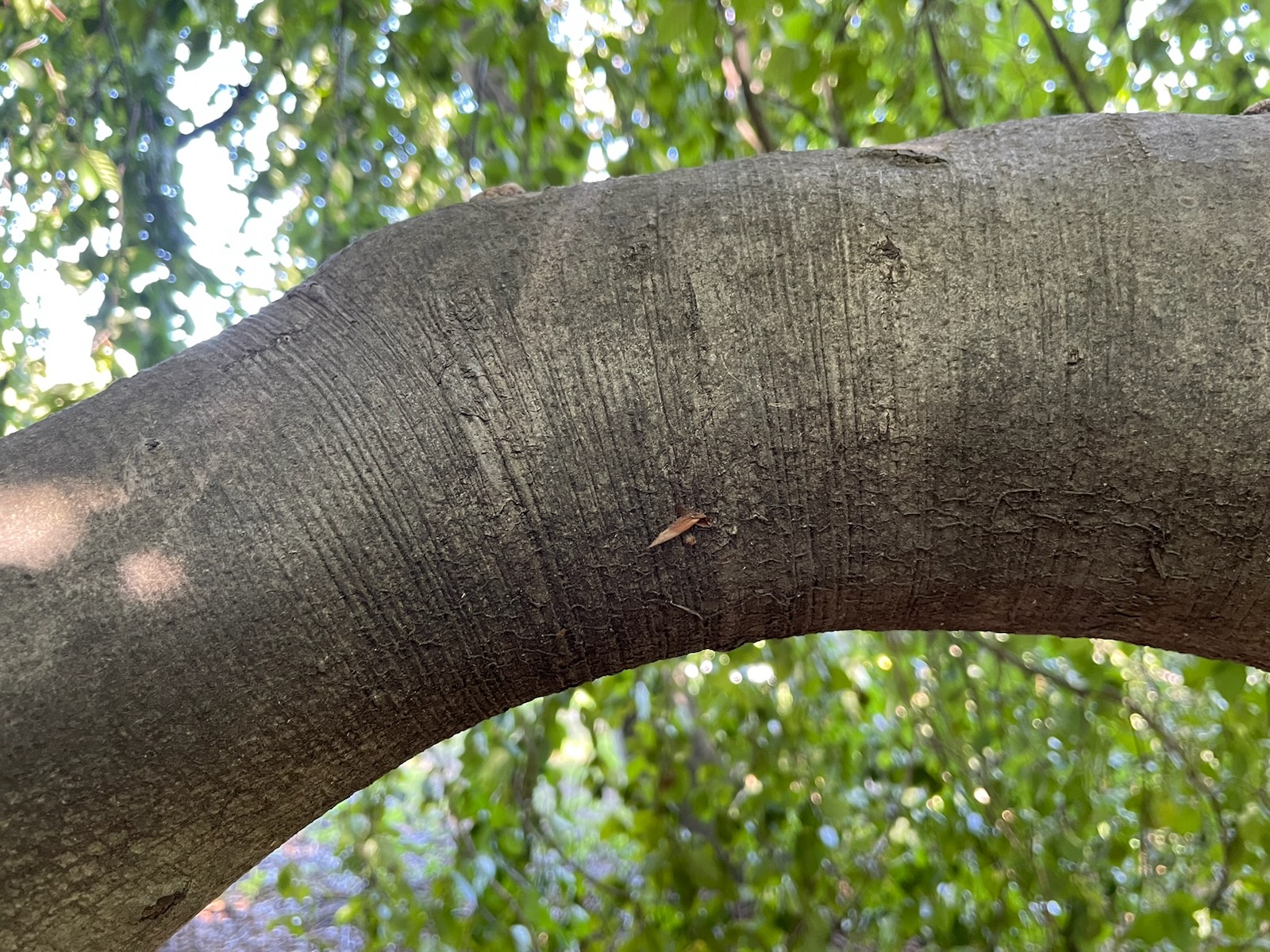
Twisted bark. Common.

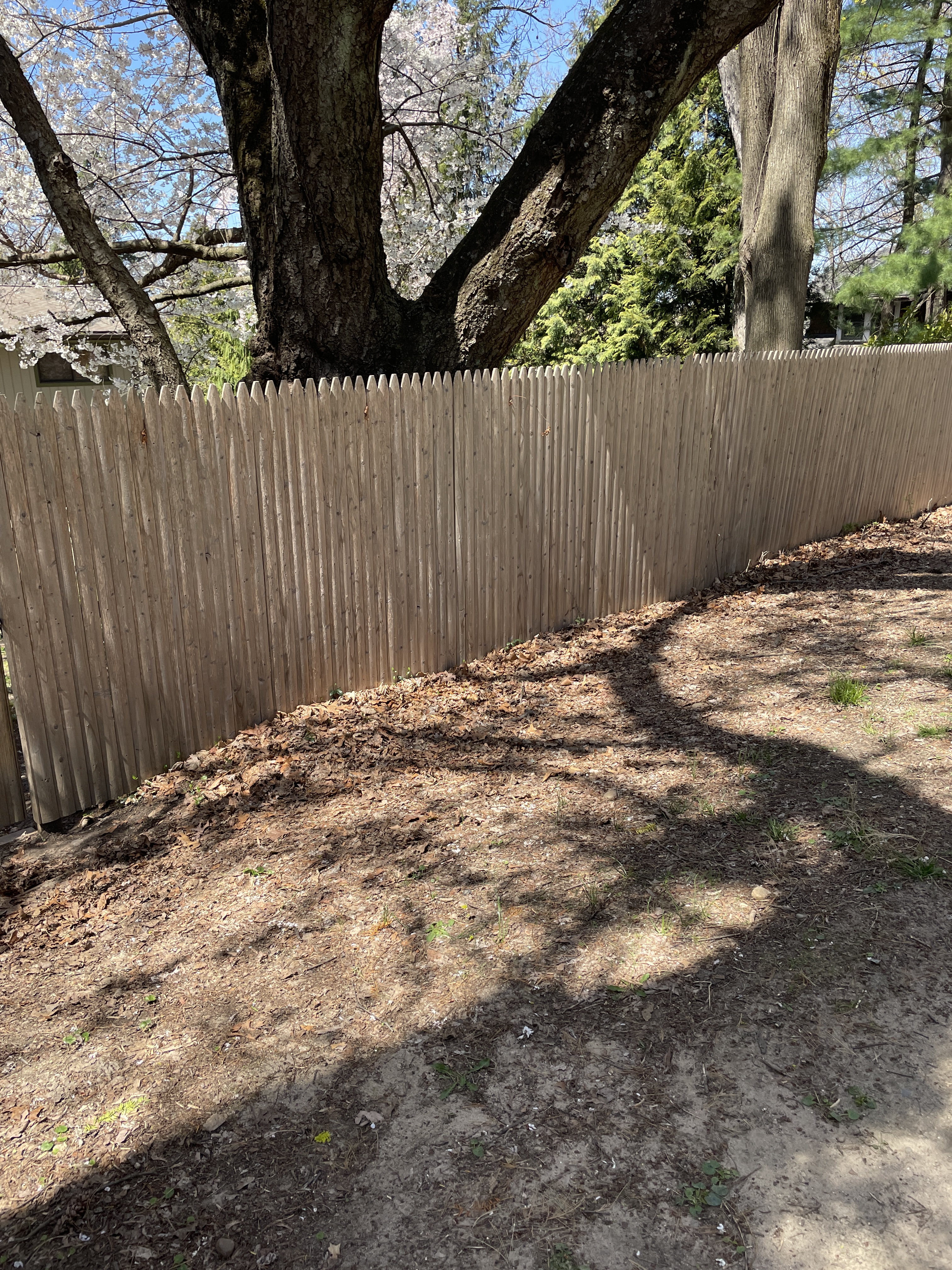
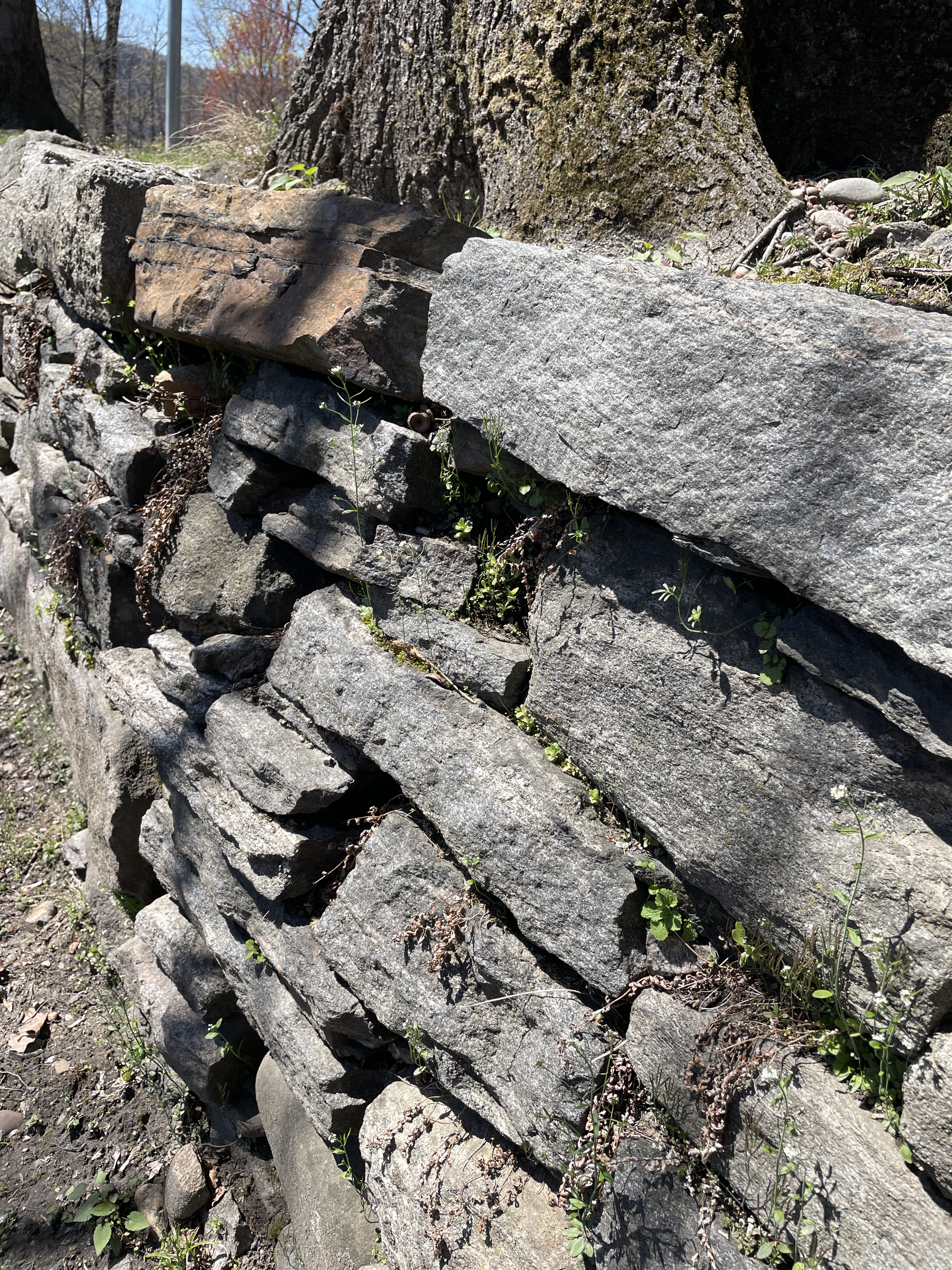
Ye olde stone wall.

Sprouts. 

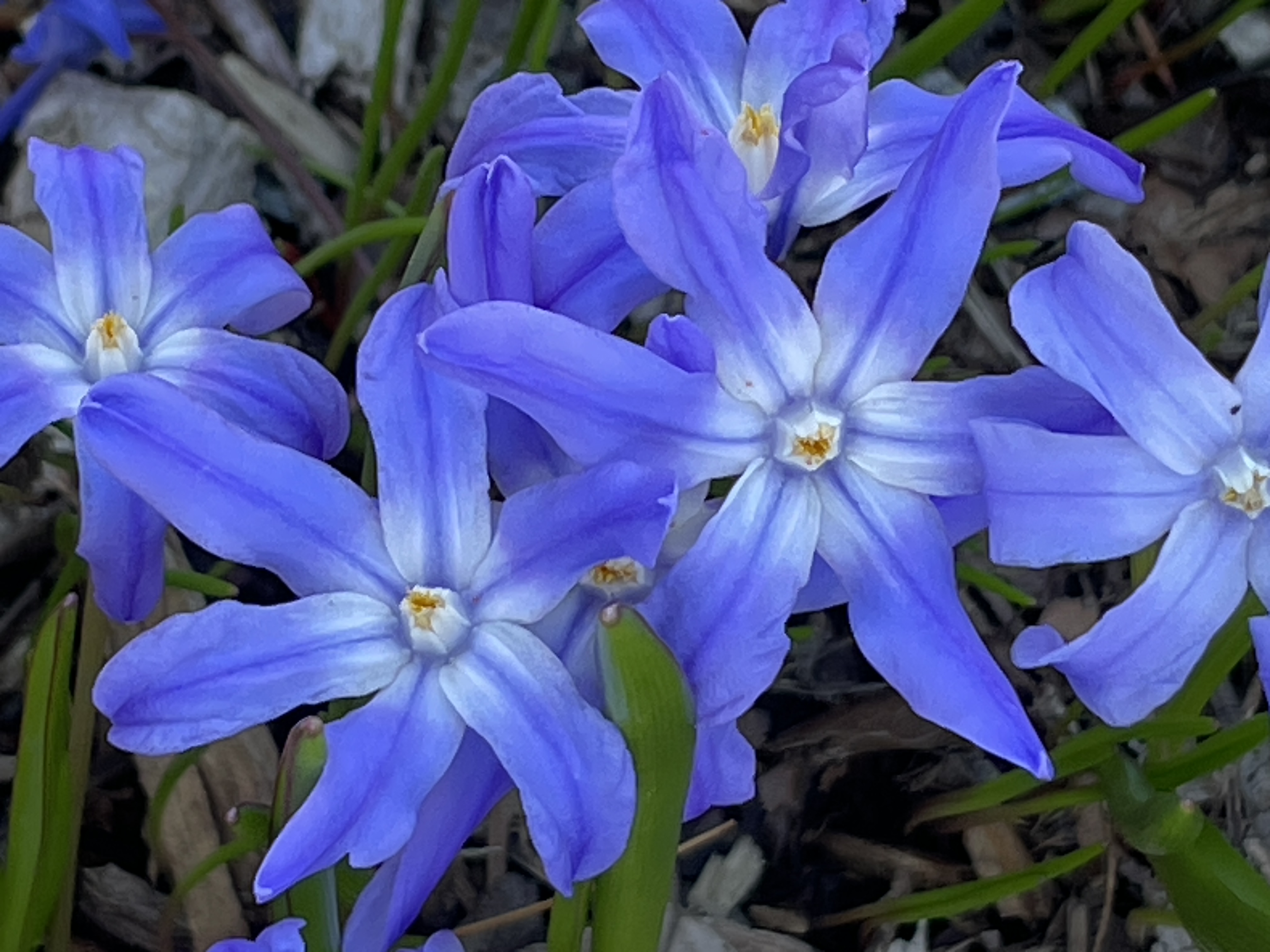
Rudimentary flowers. If they have a name, I can’t remember it at the moment.

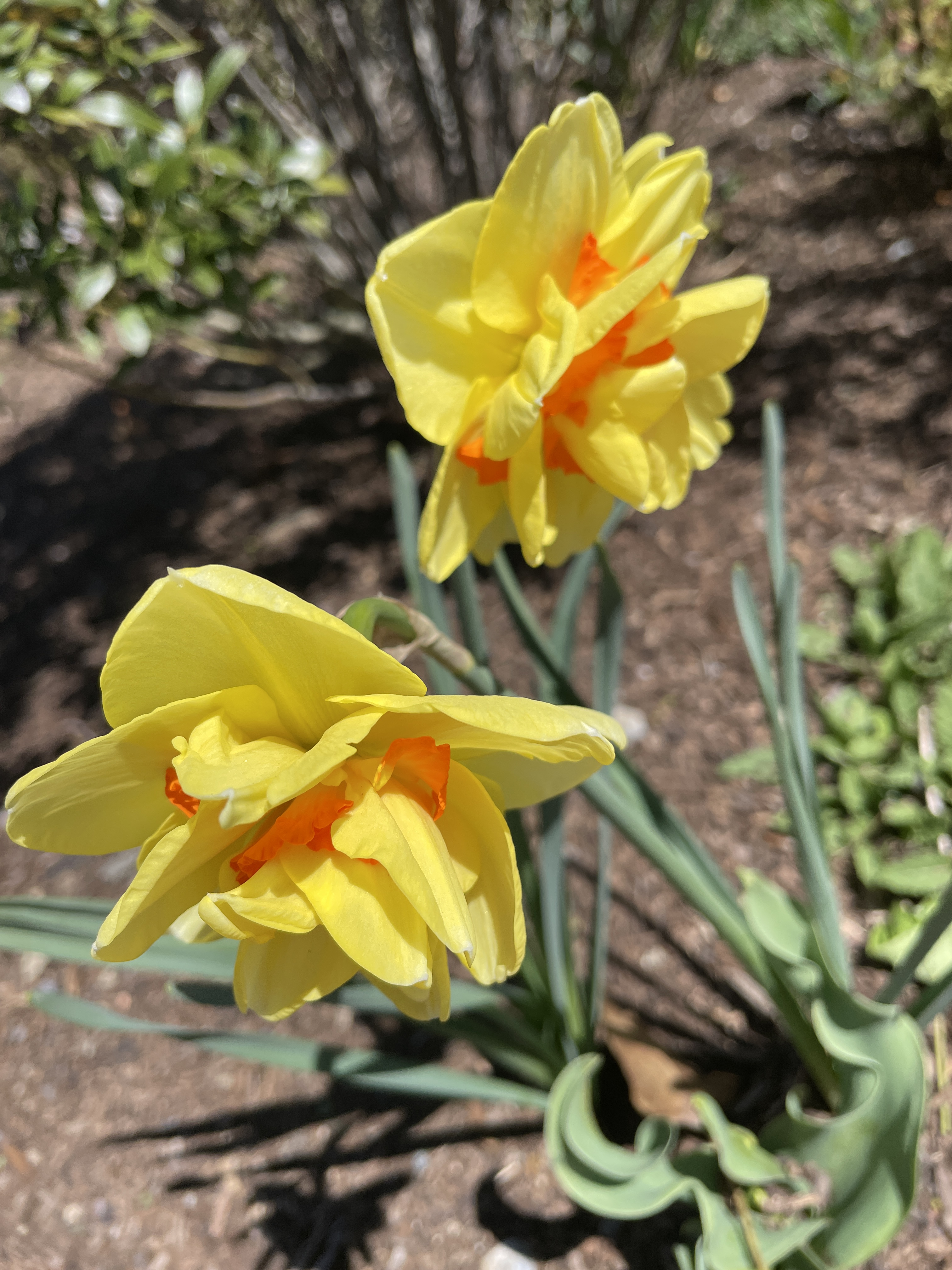
Daffs.

The most basic flowers. To again quote Gertrude Stein, a writer who knew something about the commonplace, Rose is a rose is a rose is a rose. Or daff is a daff is a daff.

Still, I’m glad I brought my hankie, since the most commonplace flowers make me tear up these days. As ordinary as they are, who knows how many seasons we’ll see them for?

This happens to be an everyday handkerchief inherited from my grandmother. Commonplace! That walk got me thinking. How many of the common things are my favorite things? A homemade hot fudge sundae.

Mister Softee though. Pretty much average. Pretty remarkable for kids though.

A polite dog.

A dog hug.

Any hug, really. Holding hands will do in a pinch.

Pansies. Can you get any more banal?

An afternoon suburban street.

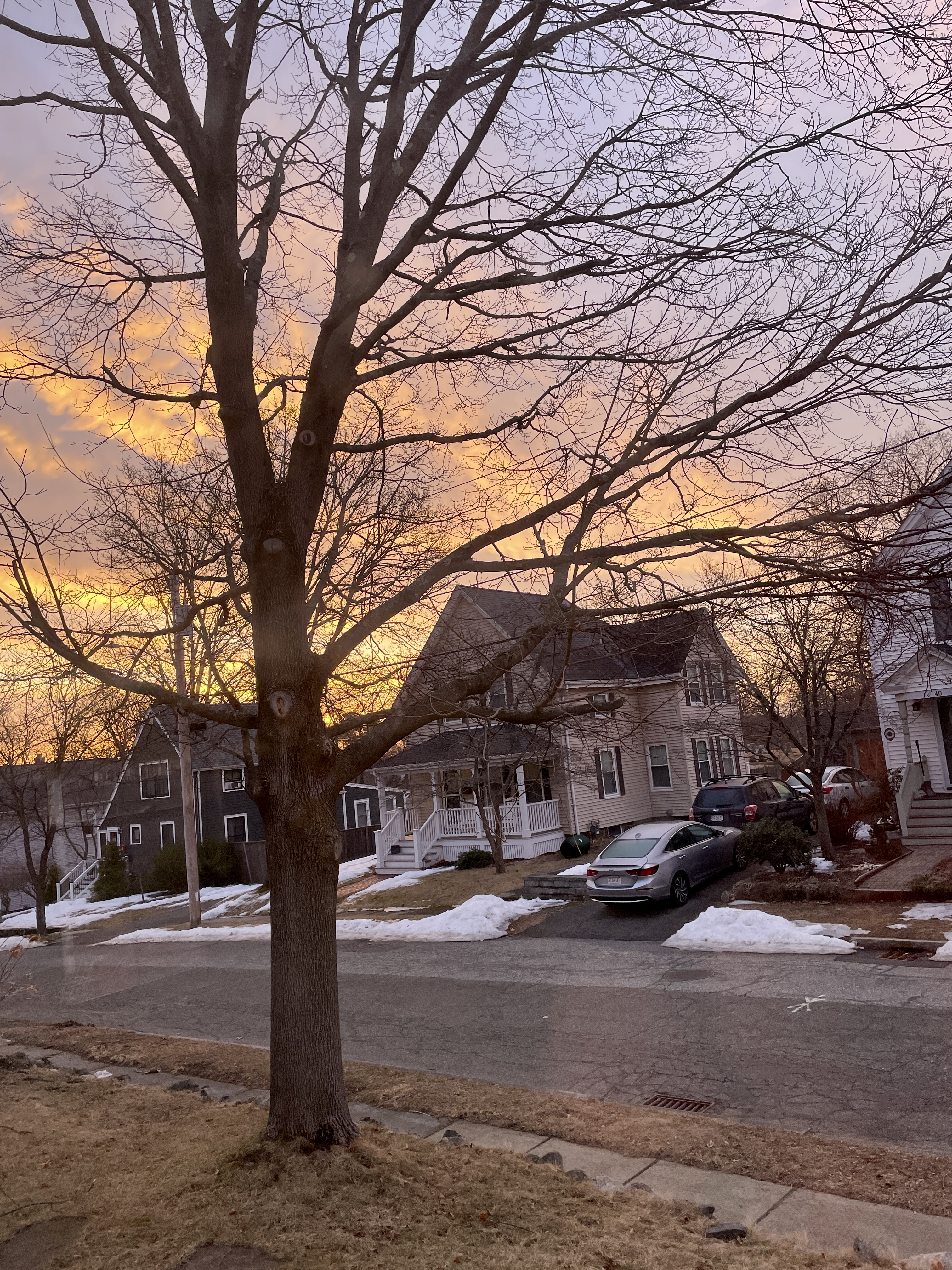
So common. Note the towering beech though. How about a suburban dawn?

Sorta makes you think, to quote Gertude again, There ain’t no answer. There ain’t gonna be any answer. There never has been an answer. That’s the answer. Got that? Street poetry.

Just walk on by. So ordinary.

Banal.

Anyone could see the poetry here. Of course.

Petals. Okay, they happen to be cherry petals.

And everyone knows cherries to be extraordinary.

Look up, though. At the sky. Totally ordinary blue. Once more, Gertrude: I like a view but I like to sit with my back turned to it.

Go ahead, Gertrude. Just try.

10 Comments

Filed under Jean Zimmerman

Late summer privacy.

I see no one on my walk to Lyndhurst, not a soul. My only company, late-season thistles along the path.

A weathered sign by the open-air entrance to the old estate tells the story of my day in a word. Private.

The Old Croton Aqueduct trail runs right through the grounds. Apparently the first owner of the property was proud, ecstatic to have the water run underground here when the water pipe was first installed, carrying water miraculously down from upstate to New York City.

You can stay on the trail. Or follow mysterious mysterious arrows. I choose not to follow.

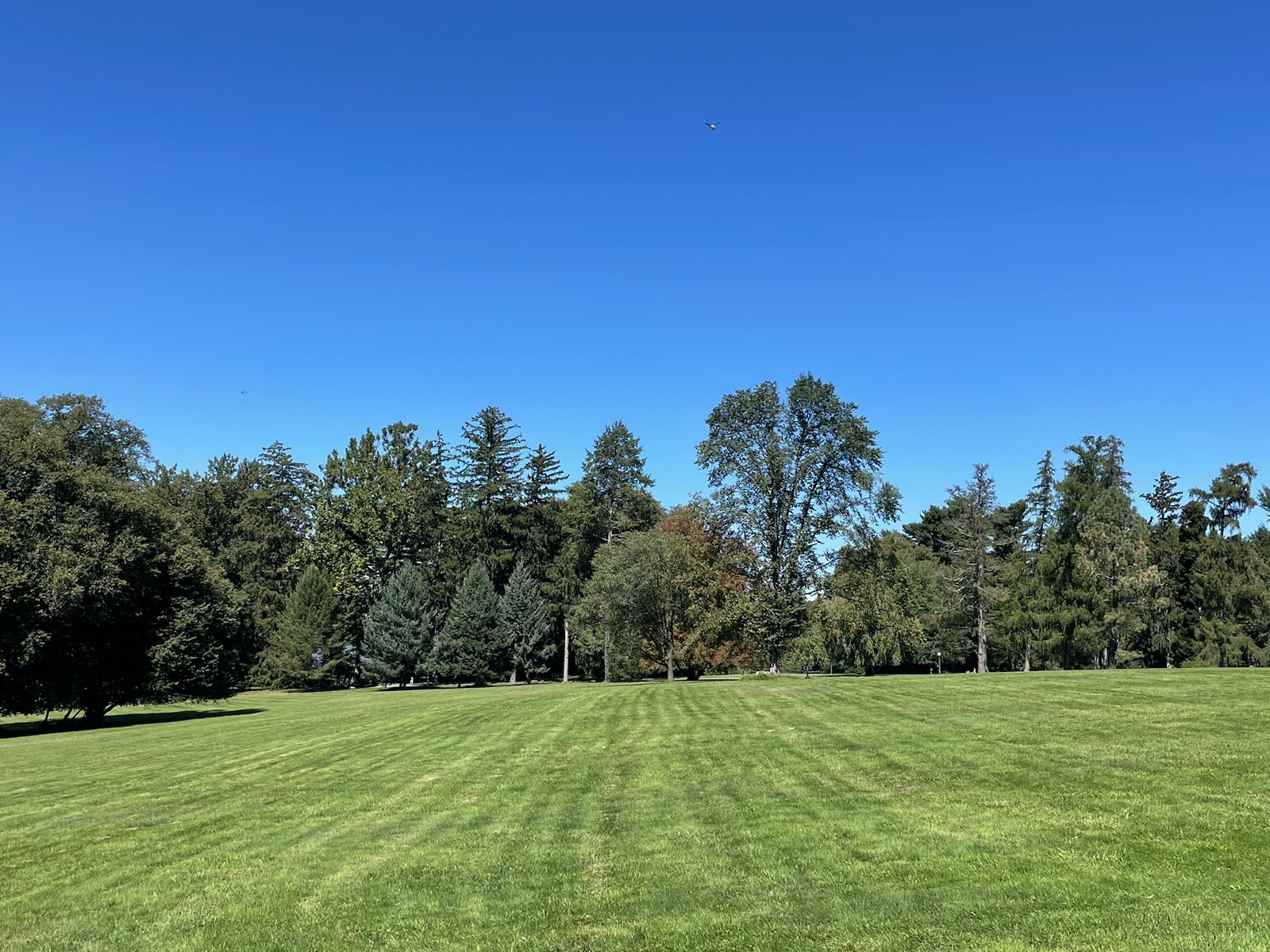
The lawns and old, old trees beckon. Robert Graves wrote, Tranquility is of no poetic use. I beg to disagree. This morning is sheer poetry. The calming late-summer scents of grass and trees, the hum of insects, the perfect glaze of sky.

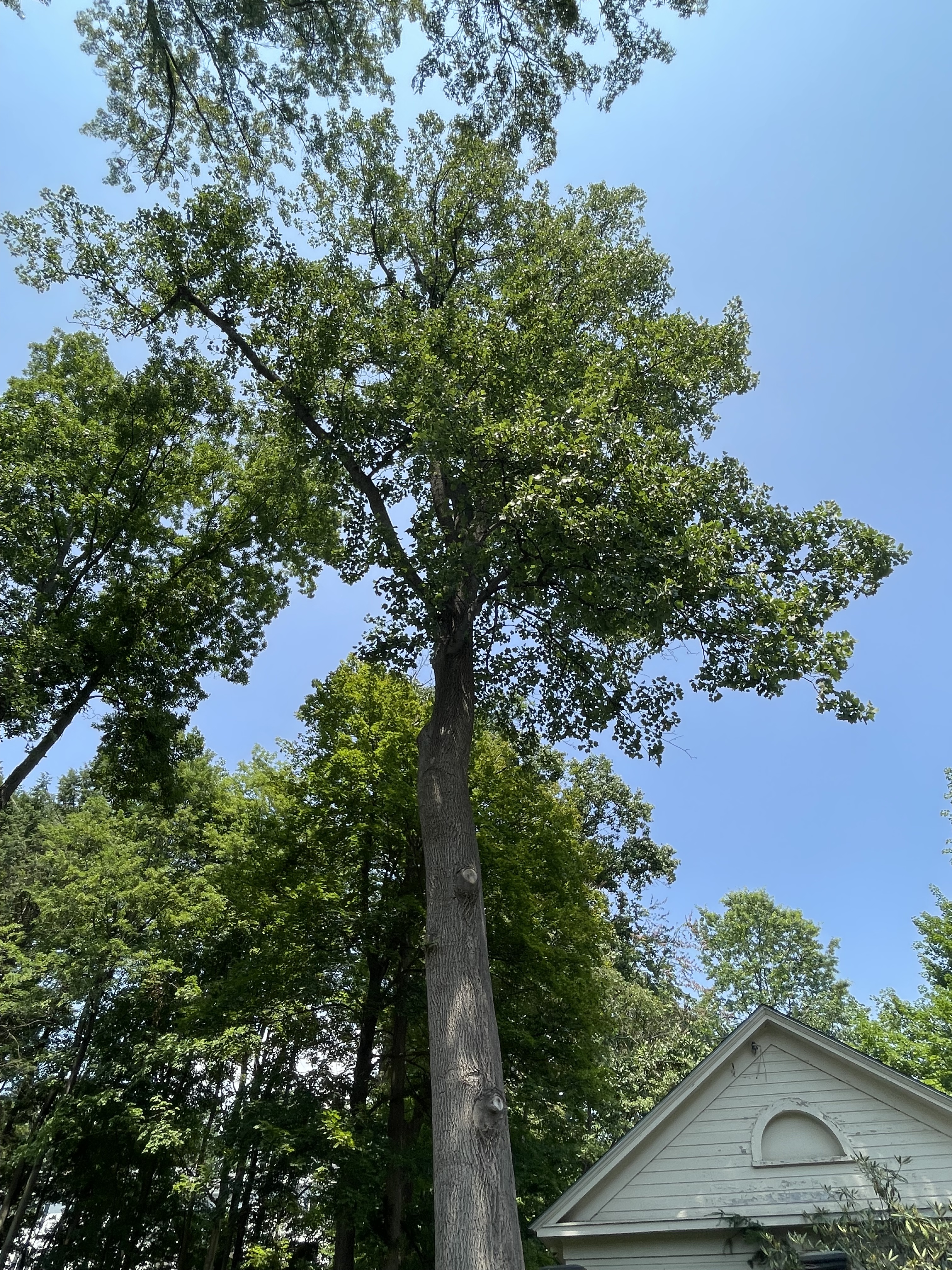
I have wondered recently, Why is the sky blue? Such a silly question. The science has long been in. But still – blue? Perfect azure? Really? Could the universe really be this kind? I visit a grove of tulip trees.

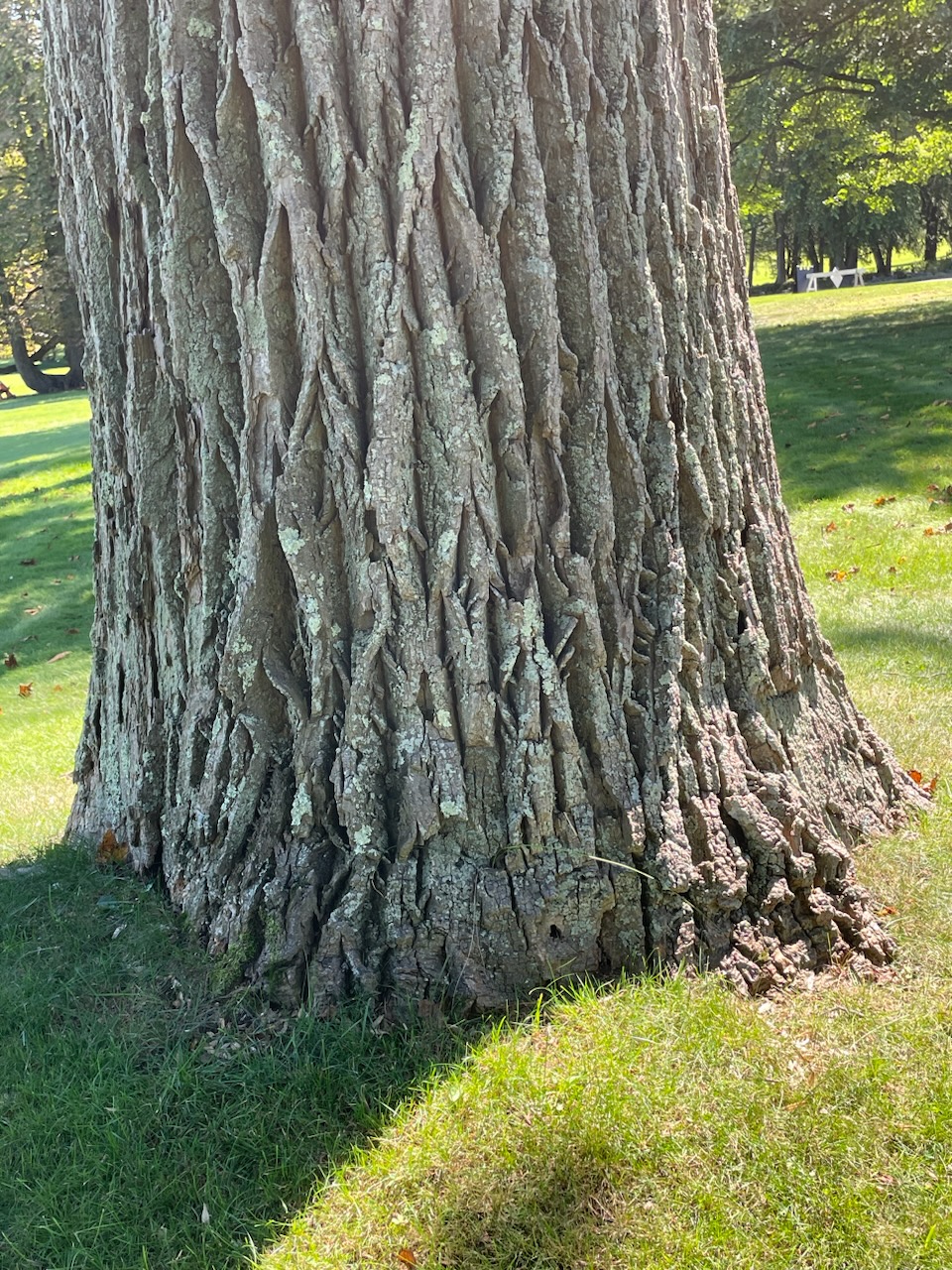
They stand poker-straight and are probably two hundred years old. Come close and touch the grooves.

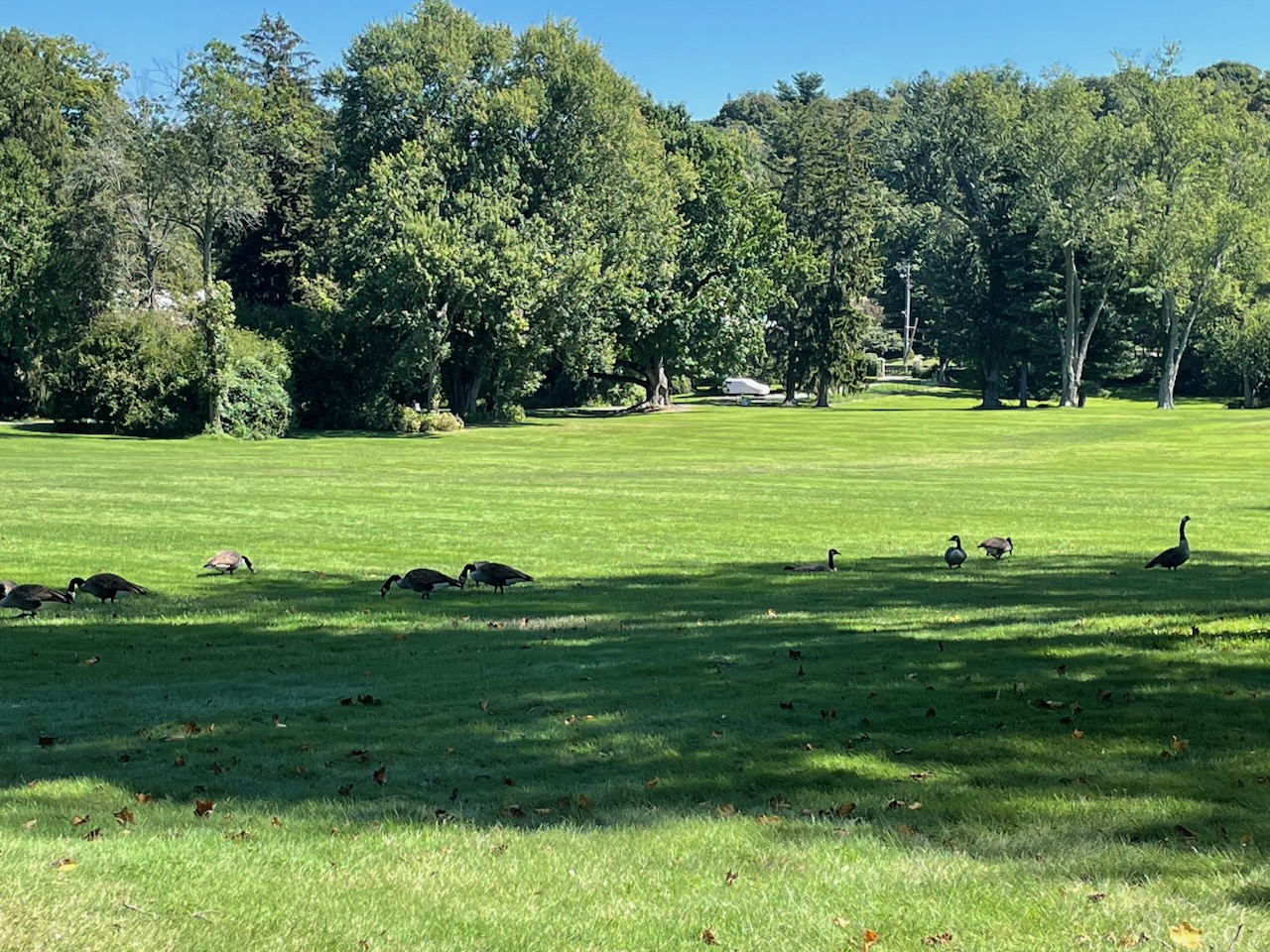
Geese feed themselves on grass. Quietly, unhurried, unworried.

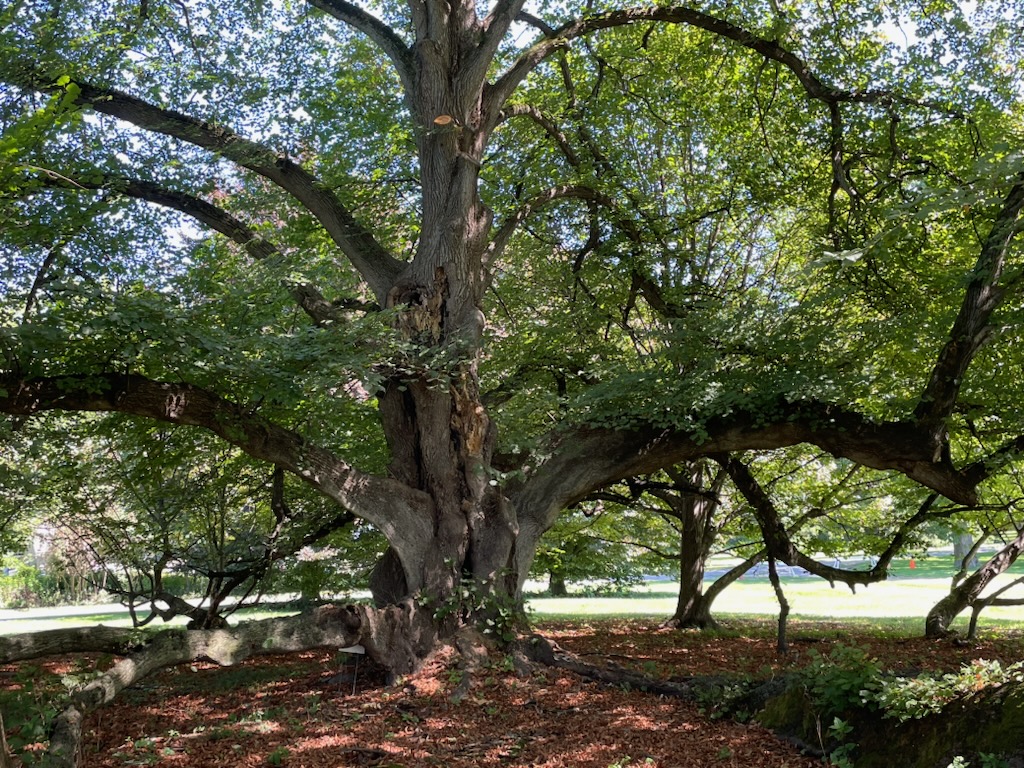
I feed myself too. I am hungry, having not eaten yet today. Now I feed my soul. I go to my favorite linden, the huge specimen with multiple stems and an enclosed space like a private drawing room.

There are many lindens here, some still holding onto their magical lemony bracts.

Octavio Paz wrote:

Perhaps to love is to learn

to walk through this world.

To learn to be silent

like the oak and the linden of the fable.

To learn to see.

Your glance scattered seeds.

It planted a tree.

   I talk

because you shake its leaves.

Seeking even greater privacy, greater tranquility, I visit one of the gargantuan, ancient weeping beeches on the grounds,

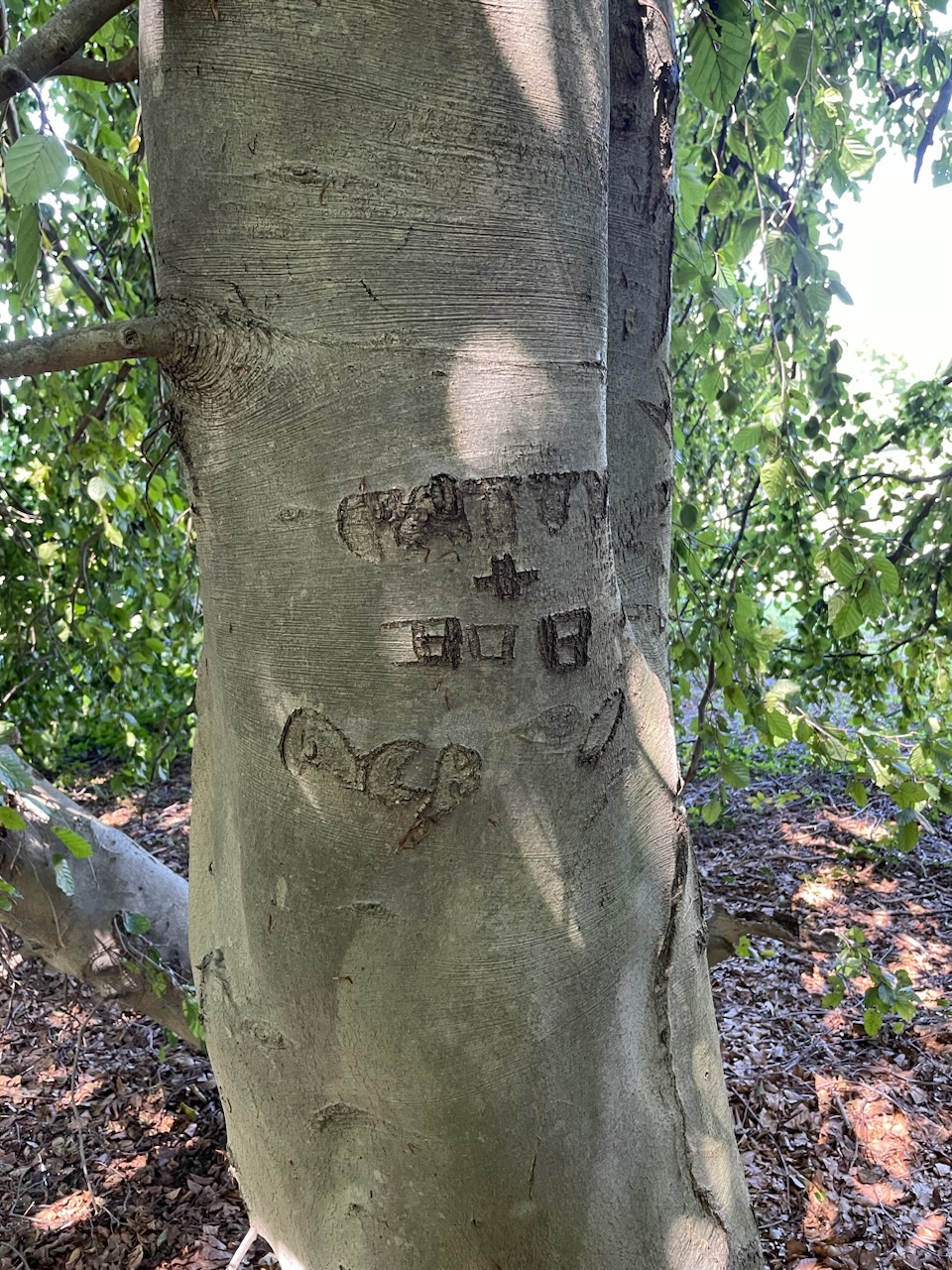
I push aside the branches and enter, finding myself inside a place so silvery dark and still and mysterious that no photo can really do it justice.

Others have been here before. Hello Bob, who did you love?

The branches twist together, sinuous. So quiet, yet so alive.

I run my hand along a smooth, muscular bough.

I stand there. I do nothing. It takes a lot of time to be a genius, wrote Gertrude Stein. You have to sit around so much, doing nothing, really doing nothing. I’m no genius, but I know that doing nothing can be an art as great as any other.

The rose garden at Lyndhurst is also antique, designed  by ladies a hundred years ago in concentric circles. Just outside its perimeter, late-season sage.

Hydrangea and its perfect clusters. I clearly need to find another word for perfect.

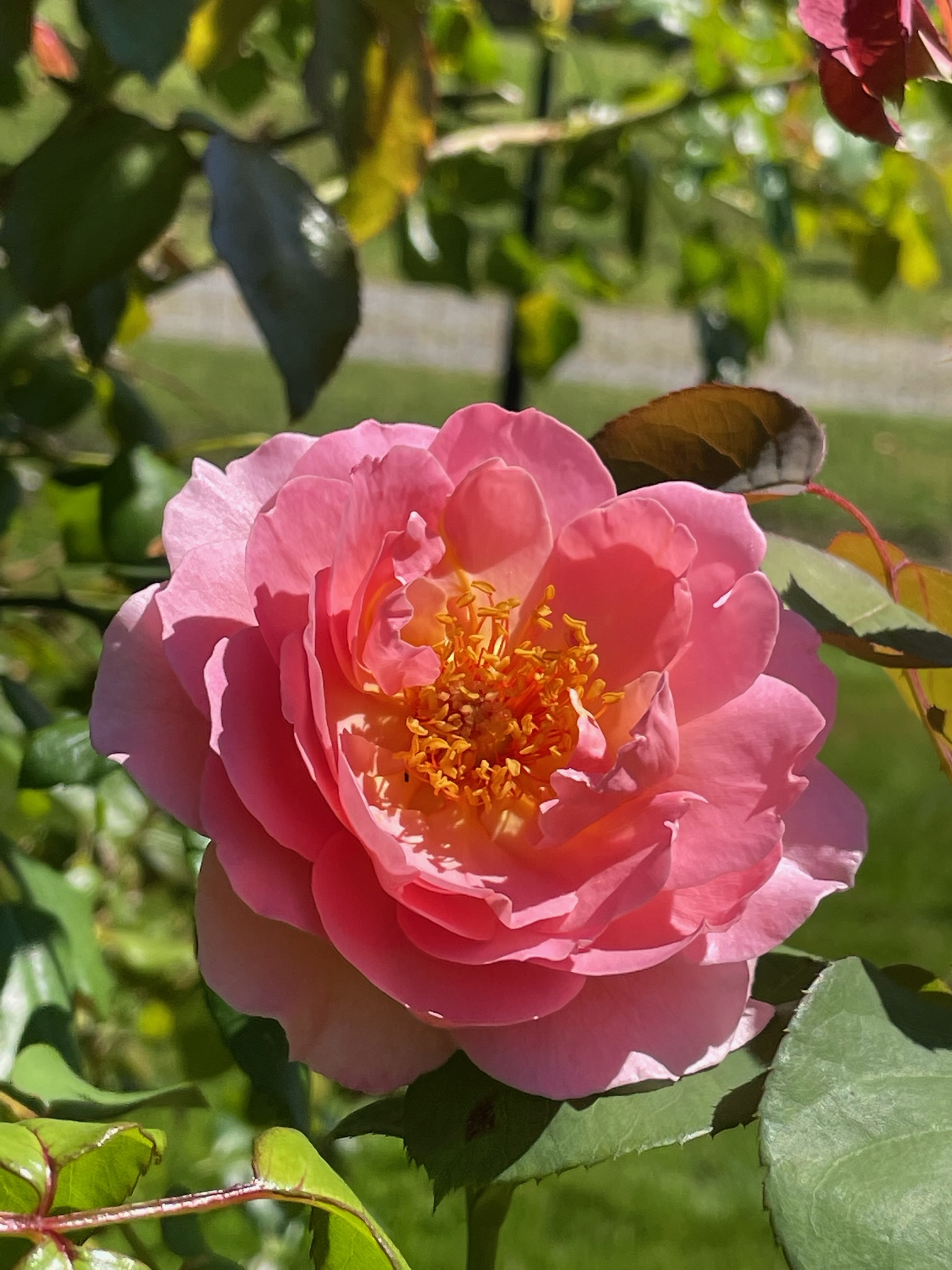
Only me here and the bees and the butterflies. No other human soul. I brush the sage with my hand and the scent wafts up. Here are September roses, flowers like no other.

Everything is perfectly still, lush, quiet. Perfectly private.

Spent rosebushes climbing a trellis have a beauty almost as exquisite as the blooms all around.

Rose hips hide themselves among the greenery.

Bees prowl the blossoms.

Hide inside, sip nectar.

Catbirds come calling. Lovely fragrances lift themselves, waft under my nose.

I wipe sweat from my brow and smell the sage I touched before. Lock the gate and leave. Just outside, some ancient spruces, one with the conjoined stems I love.

Cones litter the ground, brown on brown.

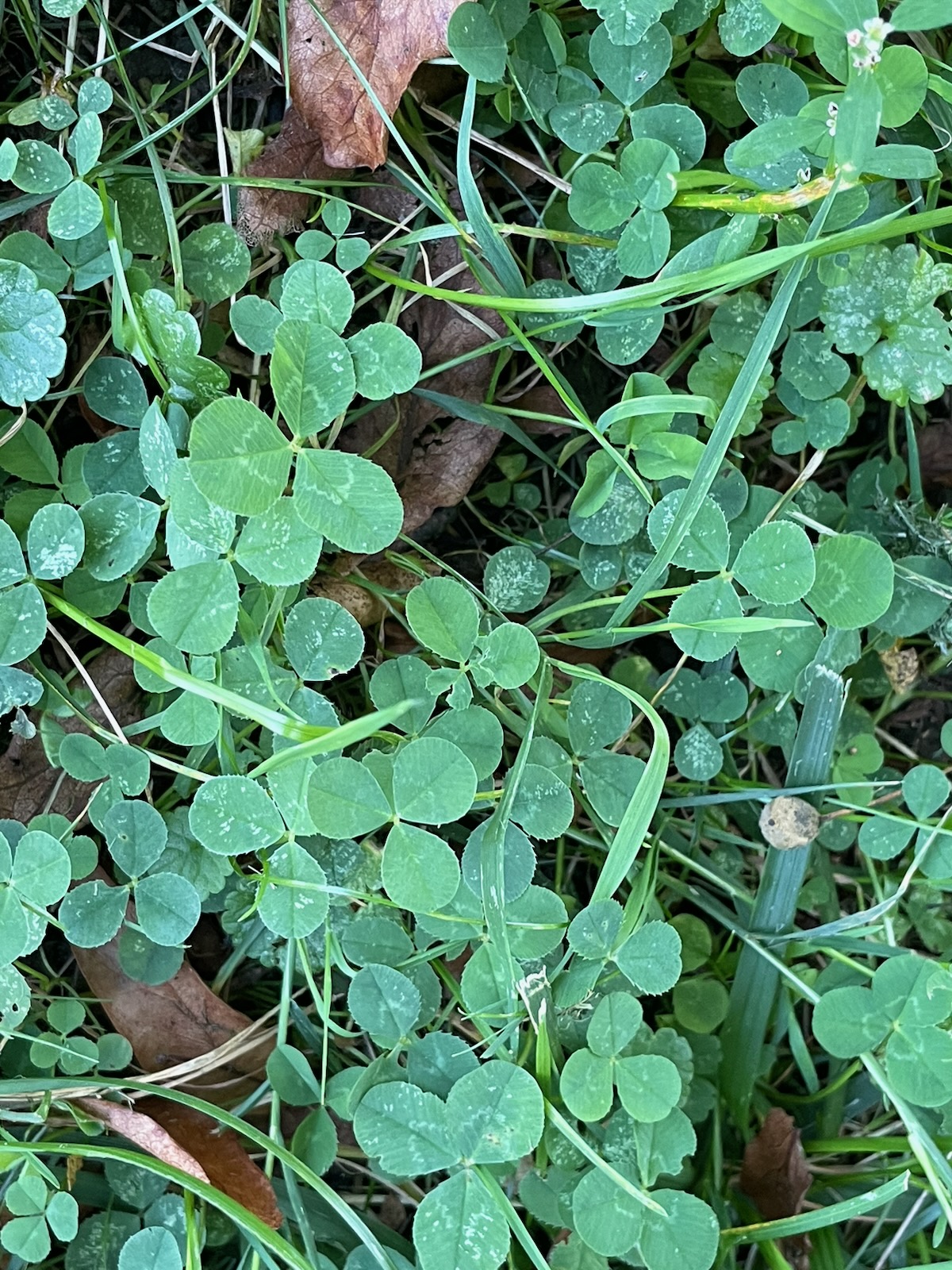
Wander, wander some more. Mary Wollstonecraft Shelley told us, The beginning is always today. Under my feet, clover. I know that if I were to hunt hard enough, go down on my knees for long enough, I’d find one with four leaves. I feel that fortunate.

Then a lucky mushroom, the only one, a lucky one.

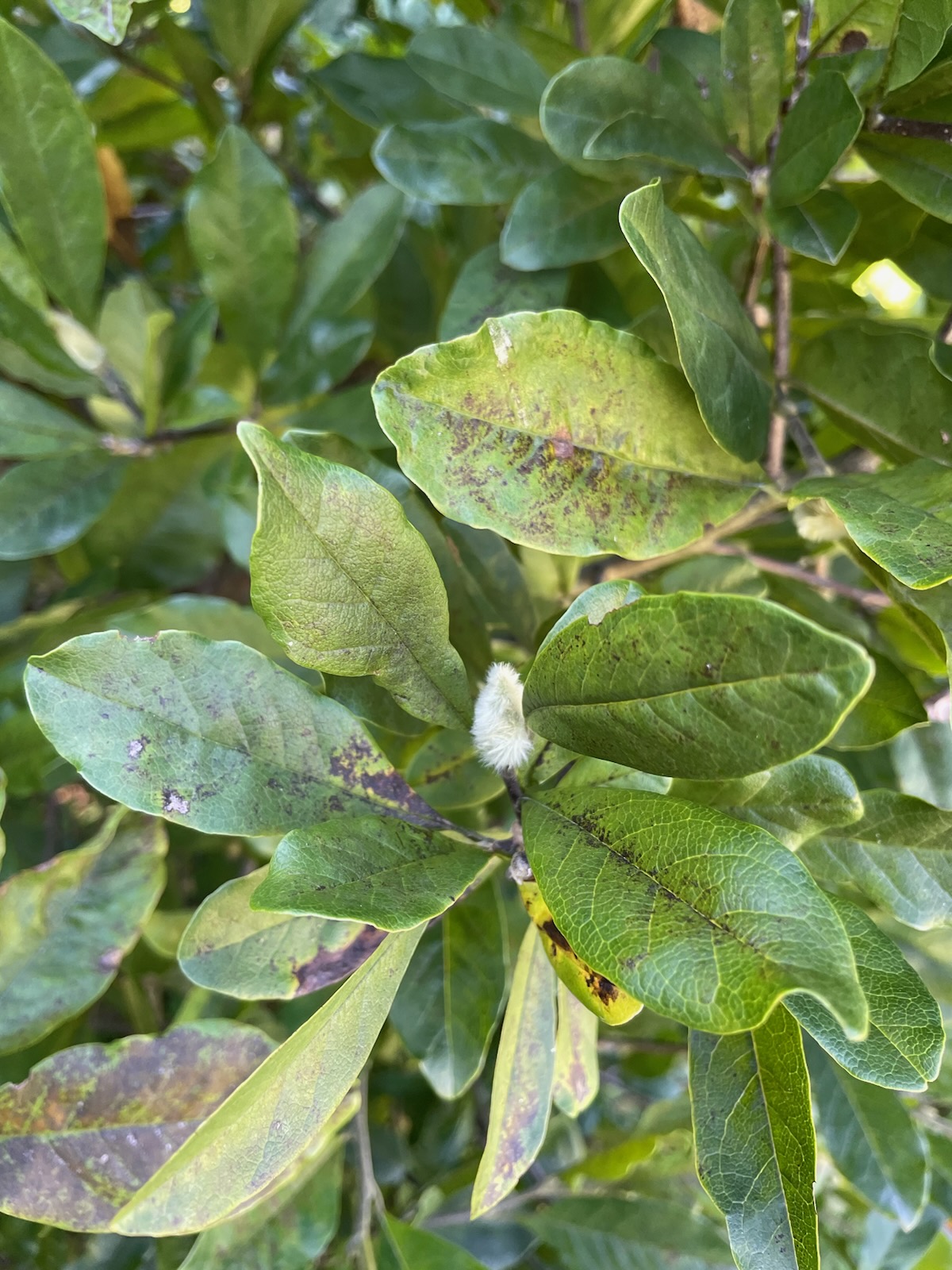
The tiny fuzz of a magnolia after it has had its spectacular blooms. A secret you need to really look to see.

A weeping cherry.

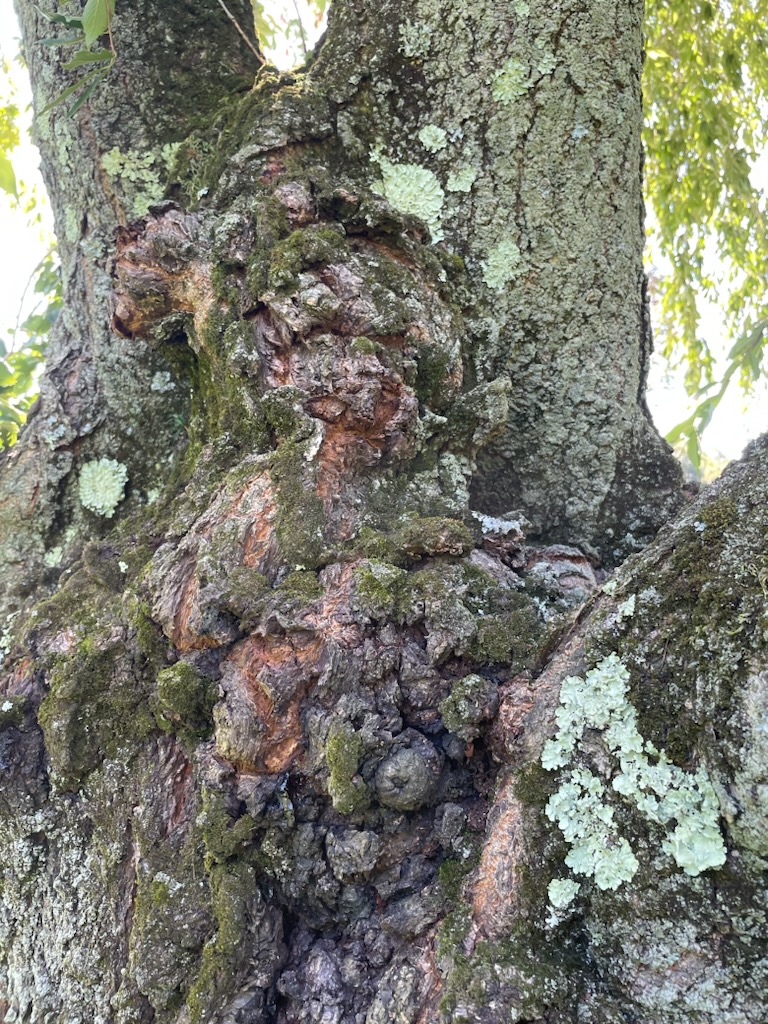
So mature its trunk is gnarled and crusty.

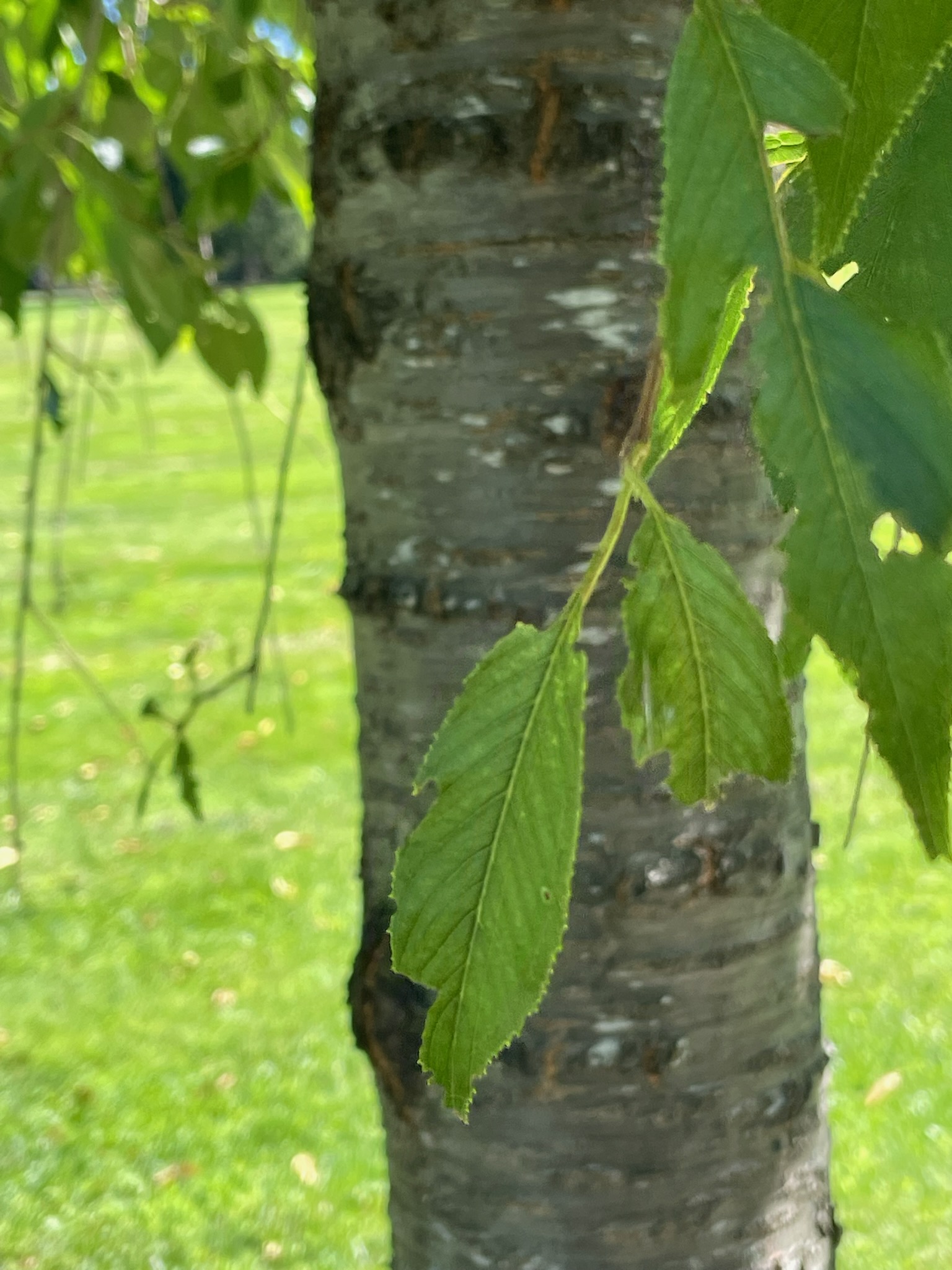
Near it a young’un with clearly demarcated lenticels, the stitch-like pores that form a cherry’s instantly recognizable embroidery.

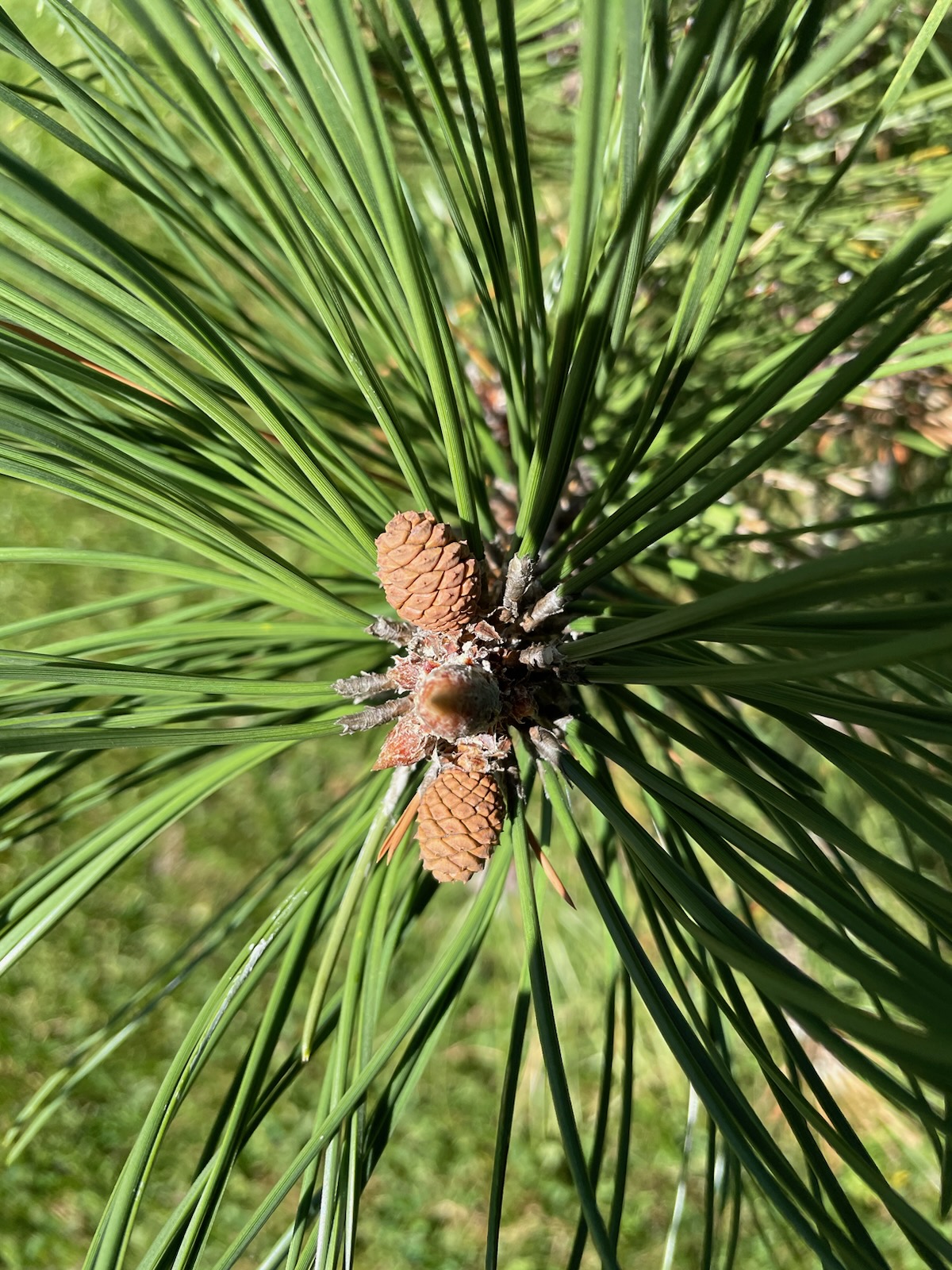
And another ancient specimen, a red pine, all burls and character.

But still offering its miniature baby seedcases.

A horse chestnut with a gaping critter hole at its base. Anybody home?

Childhood memories of collecting chestnuts on my way to school.

The Lyndhurst faux castle looms ahead.

More compelling, the little children’s elf cottage nearby.

I check the door, locked. Peer into a window.

It’s as if the room is holding its breath, waiting for a child to come in and love it.

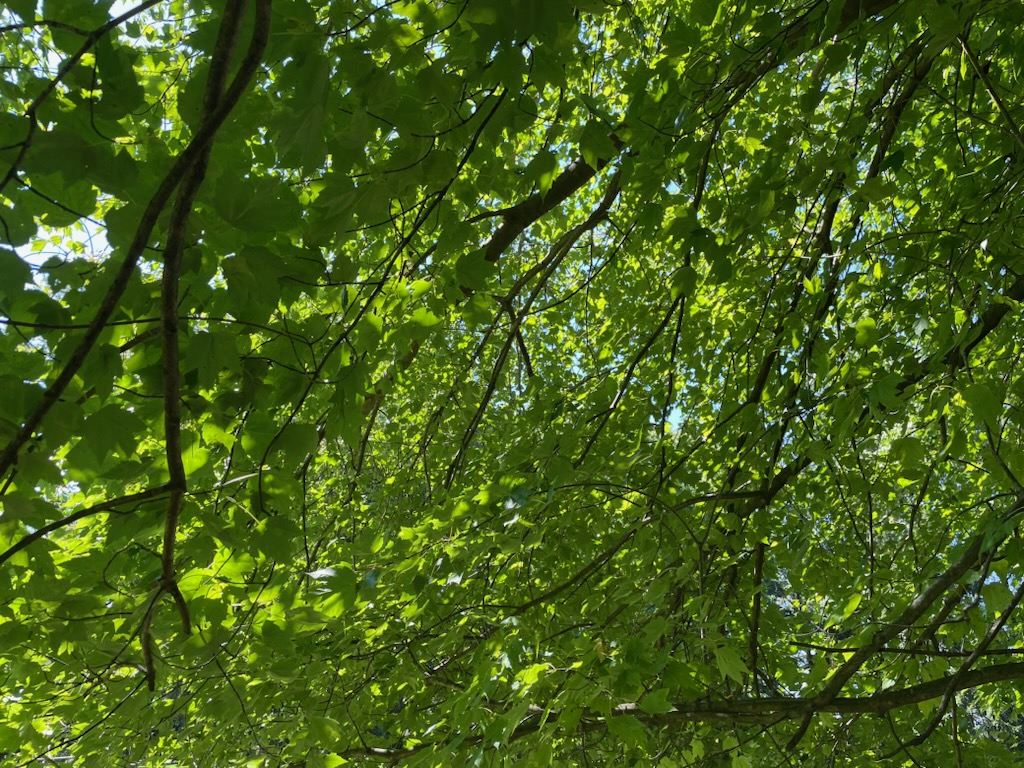
Outside, the emerald glow of a red maple canopy.

More lindens. A hush of lindens. All my life, my heart has yearned for a thing I cannot name. So said Andre Breton. He had my number, that’s for sure.

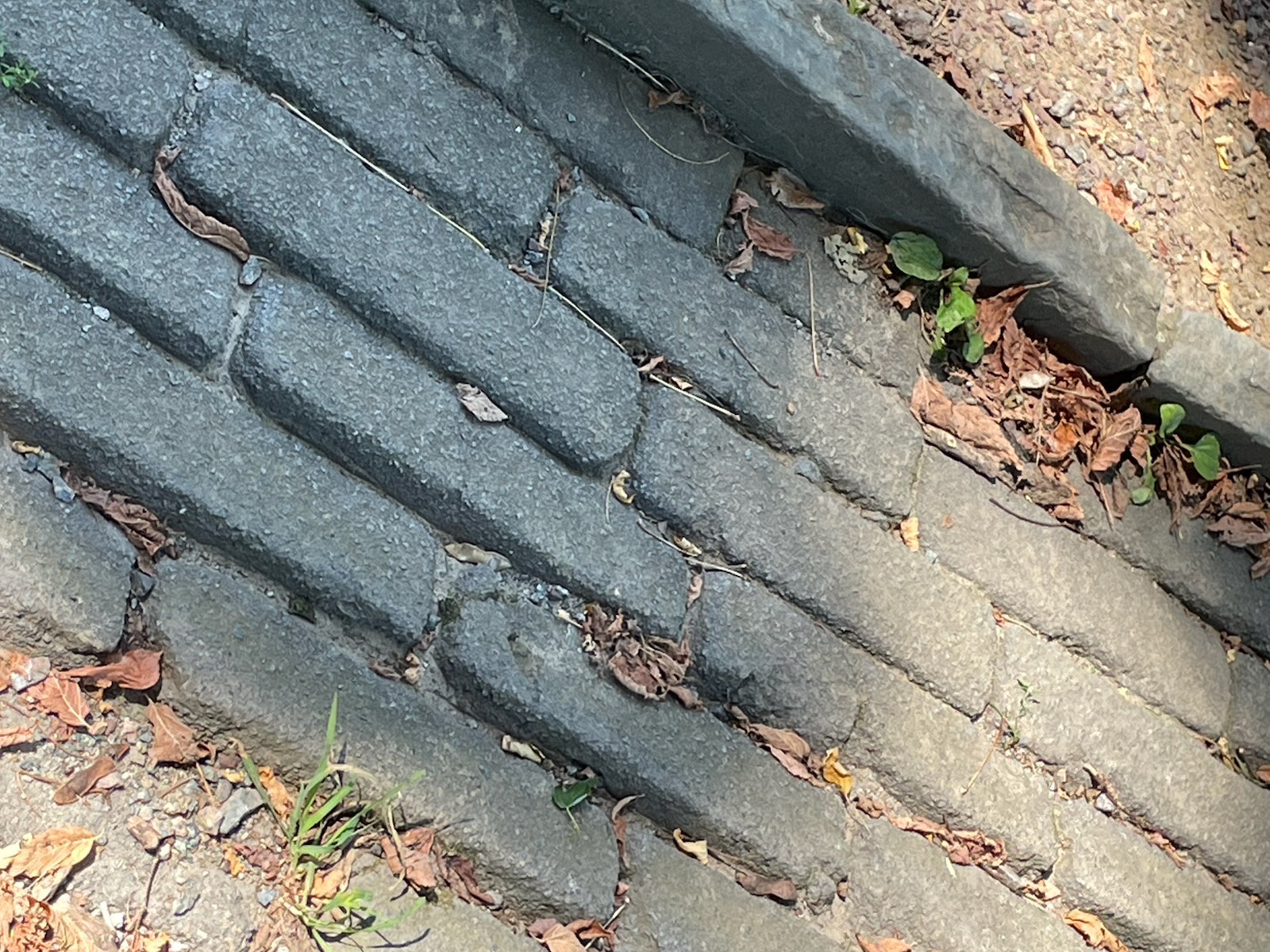
Departing, I step across the old cobble gutter from one hundred years ago, when the estate was new. I’m sure that at its beginning the place was marvelous.

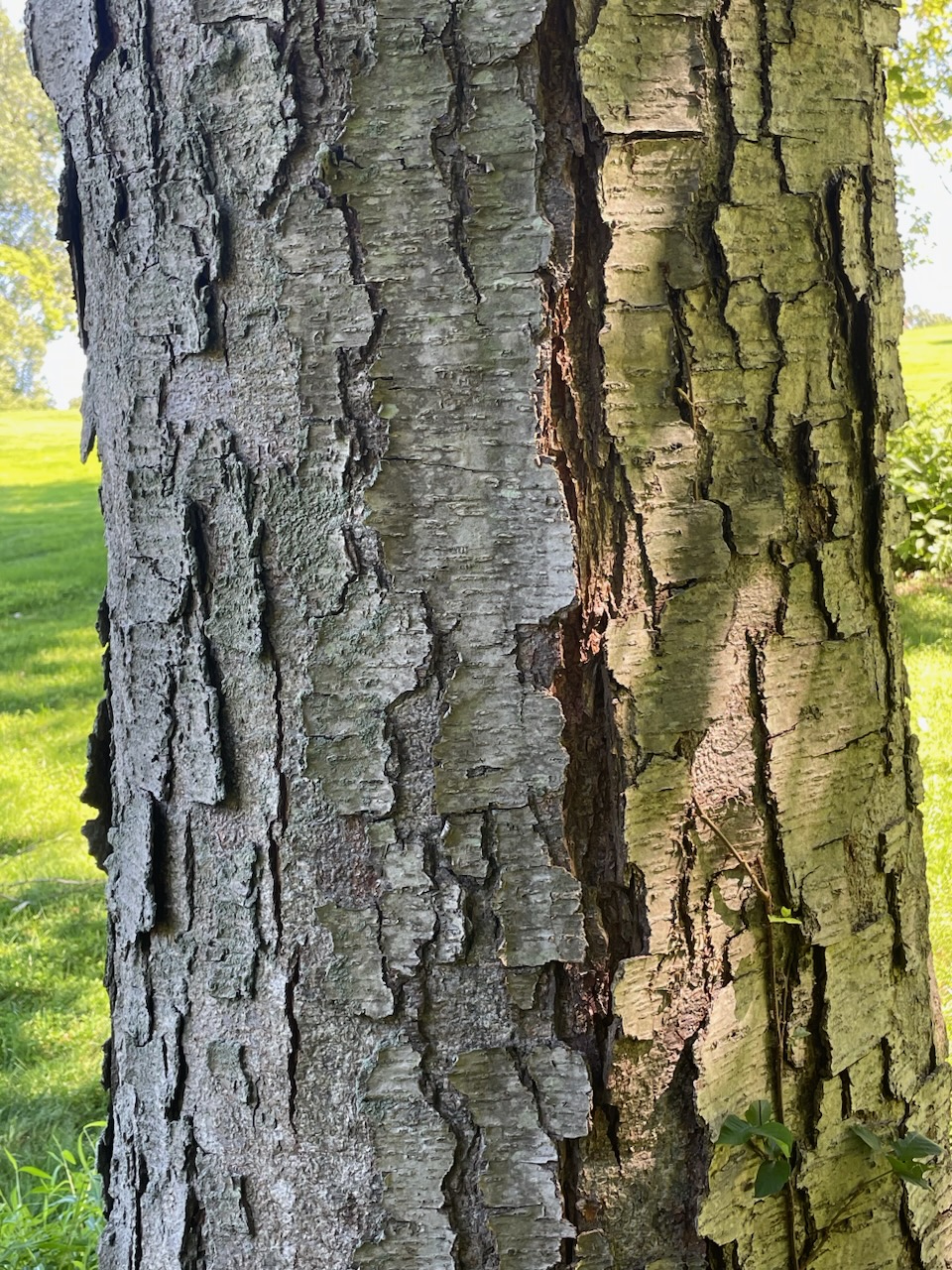
Now, in its dotage, all its trees mature, rough, tried by time and weather. A sweet birch with time-scaled bark.

Today, personal, completely private. Old, yet new.

All the more precious.

Leave a comment

Filed under Jean Zimmerman

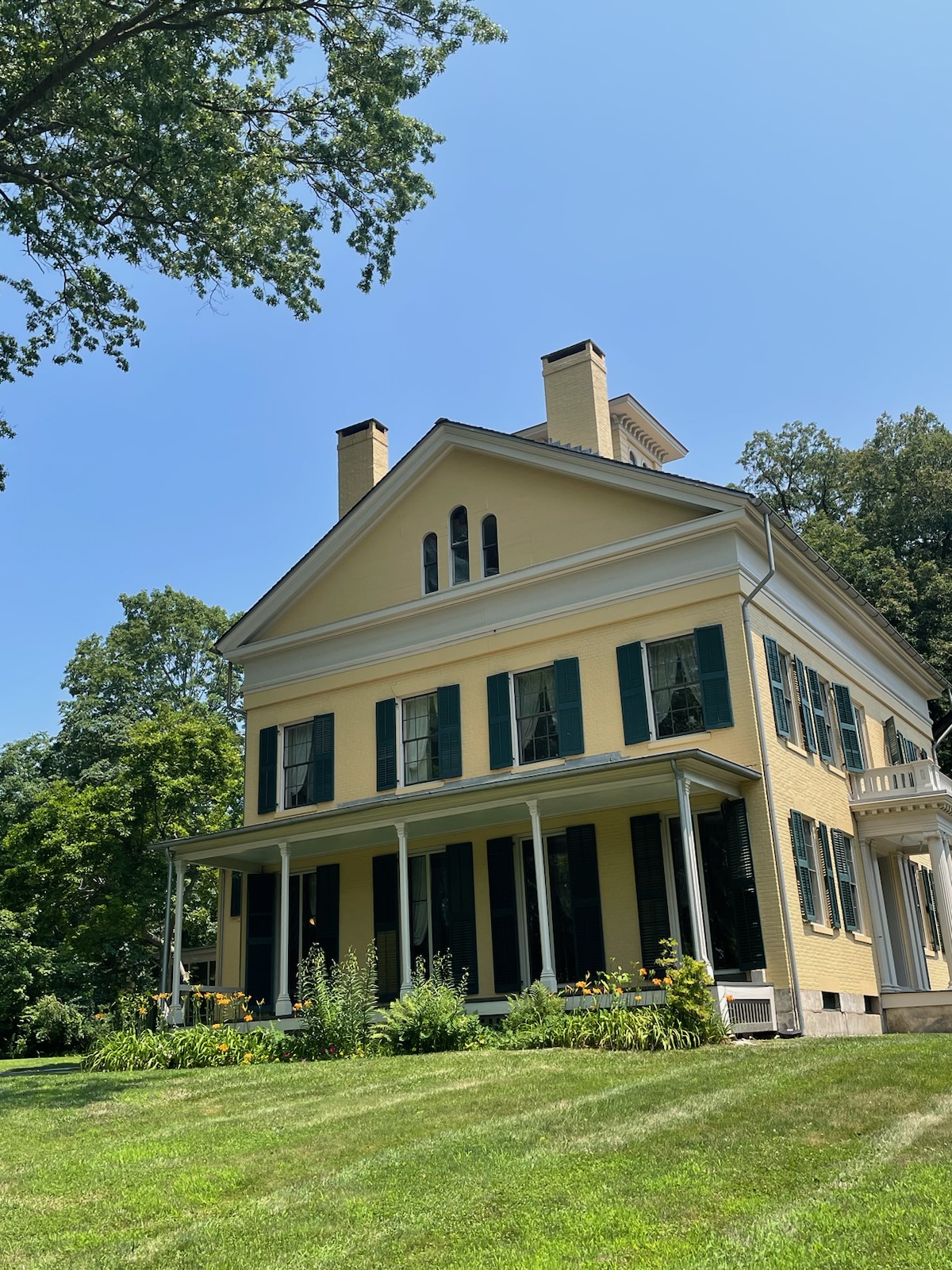
Would Emily Dickinson roll over in her grave?

Or would she be, in her small, secret part of herself, pleased? Possibly even thrilled to see all the hoopla and fuss made over her at the abode where she spent all her years.

It is possible to tour the house, which sits in the shade of a mature tulip tree.

Probably a sapling when Emily lived here on Main Street.

It was quite different then. Her well-to-do family owned a lot of land. Across the street were ten acres called the Dickinson meadow. A conservatory adjoined the house, where the family grew exotics like cactus and jasmine. During her lifetime, she assembled a collection of 424 pressed flower specimens she had collected, classified and labeled.

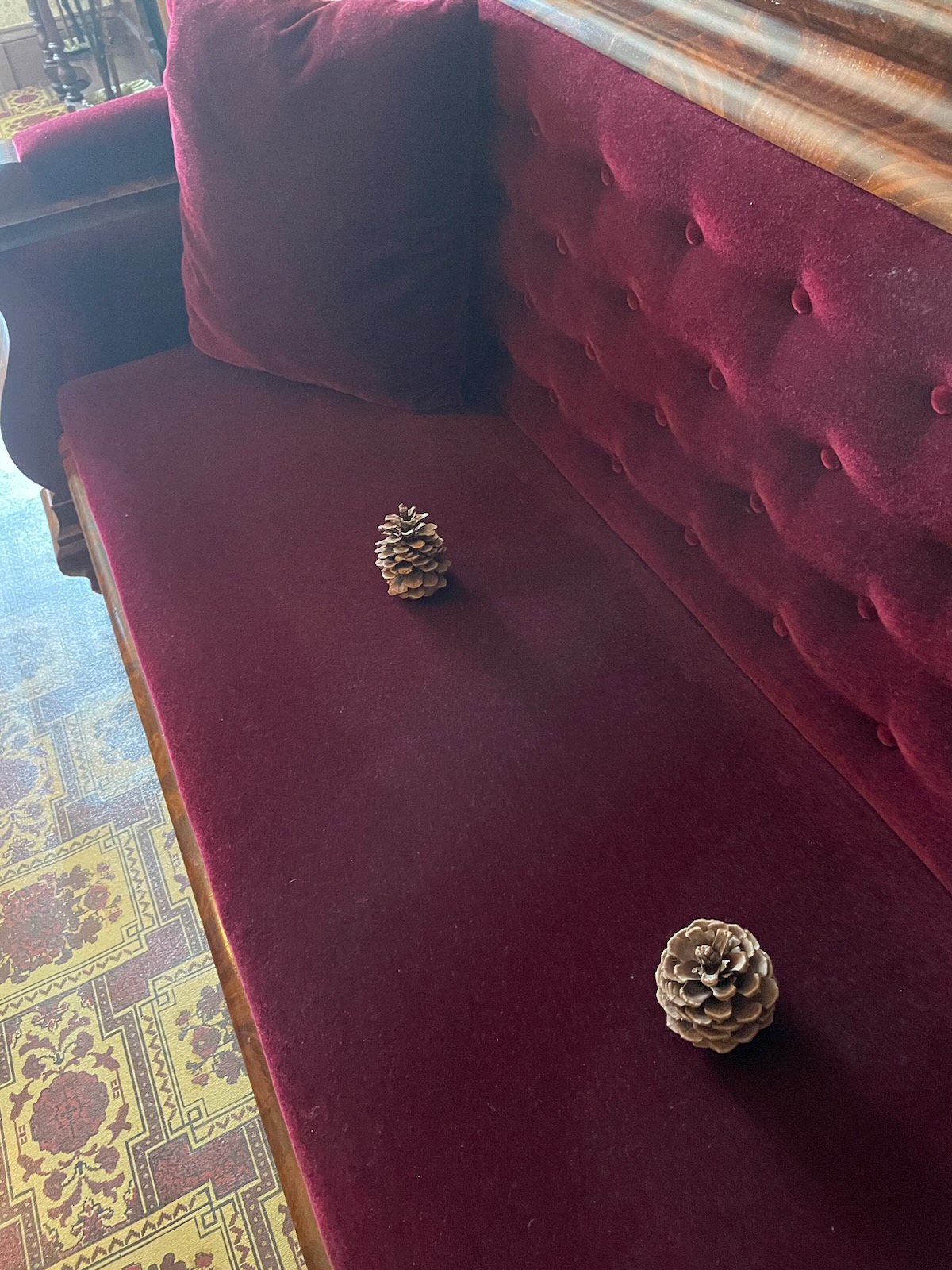
Some of the furnishings are original to the Dickinson family. If you see a pinecone don’t sit on it, cautions our docent. The pinecones indicate the artifacts original to the family.

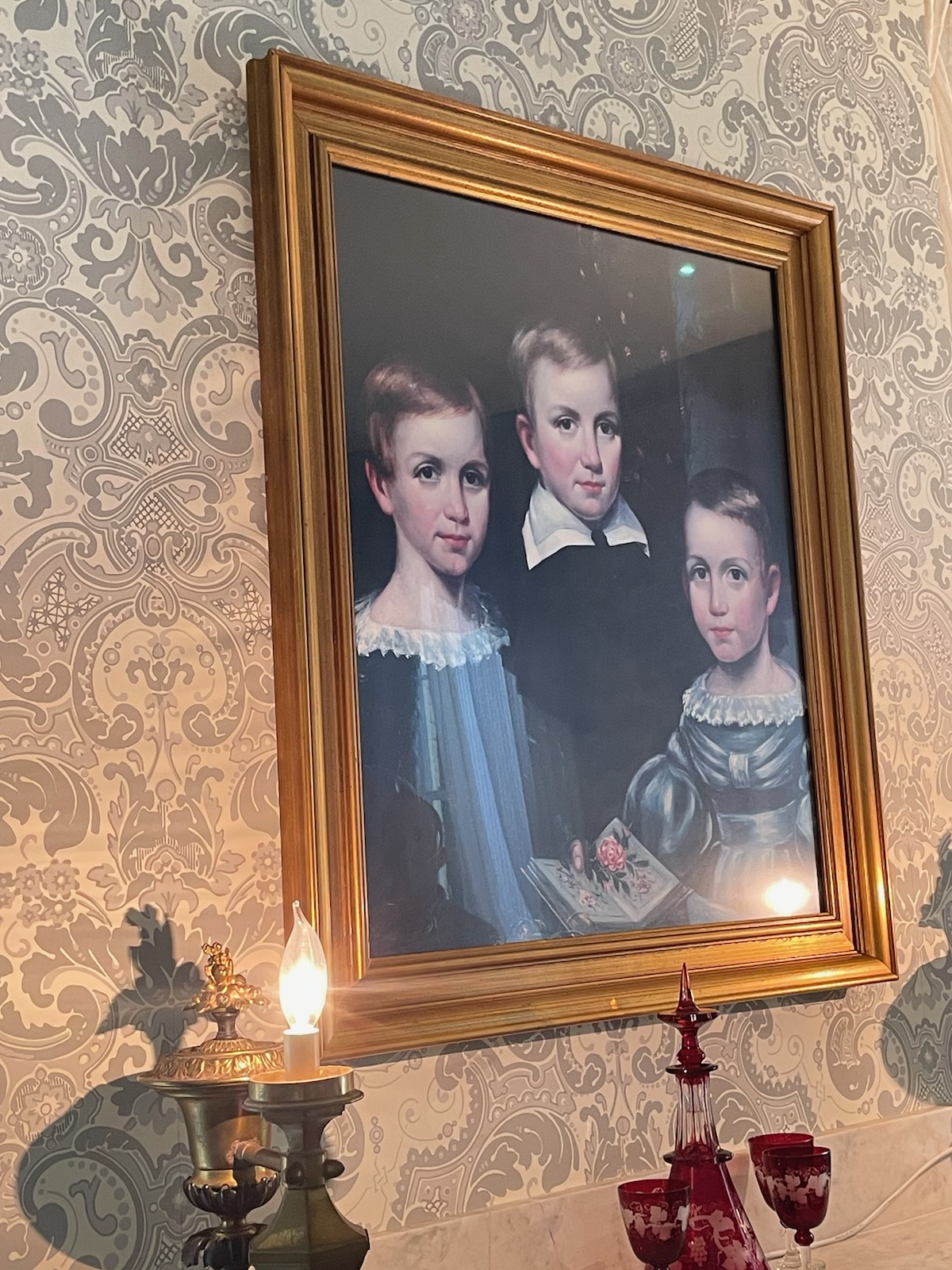
I think that might have given Emily at least a polite chuckle. We see the parlor containing a reproduction of a portrait of Emily with her siblings Austin and Lavinia as youngsters. The docent points out the color of Emily’s hair: red.

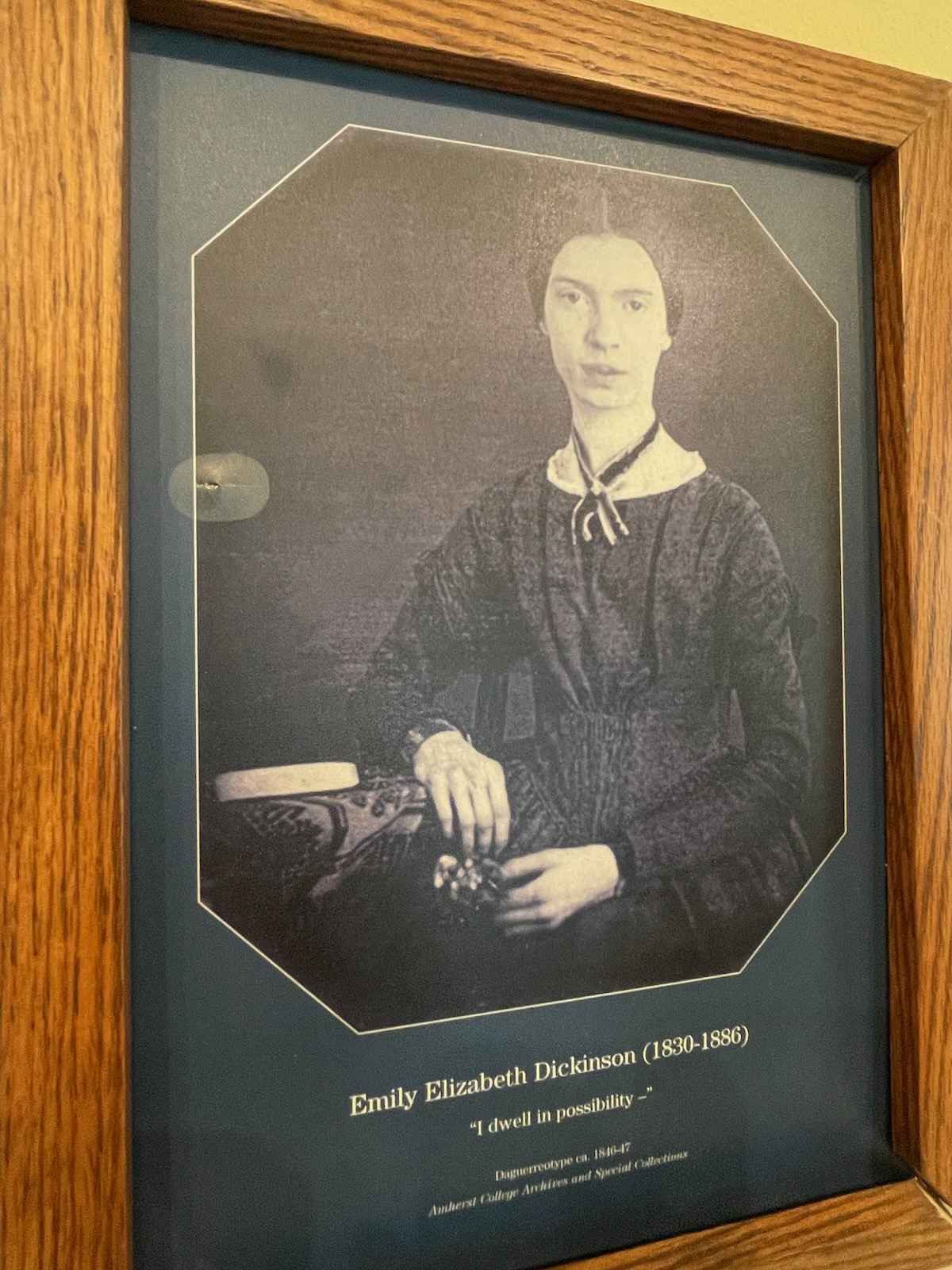
Unlike the only picture we have of her as an adult, which is black and white.

Amherst College has a lock of that hair in their possession. I’d like to go take a look at that sometime.

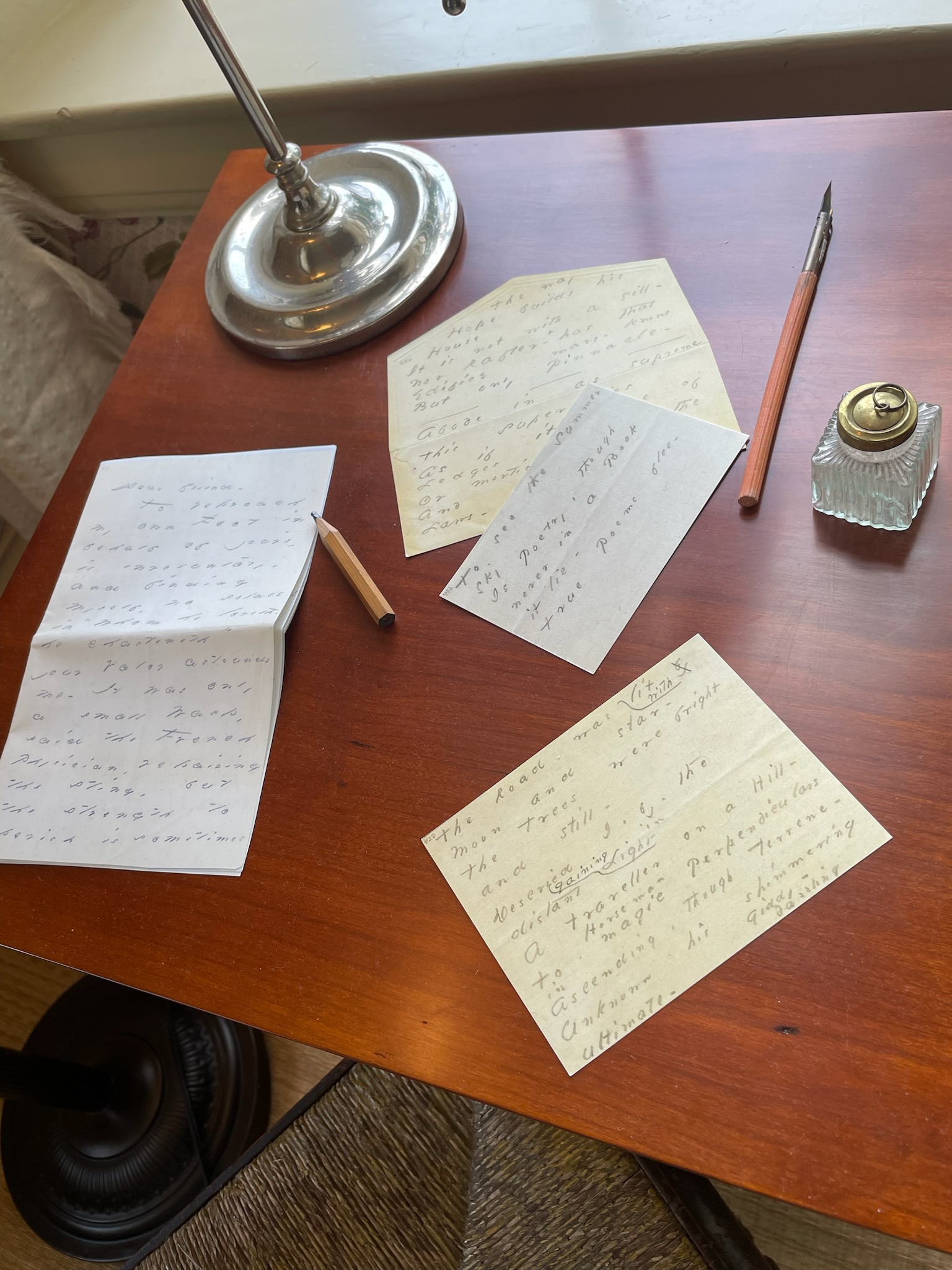
Dickinson wrote 1,789 poems, with only ten published during her lifetime. In the summer of 1858 she began to review her work, penning clean copies of poems she had written previously. She assembled these carefully pieced-together manuscript books in small booklets called fascicles that contained nearly eighteen hundred poems, and no one knew of their existence until after her death.

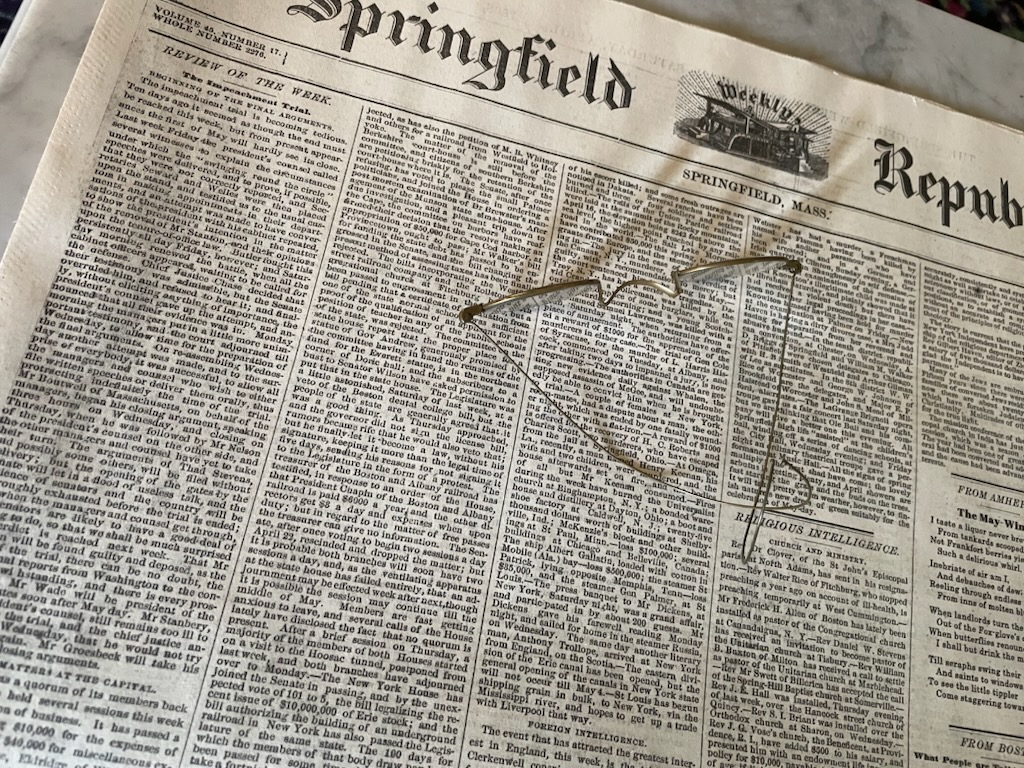
A newspaper lies on a side table. This is where she discovered the editor Thomas Wentworth Higginson, literary critic, radical abolitionist and ex-minister, the mentor who would encourage her creative explorations throughout her life.

In her first letter to Higginson in 1862, Dickinson wrote, Are you too deeply occupied to say if my Verse is alive? She was not young then — she was born in 1830 — but she was perhaps a bit insecure.

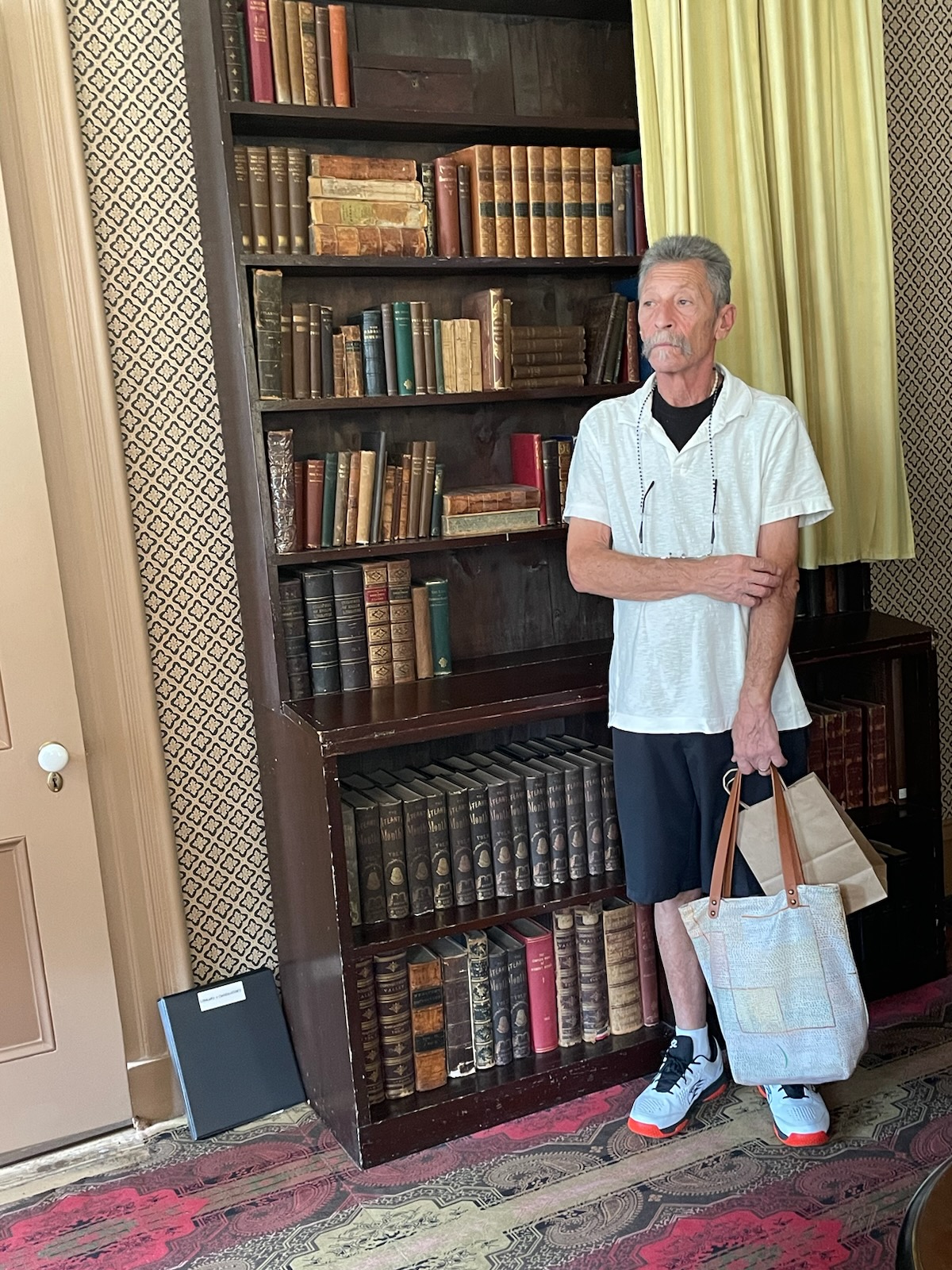
We tourists see the study with its books (ersatz copies of what would have been on these shelves, as her actual books went to Harvard and Yale as per her wishes) Her father gave her whatever books she wanted but said the ones she liked might jiggle the mind. For example, Henry Wadsworth Longfellow’s Kavanagh. Really?

We ascend the stairs. 

The Amherst population apparently referred to her as The Myth, because she basically disappeared from view after a certain point.

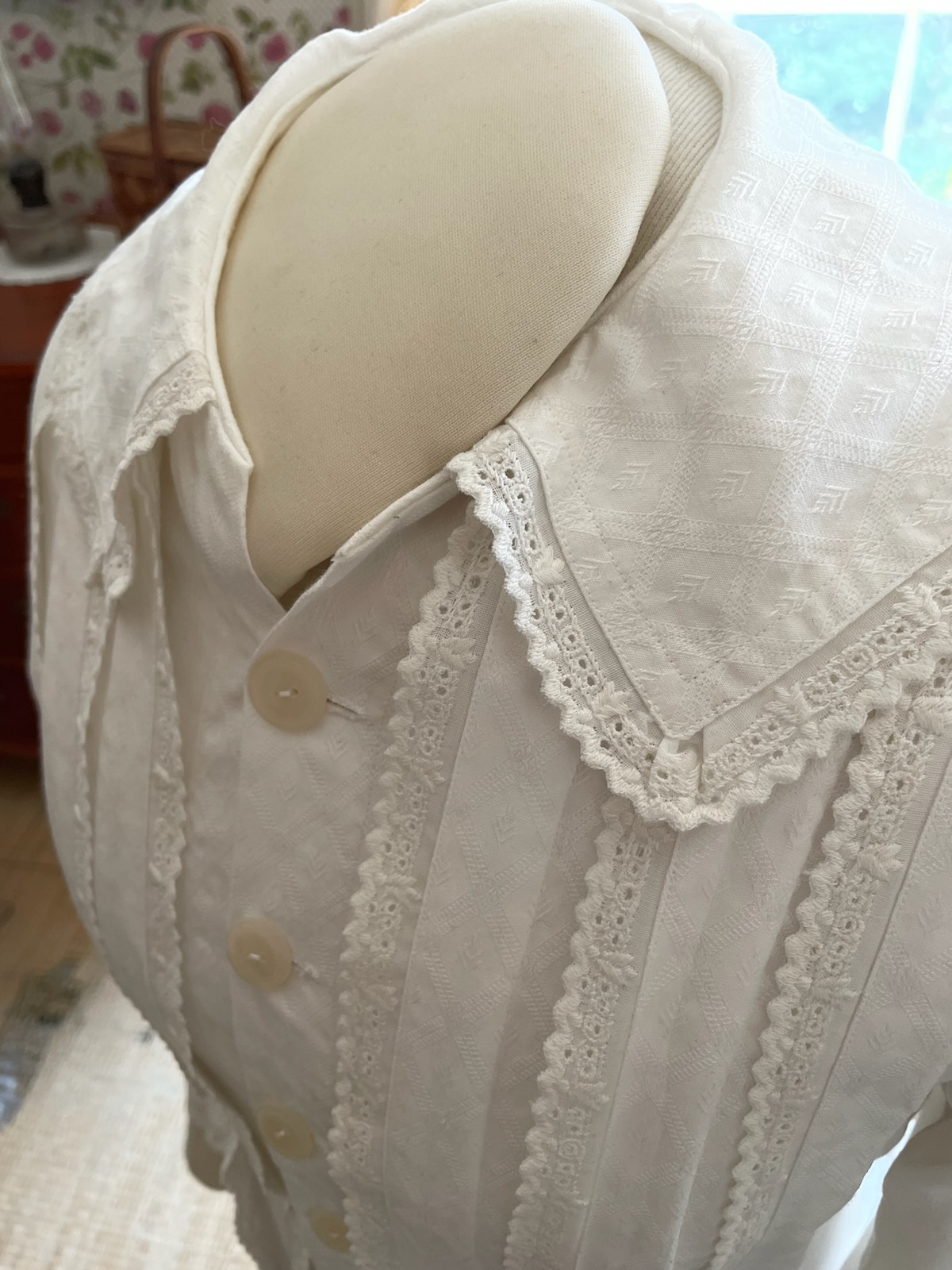
We come to Dickinson’s bedroom. It’s on the top floor, a place where Emily spent her increasingly reclusive adult years. We see a white house gown or house dress on a dressmaker’s dummy, a garment a woman would not wear out in public, a sort of announcement of a strategy to withdraw from the world.

It’s not the original but a replica of her one surviving article of clothing, a cotton dress it is believed she sewed sometime between 1878 and 1882. Given the scarcity of photographic documentation, It is possible she actually favored bright red or purple garments!

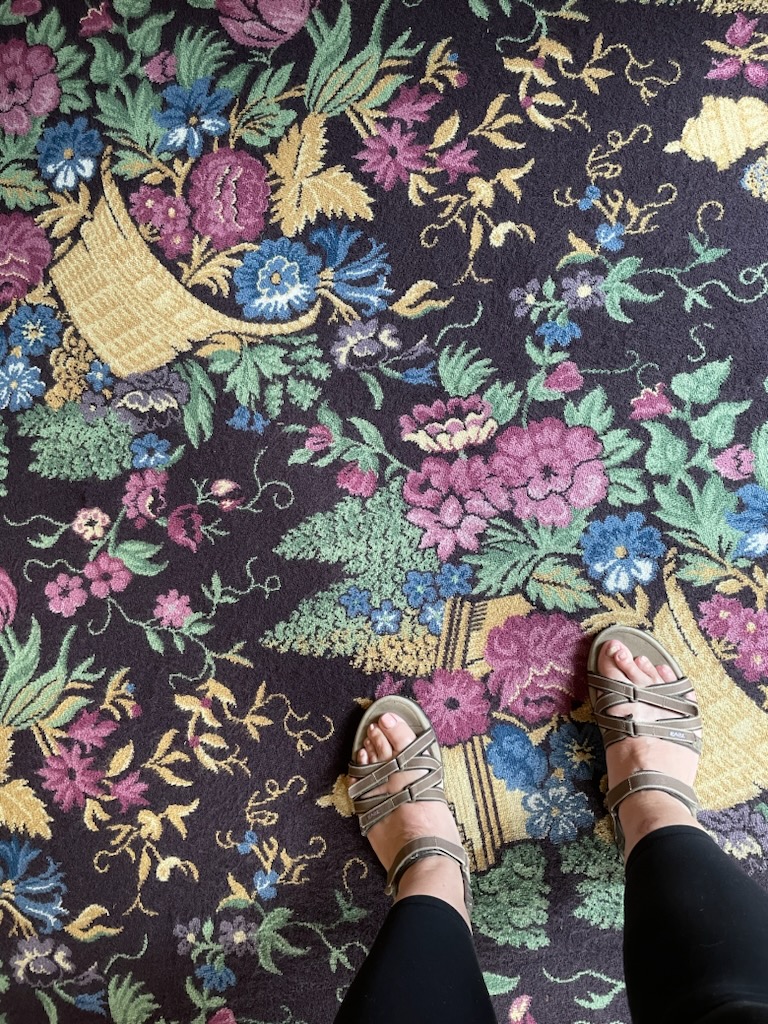
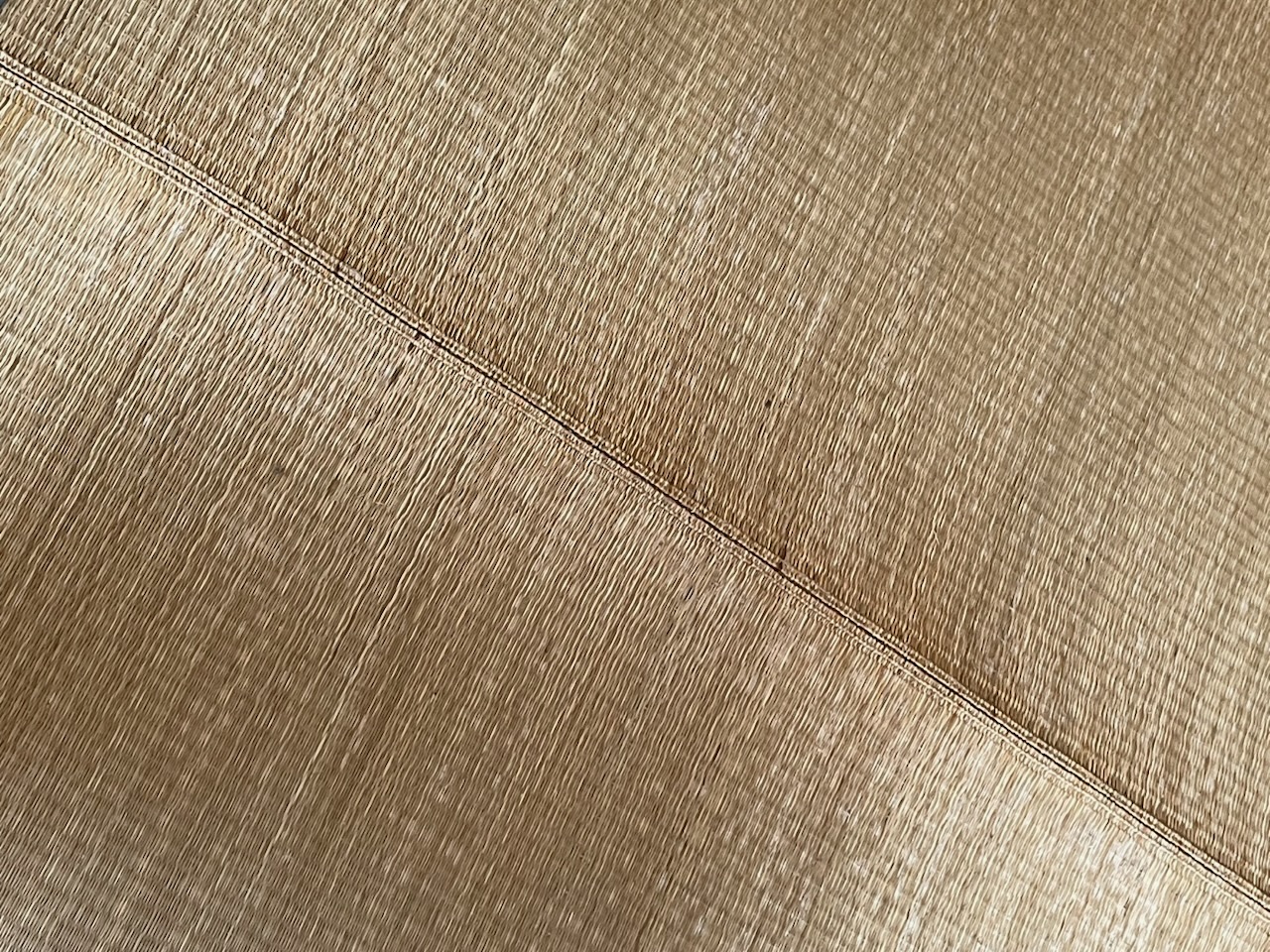
We see tatami mats on the floor, also replicas of the originals, and find out something pretty amazing. Experts have established from the tread marks on the floor the steps she took from one place to another in the tiny room  –  her feet wore grooves. Spooky.

We see Dickinson’s desk  –  well, again, not her real desk, that’s owned by Harvard, but an exact replica. This must be where she assembled those fascicles.

More spookiness. Emily lowered baskets filled with treats out this window for her beloved nephew Thomas Gilbert Dickinson, who died at the age of eight of typhoid fever. She was, apparently, quite the baker. She was famous for her “black cake” made with rum and raisins, and won second place in an Amherst baking competition. And we have a recipe for coconut cake, written on the back of a poem.

We learn a little bit about her relationship with her brother’s wife, Susan Gilbert.Dickinson. Emily sent her two hundred poems and 300 passionate letters. Preserved, an envelope with Open me carefully in Dickinson’s cursive on the outside.

Austin and Susan, increasingly estranged in their marriage (not surprisingly)  lived next door. The women’s love affair, a secret hidden in plain sight. Dickinson’s letters go somewhere along these lines:

Susie, will you indeed come home next Saturday, and be my own again, and kiss me… I hope for you so much, and feel so eager for you, feel that I cannot wait, feel that now I must have you — that the expectation once more to see your face again, makes me feel hot and feverish, and my heart beats so fast… my darling, so near I seem to you, that I disdain this pen, and wait for a warmer language.

In 1998, The New York Times reported on an infrared study showing that much of Dickinson’s work had been deliberately censored to exclude the name Susan. At least eleven of Dickinson’s poems were dedicated to her sister-in-law, though those dedications were later erased.

Some of the poems would seem to point directly to the love affair, like Wild Nights.

Were I with thee
Wild Nights should be
Our luxury!

Futile — the Winds —
To a Heart in port —
Done with the Compass —
Done with the Chart!

Rowing in Eden —
Ah, the Sea!
Might I but moor — Tonight —
In Thee!

You’d have to be blind not to see the personal, human passion in these lines.

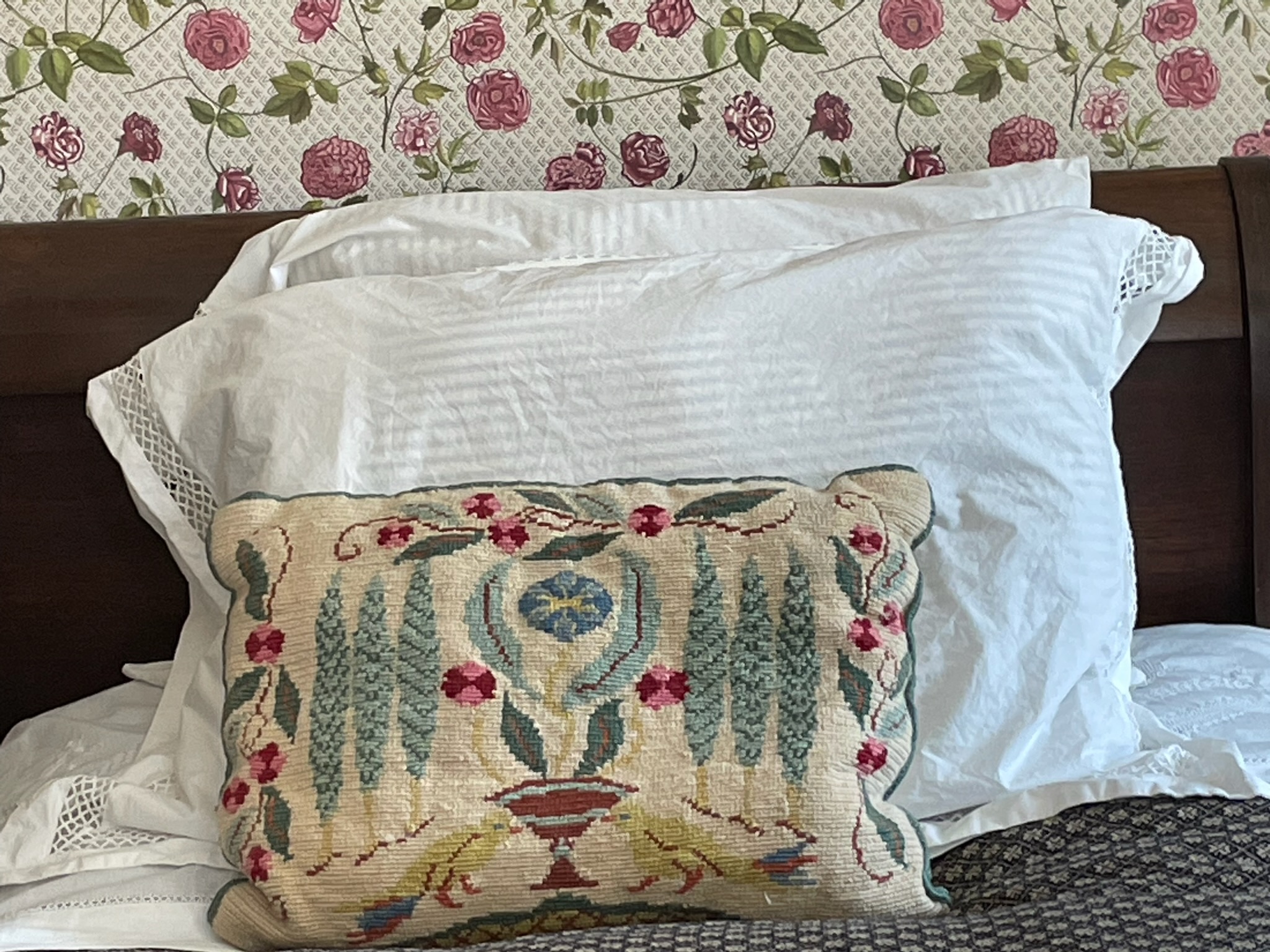
And then we get to  the great poet’s bedstead.

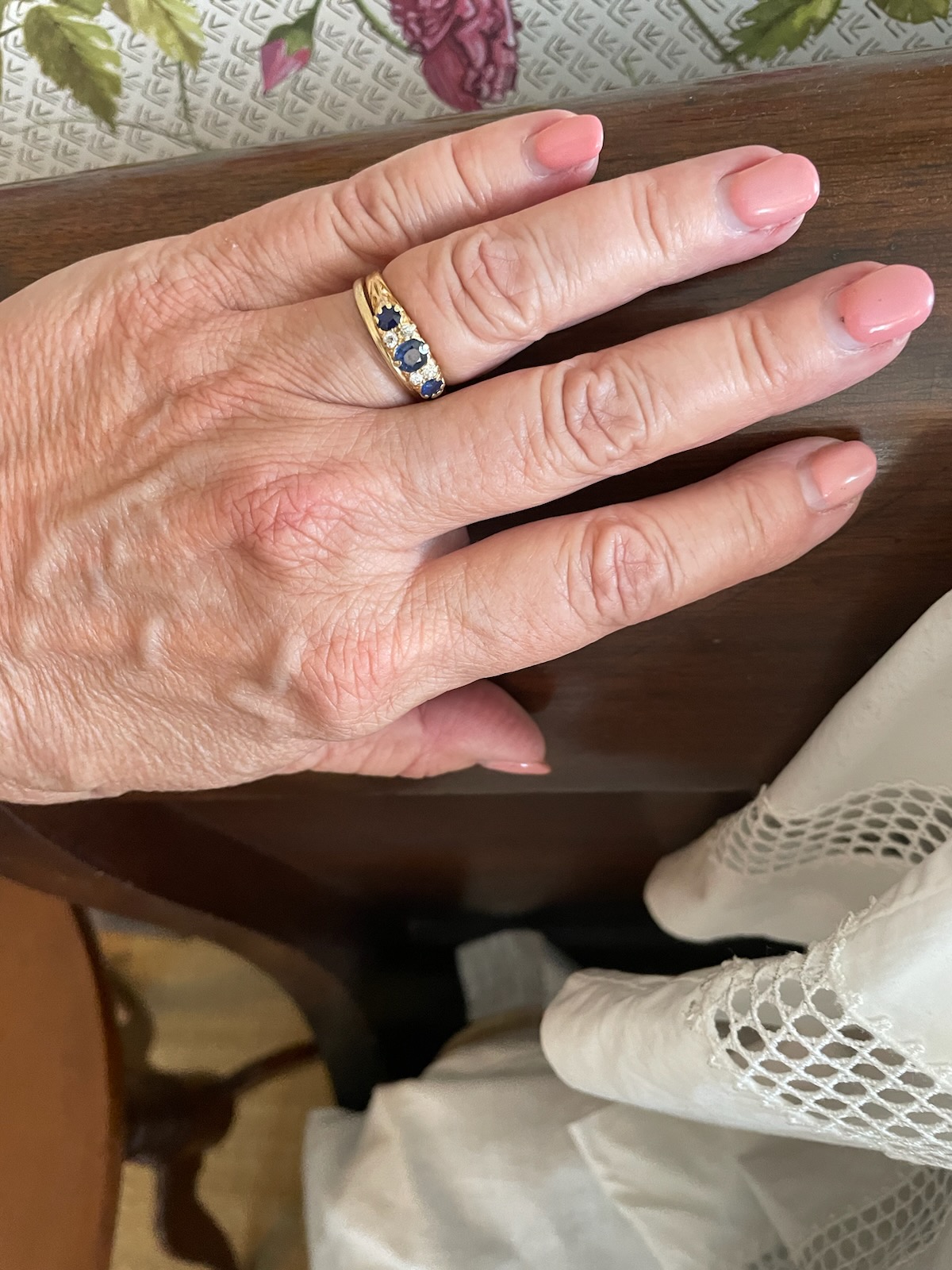
It is the real thing, not a replica. This is where she dreamed at night. This is where she died. I lay my hand against the headboard.

It is exhilarating to touch what Dickinson touched. And yet, so, so sad. I feel we’re invading the core privacy of this extremely private woman, this brilliant writer, this recluse, a ghost in a room filled with a dozen callow tourists.

In the well-stocked giftshop we find tee shirts emblazoned with some of her most famous lines.

It chokes me up a little to see her delicate, haunting language inscribed on a garment you’d sweat on in the gym.

Then I buy one. I cannot resist. As I could not resist the opportunity to trail in her footsteps on the tatami mats above. To touch the headboard against which she would have leaned, probably with her nose in a book.

Emily Dickinson died at the age of 55. Her brother wrote in his diary that the day was awful… she ceased to breathe that terrible breathing just before the [afternoon] whistle sounded for six. Her physician gave the cause of death as Bright’s disease.

After Dickinson’s death, her sister Lavinia kept a promise to her and burned much of the poet’s correspondence. Dickinson had not, however, left any instructions concerning the forty notebooks and loose sheets gathered in a locked chest. Her poetry has now been translated into languages including French, Spanish, Mandarin, Persian, Kurdish, Turkish, Georgian, Swedish and Russian.

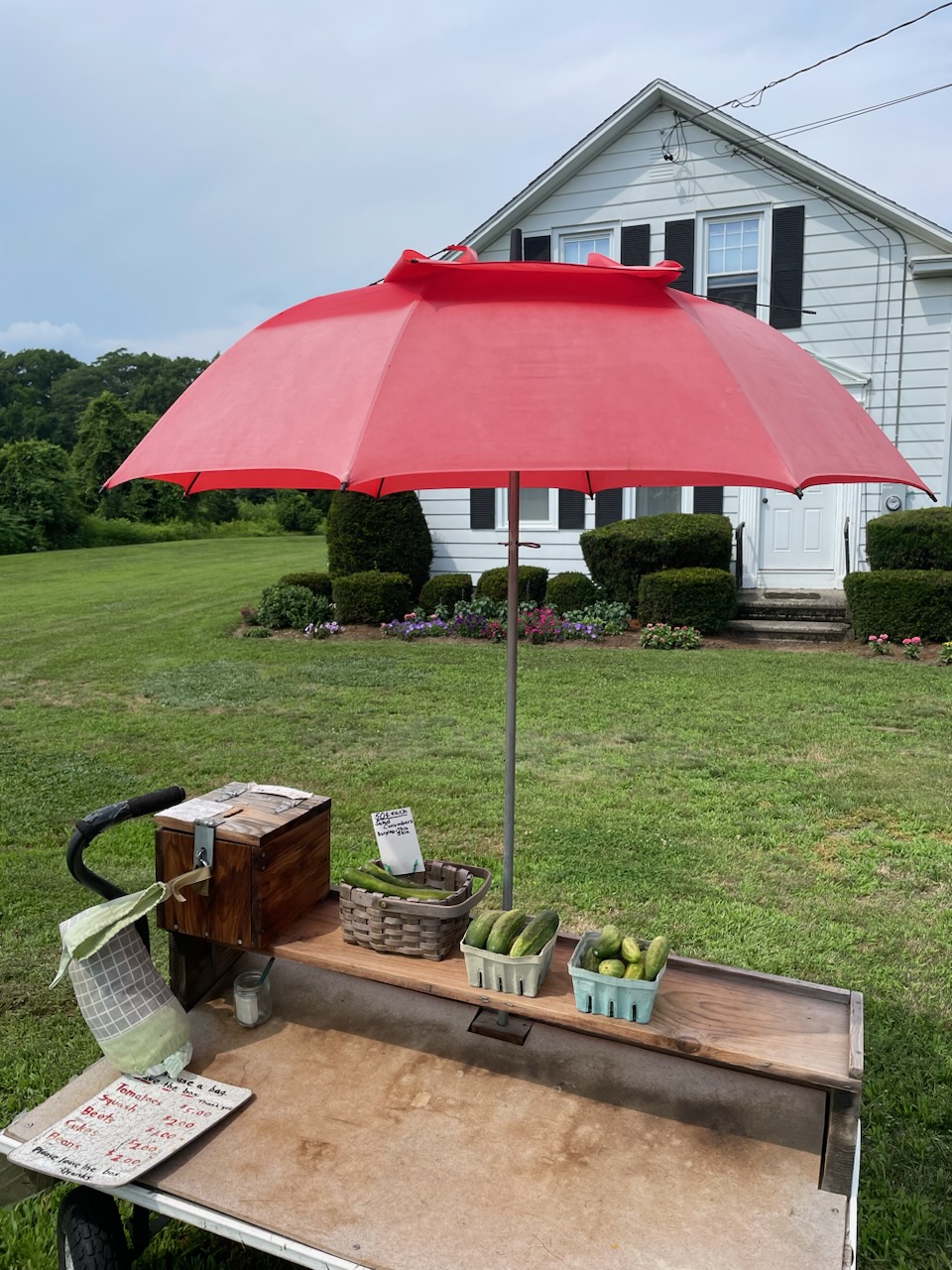
After our visit to the homestead we decide to track down her burial plot. We pass a farmstand and put a few dollar bills in a box to buy some early cucumbers, thinking that this little enterprise could have existed in Dickinson’s time.

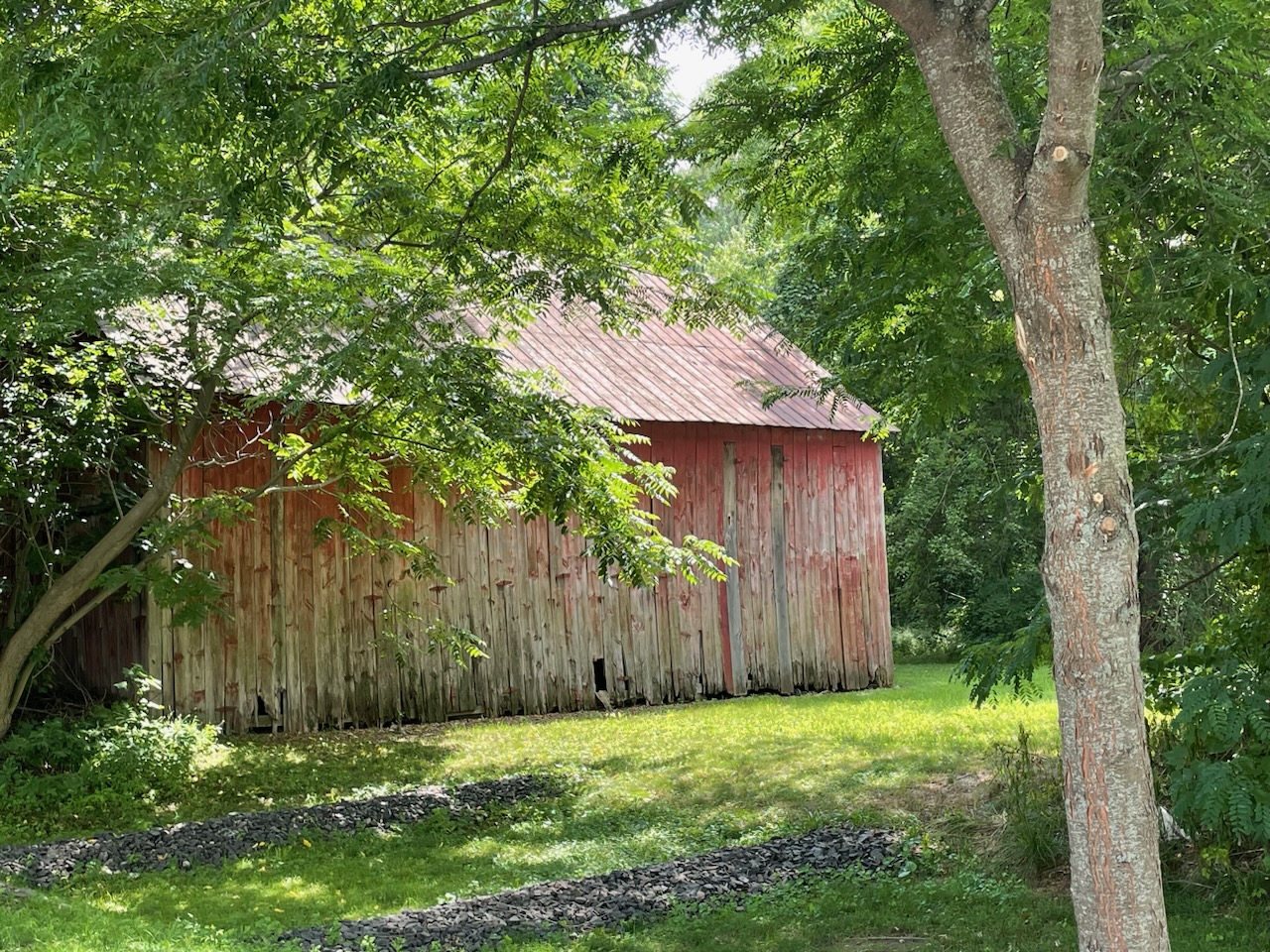
We pass an old barn, probably dating back to that era.

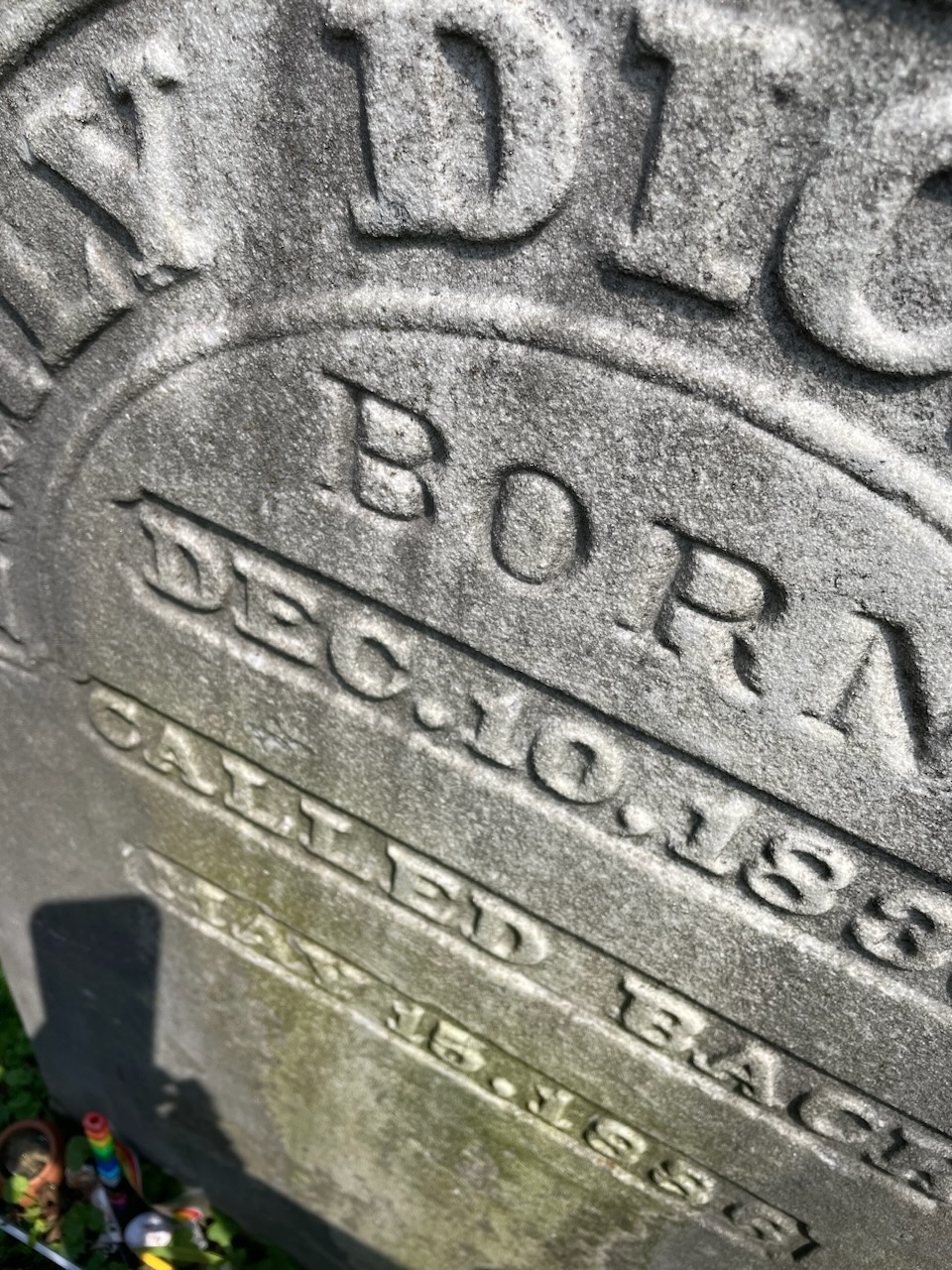
Finally we visit her grave. It is surprisingly hard to find.

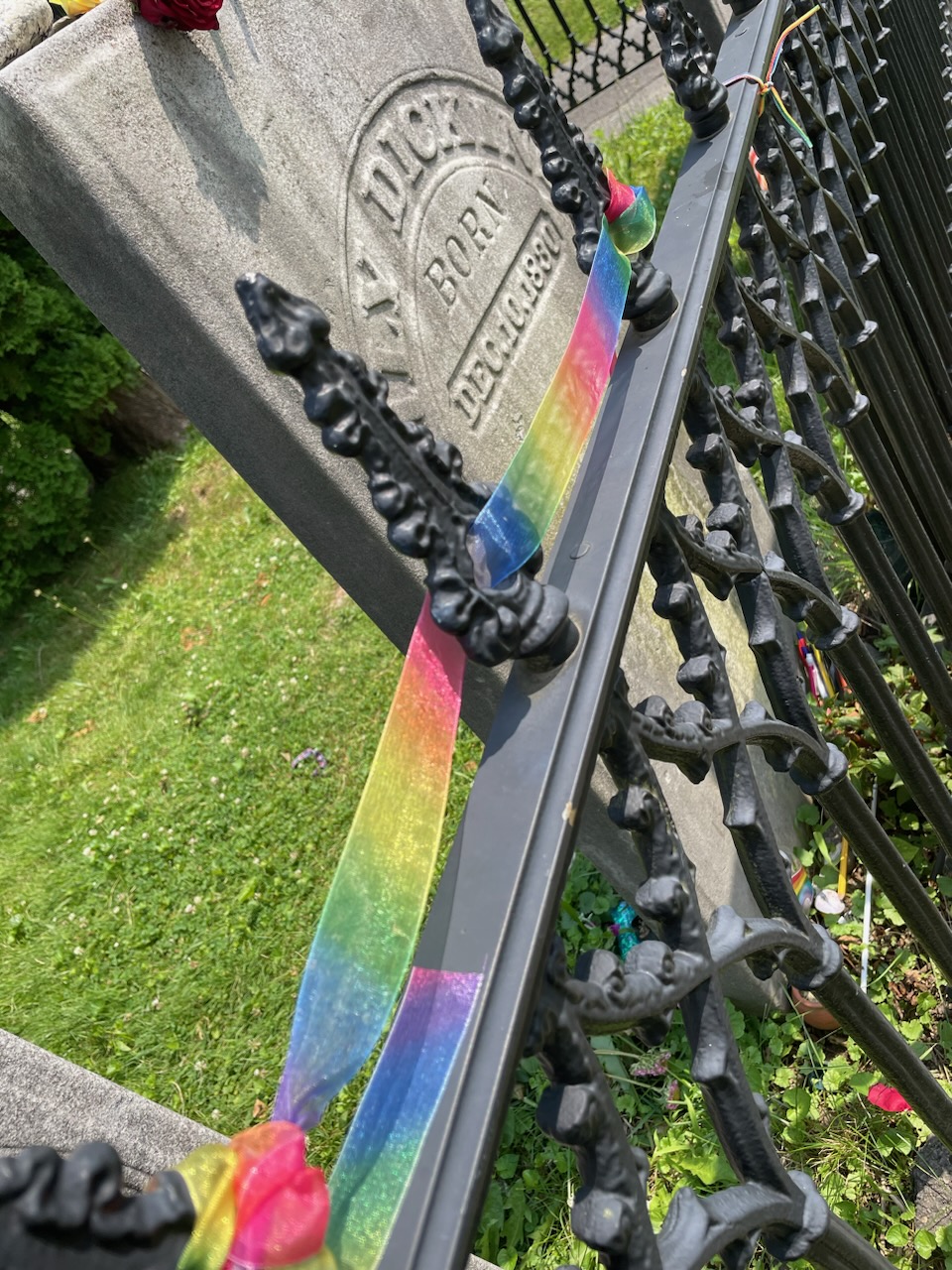
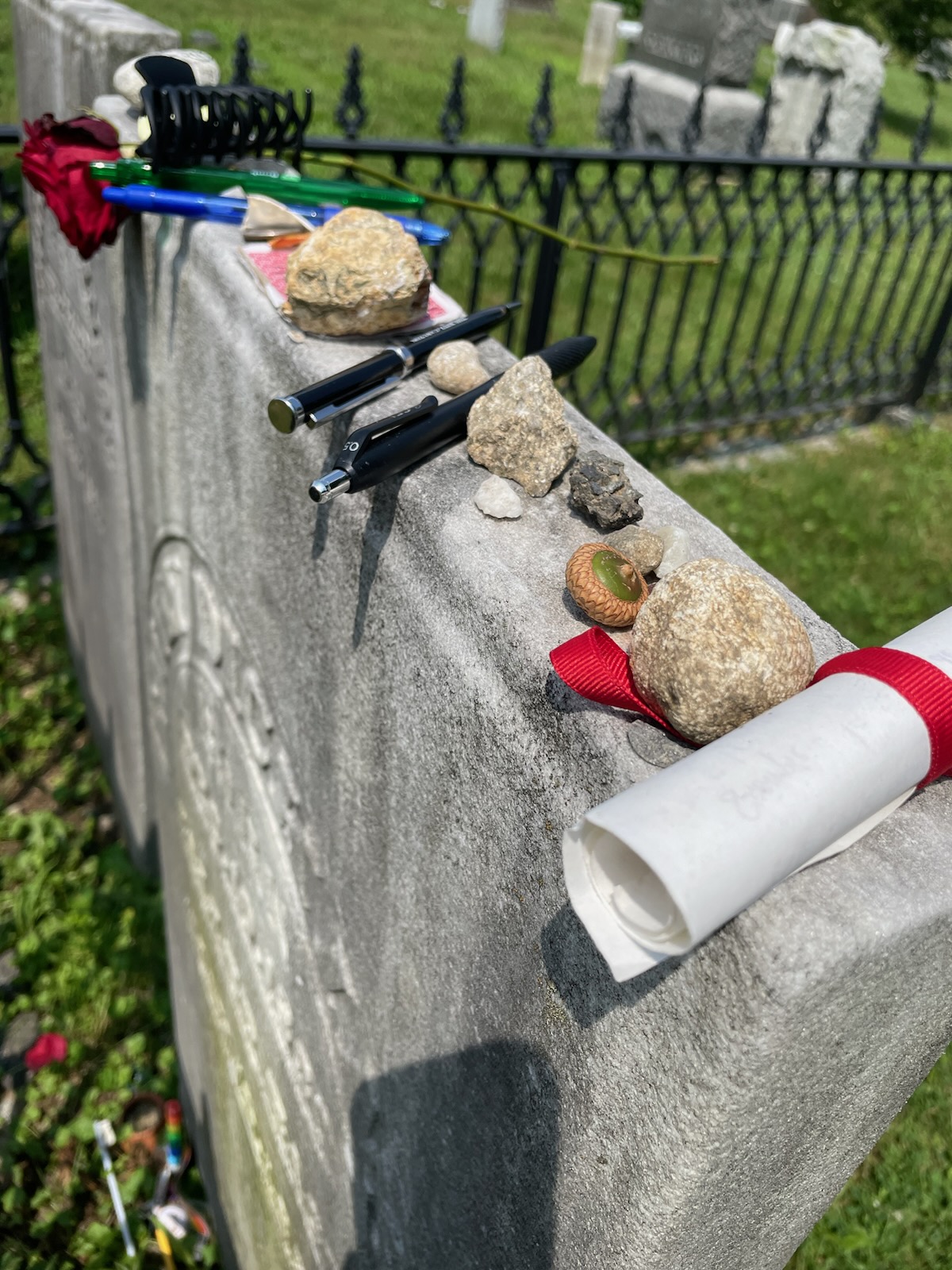
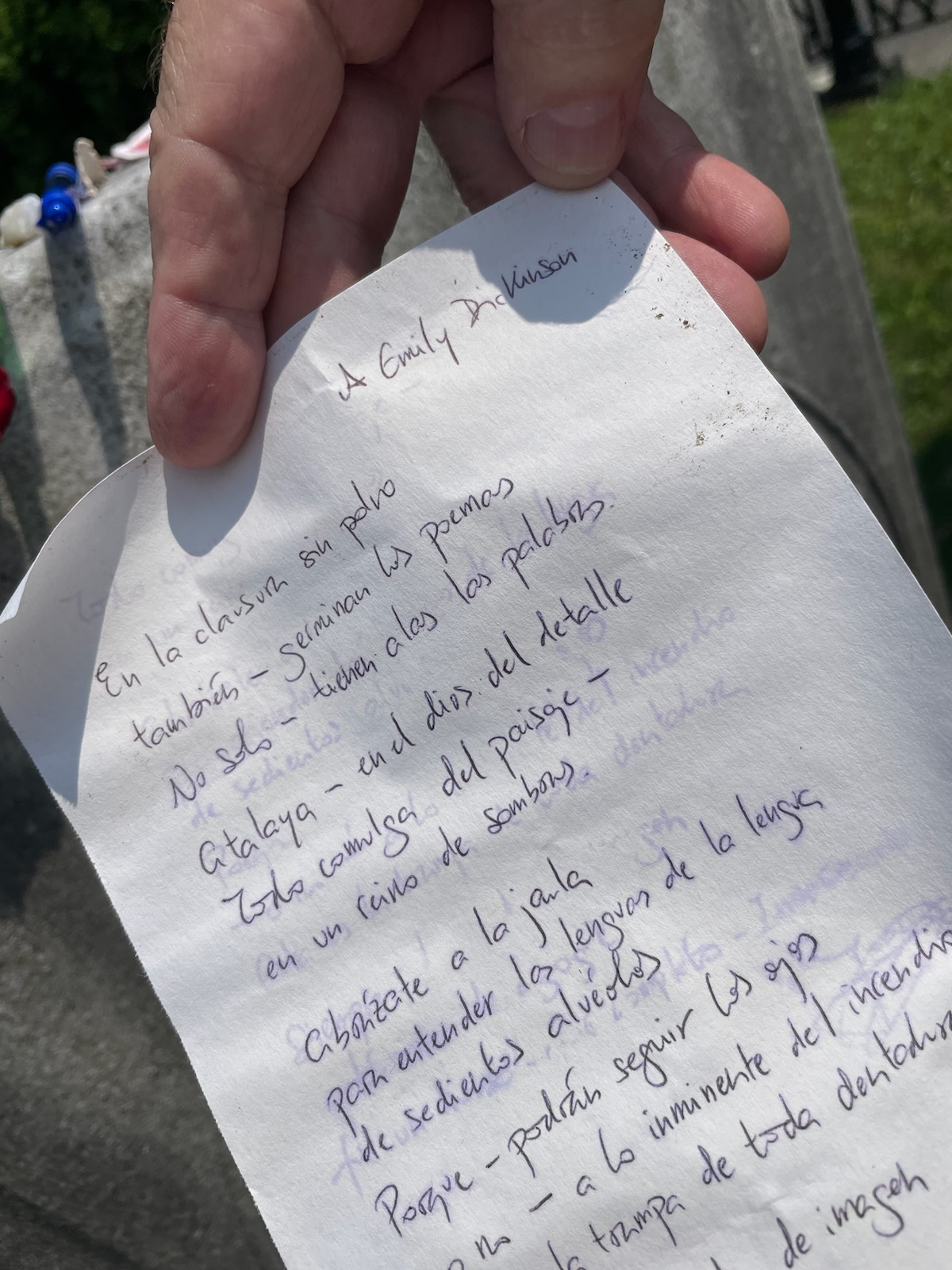
But then, once we get there, impossible to miss. People who believed in the power of her love for another woman decorated the site with rainbows.

I leave my daughters hair comb among the many other tributes.

I think it might look nice in Emily’s red hair.

2 Comments

Filed under Jean Zimmerman

Magical miniatures everywhere you turn

at New York Botanical Garden’s annual Holiday Train Show.

A smart novelist named Christopher Moore said, Children see magic because they look for it. Yes, especially on Christmas Eve. Today. If you want to conjure up A Visit From Saint Nicholas, by another writer named Moore, Clement Clark Moore, go to the New-York Historical Society (so genuine a place they kept the hyphen). They have both his desk and the original manuscript.

Here at NYBG you’ll have to make do with a perfect replica. All the New York icons are here. A Macy’s behemoth.

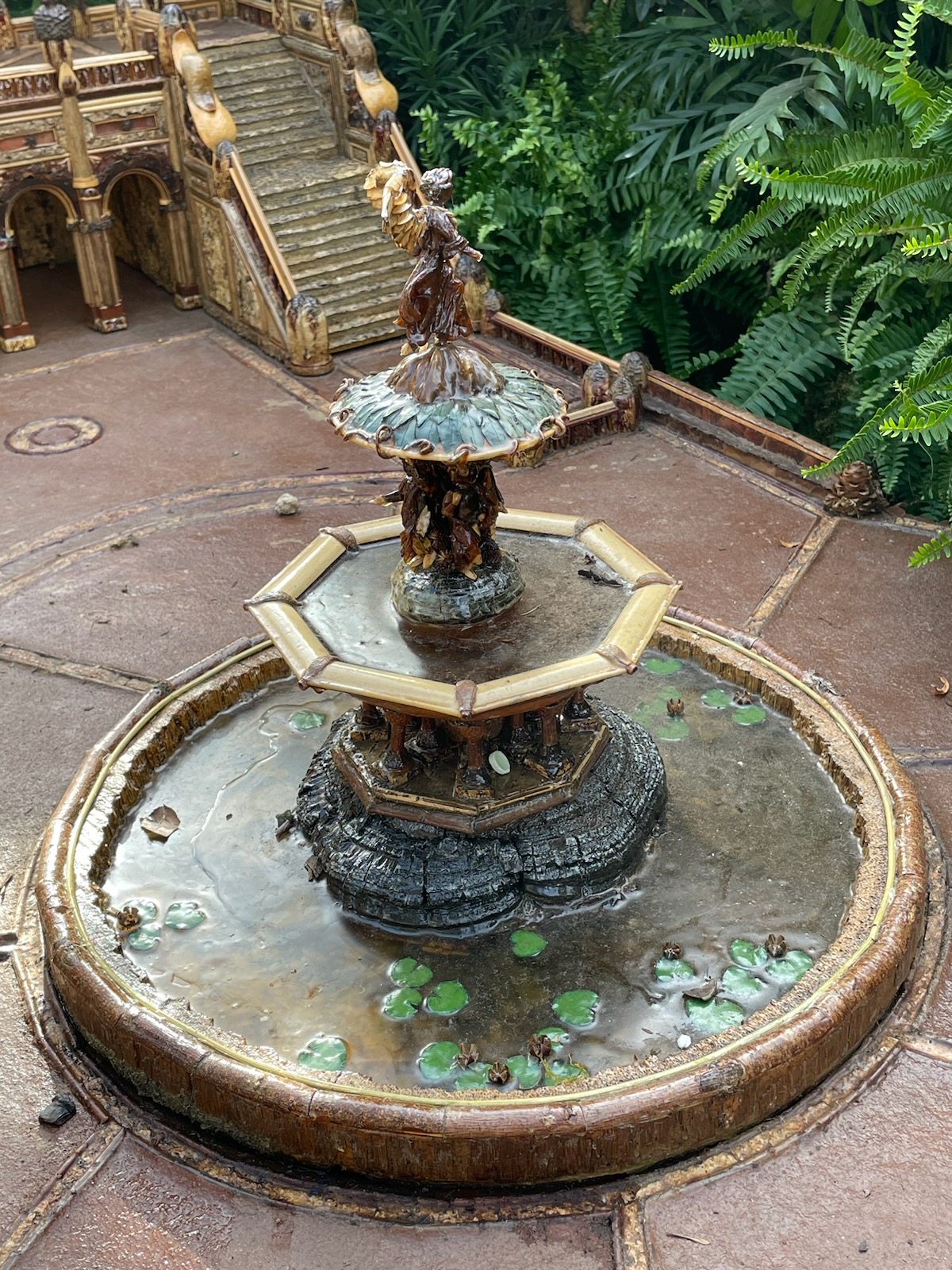
A diminutive Bethesda Fountain, the original installed in 1873, presented here in a small jewel of a Central Park.

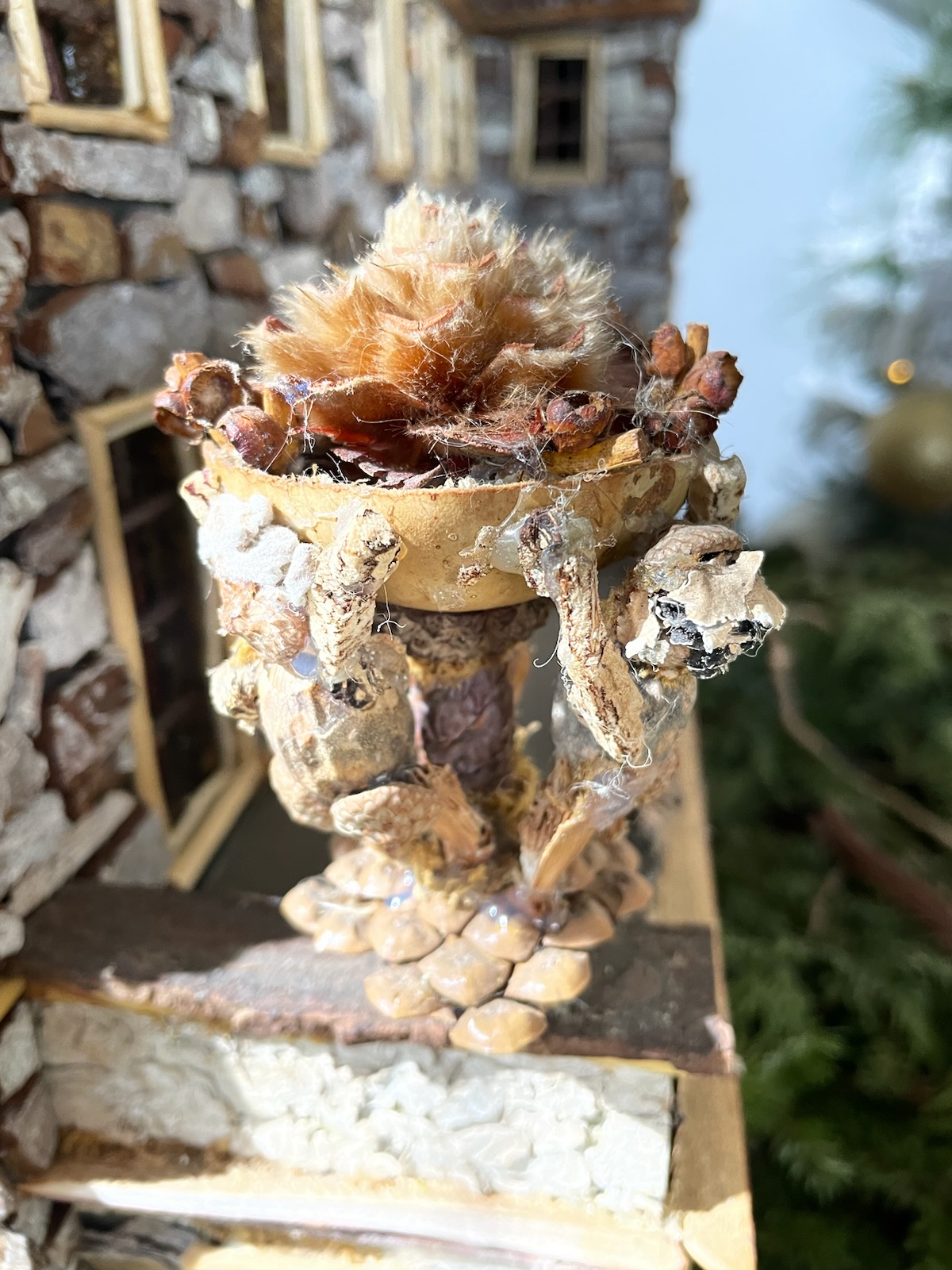
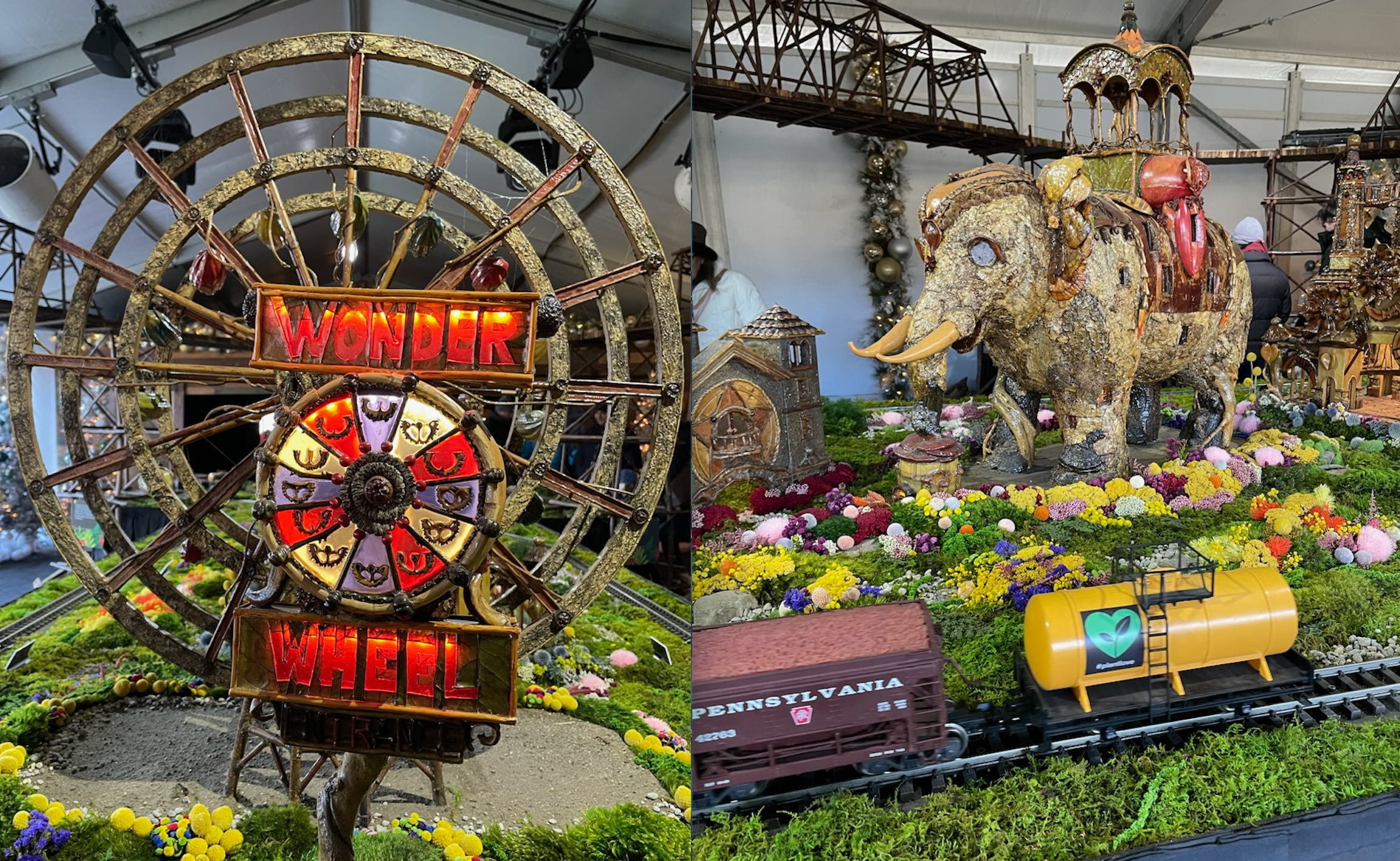
Everything is hand crafted of natural materials: pine bark, black cherry, eucalyptus stems, grapevine, acorn caps, magnolia leaves and many more.

The trains range from the traditional locomotive to the cutesy ladybug.

Childish wonder prevails. Most people are rapt.

Some not so much.

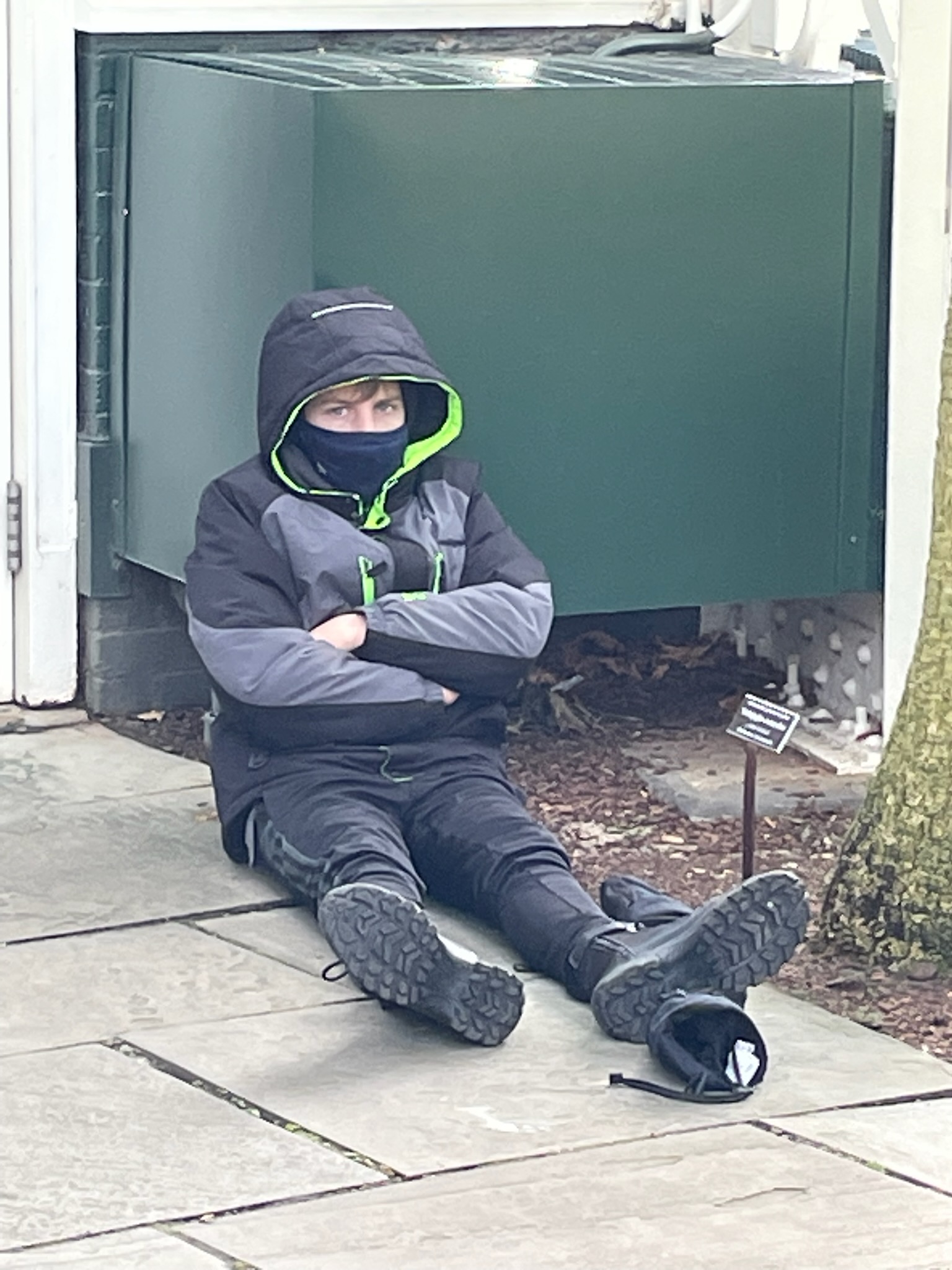
I hear a father counseling a bored pre-teen daughter: Just take it in. Another grinch opines in a loud whisper: Is there an adults-only time slot? True, there are many puffy coats jostling up against each other in front of the more popular displays, and lots of fidgety kiddos. But most visitors are delighted to be out of the deep freeze and crowded in to the steamy Enid A. Haupt Observatory, marveling and posing.

I think I love the most the way some structures glow from within.

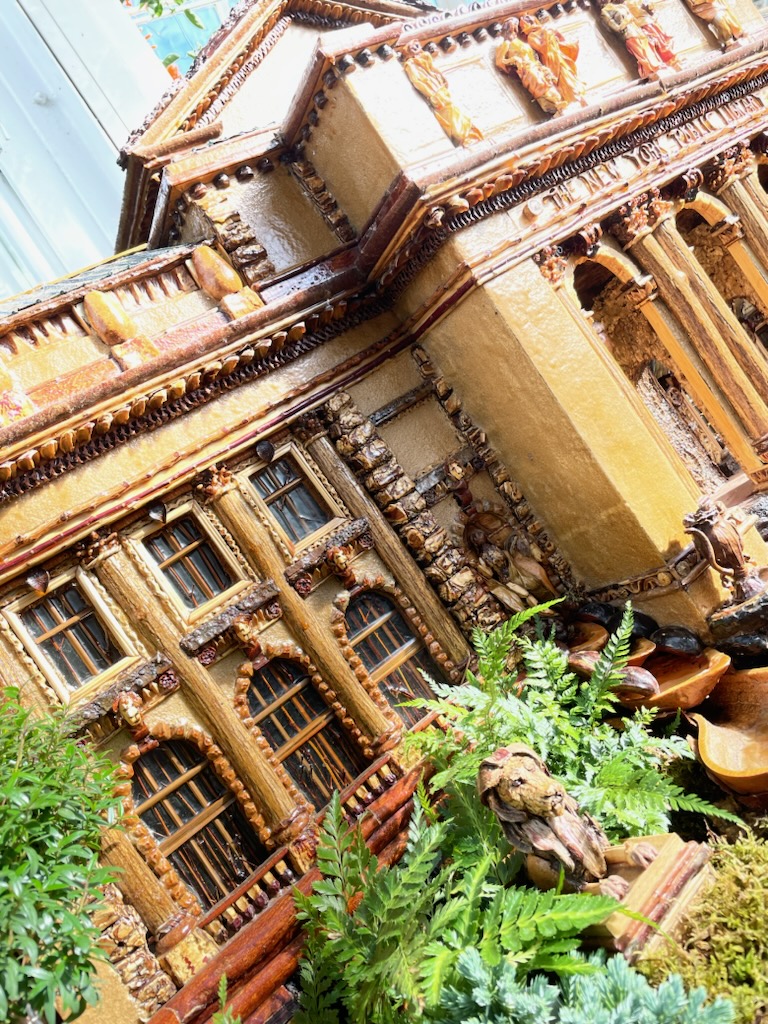
And of course finding my old favorites here. The New York Public Library, complete with its lions, Patience and Fortitude.

Because it is New York, where we tend to color outside the lines, locations outside the city limits can also be found here at the train show. Like Sunnyside, Washington Irving’s snuggery in Tarrytown, complete with a perfect little wisteria vine.

The George Washington Bridge, of course, but also, nestled beneath it, the Little Red Lighthouse.

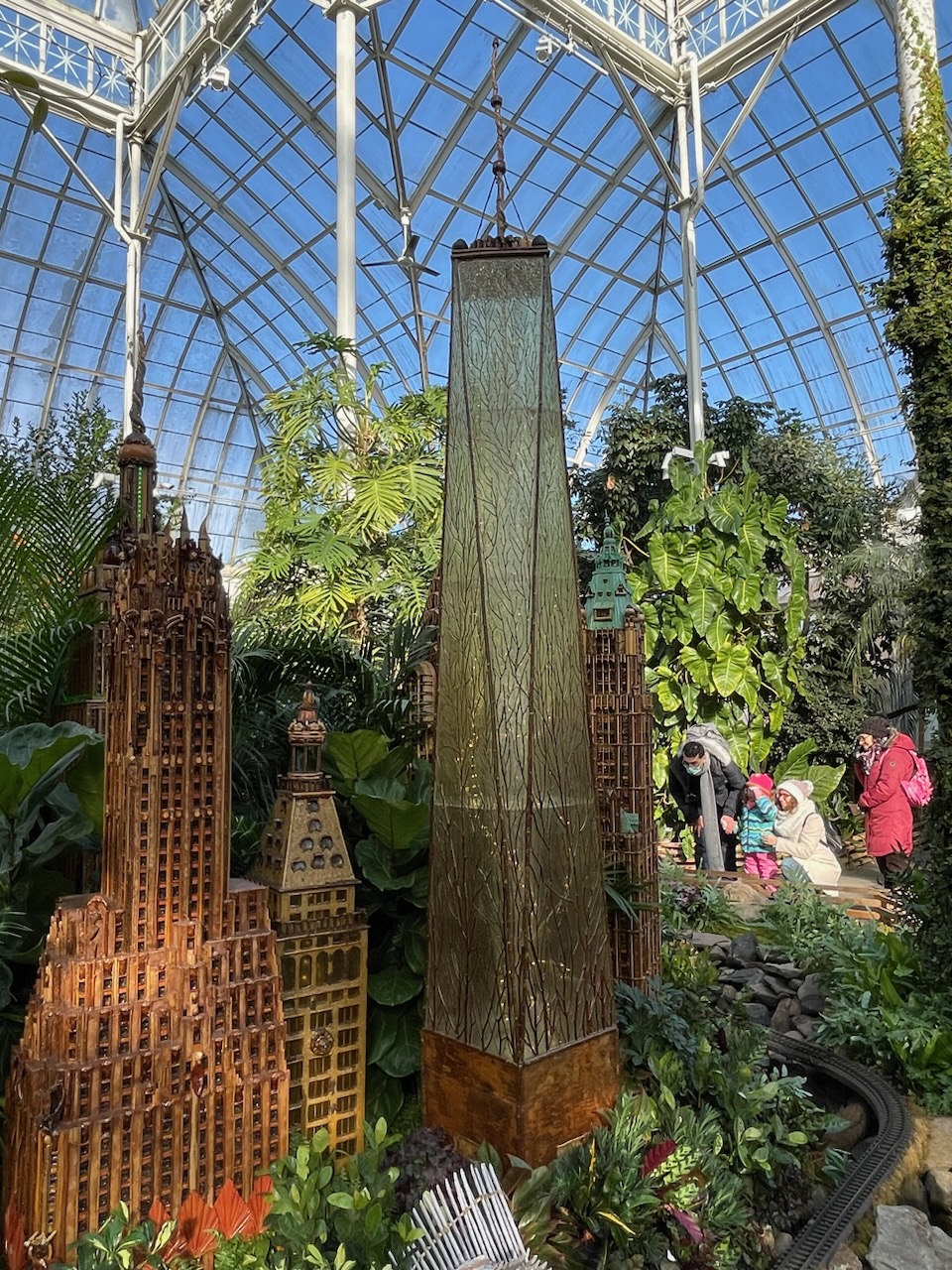
Always something new. I notice a rendition of the Freedom Tower, as if the Freedom Tower was constructed of glass. What natural material was used to create this effect? Dragonfly spittle?

If you can drag your eyes away from the trains you’ll find some equally amazing plant life. Goeppertia insignis hails from Brazil. Ripe green smell of the rain forest.

A wonderful program started in 1992 in New York City. Called Poetry in Motion, it features brief poems by famous and not-so-famous writers posted in metropolitan subway cars. Poet Billy Collins, the former U.S. Poet Laureate whose work manages to straddle both critical acclaim and popular appeal, has said, I’m a great believer in poetry out of the classroom, in public places, on subways, trains, on cocktail napkins. I’d rather have my poems on the subway than around the seminar table at an MFA program. One of his poems, Grand Central, features a building here miniaturized.

The city orbits around eight million
centers of the universe

and turns around the golden clock
at the still point of this place.

Lift up your eyes from the moving hive
and you will see time circling

under a vault of stars and know
just when and where you are.

At the train show, Grand Central is a standout. I kinda wish there was a tree stump large as this one framing the real magilla. That would be cool.

There are no subway cars here. I ask a Botanical Garden staffer to explain. The “MTA cars wouldn’t have the proper gauge to fit on the tracks,” he articulates before wishing me a Merry Christmas.

I don’t know why, if in this universe they can perfectly capture a vanished Coney Island, it’s not possible to produce a subway car with poetry in it.

Charles Simic also has contributed to Poetry in Motion.

Every morning I forget how it is.
I watch the smoke mount
In great strides above the city.
I belong to no one.

Then I remember my shoes,
How I have to put them on,
How bending over to tie them up
I will look into the earth.

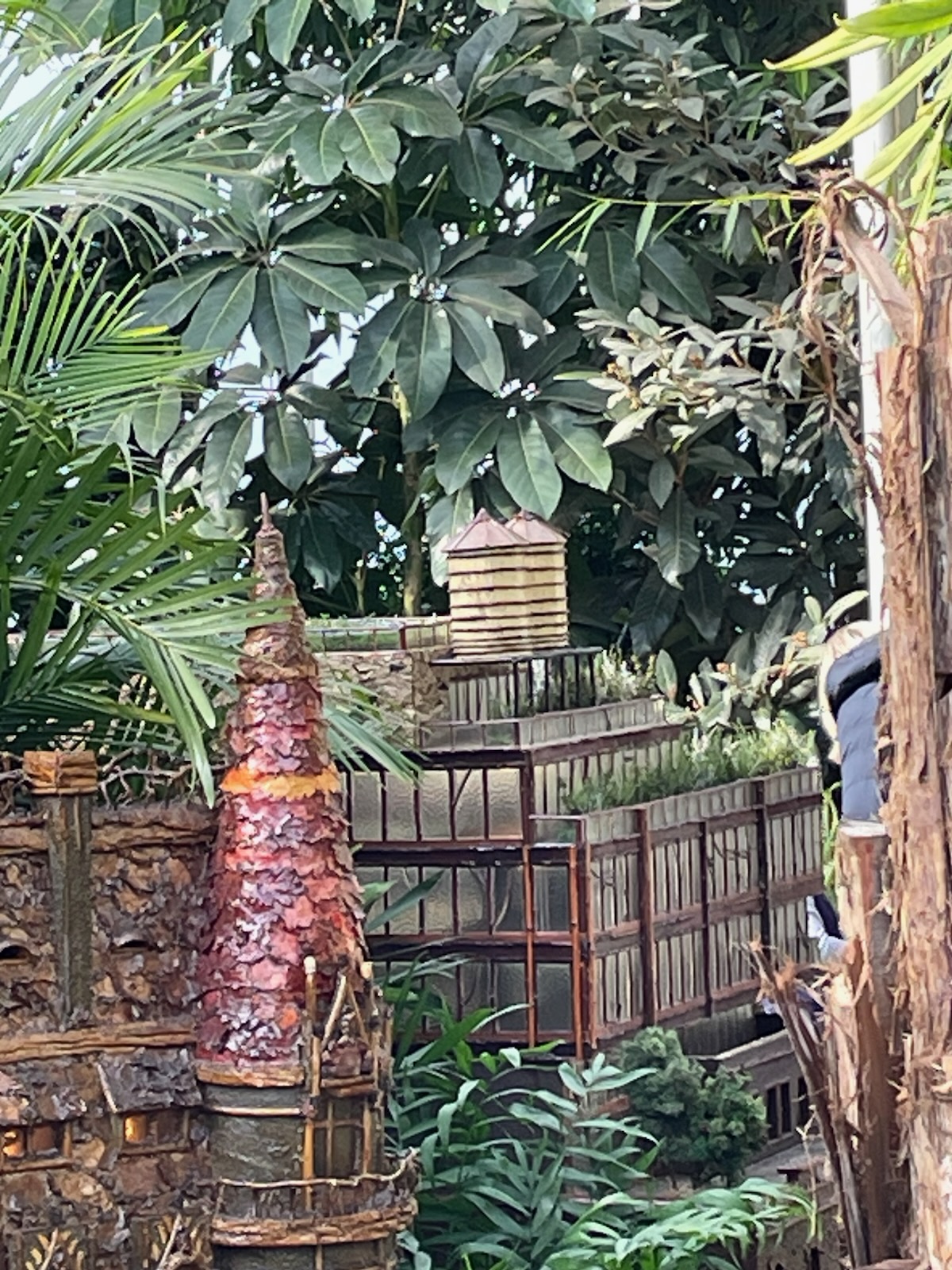
The art of the train show manages to be both mundane and sublime. Zora Neale Hurston wrote, Love makes your soul crawl out from its hiding place. So do these small, intricate, perfect displays. What would New York be without its water towers? Look closely, they are here throughout.

By the way, if the holiday season finds you in need of poetic sustenance, you can make a toll-free call courtesy of the Poetry Society of America and hear the work of Pablo Neruda read aloud by Billy Collins. The number is (212) 202-5606. You can do it while standing in the cold at the New York Botanical Garden or in the steamy enclave where the Garden has perfectly reproduced itself.

Or just gaze in backlit windows of these sublimely silent tableaux.

You might relate to the following, The Moment, by Marie Howe, also from a subway car posting:

Oh, the coming-out-of-nowhere moment
when,     nothing
happens 
no what-have-I-to-do-today-list

maybe    half a moment
the rush of traffic stops. 
The whir of I should be, I should be, I should be
slows to silence,
the white cotton curtains hanging still.

Bye the bye, my New Year’s resolution for this as every year is to eliminate the word should from my vocabulary. Life becomes more magical. It’s tough to do, but I think worthwhile. You should do it too.

3 Comments

Filed under Jean Zimmerman

Arlow Burdette Stout

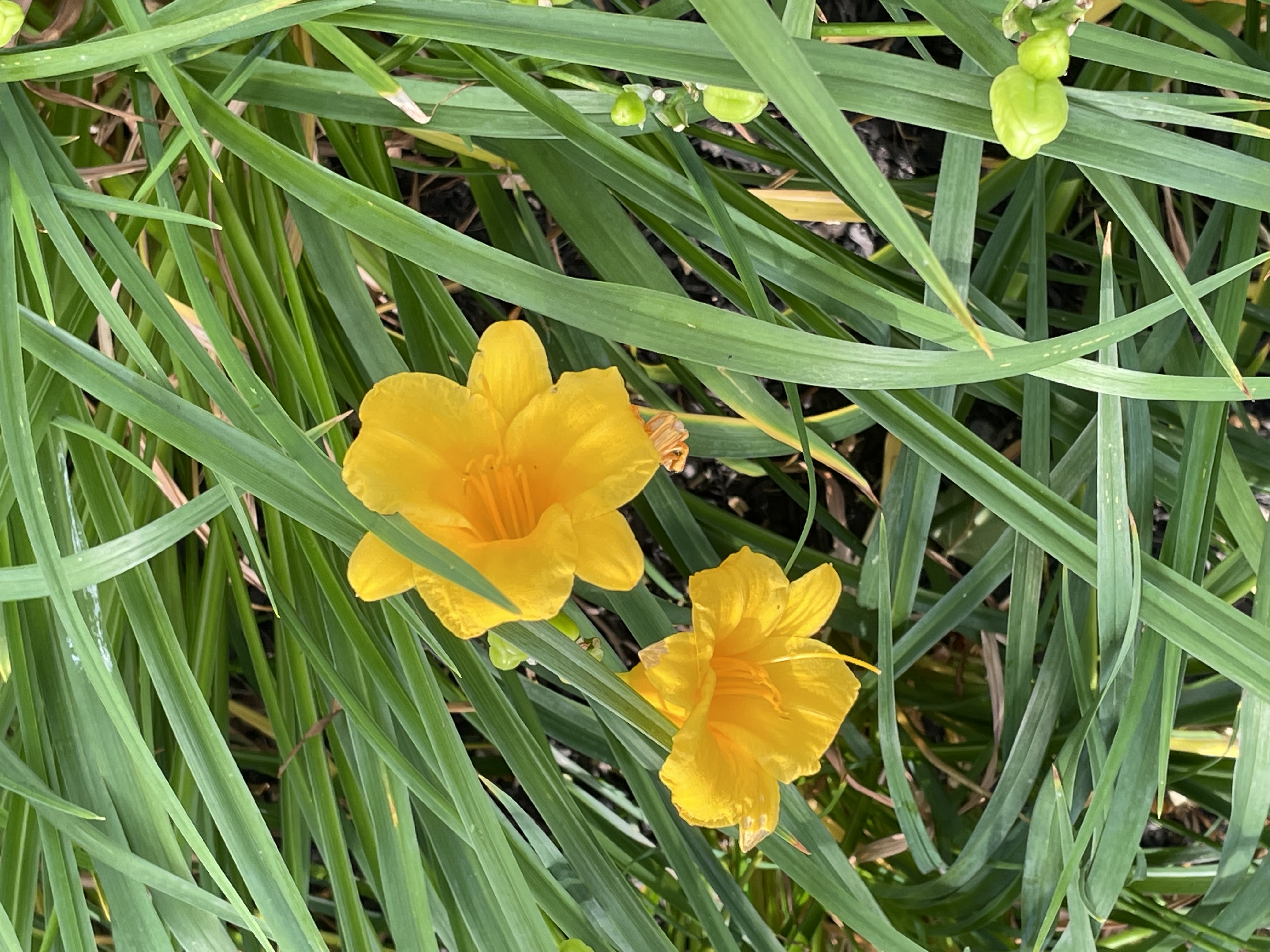
had a great name, and also revolutionized our thinking about day lilies. Never thought much about Hemerocallis? The name Hemerocallis comes from the Greek words for “day” and “beautiful”.

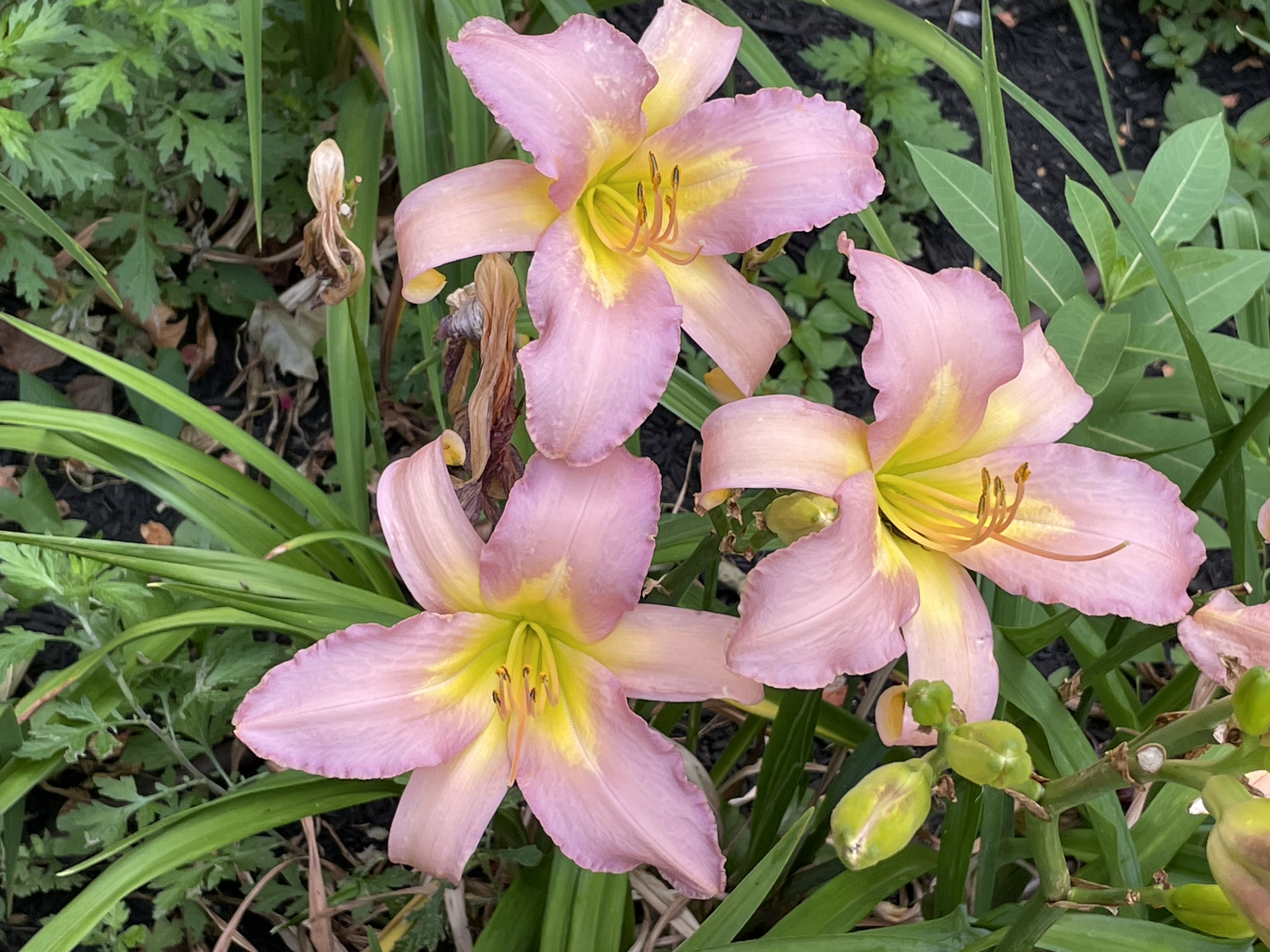
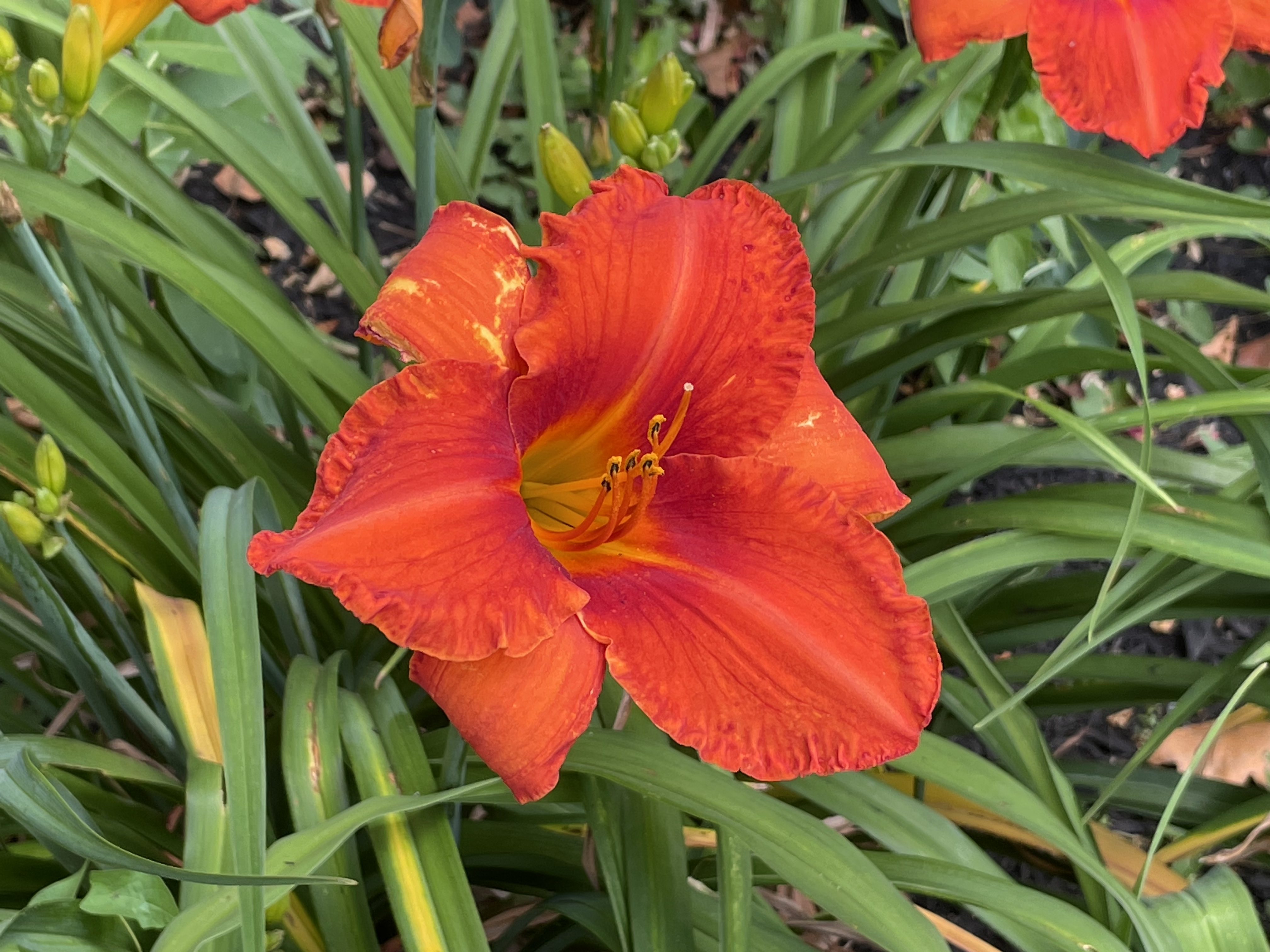
Remember that the most beautiful things in the world are the most useless; peacocks and lilies for instance. John Ruskin wrote that. I don’t believe that peacocks are useless however; nor are day lilies. I have been walking past a beautifully planted border of day lilies for the past month at Ellis Island, where the flowers are as diverse as the multitudes of immigrants that passed through over the years 1892 through 1954, when the facility closed. I get the feeling that many visitors just hustle past them every day in a rush to find their ancestors on the Wall of Honor, or to get a quick sandwich in the café before jumping on a ferry to Liberty Island. Everyone is in such a hurry, even on vacation.

Tens of thousands of cultivars exist. Arlow Stout alone produced over one hundred Hemerocallis hybrids, reawakening popular interest in the flower, which was introduced to America by European settlers—probably brought from Asia along the silk roads. By the 1800s they were naturalized in the U.S., and still what is called the “tawny” variety can be found springing up by the roadsides all over the country. Ancient Chinese paintings depict glowing orange day lilies.

It’s not actually a lily.

In the department of Harumphh: in 2009, under the APG III system, day lilies were removed from the family Liliaceae and assigned to the family Xanthorrhoeaceae, subfamily HemerocallidoideaeXanthorrhoeaceae was renamed in 2016 to Asphodelaceae in the APG IV system. Will someone wake me up when this is all sorted out?

Growing on long stems called scapes, flowers bloom for one day each. You can gather them, eat them, press them, present them to people you love. Hybridizers like our friend Stout like to fool around with properties like height or scent, ruffled edges, putting contrasting “eyes” in the center of a bloom, or creating an illusion of glitter called “diamond dust.”

Sylvia Plath also wrote about them, in a poem from 1962 called “Crossing the Water.” Stars open among the lilies./Are you not blinded by such expressionless sirens?/This is the silence of astounded souls.

But we don’t need such a hard sell. Their season is almost over. Go out and be agog over one, before their beauty sleep ’til next year.

Leave a comment

Filed under Jean Zimmerman

If integuments are the vital connections

between things, as Gil would have it, then it seems my course in the days since coming back to New York was about restoring some of those integuments, strengthening them.

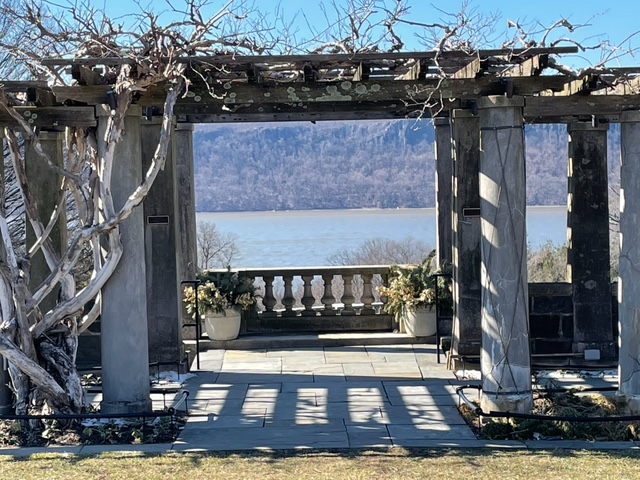
I went to a few places I love. Driving south to Wave Hill on a winter Sunday is like visiting family, its mansions and gardens a boon, on a hill overlooking the Hudson.

If you can tear yourself away from the view of the Palisades through the pergola, pay homage to some of the old, old trees. Wave Hill’s Chinese elm bark looks more like rough cement.

The linden that was here when Mark Twain arrived in 1901 still reaches upward.

I always like the quote attributed to Twain by his daughter Clara about the Bronx estate: “I believe we have the noblest roaring blasts here I have ever known on land; they sing their hoarse song through the big tree-tops with a splendid energy that thrills me and stirs me and uplifts me and makes me want to live always.”

Today it was quiet rather than blowy and you could notice a few details in the silence.

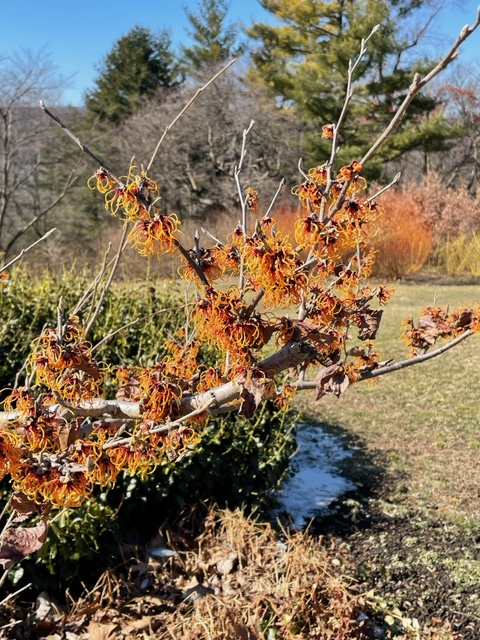
A witch hazel cultivar which burns in the cold air.

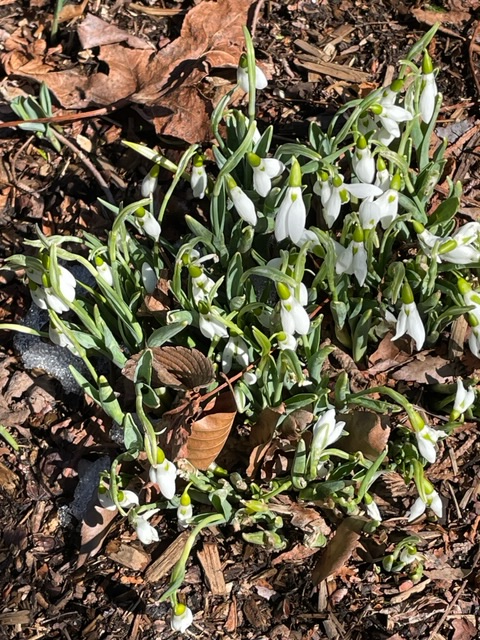
The first of the snow drops.

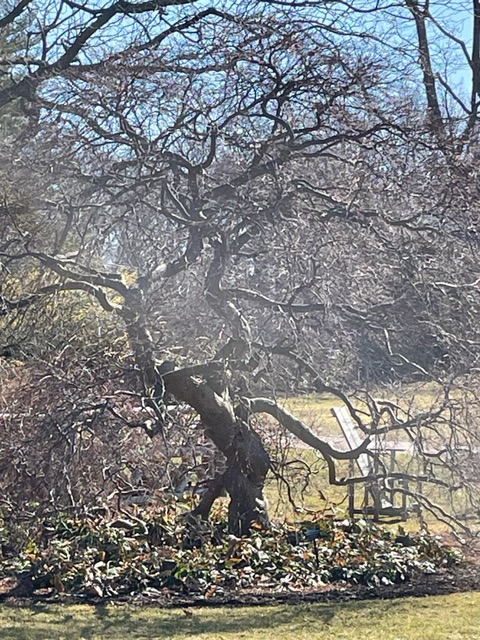
The bones of the Japanese maple.

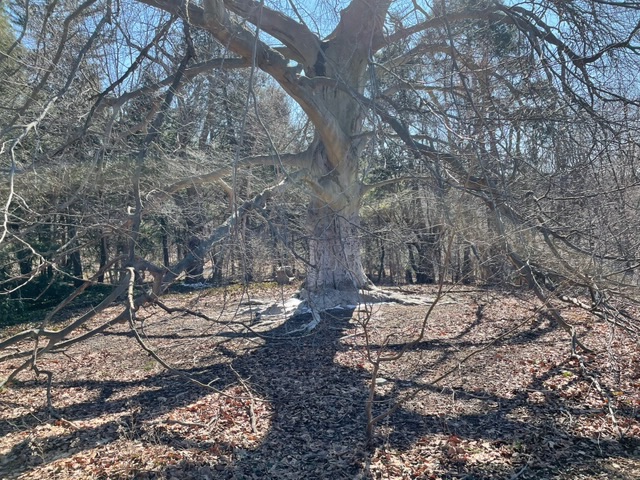
My old friend the copper beech.

Which invites you to come closer and duck beneath its sinuous branches, the better to imagine all the people who have come before and recorded their visits.

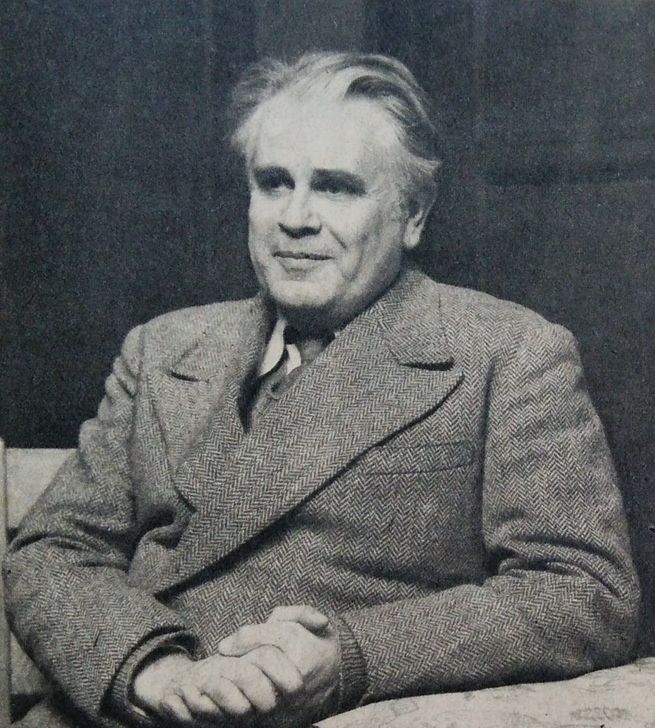
I picked up a book when visiting my mother this month and found an old clipping carefully folded up inside its pages. The book’s author, brilliant critic Reginald H. Blyth, had first published Haiku in 1949, but this was the 1982 reissue.

Blyth began writing about Zen Buddhism while imprisoned in Japan as an enemy alien during WWII. By the time he died in 1964 he had released more than 20 volumes on Japanese Zen, English literature and the deep relationships he found between them.

My mother, the brilliant learner Betty Zimmerman, had been inspired to get the book based on that review.

She and my father spent her first married years in Japan. In 1982, she had recently received her masters in cultural studies at Manhattanville at Purchase, writing a thesis on Odilon Redon, the French symbolist painter.
She went to work at the Metropolitan Museum in the Eastern Arts department.
The Met has got to be the last changed environment in all of New York City. Or when it does change, it manages to seem as if it has always been like that. The skyline has changed of course, due to incursions of needle skyscrapers.

The windows overlooking Central Park capture a landscape that was created even before the museum opened there in 1880 and has been maintained in much the same way since.

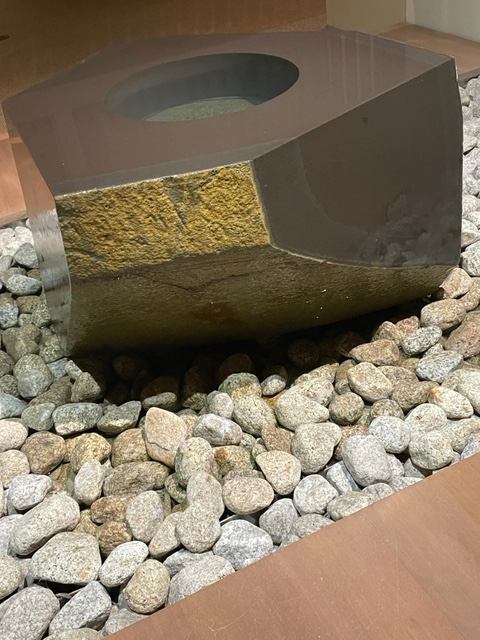
 If you go not to the changing exhibits but the old guard, even more so. The Asian arts in particular are burnished by time. This Noguchi basalt “water stone” has been here forever — at least in my time frame, since the 1980s..

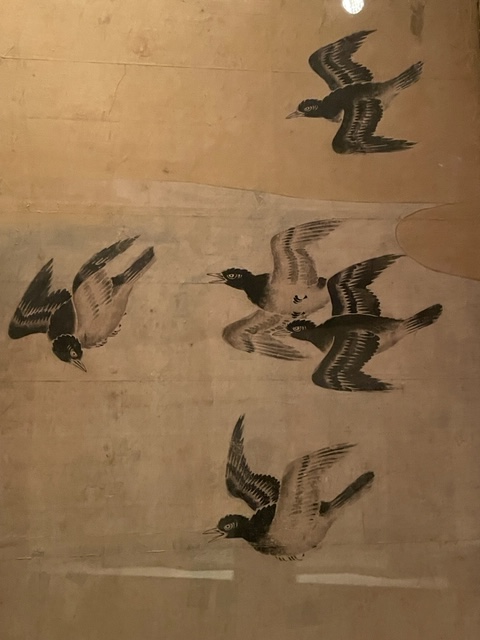
Some of the painted screens change but there will always be birds in flight in the Met’s collection, in this case mynah birds, by an artist of the Edo period.

Reginald Blyth talks about haiku not being just a poetic form but a way of life.

“Haiku record what Wordsworth calls those ‘spots of time,’ those moments which for some quite mysterious reason have a peculiar resonance.” The deluge of a waterfall would be one such moment, captured by Tanaka Raisho in 1917.

I totally get it. A hawk in the seconds before flight, in the late 1500s, by an artist you’ve never heard of. It doesn’t matter, all that matters is that beady-eyed moment.

Blyth goes on to say, “When we are grasping the inexpressible meaning of those things, this is life, this is living. To do this twenty-four hours a day is the Way of Haiku. It is having life more abundantly.”

I also like a quote from the yellowed NYT book review from another of Blyth’s books: “The back of the picture, the unheard melodies, the dull and the stale, and cheap and vulgar are all of infinite value.”

That is why I am touched by my mother’s scribbles on the repurposed bookmark also hidden in Haiku’s spine and never supposed to see the light of day again. The page numbers and opening words of certain haiku… ones she would have been considering, she tells me, for use on Christmas cards. I turn to page 27.

Mountains and rivers, the whole earth—

All manifest forth the essence of being.

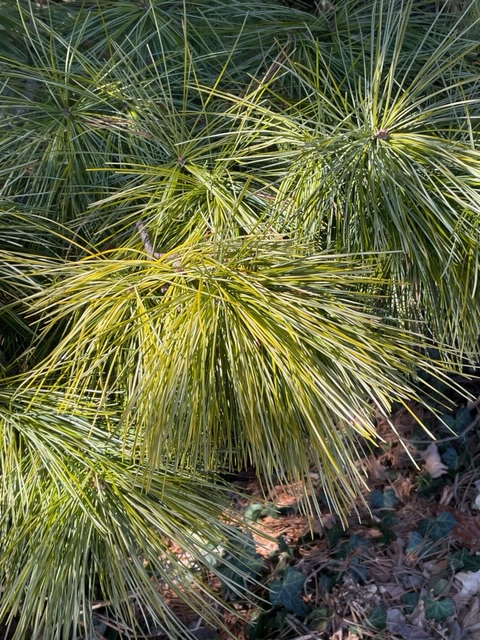
Not actually haiku but a verse used by monks studying Zen in the monastery, according to Blyth. Think of the splash of pine at Wave Hill.

The mysterious shadow of the atlas cedar.

The essence of being is a phrase that reflects the integuments that exist, between my mother and myself, between Japanese scroll painting and poetry, between Mark Twain and the “hoarse song” of the wind, between all those who initialed the Wave Hill copper beech bark over the ages. The things that connect to other things.
Leave a comment

Filed under Jean Zimmerman

The Palisades

sag under their coat of snow while a  god’s eye floats above.

I’ve been hunkered down, distracted by the weather, researching my book about forests. To the process of book building I raise a toast: “Let be be finale of seem,” as Wallace Stevens put it in his poem “The Emperor of Ice Cream.”

More interesting stuff tomorrow.

In the meantime, if you are reading this and don’t subscribe, please go to my main page at jeanzimmerman.com and enter your email address. Every two or three days I will come winging in to greet you.

Leave a comment

Filed under Jean Zimmerman

Trees are winter poems

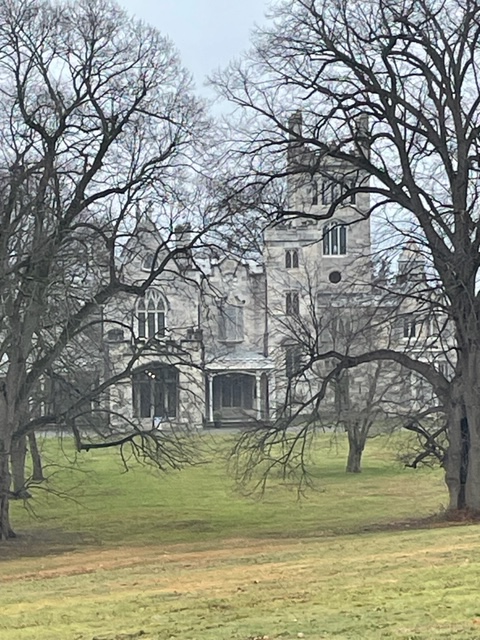
and, like written poetry, sometimes you must talk yourself into reading them. Lyndhurst, the estate near where I live, makes it easier, because its 67 park-like acres offer an arboricultural bounty. Forget the house –a gothic revival castle designed in 1838 by Alexander Jackson Davis, when romanticism reigned. (Where was Frank Lloyd Wright when we needed him?)

The place is known best as the familial headquarters of rapacious banker Jay Gould in the Gilded Age, and his daughter Helen added a bowling alley and immense greenhouse, the skeleton of which remains. Carriage roads with precisely wrought stone gutters.

The Old Croton Aqueduct cuts across the landscape, which might have been somewhat annoying to the residents of the mansion in the nineteenth century. But it was progress, and the pre-Gould-era occupants were civic minded. New York City must have pure water!

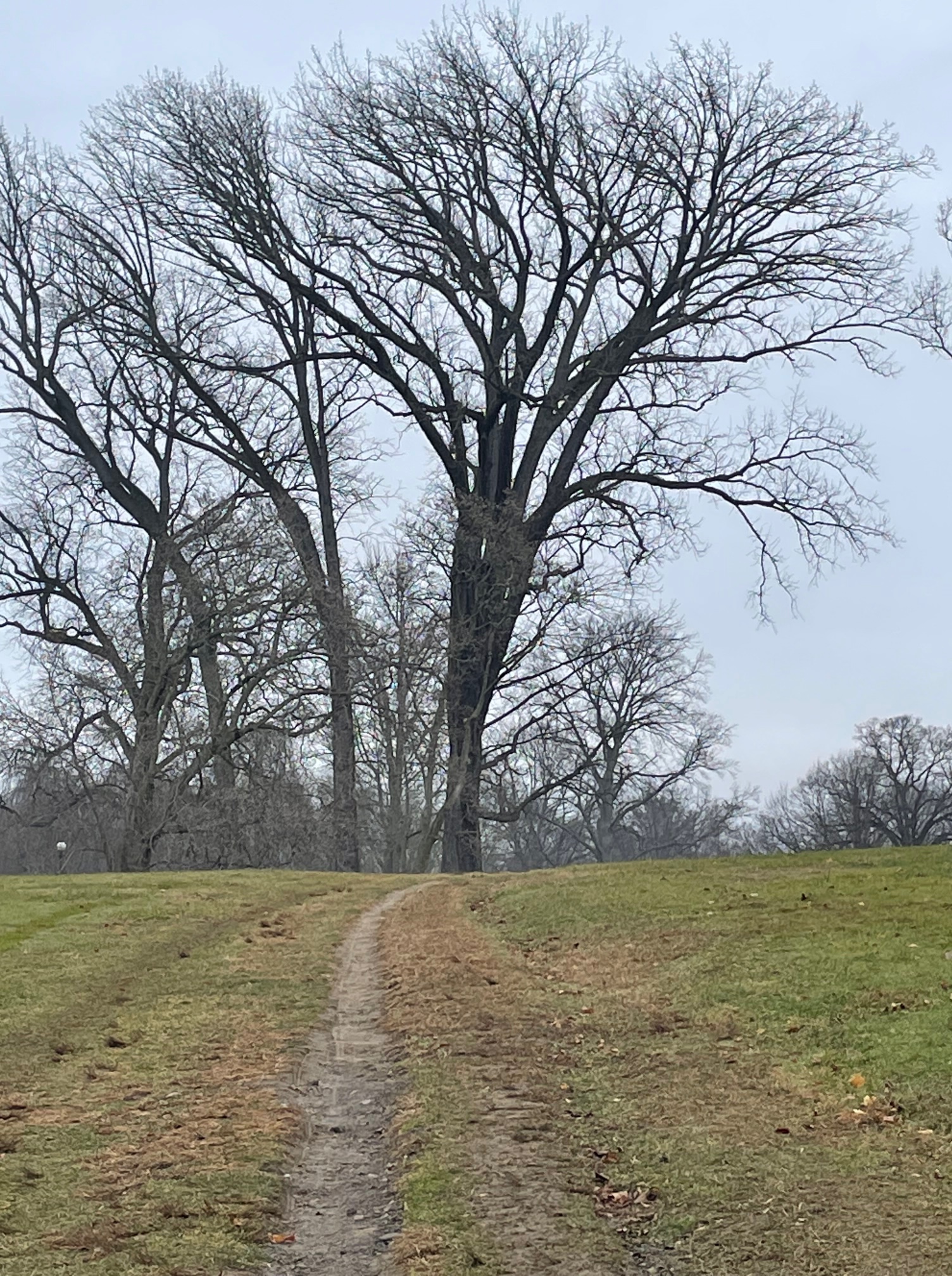
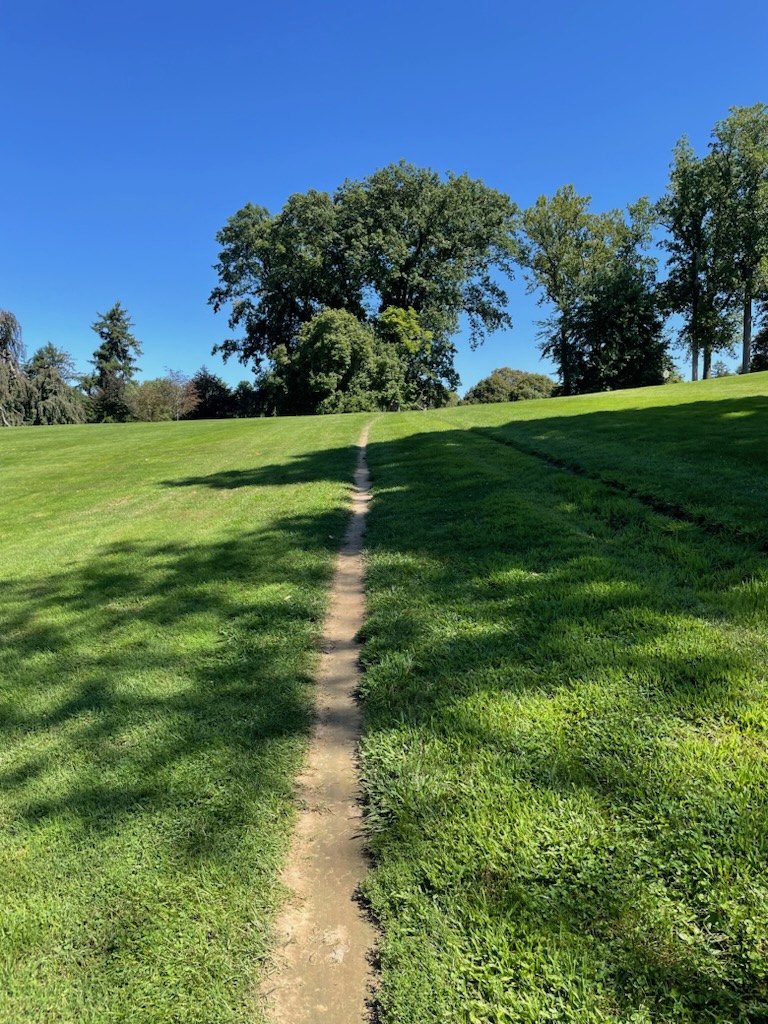
You can still follow the trail’s path up a rise.

In fact, that’s the only place you’re supposed to go off season, for some reason.

I have other plans. I have resolved to break more rules in 2020 and I think I won’t wait to set my intent.

Andrew Wyeth has an oft-quoted line: “I prefer winter and fall, when you can feel the bone structure in the landscape—the loneliness of it—the dead feeling of winter. Something waits beneath it—the whole story doesn’t show.”

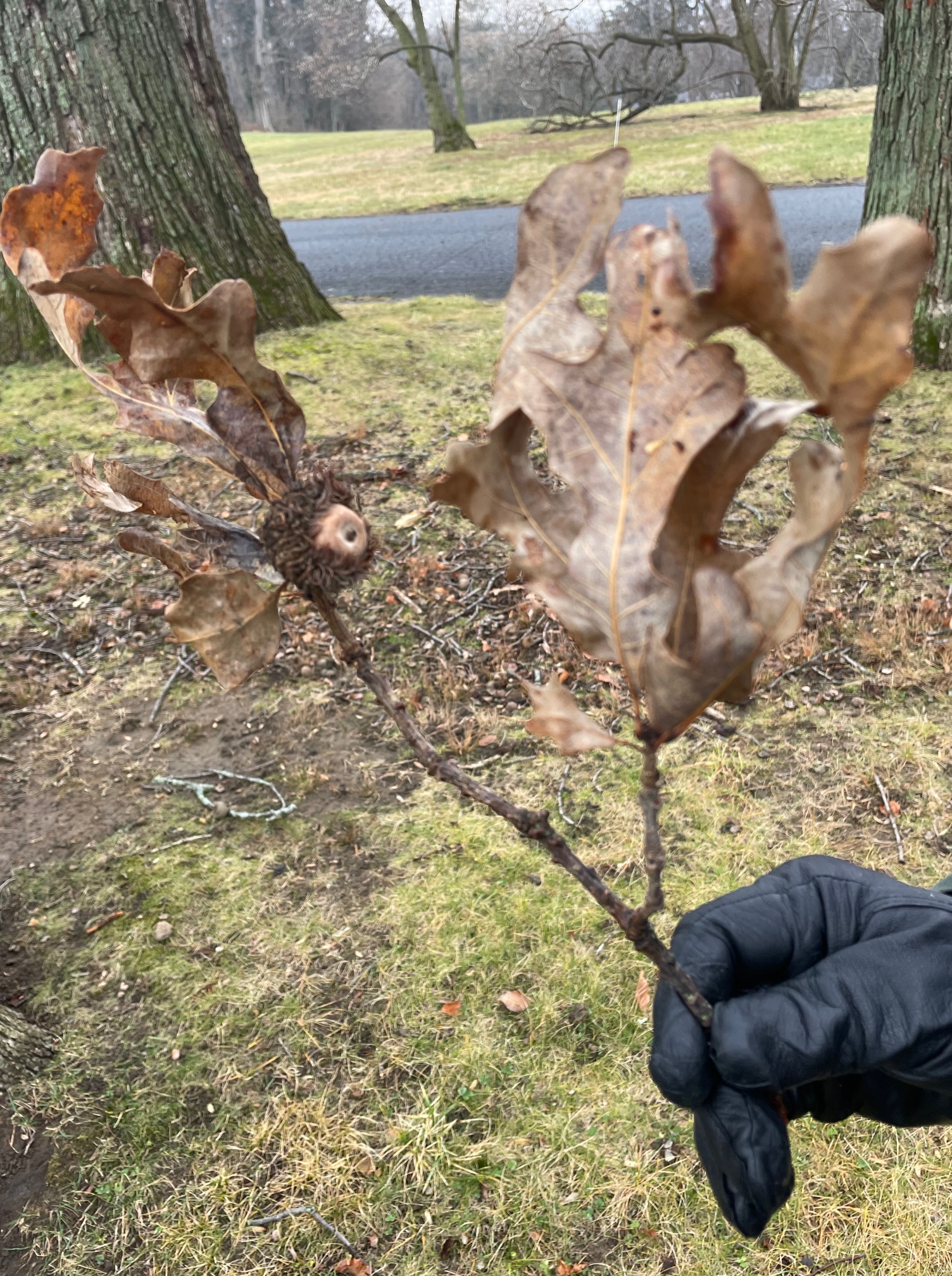
Lyndhurst in winter is all bones. A stand of oak on closer inspection reveals itself to include a burr oak (you can call it a bur oak if you want to be ridiculous.) They have the mossiest, shaggiest caps of all acorns, a look that surely serves some dendrological purpose, like keeping from being eaten.

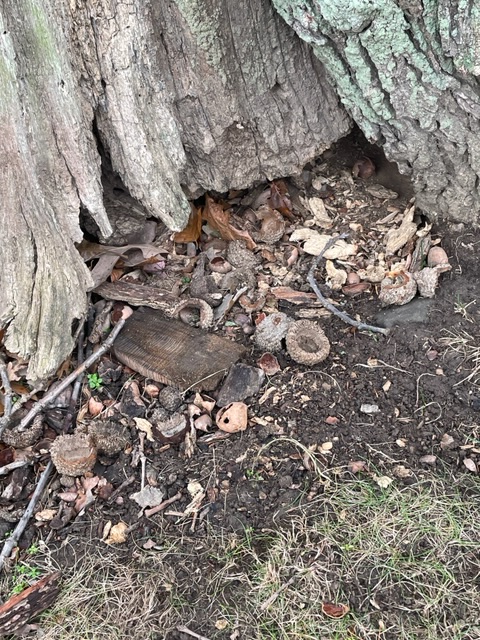
Look closely and see that there has been some living creature here.

I know an arborist who likes these oaks for “the deep lobes and lustrous green of the leaves.” Only visible in the imagination now, of course. “The very large acorns can be the size of golf balls, which gives this oak its Latin name…  Quercus macrocarpa is a slow grower that can become quite large in maturity. Better suited for parks than street trees due to its size and the size of the acorns.“ Exactly! Here at Lyndhurst it can really spread out.

Wyeth also said: “I search for the realness, the real feeling of a subject, all the texture around it… I always want to see the third dimension of something… I want to come alive with the object.”

Live bones. A slightly scary concept but one that I like. The magnolia looks like it’s already ready for a warmer season.

Wait a bit. Enjoy your dormancy. You can explode later.

An arboretum in all but name, Lyndhurst has a number of mammoth beech trees that is so large as to be almost unfair to the rest of the world’s estates. I know that Newport has its share also. The Preservation Society of Newport County has even established a beech tree nursery “to ensure the future of the iconic landscapes of the Newport Mansions.”

Magnificent is a word undeniably coined to describe European beeches.

Weeping bones. Easier for any arborist to ID some specimens after leaf-out than now, but a beech can’t fool you.

Strong emotion on display with statuary scattered about the grounds, which I suspect no one but myself has examined closely for some time.

Some of these carvings gave off a strong whiff of an earlier era, when sexuality had to be expressed clandestinely. It was only proper to reveal oneself in all Nature’s glory if you were a nymph of some kind.

We’re still squeamish about some things even going on 2020, like depicting the litter of scat all around the Lyndhurst estate – deer, of course, and goose, and – this. First to identify it (dog, bear?) gets a mention in these pages.

I don’t know the intended meaning of this image. I’m sure it had one when carved. Bacchus wiping the wine from his face?

But it reminds me of one of my very favorite poems, written by William Butler Yeats in 1892 (the Gould epoch at Lyndhurst, though it’s hard to believe he ever read it). This poem is a douzaine, meaning a 12-liner, and in it Yeats wears his heart on his sleeve for wild woman – Irish republican revolutionary and suffragist –Maud Gonne. She knew how to break rules and she knew how to break hearts. One good way is to find a poet to make you immortal. Wish I knew her.

When you are old and grey and full of sleep,

And nodding by the fire, take down this book,

And slowly read, and dream of the soft look

Your eyes had once, and of their shadows deep;

How many loved your moments of glad grace,

And loved your beauty with love false or true,

But one man loved the pilgrim soul in you,

And loved the sorrows of your changing face;

And bending down beside the glowing bars,

Murmur, a little sadly, how Love fled

And paced upon the mountains overhead

And hid his face amid a crowd of stars.

That’s what that little guy hiding his face in the statuary says to me, out in the beautiful dormant cold.

I took a burr acorn cap with me when I left. To quote Jay Gould: “Whatever is not nailed down is mine. What I can pry loose is not nailed down.”

Leave a comment

Filed under Jean Zimmerman

I’m tired of flowers

They’re too pretty. They distract you from all the miseries around you, inside you. They are beautiful effortlessly, which puts everybody to shame.

One of my favorite poems, Walking Around by Pablo Neruda, opens with these lines:

It so happens I am sick of being a man.

And it happens that I walk into tailorshops and movie houses

dried up, waterproof, like a swan made of felt

steering my way in a water of wombs and ashes.

He goes on in that vein for a while.  Then comes the line I’m thinking of, thinking of flowers:

Still it would be marvelous

to terrify a law clerk with a cut lily

So fresh flowers can be pretty outrageous, pretty powerful.

Sometimes I prefer the two dimensional.

That is still-life painter Eliot Hodgkin’s “May.” 

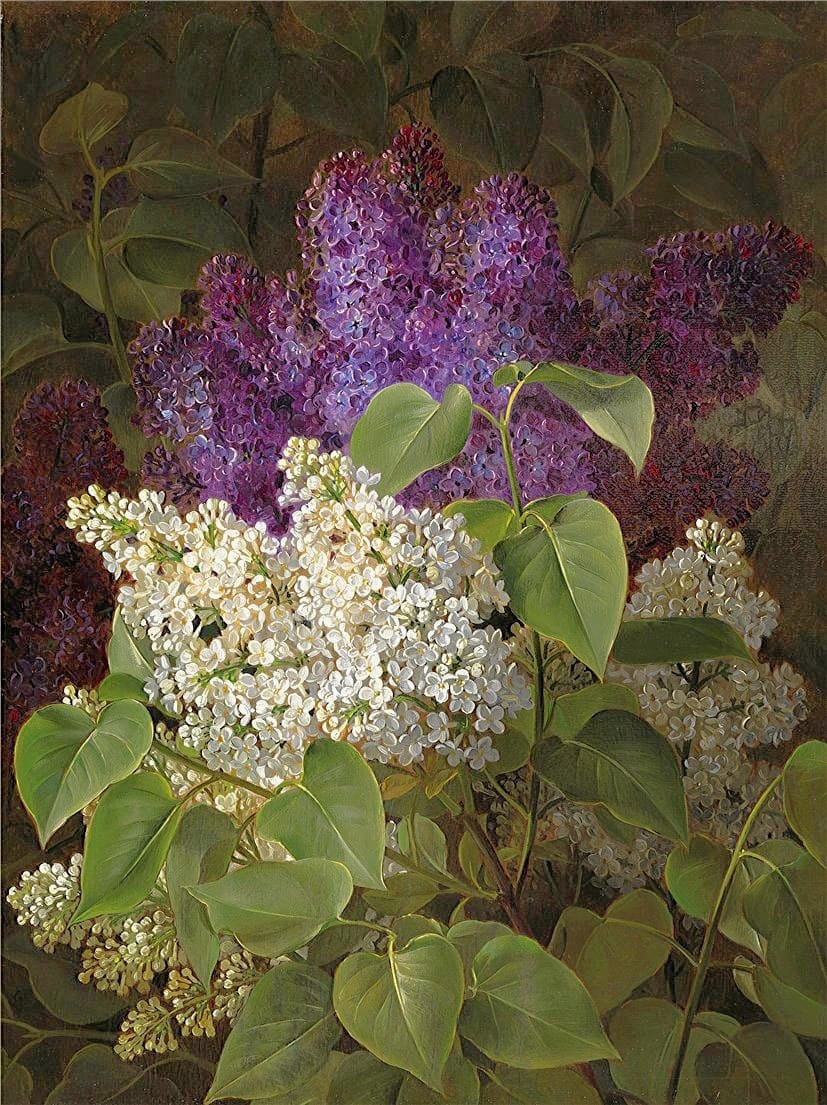
The scent almost wafts off of the nineteenth century Johan Laurentz Jensen’s clutch of lilacs.

It’s a relief sometimes to have flowers that stay safely on canvas.

5 Comments

Filed under Jean Zimmerman