Tag Archives: Plants

Plants have names.

Even those plants most people would walk right by and have no idea what to call them. In the desert, maybe, especially.

It helps if you’re lucky enough to be with someone who knows most of the names.

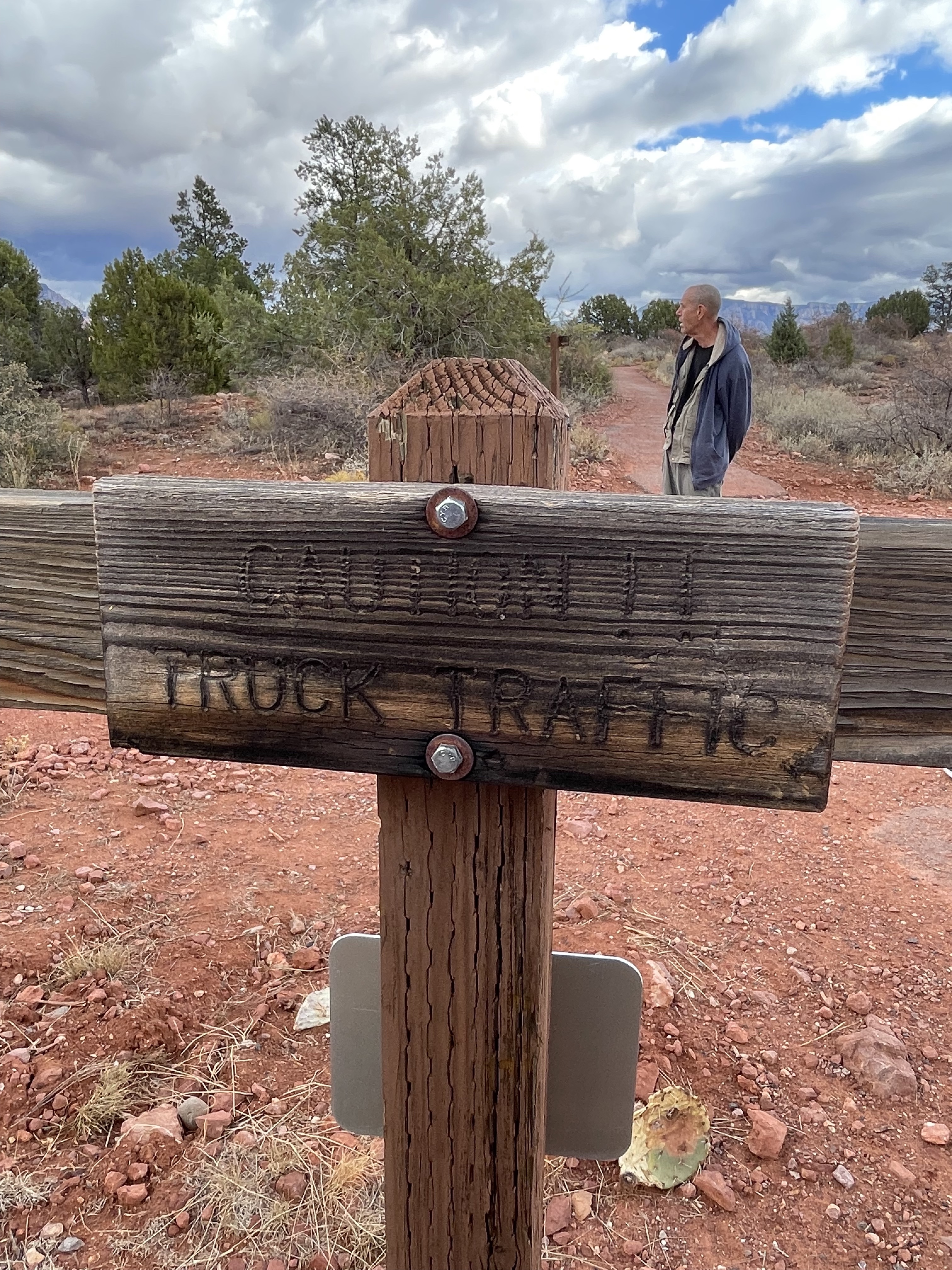
Like my brother. He seems to be acquainted with everything we pass this morning on this quiet little trail in Sedona.

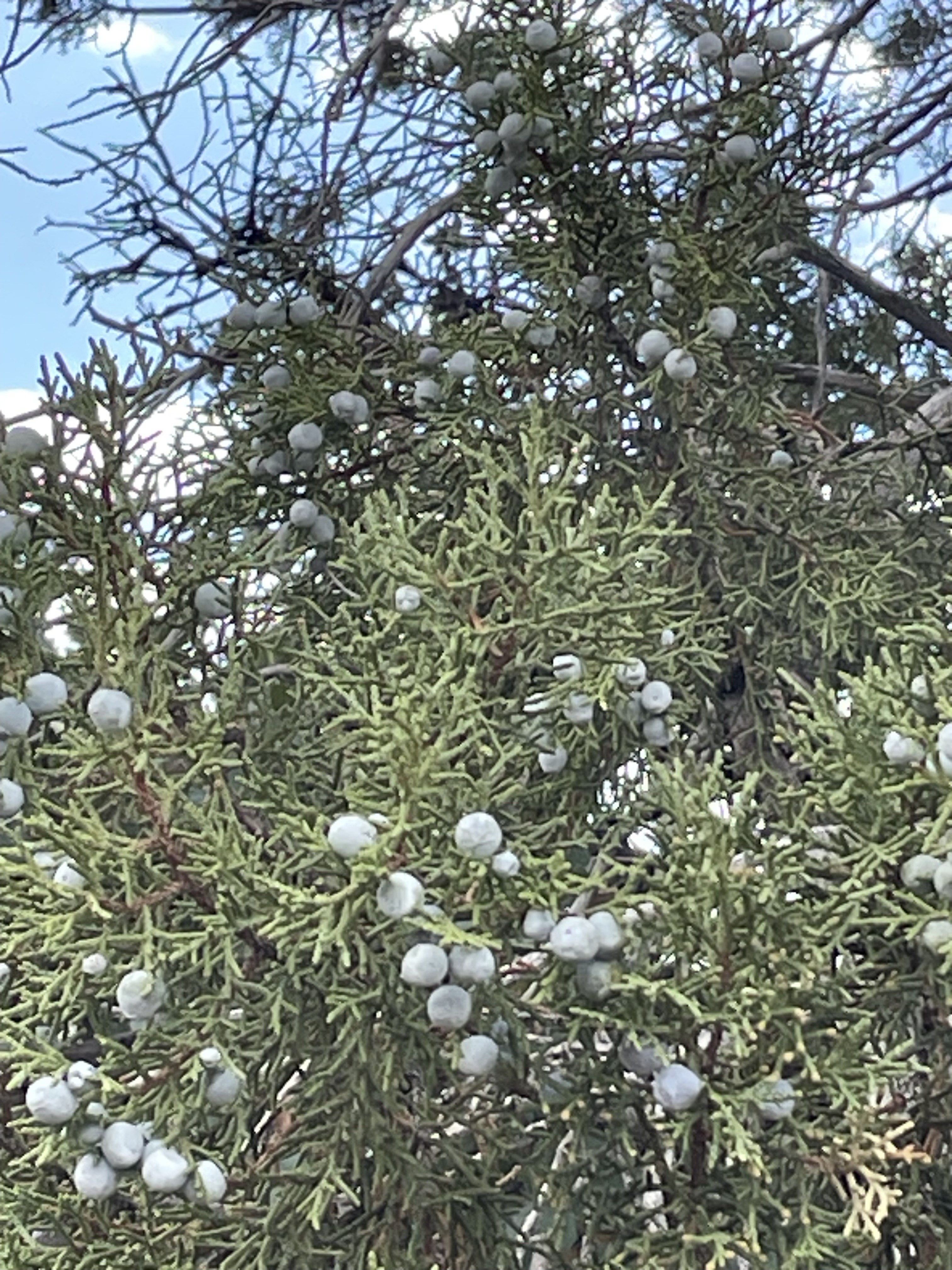
Of course he knows the juniper.

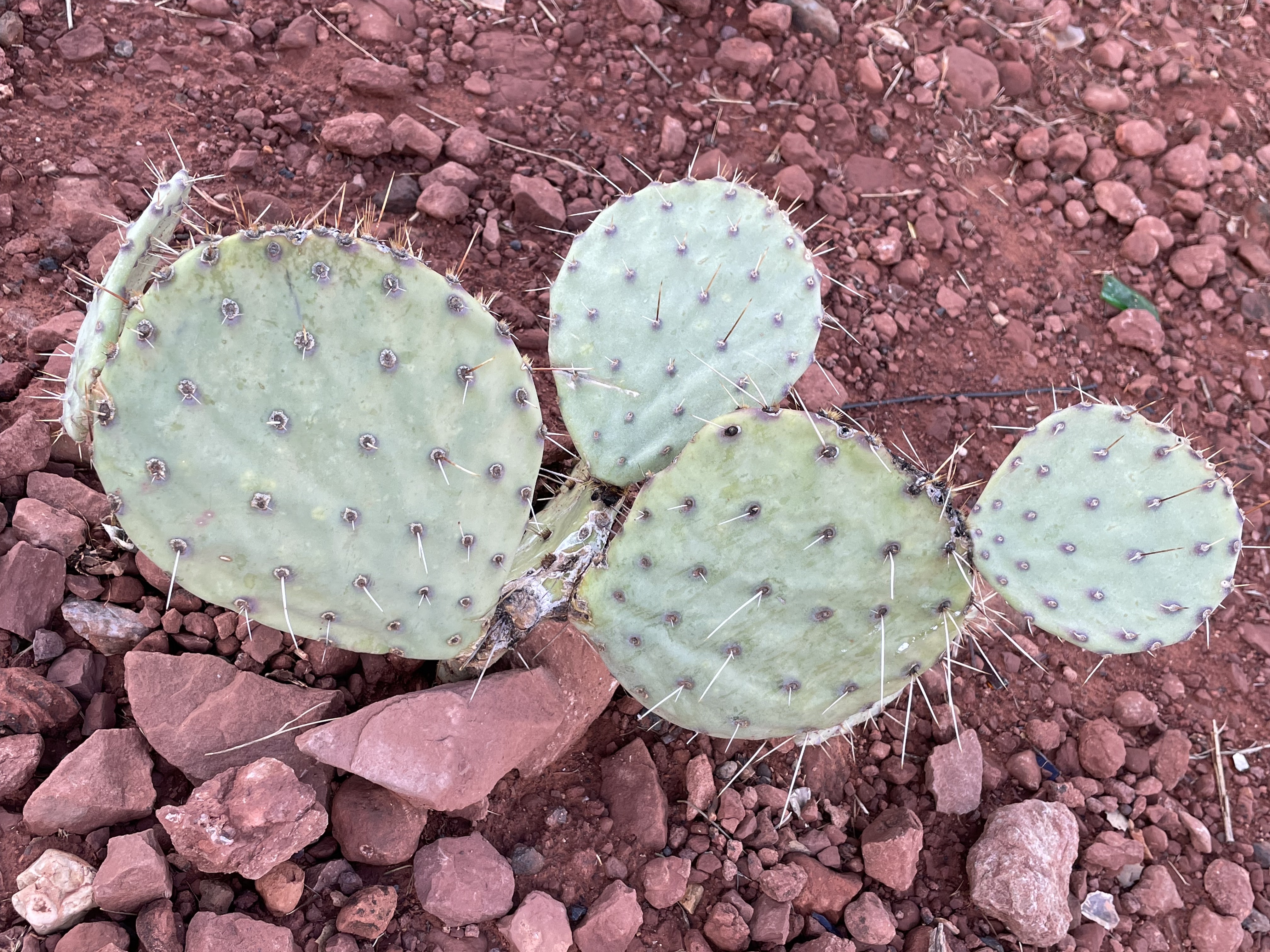
The prickly pear.

Manzanita.

And the pinyon pine.

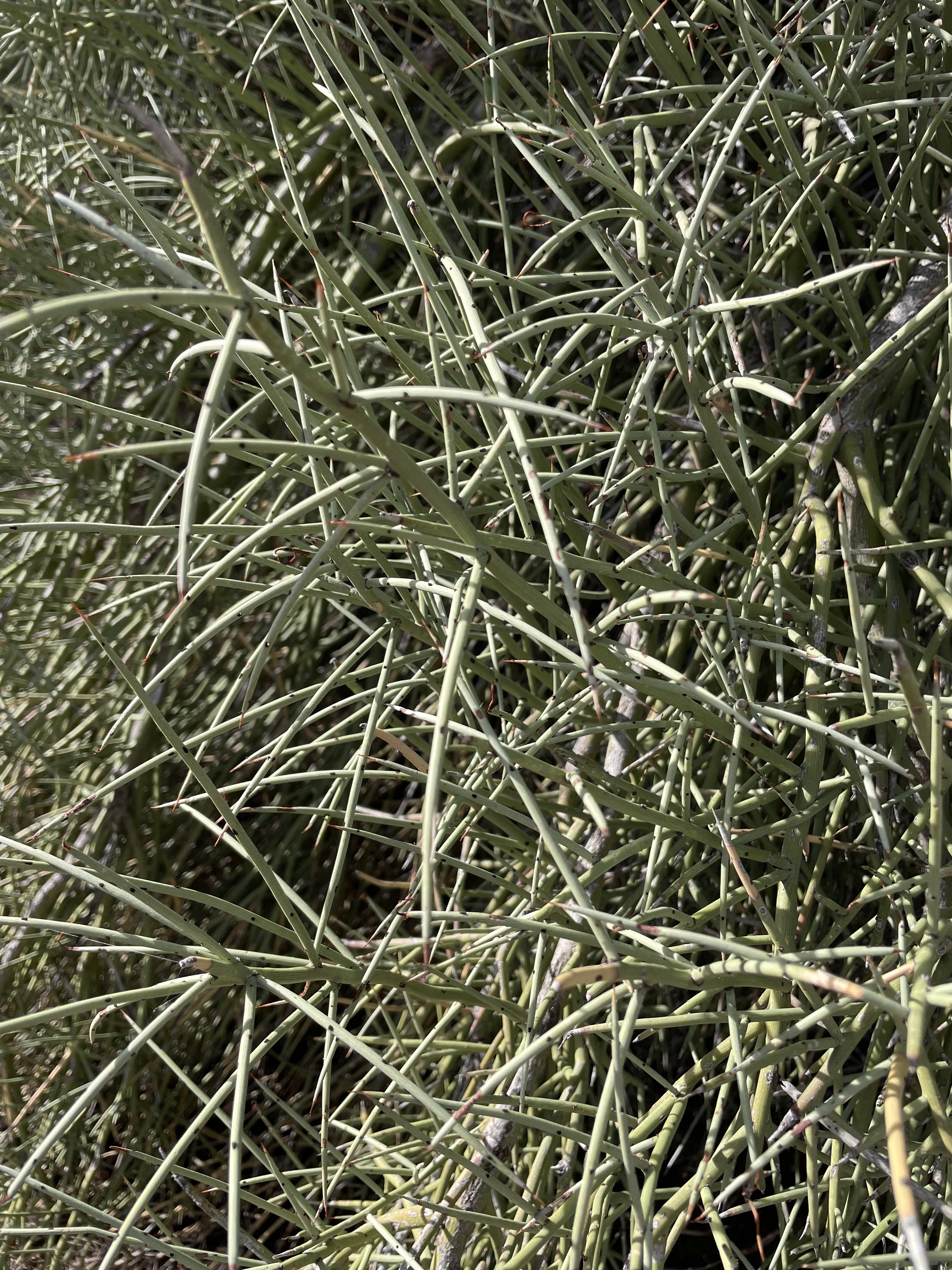
But also the things most hikers don’t know. Crucifixion thorn.

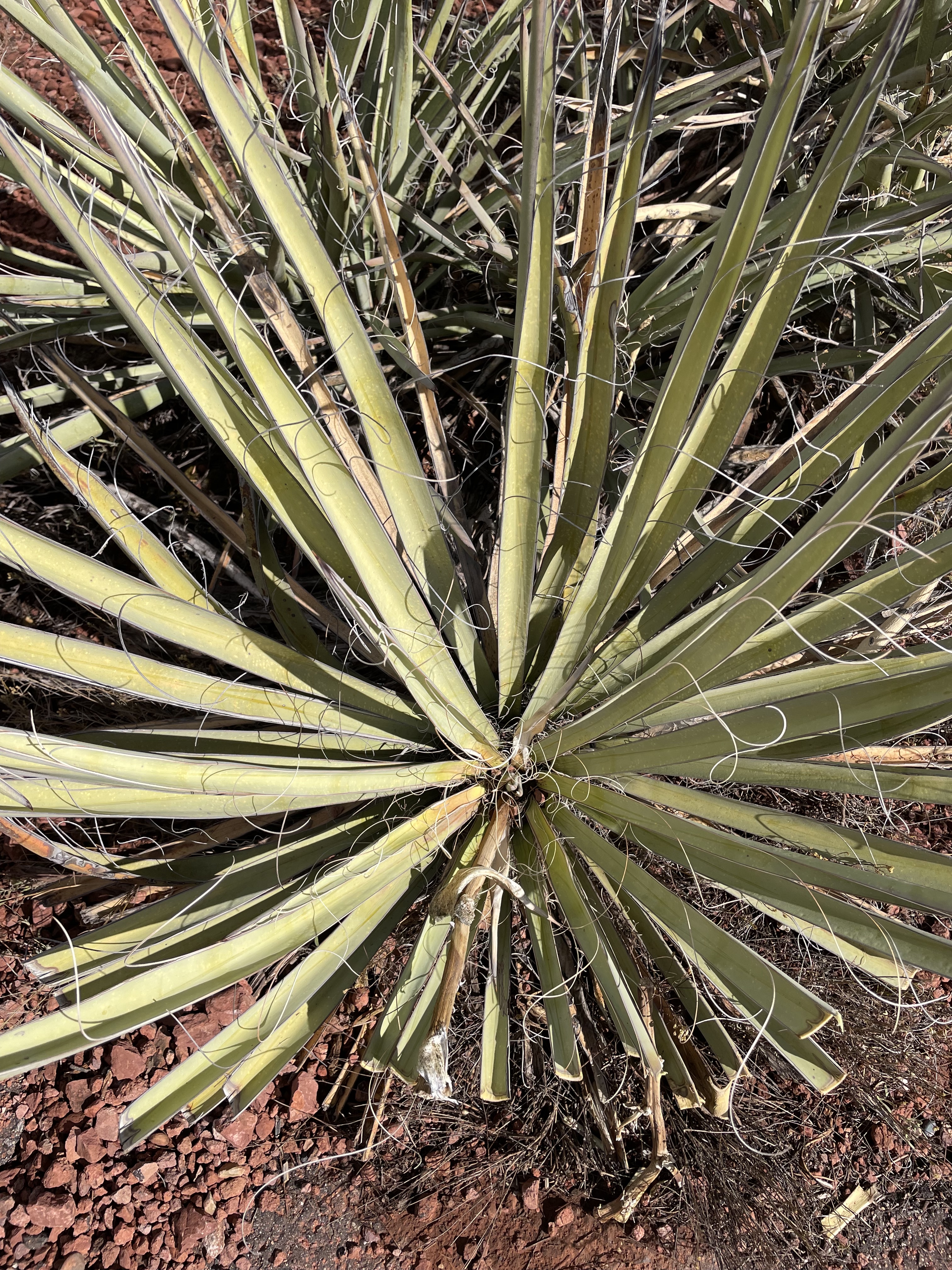
Banana yucca.

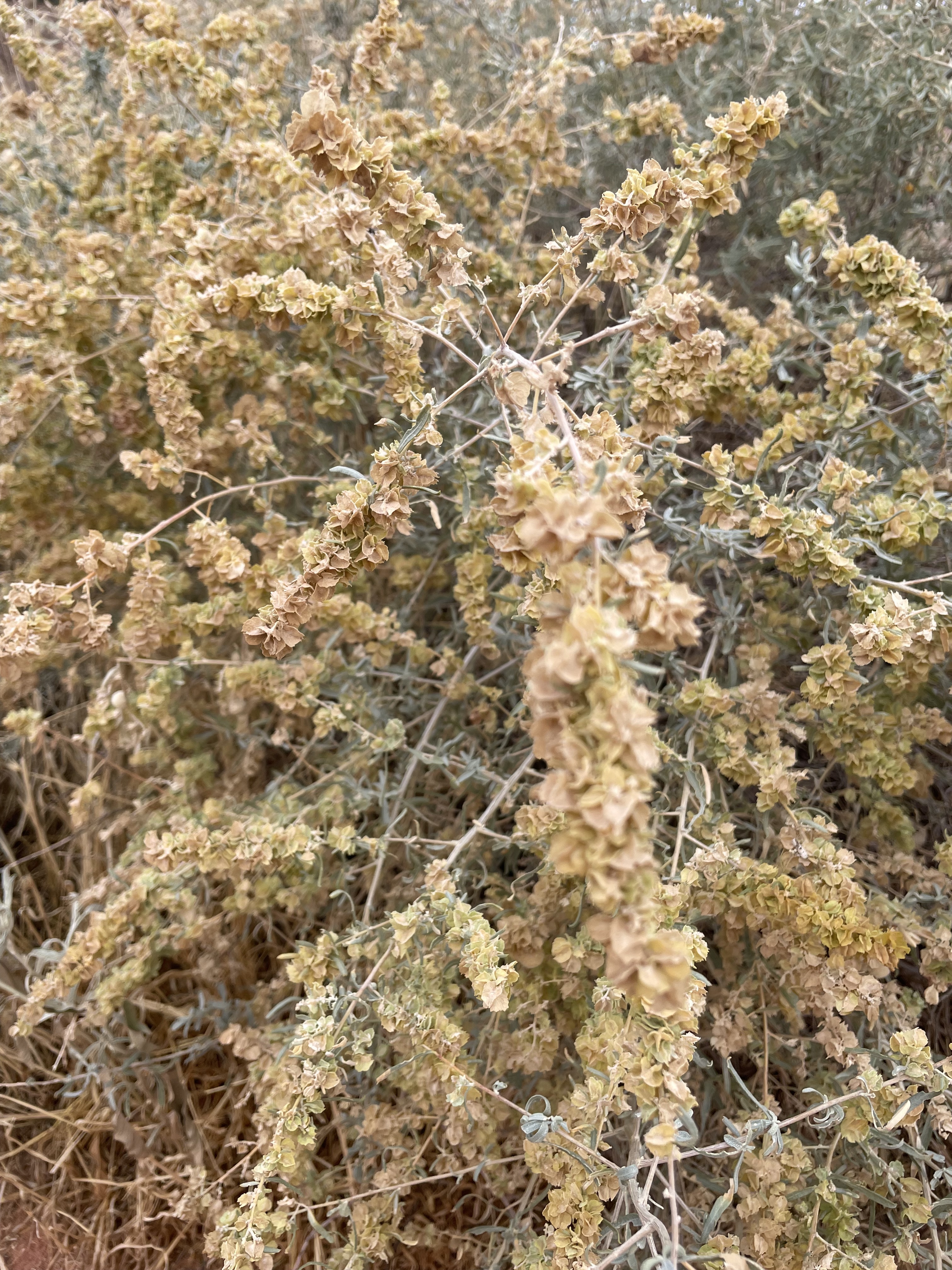
Saltbush.

Nightshade.

Catclaw. If you pull it this way, it’s sharp, he says. They make honey out of it.

Of course there are a few species even he does not know. Wright’s silk tassel, for example. Or sixweek’s three-awn.

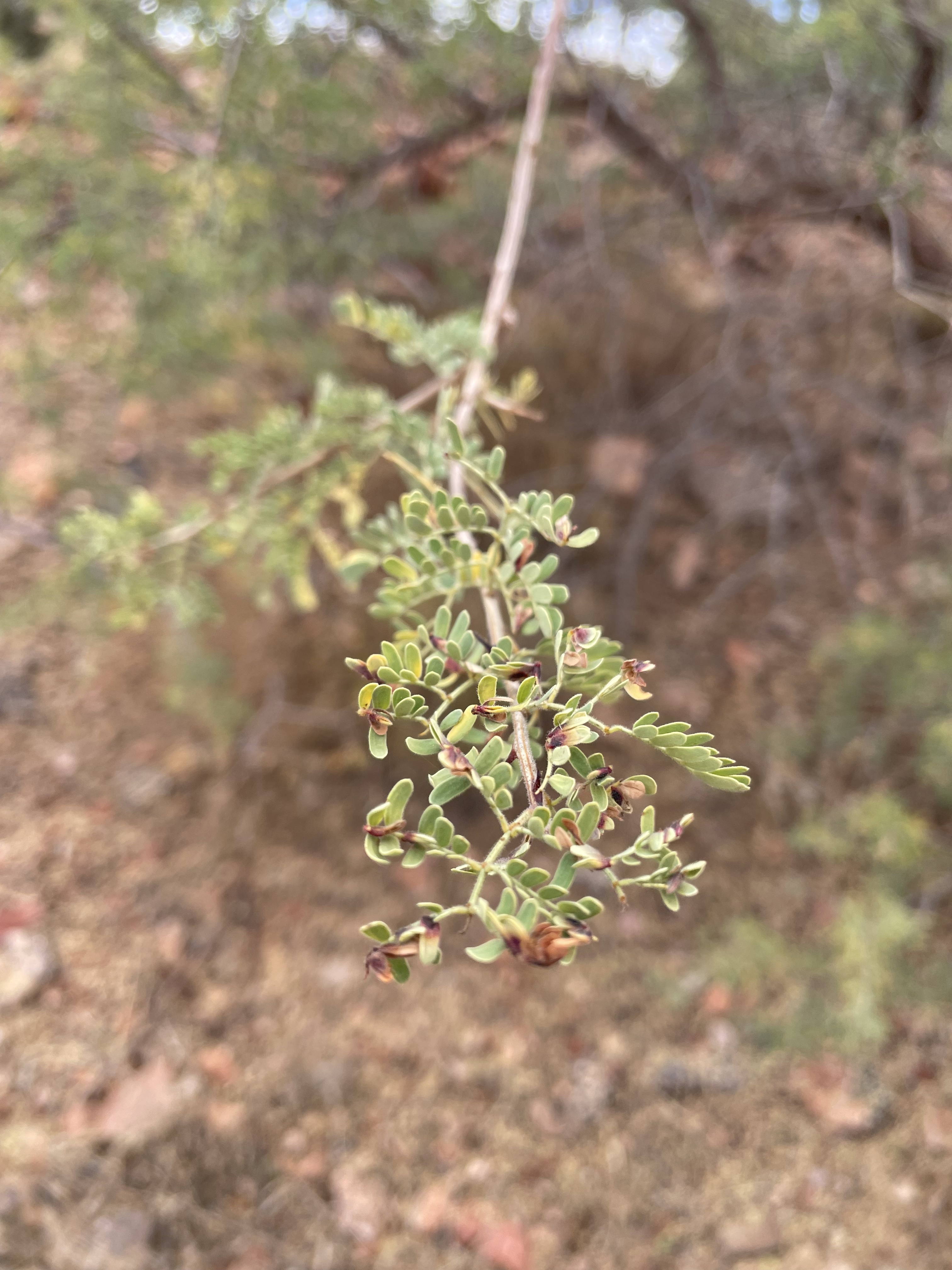
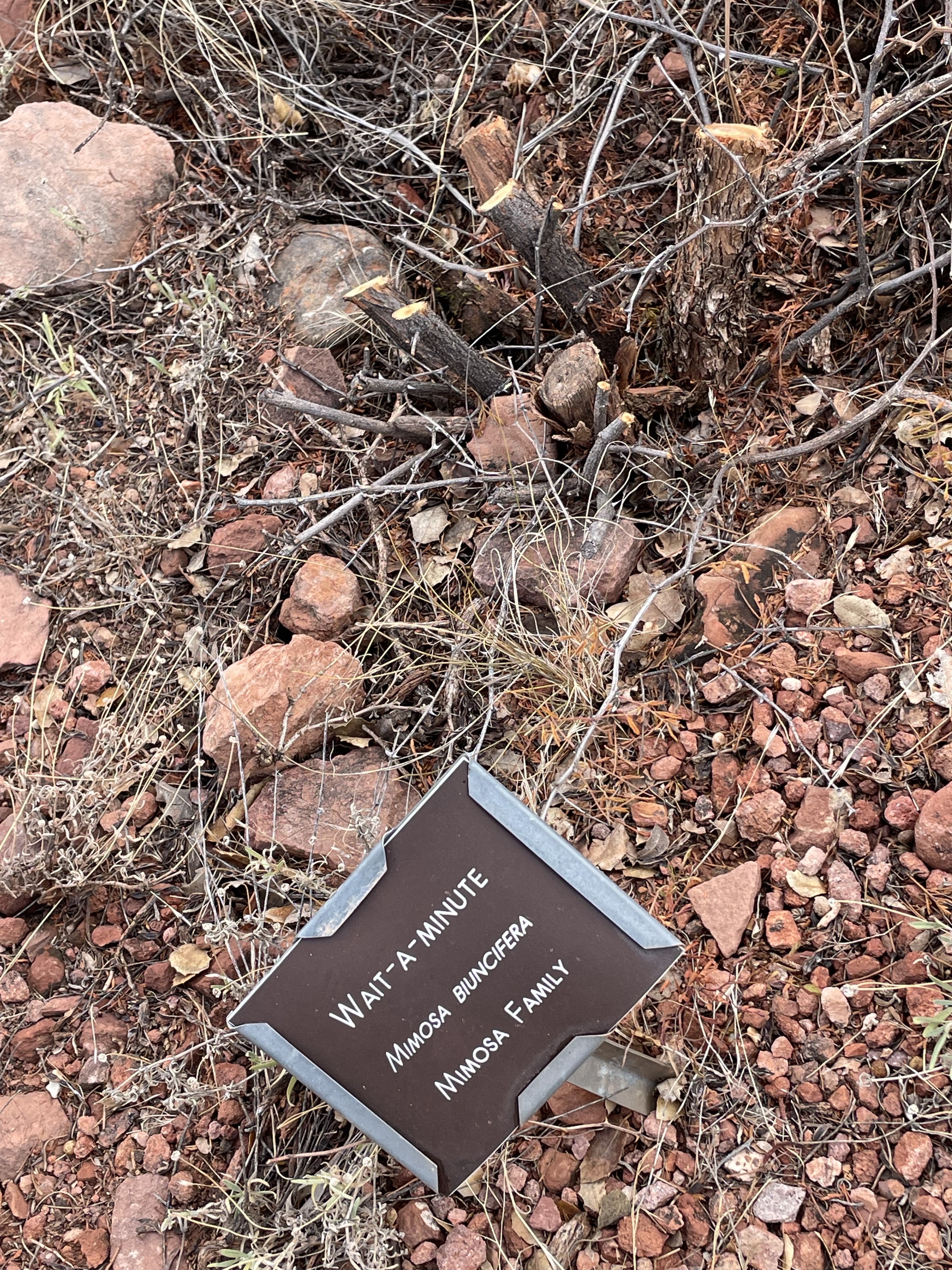
Or wait-a-minute. Its minute seemingly past.

I think those sound like Medieval ones, titled long ago.

When you can walk around and name natural aspects of the world around you, it gives you a feeling of satisfaction. Even elation.

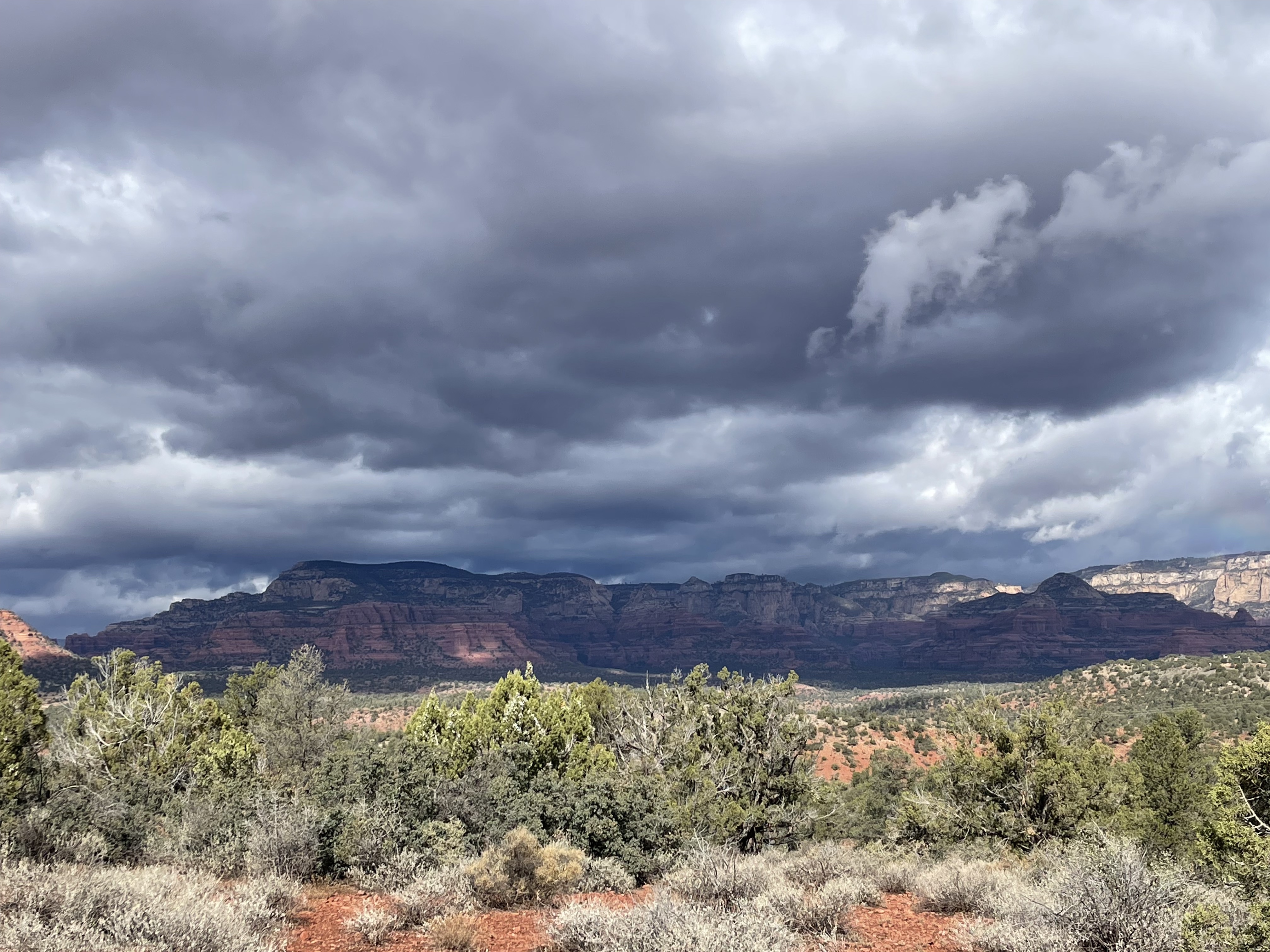
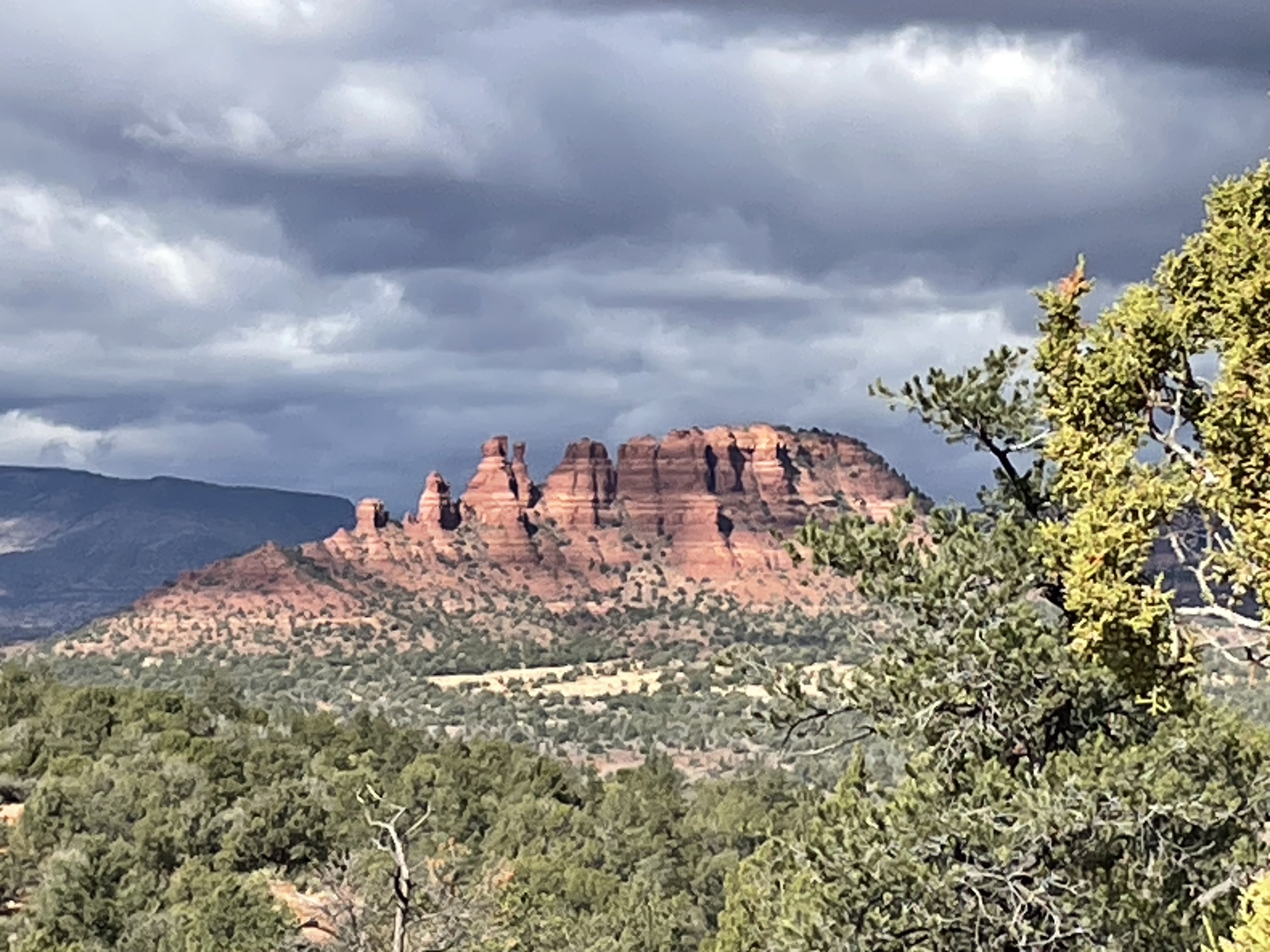
Elated is how I feel on this little trail today in sight of some of the biggest mountains around.

These rock formations so dramatic under the lowering storm clouds, especially fronted by beautiful wreckage.

Not, perhaps, as subtle as wait-a-minute. But both are arresting.

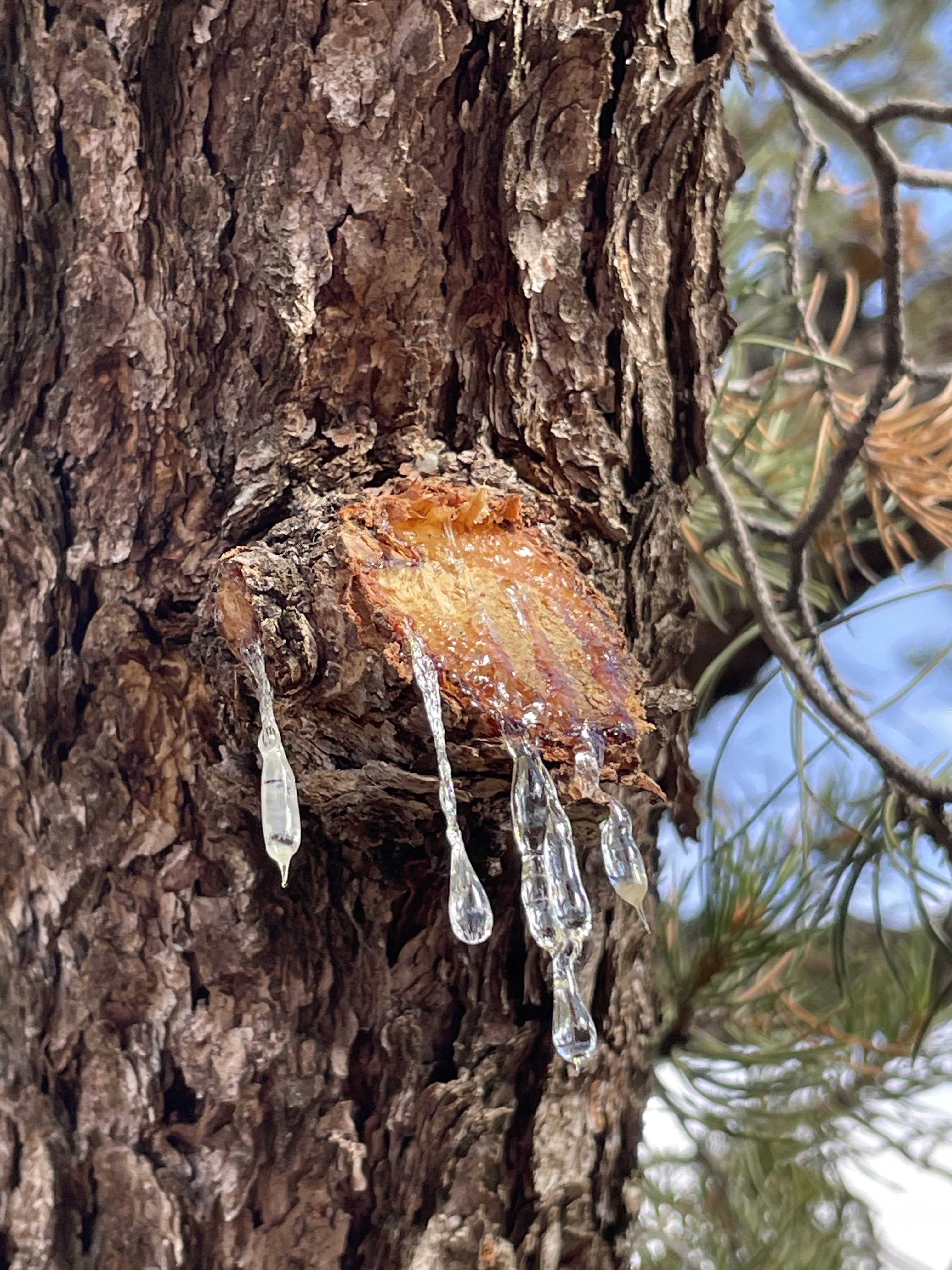
Mysteries do occur also on this trail, things we cannot name. Gorgeous, syrupy, silvery sap.

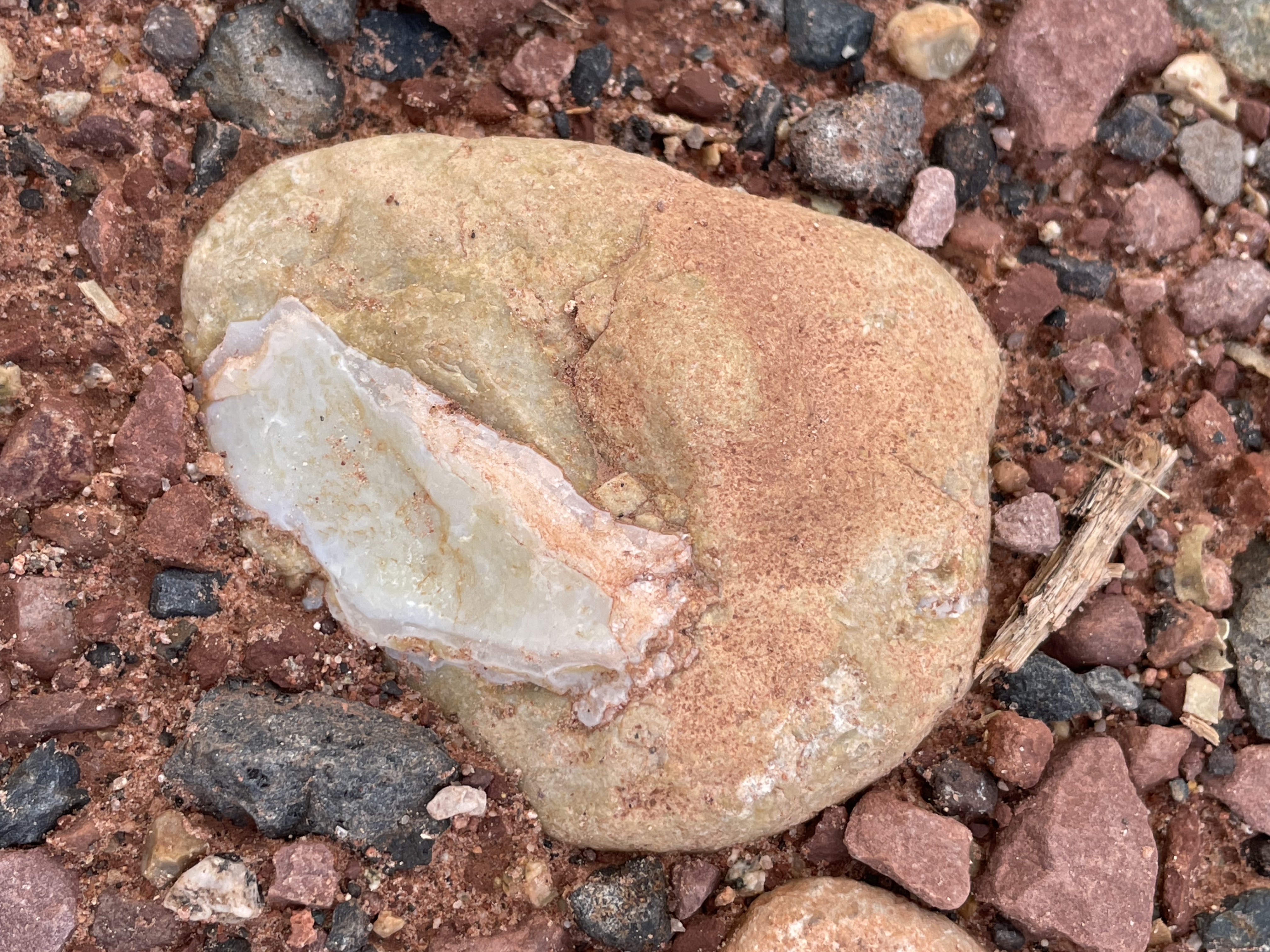
A very humble stone, its bald head poking up amid the shrubbery.

A rock embedded in the red sand.

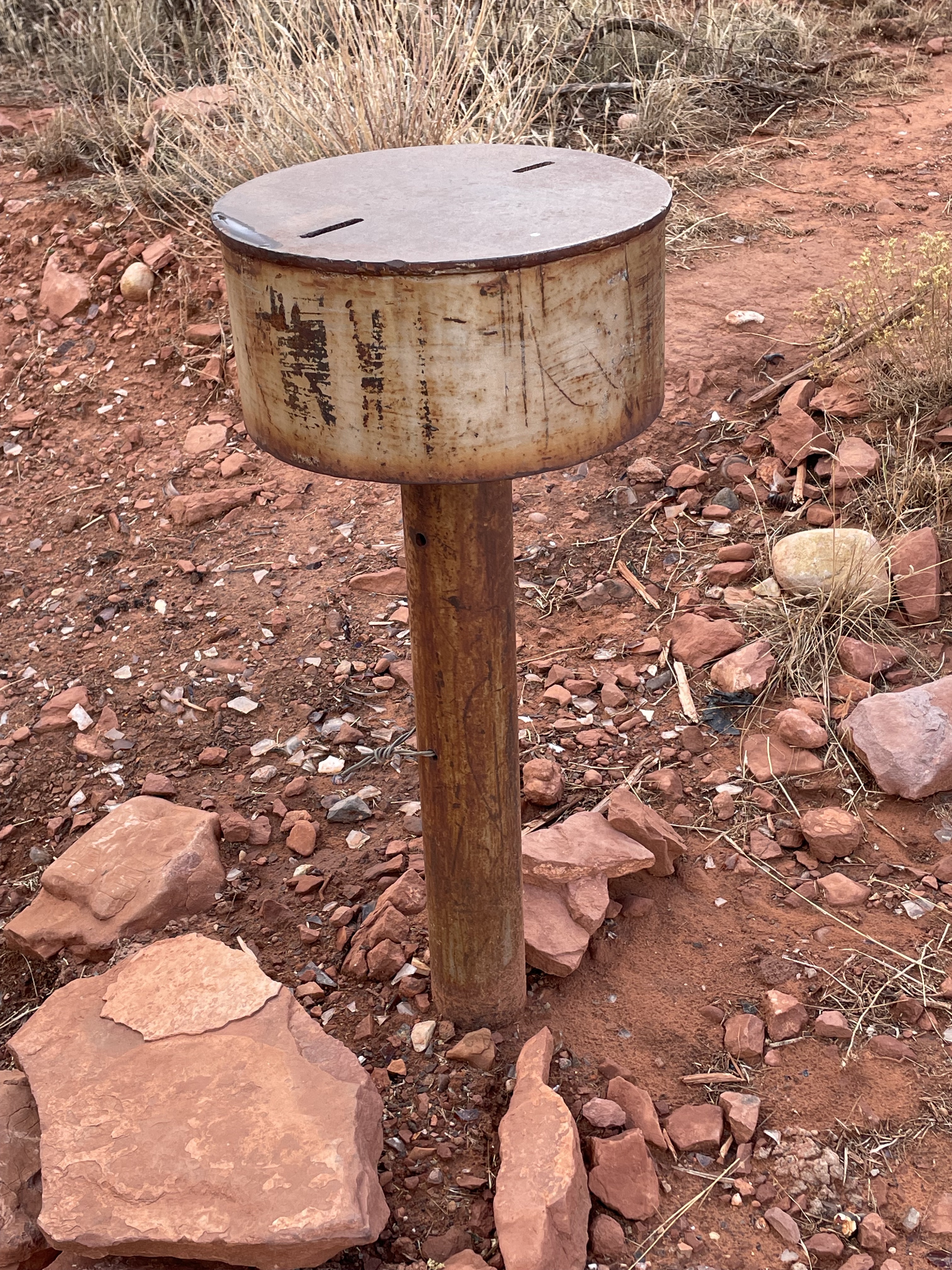
A metal structure whose use is lost to time.

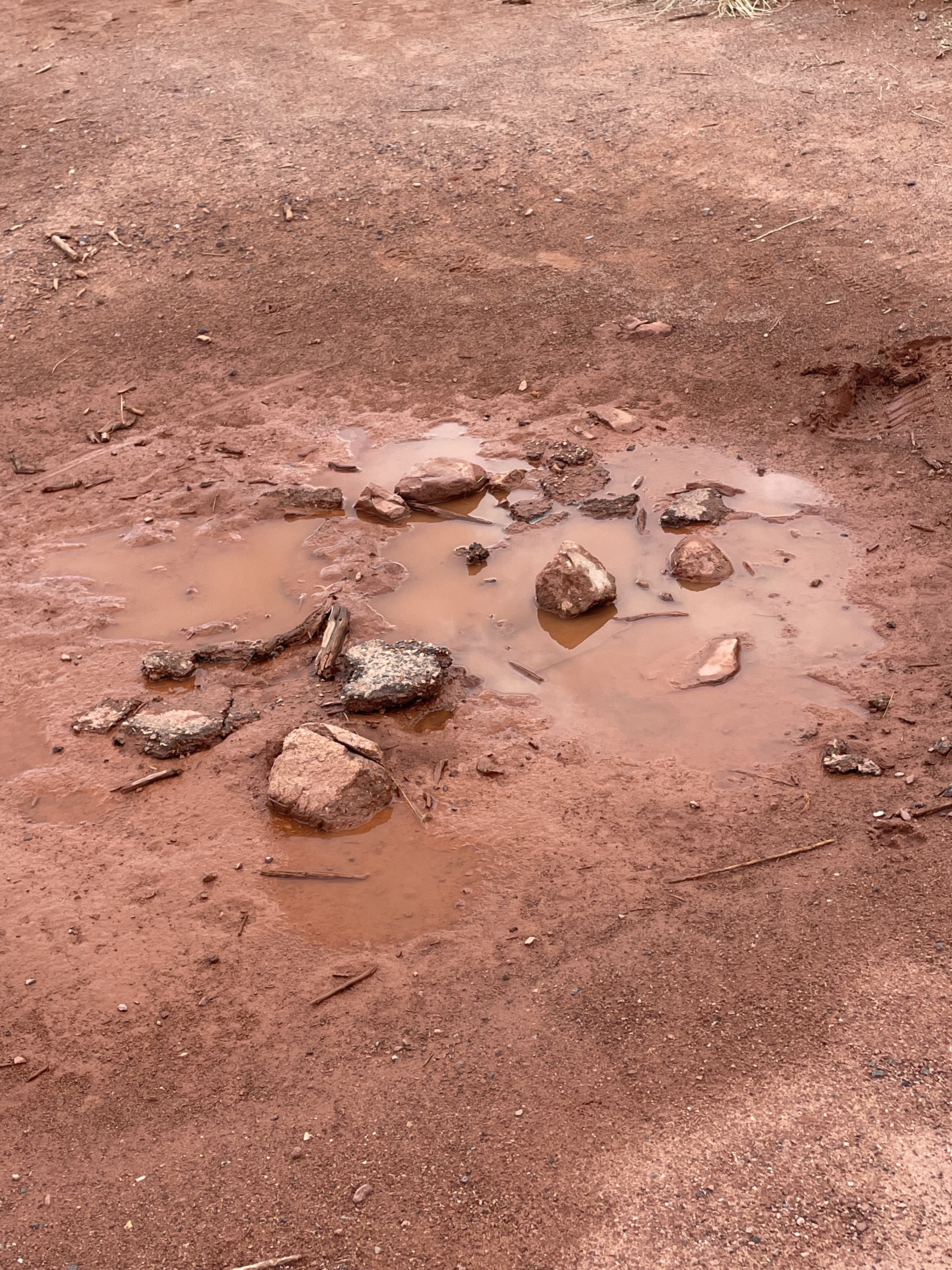
A puddle. The simple wetness of a pool. So unusual in the high desert.

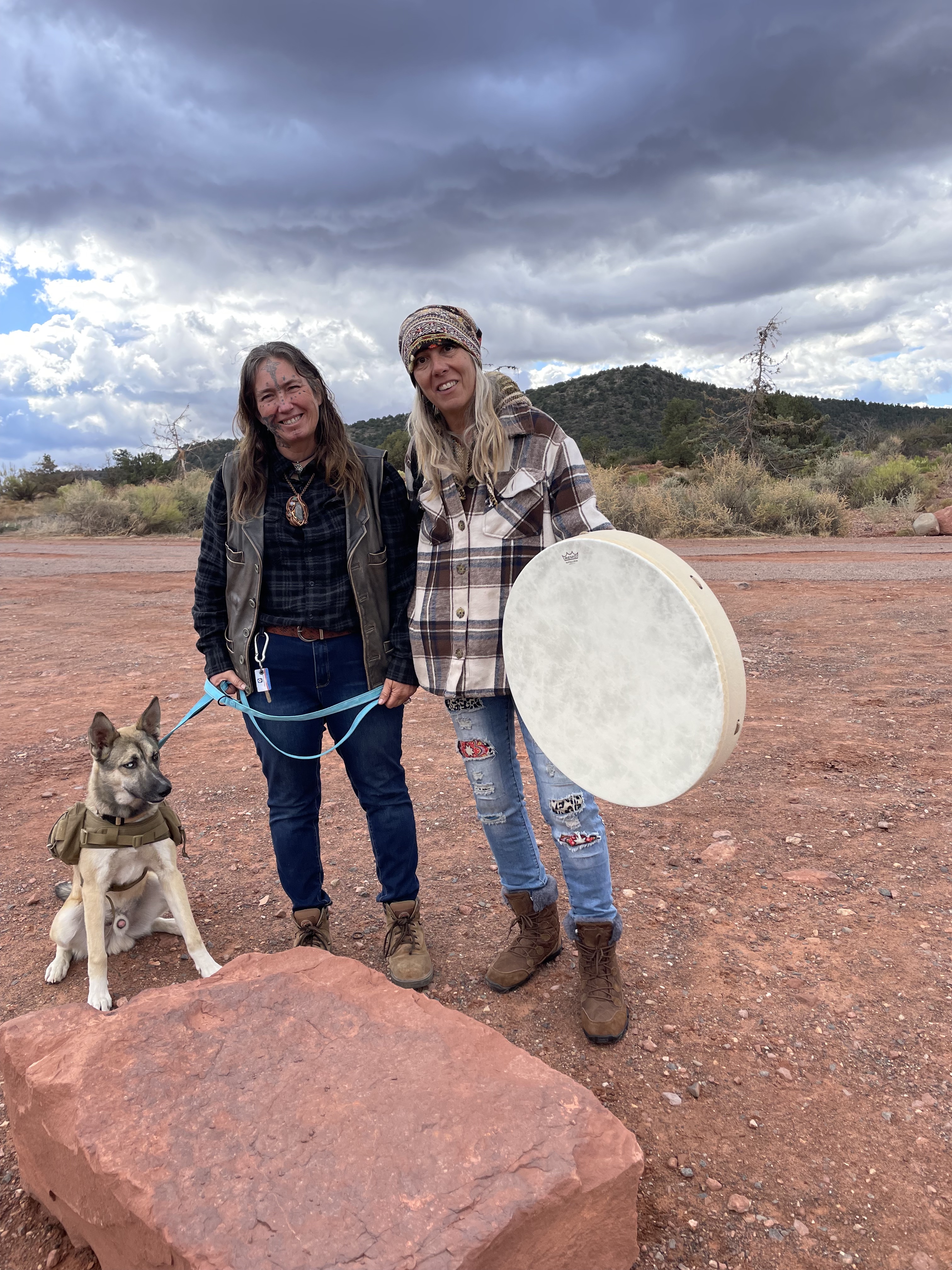
As is a drum. Why is it here?

Just to make a sound.

2 Comments

Filed under Jean Zimmerman

“Purple and gold season”

is how Cornell Botanic Gardens’s docent Dana describes the end of summer and the first days of fall.

She professes herself to find it a bit boring. I look out the window when we’re driving in the car and that’s all I see, purple and gold, purple and gold.

Dana shows us the native aster blooming in a border of the Cultivated Plant Collection. The goldenrod.

Her exuberant, erudite and irreverent approach to the botanical world and her enthusiasm in sharing it with people are all on display first day of autumn in the Finger Lakes.

A Buddhist might call it the Eternal Now — this burnished morning, already warm yet crisscrossed with cool breezes. We walk together through the specialty gardens, the perennial beds, the tropical plants and grasses and herbs. These flowers, these trees are all that exist.

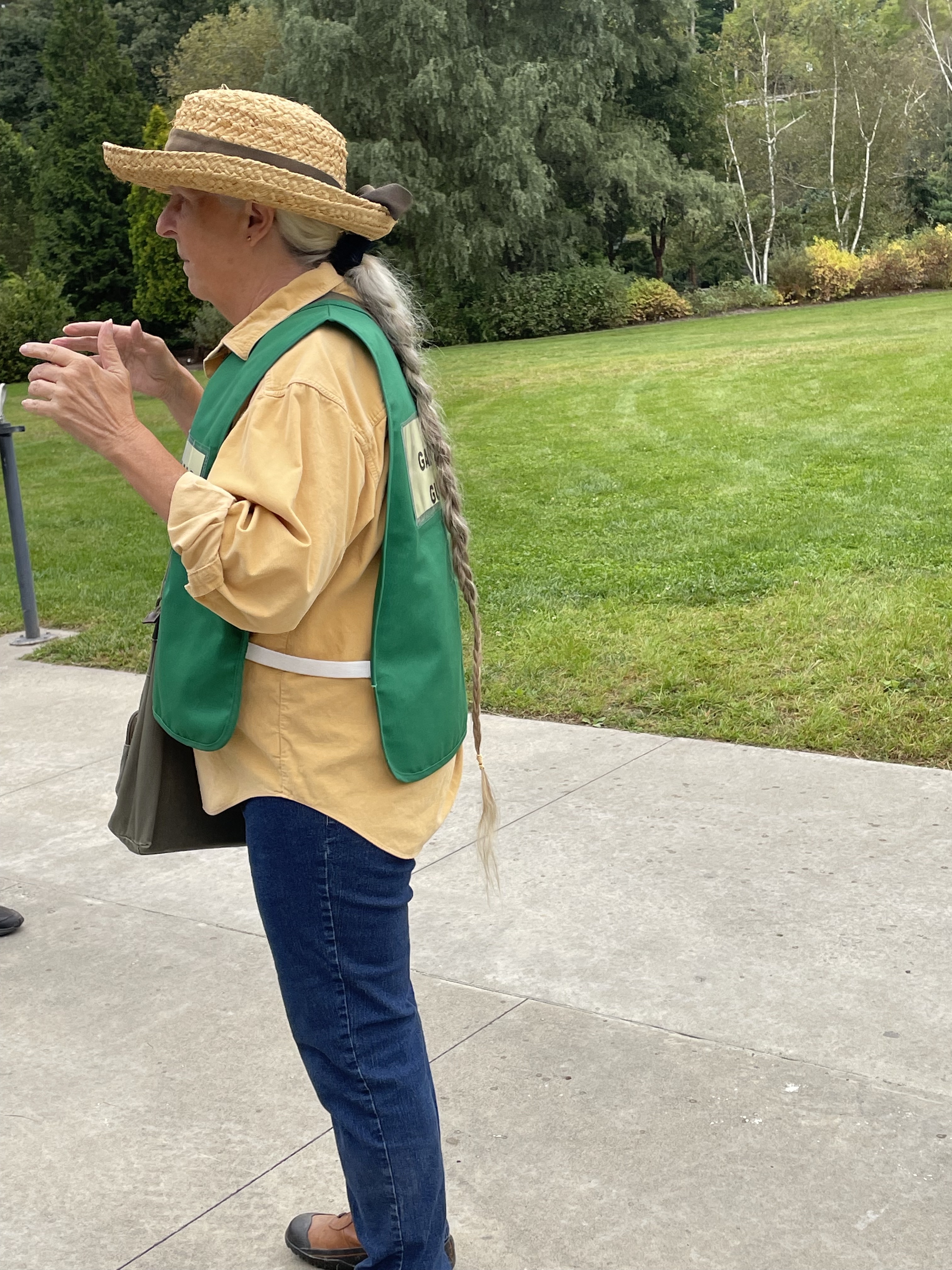
Dana raises horses, has about the longest braid I’ve ever seen down her back, and is one of the most quick-witted garden guides I’ve ever come across.

She shares some wisdom on making a mistake: You never say you’re wrong. Just, “actually”… to which a gentleman in the crowd adds enthusiastically, Truth challenged!

Now that we’ve got that straightened out.

We see a display of gourds, part of the Garden’s Seeds of Survival and Celebration installation. She explains their significance, You know that thing in the celestial heavens that we call the Big Dipper? In North Africa it’s called the Drinking Gourd. So the message to enslaved people in America was, “follow the drinking gourd.

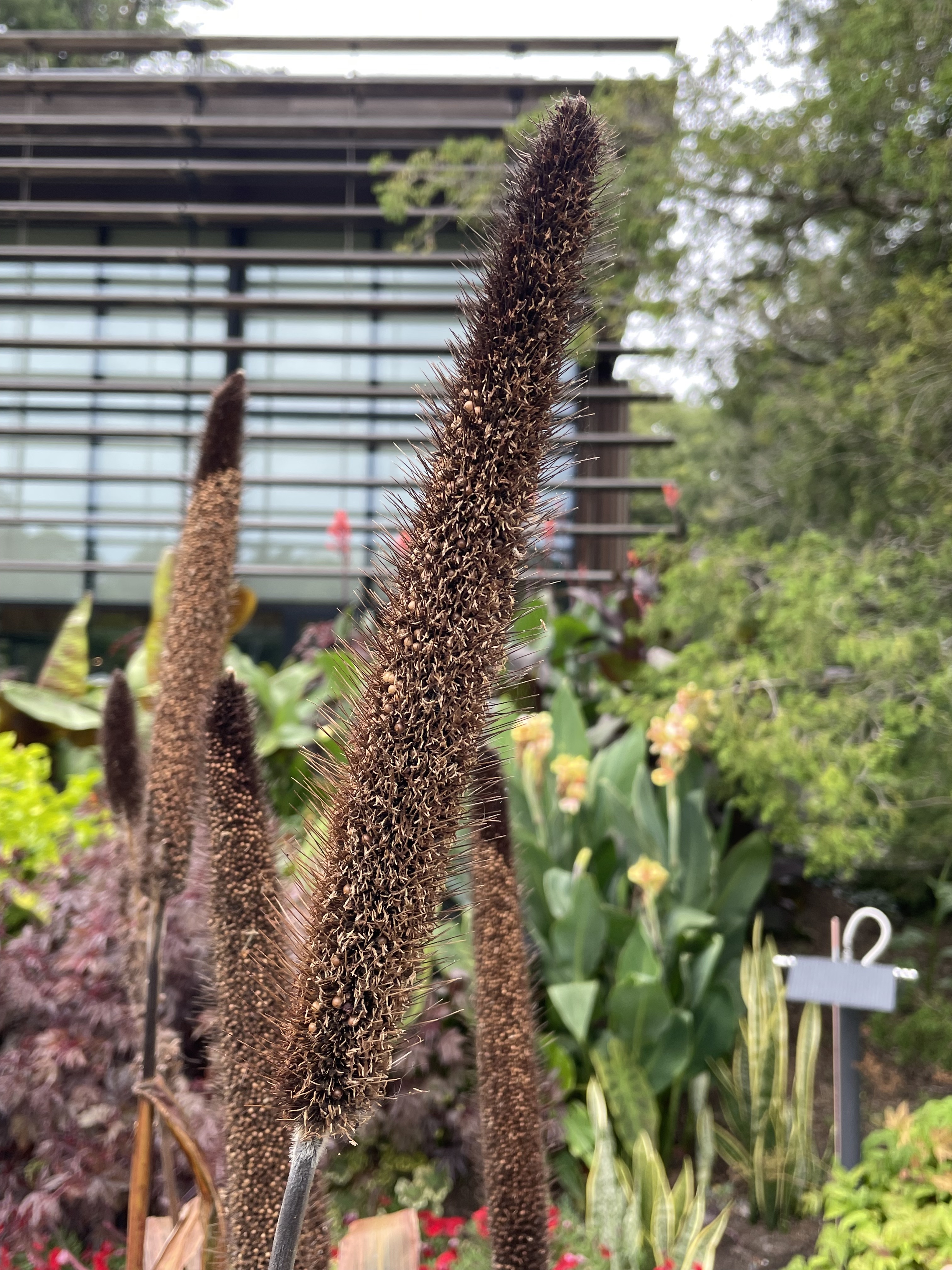
She shows us millet.

On a pathway she shows us pots that were originally planted out for the opening of the Nevin Welcome Center in 2010 and now need to be moved inside every cold season and outdoors again in the spring. Be careful what you do because if you do it exceptionally well they’re going to ask you to do it over and over.

The tropical Princess flower, she tells us, is her favorite. She’s very soft, and has silver glitter on the leaves and flower.

Then, a relative of the tomato.

But it’s seriously saying, Don’t bite me. No grazing, please. Also, It has a fruit that can be brewed into a very potent alcohol.

Dana does a special symbiosis tour once a month in which she talks about the relationship between plants. She calls it secrets of the garden.

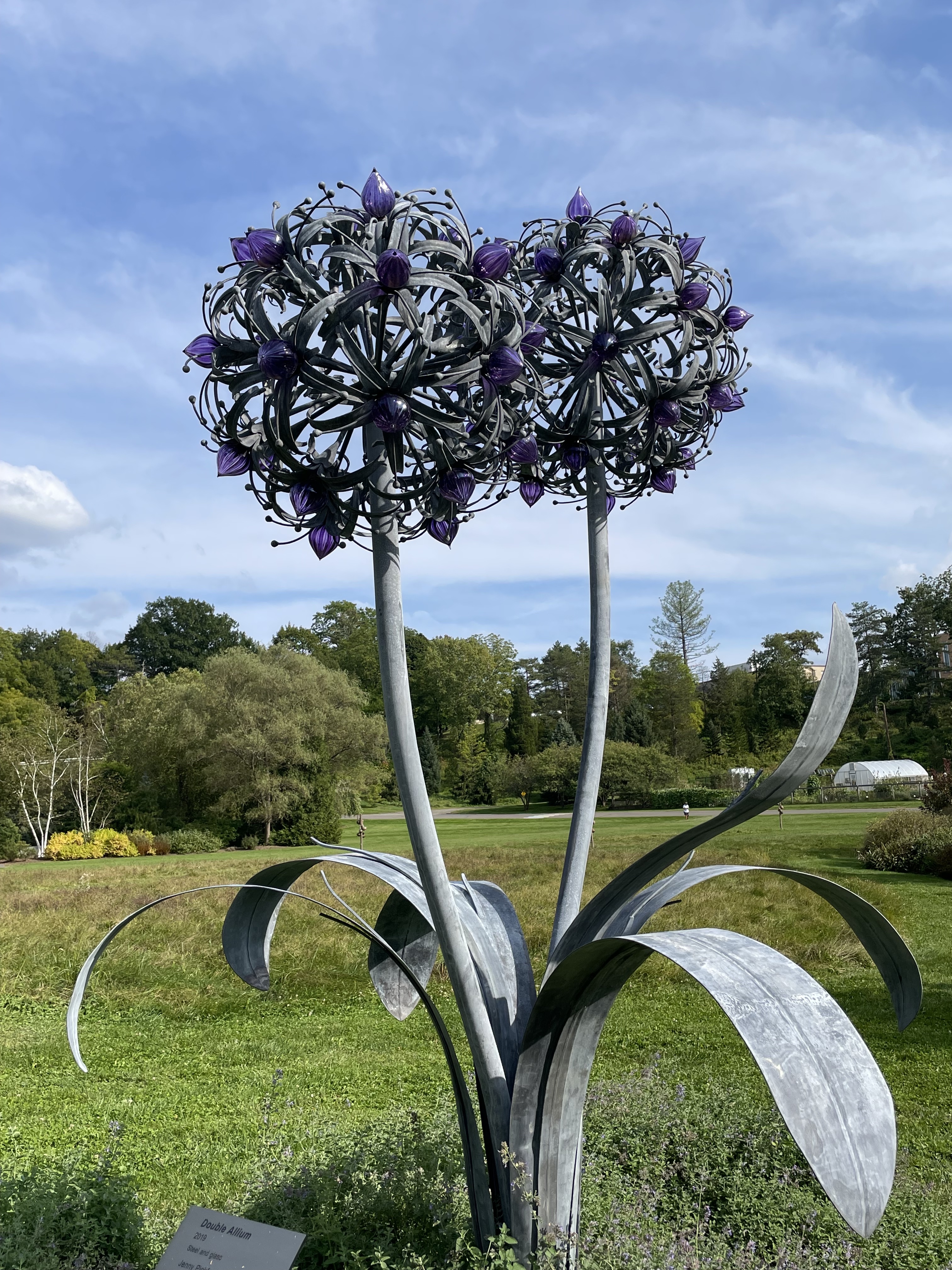
Lest you think this tour is all about flowers and fruits, it is not. There is art.

And plenty of trees. She shows us the tulip poplar.

It is neither tulip nor poplar. But it is the tallest tree native to this region. Liriodendron tulipifera, she tells us, has musical instrument-shaped leaves and tulip-shaped flowers. This particular specimen is equipped with lightning rods that don’t happen to be attached to its ground rod.

It’s probably eighty to one hundred years old.

Dana explains the difference between and annual and a perennial plant. It’s pretty basic, she says. She explains the meaning of the word cultivar.

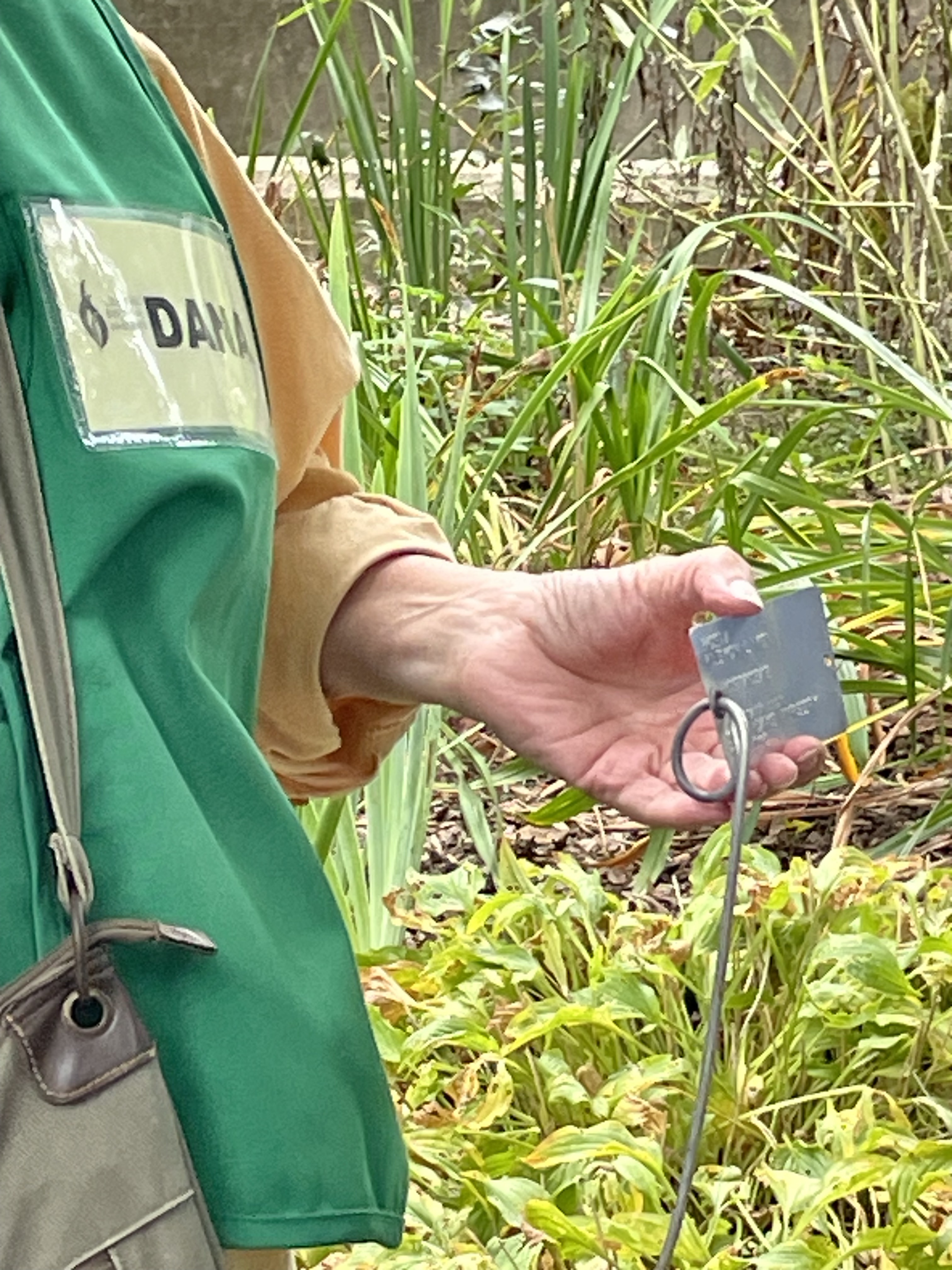
She shows us an aluminum tag.

Students come In and randomize these tags. It’s not funny!

These just keep spreading.

I’m touching everything. I can’t help it. I want to learn about everything here. I’m reminded of the lines from Walt Whitman’s Leaves of Grass:

The atmosphere is not a perfume, it has no taste of the distillation, it is odorless,

It is for my mouth forever, I am in love with it,

I will go to the bank by the wood and become undisguised and naked,

I am mad for it to be in contact with me.

We see a mammoth zelkova.

Dana shows us an Eastern white pine.

It’s the tallest conifer native to this region, she tells the group. It was tremendously important to the Indigenous people here. The Five Tribes were warring, and they met beneath a white pine. And a leader said they’d be more successful if they worked together than if they fought. That was Hiawatha. We lifted their agreement for our constitution. We stole it. The Five Nations came together as the Haudenosaunee. Their symbol shows a white pine with all the weapons buried at the base and at the top an eagle overseeing the whole thing.

She shows us the needles that grow in fascicles.

There are five needles in each fascicle of an Eastern white pine. That’s how you can always identify the species.

Also, Dana says, you can brew the needles to make a tea that has more vitamin C than a lemon by squishing them and boiling them. It’s pale gold and slightly sweet, a treat you can make for your friends.

We stop by a Cornelian cherry dogwood.

Cornus mas, she says, giving us the scientific name. Mas means male in Greek. The Greeks used the wood to build their weapons of war. Since it was the wood used to make the boy stuff it was termed mas – male.

This tree probably predated the adjoining building. Oh, just a boring begonia.

Dana brings us to the herb garden. An herb simply means the plant’s not woody, she explains. In the herb garden you’ll find things that are significant to humanity that are not food-based. She tells us that in the garden we’ll find a bed of herbs related to literature: You can find rue, shake its little hand.

We enter. Bruise a few leaves, inhale the scent of sage.

She says, I want you to scratch and sniff. First, touch this plant.

Then, run fast over to this other flower and inhale.

Peppermint patty! And she is absolutely correct, as always. The first plant is mint, the second has the distinctive aroma of chocolate.

She relates the origin of the term nosegay. I didn’t know I’d ever wondered about that, but now I find myself getting curiouser and curiouser, as Lewis Carroll’s Alice would have it.

A nosegay was a bunch of herbs you’d carry against the stench of the world back in the Victorian era, it turns out. And you’d need a tussie mussie to hold it. Horse-drawn carriages actually have mounts to put these tussie mussies in.

Conveniently, Dana has a tussie mussie on hand to show us.

I peel off from the group, meet an energetic hound named Texie who seems to be inordinately stimulated by the herb garden’s scents.

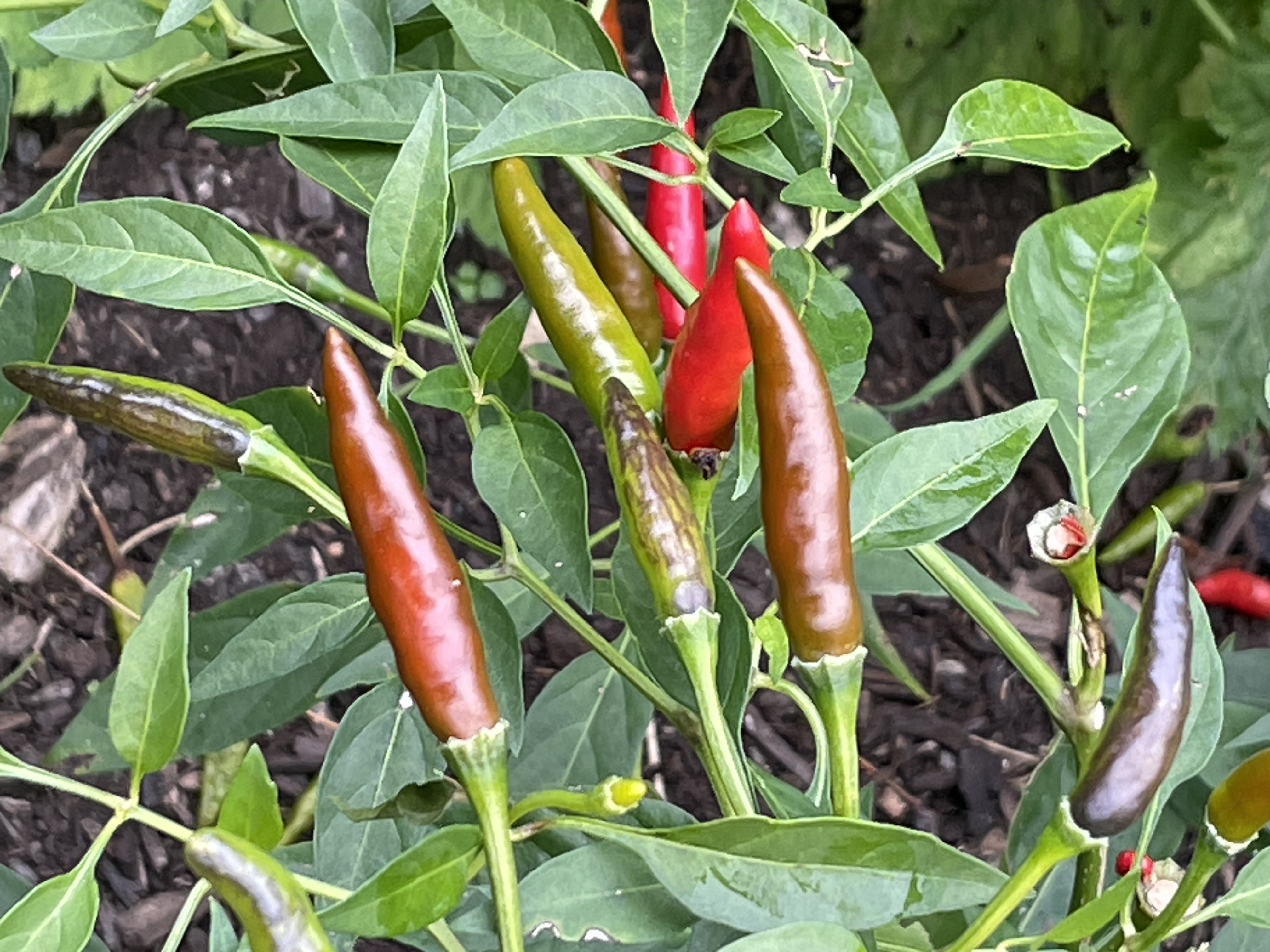
I spy a Thai super-hot pepper.

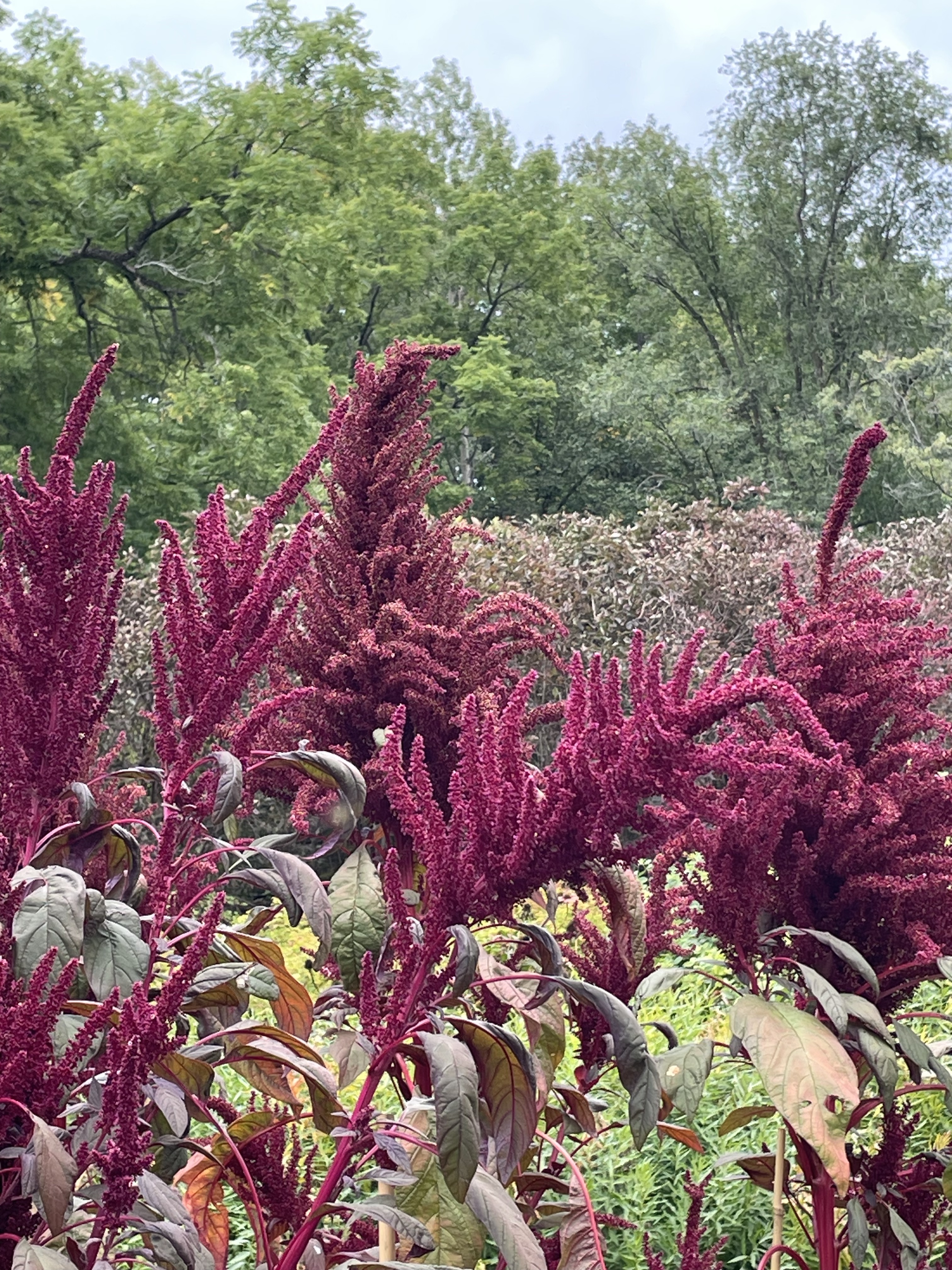
Grain amaranth.

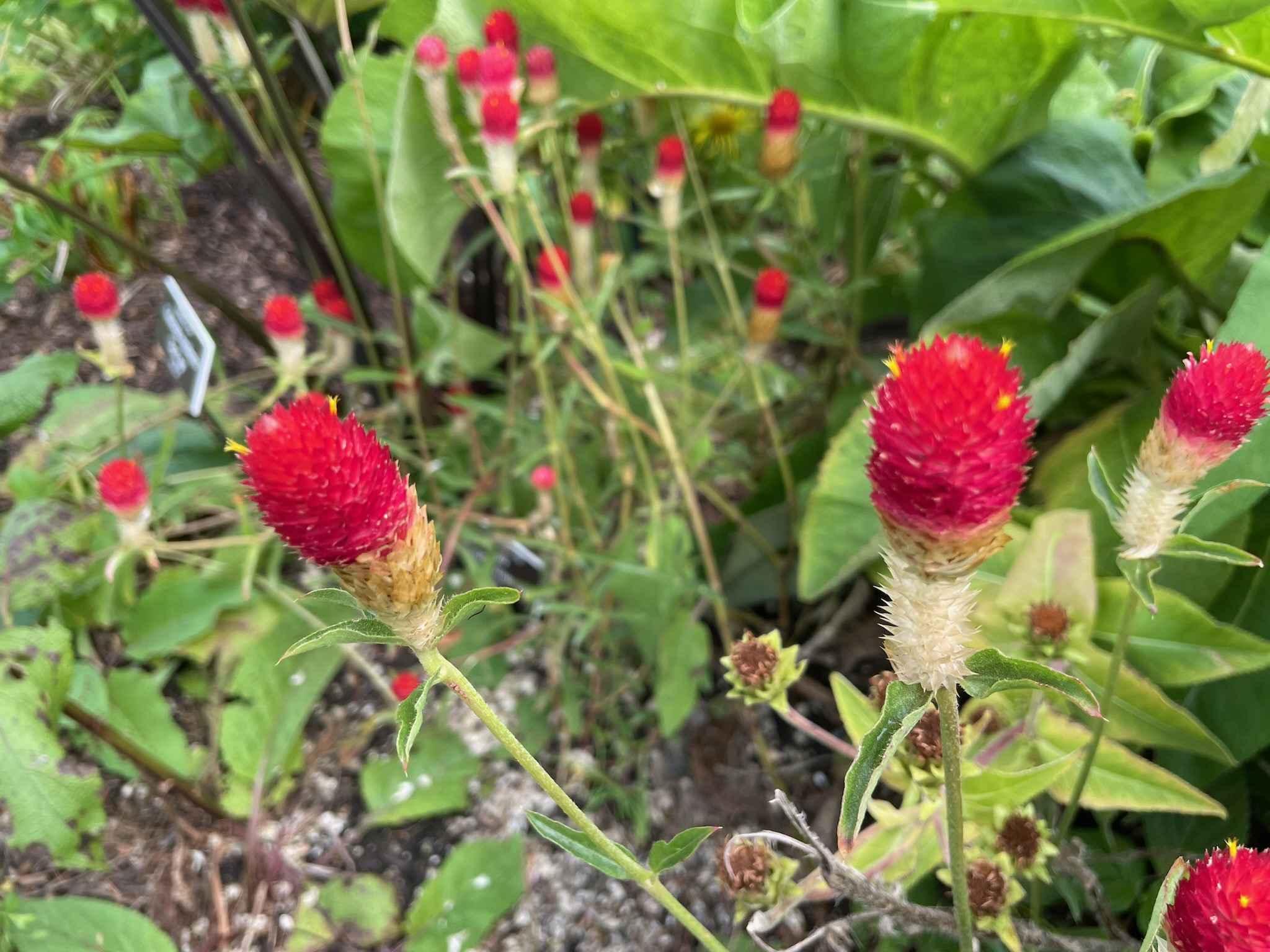
Cockscomb.

Lean in. Perfection in pink. I feel hypnotized by its fuschia.

I see the rue, shake its little hand.

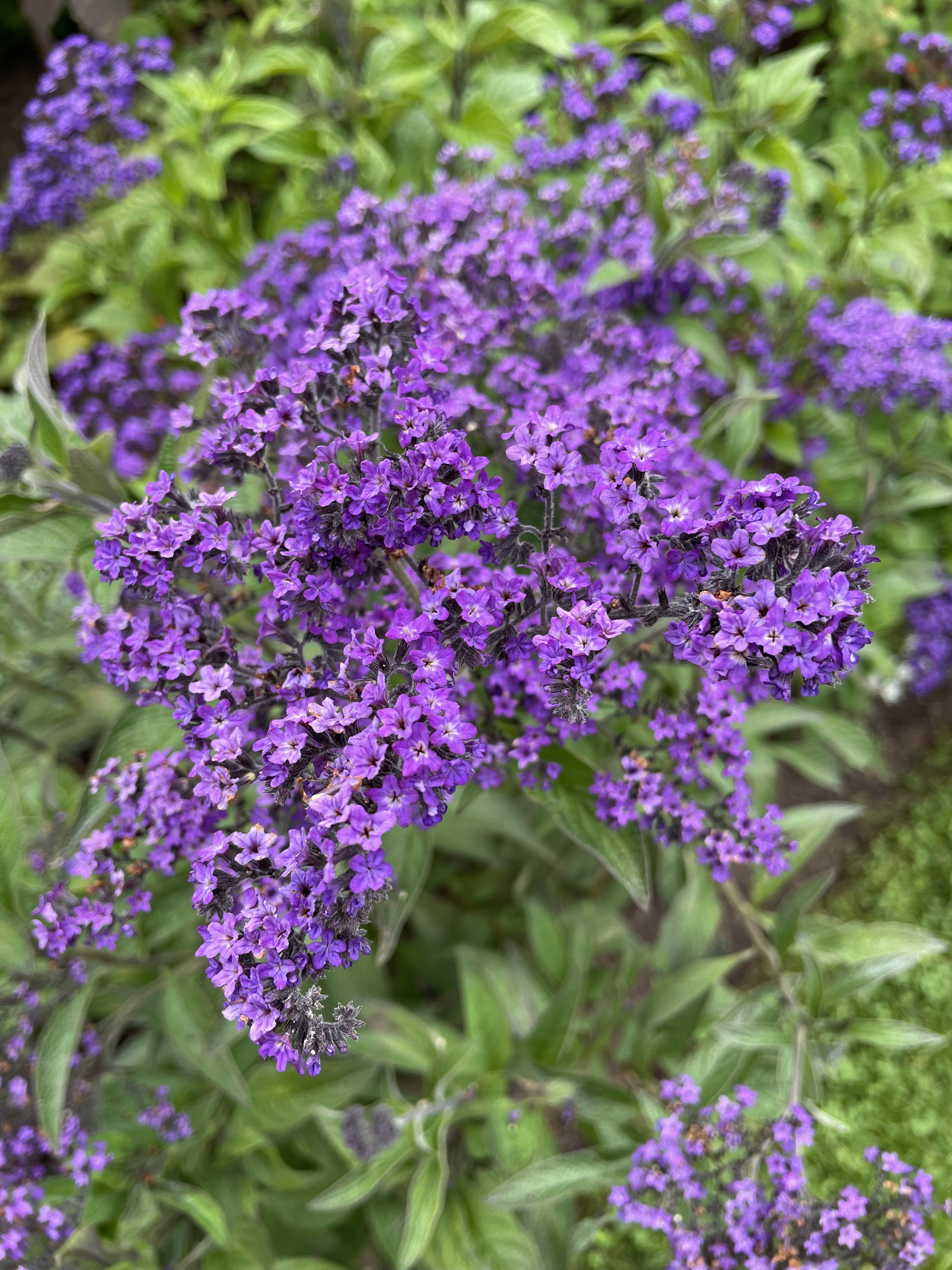
Little purple flower. So boring!

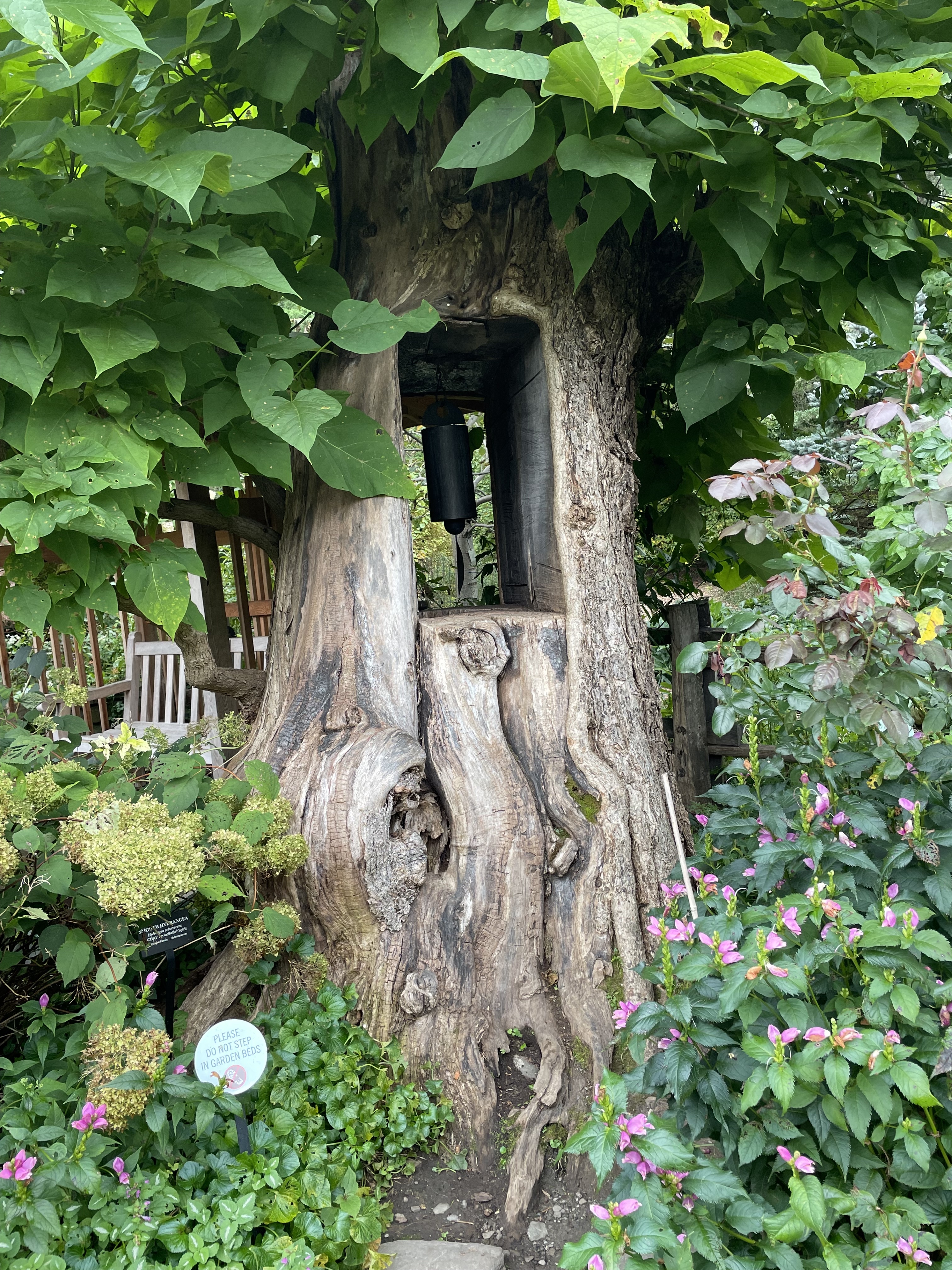
Just when I think life could not get any better, I come to a tree.

I hear a kid say, It’s still living and they cut right through it! Within its massive trunk hangs a gong. The kid says to his mother, brother and grandmother, Let me show you the best thing!

We all observe the fish he points to in a small nearby pool.

They look happy there, says grandma. The kid’s brother rings the gong. Now we can have a mindful moment, says the kid. Such a super sound! says the mom.

I offer to take their picture. They offer to take mine, and I pose looking even more supercilious than usual, and quite a bit content.

I tear myself away from the happy family to see the Bird’s Eye Pepper, which has grown in Africa for centuries. One last picture before my phone runs out of juice!

No, one more! Hibiscus.

Inside the Welcome Center, I inspect a display of tree rings. Even my toe is lucky.

A lucky day all around. Fortune smiles on those of us who happen to be on Dana’s tour of Cornell Gardens this perfect first day of Fall.
Leave a comment

Filed under Jean Zimmerman

If you go to NYBG in late summer prepare to get happy.

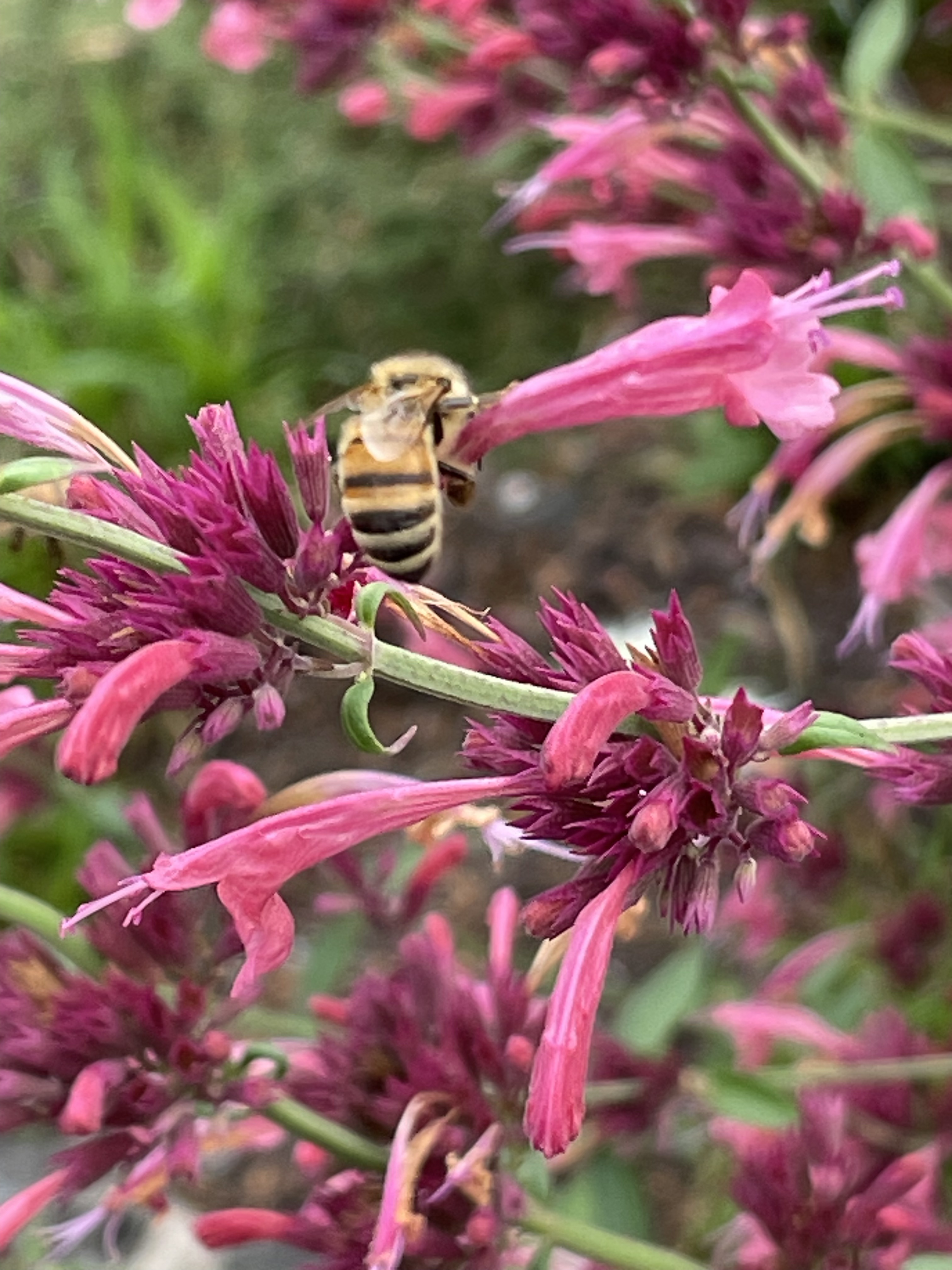
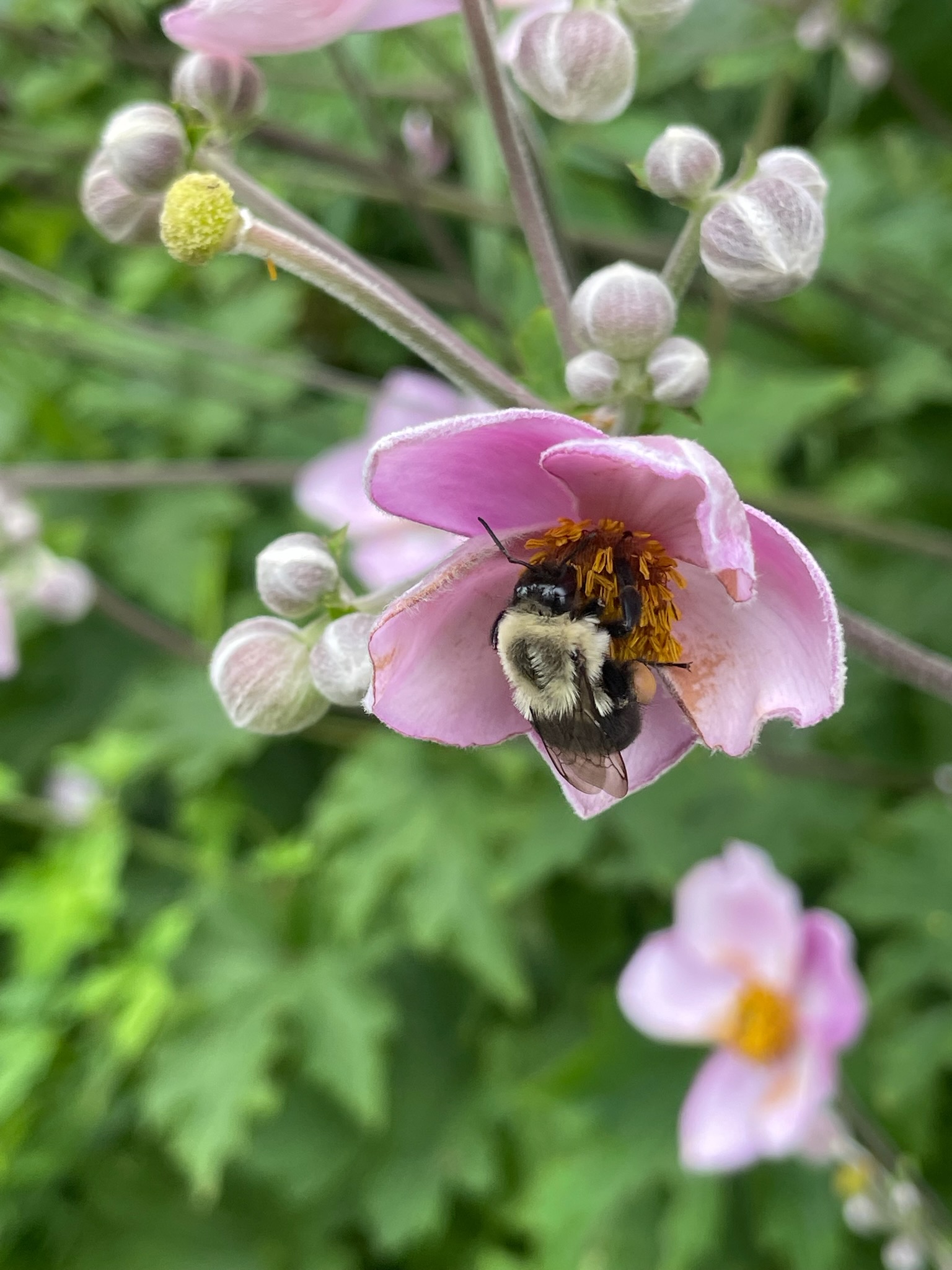
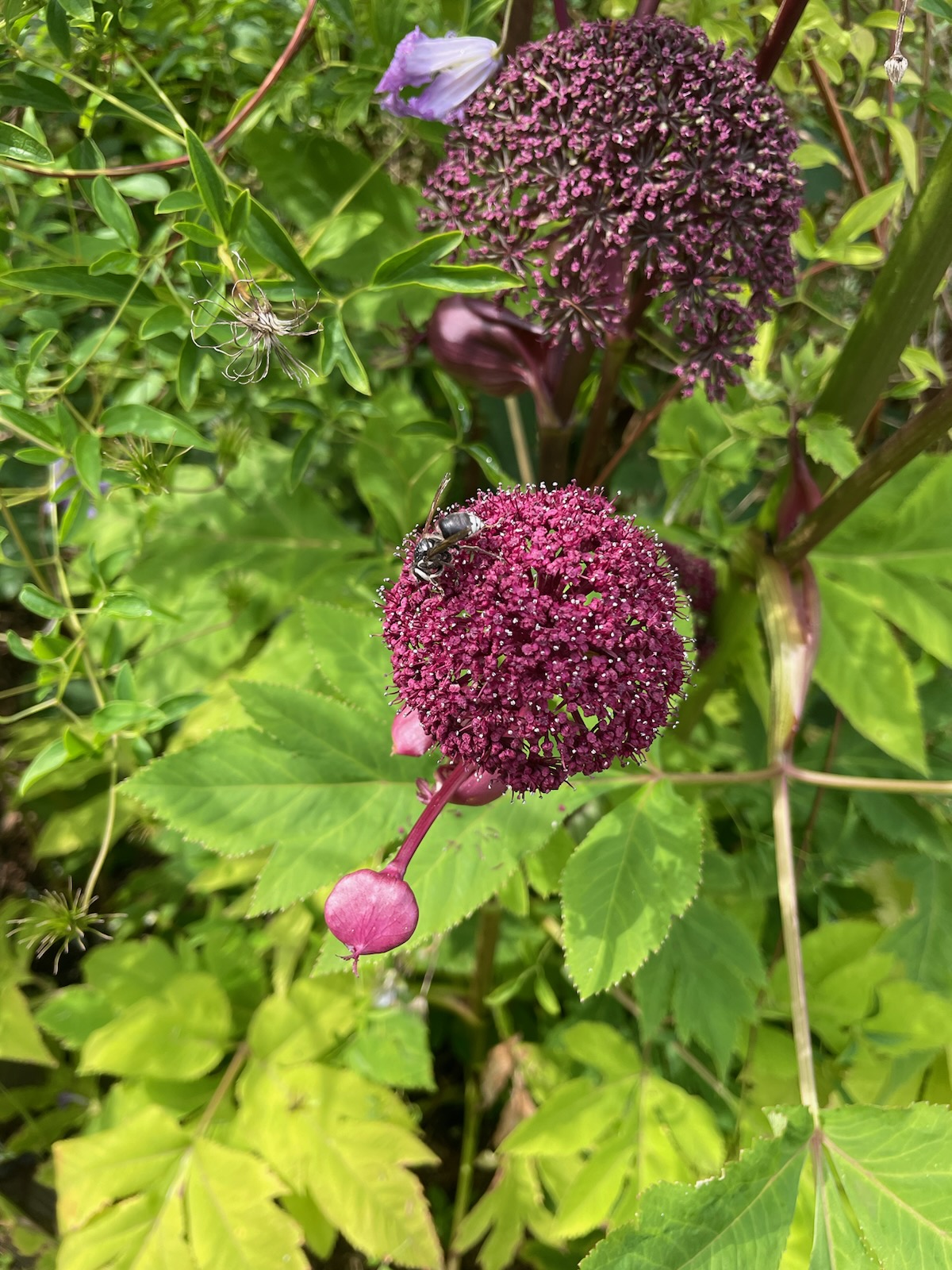
It is almost impossible to feel down when you visit. The New York Botanical Garden always has something new to see. Or something not new but ever-fresh. A bee on a blossom.

Yes, the flowers are flowering. The dahlias.

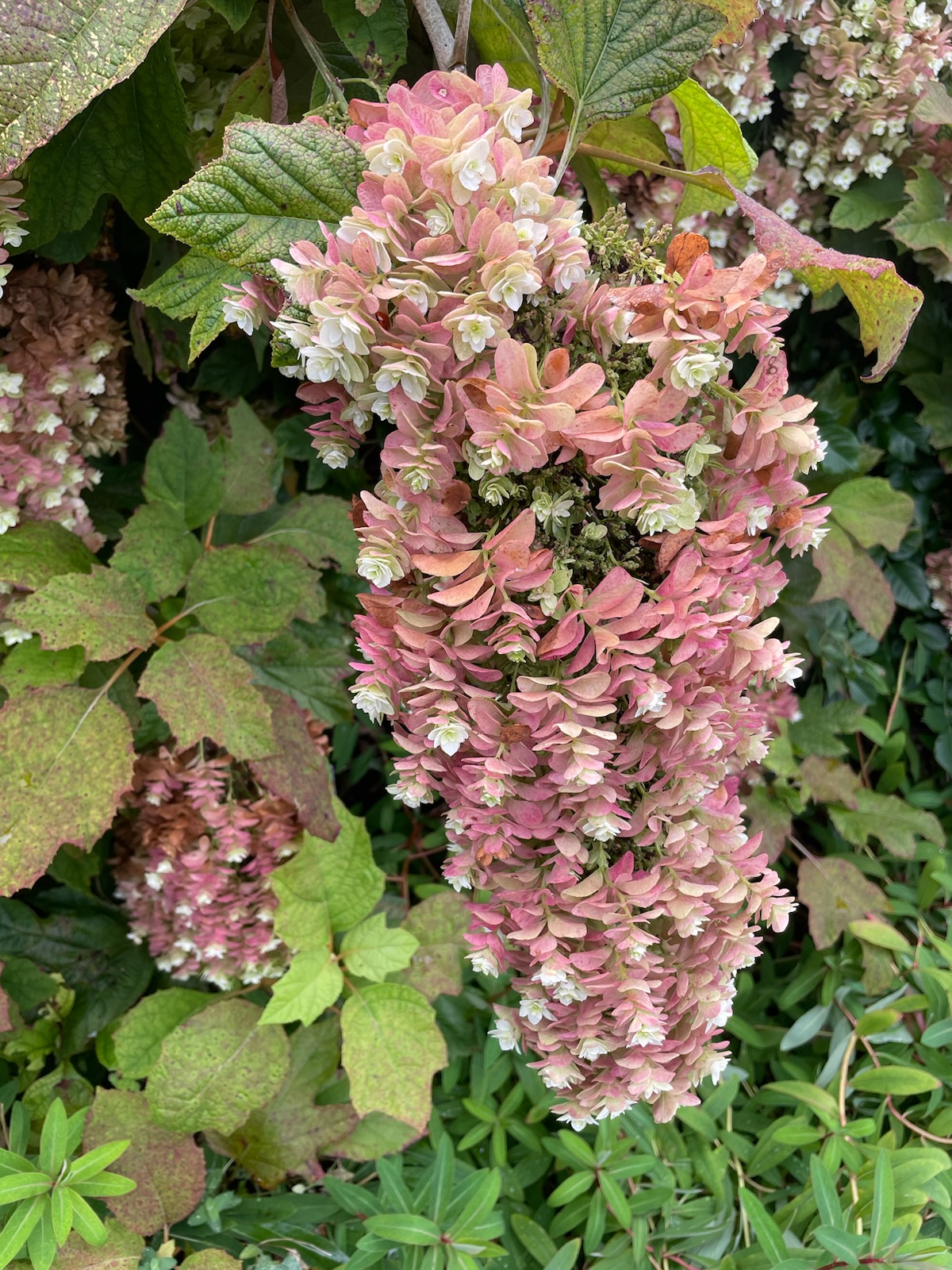
The hydrangeas, some more exotic than others.

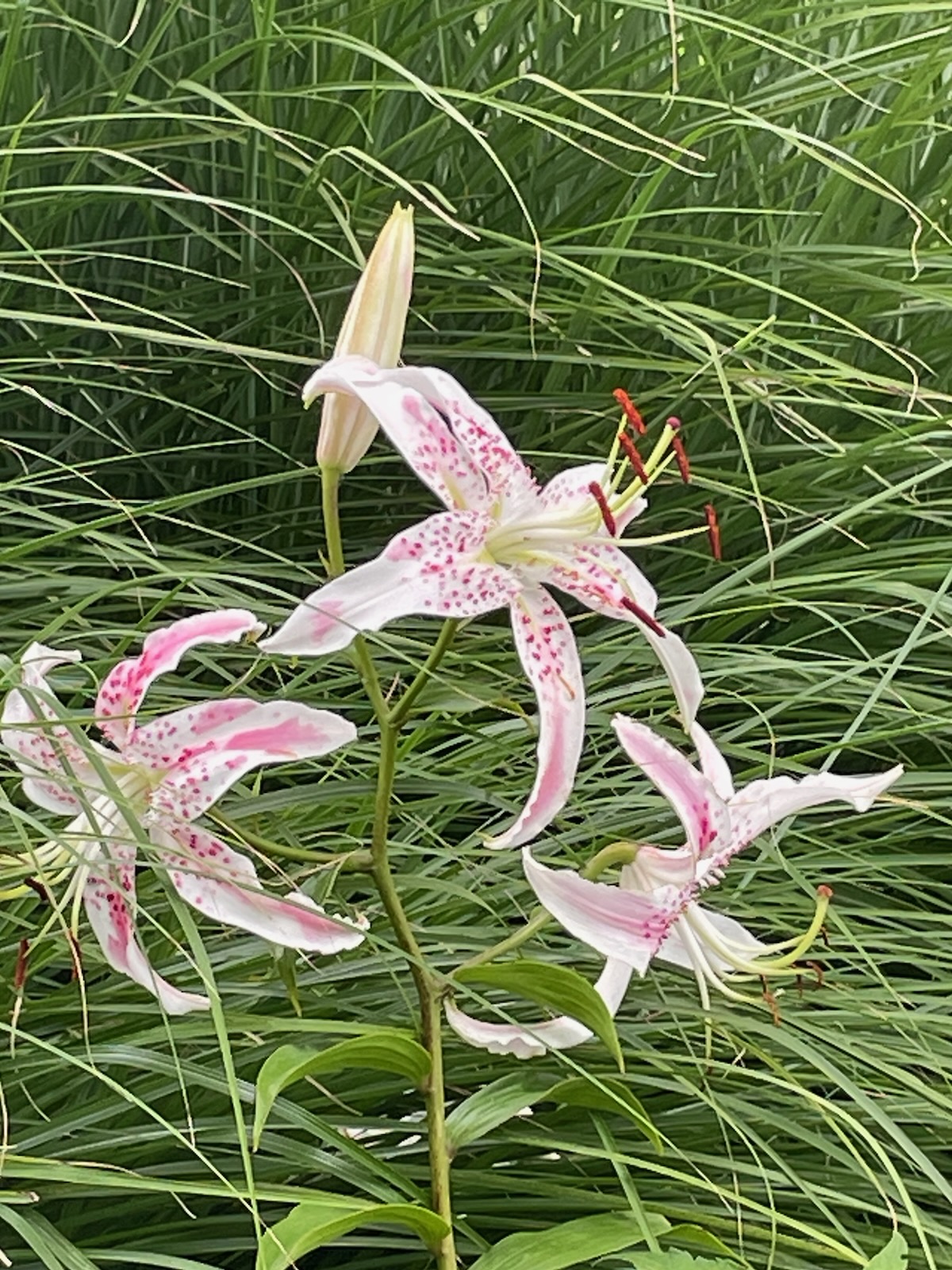
The lilies.

Especially nice when you bring someone who loves plants.

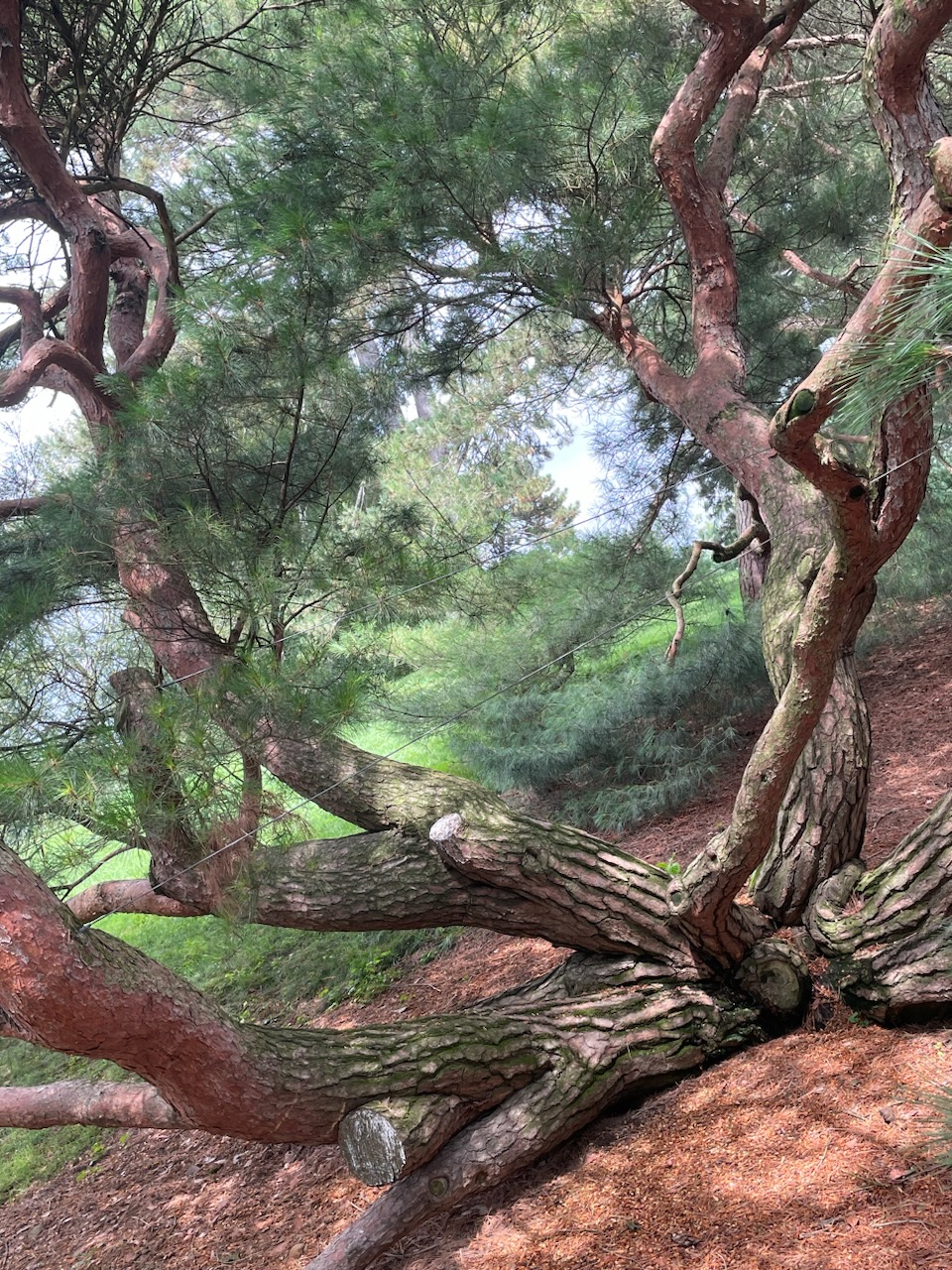
She likes the trees, some of which remind her of when she once lived in Japan.

They are incredible.

From a distance, or close up.

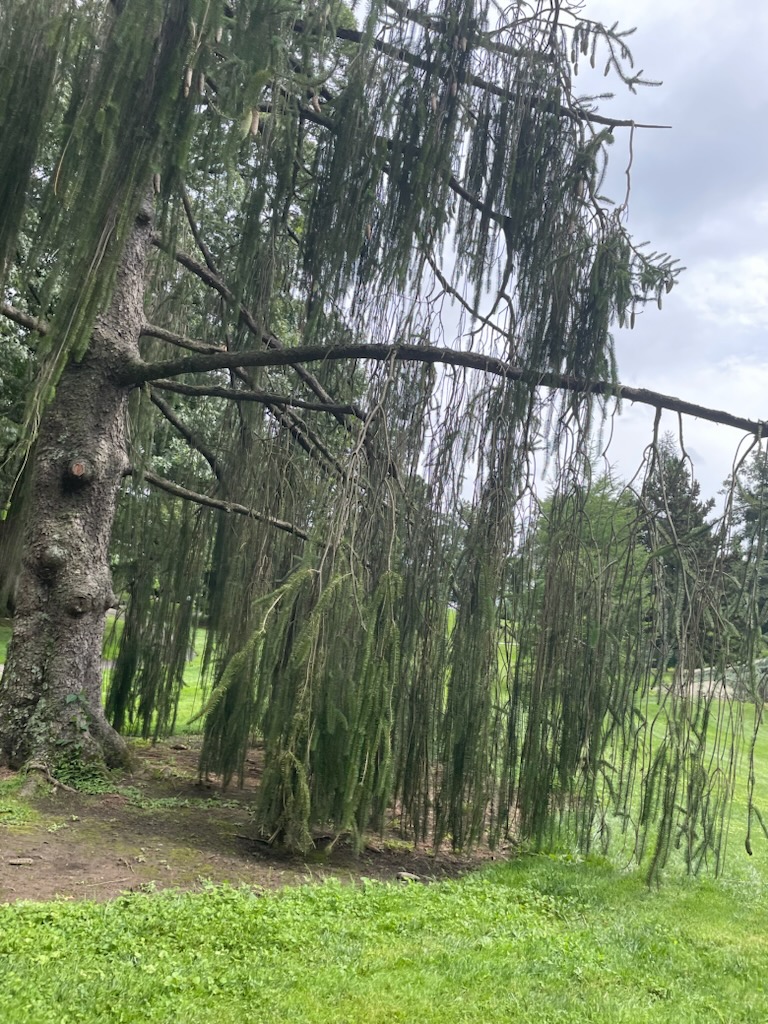
Some she had not met before, like the dawn redwood.

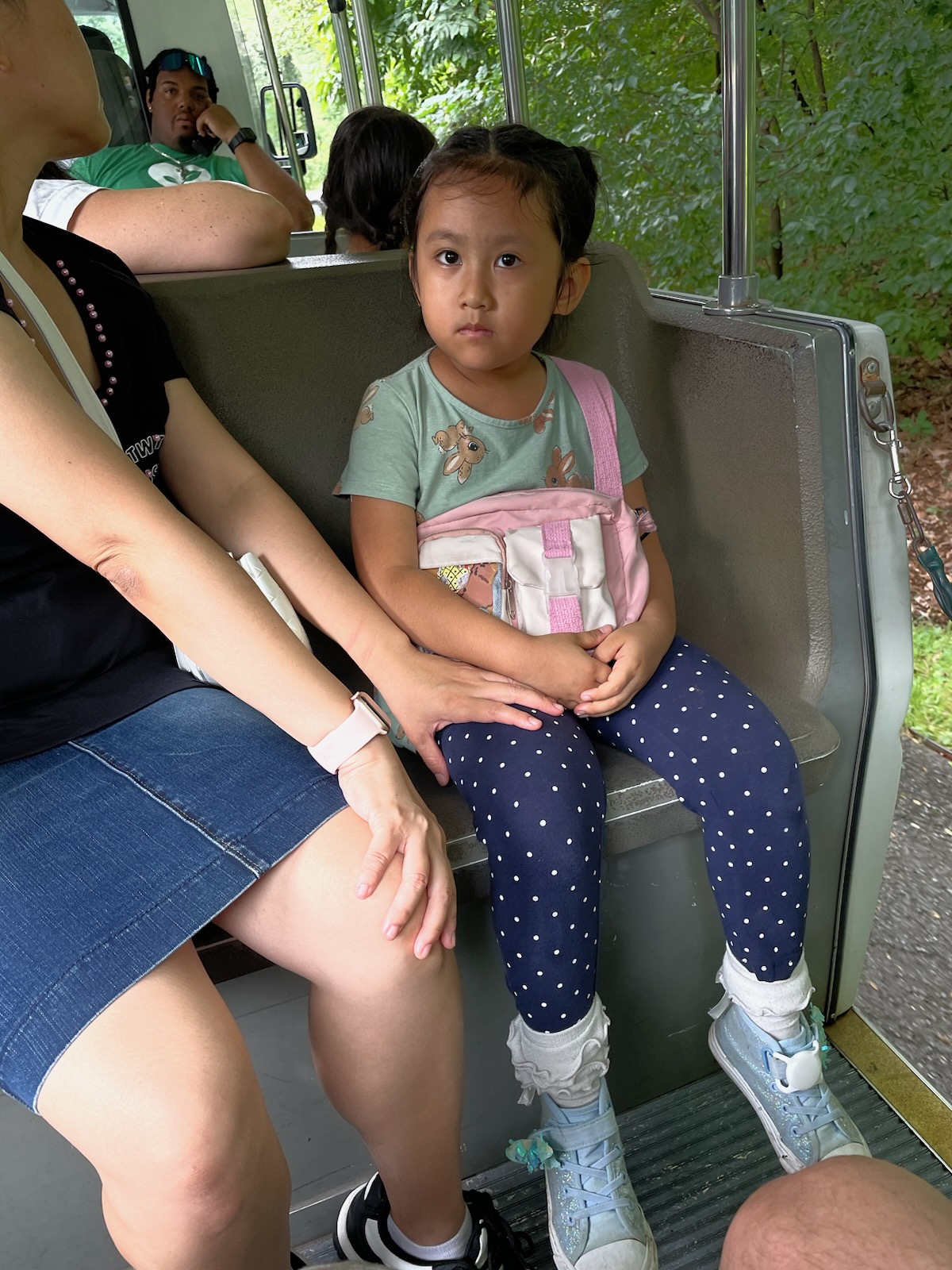
The recorded spiel on the tram tells us that it is ancient, was forgotten then rediscovered, magically.

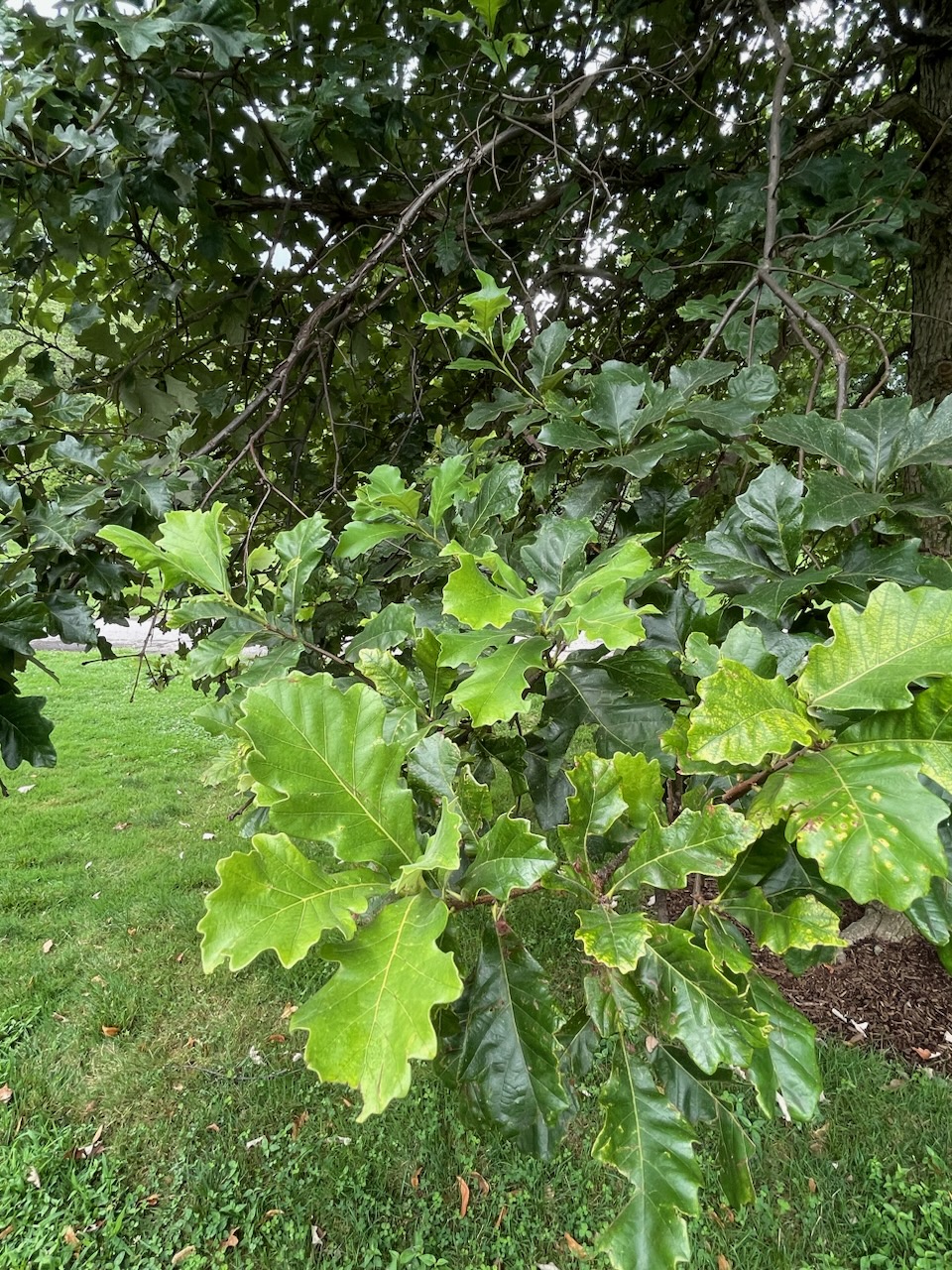
Or swamp white oak.

Anyone would marvel at some of the behemoths here.

Yes, we go on the tram. I like to do so every time I’m at NYBG, even though I’ve heard the same NYBG lore many times before. I want to crystallize it all in my memory, to mentally map which garden is the dwarf conifer, which the azalea, which the “old growth” forest.

I always like to see the people employed to work in the garden as we trundle by.

And the people working there for fun, as at the Edible Academy.

It’s almost as much a pleasure to see the people on the tram as it is to gaze out on the manicured landscape.

This time, a special treat. The African American Garden: The Caribbean Experience, where diverse and delicious foods get their due.

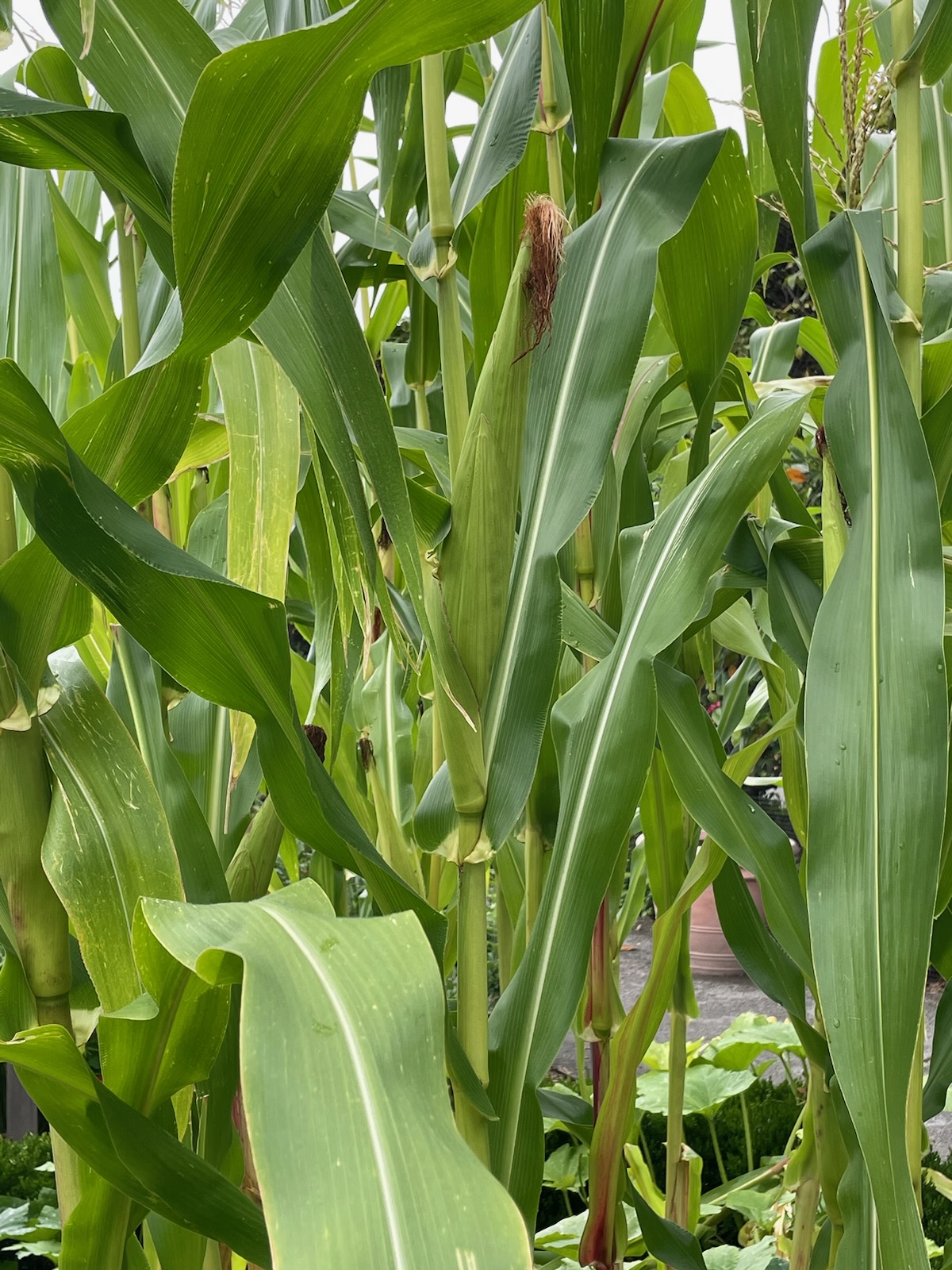
Corn.

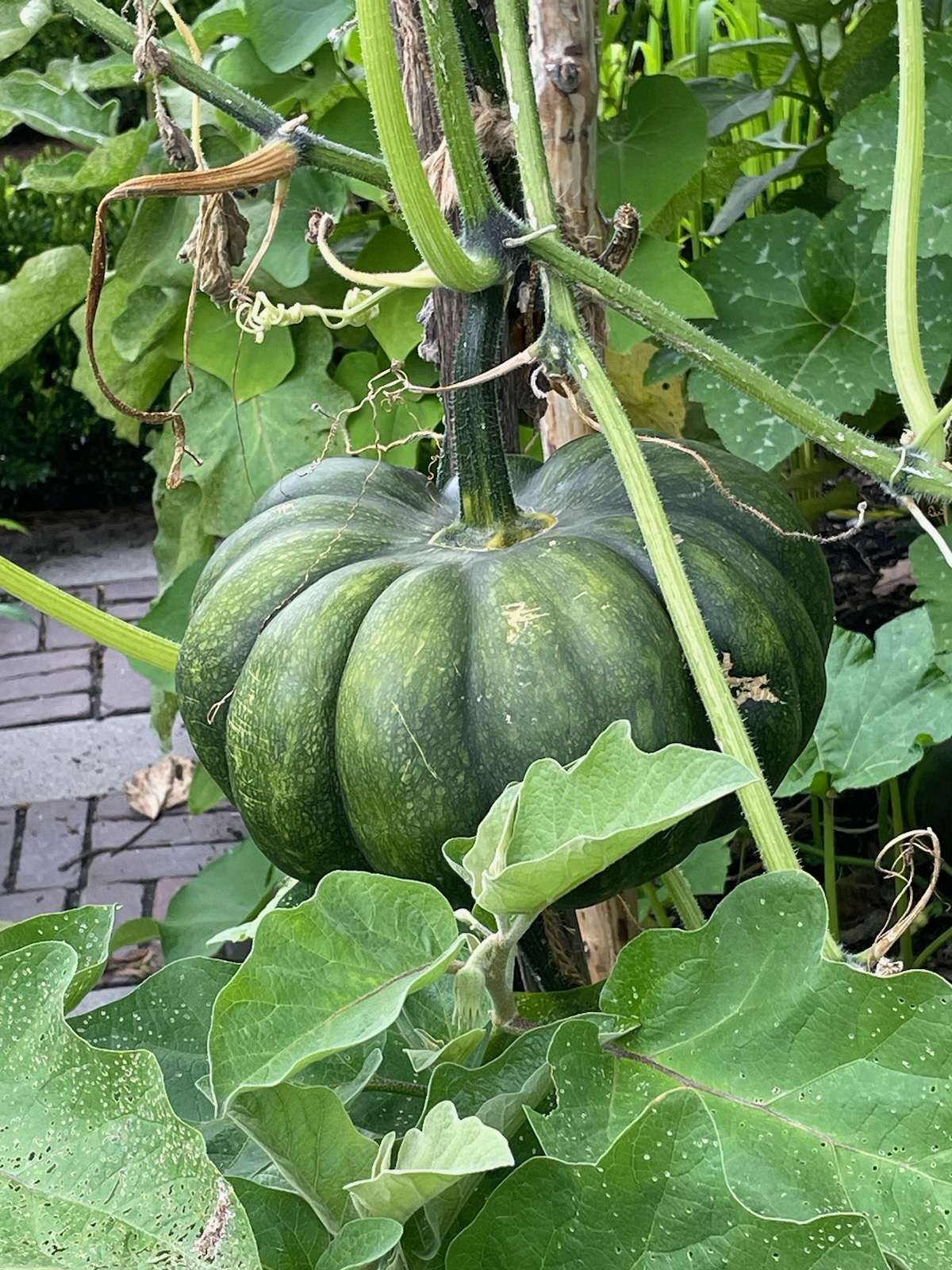
Squash.

Pumpkin.

Exotic okra.

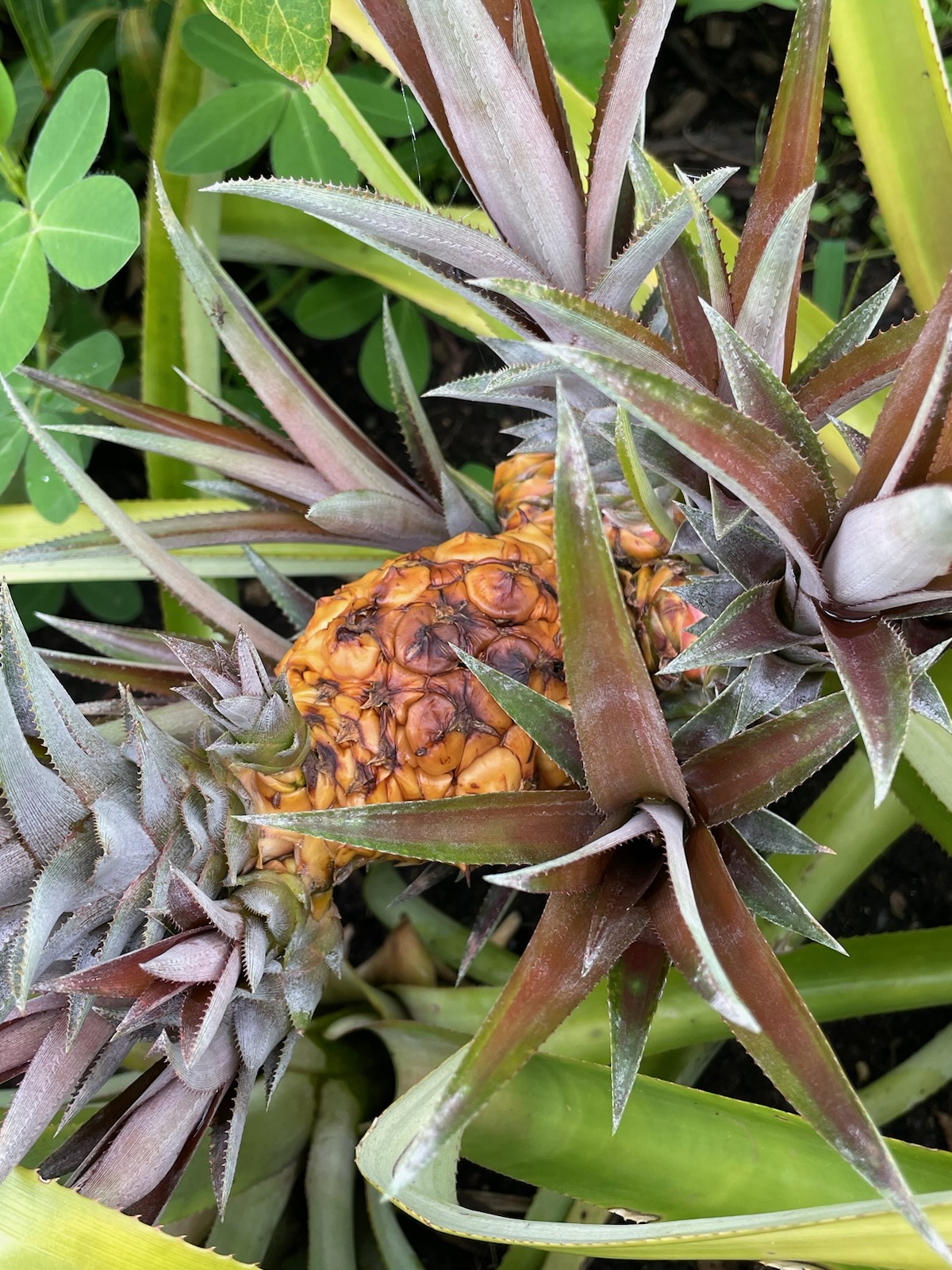
Pineapple.

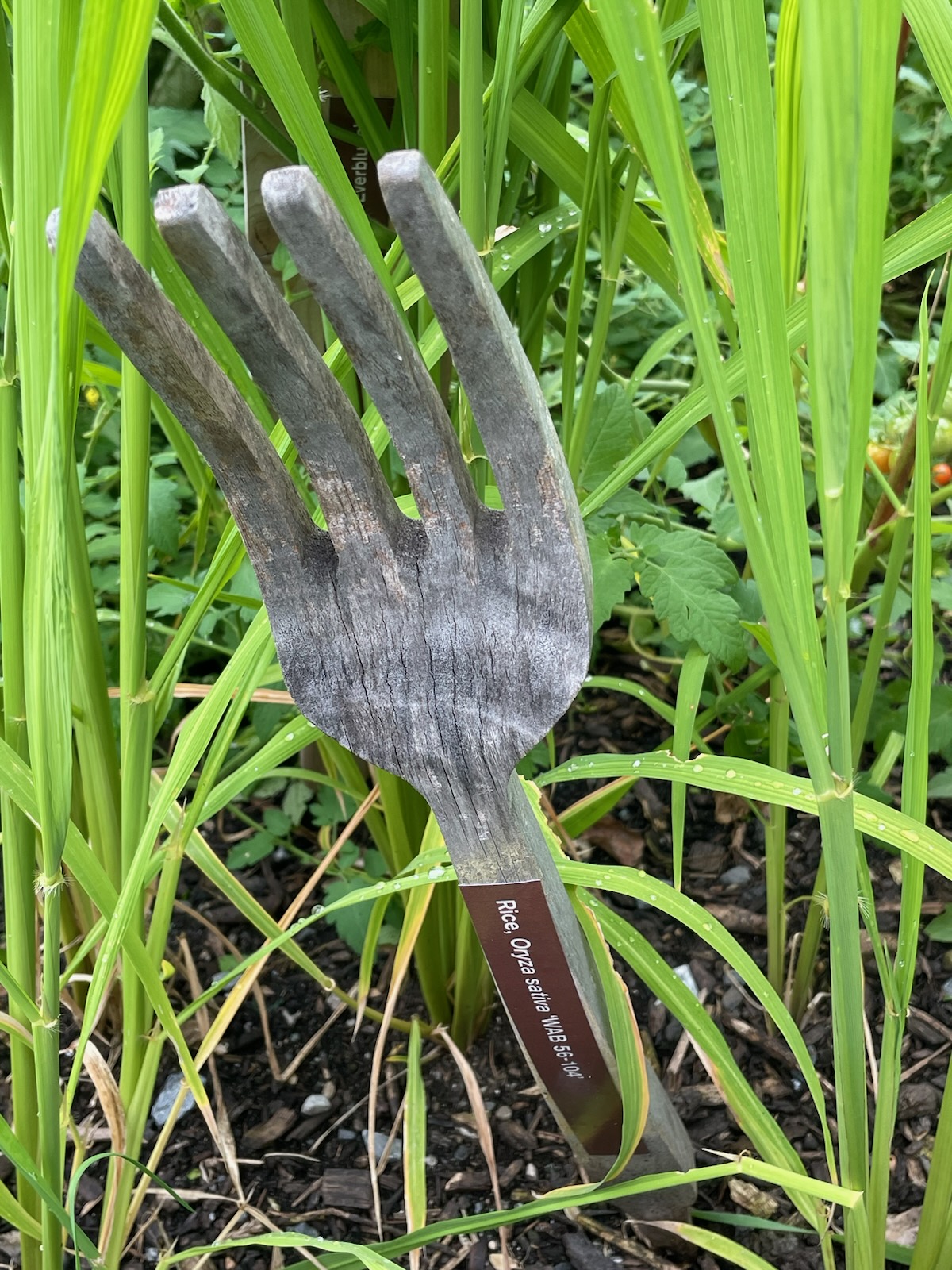
Rice.

Beans.

Flowering currant.

All so wonderfully labelled with kitchen utensils.

I’m not quite sure about some plants here but I know I’d like to investigate further.

Along the paths, posted poetry. Haitian poet Marie-Ovide Dorcely:

I go, just hands, beyond the just, and climb,

clamber, through begonia, a blue husk,

impatiens, a dolly for leaves,

I breathe for the hush of happiness.

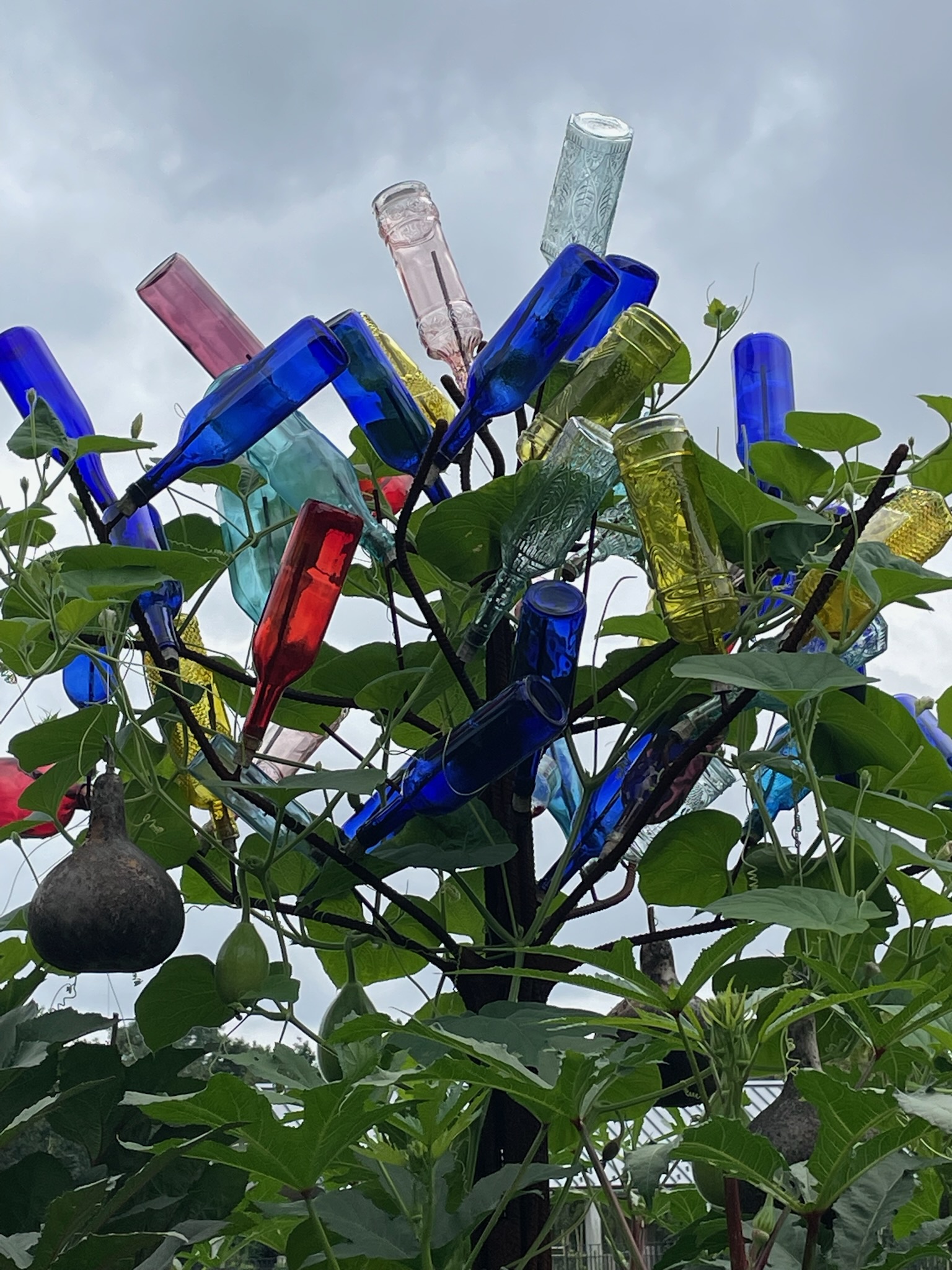
There is even a magical bottle tree created by high school students.


Some mysteries here. Food for thought. Cardoon.

It’s hard to tear yourself away from this lyrical food garden. But there are more flowers to see.

And greenery.

And more greenery.

And even more greenery.

Today I like the vivid green as much as the pulpy red. Crimson clover. (Over and over.)

And the pods.

Nature offers such marvels, if you’re just present for them. Allow me to introduce you to stonecrop.

Artichoke thistle.

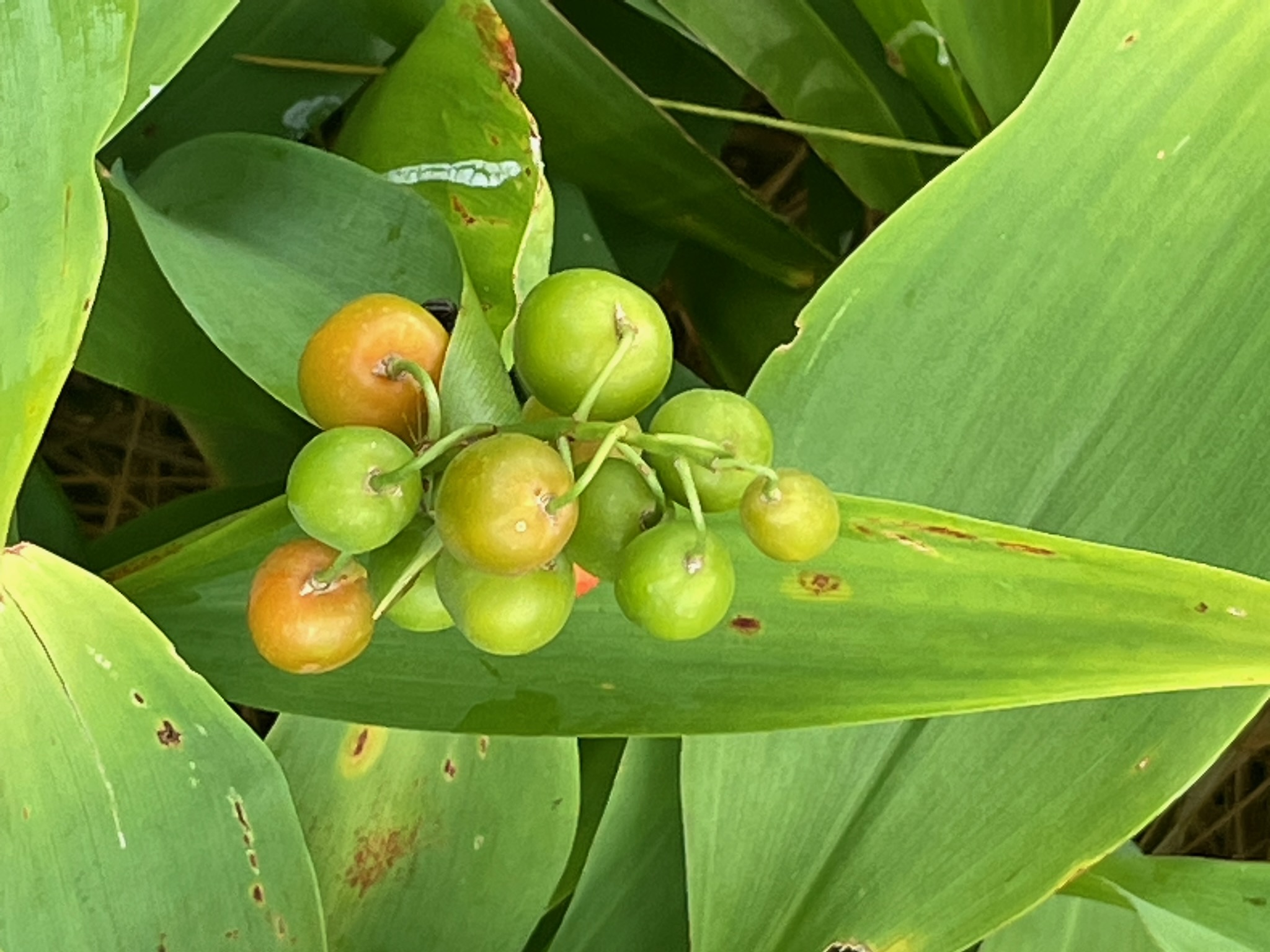
Always something to learn, like what lily of the valley looks like after it’s bloomed.

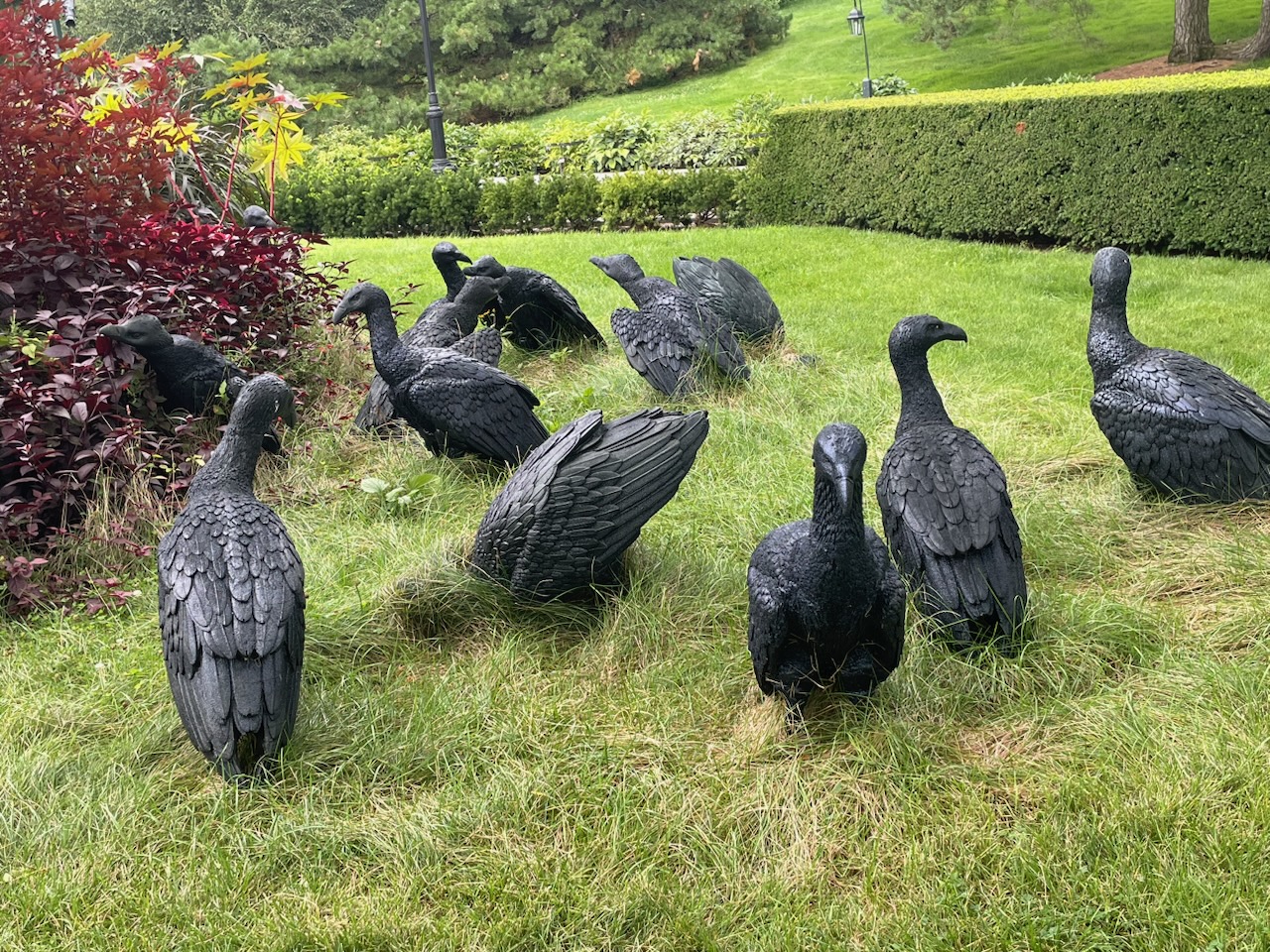
And some woman-made marvels, such as the flocks of scary-beautiful vultures installed among the borders by genius artist Ebony G. Patterson.

Who doesn’t love hibiscus?

Or caladium?

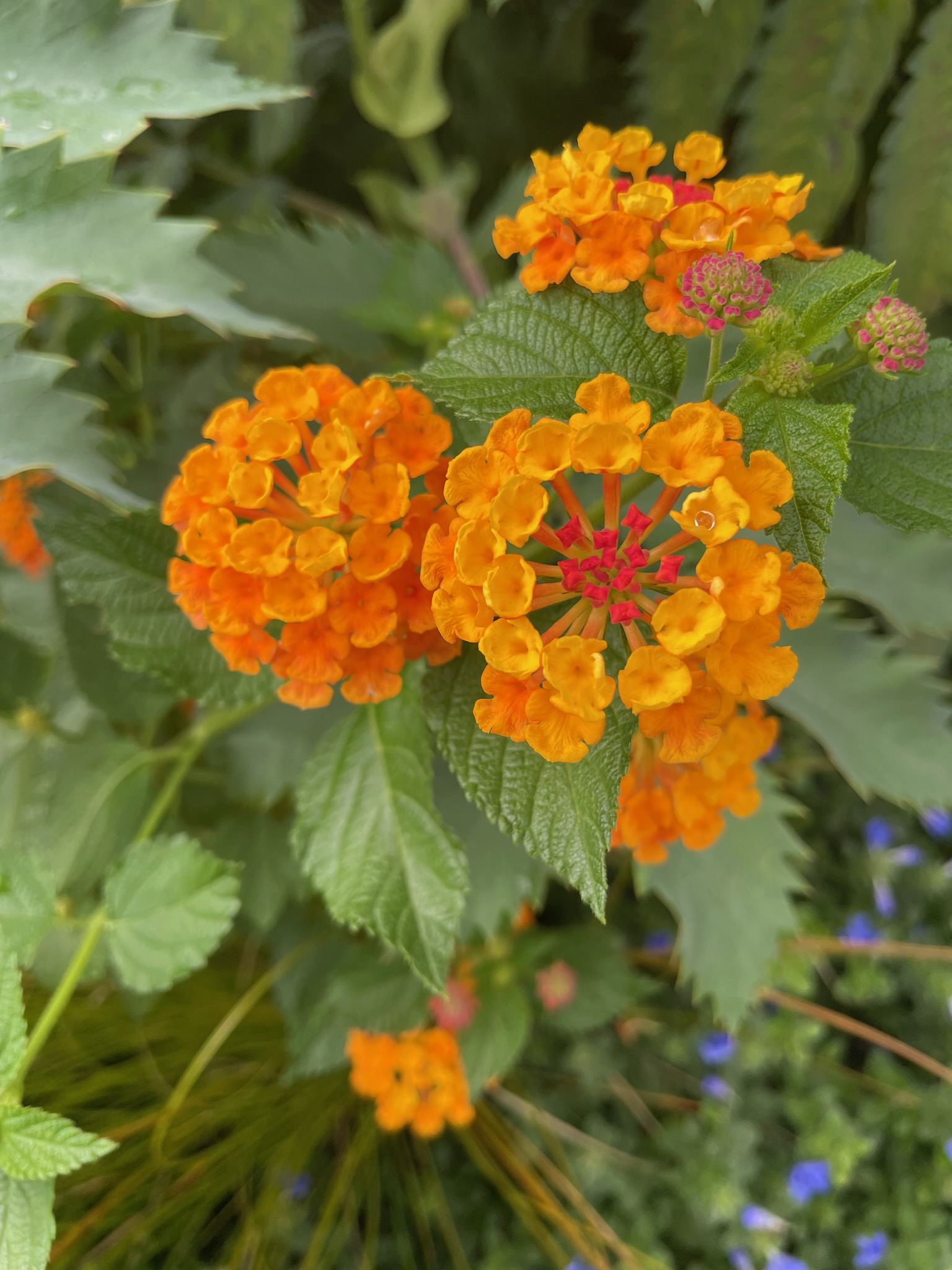
Especially the caladium. Or the glowing lantana.

It’s all there for us.

All of us.

Even if you’re one who likes to take the tram.

2 Comments

Filed under Jean Zimmerman

Median Cool

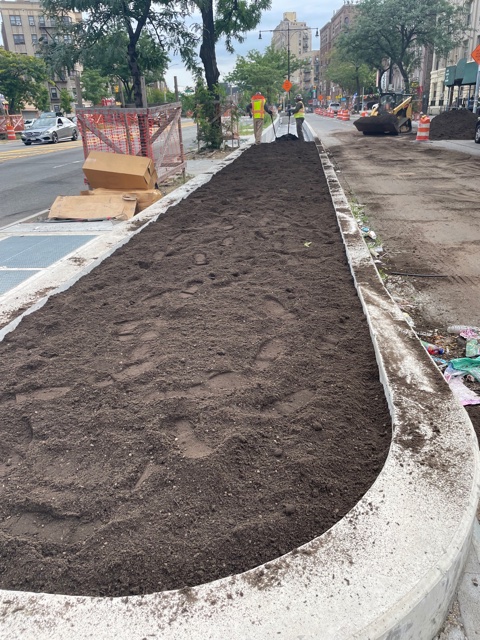
A raised traffic median is just a long trough with soil in it. And, of course, plantings, and sometimes trees.

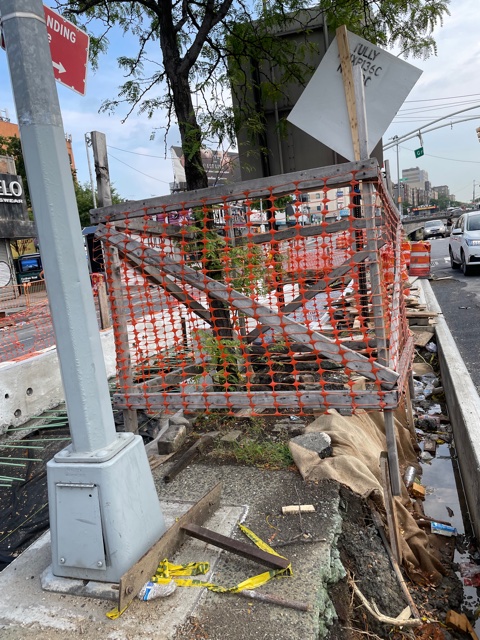
The City of New York has applied its hive mind to widening the street medians of the Grand Concourse, which is what brings me here – to inspect the existing trees that might be impacted by the street construction, and to check out the importation of shrubs etc. when it takes place later this fall, in the cool planting season.

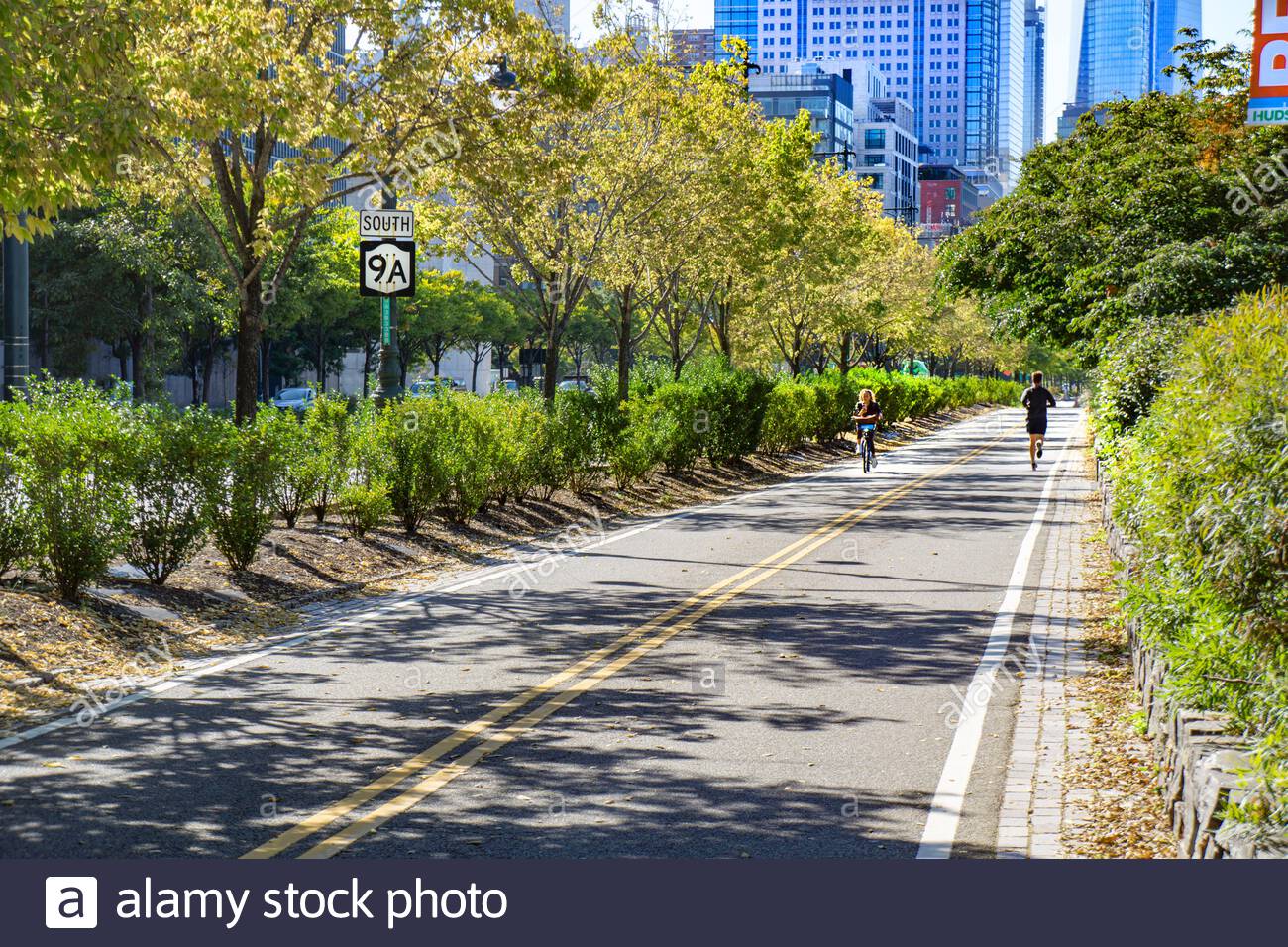
So… why is this happening? We’re talking about a raised median, which is rare in NYC. Yes, there is the West Side Highway, which I was lucky enough to tour in a golf cart earlier this year when bidding for a job to maintain its vegetation.

There’s a strip of beautiful trees and roses in season dividing two lengths of highway, all with a phenomenal view of the Hudson River.

Every median holds 24 inches of soil above the roadbed, according to the Department of Transportation Street Design guidelines. Hard to imagine this collection of construction debris materializing into a cohesive bed of plants, but that’s the plan. And crews are hard at work making it happen.

It seems that the point is not only beautifying a thoroughfare but controlling the vehicles that use it. Lane narrowing, which comes about when more space is taken up by medians, has the effect of what the experts call “traffic calming.” Sometimes cities remove an entire lane, which is known as a “road diet.” In this case the road will still be wide, 2 lanes northbound and southbound and service lanes on either side as well.

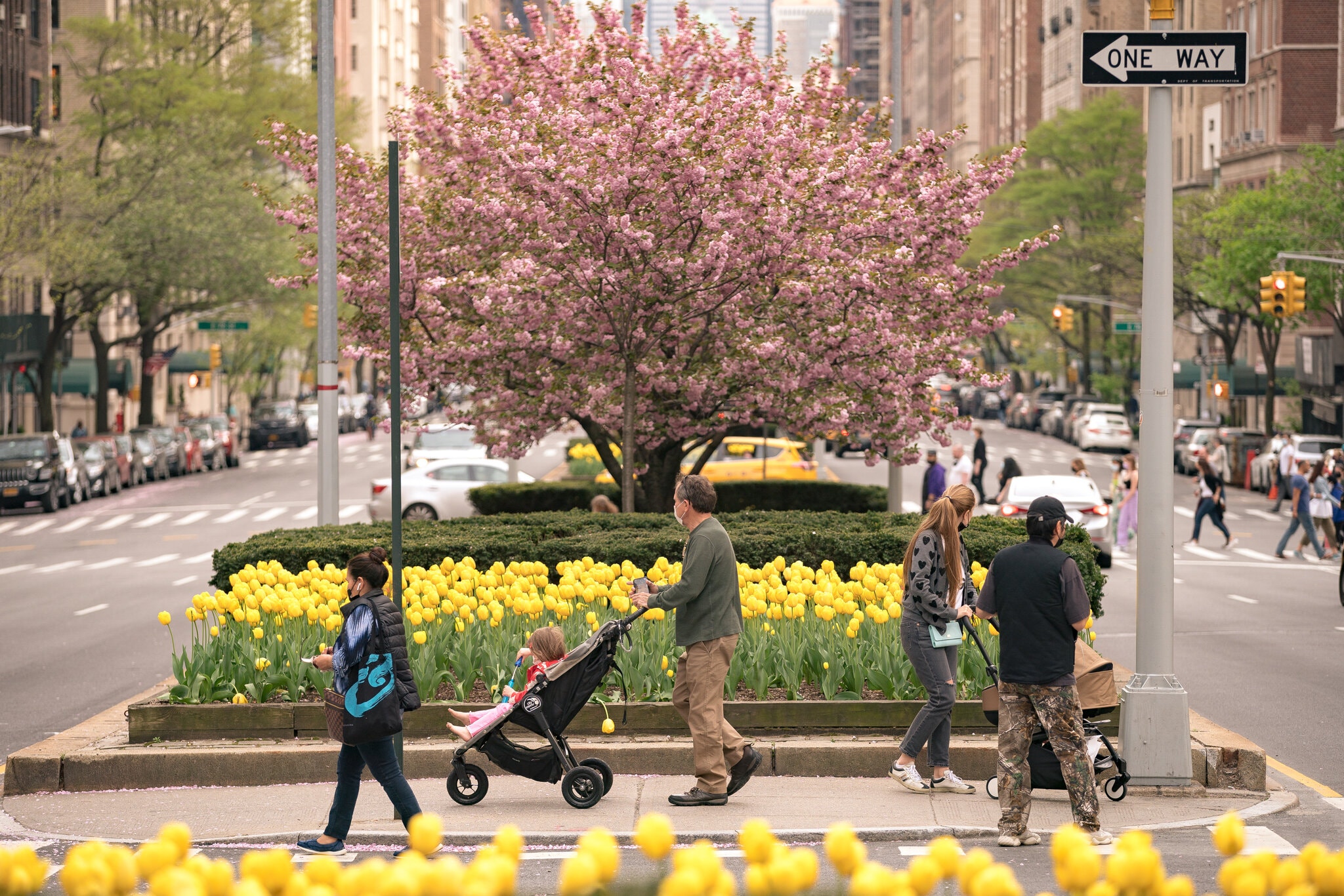
There is a famous, old traffic median in this city, running the length of Park Avenue north of the Helmsley building, which straddles it. It might be worth visiting NYC just to drive through that twisty tunnel. The median’s tulips and begonia beds date to the 1950s.

The park narrowed over the years but I’ve always found it beautiful, and obviously diligently cared for.
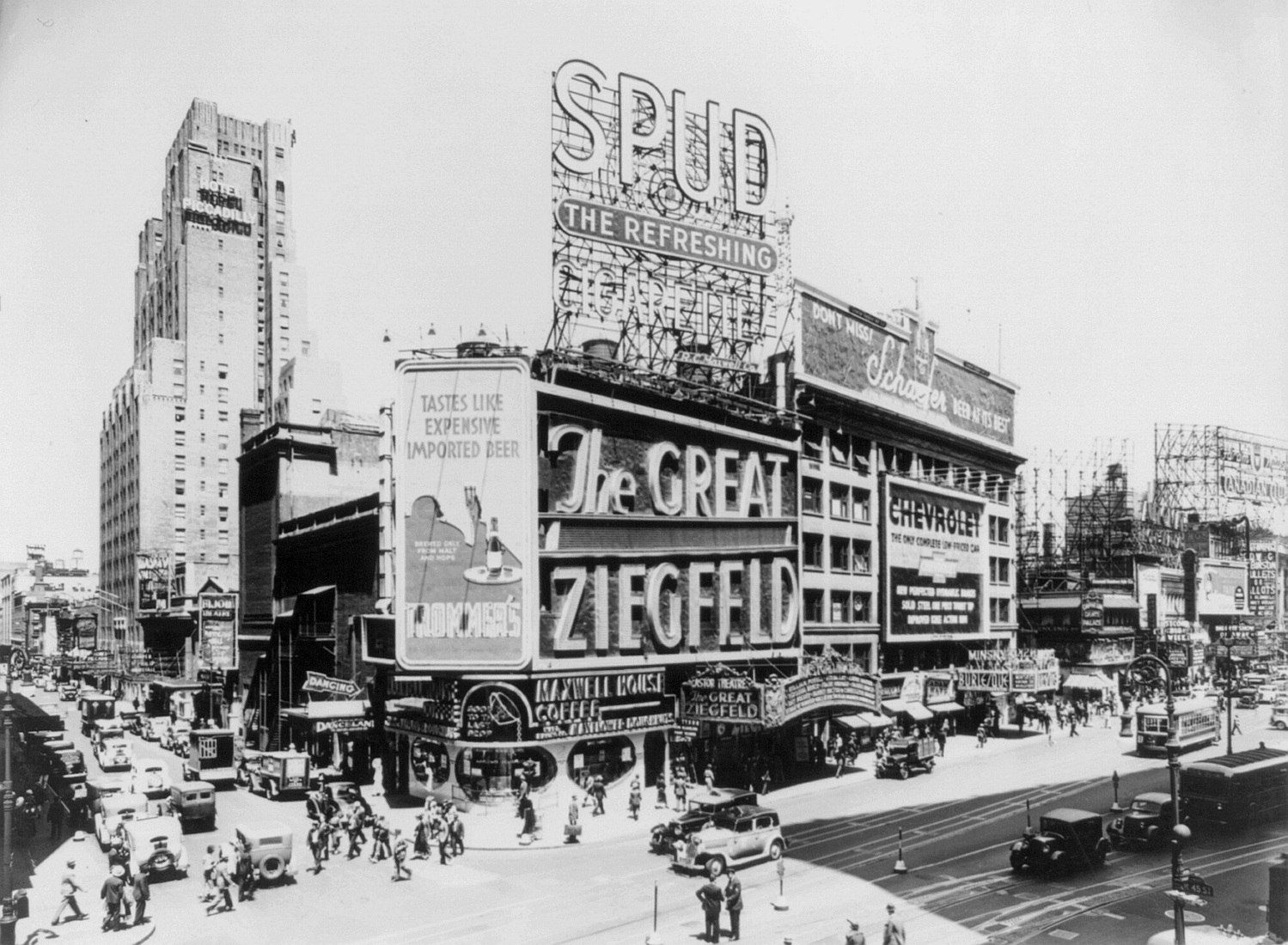
Back in the day, traffic was a bit unwieldy in NYC, especially at the turn of the century, when horse carts jockeyed for space with street cars, pedestrians and even some automobiles.

Pictures from the turn of the 20th century  show traffic going every which way. It definitely needed some calming! Park Avenue, though, was a respite – it was actually a pedestrian park seated in the middle of a tamer Park Avenue.

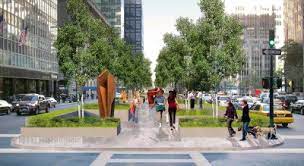
People could stroll, sit, push prams, whatever, in safety. Now the powers that be are planning a remake for Park Avenue to become more like it once was.

Designs have been sketched.

I want to go there and be calm.

But I think that the Grand Concourse will be completed first.

We have trees. Lots of honey locust.

Some of the areas farther downtown have already been finished.

It’s hard to imagine the stretch of the road where I monitor trees botanically beautified. I can’t wait to see it.

1 Comment

Filed under Jean Zimmerman