Tag Archives: oak

Forests and New York City

is not a pairing that would make sense to some people outside the Metropolitan Area (we always say that, as though there is no other metropolitan area in the world). But majestic trees do exist among the concrete canyons of NY.
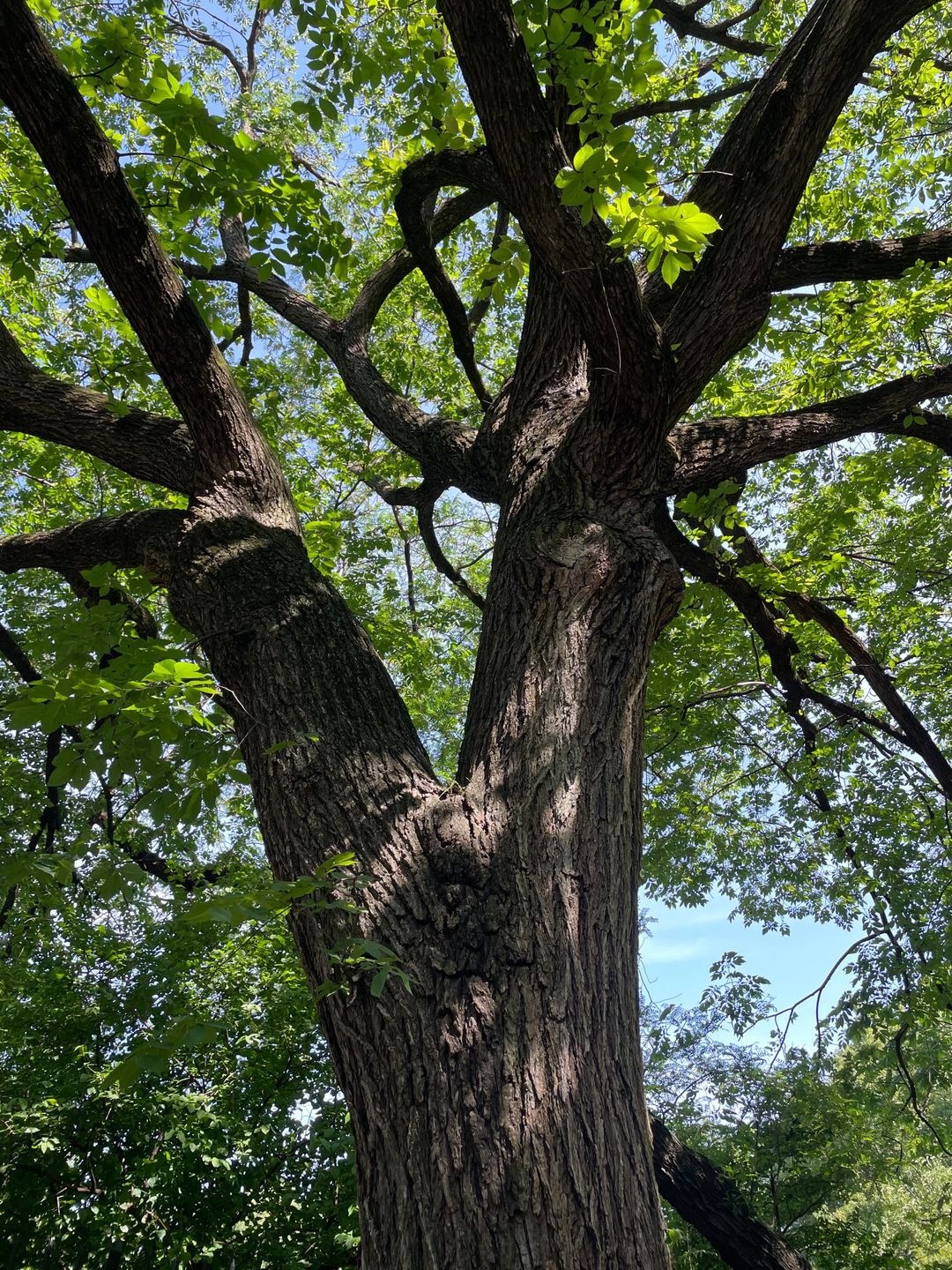
I’ve been fortunate to come up close to some of them.

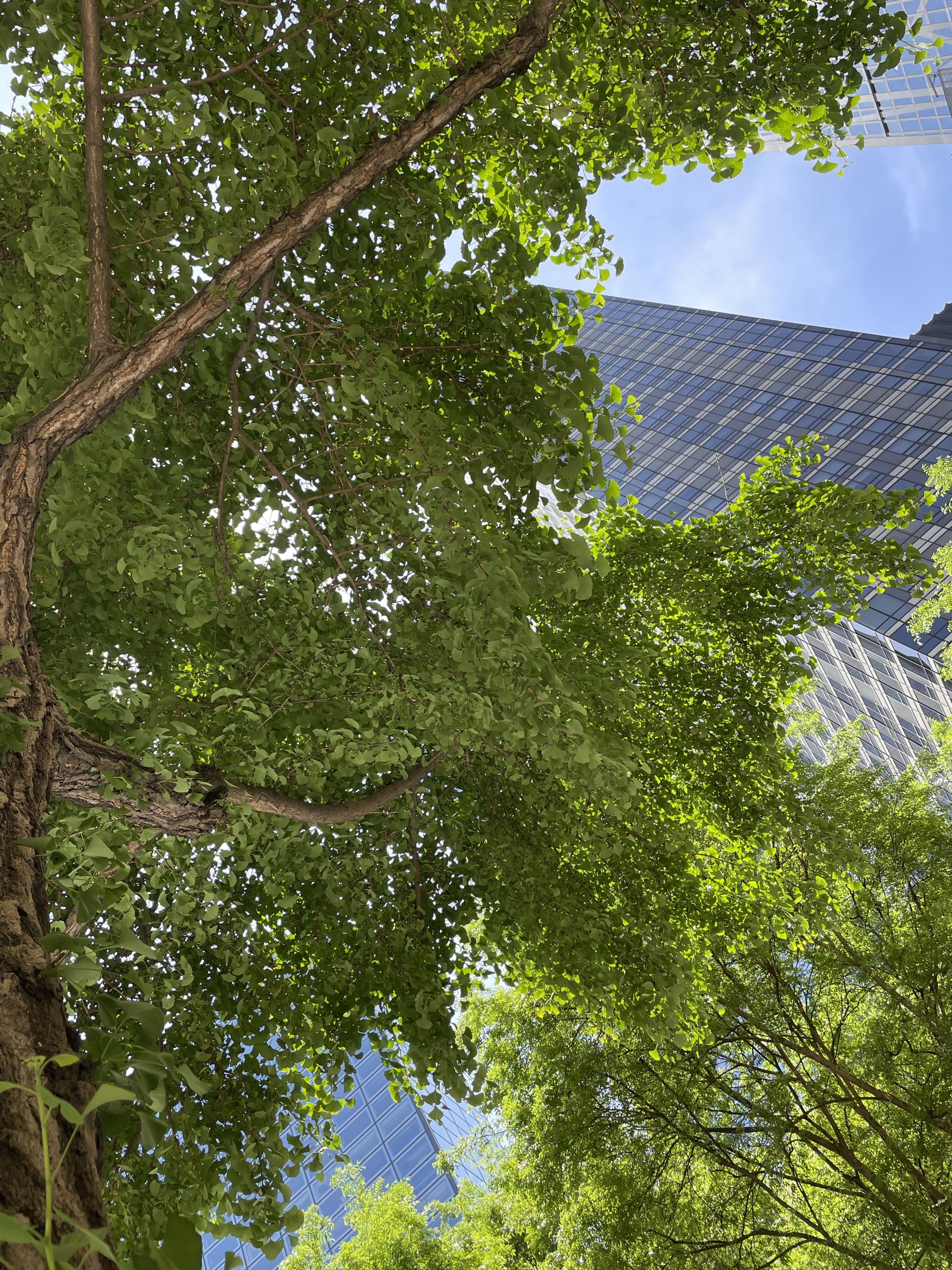
Walt Whitman: Why are there trees I never walk under but large and melodious thoughts descend upon me? In New York, there are plenty of inspiring ginkgo biloba‘s.
But also majestic oaks. I visited a grove in Central Park.
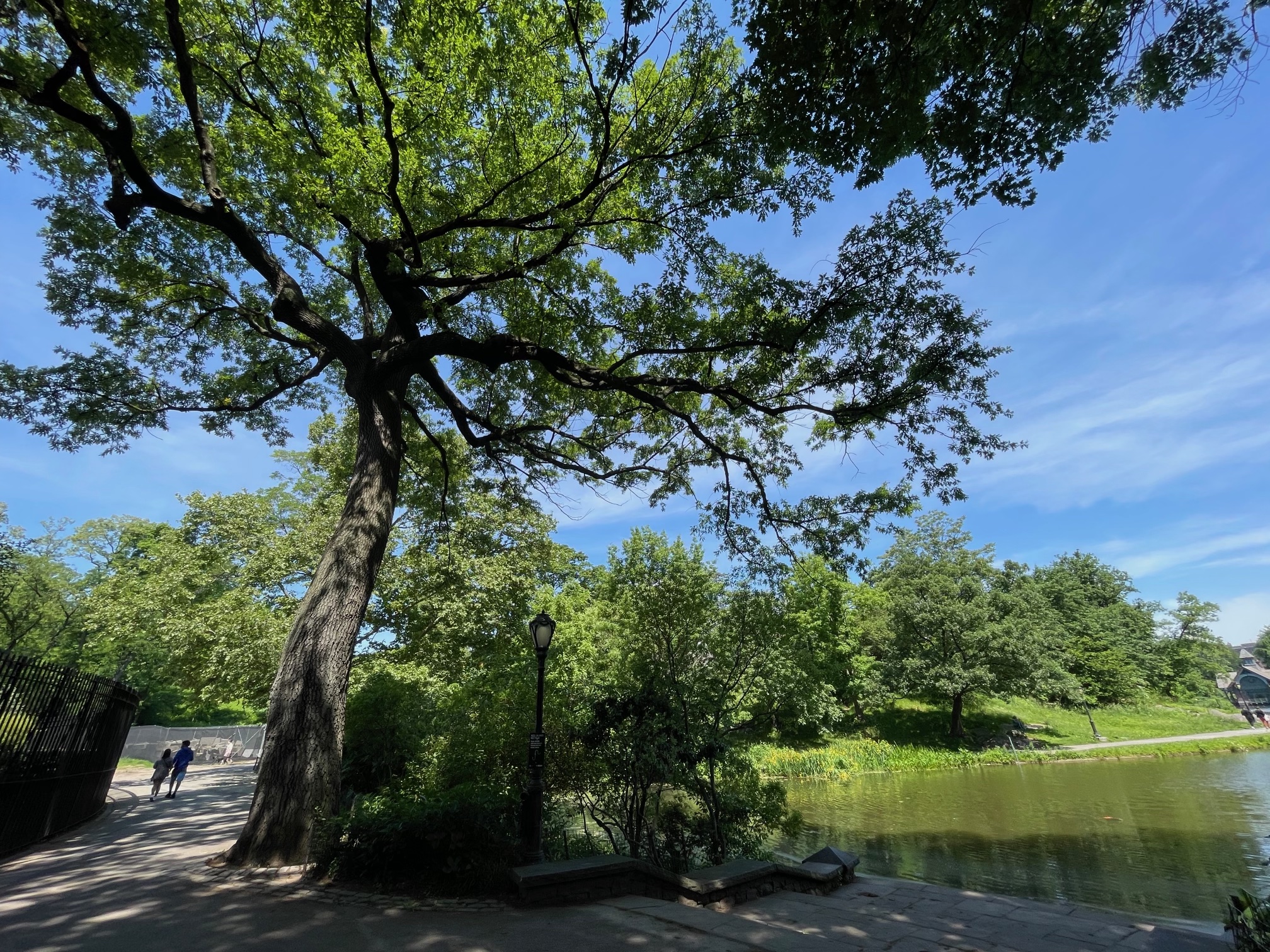
Not just any oaks. These were uncommon oaks. There were mature Northern red oaks.

I also saw swamp white oaks and sawtooth oaks.
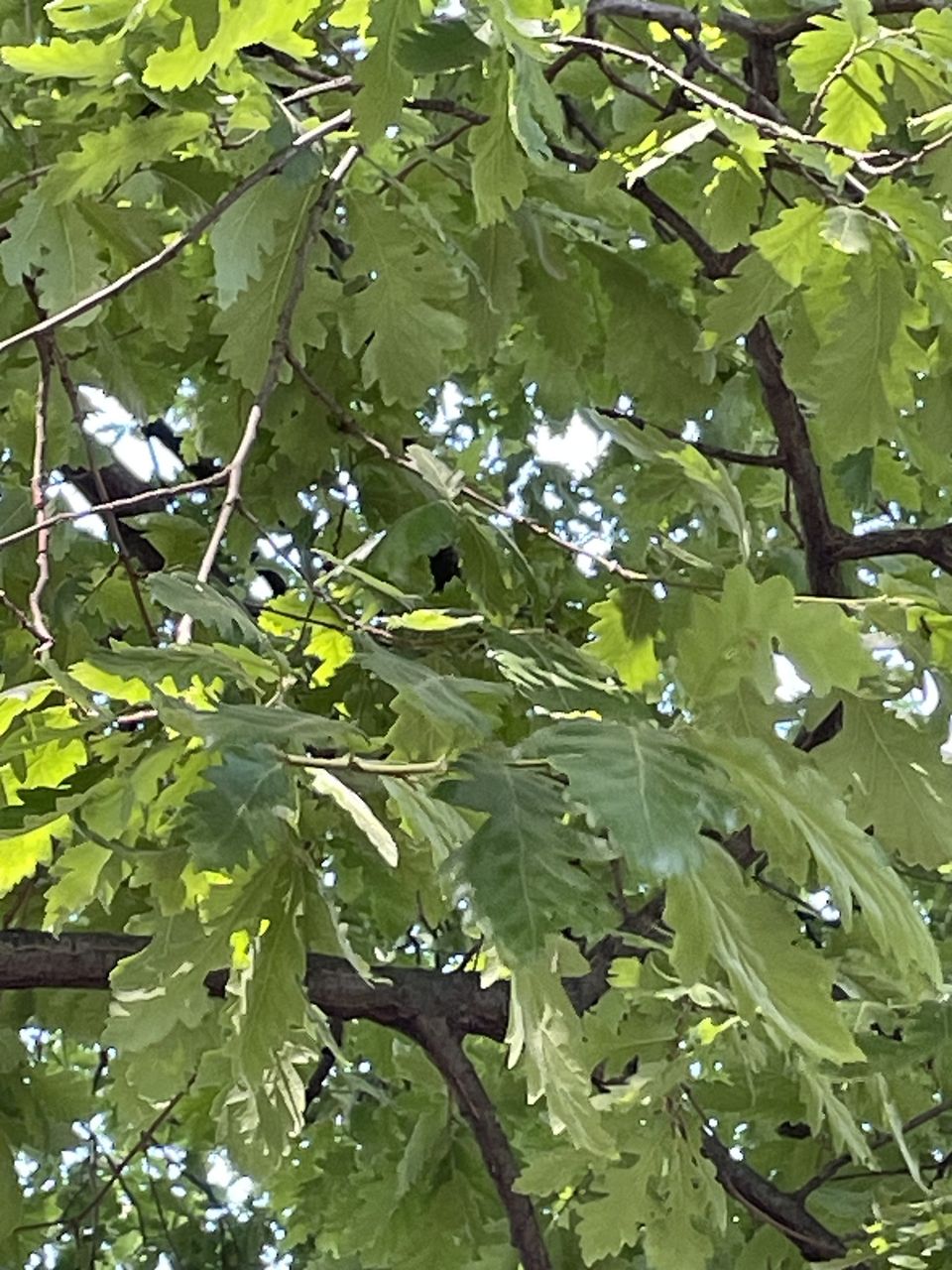
While you’ll find both as street trees in New York, here they were massive, ancient, awe inspiring.

And so I go to the woods. As I go in under the trees, dependably, almost at once, and by nothing I do, things fall into place. I enter an order that does not exist outside, in the human spaces….I am less important than I thought. I rejoice in that. So said Wendell Berry.

Some folks on hand didn’t seem much impressed, preferring a nap to gazing upward in rapture.
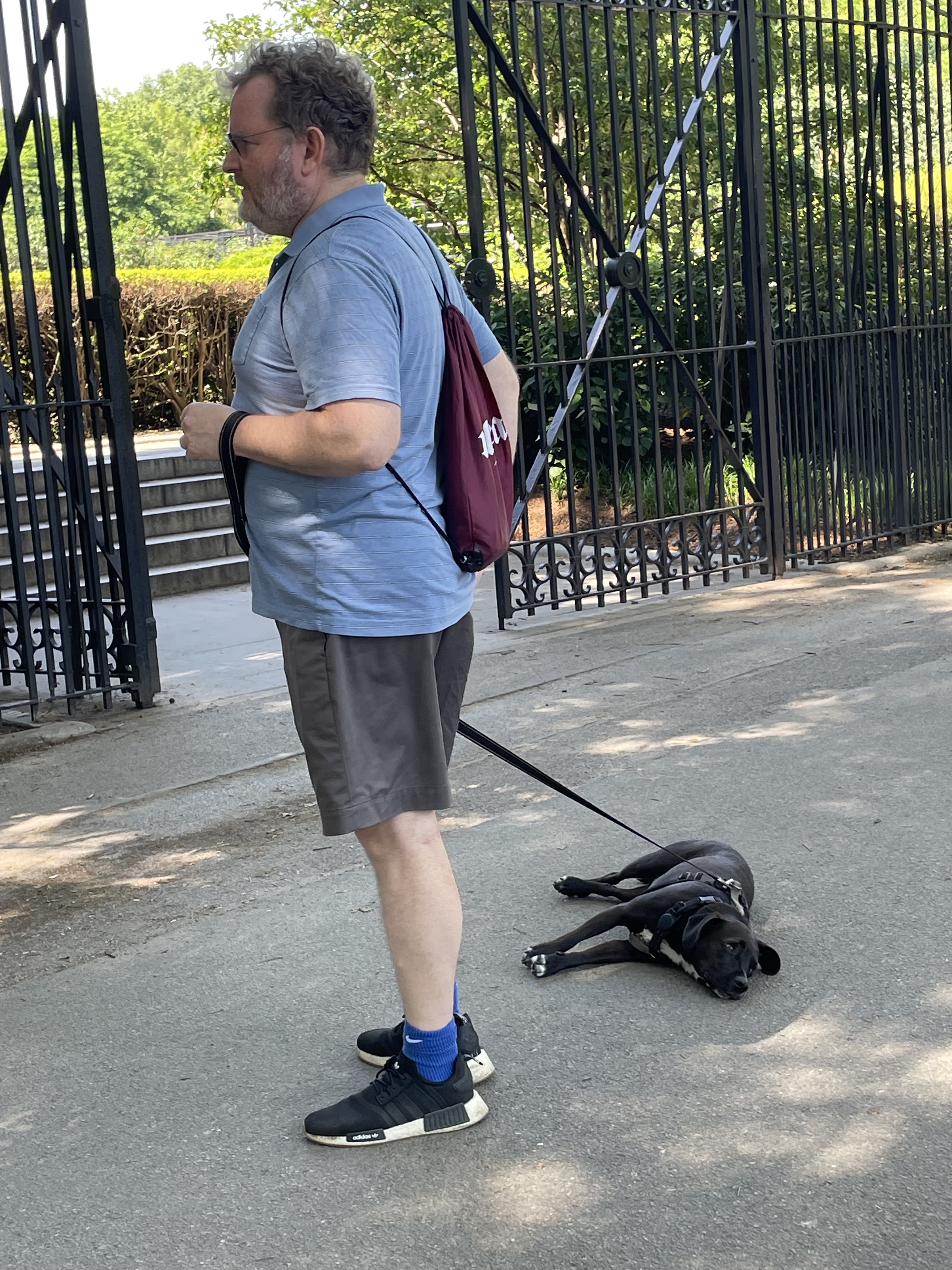
But I was definitely taking notice.

Especially having recently visited the New-York Historical Society for an exhibit about early New York.
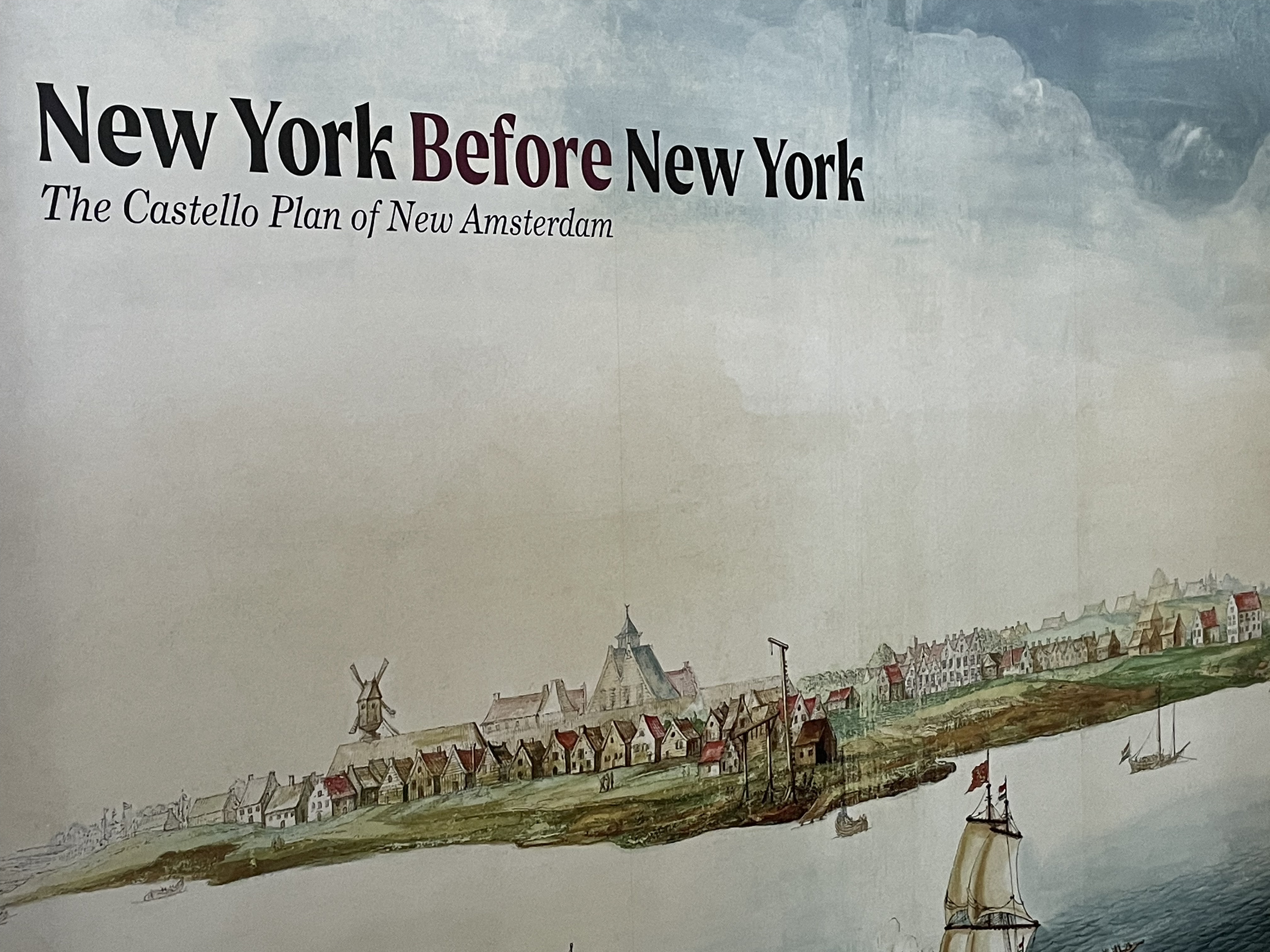
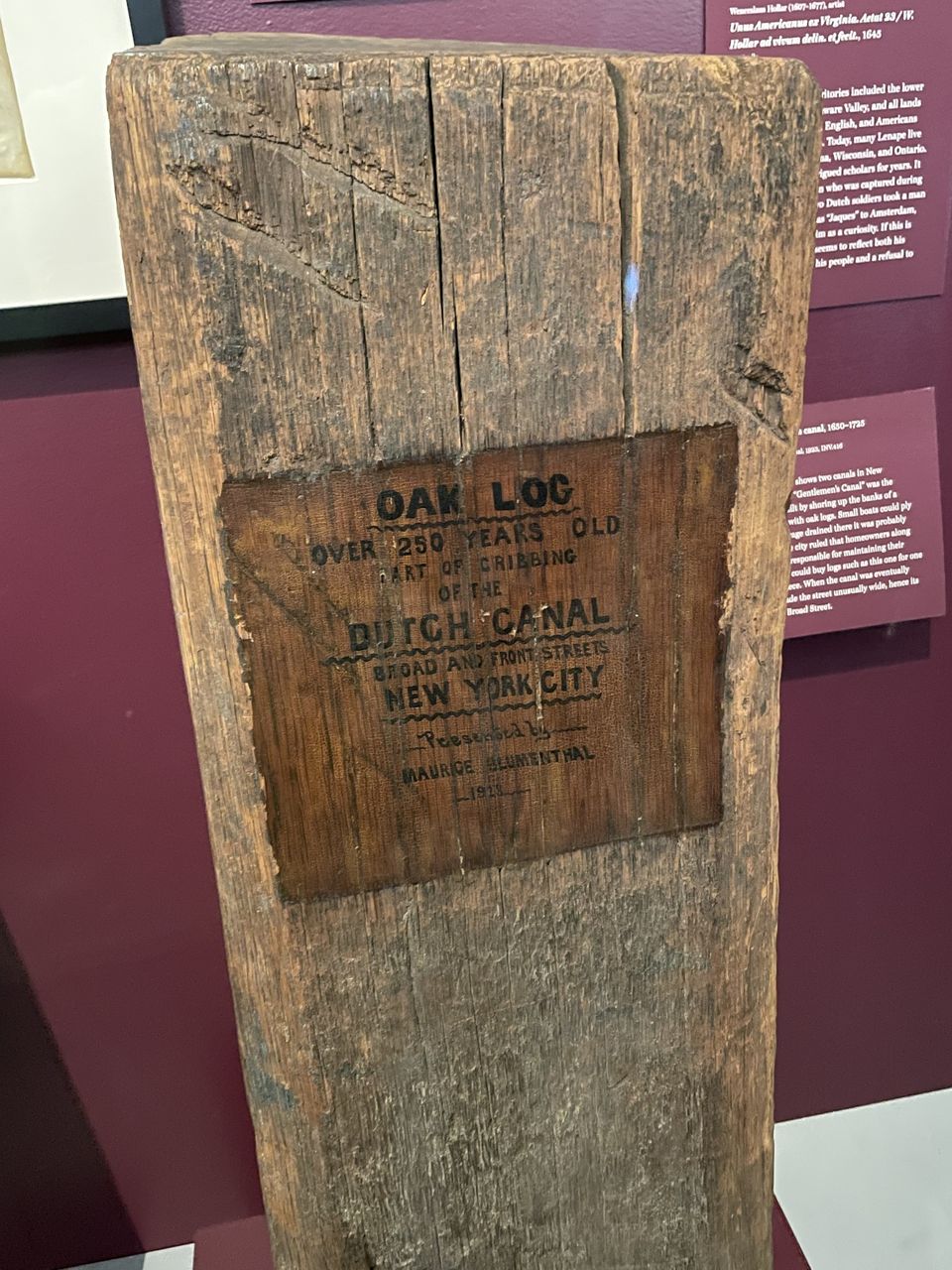
Of course there were many great artifacts, but a special treat was a fragment of oak log from an early Manhattan canal hundreds of years back. That’s how sturdy and strong and lasting oak is.
Just outside Central Park, a line of gargantuan elms strides down Fifth Avenue.

When the infamous elm blight decimated the canopies of so many urban areas’ Ulmus americana back in the early twentieth century, these elder stateswomen clearly did not take the hint. What doesn’t kill me makes me stronger — so said Nietzsche, correct for once.

I recently attended a tree climbing workshop in North Carolina with my daughter Maud.

The old-old trees we climbed were extraordinary. White oaks all around.

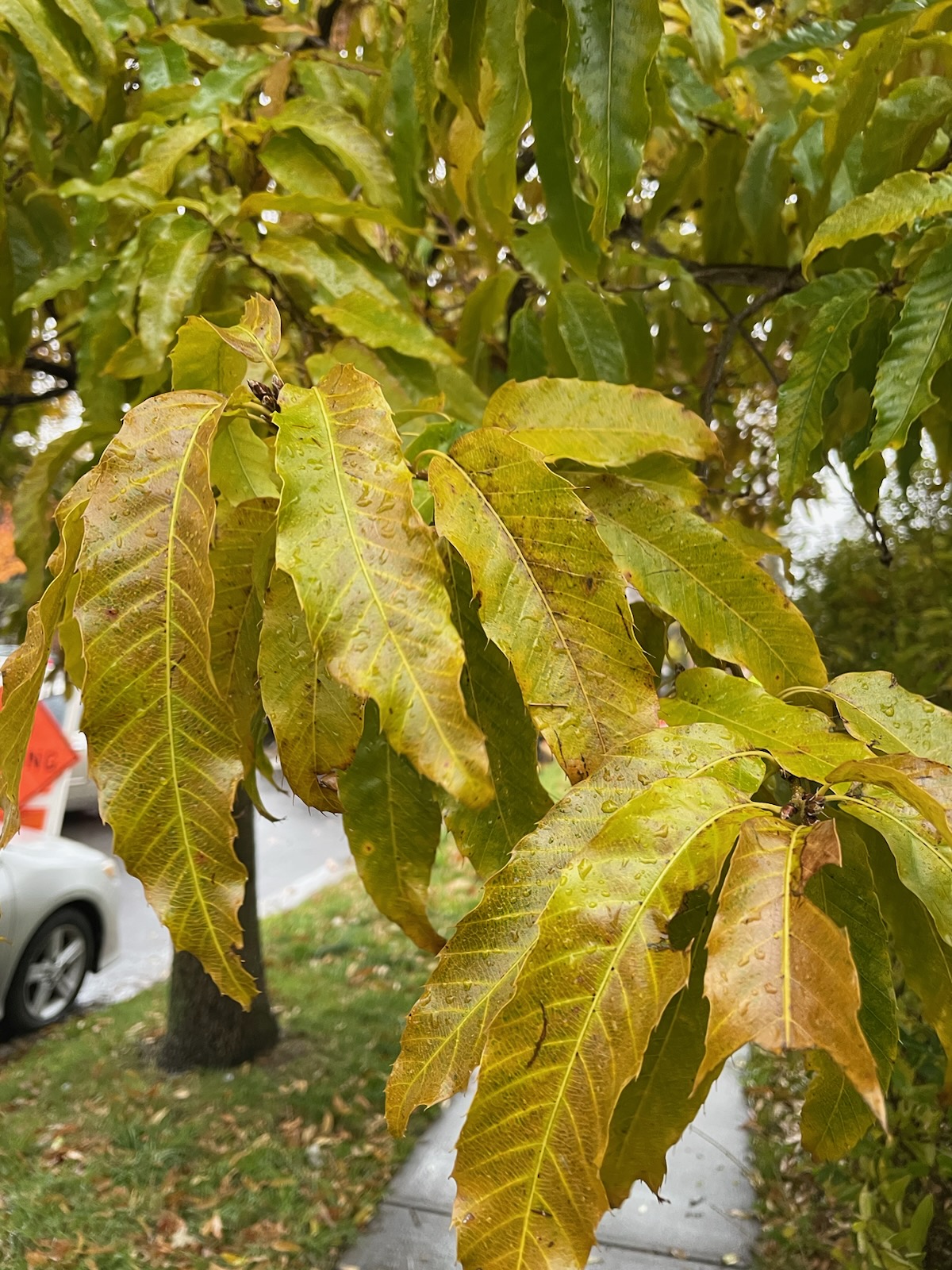
And chestnut oaks. Luminous.
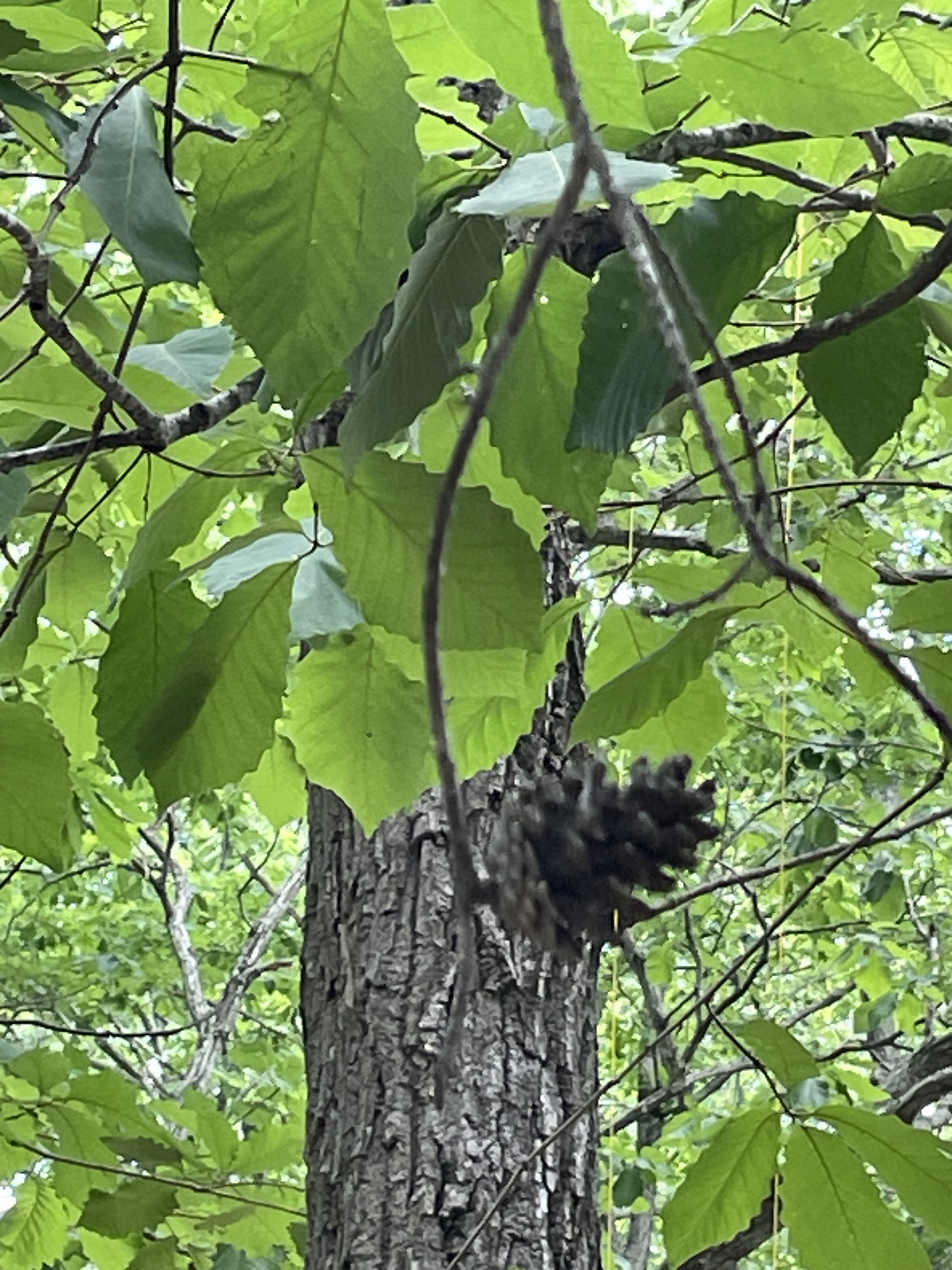
Back in New York, I rediscovered the fantastic trees all around. Still some cherries.
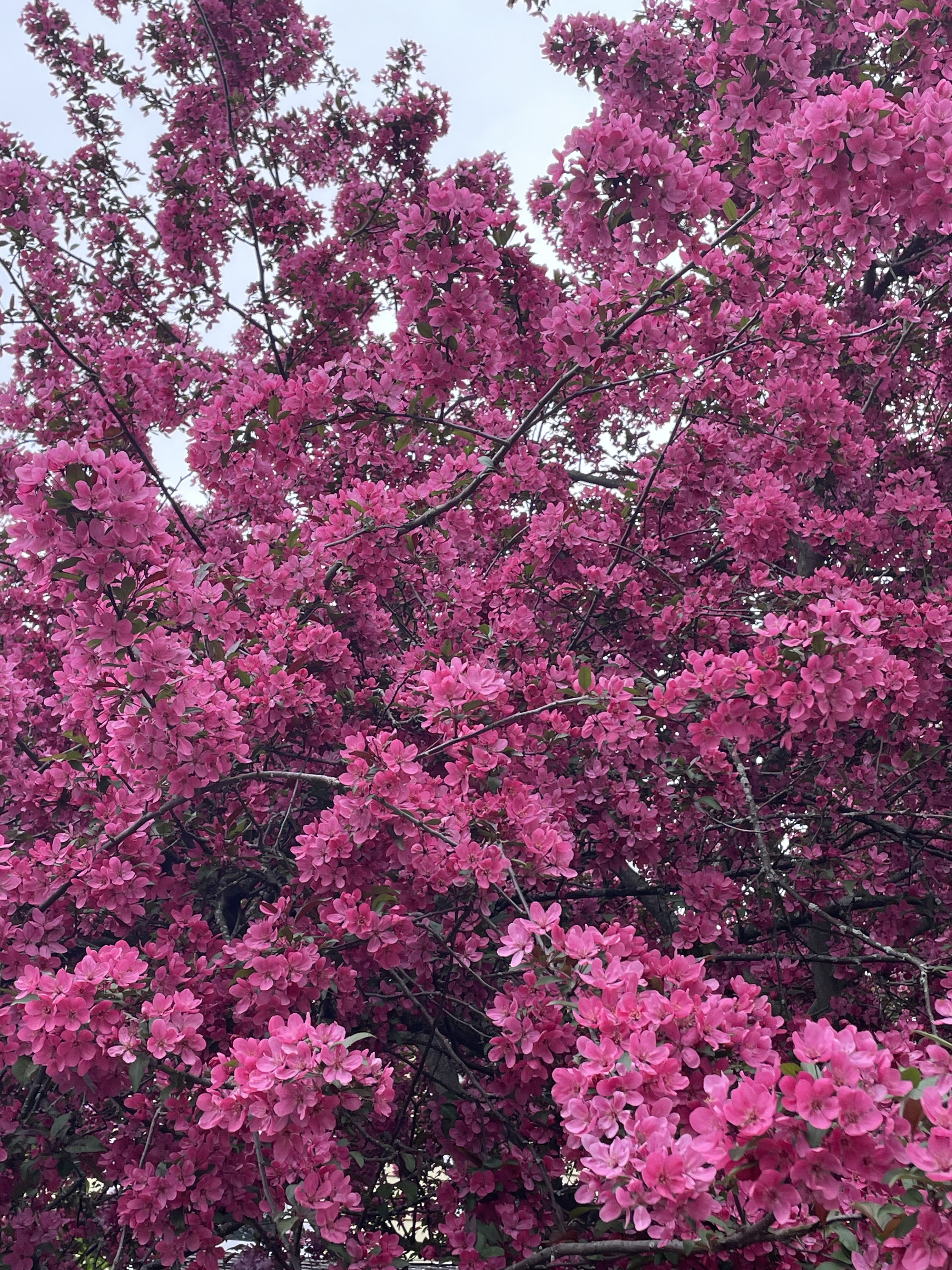
Some of the most fantastic specimens thrived far from the posh environs in and around Central Park. It’s linden season, when their magical bracts appear.
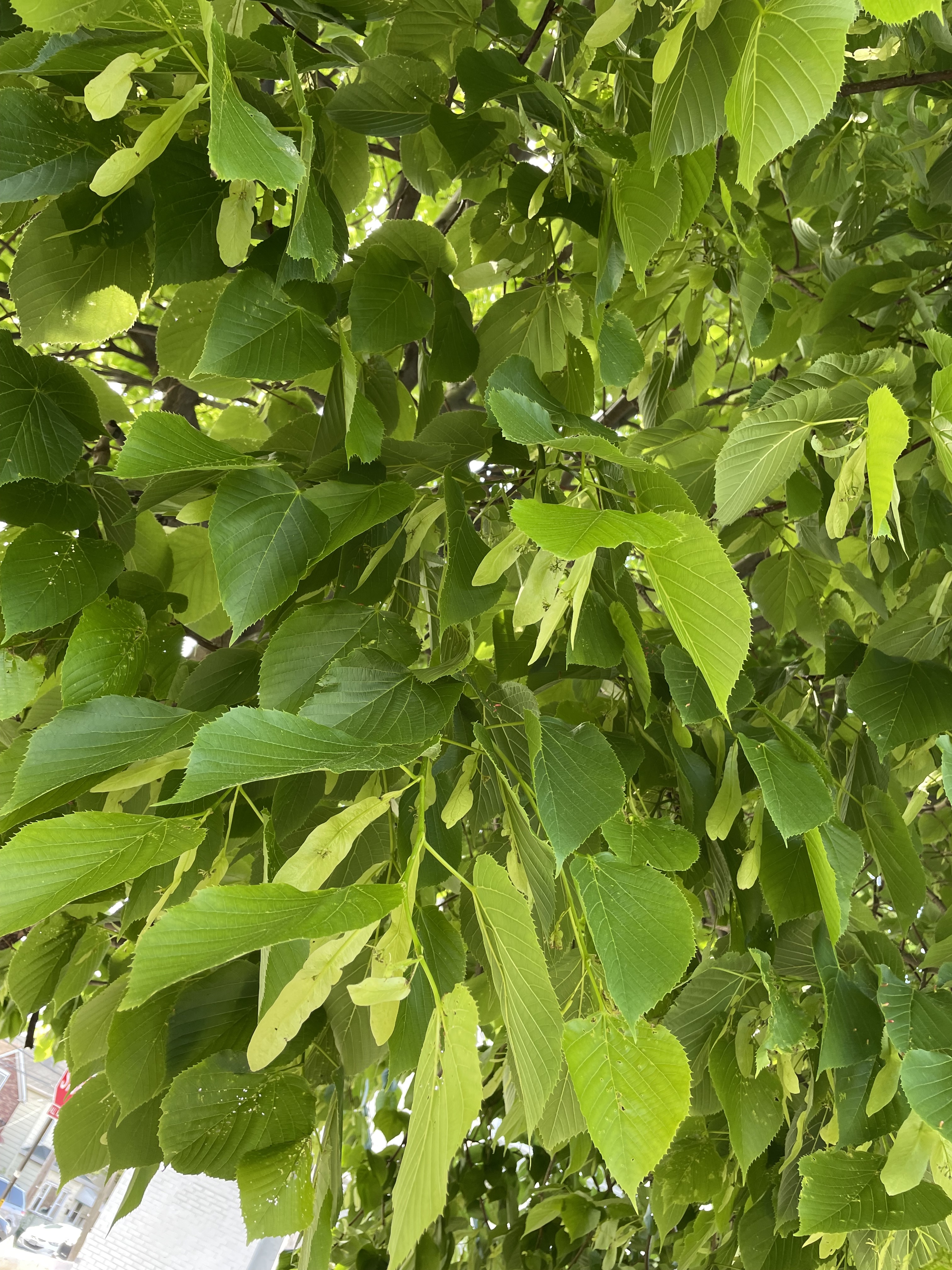
I came across a red oak in Queens when I was on a tree preservation job.

Nature thrives in Queens, it’s not just trees. I saw some peppy petunias.

Delicate bleeding hearts worthy of any country estate.

Perfect peonies, their fragrance really indescribable. Just try. Yes, in Queens.

On frenetic 20th Avenue in Whitestone, right down the block from the bioswales trench I was inspecting and just around the corner from some sad, spent ash trees, I came across the ubiquitous Dr. Seuss specimens that are ubiquitous on Queens streets.

But then, this mammoth Northern red oak! Hard to do justice to this ladytree’s girth in a photo. Suffice it to say I could wrap my arms around her a couple of times.

She was kind enough to drop leaf bouquets on the sidewalk and host a clutch of hostas in her lap.

While some stern stone eagles oversaw the scene.

Inspired by a wetter and warmer May courtesy of climate change, I knew I’d find nature thriving at the New York Botanical Garden, a Bronx oasis thronged by both native New Yorkers and tourists on this Memorial Day weekend.

The tone was set by a topiary White Rabbit, complete with pocket watch, part of a Garden-wide Alice in Wonderland display.

All around were clever signs. I overheard a woman say, “The Caterpillar always creeped me out.”
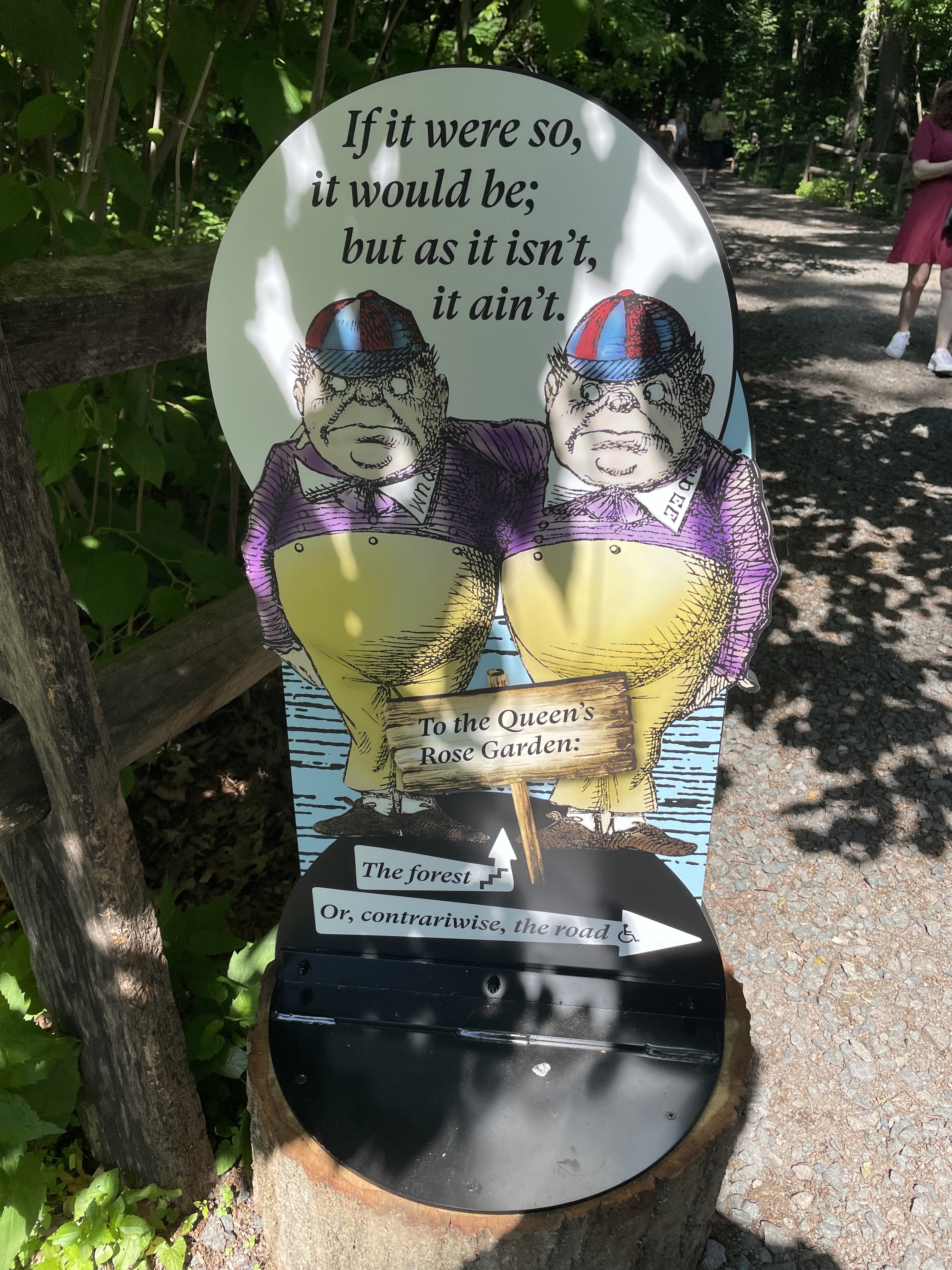
I wouldn’t say that about anything in Alice! What I was thinking about at NYBG was how great it would be to drink a magic potion and crawl into one of the abundant flowers in the ravishing Rose Garden.
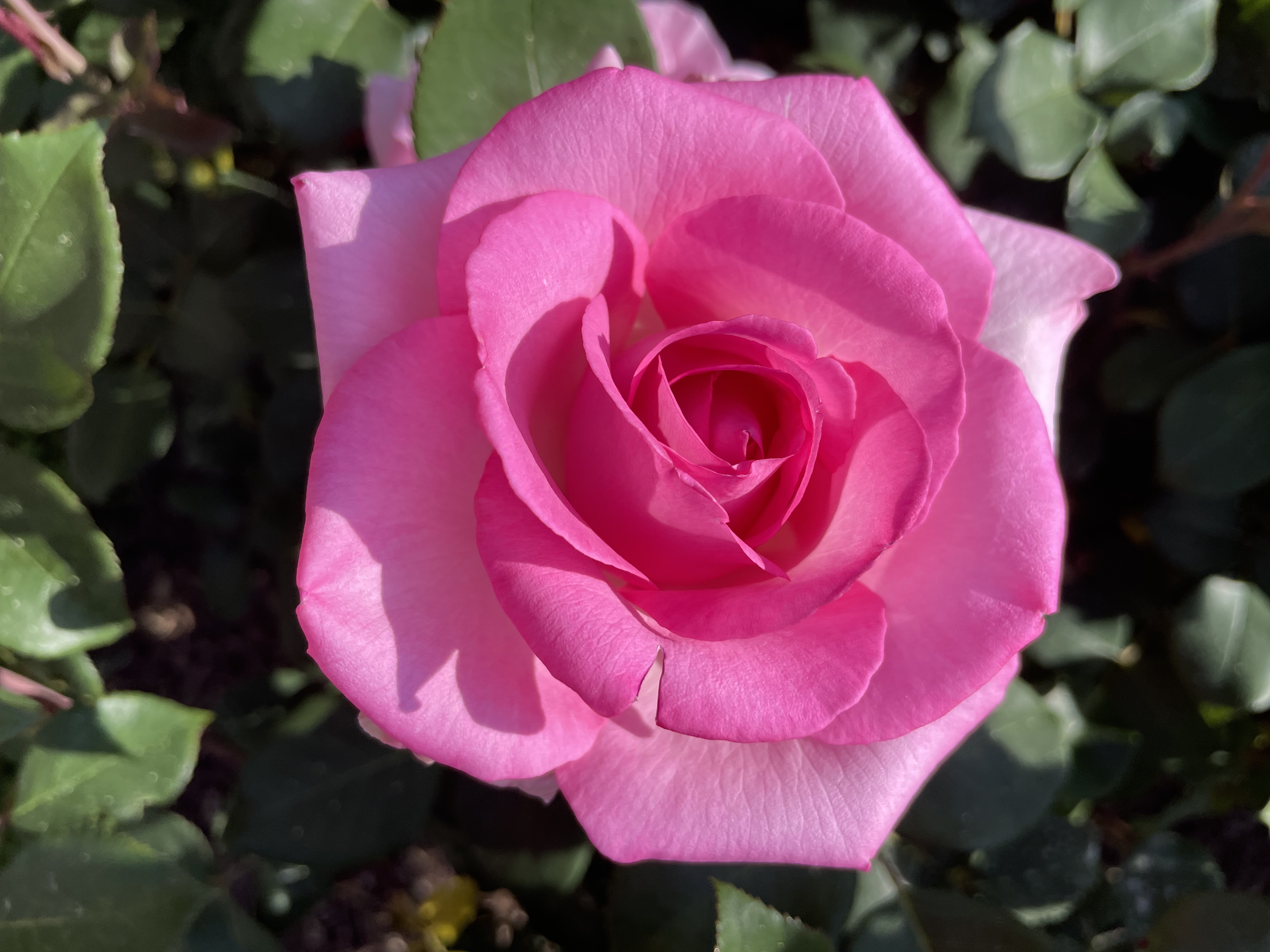
Sometimes I’ve believed as many as six impossible things before breakfast, said the Queen. Hear, hear.
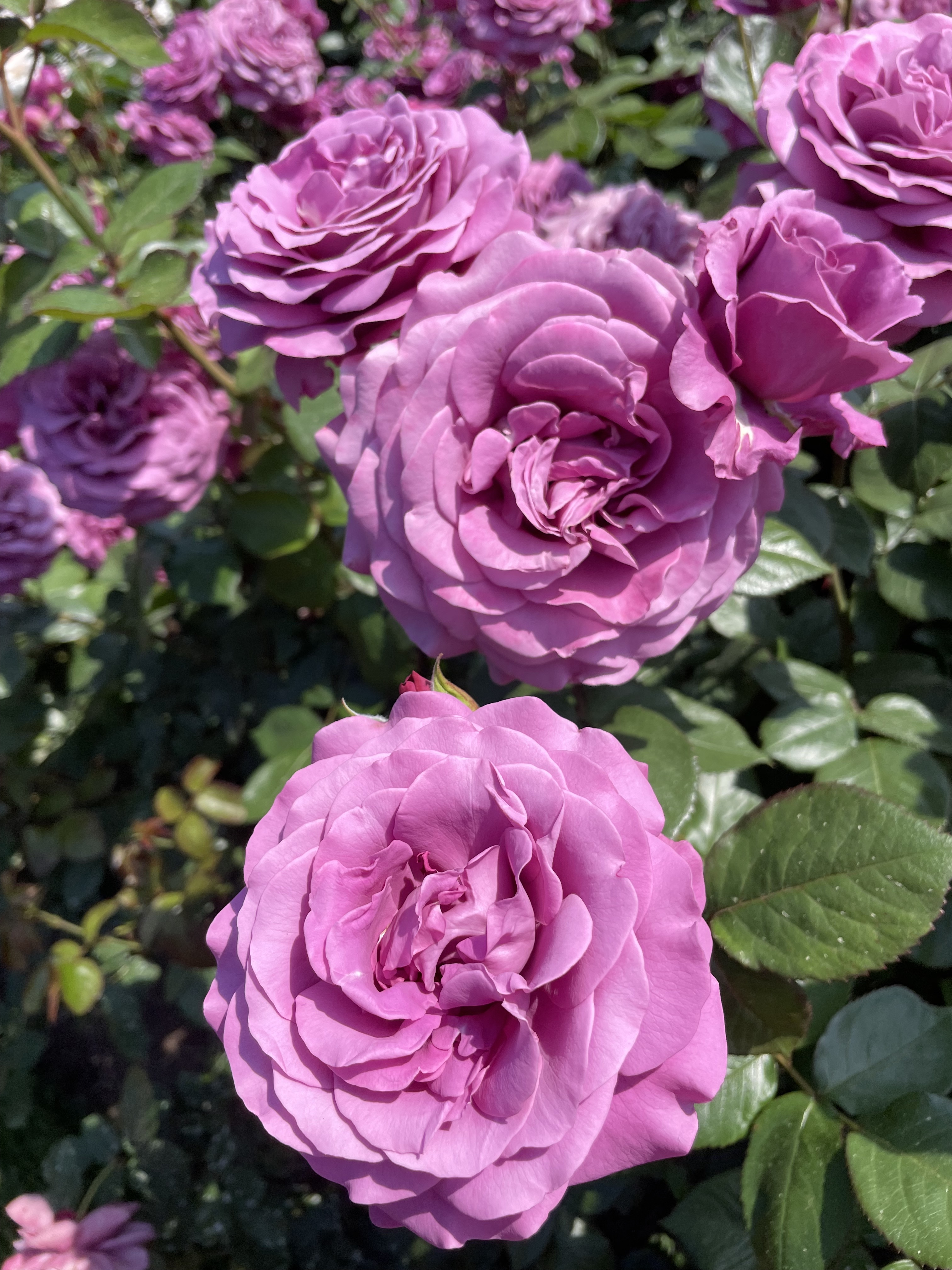
Hard to do justice to the array of blooms there.

They dazzled as roses always do.
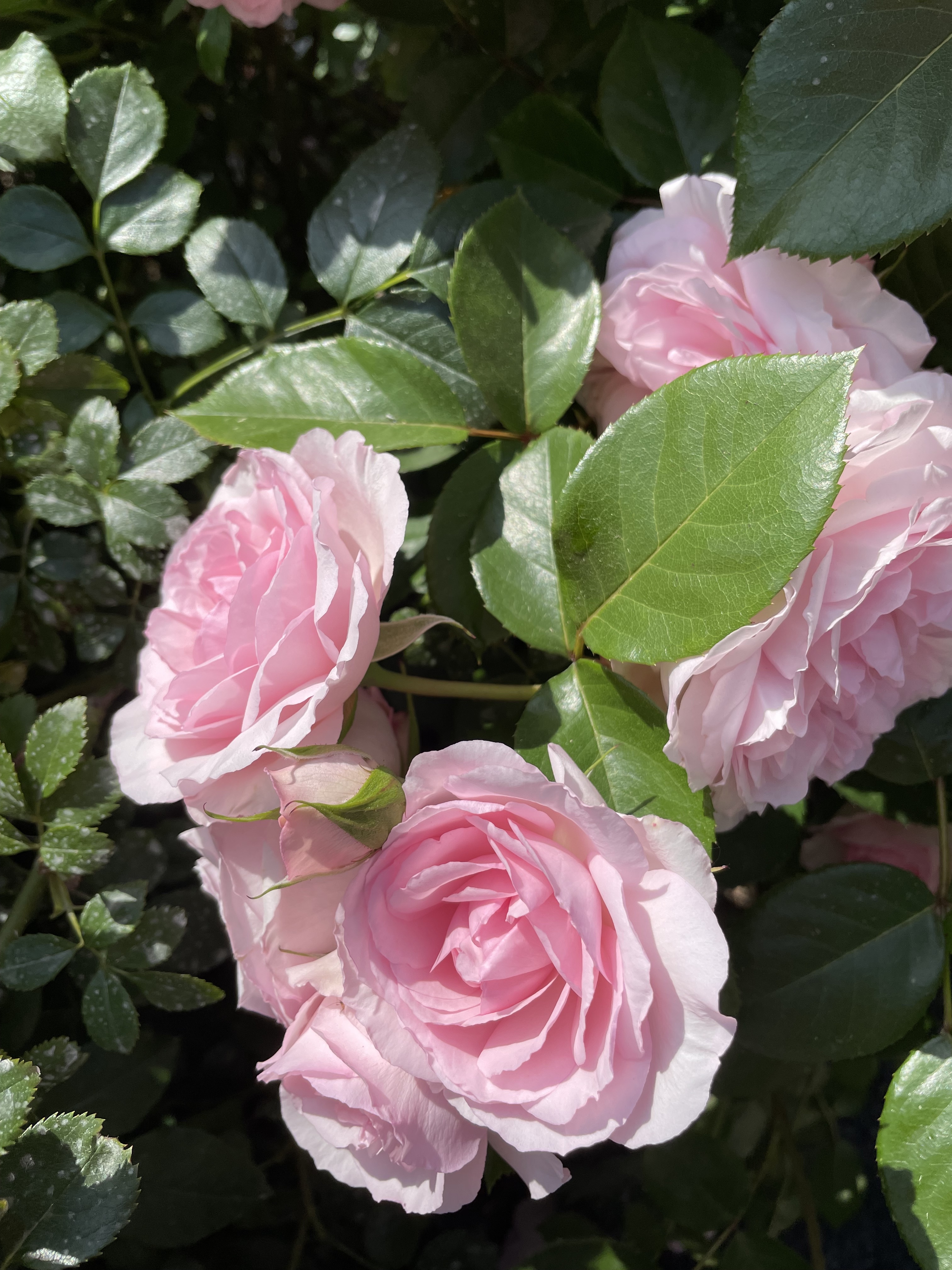
Funny, though, whether white or yellow, pink, red or purple, stick your nose in and they all smell the same. Phenomenal, but the same. Flowers, I ask, must you be so boring?

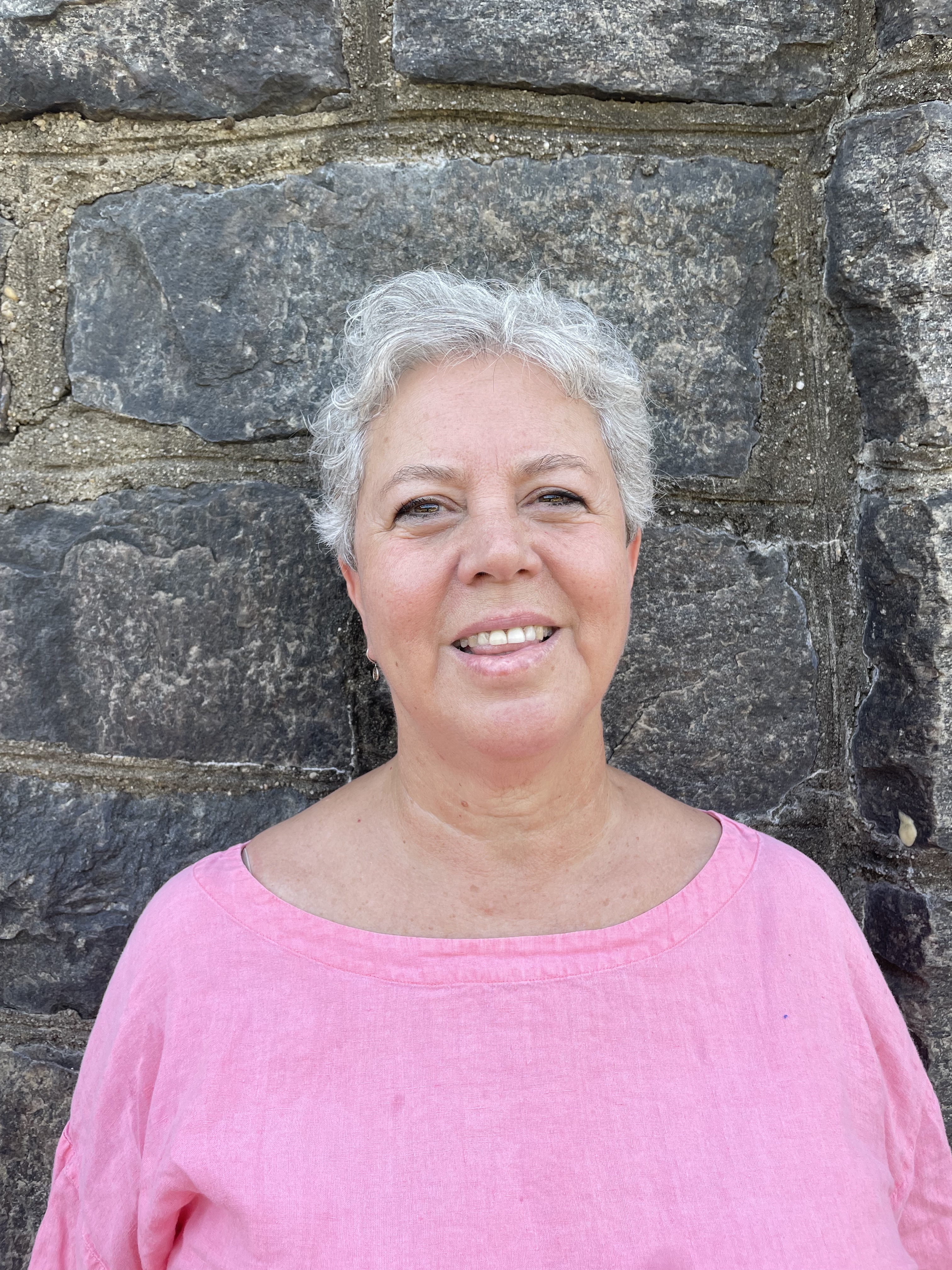
All around, people were posing as if they were themselves flowers, so I did too.
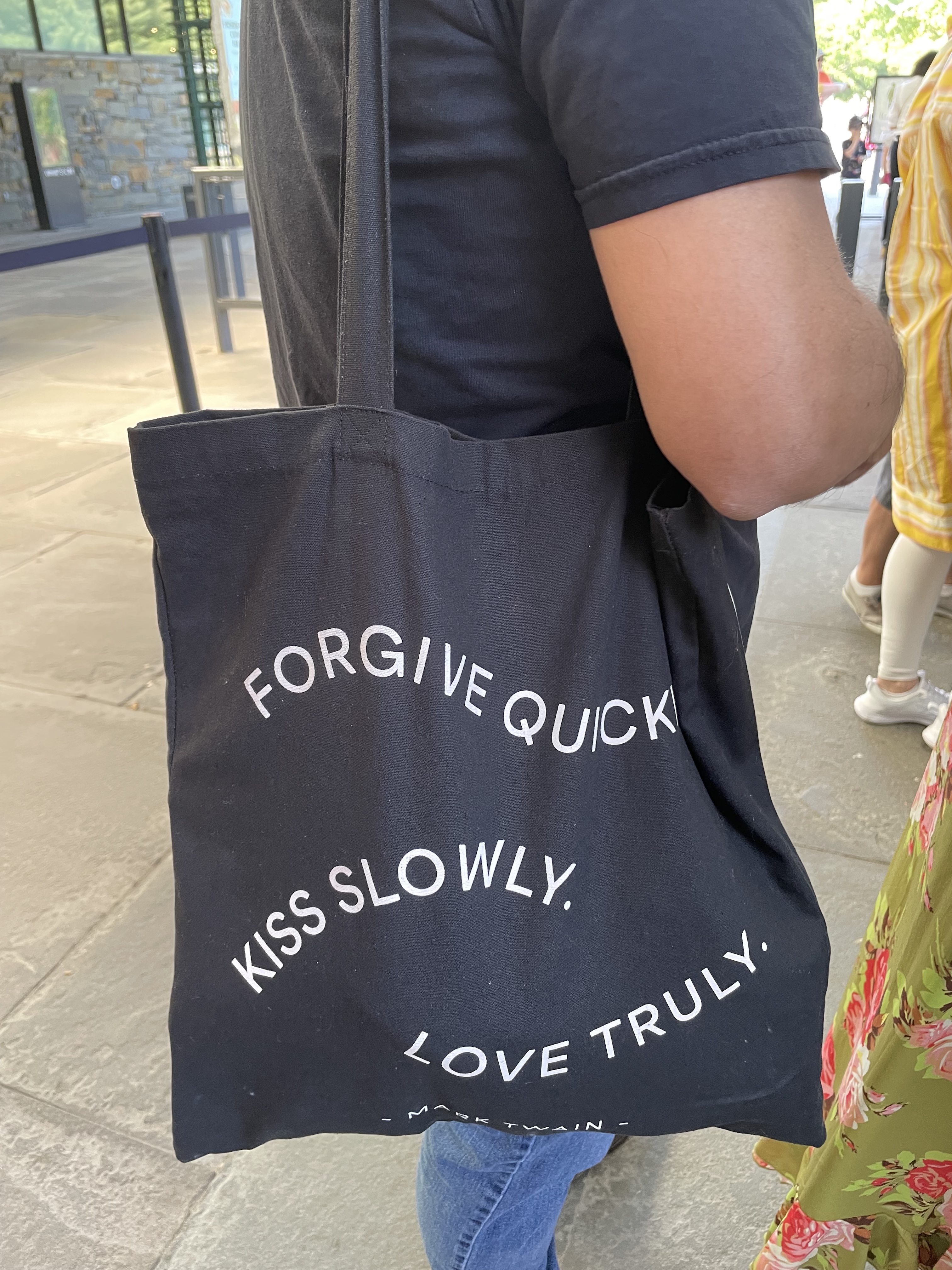
And a guy got into the springtime spirit with his slogan tote bag. Think I might get this on a tee shirt to join my newest wardrobe favorite: UNDERESTIMATE ME: That’ll be fun.
Just up from the Rose Garden, kids played with another Alice-themed attraction, a monochrome chessboard created by Yoko Ono that suggests the essential futility of war. We’re all on the same side, after all. Gil tried to set the game up properly, when he wasn’t inciting Memorial Day riots with his George Orwell tee shirt.

We saw other seasonal stand-out specimens of the urban forest. A Kousa dogwood having its moment.
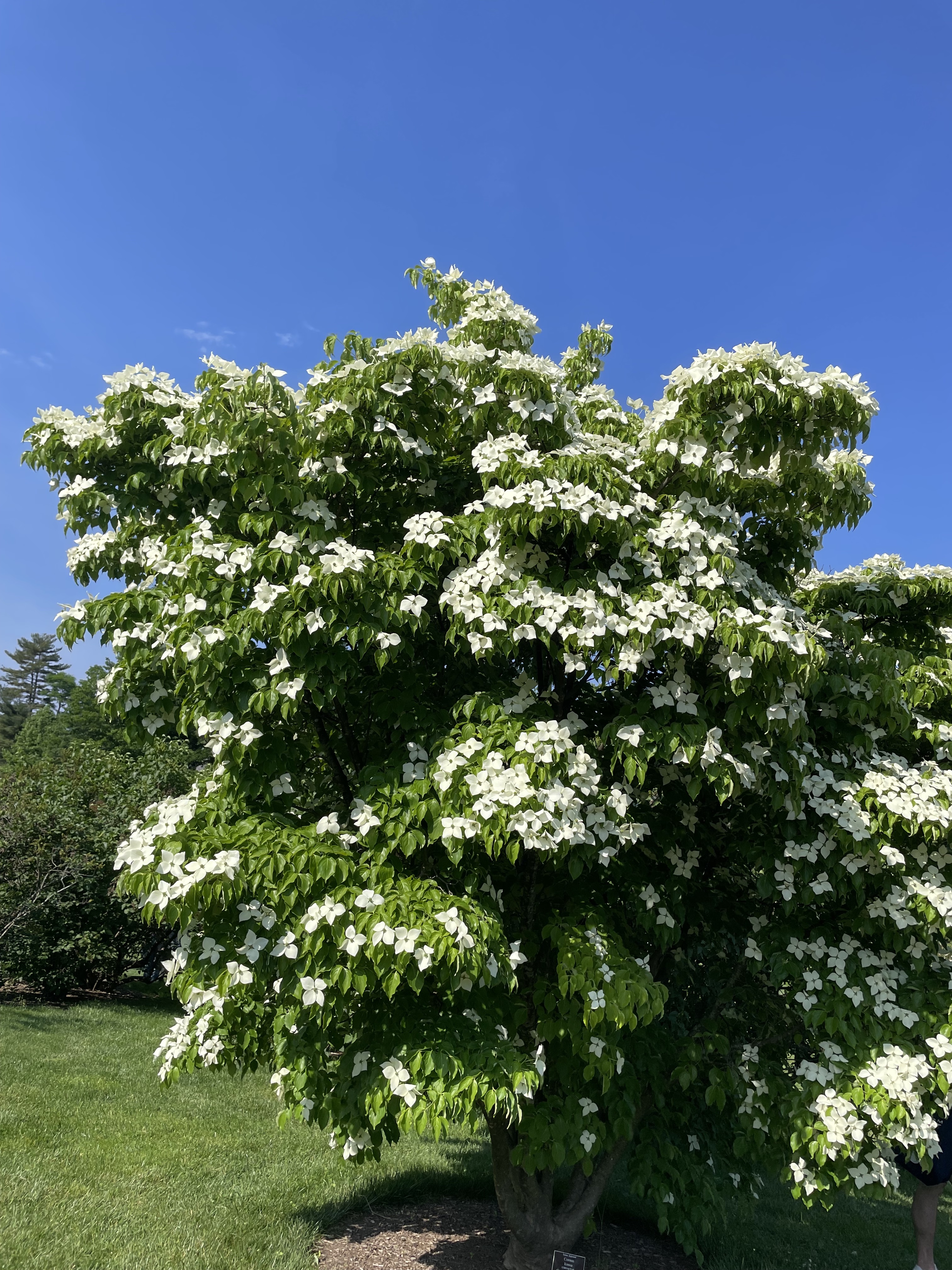
Some carved beeches I’d probably passed a million times before but never noticed.

There’s always something new to notice when you pay attention. Mary Oliver wrote:

Instructions for living a life:

Pay attention.

Be astonished.

Tell about it.

We walked through the Thain Forest, a certifiable old-growth tract thick with sweetgums that gave me a few souvenirs to bring home (remember, though, take nothing but pictures!).

A critter hole made me again want to shrink like Alice. Anyone home? Mind if I come in?

The trees of the city, the flowers of the city form a promise, an opportunity for optimism and hope in these sometimes dark, difficult times. If they can grow and thrive, if they survive, perhaps we can too. I dwell in possibility wrote Emily Dickinson, she who thought a good deal about nature.

You can’t take a whole forest home with you.

But when you pay attention, the vision of those trees and flowers might linger with you in your workaday life and help you remember your place in the natural world, and also bring some joy.

Even if you take nothing but pictures.

That’s my promise.
3 Comments

Filed under Jean Zimmerman

It might seem counterintuitive, yes, or even disingenuous:

to talk about a 2024 resolution to be less annoying, less grandiose, less showoffy, less of a know it all, and to do it in a blog that showcases me, me, me.

I know. It is true.

And yet, hiking the Fay Canyon trail this morning I can’t help but ponder my resolve, how I might achieve it, and how I might write about it here. And illustrate with my own photos, of course. I might not even have used those words, counterintuitive and disingenuous, incorrectly. But see how I full steam ahead as though I did?

Bear with me.

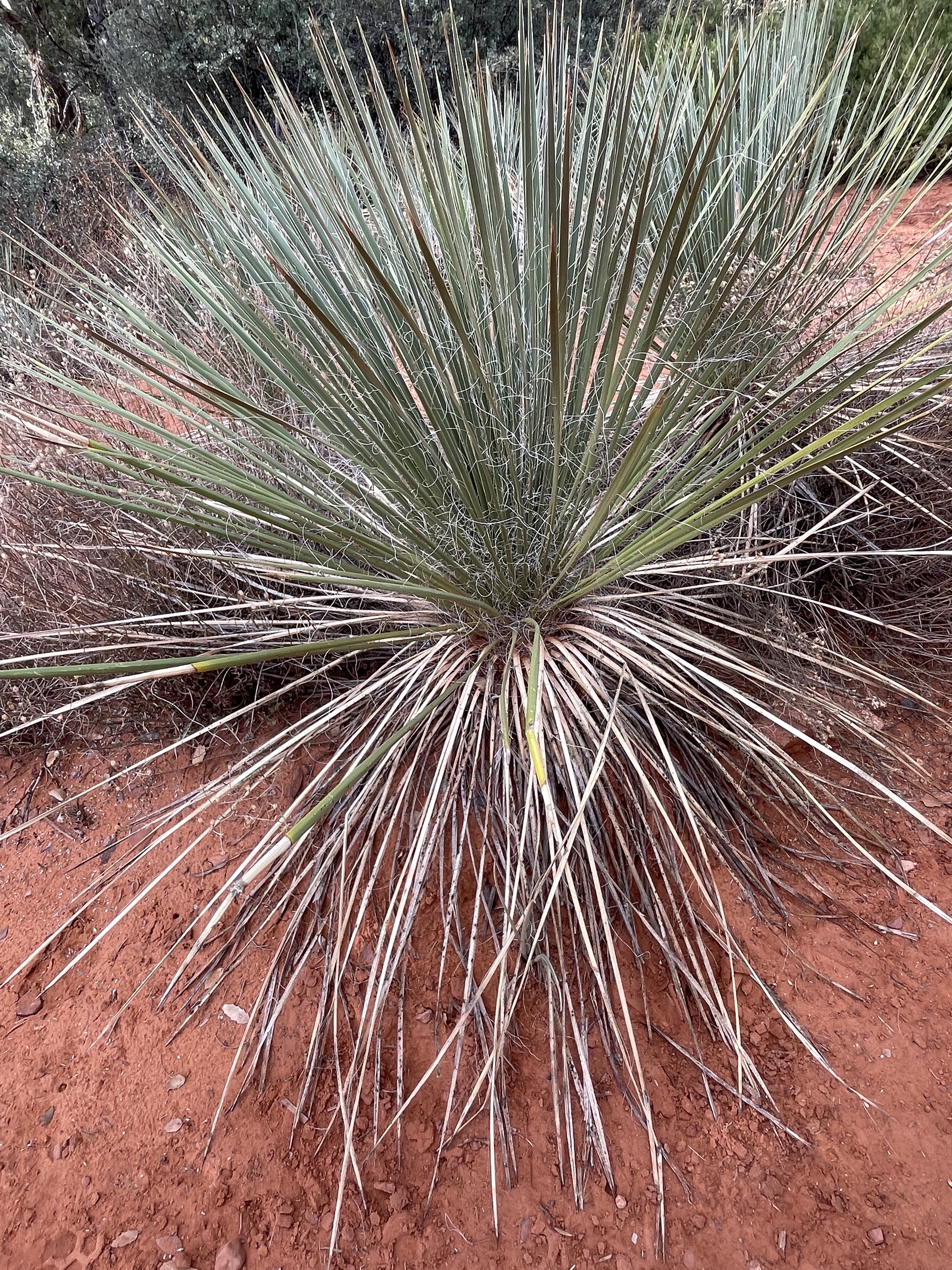
Juniper, oak and manzanita dominate this forest landscape.

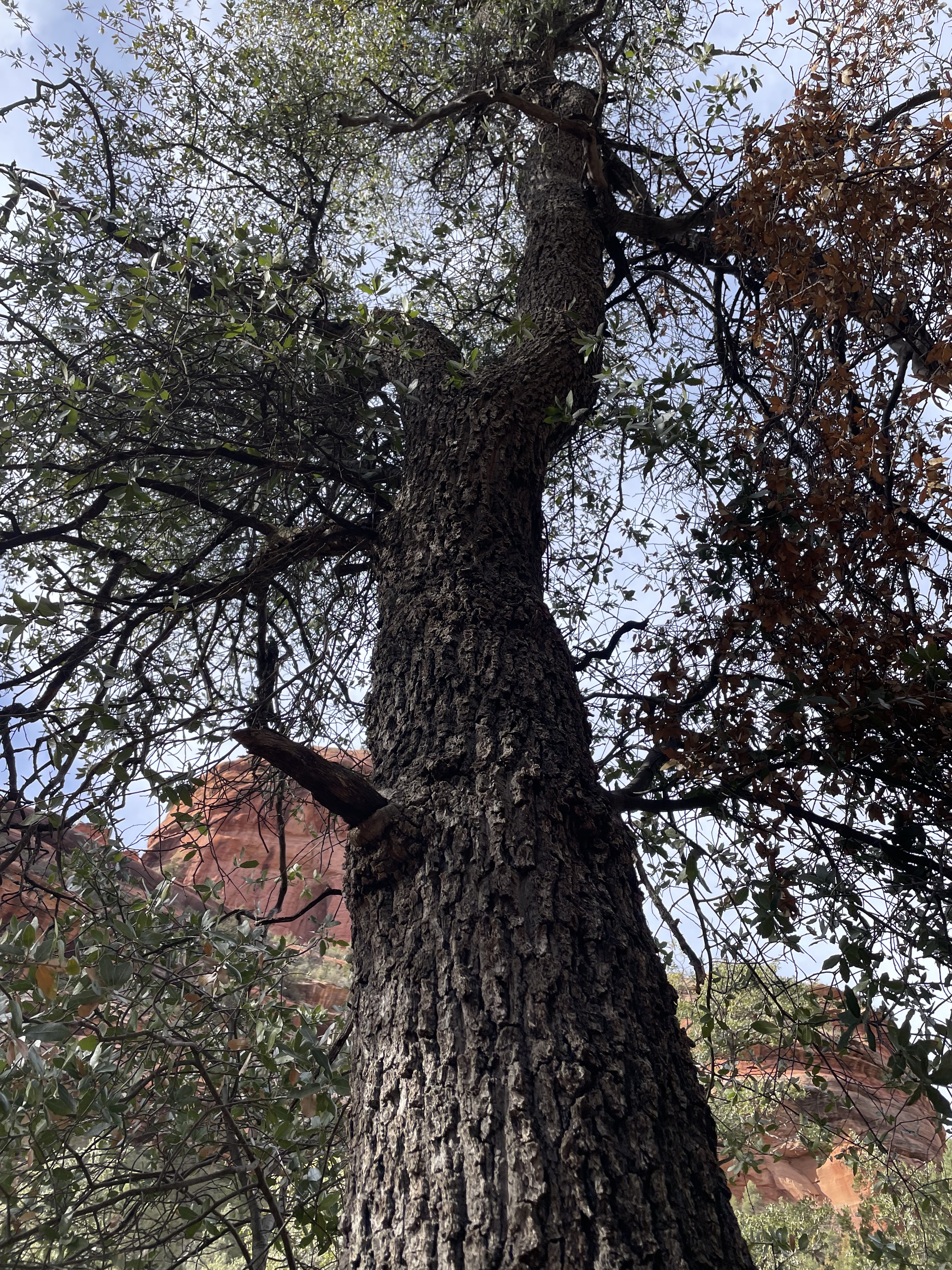
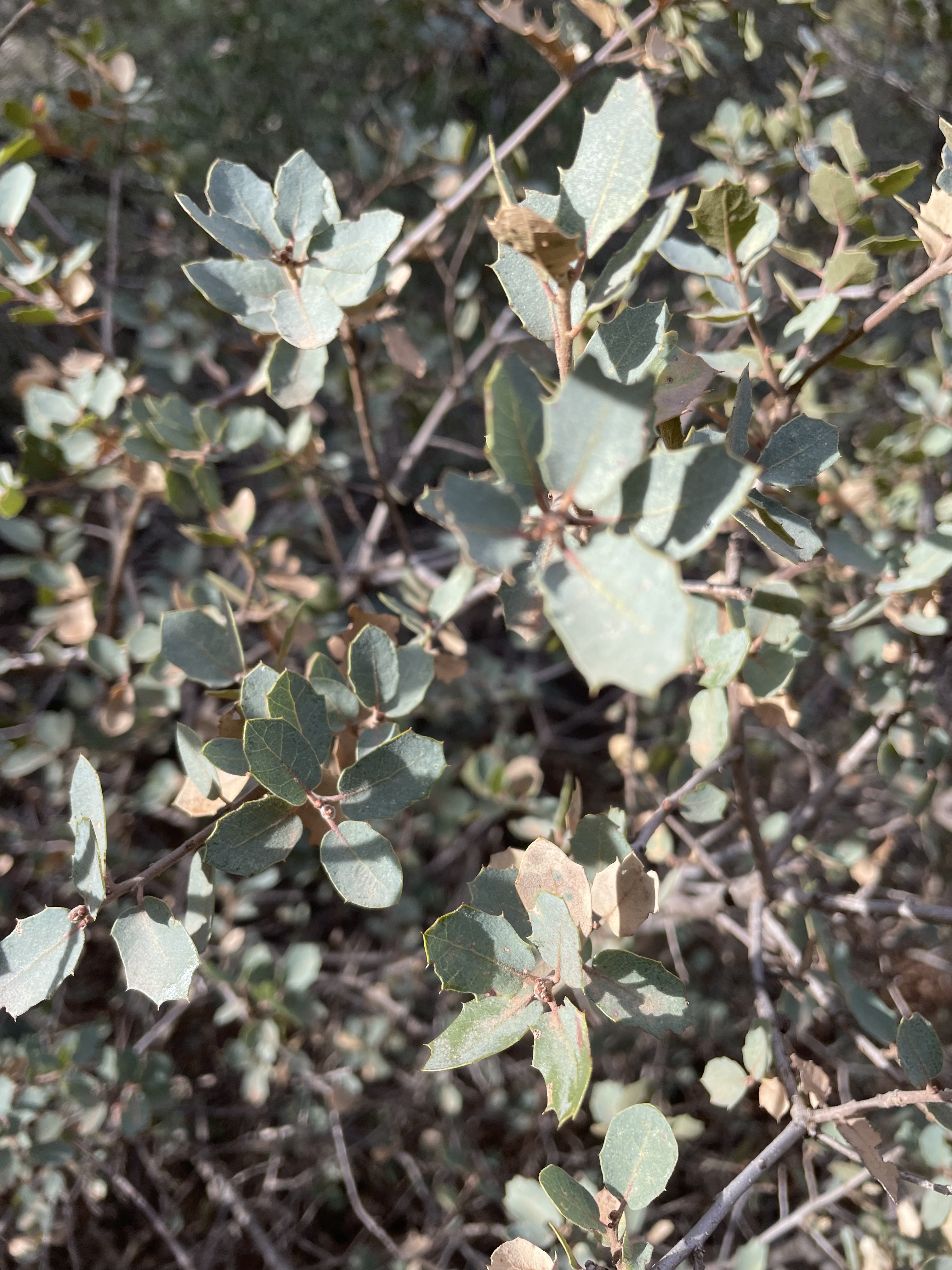
The oaks are different than we have back east. Gambel oaks, Emory oaks. Interesting growth habit, unusual leaves.

Plenty of beauty all around.

I’ve always loved manzanita for its dead and live parts intertwined.

A little way in I come upon my first alligator of the day.

The alligator juniper, magnificent, and even a conjoined specimen, my favorite.

Me, me, meMy favorite, which I’m telling you about here. They’re so hardy, their roots can grow into rock.

Which one is your favorite, though? Slightly less arrogance, slightly more consideration for other people.

Conjoined junipers abound. Husband-and-wife trees, not rare here in Sedona. I’m taking lots of photos.

Hikers pass me on the trail. I overhear snippets of conversation about trees, technology, how many eggs are left in someone’s refrigerator. Should we go out and buy more? says the first. Her companion: Probably not necessary.

The ground underneath the juniper’s branches swims with berries, their blue coated with a fine white powder.

Tell-tale sign of some animal.

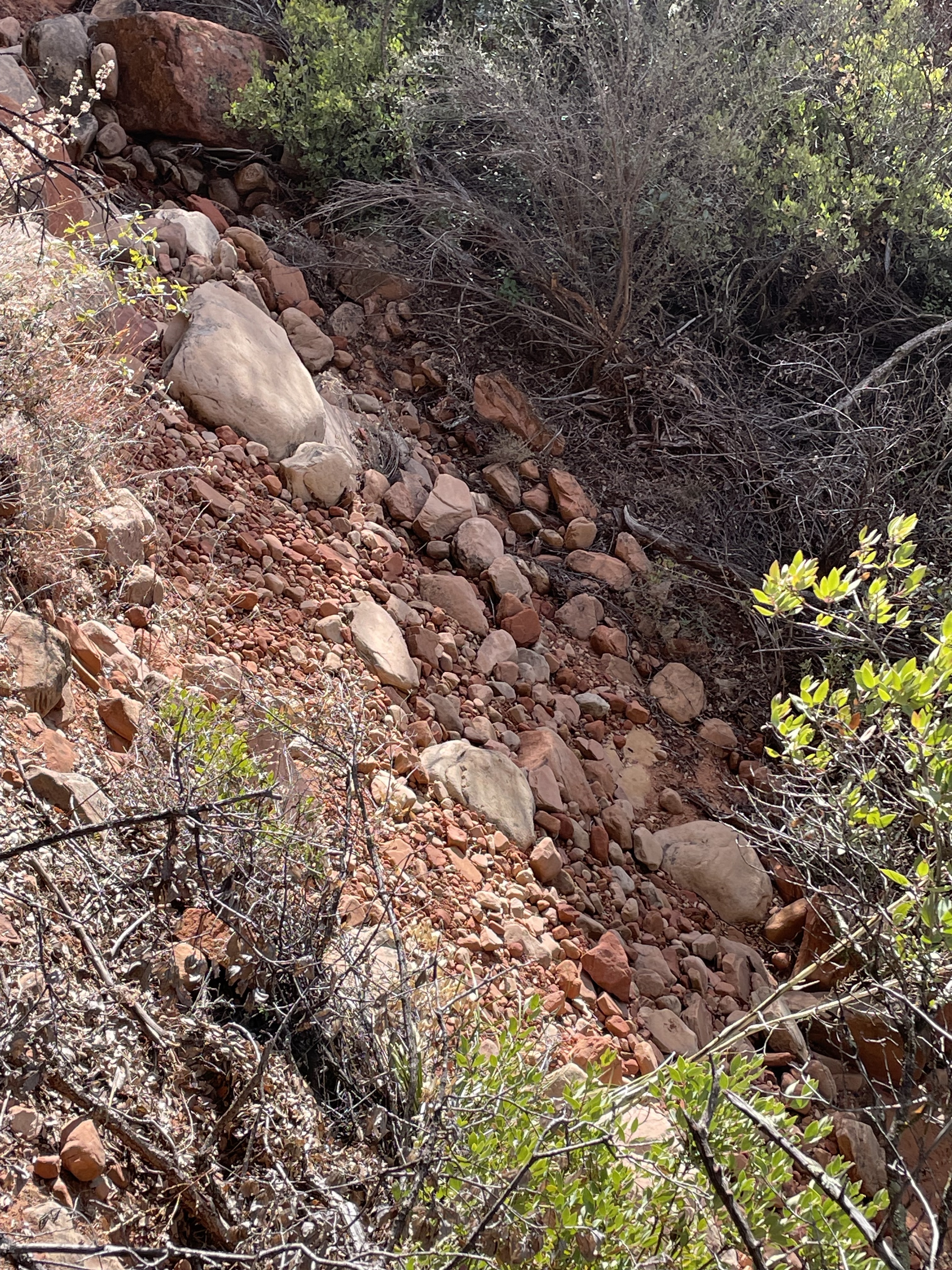
Coyote? Fox? Javelina? A person scolded me once for offering a photo of scat in this blog. I love its mystery, though, the story it tells of other creatures in these woods when our human backs are turned. I follow the stream bed, hiking the dry wash.

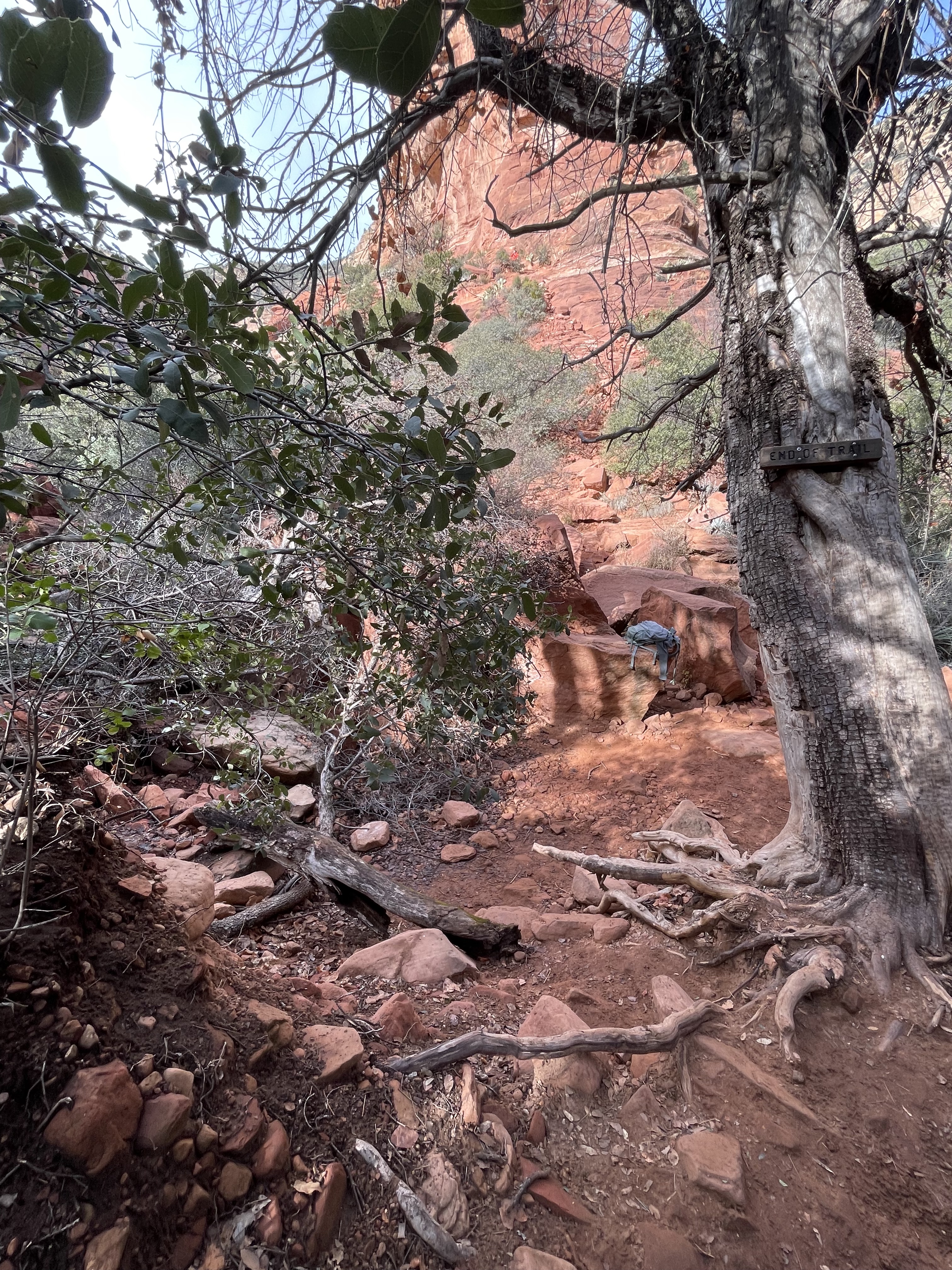
I reach the end of the trail, the end of the box canyon.

I see a jumble of boulders adorned by the backpack of a human lucky enough to find themselves amid this place’s grandeur.

Another sign of humans, a marker that seems kind of corny and almost quaint in our digital age.

Time to turn around, head back to the parking lot, out of this fantastic realm.

I pass some novel sights along the way.

Hello! I love you. Won’t you tell me your name?

More gorgeous lichen.

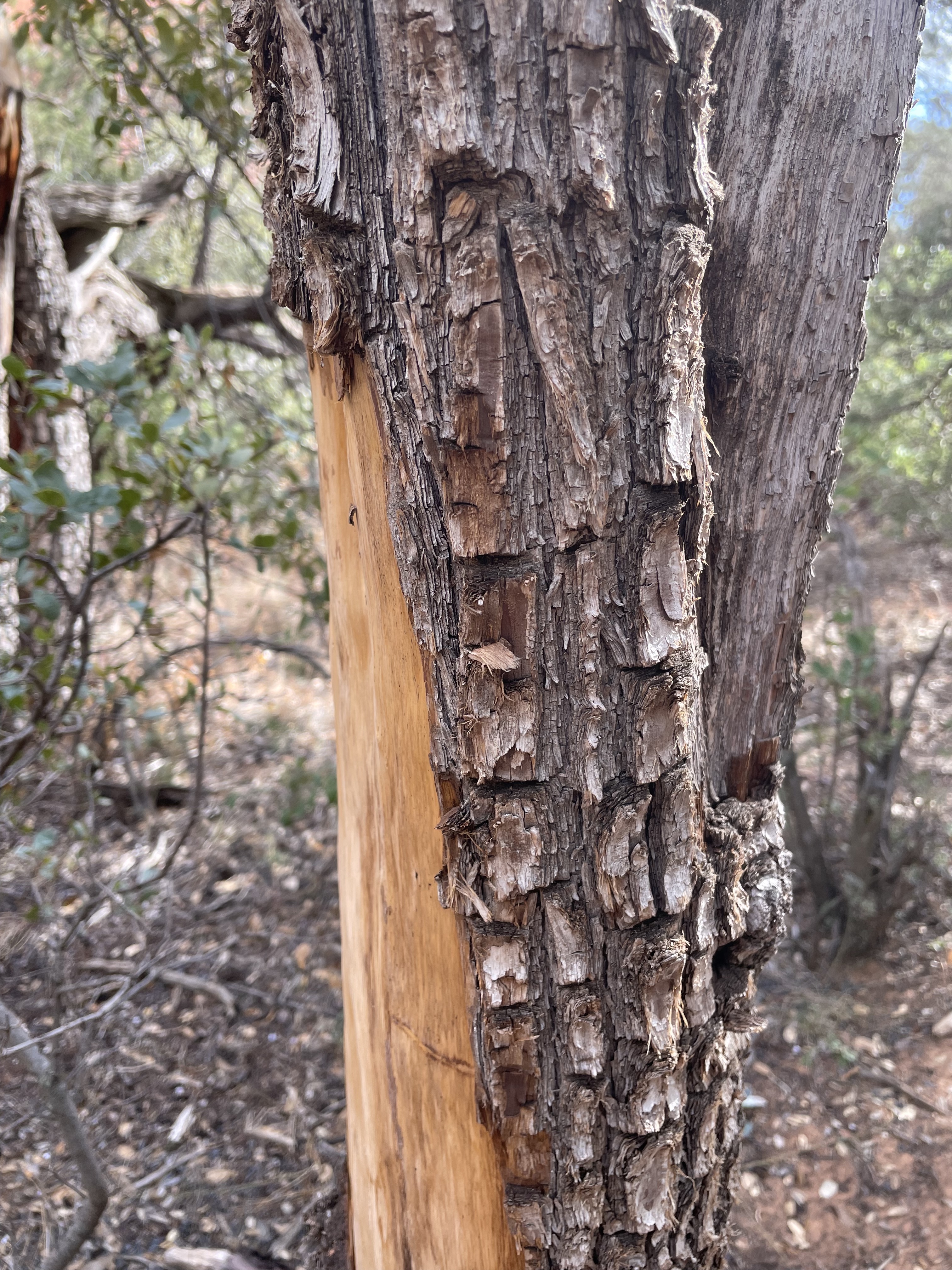
Time-roughened bark.

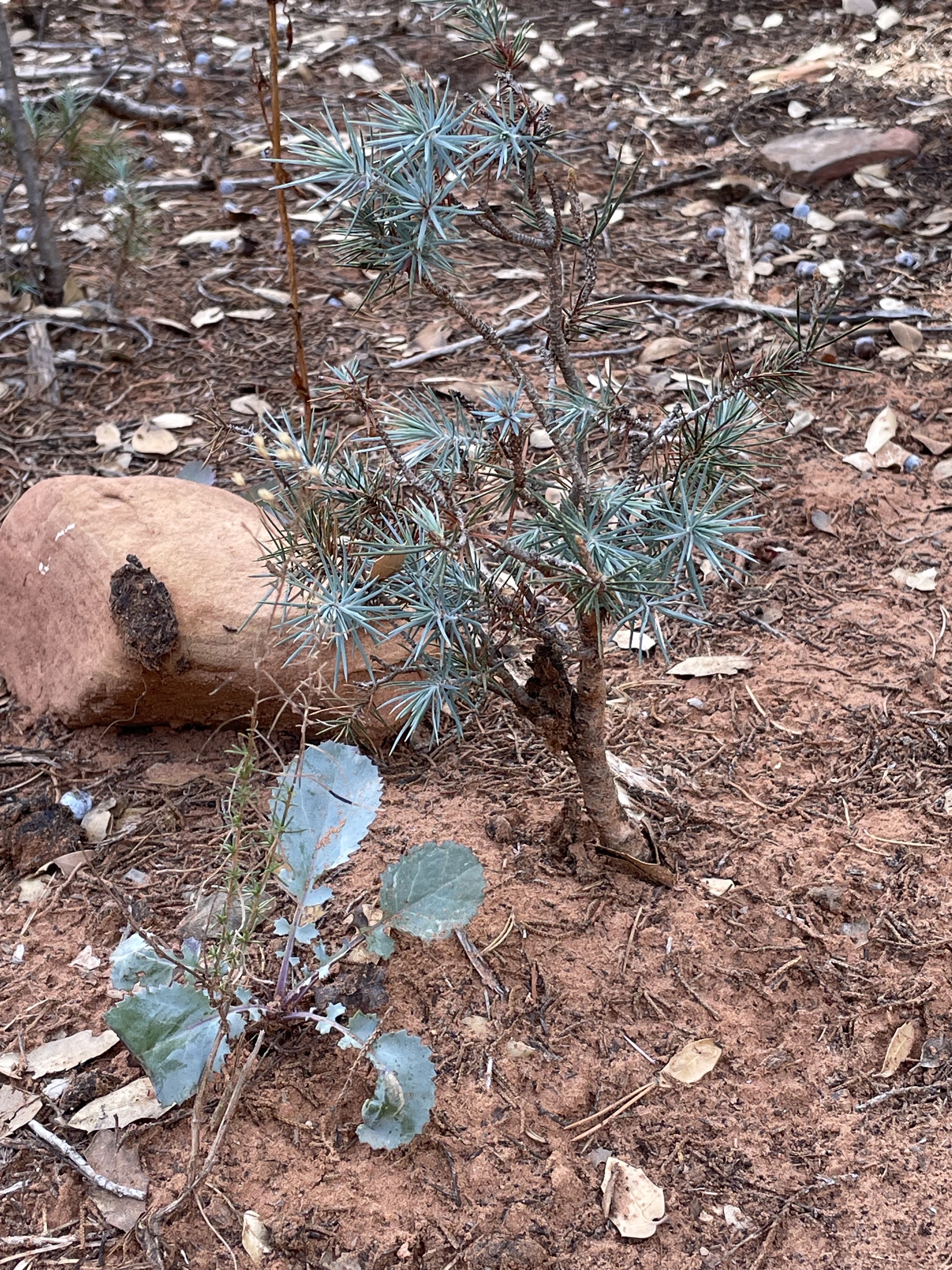
A juvenile specimen.

More old and new, combined in the bark of numerous grizzled junipers.

Oddly, then, my impulse to pursue my goal of less ego, more modesty, becomes replaced as I walk the path along the wash.

I remember another resolution I’ve made, equally powerful: to try to live in the Now.

I reach a little clearing and find myself standing still. Suddenly there are no humans within hearing distance. The only acoustics: birds twittering in the undergrowth and above. I look up.

I scan down the trail, where I’m headed.

I turn my focus back to where I’ve come from.

All around me is such intense beauty.

And I have an epiphany. This, actually, is the Now. This is the only moment.

My feet are suddenly rooted to the sandy ground.

I can’t move. I look around some more.

I start to weep. Look up again, helpless. The morning sky smiles down, my only friend.

Gaze around me.

Everything so quiet, so still, so perfect. Peaceful. Luminous. It’s a kind of active contentment I can’t recall feeling before. My worries about the past and future recede. I know those concerns exist, but they’ve faded to the edges, temporarily invisible.

Can every moment resonate like this one? Can I live in the Now, if not always, then more often? I’m not sure.

I never want to leave this place, this moment. 

After standing there stock still for a while, I remember I said I’d return by a certain time. I move off my sandy perch and head back down the trail. I see some unfamiliar things as I go.

Some details I missed on the way into the canyon.

Pass a few folks laughing, tromping down the trail, having their normal conversations.

I’m back to normal too, but with a powerful feeling I know I’ll carry with me into the Now of 2024.

Should we buy eggs today? Probably not necessary.

What we have to put in our mouths at this moment will do just fine.

3 Comments

Filed under Jean Zimmerman

If you ever have known anyone who died “too young”

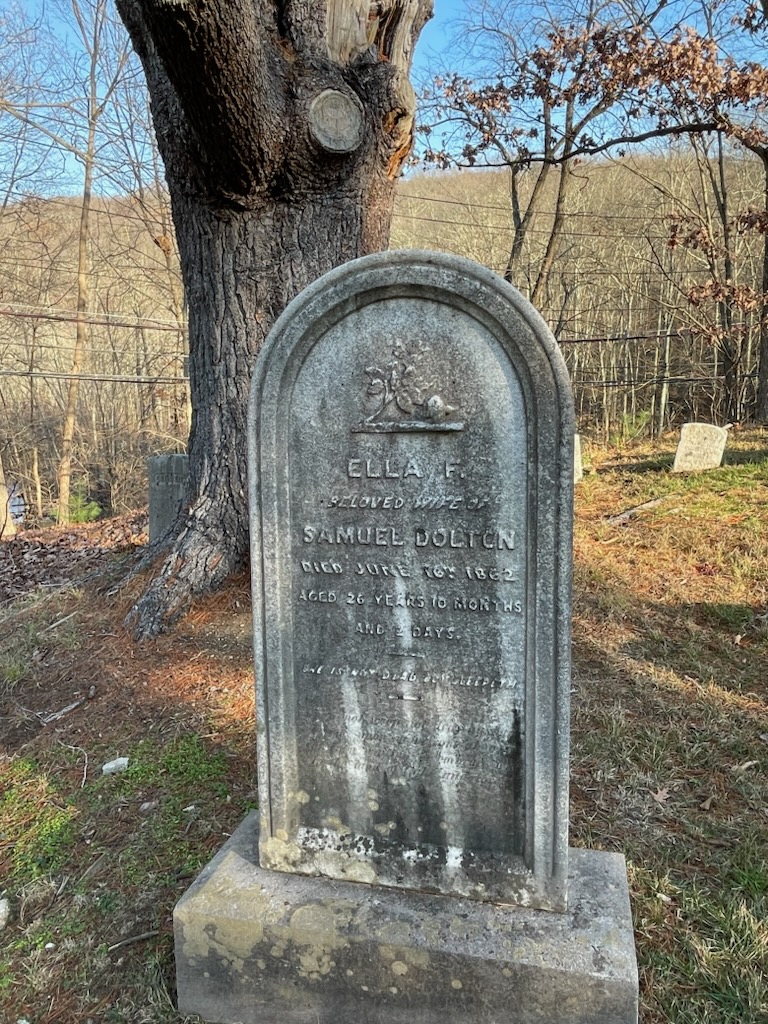
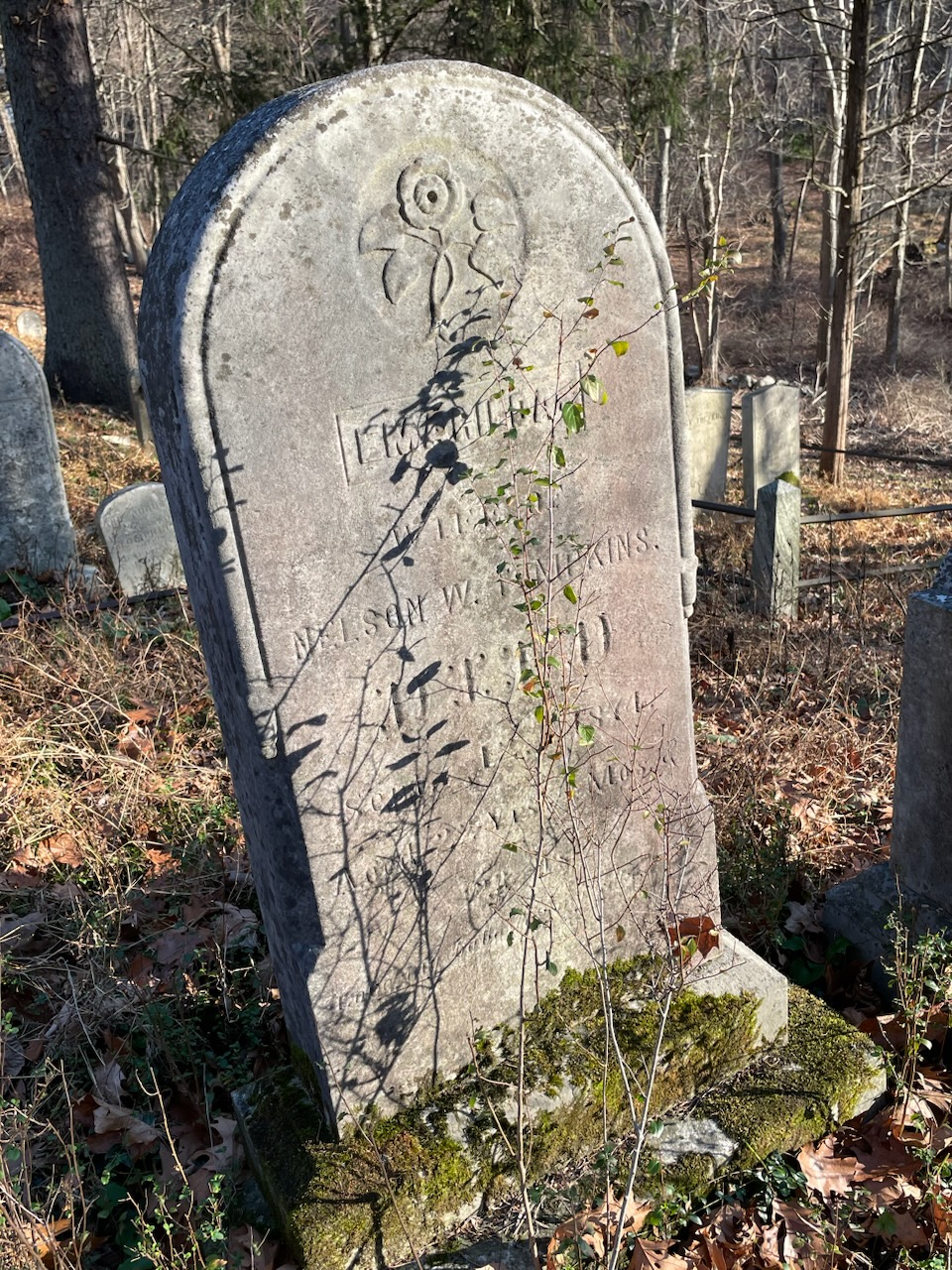
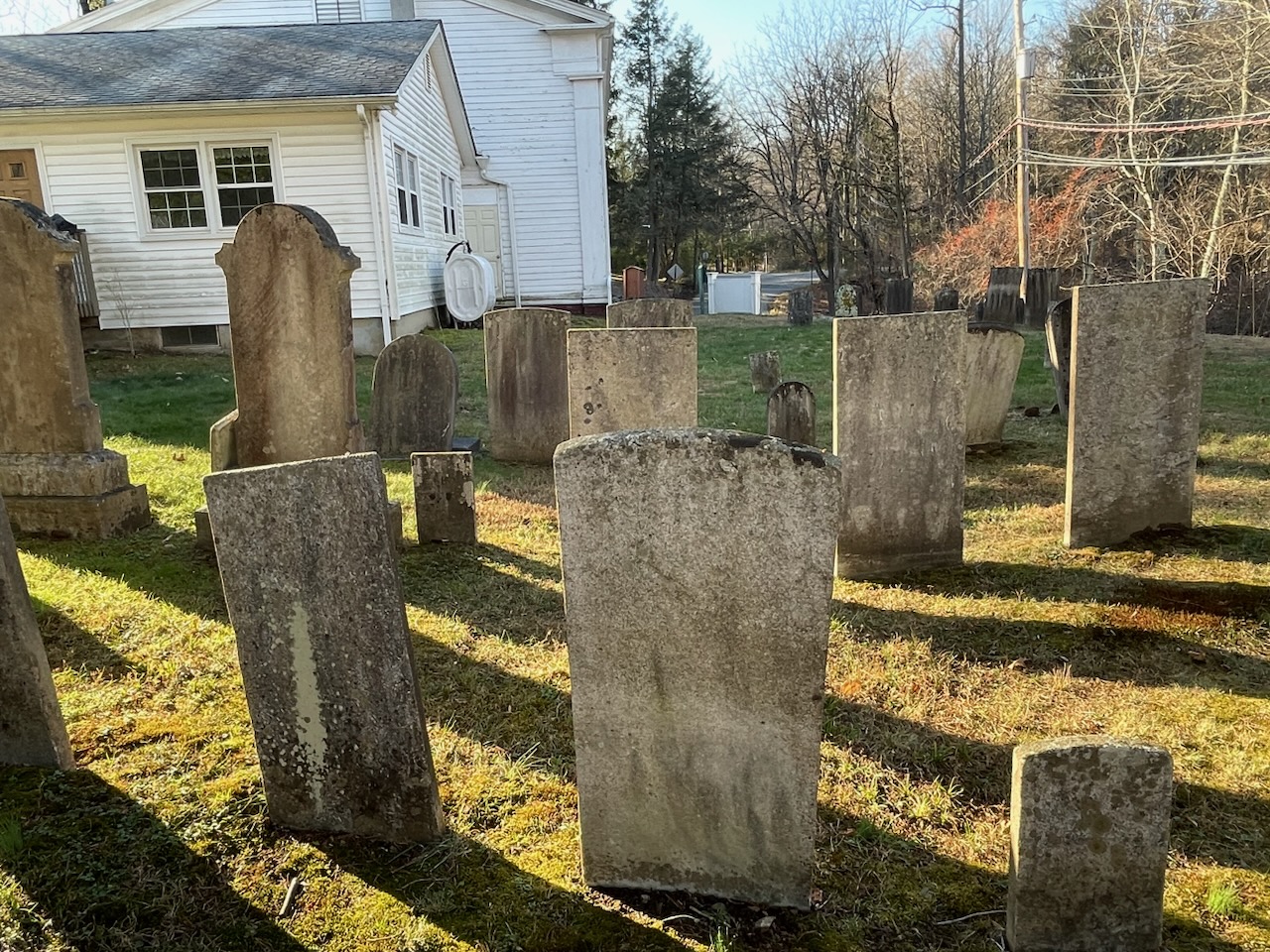
you probably get a hitch in your chest around old graveyards, places where mysteries exist as to cause of death but not the carved-in-stone age of the person buried. Thinking about it, I drive to work along all the tangled metropolitan-area highways before dawn, the tips of the tree branches brushing the tarnished gray skies. Thinking about a burial place I visited recently. The Community Church of Yorktown cemetery wraps itself softly around the historic structure dating to 1848.

Situated on Baptist Church Road in Yorkville Heights, the place originally belonged to a Baptist congregation, serving a community known as Huntersville, which largely disappeared when the New Croton Dam sunk much of the area under water after its completion in 1906.

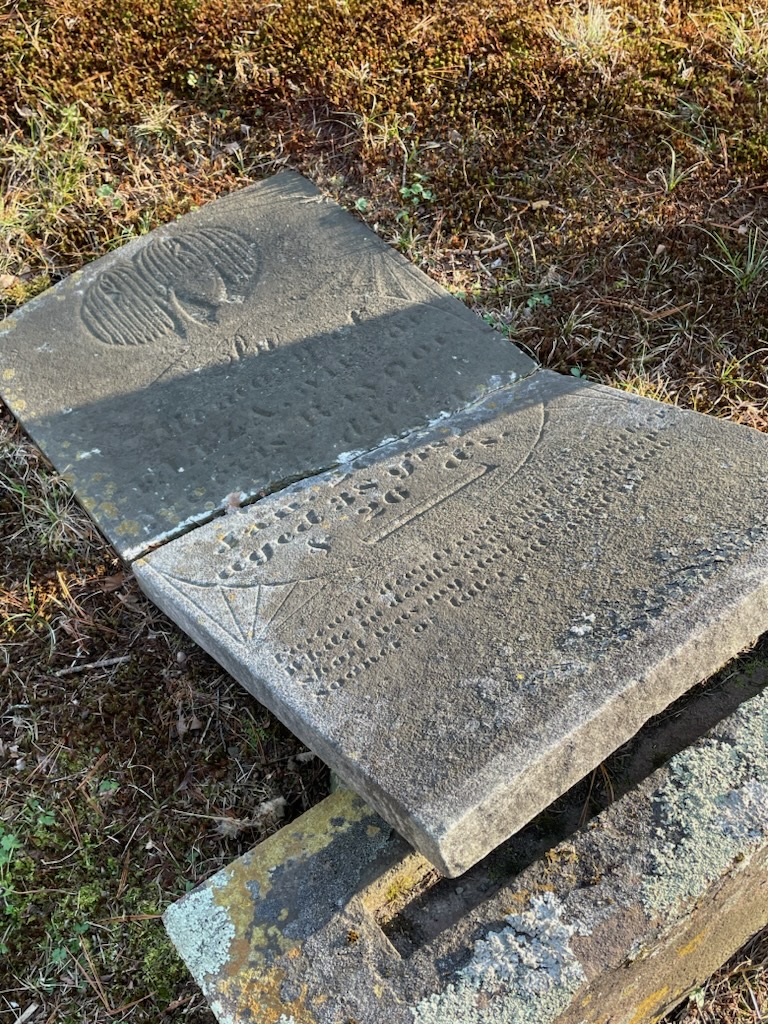
In a beautiful spot on a country road, the burial ground has dozens of pre-revolutionary graves. It’s a site that can’t help but make you wonder about the people who have come before, all the ones who used a big old key in the church’s big old front door.

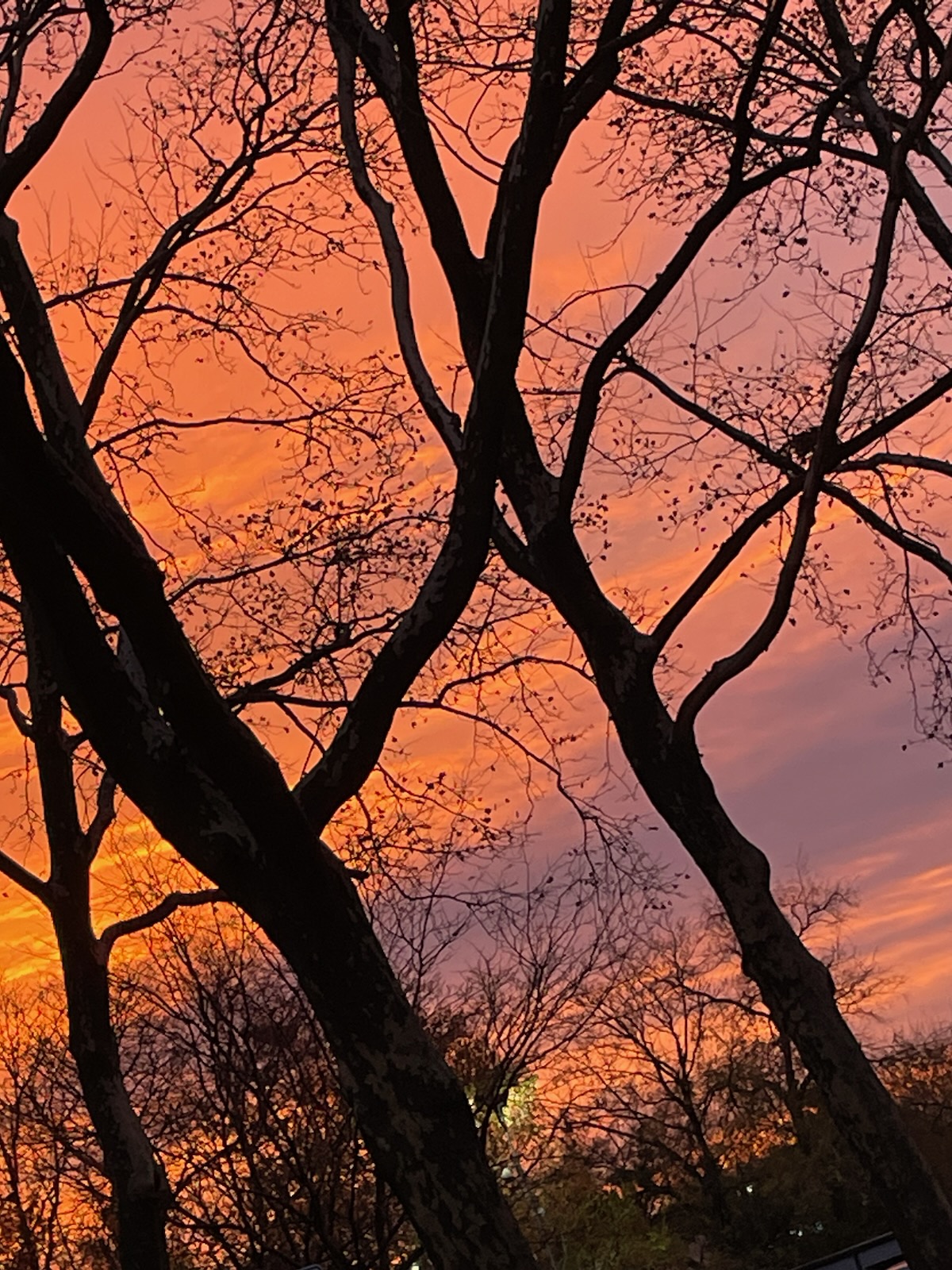
This morning, as I crest the hill on the highway, a strip of orange flame appears on the horizon. Sailors take warning. At the cemetery, I poked around among the stones. So many appeared to have died too young.

Either really, really young. Babies.

Or many in their 20’s.

Or 30’s.

It seemed as though if you just survived your 30’s you might get all the way to your 80’s.

This is why I like to go to do tree work in Queens, nice and early: the horizon glows, salmon, blush pink, cotton candy pink, all the tired descriptors for the endlessly new phenomenon of dawn. We don’t have words adequate to describe sunrise. Or death, for that matter. All you can do is experience it. I drive beneath the chain of lights glimmering on the Whitestone spans. The pink ribbon of sky dazzles beyond the burning red taillights, and then, finally, over the site I’m bound for, a thicket of red brick housing development buildings.
Everyone has someone they know who died too young. Or probably more than one. For me first, a boy, a friend who was found suddenly dead when we were teenagers. Also, a friend robbed of her life by cancer when our kids were just graduating high school. Or an aunt, a dazzling person, a beauty queen with substance abuse problems, at around the age of 40. Too soon, too soon.
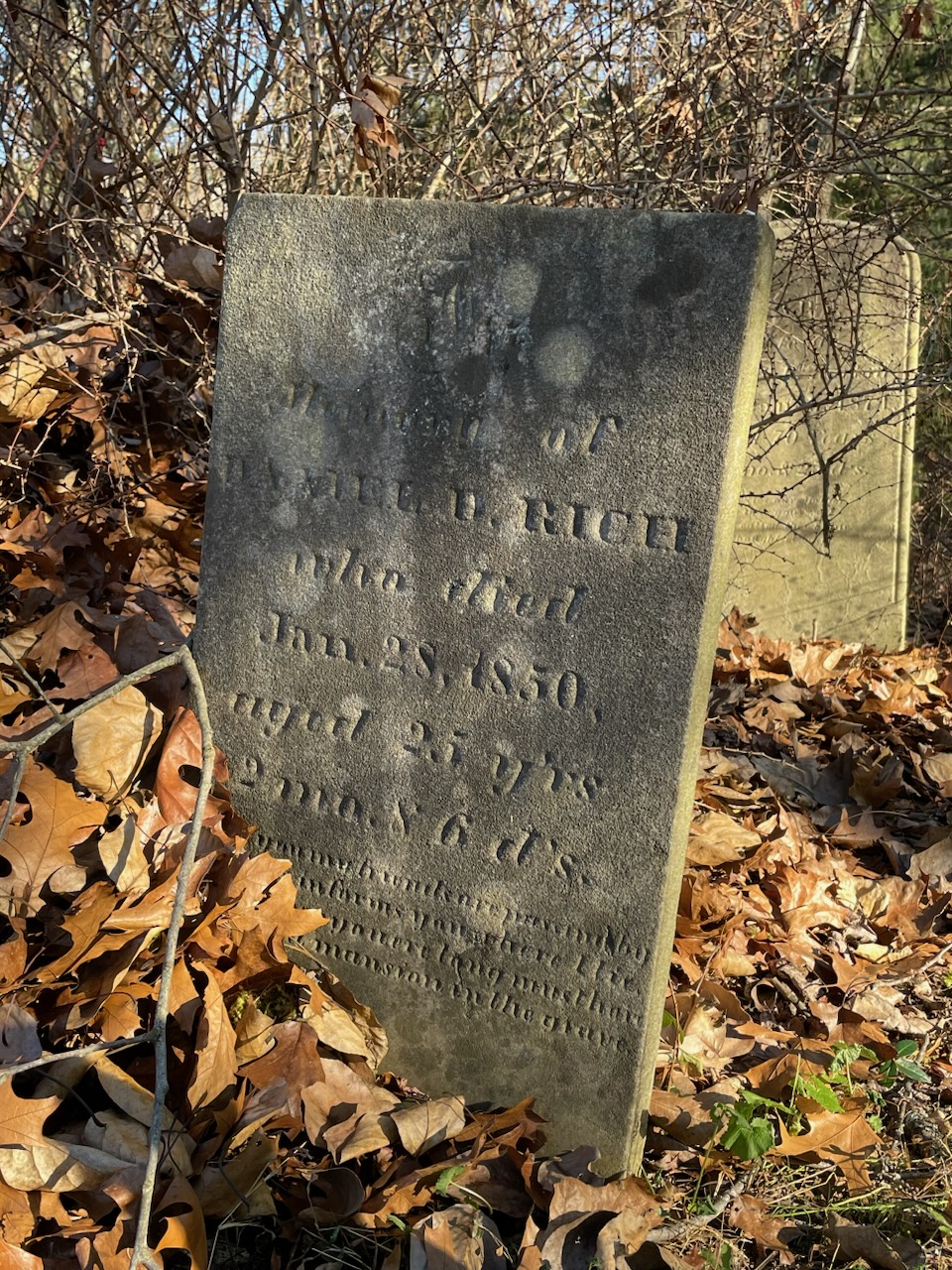
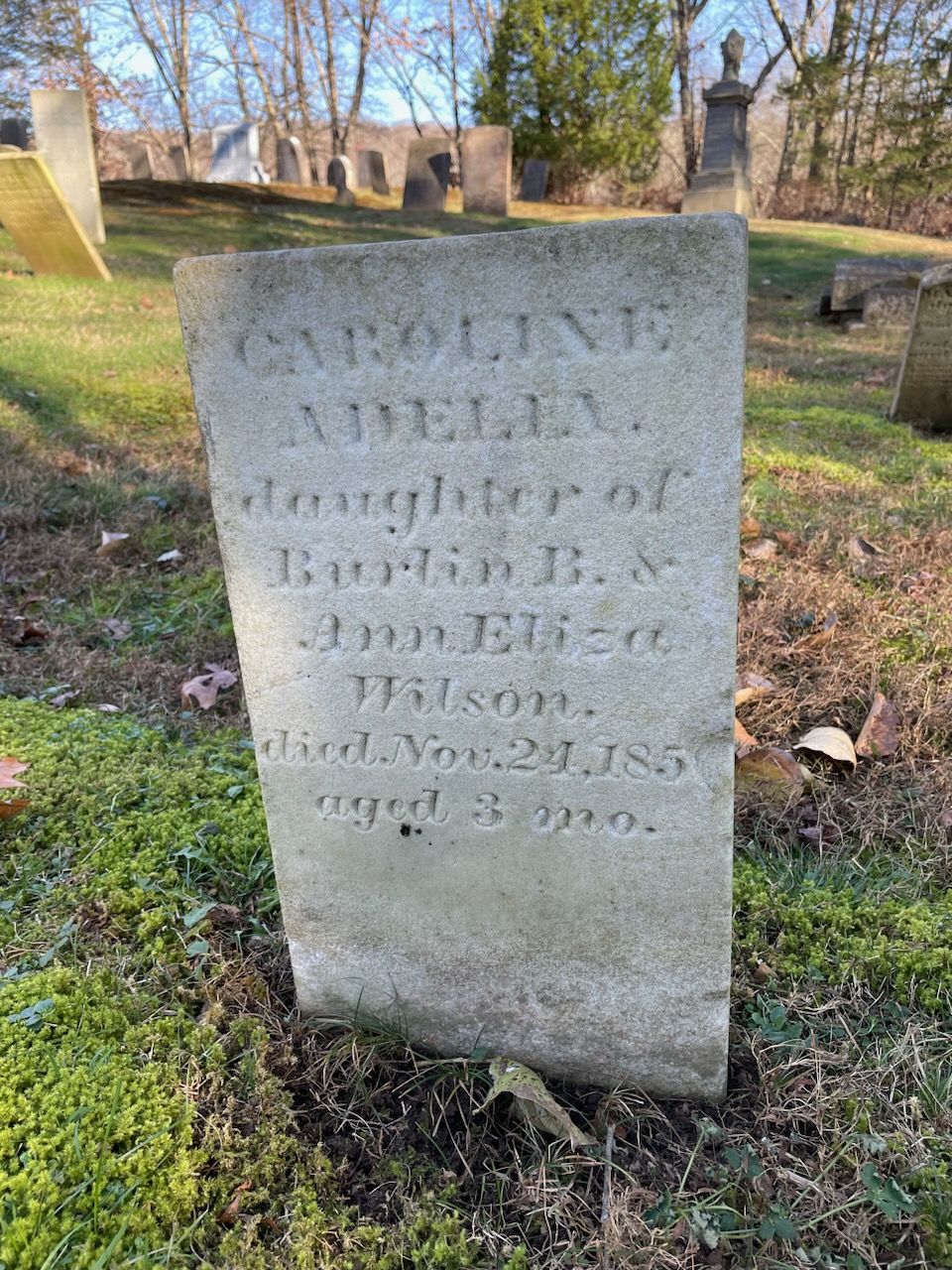
The graves on Baptist Road, haunting. Haunted.

I always find myself wandering off to the edges of a burial ground, as if I’ll find some answers on the outskirts. Every one of us is losing something precious to us, said Haruki Murakami. Lost opportunities, lost possibilities, feelings we can never get back again. That’s part of what it means to be alive.

Answers about what? The people here? Death? Life?

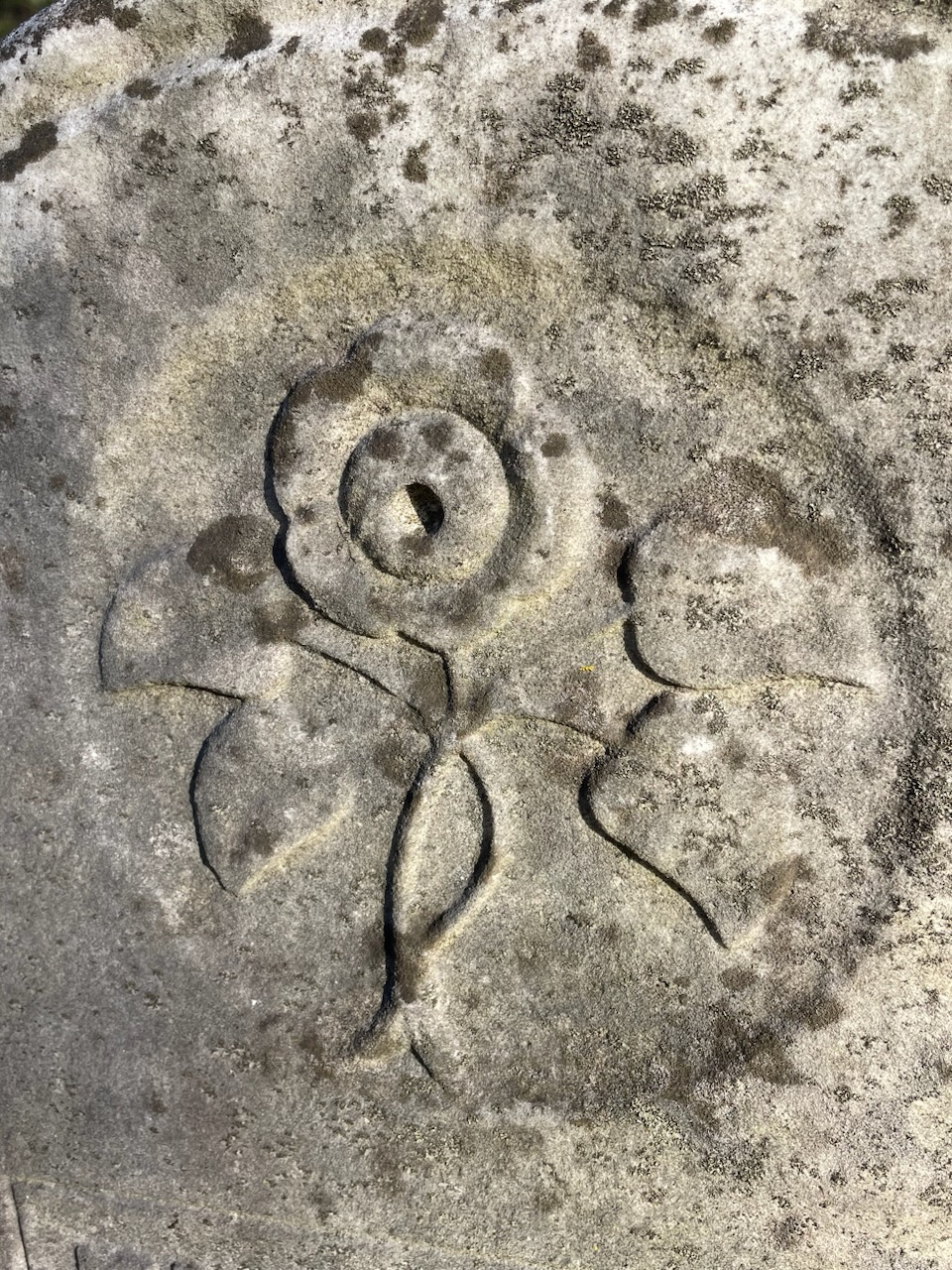
Anyway, it’s the ones on the fringes, the unmaintained, I like the best. And I always love it when stones nudge up against trees. The person who carved one of these monuments in all probability personally knew the person buried beneath it.

Today thinking about my New York grandmother—she died in her 80’s and had a good life but still I felt she went too early, just as I was getting to appreciate her as an adult. So it’s not only a question of age. There was an older woman I worked with, helping her write a book when I was just learning to write books. I sure cried when she died, and it felt too soon, though she was already a grandmother. I felt broken.

By total coincidence, as I drive into Queens a song comes on the radio called Hollywood Forever Cemetery by pop god Father John Misty: But someone’s got to help me dig/Someone’s got to help me dig. Always good to go do tree protection. Doesn’t it sound grand: tree protection? It’s something of a privilege to help save trees in New York City. Today, a London plane standing obstinately in the area designated by some city official as the proper place for a new pedestrian ramp. The soft-hearted field engineer wants a tree consultant to weigh in. Well, no, the excavation would in fact damage the roots and hurt the tree. Danger averted. We’re both relieved. And rather proud.

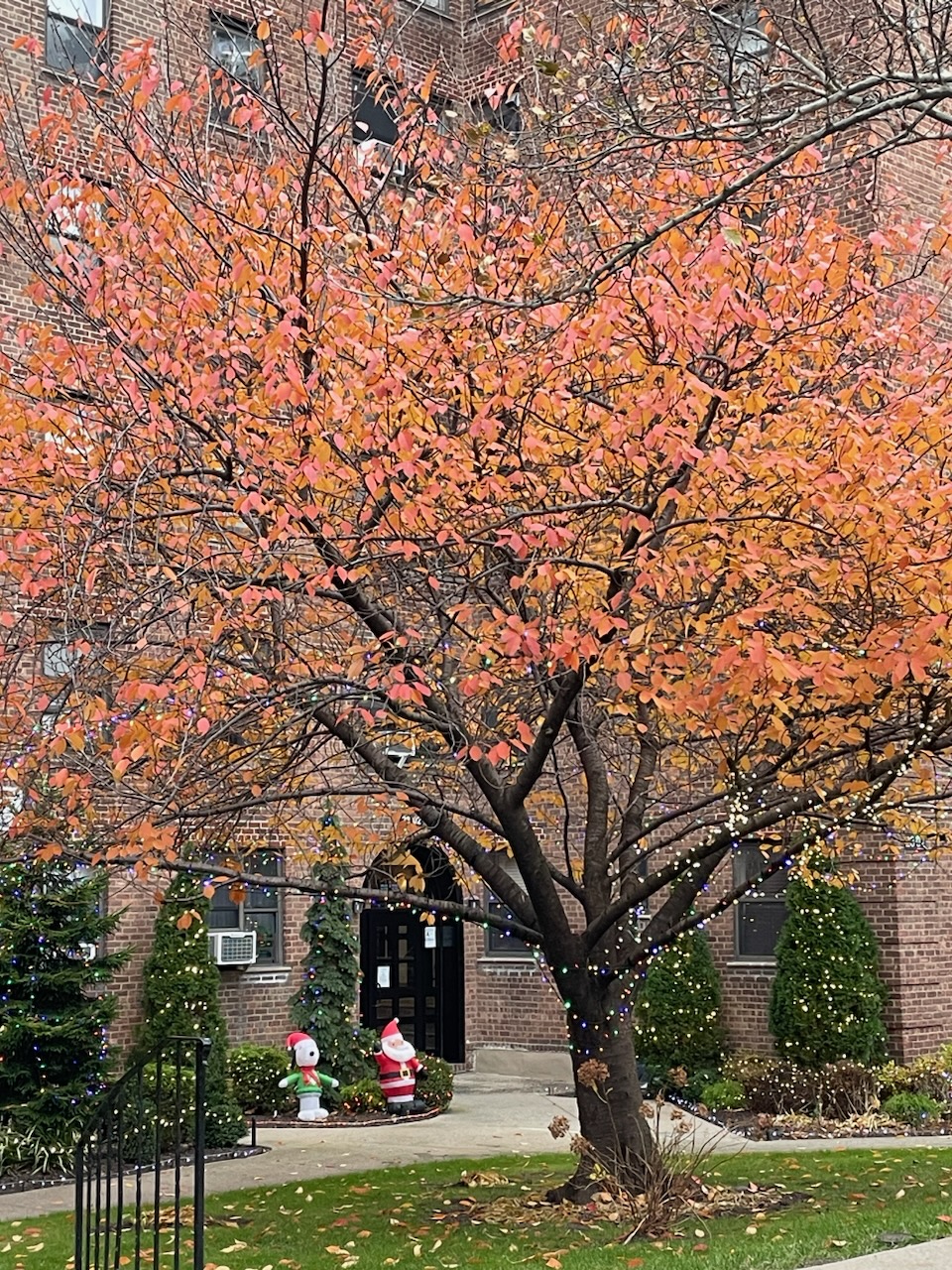
I wonder what Nat, my teenage friend who loved nature, would think about saving this London plane. Or my pal Debbie. Or my grandmother. What if the people you lost too soon could come back for a bit to have a cup of coffee with you, say, what would that be like? You could catch up. Just for a few moments? Or my father, for that matter, now gone not quite a year. He knew I became a late in life arborist, but what would he think of this bright sunrise, these bland brick buildings, their doorways and decorative plantings draped in twinkling holiday lights?

Helen Keller said, What we once enjoyed and deeply loved we can never lose, for all that we love deeply becomes part of us. You don’t need to climb the steps of a church, even a picturesque church, to know what she meant.

The beautiful uncut hair of graves, wrote the immortal Whitman. Sometimes shorn, but still breathtaking.

And that’s something, a way of coping with too soon, too young. Shakespeare recommended: Give sorrow words; the grief that does not speak knits up the o-er wrought heart and bids it break. So though I am not sanguine about death, that works to some extent. The impulse to give sorrow words.

There’s also, for some people, protecting trees. Splendid sawtooth oak on 33rd Avenue agrees, shaking its shaggy branches in a gust of wind.

Too soon? Not me.

Leave a comment

Filed under Jean Zimmerman