Tag Archives: New York City

Trees are more trouble than they’re worth

to some people, but others take painstaking care to preserve them.

Meet Jimmy, one of my favorite individuals at work.

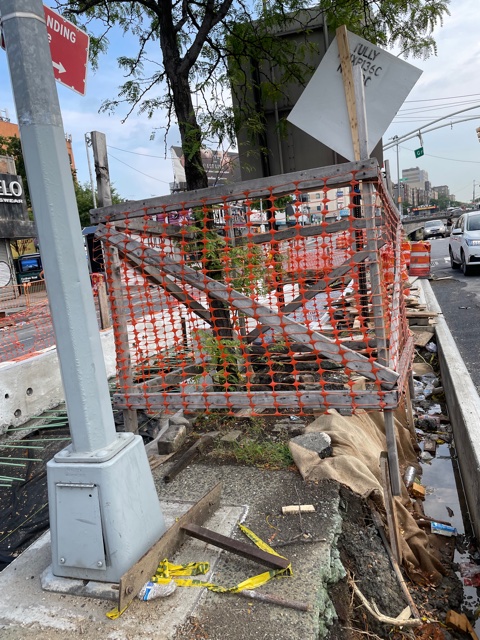
His job is exclusively to build and repair tree guards on the Grand Concourse construction site. He is, he told me, officially a carpenter by trade, as far as the union is concerned. That’s an honorable and well-paid profession. But we’re lucky to have him doing what he does. He squares up the enclosures and hammers the boards together, often standing back to scrutinize them before he starts to correctly gauge the tenor of the job.

We’re chatting.

You must get tired of this, I say, referring to the orange snow fencing, a bale of which he carries around with him much of the day. It’s constantly getting ripped from the frames and he is constantly fixing it.

No, he says. I used to be. But now I covered my house with it inside and out, that’s how much I like it.

He sees himself as a bit of a comic.

What I see is a skinny, herky jerky guy who dances down the Concourse like a leprechaun, cigarette in mouth, hammer in hand, tool belt clanking, working his magic to protect the trees from harm.

It’s good you do it, I say. Otherwise the crew would knock down the trees.

No, they wouldn’t, he contradicts. They know they’re living things. I tell them that that tree there was Jesus’ original crown of thorns.

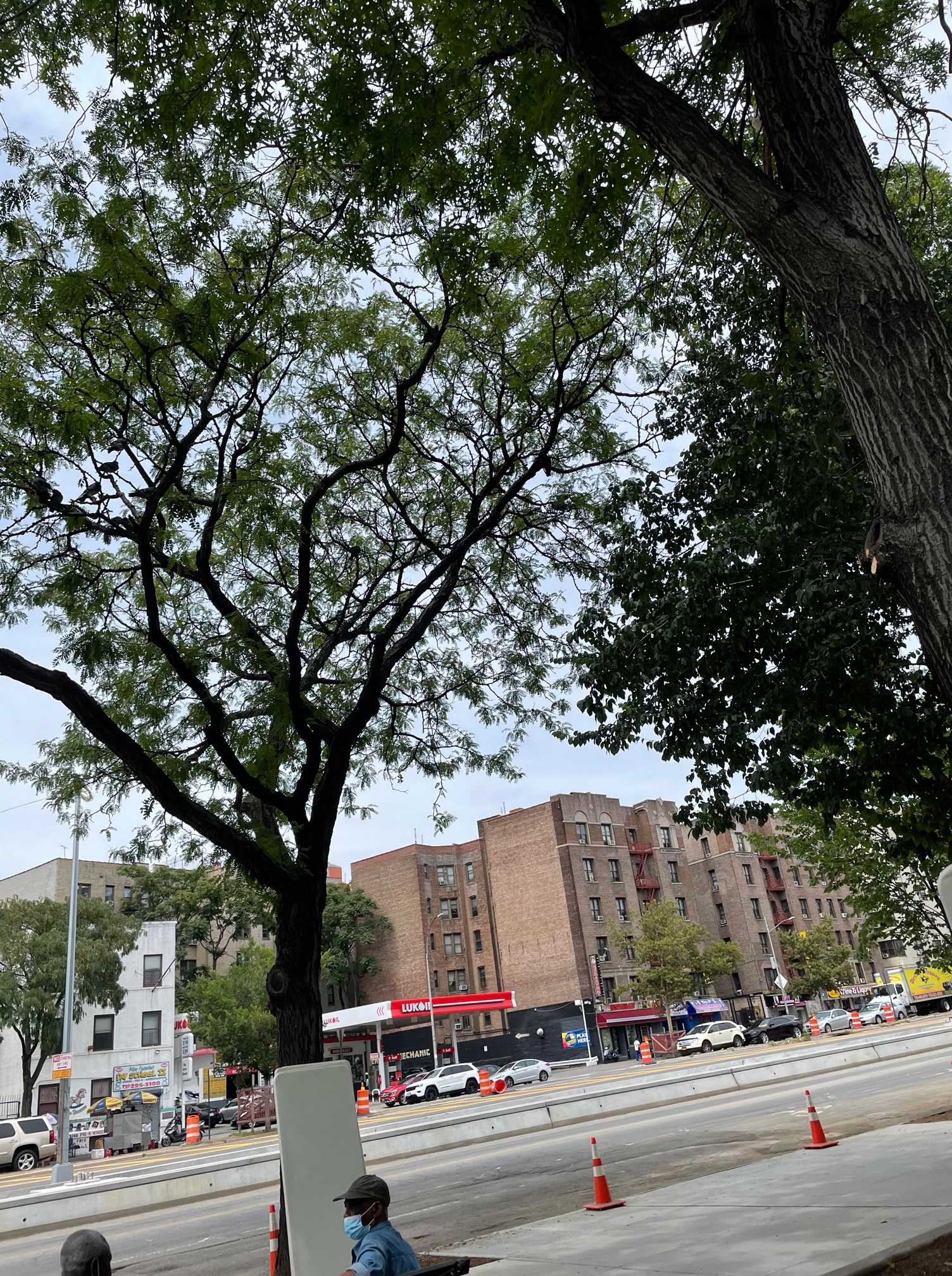
He means the honey locust – the site has a forest of them. Tree workers hate them because they get pricked so bad.

No, says Jimmy. The guys appreciate the trees. They are sweethearts. Really.
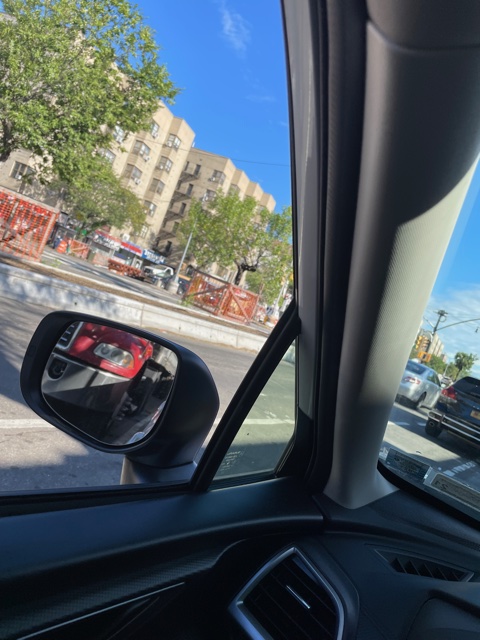
Well, shut my mouth. Sometimes I think a particular machine operator takes some sadistic joy in breaking branches with his bucket.

Still, I know that one day these tree guards will come off and the honey locusts and American elms and London planes and amur maples will once again introduce themselves to the world, and the neighborhood will be the better for it. It takes work to preserve them, but it’s well worth it.

Jimmy is a lot of things, a philosopher, a comedian, even an arborist. I told him I appreciated what he does and he told me he appreciated me appreciating what he does.

And he may possibly an actor. A producer discovered him on the job and told him he wanted him for a bit part on screen.  Then he came back. He told Jimmy they decided they wanted him for a bigger role. He was just too good to be a cameo.

That would be great, he’d get his SAG card and hobnob with hot shots. But it would be a loss for the Grand Concourse to have him no longer nurturing the tree guards, butt in mouth, a hammer in his hand.


2 Comments

Filed under Jean Zimmerman

Pretty in pink

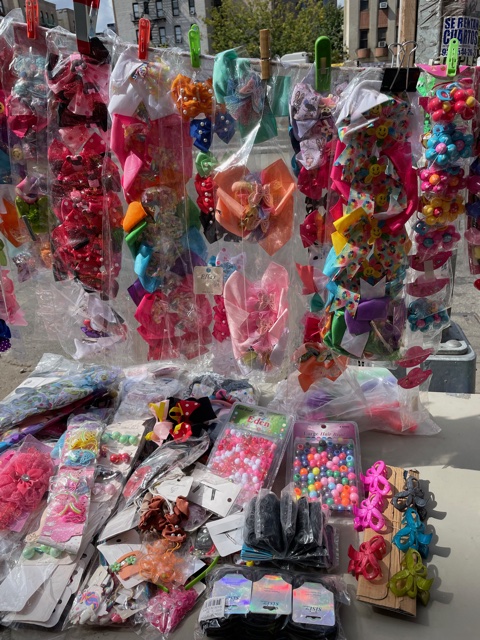
is not just a creaky old John Hughes movie. Pink has become the ethos, the philosophy, the dream and the religion for girls of the elementary school age and under. Until they betray pink for purple…

This conclusion will not surprise anyone with eyes in their head over the past quarter century.

I’ve been told that in Japan, boys wear pink and girls blue. Not true, according to reputable sources (the interwebs). Males and females in that country do, though, apparently mix and match colors in their apparel, ignoring sex-related social constructs.

The stores on the Grand Concourse  have girl-pink stacked high.

Pink bikes beckon.

Stuffed animals present themselves as irresistable.

Magical.

Pink’s popularity for grown women grew over the 20th century, from the choices of Mamie Eisenhower to Jayne Mansfield to, jumping ahead, the Plastics in Mean Girls who dressed in pink on Wednesdays. Can we forget Hillary Clinton’s bright pink blazer?

The situation differs for small fry. They have all become princesses. Princesses are sweet, not solid. In fact, being a princess is nothing a child can aspire to. Yes, thy possess magic, but not with powers to make anything actually happen.

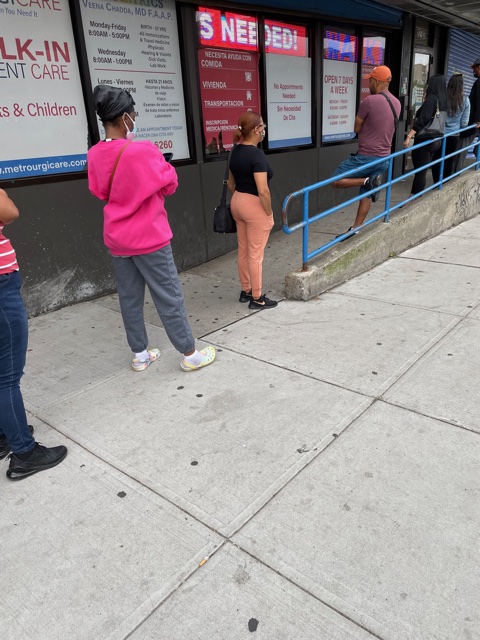
Why should anyone care? That toddler in her stroller, buried in fluffy pink, is so comfy, so cute!  And girls in pink grow up to be perfectly capable pink-attired woman, like this one awaiting her Covid shot.

Rainbows are everywhere now. Why not give girls the gift of choosing any color they truly desire? It would take  some counter-brainwashing, true, with all the material goods available, the clothing and toys and tutus drenched in pink. But it would be good if anyone could be pretty in any color.

Leave a comment

Filed under Jean Zimmerman

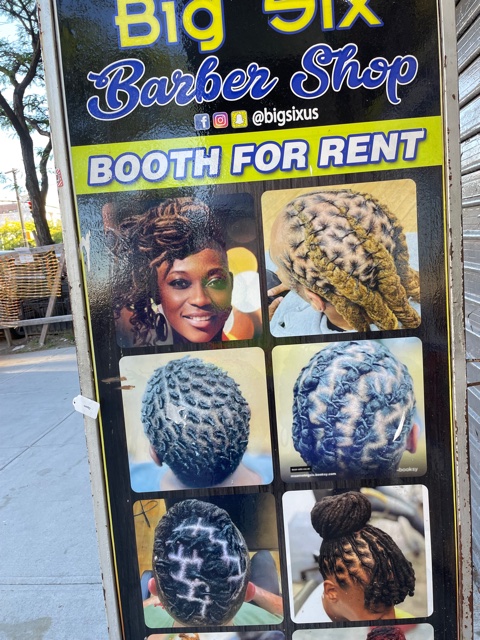
Hair is big

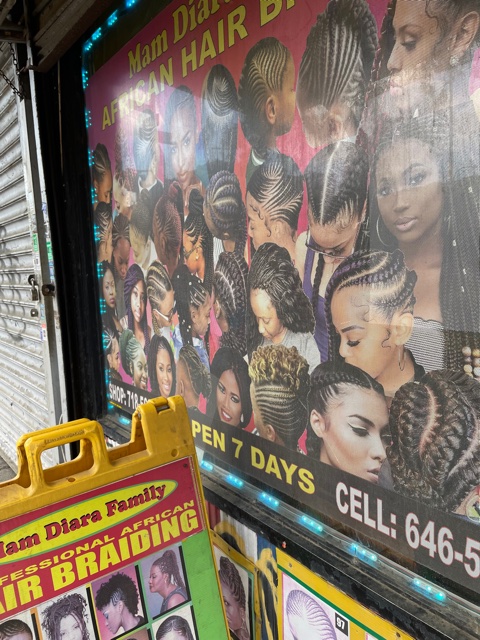
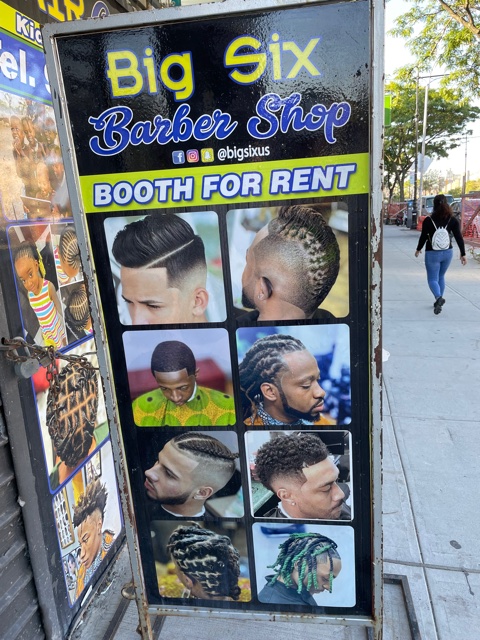
on the Grand Concourse. I pass at least one hair salon on every block, interspersed with supermarkets, household goods, bodegas, hookah shops and the goat restaurant.

The signs are not all for hair braiding. Straight hair gets its due.

Including this goofy martian coif.

But mainly the ads showcase braids.

Extravagant hair styling makes me think about novelist Chimamanda Ngozi Adichie’s best-selling Americanah, described accurately by the New York Times as “witheringly trenchant and hugely empathetic,”  and which won the National Book Critics Circle Award in 2013. It’s a moving story about two people from Nigeria, one of whom comes to America and one to London. I won’t tell the rest in case you read it (and you ought to). But one thing that stands out for me in the fabric of the novel is the amount of time the main character spends in African hair braiding salons. This was foreign to me. If you read Adichie, the granular detail with which she describes having her hair done could only have come from her own experience.

Scholars of African history see the practice as many thousands of years old, with braids even etched into the back of the head of the Great Sphinx of Giza. African tribes, groups and regions adorned their heads in specific ways, not restricted to cornrows. Styles date back to at least 3000 B.C., including Ghana braids, Fulani braids, Goddess braids, Box braids and dreadlocks.

On the Concourse, there are many more images of fancy hair braiding than there are actual stylings on the street. It seems to be more aspirational, or maybe done for a special occasion.

Of course there are other origin tales besides the African. Some go back to the Venus of Willendorf, thought to be 25,000 years old and discovered in Austria in 1908. 

Just 11.1-centimeters tall, this limestone beauty  seems undeniably to have a head of cornrows. If I could steal one object from a museum, this would be it. I’d have to go to Vienna, where the Venus is exhibited in their Natural History Museum

Now for an alternative narrative, possibly apocryphal. It is said that cornrows were used to help the enslaved escape their misery. Cornrows were used to transfer information; they were maps of a sort. Benkos Bioho, a radical who lived in Columbia, South America, is said to have devised the practice in the 1500s. Bioho and ten others escaped the slave port of Cartagena and founded San Basilio de Palenque, known as the “village of maroons.” Later this became the first free village in the Americas. His reward: he was captured by the government, hanged and quartered. Before that, though, he taught braiding.

iCurved braids represented roads to be traveled to escape. Also, the enslaved hid seeds in their hair to plant crops once they reached freedom. No slaveholder would ever suspect.

It’s also said that braided hair was called “cane rows” to denote the sugar cane fields in which captive workers toiled so horrifically.

This strategy recalls the red blanket hung on the line to guide those on the underground railroad to freedom.

How much of this legacy is embedded  in the hair styles of Grand Concourse? The signs advertising braiding always looked gaudy to me. It’s good to look deeper.


Leave a comment

Filed under Jean Zimmerman

It started out a good day

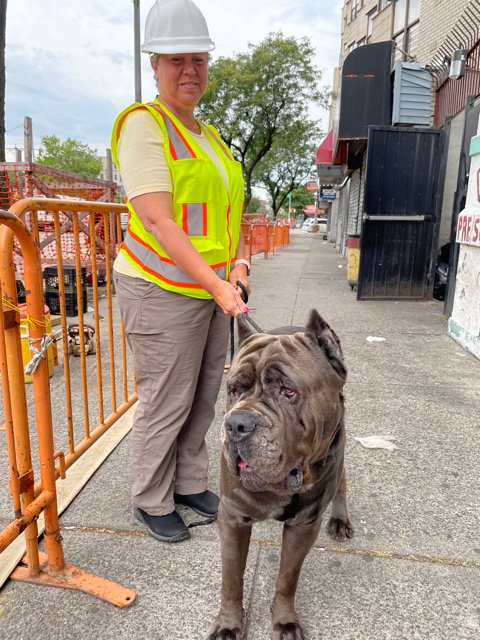
and wound up even better. At 7:30 am I stood on the Grand Concourse sidewalk petting Spartacus, a dog belonging to a neighborhood guy.

This massive animal, an Italian Mastiff (or Cane Corso) was a puppy at 150 pounds and destined to grow bigger. He was gentle as a kitten.

The afternoon progressed as usual, inspecting trees and their roots in trenches, munching plantain chips, drinking too much iced coffee.

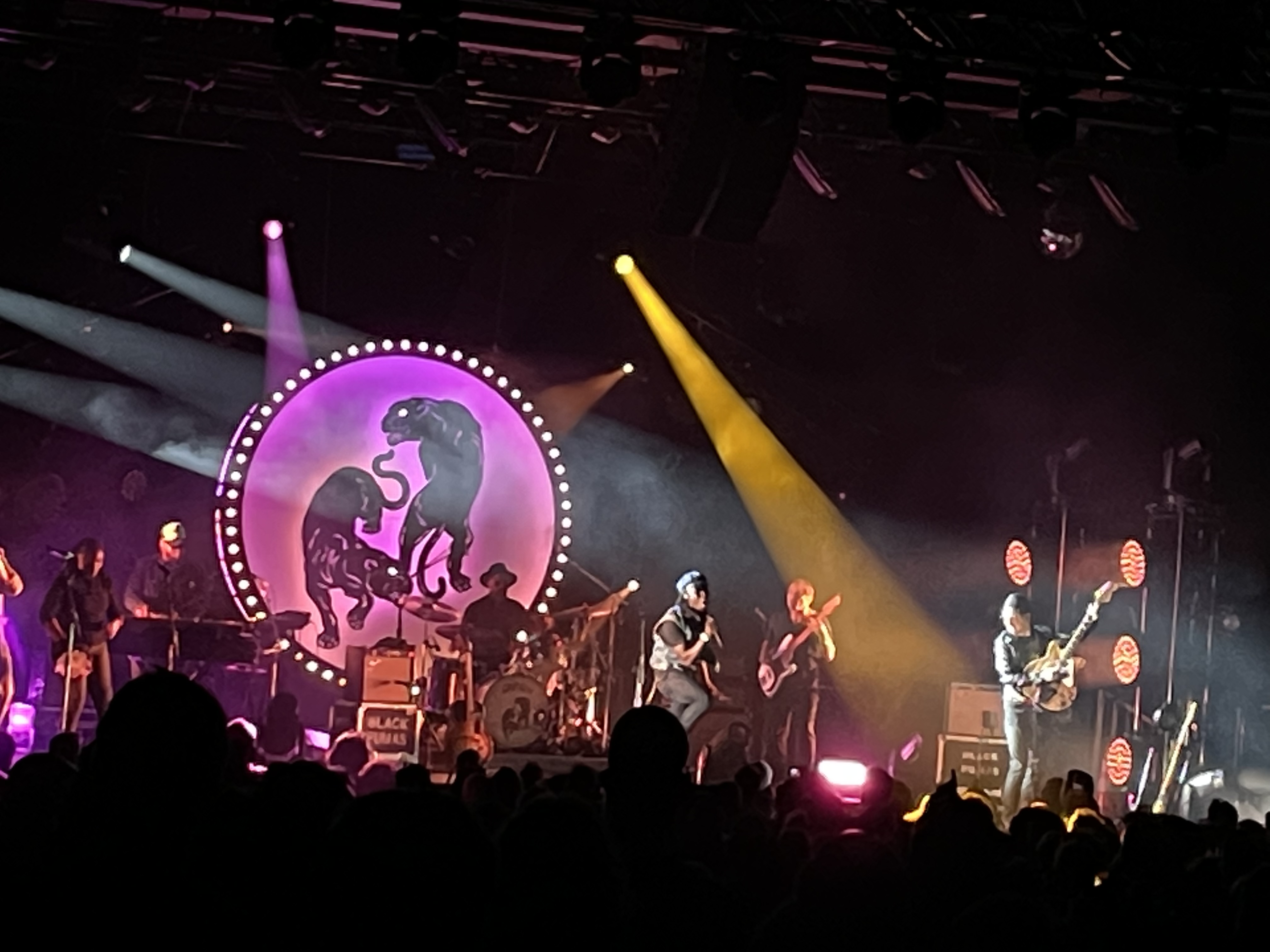
Then we head to a concert at a place called Brooklyn Steel: Black Pumas, the psychedelic-rhythm and blues band whose smash Colors has had everyone entranced in the past year.

First, to eat. A Taste of Heaven pops up as right around the corner from the concert, in east Williamsburg.

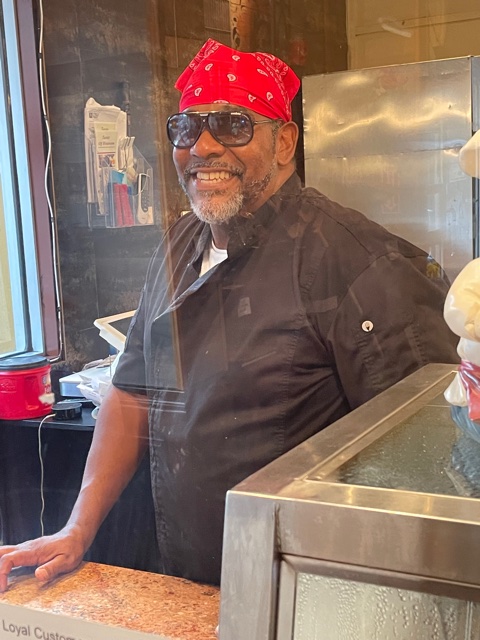
You here for the venue? says Tony, who owns the place and is chief cook. Well, yes.

Jerk ribs, cabbage, collard greens from an aluminum dish with a plastic fork. From a steam table. A quart container of mango KoolAid to slake the thirst, because everything is popping with spice.

We dine outside, no indoor seating, at a tiny table. About the best grub I’ve had recently, and that includes a fancy restaurant high in the air where you had an extraordinary vision of verdant central park stretched out in front of you. The food, not so extraordinary. I can’t tell you the number of times I’ve dined out someplace supposedly fantastic and said I could do better at home.

Not here. I can’t fathom how he turned out this food in his tiny kitchen, but it is magical.

We’re number one on Yelp, says Tony, leaving his station and setting another tin of jerk ribs down in front of us gratis so we can both try them. And, in fact, checking out Tony’s boast, A Taste of Heaven stands out on Yelp as number one out of 184 soul food restaurants in New York. Unfortunately they have no dessert, but an elderly lady sitting on the one chair inside pulls a yellow supermarket cake out of her plastic shopping bag and offers to give me a slice. She urges me to take it. It’s lemon! she says.

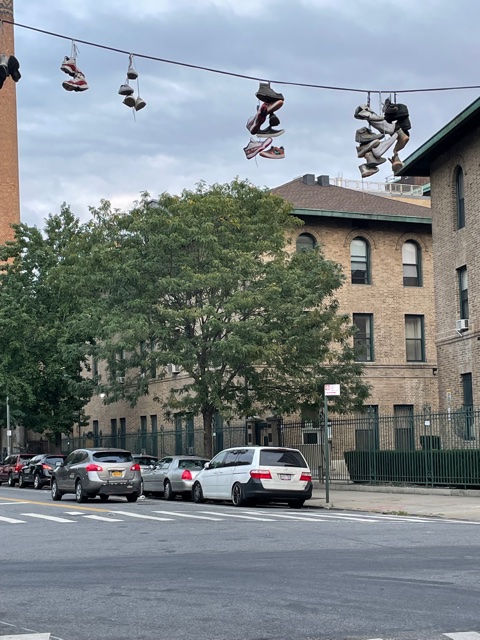
In case you want to find a Taste of Heaven, it stands at a crossroads.

Marked by the eternally ubiquitous sneakers that hang from a wire above the street.

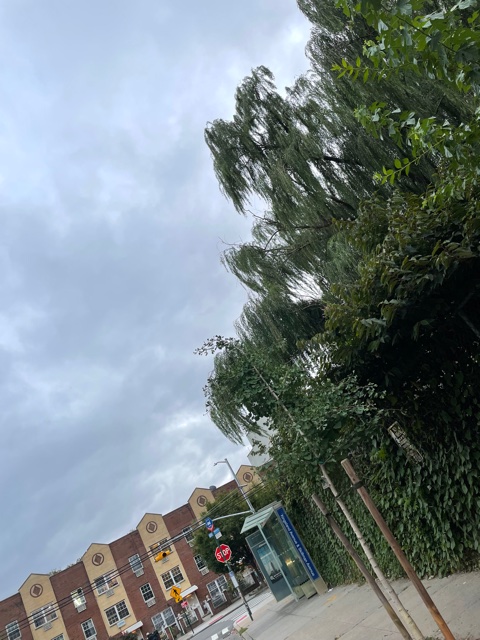
A short drive takes us to find something sweet, through Brooklyn’s gentrified blocks with their clean sidewalks and glossy windows. Mature willows tower over young ginkgos..

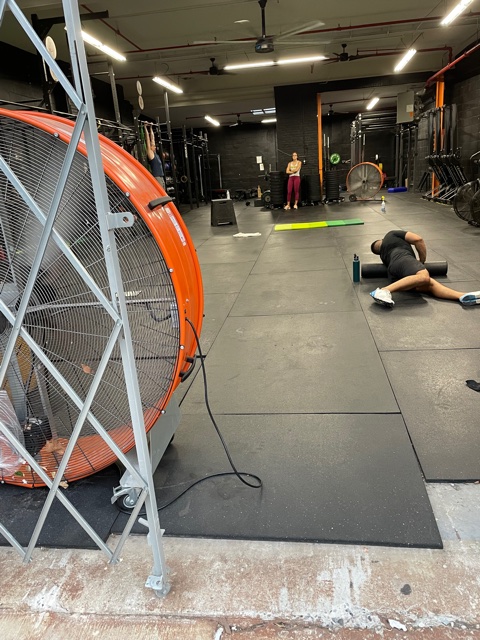
A super-spare and clean gym open to the street.

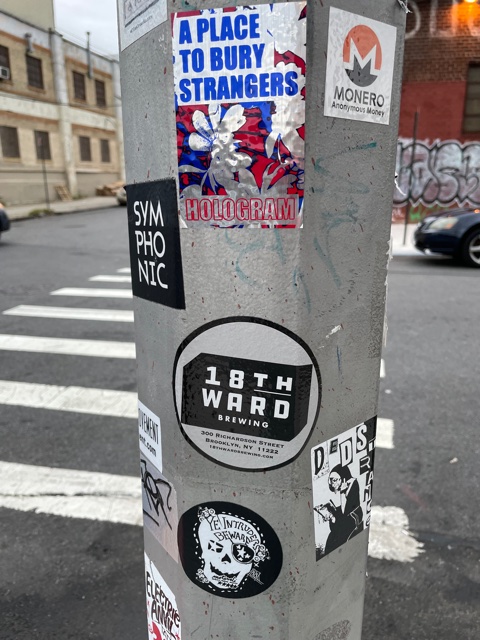
Some great band names.

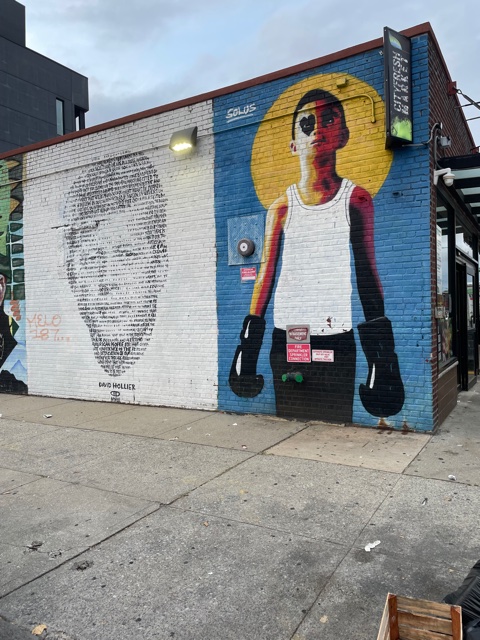
Entertaining murals. Note: you can’t see JFK’s face with the naked eye, only with the camera. A mystery how it’s done.

A chocolate cone is good on this end-of-summer evening, yet brings us up close to a ghost bike, one of the shrines you find all around town to bicyclists killed in traffic. Descansos, as they’re called in the Southwest, where the victims of highway accidents are sometimes memorialized by side-of-the-highway assemblages of car parts, in addition to photos and other sentimental items.

It gave me a frisson of PTSD since I recently had a bike wreck which left me banged up and bruised and slightly concussed. All better now.

The venue was jammed, the last of a four-night stint.

And the Black Pumas?

They rock. Almost as much as Tony’s jerk ribs.

Leave a comment

Filed under Jean Zimmerman

Not to be too grandiose,

but it’s as if the universe knows it’s the twentieth anniversary of 9/11 and presents us with a day that eerily resembles that day, the bluebell sky, the lovely cool of late summer, the feeling of peace and anticipation of all the good things fall will bring.

You know what comes next. And everyone has their 9/11 story, trotted out among friends and family for the occasion as if rubbing the old wound will heal it.

It’s the day before the anniversary, late afternoon, and we are on our way to an art opening on Manhattan’s southern tip, on South Street. The uneasy anticipation of the big day has begun to well up, along with excitement about the art show, which bills itself as the Independent Art Fair, and is to take place at Casa Cipriani, the swellegant restaurant we can’t ordinarily afford, situated on the upper floor of the Governor’s Island Ferry Terminal.

lThis show is where the up and comers hang their work. It’s a white hot market apparently for these comparatively juvenile artists, ones who haven’t made it yet to Upper East Side walls.

Driving down the West Side Highway toward 10 South Street, at South Ferry, we share tales of that day. How Gil and I went down to library park in Hastings, with its magnificent view of Manhattan Island, and watched the smoke plume from the towers before they fell. How I was on the phone with my father only a little later, both of us glued to the tv screen, when the first tower pancaked. Josefa’s husband was ill and she was rushing him to the hospital when she first heard about the tragedy on the car radio. A friend of ours who lived downtown abandoned her car on the FDR and ran toward the fire to pick up her kid at a preschool steps away from the flames. You have a 9/11 story too, don’t you?

So memories loom over the day before the anniversary, but can’t quell the sense that the city is coming back from its newest tragedy, the pandemic. Art as palliative.

We sit on the balcony of the Battery Maritime Building.

The Beaux-Arts building was built from 1906 to 1909 and designed by the firm Walker and Morris as the easternmost section of the partially completed Whitehall Street Ferry Terminal. It has backstage views of the Staten Island Ferry sign.

And various rushing roadways.

But you always feel the presence of another time, through design details it’s easy to overlook.

The reception is thronged with artists and patrons. If you must sit and eat dinner — and I am famished — it is delicious.

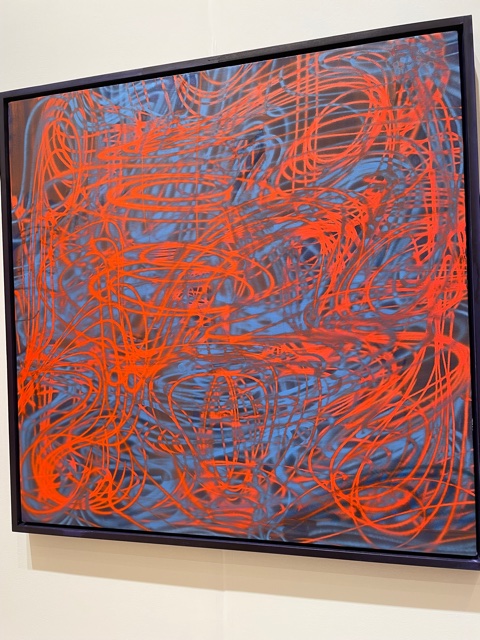
The art is relatively low-end in terms of an investment, ranging from 10 to 10,000 dollars, according to the knowledgable art dealer, Rick, who invited us. It’s quite a range.

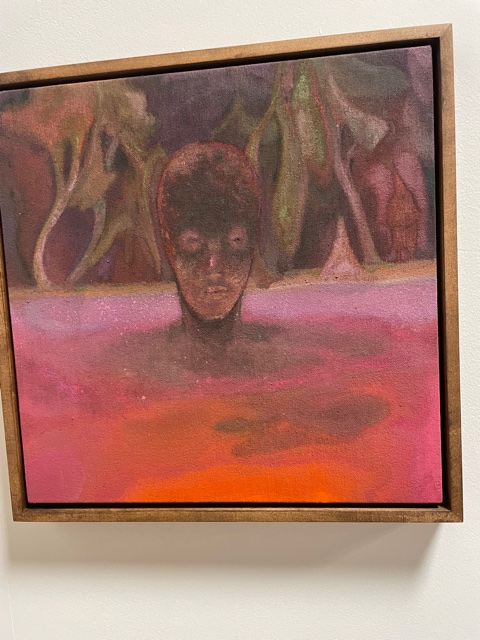
I like some more than others.

As would anyone.

But it’s nothing to worry over, on this day before the anniversary of 9/11, a year and a half since Covid hit our city.

Humans. 

Cats.

Computer art. The toebone is connected to the ankle to the kneebone.

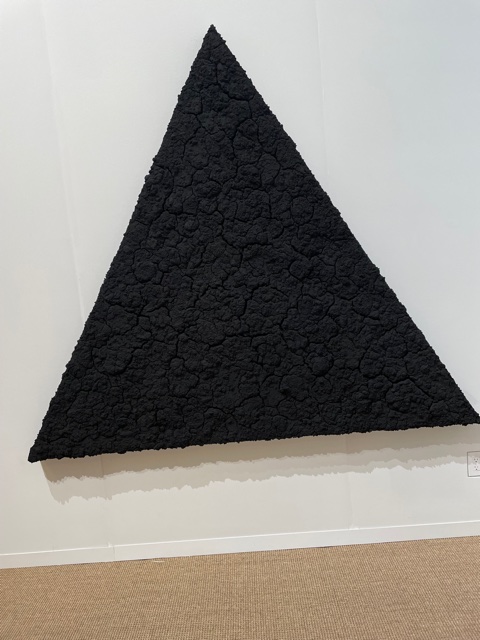
An homage to the early 20th century revolutionary revelatory Russian artist Malevich.

Textiles. I like that.

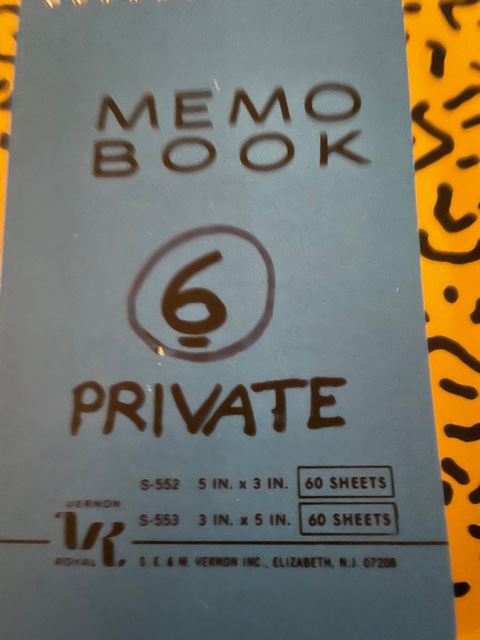
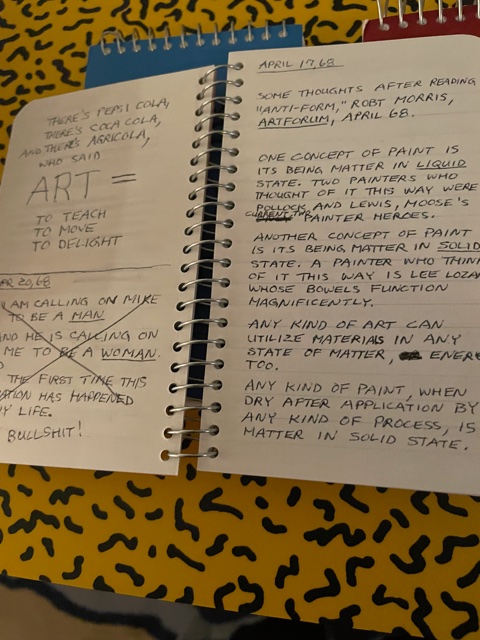
There is a shop at which you can buy an artist’s facsimile of her own notebooks for $25 apiece. Lee Lozano, look her up. Wow.

What a concept.

We wander among the rooms that used to be the ferry’s waiting area. You can still get transportation to Governor’s Island and Jersey City down below. People are boarding to go to Governor’s Island even now, at 7 pm on a Friday night.

Where we are, dealers are hustling, selling art.

I won’t buy any.

But it’s a kind of wonderful event, a way of marking the distance between then and now. Art flourishes, even in the wake of darkness.

Leave a comment

Filed under Jean Zimmerman

Median Cool

A raised traffic median is just a long trough with soil in it. And, of course, plantings, and sometimes trees.

The City of New York has applied its hive mind to widening the street medians of the Grand Concourse, which is what brings me here – to inspect the existing trees that might be impacted by the street construction, and to check out the importation of shrubs etc. when it takes place later this fall, in the cool planting season.

So… why is this happening? We’re talking about a raised median, which is rare in NYC. Yes, there is the West Side Highway, which I was lucky enough to tour in a golf cart earlier this year when bidding for a job to maintain its vegetation.

There’s a strip of beautiful trees and roses in season dividing two lengths of highway, all with a phenomenal view of the Hudson River.

Every median holds 24 inches of soil above the roadbed, according to the Department of Transportation Street Design guidelines. Hard to imagine this collection of construction debris materializing into a cohesive bed of plants, but that’s the plan. And crews are hard at work making it happen.

It seems that the point is not only beautifying a thoroughfare but controlling the vehicles that use it. Lane narrowing, which comes about when more space is taken up by medians, has the effect of what the experts call “traffic calming.” Sometimes cities remove an entire lane, which is known as a “road diet.” In this case the road will still be wide, 2 lanes northbound and southbound and service lanes on either side as well.

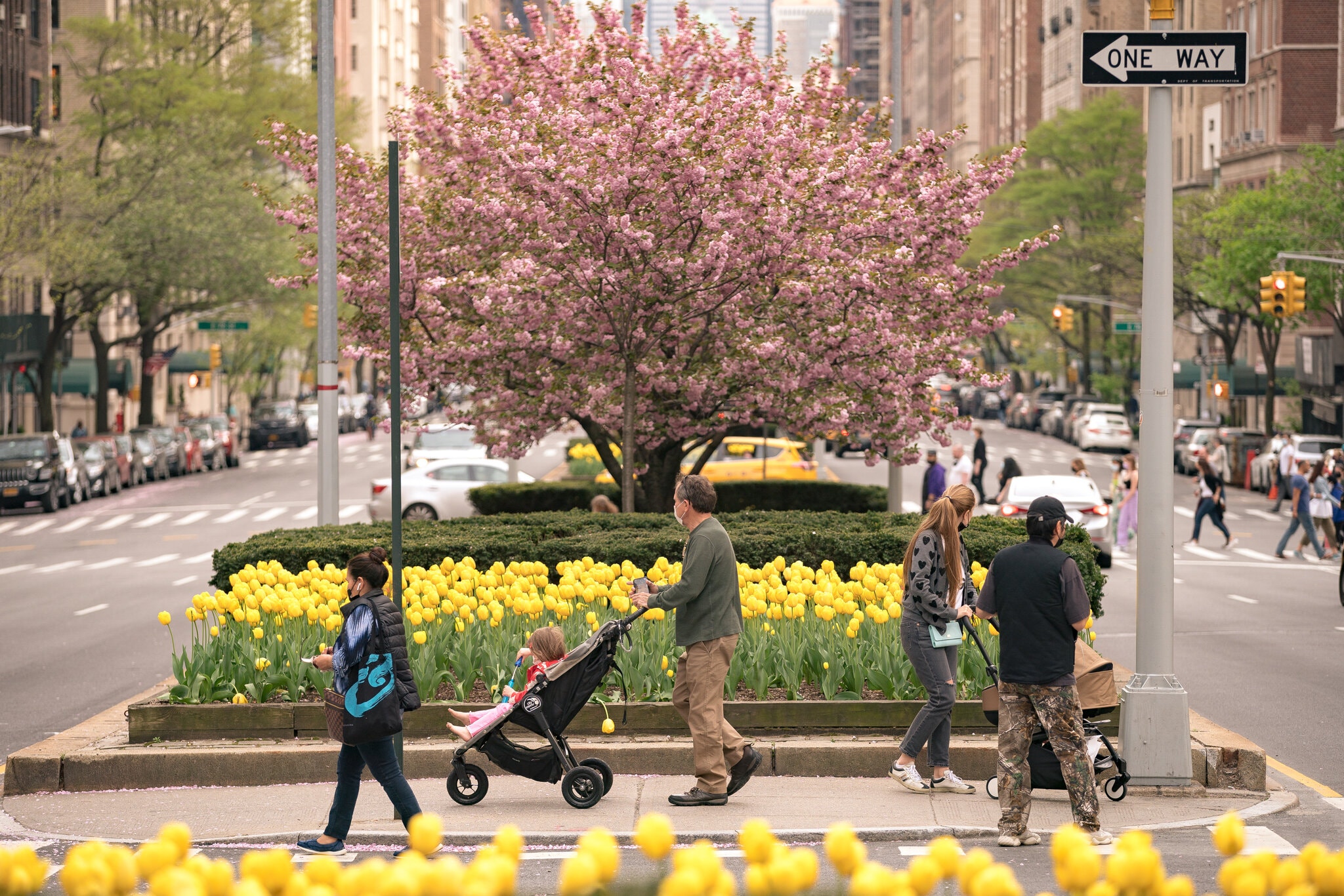
There is a famous, old traffic median in this city, running the length of Park Avenue north of the Helmsley building, which straddles it. It might be worth visiting NYC just to drive through that twisty tunnel. The median’s tulips and begonia beds date to the 1950s.

The park narrowed over the years but I’ve always found it beautiful, and obviously diligently cared for.

Back in the day, traffic was a bit unwieldy in NYC, especially at the turn of the century, when horse carts jockeyed for space with street cars, pedestrians and even some automobiles.

Pictures from the turn of the 20th century  show traffic going every which way. It definitely needed some calming! Park Avenue, though, was a respite – it was actually a pedestrian park seated in the middle of a tamer Park Avenue.

People could stroll, sit, push prams, whatever, in safety. Now the powers that be are planning a remake for Park Avenue to become more like it once was.

Designs have been sketched.

I want to go there and be calm.

But I think that the Grand Concourse will be completed first.

We have trees. Lots of honey locust.

Some of the areas farther downtown have already been finished.

It’s hard to imagine the stretch of the road where I monitor trees botanically beautified. I can’t wait to see it.

1 Comment

Filed under Jean Zimmerman

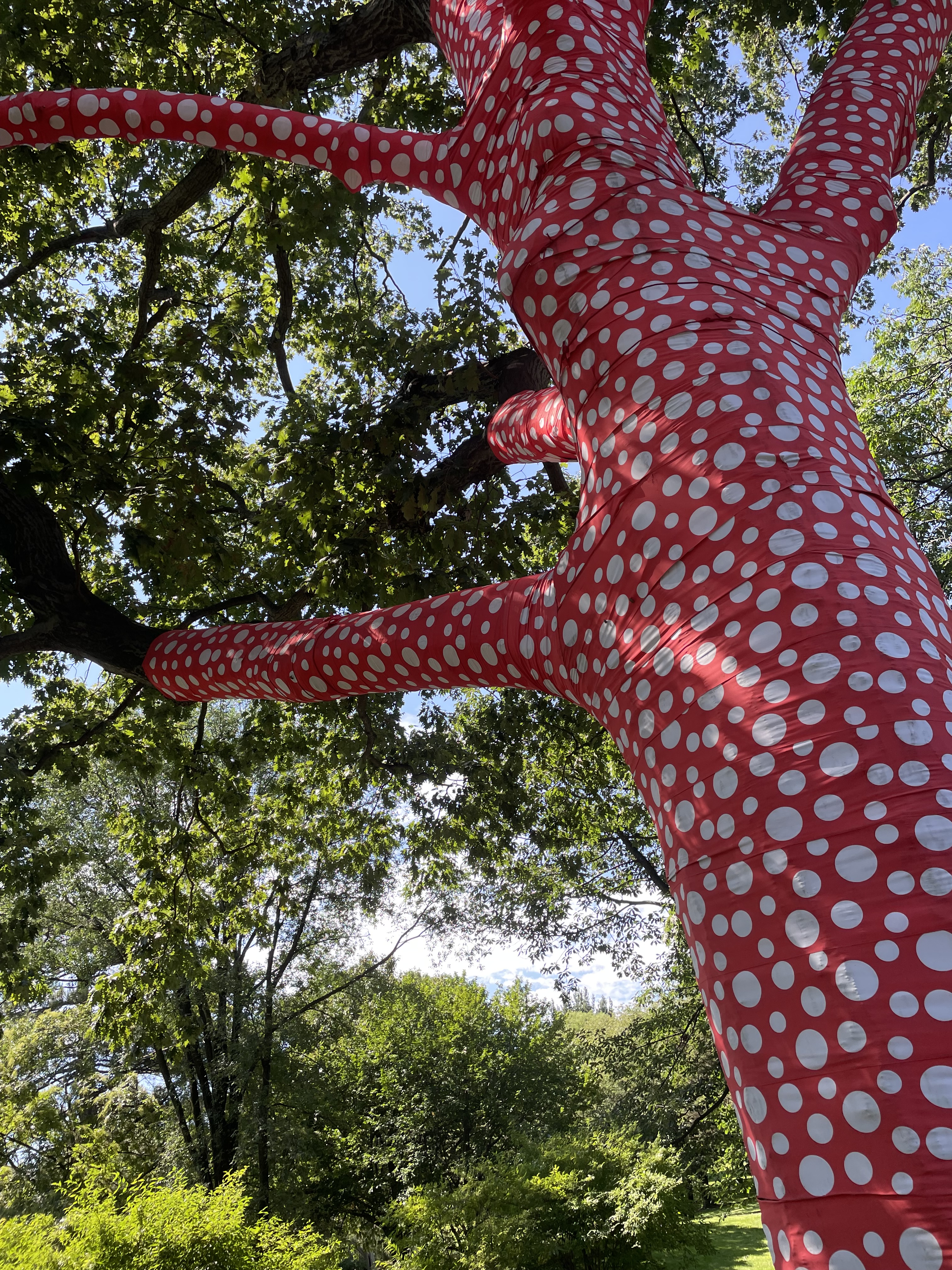
Come for the oak trees,

stay for the polka dots.

That was my idea at the New York Botanical Garden, along with hundreds of other visitors still drying out after being pummeled by Ida.

Yayoi Kusama has been the artist in residence for months, transforming outdoor and indoor spaces, populating them with her whimsical works. Now 92 and one of the most prominent Japanese artists, she drew acclaim in the 60s for organizing happenings where the naked participants would be painted with polka dots.

This installation is a bit more tame, though it has plenty of dots.

Eschewing the rock garden, the stand of virgin forest and the rose garden – a sacrifice, with the later bloomers at their peak – we visited Kusama-world.

Some works can be found in the peerless Victorian greenhouse, designed by Lord & Burnham, the preeminent designer of glass houses in the U.S. in the nineteenth century,  in the Italian Renaissance style, which houses the Garden’s collection of tropical plants. You can find flourishing palms like this one from Brazil.

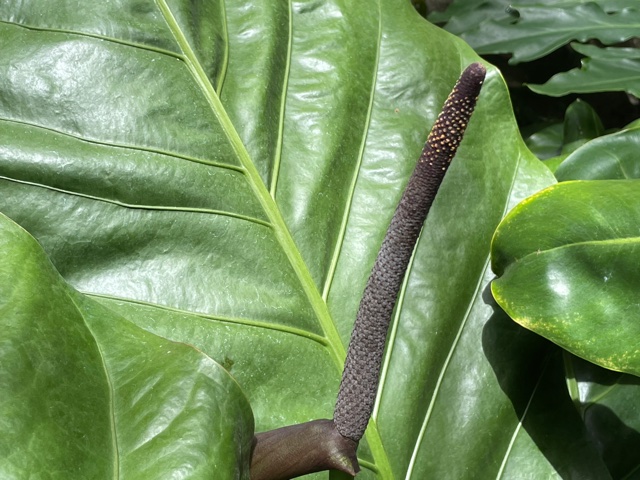
Or this quite remarkable phallic charmer, also hailing from South America.

Now Kusama can be found here as well, with a pumpkin sculpture. The Garden has cleverly included a quote from the artist with each work.

I parted a row of zinnias and reached in to pluck the pumpkin from its vine. It immediately began speaking to me in a most animated manner. It was still moist with dew, indescribably appealing, and tender to the touch.

Everything is saturated with color. Even the flower beds are intended to mimic her work. I am happy that I have painted flowers. There are no objects more interesting.

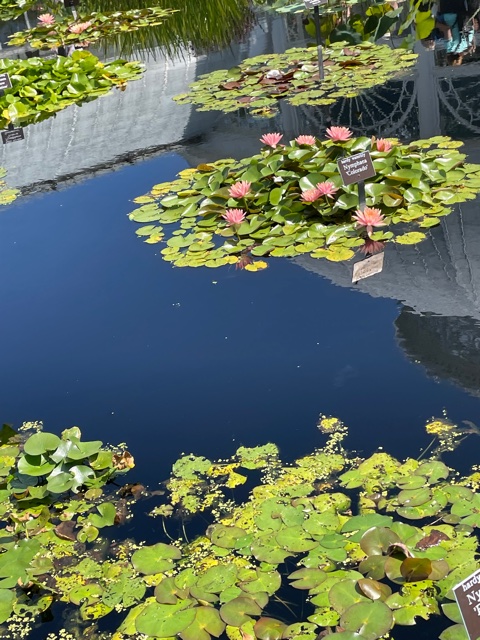
Step outside. The lily pool, like everything else horticulatural here, has been annotated for your edification.

Personally I think lilies can speak for themselves.

Especially in the late summer sunlight.

The koi in the pool could probably eat a man. Are they alive or did Kusama paint them?

A path leads to a little Kusama-designed hut. You are handed a sticker with an image of a poppy and are told to place it wherever in the room you like. A lot of people have obviously preceded us.

The whole “house” is awash with poppies. Some prefer to take their poppies home with them.

A memento of a day spent with Yayoi Kusama.

2 Comments

Filed under Jean Zimmerman

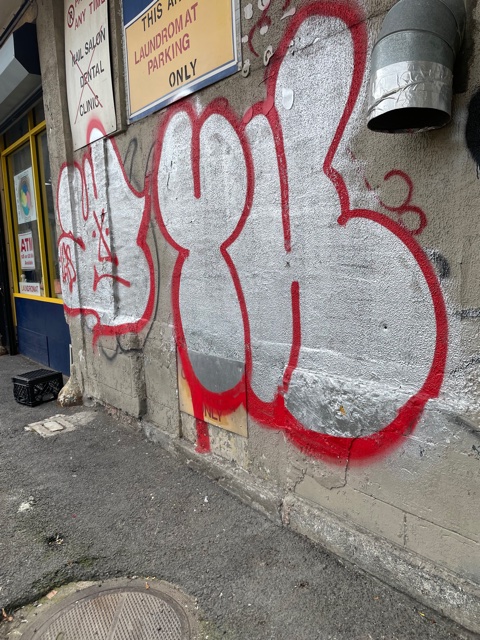
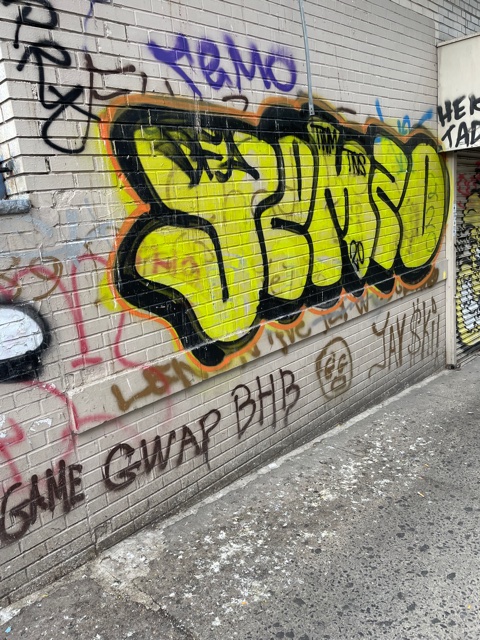
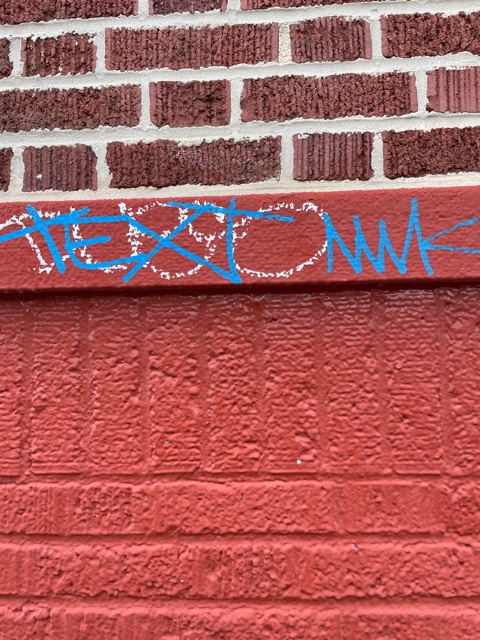
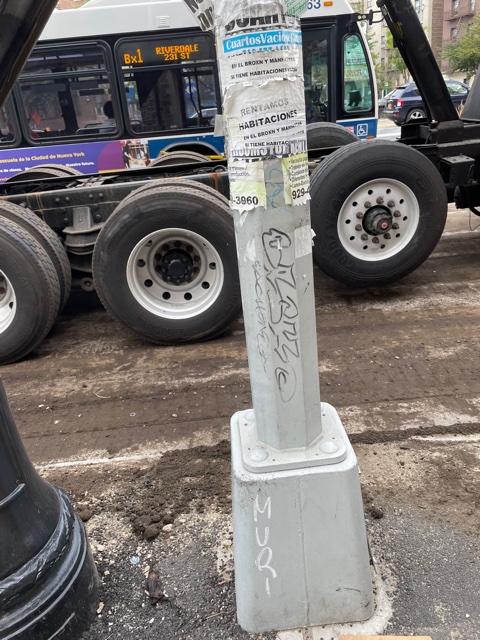
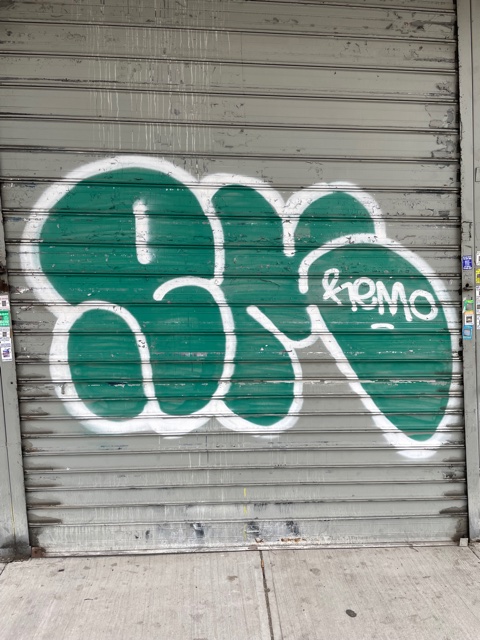
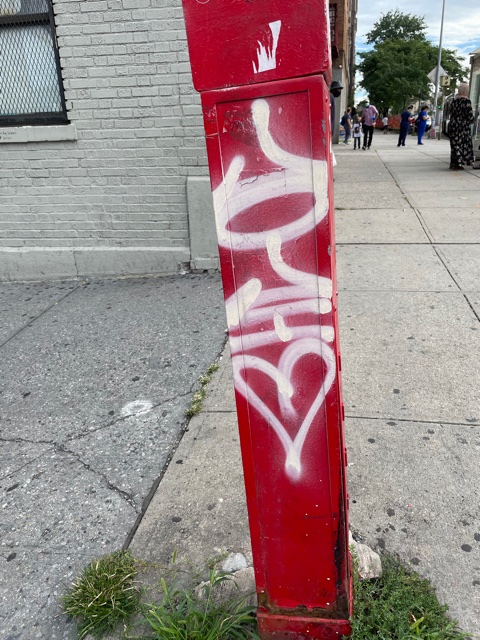
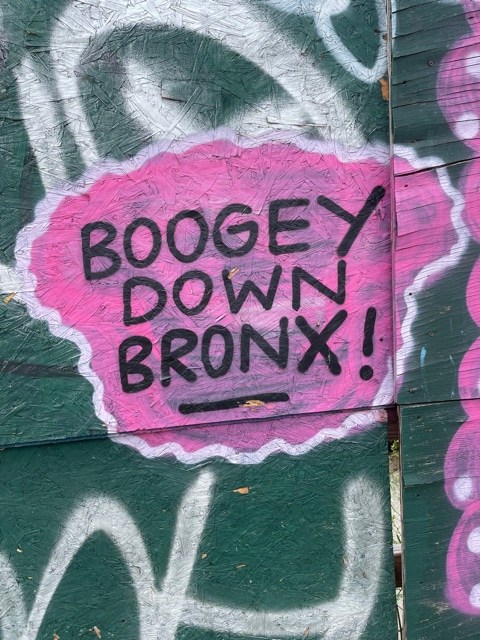
You can’t unsee the graffiti in the Bronx

once you see it. And it is all around you.

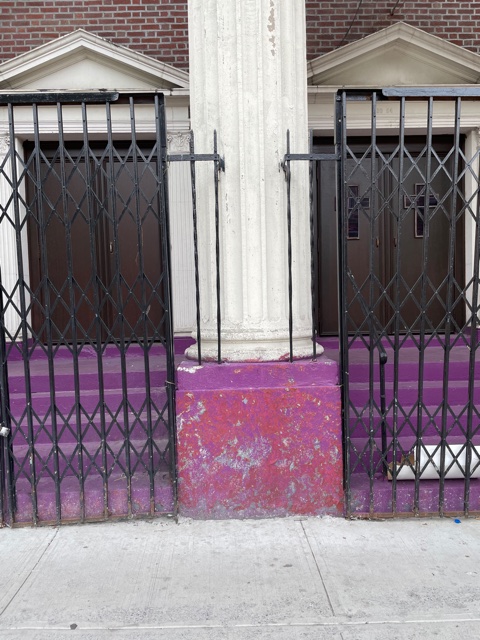
Some surfaces would seem to be left alone. Church walls, for example. Or cars. But everything else is fair game, and especially popular are store gates, the kind that get opened in the morning and pulled down at night.

Every surface is game.

You’ll find mailboxes.

Dumpsters.

Houses.

Even lightpoles.

Self expression. It’s such a powerful human urge.

A lot of these look as if they were spraypainted by the same person, but I’m sure I’m missing the subtleties.

I happen to like the metallic images.

The runic ones.

Indulge me. When I looked on the Grand Concoure in about a four block radius, I found so many striking examples.

And my favorite, I guess.

Washington Square Arch in the West Village has chronic problems with graffiti. It was tagged one night amongst general mayhem, and by the next morning they had removed the anti-cop slogans, leaving “ghost graffiti” that would only be finally removed from the porous, delicate stone  at a later date. 

In the Bronx, nothing gets removed.

You start to see color everywhere, even where it’s ungraffitied.

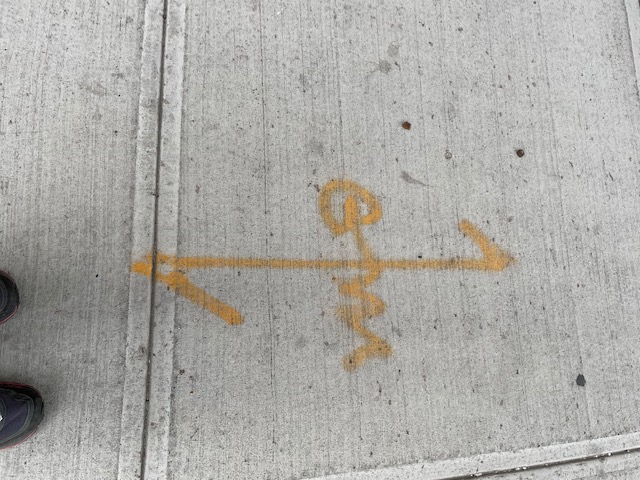
Utility markouts are  really a kind of graffit. You’ll notice them on every sidewalk. Yellow means gas. Don’t dig too near or you might get blown up. Red, electric.

Some fundamental graffiti history. A while back there was a huge warehouse called 5 Pointz in Queens – it was constructed in 1892 as a factory that built water meters — that served as the canvas for dozens of graffiti artists as well has leasing studios to artists inside.

We visited, and something amazing was that after a certain viewing period one artist would cover over the work of another artist with his own work. Just wipe it away. That was the accepted method of showing as much good stuff as could be shown. Very democratic.

I was wearing a cast on my foot at the time and I asked the artist named King Bee if he would tag it.

Fast forward and of course something so impossibly cool could not last. The owner of the structure announced that he was razing 5 Pointz to put up a residential complex, and all the artists would have to leave. He had the walls whitewashed overnight. Even a plea from Banksy could not save the brilliant assortment of aerosol art. The developer got payback – a judge made him pay 6.7 million in damages to 21 artists.

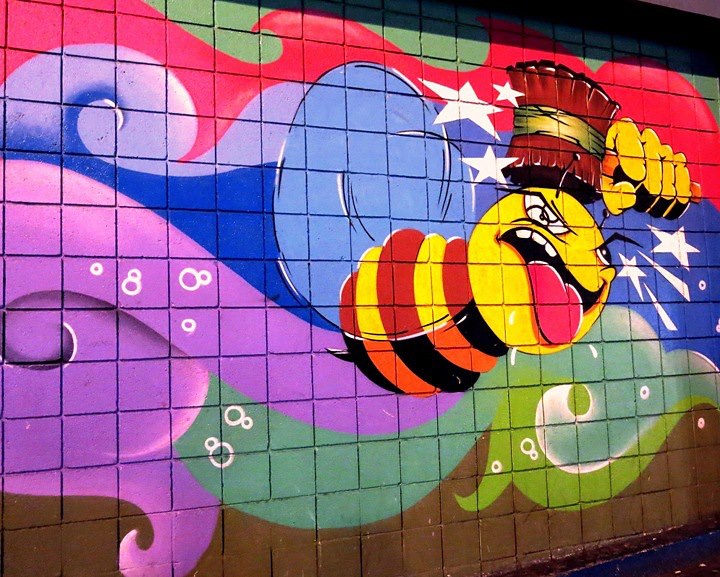
The Royal “King Bee,” born Alfredo Bennett the guy who decorated my cast, grew up in this part of the Bronx and honed his aerosol chops here, in fact.  His way of “giving back” was to furnish extravagant murals at 17-50 Grand Concourse and other Bronx locations. His oeuvre, which includes madly stinging bees, is something to admire. I like it better than the paintings of some of the genteel artists venerated by collectors and museums. George Seurat, for example, or Rubens.

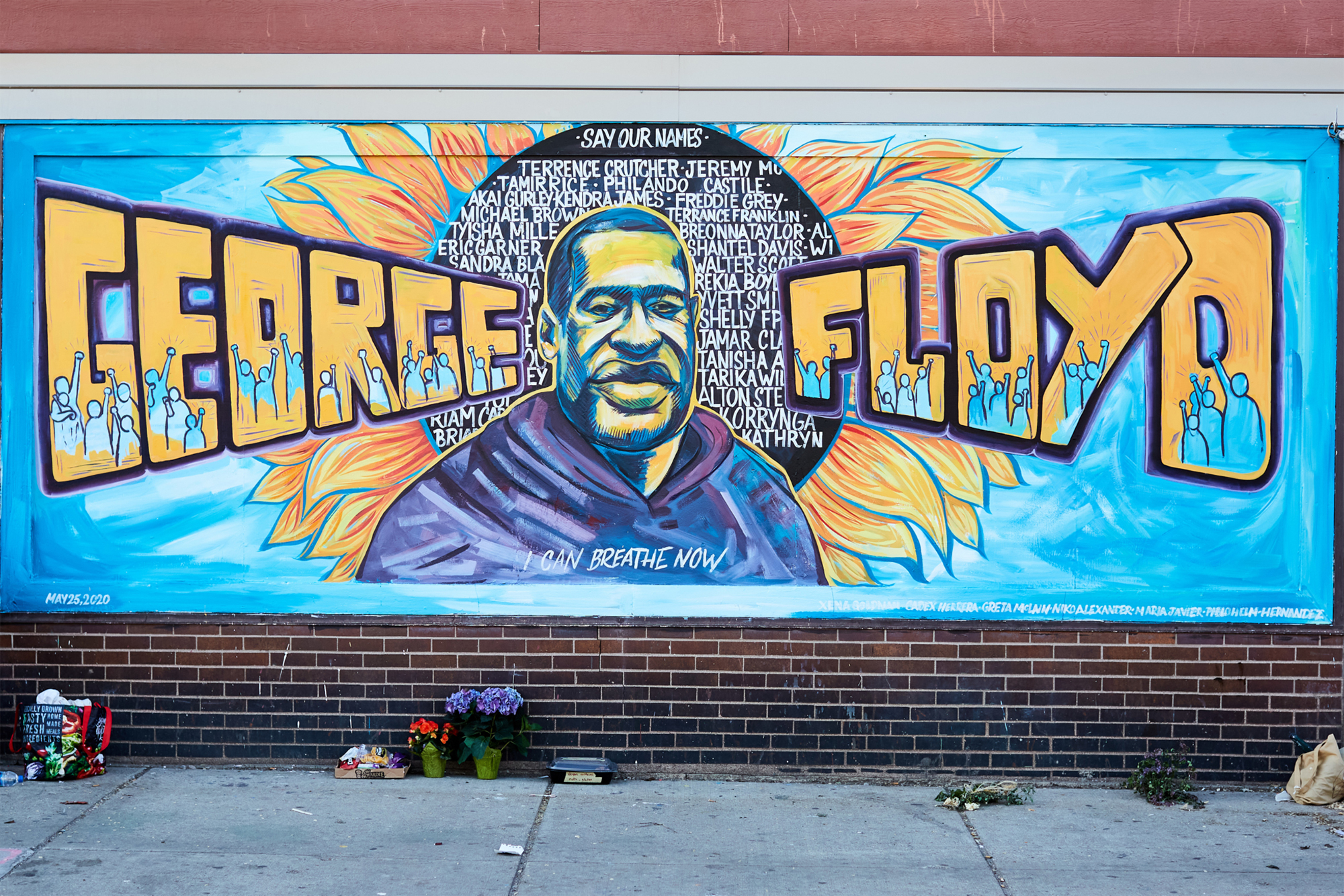
There is a difference between the iconic murals of George Floyd – found now in cities including Houston, Philadelphia, Portland and Los Angeles, Miami Chicago as well as Minneapolis, and so often defaced  by white nationalists – and the personal idiom of the streets.

But they both require paint and skill – perhaps some just need a taller ladder.

Leave a comment

Filed under Jean Zimmerman

The scents of the Grand Concourse,

both pleasant and foul, follow me as I walk the avenue inspecting trees to make sure they’re not injured by the major construction project underway, alerting the contractor to tree pits that have had stuff dumped in them.

First is citrus heaven, as I go past the many small produce stands where the proprietor peels oranges on a spit, afterwards bagging them for the clientele. The aroma wafts out to the sidewalk, freshening the morning.

One not so lovely, the smell of the pet store. Canine poop and pee rise like a cloud in front of the shop.

Puppy mill puppies include that little Golden in the window,  and can cost 2,800 dollars in the case of this English bulldog.

Which I would love to bring home, but can’t afford. Plus I prefer pit bulls.

Speaking of pets, the bodega I patronize just acquired a kitten named Winston, who is kept in the bathroom but has perfumed the whole store already.

Hard hats do not usually patronize shops here, but I go in if I’m interested.

I enter a nail salon to use the facilities – they really seem like every other store in the Bronx, alternating with hair braiding places – and I’m hit with dense, choking smoke from the acrylic shaping that goes on here. The bathroom is sparkling clean, as is the case in every establishment run by women here.

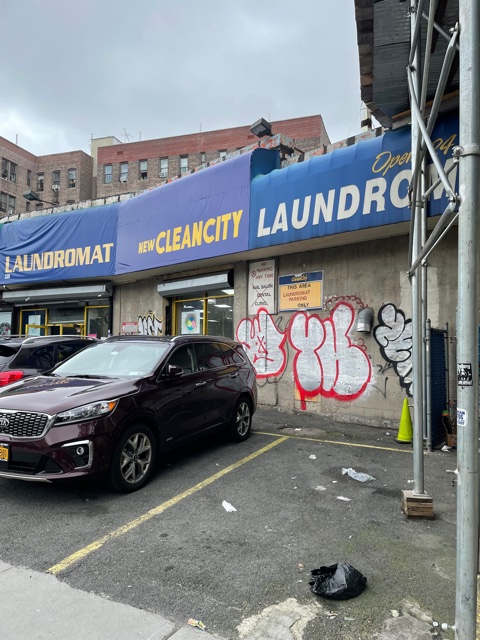
A relief to pass by the other big presence, the laundromat, with its sudsy air emanating from the open doors. 

The trees themselves offer a green breeze, especially if you harvest a few to determine the species – some sort of elm, as yet to be determined, with a problem as evidenced by the pin pricks.

And at the fish store, where the fish seem to have just swam in from the sea, the tangy salt breeze begs me to take home a salmon, bluefish, anything but the shark, a species which is now being overfished. In the morning they take them out of boxes of ice and line them up in an orderly fashion for choosy shoppers.

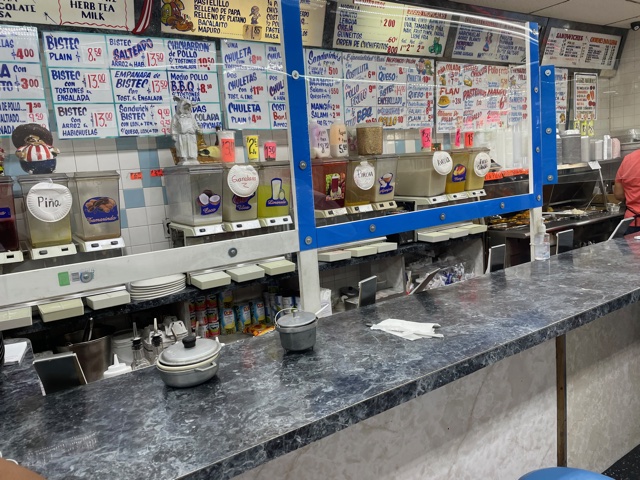
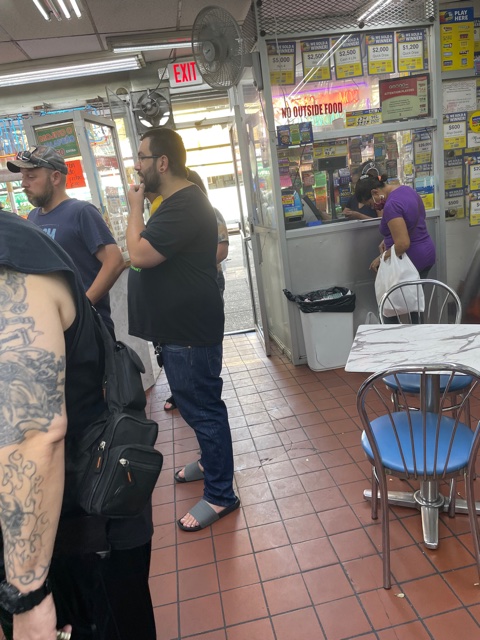
Or you can go to the cuchifritos restaurant, a hole in the wall that doesn’t even have a name in the window. The smell of the best fried pork in the neighborhood draws long lines, and when I wait I have the most delicious pina colada I’ve ever drunk.

It’s the only eatery I’ve ever patronized with a Lotto booth. Well used, too.

And finally, the garlic that hits my nose when I rip open the tostones package, its contents rich with grease and salt. Every day I promise myself I won’t indulge, a promise inevitably broken.

It’s an aromatic distinction of the Grand Concourse, one of so many. I’m going to get a bag of Tostones right now.

1 Comment

Filed under Jean Zimmerman

More spooky doings

in the Bronx. A fresh length of topsoil is laid down in one of the new medians at 175 Street on the Grand Concourse. This will bring shrubbery and trees in all shapes and sizes to the neighborhood. It will, we hope, transform the lives of people here in some organic way.

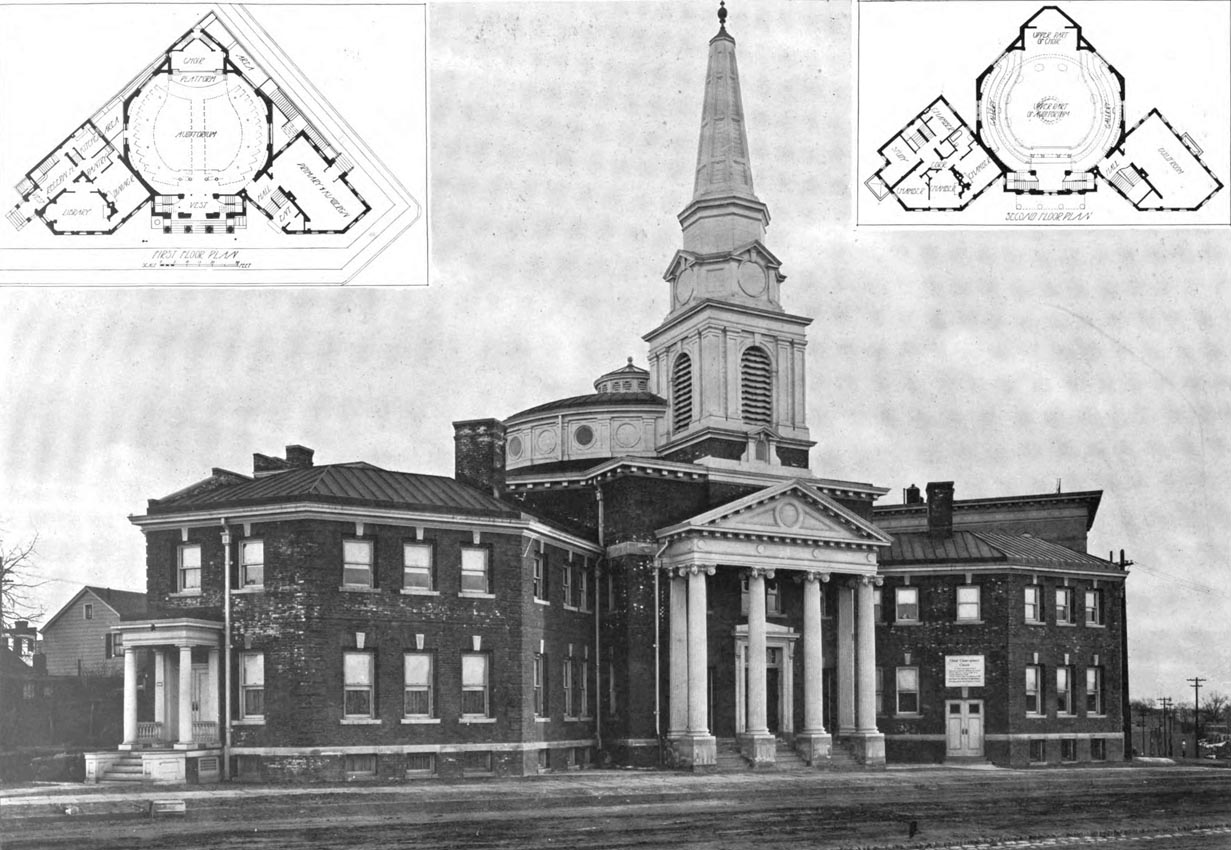
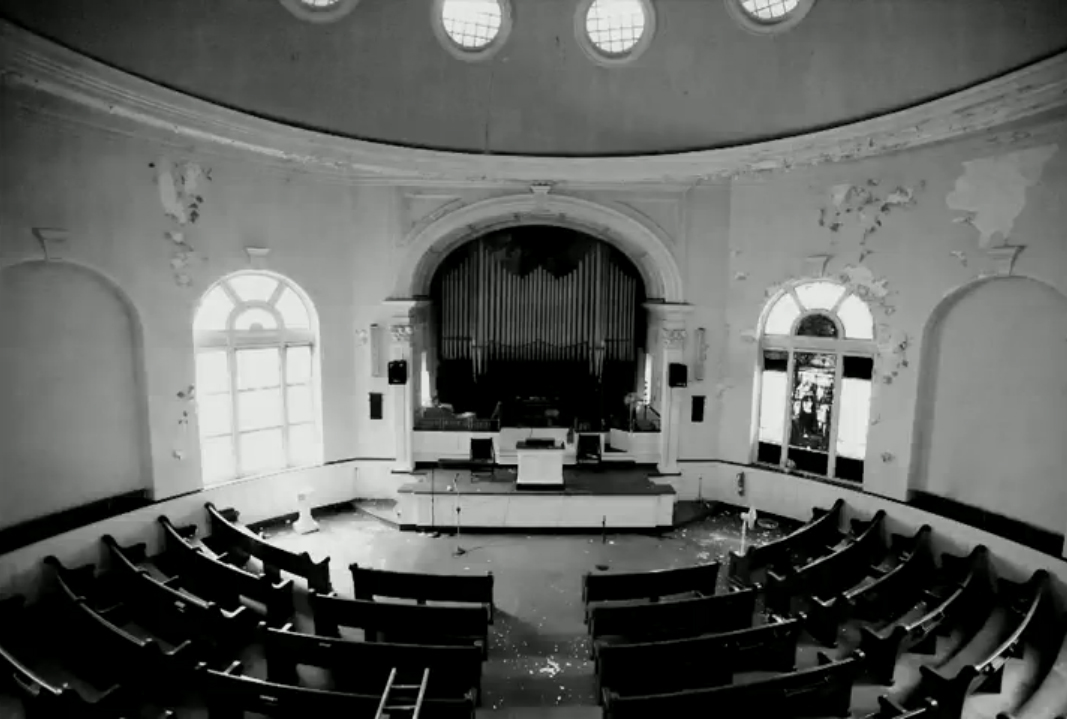
Meanwhile, I happen to look up, and floating above, grey against the grey sky, is the cupola of what I am to find is a derelict church over one hundred years old.

It is all locked up so I can’t get in to see it. A fellow inspector tells me that homeless individuals had holed up in part of the building, until they were finally evicted, after years of effort.

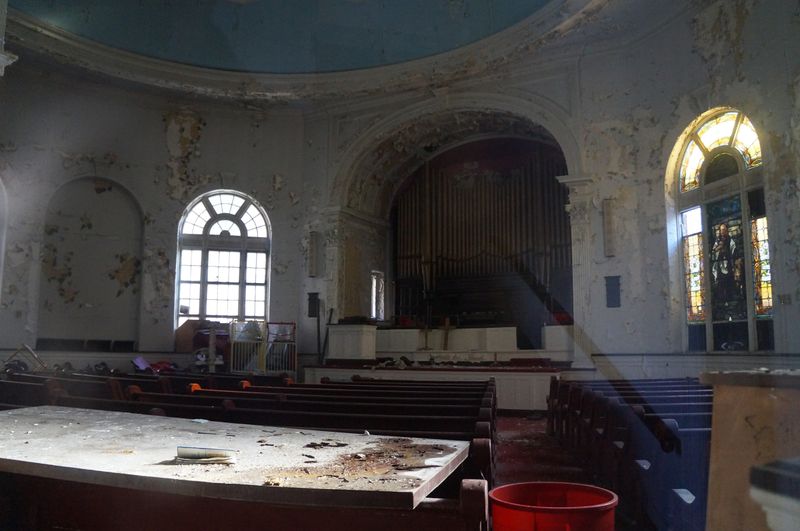
The church was built in 1910, by Christ Congregational Church of Mount Hope, of Georgian-style red brick and white trim. Spacious and handsome, it was designed by  Hoppin & Koen of New York City, the same architectural firm that created the Albany County Courthouse and other distinguished structures. In the center of the building, the sanctuary has a domed roof of tin, painted green, and an entrance framed by a portico with four columns. I can vaguely see them behind the chain link fence. Above the portico is the square tower that is still visible, and which once held up a tiered steeple.


For decades the church had a large and worshipful congregation. There is an auditorium that can hold almost 400 people, as well as a gymnasium and meeting rooms. Recently it was owned by the Pilgrim United Church of Christ.

When things fell apart, paint and plaster peeling—supposedly because various pastors let the structure go to ruin – this was the result. It carries myriad Department of Buildings violations.

Its magnificent organ was silenced.  Made by M.P. Möller, in Hagerstown, Md. in 1914, it had a deluxe tubular-pneumatic action. It was tested in 2012 and found to be ruined.

Various residents of the neighborhood have fought so that the church would not be razed and turned into a proposed homeless shelter. The local Community Board sees potential for the building as a cultural venue for the Mount Hope locale. 1,000 people signed a petition. A determined few congregants still huddle in a side room to pray. Outside the locked gates, I meet a couple of young men who would probably be candidates for that shelter – they were standing, shuffling, seemingly waiting for someone. They inform me that the current Dominican Pastor is a fraud – they had in fact been living on the first floor and he evicted them and he doesn’t even own the 

building, they gripe. They don’t mention ghosts, but I am sure there are plenty around in the cavernous church.

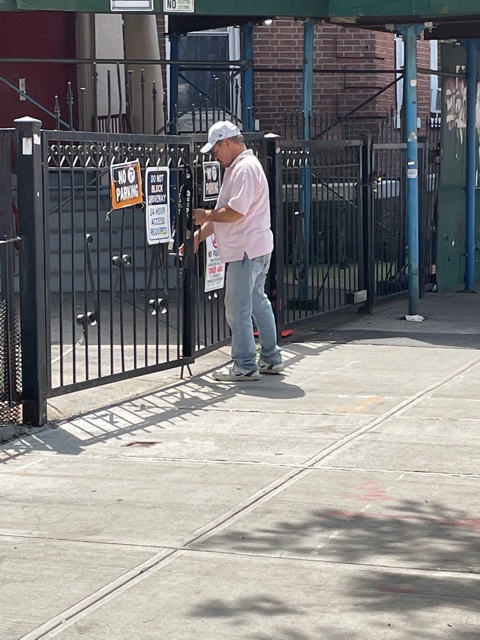
They leave and the pastor arrives in his shiny red  SUV. Unlocks the gates, backs his car inside.

That must be Reverand Israel Martinez, he of the Iglesia Evangelica Los Peregrinos.

Maybe someone will succeed in saving this sad, crumbling architectural once-gem. In addition to new plantings and trees outside, the people who live in the neighborhood, could use a beautiful place to go, and to pray if that makes sense for them. It could be as beautiful as the new trees on the medians.

2 Comments

Filed under Jean Zimmerman

New York Trashy

Should be the nickname of this small piece of the Bronx. You can’t escape the litter.

Maybe there just aren’t enough appropriate receptacles?

Someone carefully put her half-full cup on the ground. I don’t like Dunkin iced coffee either, but I don’t leave it just hanging out there.

There are guardians of the clean everywhere if you look for them.

Every day I walk past Darion hosing down the sidewalk in front of the defunct Paradise Theater.

His job is to keep the place clean, “and it’s big!,” he told me. It sure is — in its heyday it was one of the biggest in the city, if not in the country. Some of the other shopkeepers water their sidewalks, too – I like that as it cleans the soles of my workboots when I walk by.

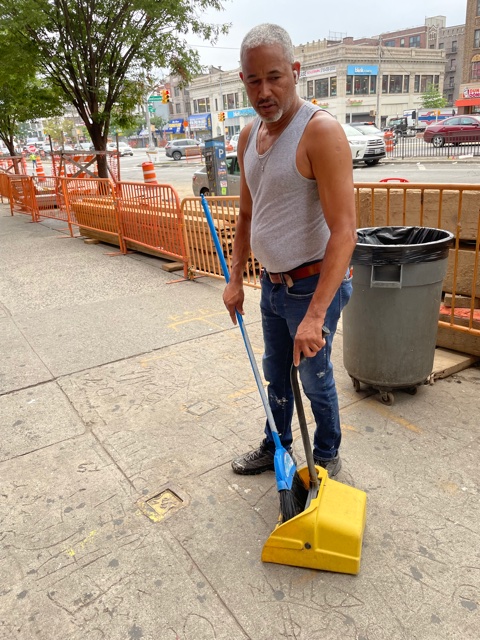
Others use a ubiquitous small broom and dustpan to get the litter.

Tidy.

The proprietor of a juice bar told me, “You have to keep it clean. It’s better for business.” I will go in to get a green smoothie today.

First thing in the morning, 7am, they are out creating order out of chaos.

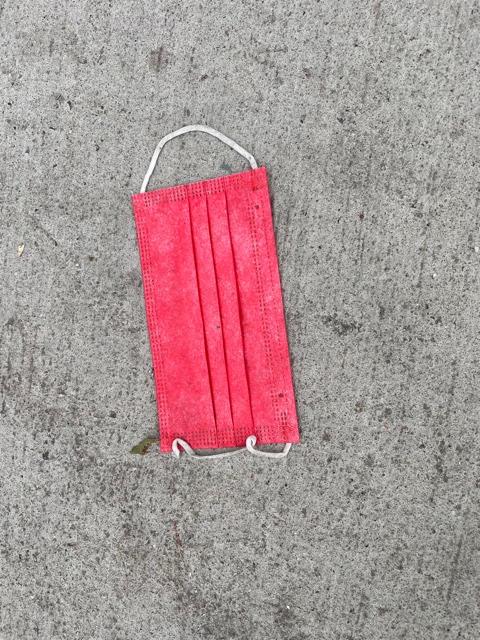
Discarded masks lay around everywhere.

What happened? Did someone just get tired of wearing it and fling it to the ground? Three quarters of the residents here wear masks inside and out, everybody, old and young. I don’t know whether this means they haven’t got the vax or that they got it and they’re protective anyway.

I engaged a sanitation bigwig in a starched forest-green uniform and badge and a driver in her streetcleaning vehicle about the trash. Number one, he intoned, there are three types of trash – homeowners, shops, and garbage on the ground (duh).  It’s much worse, he said, since Covid. Alternate side of the street parking was suspended, which I took to mean that it was hard for garbage workers to get through the cars to get the bags. He said that when they have the resources the City makes inroads with the sidewalk trash. And oh yes, he said, noting my hard hat and reflective vest, the contractors working here are responsible for much of the garbage. What else should he say when I asked him why there was so much garbage lying around. He did not wish to have his photo taken, nor did she.
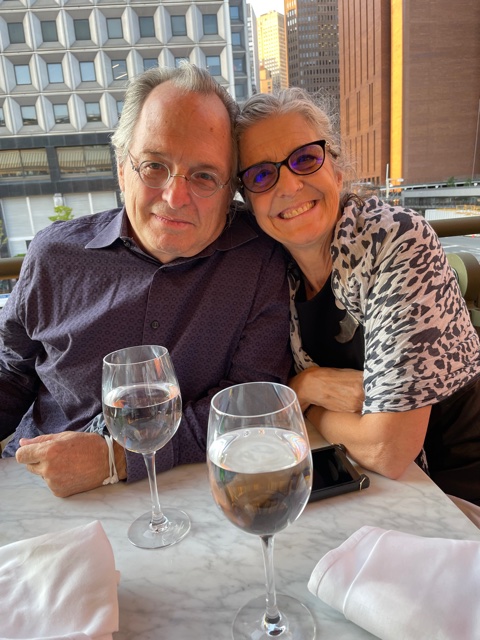
I don’t think this bench/table is trash, it was simply left in front of the supermarket overnight and serves some purpose.

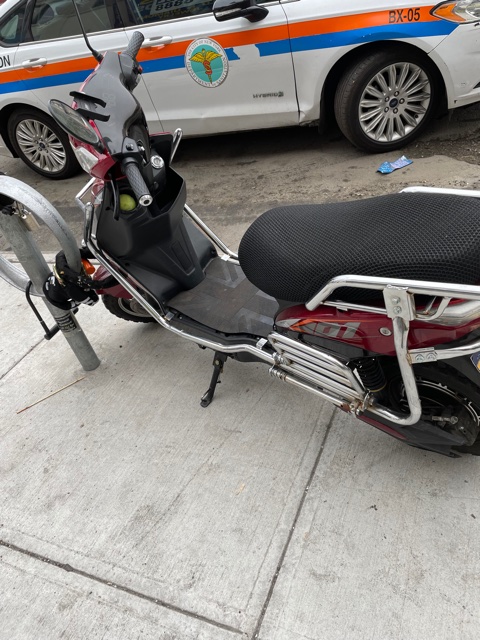
There are clean shiny things in the neighborhood. Scooters and sanitation vehicles.

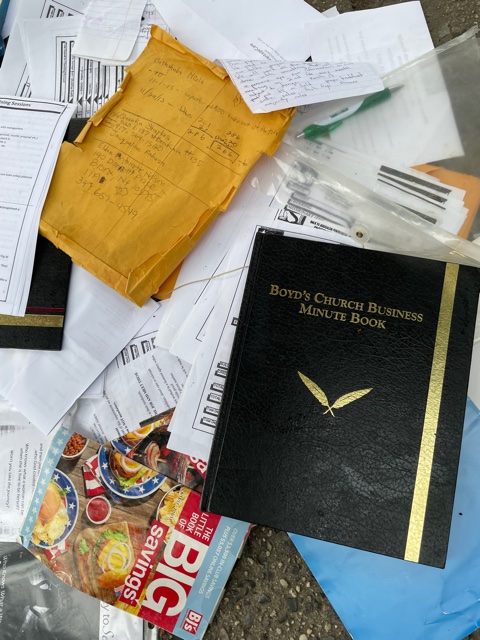
Sometimes you have a jarringly deep glimpse of a person’s life.

What happened to this individual and how did so many important documents end up scattered on the Grand Concourse? There is a story there.

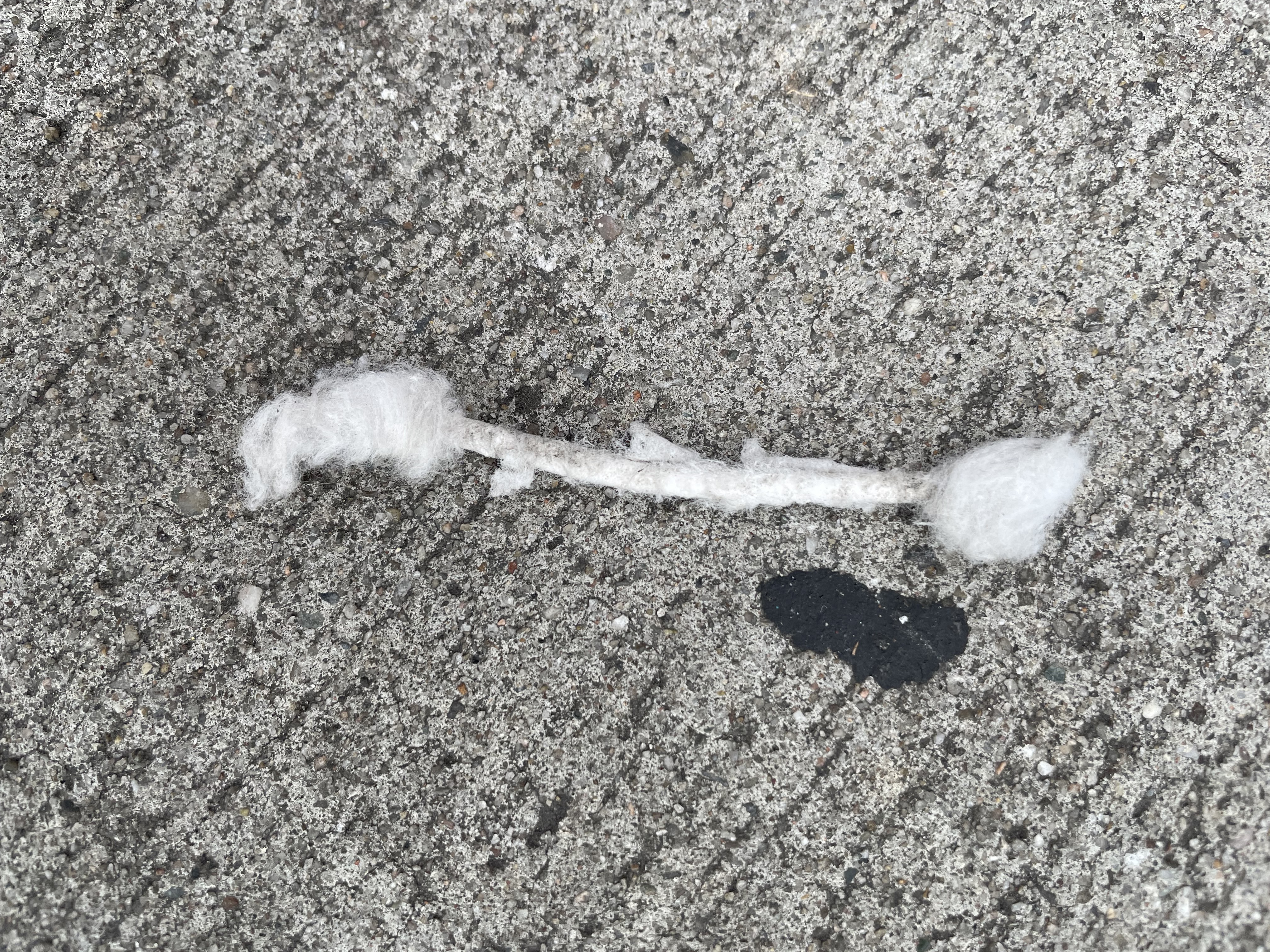
Sometimes it’s a glimpse you don’t want, like a used Q-tip.

Tree pits grow yuck as well as trees.

There I draw the line. Each tree should enjoy a pristine growing environment. Although I’m biased, of course.

And I haven’t even gotten to New York Shitty. All the kindly sweepers and washers couldn’t banish what the dogs leave behind.

4 Comments

Filed under Jean Zimmerman

The beauty of street trees

is the subject of Matthew Lopez Jensen’s Tree Love: Street Trees and Stewardship in New York City, https://www.terrain.org/2021/unsprawl/tree-love-new-york-city/. I highly recommend the article’s beautiful photos and elegant prose.

Leave a comment

Filed under Jean Zimmerman

If you go to the High Line

don’t expect to have it to yourself. Once upon a time if you happened to be passing through Chelsea you could wander up to the one and a half mile long park and the sensation would be one of openness, a respite from the claustrophobia that comes with living in a city with 8 million people. Now you need a timed pass to gain entry.

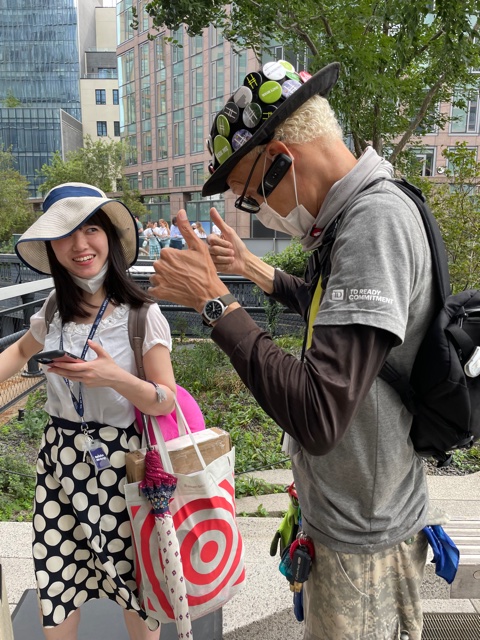
The guy in the Willie Wonka hat gave us a break though, letting us by like a couple of celebrities.

What first inspired a coalition of people to create the High Line–once the railway for provisions headed to lower Manhattan and making its way directly through some buildings as it went–was the realization that the railbed had become host to a veritable meadow in its years of disuse.

It also hosted junkies and hookers, needles and condoms, but the coalition was made up of visionaries. This part of town had had many lives. In earlier years, the 1920s, a different train had gone down 9th Avenue proper, killing so many pedestrians that cowboys were called in to warn people away from the tracks, waving red bandanas as a visual aid. For a time the area was known as Death Avenue.

Once the tracks were elevated, transit of foodstuffs was assured. Meat, especially, came down to Gansevoort street and the warren of warehouses that made up the meat market. The trains stopped running with the rise of trucking, ending in the ‘80s. When I first lived in New York during that decade I remember seeing beef carcasses hung in open bays and cobblestones slick with blood and lard.

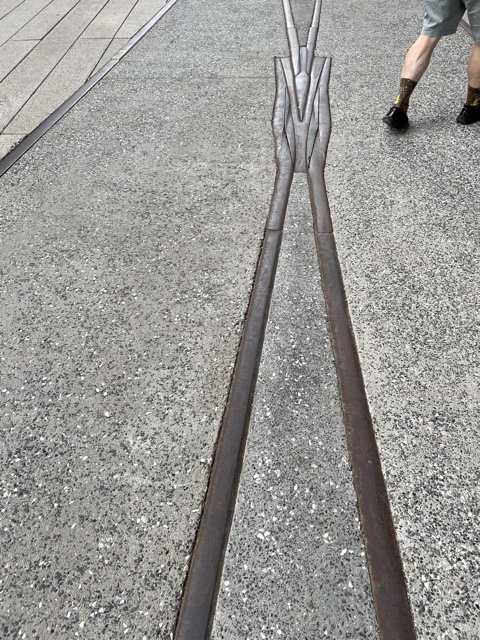
There is little residue of that time today, though the rails remain.

The gardening team has created a gem that changes with the seasons.

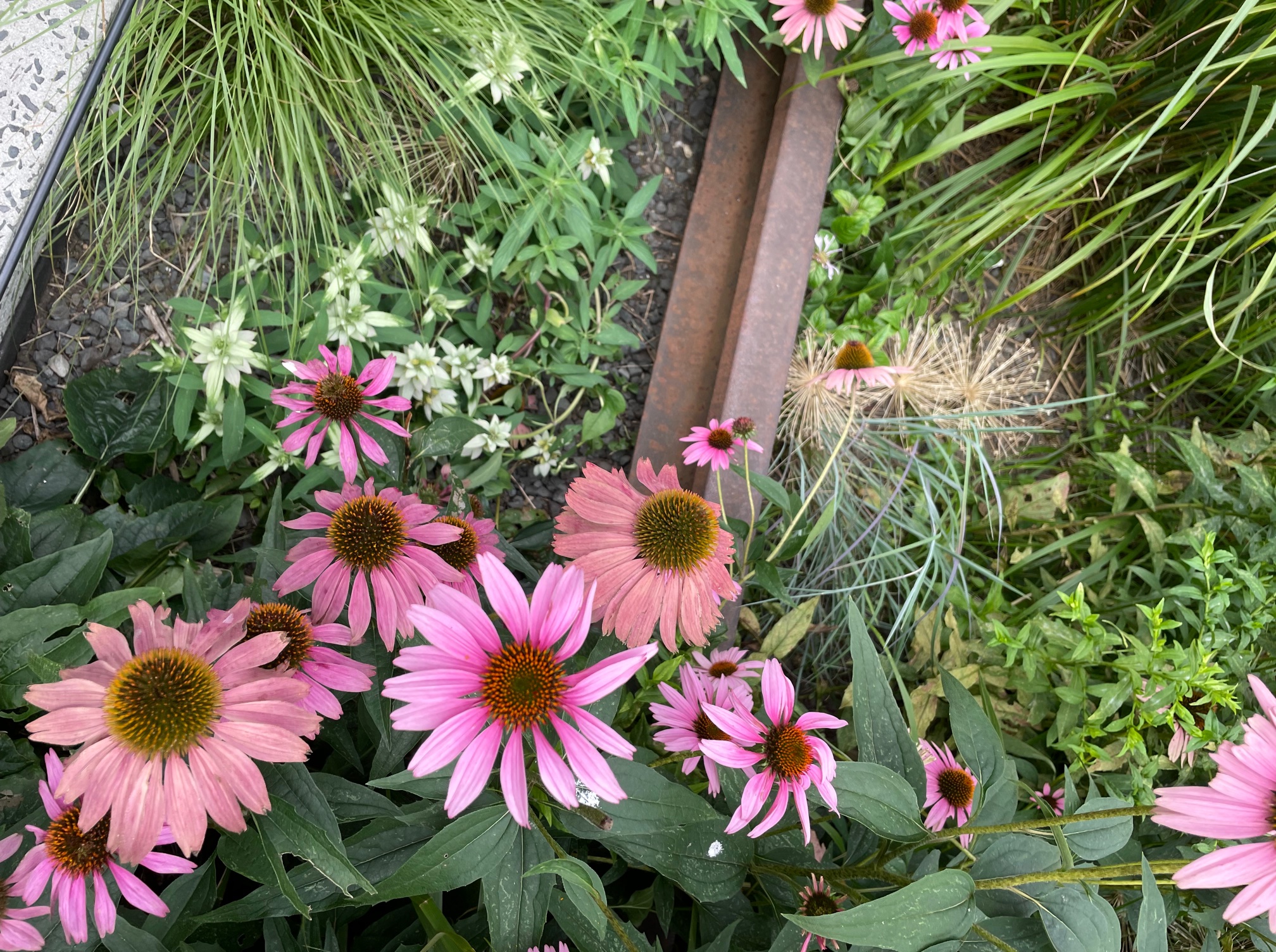
Today, purple coneflowers dominated. The rails show through.

Since the High Line opened in 2009, the birches have grown up.

And some trees you wouldn’t imagine would flourish, like this big leaf magnolia.

Art is everywhere.

Though sometimes you have  to seek it out.

But what also has grown is the throng of new buildings that crowd the park on every side.

Some apartments are so close that you feel like a snoop just walking along.

In fact, when I first started going to the High Line it was rather famous for a glass building that housed sexual exhibitionists.

Many views are blocked, though you can still look straight down 23rd street, and if you happen to be in the right spot you can see the Hudson.

But the main thing you see is people.

It is a babble of foreign languages, with the High Line featured in guide books all over the world.

And everyone is marching along, phones held aloft for pictures (me included, obviously). It’s a place that is quintessentially urban, a crowd scene – but isn’t that why we visit New York City?

Leave a comment

Filed under Jean Zimmerman

Even at seven a.m.

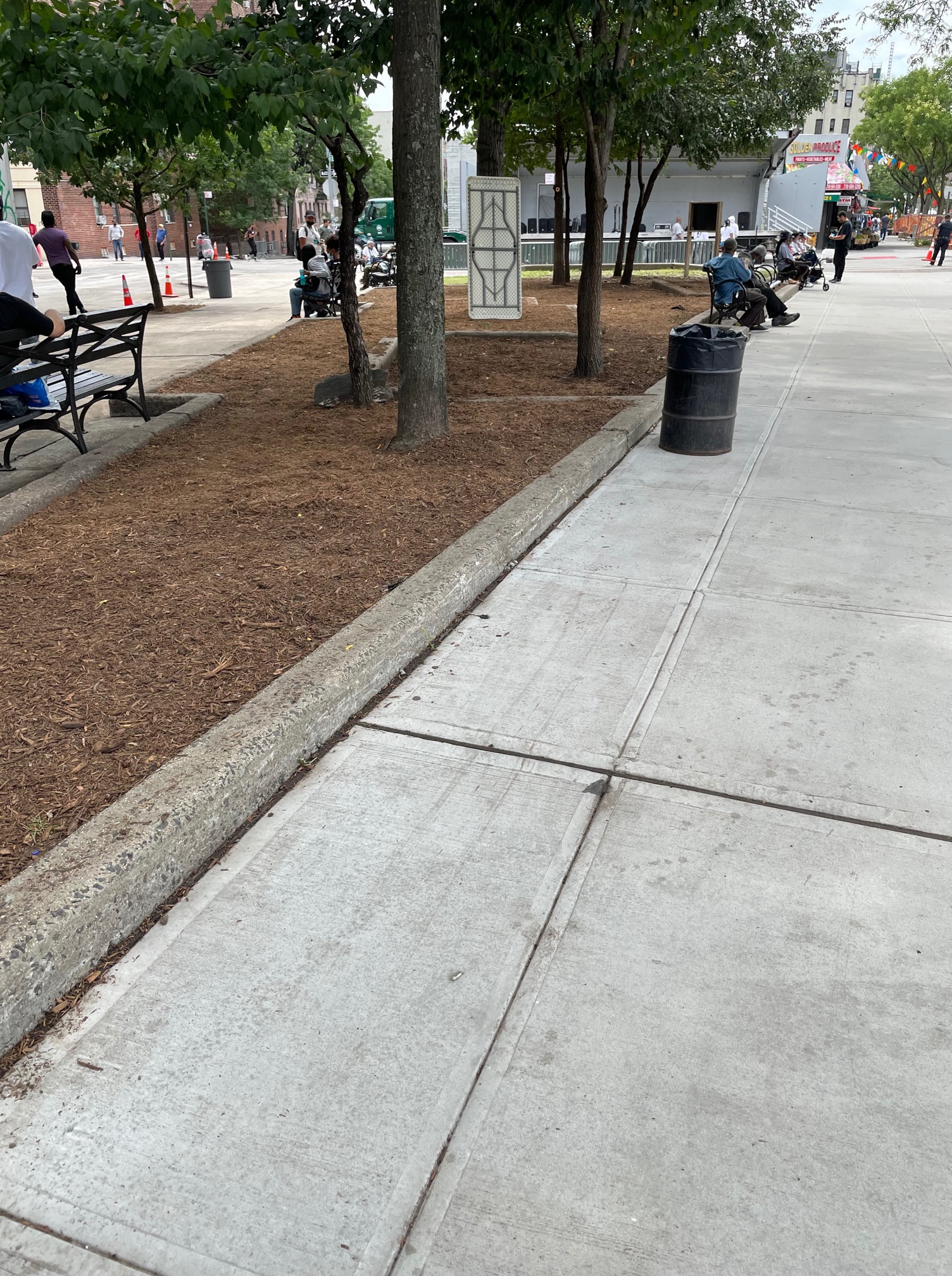
you could tell something was going on. The tiny park across the street on the Grand Concourse had been miraculously covered in clean mulch overnight, its tree pits and the ground all around and under the benches dark brown and shredded, all new.

The sign announcing the name of the park, the Bergen Triangle, is almost as large as the park itself.

Two Parks employees wielded leaf blowers to chase away stray shreds. Then blue tents marked NYPD went up along one side. A cop brought over a metal barricade to divert traffic from the Concourse side road. Cars parked inconveniently found themselves towed.

Sanitation vehicles, street sweepers, began to circle the triangle – three, four times. Someone wanted this area to be spic and span.

This park is usually distinguished not by cleanliness but by its canopy.

People settle in there to talk, play music, sometimes rap with a  speaker, and feed the pigeons – hence the thick coating of bird droppings on the sidewalk, something hard to avoid as I’m walking up the avenue to the work site. Some of the park sitters are lunatics, but most sit calmly enjoying the shade, which is what much of the Concourse lacks.

Recent studies have revealed the immense importance of shade on both health and mood.  When urban areas lack tree canopy people suffer.

I smelled a visit from a dignitary in all this tarting up activity. The Governor? the Mayor? Lady Gaga? I figured the action would be coming from the direction of the 94thPrecinct stationhouse a block away on 181 Street.

The Bergen Triangle originated when New York City acquired the land “for street purposes by condemnation” according to the web site of New York City Parks and Recreation. After Anthony Avenue was completed, the Department of Highways and Transportation turned the leftover lands to Parks in 1932. Parks created the bluestone-curbed, cement sidewalked, turn-of-the-century-style benches with shrubbery and pin oaks. These are the type of benches that Robert Moses favored.

Note: there are a few pin oaks still but honey locusts dominate as always in this neighborhood (the kind mercifully without thorns).

The park’s name came from William “Billy” C. Bergen (1862-1925), a one-time policeman known as the “millionaire cop” because he made a fortune developing empty lots in the Bronx at the beginning of the 20th century after starting a career as a beat cop. Walking his beat, Bergen couldn’t help  but notice large land lots as yet undisturbed by the new subway lines just coming through. When the Third Avenue El and the Jerome Avenue El opened, bringing people and industry, Bergen bought and sold with gusto, eventually becoming a developer and builder and finally a mover and shaker in Democratic politics. A small number of his houses still stand in the Bronx.

Millionaire Cop

Bergen Triangle is bounded by Anthony Avenue (the aforementioned street with the empty land — hard to imagine now), Grand Concourse and East 181 St.

Sirens start to sound. Is it starting? No, that’s just an ambulance wailing as usual.

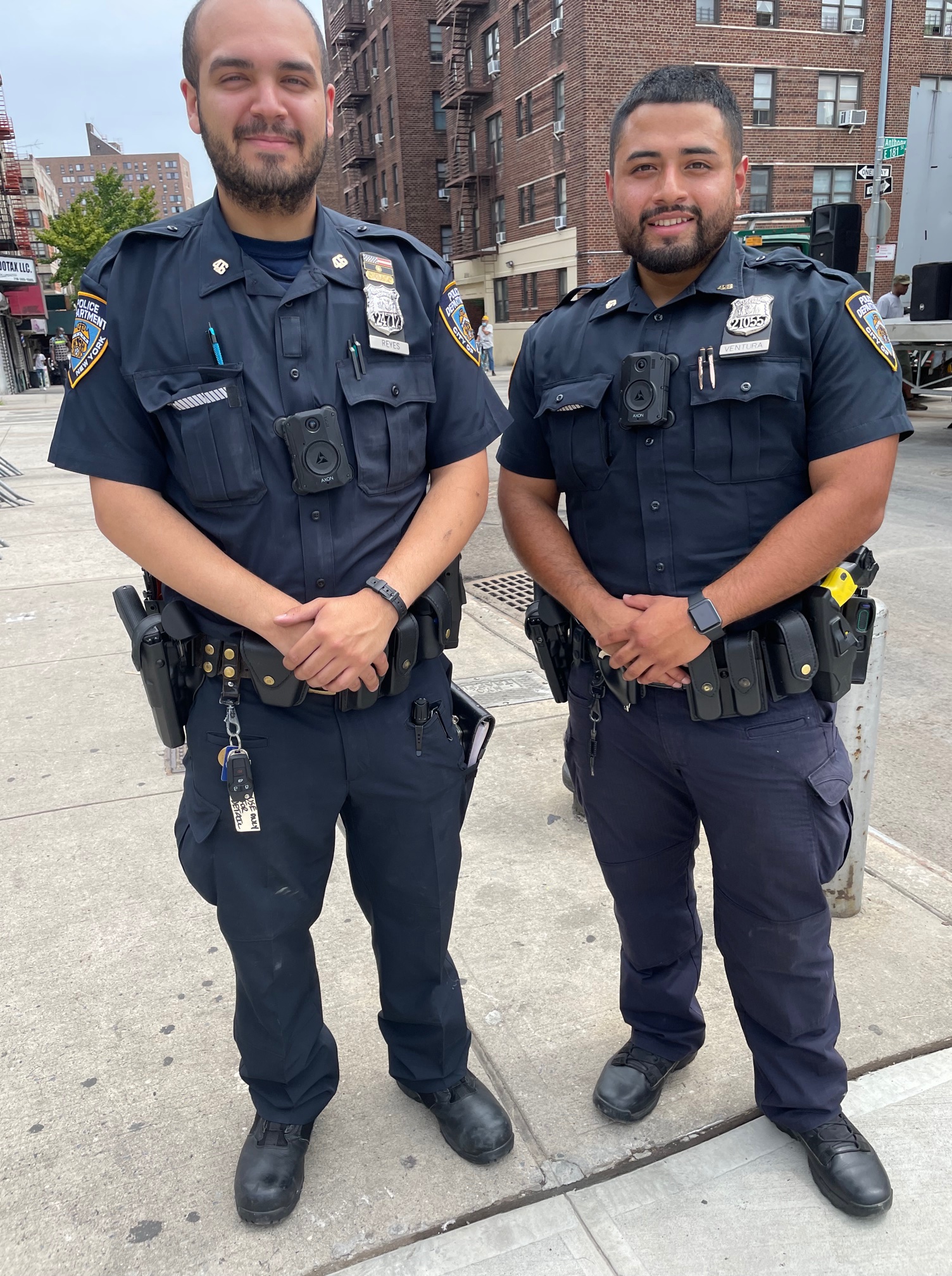
Friendly cops congregate all around the park.

A temporary bandstand appears, hammered together by Parks workers.

At 4:00, “National Night Out Against Crime” will start – in over seventy locations!—with the purpose of improving police-community relations. One officer tells me the Mayor will indeed “stop by.” Stop by? “Alright, he’ll speak.” There are to be barbecue, face painting, musical acts. And, probably thinking there is clean mulch in the Bergen Triangle every day, the Mayor.

Leave a comment

Filed under Jean Zimmerman

Is there a creepy feeling in the air

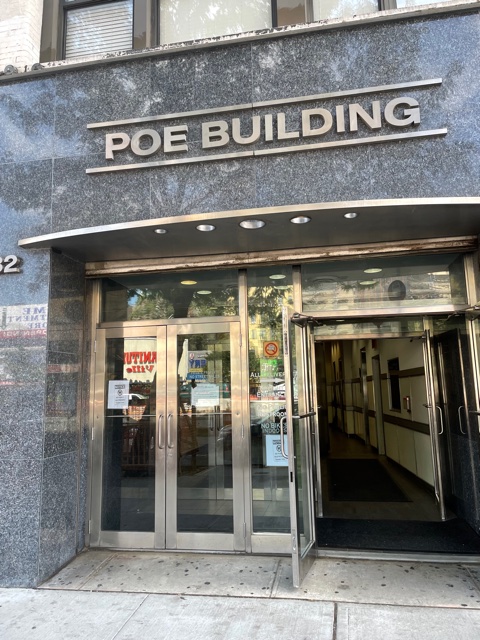
or is it just me? I’m standing on the sidewalk, looking up at a block-long office building with its name prominently displayed across the front: POE BUILDING. It seems incongruous now, but makes sense when you consider when the building when up, in 1917. The Grand Concourse had just been laid, and the people of New York were going all out to venerate Edgar Allan Poe.

Poe spent a lot of time in the Fordham neighborhood of the Bronx, but only after hopping around from one residence to another in New York City and elsewhere.

Born in Boston in 1809, he first came to Manhattan with his wife Virginia and his mother-in-law Maria, and stayed for a few months in the West Village. They moved to Philadelphia. They returned in 1844, living in a boarding house downtown before moving to a farmhouse owned by the Brennan family, in the vicinity of what today is West 84 Street and Broadway.

Over the years he published not only Gothic poetry but short stories and criticism. He was a central figure in the movement known as Romanticism. Some of his stories (The Tell-tale Heart is an especially creepy one I like) were gold. Supernatural and detective fiction were his specialties.

Poe was apparently the first well-known literary figure to try to support himself off his writing, and it’s unclear whether he made a good job of it. He had no children – perhaps a lack of funds is why. His checkered life included marriage to his 13-year-old first cousin Virginia and an ill-fated military career, failing as a cadet at West Point.

The Raven, an overnight success, was written at the Brennan Farmhouse, and The Evening Mirror, where Poe worked as a critic, was good enough to publish it. The newspaper’s headquarters at 26 Ann Street still have a plaque devoted to Poe (though apparently you can’t get in to see it), as do seemingly all the other nooks and crannies he made his own over the years. The site of Brennan Farmhouse got a plaque, too, when it was razed in 1922.

After yet again moving to Greenwich Village, Poe leased a small cottage in the Fordham section of what was then Westchester County, from the Valentine family. The rent was $100 a year. It was the spring of 1847.

In large part Poe moved there because of Virginia’s illness, tuberculosis – it was thought that the fresh country air would banish it. However, the same year they moved in, she died, and two years later 40-year-old Poe himself was to die, raving on the streets of Baltimore, whether because of disease, substance abuse, alcohol, suicide, syphilis, or existential. The cause has never come clear.

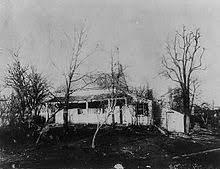
Fast forward a few years, after Virginia’s mother Maria desperately tried to sell off the house’s furnishings (Virginia’s death bed remains).  Literary-minded folks tried to save the cottage, and succeeded in 1913 when the house was moved to a new location, a newly created park with the great writer’s name.

It became a New York City landmark in 1966, standing at 2640 Grand Concourse at East Kingsbridge Road – just down the way from POE BUILDING at 2432, which went up in 1917 when the city was in the grip of Poe-mania.

Leave a comment

Filed under Jean Zimmerman