Tag Archives: Lyndhurst

Late summer privacy.

I see no one on my walk to Lyndhurst, not a soul. My only company, late-season thistles along the path.

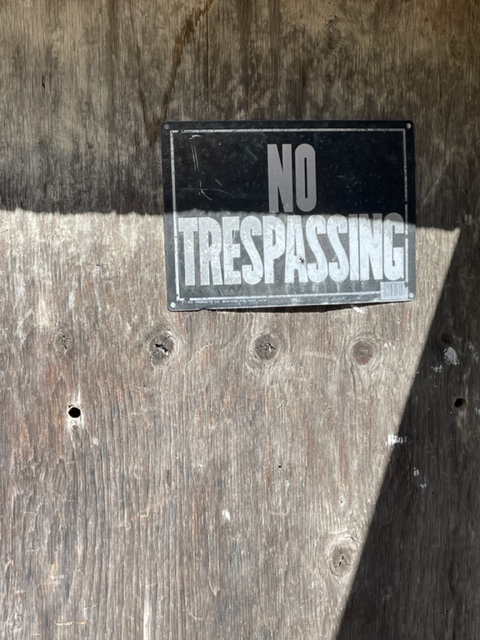
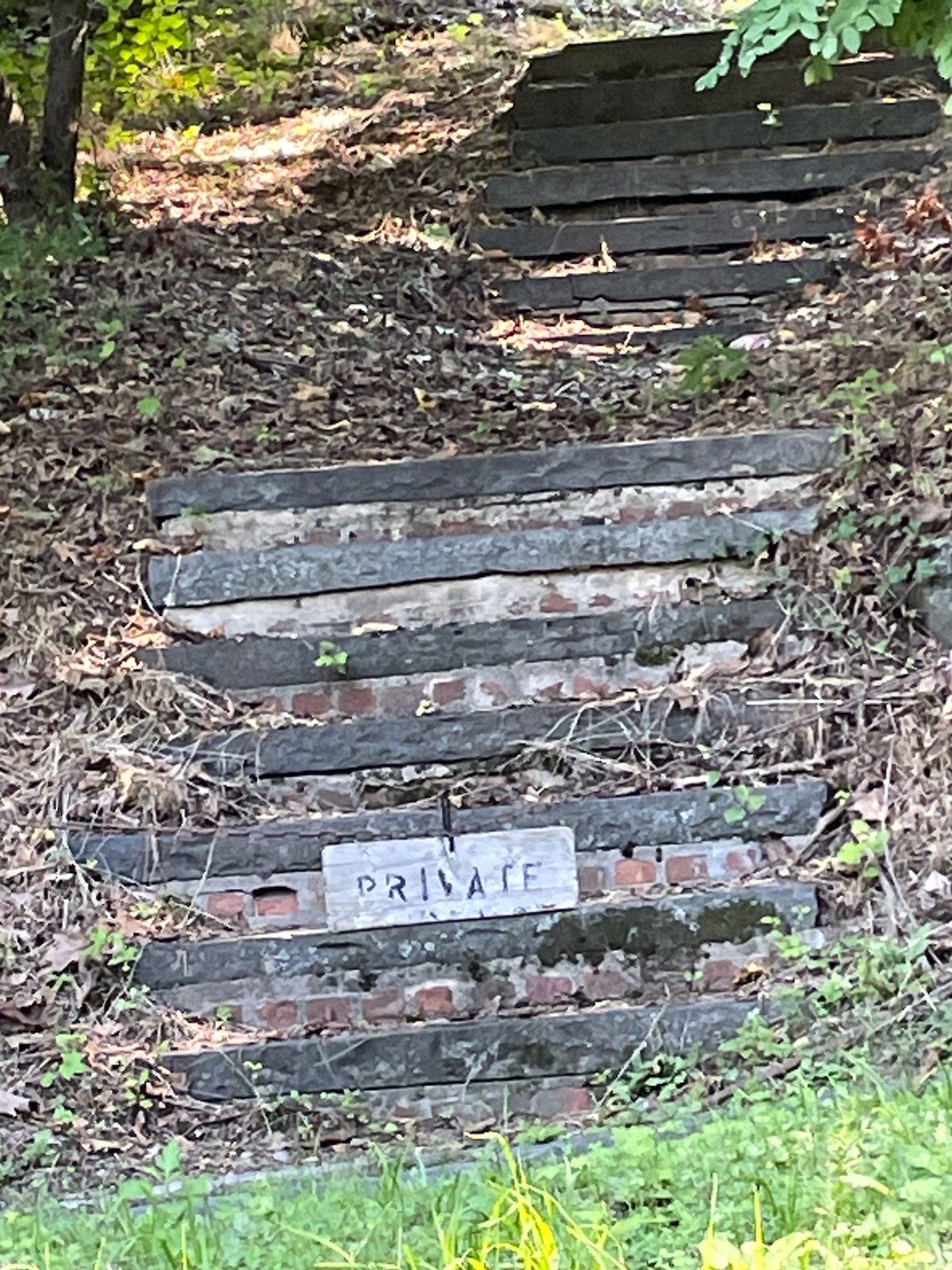
A weathered sign by the open-air entrance to the old estate tells the story of my day in a word. Private.
The Old Croton Aqueduct trail runs right through the grounds. Apparently the first owner of the property was proud, ecstatic to have the water run underground here when the water pipe was first installed, carrying water miraculously down from upstate to New York City.
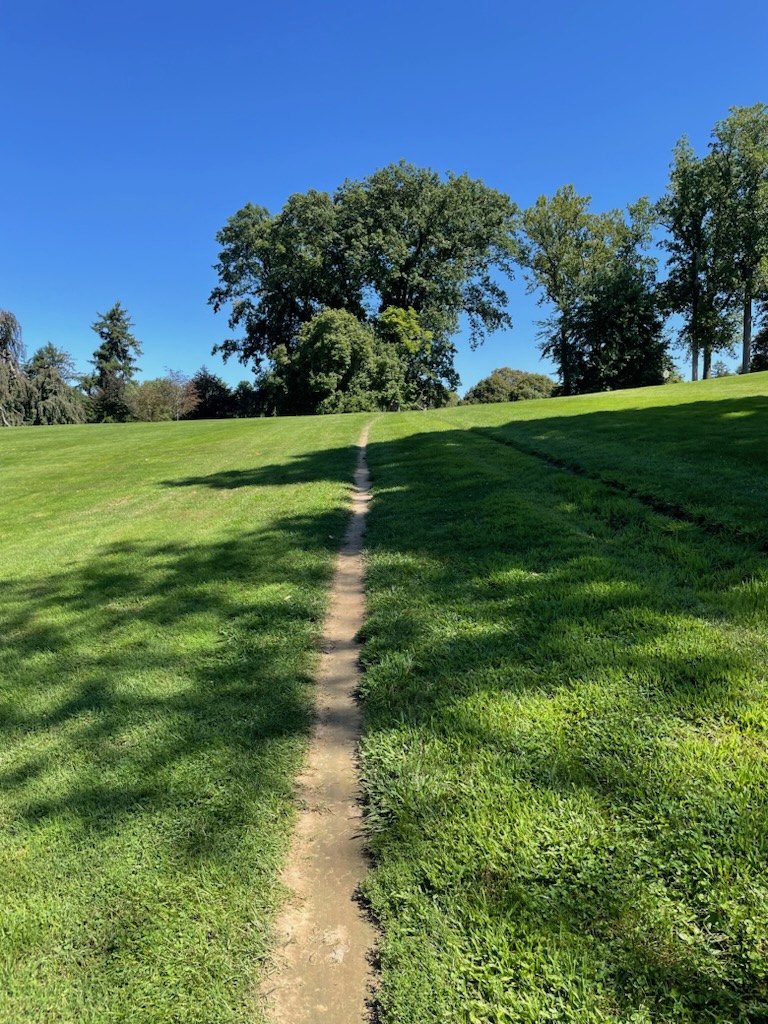
You can stay on the trail. Or follow mysterious mysterious arrows. I choose not to follow.

The lawns and old, old trees beckon. Robert Graves wrote, Tranquility is of no poetic use. I beg to disagree. This morning is sheer poetry. The calming late-summer scents of grass and trees, the hum of insects, the perfect glaze of sky.
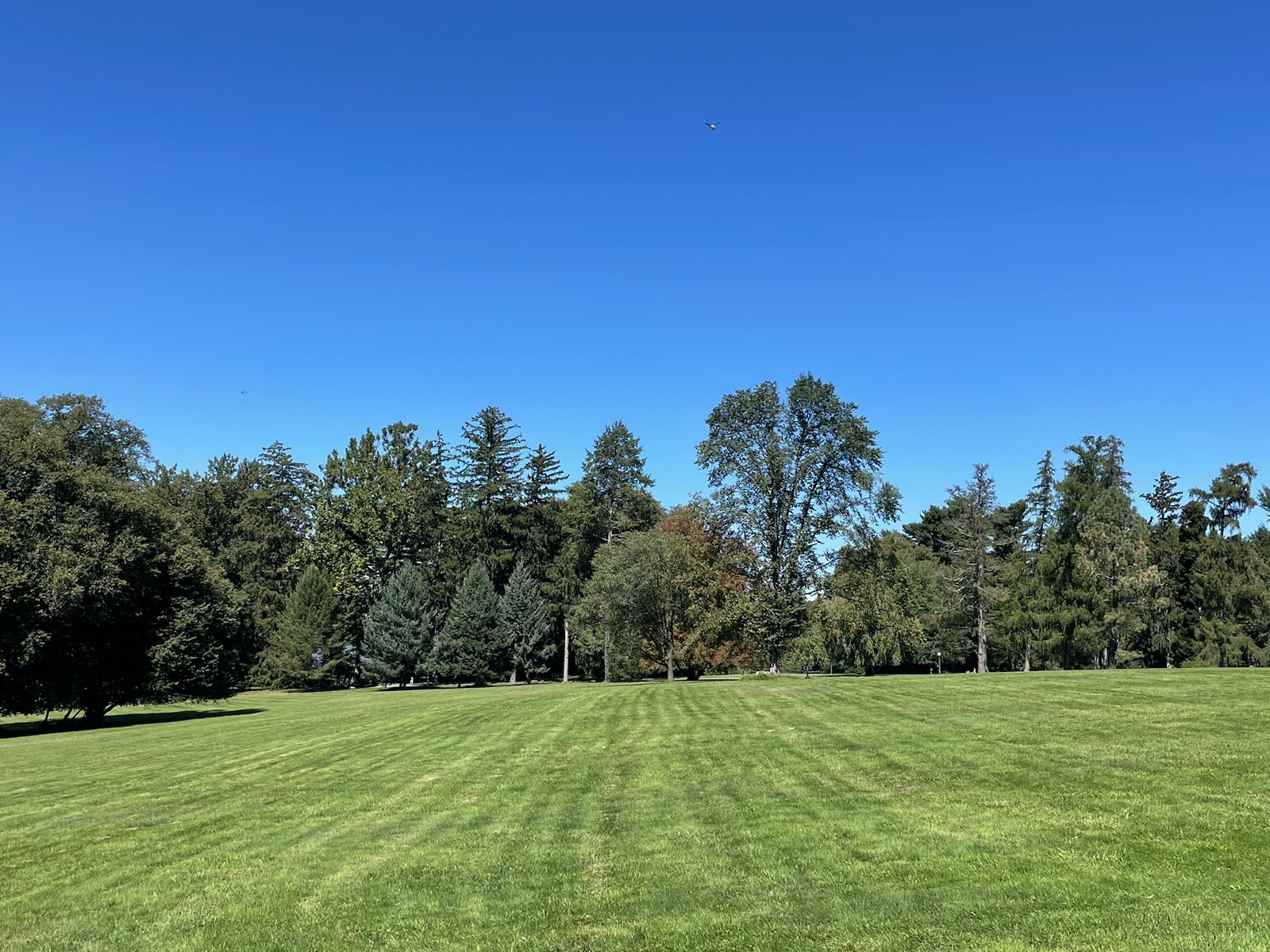
I have wondered recently, Why is the sky blue? Such a silly question. The science has long been in. But still – blue? Perfect azure? Really? Could the universe really be this kind? I visit a grove of tulip trees.
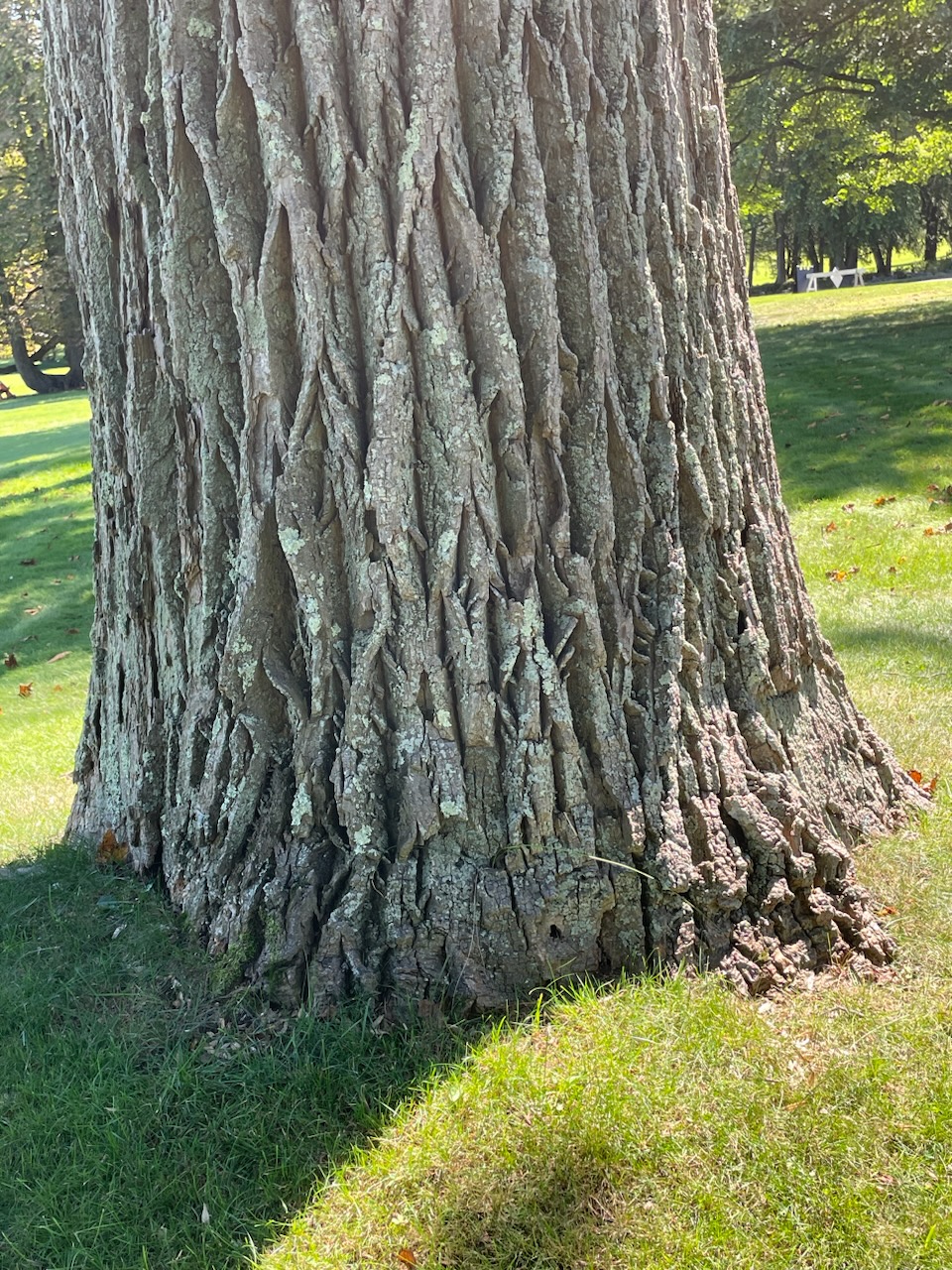
They stand poker-straight and are probably two hundred years old. Come close and touch the grooves.

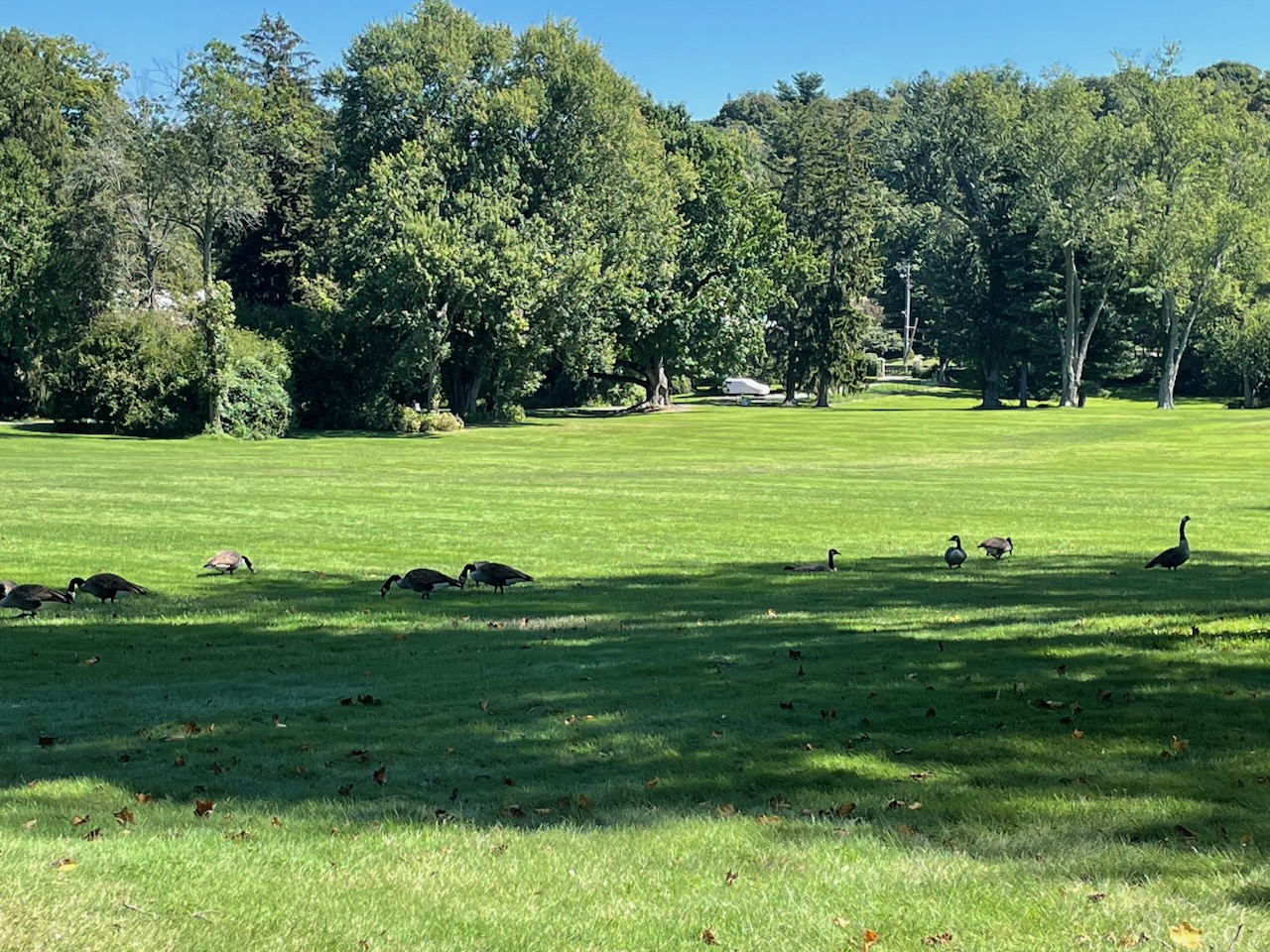
Geese feed themselves on grass. Quietly, unhurried, unworried.
I feed myself too. I am hungry, having not eaten yet today. Now I feed my soul. I go to my favorite linden, the huge specimen with multiple stems and an enclosed space like a private drawing room.
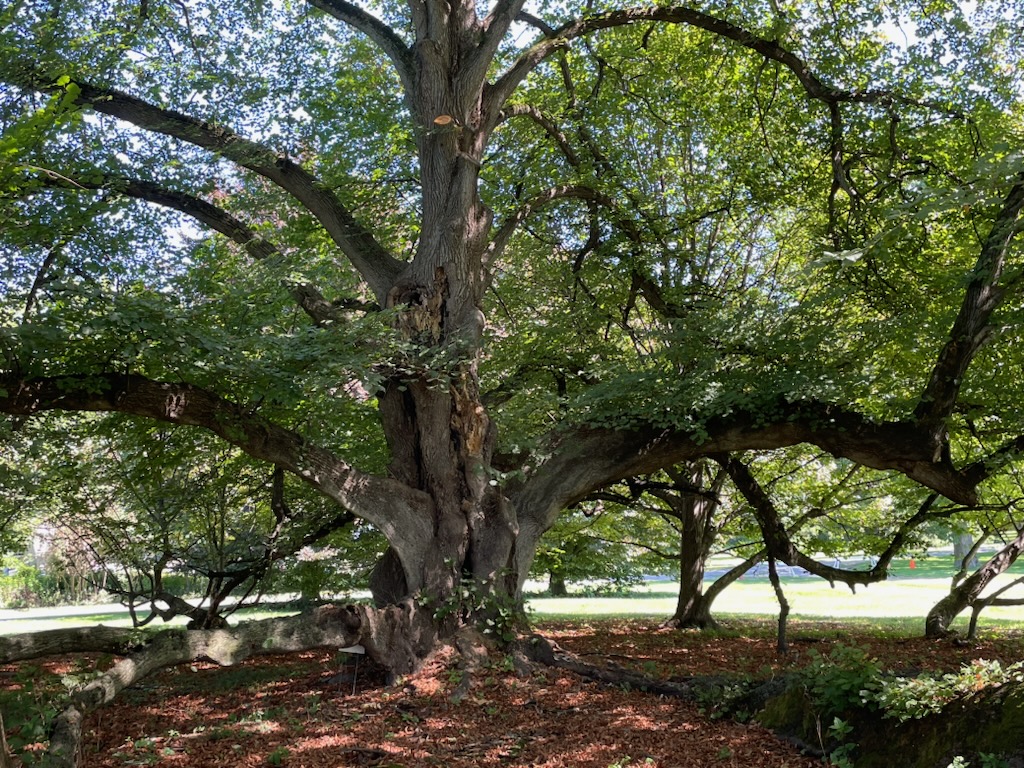
There are many lindens here, some still holding onto their magical lemony bracts.

Octavio Paz wrote:

Perhaps to love is to learn

to walk through this world.

To learn to be silent

like the oak and the linden of the fable.

To learn to see.

Your glance scattered seeds.

It planted a tree.

   I talk

because you shake its leaves.

Seeking even greater privacy, greater tranquility, I visit one of the gargantuan, ancient weeping beeches on the grounds,

I push aside the branches and enter, finding myself inside a place so silvery dark and still and mysterious that no photo can really do it justice.

Others have been here before. Hello Bob, who did you love?
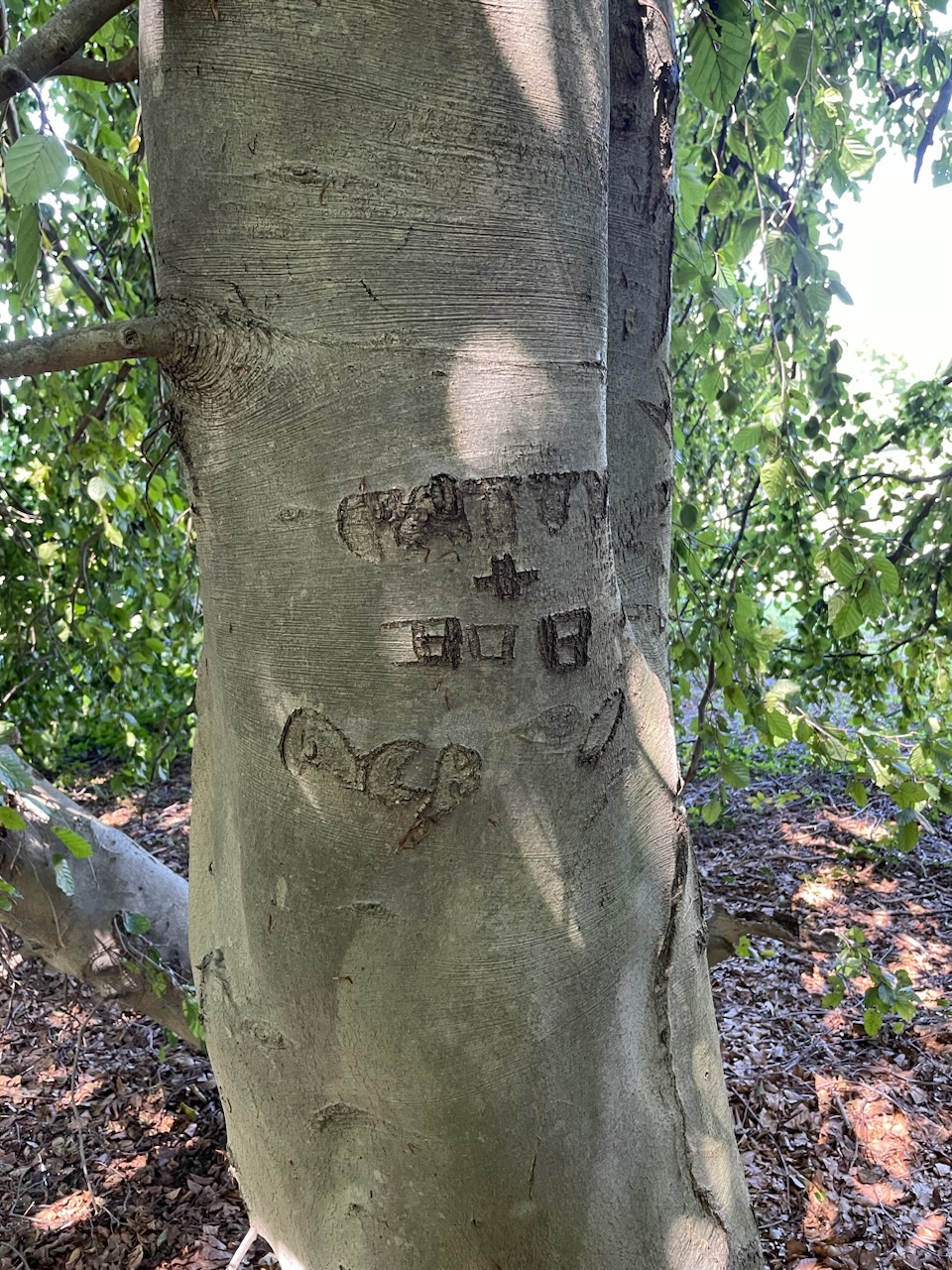
The branches twist together, sinuous. So quiet, yet so alive.

I run my hand along a smooth, muscular bough.
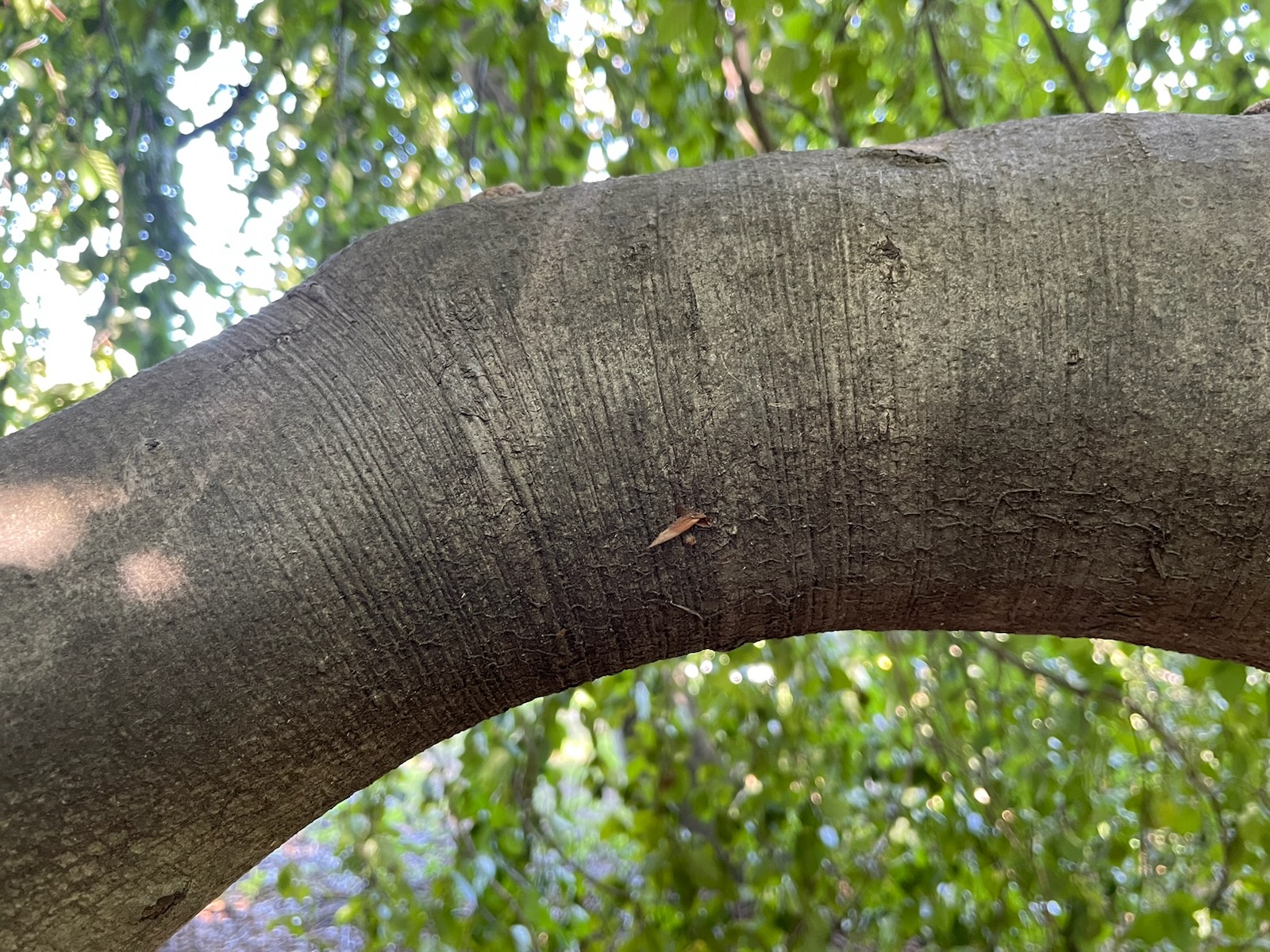
I stand there. I do nothing. It takes a lot of time to be a genius, wrote Gertrude Stein. You have to sit around so much, doing nothing, really doing nothing. I’m no genius, but I know that doing nothing can be an art as great as any other.

The rose garden at Lyndhurst is also antique, designed  by ladies a hundred years ago in concentric circles. Just outside its perimeter, late-season sage.

Hydrangea and its perfect clusters. I clearly need to find another word for perfect.

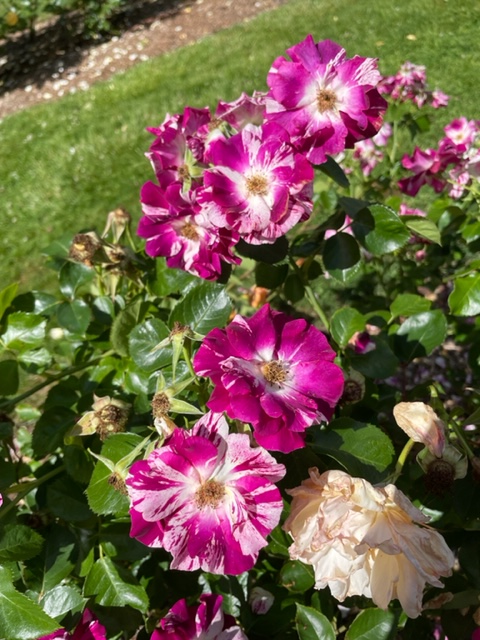
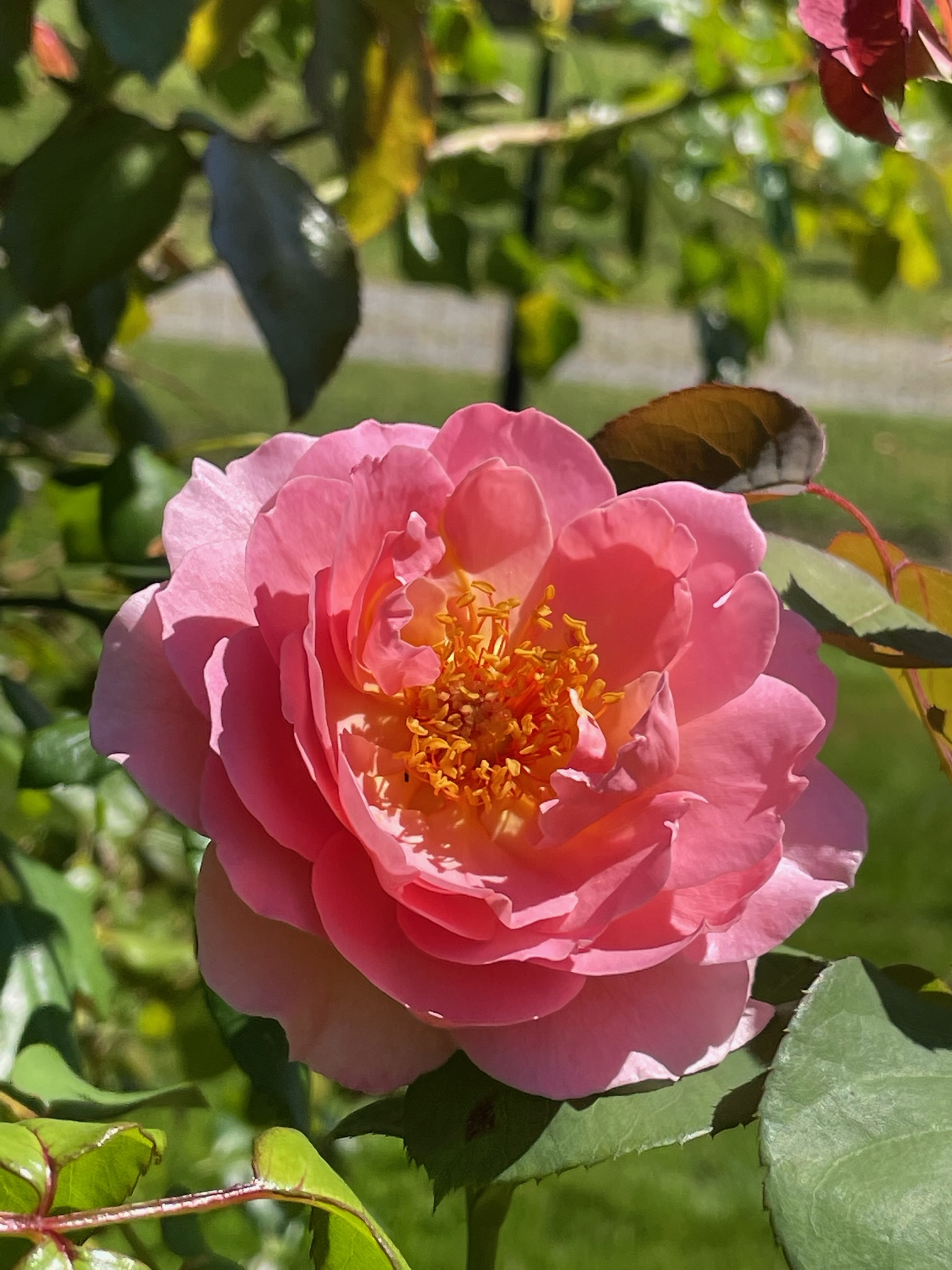
Only me here and the bees and the butterflies. No other human soul. I brush the sage with my hand and the scent wafts up. Here are September roses, flowers like no other.

Everything is perfectly still, lush, quiet. Perfectly private.

Spent rosebushes climbing a trellis have a beauty almost as exquisite as the blooms all around.

Rose hips hide themselves among the greenery.

Bees prowl the blossoms.

Hide inside, sip nectar.

Catbirds come calling. Lovely fragrances lift themselves, waft under my nose.
I wipe sweat from my brow and smell the sage I touched before. Lock the gate and leave. Just outside, some ancient spruces, one with the conjoined stems I love.

Cones litter the ground, brown on brown.

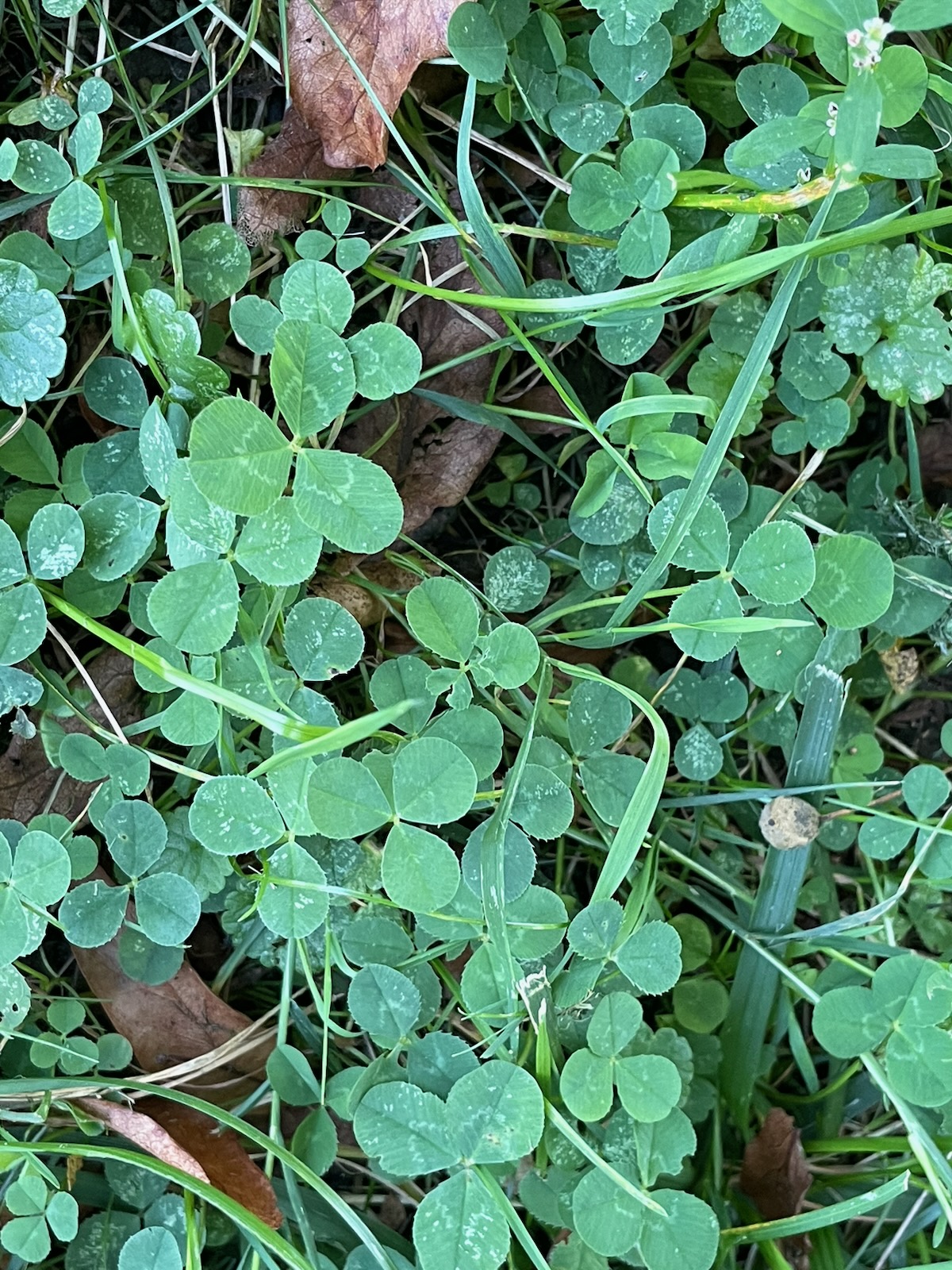
Wander, wander some more. Mary Wollstonecraft Shelley told us, The beginning is always today. Under my feet, clover. I know that if I were to hunt hard enough, go down on my knees for long enough, I’d find one with four leaves. I feel that fortunate.
Then a lucky mushroom, the only one, a lucky one.

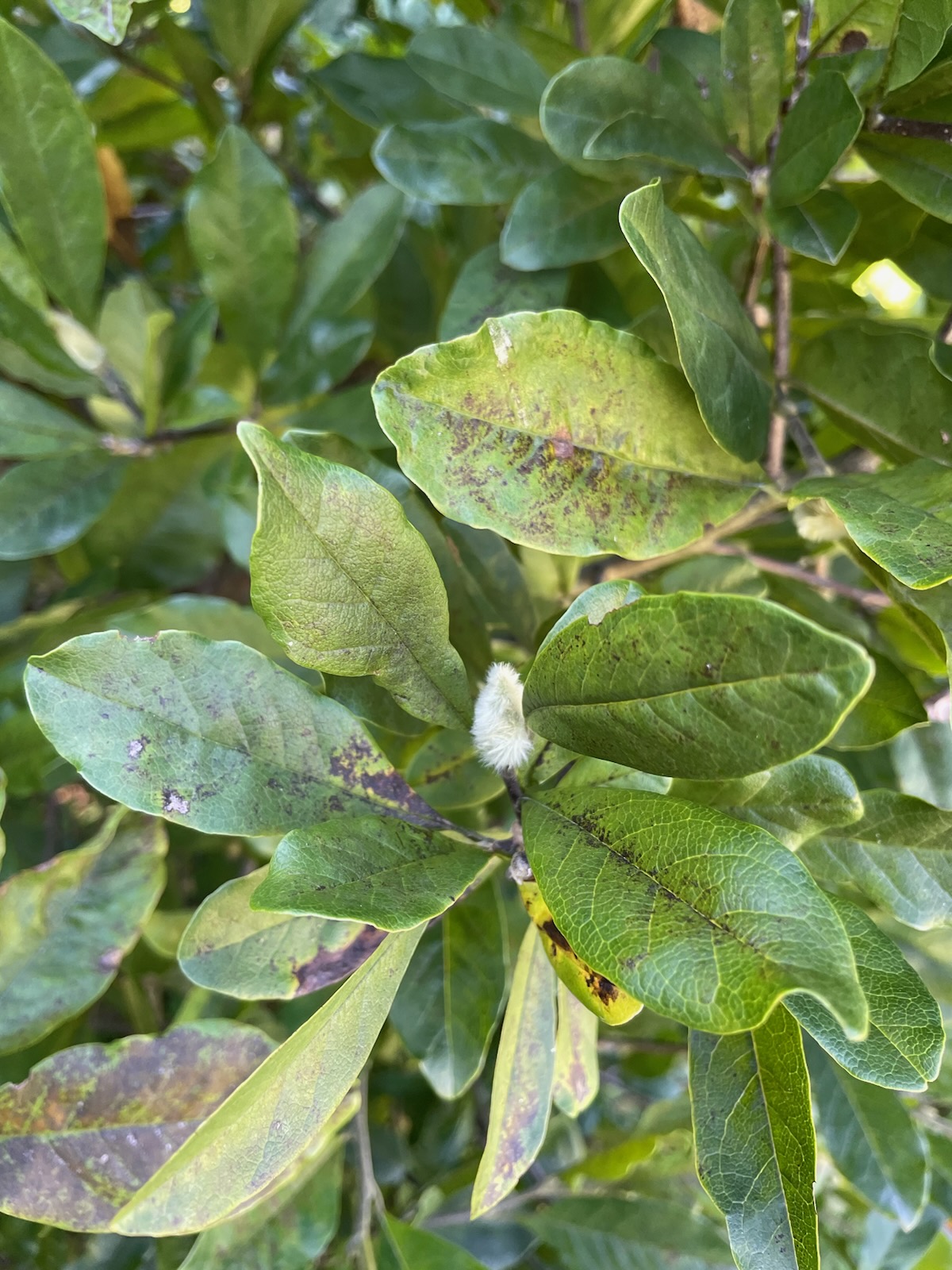
The tiny fuzz of a magnolia after it has had its spectacular blooms. A secret you need to really look to see.
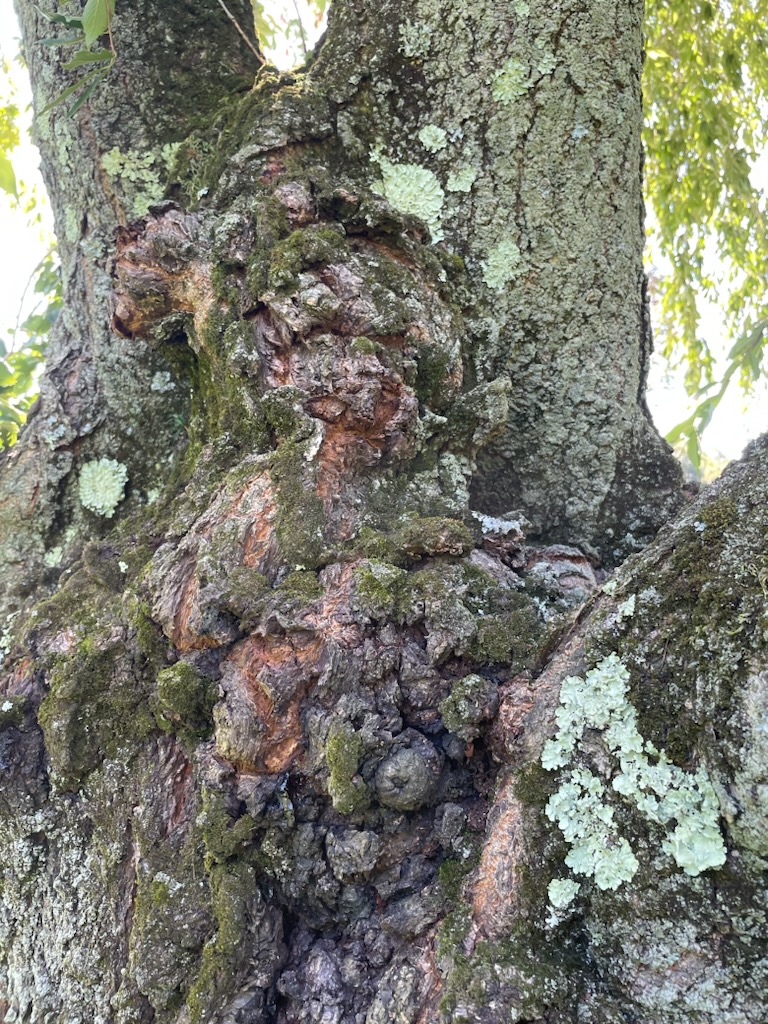
A weeping cherry.

So mature its trunk is gnarled and crusty.
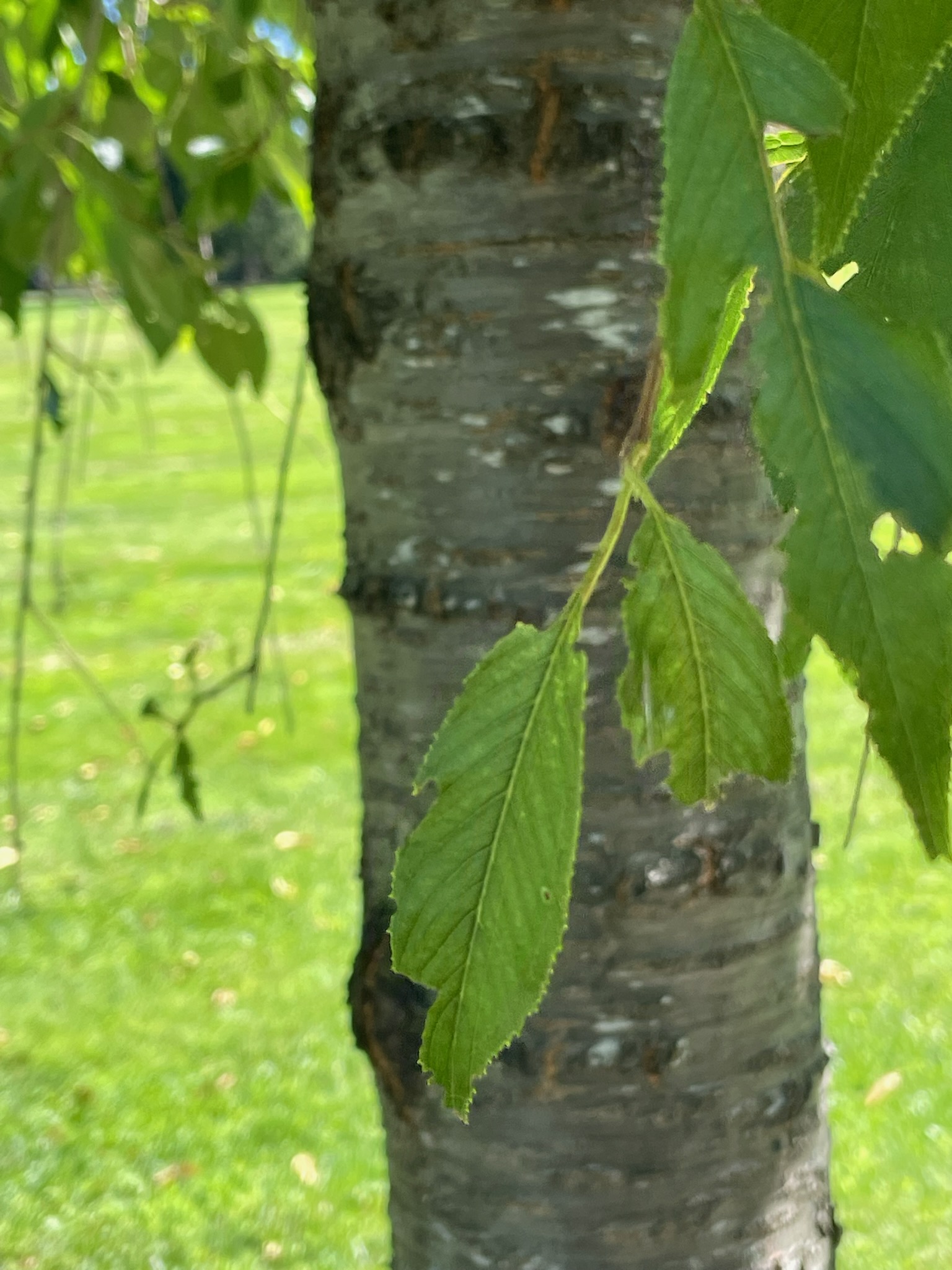
Near it a young’un with clearly demarcated lenticels, the stitch-like pores that form a cherry’s instantly recognizable embroidery.
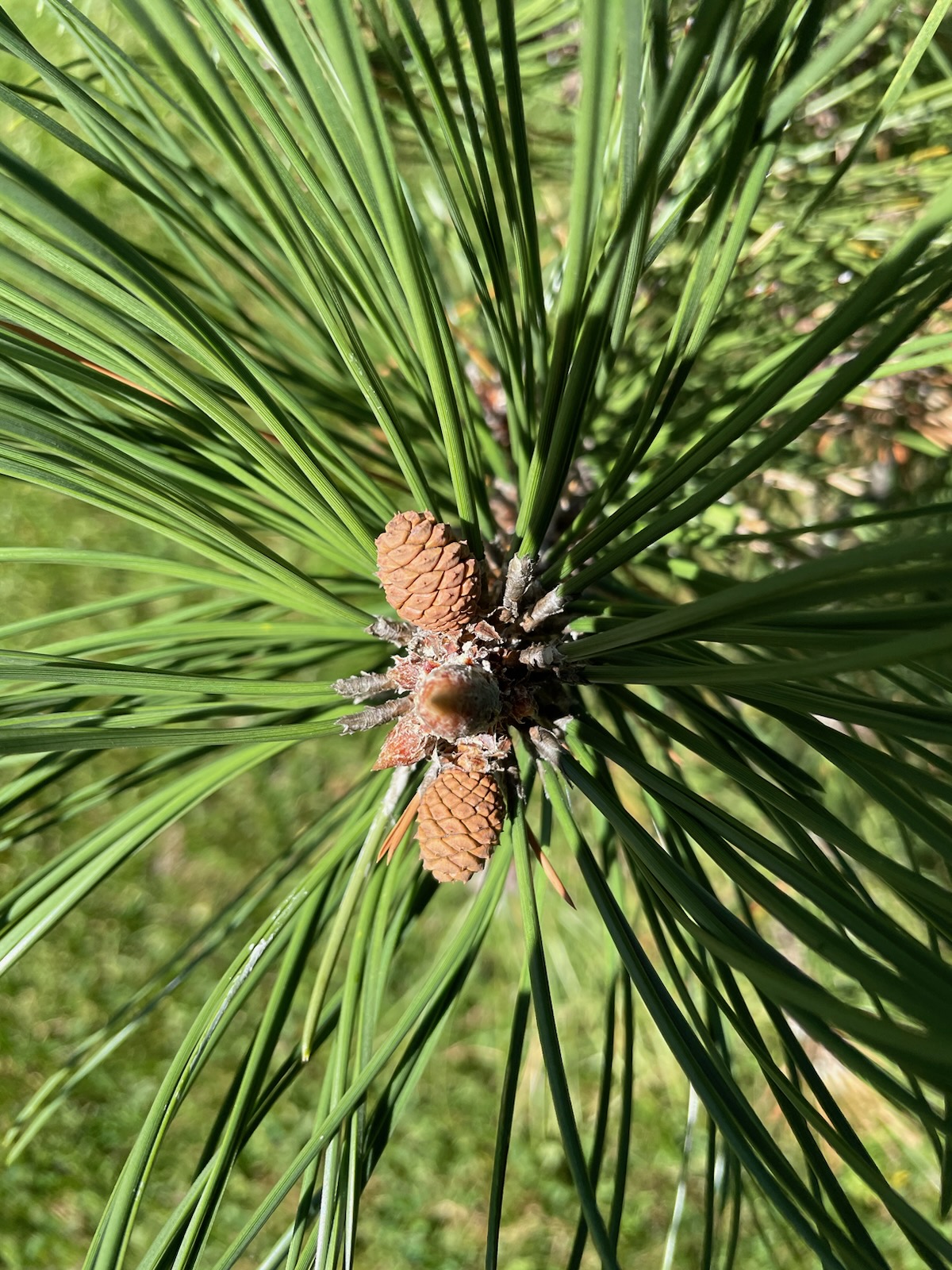
And another ancient specimen, a red pine, all burls and character.

But still offering its miniature baby seedcases.
A horse chestnut with a gaping critter hole at its base. Anybody home?

Childhood memories of collecting chestnuts on my way to school.

The Lyndhurst faux castle looms ahead.

More compelling, the little children’s elf cottage nearby.

I check the door, locked. Peer into a window.
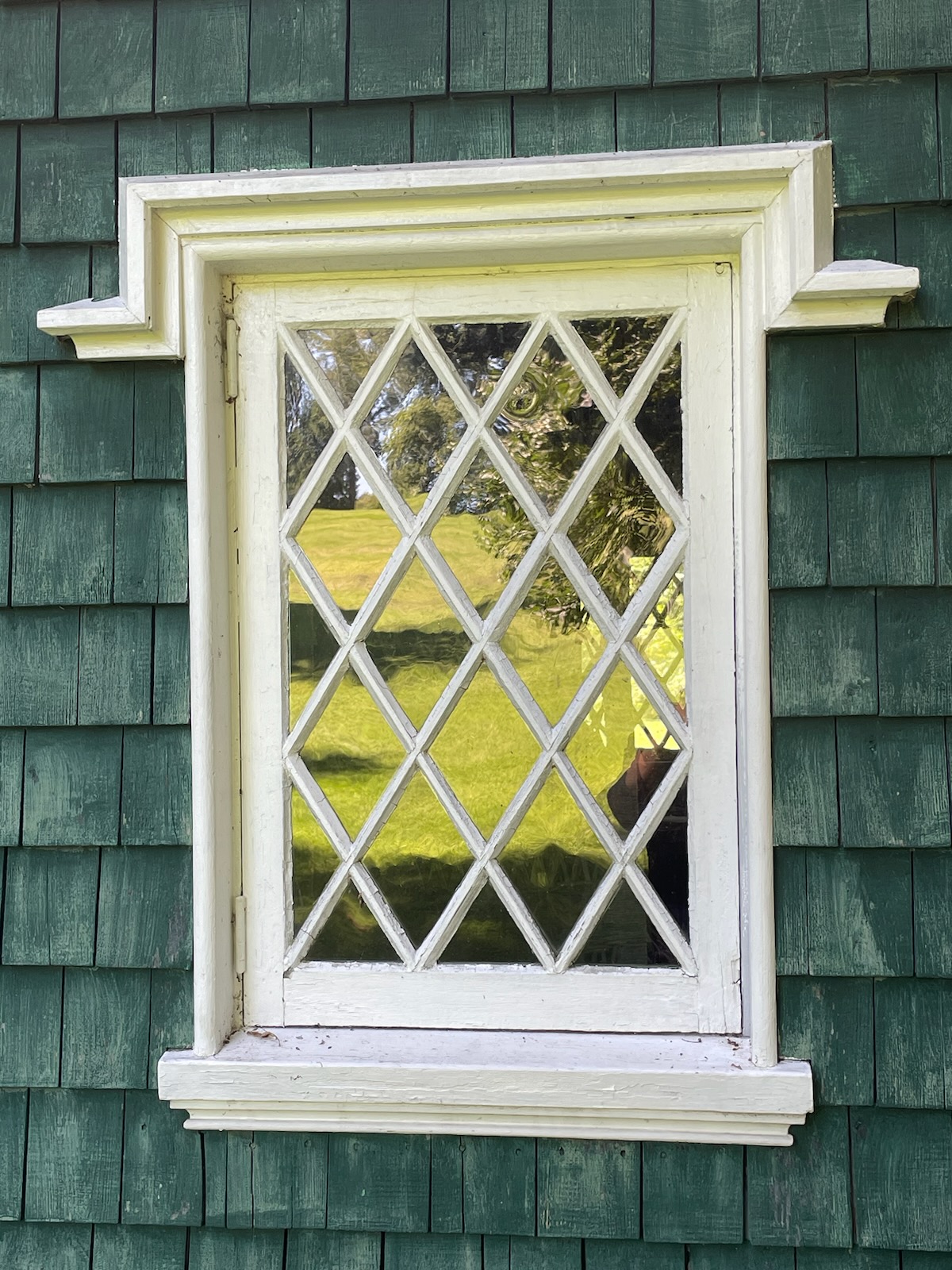
It’s as if the room is holding its breath, waiting for a child to come in and love it.

Outside, the emerald glow of a red maple canopy.
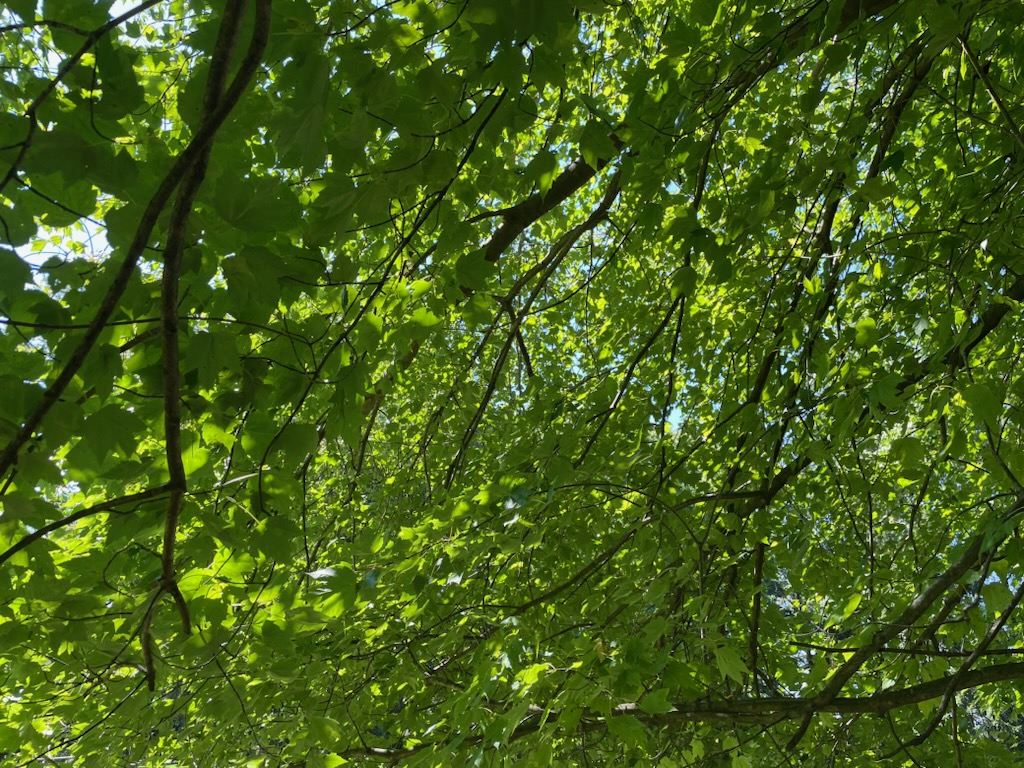
More lindens. A hush of lindens. All my life, my heart has yearned for a thing I cannot name. So said Andre Breton. He had my number, that’s for sure.

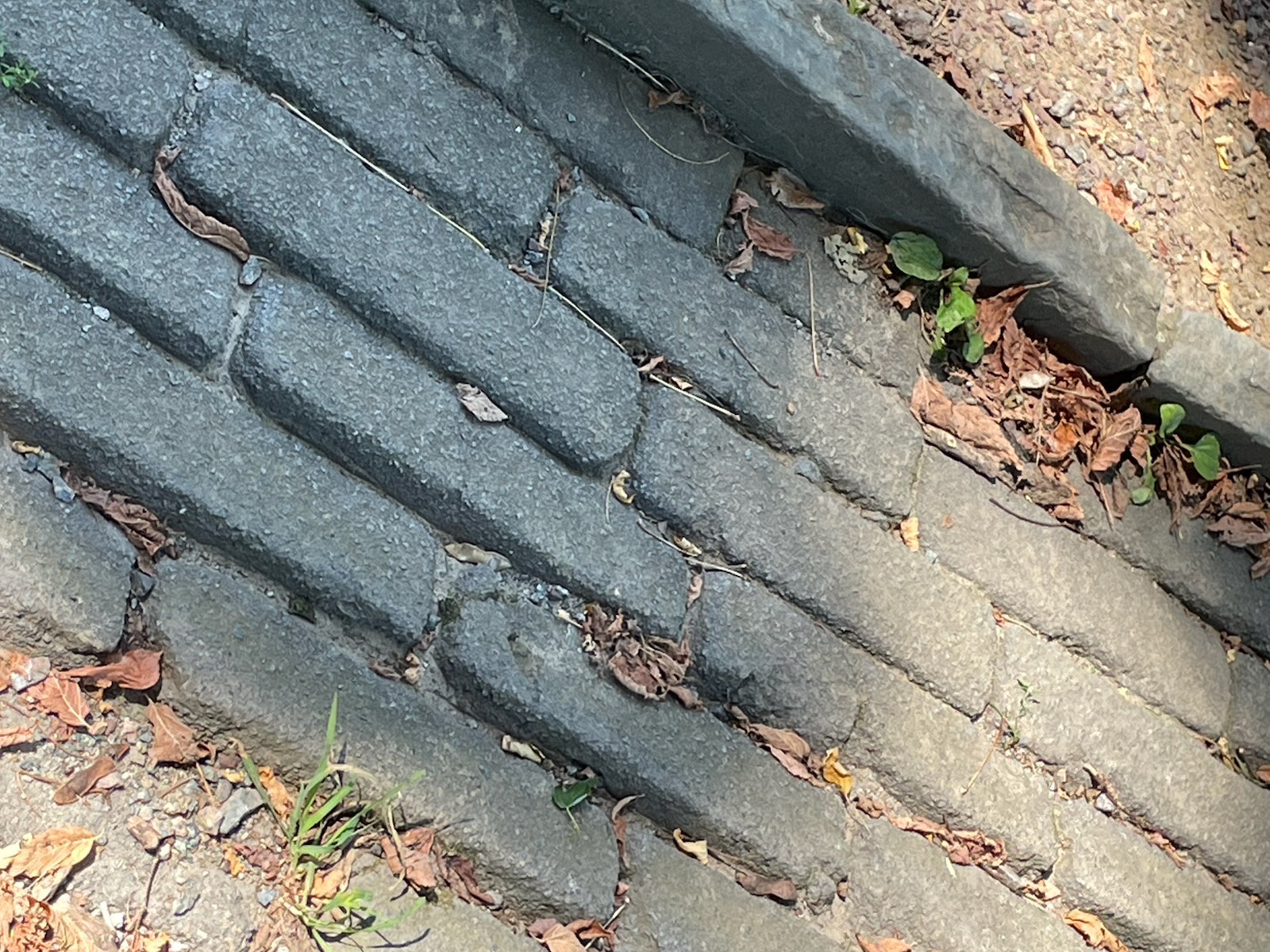
Departing, I step across the old cobble gutter from one hundred years ago, when the estate was new. I’m sure that at its beginning the place was marvelous.
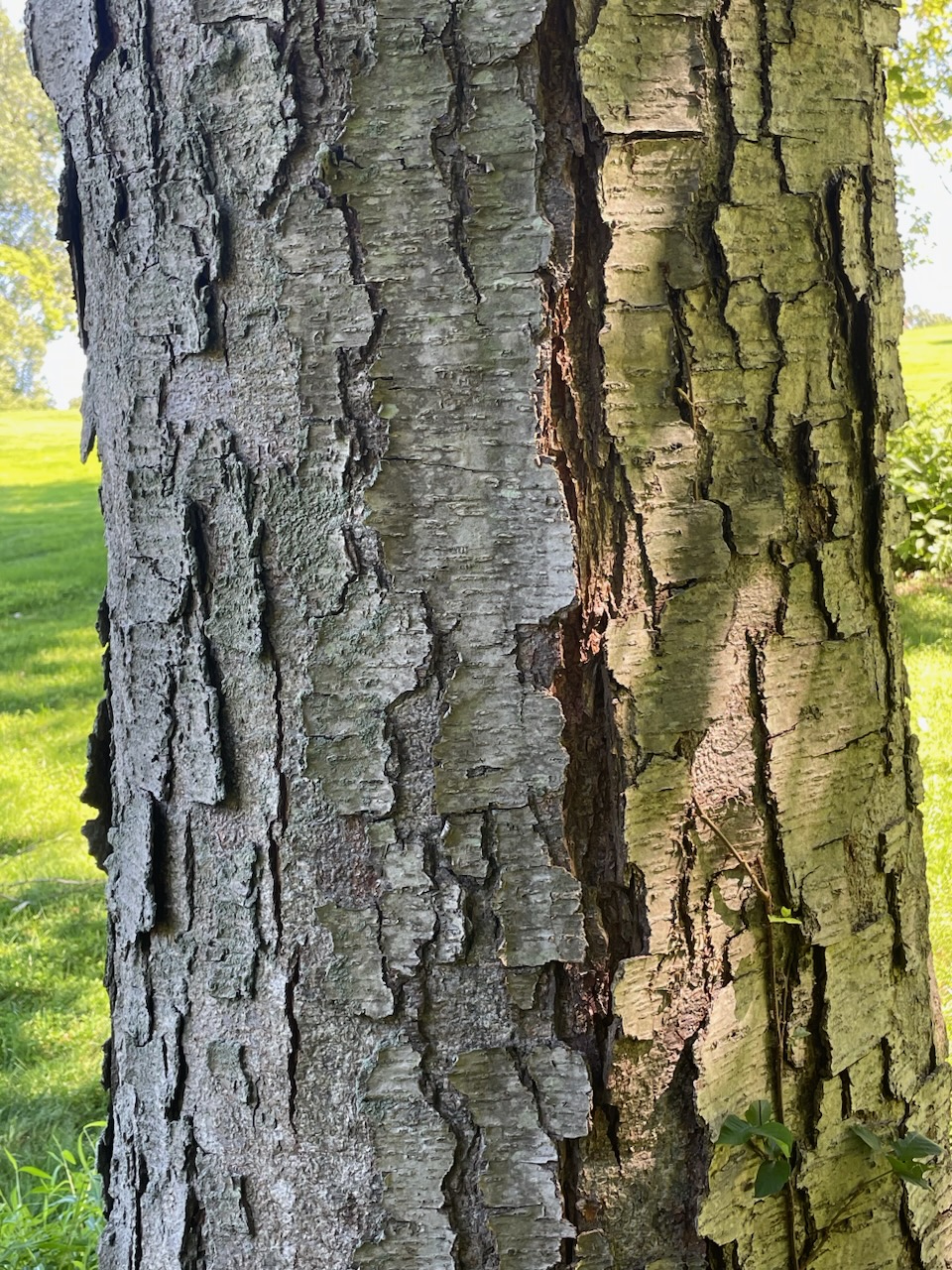
Now, in its dotage, all its trees mature, rough, tried by time and weather. A sweet birch with time-scaled bark.
Today, personal, completely private. Old, yet new.

All the more precious.
Leave a comment

Filed under Jean Zimmerman

Fragrant, spicy, lemony, lush and voluptuous

are some of the inadequate terms we use to describe roses, but equivalent to the terms oenophiles employ for the equally ineffable flavors of wine. Oaky, fruity, tannic, et cetera.

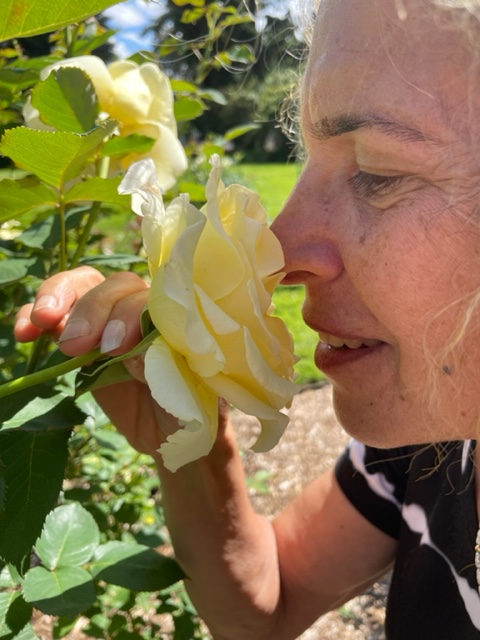
Really, no word can describe the experience of sticking your nose in a bloom and inhaling. My friend needs little encouragement to dive in. Swoon.

The thing to do if it is available to you (as they say in yoga class, referring to your ability to hold a pose) is to simply wander about a rose garden like the one at the Lyndhurst Estate and, yes, stop and smell the roses. We are so fortunate to have this magical place within walking distance.

What I love is that delving into botanical literature you find that roses have stories, roses are stories. The Lyndhurst rose garden was first planted in 1914 as the project of Helen Gould, the eldest daughter of robber baron Jay Gould, who bought  the estate in the 1880s. Over time and with successive owners who weren’t quite as enthused about the project it almost died out, to be revived by the Garden Club of Irvington-on-Hudson starting in 1968. Now 500 plants in five concentric rings thrive at the garden’s peak each June, and the lot is owned by the National Trust for Historic Preservation.

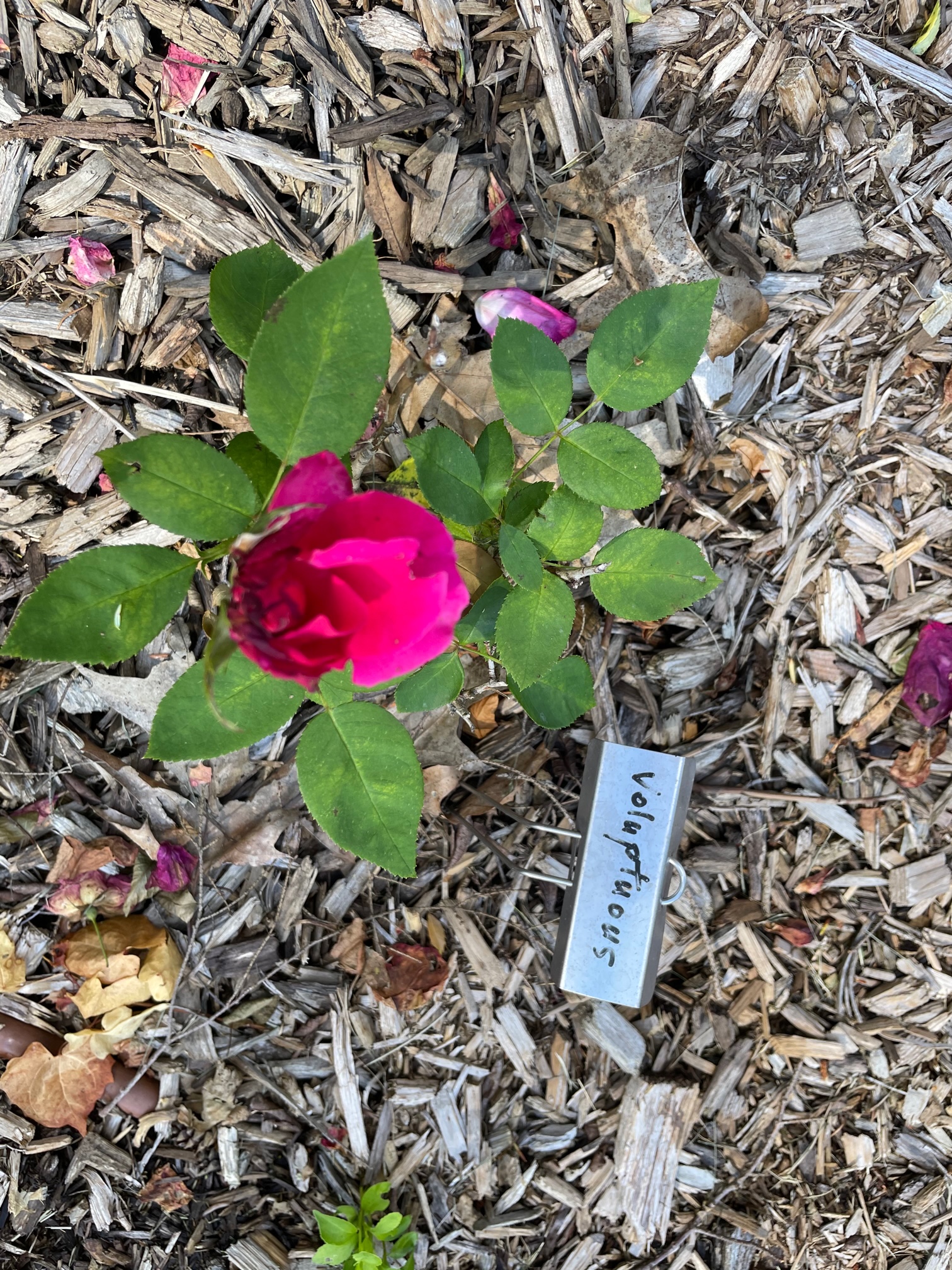
Each ring features different kinds: the outer ring has been planted with shrub and old garden roses, the middle hybrid teas and grandiflora, and the inner with polyanthas and floribundas. The ones I like best have labels, barely legible old keys to each one’s provenance.

Pink Knockout, for example, is a bubblegum-pink sport – meaning, basically, offspring– of Double Knock Out. Kind of like race horses.

Another, Soaring to Glory, developed as recently as 2018, is a sun lover that is especially resistant to disease. Something to like in a rose.

One of the arches bears a mysterious old plaque, Zepherine Drouhin.

It’s a special flower, dating back to 1868, described in the rose literature as a vigorous climbing Bourbon rose with masses of highly fragrant, semi-double, carmine flowers, 3 in. across (8 cm), counting up to 30 petals. Born on thornless, purplish stems.

The world might be complicated, tedious, awful. The only complexity of rosa is how many petals each one has, what shape its whorl, how the heck you describe its scent to differentiate it from all the other spectacular specimens. There is no bad rose.

One reminds me of a wild rose we once found in a neighboring meadow. Why it strayed from a domestic border I don’t know. That flower had no name that I ever knew; it was anonymous yet ravishing. I dug up part of it when we sold the house and replanted it when we moved to suburbia, careful to leave some of the roots so the plant would bloom for the new occupants.

Some efforts fail, as in life outside the rose garden. Some deaths remain in the borders as if to remind us that existence is in fact fleeting. Such as Summer Surprise, surprisingly a nonstarter.

Or Voluptuous, which doesn’t quite live up to its hype.

You must time your visit to the 67-acre Lyndhurst properly. We have been overeager and jumped the gun with a visit when the season has barely started, only to find tight buds, not yet coaxed into blooming by sun and rain.

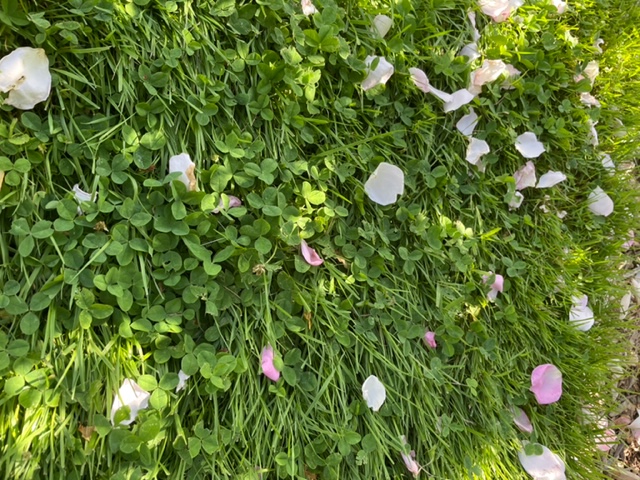
On the other hand, if you go too late in June, much of the fragile prettiness has shattered. Already, today, petals litter the lawn.

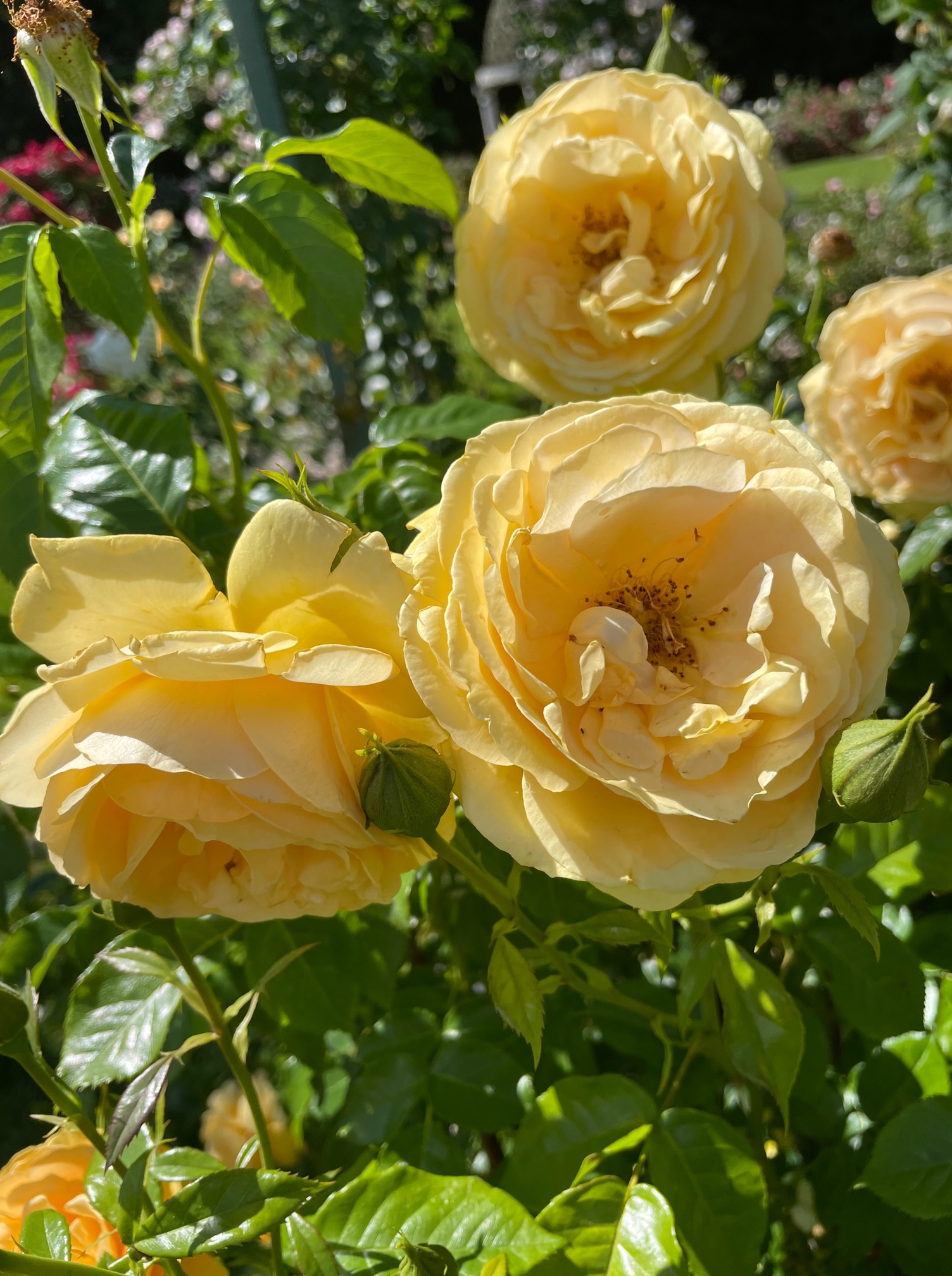
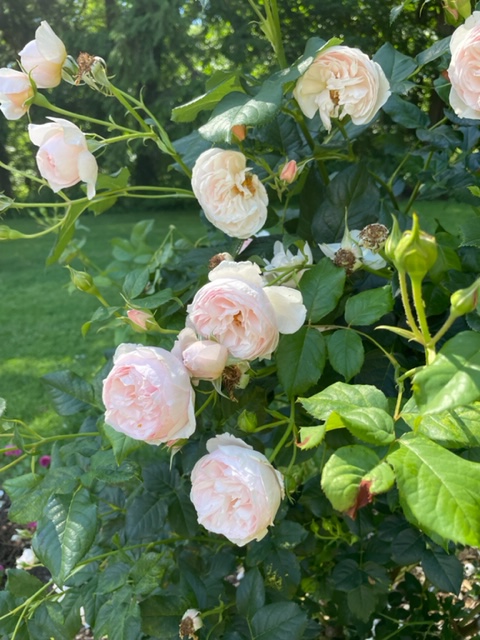
But still we find swaths of buxom beauties.

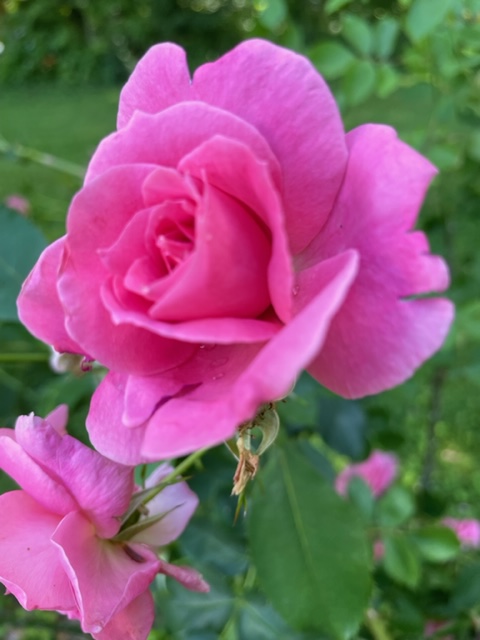
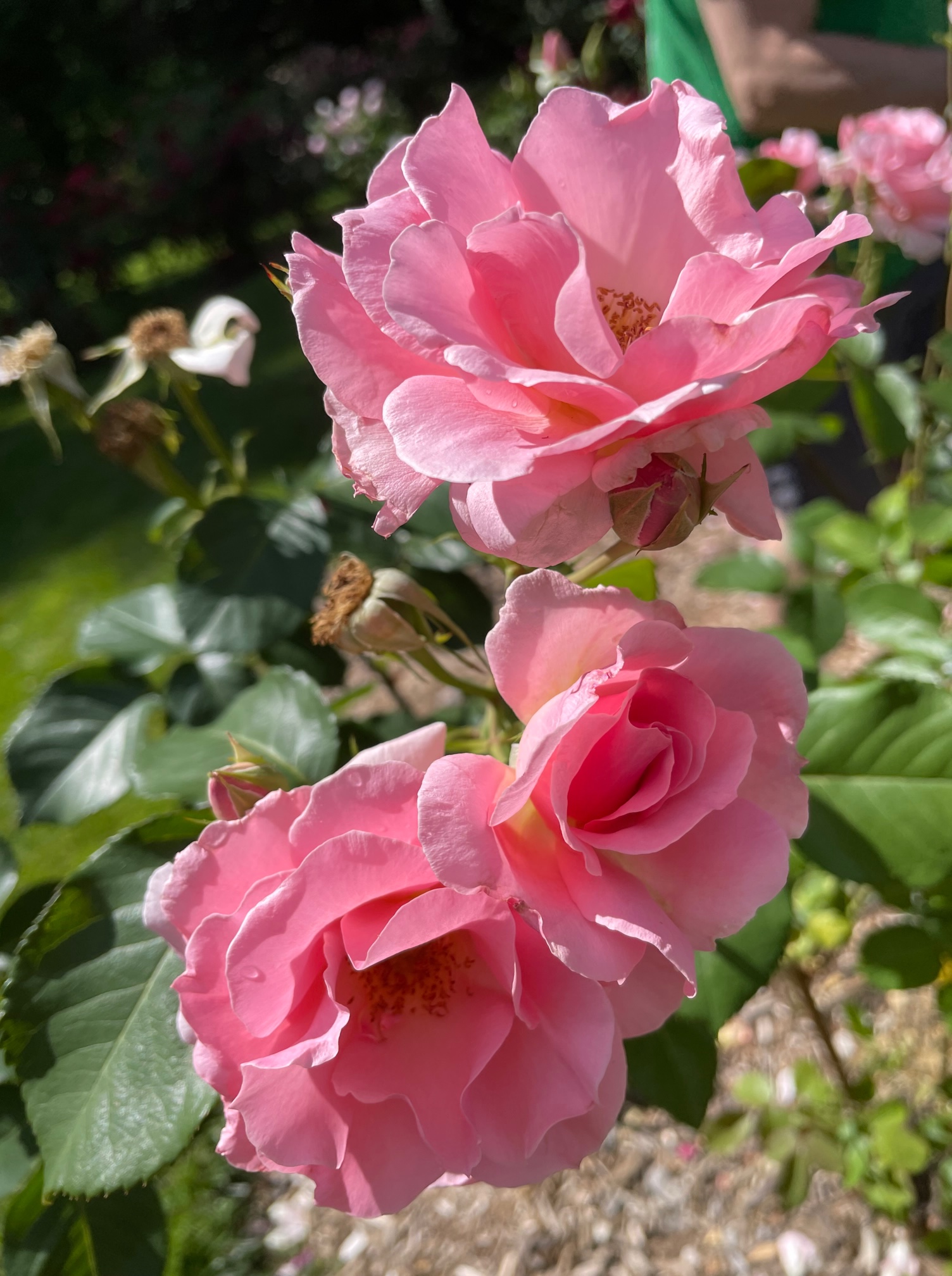
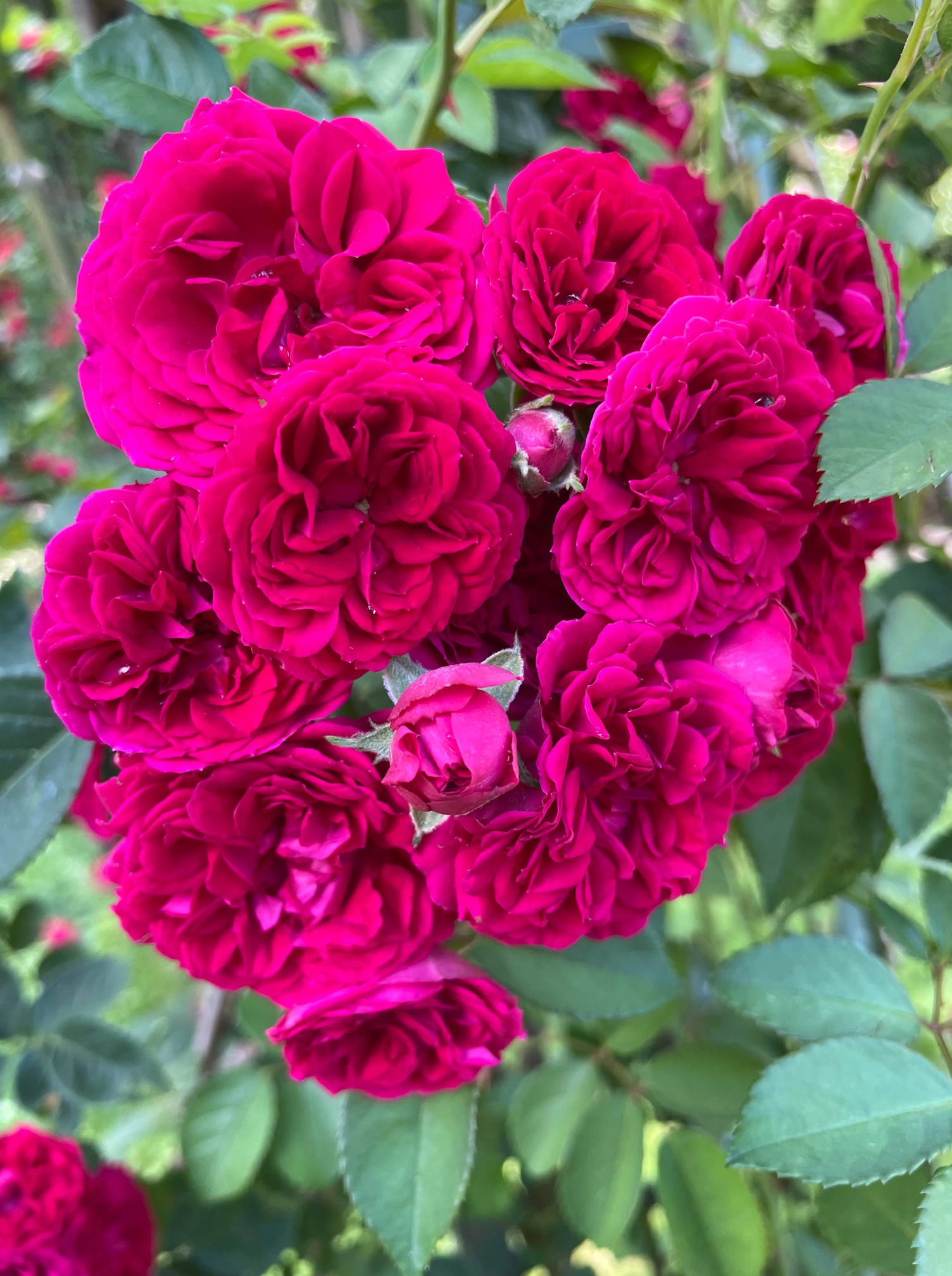
It’s difficult to take a bad photo of a rose, try as you might.

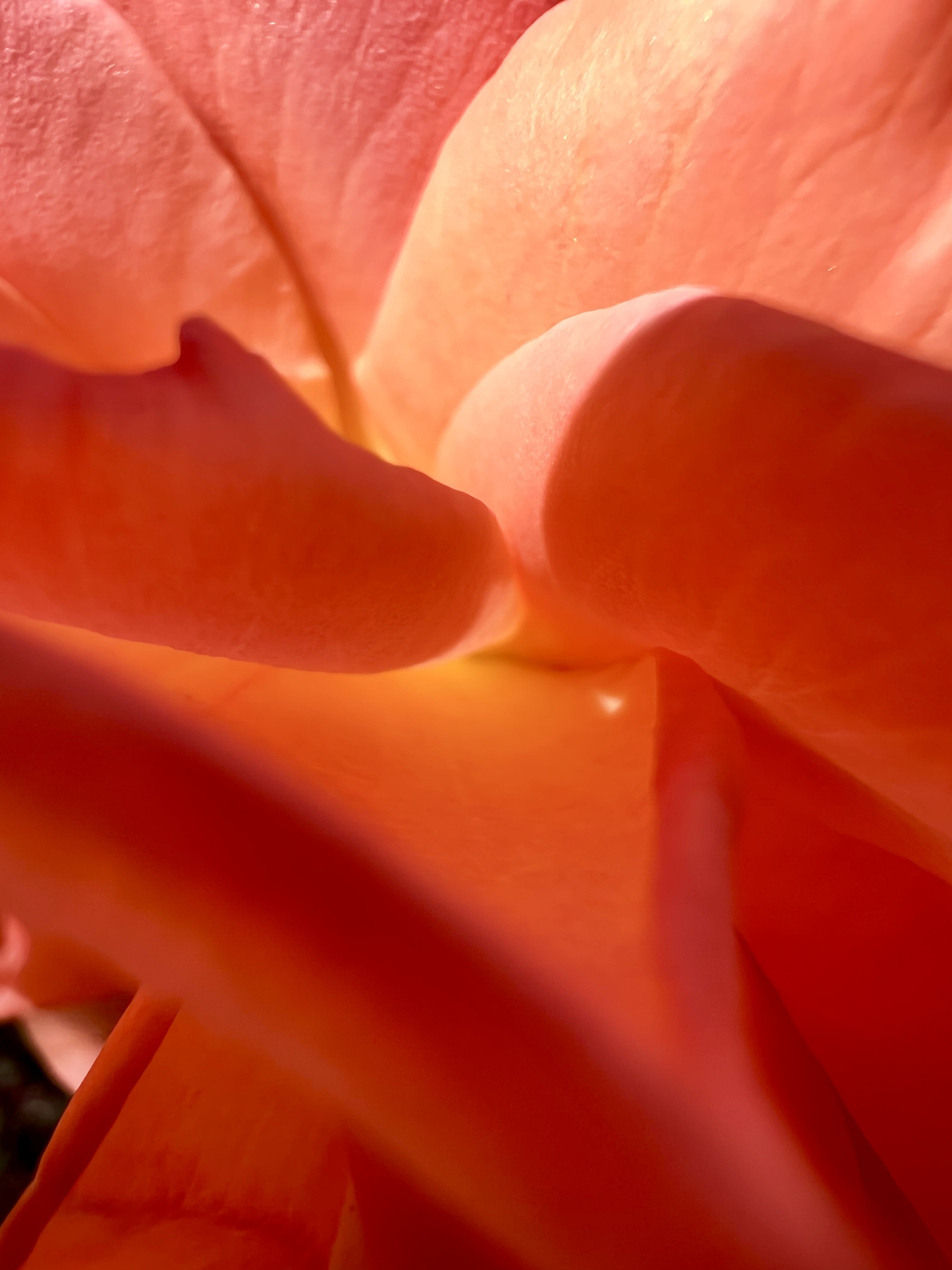
This is what one looks like close up.

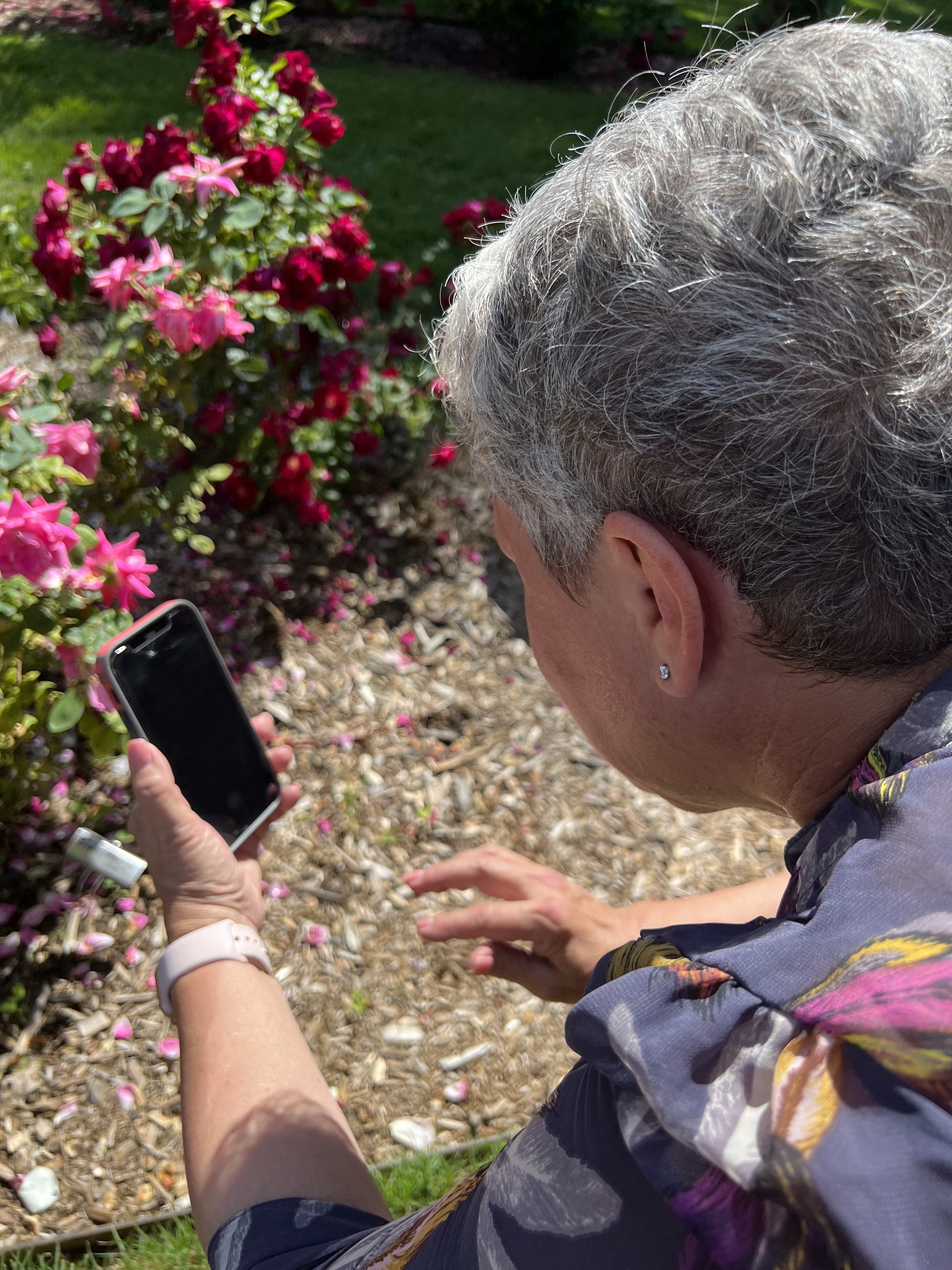
Though it’s tempting to click, best to pocket your phone and simply drift from bed to bed, under the perfect sky, in a state of rose-addled bliss.

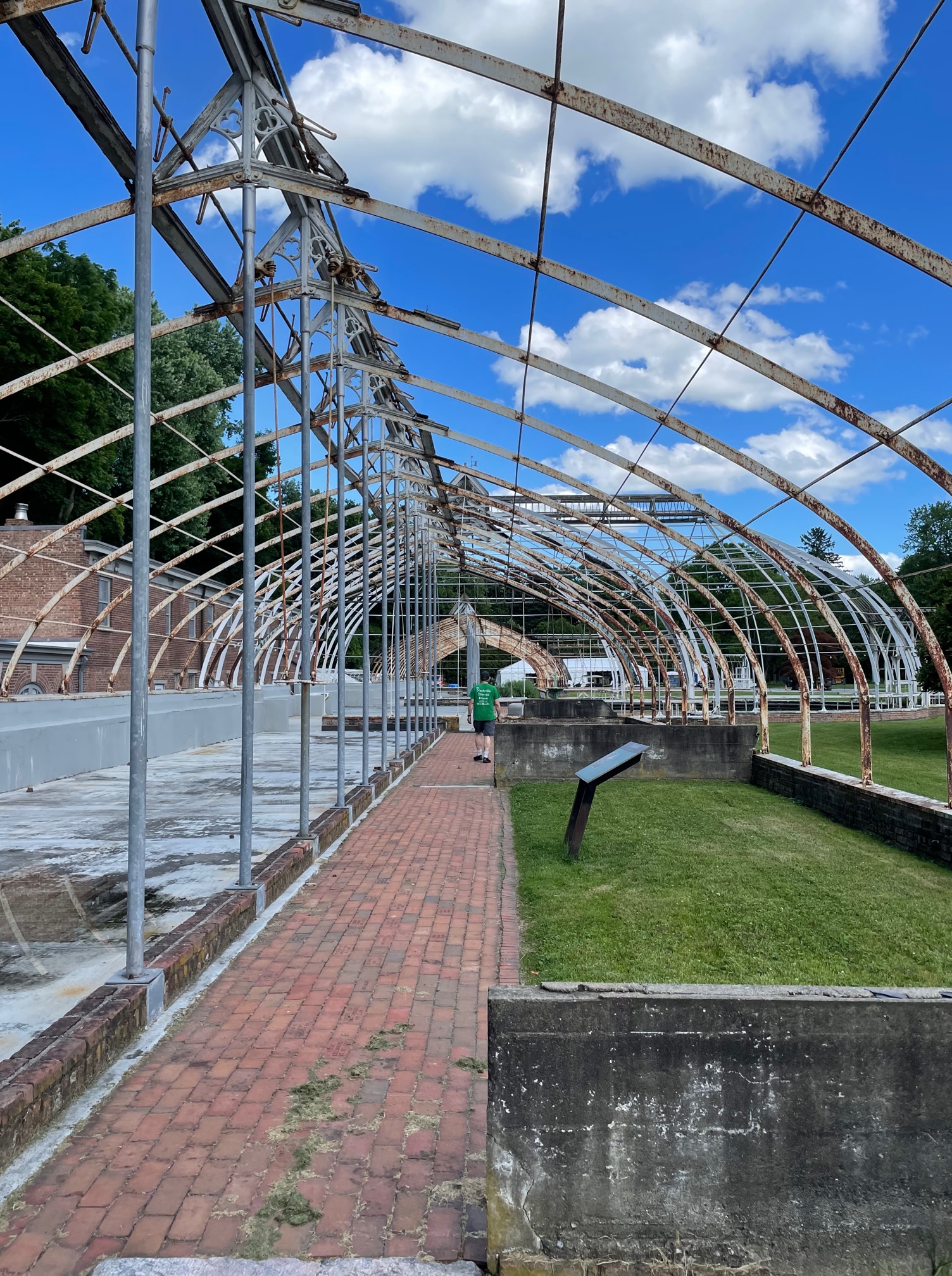
The frame of a greenhouse designed in 1881 by Lord & Burnham, when it was built the largest in the country, rises beyond a hillock. Once the foremost metal-framed conservatory in the country, now a ruin. You know I love ruins.

When Jay Gould had it built, he was inordinately proud of the orchids that were raised here – with a full-time staff of 16 gardeners, what could go wrong? – and used to run the plants down to gift to grateful New York City residents, with a steam heater to keep the flowers warm. Now there are just three gardeners to run the whole estate, and the greenhouse is nominally off limits.

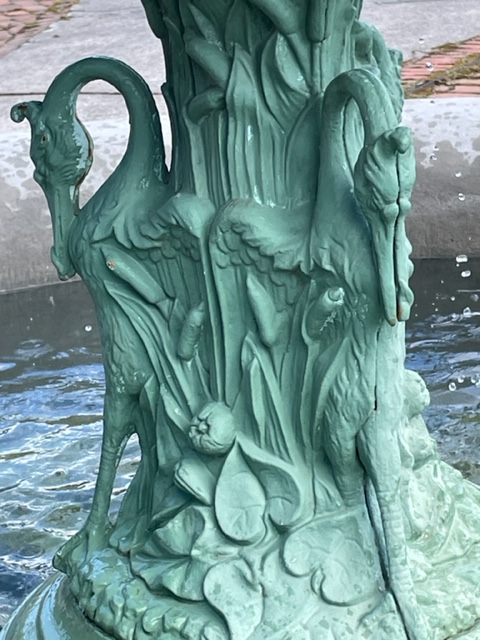
Okay. But an original fountain in the center bubbles, its bowl upheld by… pelicans perhaps? Or some mythological creature with bird feet?

When Helen Gould first dreamed up the rose garden, she planned for the folly to have only pink climbing roses. After her death, the estate passed to her younger sister Anna, the Dutchess of Talleyrand-Perigord, who had gained a divorce from her new husband’s cousin Boni, the Count of Castellane, he who had bilked her of $10 million of her inheritance. The heiress had two children in this second marriage, Howard de Talleyrand-Périgord, Duc de Sagan (1909-1929), who died of a self-inflicted gun wound when his parents refused him permission to marry until he was 21, and Helene Violette de Talleyrand-Périgord,  who married Comte James Robert de Pourtalès, divorced him, then married Gaston Palewski, former Minister of Scientific Research, Atomic Energy and Space Questions. Lives perfumed with the best of the best, aside from that unfortunate suicide. By the time Anna went to the rose garden in the sky in 1961, few of the shrubs were left.

Jay Gould enriched the lives of his swanky city pals with orchids. Perhaps he might have sent roses.

Leave a comment

Filed under Jean Zimmerman