Tag Archives: Brooklyn

A tree inspector has only to drop in briefly for this takeaway:

Brooklyn’s Prospect Park neighborhood surely has some impressive trees. I stand awed in the shade of a gigantic weeping willow in a tiny neighborhood enclave.

And some interesting characters, at least on my job site, one of five during a day dedicated to corners. That is, replacing the old sidewalks at intersections with colored pedestrian ramps to make them passable for the mobility-challenged. Ped ramps need to be installed in a lot of places, as can be imagined, and this is a multi-year project. A tree inspector comes on board whenever trees appear within fifty feet of the corner, making sure the excavation does not harm the tree roots in question and writing up a report to that effect for New York City. Classic urban tree preservation.

Worth getting up with the dawn to highway it down to Brooklyn to save trees.
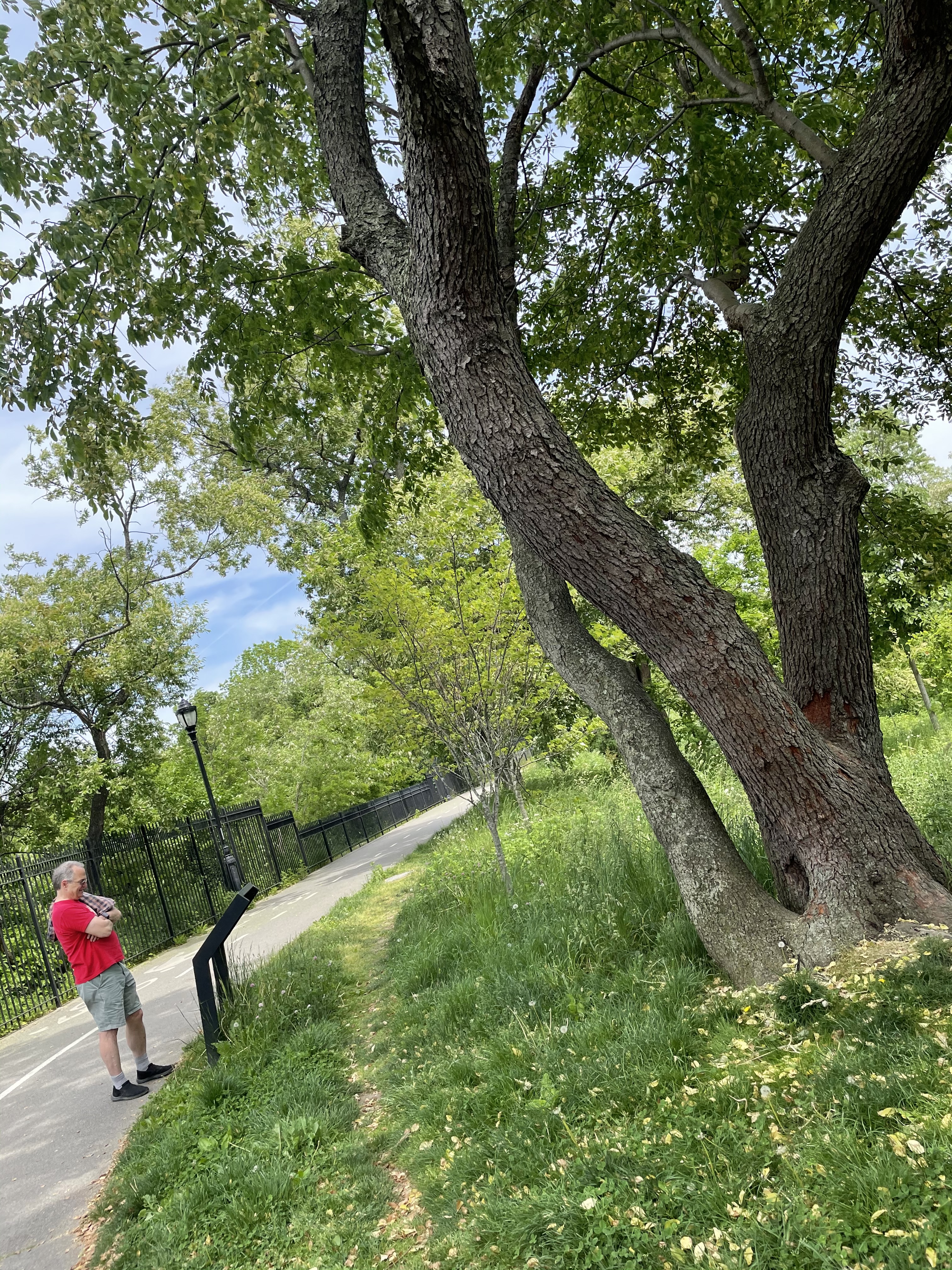
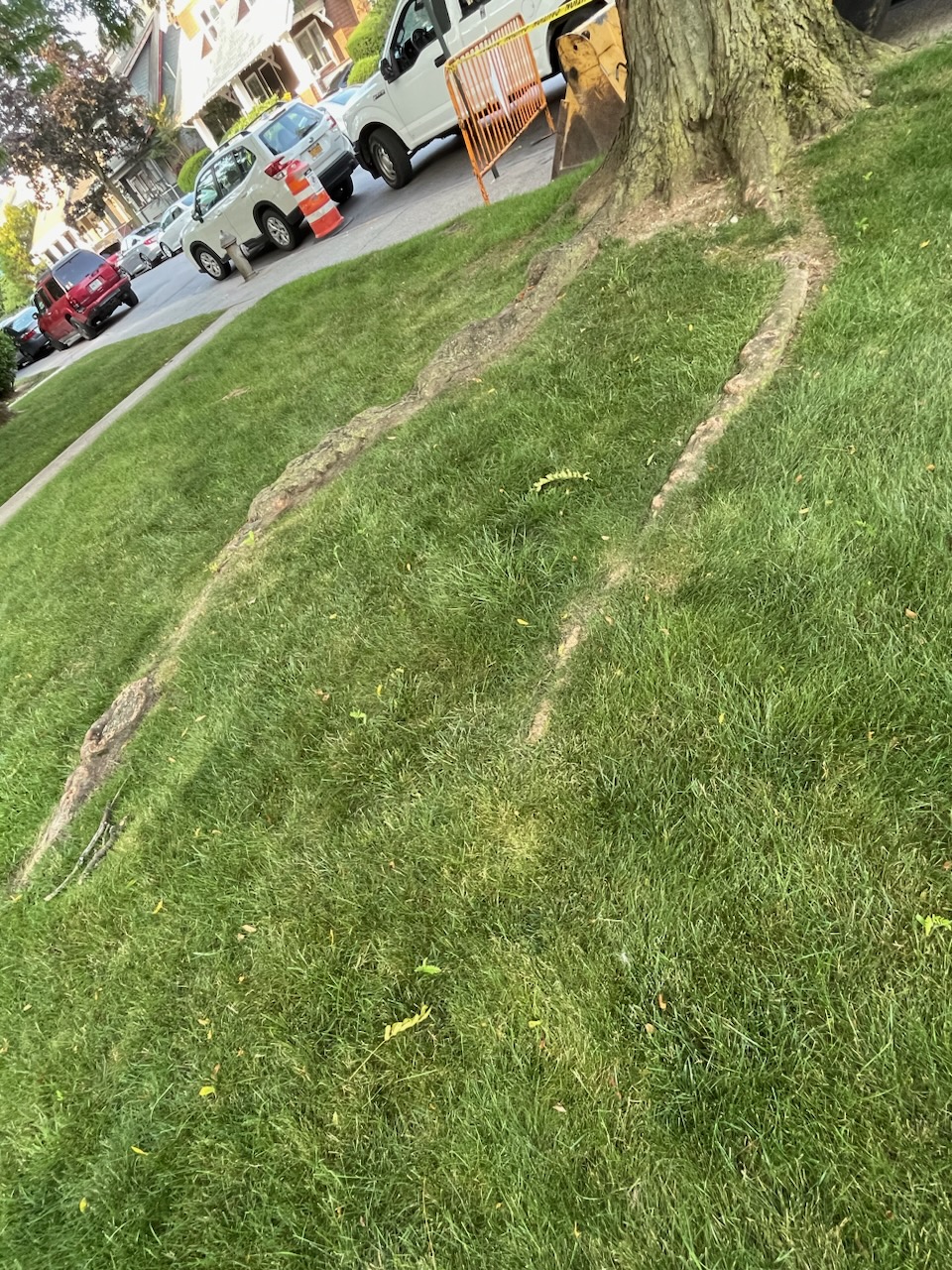
The painter Jean-Baptiste Camille Corot wrote to the painter Camille Pissarro, Go to the country—The muse is in the woods. But you don’t have to be in the forest to find your muse, sometimes the urban forest can offer its own inspiration. On the first corner of the day I spy these mystical roots running snake-like through the grass of a lawn.
The guy who drives the backhoe on this job – make that machine, the term backhoe is never employed when you work in this metropolis – the guy who drives the machine has language as colorful as his resplendent tattoos.

 I notice the tee shirt of one of the crew before we start work at 7am. This is the man who typically keeps a cigar on hand or between his lips, even as he deploys his shovel.
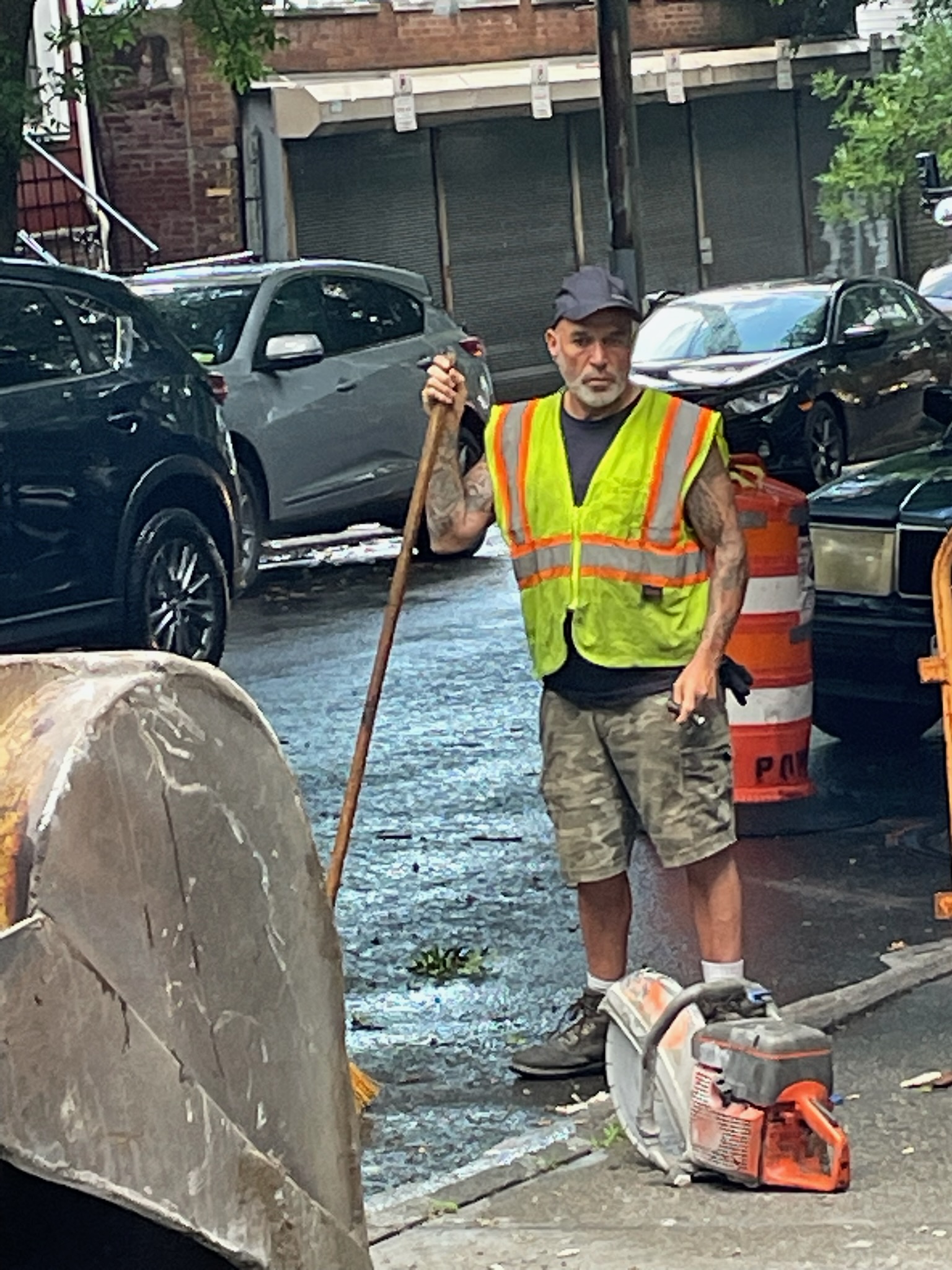
Freedom Isn’t Free reads the slogan on his tee. I ask the two what that means. America’s not free anymore, asserts the machine driver. It’s worse than Russia.

He tells me he plans to run over anyone who gets in the way of his digger.

Most of the people on the job make it a point to respect me and my professional wishes. If I ask someone to remove equipment — say 2 by 4’s, or a shovel — lying on top a tree pit, they do so immediately. (True, I’ve heard one burly flagger mutter “bee-atch” under his breath as I pass, but I like to see that as a compliment. Sometime I might have to clobber him though.)

Today I spend some minutes under a mature Northern red oak, probably forty feet in height.

It occupies a tiny tree pit, 5×5, the base of its trunk flowing out to the edge of the pit, which was once carefully laid with Belgian blocks.

Edwina, let’s call this lovely specimen — gender fluid. Shading purple window-box flowers that glow beneath its canopy.

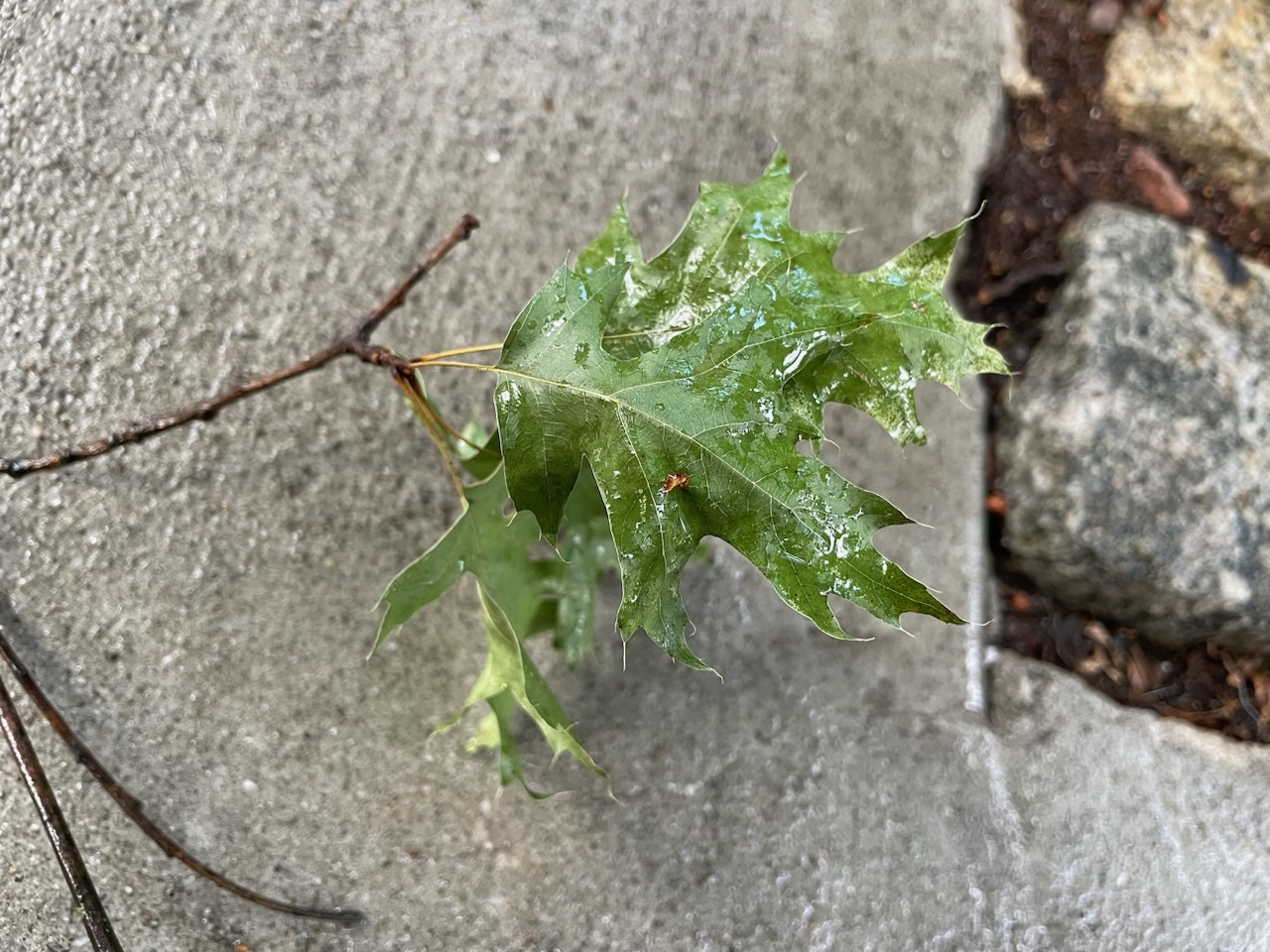
Don’t usually see a red oak on these not-so-mean streets and this one is exceptional, its pointy leaves wet after a brief and sudden thunderburst.
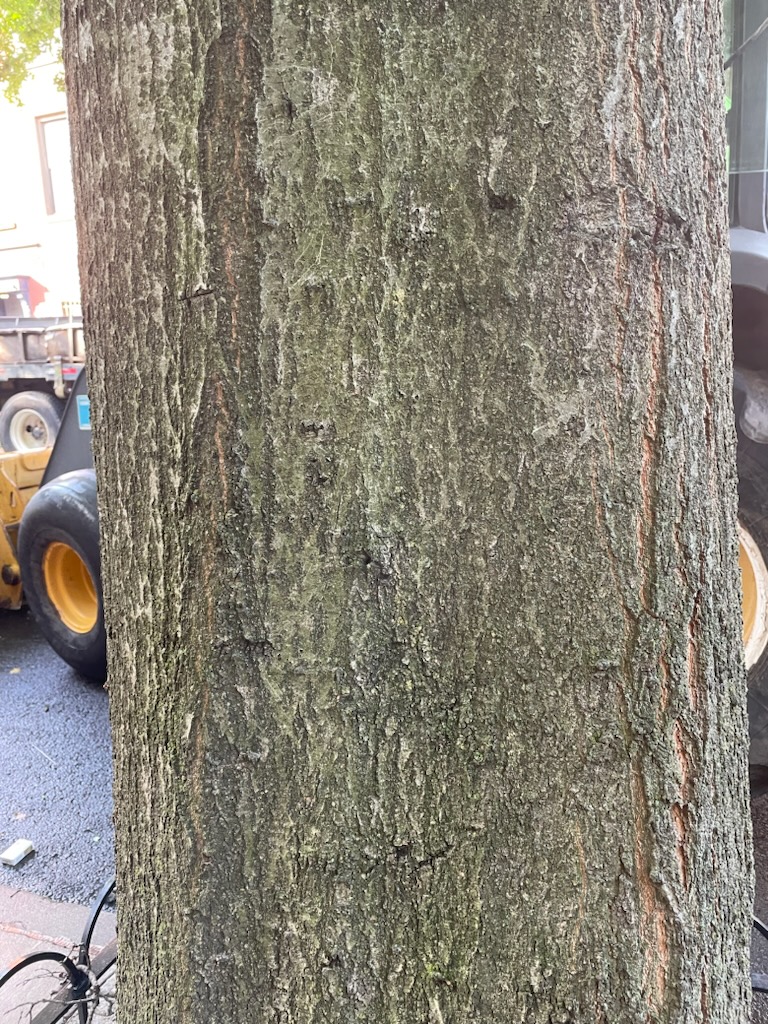
You can see the red fissures in the trunk, one distinction of red oaks.
The machine driver removes some of the sidewalk, then lands his bucket with a thump on the fill, banging the ground close to Mike, the person in charge of saw-cutting concrete before excavation begins.

Day not off to a great start when he’s in a bad mood, says Mike. 

Me: I thought he was always in a bad mood.

Yeah. Smile, rueful.

A pause while the machine operator drags his bucket again to within a few feet of where Mike stands, scraping up dirt, rocks, old concrete debris.

Pretty dangerous, says Mike. Smiling. 

Me. Does he think it’s funny?

Yeah. Still smiling. 

I once did see the machine driver in a jolly mood on another site – he popped wheelies in his machine in a busy intersection with the intention of amusing, terrifying all around. Or maybe he intended to terrify.

Excavation goes all the way up to the pit.

Smart Edwina has few visible roots in the fill to speak of that might be in danger of getting scraped up, all under a quarter inch, small enough for a tree inspector not to worry much. I make a note on my report. Smart Edwina, canny enough to focus energies in a taproot. But the gracious hanging lowest branches do brush the arm of the backhoe, so bad on them.
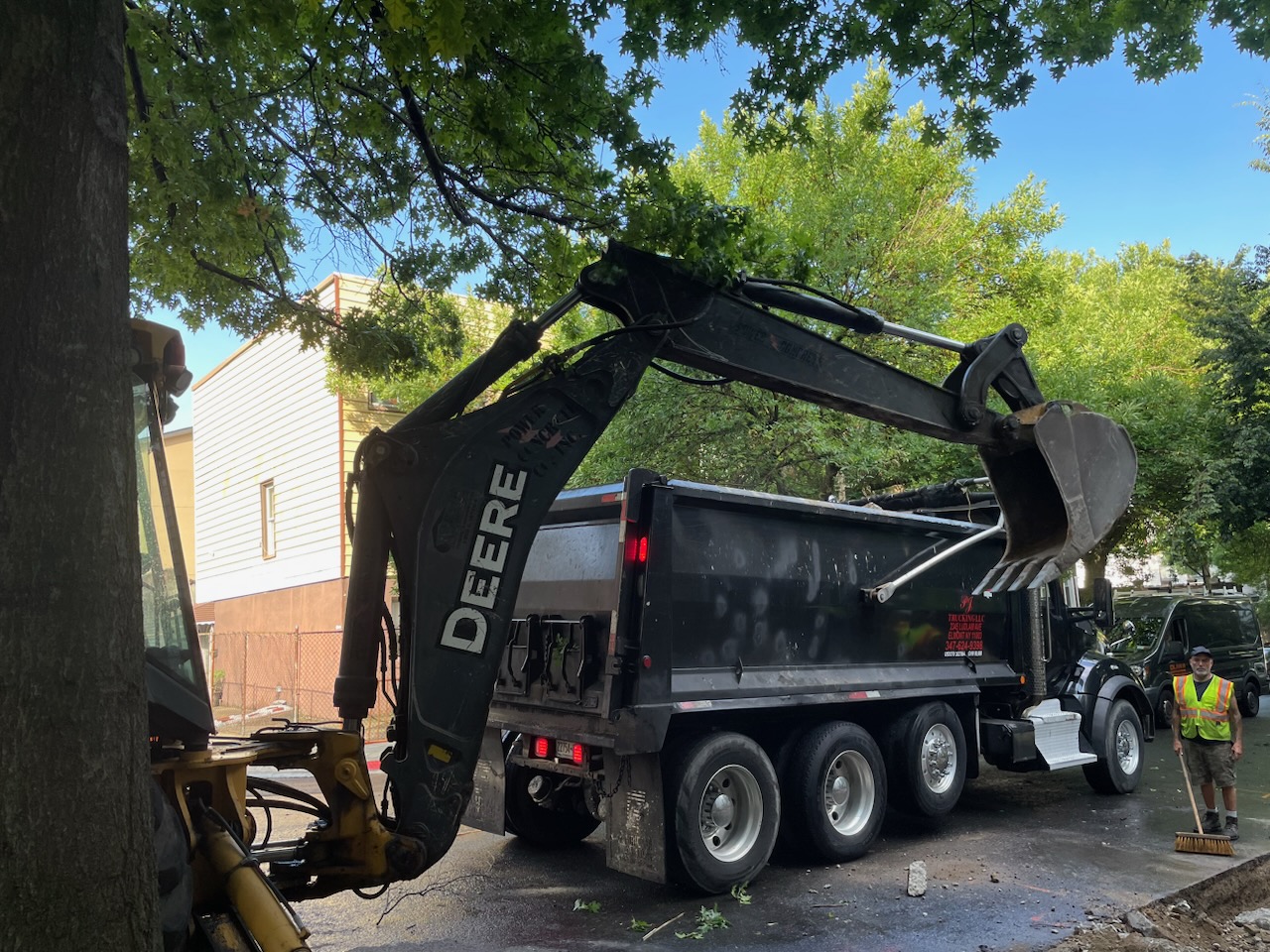
We move on to the next corner. A benefit of wearing a reflective vest and work boots: you can walk across the site unimpeded.

Good if you’re hustling out with a full bladder in quest of local facilities. You don’t expect me to go against a hydrant, do you?

Especially one of New York City’s beautiful vintage hydrants. (Could probably be harvested and re-sold in a fancy Prospect Park home goods store.)

Immediately I spot something nice: Suds on Eighth Avenue. A laundromat!

Can I use the bathroom? I plead politely.

Only peepee though! The busy, preoccupied proprietor.
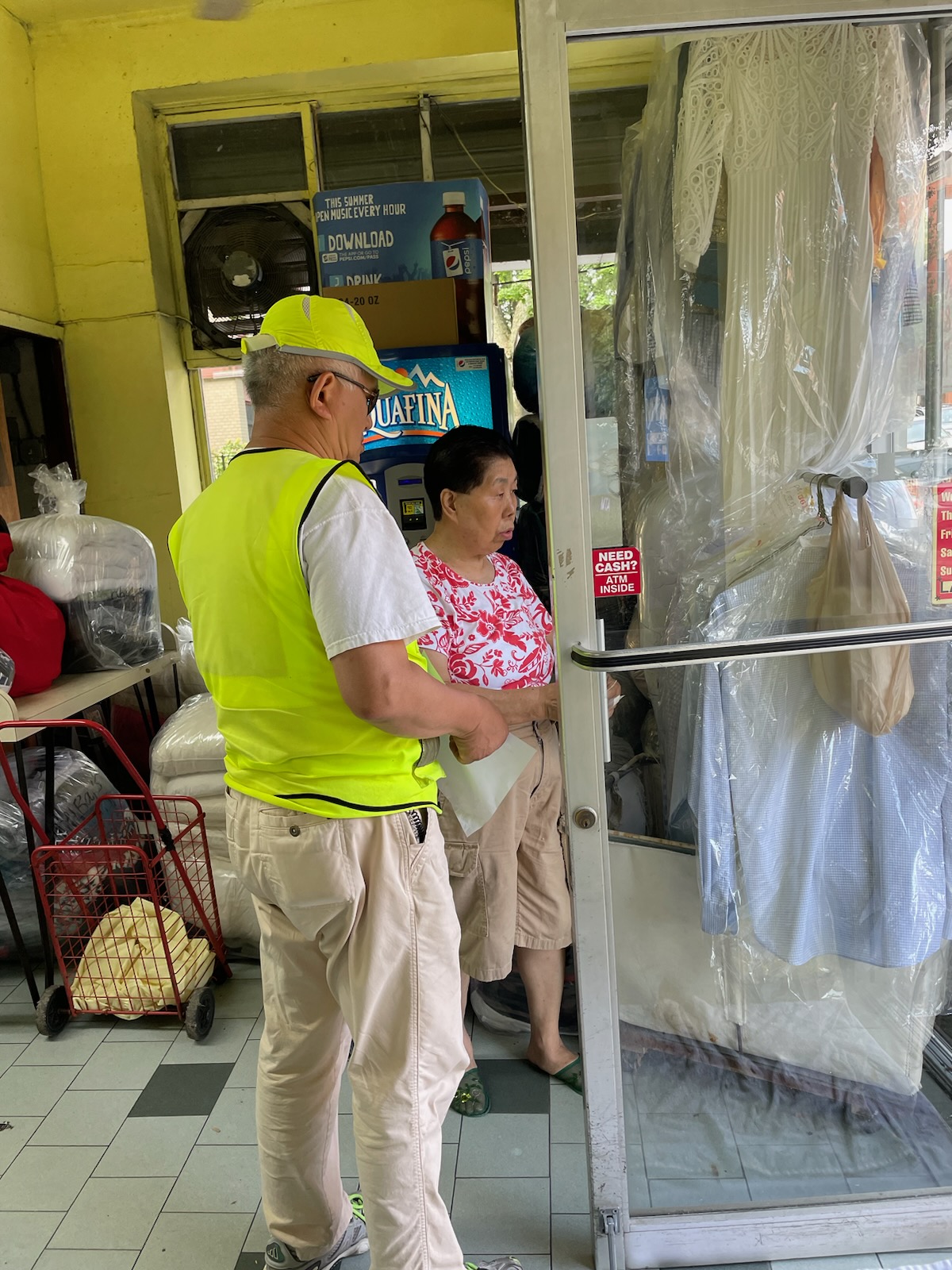
Yes, I say reassuringly.

Go ahead.

Vibrant NYC yellow-cab mural as I go back out the door to the work site.

So many of these older trees tend to overflow their tree pits. A natural byproduct of their age.

Some mess with the sidewalks surrounding them.
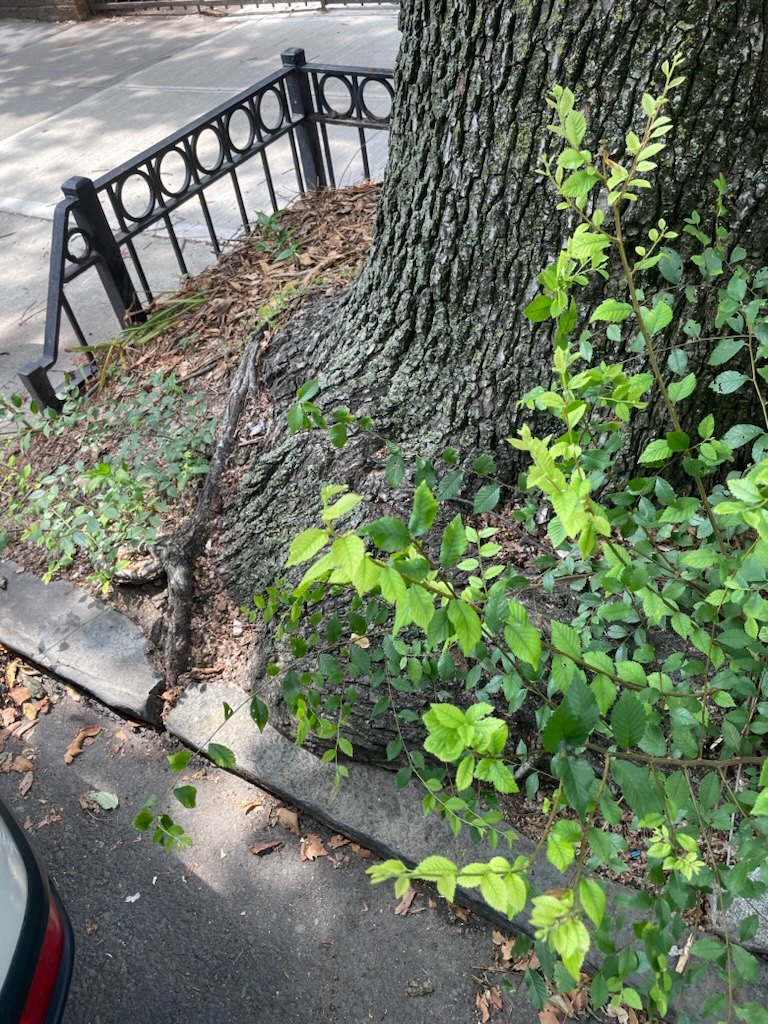
New York City is not perfect regarding trees. What municipality is? But for the most part it recognizes these wise old specimens for what they are — important! — and fixes the sidewalks rather than removing the tree.

Note the curve in the concrete flag. That’s deliberate. Contractors are required to build the sidewalk around that wise old trunk.

Quite different then my “green” little hometown, where I was appalled recently to see the powers that be remove a two-hundred-year-old street tree, a sycamore. Why? The resident whose property abutted the sidewalk complained. Someone, she said, had threatened a lawsuit after tripping in front of her house. The solution? Not to make the necessary sidewalk repairs but instead to take down the tree.

Yes, it was a giant. I broke into tears when I drove along the main drag and saw it, silly as that may sound. This tree provided the only canopy along this stretch of road.
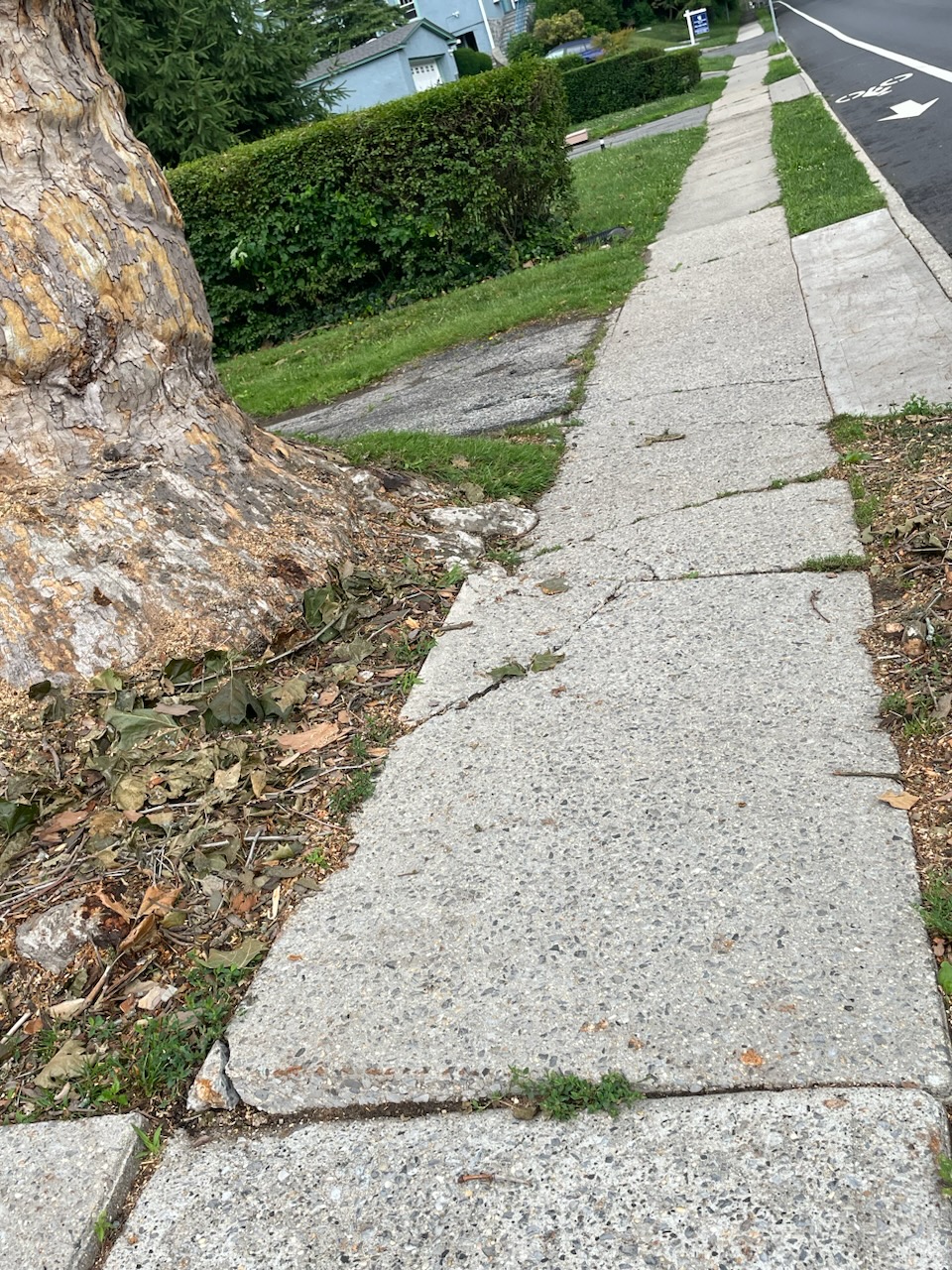
The only saving grace as I see it rather snarkily is that the homeowner’s energy bills will no doubt go up because they have no boughs to shade their roof. Karma being a bee-atch.
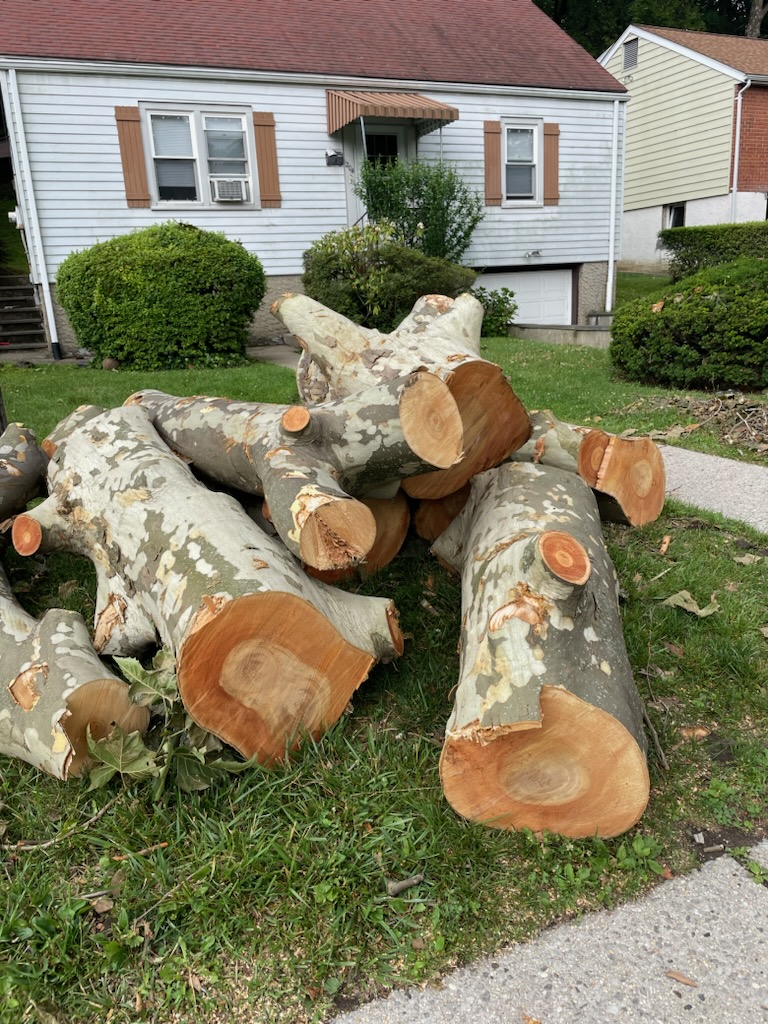
Back to the more generous, quite deliberately engineered canopy of New York City, though. A few blocks away from the majestic willow, a perfect Kentucky coffeetree.

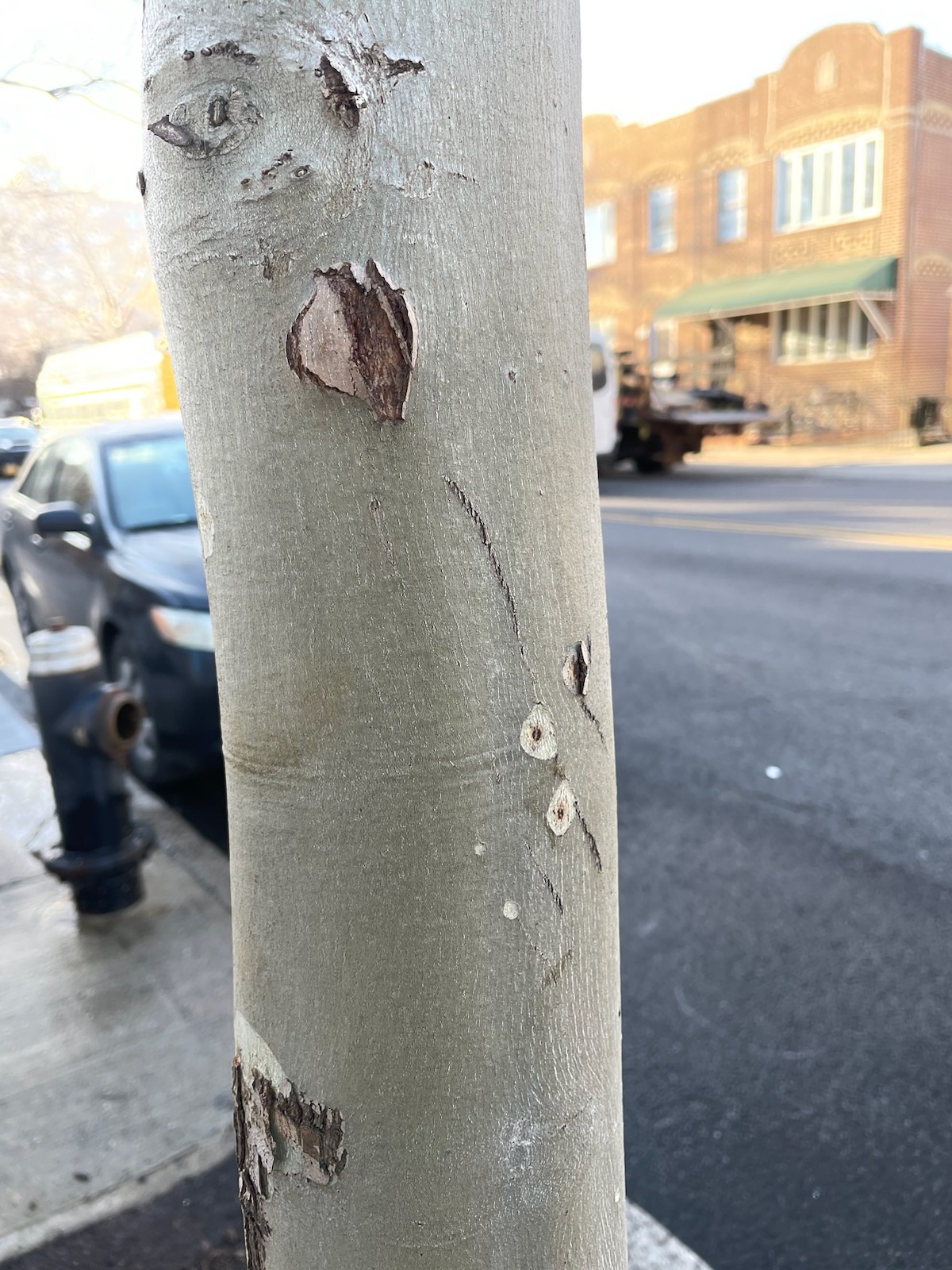
Its bark some of the coolest in the tree kingdom.

Character also abounds in the man-made neighborhood attributes when I peel my eyes away from the trees to take a walk down the block.

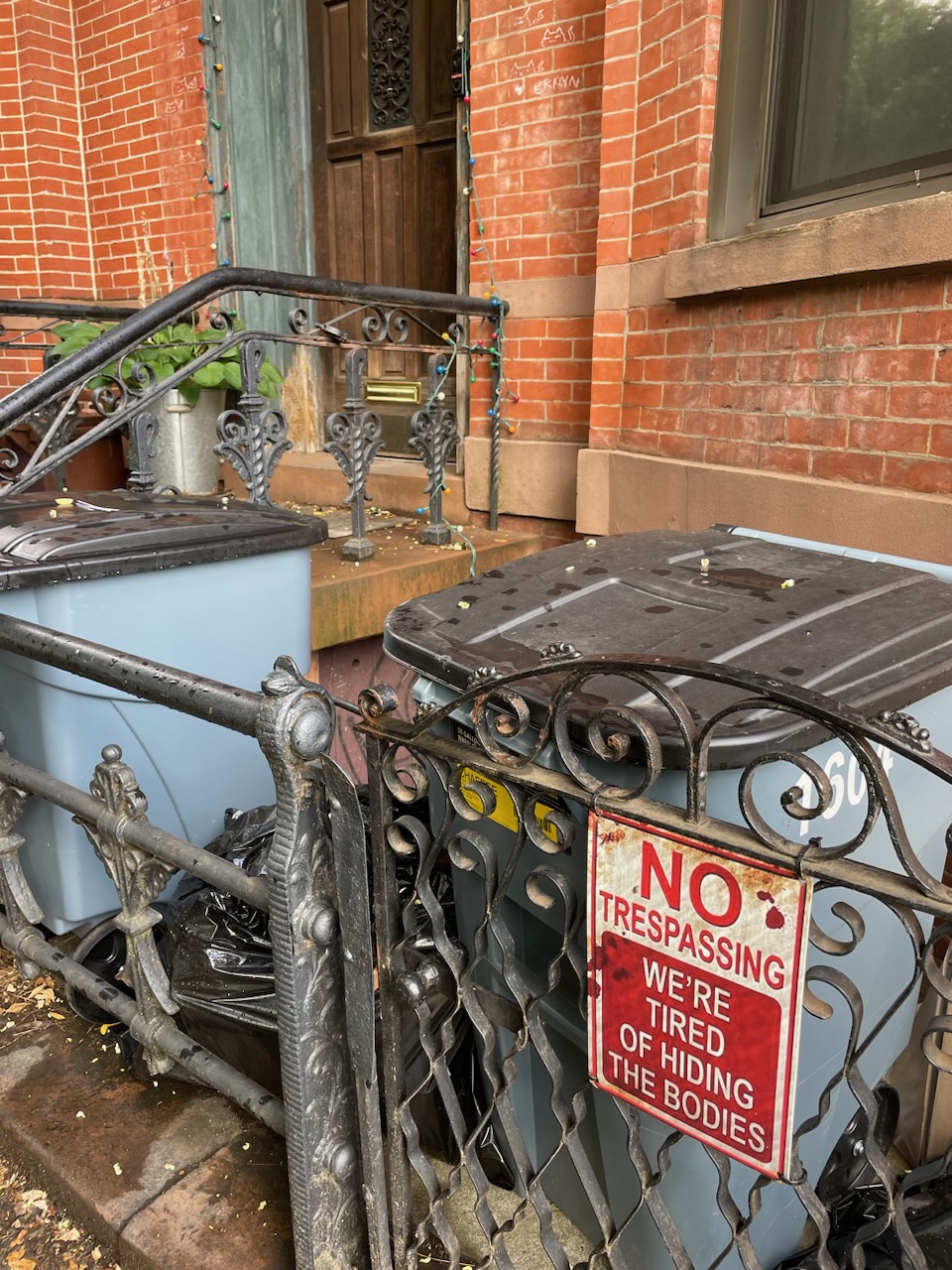
New York humor.
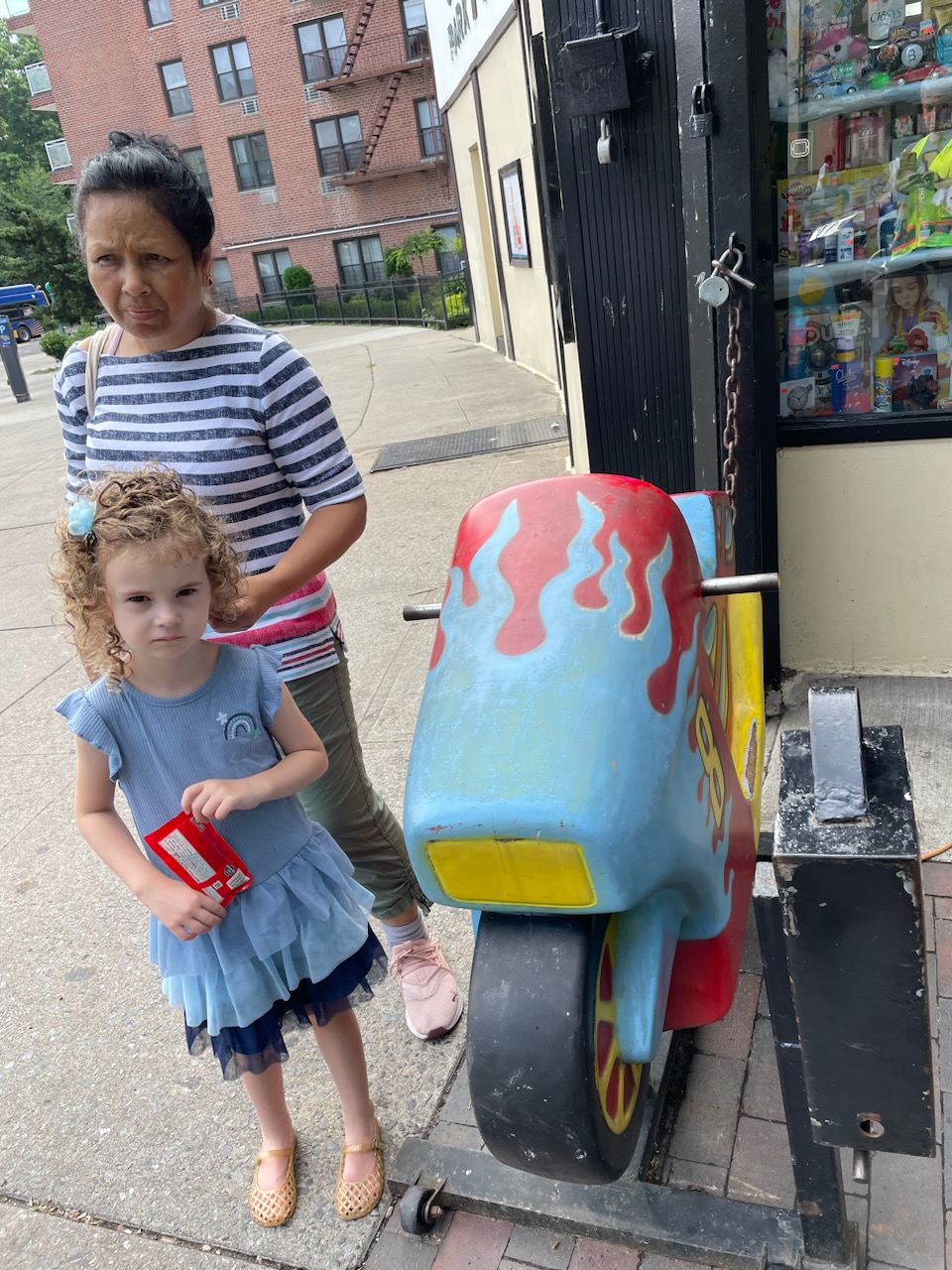
Privileged Prospect Park children and their beleaguered nannies. (Note candy. It’s nine o’clock in the morning.)
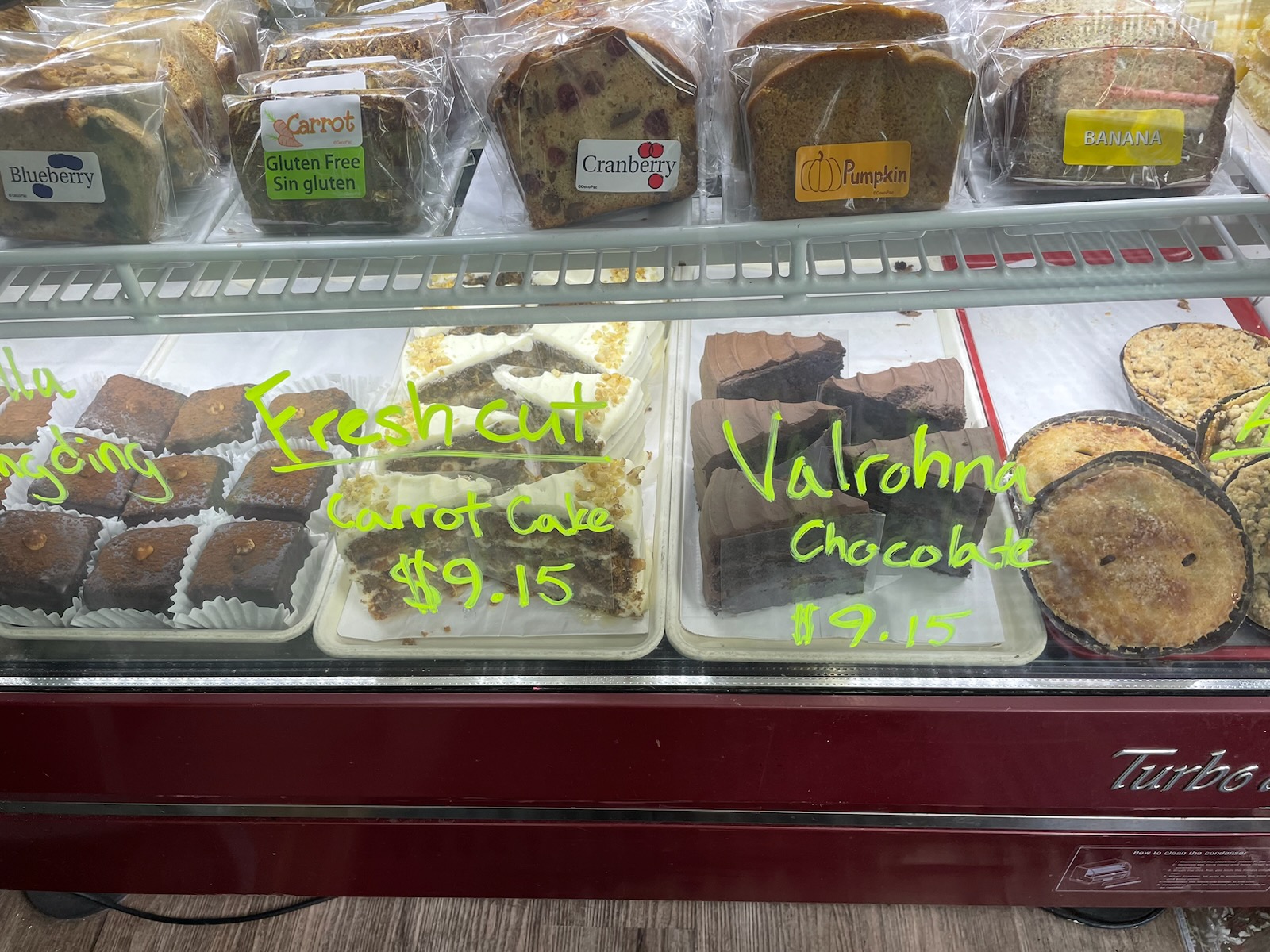
Fabulous offerings at a run of the mill, neighborhood “pie and cake shop.” Prospect Park prices. I get coffee and make myself wait. On the other hand, carpe diem – when we leave this location I might never be back. We’re driving all over Brooklyn for this job’s locations.
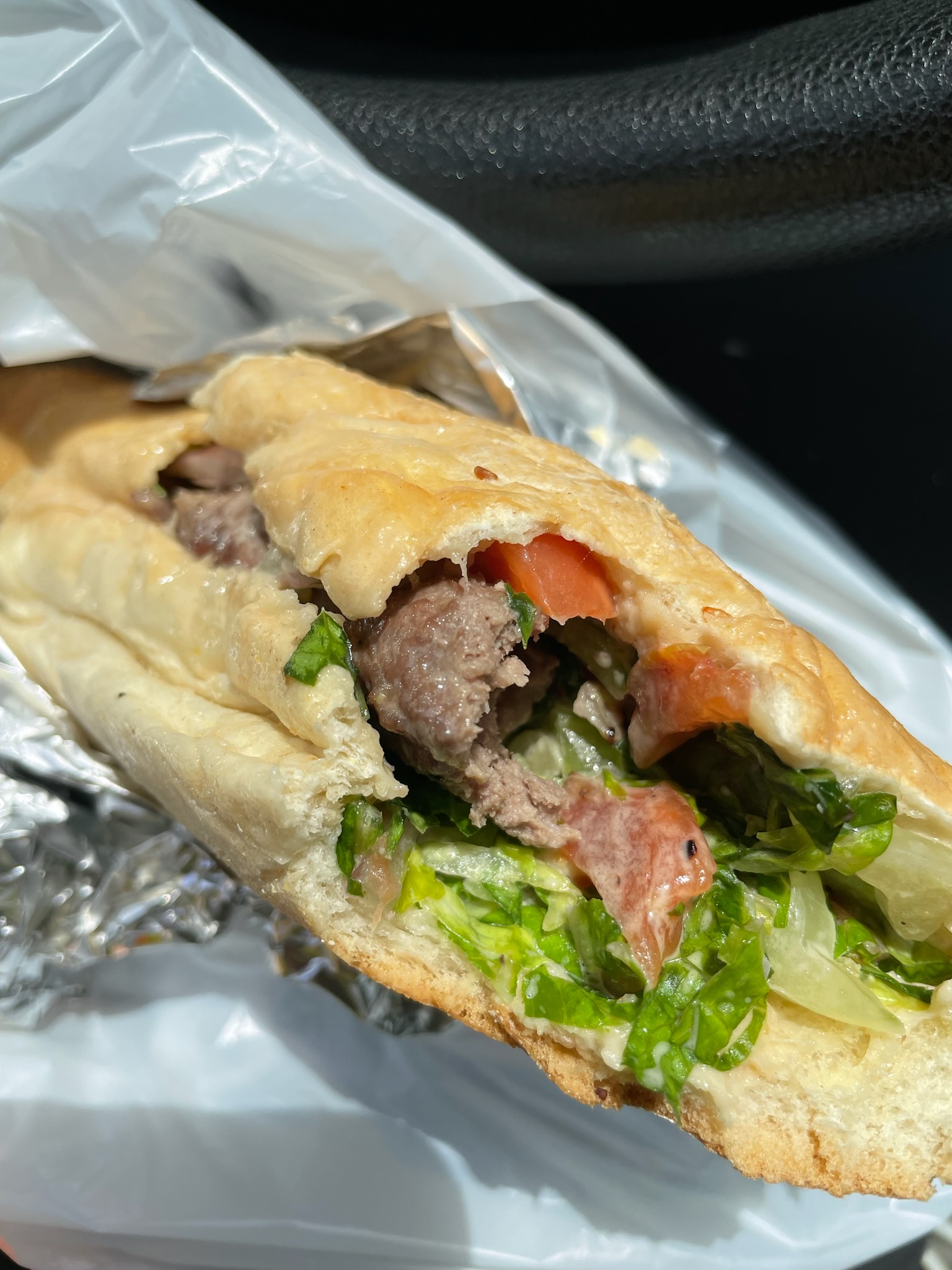
Later I treat myself to the most delicious lamb kofte kebab sandwich I have ever consumed.
Dog walkers. Interesting tee shirt: Don’t Be a Follower. Make Your Own Trax!

I once compiled an inventory of tee slogans I saw doing tree inspections on similar sidewalk locations in the Bronx.

Good Mood.

I’m Not Sorry.

Today Is Cancelled.

Respect My Authority.

My First Year Being Rich.

I Am the Reason Mama Needs Medicine.

Huge.

Fear Is an Illusion.

I Would Give Up Shopping But I’m Not a Quitter.

Big or Small, Let’s Save Them All.

It Wasn’t Me.

I Rule the Streets.

Marvel.

These are only a drop in the bucket, believe me. Feel free to appropriate.

I can relate to some of them. I Rule the Streets. Marvel.

Baby prickly fruits of sweetgum, as sweet in Prospect Park as anyplace else in the world.

Near the corner, an effulgent Japanese pagoda. Condition: excellent, I write in my report.
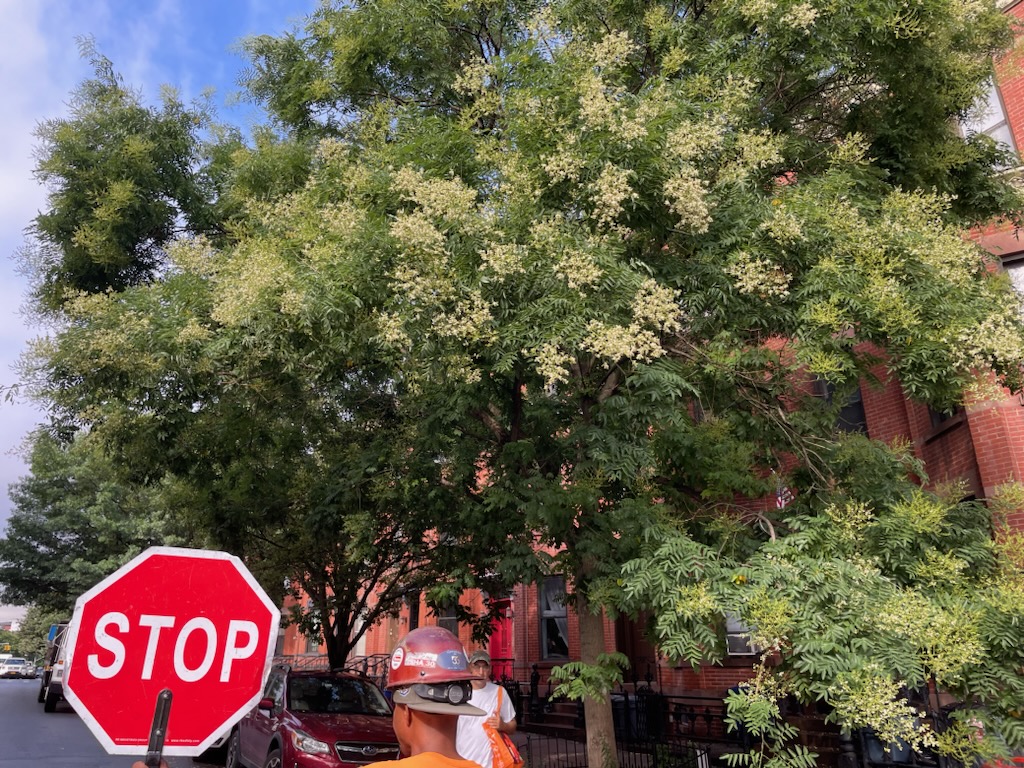
Always amazing to see pure summertime blossoms against the grit, the brick and the concrete — the urban forest that is New York City.

Marvel. I Own the Streets. Is this the best job in America? Perhaps. At least today.

Leave a comment

Filed under Jean Zimmerman

There is really no such thing as nondescript

in any borough of New York City.

Here I am in an ordinary neighborhood of Brooklyn, rather humdrum, really, inspecting and preserving trees, and so many things have a hint of the marvelous.

The human impulse toward landscape adornment reigns supreme.

People here love their cherries.

Doctor Seuss ornamentals.

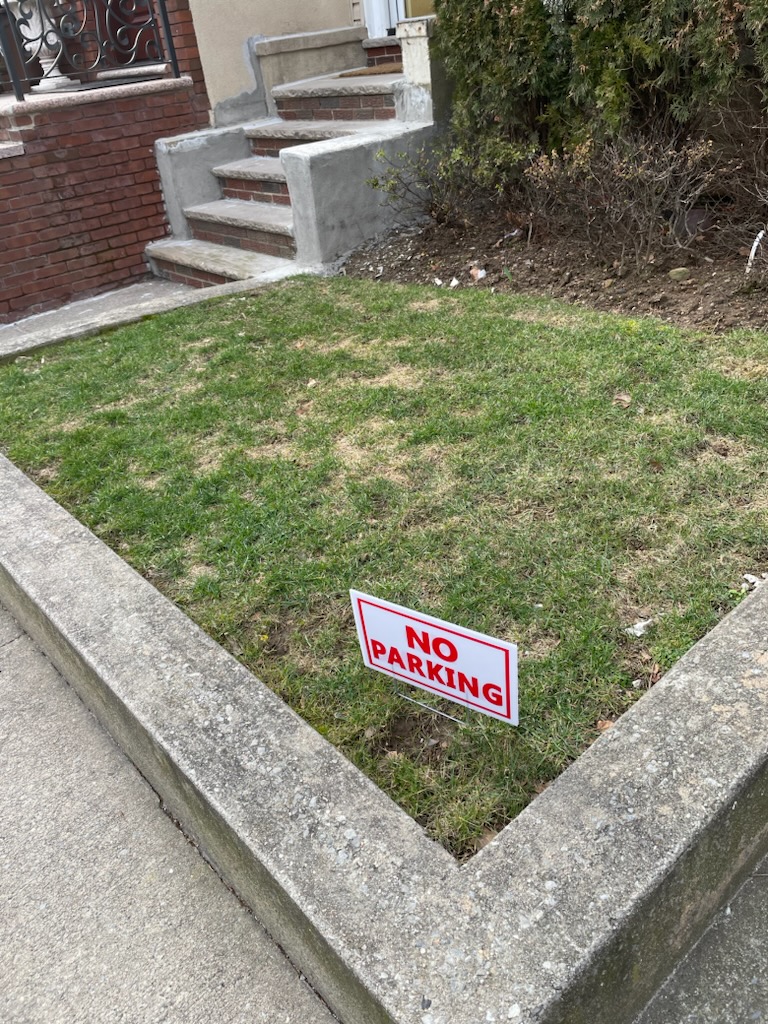
Their pipsqueak lawns.

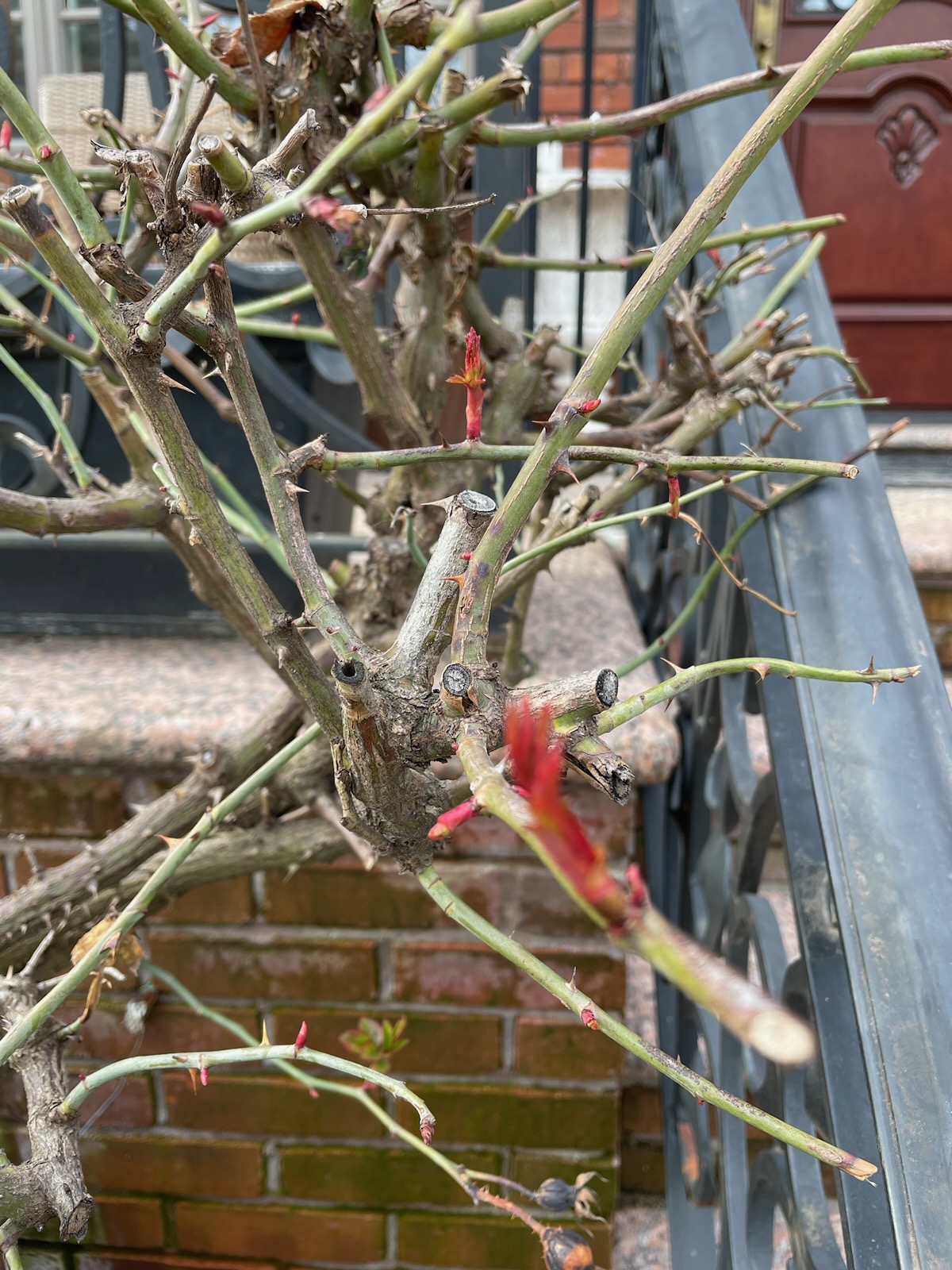
Their rose bushes, now hesitantly broaching the subject of spring.

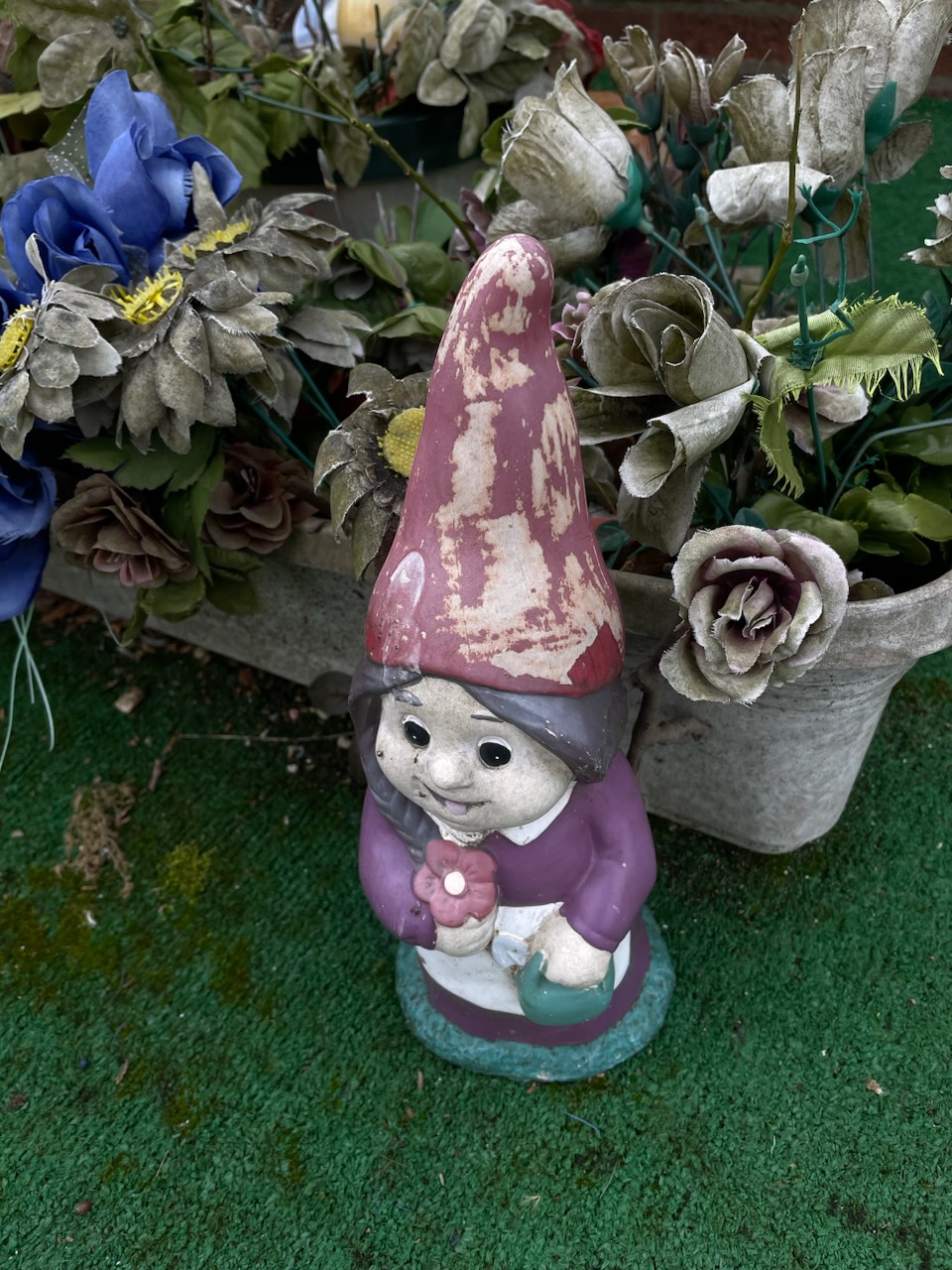
But why wait if an artificial bloom looks just about as lovely on a late winter day?

Their Himalayan cedars, for goodness sake! Who woulda thunk it, on Brooklyn’s 58th Street? Yes, I know, a tree grows in Brooklyn.

I ponder the idea a friend shared today that there may be more trees on Earth than there are stars in the Milky Way. Not all that many trees here, but the ones that do exist are clearly treasured. I’m looking after some young London plane trees today. Someone has to protect them, and at this moment that someone happens to be me. A privilege. Thank you.
Barbara Kingsolver once said something cool. She talked about how important it is “to look hard, for a long time, at a single glorious thing: a flame of red geranium outside my bedroom window. And then another: my daughter in a yellow dress. And then another: the perfect outline of a full, dark sphere behind the crescent moon. Until I learn to be in love with my life again.” Yes.

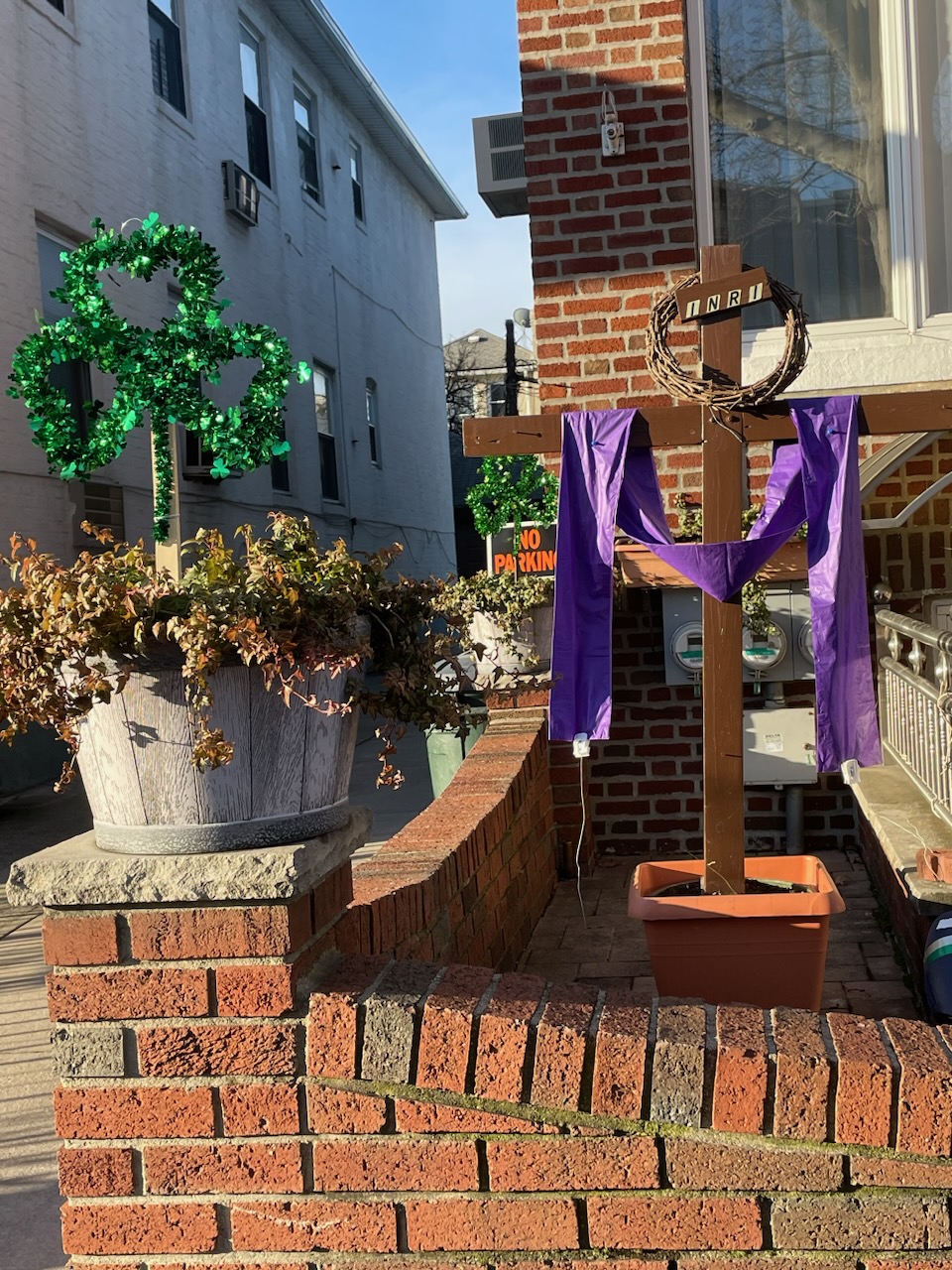
Brooklynites love their orthodoxies.

Of all kinds.

The abbreviation INRI stands for Iesus Nazarenus Rex Iudaeorum, which translates to Jesus of Nazareth the King of the Jews. The reason for this, if you want the abridged version, is because the first complete combined bible was translated by St. Jerome into Vulgate Latin. People became used to the Latin and continued to use INRI. Such an ancient concept in our awfully contemporary age.

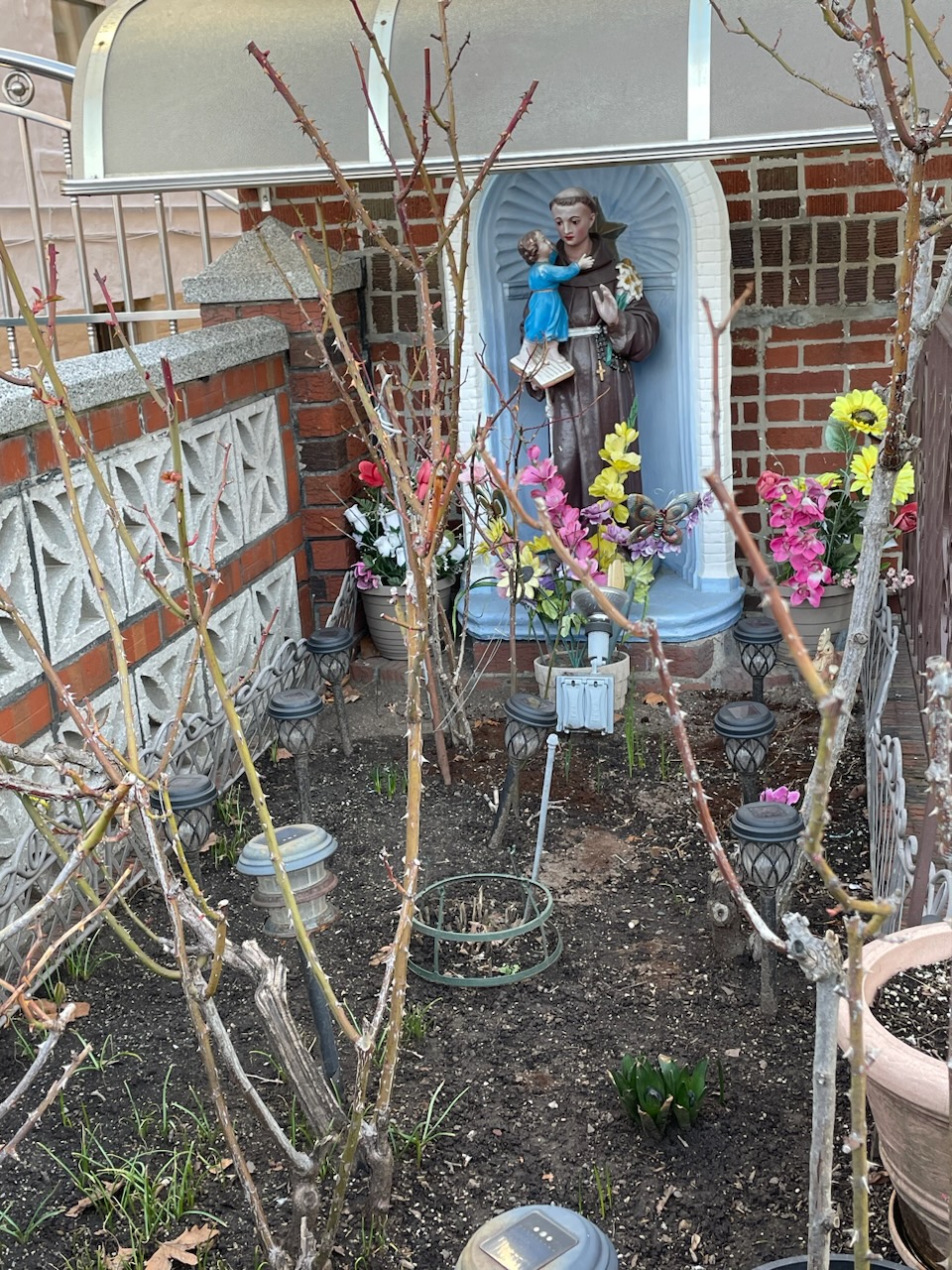
I’ve always found the mysticism of the boroughs fascinating. The abundance of shrines.

Might this placid gentleman be some saint or other? I’ve never been good at keeping them straight. They’re all important, though.

The people I meet have a kindliness that I think might surprise folks elsewhere in the country. The foreman at the gigantic construction project down the street pointed me in the direction of the Mobil station down the road where “they have gas! Restrooms! Food! Everything!” And the Rite-Aid clerk proved equally hospitable, glancing once at my reflective vest and waving me on to the employee bathroom.

The belief systems here are deeply ingrained.

Driving down to the Mobil station along Bay Parkway takes you right through the middle of Washington Cemetery. As if on cue, Lucinda Williams comes on the radio: You’ve got to get right with God.

Gigantic, and plunked down right in the middle of this residential neighborhood, the cemetery was founded in Kings County in 1850, outside the independent city of Brooklyn, and from the first served primarily German Jewish immigrants. I feel like I might stumble upon some long-lost relative here.

 You can wend your way through the grave plots on paths called Rose, Hyacinth, Jasmine, Aster, Lotus, Evergreen, Cedar, Maple, Cypress, Orange, Sycamore, Spruce, Aspen, Balsam, Oak, Magnolia, Arcadia and Birch. The burial ground has its share of both Yiddish theater stars and gangsters.

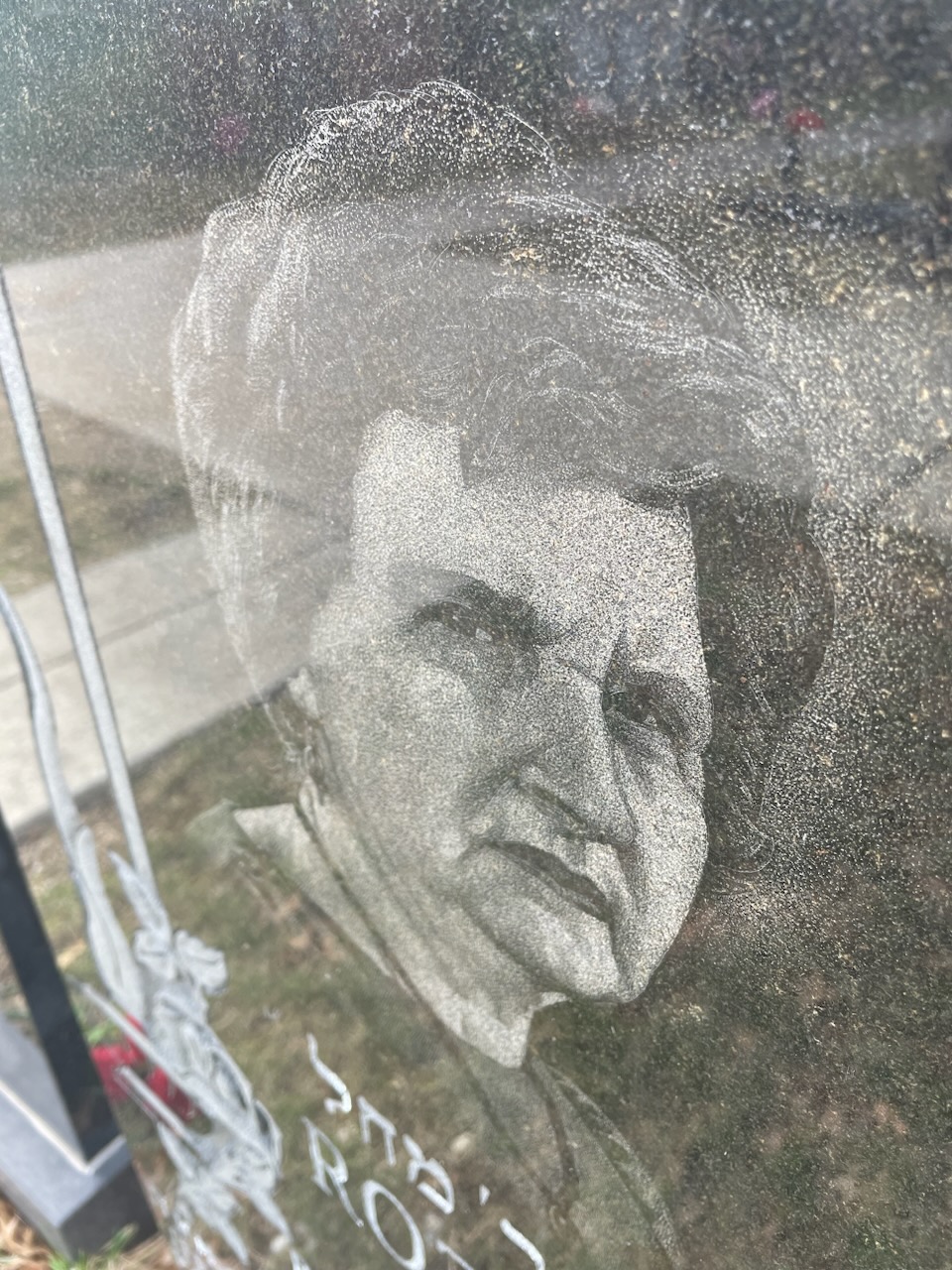
Never pass up an opportunity to walk through a cool cemetery. Especially when there are tombstones with photographs, the latest style in death, which has always got something new going on.

And handsome stone lions.

And what must be lambs.

Some of the deceased seem not to have been caught on an especially great day.
But as is often the case in graveyards you can find greenery captured in stone.

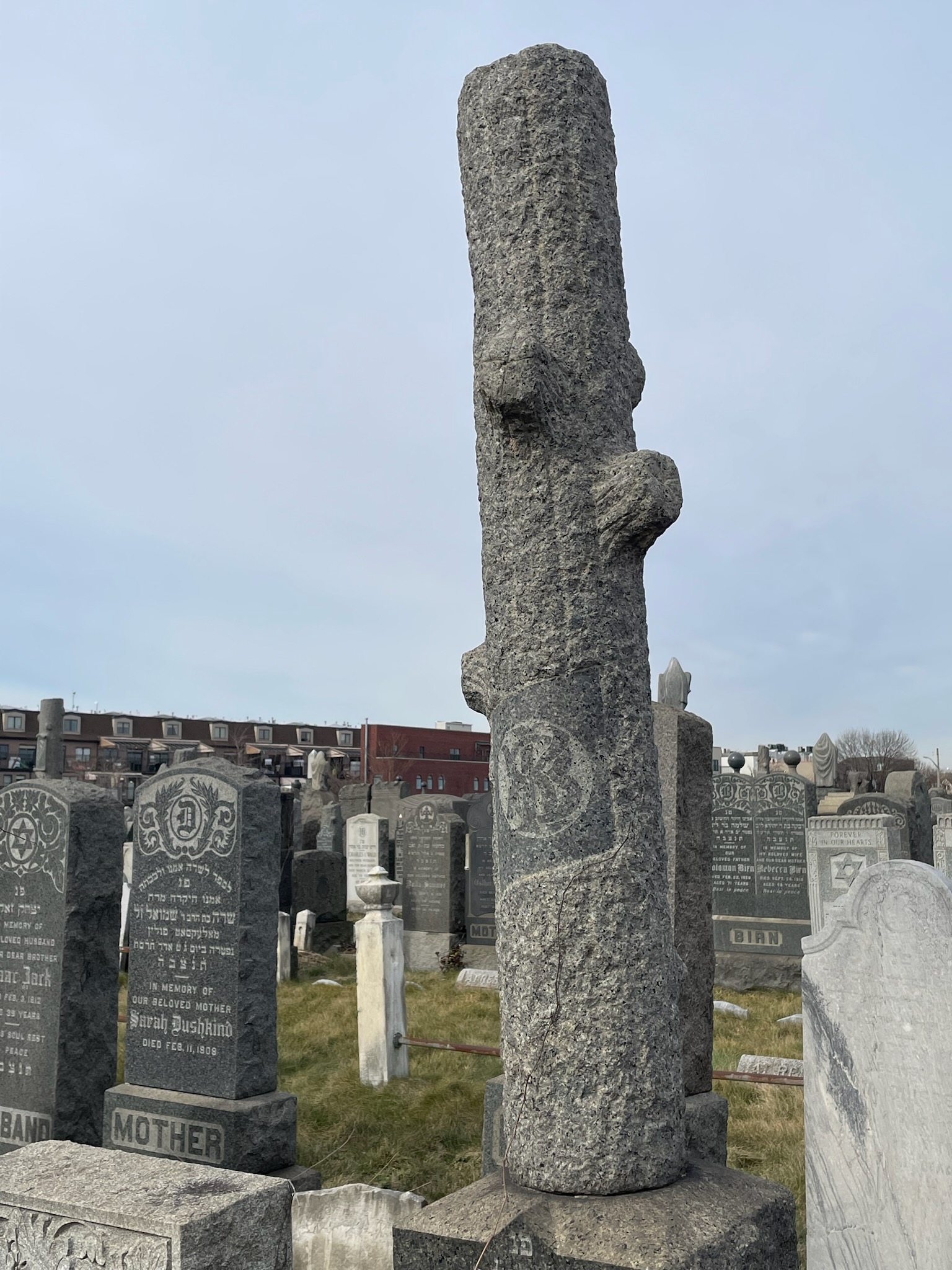
And extremely symbolic severed trees.

You know me, I prefer the old-old. The namelessly poetic.

Everything pukka on this ho-hum late winter day.

Learning about stuff.

Anticipating spring.

Leave a comment

Filed under Jean Zimmerman

No humans, no dogs, one swan

populated the Ridgewood Reservoir when we saw it.  Ridgewood sits in the middle of Highland Park in Brooklyn, bordering Queens, and it is the closest thing to wilderness you will find in all of New York City. Those haunting pictures of life coming back to Chernobyl when it was absolutely impossible for life to come back – Ridgewood is like that, minus the nuclear blast.
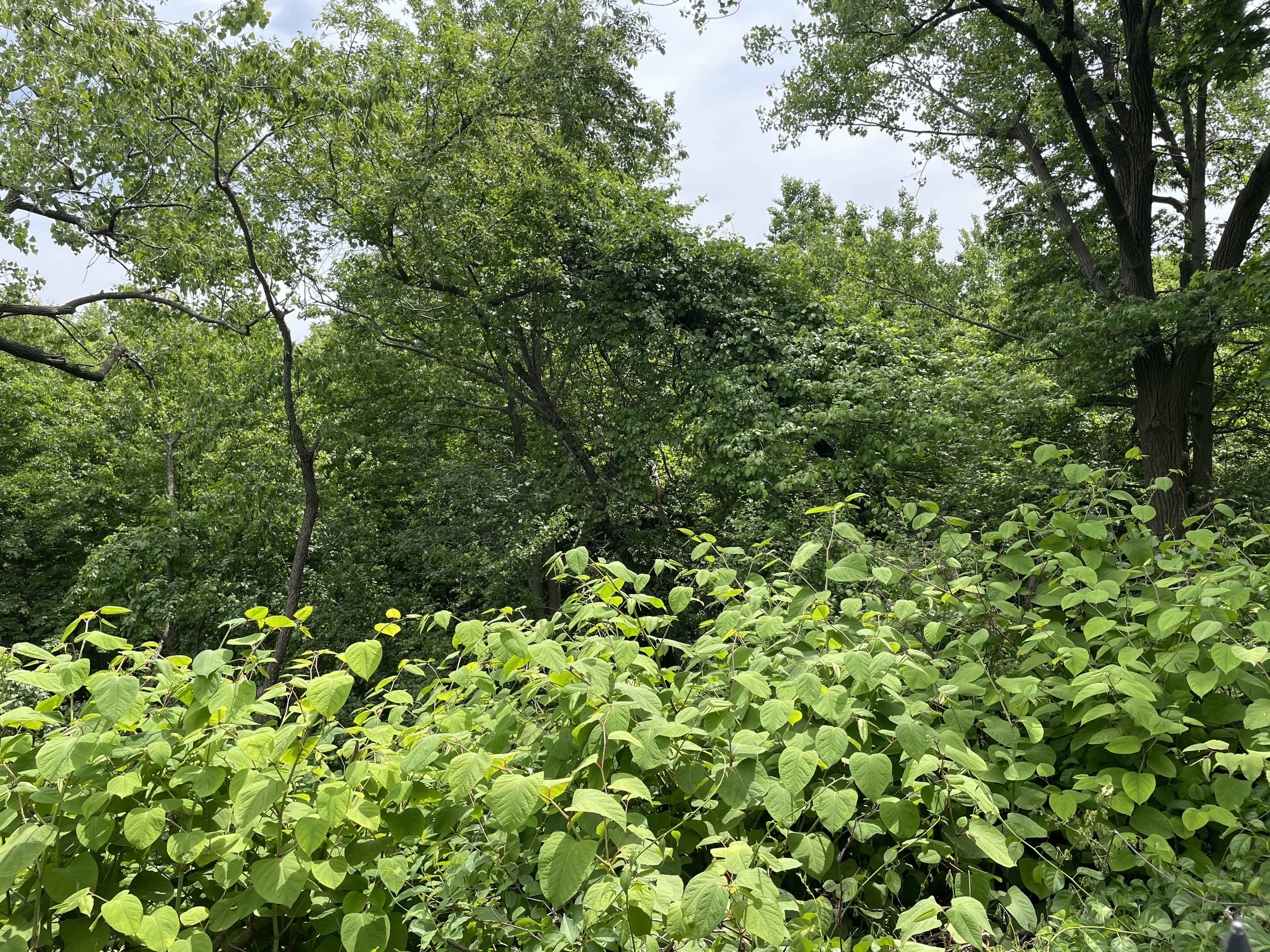
In 1858, the city fathers (note: no mothers among them) realized that clean water was a vital necessity, and they bought Snedicker’s corn farm to become the reservoir.

Over the years the borough’s thirst only intensified and The People in Charge bought acres and acres around the original site to use as a buffer against “pollutants generated by cemeteries and garbage plants.” The boroughs of New York were still independent cities until 1898. By bringing water to Brooklyn, the reservoir allowed Brooklyn to become America’s third-largest city, as well as the country’s largest beer producer. (That honor now belongs either to Chicago or to Portland, OR.)

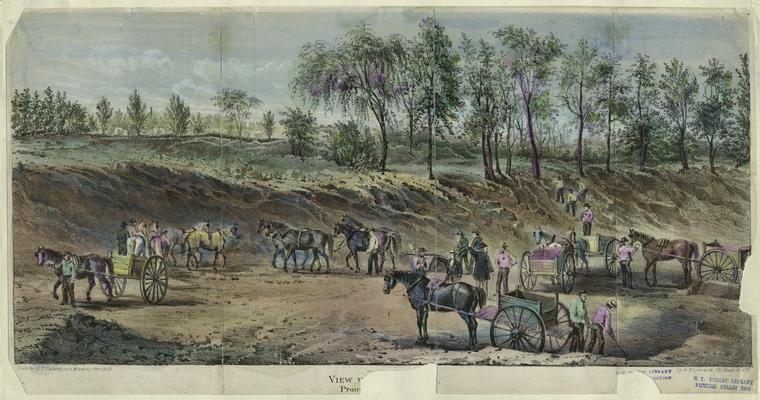
The reservoir was decommissioned and drained by 1990, and the land basically left to its own devices. 

During our visit we made our way all along the perimeter (1.18 miles) and met no one but a lone birder, who told us the bird song quieted at the hotter hours of the day. (I knew that.) I wanted to go because I heard there was a birch forest growing in Brooklyn, but in fact I saw nary a birch. Black locust, yes, very fragrant.

And lots of black cherry.

Sassafras. Imagine fifty-plus acres of sassafras. There’s also red maple and sweet gum. There are thick carpets of moss and the bogs we couldn’t get at.

I wonder what old Frederick Olmsted, master landscaper who designed Central Park, would have thought of the pristine pool becoming a jungle.

Highland Park sits atop  a ridge formed by the Wisconsin ice sheet’s terminal moraine. Olmstead loved blasting the hell out of ancient boulders to make Central Park.

In 1894, Brooklyn hired Olmsted’s firm to design the main drive and concourse for the reservoir’s southern portion, lined still today with towering, bulbous London plane trees.

The Olmsted company erected an iron fence and electric lights, which were barely heard of in those days. The fence went up because of repeated drownings, suicidal and otherwise.

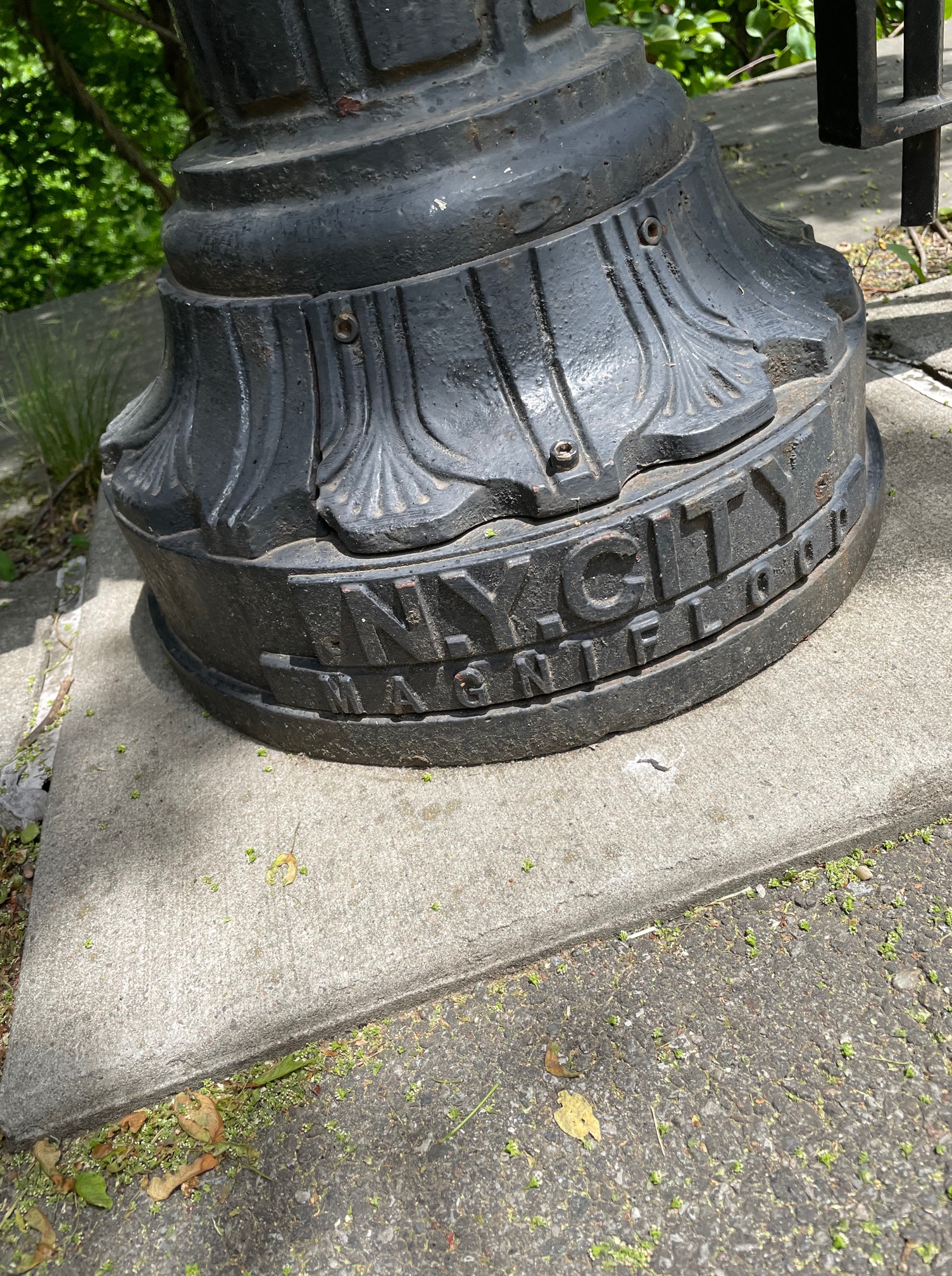
You can still read on the base of each light fixture: MAGNIFLOOD.

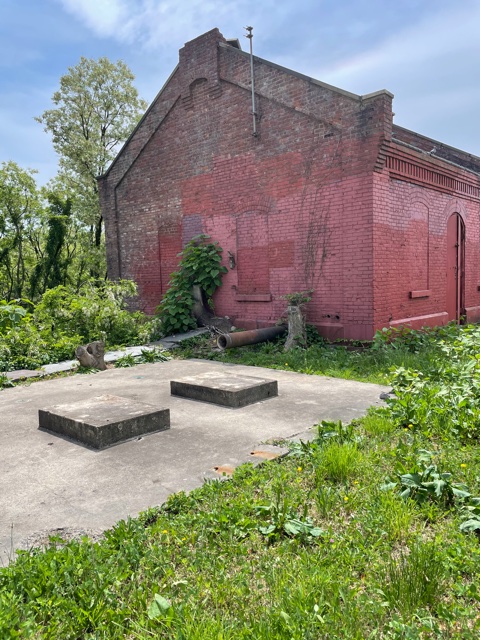
Old pumphouses still stand.

Nine cemeteries ring the park, including this one, the B’nal Jeshaurm and Shearith Isreal cemetery. There is one just for nuns, too, and one for the World War I dead. I think I have family in one of them.

Actually, the original tract featured three reservoirs, and two were drained in the 1980s while water remained in one. That body is now ringed by phragmites, which is the insidious non-cattail taking over deteriorated landscapes everywhere. At the Cabin we had a swamp filled with phragmites; a botanist friend visited and told me, “Oh, those are an invasive species.” Which I felt kind of insulted by at the time, but she was correct.

The swan on the beach is cleaning itself. The person who uses the flat-bottomed boat is used by ecologists, and maybe Huckleberry Finn.

Ridgewood is now a wildlife refuge, with forests, fields and wetlands.  Preservationists have rallied against any threat to its development. We tried to imagine the wildlife that would get over the fences, down the steep slopes and survive there: possum, raccoon, squirrels, voles, snapping turtles (the New York State reptile), garter snakes and frogs. And probably coyotes. In the heart of Brooklyn! We saw only a red winged blackbird but could hear birdsong. A total of 127 bird species have been counted there.

“It’s like a postage-stamp size id in the middle of the raging ego of New York City,” says Gil.

I just say it’s a cool place.

2 Comments

Filed under Jean Zimmerman

The green roof

Here is my buddy Michael in his logo gear — SavATree fleece and mask — standing on the roof of 687 Myrtle Avenue in Brooklyn, where Bed-Stuy meets Williamsburg and Clinton Hill. You’ll have to imagine the 360 degree views of Brooklyn and Manhattan that wrap around, for the pleasure of those who dwell in the 45 lofts below, places with enormously banks of windows and hardwood floors and walls as white as toothpaste.

We’re surveying the site at the behest of a property manager who has had tenants complain about the condition of the roof when it gets hot in summer. It’s brown. Can we make it greener? That remains to be seen.

I find out this condominium is the old Chocoline factory, built in 1947, and in fact people still call it The Chocolate Factory. Inside, machinery was made that was used in the production of chocolate.

Trying and failing to discover an old shot of the factory, I learn that chocoline is also the brand name for a kind of Spanish Fly. An aphrodisiac is an aphrodisiac, I guess.

Now, looking over the roof all the way to the street below, I see a sea of black hats, blacker than chocoline — all the Hasidic men on their way to their studies, crowded onto the sidewalks.

Leave a comment

Filed under Jean Zimmerman