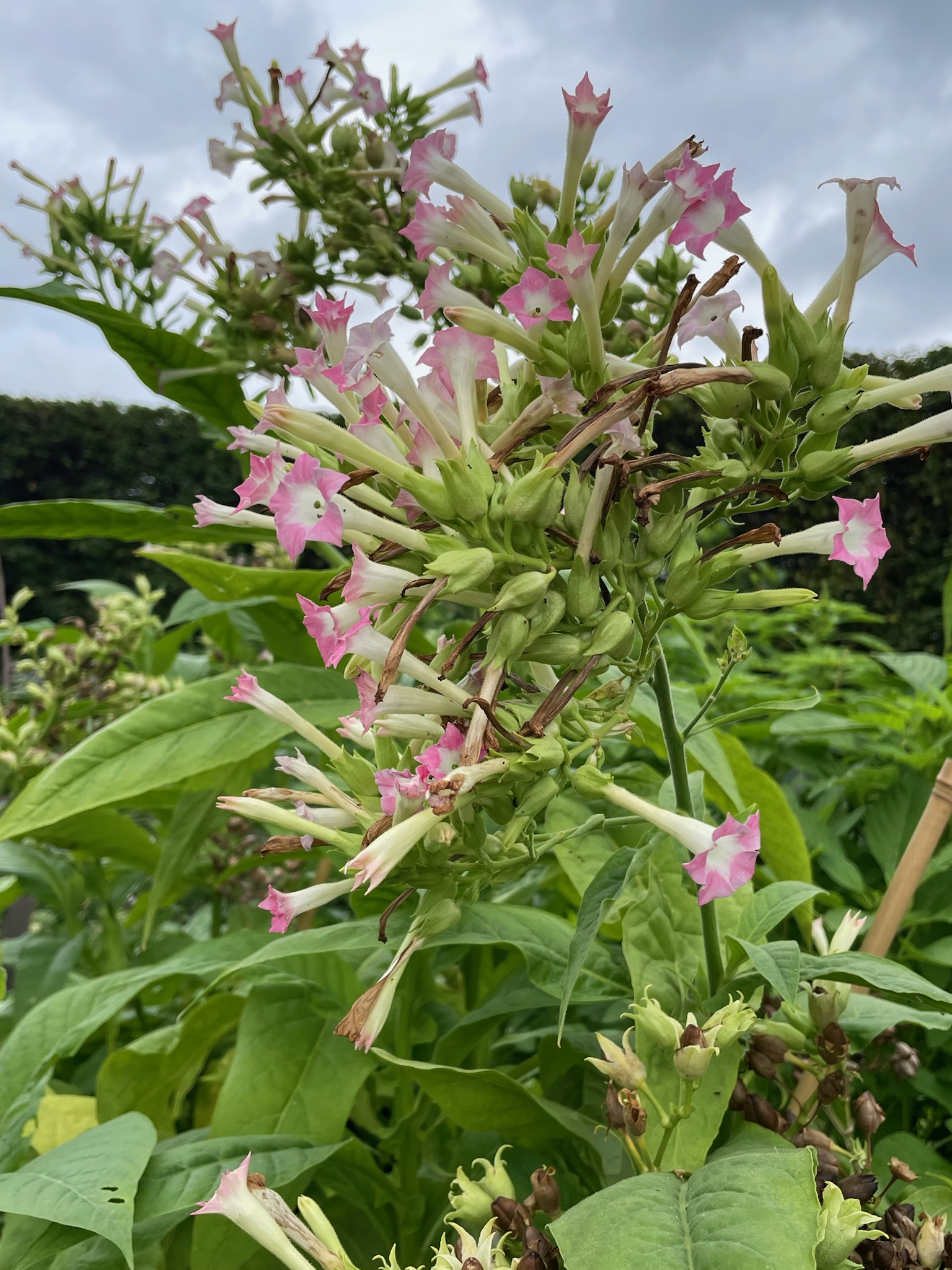
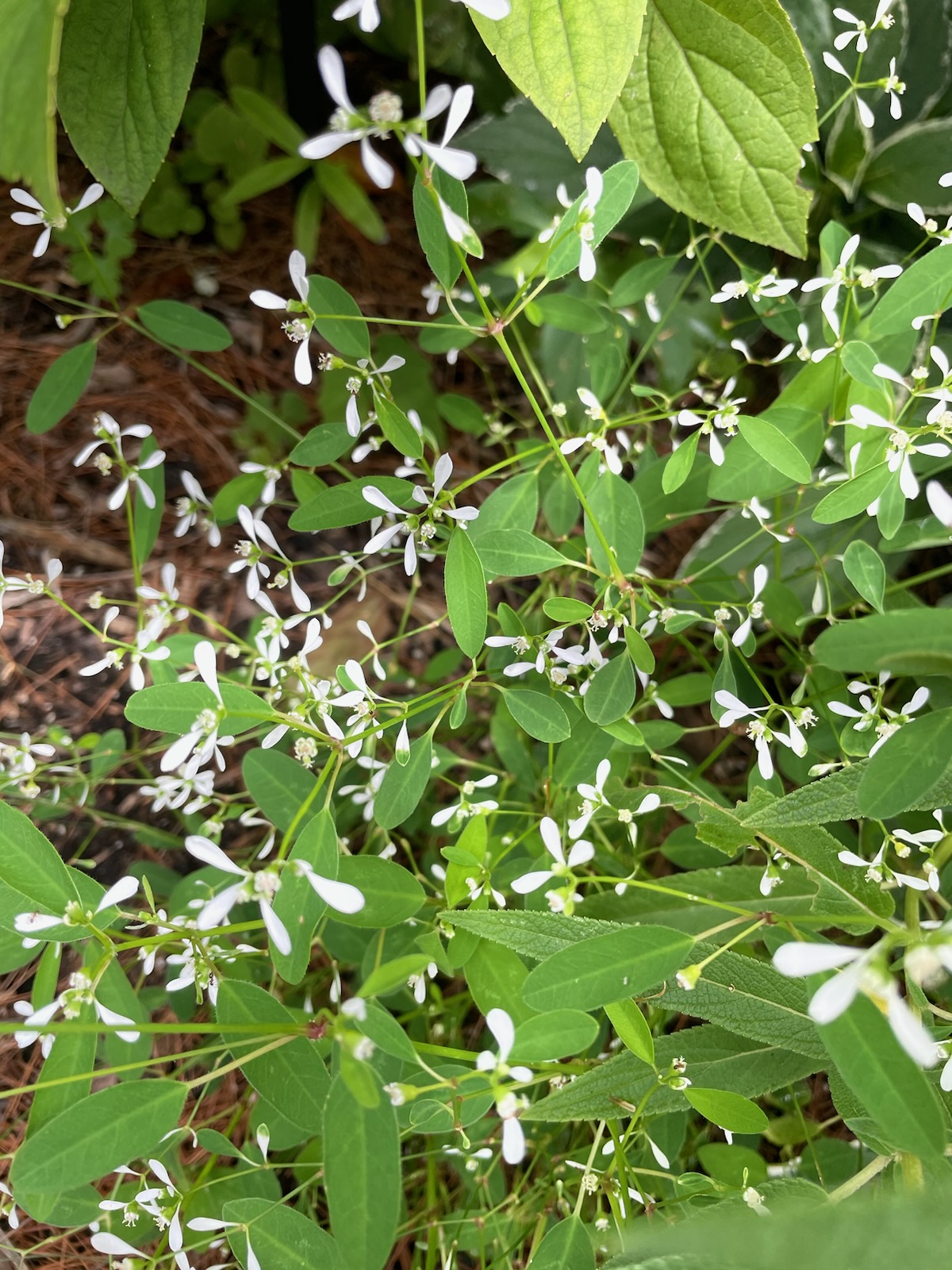
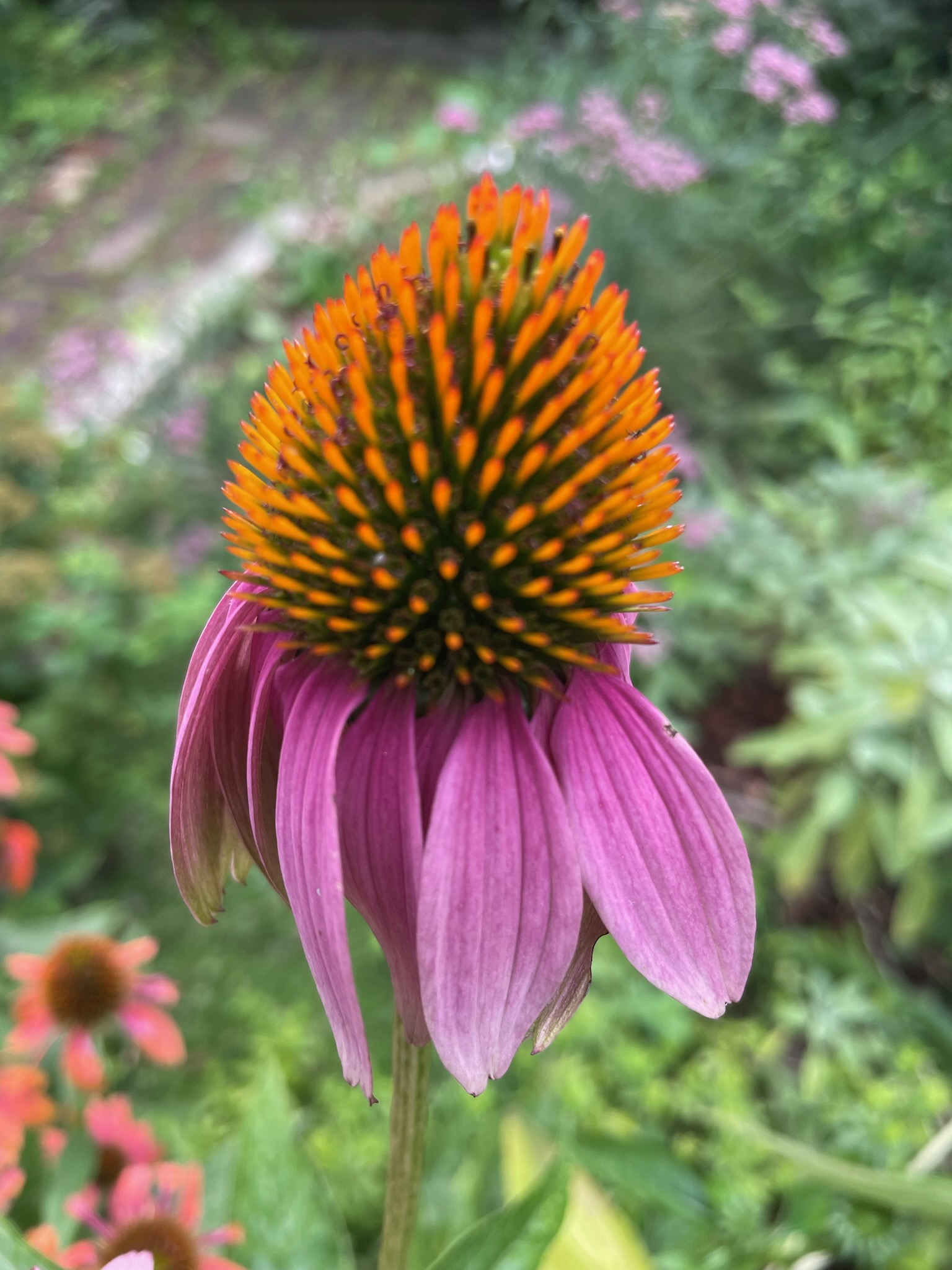
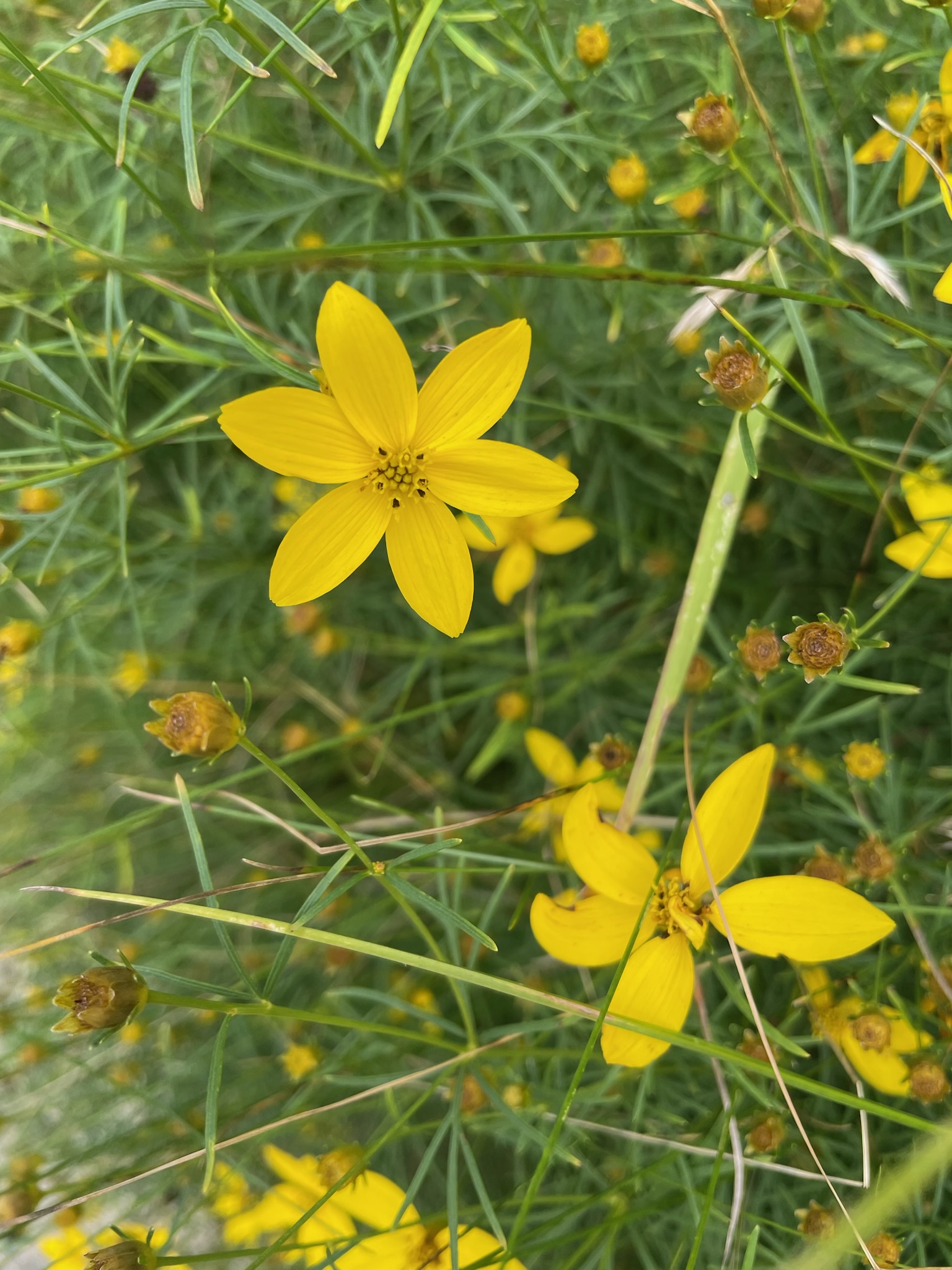
If you go to NYBG in late summer prepare to get happy.

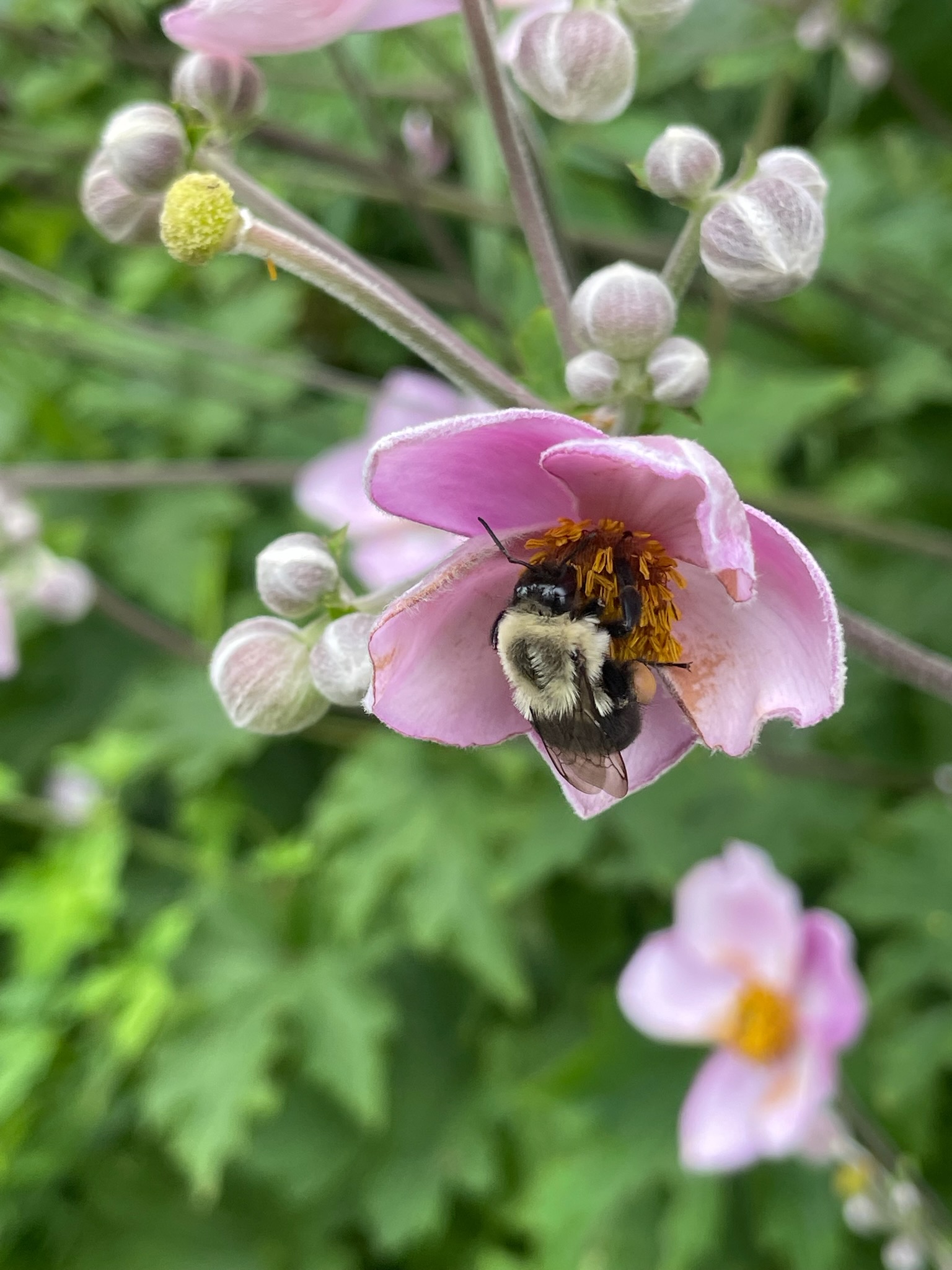
It is almost impossible to feel down when you visit. The New York Botanical Garden always has something new to see. Or something not new but ever-fresh. A bee on a blossom.

Yes, the flowers are flowering. The dahlias.

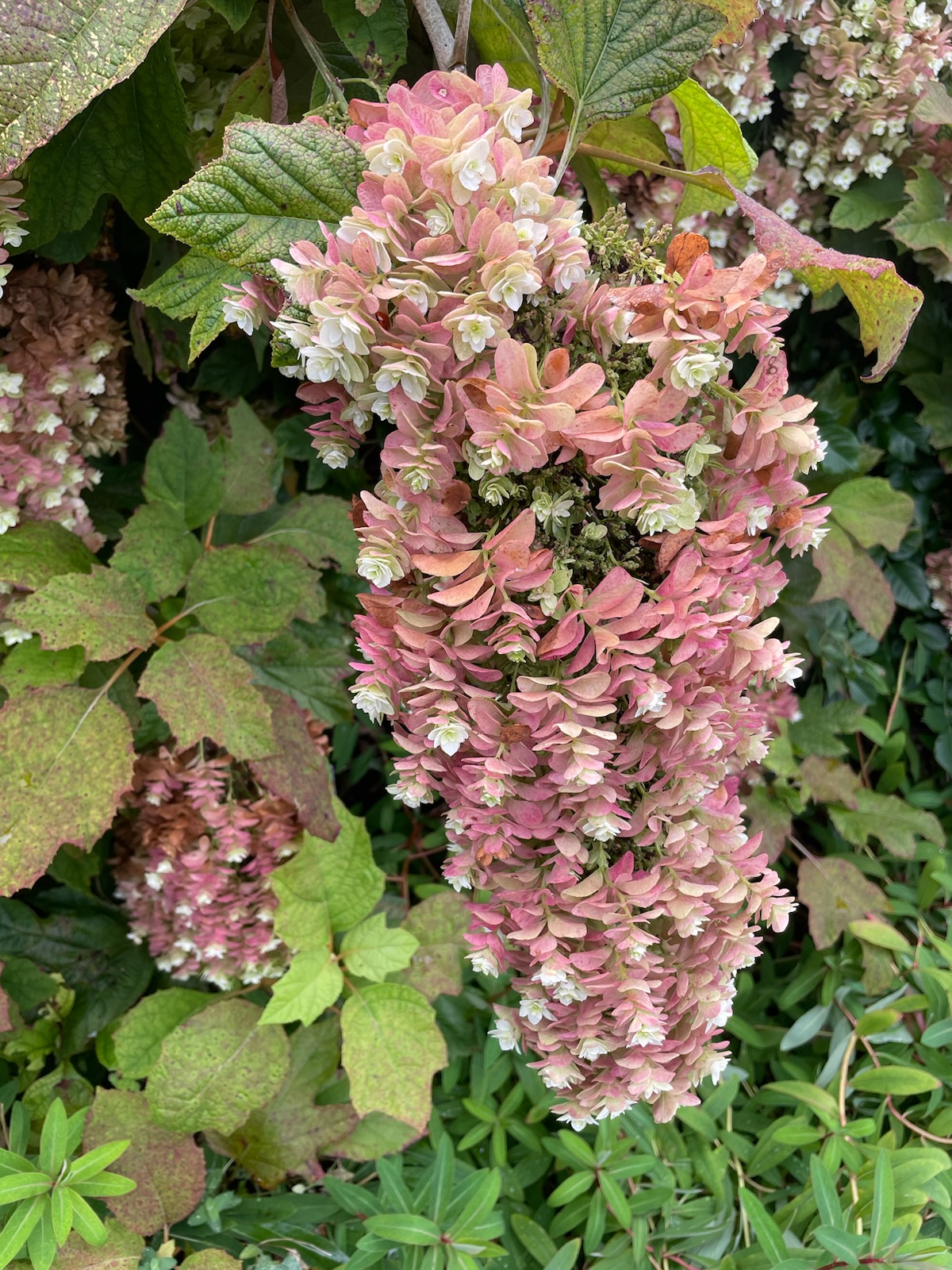
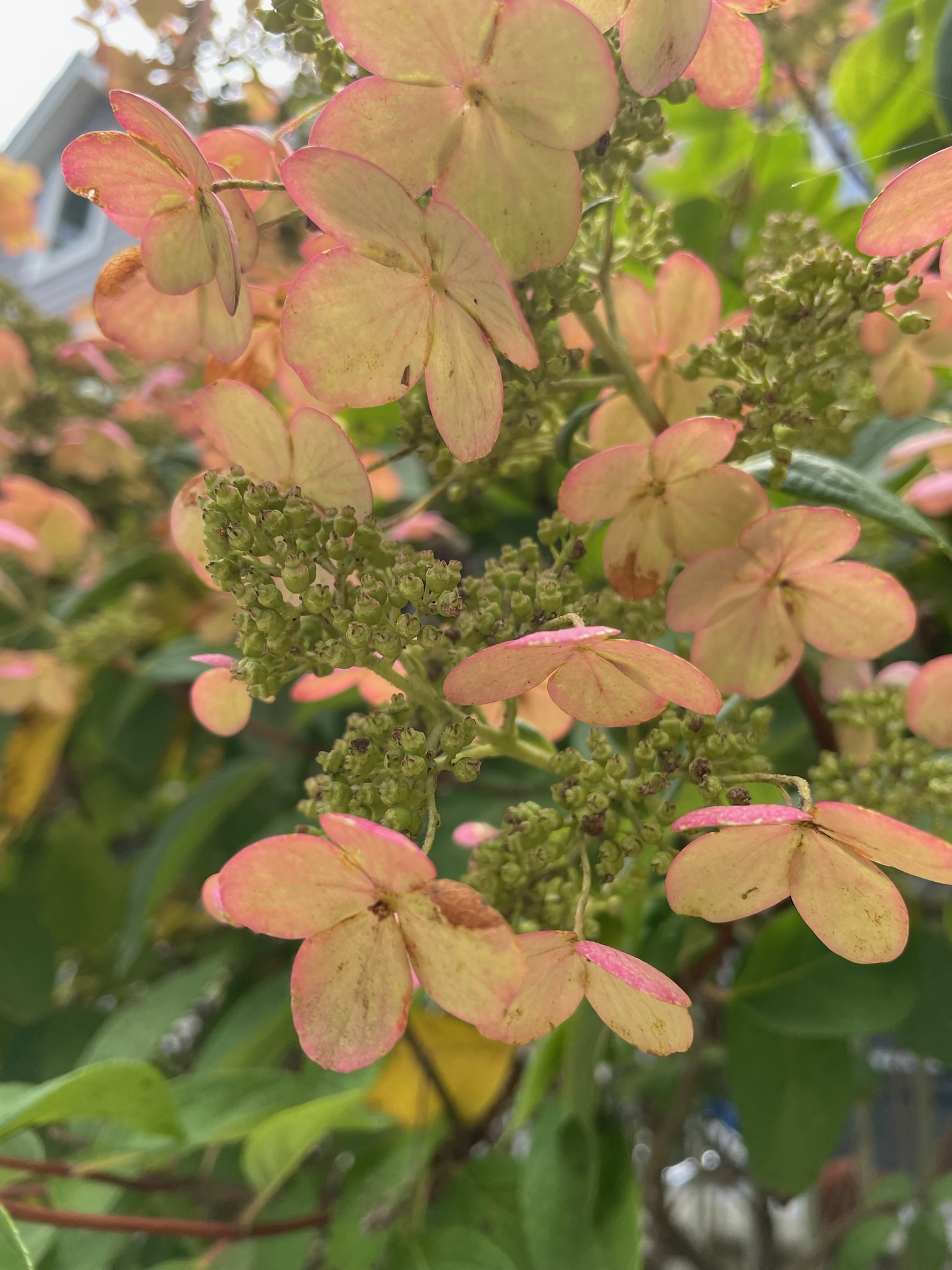
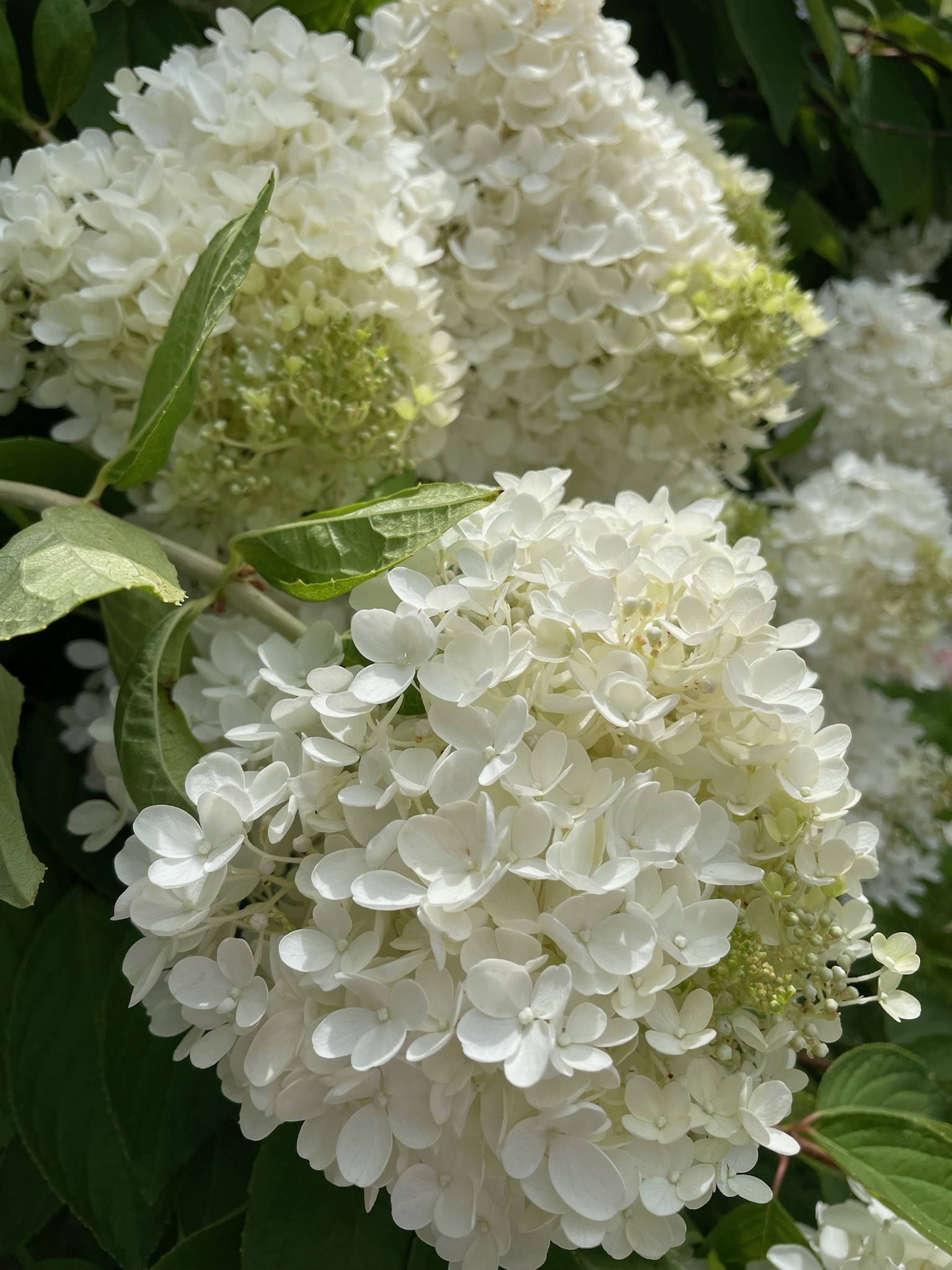
The hydrangeas, some more exotic than others.

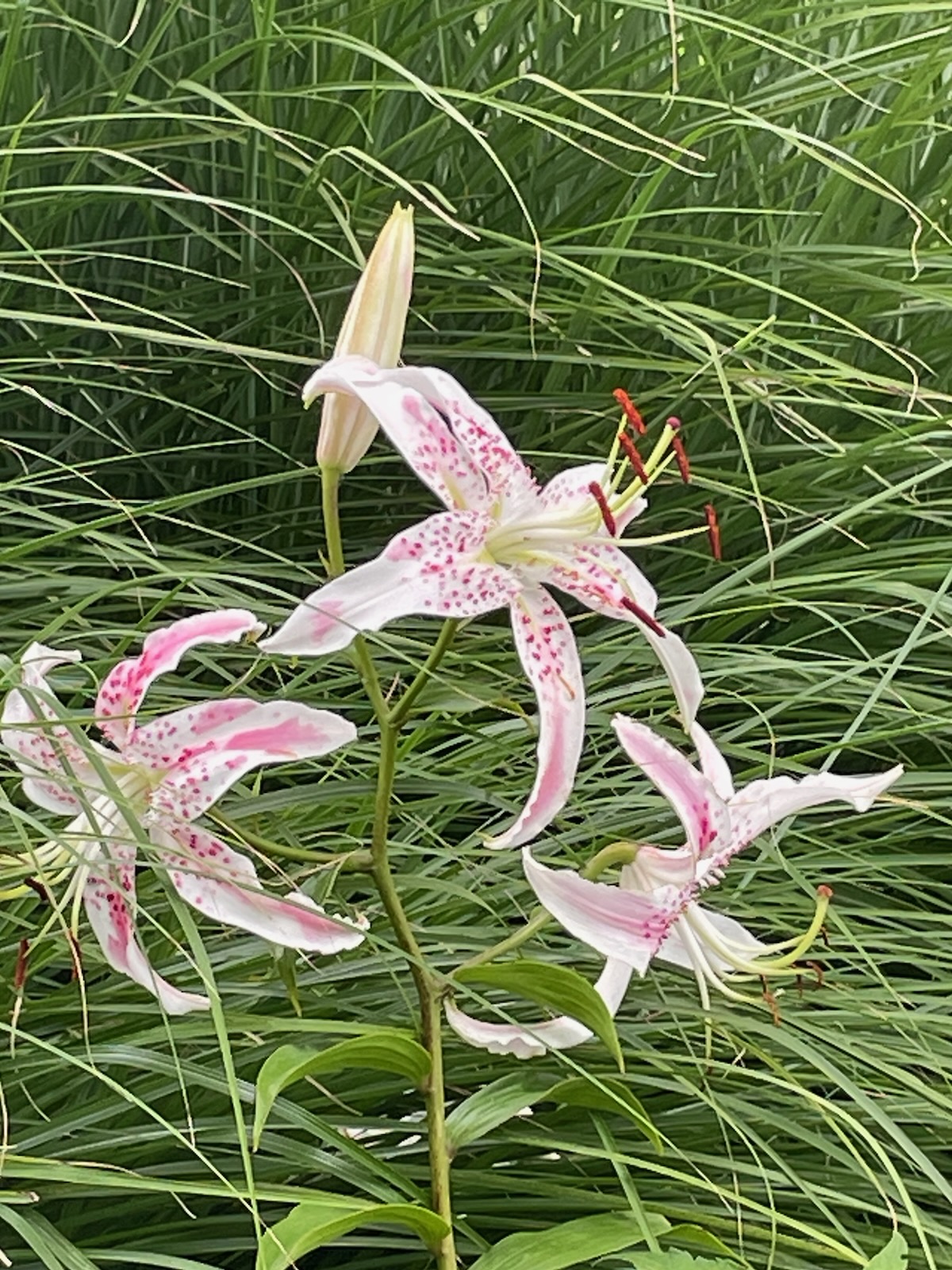
The lilies.

Especially nice when you bring someone who loves plants.

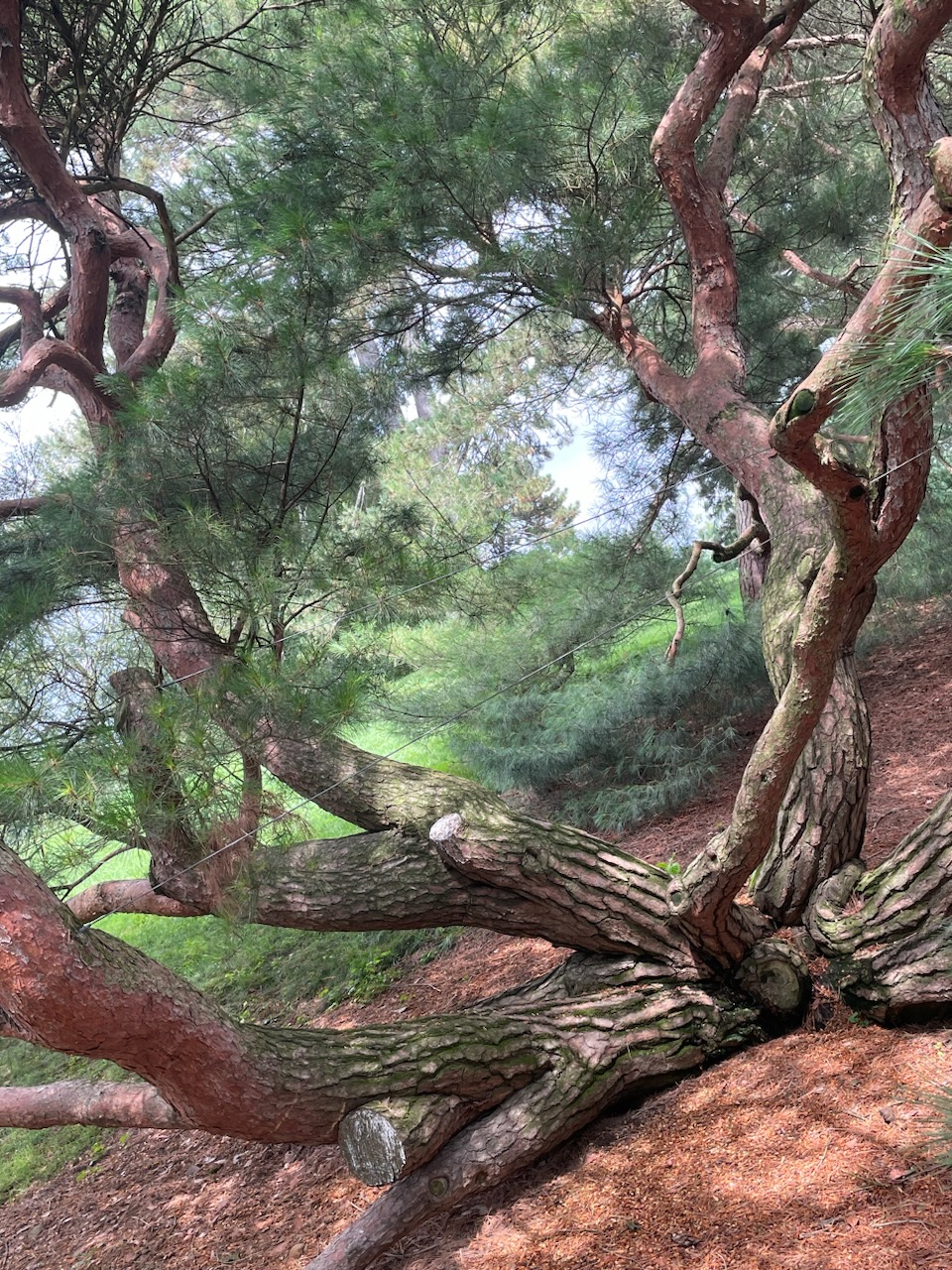
She likes the trees, some of which remind her of when she once lived in Japan.

They are incredible.

From a distance, or close up.

Some she had not met before, like the dawn redwood.

The recorded spiel on the tram tells us that it is ancient, was forgotten then rediscovered, magically.

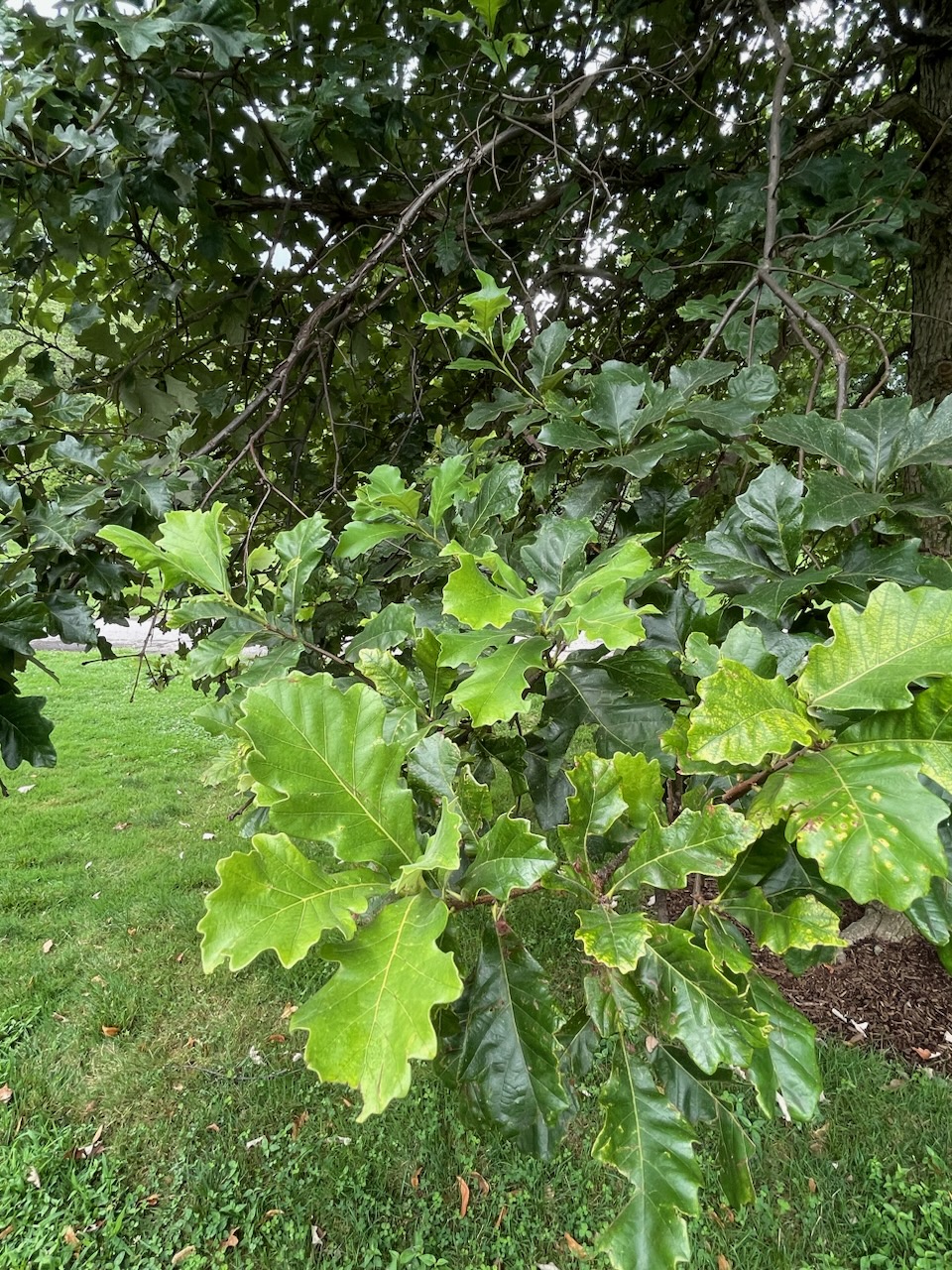
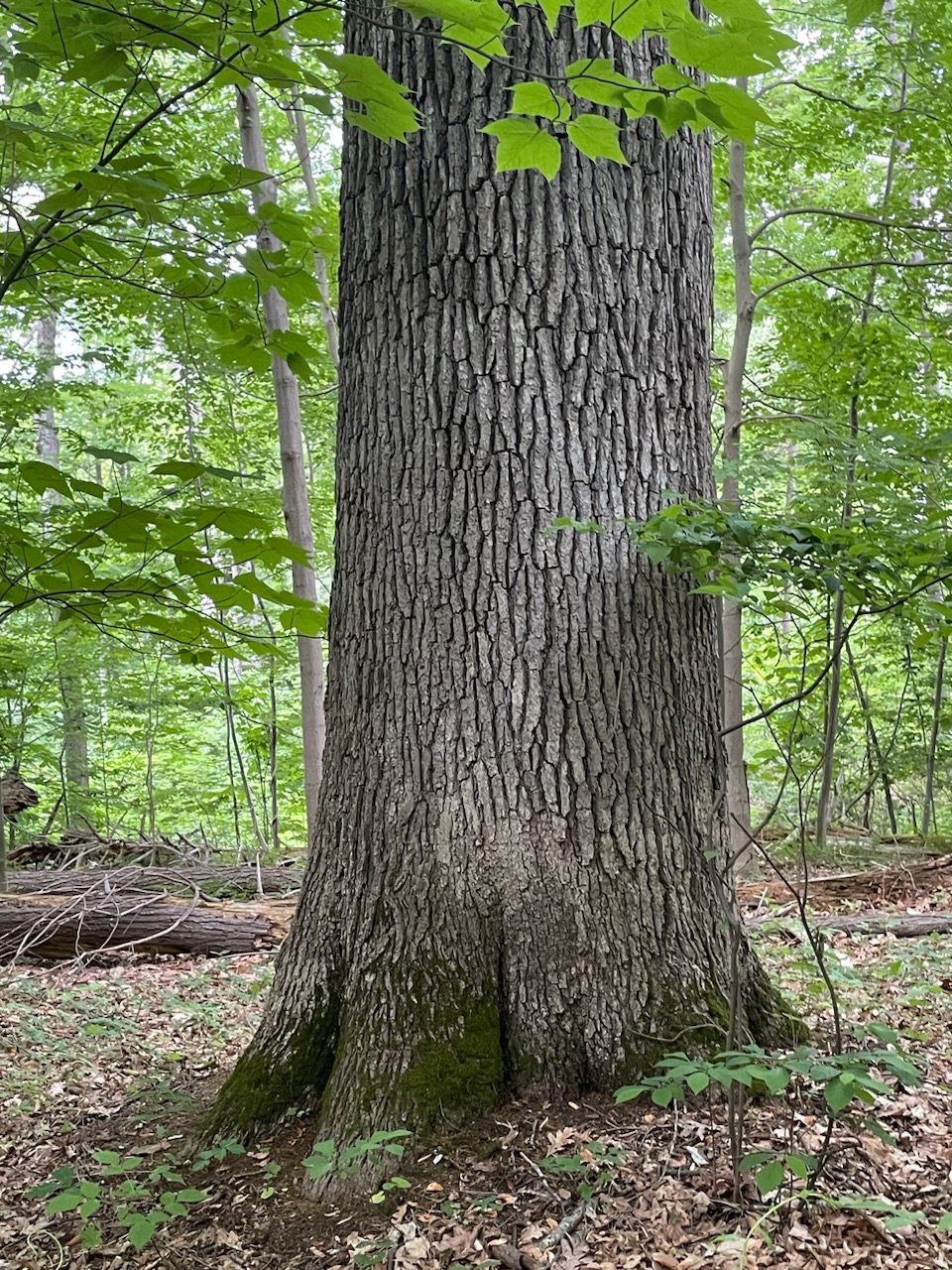
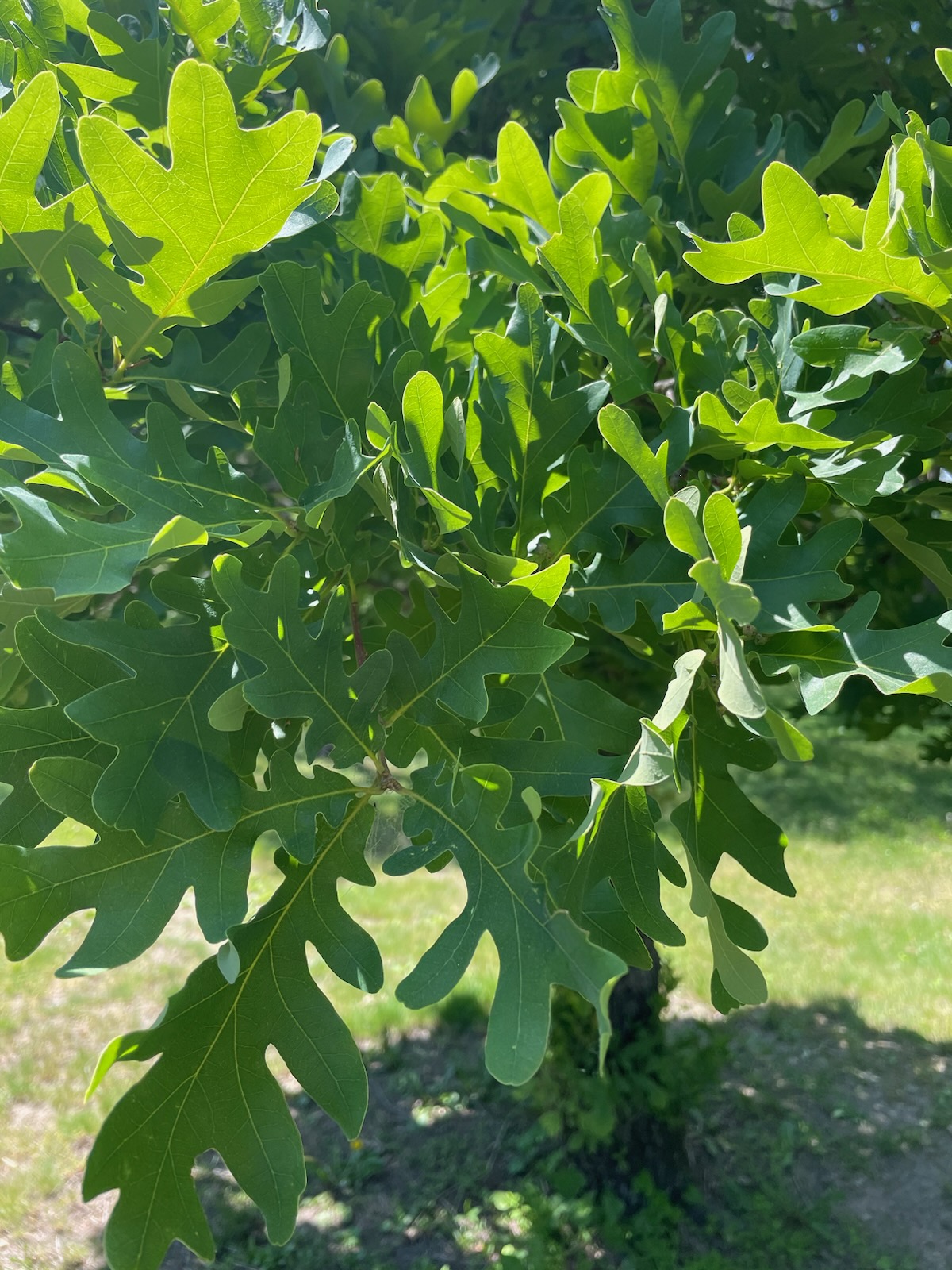
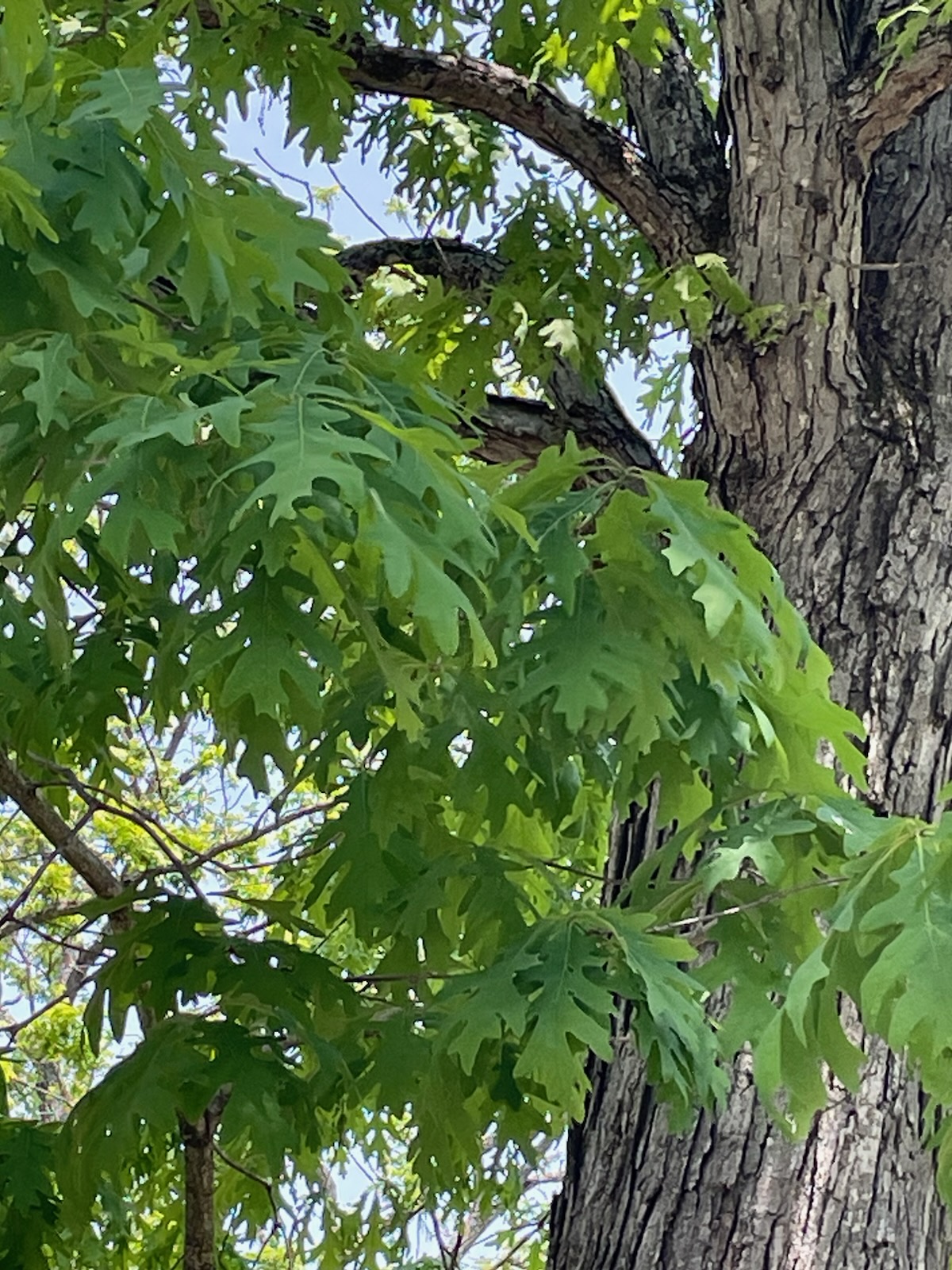
Or swamp white oak.

Anyone would marvel at some of the behemoths here.

Yes, we go on the tram. I like to do so every time I’m at NYBG, even though I’ve heard the same NYBG lore many times before. I want to crystallize it all in my memory, to mentally map which garden is the dwarf conifer, which the azalea, which the “old growth” forest.

I always like to see the people employed to work in the garden as we trundle by.

And the people working there for fun, as at the Edible Academy.

It’s almost as much a pleasure to see the people on the tram as it is to gaze out on the manicured landscape.

This time, a special treat. The African American Garden: The Caribbean Experience, where diverse and delicious foods get their due.

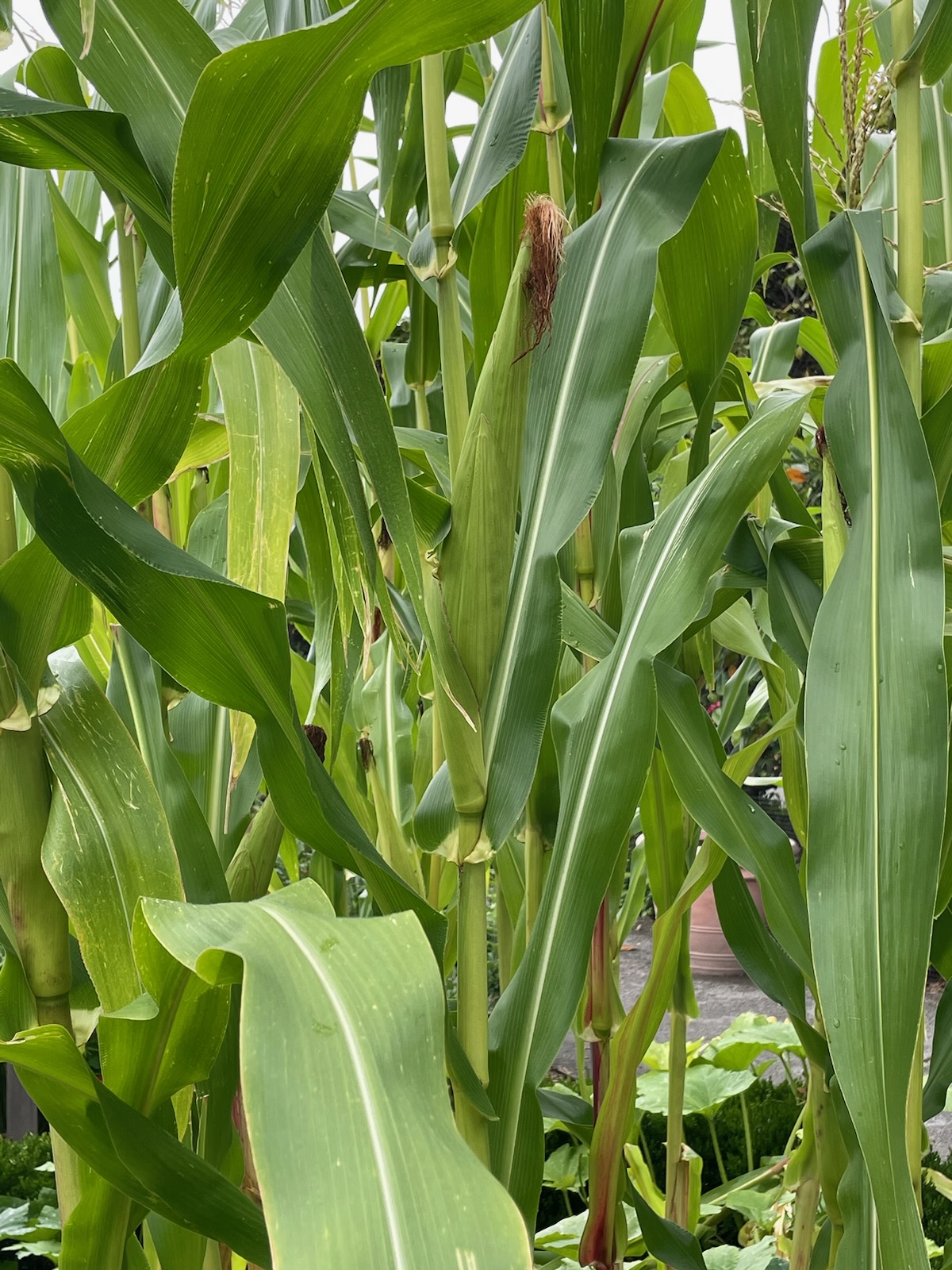
Corn.

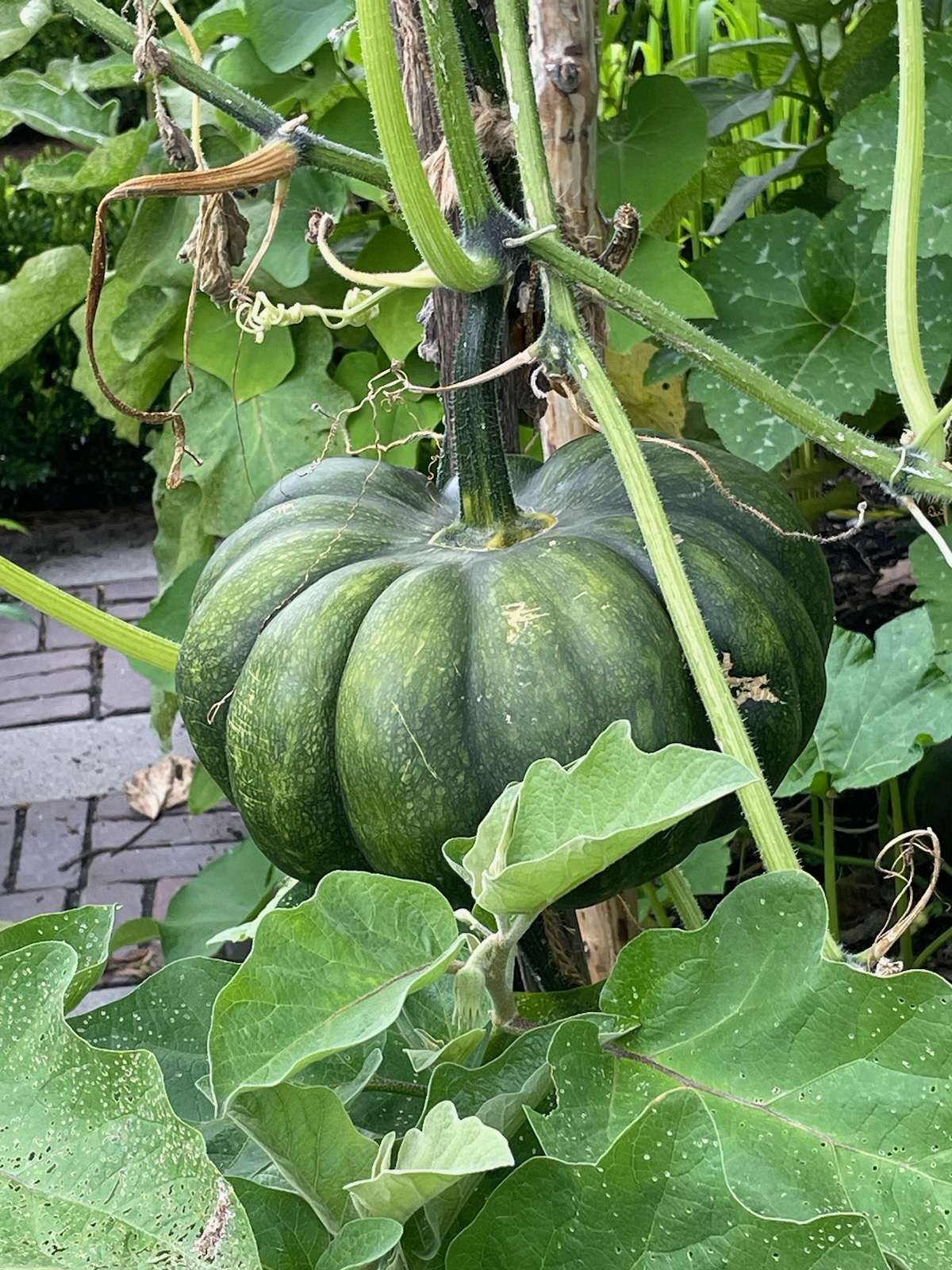
Squash.

Pumpkin.

Exotic okra.

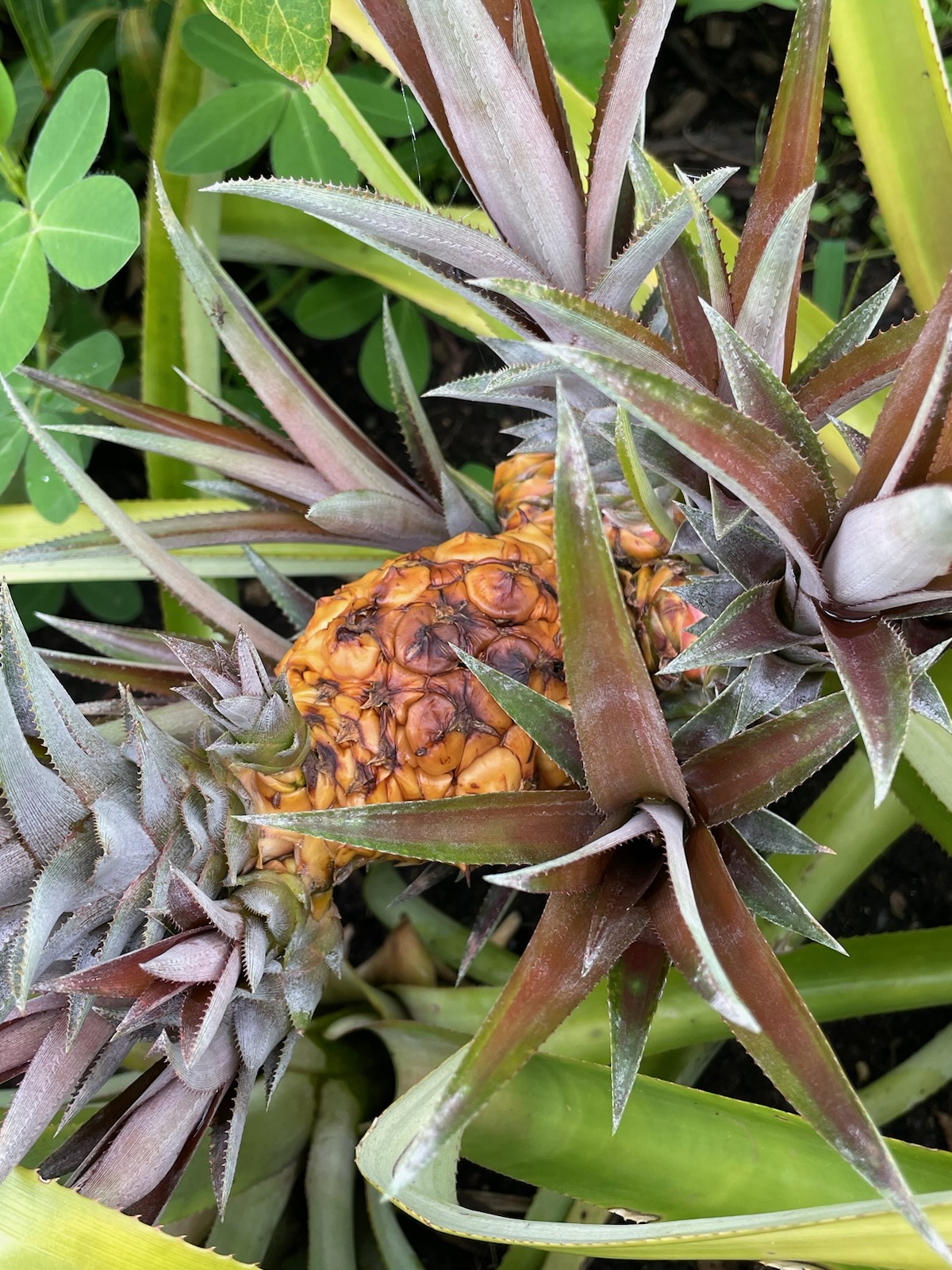
Pineapple.

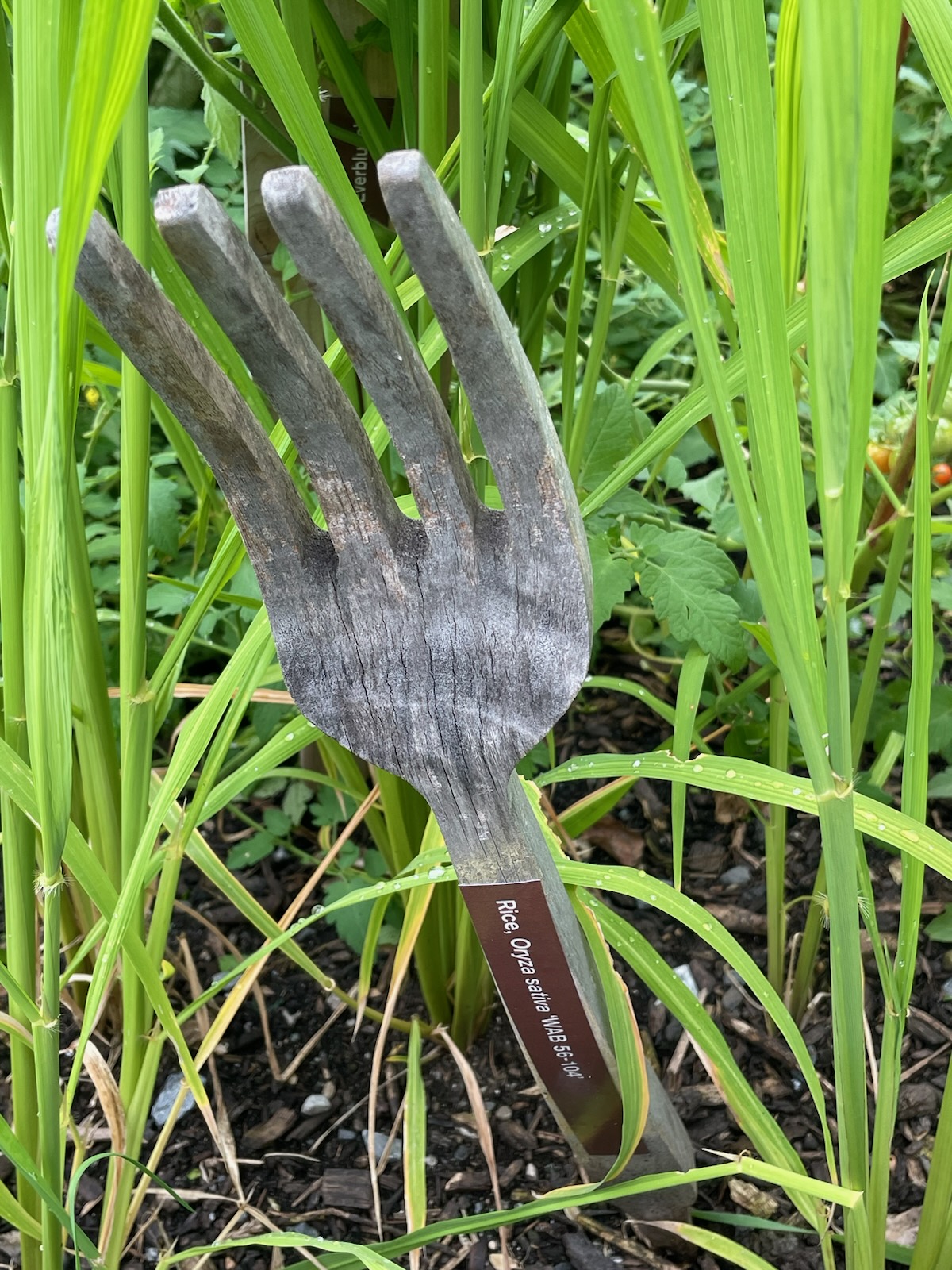
Rice.

Beans.

Flowering currant.

All so wonderfully labelled with kitchen utensils.

I’m not quite sure about some plants here but I know I’d like to investigate further.

Along the paths, posted poetry. Haitian poet Marie-Ovide Dorcely:

I go, just hands, beyond the just, and climb,

clamber, through begonia, a blue husk,

impatiens, a dolly for leaves,

I breathe for the hush of happiness.

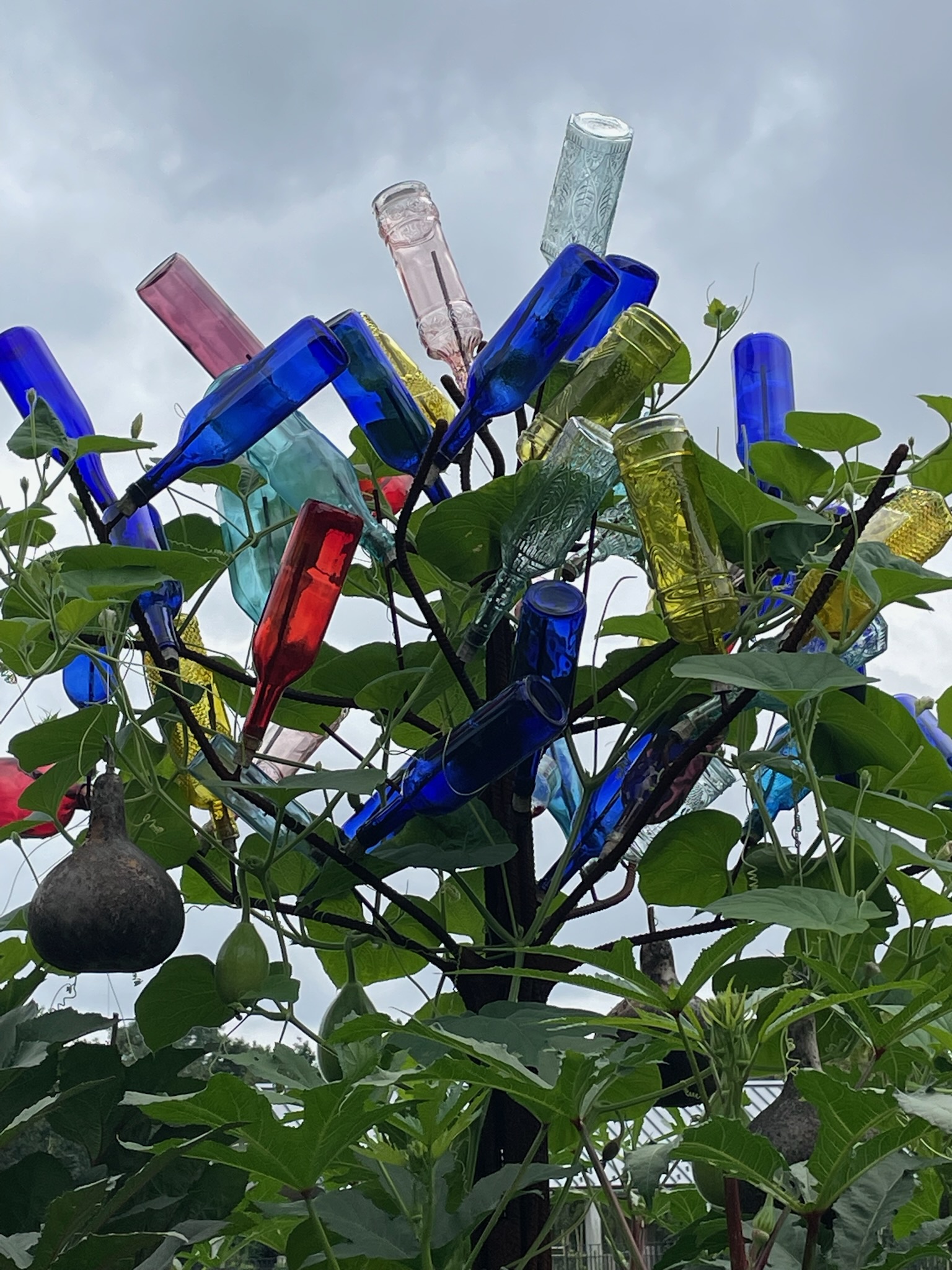
There is even a magical bottle tree created by high school students.


Some mysteries here. Food for thought. Cardoon.

It’s hard to tear yourself away from this lyrical food garden. But there are more flowers to see.

And greenery.

And more greenery.

And even more greenery.

Today I like the vivid green as much as the pulpy red. Crimson clover. (Over and over.)

And the pods.

Nature offers such marvels, if you’re just present for them. Allow me to introduce you to stonecrop.

Artichoke thistle.

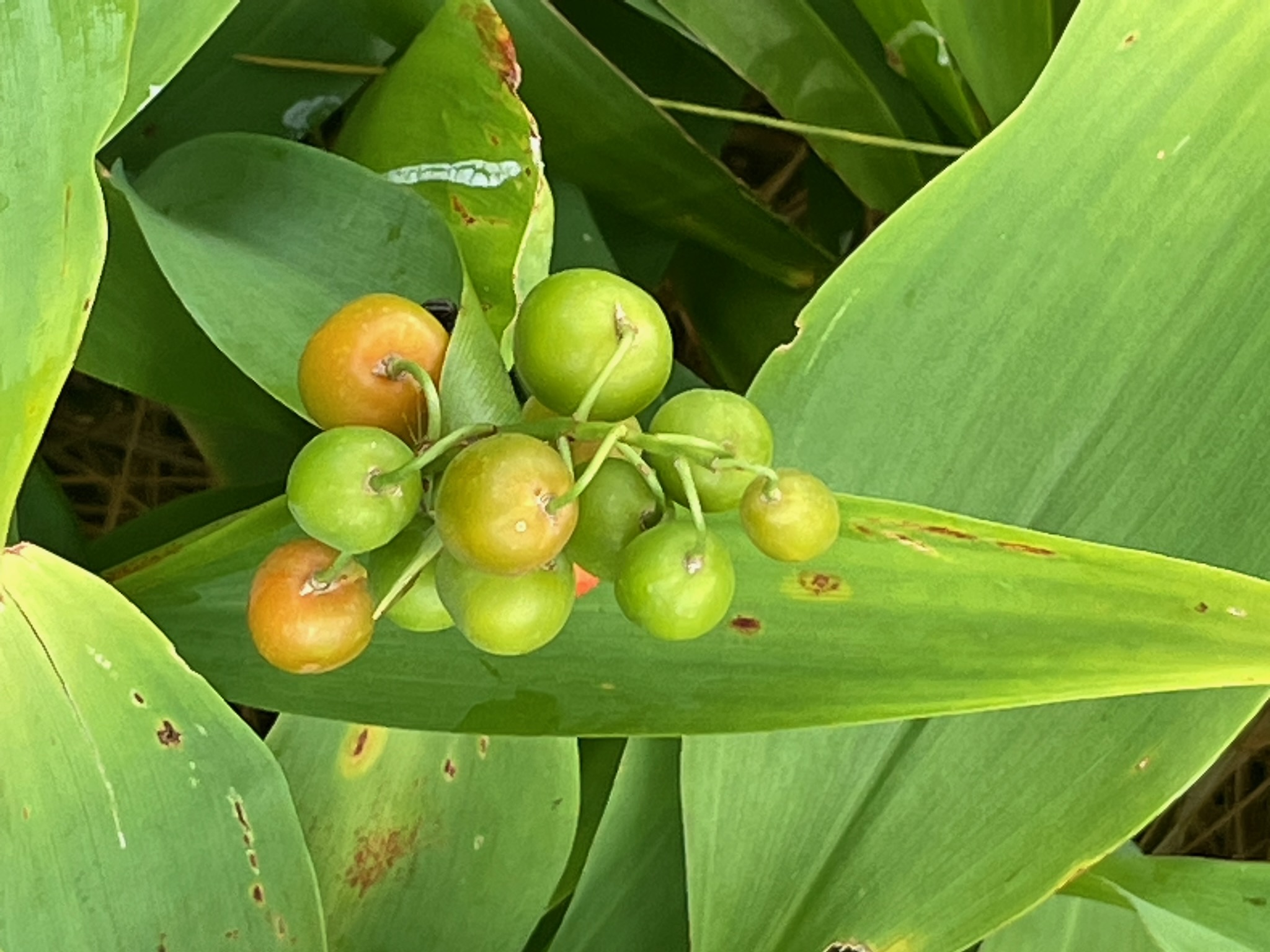
Always something to learn, like what lily of the valley looks like after it’s bloomed.

And some woman-made marvels, such as the flocks of scary-beautiful vultures installed among the borders by genius artist Ebony G. Patterson.

Who doesn’t love hibiscus?

Or caladium?

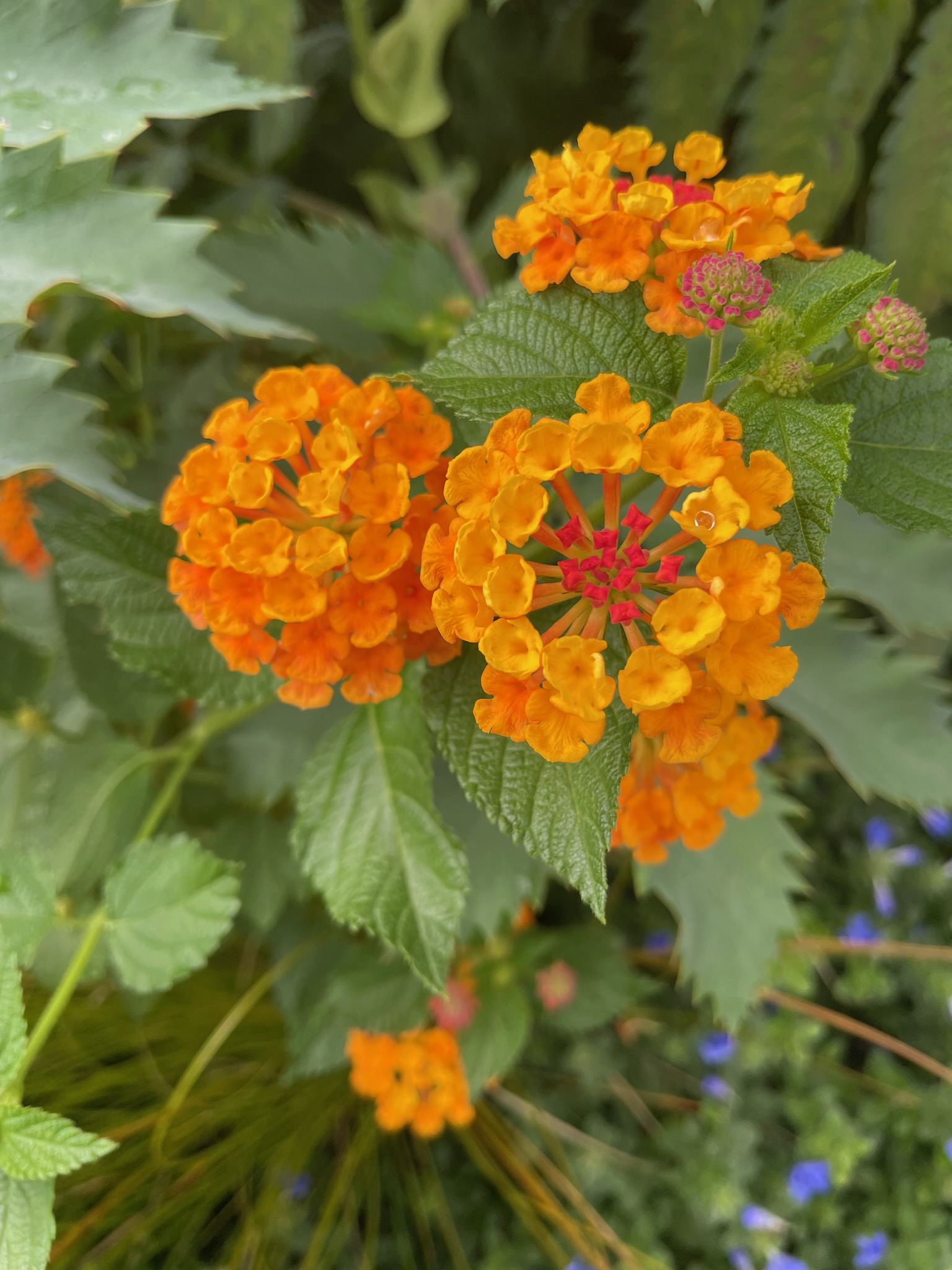
Especially the caladium. Or the glowing lantana.

It’s all there for us.

All of us.

Even if you’re one who likes to take the tram.

2 Comments

Filed under Jean Zimmerman

I’m going to bring you to a secret place.

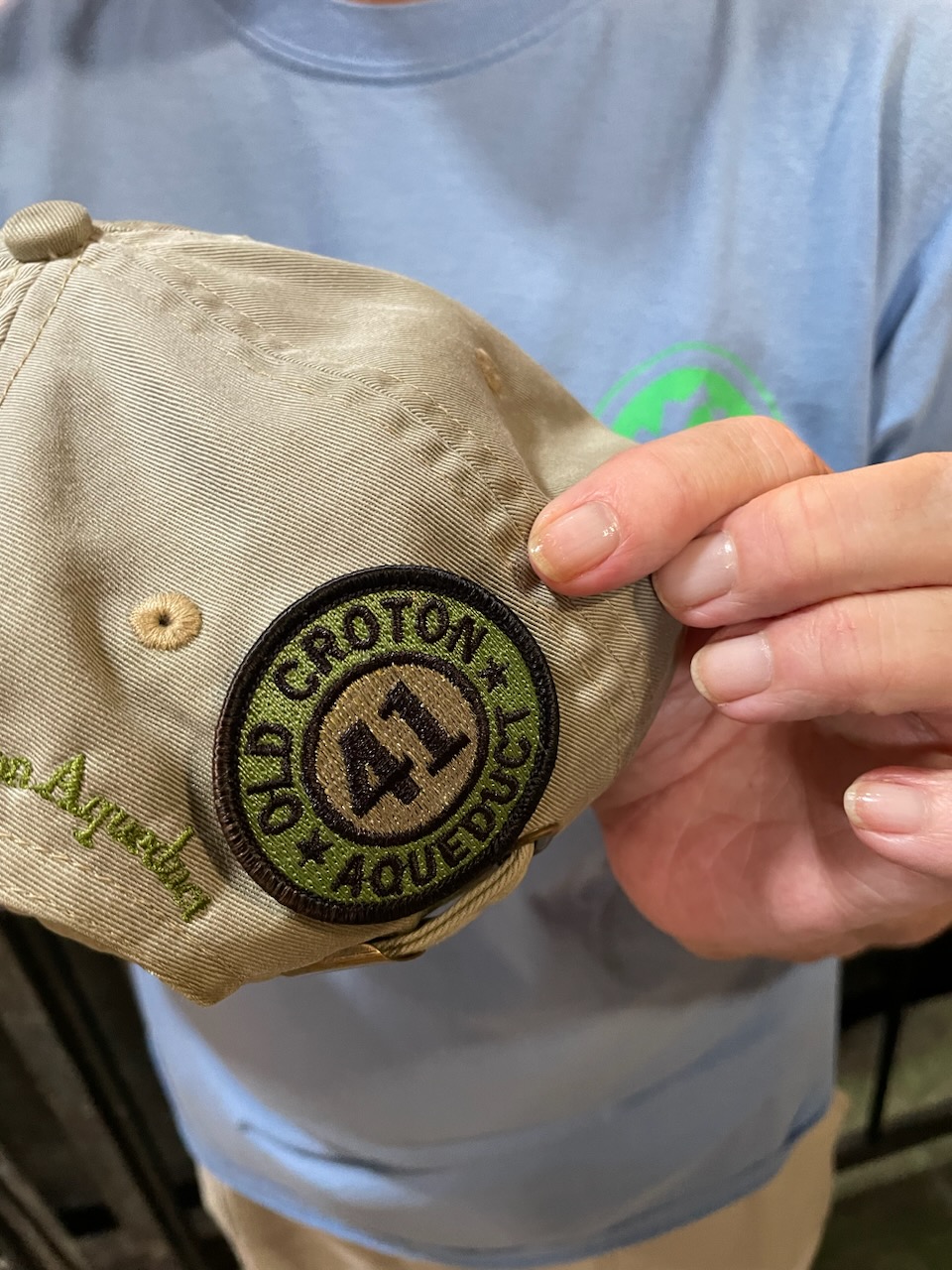
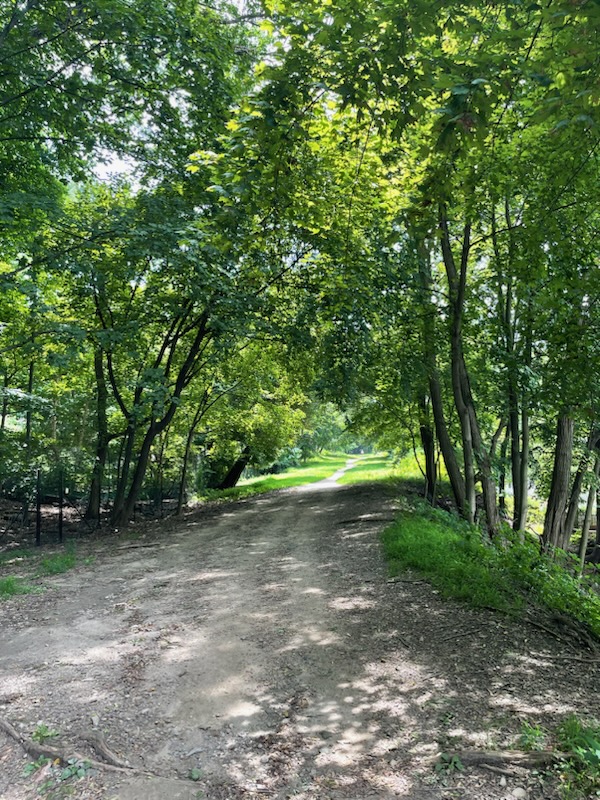
The cardiologist told me I’d better get in better shape. So here I am speed walking along my favorite trail on a hot day in August. It’s the path called the Old Croton Aqueduct, now a state park, once upon a time the narrow north-south route above a forty-one mile water tunnel. It delivered 75 million gallons of fresh water daily from the Croton Reservoir into New York City for a hundred years.

Plenty of tree shade aboveground, thankfully.

To get to the trail I pass among the sweet gardens of the Village of Hastings-on-Hudson.

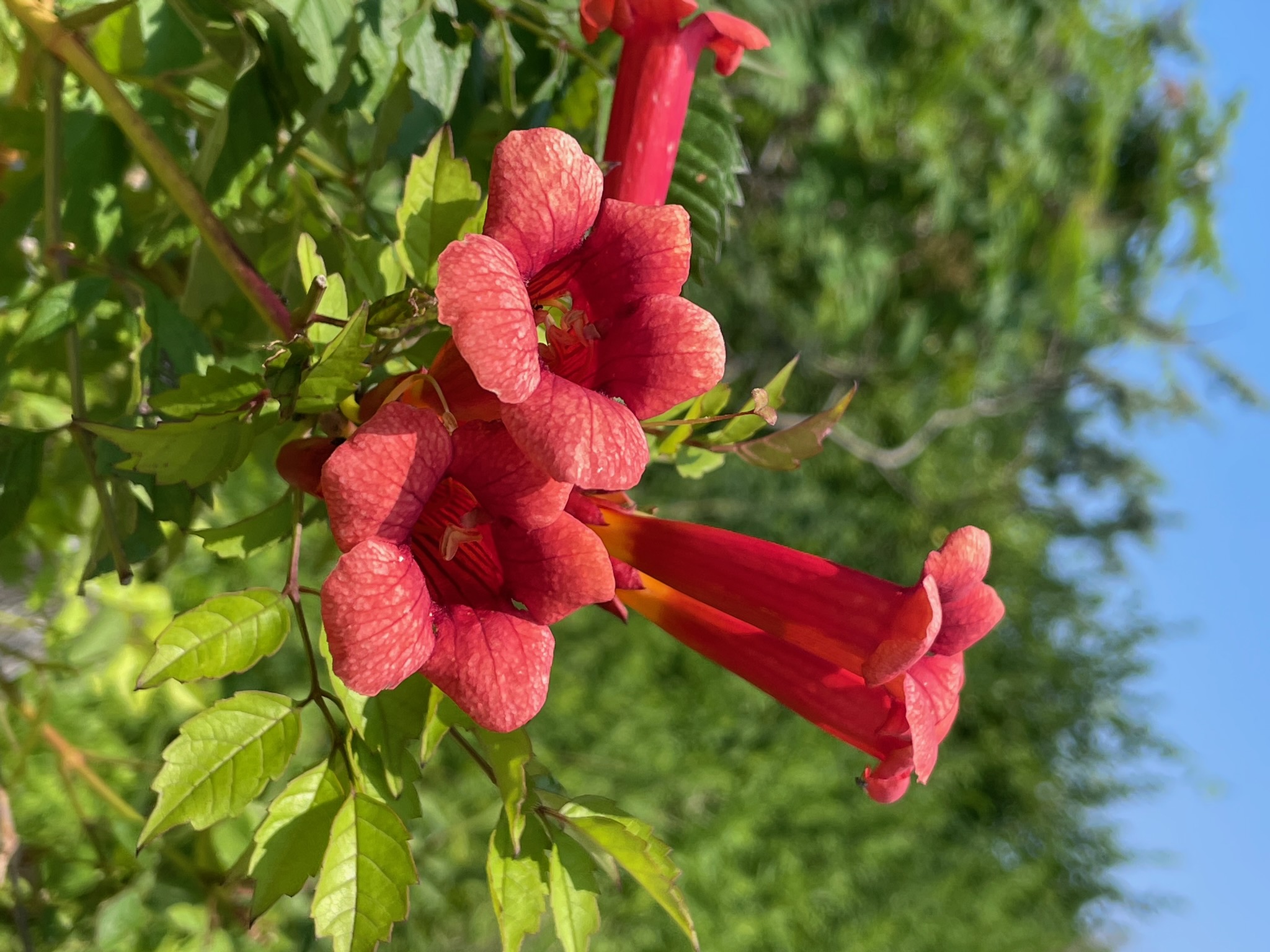
I see trumpet vine.

Sometimes I think fallen blossoms are even more beautiful.

The dogwoods blush.

Happy happy flowers everywhere. Some of them simple, common, but no less cherished.

I think about a line from St. Teresa of Avila: The important thing is not to think much but to love much; do, then, whatever most arouses you to love. The season’s a hydrangea-fest.

In this case, I’m aroused to love by simply gazing at blooms in late summer.

We used to call them snowball bushes. I stick my nose in, get the faint sweetness of their perfume.

This stripe-y specimen has a name: silvergrass.

I looked it up. I don’t know everything, just a few things, and I’m always learning.

Finally I reach the trail. I greet some old friends as I go. A muscular basswood.

A bunch of sinuous cherries.

A venerable black locust.

Buckthorn.

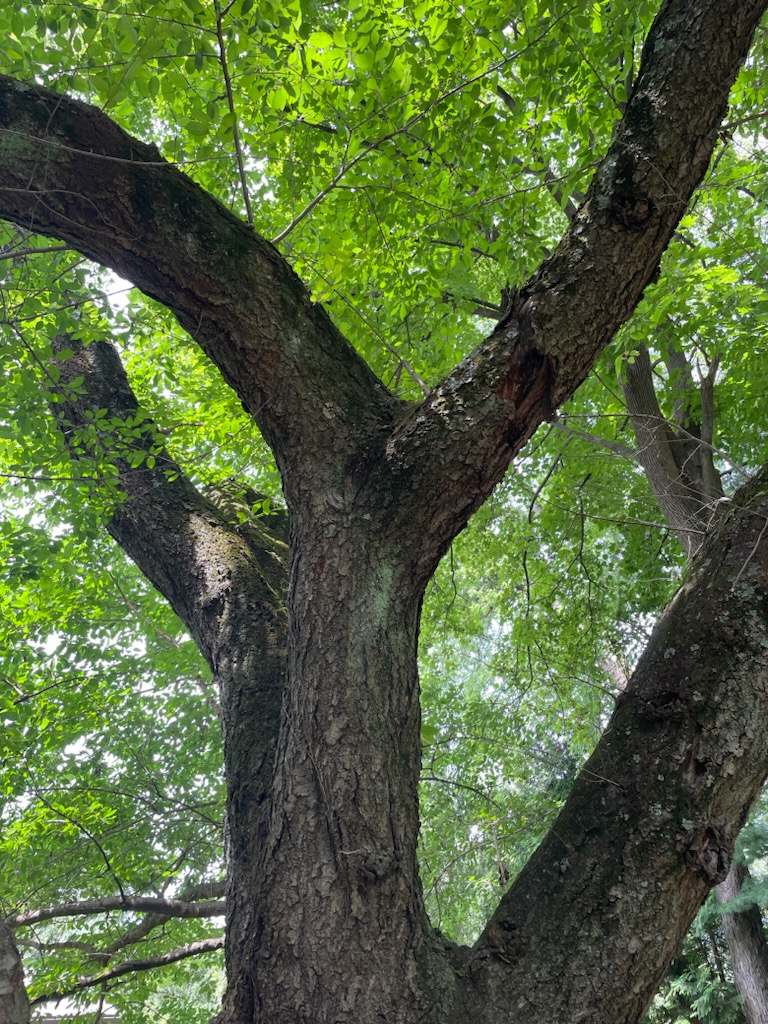
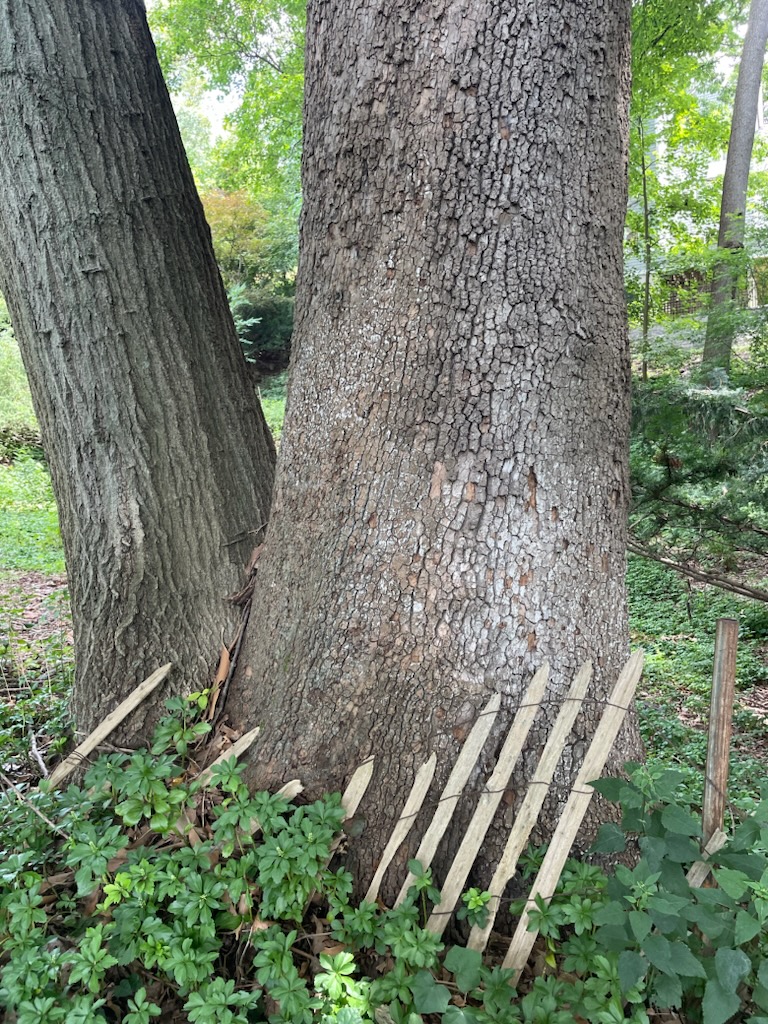
A pair of “husband-and-wife trees,” conjoined trees, a Northern red oak and a sycamore.

Finally, after a mile or so (but who’s counting?) I reach my destination. The Keeper’s House.

The Keeper’s House was one of seven along the Aqueduct, built in 1857 and occupied by an engineer and his family. He was responsible for upkeep of the tunnel and its water flow.

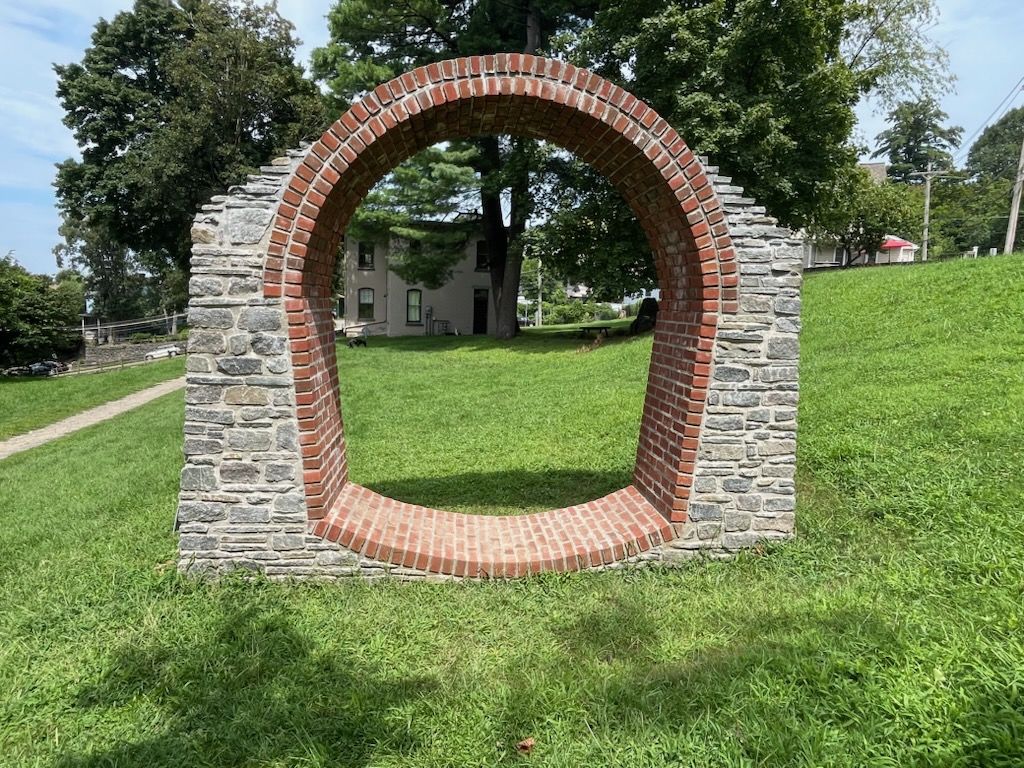
I’m getting more involved with Friends of the Old Croton Aqueduct and I find myself more fascinated than ever by the history of this particular abode. Also, out back, by an ingenious sculpture by Dionisio Cortes Ortega. The Croton Arch of Triumph exactly reproduces the dimensions of the Aqueduct tunnel below as a brick cross section.

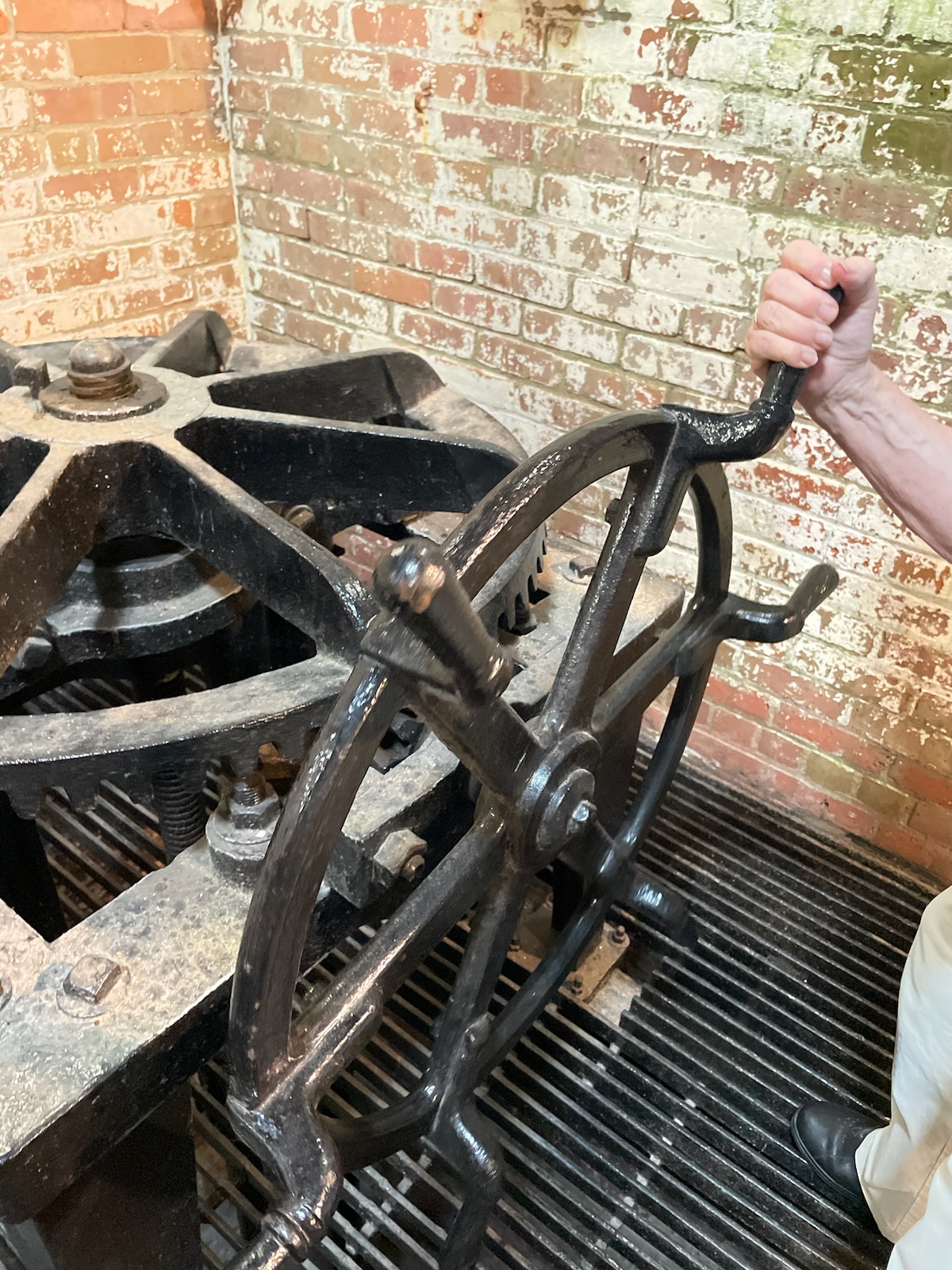
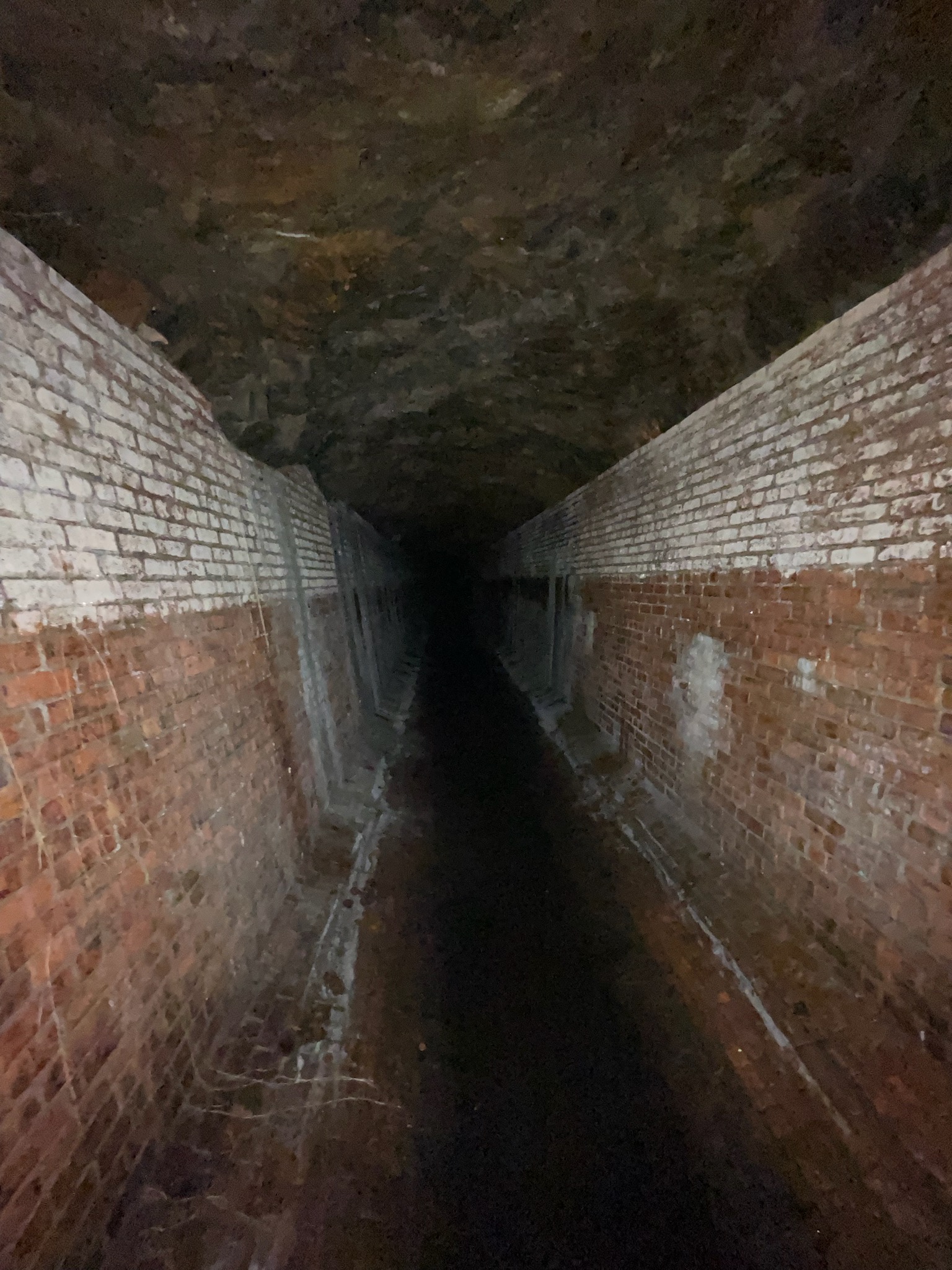
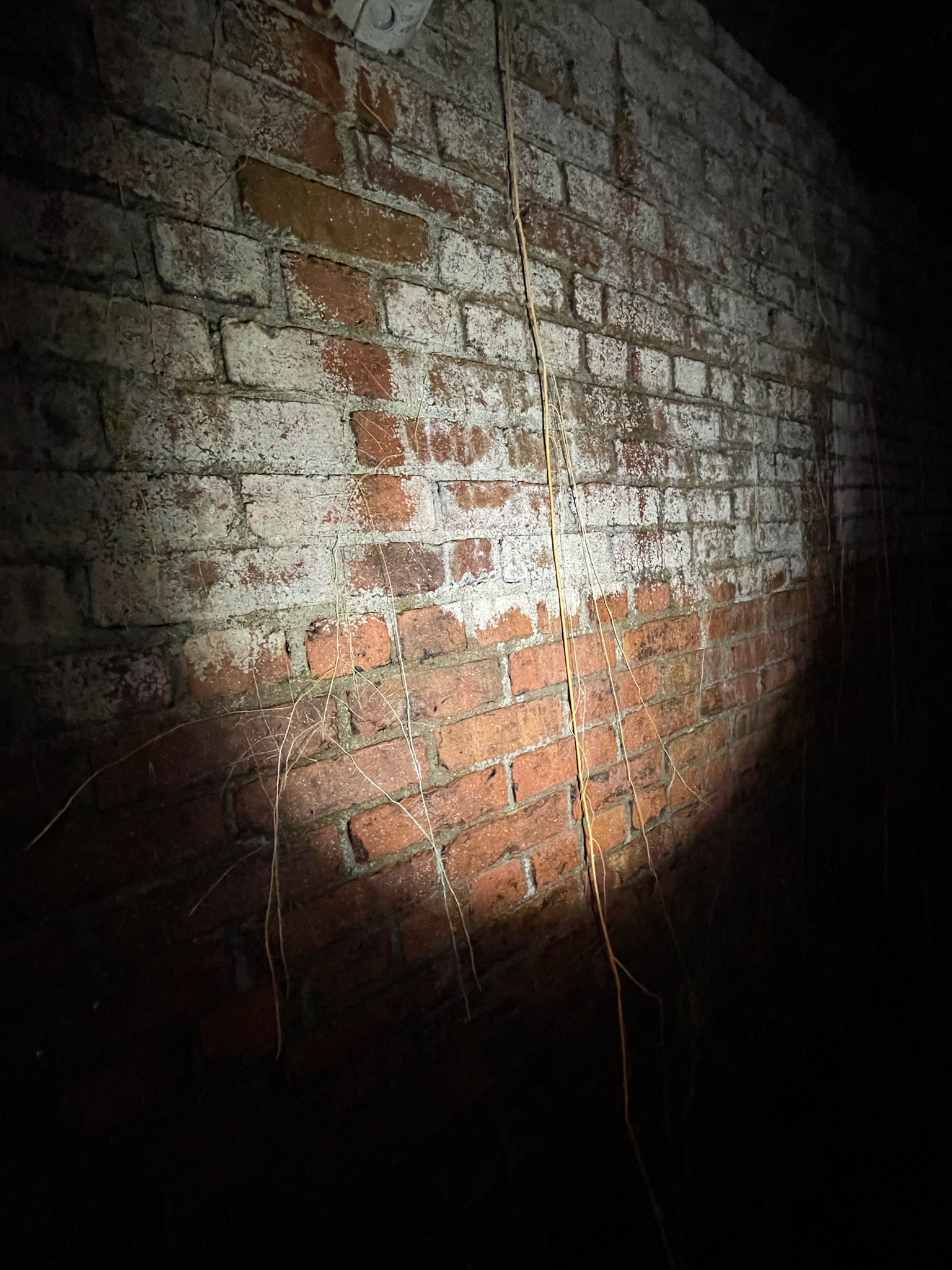
Recently I got to go under the ground into one of the Aqueduct’s weir chambers, in Ossining, the place where a sluice gate controlled the flow of water

If there was a leak, they’d drop the sluice gate using a specialized gear, and divert the water out to Sing Sing Kill to fix it.

Using the weir system the entire Aqueduct could be drained in about two hours time.

Expert docent Sara Kelsey, the co-head of Walks and Tours for the Friends of the Old Croton Aqueduct, showed me around the ancient space.

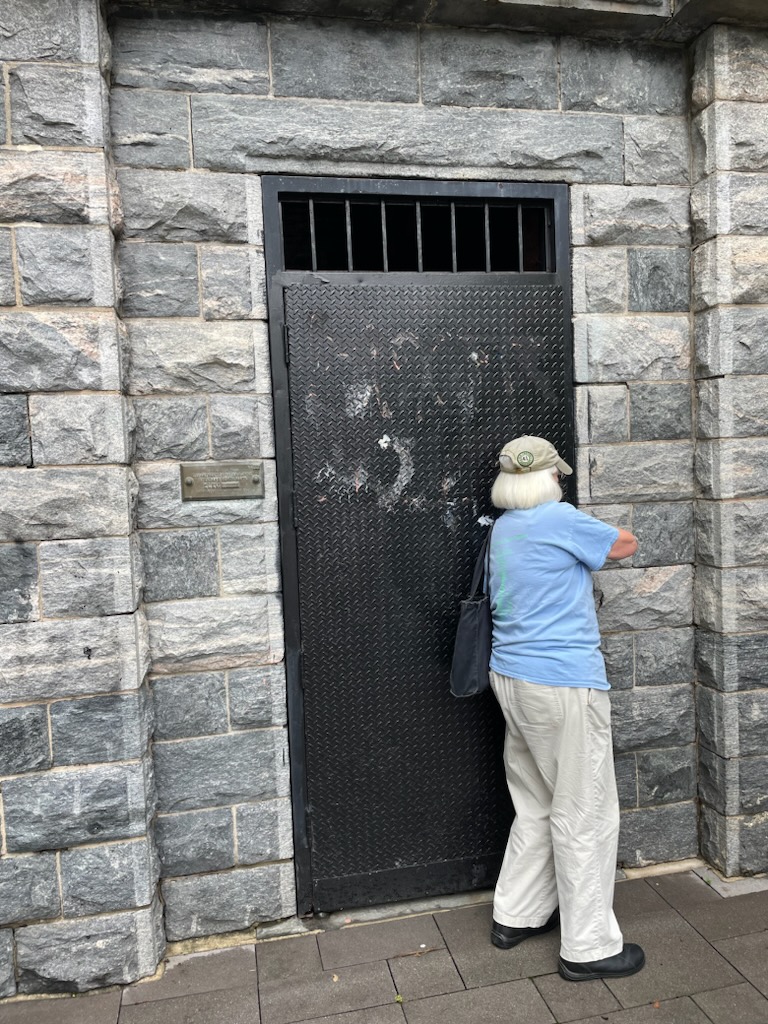
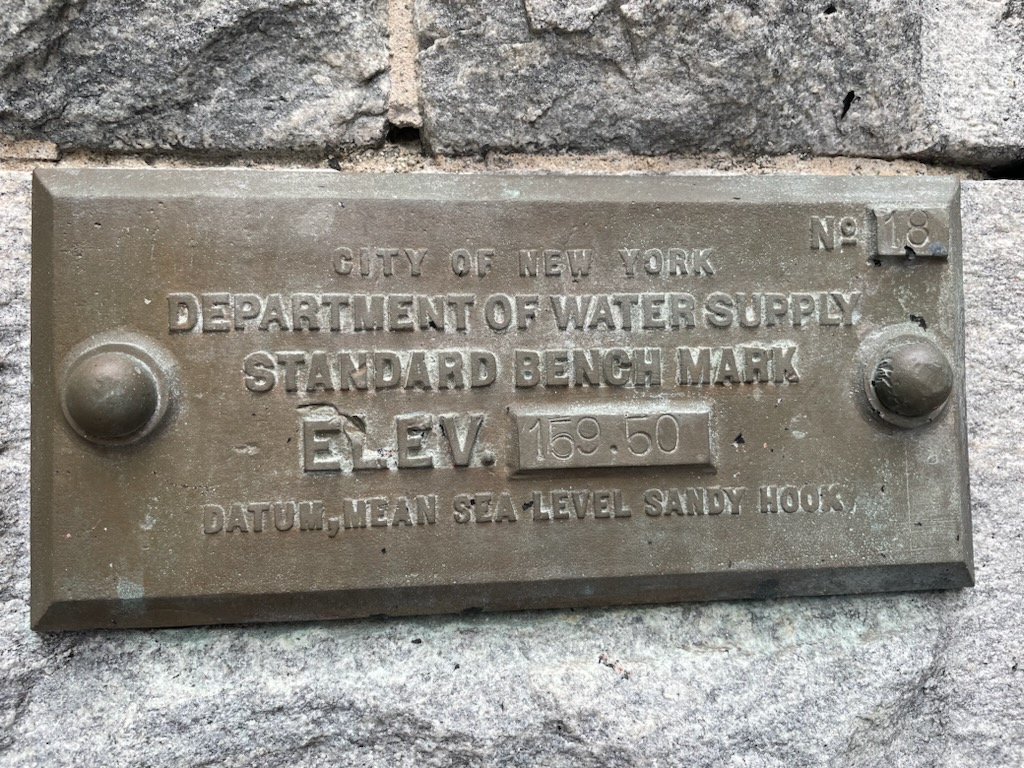
We entered through a granite blockhouse.

Sara opened the door and I felt like were sneaking in to a magical place.

Here is what I learned from a sign inside:

The Croton Aqueduct was designed to have a maximum capacity of 60,000,000 gallons of water per day, an amount which the planners felt wouldn’t be needed for hundreds of years. However the average person’s consumption of water tripled within the first 8 years and this, combined with a growing population and increased industry, soon used up what was envisioned to be a huge surplus.

I have heard that the main thing that changed was the introduction of newfangled flush toilets.

By 1890, the Aqueduct was carrying so much water that air space was reduced to 6”. In 1893, the much larger new Croton Aqueduct was completed and, in 1906, the present Cornell Dam was finished. These greatly expanded the reservoir system and reduced the pressure on the Old Croton, the first Aqueduct to bring life-saving water to the thirsty city of New York.

Irish stonemasons blasted out the older part of the Aqueduct between 1837 and 1842 with black powder. Nobel had not yet invented dynamite. One worker would hold the spike and another would pound it to drive it into the sheer rock.

Then they’d insert the gunpowder, light it and scram. “Fire in the hole!” The entire forty one miles was dug out in five years. Imagine the tireless work involved, without power tools. It’s an ingenious gravity flow system.

Sarah made a joke about the types of rock here, gneiss and schist: “They say Westchester’s gneiss but Manhattan’s schist.”

You could smell the wet, and hear groundwater gurgling beneath our feet. A few leaves had somehow drifted down. Leave it to white oak to find a way in.

The main use of the tunnel now – aside from illuminating history nerds like myself – is for firefighter and police crisis training, offering as it does a perfect enclosed location.

The Croton Aqueduct shut down in 1955. But not completely. The Village of Ossining is the only municipality that still gets its water from the OCA. Other places purchase their water from New York City, which now sources it from bigger and deeper pipelines in the Catskills or Delaware Water Gap.

Italian immigrants came on board to labor on the newer part of the Aqueduct, and Black laborers were imported as well, from Virginia, were they were known for their expertise as mule drivers. Everything, bricks, stone, metal, all had to be hauled by mule cart.

Their work resulted in fresh water finally getting down to New York City, where it helped prevent the scourge of cholera. When a fountain near City Hall first shot up its streams of water, New Yorkers had a huge celebration. It wasn’t all unicorns and rainbows, however. Scholars have found that one in ten Aqueduct laborers were killed or injured every year during the construction of the newer portion. So just being in this historic venue felt bittersweet. Folks died here.

Back to my hot walk along the Aqueduct trail. I turn around at the Keeper’s house and start to trudge toward home.

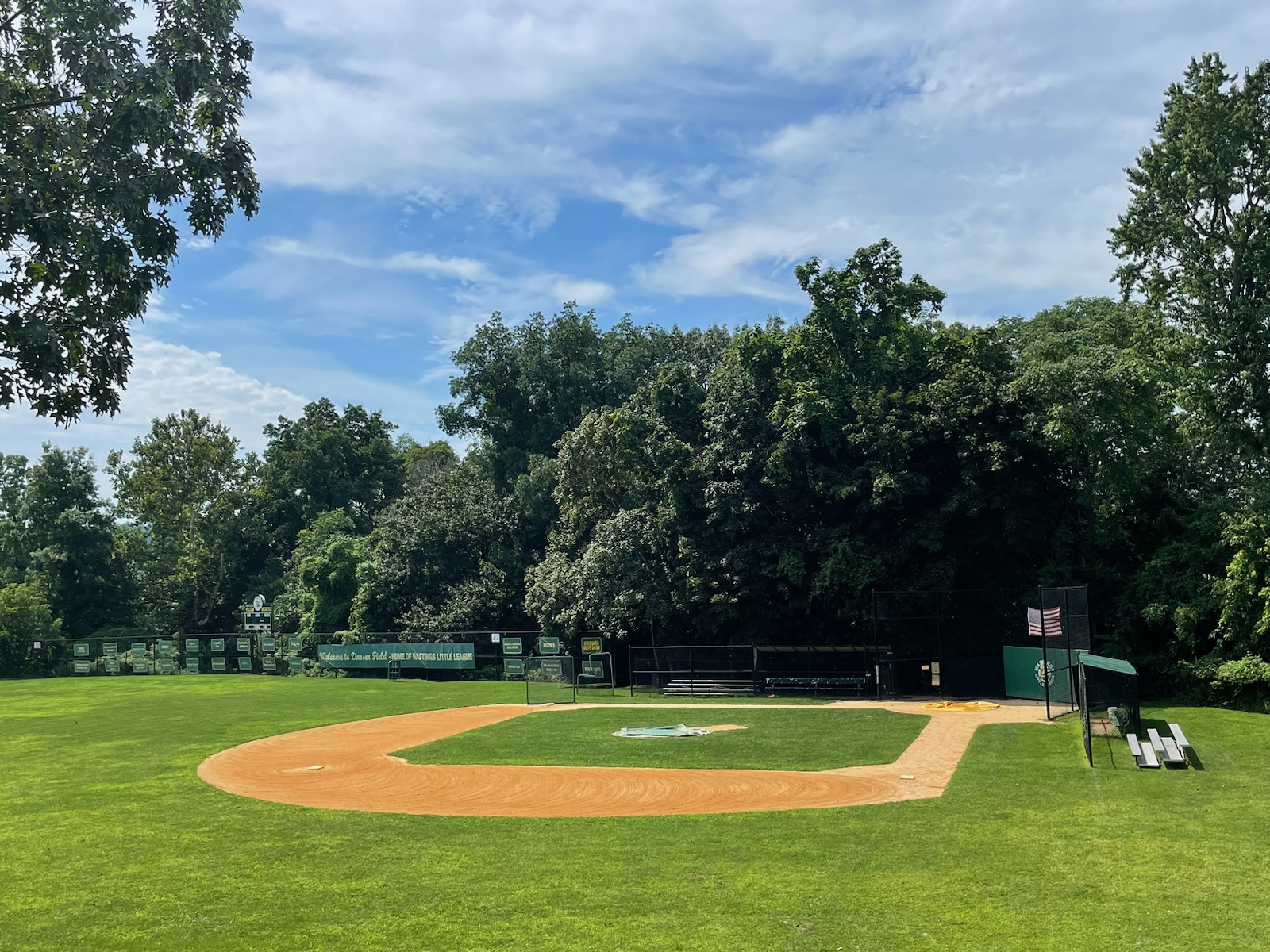
I see the spiffily manicured baseball diamond on land formerly occupied by an old forgotten estate.

Not forgotten by me. Locust Wood was owned by the Minturn family, including Edith Minturn, a privileged New Yorker whose life I researched for Love, Fiercely: A Gilded Age Romance. Edith’s grandparents were made rich through owning the fastest clipper ship in the world around 1850. Flying Cloud sailed down the Atlantic Seaboard, around Cape Horn and up the Pacific Coast, a treacherous 120-day trip, bringing goods like fresh butter, sugar-cured hams and brandied peaches to San Francisco Bay.

The family vacationed twenty miles north of Manhattan in Hastings-on-Hudson until the turn of the twentieth century, and it is said that Robert Bowne Minturn himself designed the cobblestone gutters along the winding carriage roads. The family summered here just as workers were putting through the Aqueduct, literally right under their feet

That black locust I referred to earlier? Perhaps from that time. The only hard evidence of the Minturns’ tenure now lies in the imagination of the beholder. I feel like these pillars, with the cobbles at their base, probably date back to the swellegant family’s estate.

But who knows? I tend to find meaning in the possibly meaningless wherever I go. If the columns were in fact built at that time, it was probably by the same cohort of newly settled Americans that poured their lives into the Aqueduct.

Heading home, I pass a nice little house populated by a family of metal animals.

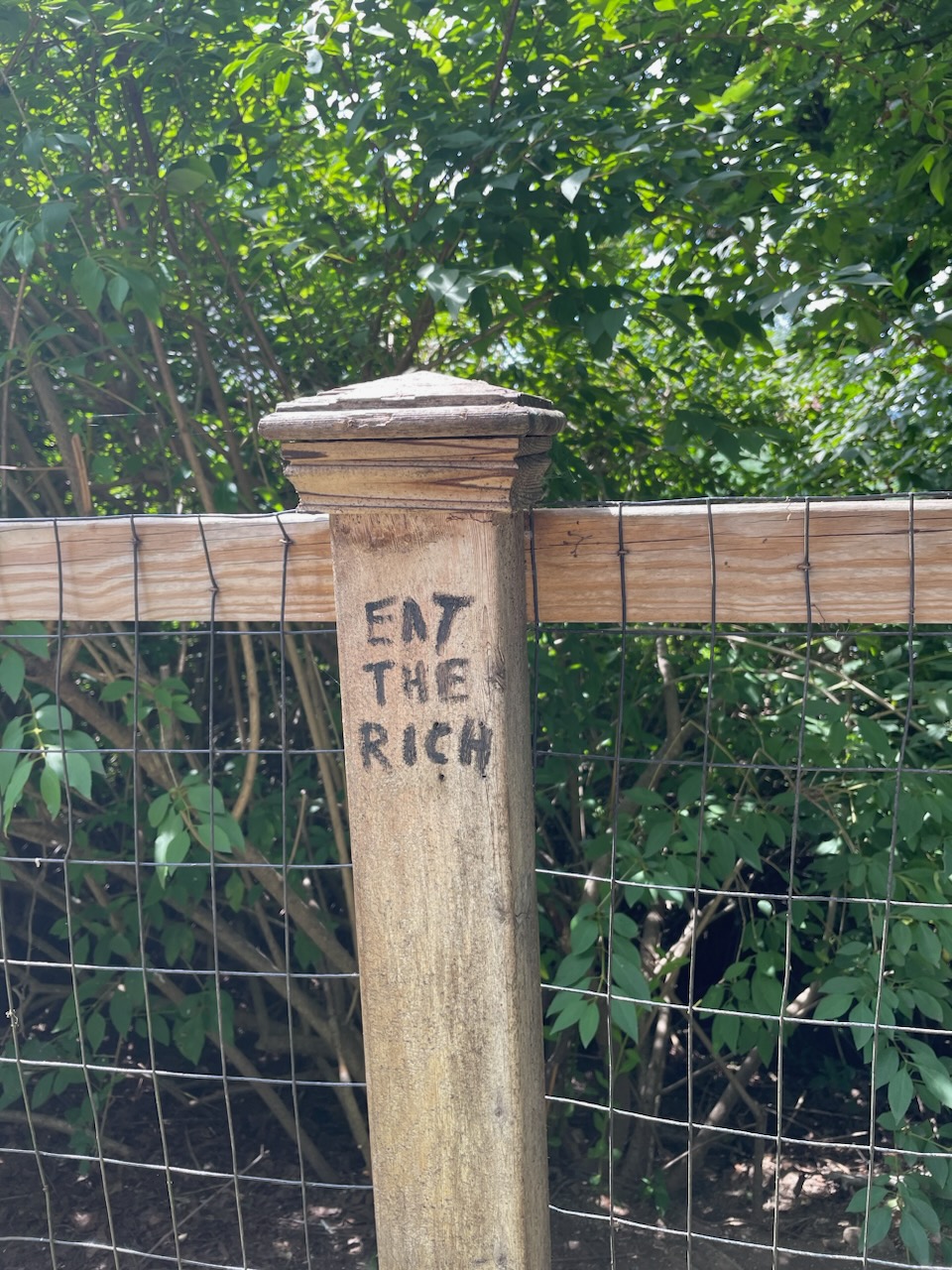
On the fencing outside, someone has taken issue with someone else.

And on such a lovely afternoon, too. I may not be wealthy but I have a rich life, please don’t eat me.

Along the way I pass the Village’s community gardens, expansive plots that are well-used by locals despite the expansive properties many own. Eat the Rich, indeed.

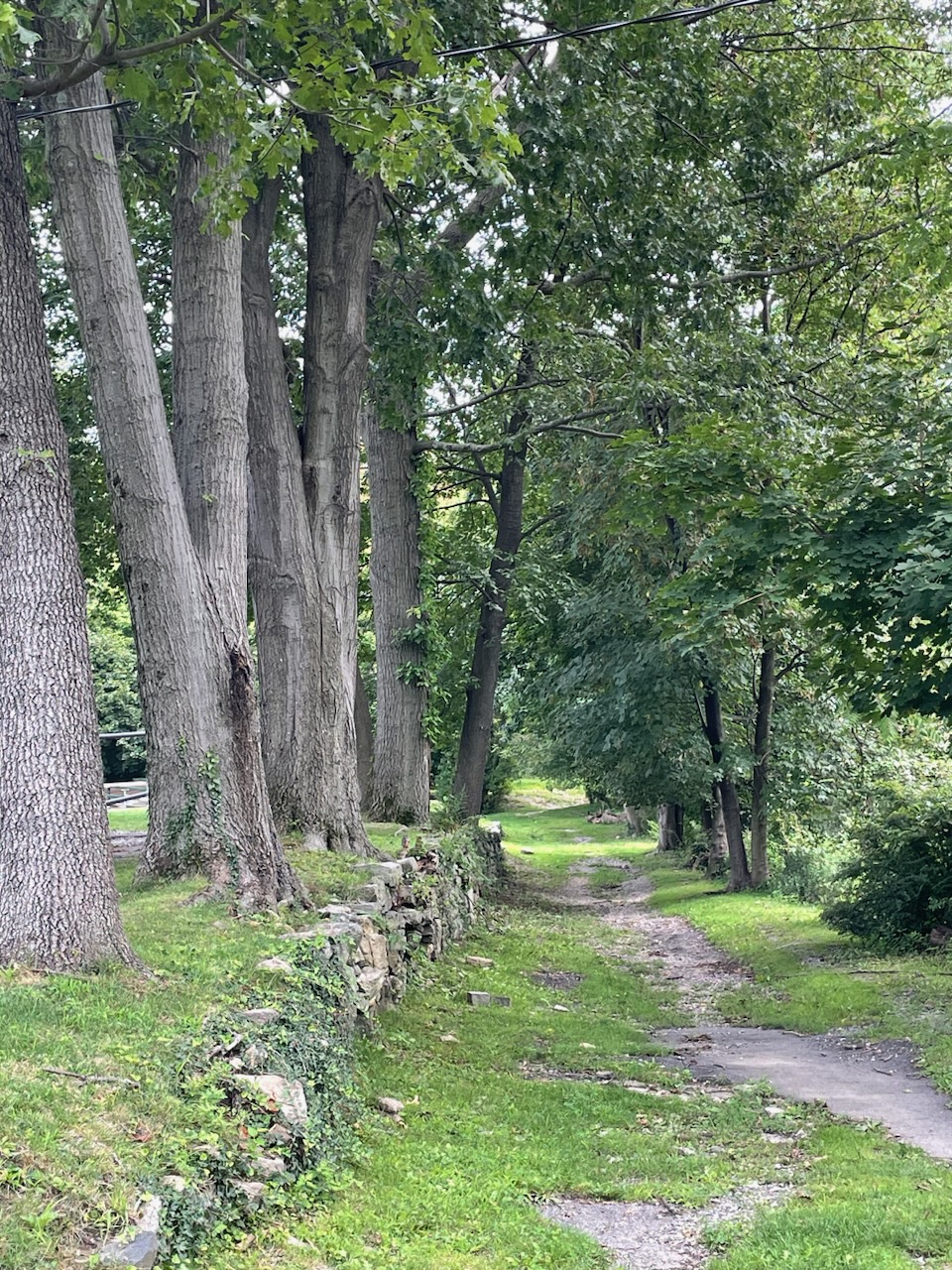
There is an allee of mature trees here. Also Minturn vintage?

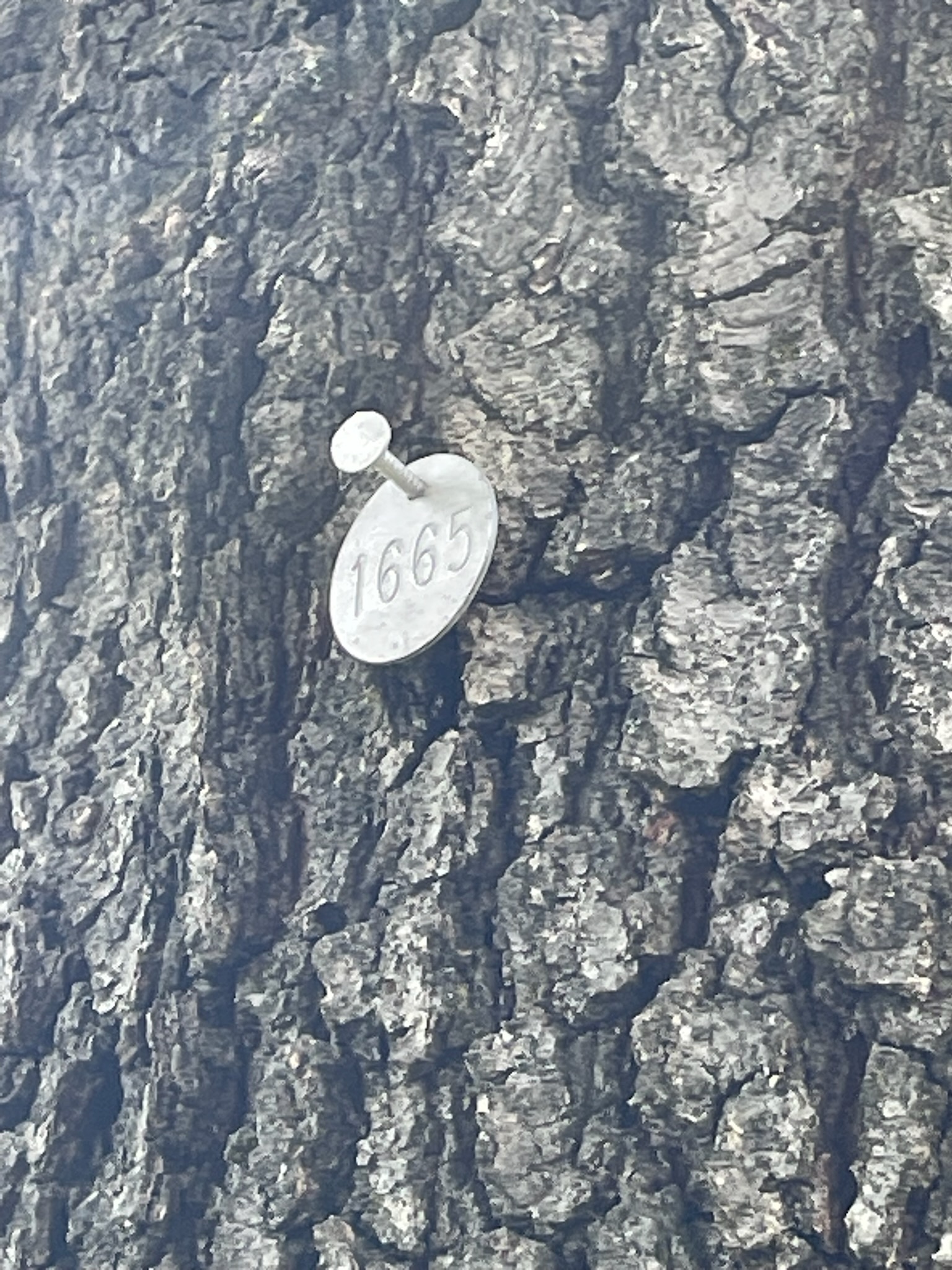
I pass an old black oak with a tag.

Someone interested in trees has come before me. I wonder who.

The stone walls along the allee tell a story, as stone walls always do. In this case, probably a talel of immigrant stone masons wanting to make good in America. They risked  their lives to provide pure drinking water to families like the Minturns.

These workers have been largely forgotten, apart from the name of a trail enjoyed by runners and cyclists, dog walkers and huffers-and-puffers like myself. Let’s pause to remember those heroic tunnel builders now.
Leave a comment

Filed under Jean Zimmerman

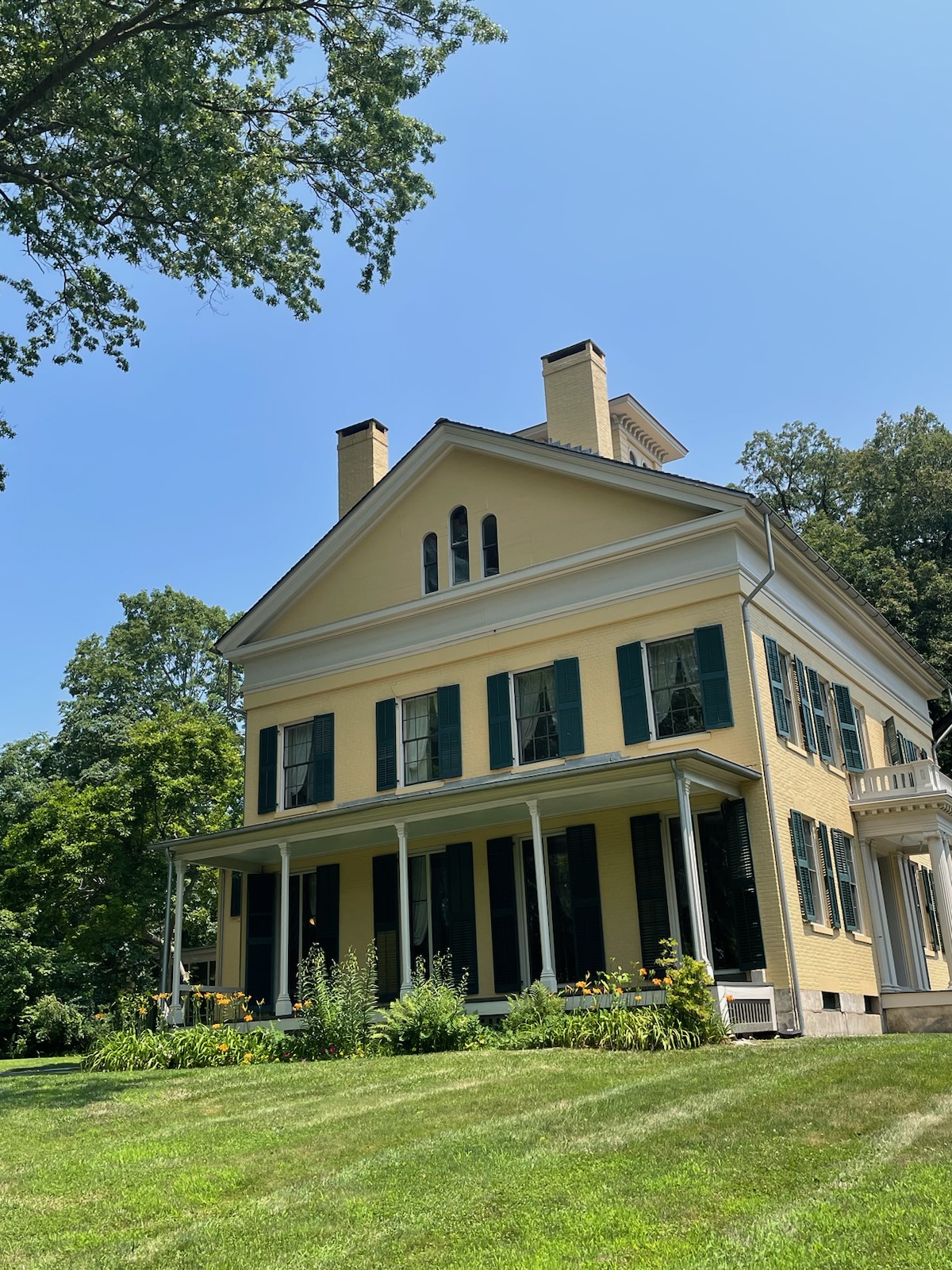
Would Emily Dickinson roll over in her grave?

Or would she be, in her small, secret part of herself, pleased? Possibly even thrilled to see all the hoopla and fuss made over her at the abode where she spent all her years.

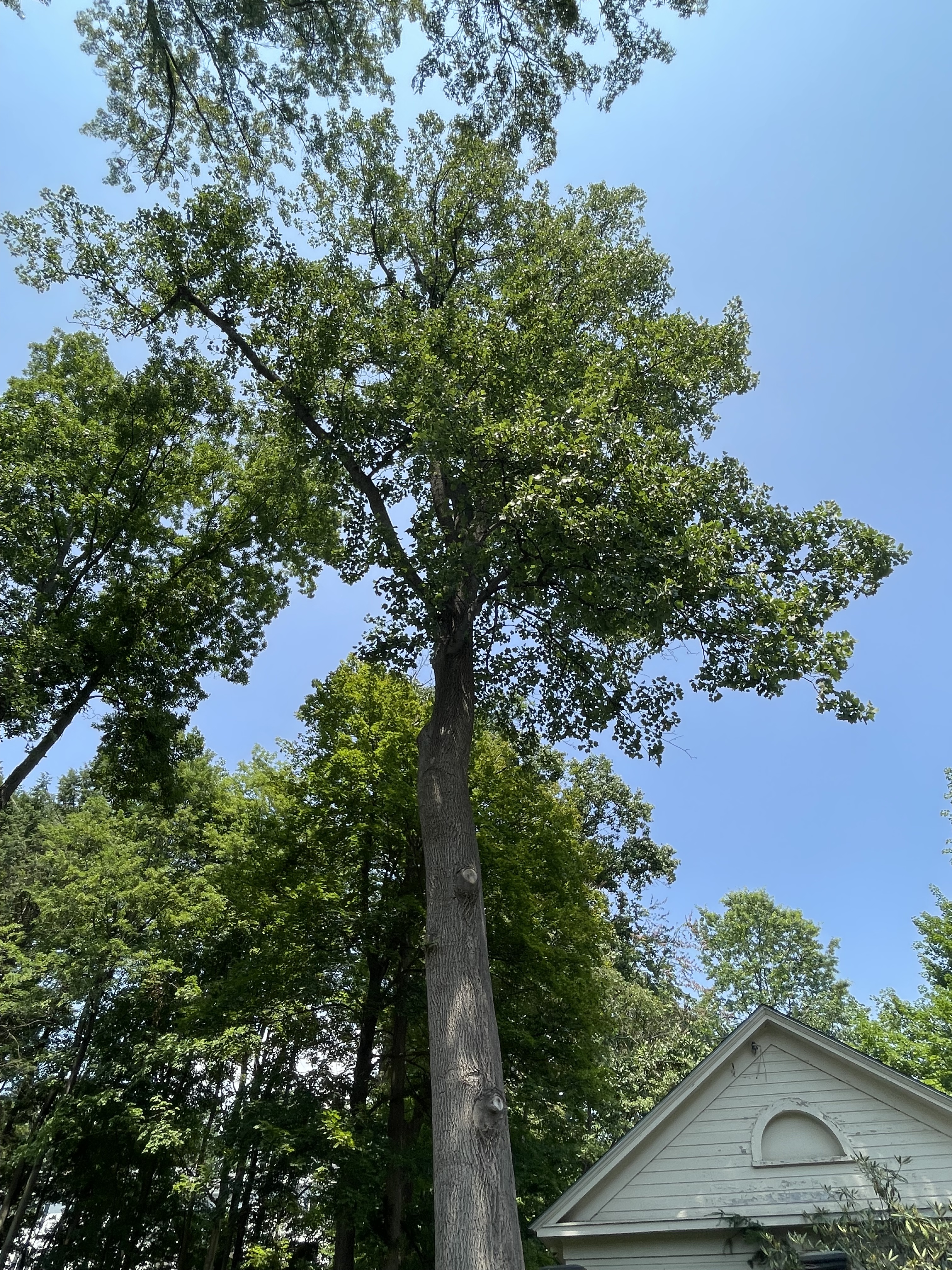
It is possible to tour the house, which sits in the shade of a mature tulip tree.

Probably a sapling when Emily lived here on Main Street.

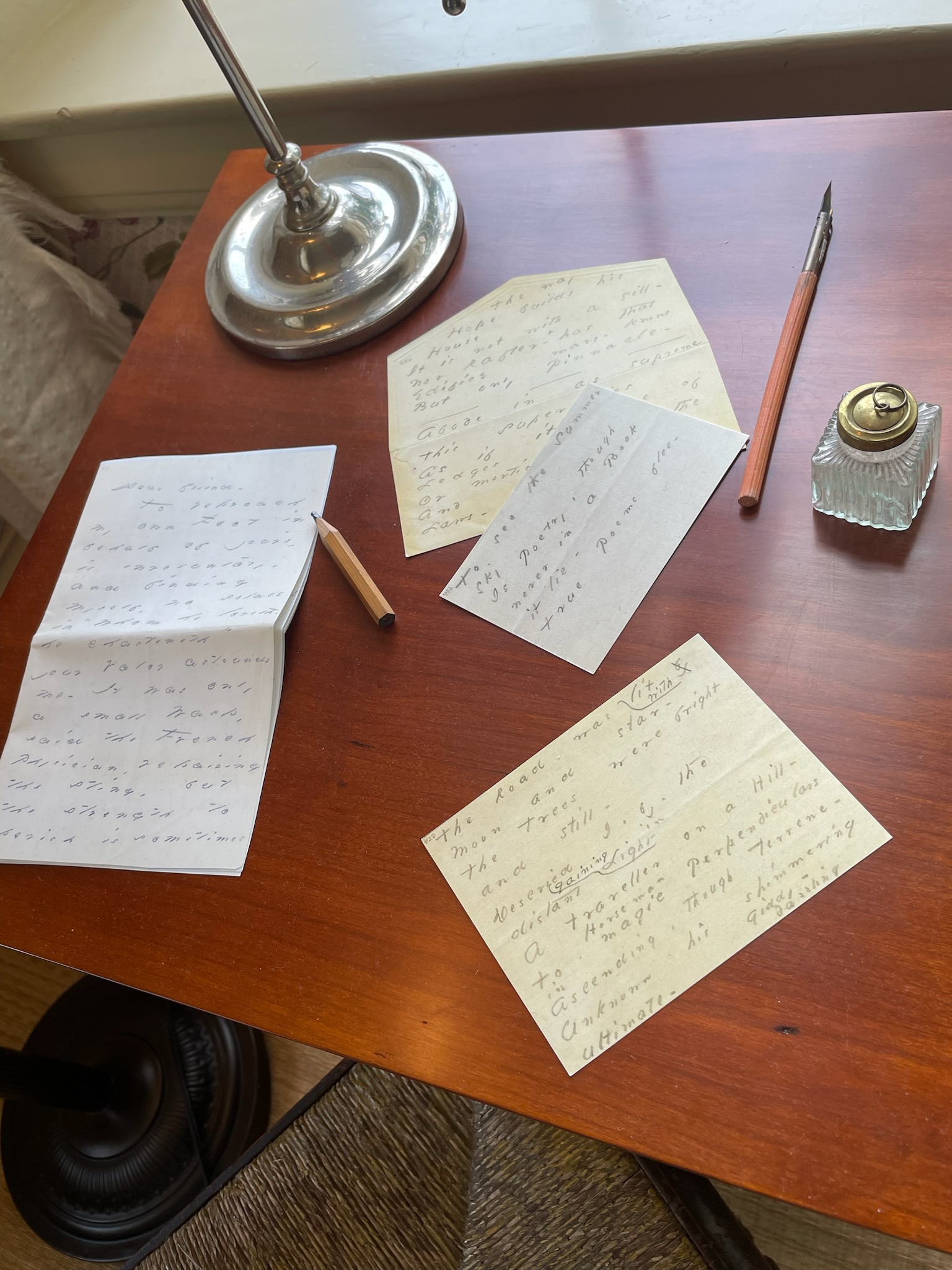
It was quite different then. Her well-to-do family owned a lot of land. Across the street were ten acres called the Dickinson meadow. A conservatory adjoined the house, where the family grew exotics like cactus and jasmine. During her lifetime, she assembled a collection of 424 pressed flower specimens she had collected, classified and labeled.

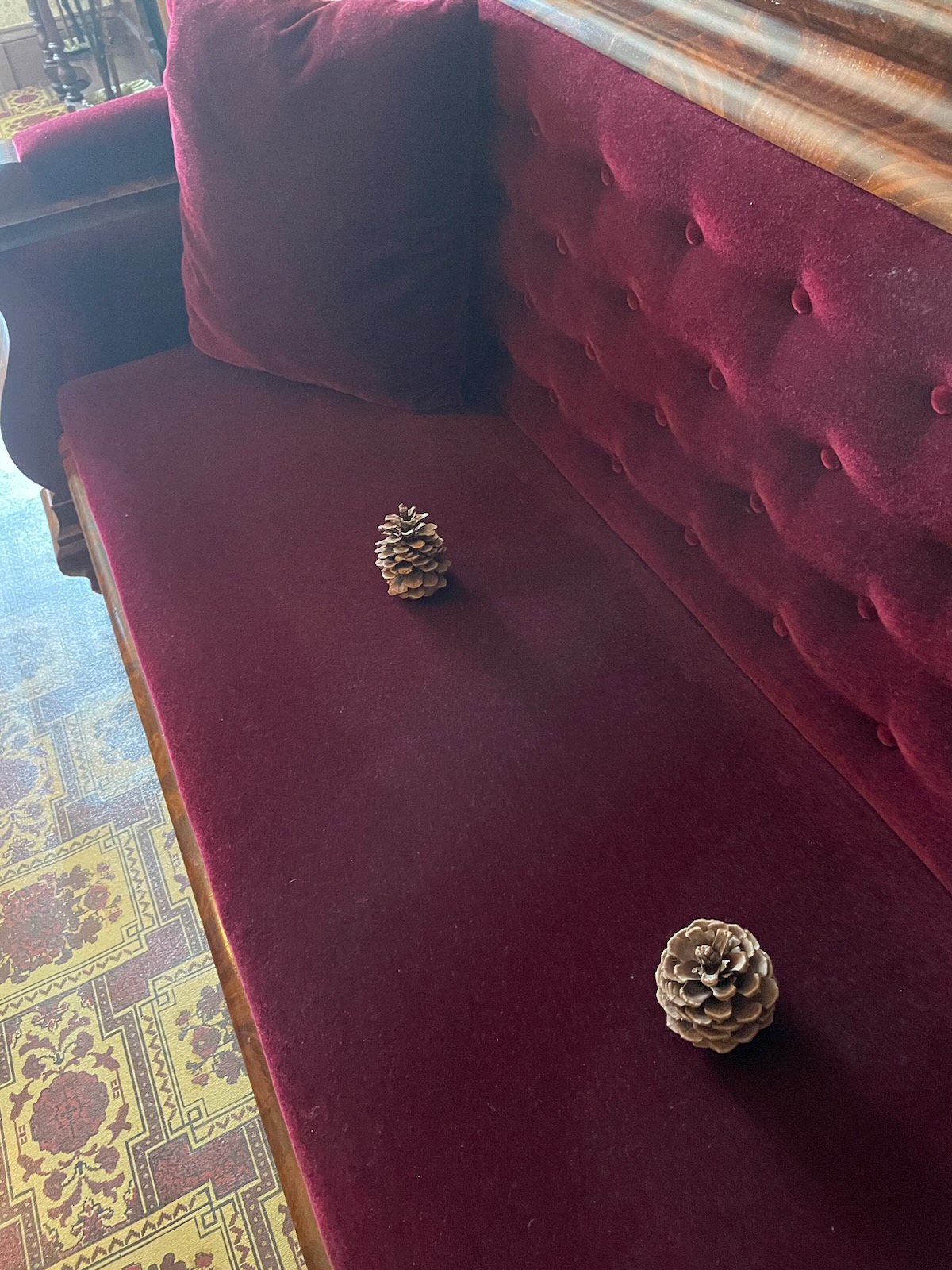
Some of the furnishings are original to the Dickinson family. If you see a pinecone don’t sit on it, cautions our docent. The pinecones indicate the artifacts original to the family.

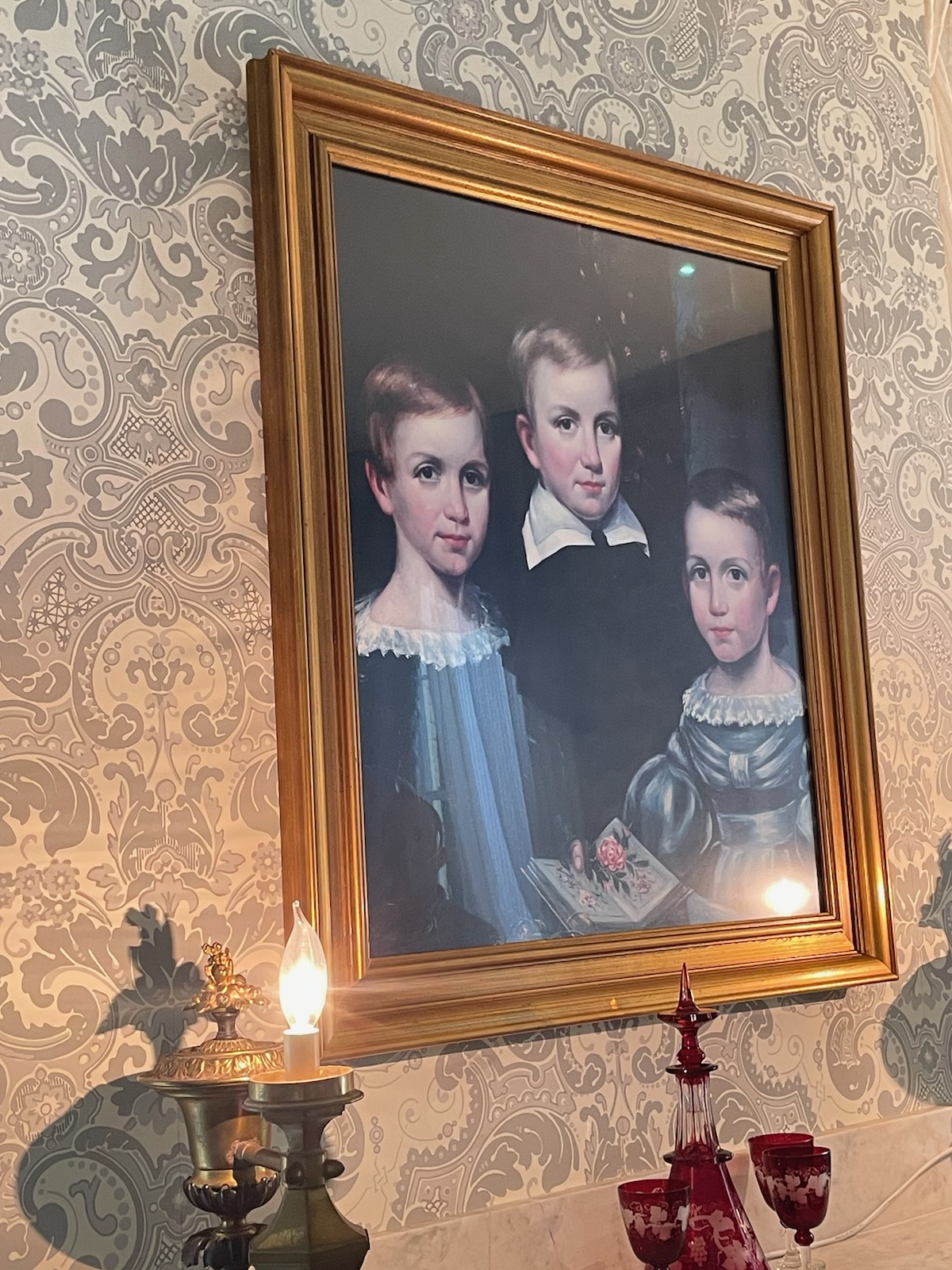
I think that might have given Emily at least a polite chuckle. We see the parlor containing a reproduction of a portrait of Emily with her siblings Austin and Lavinia as youngsters. The docent points out the color of Emily’s hair: red.

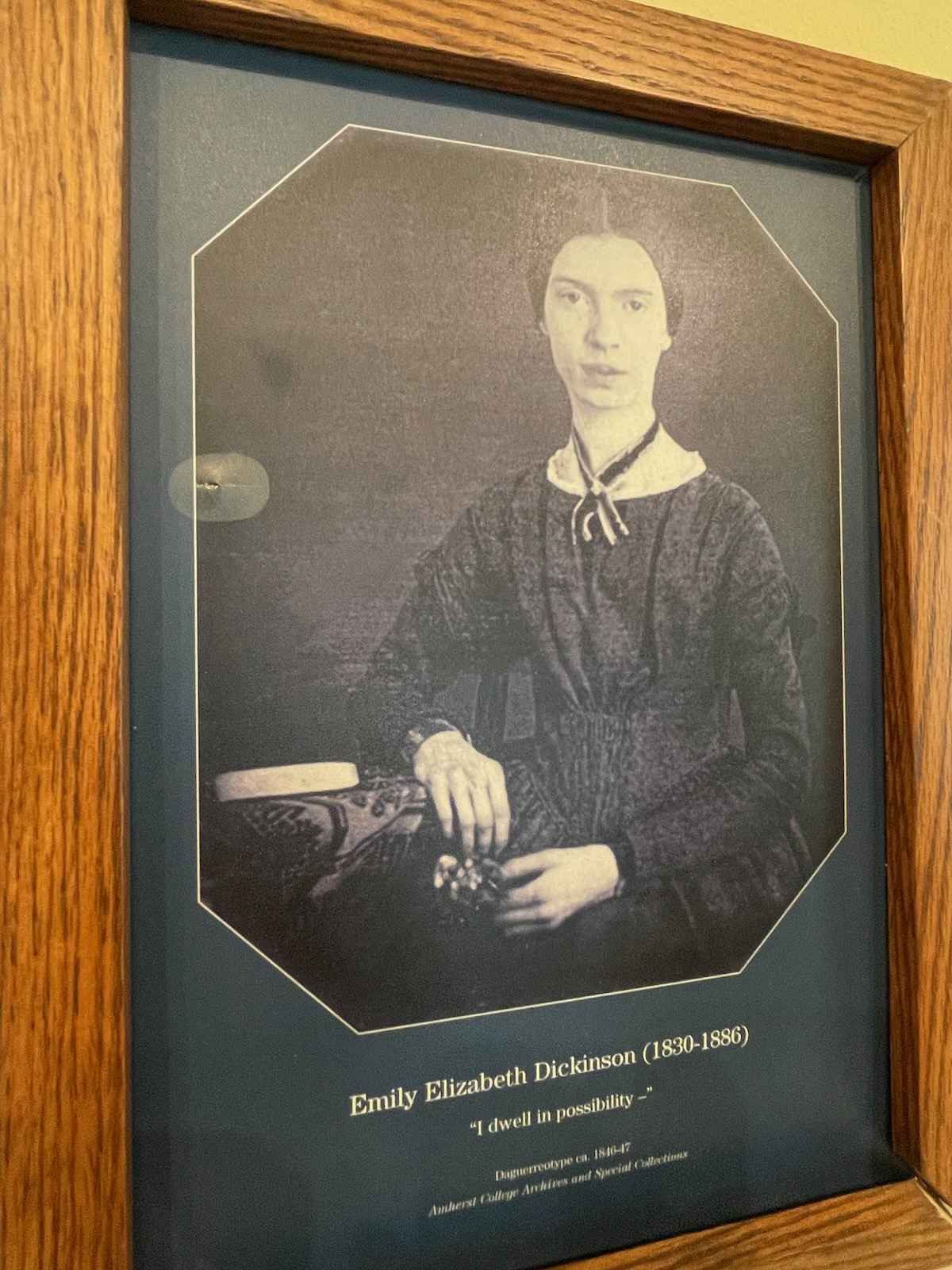
Unlike the only picture we have of her as an adult, which is black and white.

Amherst College has a lock of that hair in their possession. I’d like to go take a look at that sometime.

Dickinson wrote 1,789 poems, with only ten published during her lifetime. In the summer of 1858 she began to review her work, penning clean copies of poems she had written previously. She assembled these carefully pieced-together manuscript books in small booklets called fascicles that contained nearly eighteen hundred poems, and no one knew of their existence until after her death.

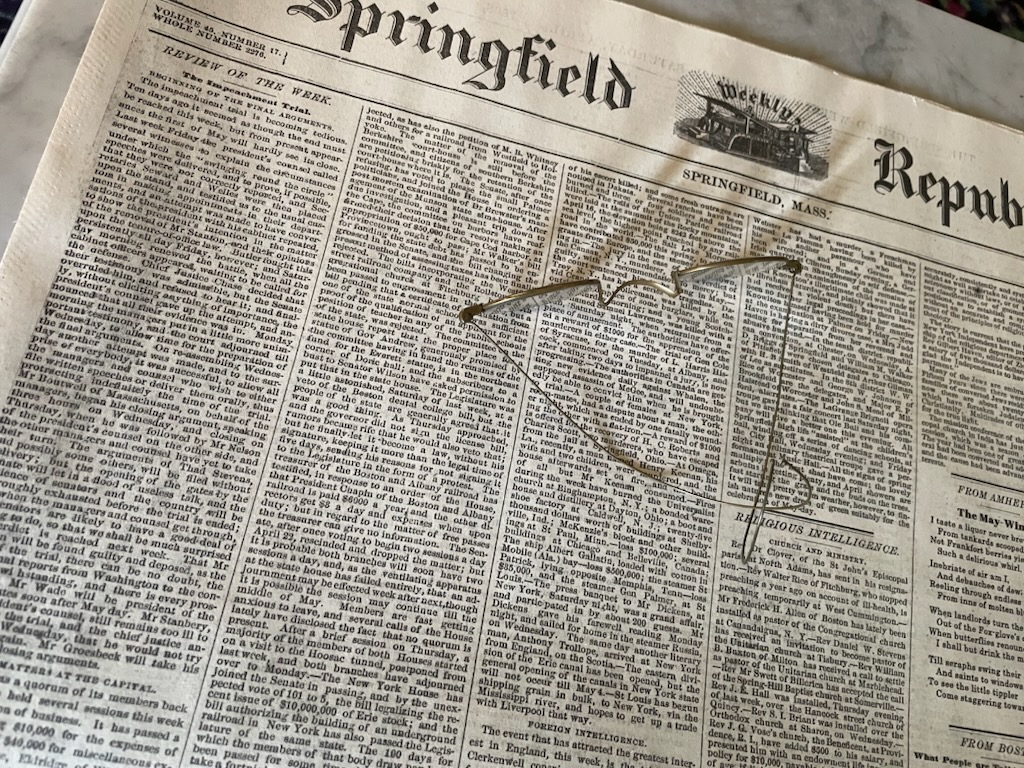
A newspaper lies on a side table. This is where she discovered the editor Thomas Wentworth Higginson, literary critic, radical abolitionist and ex-minister, the mentor who would encourage her creative explorations throughout her life.

In her first letter to Higginson in 1862, Dickinson wrote, Are you too deeply occupied to say if my Verse is alive? She was not young then — she was born in 1830 — but she was perhaps a bit insecure.

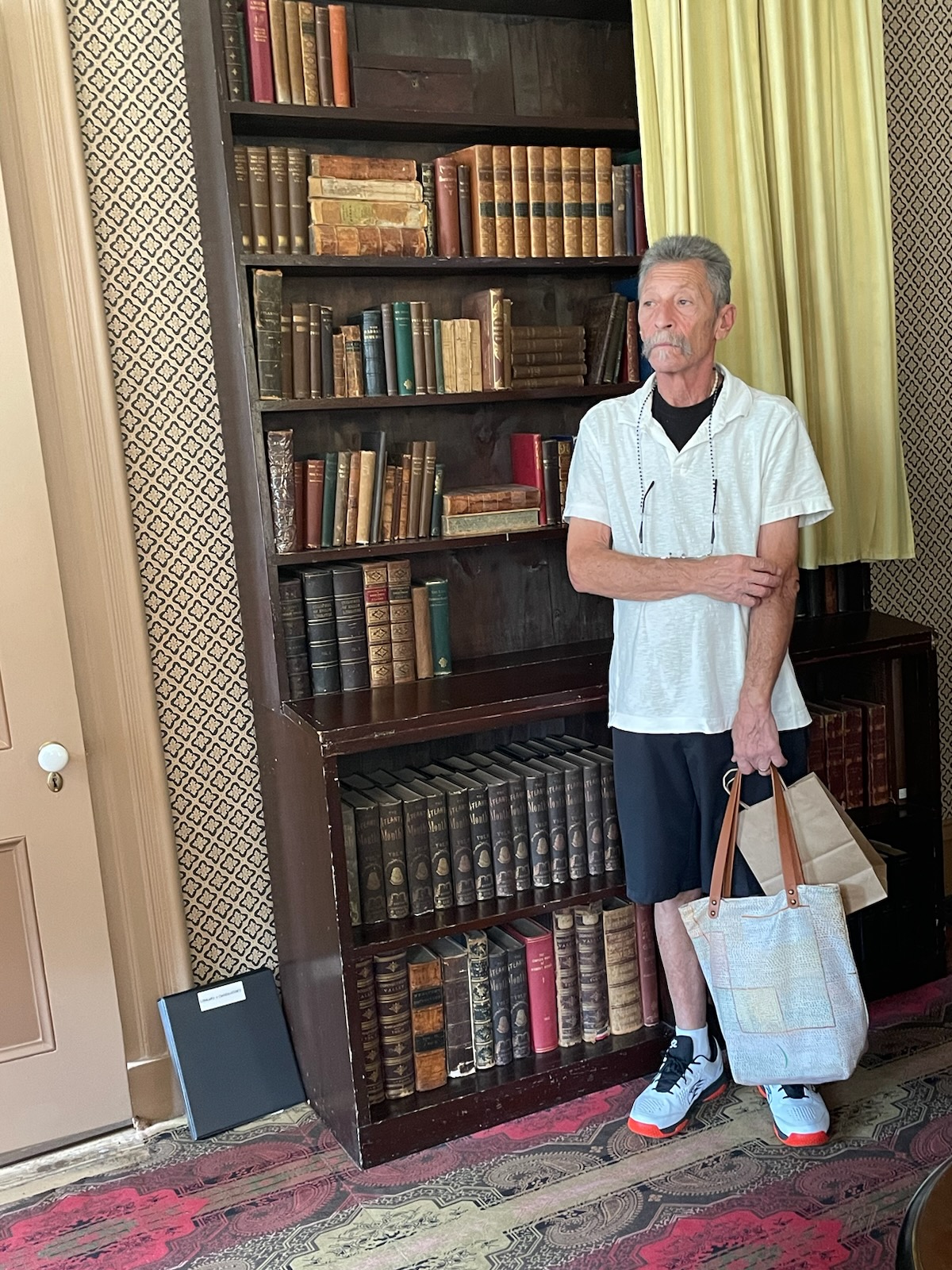
We tourists see the study with its books (ersatz copies of what would have been on these shelves, as her actual books went to Harvard and Yale as per her wishes) Her father gave her whatever books she wanted but said the ones she liked might jiggle the mind. For example, Henry Wadsworth Longfellow’s Kavanagh. Really?

We ascend the stairs. 

The Amherst population apparently referred to her as The Myth, because she basically disappeared from view after a certain point.

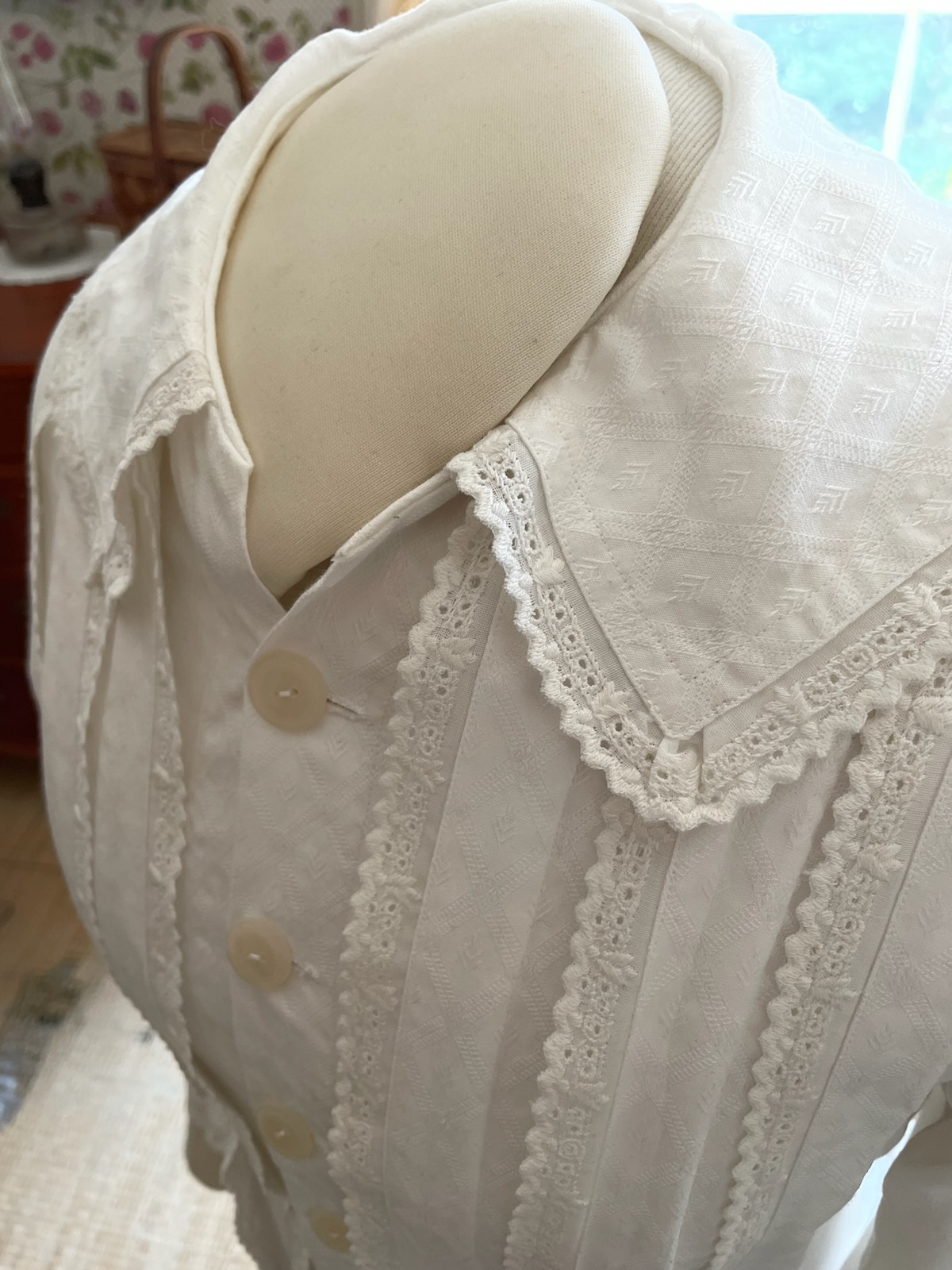
We come to Dickinson’s bedroom. It’s on the top floor, a place where Emily spent her increasingly reclusive adult years. We see a white house gown or house dress on a dressmaker’s dummy, a garment a woman would not wear out in public, a sort of announcement of a strategy to withdraw from the world.

It’s not the original but a replica of her one surviving article of clothing, a cotton dress it is believed she sewed sometime between 1878 and 1882. Given the scarcity of photographic documentation, It is possible she actually favored bright red or purple garments!

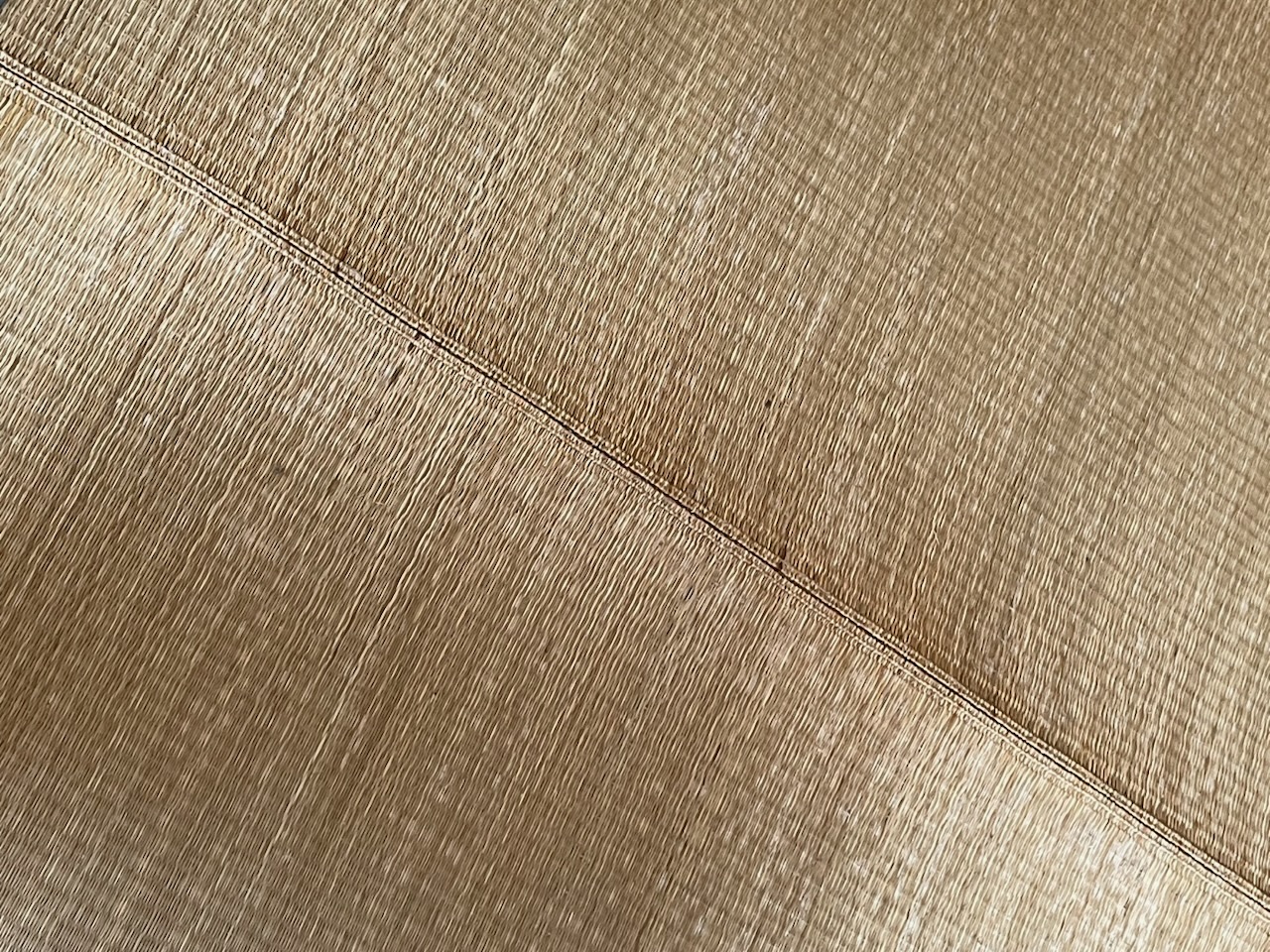
We see tatami mats on the floor, also replicas of the originals, and find out something pretty amazing. Experts have established from the tread marks on the floor the steps she took from one place to another in the tiny room  –  her feet wore grooves. Spooky.

We see Dickinson’s desk  –  well, again, not her real desk, that’s owned by Harvard, but an exact replica. This must be where she assembled those fascicles.

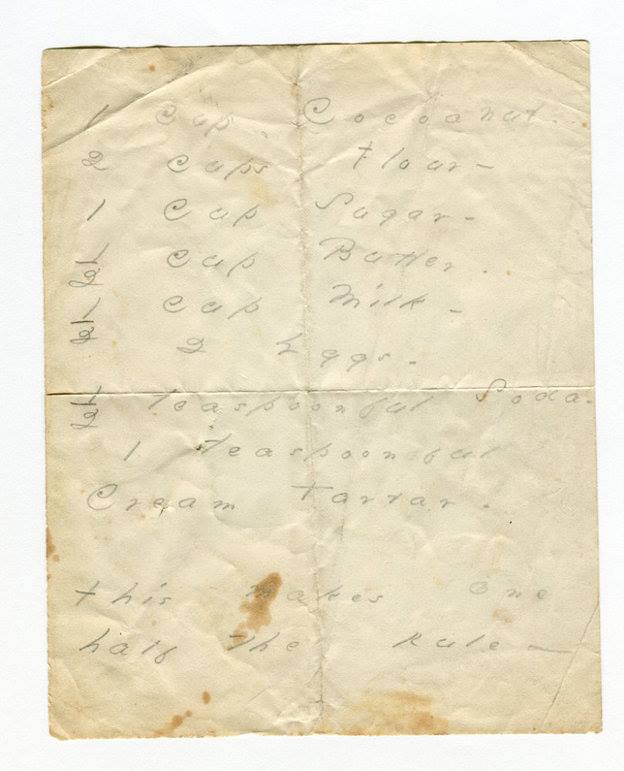
More spookiness. Emily lowered baskets filled with treats out this window for her beloved nephew Thomas Gilbert Dickinson, who died at the age of eight of typhoid fever. She was, apparently, quite the baker. She was famous for her “black cake” made with rum and raisins, and won second place in an Amherst baking competition. And we have a recipe for coconut cake, written on the back of a poem.

We learn a little bit about her relationship with her brother’s wife, Susan Gilbert.Dickinson. Emily sent her two hundred poems and 300 passionate letters. Preserved, an envelope with Open me carefully in Dickinson’s cursive on the outside.

Austin and Susan, increasingly estranged in their marriage (not surprisingly)  lived next door. The women’s love affair, a secret hidden in plain sight. Dickinson’s letters go somewhere along these lines:

Susie, will you indeed come home next Saturday, and be my own again, and kiss me… I hope for you so much, and feel so eager for you, feel that I cannot wait, feel that now I must have you — that the expectation once more to see your face again, makes me feel hot and feverish, and my heart beats so fast… my darling, so near I seem to you, that I disdain this pen, and wait for a warmer language.

In 1998, The New York Times reported on an infrared study showing that much of Dickinson’s work had been deliberately censored to exclude the name Susan. At least eleven of Dickinson’s poems were dedicated to her sister-in-law, though those dedications were later erased.

Some of the poems would seem to point directly to the love affair, like Wild Nights.

Were I with thee
Wild Nights should be
Our luxury!

Futile — the Winds —
To a Heart in port —
Done with the Compass —
Done with the Chart!

Rowing in Eden —
Ah, the Sea!
Might I but moor — Tonight —
In Thee!

You’d have to be blind not to see the personal, human passion in these lines.

And then we get to  the great poet’s bedstead.

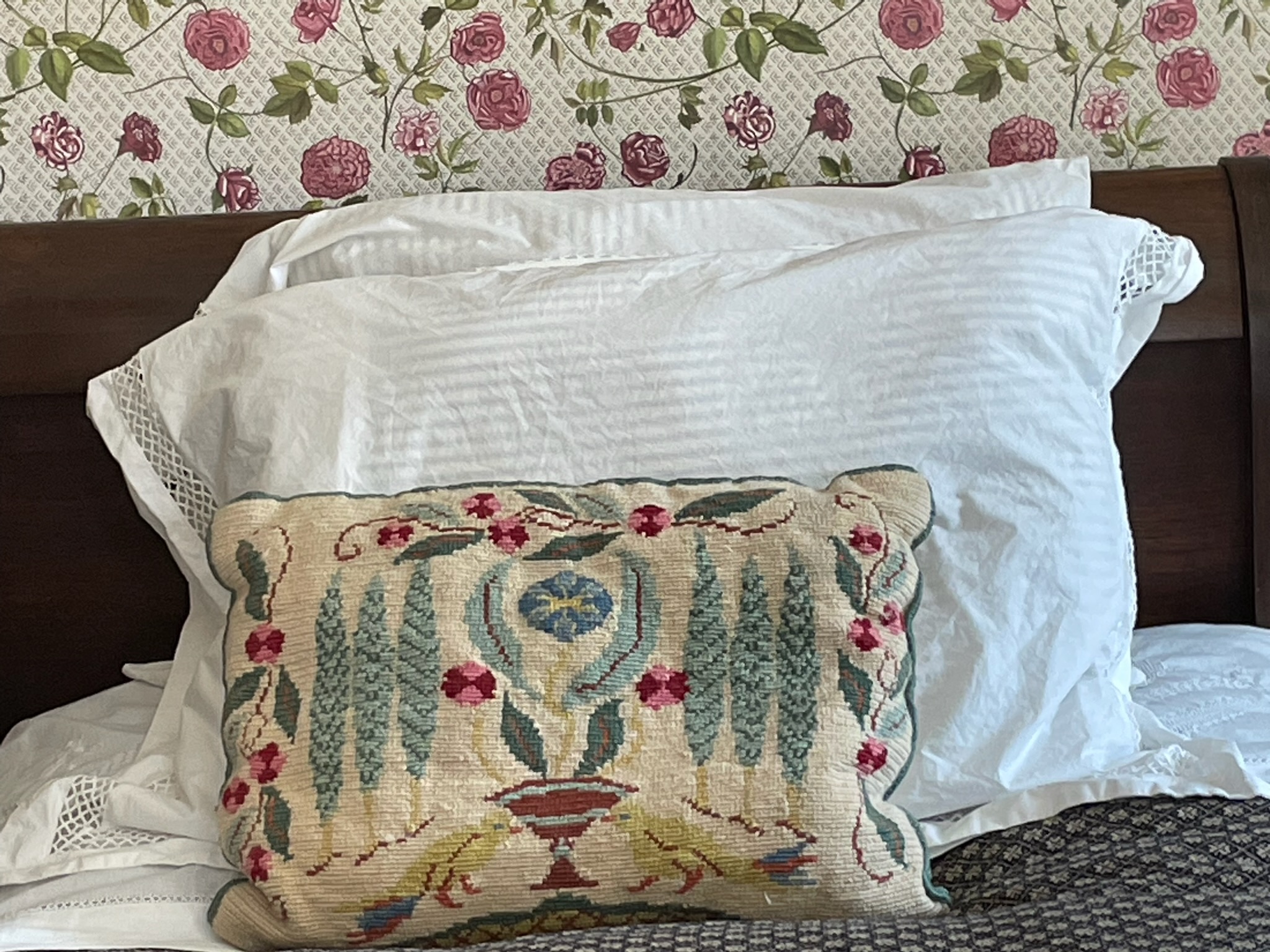
It is the real thing, not a replica. This is where she dreamed at night. This is where she died. I lay my hand against the headboard.

It is exhilarating to touch what Dickinson touched. And yet, so, so sad. I feel we’re invading the core privacy of this extremely private woman, this brilliant writer, this recluse, a ghost in a room filled with a dozen callow tourists.

In the well-stocked giftshop we find tee shirts emblazoned with some of her most famous lines.

It chokes me up a little to see her delicate, haunting language inscribed on a garment you’d sweat on in the gym.

Then I buy one. I cannot resist. As I could not resist the opportunity to trail in her footsteps on the tatami mats above. To touch the headboard against which she would have leaned, probably with her nose in a book.

Emily Dickinson died at the age of 55. Her brother wrote in his diary that the day was awful… she ceased to breathe that terrible breathing just before the [afternoon] whistle sounded for six. Her physician gave the cause of death as Bright’s disease.

After Dickinson’s death, her sister Lavinia kept a promise to her and burned much of the poet’s correspondence. Dickinson had not, however, left any instructions concerning the forty notebooks and loose sheets gathered in a locked chest. Her poetry has now been translated into languages including French, Spanish, Mandarin, Persian, Kurdish, Turkish, Georgian, Swedish and Russian.

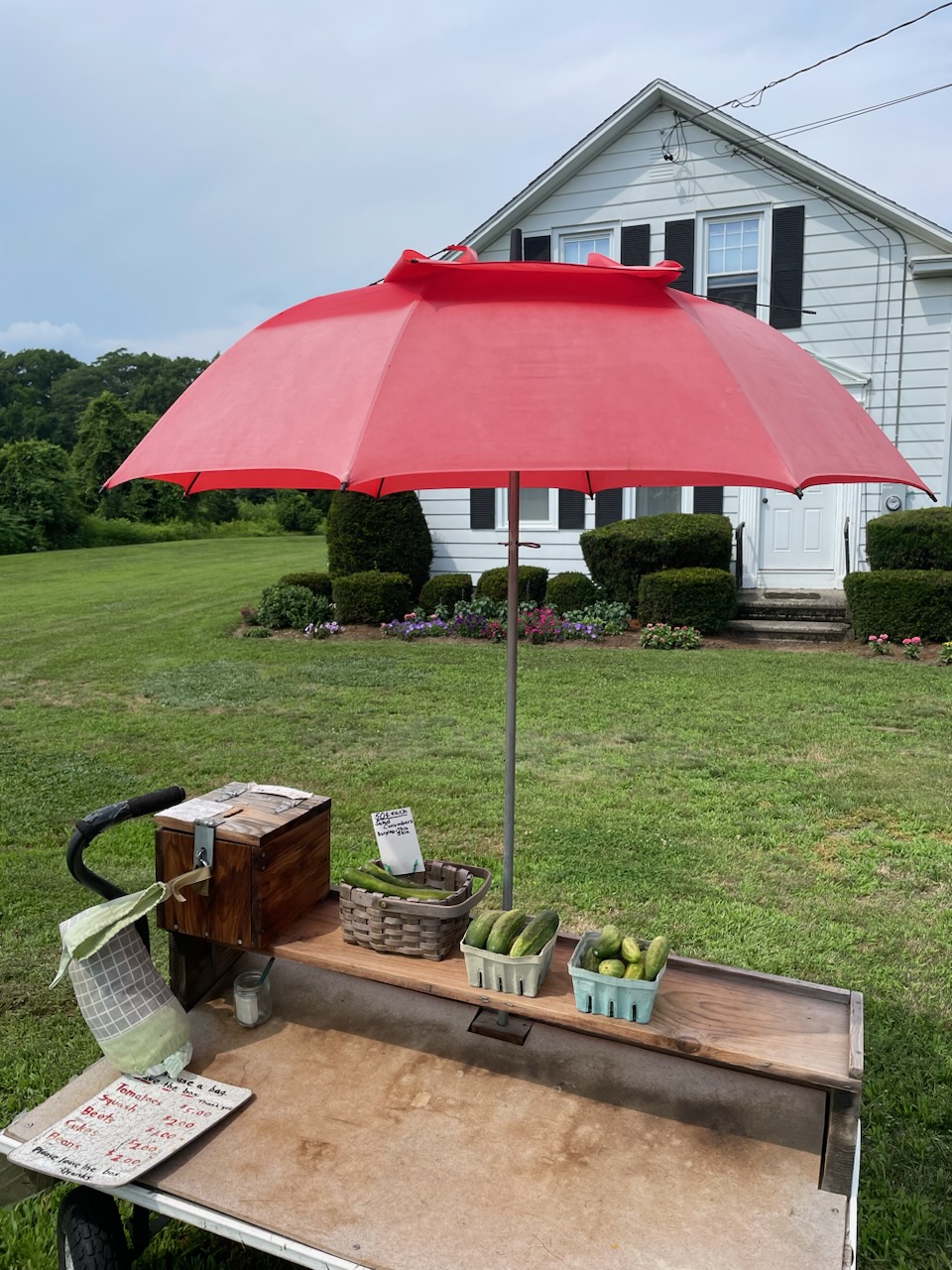
After our visit to the homestead we decide to track down her burial plot. We pass a farmstand and put a few dollar bills in a box to buy some early cucumbers, thinking that this little enterprise could have existed in Dickinson’s time.

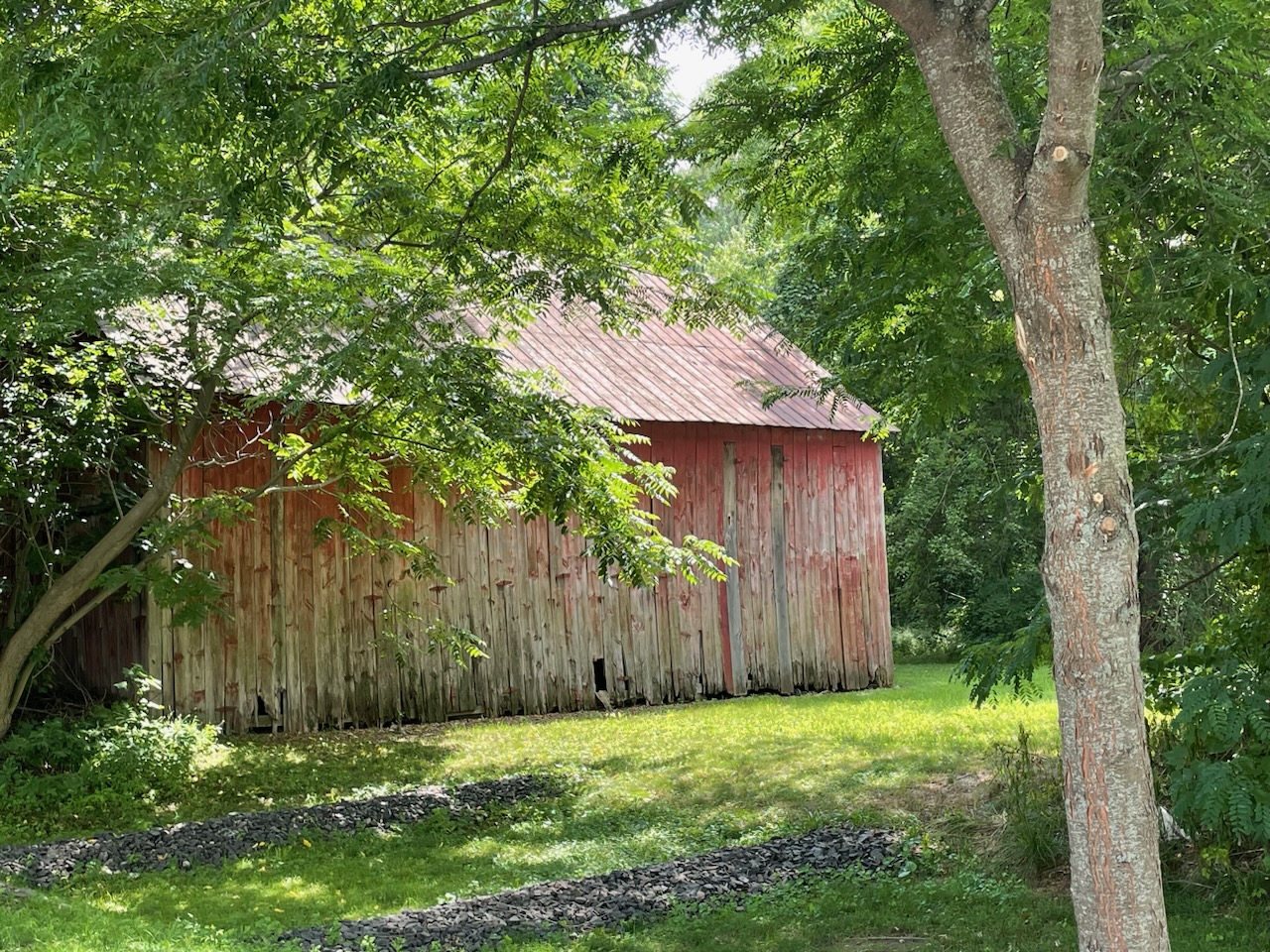
We pass an old barn, probably dating back to that era.

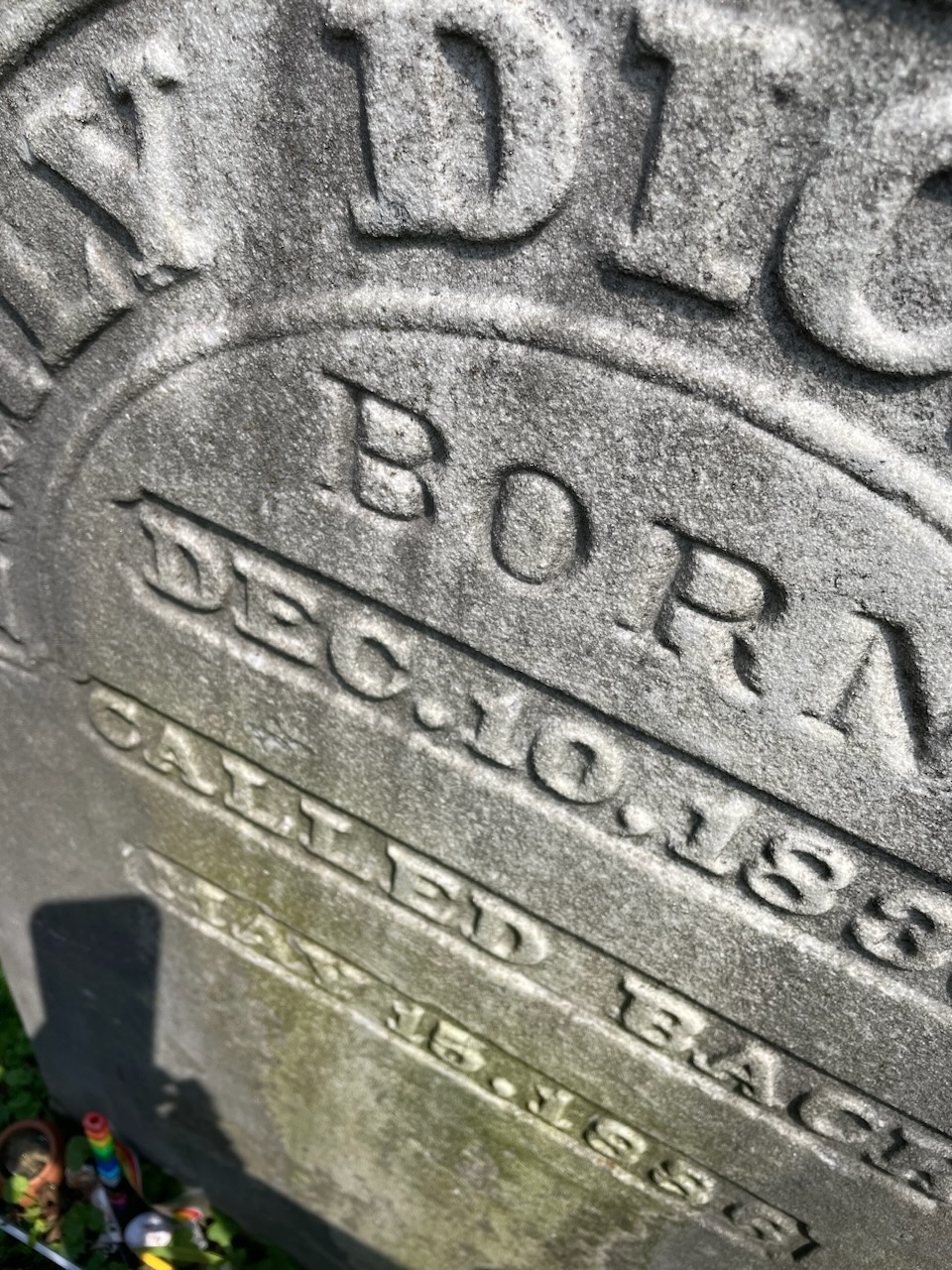
Finally we visit her grave. It is surprisingly hard to find.

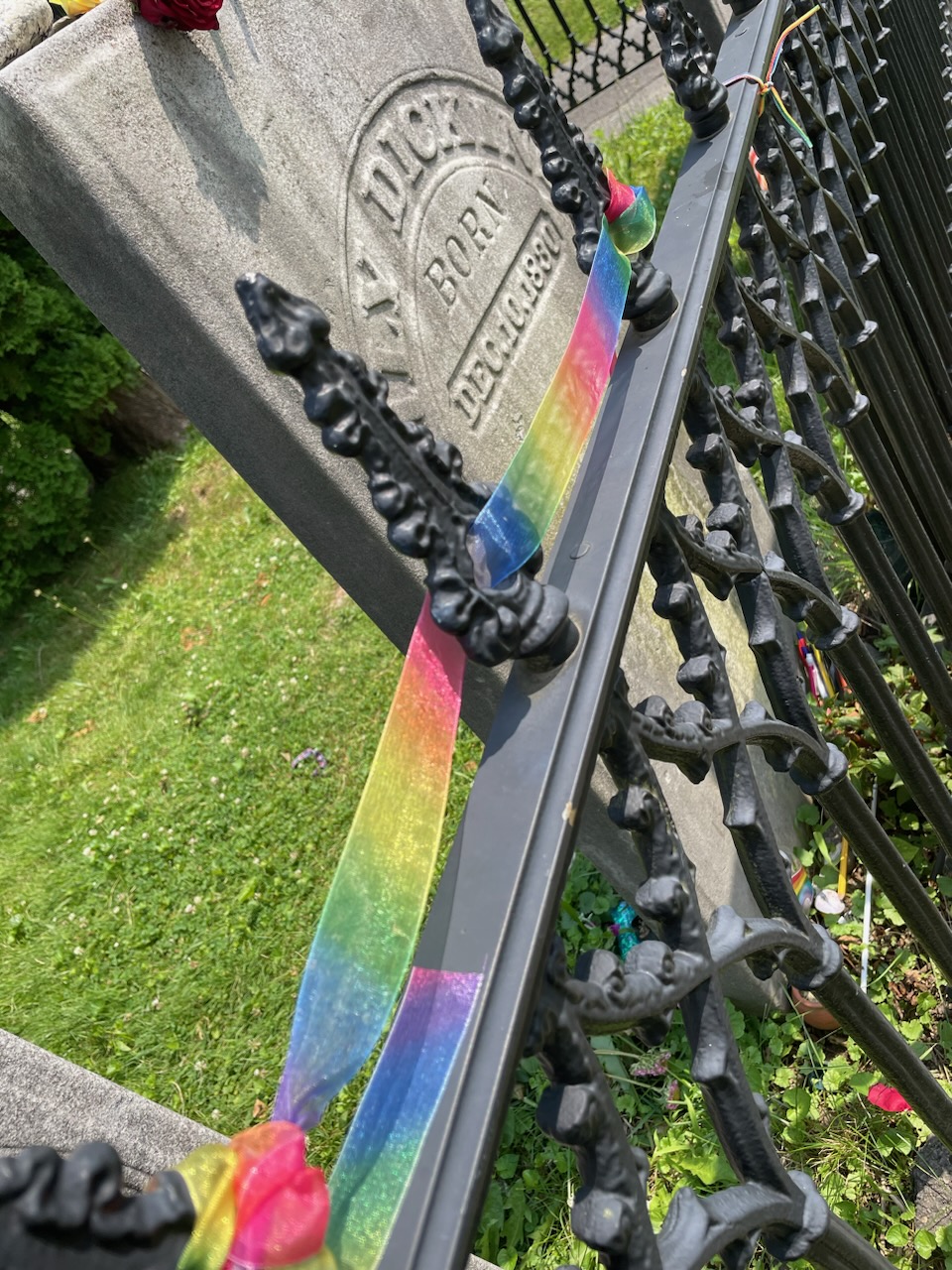
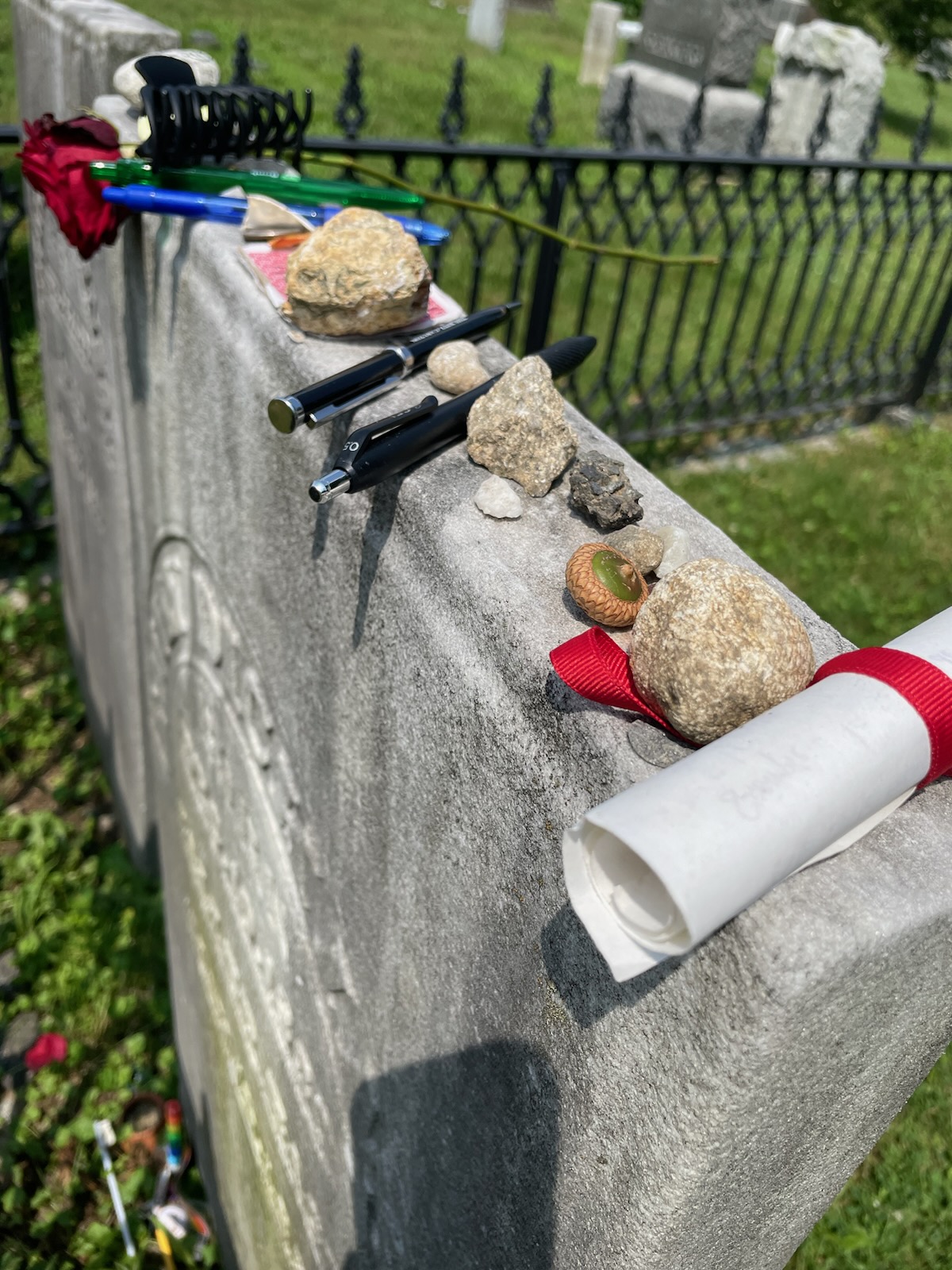
But then, once we get there, impossible to miss. People who believed in the power of her love for another woman decorated the site with rainbows.

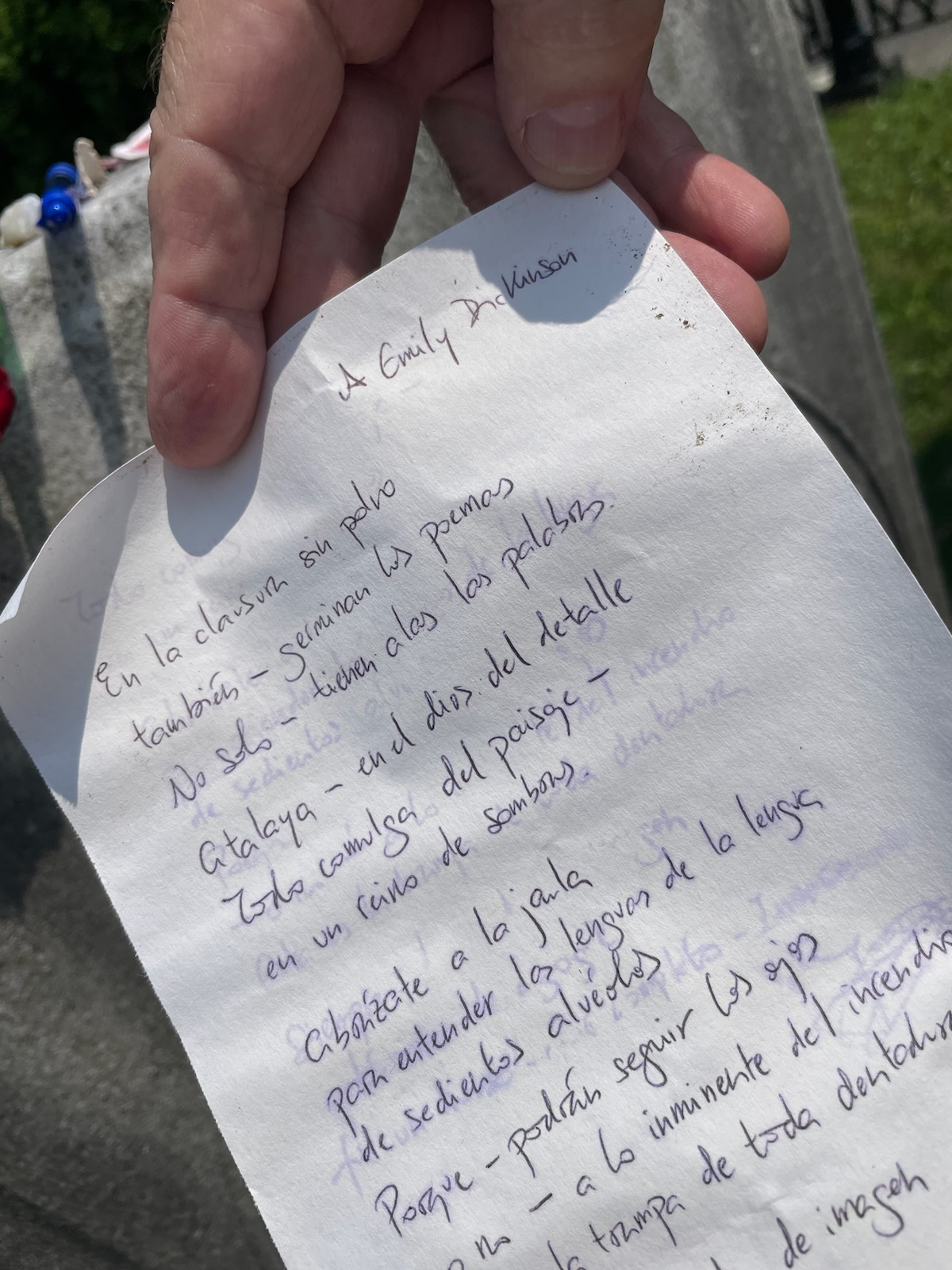
I leave my daughters hair comb among the many other tributes.

I think it might look nice in Emily’s red hair.

2 Comments

Filed under Jean Zimmerman

Why fry by the ocean when you can scorch on the NYC sidewalks?

I hadn’t been to Manhattan in quite some time. Returning, I see all its contrasts as poetry.

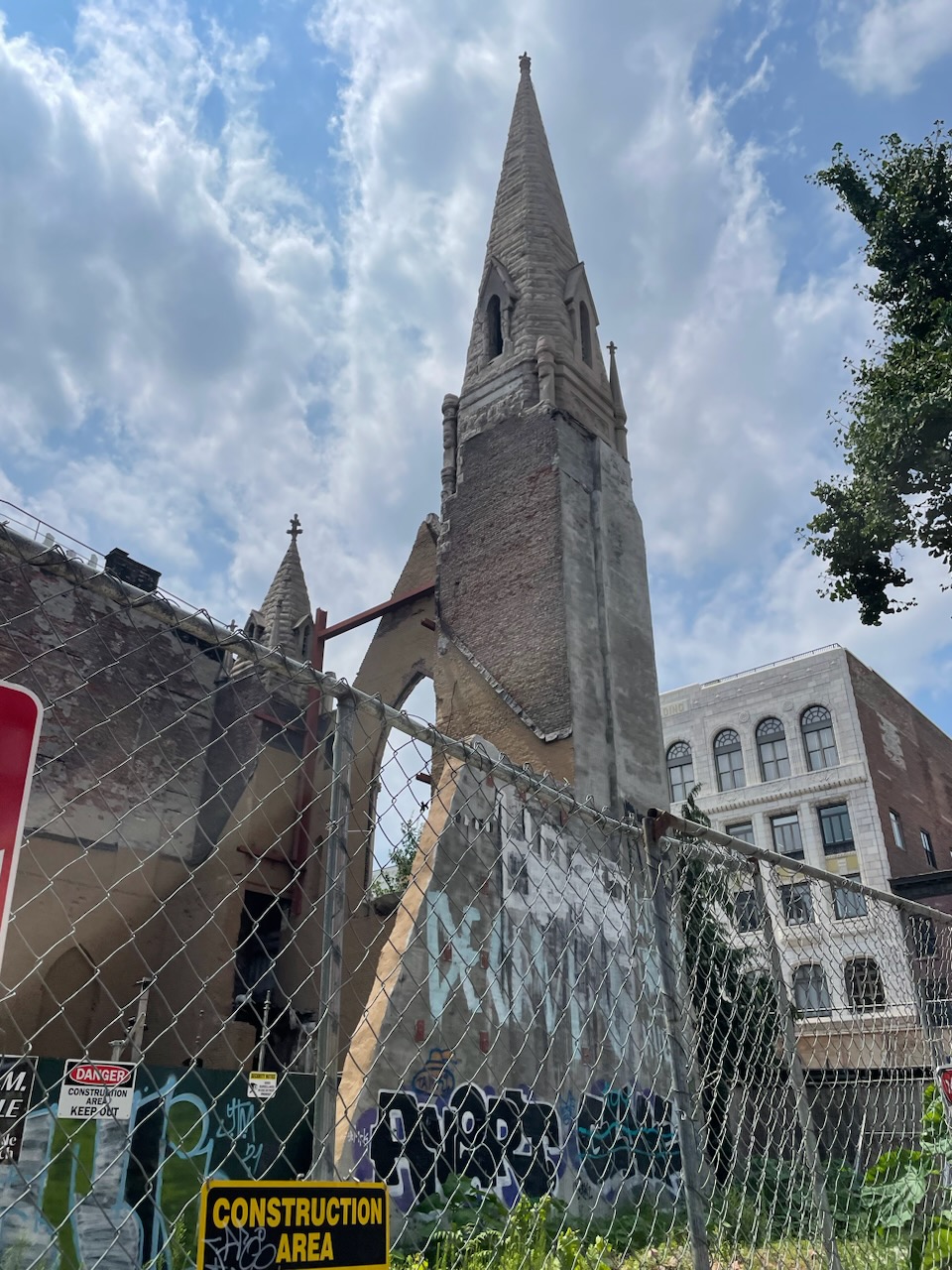
The old side by side with the new. Burned out church, new construction.

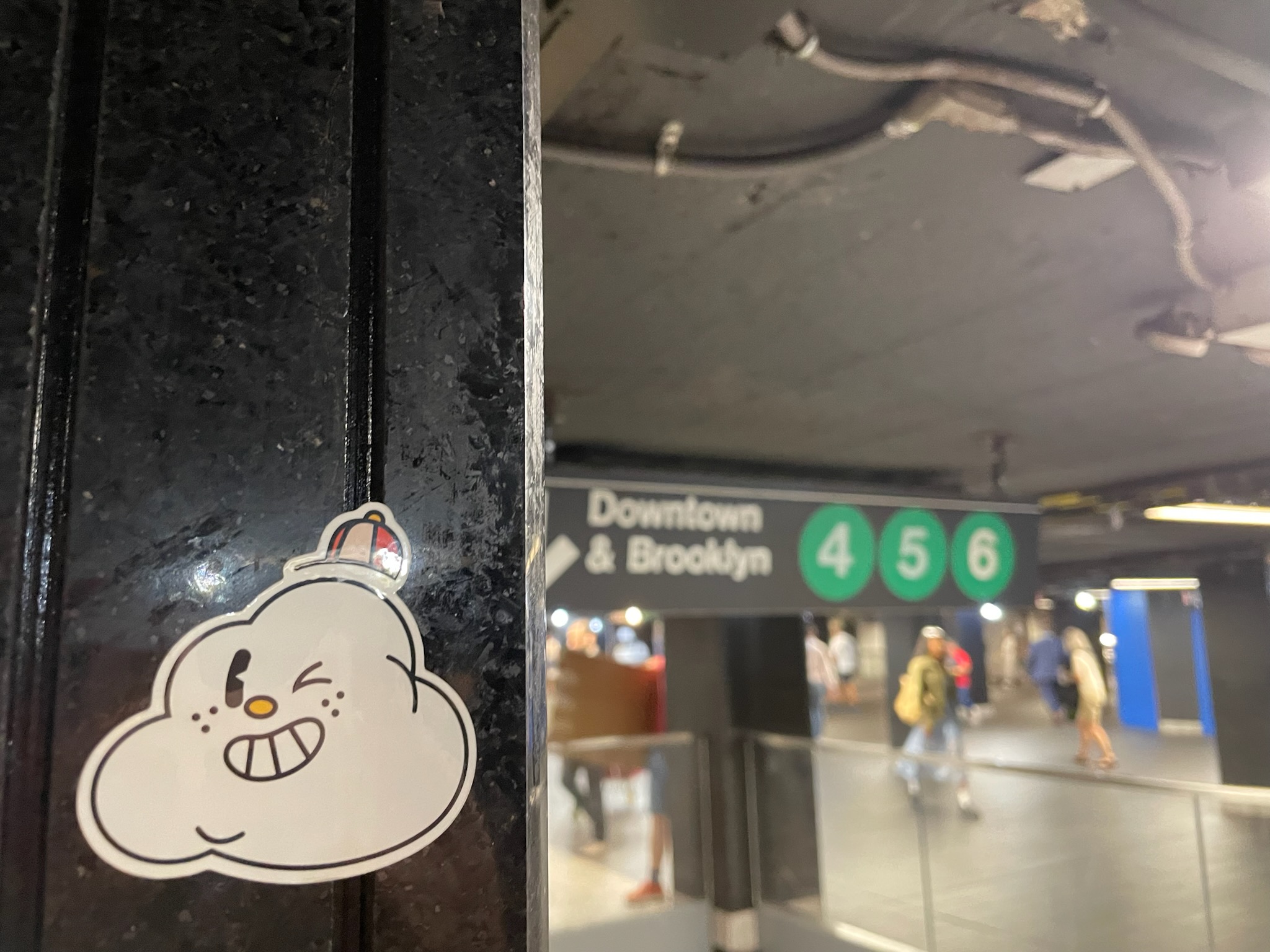
Antiquated evidence of New York’s beaver-rich past in the Astor Place subway stop.

A million year old hotel, updated several times.

The struggles of nature.

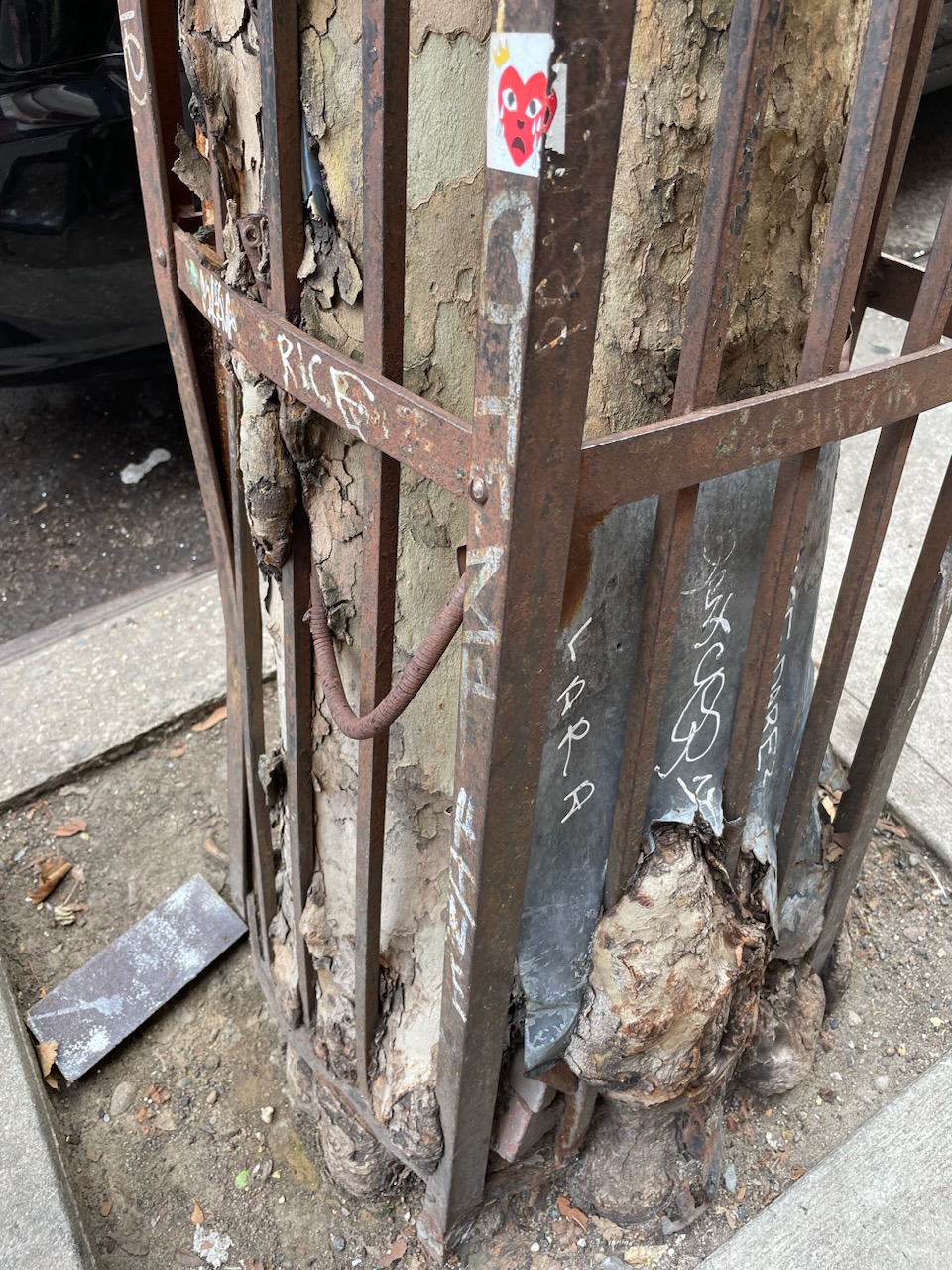
Pity the poor oak that hits its head against the shed scaffolding for years.

Or the struggling ginkgo.

Still, its rugged New York bark survives, as tough as any New Yorker.

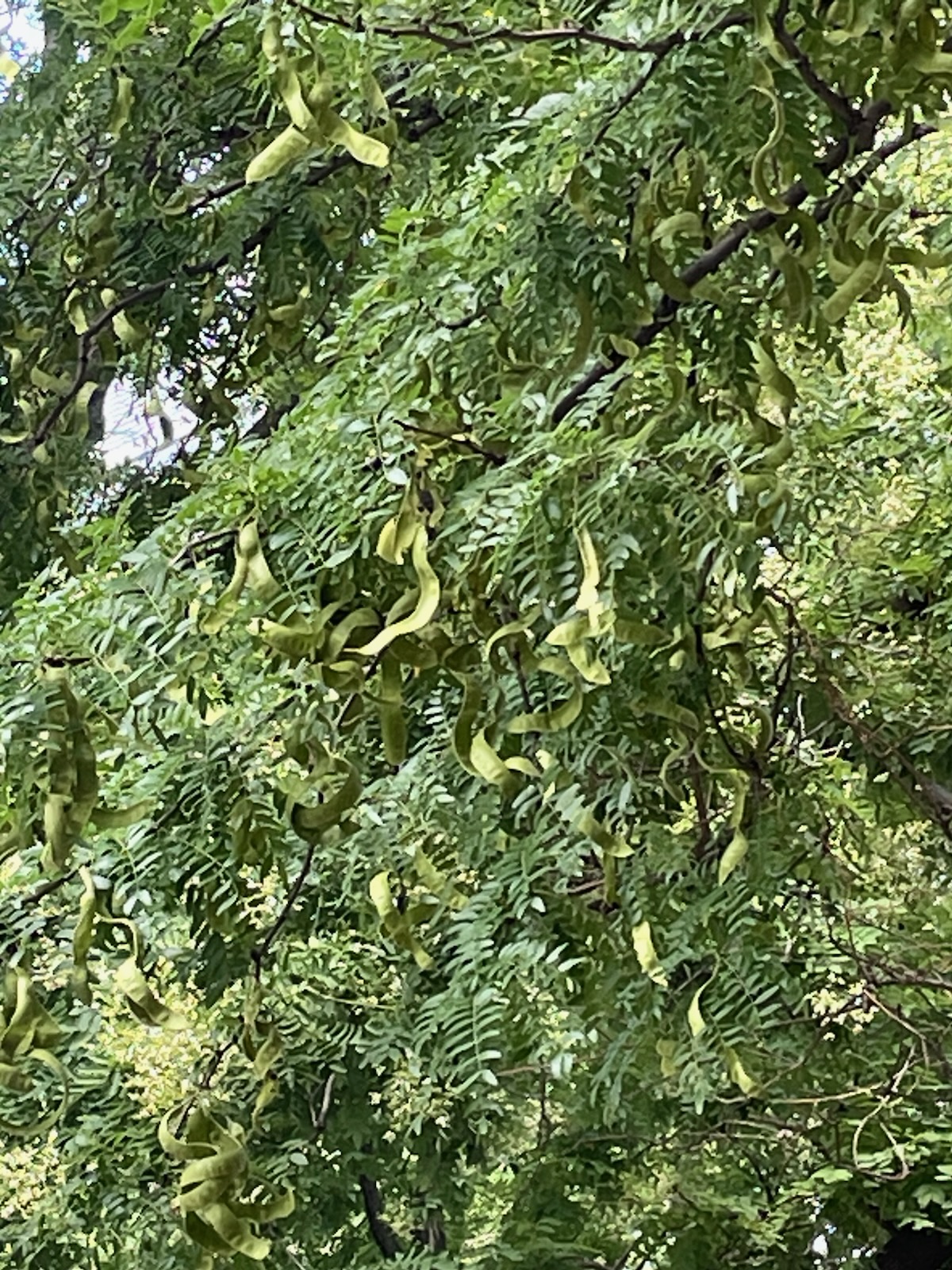
You wouldn’t think it, but in addition to the dead and the wrecked and the unpruned, some trees flourish. As we walk, we look up to see the honey locust offering up its elegant chartreuse pods right on schedule.

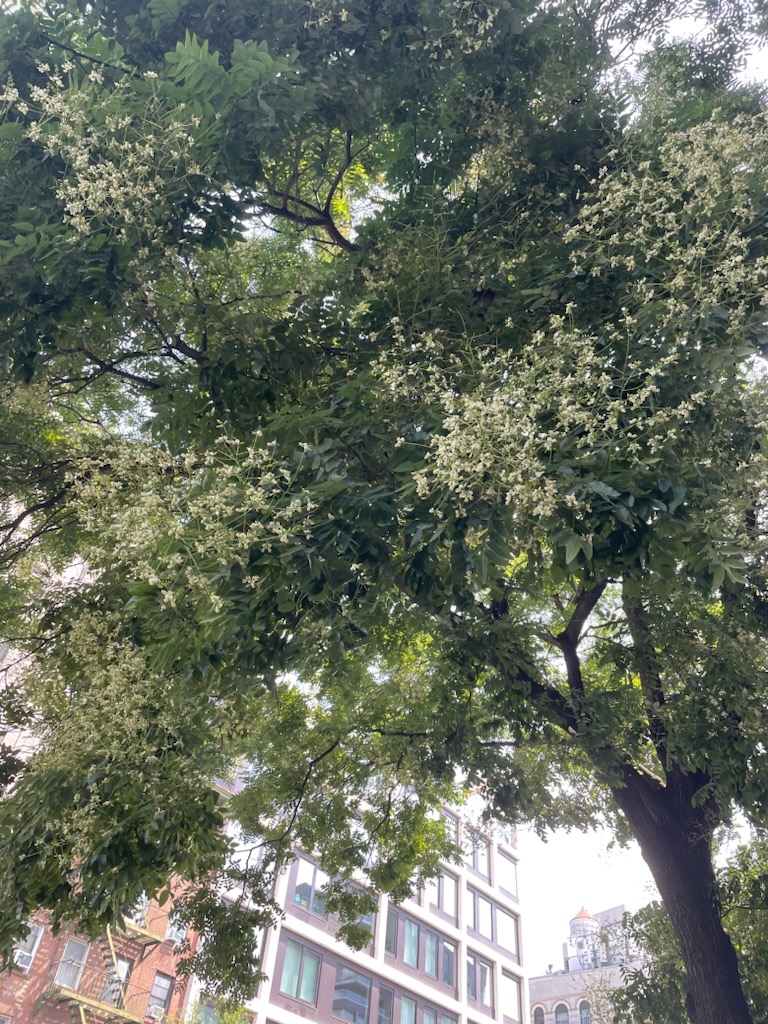
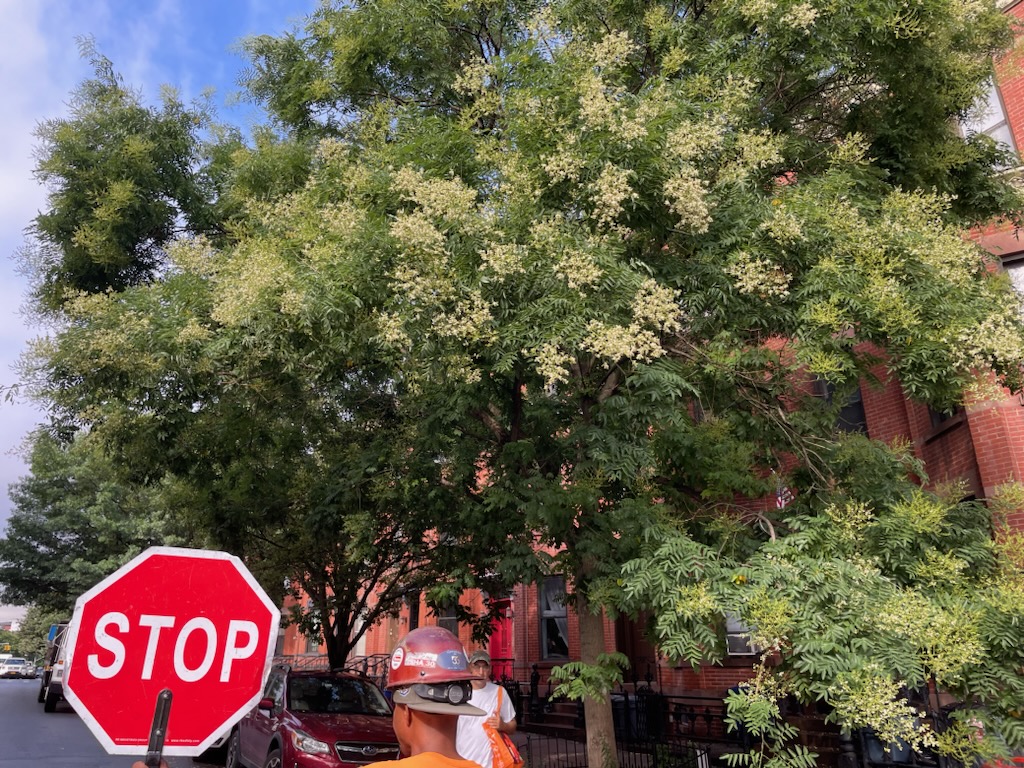
Pagoda tree lets down its perfect profuse blossoms.

A Chinese elm appears to be strutting its stuff with that glorious bark.

Yes, we know you’re beautiful.

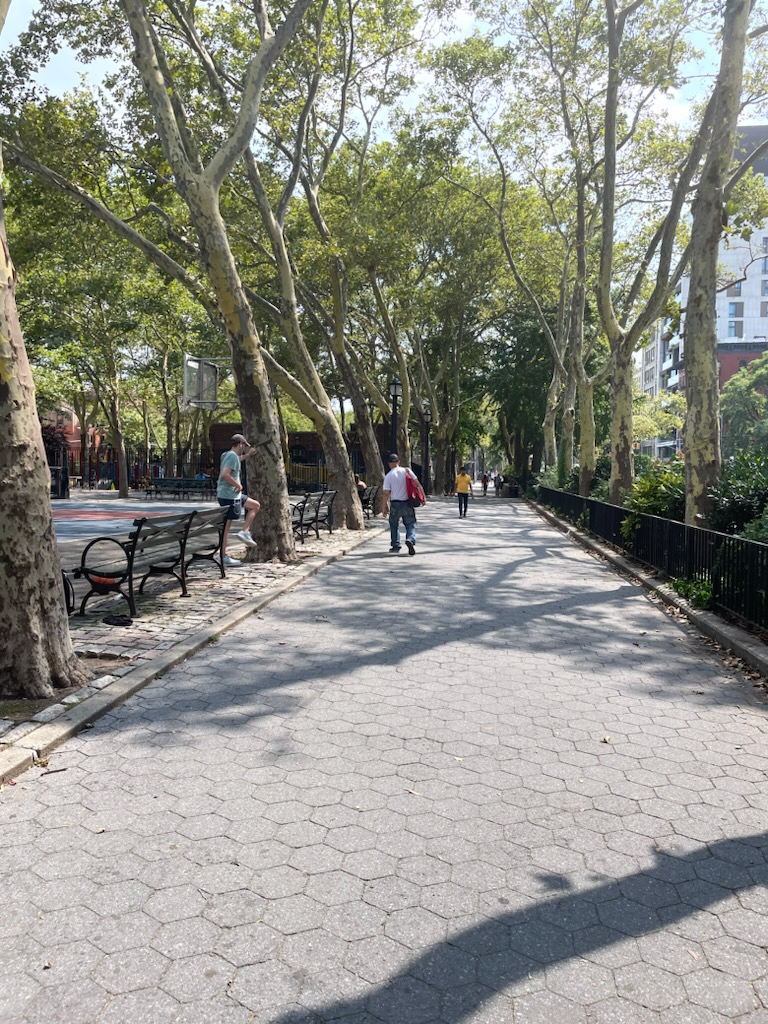
There’s even an allee of London planes by a Christie Street playground. Take that, Central Park!

Don’t say that New Yorkers aren’t fond of nature. If it’s possible to buy it, they like it.

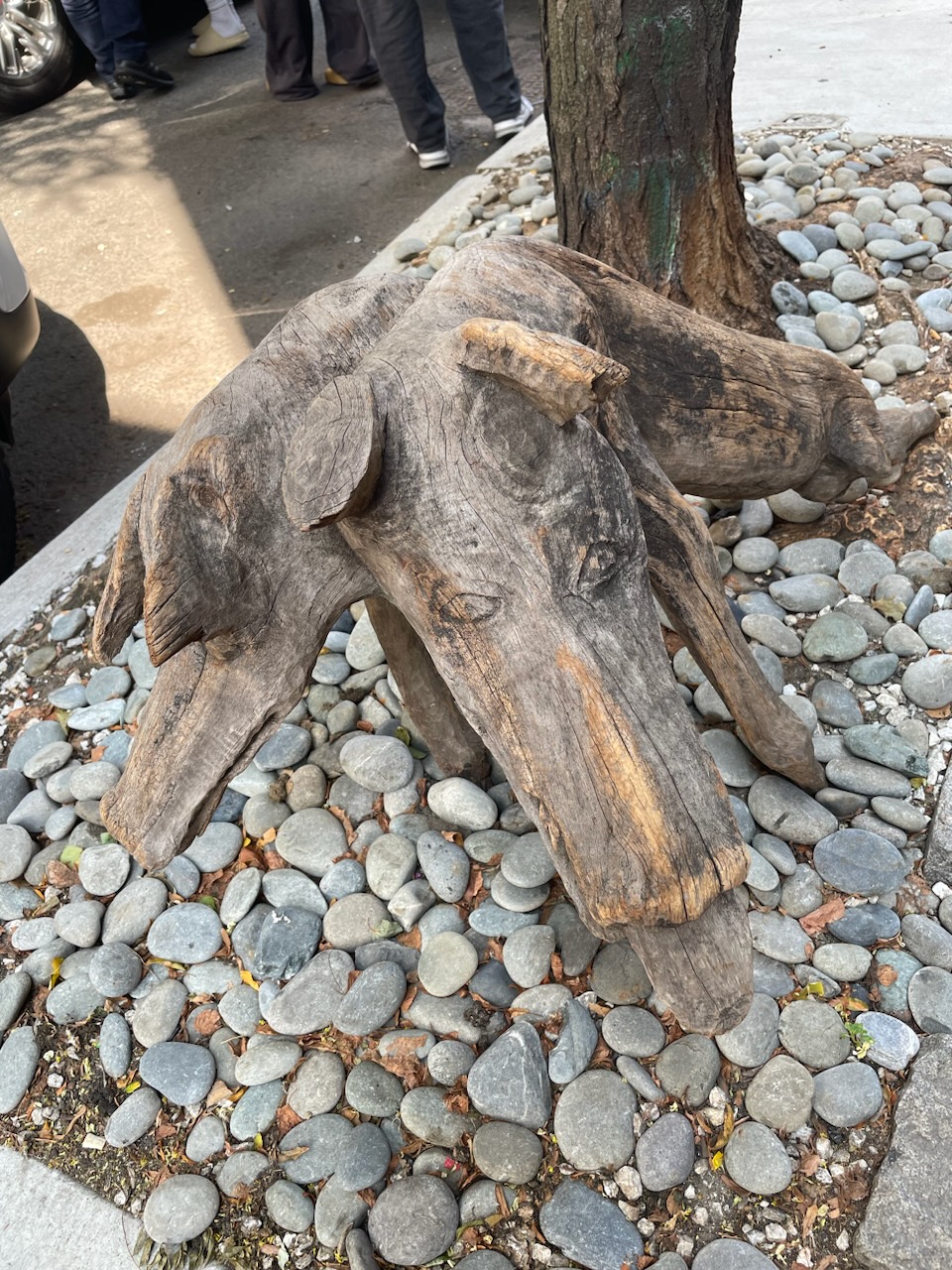
Nature is everywhere in Manhattan if you’re looking for it. Never know when you might trip over a critter of carved driftwood.

Or an ancient stone lion guarding a tenement stoop.

The East Village does change, but somehow remains as gritty and vibrant as ever. An old signpost at Astor Place.

Highlighting old haunts: Remember that crazy place CBGB? Most in the East Village do.

St. Marks Place is a good location to get fitted out with a new wig, as it always has been.

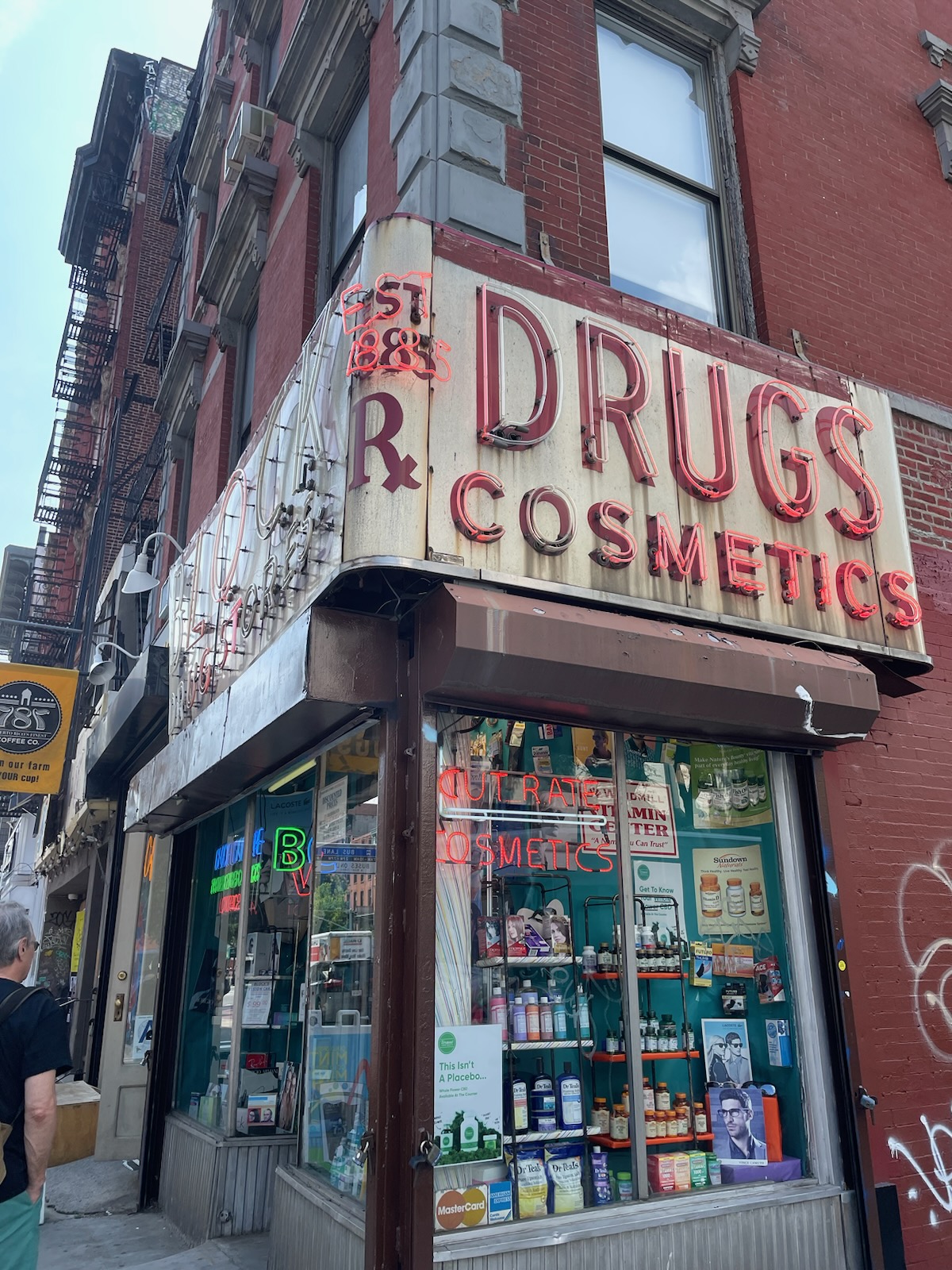
Art thrives alongside commerce. Historic drug store.

Magic garb.

Throwback clothing.

We don’t go in though the window display beckons.

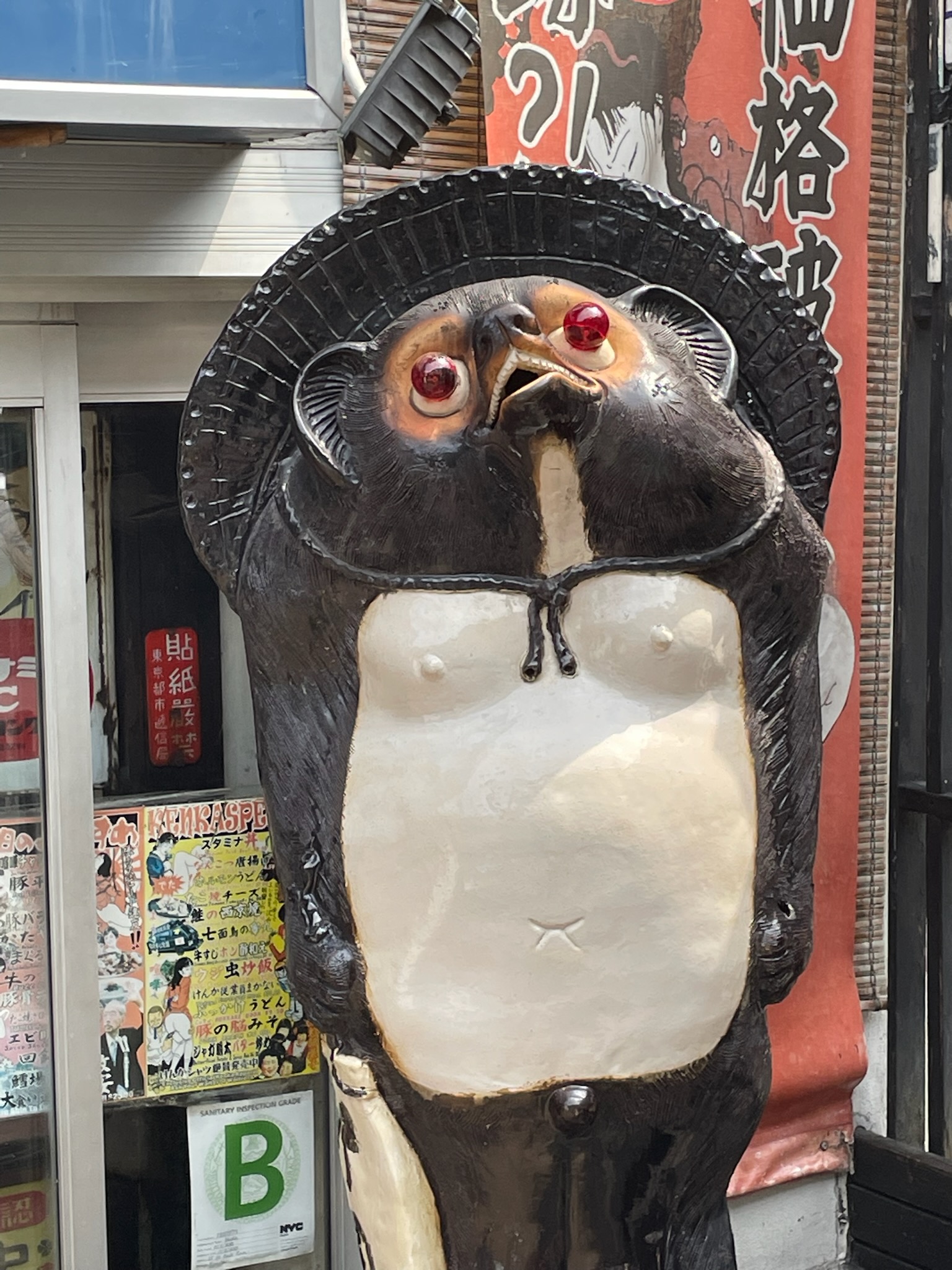
Signage, in New York ever brilliant. Jerk, stewed, vegan. Something for everyone.

A sign for something or other.

Or something else.

A place to go rogue. Aren’t you glad there is one? People move here from their tiny towns to be just that.

Butter above.

Encouragement below.

Further encouragement.

Also admonitions.

And observations.

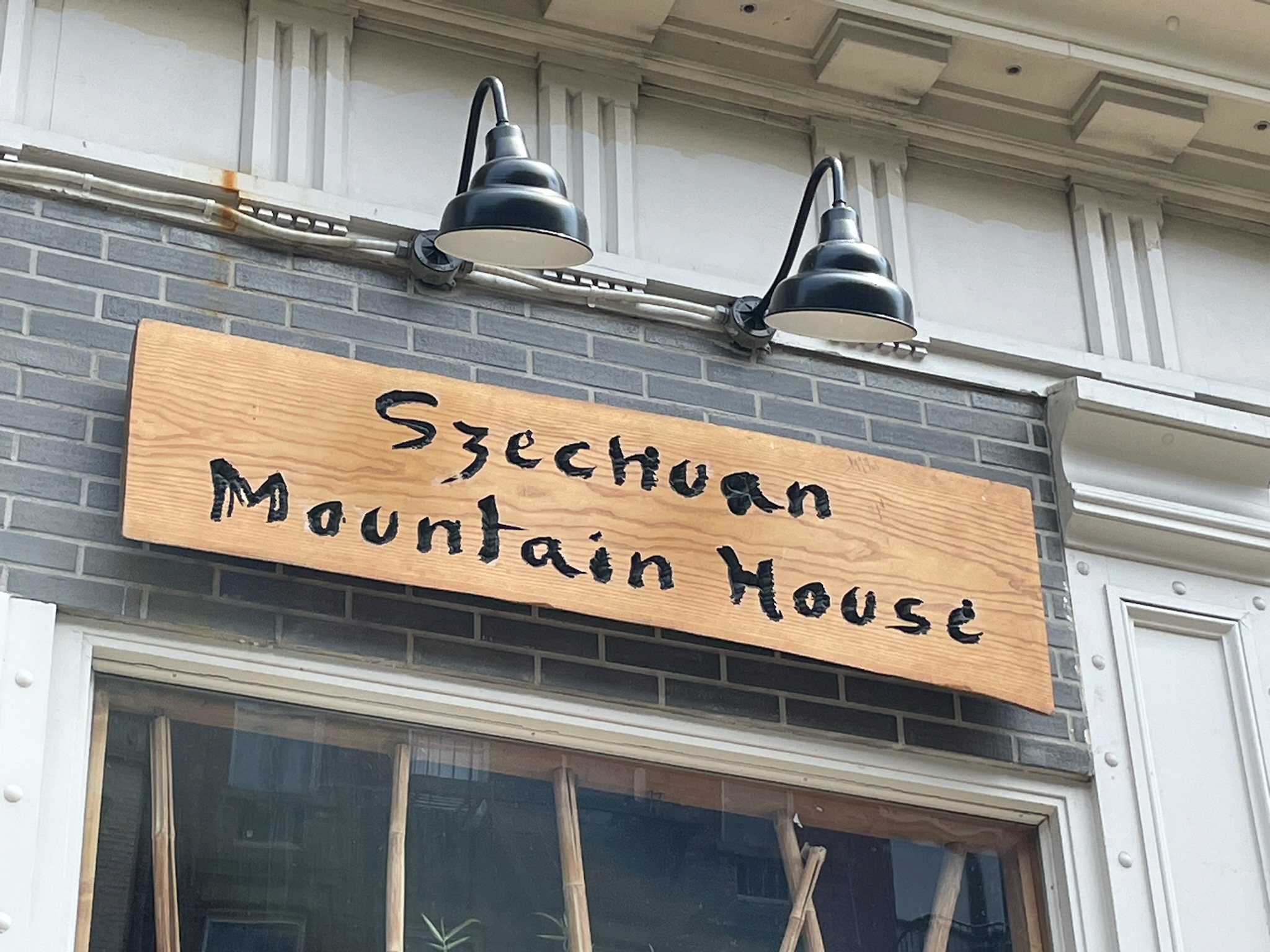
Does this restaurant entice you?

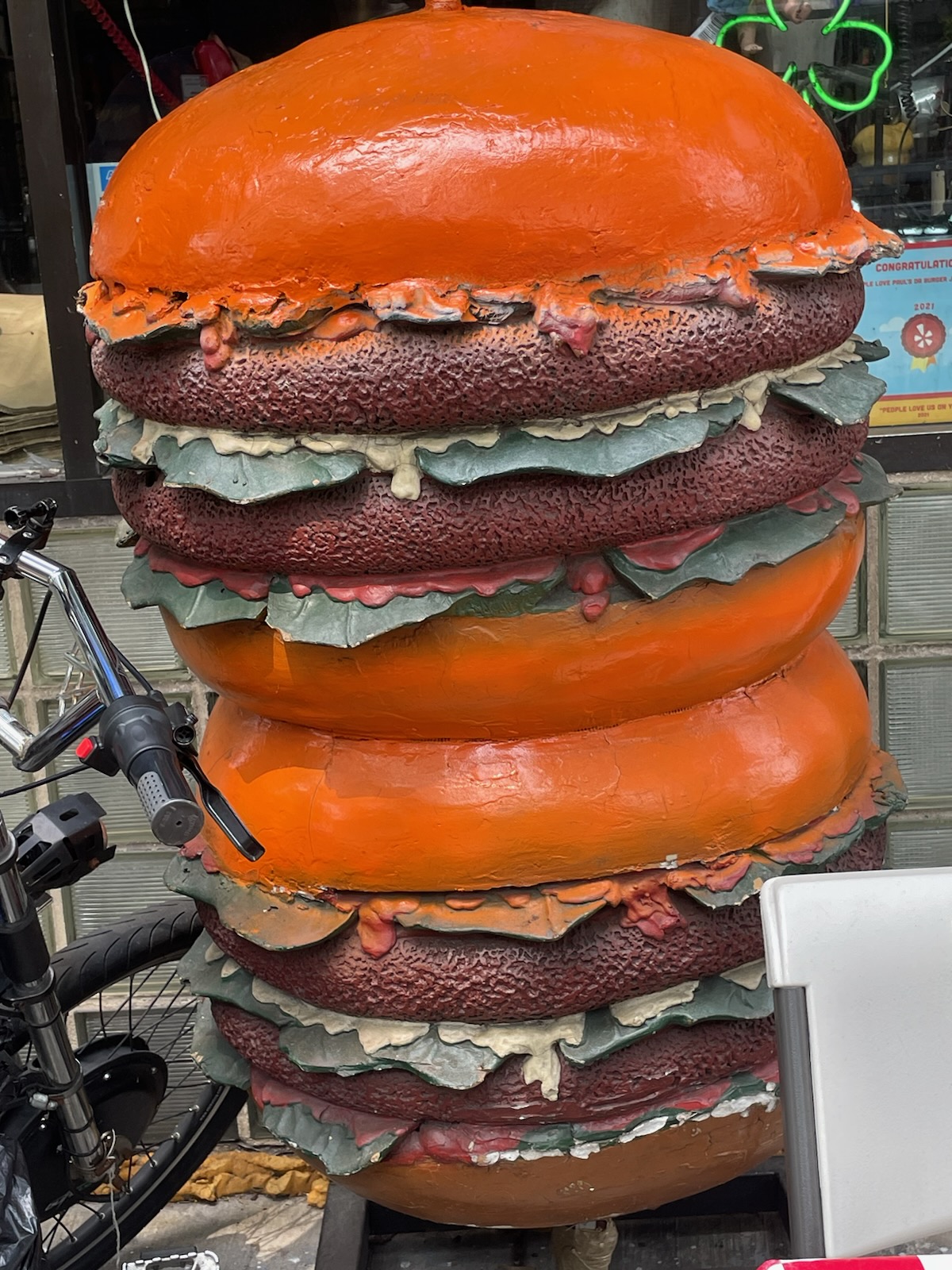
How about a choice hamburger?

There is a new place I’ve been to that specializes in stewed frog and baked cow lung.

Is it just me or is absolutely every surface in the East Village tagged now?

Need wheels? Got ’em.

Some things never seem to change. Need sustenance?

You can still go to B and H Dairy and sit at the counter and delight in cold borscht. No cell phones allowed, however. What a relief.

In this case followed by the best chocolate milkshake I ever have drunk and a conversation with a witty and wise waitress.

Weed is old. New York’s storefronts have been selling the stuff for ages. Now that it’s legal, some of the cooler mom-and-pops are going under.

While others have been elevated to posh pot palaces. To which would you rather bring your business?

The Lower East Side still has a great bong selection for those who need one.

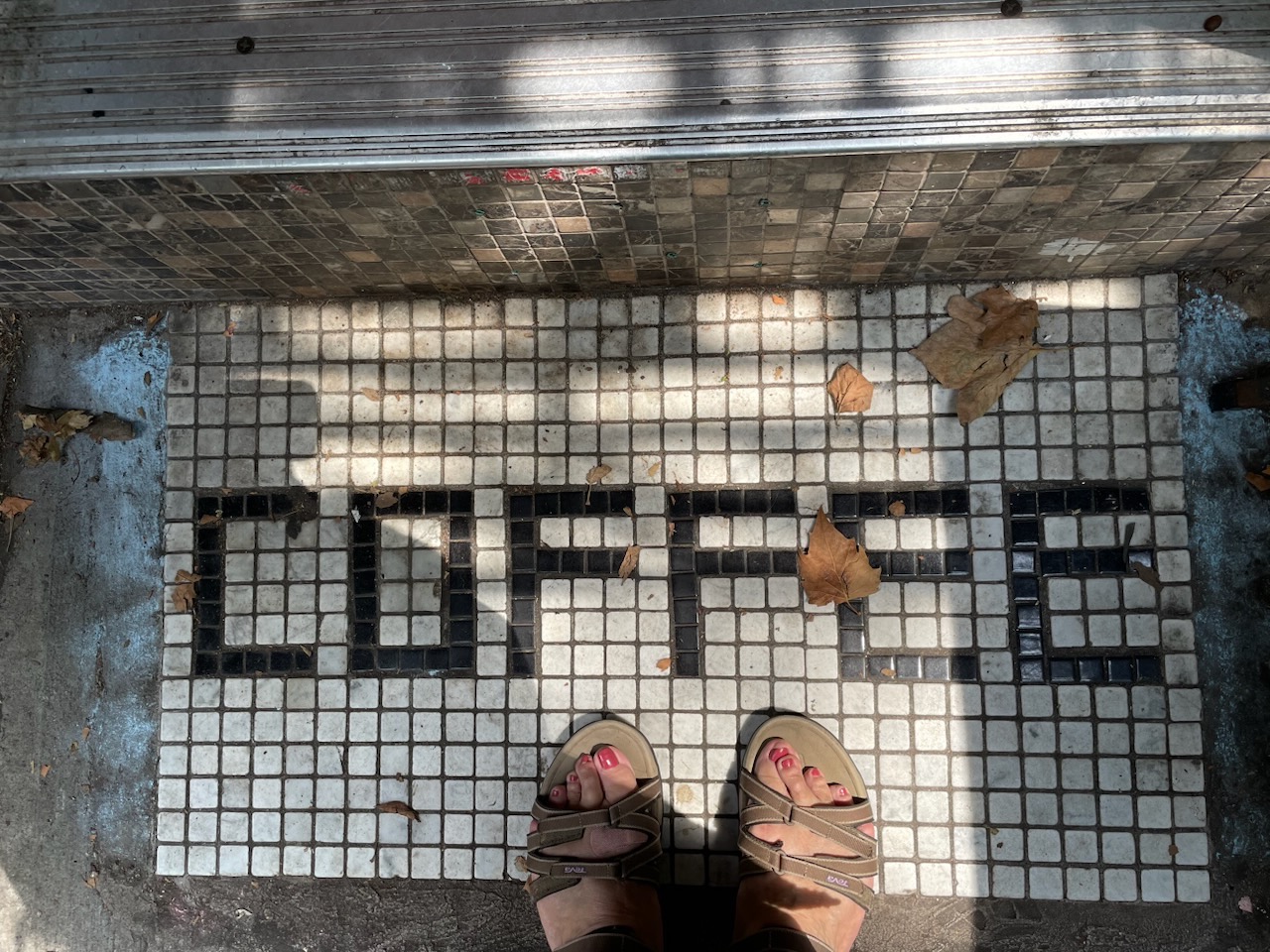
Coffee, coffee, coffee. Please!

After straggling in to an East Village café it seems there is something new to do with iced coffee. Serve it in a bag, as they do at 787 Coffee on East 7th near A.

The counter guy Diego seems surprised and bemused that we are surprised and bemused by this technological innovation.

The store opens up its wonders as we began to sweat slightly less.

Again, we are flummoxed with the heat. But it seems the store is owned by a branding genius.

Good place if you’d like an orgasm ball cap.

Or to sip your java on a swing in front of the plate glass. If you are a creative, that is.

I might be one. Not sure. Too hot to decide. We thumb through the owner’s book of aphorisms and while later they will seem a bit corny, at the time they are brilliant.

Wit and wisdom.

Reassurance.

Even the bathroom elevates the mood.

Since when did NYC get so nice? Actually it’s always been nice. In its own crochety way. We New Yorkers know that.

Diego comes over with welcome H2O.

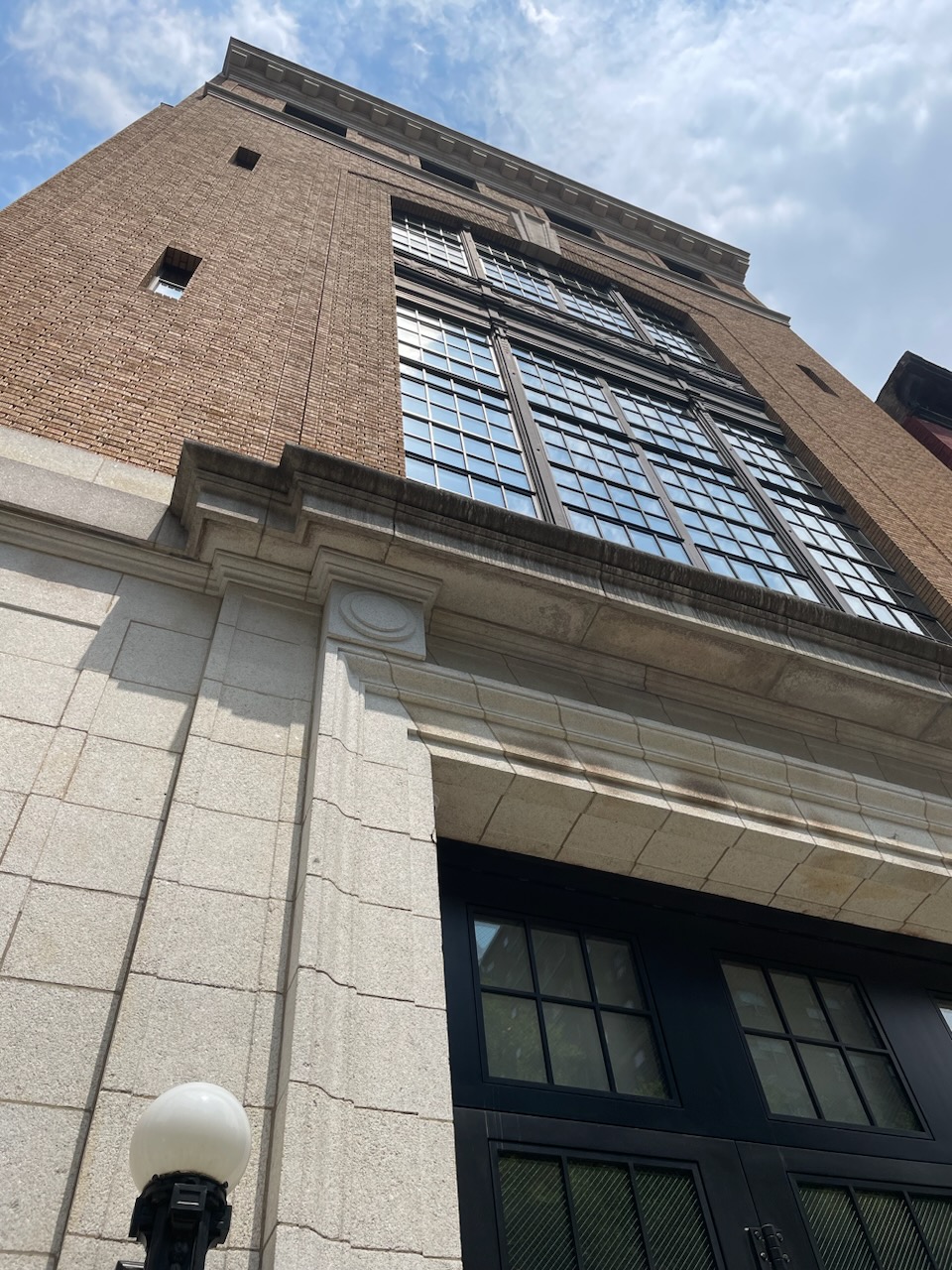
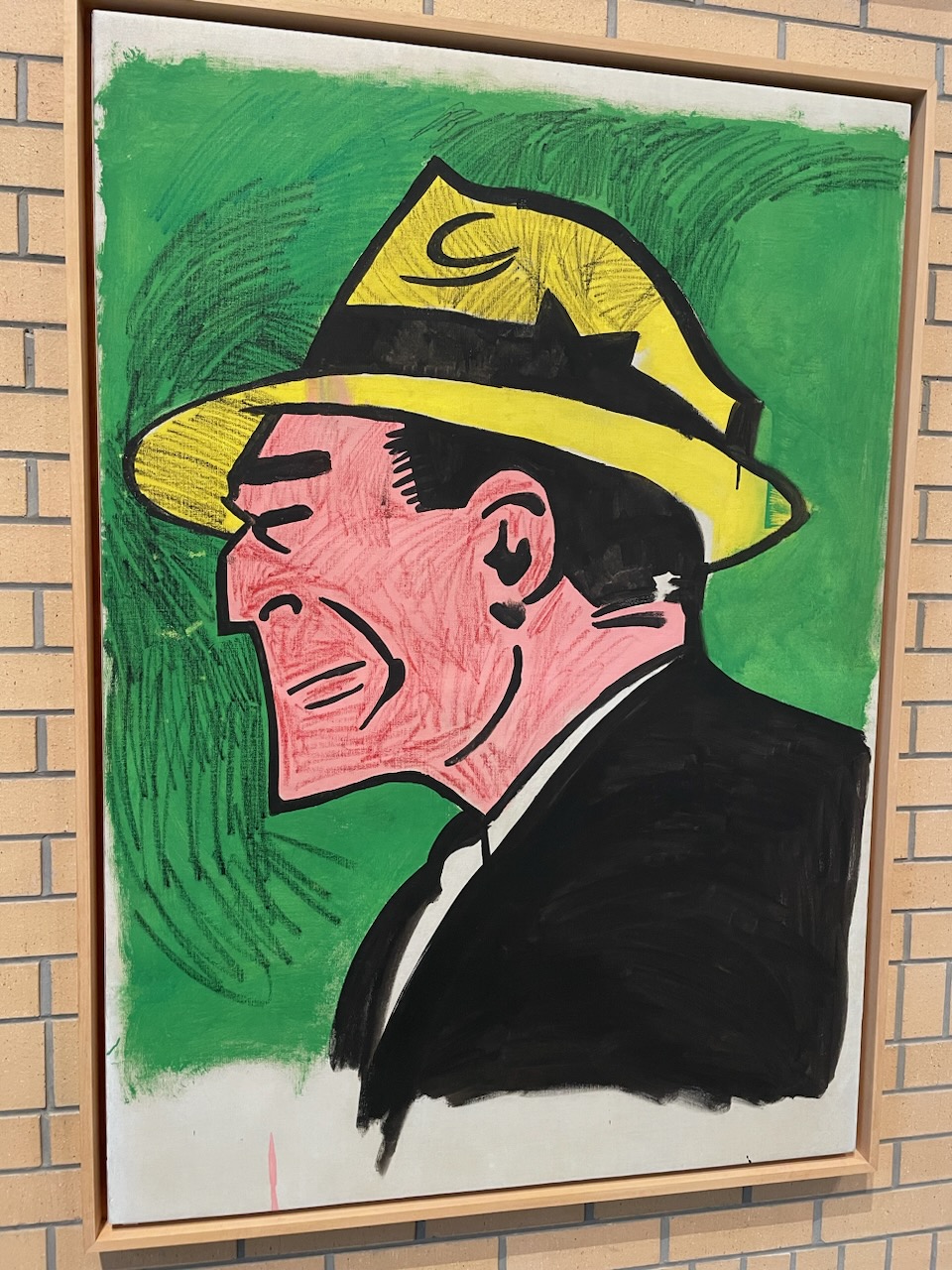
Andy Warhol is both old and new at Brant Museum on 7th Street, housed in a vintage Con Edison substation.

Warhol’s work ever fresh.

Yes. I’m with you, perspicacious Andy.

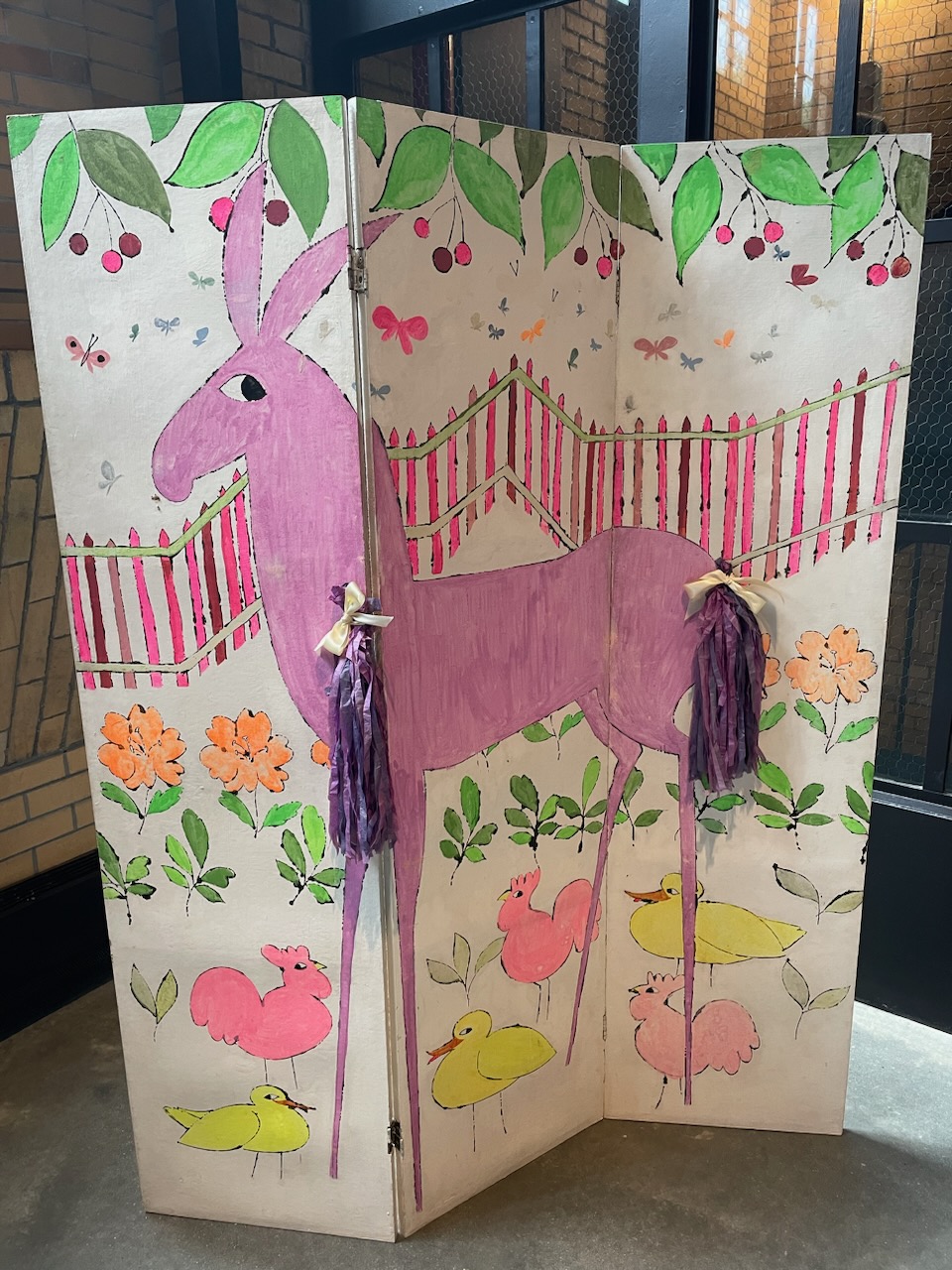
Who knew that as a young artist he produced a pin the tail on the donkey set up?

I think he’d like the fact that his self portrait graces a 65-dollar tote bag in the gift shop..

Jeff Koons wannabe balloon piggy banks are not produced by Jeff Koons, the salesperson corrects me rather haughtily, but by an independent manufacturer. Yes, visitors do have questions. Okay Miss Lonely but you’re gonna have to get used to it, as Dylan wrote in his most famous song, you know the one.

Still, you can get yourself a Keith Haring votive for those special moments. I hope it’s scented.

Meet up with my friend Nora, herself an artist.

She’s in the middle of finishing a drawing to hang in a show inspired by New York’s venerable community gardens.

The subway hosts some lovely youngsters with their lovely comfort pooch.

And a lovely poem.

We take the train north to home along the Hudson through sheets of cooling rain.

Already nostalgic for the cafe earlier.

One thing’s for sure, New York will always be there for you.

And me. Hot. And cool.

Leave a comment

Filed under Jean Zimmerman

Sunken Meadow holds secrets within its secrets.

I visited the State Park on my way to a tree conference on Long Island because it was nearby and the name compelled me.

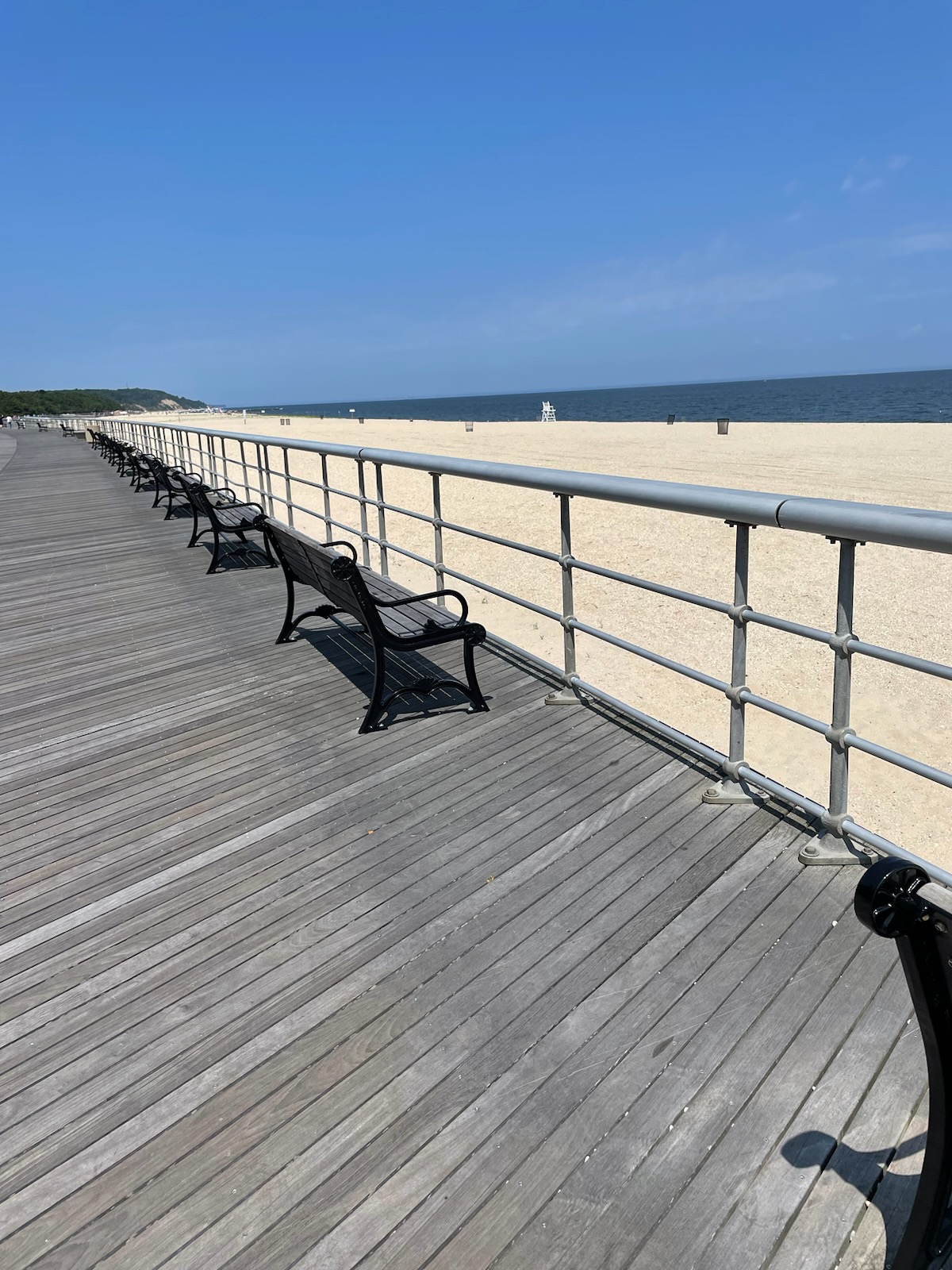
It was a weekday, and so quiet, unlike Jones Beach where I ordinarily go to swim. Sunken Meadow is also a park set on a beach, but not the Atlantic, the Sound. To me, a secret I’ve never come to before. I paced along the boardwalk.

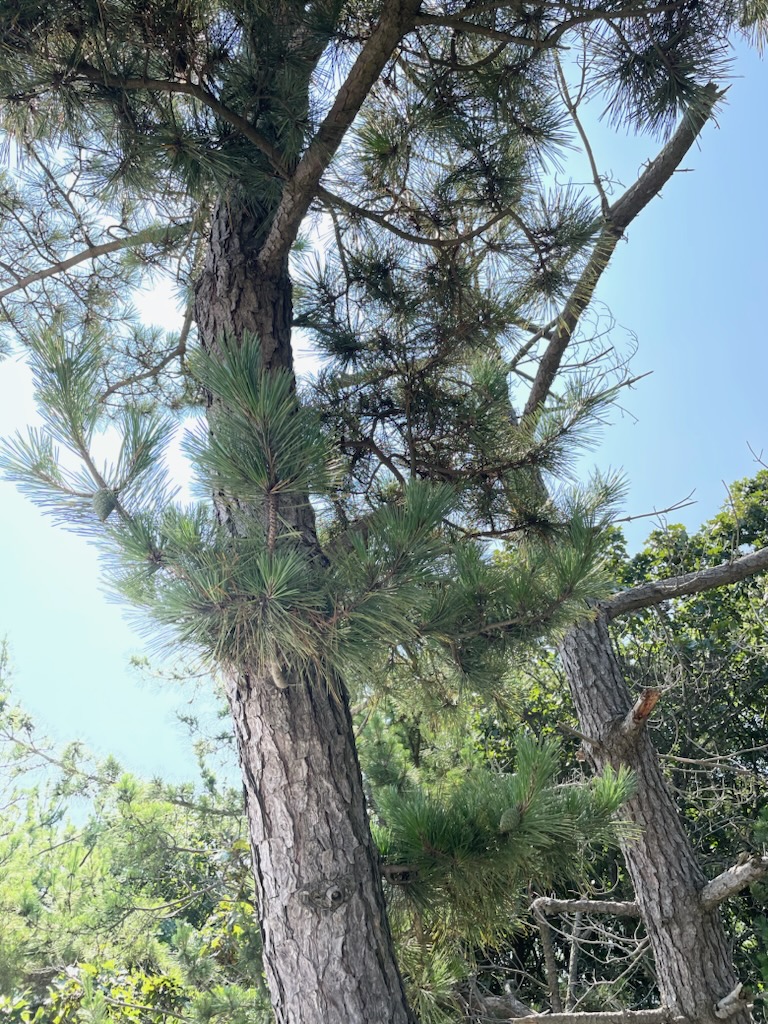
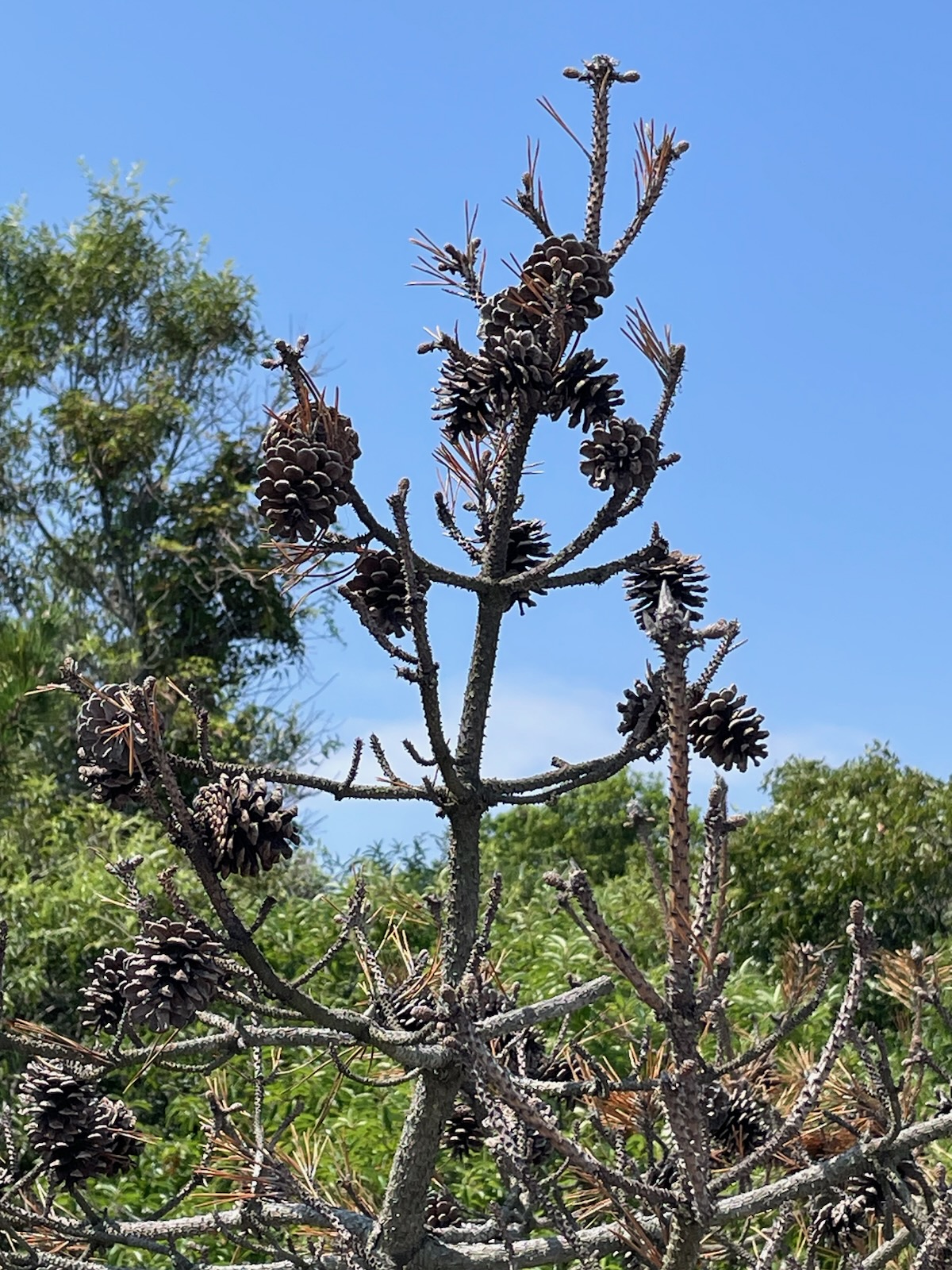
Quiet. Empty aside from a few strollers engaged in low, private conversations, murmuring about things that matter. A beach-y forest bordered the boardwalk. I passed plenty of black pine.

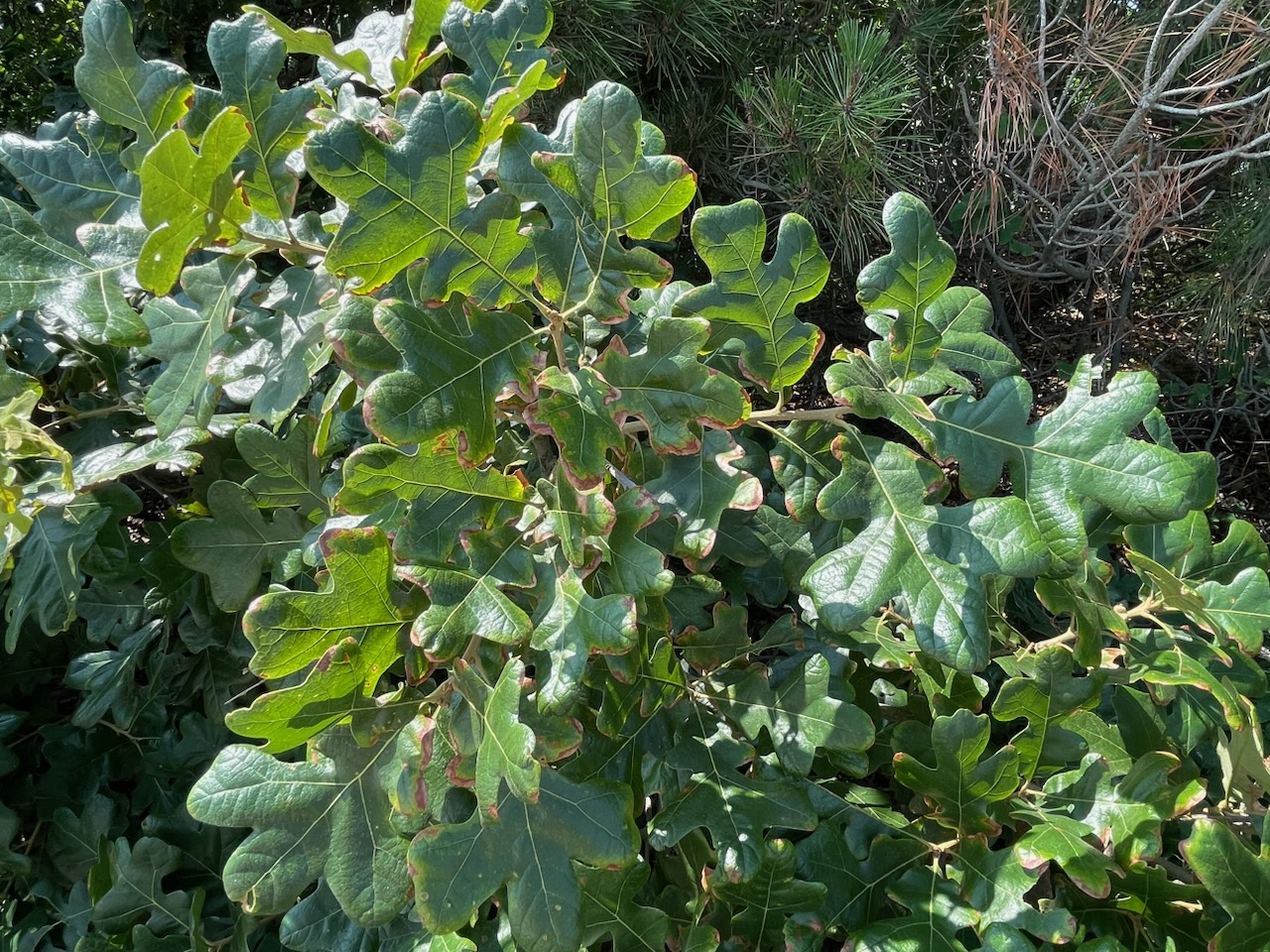
Reached out and grazed the rough post oak leaves with my fingertips.

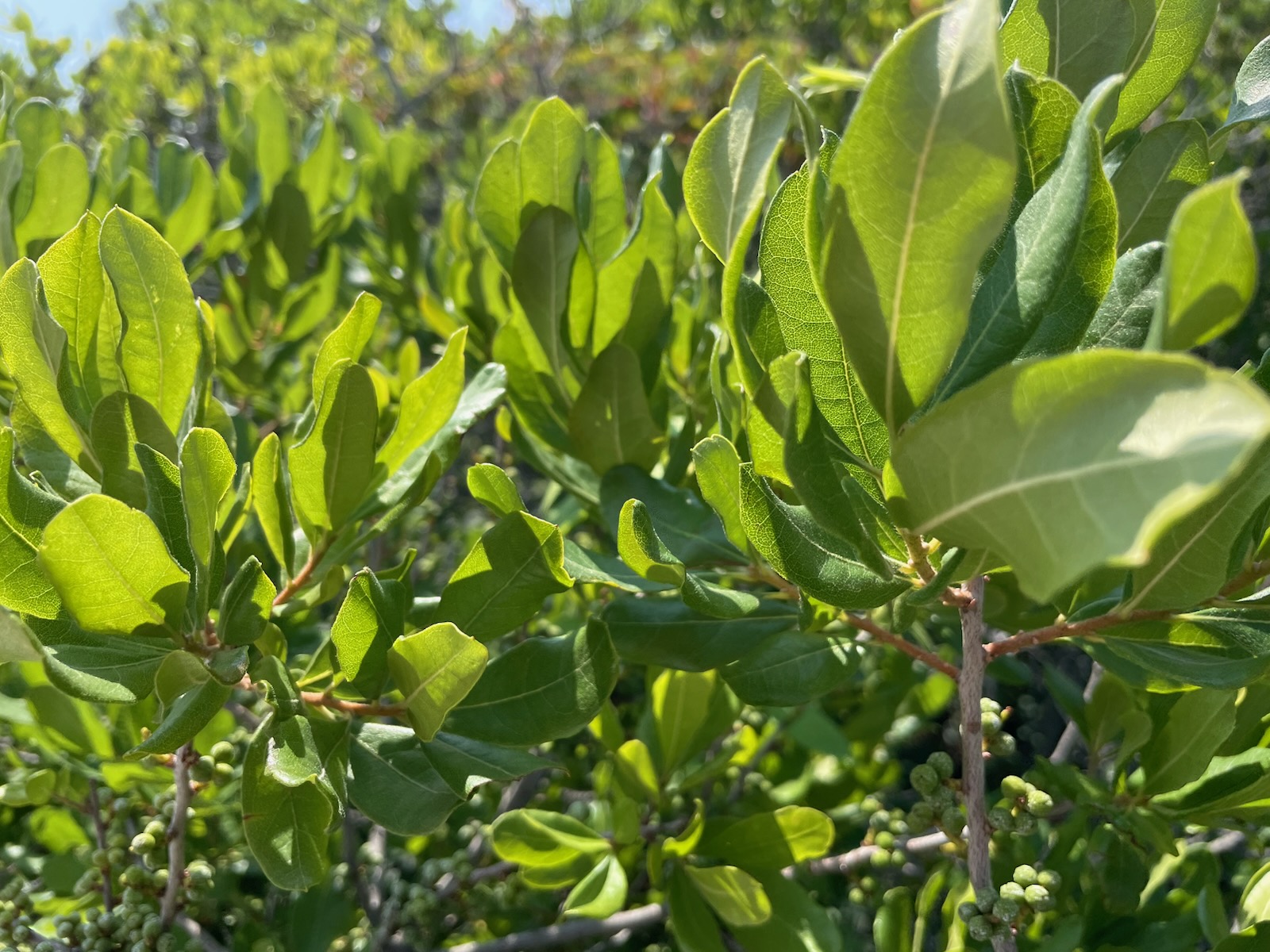
Groves of waxen bayberry.

Even the dead trees (especially the dead trees?) had character.

I spoke with a park ranger, asked him where were the wilder areas to go look at. He said if I took a trail off of the boardwalk farther down the strand I could wander in the salt marshes. But it was getting late for me to attend my conference.

I could see from the trailhead that it was beautiful, so I resolved to come back some time in the future, perhaps later in the summer.

The tree conference I came for, the New York State ReLeaf meeting at Hofstra University, was really great. But I couldn’t stop thinking about Sunken Meadow. I wanted to return to discover the secrets I hadn’t seen earlier. So I came back. 

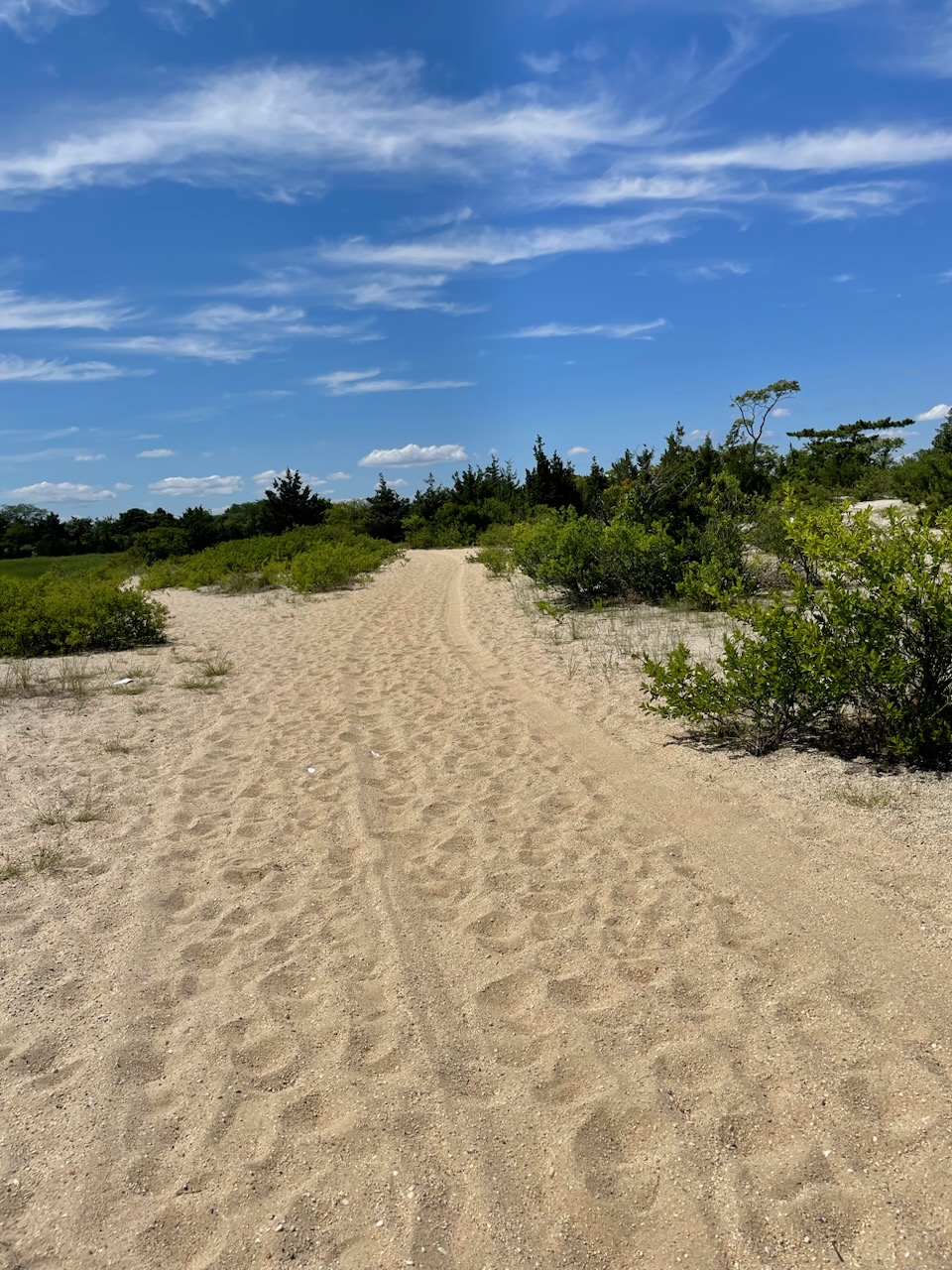
I remember that the ranger had asked, Do you mind going barefoot? Me? There’s nothing I’d rather do. So I take off my shoes and start off down the path toward the marsh. And the sand turns out to be a million degrees, scorching the bottoms of my feet. I scurry back to my car and put on my clogs and start out again.

Have you ever been someplace and looked around and thought, this is just what I wanted? This is just what I wanted to do today? Well, going to Sunken Meadow is just what I want to do today.

The ranger had said, You can go and wander among the marshes. He must’ve read my mind. Or my soul. Or something. Anyway, he read me.

First thing I see is some tiny little black fish swarming in a little puddle. Hermit crabs the size of a finger tip scuttle underneath the surface of the water.

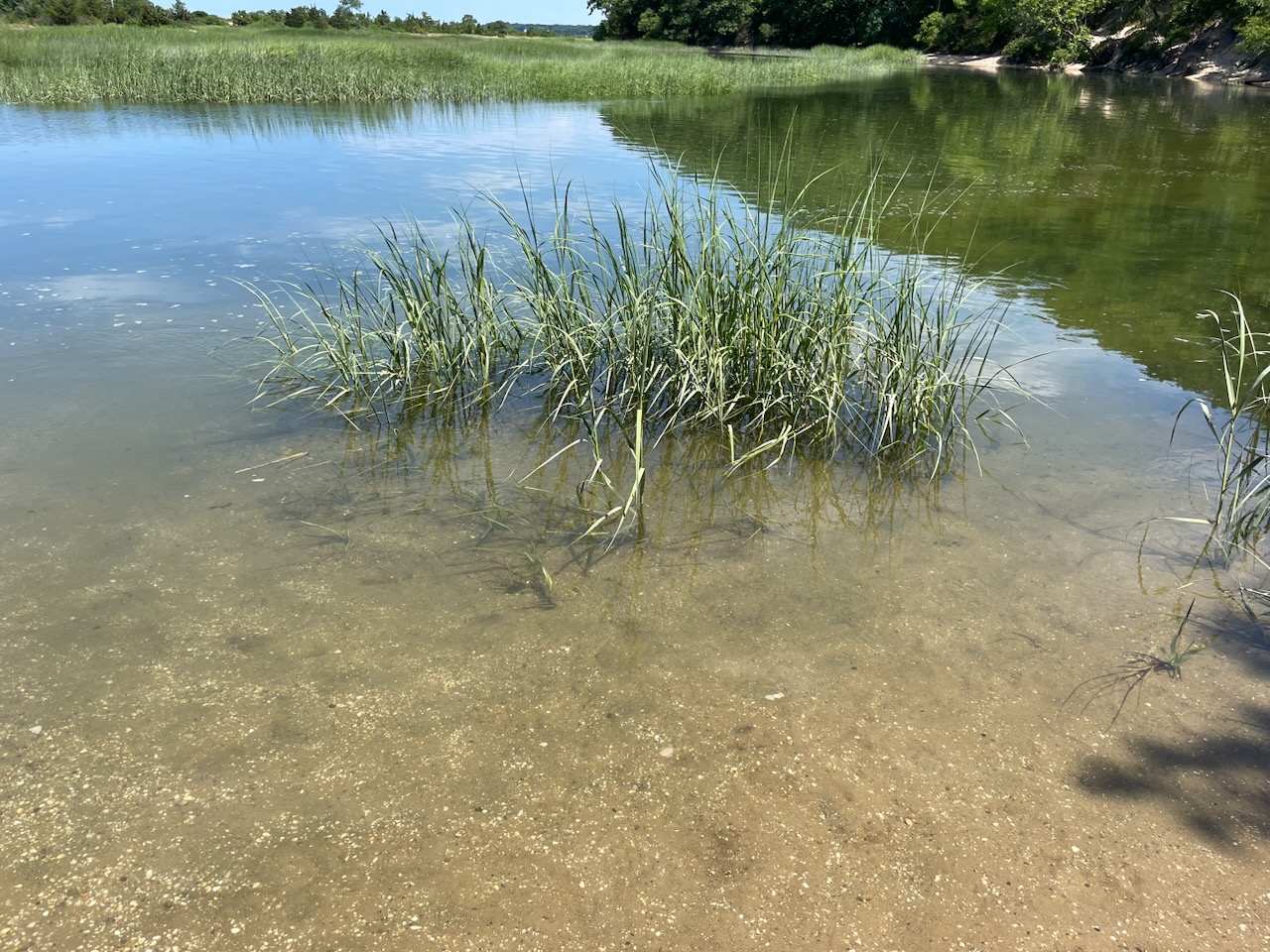
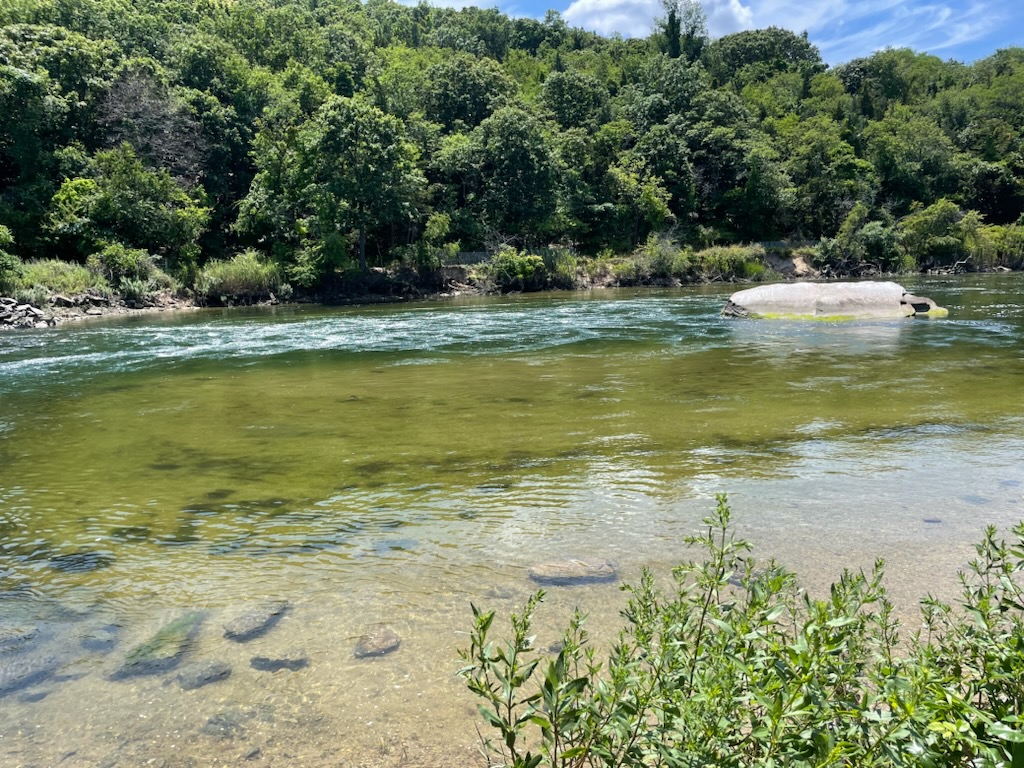
I look up and see the marsh spread out before me.

I come upon an educational placard and learn about the place. Sixty years ago a culvert was put in that impeded the flow between salt and alkaline water in this estuary, resulting in kill off of native plants, which were replaced with the weed reeds phragmites, and reducing the fauna – the alewives and eels that were native here.

Then came Hurricane Sandy. Sandy was horrible every place but here, where the storm washed out the bridge and the culverts so that the place could be restored to its former glory.

A monarch flits by. I see a few other wanderers. Kids shrieking. Picking up crabs. That’s the biggest one I ever seen! I hear. And, Oh, a fish!

Architectural trees.

Black Oak.

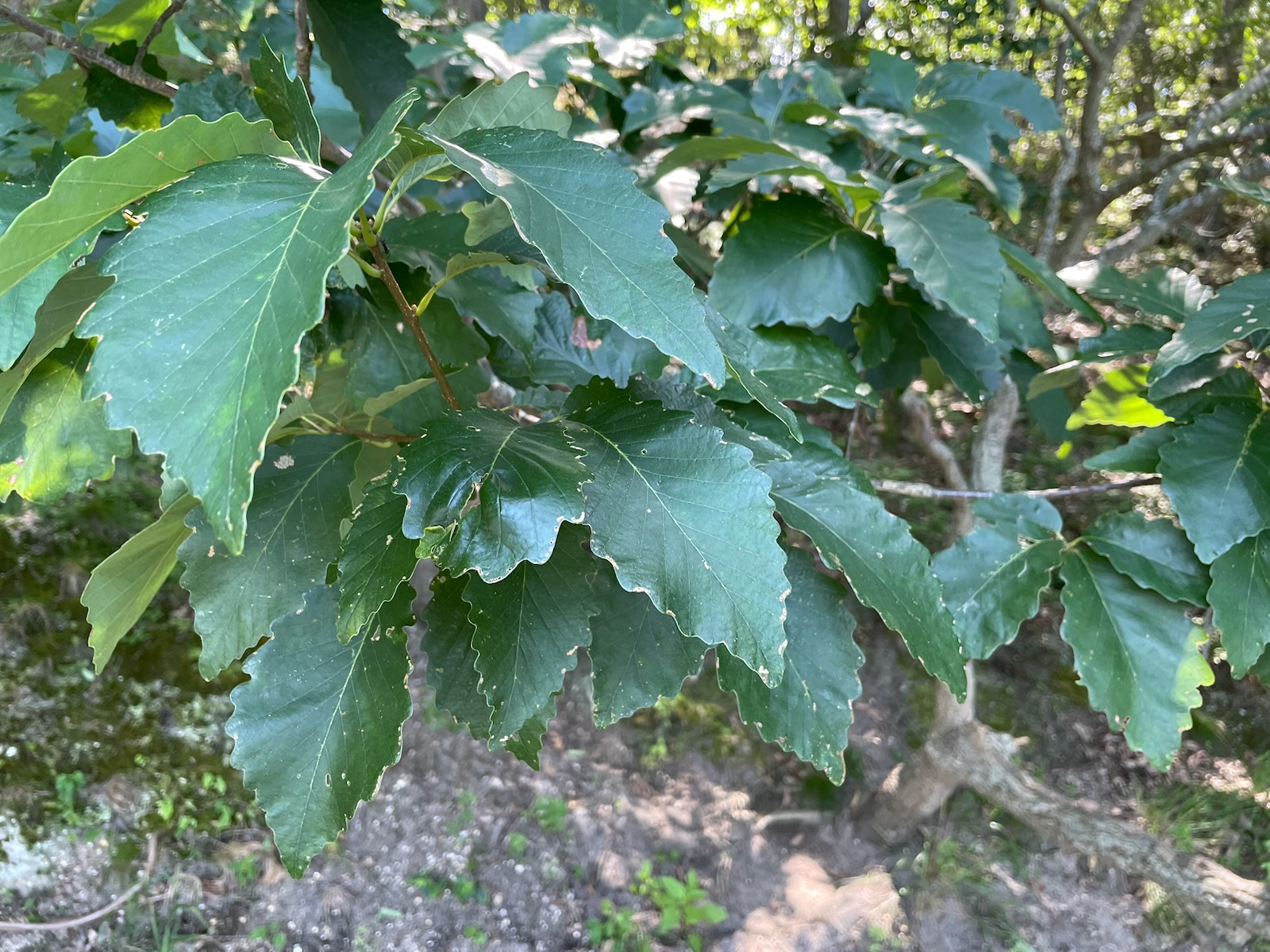
Chestnut oak.

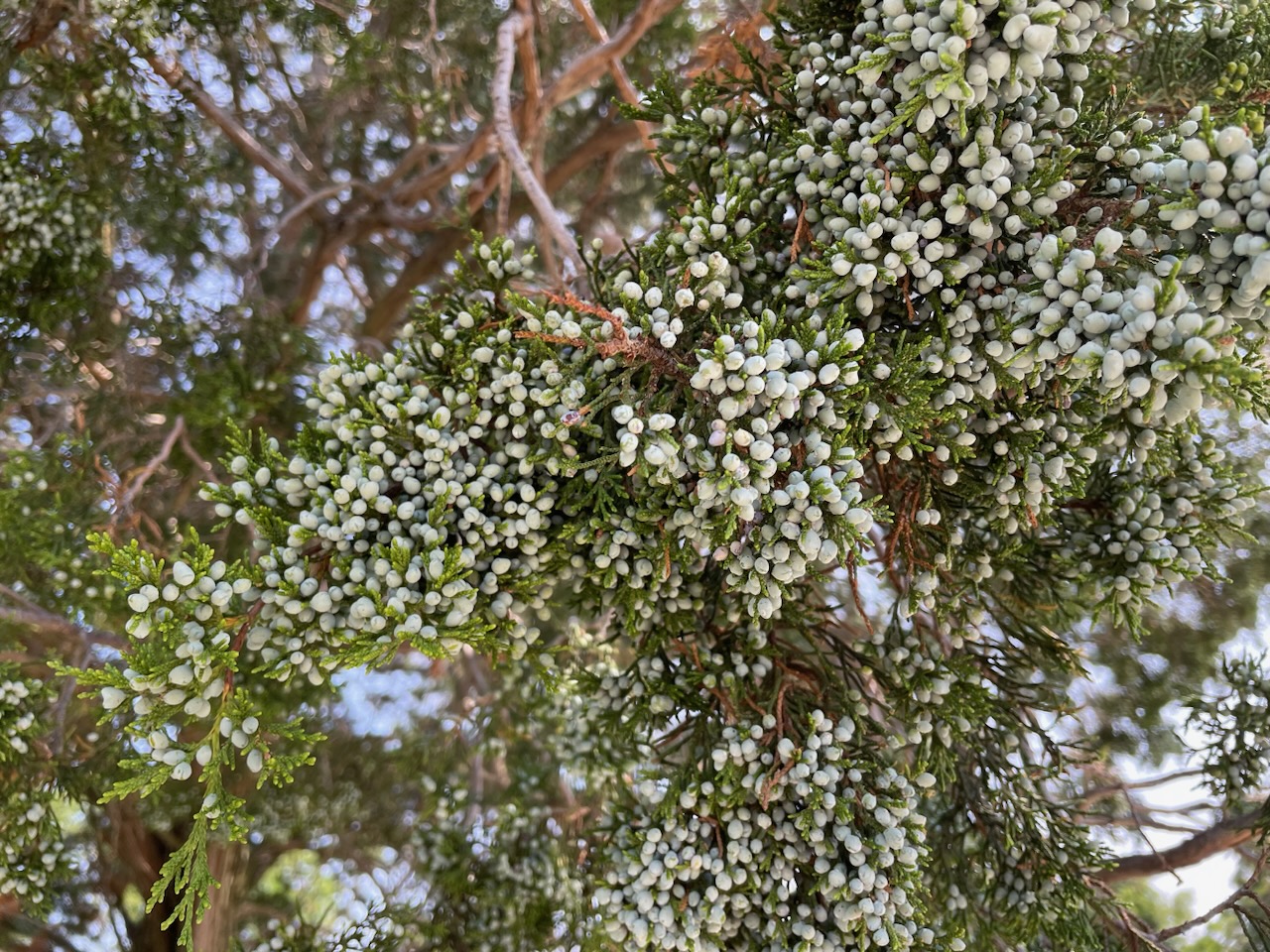
Juniper, perfectly ripe.

Trumpet vine.

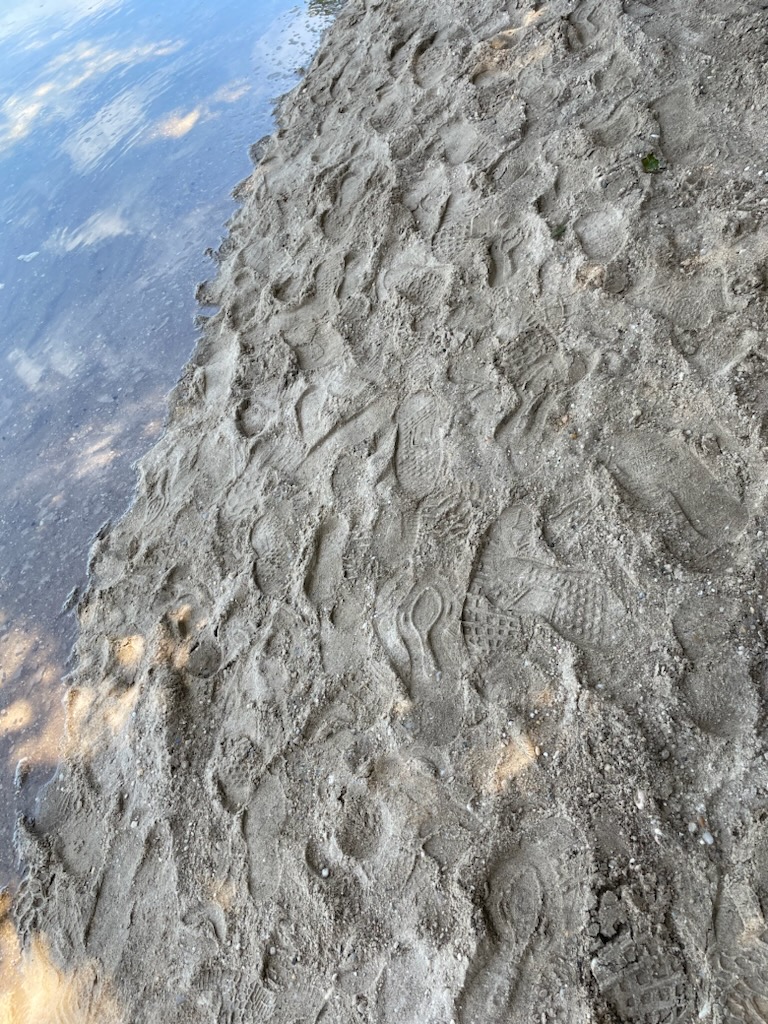
Lots of footprints here, lots of wanderers that came before me.

A sign that tells me people like to harvest shellfish here.

And in fact there are many, many crabs of all sizes. One earnestly hauls something along

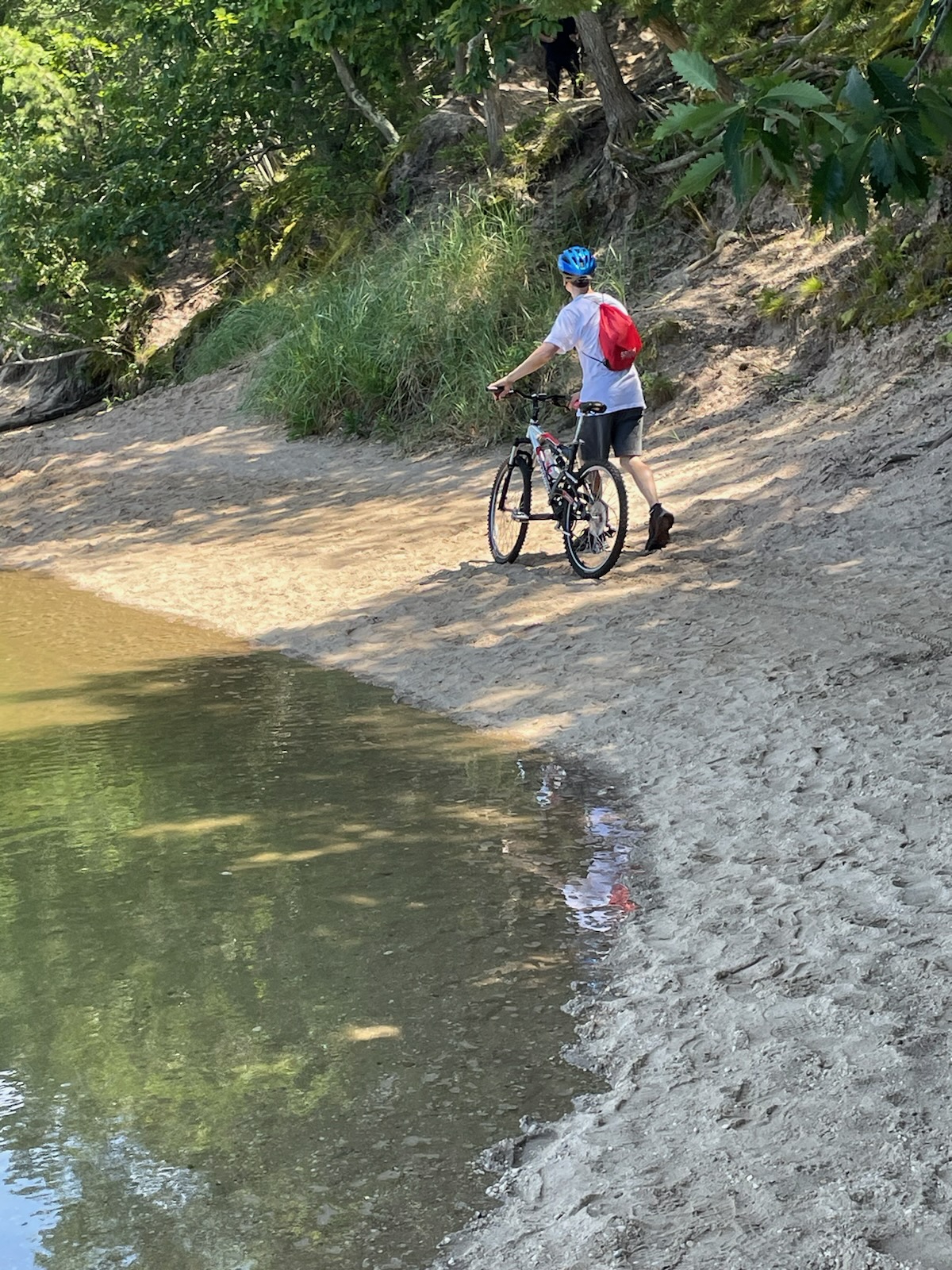
A guy on a bike? Where could he be going? 

I hear a daughter talking  to her father as they come down a steep sandy slope: Careful, Daddy! Heel first! Heel first! Daughters always know best.

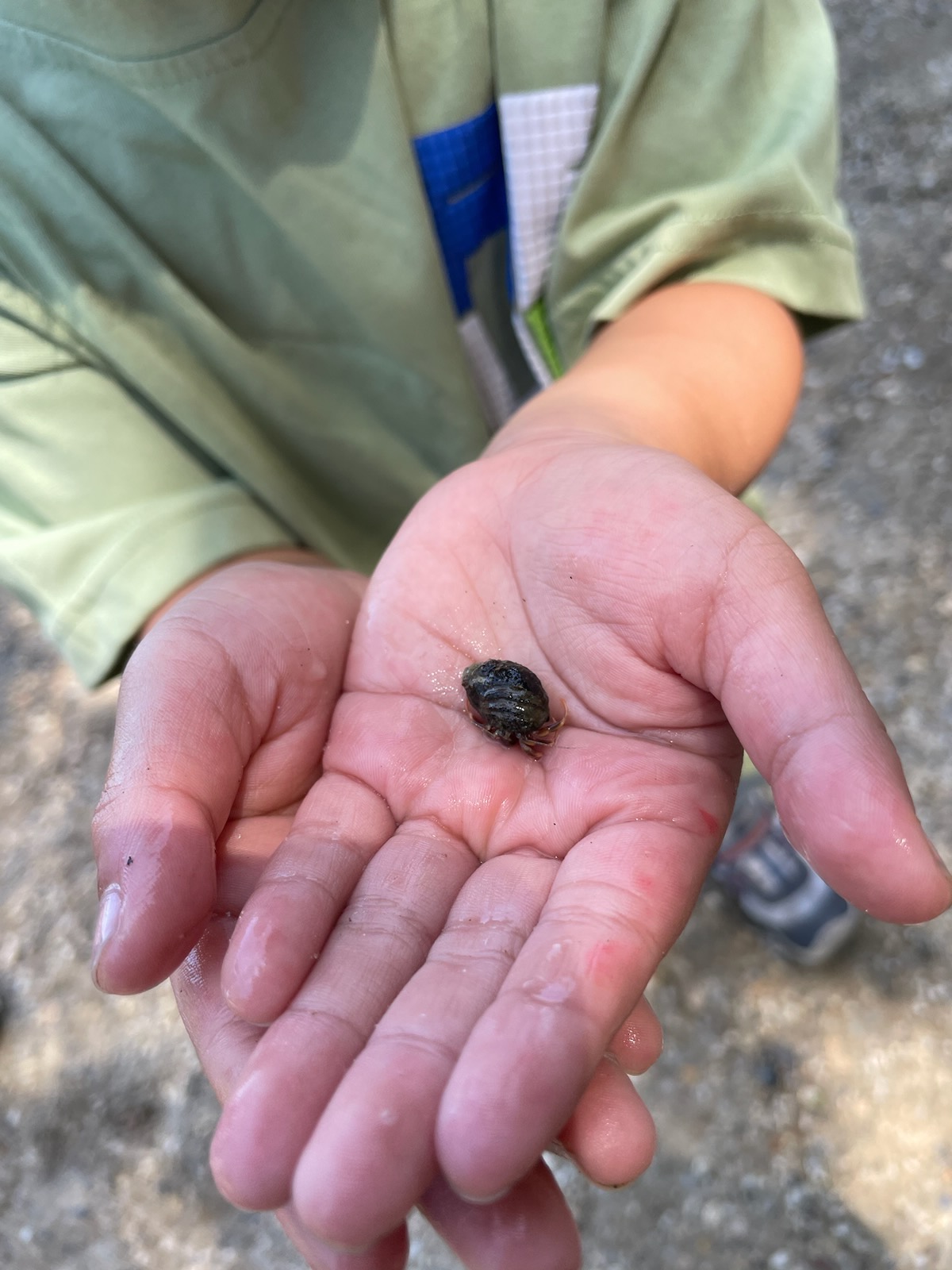
I bump into another family wandering the shore. The little boy shows me the hermit crab he caught.

We wander apart. More scuttling crabs. Is this what I’m here for?

Take a few deep breaths. Take a few more. Look around. Forget about everything. Everything!

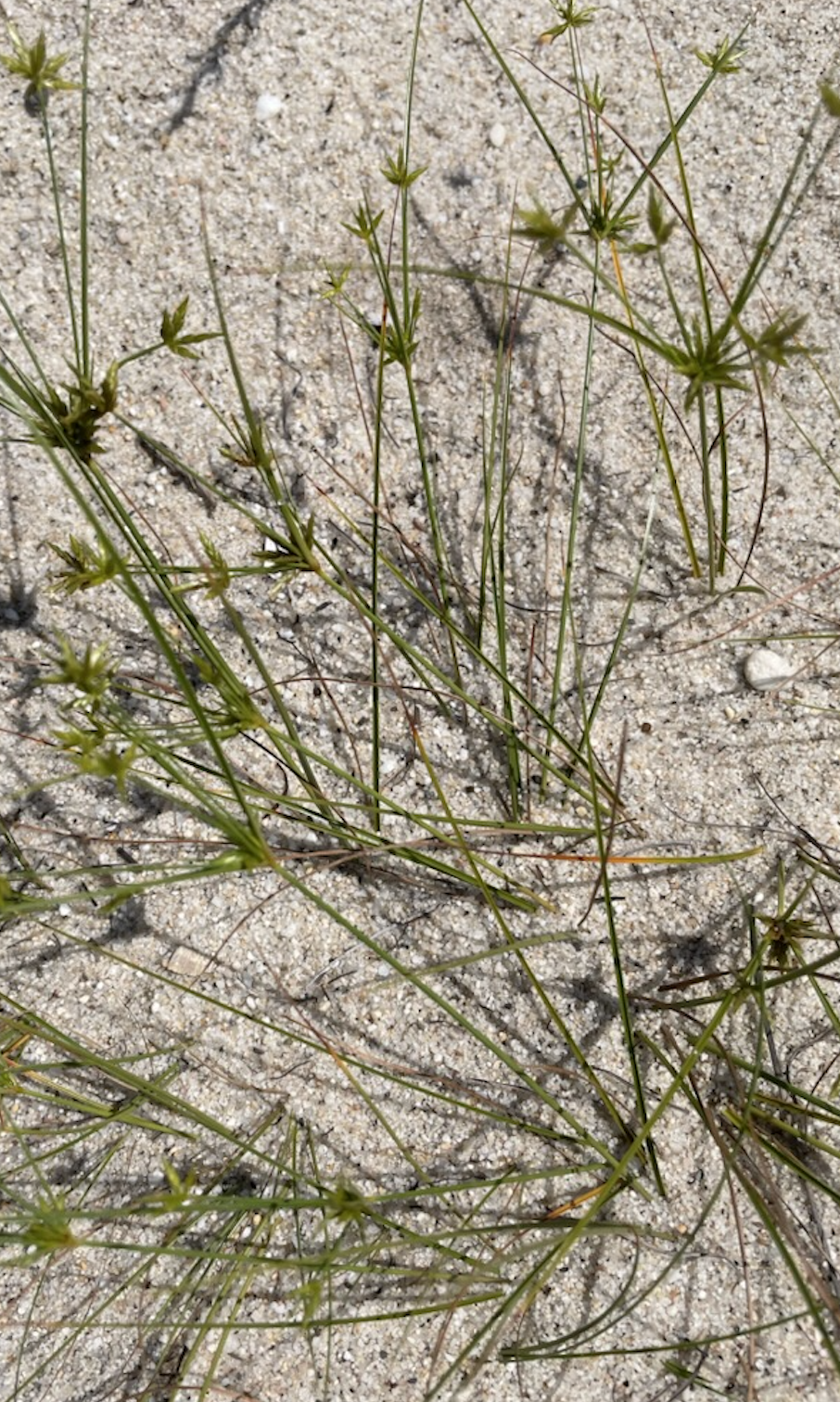
Admire the tiny things. The grasses that have come back after the hurricane.

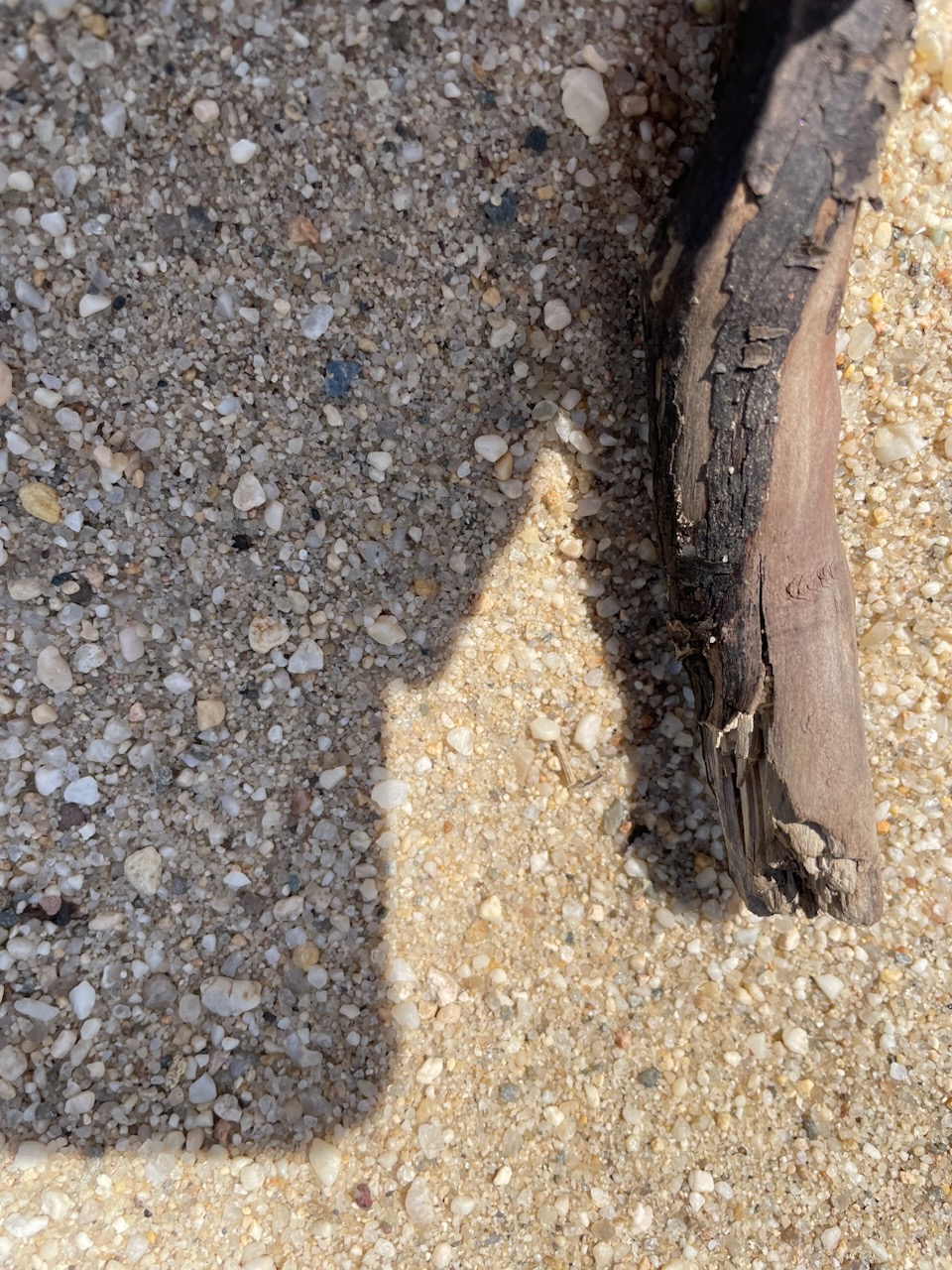
A simple stick or two.

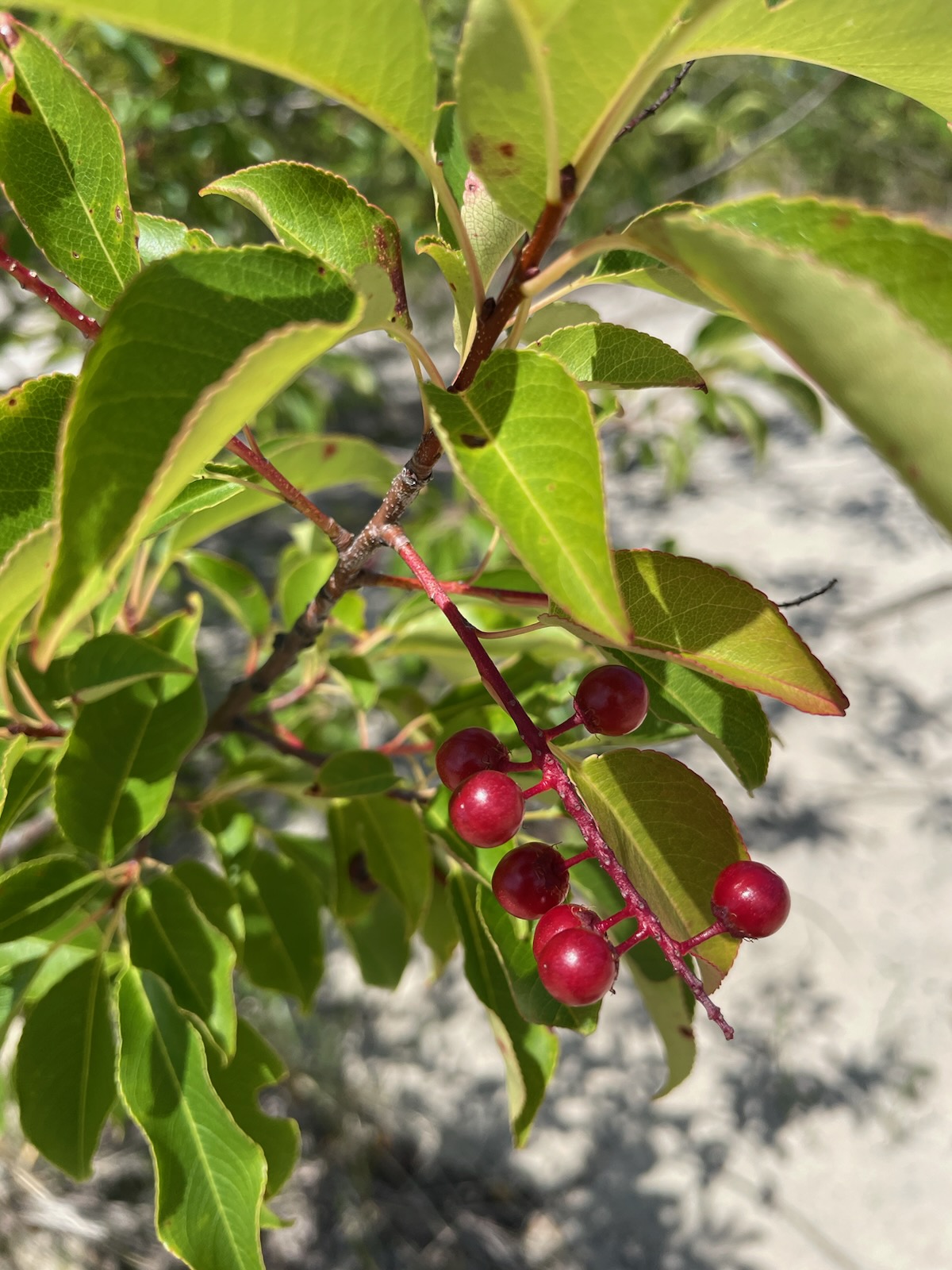
Berries. Black cherry?

Something I’ve always called Queen Anne’s lace. Probably has a fancier horticultural handle if youre in the know.

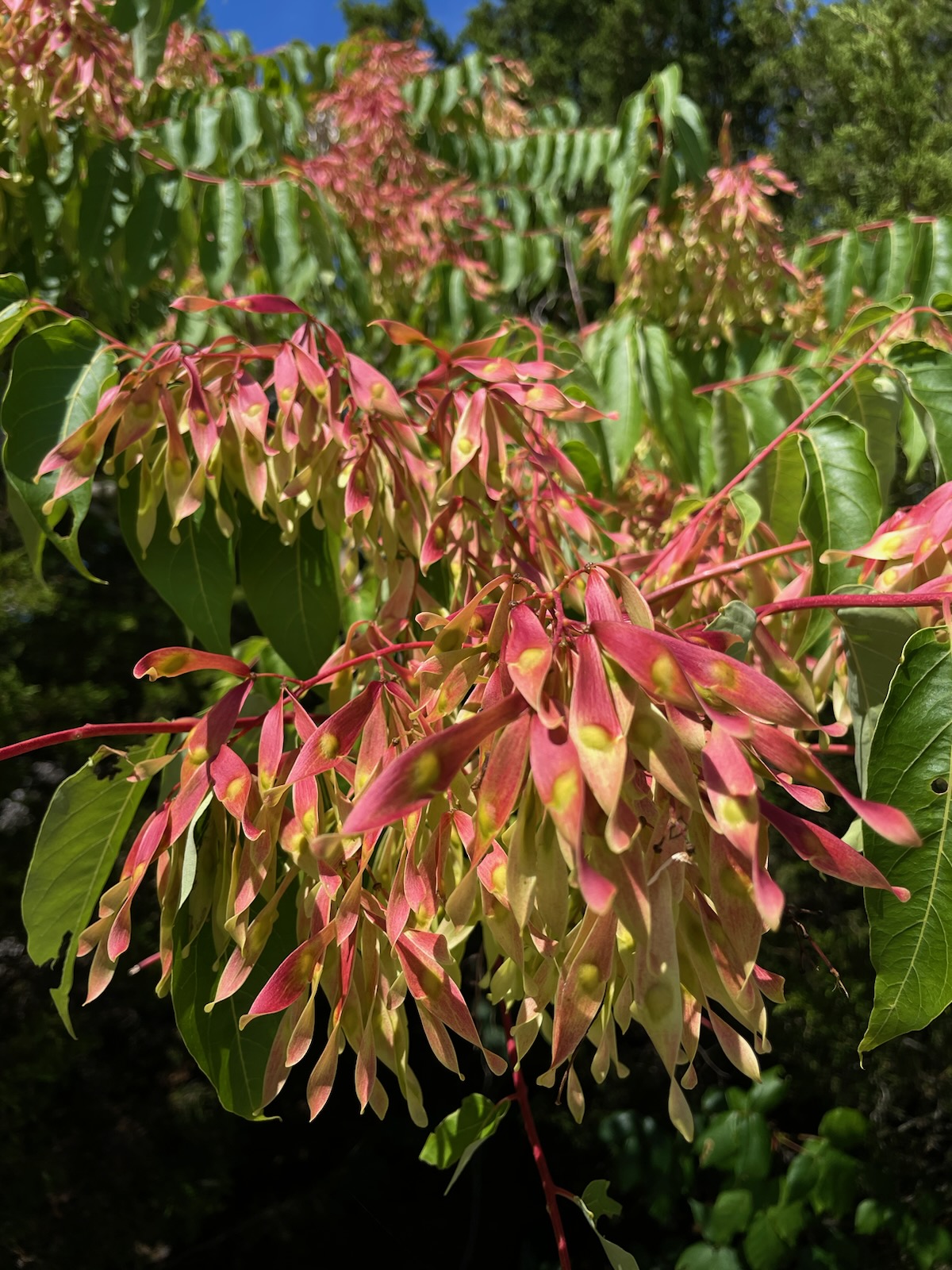
Even the invasive ailanthus, the scourge of tree people, common name Tree of Heaven, is fantastic here. Even heavenly.

Find a destination. How about that enormous bird platform down the way? That looks interesting.

First, I go beyond a juniper to relieve myself. If you ask me, women who refuse to pee outside, en plein air, are really missing something.

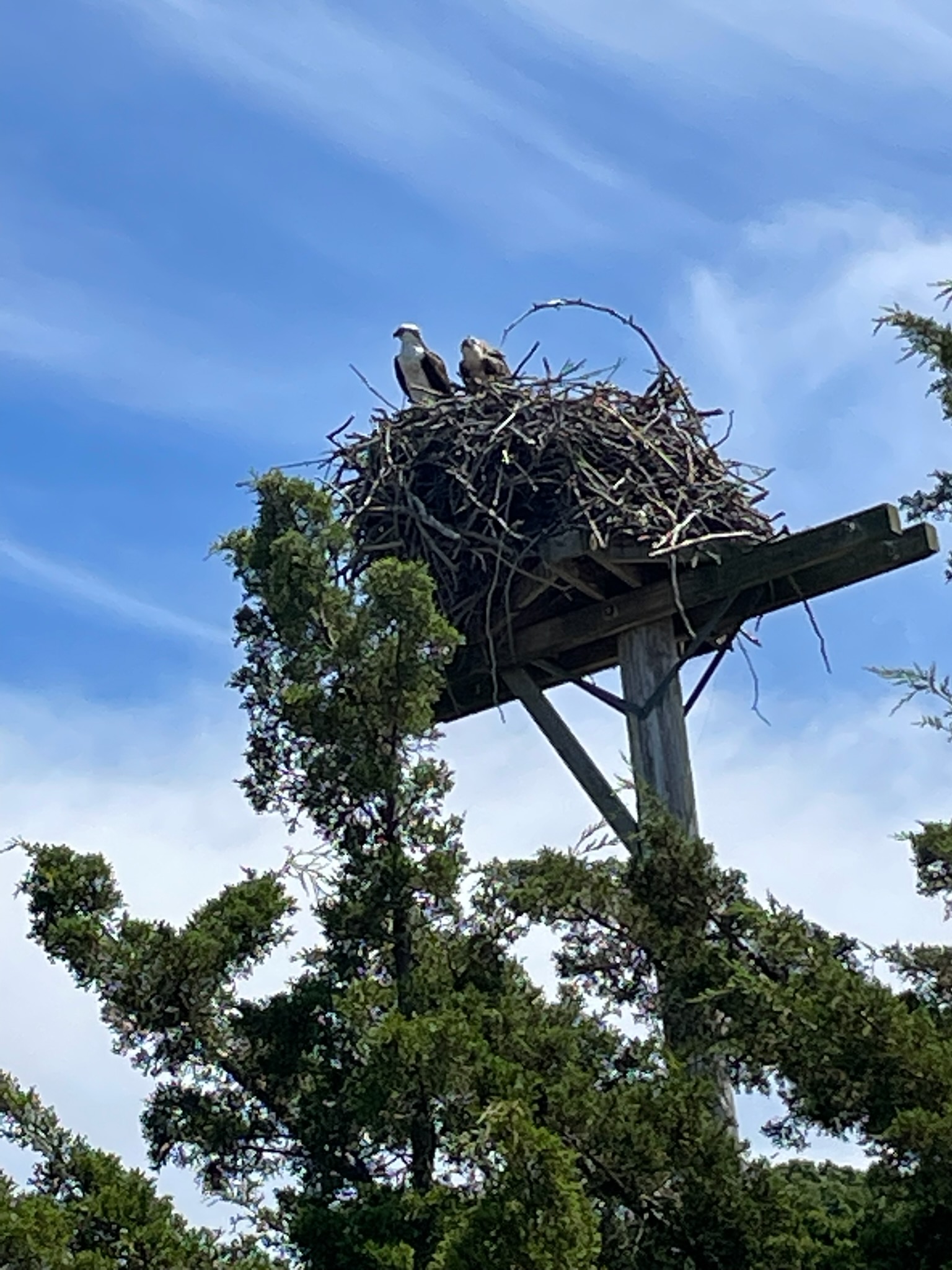
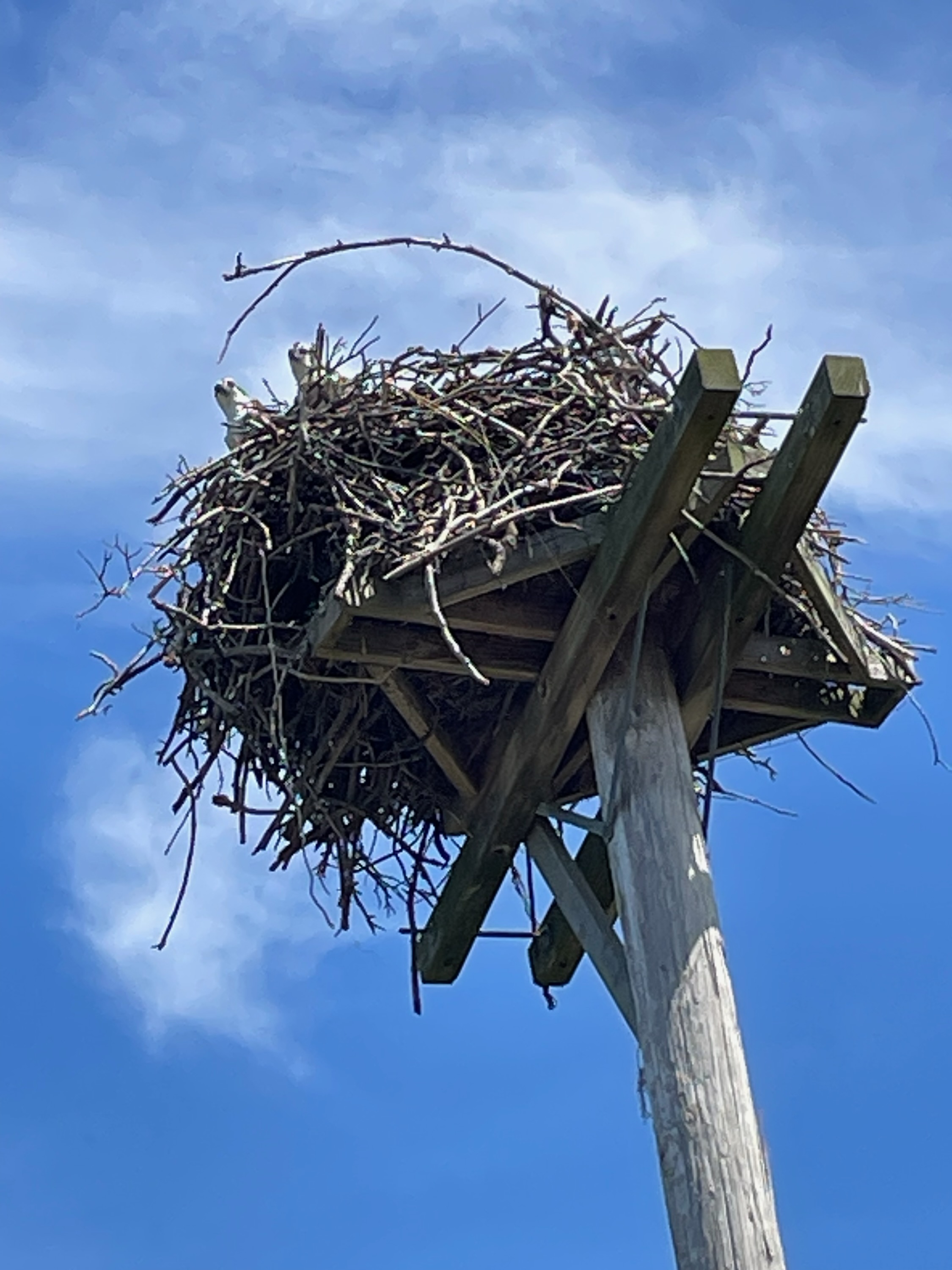
I walk toward the man-made bird perch. The nest’s enormous, at least six feet around, built of sticks.

An osprey nest. A parent and her baby. Perhaps a fledgling. 

I hear the characteristic call of the osprey, a light whistle in short bursts. I respond in kind. They peer over the edge of the nest at me. I wonder, if I could stay here all day and look at them, would they take off, would they do anything different? They’re just perched there, waiting for the precise right time to hunt in the marsh for fish. They consume them live. I sneak a little closer. They peer over at me.

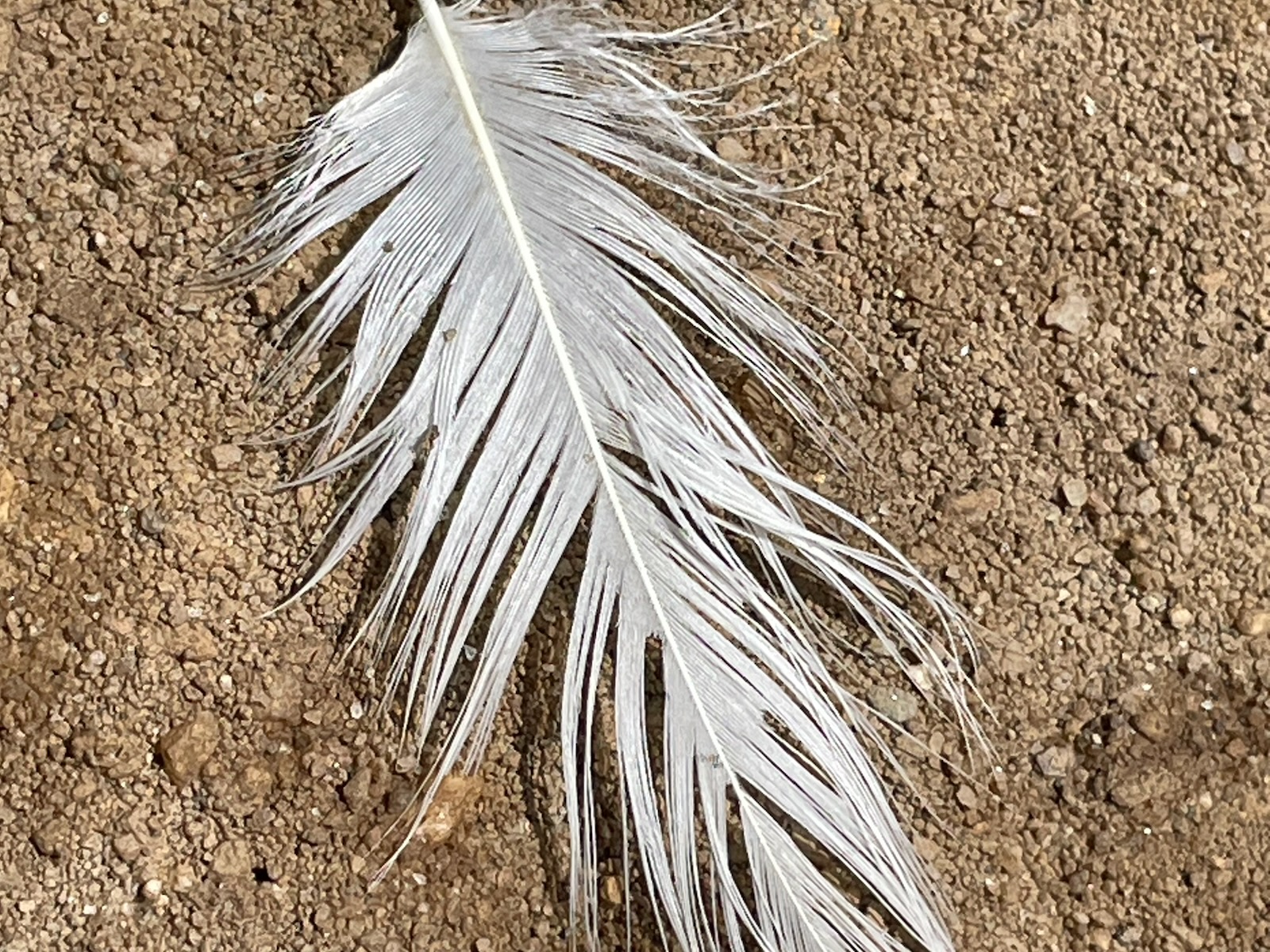
Lurk and putter along the marsh strand, meandering, exploring. No binoculars, no fancy camera, only me and my dinky iPhone. And my imagination. Is this fallen feather part of the osprey chick’s baby plumage?

This place is almost too beautiful.

I look back. I can no longer see the raptors.

Wasn’t I promised an eel? I haven’t seen one yet. 

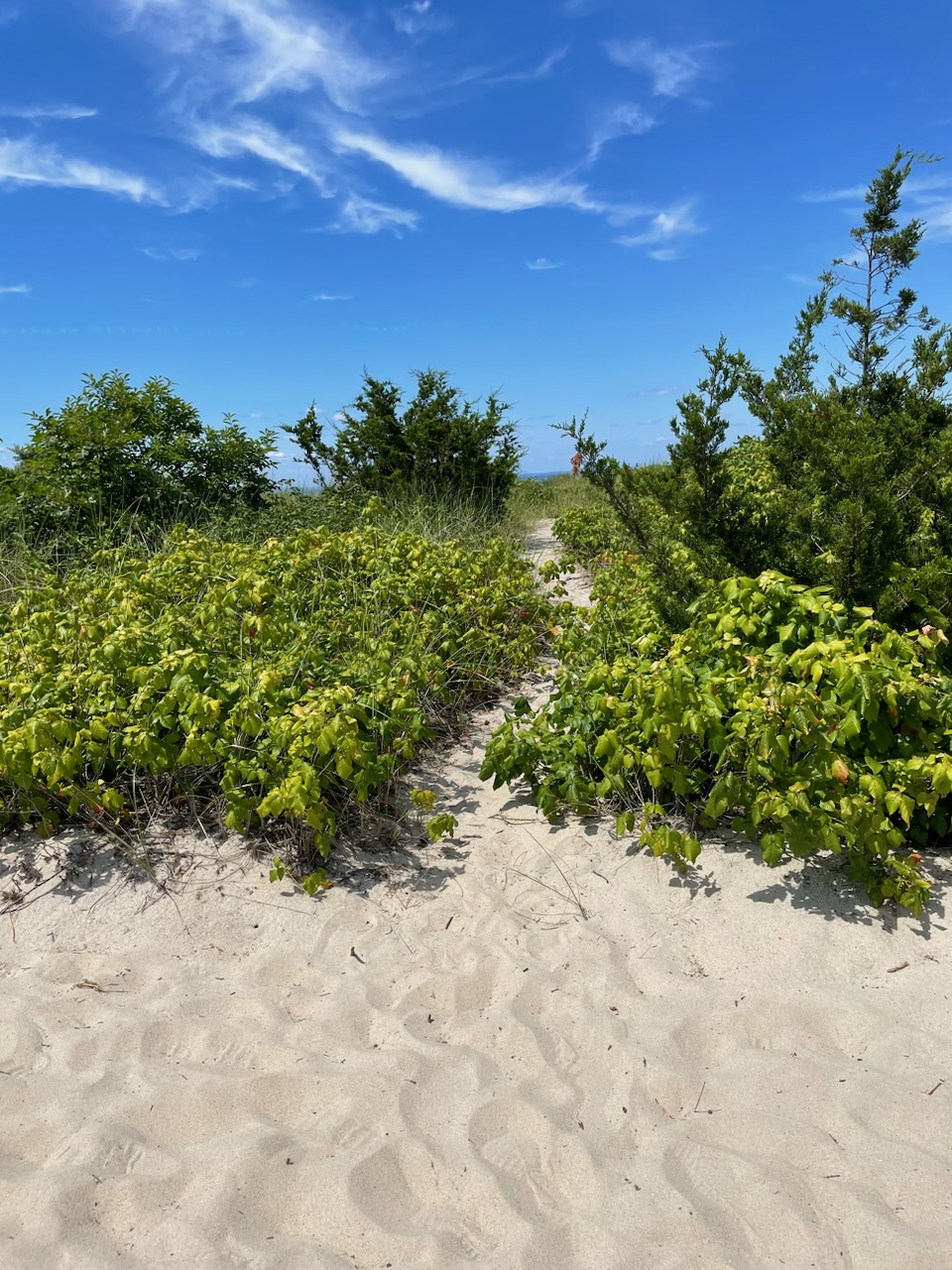
I think you probably have to park yourself here for a good long time to wait for that eel to show up. I trudge up the dunes, a mountain of grit in my shoes.

Quiet. quieter. The sand grows white. Powdery.

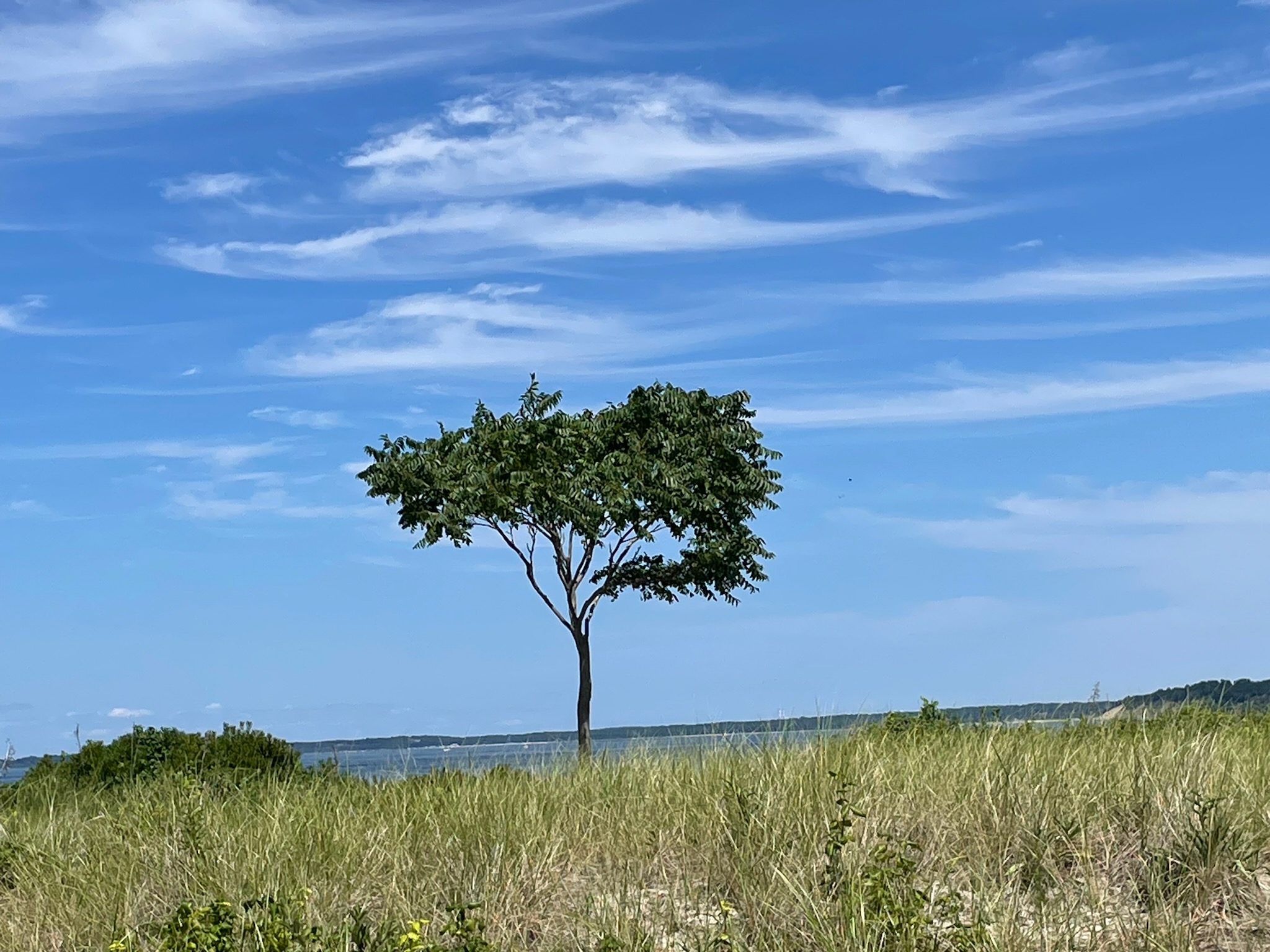
Solitary tree. Are you posing for me too?

Beach plum blossoms.

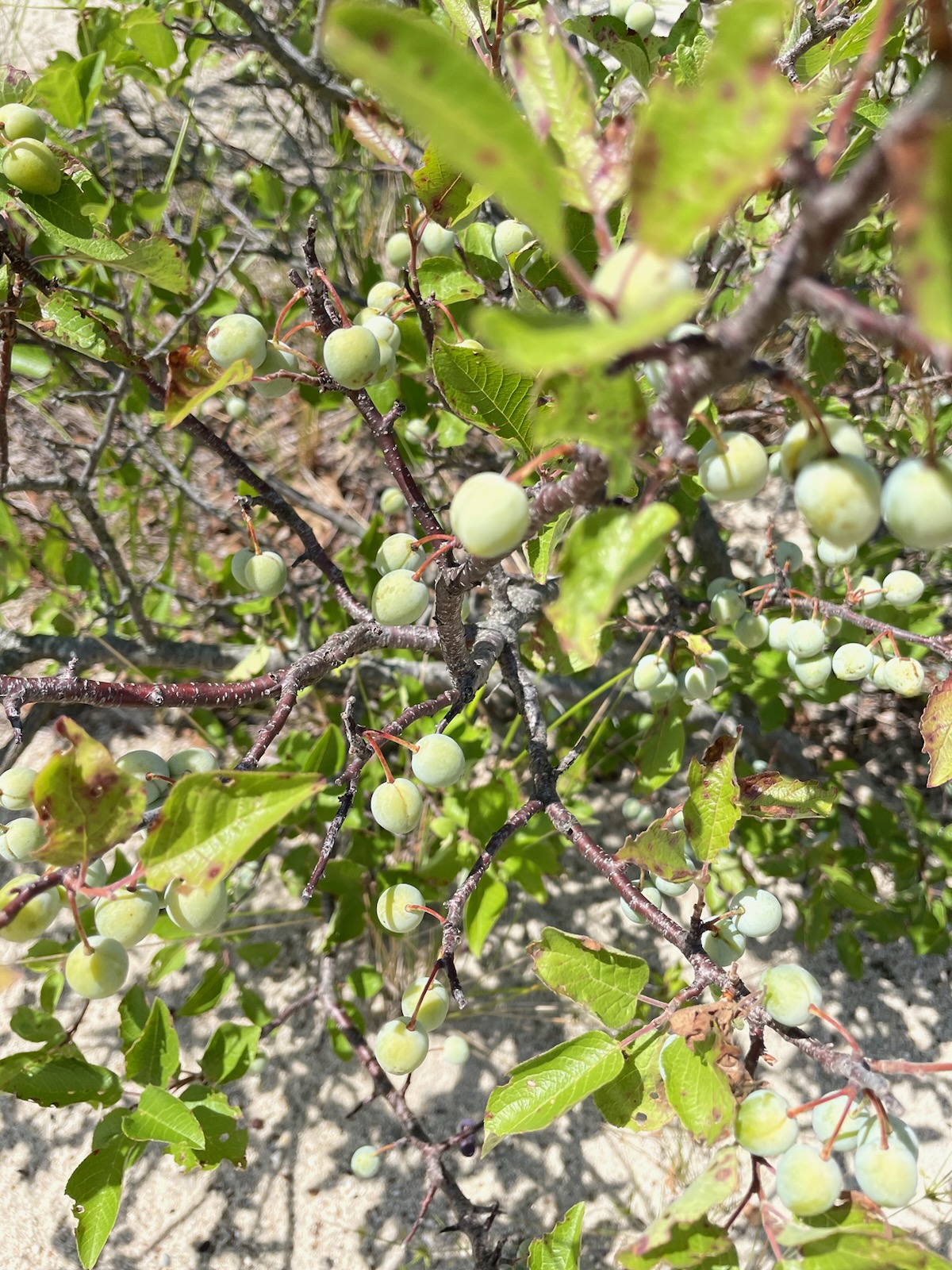
The only thing better than beach plum blossoms, the plums themselves.

Some other kind of berries. Another kind of plum? Mysteries of the wild.

Over the bluff, beachgoers, suddenly. Humans.

Still, everything I’ve seen here does seem wild and somehow miraculous. That this place was saved by a hurricane. That the raptors let me come close. That there are millions of hermit crabs scuttling beneath the water here.

Yes, I was promised an eel. Perhaps next time I visit Sunken Meadow. Soon. 

1 Comment

Filed under Jean Zimmerman

A tree inspector has only to drop in briefly for this takeaway:

Brooklyn’s Prospect Park neighborhood surely has some impressive trees. I stand awed in the shade of a gigantic weeping willow in a tiny neighborhood enclave.

And some interesting characters, at least on my job site, one of five during a day dedicated to corners. That is, replacing the old sidewalks at intersections with colored pedestrian ramps to make them passable for the mobility-challenged. Ped ramps need to be installed in a lot of places, as can be imagined, and this is a multi-year project. A tree inspector comes on board whenever trees appear within fifty feet of the corner, making sure the excavation does not harm the tree roots in question and writing up a report to that effect for New York City. Classic urban tree preservation.

Worth getting up with the dawn to highway it down to Brooklyn to save trees.

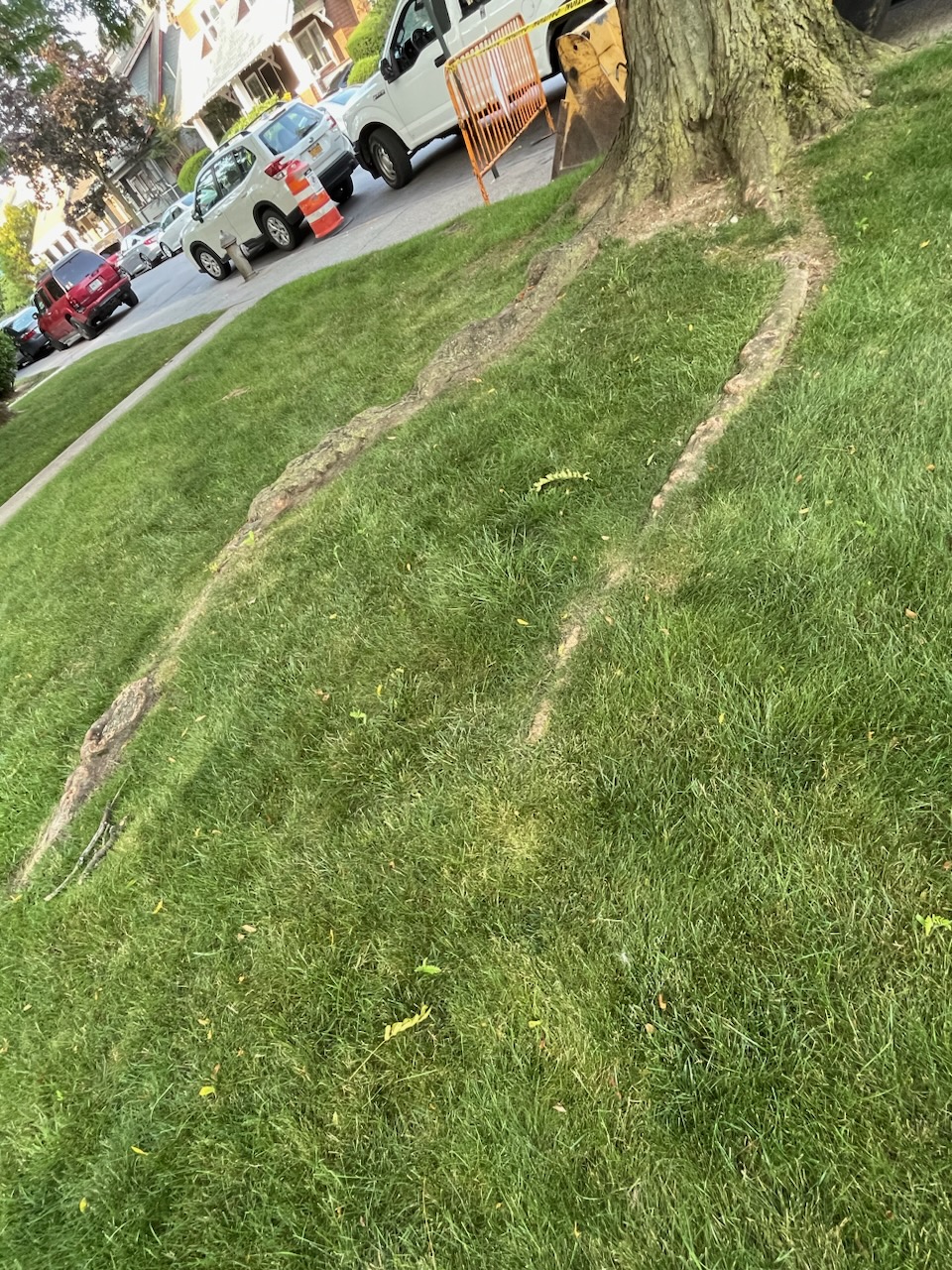
The painter Jean-Baptiste Camille Corot wrote to the painter Camille Pissarro, Go to the country—The muse is in the woods. But you don’t have to be in the forest to find your muse, sometimes the urban forest can offer its own inspiration. On the first corner of the day I spy these mystical roots running snake-like through the grass of a lawn.

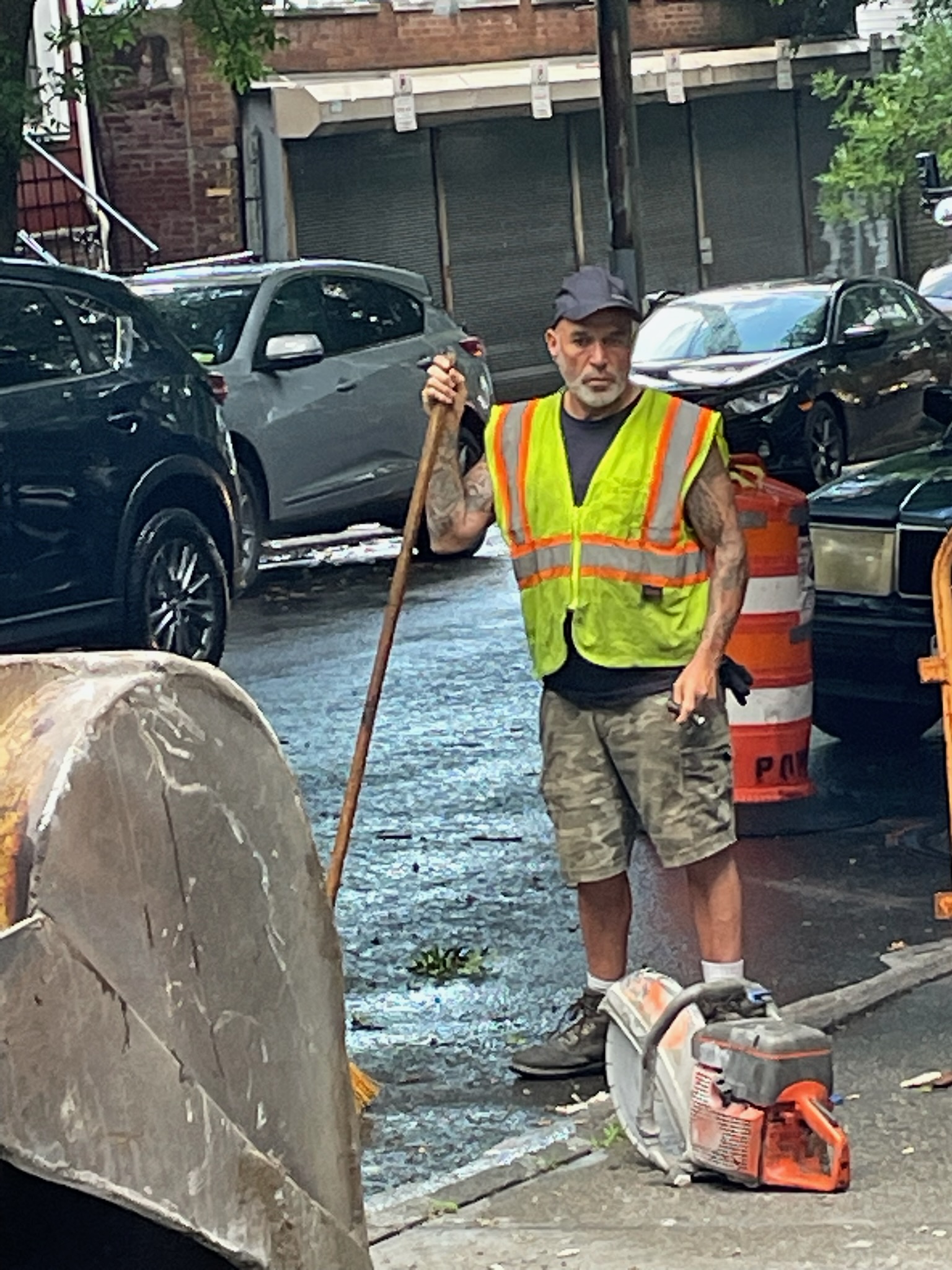
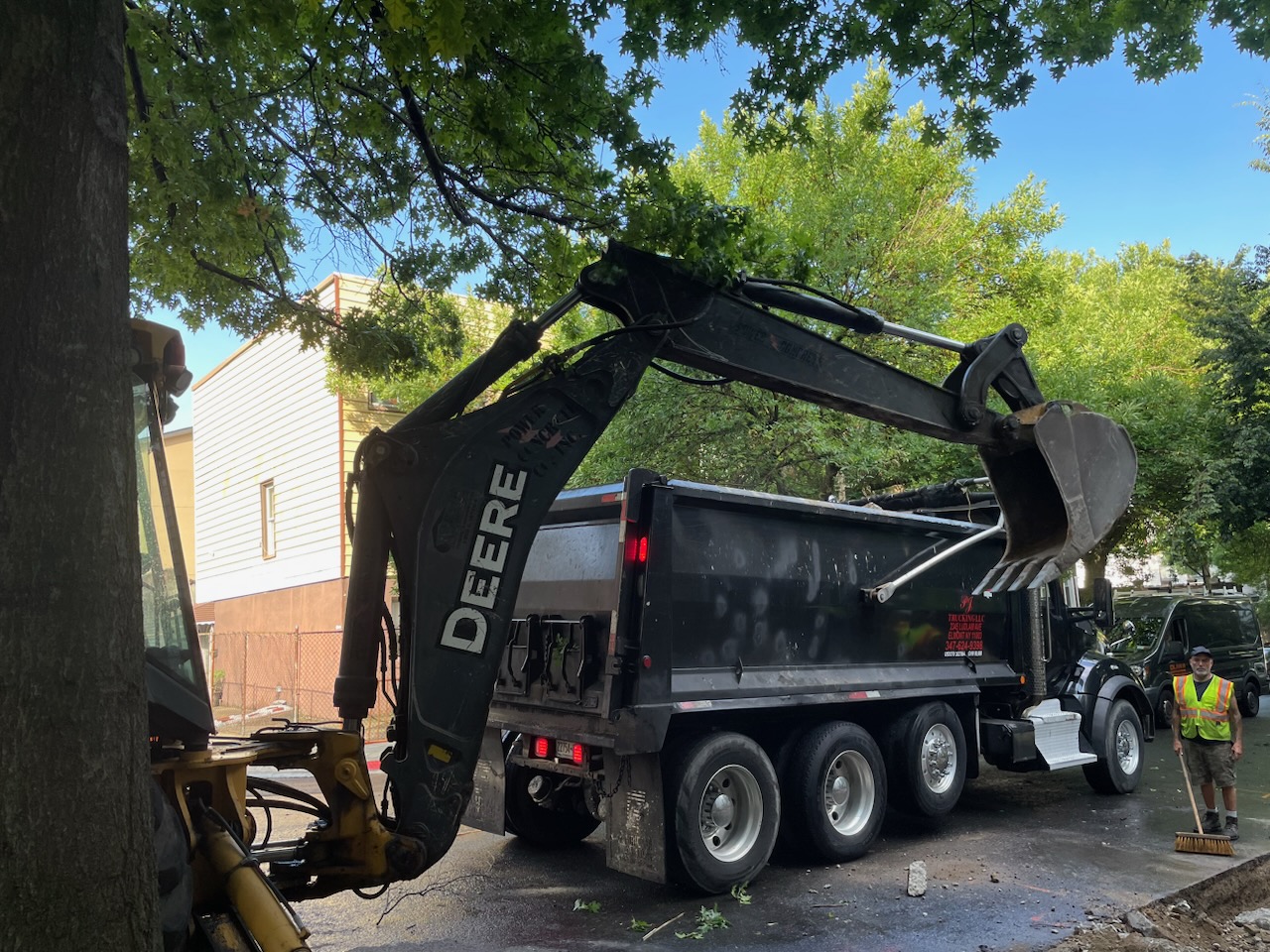
The guy who drives the backhoe on this job – make that machine, the term backhoe is never employed when you work in this metropolis – the guy who drives the machine has language as colorful as his resplendent tattoos.

 I notice the tee shirt of one of the crew before we start work at 7am. This is the man who typically keeps a cigar on hand or between his lips, even as he deploys his shovel.

Freedom Isn’t Free reads the slogan on his tee. I ask the two what that means. America’s not free anymore, asserts the machine driver. It’s worse than Russia.

He tells me he plans to run over anyone who gets in the way of his digger.

Most of the people on the job make it a point to respect me and my professional wishes. If I ask someone to remove equipment — say 2 by 4’s, or a shovel — lying on top a tree pit, they do so immediately. (True, I’ve heard one burly flagger mutter “bee-atch” under his breath as I pass, but I like to see that as a compliment. Sometime I might have to clobber him though.)

Today I spend some minutes under a mature Northern red oak, probably forty feet in height.

It occupies a tiny tree pit, 5×5, the base of its trunk flowing out to the edge of the pit, which was once carefully laid with Belgian blocks.

Edwina, let’s call this lovely specimen — gender fluid. Shading purple window-box flowers that glow beneath its canopy.

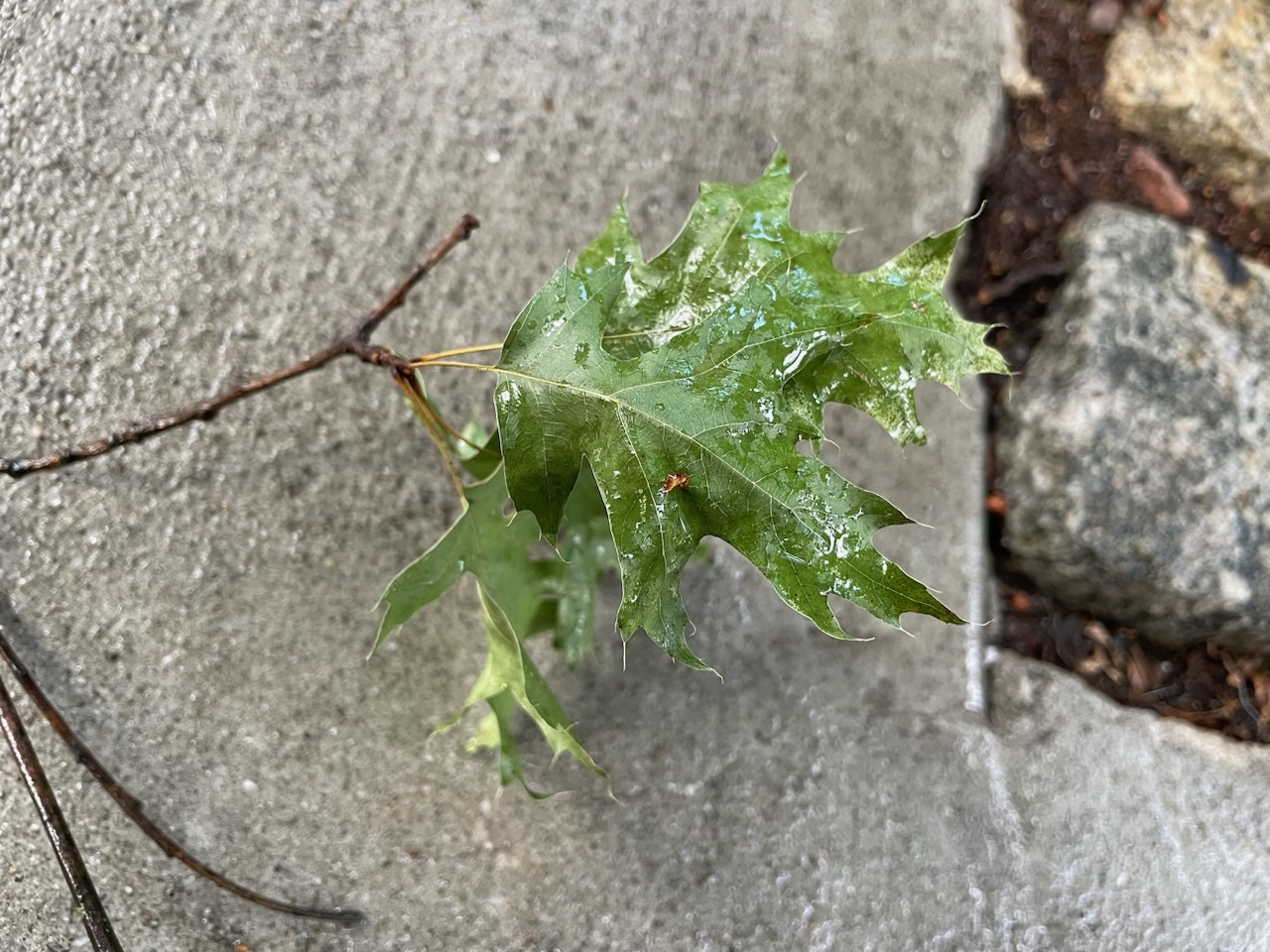
Don’t usually see a red oak on these not-so-mean streets and this one is exceptional, its pointy leaves wet after a brief and sudden thunderburst.

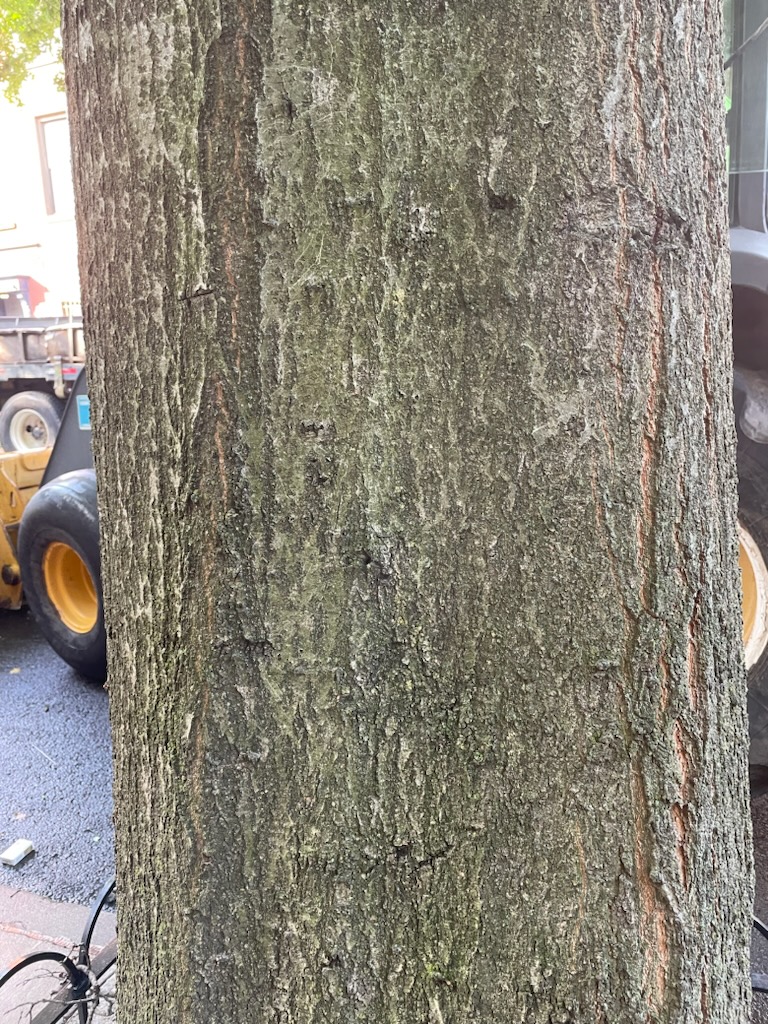
You can see the red fissures in the trunk, one distinction of red oaks.

The machine driver removes some of the sidewalk, then lands his bucket with a thump on the fill, banging the ground close to Mike, the person in charge of saw-cutting concrete before excavation begins.

Day not off to a great start when he’s in a bad mood, says Mike. 

Me: I thought he was always in a bad mood.

Yeah. Smile, rueful.

A pause while the machine operator drags his bucket again to within a few feet of where Mike stands, scraping up dirt, rocks, old concrete debris.

Pretty dangerous, says Mike. Smiling. 

Me. Does he think it’s funny?

Yeah. Still smiling. 

I once did see the machine driver in a jolly mood on another site – he popped wheelies in his machine in a busy intersection with the intention of amusing, terrifying all around. Or maybe he intended to terrify.

Excavation goes all the way up to the pit.

Smart Edwina has few visible roots in the fill to speak of that might be in danger of getting scraped up, all under a quarter inch, small enough for a tree inspector not to worry much. I make a note on my report. Smart Edwina, canny enough to focus energies in a taproot. But the gracious hanging lowest branches do brush the arm of the backhoe, so bad on them.

We move on to the next corner. A benefit of wearing a reflective vest and work boots: you can walk across the site unimpeded.

Good if you’re hustling out with a full bladder in quest of local facilities. You don’t expect me to go against a hydrant, do you?

Especially one of New York City’s beautiful vintage hydrants. (Could probably be harvested and re-sold in a fancy Prospect Park home goods store.)

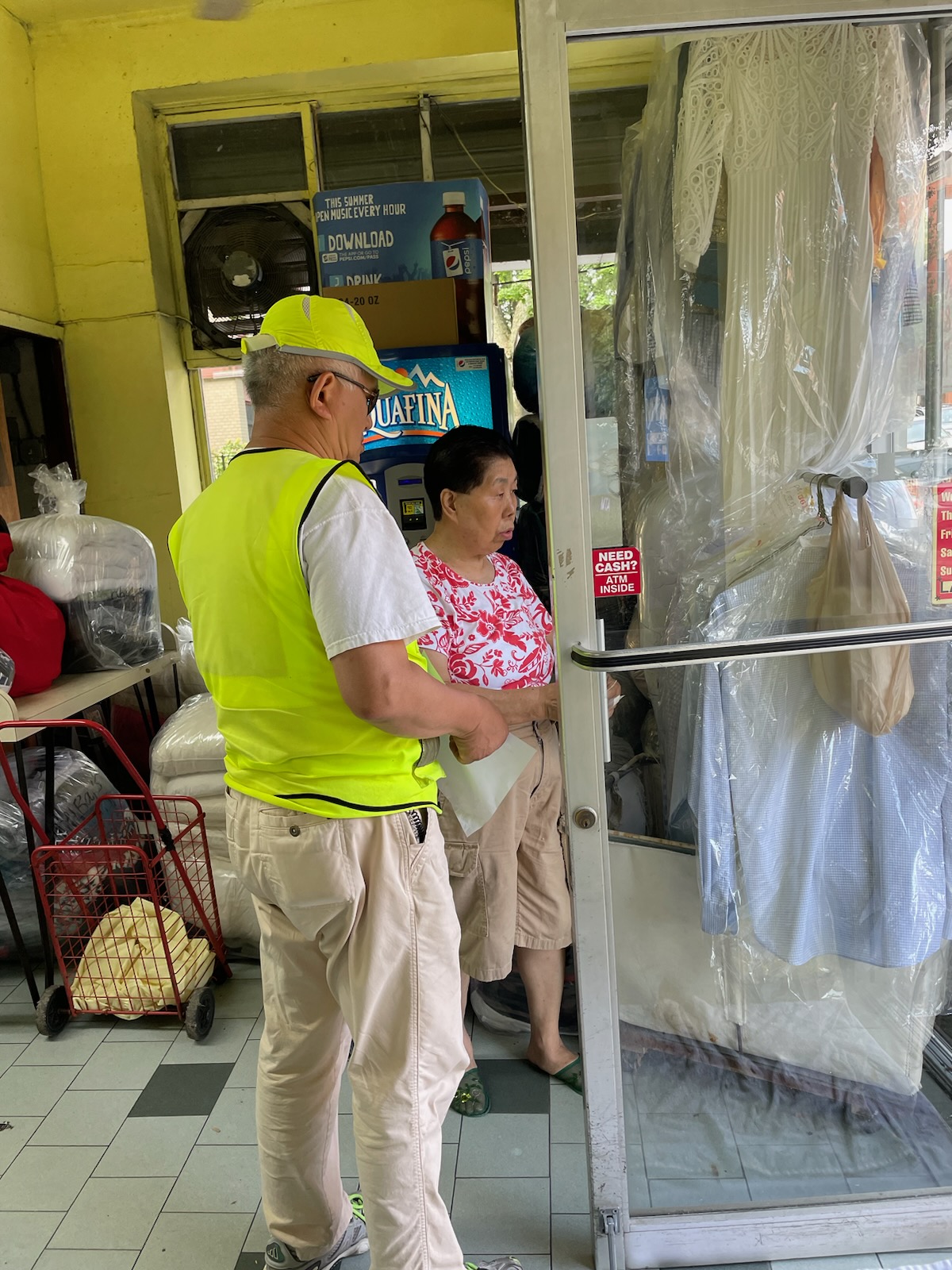
Immediately I spot something nice: Suds on Eighth Avenue. A laundromat!

Can I use the bathroom? I plead politely.

Only peepee though! The busy, preoccupied proprietor.

Yes, I say reassuringly.

Go ahead.

Vibrant NYC yellow-cab mural as I go back out the door to the work site.

So many of these older trees tend to overflow their tree pits. A natural byproduct of their age.

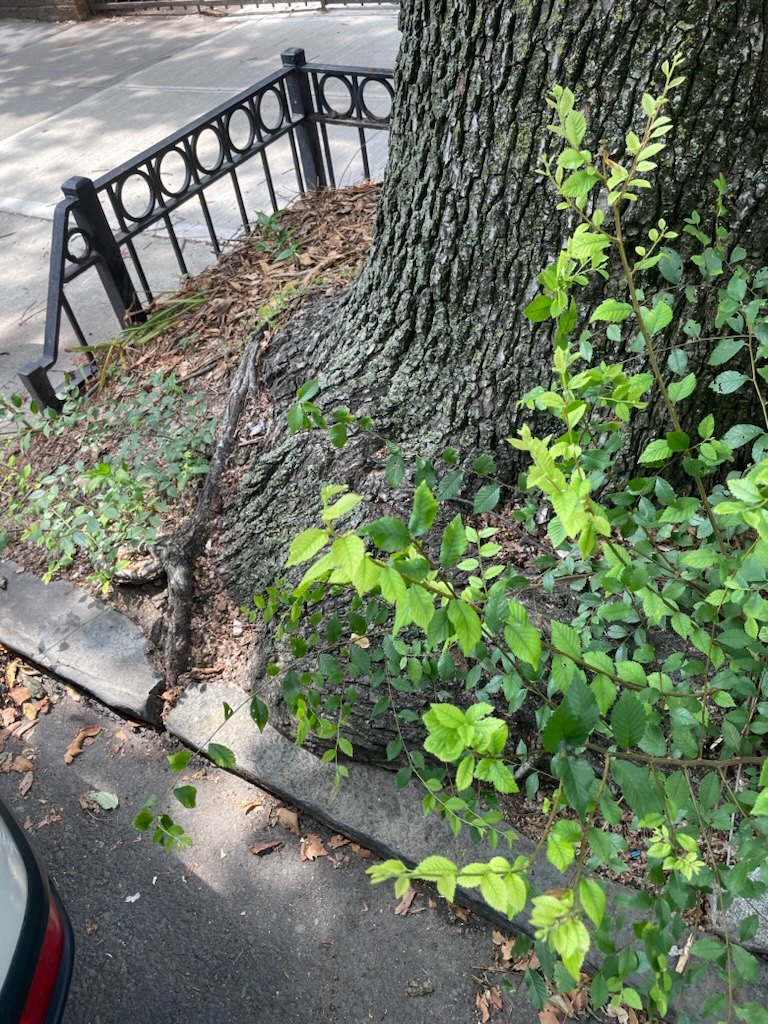
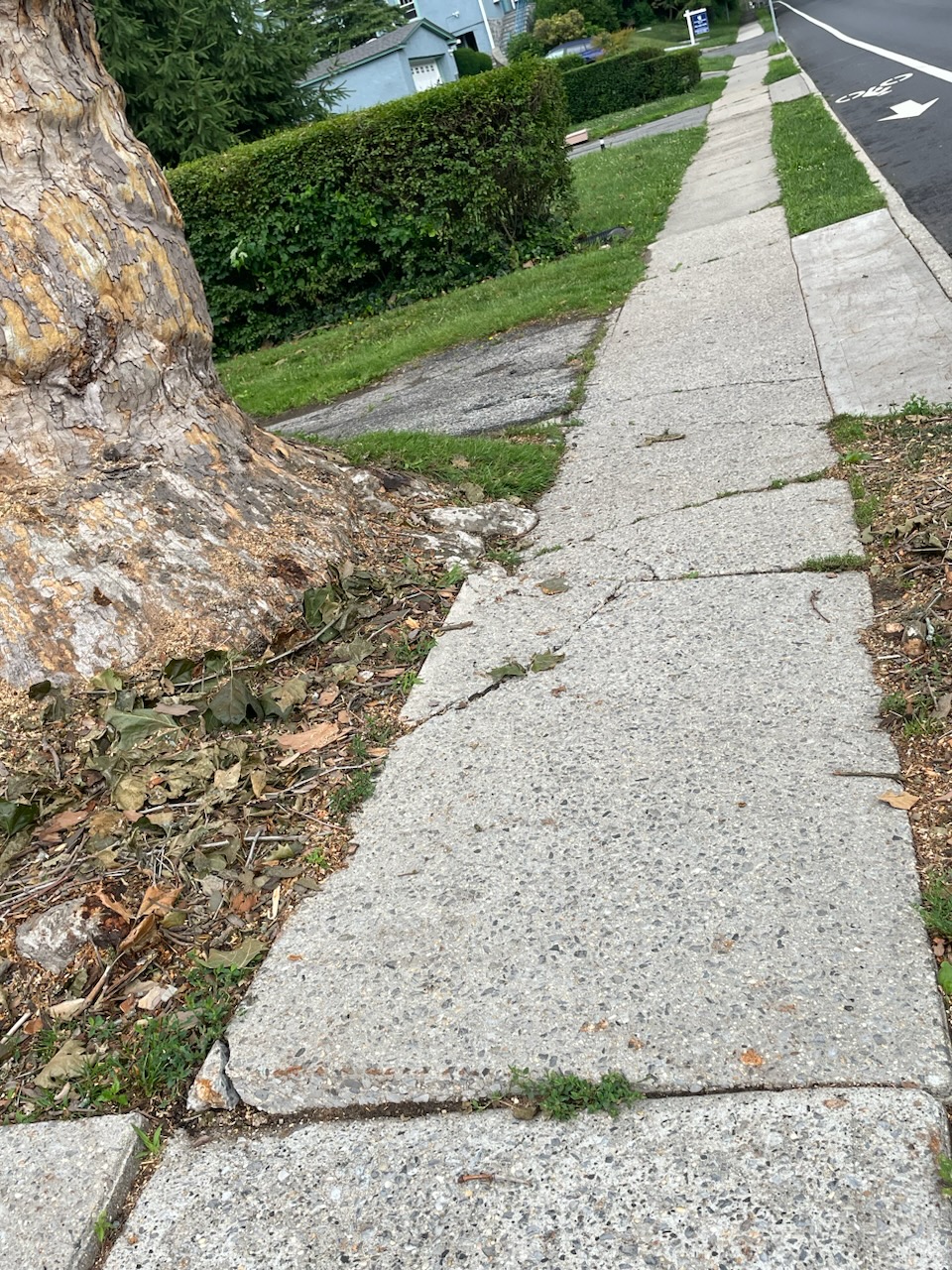
Some mess with the sidewalks surrounding them.

New York City is not perfect regarding trees. What municipality is? But for the most part it recognizes these wise old specimens for what they are — important! — and fixes the sidewalks rather than removing the tree.

Note the curve in the concrete flag. That’s deliberate. Contractors are required to build the sidewalk around that wise old trunk.

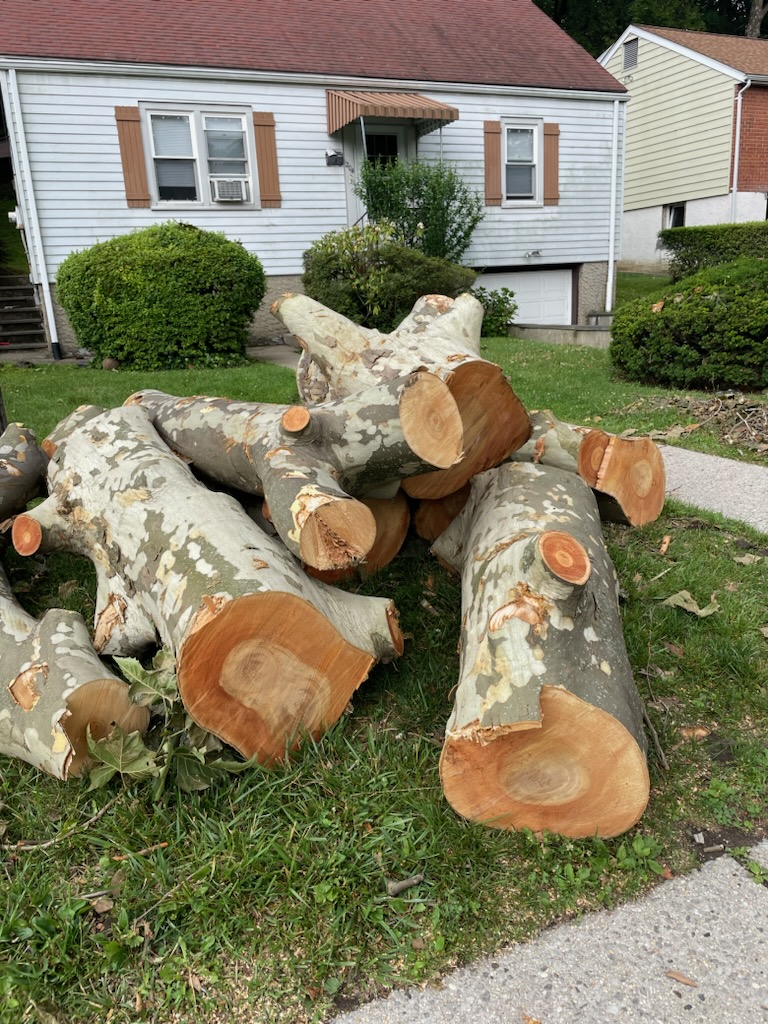
Quite different then my “green” little hometown, where I was appalled recently to see the powers that be remove a two-hundred-year-old street tree, a sycamore. Why? The resident whose property abutted the sidewalk complained. Someone, she said, had threatened a lawsuit after tripping in front of her house. The solution? Not to make the necessary sidewalk repairs but instead to take down the tree.

Yes, it was a giant. I broke into tears when I drove along the main drag and saw it, silly as that may sound. This tree provided the only canopy along this stretch of road.

The only saving grace as I see it rather snarkily is that the homeowner’s energy bills will no doubt go up because they have no boughs to shade their roof. Karma being a bee-atch.

Back to the more generous, quite deliberately engineered canopy of New York City, though. A few blocks away from the majestic willow, a perfect Kentucky coffeetree.

Its bark some of the coolest in the tree kingdom.

Character also abounds in the man-made neighborhood attributes when I peel my eyes away from the trees to take a walk down the block.

New York humor.

Privileged Prospect Park children and their beleaguered nannies. (Note candy. It’s nine o’clock in the morning.)

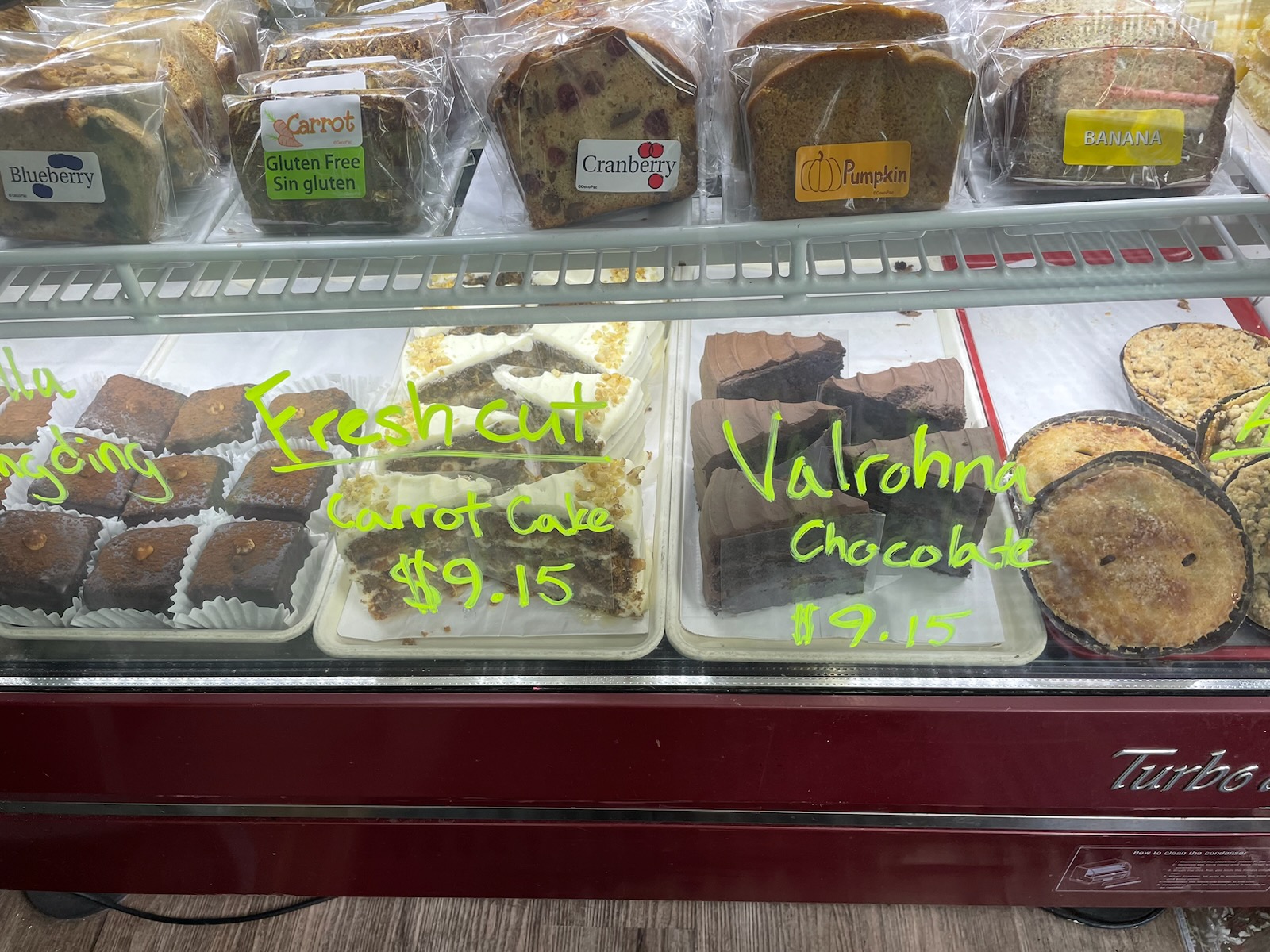
Fabulous offerings at a run of the mill, neighborhood “pie and cake shop.” Prospect Park prices. I get coffee and make myself wait. On the other hand, carpe diem – when we leave this location I might never be back. We’re driving all over Brooklyn for this job’s locations.

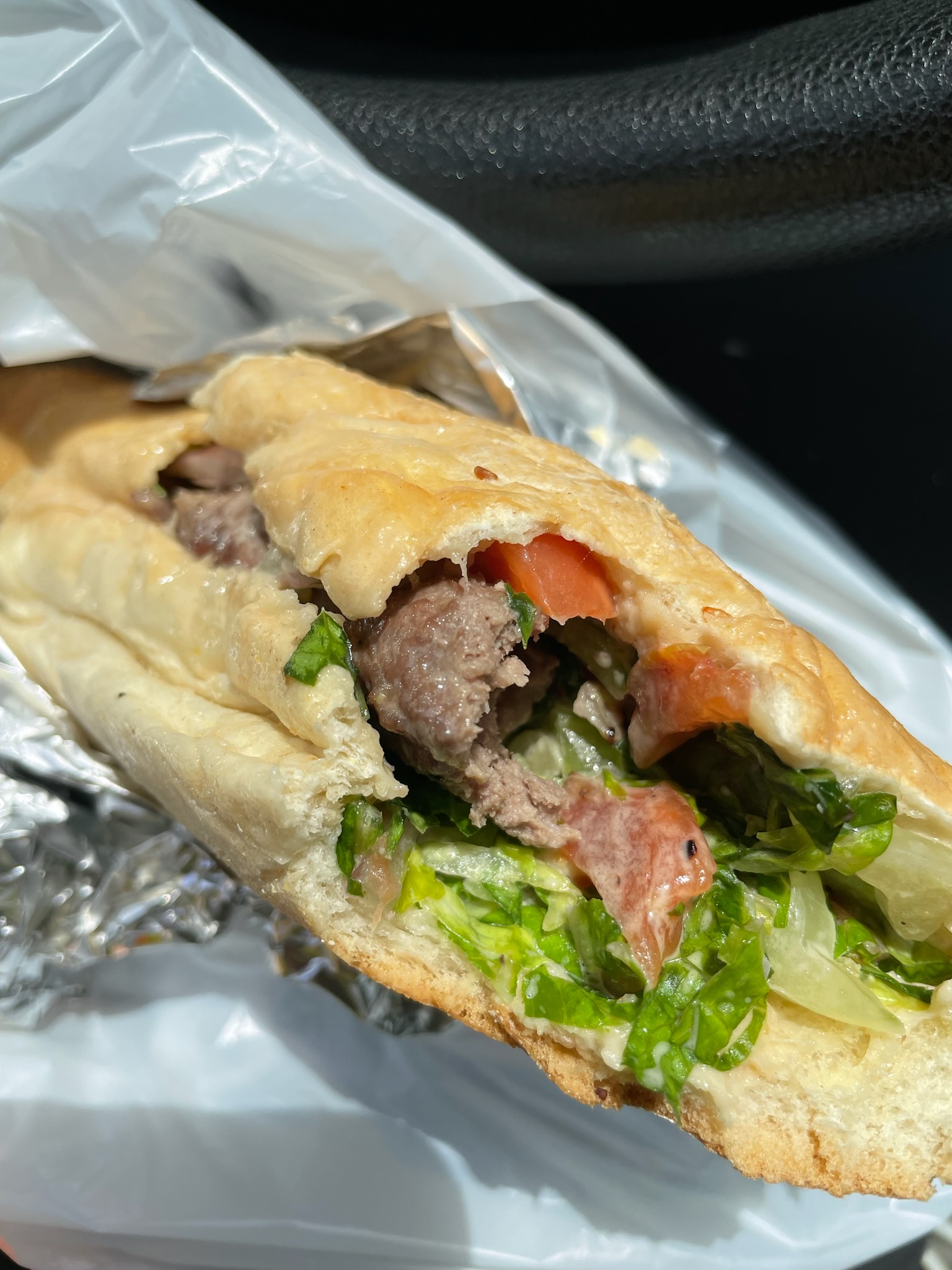
Later I treat myself to the most delicious lamb kofte kebab sandwich I have ever consumed.

Dog walkers. Interesting tee shirt: Don’t Be a Follower. Make Your Own Trax!

I once compiled an inventory of tee slogans I saw doing tree inspections on similar sidewalk locations in the Bronx.

Good Mood.

I’m Not Sorry.

Today Is Cancelled.

Respect My Authority.

My First Year Being Rich.

I Am the Reason Mama Needs Medicine.

Huge.

Fear Is an Illusion.

I Would Give Up Shopping But I’m Not a Quitter.

Big or Small, Let’s Save Them All.

It Wasn’t Me.

I Rule the Streets.

Marvel.

These are only a drop in the bucket, believe me. Feel free to appropriate.

I can relate to some of them. I Rule the Streets. Marvel.

Baby prickly fruits of sweetgum, as sweet in Prospect Park as anyplace else in the world.

Near the corner, an effulgent Japanese pagoda. Condition: excellent, I write in my report.

Always amazing to see pure summertime blossoms against the grit, the brick and the concrete — the urban forest that is New York City.

Marvel. I Own the Streets. Is this the best job in America? Perhaps. At least today.

Leave a comment

Filed under Jean Zimmerman

Just to let you know about my event tonight…

It’s a FREE Virtual Event — there’s STILL TIME TO REGISTER! 
Don’t miss the third installment of Save Ellis Island’s exciting new virtual speaker series Preserving New Jersey.

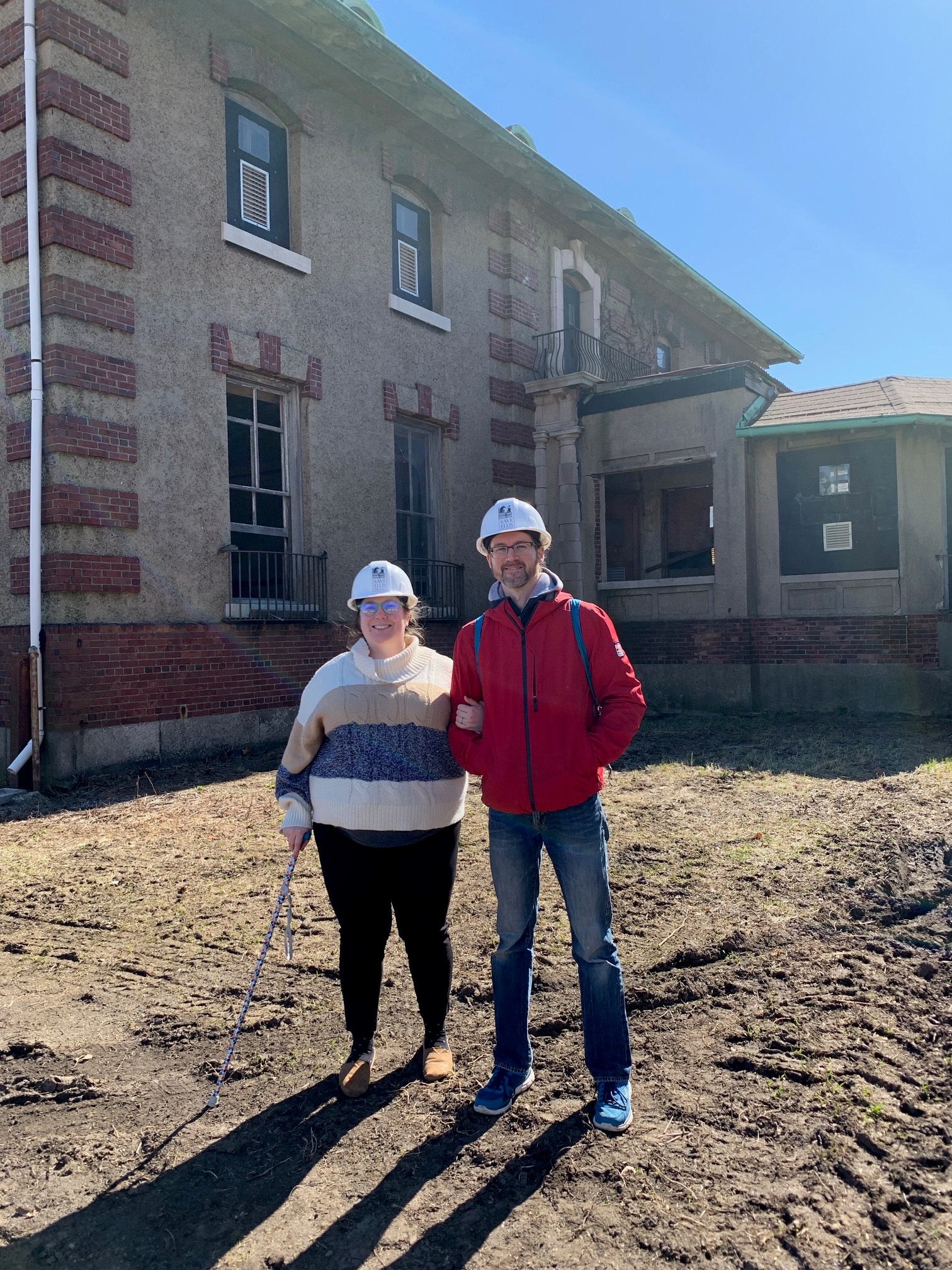
Tonight, July 6 at 7p.m. (EDT) meet Katherine GoodSenior Project Manager/Historic Preservation Practice Leader at Michael Graves Architecture, the award-winning global leader in planning, architecture, and interior design based in Princeton, New Jersey. Katherine and her husband joined me on a Hard Hat Tour of Ellis Island recently.

I know this segment is going to be fascinating! Katherine has a passion for historic architecture and its preservation for future generations. She strives to educate others about historic buildings, landscapes, and communities while challenging them to redefine their views around historic preservation. She told me when we chatted about the segment:  “Historic Preservation is a passion for me and I feel lucky to be living it.”

I moderate this 12-part series highlighting the Garden State’s contributions to American arts, culture and the built environment.  We feature an eclectic mix of historic preservationists, cultural historians, and individuals who have a dynamic connection with Ellis Island.

It costs nothing to register! But it’s best to do so beforehand, then you will receive a Zoom link if you’d like to attend. You can go to this link: https://shop.saveellisisland.org/collections/frontpage/products/copy-of-virtual-event-katherine-good

If you would like to forward this to your contacts, please go ahead.

Leave a comment

Filed under Jean Zimmerman

I recently went for a saunter

(taking a cue from John Muir, who preferred the word saunter to hike) in the largest old-growth tract in Dutchess County New York, the South Woods at Montgomery place in Annandale.

It was called the Spirit Wood by the Indigenous people who occupied the land before the Livingston family bought it in 1802, with its never being touched a stipulation of the sale.

Montgomery Place is famous for the locust trees which grace its arboretum grounds, massive, hundreds of years old.

They are stalwart, magnificent. The gardens could almost knock a person over with their fragrance.

But I found myself more knocked out by the South Woods trail. All around me I saw waves of emerald fern.

 Moosewood.

Sweet birch.

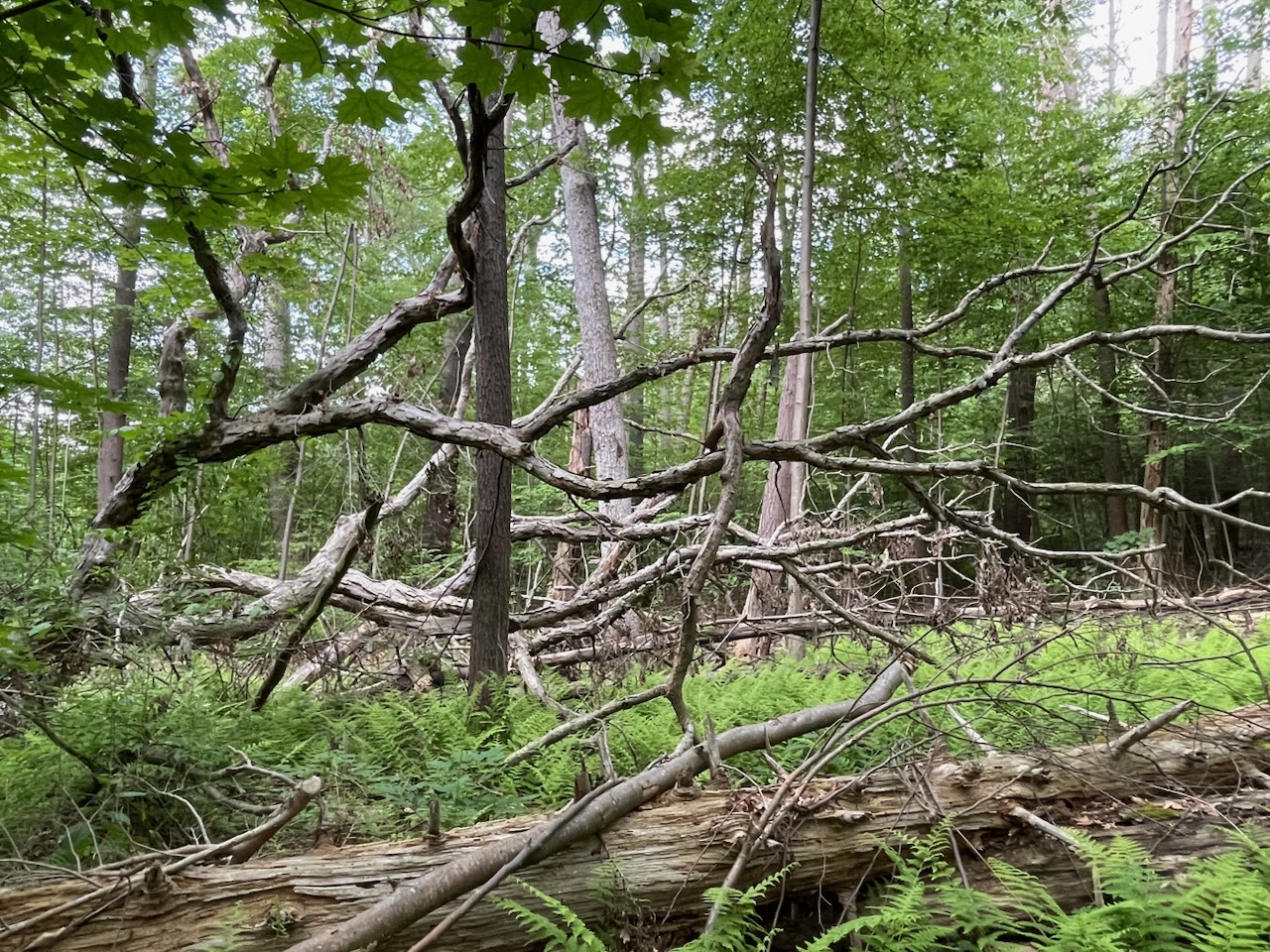
And the tangled lace of dead tree blowdowns.

The air smelled like cinnamon. I heard nothing at all but mad birdsong in the branches seventy-five and one hundred feet overhead. There were baby oak groves.

I saw plenty of critter lairs.

A wise old locust stood by the path.

The experience further fueled my excitement in writing about American woodlands.

Researching my book, spending time with arborists and learning as I go, I have asked myself: Why does it matter if a person can identify a tree by name? Does that knowledge make the tree any more beautiful? The South Woods could amaze anyone who follows the trail down to the Hudson.

Steps still exist from when the Livingston family built them. I imagined Janet Livingston lifting the hem of her long skirts to dip her privileged toes in the cold river water.

When you hear bird song you need have no compunction to determine whether the call is that of a blue jay or a redwing. As Shakespeare has Juliet say, “What’s in a name? That which we call a rose by any other name would smell as sweet” That is true. He was, after all, Shakespeare.

But still, I think it matters a great deal. I recently walked with a couple of urban foresters, Aaron and Russell, in the thick woods of New York City’s Van Cortlandt Park. The Park contains a surprisingly dense 800-acre patch of mature forest that has been deemed “forever wild” and which lies untouched at the very northern tip of the Bronx. Yes, this is New York City.

We were nearby as part of a tree symposium in neighboring Yonkers. We snuck off through a chain link fence that bordered the park during one break in the proceedings to saunter along a shady trail.

Russell said, “Fantastic pignut hickories here!”

I was jealous of his knowledge. And elated when I came to know Carya glabra’s smooth, compound leaves, its tapering trunk, its narrow crown, even more so when I learned some context. The tree’s savory fruits are irresistible to squirrels, who share these urban woodlands with owls and woodchucks, snakes and coyotes and opossums. Also that the tough yet flexible wood made it invaluable to early American settlers who used it for wagon wheels and sulkies. Pignut hickory is stronger, it turns out, than steel.

Sound nerdy? Heard. Perhaps a shade of what in my writerly household we call “rapture of the deep.” Literally, the phrase refers to the effects of inert gas narcosis, when scuba divers breathing compressed air exhibit symptoms of intoxication. Such euphoria compromises the ability to think straight.

I want my book to offer readers a personal, primal, history-nuanced connection to trees and, in a larger sense, to forests. Let’s develop a new, intimate, vital relationship with the specimens that we see all around us every day and yet that we sometimes take for granted.

These days, spending time writing at the artists’ retreat in the Hudson Valley called Catwalk, it has struck me as simple: People might not be getting all they need to understand, all they’d love to know about our woodlands.

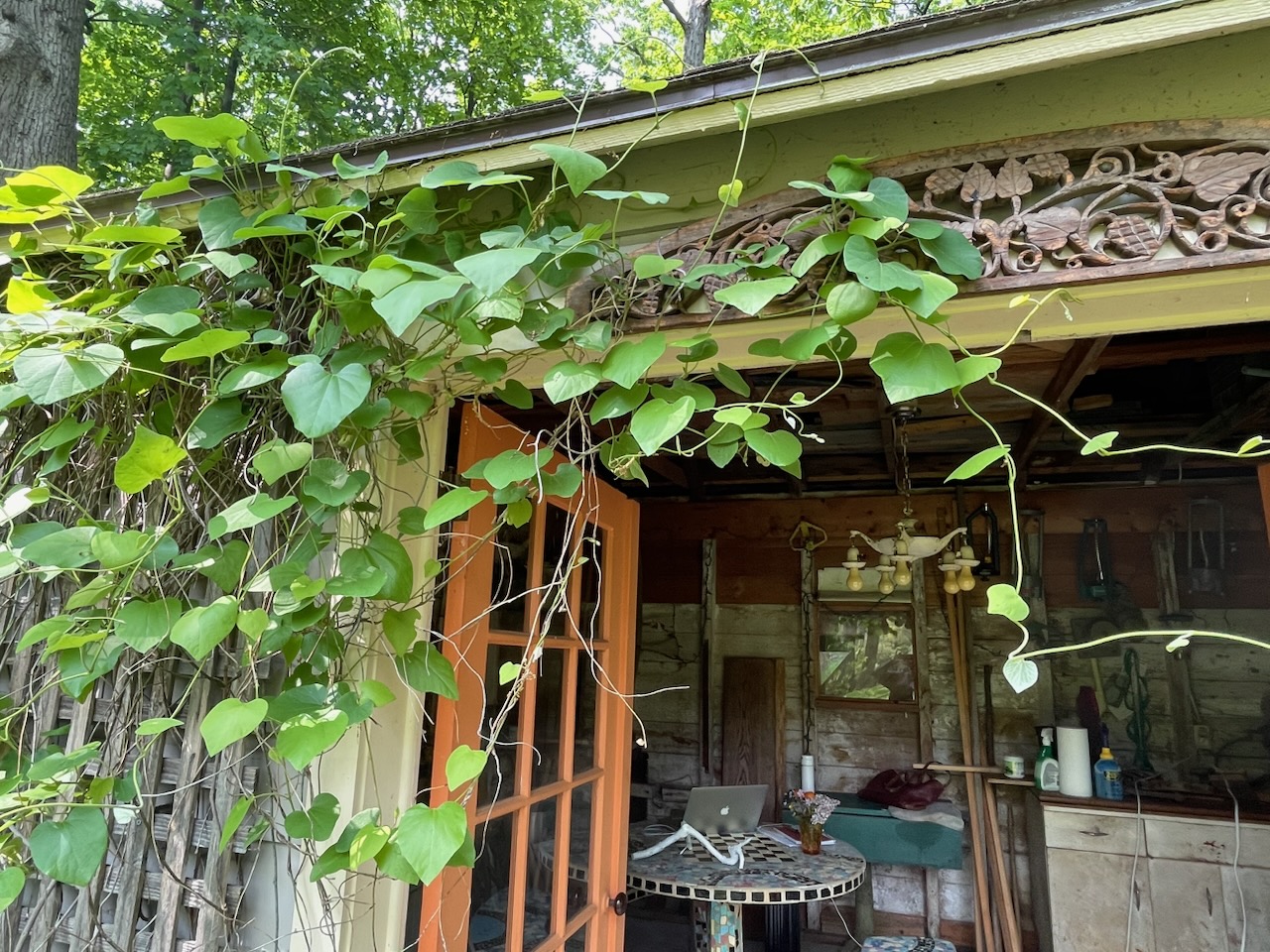
I work in a garden shed, a little spot filled with dusty, magical old objects.

Farm implements from when this estate had a different life.

There is perfect light here.

And a lawn outside planted with gracious trees. Other Fellows have dropped in to visit. I toured filmmaker Charlotte around the property that is visible to all every day but has secrets as yet unplumbed.

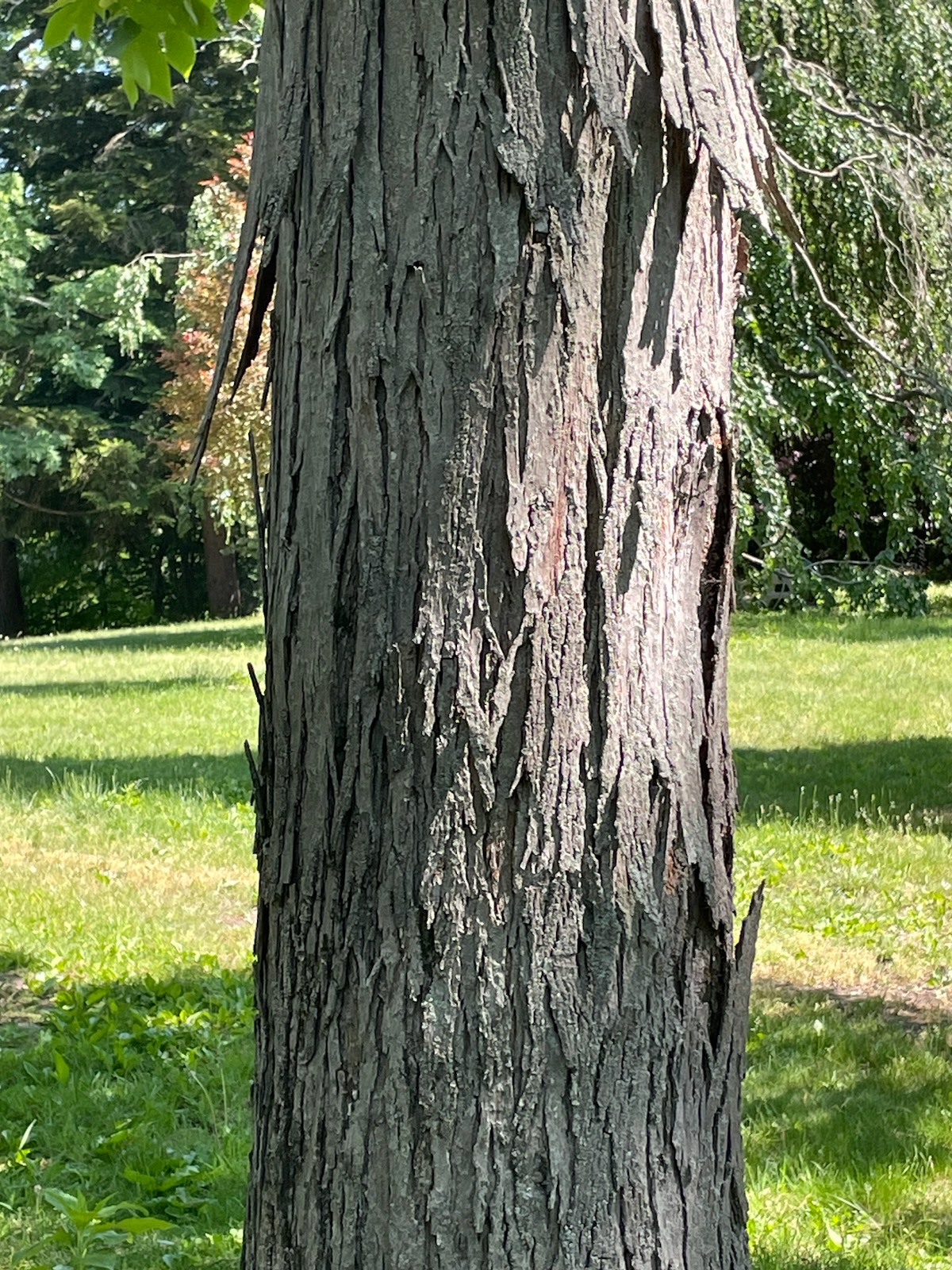
We talked as we walked. Charlotte observed details. The shaggy bark of the shagbark hickory, a perfect example of iconicity.

New leaves of a white oak, each fresher than the next.

The heavy hanging catkins of a black walnut – did you know that its roots produce a chemical which caused the failure of that ruined old vegetable whose remains you see here?

The so delicate flower of the Chinese fringe tree.

A weeping beech, its silvery bark glowing under a fall of branches.

Charlotte said, The branches of the trees look like an old man’s limbs.

We saw the elegant stitches on a cherry’s trunk called lenticels; no other tree has them. We examined the stone wall that borders it all.

They remain intact from the nineteenth century, when farmers cleared the trees and removed the rocks from fields and pastures, and expert masons assembled them without mortar.

Being here I have been inspired by commonplace things: chipmunks that scurry into a hidden corner of the shed to store nuts, a robin that hunts for inchworms just outside, the hummingbird hovering over the salvia, dipping its beak quickly but with religious fervor.

Down the way in the catfish pond, a school of whiskered fry bent on survival spook when I come close, and dive down into the drink below the dock.

The head of a cattail… there are, I believe as I write this, no words to describe it.

A mama turtle diligently digs out a hole using her tough hind legs. Later she’ll drop in the white jelly bean eggs.

The spider’s intricate web fascinates me.

She enlarges and repairs its concentric circles every day. In the afternoon I see the tiny gnats she’s trapped, and in the morning they’re gone – she’s consumed them all.

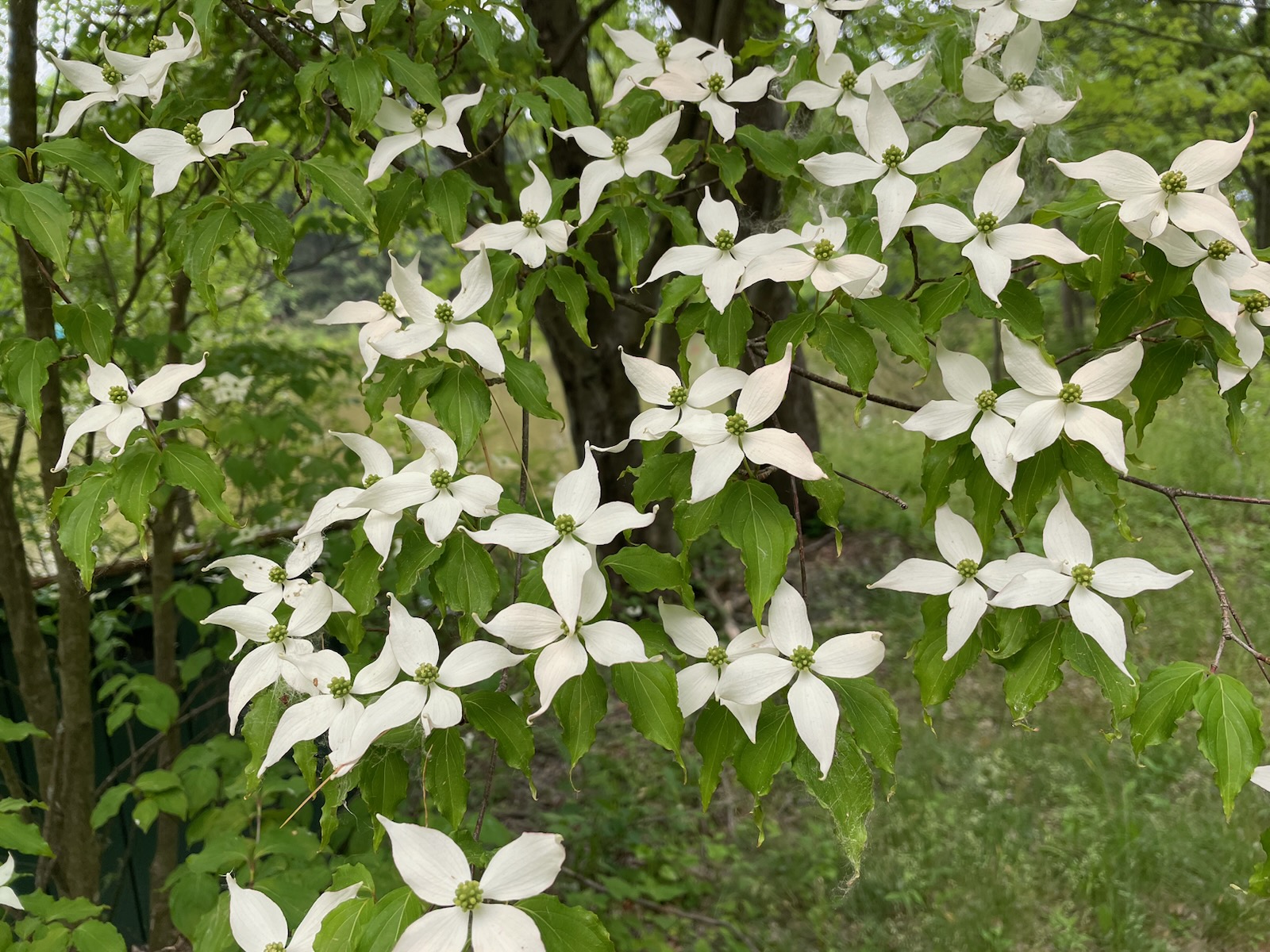
Is there anything more pristine than bracts of dogwood? Perhaps I do have rapture of the deep. But it is rapture nonetheless.

And that’s always a good thing, it seems to me.

Leave a comment

Filed under Jean Zimmerman

Do you love hot dogs?

Still time to sign up, all you hot dog aficionados, for my conversation with Lloyd Handwerker tonight, June 8 at 7 EST– free, virtual, one hour, part of Save Ellis Island’s Preserving New Jersey series.

Lloyd is the grandson of Nathan Handwerker, founder of the Nathan’s Famous hot dog empire. He wrote a biography of this remarkable man (Ellis Island immigrant, the reason for his inclusion in the program) — Gil collaborated with him on it. Lloyd is a filmmaker and did a terrific doc about his grandfather as well.

It should be fun!

As I said, it’s free, but advance registration is necessary in order to get the Zoom link: https://shop.saveellisisland.org/collections/events/products/virtual-event-lloyd-handwerker

Leave a comment

Filed under Jean Zimmerman

I greet the trees

on my regular saunter around the Catwalk estate.

John Muir preferred the word saunter to hike.

Guess what? Have you ever had a wonderful dream, then woken up, then fallen back asleep and had the same wonderful dream continue?

That’s what I feel like. Catwalk called and said someone had canceled for the next session. Would I come back?

What do you think I said? I’m back in paradise for another two weeks.

I must have done something good at some point to deserve being in the presence of this fresh young white oak.

So I amble around, revisit my favorite sights.

The monster red oak poses for me.

The trees always look the same, I can rely upon them. Yet somehow different. Even the grass here pops, holding its cup of dew.

The beech’s silvery trunk more elegant each time.

Chipmunks scurry. Hummingbirds – too fast for a picture! The meadow. The air smells like cinnamon.

The meadow grasses.

Ever lush.

Each flower has a name.

Must I know them all?

I identify them.

Then forget the name.

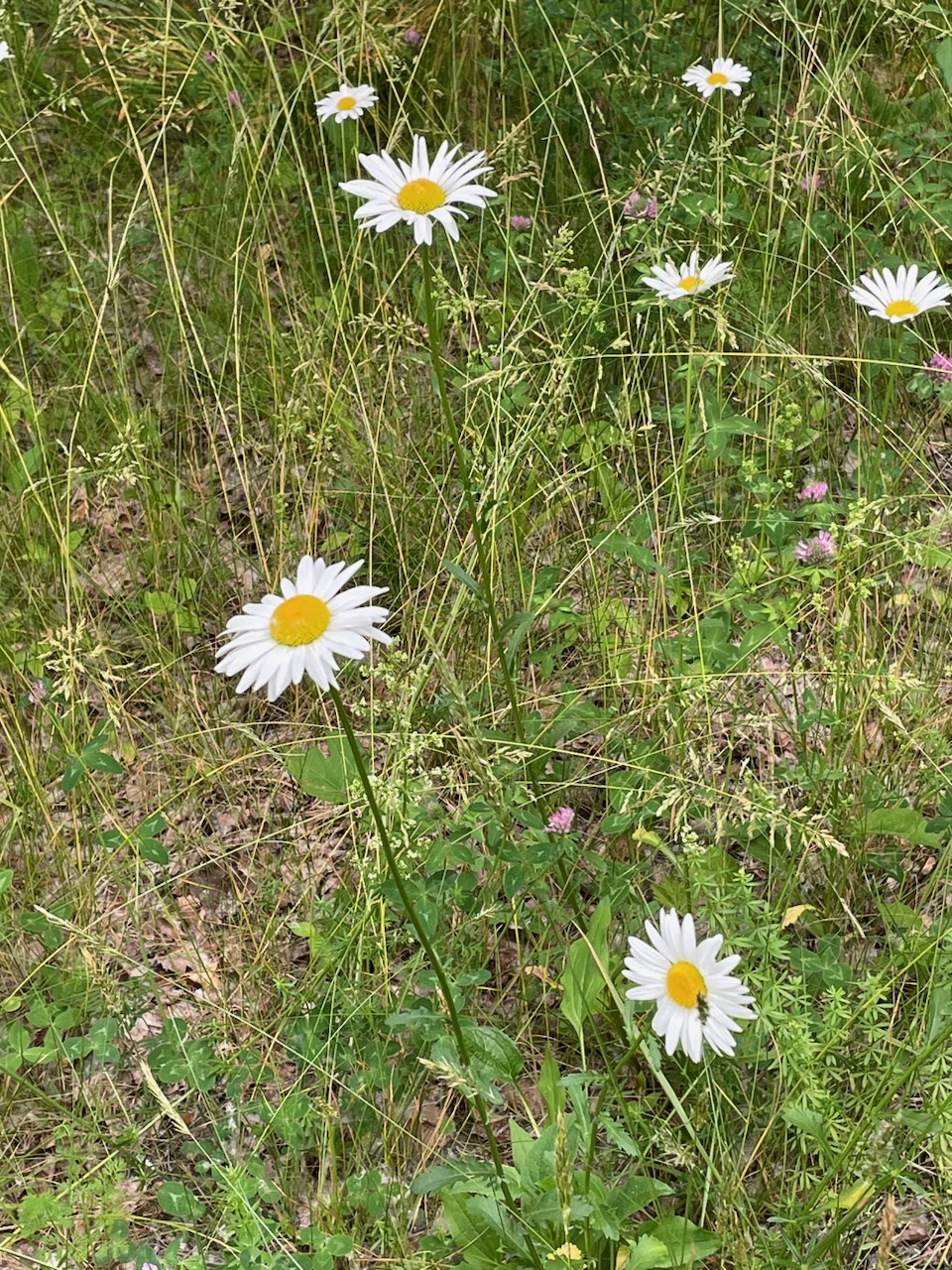
Does it matter? Everyone knows a daisy, if they know anything at all.

Perfect wet rolls off the leaves. They don’t know how beautiful they are.

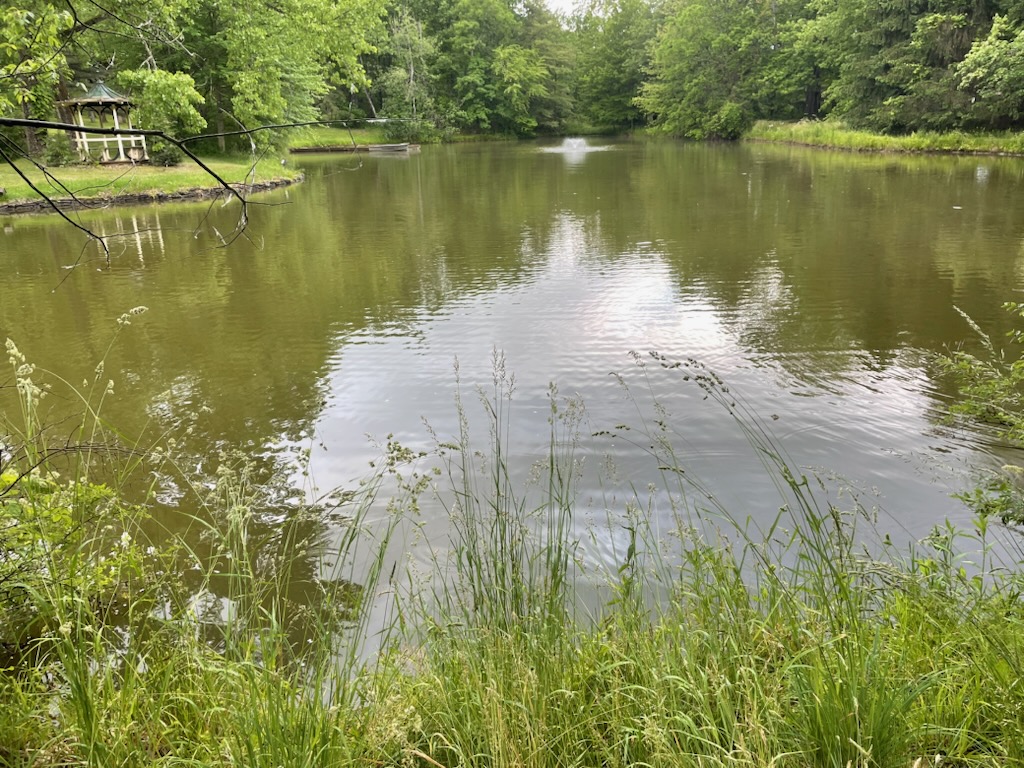
The ponds. First the catfish pond.

Then the frog pond.

A cattail, ready for her close-up.

A redwing blackbird calls. I meet up with a painted lady after she dug a hole for her eggs but before she laid them.

I tiptoe away so as not to disturb her further.

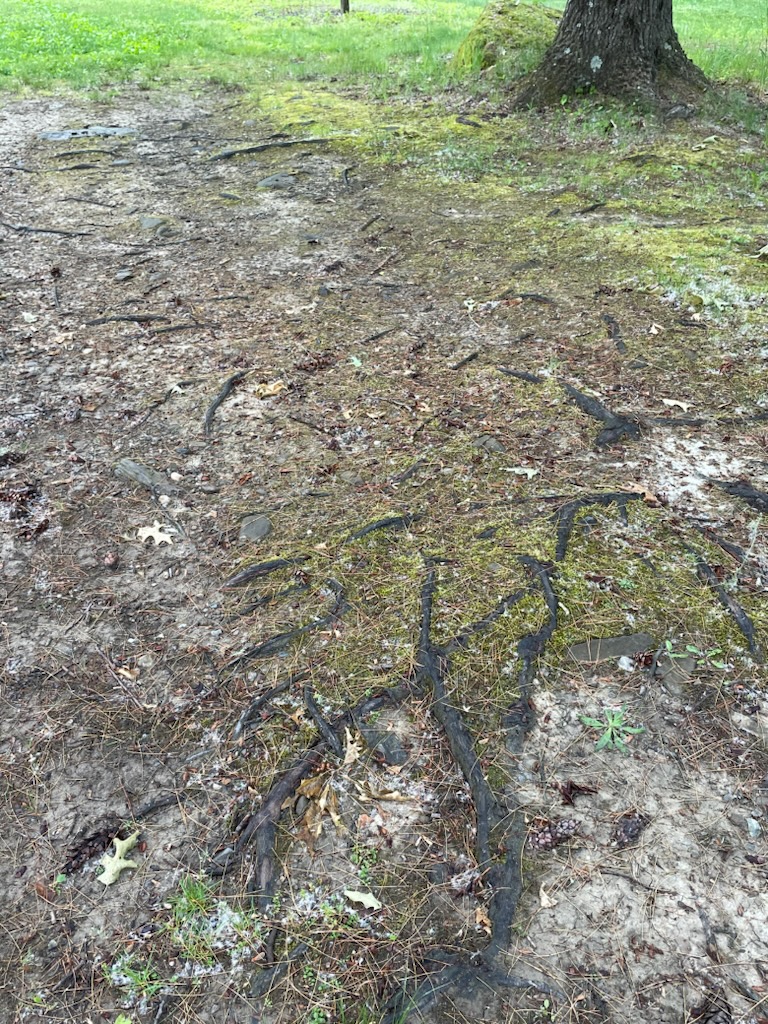
I see x’s and o’s. The x’s roots on the ground.

The o’s happy critter habitats all around.

Lichen on trunks.

Mossy, venerable stone walls, built at two hundred years ago to last.

More trees, characters like this leaning sweet birch, I have to stop for it each time I pass.

Mysterious sculpture made by someone I don’t know, sometime in the past.

Statuary. This strange creature.

Look a little closer.

Closer still.

Dogwood, its new bract spangles.

I wind up at my garden shed, my sanctuary. Filled with dusty, magical old objects, perfect light.

And the lawn outside with its gracious trees and a spooky circle of chairs.

The spider web, still here.

Recently I had some guests over for sugar cookies and oak leaf favors, good for book marks.

Introduced them around to some of the trees. Bur oak, I think? Or shagbark hickory? This is a good place because it reminds me I don’t know everything. I want to lose my arrogance.

The heavy hanging catkins of a black walnut. That I know.

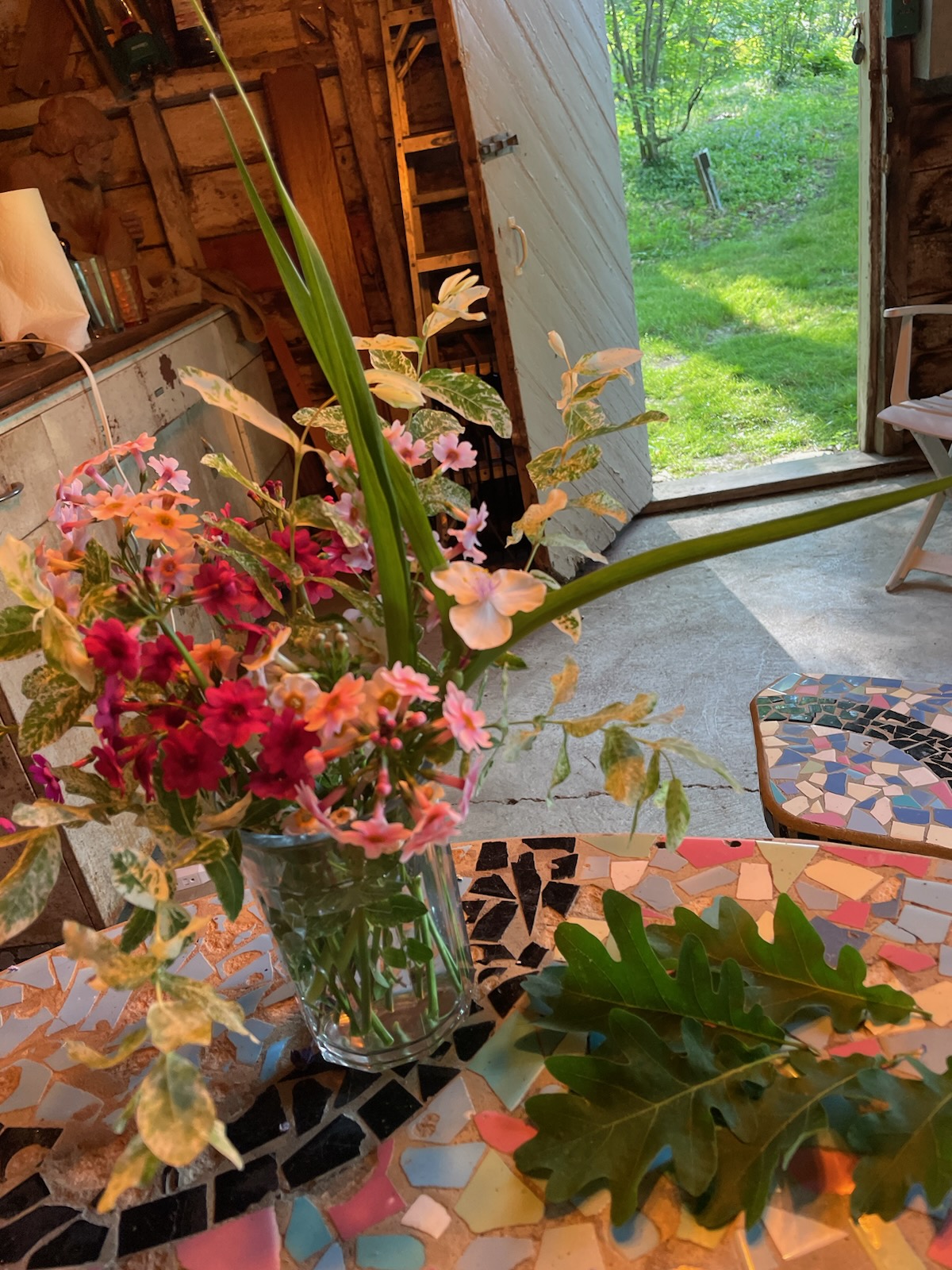
Come back to my living quarters, stick some peonies in a glass. Glad to be back.

Time to write.

2 Comments

Filed under Jean Zimmerman

Trouble, trouble, trouble. Trouble.

Really?

How can you complain when you find yourself in the most beautiful place on earth? Can there really be trouble in paradise?

It’s like this.

I got some feedback on a just-drafted chapter from someone I trust. He said what I wrote was not perfect. It’s hard to write about nature when you’re in the presence of natural perfection. And manmade perfection, in the form of a perfectly built old stone wall. Can I produce anything that good, that lasts that long? Probably not.

I take my seat in my writing garden shed.

Inspire myself with some of the flowers that grow just outside.

Say a few words to my shed-mate Giselle.

Woe is me. Write a while. Dreck. Go outside.

Admire a few simple flowers.

Visit with some trees. The shagbark hickory. Its new leaves are the most incredible shade of green.

Look up at the black cherry. How tall is that thing anyway?

Marvel at a tangled fall of shattered silver maple against a bewildered black gum. Human-produced sculpture doesn’t get that good.

Something amazing. A seemingly robust old white oak.

Around the back, it’s clearly had a lot of problems, but fixed itself. The way trees do.

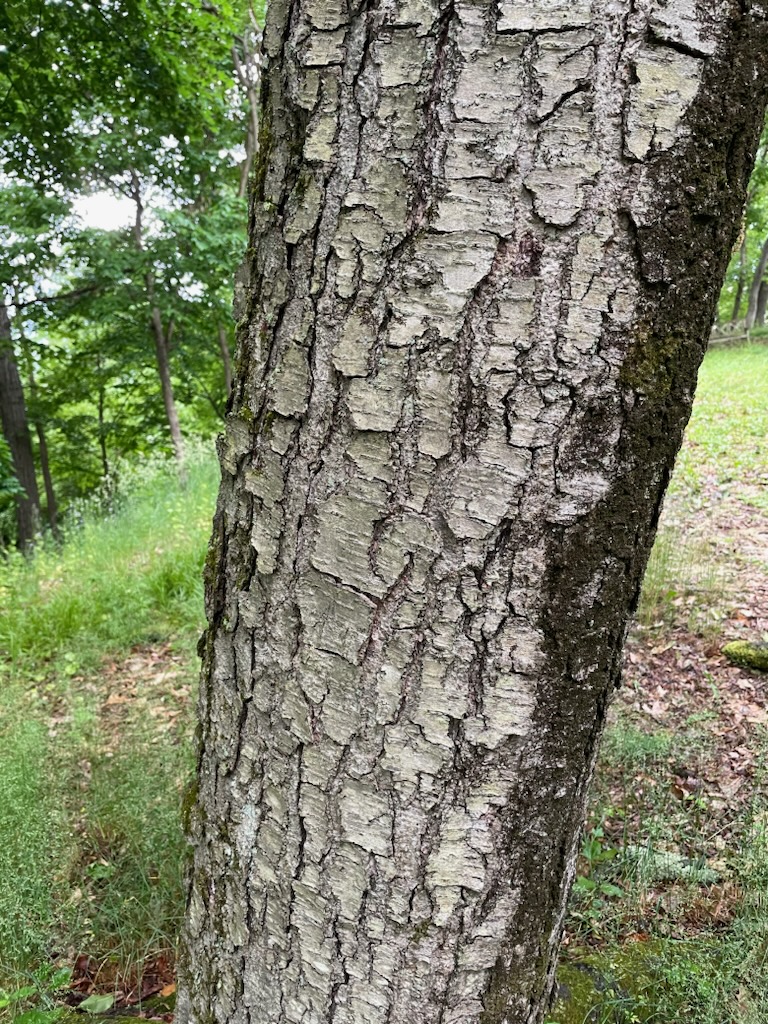
Down the path, the crazed contours of bark, this one a white ash.

Everyone has problems. Knee problems. Heart problems. Cash flow problems. I can put a check in all those boxes at least some of the time. There aren’t too many people to tell my troubles to.

But how can I complain, really?

Trying to learn from the persevering robin who hops by over and over again outside my writing garden shed and is rewarded with money-green inchworms. I mean, over and over again. All day.

Then I go, rock myself in the hammock.

Within a few paces of the just-blooming lilac.

Olfactory bliss.

So really, can I complain?

I can complain. Watch me.

I sweat my way down to the river. Think. Pick up a few what I seem to remember are water chestnuts. They might not be. They might be magic.

Think some more. All of this thinking is making my head hurt. So I stop thinking.

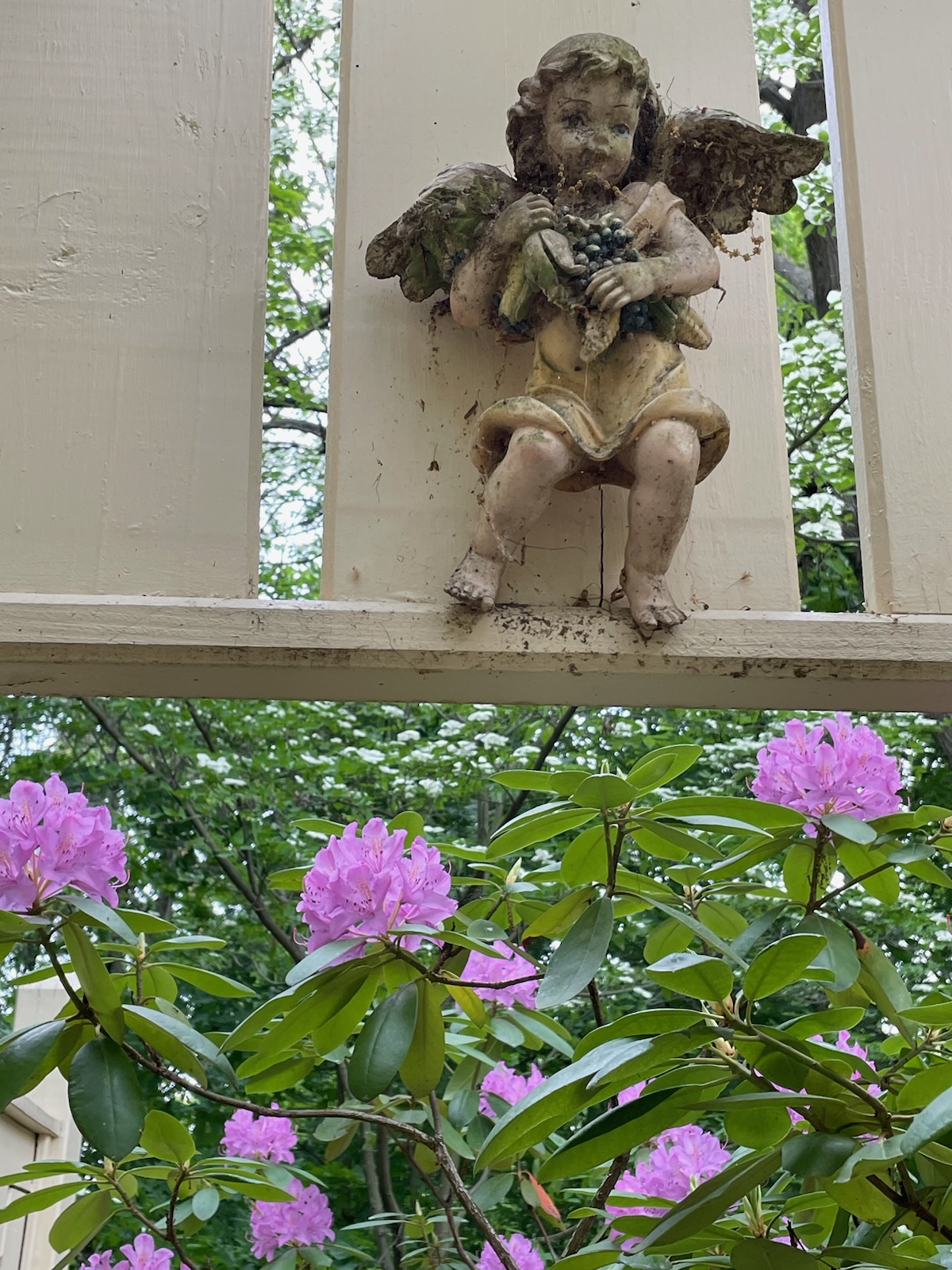
Pass by the cherub floating above some ripening rhododendron at the wooden loveseat.

Sometimes a thing is almost more beautiful before it’s blossomed.

When I get back to the caretaker’s cottage I find a bright green inchworm crawling on my leg. I set it outside, gently. I don’t need it.

The lawn is filled with dandelion wishes for the taking.

What the heck.

I’ll get a bigger bouquet.

2 Comments

Filed under Jean Zimmerman

In my skin

as it were – and having exercised my brain enough for today I thought I would exercise my legs by making my way down the scant-mile-long trail to the river.

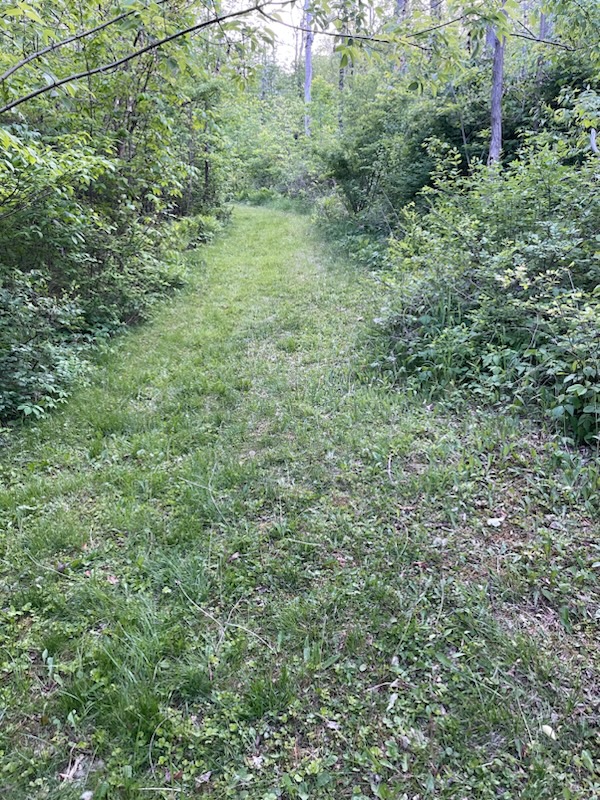
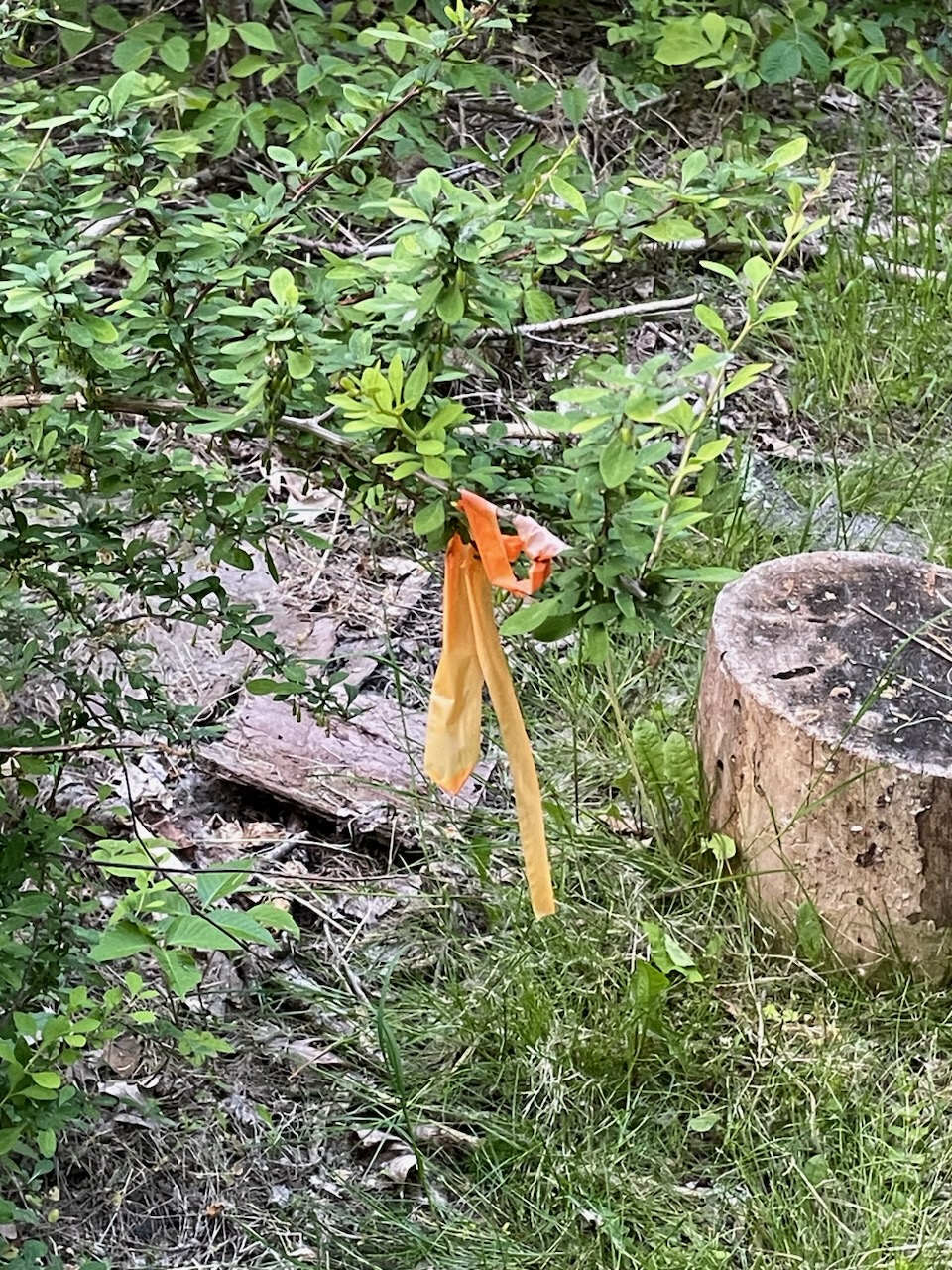
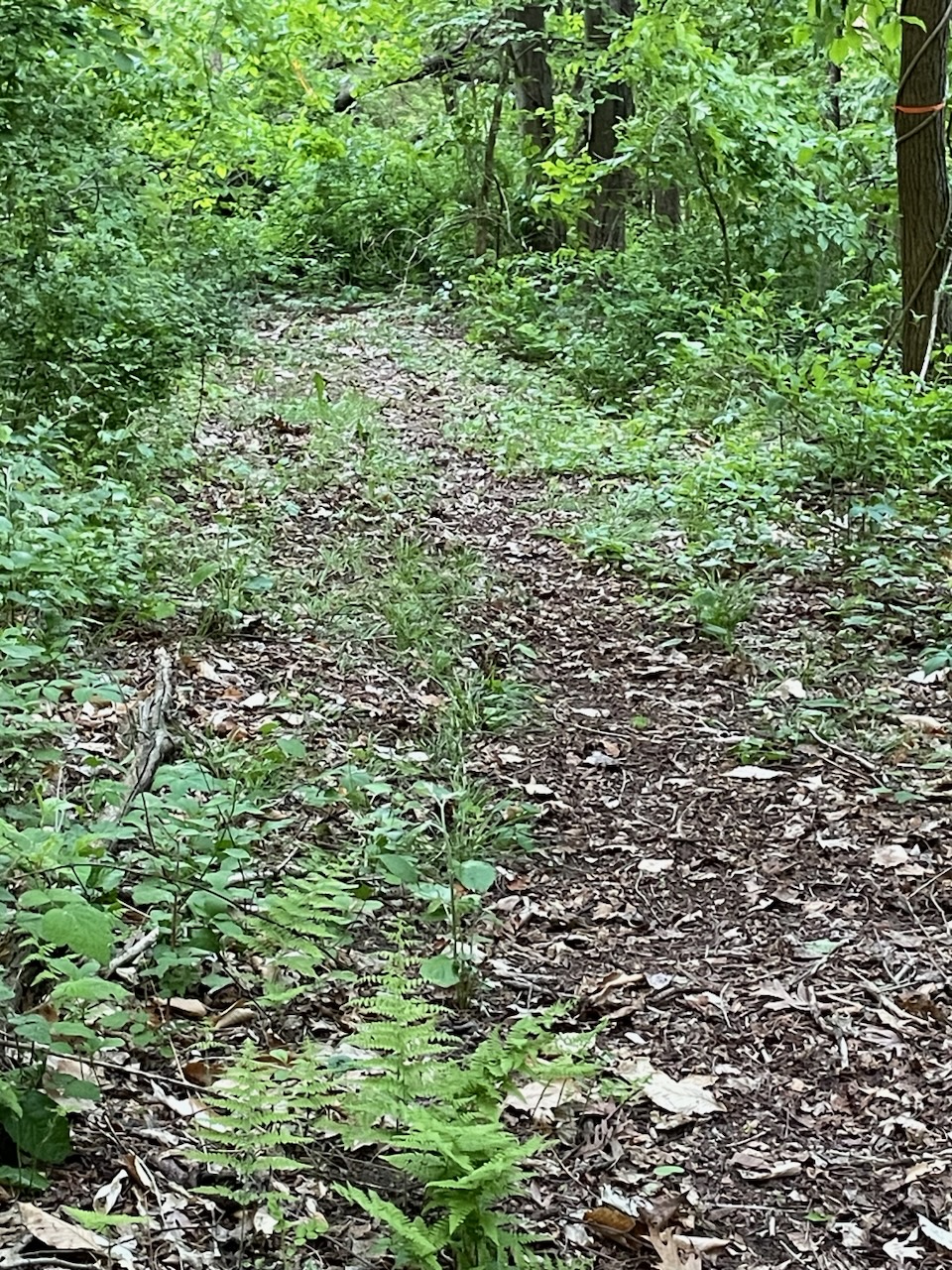
Magic hour. Just before nightfall. It is a wonderful path, carefully marked with delicate ribbons by Chuck, who takes care of the property.

I’m hoping to scare up one of the wild turkeys that have been seen around here or at least a deer but no animals, just the mad sound of bird song all around.

Dame’s rocket in abundance. Also called mother-of-the-evening.

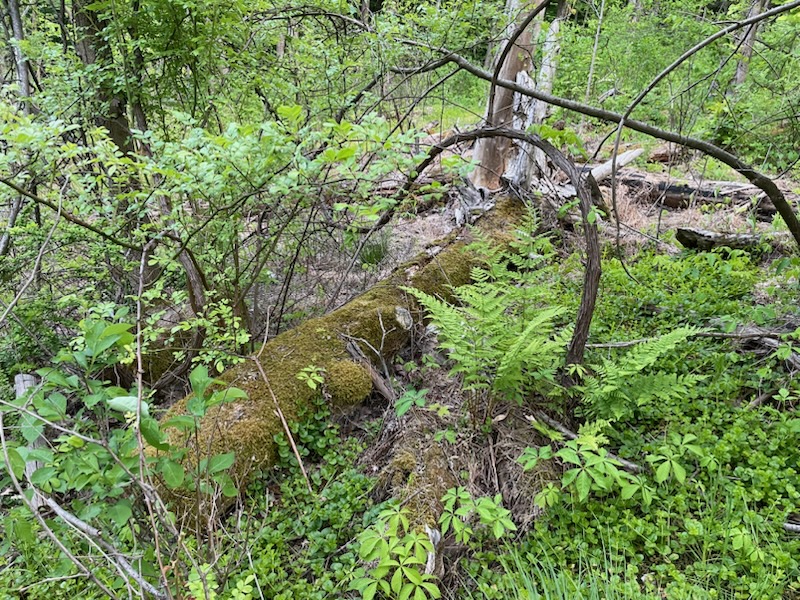
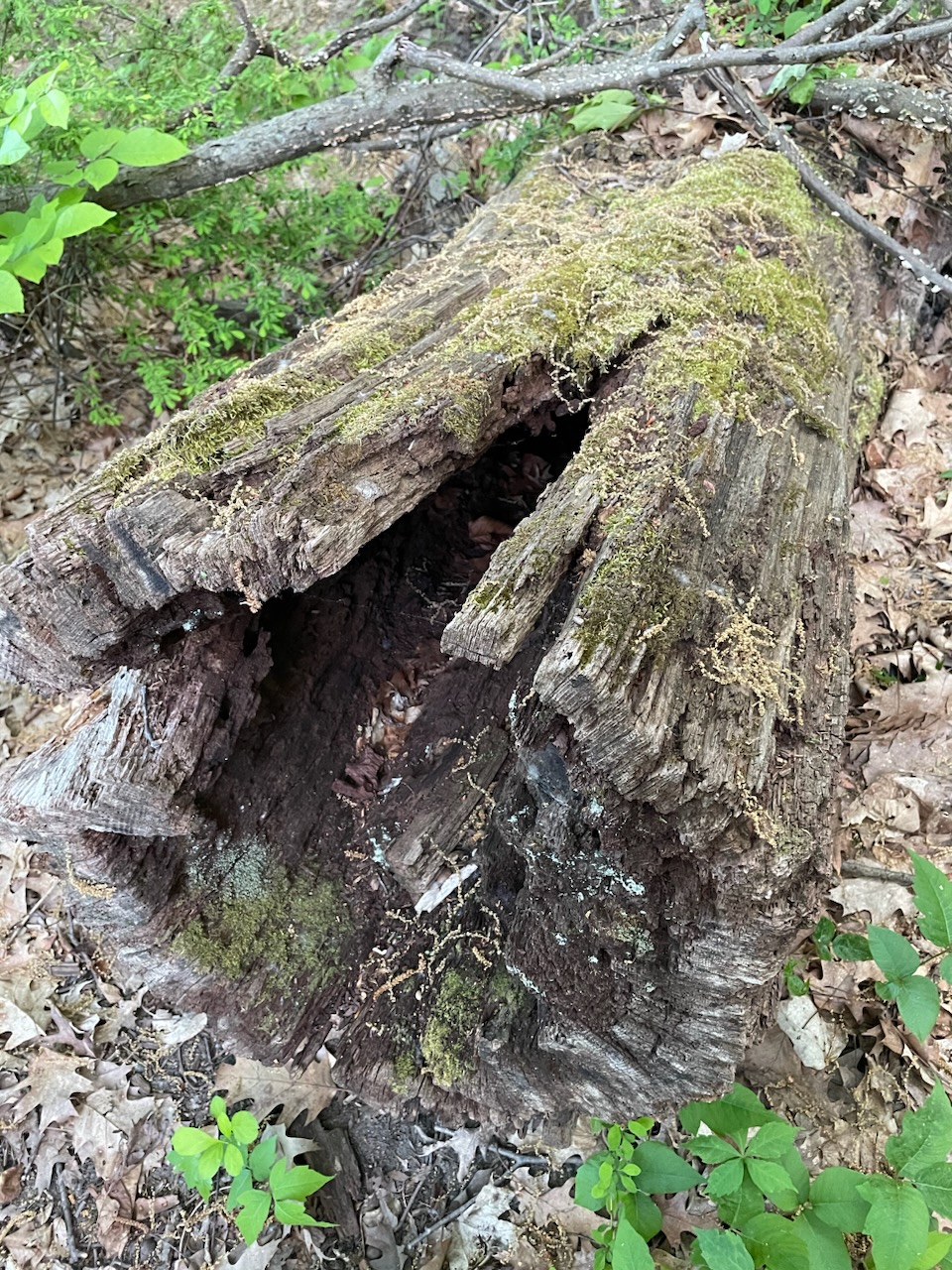
A mysterious grove of mossy logs.

A spruce cone.

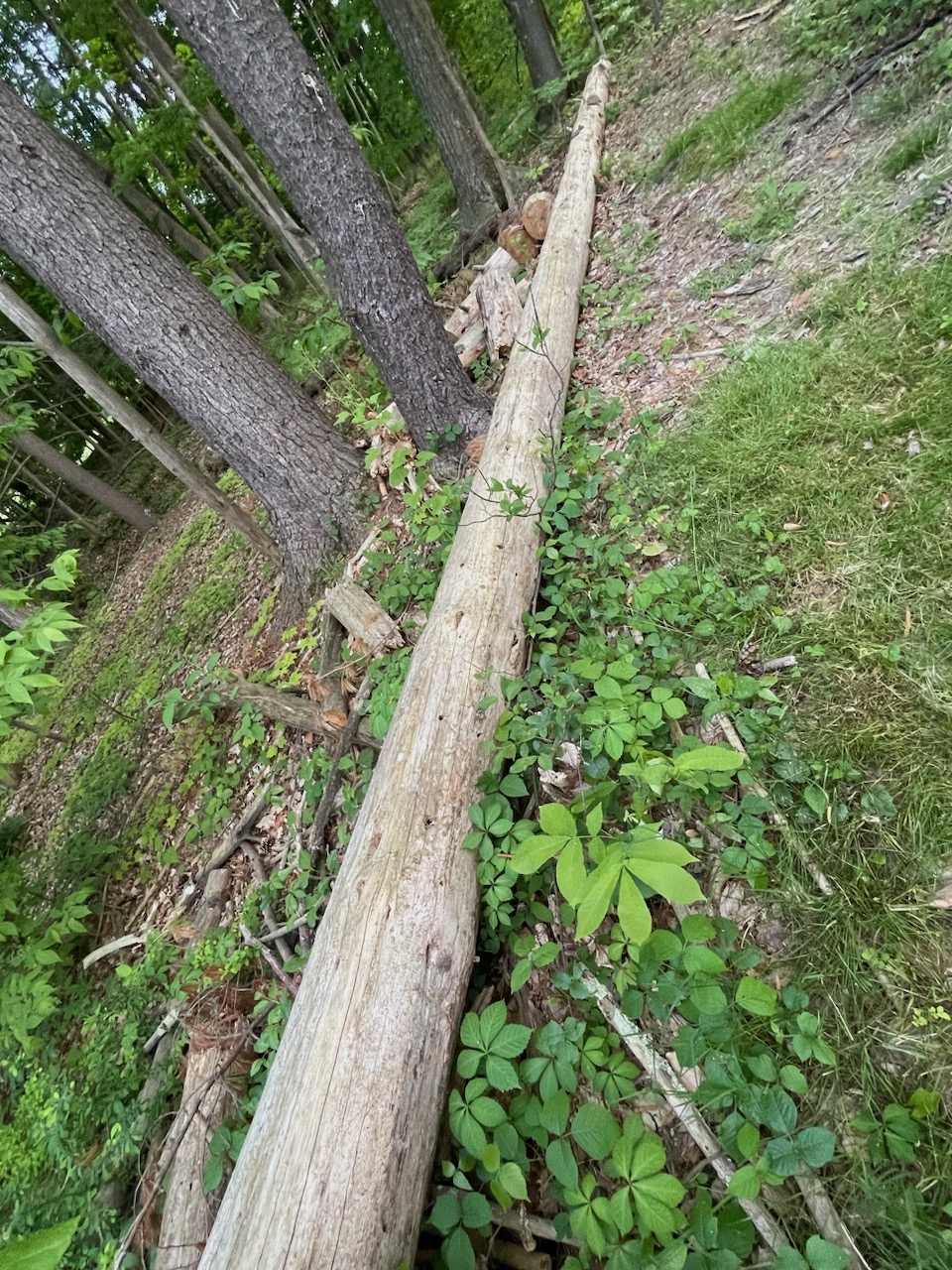
An old fallen pine with just about the right dimensions for a ship mast, like the ones I’m writing about in my current chapter.

Kismet! This trail has a bouquet of young white oak leaves.

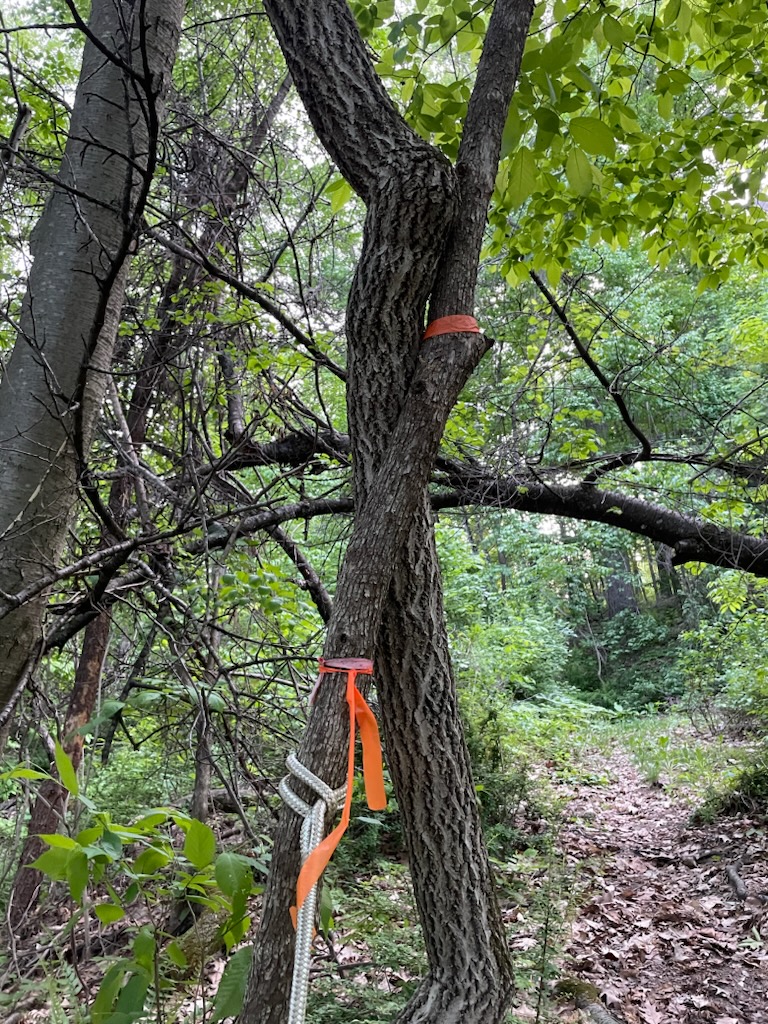
On the way down the last steep slope I can hear the waves rushing. After trying to explain inosculated trees to some painters here and sounding like a knowitall jerk I come across a pair right by the side of the trail here, a young white ash and a hophornbeam, seemingly making out.

They’ve been marked by ribbons as though ready for their close up. And a knotted rope placed there to help in the descent.

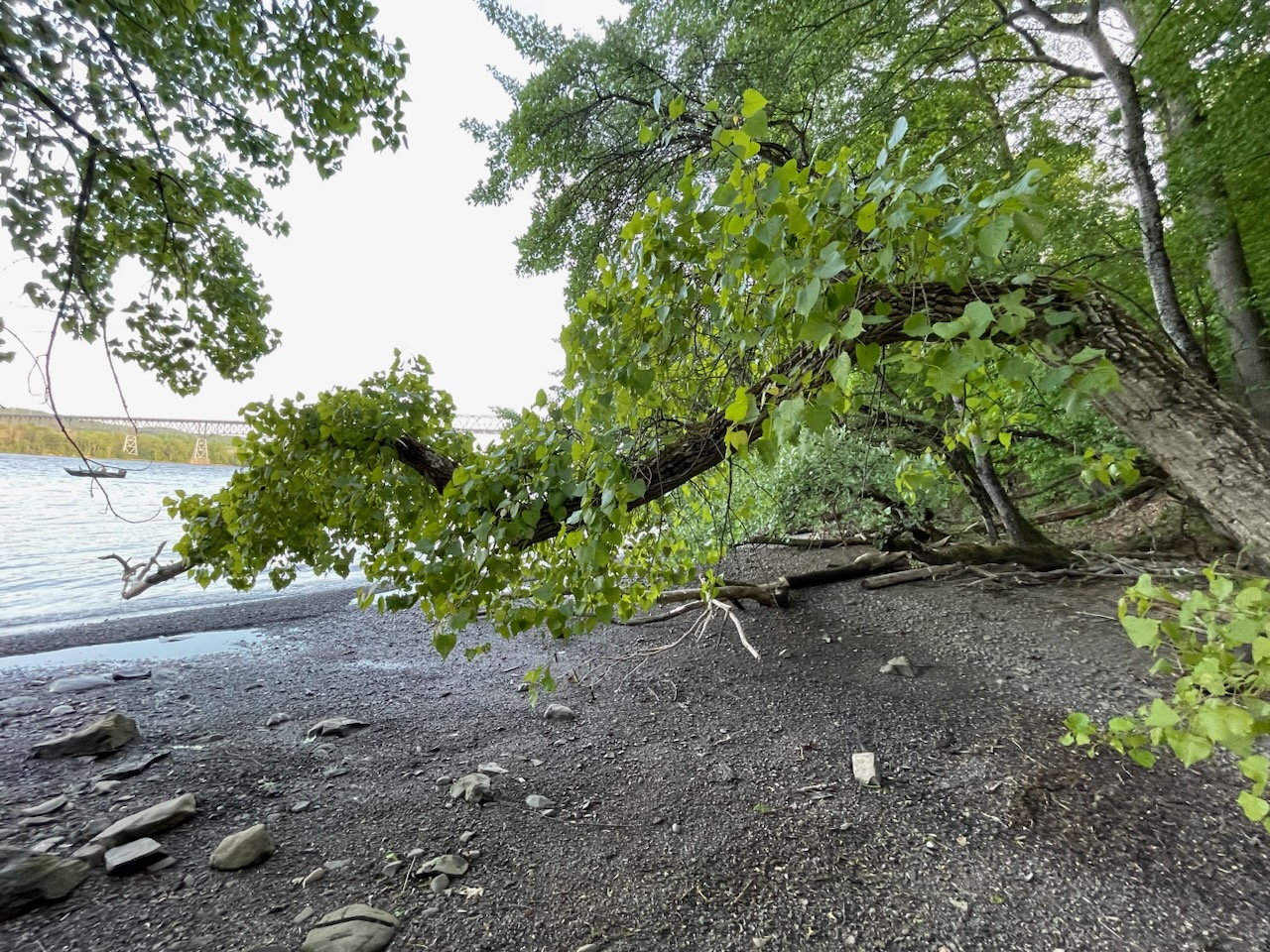
Finally, the beach. First, an Eastern cottonwood stretches itself out on the shore.

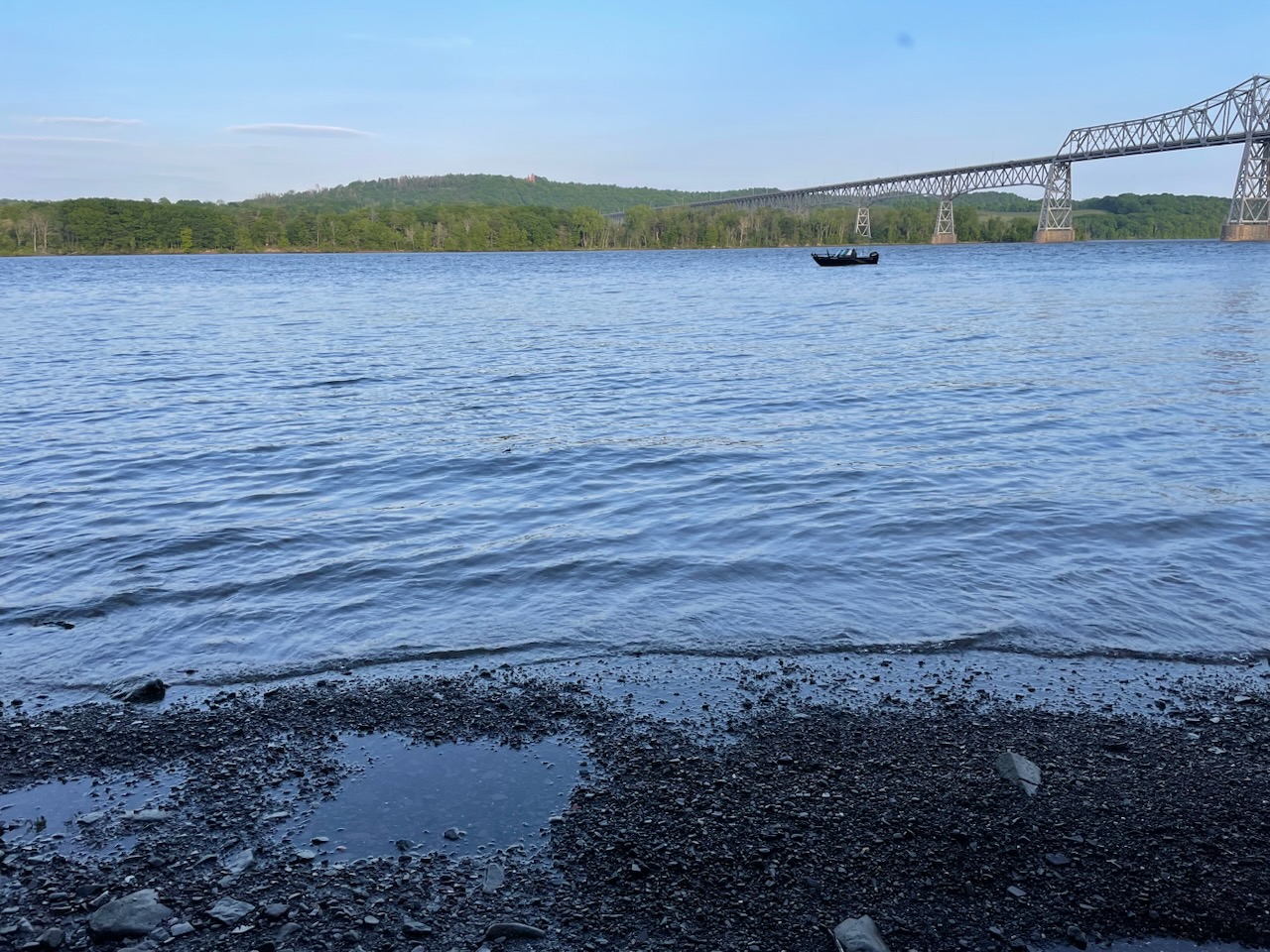
Is this beautiful enough for you? The Hudson is a beast.

How about this?

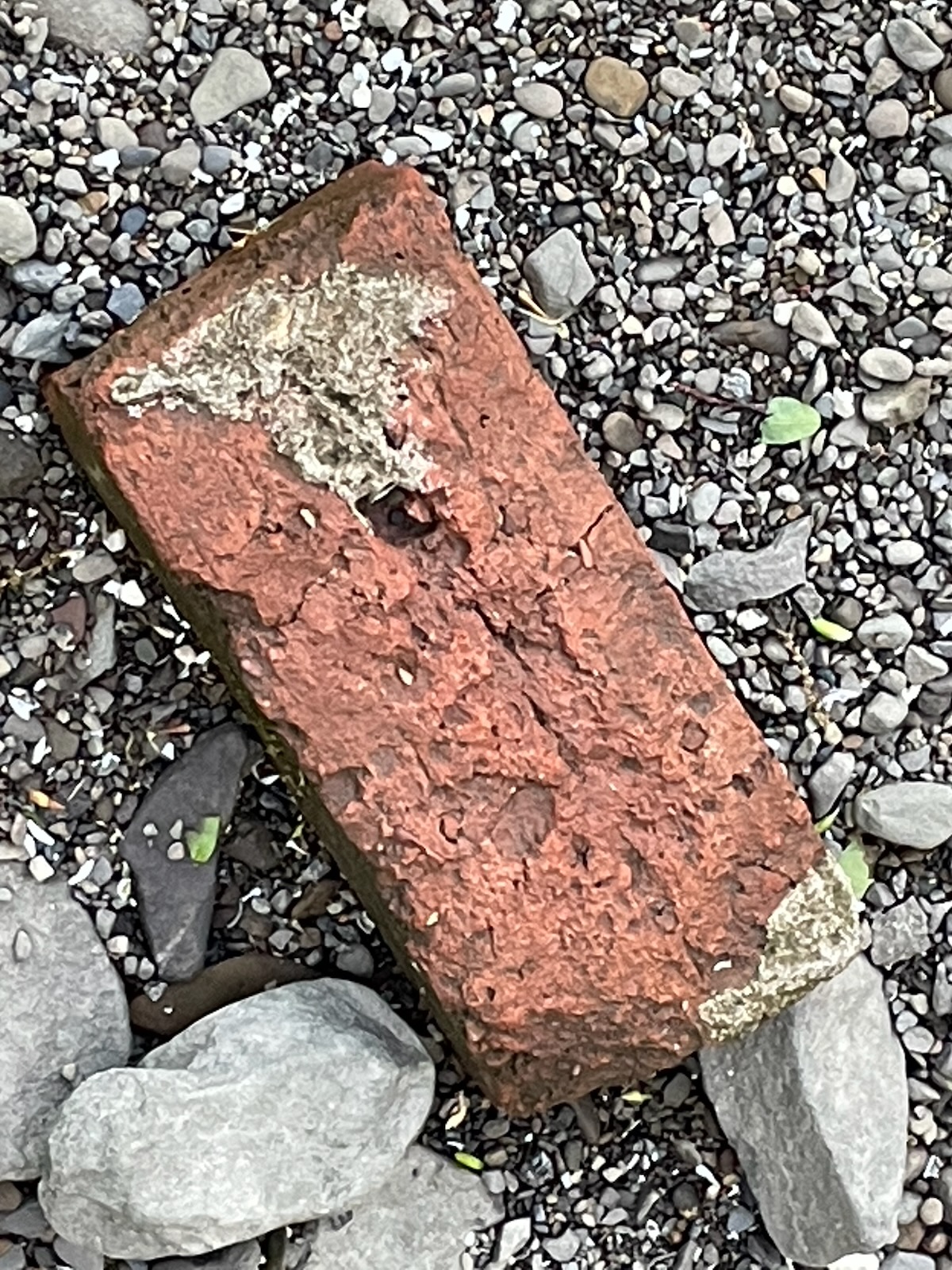
I find an ancient brick, probably from one of the historic Hudson River brickyards back in the day.

Handsome driftwood.

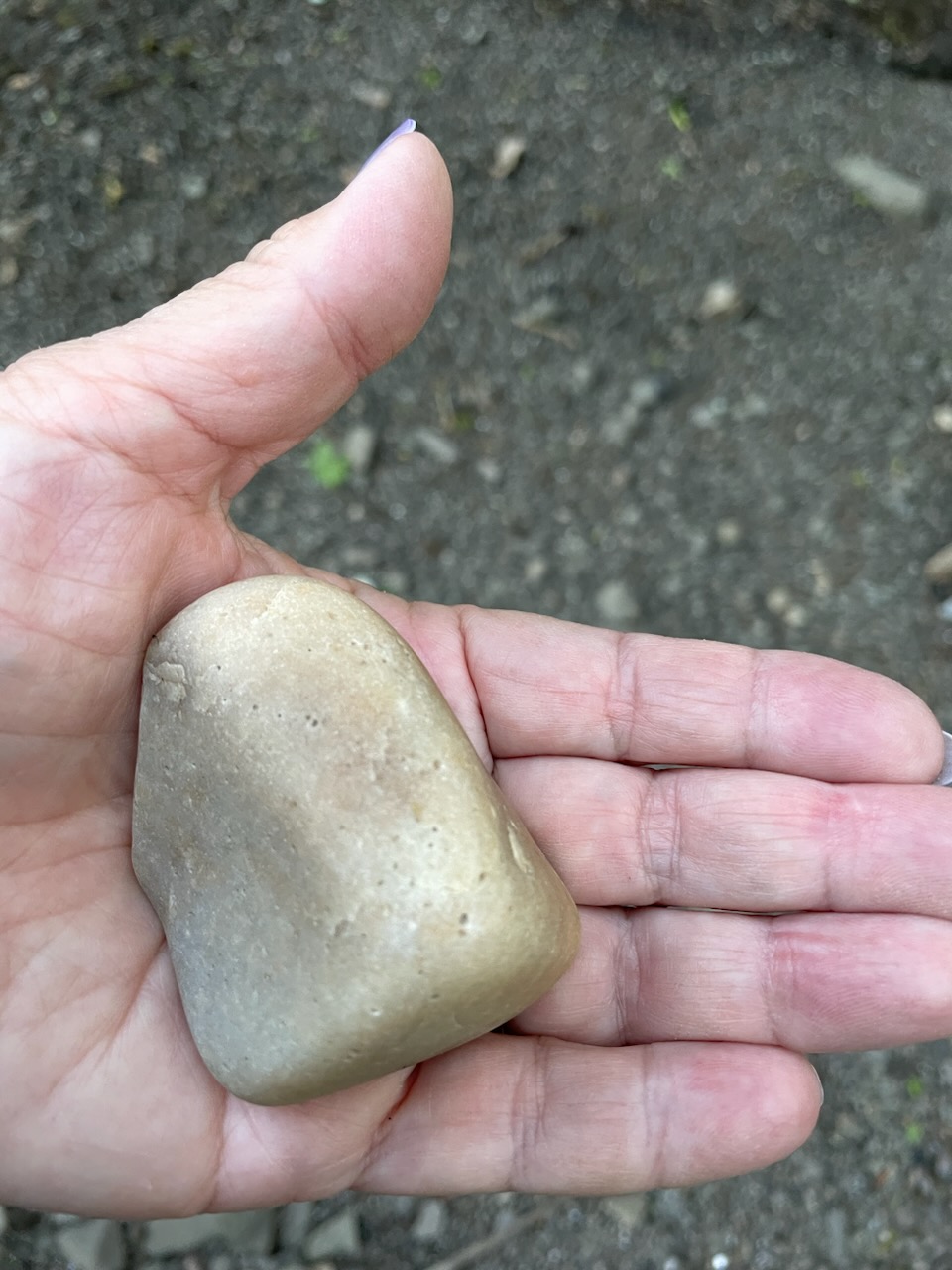
The smoothest beachrock in the world.

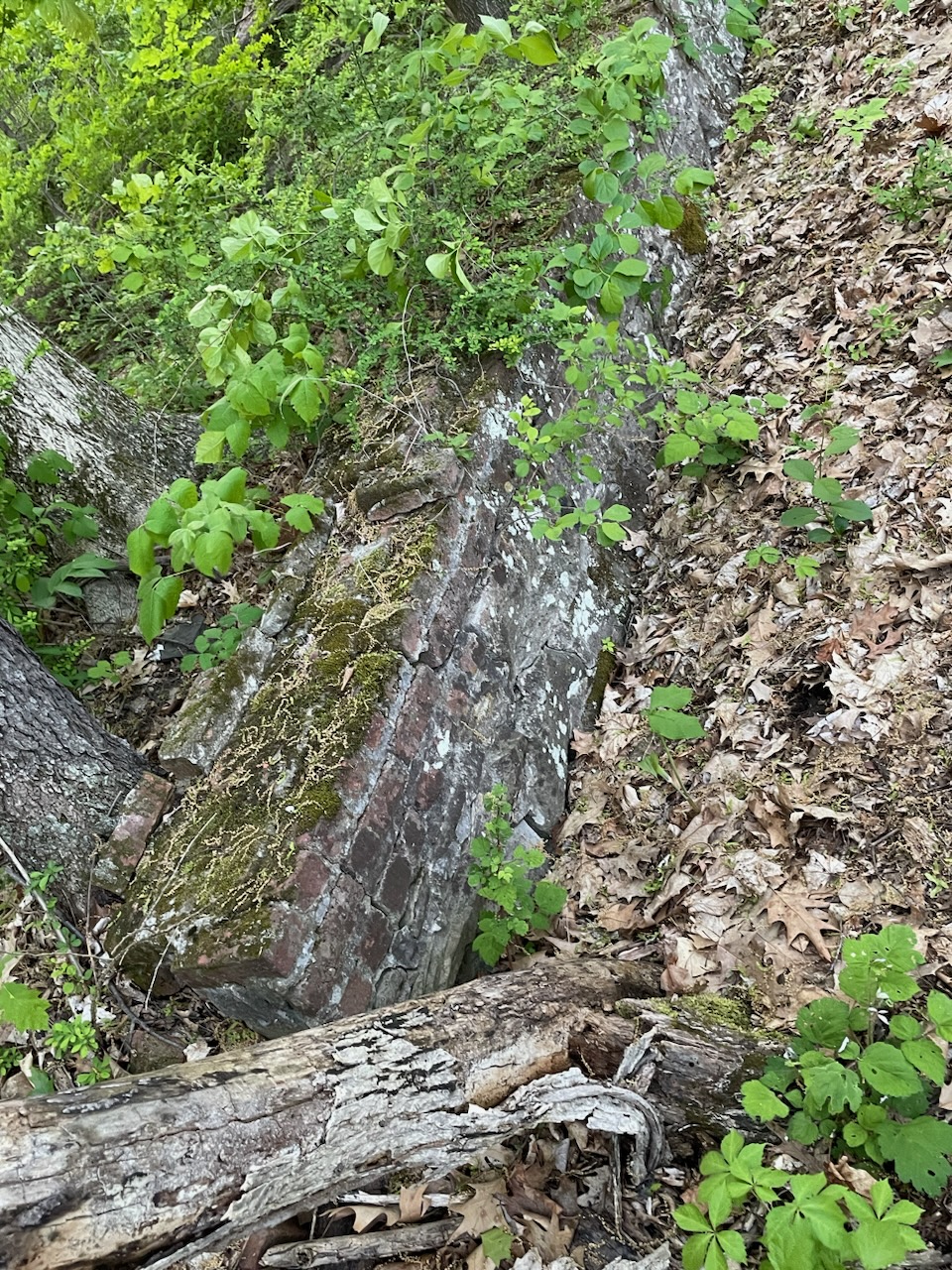
Heading back in the near dark, mysteries. An old foundation. Who came here before?

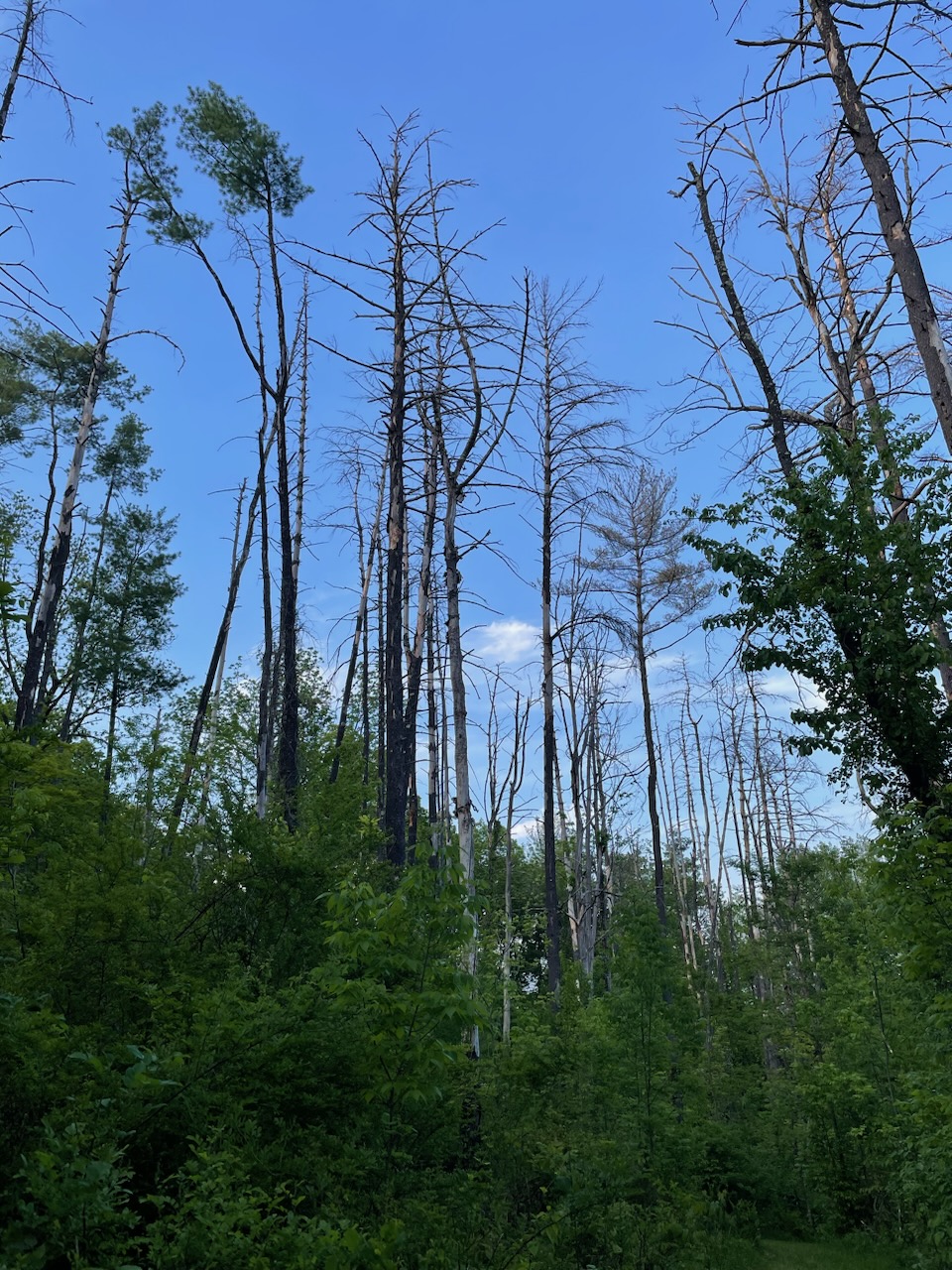
A forest containing a sad story. Pine bark beetle.

Things live here though. A hidey hole.

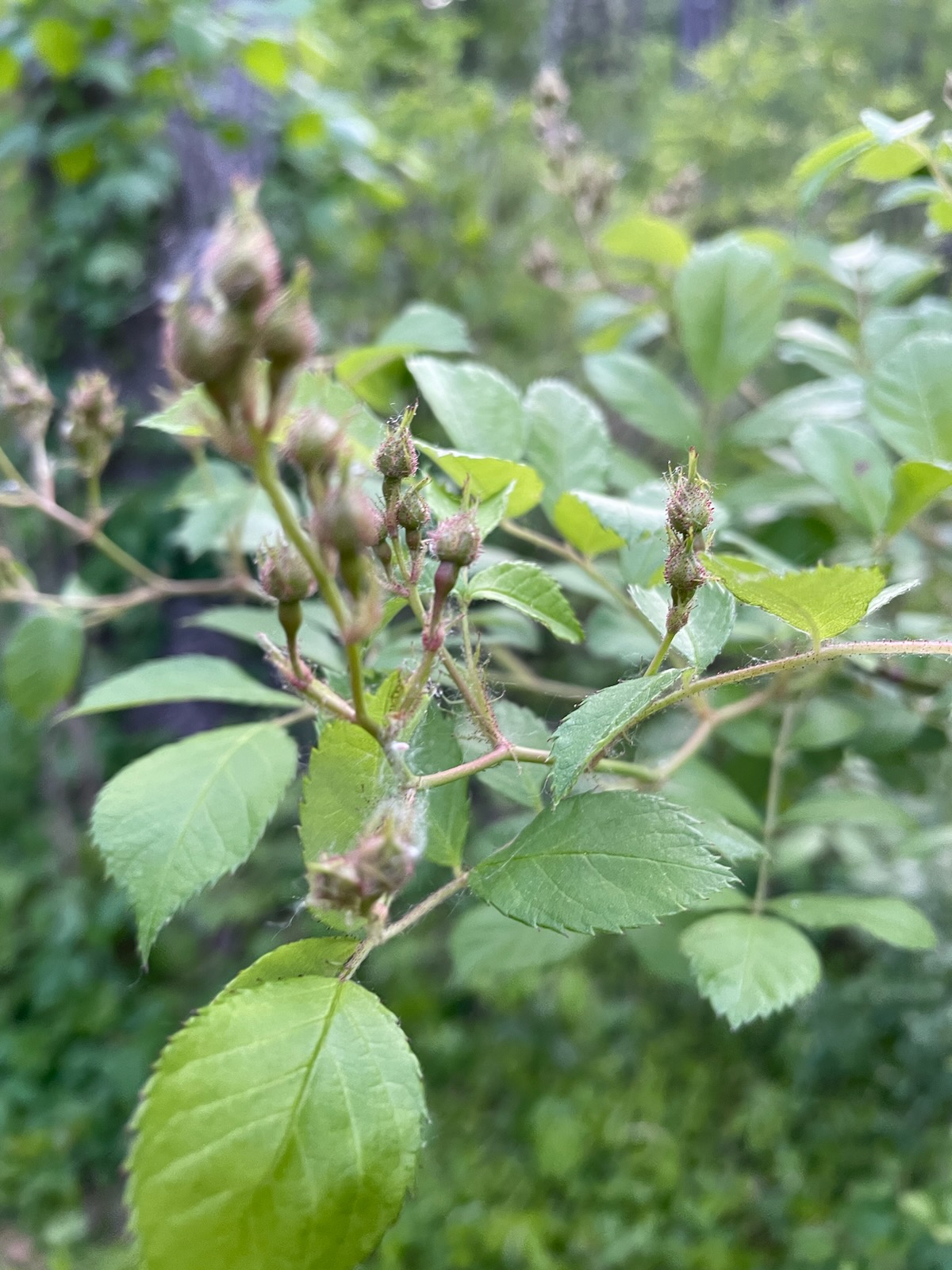
Multiflora rose, still holding tightly to its blooms. I don’t care if you’re invasive as long as you don’t invade me.

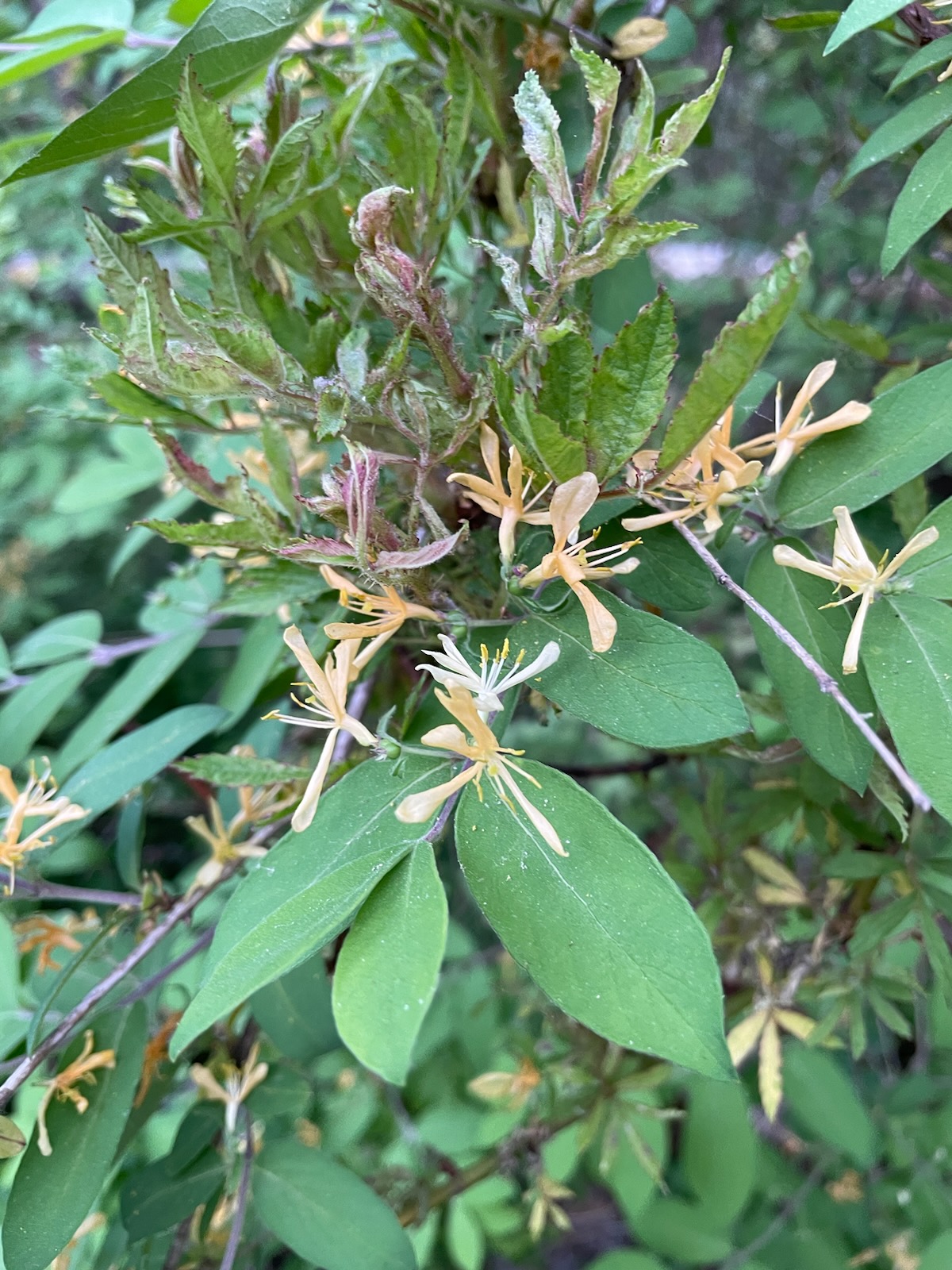
The first honeysuckle of the season, bringing back memories of childhood.

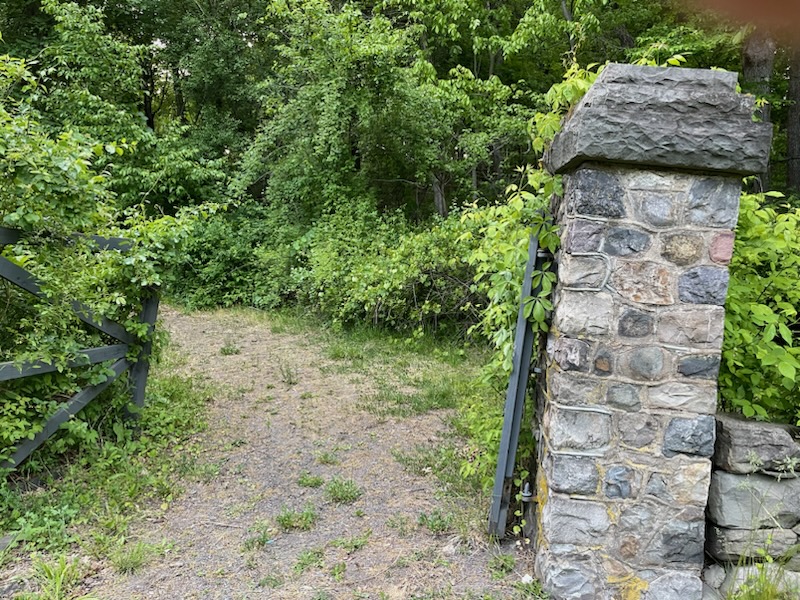
An old gate to the estate that hangs open as if to welcome me.

Closer, closer. The old carriage house.

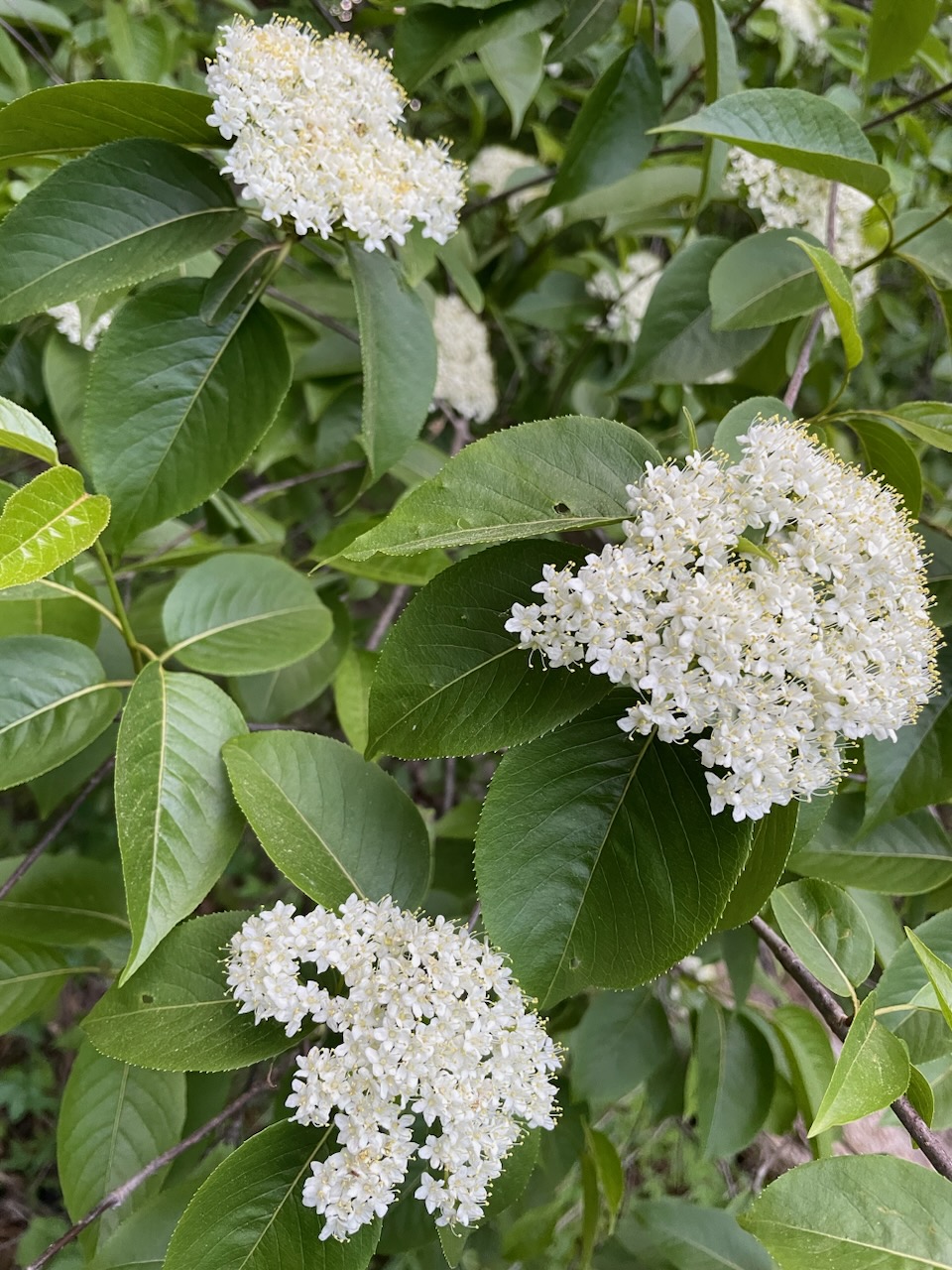
Fluffy viburnum.

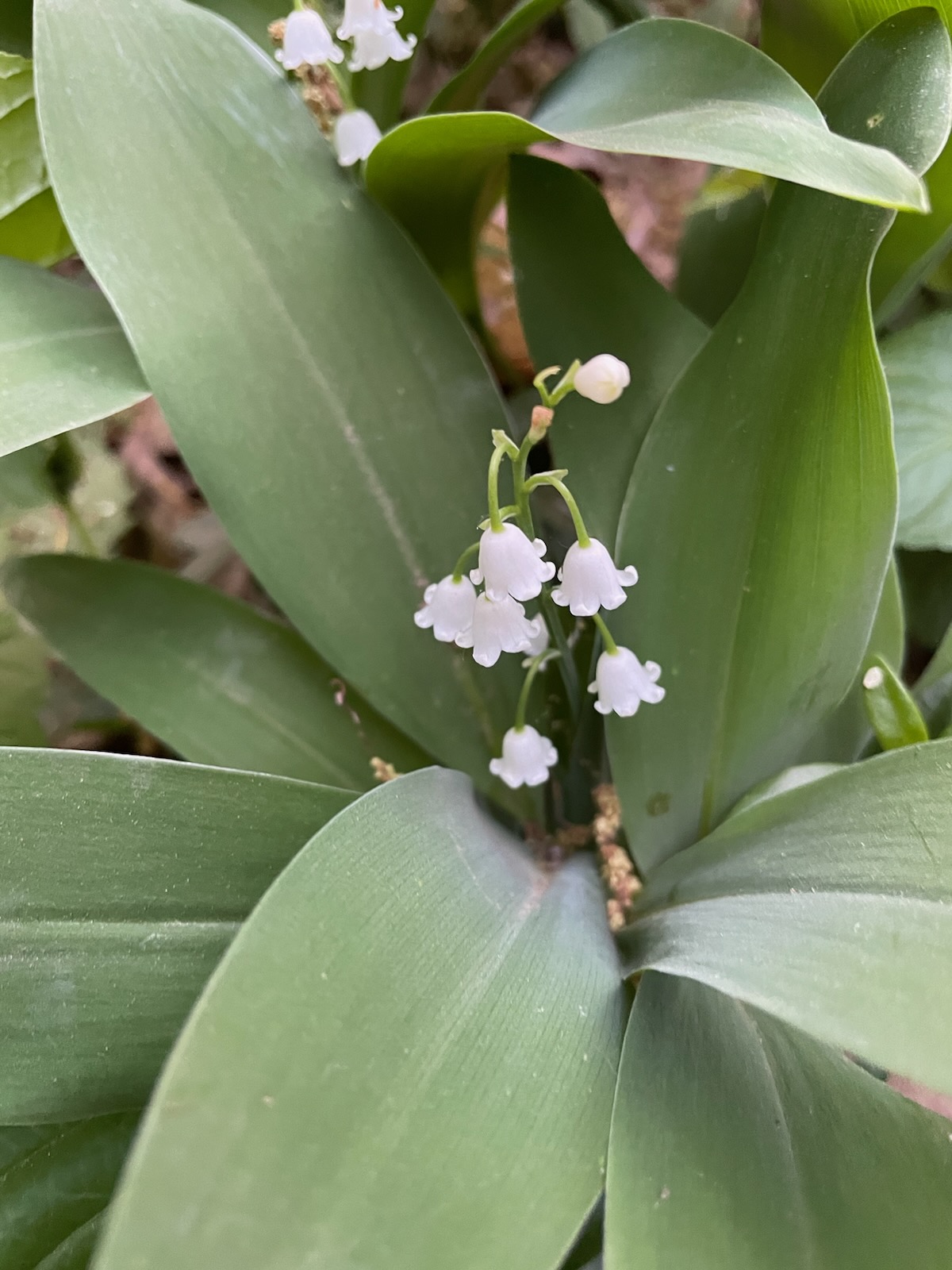
Lilies of the valley. I can’t think of the last time I’ve seen them.

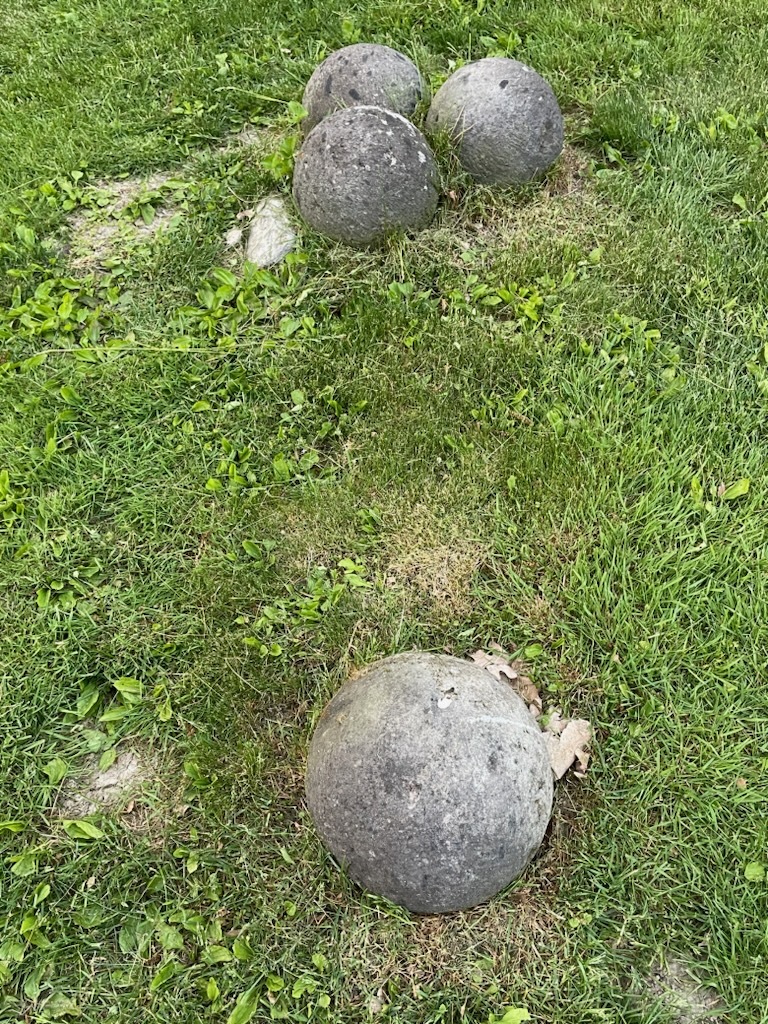
More mysteries. Cannonball stones on the lawn. What?

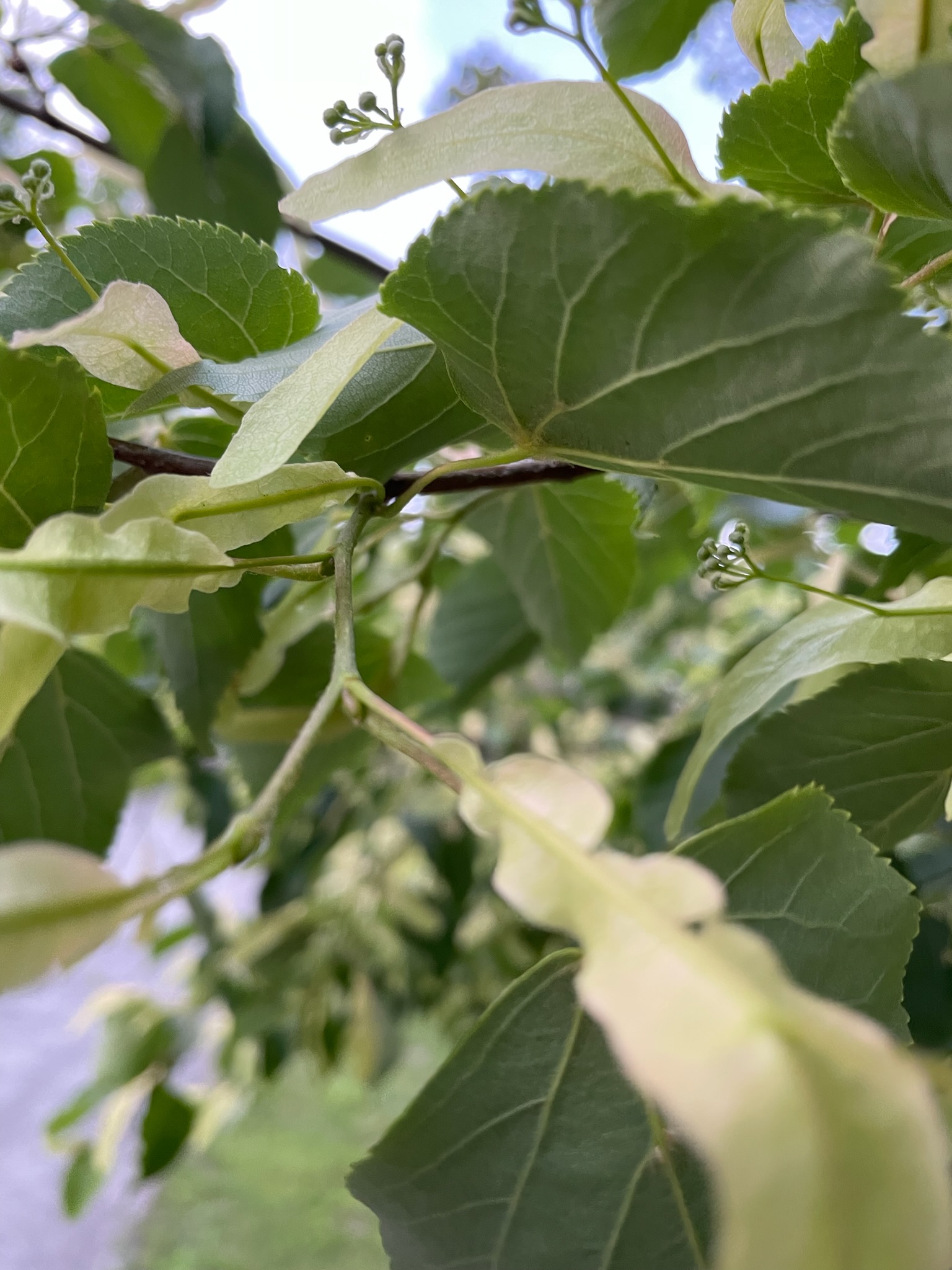
Finally, the linden with its delicate lime green bracts.

And I’m back to the Caretaker’s Cottage.

Home sweet home, for now.
4 Comments

Filed under Jean Zimmerman

I am in Heaven

and thus not able to file regular blog posts. You’ll understand. Catwalk Institute is a ravishing place to have a writing residency.

I think I will be far too consumed with writing chapters of Heartwood here to do much else. Perhaps exercising my daydreaming muscles too. Part of the creative process, don’t you know.

My cheerfully monastic room has plenty of shelf space for my anvil collection (think I brought enough books?).

Hoping to claim the gardener’s shed as my work lair for the next three weeks.

The tiny little space seems custom made for me and my laptop. There’s even wifi.

On the way, lovely little nooks and crannies in which to lose myself.

Whimsy abounds.

Places to walk, think.

Breathe.

I am sure that I will spend time meandering around the far-flung reaches of the sixty-five acres of the estate stretching down to the Hudson River, which happens to be visible from the living room of the Caretaker’s Cottage, my digs.

Practically the first thing that greeted me was a majestic white oak.

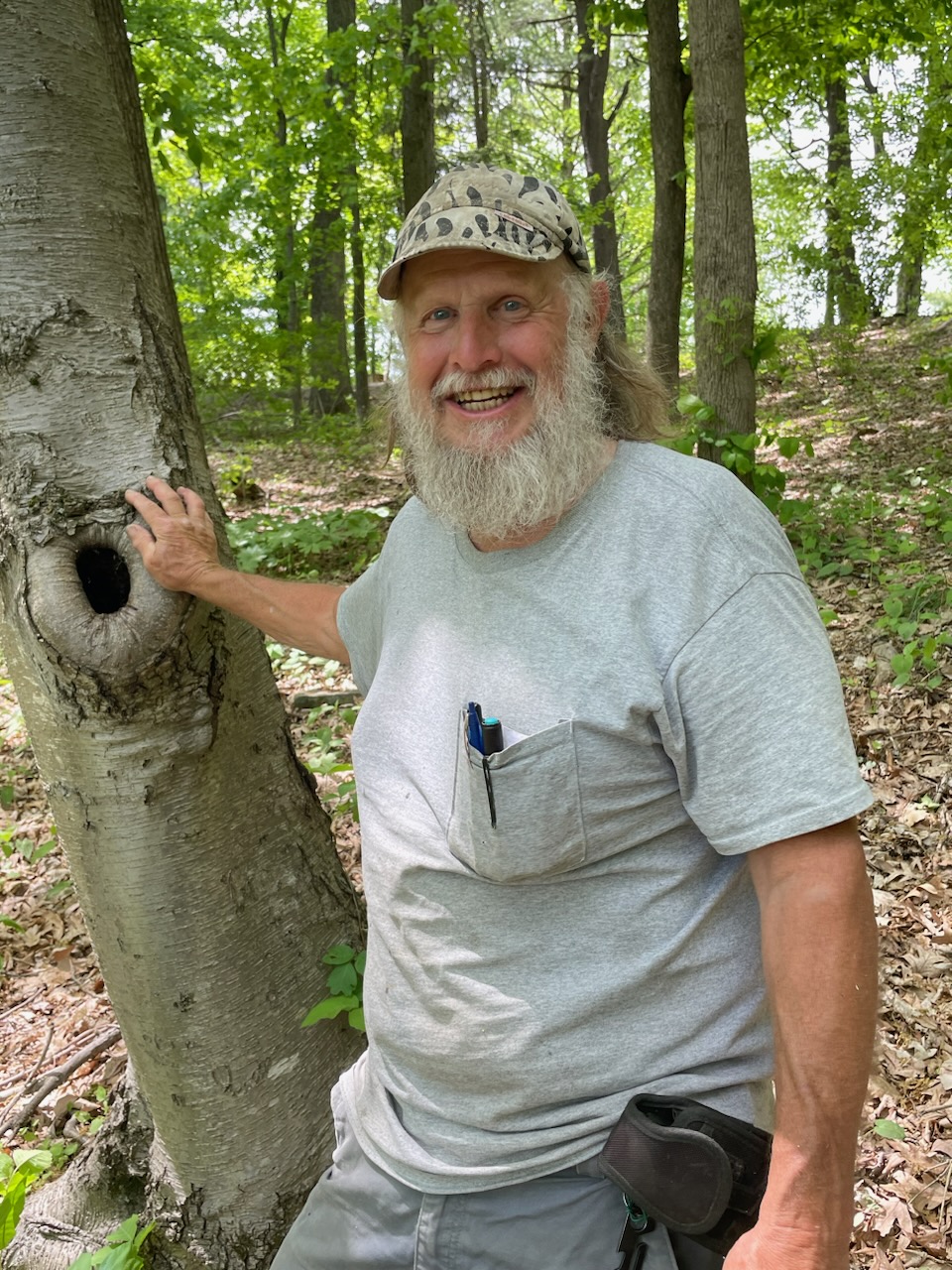
Met Chuck the caretaker of the property, who told me he “was born a tree.”

He seems to know everything about everything. We toured the place and talked about the phlox.

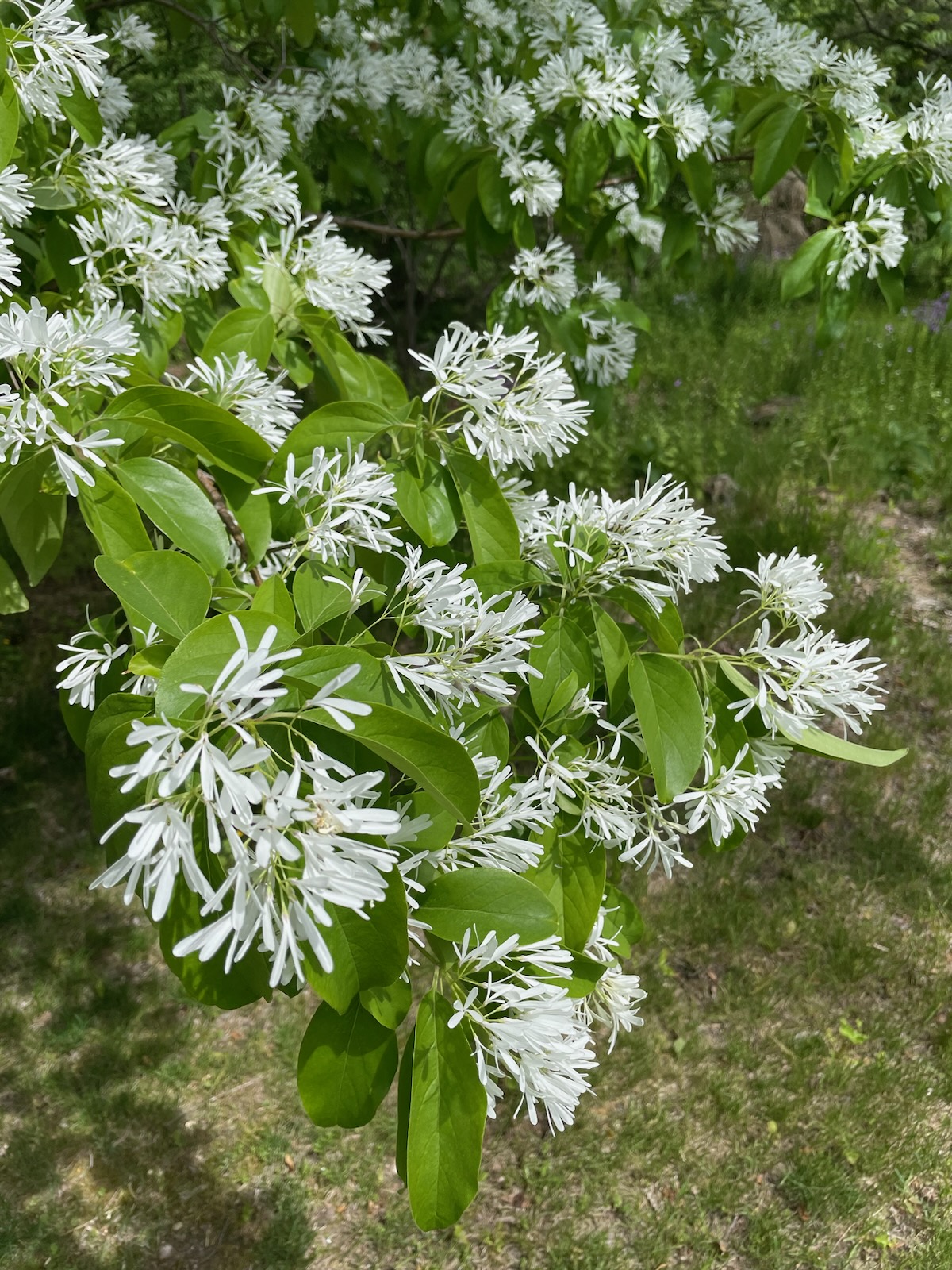
The carpenter bees (“they like to play”). Chuck introduced me to one named Herman. We saw the cattail pond only partly invaded by phragmites. We ID’d a mourning cloak butterfly and a Chinese fringe tree.

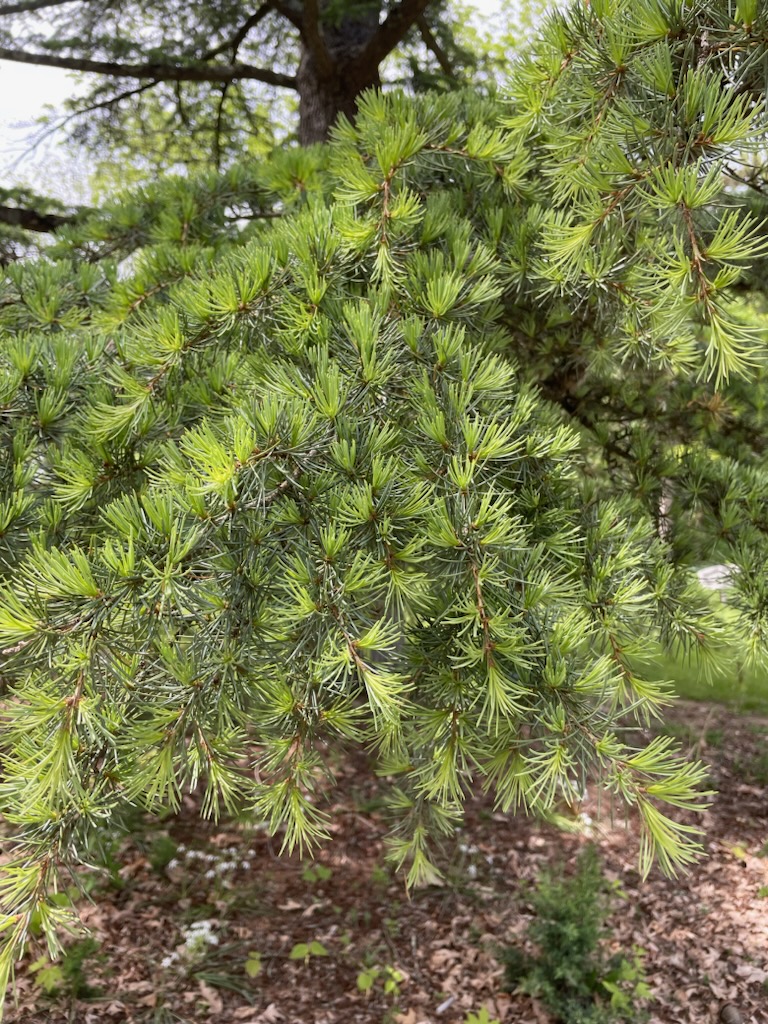
The fat old deodar cedar.

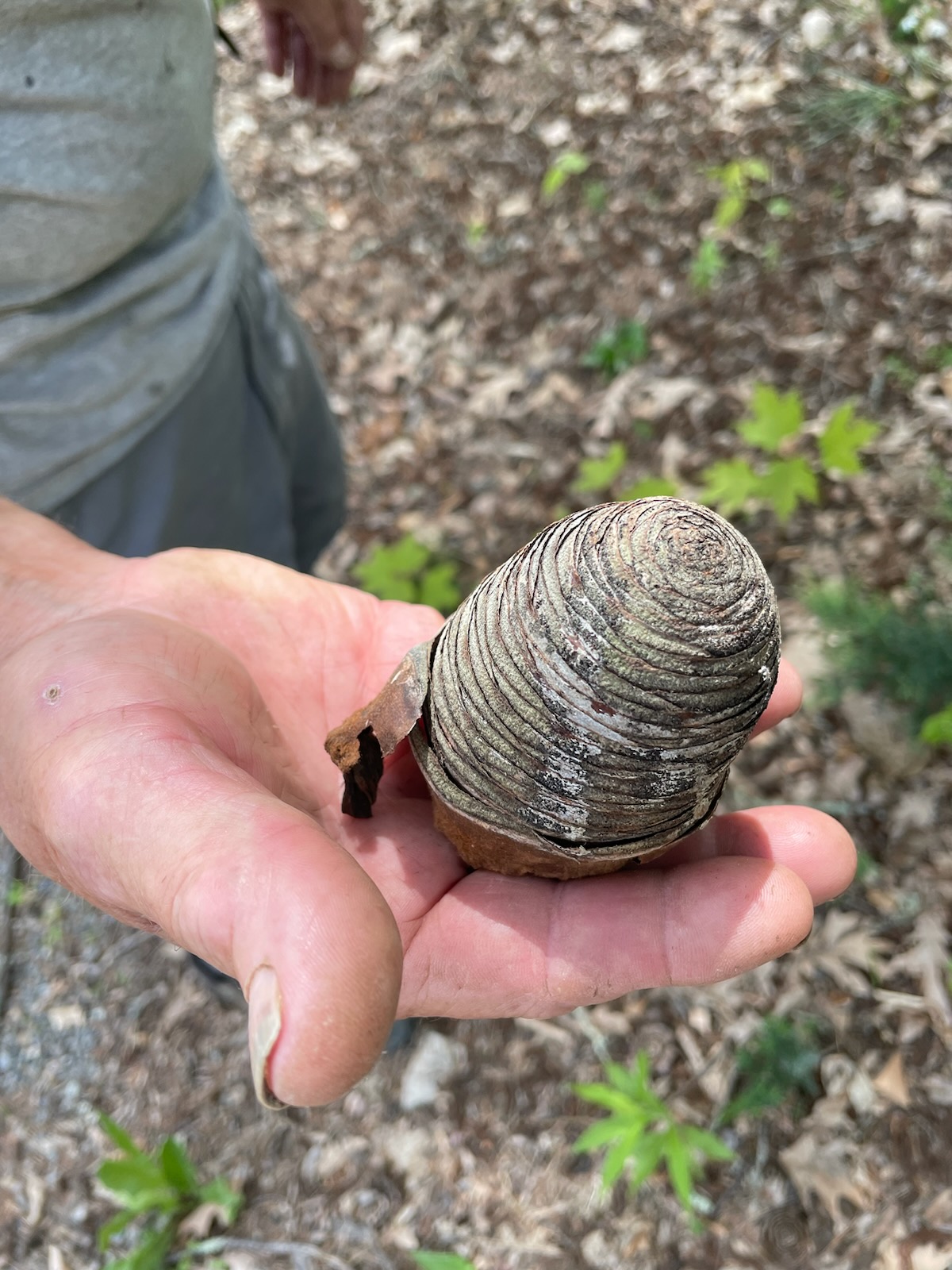
And its fat baby cone.

Chuck told me he made a wooden sign for his home with the legend, “Breathing in I am a tree. Breathing out, I am rooted in spirit.” He was kind enough to prop up a kindred spirit.

Whatever I do I’ll be sure to take it slow, preferably strolling in the shade of a handsome old black locust.

Physically, at least. My brain has already begun firing on all cylinders.

Wish me the best. I am so fortunate to be a Fellow here.

3 Comments

Filed under Jean Zimmerman

If you happen to get this RIGHT NOW

I am about to be featured as moderator with a fascinating historical preservationist, tonight at 7 EST (virtual, free, one hour) as part of a series I’ve organized for Save Ellis Island called Preserving New Jersey. I’ve spoken with Aidita Milsted and she is very smart and it should be a lively conversation. Please consider dropping in. You’ll need to register to get the link.

Leave a comment

Filed under Jean Zimmerman

When the oak is felled the whole forest echoes with its fall,

wrote Thomas Carlyle, but a hundred acorns are sown in silence by an unnoticed breeze. Here at Lasdon Arboretum in Katonah, New York, foresters, ecologists, gardeners and volunteers are giving that breeze a little bump.

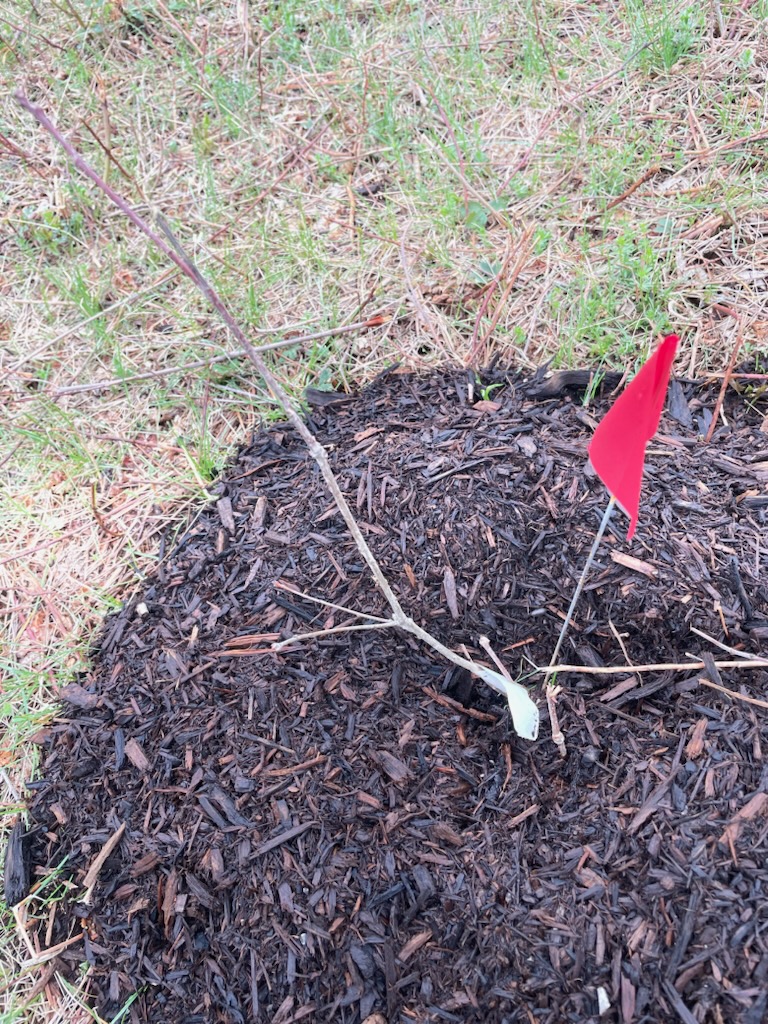
To wind up with an oak forest you need to start small–even tiny, with seedlings that look more like sticks than the mighty trees they will become.

These bare-root specimens are being coaxed to thriving in an experimental 1,000-tree “oak orchard” as part of an important initiative called the Northeastern Urban Silviculture Study. Its purpose is to demonstrate how local ecotypes perform at different locations across the Northeast. Westchester Parks, which runs Lasdon, is partnering in this experiment with the United States Forest Service.

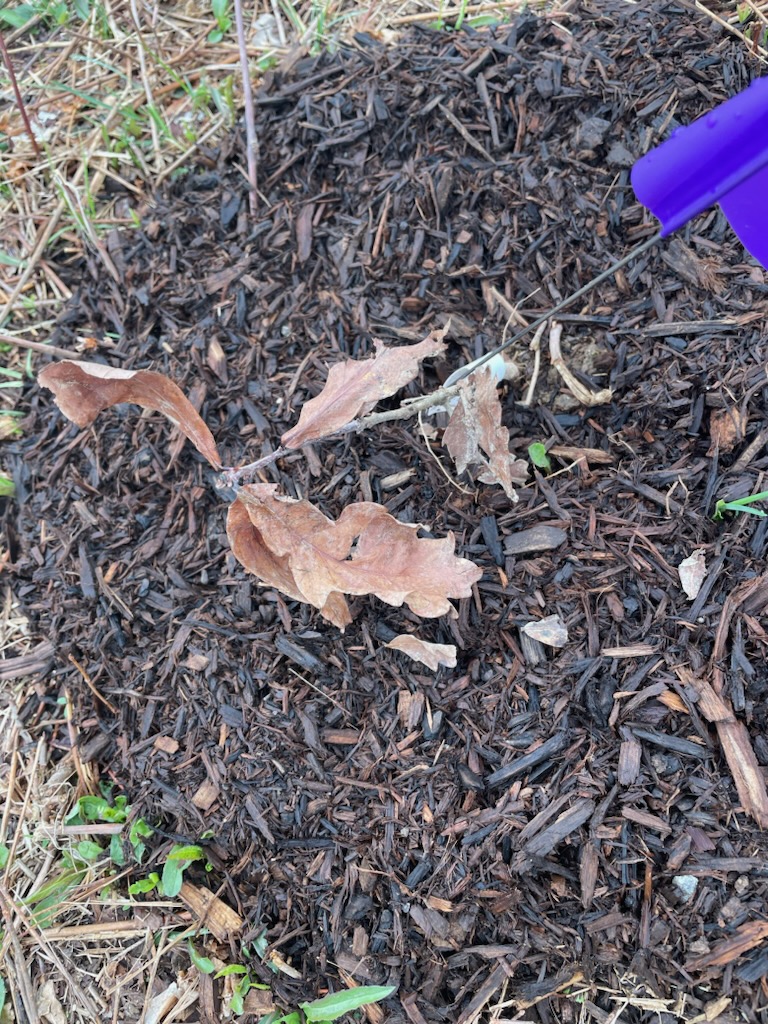
The idea emerged from a series of five virtual workshops with experts earlier this year that focused on how traditional forestry might translate to urban forests. Oak trees have been celebrated over time as symbols of longevity, strength and stability, endurance, power and justice. They can grow to the age of three hundred or more. Often the leaves of Quercus hang on all the way through the winter. You can see a few even on these twiggy seedlings.

Lasdon is an extremely civilized place. Yes, the 234-acre former estate boasts lovely wooded trails, but it also has family-friendly exhibits (dinosaurs, butterflies) and a botanical garden in which visitors may stroll and enjoy perennial flowers and shrubs.

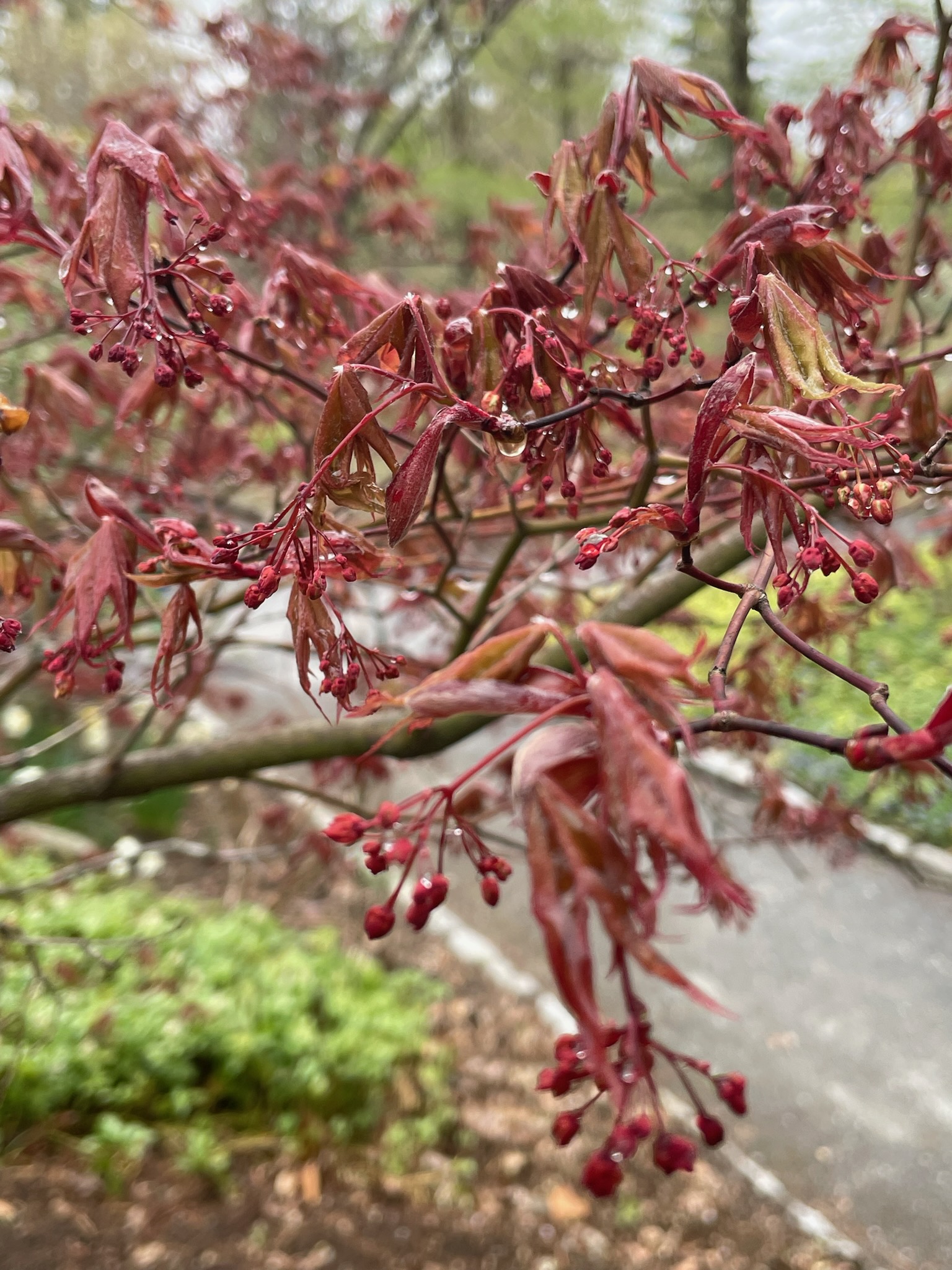
Specimen trees like Japanese maples are now just springing forth.

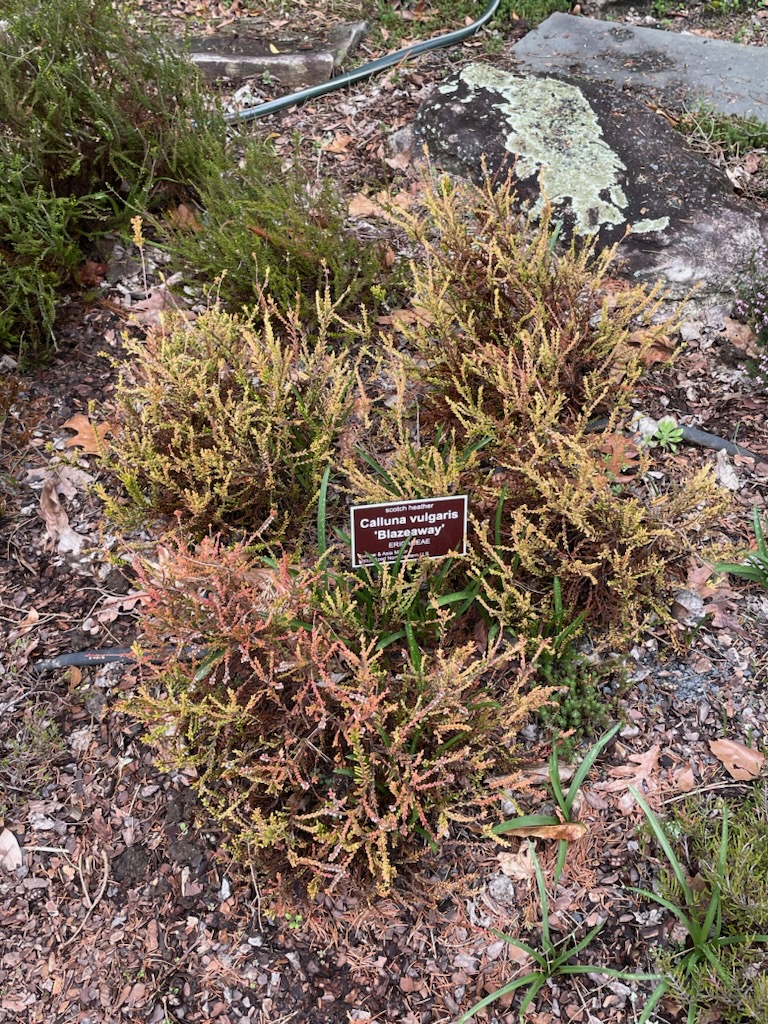
There are carefully labeled border plantings.

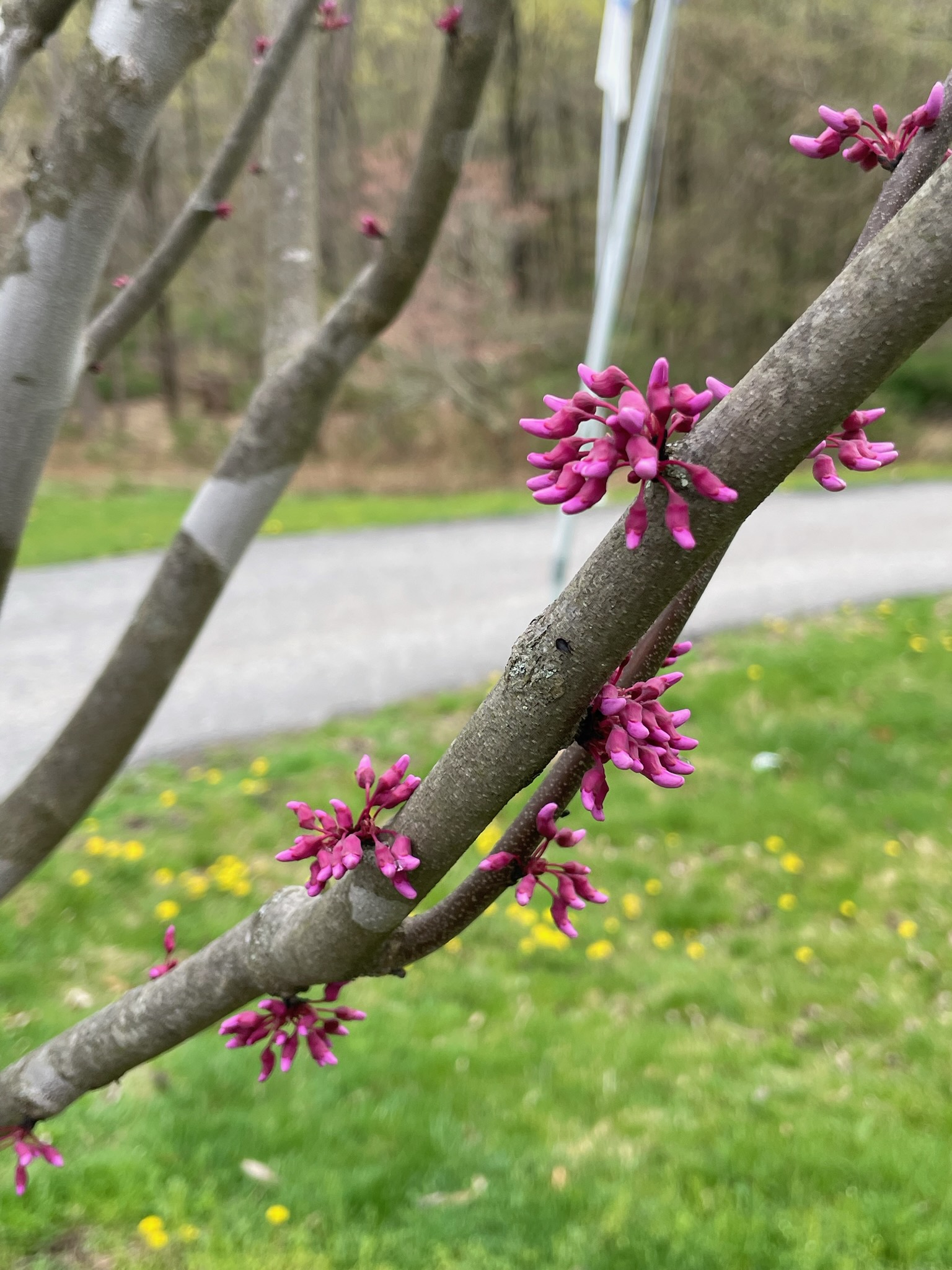
Eastern redbuds.

Now exhibiting one of my favorite botanical phenomena, cauliflory, whereby flowers bud and bloom directly on trunks and branches.

Nice benches appear on pleasant walkways to rest and contemplate it all.

The oak project is a bit different. The boughs of the oak are roaring inside the acorn, wrote the English poet Charles Tomlinson.

Max Piana, a research ecologist with the US Forest Service, breaks briefly from his labor to tell me that two species will be studied. First, white oaks are being planted here at Lasdon to investigate climate adaptation. The work is being funded by folks in Kentucky, because they are running out of the white oak needed to produce barrels in which bourbon is aged. Apparently no other wood will do for this purpose. “Otherwise it becomes scotch or whiskey,” Max tells me. White oak is so cool.

To prepare for today’s planting, volunteers collected acorns from locations all the way from Memphis to Massachusetts, including sites in Baltimore, Kentucky and New York. The creation of a thousand forests is in one acorn, said Ralph Waldo Emerson. He was probably speaking metaphorically, but he might have approved of the literal version underway here at Lasdon.

The acorns were propagated and “families” of seedlings gathered. This is Max holding one such family, which looks to me more like a twiggy bouquet of infant oaks.

Spread out across the oak plot at Lasdon is a “rainbow” of trees, red, white, purple and so on, reflecting the originating conditions of the acorns, “from hot to cold.”

Trees will be assessed as they grow for qualities that include drought resistance. “That’s how you improve cultivars,” says Max. “We’ve got to get a jump on climate change.”

Specimens were mailed to the University of Kentucky, where they’ve been kept in cold storage until the spring planting season. “They’re still asleep, just waking up now,” says Max.

The project will also install 8,000 chestnut oaks in forest gaps beginning this fall. A member of the white oak group, the chestnut oak currently grows here in New York at the northern edge of its range. The idea is ultimately “to increase their abundance here,” says Max. When urban forestry is discussed, he says, “Nobody ever talks about these forest tracts. They talk about street trees.” Yet, remarkably, there are fully 10,000 acres of urban forest in New York City alone.

Students have come to Lasdon today to help in the planting.

They cut down through the tough sod with their spades and insert each seedling firmly in its new habitat.

Mulch will follow, along with plenty of water, especially in the first year as the trees get established.

Think of the fierce energy concentrated in an acorn! wrote George Bernard Shaw. You bury it in the ground, and it explodes into an oak!
One student assesses things more simply. “Planting is so therapeutic,” she says. “Why cut trees? We need them for our life.”
2 Comments

Filed under Jean Zimmerman