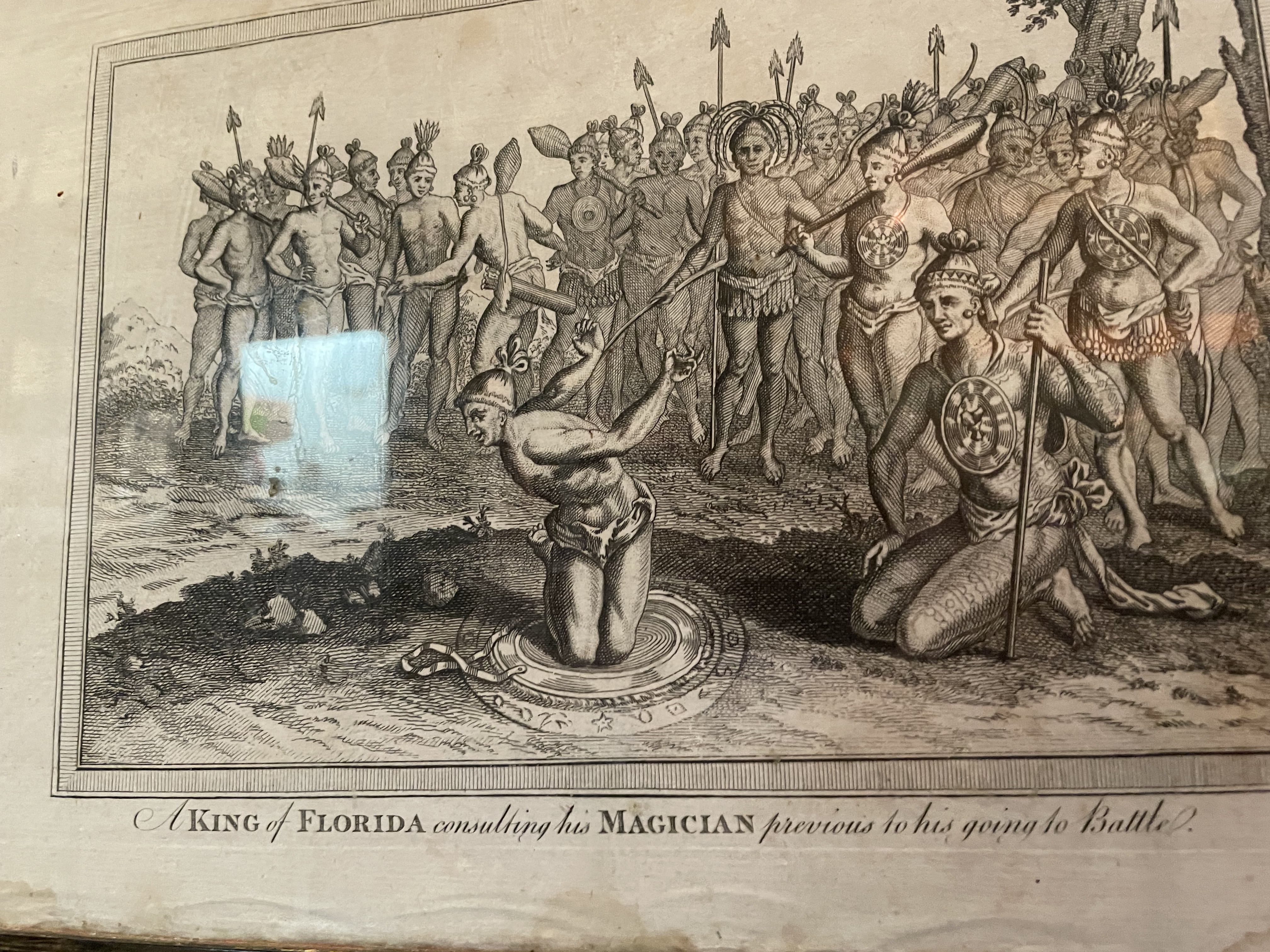
The KING of FLORIDA consulting his MAGICIAN

previous to his going to battle was the delectably mysterious caption of an old print hanging above the table at Elephant and Castle.
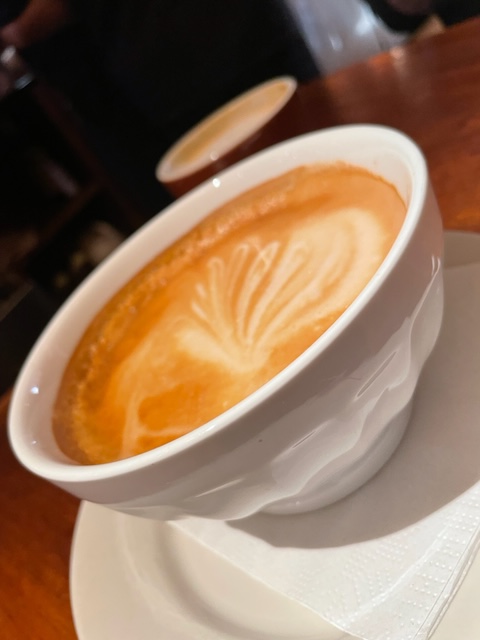
The latte in a bowl also was delectable on this windy Manhattan day.
I had just been reading a novel called Jacket Weather by current New York literary darling Michael DeCapite, in which Elephant and Castle figures prominently.  It’s pretty cool when you not only know the location of a place in a book but can go there on a whim, especially having been there before during another different era. I first ate at the British-pubb-ie brunchie spot decades ago, when you only had to lay out 10 bucks or so to eat Eggs Benedict with a bloody mary. DeCapite writes about Mike resuming a relationship with June, now both middle aged, having first met in the 1980s when they were in their 20s. 
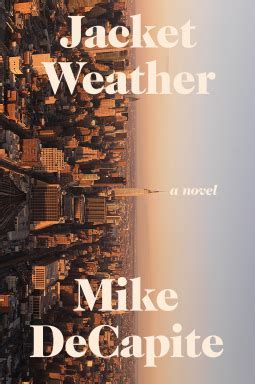
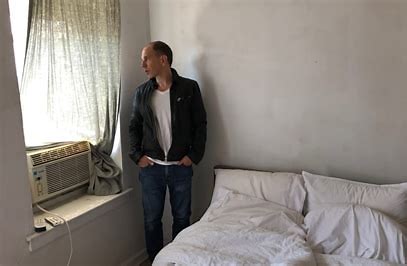
He finds himself madly in love as a geezer. The book contains torrents of emotion and sex, leavened by jibing banter with the old guys at the local gym, and Italian home recipes. Worth a read, even if you can’t go for a bowl of latte. His author photo has him in a probably staged pose at what would appear to be the Chelsea Hotel. Or maybe not.
Christmas is over! Hooray! Now we can be funny again. And somber again. Just not squeezed-from-a-tube, tinny, pro forma holiday. Oh, there’s one more hurdle on the way to normalcy. New Years. For a non drinker somewhat on the “grey stone” side, though there are other substances of course. (You’ll have to look that up.)

New York City is returning to its pre-Christmas energy. A model changed her clothes on the street in a popup tent.
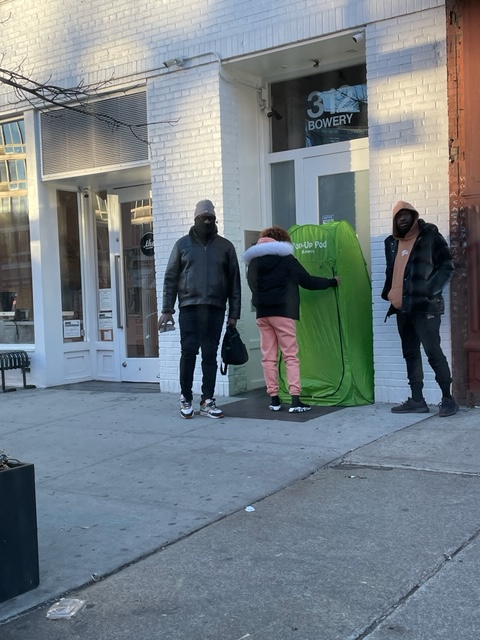
Emerged from the chrysalis ready for her 15 seconds of fame. Traipsed off with her handlers to wherever the real party was.
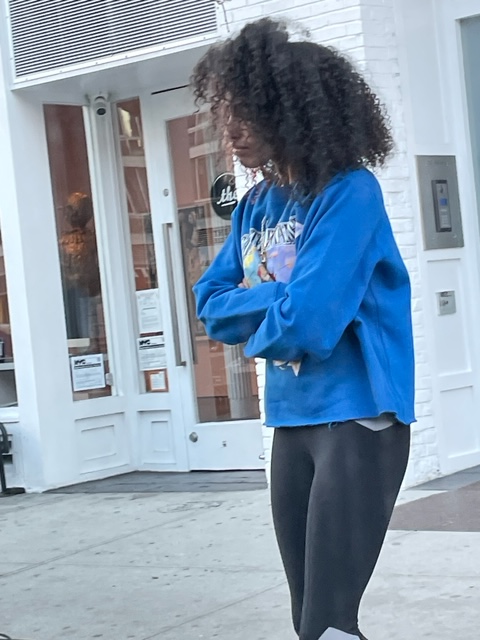
Around the corner, people could fight all they wanted.
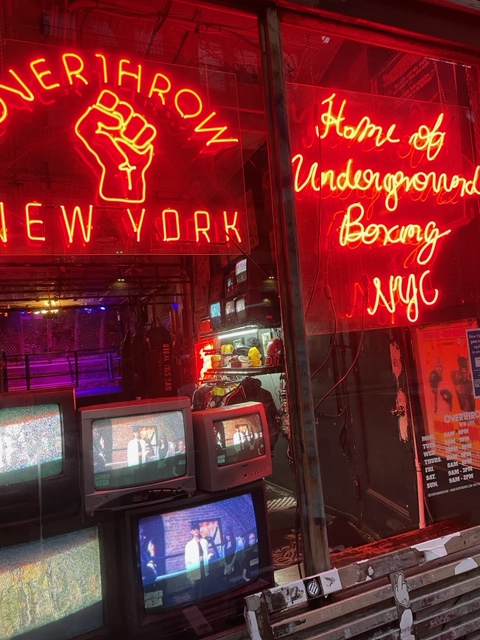
In SoHo shops, tourists from foreign lands were exchanging expensive apparel for other expensive apparel.

Joel Coen’s The Tragedy of Macbeth presented itself at the Angelika Theater with all its studious black and white shadows, overhyped and overacted, but hey, it featured words by our biggest 400-year-old genius, so what could be wrong?

What a witch! Didn’t they have Christmas back then? The clothes looked expensive. And the orange blossom macaron at Angelika’s cafe proved worth the trip to Hollywood.
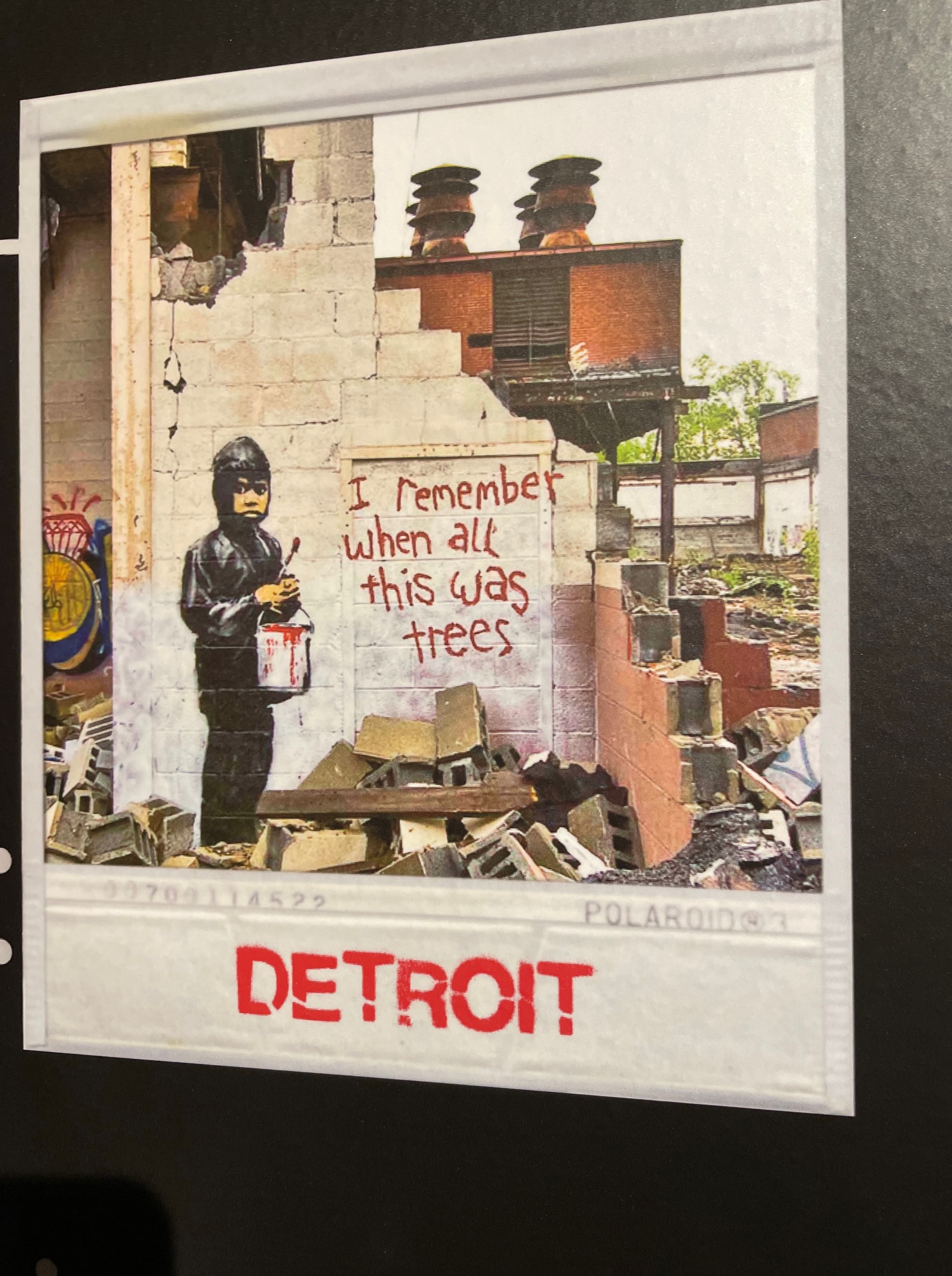
Up Sixth Avenue, satire ruled with the ongoing Banksy exhibit. A lot of people know the enigmatic artist’s probably most famous work, the image of a young girl letting go of a heart-shaped balloon, which was first painted under the stairs at South Bank.

You can get it silkscreened on a T shirt. There is of course much more to his oeuvre.

The stencils on outdoor walls are still the best, I think.
                                                                                

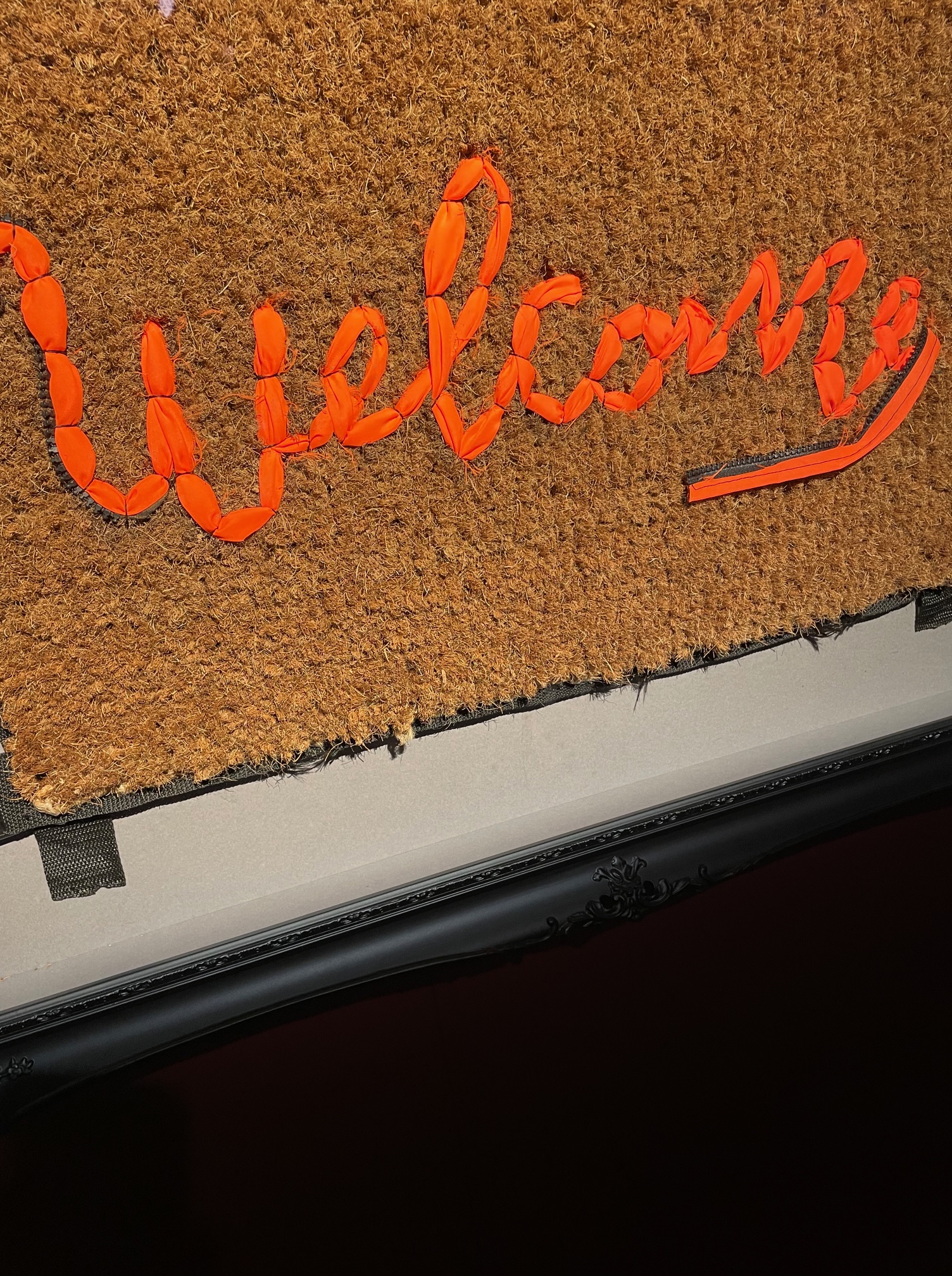
I liked this 2020 doormat with its message made out of refugee life vests.
Playfully snarky and unapologetically political, Banksy is, as I said, an enigma. Going out,I asked the coatcheck girl if his identity had been somehow revealed in the show. “He’s very mysterious,” she said mysteriously. “I highly doubt it.”

Funny, the show opens with  a view of “his studio”.

I was waiting for the bathroom and listening to a conversation in the office next to me behind some black curtains. Inside, surely another Banksy.
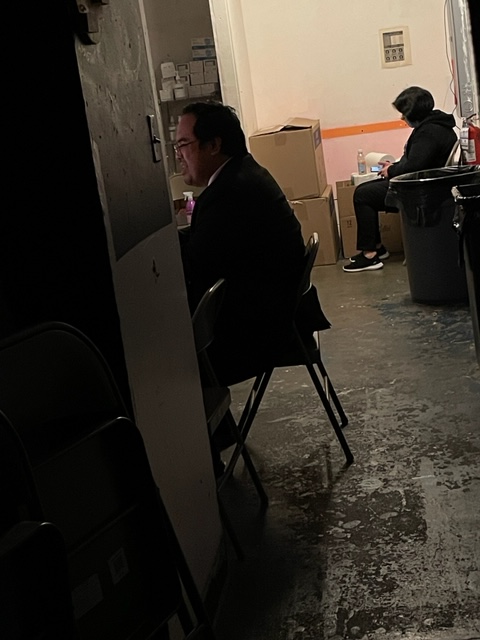
The inside of the bathroom door was of course an homage to graffiti, which Banksy loves.

More political whimsy and snark, now that spiritual jubilation and reindeers are no longer the order of the day: Don’t Look Up, the newest take on the end of the world,  played kind of like The Day After Tomorrow if the ocean liner floated down Fifth Avenue alongside a bunch of oversized rubber duckies. In this movie, DiCaprio is hilarious, Streep is hilarious, Jonah Hill is hilarious, Mark Rylance is the most hilarious, Timothee Chalamet is too cute and Jennifer Lawrence is Jennifer Lawrence.

Hits the spot just about now, I’d say.

So Christmas is over. Tree in the corner begging me to leave her up another month. Well, since you implore, okay. Tree sprites always get their way.

Soon it’s gonna be a new year. Maybe I’ll do some things differently. No, definitely.

Leave a comment

Filed under Jean Zimmerman

A cold walk among mysteries

is probably the best cold walk of all. The Old Croton Aqueduct today was a hospitable place for runners as well as musers.

It was built underneath this trail between 1837 and 1842 by a group of largely Italian stone masons so that New York City would get clean water from up north. When the water first gushed from the taps in New York, there were fireworks. The Aqueduct lives on as a beautiful corridor to nowhere. If you live in Westchester County “on the Aqueduct” that is about as cool as it gets. After all, vaulted magical chambers lie below. Walkers get to snoop into the backyards that haven’t been thoroughly fenced off, and even then the arboreal property of the homeowners snakes out above for our enjoyment.

Some things along the way make me wonder. Who crafted this ornament perched at the edge of a koi pond?

Where do the ghostly children go in winter?

Is any human braving the Piermont Marsh in this weather?

You can see the beige ribbon across the river from Dobbs Ferry, which is not in fact a sand beach but two miles of shoreline reeds said to be prehistoric in origin. When you canoe through the marsh along black ribbons of tidal water, you might see a fish flop or a hermit crab furiously working its way across the silty sand when it senses your presence. An eagle might pass close above. I have never seen a snapping turtle there but apparently they come along once in a while. It is a place of cryptic messages from another time. Just don’t get washed out into the Hudson when the chop is high.

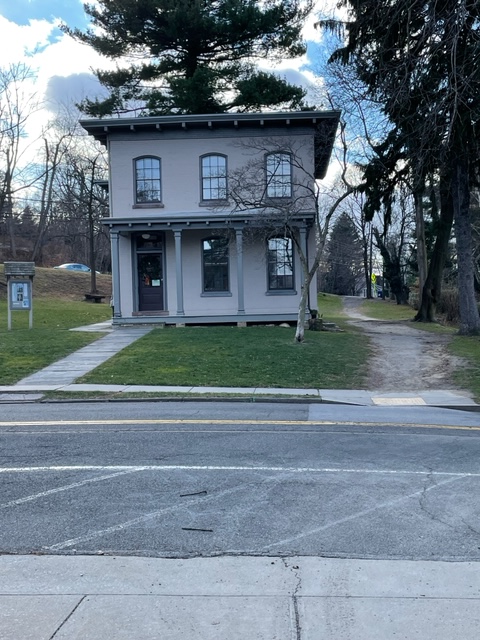
On the Aqueduct, the Overseer’s House is a preening facsimile of itself from its construction in 1857, when it was the home of James Bremner, the principal superintendent of the Aqueduct north of New York City. It’s the only surviving Keeper’s House from the old days.

Funny conundrum – what sprite is caring for this little spot nestled among a couple of tree trunks?

Also, whose carefully constructed hut is this, that seemingly has no entrance or egress? Peter Pan might be near.

Home. To whom?

If this was not arranged deliberately as a work of art, it should have been.

Thank you, I am welcome, but these signs are leaning against a wall in the middle of nowhere.

No Trespassing has been forcefully crossed out. Never seen that before.

Is this oak leaf a pin or a red? If any arborist would like to weigh in, fine, though it hardly matters, this specimen is so lustrous and perfect.

Has it occurred to anyone that oak leaves sometimes appear to be crawling the way a crab crawls out of the ocean surf?

I meet a dog named Sage, a very good girl who seems accustomed to getting her picture snapped, while her owner turns her back and continues her phone conversation. Okay.

Walking home there is a mystery that is only a mystery for those not in the know.

Squirrel Alley sculptor Raffaello Menconi lived in Hastings in the early part of the 20th century. I read someplace that rubbing the beast’s head would give someone good luck, but I’ve never needed to try it. I’ve always had good luck.

These young trees will certainly bring spiritual uplift to the people who planted them. Is it witchery to think so? Maybe.

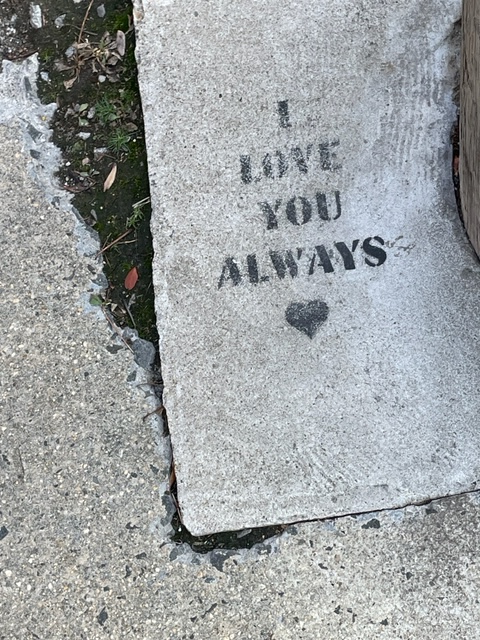
And down the block lies the sweetest sidewalk expression I’ve seen.

Sweeter even than the Squirrel or Sage.

4 Comments

Filed under Jean Zimmerman

The yellow-brick road might, surprisingly,

take you to Hastings-on-Hudson, one-time home of good-witch actress Billie Burke and her husband Flo Ziegfeld. They repurposed a mansion in 1910 on a centrally located estate (calling it Burkeley Crest), and installed a menagerie that it is said included among other wonders, an elephant and some bears. At the age of 24, she wasn’t as famous yet as she would become with The Wizard of Oz, but she was already pretty famous.

The animals would regularly trundle from Burke’s estate down Rosedale Avenue, where I later lived, to a watering hole near the Saw Mill River. At some point an impressive copper beech grew on the estate. When I was young, kids used to congregate there, climbing and making out and smoking things they shouldn’t. But that was a long time ago.

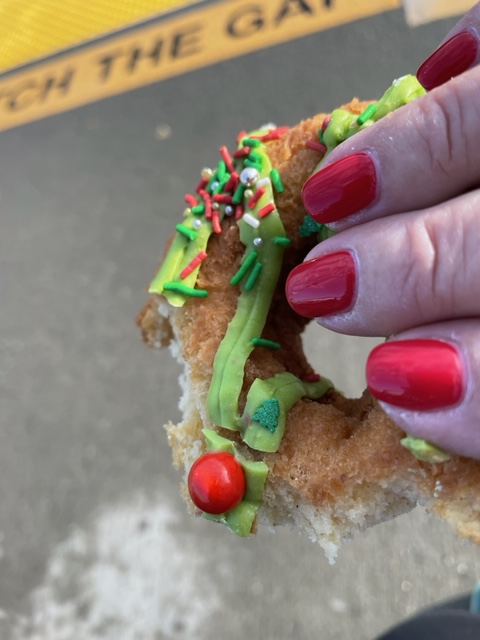
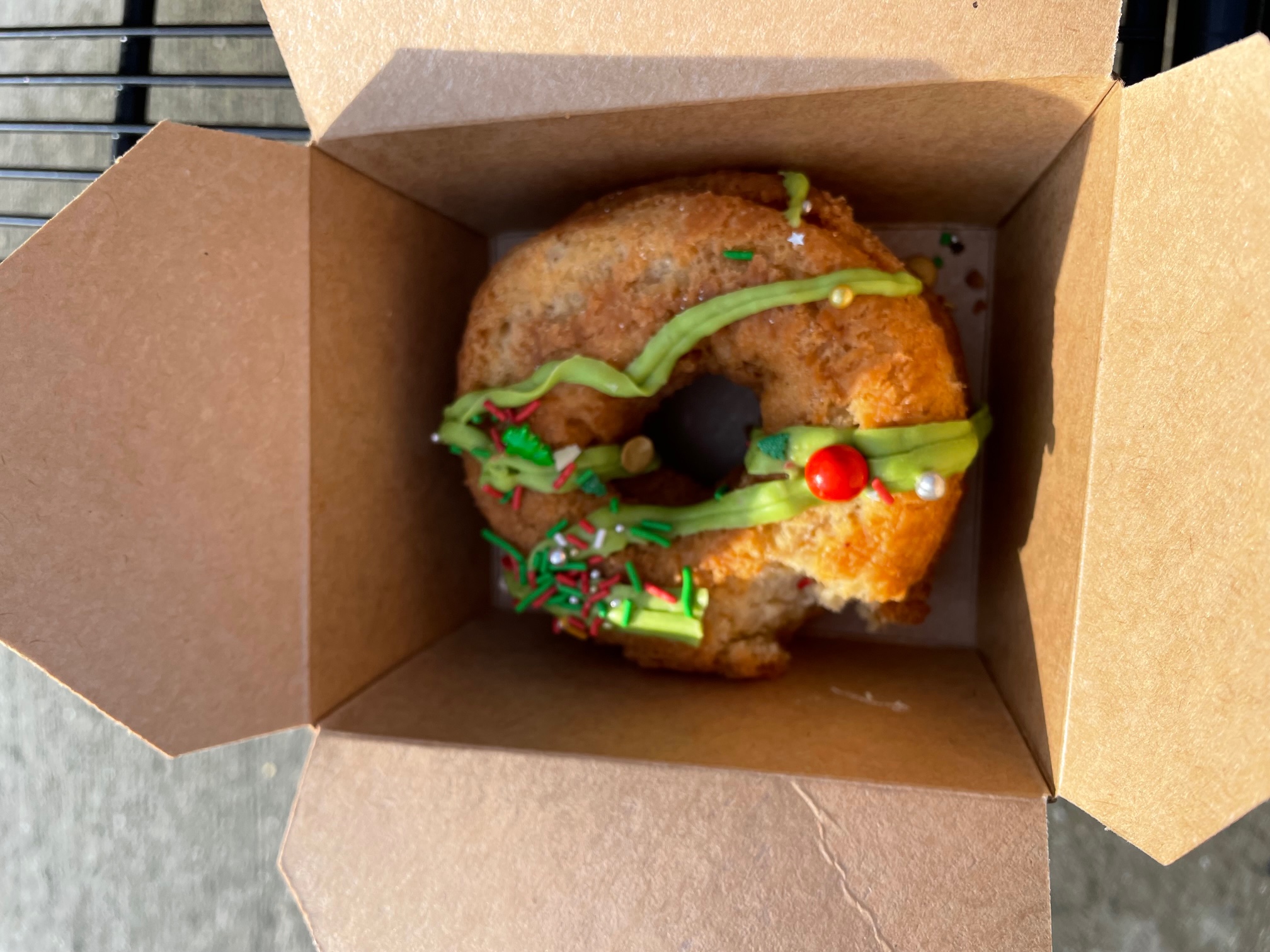
Today Hastings has grown hipster-sophisticated, and you can get a soy latte at the train station in a café naturally called The Good Witch, which struggled a little during its first year (Covid) but is now finding its legs (or gams, as they were known in Billie Burke’s time). A great place come the holidays to find a decorative donut before taking the train to New York.

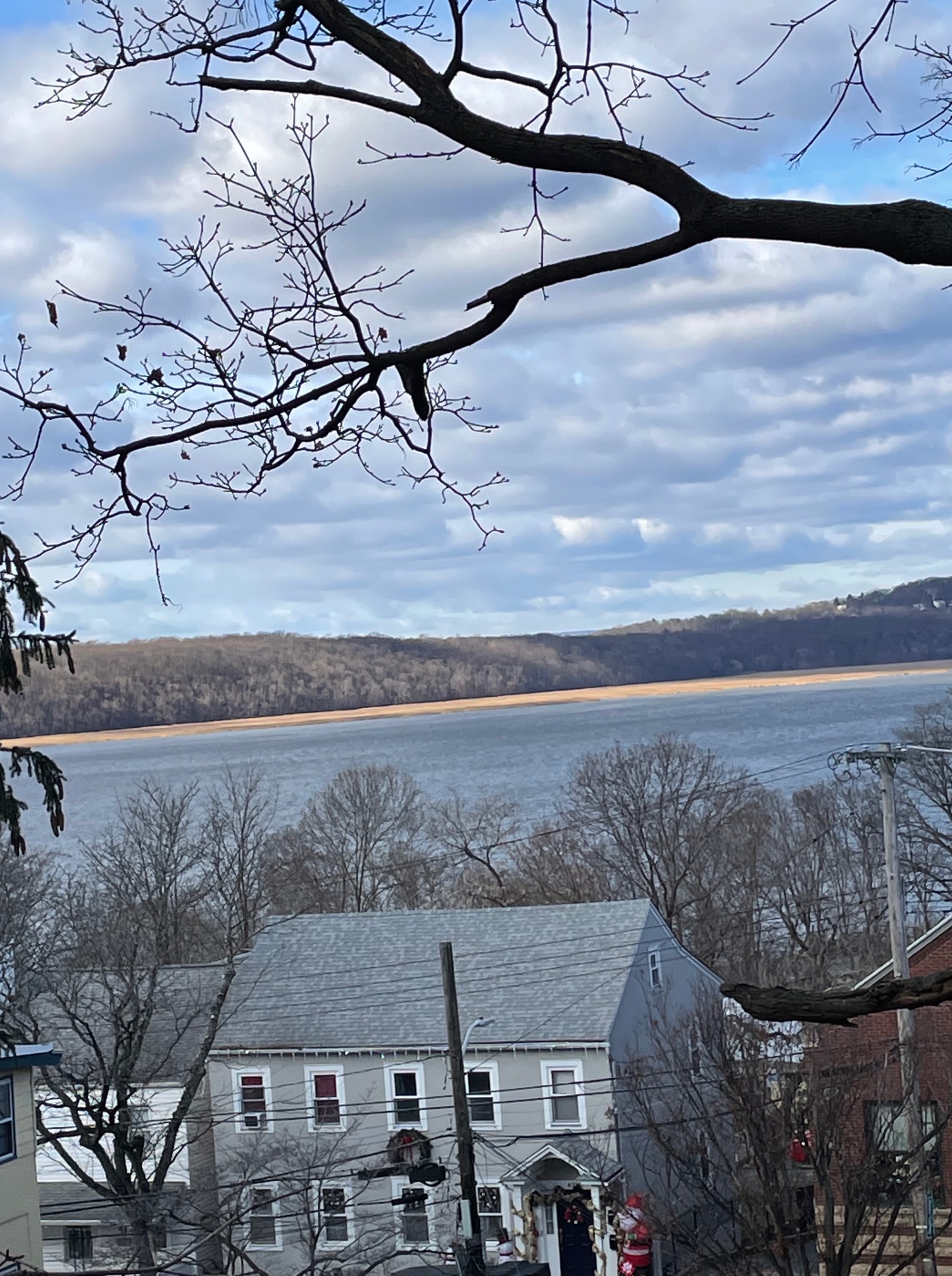
Hastings has an astounding yet amazingly sad view of the Hudson River. The water tower is a local landmark, and there are always fights over whether it is an eyesore that should be destroyed.

There is nothing like the Palisades, of course, in winter or in summer. But you can’t get away from the 26 acres of Superfund site left over from when Anaconda Wire and Cable Company closed its plant here in the 1970s, having produced high-tension copper cable for decades. Now PCBs clot the soil, and residents have been waiting for decades for a many-multi-million-dollar cleanup and revival of the waterfront.

Still there is such jaw-dropping beauty approaching the George Washington Bridge, under a silvery sky.

Oddly, or maybe understandably, the train is empty.

Masking and staying six feet apart are not enough, apparently. We will shut our own selves down.

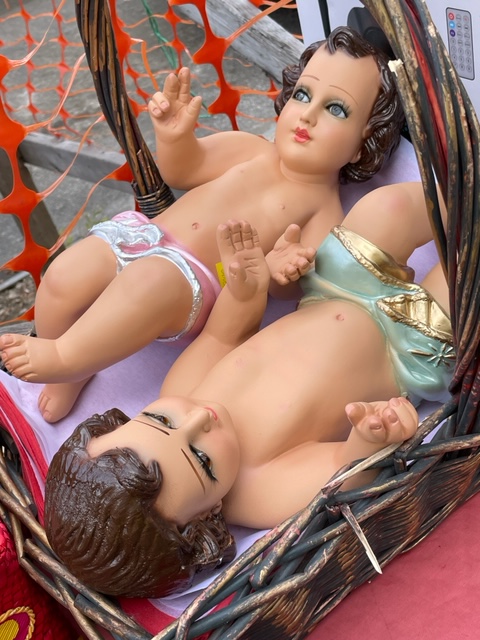
If you can brave it, though, there are still wonders to be had in New York this crazy 2021 holiday season. Like the satin sheet on which the baby Jesus himself will undoubtedly appear at some point at Our Lady of Pompeii. Optimistic, yes?

Or a place with camel meat on the menu (from the three wise men’s caravan perhaps?)

Or some amaryllis bulbs just waiting to burst – is there anything more optimistic than that?

It’s possible to stumble upon secrets if you keep your eyes open.

The iron gate at Milligan Place on Sixth Avenue between 10th and 11th Streets is usually locked and you can barely see in. Today by some good fortune it had swung open, revealing the gracious town homes that were originally built in 1852. Patchin Place, a better known neighboring mews, housed literary greats like e.e. cummings and Theodore Dreiser. Milligan Place was built originally to shelter workers for the nearby Brevoort House Hotel but ultimately put a roof over Eugene O’Neill and other lauded types. Sneaking in now is stepping into the past. Sshhhh. If you want to rent the penthouse of one it will set you back 7,000 a month.

A better deal in the West Village offers a current obsession for me and many New Yorkers: soup dumplings.

Don’t be fooled by “dumpling,” “soup” is the important part.

You pick up a steamed, plump dough package with chopsticks, set it on a spoon, bite off the top, slurp the soup and then gulp down the pork meatball inside. Divine. Burnt tongue optional.

The sawtooth oak (Quercus acutissima) just doesn’t get the picture that it’s winter now and time to drop its leaves. No one clued it in. Or maybe it’s just stubborn. I saw an English oak today with a mask embellishing its lowest branches.

Glance at the dirty New York City sidewalk, where Mariah Carey has made her mark with something indelible. This holiday is ancient; it will survive us all.

The lines for Covid testing in the Village are two or three hours long in the brisk air. Thank you, everyone, for helping establish a safe community this Christmas. I find out almost every day about someone I know who has fallen sick. Listen as you walk down the street and it seems all you hear is “Omicron, omicron, omicron” or “Mask, mask, mask”.Some people will simply not budge from their homes out of fright.

But there is still all kinds of pleasure to be had, like in the sexy party store on West 4th Street, the window all decked out for a special visitor down the chimney..

I am finally getting to this point: if you ever have the opportunity to see a documentary called The Velvet Queen, please go. As far as I know the independent house The Film Forum has the exclusive opening, but it will soon come to an art house near you. Or come to New York! Soup dumplings! We have to keep on living.

The movie tells the story of an award-winning French wildlife photographer, Vincent Munier, who takes along a writer as they attempt to locate the elusive snow leopard in the heart of Tibet. Much of the narrative has to do with waiting patiently in blinds for animals to pass.

Poetry resides in the sunlit and shadowy peaks of the up to 15,000 feet they travel, with the reward of  viewing some ordinarily very private and human-shy creatures such as bears, hawks, yaks and yes, finally, the mesmerizing snow leopard itself. A highlight comes when the cat-searchers come upon some unexpected bear scat in a high-up cave. If that floats your boat, as it does mine, this effort will entrance you. But the trek is really not only about animals, but about patience and faith and appreciation, as well as protecting all the natural good that is the earth rather than despoil it unthinkingly.

With every purchased ticket comes an ornament, a snow leopard sewn of felt from sheep wool, handmade in Mongolia. A reminder that in this very complex and difficult time it is good to focus on what is beautiful in the moment. Like a frosted donut.

1 Comment

Filed under Jean Zimmerman

There are some things I’ll miss.

Read no farther if you don’t like the Bronx, or dogs, or people, or trees. I’m moving on as an arborist to sites elsewhere in New York City, but thanks for the memories, Grand Concourse:

Six miles of walking a day (sometimes just after dawn). It’s a good thing when your legs hurt.

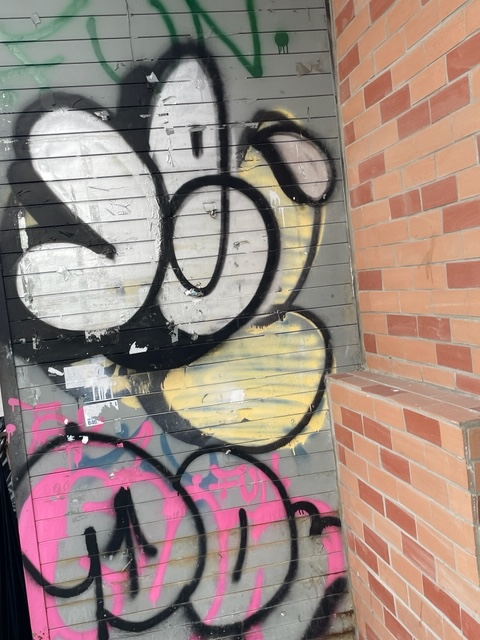
Graffiti – note “FUN” hovering above it all.

Slobbering pit bulls. Their drool is a magic elixir, you know.

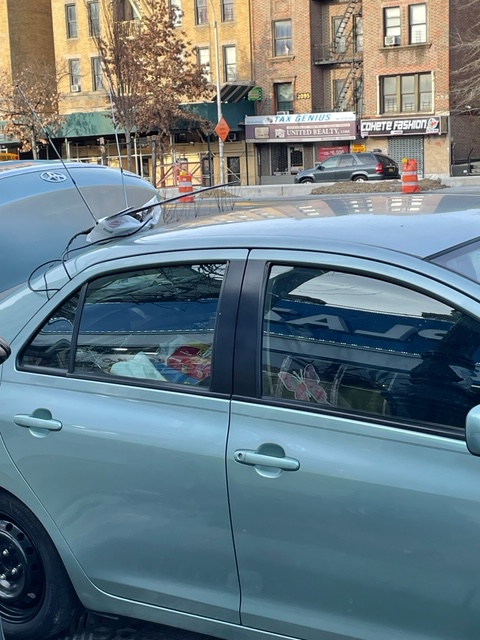
The antenna-powered car. Can’t get a pic of the owner, too skeevy—but he can usually be found trading in his cans at the recycling center.

Winston the kitten, whom I’ve watched grow from a month old into a teenager. I recently saw him scale the honey locust outside the bodega where he’s being groomed to guard again rodents.

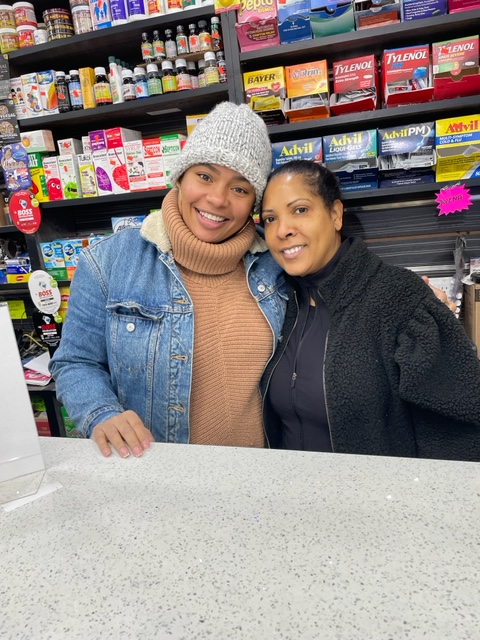
At that bodega, the one where I get coconut water and iced coffee, the women who greet me as Mami and make my day.

Also there, mouth-watering chop cheese sandwiches, kind of like an exploded cheeseburger with everything on it.

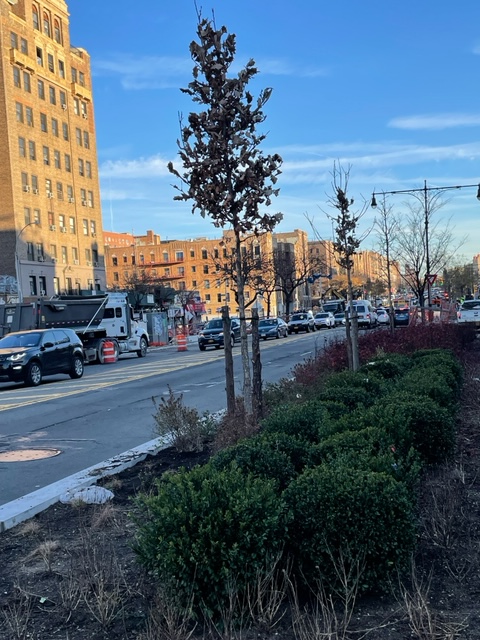
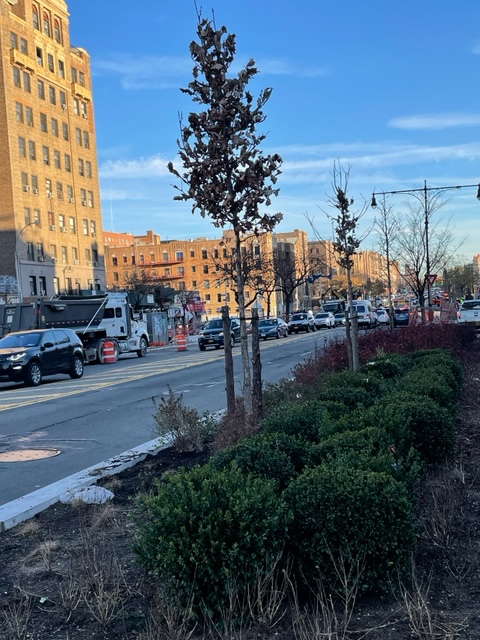
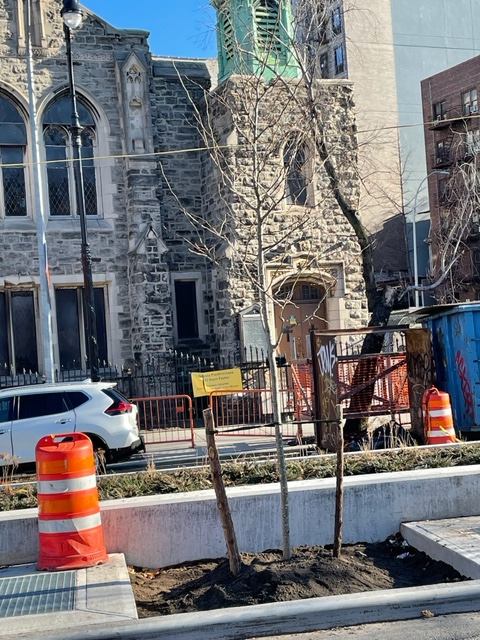
The skinny new trees. Let’s hope they make it.

Reed, my arborist coworker, who reports on the plant installation in the medians, and  informed me that 150 of the perennials planted in the past month have been stolen. I believe he was a religion major in college.

Although I appreciate that residents might want greenery in their apartments…grasses?

The gracious old trees.

Let’s not forget what I’m here for: making sure trees are preserved during a construction project. 

The women who are flaggers, who keep everybody safe. When they’re not loudly admonishing a car to slow down they’re sweet as can be.

The engineers on the site, especially Soheil, who is kind and inquisitive and has glowing green-blue-grey eyes, from Urma to NYC via Texas A&M.

The crews.

These men are a constant inspiration as they hoist and hustle day after day,  with very little goldbricking, though if they slack off once in a while, leaning on their shovels, the break is well deserved.

Jimmy, the god of tree guards.

The time the city sent some people around to actually pick trash out of the tree pits.

The life force of nature in the city.

Fruit stands. This neighborhood knows how to eat.

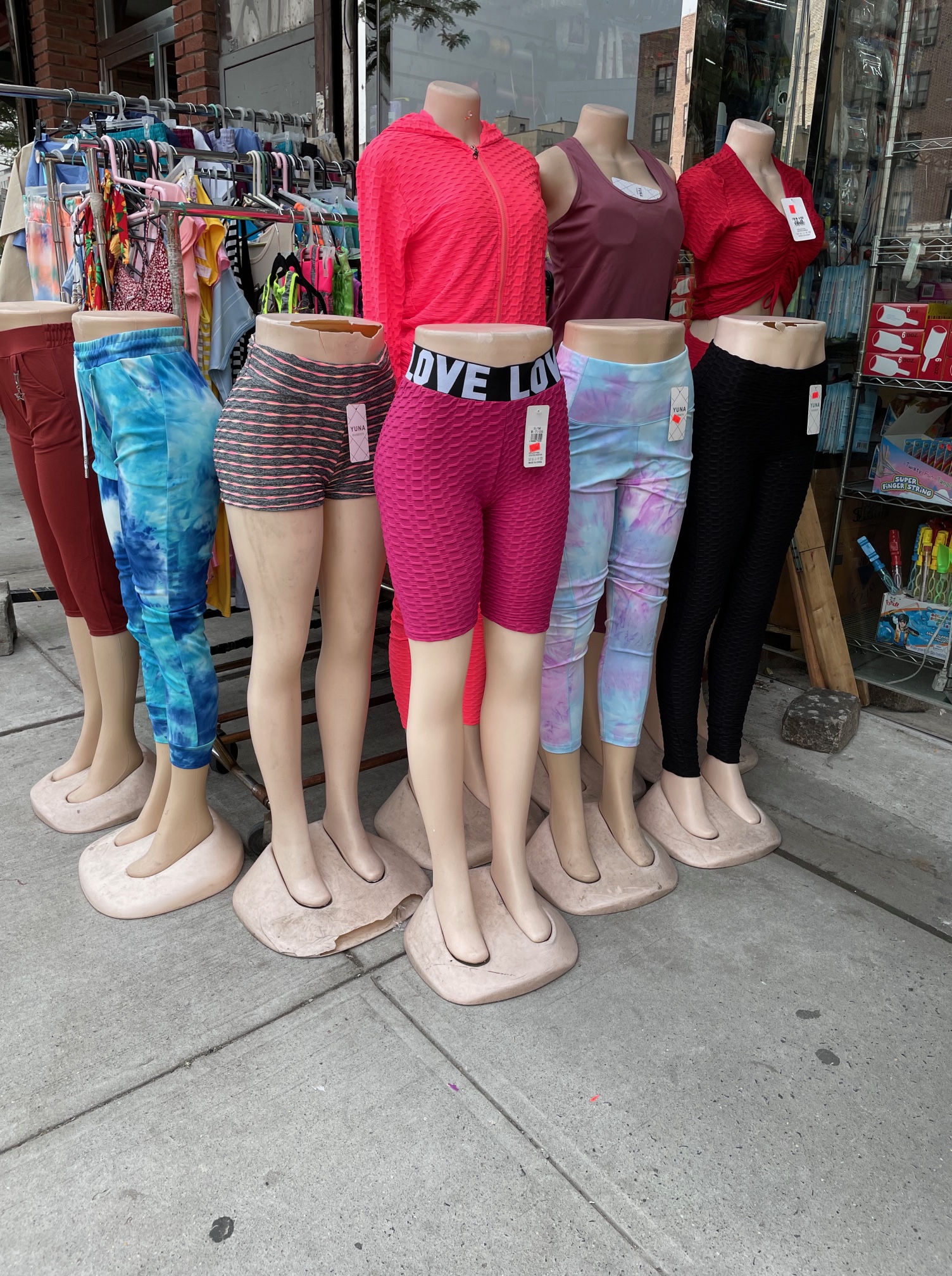
Mannikins. Tight, tighter, tightest.

Even the trash is memorable. Several people came up to my parked vehicle wanting to salvage the stuff under the wheel. Perfectly good wrapping paper, and Christmas on the way!

On the other hand, a fairy tale princess costume just tossed away.

A discarded scale. Someone might have gotten tired of weighing themselves after all those heavy meals at La Estrella Restaurant.

I won’t miss scooters. The constant threat to my life as they motor down the sidewalk is one thing I’ll be glad to leave behind.

On the other hand out on the sidewalk there is the scent of oranges freshly peeled.

This smiling face at the vintage movie theater every single morning.

Always front and center, the job of making sure roots don’t get mangled. And I think I succeeded for the most part.

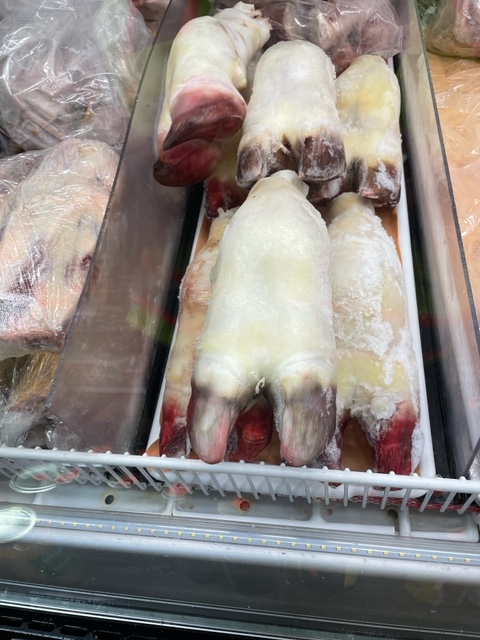
Cows’ feet the size of bowling pins in a butcher case.

Every morning, the warmth of parents walking their little ‘uns (Maud-speak) to school.

So, with the glory of the Grand Concourse in the rearview, I am off for further adventures. I’ll be sure to tell all about them here. With photos.

Please remember that you can scroll down to subscribe to this blog so it will hit your inbox when I publish and you won’t miss a single cow’s foot.

4 Comments

Filed under Jean Zimmerman

New young trees for Xmas!

along the Grand Boulevard from 175 Street to Fordham Road.

Some have been planted among the new shrubs in the medians, and others in the new tree pits, sixty trees all told, a mixture of honey locusts, English oaks, gingkos, swamp white oaks, willow oaks and zelkovas.

Checking out the work of the landscaping crew, I noted that the planting soil seemed to be mounded a bit high around the two-and-a-half-inch trunks, but I was assured that topsoil would be added to the proper level when all is said and done, as well as a mosaic of cobblestones.

It’s a gift from the city to this section of the Bronx, the saplings, which as they grow will gradually increase the canopy cover in this beleaguered place. The Nature Conservancy recently released a study of gotham’s green infrastructure and found that while its famous canyons had gotten shadier by about two percent between 2010 and 2017, the benefits varied a lot by area.

By the way, planting a single New York street tree costs the Parks Department $2,700. You heard that correctly. The price tag has been precisely totaled. Merry Christmas! Eric Adams, our mayor-elect, has said he favors funding parks during his tenure to the tune of one percent of the city’s budget – double what it is now. That is incredibly paltry, actually pathetic.

The Grand Concourse celebrates the holiday season in its own way.

As I passed on the sidewalk, a guy shouted out, “Hey, they took away his legs!” Note the scooter — that’s how Santa makes his deliveries in these precincts.

You could add to your at-home creche with a dreamy small person, in artistic circles called a putto. Or the cupids could just wreak some romantic havoc in your placid life.

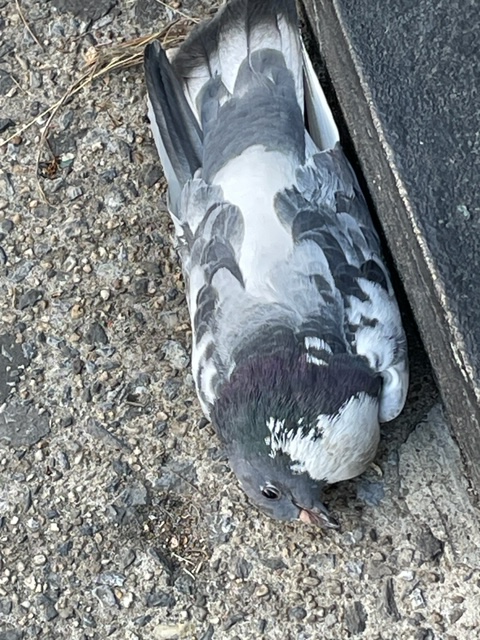
Something incredible happened as I walked the site. I passed a pigeon, which unlike any pigeon I have ever seen was not alive.

Perhaps at Xmas she will be resurrected.

I was also introduced to a young man’s early present  — they couldn’t very well hide this animal under the tree!

Legend is the name of this beautiful brindle creature, who romped over to me and softly mouthed my fingers. He’s a one-year-old puppy, obviously quite spoiled in his slippers and jersey. A similar pit bull is exactly what I would like for Xmas. But first I must abide by the instructions in a Concourse furniture shop window.

Is that adage at one with the Christmas spirit? Not sure. But if I work hard enough, perhaps my canine dreams will come true.

Leave a comment

Filed under Jean Zimmerman

Trees are transmogrified

at the New York Botanical Garden’s Annual Holiday Train Show.

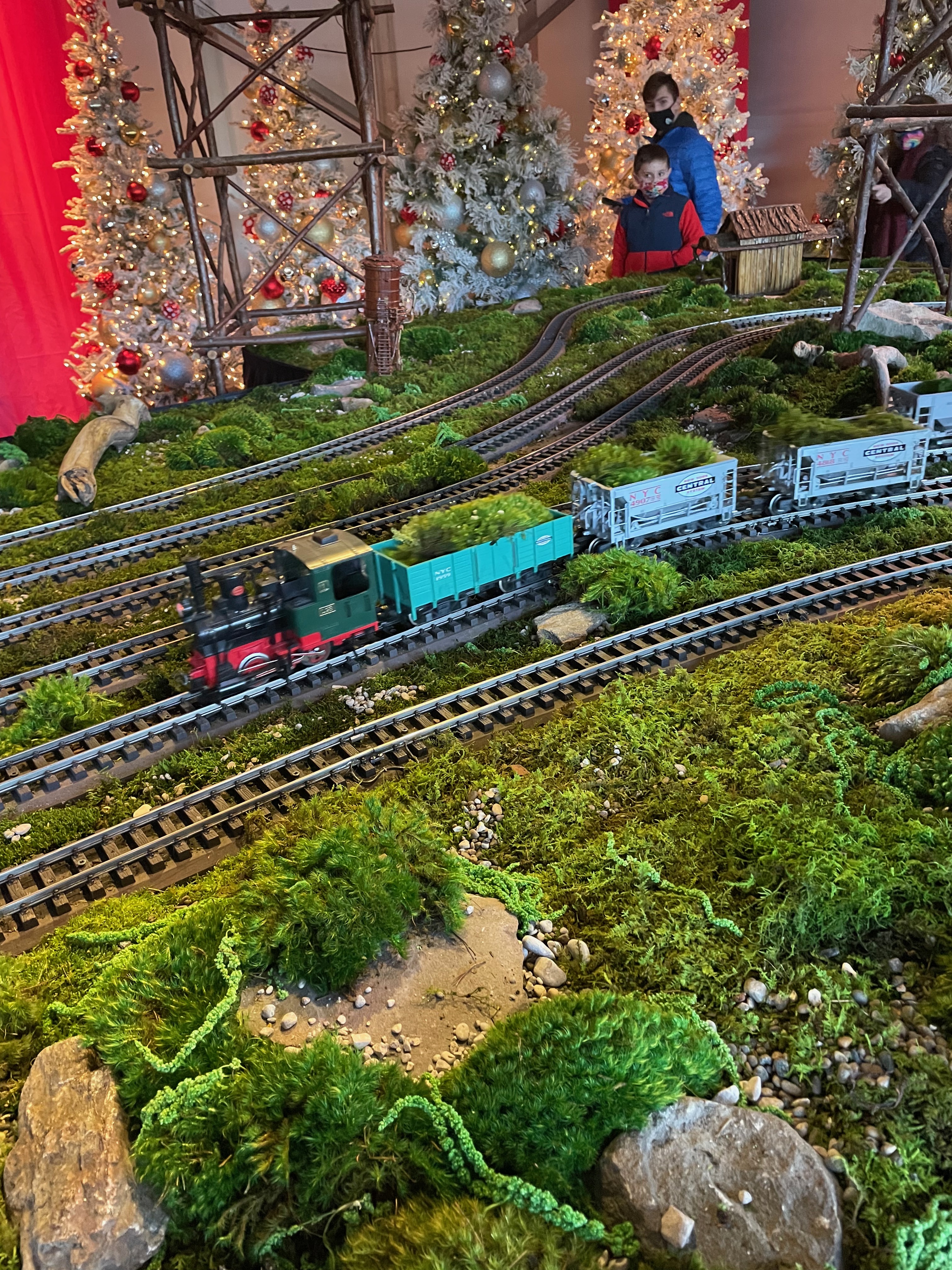
I am not sure all of the hustling, bustling, a-little-bit-shoving visitors make note of how the marvelous creations come into being. A company called Applied Imagination (founded by a landscape architect) does it all (as they do in myriad cities across the country), re-creating the built environment in miniature with bits and pieces of nature.

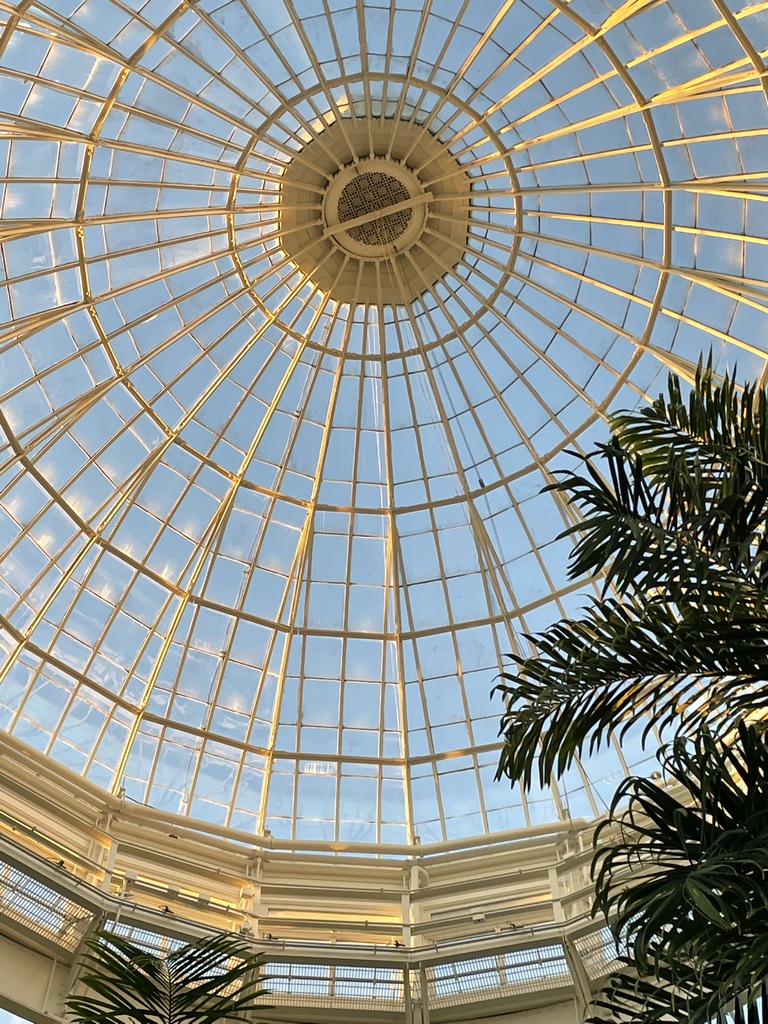
The show has been around for 30 years. It seems to me the experience gets bigger and grander every year, now taking up a big part of the Enid A. Haupt Conservatory’s Palm Dome, which stands 90 feet tall.

It’s all about New York. What’s not to love. And an interesting conceit, because although tracks once ran all over the place, they most certainly did not run close to these classic buildings. Fantasy. Christmastime. No holds barred.

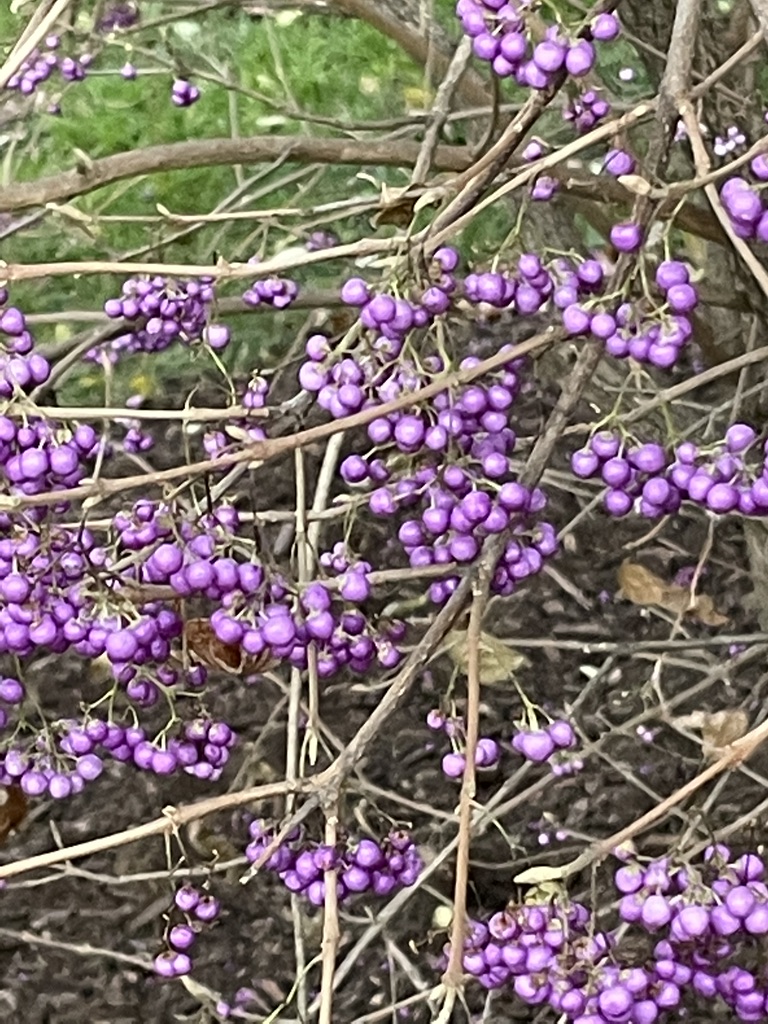
Even in winter, the Botanical Garden has things to love, like the sumptuous hue of these beauteous Beautyberries.

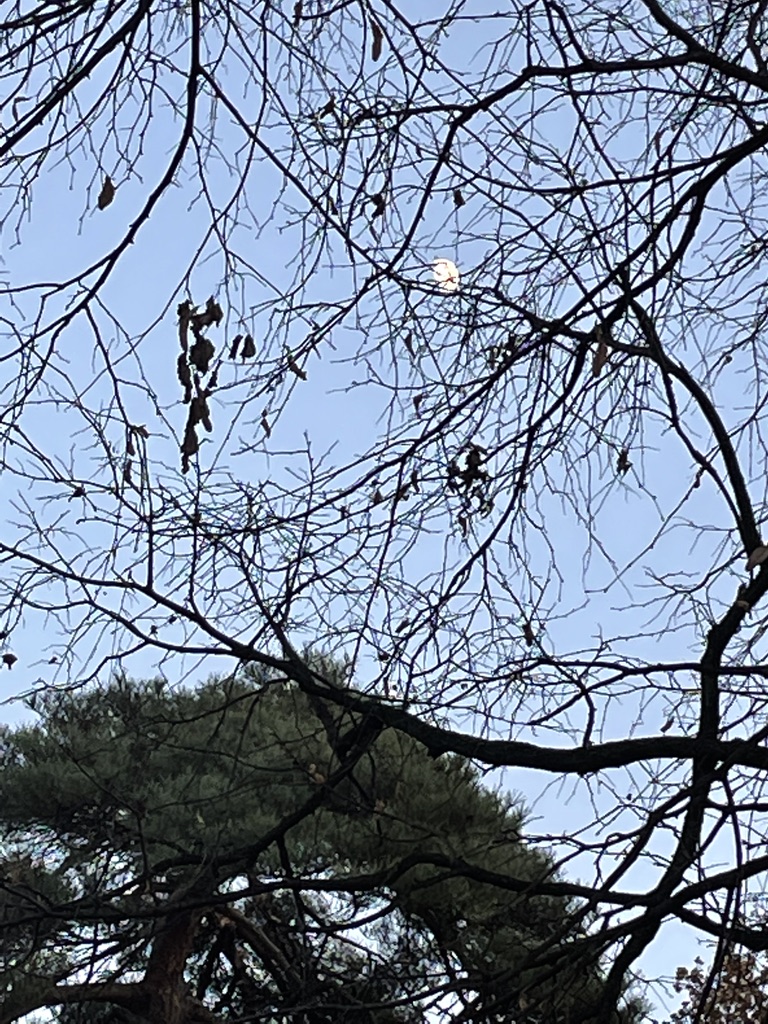
Or a half moon gleaming through the branches of a huge mature tree.

Or even a six-dollar cup of hot chocolate from the cafe. (!) Still, the finest hot chocolate I’ve ever swallowed.

But come inside!

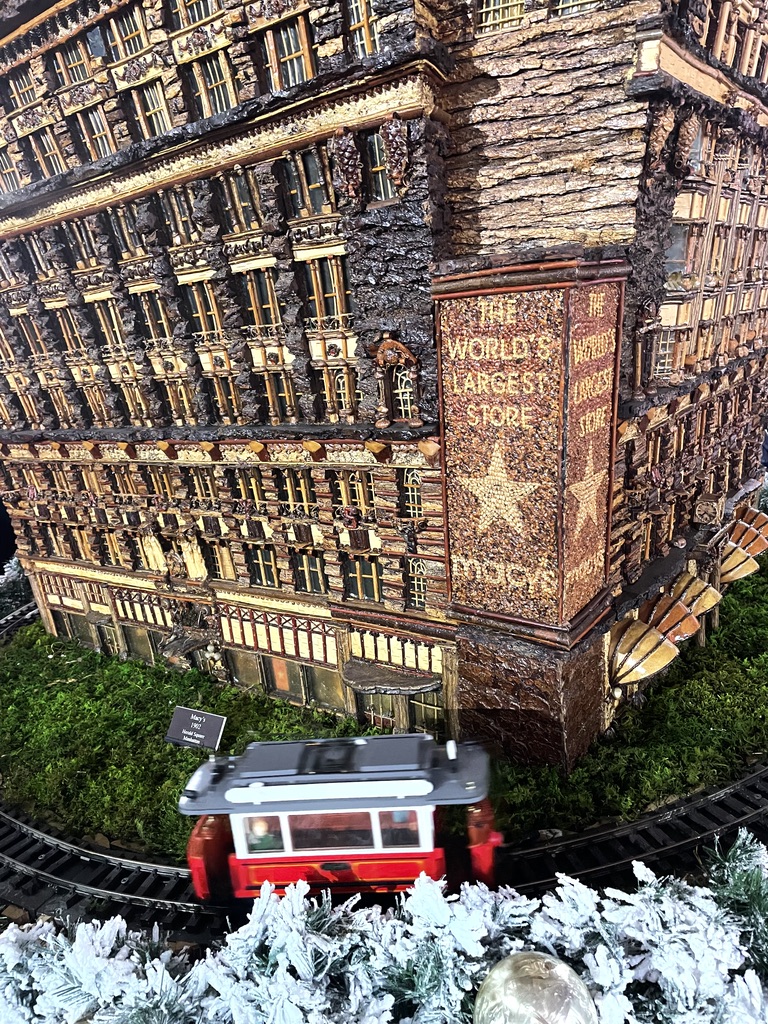
The thing is, every one of the 175 classic NY buildings surrounded by tracks is made of reeds, moss, pine bark, fungus, eucalyptus stems, grapevine tendrils, acorn caps, pistachio shells, cocoa nuts, white pine cones, et cetera. And did I mention twigs? Lots and lots of twigs. I didn’t see any Beautyberry but it probably doesn’t play well with others. The cables of the suspension bridges are made from willow twigs. The spans are supported by hidden wooden beams (and steel cables).Some structures are lit up inside with an inviting glow. There are a lot of different forms of transportation represented: trolleys, passenger and freight trains, steam and diesel engines–just not cars.

One two-masked guy knew everything about everything and informed everybody about it all in a rather loud voice.

Alice Austin’s house is here. Austin is a not-well-enough-known photographer who spent her life at the domicile Clear Comfort on Staten Island. Some of her pictures are pretty wild and she led a bohemian life that probably would not be as shocking today.

The buildings don’t look like the actual buildings so much as represent them in a tea-soaked hobbit-house dream state. Like the Van Cortlandt House in the Bronx. I can tell you that the Van Cortlandt house does not bear much similarity to its replica.

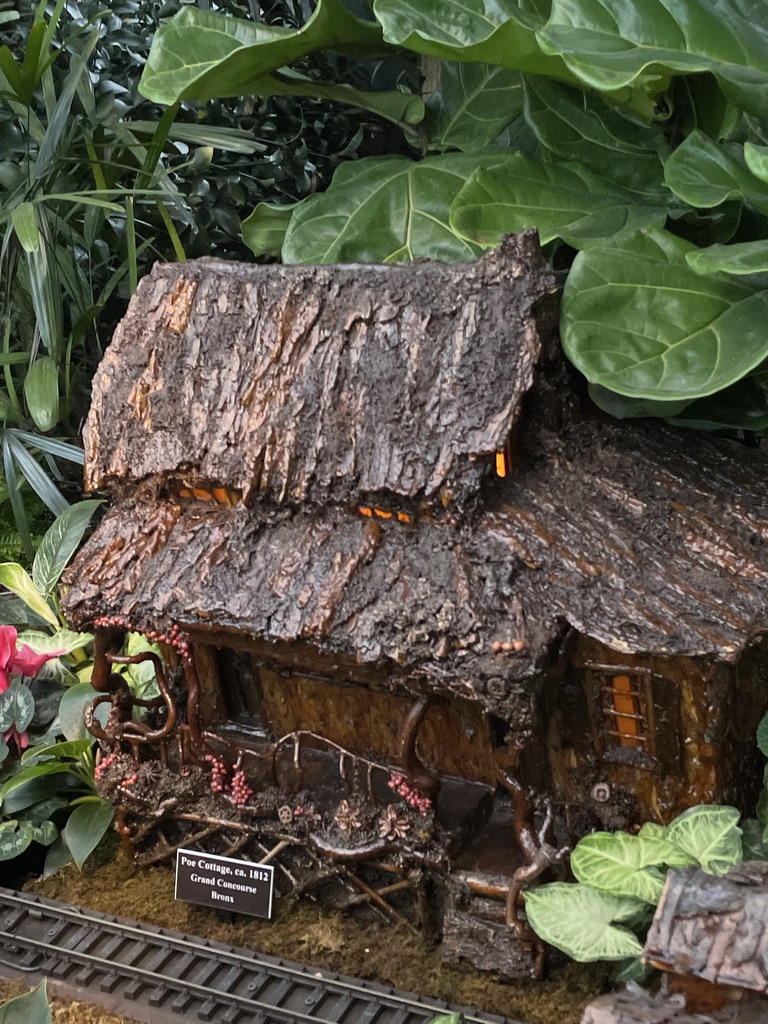
Or the Poe Cottage. In real life, this landmark is white clapboard. I drive by it every day going to work in the Bronx. This version is actually a little scary and might have been conjured up by Edgar Allen Poe himself in a drunken, addled frame of mind, as he often was.

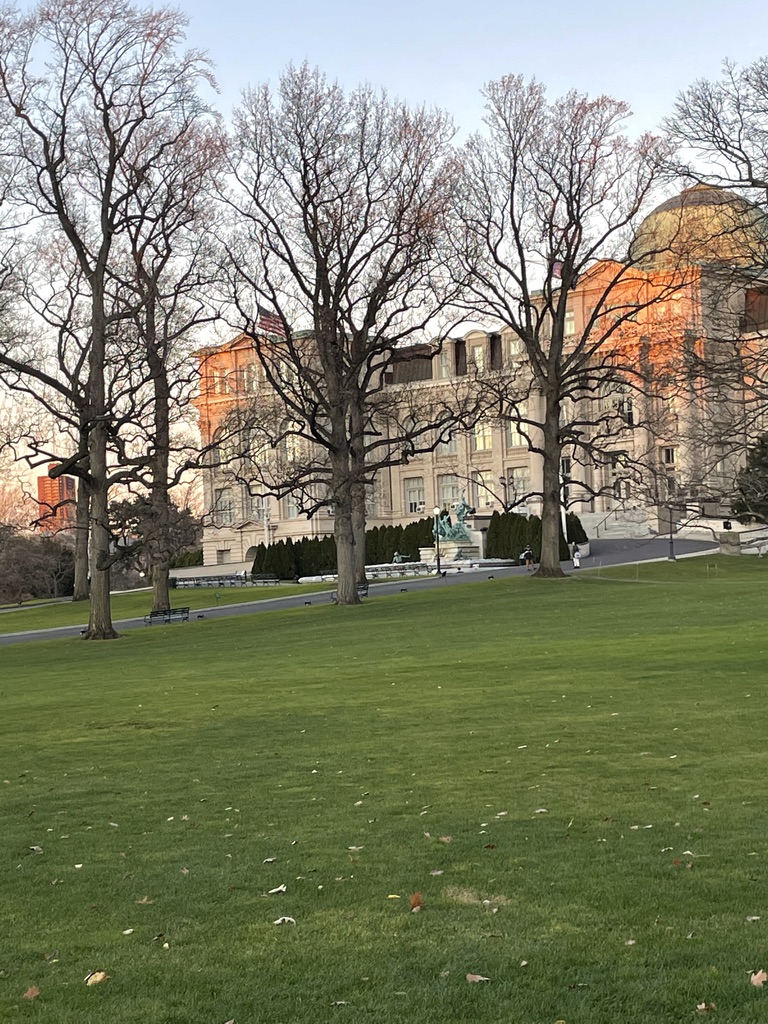
One of the Garden’s iconic buildings, the Mertz Library, with a grand allee of tulip trees–which were planted beginning in 1903 and made a New York City Landmark in 2009–has pride of place at the Train Show. As the century-old trees naturally senesce, they are being replaced with great purpose and care, under the auspices of the Tulip Tree Allee Committee of the Garden’s Board of Trustees. Now that’s responsible arboriculture.

Looks like this in the Train Show. Pretty good.

Macy’s on 34th Street comes across well. Macy’s has 2.5 million square feet, reduced here to the size of a large microwave oven.

Sunnyside, Washington Irving’s cottage in Tarrytown and dating to the 1830s, has muscled its way in. I have heard it said that the wisteria at the front doorway (reproduced here, albeit dully brown rather than deep purple) was the source of a quip by Irving himself, who said his nieces were afraid that the vine threatened to take over the whole estate. Interestingly, Irving mourned when the new long-distance train tracks materialized at the back of his property in 1847.  In a letter he wrote to Gouvernor Kemble, he described being awoken at night by the “horrific sounds” and “constant calamity” of the train.  I wonder what he would think of the toy train making its way past his model house to the delight of visitors in 2021.

I remember when I was young building miniature houses out of acorn caps and twigs. They had a miraculous real-ness to me.

Same here.

The roof of Brooklyn’s Wyckoff House, built in 1652, looks a bit more organic than the real thing. Is there a fungus among us?

You see behind the curtain sometimes, at the Train Show, like when a particular train needs fixing. It must be done on the double.

Patience and Fortitude are the names of the lions in front of the New York Public Library at 42nd Street. But you knew that. This one is Patience, I think.

When you get to the end of the tracks, you are greeted by New York Harbor.

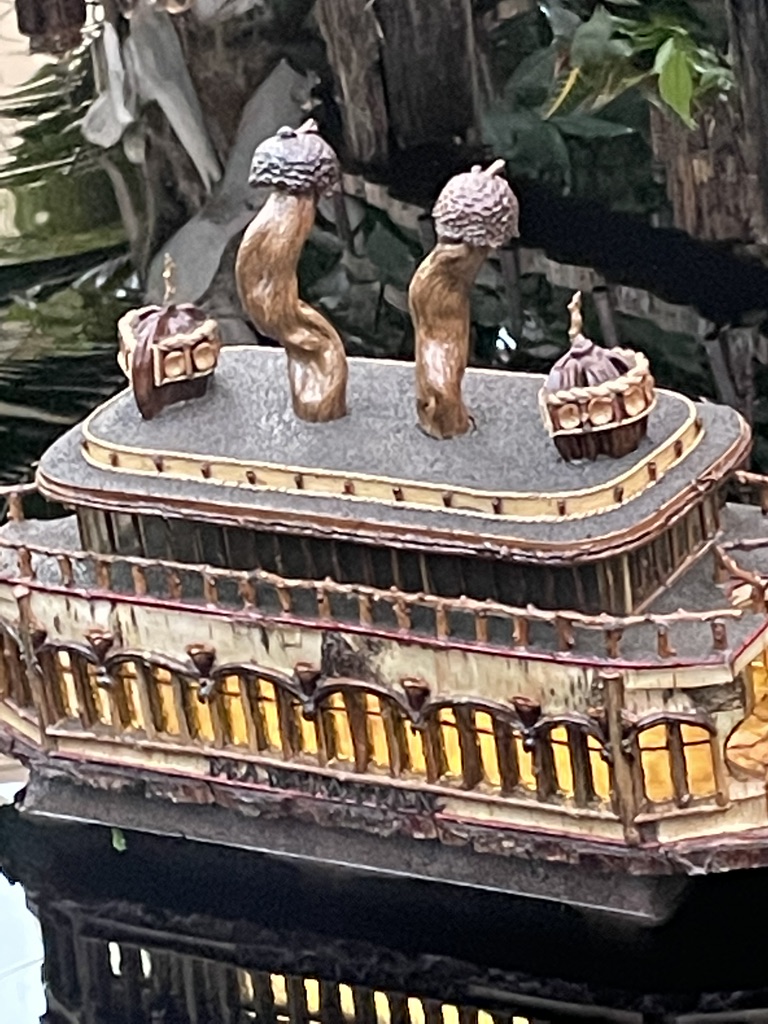
The Staten Island Ferry takes to the waters around New York Harbor, topped by two interesting shapes.

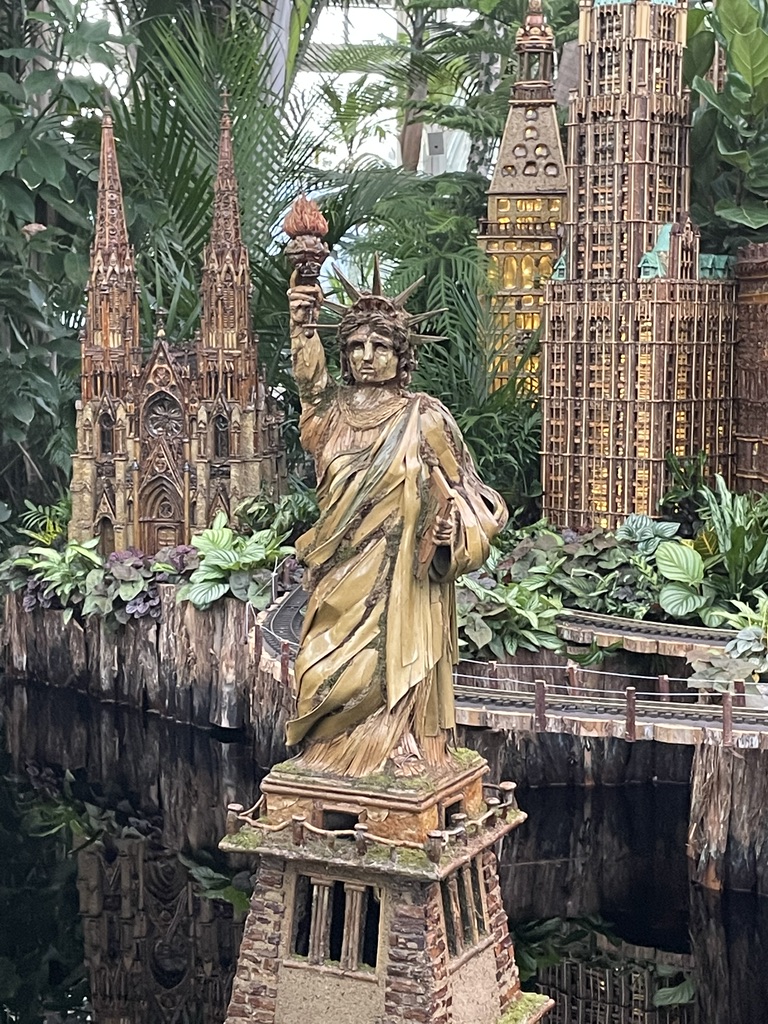
Lady Liberty has something of a serious face. Well, so does the original Actually, she wears a draped, fig leaf toga, her hair is made from mesquite pods and her torch is a dried pomegranate with a monarch flower flame.

Throngs of people pose, of course, in front of the Freedom Tower.

Kids go wild here. I saw one toddler trying to yank off a piece of wood from the display. Others a little older are really too mature for this kind of thing. This zonked little guy, on the tram afterward, ignored grandma’s arm sweeps toward the handsome oak forest and the cherry grove, envisioning the Xbox that lay ahead.

He’ll have to wait until his second childhood – when he’s in his 60s, say, to appreciate the magic of enormous New York City rendered jewel-like and small. Constructed, incredibly, of twigs.

Leave a comment

Filed under Jean Zimmerman

Paper birches and polar bears

have something in common. Neither one is actually white, it’s only a trick of the eye. White is what we see when an object absorbs no visible light but instead reflects back to our eyes all colors in equal proportion. Paper birch trees appear white to us because they reflect most of the sun’s rays. In contrast, dark trees – all others, pretty much – reflect very little but instead absorb nearly all colors. Dark trees absorb light, white trees reflect it.

Same with bears. Polar bear hair shafts are actually hollow, which allows the fur to reflect back the light of the sun. Much like snow.

You can etch a love letter into a piece of the bark of a Betula papyrifera. On the other hand, it’s more difficult to write on the hide of a polar bear. Also, acres of birch forest thrive in Maine, whereas as far as I know polar bears never wander down to so southern a clime.

Birches grow like weeds, says the proprietor of Balsam Hill Farm, where he is “2 years into a 30 year project” to make a living growing Christmas trees.

Some of the balsams are teeny – pampered in a small wood frame. It’s hard to grok that they will one day be seven feet tall, standing fully lighted and dressed in someone’s greatroom.

In fact, he says, the local workers here call the birches that literally, weeds. His fragrant trees can be purchased on the honor system; just drop the cash or check into the red box after hours and drive away with your prize.

Weeds? I guess some people call weeds beautiful. See: “Long live the weeds,” by poet Gerard Manley Hopkins.

We’re in a hamlet called Hope, just a few miles from the general store owned by Jon Fishman of the rock band Phish. (Great place to go out and grab an organic vegan pizza for lunch when you’re sick of your yurt.) The fat balsams at the dirt-road farm are dwarfed by the delicate towering white and grey birches.

The roots of all these trees are interconnected, says the boss, kindly taking time away from ringing up peoples’ trees and wreaths, so it’s actually one big organism. He might be thinking of aspen, which do grow as a clone.

Forest ecologist Suzanne Simard describes a related phenomenon in her book The Mother Tree, which has garnered attention even beyond dendrological circles. She talks about how trees communicate using underground fungal networks. Simard  grew up in a British Canadian logging family before becoming a plant biologist, learning about how trees connect with each other and what they need to thrive, with paper birch a particular focus along with Douglas firs. 

Balsam Tree Farm grows so much birch it sells much of it for pulp.

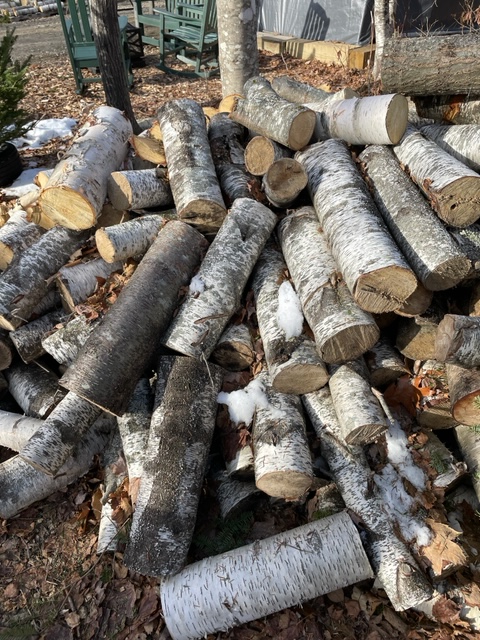
It also makes logs available split for burning and whole for fireplace decoration.

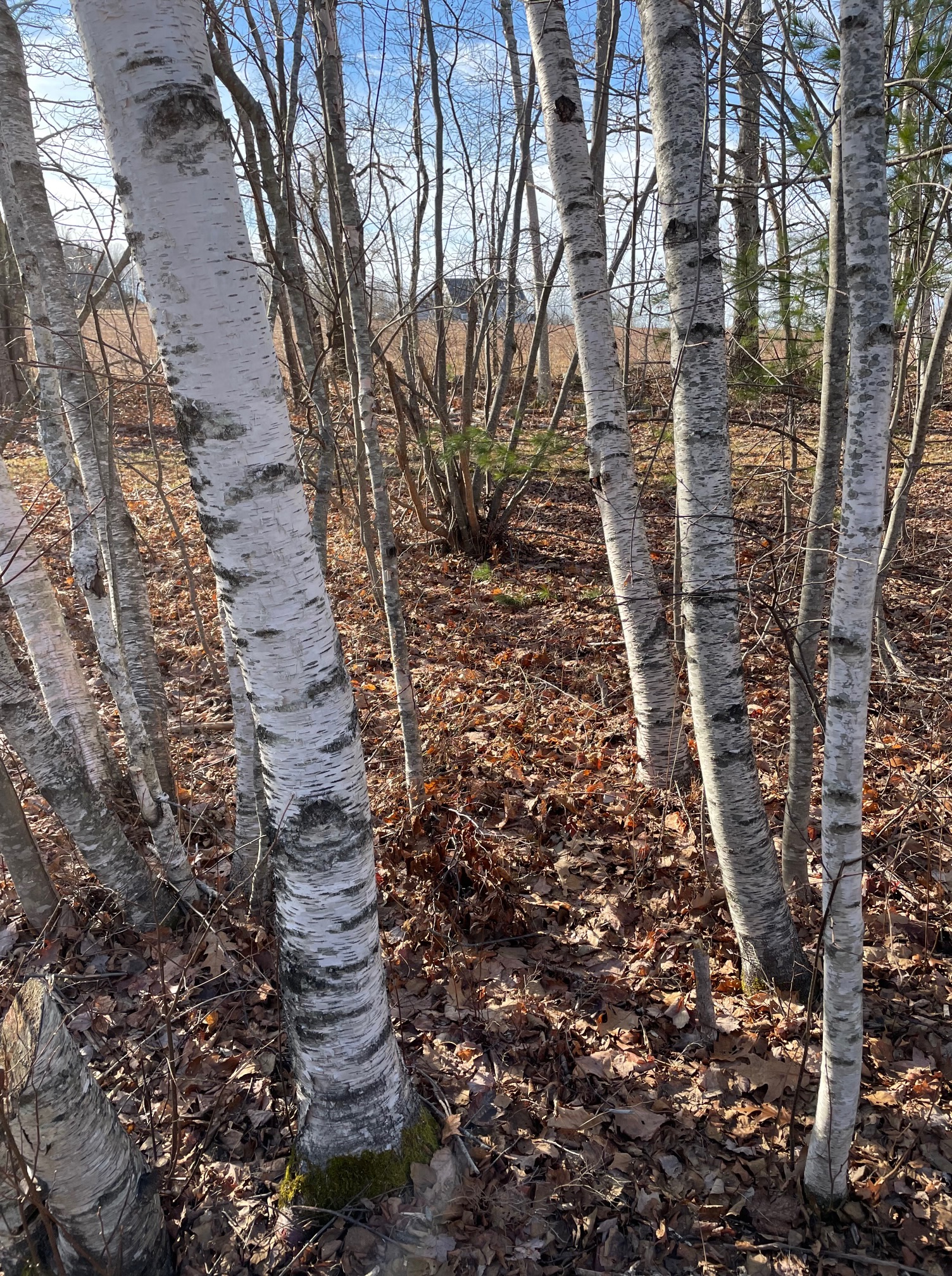
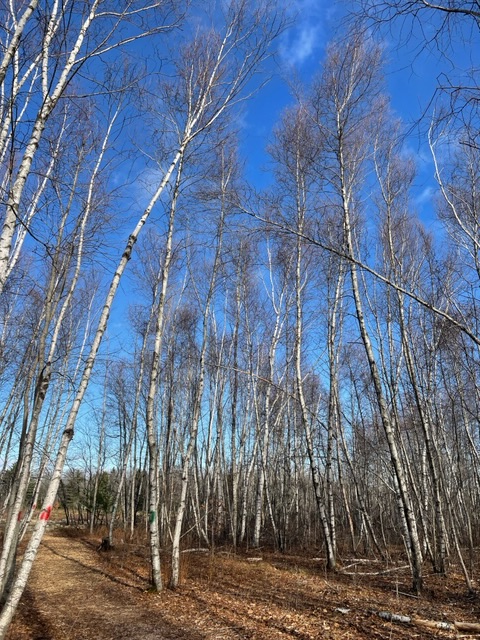
You can wander among the birches when visiting to collect a balsam and admire the sheer abundance of white trunks shimmering in the Maine sun. In fact, Betula’s common name, “birch,” is derived from an old Germanic root, birka, with the Proto-Indo-European root bherəg, “white, bright; to shine.”  Betula papyrifera’s bright white relates to the property called albedo, or how much light is reflected or absorbed by an object’s surface. The tips of its twigs have been described as violet by Nordic Noir writer Asa Larsson.

There are around 60 types of birch around the world. Moose devour birch when they can get it, not because they like the taste so much but because it fills their stomachs.

In the local food CoOp, in Belfast, birch syrup stands shoulder to shoulder on the shelf with maple syrup. Probably some people here like it better on their waffles.

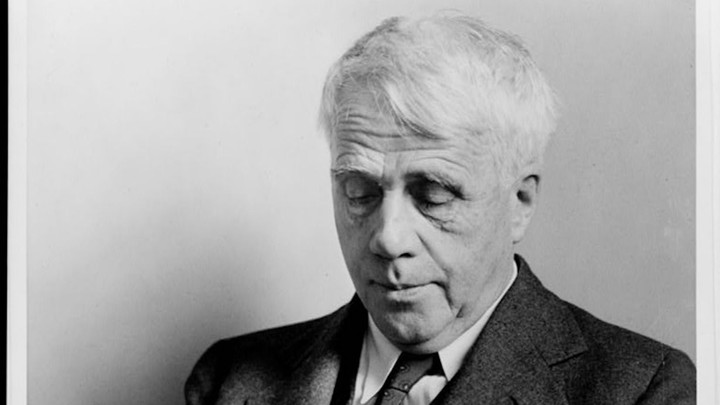
Poets have long extolled the tree, famously Robert Frost.

He wrote in 1915 about a boyish fantasy of climbing birches:

…Earth’s the right place for love:

I don’t know where it’s likely to go better.

I’d like to go by climbing a birch tree,

And climb black branches up a snow-white trunk

Toward heaven, till the tree could bear no more,

But dipped its top and set me down again.

That would be good both going and coming back.

One could do worse than be a swinger of birches.

A stand of paper birch, in Maine, with the cold air all around. No lovelier place exists.

Leave a comment

Filed under Jean Zimmerman

Broke-Neck Santa is an iconic figure

in the small town of Belfast, Maine, where ornaments have been hung on light poles by members of the Fire Department since the 1980’s (oh so long ago — “vintage”). No one can explain to me why this passion for a plastic Santa has taken hold, only that yes, it it is quirky, and perhaps Santa is craning his head from his sleigh up above as he looks down at the good boys and girls down below. Okay.

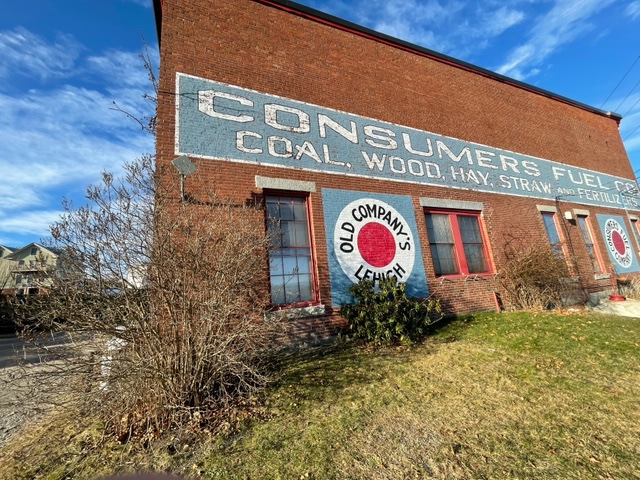
This is a town that started spruced up, as a ship-building community, in the beginning of the nineteenth century. On almost every block downtown you can see a handsome wood mansion adorned with the name of the original owner and the year it was built. The best structures overlook Belfast Bay, which empties into the Atlantic Ocean. Old warehouses mark a different time.

And so much is preserved from that era. Then shipbuilding declined, commerce in Belfast went to hell and the burg became a chicken town, famed for its processing plants along the shore, when feathers floated on the water and heating the gracious old homes became unaffordable. The old street signs remain.

Chickens are a thing of the past, and politics divide the old school and the newcomers who are transforming the store fronts with their chic tinsel and the old waterfront homes only they can afford to heat and maintain. We saw an ominous sign as we approached the municipality. A bounty of fantastic white birches all around –wouldn’t a birch make a great Christmas tree? –and then this blast of venom.

And a different point of view in the town proper. Anti vax and anti-mask demonstrations have raged here in recent months.

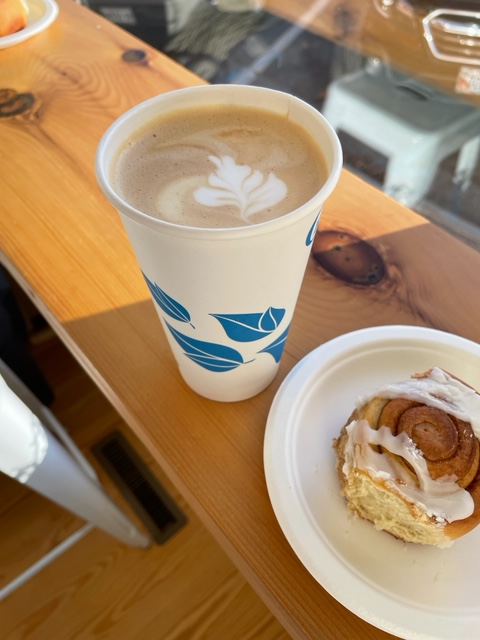
There’s a new coffeeplace/bike shop called Downshift that makes a mean cinnamon bun.

Paintings by local artists hang there. One reminds me of a novel I’m reading by Russian-born Gary Shteyngart, Our Country Friends, in which an entrepreneur designs a groundbreaking phone app. You take a picture of two people looking into each others’ eyes, and it calculates whether the two will fall in love. Everyone wants to fall in love. It is a smash, a weird iteration of online dating, and has made the inventor famous.

A couple we know is renovating a “cottage” on Cottage Lane. They love the house but want to make a  lot of changes, such as installing insulation for the first time in the building’s history. We talk about the trees on the property, particularly the enormous silver maple in the front yard.

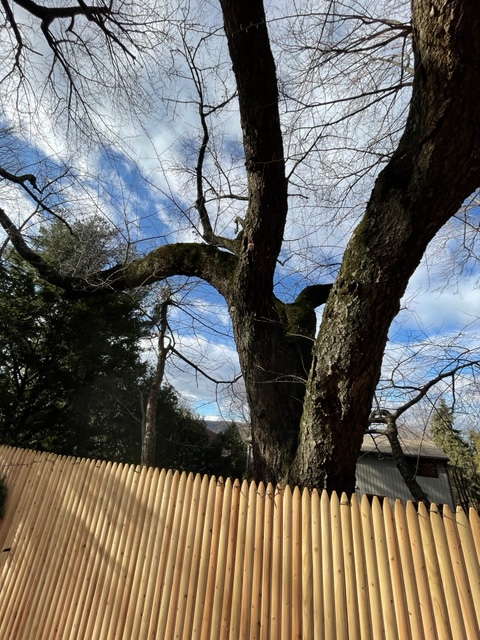
It “blocks the sun” and makes a mess, says the owner, it drops branches and leaves in his new yard. I know that silver maples have a propensity to shed. But this tree is probably a hundred years old, with gnarly beauty and character. Trees can’t be renovated.

Little girls and boys await Santa this month the same way in all the homes.

With true faith and hope that their world will be better at Christmas. Even if Santa’s burden is somewhat heavy.

Leave a comment

Filed under Jean Zimmerman

Maybe it was Ringo

and his bashful first rendition of the first bars of “Octopus’s Garden” on Get Back, which I binged furiously this past week along with much of America.

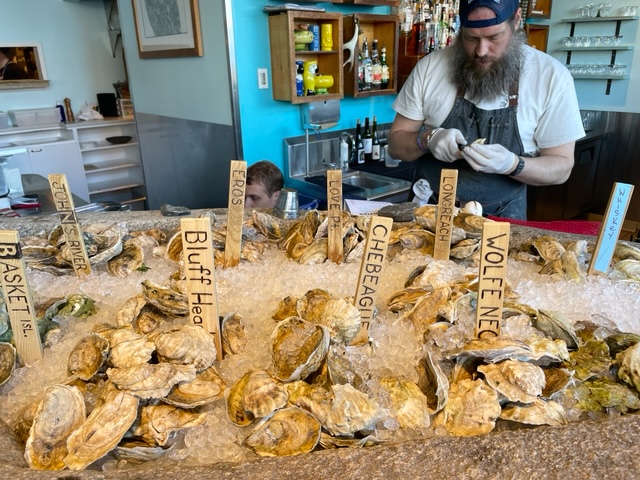
Maybe it was My Octopus Teacher, a loving and fascinating documentary about a man searching for answers under the sea. Or perhaps it was the holiday email from a brother-in-law, a paean to the tragic but heroic nature of deer-hunting, in which killing a doe could be forgiven if the shooter pets the sentient animal and says I’m sorry as the light fades from her eyes. In any case, the seared octopus (with heirloom beans) on the menu at Eventide in downtown Portland had much less appeal than it would ordinarily offer, especially with a bounteous oyster bar.and a master shucker from somewhere out of Moby Dick, a Maine Queequeg between voyages out of Bar Harbor. No facial tattoos, unfortunately.

We were there at the wrong time of day. We were the wrong generation. And we eschewed the probably salubrious alcoholic cocktails. We nonetheless pulled up to the bumper.

A dozen assorted briny oysters (they may also be sentient – in any case they quiver when first shucked and squirted with lemon) came on ice and accompanied by a guide to each one’s provenance.

The man and woman beside us at the bar each had a dozen, and seemed to be having some kind of romantic first date duel as to how much seafood they would consume with their drinks. On the other side, another lost soul escaping New York carefully placed her spent shells upside down.

Oysters do generate love.

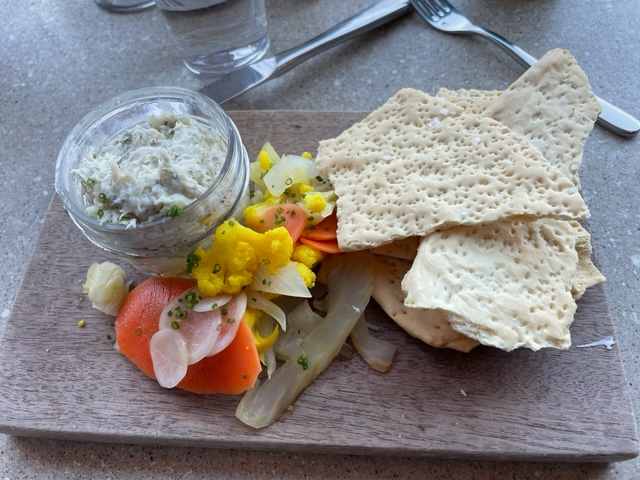
We dutifully overturned our shells and downed the chowder and smoked whitefish.

Is whitefish sentient? Did Queequeg pet it and say he was sorry before setting it beside the pickled saffron cauliflower? Was it properly honored. I’d like to know, because I think it’s speaking to me through the receptors in my stomach.

Leave a comment

Filed under Jean Zimmerman

Innovation

on the Grand Concourse takes some interesting forms as winter approaches.

A fine new scooter (just the sight of it a torment to me since I crashed on an e-bike in August) sports a nifty add-on – custom mittens to keep a rider toasty.

The lime green paint that the developers slathered over the plywood surrounding their lot, no doubt to cover the “eyesore” of graffiti that completely covered the fencing, only lasted a few days until it was bombed again by artists. Looks even more dashing now than it did before, if you ask me. I like a little silver with my acid.

Peering with another arborist up at a street tree at 188 Street to see if it needs pruning, out pops something amazing. A new discovery: a timeline of store signs that had never been removed before the next iteration was hung. I love secret histories. 

The oldest sign dates to a time when the Grand Concourse was truly grand.

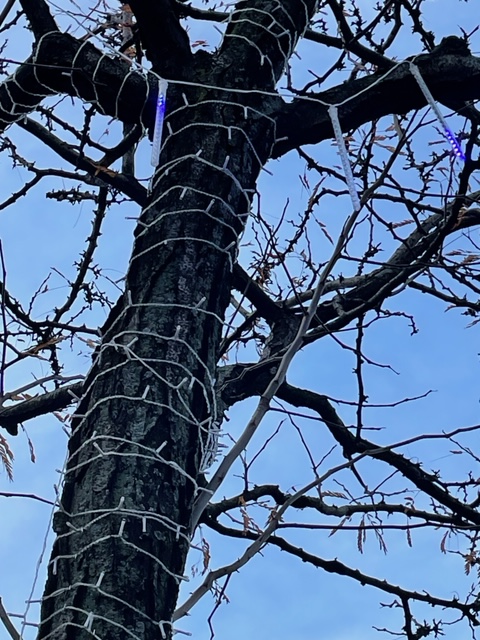
Newfangled Christmas lights, glowing purple day as well as night, entwining the honey locust right by where I park my car. Thank you, Four Brothers Discount!

If I’m not mistaken, glowing purple icicles just came into fashion this year.

Behold, fresh-dug and filled tree pits! Young trees will arrive soon for planting.

Takes a lot of men and a lot of large machines to prepare a good-size site on the new median.

Outside arboricultural circles people don’t know about structural soil, but it is the elixir of planting materials, along with good topsoil of course. Structural soil resembles gravel covered in mud, and in fact it is a bit like that in its composition, but is of course a bit more scientific. 

The best known type, developed at Cornell University, consists of crushed stone blended with hydrogel and moist loam; its magic lies in the fact that street trees’ roots are free to roam in the un-compacted material. Which is what trees like and need. You have to blend it like pancake mix before you place it in the tree pit. If you were to look under the sidewalk – now is your chance— you would find that all the best tree pits now feature structural soil.

Have you thought recently about what lies under the sidewalk as you amble along like the flaneur that you are? Do.

New stripes for Jimmy, the carpenter extraordinaire, who religiously builds and repairs tree guards. He likes to claim his house is decorated in orange snow fencing.

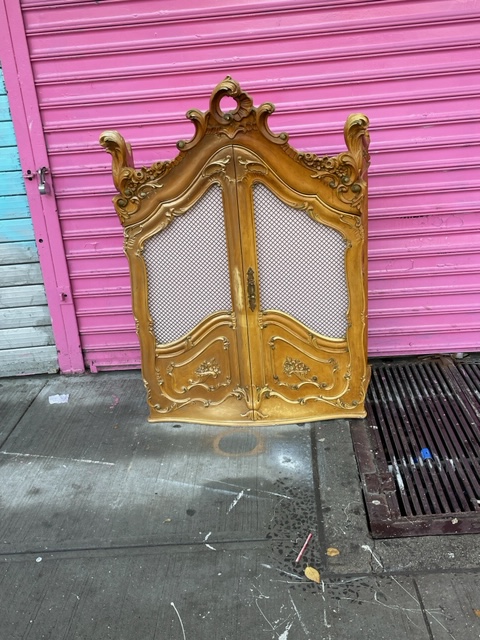
A new castoff at the beauty salon. Why would anyone throw this out?

A new store has popped up along the avenue, near Fordham Road.

The proprietors might be lying, of course, about their hours. “24/7” is just a concept to put on your sign while you’re sleeping it off in your cozy wintertime bed. The gate goes up at around 6pm or whenever they roll in. That’s when the hookah boys arrive for supplies. At last count this is the third hookah shop within a 10-block radius. The hookah boys liked to hang out in the new, empty concrete median in the warm weather, posturing and proudly puffing. Now that there is soil and plants filling their concrete clubhouse, not so much. The cool kids must be home getting on their moms’ nerves.

Finally, there’s a new dawn.

A new dawn every day, with real clouds that weren’t painted in your mind, to be followed by discoveries you couldn’t have imagined. Come for the workday, stay for the new day.

Don’t mind if I do.

Leave a comment

Filed under Jean Zimmerman

We’re there.

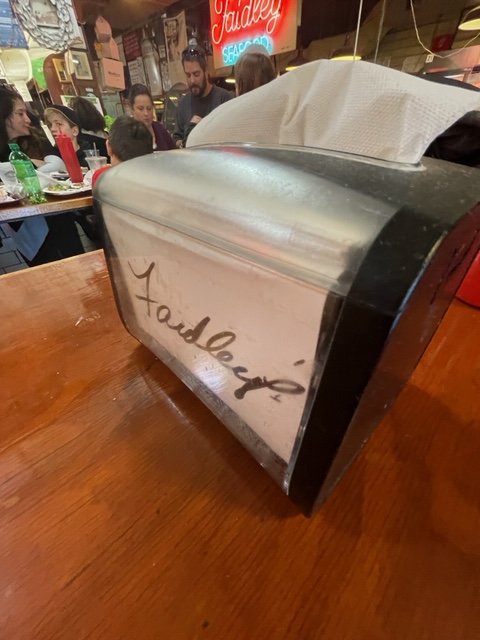
Going south to Washington. DC is only an excuse to stop by Faidley’s, in Baltimore. 

Faidley’s is open. Say no more. 

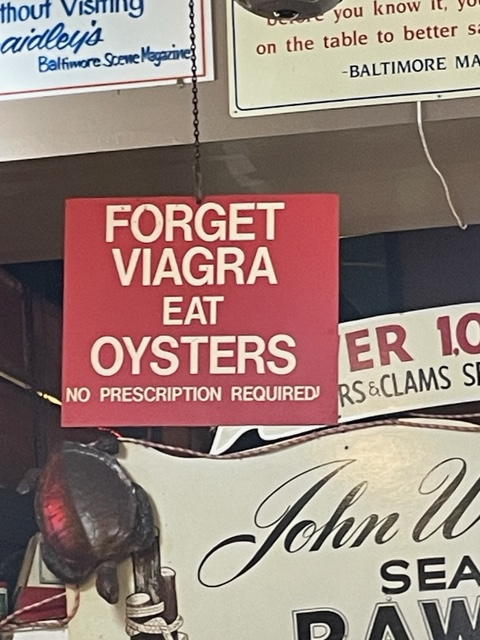
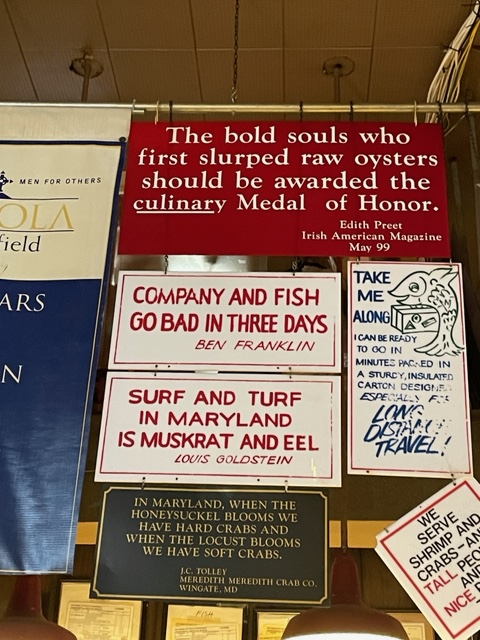
It’s one of those kinds of places with quippy signs. 

Applebee’s has fake ones, mass produced. In this case they’re not boastful, merely true.

The best crab cakes in Baltimore, on the eastern seaboard and maybe throughout the world. Faidley’s started out at Lexington Market in 1886 when John and Flossie Faidley combined their seafood stall with the adjoining business to form Smith & Faidley’s seafood. John’s son, Edward took over the business before World War II, and, in 1948, John W. Faidley, Jr. joined him and changed the name of the company to John W. Faidley’s seafood.

Black, white, blue and red customers, having in common a hankering for crab and beer, form long, cheerful lines to get their food. In The Wire, McNulty bribed some fellow cops with crab cakes from Faidley’s.

Of course there is paper and plastic. Nothing fancy. Only perfect.

The rest of the Lexington Market in downtown Baltimore is shuttered, being reconstructed (a Covid casualty?). Only Faidley’s has managed to remain open. In the ladie’s room, the metal paper holder is bolted to the wall.

At Faidley’s the crab cakes include mustard and crumbled saltines. (You can easily get the recipe on food.com but of course that’s not the same as going there.) Hence the wall of crackers. We might have supply chain shortages, but they’l never run out.

Yes, there is a great raw bar, but it’s really just a distraction from the crab cakes.

Promise me that at some point in your life, whether you’re coming from New York or Timbuktoo, you will visit Faidley’s.

Leave a comment

Filed under Jean Zimmerman

A sentimental lemur

is welcome on a sentimental afternoon, a day for choosing and cutting and a putting up a Christmas tree, the sooner the better, the day after Thanksgiving.

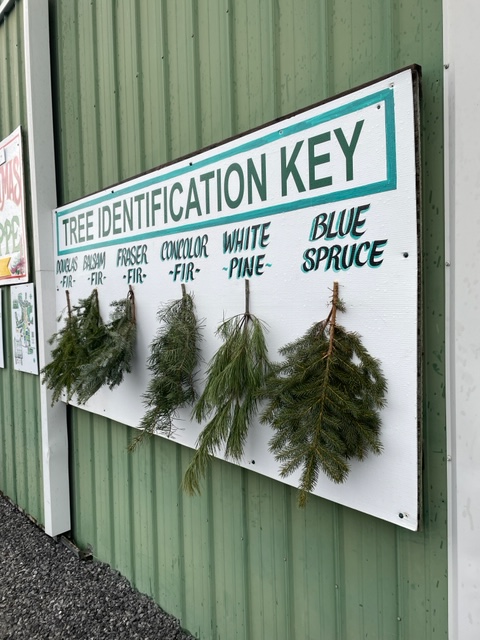
The tree farm we patronize offers many types, making it hard to decide.

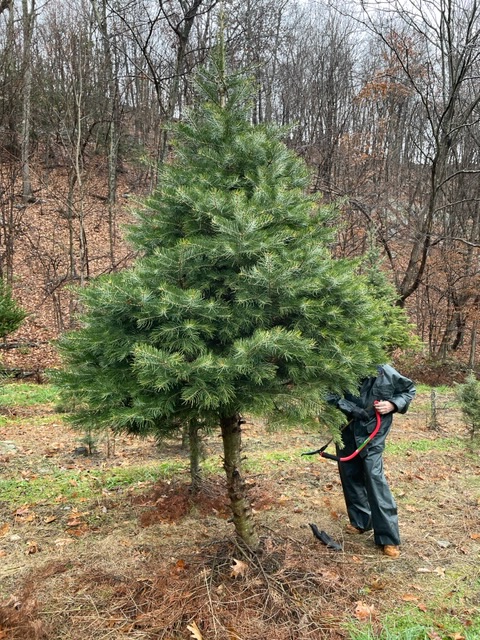
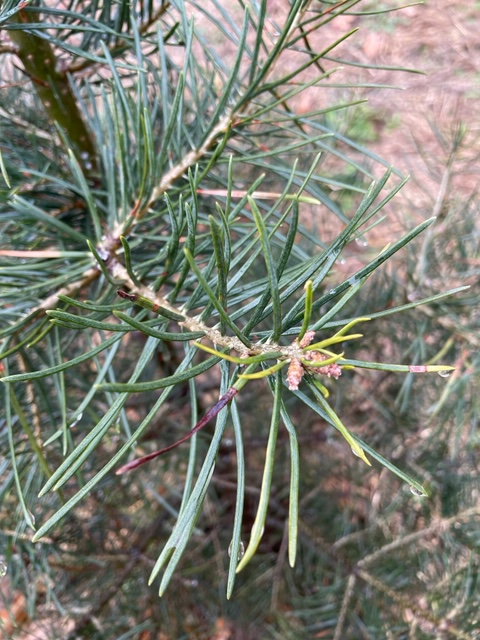
But we go for the concolor fir, just because we’ve done that before. That’s sentimentality. There’s a guy who concurs, “It’s nice and soft and smells good.”

Driving north we listen to Johnny Hartman and John Coltrane, their brilliant album from 1963. At one time I thought of those guys as old fogeys. The very thought of you makes my heart sing… That’s sentimental. I remember first hearing the album 30 years ago in Laurel Canyon, with a gas-powered fireplace and sky-high eucalyptus trees outside that smelled like cat piss. Looking back on a joyful winter so long ago, that’s sentimental.

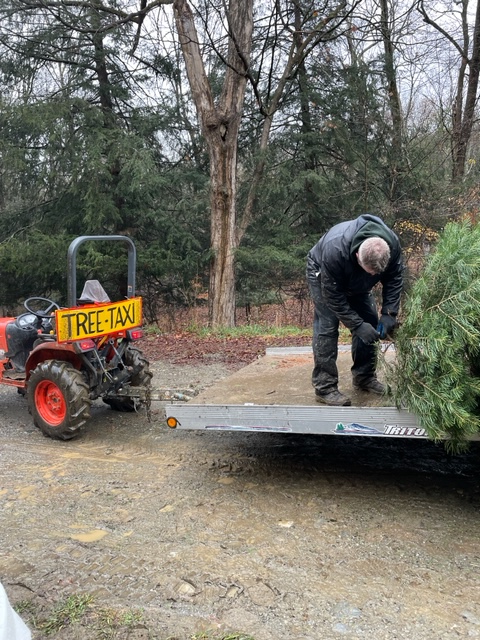
It used to be that people went into the forest to collect their trees, until around the 1930s. This is the agricultural alternative. Less sentimental, but sentimental enough the way we do it now.

The day is wet, with sloughs of mud. Remember the time we came before, with my brother and his girlfriend, and everything that happened then…That’s sentimental.

It’s all we can do not to take the first tree we see.

This specimen certainly looks perfect enough. There are perfect trees all over, and some that will someday be perfect.

The shop is a bounty of sentimentality, families and dogs.

And ornaments. Something for everyone.

That one has my name on it. The lemur. Of course. There is a myth that the ornament you like was made for you, or the tree you choose is perfect for you, almost that it was grown all those years with you in mind. Our choice has been pruned back for so many years it’s ridiculous.

But then I’m a bit ridiculous too. And sentimental to a fault.

1 Comment

Filed under Jean Zimmerman

There are plenty of majestic trees

at Hemlock Hill Farm, but none that I could see was a Tsuga.

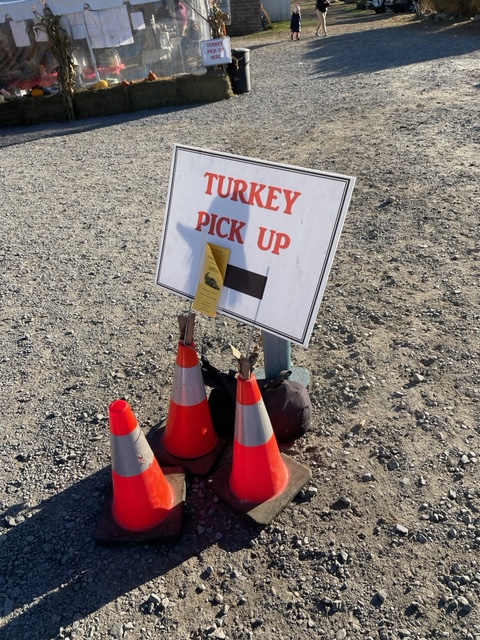
Hemlock Hill has been in business since 1939, and there was probably a hemlock or two around then. While the farm reigns supreme as the local purveyor of natural Thanksgiving turkeys, there are other reasons to pay a visit when the holidays come.

Why is the day before the event so much sweeter than the event itself? The lull before the storm, the eye of the hurricane, the bated breath before the first kiss. The moment before the bride steps into the aisle. When you’re a kid, the time you get ready before a big dance. Or any dance. Anticipation. It’s also before any family feuds erupt, before anything goes wrong. (Like the time the crisp golden turkey slipped out of our hands onto the kitchen floor at my cousin’s apartment. Whoops!)

Tomorrow is meat, potatoes, stuffing and pie. Today is what takes you there. A crowd at the farm.

A duo belting out Landslide. Pretty well, too. A nice show and the song brings back memories of my daughter’s fourth grade play performance.

Corny decorations. I don’t lean that way at home but I like to see them here.

The farm’s herd, probably some august variety. All I know is that they are very handsome and that I purchase some of their beef in the farm store. Along with the farm’s pork and goat meat.

You used to be able to go back around the barn and see the turkeys that had not yet been slaughtered doing their anxious turkey trot on the sawdust. No longer. Today a sweet-faced Valentina rings up a pre-ordered bird.

And now, do you want to carry that like you hold a baby? she asks.

Yes. Yes to the turkey, to Valentina, to hemlocks and other trees big and small, and to the bated breath that precedes every delicious thing.

Leave a comment

Filed under Jean Zimmerman

Who’s to say if something’s beautiful?

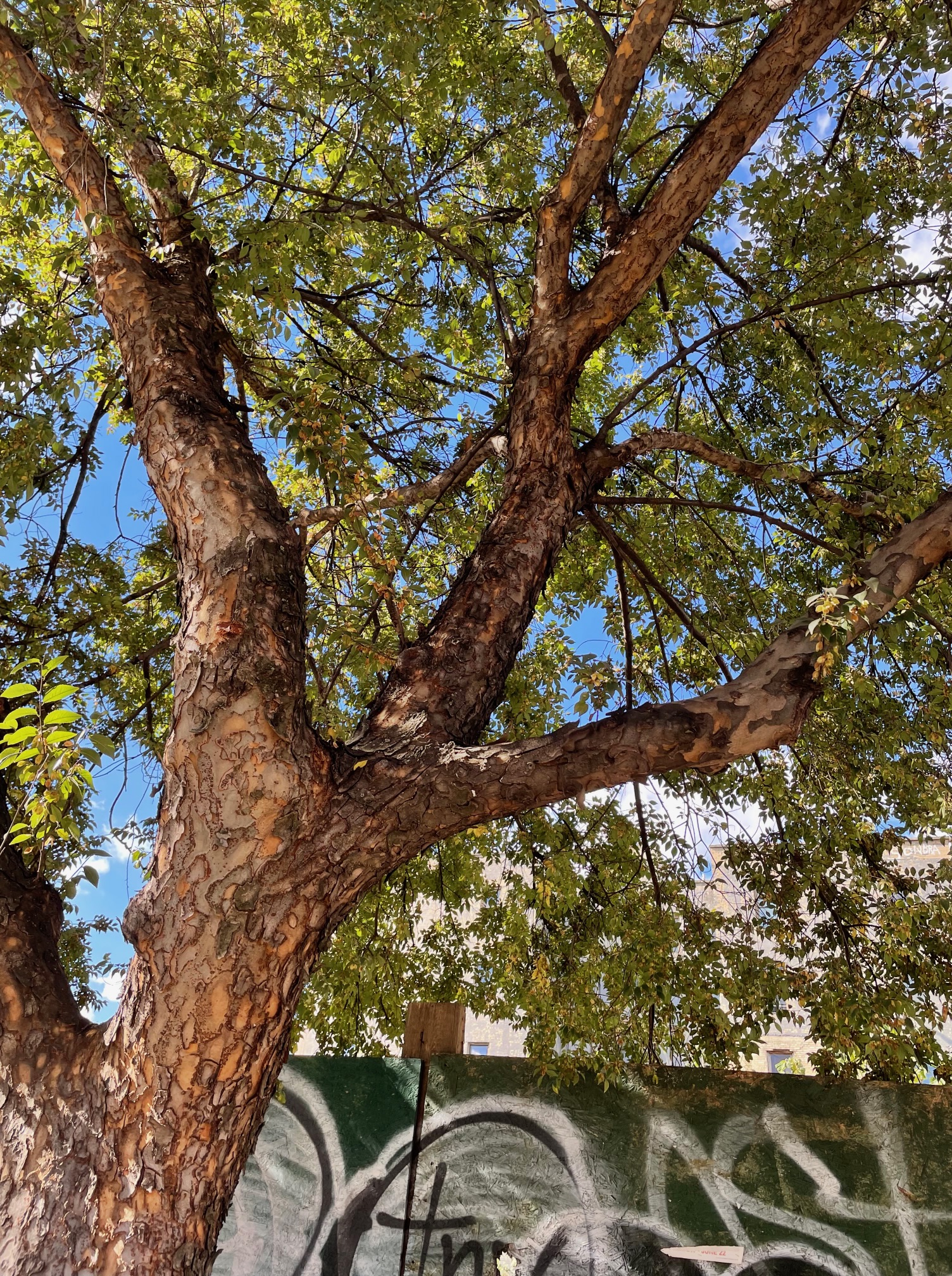
The construction worker exclaimed over the beauty of a tree, which I explained was a Chinese elm. I agree with him one hundred percent. Wrote down the name for him to look up later.

The early afternoon cloud hanging dopily in a haze of blue, framed in the side view. Lovely.

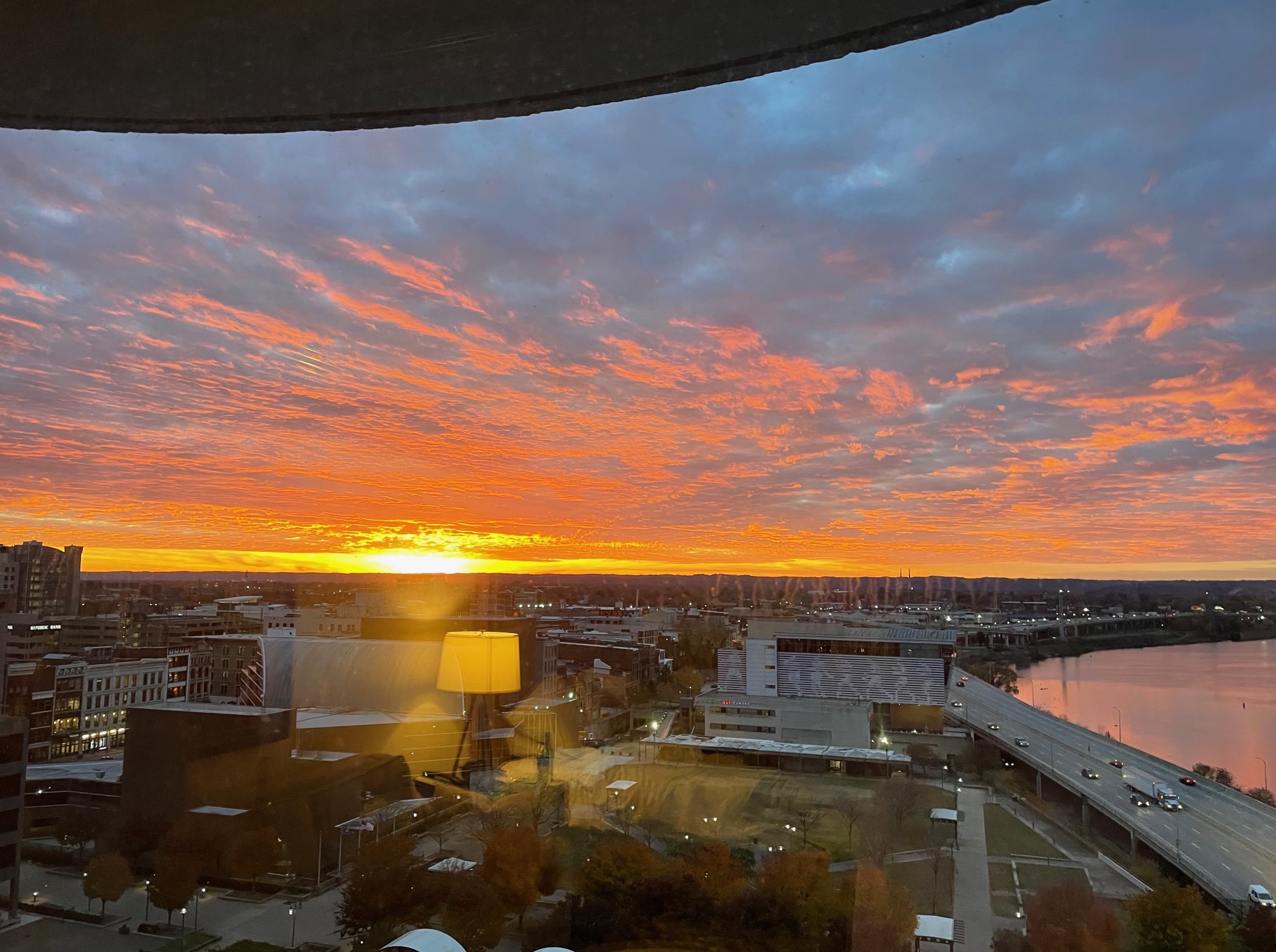
The sprawling city sunset. It hits you with a bang. You almost want it to be over, the beauty makes you feel so small.

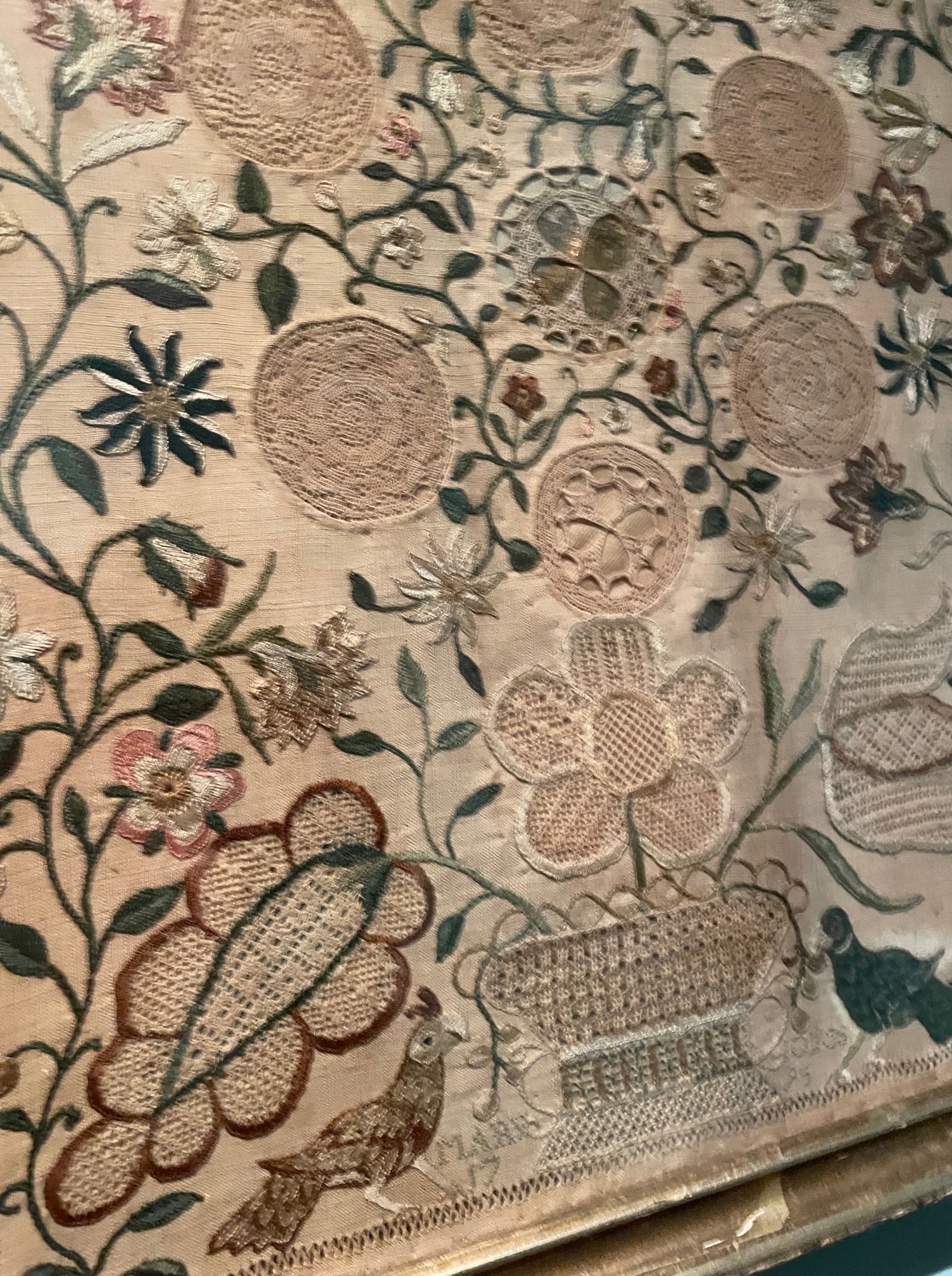
The awesomeness  of small stitched things, the things people overlook, like a sampler created in 1795 in Philadelphia by a teenaged seamstress named Mary Jones.

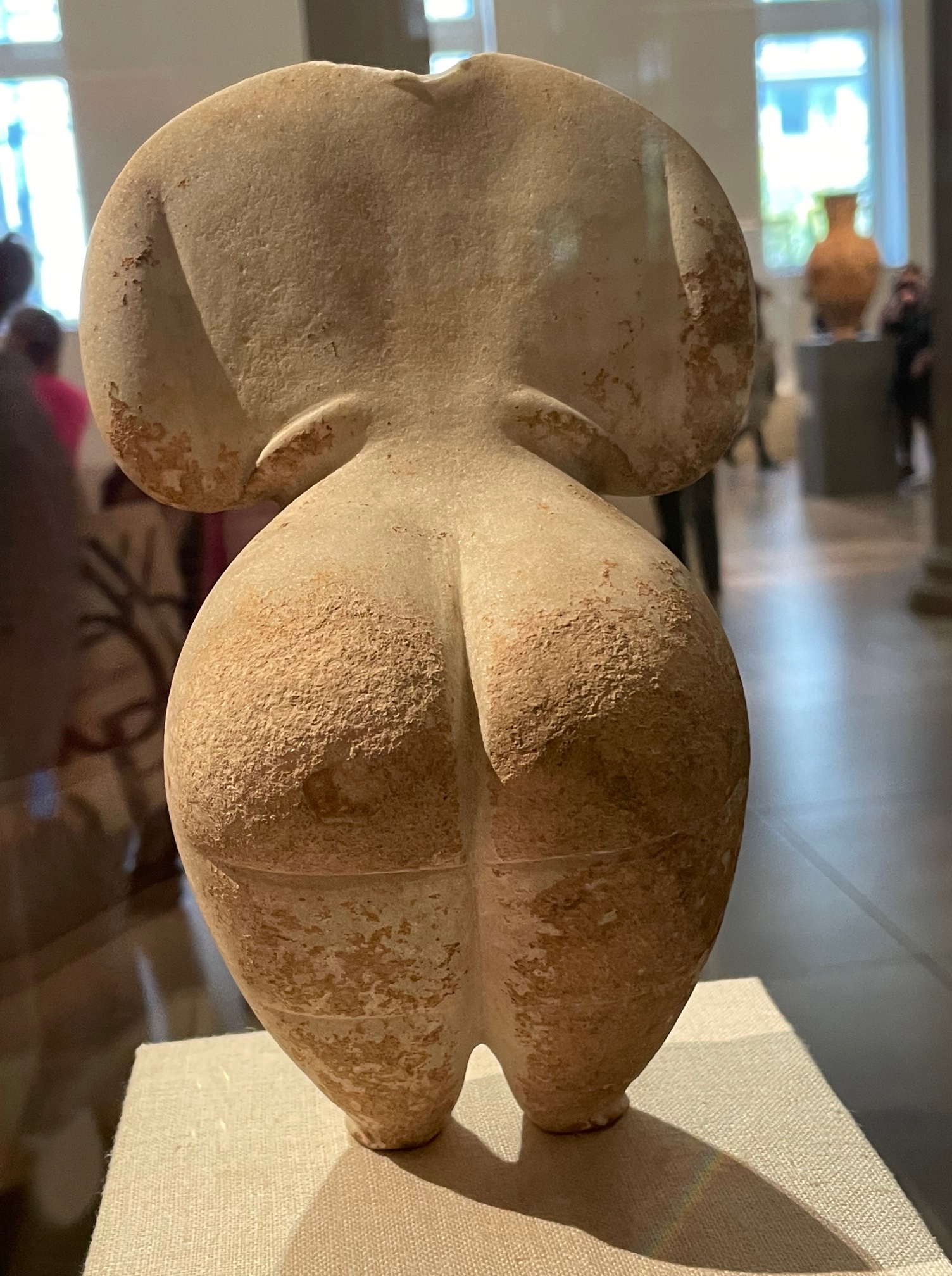
The perfect limestone posterior of an ancient Venus figurine the Metropolitan is lucky enough to own. Someone once carved it, held its power in his hand.

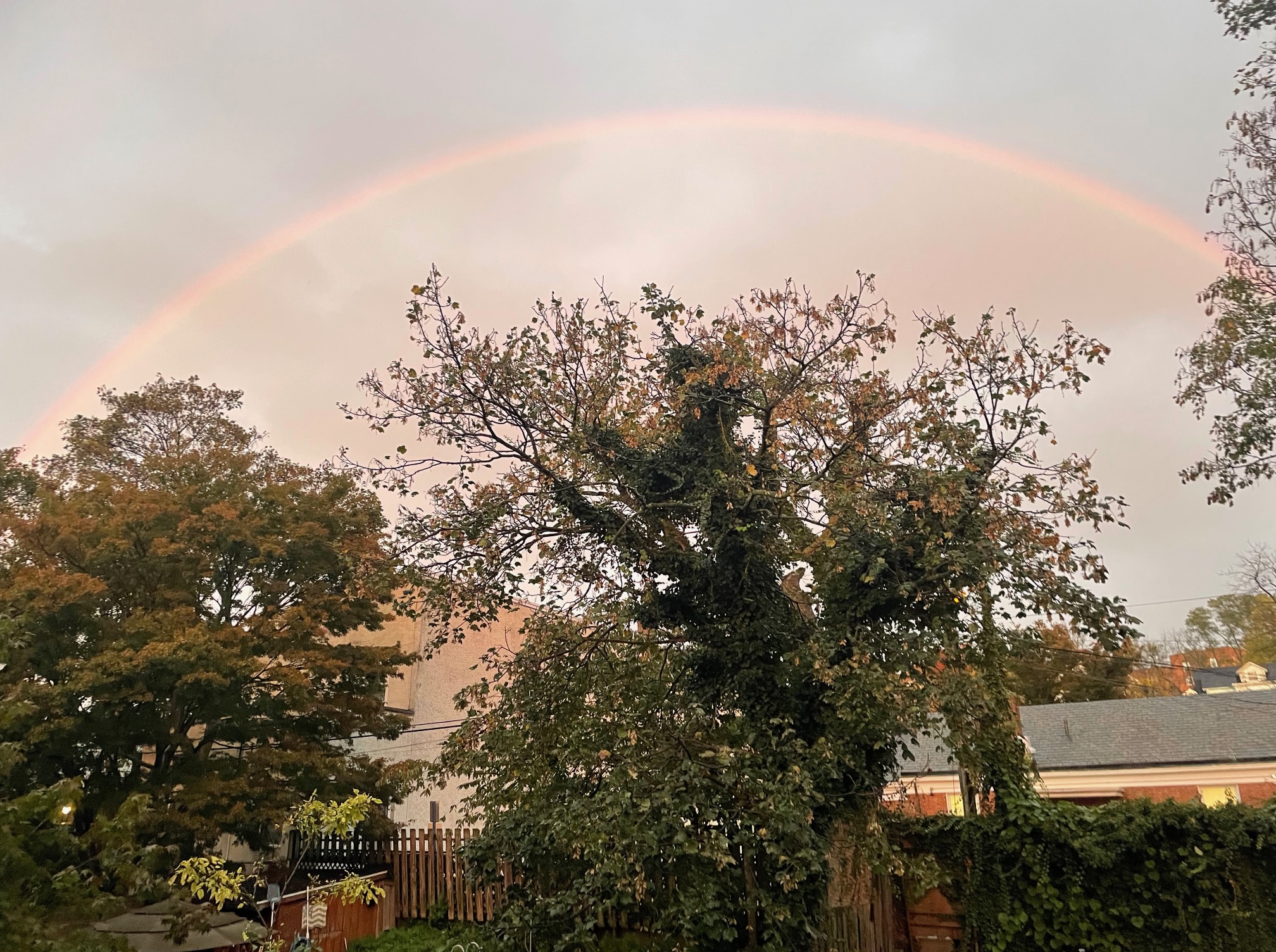
A delicate rainbow after a storm. Even the least corny people would find it beautiful.

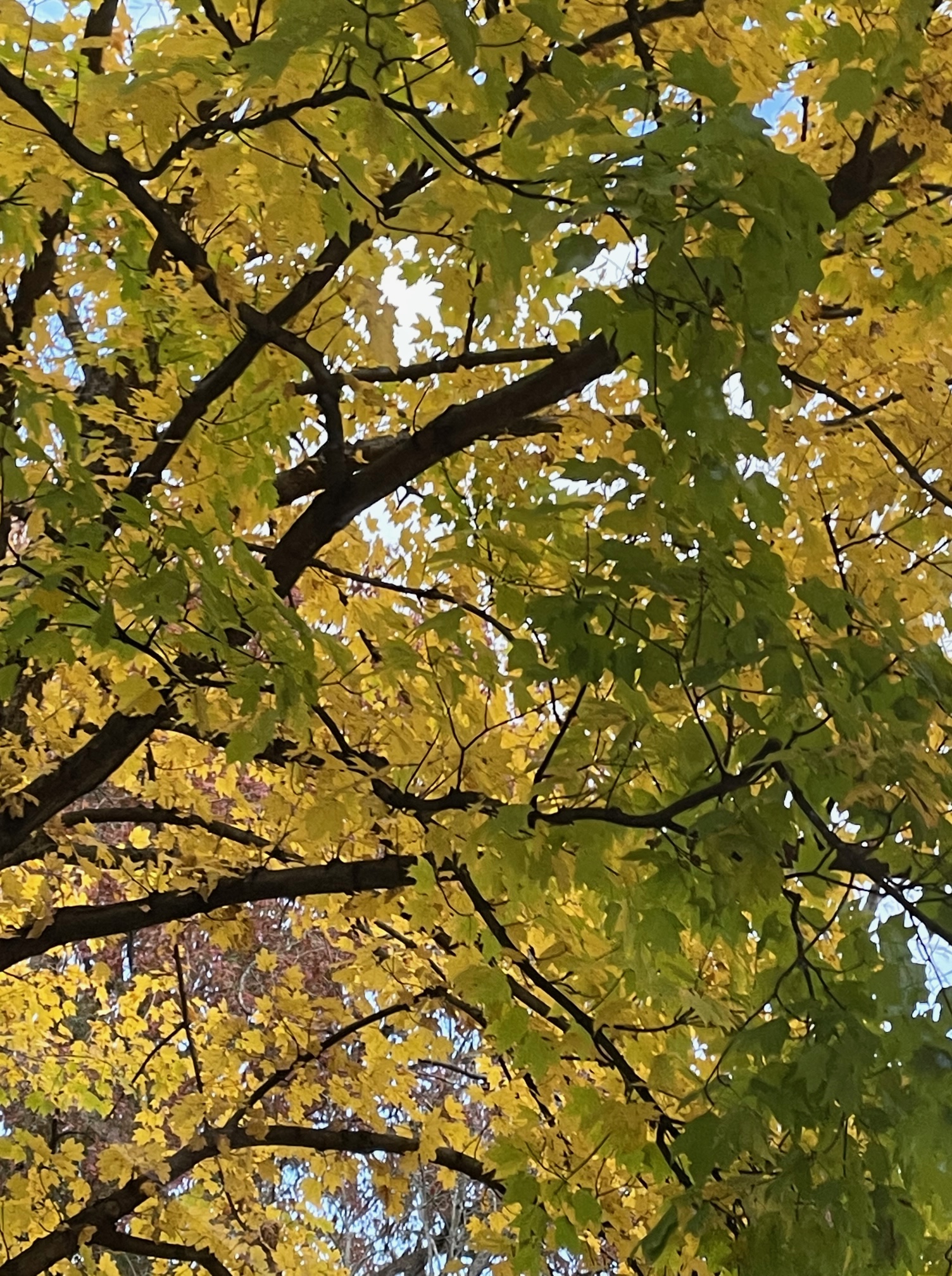
A leaf mosaic, one of a billion in the world yet individual as a snowflake. You could lie under that and meditate for hours.

This post is what we call “list-y” around my house, which means you just throw things in before they’re fully worked out in the writer’s brain. List-y is usually a placeholder, nothing finished.

 Yet it might inspire you to make your own list of beautiful things. Let me know if you do.

3 Comments

Filed under Jean Zimmerman

Curious things abound

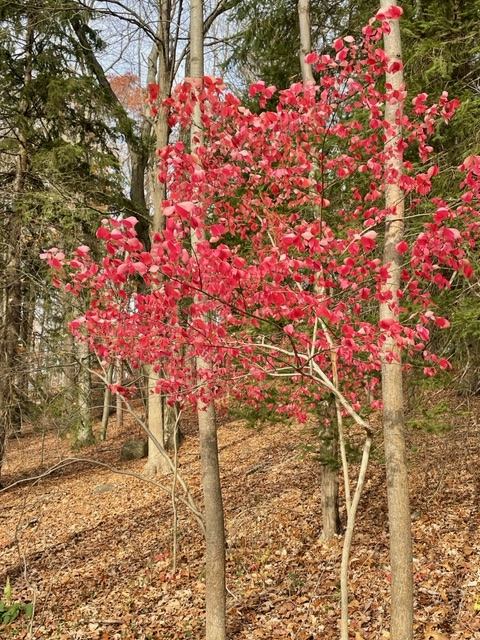
at Teatown, the 1,000-acre nature preserve in the Lower Hudson Valley, which is a good place to check out the region’s final splash of fall color. I used to live down the road. Lucky me.

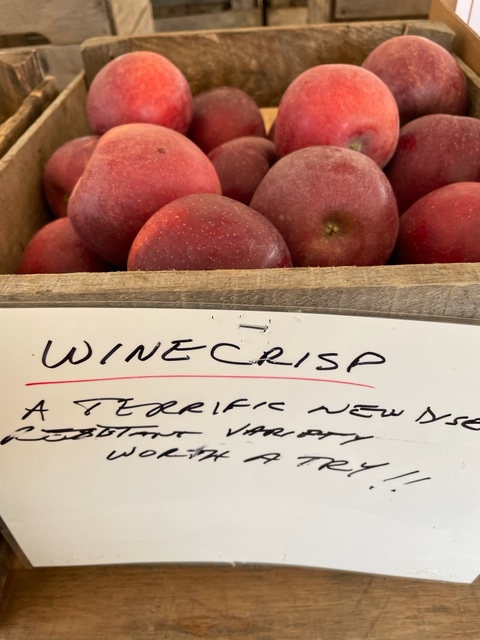
Teatown is a great destination. But first we had to stop at Fable Farm, where Geoff is now selling the heirloom apples his cider mill is known for. He has four growers who get him cultivars you’ve never heard of. We like the ones with the venerable pedigree, such as like Ashmead’s Kernal, named after a doctor when it was first raised in 1750. Mustard-yellow, it has sandpapery skin and flesh with a perfumey bouquet.

Geoff himself recommends the Winecrisp.

A good substitute to the Honeycrisp, a lab rat apple patented in 1988, which everyone loves so much but has a tendency to easily bruise.

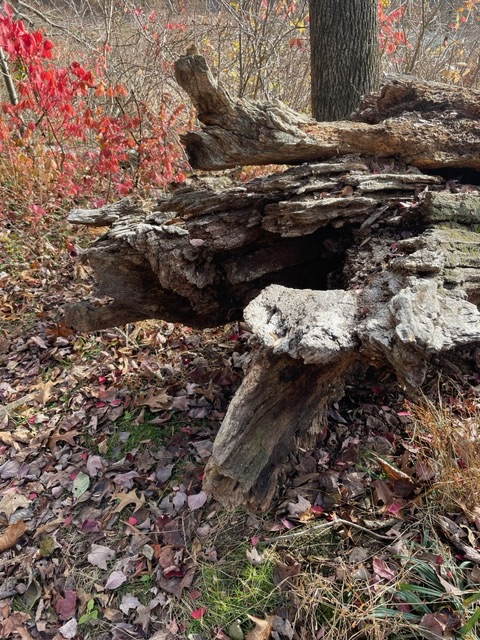
Teatown is a good place if you like rustic seating.

Ancient fallen logs. I’m sure something furry had just skipped out when I peeked in.

A lake trail just next to the glimmering water. Teatown trails are open from dawn to dusk, 365 days a year. What this says to me is that the teenagers that man the cash register for Geoff’s apples have a fantastic party location and the cops probably won’t run them off the way they did my friends and I in a wooded town back when.

Teatown also has some volunteers kind enough to warn you off the trail you should definitely not be on.

It’s interesting. Teatown’s woods are bursting at the seams now, a phenomenon courtesy of the pandemic, they say. The parking lots hold dozens of shiny new cars. But we asked ourselves, if Teatown was always here and always this beautiful, why was it never this crowded before?
Its burning bush (or some twin plant) has always been here in November.
The authorities have always tried to fend off marauding deer.

When we lived down the road the different factions in Ossining nearly came to blows over a plant to have sharpshooters in Teatown’s woods by night to cull the herd. There is now a small bow hunting program in place. Yet apparently the deer survive, from the looks of the saplings along the shore that have been planted in acrylic tubes. Good luck with that, Teatown.

What they need is a strongman to keep things in order.

Lovely was a word invented to describe Teatown.

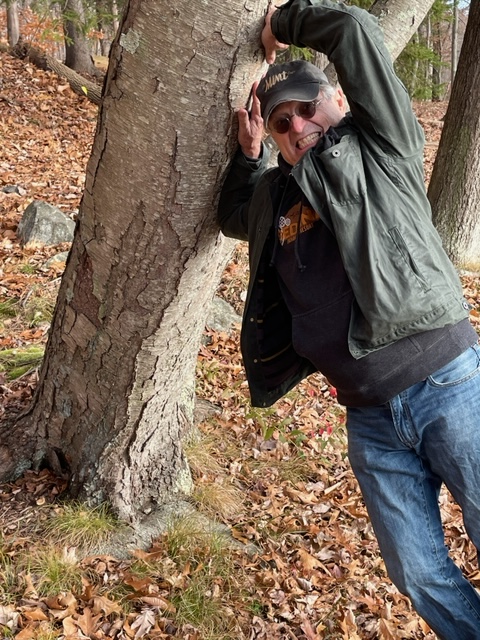
I want to hear the wind whooshing in the fall branches again soon. And discover a new favorite. This time, with no one around, I admired a tree and stone so involved in their kiss they didn’t care who was taking the trails.

Something curious but not unexpected at Teatown.

Leave a comment

Filed under Jean Zimmerman