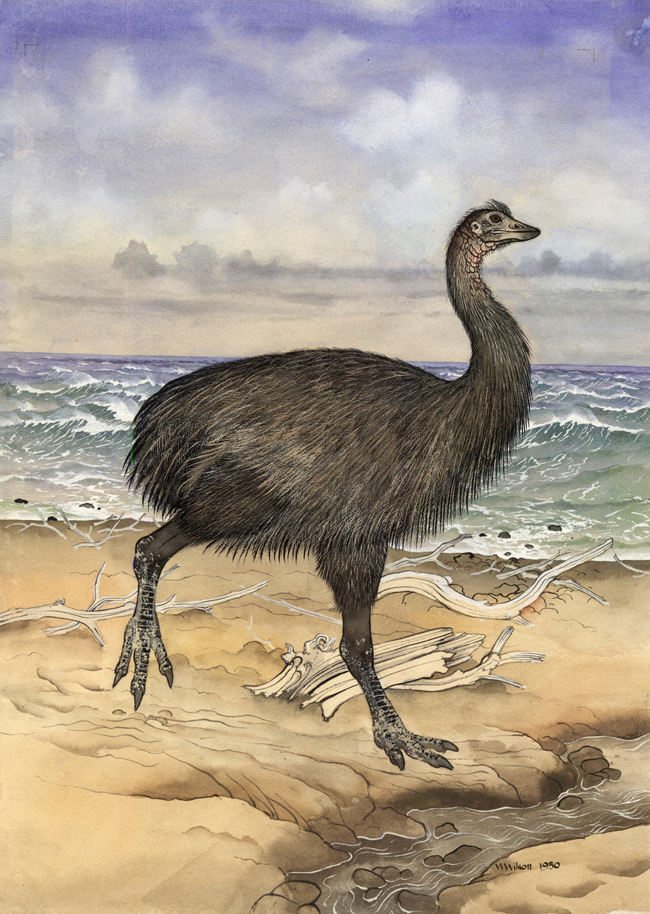
is something Gil and I sometimes say when we imagine that an idea we’ve come up with is something probably too esoteric or just ridiculous to interest anyone else. And I have had quite a few of these over the years. Books usually start with this kind of glimmer, and you can expect some ideas to peter out of their own accord, gradually going extinct like the elephant bird.
Occasionally one sticks when thrown against the wall – for example, the notion of writing a biography of the little known I.N. Phelps Stokes, the white-shoe tenement-designer, philanthropist and all-around eccentric who put together the most extensive book about Manhattan ever written, along with his It-girl wife, back in the Gilded Age. A publisher gifted me with an advance to research that effort and it came out under the title Love, Fiercely.
Comparably, at least in terms of ideosyncracy, I have undertaken narratives about she-merchants in New Amsterdam (TheWomen of the House), heroic American Housewives (Made From Scratch), and female jet jocks in the U.S. Navy (Tailspin). Each book comprised both a commercial undertaking and a labor of love.
Then there was the fictional nineteenth-century girl raised by wolves turned New York City debutante (Savage Girl).
In each case I hoped for a readership but, yes, at bottom, I was essentially amusing myself. At least at the start. Henry James wrote about the beginning of his creative process: “The ‘germ,’ wherever gathered, has ever been for me, ‘the germ of a story,’ and most of the stories strained to shape under my hand have sprung from a single small seed, a seed as remote and windblown as a casual hint.”
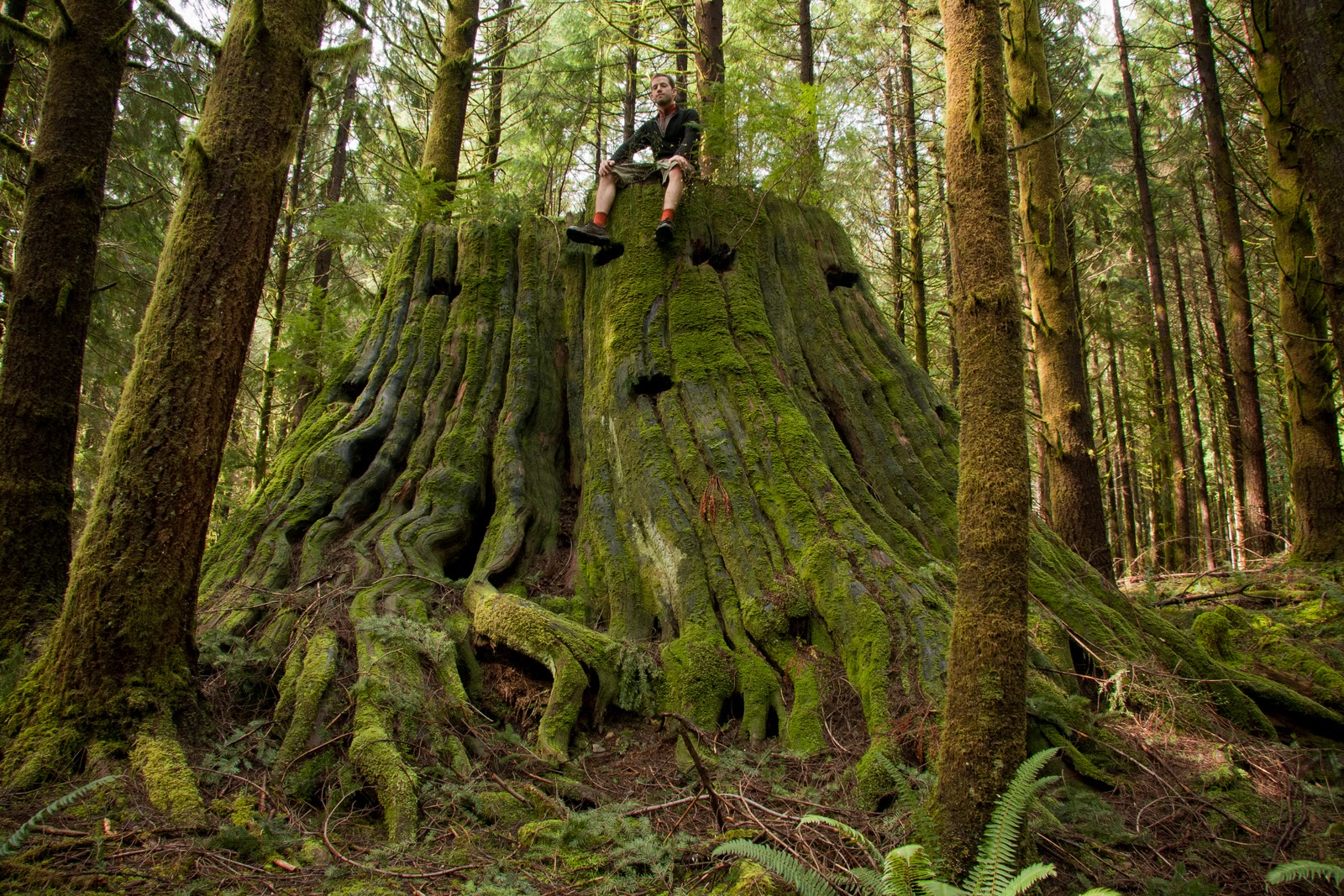
I am currently working on a proposal for a nonfiction book tentatively called Heartwood: The Epic Battle Over America’s Forests.
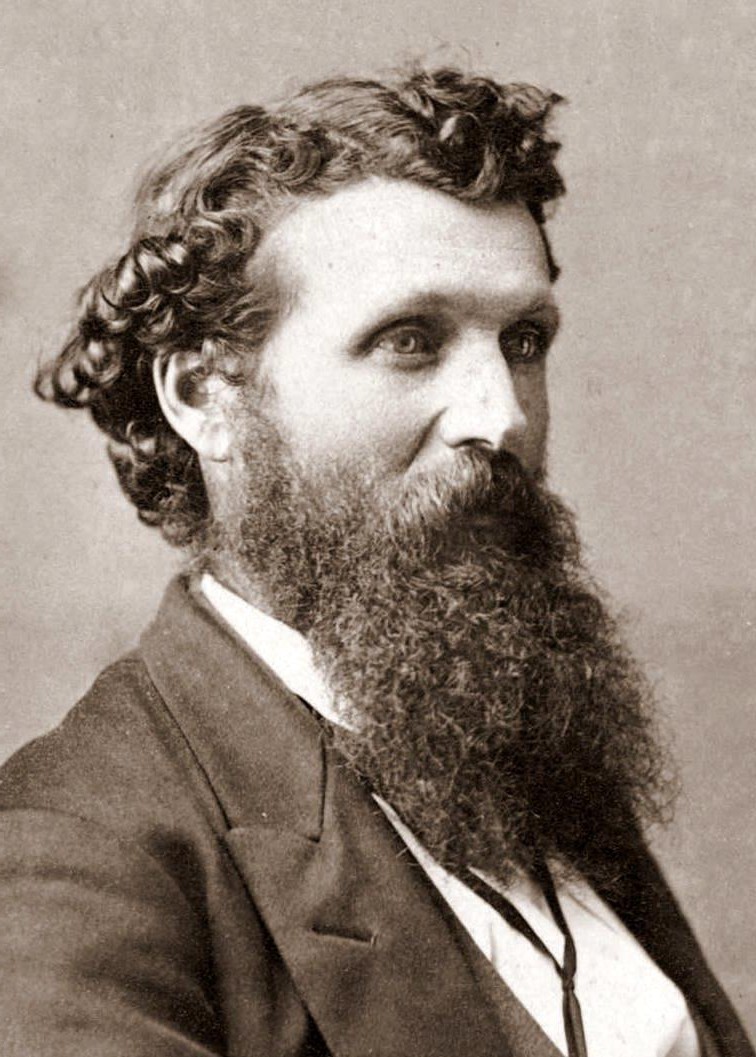
So far, I have done a lot of research, drunk a lot of coffee, and revamped the basic architecture of the idea several times. I plan to present the story of wilderness in the U.S., not so much biologically, though that will be a part of it, but culturally. From pre-European times through the quest for ship-mast pine through the timber barons of the 19th century, as well as the purist forest champions like wilderness champion John Muir.
Up through the wildfires that threaten the great trees of the Pacific Northwest and the million-tree planting movements we see today. As I see it, Heartwood will not be stuffy science or hackneyed history, but the drama of a struggle that helped define this country, one that absorbs American readers more than ever.
I do think that if I can pull it off it will be a lively book. A story that will amuse me, yes, but others as well.
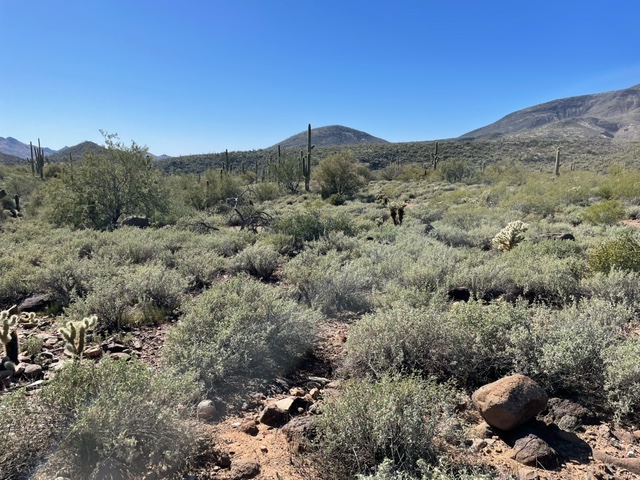
Maybe you can’t go all the way. Maybe the rocks underfoot prove too much for you, even if the saguaro forest at Spur Cross Ranch tempts you.
Beefy, odd, some more masculine than others.
A well placed bench welcomes us. Behind is a mature mesquite, shaggy and fissured.
A plaque on the back of the seat has a few words from
Walking in Beauty, the closing prayer from the Navajo Way blessing ceremony: In beauty I walk With beauty before me I walk With beauty behind me I walk With beauty above me I walk With beauty around me I walk It has become beauty again
The lines are supposed to bring peace and calm, and I’m beginning to feel iit, surrounded by an intense aroma that floats on the hot air, herbal and intoxicating, combined with the smell of horse. So many ride these Cave Creek trails.
My father would always find a bench. I don’t like to walk, he always said. I never understood. You’d find him seated, whether on the side of a trail, say, or on a bench at one end of a museum exhibit even when the greatest Jackson Pollack canvas in the world could be found at the other end. He wouldn’t move.
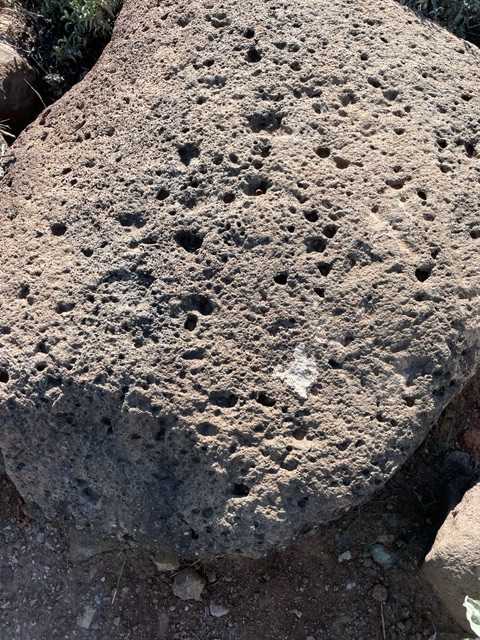
This trail has ancient rocks that have never moved, hot to the touch.
My mother says it’s strange because when my father hit the tennis court he was a demon, with a killer serve.
I think now he was just at home in his skin. He didn’t need art, or a view from a hiking trail.
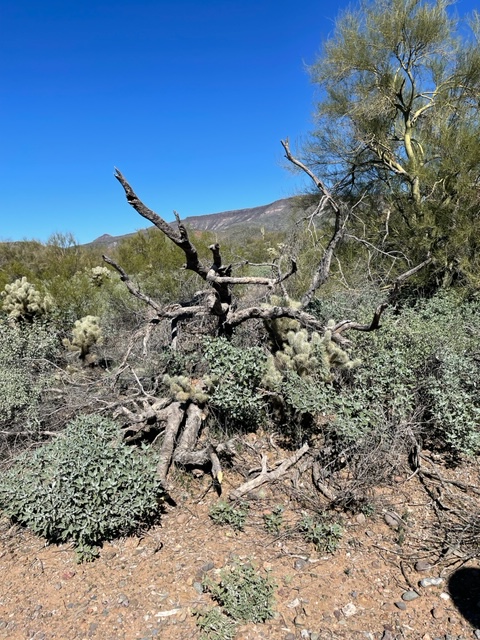
Sometimes you find a tableau in the desert. Frozen, totally stationary, looking as if were posed by a mighty hand. My mother found one today.
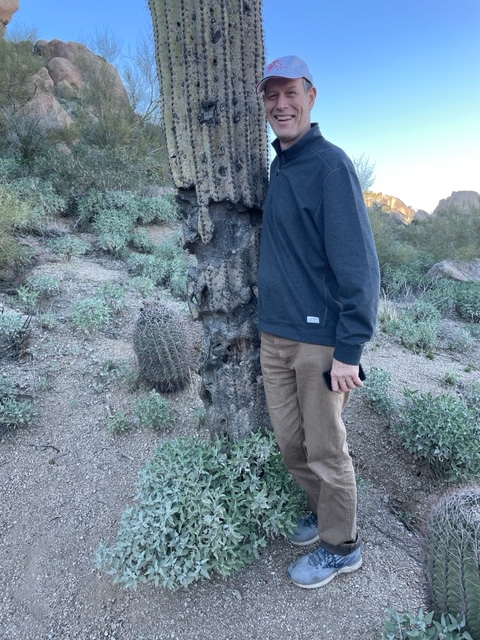
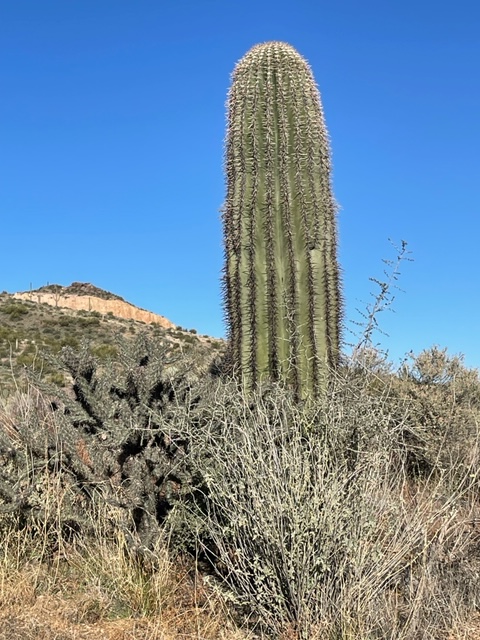
Sometimes you see a saguaro that took protection as it grew under a larger plant, one quite different from itself.
My father never blinked when I said I wanted to go to grad school for an MFA in poetry. What a useless endeavor! He bankrolled the whole thing, and launched me as a writer.
Am I growing up yet? Like the saguaro, I’m taking a long time to be in my skin. I’m trying to be patient. “Patience is also a form of action,” said Auguste Rodin.
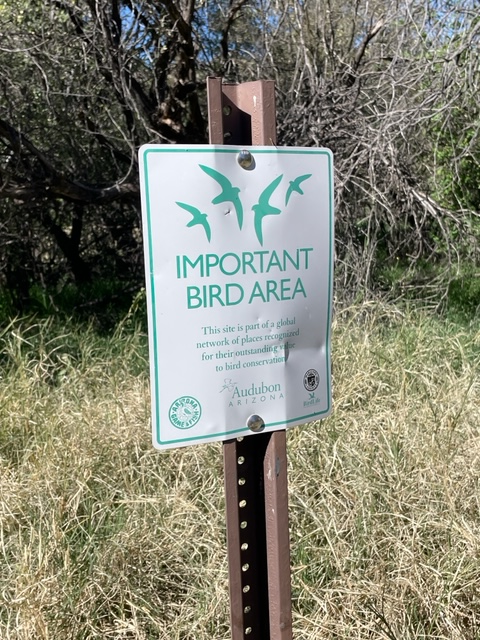
There might be birds here, sometime, if you wait patiently.
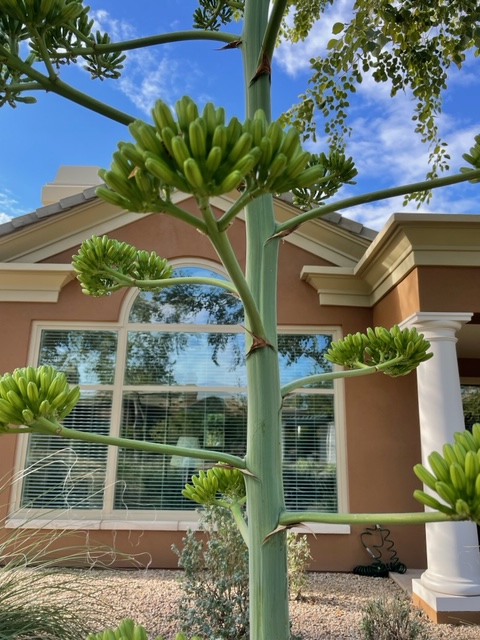
Two century plants side by side, one quite dead, one obviously alive.
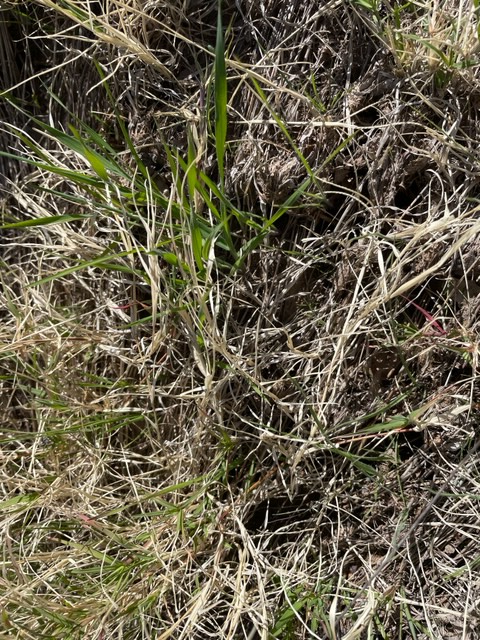
Sometimes the llve and the dead grasses grow together.
In one of his most acute descriptions, Walt Whitman praised “the beautiful uncut hair of graves.”
Today, down a hill, Cave Creek.
Little more than a trickle now. In another season the rains will come and the creek will rise.
All we can do is observe and be patient.
Wendell Berry writes:
It may be that when we no longer know what to do we have come our real work,
and that when we no longer know which way to go we have come to our real journey.
The mind that is not baffled is not employed.
The impeded stream is the one that sings.
Not a long trail today, but one just the right length.
is a saying that that has become part of the vernacular, though no one quite knows who said it – Talleyrand? Napoleon? Gertrude Stein? It captures the spectrum of experiences I had today on my desert trip north.
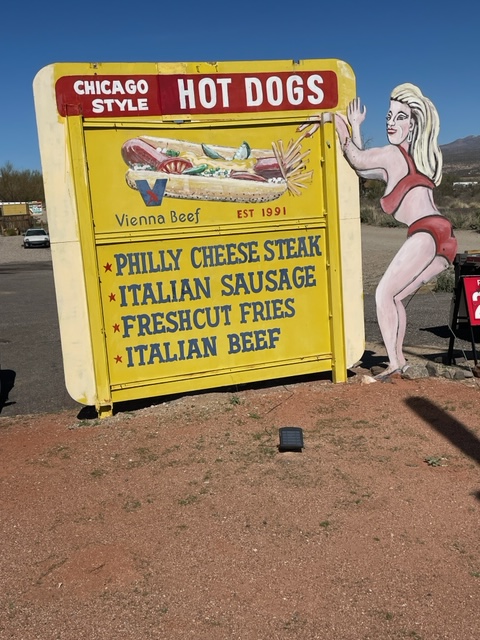
Sublime would be the weathered, battered signs that dot the old west.
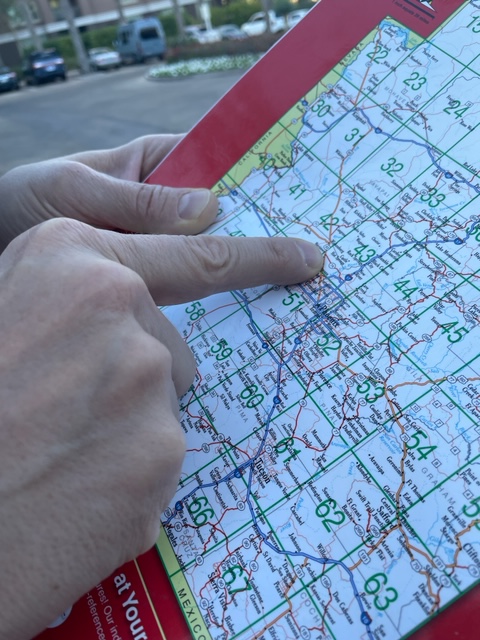
Up in Wikea, not an official ghost town but a real, ramshackle, dusty, spread out region, a speck on the map.
A place of pies and honey. We had black walnut cream pie, which tasted a lot like maple and was the specialty of Lucia’s, a joint on the fringe of town.
More recent signs will someday deteriorate, I’m sure.
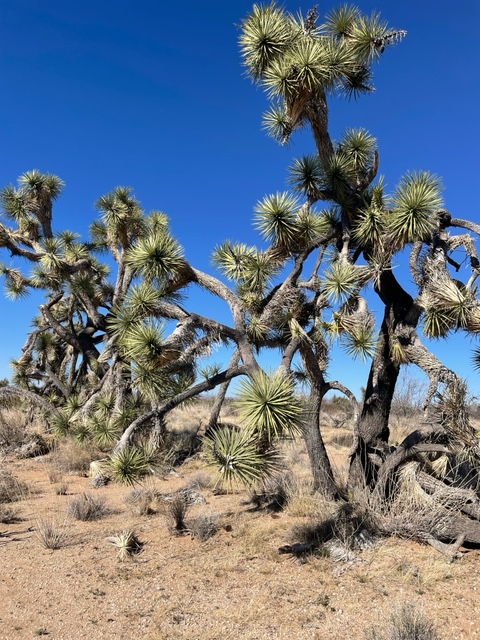
Farther down 93, the Joshua Forest Scenic Parkway, a forest of the plants, which are not actually trees but belong to the yucca family.
The highway is the site of some gruesome collisions, with 13 deaths this past year.
The descansos by the side of the road brought the statistic to life, and I have to say they were both horrible and very sweet.
Then there is the town of Nothing, current population Zero.
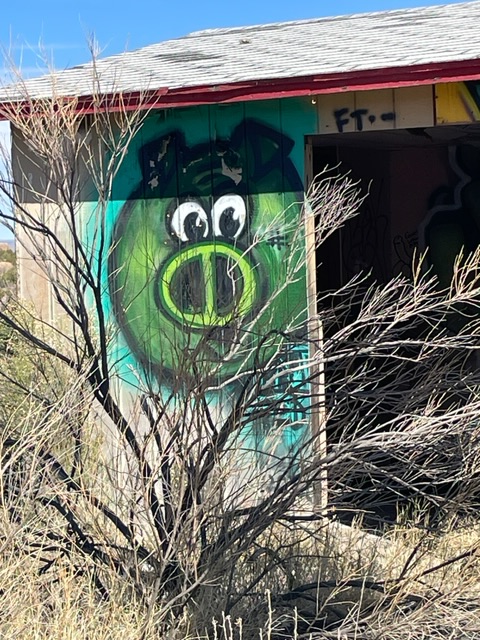
Also sublime in its own mysterious way. Founder Richard “Buddy” Kenworthy had a bar, a service station and a general store here, back in the ‘70s, but it all went south. The sign and an over-tagged shed are all that’s left.
Finally we come to Wickenburg, founded in 1863. Ridiculous? Sublime? You tell me.
It is a true western town, with 6,000 residents and a least four saloons. Stores selling various essentials.
We met a guy with a cherished Chevy Nova who came to Arizona from unspoiled Molokai, Hawaii, once the home of a famous leper’s colony.
Now, he said, he only makes the daily roundtrip from his home south of Wickenburg in to the American Legion.
Another fellow runs a café where you can get a very un-Western latte. The local government is getting too liberal, he said, but his wife sits on the town council and has managed to put the brakes on so far.
Signs outside of town announce Gold Panning Here and Abolish the IRS. A church sign says, “Trying times are times for trying.”
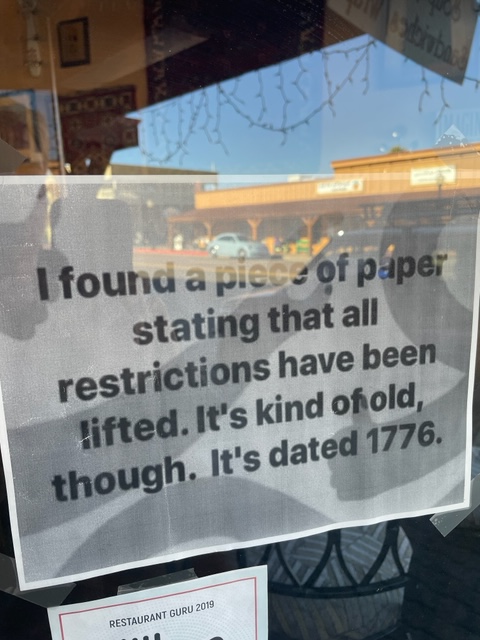
Local store windows further offer a picture of the Wickenburg worldview.
The Constitutional Sheriffs and Peace Officers Association is a political association of local police officials who contend that federal and state government authorities are subordinate to the power of county sheriffs. So-called constitution sheriffs assert they are the supreme legal authority with the power to disregard laws they regard as unconstitutional. It has its roots in the Posse Comitatus of the ‘70s and ‘80s. Great.
Everyone tries to be cheerful about everything.
This is what I find ridiculous.
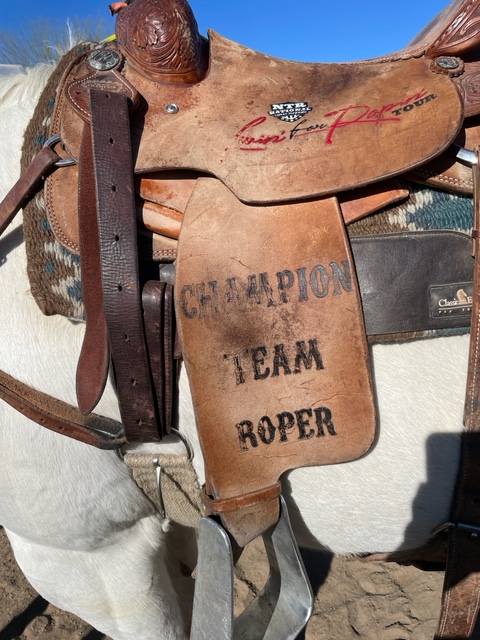
But finally, just outside of Wickenburg, we find the Rancho Rio Weekly Wild West Rodeo. Wickenburg is the Team Roping Capital of the World. Sunburnt cowboys, fantastic horses, the pleasant aroma of horse dung.
We didn’t see some of the more interesting events, like wild cow milking and trailer loading. Just the roping, impossible to document with a still camera.
Champions all around.
A puppy that would be ready for adoption in a week. As yet unnamed.
And the most sublime, a cow roper with an elegant mustachio.
Nowhere is sometimes beautiful, especially out a car window, roadside nowhere.
If you’re in the right mood, that is. We drive north from Scottsdale to Cave Creek and pass pretty much nothing. Isn’t nothing interesting?
If you have maybe too much too think about, beefy saguaros in a parking lot can seem pretty cool.
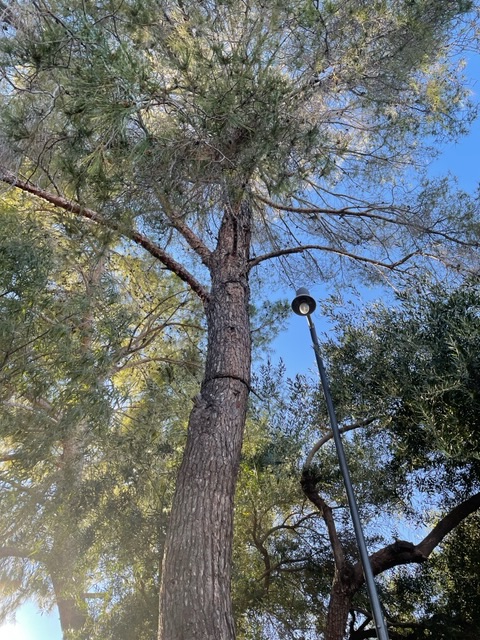
Or massive pines.
Peter drives.
His hat came from the 90th birthday party of Paul Orifice, former chairman of Dow Chemical.
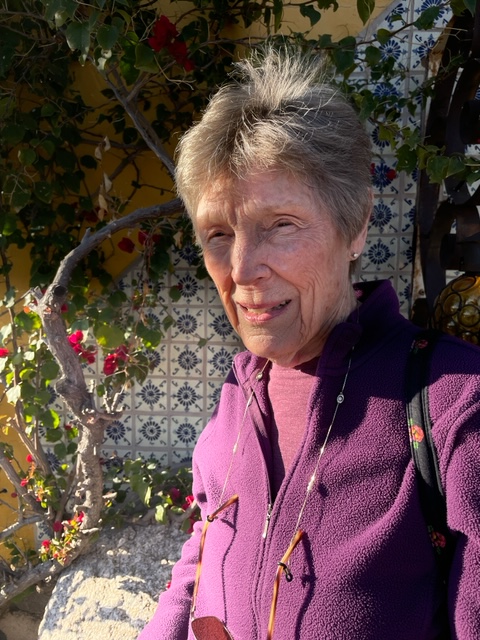
My mother just turned ninety. Still a vision, even when the sun makes her squint.
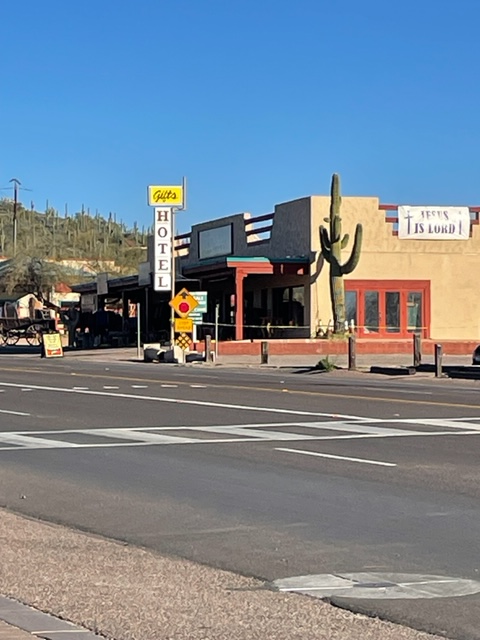
We pass groves of beaver tail or elephant tongue cactus, no one knows which. Cave Creek’s a tacky western-style town, replete with Jesus, gifts and cheap hotels. Big Earl’s Greasy Eats is the local fast food.
Hooray America.
Bikers throng the bars.
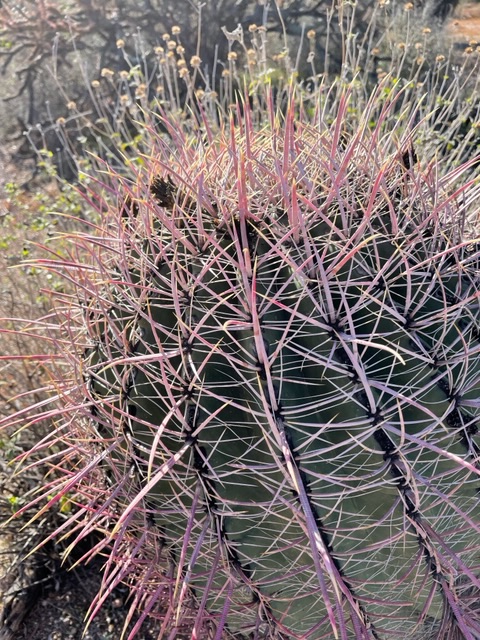
Barrel cactus morphs.
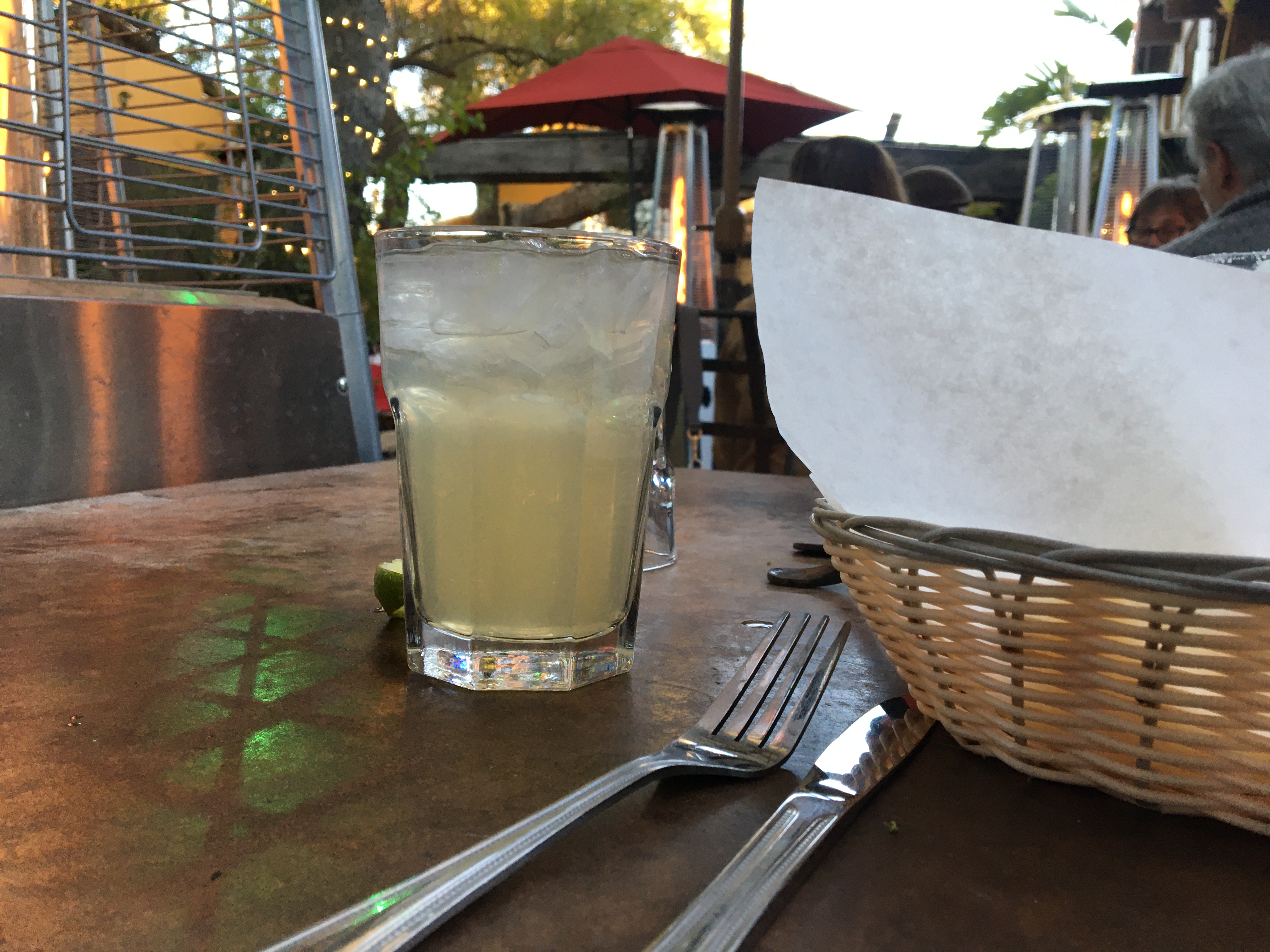
The restaurant a cacophony. Corny Mexican that offers oblivion in its world-famous margarita.
You can get a 32-ounce bucket to go for 32 dollars.
My mother is a naturally spiritual person, though she has no use for organized religion. As long as you’re a good person, she says, it doesn’t matter what you believe, if you believe anything at all. All the fires are lit.
Over chips and three types of salsa, we speak of things that matter. Of “arrangements “ that will eventually have to be made—not yet!
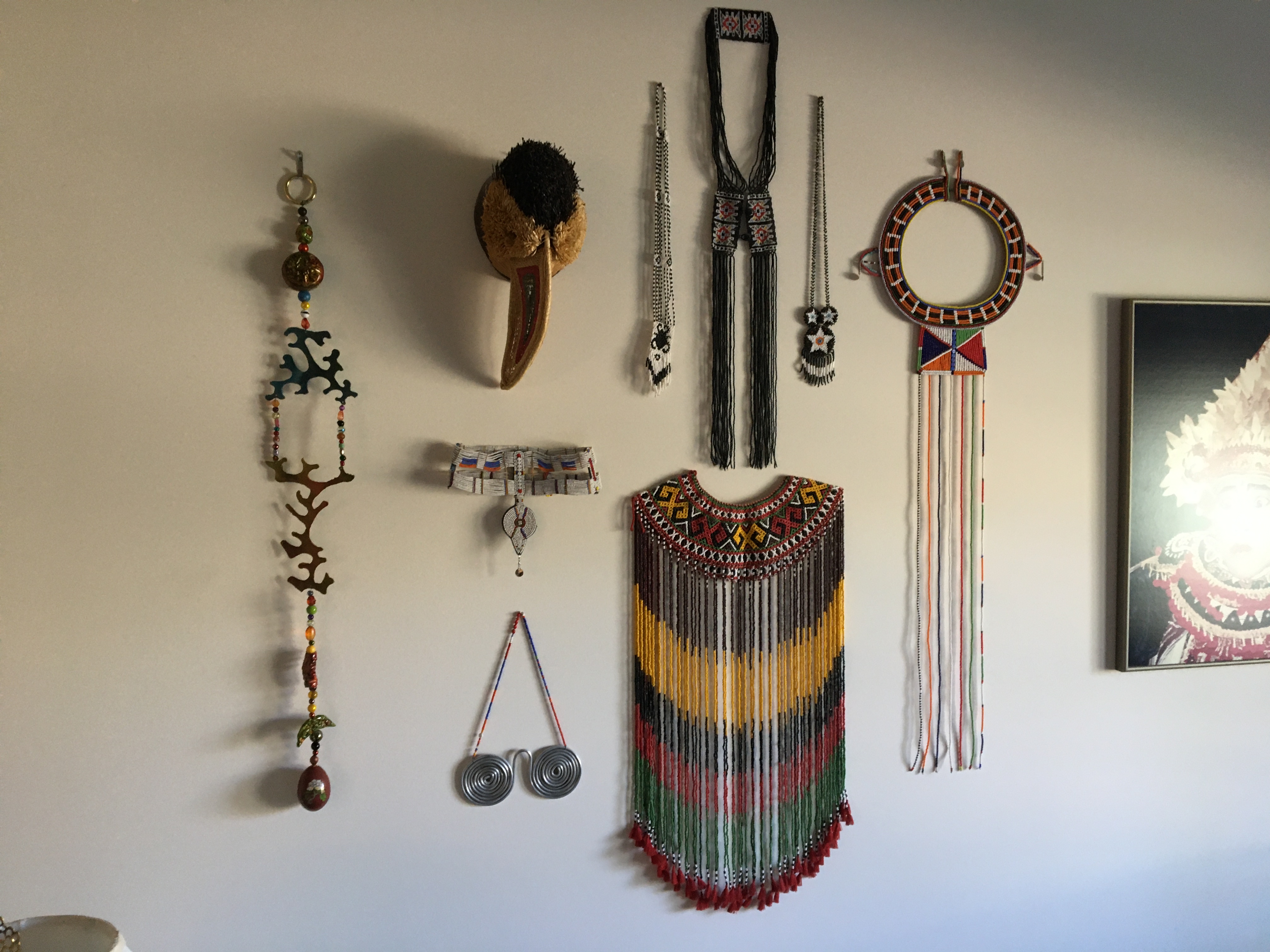
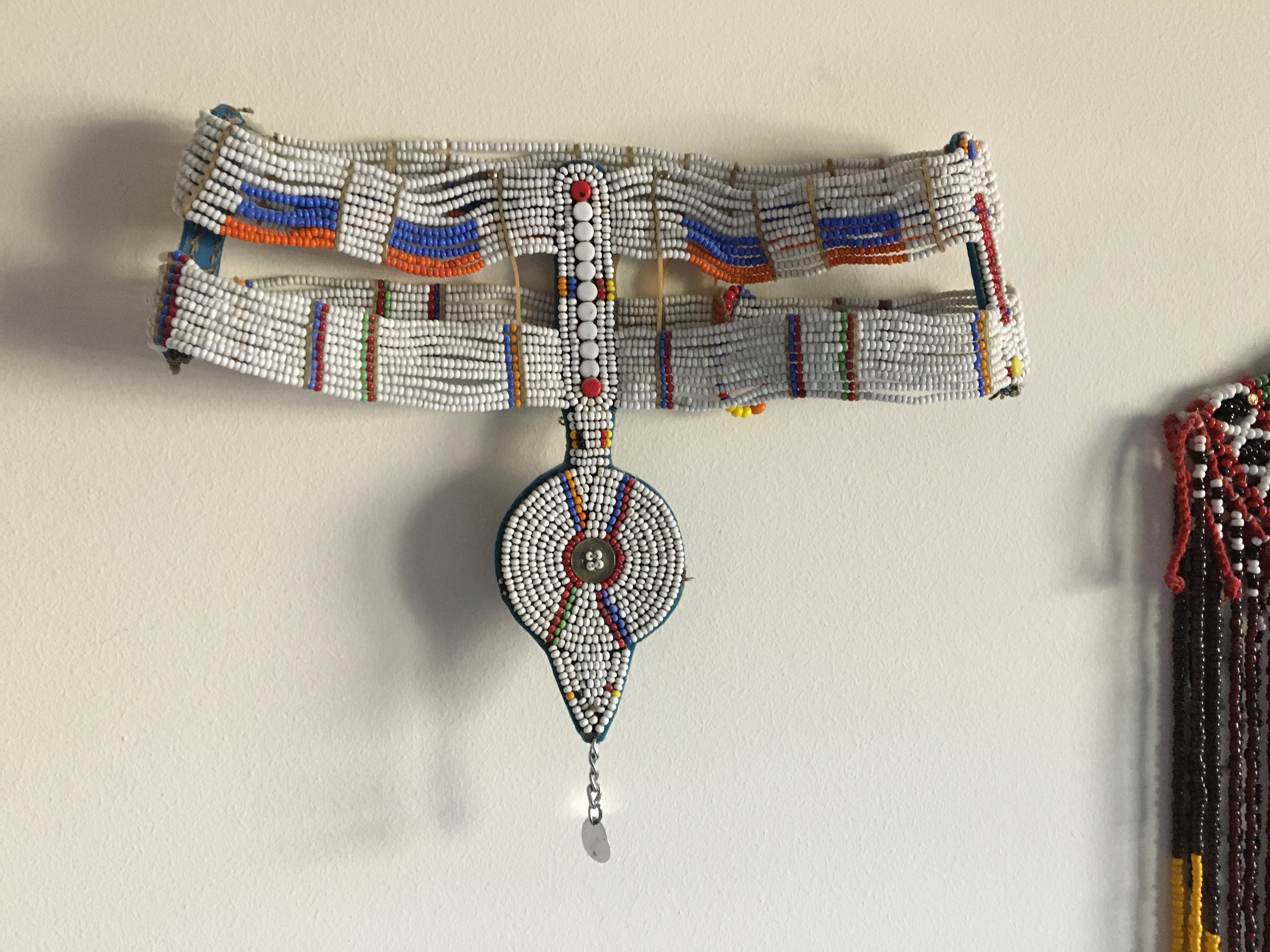
Not every woman has a wall of ornaments gleaned from different cultures, most of which embody spiritual beliefs.
There is a Panamanian toucan and a coming-of-age necklace for Indonesian women. They hang in her lair, in her woman-cave.
One was gifted her recently for her ninetieth year my brother. It’s a Zen chime made by an artist/musician in Memphis, Zen because it is a chime that makes no sound. (I must credit Peter for the best of these pictures.) The Tanzanian headdress for a young woman is especially intricate.
At El Encanto, I dig into my queso guillermo, hot bubbling cheeses blended with yellow chiles, onions and tomatoes, served sizzling at the table, with pico de gallo, limes and corn tortillas. I think about the nothing of the desert, of the flame, of spiritual artifacts, of the ashes that some people want scattered on the desert when they pass. That’s something.
asked my brother as we scaled Pinnacle Peak in the late afternoon, among throngs of pleasure-hikers and trail-runners who didn’t seem to have a care about possibly spraining their ankles in the grit.
He didn’t mean the cactus, which had an interesting appearance.
Some of the saguaros appeared charred, girdled, as if they had been torched by lightning.
Peter was referring to our visit to the Valley of the Sun, to sit by our father’s hospice bed as he faded in and out, in and out. He had always been a rock, along with our mother.
Well, no, I said, I’ve mostly thought of my mortality when I’ve struggled with my writing and wondered how many books the future would be generous enough to offer me. We climbed among the ocotillos and the globe mallows, the wolfberry and the bedstraw, wondering where the sun-basking chuckwallas went in winter.
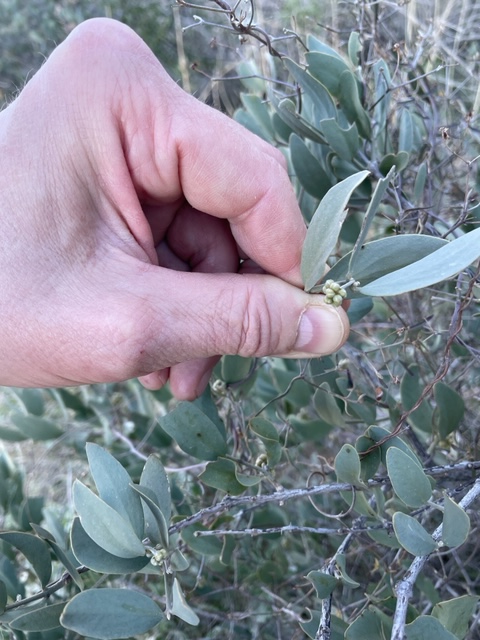
Jojoba had berries.
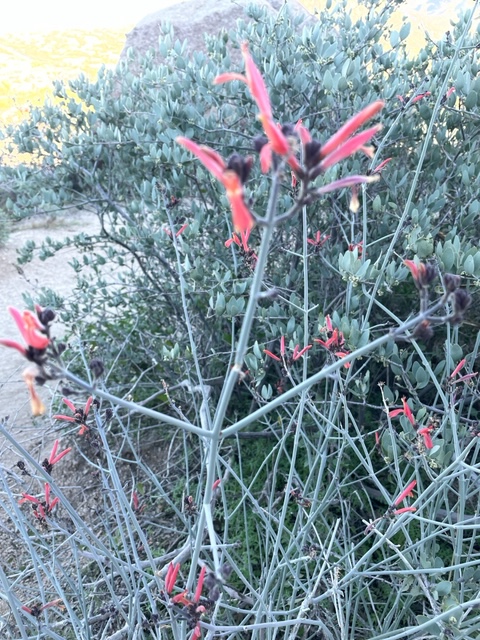
We saw no flowers beside from the penstemon. It’s winter, a cold snap.
You’ve got to think about how much they’ve given you over the years, Peter said, referencing our parents. How much they’ve stood by you.
Pinnacle Peak Park can be a nurturing place.
We saw a metal guard snugged around a young crucifiction plant to coax it to maturity. Even so young it was all slim green spines, but the higher ups had decided that that level of protection wasn’t enough.
A cactus wren had built her nest on a palo verde branch, and we admired her handiwork as we made our way down.
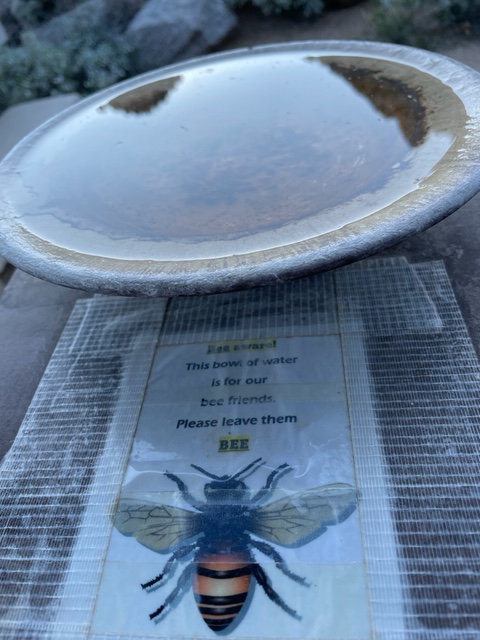
By the water fountains, a dish of water to help thirsty bees along.
Wayne opened the window at the visitor center to answer my question about the blackened saguaros.
He didn’t know the name of the disease they had had. Only that it had started a long time ago and that it was a normal part of the life cycle. When they get old, he said, it’s natural to die. Other ones grow in their place.
is nowhere to be found in the series The Gilded Age.
I recently had a conversation with a profesional arborist who also happened to be an English-literature nerd. We were comparing favorite authors, and I told him I loved the novelist Henry James and also his brother, the philosopher William James. When I added that I thought the James’ sister Allice was fascinating, too, he said, “Now you’ve rocked my world! I didn’t know there was a sister in that family.”
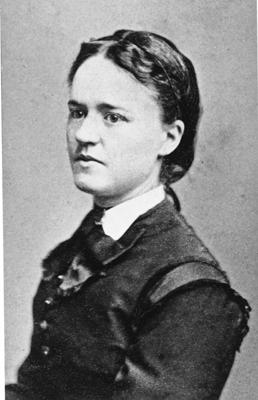
Well, yes. It is interesting to have watched the latest attempt to capture the gilded age on camera, Julian Fellowes’ glossy The Gilded Age, and realize just how much texture it leaves out. Maybe Alice, an amazing creature in her own right, apart from her James lineage (fifth of the children), will make an appearance, but I somehow doubt it. The series is all surface shimmer and snark, and I find the dialogue to be cardboard at best. A deep, wounded, brilliant creature like Alice James might have no place in this superficial jaunt. We have, it seems, only one picture of her.
It is now a going thing, for a novelist to slip a real live historical person into the pages of a book, and animate him for a different age. I’m just now reading the Colm Toibin book The Magician, which tells the life story of Thomas Mann, author of Buddenbrooks and The Magic Mountain. The bio is conveyed as though it were fiction. Trotsky and W.H. Auden prance through the pages’ cafes and cocktail parties, and I was not sure which conversations were invented and which borrowed from letters or diaries. It’s enjoyable to read in any case.
In my suspense novel Savage Girl, set at the same time as The Gilded Age, I folded in a few real-life characters, just for fun. Among them, the James gang. First, Alice is introduced at a fancy dinner at Delmonico’s, which stood at Fifth Avenue and 14th Street.
At that time the Statue of Liberty had not yet been fully assembled, and the torch was traveling the country as a sort of fundraiser. It would have been visible from the restaurant windows.
Later, after some twists and turns, our troubled hero-narrator Hugo visits with his Harvard professor William James at the James family’s Cambridge home. Father and mother are both present, exhibiting qualities that made sense from my biographical studies. Also figuring into things, Alice. To her, the lofty professor was always “Willy.” He liked to sketch.
The Alice I invited into my book is a curious creature, also drawn from life–in fact, virtually all her dialogue in my novel is drawn from her Diary, which is rather famous in academic women’s studies circles if nowhere else. Alice (1848-1892) led a sheltered life, afflicted by poor health and debilitated by ”nervous problems.” She died of breast cancer at the age of 43, leaving behind a romantic partner who took it upon herself to make copies of the Diary for the James brothers, thus securing it for posterity. Alice’s brothers gallivanted around the world but she stayed mainly in her sickroom, so I think they might have been somewhat surprised about just what was going on in her secret life all those years.
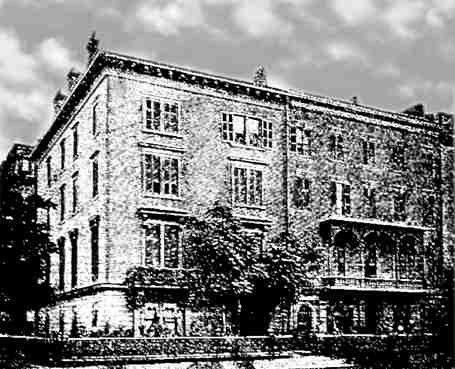
In Savage Girl, Alice approaches the group in the vestibule of the James home on Quincy Street, “attired in spider-grey velvet.” Hugo, William James and Alice stroll around Harvard Yard, speaking of things that matter. William asks his sister if she has any thoughts on the subject of “self-death.”
“What to do about it is the question,” says Alice. “My best answer: clothe oneself in neutral tints, walk by still waters and possess one’s soul in silence.”
“That is precisely what I have thought,” says James.
It’s so easy to write a character when they’ve given you terrific lines!
The conversation among the characters in continues.
“Nonetheless I have found that of all the arts,” says Alice, “living is the most exquisite and rewarding.”
Then she asks if she might “tell … a beautiful, touching tale.”
“Here we go,” says James. “Now, listen.”
Alice, verbatim from her Diary: “An old couple near Boston who had lived together for half a century became destitute and had to sell all their things, and had nothing before them but the dreaded poorhouse, where they would have meat and drink, to be sure, but where they would be separated. They could handle all but that, so one day they went out together and never came back, and their old bodies were found tied together in the river. How perfect a death!”
“Alice is having a good day,” James says mildly. Back to fiction.
I firmly believe that had she not been heartsick through her life, Alice could have achieved public greatness on a par with her family members. At that time, a woman needed the strength of a lioness like Edith Wharton if she was to thrive outside domestic precincts. The televised Gilded Age features real-world New York characters such as Caroline Astor and Ward MacAllister – I’d love to see Alice James crack open the show the next time I tune in.
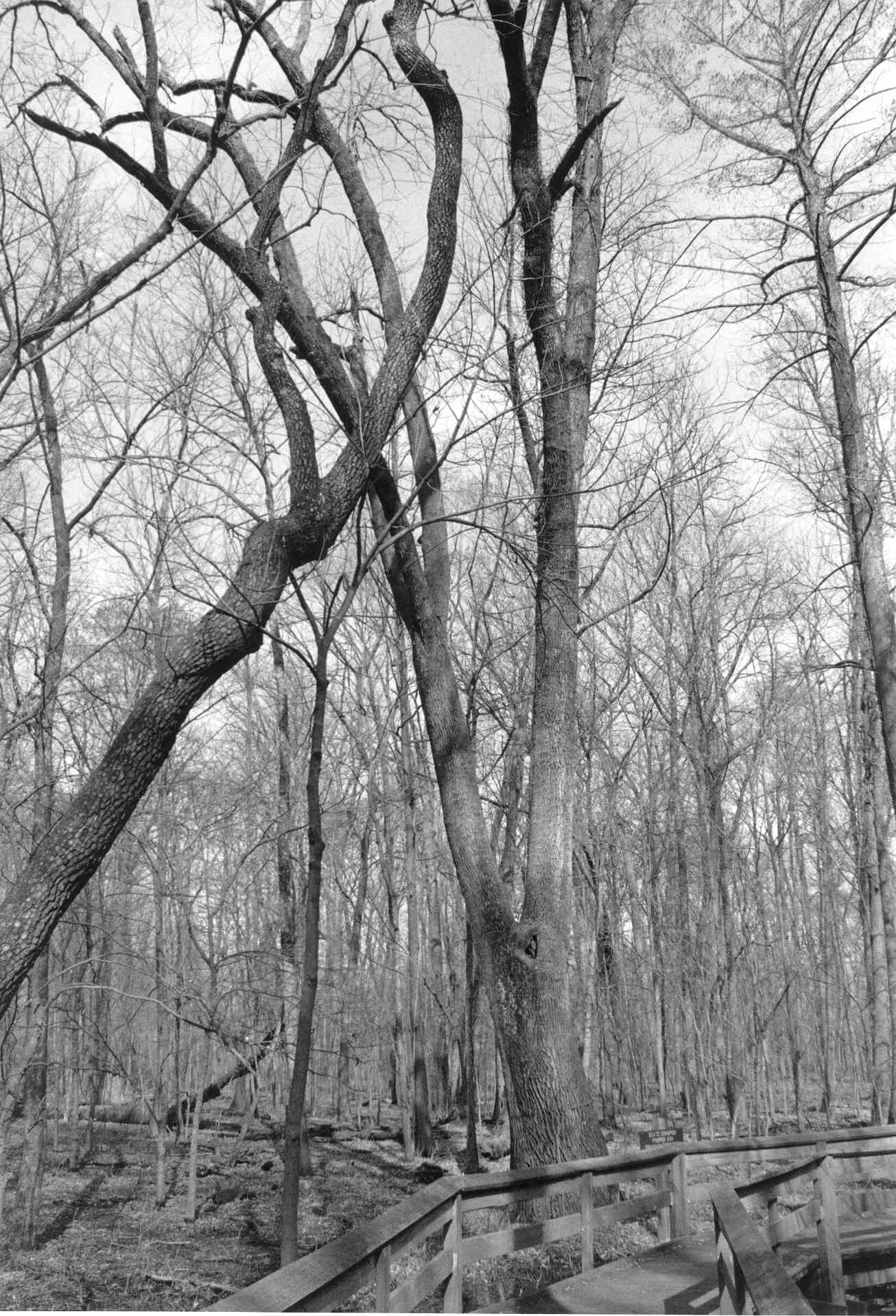
were happy when Susan Orlean’s recent New Yorker article focused on a sylvan topic — The Tallest Known Tree in New York Falls in the Forest. Yet it rose some hackles in arborist circles as well.
Yes, the January 2022 article actually singled out a white pine in that dated all the way back to 1675: good. Trees do not usually receive such focused treatment in The New Yorker (perhaps because there are so few forested areas in the City? But check out John McPhee’s wondrous Pine Barrens coverage, culminating in a classic 1968 book.)
The profiled pine grew to 160 feet tall, and fell only when a neighboring tree crashed down upon it. Again, good coverage of a tree story, and stuff happens, as is said.
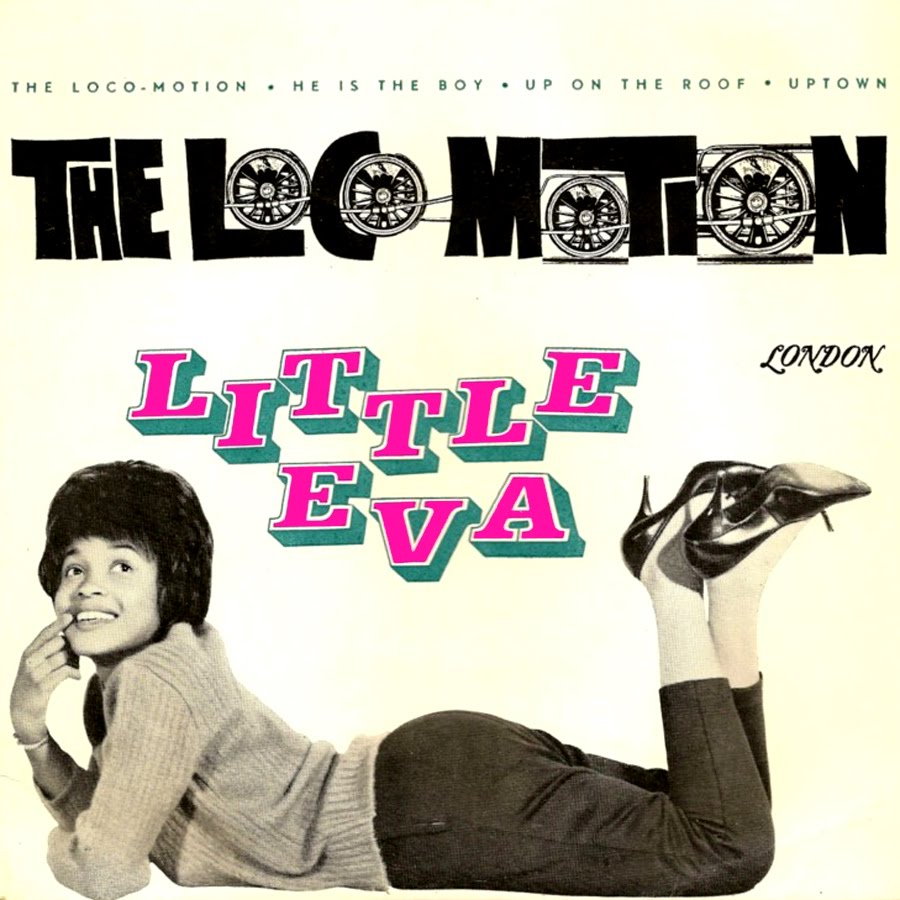
But, said my dendrological friends, the article was so silly! It concerned itself with the invention of Mr. Potato Head and the Carole King/Gerry Goffin’s classic The LocoMotion to somehow chart human progress as the tree stretched up and out in its Adirondack environs. And it seemed to make fun of the practice of measuring champion trees, and even the biggest specimens themselves, jibing the living circumstances of some as cushy – “most live pampered lives, getting fat in the luxury of a suburban lawn or a wide-open pasture.”
I somehow don’t think our friends at the Official Registry of Champion Trees would agree that being a champion tree in any place, at any time, was an easy existence. Still, Orlean managed a popular tone that differs refreshingly from some of the tomes released by the environmentalists. But being a champion tree is no laughing matter.
The Official Registry of Champion Trees comes out every year, compiled by the venerable outfit American Forests. It features the very biggest of each tree’s species, as reported to the organization in the most current year. In 2021, 561 trees held the title, but that figure doesn’t quite reflect the ardor of nor miles trekked by citizens vying to get their tree on the list. American Forests has worked for over 140 years to protect and preserve forests. Over 900 Champion Trees have been found and measured to date by tree lovers from all backgrounds: backpackers, arborists, school classes and land owners. American Forests supples documentation of these majestic giants on its website should the public wish to check them out.
The enterprise was first launched to engage the public in forestry activities. National Champion Trees can be discovered in rural and urban landscapes, scattered throughout forests and fields, along roadways and (yes, Ms. Orlean) in suburban backyards. Discover, measure and nominate the largest trees you can find. The public is welcomed to measure a contendor and compare it to the current National Champion. It’s a point system with no cheating.
Here is the formula:
x = Tree Trunk Circumference (Inches) y = Tree Height (Feet) z = Tree’s Average Crown Spread (Feet) x + y + (z/4) = Total Points
Think your nominee can match the dimensions of the soaring Cupressus nootkatensis, in Washington State, with a trunk circumference of 454 inches, a height of 124 feet, and a crown spread of fully 28 feet?
How about the Arizona Alder in New Mexico? Its trunk circumference is 199 inches and its height is 128 feet, while its crown spread is 58 feet. The Pumpkin Ash, in Missouri, offers a trunk circumference of 196 inches, a height of 104.5 feet, and a crown spread of 78 feet.
Remember, this isn’t a beauty contest. Measurable size rules in the Champion world. Still, six photographs of each tree are required for for a nomination to be considered fully eligible. You’ve got to think physical beauty would matter to some extent in the judging, even the gnarled and rough-skinned beauty of the elderly.
The National Register of Champion Trees works with state-level Champion Tree Programs and volunteers from the National Cadre of Tree Measuring Experts to confirm the validity of nominations and the credible.
But here’s the thing. If you might be thinking of a road trip to visit these beautiful monsters – I know I was – American Forests remains closemouthed about the location of any tree either nominated or listed, in an effort “to protect the health and wellbeing of large trees.” And that is that. “Written and verbal inquiries requesting the location information of National Champion Trees will be declined.” There is to be no cloning, no seed propagation, and neither age nor historical value matter. Just size. Get the stats in before your favorite blows over in a stiff wind.
New York’s finest author (to my mind) was born into the uppertens 160 years ago, and wound up giving us some of the most indelible writing about the city, including The Age of Innocence, The House of Mirth, and countless Manhattan-centric short stories. Her engrossing memoir, A Backward Glance, has become a classic.
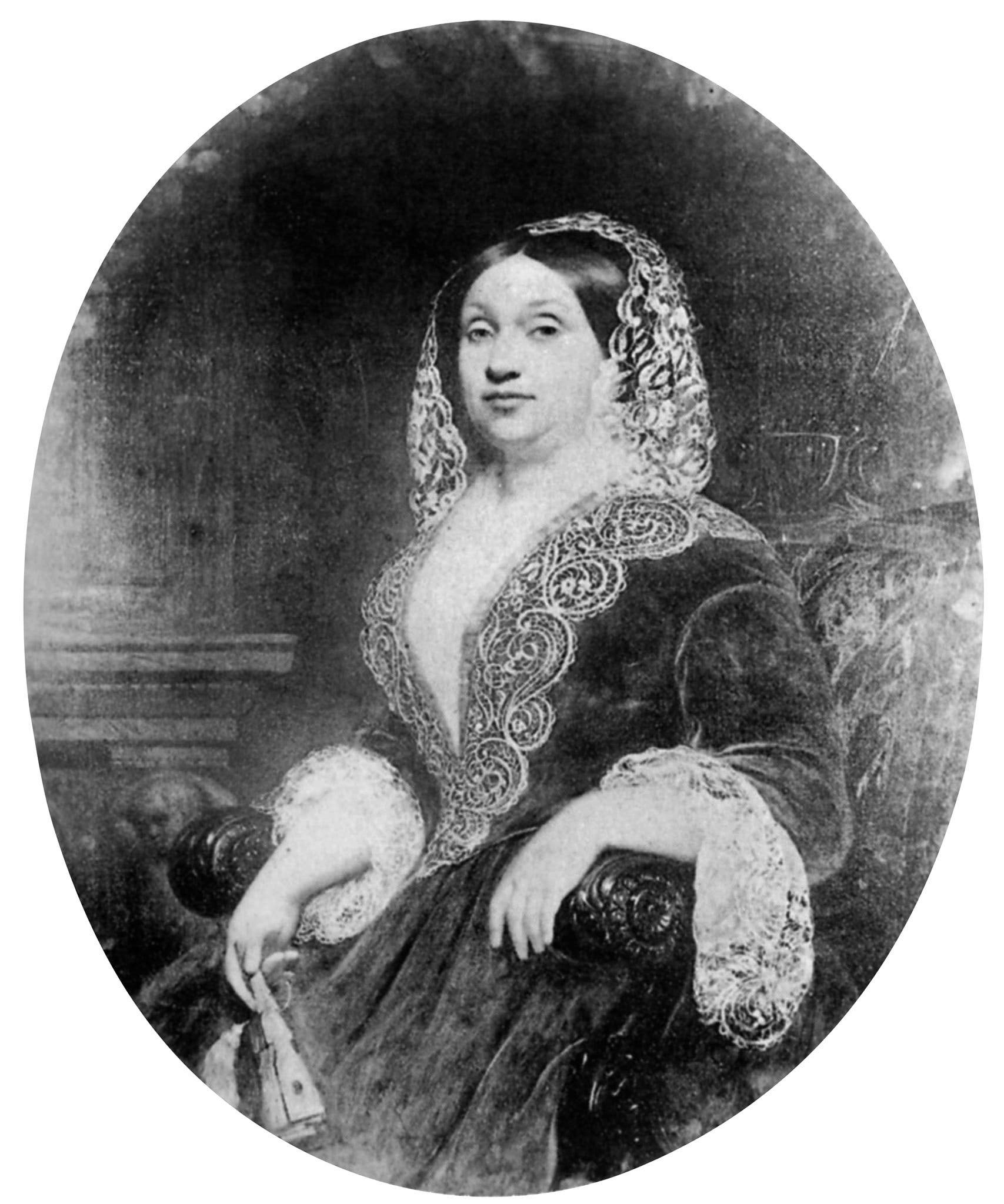
In her autobiography, we learn of her pampered childhood, at which time she could comb through her father’s library but was forbidden by her mother to read novels because that wasn’t something young ladies did. Edith Newbold Jones grew up in a brownstone at 14 West 23 Street, a relation of the Rensselaers and Astors, at a time when this constituted the best part of town. “Keeping up with the Joneses” is said to refer to her father’s family.
She was only four when she started what she called “making up,” inventing stories for her family. She attempted to write a novel at age eleven, but when her mother expressed her disapproval “Pussy Jones” turned to poetry, earning publication in numerous literary mags under an assumed name. Her interest in writing fiction couldn’t be impeded, though, and at 15 she secretly wrote a novella called Fast and Loose. She indulged her passion for dogs throughout her life.
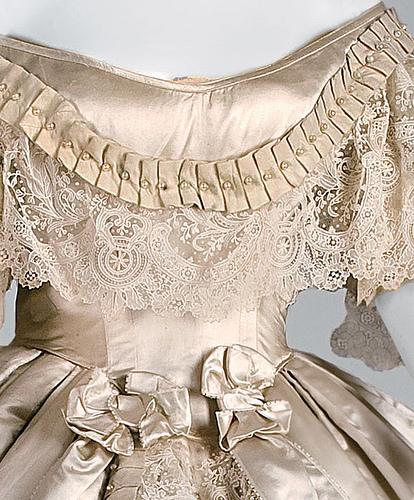
Her mother looked more favorably on debuting Wharton in society, and she came out in 1879 at a December dance given by a New York society matron, with her shoulders bare and her hair arranged in a fashionable up-do. Clothes and visits and calling cards were everything.
Edith Wharton expressed the painful self consciousness she felt at her debut, remembering that for her: “the evening was a long cold agony of shyness. All my brother’s friends asked me to dance, but I was too much frightened to accept, and cowered beside my mother in speechless misery, unable even to exchange a word with the friendly young men.”
Dance cards were employed, and a man was never supposed to dance more than once with each partner.
Wharton described a typical scene at a ball.
“Couples were already gliding over the floor beyond: the light of the wax candles fell on revolving tulle skirts, on girlish heads wreathed with modest blossoms, on the dashing aigrettes and ornaments of the young married women’s coiffures, and on the glitter of highly glazed shirt-fronts and fresh glace gloves.”
Then she met a well-bred Boston man, Edward Robbins (Teddy) Wharton, who was 12 years her senior, married him in 1885 at the age of 23, and together they set up house in Newport. They travelled in Europe (she eventually crossed the Atlantic 60 times) and bought a Park Avenue, New York home in 1897. Teddy suffered depression and other seemingly undiagnosed mental problems, and they eventually divorced.
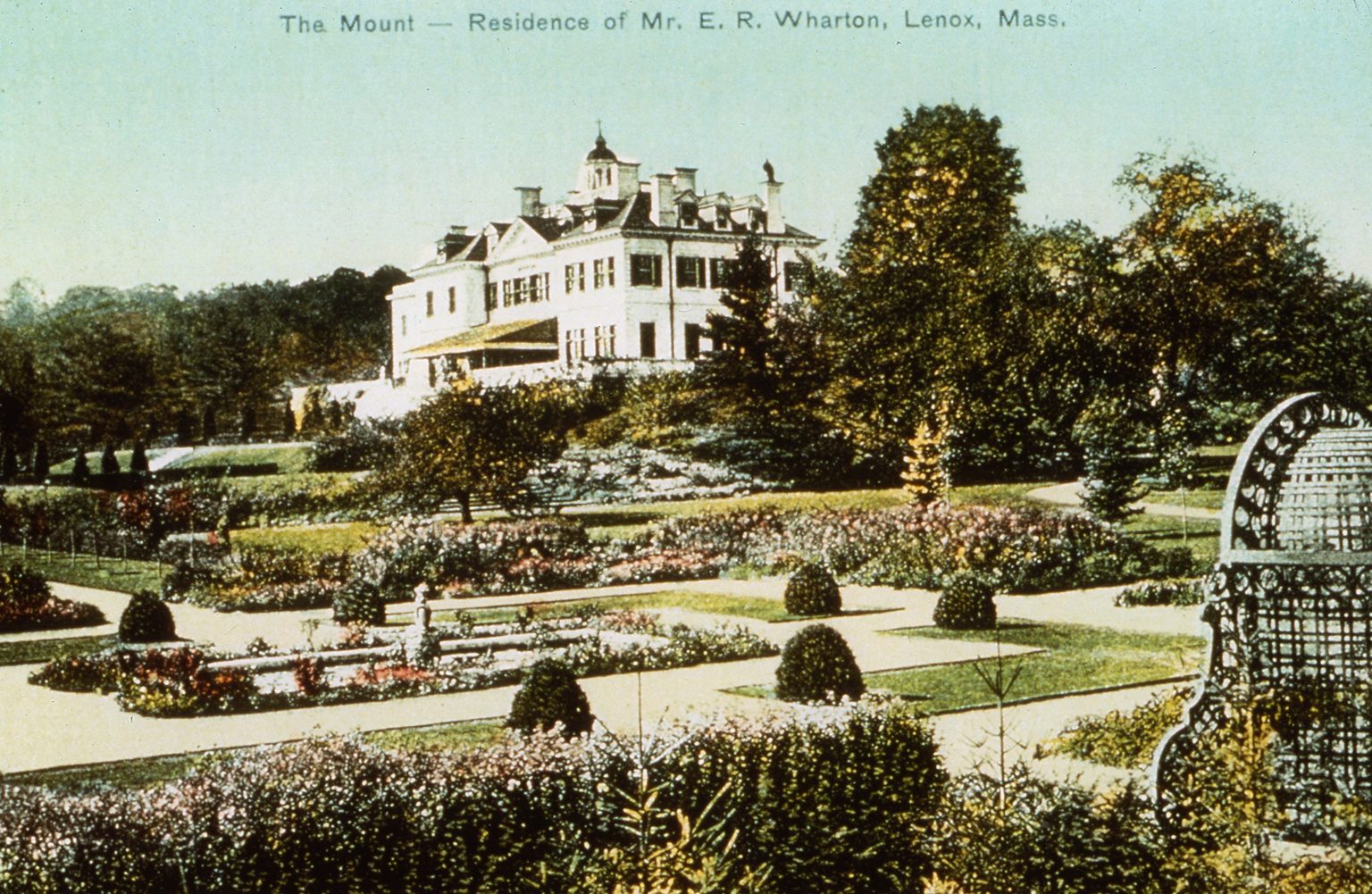
The Mount, Wharton’s estate in Lenox, was purchased in 1902. She wrote the first of her new York chronicles, The House of Mirth, there in 1905. That is my favorite of her books, and ends (spoiler alert) with a knock-em-dead death scene.
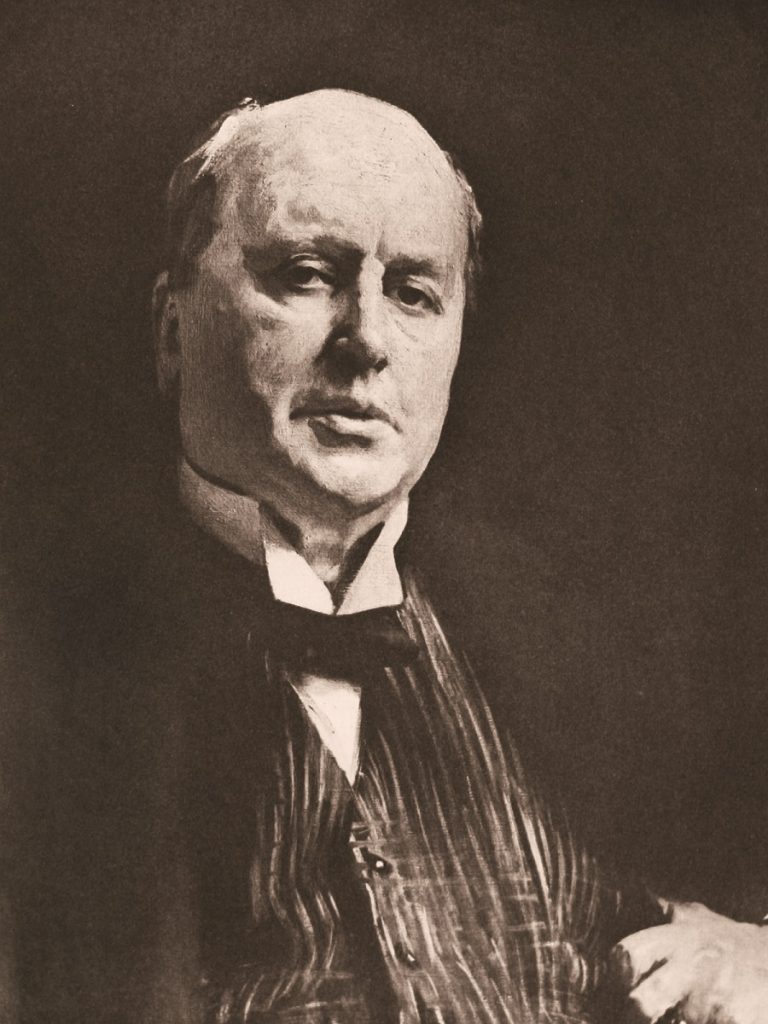
She entertained in Lenox too, including hosting her good friend Henry James, who described the place as “a delicate French chateau mirrored in a Massachusetts pond.” There are some funny stories about their trips out motoring together when the automobile was new. She also visited James in England, recalling how the two of them sat by a ditch at Bodiam Castle in East Sussex. “For a long time no one spoke,” she wrote, “then James turned to me and said solemnly: ‘Summer afternoon – summer afternoon; to me those have always been the two most beautiful words in the English language.’” Kudos to James for the wonderful thought and to Wharton for capturing it for posterity.
Despite not publishing her first novel until she was forty, Wharton’s canon was extensive: 15 novels, 7 novels and 85 short stories, poetry, books on design, travel, literary and cultural criticism and a memoir. Her Pulitzer came for The Age of Innocence, published in 1920. (In case you were wondering, as I was, Scott Fitzgerald never got a Pulitzer and Hemingway didn’t get his until The Old Man and The Sea in the 1950s.) She was the first American woman to garner a Pulitzer.
For The Age of Innocence, she drew upon the experiences of her childhood. Her great-aunt Mary Mason Jones – personified as Mrs. Manson Mingott in the novel — built a row of mansions on Fifth Avenue bet. 58th and 57th Streets, completing them in 1870. A remarkably independent, wealthy, well-travelled woman, she had had the first bathtub in New York installed in her home on Chambers Street, and her choice of venue for her new residence was equally offbeat. The buildings were constructed of gleaming white marble, with a two-story mansard roof that had green copper trim.
The feat of bringing about these architectural gems and then living there is remarkable when you realize that in that era, north of the reservoir stretched a still undeveloped city. If you look at a picture made in 1863, facing south from the site of what would become Central Park, you can see the still-pastoral nature of uptown.
Fifth Avenue, to the left, heads determinedly north, flanked by buildings in its lower reaches but by nothing but fields and cattle farther up. A few homes dot the landscape, but more dominant are the ungainly freestanding charitable institutions that would not be accommodated farther downtown. You can see the massive shapes of St. Luke’s Hospital, between 54th and 55th Streets, and the Deaf and Dumb Asylum. Behind St. Luke’s stands the Colored Orphan Asylum, which was attacked in the horrific week-long Draft Riots of 1863 (five years after this image was made). Saint Patrick’s, the landmark we associate with midtown Fifth Avenue, was not begun until 1858.
Wharton describes Mingott in the novel: “It was her habit to sit in a window of her sitting–room on the ground floor, as if watching calmly for life and fashion to flow northward to her solitary doors. She seemed in no hurry to have them come, for her patience was equalled by her confidence. She was sure that presently the hoardings, the quarries, the one–story saloons, the wooden green–houses in ragged gardens, and the rocks from which goats surveyed the scene, would vanish before the advance of residences as stately as her own—perhaps (for she was an impartial woman) even statelier; and that the cobble–stones over which the old clattering omnibuses bumped would be replaced by smooth asphalt, such as people reported having seen in Paris. Meanwhile, as every one she cared to see came to HER (and she could fill her rooms as easily as the Beauforts, and without adding a single item to the menu of her suppers), she did not suffer from her geographic isolation.”
Those hoardings, quarries, saloons and goats were quite realistic descriptions of the acreage that would one day become Central Park.
About her literary experience, Wharton said: “What is writing a novel like? The beginning: a ride through a spring wood. The middle: the Gobi desert. The end: a night with a lover.”
When I visited The Mount I was impressed that the people there had gone to the trouble of traveling the world to track down the books Wharton originally owned, so that the library there presents an accurate picture of her life. I didn’t know it then and it even seems a little odd but Whitman was one of her favorite writers. She recalled that when she was young, “Leaves of Grass was kept under lock and key, and brought out…only in the absence of ‘the ladies’ to whom the name of Walt Whitman was unmentionable, if not utterly unknown.” Later she realized the truth: “He sees through the layers of the conventional point of view and of the conventional adjective, straight to the thing itself…and to the endless thread connecting it with the universe.”
Despite Wharton’s restrained upbringing and allegiance to the cultural mores of her day, her brilliance allowed her to grasp the truth at the heart of a vastly different writer.
Interested in the Gilded Age? Please go to the Books tab on this site, click on Savage Girl and then on the essays I offer there. Or read Savage Girl, a mystery about a wild girl who comes of age at the end of the 19th century, or Love, Fiercely, my biography of two of the more notable figures of that age, Mr. and Mrs. I.N. Phelps Stokes.
I’d rather look up to the peaks than down to the valleys. So I’m fortunate that any number of stupendous trails wind around the base of the mountains at Brown’s Ranch in Phoenix.
Desert vistas abound at this former cattle ranch, which dates back to 1917.
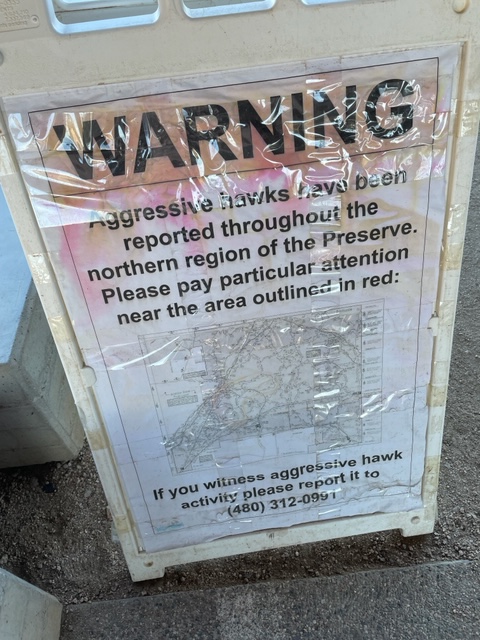
But first you must pay attention. A warning.
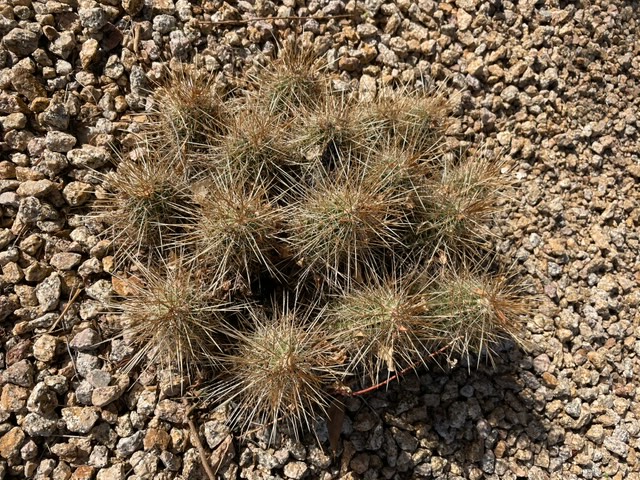
I find I like the living desert, with features like this fishhook cactus.
But I equally like everything that is dead or dying.
It’s like the memento mori of the Renaissance, artwork that has ancient roots. Latin for “remember that you will have to die.” Or as I would put it, embrace death and you will live. In some accounts of ye olde Rome, a companion or public slave would stand behind some triumphant general during a procession to remind him from time to time of his own mortality or prompt him to “look behind”.
Especially meaningful to me as I watch my father wend his way toward the end. And I would like to see a death-whisperer behind some of our more insensitive politicians today.
The saguaros here are ginormous, as they say. I think the largest ones I’ve ever seen, and I’ve seen a lot.
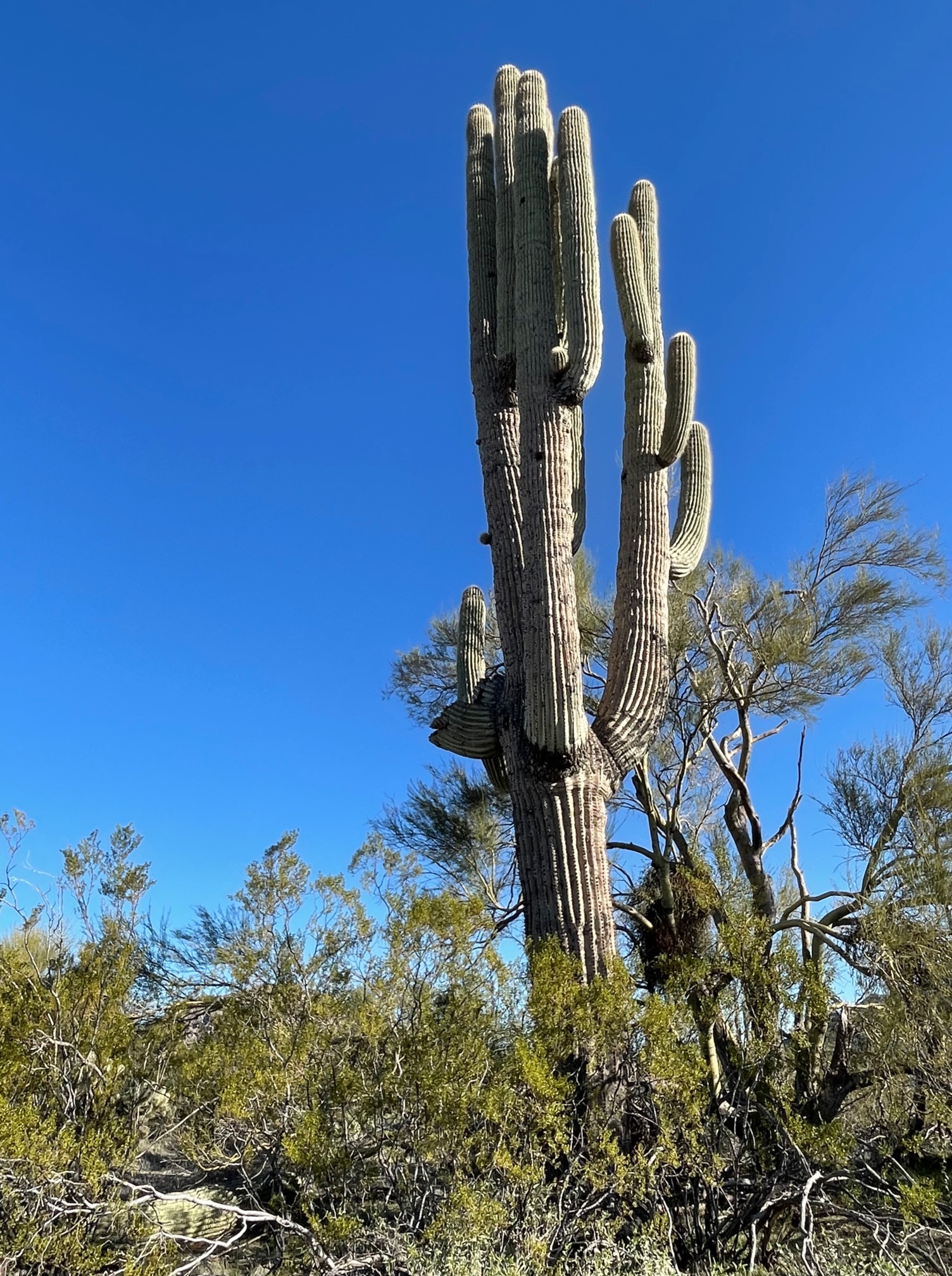
Carnegiea gigantean counts itself a member of the cactus family, not a tree (but you knew that) and takes up to 75 years to develop a side arm. It only grows about one inch per year. This one’s a small fry.
The arms are grown to increase the plant’s reproductive capacity, bearing more flowers and fruit.
Near Scottsdale, one known as the Grand One is 46 feet tall, measured by a representative of the National Register of Big Trees in 2005 (though, note, not a tree!), burned in the Cave Creek Complex fire and might not have survived if not for treatment of bacterial infections and the creation of waddles, small structures made of straw that help channel streams of water towards the thirsty saguaro. I think some of the specimens I’ve seen today could reach grand status one day.
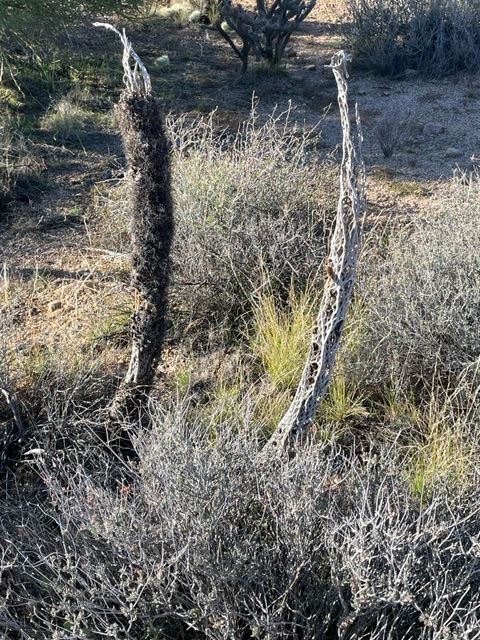
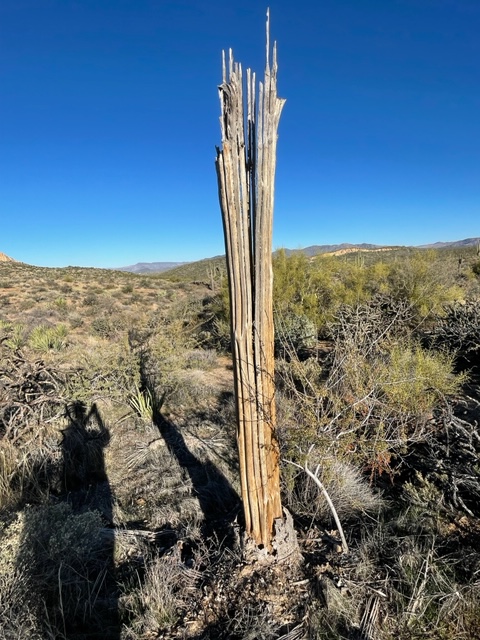
Their skeletons are amazing.
We were standing underneath a palo verde, a tree whose name translates to “green stick”, remarking upon its stature and probable age, when we heard bird noises and looked up to see a pair of Harris’s hawks tearing apart a mouse. They noticed us and fled the nest, of course, and we saw the unmistakable white color at the base of their tails.
Harris’s hawks are only one of two hawk species that hunt in pairs, like wolves. I was glad not to be descended upon!
A morning in the desert is like any morning in the desert and no other morning, all at once. It’ll weary your legs as it restores your spirit, hawks or no hawks. But they were pretty superb.
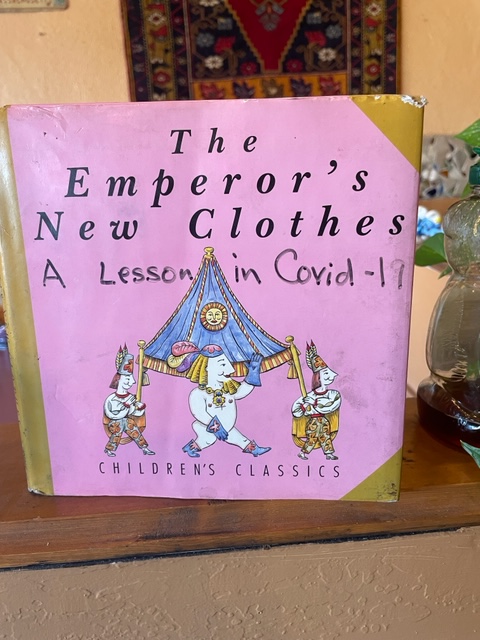
are in order when you’re sprung from your Covid cell, told you’ve tested negative and are free to storm the world again.
I walked in the miraculous Arizona desert landscape, among plants that are ancient yet fresh, survivors on only a few drops of rainfall a year.
The oft-quoted lines from a Mary Oliver poem seemed relevant, as sentimental as they sometimes seem: “what is it you plan to do/With your one wild and precious life?” Well, I thought about it as I walked.
What in fact do I want to do?
Pacing the perimeter of my parents’ development, I thought I might want to take some inspiration.
To kiss and to hug. That’s something that you think of first when you’ve been told not to come up close to anybody, even wearing a mask.
To hydrate.
The city of Scottsdale actually goes out and dribbles water on individual plants. That’s responsible.
Allow my book to germinate.
Toughen my hide.
Bloom.
Stretch out.
Plant.
Pay attention to what’s above.
Be thornier.
Burst forth.
If I can do any of these things with a microcosmic bit of the spirit of the sage inhabitants of the desert, it will be awesome.
in the middle of a pandemic while our democracy and society crumble? This girl!”
This girl goes by the handle Badass Cross Stitch, but her civilian moniker is Shannon Downey, and she is out to teach us all to embroider.
On her way across the country she is offering on-line tutorials about hoops, fabric, needles and thread, as well as printable sample patterns that your grandmother might not have approved of. One pattern:
The modern-day needlework movement is a feminist one. Another pattern:
Covid hasn’t stopped her. Though it has me on pause, temporarily, hunkered down with a “mild” case in my mother’s Arizona apartment. Ever masked. Watched over by Minerva on the branch outside the balcony.
One thing Ms. Badass likes to say: “Stab it until you feel better.”
Okay. Shannon aims to teach embroidery to one million people.
“I am queer,” she writes on badasscrossstich.com, “anti-racist, anti-capitalist, highly political, and committed to growth, learning, honesty, and doing whatever I can to make this an equitable world. My art generally tackles what I call the ‘big three’ systems of oppression: white supremacy, patriarchy, and capitalism….I’ve lived a million lives so far and all of them have brought me to right now—doing EXACTLY what I’m supposed to be doing in this world. I live for community, equity, art, and adventure.”
“My work is meant to disrupt,” she continues. “I disrupt via the medium, the application of the medium, the projects that I build, and by living and making outside of the rules.”
“I also LOVE embroidery.”
Well, perhaps I do too. I’m willing to try, anyway.
Stabbing some shit is something to do in quarantine. As Shannon would say.
that no one now has ever heard of is William Bartram. Maybe you are the exception.
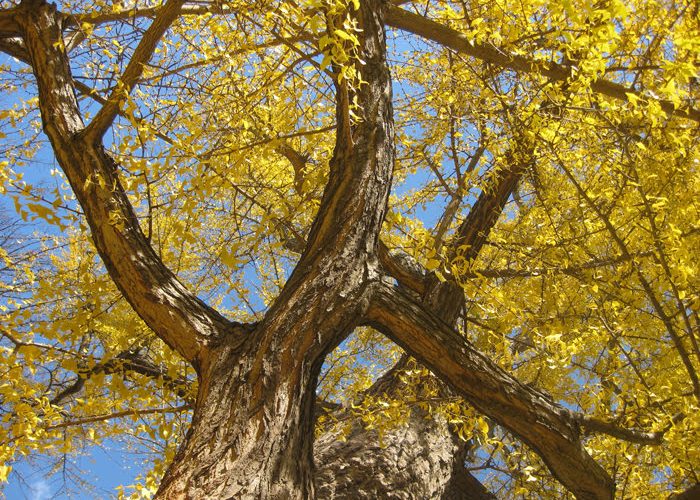
If you visit Bartram’s Garden outside Philadelphia you will find the oldest ginkgo tree in North America, grown from a seedling that was imported to Bartram in 1785 as a gift from noted plant collector William Hamilton of The Woodlands, in England. The Garden is now a 50-acre botanical garden on the banks of the Schuykill River, but it was once the home of naturalist and wilderness champion William Bartram.
Bartram lived out his years in the house where he was born, built by his father John and added onto over the years. John before him was a well-known botanist, in 1765 designated the “Royal Botanist” by King George III, which meant that he shipped exotic native American seeds and plant samples across the Atlantic to not only his majesty but grateful wealthy gentlemen for their estates.
William Bartram wasn’t always a success. Though his artistic skills impressed people at an early age, he first embarked on a career as a merchant in Philadelphia and a rice farmer in the Carolinas before his father welcomed him into his botanist world in his mid-30s. He is most famous for a four- (or five-? apparently his counting skills were uneven when he was out in the woods) year stint in the unsettled wilderness of the southern United States, beginning in 1753, which he wrote about in the illustrated Travels in 1791.
Bartram waxed rhapsodic about wilderness. The key descriptor of the time was “sublime,” as in “the sublime wilderness,” just as Thoreau would in the next century. Thoreau, a true kindred spirit, would write a friend, “I grow savager and savager every day, as if it fed on raw meat, and my tameness is only the repose of untamableness.” Not sure I totally get that grammar, but it sounds much like something William Bartram would have felt in spades out in forest. The two of them could have gone camping together.
For Bartram, many places he goes are sublime. Camping next to Florida’s Lake George, he talks about being “seduced by these sublime enchanting scenes of primitive nature.” I love the story about his specimen collection in Georgia. He climbed far up a range “from which I enjoyed a view inexpressibly magnificent and comprehensive…. of the mountain wilderness through which I had lately traversed.” Then he adds, “my imagination thus wholly engaged in the contemplation of this magnificent landscape… I was almost insensible… of…a new species of Rhododendron.” He was a wonderful artist.
Both William and John Bartram thought snakes were great and only killed them on the trail. when absolutely necessary, even rattlers. Black snakes they judged harmless enough to keep around the house as mice hunters. (We had families of black snakes at the Cabin and I never cared for them much.) Bartram drew many gorgeous if dangerous snakes. You may still find some if you hike Bartram Trail, which follows his approximate route through the states of North and South Carolina, Georgia, Florida, Alabama, Mississippi, Louisiana and Tennessee. I’d like to try at least a part of it, though admittedly I’d rather drive down to Philadelphia and walk the more civilized pathways of the gardens where he spent so much time—the site is open 365 days a year, dawn through dusk.
He was also a champion of the afternoon nap, best performed in the shade of a favorite tree in his yard. Let’s hope that when George Washington visited the homestead he didn’t have to shake Bartram awake.
Which would you rather do, hike Bartram Trail or visit Bartram’s Garden?
sag under their coat of snow while a god’s eye floats above.
I’ve been hunkered down, distracted by the weather, researching my book about forests. To the process of book building I raise a toast: “Let be be finale of seem,” as Wallace Stevens put it in his poem “The Emperor of Ice Cream.”
More interesting stuff tomorrow.
In the meantime, if you are reading this and don’t subscribe, please go to my main page at jeanzimmerman.com and enter your email address. Every two or three days I will come winging in to greet you.
to our grandchildren, it was so harsh, it was so difficult. Every day a challenge. Look at the newspaper, Covid infections run amok, out-of-control wildfires, people who had clearly lost all of their political marbles. Violence in prisons, larcenous gangs performing break and snatch routines in luxury stores.
Was it really that bad, grandmother?
Well, yes. And no.
For every one of these bad things there were people who performed miracles to make them better.
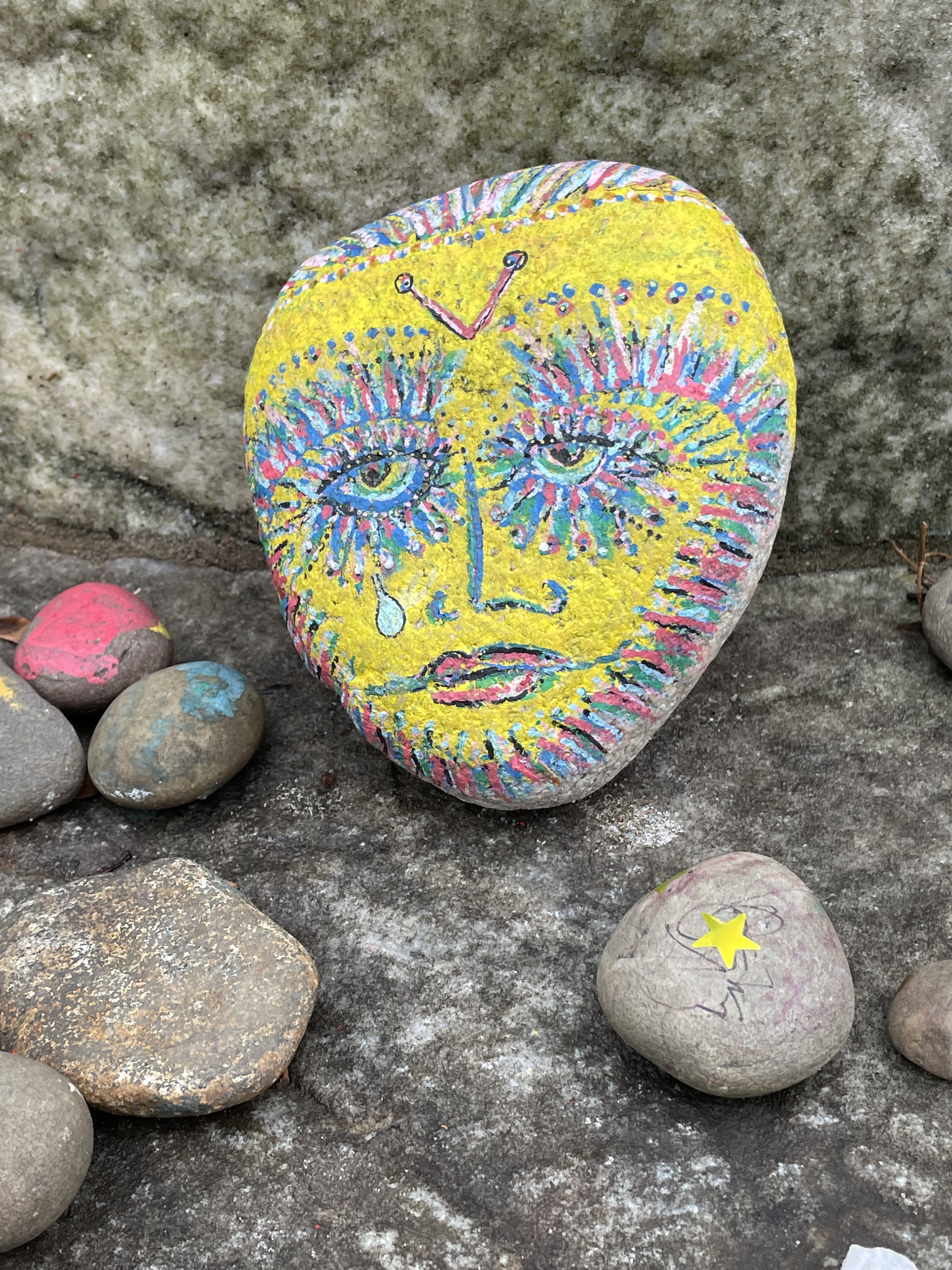
I passed a painted stone left with some others on an old concrete pump structure as I hiked south along the Old Croton Aqueduct trail. They’d been there a long time. I never paid much mind before.
There is something about leaving a stone – on a grave, as a visitation stone, a commemoration; or a cairn, a waymarker, to help the next hiker along; or stacked in a Zen garden, where the placement of a stone is an effort to bring order out of chaos.
Just leaving a stone, but somehow it’s moving at the close of 2021.
Let’s welcome 2022 with grace, intelligence and love. Hope. Show our grandchildren that we attempted to place a stone along the way.
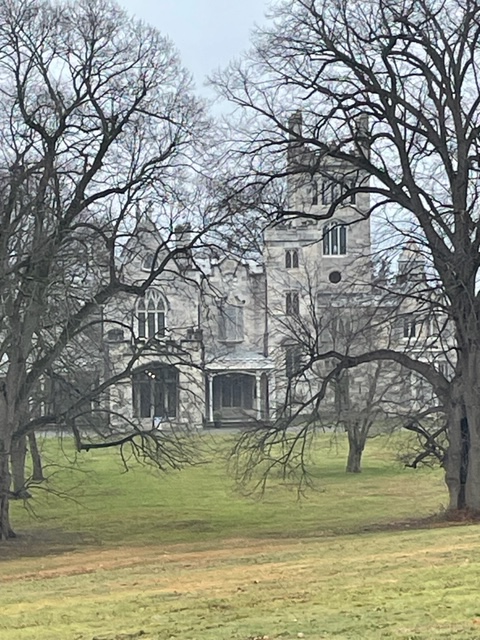
and, like written poetry, sometimes you must talk yourself into reading them. Lyndhurst, the estate near where I live, makes it easier, because its 67 park-like acres offer an arboricultural bounty. Forget the house –a gothic revival castle designed in 1838 by Alexander Jackson Davis, when romanticism reigned. (Where was Frank Lloyd Wright when we needed him?)
The place is known best as the familial headquarters of rapacious banker Jay Gould in the Gilded Age, and his daughter Helen added a bowling alley and immense greenhouse, the skeleton of which remains. Carriage roads with precisely wrought stone gutters.
The Old Croton Aqueduct cuts across the landscape, which might have been somewhat annoying to the residents of the mansion in the nineteenth century. But it was progress, and the pre-Gould-era occupants were civic minded. New York City must have pure water!
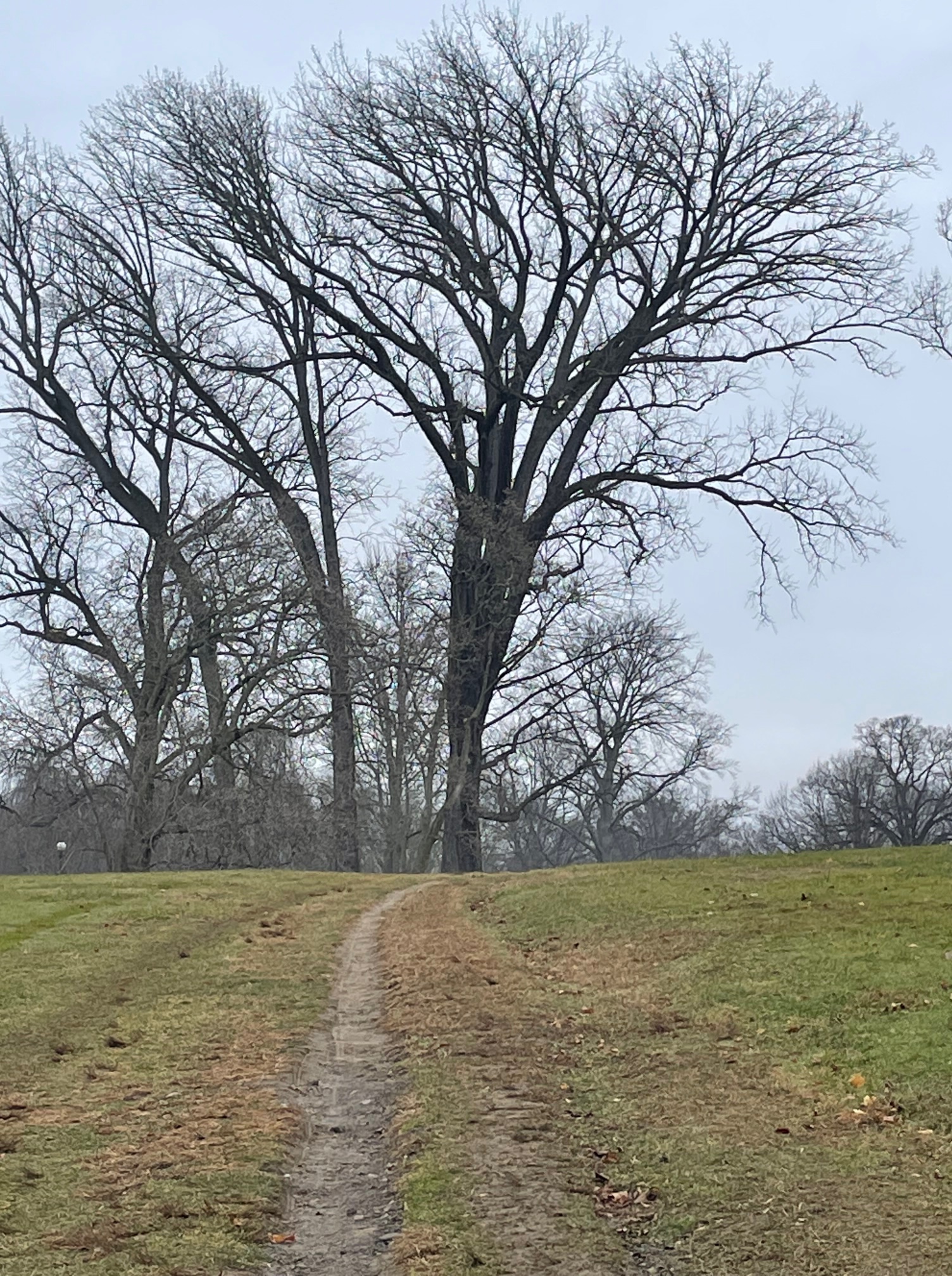
You can still follow the trail’s path up a rise.
In fact, that’s the only place you’re supposed to go off season, for some reason.
I have other plans. I have resolved to break more rules in 2020 and I think I won’t wait to set my intent.
Andrew Wyeth has an oft-quoted line: “I prefer winter and fall, when you can feel the bone structure in the landscape—the loneliness of it—the dead feeling of winter. Something waits beneath it—the whole story doesn’t show.”
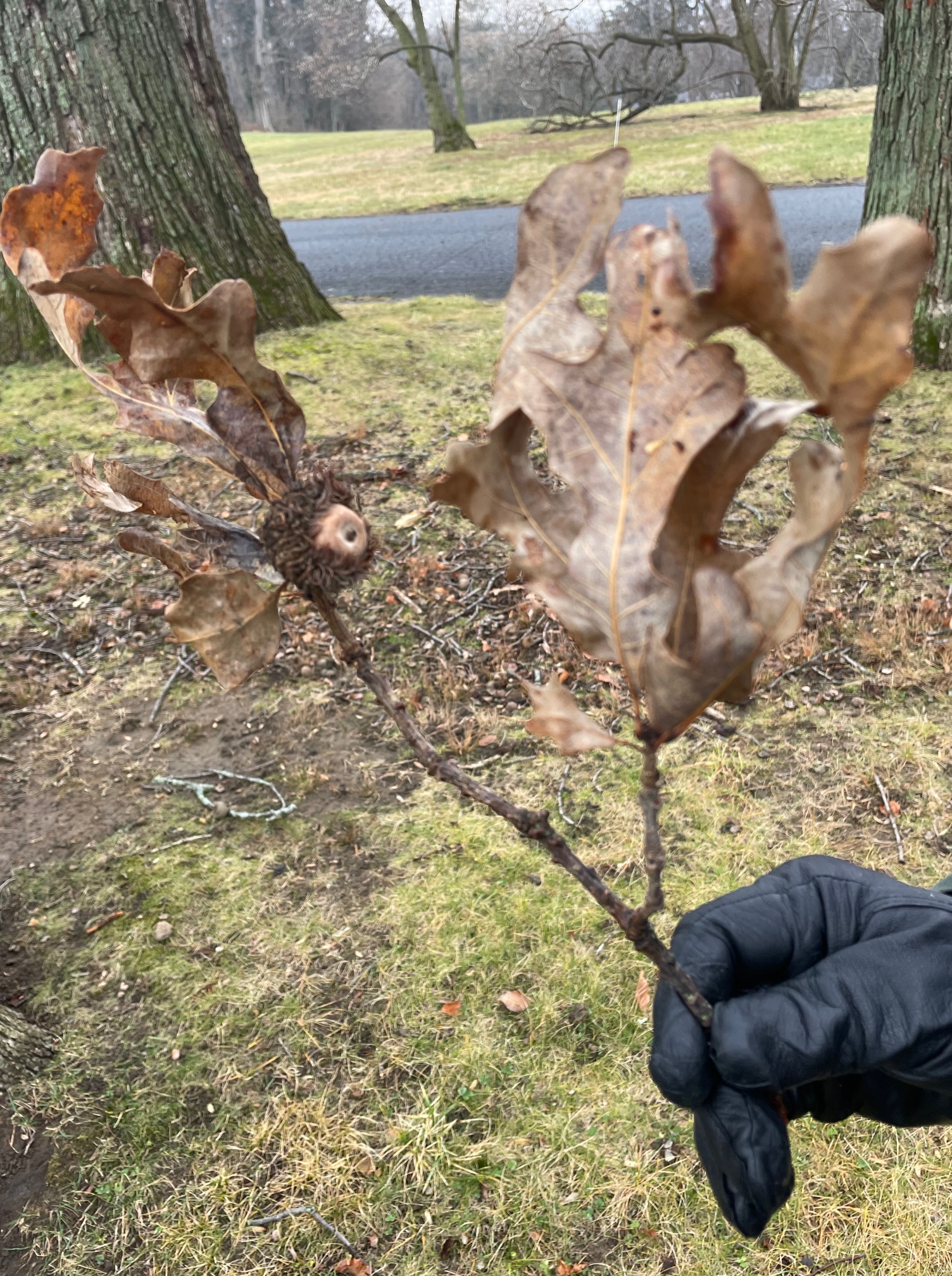
Lyndhurst in winter is all bones. A stand of oak on closer inspection reveals itself to include a burr oak (you can call it a bur oak if you want to be ridiculous.) They have the mossiest, shaggiest caps of all acorns, a look that surely serves some dendrological purpose, like keeping from being eaten.
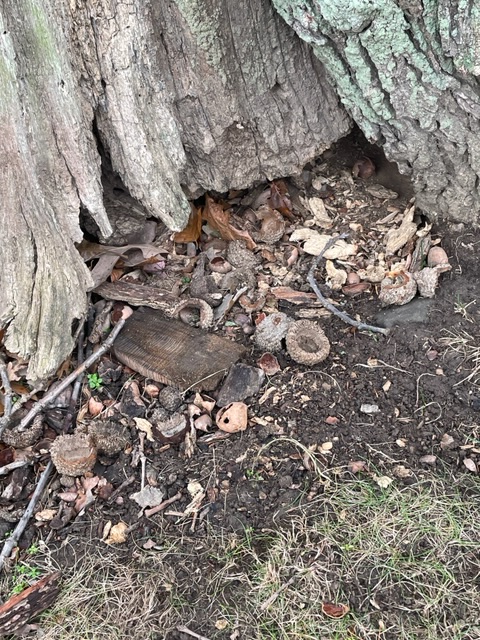
Look closely and see that there has been some living creature here.
I know an arborist who likes these oaks for “the deep lobes and lustrous green of the leaves.” Only visible in the imagination now, of course. “The very large acorns can be the size of golf balls, which gives this oak its Latin name… Quercus macrocarpa is a slow grower that can become quite large in maturity. Better suited for parks than street trees due to its size and the size of the acorns.“ Exactly! Here at Lyndhurst it can really spread out.
Wyeth also said: “I search for the realness, the real feeling of a subject, all the texture around it… I always want to see the third dimension of something… I want to come alive with the object.”
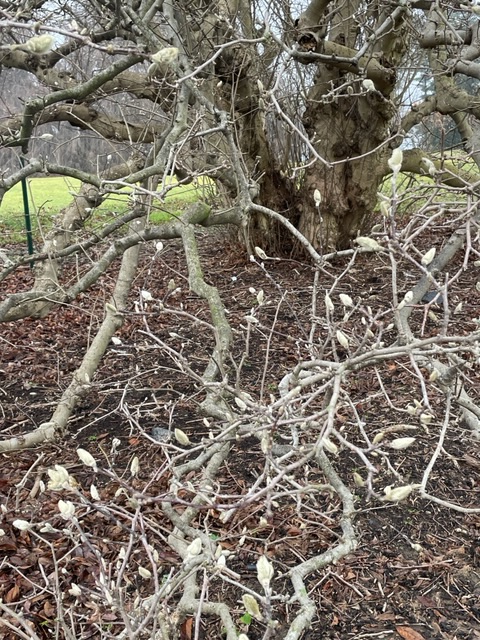
Live bones. A slightly scary concept but one that I like. The magnolia looks like it’s already ready for a warmer season.
Wait a bit. Enjoy your dormancy. You can explode later.
An arboretum in all but name, Lyndhurst has a number of mammoth beech trees that is so large as to be almost unfair to the rest of the world’s estates. I know that Newport has its share also. The Preservation Society of Newport County has even established a beech tree nursery “to ensure the future of the iconic landscapes of the Newport Mansions.”
Magnificent is a word undeniably coined to describe European beeches.
Weeping bones. Easier for any arborist to ID some specimens after leaf-out than now, but a beech can’t fool you.
Strong emotion on display with statuary scattered about the grounds, which I suspect no one but myself has examined closely for some time.
Some of these carvings gave off a strong whiff of an earlier era, when sexuality had to be expressed clandestinely. It was only proper to reveal oneself in all Nature’s glory if you were a nymph of some kind.
We’re still squeamish about some things even going on 2020, like depicting the litter of scat all around the Lyndhurst estate – deer, of course, and goose, and – this. First to identify it (dog, bear?) gets a mention in these pages.
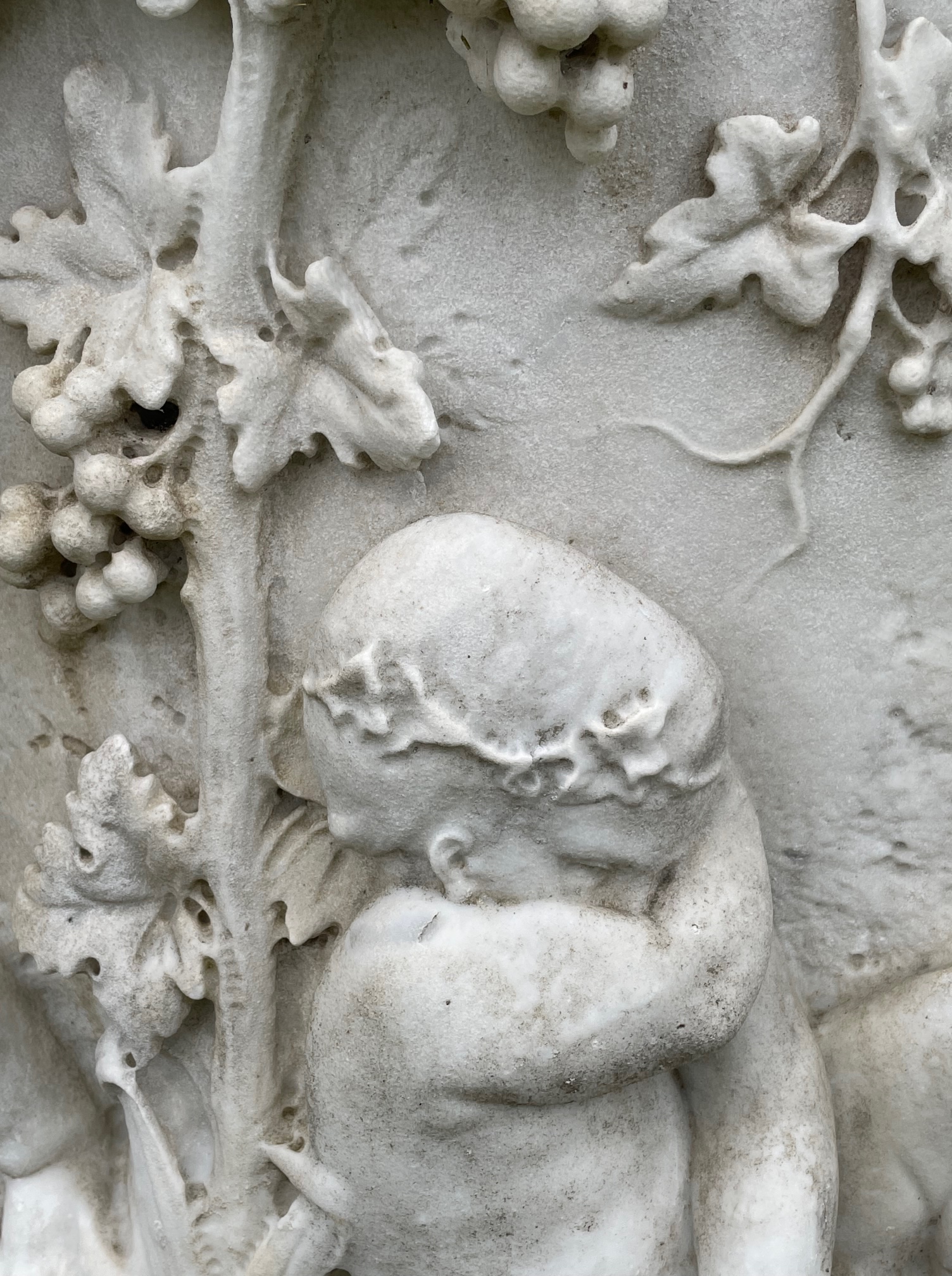
I don’t know the intended meaning of this image. I’m sure it had one when carved. Bacchus wiping the wine from his face?
But it reminds me of one of my very favorite poems, written by William Butler Yeats in 1892 (the Gould epoch at Lyndhurst, though it’s hard to believe he ever read it). This poem is a douzaine, meaning a 12-liner, and in it Yeats wears his heart on his sleeve for wild woman – Irish republican revolutionary and suffragist –Maud Gonne. She knew how to break rules and she knew how to break hearts. One good way is to find a poet to make you immortal. Wish I knew her.
When you are old and grey and full of sleep,
And nodding by the fire, take down this book,
And slowly read, and dream of the soft look
Your eyes had once, and of their shadows deep;
How many loved your moments of glad grace,
And loved your beauty with love false or true,
But one man loved the pilgrim soul in you,
And loved the sorrows of your changing face;
And bending down beside the glowing bars,
Murmur, a little sadly, how Love fled
And paced upon the mountains overhead
And hid his face amid a crowd of stars.
That’s what that little guy hiding his face in the statuary says to me, out in the beautiful dormant cold.
I took a burr acorn cap with me when I left. To quote Jay Gould: “Whatever is not nailed down is mine. What I can pry loose is not nailed down.”














































































 Jean Zimmerman