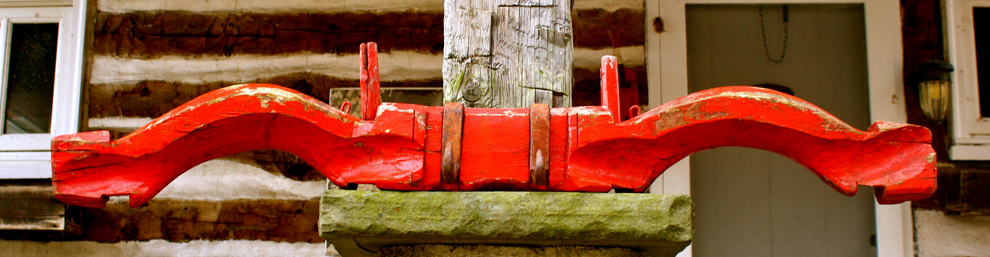
at Wave Hill, the historic estate in Riverdale, the Bronx. Always a magnificent public-access arboretum, but perhaps especially beautiful on this brisk early afternoon in mid-December.
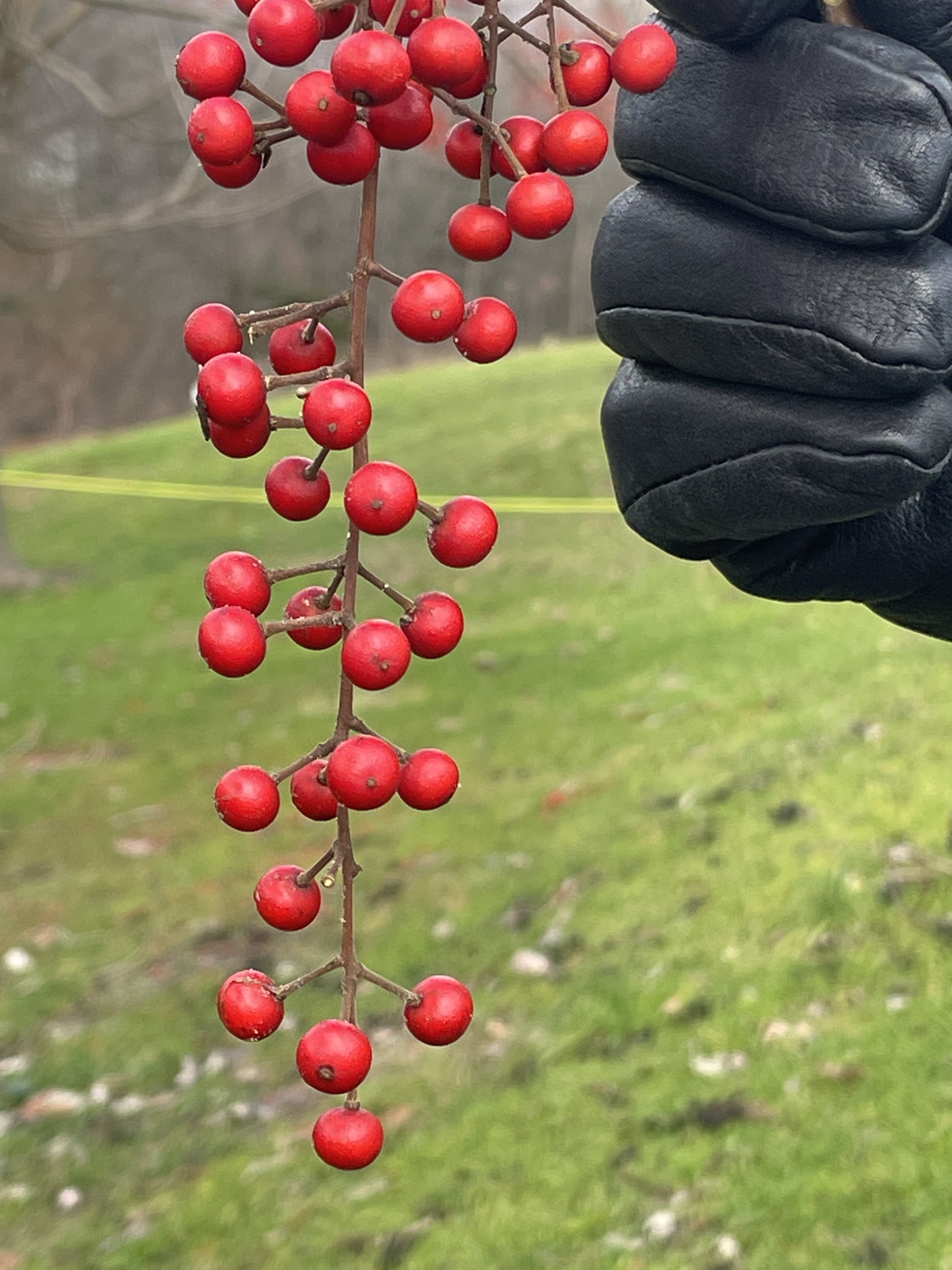
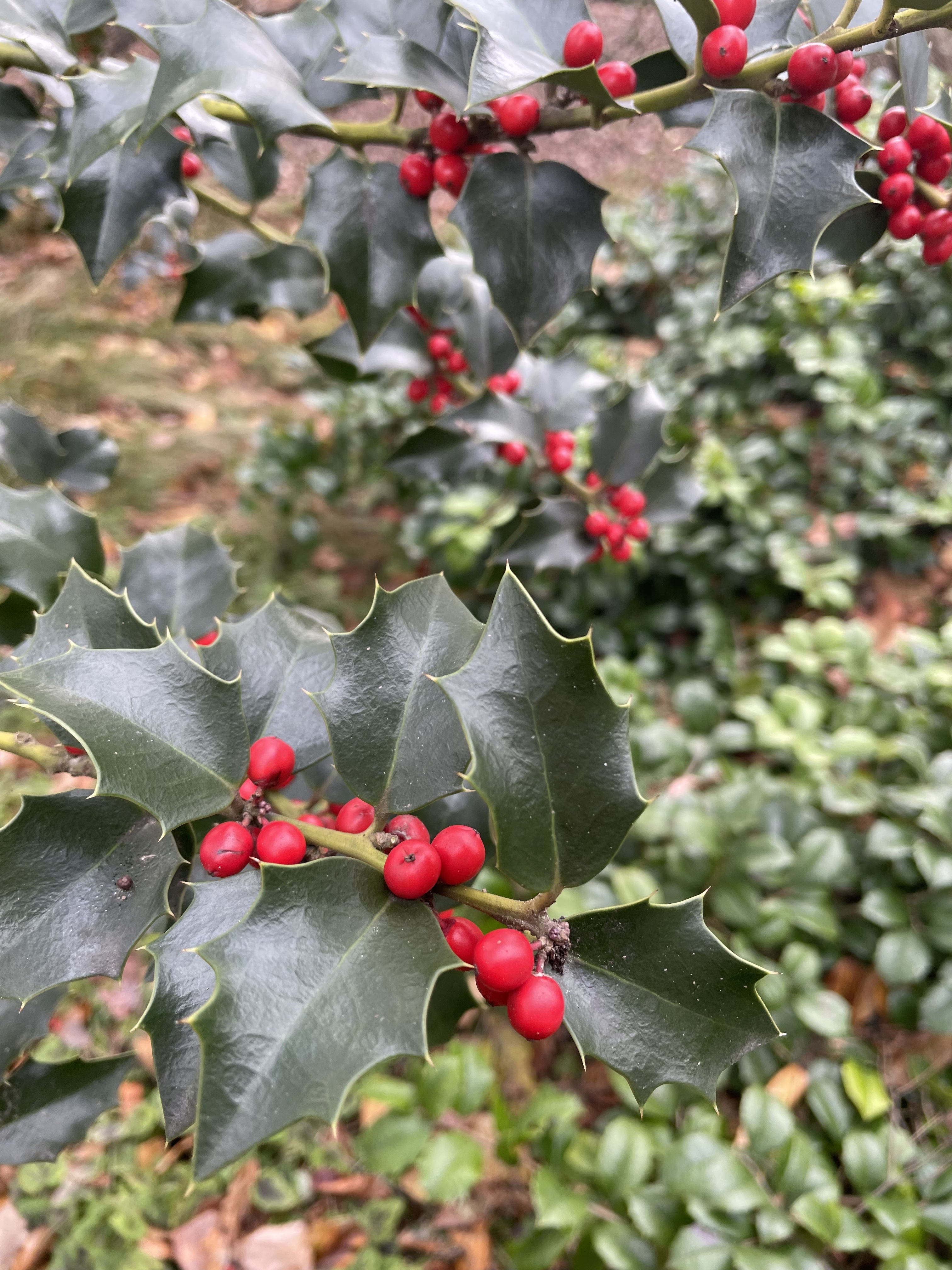
Berries all around. Not only crimson holly, perfect for the season.
But purple. The aptly named beautyberry.

Shakespeare wrote about boughs which shake against the cold,/Bare ruin’d choirs, where late the sweet birds sang. He might have been describing one of the most majestic trees here, a weeping beech.

The birds, though, are still at Wave Hill in full force.
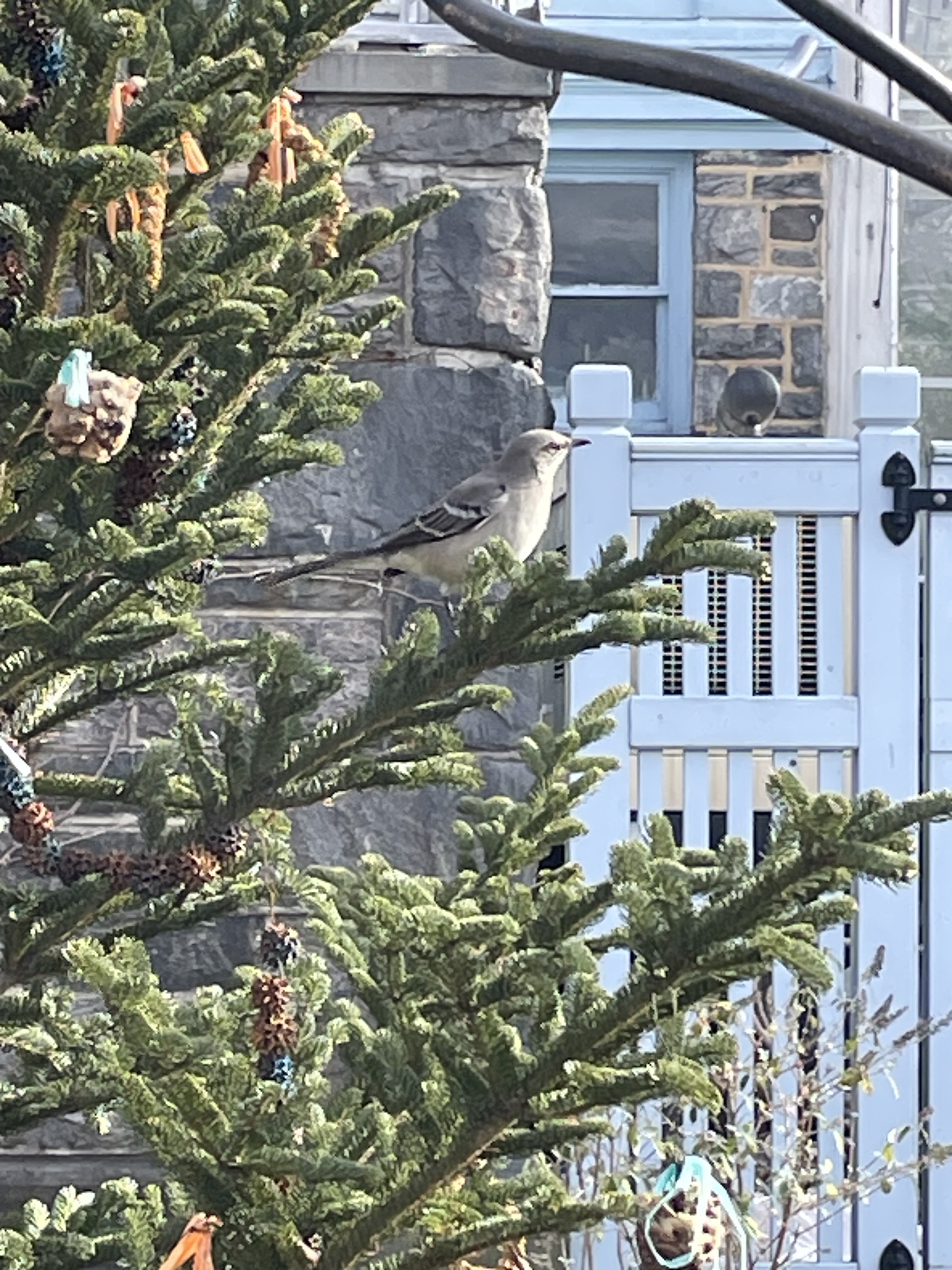
Making a mad racket and perching on branches specially decorated for them.
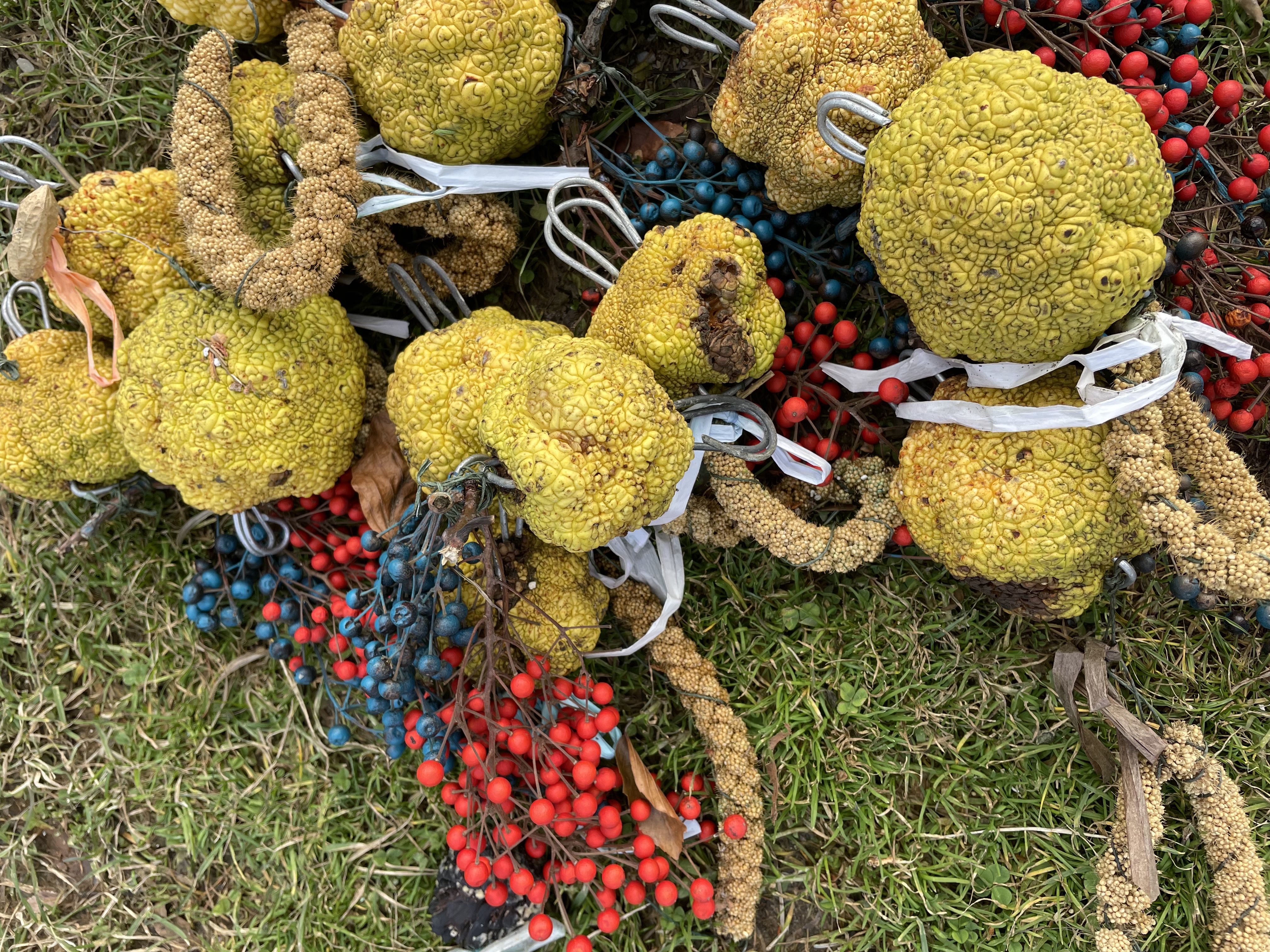
Garlands of things they love to eat. Berries, yes. Also, even more delectable for them, the fruits of the Osage orange. An ancient species that dates back to at least the last ice age, when seeds were most likely spread by mastodons, sloths and other creatures that consumed them.

Squirrels like the seedballs too, hence the one we find partially devoured along our way.
To celebrate the fir tree season, we pay a visit to the conifer grove.
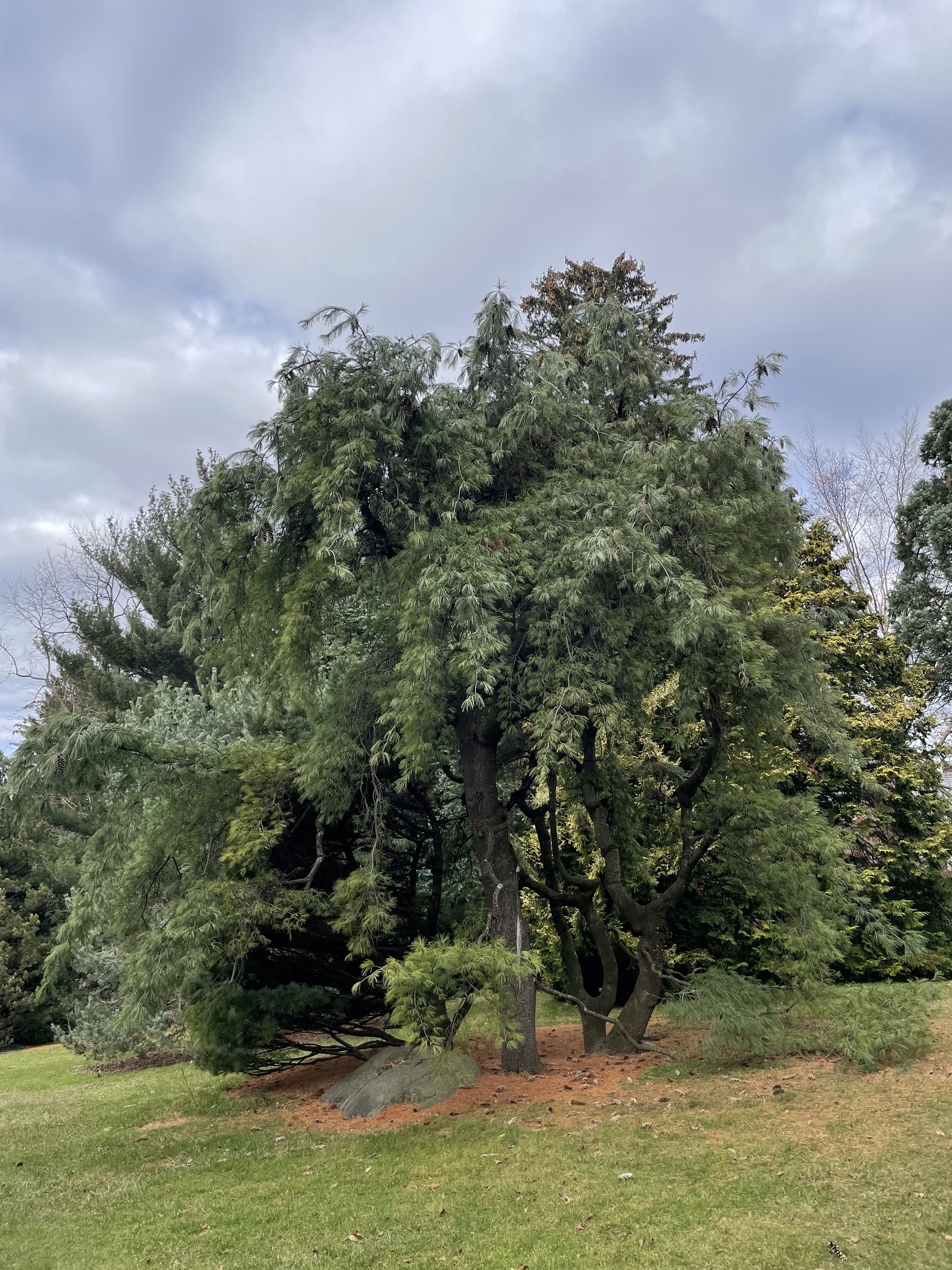
Gorgeous specimens all around.
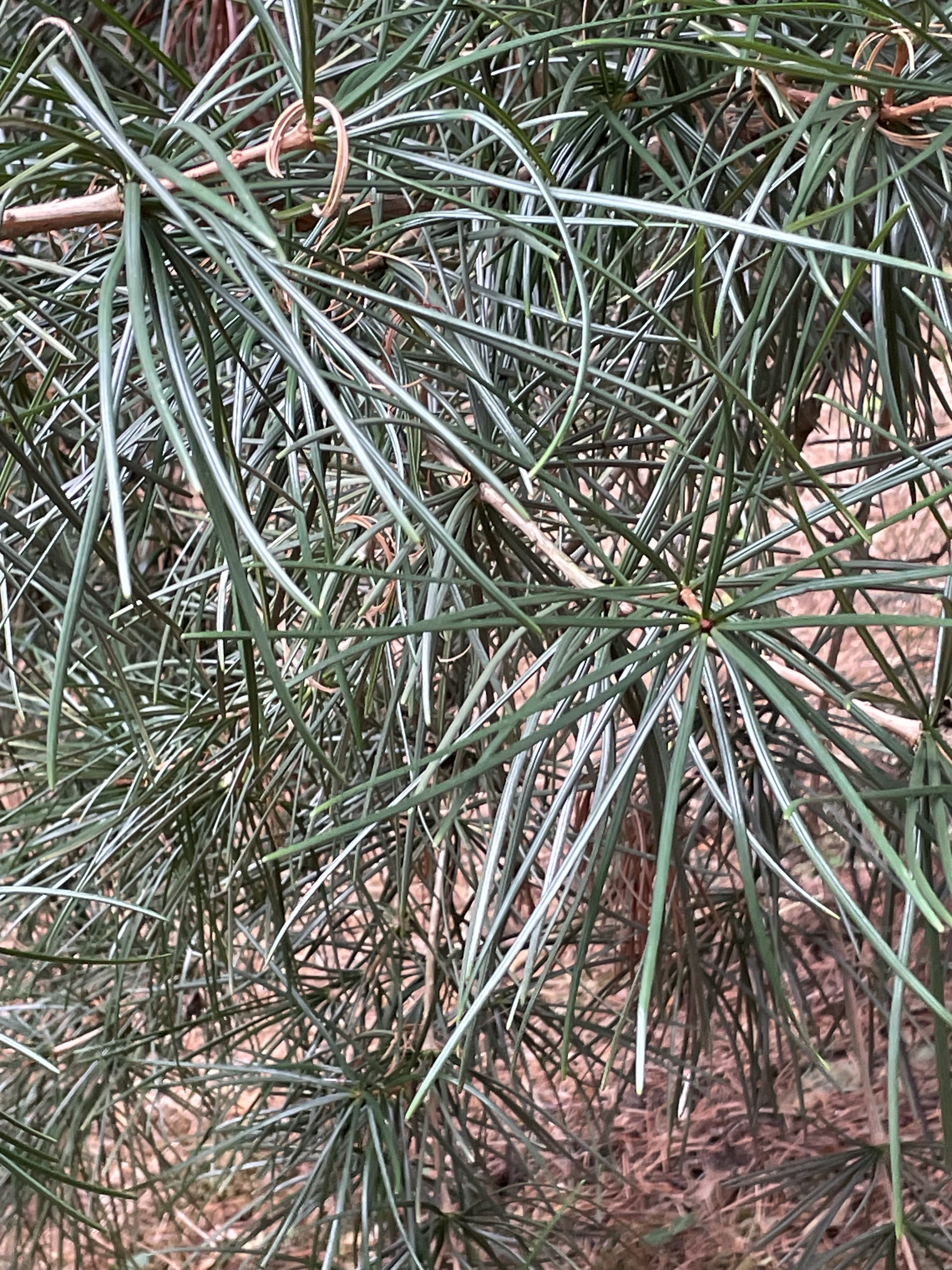
So many different species.
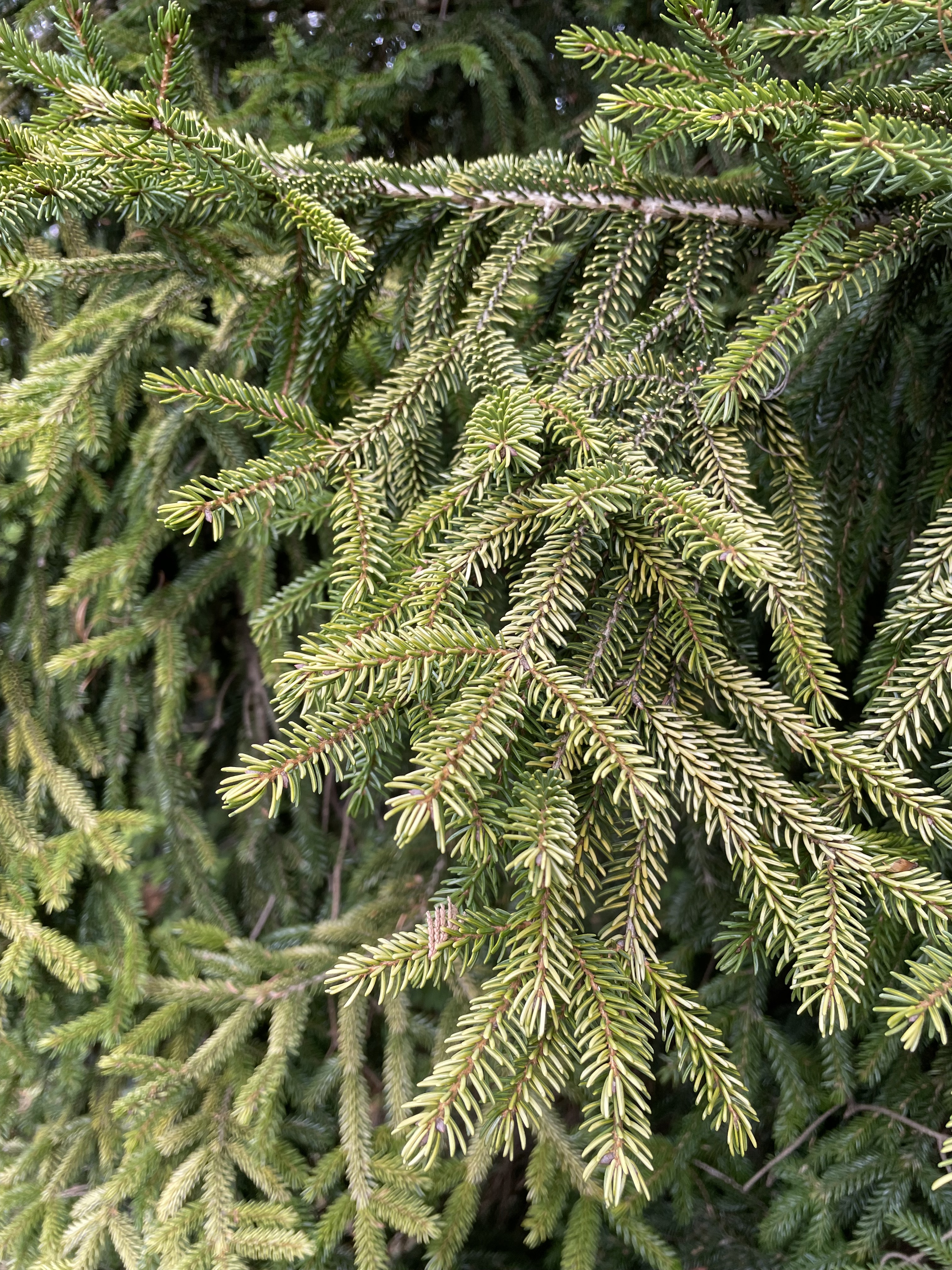
Each beautiful in its own way
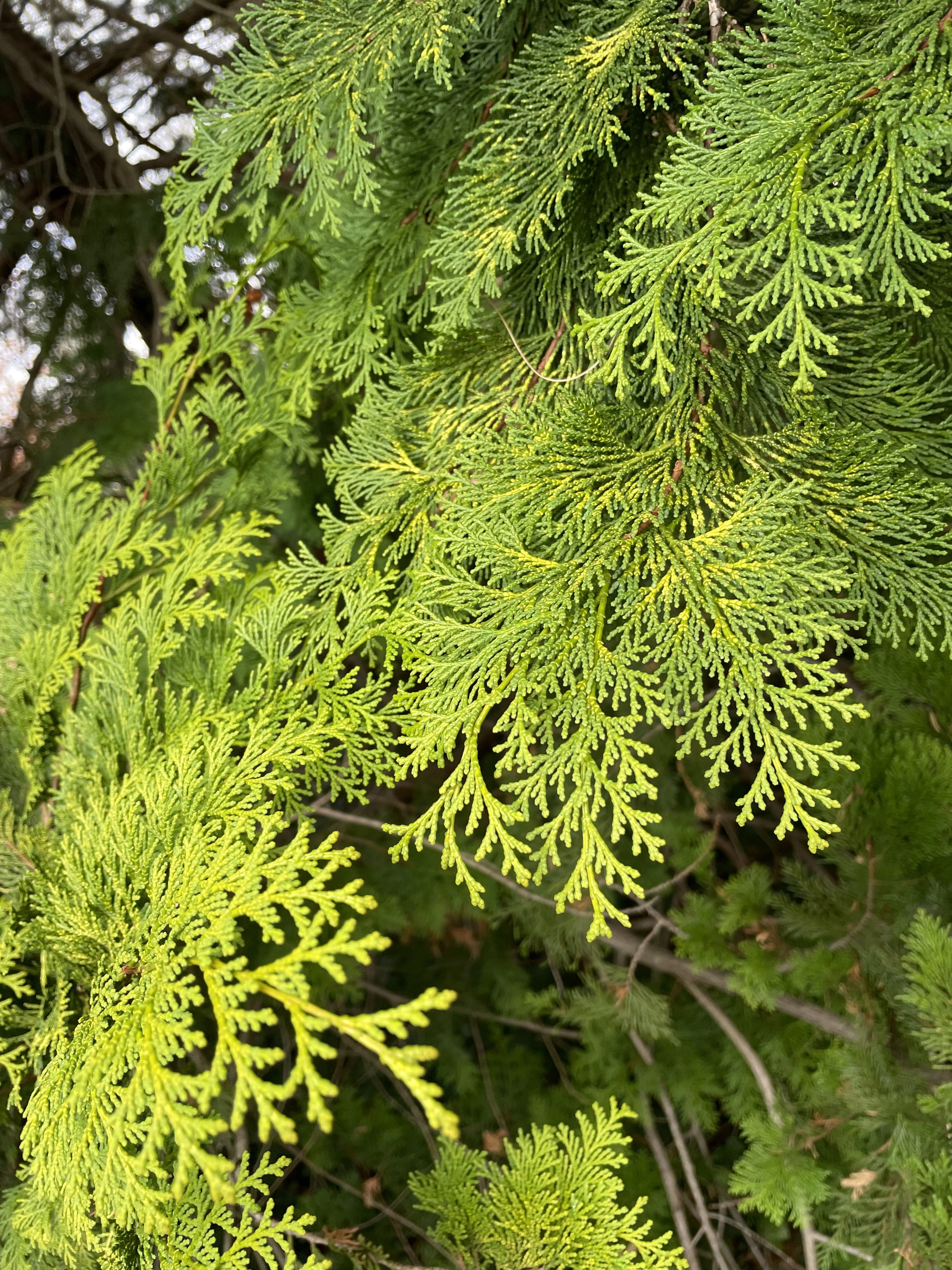
Some exotic, like a China fir.

There is even a giant redwood cultivar. A real redwood, like they have on the West Coast.

Is it possible to overuse the descriptor beautiful? On this day, no. Everything is beautiful.

We take the Woodland Trail, which winds along the edge of the property. We see evidence of the human hand tucked into the corners. This isn’t an old-growth forest, after all!

A private school adjoins the property. We hear children shrieking on a playground as we go, having fun at recess. Find a gazebo — nice place to sit and reflect, if that’s your thing. Ours is more along the lines of walking to stay warm on this cold early afternoon.

Someone was here before and loved someone.

A hand-hewn belvedere. Think about the people employed here to build it long ago, probably old-world stonemasons who gifted our country with their expertise.
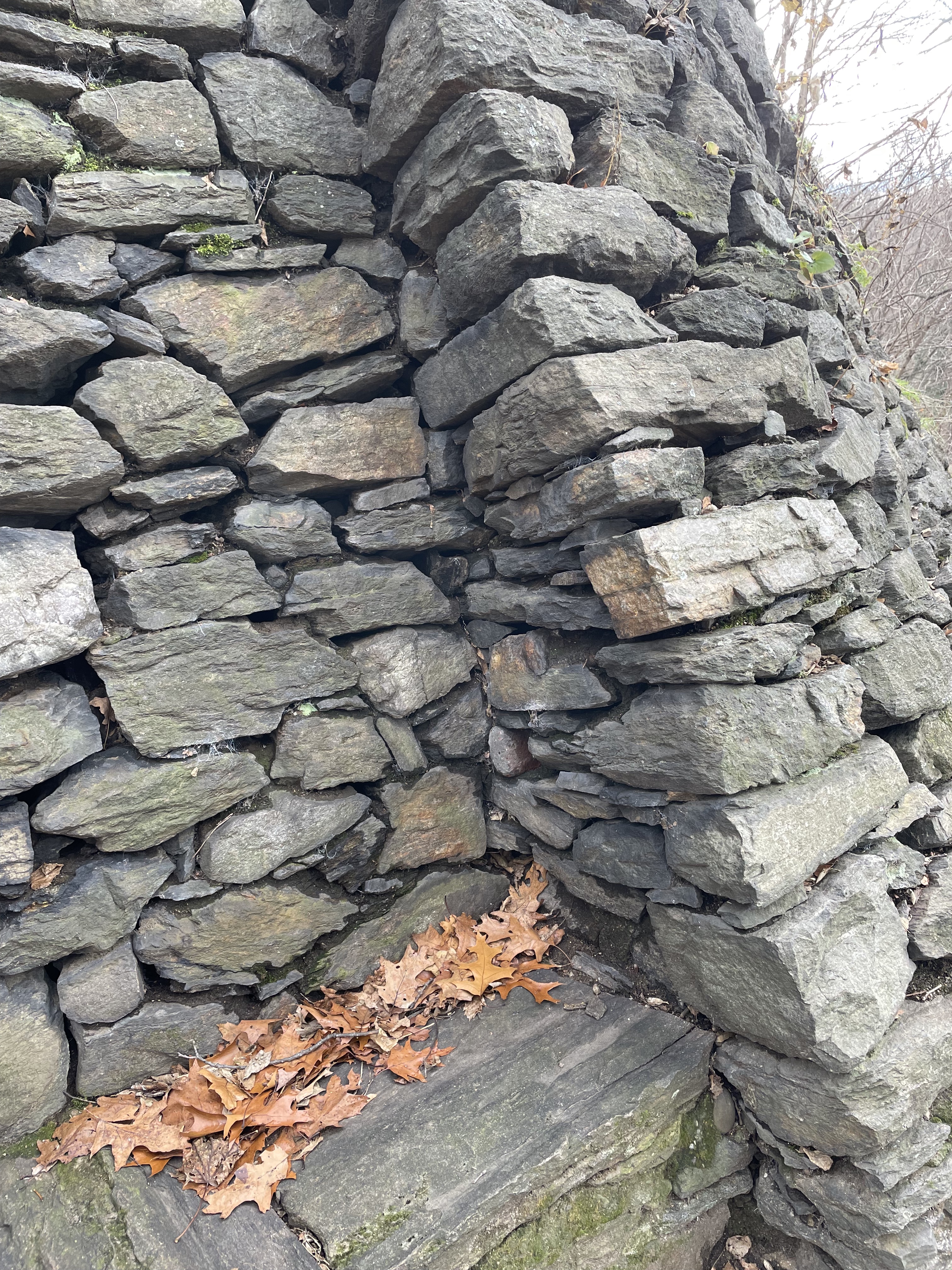
So much texture in these woods.

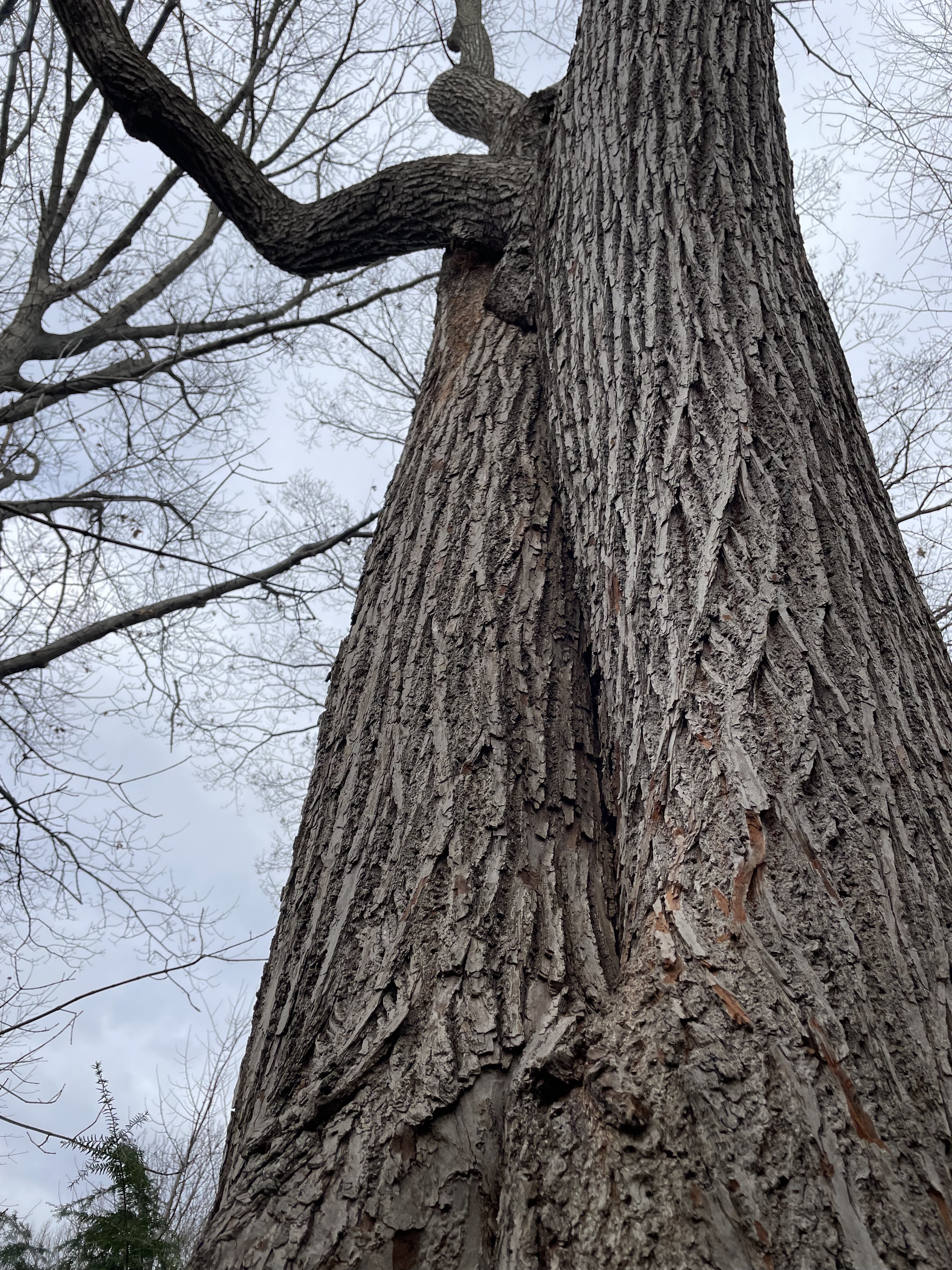
Hackberry.
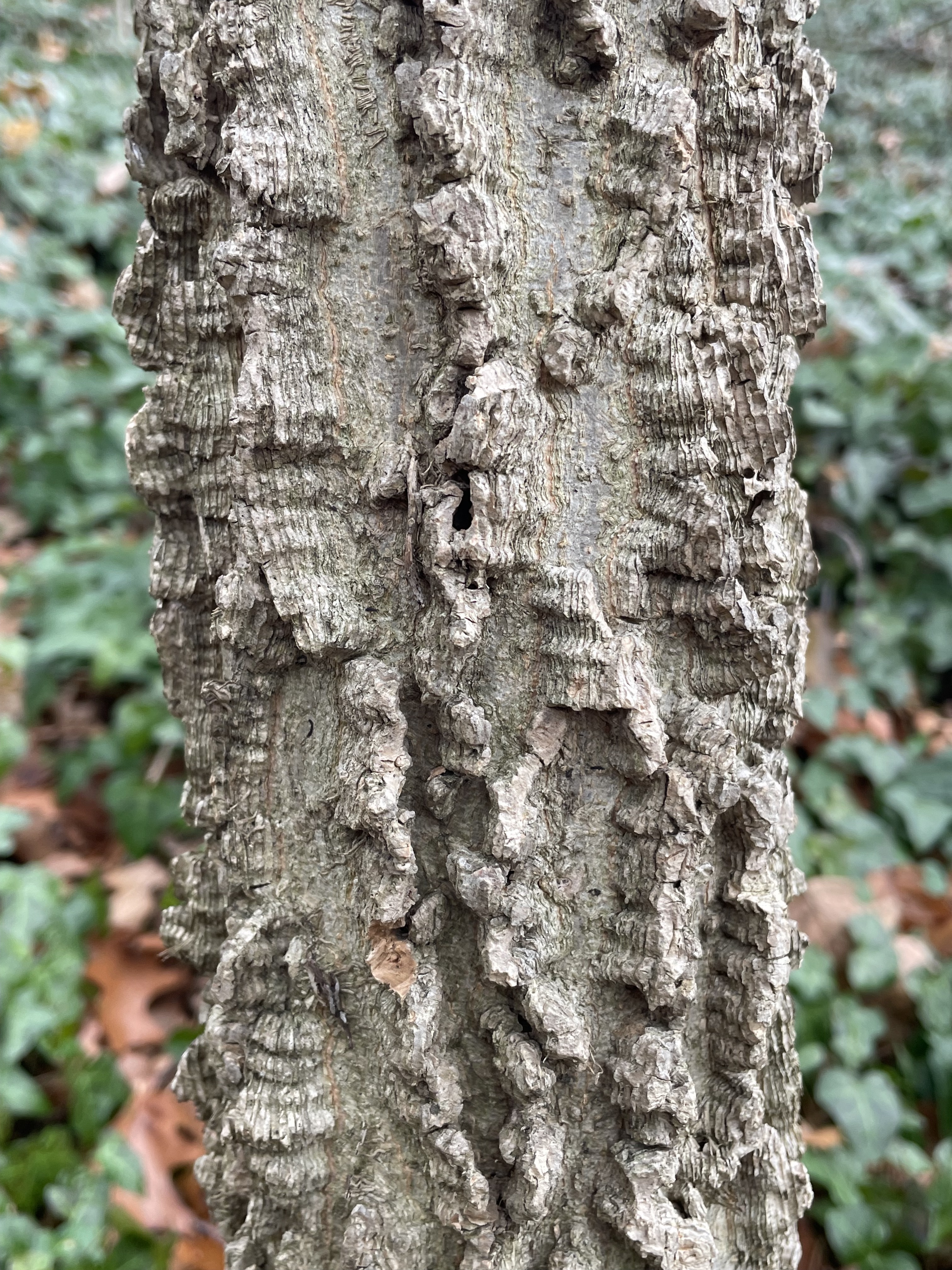
Black cherry.

Sweet birch.

Lichen.

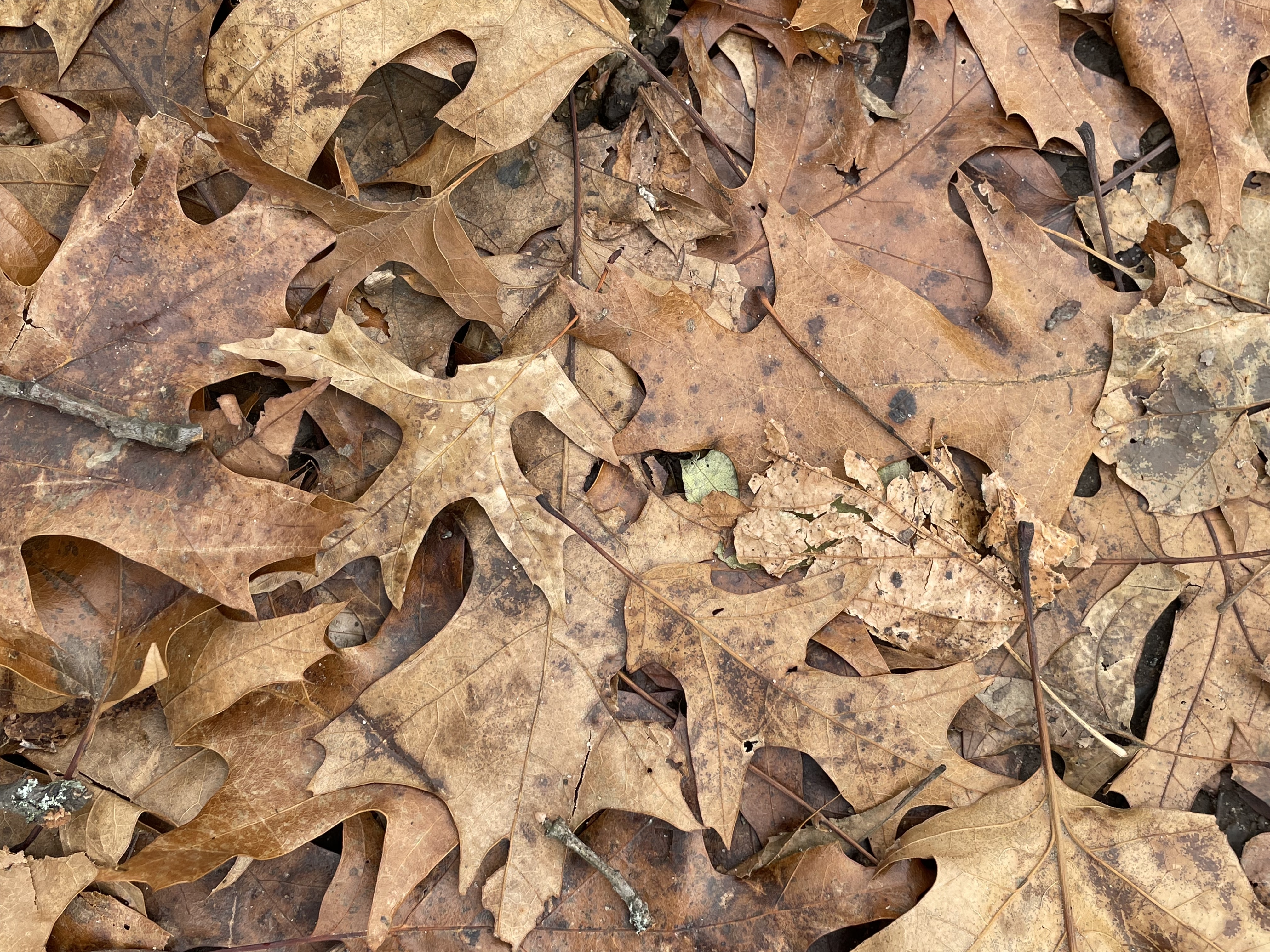
The intricate embroidery of oak leaves underfoot.
Something odd, a measuring tape around a trunk.

Wonder if someone trying to get a DBH left this tool by mistake. This is an arboretum, after all. Or are they trying to girdle the tree so that it will fall over time? Nah, who would do that to a fine old Northern red oak?
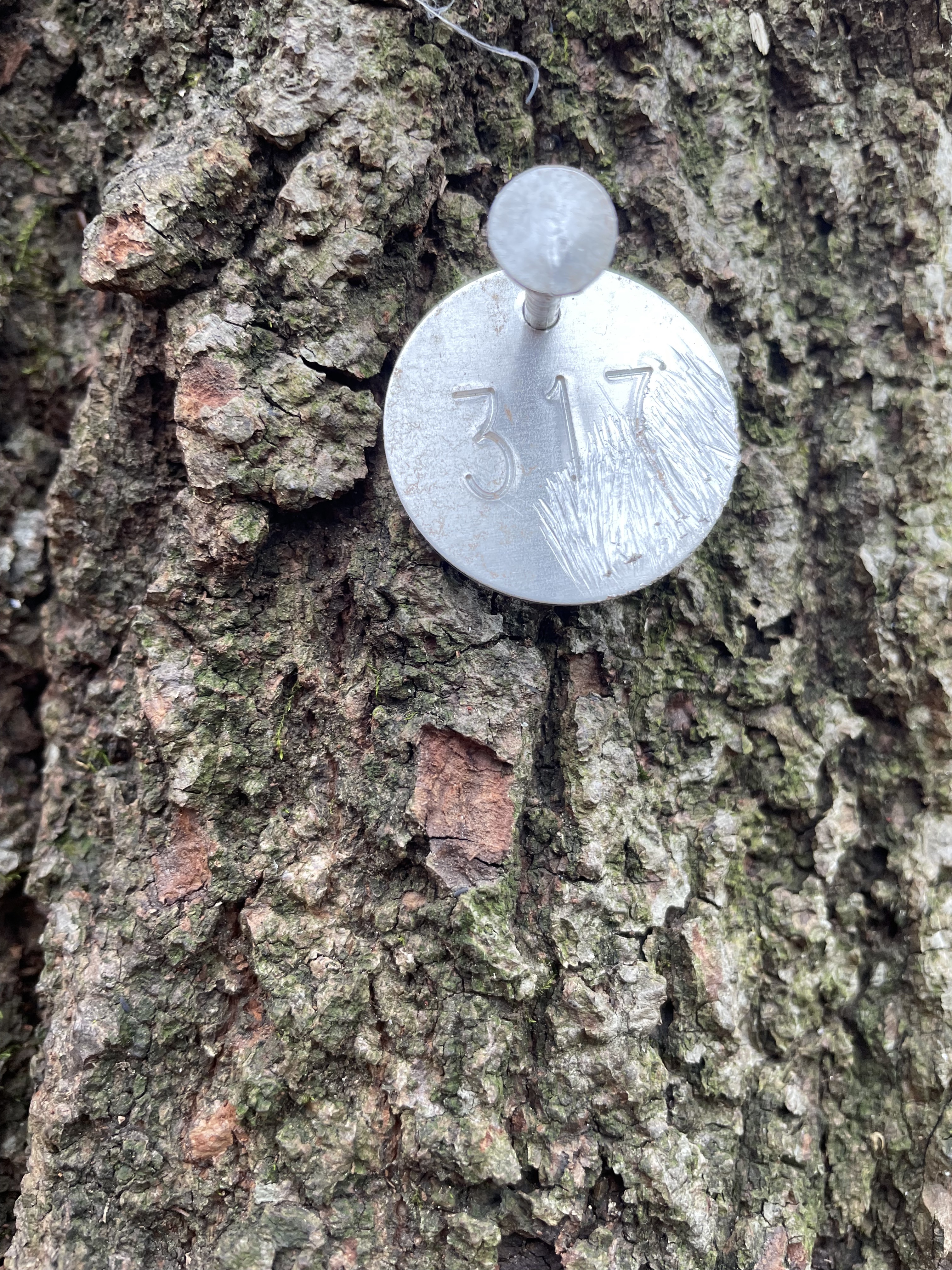
Mysteries. Who tagged this tree and for what inventory?
How could any tree be as beautiful as this one with braided twin trunks? Tell me if you find one.
Wave Hill isn’t only about trees and plants. There’s history here too. Illustrious visitors spent time on the estate, with an overnight guest list including Thomas Huxley and Charles Darwin. A teenage Teddy Roosevelt summered here. Later, as governor of the state, he became very active in preserving the view across the river.

Did Roosevelt’s Wave Hill summers have anything to do with his adult efforts to create the National Parks system? Inquiring minds want to know.
Arturo Toscanini also put in some time here. He’d play concerts on the lawn. His guests included Queen Elizabeth II and John Foster Dulles. Mark Twain stayed at Wave Hill between 1901 and 1903.

There are numerous historic buildings, and I’ve often wondered where specifically Twain resided. We know that he set up a writing retreat in the branches of a chestnut tree.
In her memoir, his daughter Clara quoted Twain as saying: I believe we have the noblest roaring blasts here I have ever known on land; they sing their hoarse song through the big tree-tops with a splendid energy that thrills me and stirs me and uplifts me and makes me want to live always.
We go in to get warm in one of the buildings, the one with a ballroom and a great old fireplace decorated for the holidays.

Twain also wrote, This dining-room is a paradise, with the flooding sunshine, the fire of big logs.
I greet old friends at Wave Hill, great trees I’ve visited time and time again over the years. The grand littleleaf linden.

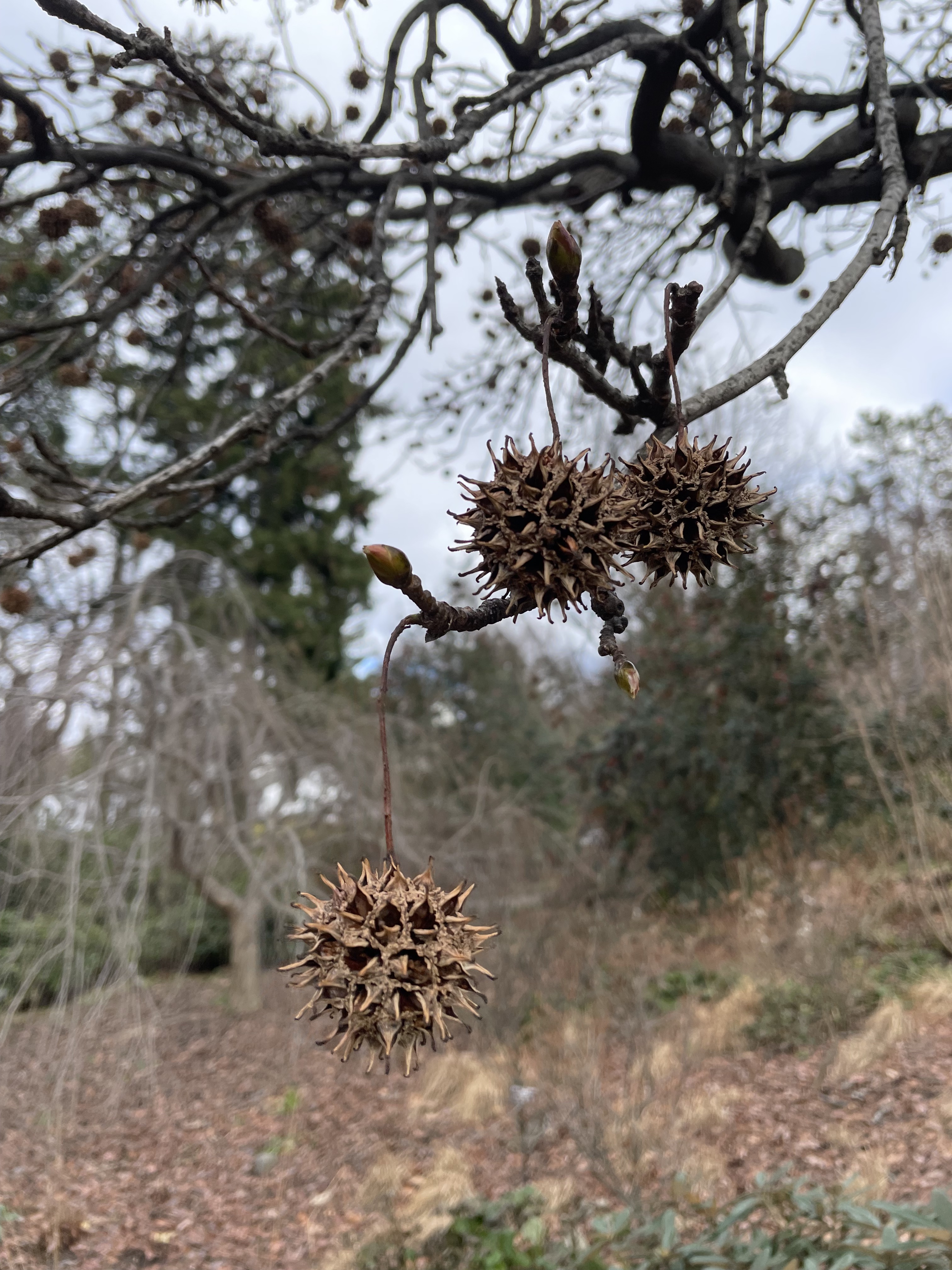
A particular sweetgum.
The crazy looking red of the Japanese red pine .
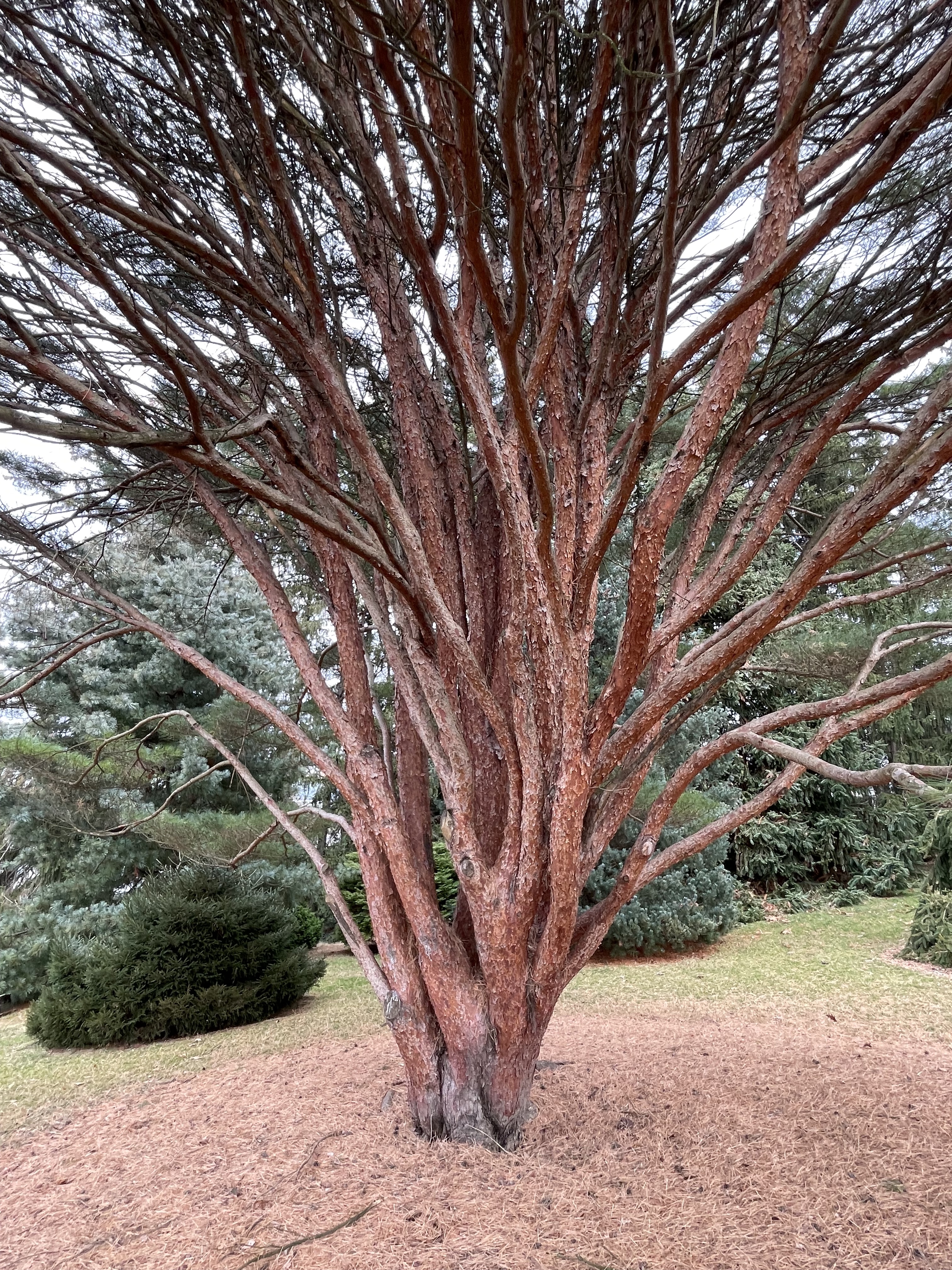
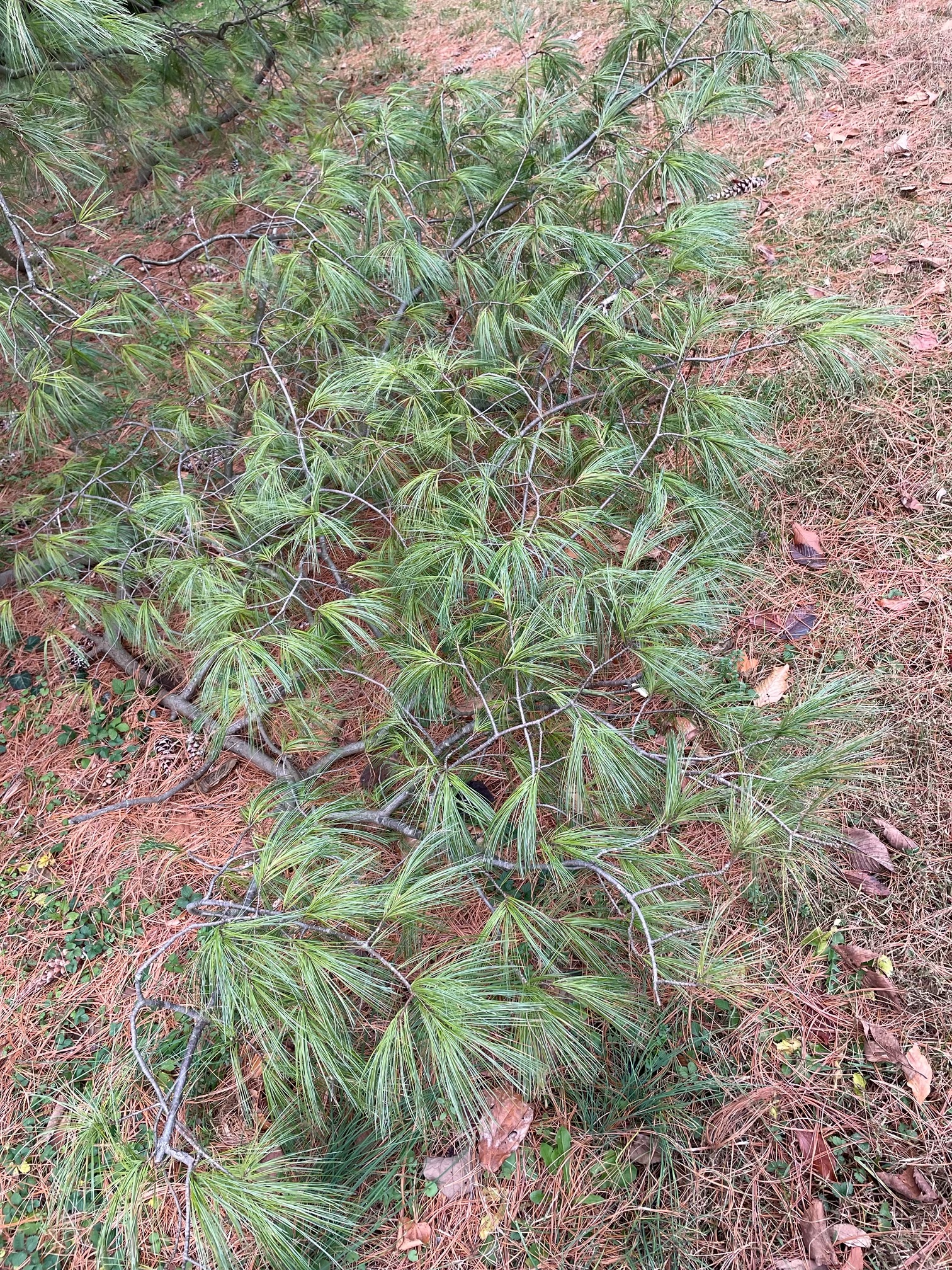
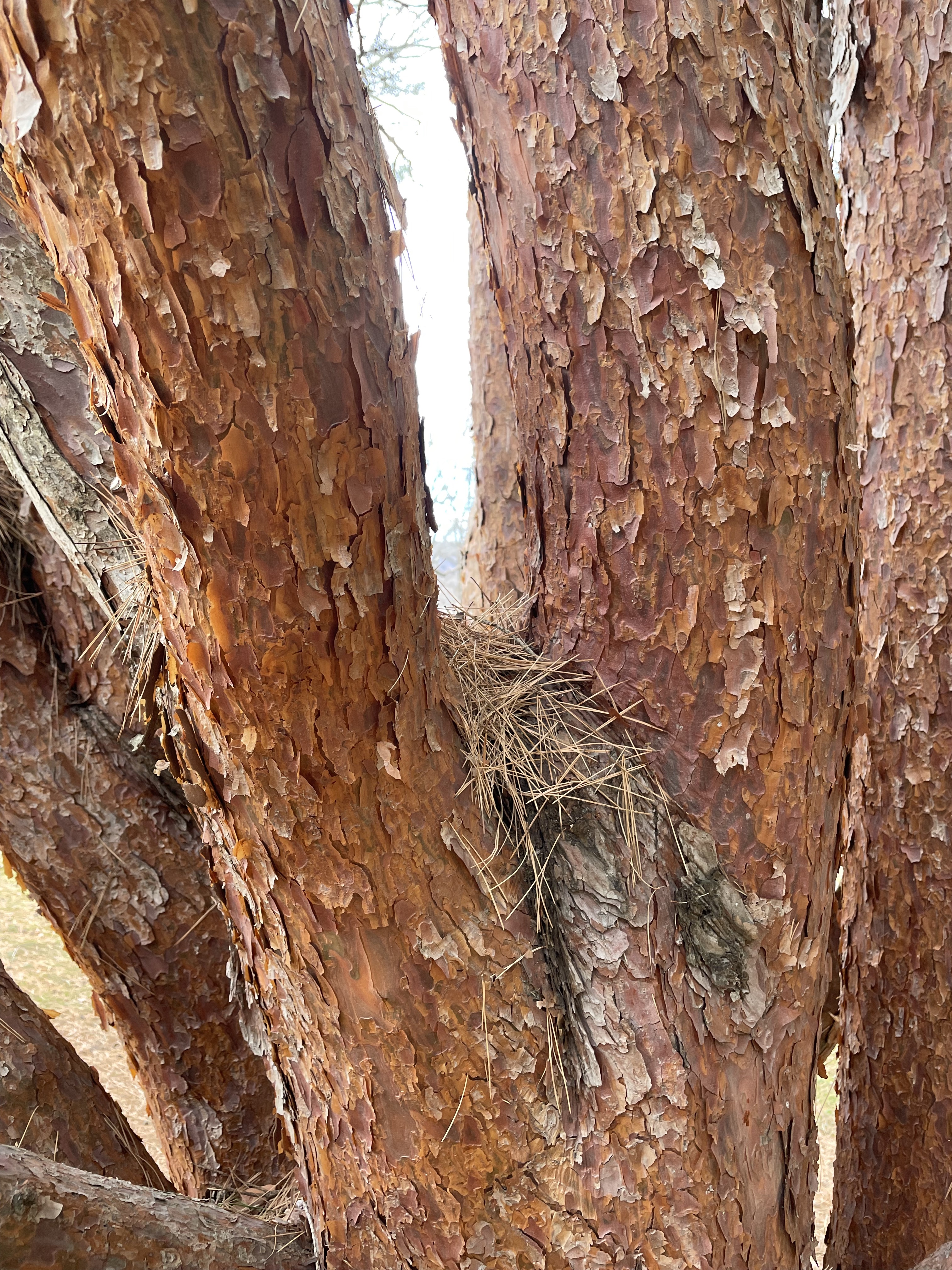
Go up close and see the delicately beautiful thatch of needles in its crook.
We pass a quiet place where spring bulbs slumber. I’ve seen this careful sign before.

Then, at the end of our walk, the copper beech. There are two here, actually. One is perfectly balanced, untouched by time.
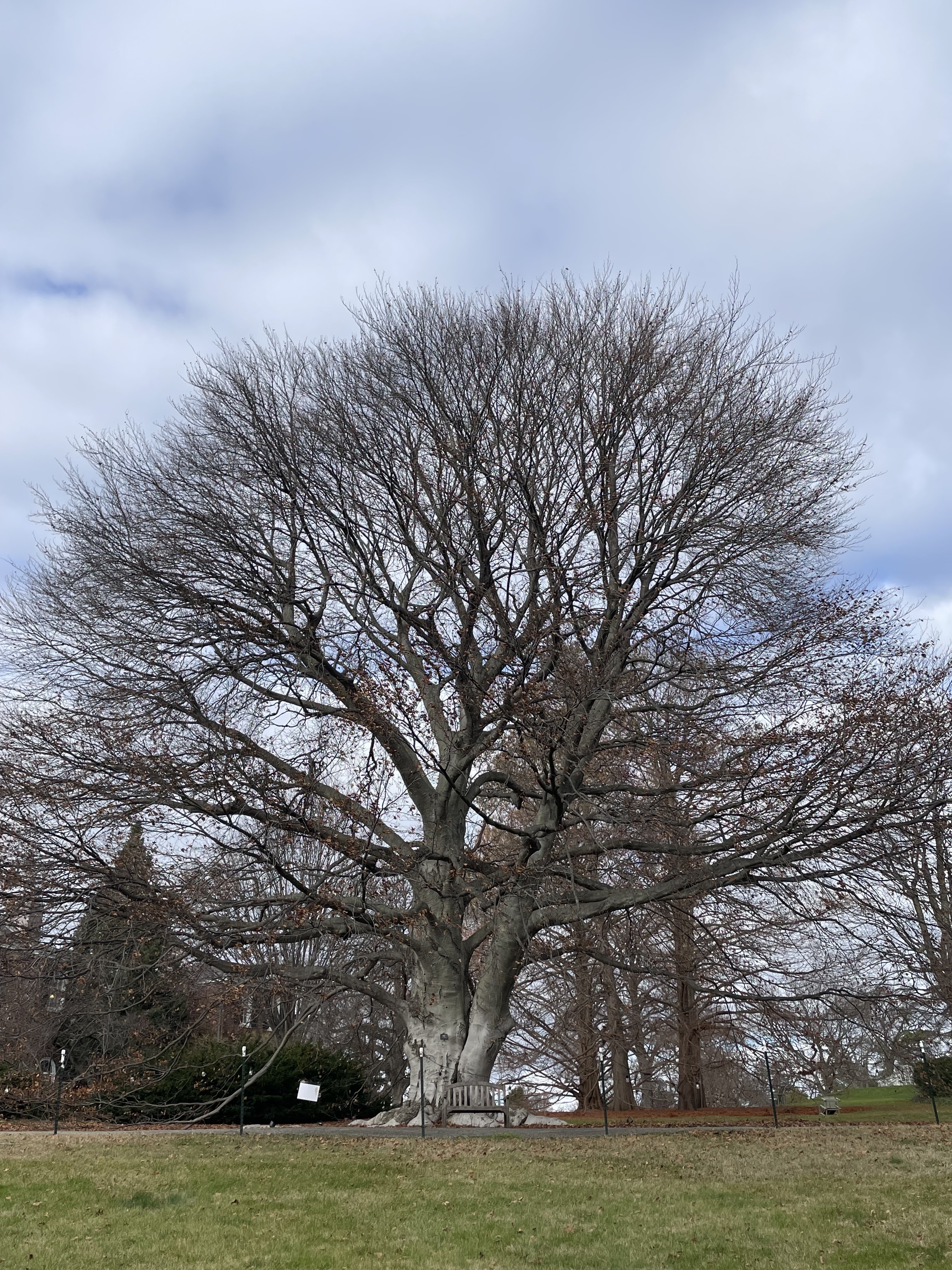
The other, though, down a slope, I like just as much. She has bark that has been scarified over the years by people engraving their initials and hearts.
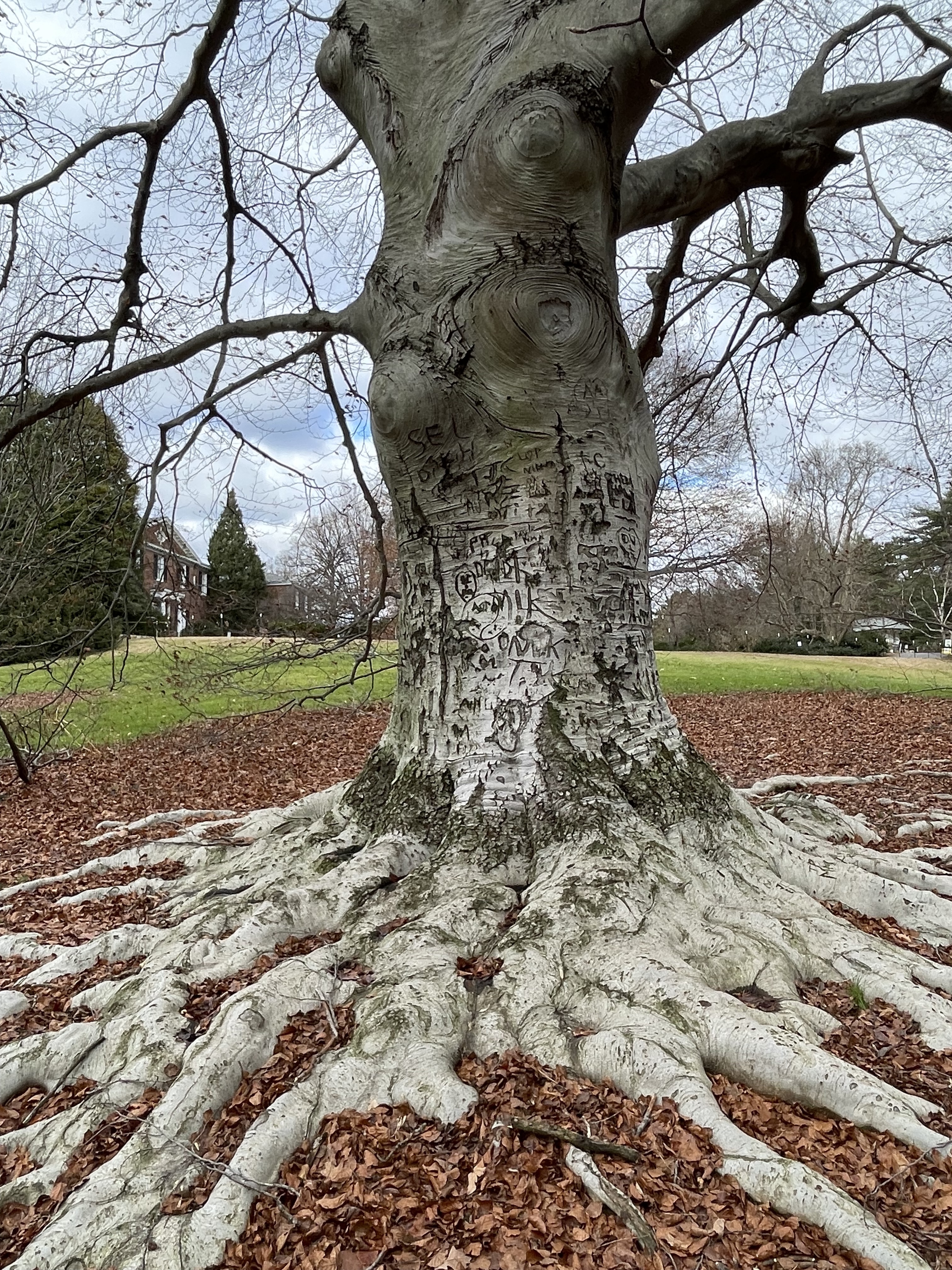
In her book about the beech, Casting Deep Shade, poet C.D. Wright tells us that the druids grew wise eating the nuts of the species. This being a mast year, I find tons of beechnuts underfoot at Wave Hill.

Some tree folks don’t like these autobiographical messages on beech bark, opining that the practice of carving disrupts the tree’s vascular system. But look at the health of this tree, probably two hundred years old. I like the engraved graffiti, because to me it proves people’s strong, abiding connection with trees.

It seemed a mere toss-up whether she said, “I love you,” or whether she said, “I love the beech-trees,” or only “I love—I love,” wrote Virginia Woolf in Night and Day.

Thoreau wrote, I frequently tramped eight or ten miles through the deepest snow to keep an appointment with a beech-tree, or a yellow birch, or an old acquaintance among the pines.
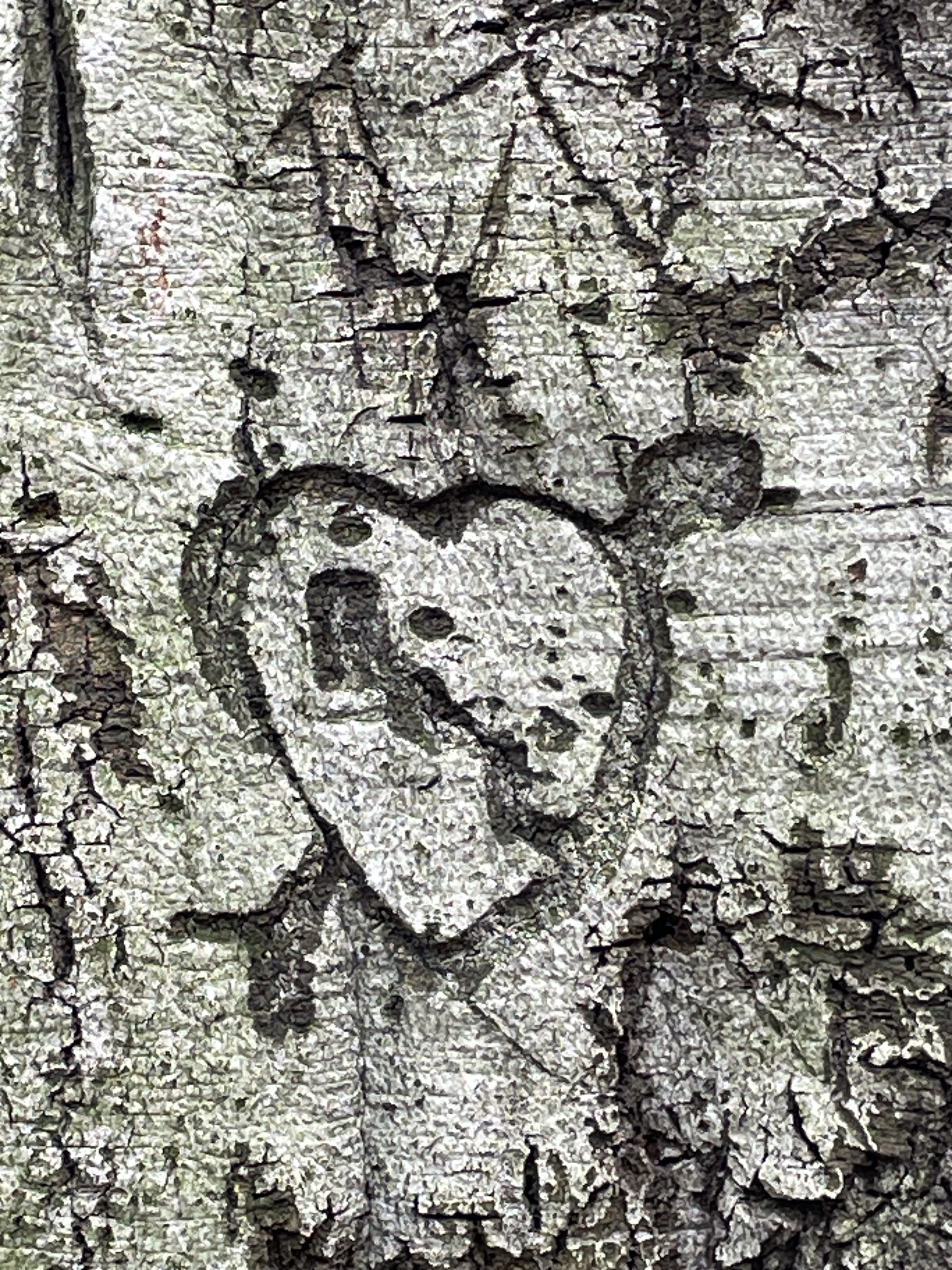
Love is like a tree, wrote Victor Hugo. It grows of its own accord, it puts down deep roots into our whole being. I like to think of some lost soul tramping miles through a forest, too shy to unburden himself to the person he cares for, and surreptitiously taking switchblade out of pocket to pronounce, indelibly, the sentiment I love—I love.
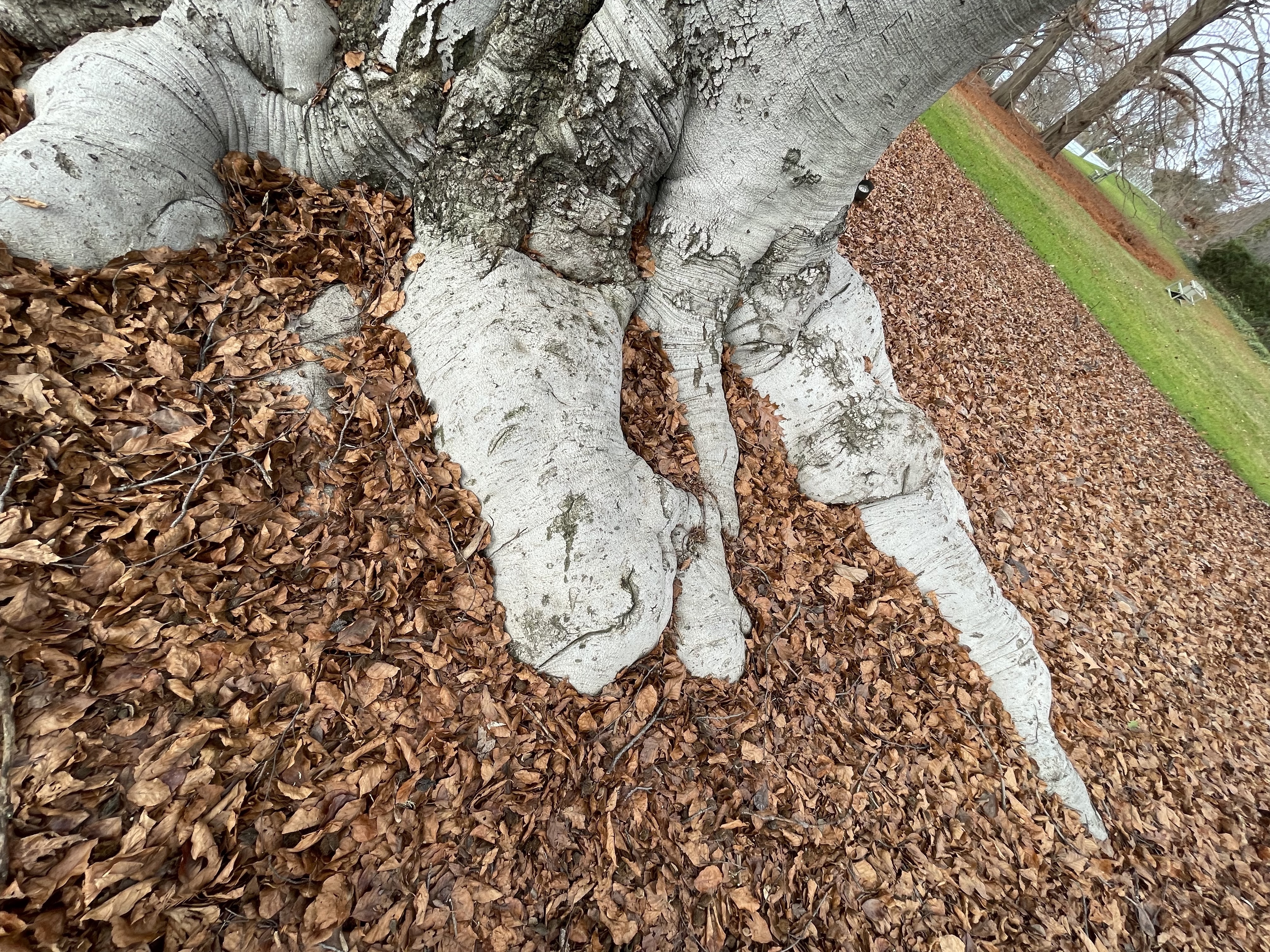
Herman Hesse wrote, When we have learned how to listen to trees, then the brevity and the quickness and the childlike hastiness of our thoughts achieve an incomparable joy.

We leave the estate.

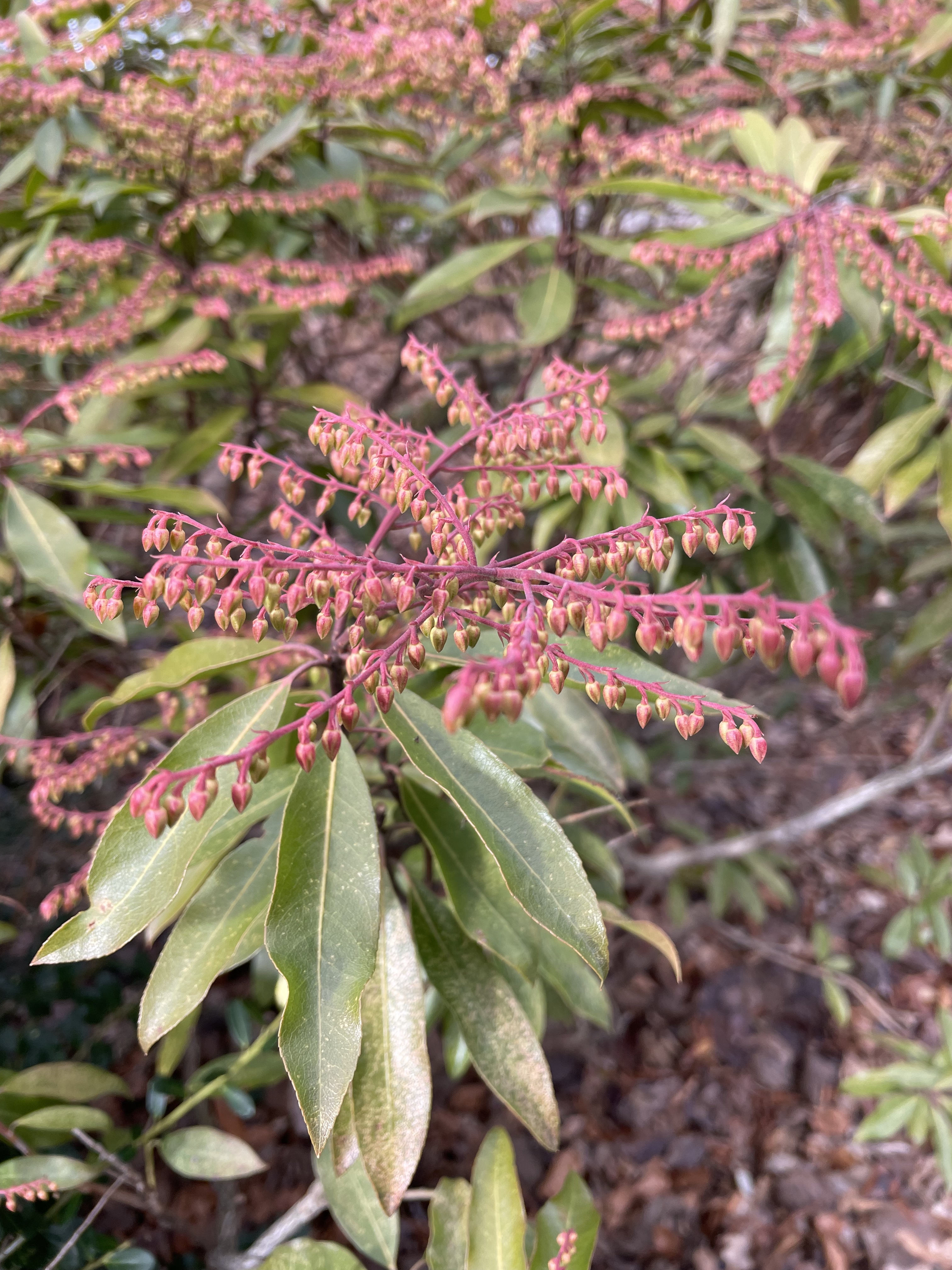
Passing by more beauty as we go.
Wind up at a favorite deli only a few blocks away for some sustenance after our poetic excursion —somewhat less poetically, with one of the best sandwiches in New York City. This pastrami might be historic. Even beautiful, if you consider its taste in your mouth.

Almost historic, almost as beautiful as the landscapes of Wave Hill.
 Jean Zimmerman
Same! Hope to see you soon!
What gorgeous pictures!! Have a wonderful Christmas my friend!Denise