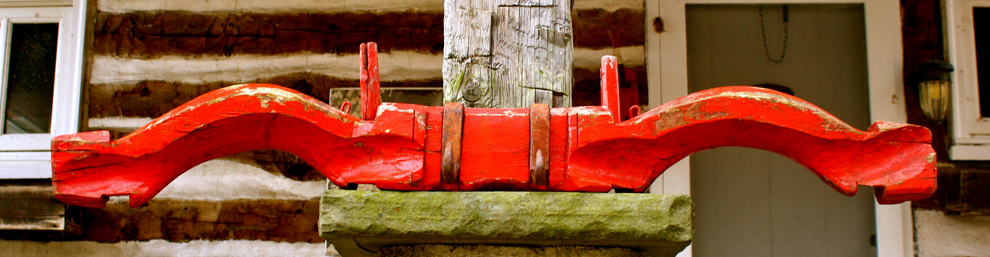
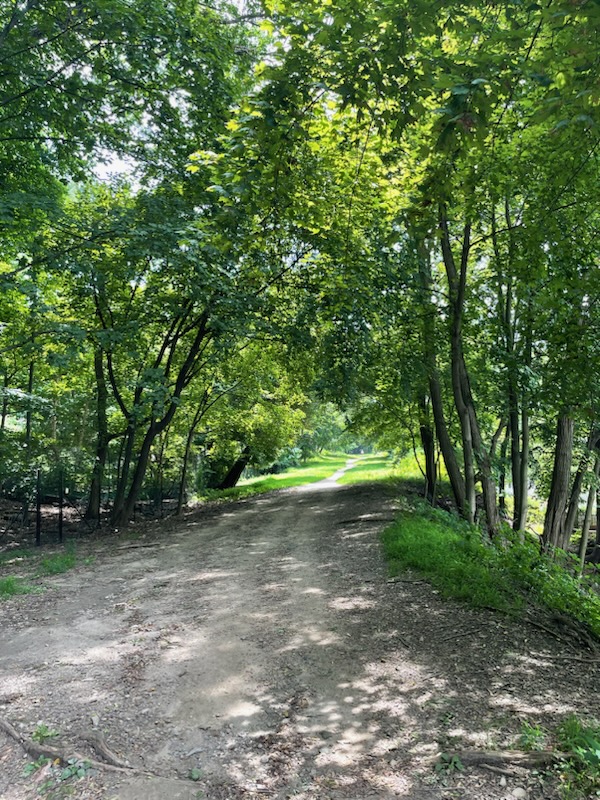
The cardiologist told me I’d better get in better shape. So here I am speed walking along my favorite trail on a hot day in August. It’s the path called the Old Croton Aqueduct, now a state park, once upon a time the narrow north-south route above a forty-one mile water tunnel. It delivered 75 million gallons of fresh water daily from the Croton Reservoir into New York City for a hundred years.

Plenty of tree shade aboveground, thankfully.

To get to the trail I pass among the sweet gardens of the Village of Hastings-on-Hudson.

I see trumpet vine.

Sometimes I think fallen blossoms are even more beautiful.

The dogwoods blush.

Happy happy flowers everywhere. Some of them simple, common, but no less cherished.

I think about a line from St. Teresa of Avila: The important thing is not to think much but to love much; do, then, whatever most arouses you to love. The season’s a hydrangea-fest.

In this case, I’m aroused to love by simply gazing at blooms in late summer.

We used to call them snowball bushes. I stick my nose in, get the faint sweetness of their perfume.

This stripe-y specimen has a name: silvergrass.
I looked it up. I don’t know everything, just a few things, and I’m always learning.
Finally I reach the trail. I greet some old friends as I go. A muscular basswood.

A bunch of sinuous cherries.
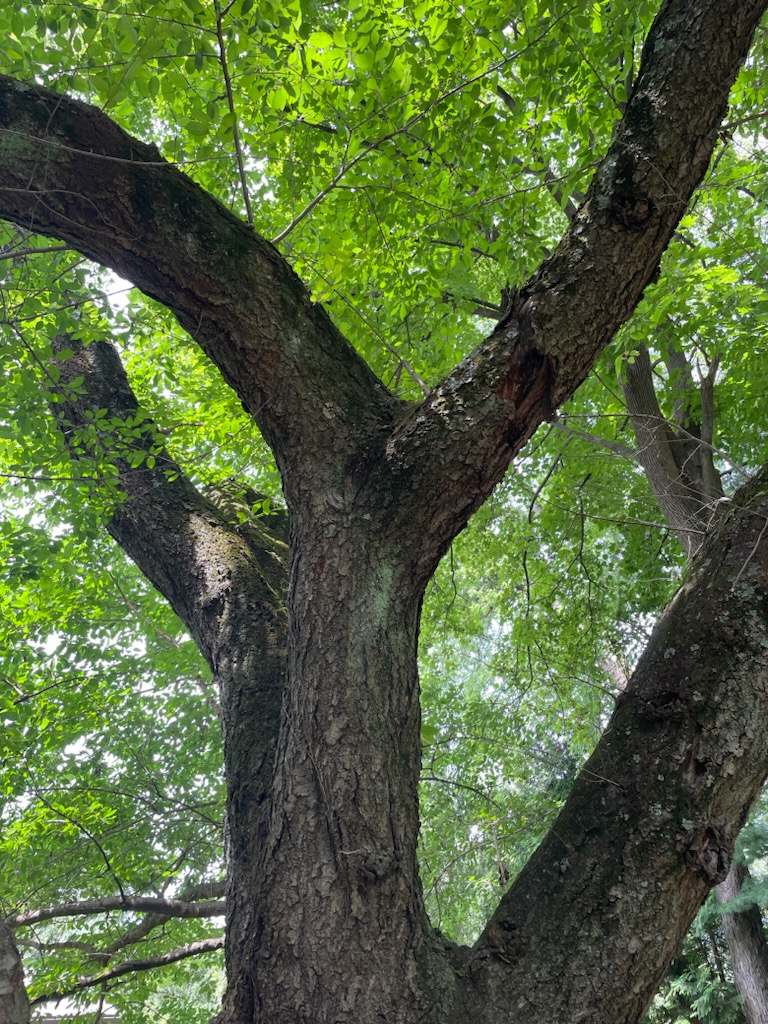
A venerable black locust.

Buckthorn.

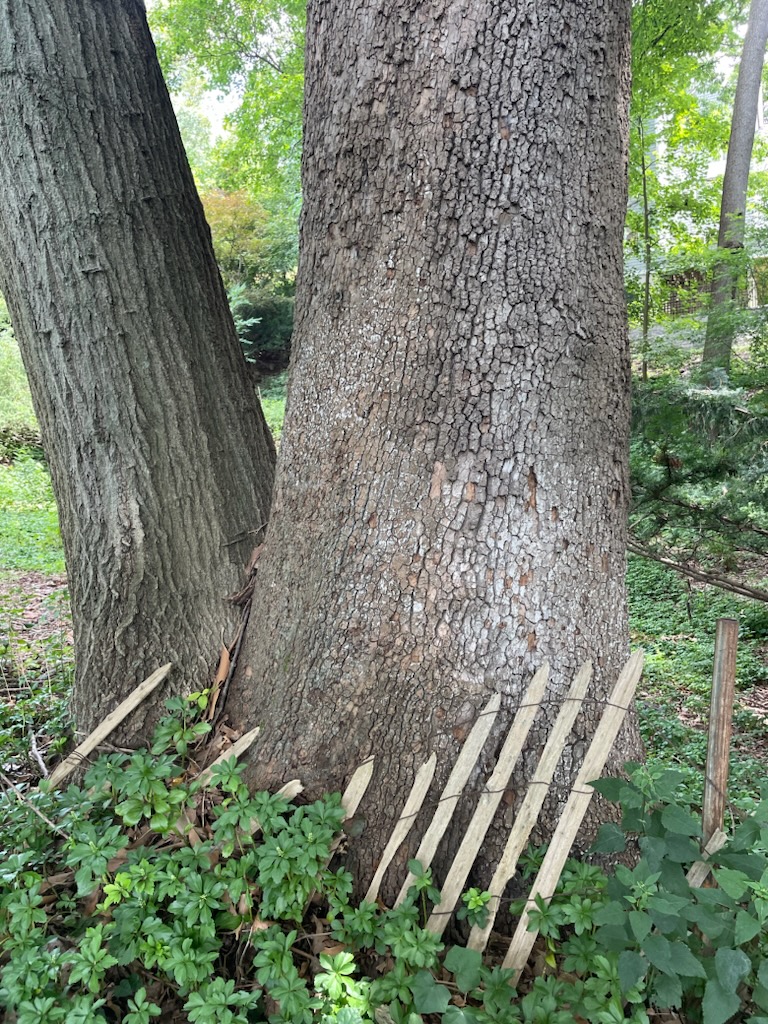
A pair of “husband-and-wife trees,” conjoined trees, a Northern red oak and a sycamore.
Finally, after a mile or so (but who’s counting?) I reach my destination. The Keeper’s House.

The Keeper’s House was one of seven along the Aqueduct, built in 1857 and occupied by an engineer and his family. He was responsible for upkeep of the tunnel and its water flow.
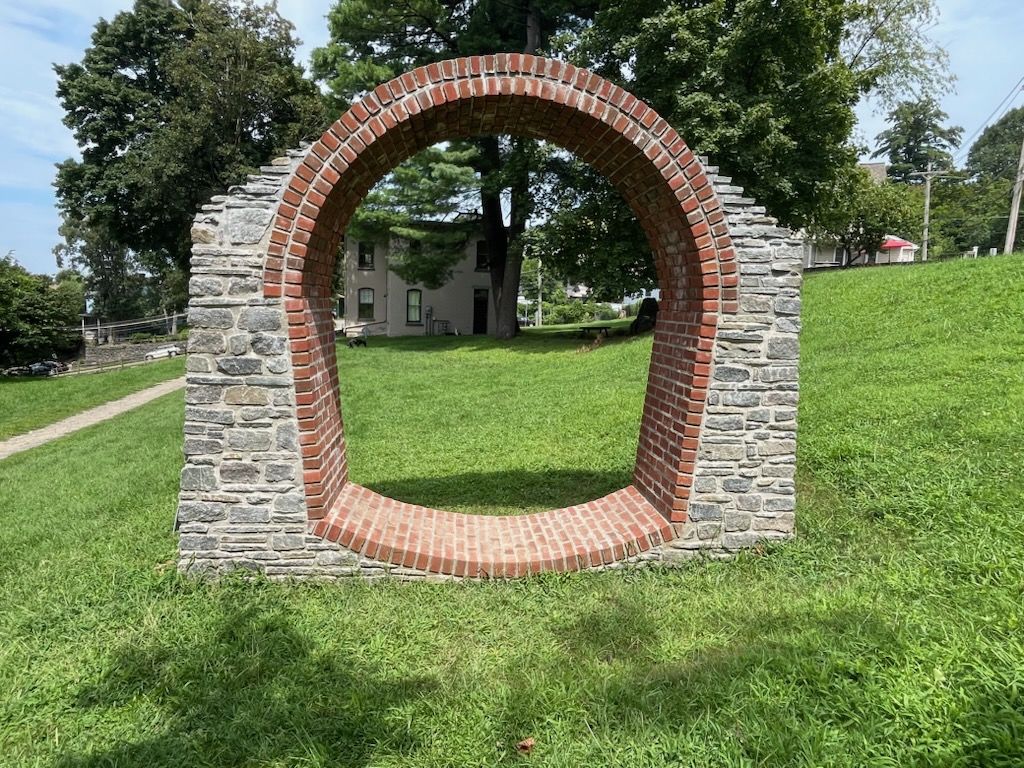
I’m getting more involved with Friends of the Old Croton Aqueduct and I find myself more fascinated than ever by the history of this particular abode. Also, out back, by an ingenious sculpture by Dionisio Cortes Ortega. The Croton Arch of Triumph exactly reproduces the dimensions of the Aqueduct tunnel below as a brick cross section.
Recently I got to go under the ground into one of the Aqueduct’s weir chambers, in Ossining, the place where a sluice gate controlled the flow of water

If there was a leak, they’d drop the sluice gate using a specialized gear, and divert the water out to Sing Sing Kill to fix it.
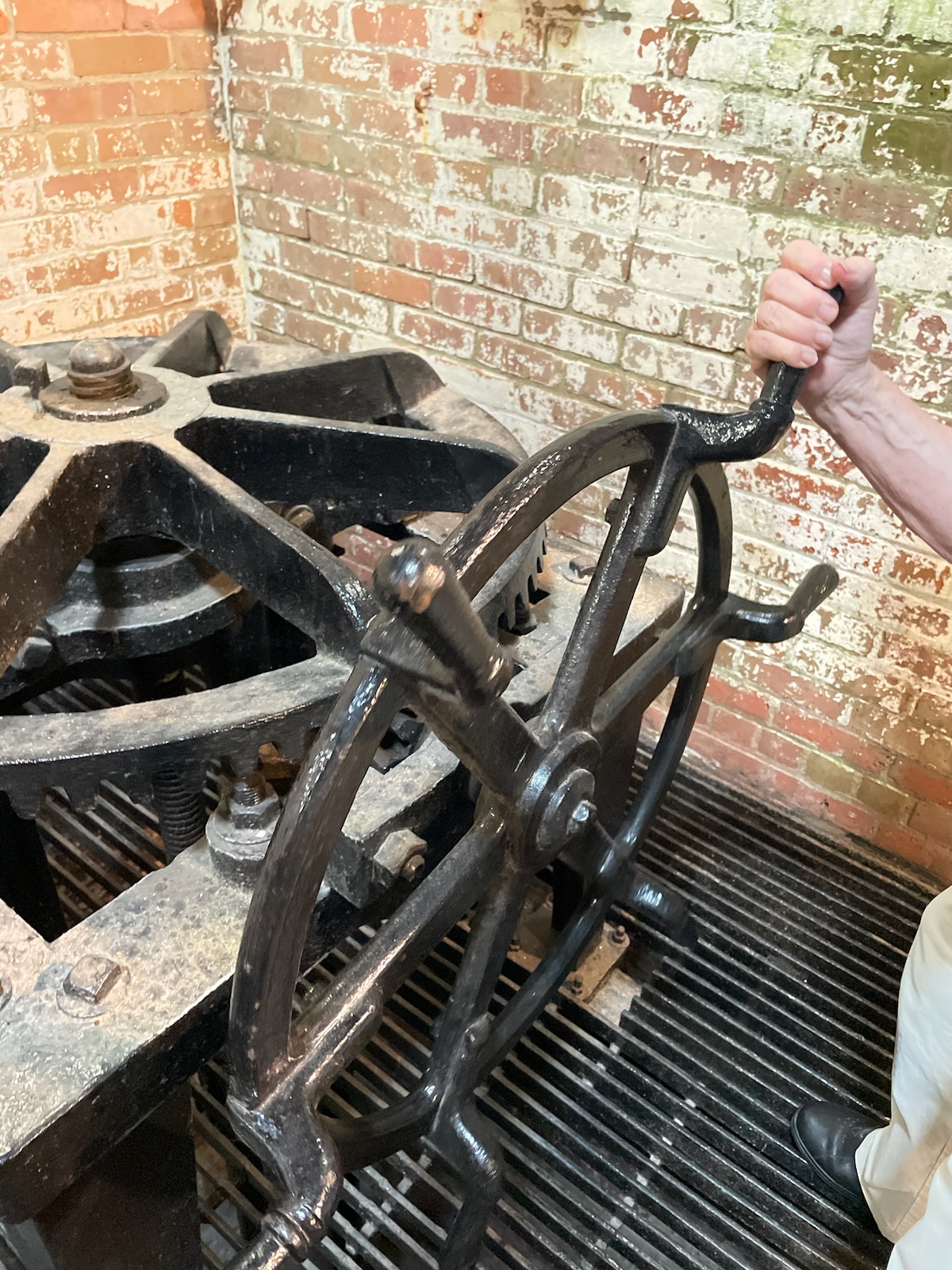
Using the weir system the entire Aqueduct could be drained in about two hours time.

Expert docent Sara Kelsey, the co-head of Walks and Tours for the Friends of the Old Croton Aqueduct, showed me around the ancient space.
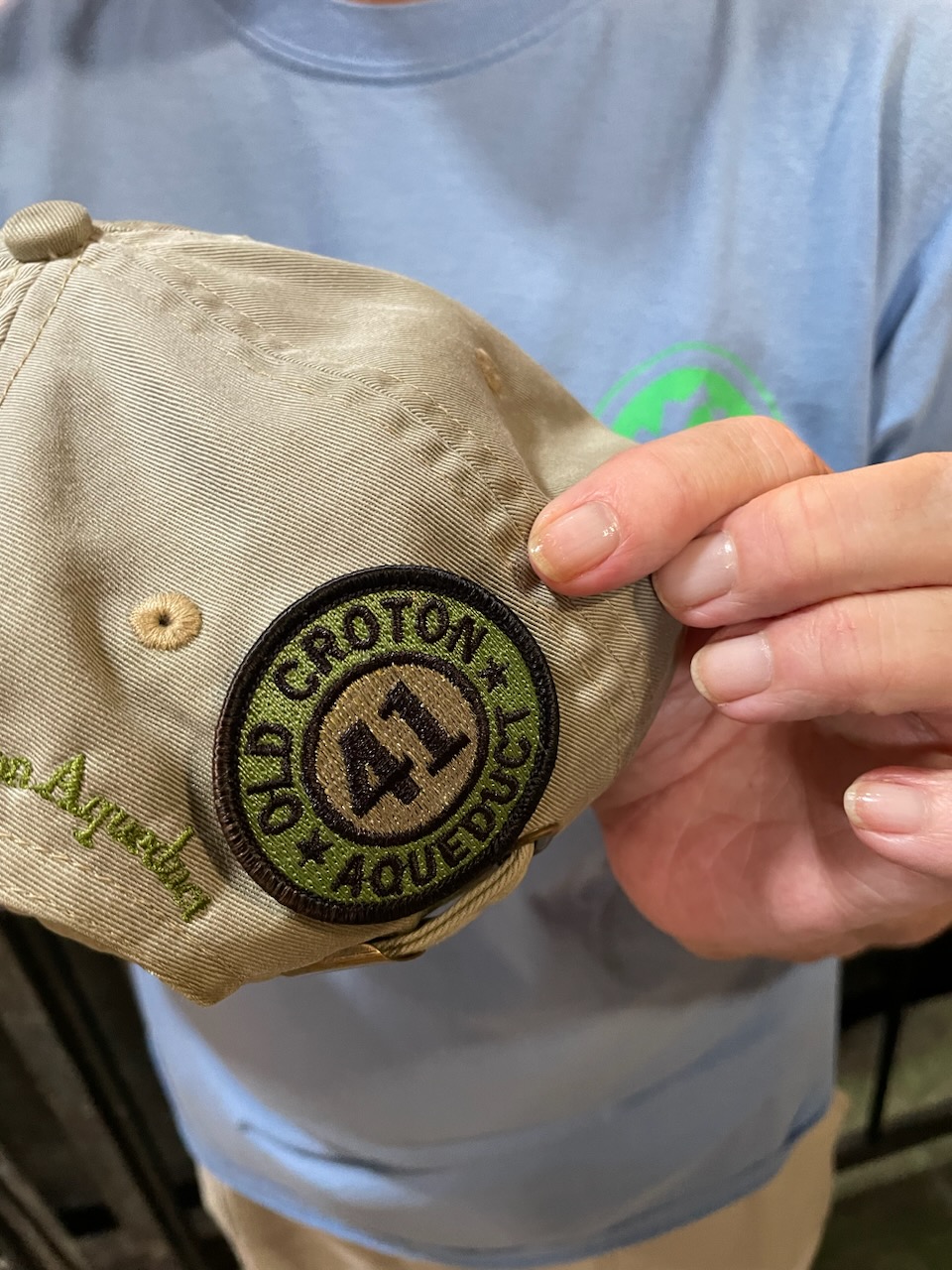
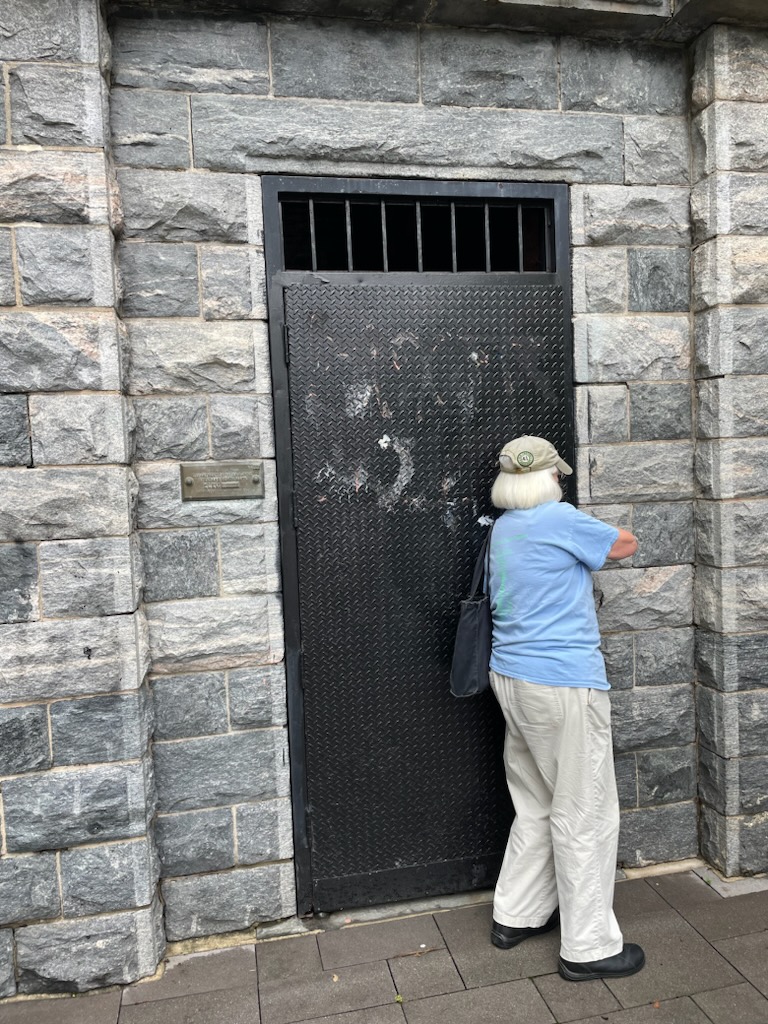
We entered through a granite blockhouse.

Sara opened the door and I felt like were sneaking in to a magical place.
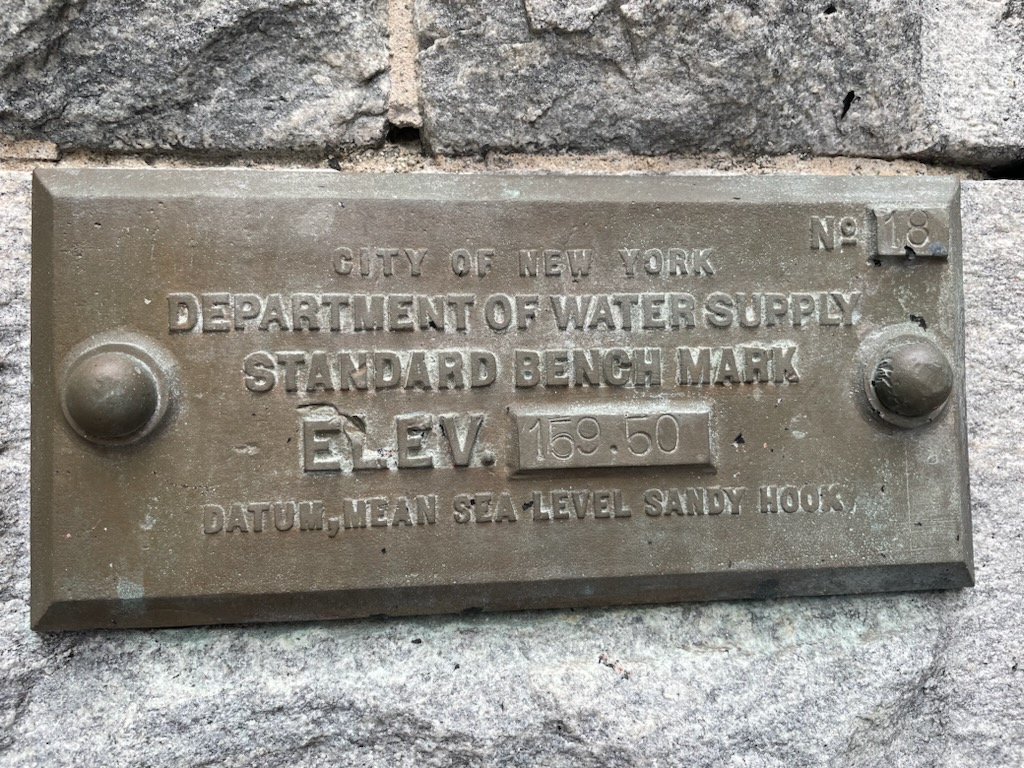
Here is what I learned from a sign inside:
The Croton Aqueduct was designed to have a maximum capacity of 60,000,000 gallons of water per day, an amount which the planners felt wouldn’t be needed for hundreds of years. However the average person’s consumption of water tripled within the first 8 years and this, combined with a growing population and increased industry, soon used up what was envisioned to be a huge surplus.
I have heard that the main thing that changed was the introduction of newfangled flush toilets.
By 1890, the Aqueduct was carrying so much water that air space was reduced to 6”. In 1893, the much larger new Croton Aqueduct was completed and, in 1906, the present Cornell Dam was finished. These greatly expanded the reservoir system and reduced the pressure on the Old Croton, the first Aqueduct to bring life-saving water to the thirsty city of New York.
Irish stonemasons blasted out the older part of the Aqueduct between 1837 and 1842 with black powder. Nobel had not yet invented dynamite. One worker would hold the spike and another would pound it to drive it into the sheer rock.

Then they’d insert the gunpowder, light it and scram. “Fire in the hole!” The entire forty one miles was dug out in five years. Imagine the tireless work involved, without power tools. It’s an ingenious gravity flow system.
Sarah made a joke about the types of rock here, gneiss and schist: “They say Westchester’s gneiss but Manhattan’s schist.”

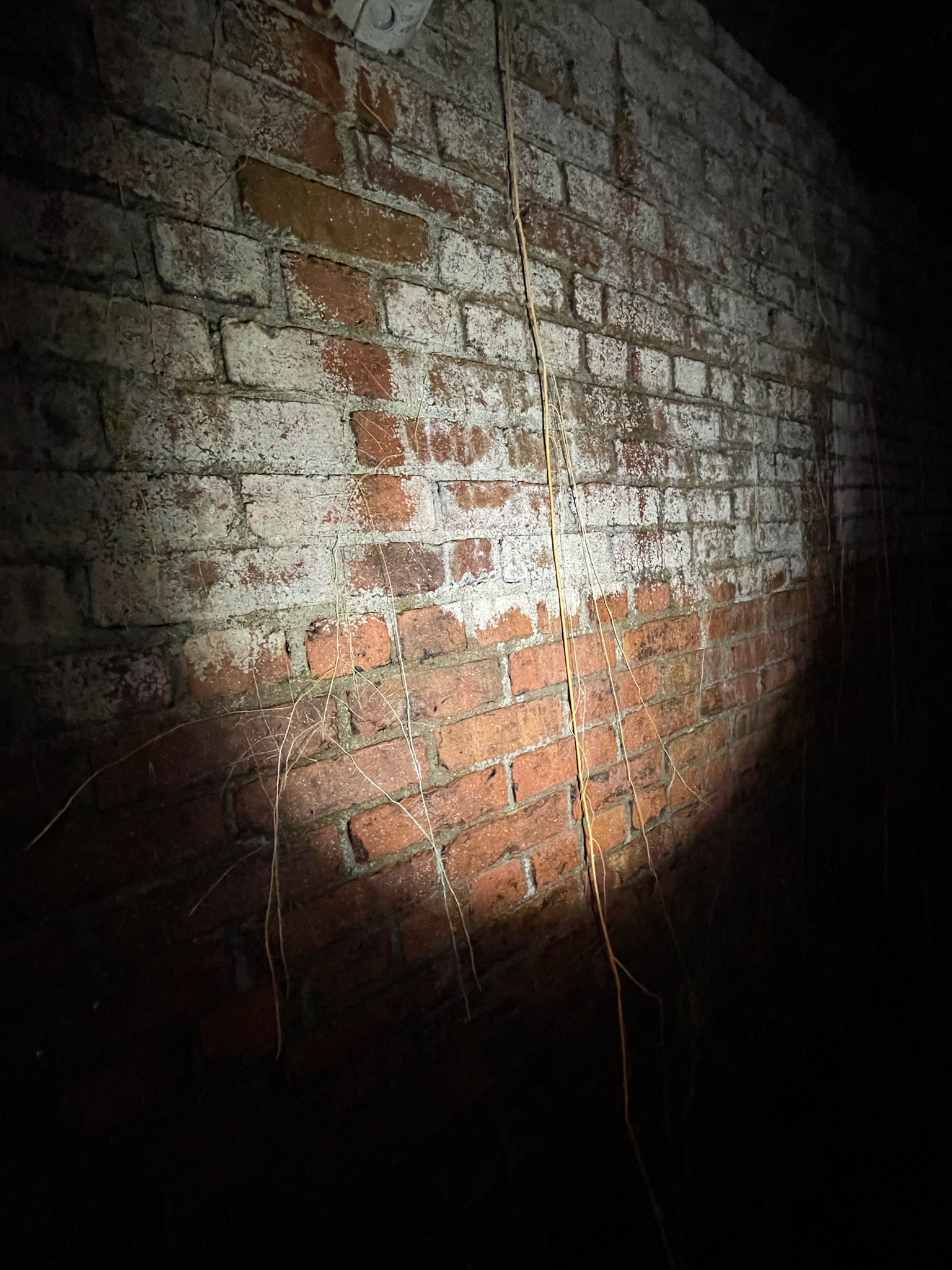
You could smell the wet, and hear groundwater gurgling beneath our feet. A few leaves had somehow drifted down. Leave it to white oak to find a way in.

The main use of the tunnel now – aside from illuminating history nerds like myself – is for firefighter and police crisis training, offering as it does a perfect enclosed location.

The Croton Aqueduct shut down in 1955. But not completely. The Village of Ossining is the only municipality that still gets its water from the OCA. Other places purchase their water from New York City, which now sources it from bigger and deeper pipelines in the Catskills or Delaware Water Gap.
Italian immigrants came on board to labor on the newer part of the Aqueduct, and Black laborers were imported as well, from Virginia, were they were known for their expertise as mule drivers. Everything, bricks, stone, metal, all had to be hauled by mule cart.
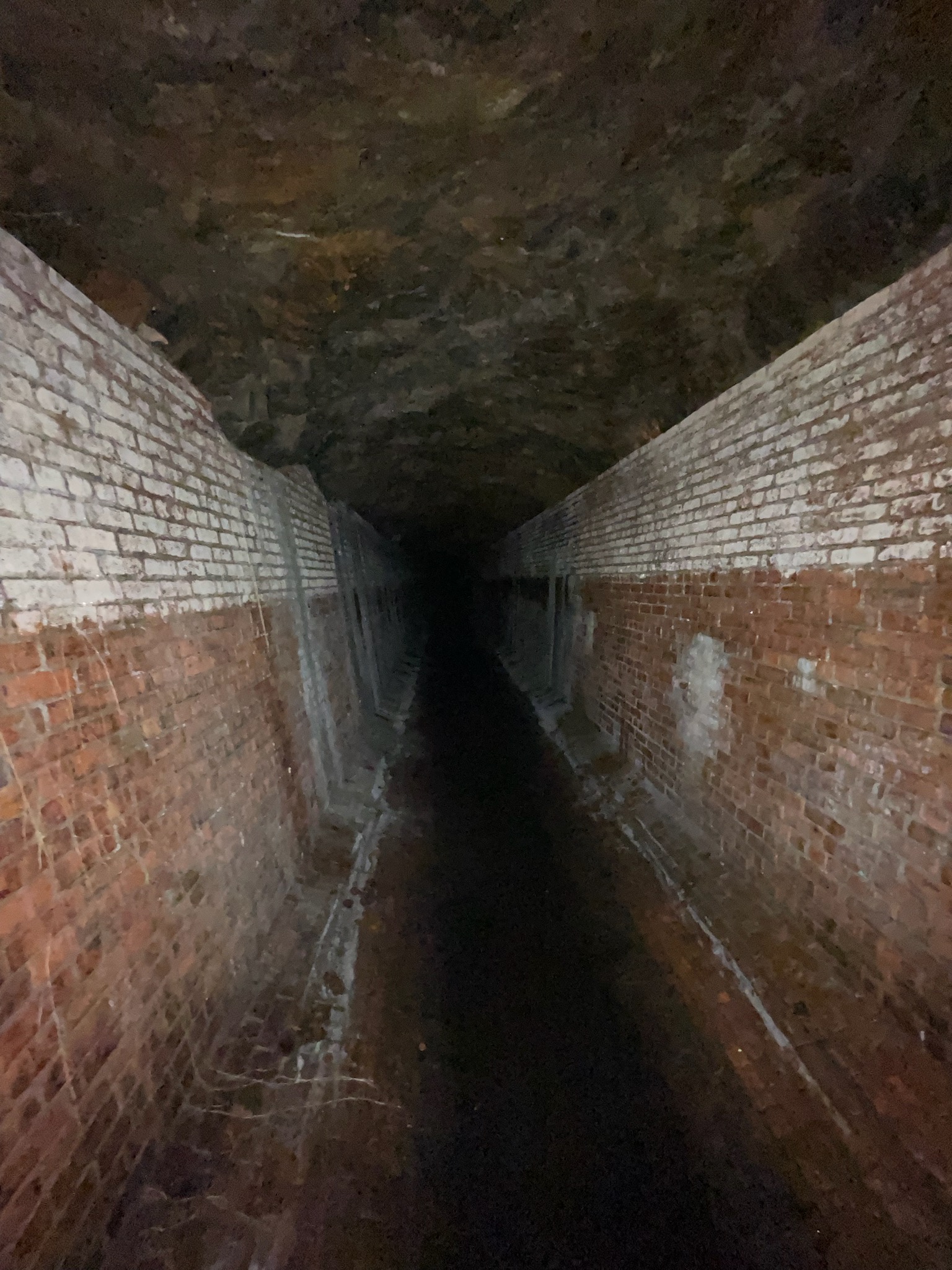
Their work resulted in fresh water finally getting down to New York City, where it helped prevent the scourge of cholera. When a fountain near City Hall first shot up its streams of water, New Yorkers had a huge celebration. It wasn’t all unicorns and rainbows, however. Scholars have found that one in ten Aqueduct laborers were killed or injured every year during the construction of the newer portion. So just being in this historic venue felt bittersweet. Folks died here.
Back to my hot walk along the Aqueduct trail. I turn around at the Keeper’s house and start to trudge toward home.
I see the spiffily manicured baseball diamond on land formerly occupied by an old forgotten estate.
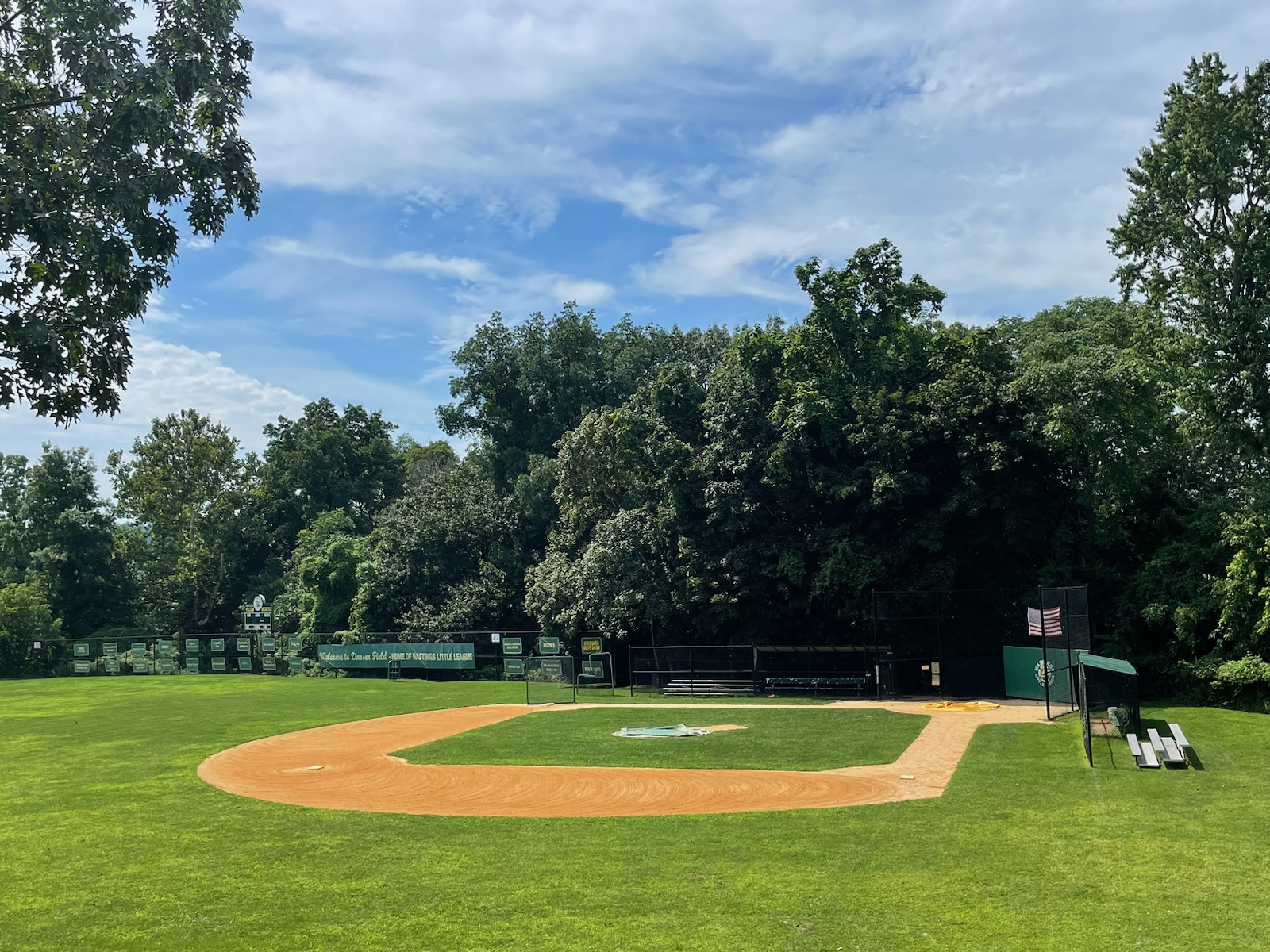
Not forgotten by me. Locust Wood was owned by the Minturn family, including Edith Minturn, a privileged New Yorker whose life I researched for Love, Fiercely: A Gilded Age Romance. Edith’s grandparents were made rich through owning the fastest clipper ship in the world around 1850. Flying Cloud sailed down the Atlantic Seaboard, around Cape Horn and up the Pacific Coast, a treacherous 120-day trip, bringing goods like fresh butter, sugar-cured hams and brandied peaches to San Francisco Bay.
The family vacationed twenty miles north of Manhattan in Hastings-on-Hudson until the turn of the twentieth century, and it is said that Robert Bowne Minturn himself designed the cobblestone gutters along the winding carriage roads. The family summered here just as workers were putting through the Aqueduct, literally right under their feet
That black locust I referred to earlier? Perhaps from that time. The only hard evidence of the Minturns’ tenure now lies in the imagination of the beholder. I feel like these pillars, with the cobbles at their base, probably date back to the swellegant family’s estate.

But who knows? I tend to find meaning in the possibly meaningless wherever I go. If the columns were in fact built at that time, it was probably by the same cohort of newly settled Americans that poured their lives into the Aqueduct.
Heading home, I pass a nice little house populated by a family of metal animals.

On the fencing outside, someone has taken issue with someone else.
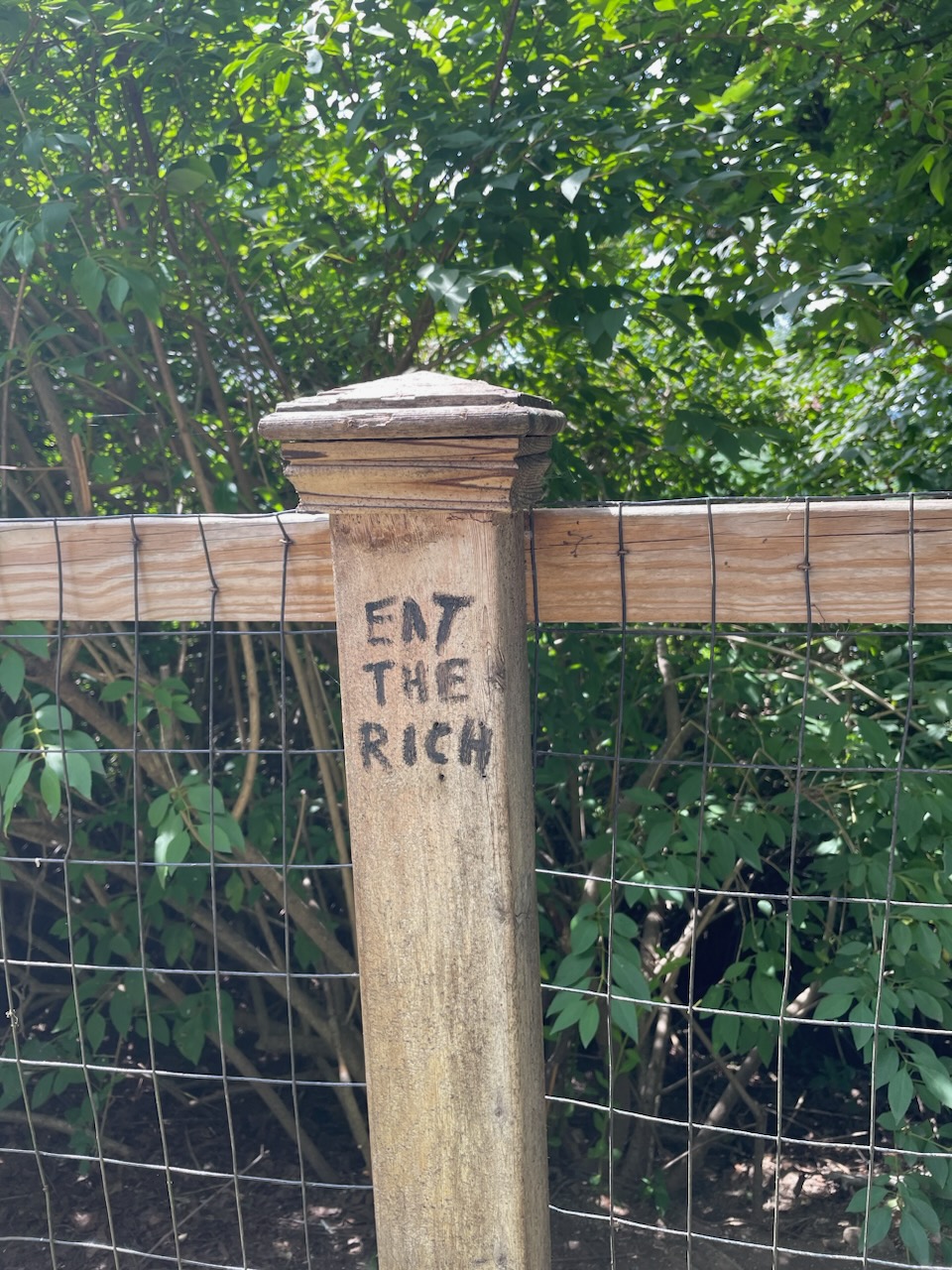
And on such a lovely afternoon, too. I may not be wealthy but I have a rich life, please don’t eat me.
Along the way I pass the Village’s community gardens, expansive plots that are well-used by locals despite the expansive properties many own. Eat the Rich, indeed.

There is an allee of mature trees here. Also Minturn vintage?
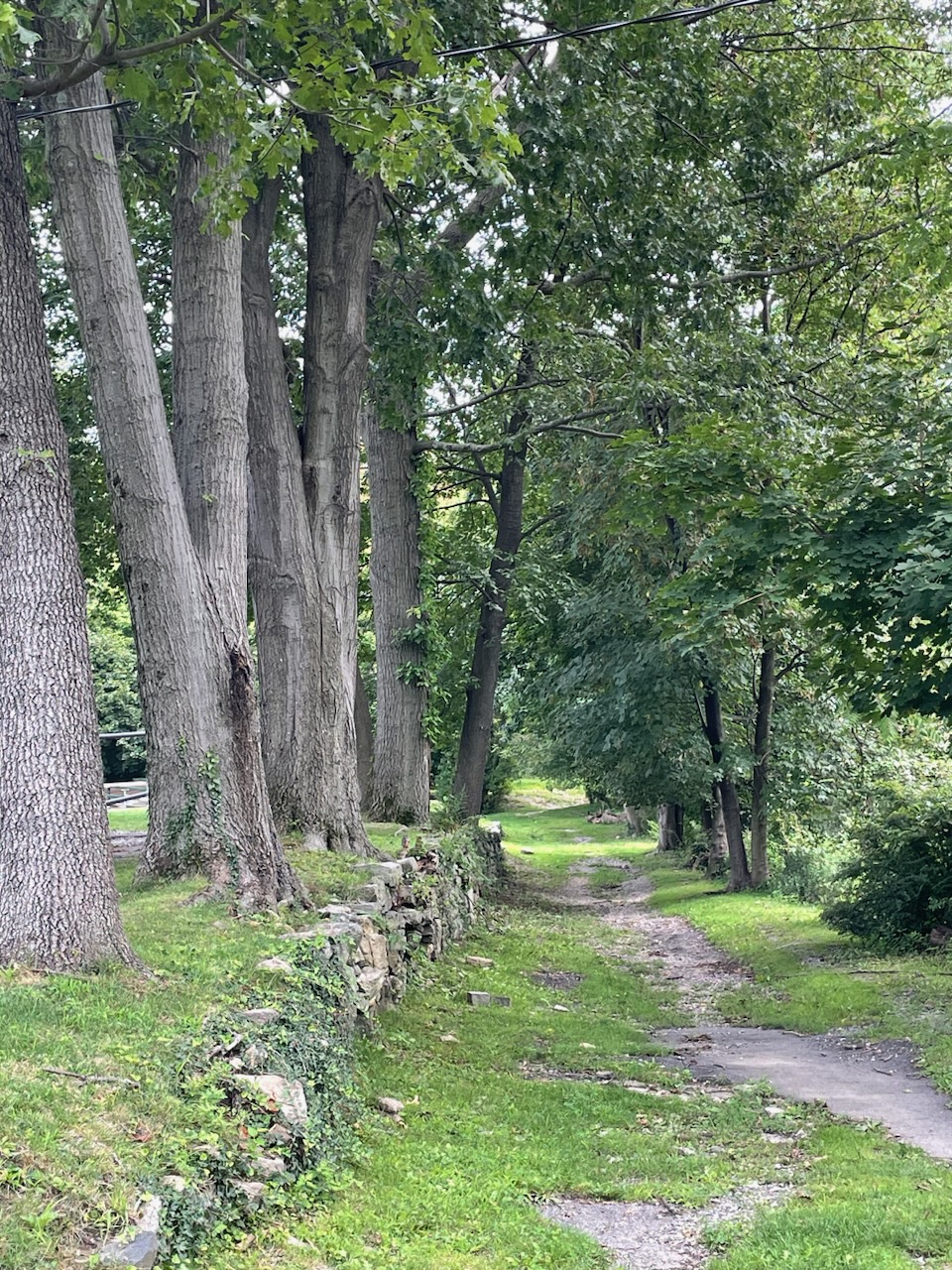
I pass an old black oak with a tag.
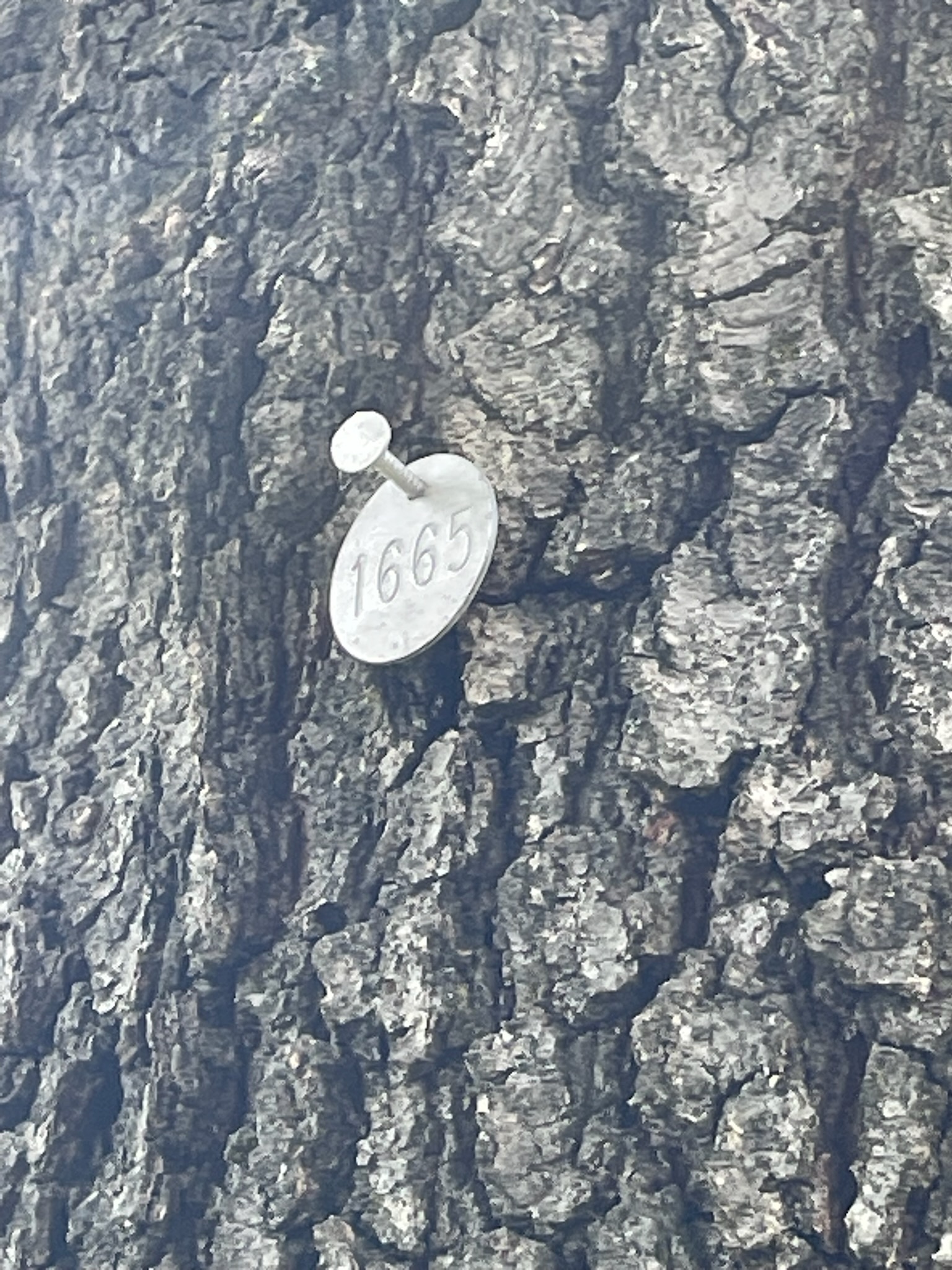
Someone interested in trees has come before me. I wonder who.

The stone walls along the allee tell a story, as stone walls always do. In this case, probably a talel of immigrant stone masons wanting to make good in America. They risked their lives to provide pure drinking water to families like the Minturns.

These workers have been largely forgotten, apart from the name of a trail enjoyed by runners and cyclists, dog walkers and huffers-and-puffers like myself. Let’s pause to remember those heroic tunnel builders now.
 Jean Zimmerman